|
絵文字
|
単語 | Images | 翻訳 | 過去 | 過去分詞 | 三人称単数 | 動名詞 | 意味 | 例文 | 例文の翻訳 | 表現例 | 表現例の意味 | 表現例の翻訳 | 同義語 | 対義語 | コロケーション | ニーモニック |
|---|---|---|---|---|---|---|---|---|---|---|---|---|---|---|---|---|---|
|
📖
••••••
|
/ˈɛksplɪkeɪt/
verb
(エクスプリケイト)
••••••
|
|
説明する
setsumei suru
••••••
|
explicated
エクスプリケイテッド
••••••
|
explicated
エクスプリケイテッド
••••••
|
explicates
エクスプリケイツ
••••••
|
explicating
エクスプリケイティング
••••••
|
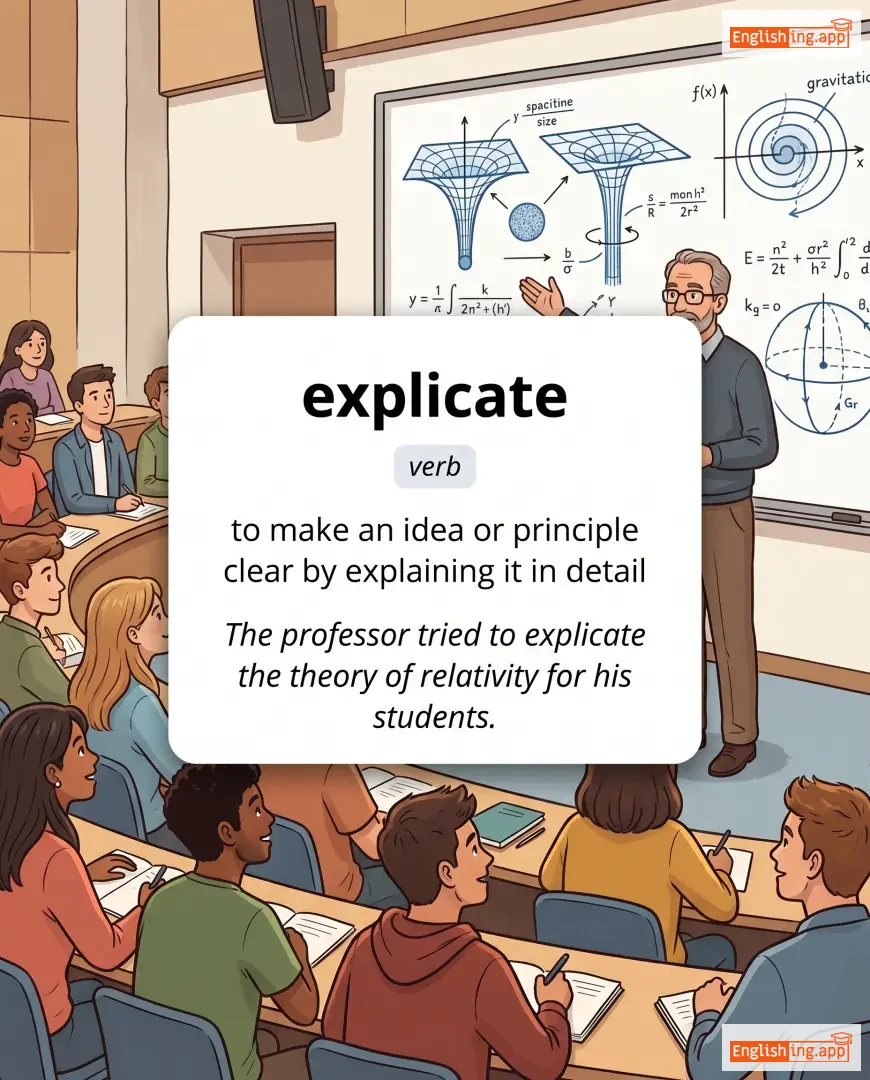
to make an idea or principle clear by explaining it in detail
••••••
|
The professor tried to explicate the theory of relativity for his students.
教授は学生たちに相対性理論を説明しようとしました。
••••••
|
教授は学生たちに相対性理論を説明しようとしました。
Kyōju wa gakusei-tachi ni sōtaisei riron o setsumei shiyō to shimashita.
••••••
|
- •••••• | - •••••• | - •••••• |
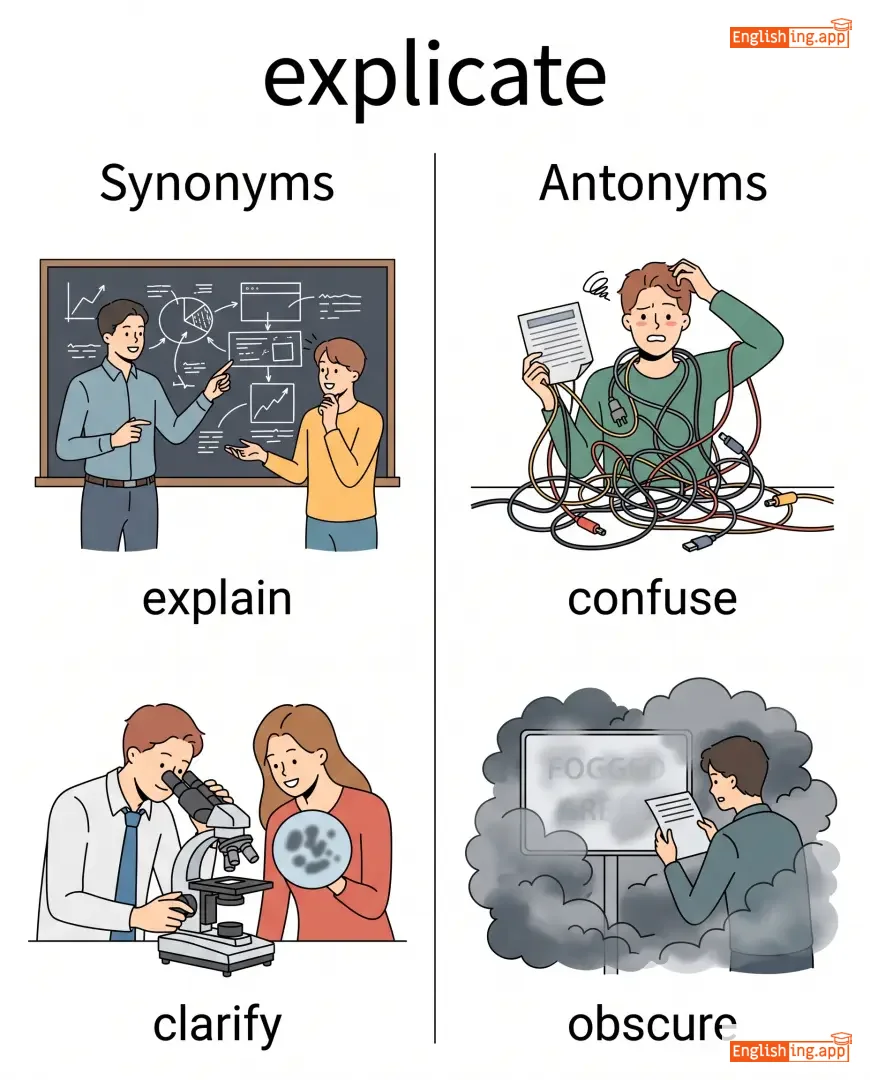
explain, clarify, interpret, elucidate
••••••
|
confuse, obscure
••••••
|
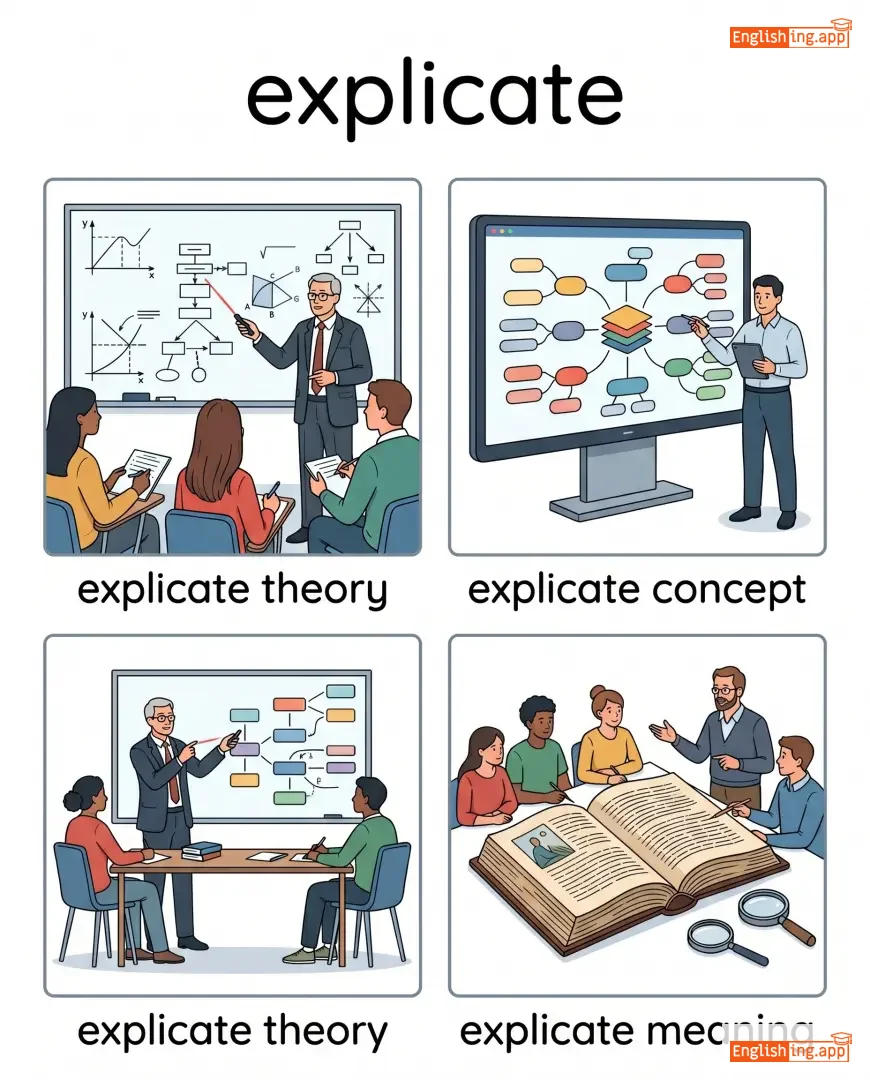
explicate theory, explicate concept, explicate meaning
••••••
|
説明するとは詳細に説明することです — 'Explain Kate'を覚えておいてください。
••••••
|
|
📖
••••••
|
/ɪkˈspɒzɪtəri/
adjective
(エクスポジトリ)
••••••
|
|
説明的
setsumeiteki
••••••
|
- •••••• | - •••••• | - •••••• | - •••••• |
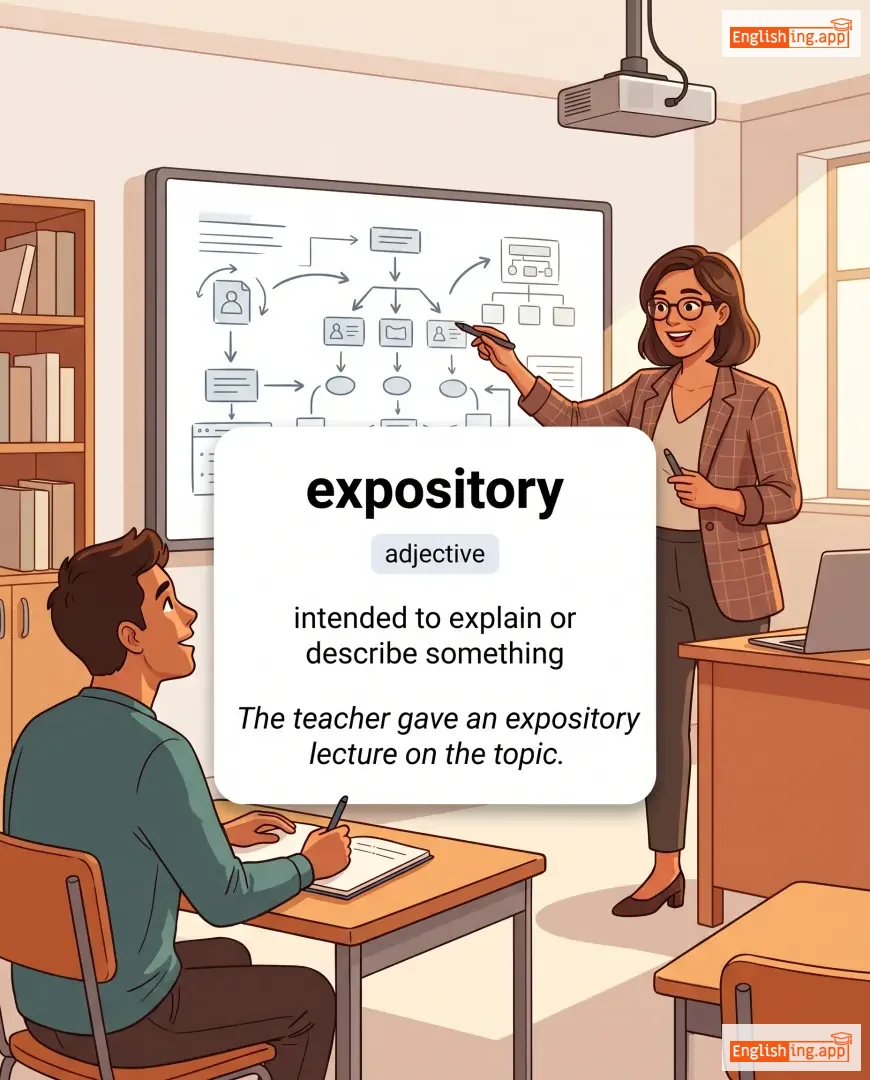
intended to explain or describe something
••••••
|
The teacher gave an expository lecture on the topic. |
先生はそのトピックについて説明的な講義をしました。
Sensei wa sono topikku ni tsuite setsumeiteki na kōgi o shimashita.
••••••
|
- •••••• | - •••••• | - •••••• |
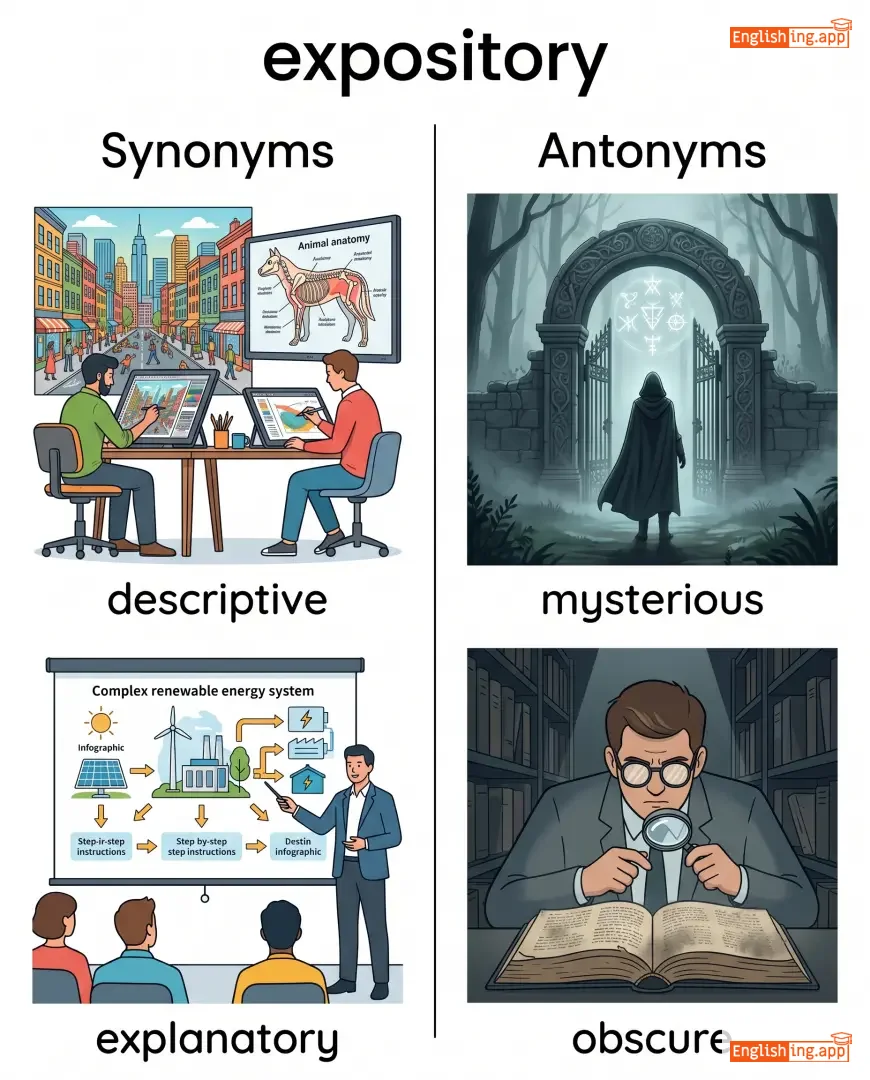
descriptive, explanatory, illustrative, interpretative
••••••
|
mysterious, obscure
••••••
|
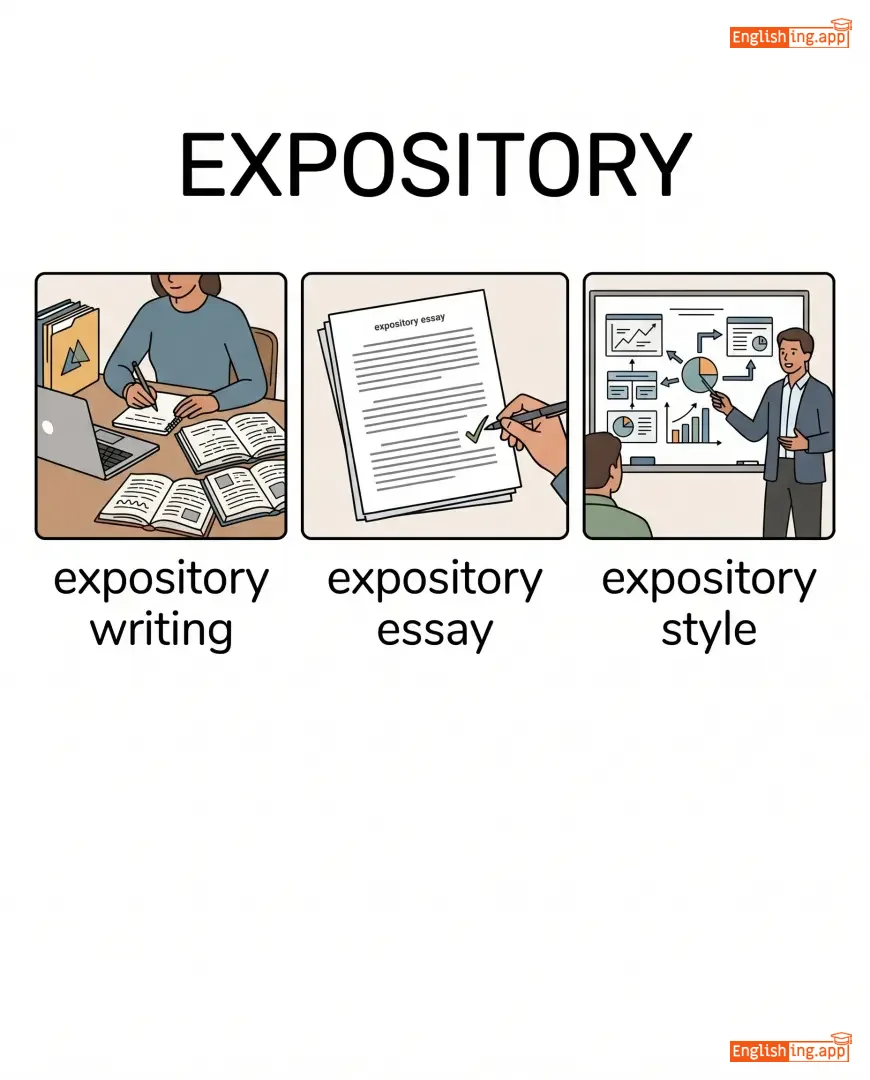
expository writing, expository essay, expository style, expository text
••••••
|
Expositoryは'explain'に似ている—日本語では「説明的」という意味です。
••••••
|
|
📜
••••••
|
/ˈɛkstənt/
adjective
(エクスタント)
••••••
|

|
現存する
genzon suru
••••••
|
- •••••• | - •••••• | - •••••• | - •••••• |
Still in existence; surviving.
••••••
|
Only a few manuscripts from the ancient library are extant.
古代の図書館からのわずかな手稿が現存しています。
••••••
|
古代の図書館からのわずかな手稿が現存しています。
Kodai no toshokan kara no wazukana shugō ga genzon shiteimasu.
••••••
|
- •••••• | - •••••• | - •••••• |
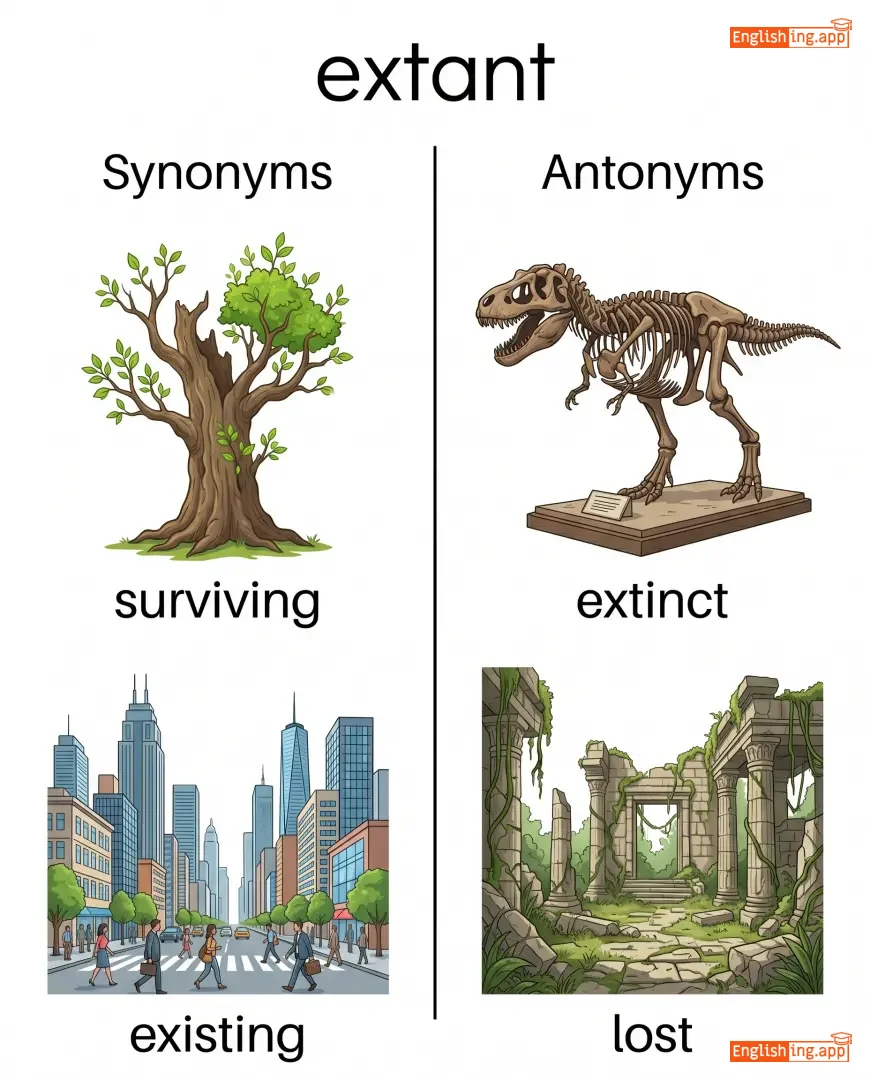
surviving, existing, remaining, present
••••••
|
extinct, lost, destroyed
••••••
|
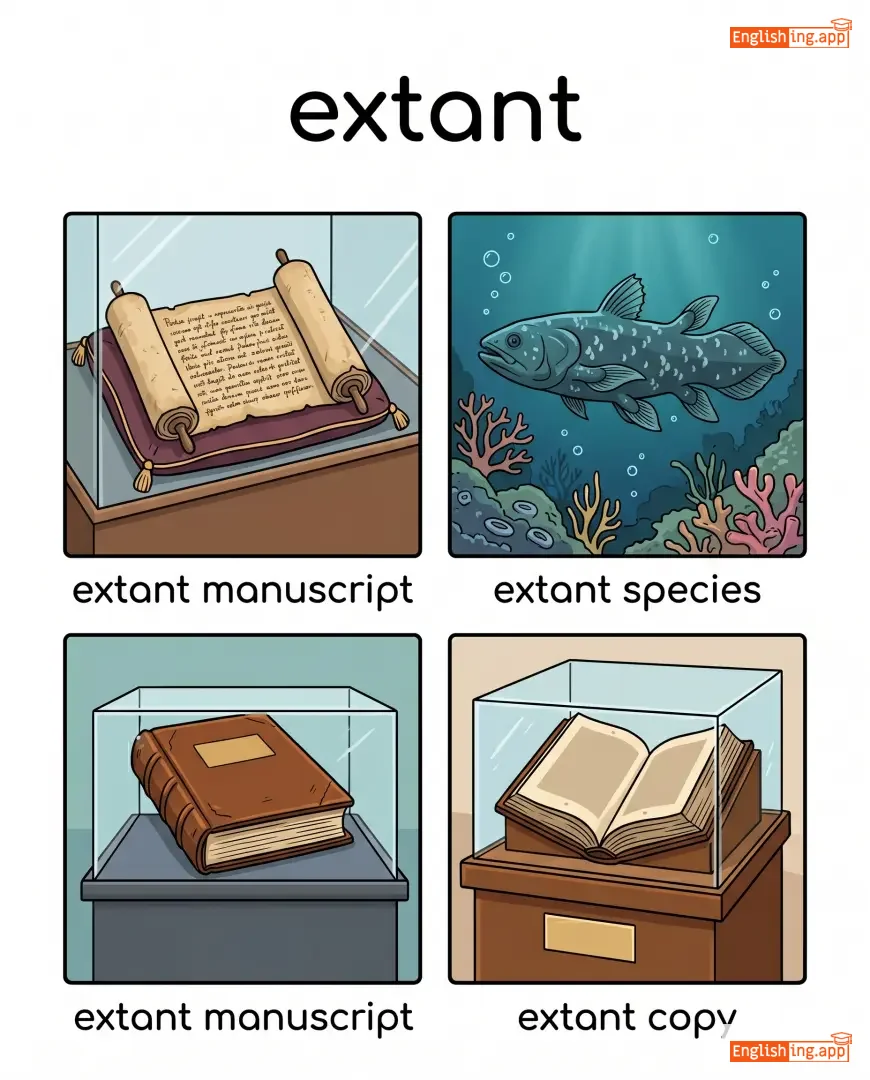
extant manuscript, extant species, extant copy
••••••
|
Extant = 現存 = まだ生きている
••••••
|
|
🎤
••••••
|
/ɪkˌstɛmpəˈreɪniəs/
adjective
(エクステンポラネウス)
••••••
|
|
準備なしで行う
junbi nashi de okonau
••••••
|
- •••••• | - •••••• | - •••••• | - •••••• |
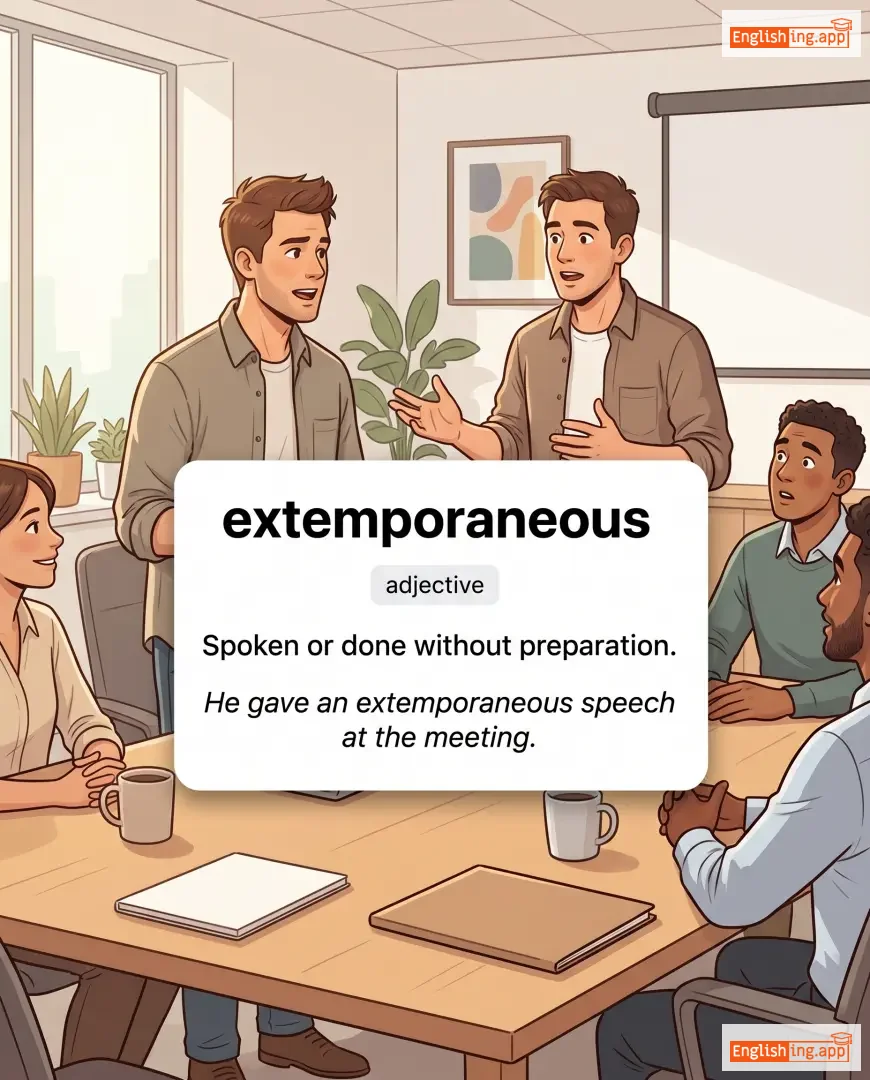
Spoken or done without preparation.
••••••
|
He gave an extemporaneous speech at the meeting. |
彼は会議で即興のスピーチをしました。
Kare wa kaigi de sokkyou no supīchi o shimashita.
••••••
|
- •••••• | - •••••• | - •••••• |
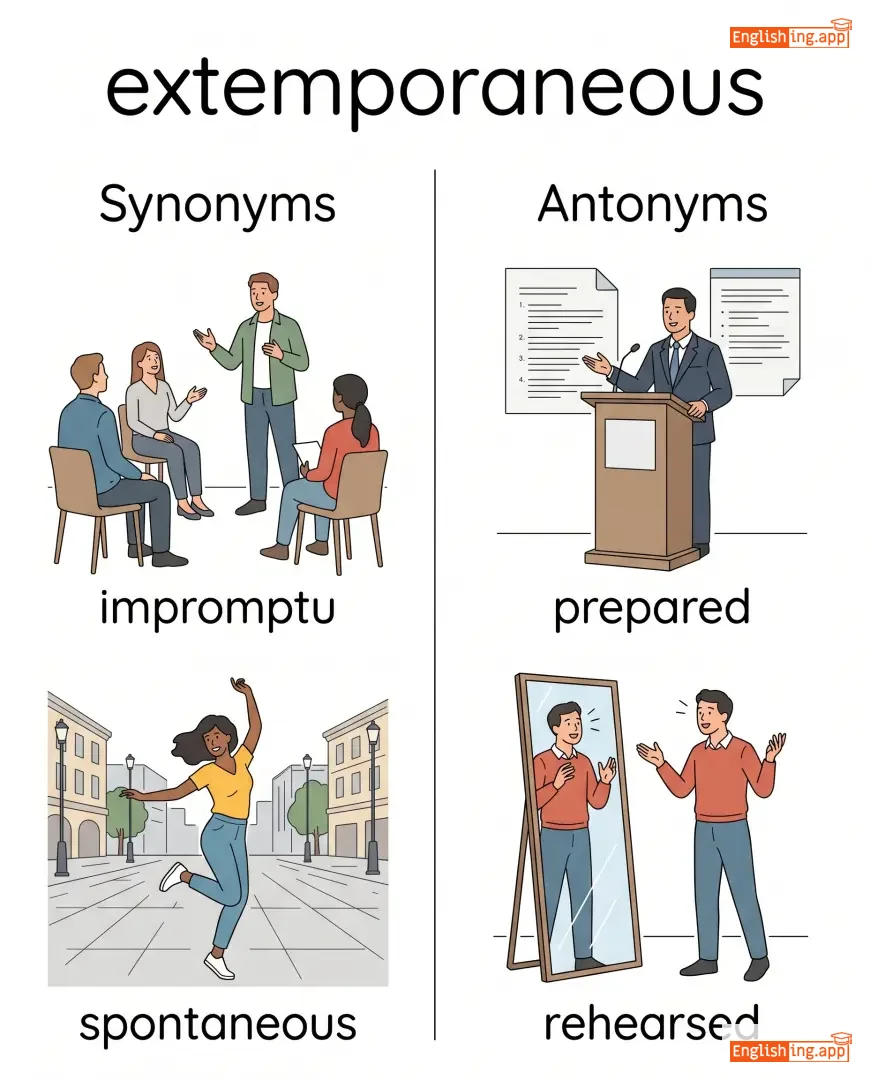
impromptu, spontaneous, improvised, unprepared
••••••
|
prepared, rehearsed, planned
••••••
|
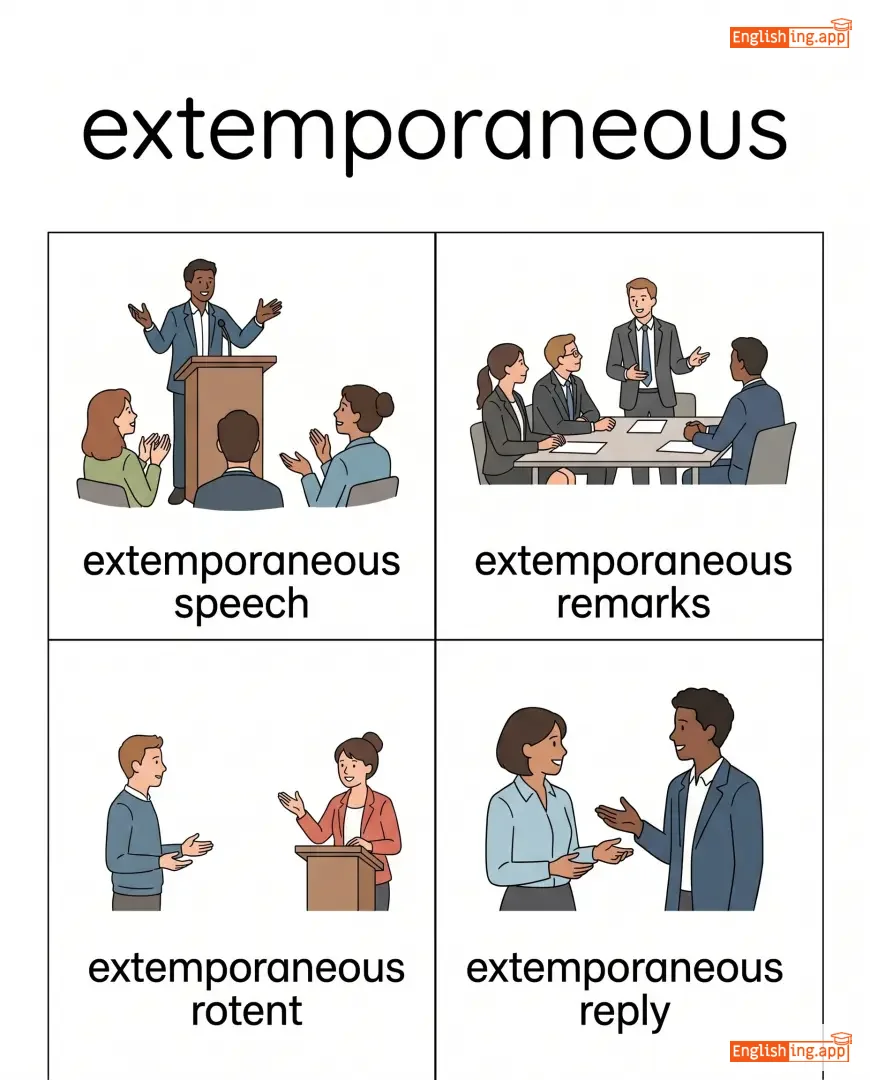
extemporaneous speech, extemporaneous remarks, extemporaneous reply
••••••
|
エクステンポラネウス = 準備なしのスピーチ
••••••
|
|
🪓
••••••
|
/ˈek.stər.peɪt/
verb
(エクスティルペイト)
••••••
|
|
根絶する
konzetsu suru
••••••
|
extirpated
エクスティルペイテッド
••••••
|
extirpated
エクスティルペイテッド
••••••
|
extirpates
エクスティルペイツ
••••••
|
extirpating
エクスティルペイティング
••••••
|
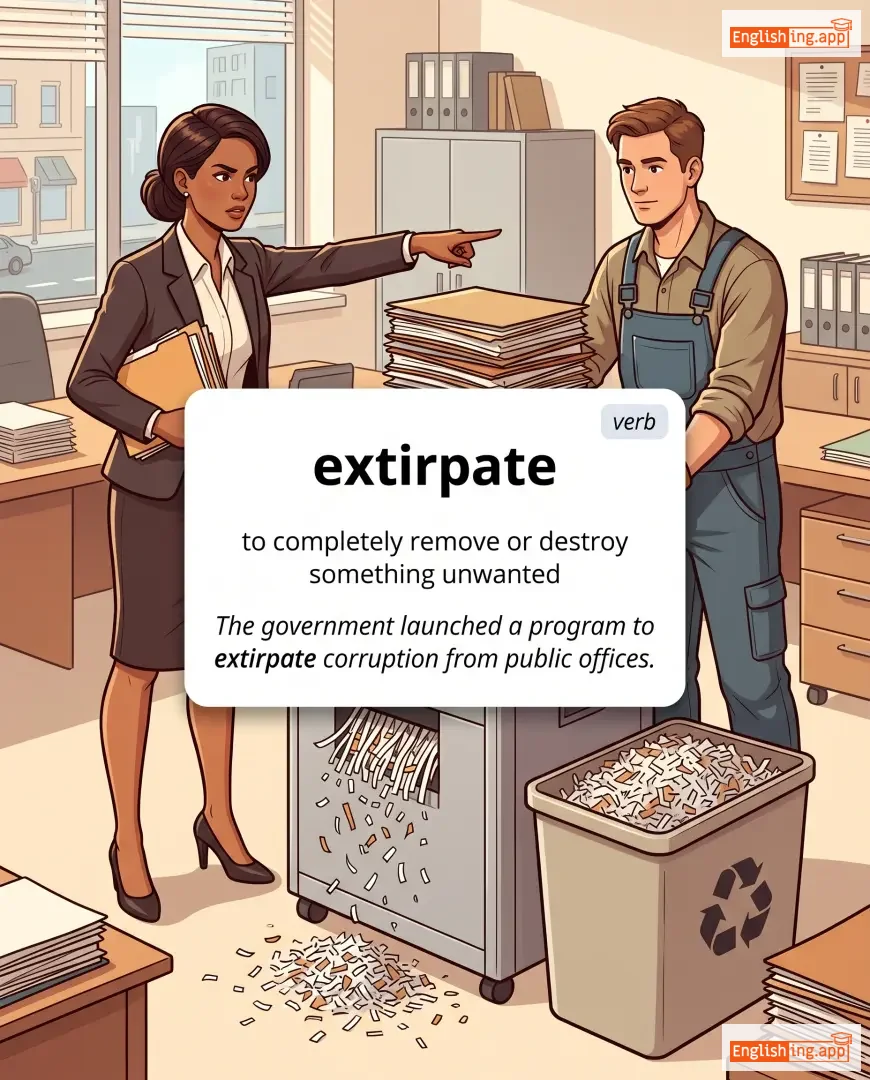
to completely remove or destroy something unwanted
••••••
|
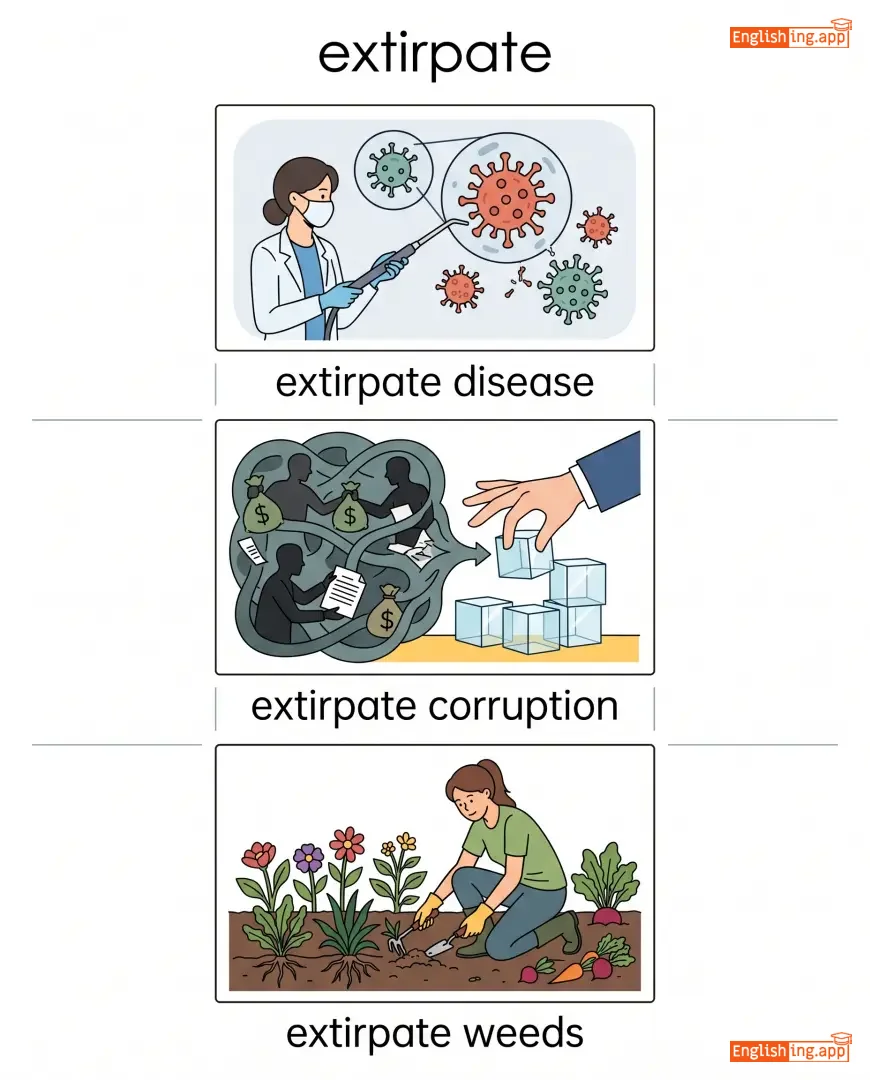
The government launched a program to extirpate corruption from public offices.
政府は公務員の腐敗を根絶するためにプログラムを開始した。
••••••
|
政府は公務員の腐敗を根絶するためにプログラムを開始した。
Seifu wa kōmuin no fuhai o konzetsu suru tame ni puroguramu o kaishi shita.
••••••
|
- •••••• | - •••••• | - •••••• |
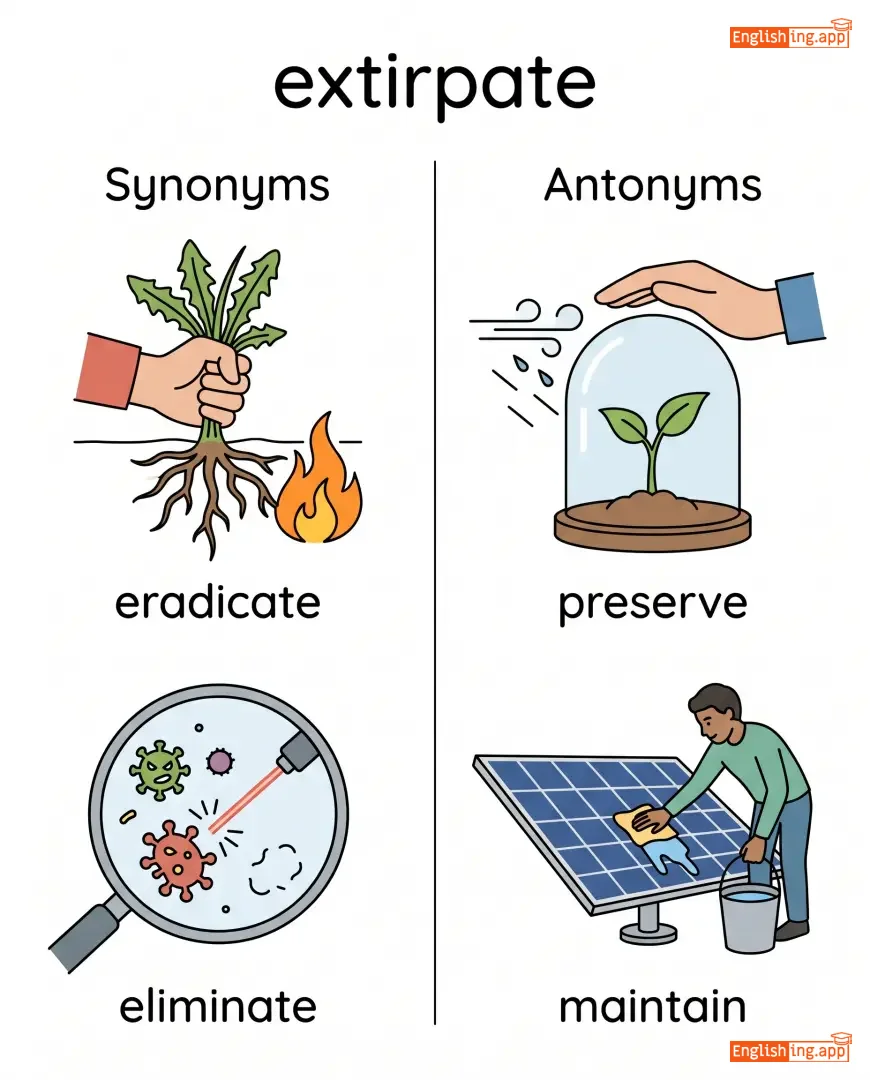
eradicate, eliminate, wipe out, abolish, uproot
••••••
|
preserve, maintain, conserve
••••••
|
extirpate disease, extirpate corruption, extirpate weeds, extirpate traditions
••••••
|
Extra plate (extirpate) はプレートを取り除くことを意味します — 完全に除去する。
••••••
|
|
🗑️
••••••
|
/ɪkˈstreɪ.ni.əs/
adjective
(エクストレイニアス)
••••••
|
|
無関係
mukankei
••••••
|
- •••••• | - •••••• | - •••••• | - •••••• |
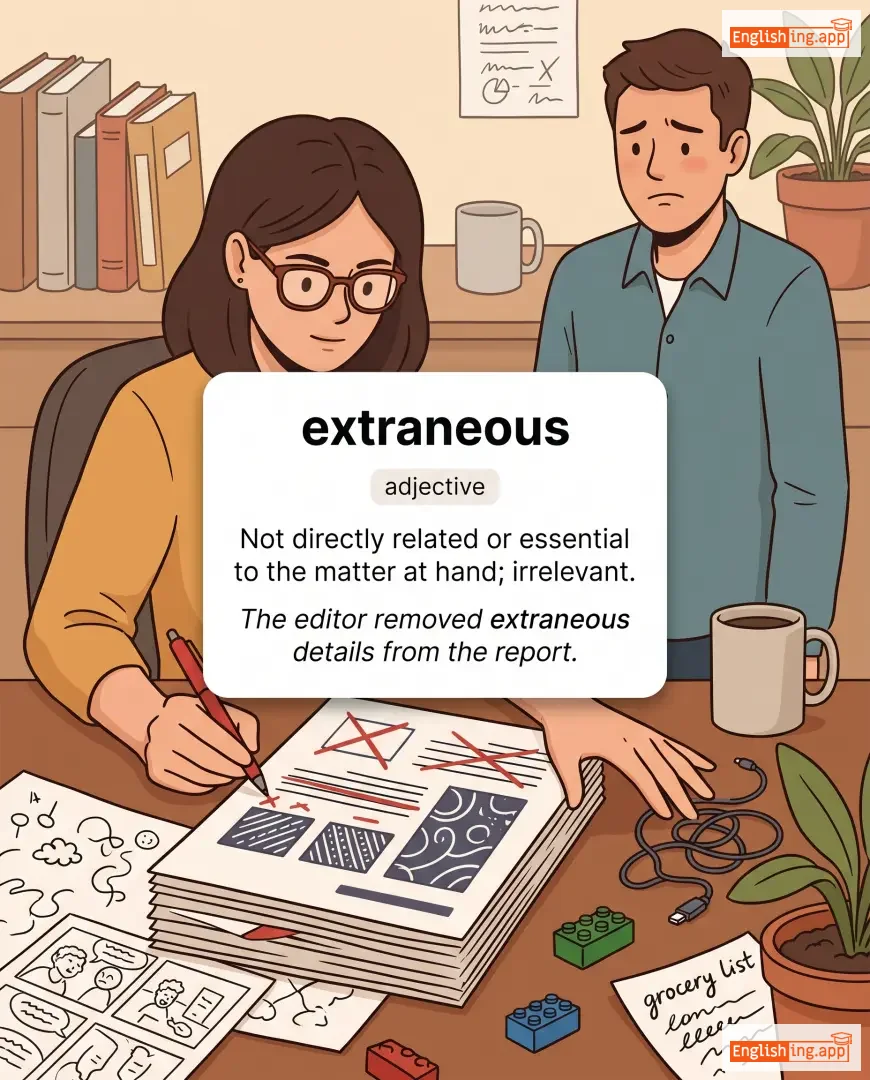
Not directly related or essential to the matter at hand; irrelevant.
••••••
|
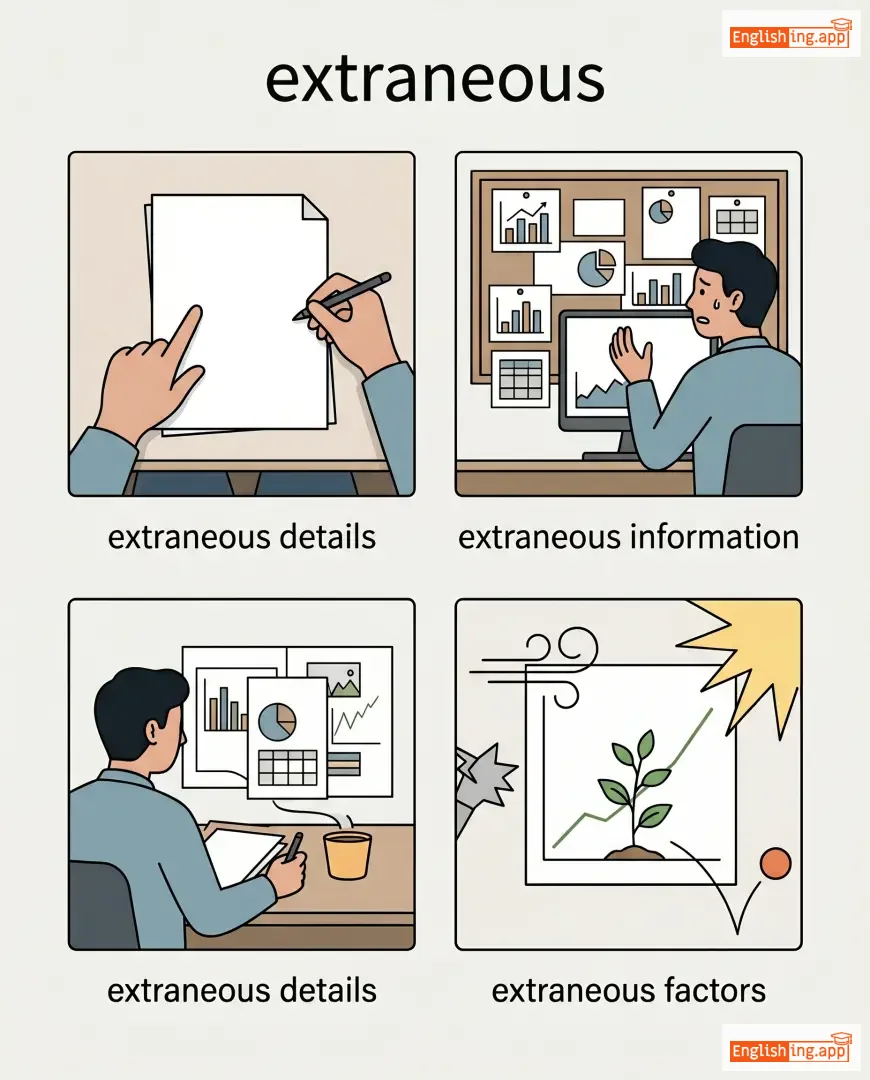
The editor removed extraneous details from the report. |
編集者は報告書から無関係な詳細を削除しました。
Henshū-sha wa hōkokusho kara mukankei na shōsai o sakujo shimashita.
••••••
|
- •••••• | - •••••• | - •••••• |
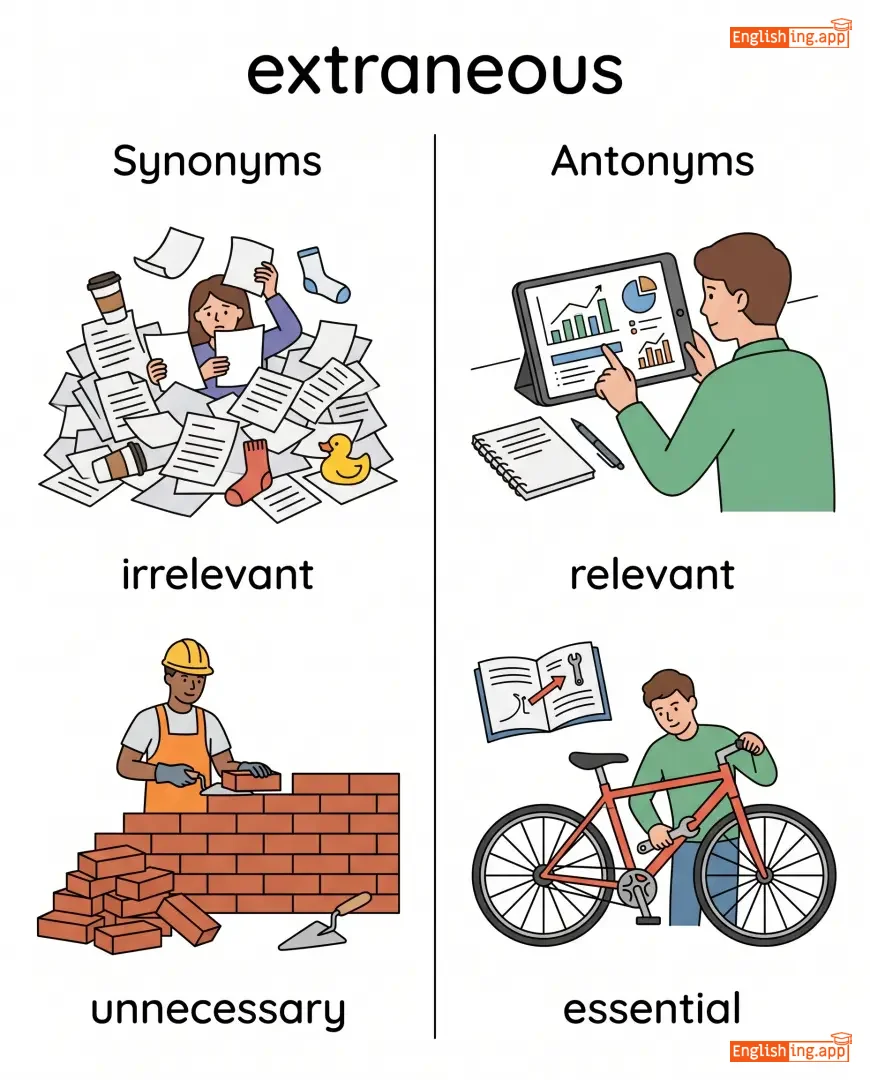
irrelevant, unnecessary, unrelated, superfluous, redundant
••••••
|
relevant, essential, necessary
••••••
|
extraneous details, extraneous information, extraneous factors, extraneous noise
••••••
|
Extraneousはextra(追加)+ous(無駄な)という意味です。
••••••
|
|
🔮
••••••
|
/ɪkˌstræp.əˈleɪ.ʃən/
noun
(エクストラポレーション)
••••••
|
|
外挿
gaizō
••••••
|
- •••••• | - •••••• | - •••••• | - •••••• |
The process of estimating or predicting something based on extending known information.
••••••
|
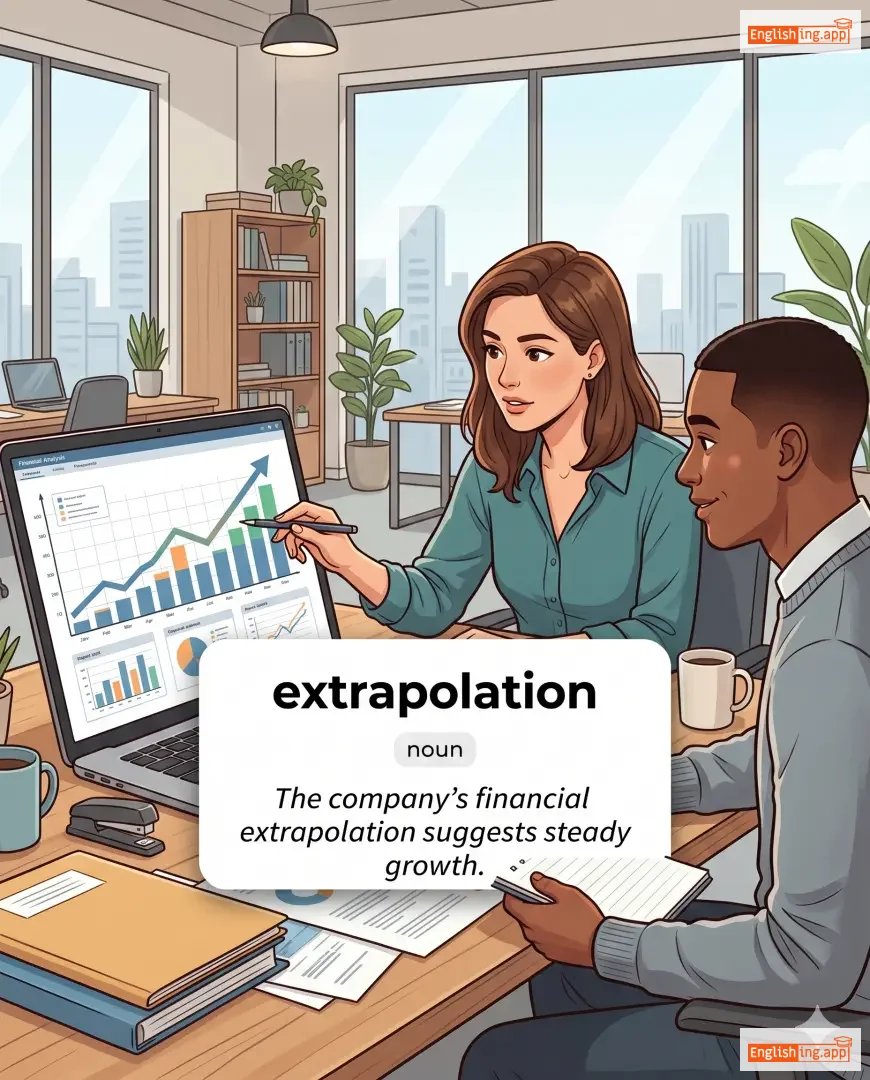
The company's financial extrapolation suggests steady growth. |
その会社の財務的外挿は、安定した成長を示唆しています。
sono kaisha no zaimutekī gaizō wa, antei shita seichō o shisa shiteimasu.
••••••
|
- •••••• | - •••••• | - •••••• |
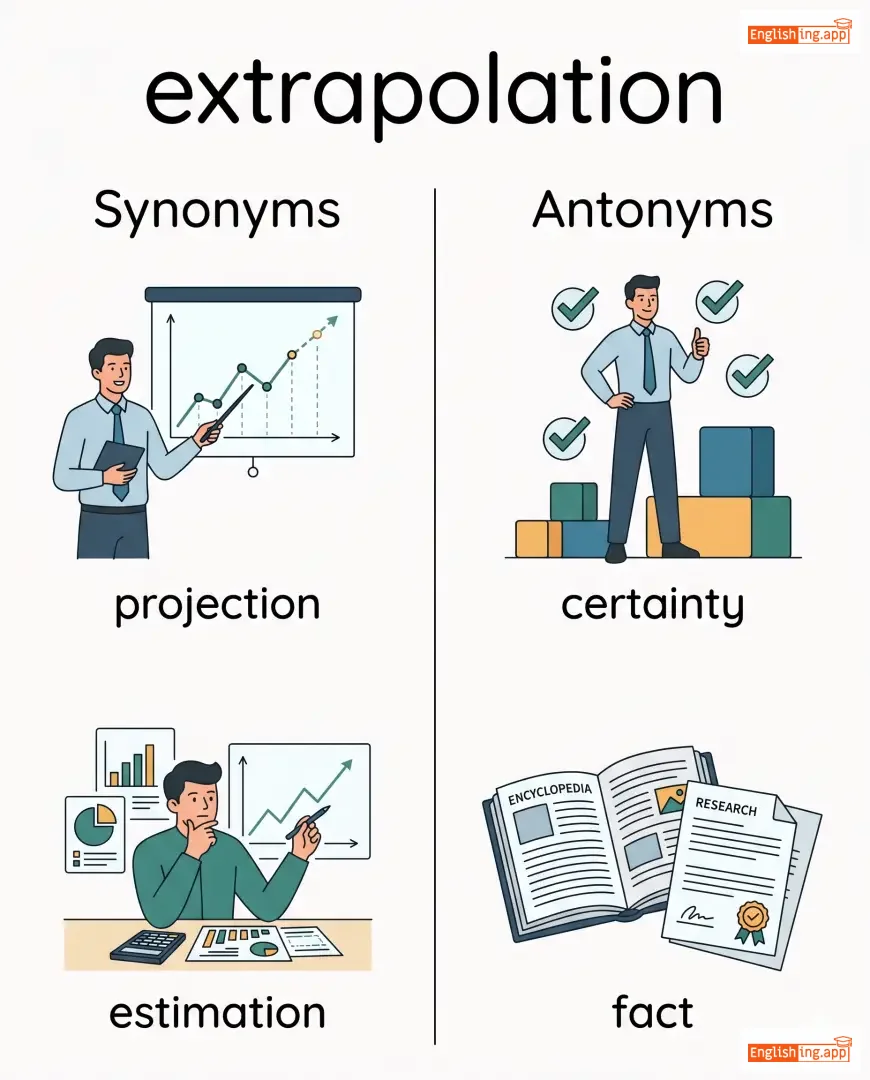
projection, estimation, inference, prediction, forecast
••••••
|
certainty, fact
••••••
|
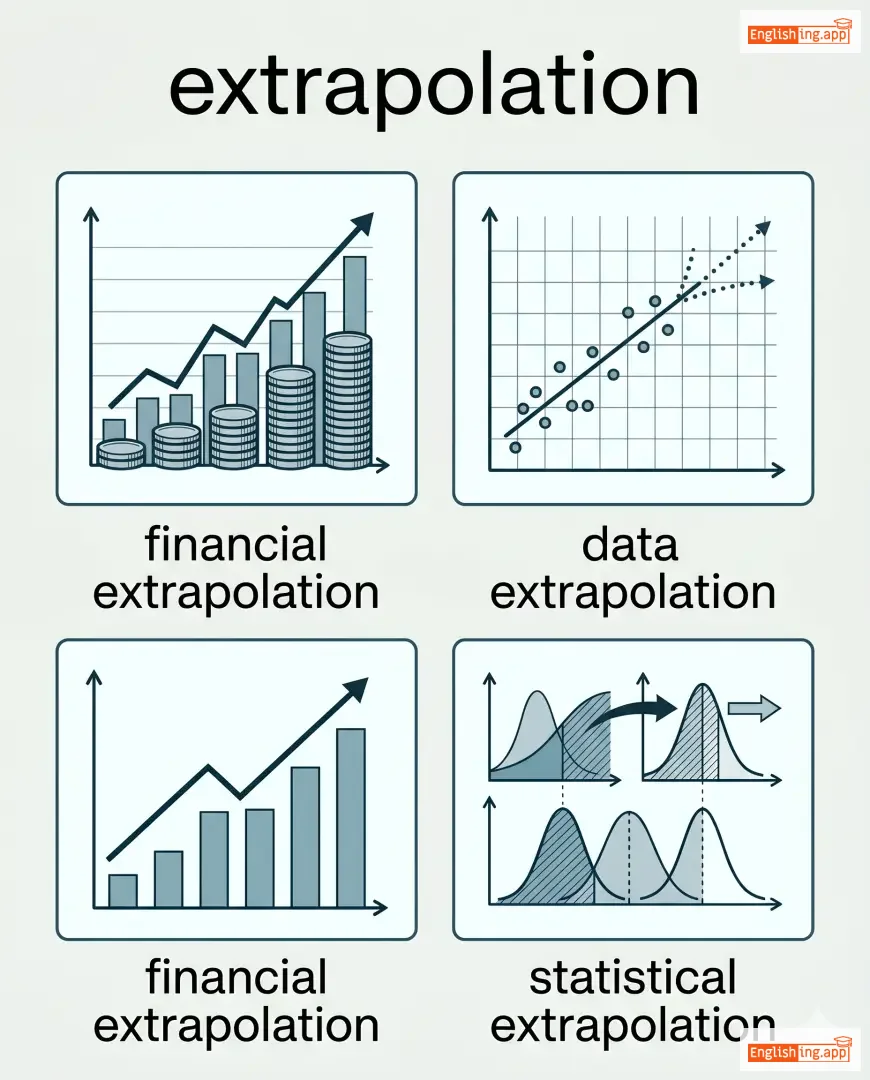
financial extrapolation, data extrapolation, statistical extrapolation, extrapolation method
••••••
|
Extrapolation = extra + 予測 → 追加データから予測する。
••••••
|
|
🌐
••••••
|
/ɛkˈstrɪnzɪk/
adjective
(エクストリンシック)
••••••
|
|
外的
gaiteki
••••••
|
- •••••• | - •••••• | - •••••• | - •••••• |
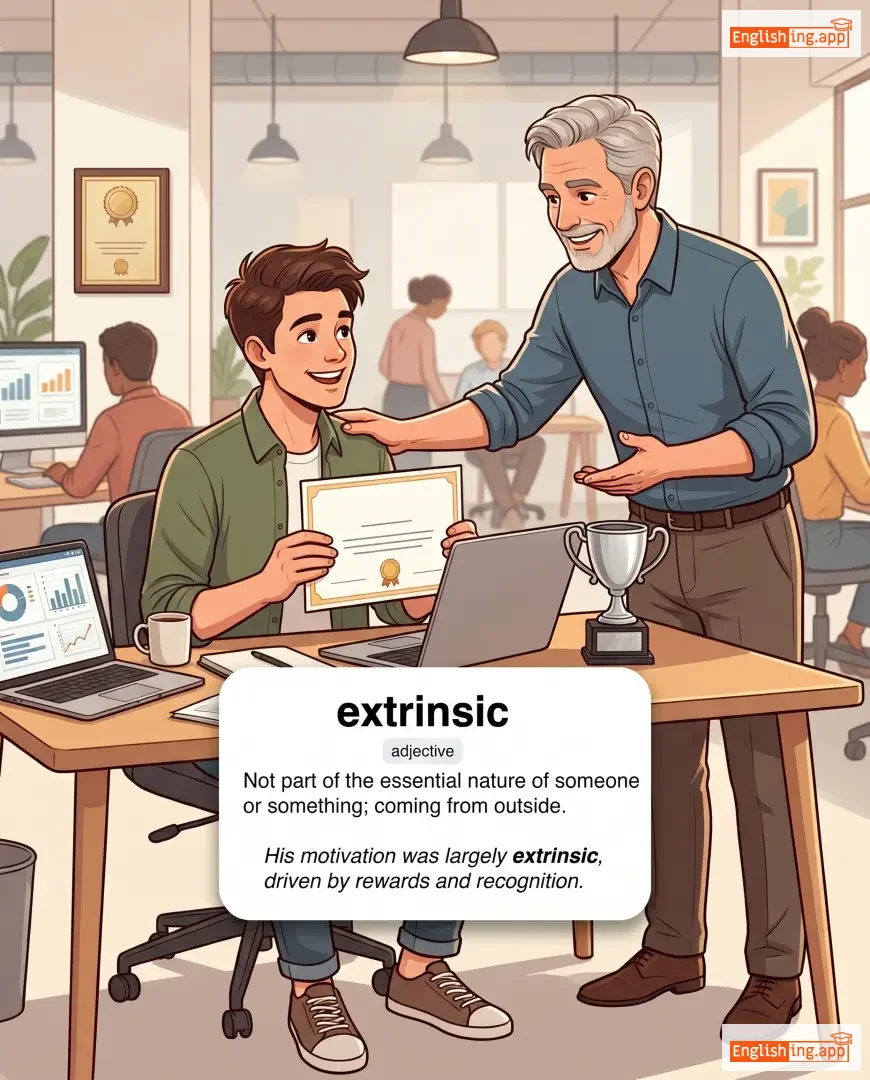
Not part of the essential nature of someone or something; coming from outside.
••••••
|
His motivation was largely extrinsic, driven by rewards and recognition. |
彼の動機は主に外的なもので、報酬や認識によって駆動されていました。
Kare no dōki wa omoni gaiteki na mono de, hōshū ya ninshiki ni yotte kudō sarete imashita.
••••••
|
extrinsic motivation |
motivation that comes from external factors like money, grades, or praise
••••••
|
外的動機
gaiteki dōki
••••••
|
external, outside, foreign, nonessential
••••••
|
intrinsic, inherent
••••••
|
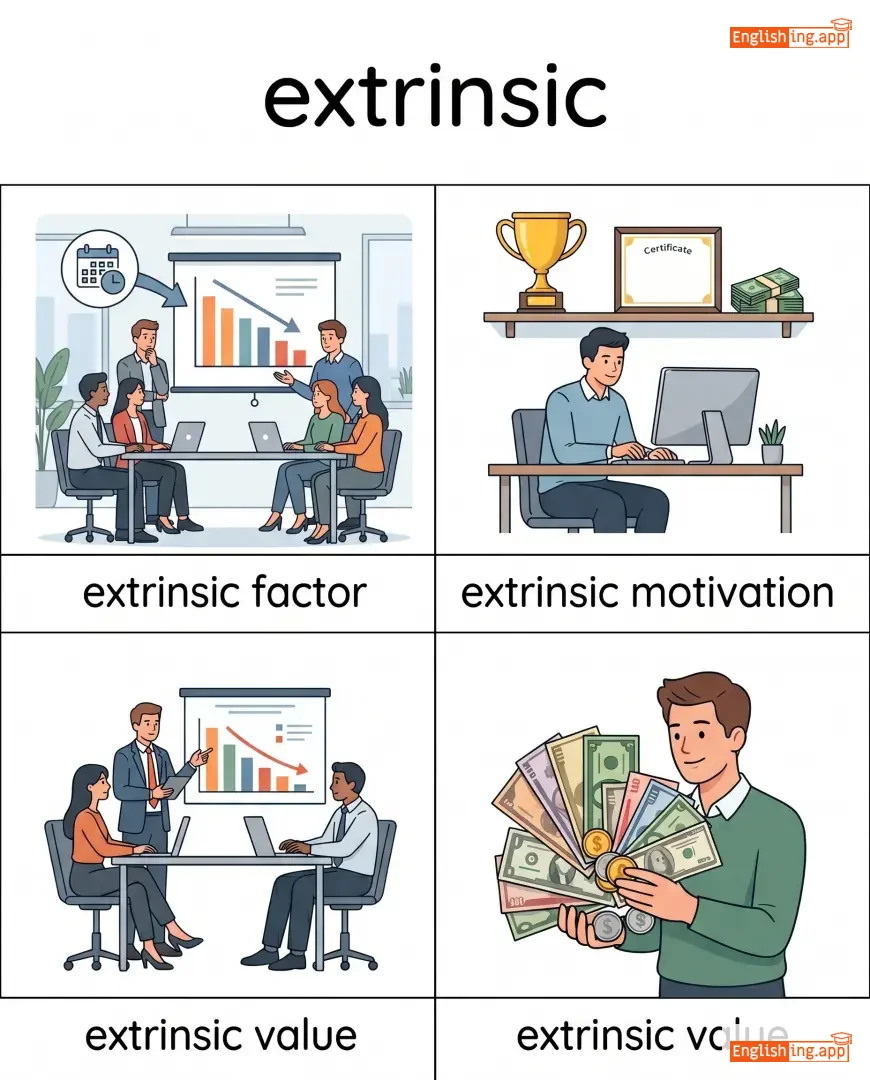
extrinsic factor, extrinsic motivation, extrinsic value
••••••
|
Extra (外部) + intrinsic、extrinsic は外的
••••••
|
|
😏
••••••
|
/fəˈsiːʃəs/
adjective
(フェイシャス)
••••••
|

|
皮肉な
hiniku na
••••••
|
- •••••• | - •••••• | - •••••• | - •••••• |
Treating serious issues with deliberately inappropriate humor
••••••
|
He was being facetious when he said he wanted to live on the moon. |
彼は月に住みたいと言ったとき、皮肉を言っていた。
Kare wa tsuki ni sumitai to itta toki, hiniku o itte ita.
••••••
|
- •••••• | - •••••• | - •••••• |
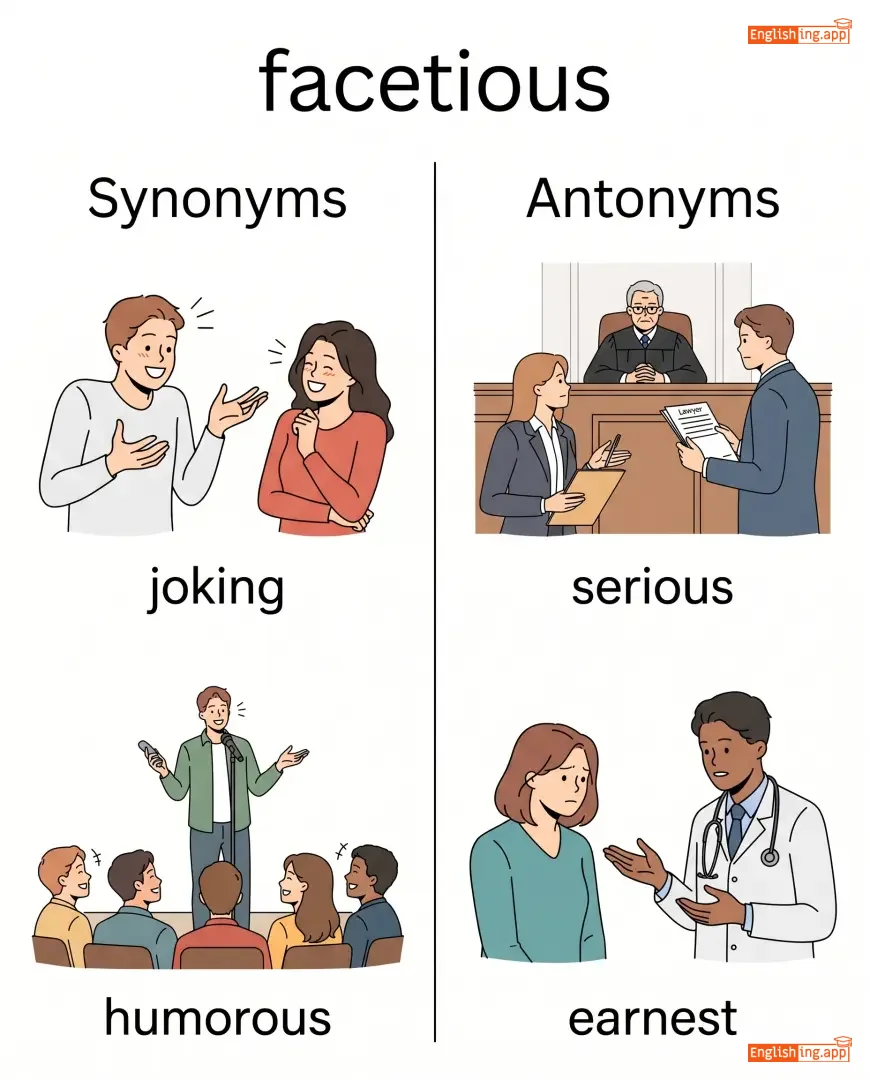
joking, humorous, playful, witty, flippant
••••••
|
serious, earnest, solemn
••••••
|
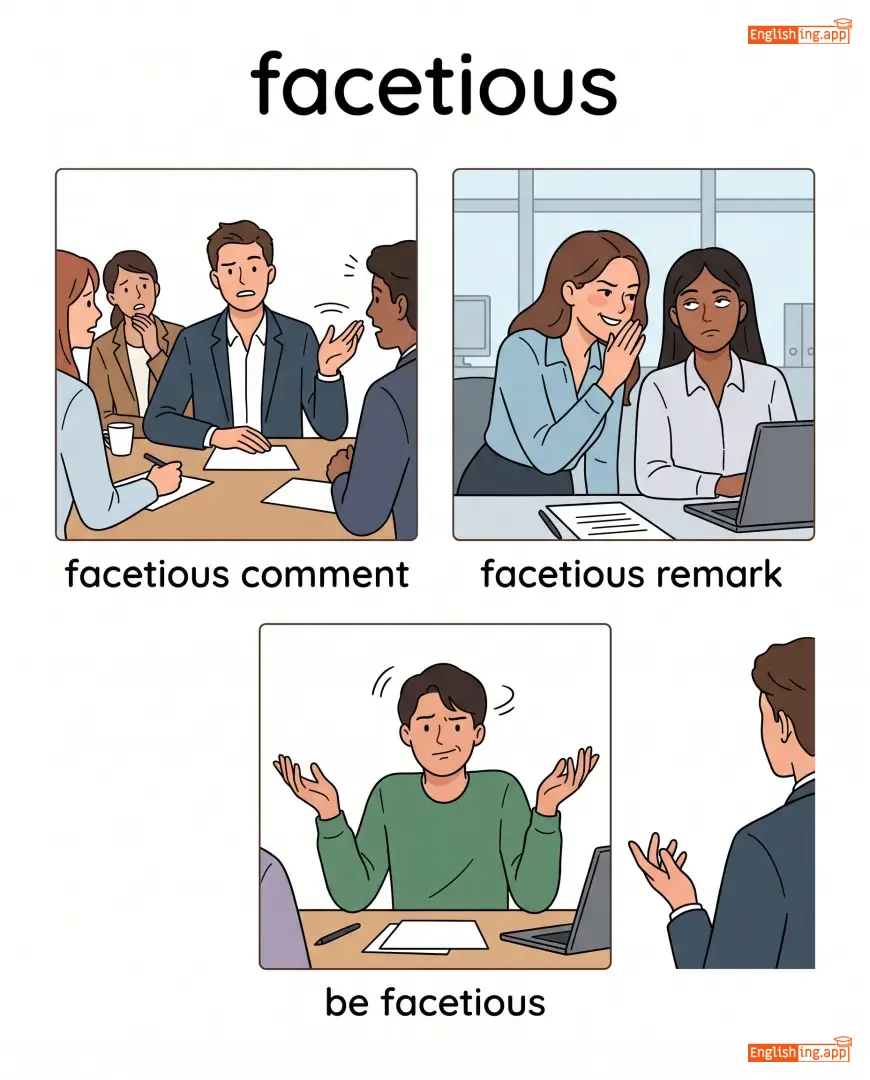
facetious comment, facetious remark, be facetious
••••••
|
Facetious = 'Face' と '皮肉' で真面目なことを冗談にする。
••••••
|
|
⚙️
••••••
|
/fəˈsɪlɪteɪt/
verb
(ファシリテート)
••••••
|


|
促進する、容易にする
sokushin suru, yōi ni suru
••••••
|
facilitated
ファシリテーテッド
••••••
|
facilitated
ファシリテーテッド
••••••
|
facilitates
ファシリテーツ
••••••
|
facilitating
ファシリテーティング
••••••
|
to make an action or process easier or smoother
••••••
|
The new software will facilitate communication between departments.
新しいソフトウェアは部門間のコミュニケーションを促進します。
••••••
|
新しいソフトウェアは部門間のコミュニケーションを促進します。
Atarashī sofutowea wa bumonkan no komyunikēshon o sokushin shimasu.
••••••
|
- •••••• | - •••••• | - •••••• |
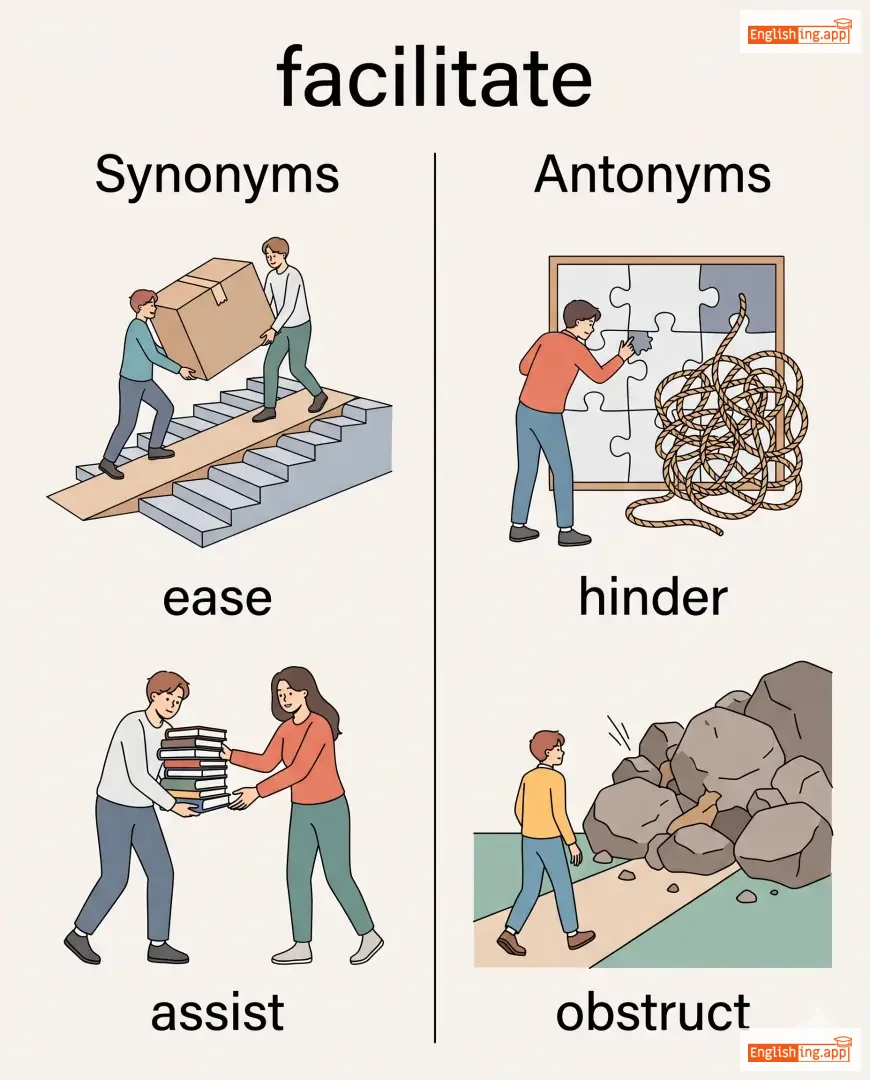
ease, assist, simplify, aid
••••••
|
hinder, obstruct, complicate
••••••
|
facilitate communication, facilitate process, facilitate learning, facilitate discussion
••••••
|
Facilitate - Face ill を楽にする
••••••
|
|
🛠️
••••••
|
/fækˈtoʊtəm/
noun
(ファクトトム)
••••••
|

|
オールラウンダー
ōrāundā
••••••
|
- •••••• | - •••••• | - •••••• | - •••••• |
an employee who does many different types of work; a general servant
••••••
|
He worked as a factotum, handling both clerical and maintenance duties. |
彼はファクトトムとして働き、事務的な仕事とメンテナンス作業の両方を担当していました。
Kare wa faktotomu toshite hataraki, jimuteki na shigoto to mentenansu sagyō no ryōhō o tantō shite imashita.
••••••
|
- •••••• | - •••••• | - •••••• |
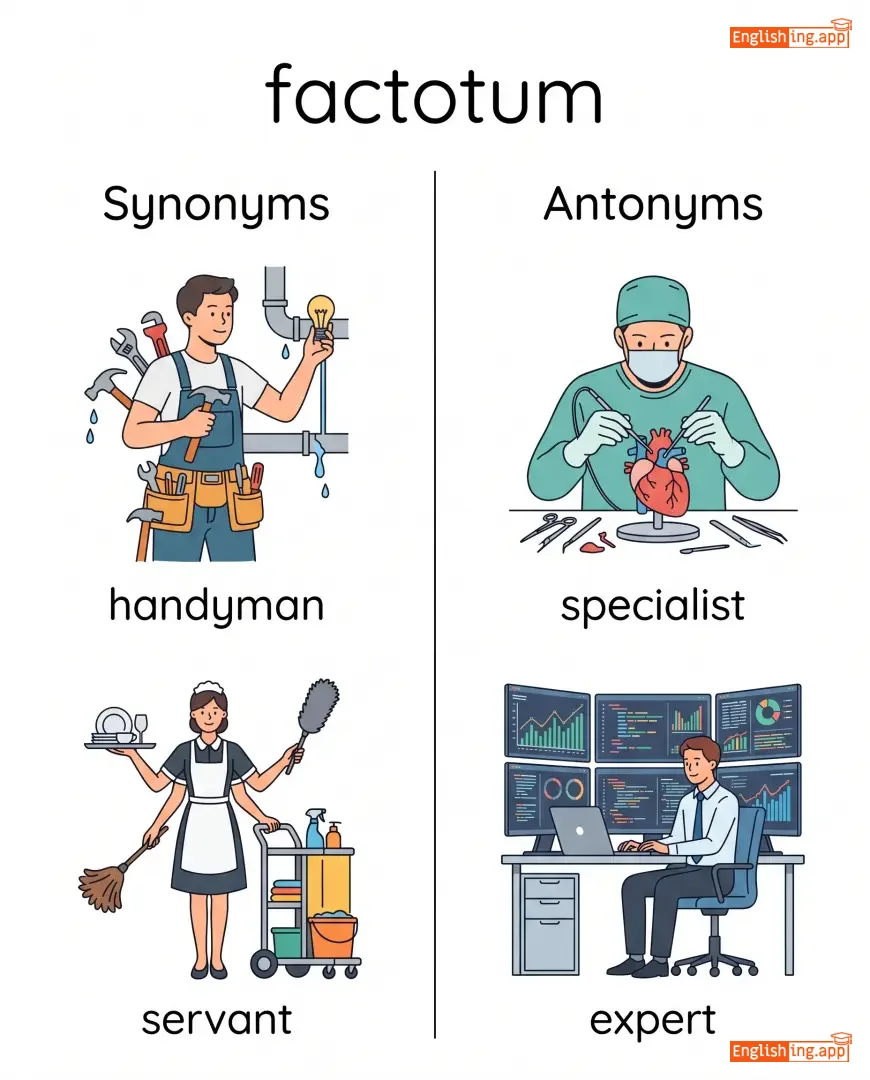
handyman, servant, assistant, all-rounder
••••••
|
specialist, expert
••••••
|
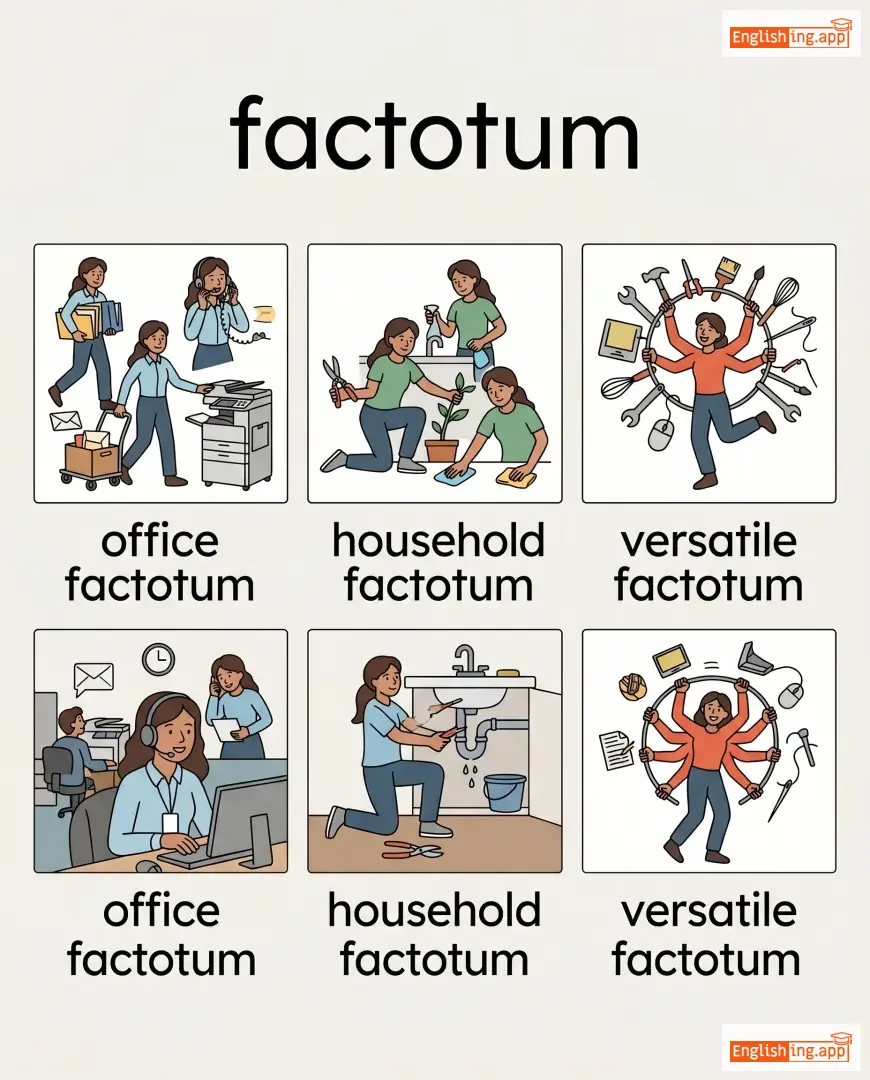
office factotum, household factotum, versatile factotum
••••••
|
ファクトトムはオールラウンダーで、すべての仕事をこなす!
••••••
|
|
❌
••••••
|
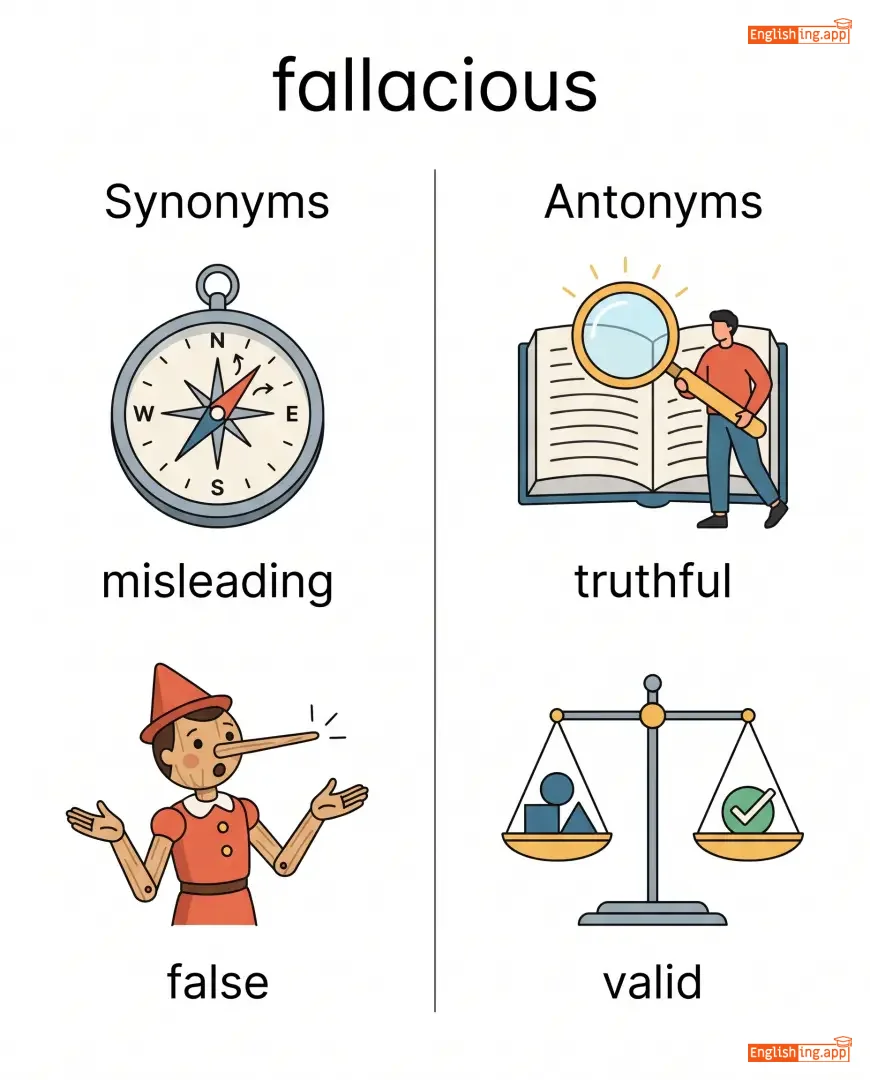
/fəˈleɪ.ʃəs/
adjective
(ファレイシャス)
••••••
|
|
誤解を招く
gokai wo maneku
••••••
|
- •••••• | - •••••• | - •••••• | - •••••• |
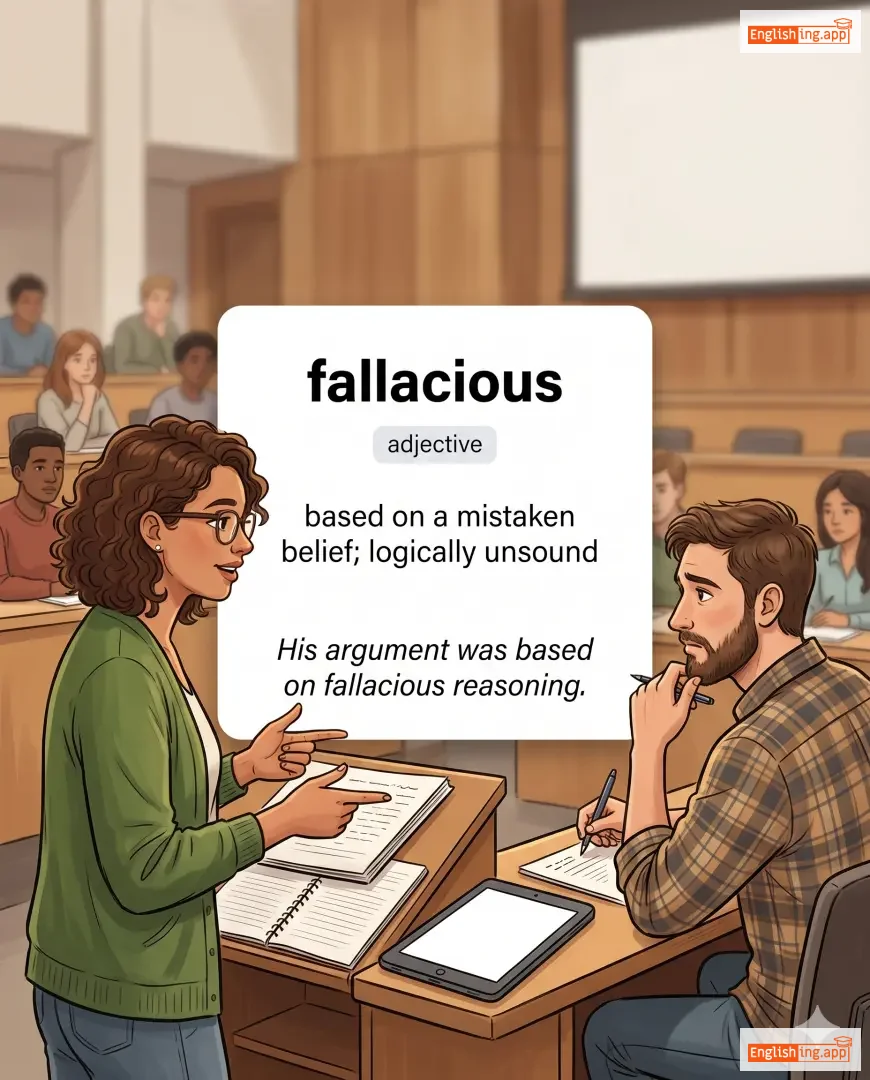
based on a mistaken belief; logically unsound
••••••
|
His argument was based on fallacious reasoning. |
彼の議論は誤解を招く推論に基づいていた。
Kare no giron wa gokai wo maneku suiron ni motozuite ita.
••••••
|
- •••••• | - •••••• | - •••••• |
misleading, false, erroneous, deceptive
••••••
|
truthful, valid, sound
••••••
|
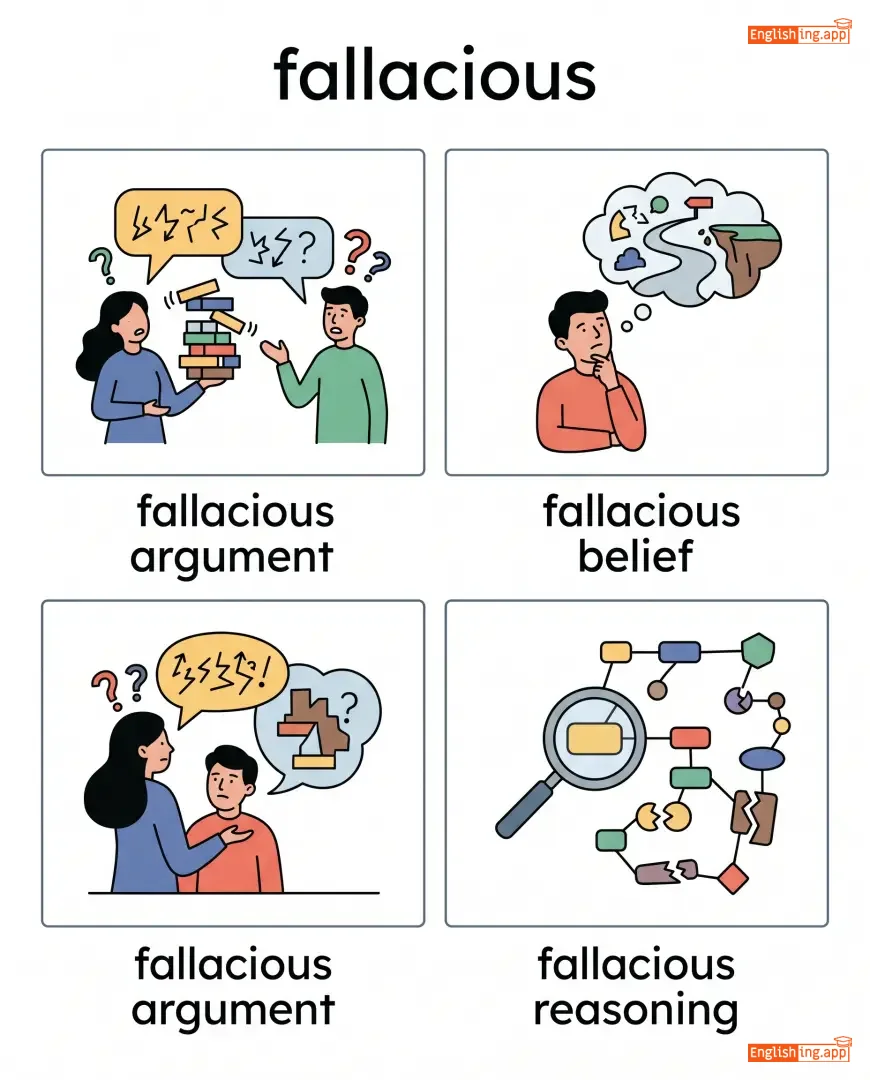
fallacious argument, fallacious belief, fallacious reasoning
••••••
|
Fallacious = 誤った信念 + 反論
••••••
|
|
🌾
••••••
|
/ˈfæloʊ/
adjective
(ファロー)
••••••
|
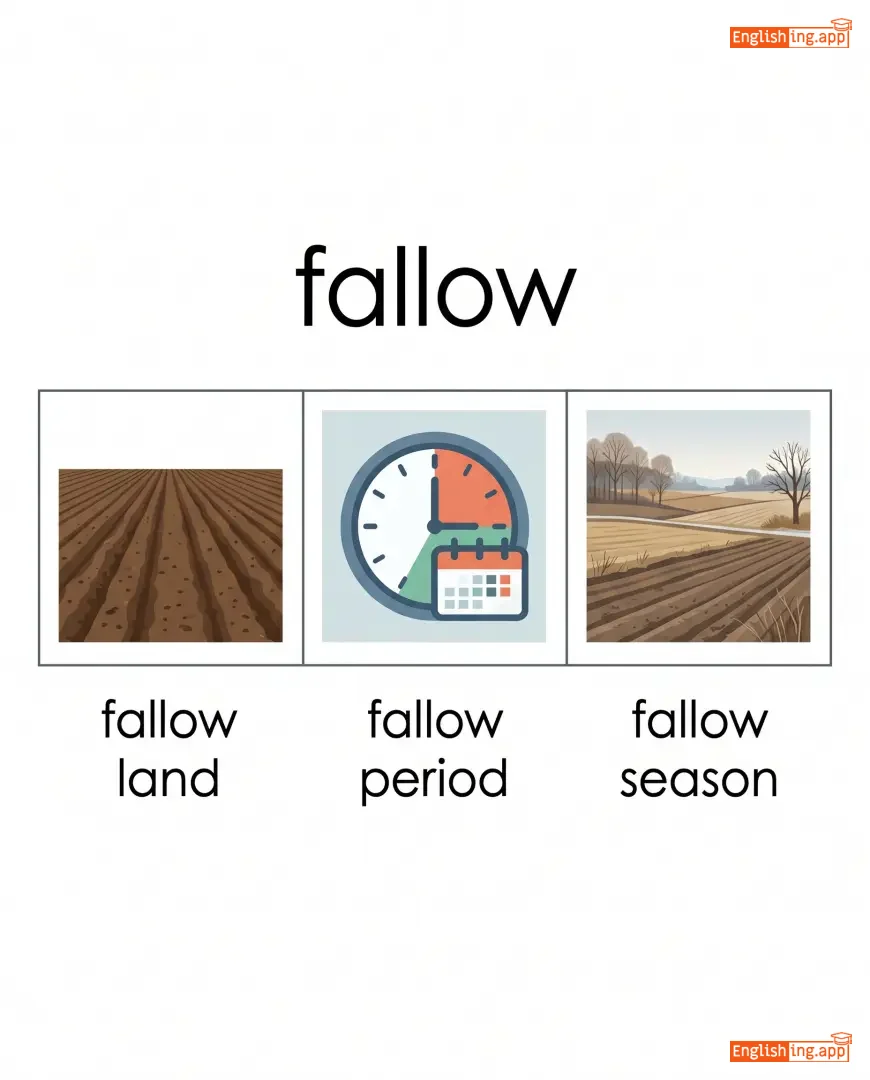
|
休耕, 非活発
kyūkō, hi kappatsu
••••••
|
- •••••• | - •••••• | - •••••• | - •••••• |
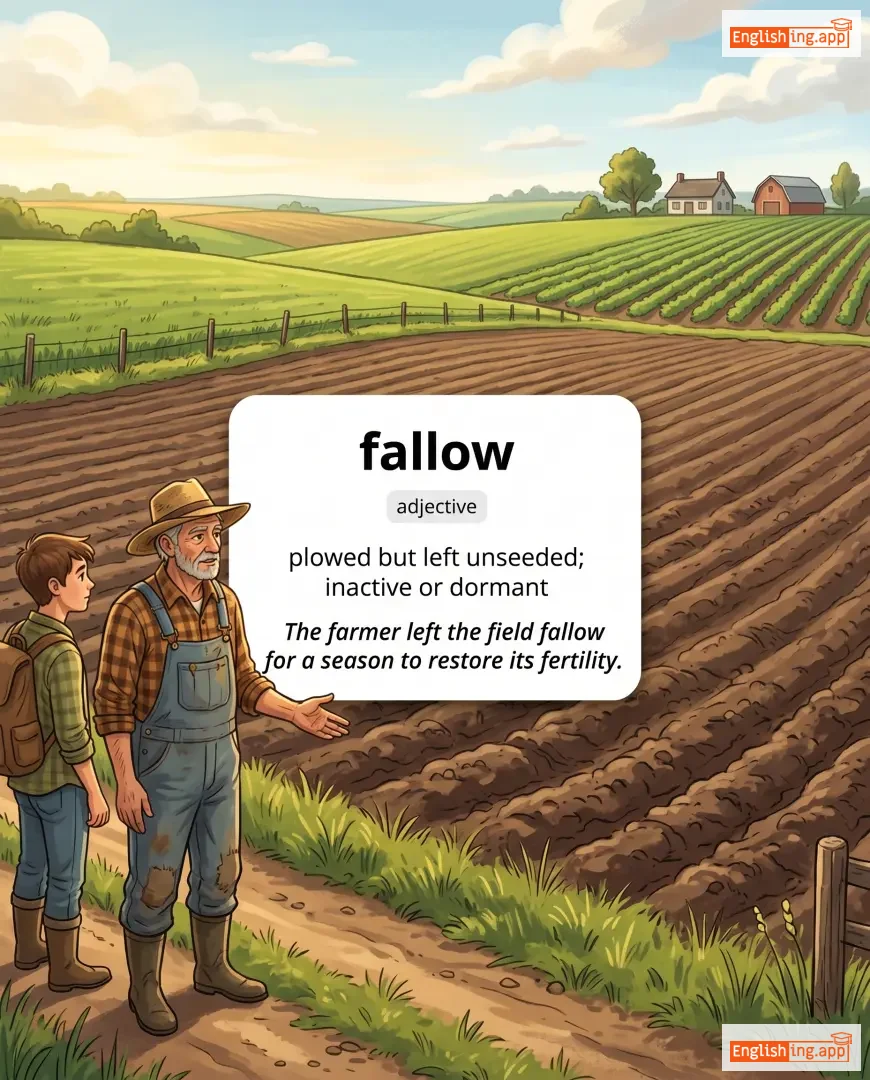
plowed but left unseeded; inactive or dormant
••••••
|
The farmer left the field fallow for a season to restore its fertility. |
農夫は畑を1シーズン休耕させて、その肥沃さを回復させました。
Nōfu wa hatake o 1 shīzun kyūkō sasete, sono hiyokusa o kaifuku sasemashita.
••••••
|
- •••••• | - •••••• | - •••••• |
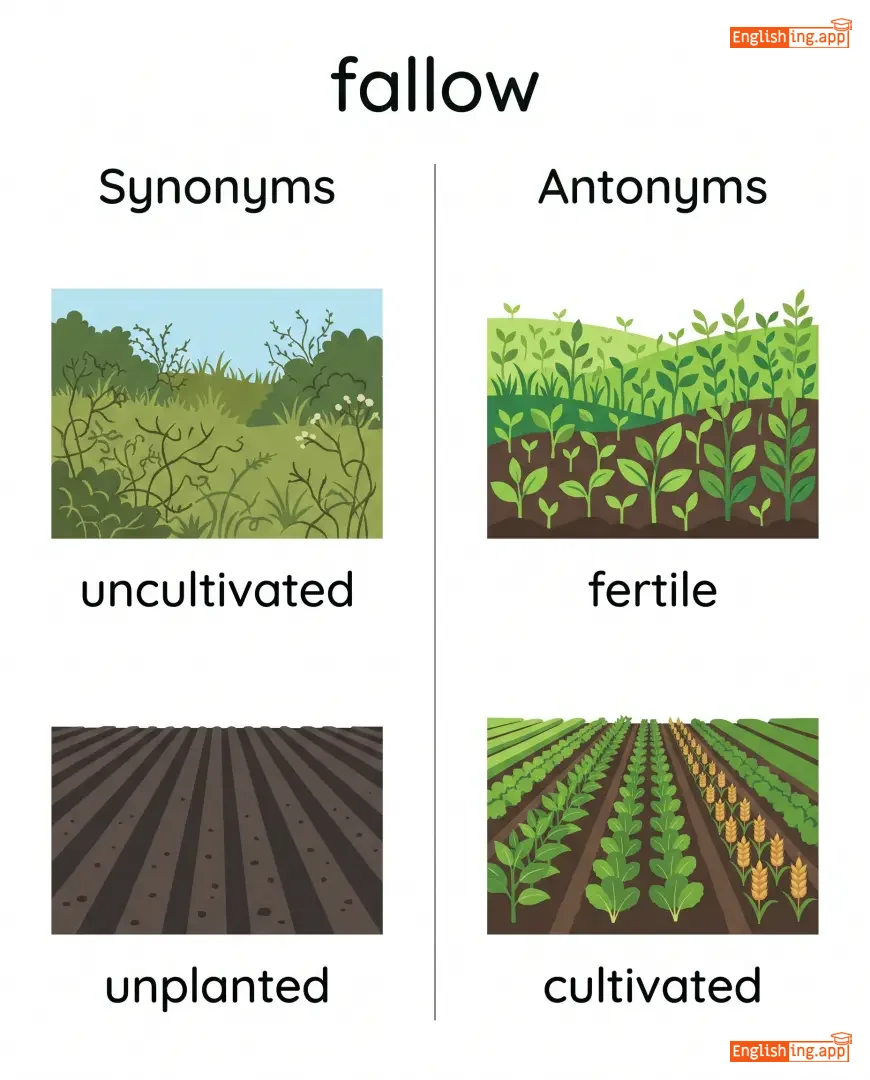
uncultivated, unplanted, dormant, idle
••••••
|
fertile, cultivated, productive
••••••
|
fallow land, fallow period, fallow season
••••••
|
休耕地は作物を育てない
••••••
|
|
🤪
••••••
|
/ˈfætʃuəs/
adjective
(ファチュアス)
••••••
|
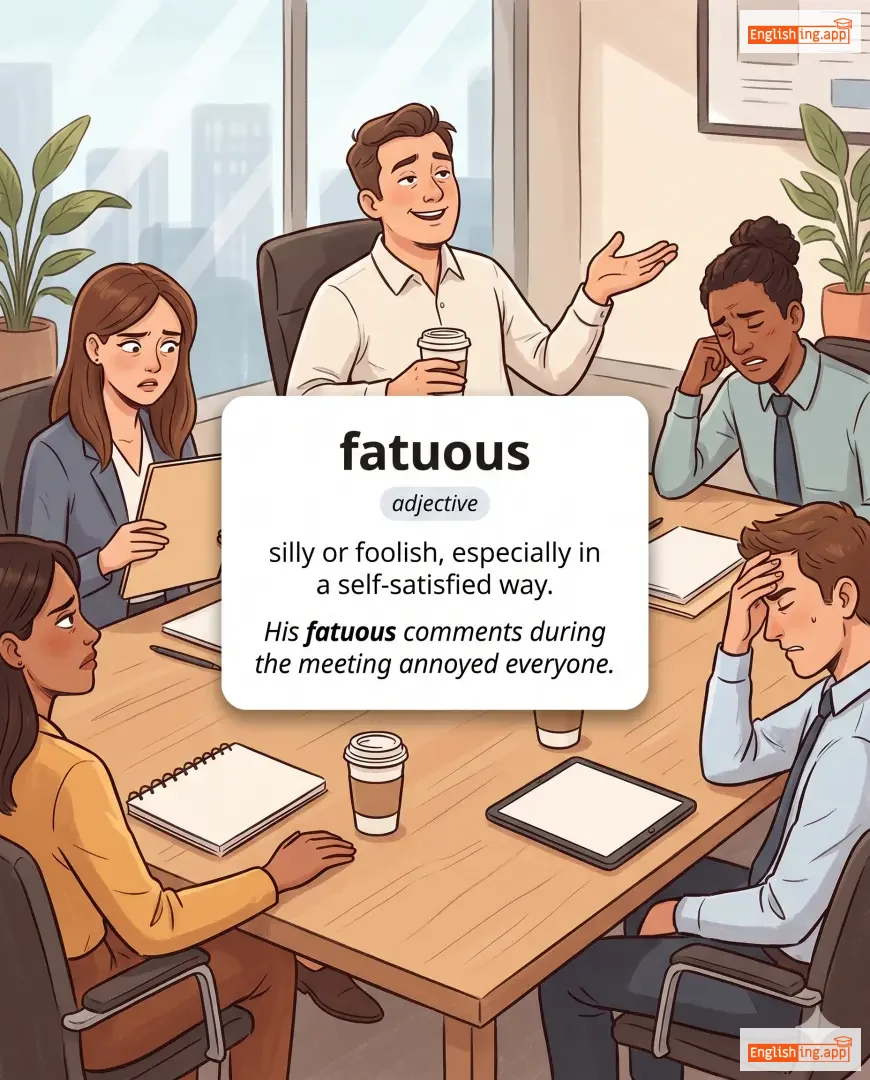
|
愚か
oroka
••••••
|
- •••••• | - •••••• | - •••••• | - •••••• |
silly or foolish, especially in a self-satisfied way
••••••
|
His fatuous comments during the meeting annoyed everyone. |
会議中に彼の愚かなコメントは皆を苛立たせました。
Kaigi-chuu ni kare no oroka na komento wa mina o iradatasemashita.
••••••
|
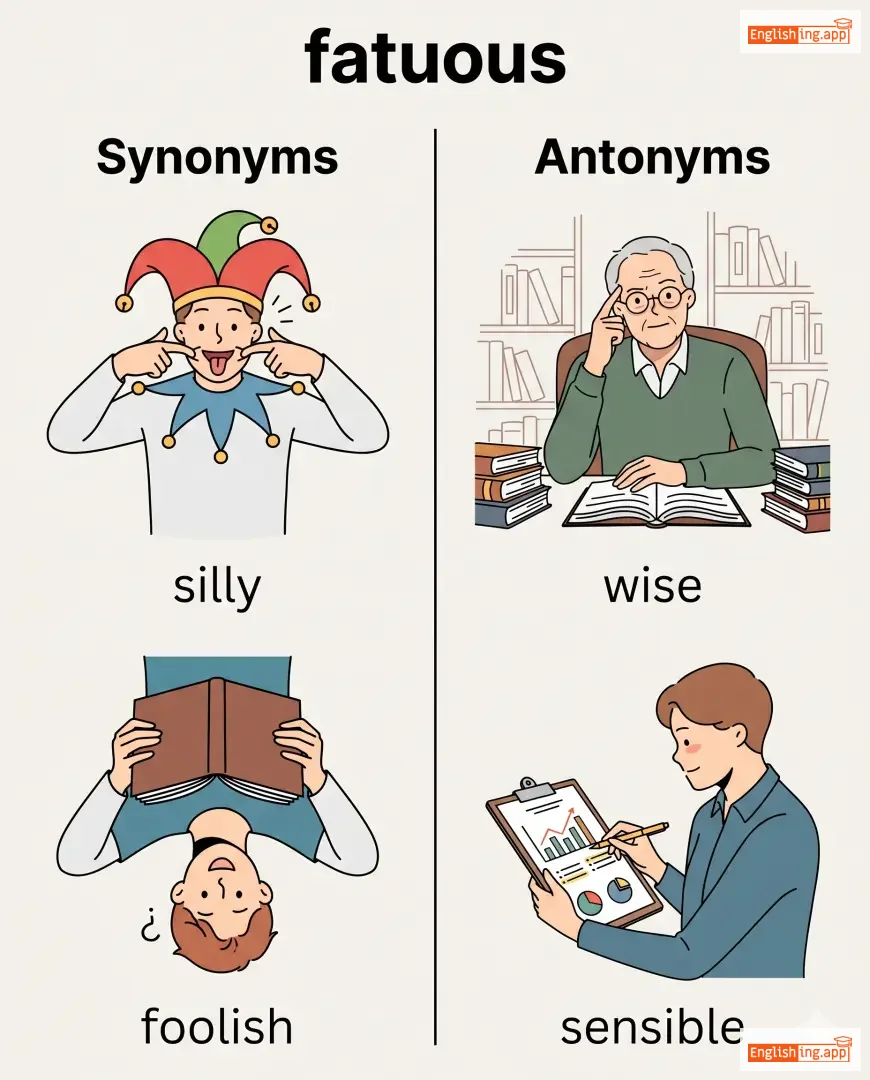
- •••••• | - •••••• | - •••••• |
silly, foolish, inane, absurd
••••••
|
wise, sensible, intelligent
••••••
|
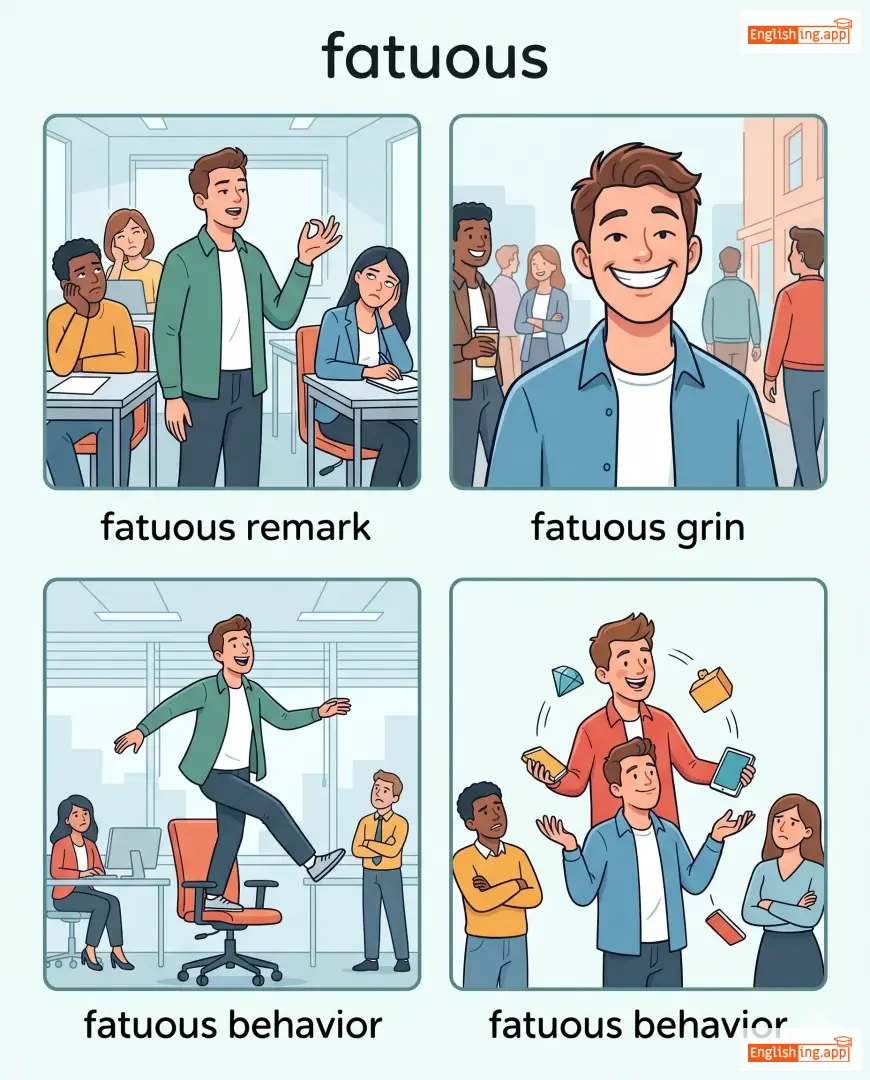
fatuous remark, fatuous grin, fatuous behavior
••••••
|
Fatuousは自分に満足している愚か者です。
••••••
|
|
🦌
••••••
|
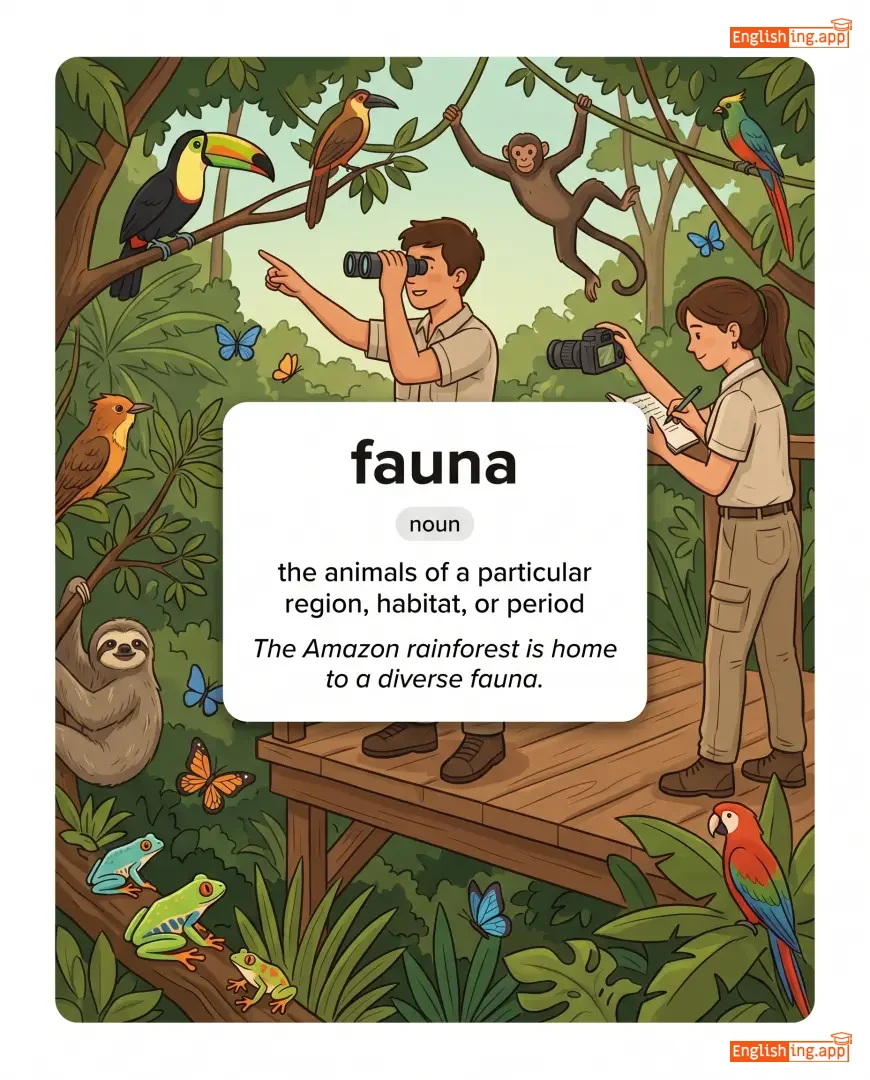
/ˈfɔː.nə/
noun
(ファウナ)
••••••
|
|
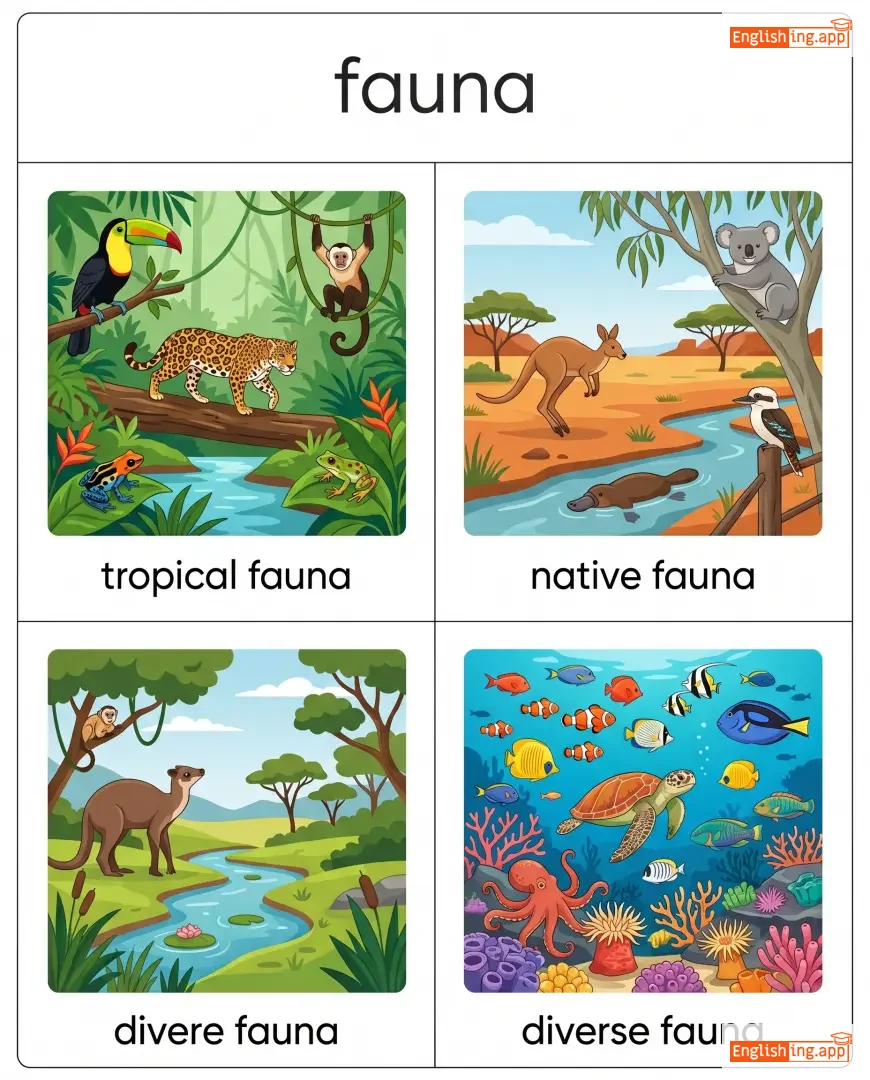
特定の地域の動物の生命
tokutei no chiiki no doubutsu no seimei
••••••
|
- •••••• | - •••••• | - •••••• | - •••••• |
The animal life of a particular region, habitat, or geological period.
••••••
|
The fauna of the African savannah includes lions and elephants. |
アフリカのサバンナの動物はライオンと象を含みます。
Afurika no sabanna no doubutsu wa raion to zou o fukumi masu.
••••••
|
- •••••• | - •••••• | - •••••• |
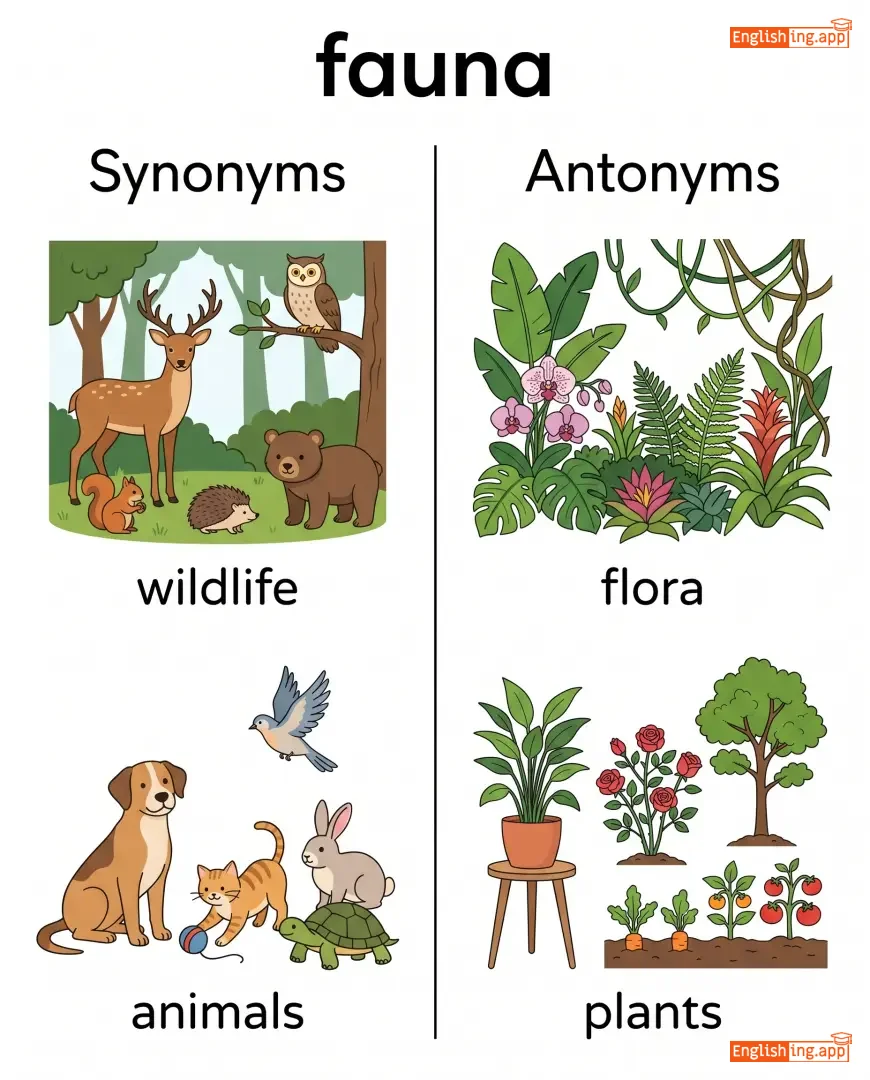
wildlife, animals, zoological life
••••••
|
flora, plants, vegetation
••••••
|
- •••••• |
アフリカのサバンナでライオンや象が歩いているのを思い描いてみましょう。
••••••
|
|
🙇
••••••
|
/ˈfɔːnɪŋ/
adjective
(フォーニング)
••••••
|
|
過度のほめ言葉
kado no homekotoba
••••••
|
- •••••• | - •••••• | - •••••• | - •••••• |
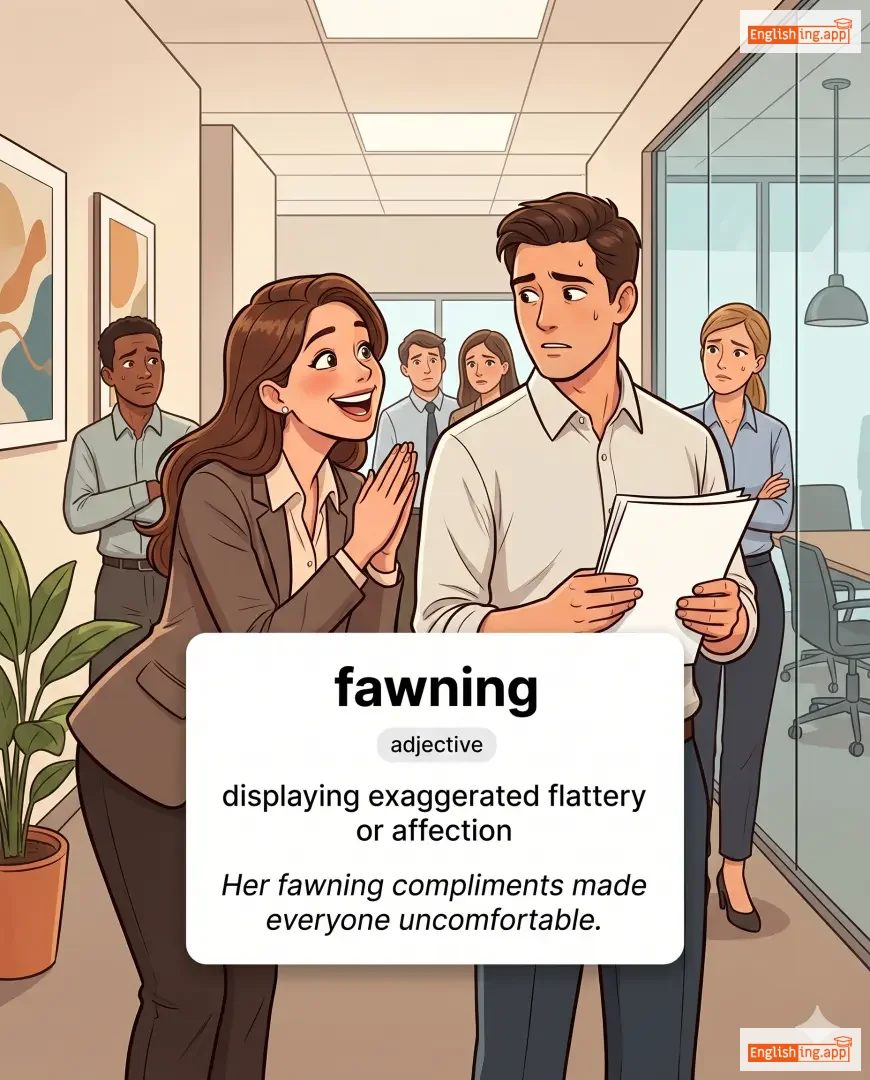
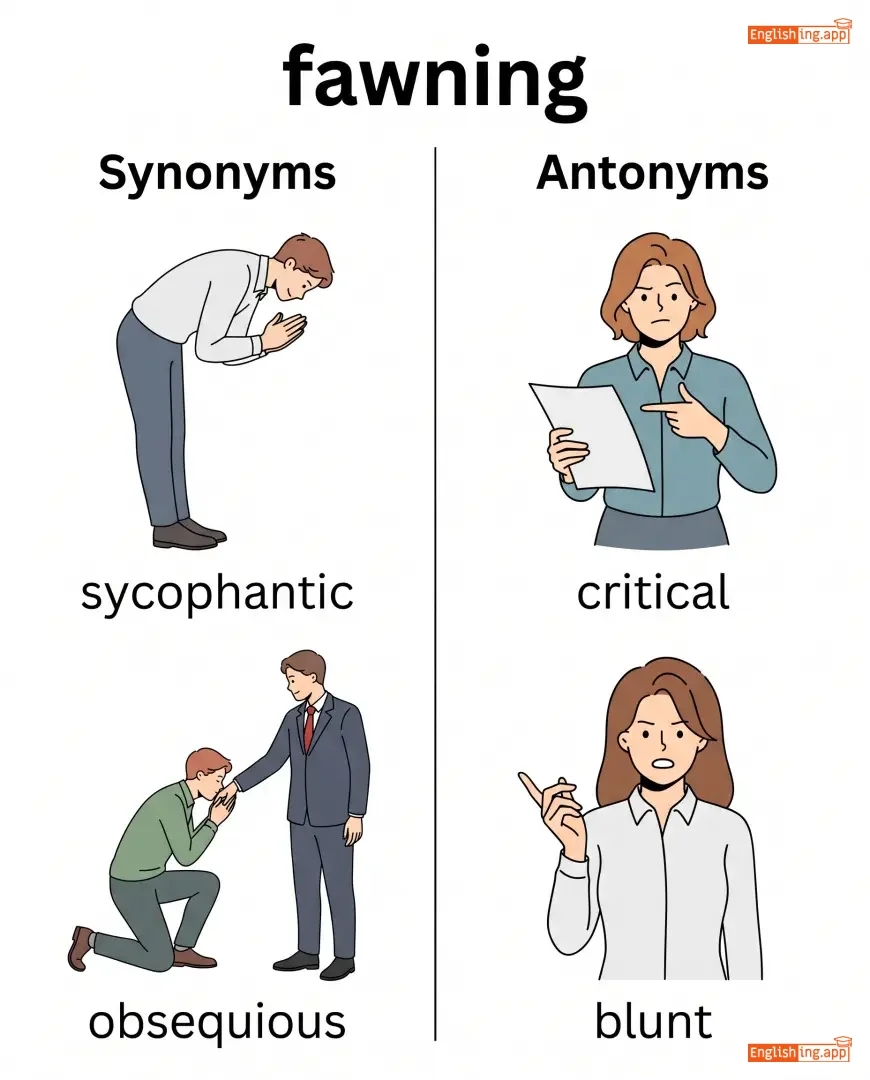
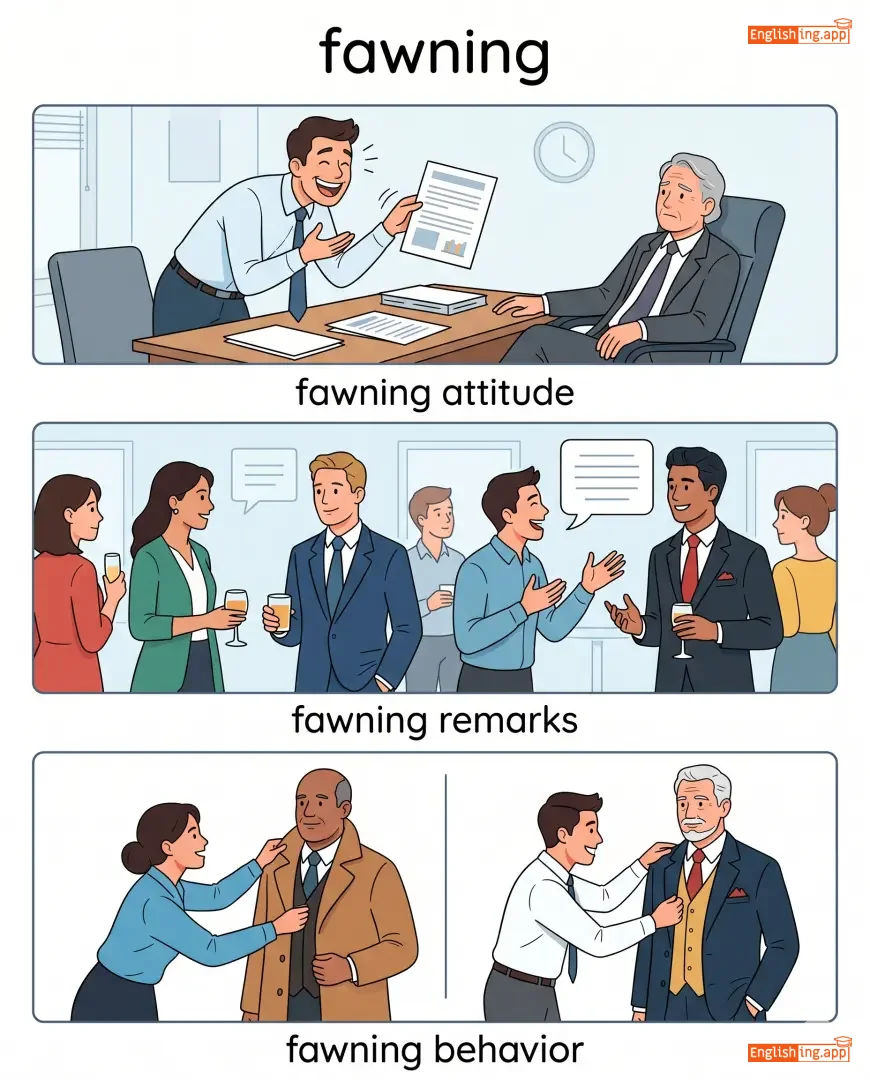
displaying exaggerated flattery or affection
••••••
|
Her fawning compliments made everyone uncomfortable. |
彼女の過度のほめ言葉は、皆を不快にさせました。
Kanojo no kado no homekotoba wa, mina o fukai ni sasemashita.
••••••
|
- •••••• | - •••••• | - •••••• |
sycophantic, obsequious, flattering, ingratiating
••••••
|
critical, blunt
••••••
|
fawning attitude, fawning remarks, fawning behavior
••••••
|
Fawning = Flattering indefinitely makes it fawning
••••••
|
|
😊
••••••
|
/fəˈlɪsɪtəs/
adjective
(フェリシタス)
••••••
|
|
適切な、ふさわしい、または楽しい; 幸運や幸福で特徴付けられる
tekisetsuna, fusawashī, mata wa tanoshī; kōun ya kōfuku de tokuchō zukeraru
••••••
|
- •••••• | - •••••• | - •••••• | - •••••• |
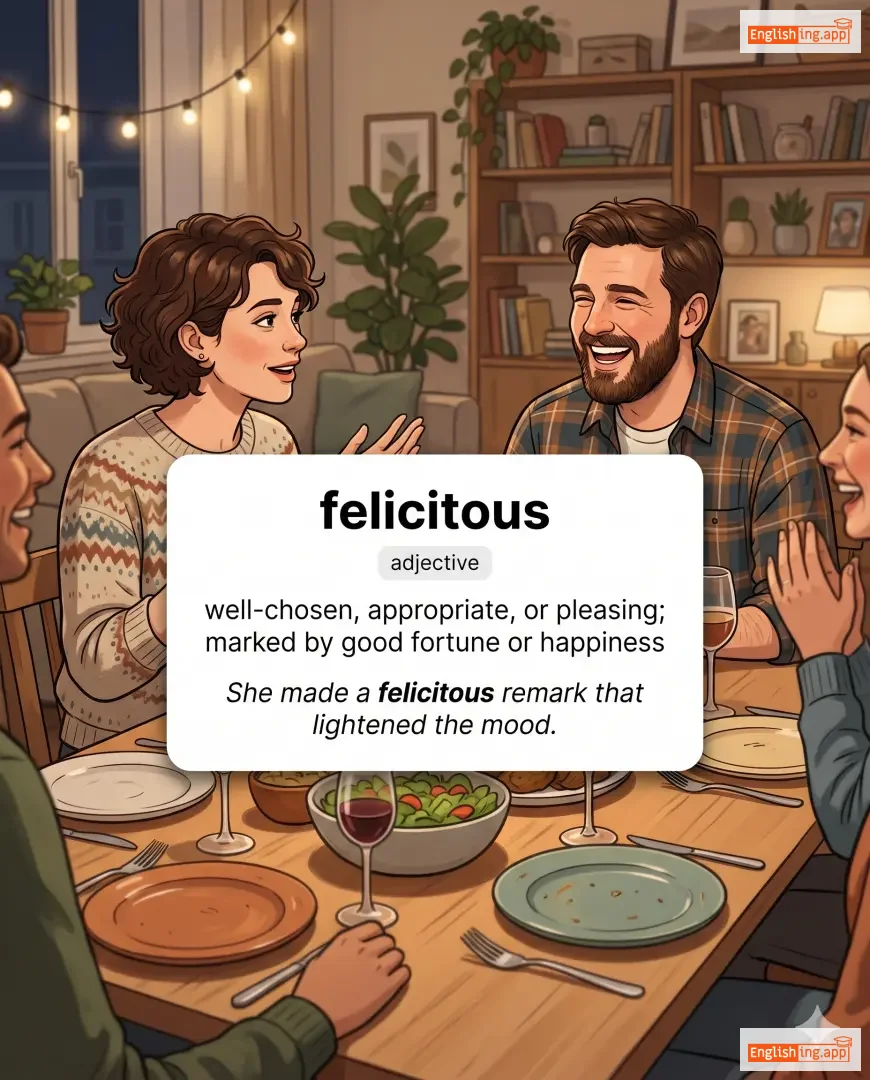
well-chosen, appropriate, or pleasing; marked by good fortune or happiness
••••••
|
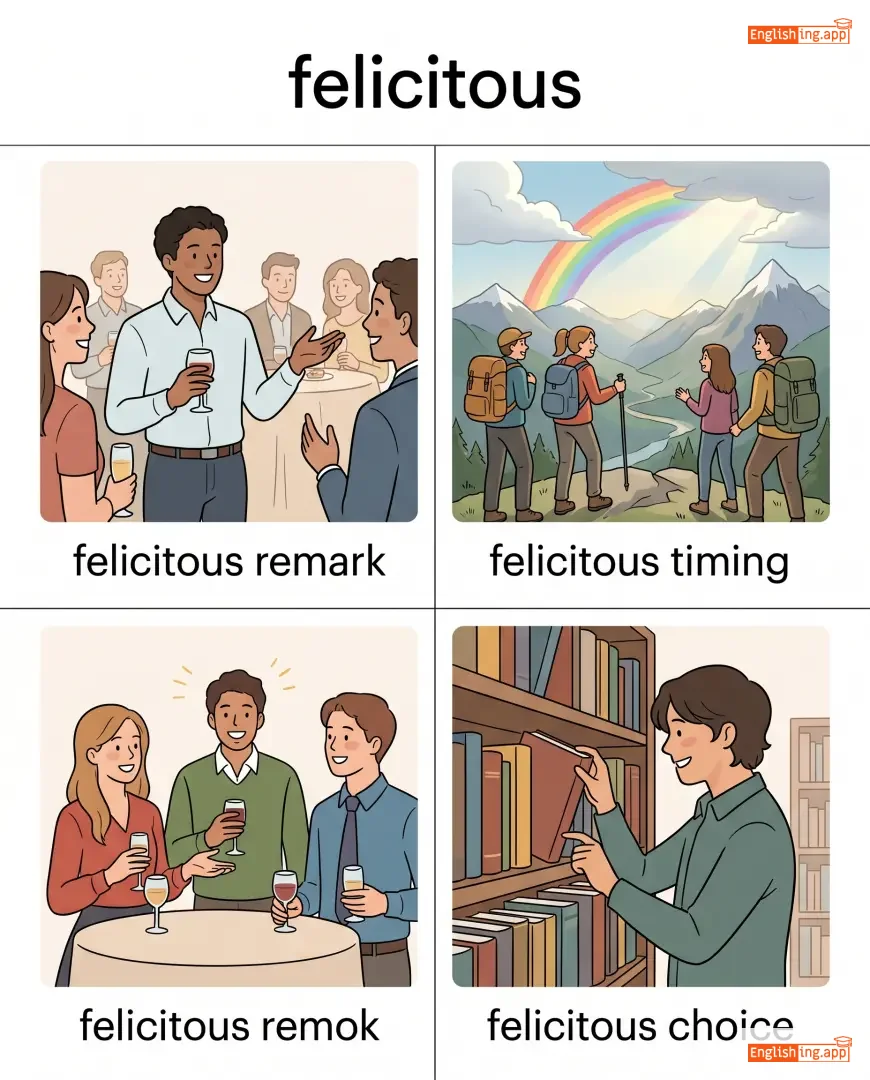
She made a felicitous remark that lightened the mood. |
彼女は気分を軽くする適切なコメントをしました。
Kanojo wa kibun o karuku suru tekisetsuna komento o shimashita.
••••••
|
- •••••• | - •••••• | - •••••• |
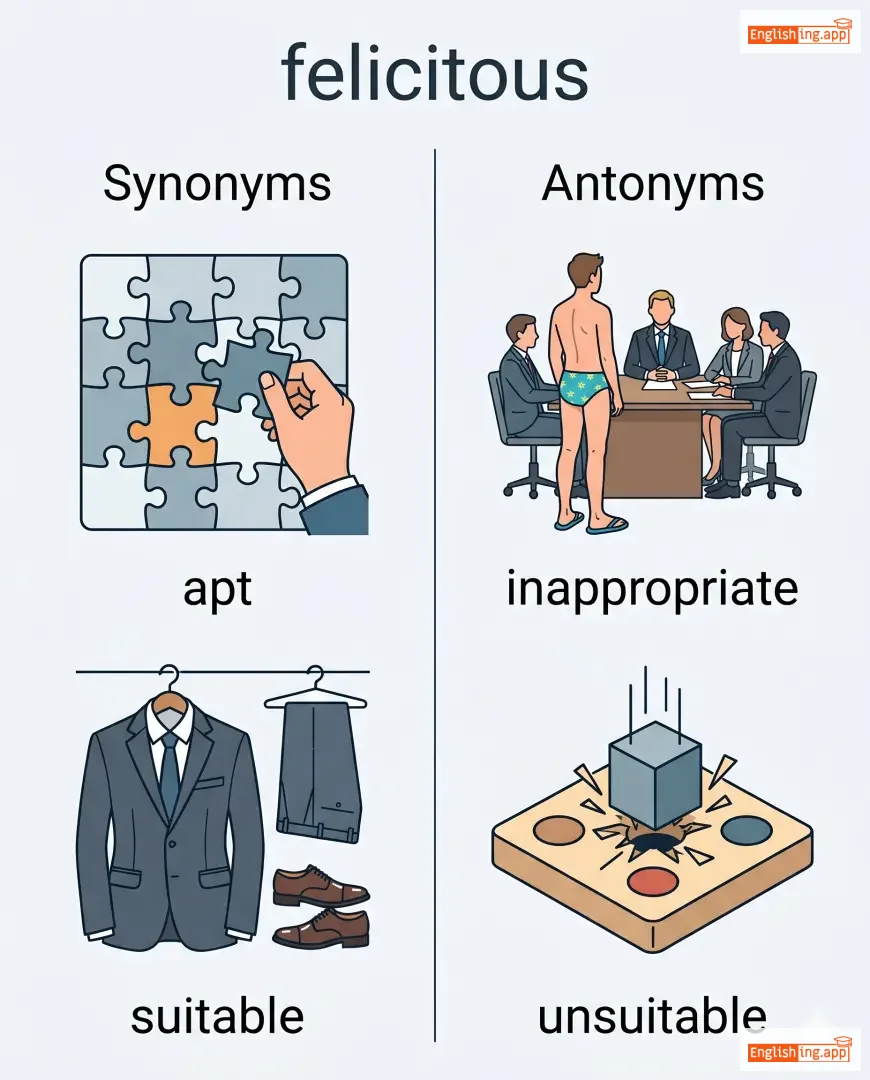
apt, suitable, appropriate, fortunate
••••••
|
inappropriate, unsuitable
••••••
|
felicitous remark, felicitous timing, felicitous choice
••••••
|
FELICitous = FELICity, 幸福なコメントが雰囲気を明るくする。
••••••
|
|
🐾
••••••
|
/ˈfɛrəl/
adjective
(フェラル)
••••••
|
|
野生の
yasei no
••••••
|
- •••••• | - •••••• | - •••••• | - •••••• |
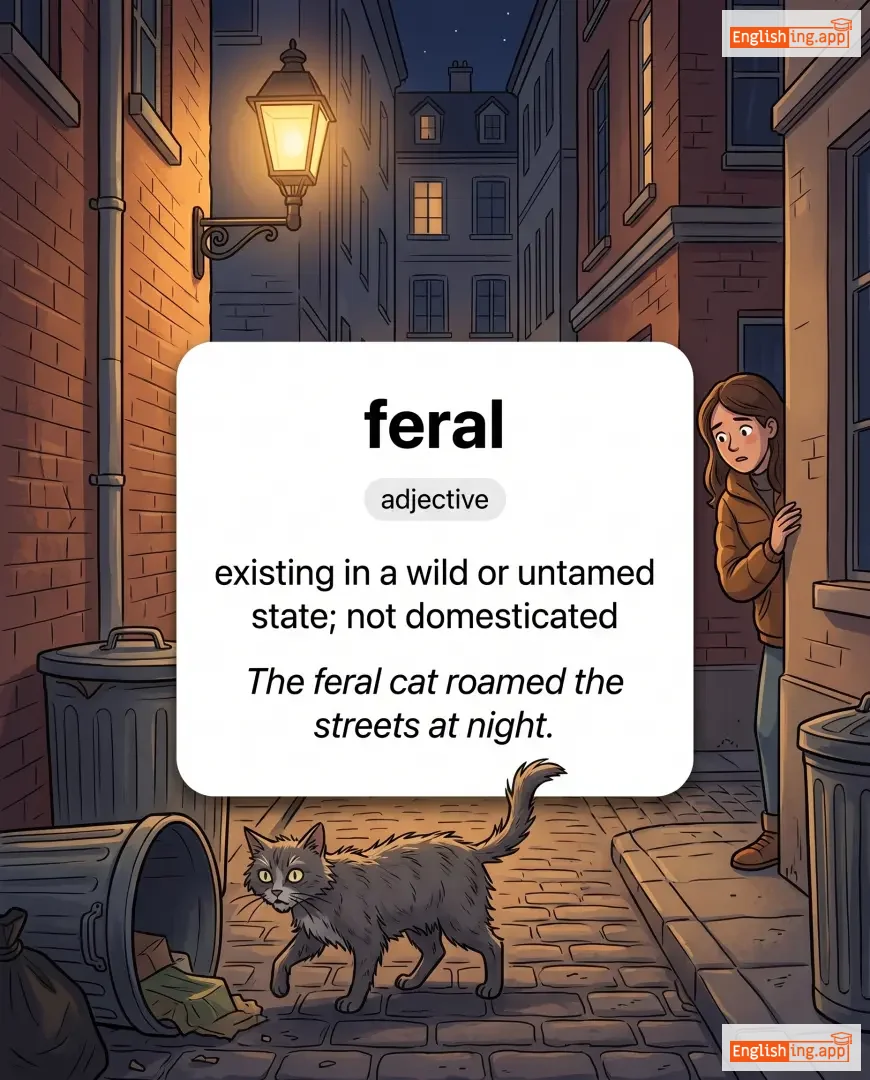
existing in a wild or untamed state; not domesticated
••••••
|
The feral cat roamed the streets at night. |
その野良猫は夜に街を歩き回っていた。
Sono noraneko wa yoru ni machi o arukimawatte ita.
••••••
|
- •••••• | - •••••• | - •••••• |
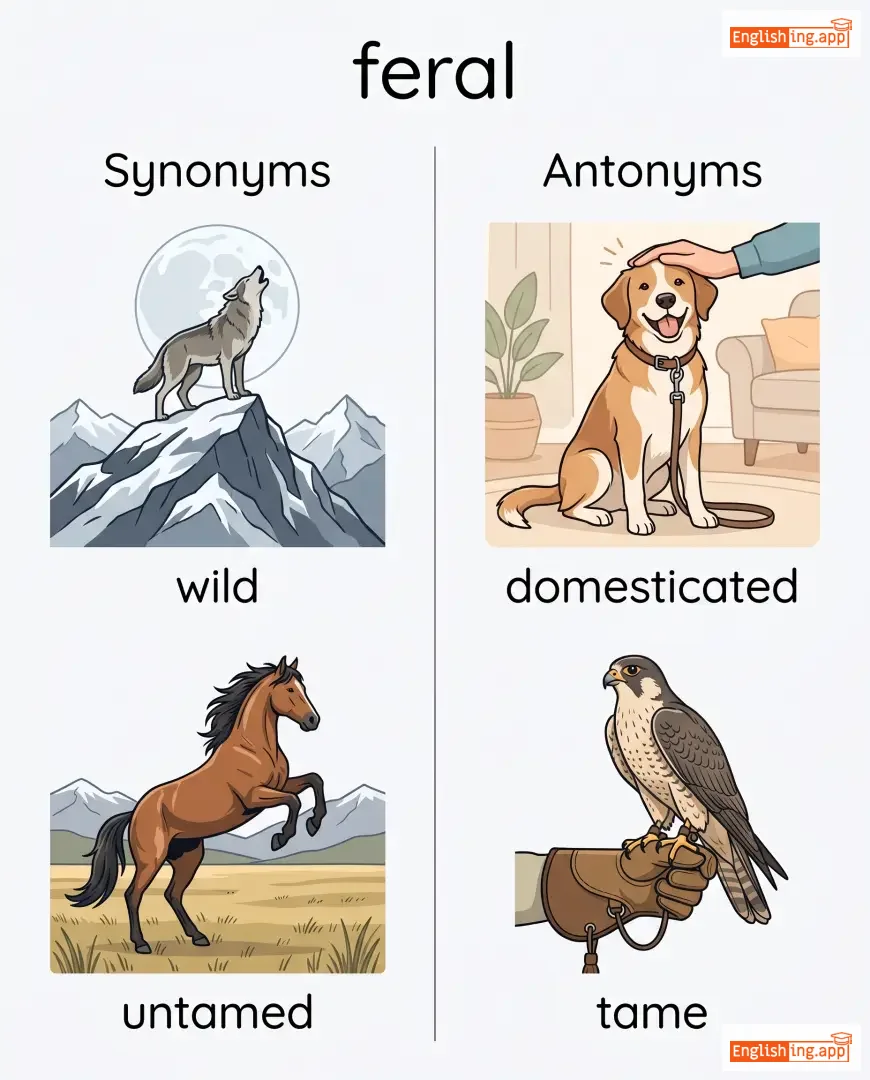
wild, untamed, savage, uncontrolled
••••••
|
domesticated, tame
••••••
|
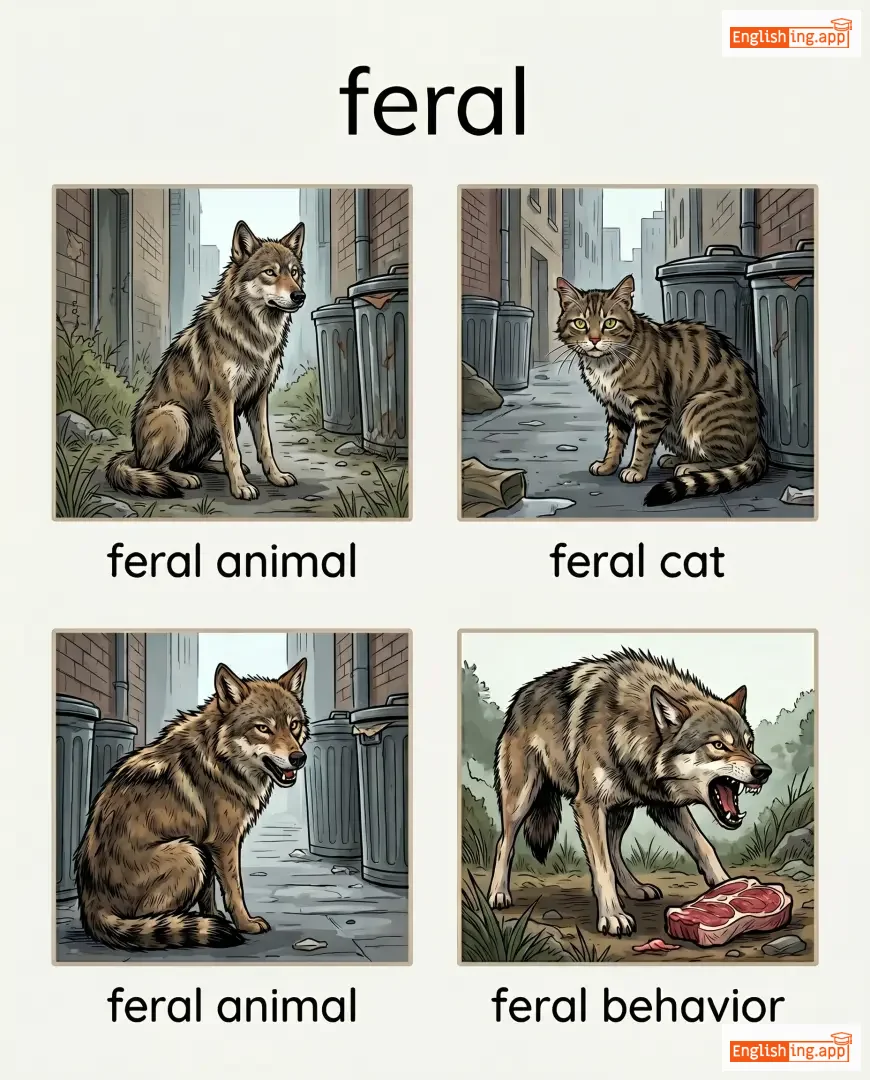
feral animal, feral cat, feral behavior, feral instincts
••••••
|
Feral = 自由か野生の状態
••••••
|
|
🔥
••••••
|
/ˈfɜːrvər/
noun
(ファーヴォー)
••••••
|

|
熱意, 情熱
netsui, jounetsu
••••••
|
- •••••• | - •••••• | - •••••• | - •••••• |
intense and passionate feeling
••••••
|
She spoke with great fervor about the importance of education.
彼女は教育の重要性について情熱的に話しました。
••••••
|
彼女は教育の重要性について情熱的に話しました。
Kanojo wa kyouiku no juuyousei ni tsuite jounetsuteki ni hanashimashita.
••••••
|
- •••••• | - •••••• | - •••••• |
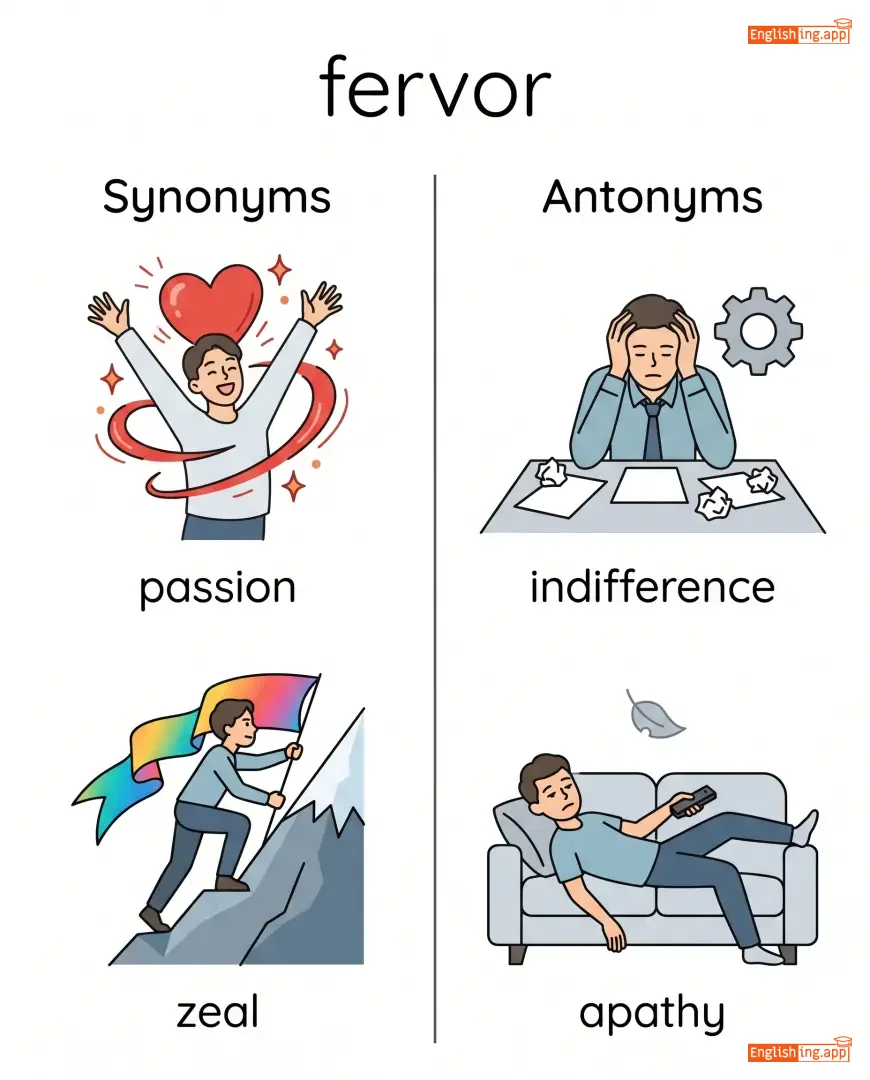
passion, zeal, enthusiasm, ardor
••••••
|
indifference, apathy
••••••
|
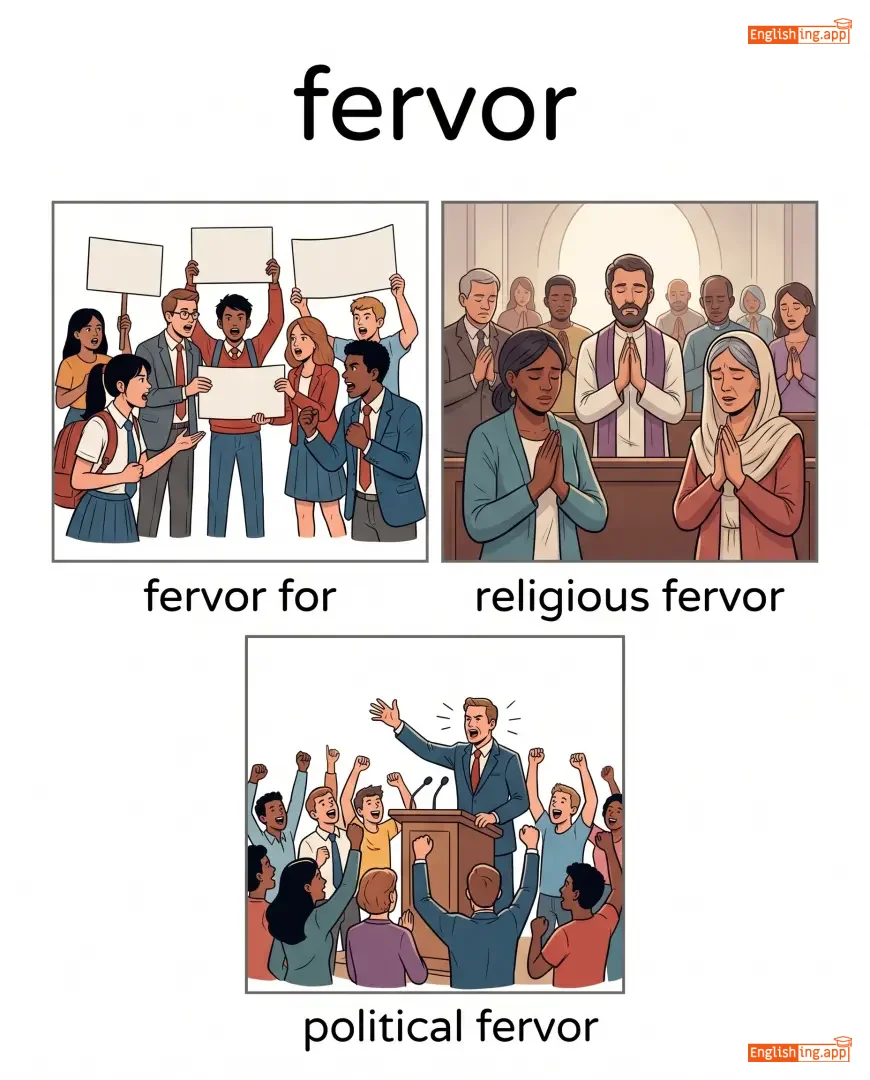
fervor for, religious fervor, political fervor
••••••
|
Fervor は火のようなもの - 常に情熱とエネルギーに満ちている
••••••
|
|
🤢
••••••
|
/ˈfɛtɪd/
adjective
(フェティッド)
••••••
|
|
悪臭のある、臭い
akushu no aru, nioi
••••••
|
- •••••• | - •••••• | - •••••• | - •••••• |
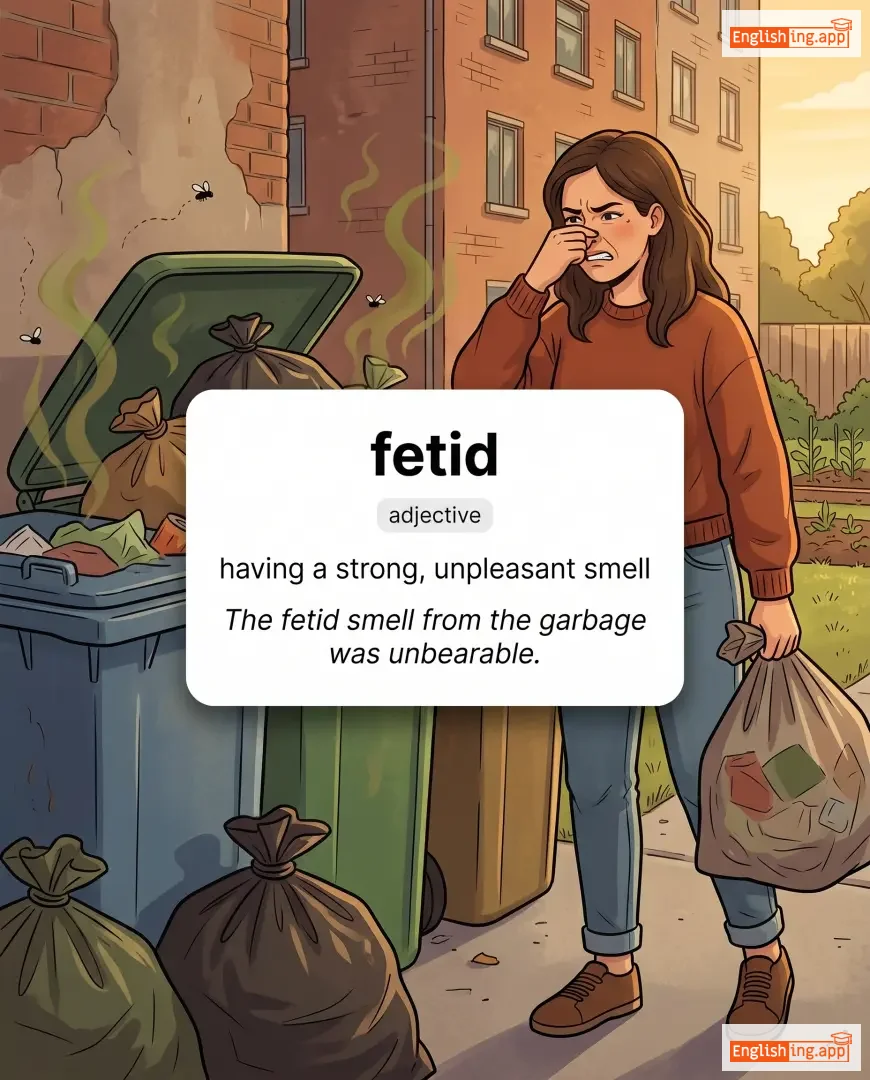
having a strong, unpleasant smell
••••••
|
The fetid smell from the garbage was unbearable.
ゴミからのフェティッドな臭いは耐えられなかった。
••••••
|
ゴミからの臭いは耐えられなかった。
Gomi kara no nioi wa taerarenakatta.
••••••
|
- •••••• | - •••••• | - •••••• |
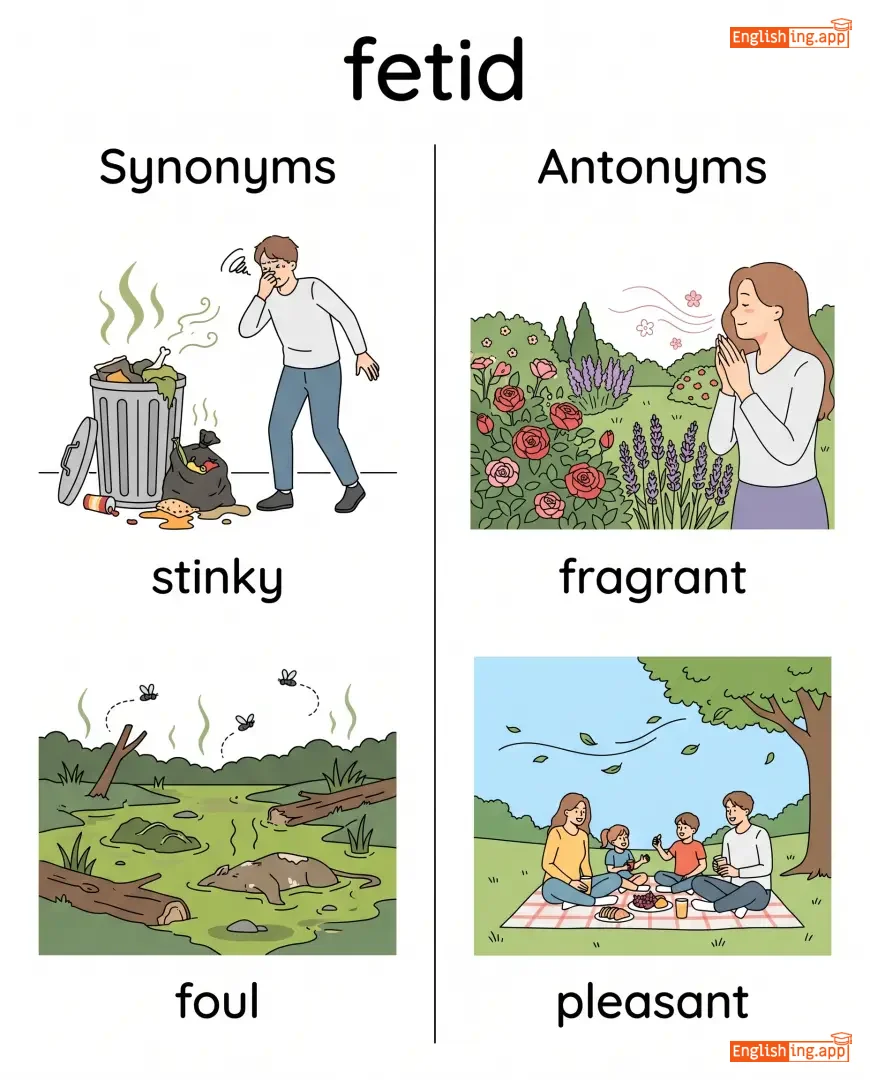
stinky, foul, malodorous, putrid
••••••
|
fragrant, pleasant
••••••
|
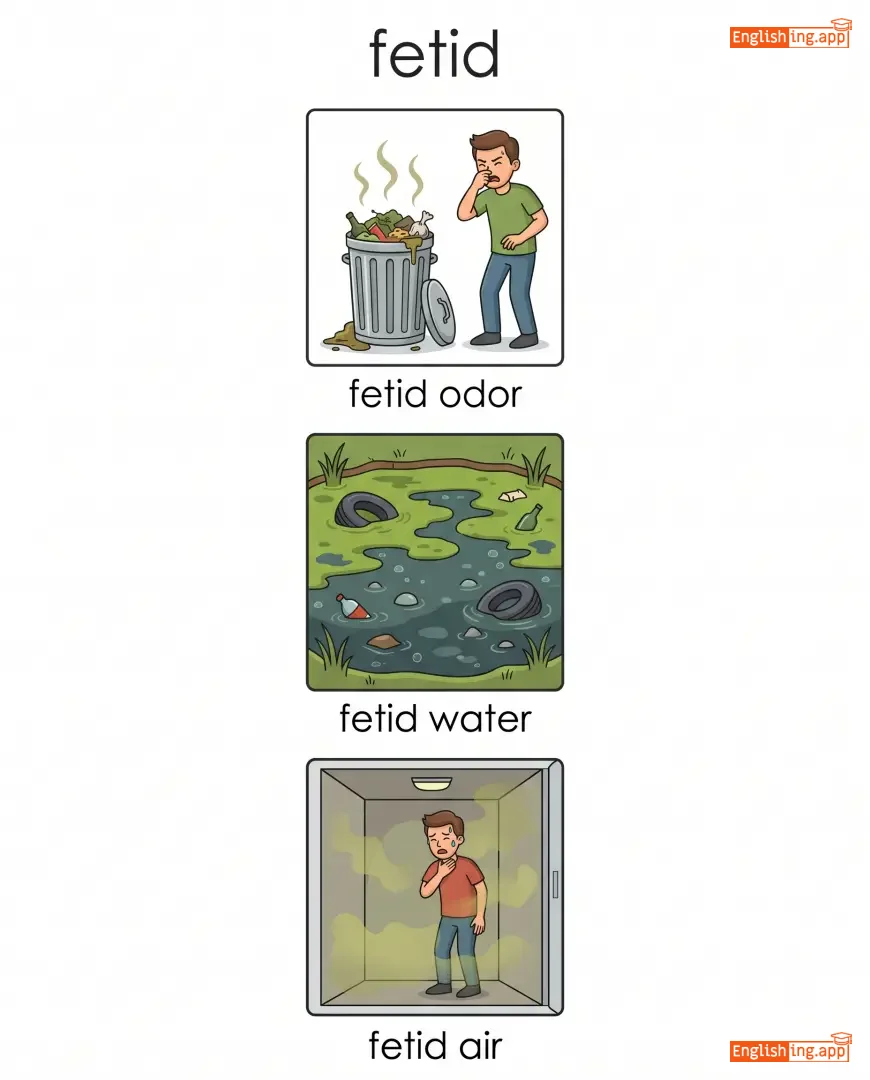
fetid odor, fetid water, fetid air
••••••
|
フェティッド臭は耐えられない - Fetid smell is unbearable
••••••
|
|
⛓️
••••••
|
/ˈfɛtər/
verb
(フェッター)
••••••
|
|
束縛する、制限する
sokubaku suru, seigen suru
••••••
|
fettered
フェッタード
••••••
|
fettered
フェッタード
••••••
|
fetters
フェッターズ
••••••
|
fettering
フェッティング
••••••
|
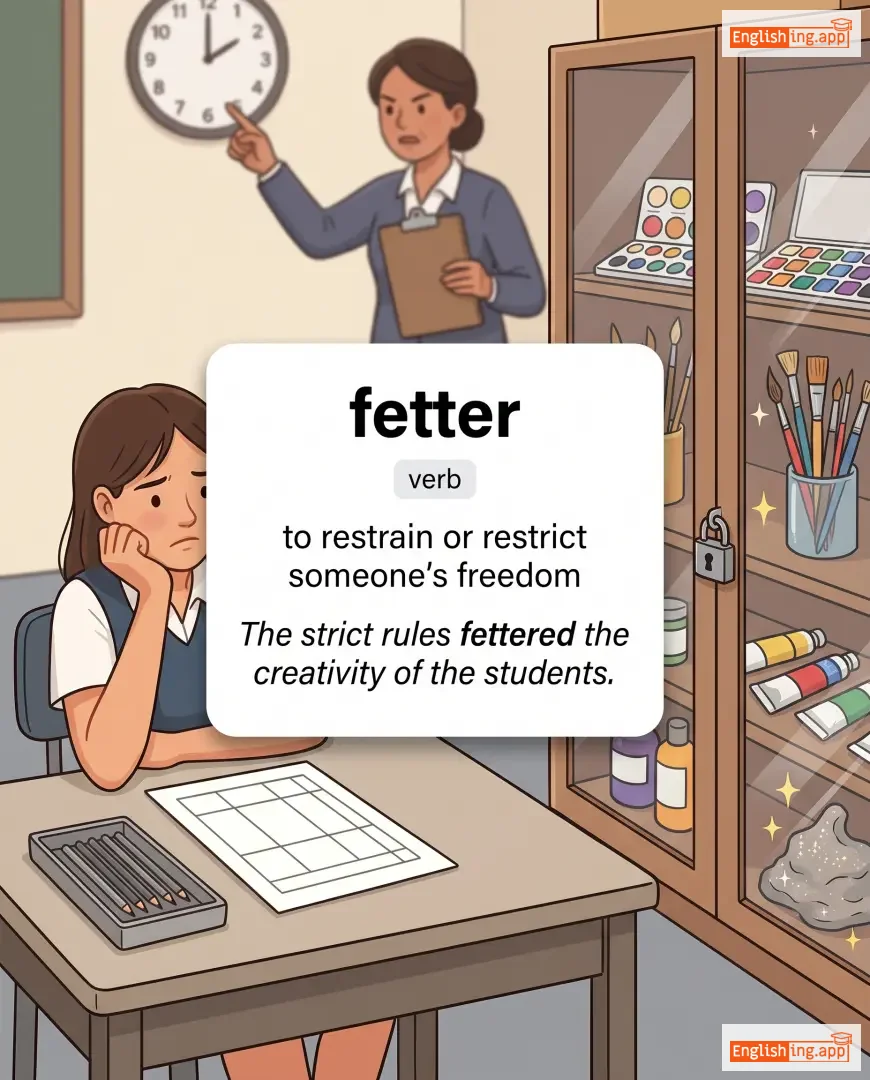
to restrain or restrict someone’s freedom
••••••
|
The strict rules fettered the creativity of the students.
厳しいルールは学生の創造性を制限した。
••••••
|
厳しいルールは学生の創造性を制限した。
Kibishii rūru wa gakusei no sōzōsei o seigen shita.
••••••
|
- •••••• | - •••••• | - •••••• |
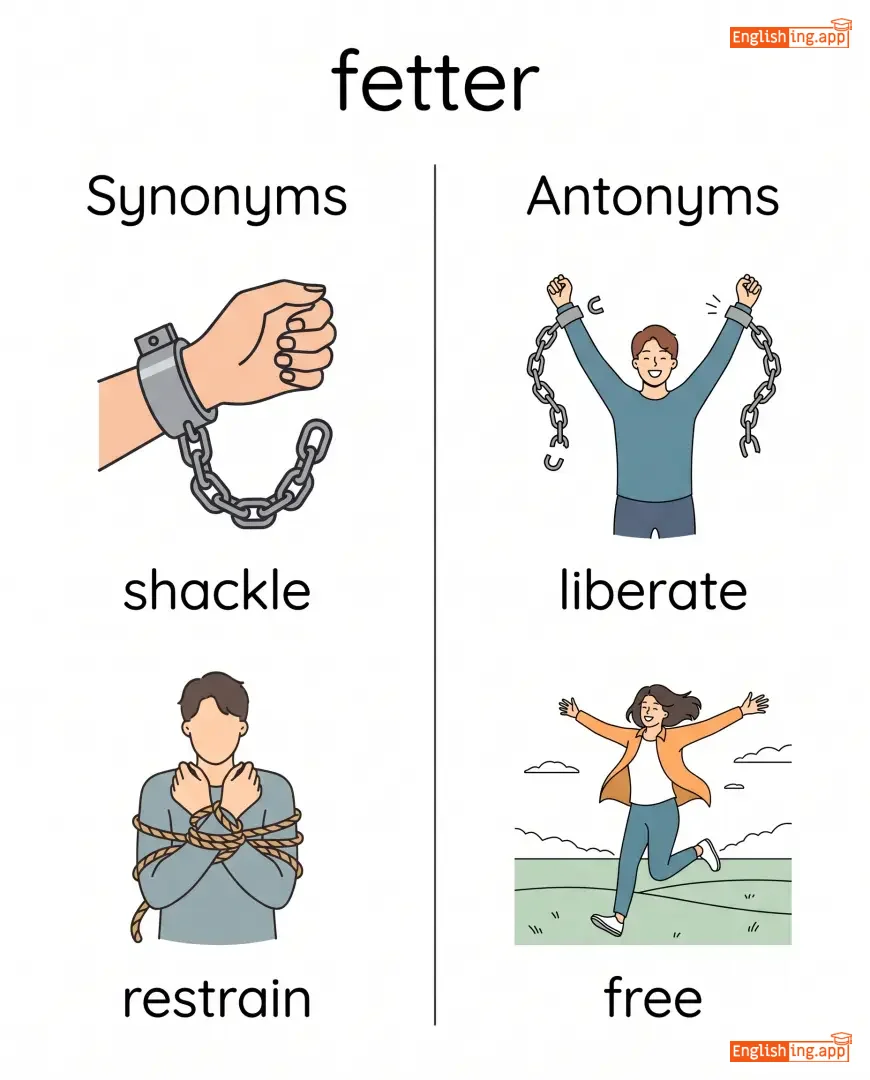
shackle, restrain, bind, hamper
••••••
|
liberate, free
••••••
|
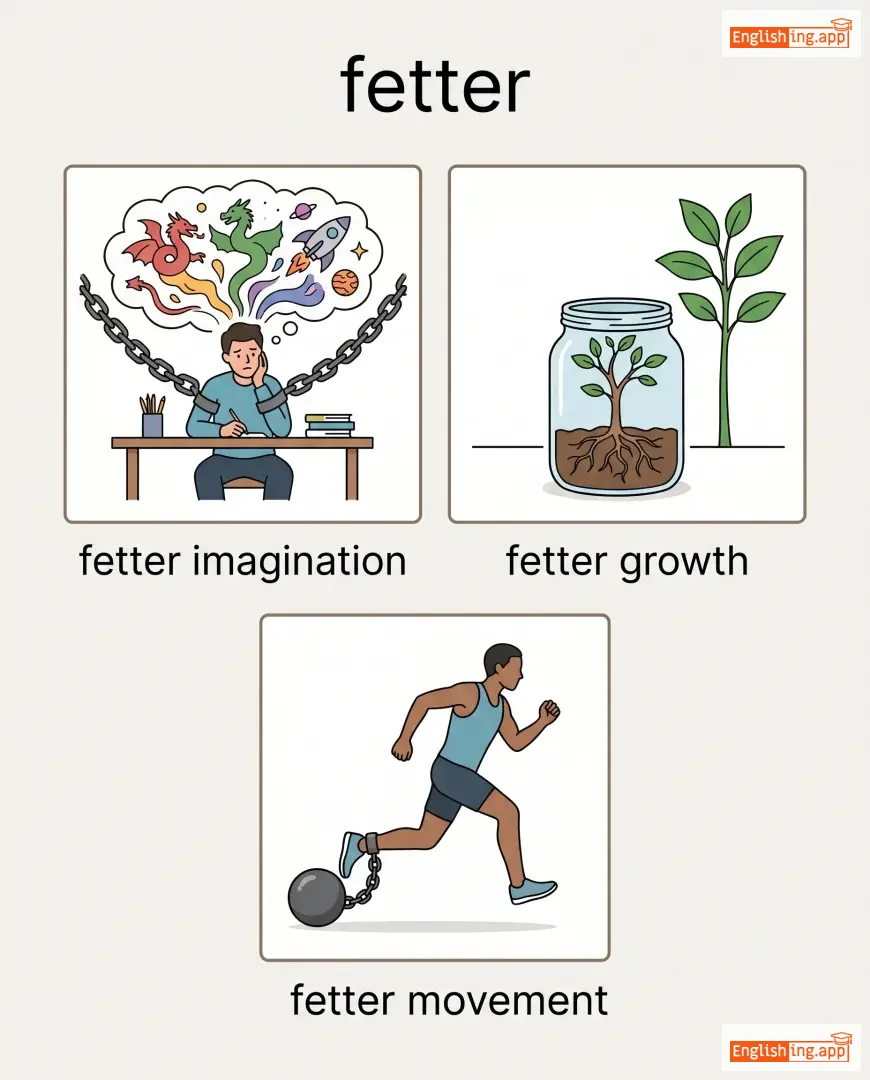
fetter imagination, fetter growth, fetter movement
••••••
|
Fetterは自由を制限する意味で、束縛することを示します。
••••••
|
|
📜
••••••
|
/ˈfiːæt/
noun
(フィアット)
••••••
|

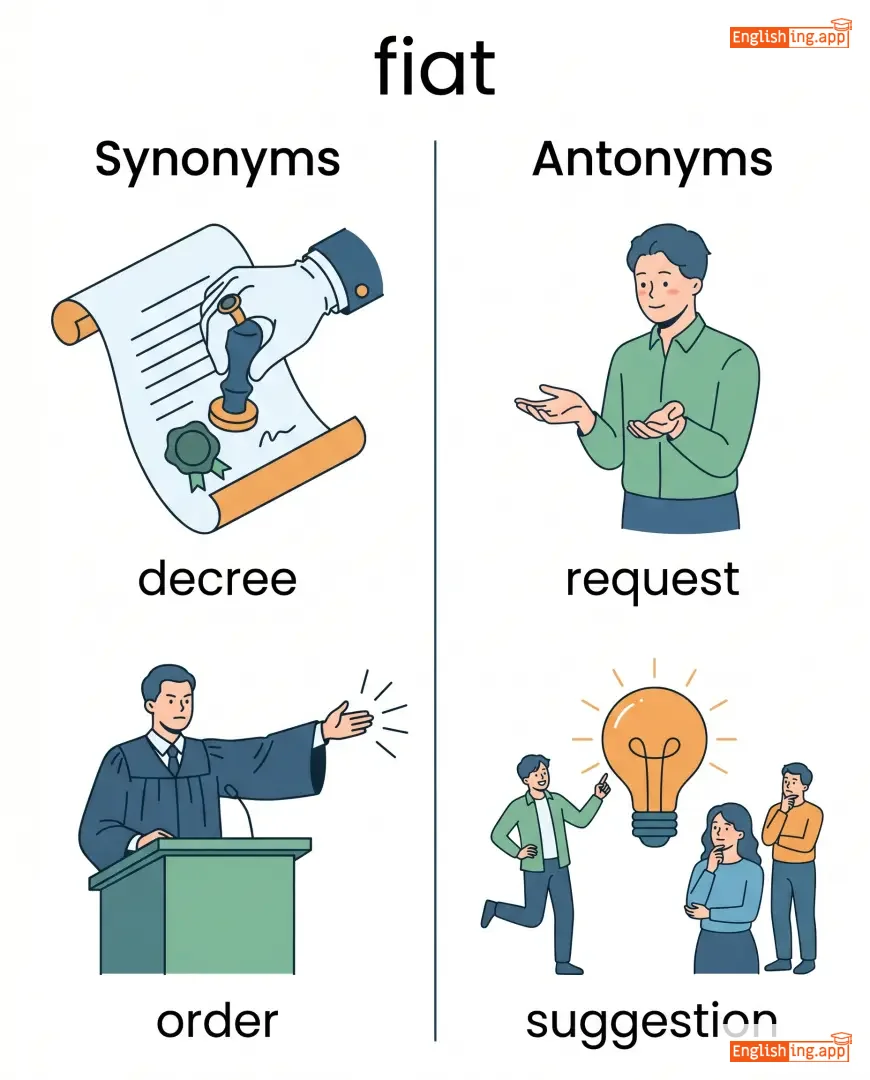
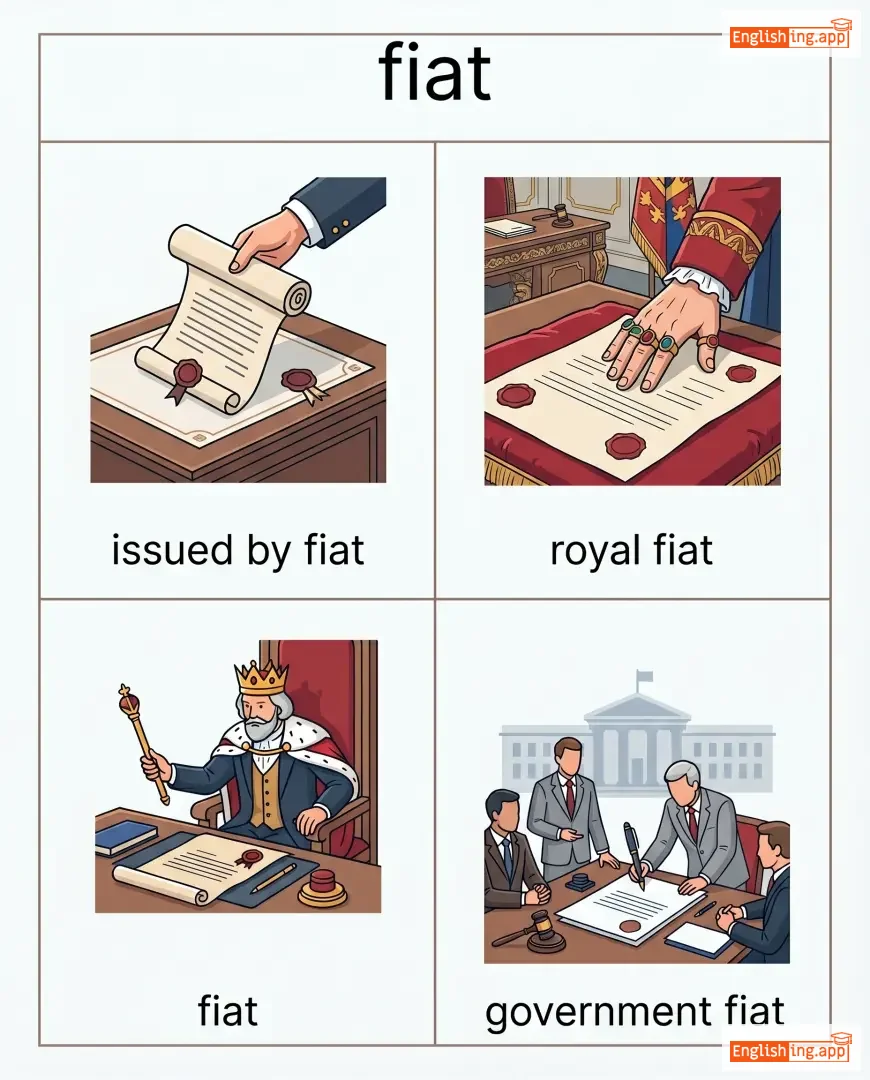
|
命令、布告
meirei, fukoku
••••••
|
- •••••• | - •••••• | - •••••• | - •••••• |
an official order or decree; authoritative command
••••••
|
The new policy was enacted by royal fiat.
新しい政策は王の命令で実施されました。
••••••
|
新しい政策は王の命令で実施されました。
Atarashī seisaku wa ō no meirei de jisshi saremashita.
••••••
|
- •••••• | - •••••• | - •••••• |
decree, order, command, edict
••••••
|
request, suggestion
••••••
|
issued by fiat, royal fiat, government fiat
••••••
|
Fiat は命令、王の指示で決まること
••••••
|
|
🤝
••••••
|
/fɪˈdel.ə.ti/
noun
(フィデリティ)
••••••
|
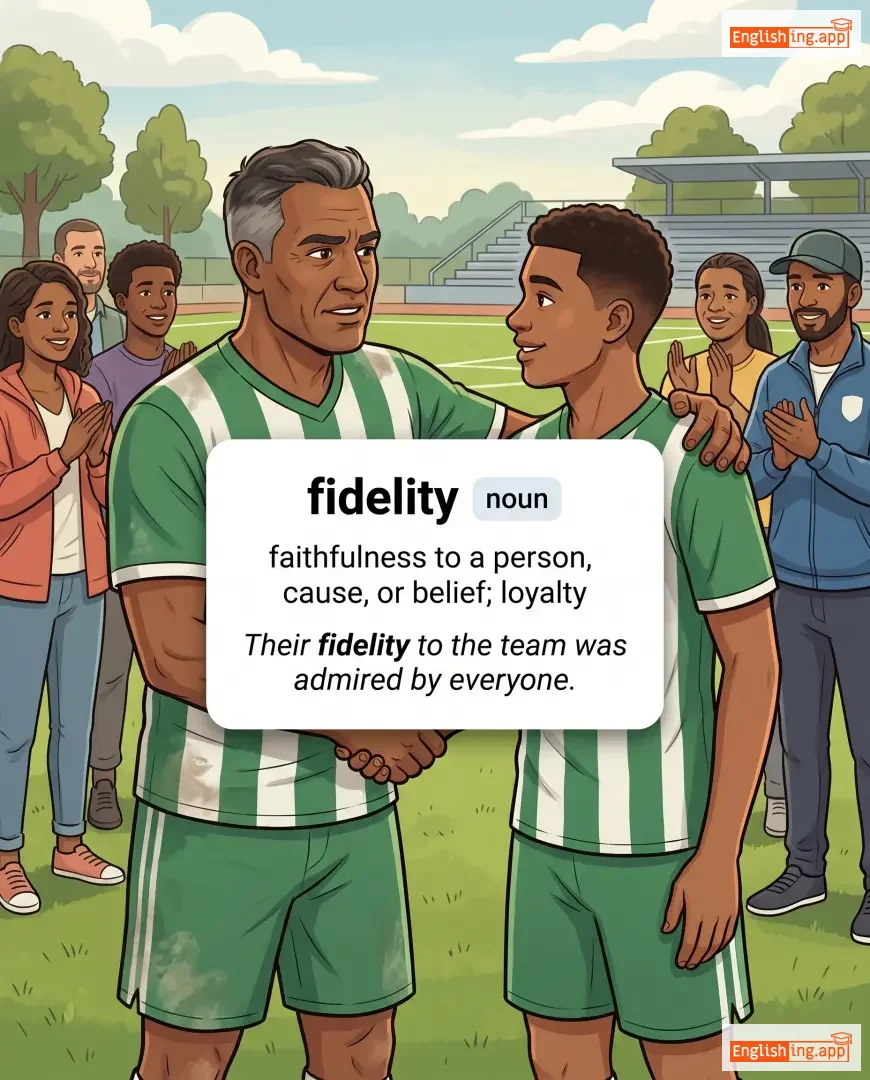
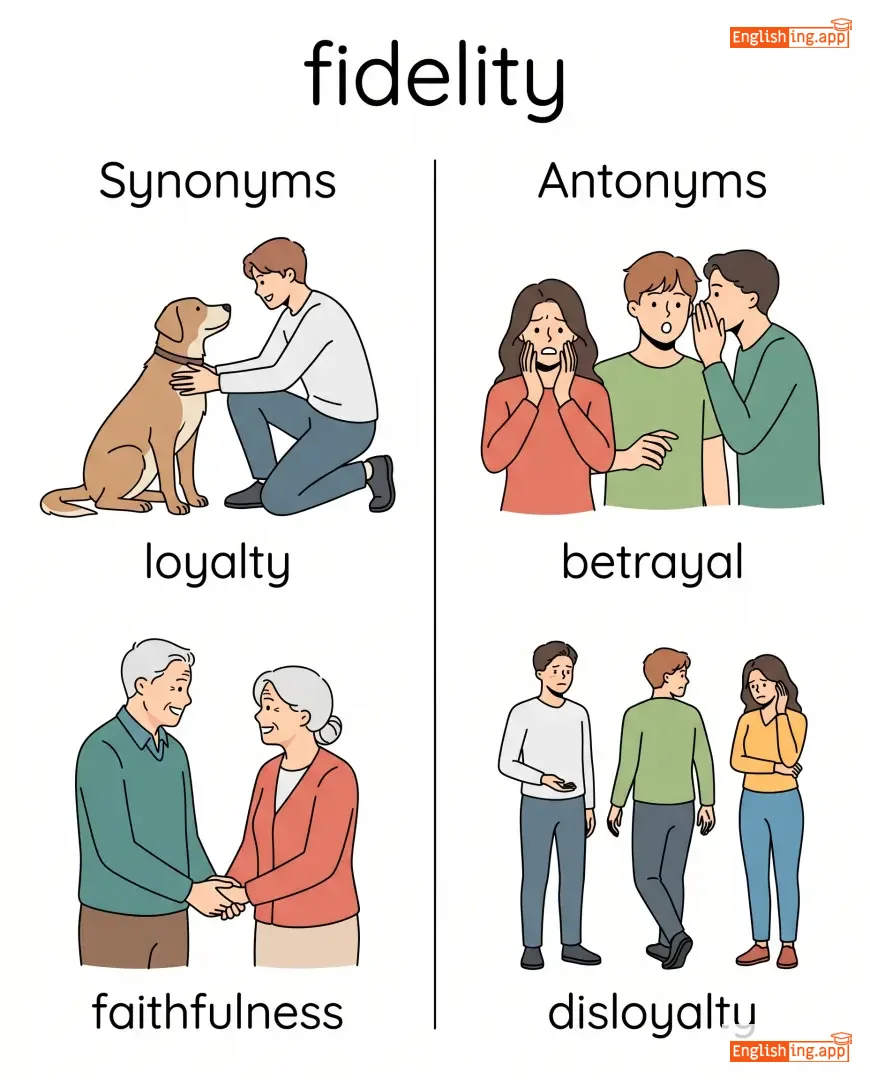
|
忠誠
chūsei
••••••
|
- •••••• | - •••••• | - •••••• | - •••••• |
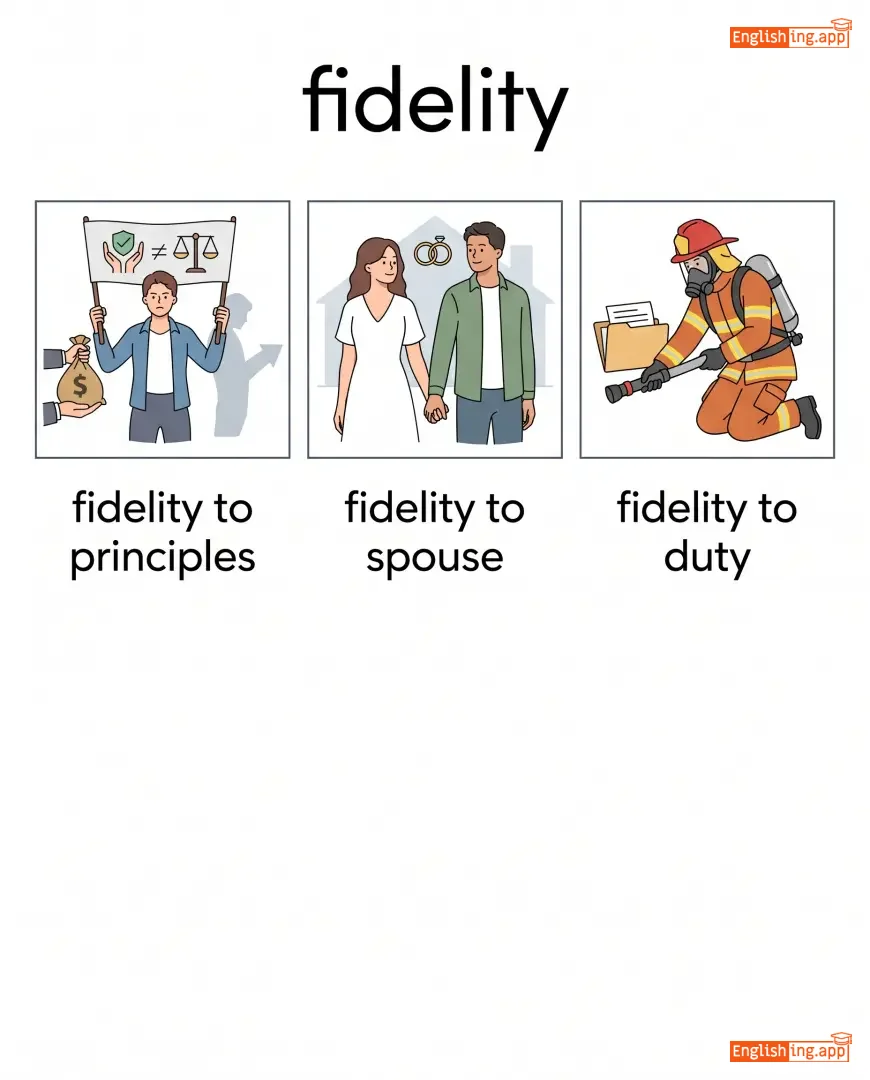
faithfulness to a person, cause, or belief; accuracy in reproducing or copying
••••••
|
The dog's fidelity to its owner was remarkable and touching.
犬の忠誠心は、その飼い主への感動的で素晴らしいものでした。
••••••
|
犬の忠誠心は、その飼い主への感動的で素晴らしいものでした。
Inu no chūsei-shin wa, sono kainushi e no kandō-teki de subarashī mono deshita.
••••••
|
- •••••• | - •••••• | - •••••• |
loyalty, faithfulness, devotion, allegiance
••••••
|
infidelity, disloyalty, betrayal, unfaithfulness
••••••
|
marital fidelity, brand fidelity, high fidelity
••••••
|
忠誠は信頼と尊重を基盤にしています。
••••••
|
|
🗣️
••••••
|
/ˈfɪlɪˌbʌstər/
noun, verb
(フィリバスター)
••••••
|
|
議会での活動を長時間の演説で遅らせる戦術; この戦術を使用する
gikai de no katsudou o choujikan no enzetsu de okuraseru senjutsu; kono senjutsu o shiyou suru
••••••
|
filibustered
フィリバスタード
••••••
|
filibustered
フィリバスタード
••••••
|
filibusters
フィリバスターズ
••••••
|
filibustering
フィリバスターリング
••••••
|
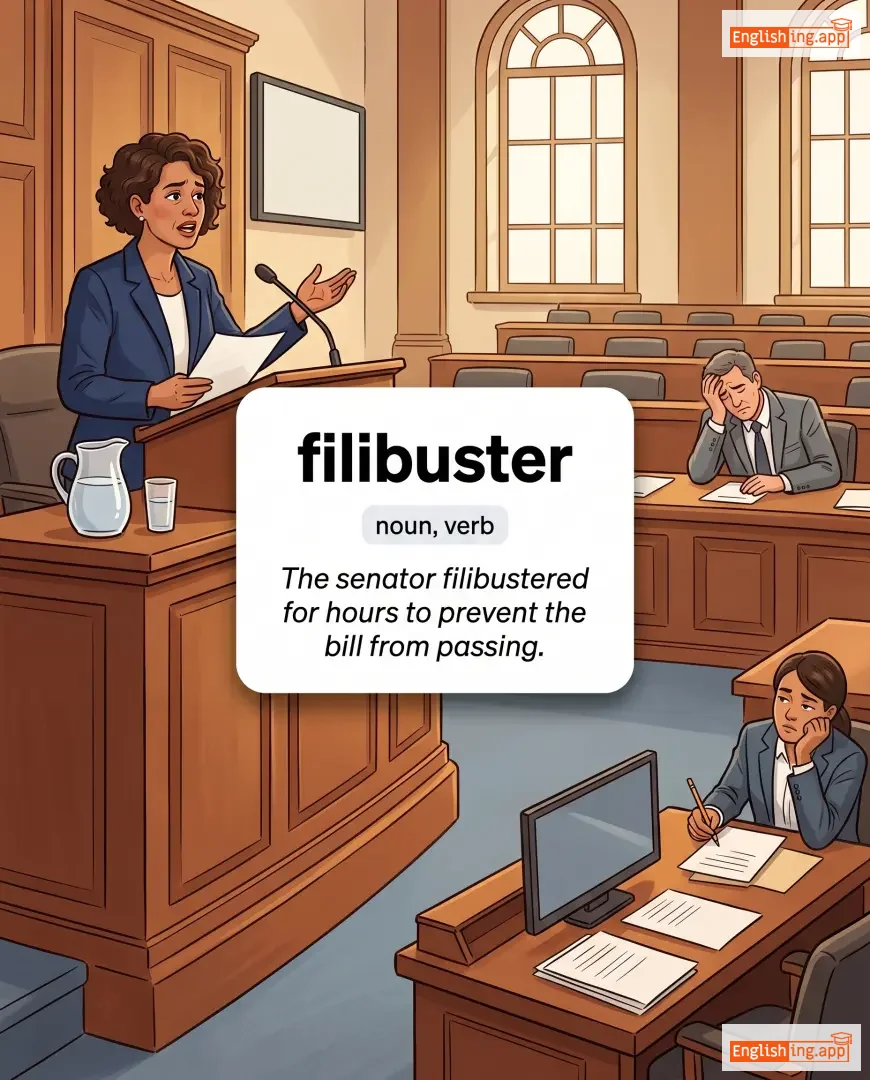
a tactic of delaying legislative action by prolonged speech; to use such a tactic
••••••
|
The senator filibustered for hours to prevent the bill from passing.
上院議員は法案を通すのを防ぐために何時間もフィリバスターを行った。
••••••
|
上院議員は法案を通すのを防ぐために何時間もフィリバスターを行った。
Jouin giin wa hoan o toosu no o fuseru tame ni nan jikan mo firibasutaa o okonatta.
••••••
|
- •••••• | - •••••• | - •••••• |
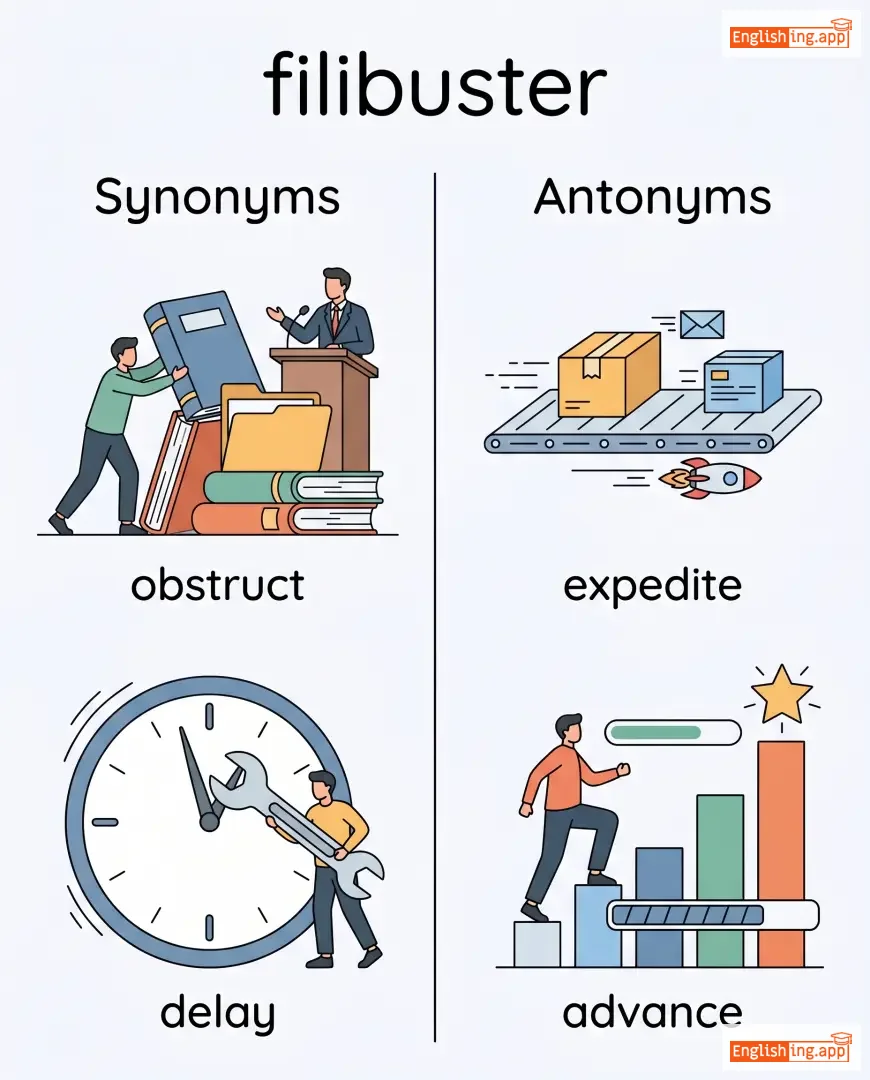
obstruct, delay, stall, impede
••••••
|
expedite, advance
••••••
|
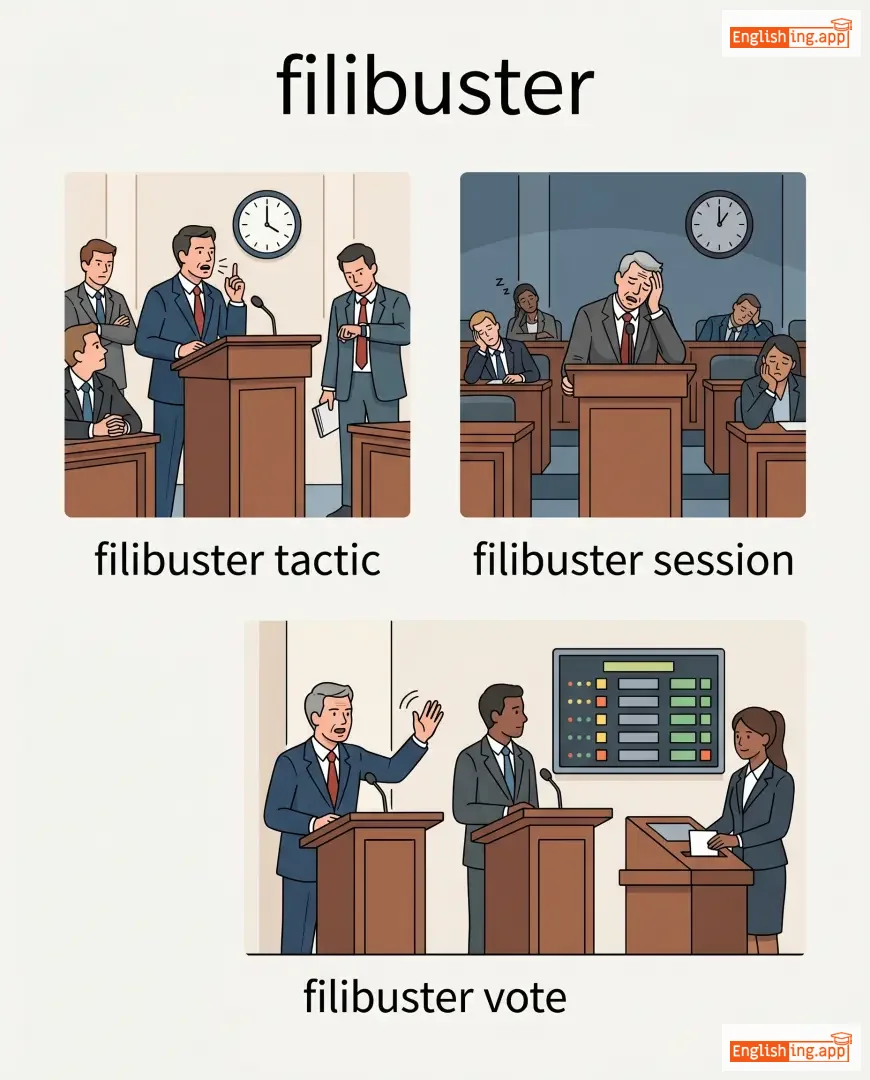
filibuster tactic, filibuster session, filibuster vote
••••••
|
FILIBUSTER 法案を止めるために、無限に話し続ける - Remember filibuster blocks bills
••••••
|
|
🎨
••••••
|
/fɪˈnɛs/
noun
(フィネス)
••••••
|
|
巧妙さ, 微細さ
kōmyōsa, bisaisa
••••••
|
- •••••• | - •••••• | - •••••• | - •••••• |
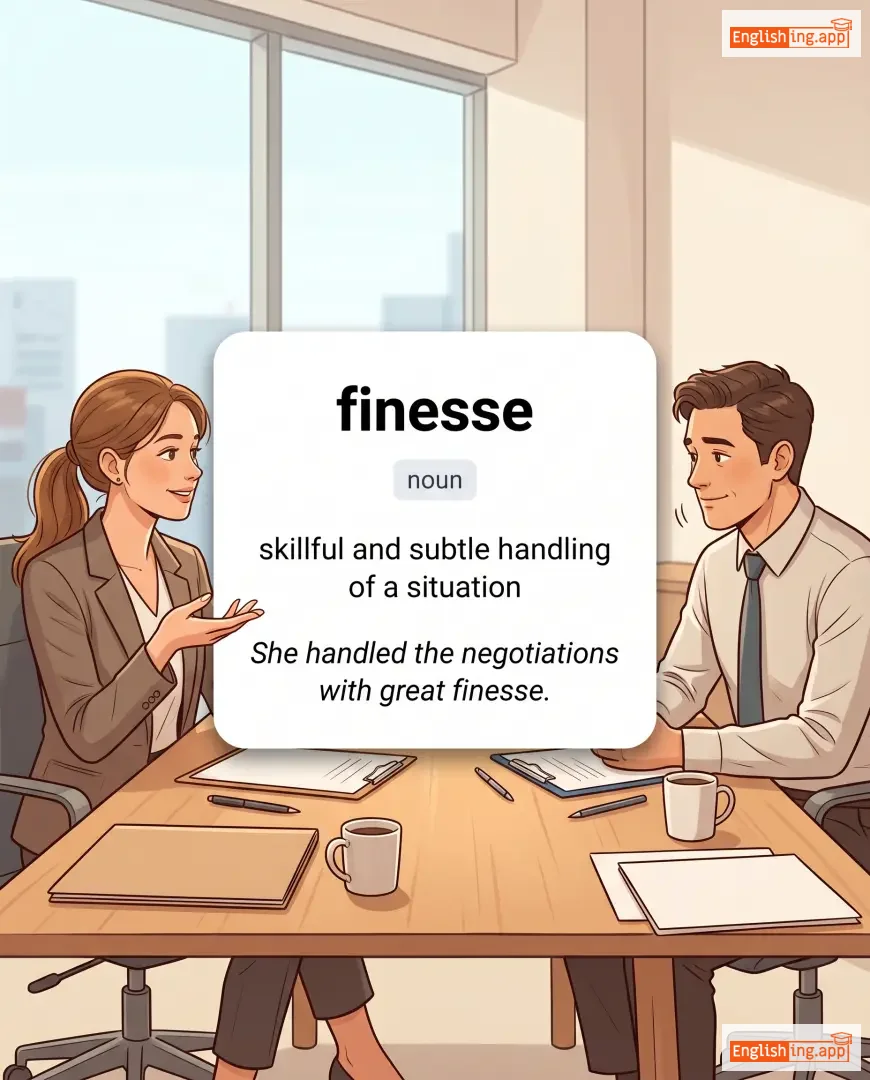
skillful and subtle handling of a situation
••••••
|
She handled the negotiations with great finesse. |
彼女は交渉を見事に巧妙に処理しました。
Kanojo wa kōshō o migoto ni kōmyō ni shori shimashita.
••••••
|
- •••••• | - •••••• | - •••••• |
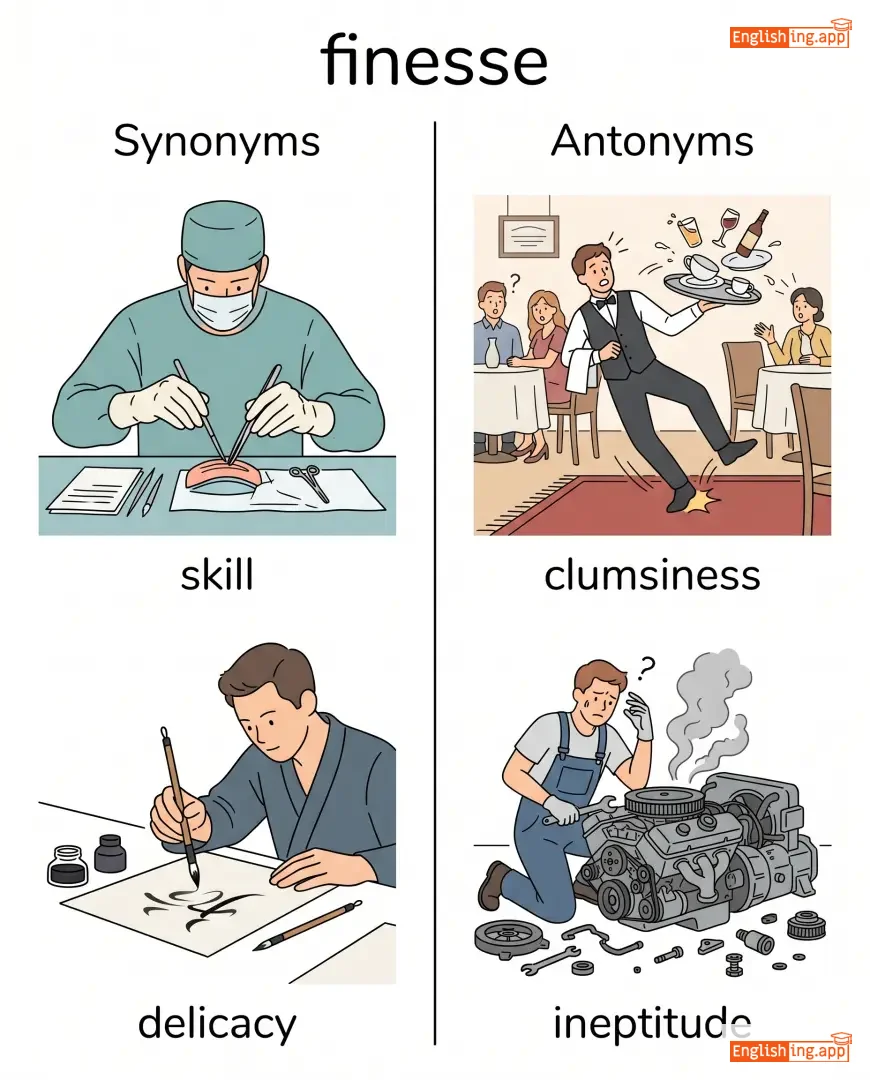
skill, delicacy, tact, sophistication
••••••
|
clumsiness, ineptitude
••••••
|
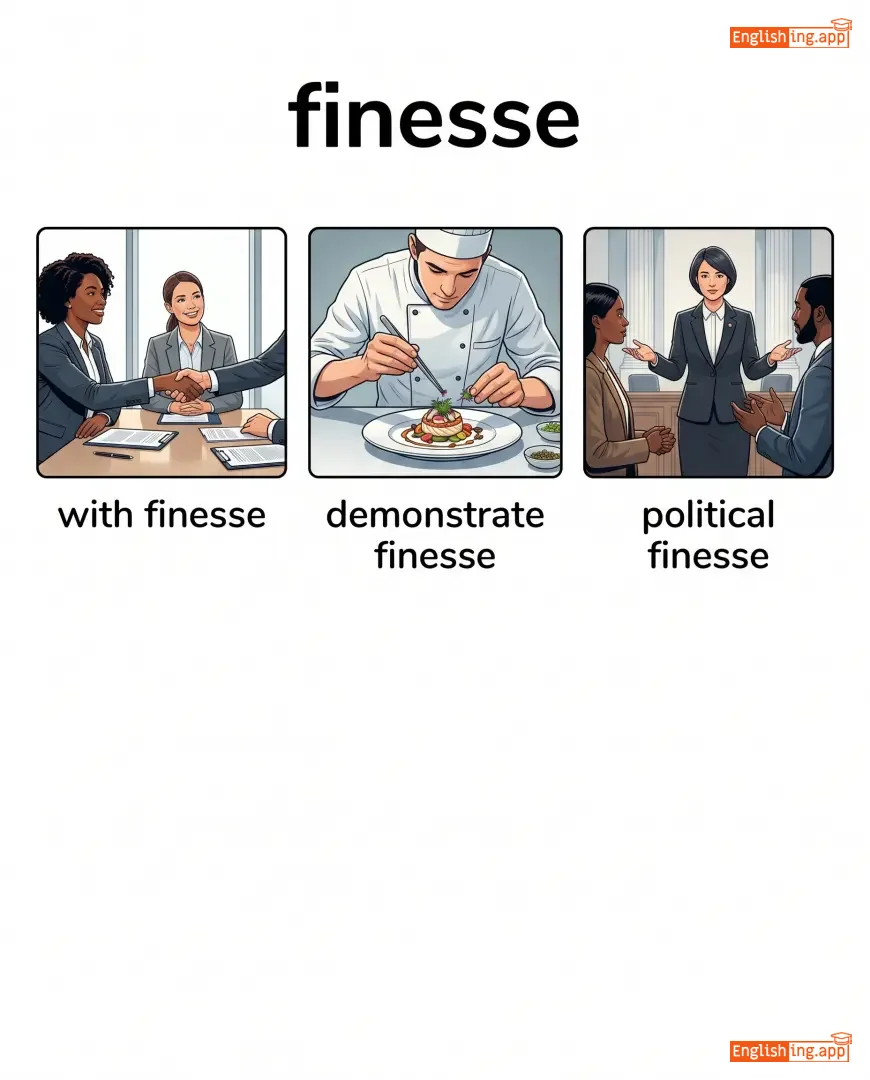
with finesse, demonstrate finesse, political finesse, strategic finesse
••••••
|
フィネスは巧妙さと微細さ
••••••
|

