|
表情符号
|
单词 | Images | 翻译 | 过去时 | 过去分词 | 第三人称单数 | 动名词 | 含义 | 例句 | 例句翻译 | 示例表达 | 示例表达含义 | 示例表达翻译 | 同义词 | 反义词 | 搭配词 | 助记符 |
|---|---|---|---|---|---|---|---|---|---|---|---|---|---|---|---|---|---|
|
📖
••••••
|
/ˈɛksplɪkeɪt/
verb
(eksplikeit)
••••••
|
|
解释
jiěshì
••••••
|
explicated
eksplikéit
••••••
|
explicated
eksplikéit
••••••
|
explicates
eksplikeits
••••••
|
explicating
eksplikeiting
••••••
|
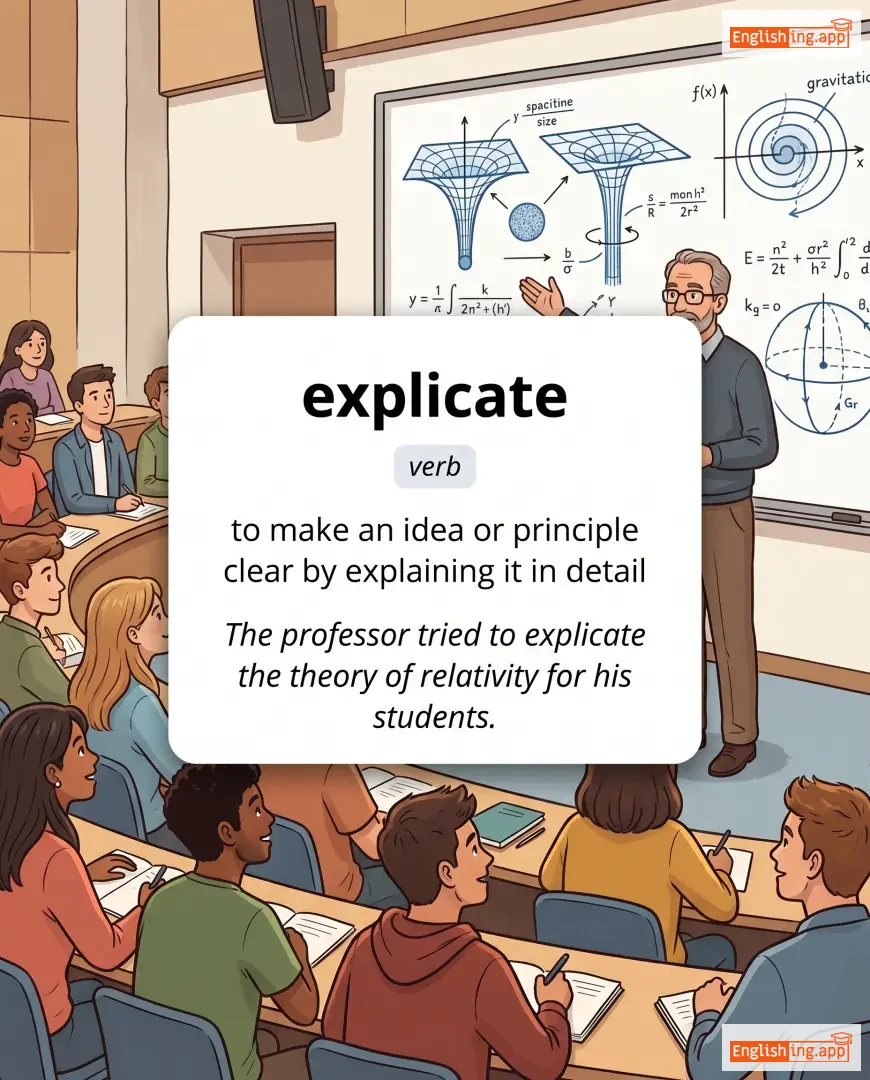
to make an idea or principle clear by explaining it in detail
••••••
|
The professor tried to explicate the theory of relativity for his students.
教授试图为他的学生解释相对论的理论。
••••••
|
教授试图为他的学生解释相对论的理论。
Jiàoshòu shìtú wèi tā de xuéshēng jiěshì xiāngduìlùn de lǐlùn.
••••••
|
- •••••• | - •••••• | - •••••• |
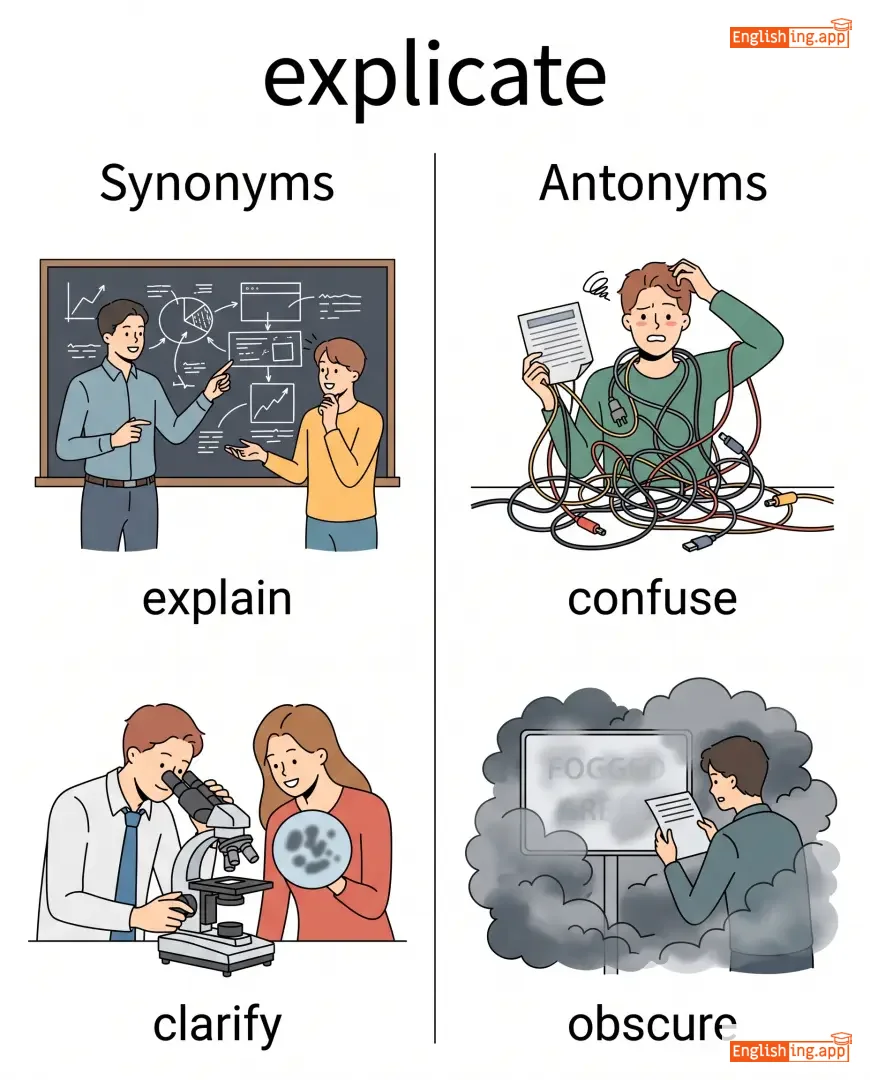
explain, clarify, interpret, elucidate
••••••
|
confuse, obscure
••••••
|
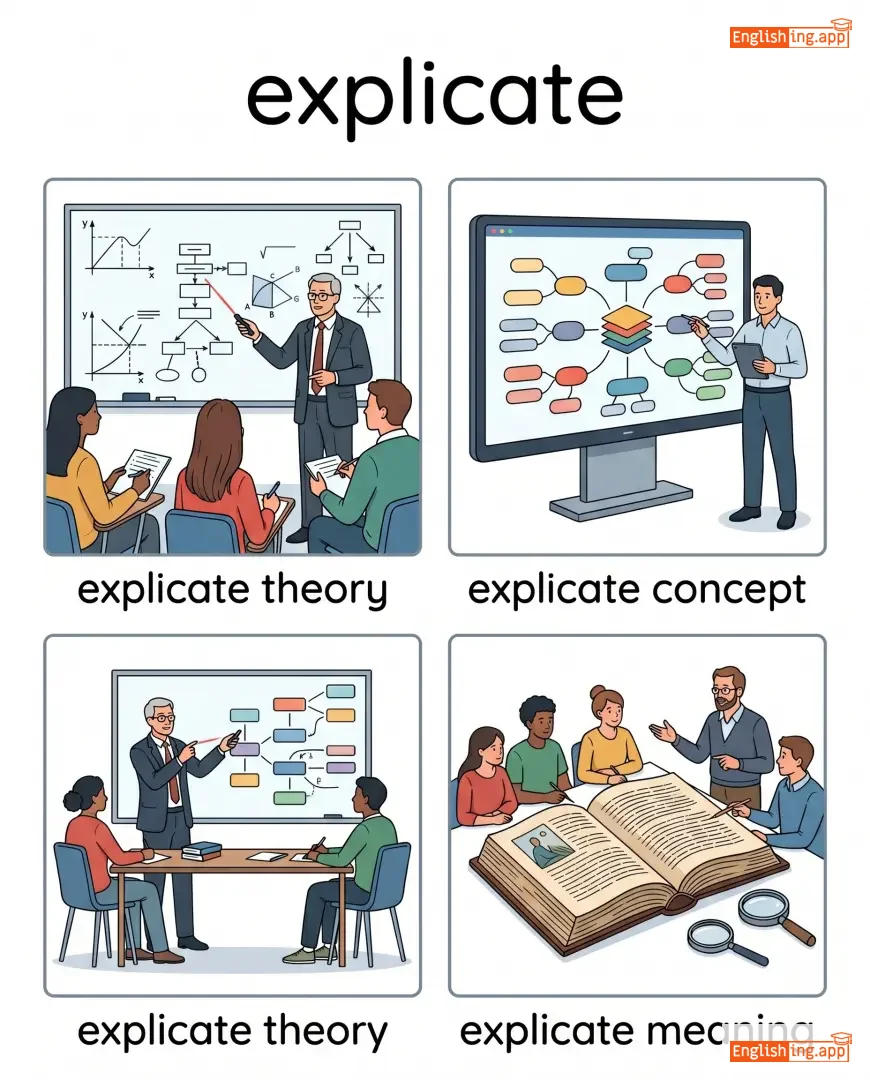
explicate theory, explicate concept, explicate meaning
••••••
|
解释意味着通过详细的说明 — 记住 'Explain Kate'。
••••••
|
|
📖
••••••
|
/ɪkˈspɒzɪtəri/
adjective
(ɪkˈspɒzɪtəri)
••••••
|
|
说明的
shuōmíng de
••••••
|
- •••••• | - •••••• | - •••••• | - •••••• |
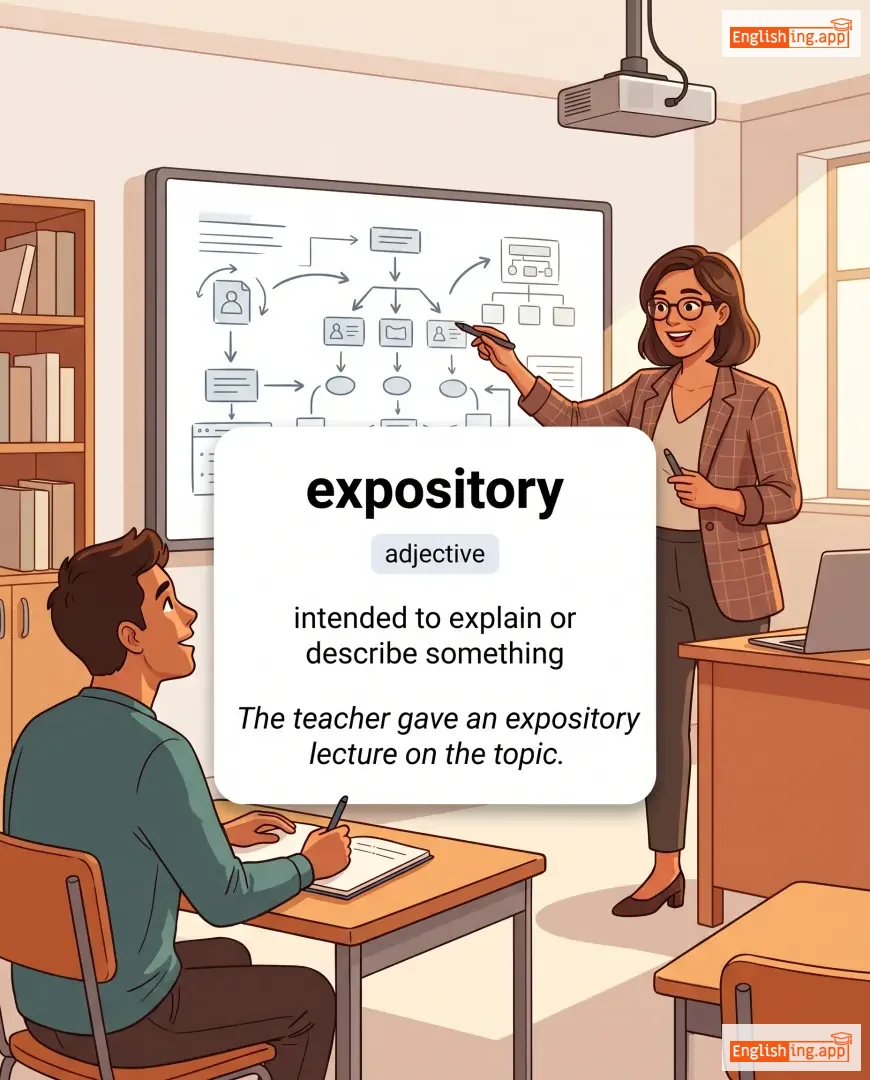
intended to explain or describe something
••••••
|
The teacher gave an expository lecture on the topic. |
老师就这个话题进行了说明性的讲座。
Lǎoshī jiù zhège huàtí jìnxíngle shuōmíng xìng de jiǎngzuò.
••••••
|
- •••••• | - •••••• | - •••••• |
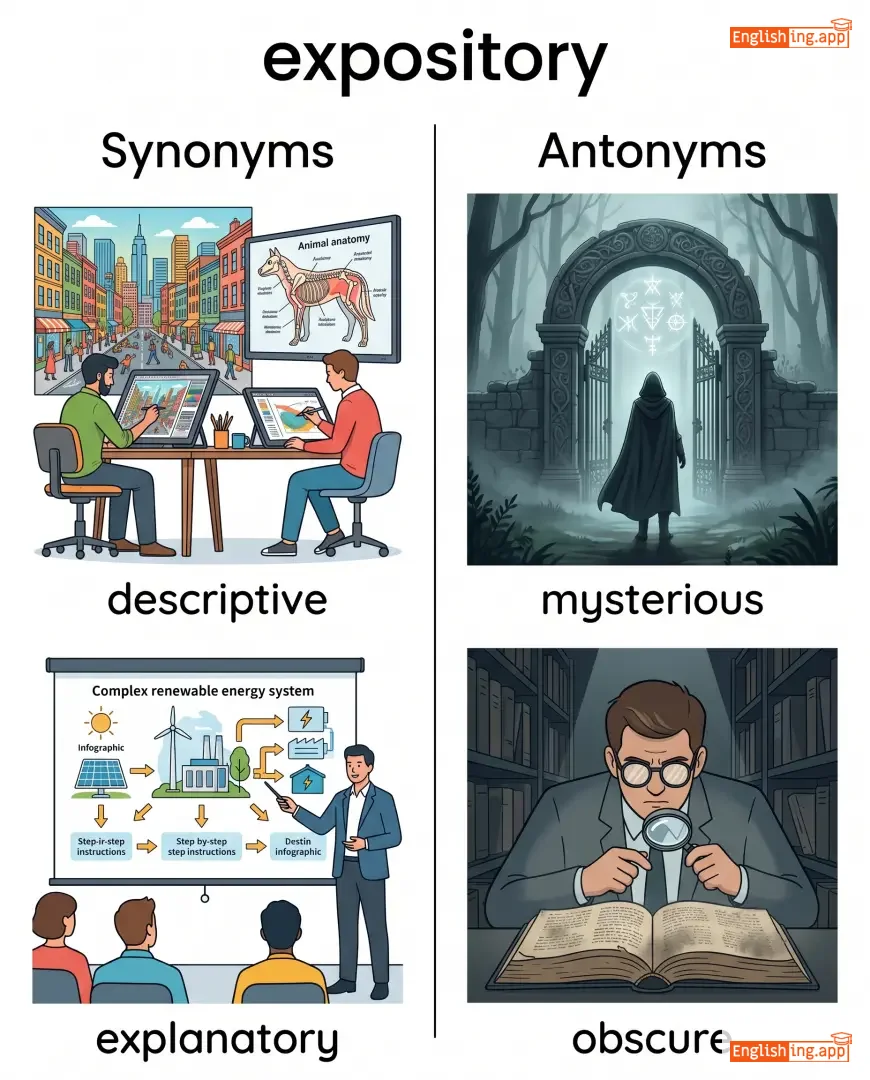
descriptive, explanatory, illustrative, interpretative
••••••
|
mysterious, obscure
••••••
|
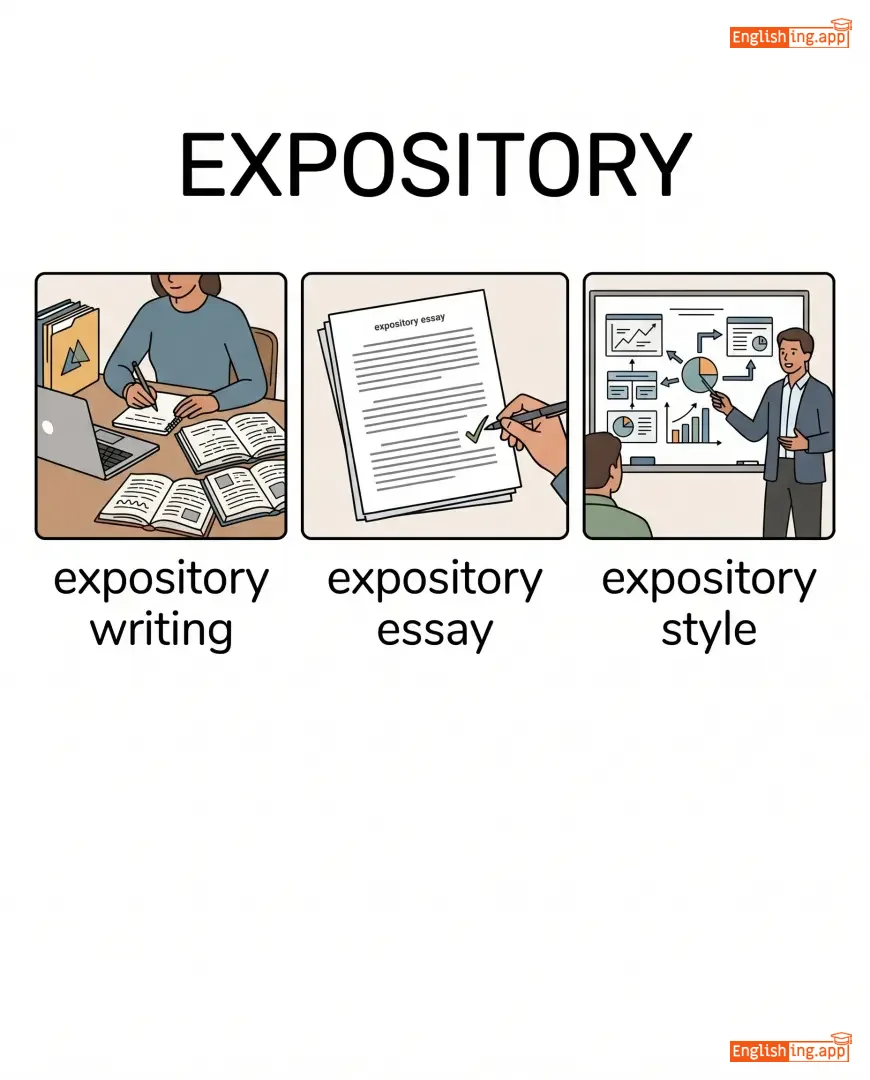
expository writing, expository essay, expository style, expository text
••••••
|
Expository听起来像'解释'—中文意思是'说明的'。
••••••
|
|
📜
••••••
|
/ˈɛkstənt/
adjective
(èksītènt)
••••••
|

|
现存
xiàncún
••••••
|
- •••••• | - •••••• | - •••••• | - •••••• |
Still in existence; surviving.
••••••
|
Only a few manuscripts from the ancient library are extant.
只有几份古老图书馆的手稿仍然存在。
••••••
|
只有几份古老图书馆的手稿仍然存在。
Zhǐyǒu jǐ fèn gǔlǎo túshūguǎn de shǒugǎo réngrán cúnzài.
••••••
|
- •••••• | - •••••• | - •••••• |
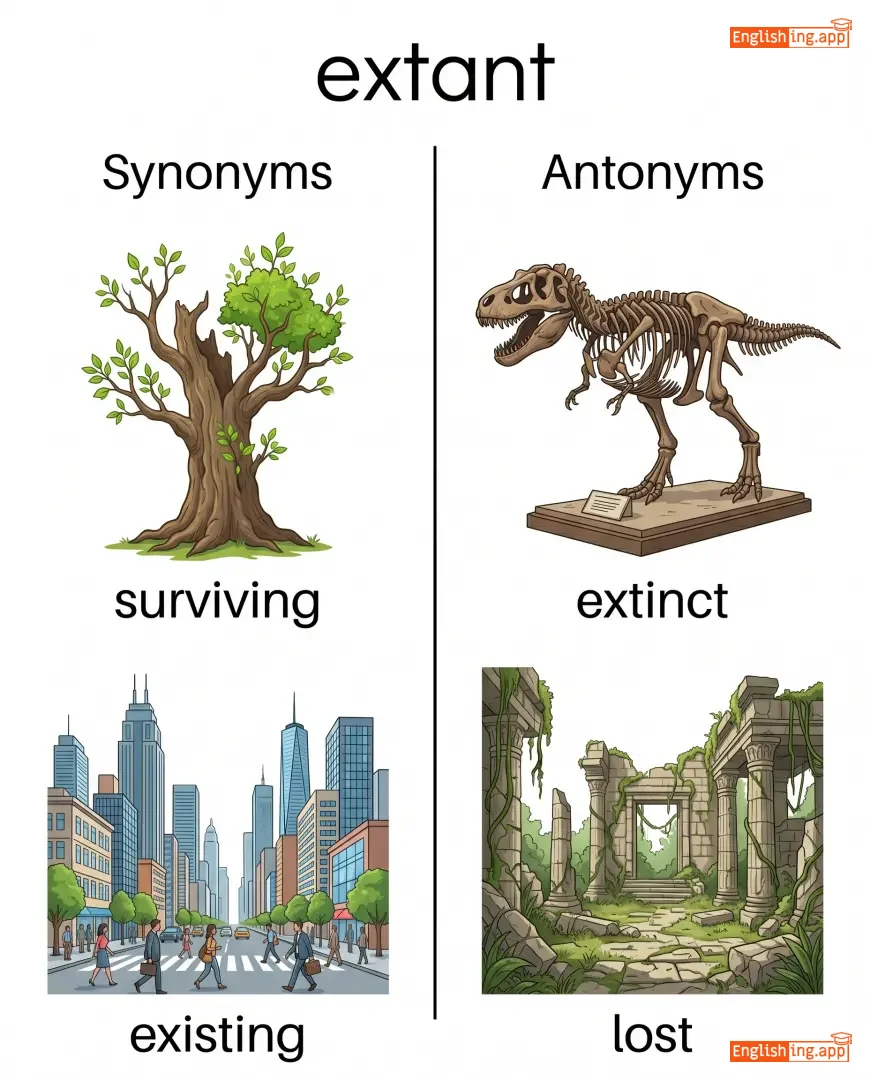
surviving, existing, remaining, present
••••••
|
extinct, lost, destroyed
••••••
|
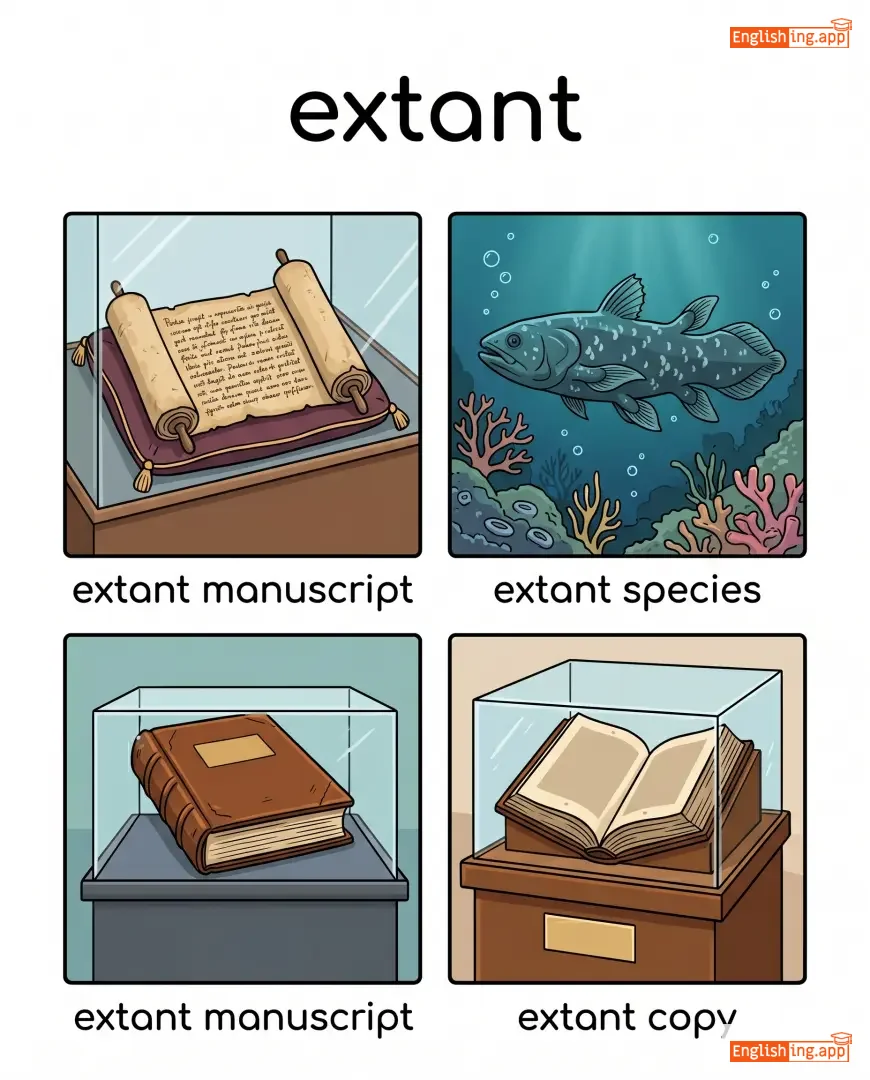
extant manuscript, extant species, extant copy
••••••
|
Extant = 现存 = 仍然活着
••••••
|
|
🎤
••••••
|
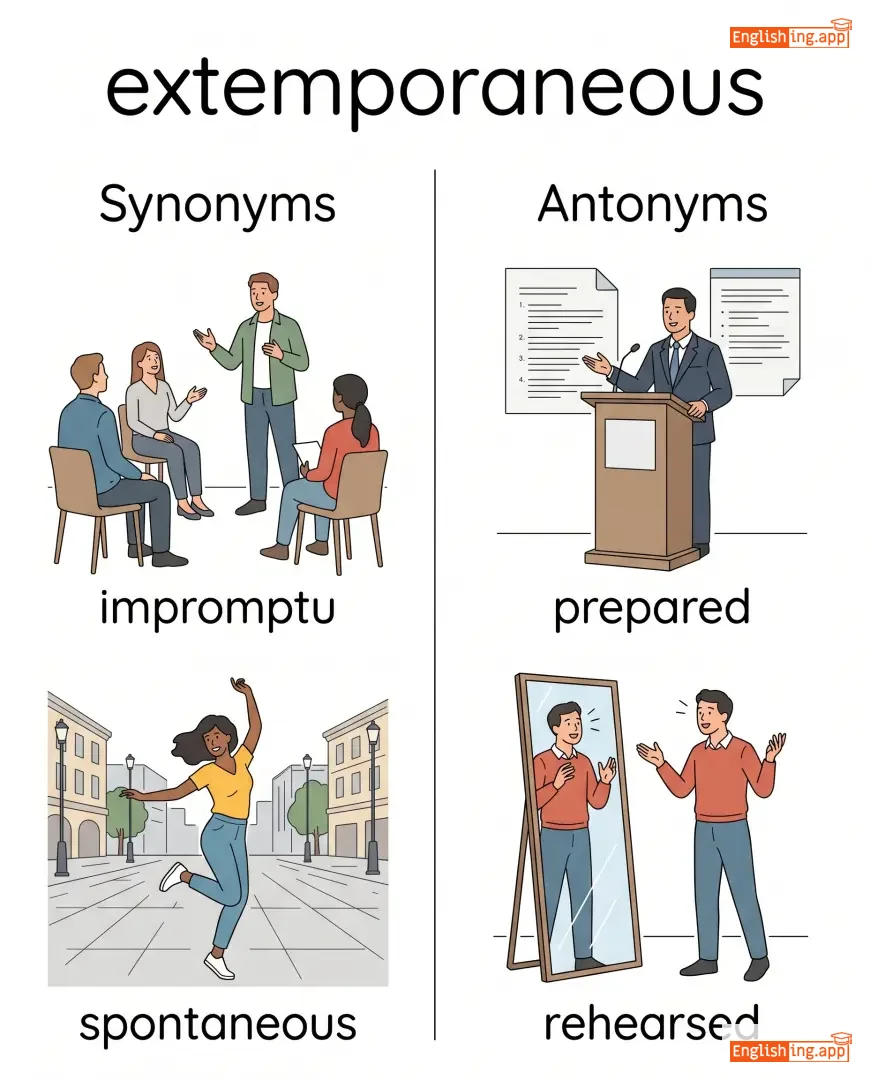
/ɪkˌstɛmpəˈreɪniəs/
adjective
(即兴的)
••••••
|

|
没有准备的讲话或行为
mei you zhun bei de jiang hua huo xing wei
••••••
|
- •••••• | - •••••• | - •••••• | - •••••• |
Spoken or done without preparation.
••••••
|
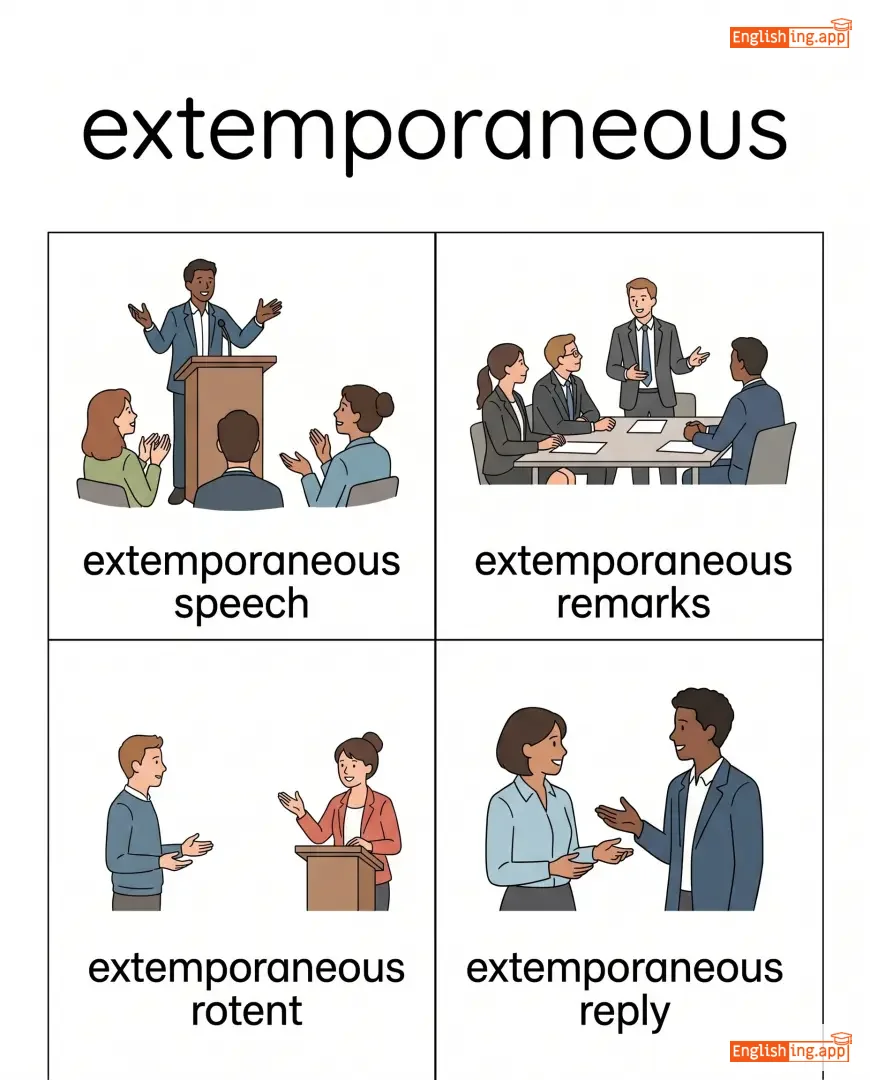
He gave an extemporaneous speech at the meeting. |
他在会议上发表了即兴演讲。
Ta zai hui yi shang fa biao le ji xing yan jiang.
••••••
|
- •••••• | - •••••• | - •••••• |
impromptu, spontaneous, improvised, unprepared
••••••
|
prepared, rehearsed, planned
••••••
|
extemporaneous speech, extemporaneous remarks, extemporaneous reply
••••••
|
即兴 = 没有准备的演讲
••••••
|
|
🪓
••••••
|
/ˈek.stər.peɪt/
verb
(èksítèpèi)
••••••
|
|
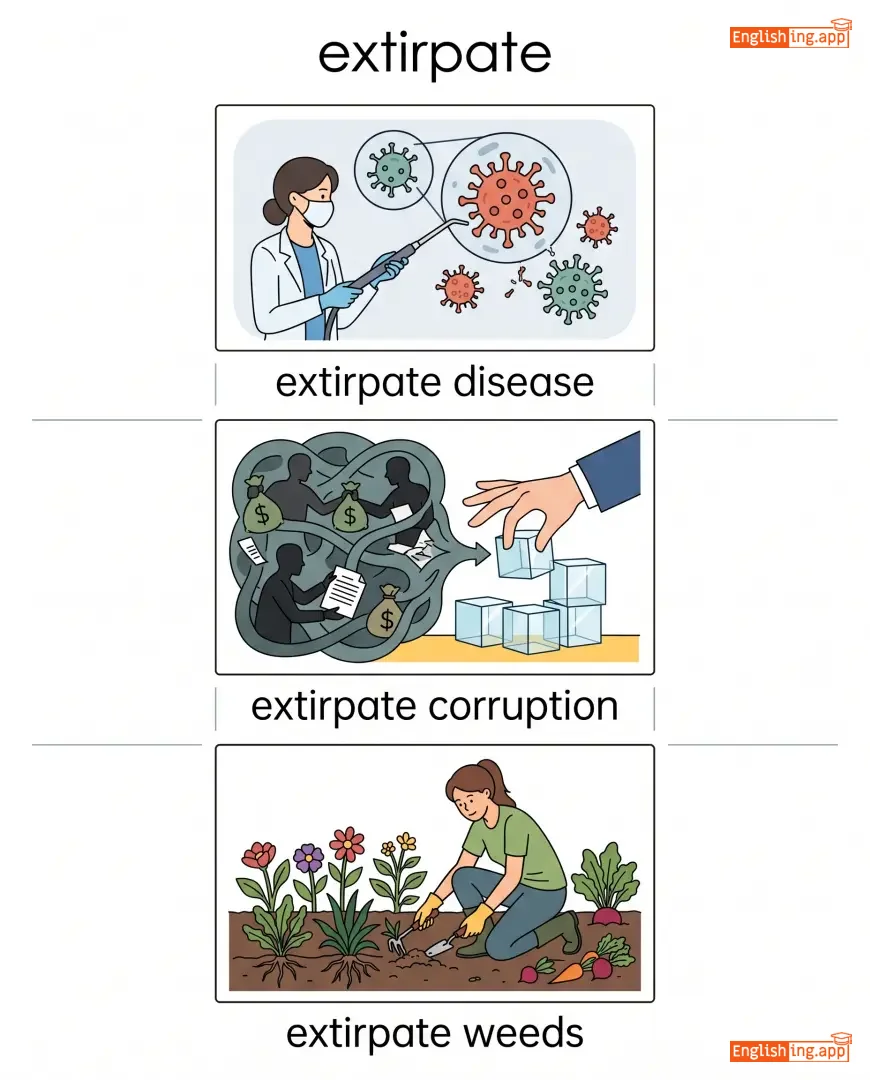
根除
gēnchú
••••••
|
extirpated
èksítèpèid
••••••
|
extirpated
èksítèpèid
••••••
|
extirpates
èksítèpèic
••••••
|
extirpating
èksítèpèitīng
••••••
|
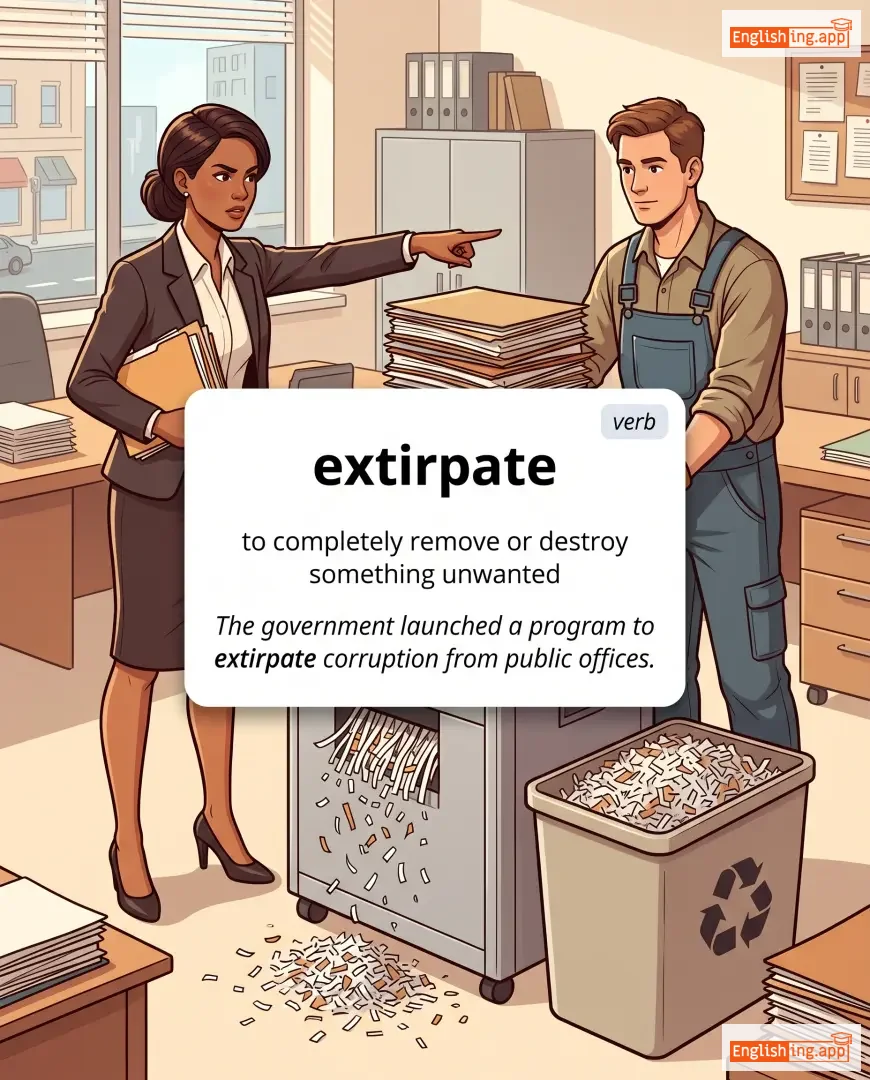
to completely remove or destroy something unwanted
••••••
|
The government launched a program to extirpate corruption from public offices.
政府启动了一个旨在清除公共部门腐败的项目。
••••••
|
政府启动了一个旨在清除公共部门腐败的项目。
Zhèngfǔ qǐdòngle yīgè zhǐ zài qīngchú gōnggòng bùmén fǔbài de xiàngmù.
••••••
|
- •••••• | - •••••• | - •••••• |
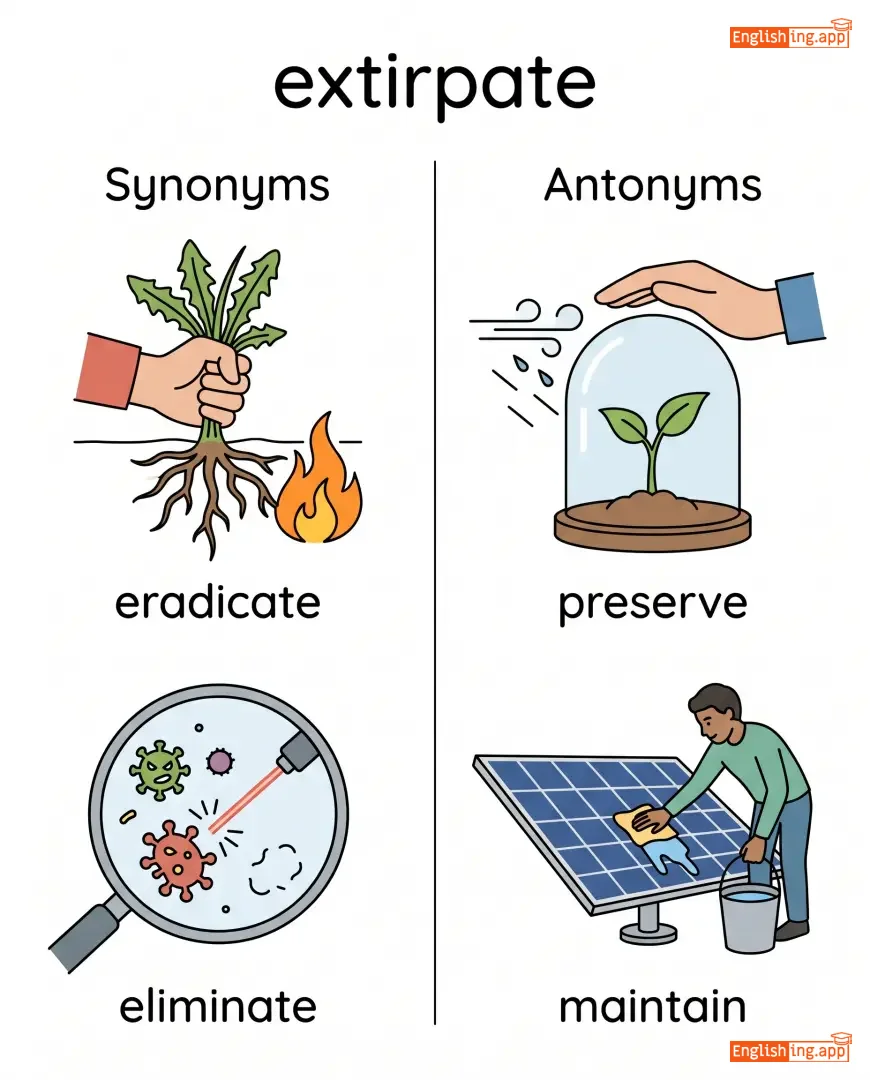
eradicate, eliminate, wipe out, abolish, uproot
••••••
|
preserve, maintain, conserve
••••••
|
extirpate disease, extirpate corruption, extirpate weeds, extirpate traditions
••••••
|
Extra plate (extirpate) 意味着移走盘子——完全清除。
••••••
|
|
🗑️
••••••
|
/ɪkˈstreɪ.ni.əs/
adjective
(外来)
••••••
|
|
无关
wú guān
••••••
|
- •••••• | - •••••• | - •••••• | - •••••• |
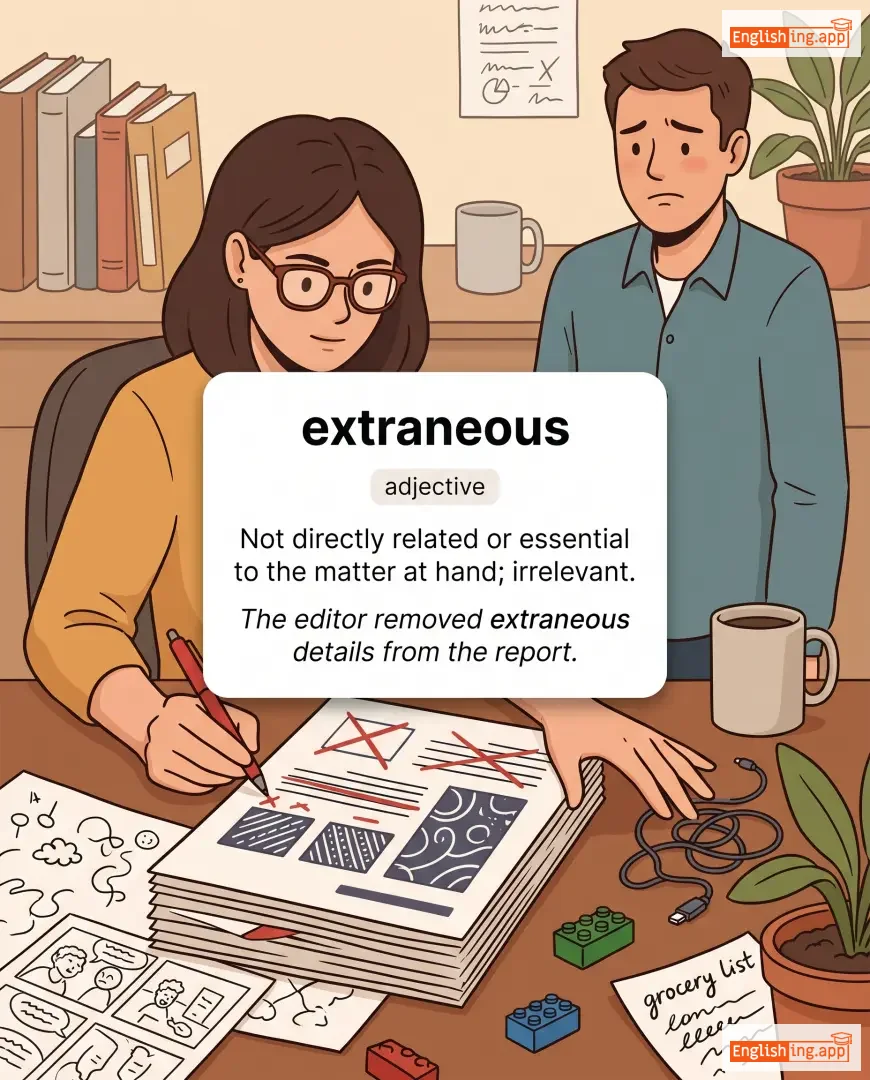
Not directly related or essential to the matter at hand; irrelevant.
••••••
|
The editor removed extraneous details from the report. |
编辑从报告中删除了无关的细节。
Biānjí cóng bàogào zhōng shānchúle wúguān de xìjié.
••••••
|
- •••••• | - •••••• | - •••••• |
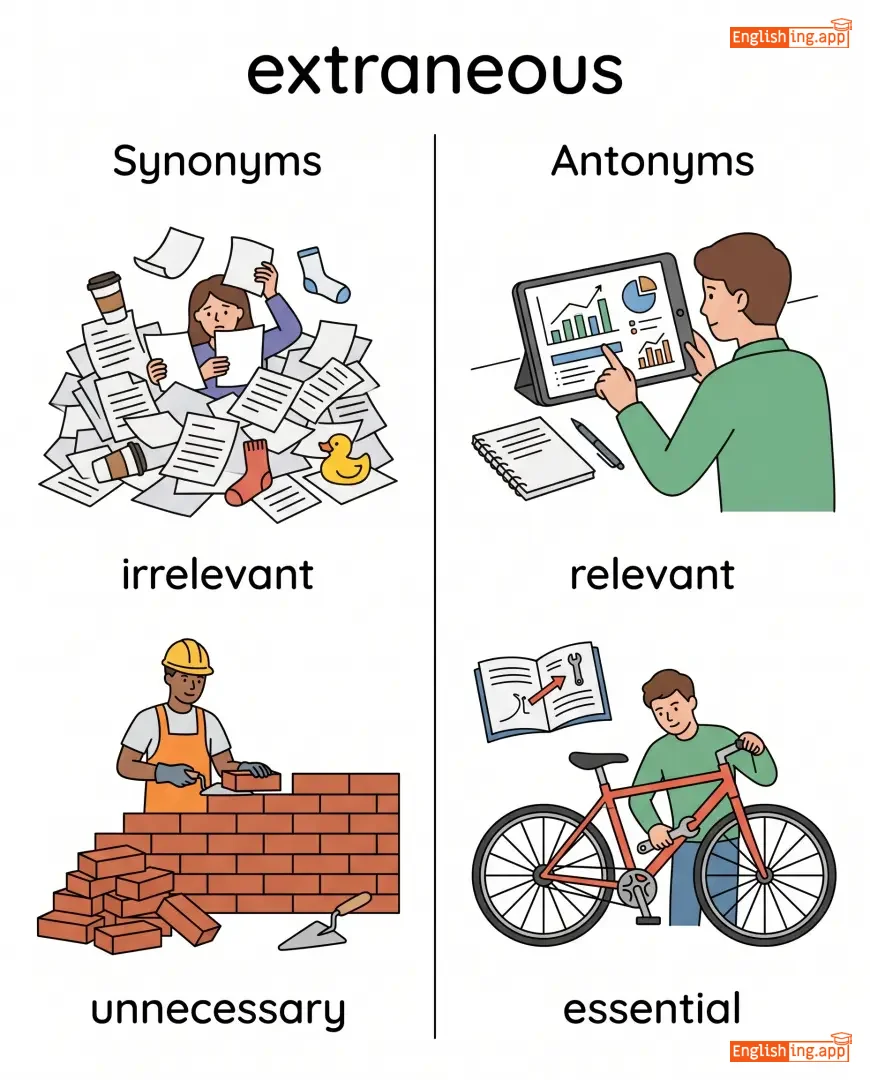
irrelevant, unnecessary, unrelated, superfluous, redundant
••••••
|
relevant, essential, necessary
••••••
|
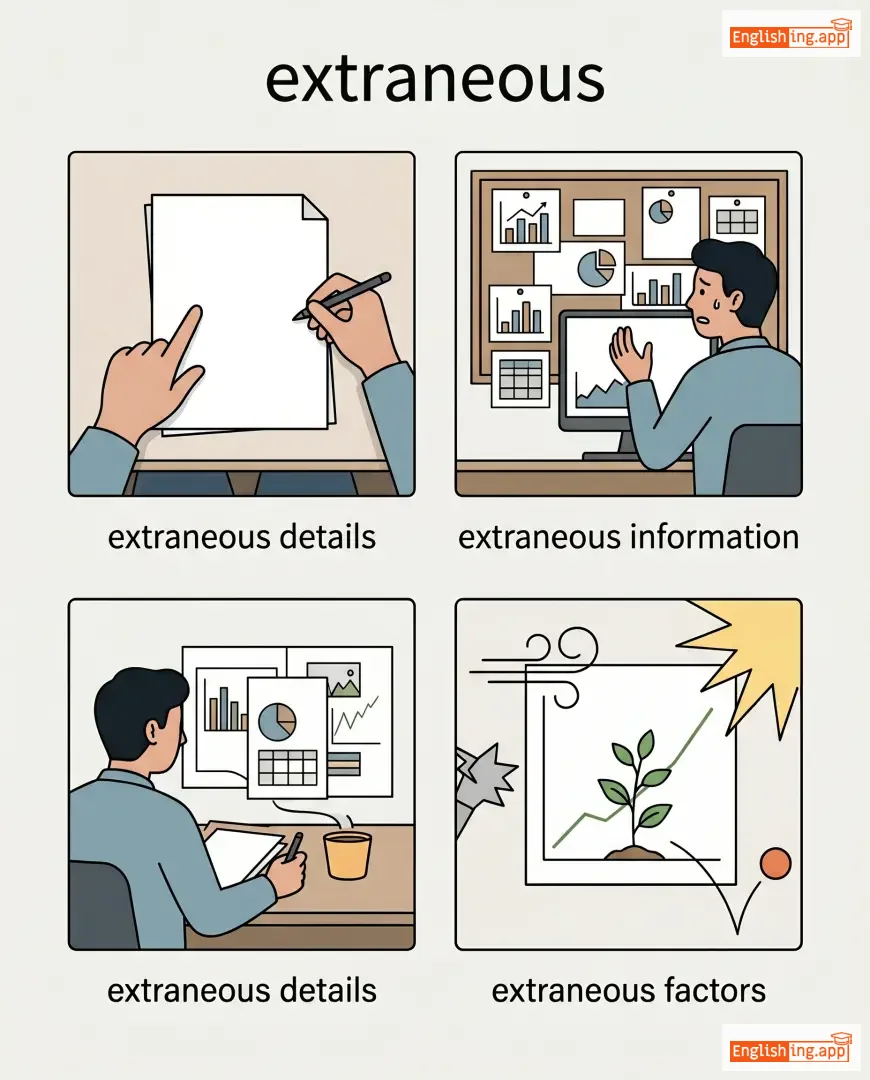
extraneous details, extraneous information, extraneous factors, extraneous noise
••••••
|
Extraneous意思是额外的(多余的)+无关的东西。
••••••
|
|
🔮
••••••
|
/ɪkˌstræp.əˈleɪ.ʃən/
noun
(外推法)
••••••
|

|
外推法
wàituī fǎ
••••••
|
- •••••• | - •••••• | - •••••• | - •••••• |
The process of estimating or predicting something based on extending known information.
••••••
|
The company's financial extrapolation suggests steady growth. |
该公司的财务外推法建议稳步增长。
gāi gōngsī de cáiwù wàituī fǎ jiànyì wěnbù zēngzhǎng.
••••••
|
- •••••• | - •••••• | - •••••• |
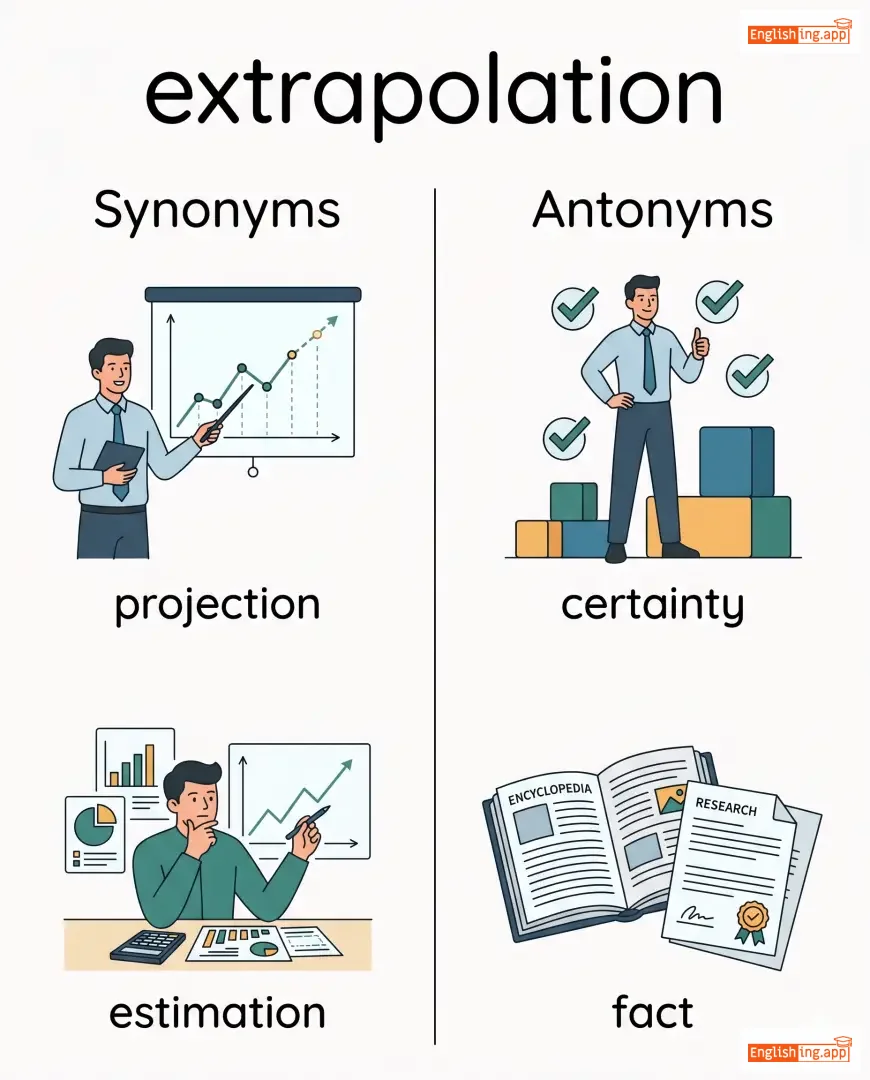
projection, estimation, inference, prediction, forecast
••••••
|
certainty, fact
••••••
|
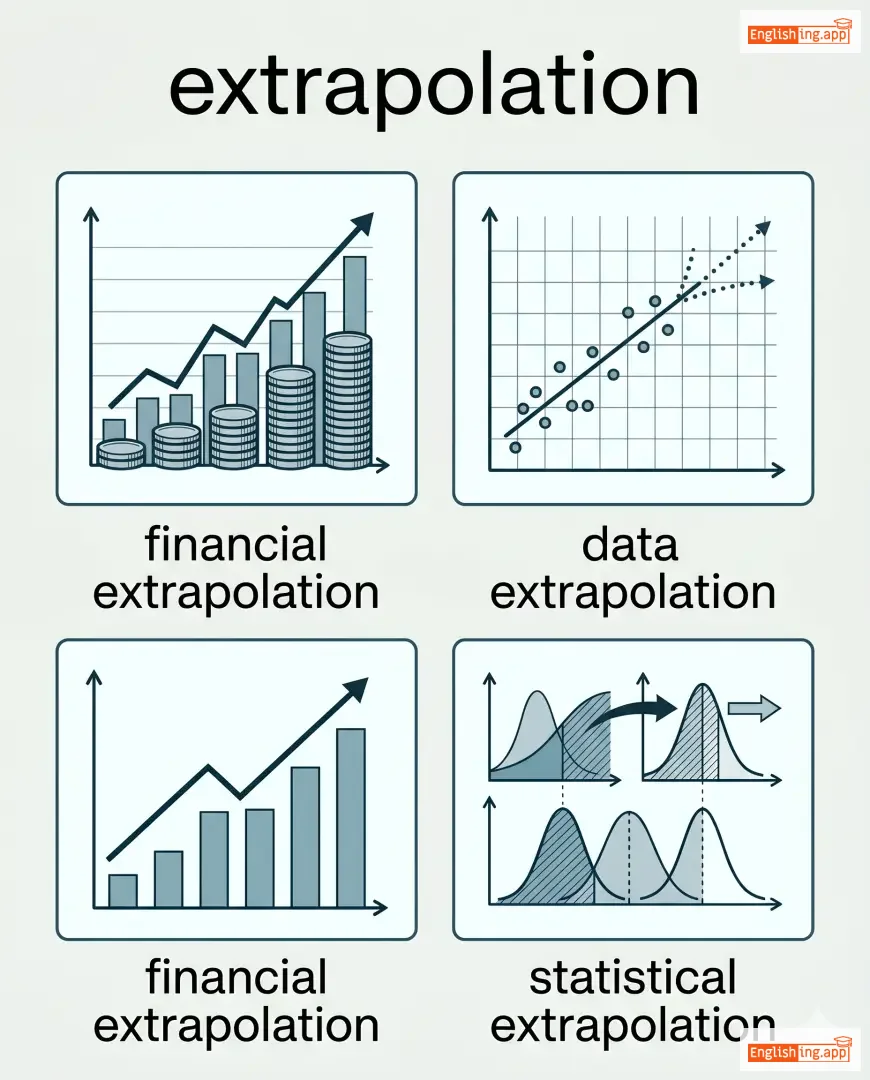
financial extrapolation, data extrapolation, statistical extrapolation, extrapolation method
••••••
|
外推法 = extra + 预测 → 从额外数据中进行预测。
••••••
|
|
🌐
••••••
|
/ɛkˈstrɪnzɪk/
adjective
(外在)
••••••
|


|
外在
wàizài
••••••
|
- •••••• | - •••••• | - •••••• | - •••••• |
Not part of the essential nature of someone or something; coming from outside.
••••••
|
His motivation was largely extrinsic, driven by rewards and recognition. |
他的动力主要是外在的,受到奖励和认可的驱动。
Tā de dònglì zhǔyào shì wàizài de, shòudào jiǎnglì hé rènkě de qūdòng.
••••••
|
extrinsic motivation |
motivation that comes from external factors like money, grades, or praise
••••••
|
外在动机
wàizài dòngjī
••••••
|
external, outside, foreign, nonessential
••••••
|
intrinsic, inherent
••••••
|
extrinsic factor, extrinsic motivation, extrinsic value
••••••
|
Extra (外部) + intrinsic,extrinsic 就是外在
••••••
|
|
😏
••••••
|
/fəˈsiːʃəs/
adjective
(feisishius)
••••••
|

|
讽刺的
fengci de
••••••
|
- •••••• | - •••••• | - •••••• | - •••••• |
Treating serious issues with deliberately inappropriate humor
••••••
|
He was being facetious when he said he wanted to live on the moon. |
他说他想住在月球上时,他是在开玩笑。
Tā shuō tā xiǎng zhù zài yuèqiú shàng shí, tā shì zài kāi wánxiào.
••••••
|
- •••••• | - •••••• | - •••••• |
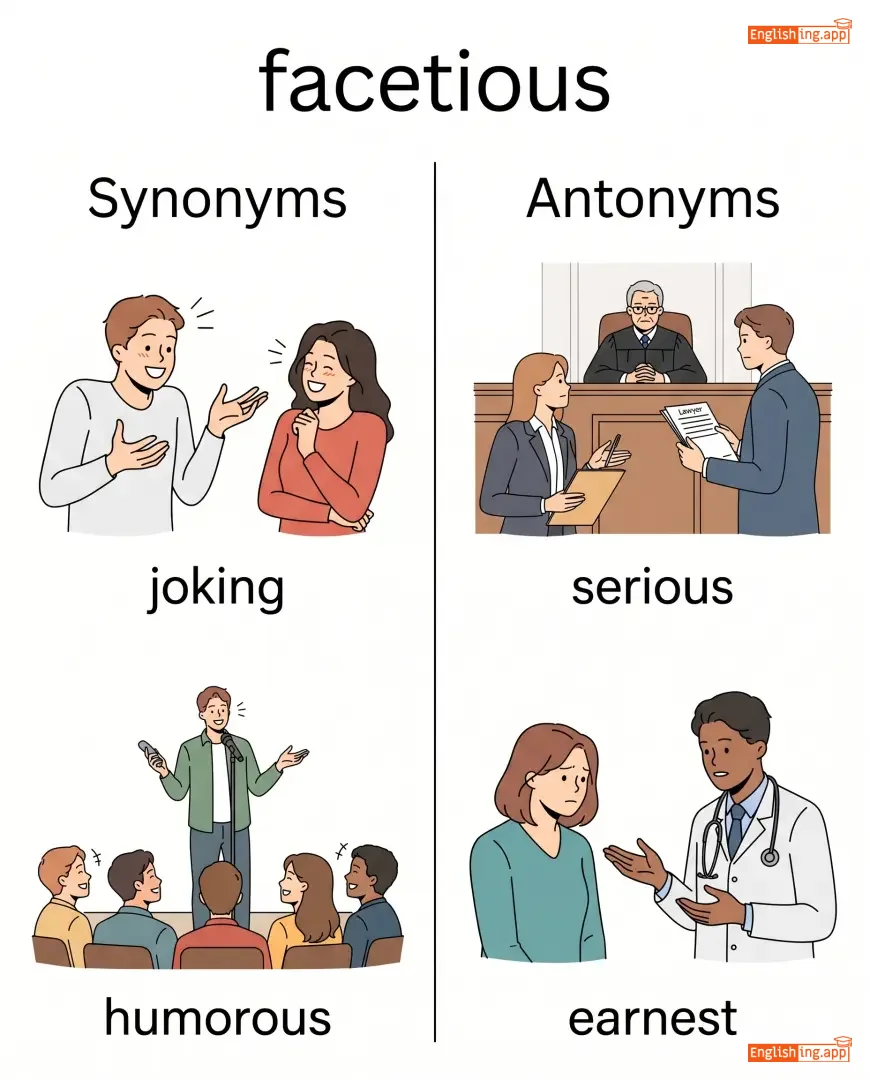
joking, humorous, playful, witty, flippant
••••••
|
serious, earnest, solemn
••••••
|
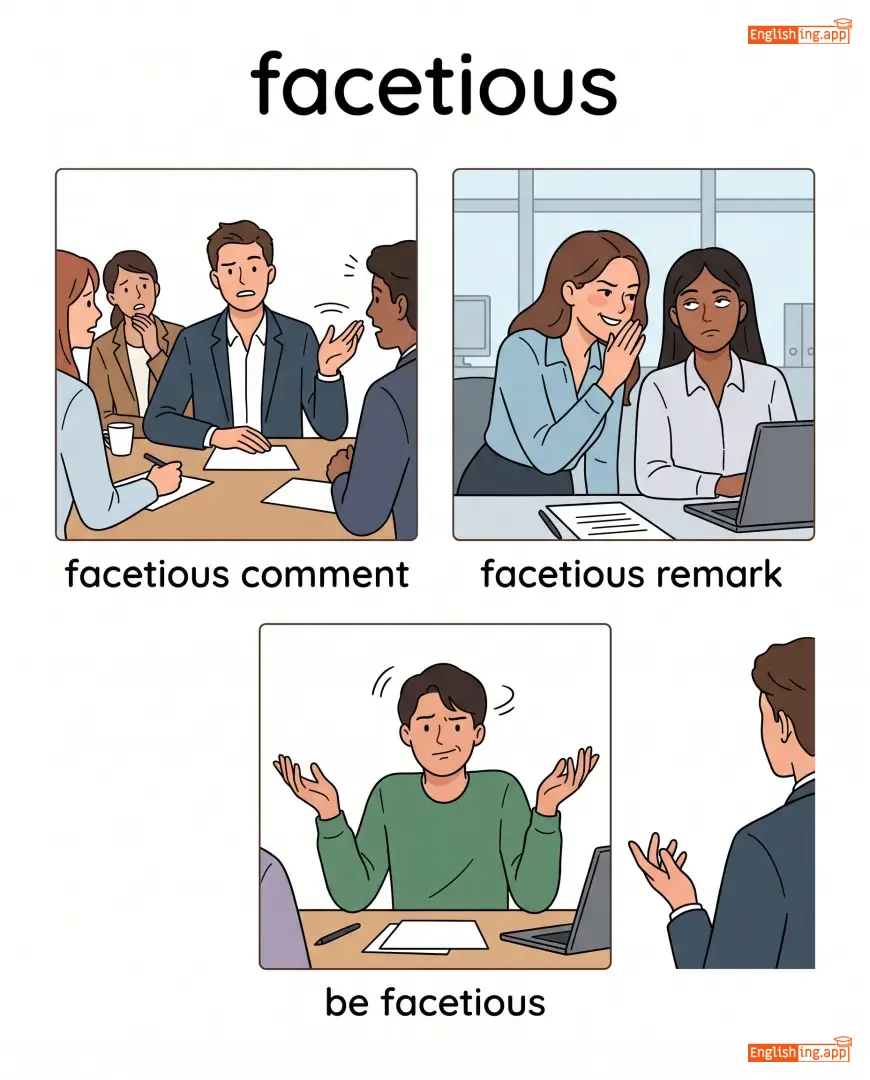
facetious comment, facetious remark, be facetious
••••••
|
Facetious = 'face' 和 '讽刺' 通过笑话让严肃变得轻松。
••••••
|
|
⚙️
••••••
|
/fəˈsɪlɪteɪt/
verb
(促进)
••••••
|


|
促进,使变得更容易
cùjìn, shǐ biàn dé gèng róngyì
••••••
|
facilitated
促进了
••••••
|
facilitated
促进了
••••••
|
facilitates
促进
••••••
|
facilitating
促进中
••••••
|
to make an action or process easier or smoother
••••••
|
The new software will facilitate communication between departments.
新软件将促进部门之间的沟通。
••••••
|
新软件将促进部门之间的沟通。
Xīn ruǎnjiàn jiāng cùjìn bùmén zhī jiān de gōutōng.
••••••
|
- •••••• | - •••••• | - •••••• |
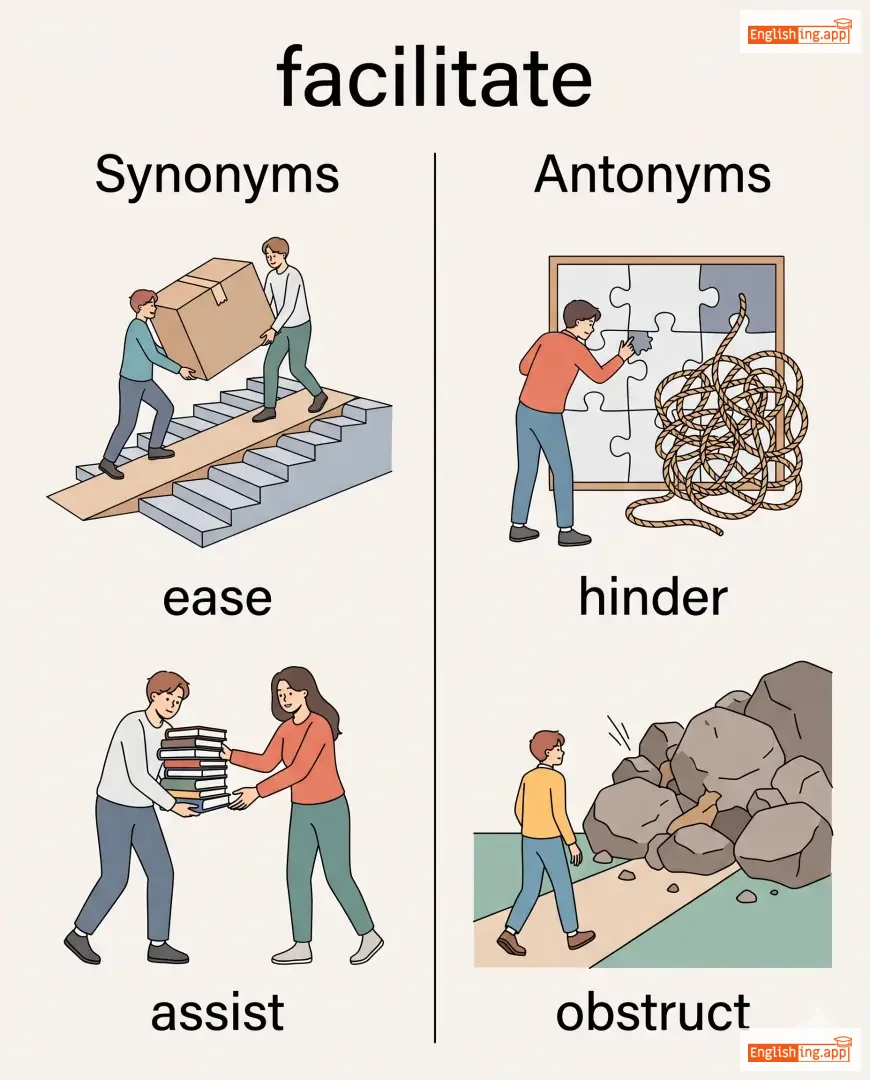
ease, assist, simplify, aid
••••••
|
hinder, obstruct, complicate
••••••
|
facilitate communication, facilitate process, facilitate learning, facilitate discussion
••••••
|
Facilitate - 'Face ill' 使事情更简单
••••••
|
|
🛠️
••••••
|
/fækˈtoʊtəm/
noun
(法克托姆)
••••••
|


|
全能工人
quánnéng gōngrén
••••••
|
- •••••• | - •••••• | - •••••• | - •••••• |
an employee who does many different types of work; a general servant
••••••
|
He worked as a factotum, handling both clerical and maintenance duties. |
他作为一个全能工人工作,处理行政和维护任务。
Tā zuòwéi yīgè quánnéng gōngrén gōngzuò, chǔlǐ xíngzhèng hé wéihù rènwù.
••••••
|
- •••••• | - •••••• | - •••••• |
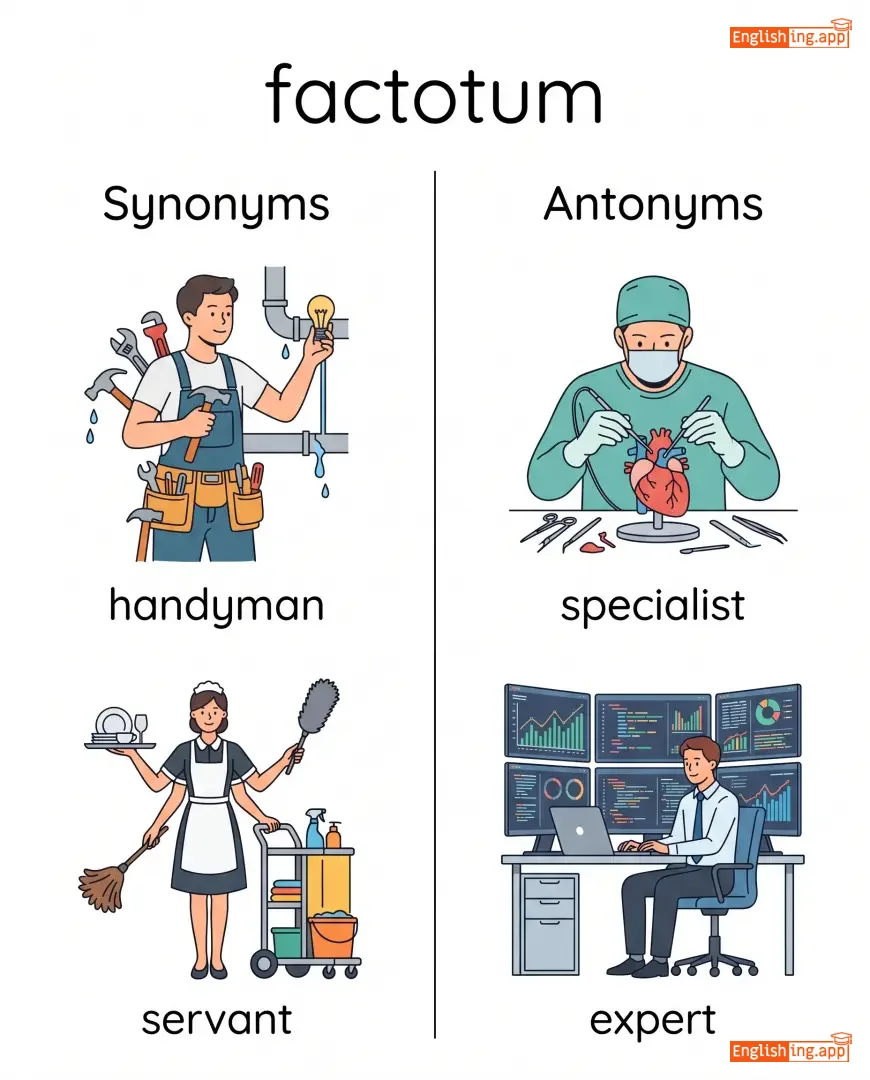
handyman, servant, assistant, all-rounder
••••••
|
specialist, expert
••••••
|
office factotum, household factotum, versatile factotum
••••••
|
法克托姆是能做任何工作的全能工人!
••••••
|
|
❌
••••••
|
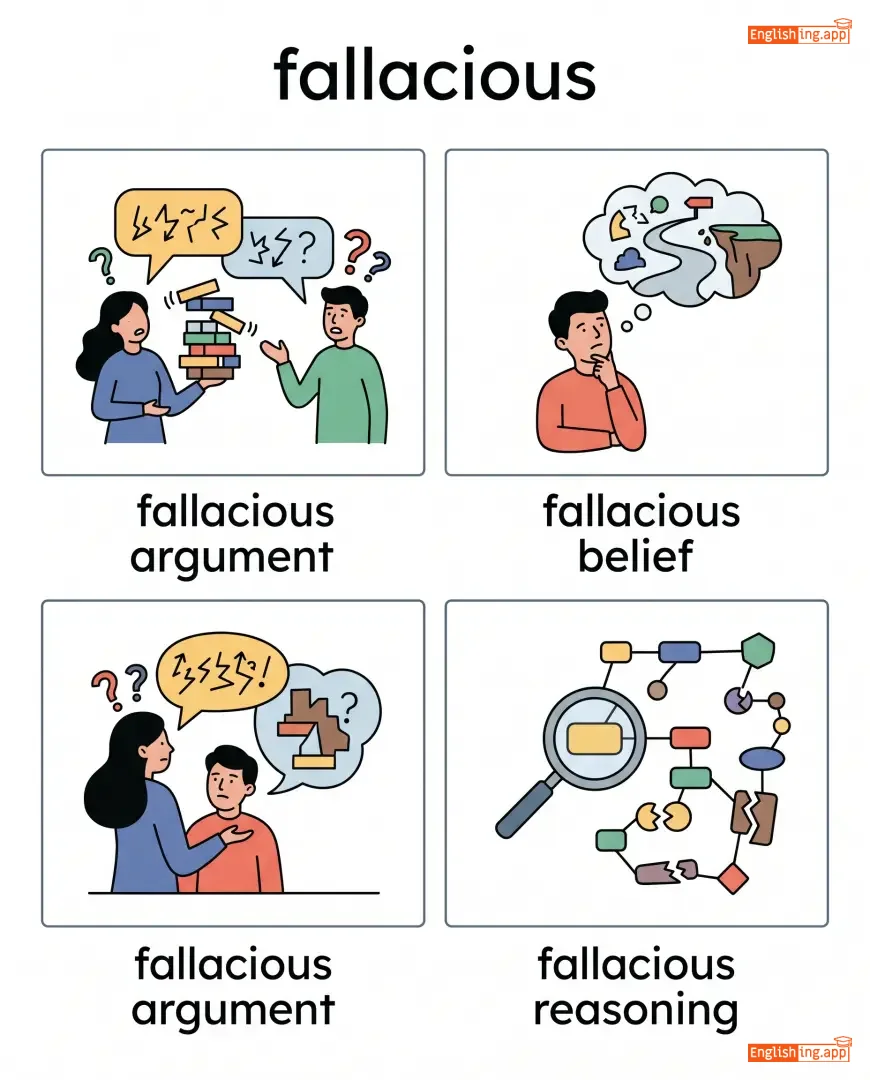
/fəˈleɪ.ʃəs/
adjective
(法雷修斯)
••••••
|
|
虚假
xūjiǎ
••••••
|
- •••••• | - •••••• | - •••••• | - •••••• |
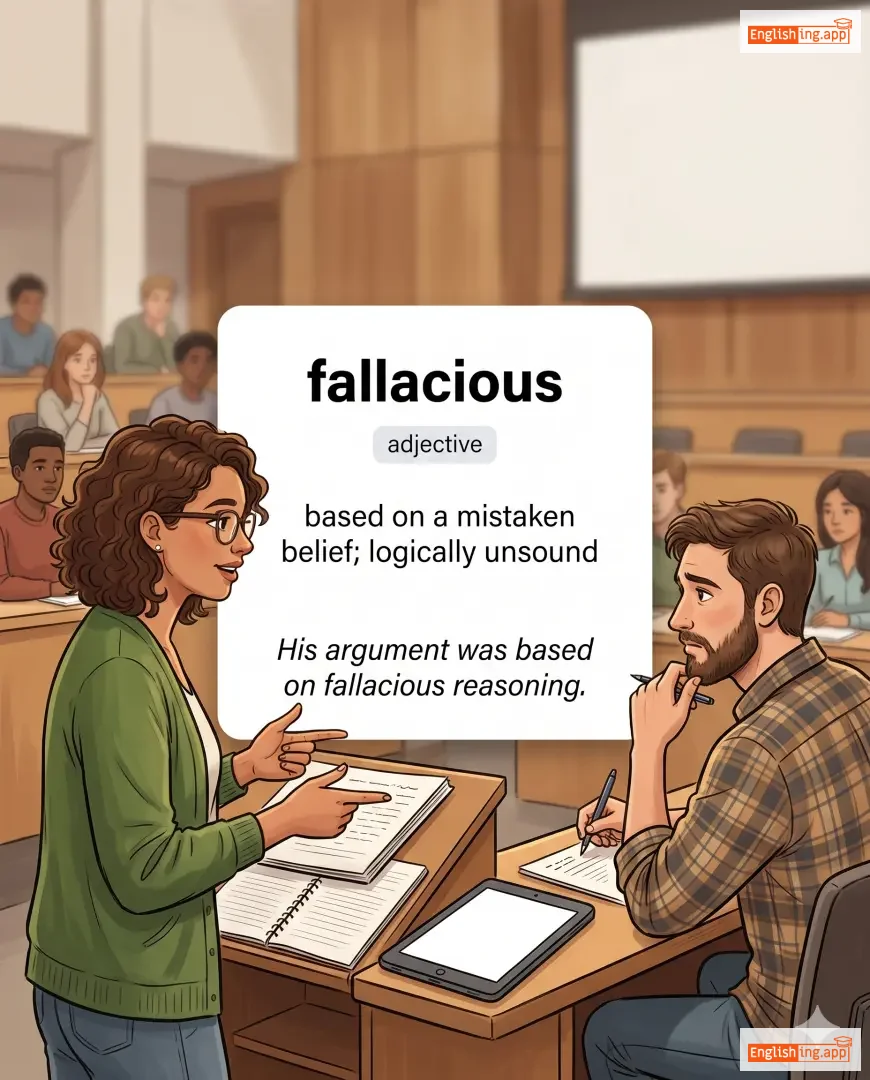
based on a mistaken belief; logically unsound
••••••
|
His argument was based on fallacious reasoning. |
他的论点建立在虚假的推理上。
Tā de lùndiǎn jiànlì zài xūjiǎ de tuīlǐ shàng.
••••••
|
- •••••• | - •••••• | - •••••• |
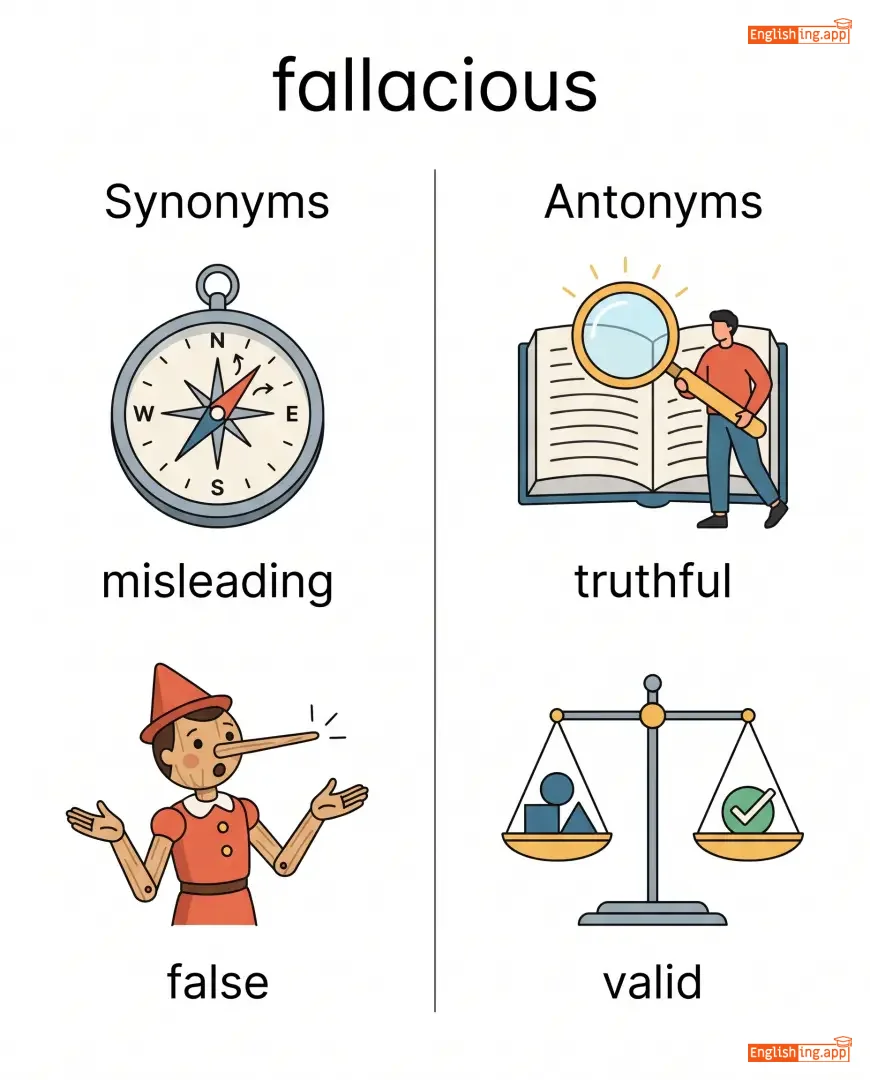
misleading, false, erroneous, deceptive
••••••
|
truthful, valid, sound
••••••
|
fallacious argument, fallacious belief, fallacious reasoning
••••••
|
Fallacious = 错误的信念 + 逻辑不成立
••••••
|
|
🌾
••••••
|
/ˈfæloʊ/
adjective
(费罗)
••••••
|
|
休耕, 不活跃
xiū gēng, bù huó yuè
••••••
|
- •••••• | - •••••• | - •••••• | - •••••• |
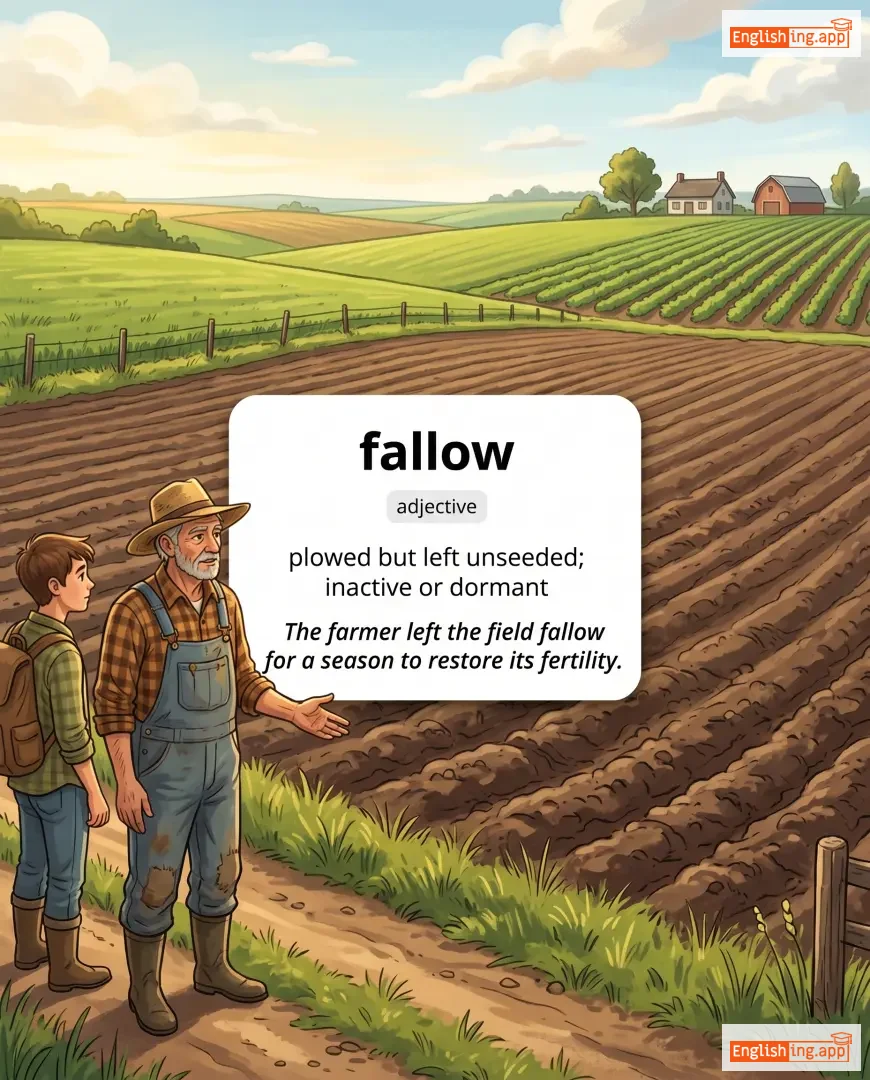
plowed but left unseeded; inactive or dormant
••••••
|
The farmer left the field fallow for a season to restore its fertility. |
农民让田地休耕一个季节,以恢复其肥力。
Nóngmín ràng tiándì xiū gēng yīgè jìjié, yǐ huīfù qí féilì.
••••••
|
- •••••• | - •••••• | - •••••• |
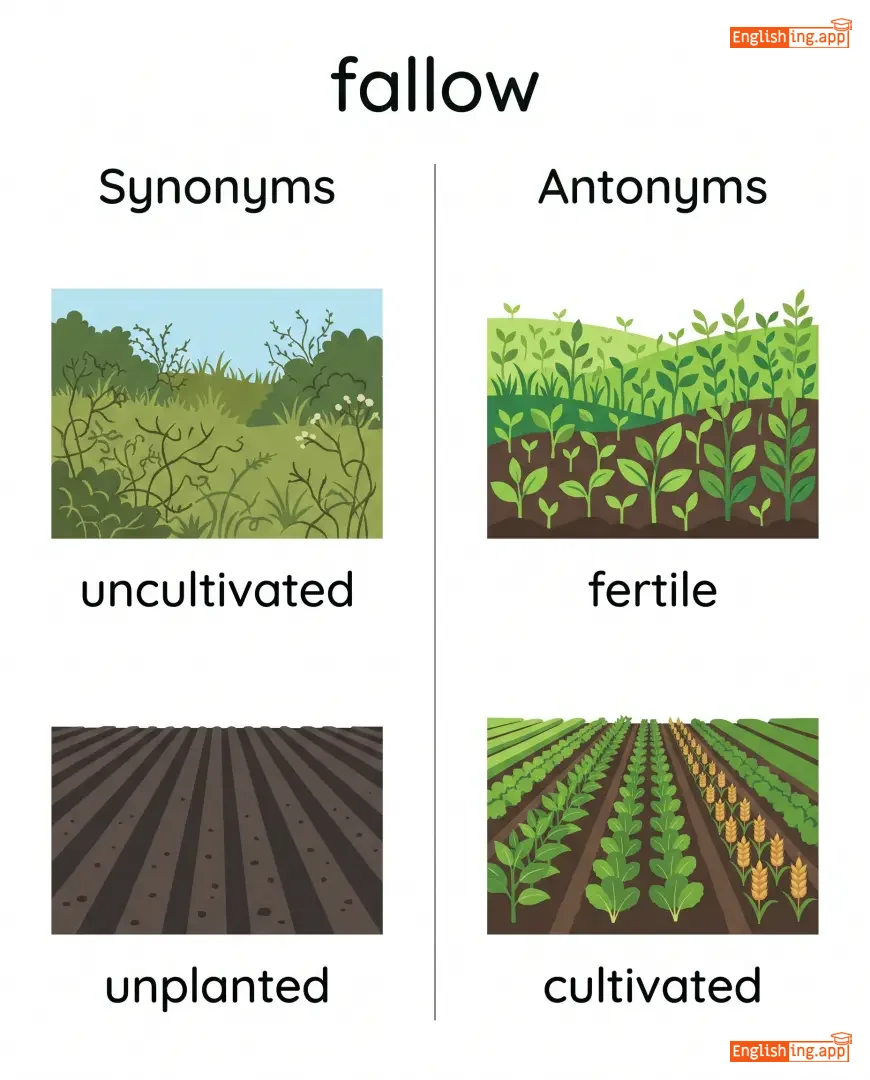
uncultivated, unplanted, dormant, idle
••••••
|
fertile, cultivated, productive
••••••
|
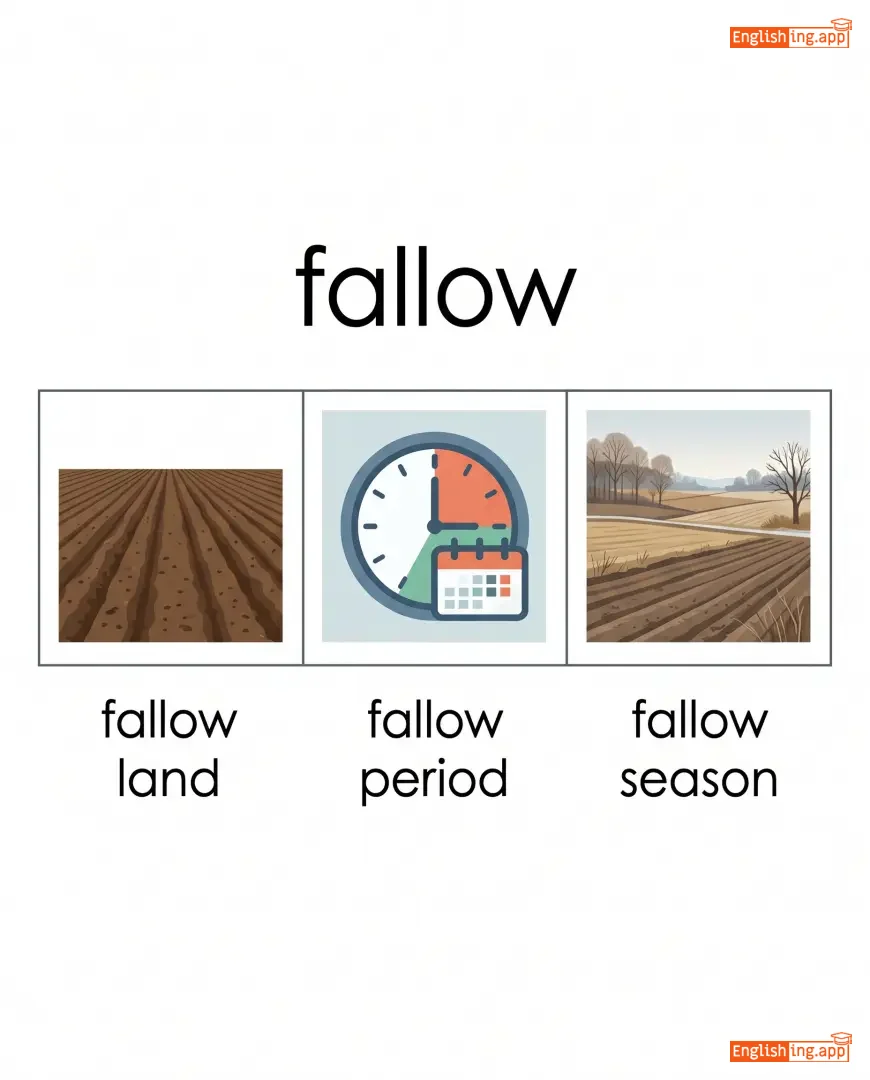
fallow land, fallow period, fallow season
••••••
|
土地休耕,意味着不再耕种
••••••
|
|
🤪
••••••
|
/ˈfætʃuəs/
adjective
(法图厄斯)
••••••
|

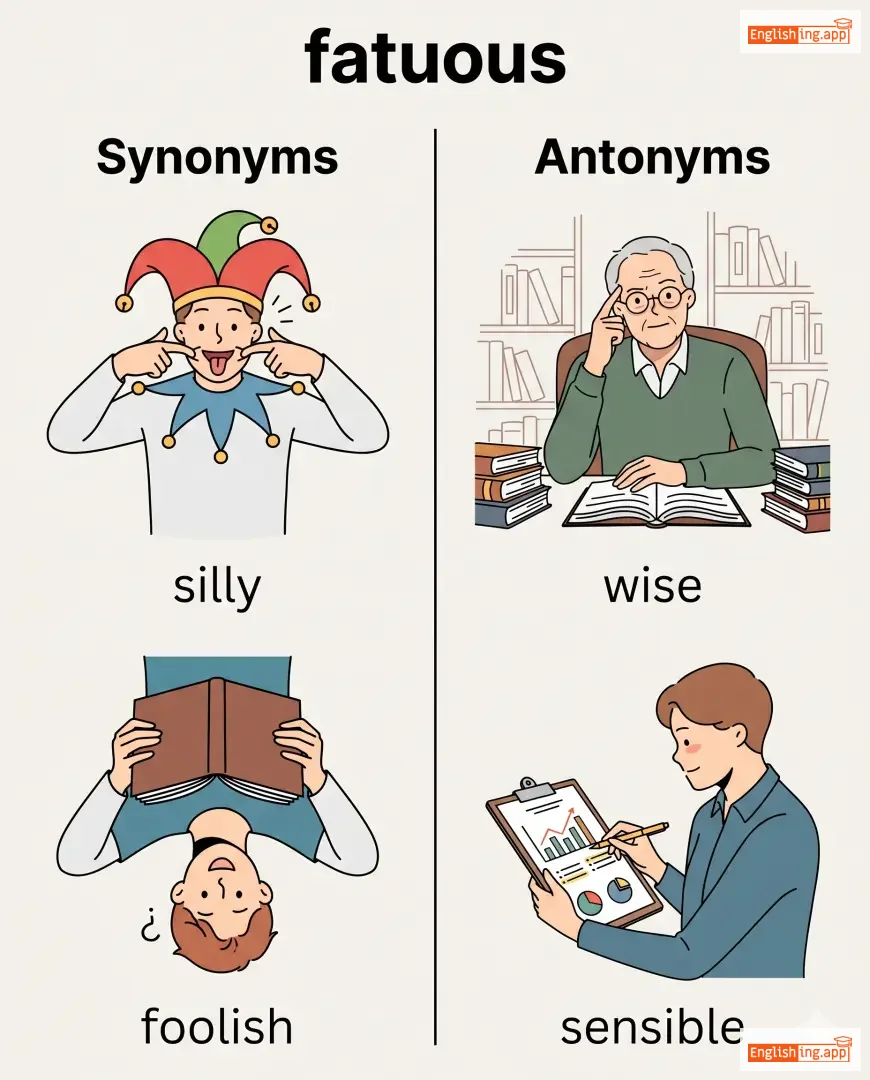

|
愚蠢
yúchǔn
••••••
|
- •••••• | - •••••• | - •••••• | - •••••• |
silly or foolish, especially in a self-satisfied way
••••••
|
His fatuous comments during the meeting annoyed everyone. |
他在会议中的愚蠢评论让所有人都感到烦恼。
Tā zài huìyì zhōng de yúchǔn pínglùn ràng suǒyǒu rén dōu gǎndào fánnǎo.
••••••
|
- •••••• | - •••••• | - •••••• |
silly, foolish, inane, absurd
••••••
|
wise, sensible, intelligent
••••••
|
fatuous remark, fatuous grin, fatuous behavior
••••••
|
Fatuous是一个自满的傻瓜,大家都知道他是愚蠢的。
••••••
|
|
🦌
••••••
|
/ˈfɔː.nə/
noun
(动植物群)
••••••
|
|
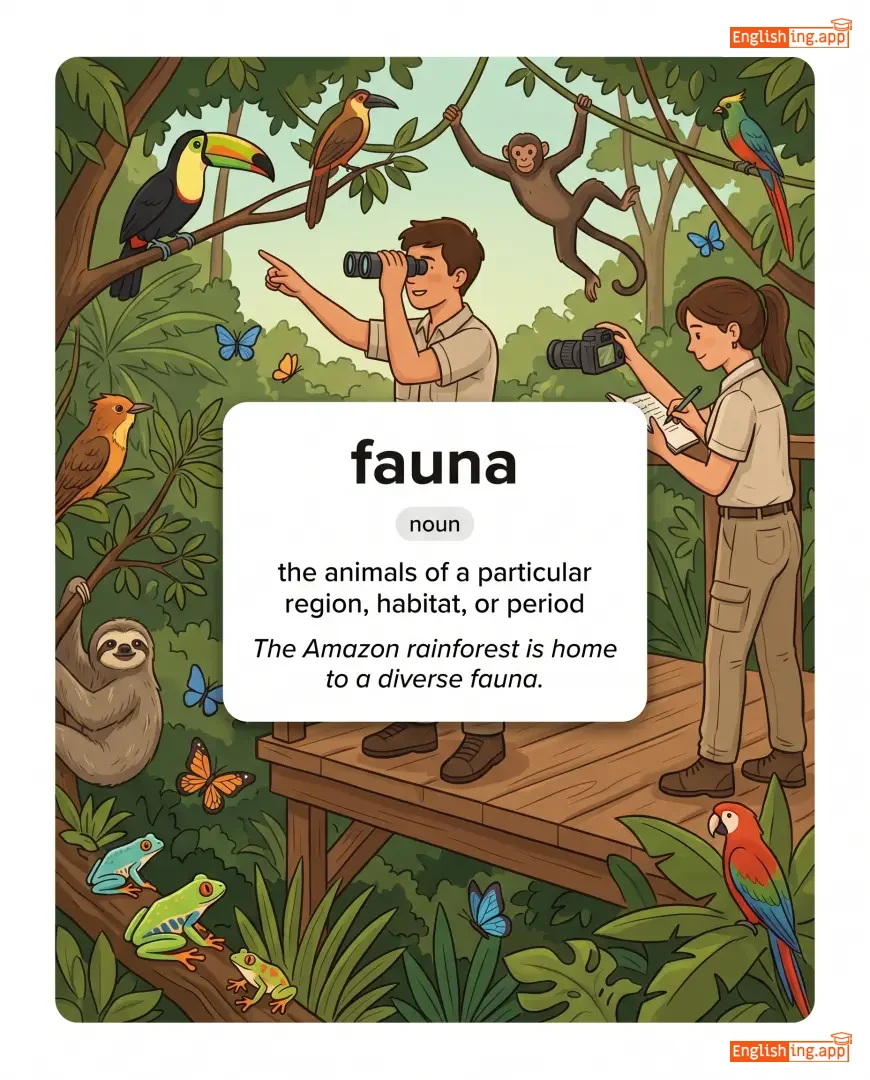
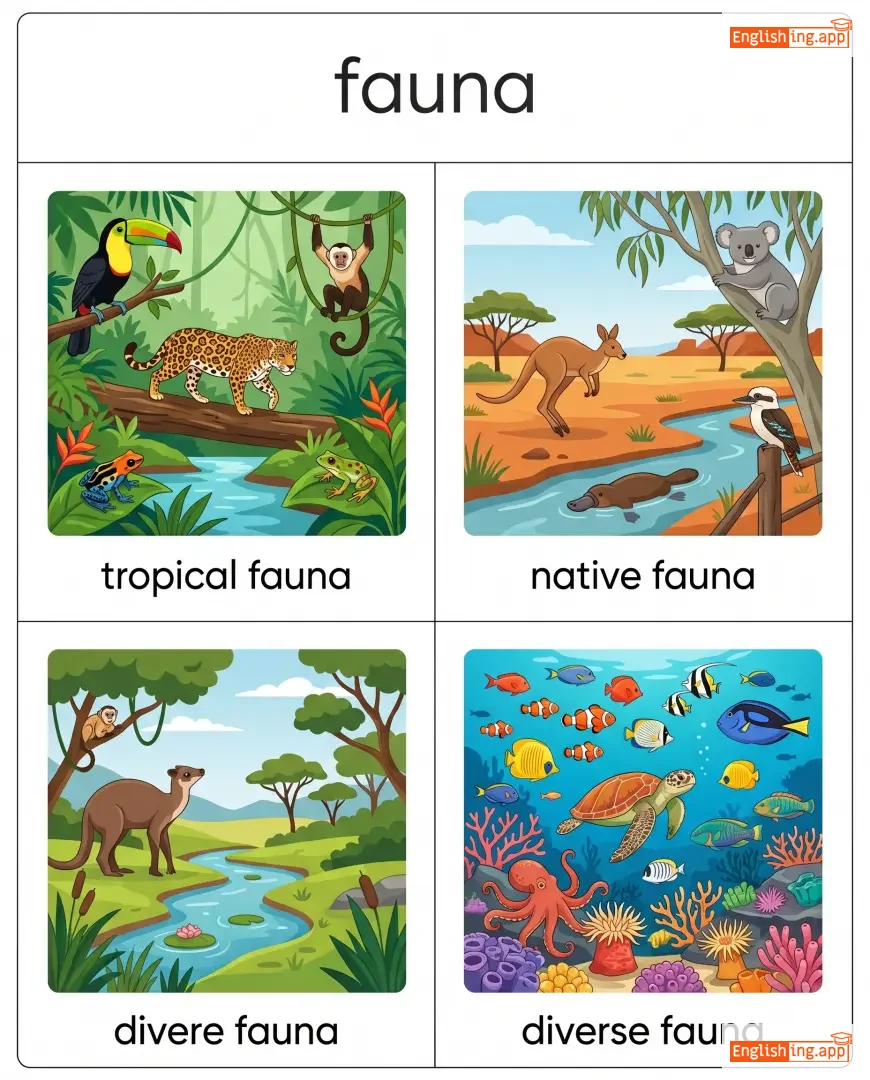
特定地区的动物生命
tedi diqu de dongwu shengming
••••••
|
- •••••• | - •••••• | - •••••• | - •••••• |
The animal life of a particular region, habitat, or geological period.
••••••
|
The fauna of the African savannah includes lions and elephants. |
非洲草原的动植物群包括狮子和大象。
Feizhou caoyuan de dongwu qun bao kuo shizi he daxiang.
••••••
|
- •••••• | - •••••• | - •••••• |
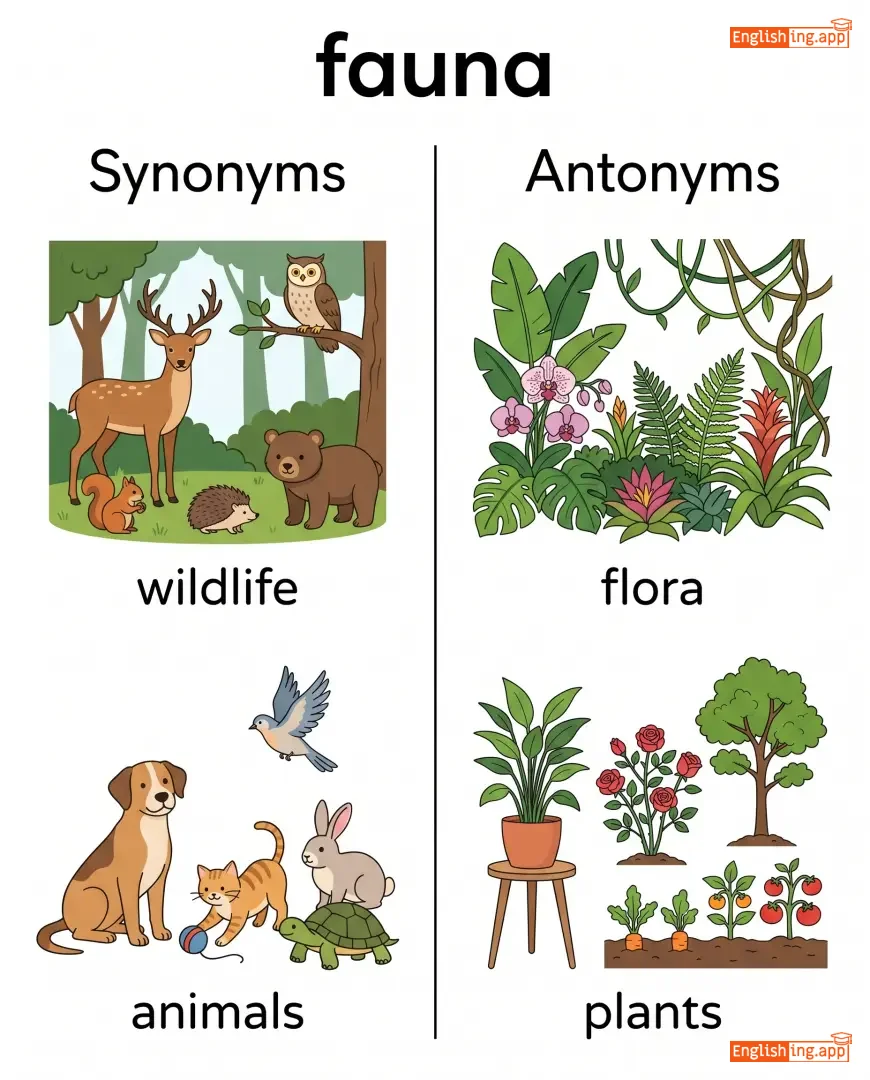
wildlife, animals, zoological life
••••••
|
flora, plants, vegetation
••••••
|
- •••••• |
想象在非洲草原上漫游的狮子和大象。
••••••
|
|
🙇
••••••
|
/ˈfɔːnɪŋ/
adjective
(fōníng)
••••••
|


|
过分的恭维
guòfèn de gōngwéi
••••••
|
- •••••• | - •••••• | - •••••• | - •••••• |
displaying exaggerated flattery or affection
••••••
|
Her fawning compliments made everyone uncomfortable. |
她过分的恭维让每个人都感到不自在。
Tā guòfèn de gōngwéi ràng měi gèrén dōu gǎndào bù zìzài.
••••••
|
- •••••• | - •••••• | - •••••• |
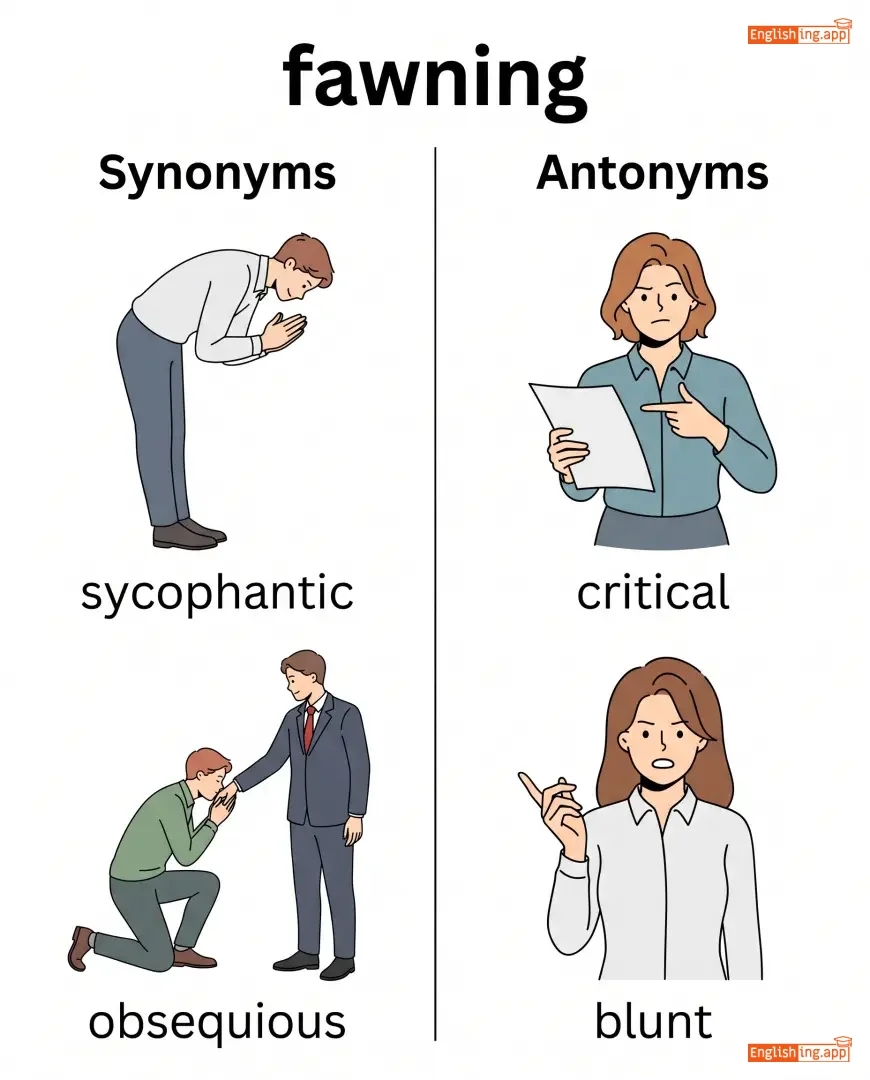
sycophantic, obsequious, flattering, ingratiating
••••••
|
critical, blunt
••••••
|
fawning attitude, fawning remarks, fawning behavior
••••••
|
Fawning = Flattering indefinitely makes it fawning
••••••
|
|
😊
••••••
|
/fəˈlɪsɪtəs/
adjective
(费利西图斯)
••••••
|


|
恰当的, 合适的或令人愉快的; 由好运或幸福标志
qiàdàng de, héshì de huò lìng rén yúkuài de; yóu hǎo yùn huò xìngfú biāozhì
••••••
|
- •••••• | - •••••• | - •••••• | - •••••• |
well-chosen, appropriate, or pleasing; marked by good fortune or happiness
••••••
|
She made a felicitous remark that lightened the mood. |
她做了一个恰到好处的评论,使气氛轻松了。
Tā zuòle yīgè qià dào hǎo chù de pínglùn, shǐ qìfēn qīngsōng le.
••••••
|
- •••••• | - •••••• | - •••••• |
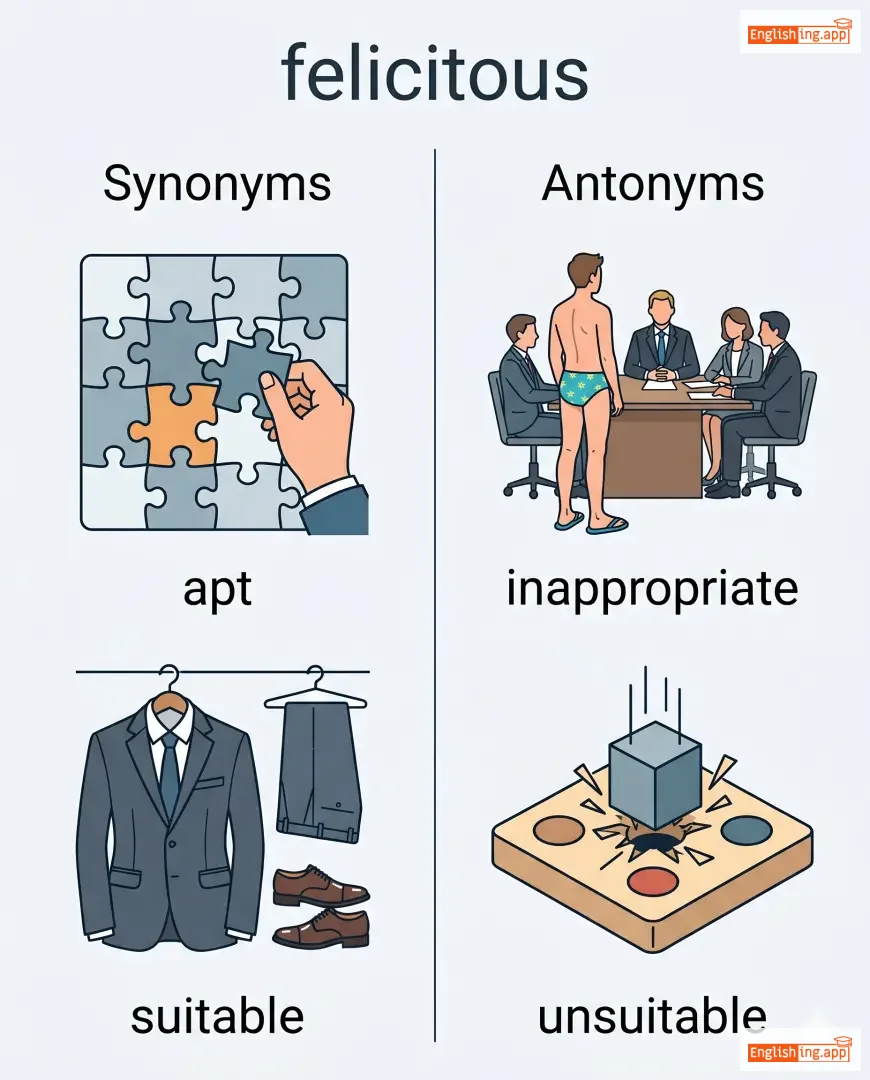
apt, suitable, appropriate, fortunate
••••••
|
inappropriate, unsuitable
••••••
|
felicitous remark, felicitous timing, felicitous choice
••••••
|
FELICitous = FELICity, 适当的评论,带来愉悦。
••••••
|
|
🐾
••••••
|
/ˈfɛrəl/
adjective
(费拉尔)
••••••
|
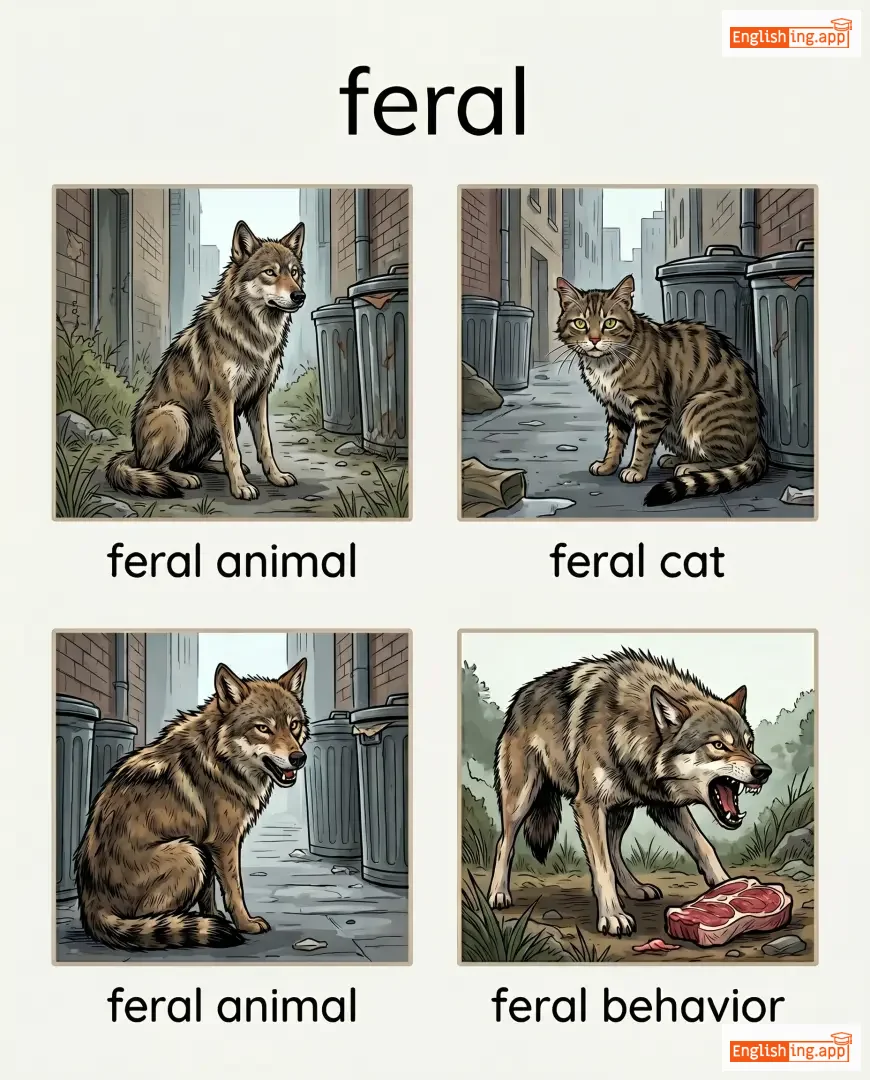
|
野生的
yesheng de
••••••
|
- •••••• | - •••••• | - •••••• | - •••••• |
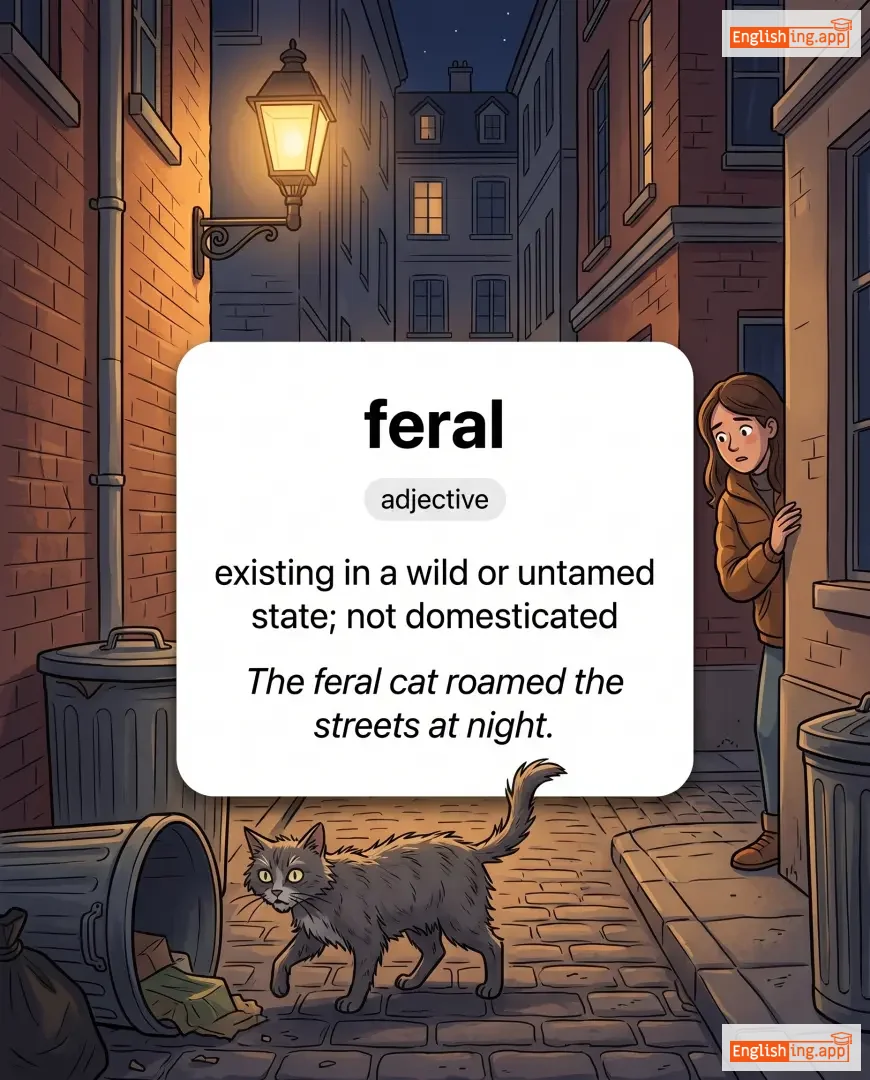
existing in a wild or untamed state; not domesticated
••••••
|
The feral cat roamed the streets at night. |
那只野猫在晚上游荡在街头。
Na zhi yemao zai wanshang youdang zai jietou.
••••••
|
- •••••• | - •••••• | - •••••• |
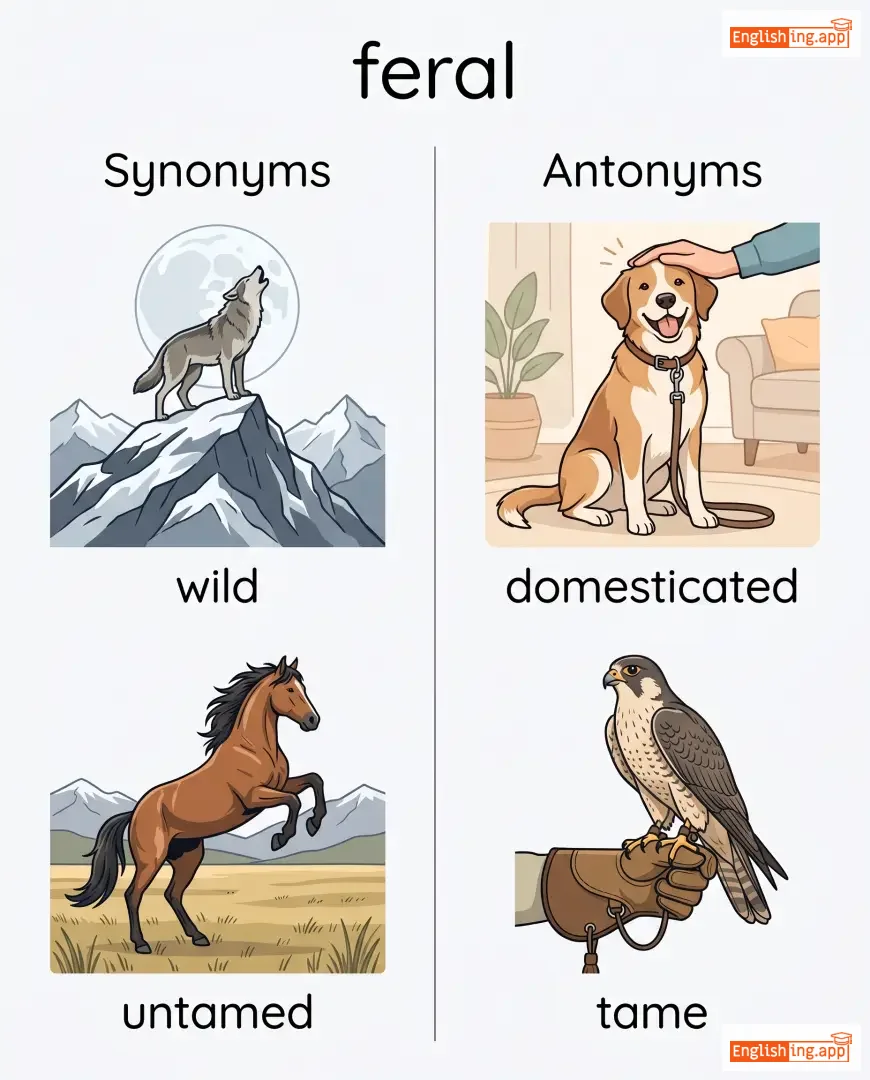
wild, untamed, savage, uncontrolled
••••••
|
domesticated, tame
••••••
|
feral animal, feral cat, feral behavior, feral instincts
••••••
|
Feral = 自由或野生
••••••
|
|
🔥
••••••
|
/ˈfɜːrvər/
noun
(fervor)
••••••
|


|
热情, 激情
reqing, jiqing
••••••
|
- •••••• | - •••••• | - •••••• | - •••••• |
intense and passionate feeling
••••••
|
She spoke with great fervor about the importance of education.
她以极大的热情谈论教育的重要性。
••••••
|
她以极大的热情谈论教育的重要性。
Ta yi jida de reqing tanlun jiaoyu de zhongyao xing.
••••••
|
- •••••• | - •••••• | - •••••• |
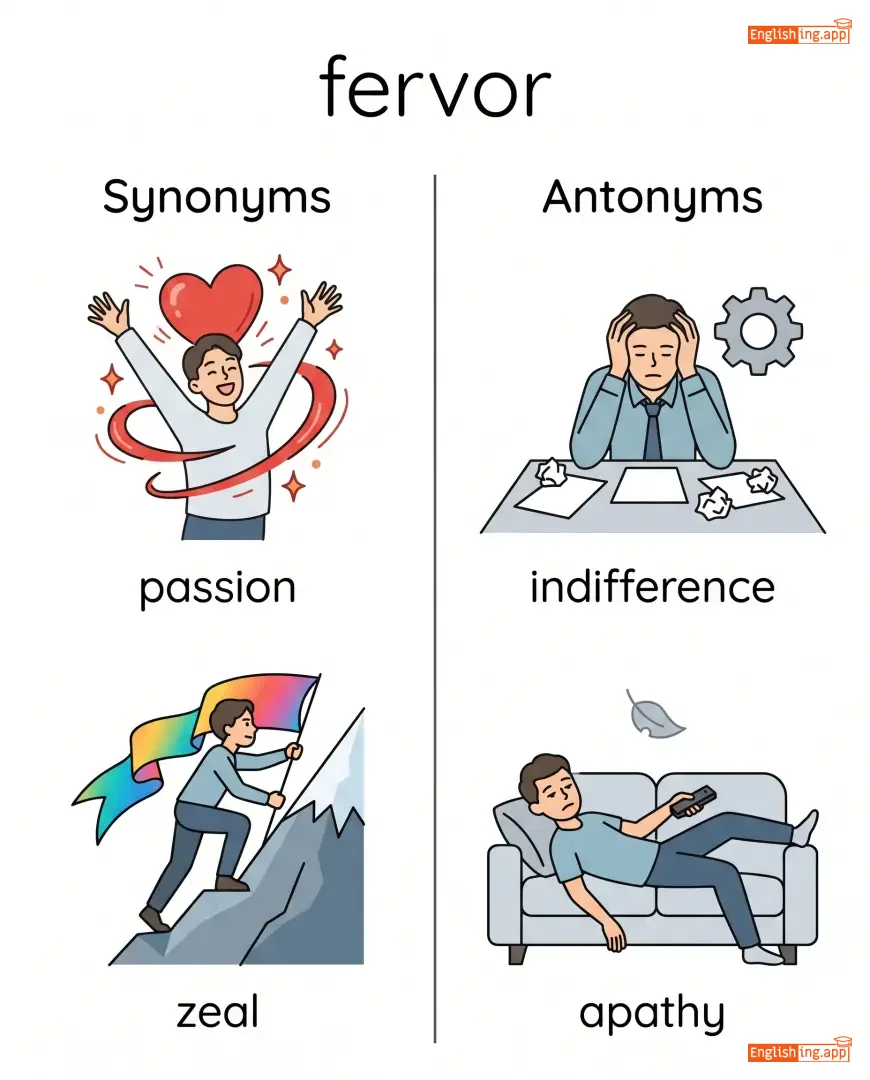
passion, zeal, enthusiasm, ardor
••••••
|
indifference, apathy
••••••
|
fervor for, religious fervor, political fervor
••••••
|
Fervor 就像火 - 总是充满激情和能量
••••••
|
|
🤢
••••••
|
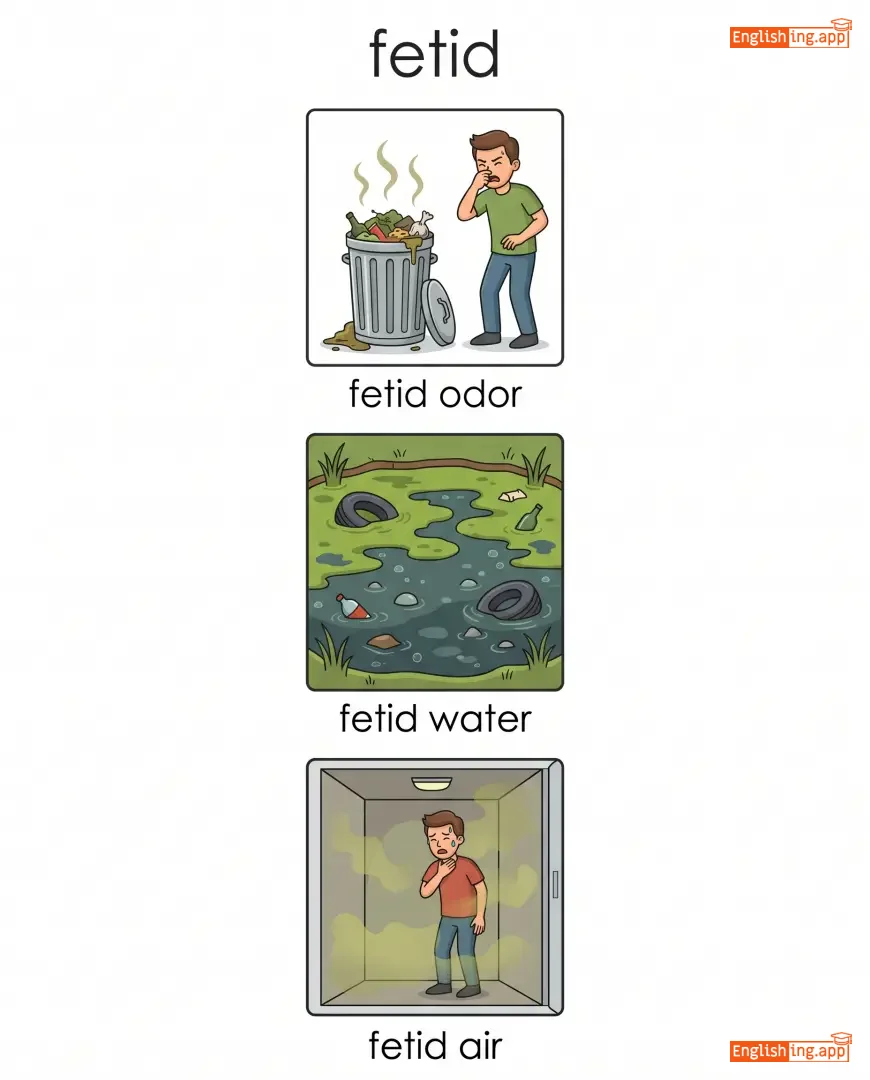
/ˈfɛtɪd/
adjective
(费提德)
••••••
|
|
有恶臭的,令人不快的
you èchòu de, lìng rén bù kuài de
••••••
|
- •••••• | - •••••• | - •••••• | - •••••• |
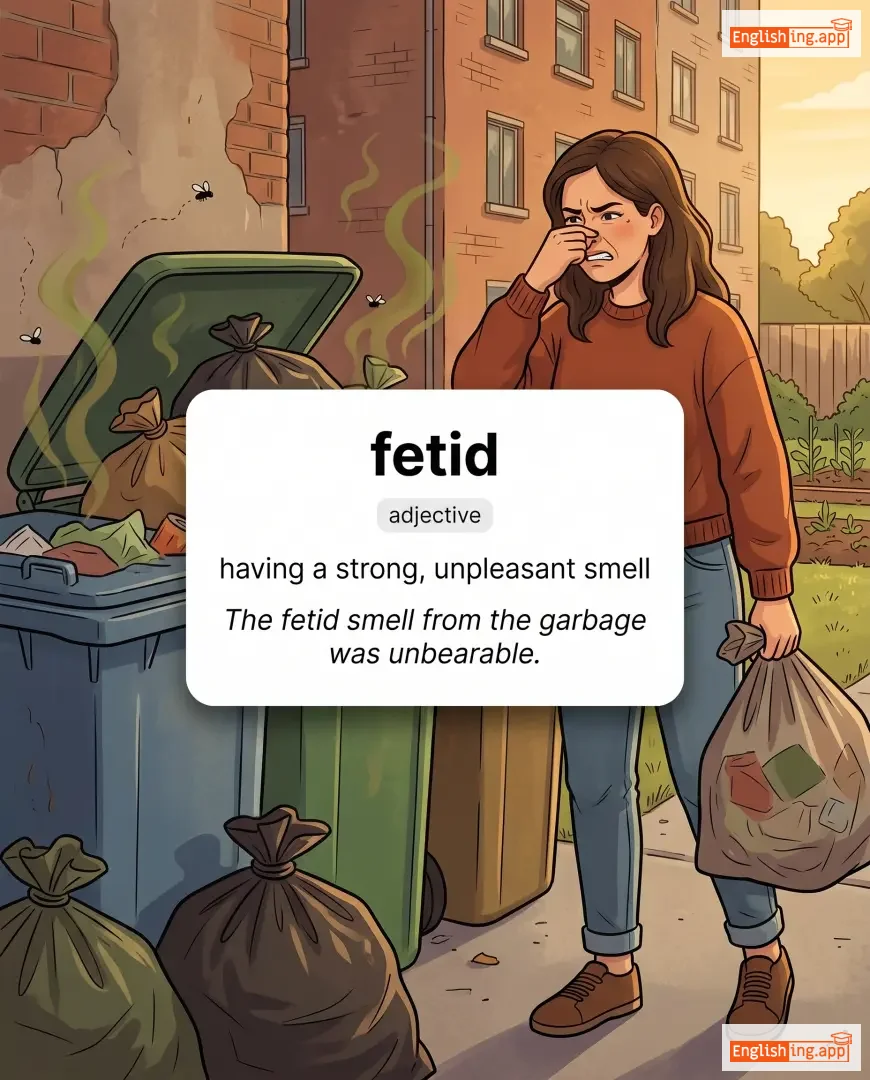
having a strong, unpleasant smell
••••••
|
The fetid smell from the garbage was unbearable.
垃圾散发出的费提德气味让人无法忍受。
••••••
|
垃圾散发出的恶臭让人无法忍受。
Laji sanfa chuchu de èchòu rang ren wufa renshou.
••••••
|
- •••••• | - •••••• | - •••••• |
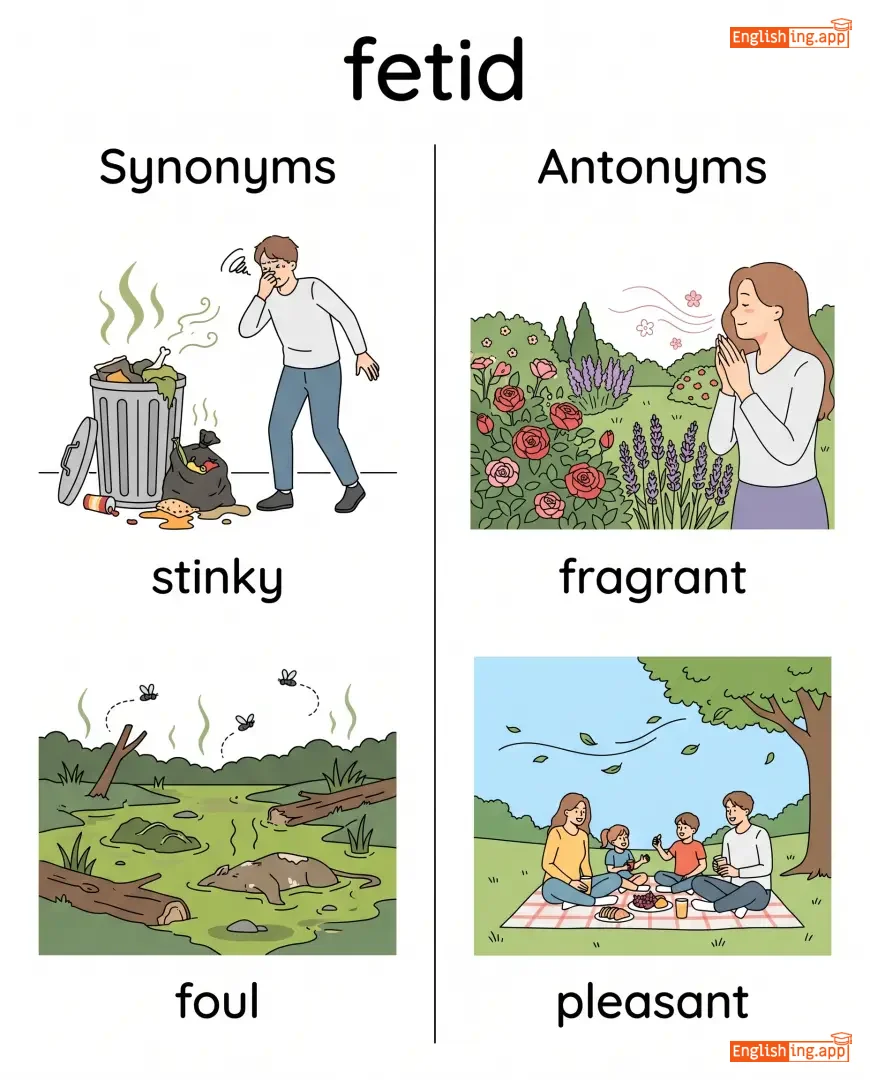
stinky, foul, malodorous, putrid
••••••
|
fragrant, pleasant
••••••
|
fetid odor, fetid water, fetid air
••••••
|
费提德气味让人想躲开 - Fetid smell makes people want to run
••••••
|
|
⛓️
••••••
|
/ˈfɛtər/
verb
(费特)
••••••
|
|
束缚,限制
shùfù, xiànzhì
••••••
|
fettered
费特德
••••••
|
fettered
费特德
••••••
|
fetters
费特尔斯
••••••
|
fettering
费特灵
••••••
|
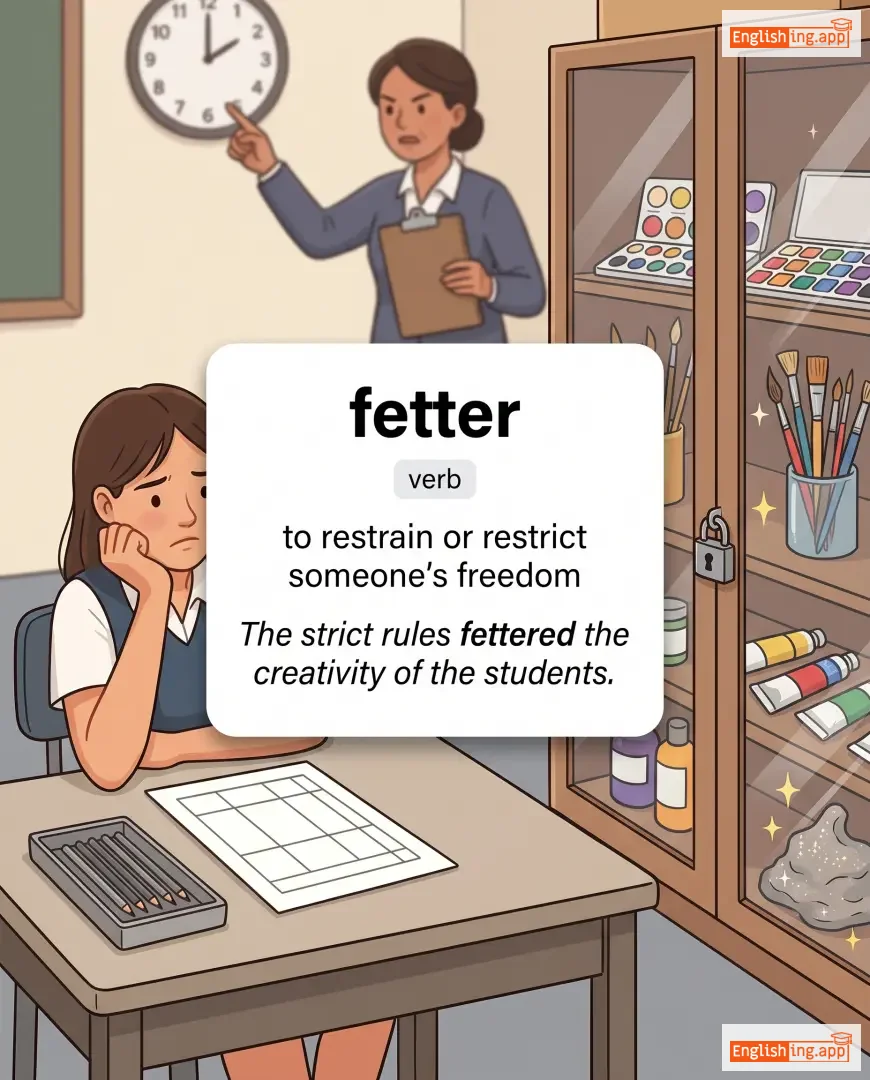
to restrain or restrict someone’s freedom
••••••
|
The strict rules fettered the creativity of the students.
严格的规则限制了学生们的创造力。
••••••
|
严格的规则限制了学生们的创造力。
Yángé de guīzé xiànzhìle xuéshēngmen de chuàngzàolì.
••••••
|
- •••••• | - •••••• | - •••••• |
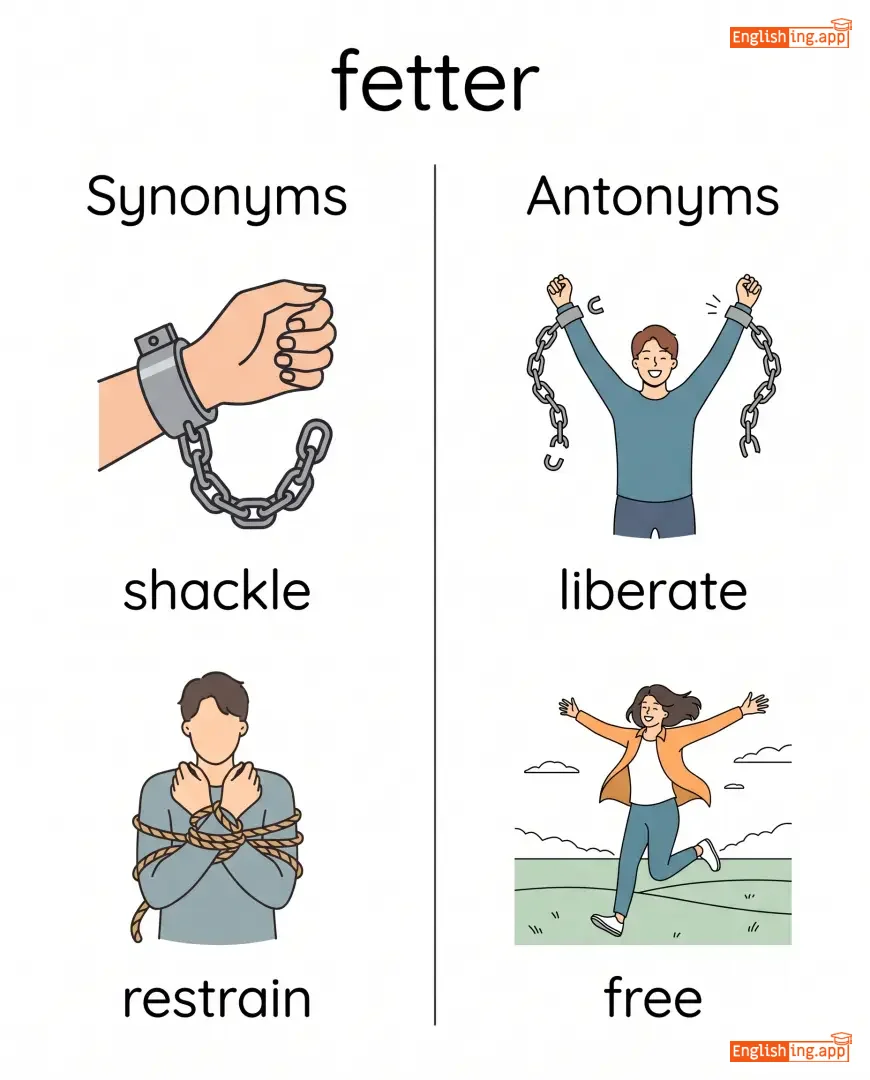
shackle, restrain, bind, hamper
••••••
|
liberate, free
••••••
|
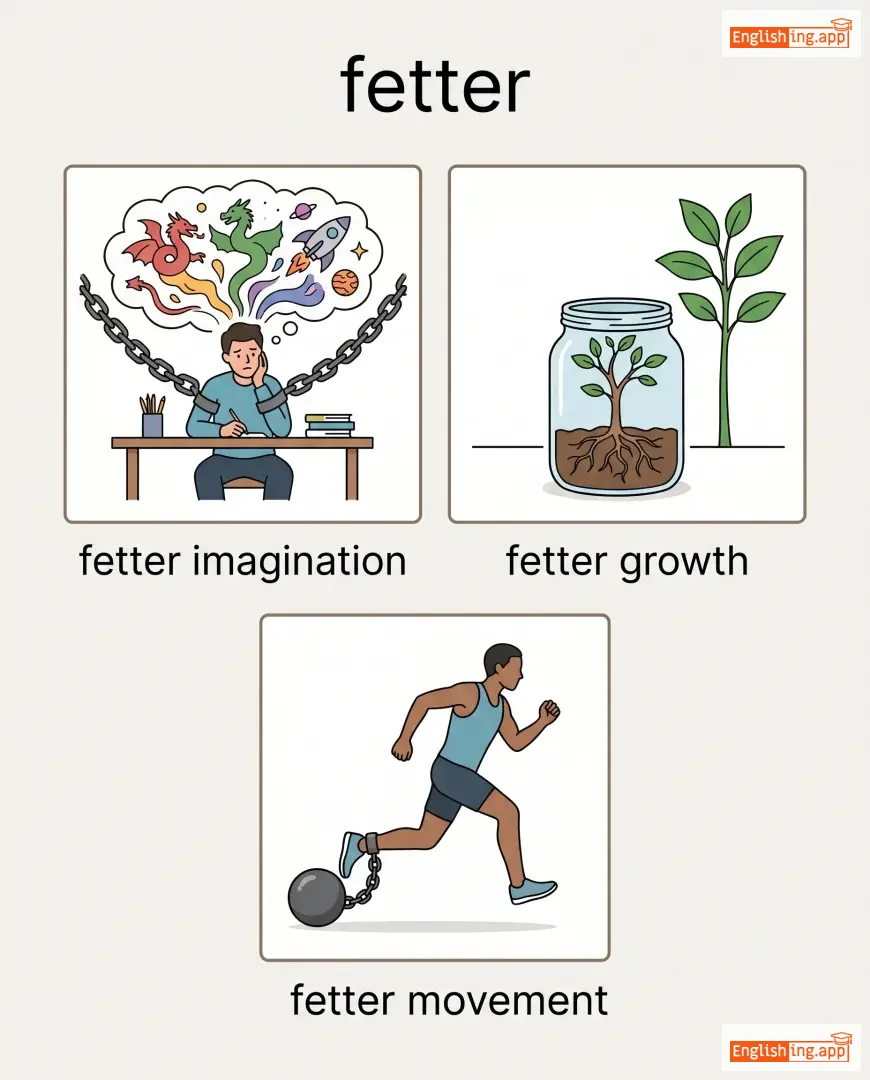
fetter imagination, fetter growth, fetter movement
••••••
|
Fetter意味着束缚,限制自由。
••••••
|
|
📜
••••••
|
/ˈfiːæt/
noun
(菲亚特)
••••••
|

|
法令,命令
fǎlìng, mìnglìng
••••••
|
- •••••• | - •••••• | - •••••• | - •••••• |
an official order or decree; authoritative command
••••••
|
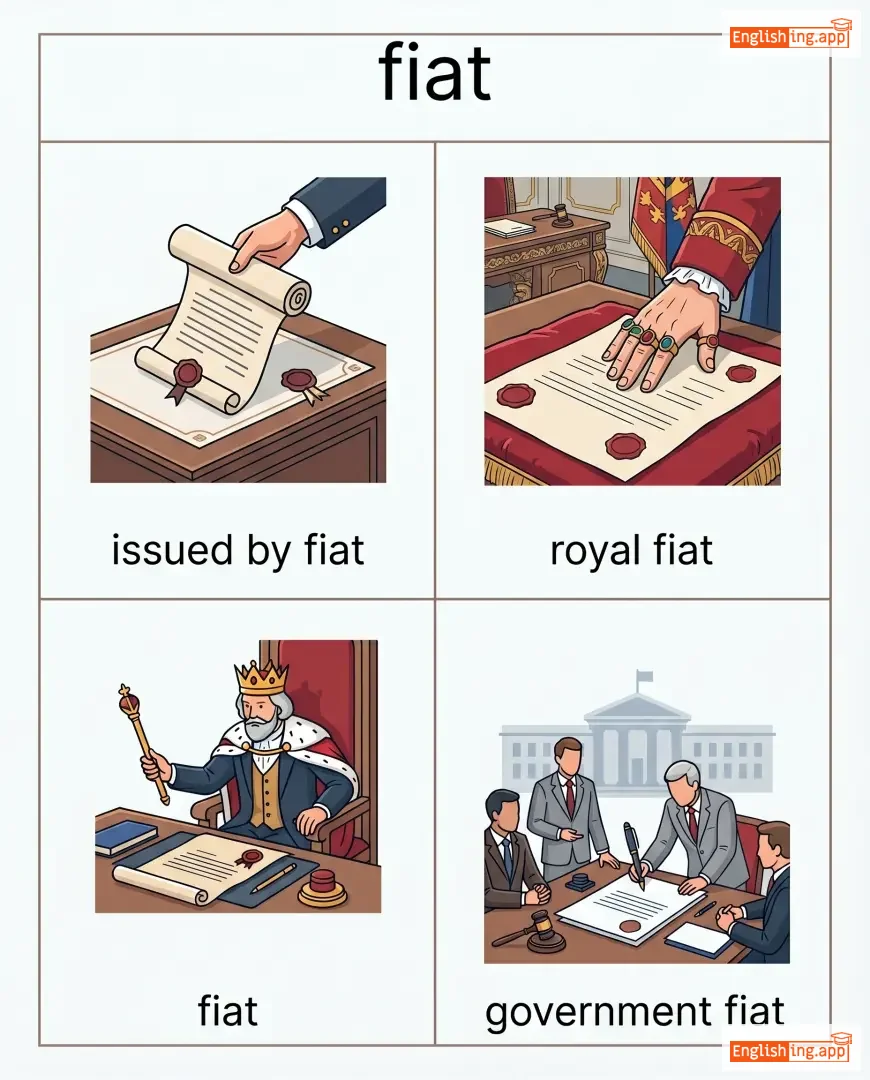
The new policy was enacted by royal fiat.
新政策通过皇帝的法令实施。
••••••
|
新政策通过皇帝的命令实施。
Xīn zhèngcè tōngguò huángdì de mìnglìng shíshī.
••••••
|
- •••••• | - •••••• | - •••••• |
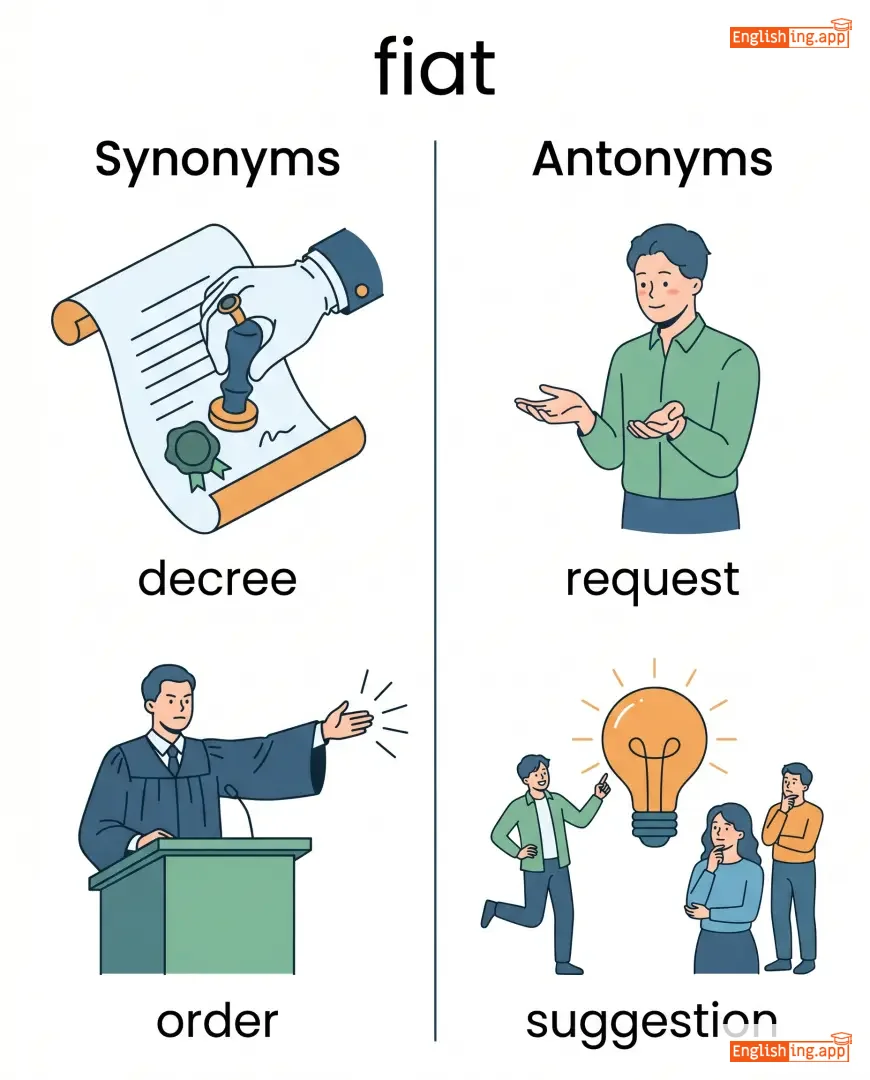
decree, order, command, edict
••••••
|
request, suggestion
••••••
|
issued by fiat, royal fiat, government fiat
••••••
|
Fiat 代表法令 - 皇帝的命令决定政策
••••••
|
|
🤝
••••••
|
/fɪˈdel.ə.ti/
noun
(忠诚)
••••••
|


|
忠诚
zhōngchéng
••••••
|
- •••••• | - •••••• | - •••••• | - •••••• |
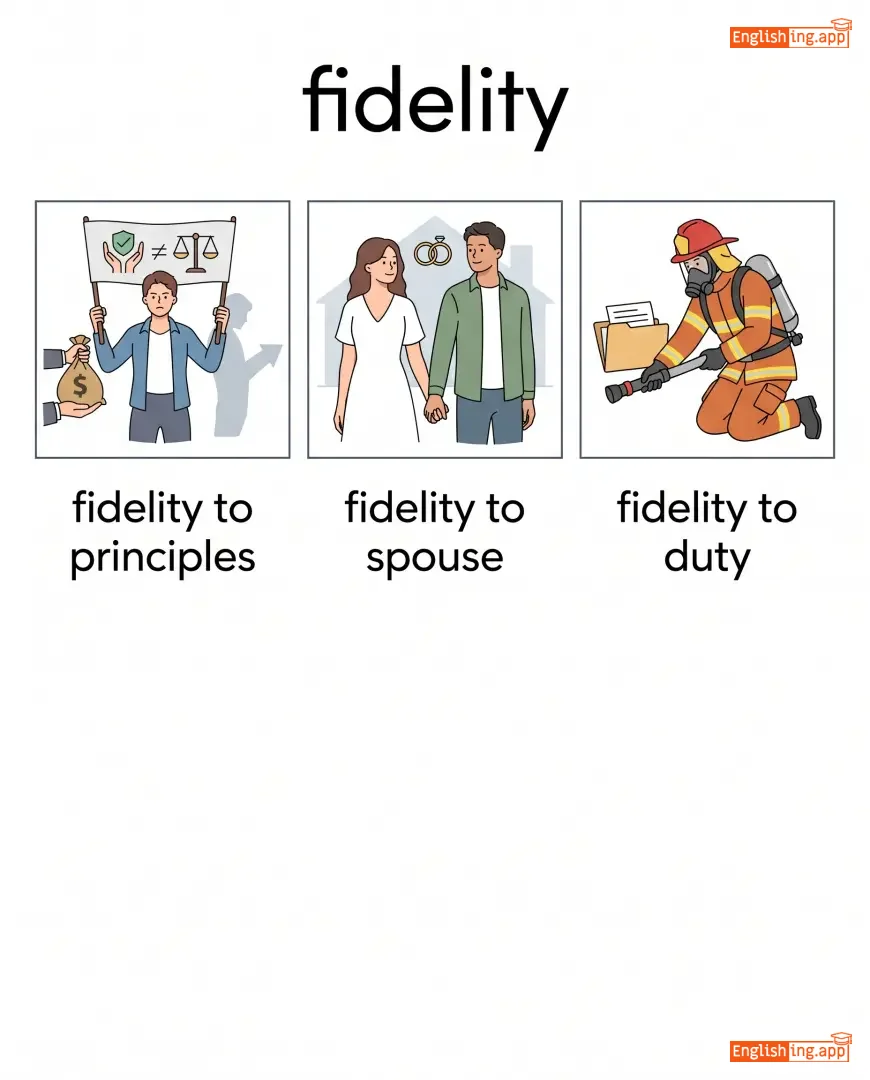
faithfulness to a person, cause, or belief; accuracy in reproducing or copying
••••••
|
The dog's fidelity to its owner was remarkable and touching.
狗对主人的忠诚令人敬佩且感人。
••••••
|
狗对主人的忠诚令人敬佩且感人。
Gǒu duì zhǔrén de zhōngchéng lìng rén jìngpèi qiě gǎnrén.
••••••
|
- •••••• | - •••••• | - •••••• |
loyalty, faithfulness, devotion, allegiance
••••••
|
infidelity, disloyalty, betrayal, unfaithfulness
••••••
|
marital fidelity, brand fidelity, high fidelity
••••••
|
忠诚代表了对他人的信任和承诺。
••••••
|
|
🗣️
••••••
|
/ˈfɪlɪˌbʌstər/
noun, verb
(菲利巴斯特)
••••••
|


|
通过长时间演讲延迟立法行动的策略;使用这种策略
tongguo changshijian yanjiang yanchi lifa xingdong de celue; shiyong zhezhong celue
••••••
|
filibustered
菲利巴斯特德
••••••
|
filibustered
菲利巴斯特德
••••••
|
filibusters
菲利巴斯特斯
••••••
|
filibustering
菲利巴斯特灵
••••••
|
a tactic of delaying legislative action by prolonged speech; to use such a tactic
••••••
|
The senator filibustered for hours to prevent the bill from passing.
参议员费利巴斯特了几个小时,以阻止该法案通过。
••••••
|
参议员费利巴斯特了几个小时,以阻止该法案通过。
Canliyuan feilibasite le ji ge xiaoshi, yi zhuzhi gai fabiao tongguo.
••••••
|
- •••••• | - •••••• | - •••••• |
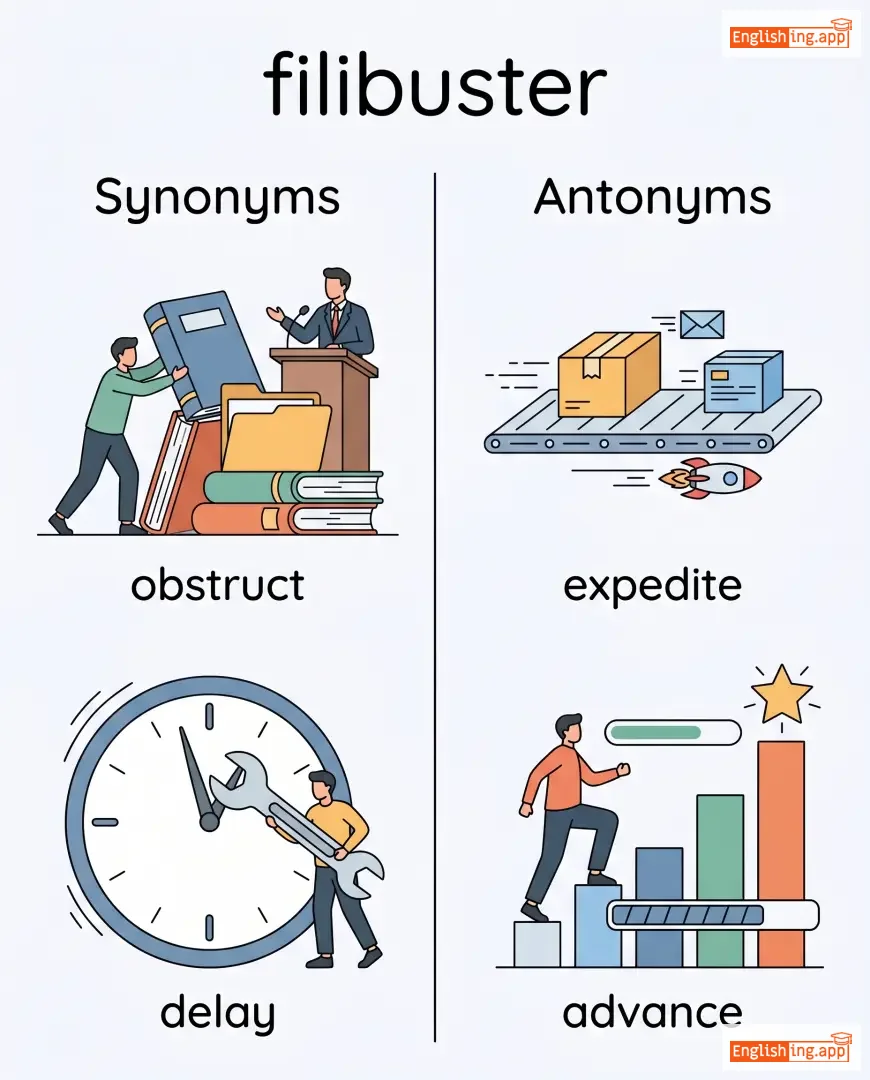
obstruct, delay, stall, impede
••••••
|
expedite, advance
••••••
|
filibuster tactic, filibuster session, filibuster vote
••••••
|
FILIBUSTER 阻止法案通过,就像不停地讲话 - Remember filibuster blocks bills
••••••
|
|
🎨
••••••
|
/fɪˈnɛs/
noun
(芬内斯)
••••••
|

|
技巧, 微妙
jiqiao, weimiao
••••••
|
- •••••• | - •••••• | - •••••• | - •••••• |
skillful and subtle handling of a situation
••••••
|
She handled the negotiations with great finesse. |
她以极大的技巧处理了谈判。
Ta yi jida de jiqiao chuli le tanpan.
••••••
|
- •••••• | - •••••• | - •••••• |
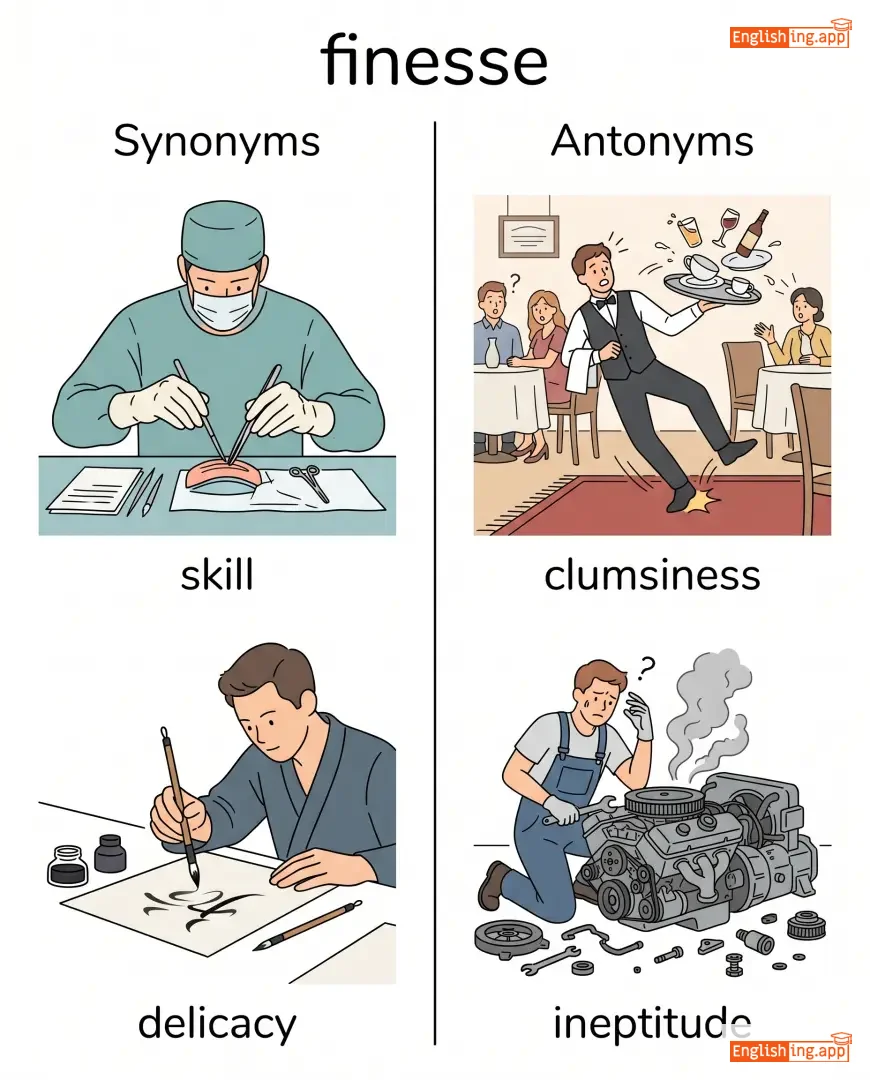
skill, delicacy, tact, sophistication
••••••
|
clumsiness, ineptitude
••••••
|
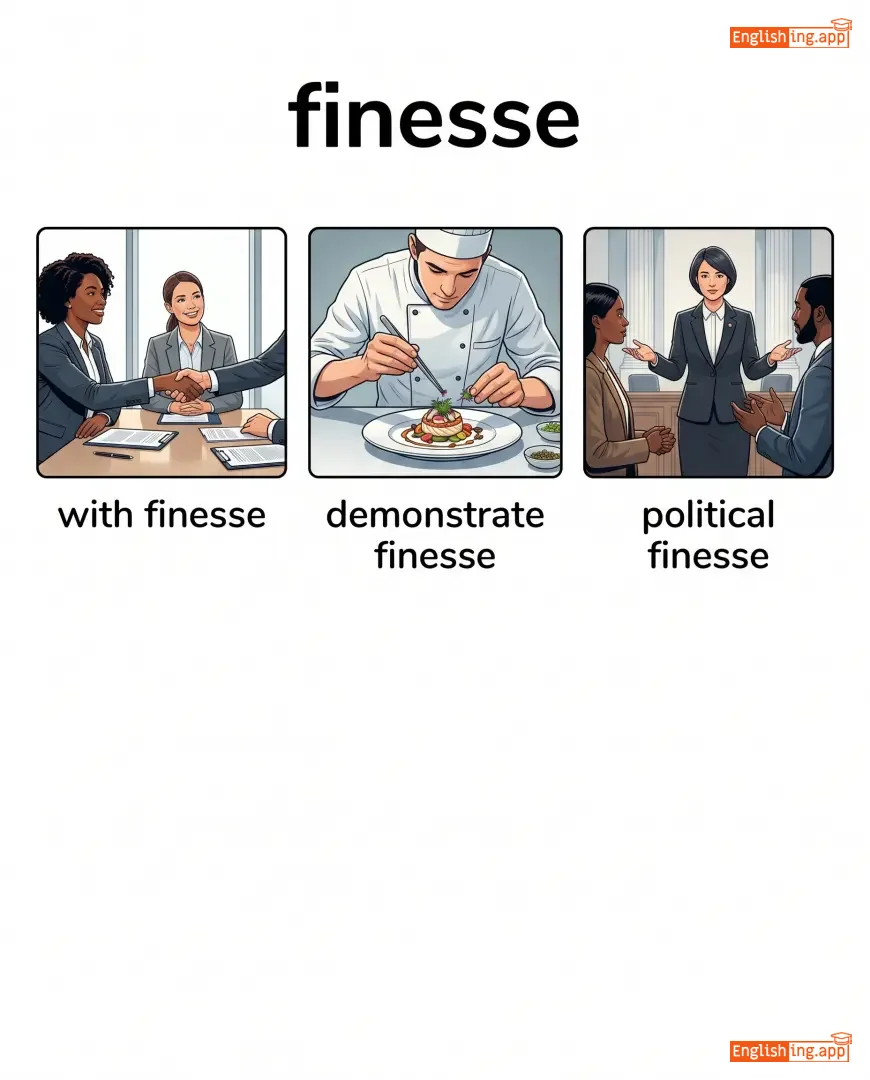
with finesse, demonstrate finesse, political finesse, strategic finesse
••••••
|
Finesse是技巧和微妙
••••••
|

