Promise at the Floating Lab
みんなは川の未来について深くthinkingしていた。 計画の各ステップはthoroughに説明された。 ゴミを捨てることで川のバランスがthreatenされる可能性があると警告された。 ボランティアたちはそのような支援を見てthrilledだった。 主催者は環境の害をtolerateしないと言った。 新しいセンサーは即座にデータをtransmitしてハブに送る。 長期的な清掃投資はtrillion単位に達する可能性がある。 以前の放置により、川はかなりtroubledな状態だった。 その基金のturnoverは今や非常に透明だ。 今年の洪水の再発はunlikelyと思われる。 upcomingな植樹運動が予定されている。 浮遊ラボのupstairsデッキが展示会を開催する。 すべての決定はvalidity証拠で文書化された。 チャートは水質のvariableな変化を示した。 エンジニアたちは新しい橋のvertical支柱を調査した。 主催者は言った:「whatever障害があっても、私たちは止まらない。」 ボランティアたちは約束した:「whenever呼ばれたら、私たちは行く。」 彼らは言った:「wherever義務があれば、私たちはそこに行く。」 汚染工場は川岸からwithdrawすることに同意した。 親たちは言った:「川を守れ;それはyourselfとあなたの未来のためだ。」
|
絵文字
|
単語 | Images | 翻訳 | 過去 | 過去分詞 | 三人称単数 | 動名詞 | 意味 | 例文 | 例文の翻訳 | 表現例 | 表現例の意味 | 表現例の翻訳 | 同義語 | 対義語 | コロケーション | ニーモニック |
|---|---|---|---|---|---|---|---|---|---|---|---|---|---|---|---|---|---|
|
💭
••••••
|
/ˈθɪŋkɪŋ/
noun
(ˈθɪŋkɪŋ)
••••••
|
- •••••• |
考え
kangae
••••••
|
- •••••• | - •••••• | - •••••• | - •••••• |
the process of considering or reasoning about something
••••••
|
Her thinking was clear and precise. |
彼女の考えは明確で正確でした。
Kanojo no kangae wa meikaku de seikaku deshita.
••••••
|
- •••••• | - •••••• | - •••••• |
thought, contemplation, reflection, reasoning
••••••
|
ignorance, confusion
••••••
|
critical thinking, logical thinking, abstract thinking
••••••
|
In Japanese, '考え' means thinking, like putting ideas together in your mind.
••••••
|
|
🔍
••••••
|
/ˈθʌroʊ/
adjective
(セロー)
••••••
|
- •••••• |
徹底的な, 詳細な
tettai-tekina, shousaina
••••••
|
- •••••• | - •••••• | - •••••• | - •••••• |
complete with regard to every detail; not superficial or partial
••••••
|
The report was thorough and well-researched. |
そのレポートは徹底的で、十分に調査されていました。
sono repōto wa tettai-teki de, juubun ni chousa sarete imashita.
••••••
|
thorough check |
a detailed and complete examination
••••••
|
徹底的な検査
tettai-teki na kensa
••••••
|
complete, detailed, exhaustive, comprehensive, meticulous
••••••
|
incomplete, careless, superficial
••••••
|
thorough analysis, thorough research, thorough cleaning, thorough understanding
••••••
|
セローは thorough です、全てが徹底的に調べられる
••••••
|
|
⚠️
••••••
|
/ˈθretən/
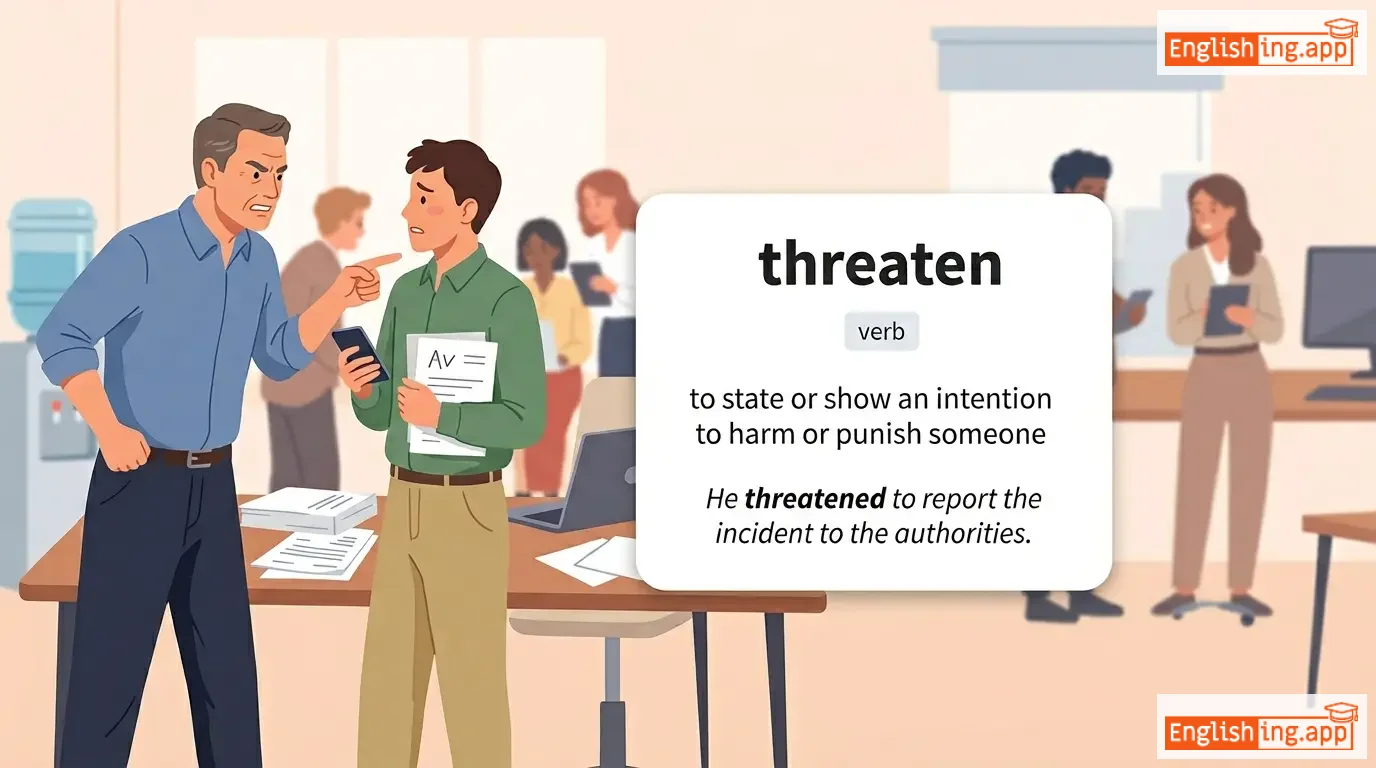
verb
(zuren)
••••••
|
|
脅す
odosu
••••••
|
threatened
zurened
••••••
|
threatened
zurened
••••••
|
threatens
zurens
••••••
|
threatening
zureningu
••••••
|
to express an intention to harm or punish someone; to be likely to cause harm
••••••
|
The storm clouds threaten to bring heavy rain tonight.
嵐の雲は今夜激しい雨をもたらすと脅かしています。
••••••
|
嵐の雲は今夜激しい雨をもたらすと脅かしています。
Arashi no kumo wa konya hageshii ame wo motarasu to odokashiteimasu.
••••••
|
- •••••• | - •••••• | - •••••• |
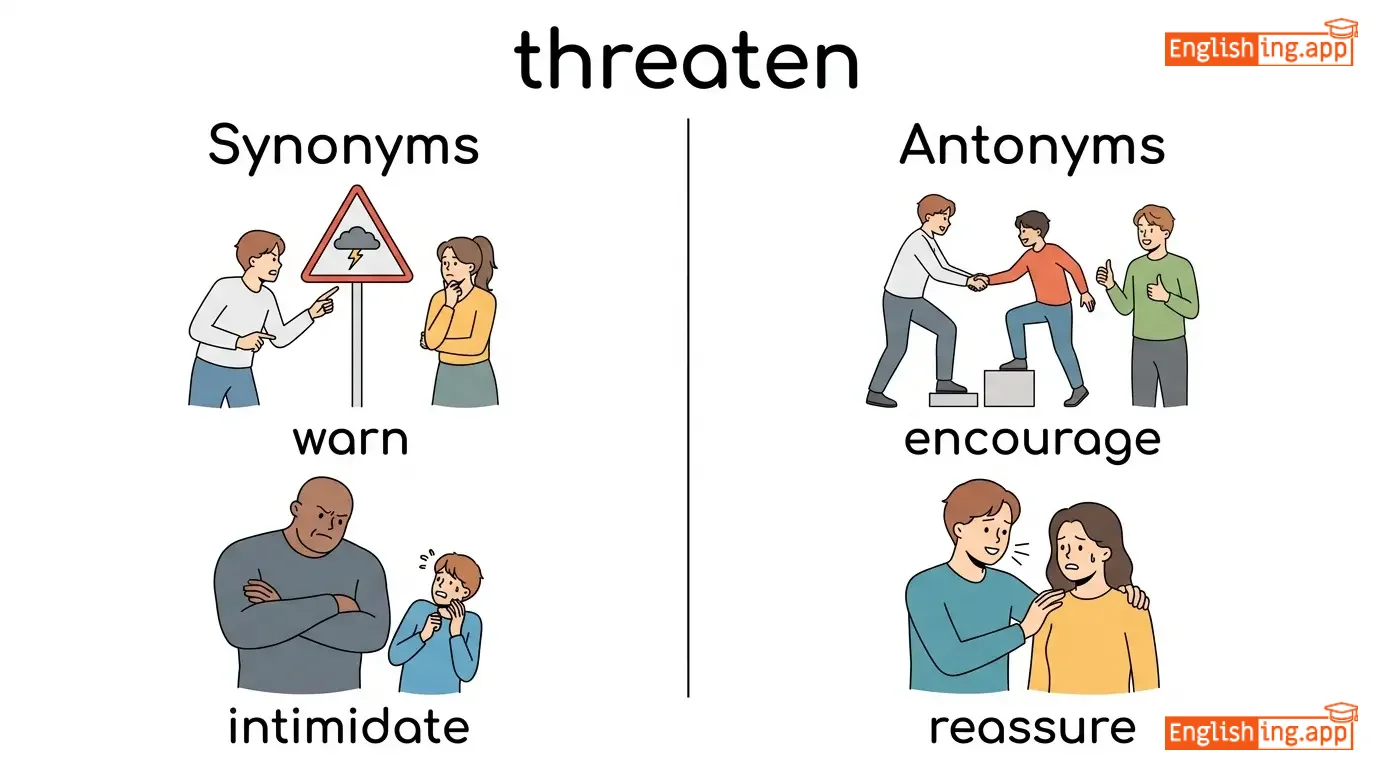
menace, intimidate, warn, endanger
••••••
|
protect, defend, reassure, comfort
••••••
|
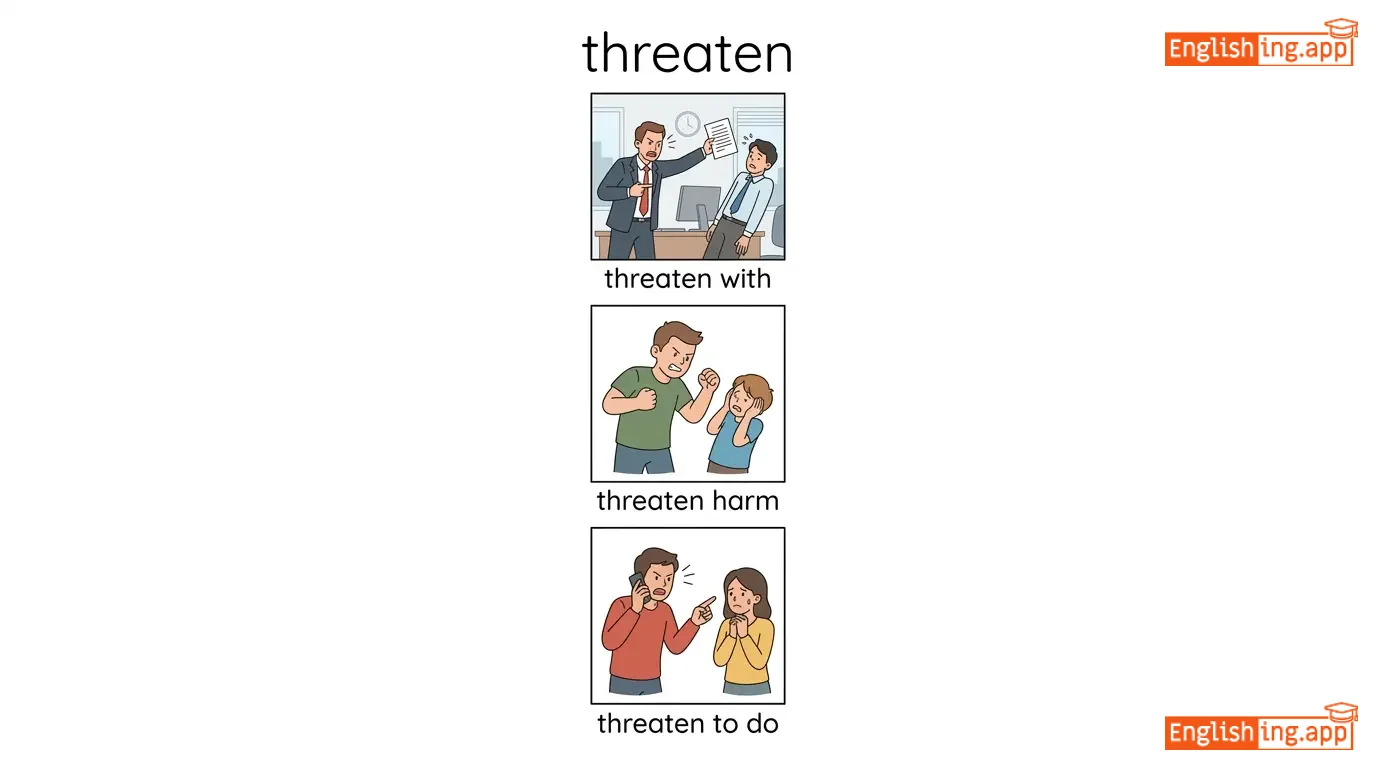
threaten to, threaten with, threaten someone, pose a threat
••••••
|
脅す = おどす, だから怖い
••••••
|
|
😄
••••••
|
/θrɪld/
adjective
(スリルド)
••••••
|
- •••••• |
興奮した
koufun shita
••••••
|
- •••••• | - •••••• | - •••••• | - •••••• |
extremely happy or excited
••••••
|
She was thrilled with the surprise party. |
彼女はサプライズパーティーに興奮していた。
Kanojo wa sapuraizu pātii ni koufun shite ita.
••••••
|
- •••••• | - •••••• | - •••••• |
excited, elated, overjoyed, delighted
••••••
|
disappointed, unhappy
••••••
|
thrilled with, thrilled to, thrilled by
••••••
|
'Thrilled' は興奮と幸せな状態を示す言葉!
••••••
|
|
😐
••••••
|
/ˈtɒləreɪt/
verb
(トレレート)
••••••
|
|
容認する
yōnin suru
••••••
|
tolerated
トレレイテッド
••••••
|
tolerated
トレレイテッド
••••••
|
tolerates
トレレイツ
••••••
|
tolerating
トレレイティング
••••••
|
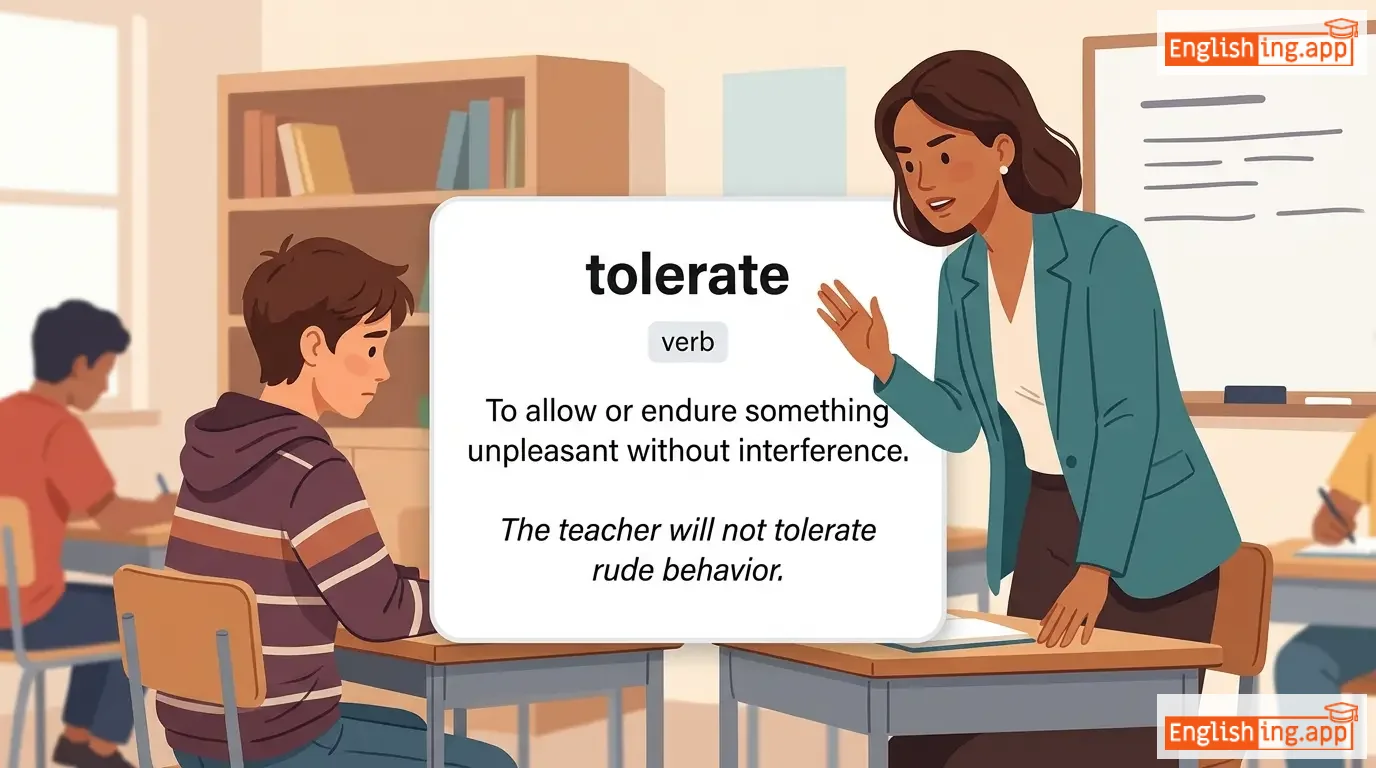
To allow or endure something unpleasant without interference.
••••••
|
The teacher will not tolerate rude behavior.
教師は失礼な行動を許容しません。
••••••
|
教師は失礼な行動を許容しません。
Kyōshi wa shitsurei na kōdō o kyoyō shimasen.
••••••
|
tolerate no nonsense
馬鹿げたことを許容しない
••••••
|
To be strict and not allow foolish or improper behavior.
••••••
|
馬鹿げたことを許容しない
bakageta koto o kyoyō shinai
••••••
|
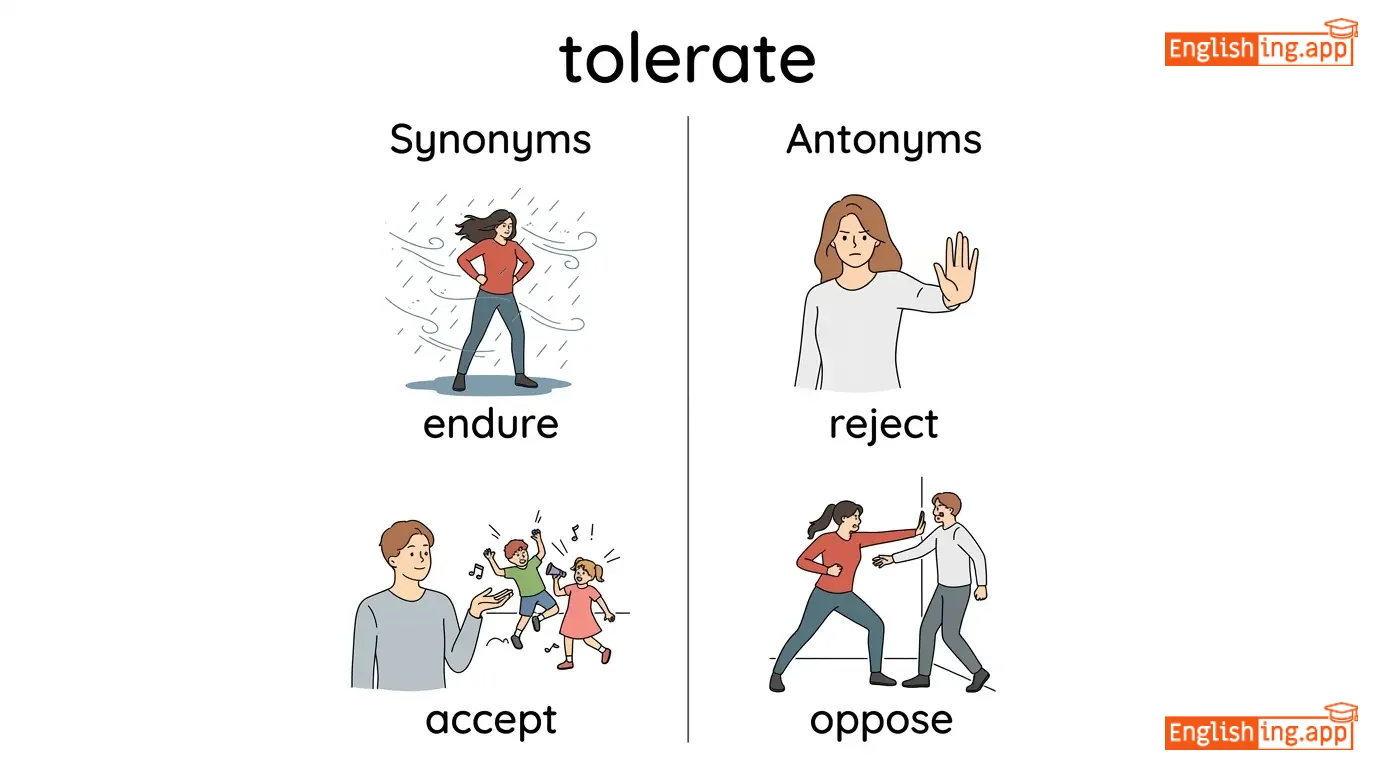
endure, accept, allow, permit, withstand
••••••
|
reject, oppose, forbid
••••••
|
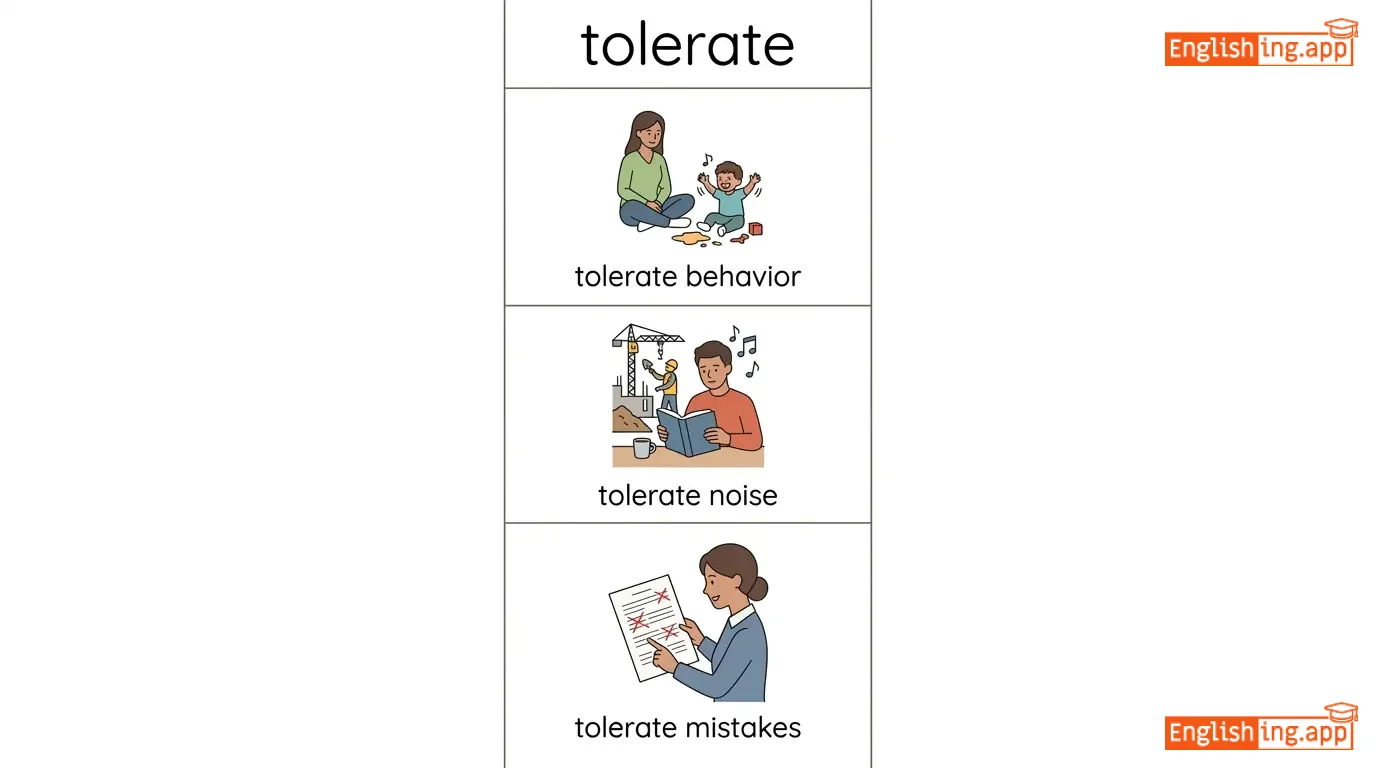
tolerate behavior, tolerate noise, tolerate mistakes, refuse to tolerate
••••••
|
教師は失礼な行動を許容しません
••••••
|
|
📡
••••••
|
/trænzˈmɪt/
verb
(トランスミット)
••••••
|
- •••••• |
送信する
sōshin suru
••••••
|
transmitted
トランスミットした
••••••
|
transmitted
トランスミットした
••••••
|
transmits
トランスミットする
••••••
|
transmitting
トランスミットしている
••••••
|
to send or pass something from one place or person to another
••••••
|
The antenna can transmit signals over a long distance.
アンテナは長距離にわたって信号を送信することができます。
••••••
|
アンテナは長距離にわたって信号を送信することができます。
Antena wa chōkyori ni watatte shingō o sōshin suru koto ga dekimasu.
••••••
|
transmit knowledge
知識を伝達する
••••••
|
to share or pass on knowledge to others
••••••
|
知識を伝達する
chishiki o dentatsu suru
••••••
|
send, convey, deliver, communicate, transfer
••••••
|
receive, block, withhold
••••••
|
transmit data, transmit message, transmit disease, transmit signal
••••••
|
列車が信号を送信しているのを想像してみてください 📡 - '送信する' は何かを送ることを意味します。
••••••
|
|
💰
••••••
|
/ˈtrɪl.jən/
noun
(トリリオン)
••••••
|
- •••••• |
トリリオン
tririon
••••••
|
- •••••• | - •••••• | - •••••• | - •••••• |
a number equal to 1,000 billion, or 10^12
••••••
|
The company's worth has risen to over a trillion dollars. |
その企業の価値は1兆ドル以上に上昇しました。
Sono kigyō no kachi wa 1 chō doru ijō ni jōshō shimashita.
••••••
|
- •••••• | - •••••• | - •••••• |
billion, thousand billion, 10^12
••••••
|
million, billion
••••••
|
trillion dollars, trillion dollar industry
••••••
|
1兆ドルを持つトリリオネアを想像してみてください!
••••••
|
|
😟
••••••
|
/ˈtrʌbəld/
adjective
(トラブルド)
••••••
|
- •••••• |
困っている
komatteiru
••••••
|
- •••••• | - •••••• | - •••••• | - •••••• |
experiencing or showing distress, anxiety, or worry
••••••
|
He looked deeply troubled after hearing the bad news. |
悪い知らせを聞いた後、彼は非常に困っているように見えた。
Warui shirase wo kiita ato, kare wa hijou ni komatteiru you ni mieta.
••••••
|
troubled mind |
a mind filled with worry or anxiety
••••••
|
困った心
komatta kokoro
••••••
|
worried, upset, anxious, distressed, uneasy
••••••
|
calm, relaxed, peaceful
••••••
|
troubled times, troubled relationship, deeply troubled, emotionally troubled
••••••
|
Troubled = 困った心 – 悩みや不安の心
••••••
|
|
💼
••••••
|
/ˈtɜːnˌəʊvə/
noun
(ターンオーバー)
••••••
|
- •••••• |
売上高
uriagedaka
••••••
|
- •••••• | - •••••• | - •••••• | - •••••• |
the amount of business conducted during a particular period, or the rate at which employees leave a company
••••••
|
The company reported a high turnover in its sales department. |
会社は販売部門で高い売上高を報告しました。
Kaisha wa hanbai bumon de takai uriagedaka wo houkoku shimashita.
••••••
|
- •••••• | - •••••• | - •••••• |
revenue, sales, business, output
••••••
|
retention, stability
••••••
|
high turnover, staff turnover, turnover rate, annual turnover
••••••
|
売上高 (turnover) を回す — ビジネスの売上高がページをめくるようなものを想像してみてください
••••••
|
|
🤔
••••••
|
/ʌnˈlaɪkli/
adjective
(anraikuri)
••••••
|
- •••••• |
ありそうにない; 予想外の
arisō ni nai; yosōgai no
••••••
|
- •••••• | - •••••• | - •••••• | - •••••• |
not likely to happen; improbable
••••••
|
It's unlikely to rain today with such clear skies.
Its anraikuri tu rein tudei wid sach kiriā sukaizu.
••••••
|
こんなに晴れた空では、今日は雨が降る可能性は低い。
Konna ni hareta sora de wa, kyō wa ame ga furu kanōsei wa hikui.
••••••
|
- •••••• | - •••••• | - •••••• |
improbable, doubtful, remote, questionable
••••••
|
likely, probable, certain, expected
••••••
|
unlikely event, unlikely scenario, unlikely outcome
••••••
|
Unlikely = ありそうにない、起こりにくい
••••••
|
|
🔜
••••••
|
/ˈʌpˌkʌmɪŋ/
adjective
(アップカミング)
••••••
|
- •••••• |
今後の
kongo no
••••••
|
- •••••• | - •••••• | - •••••• | - •••••• |
about to happen or appear
••••••
|
The upcoming event will be held next week. |
今後のイベントは来週行われます。
Kongo no ibento wa raishuu okonawaremasu.
••••••
|
- •••••• | - •••••• | - •••••• |
forthcoming, approaching, imminent, near
••••••
|
past, previous, distant
••••••
|
upcoming event, upcoming week, upcoming project
••••••
|
Upcoming sounds like 'upcoming' and '今後の', easy to remember!
••••••
|
|
🏠⬆️
••••••
|
/ˌʌpˈstɛərz/
adverb
••••••
|
- •••••• | - •••••• | - •••••• | - •••••• | - •••••• | - •••••• |
on or to a higher floor of a building
••••••
|
She went upstairs to her bedroom. |
- •••••• |
the people upstairs |
neighbors who live on the floor above
••••••
|
- •••••• |
above, overhead, aloft, upper floor, higher level
••••••
|
downstairs, below, beneath
••••••
|
go upstairs, walk upstairs, upstairs room, upstairs neighbor
••••••
|
No •••••• |
|
✅
••••••
|
/vəˈlɪd.ə.ti/
noun
(バリディティ)
••••••
|
- •••••• |
有効性
yūkō-sei
••••••
|
- •••••• | - •••••• | - •••••• | - •••••• |
the quality of being logically or factually sound; legal acceptability
••••••
|
The lawyer questioned the validity of the contract. |
弁護士は契約の有効性に疑問を呈しました。
Bengoshi wa keiyaku no yūkō-sei ni gimon o teishimashita.
••••••
|
validate a claim |
to prove that a claim is true or acceptable
••••••
|
請求を確認する
seikyū o kakunin suru
••••••
|
legitimacy, soundness, authenticity, accuracy
••••••
|
invalidity, falseness, illegitimacy
••••••
|
validity period, test validity, question the validity, ensure validity
••••••
|
有効性 = 試験IDが有効でなければ、試験を受けられない!
••••••
|
|
🔄
••••••
|
/ˈvɛriəbl/
adjective
(ベリアブル)
••••••
|
- •••••• |
変動可能な
hendō kanōna
••••••
|
- •••••• | - •••••• | - •••••• | - •••••• |
able to change; not consistent or having a fixed pattern
••••••
|
The weather has been very variable this week.
今週の天気は非常に変わりやすかったです。
••••••
|
今週の天気は非常に変わりやすかったです。
konshū no tenki wa hijō ni kawariyasukatta desu
••••••
|
- •••••• | - •••••• | - •••••• |
changeable, fluctuating, unstable, inconsistent
••••••
|
constant, fixed, stable, unchanging
••••••
|
variable weather, variable rate, variable cost, variable speed
••••••
|
Variable = 変わる = 天気が変わる
••••••
|
|
⬆️
••••••
|
/ˈvɜːrtɪkl/
adjective
(ヴァーティカル)
••••••
|
- •••••• |
垂直
suichoku
••••••
|
- •••••• | - •••••• | - •••••• | - •••••• |
Standing or pointing straight up; perpendicular to the ground.
••••••
|
The skyscraper has a perfectly vertical design. |
その超高層ビルは完璧な垂直デザインを持っています。
Sono chōkōsō biru wa kanpeki na suichoku dezain o motteimasu.
••••••
|
vertical integration |
The combination of two or more stages of production in one company.
••••••
|
垂直統合
suichoku tōgō
••••••
|
upright, perpendicular, erect, steep, straight
••••••
|
horizontal, flat
••••••
|
vertical line, vertical design, vertical structure, vertical growth
••••••
|
垂直は上に向かって直立していること、地面からのまっすぐな線を想像してみてください。
••••••
|
|
🤷♂️
••••••
|
/wɒtˈɛvər/
pronoun
(ワットエバー)
••••••
|
- •••••• |
何でも
nandemo
••••••
|
- •••••• | - •••••• | - •••••• | - •••••• |
used to refer to anything or everything that is of the type mentioned
••••••
|
You can choose whatever you like. |
あなたは何でも好きなものを選んでください。
Anata wa nandemo sukina mono o erande kudasai.
••••••
|
- •••••• | - •••••• | - •••••• |
anything, everything
••••••
|
- •••••• |
whatever you want, whatever happens
••••••
|
何でも (nandemo) あなたが欲しいもの - Whatever you want, you can have.
••••••
|
|
🕐
••••••
|
/wenˈevər/
adverb
(ウェネヴァー)
••••••
|
- •••••• |
いつでも
wenevaa
••••••
|
- •••••• | - •••••• | - •••••• | - •••••• |
at any time that; every time that; no matter when
••••••
|
Call me whenever you need help.
困ったら、いつでも私に電話してください。
••••••
|
困ったら、いつでも私に電話してください。
Komattara, itsu demo watashi ni denwa shite kudasai.
••••••
|
- •••••• | - •••••• | - •••••• |
anytime, every time, no matter when
••••••
|
never, at no time
••••••
|
whenever possible, whenever necessary, whenever you want
••••••
|
When ever = いつ + demo -> いつでも; remember to call me any time
••••••
|
|
🌍
••••••
|
/wɛrˈɛv.ər/
adverb
(ウェアエヴァー)
••••••
|
- •••••• |
どこでも
dokodemo
••••••
|
- •••••• | - •••••• | - •••••• | - •••••• |
In or to any place.
••••••
|
You can find good people wherever you go. |
あなたはどこでも良い人を見つけることができます。
Anata wa dokodemo yoi hito o mitsukeru koto ga dekimasu.
••••••
|
wherever you are |
No matter what place you are in
••••••
|
あなたがどこにいても
Anata ga doko ni itemo
••••••
|
anywhere, everywhere, wheresoever, all places
••••••
|
nowhere, somewhere specific
••••••
|
wherever possible, wherever you go, wherever needed, wherever necessary
••••••
|
WhereEVERはどこでもという意味です - どこに行っても、良い人に出会えます!
••••••
|
|
🏧
••••••
|
/wɪðˈdrɔː/
verb
••••••
|
|
- •••••• |
withdrew
••••••
|
withdrawn
••••••
|
withdraws
••••••
|
withdrawing
••••••
|
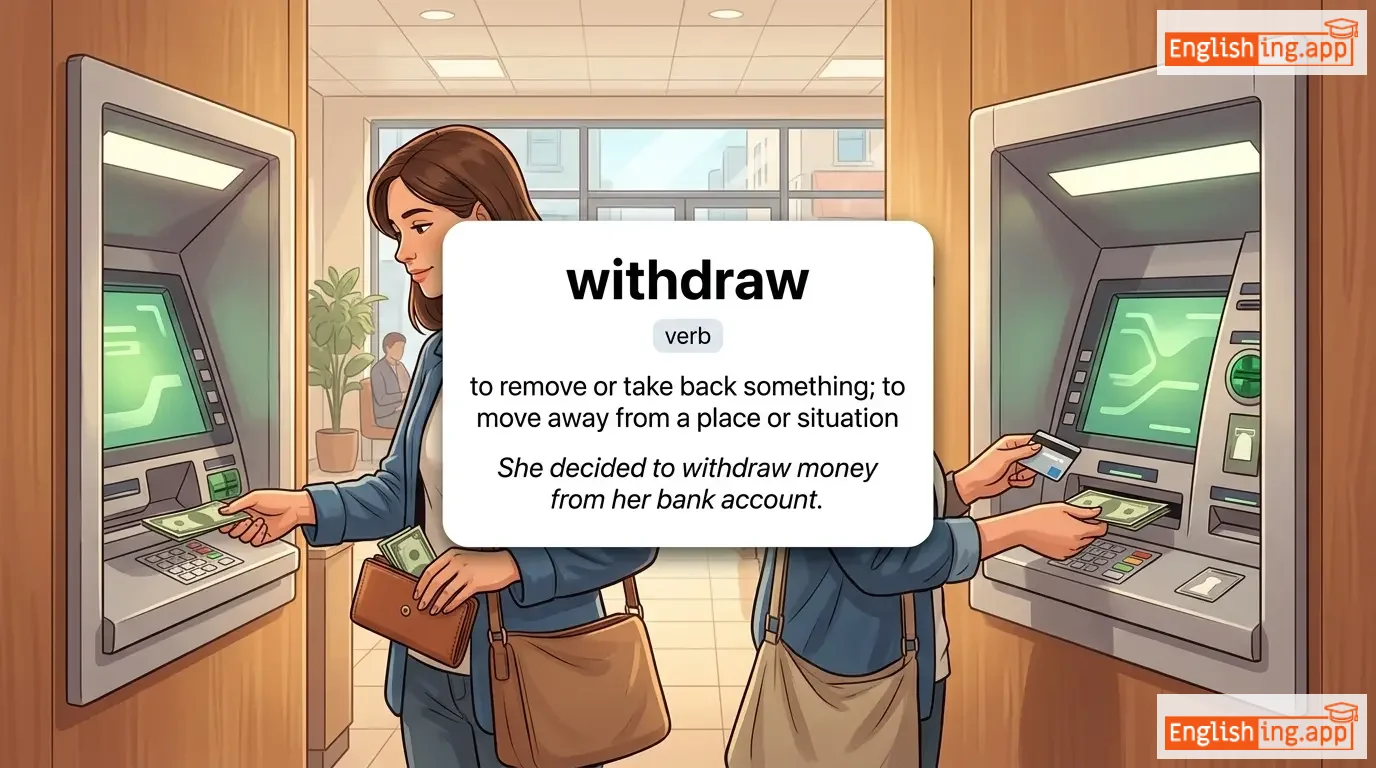
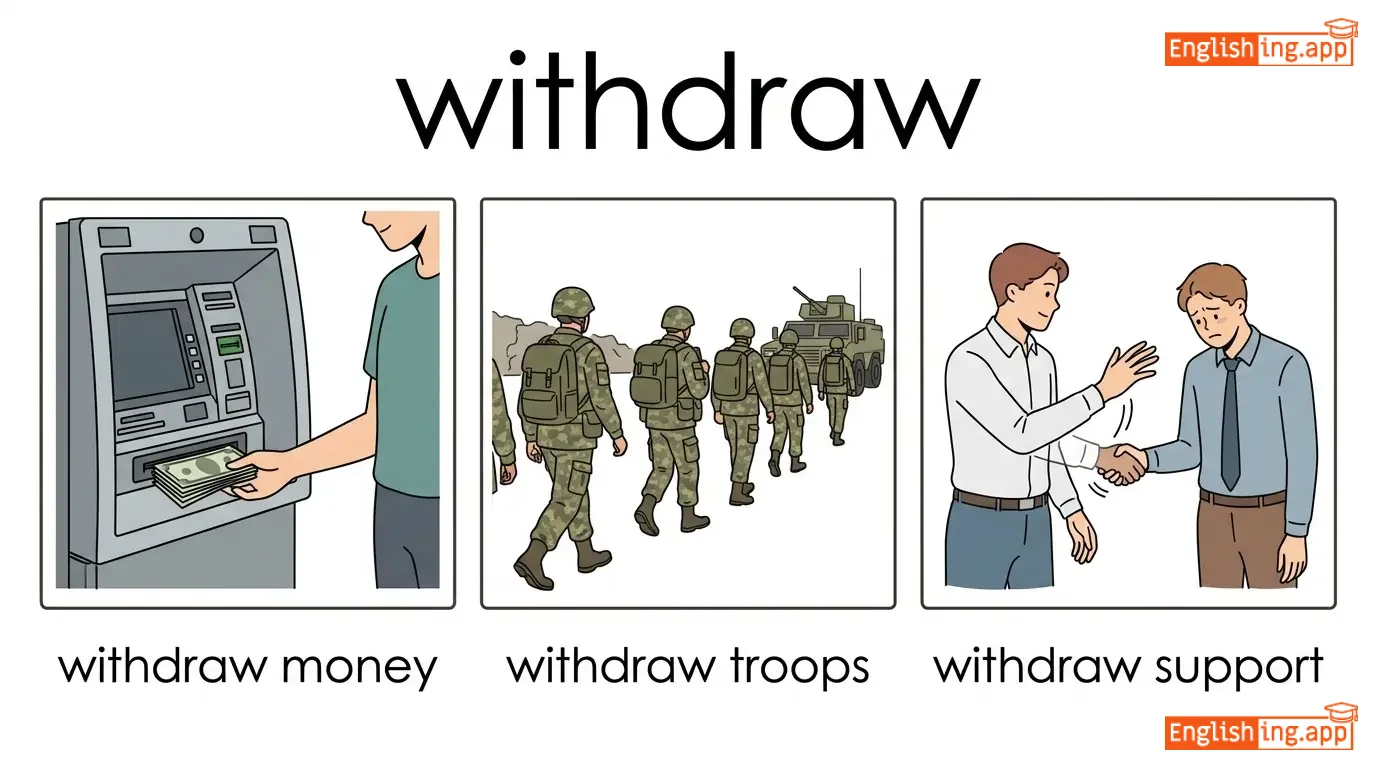
to remove or take back something; to move away from a place or situation
••••••
|
She decided to withdraw money from her bank account. |
- •••••• |
withdraw from |
to remove oneself or something from an activity or situation
••••••
|
- •••••• |
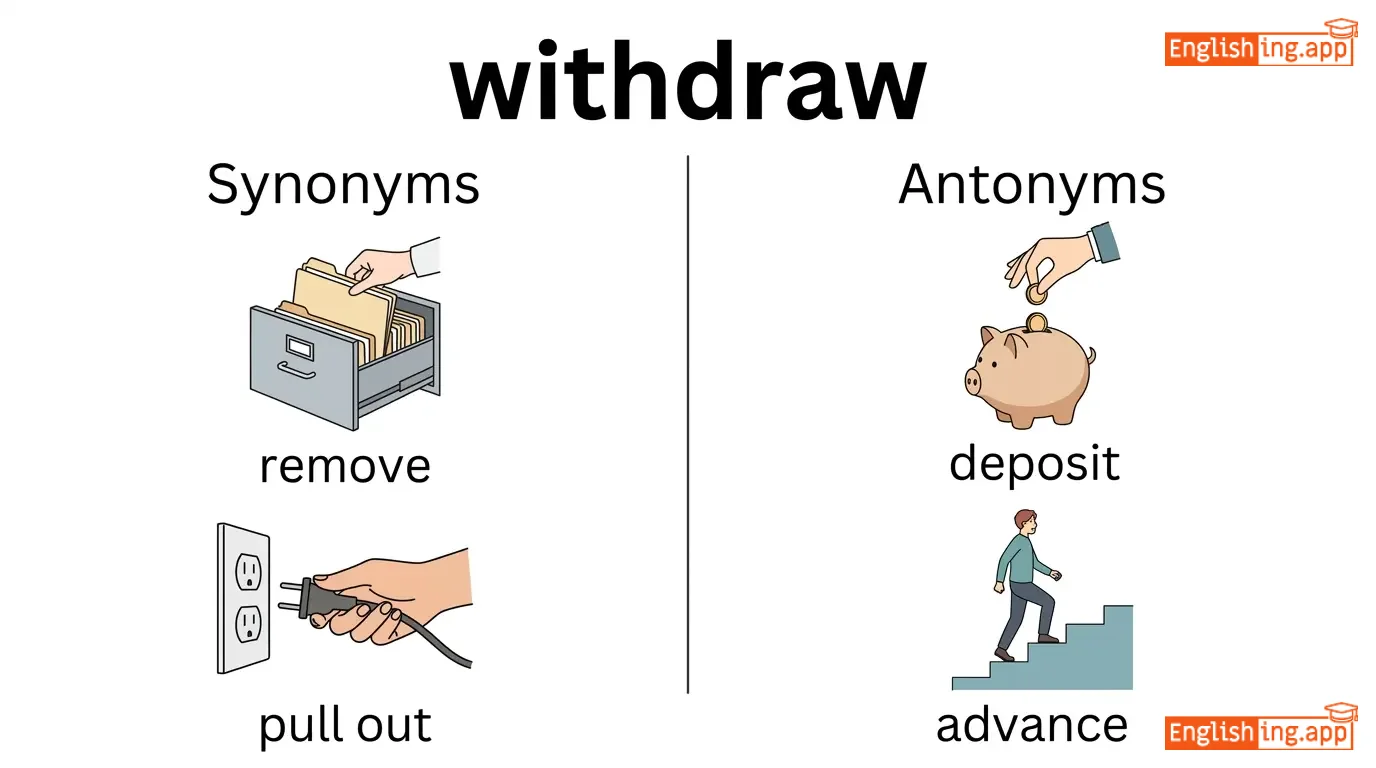
remove, pull out, retreat, take back, extract
••••••
|
deposit, advance, remain
••••••
|
withdraw money, withdraw troops, withdraw support, withdraw application
••••••
|
No •••••• |
|
🤳
••••••
|
/jɔːrˈsɛlf/
pronoun
(ヨアセルフ)
••••••
|
- •••••• |
自分自身
jibun jishin
••••••
|
- •••••• | - •••••• | - •••••• | - •••••• |
used to refer to the person being addressed, often for emphasis or reflection
••••••
|
You should look after yourself. |
自分自身の世話をしなさい。
Jibun jishin no sewa o shinasai.
••••••
|
- •••••• | - •••••• | - •••••• |
your own self, personally
••••••
|
no one, others
••••••
|
look after yourself, enjoy yourself, be yourself
••••••
|
自分自身を大切に (Jibun jishin o taisetsu ni) - Take care of yourself.
••••••
|

