Consensus on the River Banks
河川回復チームは、最近の嵐による損害について非常にconcernedでした。 保健当局は水のconditionをテストし、報告書を共有しました。 プロジェクトリーダーはconfidentなトーンで話しました。 最初は少しconfusionがありましたが、すぐに解消されました。 スピーカーたちは、環境に対してconsciousであることを呼びかけました。 すべての参加者は、川を守るためにconsensusに達しました。 ある若いボランティアは、自分が最も献身的なcontenderであると感じました。 彼は言いました、川は一つのcontinentの物語を運んでいると。 私たちはみんなconvinced、この努力は成功すると信じています。 新しいセンサーはデータをcorrectly記録しました。 研究者たちは水質と農業収穫との関連性をcorrelatedしました。 経験豊富なcounselorはボランティアに精神的なサポートを提供しました。 チームは川からcountless本のプラスチックボトルを取り除きました。 古いケースファイルはcourtroomアーカイブから取り出されました。 いくつかのcriticismがありましたが、それは建設的でした。 彼らは人々にプロジェクトを不当にcriticizeしないように頼みました。 Currently川の流れは安定しています。 嵐の間、川は非常にdangerousになりました。 元defendantは工場の閉鎖を発表しました。 彼は現在、環境のためにdefensiveな措置を講じています。
|
絵文字
|
単語 | Images | 翻訳 | 過去 | 過去分詞 | 三人称単数 | 動名詞 | 意味 | 例文 | 例文の翻訳 | 表現例 | 表現例の意味 | 表現例の翻訳 | 同義語 | 対義語 | コロケーション | ニーモニック |
|---|---|---|---|---|---|---|---|---|---|---|---|---|---|---|---|---|---|
|
😟
••••••
|
/kənˈsɜːnd/
adjective
(カンセーンド)
••••••
|
- •••••• |
心配な
shinpai na
••••••
|
- •••••• | - •••••• | - •••••• | - •••••• |
worried or anxious about something; involved or interested in something
••••••
|
She was concerned about her mother's health. |
彼女は母親の健康について心配していた。
Kanojo wa hahaoya no kenkō ni tsuite shinpai shite ita.
••••••
|
concerned with |
interested in or related to
••••••
|
心配する
shinpai suru
••••••
|
worried, anxious, troubled, uneasy
••••••
|
unconcerned, indifferent
••••••
|
concerned about, deeply concerned, concerned parents, concerned citizens
••••••
|
心配なは不安を感じること、母親の健康を心配するように。
••••••
|
|
⚙️
••••••
|
/kənˈdɪʃən/
noun
(コンディション)
••••••
|
|
状態, 条件
joutai, jouken
••••••
|
- •••••• | - •••••• | - •••••• | - •••••• |
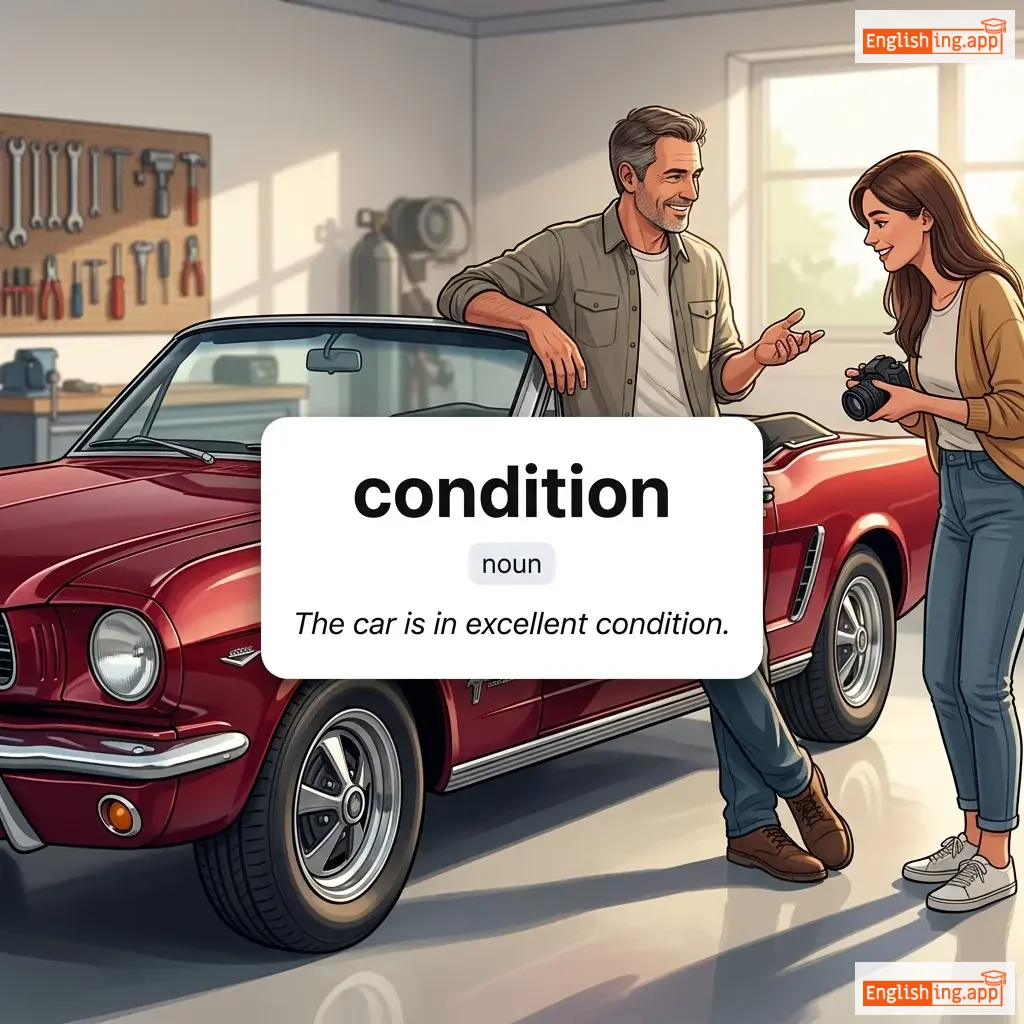
The state of something with regard to its appearance, quality, or working order; a requirement that must be met.
••••••
|
The car is in excellent condition. |
車は素晴らしい状態です。
Kuruma wa subarashii joutai desu.
••••••
|
on condition that |
only if something else happens or is done
••••••
|
条件付きで
jouken tsuki de
••••••
|
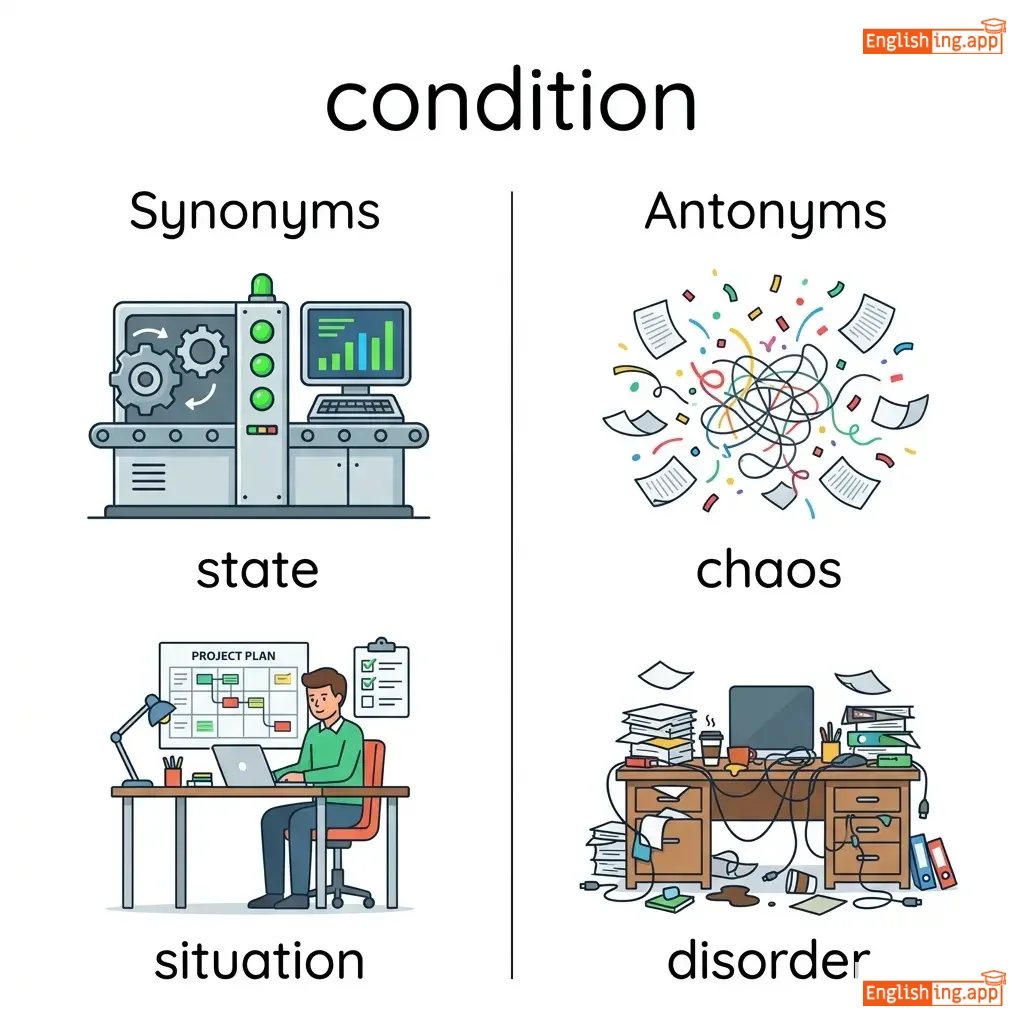
state, situation, requirement, circumstance, health
••••••
|
chaos, disorder
••••••
|
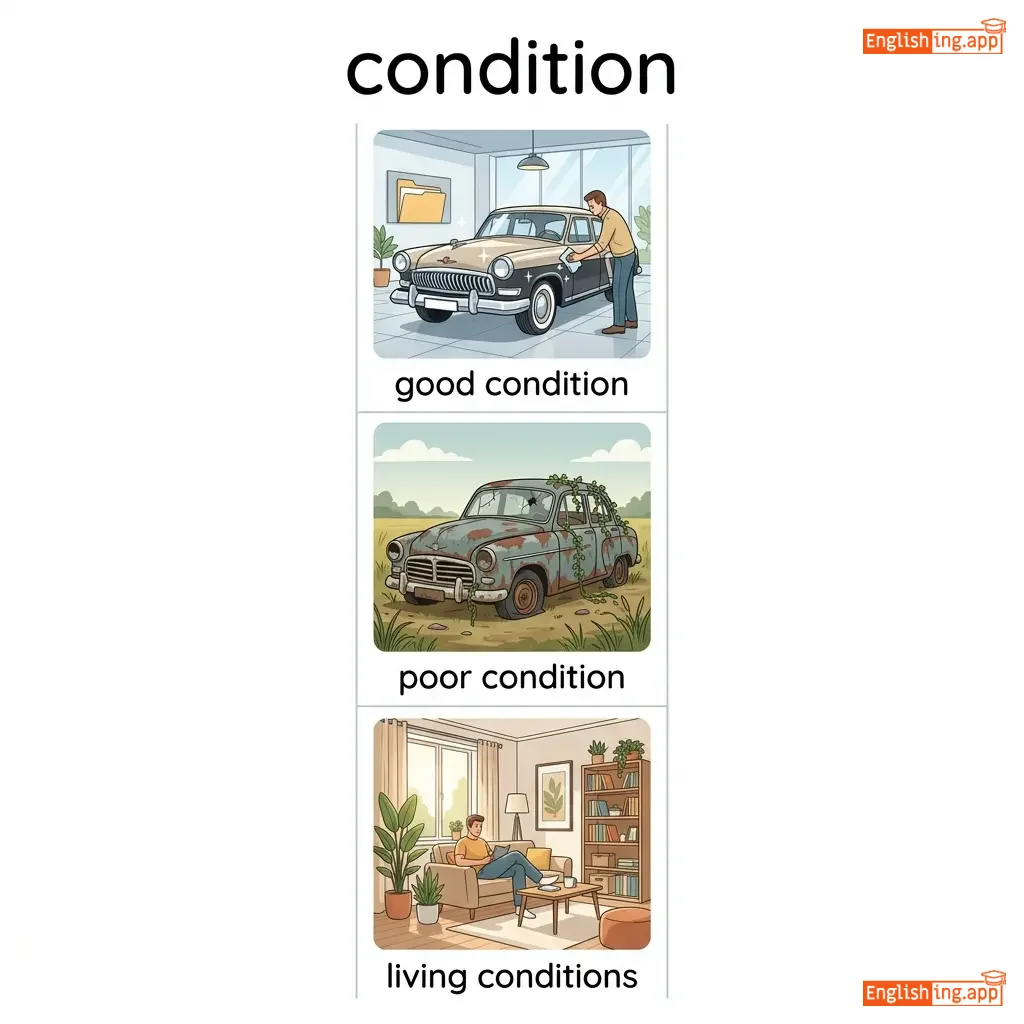
good condition, poor condition, living conditions, under condition
••••••
|
Condition は条件 - 試験に合格する条件のように。
••••••
|
|
😌
••••••
|
/ˈkɒnfɪdənt/
adjective
(kon-fi-dento)
••••••
|
- •••••• |
自信
jishin
••••••
|
- •••••• | - •••••• | - •••••• | - •••••• |
feeling or showing certainty about something; having self-assurance
••••••
|
She was confident about her ability to succeed. |
彼女は自分の成功する能力に自信を持っていた。
Kanojo wa jibun no seikou suru nouryoku ni jishin o motte ita.
••••••
|
confident smile |
a smile that shows assurance and self-belief
••••••
|
自信に満ちた笑顔
jishin ni michita egao
••••••
|
assured, certain, secure, self-assured, optimistic
••••••
|
insecure, uncertain, doubtful
••••••
|
confident manner, confident attitude, feel confident, become confident
••••••
|
Confidence — 自信。自信に満ちた笑顔で自分を表現しよう。
••••••
|
|
😕
••••••
|
/kənˈfjuːʒən/
noun
(コンフュージョン)
••••••
|
- •••••• |
混乱
konran
••••••
|
- •••••• | - •••••• | - •••••• | - •••••• |
a state of being bewildered or unclear in one’s mind
••••••
|
The sudden change in schedule caused a lot of confusion. |
スケジュールの突然の変更は多くの混乱を引き起こしました。
Sukējūru no totsuzen no henkō wa ōku no konran o hikiokoshimashita.
••••••
|
in confusion |
in a state of disorder or uncertainty
••••••
|
混乱の中で
konran no naka de
••••••
|
uncertainty, disorder, chaos, puzzlement
••••••
|
clarity, order, certainty
••••••
|
confusion arises, confusion caused, create confusion, confusion about
••••••
|
混乱とは、心の中で何もかもが混ざり合う状態です。
••••••
|
|
👁️
••••••
|
/ˈkɒnʃəs/
adjective
(コンシャス)
••••••
|
- •••••• |
意識的
ishikiteki
••••••
|
- •••••• | - •••••• | - •••••• | - •••••• |
Aware of and responding to one's surroundings; awake.
••••••
|
She was fully conscious after the surgery.
手術後、彼女は完全に意識が戻った。
••••••
|
手術後、彼女は完全に意識が戻った。
Shujutsugo, kanojo wa kanzen ni ishiki ga modotta.
••••••
|
lose consciousness
意識を失う
••••••
|
To become unconscious or faint.
••••••
|
意識を失う
Ishiki o ushinau
••••••
|
aware, alert, awake, mindful, responsive
••••••
|
unconscious, unaware, oblivious
••••••
|
conscious mind, fully conscious, conscious effort
••••••
|
意識は耳(con)で聞いて、注意を払うことです。
••••••
|
|
🤝
••••••
|
/kənˈsɛnsəs/
noun
(コンセンサス)
••••••
|
|
コンセンサス
konsensasu
••••••
|
- •••••• | - •••••• | - •••••• | - •••••• |
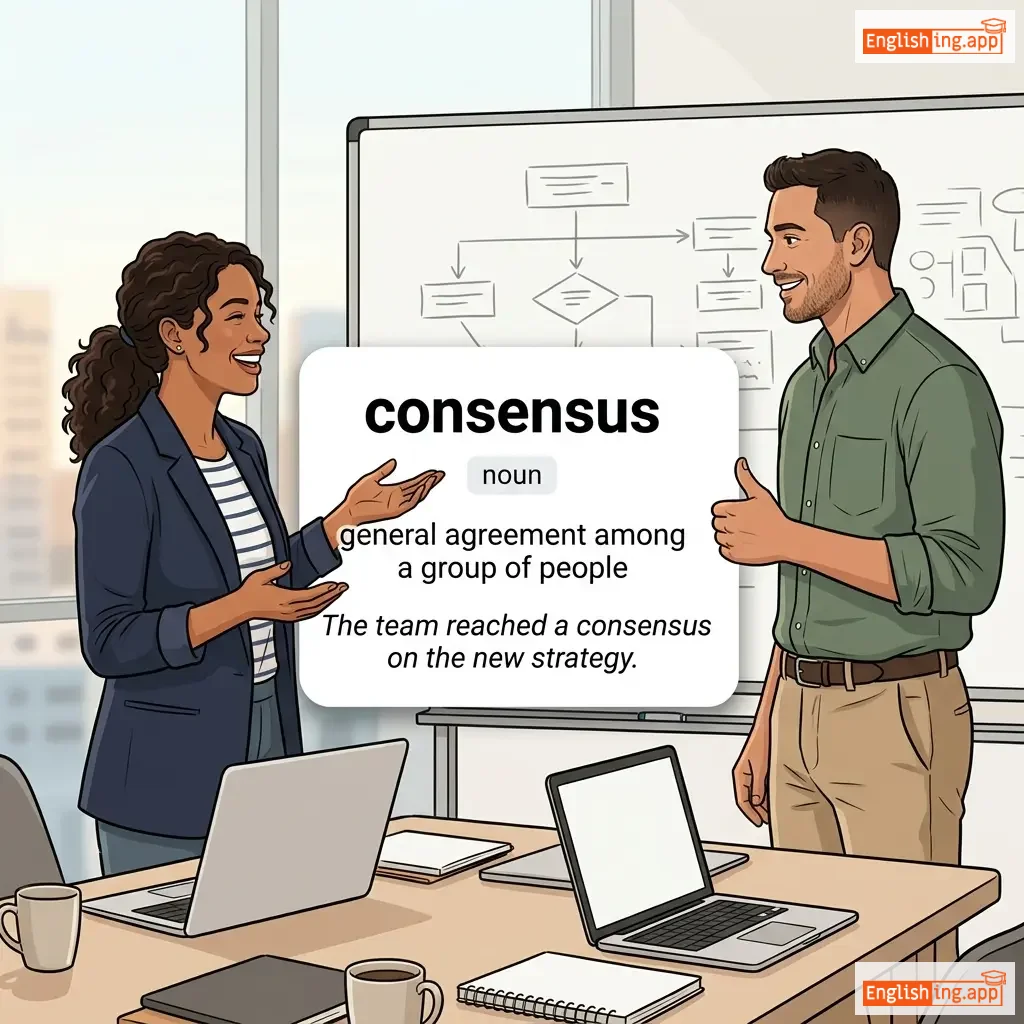
general agreement among a group of people
••••••
|
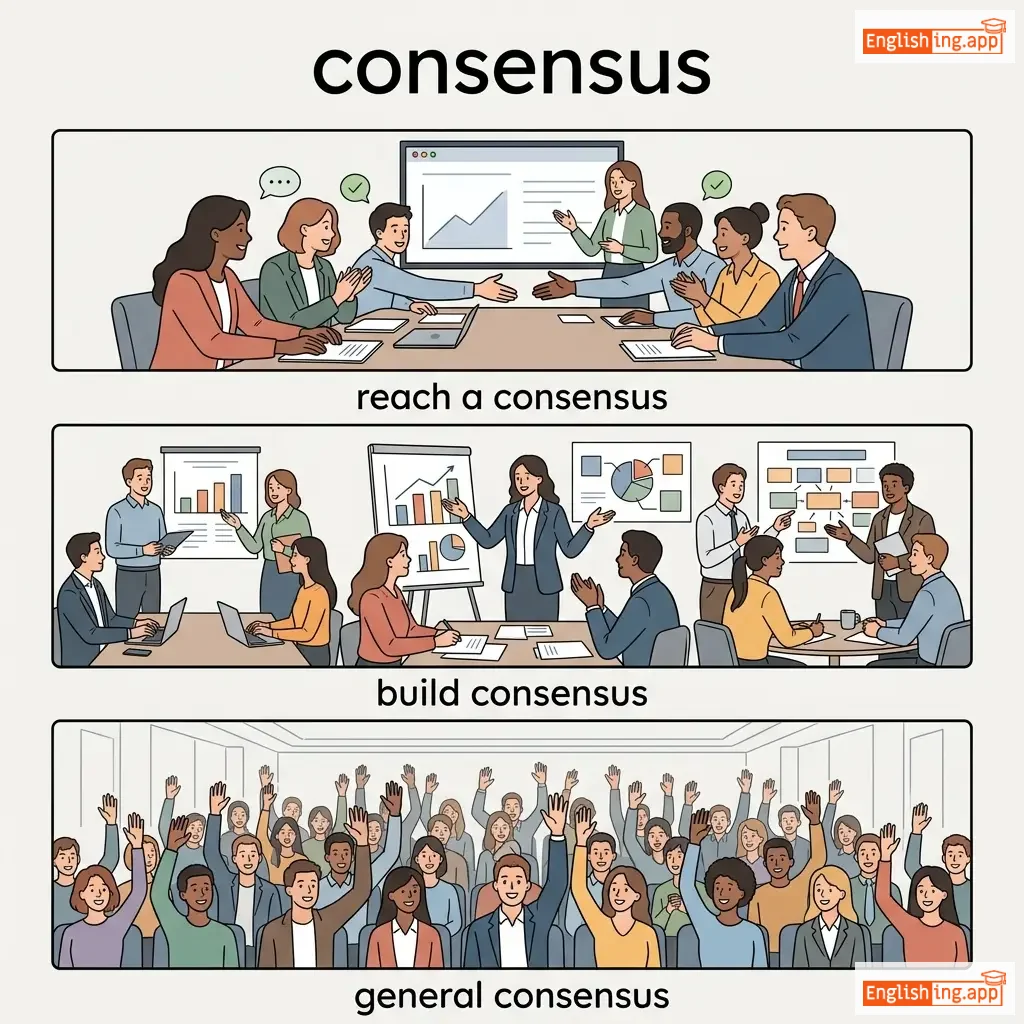
The team reached a consensus on the new strategy. |
チームは新しい戦略についてコンセンサスに達しました。
Chīmu wa atarashī senryaku ni tsuite konsensasu ni tasshimashita.
••••••
|
general consensus |
a widely accepted common opinion
••••••
|
一般的なコンセンサス
ippanteki na konsensasu
••••••
|
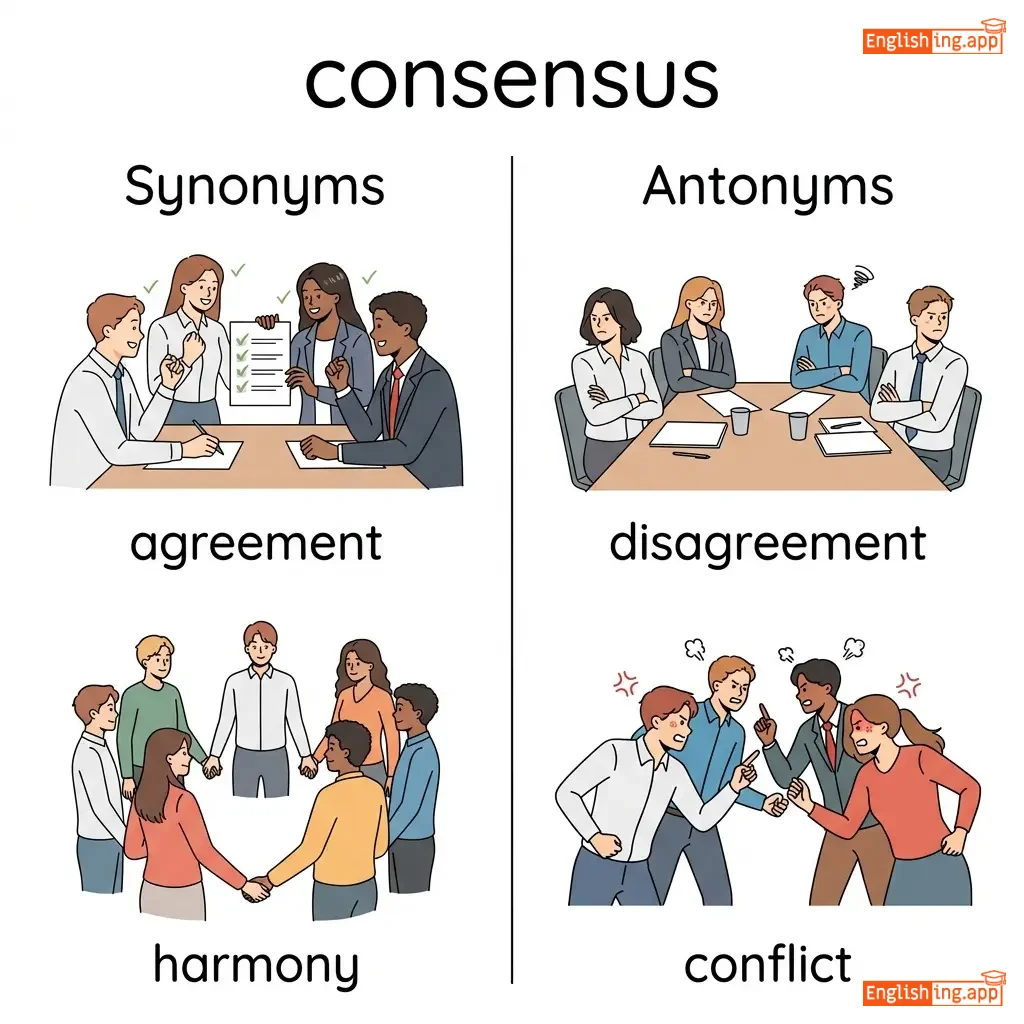
agreement, harmony, accord, unity, concurrence
••••••
|
disagreement, conflict, discord
••••••
|
reach a consensus, build consensus, general consensus, consensus opinion
••••••
|
Consensus = con (みんな) + sensus (感覚)、みんな同じ感覚。
••••••
|
|
🥇
••••••
|
/kənˈtɛndər/
noun
(kontendā)
••••••
|
- •••••• |
競争者, 立候補者
kyousou-sha, rikkou-hosha
••••••
|
- •••••• | - •••••• | - •••••• | - •••••• |
a person or team competing for a title or prize
••••••
|
She is a strong contender for the mayoral position.
彼女は市長職の強力な候補者です。
••••••
|
彼女は市長職の強力な候補者です。
Kanojo wa shichou shoku no kyouryoku na kouhosha desu.
••••••
|
- •••••• | - •••••• | - •••••• |
challenger, competitor, aspirant, nominee
••••••
|
non-contender, bystander
••••••
|
strong contender, main contender, serious contender, leading contender
••••••
|
Contenderは勝利を目指す候補者、競争者です。
••••••
|
|
🌍
••••••
|
/ˈkɒntɪnənt/
noun
(kontinent)
••••••
|
- •••••• |
大陸
tairiku
••••••
|
- •••••• | - •••••• | - •••••• | - •••••• |
one of the large landmasses on Earth such as Asia, Africa, or Europe
••••••
|
Asia is the largest continent in the world. |
アジアは世界で最も大きな大陸です。
Ajia wa sekai de mottomo ōkina tairiku desu.
••••••
|
- •••••• | - •••••• | - •••••• |
landmass, region, area, territory
••••••
|
island, ocean
••••••
|
African continent, European continent, across the continent, continental drift
••••••
|
大陸は「たくさんの土地が広がる場所」、アジアは最大の大陸!
••••••
|
|
💡
••••••
|
/kənˈvɪnst/
adjective
(コンヴィンスド)
••••••
|
- •••••• |
確信した
kakushin shita
••••••
|
- •••••• | - •••••• | - •••••• | - •••••• |
completely certain or sure about something
••••••
|
She was convinced that he was telling the truth. |
彼女は彼が真実を言っていると確信していた。
Kanojo wa kare ga shinjitsu o itte iru to kakushin shite ita.
••••••
|
be convinced of something |
to feel certain about the truth or validity of something
••••••
|
何かについて確信する
nanika ni tsuite kakushin suru
••••••
|
certain, sure, confident, persuaded
••••••
|
doubtful, uncertain
••••••
|
firmly convinced, fully convinced, become convinced, convinced that
••••••
|
確信したってことはもう疑う余地がないってこと。
••••••
|
|
✅
••••••
|
/kəˈrɛktli/
adverb
(コレクトリー)
••••••
|
- •••••• |
正しく
tadashiku
••••••
|
- •••••• | - •••••• | - •••••• | - •••••• |
in a way that is true, accurate, or without mistakes
••••••
|
She answered all the questions correctly. |
彼女はすべての質問に正しく答えました。
Kanojo wa subete no shitsumon ni tadashiku kotaemashita.
••••••
|
behave correctly |
to act in a proper or acceptable way
••••••
|
正しく振る舞う
tadashiku furumau
••••••
|
accurately, rightly, properly, exactly
••••••
|
incorrectly, wrongly, improperly
••••••
|
speak correctly, spell correctly, behave correctly, act correctly
••••••
|
Correctly は正しく — すべてのことを正しく行いましょう!
••••••
|
|
🔗
••••••
|
/ˈkɒrəleɪt/
verb
(コリレイト)
••••••
|
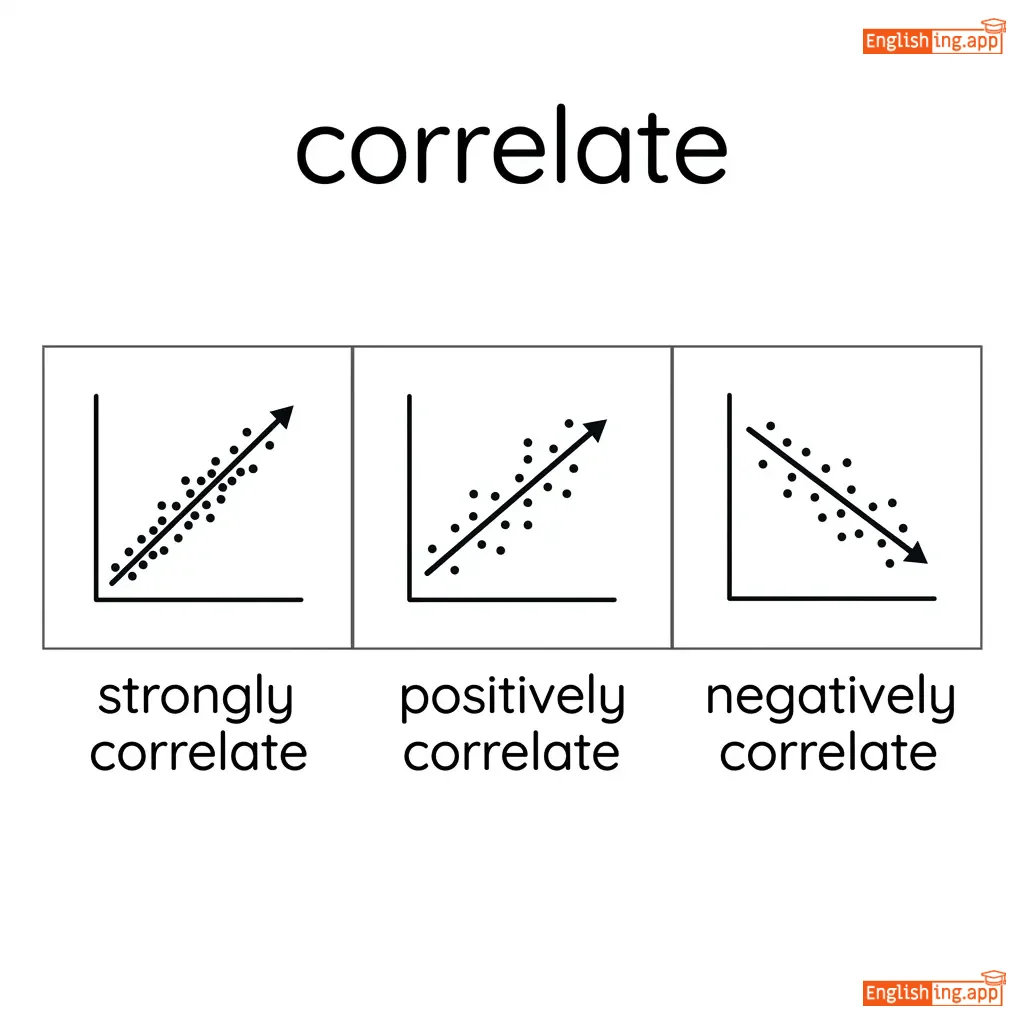
|
相関する
sōkan suru
••••••
|
correlated
コリレイテッド
••••••
|
correlated
コリレイテッド
••••••
|
correlates
コリレイツ
••••••
|
correlating
コリレイティング
••••••
|
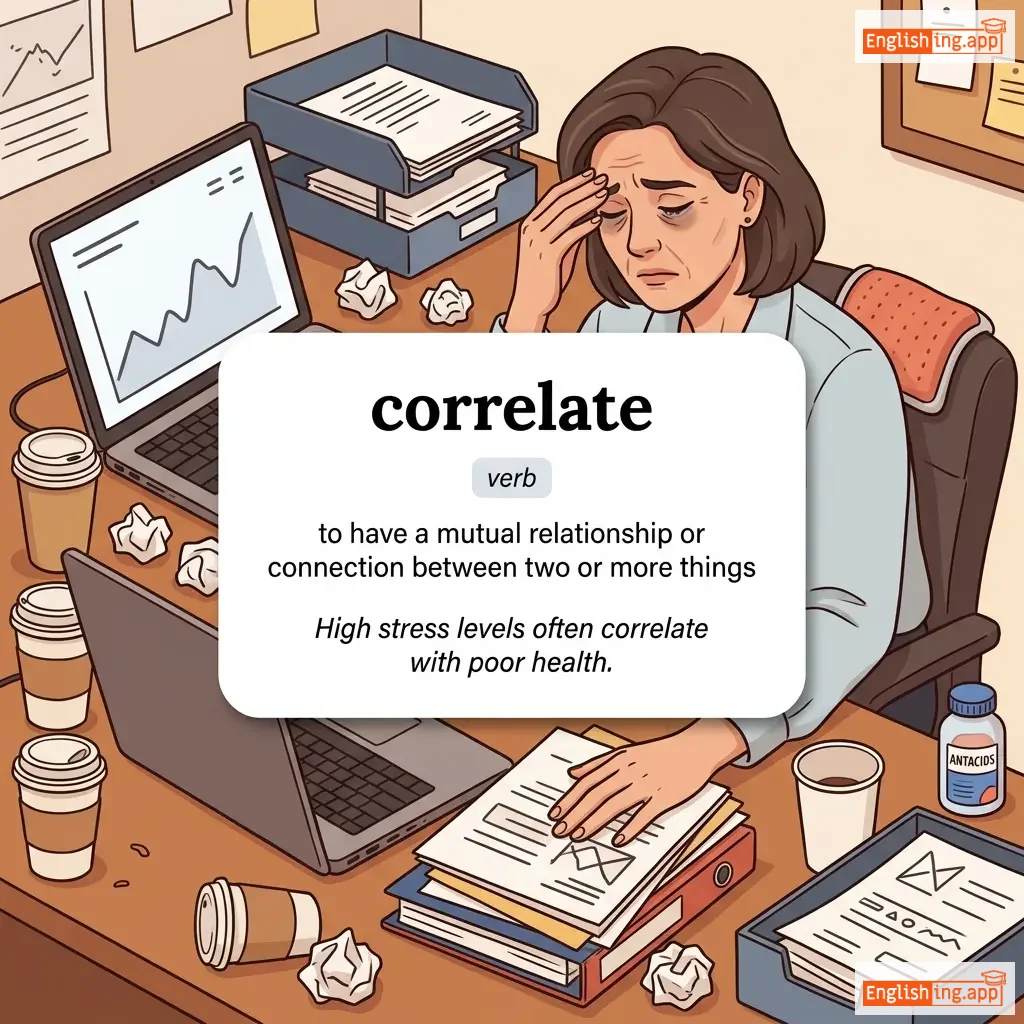
to have a mutual relationship or connection between two or more things
••••••
|
High stress levels often correlate with poor health.
高いストレスレベルは、しばしば健康の悪化と関連しています。
••••••
|
高いストレスレベルは、しばしば健康の悪化と関連しています。
Takai sutoresu reberu wa, shibashiba kenkō no akika to kanren shiteimasu.
••••••
|
- •••••• | - •••••• | - •••••• |
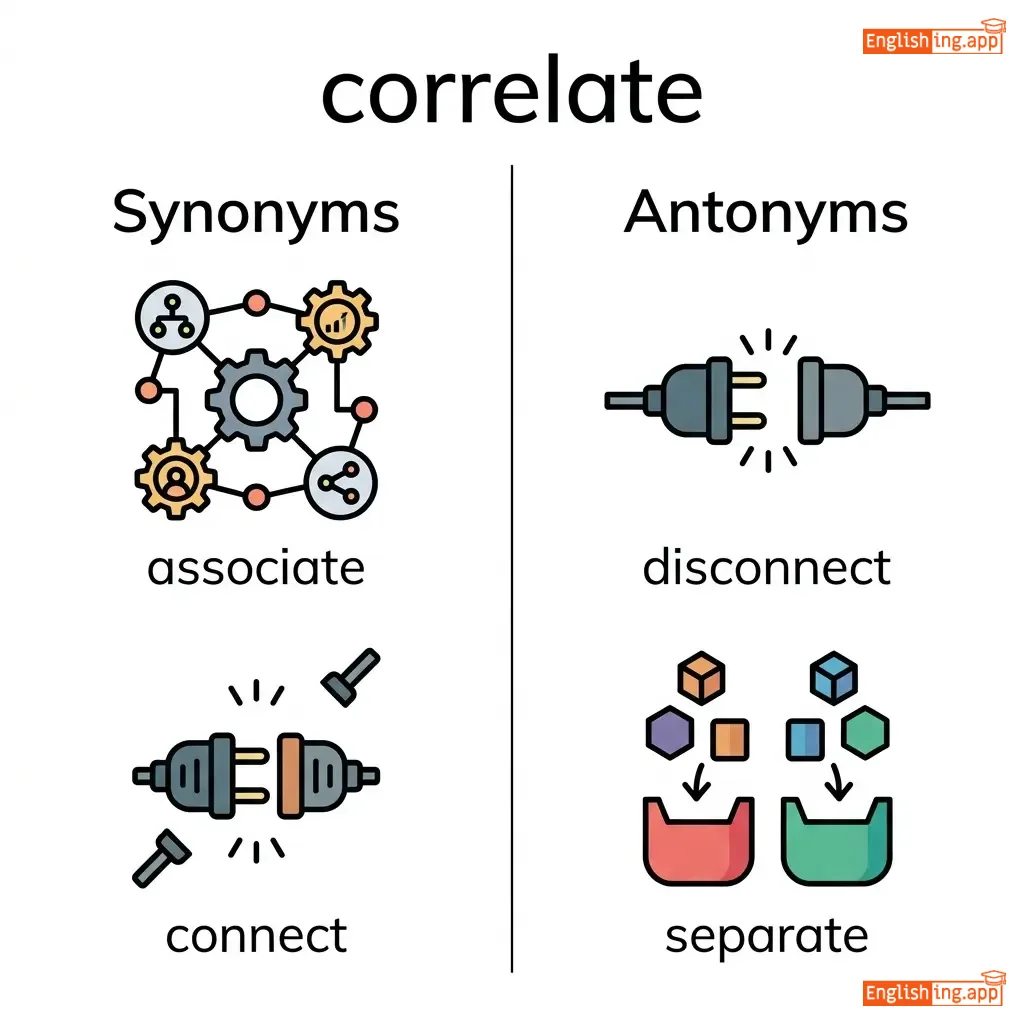
associate, connect, link, relate
••••••
|
disconnect, separate, diverge
••••••
|
strongly correlate, positively correlate, negatively correlate, correlate closely
••••••
|
Stressは健康に相関しています。相関するとは二つ以上の事物を結びつけることです。
••••••
|
|
🧑🏫
••••••
|
/ˈkaʊn.səl.ər/
noun
(カウンセラー)
••••••
|
- •••••• |
カウンセラー
kaunserā
••••••
|
- •••••• | - •••••• | - •••••• | - •••••• |
a person trained to give guidance on personal, social, or psychological problems
••••••
|
The school counselor helped the student deal with stress. |
学校のカウンセラーは学生がストレスに対処する手助けをしました。
Gakkō no kaunserā wa gakusei ga sutoresu ni taisho suru tetsuduke o shimashita.
••••••
|
- •••••• | - •••••• | - •••••• |
advisor, mentor, guide, consultant
••••••
|
opponent, critic
••••••
|
school counselor, marriage counselor, career counselor
••••••
|
Counselor とは 'カウンセラー' - 困ったときにアドバイスをくれる人。
••••••
|
|
✨
••••••
|
/ˈkaʊntləs/
adjective
(カウントレス)
••••••
|
- •••••• |
数えきれない
kazoekirenai
••••••
|
- •••••• | - •••••• | - •••••• | - •••••• |
too many to be counted; innumerable
••••••
|
There are countless stars in the sky. |
空には無数の星があります。
Sora ni wa musū no hoshi ga arimasu.
••••••
|
- •••••• | - •••••• | - •••••• |
innumerable, innumerous, endless, boundless
••••••
|
finite, limited
••••••
|
countless opportunities, countless stars, countless hours
••••••
|
星を数えてみて、数えきれないほど多いことに気づく。
••••••
|
|
⚖️
••••••
|
/ˈkɔːtruːm/
noun
••••••
|
- •••••• | - •••••• | - •••••• | - •••••• | - •••••• | - •••••• |
a room in which legal cases are heard and decided by a judge
••••••
|
The witness was called to testify in the courtroom. |
- •••••• |
courtroom drama |
a story or situation centered around legal proceedings
••••••
|
- •••••• |
court, tribunal, hall of justice, chamber
••••••
|
street, playground
••••••
|
enter the courtroom, courtroom hearing, crowded courtroom, courtroom trial
••••••
|
No •••••• |
|
💬
••••••
|
/ˈkrɪtɪˌsɪzəm/
noun
(クリティシズム)
••••••
|
- •••••• |
批判
hihan
••••••
|
- •••••• | - •••••• | - •••••• | - •••••• |
The expression of disapproval or judgment of the merits of something
••••••
|
The new policy has faced a lot of criticism from the public. |
新しい政策は、一般の人々から多くの批判を受けました。
Atarashī seisaku wa, ippan no hitobito kara ōku no hihan o ukemashita.
••••••
|
constructive criticism |
helpful and useful feedback intended to improve something
••••••
|
建設的な批判
Kensetsuteki na hihan
••••••
|
disapproval, judgment, assessment, evaluation, remark
••••••
|
praise, compliment
••••••
|
constructive criticism, harsh criticism, literary criticism, public criticism
••••••
|
批判 = Criticism
••••••
|
|
📝
••••••
|
/ˈkrɪtɪsaɪz/
verb
(クリティサイズ)
••••••
|
|
批判する
hihan suru
••••••
|
criticized
クリティサイズド
••••••
|
criticized
クリティサイズド
••••••
|
criticizes
クリティサイズズ
••••••
|
criticizing
クリティサイズング
••••••
|
to express disapproval of someone or something by pointing out faults or shortcomings
••••••
|
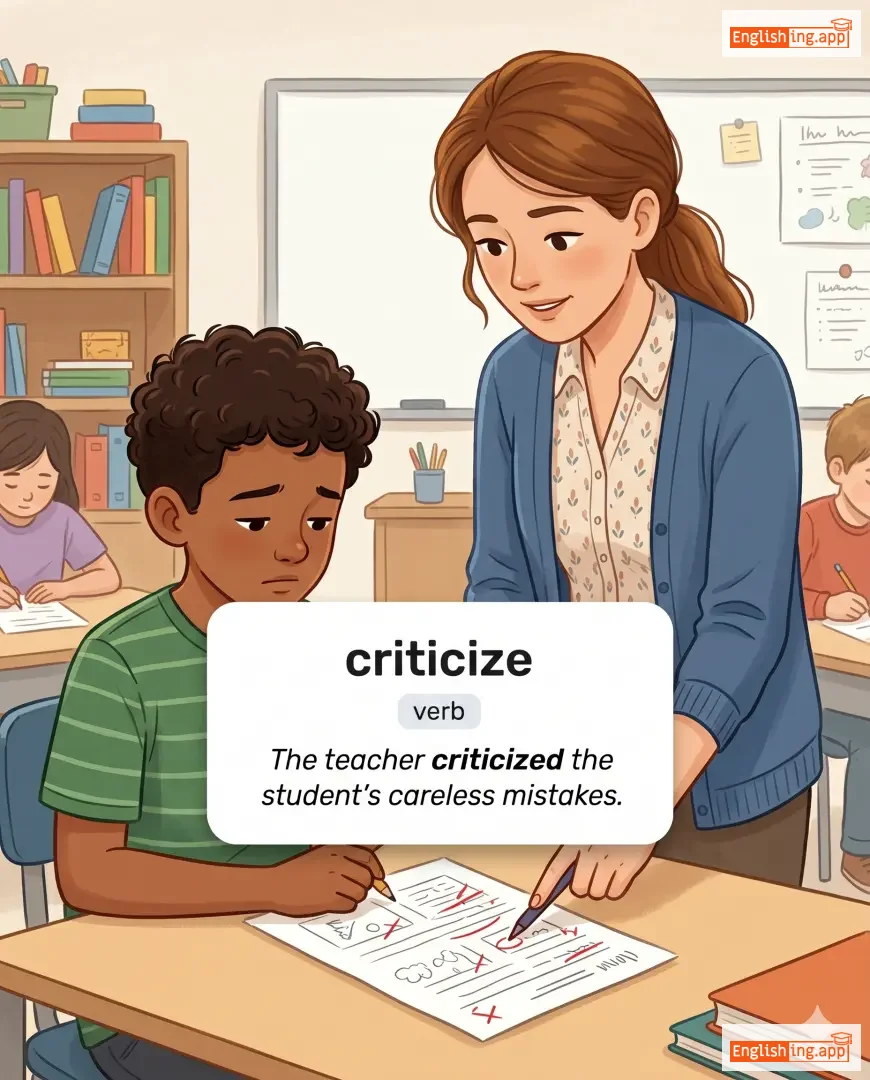
The teacher criticized the student's careless mistakes.
教師は学生の不注意なミスを批判しました。
••••••
|
教師は学生の不注意なミスを批判しました。
Kyōshi wa gakusei no fuchūi na misu o hihan shimashita.
••••••
|
constructive criticism
建設的な批判
••••••
|
helpful feedback intended to improve performance
••••••
|
建設的な批判
kensetsuteki na hihan
••••••
|
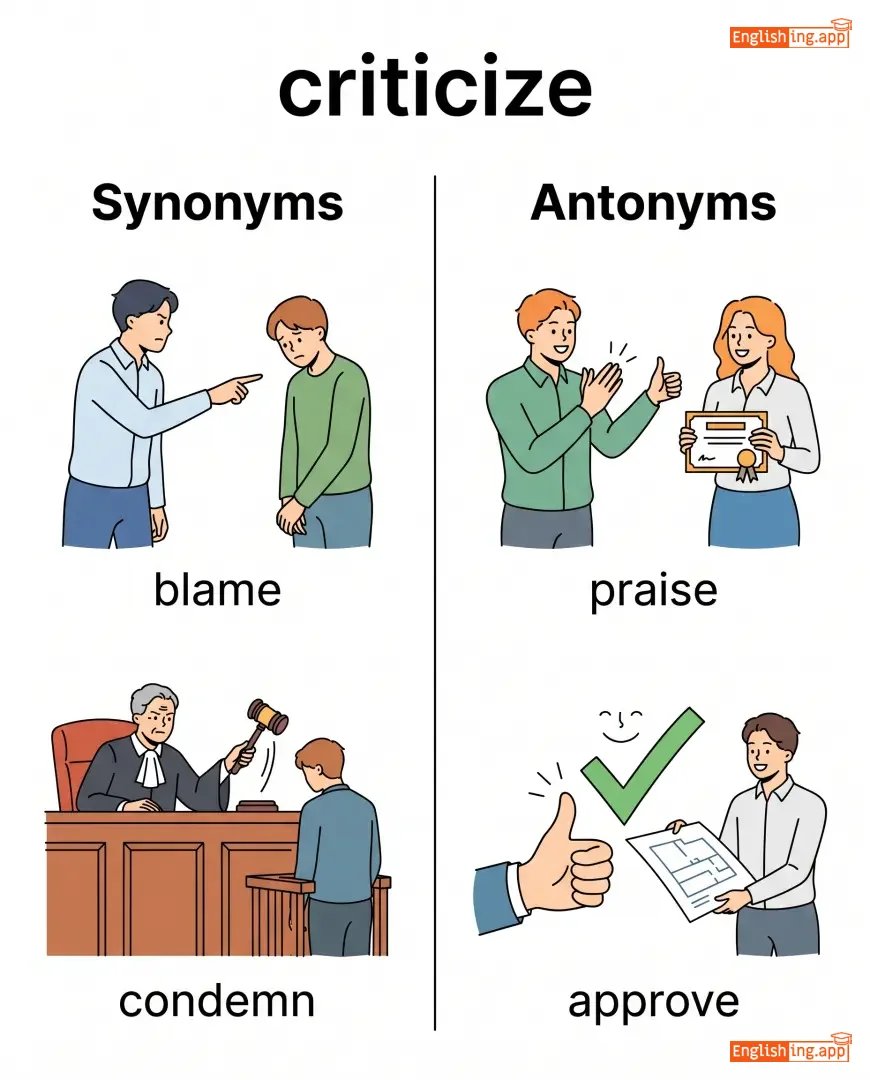
blame, condemn, censure, evaluate, review
••••••
|
praise, approve, compliment
••••••
|
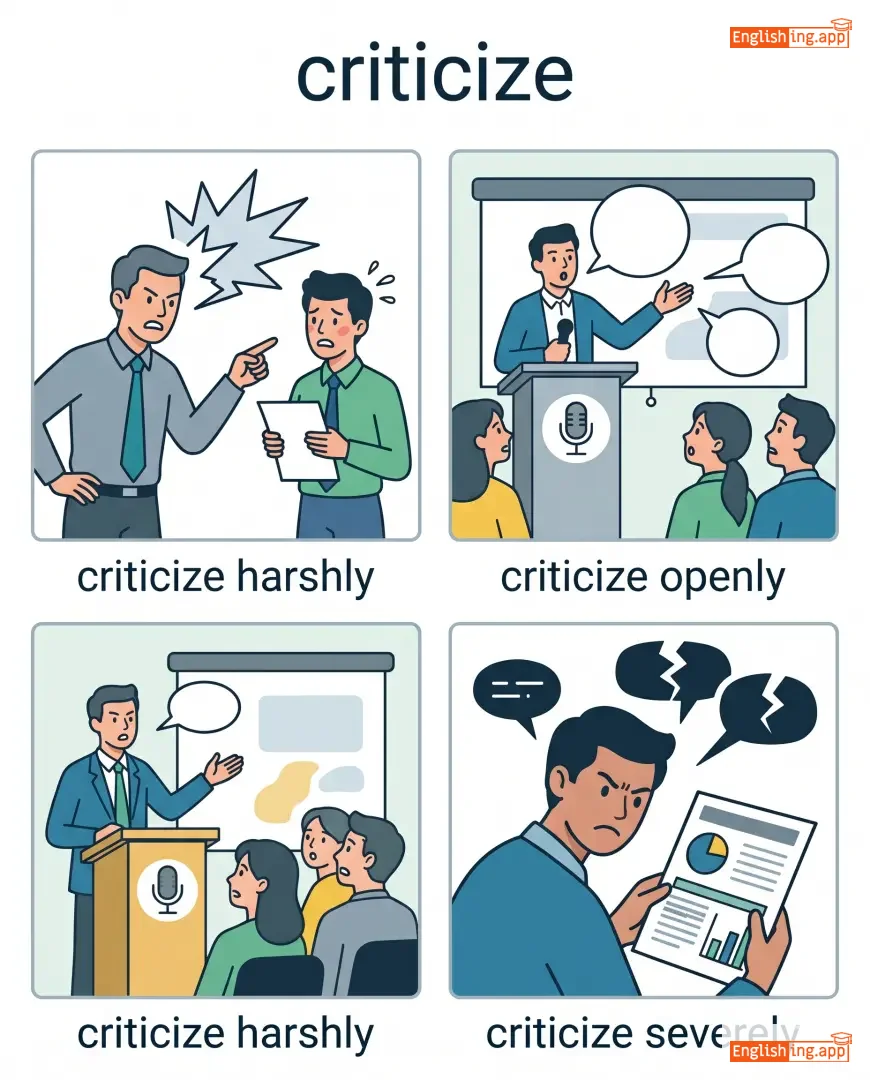
criticize harshly, criticize openly, criticize severely, criticize constantly
••••••
|
批判するは、改善のために間違いを指摘すること。
••••••
|
|
⏳
••••••
|
/ˈkʌrəntli/
adverb
(カレントリー)
••••••
|
- •••••• |
現在
genzai
••••••
|
- •••••• | - •••••• | - •••••• | - •••••• |
at the present time; now
••••••
|
He is currently working on a new project. |
彼は現在、新しいプロジェクトに取り組んでいます。
Kare wa genzai, atarashī purojekuto ni torikunde imasu.
••••••
|
- •••••• | - •••••• | - •••••• |
presently, now, at the moment, as of now
••••••
|
formerly, previously
••••••
|
currently working, currently available, currently involved, currently under
••••••
|
現在は‘今’のこと—進行中のこと。
••••••
|
|
⚠️
••••••
|
/ˈdeɪndʒərəs/
adjective
(デンジャラス)
••••••
|
- •••••• |
危険
kiken
••••••
|
- •••••• | - •••••• | - •••••• | - •••••• |
likely to cause harm or injury; unsafe
••••••
|
Driving fast on icy roads is dangerous. |
氷の道路で速く運転するのは危険です。
Kōri no dōro de hayaku unten suru no wa kiken desu.
••••••
|
play with fire |
to do something risky that may cause harm
••••••
|
火遊び
hi asobi
••••••
|
risky, hazardous, unsafe, harmful, perilous
••••••
|
safe, secure, harmless
••••••
|
dangerous situation, dangerous game, dangerous path, dangerous substance
••••••
|
危険は危ないという意味で、危険そのものです。
••••••
|
|
⚖️
••••••
|
/dɪˈfen.dənt/
noun
(ディフェンダント)
••••••
|
- •••••• |
被告
hikoku
••••••
|
- •••••• | - •••••• | - •••••• | - •••••• |
an individual, company, or institution sued or accused in a court of law
••••••
|
The defendant pleaded not guilty to all charges brought against him. |
被告は、彼に対するすべての告発に対して無罪を主張しました。
Hikoku wa, kare ni taisuru subete no kokuhatsu ni taishite muzai o shuchou shimashita.
••••••
|
- •••••• | - •••••• | - •••••• |
accused, respondent, litigant
••••••
|
plaintiff, prosecutor, accuser
••••••
|
criminal defendant, civil defendant, defendant's rights
••••••
|
被告は法廷で自分を弁護する役割を果たします。
••••••
|
|
🛡️
••••••
|
/dɪˈfɛnsɪv/
adjective
(ディフェンシブ)
••••••
|
- •••••• |
防御的な
bōgyo-teki na
••••••
|
- •••••• | - •••••• | - •••••• | - •••••• |
Intended to protect or defend; behaving in a way to guard against criticism or attack.
••••••
|
He became defensive when asked about his mistake. |
彼は自分のミスについて尋ねられると防御的になった。
Kare wa jibun no misu ni tsuite tazunerareru to bōgyo-teki ni natta.
••••••
|
defensive stance |
A protective or guarded position in argument or conflict.
••••••
|
防御的な姿勢
bōgyo-teki na shisei
••••••
|
protective, guarded, cautious, shielding
••••••
|
offensive, aggressive, open
••••••
|
defensive behavior, defensive mechanism, defensive reaction, defensive stance
••••••
|
防御的なものは盾のように 🛡️ - 批判から自分を守る。
••••••
|

