Consensus on the River Banks
河流恢复团队对最近的风暴损害感到concerned。 卫生官员测试了水的condition并分享了报告。 项目负责人以confident的语气讲话。 起初有些confusion,但很快就澄清了。 发言人敦促大家保持对环境的conscious。 所有参与者达成了关于拯救河流的consensus。 一位年轻的志愿者觉得自己是最有奉献精神的contender。 他说,河流承载着整个continent的故事。 我们都convinced这项努力会成功。 新的传感器准确地记录了数据correctly。 研究人员将水质与农作物产量进行了correlated。 一位经验丰富的counselor为志愿者提供了心理支持。 队伍从河流中清除了countless塑料瓶。 从courtroom档案中提取了旧案件文件。 出现了一些criticism,但这是建设性的。 他们要求人们不要对项目进行不公正的criticize。 Currently河流的水流稳定。 风暴期间,河流变得非常dangerous。 一位前defendant宣布关闭了一个工厂。 他现在正在采取defensive措施保护环境。
|
表情符号
|
单词 | Images | 翻译 | 过去时 | 过去分词 | 第三人称单数 | 动名词 | 含义 | 例句 | 例句翻译 | 示例表达 | 示例表达含义 | 示例表达翻译 | 同义词 | 反义词 | 搭配词 | 助记符 |
|---|---|---|---|---|---|---|---|---|---|---|---|---|---|---|---|---|---|
|
😟
••••••
|
/kənˈsɜːnd/
adjective
(kənˈsɜːnd)
••••••
|
- •••••• |
担忧的
dānyōu de
••••••
|
- •••••• | - •••••• | - •••••• | - •••••• |
worried or anxious about something; involved or interested in something
••••••
|
She was concerned about her mother's health. |
她对母亲的健康感到担忧。
Tā duì mǔqīn de jiànkāng gǎndào dānyōu.
••••••
|
concerned with |
interested in or related to
••••••
|
关心
guānxīn
••••••
|
worried, anxious, troubled, uneasy
••••••
|
unconcerned, indifferent
••••••
|
concerned about, deeply concerned, concerned parents, concerned citizens
••••••
|
担忧的就是对事物感到焦虑,就像关心母亲的健康。
••••••
|
|
⚙️
••••••
|
/kənˈdɪʃən/
noun
(条件)
••••••
|

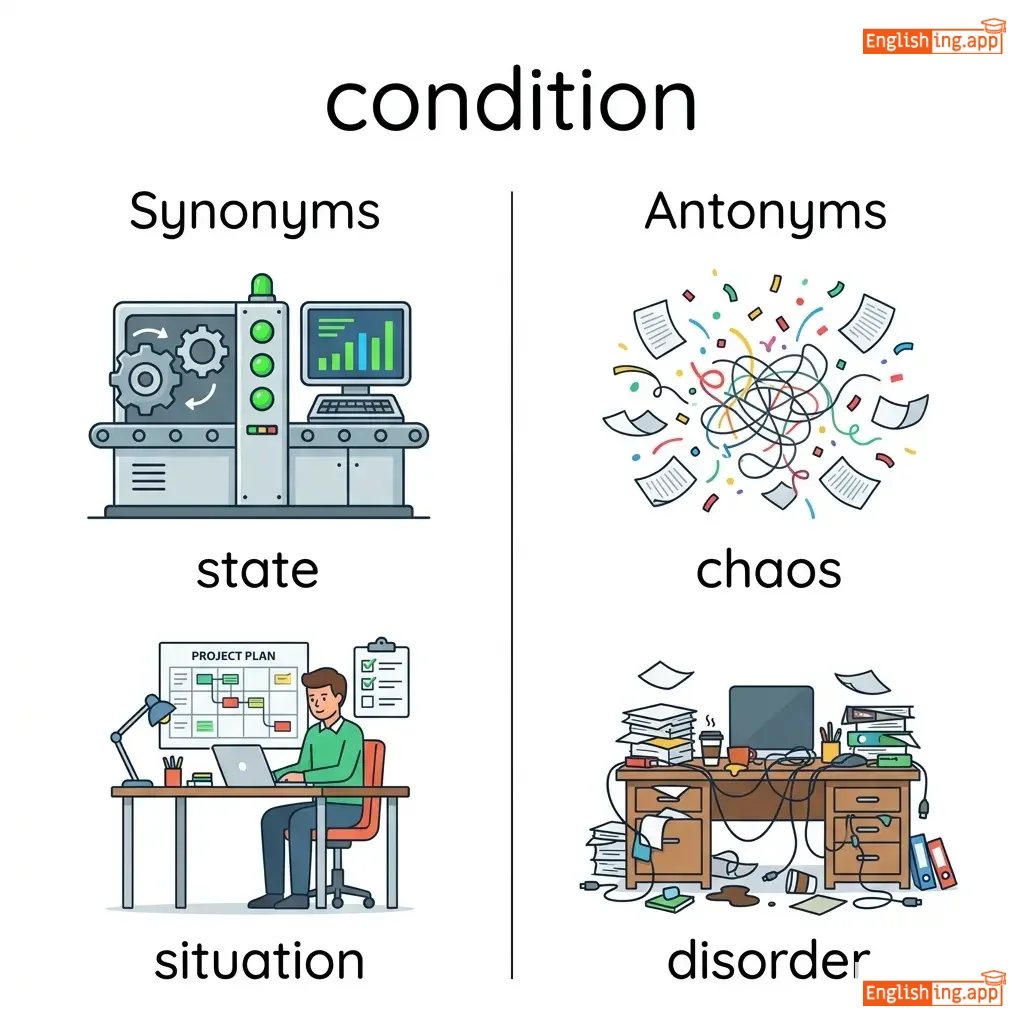
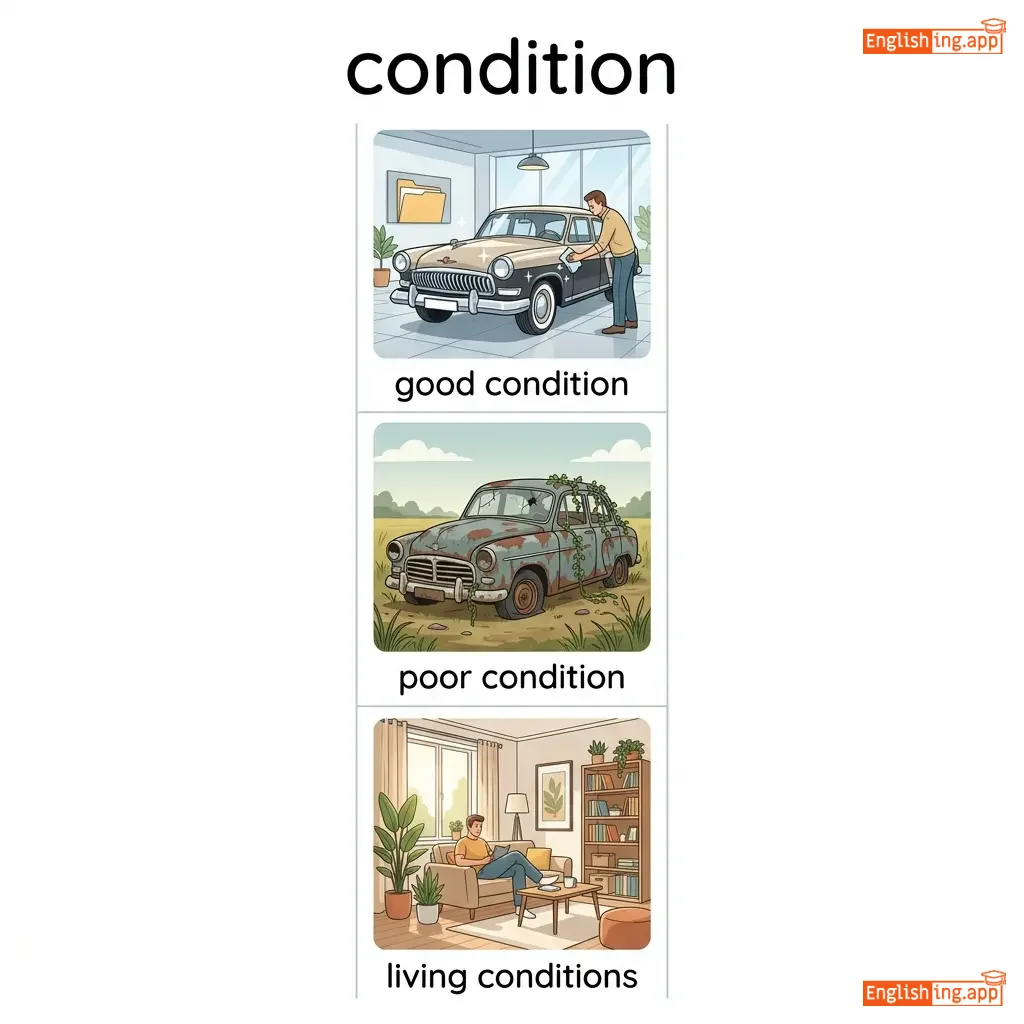
|
状态, 条件
zhuangtai, tiaojian
••••••
|
- •••••• | - •••••• | - •••••• | - •••••• |
The state of something with regard to its appearance, quality, or working order; a requirement that must be met.
••••••
|
The car is in excellent condition. |
这辆车的状态很好。
Zhe liang che de zhuangtai hen hao.
••••••
|
on condition that |
only if something else happens or is done
••••••
|
在...条件下
zai... tiaojian xia
••••••
|
state, situation, requirement, circumstance, health
••••••
|
chaos, disorder
••••••
|
good condition, poor condition, living conditions, under condition
••••••
|
Condition 是条件 - 就像通过考试的条件。
••••••
|
|
😌
••••••
|
/ˈkɒnfɪdənt/
adjective
(kǒn-fí-dènt)
••••••
|
- •••••• |
自信
zìxìn
••••••
|
- •••••• | - •••••• | - •••••• | - •••••• |
feeling or showing certainty about something; having self-assurance
••••••
|
She was confident about her ability to succeed. |
她对自己能够成功充满自信。
Tā duì zìjǐ nénggòu chénggōng chōngmǎn zìxìn.
••••••
|
confident smile |
a smile that shows assurance and self-belief
••••••
|
自信的微笑
zìxìn de wēixiào
••••••
|
assured, certain, secure, self-assured, optimistic
••••••
|
insecure, uncertain, doubtful
••••••
|
confident manner, confident attitude, feel confident, become confident
••••••
|
Confidence就是自信 — 自信的微笑代表你能做到。
••••••
|
|
😕
••••••
|
/kənˈfjuːʒən/
noun
(困惑)
••••••
|
- •••••• |
困惑
kùnhuò
••••••
|
- •••••• | - •••••• | - •••••• | - •••••• |
a state of being bewildered or unclear in one’s mind
••••••
|
The sudden change in schedule caused a lot of confusion. |
时间表的突然变化引起了许多困惑。
Shíjiān biǎo de túrán biànhuà yǐnqǐle xǔduō kùnhuò.
••••••
|
in confusion |
in a state of disorder or uncertainty
••••••
|
困惑中
kùnhuò zhōng
••••••
|
uncertainty, disorder, chaos, puzzlement
••••••
|
clarity, order, certainty
••••••
|
confusion arises, confusion caused, create confusion, confusion about
••••••
|
困惑就是当一切不清楚时,心里就像迷失方向。
••••••
|
|
👁️
••••••
|
/ˈkɒnʃəs/
adjective
(kɔːnʃəs)
••••••
|
- •••••• |
清醒
qingxing
••••••
|
- •••••• | - •••••• | - •••••• | - •••••• |
Aware of and responding to one's surroundings; awake.
••••••
|
She was fully conscious after the surgery.
她在手术后完全清醒。
••••••
|
她在手术后完全清醒。
Tā zài shǒushù hòu wánquán qīngxǐng.
••••••
|
lose consciousness
失去意识
••••••
|
To become unconscious or faint.
••••••
|
失去意识
shīqù yìshí
••••••
|
aware, alert, awake, mindful, responsive
••••••
|
unconscious, unaware, oblivious
••••••
|
conscious mind, fully conscious, conscious effort
••••••
|
清醒意味着通过耳朵(con)来听,保持警觉。
••••••
|
|
🤝
••••••
|
/kənˈsɛnsəs/
noun
(kənˈsɛnsəs)
••••••
|

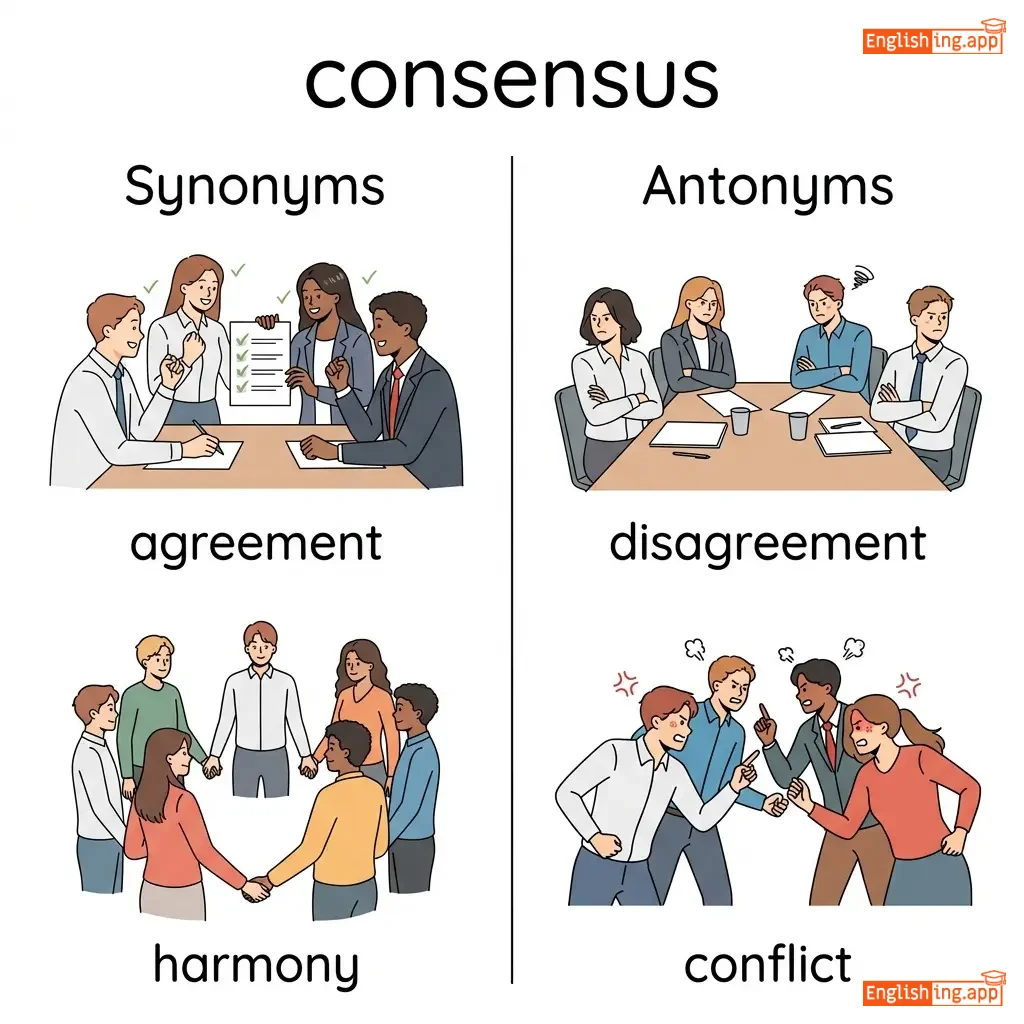
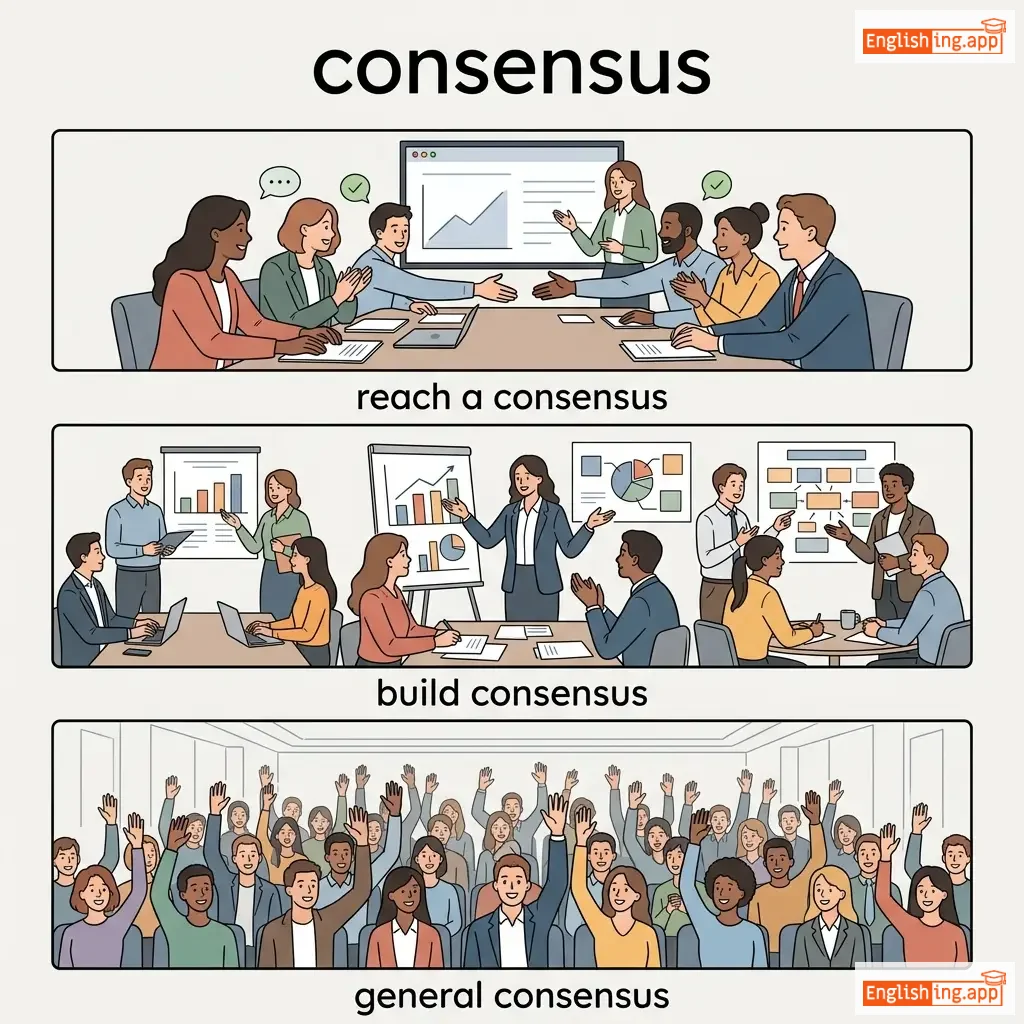
|
共识
gongshi
••••••
|
- •••••• | - •••••• | - •••••• | - •••••• |
general agreement among a group of people
••••••
|
The team reached a consensus on the new strategy. |
团队就新战略达成了一致意见。
Tuánduì jiù xīn zhànlüè dáchéngle yīzhì yìjiàn.
••••••
|
general consensus |
a widely accepted common opinion
••••••
|
普遍共识
pǔbiàn gòngshí
••••••
|
agreement, harmony, accord, unity, concurrence
••••••
|
disagreement, conflict, discord
••••••
|
reach a consensus, build consensus, general consensus, consensus opinion
••••••
|
Consensus = con (大家) + sensus (感觉),大家有相同的感觉。
••••••
|
|
🥇
••••••
|
/kənˈtɛndər/
noun
(kāngtèndé)
••••••
|
- •••••• |
竞争者, 争夺者
jingzhengzhe, zhengduozhe
••••••
|
- •••••• | - •••••• | - •••••• | - •••••• |
a person or team competing for a title or prize
••••••
|
She is a strong contender for the mayoral position.
她是市长职位的强有力竞争者。
••••••
|
她是市长职位的强有力竞争者。
Ta shi shizhang zhiwei de qiang youli jingzhengzhe.
••••••
|
- •••••• | - •••••• | - •••••• |
challenger, competitor, aspirant, nominee
••••••
|
non-contender, bystander
••••••
|
strong contender, main contender, serious contender, leading contender
••••••
|
Contender就是争取胜利的人,像竞争者一样。
••••••
|
|
🌍
••••••
|
/ˈkɒntɪnənt/
noun
(kàntínènt)
••••••
|
- •••••• |
大陆
dàlù
••••••
|
- •••••• | - •••••• | - •••••• | - •••••• |
one of the large landmasses on Earth such as Asia, Africa, or Europe
••••••
|
Asia is the largest continent in the world. |
亚洲是世界上最大的大陆。
Yàzhōu shì shìjiè shàng zuì dà de dàlù.
••••••
|
- •••••• | - •••••• | - •••••• |
landmass, region, area, territory
••••••
|
island, ocean
••••••
|
African continent, European continent, across the continent, continental drift
••••••
|
大陆就像是一个大块的土地,亚洲就是最大的大陆!
••••••
|
|
💡
••••••
|
/kənˈvɪnst/
adjective
(kənˈvɪnstəd)
••••••
|
- •••••• |
确信的
que ren de
••••••
|
- •••••• | - •••••• | - •••••• | - •••••• |
completely certain or sure about something
••••••
|
She was convinced that he was telling the truth. |
她确信他在说实话。
Ta que ren ta zai shuo shi hua.
••••••
|
be convinced of something |
to feel certain about the truth or validity of something
••••••
|
对某事确信
dui mou shi que ren
••••••
|
certain, sure, confident, persuaded
••••••
|
doubtful, uncertain
••••••
|
firmly convinced, fully convinced, become convinced, convinced that
••••••
|
确信的就像你已经完全知道某事的真实性了。
••••••
|
|
✅
••••••
|
/kəˈrɛktli/
adverb
(correctly)
••••••
|
- •••••• |
正确地
zhèngquè de
••••••
|
- •••••• | - •••••• | - •••••• | - •••••• |
in a way that is true, accurate, or without mistakes
••••••
|
She answered all the questions correctly. |
她正确地回答了所有问题。
Tā zhèngquè de huídá le suǒyǒu wèntí.
••••••
|
behave correctly |
to act in a proper or acceptable way
••••••
|
正确行为
zhèngquè xíngwéi
••••••
|
accurately, rightly, properly, exactly
••••••
|
incorrectly, wrongly, improperly
••••••
|
speak correctly, spell correctly, behave correctly, act correctly
••••••
|
Correctly 就是正确的 — 做得对,结果才是对的!
••••••
|
|
🔗
••••••
|
/ˈkɒrəleɪt/
verb
(kòrìlèi)
••••••
|
|
相关
xiāngguān
••••••
|
correlated
kòrìlèitèd
••••••
|
correlated
kòrìlèitèd
••••••
|
correlates
kòrìlèits
••••••
|
correlating
kòrìlèitīng
••••••
|
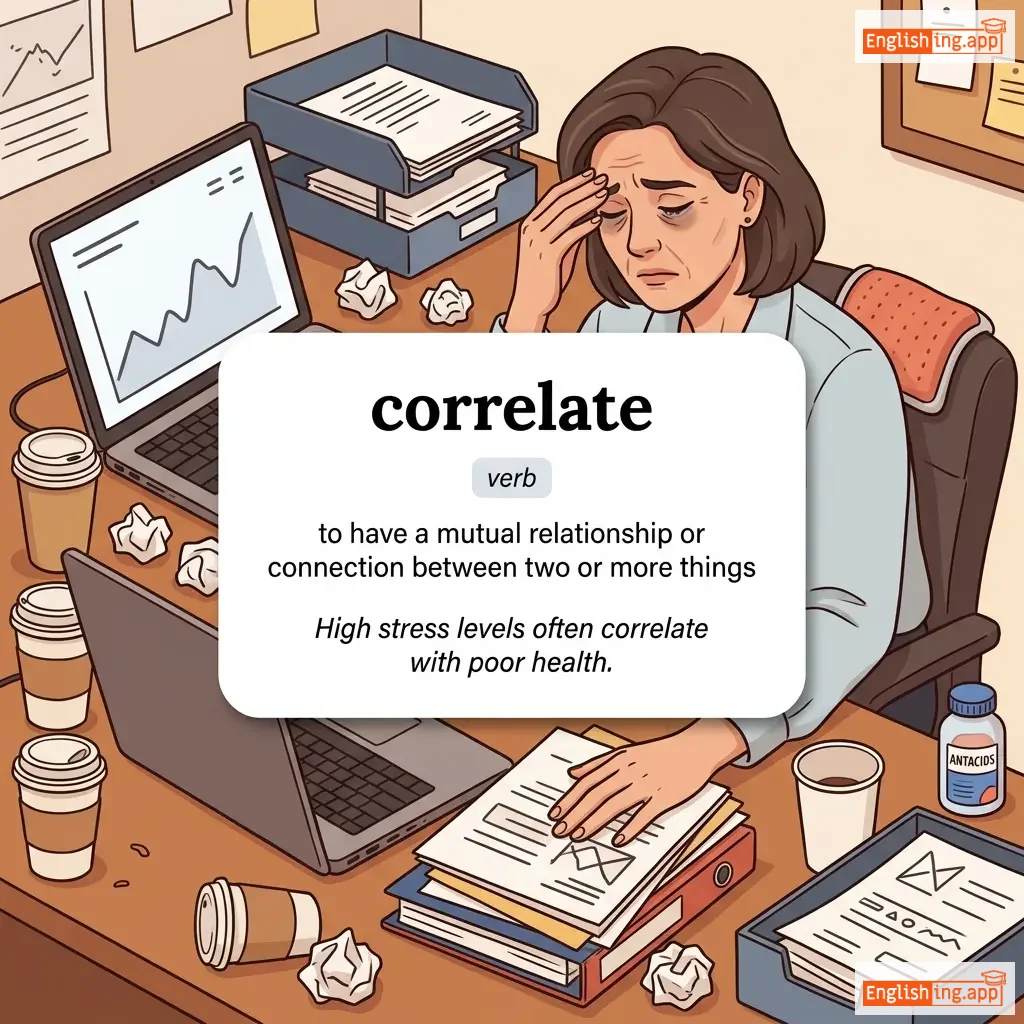
to have a mutual relationship or connection between two or more things
••••••
|
High stress levels often correlate with poor health.
高压水平通常与健康不佳相关。
••••••
|
高压水平通常与健康不佳相关。
Gāo yā shuǐpíng tōngcháng yǔ jiànkāng bù jiā xiāngguān.
••••••
|
- •••••• | - •••••• | - •••••• |
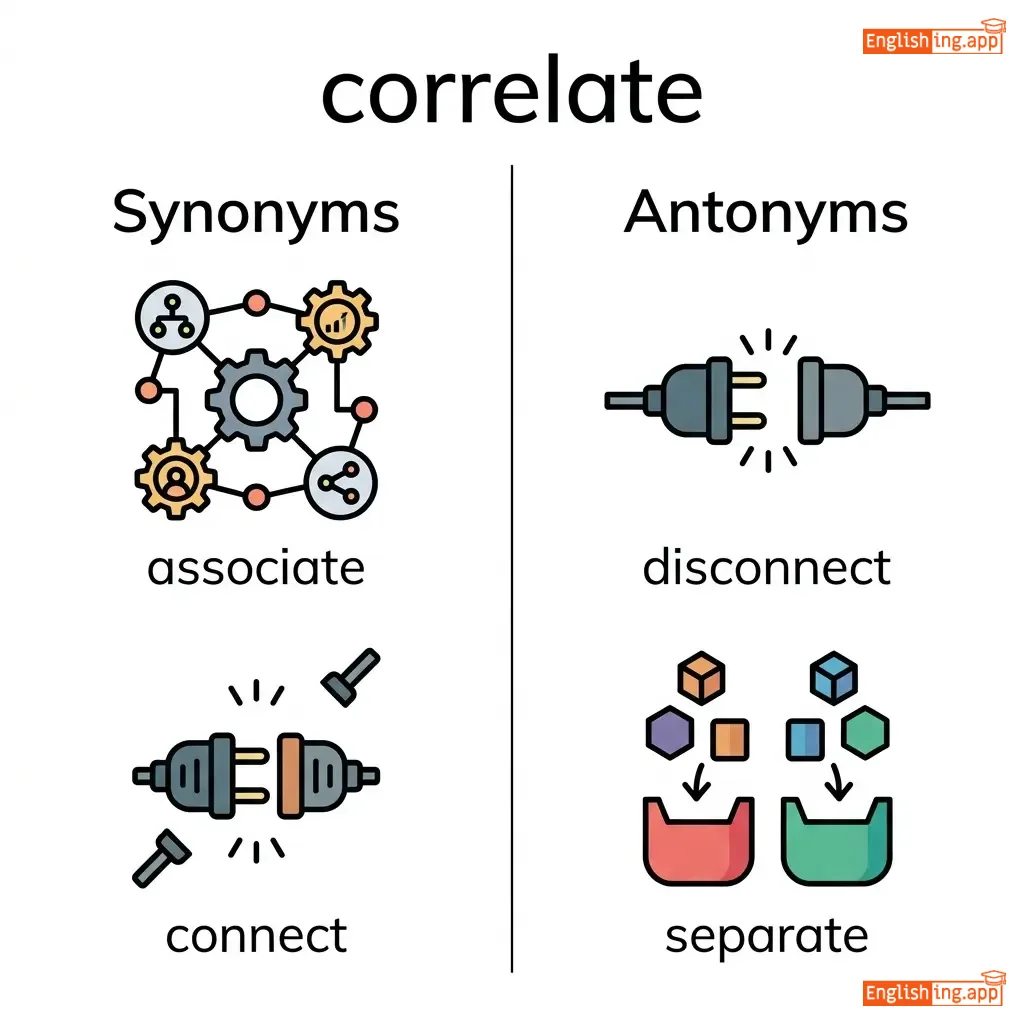
associate, connect, link, relate
••••••
|
disconnect, separate, diverge
••••••
|
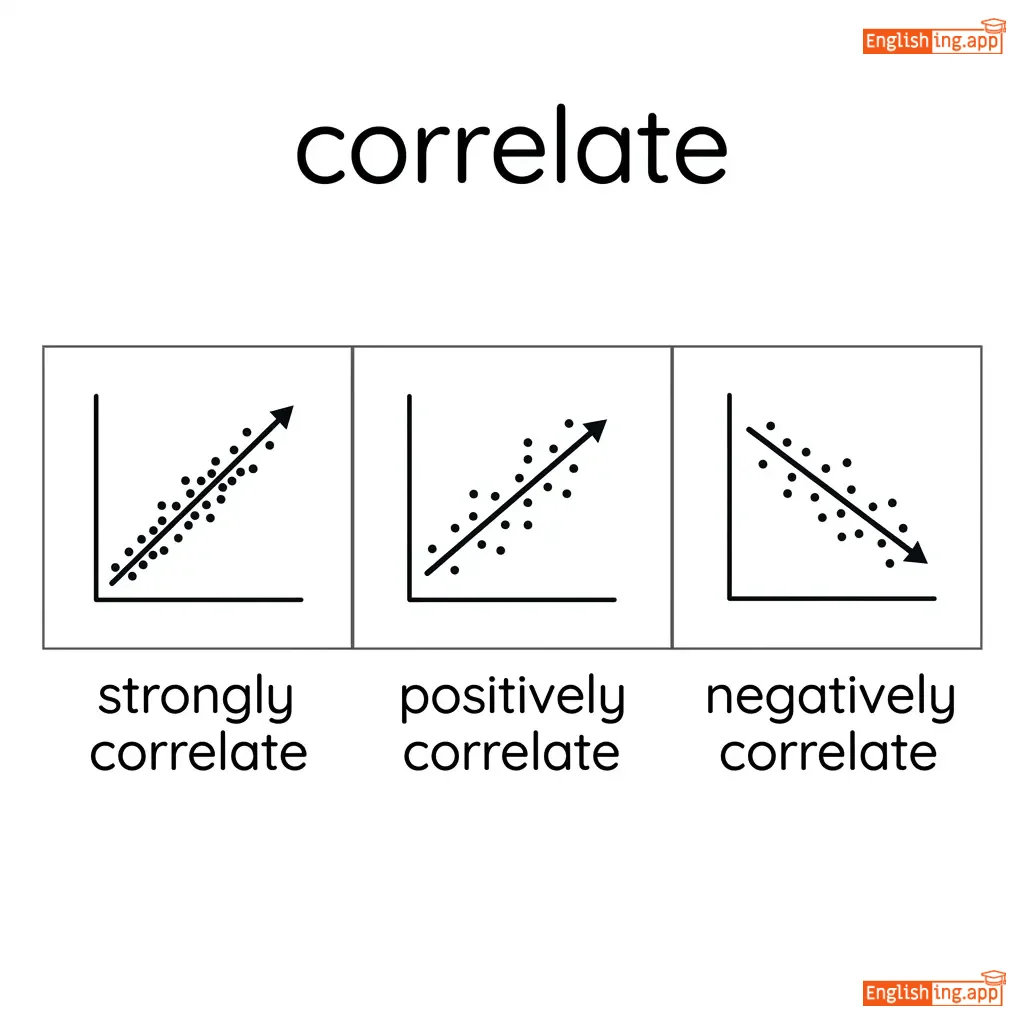
strongly correlate, positively correlate, negatively correlate, correlate closely
••••••
|
Stress 与健康相关,相关意味着联系两个事物。
••••••
|
|
🧑🏫
••••••
|
/ˈkaʊn.səl.ər/
noun
(kaʊnsəlɚ)
••••••
|
- •••••• |
顾问
gùwèn
••••••
|
- •••••• | - •••••• | - •••••• | - •••••• |
a person trained to give guidance on personal, social, or psychological problems
••••••
|
The school counselor helped the student deal with stress. |
学校的顾问帮助学生应对压力。
Xuéxiào de gùwèn bāngzhù xuéshēng yìngduì yā lì.
••••••
|
- •••••• | - •••••• | - •••••• |
advisor, mentor, guide, consultant
••••••
|
opponent, critic
••••••
|
school counselor, marriage counselor, career counselor
••••••
|
Counselor 的意思是 '顾问' - 一个在困难时给你指导的人。
••••••
|
|
✨
••••••
|
/ˈkaʊntləs/
adjective
(kaʊntləs)
••••••
|
- •••••• |
数不胜数
shǔ bù shèng shǔ
••••••
|
- •••••• | - •••••• | - •••••• | - •••••• |
too many to be counted; innumerable
••••••
|
There are countless stars in the sky. |
天上有数不清的星星。
Tiān shàng yǒu shù bù qīng de xīng xīng.
••••••
|
- •••••• | - •••••• | - •••••• |
innumerable, innumerous, endless, boundless
••••••
|
finite, limited
••••••
|
countless opportunities, countless stars, countless hours
••••••
|
想象你试图数星星,但它们太多,数不胜数。
••••••
|
|
⚖️
••••••
|
/ˈkɔːtruːm/
noun
••••••
|
- •••••• | - •••••• | - •••••• | - •••••• | - •••••• | - •••••• |
a room in which legal cases are heard and decided by a judge
••••••
|
The witness was called to testify in the courtroom. |
- •••••• |
courtroom drama |
a story or situation centered around legal proceedings
••••••
|
- •••••• |
court, tribunal, hall of justice, chamber
••••••
|
street, playground
••••••
|
enter the courtroom, courtroom hearing, crowded courtroom, courtroom trial
••••••
|
No •••••• |
|
💬
••••••
|
/ˈkrɪtɪˌsɪzəm/
noun
(krɪtɪˌsɪzəm)
••••••
|
- •••••• |
批评
pīpíng
••••••
|
- •••••• | - •••••• | - •••••• | - •••••• |
The expression of disapproval or judgment of the merits of something
••••••
|
The new policy has faced a lot of criticism from the public. |
新政策面临来自公众的批评。
Xīn zhèngcè miànlín láizì gōngzhòng de pīpíng.
••••••
|
constructive criticism |
helpful and useful feedback intended to improve something
••••••
|
建设性批评
jiànshèxìng pīpíng
••••••
|
disapproval, judgment, assessment, evaluation, remark
••••••
|
praise, compliment
••••••
|
constructive criticism, harsh criticism, literary criticism, public criticism
••••••
|
批评 = Criticism
••••••
|
|
📝
••••••
|
/ˈkrɪtɪsaɪz/
verb
(krɪtɪsaɪz)
••••••
|
|
批评
pīpíng
••••••
|
criticized
krɪtɪsaɪzd
••••••
|
criticized
krɪtɪsaɪzd
••••••
|
criticizes
krɪtɪsaɪzɪz
••••••
|
criticizing
krɪtɪsaɪzɪŋ
••••••
|
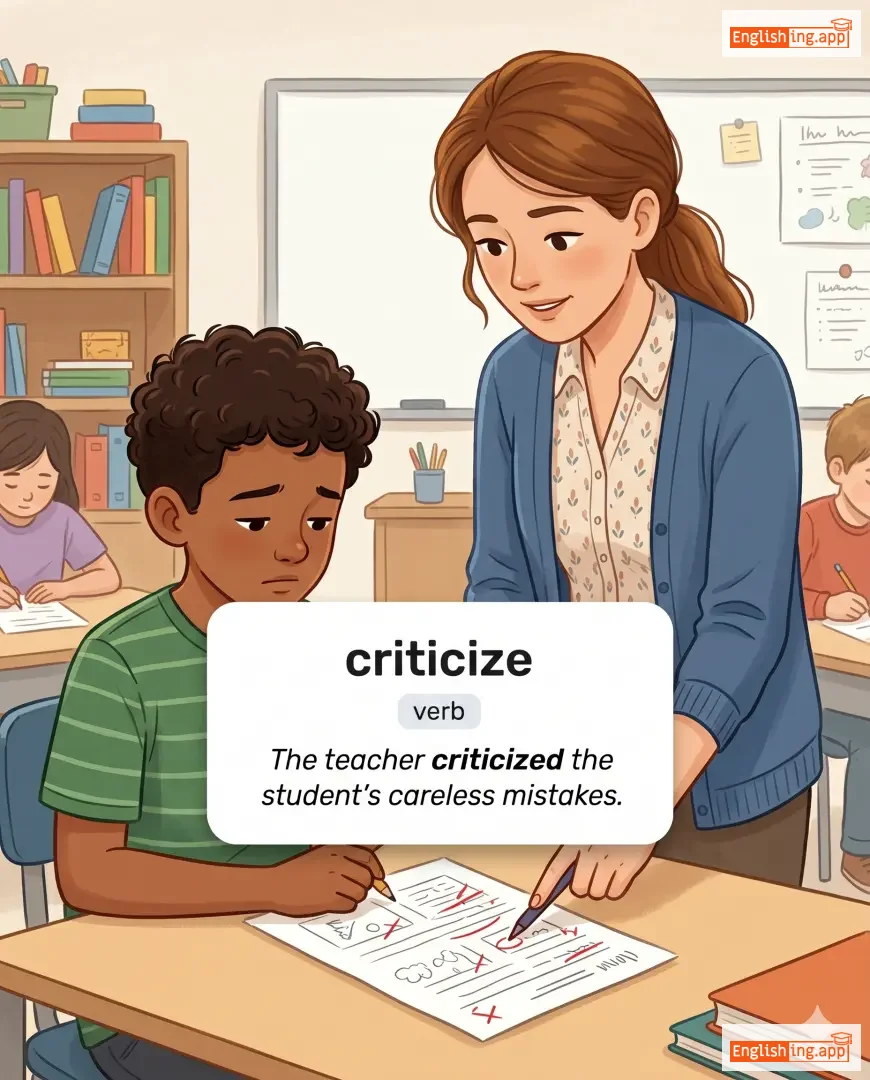
to express disapproval of someone or something by pointing out faults or shortcomings
••••••
|
The teacher criticized the student's careless mistakes.
老师批评了学生的粗心错误。
••••••
|
老师批评了学生的粗心错误。
Lǎoshī pīpíngle xuéshēng de cūxīn cuòwù.
••••••
|
constructive criticism
建设性批评
••••••
|
helpful feedback intended to improve performance
••••••
|
建设性批评
jiànshèxìng pīpíng
••••••
|
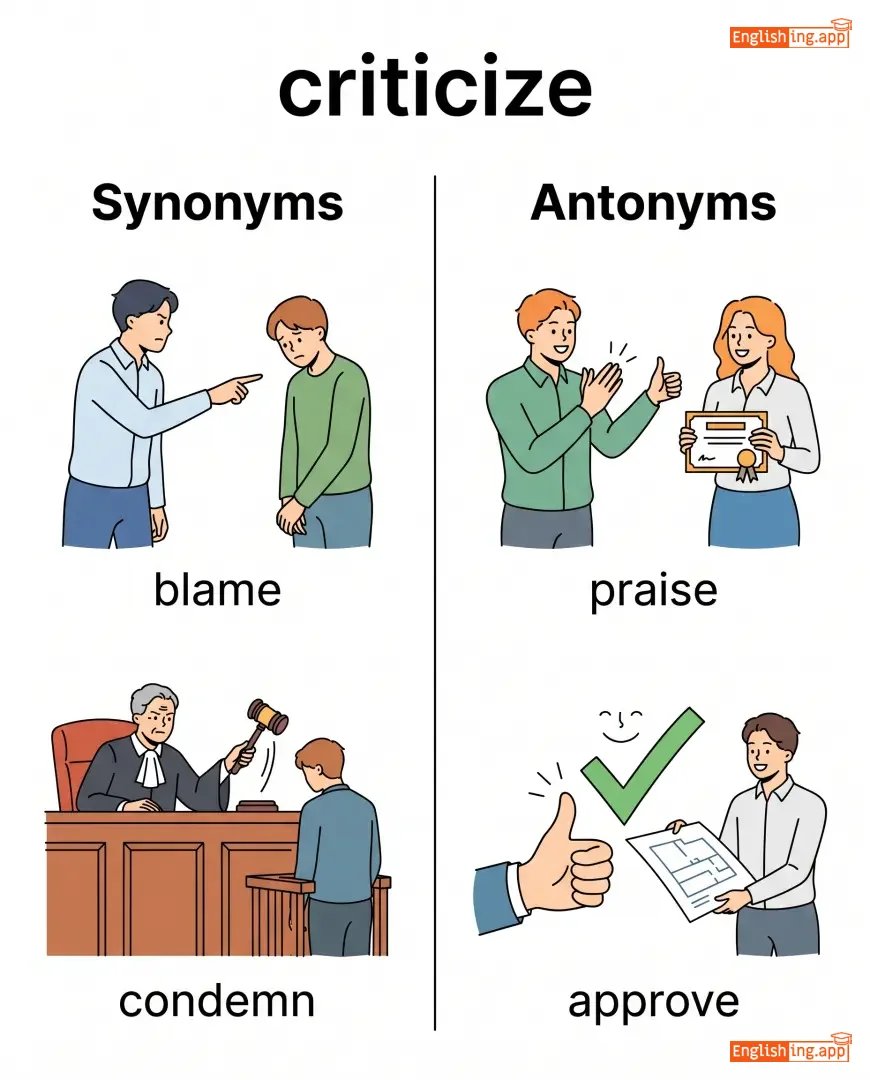
blame, condemn, censure, evaluate, review
••••••
|
praise, approve, compliment
••••••
|
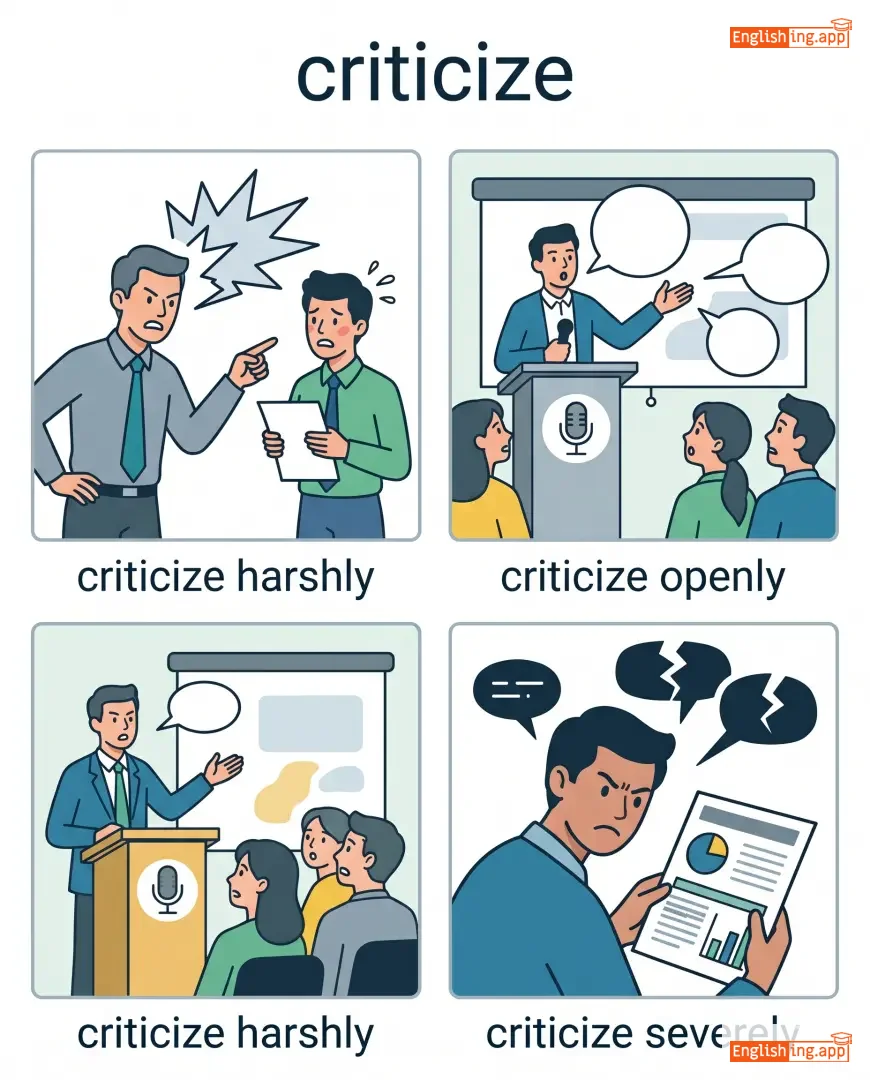
criticize harshly, criticize openly, criticize severely, criticize constantly
••••••
|
批评就是指出错误来帮助改进。
••••••
|
|
⏳
••••••
|
/ˈkʌrəntli/
adverb
(kɑːrɛntli)
••••••
|
- •••••• |
目前
muqian
••••••
|
- •••••• | - •••••• | - •••••• | - •••••• |
at the present time; now
••••••
|
He is currently working on a new project. |
他目前正在做一个新项目。
Tā mùqián zhèngzài zuò yīgè xīn xiàngmù.
••••••
|
- •••••• | - •••••• | - •••••• |
presently, now, at the moment, as of now
••••••
|
formerly, previously
••••••
|
currently working, currently available, currently involved, currently under
••••••
|
目前就是‘现在’—我们正在做的事情。
••••••
|
|
⚠️
••••••
|
/ˈdeɪndʒərəs/
adjective
(dèngʌrəs)
••••••
|
- •••••• |
危险
wéixiǎn
••••••
|
- •••••• | - •••••• | - •••••• | - •••••• |
likely to cause harm or injury; unsafe
••••••
|
Driving fast on icy roads is dangerous. |
在冰雪路面上开车很危险。
Zài bīngxuě lùmiàn shàng kāichē hěn wéixiǎn.
••••••
|
play with fire |
to do something risky that may cause harm
••••••
|
玩火
wán huǒ
••••••
|
risky, hazardous, unsafe, harmful, perilous
••••••
|
safe, secure, harmless
••••••
|
dangerous situation, dangerous game, dangerous path, dangerous substance
••••••
|
危险意味着‘危险’,所以危险就是危险。
••••••
|
|
⚖️
••••••
|
/dɪˈfen.dənt/
noun
(被告)
••••••
|
- •••••• |
被告
beigao
••••••
|
- •••••• | - •••••• | - •••••• | - •••••• |
an individual, company, or institution sued or accused in a court of law
••••••
|
The defendant pleaded not guilty to all charges brought against him. |
被告对所有对他提出的指控表示不认罪。
Beigao dui suoyou dui ta tichu de zhigong biaoshi bu renzui.
••••••
|
- •••••• | - •••••• | - •••••• |
accused, respondent, litigant
••••••
|
plaintiff, prosecutor, accuser
••••••
|
criminal defendant, civil defendant, defendant's rights
••••••
|
被告在法庭上为自己辩护.
••••••
|
|
🛡️
••••••
|
/dɪˈfɛnsɪv/
adjective
(防守性)
••••••
|
- •••••• |
防御性的
fángyùxìng de
••••••
|
- •••••• | - •••••• | - •••••• | - •••••• |
Intended to protect or defend; behaving in a way to guard against criticism or attack.
••••••
|
He became defensive when asked about his mistake. |
当被问到他的错误时,他变得防御性强。
Dāng bèi wèn dào tā de cuòwù shí, tā biàn dé fángyùxìng qiáng.
••••••
|
defensive stance |
A protective or guarded position in argument or conflict.
••••••
|
防御姿态
fángyù zītài
••••••
|
protective, guarded, cautious, shielding
••••••
|
offensive, aggressive, open
••••••
|
defensive behavior, defensive mechanism, defensive reaction, defensive stance
••••••
|
防御性就像盾牌 🛡️ - 防止批评。
••••••
|

