The Organizer Who Rebuilt After Disaster
Anisは、田舎のcountyでコミュニティの組織者でした。彼のcousin Farhanは車のdealerとして働いていました。Decade前、大洪水がdebrisを各地に残しました。損害は広範囲にわたっており、fishing産業は壊滅的な打撃を受けました。地元のcoupleのリーダーたちは救援活動を組織しようとしましたが、generalな反応は遅かったです。Anisはコミュニティの苦しみにdeeply感じました。彼とFarhanはcourse行動を取ることを決めました。彼らはdefeatを受け入れることを拒否しました。彼は前進する新たな道をdefineしたいと考えていました。Anisは洪水の犠牲者のfuneralに出席しましたが、それが彼を政府の無策にfuriousにさせました。彼はgenericな救援物資に満足していませんでした。Anisはコミュニティの特定のニーズをfulfillしたいと考えていました。彼は会議を組織しました - 常にdecentで尊重のある態度で。Frankly言って、最初の進展は困難でした。しかし、Anisはhimselfでhopefulでした。ある古いcowboyスタイルの農夫が避難所のために土地を提供しました。Hundredsの家族が一時的なhousingを見つけました。Anisはhalfway解決策でも何もないよりはましだと気づきました。However、彼は完全な回復を目指していました。最初はhandfulのボランティアしか助けていませんでした。しかし、時間が経つにつれてサポートはgreatly増えました。地元のhabitatは魚の復元が必要でした。水の中のhormoneレベルはテストされました。環境は最初はhostileで、再建は困難でした。Hearingコミュニティの話を聞くことがAnisを動機づけました。彼はエンジニアとheavily協力しました。一つの家族 - husbandとwife - が物資を寄付しました。コミュニティのメンバーはherselfとhimselfがhelpfulなリソースを提供しました。Anisは、huntingで解決策を見つけることが変化をもたらすことを証明しました。数年後、countyはgreatly回復しました。Anisの仕事は地域全体の災害準備に影響を与えました。
|
絵文字
|
単語 | Images | 翻訳 | 過去 | 過去分詞 | 三人称単数 | 動名詞 | 意味 | 例文 | 例文の翻訳 | 表現例 | 表現例の意味 | 表現例の翻訳 | 同義語 | 対義語 | コロケーション | ニーモニック |
|---|---|---|---|---|---|---|---|---|---|---|---|---|---|---|---|---|---|
|
🗺️
••••••
|
/ˈkaʊnti/
noun
(カウンティ)
••••••
|
- •••••• |
郡
gun
••••••
|
- •••••• | - •••••• | - •••••• | - •••••• |
A territorial division within a country, typically a region with its own local government.
••••••
|
She grew up in a small county in northern England. |
彼女はイギリス北部の小さな郡で育ちました。
Kanojo wa Igirisu hokubu no chiisana gun de sodachimashita.
••••••
|
- •••••• | - •••••• | - •••••• |
district, region, province, area, territory
••••••
|
city, capital
••••••
|
county council, county fair, county jail, county seat
••••••
|
郡は地方行政の単位で、地域ごとの管理を示す単語です。
••••••
|
|
❤️
••••••
|
/ˈkʌpəl/
noun
(カップル)
••••••
|
- •••••• |
カップル
kappuru
••••••
|
- •••••• | - •••••• | - •••••• | - •••••• |
two people or things considered together; a pair
••••••
|
They make a lovely couple and have been married for five years. |
彼らは素敵なカップルで、5年間結婚しています。
Karera wa suteki na kappuru de, go-nenkan kekkon shiteimasu.
••••••
|
- •••••• | - •••••• | - •••••• |
pair, duo, twosome, partners
••••••
|
individual, single
••••••
|
married couple, young couple, couple of friends
••••••
|
Couple は二人または物が一緒にいることを意味します。
••••••
|
|
🎓
••••••
|
/kɔːrs/
noun
(コース)
••••••
|
- •••••• |
コース、道または一連の教育レッスン
kōsu, michi matawa ichiren no kyōiku ressun
••••••
|
- •••••• | - •••••• | - •••••• | - •••••• |
a direction, path, or a set of educational lessons
••••••
|
She enrolled in a computer science course. |
彼女はコンピュータサイエンスのコースに登録しました。
Kanojo wa konpyūta saiensu no kōsu ni tōroku shimashita.
••••••
|
of course |
certainly, obviously
••••••
|
もちろん
mochiron
••••••
|
class, curriculum, program, direction, path
••••••
|
deviation, detour
••••••
|
training course, online course, course of action, full course
••••••
|
コースに登録して新しい道を学ぼう。
••••••
|
|
👫
••••••
|
/ˈkʌzn/
noun
(カズン)
••••••
|
- •••••• |
いとこ
itoko
••••••
|
- •••••• | - •••••• | - •••••• | - •••••• |
A child of one's uncle or aunt.
••••••
|
My cousin is coming to visit us this weekend. |
私のいとこが今週末に遊びに来ます。
Watashi no itoko ga konshūmatsu ni asobi ni kimasu.
••••••
|
- •••••• | - •••••• | - •••••• |
relative, kin, family member
••••••
|
stranger, outsider
••••••
|
first cousin, cousin brother, cousin sister, distant cousin
••••••
|
Cousin はいとこ – 家族の一員です。
••••••
|
|
🤠
••••••
|
/ˈkaʊ.bɔɪ/
noun
(カウボーイ)
••••••
|
- •••••• |
カウボーイ
kauboi
••••••
|
- •••••• | - •••••• | - •••••• | - •••••• |
a man who tends cattle on a ranch, especially in the western United States
••••••
|
The cowboy rode his horse across the vast prairie to find the cattle.
カウボーイは広大な草原を馬で走り、牛を探しに行った。
••••••
|
カウボーイは広大な草原を馬で走り、牛を探しに行った。
Kauboi wa koudai na sougen o uma de hashiri, ushi o sagashi ni itta.
••••••
|
- •••••• | - •••••• | - •••••• |
rancher, cattleman, herder
••••••
|
city dweller, urbanite, office worker
••••••
|
cowboy hat, cowboy boots, cowboy culture
••••••
|
カウボーイは草原で牛を探す
••••••
|
|
💼
••••••
|
/ˈdiːlər/
noun
(ディーラー)
••••••
|
- •••••• |
ディーラー
diiraa
••••••
|
- •••••• | - •••••• | - •••••• | - •••••• |
a person or business that buys and sells goods; someone who distributes
••••••
|
The car dealer offered a discount to attract customers. |
車のディーラーは顧客を引き付けるために割引を提供しました。
Kuruma no diiraa wa kokyaku o hikitsukeru tame ni waribiki o teikyō shimashita.
••••••
|
- •••••• | - •••••• | - •••••• |
merchant, trader, vendor, seller, distributor
••••••
|
buyer, customer
••••••
|
car dealer, art dealer, drug dealer, authorized dealer
••••••
|
ディーラーは商品を販売して利益を得る人です。
••••••
|
|
🪨
••••••
|
/dəˈbriː/
noun
(デブリ)
••••••
|
|
瓦礫
goreki
••••••
|
- •••••• | - •••••• | - •••••• | - •••••• |
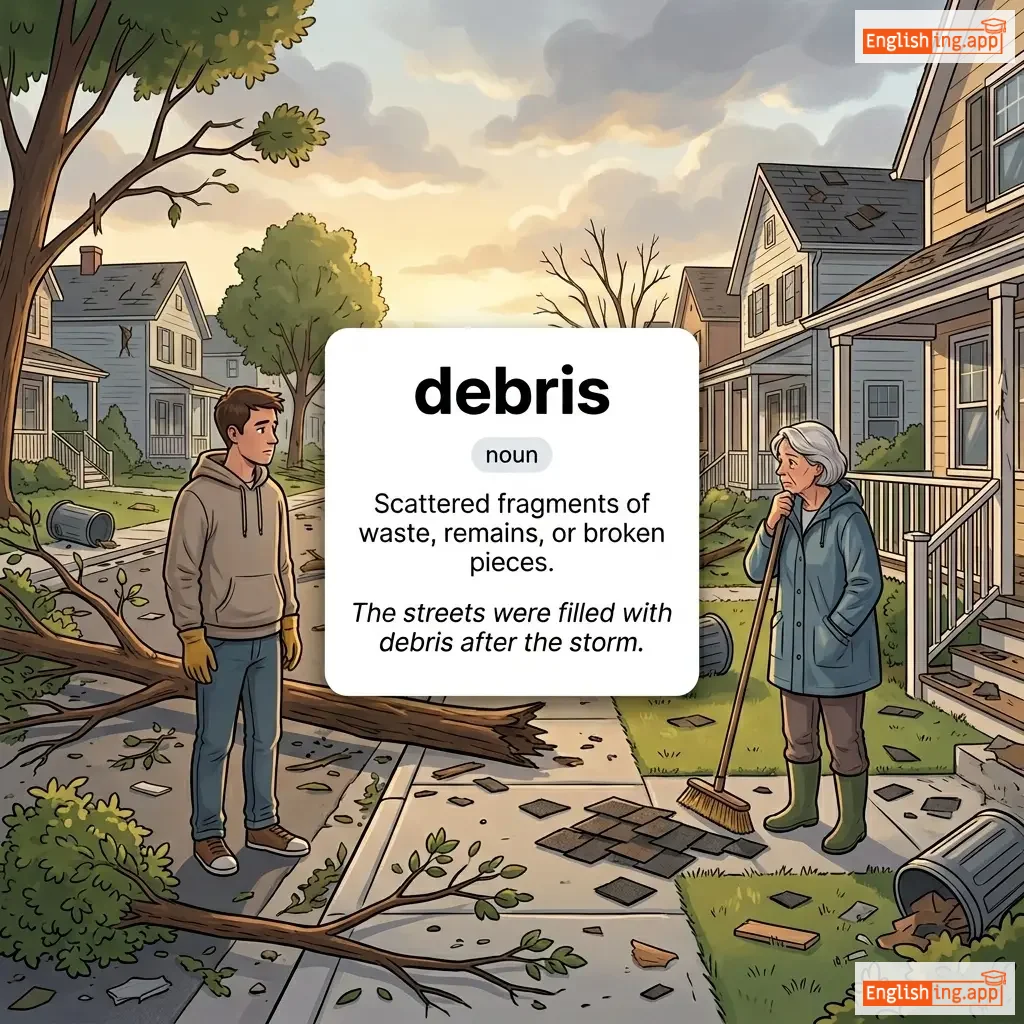
Scattered fragments of waste, remains, or broken pieces.
••••••
|
The streets were filled with debris after the storm.
嵐の後、通りはデブリで埋め尽くされていました。
••••••
|
嵐の後、通りは瓦礫で埋め尽くされていました。
Arashi no ato, toori wa goreki de umetsukusarete imashita.
••••••
|
clearing the debris
デブリの清掃
••••••
|
Removing the remains or waste after destruction.
••••••
|
瓦礫の清掃
Goreki no seisou
••••••
|
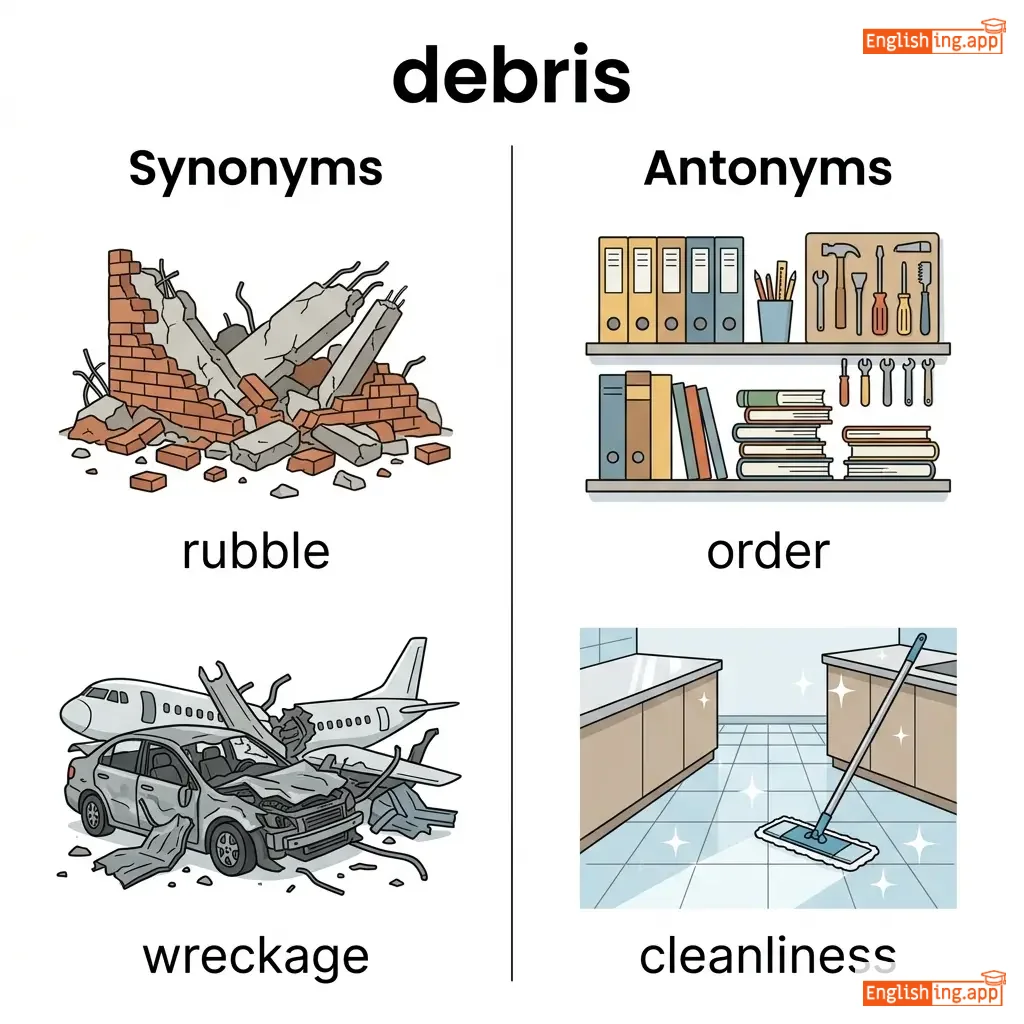
rubble, wreckage, remains, fragments, litter
••••••
|
order, cleanliness, neatness
••••••
|
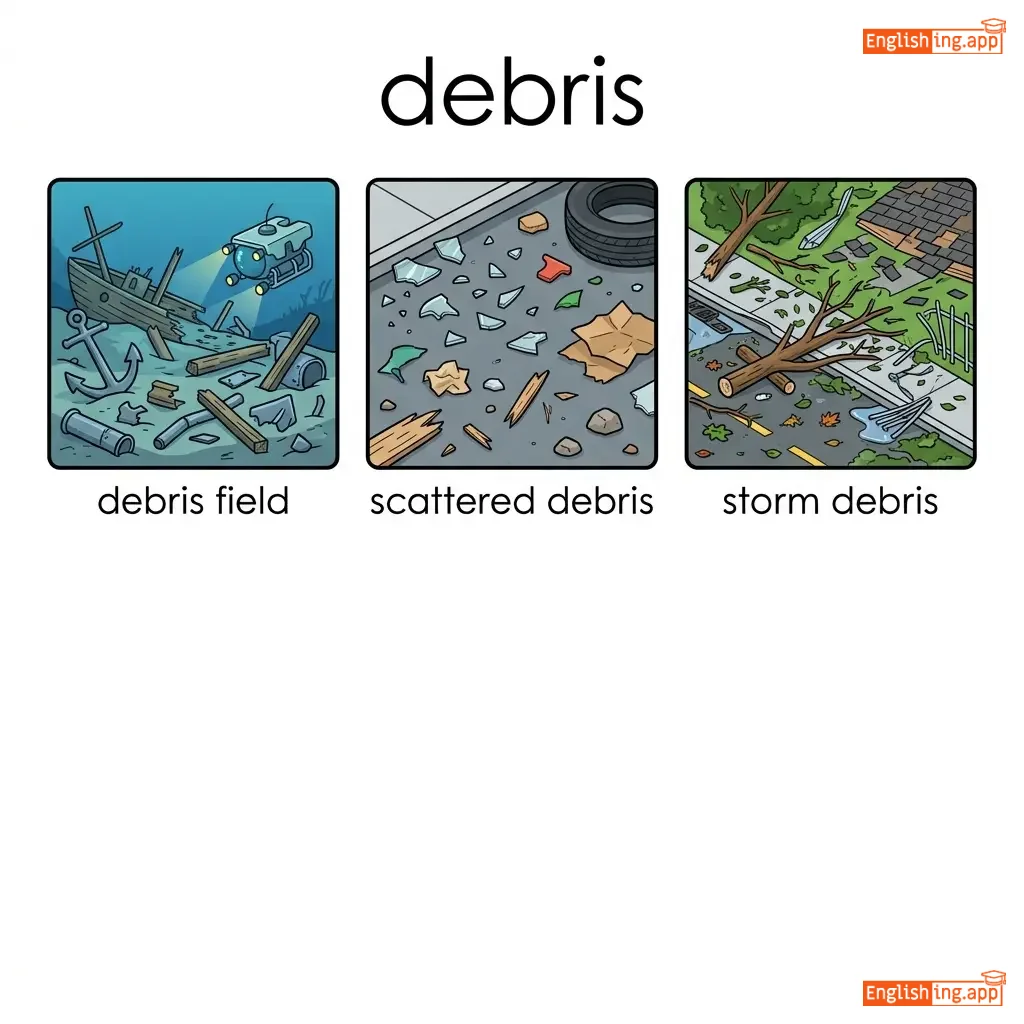
debris field, scattered debris, storm debris, clear debris
••••••
|
嵐の後、デブリ(瓦礫)が通りに散乱していた。
••••••
|
|
📅
••••••
|
/ˈdɛkeɪd/
noun
(デケイド)
••••••
|
- •••••• |
十年
jūnen
••••••
|
- •••••• | - •••••• | - •••••• | - •••••• |
A period of ten years.
••••••
|
The country has changed a lot in the past decade.
ðə ˈkʌntri hæz ʧeɪndʒd ə lɒt ɪn ðə pæst dɪˈkeɪd
••••••
|
その国は過去10年間で大きく変わりました。
Sono kuni wa kako 10-nenkan de ōkiku kawarimashita.
••••••
|
- •••••• | - •••••• | - •••••• |
ten years, period, era, span
••••••
|
moment, instant
••••••
|
past decade, next decade, over a decade, within a decade
••••••
|
十年(jūnen) はdecadeの意味、10年の区切りを覚えるにはこの言葉を使おう。
••••••
|
|
🙂
••••••
|
/ˈdiːsənt/
adjective
(ディセント)
••••••
|
- •••••• |
立派
rippa
••••••
|
- •••••• | - •••••• | - •••••• | - •••••• |
conforming to standards of propriety, good taste, or morality
••••••
|
He found a decent job after months of searching. |
彼は数ヶ月の探しの後、立派な仕事を見つけました。
Kare wa suukagetsu no sagashi no ato, rippa na shigoto o mitsukemashita.
••••••
|
make a decent living |
to earn enough money to live comfortably
••••••
|
立派な生活を送る
rippa na seikatsu o okuru
••••••
|
respectable, proper, suitable, fair, acceptable
••••••
|
indecent, improper, unacceptable
••••••
|
decent job, decent man, decent salary, decent standard
••••••
|
立派は、正しい道を歩むこと、正しい生活を送ることです。
••••••
|
|
❤️
••••••
|
/ˈdiːpli/
adverb
(dīpuri)
••••••
|
- •••••• |
深く
fukaku
••••••
|
- •••••• | - •••••• | - •••••• | - •••••• |
to a great depth, extent, or intensity
••••••
|
She was deeply moved by the speech. |
彼女はスピーチに深く感動しました。
Kanojo wa supīchi ni fukaku kandō shimashita.
••••••
|
deeply rooted |
firmly established or ingrained
••••••
|
深く根ざした
fukaku nezashita
••••••
|
profoundly, intensely, strongly, greatly
••••••
|
lightly, superficially
••••••
|
deeply moved, deeply concerned, deeply sorry, deeply involved
••••••
|
Deeply は深くを意味します — She loves deeply = 彼女は深く愛しています
••••••
|
|
🏆
••••••
|
/dɪˈfiːt/
verb
(デフィート)
••••••
|
- •••••• |
敗北
haiboku
••••••
|
defeated
デフィーテッド
••••••
|
defeated
デフィーテッド
••••••
|
defeats
デフィーツ
••••••
|
defeating
デフィーティング
••••••
|
to win a victory over someone or something in a competition or battle
••••••
|
Our team defeated their rivals in the final match.
私たちのチームは決勝戦で彼らのライバルを打ち負かしました。
••••••
|
私たちのチームは決勝戦で彼らのライバルを打ち負かしました。
Watashitachi no chīmu wa kesshōsen de karera no raibaru o uchi makashimashita.
••••••
|
snatch defeat from the jaws of victory
勝利の牙から敗北を奪う
••••••
|
to fail at the last moment when success seemed certain
••••••
|
勝利の牙から敗北を奪う
Shōri no kiba kara haiboku o ubau
••••••
|
conquer, overcome, beat, overpower, vanquish
••••••
|
surrender, lose, yield
••••••
|
defeat the enemy, defeat the purpose, heavy defeat, crushing defeat
••••••
|
Defeatは負けを意味します。チームが負けたら、それは敗北です。
••••••
|
|
📖
••••••
|
/dɪˈfaɪn/
verb
(ディファイン)
••••••
|
- •••••• |
定義する
teigi suru
••••••
|
defined
ディファインド
••••••
|
defined
ディファインド
••••••
|
defines
ディファインズ
••••••
|
defining
ディファイニング
••••••
|
to explain the meaning of a word, phrase, or concept clearly
••••••
|
The teacher asked the student to define the word 'democracy'.
先生は生徒に『民主主義』という言葉を定義するように頼んだ。
••••••
|
先生は生徒に『民主主義』という言葉を定義するように頼んだ。
Sensei wa seito ni 'minshushugi' to iu kotoba o teigi suru you ni tanonda.
••••••
|
define the terms
用語を定義する
••••••
|
to explain or set the exact meaning of words or conditions
••••••
|
用語を定義する
yōgo o teigi suru
••••••
|
explain, describe, clarify, interpret, specify
••••••
|
confuse, obscure
••••••
|
define clearly, define precisely, define role, define meaning
••••••
|
Defineは「定義する」という意味です — 日本語で単語の意味を説明するときに使います。
••••••
|
|
🎓
••••••
|
/dɪˈɡriː/
noun
(ディグリー)
••••••
|
- •••••• |
学位 / 程度
gakui / teido
••••••
|
- •••••• | - •••••• | - •••••• | - •••••• |
an amount or level of something; an academic qualification
••••••
|
She earned a degree in engineering. |
彼女は工学の学位を取得しました。
Kanojo wa kōgaku no gakui o shūtoku shimashita.
••••••
|
to some degree |
partly, to a certain extent
••••••
|
ある程度
aru teido
••••••
|
level, extent, rank, diploma, qualification
••••••
|
whole, total
••••••
|
high degree, to a degree, academic degree, temperature degree
••••••
|
学位は学位を意味します—温度の学位と学問の学位のように。
••••••
|
|
🎣
••••••
|
/ˈfɪʃɪŋ/
noun/verb
(フィッシング)
••••••
|
- •••••• |
釣り
tsuri
••••••
|
- •••••• | - •••••• | - •••••• |
fishing
フィッシング
••••••
|
the activity of catching fish
••••••
|
Fishing is a popular activity in coastal villages.
フィッシングは沿岸の村で人気のある活動です。
••••••
|
フィッシングは沿岸の村で人気のある活動です。
Fisshingu wa engan no mura de ninki no aru katsudou desu.
••••••
|
fishing for compliments
お世辞を言う
••••••
|
trying to get praise or approval indirectly
••••••
|
お世辞を言う
oseji wo iu
••••••
|
angling, catching fish, netting, trawling
••••••
|
ignoring fish, land activity
••••••
|
go fishing, fishing trip, fishing boat, fishing industry
••••••
|
釣り = 魚を釣ること、🎣 海の近くの活動です。
••••••
|
|
🗣️
••••••
|
/ˈfræŋkli/
adverb
(furankuri)
••••••
|
- •••••• |
率直に
sokushiki ni
••••••
|
- •••••• | - •••••• | - •••••• | - •••••• |
in an honest and direct way
••••••
|
Frankly, I don’t think this plan will work. |
率直に言って、この計画はうまくいかないと思います。
Sokushiki ni itte, kono keikaku wa umaku ikanai to omoimasu.
••••••
|
to be frank |
to speak honestly
••••••
|
率直に言う
sokushiki ni iu
••••••
|
honestly, openly, directly, sincerely
••••••
|
dishonestly, secretly
••••••
|
frankly speaking, quite frankly, to speak frankly
••••••
|
率直に言うことは、まるで親友に本音を話すようなものです!
••••••
|
|
✔️
••••••
|
/fʊlˈfɪl/
verb
(フルフィル)
••••••
|
- •••••• |
実現する
jitsugen suru
••••••
|
fulfilled
フルフィルド
••••••
|
fulfilled
フルフィルド
••••••
|
fulfills
フルフィルス
••••••
|
fulfilling
フルフィリング
••••••
|
to complete or accomplish something, especially a task or promise
••••••
|
He worked hard to fulfill his dreams.
彼は夢を実現するために一生懸命働きました。
••••••
|
彼は夢を実現するために一生懸命働きました。
Kare wa yume o jitsugen suru tame ni isshōkenmei hatarakimashita.
••••••
|
- •••••• | - •••••• | - •••••• |
achieve, complete, satisfy, accomplish, meet
••••••
|
fail, neglect, abandon
••••••
|
fulfill a promise, fulfill a goal, fulfill a duty
••••••
|
Fulfill your dreams - 'Full' of 'fill'ing needs and desires.
••••••
|
|
⚰️
••••••
|
/ˈfjuːnərəl/
noun
(fyūnɛrəl)
••••••
|
- •••••• |
葬式
sōshiki
••••••
|
- •••••• | - •••••• | - •••••• | - •••••• |
a ceremony held to honor and bury or cremate someone who has died
••••••
|
The family attended the funeral of their grandfather. |
家族は祖父の葬式に出席しました。
Kazoku wa sofu no sōshiki ni shusseki shimashita.
••••••
|
funeral service |
the ceremony connected with a funeral
••••••
|
葬式のサービス
sōshiki no sābisu
••••••
|
memorial, burial, cremation, obsequies
••••••
|
celebration, festival
••••••
|
funeral ceremony, funeral service, attend a funeral, funeral procession
••••••
|
葬式は最後の儀式、それが命の終わりを意味します。
••••••
|
|
😡
••••••
|
/ˈfjʊəriəs/
adjective
(フューリアス)
••••••
|
- •••••• |
怒っている
okotte iru
••••••
|
- •••••• | - •••••• | - •••••• | - •••••• |
Extremely angry.
••••••
|
She was furious when she heard the bad news. |
彼女は悪いニュースを聞いて怒っていた。
Kanojo wa warui nyūsu o kiite okotte ita.
••••••
|
furious debate |
a heated or intense argument
••••••
|
怒った討論
okotta tōron
••••••
|
angry, enraged, irate, mad, incensed
••••••
|
calm, peaceful, relaxed
••••••
|
furious with someone, furious about, furious debate, furious pace
••••••
|
Furiousは怒っている意味 - 怒ると火が燃え上がる。
••••••
|
|
🌍
••••••
|
/ˈdʒɛnərəl/
adjective
(ジェネラル)
••••••
|
- •••••• |
一般的
ippan-teki
••••••
|
- •••••• | - •••••• | - •••••• | - •••••• |
Relating to all or most people, things, or situations; not specific.
••••••
|
He made a general comment about the project. |
彼はプロジェクトに関する一般的なコメントをしました。
Kare wa purojekuto ni kansuru ippan-teki na komento o shimashita.
••••••
|
in general |
usually or mostly
••••••
|
一般的に
ippan-teki ni
••••••
|
common, overall, broad, universal, widespread
••••••
|
specific, particular
••••••
|
general idea, general knowledge, general opinion, general rule
••••••
|
一般的は一般的、'一般的に'は通常または主にを意味します。
••••••
|
|
📦
••••••
|
/dʒəˈnɛrɪk/
adjective
(ジェネリック)
••••••
|
- •••••• |
ジェネリック
jenerikku
••••••
|
- •••••• | - •••••• | - •••••• | - •••••• |
characteristic of or relating to a whole group or class; not specific
••••••
|
This medicine is available in generic form. |
この薬はジェネリックの形態で提供されています。
Kono kusuri wa jenerikku no keitai de teikyō sareteimasu.
••••••
|
generic term |
a word used for a general category rather than something specific
••••••
|
ジェネリック用語
jenerikku yōgo
••••••
|
general, common, universal, non-specific
••••••
|
specific, unique, special
••••••
|
generic brand, generic product, generic form, generic term
••••••
|
ジェネリックはブランドなし、でも効く薬です。
••••••
|

