The Actress Who Found Her Voice
ミタは amateur actress で、大スクリーンに出ることを夢見ていた。彼女の ability は自然なものでしたが、業界では adverse な状況に直面していました。ある adviser が彼女に言いました:「あなたは適切なトレーニングを acquire する必要があります。」 ミタは将来に anxious でしたが、諦めませんでした。ある日、監督が yellow のポスターの前で彼女に addressed しました。Alleged 報道によると、another スキャンダルが彼女に関係しているかもしれないとのことでした。しかしミタはすべての否定的な意見に against 強く立ち向かいました。彼女は alcohol に触れず、彼女の apparel はシンプルでありながら上品でした。多くの競争相手がいましたが、anybody も彼女の情熱には匹敵できませんでした。彼女の演技を analogy で表すなら、それはゆっくりと完成していく絵のようでした。ミタは already いくつかの小さな役を得ており、その演技は amusing で感動的でした。ファンたちはソーシャルメディアで彼女に applaud し始めました。ミタはもう anymore あの内気な少女ではないと気づきました。彼女の道のりは困難でしたが、彼女は acquired 自信と技術を身につけました。ついに大手の制作会社が彼女に主役を与えました。ミタは amateur からでも adverse な状況の中でプロになれることを証明しました。彼女の物語は多くの若い actresses に勇気を与えました。
|
絵文字
|
単語 | Images | 翻訳 | 過去 | 過去分詞 | 三人称単数 | 動名詞 | 意味 | 例文 | 例文の翻訳 | 表現例 | 表現例の意味 | 表現例の翻訳 | 同義語 | 対義語 | コロケーション | ニーモニック |
|---|---|---|---|---|---|---|---|---|---|---|---|---|---|---|---|---|---|
|
💡
••••••
|
/əˈbɪləti/
noun
(アビリティ)
••••••
|
- •••••• |
能力
nouryoku
••••••
|
- •••••• | - •••••• | - •••••• | - •••••• |
the power, skill, or capacity to do something
••••••
|
Her ability to solve problems quickly impressed everyone.
問題を迅速に解決する能力は、みんなを感心させました。
••••••
|
問題を迅速に解決する能力は、みんなを感心させました。
Mondai wo jinsoku ni kaiketsu suru nouryoku wa, minna wo kanshin sasemashita.
••••••
|
to the best of one's ability
最大限の能力で
••••••
|
to do something as well as one possibly can
••••••
|
最大限の能力で
saidaigen no nouryoku de
••••••
|
skill, talent, capacity, competence, capability
••••••
|
inability, incapacity, weakness
••••••
|
natural ability, mental ability, physical ability, ability to learn
••••••
|
Abilityは能力を意味します — 試験に合格するには、良い能力が必要です。
••••••
|
|
📦
••••••
|
/əˈkwaɪər/
verb
(アクワイア)
••••••
|
|
獲得する
kakutoku suru
••••••
|
acquired
アクワイアード
••••••
|
acquired
アクワイアード
••••••
|
acquires
アクワイアーズ
••••••
|
acquiring
アクワイアリング
••••••
|
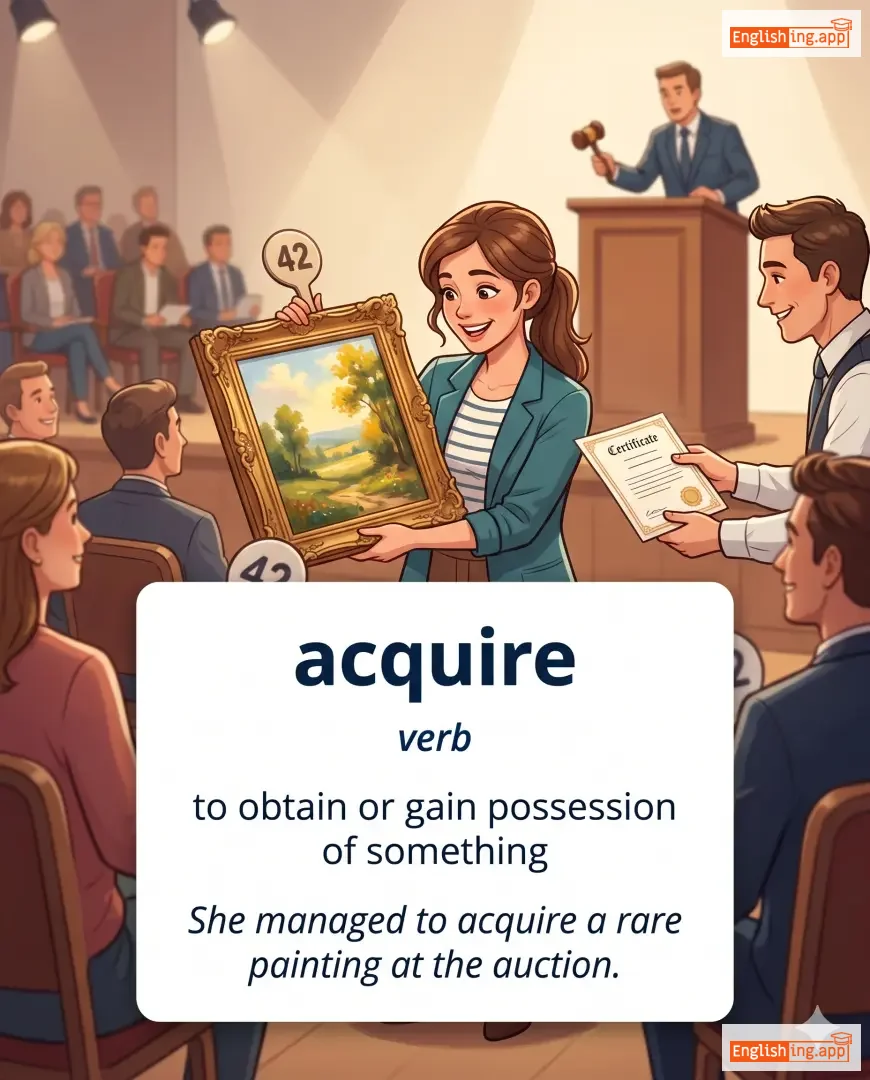
to obtain or gain possession of something
••••••
|
She managed to acquire a rare painting at the auction.
彼女はオークションで珍しい絵画を獲得することに成功しました。
••••••
|
彼女はオークションで珍しい絵画を獲得することに成功しました。
Kanojo wa ōkushon de mezurashī kaiga o kakutoku suru koto ni seikō shimashita.
••••••
|
acquire knowledge
知識を得る
••••••
|
to learn or gain understanding
••••••
|
知識を得る
chishiki o eru
••••••
|
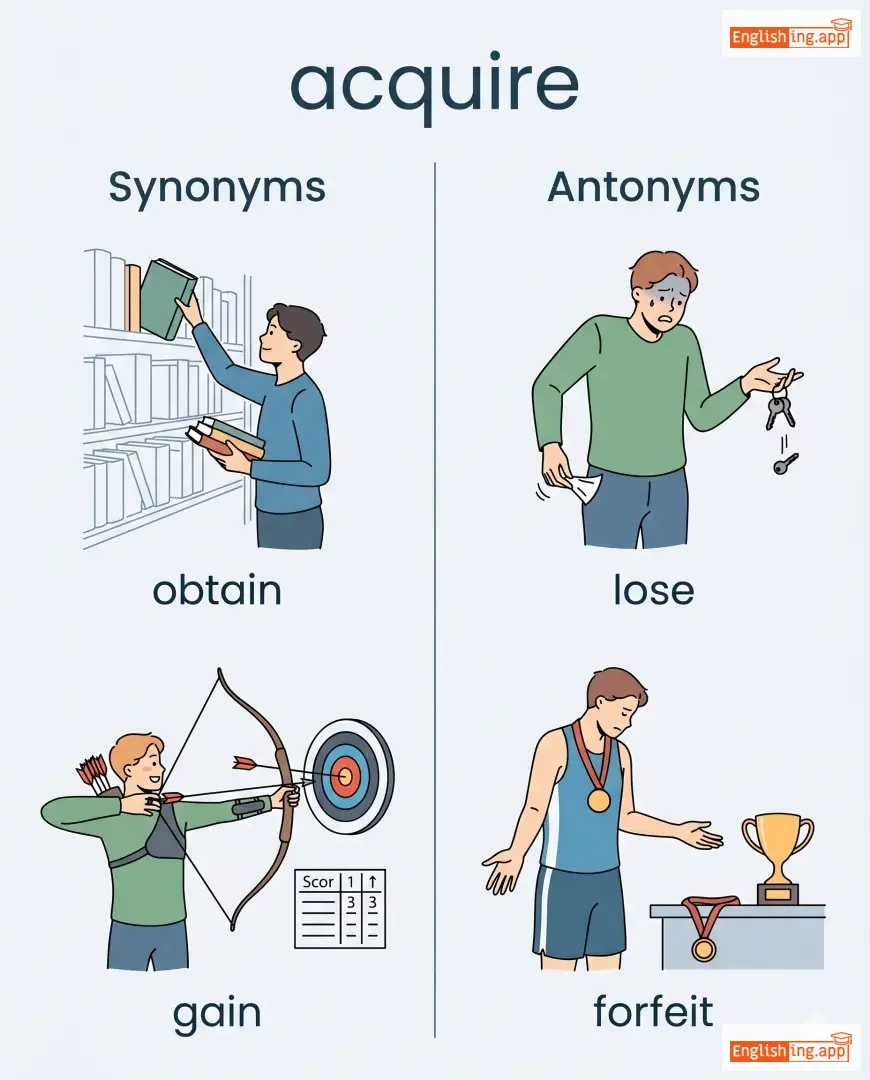
obtain, gain, receive, procure, secure
••••••
|
lose, forfeit, give up
••••••
|
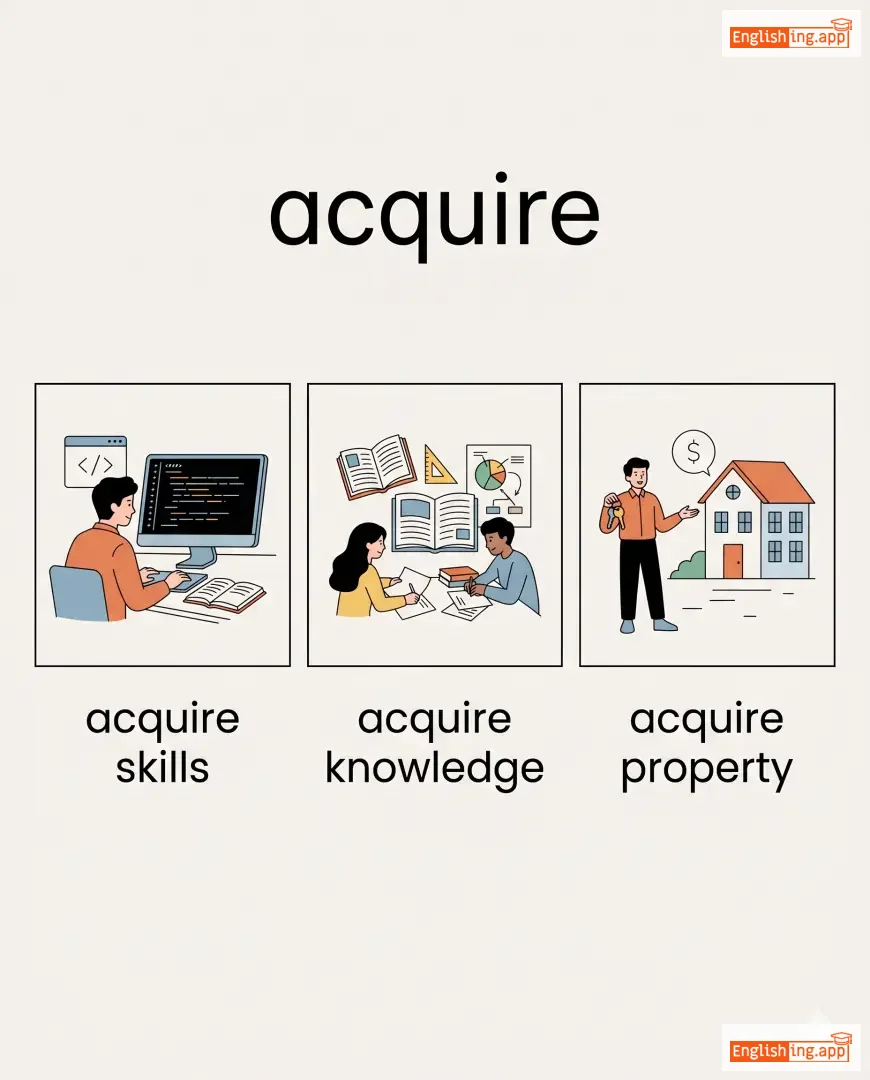
acquire skills, acquire knowledge, acquire property, acquire habit
••••••
|
獲得は何かを得ることです、オークションで絵画を獲得するように。
••••••
|
|
🌟
••••••
|
/ˈæktrəs/
noun
(ˈæktrəs)
••••••
|
- •••••• |
女優
joyū
••••••
|
- •••••• | - •••••• | - •••••• | - •••••• |
a female performer in plays, movies, or television
••••••
|
The actress looked stunning on the red carpet. |
その女優は赤い絨毯の上で素晴らしく見えました。
Sono joyū wa akai jūtantan no ue de subarashiku miemashita.
••••••
|
famous actress |
a well-known female performer
••••••
|
有名な女優
yūmei na joyū
••••••
|
performer, artist, star, entertainer
••••••
|
audience, spectator
••••••
|
film actress, stage actress, award-winning actress, leading actress
••••••
|
女優はactress。映画やテレビで有名な女優のように。
••••••
|
|
📢
••••••
|
/əˈdrɛs/
verb
(アドレス)
••••••
|
|
対処する、解決する
taisho suru, kaiketsu suru
••••••
|
addressed
アドレスド
••••••
|
addressed
アドレスド
••••••
|
addresses
アドレスィズ
••••••
|
addressing
アドレスィング
••••••
|
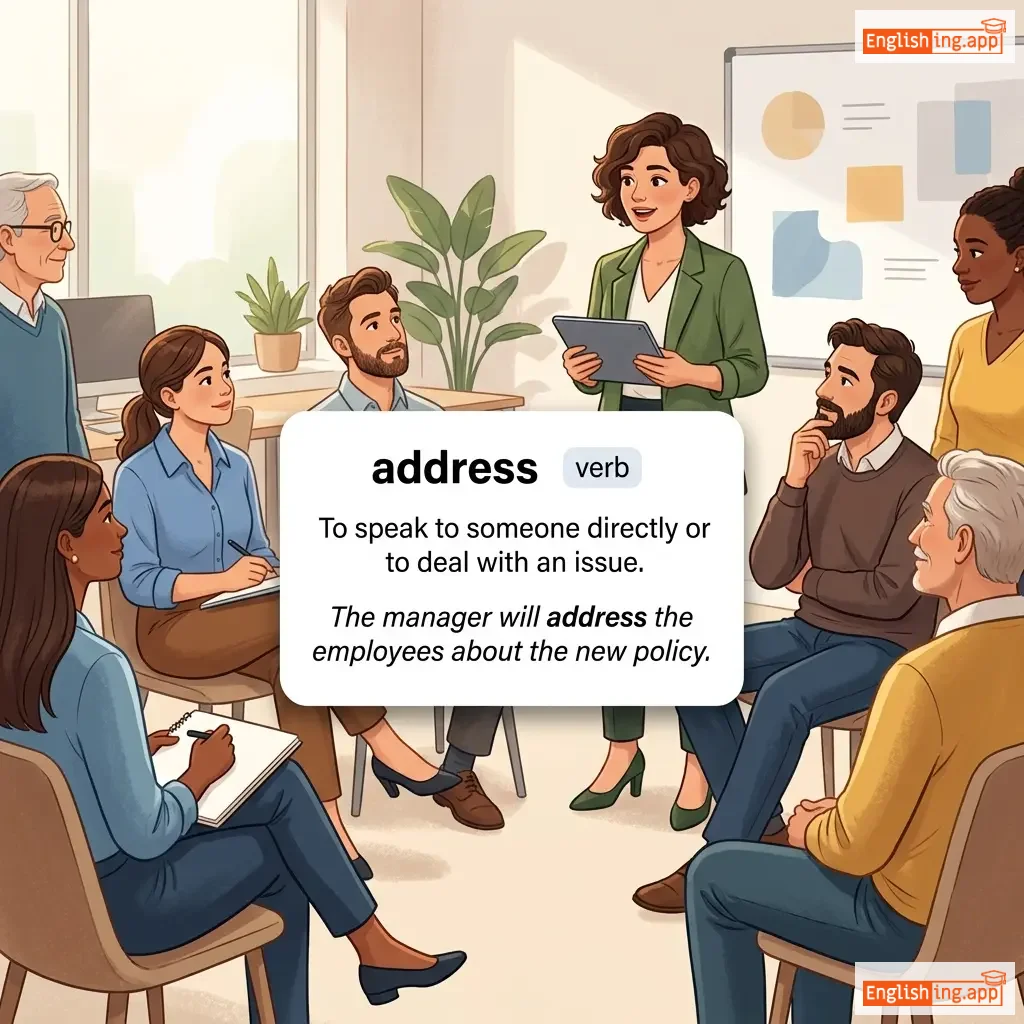
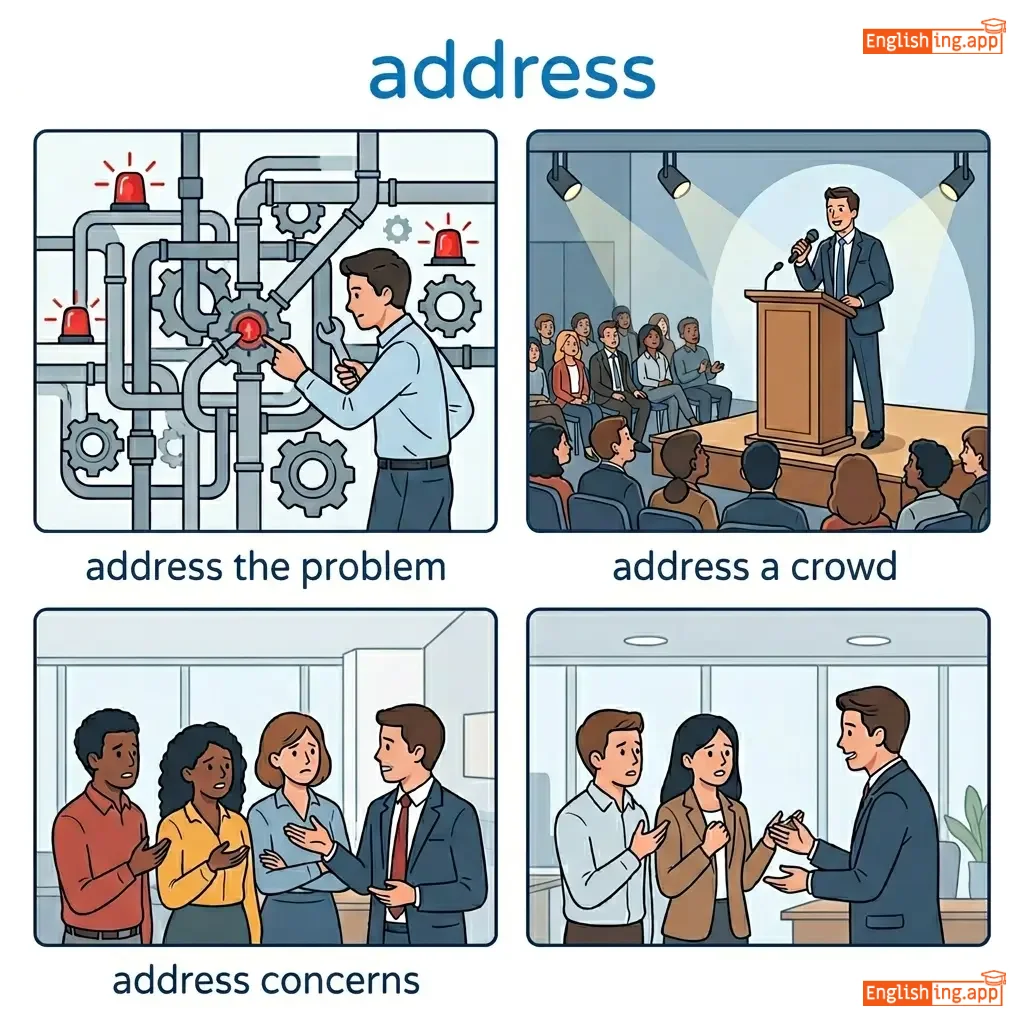
To speak to someone directly or to deal with an issue.
••••••
|
The manager will address the employees about the new policy.
マネージャーは新しい方針について従業員にアドレスします。
••••••
|
マネージャーは新しい方針について従業員にアドレスします。
Manejā wa atarashī hōshin ni tsuite jūgyōin ni adoresu shimasu.
••••••
|
address the issue
問題に対処する
••••••
|
to deal with or solve a problem
••••••
|
問題に対処する
mondai ni taisho suru
••••••
|
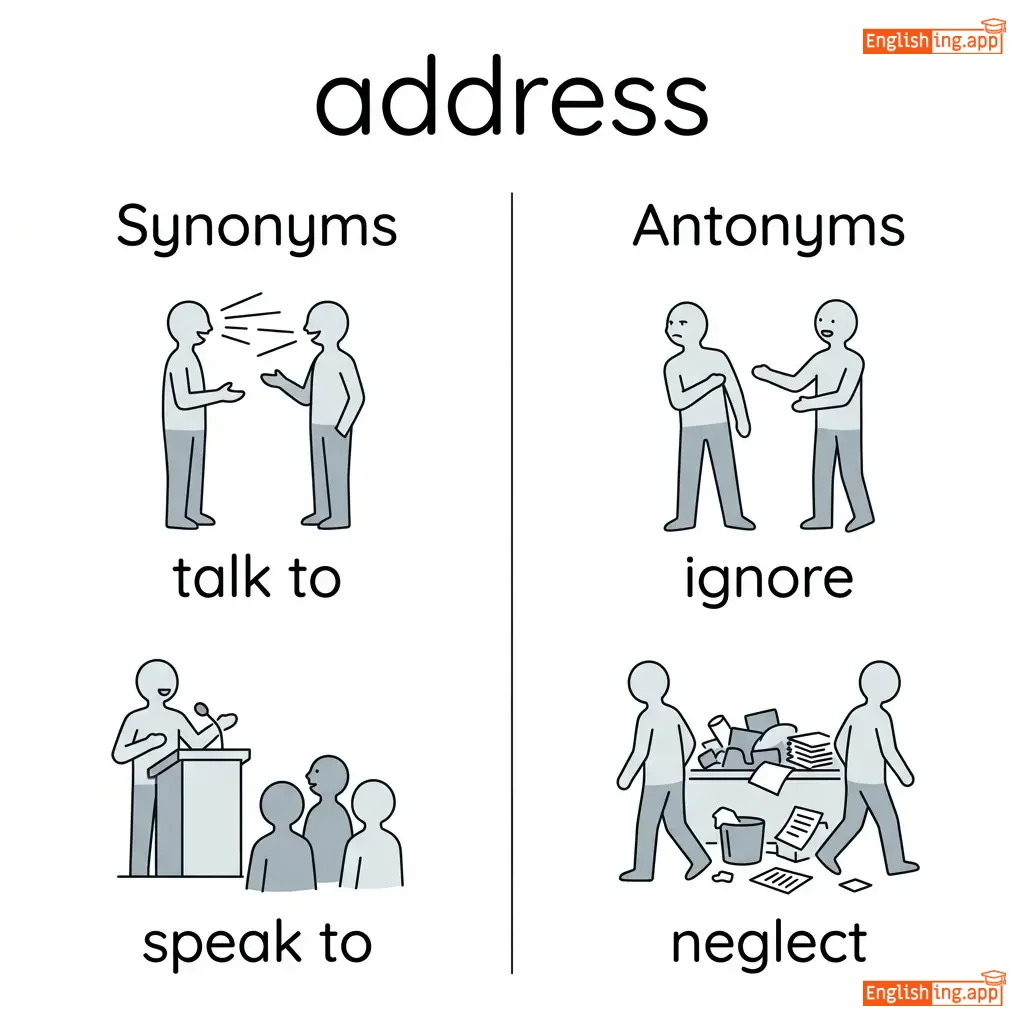
talk to, speak to, deal with, handle
••••••
|
ignore, neglect, avoid
••••••
|
address the problem, address a crowd, address concerns, address formally
••••••
|
Addressはただの場所ではなく、問題に対処することでもある。
••••••
|
|
🌩️
••••••
|
/ˈæd.vɜːs/
adjective
••••••
|
- •••••• | - •••••• | - •••••• | - •••••• | - •••••• | - •••••• |
Preventing success or development; harmful or unfavorable.
••••••
|
The project was delayed due to adverse weather conditions. |
- •••••• |
adverse effect |
a harmful or negative impact
••••••
|
- •••••• |
unfavorable, harmful, negative, detrimental, hostile
••••••
|
favorable, beneficial, positive
••••••
|
adverse conditions, adverse effect, adverse impact, adverse reaction
••••••
|
No •••••• |
|
👨🏫
••••••
|
/ədˈvaɪzər/
noun
(アドバイザー)
••••••
|
- •••••• |
アドバイザー
adobaizā
••••••
|
- •••••• | - •••••• | - •••••• | - •••••• |
a person who gives advice, especially in a professional or official role
••••••
|
He works as a financial adviser at a bank. |
彼は銀行で金融アドバイザーとして働いています。
Kare wa ginkō de kin'yū adobaizā toshite hataraiteimasu.
••••••
|
- •••••• | - •••••• | - •••••• |
counselor, consultant, mentor, guide
••••••
|
opponent, detractor
••••••
|
financial adviser, legal adviser, personal adviser, senior adviser
••••••
|
AdviserはAdvisorと似ている — アドバイスを与える人(adobaizā)。
••••••
|
|
🚫
••••••
|
/əˈɡɛnst/ or /əˈɡeɪnst/
preposition
••••••
|
- •••••• | - •••••• | - •••••• | - •••••• | - •••••• | - •••••• |
In opposition to; contrary to; touching or resting on.
••••••
|
They voted against the proposal. |
- •••••• |
stand against |
To oppose or resist something.
••••••
|
- •••••• |
opposed to, contrary to, versus, counter to
••••••
|
for, in favor of
••••••
|
against the law, against the wall, fight against, argue against
••••••
|
No •••••• |
|
🍷
••••••
|
/ˈælkəhɒl/
noun
••••••
|
- •••••• | - •••••• | - •••••• | - •••••• | - •••••• | - •••••• |
A colorless volatile liquid that is the intoxicating constituent of wine, beer, spirits, and other drinks.
••••••
|
Too much alcohol can damage your liver. |
- •••••• |
alcohol abuse |
The excessive consumption of alcoholic drinks causing harm.
••••••
|
- •••••• |
liquor, spirit, ethanol, booze, drink
••••••
|
sobriety, abstinence
••••••
|
alcohol consumption, alcohol level, alcohol abuse, alcohol addiction
••••••
|
No •••••• |
|
⚖️
••••••
|
/əˈlɛdʒd/
adjective
(アレッジド)
••••••
|
- •••••• |
疑われた
utagawareta
••••••
|
- •••••• | - •••••• | - •••••• | - •••••• |
said or thought to be true, but not proven
••••••
|
The alleged thief was caught by the police. |
疑われた泥棒は警察に捕まった。
Utagawareta dorobō wa keisatsu ni tsukamatta.
••••••
|
- •••••• | - •••••• | - •••••• |
supposed, claimed, reported, asserted, purported
••••••
|
proven, confirmed, verified
••••••
|
alleged crime, alleged victim, alleged incident, alleged involvement
••••••
|
疑われた = 証明されていない‘疑わしい’ということ。
••••••
|
|
✅
••••••
|
/ɔːlˈredi/
adverb
(オールレディ)
••••••
|
- •••••• |
すでに; もう; 前に
sudeni; mou; mae ni
••••••
|
- •••••• | - •••••• | - •••••• | - •••••• |
before now; by this time; previously
••••••
|
I have already finished my homework for today. |
私は今日の宿題をすでに終わらせました。
Watashi wa kyou no shukudai o sudeni owarasemashita.
••••••
|
- •••••• | - •••••• | - •••••• |
previously, before, by now, earlier
••••••
|
not yet, later, still, eventually
••••••
|
already done, already finished, already here, already know
••••••
|
日本語で'すでに'を使って、すでに何かを終わらせたことを表します。
••••••
|
|
🎨
••••••
|
/ˈæmətər/
noun
(アマチュア)
••••••
|
- •••••• |
アマチュア
amachua
••••••
|
- •••••• | - •••••• | - •••••• | - •••••• |
A person who engages in a pursuit, especially a sport or art, on an unpaid basis.
••••••
|
The painting looked impressive, even though it was done by an amateur.
その絵画は印象的に見えましたが、アマチュアによって描かれました。
••••••
|
その絵画は印象的に見えましたが、アマチュアによって描かれました。
Sono kaiga wa inshō-teki ni miemashita ga, amachua ni yotte kakaremashita.
••••••
|
amateur hour
アマチュアの時間
••••••
|
A display of ineptitude or lack of professionalism.
••••••
|
アマチュアの時間
amachua no jikan
••••••
|
novice, beginner, nonprofessional, layman, hobbyist
••••••
|
professional, expert, specialist
••••••
|
amateur photographer, amateur player, amateur performance, amateur competition
••••••
|
Amateur という意味はアマチュア - つまり、彼は楽しみのためにやっているだけで、プロフェッショナルではありません。
••••••
|
|
😄
••••••
|
/əˈmjuː.zɪŋ/
adjective
(アミューズィング)
••••••
|
- •••••• |
面白い; おかしい; 楽しい
omoshiroi; okashii; tanoshii
••••••
|
- •••••• | - •••••• | - •••••• | - •••••• |
causing laughter or providing entertainment; funny; enjoyable
••••••
|
The children found the clown's performance very amusing.
子供たちはピエロのパフォーマンスがとても面白いと感じました。
••••••
|
子供たちはピエロのパフォーマンスがとても面白いと感じました。
Kodomotachi wa piero no pafōmansu ga totemo omoshiroi to kanjimashita.
••••••
|
- •••••• | - •••••• | - •••••• |
entertaining, funny, humorous, delightful
••••••
|
boring, dull, serious, tedious
••••••
|
amusing story, amusing anecdote, amusing incident, amusing character
••••••
|
いつも笑わせるピエロを思い出してみてください。
••••••
|
|
📖
••••••
|
/əˈnælədʒi/
noun
(アナロジー)
••••••
|
- •••••• |
類推
ruisui
••••••
|
- •••••• | - •••••• | - •••••• | - •••••• |
A comparison between two things for the purpose of explanation or clarification.
••••••
|
The teacher used the analogy of a tree to explain the structure of an essay. |
先生はエッセイの構造を説明するために木の類推を使いました。
Sensei wa essei no kōzō o setsumei suru tame ni ki no ruisui o tsukaimashita.
••••••
|
- •••••• | - •••••• | - •••••• |
comparison, parallel, resemblance, similarity
••••••
|
difference, contrast
••••••
|
draw an analogy, use an analogy, apt analogy
••••••
|
アナロジーは比較、英語の類推を使って説明する日本語の言葉です。
••••••
|
|
➕
••••••
|
/əˈnʌðər/
determiner/pronoun
(アナザー)
••••••
|
- •••••• |
もう一つ
mou hitotsu
••••••
|
- •••••• | - •••••• | - •••••• | - •••••• |
one more person or thing of the same type
••••••
|
Can I have another cup of tea? |
もう一杯の紅茶をいただけますか?
Mou ippai no koucha o itadakemasu ka?
••••••
|
another day |
a different or additional day
••••••
|
もう一日
mou ichinichi
••••••
|
one more, additional, extra, different
••••••
|
same, identical
••••••
|
another chance, another reason, another person, another story
••••••
|
Anotherは「もう一つ」を意味する—もう一杯の紅茶が欲しい!
••••••
|
|
😟
••••••
|
/ˈæŋkʃəs/
adjective
(æŋkʃəs)
••••••
|
- •••••• |
不安な
fuan na
••••••
|
- •••••• | - •••••• | - •••••• | - •••••• |
feeling worried, nervous, or uneasy about something
••••••
|
She felt anxious before her job interview. |
彼女は面接前に不安を感じていた。
Kanojo wa mensetsu mae ni fuan o kanjite ita.
••••••
|
anxious about |
to feel worried or uneasy regarding something
••••••
|
〜について不安な
〜ni tsuite fuan na
••••••
|
worried, nervous, uneasy, restless, apprehensive
••••••
|
calm, relaxed, confident
••••••
|
feel anxious, anxious about, anxious to, anxious for
••••••
|
不安なは面接前に皆が感じるものです。
••••••
|
|
👤
••••••
|
/ˈɛniˌbɒdi/
pronoun
(エニボディ)
••••••
|
- •••••• |
誰でも
dare demo
••••••
|
- •••••• | - •••••• | - •••••• | - •••••• |
any person; anyone
••••••
|
Anybody can join the club. |
誰でもクラブに参加できます。
Dare demo kurabu ni sanka dekimasu.
••••••
|
- •••••• | - •••••• | - •••••• |
anyone, somebody, whoever, everyone
••••••
|
nobody, no one
••••••
|
ask anybody, tell anybody, anybody else, anybody interested
••••••
|
ANYBODY は誰でも、例えば Anybody can run in the park.
••••••
|
|
⏳
••••••
|
/ˌɛniˈmɔr/
adverb
(エニモア)
••••••
|
- •••••• |
もう〜ない
mou nai
••••••
|
- •••••• | - •••••• | - •••••• | - •••••• |
used to refer to the present time, typically to mean no longer
••••••
|
He doesn’t live here anymore. |
彼はもうここに住んでいません。
Kare wa mou koko ni sundeimasen.
••••••
|
- •••••• | - •••••• | - •••••• |
no longer, not now, no more
••••••
|
still, yet
••••••
|
not anymore, hardly anymore, anymore questions
••••••
|
もう〜ないはANYMOREを意味します、私がもうここに住んでいないように。
••••••
|
|
👗
••••••
|
/əˈpærəl/
noun
(アパレル)
••••••
|
- •••••• |
衣服
ifuku
••••••
|
- •••••• | - •••••• | - •••••• | - •••••• |
Clothing, especially formal or special clothes.
••••••
|
The store specializes in wedding apparel.
その店は結婚式の衣服を専門に扱っています。
••••••
|
その店は結婚式の衣服を専門に扱っています。
Sono mise wa kekkonshiki no ifuku o senmon ni atsukatteimasu.
••••••
|
- •••••• | - •••••• | - •••••• |
clothing, garments, attire, outfit, wardrobe
••••••
|
nakedness, undress
••••••
|
formal apparel, wedding apparel, sports apparel, fashion apparel
••••••
|
Apparelは'衣服'を意味し、結婚式などの特別なイベントのためのものです。
••••••
|
|
👏
••••••
|
/əˈplɔːd/
verb
(アプラウド)
••••••
|
- •••••• |
拍手する
hakushu suru
••••••
|
applauded
アプラウデッド
••••••
|
applauded
アプラウデッド
••••••
|
applauds
アプラウズ
••••••
|
applauding
アプラウディング
••••••
|
to show approval by clapping or expressing admiration
••••••
|
The audience applauded the performance.
観客はパフォーマンスに拍手を送りました。
••••••
|
観客はパフォーマンスに拍手を送りました。
Kankyaku wa pafōmansu ni hakushu o okurimashita.
••••••
|
- •••••• | - •••••• | - •••••• |
cheer, praise, commend, hail
••••••
|
criticize, condemn
••••••
|
applaud enthusiastically, applaud someone for something
••••••
|
Applaud sounds like 'Appl' – だから、あなたが何かを気に入ったときに拍手します!
••••••
|
|
🟡
••••••
|
/ˈjeloʊ/
adjective
(yero)
••••••
|
- •••••• |
黄色い; 臆病な
kiiroi; okubyōna
••••••
|
- •••••• | - •••••• | - •••••• | - •••••• |
having the color of the sun or gold; cowardly
••••••
|
The yellow flowers bloomed in spring.
黄色い花が春に咲きました。
••••••
|
黄色い花が春に咲きました。
Kiiroi hana ga haru ni sakimashita.
••••••
|
- •••••• | - •••••• | - •••••• |
golden, amber, lemon, canary
••••••
|
blue, purple, green, red
••••••
|
yellow light, yellow pages, yellow card
••••••
|
黄色は太陽の色で、臆病な人を表すこともあります (臆病な).
••••••
|

