Colorful Clinic After the Storm
バーリシャール村のサイクロンで被災した場所に、モバイルclinicalキャンプが設置されました。disasterの後、屋根はまだ湿っており、collapseによって弱くなっていました。それでもボランティアたちはその地域をcolorfulな旗で飾りつけました。午前8時に活動がcommencedするとすぐに人々が集まりました。列に並んでいる誰もcomplainしませんでした。忍耐が支配していました。最初の登録ユニットはその仕事をcompleteしました。車内には小さなcomputerステーションがデータを収集していました。医師たちは各症例の報告を日暮れ時にconcludeすると約束しました。深刻な状況では、患者の恐れにconfrontしなければならないこともありました。地元の委員会は、川岸をconserveする必要があると言いました。彼らはconsiderして、緑の堤防を提案する予定です。食料の列では、農村のconsumerが健康的なメニューを選びました。ラジオチームは、1日の出来事をライブでcoverageしました。子供たちは嵐の思い出を生き生きとしたcreationに変えました。アーティストのソニアは、各絵画の横にdetailedなメモを追加しました。救急車チームは、妊婦さんたちに緊急deliveryキットを届けました。国連のdiplomatは、状況を確認するために到着しました。彼は、事前のdocumentに基づいて支援が迅速に増加すると言いました。ボランティアたちはdonation箱を開け、全員と情報を共有しました。夜が訪れると、彼らは次の日の計画を立てるために一緒に座りました。
|
絵文字
|
単語 | Images | 翻訳 | 過去 | 過去分詞 | 三人称単数 | 動名詞 | 意味 | 例文 | 例文の翻訳 | 表現例 | 表現例の意味 | 表現例の翻訳 | 同義語 | 対義語 | コロケーション | ニーモニック |
|---|---|---|---|---|---|---|---|---|---|---|---|---|---|---|---|---|---|
|
🩺
••••••
|
/ˈklɪn.ɪ.kəl/
adjective
(クリニカル)
••••••
|
- •••••• |
臨床的
rinshōteki
••••••
|
- •••••• | - •••••• | - •••••• | - •••••• |
Related to the observation and treatment of patients rather than theoretical study.
••••••
|
The doctor conducted a clinical examination. |
医師は臨床検査を行った。
Ishi wa rinshō kensa o okonatta.
••••••
|
clinical trial |
A research study to test new medical treatments on patients.
••••••
|
臨床試験
rinshō shiken
••••••
|
medical, diagnostic, therapeutic, scientific
••••••
|
theoretical, emotional
••••••
|
clinical examination, clinical trial, clinical diagnosis, clinical practice
••••••
|
臨床は病院で行われる診療に関連、臨床試験で新治療法を試す。
••••••
|
|
🏚️
••••••
|
/kəˈlæps/
verb
(コラプス)
••••••
|
- •••••• |
崩壊する
hōkai suru
••••••
|
collapsed
コラプスド
••••••
|
collapsed
コラプスド
••••••
|
collapses
コラプセス
••••••
|
collapsing
コラプシング
••••••
|
to fall down or inward suddenly; to break down completely
••••••
|
The old building collapsed after the earthquake.
古い建物は地震後に崩壊しました。
••••••
|
古い建物は地震後に崩壊しました。
Furui tatemono wa jishin-go ni hōkai shimashita.
••••••
|
collapse under pressure
プレッシャーで崩壊する
••••••
|
to fail or give way when faced with stress or difficulties
••••••
|
プレッシャーで崩壊する
Pureshā de hōkai suru
••••••
|
fall, crumble, cave in, break down, disintegrate
••••••
|
stand, rise, succeed
••••••
|
building collapse, collapse suddenly, collapse completely, collapse under pressure
••••••
|
崩壊するは壊れるように崩れること
••••••
|
|
🌈
••••••
|
/ˈkʌlərfəl/
adjective
(カラーフル)
••••••
|
- •••••• |
カラフル
karafuru
••••••
|
- •••••• | - •••••• | - •••••• | - •••••• |
having bright colors; full of variety or interest
••••••
|
The festival was full of colorful decorations.
その祭りはカラフルな装飾でいっぱいでした。
••••••
|
その祭りはカラフルな装飾でいっぱいでした。
Sono matsuri wa karafuru na sōshoku de ippai deshita.
••••••
|
colorful personality
カラフルな個性
••••••
|
a lively, interesting, and sometimes eccentric person
••••••
|
カラフルな個性
karafuru na kosei
••••••
|
vivid, bright, vibrant, lively, picturesque
••••••
|
colorless, dull, plain
••••••
|
colorful clothes, colorful festival, colorful language, colorful character
••••••
|
Colorful = カラー + フル — 色とりどりの花のような色彩豊かなもの。
••••••
|
|
🎬
••••••
|
/kəˈmɛns/
verb
(コメンス)
••••••
|
- •••••• |
開始する
kaishi suru
••••••
|
commenced
コメンスト
••••••
|
commenced
コメンスト
••••••
|
commences
コメンスズ
••••••
|
commencing
コメンシング
••••••
|
to begin or start something
••••••
|
The ceremony will commence at noon.
式は正午に開始されます。
••••••
|
式は正午に開始されます。
Shiki wa shougo ni kaishi saremasu.
••••••
|
commence operations
作業開始
••••••
|
to start working or functioning
••••••
|
作業開始
Sagyou kaishi
••••••
|
begin, start, initiate, launch, inaugurate
••••••
|
end, finish, conclude
••••••
|
commence work, commence proceedings, commence operations, commence at
••••••
|
Commenceは開始する、例えば「作業開始」つまり作業を開始することです。
••••••
|
|
😒
••••••
|
/kəmˈpleɪn/
verb
(コンプレイン)
••••••
|
- •••••• |
不平を言う
fuhei o iu
••••••
|
complained
コンプレインド
••••••
|
complained
コンプレインド
••••••
|
complains
コンプレインズ
••••••
|
complaining
コンプレイニング
••••••
|
to express dissatisfaction or annoyance about something
••••••
|
He often complains about the noise in the neighborhood.
彼は近所の騒音についてよく不平を言います。
••••••
|
彼は近所の騒音についてよく不平を言います。
Kare wa kinjo no sōon ni tsuite yoku fuhei o iimasu.
••••••
|
complain bitterly
ひどく不平を言う
••••••
|
to express strong dissatisfaction
••••••
|
ひどく不平を言う
hidoku fuhei o iu
••••••
|
grumble, protest, whine, criticize, object
••••••
|
praise, applaud, compliment
••••••
|
complain about, complain to, constantly complain, complain bitterly
••••••
|
不平を言うと、みんなが‘もう不平を言わないで!’と言う。
••••••
|
|
✅
••••••
|
/kəmˈpliːt/
verb
(コンプリート)
••••••
|
- •••••• |
完了する
kanryou suru
••••••
|
completed
コンプリーテッド
••••••
|
completed
コンプリーテッド
••••••
|
completes
コンプリーツ
••••••
|
completing
コンプリーティング
••••••
|
to finish making or doing something; to bring something to an end
••••••
|
She managed to complete the project on time.
彼女はプロジェクトを時間通りに完了させました。
••••••
|
彼女はプロジェクトを時間通りに完了させました。
Kanojo wa purojekuto wo jikan doori ni kanryou sasemashita.
••••••
|
complete the circle
サークルを完了する
••••••
|
to bring something to its conclusion or to make something whole
••••••
|
サークルを完了する
saakuru wo kanryou suru
••••••
|
finish, accomplish, achieve, conclude, finalize
••••••
|
incomplete, unfinished, halt
••••••
|
complete a task, complete a form, complete the project, complete successfully
••••••
|
完了するは、何かを終わらせる、サークルを完了するのように。
••••••
|
|
💻
••••••
|
/kəmˈpjuːtə(r)/
noun
(コンピュータ)
••••••
|
- •••••• |
コンピュータ
konpyu-ta
••••••
|
- •••••• | - •••••• | - •••••• | - •••••• |
an electronic device for storing and processing data
••••••
|
I bought a new computer for my office work.
私はオフィスワークのために新しいコンピュータを購入しました。
••••••
|
私はオフィスワークのために新しいコンピュータを購入しました。
Watashi wa ofisu waaku no tame ni atarashii konpyu-ta o kounyuu shimashita.
••••••
|
- •••••• | - •••••• | - •••••• |
PC, laptop, desktop, machine, device
••••••
|
manual work, paper-based system
••••••
|
personal computer, computer program, computer science, computer system
••••••
|
コンピュータは計算と作業を助けるツールです。
••••••
|
|
🔚
••••••
|
/kənˈkluːd/
verb
(kònkùrūdo)
••••••
|
|
結論を出す、決定を下す
ketsuron wo dasu, kettei wo kudasu
••••••
|
concluded
kònkùrūdodeta
••••••
|
concluded
kònkùrūdodeta
••••••
|
concludes
kònkùrūdosuru
••••••
|
concluding
kònkùrūdo suru
••••••
|
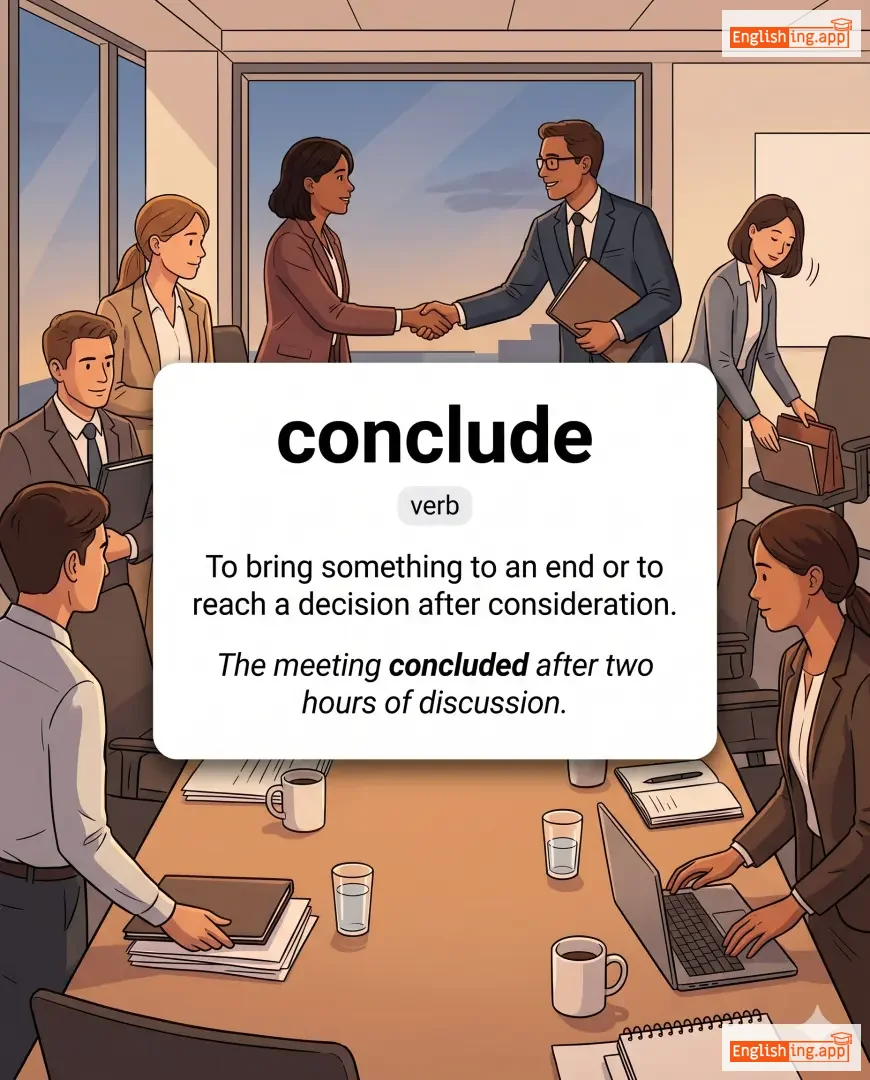
To bring something to an end or to reach a decision after consideration.
••••••
|
The meeting concluded after two hours of discussion.
会議は2時間の議論の後、終了しました。
••••••
|
会議は2時間の議論の後、終了しました。
Kaigi wa 2 jikan no giron no ato, shūryō shimashita.
••••••
|
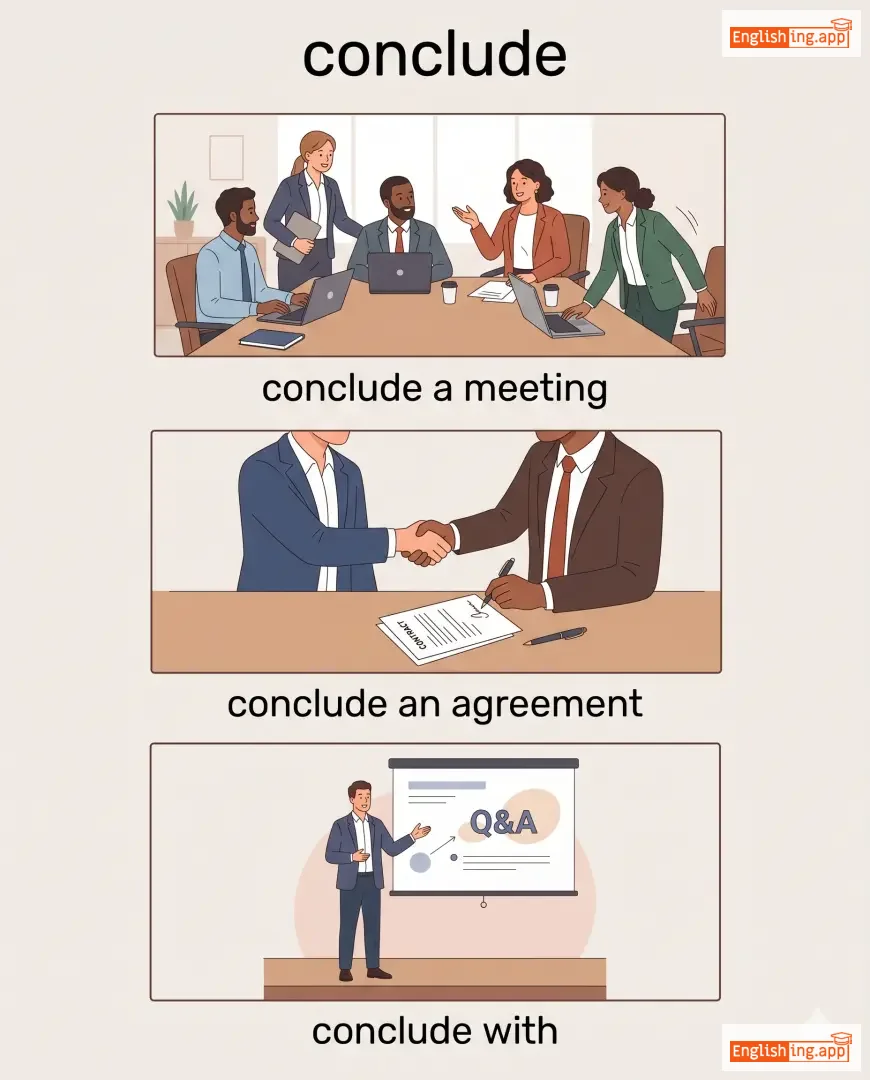
to conclude with
〜で締めくくる
••••••
|
to end something by doing or saying a final thing
••••••
|
〜で締めくくる
〜de shimekukuru
••••••
|
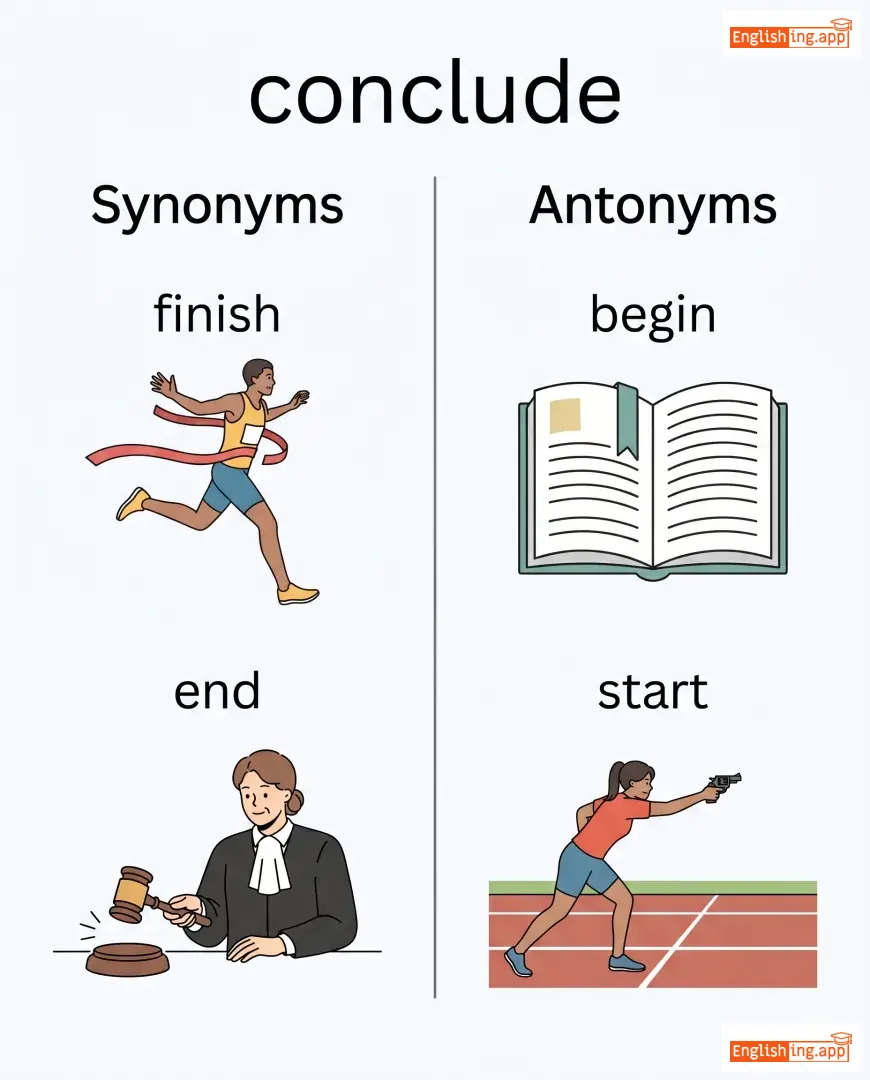
finish, end, determine, decide, finalize
••••••
|
begin, start, continue
••••••
|
conclude a meeting, conclude an agreement, conclude with, conclude that
••••••
|
Concludeはconclusionのように最後に終わらせるという意味です
••••••
|
|
⚔️
••••••
|
/kənˈfrʌnt/
verb
(コンフロント)
••••••
|
- •••••• |
立ち向かう
tachi muka
••••••
|
confronted
コンフロントした
••••••
|
confronted
コンフロントされた
••••••
|
confronts
コンフロントする
••••••
|
confronting
コンフロントしている
••••••
|
to face someone or something directly, especially in a challenge or conflict
••••••
|
She had to confront her fears before making the speech.
彼女はスピーチをする前に恐怖と向き合わなければならなかった。
••••••
|
彼女はスピーチをする前に恐怖と向き合わなければならなかった。
Kanojo wa supīchi o suru mae ni kyōfu to mukiawanakereba naranakatta.
••••••
|
confront the issue
問題に立ち向かう
••••••
|
to directly deal with a problem instead of avoiding it
••••••
|
問題に立ち向かう
mondai ni tachimukau
••••••
|
face, challenge, oppose, encounter
••••••
|
avoid, evade, dodge
••••••
|
confront danger, confront the truth, confront directly, confront the problem
••••••
|
Confront は立ち向かうという意味 — 立ち向かって挑戦しよう!
••••••
|
|
🌱
••••••
|
/kənˈsɜːrv/
verb
••••••
|
- •••••• | - •••••• |
conserved
••••••
|
conserved
••••••
|
conserves
••••••
|
conserving
••••••
|
to protect something from harm or destruction; to use resources carefully to avoid waste
••••••
|
We must conserve water during the dry season. |
- •••••• |
conserve energy |
to use energy carefully and avoid wasting it
••••••
|
- •••••• |
preserve, protect, save, maintain, sustain
••••••
|
waste, destroy, squander
••••••
|
conserve water, conserve energy, conserve resources, conserve wildlife
••••••
|
No •••••• |
|
🤔
••••••
|
/kənˈsɪdər/
verb
(コンシダー)
••••••
|
- •••••• |
考慮する
koryo suru
••••••
|
considered
コンシダード
••••••
|
considered
コンシダード
••••••
|
considers
コンシダーズ
••••••
|
considering
コンシダーリング
••••••
|
to think carefully about something, especially before making a decision
••••••
|
She is considering studying abroad next year.
彼女は来年海外で学ぶことを考えています。
••••••
|
彼女は来年海外で学ぶことを考えています。
Kanojo wa rainen kaigai de manabu koto wo kangaeteimasu.
••••••
|
take into consideration
考慮に入れる
••••••
|
to think about something when making a decision
••••••
|
考慮に入れる
koryo ni ireru
••••••
|
contemplate, regard, reflect, evaluate, examine
••••••
|
ignore, disregard, neglect
••••••
|
consider carefully, consider options, consider seriously, consider important
••••••
|
考慮するとは、決定を下す前に考えることです。
••••••
|
|
🛒
••••••
|
/kənˈsjuːmər/
noun
(カンシューマー)
••••••
|
- •••••• |
消費者
shōhisha
••••••
|
- •••••• | - •••••• | - •••••• | - •••••• |
A person who buys and uses goods and services.
••••••
|
The company focuses on understanding consumer needs. |
その会社は消費者のニーズを理解することに重点を置いています。
Sono kaisha wa shōhisha no nīzu o rikai suru koto ni jūten o oiteimasu.
••••••
|
consumer behavior |
the study of how individuals make purchasing decisions
••••••
|
消費者行動
shōhisha kōdō
••••••
|
buyer, customer, purchaser, client
••••••
|
seller, producer, manufacturer
••••••
|
consumer demand, consumer rights, consumer goods, consumer market
••••••
|
Consumer = 消費する人、日本語では消費者。
••••••
|
|
📰
••••••
|
/ˈkʌvərɪdʒ/
noun
(kʌvərɪdʒ)
••••••
|
- •••••• |
報道
hōdō
••••••
|
- •••••• | - •••••• | - •••••• | - •••••• |
The extent or scope of something, such as insurance protection or media reporting.
••••••
|
The news channel provided extensive coverage of the event. |
ニュースチャンネルはそのイベントを広範囲に報道しました。
Nyūsu channeru wa sono ibento o kōhan'i ni hōdō shimashita.
••••••
|
media coverage |
The reporting and attention given to an event or issue by the media.
••••••
|
メディア報道
media hōdō
••••••
|
reporting, protection, insurance, extent
••••••
|
neglect, omission
••••••
|
media coverage, insurance coverage, full coverage, extensive coverage
••••••
|
Coverage は報道のこと、テレビニュースが報道しているように。
••••••
|
|
🎨
••••••
|
/kriˈeɪʃən/
noun
(kurieishon)
••••••
|
- •••••• |
創造
sozou
••••••
|
- •••••• | - •••••• | - •••••• | - •••••• |
The act of bringing something into existence; something that has been made or produced.
••••••
|
The artist’s latest creation was admired by everyone at the gallery. |
そのアーティストの最新の創造はギャラリーで皆に賞賛されました。
Sono atisuto no saishin no souzou wa gyararii de mina ni shousan saremashita.
••••••
|
creation myth |
A symbolic narrative explaining how the world or humankind came into being.
••••••
|
創造神話
souzou shinwa
••••••
|
invention, innovation, formation, production, design
••••••
|
destruction, ruin, elimination
••••••
|
artistic creation, new creation, creative process, divine creation
••••••
|
創造 = 新しいものを創造すること
••••••
|
|
🚚
••••••
|
/dɪˈlɪvəri/
noun
(デリバリー)
••••••
|
- •••••• |
配達
haitatsu
••••••
|
- •••••• | - •••••• | - •••••• | - •••••• |
the act of taking goods, letters, or packages to people's houses or places of work
••••••
|
The delivery of fresh vegetables arrives every morning. |
新鮮な野菜の配達は毎朝届きます。
Shinsen na yasai no haitatsu wa mai asa todokimasu.
••••••
|
special delivery |
a postal service that ensures faster delivery than usual
••••••
|
特別配達
tokubetsu haitatsu
••••••
|
distribution, dispatch, shipment, transport, conveyance
••••••
|
non-delivery, retention, withholding
••••••
|
fast delivery, food delivery, delivery service, home delivery
••••••
|
デリバリーはすぐに届く - 配達はdeliveryです。
••••••
|
|
📑
••••••
|
/ˈdiː.teɪld/
adjective
(ディテイルド)
••••••
|
- •••••• |
詳細
shousai
••••••
|
- •••••• | - •••••• | - •••••• | - •••••• |
Having many details; very thorough.
••••••
|
The report provided a detailed analysis of the situation. |
報告書は状況の詳細な分析を提供しました。
Houkokusho wa joukyou no shousaina bunseki o teikyō shimashita.
••••••
|
- •••••• | - •••••• | - •••••• |
thorough, comprehensive, elaborate, full
••••••
|
brief, vague
••••••
|
detailed report, detailed plan, detailed explanation, detailed account
••••••
|
詳細な報告書はすべての詳細を含んでいる
••••••
|
|
🤵♂️
••••••
|
/ˈdɪpləmæt/
noun
(ディプロマット)
••••••
|
- •••••• |
外交官
gaikoukan
••••••
|
- •••••• | - •••••• | - •••••• | - •••••• |
An official representing a country abroad; a person skilled in dealing with people tactfully.
••••••
|
The diplomat negotiated a peace agreement. |
外交官は平和協定の交渉を行いました。
Gaikoukan wa heiwa kyoutei no koushou wo okonaimashita.
••••••
|
- •••••• | - •••••• | - •••••• |
envoy, ambassador, representative, emissary, negotiator
••••••
|
commoner, layman
••••••
|
senior diplomat, career diplomat, foreign diplomat
••••••
|
Diploma + ト → 外国での役職 = diplomat (外交官)
••••••
|
|
🌪️
••••••
|
/dɪˈzæstər/
noun
(ディザスター)
••••••
|
- •••••• |
災害
saigai
••••••
|
- •••••• | - •••••• | - •••••• | - •••••• |
A sudden event that causes great damage or loss of life.
••••••
|
The earthquake was a major disaster. |
地震は大きな災害でした。
Jishin wa ōkina saigai deshita.
••••••
|
a recipe for disaster |
Something that is very likely to result in a bad outcome.
••••••
|
災害のレシピ
saigai no reshipi
••••••
|
catastrophe, calamity, tragedy, mishap
••••••
|
success, blessing
••••••
|
natural disaster, disaster relief, disaster management, prevent disaster
••••••
|
Disaster は 'dis'(悪い) + 'aster'(星)で、星が悪いと災害になる。
••••••
|
|
📄
••••••
|
/ˈdɒkjʊmənt/
noun/verb
(ドキュメント)
••••••
|

|
文書
bunsho
••••••
|
documented
ドキュメントされた
••••••
|
documented
ドキュメントされた
••••••
|
documents
ドキュメント
••••••
|
documenting
ドキュメントしている
••••••
|
Noun: A written, printed, or electronic record that provides information or evidence. Verb: To record information in written or electronic form.
••••••
|
She carefully documented all the expenses of the trip.
彼女は旅行のすべての費用を慎重にドキュメントした。
••••••
|
彼女は旅行のすべての費用を慎重にドキュメントした。
Kanojo wa ryokō no subete no hiyō o shinchō ni dokyumento shita.
••••••
|
official document
公式ドキュメント
••••••
|
An authoritative or legal record recognized by an institution.
••••••
|
公式ドキュメント
Kōshiki dokyumento
••••••
|
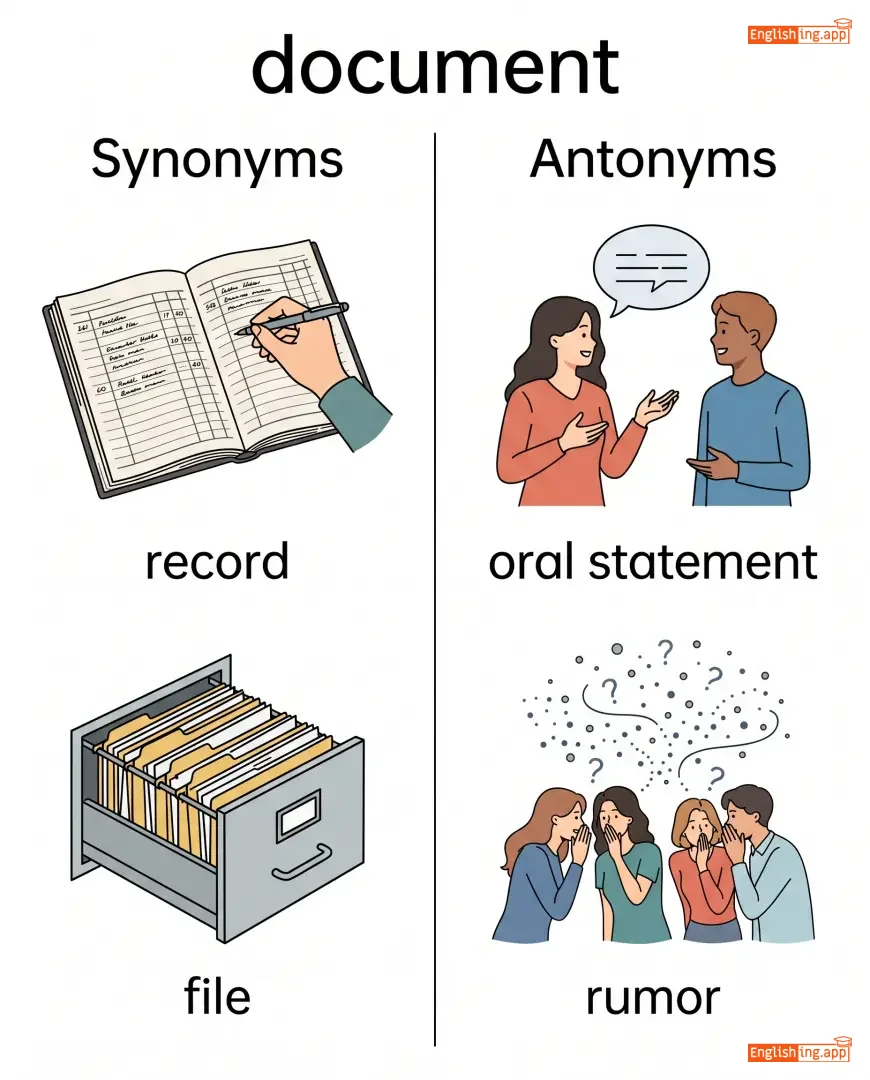
record, file, paper, certificate, report
••••••
|
oral statement, rumor
••••••
|
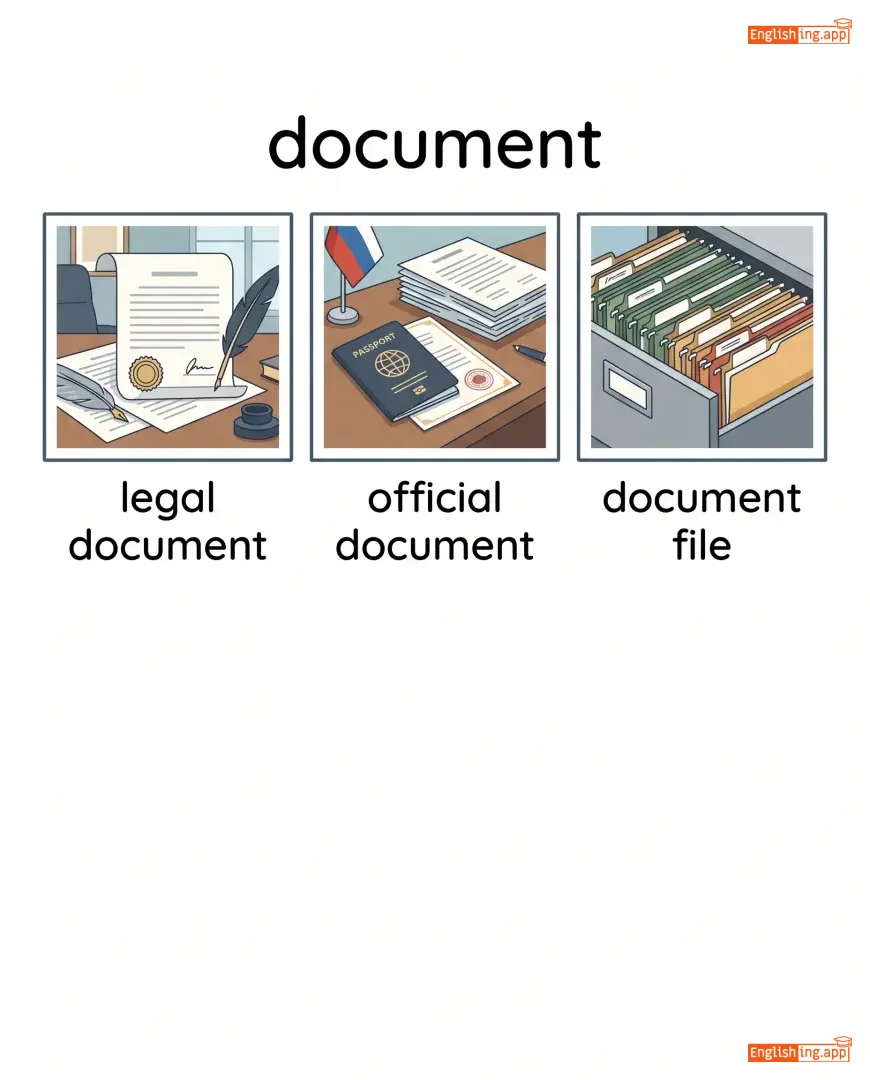
legal document, official document, document file, document evidence
••••••
|
Documentは文書です—重要なことを記録してください!
••••••
|
|
🎁
••••••
|
/dəʊˈneɪ.ʃən/
noun
(ドネーション)
••••••
|
- •••••• |
寄付
kifu
••••••
|
- •••••• | - •••••• | - •••••• | - •••••• |
something that is given to help a person or organization, often money
••••••
|
He made a generous donation to the local orphanage. |
彼は地元の孤児院に寛大な寄付をしました。
Kare wa jimoto no kojiin ni kandaina kifu o shimashita.
••••••
|
make a donation |
to give money or goods to help a cause
••••••
|
寄付をする
kifu o suru
••••••
|
contribution, gift, offering, grant, endowment
••••••
|
withdrawal, taking
••••••
|
charity donation, blood donation, make donation, receive donation
••••••
|
寄付は与えることを意味します — 'kifu' は '与える' を意味し、だから donation は寄付です!
••••••
|

