वोकैबुलरीज

इंग्लिश वोकैबुलरी डिस्कवर, लर्न और मास्टर करें

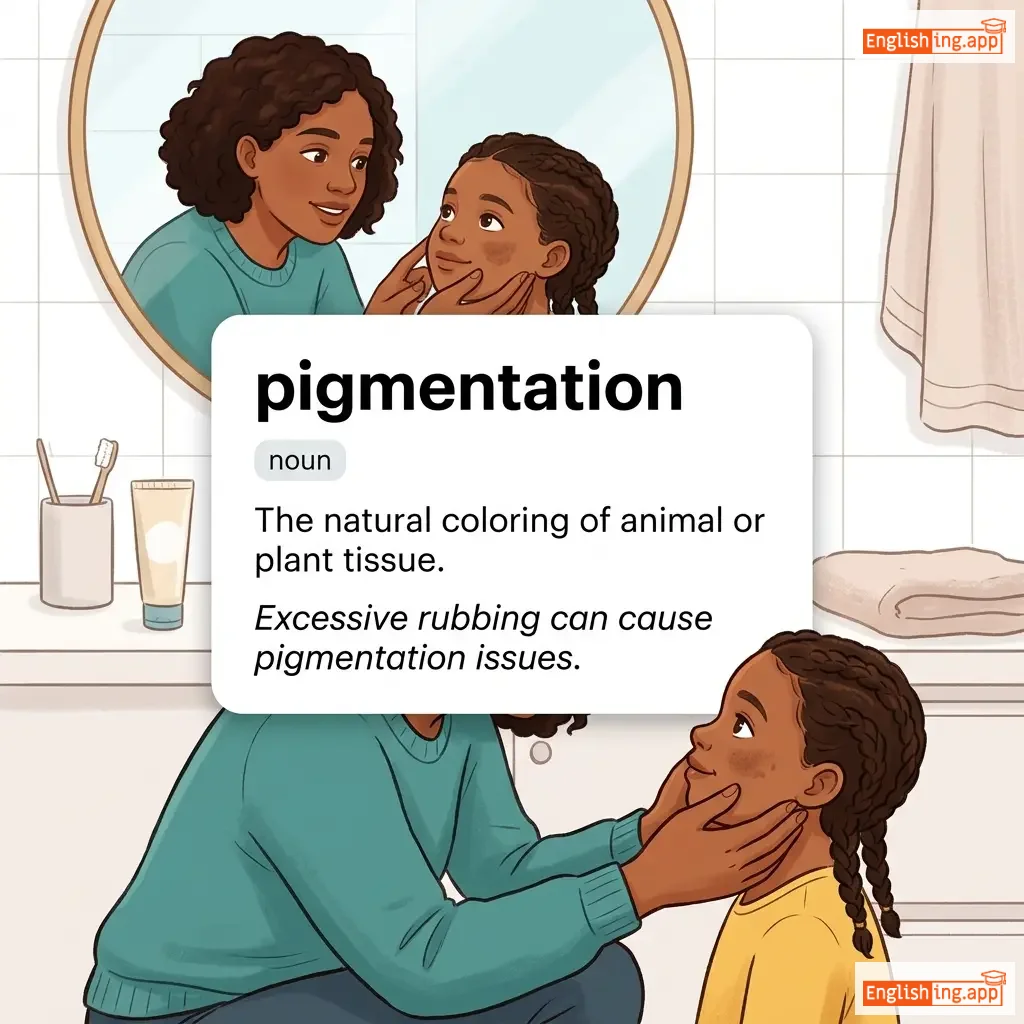
pigmentation definition card — visual illustration of the meaning
noun C1
/ˌpɪɡ.menˈteɪ.ʃən/
pigmentation (pigmentation)

The natural coloring of animal or plant tissue.

"Excessive rubbing can cause pigmentation issues."

"Un frottement excessif peut provoquer des problèmes de pigmentation." (Un frottement excessif peut provoquer des problemes de pigmentation.)
🕵️‍♂️

pilfer (pilfèr)

verb C1
/ˈpɪlfər/
voler (voler)

to steal things of small value or in small quantities

"The employee was caught pilfering office supplies."

"L'employé a été pris en train de voler des fournitures de bureau." (L'employé a été pris en train de voler des fournitures de bureau.)
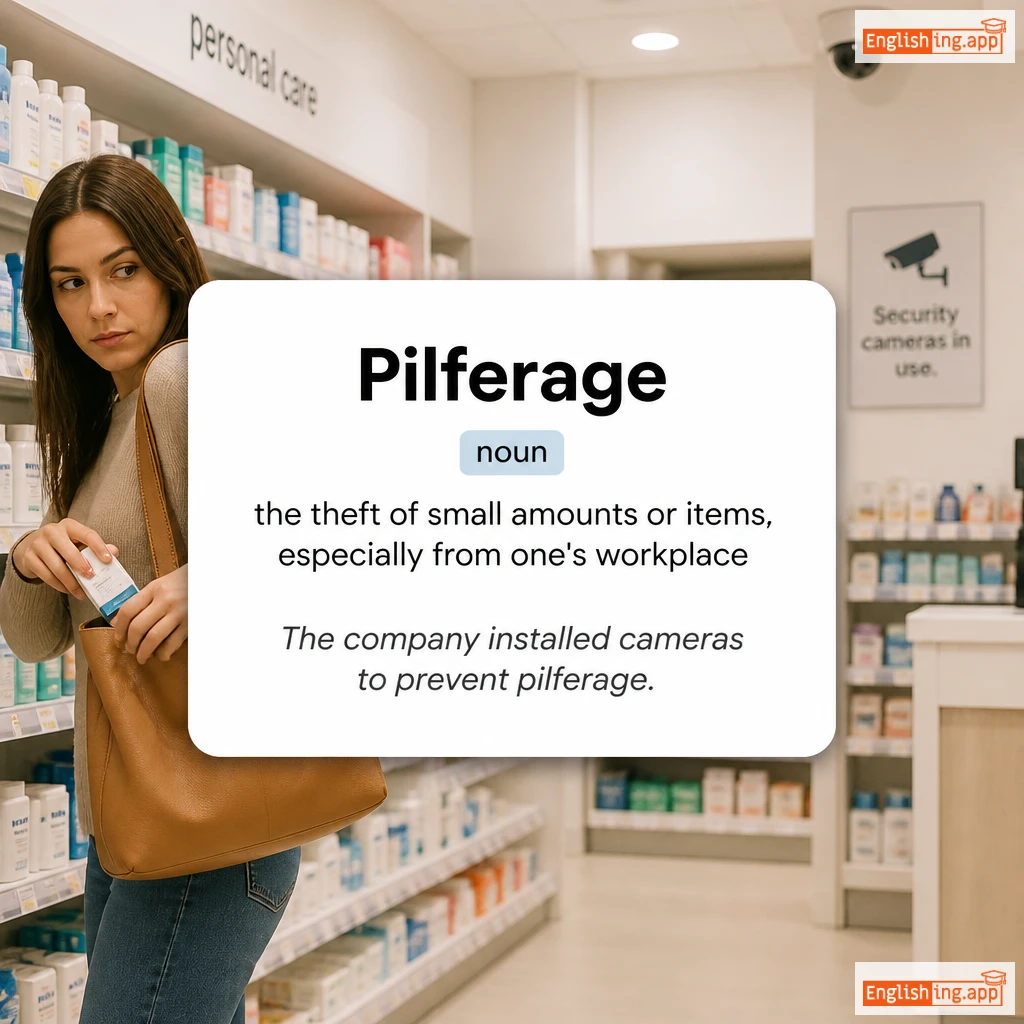
Pilferage definition card — visual illustration of the meaning
noun C1
/ˈpɪl.fər.ɪdʒ/
vol mineur (volmineur)

the theft of small amounts or items, especially from one's workplace

"The company installed cameras to prevent pilferage."

"L'entreprise a installé des caméras pour prévenir le vol." (Lentreprise a installe des cameras pour prevenir le pilferage)
🏴‍☠️

pillage (pilɛʒ)

verb C1
/ˈpɪlɪdʒ/
piller (piller)

to rob or plunder a place, especially during war

"The invading army pillaged the village and took all valuables."

"L'armée envahissante a pillé le village et a pris tous les objets précieux." (L'armée envahissante a pillé le village et a pris tous les objets précieux.)
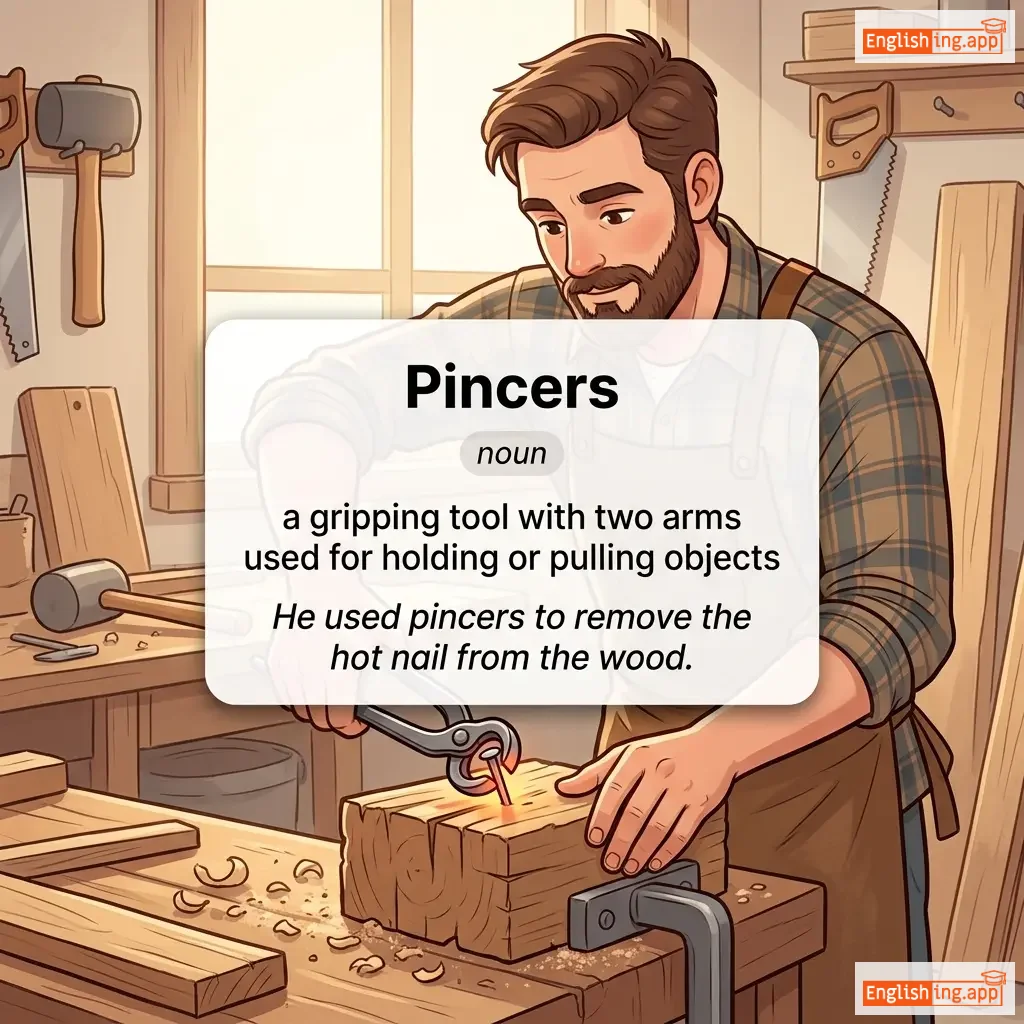
Pincers definition card — visual illustration of the meaning
noun C1
/ˈpɪnsərz/
pince (pince)

a gripping tool with two arms used for holding or pulling objects

"He used pincers to remove the hot nail from the wood."

"Il a utilisé des pinces pour retirer le clou chaud du bois." (Il a utilisé des pinces pour retirer le clou chaud du bois.)
noun C1
/ˈpɪntʃərz/
pinces (pinces)

a tool used for gripping or squeezing objects

"Use the pinchers to remove the hot coal safely."

"Utilisez les pinces pour retirer le charbon chaud en toute sécurité." (Utilisez les pinces pour retirer le charbon chaud en toute sécurité.)
noun C1
/ˈpɪnəkəl/
sommet (sommet)

the highest point or peak of something, especially of success or achievement

"Winning the Nobel Prize was the pinnacle of her career."

"Gagner le prix Nobel a été le pinacle de sa carrière." (Gagner le prix Nobel a été le pinacle de sa carrière.)
pioneering mission definition card — visual illustration of the meaning
adjective + noun C1
ˌpaɪəˈnɪərɪŋ ˈmɪʃən
mission pionnière (mission pionniere)

A groundbreaking or innovative undertaking that leads the way in a particular field.

"Artemis is a pioneering mission in space exploration."

"Artemis est une mission pionnière dans l'exploration spatiale." (Artemis est une mission pionniere dans l'exploration spatiale.)
adjective C1
/ˈpaɪəs/
pieux (pieux)

devoutly religious or showing strong moral and spiritual devotion

"He led a pious life, always helping those in need."

"Il a mené une vie pieuse, aidant toujours ceux qui en avaient besoin." (Il a mené une vie pieuse, aidant toujours ceux qui en avaient besoin.)
adjective C1
/ˈpiːkənt/
piquant (piquant)

having a pleasantly sharp or spicy taste; interestingly provocative

"The chef added a piquant sauce to the dish to enhance its flavor."

"Le chef a ajouté une sauce piquante au plat pour rehausser sa saveur." (Le chef a ajouté une sauce piquante au plat pour rehausser sa saveur.)
verb C1
/piːk/
éveiller (éveiller)

to stimulate interest or curiosity; to arouse resentment or anger

"Her remarks piqued his curiosity about the secret project."

"Ses remarques ont éveillé sa curiosité pour le projet secret." (Ses remarques ont éveille sa curiosité pour le projet secret.)
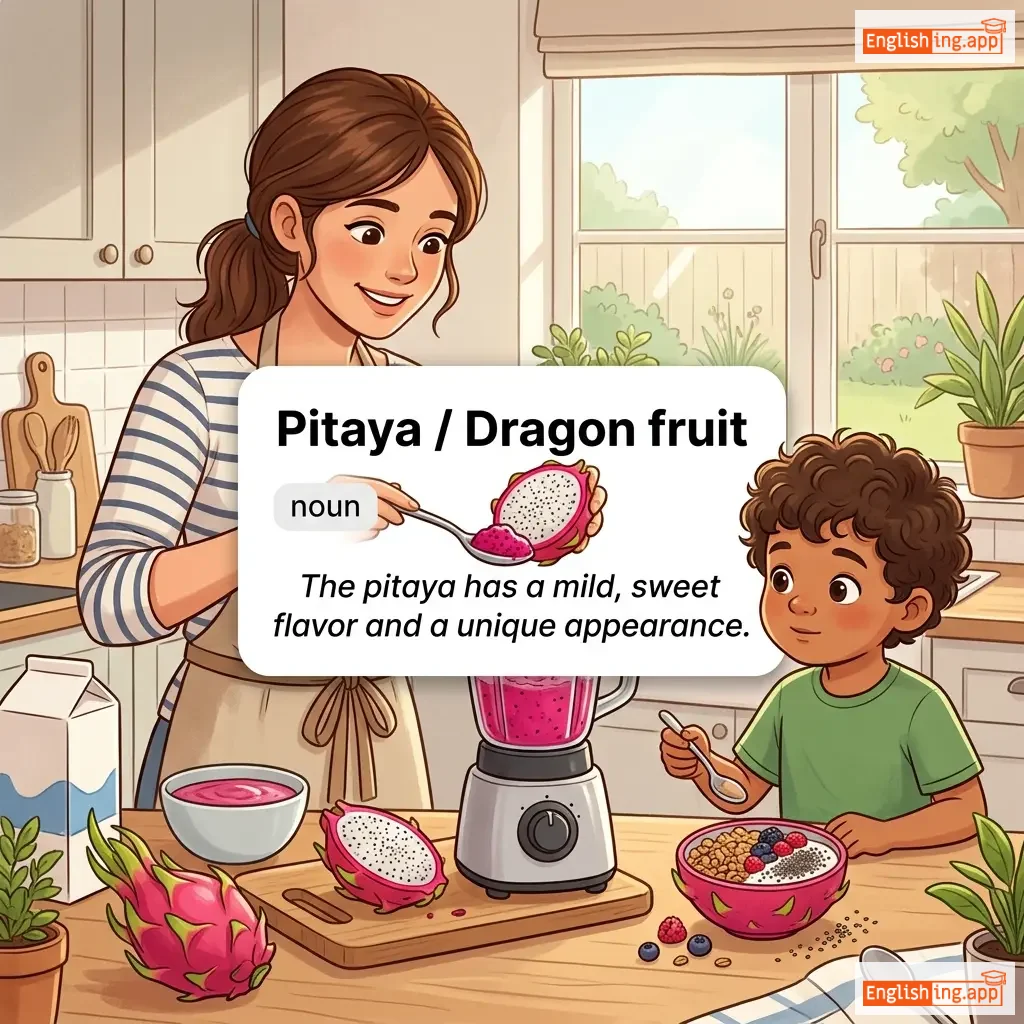
Pitaya / Dragon fruit definition card — visual illustration of the meaning
noun C1
/pɪˈtaɪə/
fruit du dragon (fruit du dragon)

a tropical fruit with bright pink or red skin and white flesh speckled with black seeds

"The pitaya has a mild, sweet flavor and a unique appearance."

"La pitaya a une saveur douce et délicate et une apparence unique." (La pitaya a une saveur douce et délicate et une apparence unique.)
adjective C1
/ˈpɪtiəs/
pitoyable, déplorable (pitoyable, deplorable)

deserving or arousing pity; sad and pathetic

"The stray dog looked up with a piteous expression."

"Le chien errant regardait vers le haut avec une expression pitoyable." (Le chien errant regardait vers le haut avec une expression pitoyable.)
noun C1
/ˈpɪt.fɔːl/
piège, difficulté (piege, difficulte)

a hidden or unexpected danger or difficulty

"Investors must be aware of the pitfalls of the market."

"Les investisseurs doivent être conscients des pièges du marché." (Les investisseurs doivent etre conscients des pieges du marche.)
adjective C1
/ˈpɪθ.i/
concis et significatif (concis et significatif)

concise and meaningful; full of substance

"She gave a pithy comment that summarized the issue perfectly."

"Elle a fait un commentaire concis qui résumait parfaitement la question." (Elle a fait un commentaire concis qui résumait parfaitement la question.)
adjective C1
/ˈpɪt.i.ə.bəl/
pitoyable (pitoyable)

deserving sympathy or compassion

"The stray dog looked pitiable in the rain."

"Le chien errant avait l'air pitoyable sous la pluie." (Le chien errant avait l'air pitoyable sous la pluie.)
adjective C1
/ˈpɪt.i.ləs/
impitoyable (impitoyable)

showing no pity or compassion; cruel

"The pitiless ruler ignored the suffering of his people."

"Le souverain impitoyable a ignoré la souffrance de son peuple." (Le souverain impitoyable a ignoré la souffrance de son peuple.)
noun C1
/ˈpɪt.əns/
pitance (pitance)

a very small or inadequate amount of money

"She worked long hours for a mere pittance."

"Elle a travaillé de longues heures pour une simple pitance." (Elle a travaillé de longues heures pour une simple pitance.)
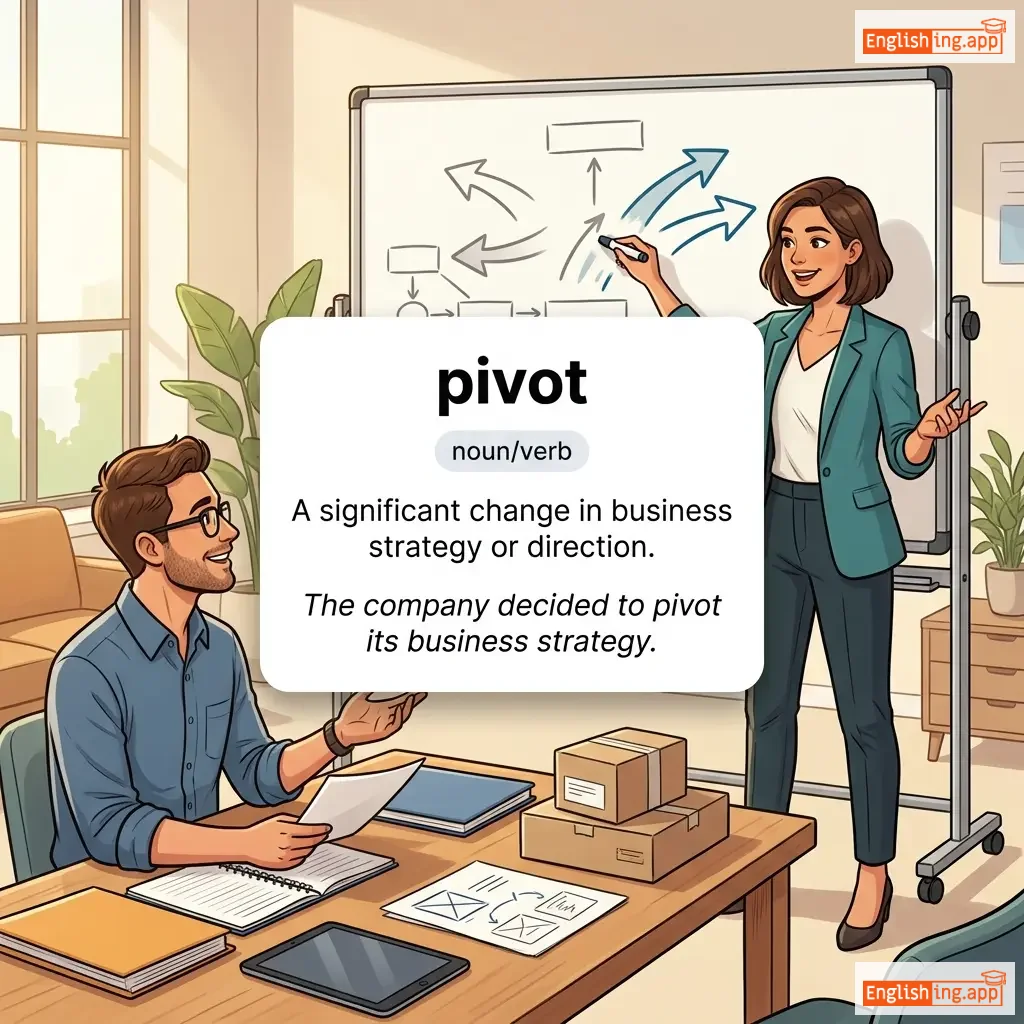
pivot definition card — visual illustration of the meaning
noun/verb C1
ˈpɪv.ət
changement stratégique, pivot, changement de processus (changement strategique, pivot, changement de processus)

A significant change in business strategy or direction.

"The company decided to pivot its business strategy."

"L'entreprise a décidé de modifier sa stratégie commerciale." (L'entreprise a decide de modifier sa strategie commerciale.)
pivotal definition card — visual illustration of the meaning
adjective C1
/ˈpɪv.ə.tl/
crucial ou de grande importance (crucial ou de grande importance)

of crucial importance in relation to the development or success of something else

"Her role was pivotal in the success of the project."

"Son rôle a été crucial dans le succès du projet." (Son role a ete crucial dans le succes du projet.)
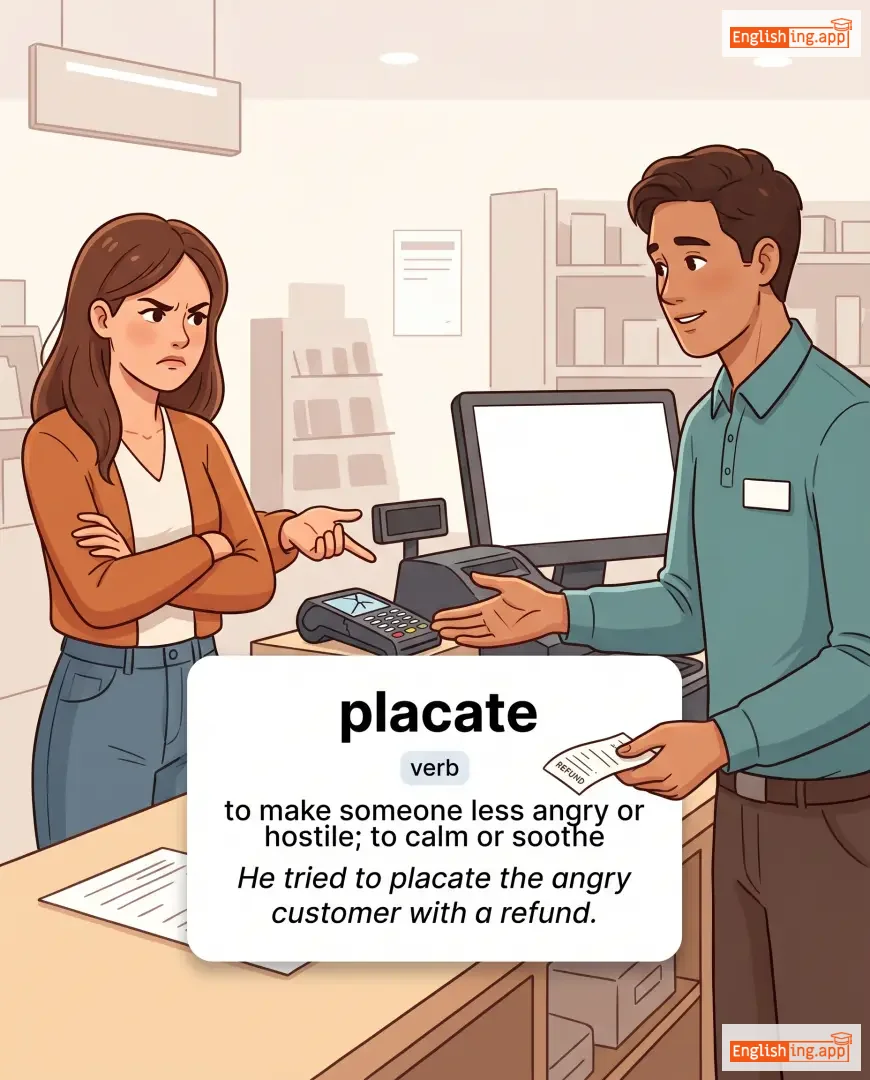
placate definition card — visual illustration of the meaning
verb C1
/pləˈkeɪt/
calmer (calmer)

to make someone less angry or hostile; to calm or soothe

"He tried to placate the angry customer with a refund."

"Il a essayé de calmer le client en colère avec un remboursement." (Il a essayé de calmer le client en colère avec un remboursement.)
noun C1
/pləˈsiːboʊ/
placebo (placebo)

a substance with no therapeutic effect, used as a control in testing new drugs

"The patient was given a placebo to compare the effect of the real drug."

"Le patient a reçu un placebo pour comparer l'effet du médicament réel." (Le patient a reçu un placebo pour comparer l'effet du médicament réel.)
adjective C1
/ˈplæsɪd/
serein, calme (serein, calme)

calm and peaceful, not easily disturbed

"She had a placid expression despite the chaos around her."

"Elle avait une expression sereine malgré le chaos autour d'elle." (Elle avait une expression sereine malgré le chaos autour d'elle.)
noun C1
/ˈpleɪdʒərɪzəm/
plagiat (plagiat)

the practice of taking someone else's work or ideas and passing them off as one's own

"The student was expelled for committing plagiarism in his essay."

"L'étudiant a été expulsé pour avoir commis du plagiat dans son essai." (L'etudiant a ete expulse pour avoir commis du plagiat dans son essai.)
verb C1
/ˈpleɪdʒəraɪz/
plagier (plagier)

to take someone else's work or ideas and present them as your own

"He was warned not to plagiarize his friend's essay."

"Il a été averti de ne pas plagier l'essai de son ami." (Il a été averti de ne pas plagier l'essai de son ami.)
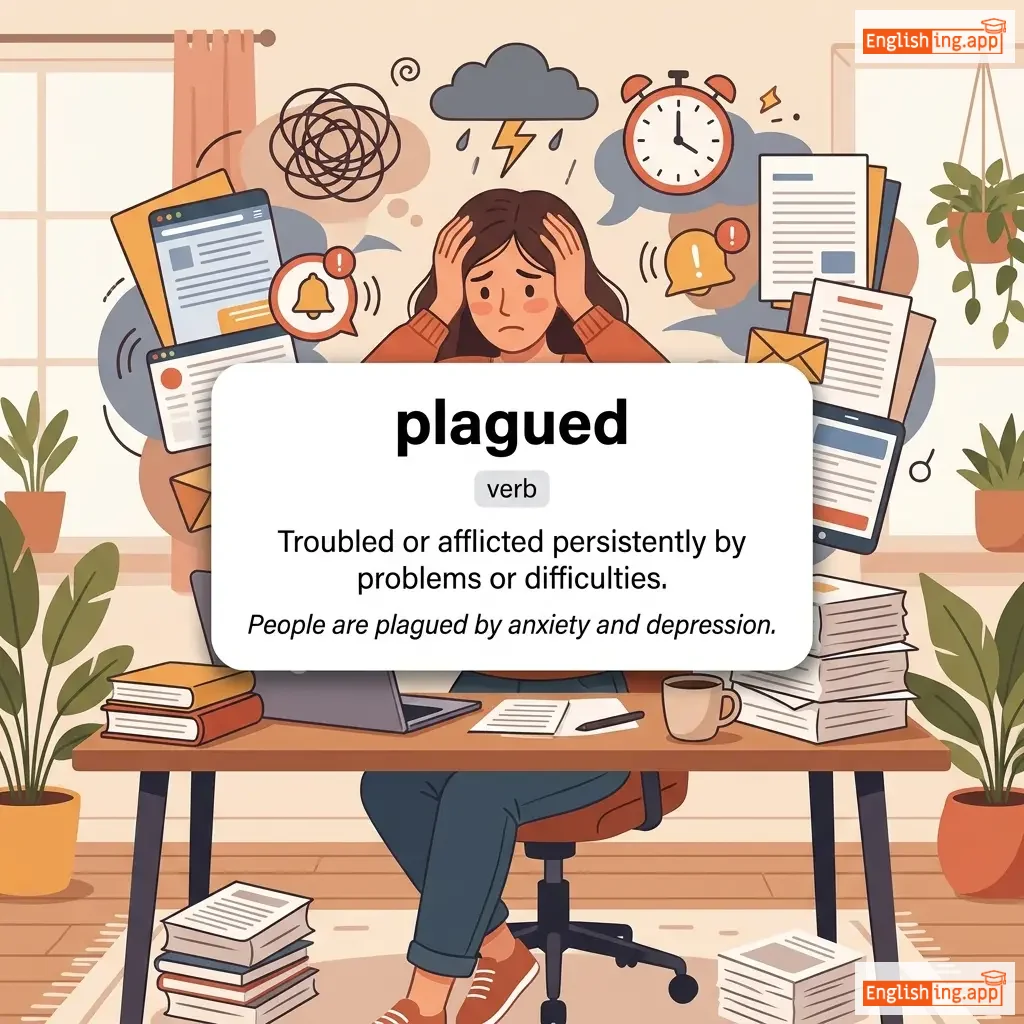
plagued definition card — visual illustration of the meaning
verb C1
pleɪɡd
affligé (afflige)

Troubled or afflicted persistently by problems or difficulties.

"People are plagued by anxiety and depression."

"Les gens sont affligés par l'anxiété et la dépression." (Les gens sont affligés par l'anxiété et la dépression.)
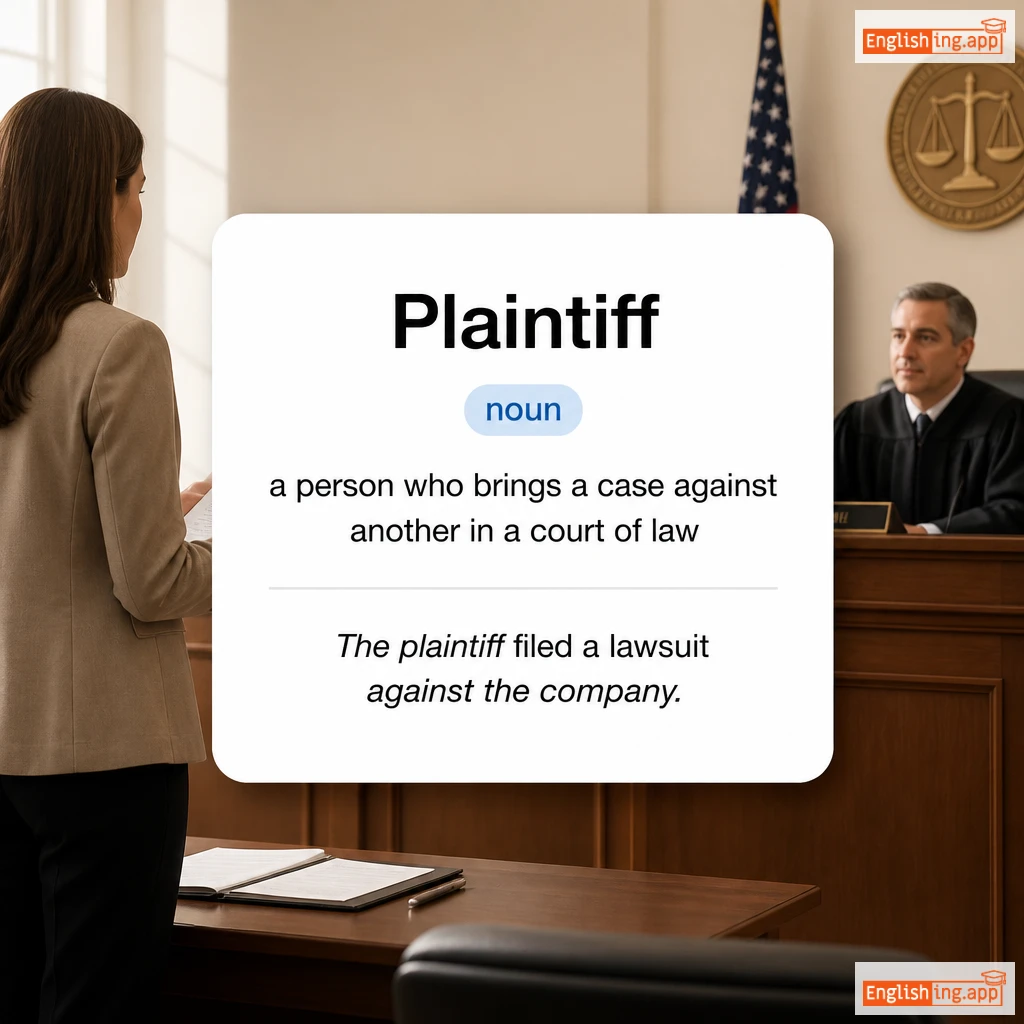
Plaintiff definition card — visual illustration of the meaning
noun C1
/ˈpleɪntɪf/
plaignant (plaignant)

a person who brings a case against another in a court of law

"The plaintiff filed a lawsuit against the company."

"Le plaignant a déposé une plainte contre l'entreprise." (Le plaignant a déposé une plainte contre l'entreprise.)
adjective C1
/ˈpleɪntɪv/
triste, plaintif (triste, plaintif)

expressing sadness or sorrow

"He raised a plaintive cry for help."

"Il a poussé un cri plaintif à l'aide." (Il a pousse un cri plaintif a l'aide.)
noun,verb C1
/pleɪt/
tresse (tresse)

a braid of hair or straw; to braid

"She decided to plait her hair before the party."

"Elle a décidé de tresser ses cheveux avant la fête." (Elle a décidé de tresser ses cheveux avant la fête.)
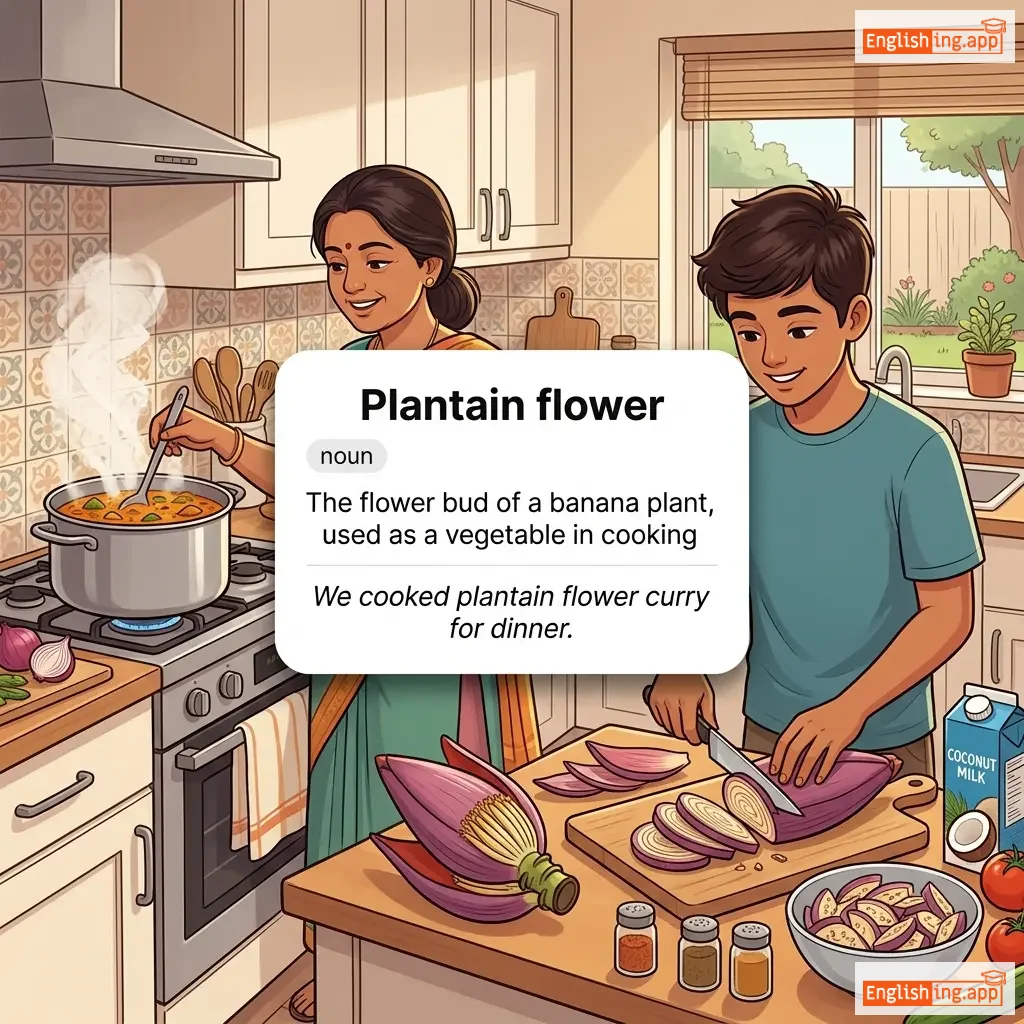
Plantain flower definition card — visual illustration of the meaning
noun C1
/ˈplæn.teɪn ˈflaʊ.ər/
fleur de plantain (fleur de plantain)

The flower bud of a banana plant, used as a vegetable in cooking

"We cooked plantain flower curry for dinner."

"Nous avons cuisiné du curry de fleur de plantain pour le dîner." (Nous avons cuisiné du curry de fleur de plantain pour le dîner.)
noun C1
/ˈplæz.mə/
partie liquide du sang; gaz ionisé; sérum sanguin sans protéines de coagulation (plasma)

the liquid part of blood; ionized gas; blood serum without clotting proteins

"Blood plasma contains various proteins and nutrients."

"Le plasma sanguin contient diverses protéines et nutriments." (Le plasma sanguin contient diverses proteines et nutriments.)
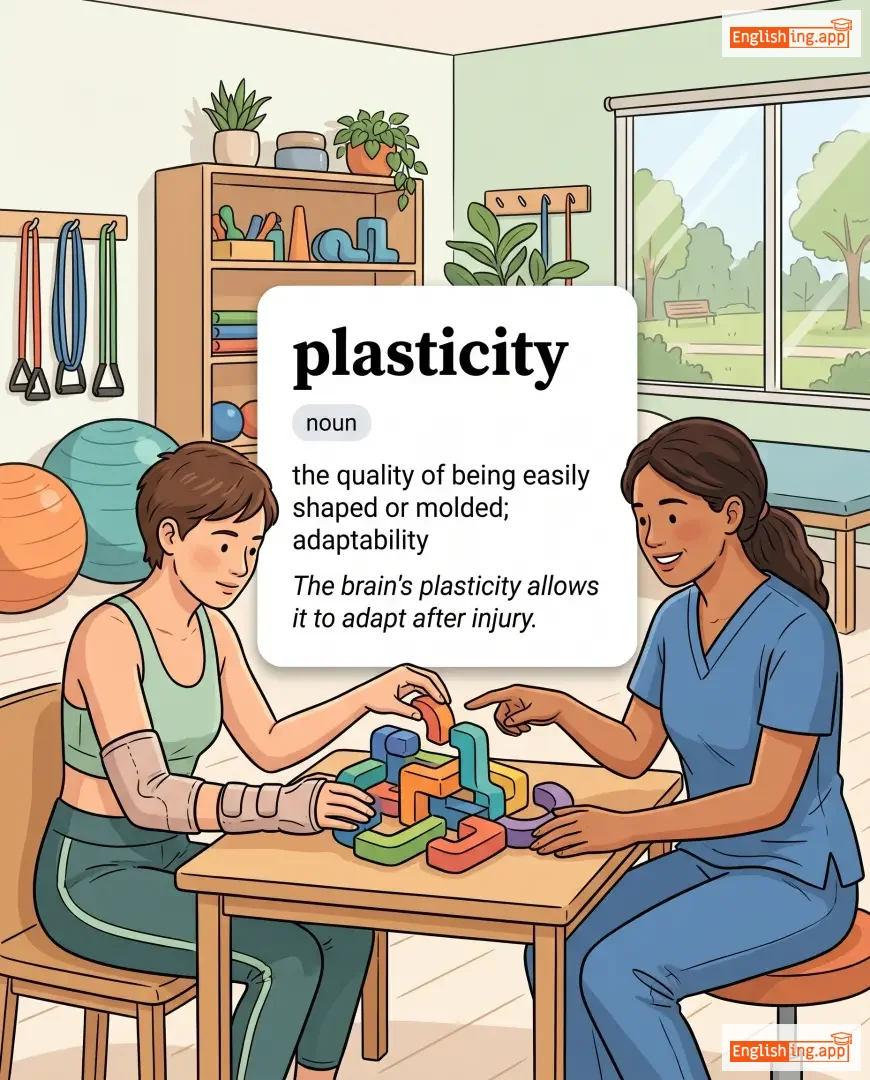
plasticity definition card — visual illustration of the meaning
noun C1
/plæsˈtɪsəti/
plasticité, capacité d'adaptation (plasticite, capacite d'adaptation)

the quality of being easily shaped or molded; adaptability

"The brain's plasticity allows it to adapt after injury."

"La plasticité du cerveau lui permet de s'adapter après une blessure." (La plasticite du cerveau lui permet de s'adapter apres une blessure.)
adjective C1
/pləˈtɒnɪk/
platonique (platonique)

relating to a close relationship that is not romantic or sexual

"They have a platonic friendship that has lasted for years."

"Ils ont une amitié platonique qui dure depuis des années." (Ils ont une amitié platonique qui dure depuis des années.)
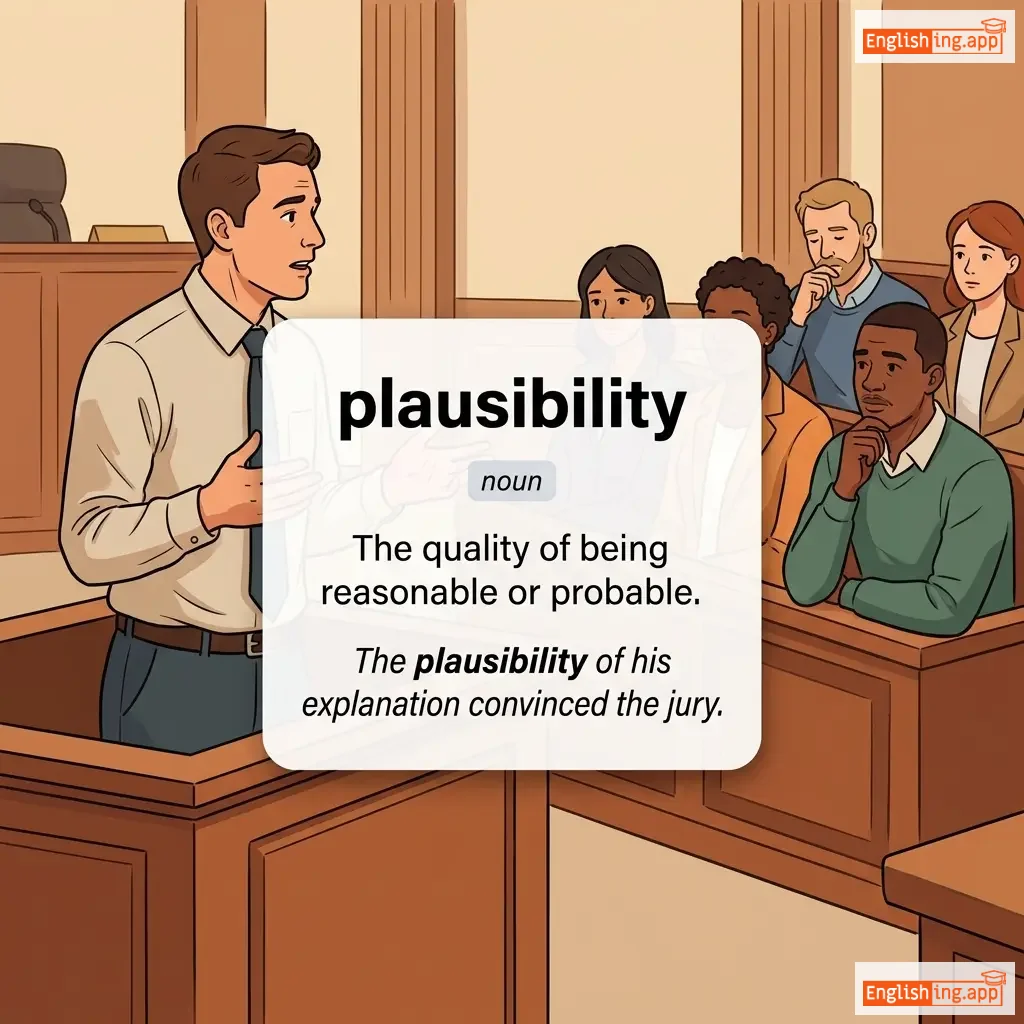
plausibility definition card — visual illustration of the meaning
noun C1
/ˌplɔː.zəˈbɪl.ə.ti/
plausibilité (plausibilite)

The quality of being reasonable or probable.

"The plausibility of his explanation convinced the jury."

"La plausibilité de son explication a convaincu le jury." (La plausibilite de son explication a convaincu le jury.)
noun C1
/ˈpleɪˌraɪt/
dramaturge (dramaturge)

a person who writes plays

"Shakespeare is considered the greatest playwright of all time."

"Shakespeare est considéré comme le plus grand dramaturge de tous les temps." (Shakespeare est considéré comme le plus grand dramaturge de tous les temps.)
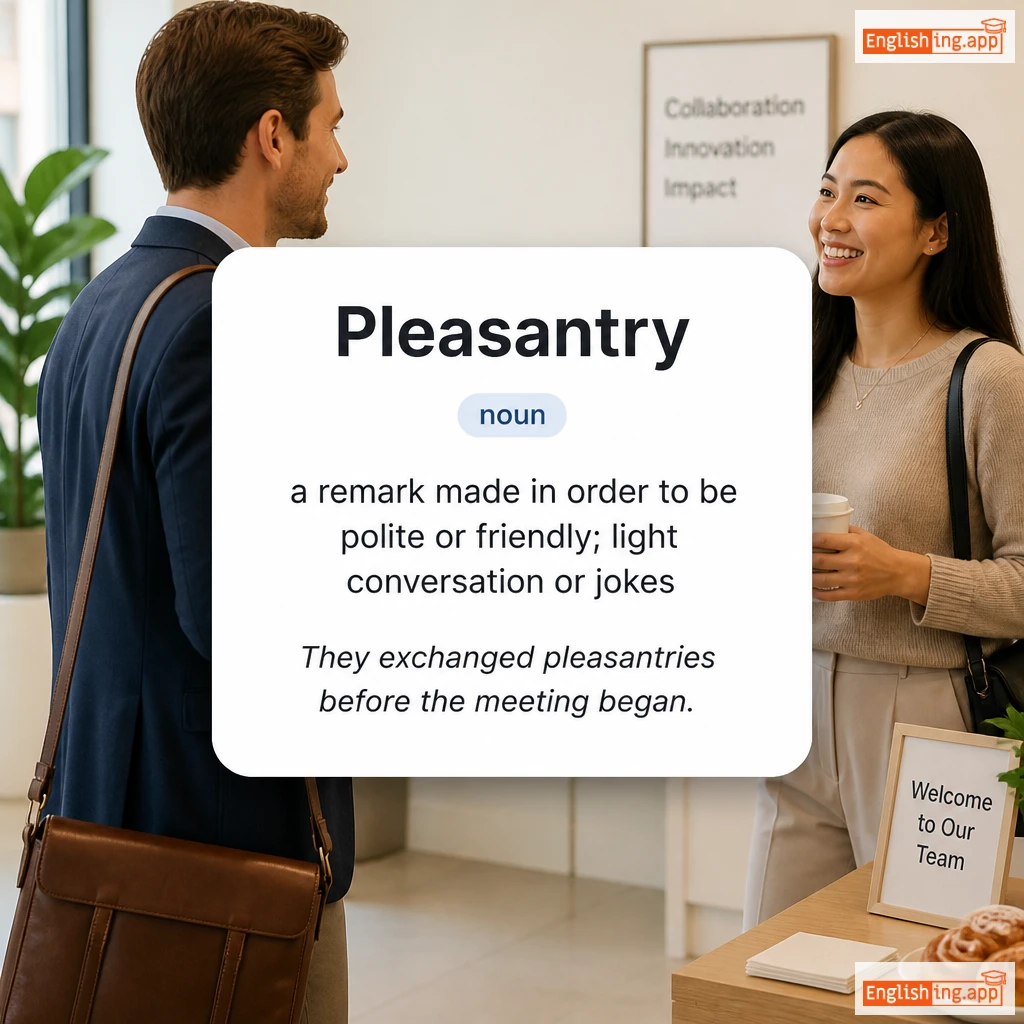
Pleasantry definition card — visual illustration of the meaning
noun C1
/ˈplez.ən.tri/
politesse (politesse)

a remark made in order to be polite or friendly; light conversation or jokes

"They exchanged pleasantries before the meeting began."

"Ils ont échangé des politesses avant que la réunion ne commence." (Ils ont échangé des politesses avant que la réunion ne commence.)
noun, verb C1
/pliːt/
pli (pli)

a fold in fabric made by doubling the material back upon itself

"She added a pleat to the skirt for extra volume."

"Elle a ajouté un pli à la jupe pour plus de volume." (Elle a ajouté un pli à la jupe pour plus de volume.)
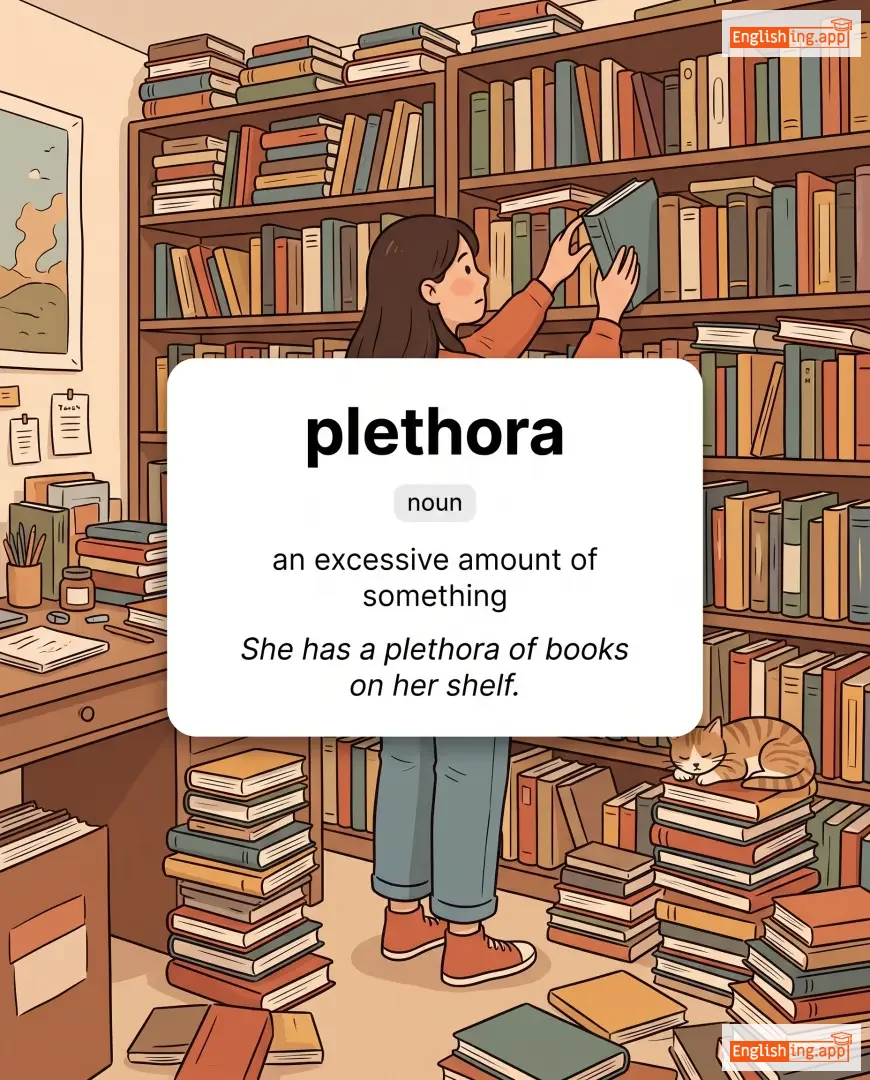
plethora definition card — visual illustration of the meaning
noun C1
/ˈplɛθərə/
une quantité excessive (une quantite excessive)

an excessive amount of something

"She has a plethora of books on her shelf."

"Elle a une quantité excessive de livres sur son étagère." (Elle a une quantite excessive de livres sur son etagere.)
adjective C1
/ˈplaɪəbəl/
flexible (flexible)

easily bent or flexible; adaptable

"The metal is pliable enough to be shaped into jewelry."

"Le métal est suffisamment flexible pour être façonné en bijoux." (Le metal est suffisamment flexible pour être façonné en bijoux.)
adjective C1
/ˈplaɪənt/
souple, facilement influençable ou adaptable (souple, facilement influençable ou adaptable)

flexible; easily influenced or adaptable

"She has a pliant personality that adapts well to new situations."

"Elle a une personnalité flexible qui s'adapte bien aux nouvelles situations." (Elle a une personnalité flexible qui s'adapte bien aux nouvelles situations.)
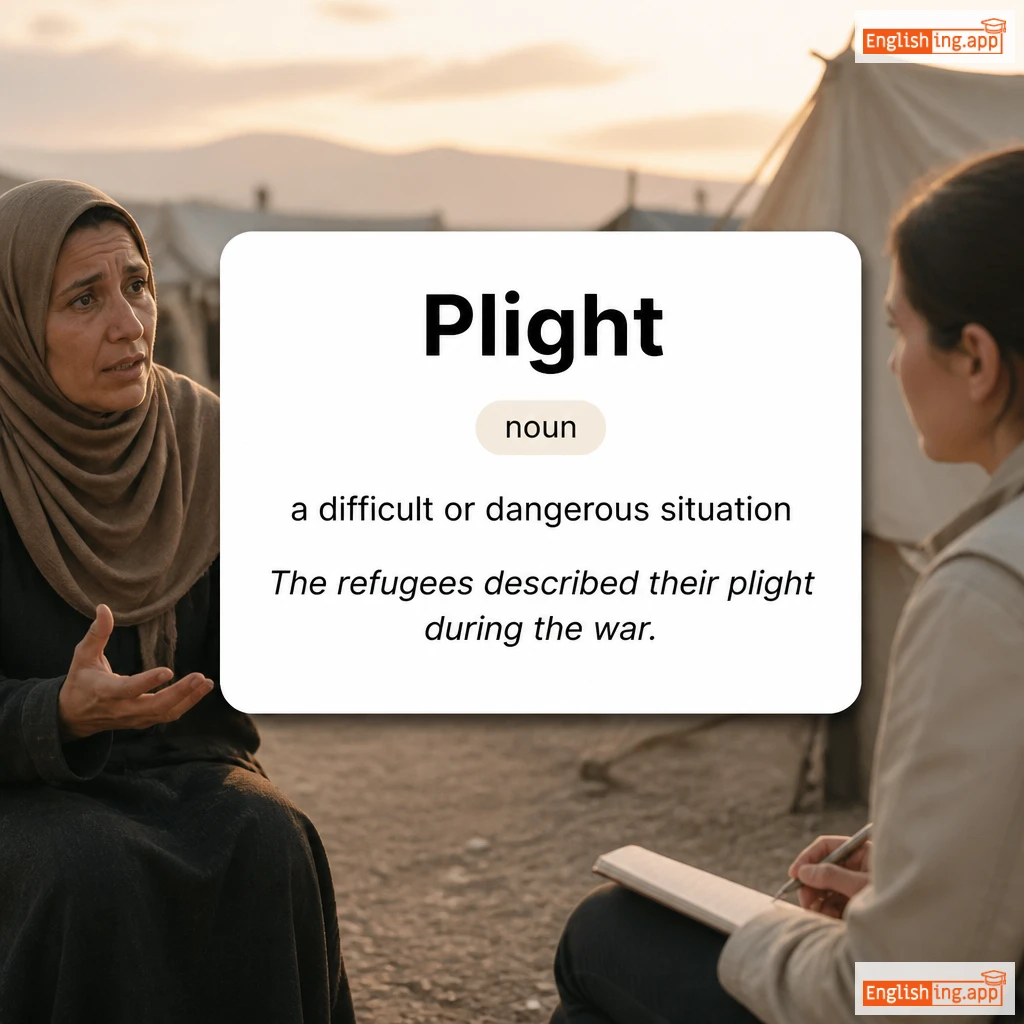
Plight definition card — visual illustration of the meaning
noun C1
/plaɪt/
détresse, situation dangereuse (detresse, situation dangereuse)

a difficult or dangerous situation

"The refugees described their plight during the war."

"Les réfugiés ont décrit leur détresse pendant la guerre." (Les refugies ont decrit leur detresse pendant la guerre.)
verb C1
/plɒd/
travailler lentement avec effort (travailler lentement avec effort)

to work slowly and steadily, often with effort or difficulty

"He plodded through his homework despite feeling tired."

"Il a fait ses devoirs lentement bien qu'il se sente fatigué." (Il a fait ses devoirs lentement bien qu'il se sente fatigué.)
adjective C1
/ˈplɒd.ɪŋ/
lent et ennuyeux (lent et ennuyeux)

slow-moving and unexciting; showing steady effort

"The movie was entertaining but a bit plodding in the middle."

"Le film était divertissant, mais un peu lent et ennuyeux au milieu." (Le film etait divertissant, mais un peu lent et ennuyeux au milieu.)
noun C1
/plɔɪ/
ruse astucieuse (rooz astusyooz)

a clever plan or action designed to gain an advantage

"She used a clever ploy to win the debate."

"Elle a utilisé une ruse astucieuse pour gagner le débat." (Elle a utilise une ruse astucieuse pour gagner le debat.)
adjective C1
/ˈplʌk.i/
courageux (courageux)

having or showing courage and determination

"The plucky child rescued the kitten from the tree."

"L'enfant courageux a sauvé le chaton de l'arbre." (L'enfant courageux a sauvé le chaton de l'arbre.)
noun C1
/ˈpluː.mɪdʒ/
plumage (plumage)

the feathers covering a bird's body

"The peacock's plumage was vibrant and eye-catching."

"Le plumage du paon était vibrant et frappant." (Le plumage du paon était vibrant et frappant.)
verb C1
/plʌm/
mesurer la profondeur ou examiner de près (mesurer la profondeur ou examiner de près)

to measure the depth of water or examine closely

"They used a line to plumb the depth of the lake."

"Ils ont utilisé une ligne pour mesurer la profondeur du lac." (Ils ont utilisé une ligne pour mesurer la profondeur du lac.)
noun C1
/pluːm/
une grande plume douce ou quelque chose qui ressemble à une plume (une grande plume douce ou quelque chose qui ressemble à une plume)

a large, soft feather or something resembling a feather

"The soldier wore a red plume on his helmet."

"Le soldat portait une plume rouge sur son casque." (Le soldat portait une plume rouge sur son casque.)
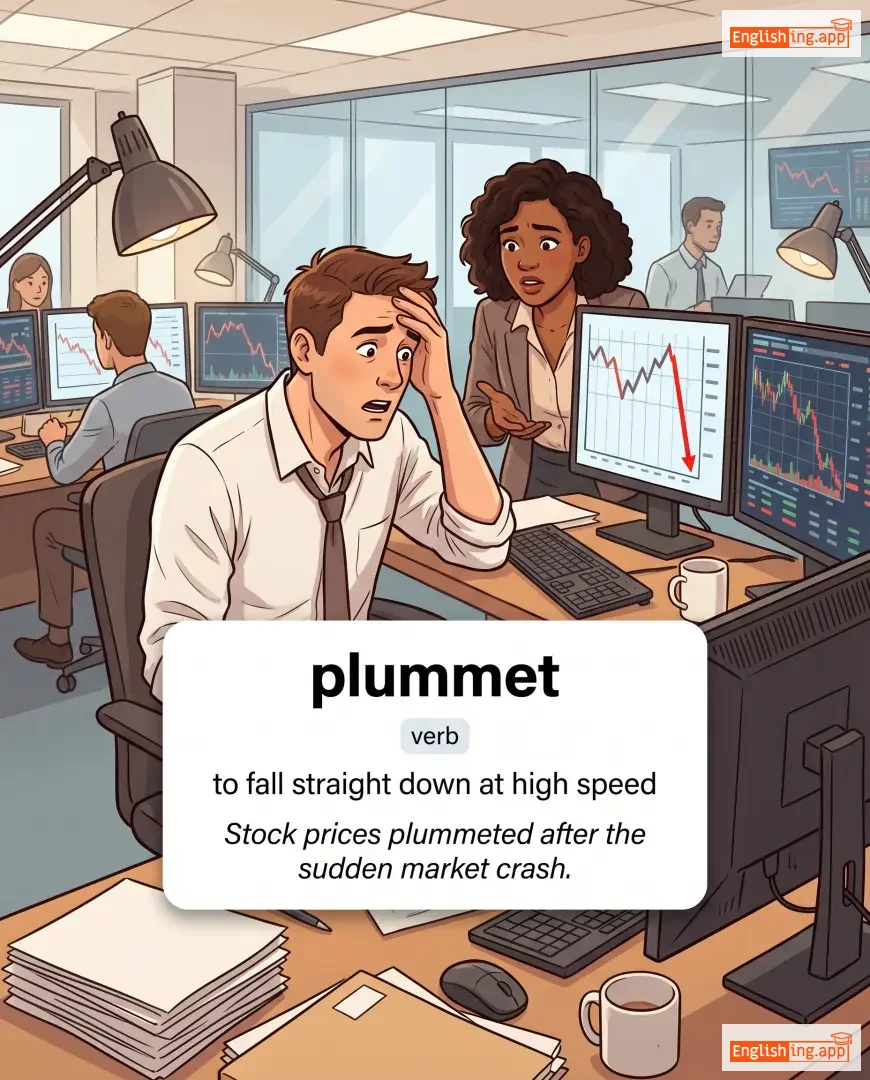
plummet definition card — visual illustration of the meaning
verb C1
/ˈplʌm.ɪt/
tomber droit vers le bas à grande vitesse (tomber droit vers le bas à grande vitesse)

to fall straight down at high speed

"Stock prices plummeted after the sudden market crash."

"Les prix des actions ont chuté après l'effondrement soudain du marché." (Les prix des actions ont chuté après l'effondrement soudain du marché.)
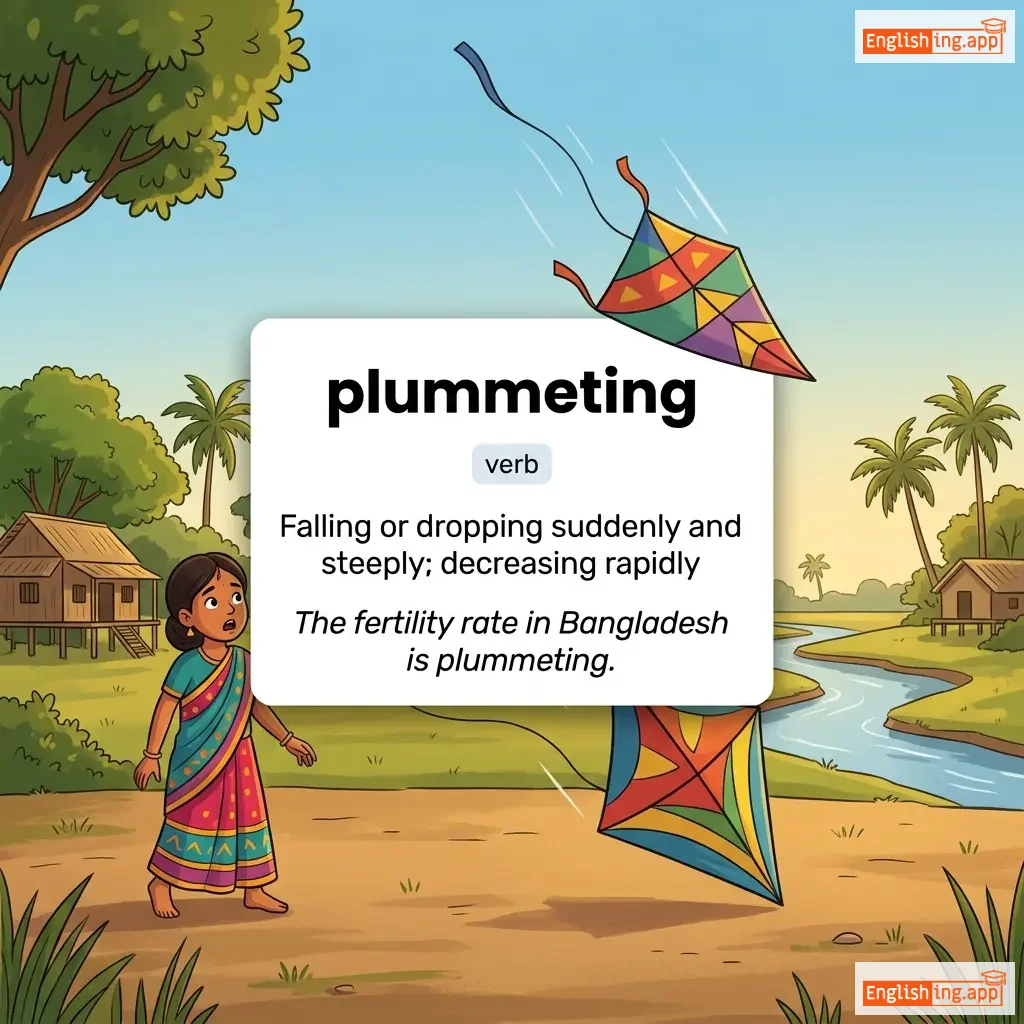
plummeting definition card — visual illustration of the meaning
verb C1
ˈplʌmɪtɪŋ
chute soudaine (chute soudaine)

Falling or dropping suddenly and steeply; decreasing rapidly

"The fertility rate in Bangladesh is plummeting."

"Le taux de fertilité au Bangladesh chute rapidement." (Le taux de fertilité au Bangladesh chute rapidement.)