वोकैबुलरीज

इंग्लिश वोकैबुलरी डिस्कवर, लर्न और मास्टर करें

noun C1
/sɛkt/
संप्रदाय (sampraday)

a subgroup of a larger religious or political group, often with differing beliefs

"The group split into different sects due to doctrinal differences."

"समूह सिद्धांतगत भिन्नताओं के कारण विभिन्न संप्रदायों में विभाजित हो गया।" (Samuh siddhantgat bhinnataon ke karan vibhinn sampradayon mein vibhajit ho gaya.)
adjective C1
/sɛkˈtɛəriən/
संप्रदायिक (sampradaik)

relating to or characterized by the differences between sects, often leading to conflict

"The region has been troubled by sectarian violence for decades."

"इस क्षेत्र में दशकों से सम्प्रदायिक हिंसा से परेशानी है।" (Is kshetr mein dashko se sampradaik hinsa se pareshani hai.)
sector-specific definition card — visual illustration of the meaning
adjective C1
ˈsek.tər spəˈsɪf.ɪk
क्षेत्र-विशिष्ट (kshetra-vishisht)

Relating to or designed for a particular sector or industry.

"Sector-specific policies attract targeted investments."

"क्षेत्र-विशिष्ट नीतियाँ लक्षित निवेश आकर्षित करती हैं।" (Kshetra-vishisht neetiyan lakshit nivesh akarshit karti hain.)
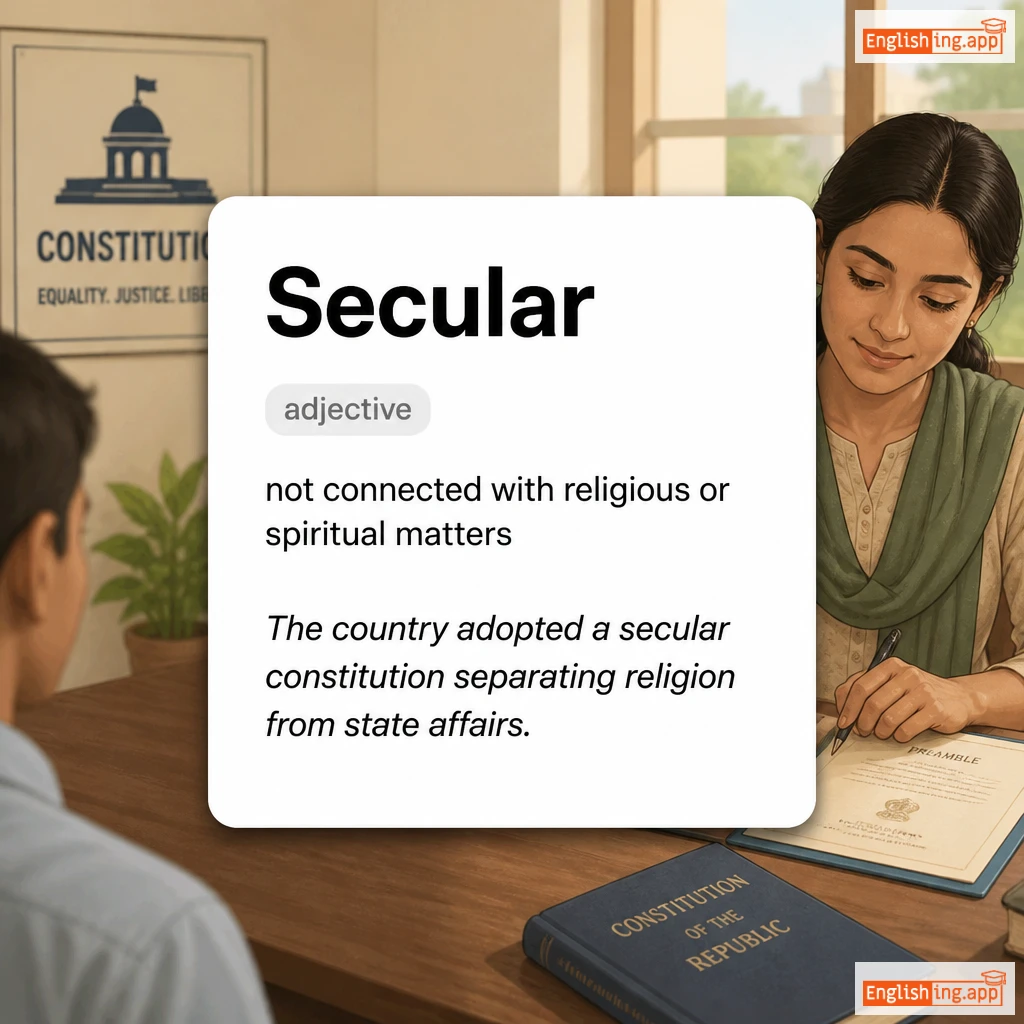
Secular definition card — visual illustration of the meaning
adjective C1
/ˈsɛkjʊlər/
धर्मनिरपेक्ष (dharmnirpeksh)

not connected with religious or spiritual matters

"The country adopted a secular constitution separating religion from state affairs."

"देश ने एक धर्मनिरपेक्ष संविधान अपनाया जिसमें धर्म को राज्य से अलग किया गया है।" (Desh ne ek dharmnirpeksh sanvidhan apnaya jismein dharm ko rajya se alag kiya gaya hai.)
adjective, verb C1
/sɪˈdeɪt/
शांत करना (shaant karna)

calm, quiet, and composed; or to administer a drug to make someone calm or sleep

"The nurse sedated the patient before the operation."

"नर्स ने ऑपरेशन से पहले मरीज़ को शांत करने के लिए दवा दी।" (Nurse ne operation se pehle mareez ko shaant karne ke liye dawa di.)
noun C1
/ˈsɛdətɪv/
शांत करने वाली दवाई (shaant karne wali davai)

A substance that calms the nerves or induces sleep.

"The doctor prescribed a sedative to help the patient sleep."

"डॉक्टर ने मरीज को सोने में मदद करने के लिए एक सेडेटिव दवाइयाँ दीं।" (Doktar ne mareez ko sone mein madad karne ke liye ek sedative davaiyan deen.)
sedentary definition card — visual illustration of the meaning
adjective C1
/ˈsɛdntɛri/
आलसी (aalsi)

Characterized by much sitting and little physical activity.

"A sedentary lifestyle can lead to health problems."

"एक आलसी जीवनशैली स्वास्थ्य समस्याओं का कारण बन सकती है।" (ek aalsi jeevanshailee svasthya samasyaon ka kaaran ban sakti hai.)
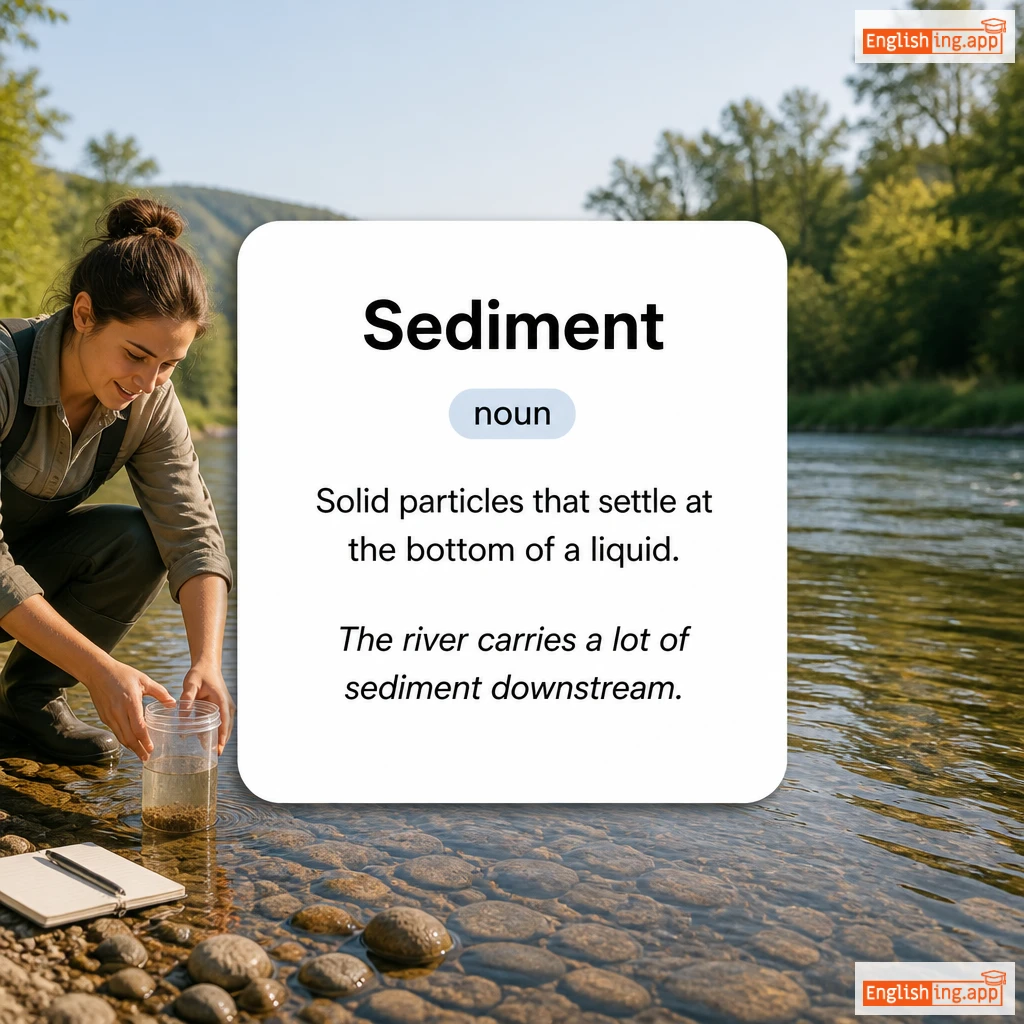
Sediment definition card — visual illustration of the meaning
noun C1
/ˈsɛdəmənt/
संदल (sandl)

Solid particles that settle at the bottom of a liquid.

"The river carries a lot of sediment downstream."

"नदी ढेर सारा संदल नीचे की ओर ले जाती है।" (Nadi dher saara sandl neeche ki aur le jaati hai.)
verb C1
/sɪˈdjuːs/
ललचाना (lalchana)

to attract someone into doing something, especially something they might not normally do

"The advertisement was designed to seduce customers into buying luxury products."

"विज्ञापन को ग्राहकों को लक्जरी उत्पाद खरीदने के लिए ललचाने के लिए डिज़ाइन किया गया था।" (Vigyapan ko grahako ko lakzari utpad kharidne ke liye lalchane ke liye dizain kiya gaya tha.)
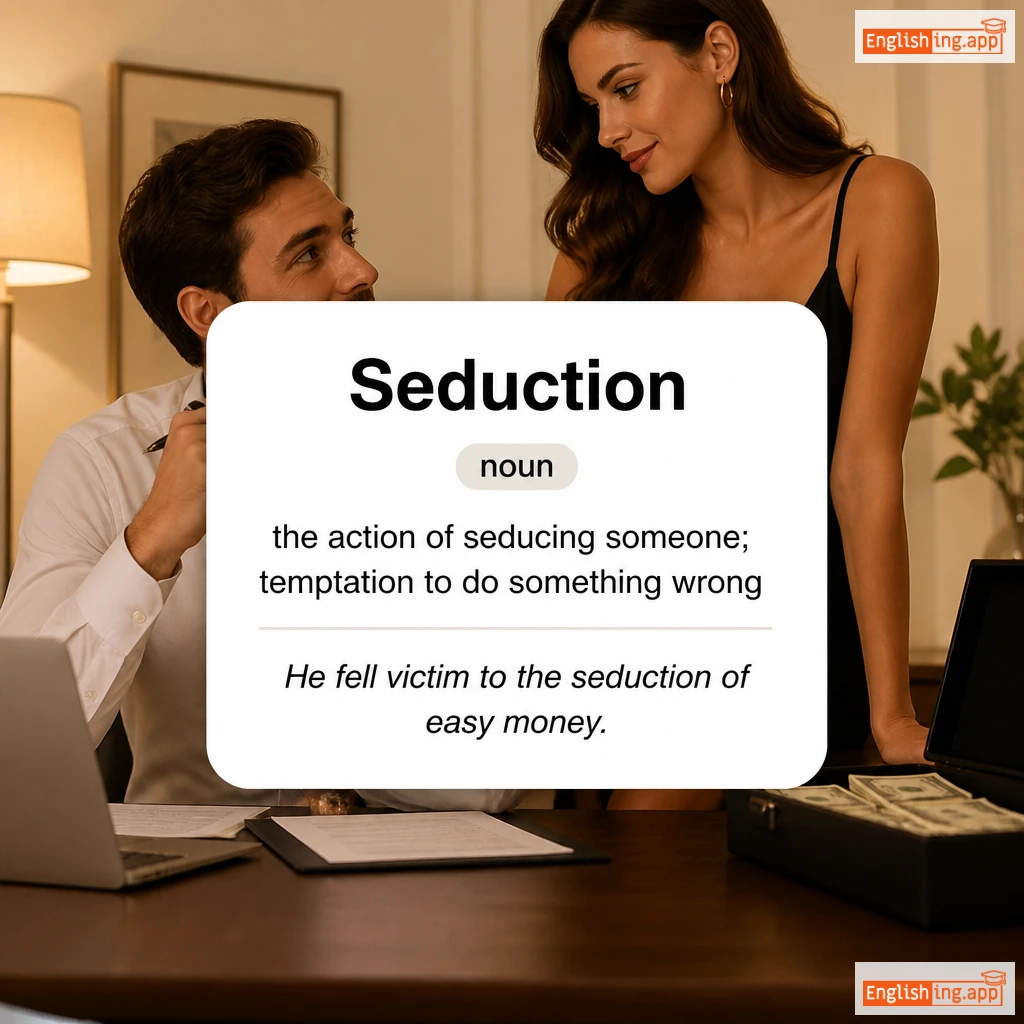
Seduction definition card — visual illustration of the meaning
noun C1
/sɪˈdʌk.ʃən/
ललचाना; प्रलोभन (lalchana; prolobhan)

the action of seducing someone; temptation to do something wrong

"He fell victim to the seduction of easy money."

"वह आसानी से पैसे पाने के प्रलोभन का शिकार हो गया।" (vah aasani se paise pane ke prolobhan ka shikar ho gaya.)
adjective C1
/ˈsiːdi/
गंदा / पुराना (ganda / purana)

dirty, shabby, or in bad condition; also feeling slightly unwell

"He stayed in a seedy motel near the bus station."

"वह बस स्टेशन के पास एक सस्ती मोटल में रुका था।" (Vah bas station ke paas ek sasti motel mein ruka tha.)
verb C1
/siːp/
धीरे-धीरे रिसना (dheere-dheere risna)

to flow or leak slowly through small openings or pores

"Water began to seep through the cracks in the wall."

"पानी दीवार में दरारों से धीरे-धीरे रिसने लगा।" (Pani deewaar mein daraaron se dheere-dheere risne laga.)
noun C1
/sɪr/
ज्ञानी (gyani)

A person who is supposed to be able to see what will happen in the future; a prophet.

"The seer predicted a great change in the kingdom."

"ज्ञानी ने राज्य में एक बड़ा परिवर्तन की भविष्यवाणी की।" (Gyani ne rajya mein ek bada parivartan ki bhavishyavani ki.)
verb C1
/siːð/
गुस्से से उबलना (gusse se ubalna)

To be filled with intense but unexpressed anger or agitation.

"She was seething with anger after the unfair decision."

"वह अन्यायपूर्ण निर्णय के बाद गुस्से से उबल रही थी।" (vah anyayapurn nirnay ke baad gusse se ubal rahi thi.)
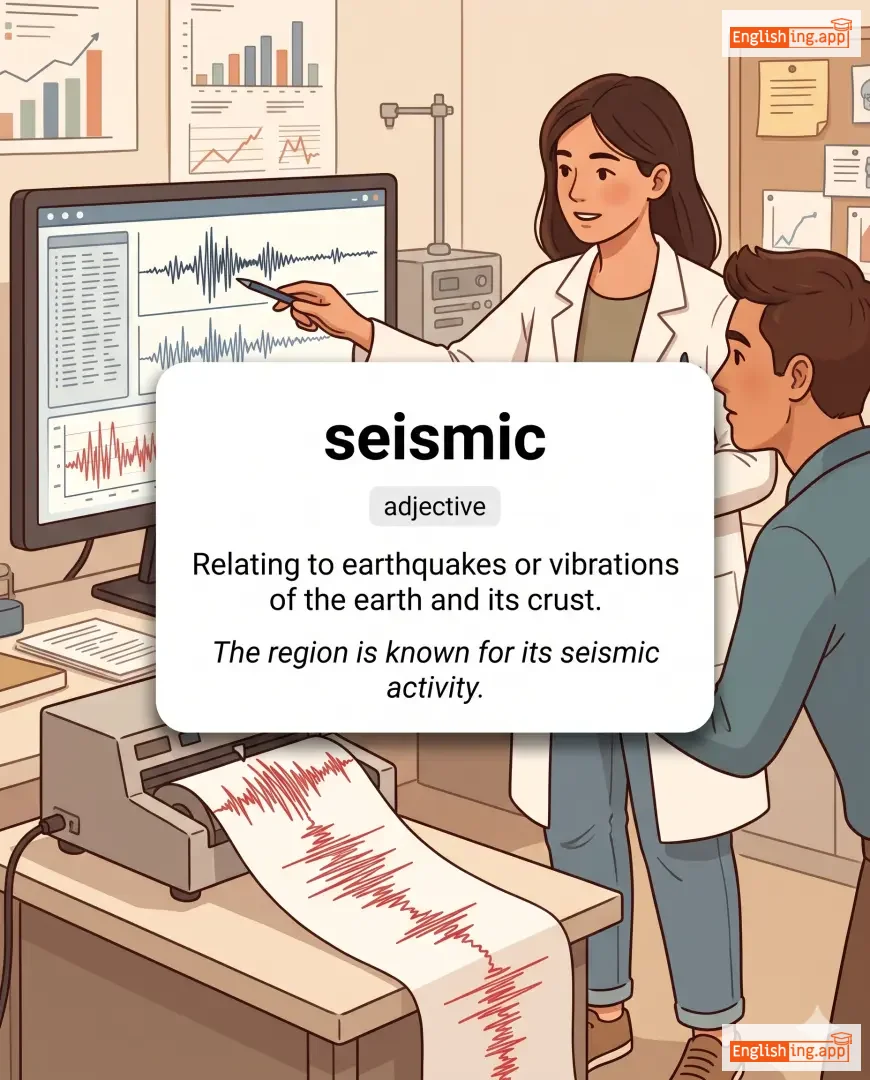
seismic definition card — visual illustration of the meaning
adjective C1
/ˈsaɪz.mɪk/
भूकंपीय (bhookampi)

Relating to earthquakes or vibrations of the earth and its crust.

"The region is known for its seismic activity."

"क्षेत्र अपनी भूकंपीय गतिविधियों के लिए जाना जाता है।" (kshetra apni bhookampi gatividhiyon ke liye jana jata hai.)
adjective C1
/ˌsɛlf əbˈzɔːrbd/
स्वयं में डूबा हुआ (svayam mein dooba hua)

Excessively preoccupied with oneself and one’s own thoughts, feelings, or interests.

"He was too self-absorbed to notice his friend's distress."

"वह अपने दोस्त की चिंता को महसूस करने के लिए बहुत अधिक स्वयं में डूबा हुआ था।" (Wah apne dost ki chinta ko mehsoos karne ke liye bahut adhik svayam mein dooba hua tha.)
self-affirmation definition card — visual illustration of the meaning
noun C1
/ˌsɛlf əˌfɜːˈmeɪʃən/
स्व-स्वीकृति (swa-swikruti)

The practice of affirming one's own worthiness and value as an individual.

"Daily self-affirmation can boost your confidence."

"दैनिक स्व-स्वीकृति आपके आत्मविश्वास को बढ़ा सकती है।" (Dainik swa-swikriti aapke atma-vishwas ko badha sakti hai.)
adjective C1
/ˌsɛlf ɪˈfeɪsɪŋ/
नम्र (namra)

not drawing attention to oneself; modest

"Despite his success, he remained self-effacing and humble."

"उसकी सफलता के बावजूद, वह सेल्फ-इफेसिंग और विनम्र रहे।" (Uski safalta ke bawajood, vah self-effacing aur vinamra rahe.)
noun C1
/ˌsɛlf ɪnˈdʌldʒəns/
स्वयं-संतोष (svayam-santosh)

The act of allowing oneself to enjoy pleasures or desires excessively.

"His weekend of self-indulgence included eating sweets and watching movies nonstop."

"उसके आत्म-संतोष के सप्ताहांत में मिठाई खाना और फिल्में देखना शामिल था।" (Uske atma-santosh ke saptahant mein mithai khana aur filmein dekhna shamil tha.)
self-possession definition card — visual illustration of the meaning
noun C1
ˈsɛlf pəˈzɪʃən
आत्म-नियंत्रण (aatm-niyantran)

The quality of being calm and confident and in control of one's emotions; composure.

"His self-possession during the crisis was remarkable."

"उसकी आत्म-नियंत्रण संकट के दौरान सराहनीय थी।" (Uski aatm-niyantran sankat ke dauran sarahniya thi.)
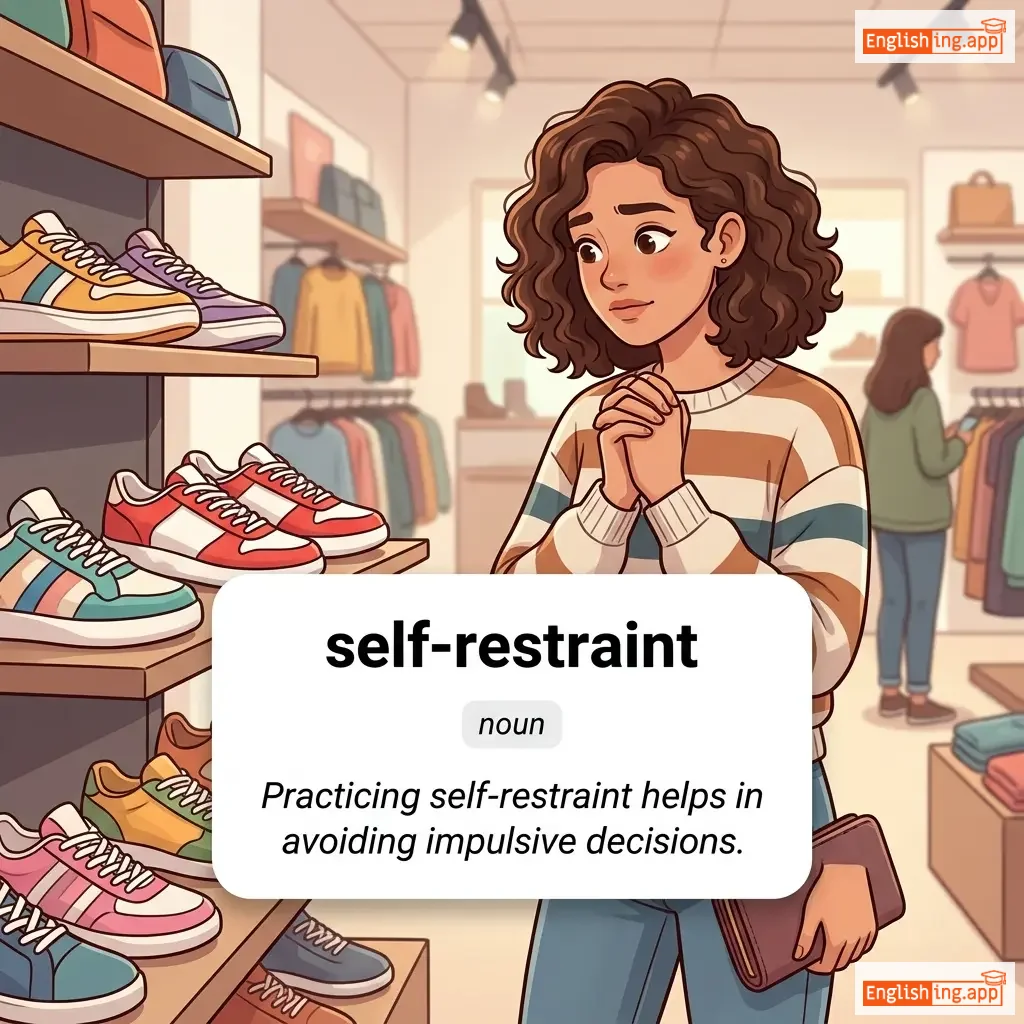
self-restraint definition card — visual illustration of the meaning
noun C1
ˌsɛlf.rɪˈstreɪnt
आत्म-नियंत्रण (aatm-niyantran)

The practice of restraining oneself from indulging in something, typically an impulse or desire.

"Practicing self-restraint helps in avoiding impulsive decisions."

"आत्म-नियंत्रण का अभ्यास अव्यवस्थित निर्णयों से बचने में मदद करता है।" (Aatm-niyantran ka abhyas avyavasthit nirnayoon se bachne mein madad karta hai.)
adjective C1
/ˌsɛlf ˈraɪtʃəs/
आत्मसंतुष्ट (aatmsantusht)

Having or showing an attitude of moral superiority; believing one’s own beliefs are the only right ones.

"His self-righteous comments made everyone uncomfortable."

"उसकी आत्मसंतुष्ट टिप्पणियाँ सभी को असहज कर देती थीं।" (Uski aatmsantusht tippaniyan sabhi ko asahaj kar deti thin.)
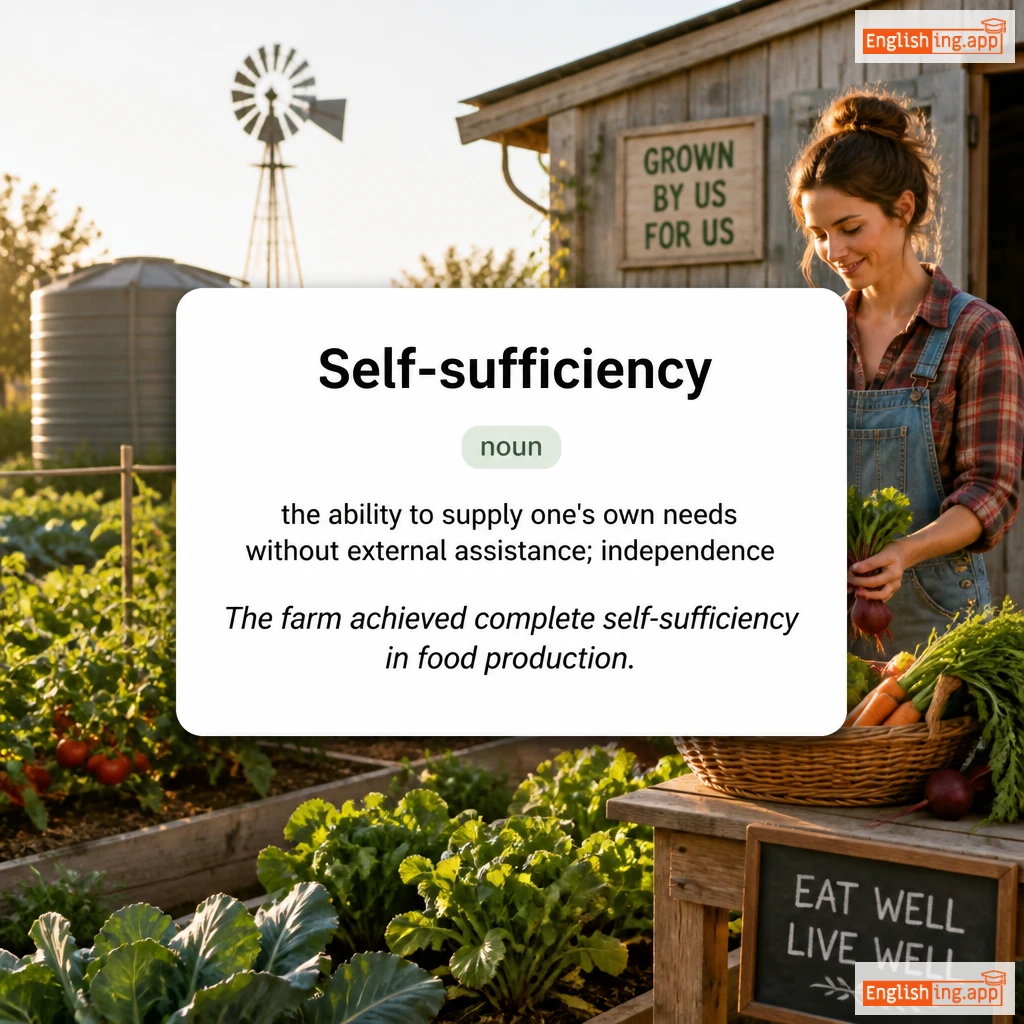
Self-sufficiency definition card — visual illustration of the meaning
noun C1
/ˌsɛlfsəˈfɪʃənsi/
आत्मनिर्भरता (aatmanirbharta)

the ability to supply one's own needs without external assistance; independence

"The farm achieved complete self-sufficiency in food production."

"खेत ने खाद्य उत्पादन में पूर्ण आत्मनिर्भरता हासिल की।" (khet ne khadya utpadan mein poorn aatmanirbharta haasil ki.)
selflessness definition card — visual illustration of the meaning
noun C1
ˈsɛlfləsnɪs
निस्वार्थता (niswarthata)

The quality of being concerned more with the needs of others than with one's own.

"Selflessness is a key value for community building."

"निस्वार्थता समुदाय निर्माण के लिए एक महत्वपूर्ण मूल्य है।" (Niswarthata samudaay nirmaan ke liye ek mahatvapurn moolya hai.)
semantic definition card — visual illustration of the meaning
adjective C1
/sɪˈmæntɪk/
समान्यात्मक (samanyatmak)

Relating to meaning in language or logic.

"The argument was more about semantic differences than real issues."

"विवाद वास्तविक मुद्दों की बजाय समान्यात्मक अंतर के बारे में था।" (Vivad vastavik muddon ki bajay samanyatmak antar ke baare mein tha.)
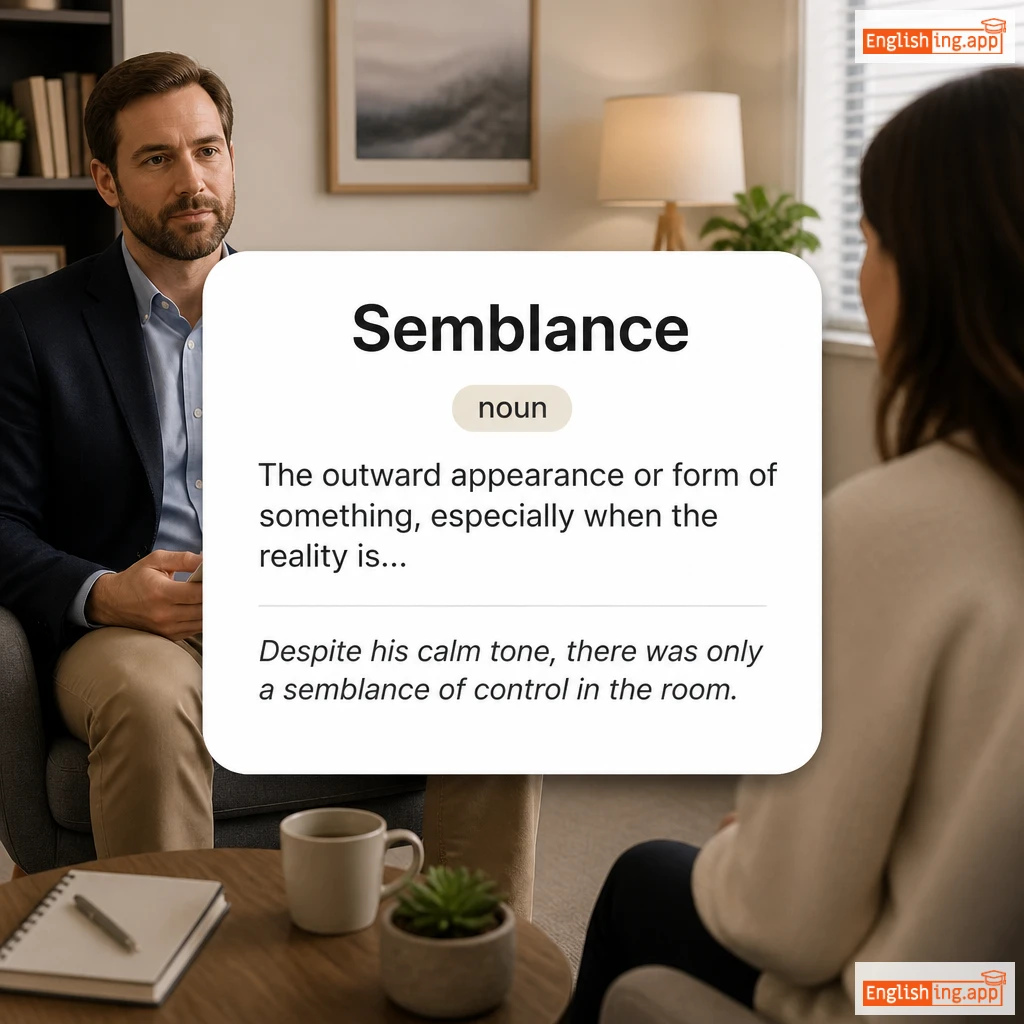
Semblance definition card — visual illustration of the meaning
noun C1
/ˈsɛm.bləns/
आभास, बाहरी रूप (abhas, bahari roop)

The outward appearance or form of something, especially when the reality is different.

"Despite his calm tone, there was only a semblance of control in the room."

"उसकी शांत आवाज़ के बावजूद, कमरे में केवल नियंत्रण का आभास था।" (uski shaant awaaz ke bawjood, kamre mein keval niyantran ka abhas tha.)
adjective C1
/ˌsɛm.iˈæn.ju.əl/
अर्धवार्षिक (ardhavarshik)

Occurring twice a year; every six months.

"The company holds a semiannual meeting with all employees."

"कंपनी हर छह महीने में एक बैठक आयोजित करती है।" (Company har chhah mahine mein ek baithak aayojit karti hai.)
adjective C1
/ˈsɛm.ɪ.nəl/
सुख (shukh)

Strongly influencing later developments; highly original and influential.

"His seminal book changed the course of modern philosophy."

"जब उसने पुरस्कार प्राप्त किया, तो वह अपनी खुशी छिपा नहीं पाई।" (jab usne puraskaar praapt kiya, to vah apni khushi chhupa nahi pai.)
adjective C1
/ˈsiː.naɪl/
वृद्धावस्था से संबंधित कमजोरी (vruddhavastha se sambandhit kamjori)

Showing the weaknesses of old age, especially mental decline.

"The old man became senile and forgot familiar faces."

"पुराना आदमी सेनाइल हो गया और परिचित चेहरों को भूल गया।" (puraana aadmi senile ho gaya aur parichit chehron ko bhool gaya.)
noun C1
/sɪˈnɪləti/
वृद्धावस्था (vriddhavastha)

The state of being old and showing the weaknesses of age, especially mental decline.

"His forgetfulness was attributed to senility."

"उसकी भूलने की आदत को वृद्धावस्था से जोड़ा गया था।" (Uski bhoolne ki aadat ko vriddhavastha se joda gaya tha.)
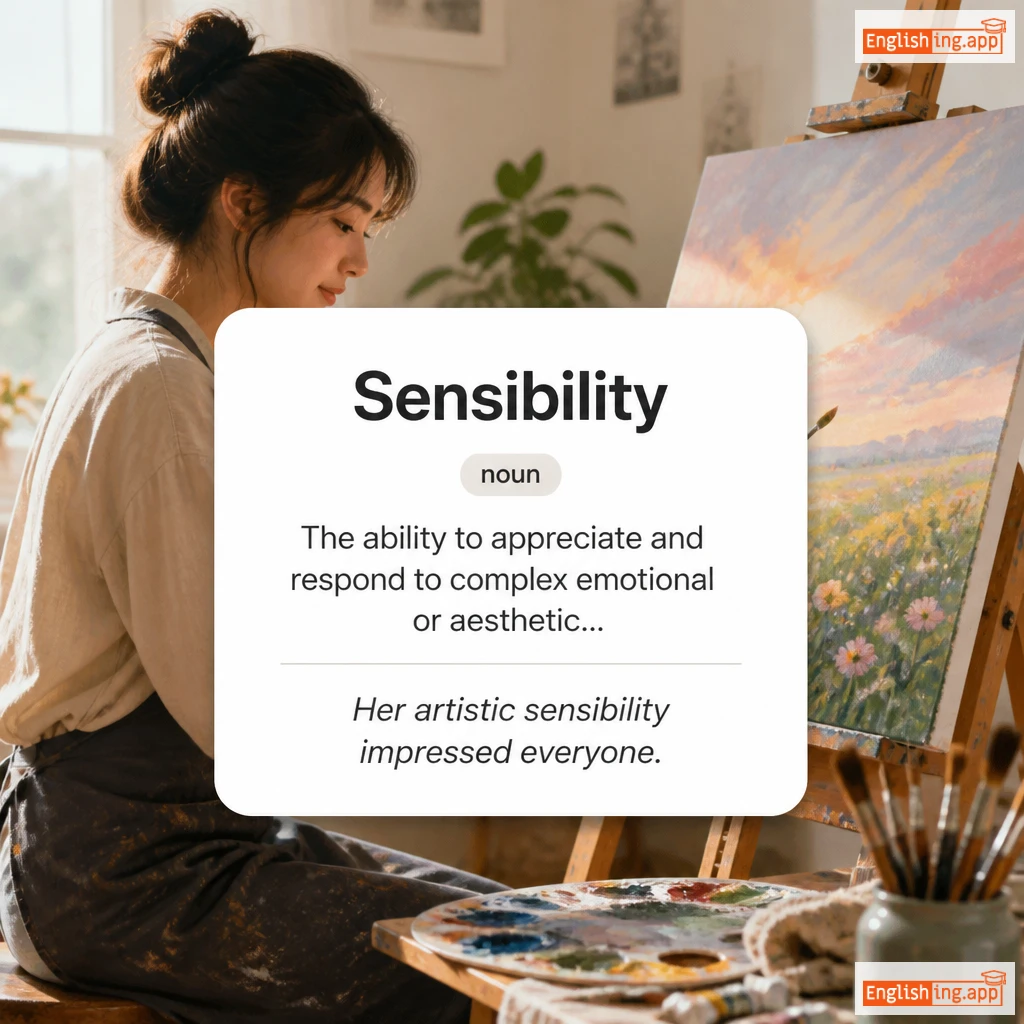
Sensibility definition card — visual illustration of the meaning
noun C1
/ˌsɛnsəˈbɪləti/
संवेदनशीलता (sensedibiliti)

The ability to appreciate and respond to complex emotional or aesthetic influences; sensitivity.

"Her artistic sensibility impressed everyone."

"उसकी कला संबंधी संवेदनशीलता ने सभी को प्रभावित किया।" (uski kala sambandhi samvedansheelta ne sabhi ko prabhavit kiya.)
noun C1
/ˌsɛnsɪtaɪˈzeɪʃən/
संवेदनशीलता में वृद्धि (sanvedansheelta mein vruddhi)

The process of becoming sensitive to a substance, situation, or influence.

"The doctor warned about the sensitization caused by repeated exposure to chemicals."

"डॉक्टर ने रासायनिक पदार्थों के संपर्क में आने से होने वाली संवेदनशीलता के बारे में चेतावनी दी।" (doktar ne rasanik padarthon ke sampark mein aane se hone wali sanvedansheelta ke baare mein chetavani di.)
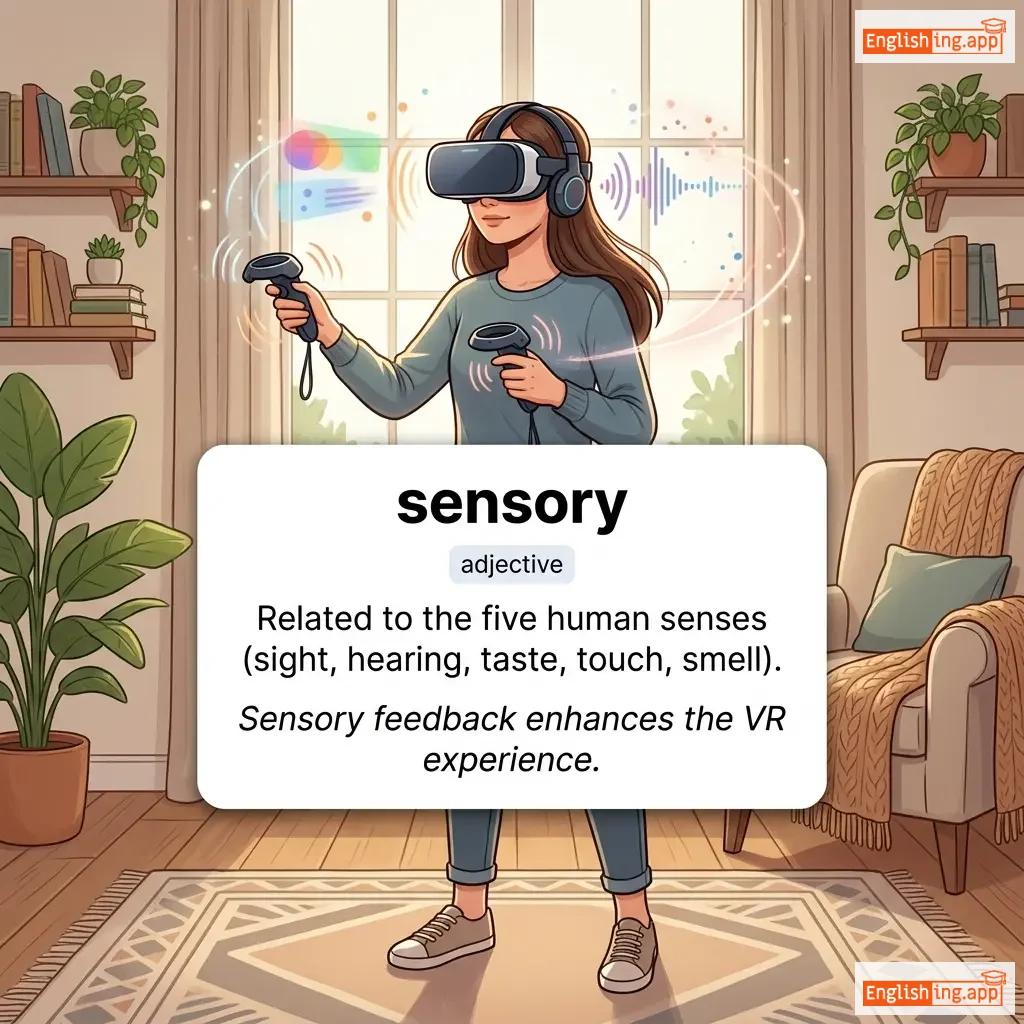
sensory definition card — visual illustration of the meaning
adjective C1
/ˈsɛn.sər.i/
संवेदनात्मक (sanvedanatmak)

Related to the five human senses (sight, hearing, taste, touch, smell).

"Sensory feedback enhances the VR experience."

"संवेदनात्मक प्रतिक्रिया वीआर अनुभव को बढ़ाती है।" (Sanvedanatmak pratikriya VR anubhav ko badhati hai.)
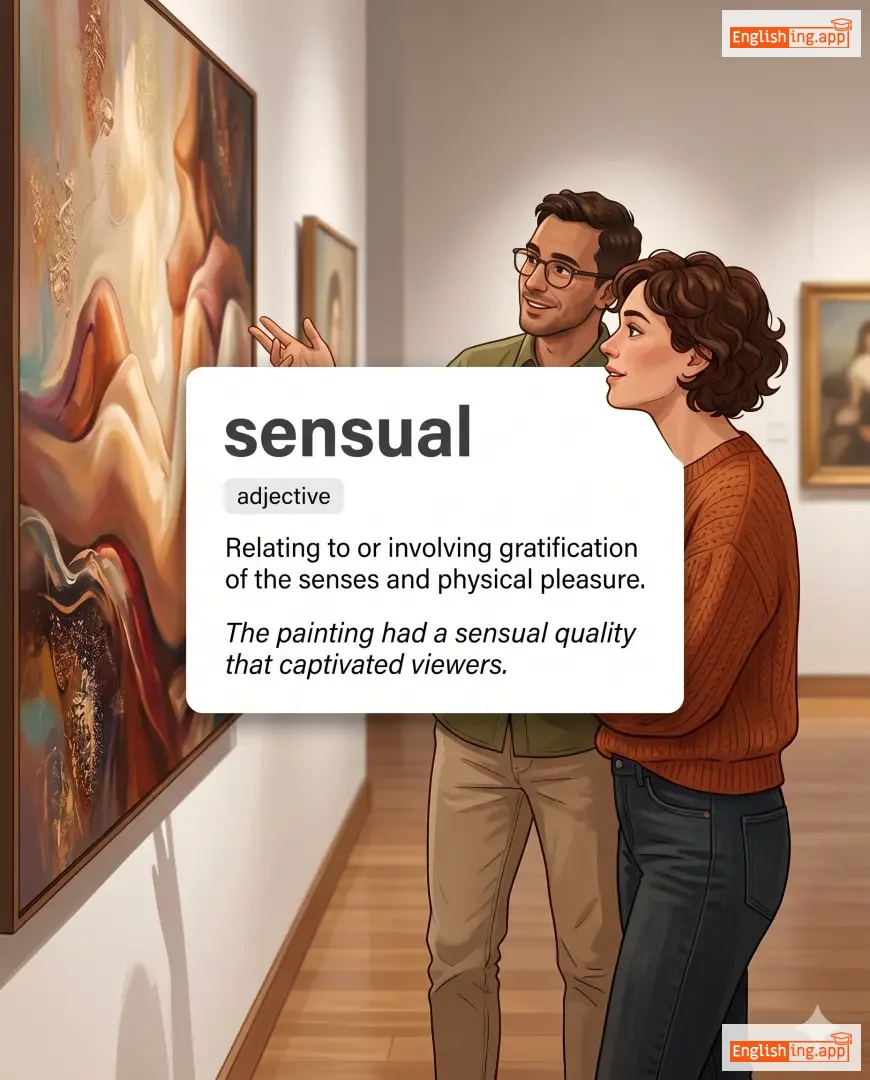
sensual definition card — visual illustration of the meaning
adjective C1
/ˈsɛnʃuəl/
इंद्रिय सुखपूर्ण (indriya sukhpoorn)

Relating to or involving gratification of the senses and physical pleasure.

"The painting had a sensual quality that captivated viewers."

"चित्रकला में एक इंद्रिय सुखपूर्ण गुणवत्ता थी जिसने दर्शकों को मोहित किया।" (chitrakala mein ek indriya sukhpoorn gunwatta thi jismein darshako ko mohit kiya.)
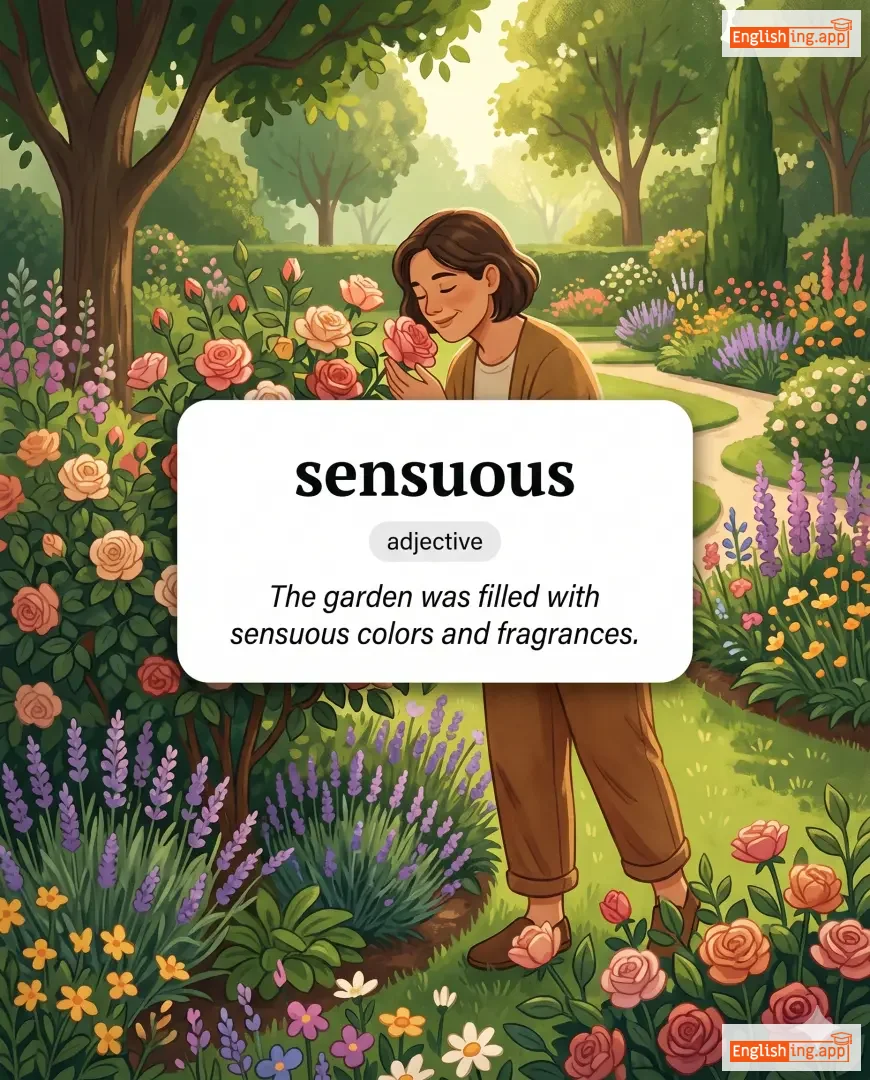
sensuous definition card — visual illustration of the meaning
adjective C1
/ˈsɛnʃuəs/
खुशी (khushi)

Relating to or affecting the senses rather than the intellect; pleasing to the senses.

"The garden was filled with sensuous colors and fragrances."

"जब उसे पुरस्कार मिला तो वह अपनी खुशी को छुपा नहीं सकी।" (Jab use puraskar mila to wah apni khushi ko chhupa nahi saki.)
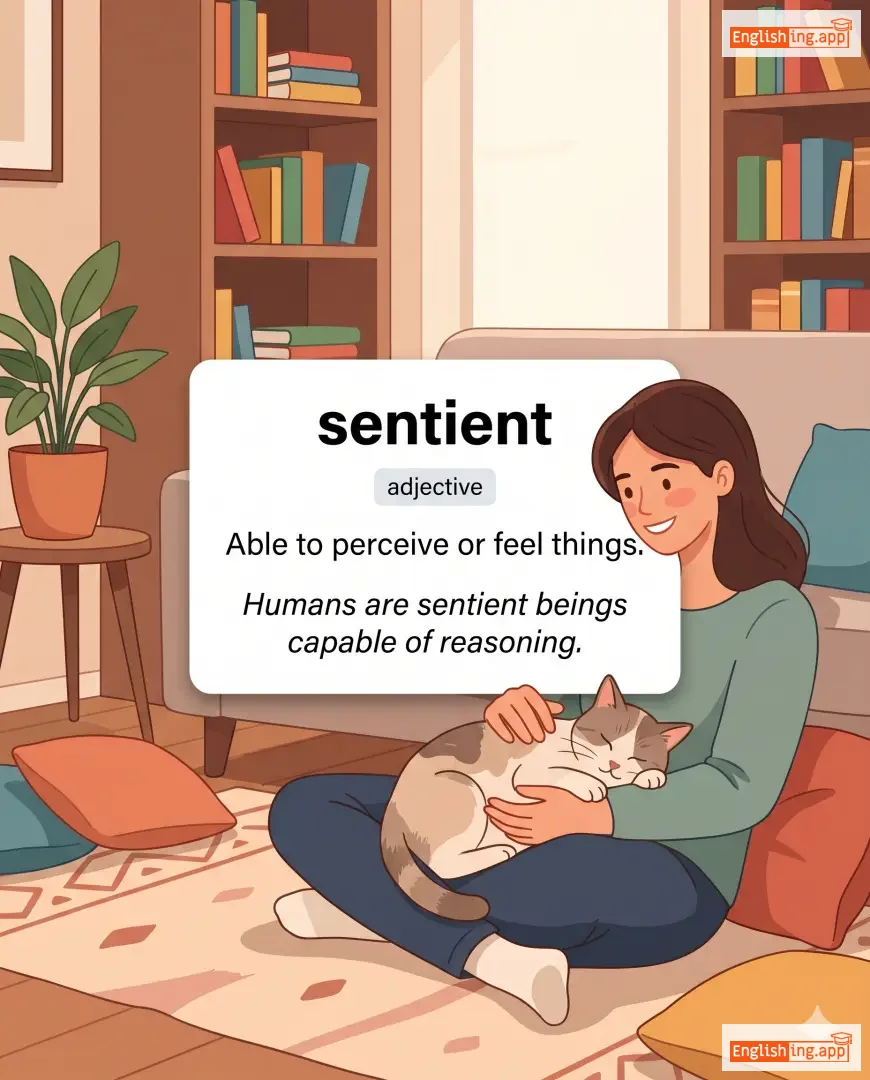
sentient definition card — visual illustration of the meaning
adjective C1
/ˈsɛnʃənt/
संवेदनशील (sanvedansheel)

Able to perceive or feel things.

"Humans are sentient beings capable of reasoning."

"मानव संवेदनशील प्राणी हैं जो तर्क करने में सक्षम हैं।" (Manav sanvedansheel prani hain jo tark karne mein saksham hain.)
noun C1
/ˈsɛntɪnəl/
सैनिक (sainik)

A soldier or guard whose job is to stand and keep watch.

"A sentinel stood at the entrance of the camp."

"एक सेंटिनल शिविर के प्रवेश द्वार पर खड़ा था।" (ek sentinel shivir ke pravesh dwaar par khada tha.)
noun C1
/ˈsɛpərətɪst/
अलगाववादी (alagavvadi)

A person who supports the separation of a group from a larger body, often for political or cultural independence.

"The separatist group demanded independence from the central government."

"अलगाववादी समूह ने केंद्रीय सरकार से स्वतंत्रता की मांग की।" (alagavvadi samuh ne kendriya sarkar se svatantrata ki maang ki.)
adjective C1
/ˈsɛptɪk/
संक्रमित (sankramit)

Infected with harmful bacteria; relating to or causing infection.

"The doctor treated the patient's septic wound immediately."

"डॉक्टर ने मरीज के सेप्टिक घाव का तुरंत इलाज किया।" (Doktor ne mareez ke septic ghaav ka turant ilaaj kiya.)
sequester definition card — visual illustration of the meaning
verb C1
/sɪˈkwɛstər/
अलग करना (alag karna)

To isolate or hide away; to take possession of assets until a debt has been paid.

"The jury was sequestered during the high-profile trial."

"उच्च-प्रोफ़ाइल मुकदमे के दौरान जूरी को अलग किया गया था।" (Ucch-profil mukadme ke dauran jury ko alag kiya gaya tha.)
adjective C1
/ˌsɛrənˈdɪpɪtəs/
सौभाग्यजनक आकस्मिक (saubhagyajanak aaksamik)

Occurring or discovered by chance in a happy or beneficial way.

"Their meeting at the café was purely serendipitous."

"उनकी कैफे में मुलाकात पूरी तरह से सौभाग्यजनक थी।" (Unki cafe mein mulaqat poori tarah se saubhagyajanak thi.)
noun C1
/ˌsɛrənˈdɪpɪti/
सौभाग्यजनक संयोग (saubhagyajanak sanyog)

The occurrence of events by chance in a happy or beneficial way.

"Finding that old photo album was pure serendipity."

"वह पुराना फोटो एल्बम मिलना पूर्ण रूप से सौभाग्यजनक संयोग था।" (Wah purana photo album milna poorn roop se saubhagyajanak sanyog tha.)
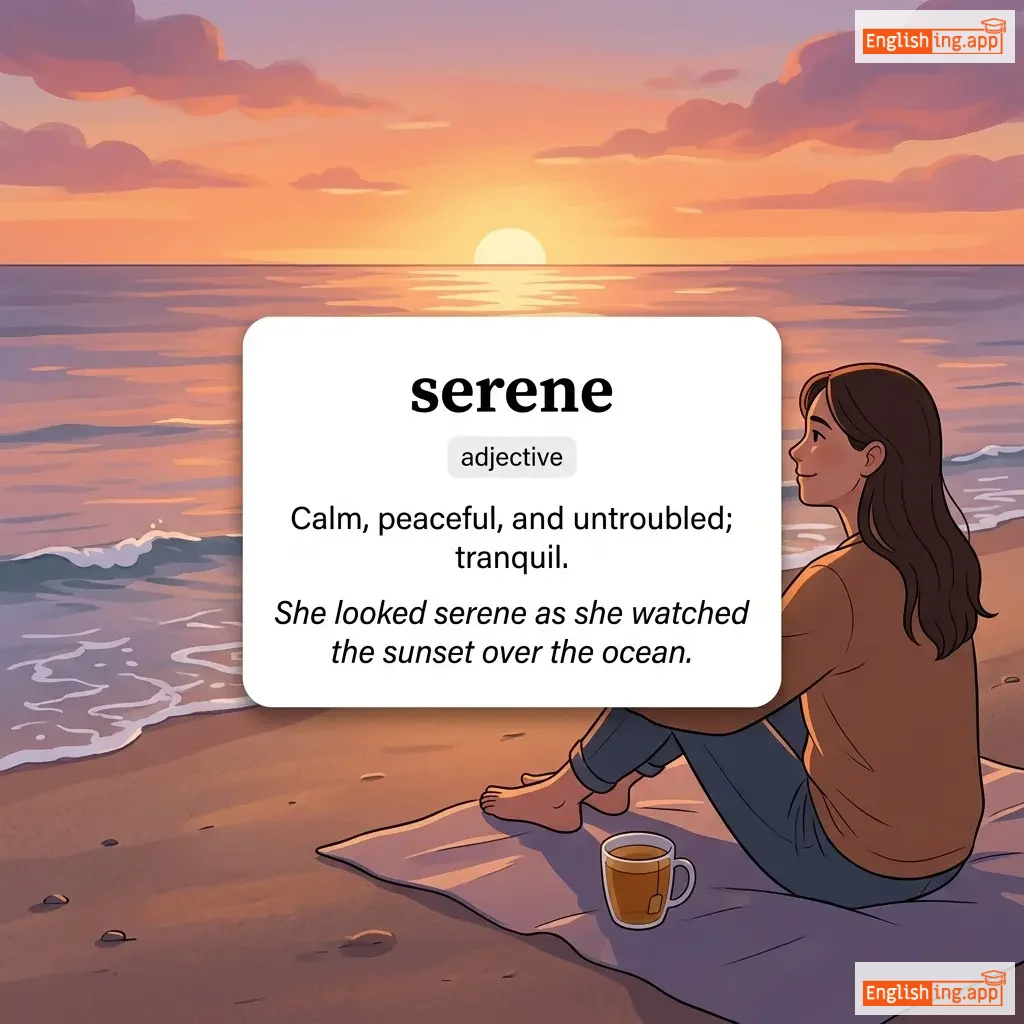
serene definition card — visual illustration of the meaning
adjective C1
/səˈriːn/
शांत (shant)

Calm, peaceful, and untroubled; tranquil.

"She looked serene as she watched the sunset over the ocean."

"वह समुद्र के ऊपर सूर्यास्त को देखकर शांत दिख रही थी।" (Vah samudra ke upar suryast ko dekhkar shant dikh rahi thi.)
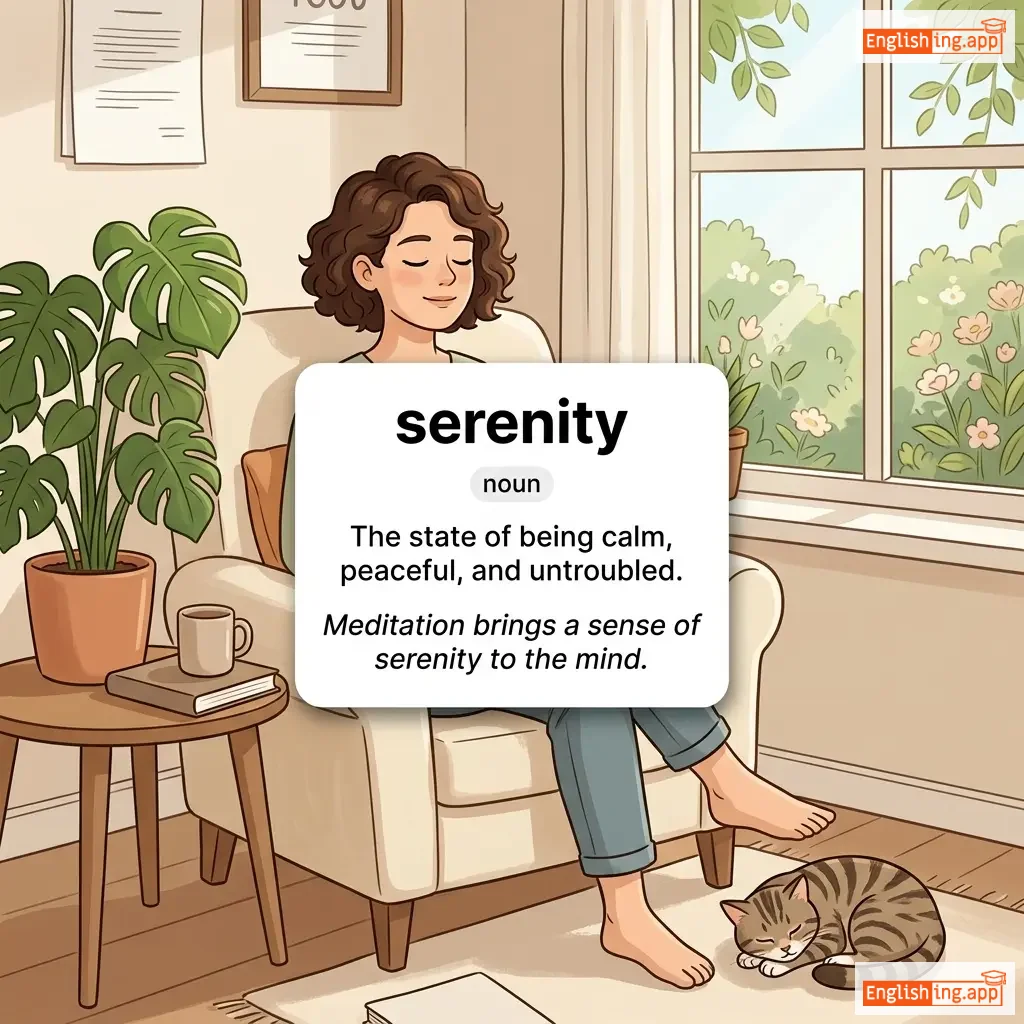
serenity definition card — visual illustration of the meaning
noun C1
/səˈrɛnɪti/
शांति (shanti)

The state of being calm, peaceful, and untroubled.

"Meditation brings a sense of serenity to the mind."

"ध्यान मन को शांति का अनुभव कराता है।" (Dhyan man ko shanti ka anubhav karata hai.)
noun C1
/ˌsɑːrdʒənt ˈmeɪdʒər/
सर्जेंट-मेजर (sarjent-mejor)

A senior non-commissioned officer in the army responsible for discipline and administration within a unit.

"The sergeant-major inspected the troops before the parade."

"परेड से पहले सर्जेंट-मेजर ने सैनिकों की जांच की।" (Pared se pehle sarjent-mejor ne sainiko ki jaanch ki.)
noun C1
/ˈsɜːrmən/
धर्मोपदेश (dharmopadesh)

A religious discourse delivered by a preacher, often offering moral instruction or spiritual guidance.

"The pastor gave a moving sermon about compassion and forgiveness."

"पादरी ने करुणा और क्षमा पर एक प्रेरणादायक धर्मोपदेश दिया।" (Padri ne karuna aur kshama par ek prerandayak dharmopadesh diya.)
adjective C1
/ˈsɜːrpənˌtiːn/
साँप की तरह मुड़ा हुआ (saap ki tarah mudha hua)

Having the shape, movement, or qualities of a serpent; winding or twisting.

"The road took a serpentine path through the mountains."

"सड़क पहाड़ों के बीच से सर्पेंटाइन मार्ग पर मुड़ गई।" (Sadak pahaadon ke beech se serpentine maarg par mud gayi.)
adjective C1
/ˈsɛreɪtɪd/
दांतदार (daantdaar)

Having a notched or saw-toothed edge.

"The bread knife had a serrated blade."

"ब्रेड चाकू की धार दांतदार थी।" (Bred chaku ki dhaar daantdaar thi.)
adjective C1
/ˈsɜːrvɪsəbl/
उपयोगी (upayogi)

fit for use; usable; in working order

"The old bicycle is still serviceable despite its age."

"पुरानी साइकिल अभी भी उपयोगी है, बावजूद इसके उम्र के।" (Purani cycle abhi bhi upayogi hai, bawajood iske umra ke.)
servile definition card — visual illustration of the meaning
adjective C1
/ˈsɜːrvaɪl/ or /ˈsɜːrvəl/
चाटुकार (chatukar)

having or showing an excessive willingness to serve or please others

"His servile attitude annoyed his colleagues."

"उसका चाटुकार रवैया उसके सहकर्मियों को परेशान कर रहा था।" (Uska chatukar ravaiya uske sahkarmiyon ko pareshan kar raha tha.)