वोकैबुलरीज

इंग्लिश वोकैबुलरी डिस्कवर, लर्न और मास्टर करें

noun C1
/səˈbætɪkəl/
период отпуска для учебы или путешествий (period otpuska dlya ucheby ili puteshestviy)

A period of paid leave granted to a teacher or worker for study or travel, traditionally every seventh year.

"She took a sabbatical to research her new book."

"Она взяла саббатикал, чтобы исследовать свою новую книгу." (Ona vzyala sabbatical, chtoby issledovat' svoyu novuyu knigu.)
noun C1
/ˌsæbəˈtɜːr/
саботёр (sabotyor)

A person who engages in sabotage.

"The saboteur was arrested before he could plant the bomb."

"Саботёр был арестован до того, как он успел установить бомбу." (Sabotyor byl arestovan do togo, kak on uspel ustanovit' bombu.)
adjective C1
/ˌsækrɪˈfɪʃəl/
жертвенный (zhertvennyy)

Relating to or involving sacrifice.

"The lamb was used as a sacrificial offering in the ritual."

"Ягненок был использован как жертвенная жертва в ритуале." (Yahnenok byl ispol'zovan kak zhertvennaya zhertva v rituale.)
noun C1
/ˈsækrɪlɪdʒ/
осквернение (oskvernenie)

Violation or misuse of what is regarded as sacred.

"Stealing from the temple was considered an act of sacrilege."

"Кража из храма считалась актом осквернения." (Krazha iz khrama schitalas aktom oskverneniya.)
adjective C1
/ˌsækrəˈlɪdʒəs/
сакралигийный (sacriligijnyj)

Showing disrespect or irreverence toward something sacred.

"The painting was criticized as being sacrilegious."

"Картина была раскритикована как сакралигийная." (Kartina byla raskritikovana kak sakralignaya.)
adjective C1
/ˈsæk.rəˌsæŋkt/
неприкосновенный (neprikosnovennyy)

Regarded as too important or valuable to be interfered with; sacred.

"Freedom of speech is considered sacrosanct in democratic societies."

"Свобода слова считается неприкосновенной в демократических обществах." (Svoboda slova schitayetsya neprikosnovennoy v demokraticheskikh obshchestvakh.)
adjective C1
/səˈdɪs.tɪk/
садистский (sadistskiy)

Deriving pleasure from inflicting pain or suffering on others.

"The villain had a sadistic smile while hurting his enemies."

"Злодей улыбался садистской улыбкой, когда причинял боль своим врагам." (Zlodey ulybalsya sadistskoy ulybkoy, kogda prichinyal bol' svoim vragam.)
noun C1
/ˈsæf.rən/
шафран (shafran)

A spice derived from the flower of Crocus sativus, used for flavoring and coloring food.

"She added saffron to the rice for flavor and color."

"Она добавила шафран в рис для вкуса и цвета." (Ona dobavila shafran v ris dlya vkusa i tsveta.)
noun C1
/ˈsɑːɡə/
долгая история (dolgaya istoriya)

A long story of heroic achievement, or a long, complex series of events.

"The company's rise and fall became a corporate saga."

"Подъем и падение компании стало корпоративной сагой." (Podyom i padeniye kompanii stalo korporativnoy sagoy.)
Sage definition card — visual illustration of the meaning
noun C1
/seɪdʒ/
мудрец (mudrets)

A profoundly wise person, or wise through reflection and experience.

"The old sage was respected for his wisdom."

"Старый мудрец пользовался уважением за свою мудрость." (Staryj mudrets pol'zovalsya uvazheniyem za svoiu mudrost'.)
salient definition card — visual illustration of the meaning
adjective C1
/ˈseɪ.li.ənt/
основная характеристика (osnovnaya kharakteristika)

Most noticeable or important; standing out prominently.

"The most salient feature of the report was its emphasis on sustainability."

"Самая заметная особенность отчета была его акцент на устойчивости." (Samaya zametnaya osobennost' otcheta byla ego aktsent na ustoychivosti.)
adjective C1
/ˈseɪ.liːn/
солёный (solyoniy)

Containing or resembling salt; salty.

"Doctors often use saline solution to clean wounds."

"Врачи часто используют физиологический раствор для очистки ран." (Vrachi chasto ispol'zuyut fiziologicheskiy rastvor dlya ochistki ran.)
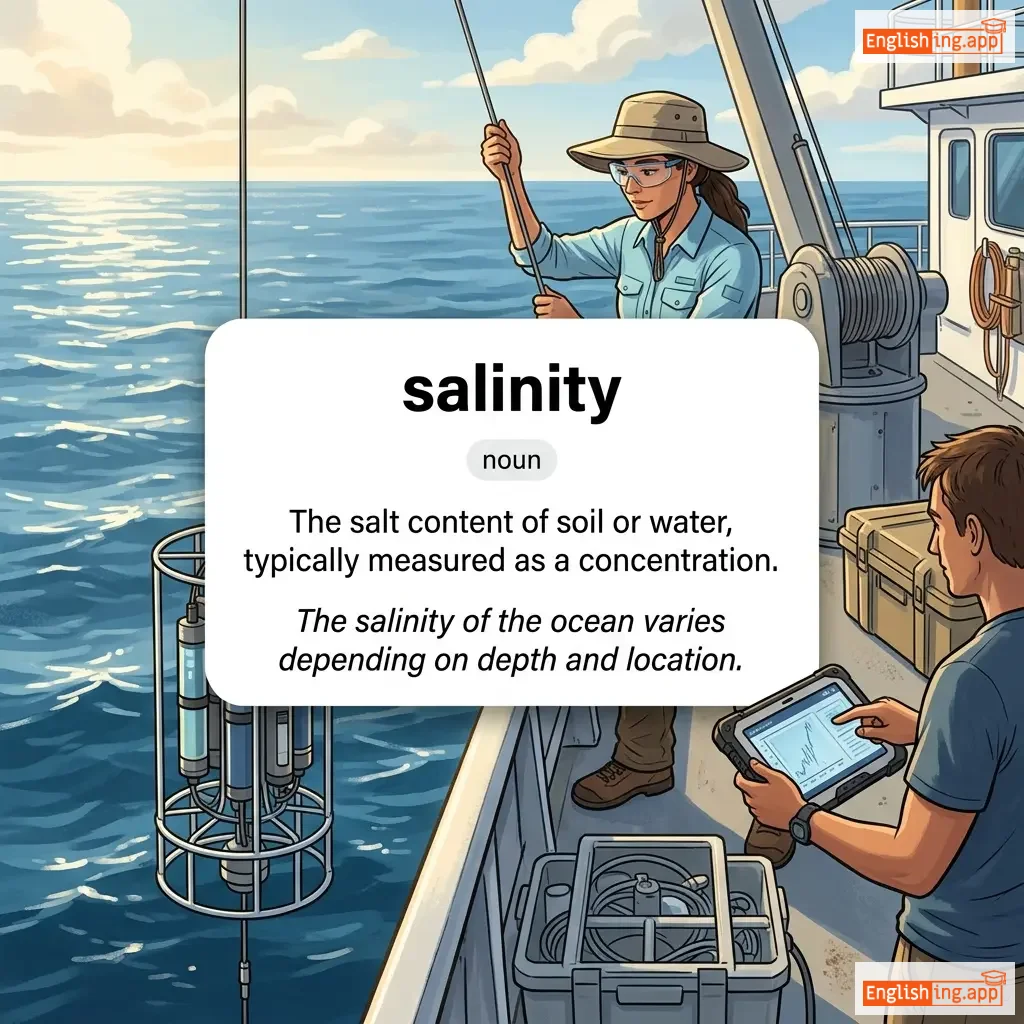
salinity definition card — visual illustration of the meaning
noun C1
/səˈlɪn.ə.t̬i/
соленость, концентрация соли (solenost, kontsentratsiya soli)

The salt content of soil or water, typically measured as a concentration.

"The salinity of the ocean varies depending on depth and location."

"Соленость океана варьируется в зависимости от глубины и местоположения." (Solenost' okeana varyiruetsya v zavisimosti ot glubiny i mestopolozheniya.)
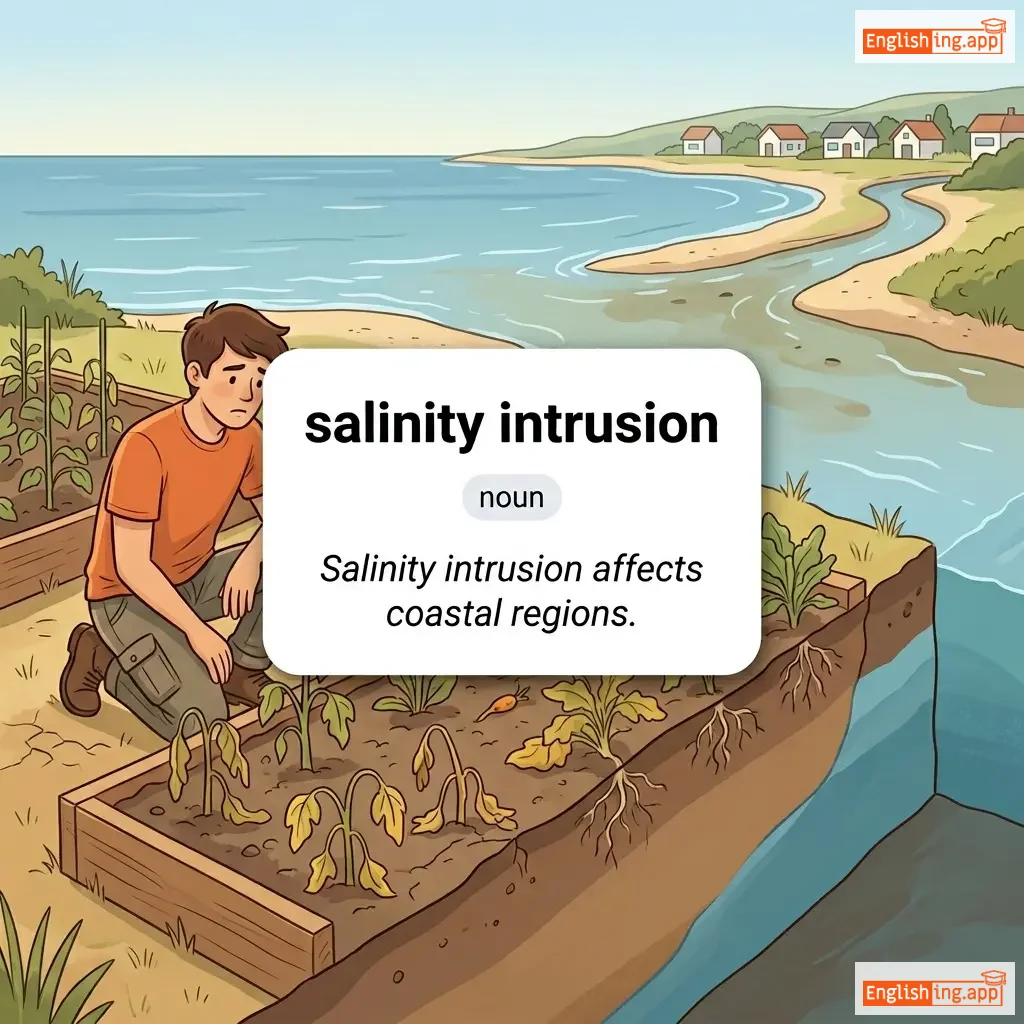
salinity intrusion definition card — visual illustration of the meaning
noun C1
səˈlɪnɪti ɪnˈtruːʒən
проникновение соли (proniknovenie soli)

The movement of salt water into freshwater areas, typically affecting coastal regions.

"Salinity intrusion affects coastal regions."

"Проникновение соли влияет на прибрежные регионы." (Proniknovenie soli vliyayet na pribrezhnye regiony.)
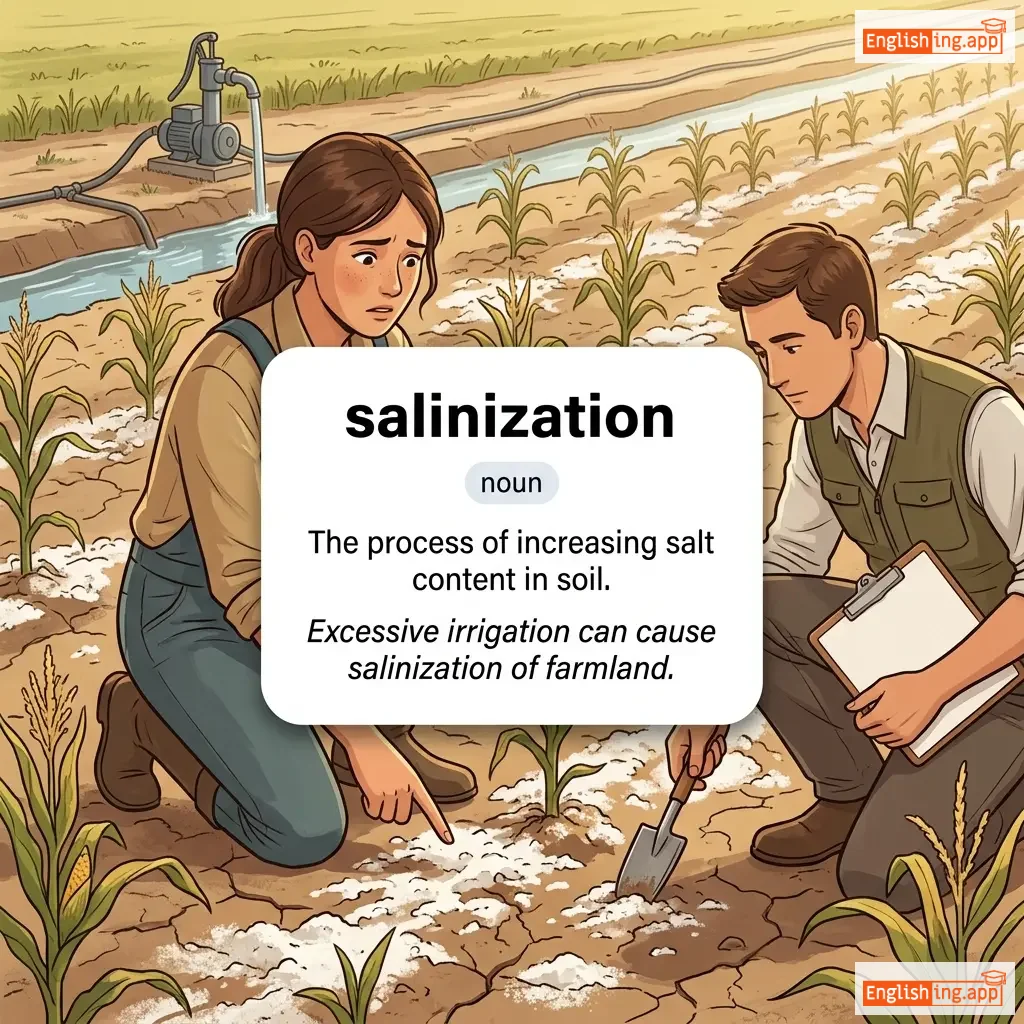
salinization definition card — visual illustration of the meaning
noun C1
/ˌsæl.ɪ.naɪˈzeɪ.ʃən/
увеличение солености (uvelichenie solenosti)

The process of increasing salt content in soil.

"Excessive irrigation can cause salinization of farmland."

"Чрезмерный полив может привести к увеличению солености сельскохозяйственных земель." (Chrezmernyy poliv mozhet privesti k uvelicheniyu solenosti selskokhozyaystvennykh zemel.)
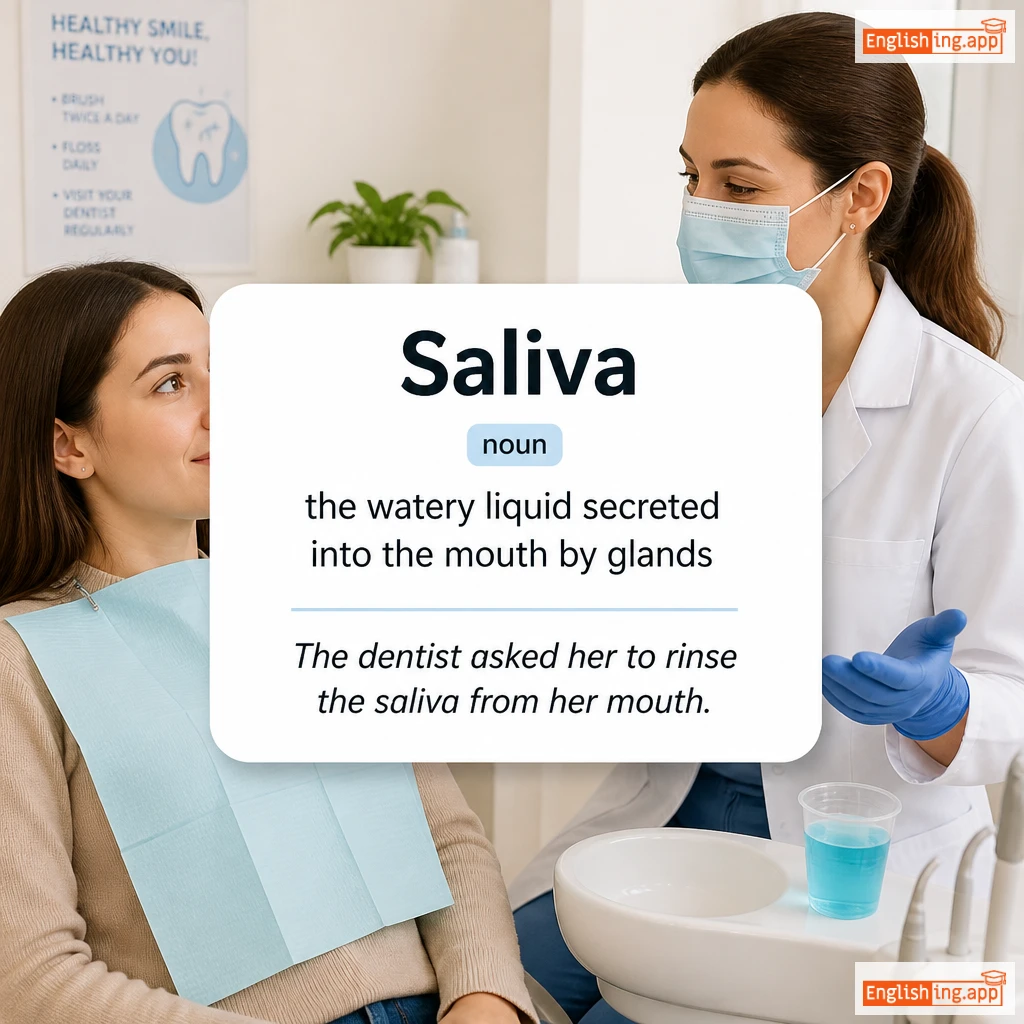
Saliva definition card — visual illustration of the meaning
noun C1
/səˈlaɪ.və/
слюна (saliva)

the watery liquid secreted into the mouth by glands

"The dentist asked her to rinse the saliva from her mouth."

"Стоматолог попросил её прополоскать слюну во рту." (Stomatolog poprosil eyo propoloskat slyunu vo rtu)
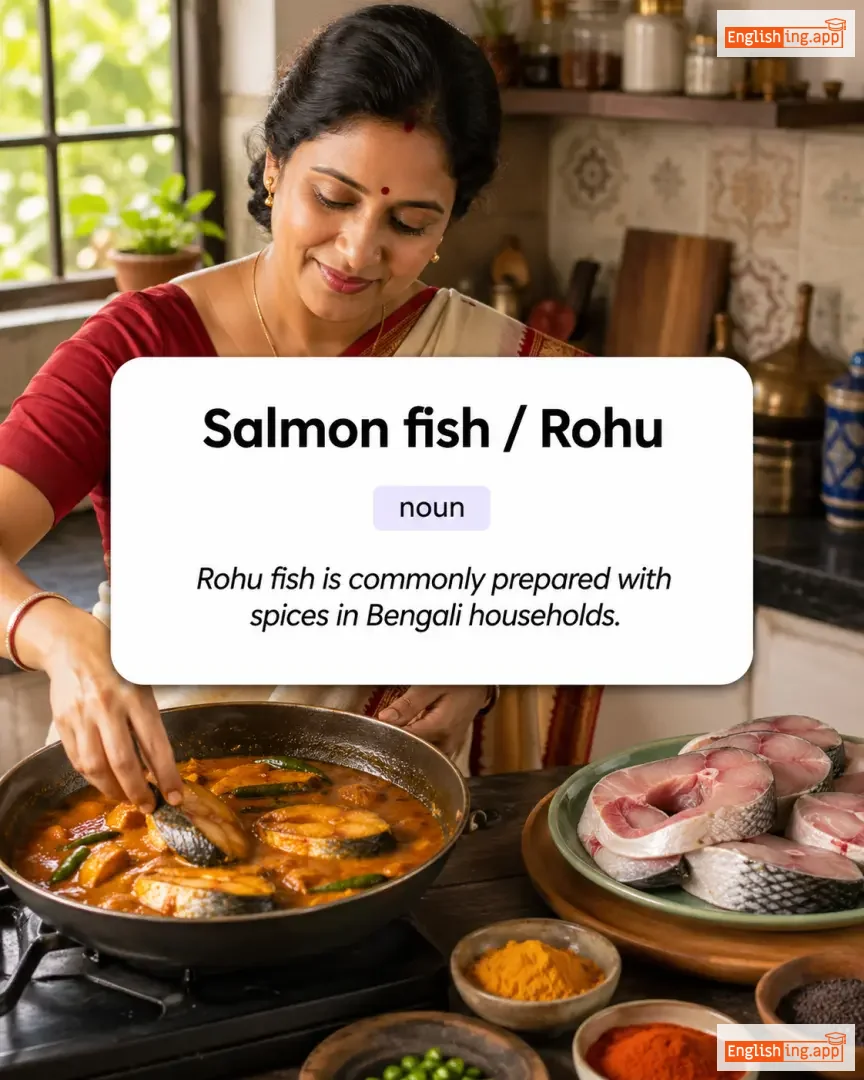
Salmon fish / Rohu definition card — visual illustration of the meaning
noun C1
/ˈsæl.mən fɪʃ / ˈroʊ.huː/
рыба Роху (ryba Rokhu)

a freshwater fish popular in South Asian cuisine; also refers to salmon which is a different species

"Rohu fish is commonly prepared with spices in Bengali households."

"Рыба Роху обычно готовится с пряностями в бенгальских домах." (Ryba Rokhu obychno gotovitsya s pryanostyami v bengalskikh domakh.)
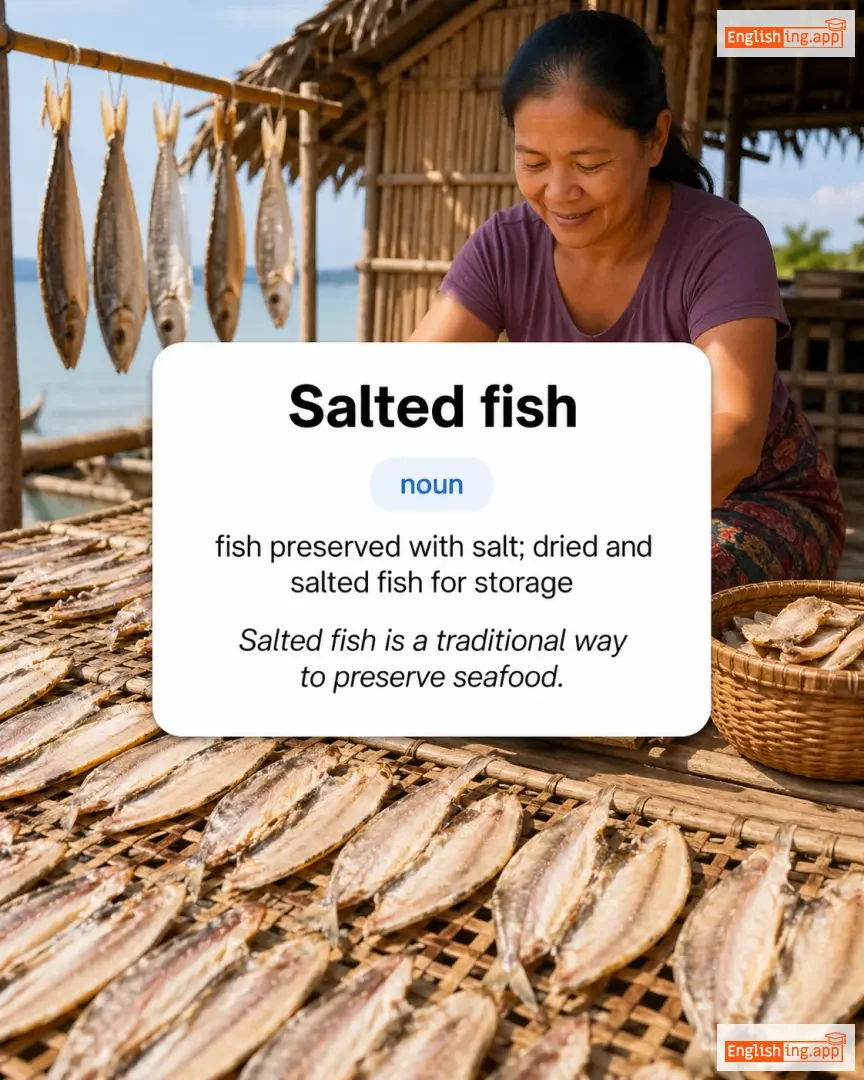
Salted fish definition card — visual illustration of the meaning
noun C1
/ˈsɔːl.tɪd fɪʃ/
солёная рыба (solyonaya ryba)

fish preserved with salt; dried and salted fish for storage

"Salted fish is a traditional way to preserve seafood."

"Солёная рыба — это традиционный способ сохранения морепродуктов." (solyonaya ryba eto traditsionnyy sposob sokhraneniya moreproduktov)
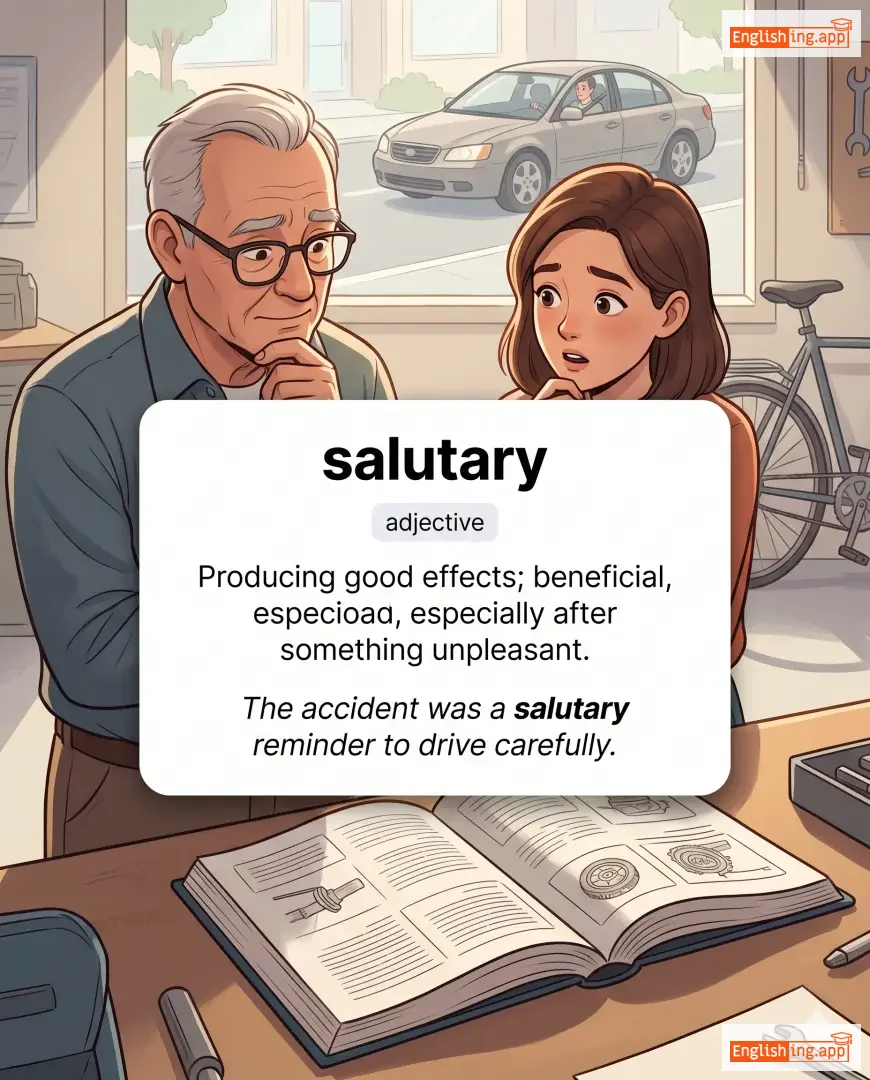
salutary definition card — visual illustration of the meaning
adjective C1
/ˈsæljʊˌtɛri/
полезный (poleznyj)

Producing good effects; beneficial, especially after something unpleasant.

"The accident was a salutary reminder to drive carefully."

"Авария стала полезным напоминанием о том, чтобы водить осторожно." (Avariya stala poleznym napominaniem o tom, chtoby vodit' ostorozhno.)
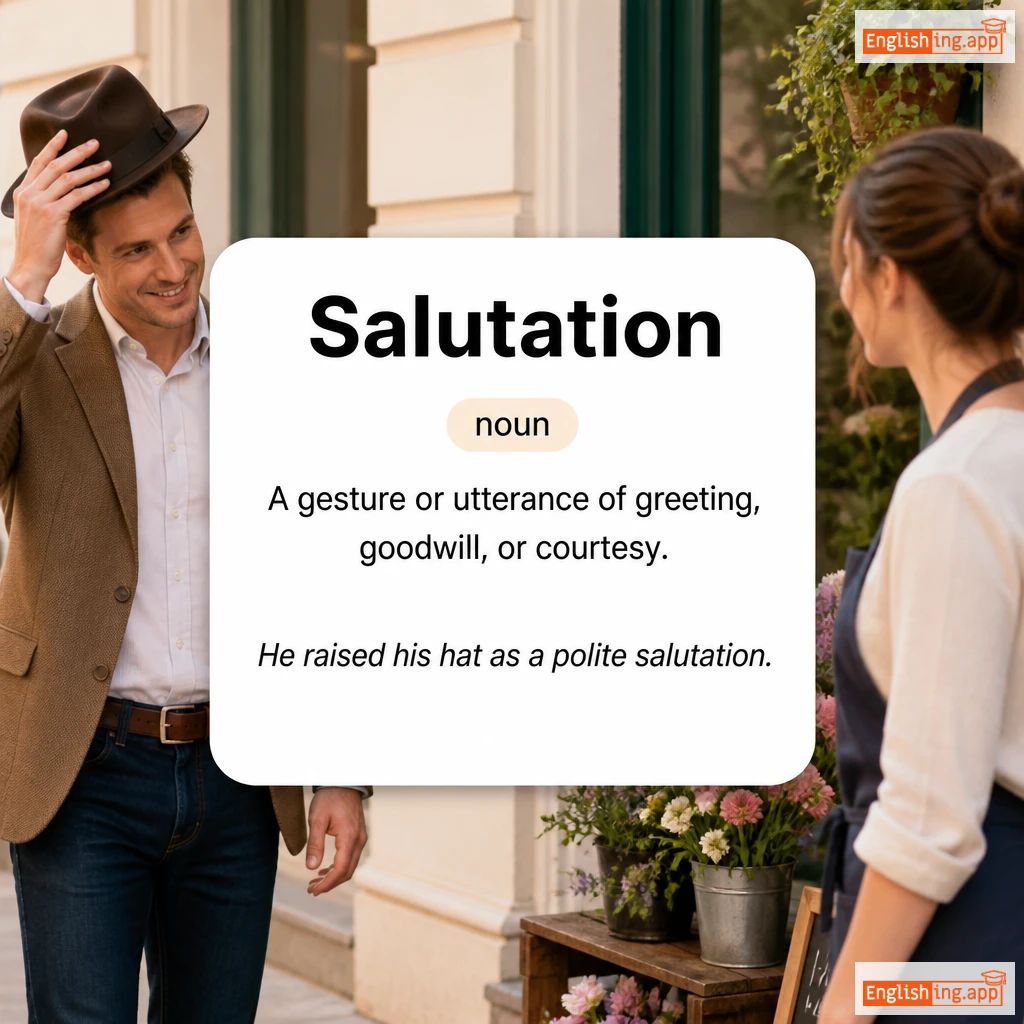
Salutation definition card — visual illustration of the meaning
noun C1
/ˌsæljʊˈteɪʃən/
приветствие (privetstvie)

A gesture or utterance of greeting, goodwill, or courtesy.

"He raised his hat as a polite salutation."

"Он поднял свою шляпу как вежливое приветствие." (On podnyal svoju shlyapu kak vezhlivoe privetstvie.)
verb C1
/ˈsælvɪdʒ/
спасти (spasti)

To save something from loss, damage, or destruction.

"They managed to salvage some goods from the fire."

"Им удалось спасти некоторые товары из огня." (Im udalos' spasti nekotorye tovaryi iz ognya.)
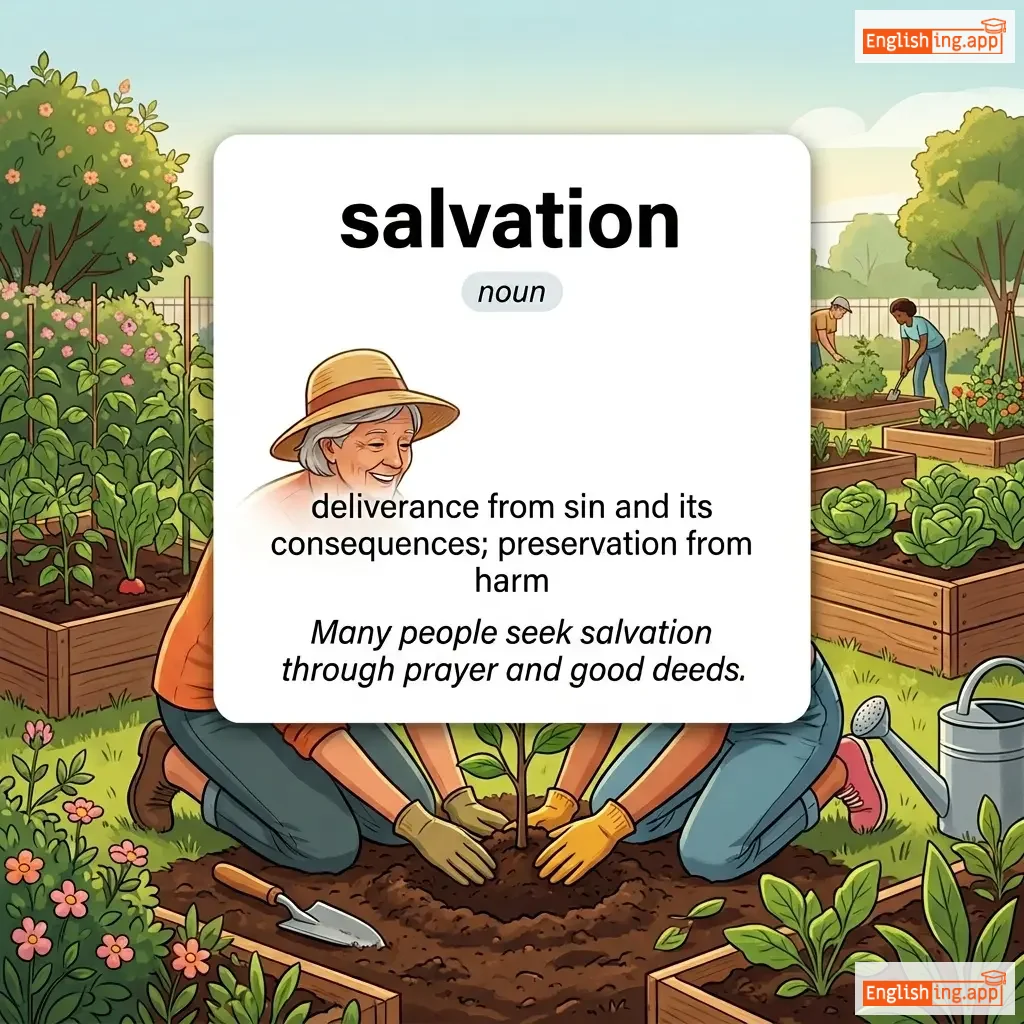
salvation definition card — visual illustration of the meaning
noun C1
/sælˈveɪ.ʃən/
спасение (spaseniye)

deliverance from sin and its consequences; preservation from harm

"Many people seek salvation through prayer and good deeds."

"Многие люди ищут спасение через молитву и добрые дела." (mnogiye lyudi ishchut spaseniye cherez molitvu i dobre dela.)
adjective C1
/ˌsæŋktɪˈmoʊniəs/
лицемерно набожный (litsemernno nabozhny)

Making a show of being morally superior to others; hypocritically pious.

"He gave a sanctimonious speech about honesty while he himself was corrupt."

"Он дал лицемерную речь о честности, хотя сам был коррумпирован." (On dal litsemernuyu rech' o chestnosti, hotya sam byl kurrumpirovannym.)
Sanction definition card — visual illustration of the meaning
⚖️

Sanction

noun/verb C1
/ˈsæŋkʃən/

An official permission or approval; also a penalty imposed to enforce rules.

"The government imposed sanctions on the company for violating trade laws."

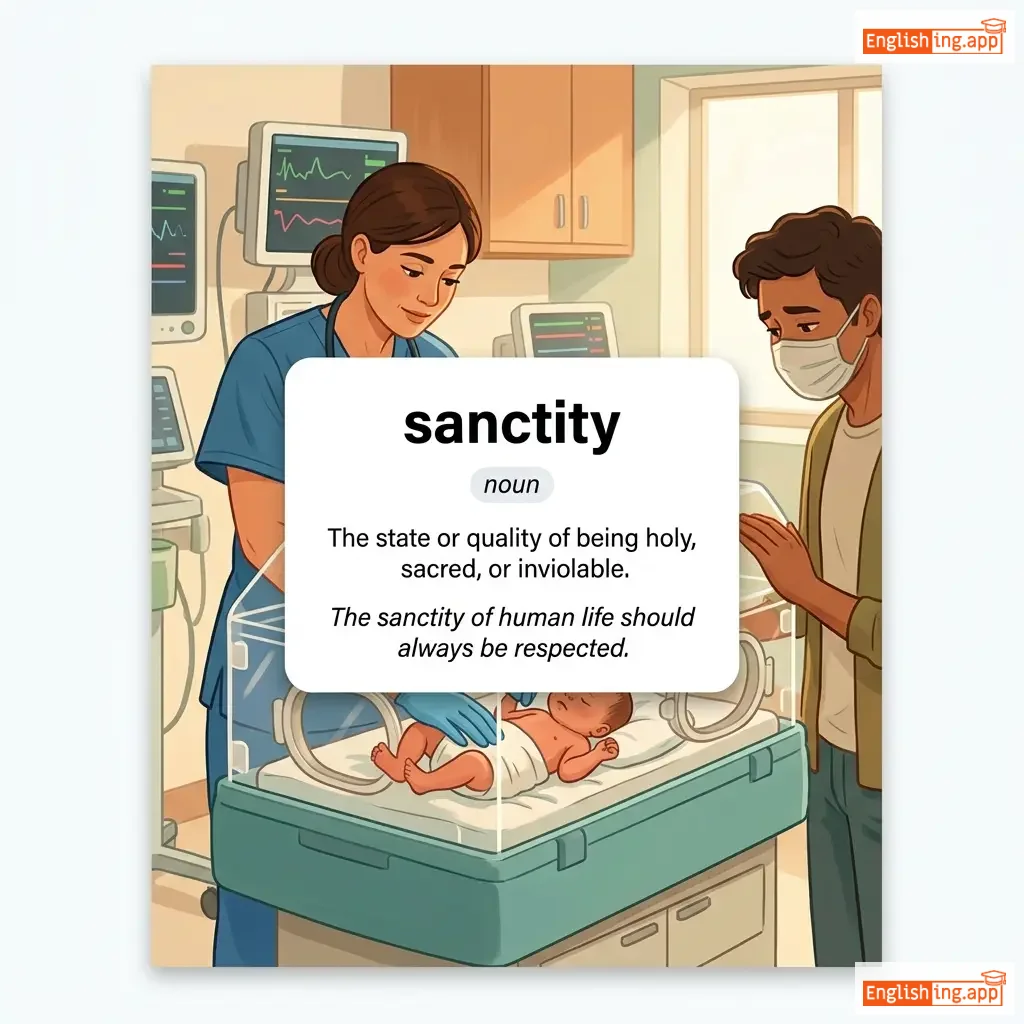
sanctity definition card — visual illustration of the meaning
noun C1
/ˈsæŋk.tə.ti/
святость (svyatost)

The state or quality of being holy, sacred, or inviolable.

"The sanctity of human life should always be respected."

"Святость человеческой жизни должна всегда уважаться." (Svyatost' chelovecheskoy zhizni dolzhna vsegda uzhazhatsya.)
adjective C1
/ˈsæŋɡwɪn/
оптимистичный (optimistichny)

Optimistic or positive, especially in a difficult situation.

"Despite the challenges, she remained sanguine about the future."

"Несмотря на трудности, она оставалась оптимистичной насчет будущего." (Nesmotrya na trudnosti, ona ostavalas' optimistichnoy naschet budushchego.)
sanitization definition card — visual illustration of the meaning
noun C1
ˌsæn.ɪ.taɪˈzeɪ.ʃən
санитарная обработка (sanitarnaya obrabotka)

The process of cleaning and disinfecting to eliminate germs and bacteria.

"Regular sanitization keeps appliances germ-free."

"Регулярная санитарная обработка сохраняет оборудование свободным от микробов." (Regulyarnaya sanitarnaya obrabotka sokhranyayet oborudovaniye svobodnym ot mikroby.)
verb, noun C1
/sæp/
сок / ослаблять (sok / oslablyat)

As a noun: the vital fluid in plants; As a verb: to gradually weaken or drain strength.

"The long journey began to sap his energy."

"Долгий путь начал ослаблять его энергию." (Dolgiy put' nachal oslablyat' ego energiyu.)
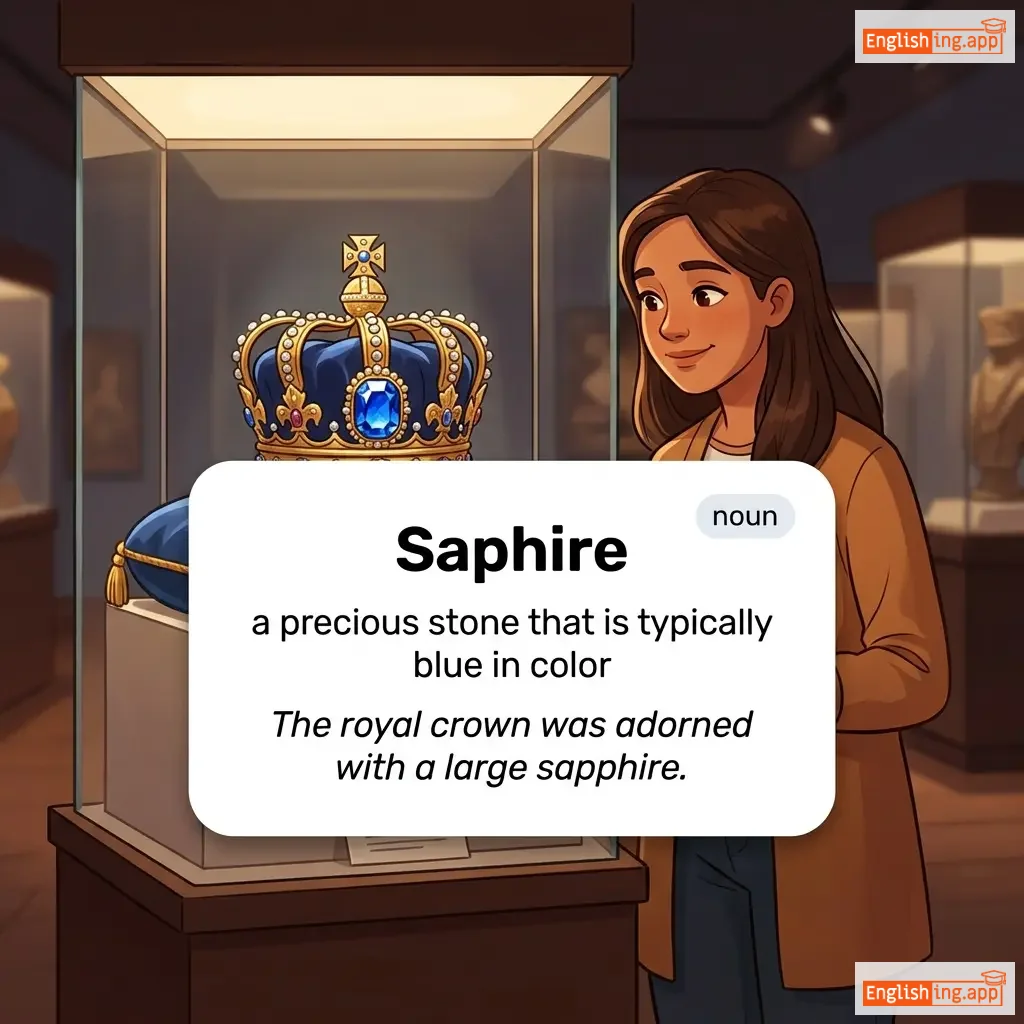
Saphire definition card — visual illustration of the meaning
noun C1
/ˈsæf.aɪər/
сапфир (safpir)

a precious stone that is typically blue in color

"The royal crown was adorned with a large sapphire."

"Корона была украшена большим сапфиром." (Korona byla ukrashena bol'shim safpirom.)
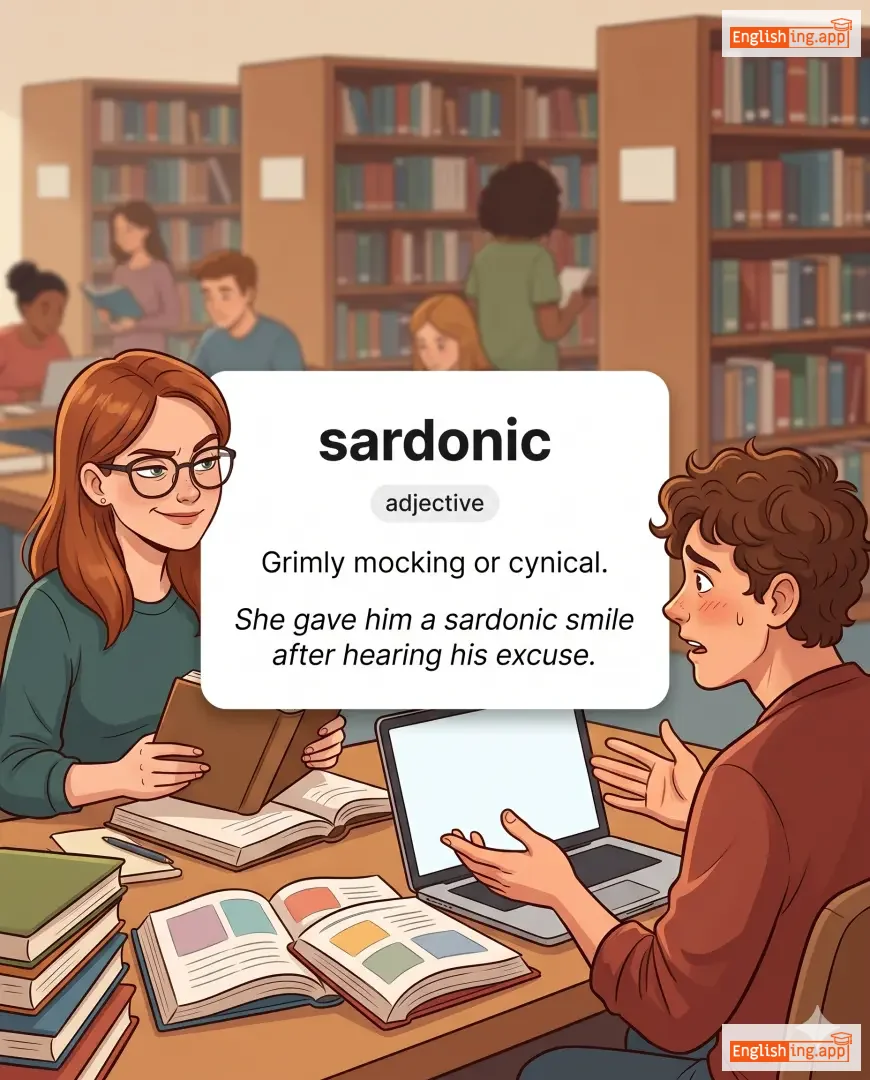
sardonic definition card — visual illustration of the meaning
adjective C1
/sɑːrˈdɒnɪk/
счастье (schast'ye)

Grimly mocking or cynical.

"She gave him a sardonic smile after hearing his excuse."

"Она не могла скрыть своего счастья, когда получила награду." (Ona ne mogla skryt' svoego schast'ya, kogda poluchila nagradu.)
noun C1
/ˈsɑːri/
сари (sari)

a garment consisting of a length of cotton or silk elaborately draped around the body, traditionally worn by women from South Asia

"She looked elegant in her red silk saree at the festival."

"Она выглядела элегантно в своём красном шелковом сари на фестивале." (Ona vyglyadela eleganto v svoem krasnom shelkovom sari na festivale.)
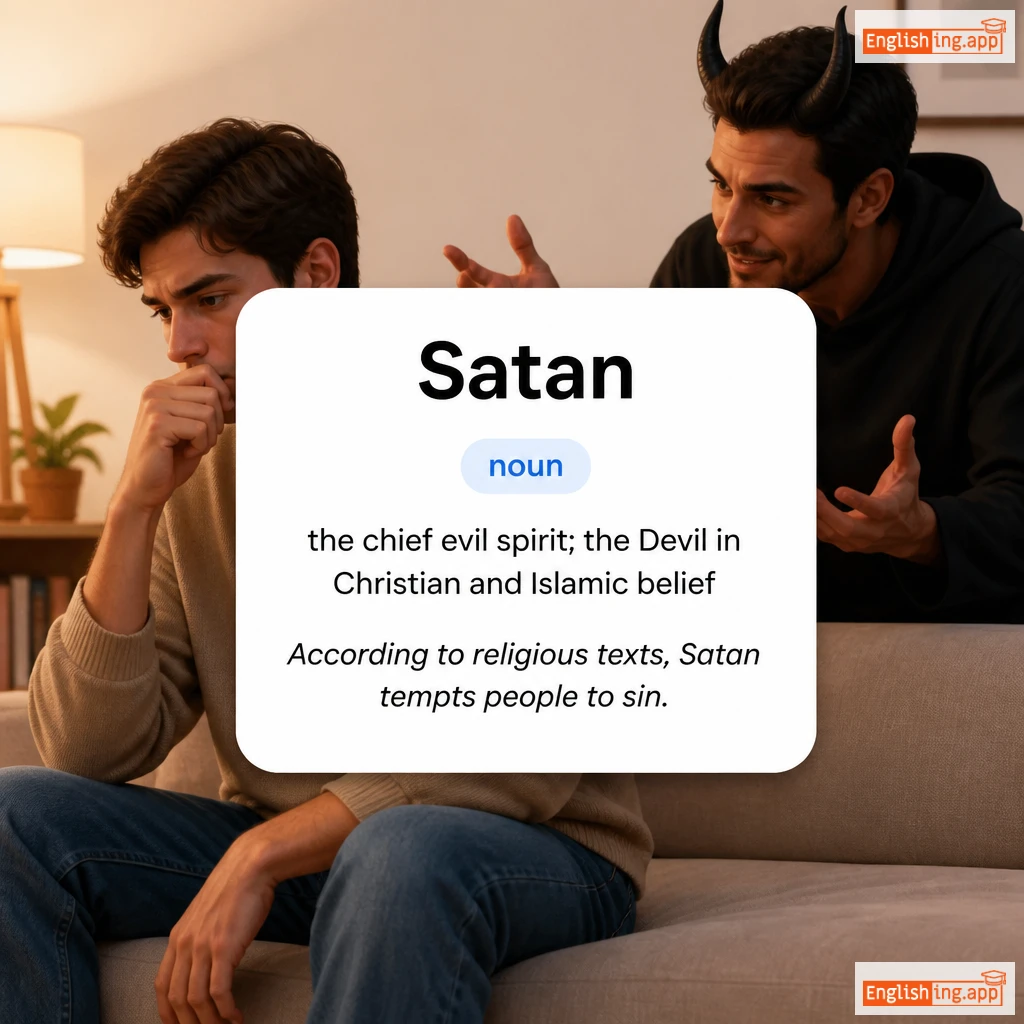
Satan definition card — visual illustration of the meaning
noun C1
/ˈseɪ.tən/
Сатана (Satana)

the chief evil spirit; the Devil in Christian and Islamic belief

"According to religious texts, Satan tempts people to sin."

"Согласно религиозным текстам, Сатана искушает людей к греху." (Soglasno religioznym tekstam, Satana iskushayet lyudey k grekhu.)
adjective C1
/səˈtɪrɪk/
сатирический (satiricheskiy)

Relating to or using satire.

"The novel takes a satiric view of urban life."

"Роман представляет собой сатирическое видение городской жизни." (Roman predstavlyaet soboy satiricheskoe videnie gorodskoy zhizni.)
adjective C1
/səˈtɪrɪkəl/
сатирический (satiricheskiy)

containing or using satire to criticize or mock

"The satirical cartoon mocked the government's new policy."

"Сатирический рисунок высмеивал новую политику правительства." (Satiricheskiy risunok vysmeival novuyu politiku pravitel'stva.)
verb C1
/ˈsætəˌraɪz/
сатиризировать (satirizirovat)

to mock or criticize something using satire

"The play satirizes the greed of modern corporations."

"Пьеса сатирает жадность современных корпораций." (P'esа satirayet zhадnost' sovremennykh korporatsiy.)
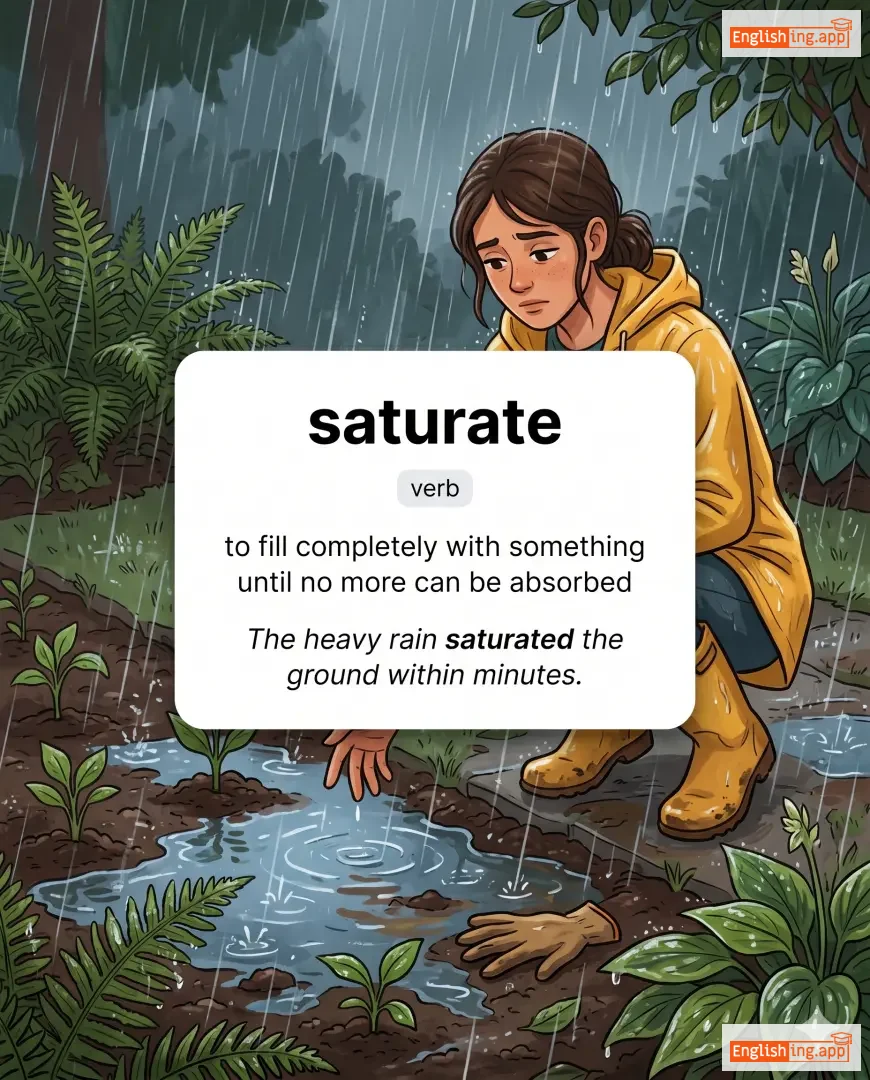
saturate definition card — visual illustration of the meaning
verb C1
/ˈsætʃəˌreɪt/

to fill completely with something until no more can be absorbed

"The heavy rain saturated the ground within minutes."

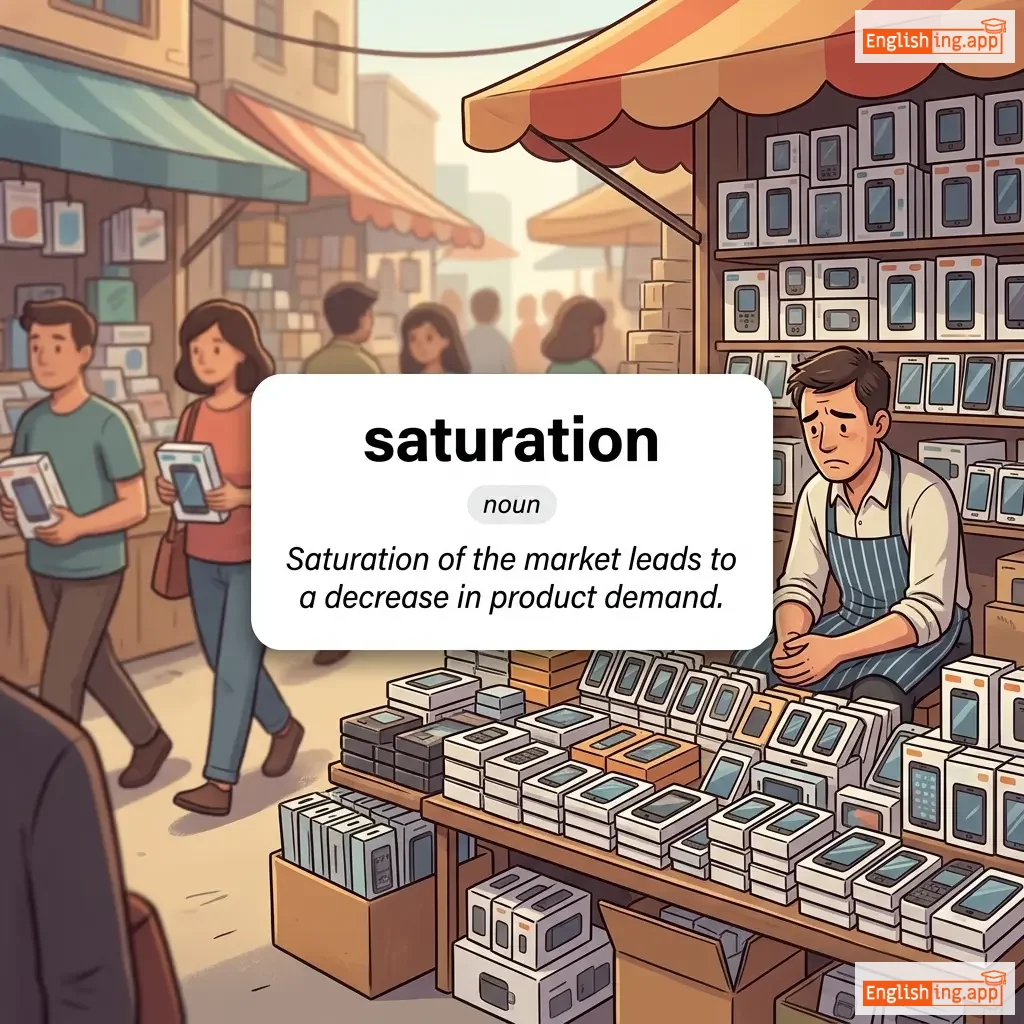
saturation definition card — visual illustration of the meaning
noun C1
/ˌsætʃəˈreɪʃən/
насыщение (nasyshchenie)

The state or process that occurs when no more of something can be absorbed, combined with, or added.

"Saturation of the market leads to a decrease in product demand."

"Насыщение рынка приводит к снижению спроса на продукцию." (Nasyshchenie rynka privodit k snizheniyu sprosa na produktsiyu.)
adjective C1
/ˈsɔːsi/
наглый (naglyi)

Boldly rude, cheeky, or playfully disrespectful.

"The child gave a saucy reply to his teacher."

"Ребёнок дал наглый ответ своему учителю." (Rebyonok dal naglyi otvet svoemu uchitelyu.)
verb C1
/ˈsɔːntər/
прогуливаться (saunter)

to walk in a slow, relaxed manner without hurry or effort

"We sauntered along the riverside, stopping now and then to watch the boats."

"Мы неспешно прогуливались вдоль набережной, иногда останавливаясь, чтобы посмотреть на лодки." (My nespesno progulivalisya vdol naberezhnoy, inogda ostanavlivayas, chtoby posmotret na lodki.)
noun C1
/səˈvænə/
саванна (с рассеянными деревьями) (savanna (s rasseyannymi derev'yami))

a grassy plain with scattered trees, typical of tropical and subtropical regions

"Giraffes browsed on acacia trees across the wide savanna."

"Жирафы щипали акациевые деревья на широкой саванне." (Zhirafy shchipali akatsievye derev'ya na shirokoy savanne.)
savor definition card — visual illustration of the meaning
verb C1
/ˈseɪ.vər/
наслаждаться (naslazhdat'sya)

To enjoy something completely, especially by dwelling on it.

"He savored every bite of the delicious cake."

"Он наслаждался каждым куском вкусного торта." (On naslazhdalsya kazhdym kuskom vkusnogo torta.)
adjective C1
/ˈseɪ.vər.i/
вкусный (соленый или острый) (vkusny (soleny ili ostryy))

Having a pleasant salty or spicy taste; morally acceptable.

"The restaurant serves a variety of savory dishes."

"Ресторан предлагает разнообразные вкусные блюда." (Restoran predlagaet raznoobraznye vkusnye blyuda.)
adjective C1
/ˈsæv.i/
умный, ловкий (umnyy, lovkiy)

Having practical knowledge and the ability to make good judgments.

"She is a tech-savvy entrepreneur."

"Она - предприниматель с хорошими техническими знаниями." (Ona - predprinimatel' s khoroshimi tekhnicheskimi znaniyami.)
noun C1
/ˈsɔː.dʌst/
опилки (opilki)

The tiny particles of wood produced by sawing or sanding.

"The floor was covered with sawdust from the carpentry work."

"Пол был покрыт опилками от плотницких работ." (Pol byl pokryt opilkami ot plotnitskikh rabot.)
Sawyer definition card — visual illustration of the meaning
noun C1
/ˈsɔːjər/
плотник (plotnik)

a person who saws wood, especially as an occupation

"The skilled sawyer cut the logs into planks."

"Опытный плотник нарезал бревна на доски." (Opytniy plotnik narezhal brevna na doski)
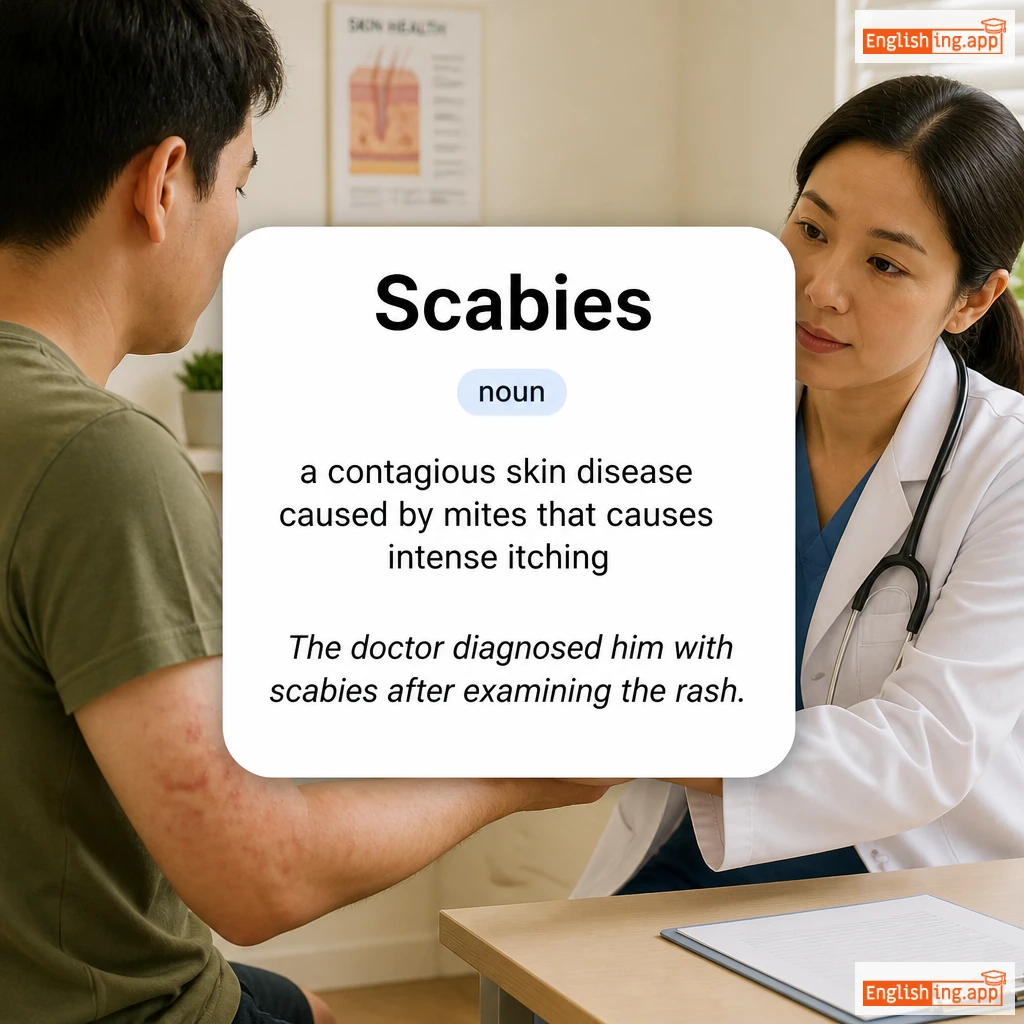
Scabies definition card — visual illustration of the meaning
noun C1
/ˈskeɪ.biːz/
чесотка (chesotka)

a contagious skin disease caused by mites that causes intense itching

"The doctor diagnosed him with scabies after examining the rash."

"Доктор поставил диагноз чесотка после осмотра сыпи." (Doktor postavil diagnoz chesotka posle osmotra sypi.)
Scaffold definition card — visual illustration of the meaning
noun C1
/ˈskæf.əʊld/
лесa (lesa)

A temporary platform used to support workers and materials during the construction or repair of a building.

"The workers stood on the scaffold to paint the building."

"Рабочие стояли на лесах, чтобы покрасить здание." (Rabochie stoyali na lesakh, chtoby pokrasit' zdanie.)
scalability definition card — visual illustration of the meaning
noun C1
/ˌskeɪ.ləˈbɪl.ə.ti/
масштабируемость (masshtabiruemost)

The ability to expand to larger scales while maintaining efficiency

"The startup focused on scalability to handle future growth."

"Стартап сосредоточился на масштабируемости, чтобы справиться с будущим ростом." (Startap sosredotochilsya na masshtabiruemosti, chtoby spravitsya s budushchim rostem.)
noun C1
/ˈskælpəl/
скальпель (skalpel)

A small and extremely sharp bladed instrument used for surgery and dissection.

"The surgeon carefully used a scalpel to make the first incision."

"Хирург осторожно использовал скальпель, чтобы сделать первый разрез." (Khirurg ostorozhno ispol'zoval skalpel', chtoby sdelat' pervyy razrez.)
adjective C1
/ˈskeɪ.li/
чешуйчатый (cheshuychaty)

covered with scales; having a rough surface like scales

"The fish has scaly skin."

"У рыбы чешуйчатая кожа." (U ryby cheshuychataya kozha.)