वोकैबुलरीज

इंग्लिश वोकैबुलरी डिस्कवर, लर्न और मास्टर करें

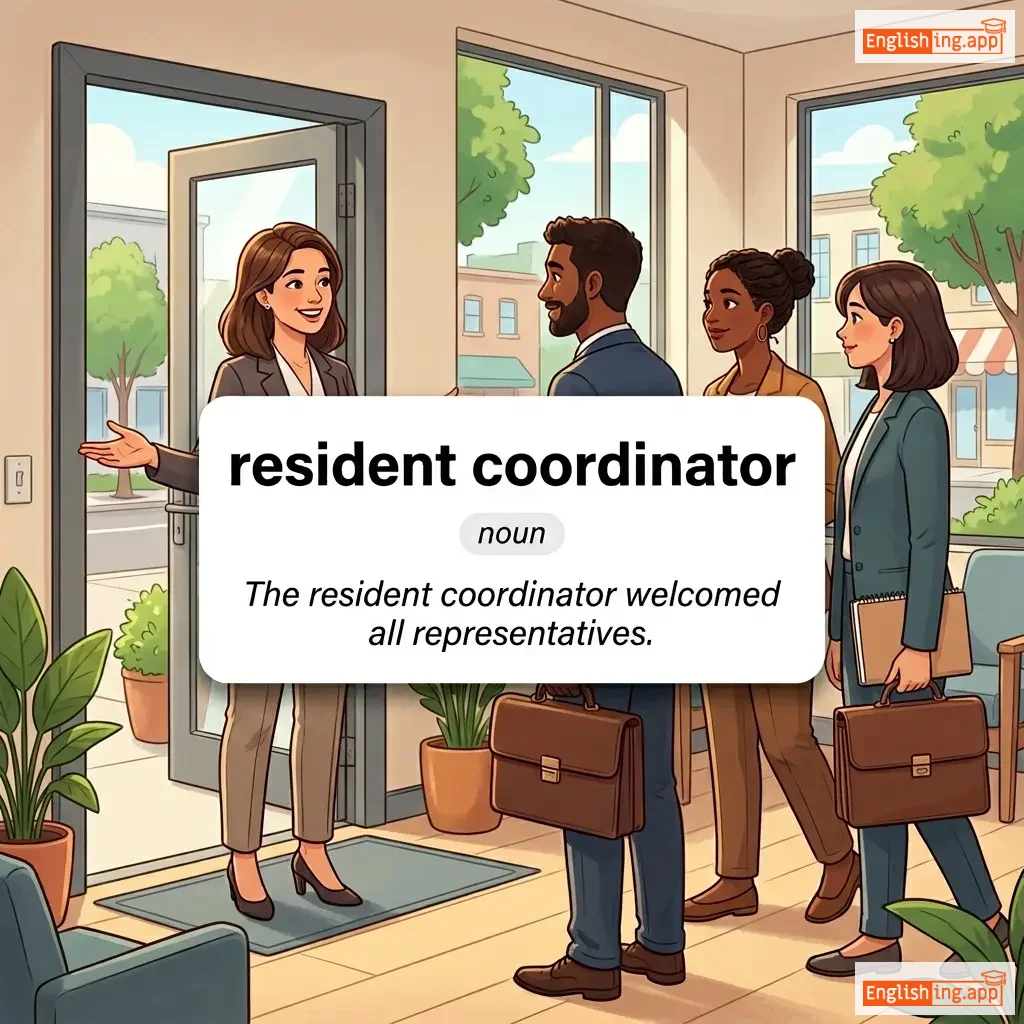
resident coordinator definition card — visual illustration of the meaning
noun C1
/ˈrez.ɪ.dənt ˈkəʊ.ɔː.dɪ.neɪ.tər/
驻地协调员 (zhù dì xié tiáo yuán)

A local administrator or official who coordinates activities in a specific region.

"The resident coordinator welcomed all representatives."

"驻地协调员欢迎所有代表。" (Zhù dì xié tiáo yuán huān yíng suǒ yǒu dàibiǎo.)
adjective C1
/rɪˈzɪdjuəl/
剩余的 (shengyu de)

Remaining after the greater part has gone.

"The patient experienced residual pain after the surgery."

"病人在手术后经历了剩余的疼痛。" (Bingren zai shoushu hou jingli le shengyu de tengtong.)
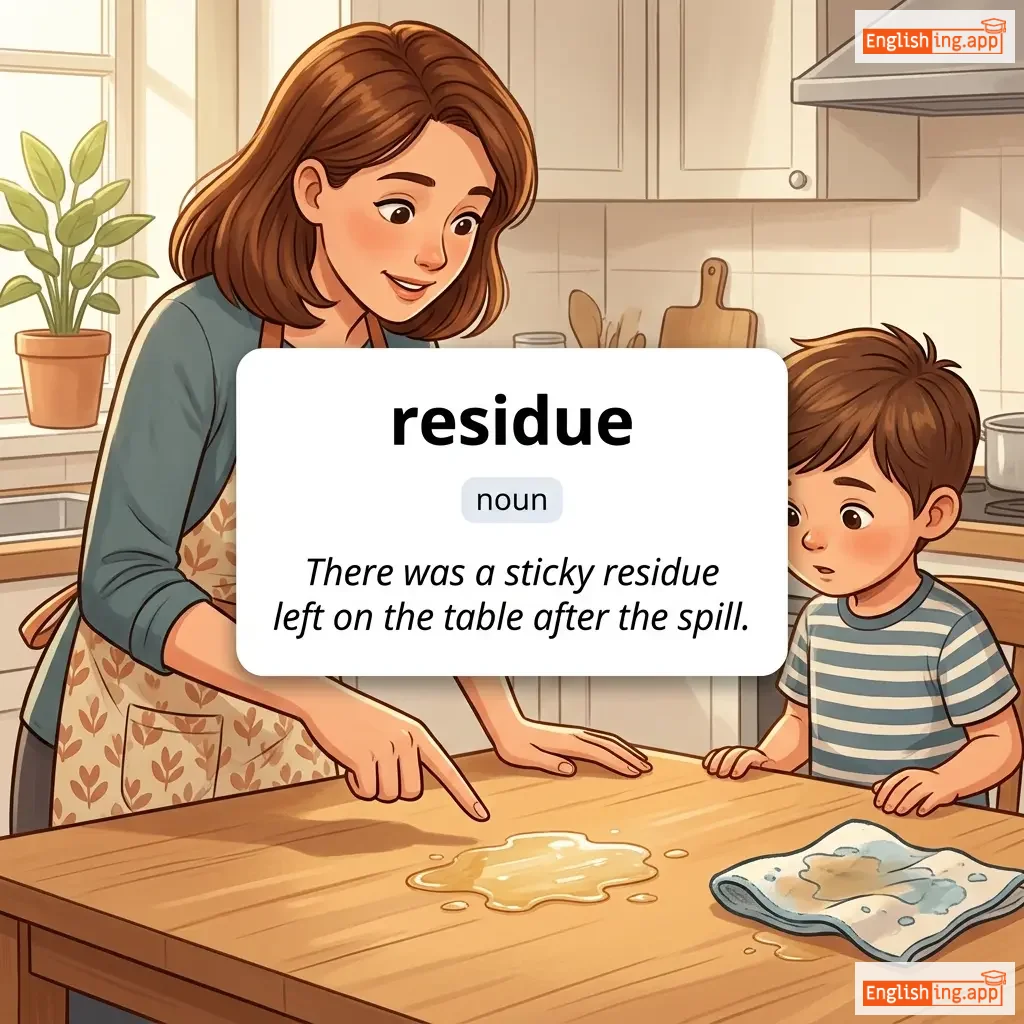
residue definition card — visual illustration of the meaning
noun C1
/ˈrɛzɪdjuː/
残留物 (can liu wu)

A small amount of something that remains after the main part has been removed or used.

"There was a sticky residue left on the table after the spill."

"溢出后,桌子上留下了粘性的残留物。" (Yichu hou, zhuozi shang liuxia le nianxing de can liu wu.)
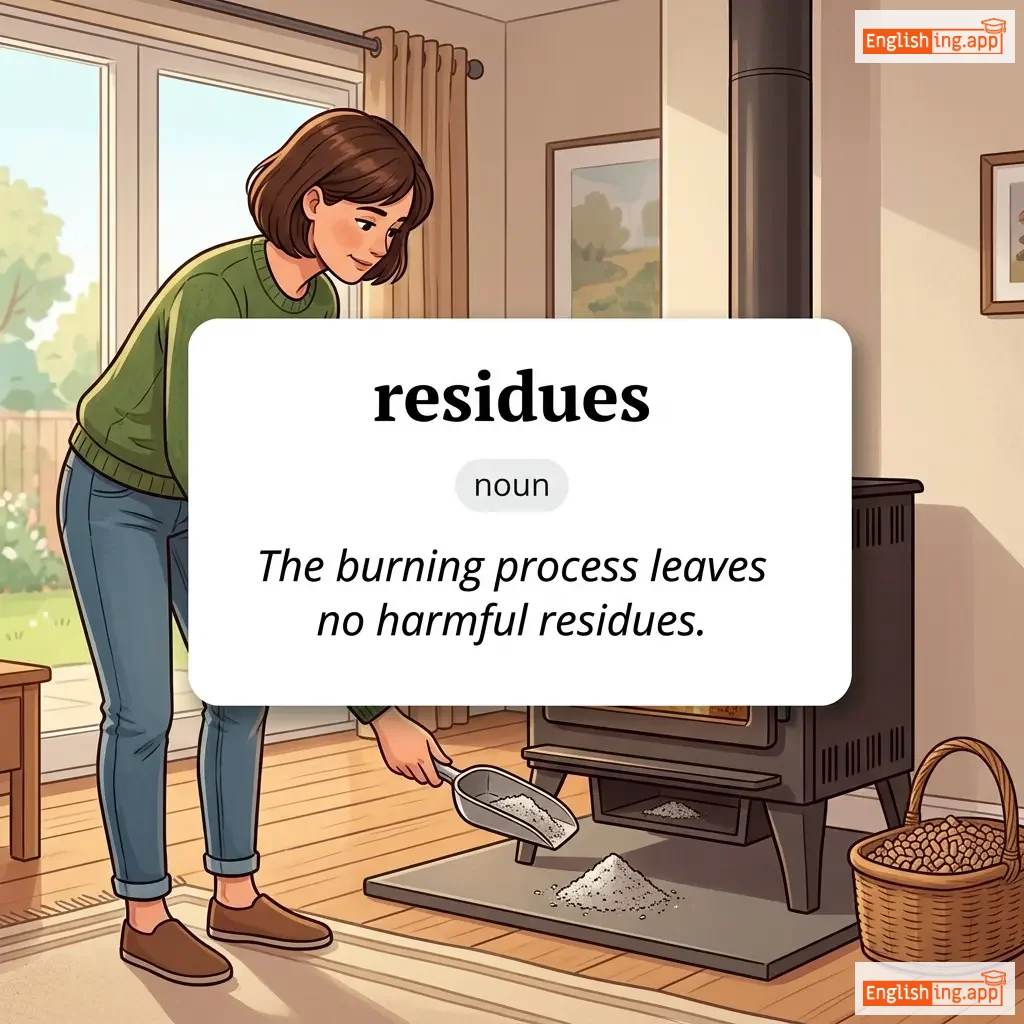
residues definition card — visual illustration of the meaning
noun C1
ˈrez.ɪ.djuːz
残留物 (cánliú wù)

A small amount of something that remains after the main part has gone or been taken or used.

"The burning process leaves no harmful residues."

"燃烧过程不会留下有害的残留物。" (Ránshāo guòchéng bù huì liú xià yǒuhài de cánliú wù.)
noun C1
/ˈrɛzɪn/
树脂 (shuzhi)

a sticky organic substance, usually secreted by plants, often used in varnishes or plastics

"The craftsman used natural resin to make the sculpture shine."

"工匠用天然树脂使雕塑闪闪发光。" (Gōngjiàng yòng tiānrán shùzhī shǐ diāosù shǎn shǎn fāguāng.)
adjective C1
/rɪˈzɪstɪv/
电阻性 (dianzu xing)

tending to resist or oppose; in physics, relating to electrical resistance

"The material has resistive properties that slow down current flow."

"该材料具有电阻特性,能够减慢电流流动。" (Gai cailiao juyou dianzu texing, nenggou jianman dianliu liudong.)
adjective C1
/ˈrɛzəluːt/
果断 (guǒduàn)

Admirably purposeful, determined, and unwavering.

"He remained resolute despite the many challenges."

"尽管面临许多挑战,他依然保持果断。" (Jǐnguǎn miànlín xǔduō tiǎozhàn, tā yīrán bǎochí guǒduàn.)
resonance definition card — visual illustration of the meaning
noun C1
/ˈrɛzənəns/
共鸣 (gongming)

The quality of a sound being deep, full, and reverberating; the ability to evoke a strong response.

"Her voice had a resonance that filled the hall."

"她的声音有一种共鸣,充满了整个大厅。" (Tā de shēngyīn yǒu yī zhǒng gòngmíng, chōngmǎnle zhěnggè dàtīng.)
adjective C1
/ˈrɛzənənt/
共鸣的 (gongming de)

Deep, clear, and continuing to sound or echo.

"The resonant voice of the speaker filled the hall."

"演讲者那共鸣的声音充满了大厅。" (Yǎnjiǎng zhě nà gòngmíng de shēngyīn chōngmǎn le dàtīng.)
verb C1
/ˈrɛzəneɪt/
共鸣 (gongming)

To produce or be filled with a deep, full, and reverberating sound; to evoke a feeling or memory.

"Her words resonated with the audience."

"她的话在听众中产生了共鸣。" (Tā de huà zài tīngzhòng zhōng chǎnshēngle gòngmíng.)
verb C1
/rɪˈzaʊnd/
回响 (huíxiǎng)

To fill a place with sound; to be celebrated or talked about widely.

"The hall resounded with applause."

"大厅里回荡着掌声。" (dàtīng lǐ huídàng zhuó zhǎngshēng.)
resource-efficient definition card — visual illustration of the meaning
adjective C1
/rɪˈsɔːrs ɪˈfɪʃ.ənt/
资源高效 (ziyuan gaoxiao)

Using resources in a way that minimizes waste and maximizes productivity.

"Resource-efficient farming conserves water and energy."

"资源高效的农业节约水和能源。" (Ziyuan gaoxiao de nongye jieyue shui he nengyuan.)
adverb C1
/rɪˈspek.tə.bli/
以尊敬的方式; 体面地; (yǐ zūnjìng de fāngshì; tǐmiàn de;)

in a way that is worthy of respect; decently; properly

"She was dressed respectably for the interview."

"她为面试穿得体面。" (Tā wèi miànshì chuān dé tǐmiàn.)
noun C1
/ˌrɛspɪˈreɪʃən/

The process of breathing or the exchange of gases in living organisms.

"Respiration is essential for all living beings."

noun C1
/ˈrɛspɪt/
喘息 (chuǎnxī)

A short period of rest or relief from something difficult or unpleasant.

"The weekend provided a welcome respite from work."

"周末提供了工作上的一个受欢迎的休息。" (Zhōumò tígōngle gōngzuò shàng de yīgè shòu huānyíng de xiūxí.)
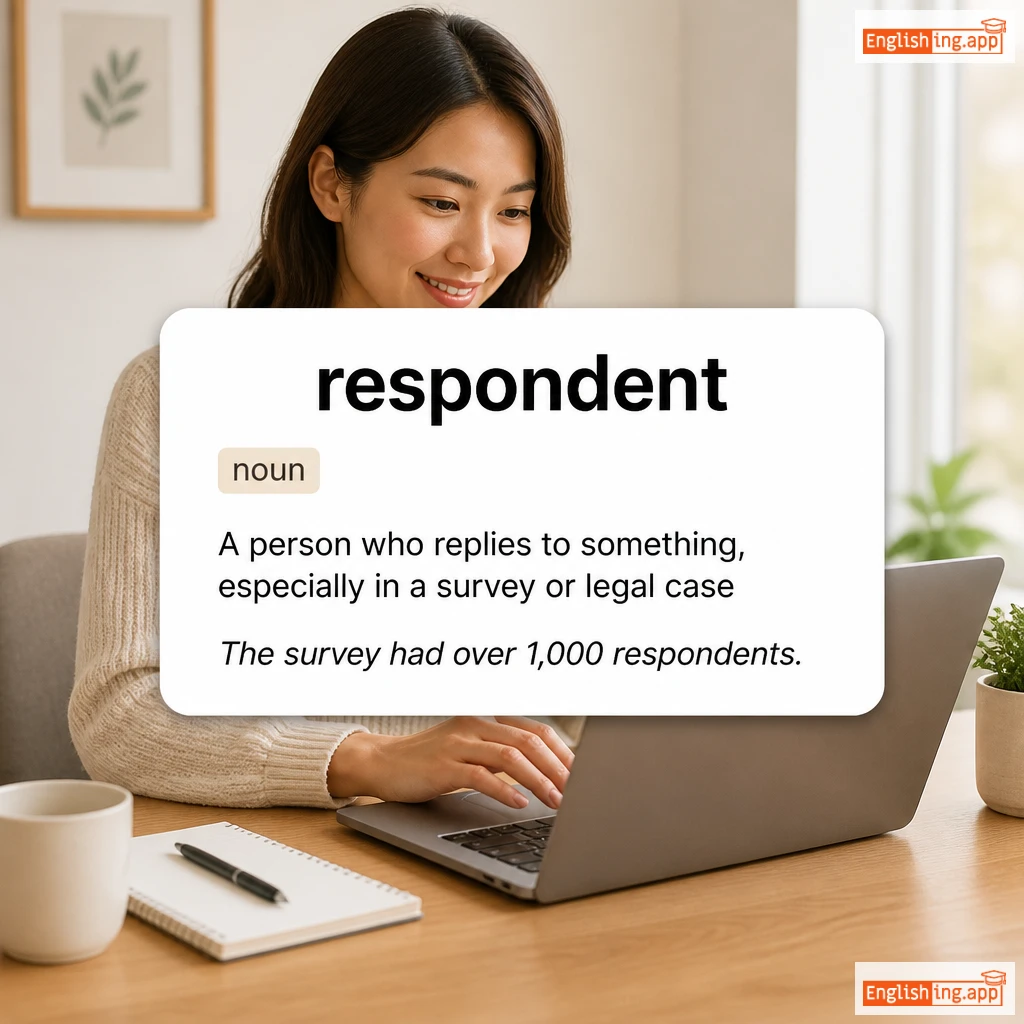
respondent definition card — visual illustration of the meaning
noun C1
/rɪˈspɒndənt/
响应者 (xiǎngyìng zhě)

A person who replies to something, especially in a survey or legal case

"The survey had over 1,000 respondents."

"调查有超过1000名响应者。" (Diàochá yǒu chāoguò 1000 míng xiǎngyìng zhě.)
noun C1
/rɪˈspɒnsɪvnəs/
反应能力 (fǎn yìng néng lì)

The quality of reacting quickly and positively

"The manager appreciated her responsiveness to customer feedback."

"经理欣赏她对客户反馈的反应能力。" (Jīnglǐ xīnshǎng tā duì kèhù fǎnkuì de fǎnyìng nénglì.)
noun C1
/ˌrɛstɪˈtjuːʃən/
赔偿 (peichang)

The act of restoring something to its rightful owner or compensating for loss

"The court ordered restitution to the victims of the fraud."

"法院命令对欺诈受害者进行赔偿。" (Fayuan mingling dui qizha shouhaizhe jinxing peichang.)
adjective C1
/rɪˈstreɪnd/
克制的 (ke zhi de)

characterized by reserve or self-control; held back

"Her restrained reaction surprised everyone."

"她克制的反应让所有人都感到惊讶。" (Ta ke zhi de fan ying rang suo you ren dou gan dao jing ya.)
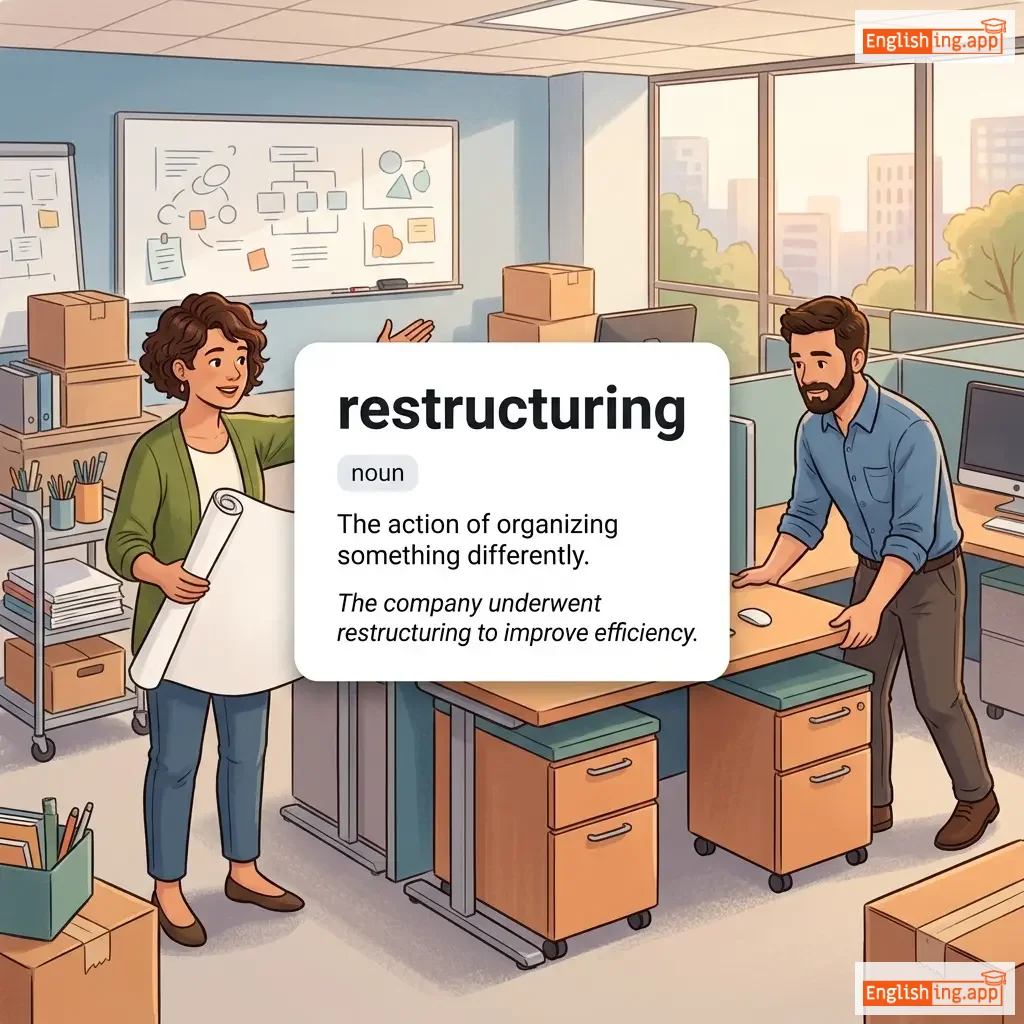
restructuring definition card — visual illustration of the meaning
noun C1
ˌriːˈstrʌk.tʃər.ɪŋ
重组 (chóngzǔ)

The action of organizing something differently.

"The company underwent restructuring to improve efficiency."

"公司进行重组以提高效率。" (Gōngsī jìnxíng chóngzǔ yǐ tígāo xiàolǜ.)
Resumption definition card — visual illustration of the meaning
noun C1
/rɪˈzʌmpʃən/
恢复 (huīfù)

The act of starting something again after a pause or interruption.

"The resumption of classes after the holidays brought excitement among students."

"假期后课程的恢复带来了学生们的兴奋。" (Jiaqi hou kecheng de huifu dai lai le xueshengmen de xingfen.)
verb C1
/rɪˈsɜːrdʒ/
复兴 (fùxīng)

To rise, increase, or become active again after a decline.

"Interest in traditional crafts has begun to resurge."

"对传统手工艺的兴趣已经开始复兴。" (Duì chuántǒng shǒugōngyì de xìngqù yǐjīng kāishǐ fùxīng.)
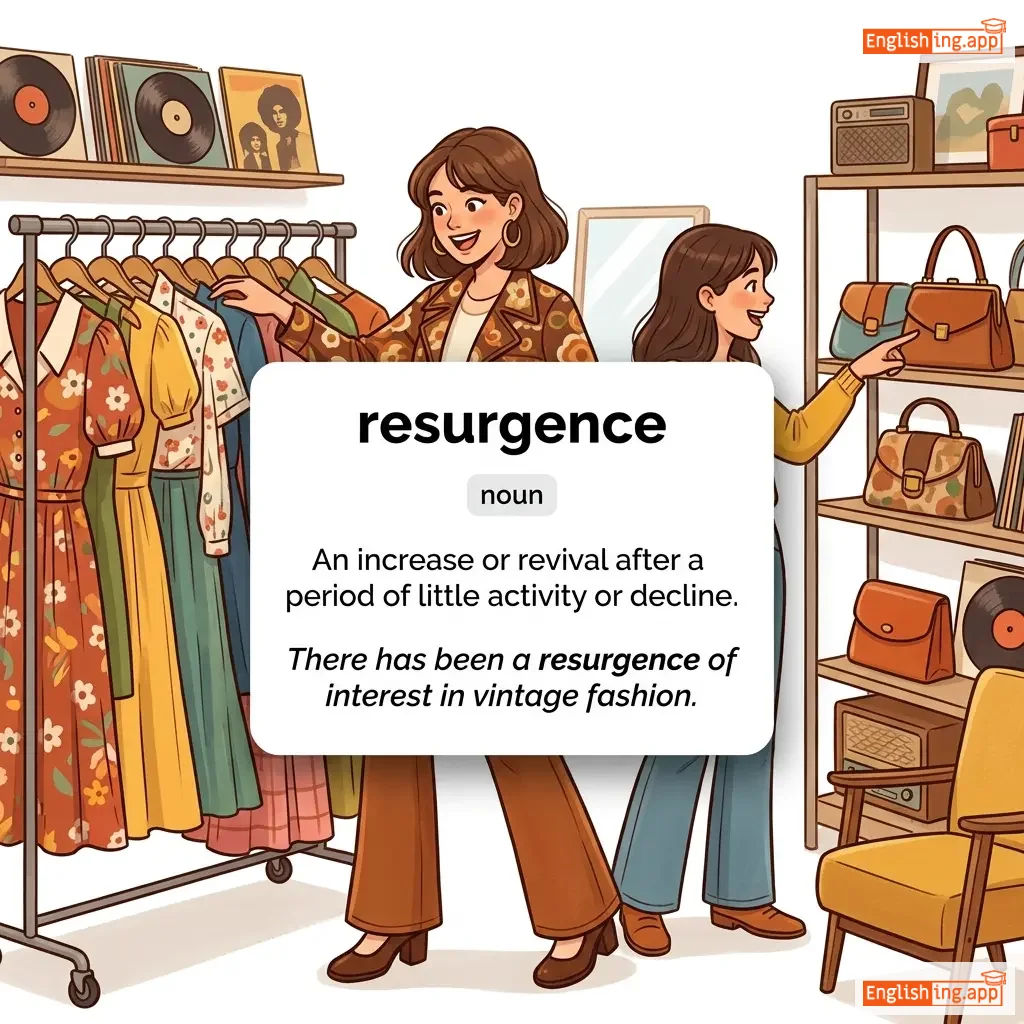
resurgence definition card — visual illustration of the meaning
noun C1
/rɪˈsɜːrdʒəns/
复兴 (fuxing)

An increase or revival after a period of little activity or decline.

"There has been a resurgence of interest in vintage fashion."

"复古时尚的兴趣复兴了。" (Fùgǔ shíshàng de xìngqù fùxīngle.)
adjective C1
/rɪˈsɜːrdʒənt/
复兴的 (fùxīng de)

Becoming strong, active, or popular again.

"The resurgent economy gave hope to many businesses."

"复兴的经济给许多企业带来了希望。" (Fùxīng de jīngjì gěi xǔduō qǐyè dài lái le xīwàng.)
verb C1
/ˌrɛzəˈrɛkt/
复活 (fuhuo)

To bring back to life or revive something from the past.

"The director decided to resurrect the old play for a new audience."

"导演决定让旧剧本为新的观众复活。" (Dao yan jue ding rang jiu ju ben wei xin de guan zhong fu huo.)
verb C1
/rɪˈsʌsɪteɪt/

to revive someone from unconsciousness or apparent death

"The doctors tried to resuscitate the patient after the heart attack."

noun C1
/rɪˈteɪnər/
预付款 / 固定器 (yù fù kuǎn / gù dìng qì)

a fee paid in advance to secure someone's services, or a device that holds something in place

"The lawyer asked for a retainer before taking the case."

"律师在接案之前要求预付款。" (Lǜ shī zài jiē àn zhī qián yāo qiú yù fù kuǎn.)
verb C1
/rɪˈtælieɪt/
报复 (baofu)

to make an attack in return for a similar attack

"The army retaliated after the enemy attack."

"军队在敌人的攻击后进行了报复。" (Jundui zai diren de gongji hou jinxingle baofu.)
Retaliation definition card — visual illustration of the meaning
noun C1
/rɪˌtæl.iˈeɪ.ʃən/
报复 (bàofù)

the action of returning a military attack; counterattack; revenge for an injury or wrong

"The country threatened retaliation against any act of aggression."

"该国威胁对任何侵略行为进行报复。" (gāi guó wēixié duì rènhé qīnlüè xíngwéi jìnxíng bàofù.)
retaliatory definition card — visual illustration of the meaning
adjective C1
/rɪˈtæl.i.ə.tɔːr.i/
报复性 (bàofùxìng)

Taking action in response to another's action, characterized as punitive, revengeful, or counteractive.

"The country imposed retaliatory tariffs in response to trade sanctions."

"该国对贸易制裁实施了报复性关税。" (Gāi guó duì màoyì zhìcái shíshīle bàofùxìng guānshuì.)
verb C1
/rɪˈtɑːrd/
延迟 / 放慢 (yánchí / fàngmàn)

to delay or slow down the progress of something

"Lack of funds may retard the development of the project."

"资金不足可能会延缓项目的发展。" (Zījīn bùzú kěnéng huì yánhuǎn xiàngmù de fāzhǎn.)
noun C1
/ˈrɛtɪsəns/
沉默 (chenmo)

the quality of being reserved or unwilling to speak freely

"His reticence made it difficult to know what he was thinking."

"他的沉默让人很难知道他在想什么。" (Tade chenmo rang ren hendan zhidao ta zai xiang shenme.)
reticent definition card — visual illustration of the meaning
adjective C1
/ˈrɛtɪsənt/
沉默寡言 (chenmo guayan)

not revealing one's thoughts or feelings readily; reserved

"She was reticent about her personal life."

"她对自己的个人生活保持沉默。" (Ta dui ziji de geren shenghuo baochi chenmo.)
adjective C1
/rɪˈtaɪərɪŋ/
害羞 (haixiu)

Shy and reserved; avoiding social contact.

"She is a quiet, retiring woman who avoids attention."

"她是一个安静、害羞的女人,避免引起注意。" (tā shì yīgè ānjìng, haixiu de nǚrén, bìmiǎn yǐnqǐ zhùyì.)
verb C1
/rɪˈtɔːrt/
反驳 (fǎnbó)

To reply quickly or sharply, often in a witty or angry manner.

"He quickly retorted that he was not to blame."

"他迅速回应说他没有错。" (Tā xùnsù huíyìng shuō tā méiyǒu cuò.)
verb C1
/ˌriːˈtʌtʃ/
修饰 (xiūshì)

To improve or repair a picture, photograph, or image by making small changes.

"The photographer retouched the image to remove blemishes."

"摄影师对图片进行了修饰以去除瑕疵。" (Shèyǐngshī duì túpiàn jìnxíngle xiūshì yǐ qùchú xiácī.)
↩️

retrace

verb C1
/rɪˈtreɪs/

to go back over a path or route; to recall and repeat steps taken earlier

"She retraced her steps to find her lost keys."

↪️

retract

verb C1
/rɪˈtrækt/

to withdraw a statement, promise, or part of the body; to pull back

"The company retracted its earlier statement after realizing the error."

noun C1
/rɪˈtrækʃən/
撤回,撤回声明 (chehui, chehui shengming)

the act of taking back a statement, promise, or belief

"The newspaper issued a retraction of the false report."

"报纸发布了对虚假报道的撤回。" (Baozhi fabulei dui xujia baodao de chehui.)
noun C1
/ˌrɛtrɪˈbjuːʃən/
报应,惩罚 (baò yìng, chéng fá)

punishment inflicted as vengeance for a wrong or crime

"The villagers demanded retribution for the crime committed."

"村民要求对犯下的罪行进行报应。" (Cūnmín yāoqiú duì fàn xià de zuìxíng jìnxíng bàoyìng.)
retrieval definition card — visual illustration of the meaning
noun C1
rɪˈtriː.vəl
恢复 (huīfù)

The process of getting or bringing something back; recovery of stored information.

"AI-based search engines ensure fast retrieval of data."

"基于人工智能的搜索引擎确保数据的快速恢复。" (Jīyú réngōng zhìnéng de sōusuǒ yǐnqíng quèbǎo shùjù de kuàisù huīfù.)
adjective C1
/ˌrɛtroʊˈæktɪv/
追溯的 (zhuīsù de)

applying to a period before it was enacted or established

"The new law was made retroactive to cover past cases."

"新法律追溯适用于过去的案件。" (Xīn fǎlǜ zhuīsù shìyòng yú guòqù de ànjiàn.)
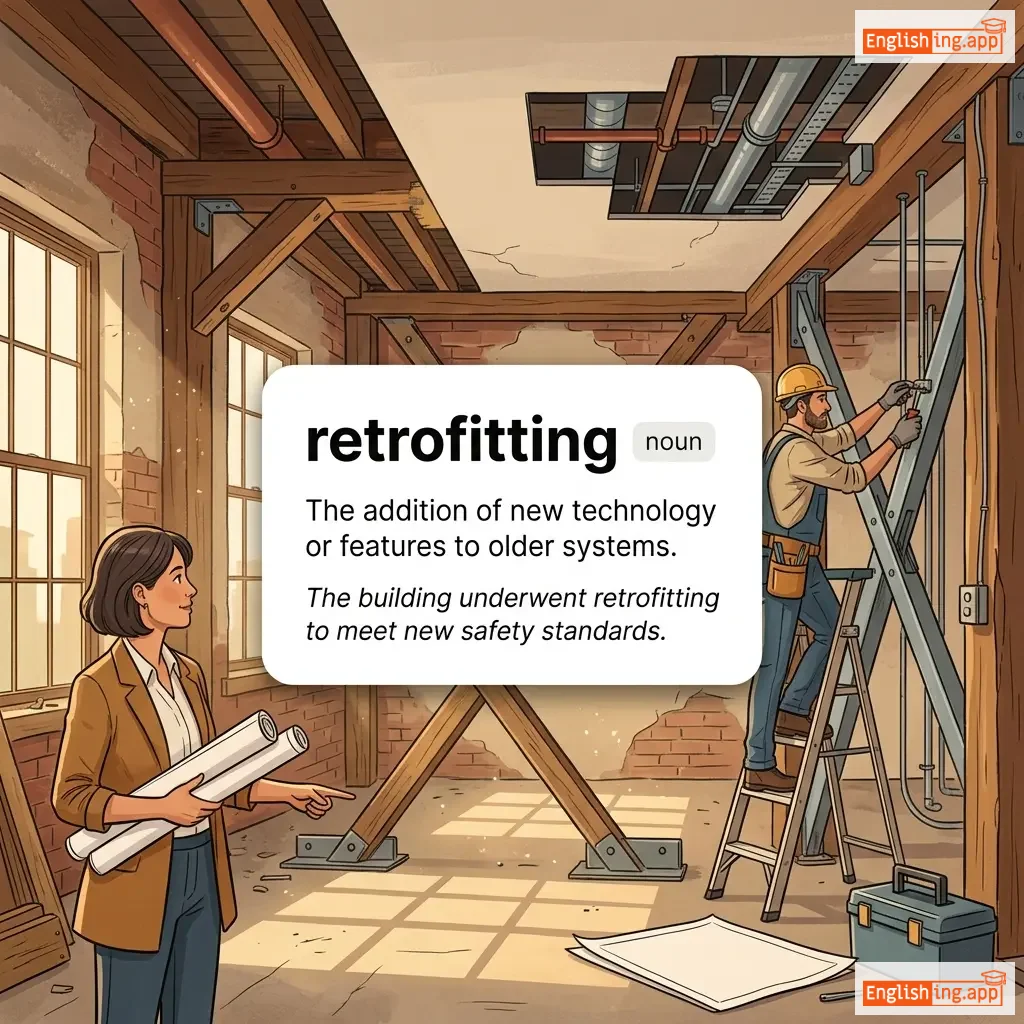
retrofitting definition card — visual illustration of the meaning
noun C1
/ˈrɛ.trəʊ.fɪt.ɪŋ/
为旧系统添加新技术或功能 (wèi jiù xìtǒng tiānjiā xīn jìshù huò gōngnéng)

The addition of new technology or features to older systems.

"The building underwent retrofitting to meet new safety standards."

"这座建筑通过加装 retrofit 来满足新的安全标准。" (Zhè zuò jiànzhù tōngguò jiā zhuāng retrofit lái mǎnzú xīn de ānquán biāozhǔn.)
adjective C1
/ˈrɛtroʊˌɡreɪd/
逆行的 (nìxíng de)

moving backward or returning to a worse condition

"The policy was seen as a retrograde step for human rights."

"该政策被视为人权的倒退步骤。" (Gāi zhèngcè bèi shì wéi rénquán de dào tuì bùzhòu.)
noun C1
/ˈrɛtrəsˌpɛkt/
回顾 (huígù)

the act of looking back on or reviewing past events

"In retrospect, the decision seemed unwise."

"回顾来看,那个决定似乎不明智。" (Huígù lái kàn, nàgè juédìng shìhū bù míngzhì.)
adjective C1
/ˌrɛtrəˈspɛktɪv/
回顾 (huígù)

Looking back on or dealing with past events or situations.

"The museum held a retrospective exhibition of the artist's work."

"博物馆举办了艺术家作品的回顾展。" (Bówùguǎn jǔbànle yìshùjiā zuòpǐn de huígù zhǎn.)
adjective C1
/rɪˈtɜː.nə.bəl/
可退还的 (ke tuihuan de)

able to be returned or given back

"The bottle is returnable for a deposit refund."

"这瓶瓶子可以退还存款退款。" (Zhe ping pingzi keyi tuihuan cunkuan tuihuan.)
verb C1
/ˌriːˈvæmp/
翻新 (fānxīn)

To give a new and improved form, structure, or appearance to something.

"The company decided to revamp its website for a modern look."

"公司决定重新设计其网站,以获得现代化外观。" (Gōngsī juédìng chóngxīn shèjì qí wǎngzhàn, yǐ huòdé xiàndàihuà wàiguān.)
revel definition card — visual illustration of the meaning
verb C1
/ˈrevəl/
陶醉 (tao zui)

to enjoy oneself in a lively and noisy way; to take great pleasure in

"They revel in their success."

"他们沉浸在成功中。" (Tāmen chénjìn zài chénggōng zhōng.)
adjective C1
/rɪˈvenʒ.fəl/
复仇的 (fùchóu de)

seeking or desiring revenge; vindictive

"He became revengeful after being betrayed by his friend."

"他在被朋友背叛后变得复仇心切。" (Tā zài bèi péngyǒu bèipàn hòu biàn dé fùchóu xīn qiè)