वोकैबुलरीज

इंग्लिश वोकैबुलरी डिस्कवर, लर्न और मास्टर करें

adjective C1
/ˈræb.ɪd/
उन्मत्त (unmatt)

Having extreme or fanatical support for something; relating to or suffering from rabies.

"He was a rabid fan of the football team."

"वह फुटबॉल टीम का एक उन्मत्त प्रशंसक था।" (vah football team ka ek unmatt prashansak tha.)
noun C1
/ˈreɪ.biːz/
रेबीज़ (rebiz)

A viral disease that causes inflammation of the brain in humans and other mammals, usually transmitted through animal bites.

"The dog was vaccinated against rabies."

"कुत्ते को रेबीज़ के खिलाफ टीका लगाया गया था।" (kutte ko rebiz ke khilaf tika lagaya gaya tha.)
adjective C1
/ˈreɪ.si/
रोमांचक (romanchak)

Lively, entertaining, or slightly shocking (especially in a sexual way).

"The novel was full of racy dialogues."

"उपन्यास रोमांचक संवादों से भरा था।" (upanyas romanchak samvadon se bhara tha.)
noun C1
/ˈreɪdiəns/
प्रकाश (prakash)

the quality of shining with bright light; a glowing or beaming quality

"Her face was filled with radiance after hearing the good news."

"अच्छी खबर सुनने के बाद उसका चेहरा प्रकाश से भर गया था।" (Achhi khabar sunne ke baad uska chehra prakash se bhar gaya tha.)
adjective C1
/ˈreɪdiənt/
चमकदार (chamakdaar)

Shining brightly; expressing great happiness.

"She looked radiant in her wedding dress."

"वह अपनी शादी की ड्रेस में बहुत ही चमकदार लग रही थी।" (Vah apnī śādī kī ḍres men bahut hī chamakdār lag rahī thī.)
verb C1
/ˈreɪdieɪt/
विकिरण करना (vikiran karna)

to emit energy or light; to spread out from a center

"The fireplace radiates warmth throughout the room."

"फायरप्लेस पूरे कमरे में गर्मी उत्सर्जित करता है।" (fireplace poore kamre mein garmi utsarjit karta hai.)
noun/verb C1
/ˈræfəl/
लॉटरी टिकट बेचना (lottari tiket bechna)

A means of raising money by selling numbered tickets, one or more of which are drawn at random for a prize; to sell something in such a lottery.

"The charity decided to raffle a bicycle to raise funds."

"चैरिटी ने धन इकट्ठा करने के लिए एक साइकिल रैफल करने का फैसला किया।" (Charity ne dhan ikattha karne ke liye ek cycle raffle karne ka faisla kiya.)
noun C1
/ˈræftər/
राफ्टर (rafter)

One of the sloping beams that supports a roof.

"The old barn’s rafters were exposed."

"पुरानी गोशाले के राफ्टर दिखाई दे रहे थे।" (Purani goshale ke rafter dikhai de rahe the.)
adjective C1
/ˈræɡɪd/
फटा हुआ (fata hua)

torn, worn out, or in poor condition

"The homeless man wore a ragged coat."

"बेघर आदमी ने एक फटा हुआ कोट पहना था।" (Beghar aadmi ne ek fata hua coat pehna tha.)
adjective C1
/ˈreɪ.kɪʃ/
स्टाइलिश, आत्मविश्वास से भरा और हल्का सा विवादास्पद रूप (stailish, atmvishwas se bhara aur halka sa vivaadaspad roop)

having a stylish, confident, and slightly disreputable appearance

"He walked in with a rakish smile and tilted hat."

"वह एक रेकिश मुस्कान और झुकी हुई टोपी के साथ अंदर आया।" (Vah ek rekish muskaan aur jhuki hui topi ke saath andar aaya.)
adjective C1
/ræmˈbʌŋk.ʃəs/
अशांत (ashant)

boisterous, energetic, and difficult to control.

"The rambunctious children filled the house with noise."

"शरारती बच्चे घर को शोर से भर रहे थे।" (Shararati bachche ghar ko shor se bhar rahe the.)
Rambutan definition card — visual illustration of the meaning
noun C1
/ræmˈbuːtən/
रामबुटान (rambutan)

a tropical fruit with red spiky skin and white translucent sweet flesh similar to litchi

"The rambutan looks scary with its hairy skin but tastes very sweet inside."

"रैम्बूटान अपनी बालों वाली त्वचा के साथ डरावना दिखता है, लेकिन अंदर बहुत मीठा स्वाद होता है।" (rambutan apni balon wali tvacha ke saath daravna dikhata hai, lekin andar bahut meetha swaad hota hai.)
noun C1
/ˌræm.ɪ.fɪˈkeɪ.ʃən/
परिणाम (parinaam)

a consequence of an action or event, often complex or unwelcome.

"The new law has serious social ramifications."

"नए कानून के गंभीर सामाजिक परिणाम हैं।" (Naye kanoon ke gambhir samajik parinaam hain.)
adjective C1
/ˈræmpənt/
विनाशकारी (vinashkari)

existing or spreading unchecked, often in an undesirable way

"Corruption was rampant in the city administration."

"शहर प्रशासन में भ्रष्टाचार फैल रहा था।" (Sheher prashasan mein bhrashtachar phail raha tha.)
noun C1
/ˈræmpɑːrt/
किले की दीवार (kile ki deewar)

a defensive wall of a castle or fort

"The soldiers stood on the rampart, watching the enemy approach."

"सैनिक किले की दीवार पर खड़े थे, दुश्मन को आते हुए देख रहे थे।" (Sainik kile ki deewar par khade the, dushman ko aate hue dekh rahe the.)
adjective C1
/ˈræmʃækəl/
खस्ताहाल (khastahal)

poorly built or maintained; in a state of disrepair

"They lived in a ramshackle old house on the edge of town."

"वे शहर के किनारे एक खस्ताहाल पुराने घर में रहते थे।" (Ve shahar ke kinare ek khastahal purane ghar mein rehte the.)
adjective C1
/ˈrænsɪd/
बासी (basi)

having a bad taste or smell due to being old or spoiled (especially fats or oils)

"The butter had gone rancid after being left out too long."

"मक्खन बहुत देर बाहर रखा था, जिससे वह बासी हो गया था।" (Makkhan bahut der baahar rakha tha, jisse vah basi ho gaya tha.)
verb C1
/ˈræn.də.maɪz/
रैंडमाइज़ करना (randomize karna)

To make something happen in a random order or manner.

"The software can randomize the order of questions."

"सॉफ़्टवेयर प्रश्नों के क्रम को रैन्डमाइज़ कर सकता है।" (Software prashnon ke kram ko randomize kar sakta hai.)
verb C1
/ˈræn.sæk/
लूटपाट करना (lootpaat karna)

to search a place roughly and steal or damage things

"Burglars ransacked the house while the family was away."

"चोरों ने परिवार के बाहर होने के दौरान घर को लूट लिया।" (Choron ne parivar ke bahar hone ke dauran ghar ko loot liya.)
verb C1
/rænt/
गुस्से में चिल्लाना (gusse mein chillana)

to speak or shout in an angry, uncontrolled way

"He ranted about the unfair treatment at work."

"उसने काम पर अन्यायपूर्ण व्यवहार के बारे में गुस्से में चिल्लाया।" (Usne kaam par anyaypoorvak vyavhaar ke baare mein gusse mein chillaya.)
noun C1
/rəˈpɪdəti/
तीव्रता (teevrata)

The quality of moving or happening quickly; swiftness or speed.

"The rapidity of technological change is astonishing."

"प्रौद्योगिकी परिवर्तन की तीव्रता चमत्कारी है।" (Proudyogiki parivartan ki teevrata chamatkaari hai.)
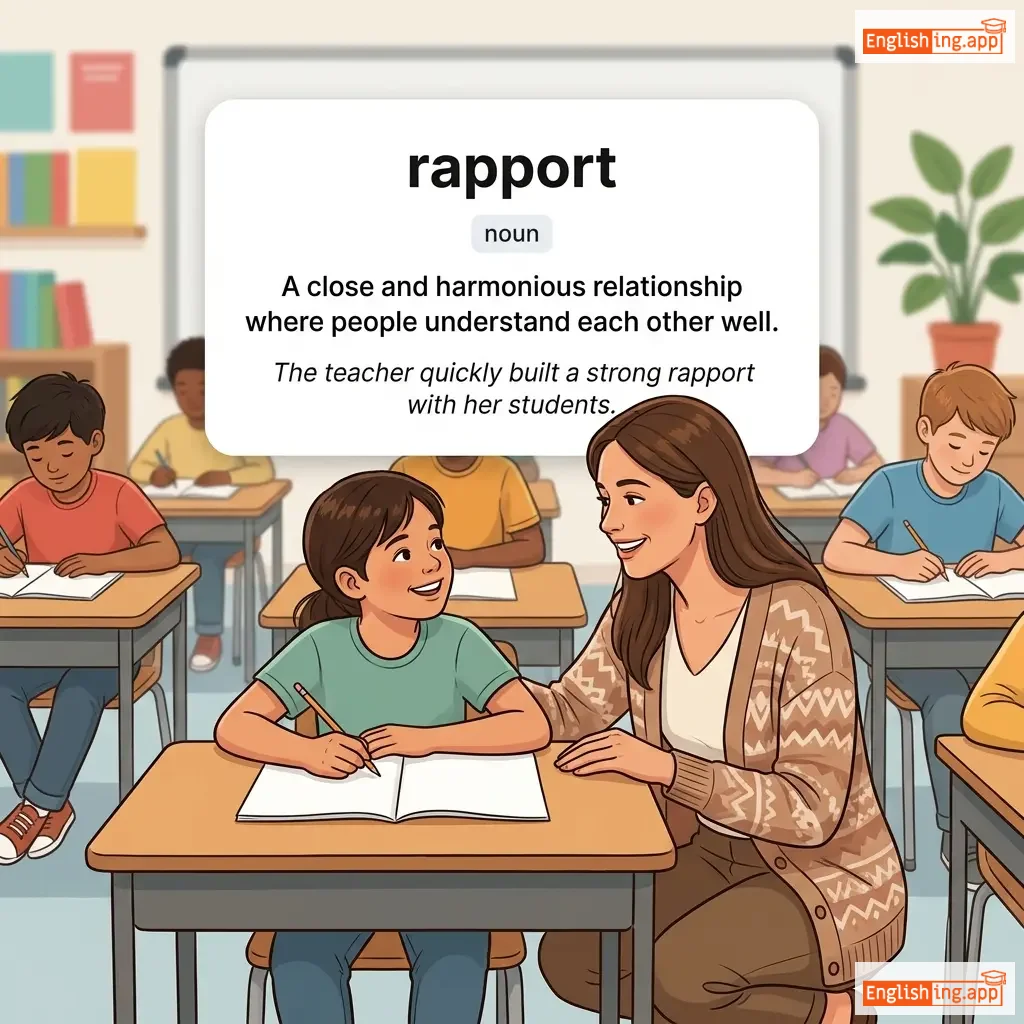
rapport definition card — visual illustration of the meaning
noun C1
/ræˈpɔːr/
रिश्ता (rishta)

A close and harmonious relationship where people understand each other well.

"The teacher quickly built a strong rapport with her students."

"शिक्षक ने अपने छात्रों के साथ जल्दी से एक मजबूत रिश्ता स्थापित किया।" (Shikshak ne apne chatron ke saath jaldi se ek majboot rishta sthaapit kiya.)
adjective C1
/ræpt/
मनोयोगी (manoyogi)

Completely absorbed or fascinated by something.

"She listened with rapt attention to the speaker’s words."

"वह वक्ता के शब्दों को पूरी तन्मयता से सुन रही थी।" (Wah vaktā ke shabdon ko pūrī tanmayatā se sun rahī thī.)
noun C1
/ˈræp.tʃər/
आनंद, उल्लास (anand, ullas)

A feeling of intense joy, delight, or ecstasy.

"She listened to the music in rapture."

"वह संगीत को आनंद से सुन रही थी।" (Woh sangeet ko anand se sun rahi thi.)
verb C1
/ræsp/
कर्कश आवाज में बोलना या खुरचना (karkash awaaz mein bolna ya khurchna)

to speak in a rough, harsh voice or to scrape with a coarse sound

"He rasped out a warning before collapsing."

"उसने गिरने से पहले एक चेतावनी कर्कश आवाज में दी।" (Usne girne se pehle ek chetawani karkash awaaz mein di.)
adjective C1
/ˈræspi/
कर्कश (karkash)

having a harsh, rough, or grating sound

"His raspy voice revealed years of smoking."

"उसकी कर्कश आवाज़ ने धूम्रपान के वर्षों का खुलासा किया।" (Uski karkash awaaz ne dhumrapan ke varsho ka khulasa kiya.)
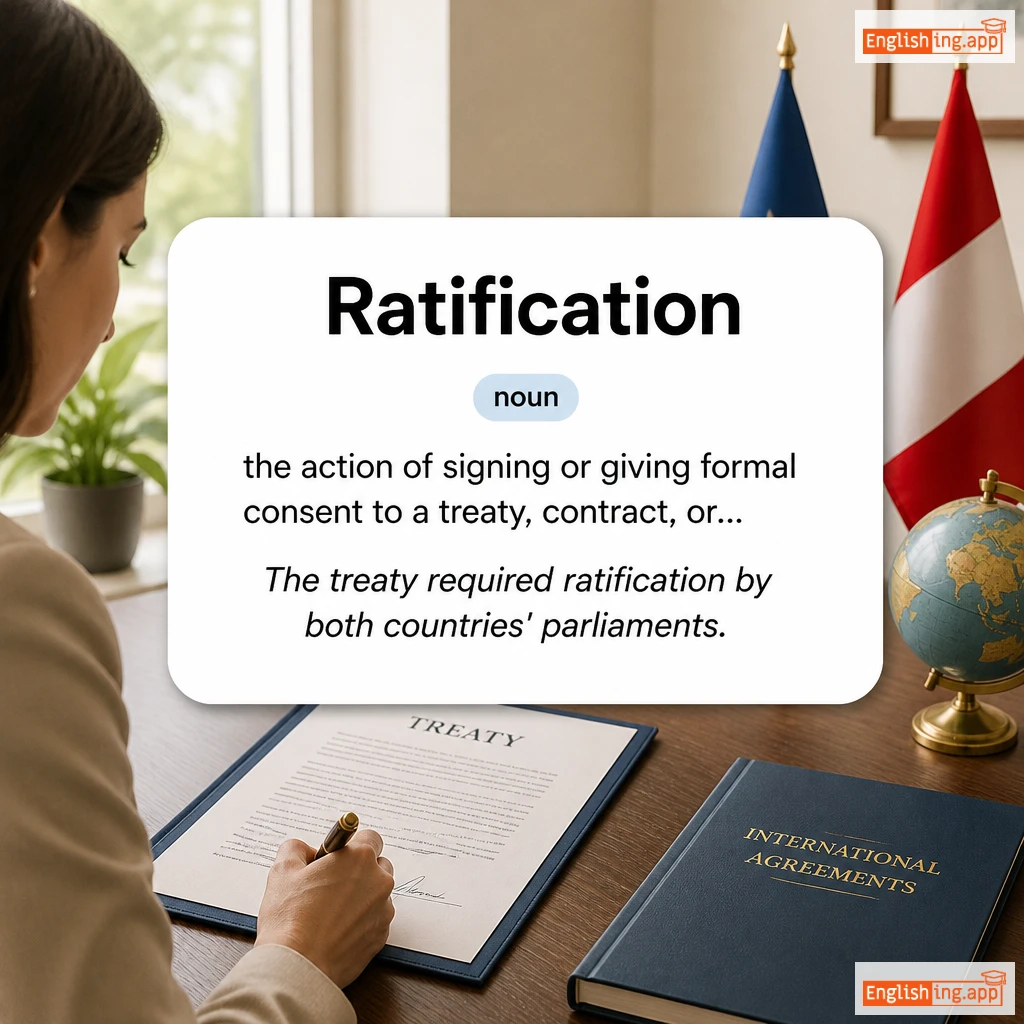
Ratification definition card — visual illustration of the meaning
noun C1
/ˌrætɪfɪˈkeɪʃən/
अनुमोदन (anumodan)

the action of signing or giving formal consent to a treaty, contract, or agreement

"The treaty required ratification by both countries' parliaments."

"संधि को दोनों देशों की संसदों से अनुमोदन की आवश्यकता थी।" (sandhi ko dono deshon ki sansadon se anumodan ki avashyakta thi.)
verb C1
/ˈrætɪfaɪ/
स्वीकृत करना (sweekrit karna)

to approve or confirm something officially, usually by law or formal consent

"The government ratified the trade agreement."

"सरकार ने व्यापार समझौते को स्वीकृत किया।" (Sarkar ne vyapar samjhaute ko sweekrit kiya.)
noun C1
/ˈræʃən/
रेशन (reshan)

a fixed amount of something, especially food, officially allowed to each person

"During the war, each family received a weekly ration of rice."

"युद्ध के दौरान, हर परिवार को चावल का साप्ताहिक रेशन मिला।" (Yudh ke dauran, har parivar ko chawal ka saptahik reshan mila.)
noun C1
/ˌræʃəˈnæl/
युक्तिसंगत कारण (yuktisangat kaaran)

the underlying reason or explanation for something

"The rationale behind his decision was clearly explained."

"उसके निर्णय के पीछे का कारण स्पष्ट रूप से समझाया गया था।" (Uske nirnay ke peeche ka kaaran spasht roop se samjhaya gaya tha.)
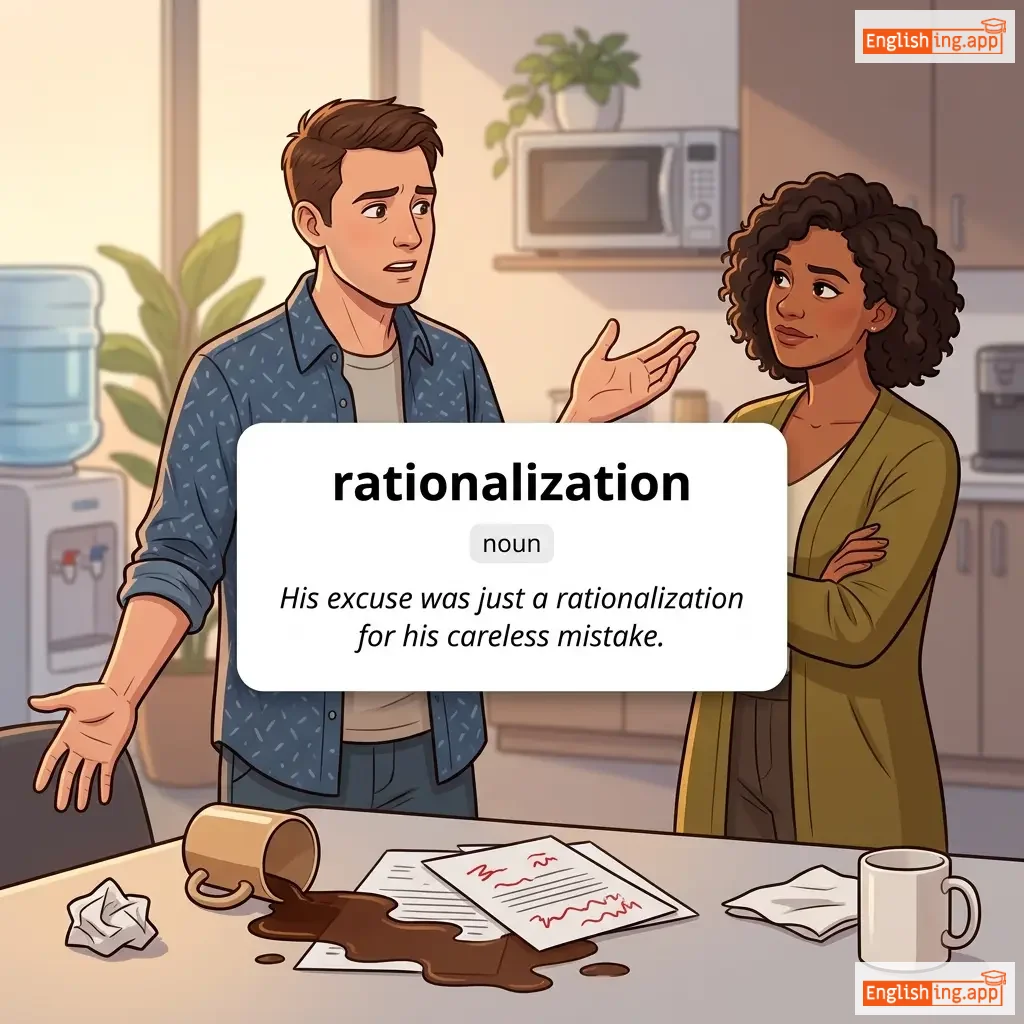
rationalization definition card — visual illustration of the meaning
noun C1
/ˌræʃənəlaɪˈzeɪʃən/
युक्तिकरण (yuktikaran)

the action of attempting to explain or justify behavior or an attitude with logical reasons, even if these are not appropriate

"His excuse was just a rationalization for his careless mistake."

"उसका बहाना बस उसके लापरवाह गलती का युक्तिकरण था।" (Uska bahaana bas uske laaparwaah galti ka yuktikaran tha.)
verb C1
/ˈræʃənəlaɪz/
युक्तिवाद करना (yuktivad karna)

to attempt to explain or justify behavior or decisions with logical reasons, even if they are not true or appropriate

"She tried to rationalize her lateness by blaming the traffic."

"वह अपनी देर से आने की वजह ट्रैफिक को दोषी ठहराकर रैशनलाइज़ करने की कोशिश कर रही थी।" (Woh apni der se aane ki wajah traffic ko doshi thaharakr rationalize karne ki koshish kar rahi thi.)
verb C1
/ˈræʃənaɪz/
युक्तिसंगत बनाना (yuktisangat banana)

to justify or explain something with logical reasons, even if not appropriate or true

"He tried to rationlize his mistake by blaming the system."

"वह अपनी गलती को सिस्टम पर दोषारोपण करके रैशनलाइज करने की कोशिश कर रहा था।" (Vah apni galti ko system par dosharopan karke rationalize karne ki koshish kar raha tha.)
adjective C1
/ˈrɔːkəs/
हंगामा, शोरगुल (hungama, shorgul)

loud, harsh, and unpleasant sound or behavior

"The crowd became raucous after the team scored."

"टीम ने गोल किया तो भीड़ हंगामा करने लगी।" (Team ne gol kiya to bheed hungama karne lagi.)
verb C1
/ˈrævɪdʒ/
विनाश करना (vinaash karna)

to cause severe and extensive damage or destruction

"The hurricane ravaged the coastal villages."

"तूफान ने तटीय गांवों को विनाश कर दिया।" (Toofan ne tatiy gaon ko vinaash kar diya.)
verb C1
/reɪv/
प्रशंसा करना (prashansa karna)

to speak or write about something with great enthusiasm or admiration

"Critics rave about the new movie."

"आलोचक नई फिल्म के बारे में बहुत प्रशंसा करते हैं।" (Aalochak nayi film ke baare mein bahut prashansa karte hain.)
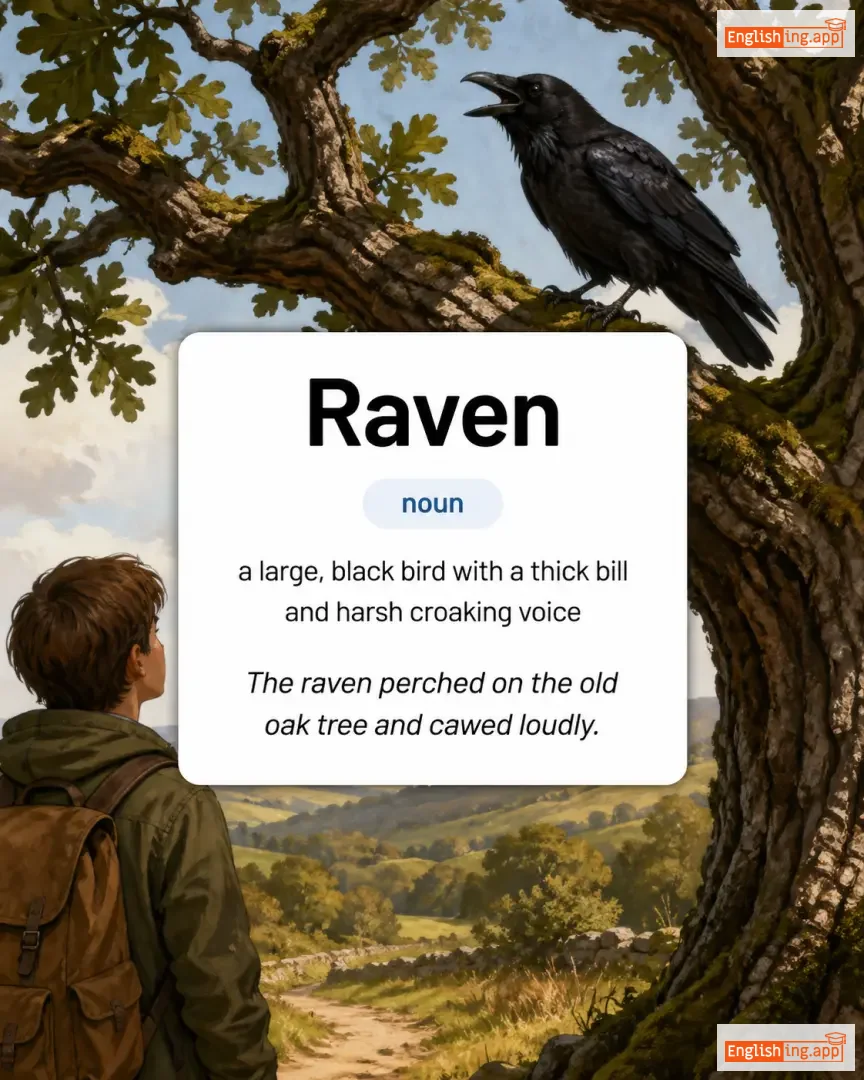
Raven definition card — visual illustration of the meaning
noun C1
/ˈreɪ.vən/
काला कौआ (kala kaua)

a large, black bird with a thick bill and harsh croaking voice

"The raven perched on the old oak tree and cawed loudly."

"काला कौआ पुराने ओक के पेड़ पर बैठा और जोर से बोला।" (kala kaua purane ok ke ped par baitha aur jor se bola)
adjective C1
/ˈrævənəs/
भयानक भूखा (bhayanak bhookha)

Extremely hungry; famished.

"After the long hike, she was ravenous and ate quickly."

"लंबी चढ़ाई के बाद, वह रेविनस थी और जल्दी से खा लिया।" (Lambi chadhai ke baad, vah ravinas thi aur jaldi se kha liya.)
noun C1
/rəˈviːn/
गहरी घाटी (gahri ghaati)

A deep, narrow valley with steep sides.

"The river carved a deep ravine through the mountains."

"नदी ने पहाड़ों के बीच एक गहरी घाटी बना दी।" (Nadi ne pahadon ke beech ek gahri ghaati bana di.)
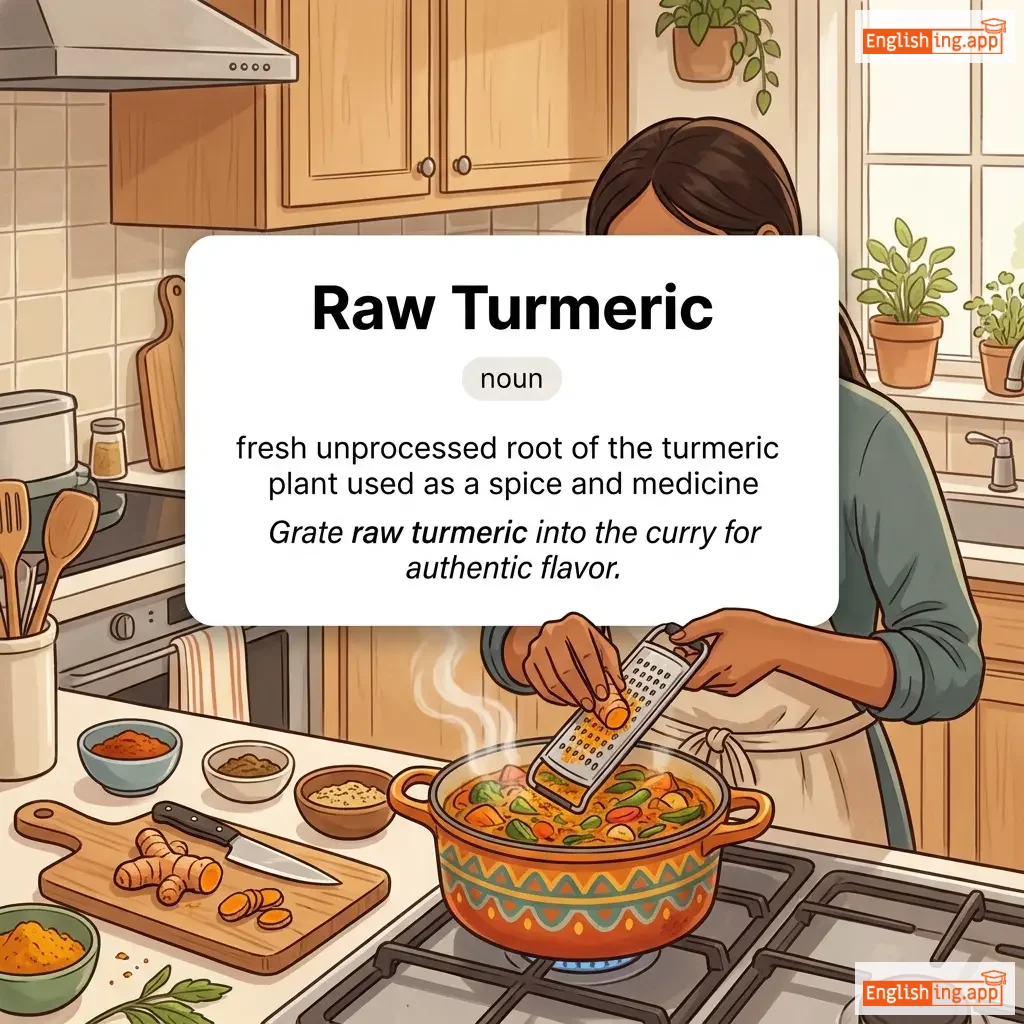
Raw Turmeric definition card — visual illustration of the meaning
noun C1
/rɔ ˈtɜrmərɪk/
कच्चा हल्दी (kacha haldi)

fresh unprocessed root of the turmeric plant used as a spice and medicine

"Grate raw turmeric into the curry for authentic flavor."

"कढ़ी में असली स्वाद के लिए कच्ची हल्दी घिसें।" (kadhi mein asli swad ke liye kacchi haldi ghisain)
verb C1
/reɪz/
नष्ट करना (nasht karna)

To completely destroy or demolish something, especially a building.

"The old factory was razed to make way for new apartments."

"पुरानी फैक्ट्री को नए अपार्टमेंट्स के लिए नष्ट कर दिया गया।" (Purani factory ko naye apartments ke liye nasht kar diya gaya.)
noun C1
/riˈæktənt/
प्रतिक्रियामें भाग लेने वाला पदार्थ (riyaktaant)

A substance that takes part in and undergoes change during a chemical reaction.

"Oxygen is a reactant in the process of combustion."

"ऑक्सीजन दहन प्रक्रिया में एक प्रतिक्रिया-घटक है।" (aaksijan dahan prakriya mein ek pratikriya ghatak hai)
adjective C1
/riˈækʃəˌneri/
प्रतिक्रियावादी (pratikriyavadi)

Opposing political or social progress or reform; extremely conservative.

"The group took a reactionary stance against the new policies."

"समूह ने नई नीतियों के खिलाफ एक प्रतिक्रियाशील रुख अपनाया।" (Samuh ne nai neetiyon ke khilaf ek pratikriyashil rukh apnaya.)
adjective C1
/riˈæk.tɪv/
प्रतिक्रियाशील; रासायनिक सक्रिय (pratikriyaasheel; rasanik sakriya)

responding to situations rather than initiating them; chemically active

"The company took a reactive approach to customer complaints."

"कंपनी ने ग्राहक शिकायतों के लिए एक प्रतिक्रियाशील दृष्टिकोण अपनाया।" (kampani ne grahak shikayaton ke liye ek pratikriyaasheel drishtikon apnaya.)
verb C1
/ˌriːəˈdʒʌst/
फिर से समायोजित करना (phir se samaayojit karna)

To change or move something again in order to achieve a better fit, condition, or balance.

"He readjusted the chair to make it more comfortable."

"उसने कुर्सी को अधिक आरामदायक बनाने के लिए उसे फिर से समायोजित किया।" (Usne kursi ko adhik aramdayak banane ke liye use phir se samaayojit kiya.)
noun C1
/ˌriː.əˈdʒʌst.mənt/
पुनः समायोजन (punah samaayojan)

The act of changing or correcting something again to make it suitable or balanced.

"After moving to a new city, he went through a period of readjustment."

"एक नए शहर में रहने के बाद उसने पुनः समायोजन का एक दौर गुज़ारा." (ek naye shahar mein rehne ke baad usne punah samaayojan ka ek daur guzaara.)
verb C1
/ˌriːəˈfɜːrm/
पुनः पुष्टि करना (punah pushti karna)

To state again strongly; to confirm or strengthen a statement or belief.

"The president reaffirmed his commitment to education reform."

"राष्ट्रपति ने शिक्षा सुधार के प्रति अपनी प्रतिबद्धता की पुनः पुष्टि की।" (rashtrapati ne shiksha sudhar ke prati apni pratibaddhata ki punah pushti ki.)
noun C1
/ˈriːpər/
फसल काटने वाला व्यक्ति या मशीन (fasal katne wala vyakti ya machine)

a person or machine that cuts and gathers crops

"The reaper moved slowly through the golden fields."

"रीपर गोल्डन खेतों के बीच धीरे-धीरे चला।" (Reaper golden kheton ke beech dheere-dheere chala.)
noun C1
/ˈriːbeɪt/
छूट/वापसी राशि (chhoot/vapasi rashi)

a partial refund given to someone who has paid too much money for something

"The store offered a rebate on bulk purchases."

"दुकान ने थोक खरीदारी पर छूट दी।" (Dukan ne thok khareedari par chhoot di.)
adjective C1
/rɪˈbɛljəs/
विद्रोही (vidrohi)

resisting authority or control; showing a desire to rebel

"The rebellious teenager refused to follow the school rules."

"विद्रोही किशोर स्कूल के नियमों का पालन करने से इनकार कर दिया।" (Vidrohi kishor school ke niyamon ka paalan karne se inkaar kar diya.)