|
••••••
|
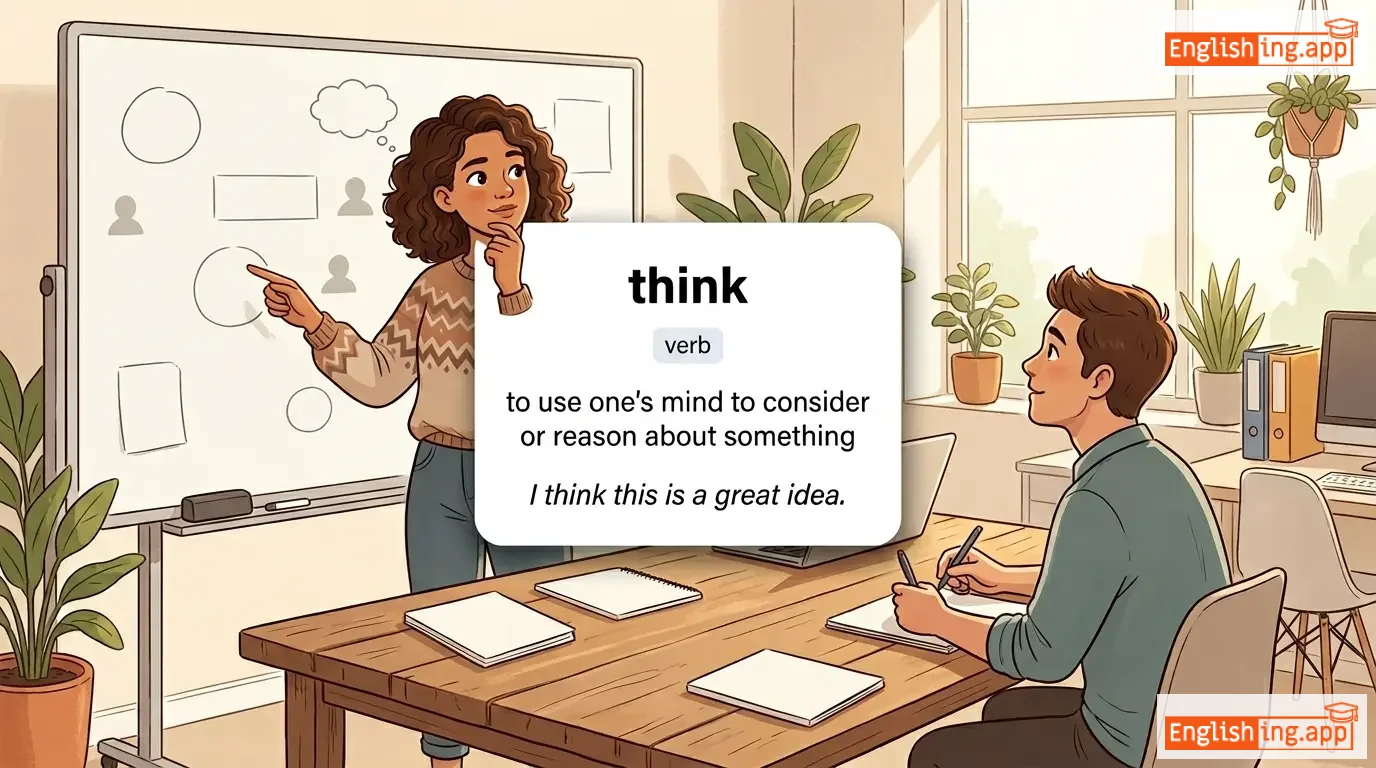
/θɪŋk/
verb
(थिंक)
••••••
|
••••••
|
सोचना
sochna
••••••
|
थॉट
••••••
|
थॉट
••••••
|
थिंकस
••••••
|
थिंकिंग
••••••
|
to use one's mind to consider or reason about something
|
I think this is a great idea.
मुझे लगता है कि यह एक महान विचार है।
••••••
|
मुझे लगता है कि यह एक महान विचार है।
Mujhe lagta hai ki yah ek mahaan vichaar hai.
••••••
|
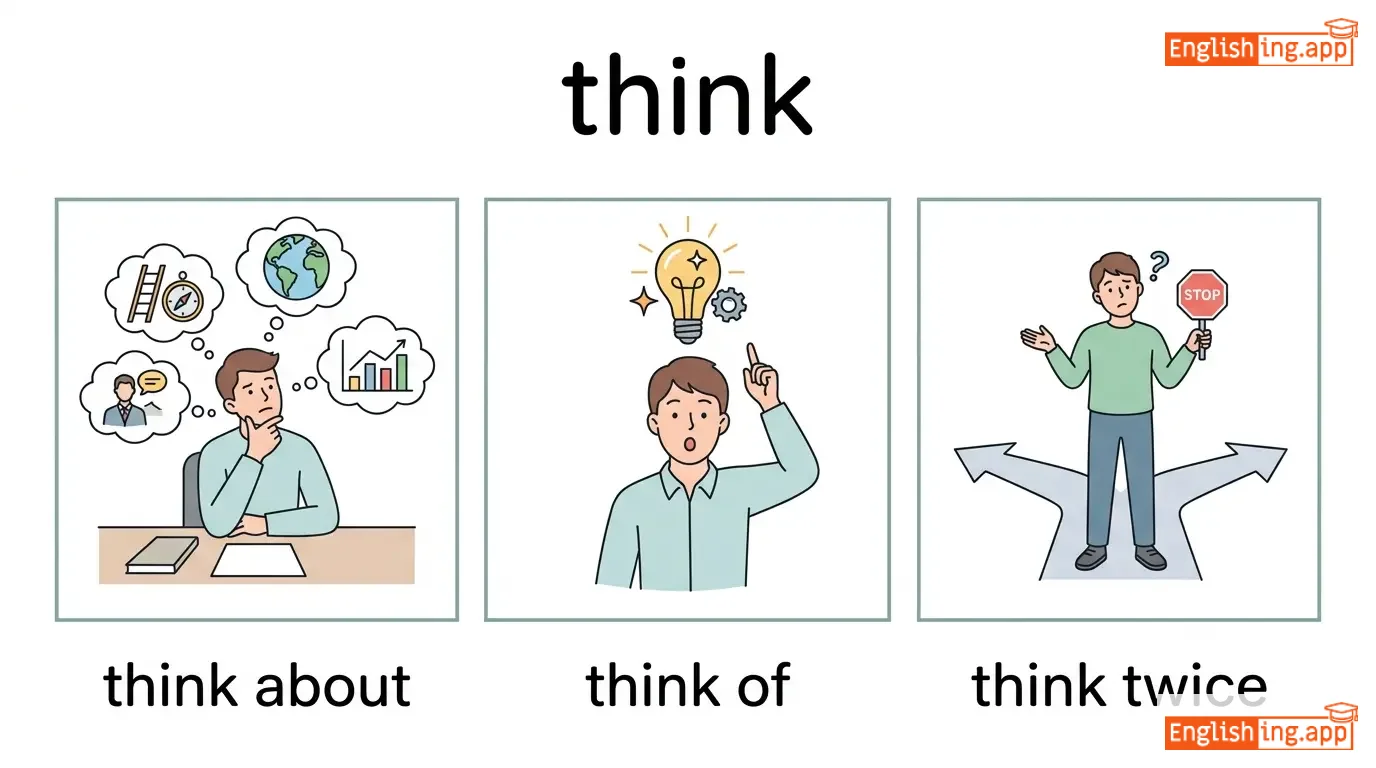
दो बार सोचो
••••••
|
Consider something carefully before making a decision
|
दो बार सोचो
Do baar socho
••••••
|
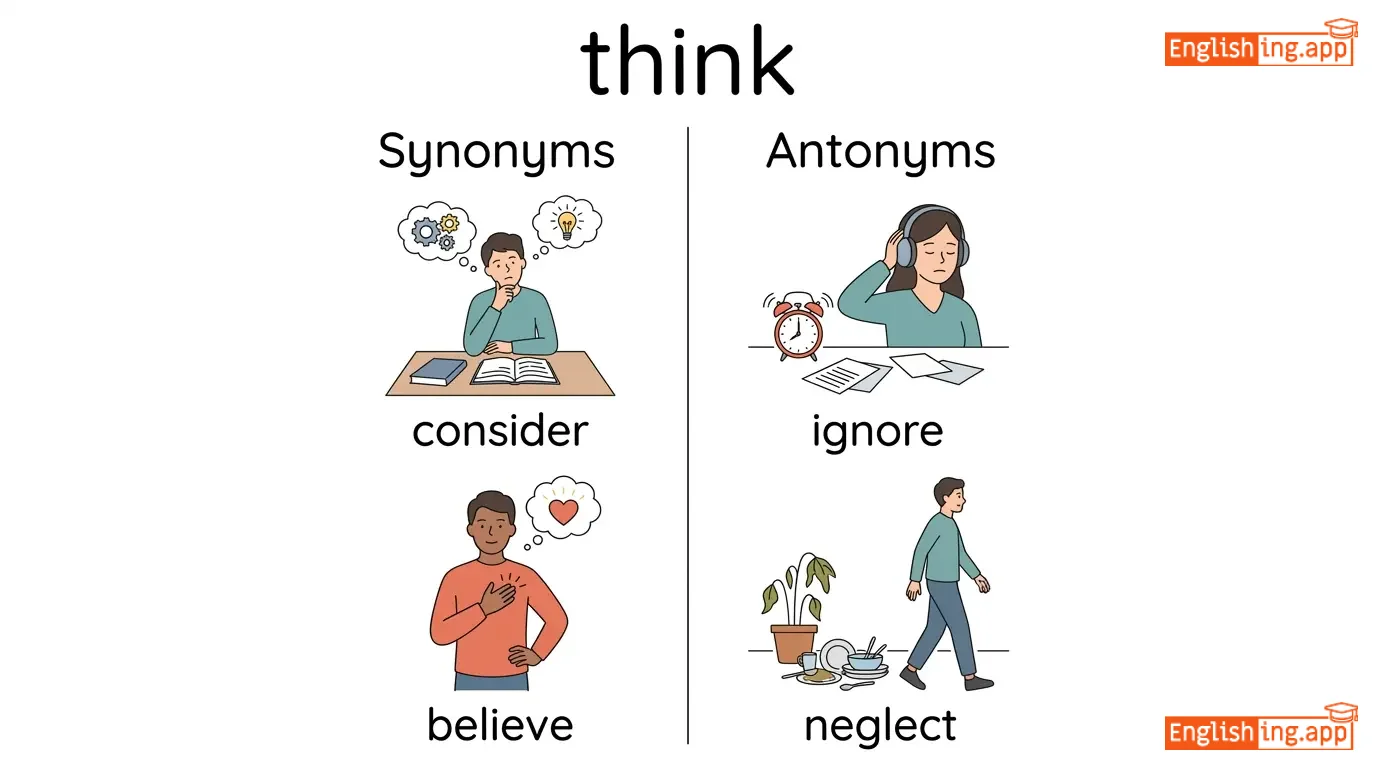
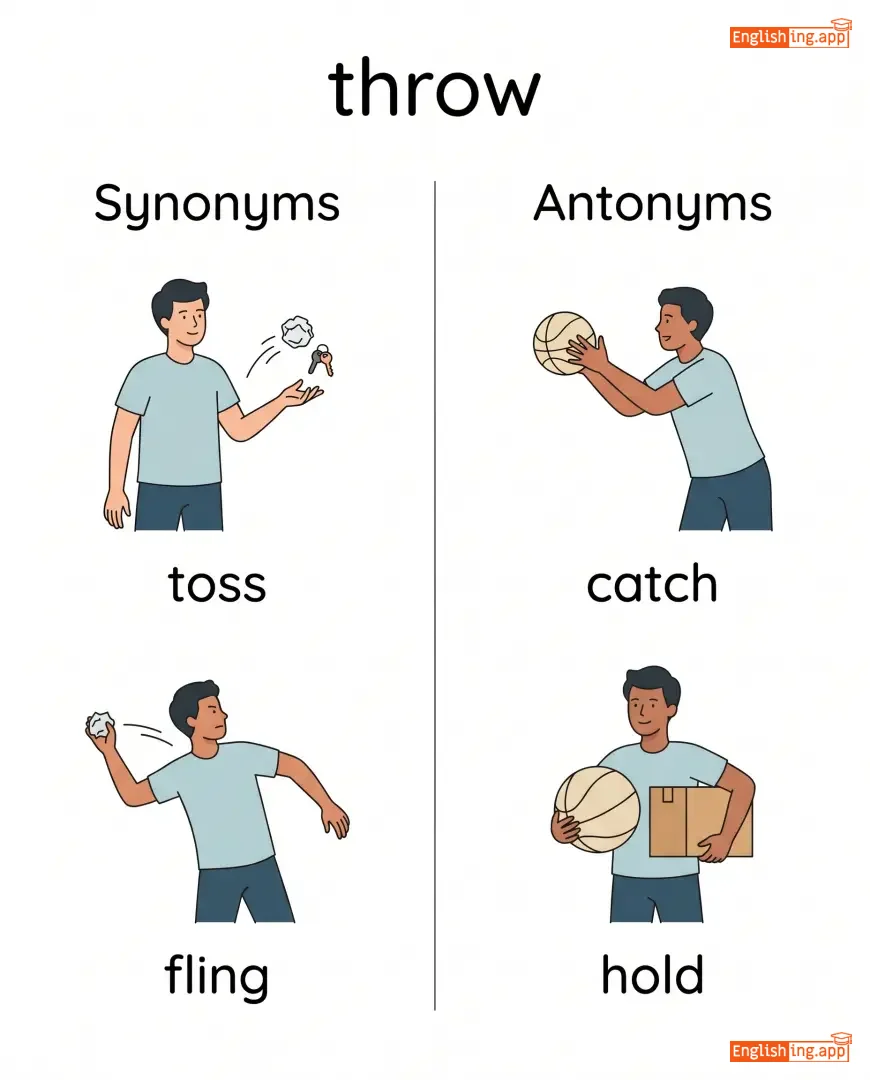
consider, believe, reflect, ponder
|
••••••
|
think about, think of, think twice, think hard
|
When you 'think', your mind is full of thoughts and reflections!
••••••
|
|
••••••
|
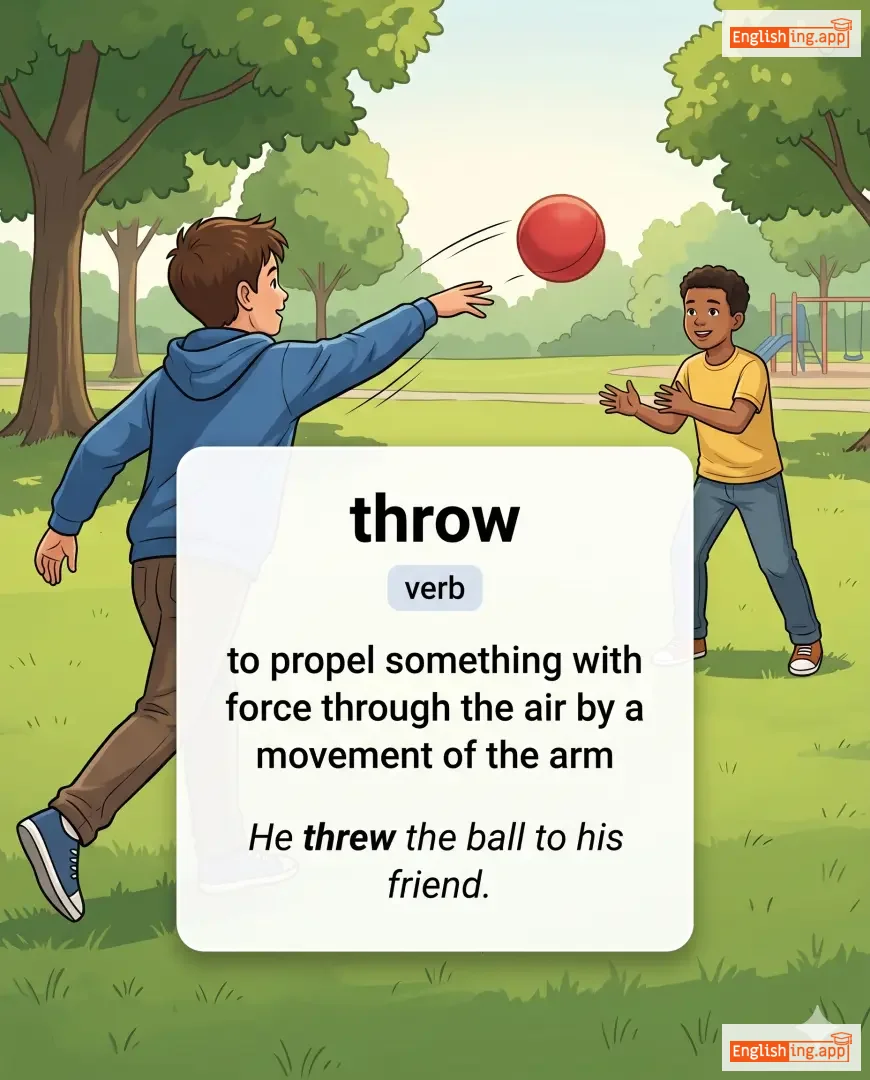
/θroʊ/
verb
(थ्रो)
••••••
|
••••••
|
फेंकना
phenkna
••••••
|
थ्रू
••••••
|
थ्रोअन
••••••
|
थ्रोज़
••••••
|
थ्रोइंग
••••••
|
to propel something with force through the air by a movement of the arm
|
He threw the ball to his friend.
उसने गेंद को अपने दोस्त को फेंका।
••••••
|
उसने गेंद को अपने दोस्त को फेंका।
Usne gend ko apne dost ko phenka.
••••••
|
तौलिया फेंकना
••••••
|
to give up or admit defeat
|
हार मान लेना
haar maan lena
••••••
|
••••••
|
••••••
|
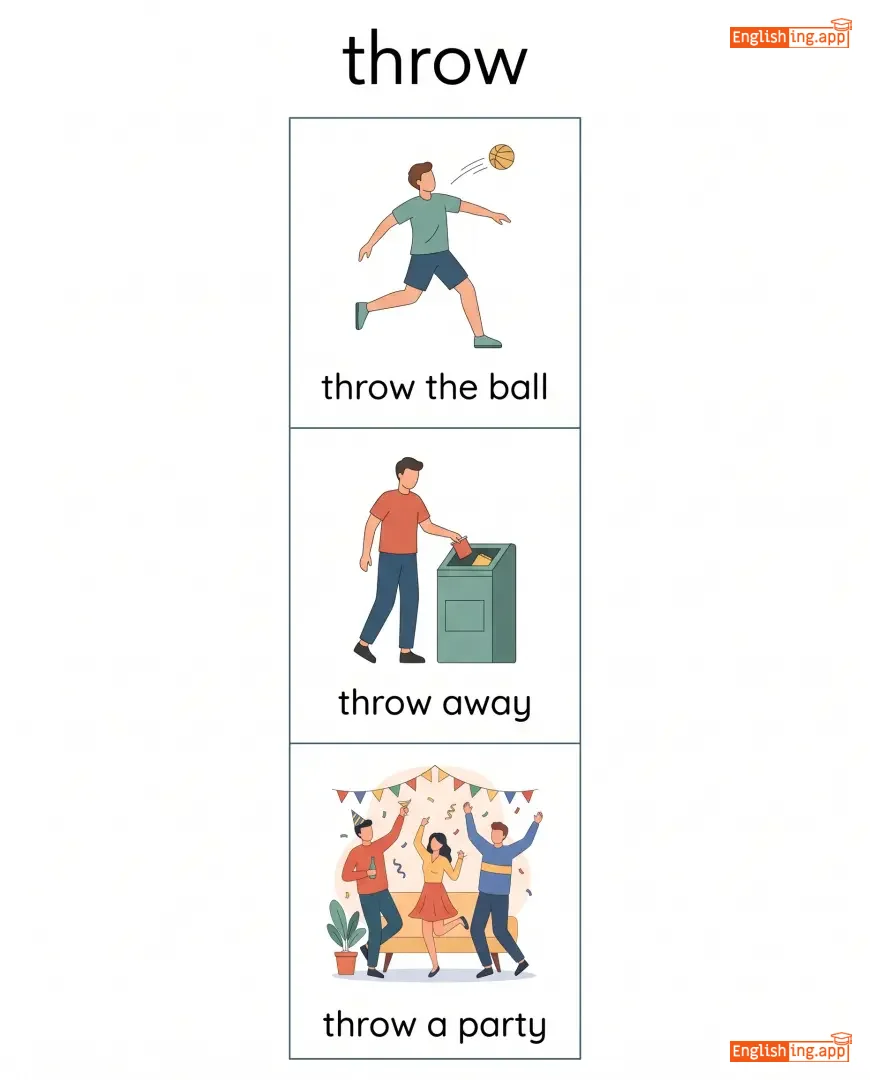
throw the ball, throw away, throw a party
|
थ्रो करने से गेंद (ball) फेंकी जाती है!
••••••
|
|
••••••
|
/θruːˈaʊt/
preposition
(थ्रूआउट)
••••••
|
-
••••••
|
संपूर्ण
sampurn
••••••
|
-
••••••
|
-
••••••
|
-
••••••
|
-
••••••
|
in every part of a place or during the whole time of an event
|
She worked throughout the night.
••••••
|
वह पूरी रात काम करती रही।
Woh poori raat kaam karti rahi.
••••••
|
-
••••••
|
-
••••••
|
-
••••••
|
all over, everywhere, during, across
|
••••••
|
throughout the day, throughout the country
|
Throughout = समय के पार, बिना रुके।
••••••
|
|
••••••
|
/θruː/
preposition
(थ्रू)
••••••
|
-
••••••
|
के माध्यम से
ke madhyam se
••••••
|
-
••••••
|
-
••••••
|
-
••••••
|
-
••••••
|
moving in one side and out the other side of something
|
The train passed through the tunnel.
ट्रेन सुरंग के माध्यम से गुजरी।
••••••
|
ट्रेन सुरंग के माध्यम से गुजरी।
Train surang ke madhyam se guzri.
••••••
|
-
••••••
|
-
••••••
|
-
••••••
|
across, past, beyond, into
|
••••••
|
go through, pass through, walk through
|
Through sounds like crossing a bridge, moving from one side to the other.
••••••
|
|
••••••
|
/θroʊt/
noun
(थ्रोट)
••••••
|
-
••••••
|
गला
gala
••••••
|
-
••••••
|
-
••••••
|
-
••••••
|
-
••••••
|
the front part of the neck, containing the pharynx and larynx
|
He felt a lump in his throat while speaking.
••••••
|
उसे बोलते समय अपने गले में एक गांठ महसूस हुई।
Use bolte samay apne gale mein ek ganth mahsus hui.
••••••
|
-
••••••
|
-
••••••
|
-
••••••
|
••••••
|
••••••
|
sore throat, clear your throat
|
Throat = gala, गले में ध्वनि और आवाज के लिए।
••••••
|
|
••••••
|
/θriː/
numeral
(थ्री)
••••••
|
-
••••••
|
तीन
teen
••••••
|
-
••••••
|
-
••••••
|
-
••••••
|
-
••••••
|
the number equivalent to the sum of two and one
|
She has three dogs at home.
••••••
|
उसके पास घर में तीन कुत्ते हैं।
Uske paas ghar mein teen kutte hain.
••••••
|
-
••••••
|
-
••••••
|
-
••••••
|
••••••
|
••••••
|
three times, three people, three years
|
तीन परिवार में लकी नंबर होता है।
••••••
|
|
••••••
|
/ˈθrɛtən/
verb
(हैपिनेस)
••••••
|
••••••
|
ख़ुशी
khushi
••••••
|
••••••
|
••••••
|
••••••
|
••••••
|
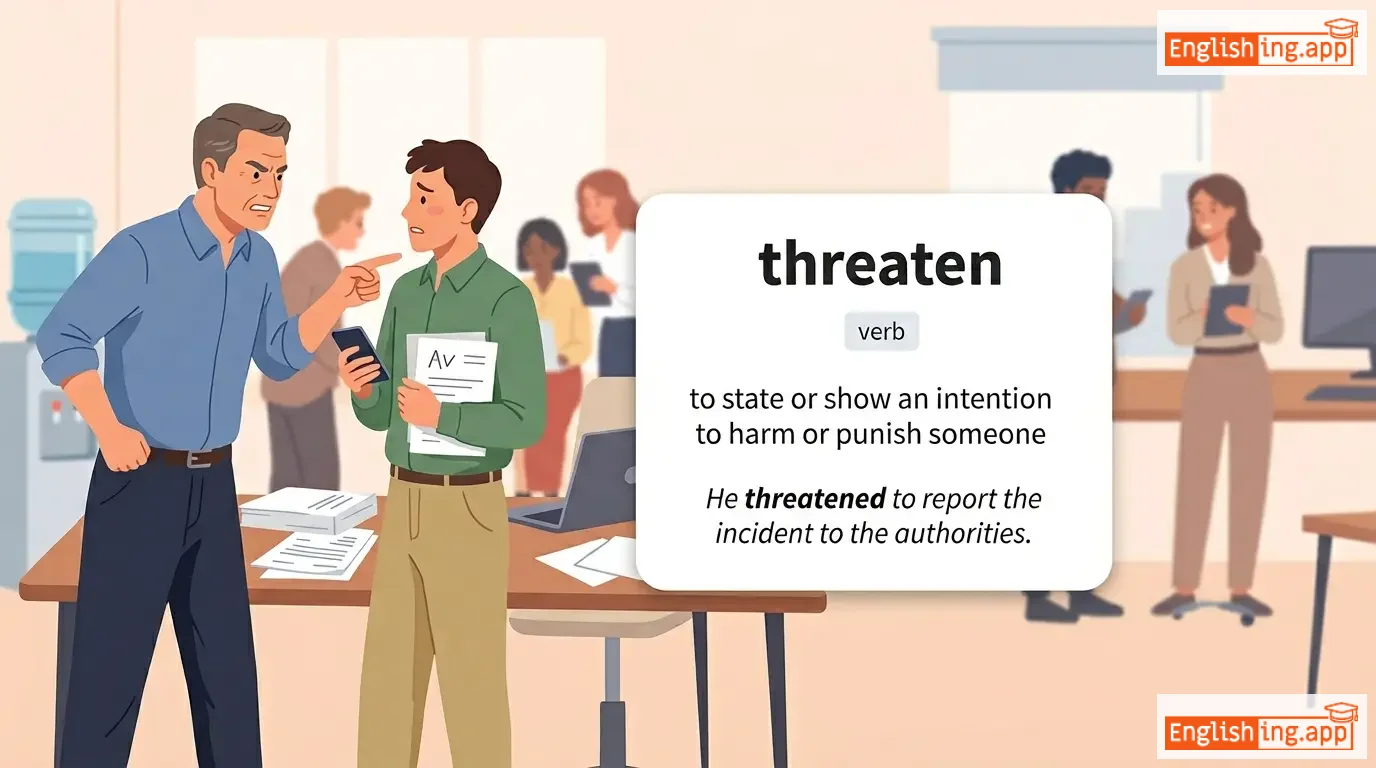
to state or show an intention to harm or punish someone
|
He threatened to report the incident to the authorities.
••••••
|
जब उसने पुरस्कार प्राप्त किया, तो वह अपनी खुशी छिपा नहीं सकी।
Jab usne puraskar prapt kiya, to wah apni khushi chhupa nahi saki.
••••••
|
-
••••••
|
-
••••••
|
-
••••••
|
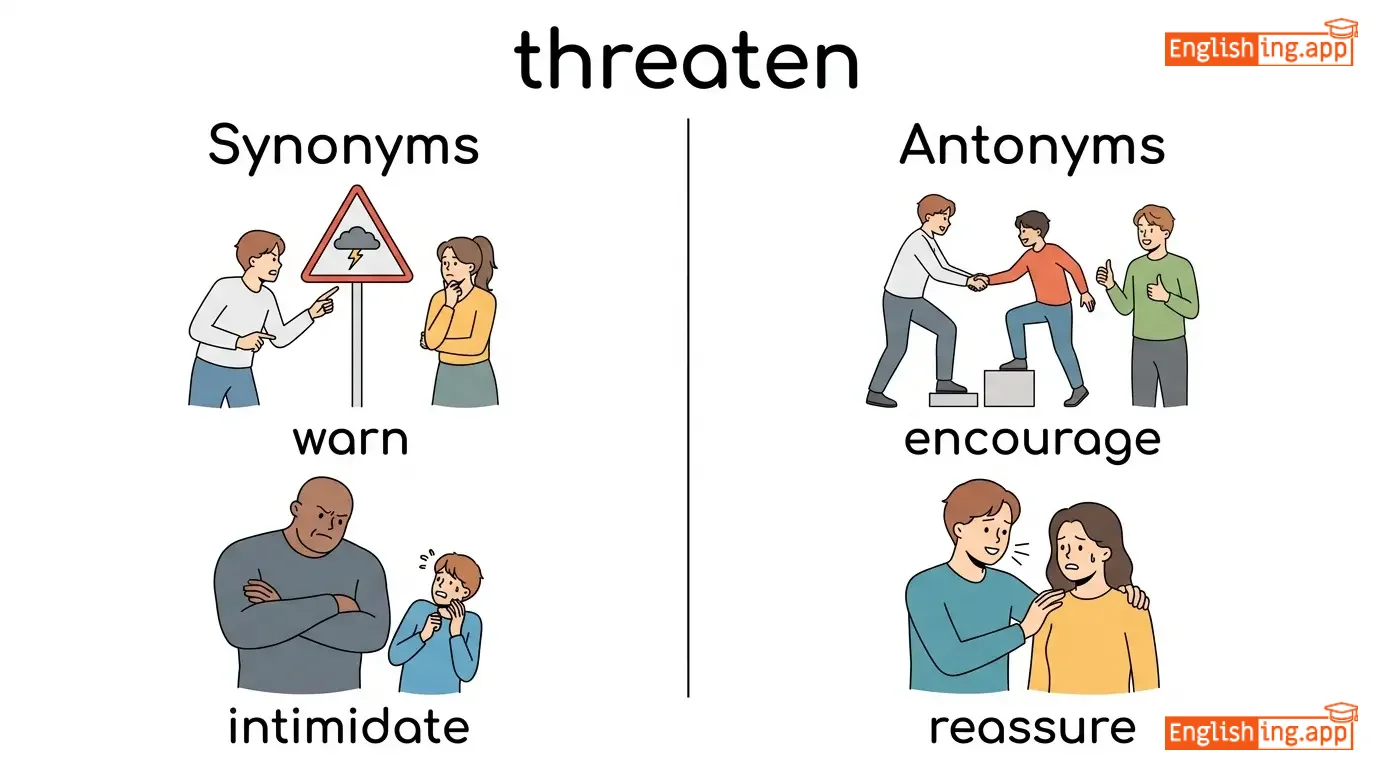
warn, intimidate, menace, coerce
|
encourage, reassure, support
|
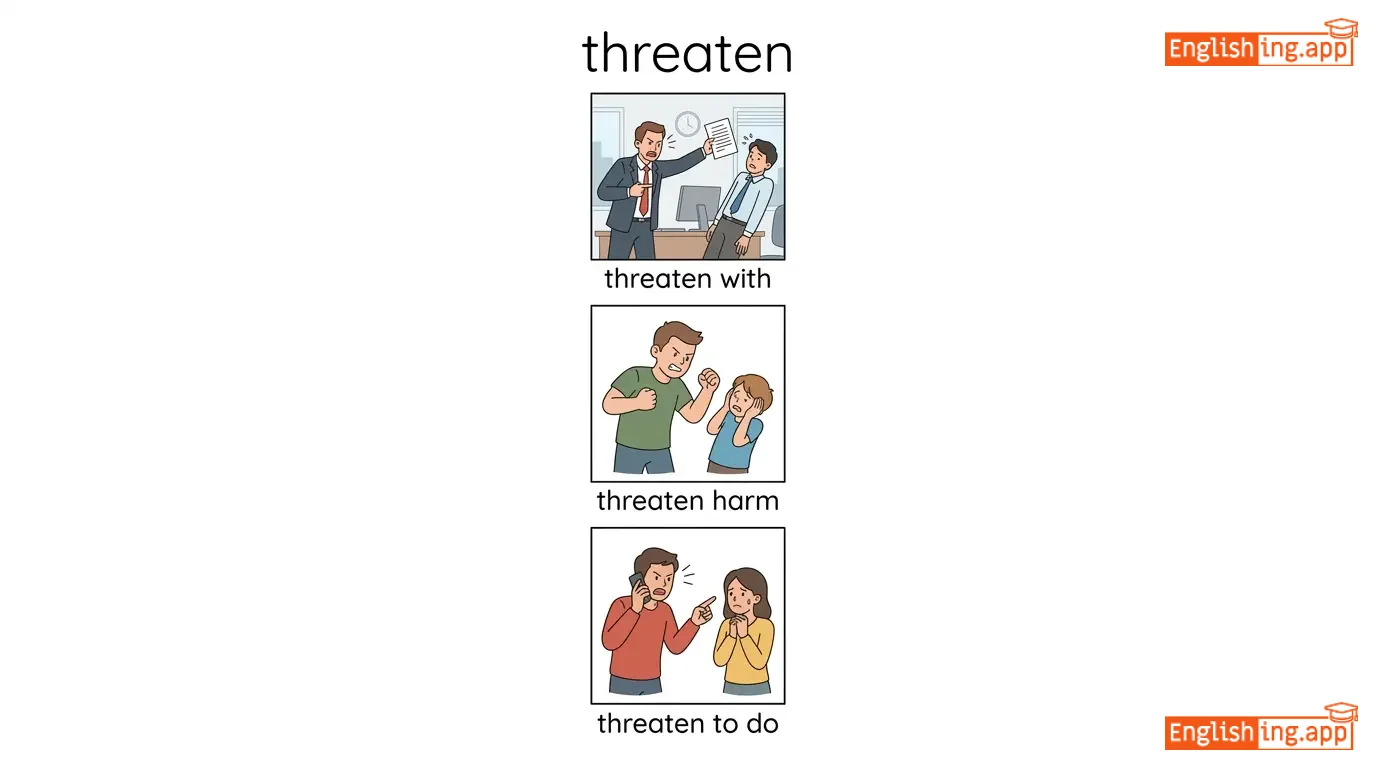
threaten with, threaten harm, threaten to do
|
Khushi aur Happiness, दोनों में है सुख का आनंद!
••••••
|
|
••••••
|
/ˈθaʊzənd/
noun
(थाउज़ेंड)
••••••
|
-
••••••
|
हजार
hazar
••••••
|
-
••••••
|
-
••••••
|
-
••••••
|
-
••••••
|
the number equal to 10 hundred or 1,000
|
There were a thousand people at the concert.
••••••
|
कंसर्ट में हजार लोग थे।
Concert mein hazar log the.
••••••
|
-
••••••
|
-
••••••
|
-
••••••
|
••••••
|
••••••
|
thousand dollars, thousand people, thousand years
|
हजारों लोग कंसर्ट में गाते हैं (hazaron log concert mein gaate hain)
••••••
|
|
••••••
|
/θɔːt/
noun
(थॉट)
••••••
|
-
••••••
|
विचार
vichar
••••••
|
-
••••••
|
-
••••••
|
-
••••••
|
-
••••••
|
an idea or opinion produced by thinking or considering something
|
She had a sudden thought about the future.
••••••
|
उसके मन में भविष्य के बारे में अचानक एक विचार आया।
Uske man mein bhavishya ke baare mein achanak ek vichar aaya.
••••••
|
-
••••••
|
-
••••••
|
-
••••••
|
idea, notion, belief, concept
|
••••••
|
deep thought, quick thought, passing thought
|
है 'विचार' (vichar) जो अचानक आता है
••••••
|
|
••••••
|
/ðoʊ/
conjunction
(थो)
••••••
|
-
••••••
|
हालाँकि
haalanki
••••••
|
-
••••••
|
-
••••••
|
-
••••••
|
-
••••••
|
used to introduce a fact that makes the main statement of the sentence seem surprising or unexpected
|
Though it was raining, they still went outside.
••••••
|
हालाँकि बारिश हो रही थी, फिर भी वे बाहर गए।
Haalanki baarish ho rahi thi, phir bhi ve baahar gaye.
••••••
|
-
••••••
|
-
••••••
|
-
••••••
|
••••••
|
••••••
|
though difficult, though tired, though happy
|
'हालाँकि' (haalanki) बारिश में बाहर जाने की सोच
••••••
|
|
••••••
|
/ðoʊz/
pronoun
(थोज)
••••••
|
-
••••••
|
वे
ve
••••••
|
-
••••••
|
-
••••••
|
-
••••••
|
-
••••••
|
used to refer to people or things that are far away or distant in space, time, or thought
|
Those are the shoes I want.
••••••
|
वे वे जूते हैं जो मुझे चाहिए।
Ve ve jute hain jo mujhe chahiye.
••••••
|
-
••••••
|
-
••••••
|
-
••••••
|
those ones, those people, those things
|
••••••
|
those shoes, those days, those people
|
दूर के 'वे' (ve)
••••••
|
|
••••••
|
/ðɪs/
pronoun
(इस)
••••••
|
-
••••••
|
यह
yah
••••••
|
-
••••••
|
-
••••••
|
-
••••••
|
-
••••••
|
used to refer to a person or thing that is close or near in space, time, or thought
|
This is my favorite book.
••••••
|
यह मेरी पसंदीदा किताब है।
Yah meri pasandida kitaab hai.
••••••
|
-
••••••
|
-
••••••
|
-
••••••
|
••••••
|
••••••
|
this book, this place, this idea
|
यह (yah) का मतलब है 'यहाँ' और इसको पास या नजदीक से जोड़ें
••••••
|
|
••••••
|
/ˈθɜrti/
adjective
(थर्टी)
••••••
|
-
••••••
|
तीस
tees
••••••
|
-
••••••
|
-
••••••
|
-
••••••
|
-
••••••
|
equivalent to the number 30
|
••••••
|
वह तीस साल का है।
Vah tees saal ka hai.
••••••
|
-
••••••
|
-
••••••
|
-
••••••
|
••••••
|
••••••
|
thirty years old, thirty days, thirty minutes
|
To remember 'thirty', think of the number 30 (3️⃣0️⃣).
••••••
|
|
••••••
|
/θɜrd/
adjective
(थर्ड)
••••••
|
-
••••••
|
तीसरा
teesra
••••••
|
-
••••••
|
-
••••••
|
-
••••••
|
-
••••••
|
constituting number three in a sequence
|
She finished in third place.
••••••
|
वह तीसरे स्थान पर finish हुई।
Wah teesre sthaan par finish hui.
••••••
|
-
••••••
|
-
••••••
|
-
••••••
|
thirdly, tertiary, trinal
|
••••••
|
third place, third time, third attempt
|
Remember 'third' by thinking of the 'third' place medal (🥉).
••••••
|
|
••••••
|
/ˈθɪŋkɪŋ/
noun
(थिंकिंग)
••••••
|
-
••••••
|
सोच
soch
••••••
|
-
••••••
|
-
••••••
|
-
••••••
|
-
••••••
|
the process of considering or reasoning about something
|
Her thinking was clear and precise.
••••••
|
उसका सोच स्पष्ट और सटीक था।
Uska soch spashṭ aur saṭīk thā.
••••••
|
-
••••••
|
-
••••••
|
-
••••••
|
thought, contemplation, reflection, reasoning
|
••••••
|
critical thinking, logical thinking, abstract thinking
|
When you're 'thinking', you're 'soch' (thinking in Hindi), like brainstorming ideas.
••••••
|
|
••••••
|
/ðæt/
pronoun
(धैट)
••••••
|
-
••••••
|
यह
yah
••••••
|
-
••••••
|
-
••••••
|
-
••••••
|
-
••••••
|
used to identify a specific person or thing observed or heard
|
That is my book on the table.
यह मेरी किताब है जो मेज पर रखी है।
••••••
|
यह मेरी किताब है जो मेज पर रखी है।
Yah meri kitaab hai jo mej par rakhi hai.
••••••
|
-
••••••
|
-
••••••
|
-
••••••
|
••••••
|
••••••
|
that book, that person, that idea
|
That - यह (Yeh) किताब (Kitaab) वाली है
••••••
|
|
••••••
|
/θɪŋ/
noun
(थिंग)
••••••
|
-
••••••
|
चीज
cheez
••••••
|
-
••••••
|
-
••••••
|
-
••••••
|
-
••••••
|
an object, idea, or matter that is being referred to or dealt with
|
This is the thing I was looking for.
••••••
|
यह वह चीज है जिसे मैं खोज रहा था।
Yeh vah cheez hai jise main khoj raha tha.
••••••
|
-
••••••
|
-
••••••
|
-
••••••
|
item, object, matter, article
|
••••••
|
the thing, a thing, important thing, one thing
|
Think of a 'thing' as a 'cheez' (चीज) you find every day.
••••••
|
|
••••••
|
/θɪn/
adjective
(थिन)
••••••
|
-
••••••
|
पतला
patla
••••••
|
-
••••••
|
-
••••••
|
-
••••••
|
-
••••••
|
having little thickness or width
|
She wore a thin scarf in the winter.
उसने सर्दी में एक पतला स्कार्फ पहना।
••••••
|
उसने सर्दी में एक पतला स्कार्फ पहना।
Usne sardi mein ek patla scarf pehna.
••••••
|
-
••••••
|
-
••••••
|
-
••••••
|
••••••
|
••••••
|
thin paper, thin hair, thin layer
|
Thin as in a feather - पतला, पंख की तरह।
••••••
|
|
••••••
|
/ðeɪ/
pronoun
(दे)
••••••
|
-
••••••
|
वे
ve
••••••
|
-
••••••
|
-
••••••
|
-
••••••
|
-
••••••
|
used to refer to people or things previously mentioned or easily identified
|
They are going to the park.
••••••
|
वे पार्क जा रहे हैं।
Ve park ja rahe hain.
••••••
|
-
••••••
|
-
••••••
|
-
••••••
|
••••••
|
••••••
|
they are, they have, they will
|
They are our friends - वे हमारे दोस्त हैं।
••••••
|
|
••••••
|
/ðiːz/
pronoun
(दीज़)
••••••
|
-
••••••
|
ये
ye
••••••
|
-
••••••
|
-
••••••
|
-
••••••
|
-
••••••
|
used to refer to things or people that are near or present
|
••••••
|
ये मेरे दोस्त हैं।
Ye mere dost hain.
••••••
|
-
••••••
|
-
••••••
|
-
••••••
|
••••••
|
••••••
|
these things, these people, these books
|
These things are close to me - ये चीज़ें मेरे पास हैं।
••••••
|
|
••••••
|
/ðɛəˈfɔː/
conjunction
(थैर्फोर)
••••••
|
-
••••••
|
इसलिए
thairfor
••••••
|
-
••••••
|
-
••••••
|
-
••••••
|
-
••••••
|
for that reason; because of that
|
She was tired; therefore, she went to bed early.
वह थकी थी; इसलिए उसने जल्दी बिस्तर पर चली गई।
••••••
|
वह थकी थी; इसलिए उसने जल्दी बिस्तर पर चली गई।
vah thaki thi isliye usne jaldi bistar par chali gayi
••••••
|
-
••••••
|
-
••••••
|
-
••••••
|
thus, hence, so, accordingly
|
••••••
|
therefore, therefore decided, therefore necessary
|
There fore ki kahani: There for reason, isliye yaad rakho
••••••
|
|
••••••
|
/ðɛə/
adverb
(थेयर)
••••••
|
-
••••••
|
वहां
wahan
••••••
|
-
••••••
|
-
••••••
|
-
••••••
|
-
••••••
|
in, at, or to that place or position
|
We are going there tomorrow.
••••••
|
हम कल वहां जा रहे हैं।
Hum kal wahan ja rahe hain.
••••••
|
-
••••••
|
-
••••••
|
-
••••••
|
here, in that place, at that location
|
••••••
|
be there, go there, get there, come here
|
There’s a place, it’s over there - आप वहां पहुंच सकते हैं।
••••••
|
|
••••••
|
/ˈθɛrəpi/
noun
(थेरेपी)
••••••
|
••••••
|
थेरेपी
therapy
••••••
|
-
••••••
|
-
••••••
|
-
••••••
|
-
••••••
|
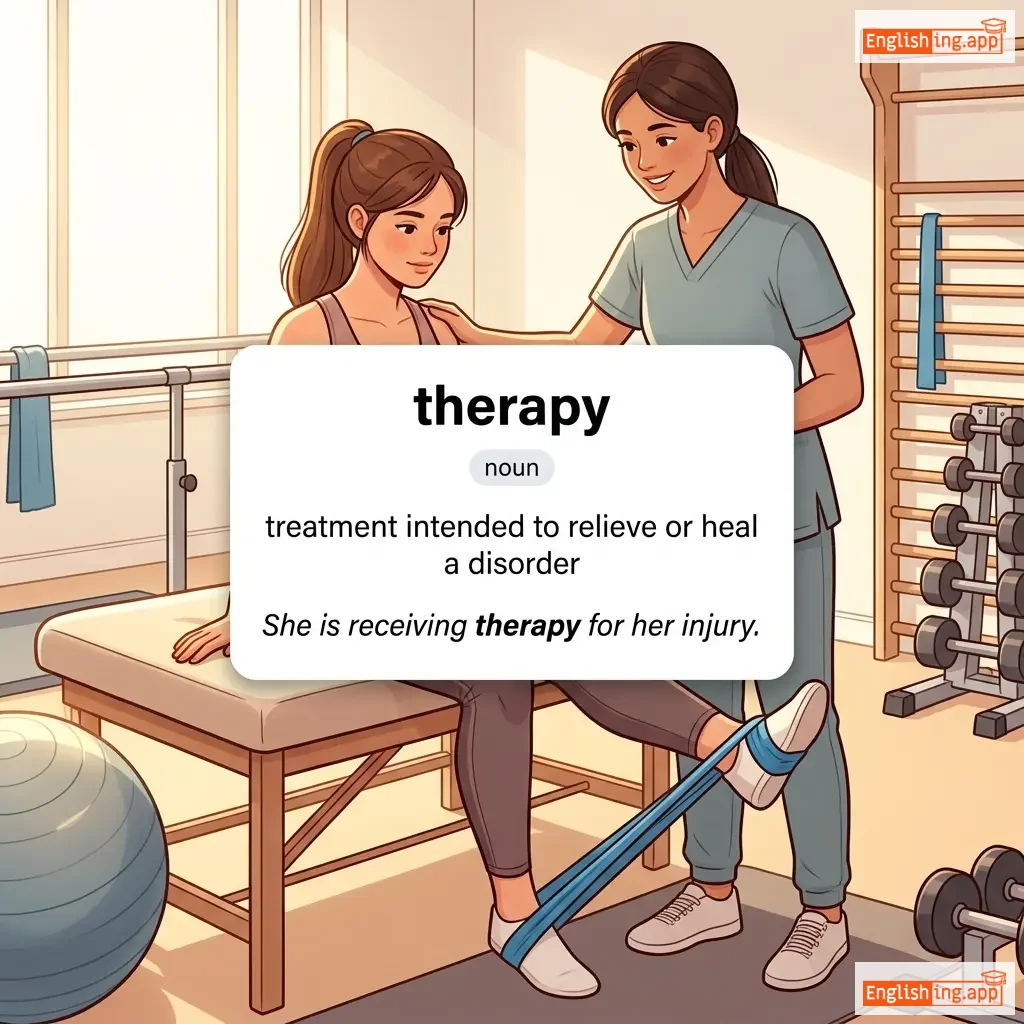
treatment intended to relieve or heal a disorder
|
She is receiving therapy for her injury.
वह अपनी चोट के लिए थेरापी ले रही है।
••••••
|
वह अपनी चोट के लिए थेरापी ले रही है।
Wah apni chot ke liye therapy le rahi hai.
••••••
|
-
••••••
|
-
••••••
|
-
••••••
|
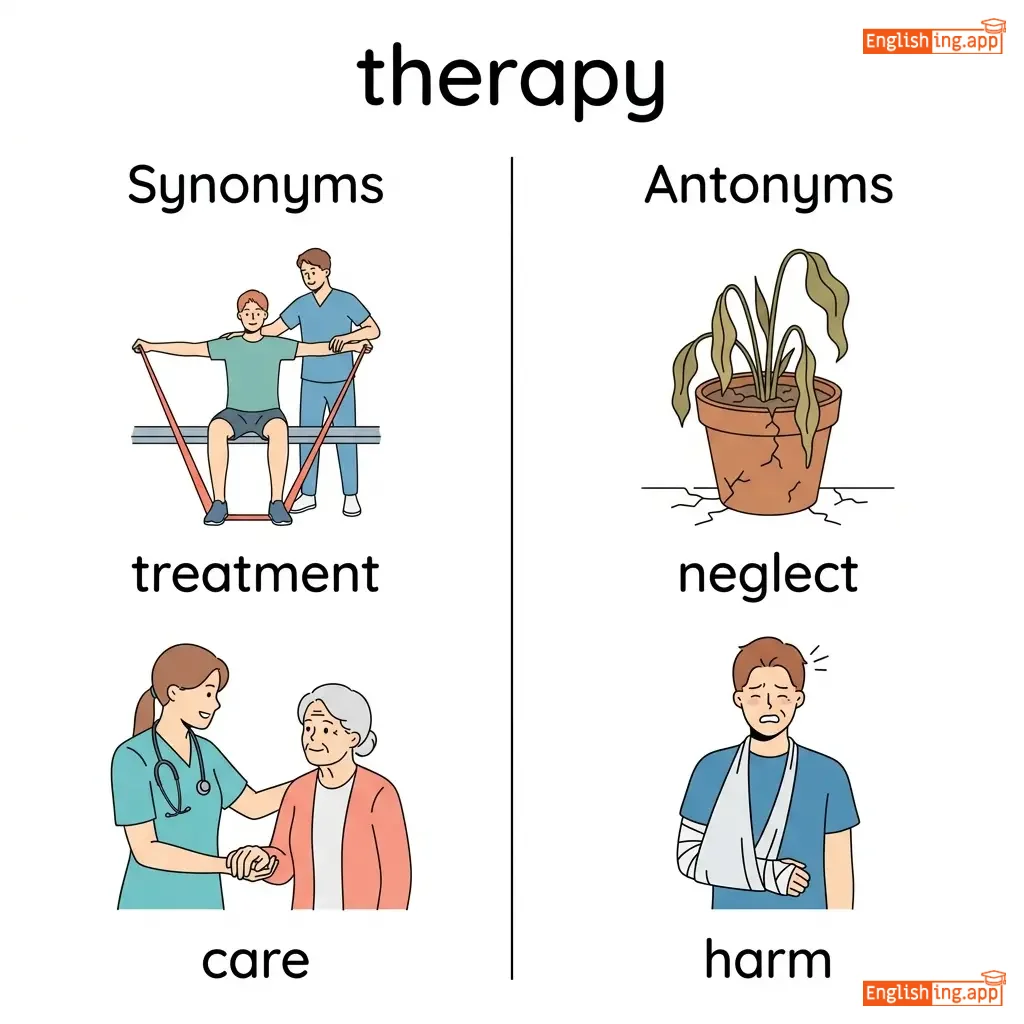
treatment, care, healing, rehabilitation
|
••••••
|
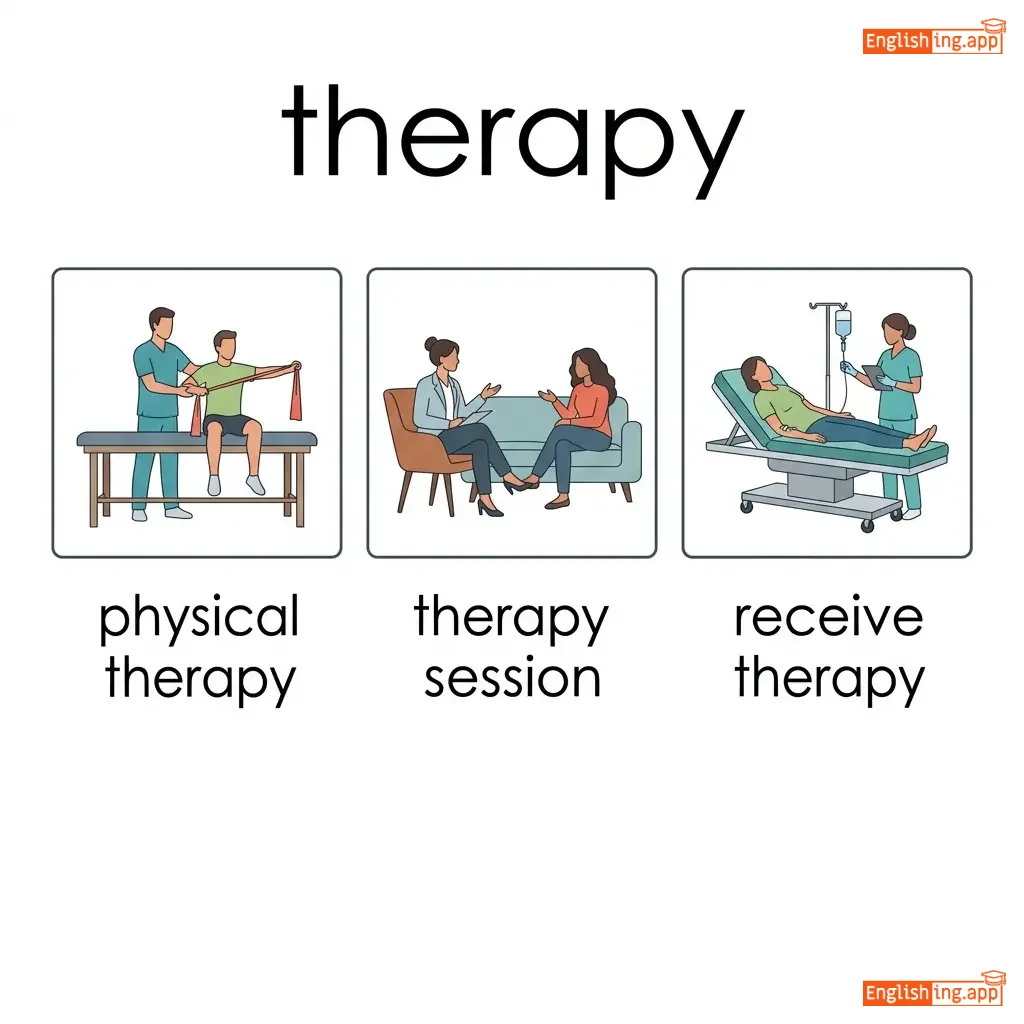
physical therapy, therapy session, receive therapy
|
थेरेपी (therapy) से शारीरिक और मानसिक आराम मिलता है
••••••
|
|
••••••
|
/ðɛn/
adverb
(थेन)
••••••
|
-
••••••
|
तब
tab
••••••
|
-
••••••
|
-
••••••
|
-
••••••
|
-
••••••
|
at that time; next in order of time or place
|
We went to the park, and then we had lunch.
हम पार्क गए, और फिर हमने लंच किया।
••••••
|
हम पार्क गए, और फिर हमने लंच किया।
Hum park gaye, aur phir humne lunch kiya.
••••••
|
तब
••••••
|
used to refer to a time in the past
|
तब
tab
••••••
|
afterward, subsequently, later, next
|
••••••
|
then what, then go, then what happened
|
थेन (then) और तब याद रखने के लिए आसान
••••••
|
|
••••••
|
/ðəmˈsɛlvz/
pronoun
(थेमेंसल्व्स)
••••••
|
-
••••••
|
खुद
khud
••••••
|
-
••••••
|
-
••••••
|
-
••••••
|
-
••••••
|
used to emphasize the subject of the sentence or to refer to the subject doing something to itself
|
They fixed the problem themselves.
••••••
|
उन्होंने समस्या को खुद ठीक किया।
Unhone samasya ko khud theek kiya.
••••••
|
-
••••••
|
-
••••••
|
-
••••••
|
themselves alone, personally, independently
|
••••••
|
do it themselves, solve it themselves, they themselves
|
थेमेंसल्व्स (themselves) सुनकर खुद की ताकत का एहसास होता है
••••••
|
|
••••••
|
/θiːm/
noun
(थीम)
••••••
|
••••••
|
थीम
thim
••••••
|
-
••••••
|
-
••••••
|
-
••••••
|
-
••••••
|
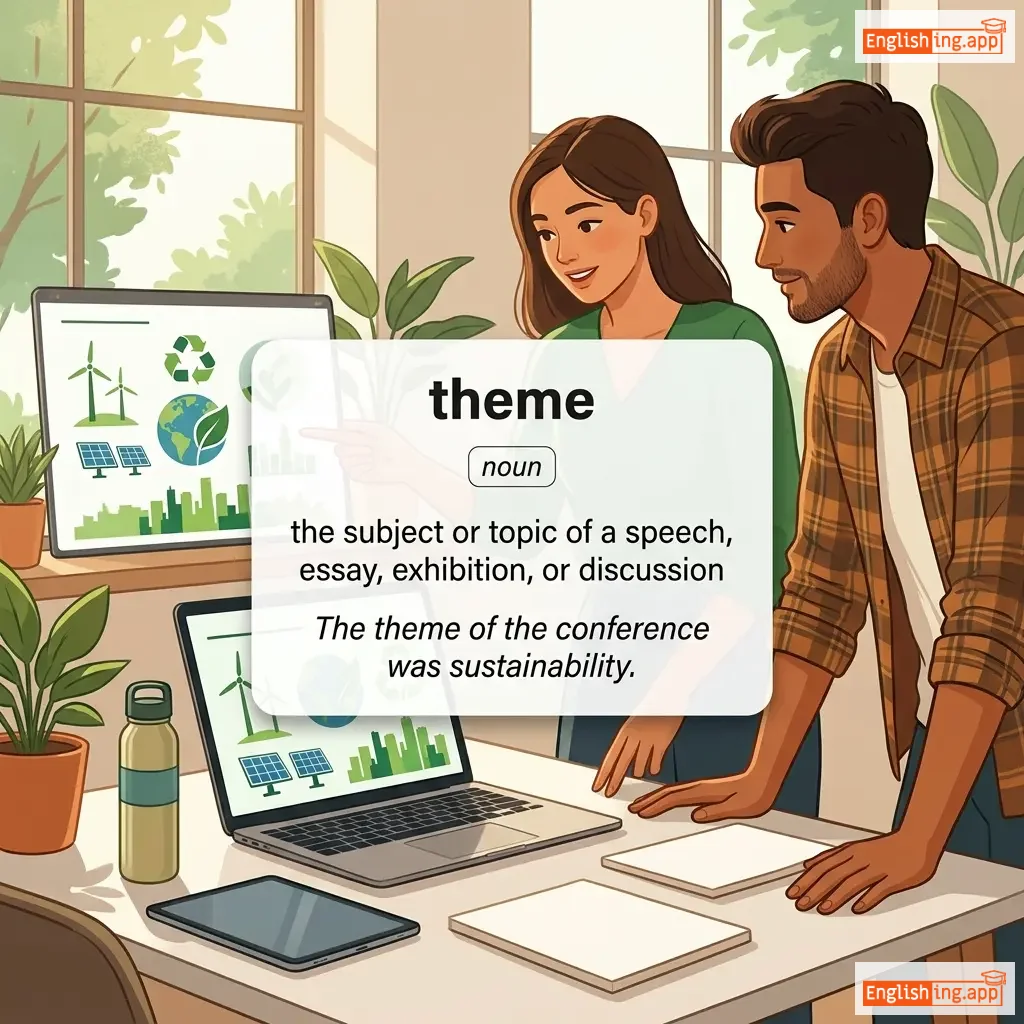
the subject or topic of a speech, essay, exhibition, or discussion
|
The theme of the conference was sustainability.
••••••
|
सम्मेलन का थीम स्थिरता था।
Sammelan ka thim sthirata tha.
••••••
|
-
••••••
|
-
••••••
|
-
••••••
|
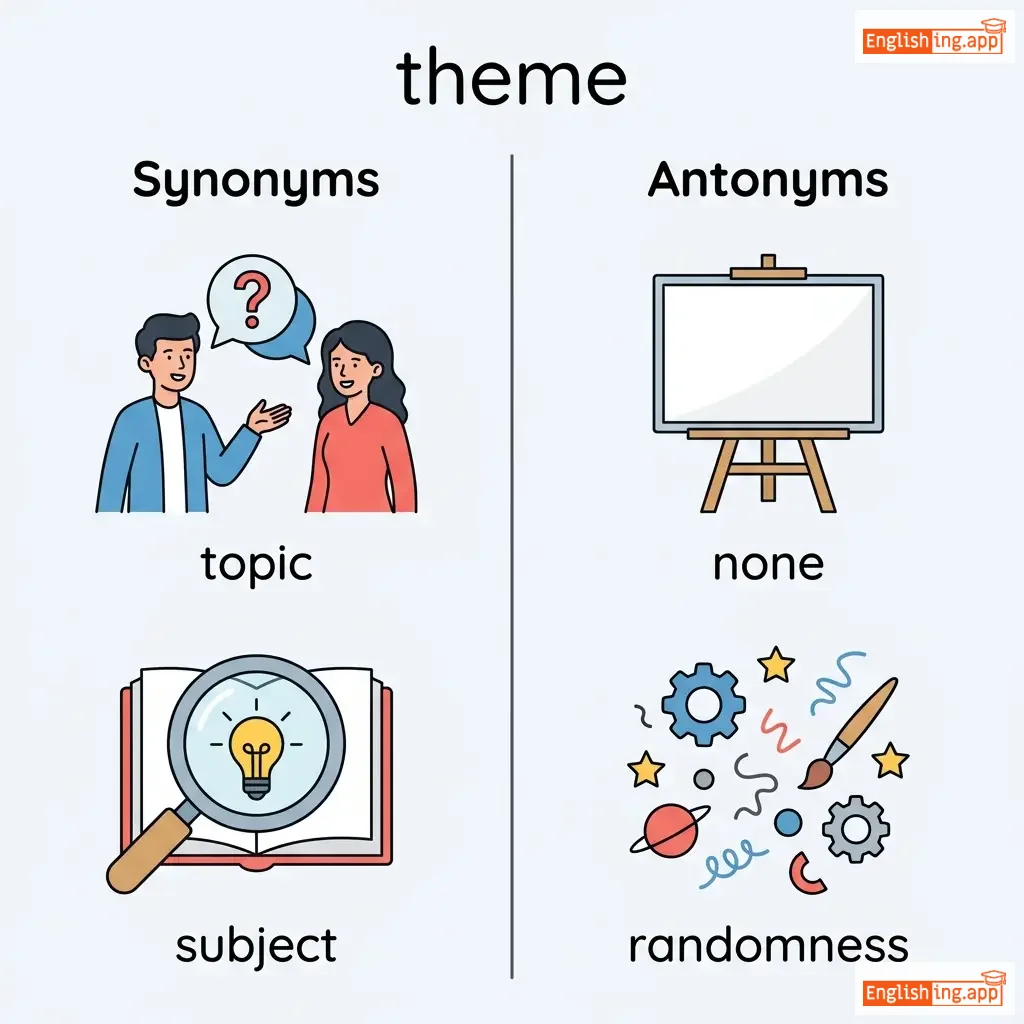
topic, subject, motif, idea
|
••••••
|
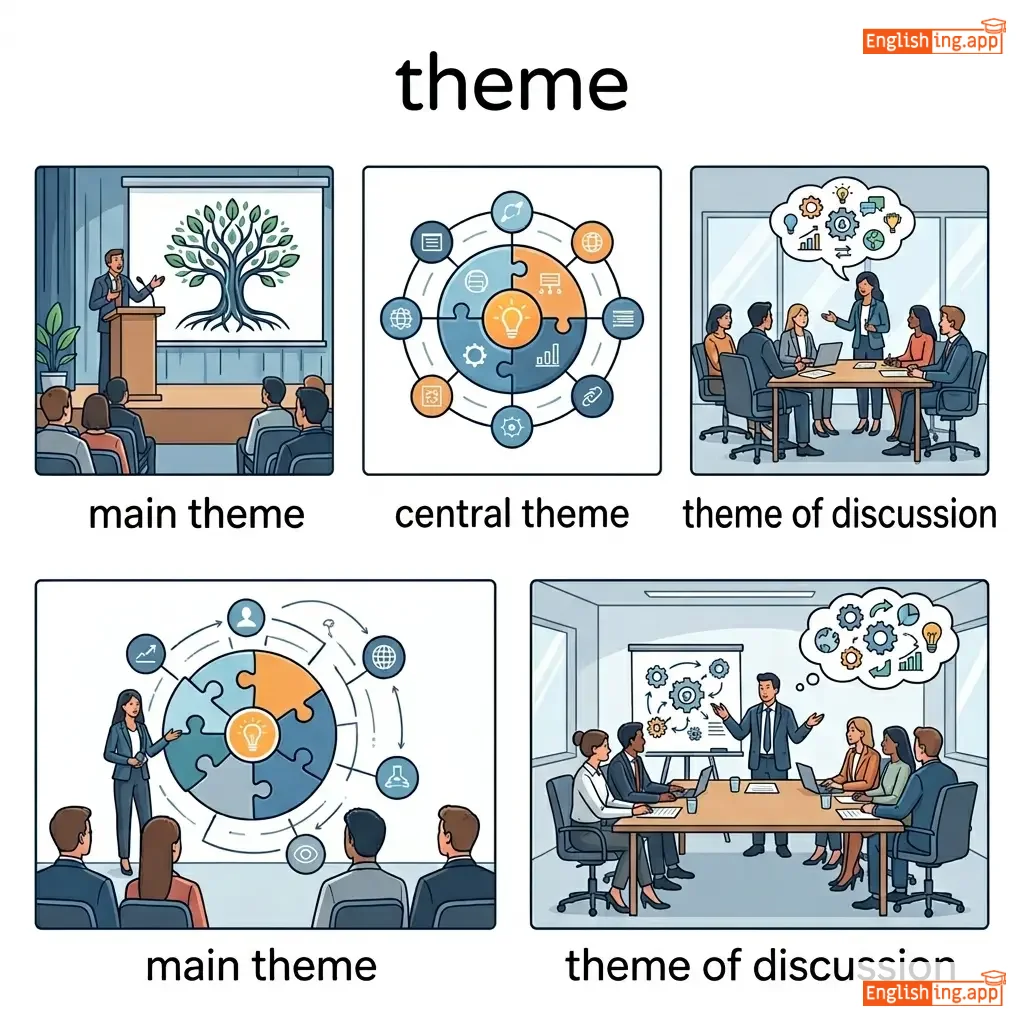
main theme, central theme, theme of discussion
|
थीम (theme) किसी भी चर्चा का मुख्य बिंदु होता है
••••••
|
|
••••••
|
/ðɛm/
pronoun
(थेम)
••••••
|
-
••••••
|
उन्हें
unhen
••••••
|
-
••••••
|
-
••••••
|
-
••••••
|
-
••••••
|
used to refer to people or things previously mentioned or easily identified
|
I saw them at the park yesterday.
••••••
|
मैंने उन्हें कल पार्क में देखा था।
Maine unhen kal park mein dekha tha.
••••••
|
-
••••••
|
-
••••••
|
-
••••••
|
••••••
|
••••••
|
see them, tell them, help them
|
थे (them) के साथ 'उन्हें' की कहानी बनाएं
••••••
|
|
••••••
|
/ðɛər/
pronoun
(धेर)
••••••
|
-
••••••
|
उनका
unka
••••••
|
-
••••••
|
-
••••••
|
-
••••••
|
-
••••••
|
belonging to or associated with the people or things previously mentioned
|
Their house is on the corner.
••••••
|
उनका घर कोने पर है।
Unka ghar kone par hai.
••••••
|
-
••••••
|
-
••••••
|
-
••••••
|
••••••
|
••••••
|
their car, their family, their opinion
|
Their - उनका (Unka) घर
••••••
|
|
••••••
|
/ˈθiːətər/
noun
(थिएटर)
••••••
|
-
••••••
|
थिएटर
theater
••••••
|
-
••••••
|
-
••••••
|
-
••••••
|
-
••••••
|
a building or area for dramatic performances
|
We are going to the theater tonight.
••••••
|
हम आज रात थिएटर जा रहे हैं।
Ham aaj raat theater ja rahe hain.
••••••
|
-
••••••
|
-
••••••
|
-
••••••
|
playhouse, cinema, auditorium
|
••••••
|
movie theater, local theater, drama theater
|
Theater - थिएटर में हमेशा रंगीन पर्दे होते हैं।
••••••
|
|
••••••
|
/ðə/
article
(थे)
••••••
|
-
••••••
|
the
••••••
|
-
••••••
|
-
••••••
|
-
••••••
|
-
••••••
|
used to specify a noun as something already mentioned or known
|
The sun rises in the east.
सूरज पूरब में उगता है।
••••••
|
सूरज पूरब में उगता है।
suraj poorab mein ugta hai
••••••
|
-
••••••
|
-
••••••
|
-
••••••
|
••••••
|
-
••••••
|
the best, the first, the last
|
The = That yaani pehle se maloom cheez ka tag; imagine suraj ke saath 'The sun' - pehle se pata hai
••••••
|