••••••
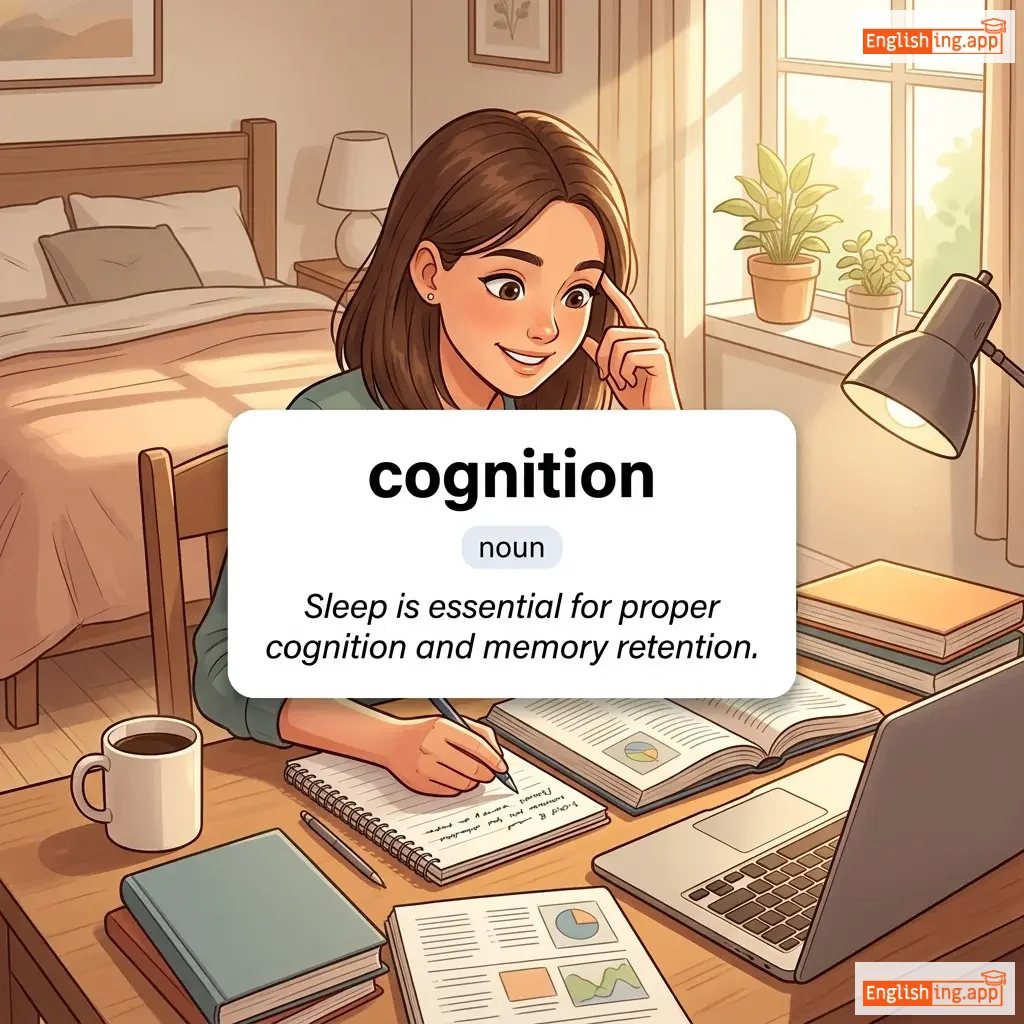
kɒɡˈnɪʃ.ən
noun
(कॉग्निशन)
••••••
••••••
ज्ञान, समझ, बौद्धिक प्रक्रिया
gyan, samajh, bauddhik prakriya
••••••
The mental process of acquiring knowledge and understanding through thought, experience, and the senses.
••••••
Cognition plays a crucial role in learning.
कॉग्निशन लर्निंग में एक महत्वपूर्ण भूमिका निभाता है।
••••••
कॉग्निशन लर्निंग में एक महत्वपूर्ण भूमिका निभाता है।
Cognition learning mein ek mahatvapurn bhumika nibhata hai.
••••••
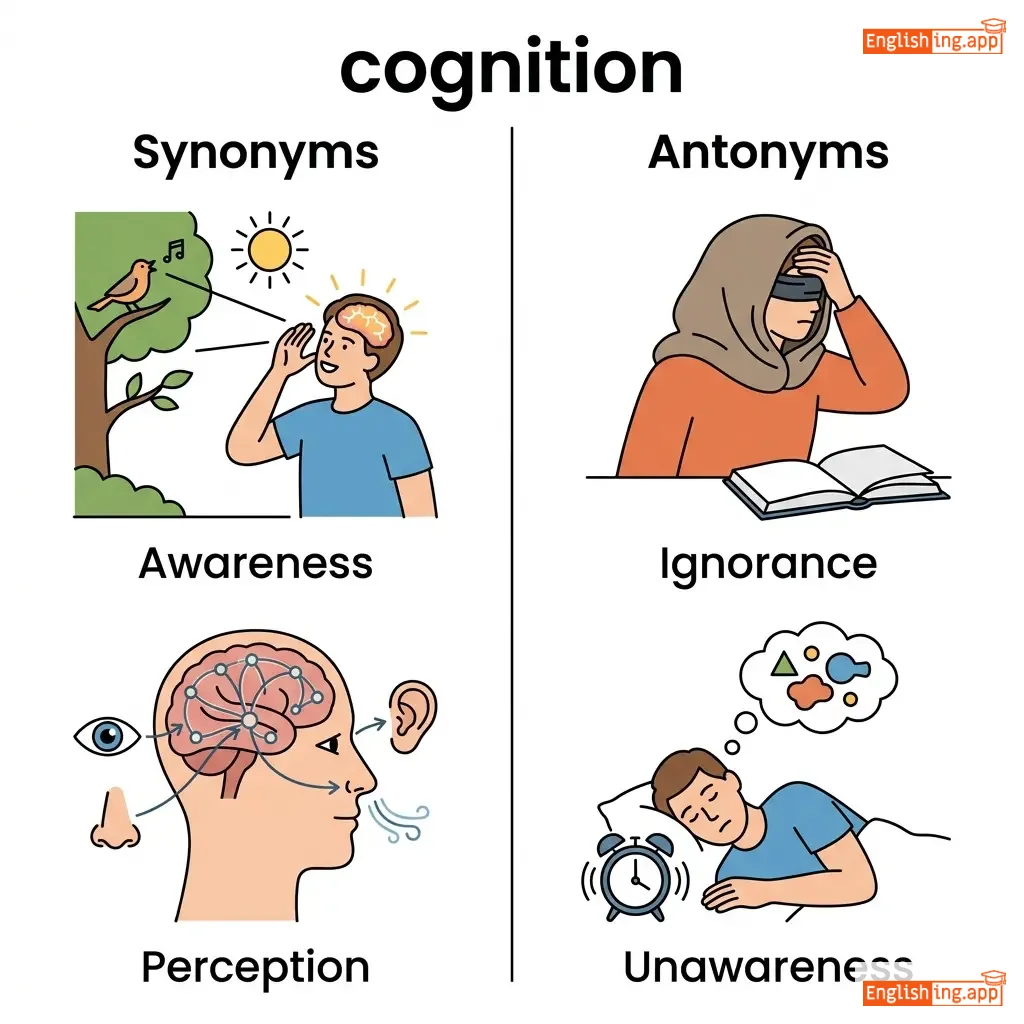
perception, awareness, understanding, knowledge
••••••
ignorance, unawareness, unconsciousness
••••••
Cognition = Gyan ke process ki tarah dimaag ka kaam
••••••
••••••
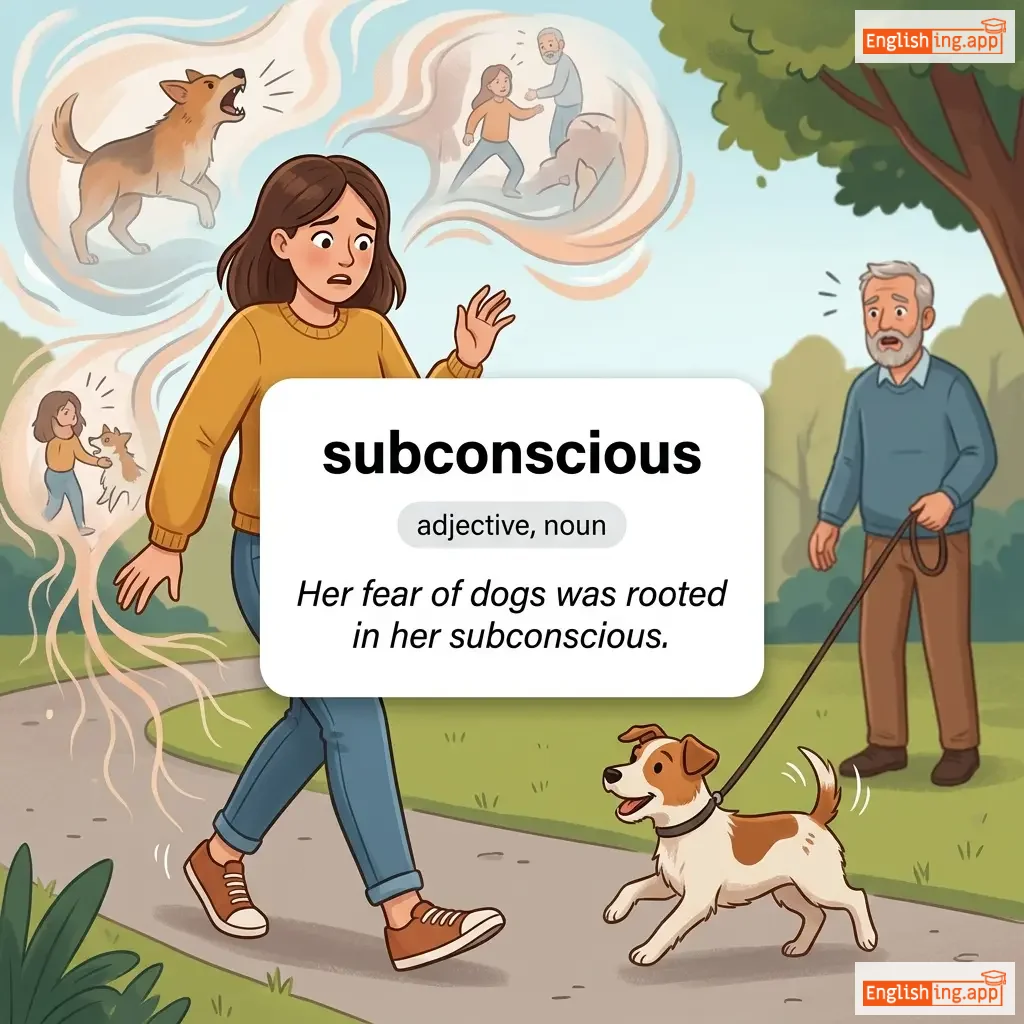
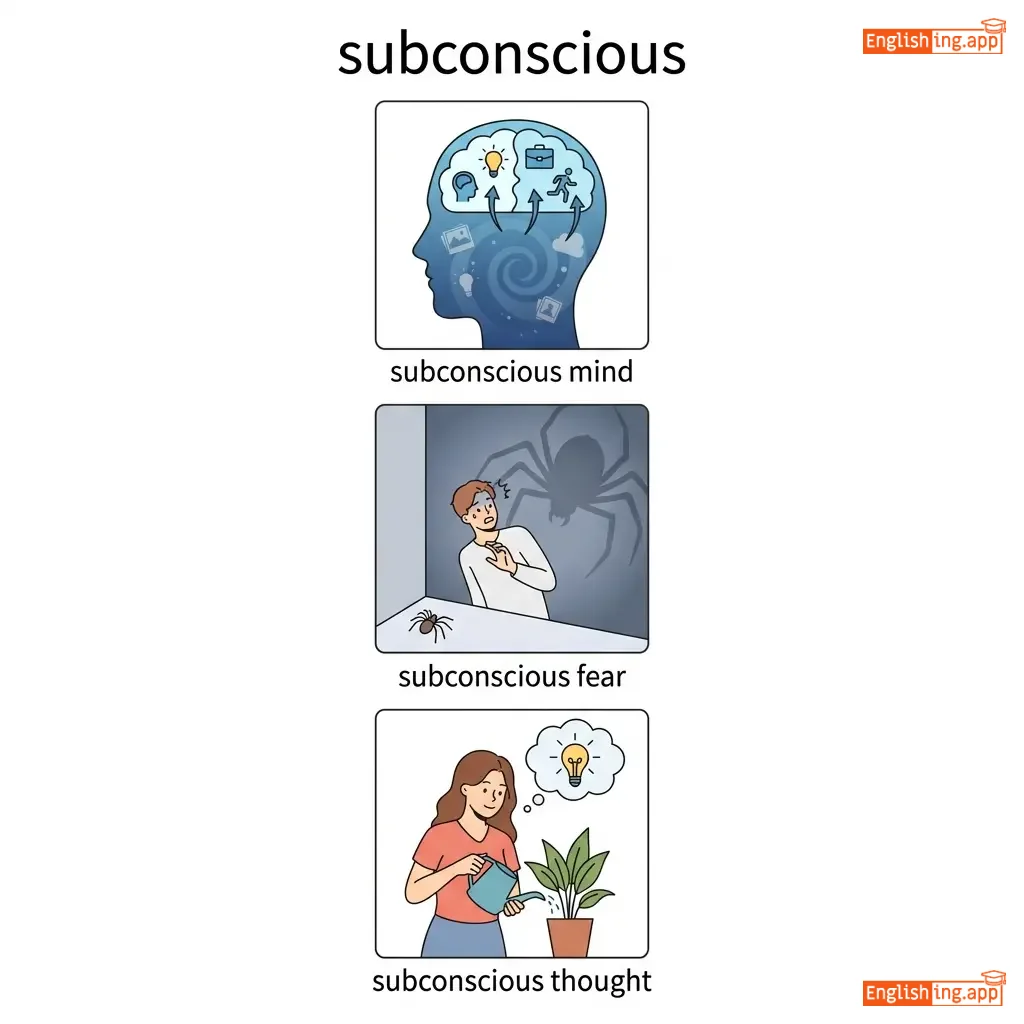
ˌsʌbˈkɒn.ʃəs
adjective
(सबकॉन्शस)
••••••
••••••
अवचेतन
avchetan
••••••
Concerning the part of the mind of which one is not fully aware but which influences one's actions and feelings.
••••••
His fears were rooted in his subconscious .
••••••
उसका डर उसके अवचेतन में निहित था।
Uska dar uske avchetan mein nihit tha.
••••••
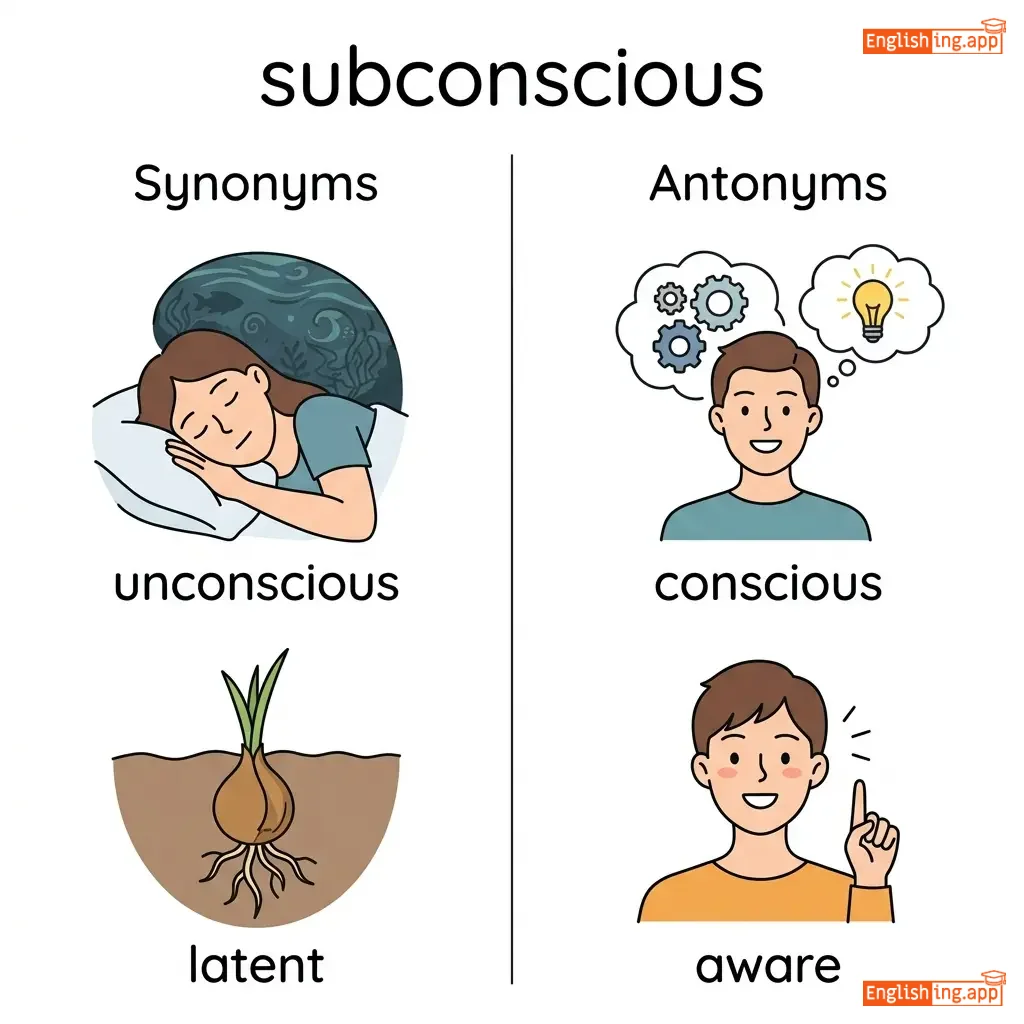
unconscious, latent, subliminal
••••••
conscious, aware, deliberate
••••••
अवचेतन (avchetan) = अव (not) + चेतन (conscious), यानी वह जो हम जानते नहीं हैं, परंतु हमें प्रभावित करता है।
••••••
••••••
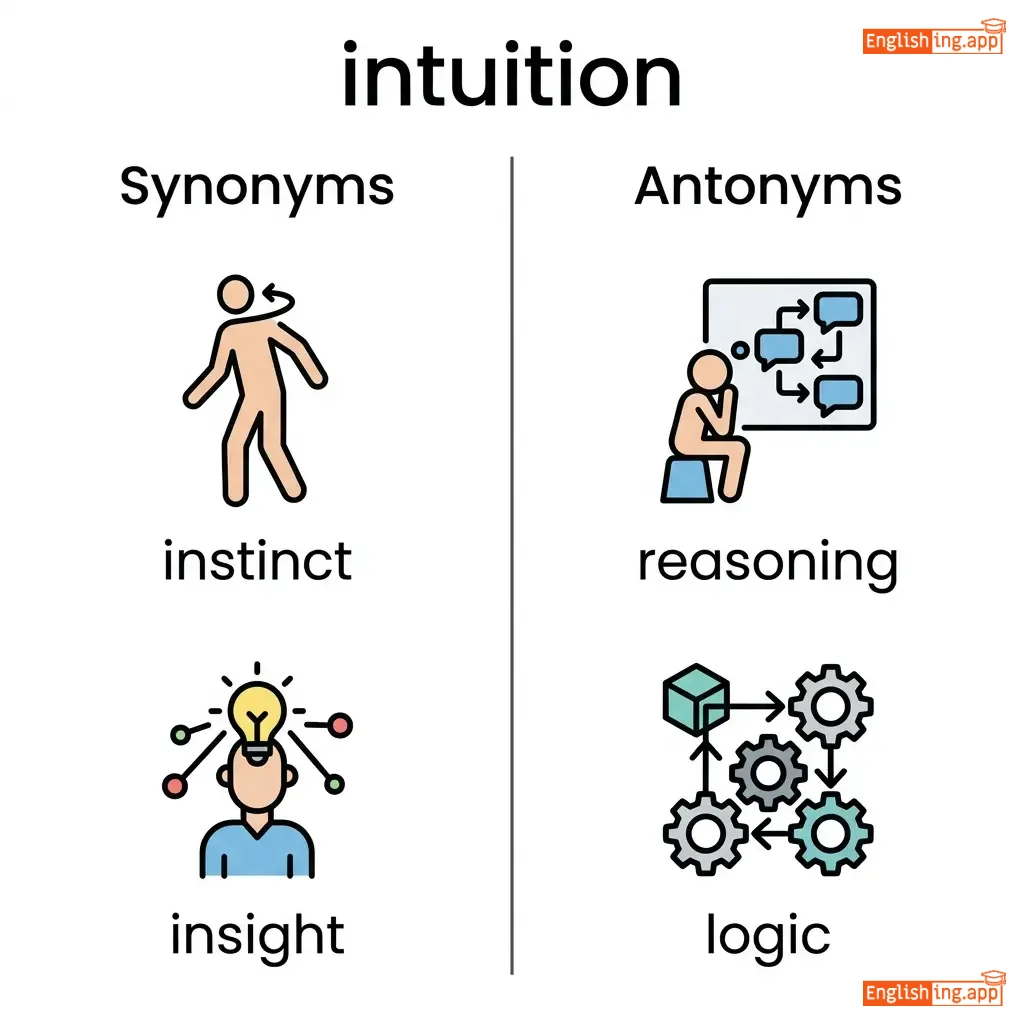
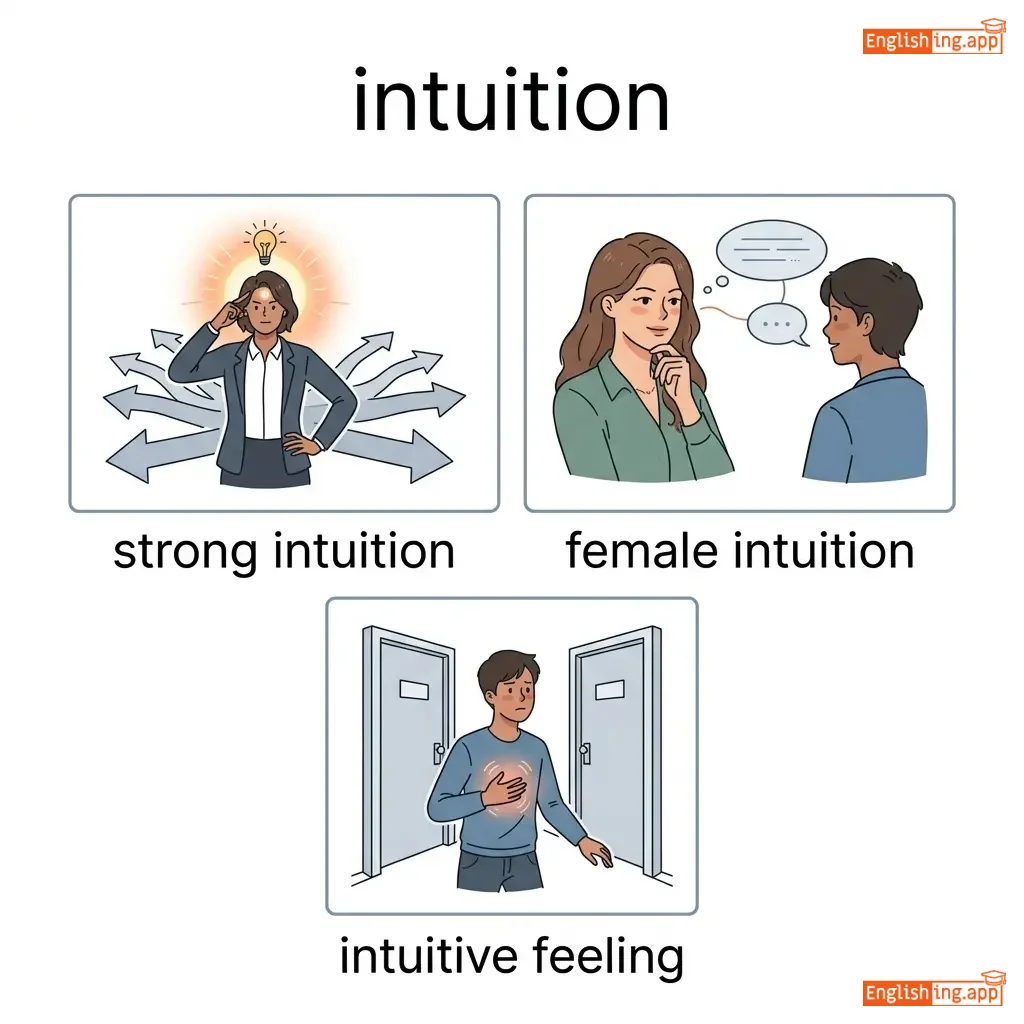
ˌɪn.tʃuˈɪʃ.ən
noun
(इंटुइशन)
••••••
••••••
अंतरदृष्टि, सहज ज्ञान, अनुमान शक्ति
antardrishti, sahaj gyaan, anumaan shakti
••••••
The ability to understand something immediately, without the need for conscious reasoning.
••••••
Her intuition helped her make the right choice.
उसकी अंतरदृष्टि ने उसे सही चुनाव करने में मदद की।
••••••
उसकी अंतरदृष्टि ने उसे सही चुनाव करने में मदद की।
Uski antardrishti ne use sahi chunav karne mein madad ki.
••••••
instinct, perception, insight, feeling
••••••
logic, analysis, reasoning
••••••
सहज ज्ञान के लिए समझ बढ़ाने वाला
••••••
••••••
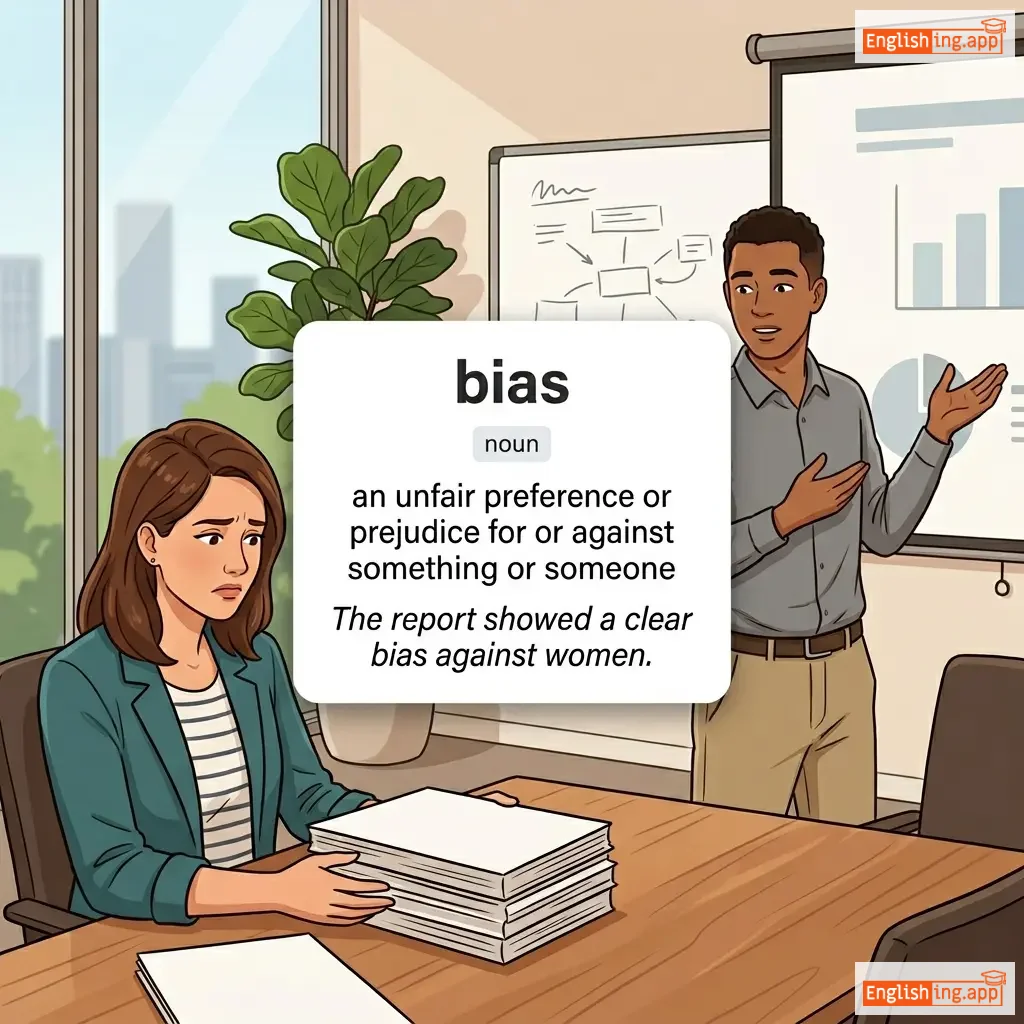
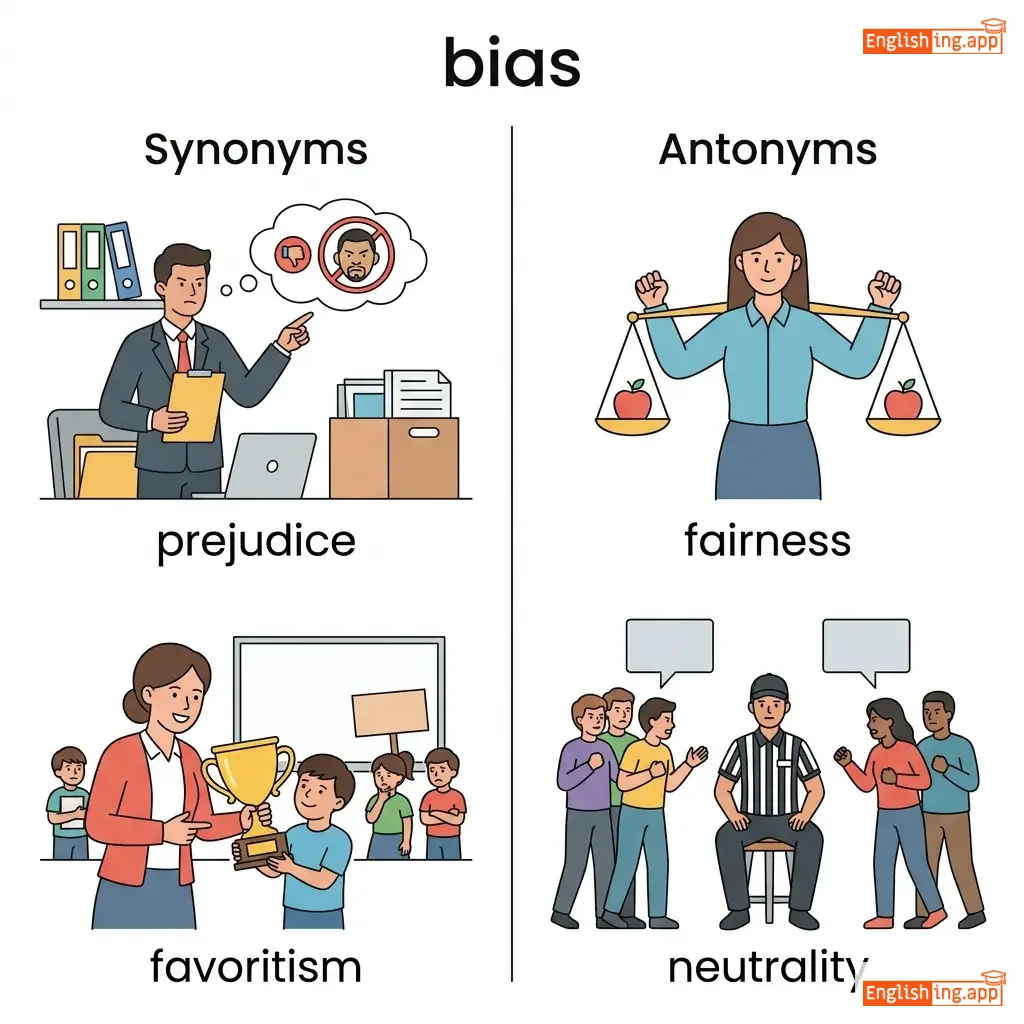
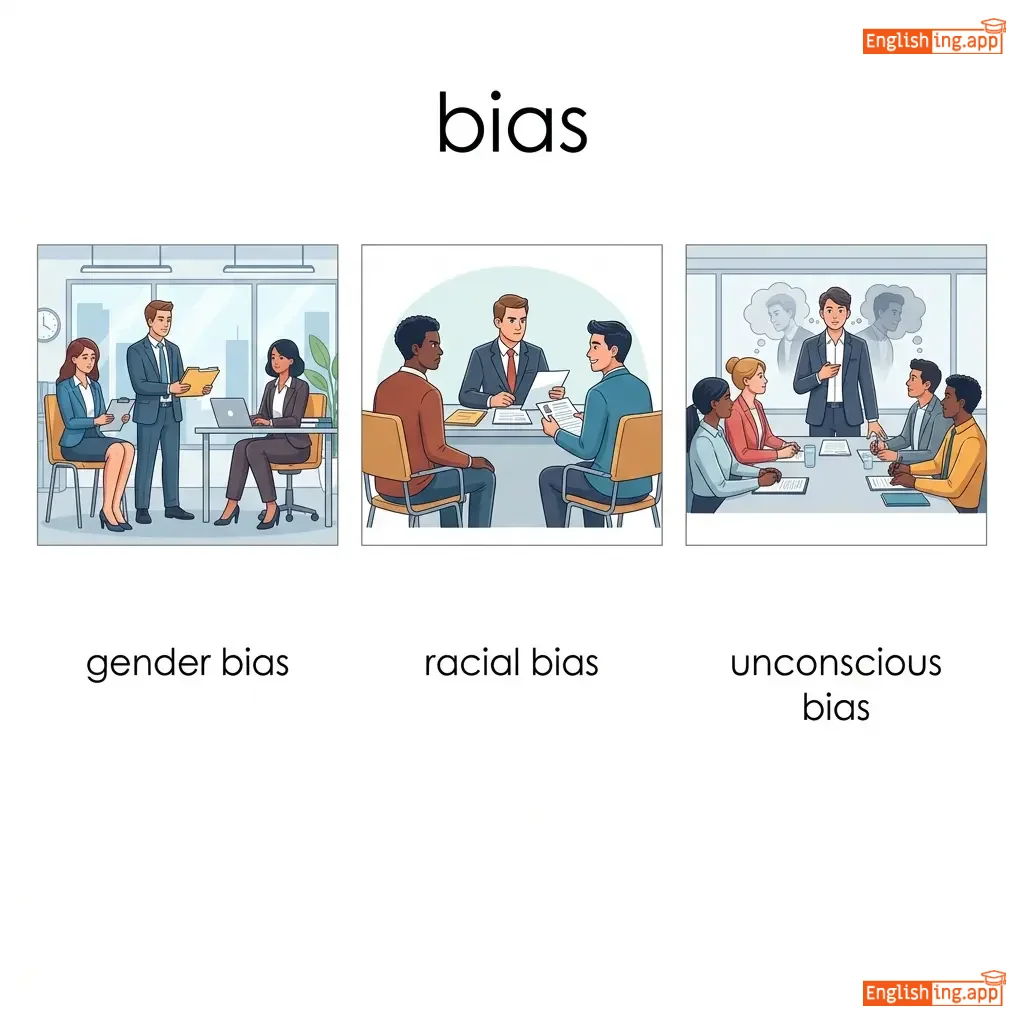
ˈbaɪ.əs
noun
(बायस)
••••••
••••••
पक्षपातीपन, भेदभाव
pakshapatipan, bhedbhav
••••••
Prejudice in favor of or against one thing, person, or group compared with another, usually in a way considered to be unfair.
••••••
The judge must remain free from bias .
द जज मस्ट रिमेन फ्री फ्रॉम बायस।
••••••
न्यायाधीश को पक्षपाती से मुक्त रहना चाहिए।
Nyayadhish ko pakshpati se mukt rehna chahiye.
••••••
prejudice, partiality, favoritism
••••••
impartiality, neutrality, fairness
••••••
Bias – Judge should not be biased.
••••••
••••••
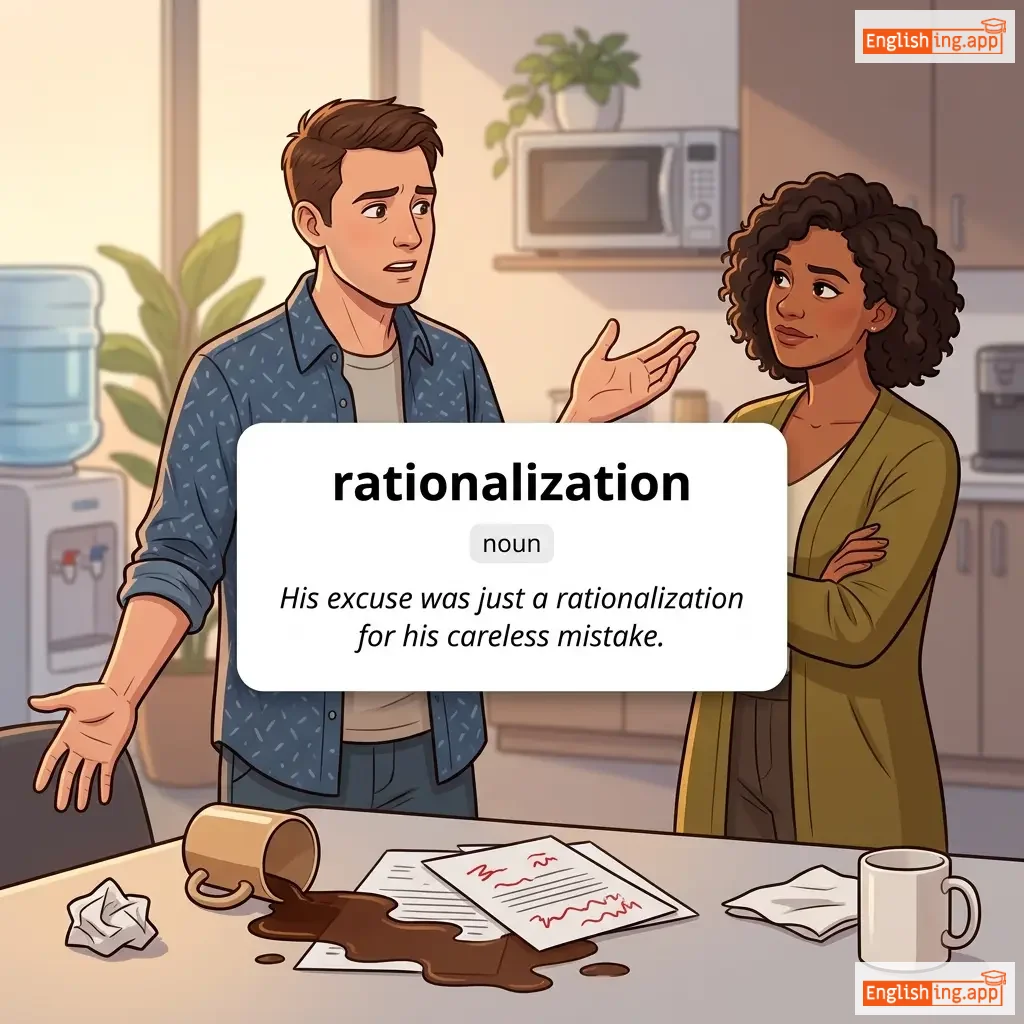
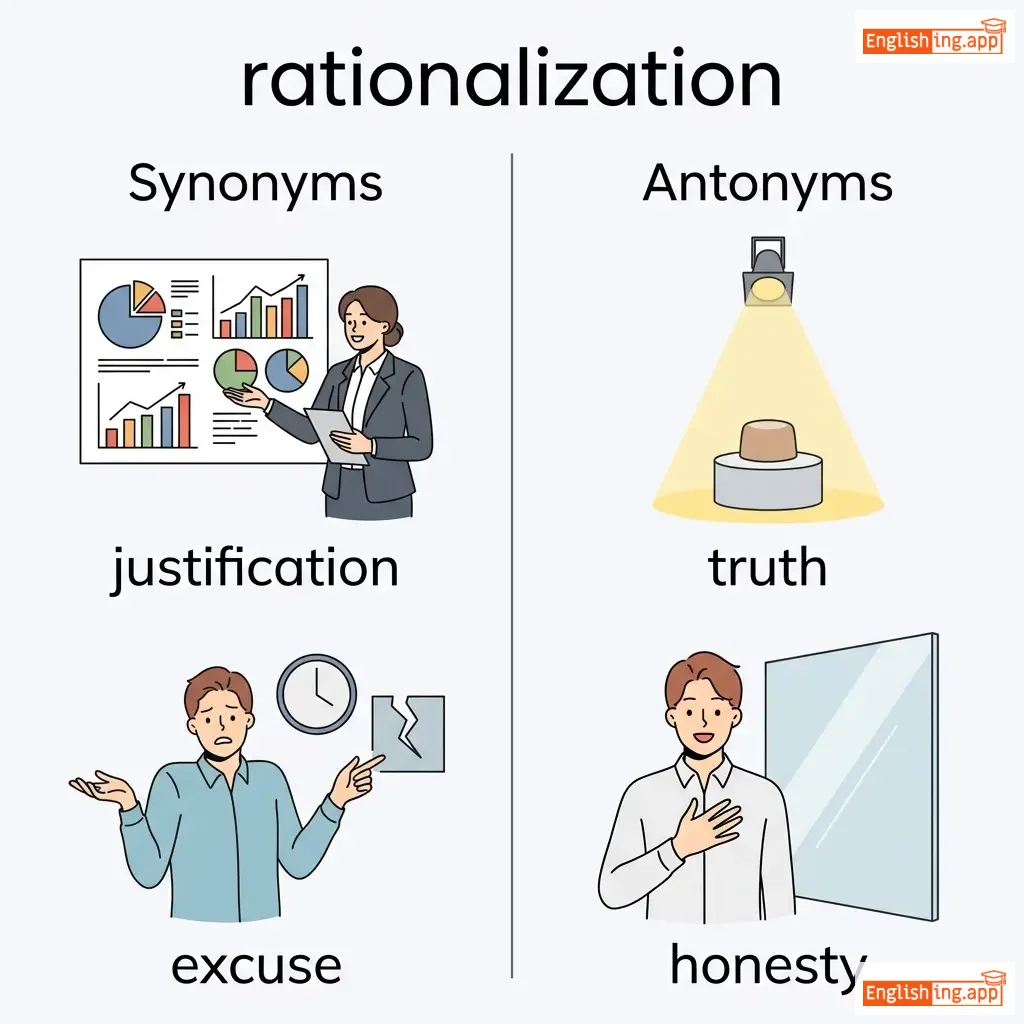
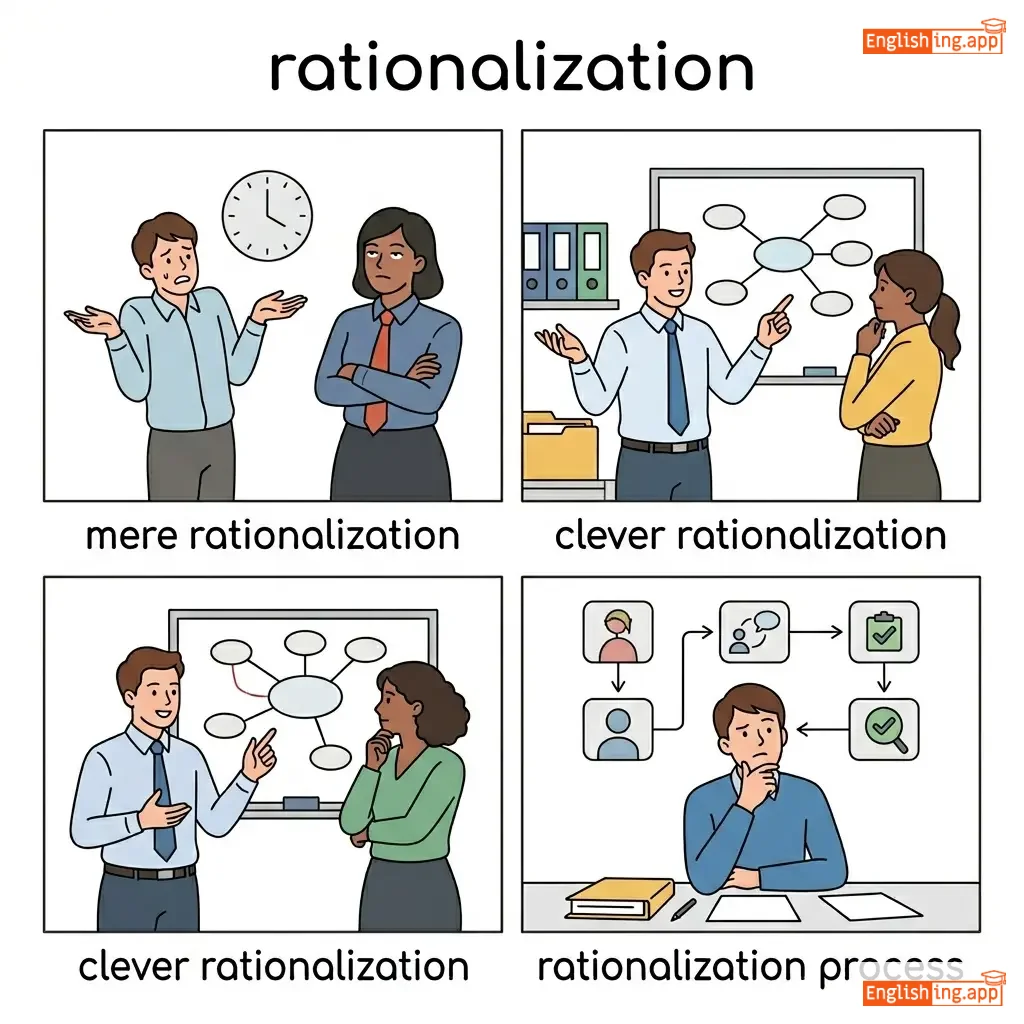
ˌræʃ.ən.əl.aɪˈzeɪ.ʃən
noun
(रैशनलाइज़ेशन)
••••••
••••••
युक्तिकरण
yuktikaran
••••••
The process of creating logical explanations for behavior or beliefs that are actually based on other motives.
••••••
His rationalization for being late was unconvincing.
••••••
उसकी देर से आने के लिए युक्तिकरण अविश्वसनीय था।
Uski der se aane ke liye yuktikaran avishwasniya tha.
••••••
justification, explanation, reasoning
••••••
misinterpretation, misjudgment
••••••
Rationalization = Yuktikaran (जैसे 'युक्ति' है, 'करण' में बहाना बनाना)
••••••
••••••
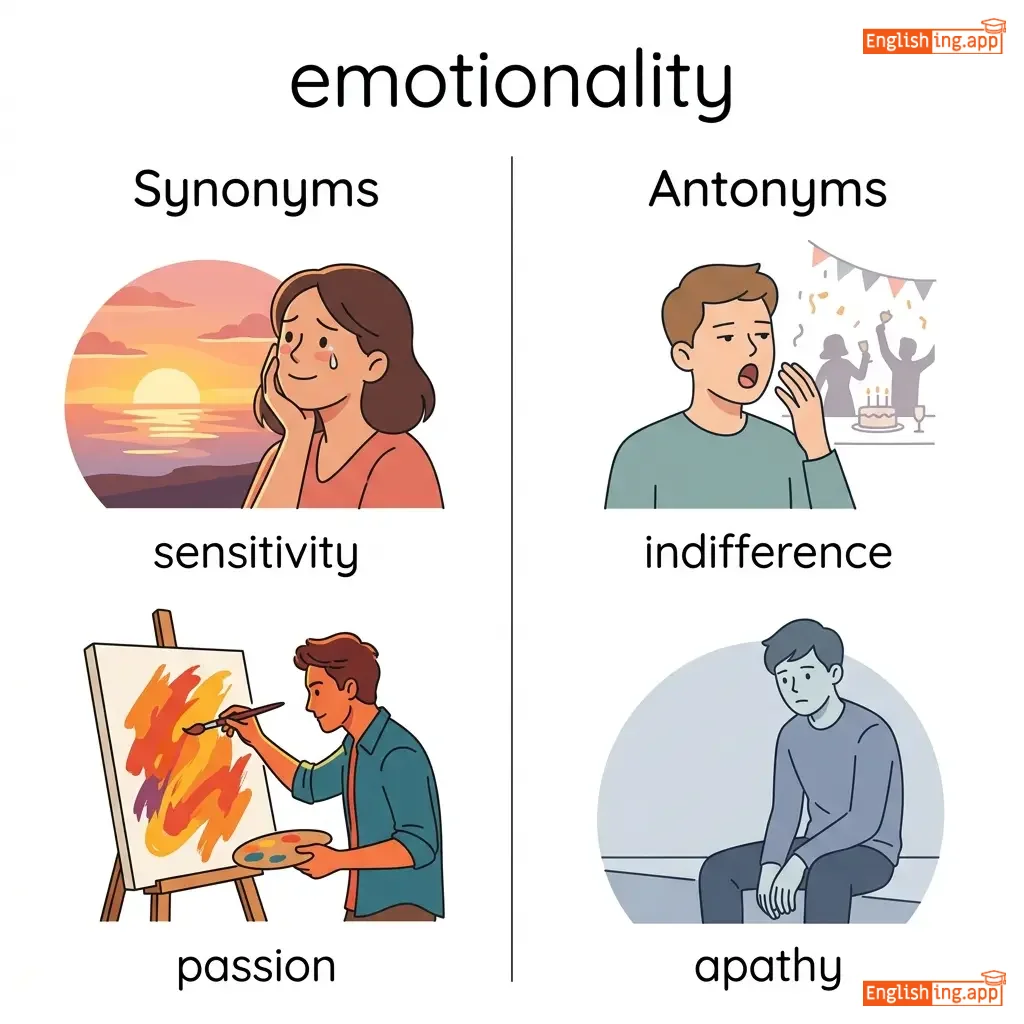
ɪˌməʊ.ʃəˈnæl.ɪ.ti
noun
(इमोशनलिटी)
••••••
••••••
भावनात्मकता
bhavnatmakta
••••••
The quality of being driven by emotions rather than reason; emotional responsiveness.
••••••
His emotionality often influenced his decisions.
हिस इमोशनलिटी ऑफ़न इन्फ्लूएंस्ड हिस डिसीजनस।
••••••
उसकी भावनात्मकता अक्सर उसके निर्णयों को प्रभावित करती थी।
Uski bhavnatmakta aksar uske nirnayon ko prabhavit karti thi.
••••••
sensitivity, passion, feeling
••••••
indifference, apathy, coldness
••••••
भावनात्मकता के साथ निर्णय लेने में असमर्थता।
••••••
••••••
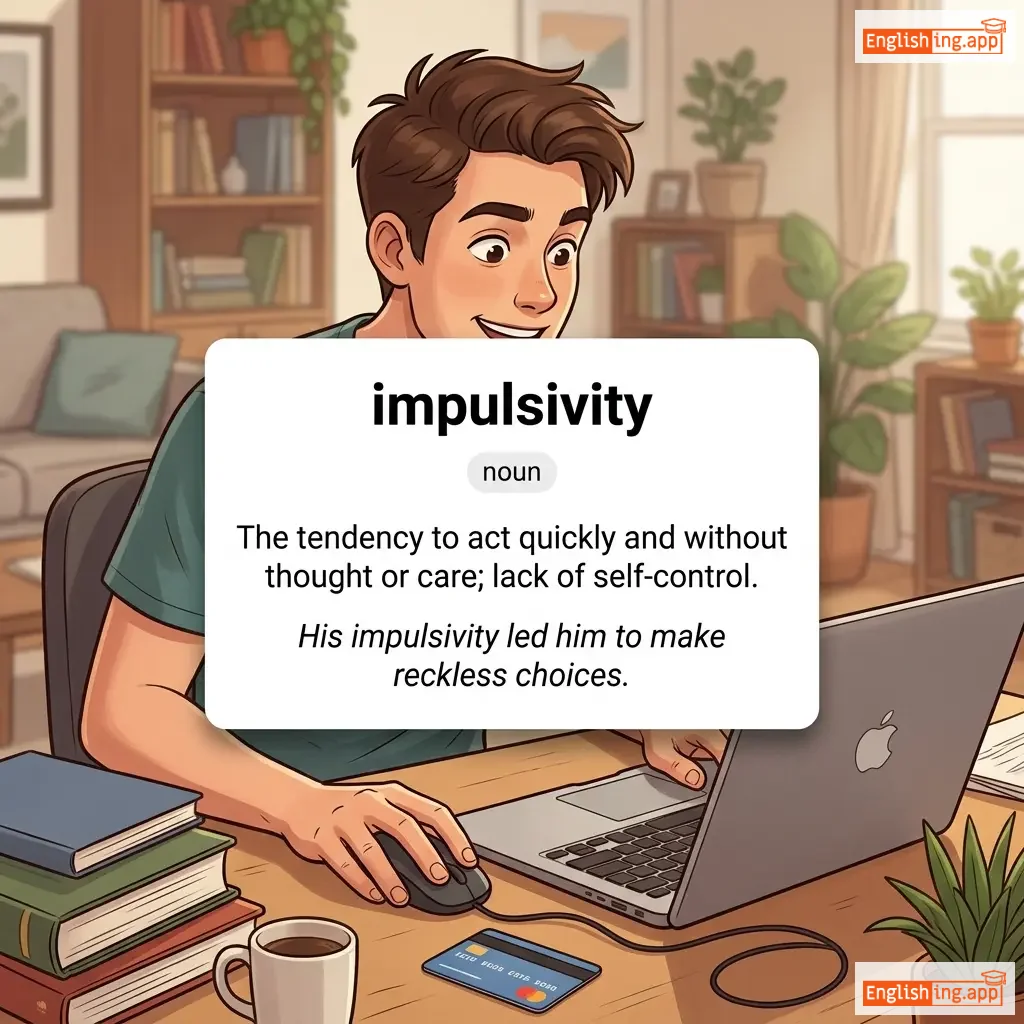
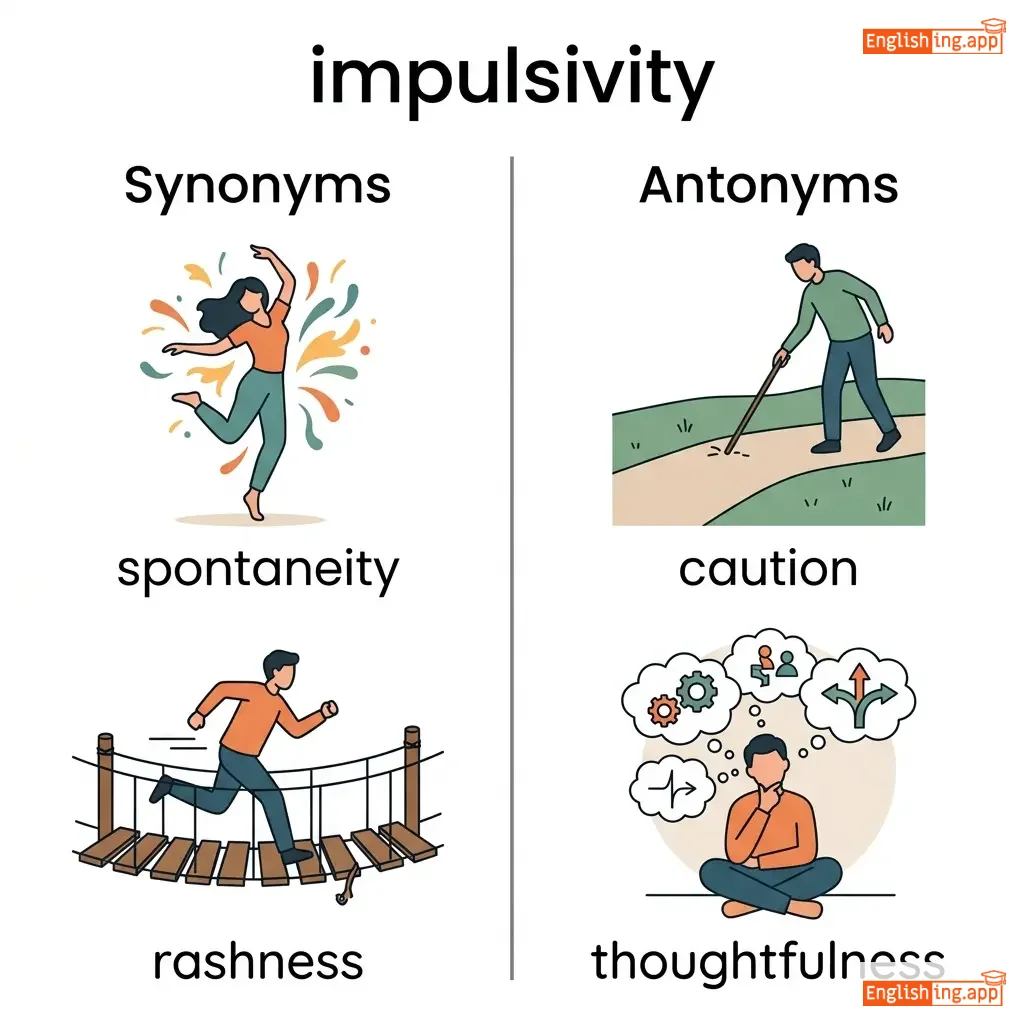
ˌɪm.pʌlˈsɪv.ɪ.ti
noun
(इम्पल्सिविटी)
••••••
••••••
आवेगपूर्णता
avegpoornata
••••••
The tendency to act quickly and without thought or care; lack of self-control.
••••••
His impulsivity led him to make reckless choices.
हिस इम्पल्सिविटी लेड हिम टू मेक रेक्लेस चॉइसेस।
••••••
उसकी आवेगपूर्णता ने उसे लापरवाह फैसले लेने की दिशा में अग्रसर किया।
Uski avegpoornata ne use laparwah faisle lene ki disha mein agrasar kiya.
••••••
spontaneity, rashness, hastiness
••••••
caution, thoughtfulness, deliberation
••••••
Impulsive actions come when you don't 'think' first.
••••••
••••••
daɪˈlem.ə
noun
(डाइलेम्मा)
••••••
••••••
दुविधा, कठिन चुनाव
duvidha, kathin chunaav
••••••
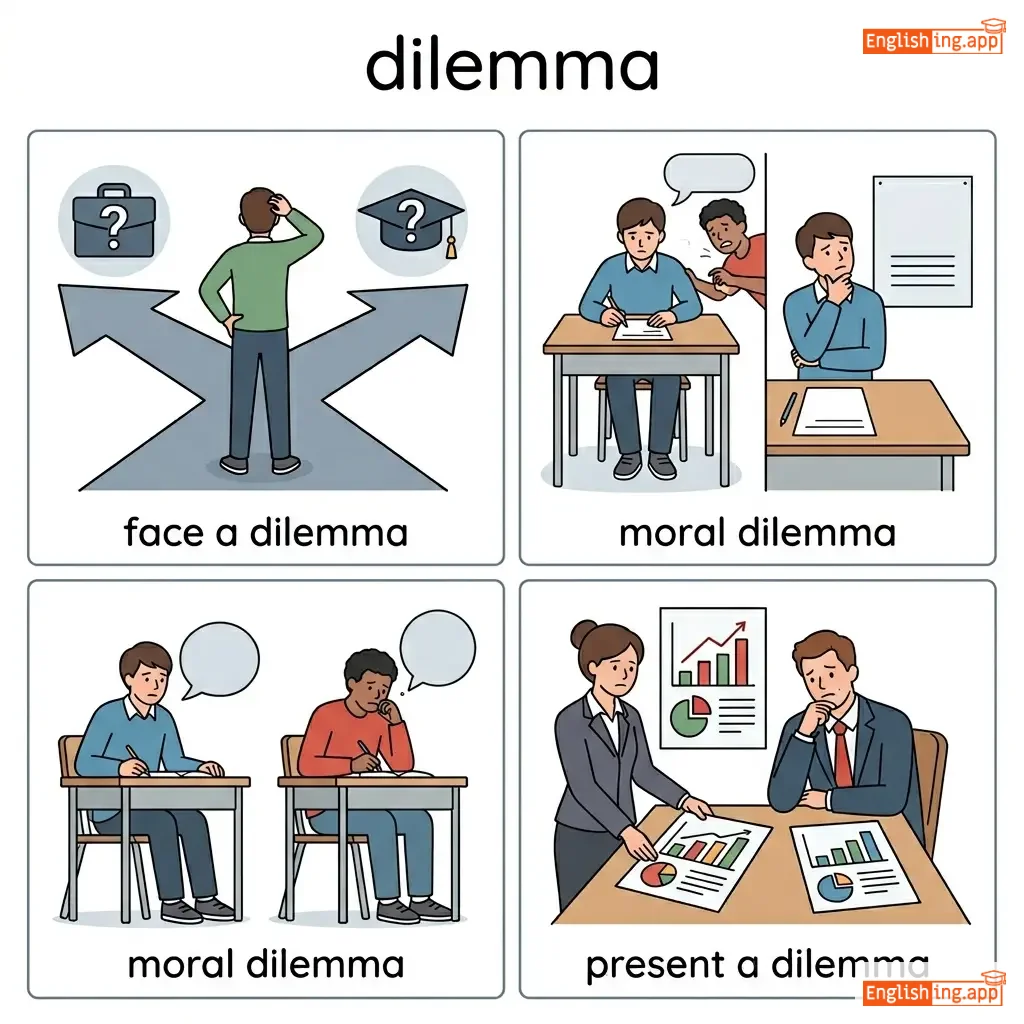
A situation in which a difficult choice has to be made between two or more alternatives.
••••••
She faced a moral dilemma at work.
••••••
वह कार्यस्थल पर एक नैतिक दुविधा का सामना कर रही थी।
Wah karyasthal par ek naitik duvidha ka samna kar rahi thi.
••••••
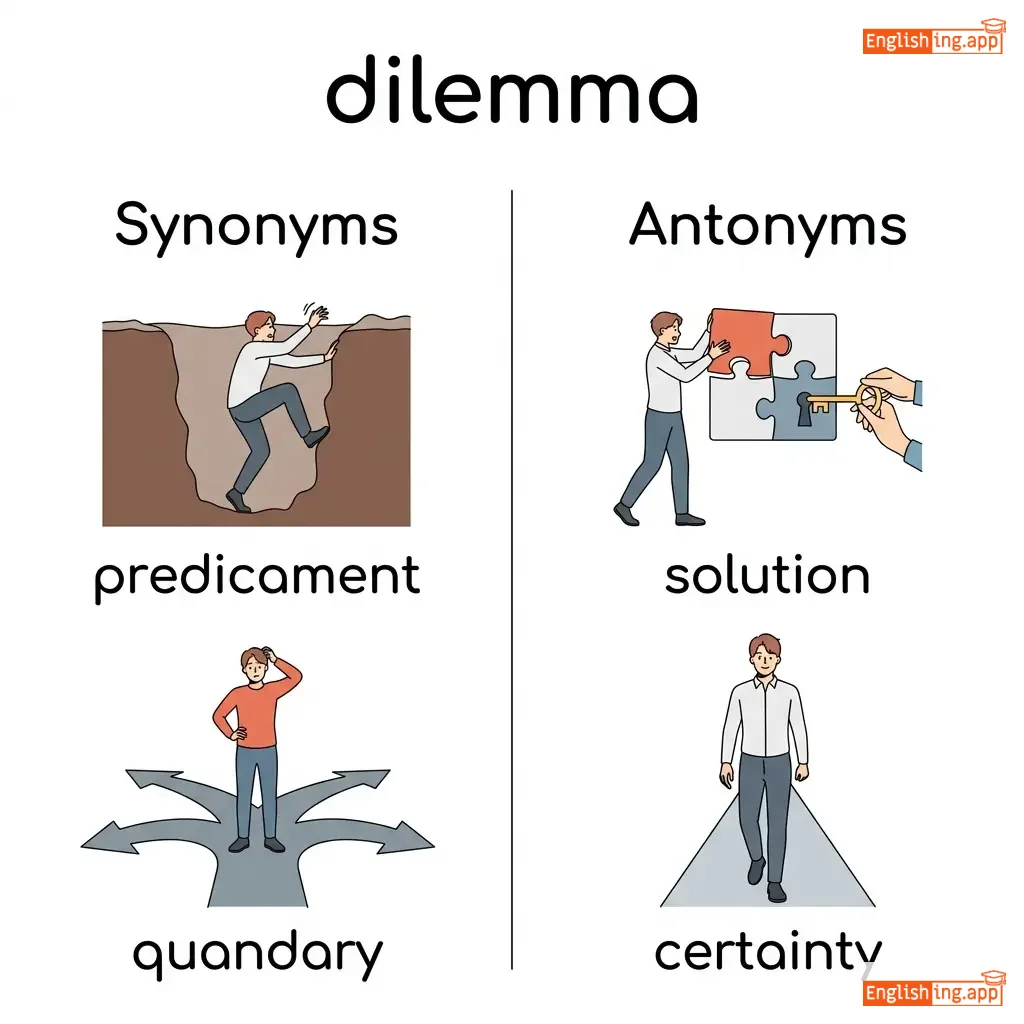
predicament, quandary, problem
••••••
solution, certainty, clarity
••••••
Hindi में 'duvidha' का मतलब होता है confusion, और 'kathin' का मतलब होता है tough, जैसे 'a tough choice'.
••••••
••••••
ˌkɒn.təmˈpleɪ.ʃən
noun
(कॉन्टेम्प्लेशन)
••••••
••••••
गहरी सोच, ध्यान, विचार
gahri soch, dhyan, vichar
••••••
The action of looking thoughtfully at something for a long time; deep reflective thought.
••••••
He spent hours in contemplation about his future.
••••••
उसने अपने भविष्य के बारे में गहरी सोच में घंटों बिताए।
Usne apne bhavishya ke baare mein gehri soch mein ghanton bitaye.
••••••
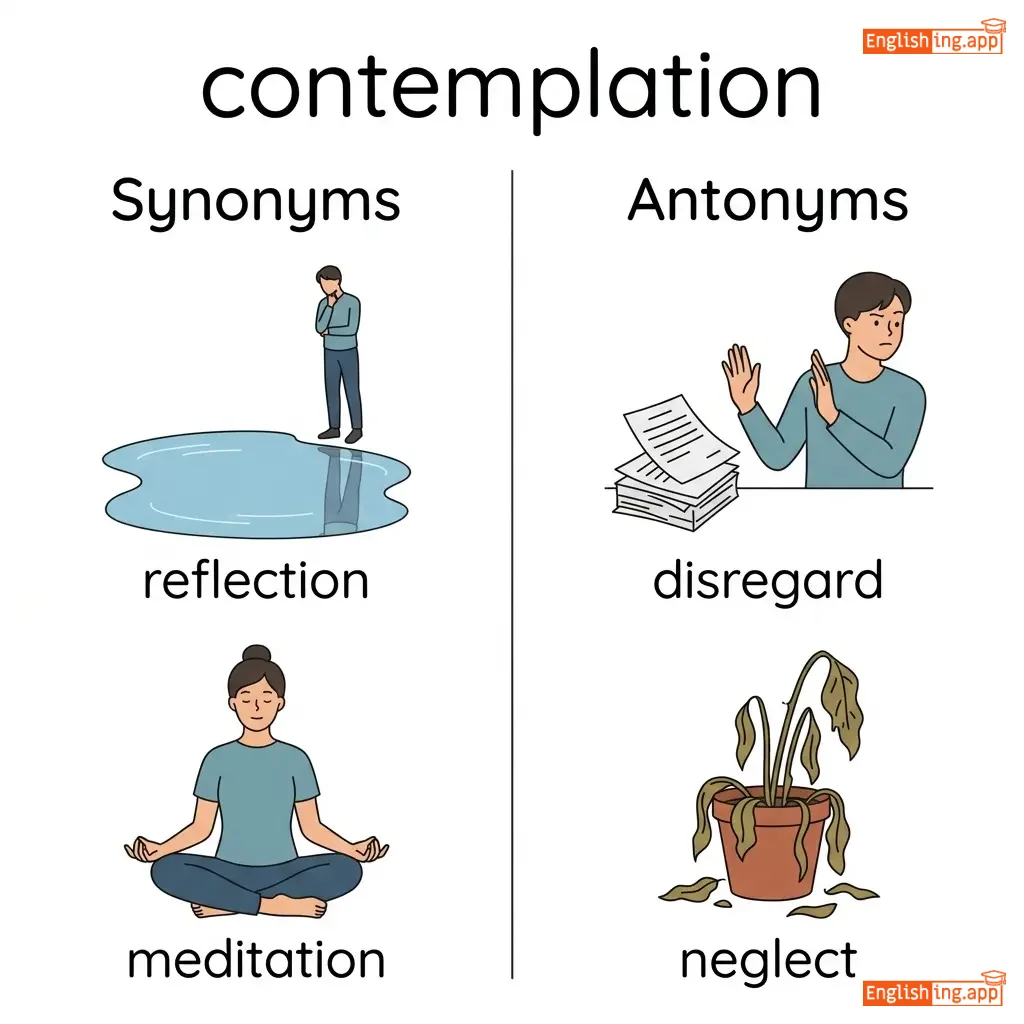
reflection, meditation, thought
••••••
disregard, neglect, inattention
••••••
हैप्पीनेस की तरह, कॉन्टेम्प्लेशन भी लंबे समय तक सोचने से आता है
••••••
••••••
dɪˌlɪb.əˈreɪ.ʃən
noun
(डिलिबेरेशन)
••••••
••••••
विचार-विमर्श
vichar-vimrash
••••••
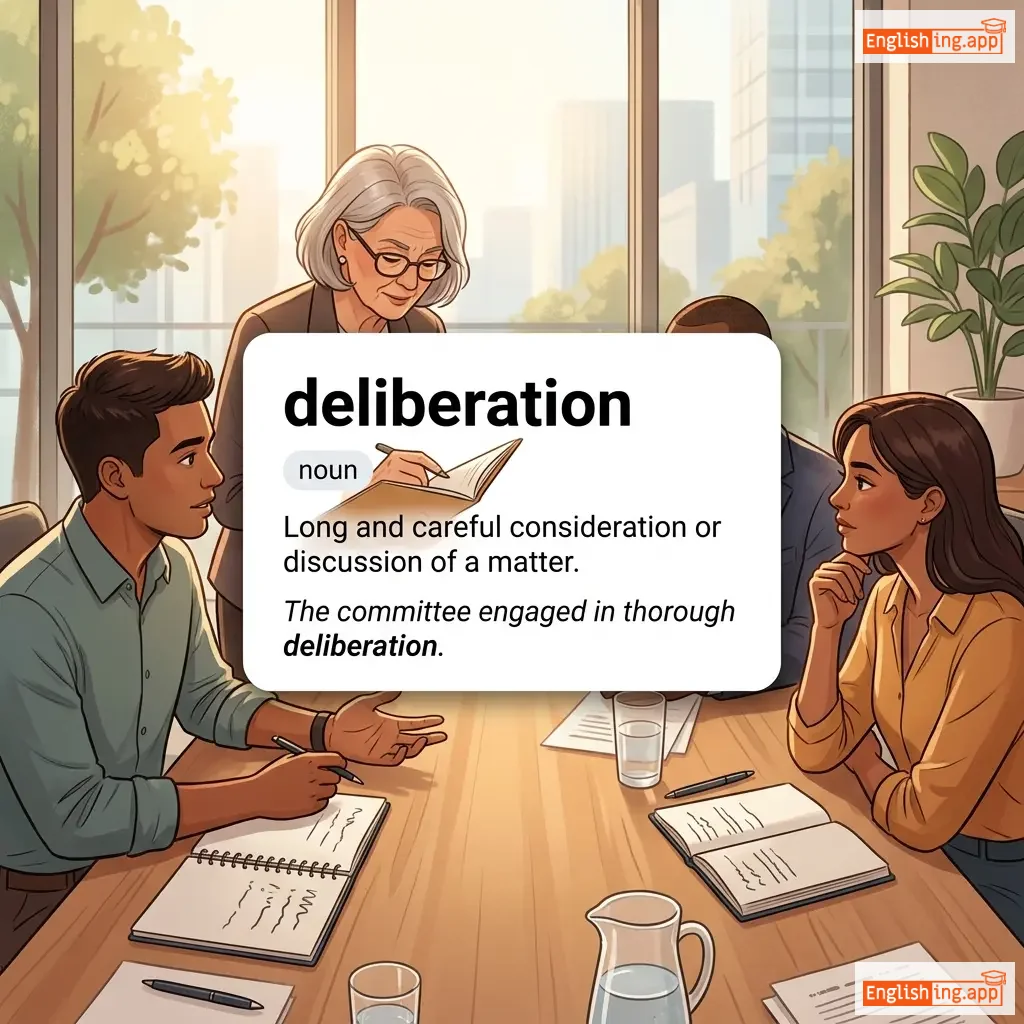
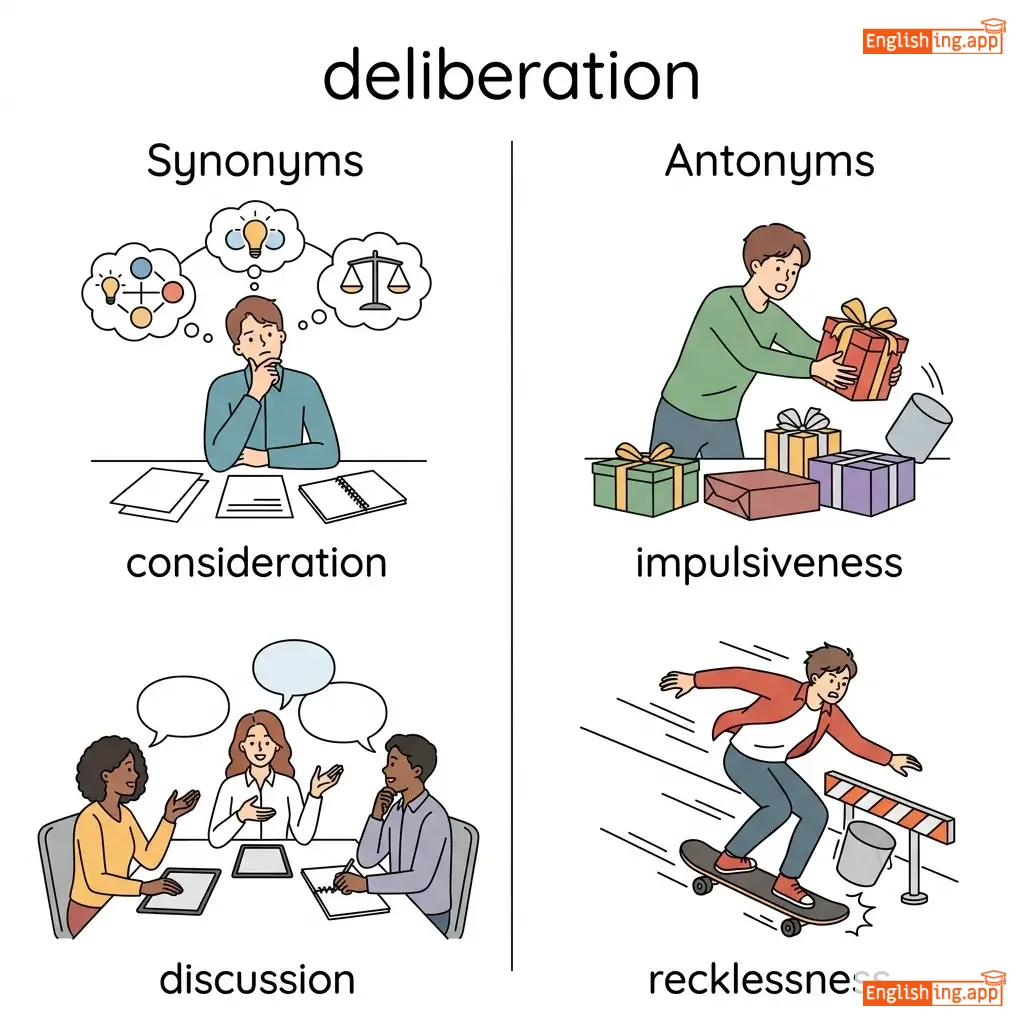
Long and careful consideration or discussion of a matter.
••••••
The committee engaged in thorough deliberation .
द कमेटी ने गहरे विचार-विमर्श में भाग लिया।
••••••
कमेटी ने गहरे विचार-विमर्श में भाग लिया।
Kamiti ne gahare vichar-vimrash mein bhag liya.
••••••
consideration, discussion, consultation
••••••
impulsiveness, recklessness, haste
••••••
Hindi speakers can remember this by thinking about 'विचार' (thoughts) and 'विमर्श' (discussion).
••••••
••••••
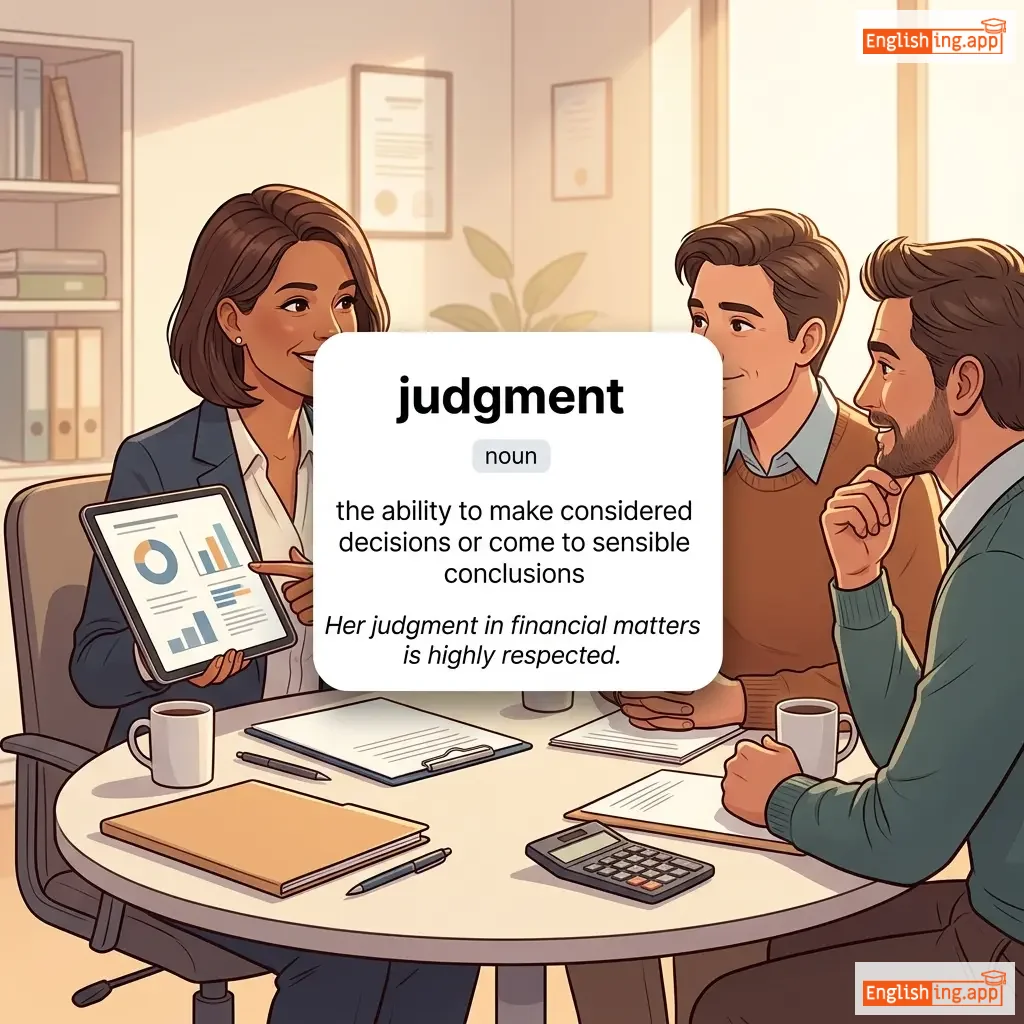
ˈdʒʌdʒ.mənt
noun
(जजमेंट)
••••••
••••••
निर्णय, न्याय, निर्णयशक्ति
nirnaya, nyaya, nirnayashakti
••••••
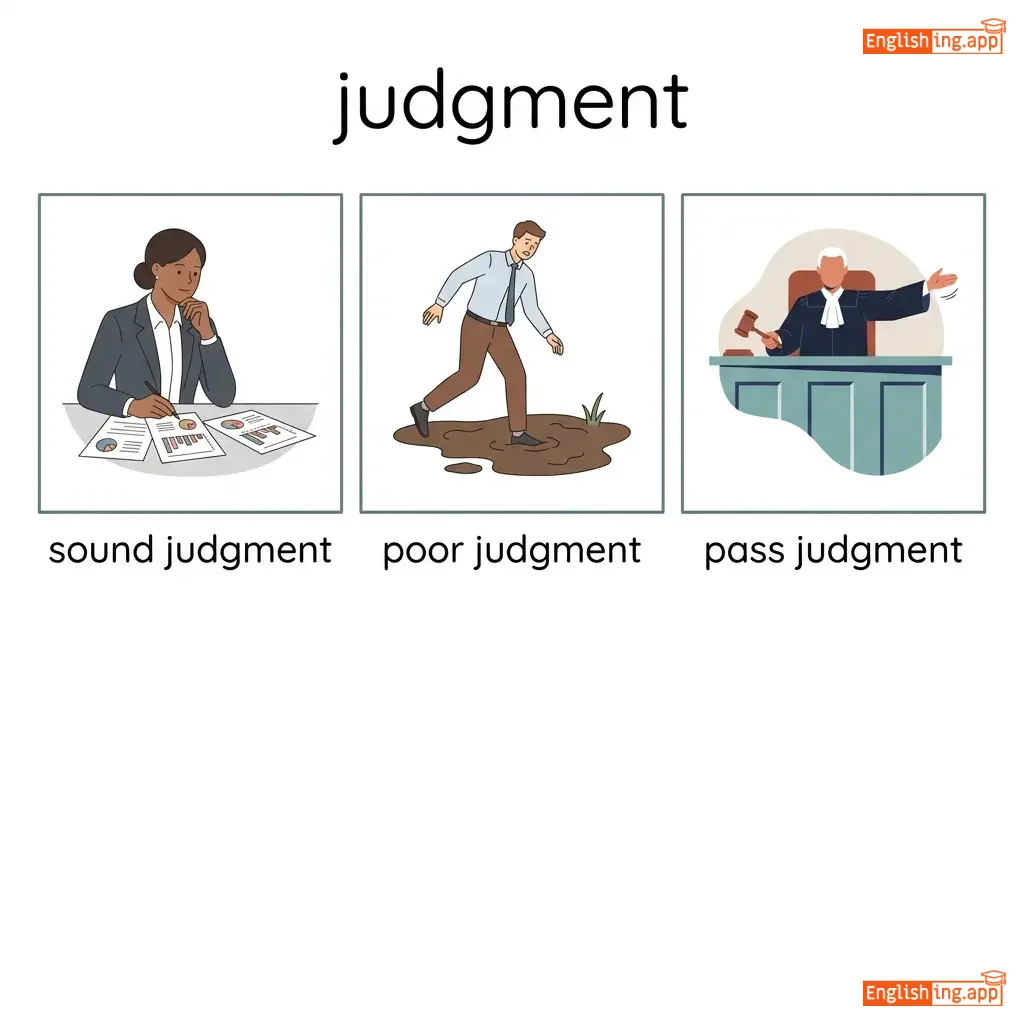
The ability to make considered decisions or come to sensible conclusions.
••••••
The judge's judgment was fair and just.
••••••
न्यायधीश का निर्णय निष्पक्ष और न्यायपूर्ण था।
Nyayadhish ka nirnaya nishpaksh aur nyaypoorn tha.
••••••
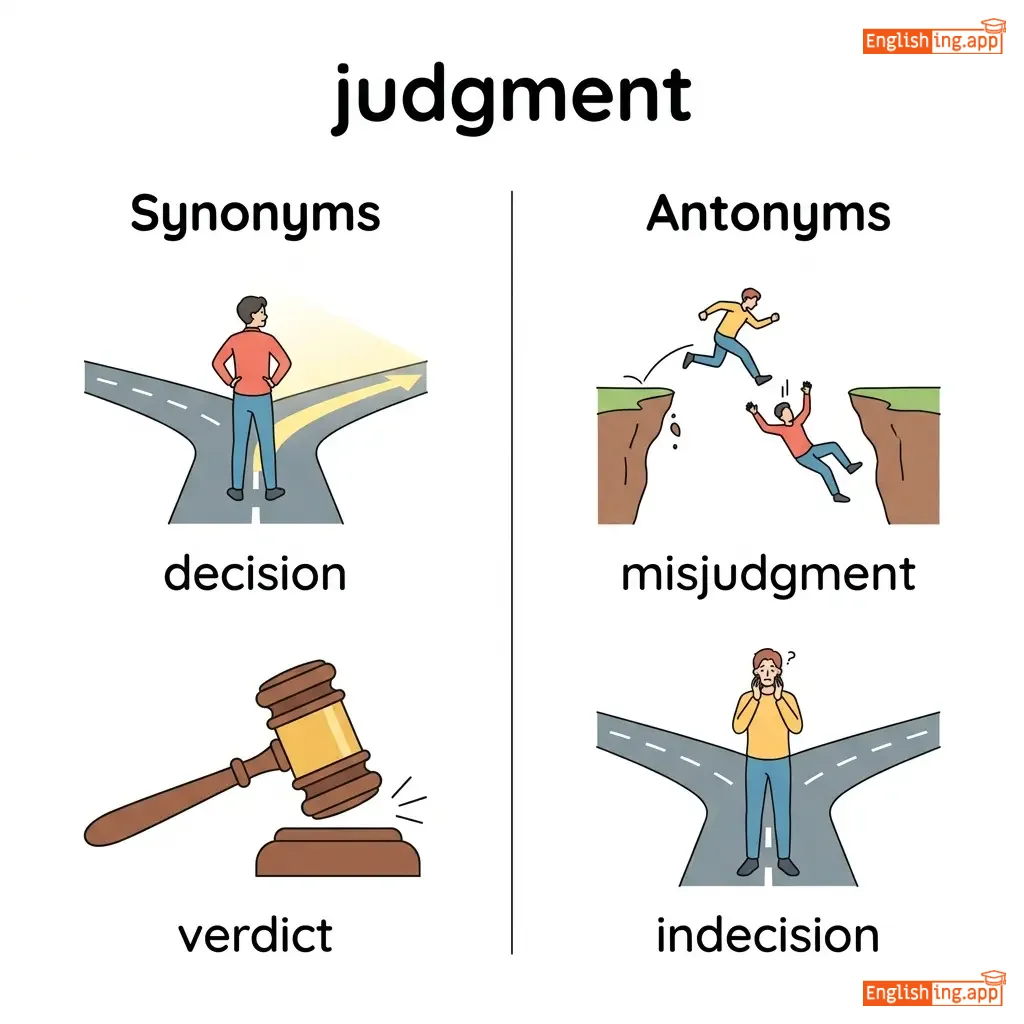
decision, verdict, ruling
••••••
indecision, misjudgment, bias
••••••
जजमेंट में 'जज' का निर्णय होता है, जो न्यायपूर्ण निर्णय की प्रक्रिया है।
••••••
••••••
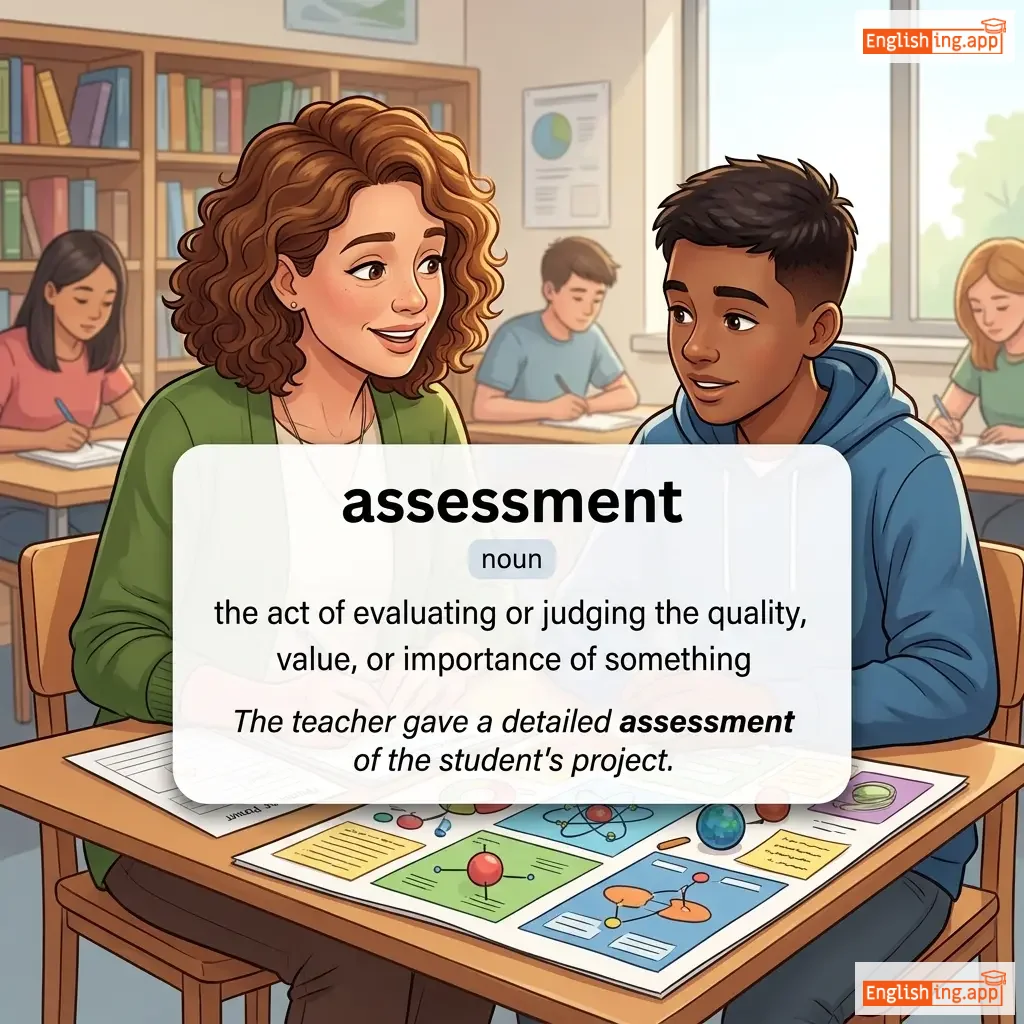
əˈses.mənt
noun
(एसेसमेंट)
••••••
••••••
मूल्यांकन, मूल्य निर्धारण, आकलन
mulyankan, muly nirdharan, aaklan
••••••
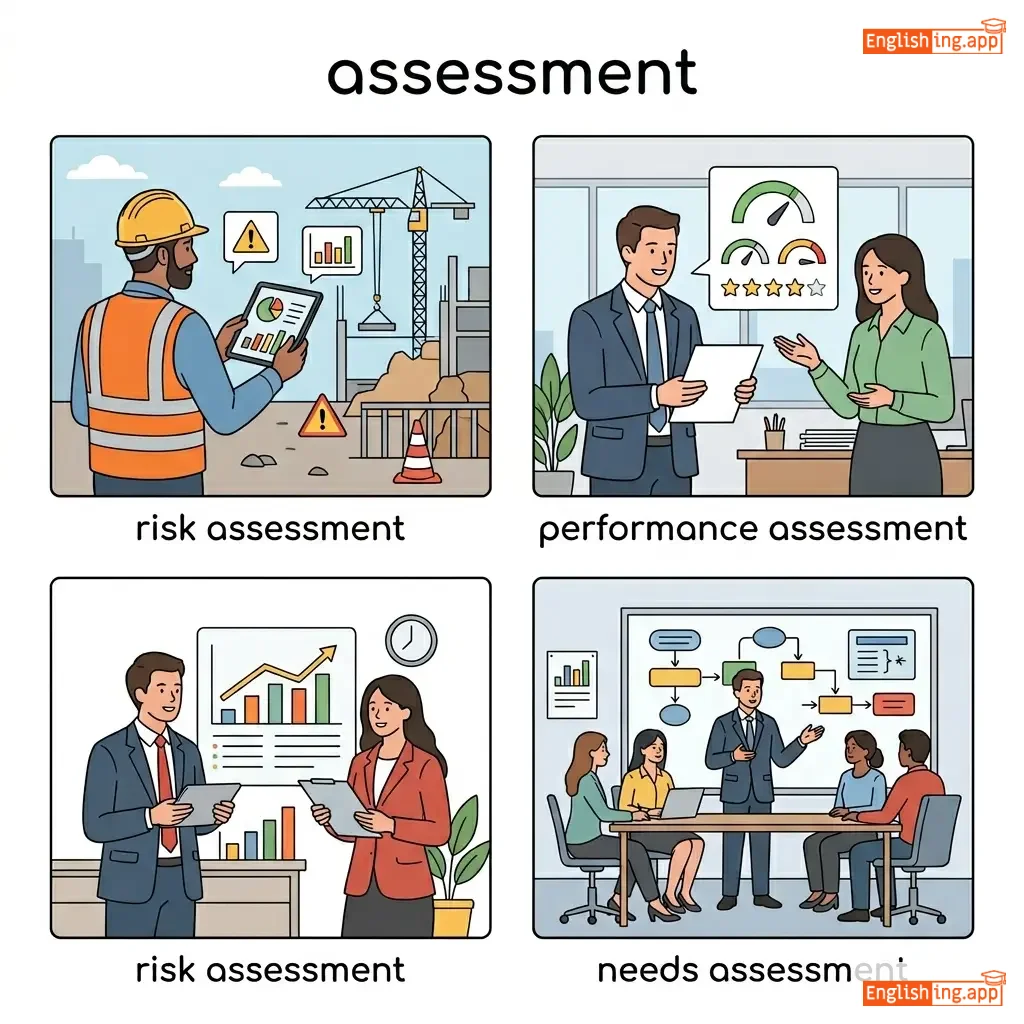
The evaluation or estimation of the nature, quality, or ability of someone or something.
••••••
His assessment of the situation was accurate.
••••••
उसका स्थिति का मूल्यांकन सही था।
Uska sthiti ka mulyankan sahi tha.
••••••
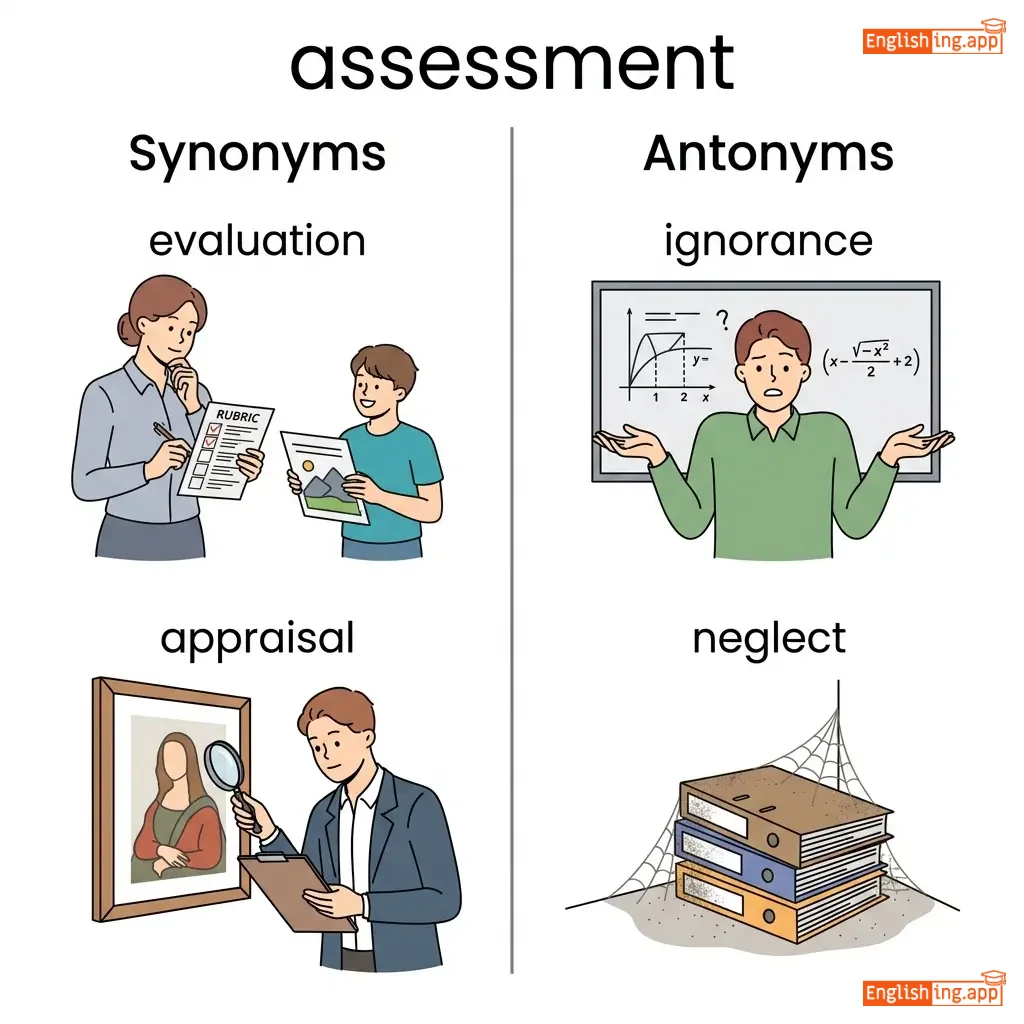
evaluation, appraisal, analysis
••••••
misjudgment, inaccuracy, misestimation
••••••
No
••••••
••••••
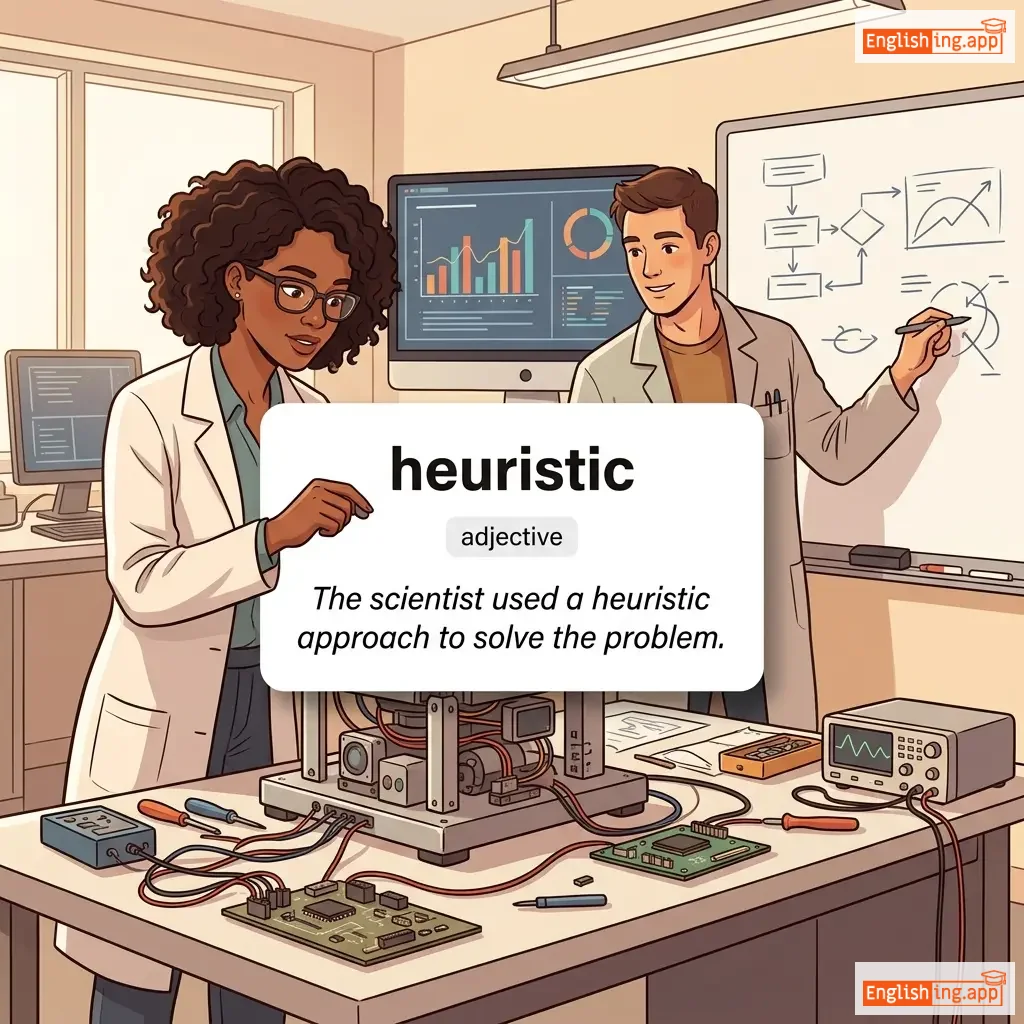
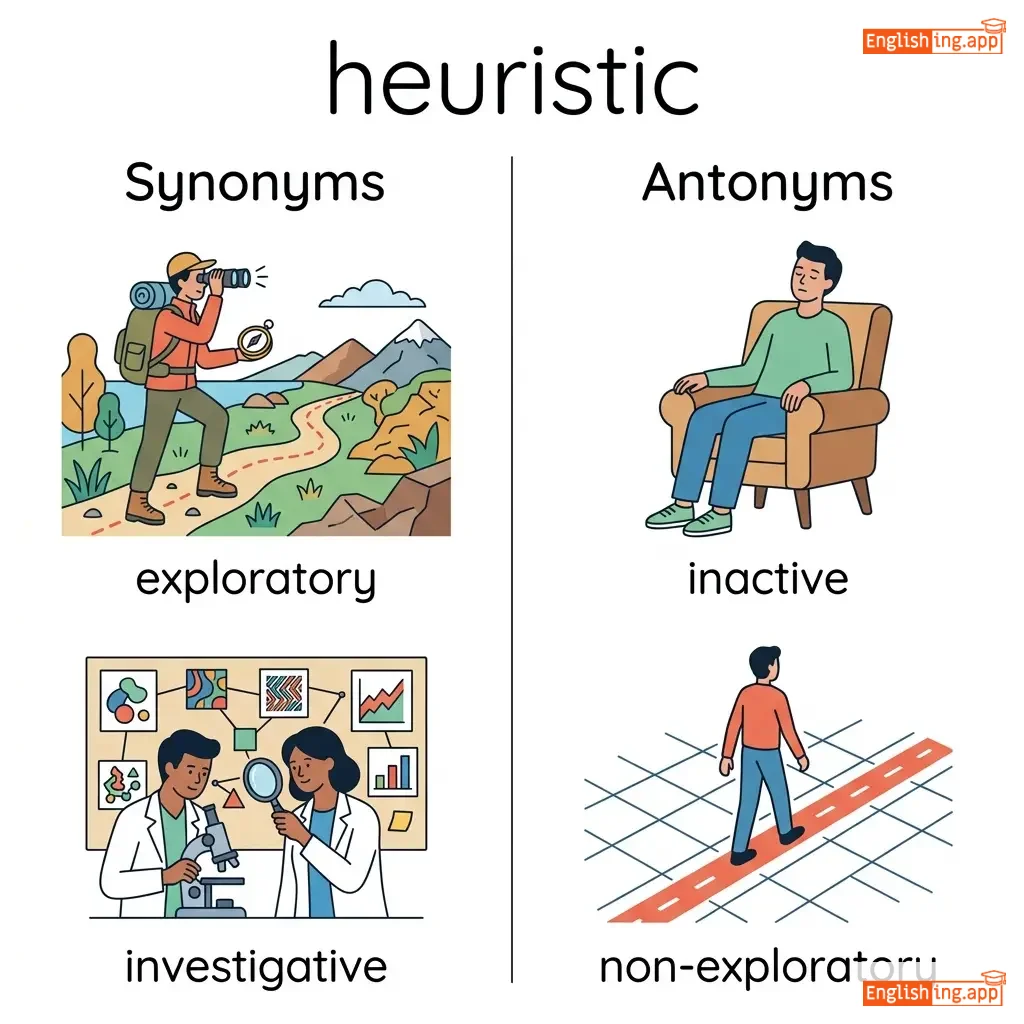
hjʊəˈrɪs.tɪk
adjective
(ह्यूरिस्टिक)
••••••
••••••
ह्यूरिस्टिक
heuristic
••••••
Enabling a person to discover or learn something for themselves; using practical experience rather than theory.
••••••
The scientist used a heuristic approach to solve the problem.
••••••
वैज्ञानिक ने समस्या को हल करने के लिए एक ह्यूरिस्टिक तरीका अपनाया।
Vaigyanik ne samasya ko hal karne ke liye ek heuristic tareeka apnaya.
••••••
exploratory, investigative, experimental
••••••
inactive, non-exploratory, theoretical
••••••
ह्यूरिस्टिक = खोजने वाला तरीका
••••••
••••••
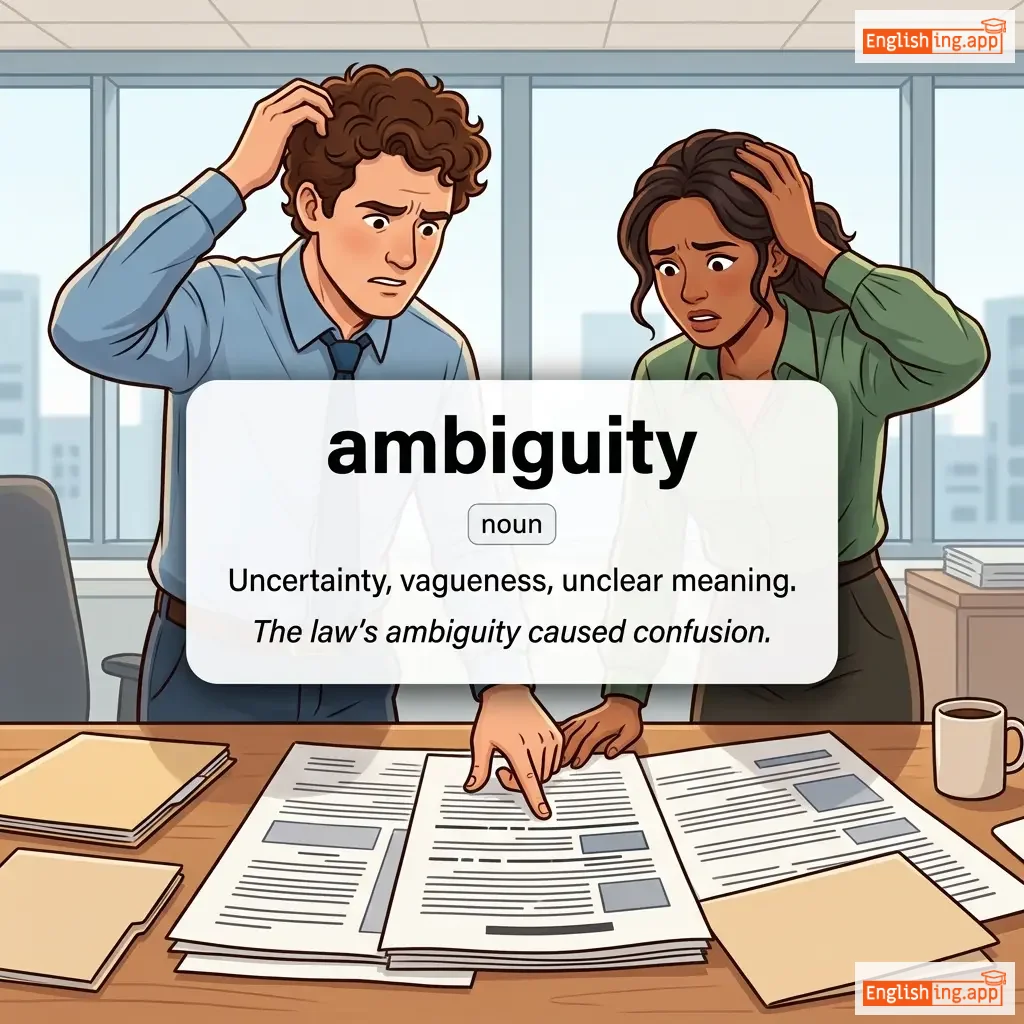
ˌæm.bɪˈɡjuː.ɪ.ti
noun
(ऐम्बिग्युआटी)
••••••
••••••
अस्पष्टता, द्विविधता, अस्पष्टता
asposhtata, dvividhta, asposhtata
••••••
The quality of being open to more than one interpretation; inexactness.
••••••
The ambiguity in his speech confused the audience.
••••••
उसकी बातों में अस्पष्टता ने श्रोताओं को भ्रमित कर दिया।
Uski baaton mein asposhtata ne shrotaon ko bhramit kar diya.
••••••
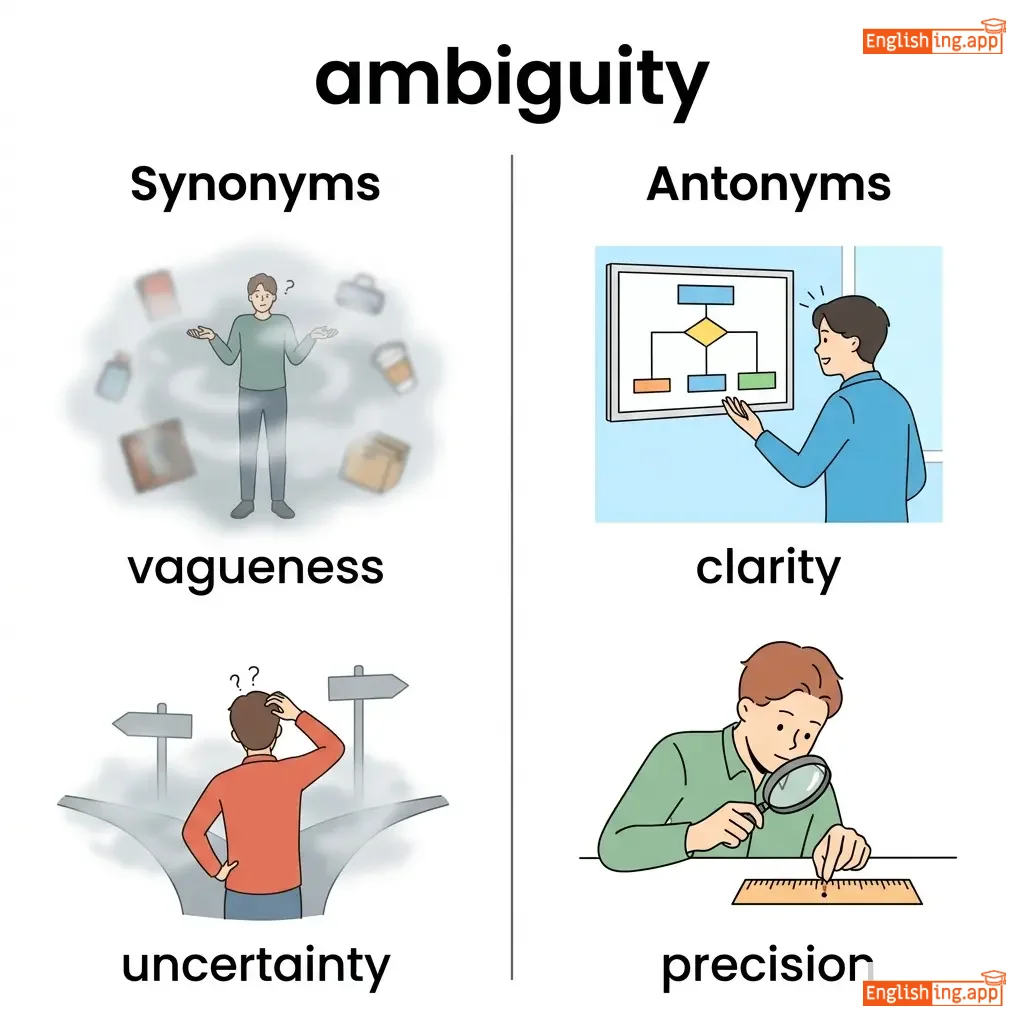
vagueness, uncertainty, confusion
••••••
clarity, precision, certainty
••••••
Hindi में 'अस्पष्टता' को याद करें, जैसे 'ambiguity' के लिए
••••••
••••••
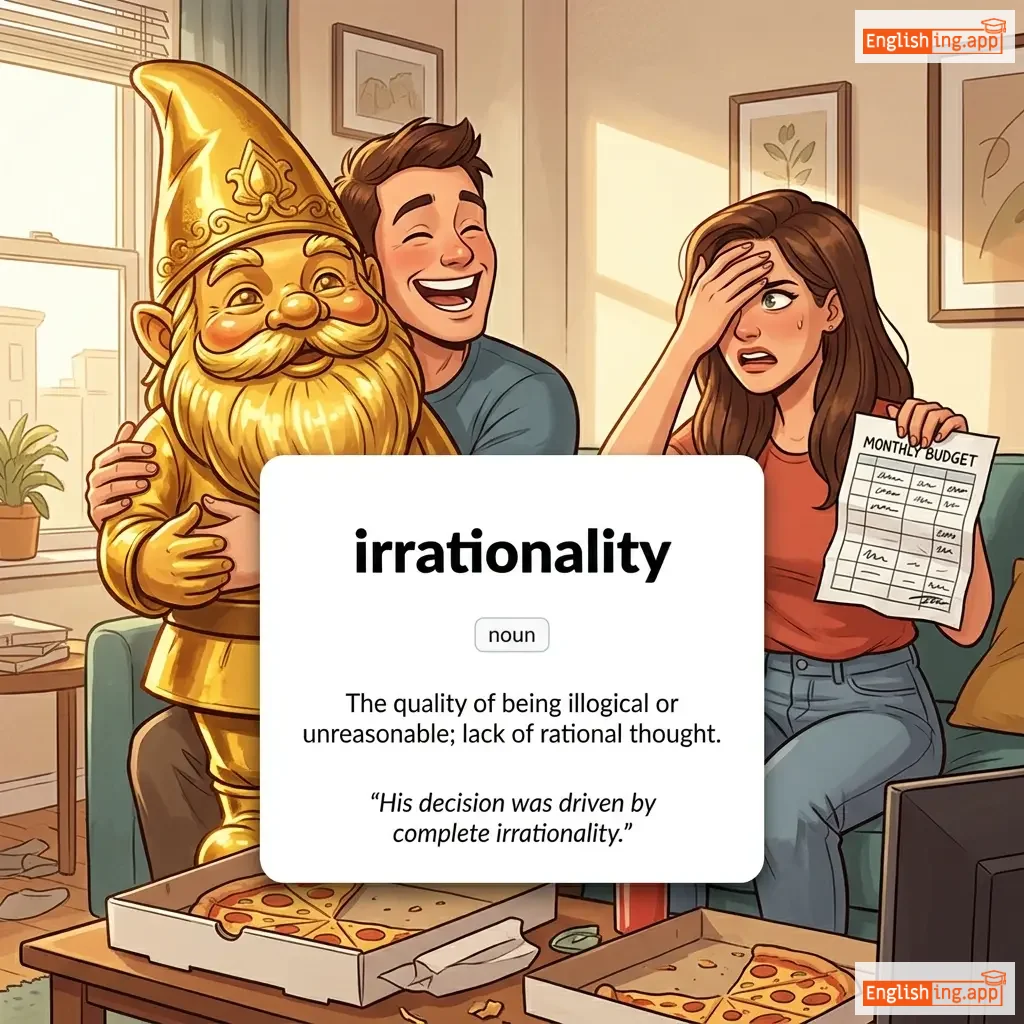
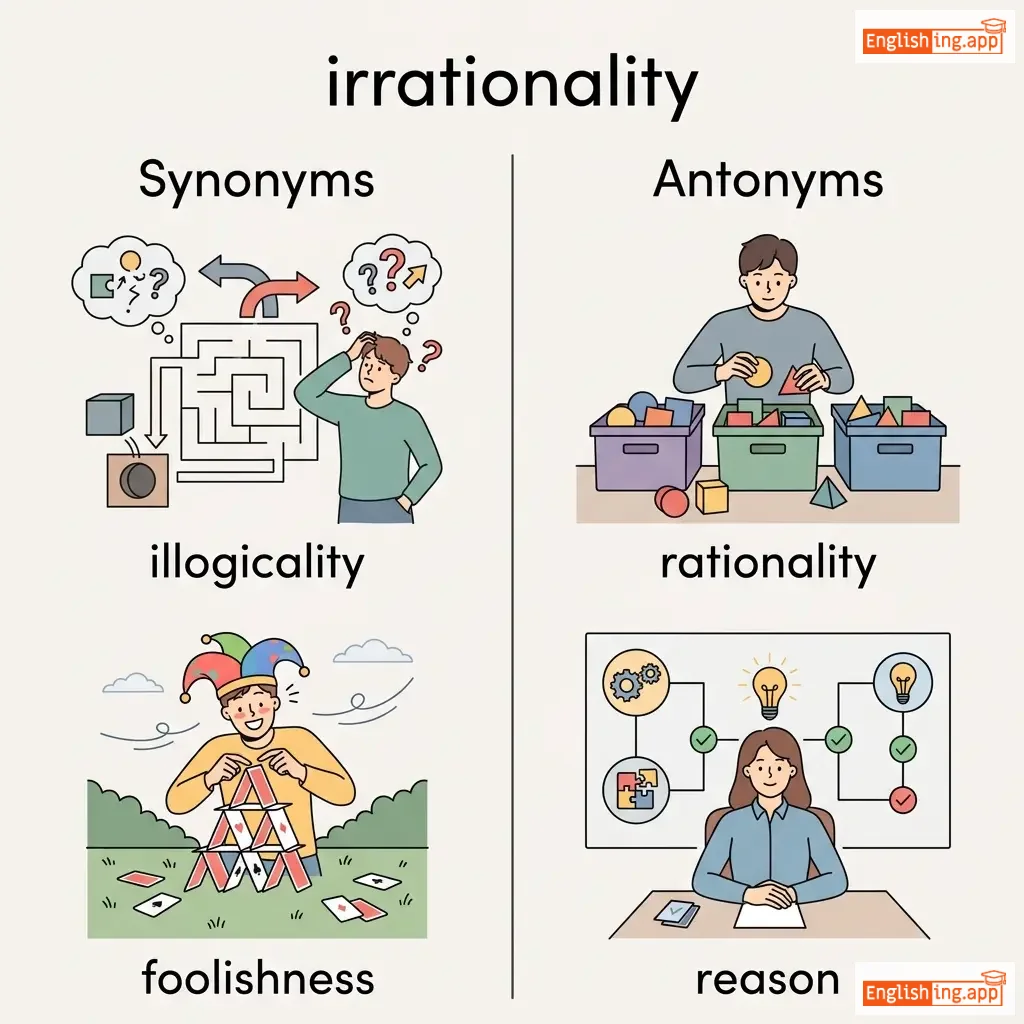
ɪˌræʃ.ənˈæl.ɪ.ti
noun
(इरैशनलिटी)
••••••
••••••
अतार्किकता, अविवेक, असंगति
atarkikta, avivek, asangati
••••••
The quality of being illogical or unreasonable; lack of rational thought.
••••••
His decision was driven by complete irrationality .
हिस डिसीजन वॉज़ ड्रिवन बाई कम्प्लीट इरेशनलिटी।
••••••
उसका निर्णय पूरी तरह से अतार्किकता द्वारा प्रेरित था।
Uska nirnay puri tarah se atarkikta dwara prerit tha.
••••••
illogicality, foolishness, unreasonableness
••••••
rationality, reason, logic
••••••
इरैशनलिटी को अतार्किकता में जोड़ने से याद रखो।
••••••
••••••
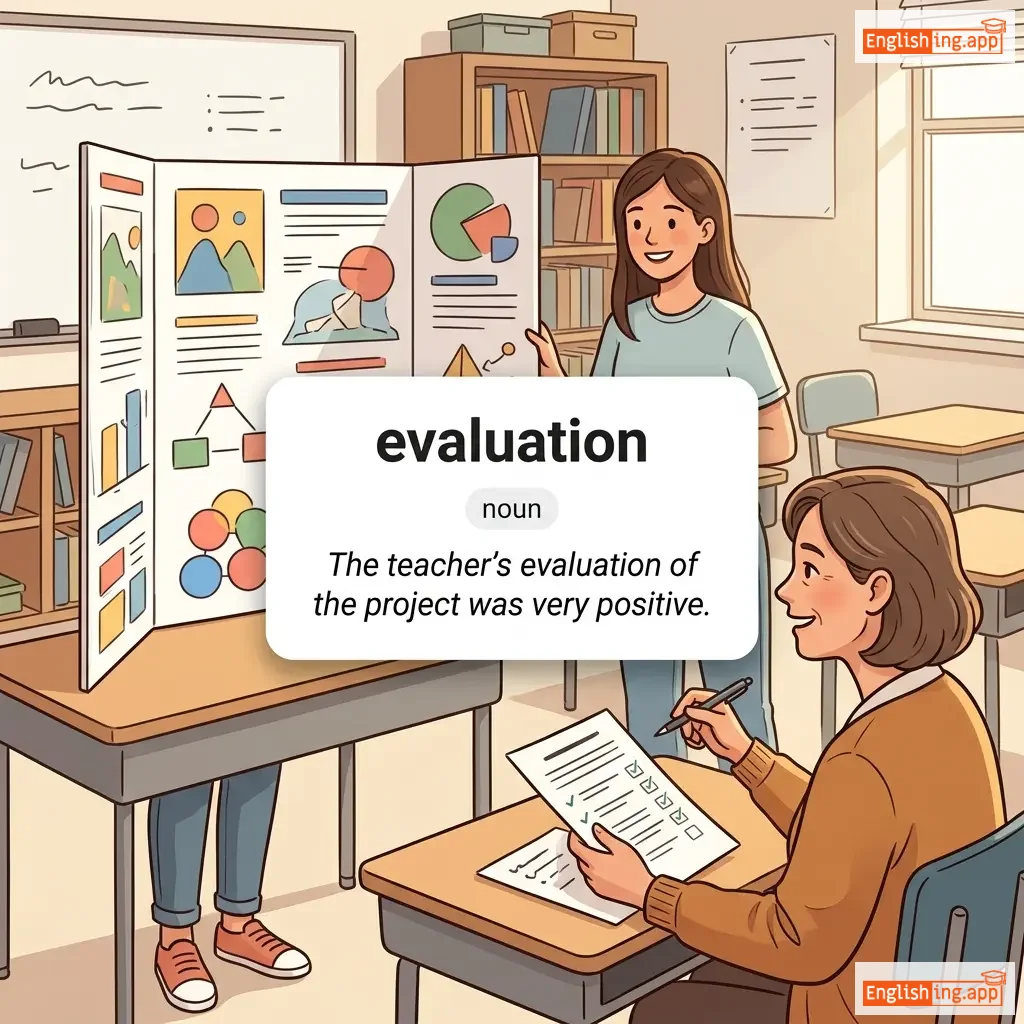
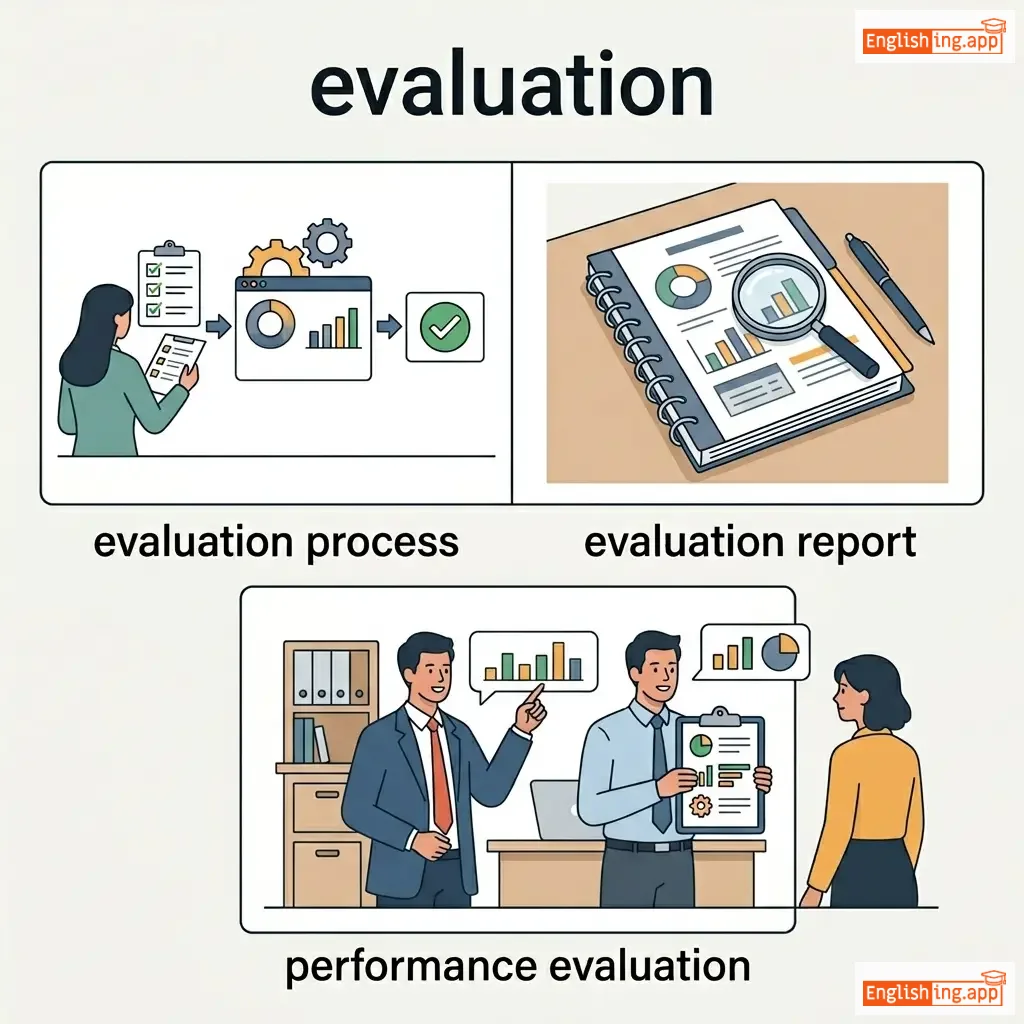
ɪˌvæl.juˈeɪ.ʃən
noun
(इवैल्यूएशन)
••••••
••••••
मूल्यांकन, आकलन, मूल्य निर्धारण
mulyankan, aaklan, muly nirdharan
••••••
The making of a judgment about the amount, number, or value of something; assessment.
••••••
The teacher conducted a fair evaluation of students.
••••••
शिक्षक ने छात्रों का उचित मूल्यांकन किया।
Shikshak ne chhatron ka uchit mulyankan kiya.
••••••
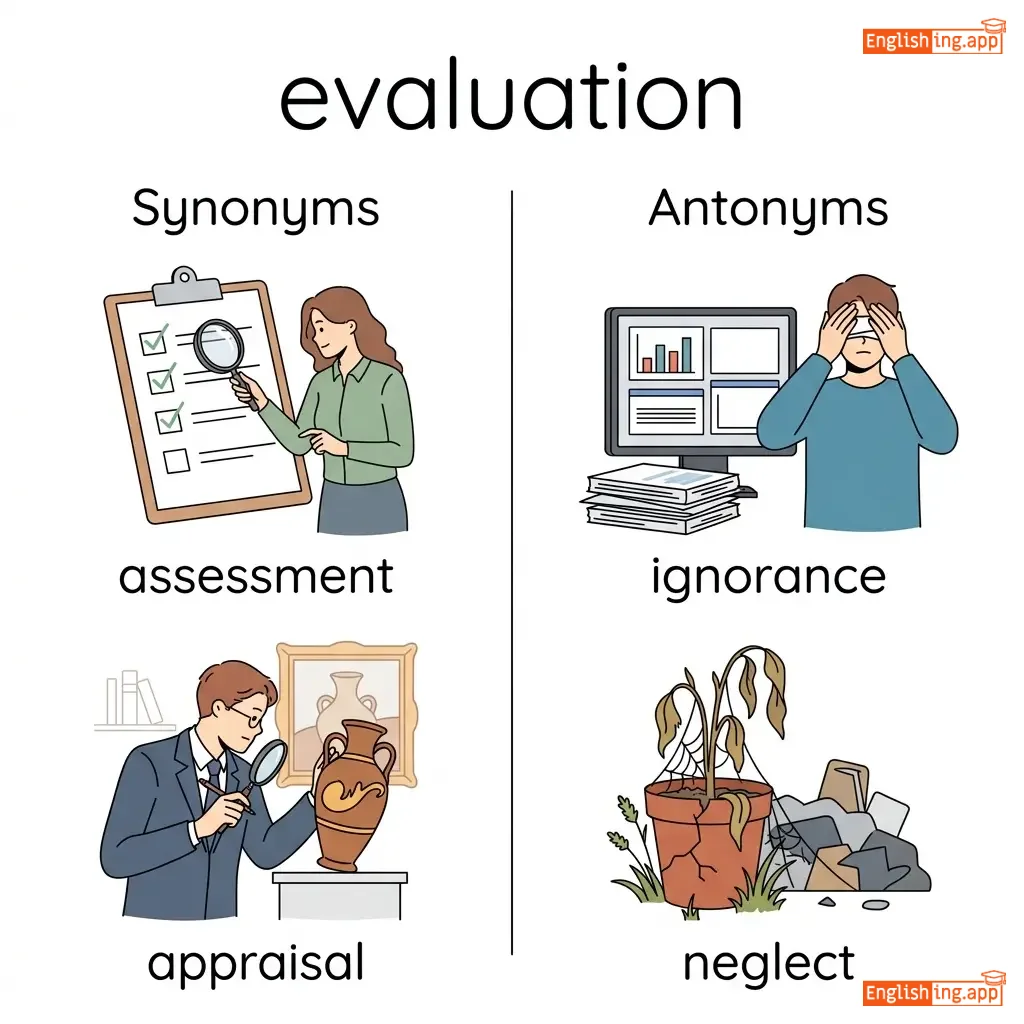
assessment, appraisal, review
••••••
misjudgment, neglect, disregard
••••••
मूल्यांकन करते समय सही तरीका अपनाना जरूरी है
••••••
••••••
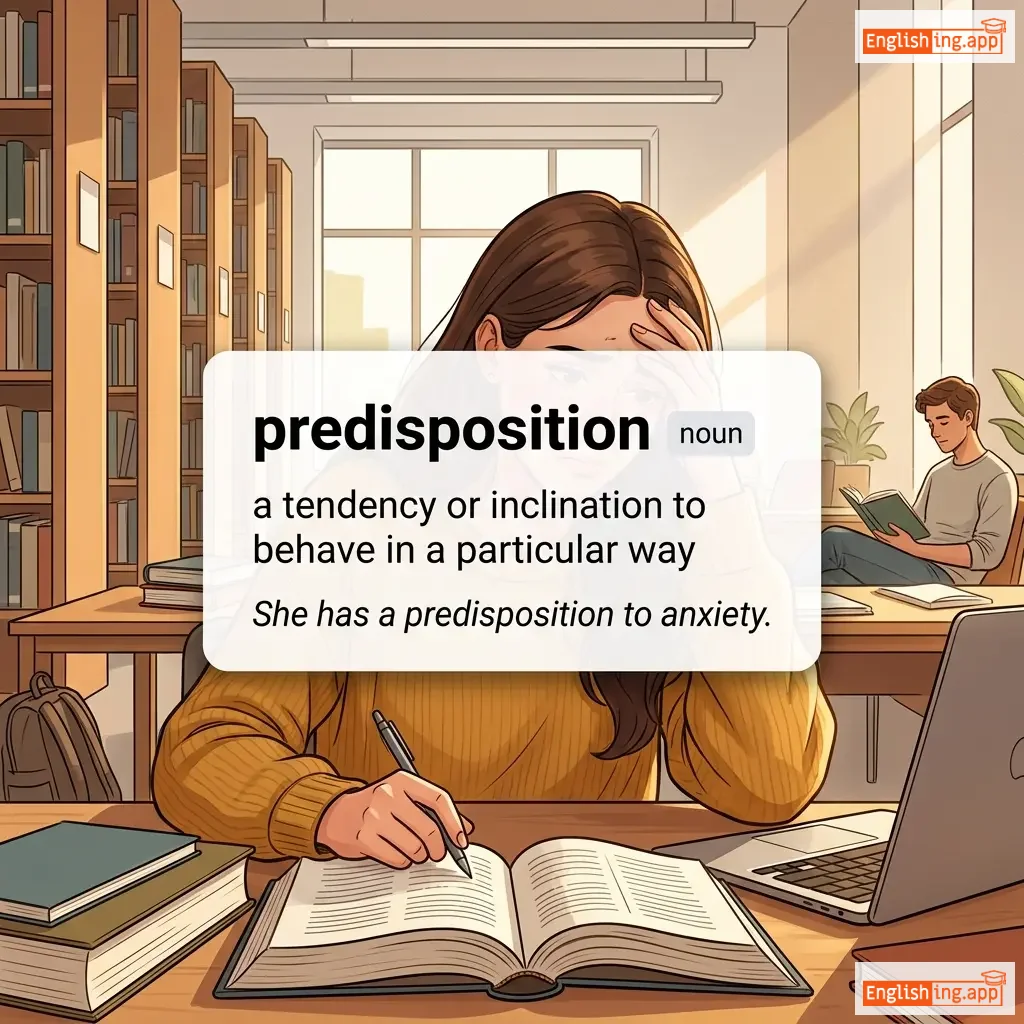
ˌpriː.dɪs.pəˈzɪʃ.ən
noun
(प्रेडिसपोज़िशन)
••••••
••••••
पूर्ववृत्ति, प्रवृत्ति, झुकाव
purvavritti, pravritti, jhukav
••••••
A liability or tendency to suffer from a particular condition, hold a particular attitude, or act in a particular way.
••••••
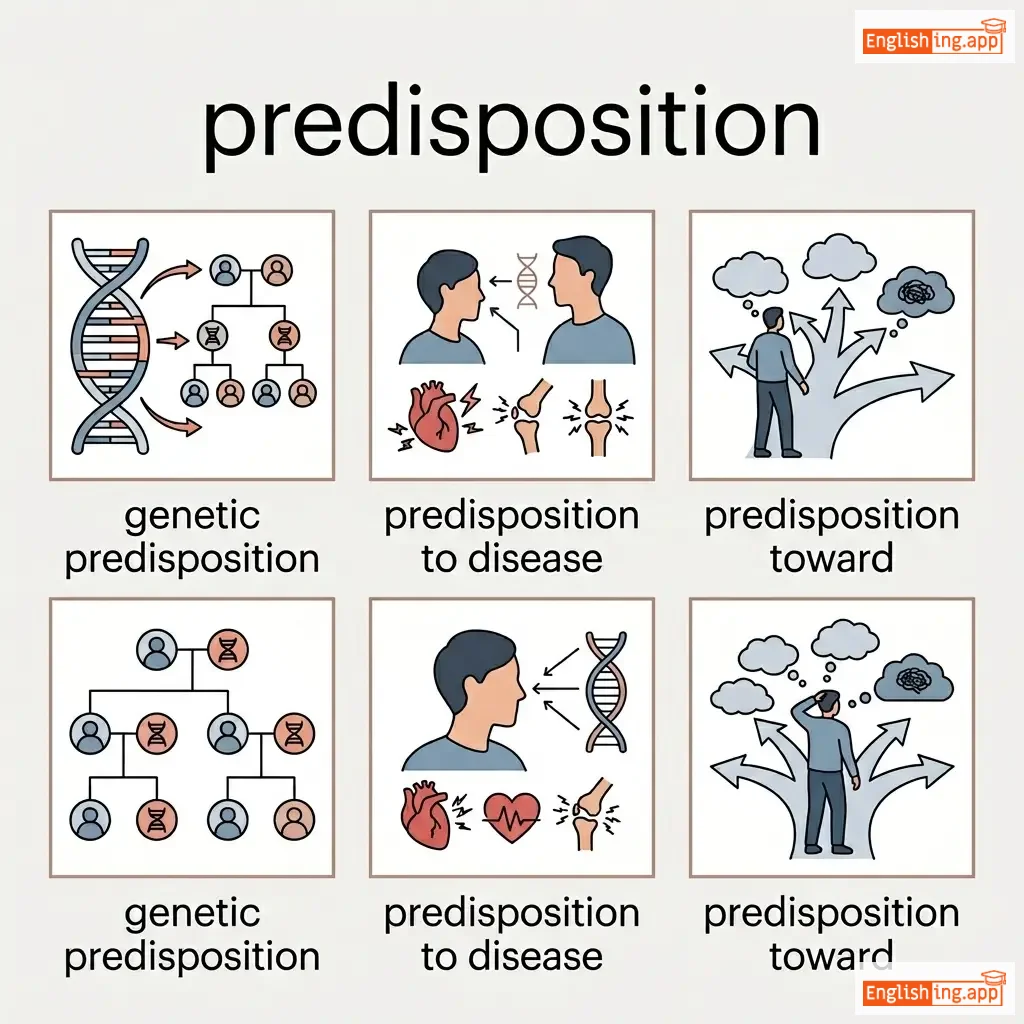
His genetic predisposition made him more susceptible to diabetes.
••••••
उसकी आनुवंशिक प्रवृत्ति ने उसे मधुमेह के प्रति अधिक संवेदनशील बना दिया।
Uski aanuvanshik pravritti ne use madhumeh ke prati adhik sanvedansheel bana diya.
••••••
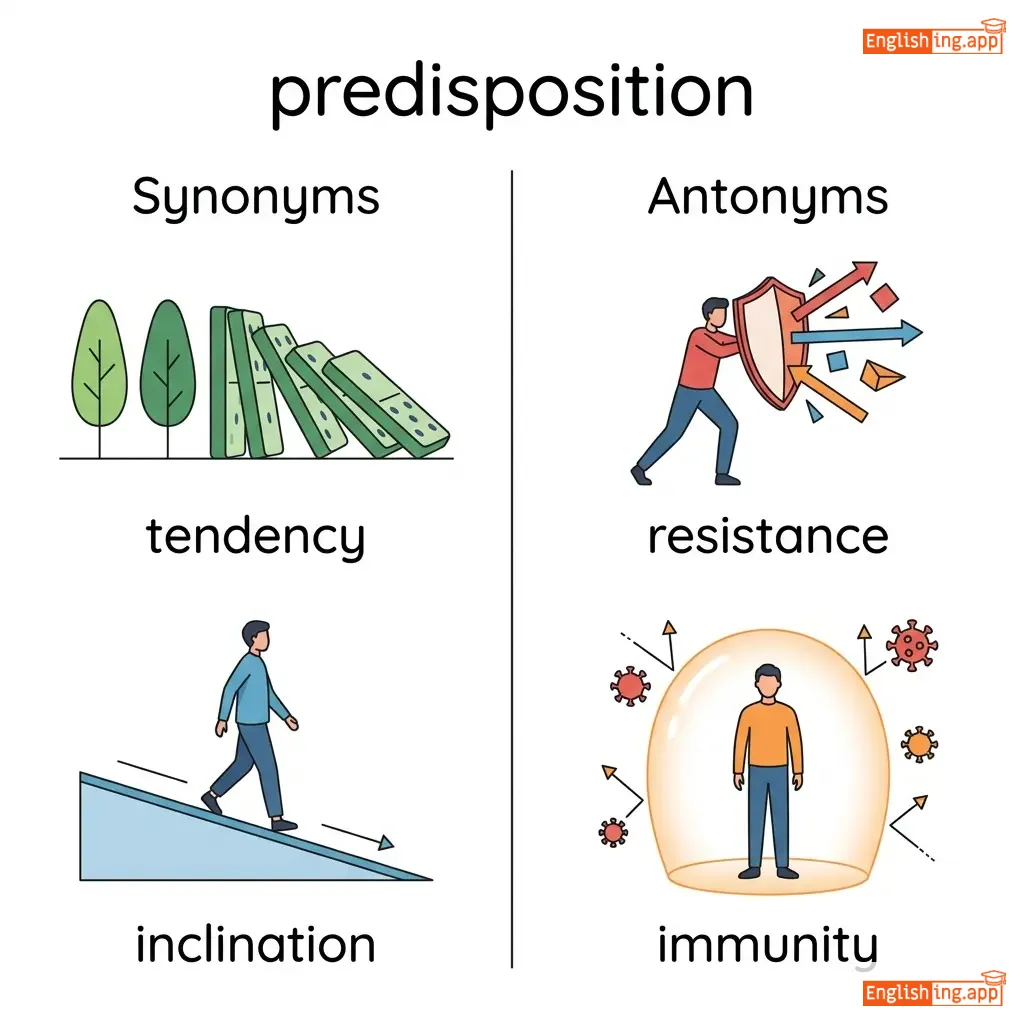
inclination, propensity, tendency
••••••
disinclination, neutrality, resistance
••••••
Hindi: पूर्ववृत्ति = एक प्रकार की प्रवृत्ति, जो पूर्व जन्म से होती है।
••••••
••••••
ˈkɒn.sɪ.kwəns
noun
(कॉन्सीक्वेंस)
••••••
••••••
परिणाम
parinaam
••••••
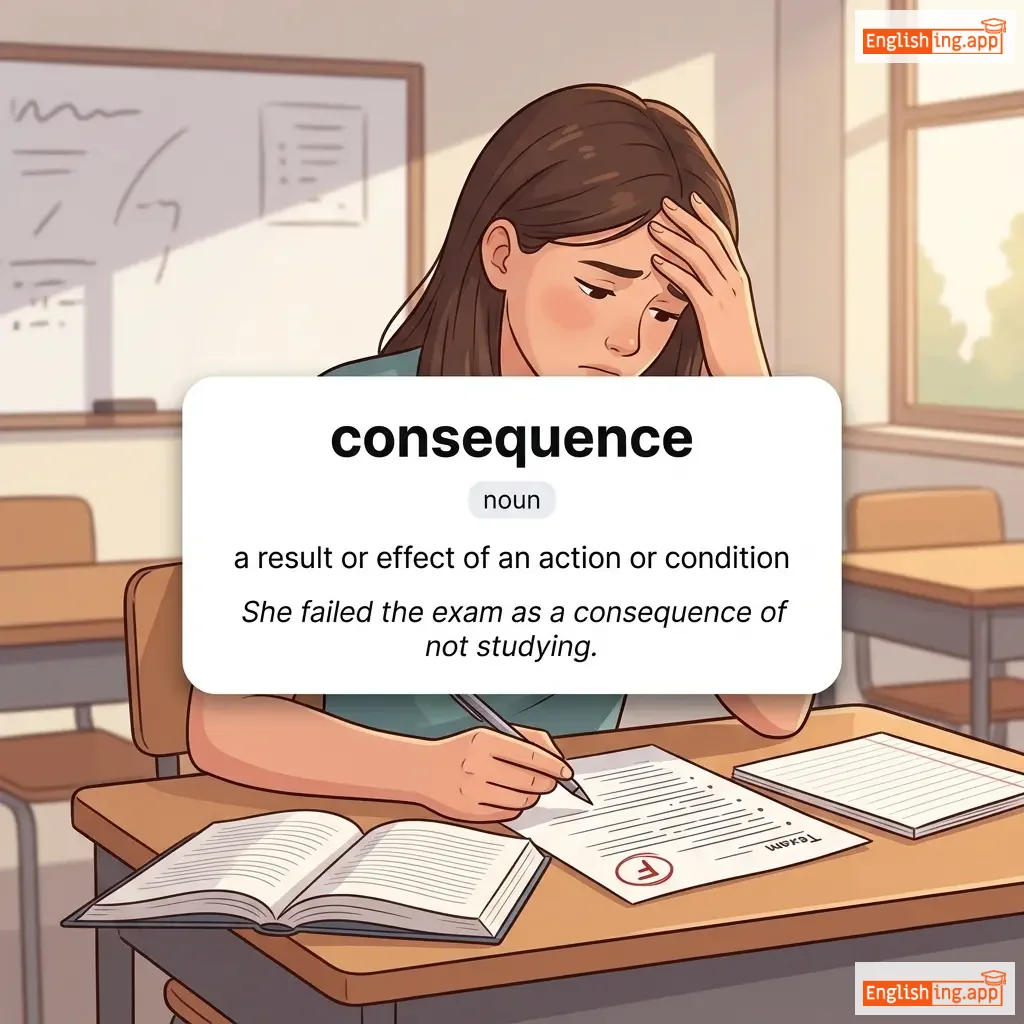
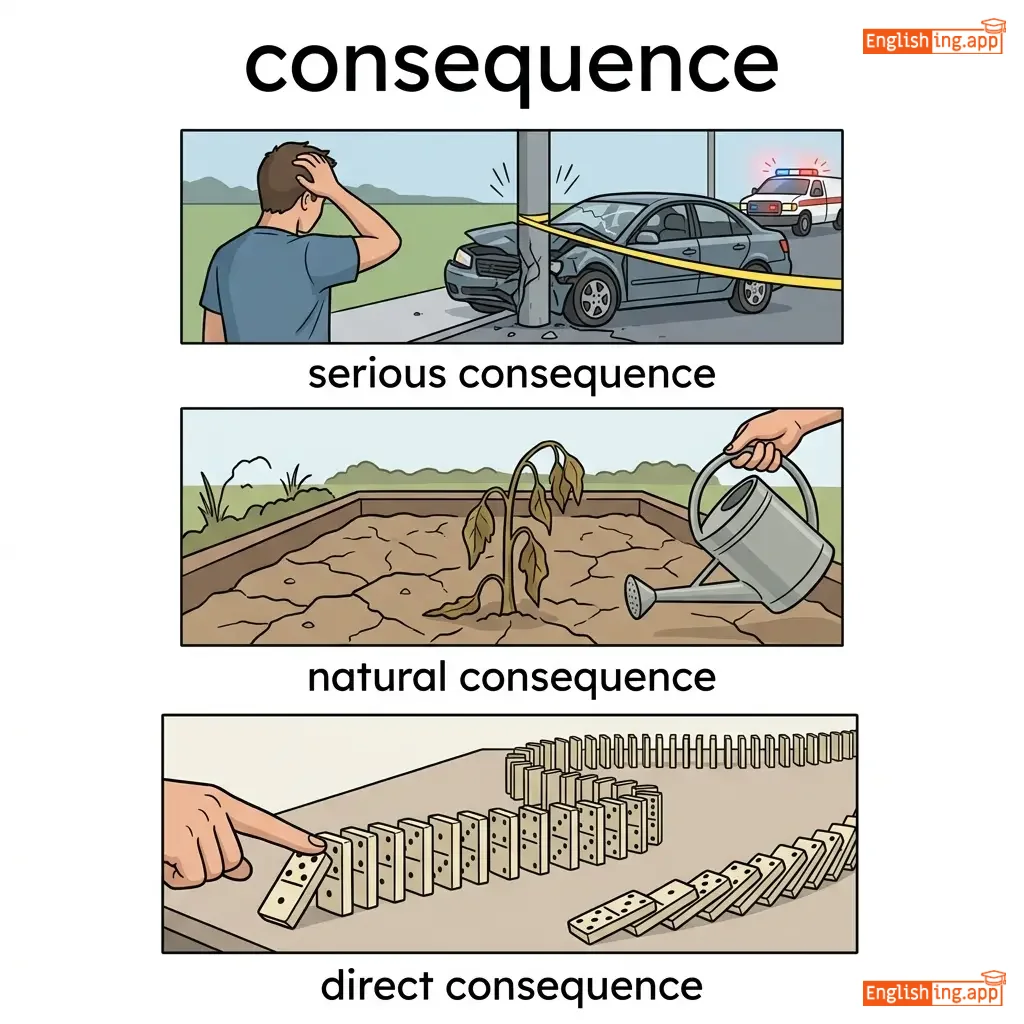
A result or effect of an action or condition.
••••••
Every action has a consequence .
••••••
हर क्रिया का एक परिणाम होता है।
Har kriya ka ek parinaam hota hai.
••••••
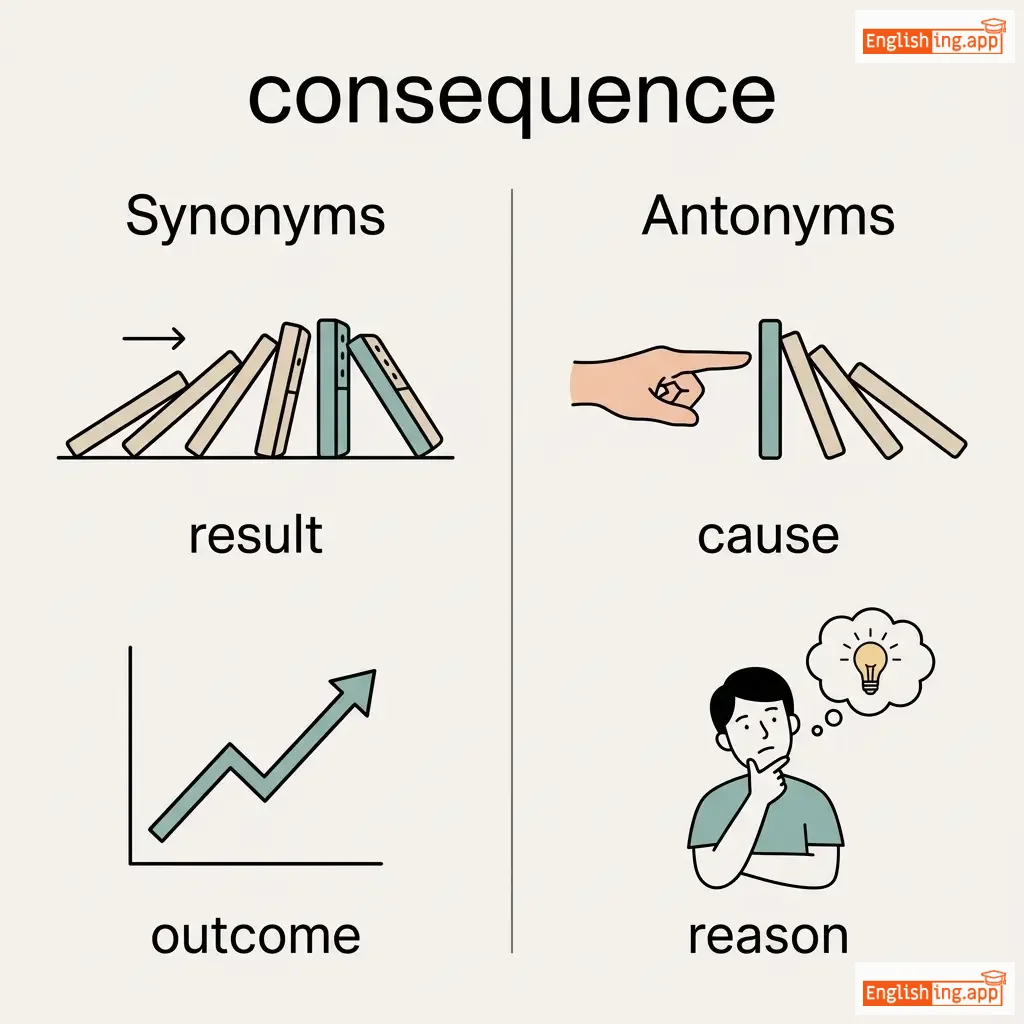
outcome, ramification, result
••••••
cause, insignificance, origin
••••••
Hindi: हर क्रिया का परिणाम (Har kriya ka parinaam) = Every action has a consequence
••••••
••••••
dɪˈtɜː.mɪ.nənt
noun
(डिटरमिनेंट)
••••••
••••••
निर्णायक तत्व
nirnayak tattva
••••••
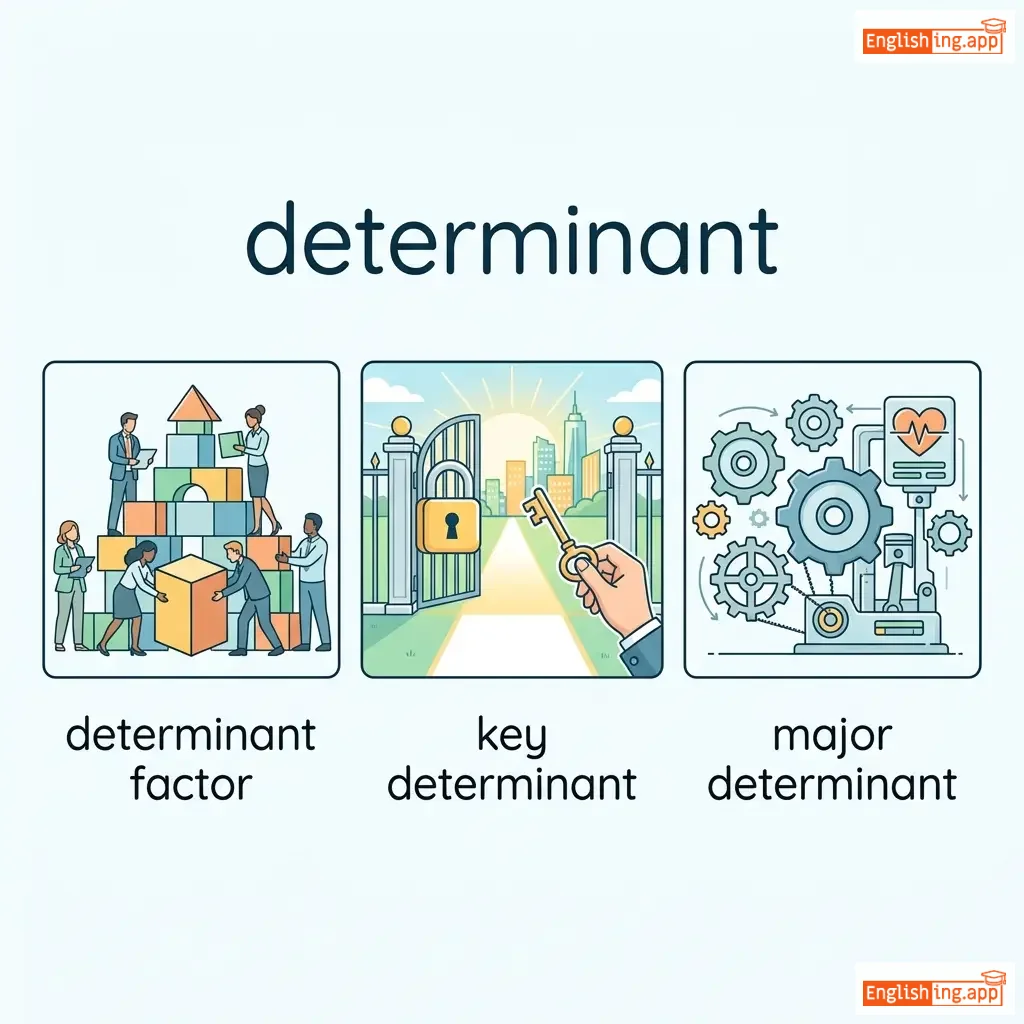
A factor that decisively affects the nature or outcome of something.
••••••
Education is a key determinant of success.
••••••
शिक्षा सफलता का एक महत्वपूर्ण निर्धारक है।
Shiksha safalta ka ek mahatvapurn nirdharak hai.
••••••
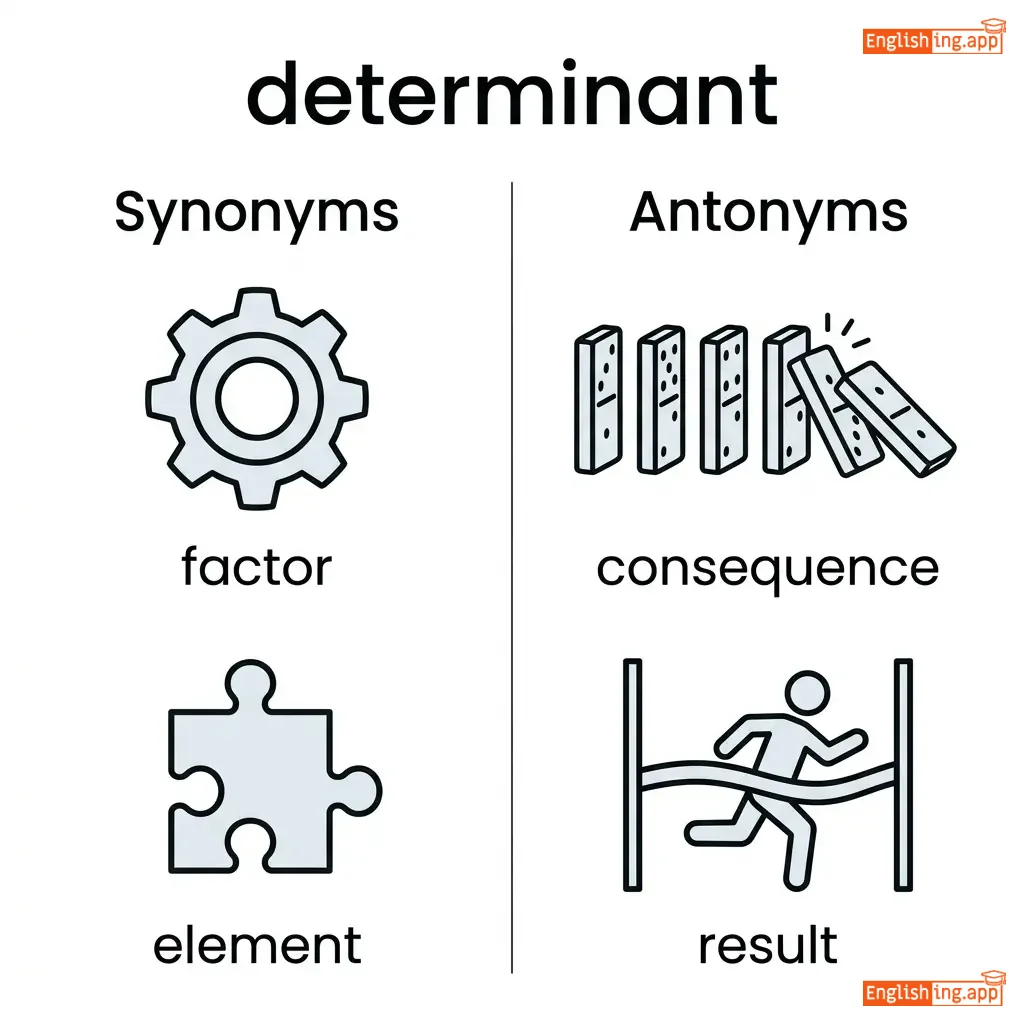
factor, influencer, element
••••••
insignificance, nonfactor, irrelevance
••••••
निर्णायक तत्व का मतलब है, जो कोई चीज़ के परिणाम को बदल सकता है।
••••••