🤔
••••••
/ˈkɒntəmpleɪt/
verb
(कॉन्टेम्प्लेट)
••••••
-
••••••
गंभीरता से सोचना
gambhirta se sochna
••••••
कॉन्टेम्प्लेटेड
••••••
कॉन्टेम्प्लेटेड
••••••
कॉन्टेम्प्लेट्स
••••••
कॉन्टेम्प्लेटिंग
••••••
to think deeply and carefully about something; to consider thoughtfully
••••••
She sat quietly to contemplate her future plans.
वह चुपचाप बैठी थी ताकि वह अपने भविष्य के योजनाओं पर विचार कर सके।
••••••
वह चुपचाप बैठी थी ताकि वह अपने भविष्य के योजनाओं पर विचार कर सके।
Vah chupchaap baithi thi taaki vah apne bhavishya ke yojnaon par vichar kar sake.
••••••
contemplate the meaning of life
जीवन के अर्थ पर विचार करना
••••••
to think deeply about the purpose or nature of life
••••••
जीवन के अर्थ पर विचार करना
Jeevan ke arth par vichar karna
••••••
consider, ponder, meditate, reflect, deliberate
••••••
••••••
contemplate the future, contemplate change, deeply contemplate, seriously contemplate
••••••
Temple में जाकर गहरे विचार (contemplate) करना।
••••••
🎒
••••••
/ˈɛvrɪθɪŋ/
pronoun
(एवरीथिंग)
••••••
-
••••••
सब कुछ
sab kuch
••••••
-
••••••
-
••••••
-
••••••
-
••••••
all things; the whole lot
••••••
He packed everything in his suitcase.
••••••
उसने अपना सारा सामान सूटकेस में पैक कर लिया।
Usne apna saara samaan suitcase mein pack kar liya.
••••••
••••••
all things possible; anything imaginable
••••••
सूरज के नीचे सब कुछ
Suraj ke neeche sab kuch
••••••
all, whole, entirety, totality
••••••
••••••
everything possible, everything ready, everything needed
••••••
Everything का मतलब सब कुछ - 'Every Thing' यानि हर एक चीज
••••••
🎉
••••••
/ɪkˈsaɪtmənt/
noun
(एक्साइटमेंट)
••••••
-
••••••
उत्साह
utsah
••••••
-
••••••
-
••••••
-
••••••
-
••••••
a feeling of great enthusiasm and eagerness
••••••
There was a lot of excitement before the concert began.
••••••
संगीत कार्यक्रम शुरू होने से पहले बहुत उत्साह था।
Sangeet karyakram shuru hone se pehle bahut utsah tha.
••••••
••••••
feeling or showing strong enthusiasm or agitation
••••••
उत्साह की स्थिति में
Utsah ki stithi mein
••••••
thrill, joy, enthusiasm, eagerness, delight
••••••
boredom, calm, indifference
••••••
feel excitement, great excitement, cause excitement, full of excitement
••••••
Excitement का मतलब है जब बहुत खुशी होती है, जैसे किसी बड़े इवेंट की तैयारी!
••••••
👶
••••••
/ˈɡrænd.tʃaɪld/
noun
(ग्रैंडचाइल्ड)
••••••
-
••••••
पोता या पोती
pota ya poti
••••••
-
••••••
-
••••••
-
••••••
-
••••••
the child of one's son or daughter
••••••
They love spending time with their grandchild on weekends.
••••••
वे सप्ताहांत में अपने पोते या पोती के साथ समय बिताना पसंद करते हैं।
Ve saptahant mein apne pote ya poti ke saath samay bitana pasand karte hain.
••••••
-
••••••
-
••••••
-
••••••
descendant, offspring, kin, progeny
••••••
••••••
new grandchild, first grandchild, proud grandchild
••••••
Grand मतलब दादा-दादी, और child मतलब बच्चा — grandchild मतलब दादा-दादी का बच्चा!
••••••
🖼️
••••••
/ɪmˈprɛʃən/
noun
(इम्प्रेशन)
••••••
-
••••••
छाप, अवधारणा
chhap, avadharana
••••••
-
••••••
-
••••••
-
••••••
-
••••••
an idea, feeling, or opinion about something or someone
••••••
The book gave me a good first impression .
••••••
किताब ने मुझे एक अच्छा पहला छाप दी।
kitaab ne mujhe ek accha pehla chhap dee.
••••••
••••••
to have a lasting effect on someone
••••••
छाप छोड़ना
chhap chhodna
••••••
impact, effect, influence, perception, opinion
••••••
••••••
first impression, strong impression, lasting impression, overall impression
••••••
First impression is last impression – पहला छाप, आखिरी छाप होता है
••••••
🔄⏰
••••••
/əˈkeɪʒənəli/
adverb
(अकेजनली)
••••••
-
••••••
कभी-कभी; कभी-कभी;
kabhi-kabhi
••••••
-
••••••
-
••••••
-
••••••
-
••••••
sometimes; from time to time; not regularly
••••••
I occasionally visit my grandmother on weekends.
••••••
मैं सप्ताहांत में कभी-कभी अपनी दादी से मिलने जाता हूँ।
main saptahant mein kabhi-kabhi apni daadi se milne jaata hoon
••••••
-
••••••
-
••••••
-
••••••
sometimes, from time to time, periodically, sporadically
••••••
always, never, constantly, regularly
••••••
occasionally visit, occasionally happens, very occasionally
••••••
Aap kabhi-kabhi apni dadi ke saath samay bitate hain
••••••
🤗
••••••
/aʊərˈsɛlvz/
pronoun
(आवर्सेल्व्ज़)
••••••
-
••••••
हम खुद
ham khud
••••••
-
••••••
-
••••••
-
••••••
-
••••••
used by the speaker to refer to themselves and one or more others as the object of the verb
••••••
We should help ourselves before helping others.
••••••
हमें दूसरों की मदद करने से पहले खुद की मदद करनी चाहिए।
Humein doosron ki madad karne se pehle khud ki madad karni chahiye.
••••••
-
••••••
-
••••••
-
••••••
we, we ourselves, our own
••••••
••••••
help ourselves, find ourselves, express ourselves
••••••
हम (ham) जब खुद (khud) को मदद देते हैं, तब हम (ourselves) का प्रयोग करते हैं
••••••
⏰
••••••
/ˈprez.ənt.li/
adverb
(प्रेज़ेंटली)
••••••
-
••••••
वर्तमान में; शीघ्र; थोड़ी देर में
vartaman mein; sheeghr; thodi der mein
••••••
-
••••••
-
••••••
-
••••••
-
••••••
at the present time; soon; in a little while
••••••
The doctor will see you presently .
••••••
डॉक्टर आपको शीघ्र देखेंगे।
doktar aapko sheeghr dekhenge
••••••
-
••••••
-
••••••
-
••••••
currently, now, soon, shortly
••••••
previously, formerly, later
••••••
presently available, presently working, presently located
••••••
Presently – जैसे ही, शीघ्र, वर्तमान में, जैसे 'präsent' सुनें!
••••••
🔮
••••••
/rɪˈflɛkʃən/
noun
(रिफ्लेक्शन)
••••••
••••••
परावृत्ति
paravrtti
••••••
-
••••••
-
••••••
-
••••••
-
••••••
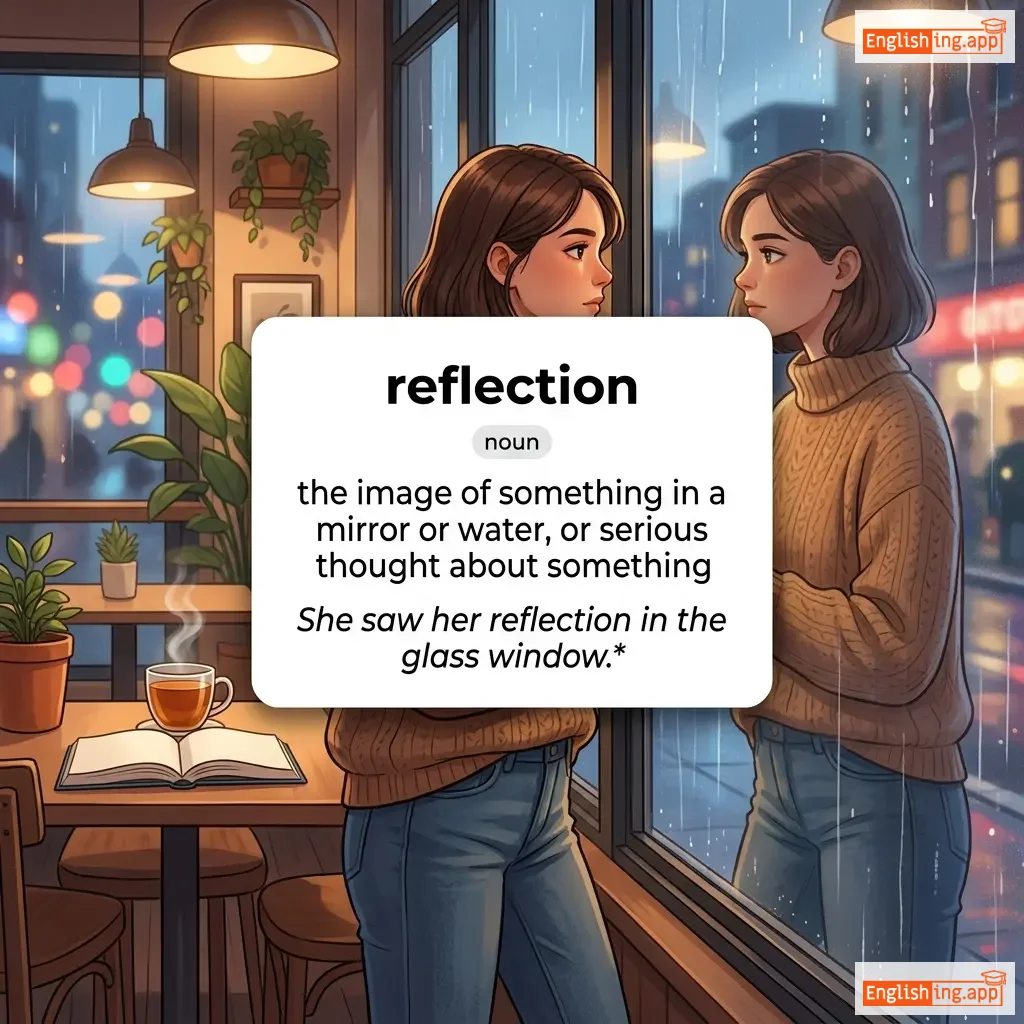
the image of something in a mirror or water, or serious thought about something
••••••
She saw her reflection in the glass window.
••••••
उसने कांच की खिड़की में अपनी परावृत्ति देखी।
Usne kaanch ki khidki mein apni paravrtti dekhi.
••••••
••••••
a short time spent thinking deeply
••••••
गंभीर विचार का क्षण
gambhir vichar ka kshan
••••••
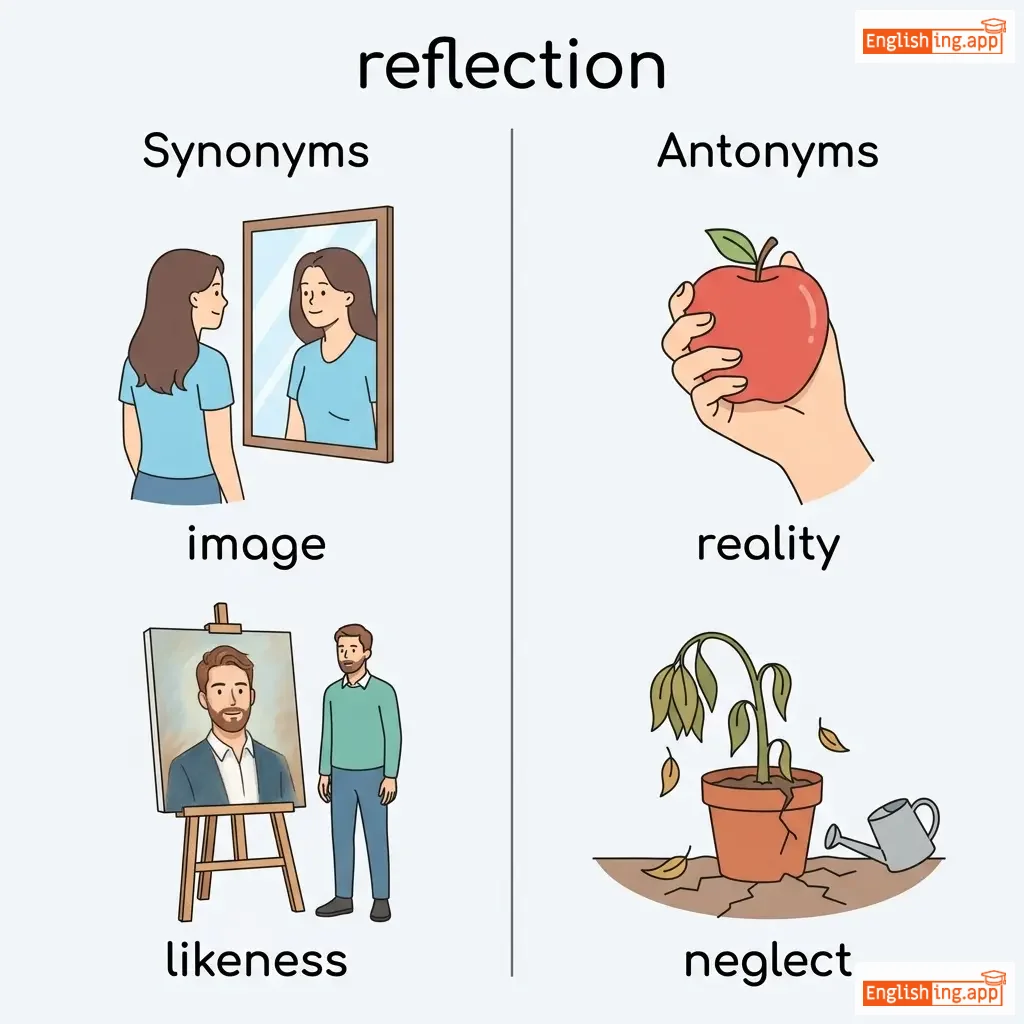
image, likeness, contemplation, thought, consideration
••••••
reality, neglect, disregard
••••••
reflection in the mirror, reflection of light, reflection on life
••••••
Reflection यानि किसी चीज़ का आईने में दिखना, और गंभीर विचार भी reflection हैं।
••••••
🚶
••••••
/rɪˈɡɑrdləs/
adverb
(रिगार्डलेस)
••••••
-
••••••
कोई भी परिस्थिति की परवाह किए बिना
koi bhi paristhiti ki parwah kiye bina
••••••
-
••••••
-
••••••
-
••••••
-
••••••
without paying attention to the current situation or condition
••••••
She will go to the party regardless of the weather.
••••••
वह मौसम की परवाह किए बिना पार्टी में जाएगी।
Wah mausam ki parwah kiye bina party mein jayegi.
••••••
••••••
despite any obstacles or conditions
••••••
कोई भी परिस्थिति की परवाह किए बिना
koi bhi paristhiti ki parwah kiye bina
••••••
anyway, nonetheless, in spite of, no matter
••••••
••••••
regardless of the consequences, regardless of the weather
••••••
Regardless of मौसम की परवाह किए बिना, 'कोई भी परिस्थिति की परवाह किए बिना' याद आता है
••••••
🔄
••••••
/ˈrɛɡjələrli/
adverb
(रेग्युलर्ली)
••••••
-
••••••
नियमित रूप से
niyamit roop se
••••••
-
••••••
-
••••••
-
••••••
-
••••••
at regular intervals; in a regular manner
••••••
She exercises regularly to stay healthy.
••••••
वह स्वस्थ रहने के लिए नियमित रूप से व्यायाम करती है।
Vah swasth rahne ke liye niyamit roop se vyayam karti hai.
••••••
-
••••••
-
••••••
-
••••••
consistently, frequently, habitually, routinely
••••••
irregularly, infrequently
••••••
regularly scheduled, meet regularly, eat regularly, exercise regularly
••••••
Think of 'regular' habits - things you do regularly!
••••••
🎟️
••••••
/rɪˈmeɪnɪŋ/
adjective
(रिमेइनिング)
••••••
-
••••••
बाकी
baaki
••••••
-
••••••
-
••••••
-
••••••
-
••••••
still existing or left after others are gone or dealt with
••••••
There were only a few remaining tickets for the concert.
संगीत कार्यक्रम के लिए केवल कुछ ही टिकट बाकी थे।
••••••
संगीत कार्यक्रम के लिए केवल कुछ ही टिकट बाकी थे।
Sangeet karyakram ke liye keval kuch hi tiket baaki the.
••••••
-
••••••
-
••••••
-
••••••
left, leftover, residual, remaining
••••••
••••••
remaining tickets, remaining time, remaining items
••••••
Remaining tickets are the last to go!
••••••
🕯️
••••••
/ˈsækrɪfaɪs/
noun, verb
(सैक्रिफाईस)
••••••
••••••
बलिदान
balidan
••••••
सैक्रिफाइड
••••••
सैक्रिफाइड
••••••
सैक्रिफाइसेस
••••••
सैक्रिफाइसिंग
••••••
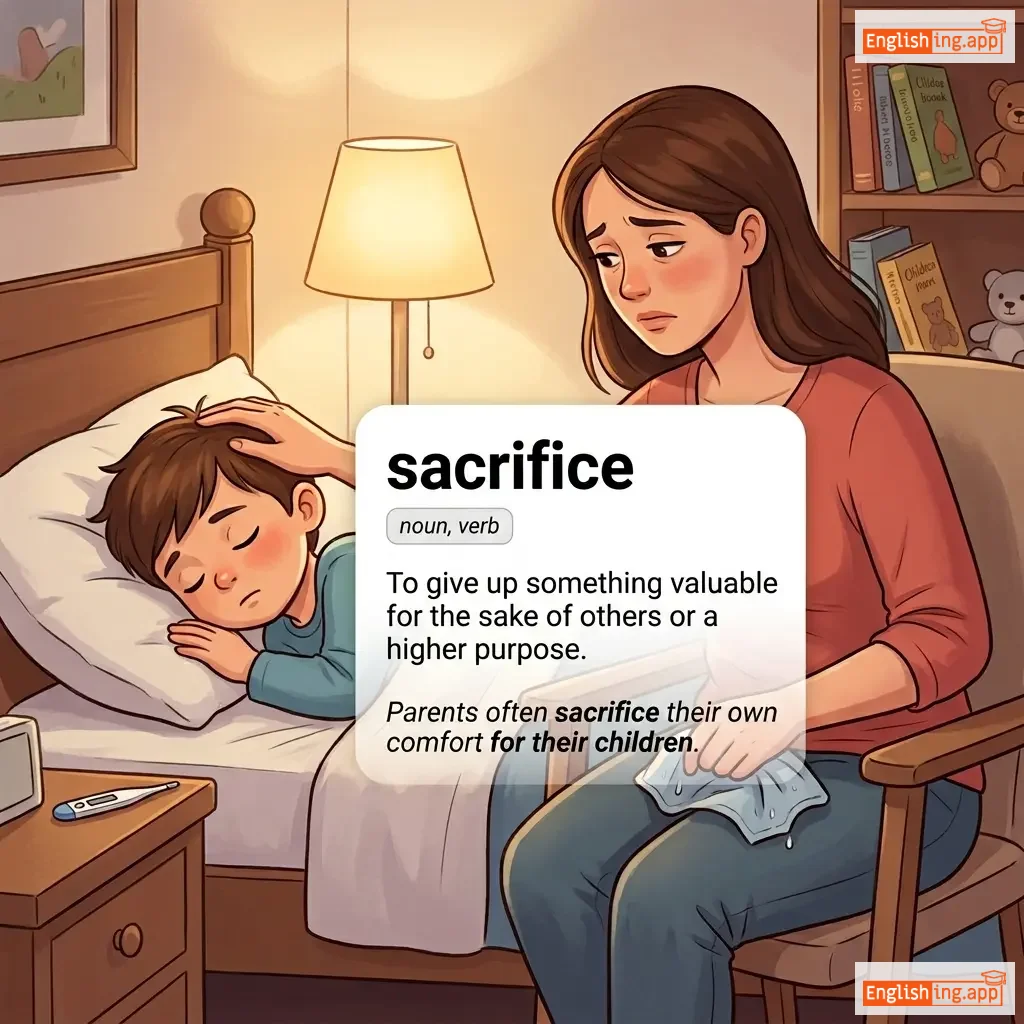
To give up something valuable for the sake of others or a higher purpose.
••••••
Parents often sacrifice their own comfort for their children.
माता-पिता अक्सर अपने बच्चों के लिए अपनी आरामदायक स्थिति की बलि देते हैं।
••••••
माता-पिता अक्सर अपने बच्चों के लिए अपनी आरामदायक स्थिति की बलि देते हैं।
maata-pitaa aksar apne bachcho ke liye apni aaraamdayak sthiti ki bali dete hain.
••••••
एक बलिदान देना
••••••
to give up something important for the benefit of others
••••••
बलिदान देना
balidan dena
••••••
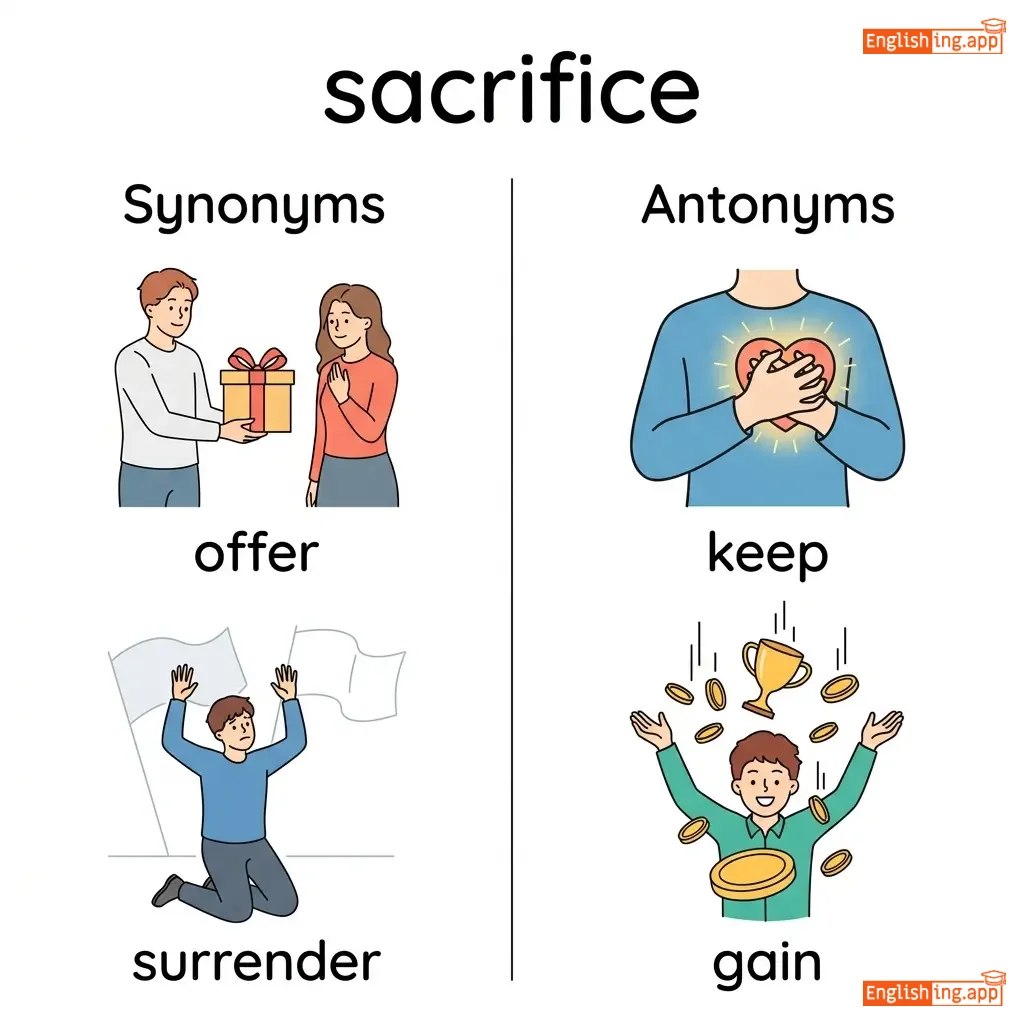
offer, surrender, relinquish, devotion, giving up
••••••
••••••
make a sacrifice, ultimate sacrifice, personal sacrifice, sacrifice for
••••••
Sacrifice का मतलब SAC (बच्चे) के लिए price (बलिदान) देना
••••••
💭
••••••
/ˈsɛntɪmənt/
noun
(सेंटिमेंट)
••••••
-
••••••
भावना
bhavna
••••••
-
••••••
-
••••••
-
••••••
-
••••••
a view or opinion that is based on emotion rather than reason
••••••
Public sentiment was against the new law.
••••••
जनता की भावना नए कानून के खिलाफ थी।
Janta ki bhavna naye kanoon ke khilaf thi.
••••••
••••••
the general feeling or opinion of the people
••••••
लोक भावना
lok bhavna
••••••
emotion, feeling, attitude, opinion, view
••••••
••••••
public sentiment, market sentiment, patriotic sentiment, emotional sentiment
••••••
Sentiment मतलब भावना — senti मतलब भावना में बहना!
••••••
💡
••••••
/ˈstɪmjʊˌleɪt/
verb
(स्टिम्युलेट)
••••••
••••••
उत्तेजित करना, प्रेरित करना
uttejit karna, prerith karna
••••••
स्टिम्युलेटेड
••••••
स्टिम्युलेटेड
••••••
स्टिम्युलेट्स
••••••
स्टिम्युलेटिंग
••••••
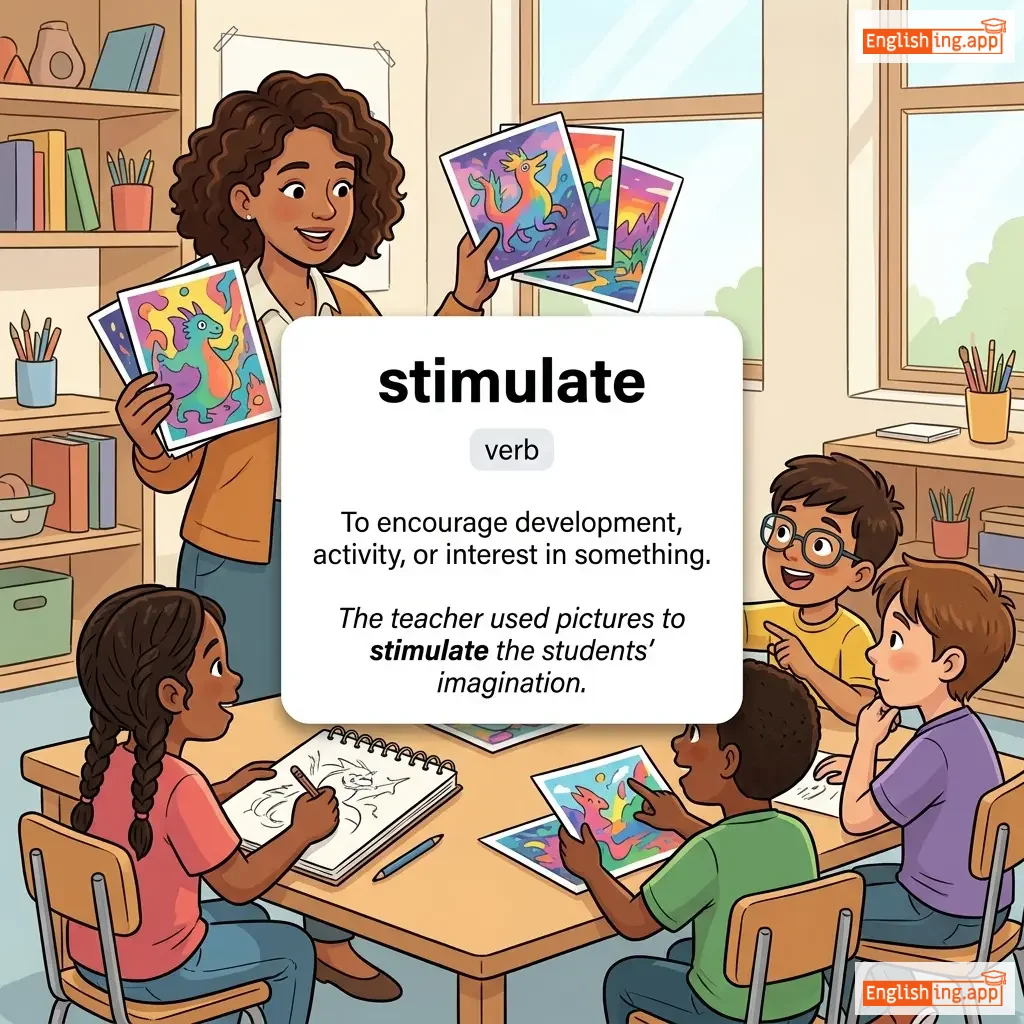
To encourage development, activity, or interest in something.
••••••
The teacher used pictures to stimulate the students' imagination.
द टीचर यूज़्ड पिक्चर्स टू स्टिम्युलेट द स्टूडेंट्स इमैजिनेशन।
••••••
शिक्षक ने चित्रों का उपयोग छात्रों की कल्पना को उत्तेजित करने के लिए किया।
Shikshak ne chitron ka upyog chhatron ki kalpana ko uttejit karne ke liye kiya.
••••••
स्टिम्युलेट ग्रोथ
••••••
to encourage development or increase
••••••
विकास को उत्तेजित करना
vikas ko uttejit karna
••••••
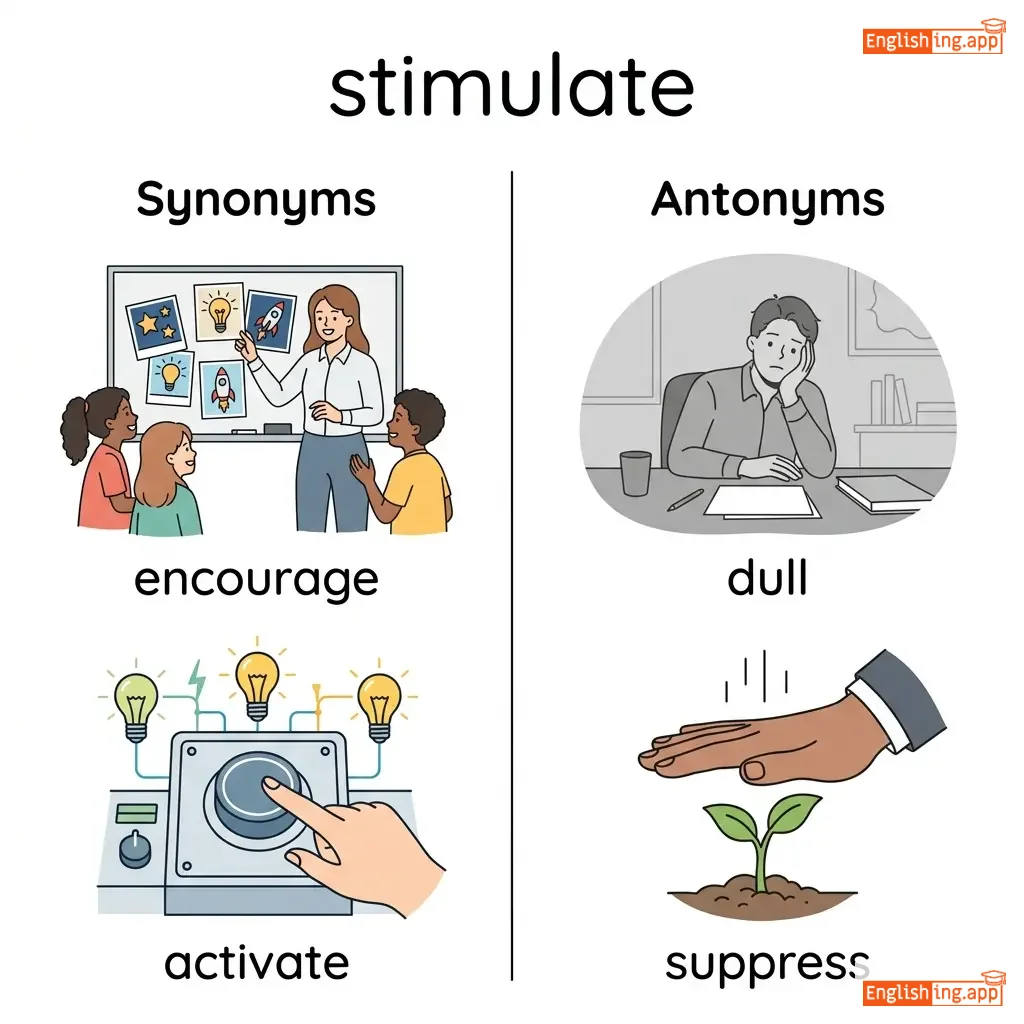
encourage, activate, motivate, inspire, excite
••••••
dull, suppress, discourage
••••••
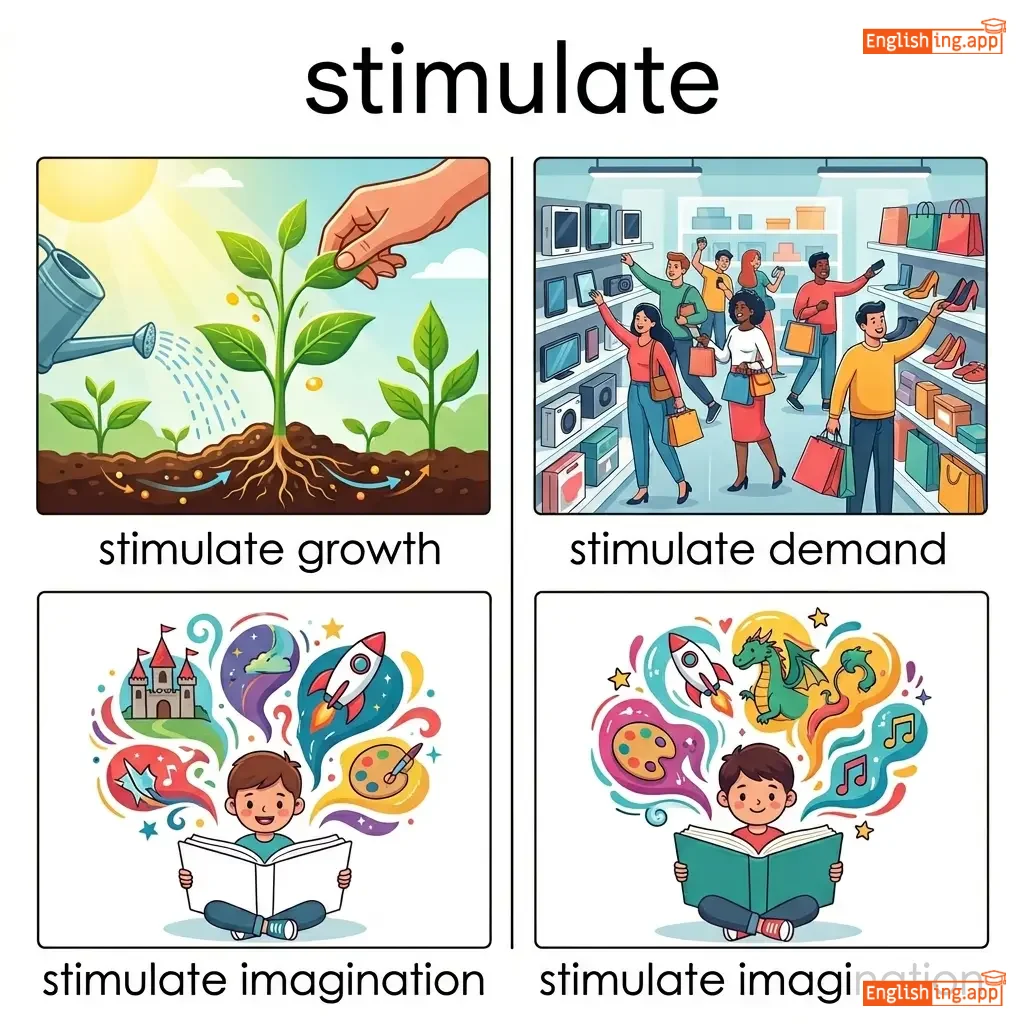
stimulate growth, stimulate demand, stimulate imagination, stimulate interest
••••••
Stimulate → स्टिम्युलेट का मतलब किसी चीज़ में ज़्यादा रुचि बढ़ाना
••••••
😲
••••••
/sər'praɪzd/
adjective
(सर्प्राइज़्ड)
••••••
-
••••••
हैरान
hairaan
••••••
-
••••••
-
••••••
-
••••••
-
••••••
feeling or showing surprise; astonished
••••••
I was surprised to see my old friend at the market.
मैं बाज़ार में अपने पुराने दोस्त को देखकर हैरान था।
••••••
मैं बाज़ार में अपने पुराने दोस्त को देखकर हैरान था।
Main bazaar mein apne purane dost ko dekhkar hairaan tha.
••••••
-
••••••
-
••••••
-
••••••
astonished, amazed, shocked, startled
••••••
unsurprised, expectant, prepared, anticipated
••••••
pleasantly surprised, quite surprised, genuinely surprised
••••••
हैरान होना, जैसे आप बर्फ़ीली सड़क पर गिर जाएं।
••••••
💪
••••••
/ðəmˈsɛlvz/
pronoun
(थेमेंसल्व्स)
••••••
-
••••••
खुद
khud
••••••
-
••••••
-
••••••
-
••••••
-
••••••
used to emphasize the subject of the sentence or to refer to the subject doing something to itself
••••••
They fixed the problem themselves .
••••••
उन्होंने समस्या को खुद ठीक किया।
Unhone samasya ko khud theek kiya.
••••••
-
••••••
-
••••••
-
••••••
themselves alone, personally, independently
••••••
••••••
do it themselves, solve it themselves, they themselves
••••••
थेमेंसल्व्स (themselves) सुनकर खुद की ताकत का एहसास होता है
••••••
🔗
••••••
/ˈðɛərˌfɔr/
adverb
(थेयरफोर)
••••••
-
••••••
इसलिए
isliye
••••••
-
••••••
-
••••••
-
••••••
-
••••••
for that reason; consequently
••••••
It was raining, therefore we stayed inside.
इट वाज़ रेनिंग, थेयरफोर वी स्टेइड इनसाइड।
••••••
बारिश हो रही थी, इसलिए हम अंदर रहे।
baarish ho rahi thi, isliye hum andar rahe.
••••••
-
••••••
-
••••••
-
••••••
thus, hence, consequently, accordingly
••••••
nevertheless, however, nonetheless
••••••
therefore conclude, therefore decide, therefore recommend
••••••
Isliye hamesha apne faisle soch samajh kar karo.
••••••
🤲
••••••
/ˈtɒlərəns/
noun
(टॉलरेंस)
••••••
-
••••••
सहिष्णुता
sahishnuta
••••••
-
••••••
-
••••••
-
••••••
-
••••••
The ability or willingness to accept or endure differences, behaviors, or opinions without hostility.
••••••
Her tolerance for different cultures impressed everyone.
••••••
विभिन्न संस्कृतियों के प्रति उसकी सहिष्णुता ने सभी को प्रभावित किया।
vibhinn sanskrityon ke prati uski sahishnuta ne sabhi ko prabhavit kiya.
••••••
••••••
A policy of not allowing any violation of rules or standards.
••••••
शून्य सहिष्णुता
shoonya sahishnuta
••••••
acceptance, patience, endurance, open-mindedness, leniency
••••••
intolerance, rejection, prejudice
••••••
cultural tolerance, religious tolerance, show tolerance, promote tolerance
••••••
Tolerance यानी सहिष्णुता - दूसरों को भी स्वीकार करने की इच्छा।
••••••
🛠️
••••••
/ˌʌndərˈteɪk/
verb
(अंडरटेक)
••••••
••••••
जिम्मेदारी लेना
jimmedari lena
••••••
अंडरटुक
••••••
अंडरटेकन
••••••
अंडरटेक्स
••••••
अंडरटेकिंग
••••••
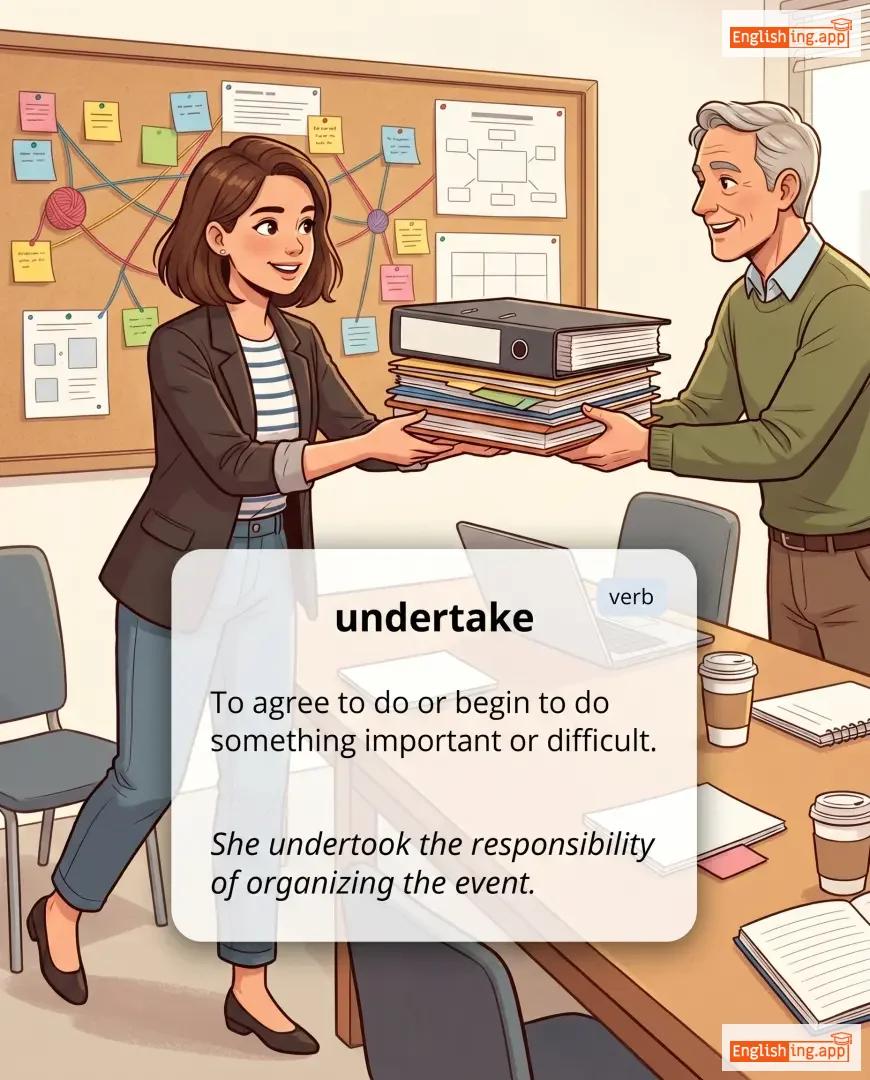
To agree to do or begin to do something important or difficult.
••••••
She undertook the responsibility of organizing the event.
शी अंडरटुक दि रिस्पॉन्सिबिलिटी ऑफ ऑर्गनाइजिंग दि इवेंट।
••••••
उसने कार्यक्रम आयोजित करने की जिम्मेदारी ली।
Usne karyakram aayojit karne ki jimmedari li.
••••••
अंडरटेक अ मिशन
••••••
to take responsibility for an important task
••••••
जिम्मेदारी लेना एक मिशन
jimmedari lena ek mission
••••••
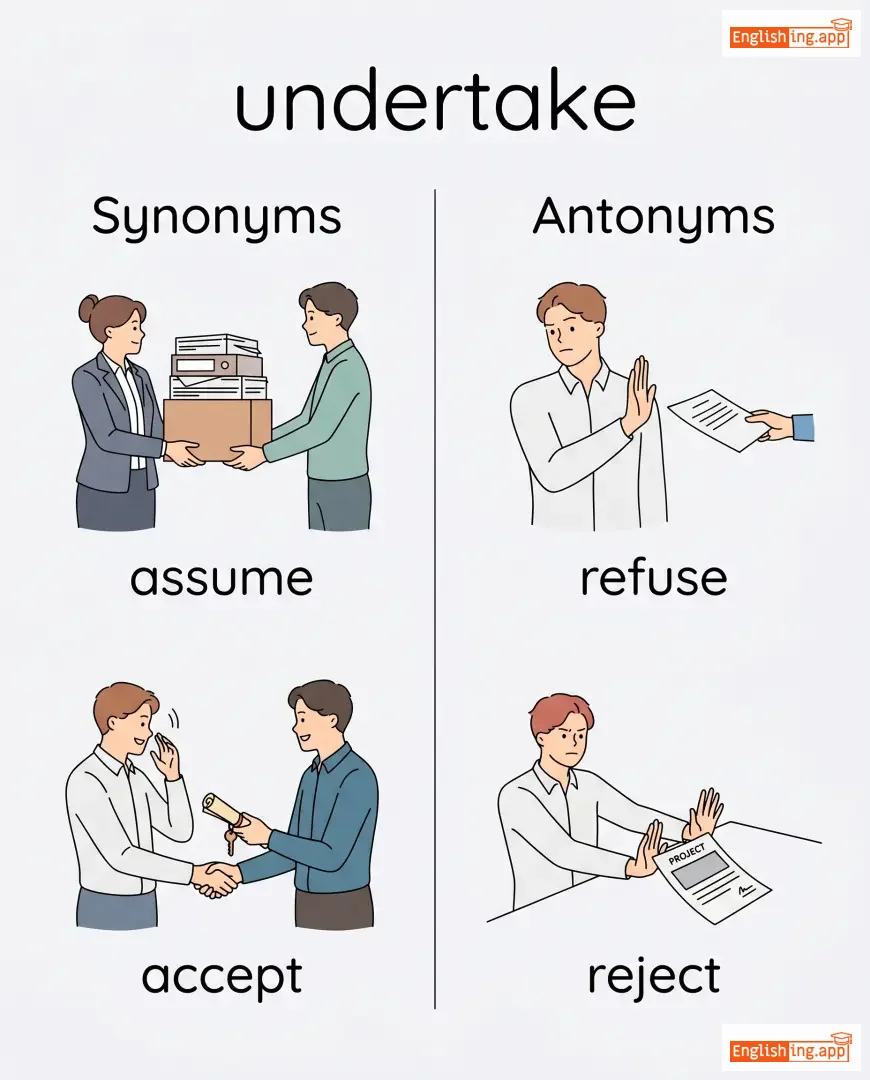
assume, accept, commit, embark
••••••
••••••
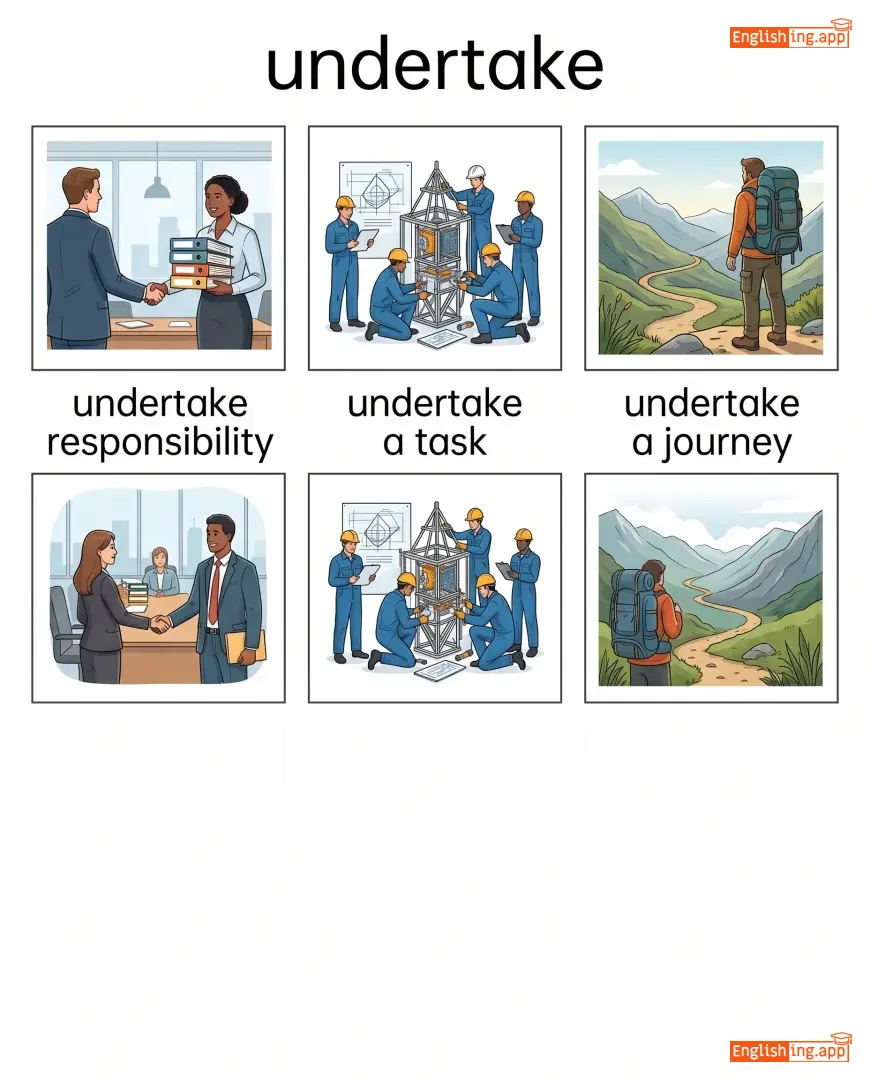
undertake responsibility, undertake a task, undertake a journey
••••••
Undertake means take under your responsibility = जिम्मेदारी लेना।
••••••