|
••••••
|
/kiːp/
verb
(quip)
••••••
|
••••••
|
mantener
mantener
••••••
|
kept
••••••
|
kept
••••••
|
kips
••••••
|
kiping
••••••
|
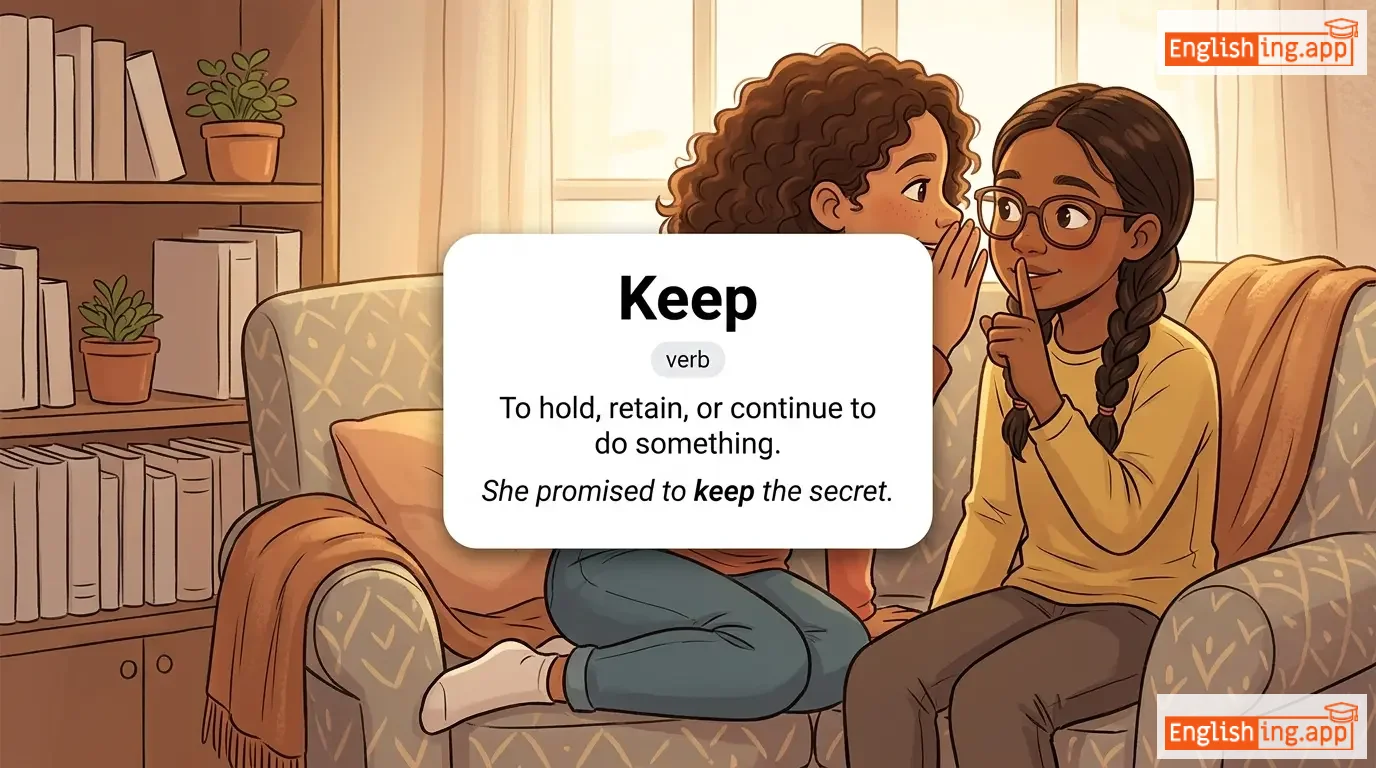
to have and retain possession of; to continue doing
|
I keep my books on the shelf.
ai kip mai buks on de shelf
••••••
|
Guardo mis libros en el estante.
Gwardo mis libros en el estante.
••••••
|
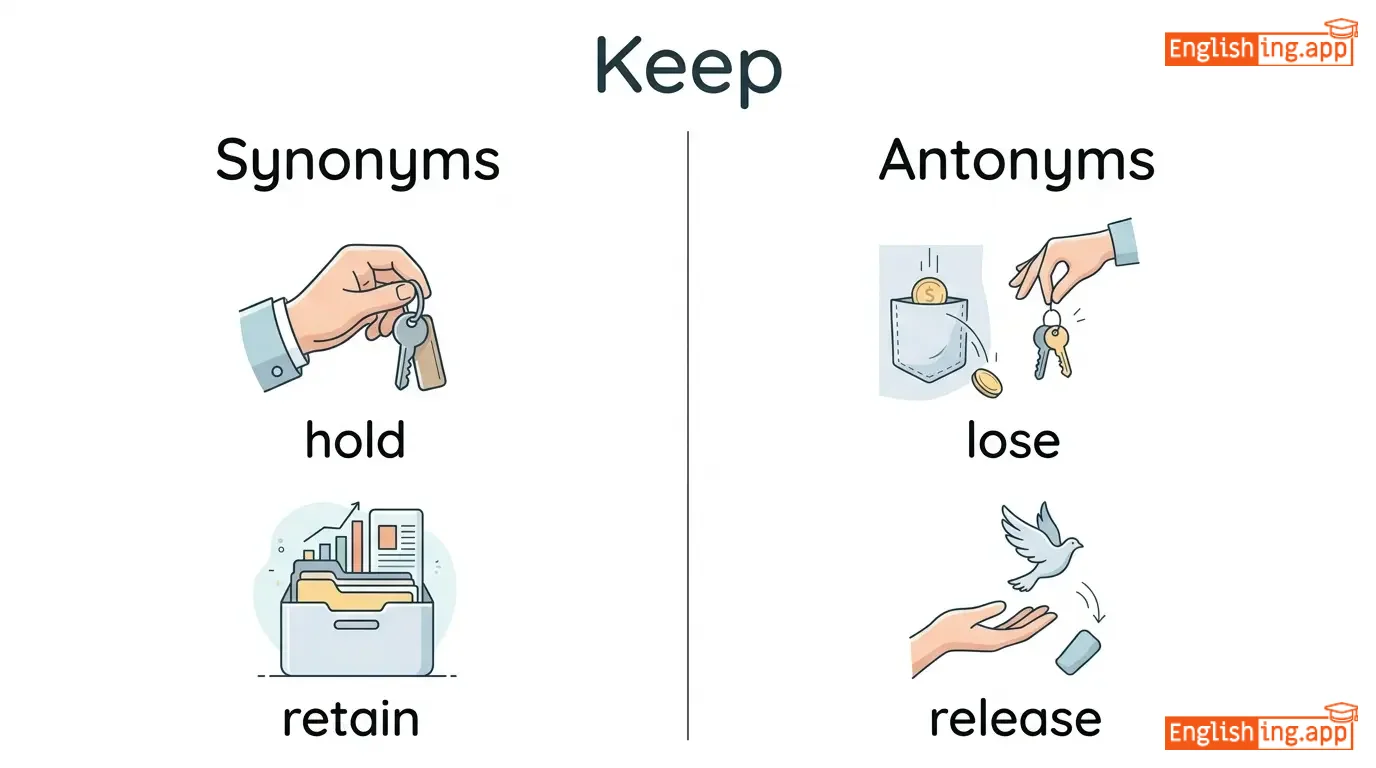
retain, maintain, preserve, hold
|
lose, discard, throw away, give up
|
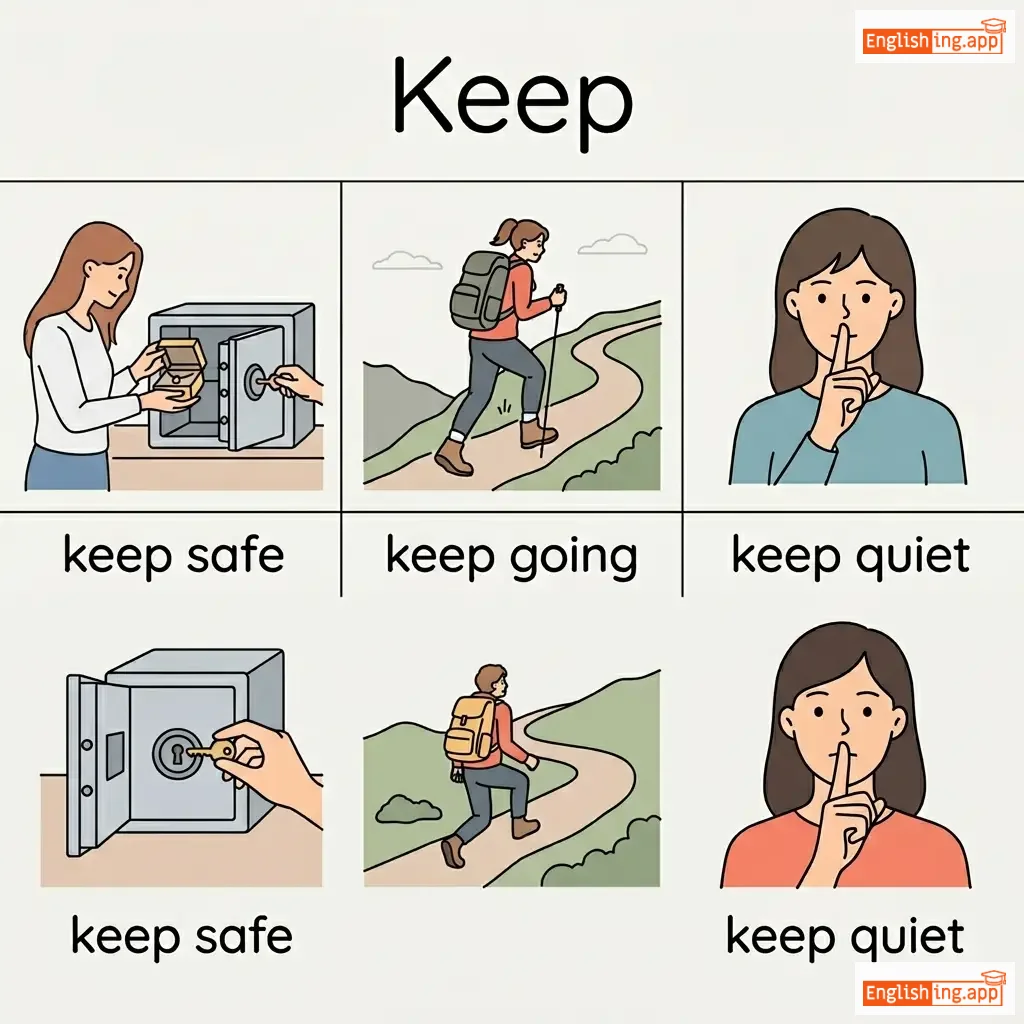
keep safe, keep quiet, keep calm, keep secret, keep in mind, keep track of, keep up with
|
Keep sounds like 'mantener' — both mean to maintain or hold.
••••••
|
|
••••••
|
/ˈsɪmpəθaɪz/
verb
(simpataiz)
••••••
|
••••••
|
compadecer
kompadezer
••••••
|
simpataizd
••••••
|
simpataizd
••••••
|
simpataizes
••••••
|
simpataizing
••••••
|
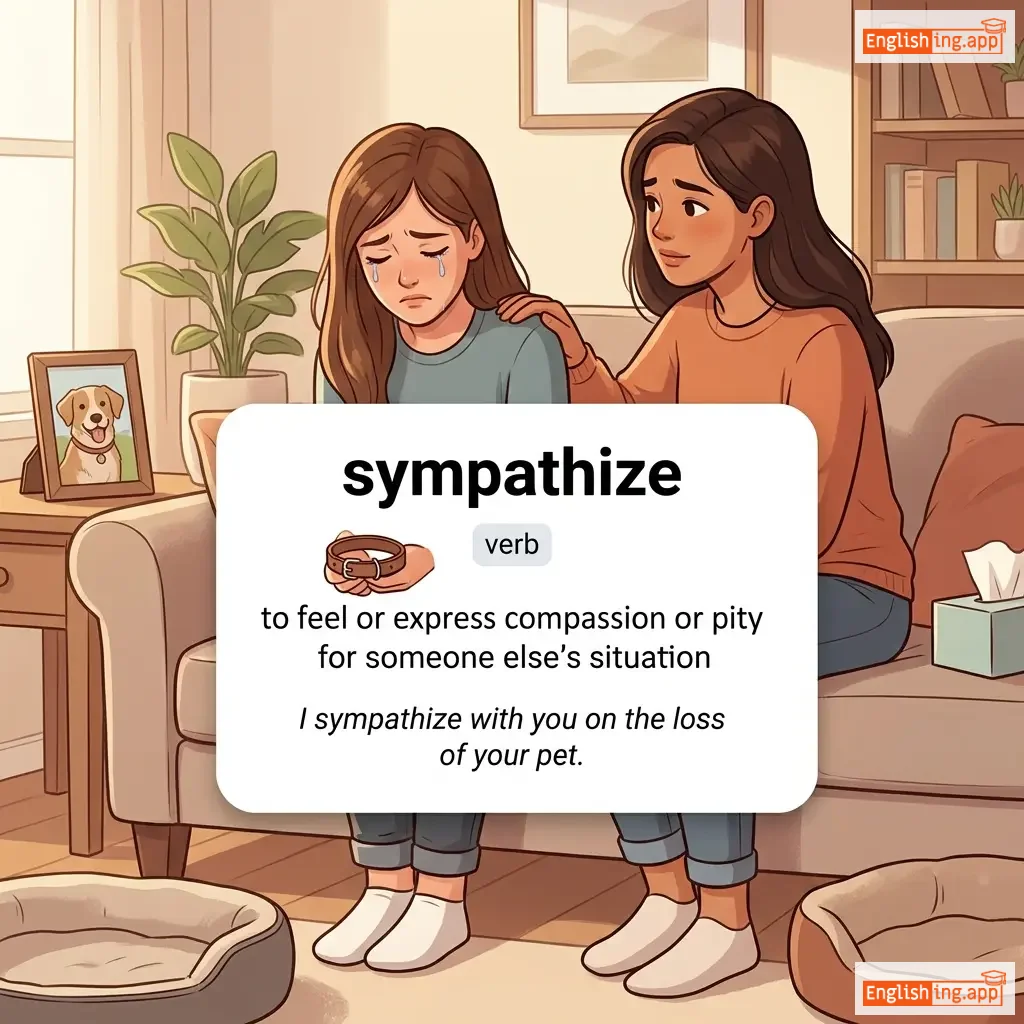
to feel sorry for someone; to understand and share someone's feelings
|
I sympathize with your loss.
ai simpataiz uiz yur los.
••••••
|
Siento compasión por tu pérdida.
Siento kompasion por tu perdida
••••••
|
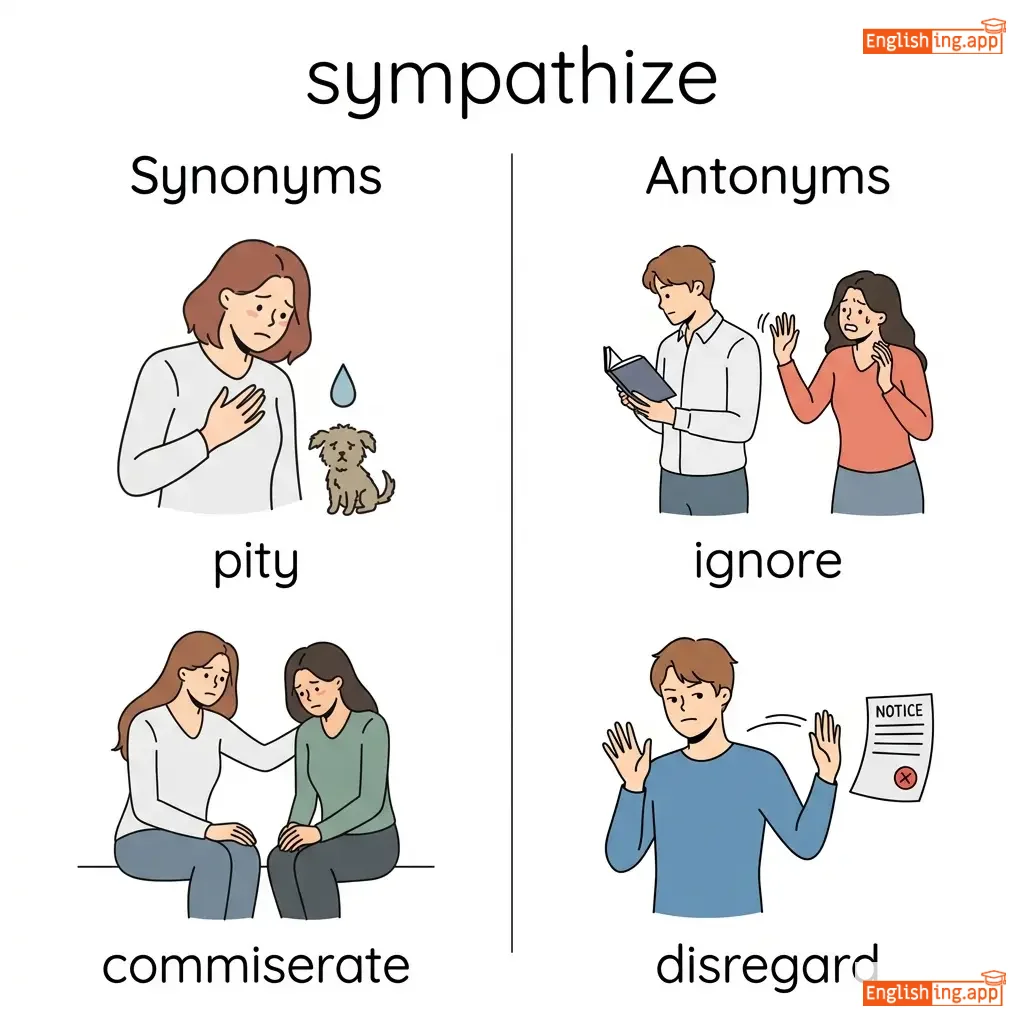
empathize, commiserate, understand, feel for
|
ignore, dismiss, disregard
|
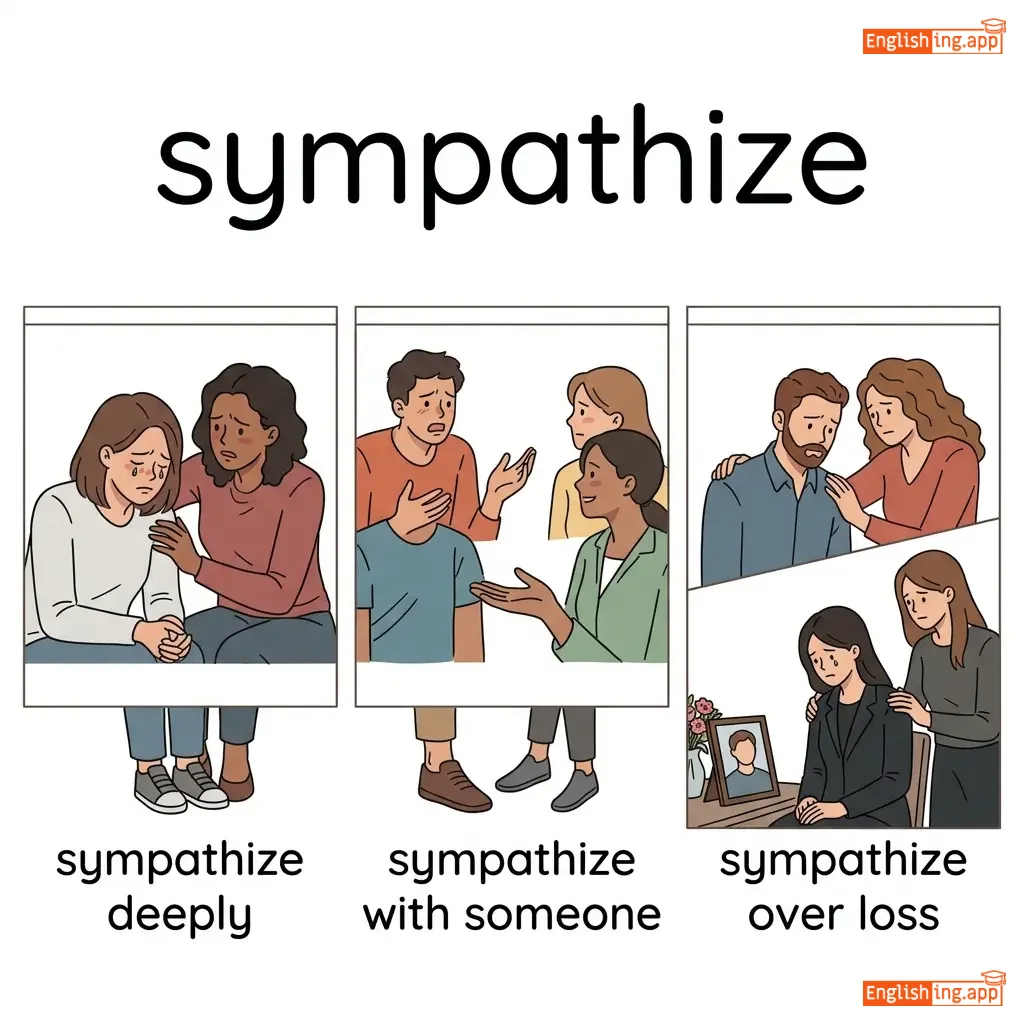
sympathize with, deeply sympathize, sympathize completely, sympathize sincerely, sympathize wholeheartedly
|
Sympathize and compadecer both mean to feel compassion – remember ‘com-passion’!
••••••
|
|
••••••
|
/swiːp/
verb
(suíip)
••••••
|
••••••
|
barrer
barrer
••••••
|
suépt
••••••
|
suépt
••••••
|
suíips
••••••
|
suíiping
••••••
|
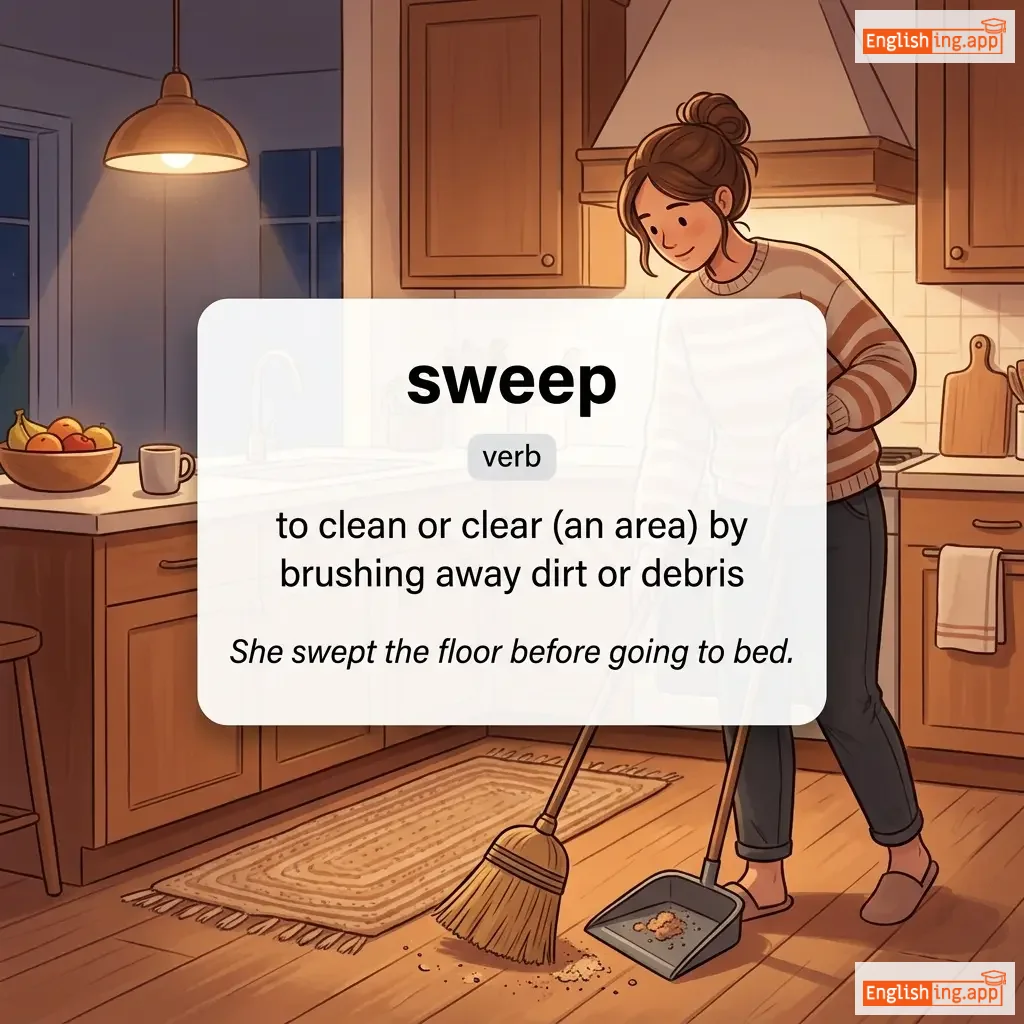
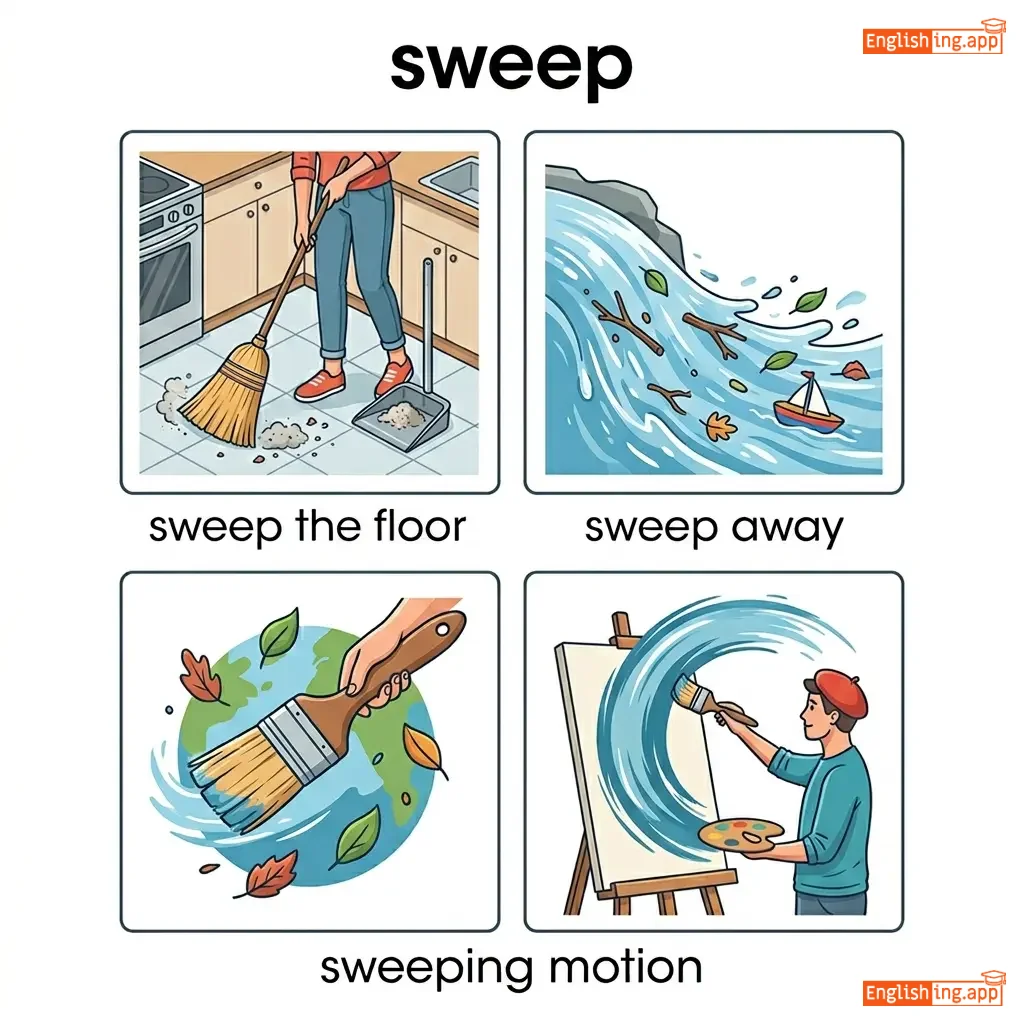
to clean by brushing; to move quickly and smoothly
|
She sweeps the floor every morning.
shi suíips de flor evri mornin
••••••
|
Ella barre el suelo todas las mañanas.
Eya barre el suelo todas las mananas
••••••
|
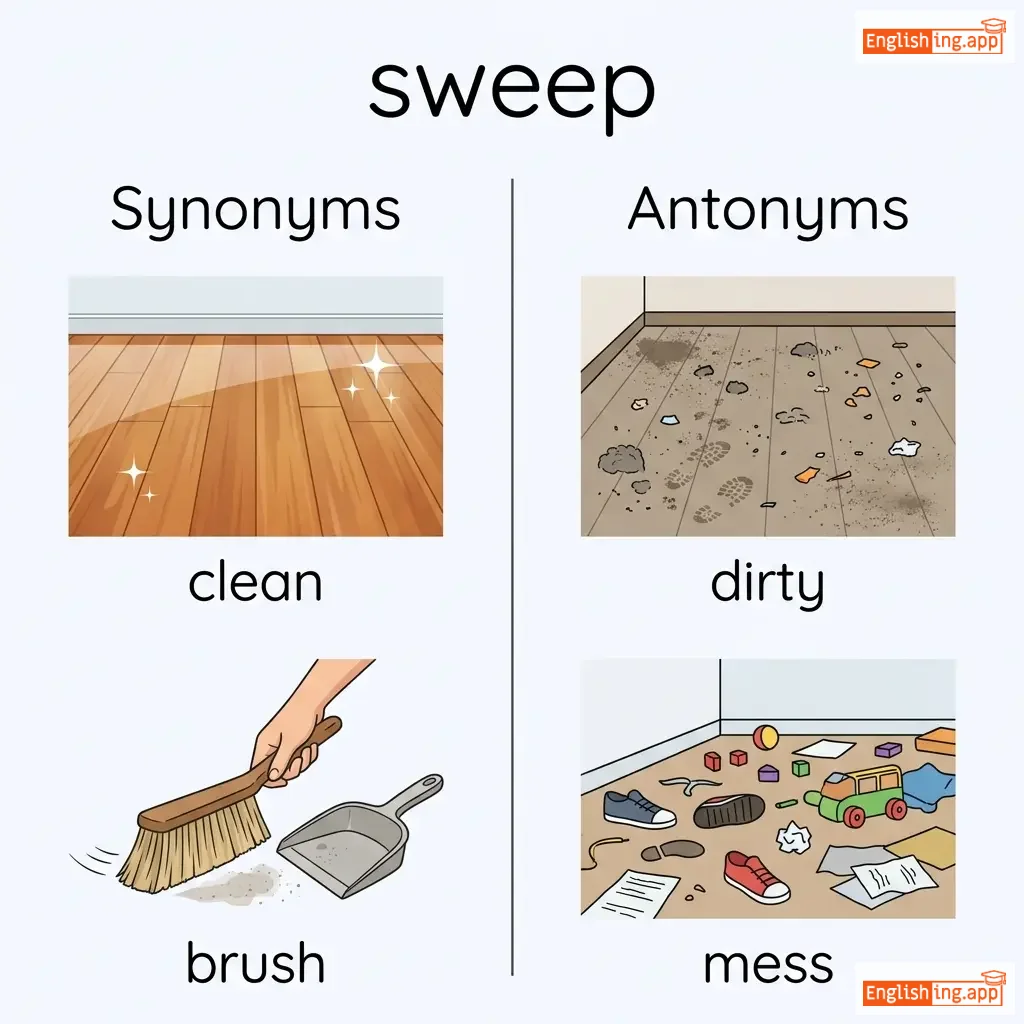
brush, clean, move quickly, glide
|
••••••
|
sweep away, sweep clean, sweep up, sweep aside, sweep through, sweep under
|
Sweep sounds like ‘barrer’ — both mean to clean the floor.
••••••
|
|
••••••
|
/baɪnd/
verb
(baind)
••••••
|
••••••
|
atar
atar
••••••
|
baund
••••••
|
baund
••••••
|
bainds
••••••
|
bainding
••••••
|
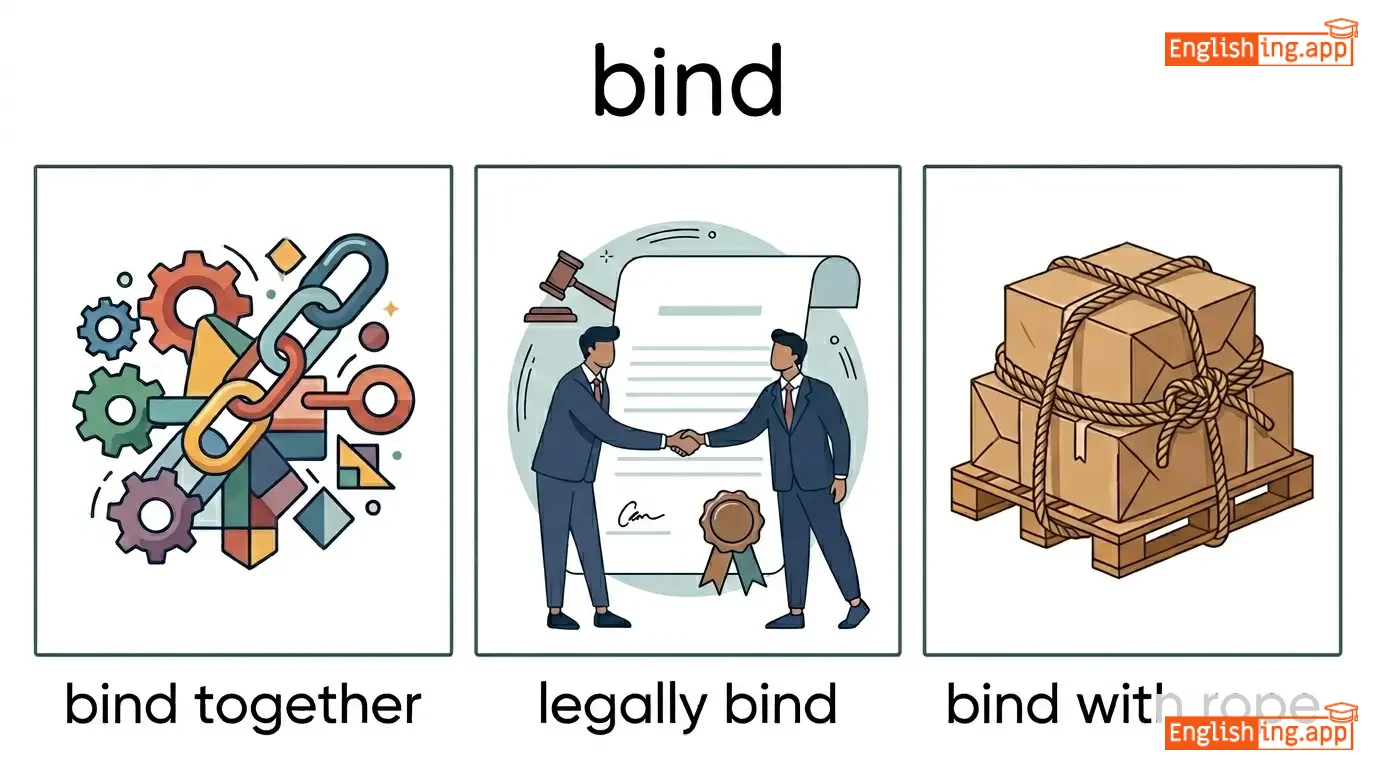
to tie together; to make a legal agreement; to put a cover on a book
|
The rope binds the packages together.
de roup bainds de pakejes together
••••••
|
La cuerda ata los paquetes juntos.
la cuerda ata los paquetes juntos
••••••
|
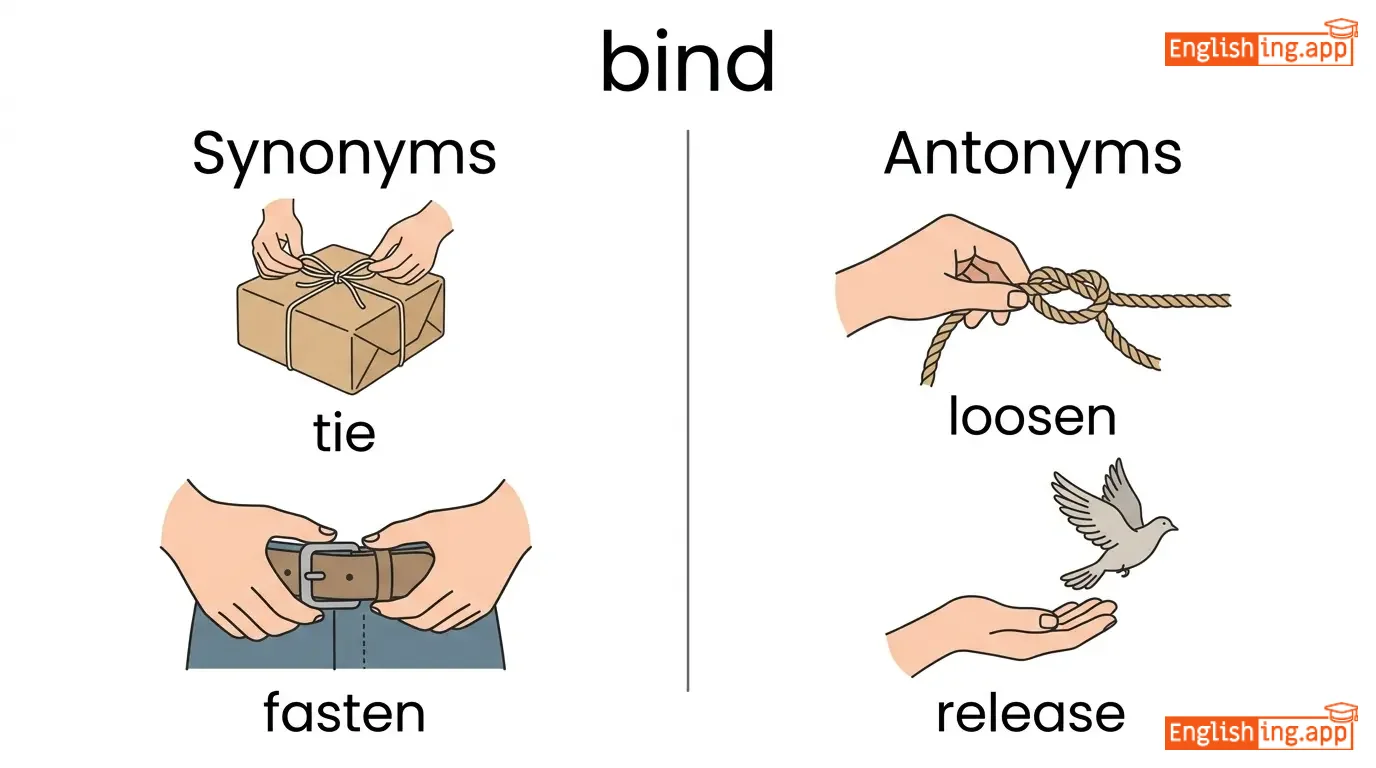
tie, fasten, secure, unite
|
untie, release, free, separate
|
bind together, bind tightly, bind securely, legally bind, bind up, bind with
|
Bind sounds like 'atar'—both tie things together!
••••••
|
|
••••••
|
/ˌmɪsbɪˈheɪv/
verb
(misbejeiv)
••••••
|
••••••
|
portarse mal
portarse mal
••••••
|
misbejeivd
••••••
|
misbejeivd
••••••
|
misbejeivs
••••••
|
misbejeiving
••••••
|
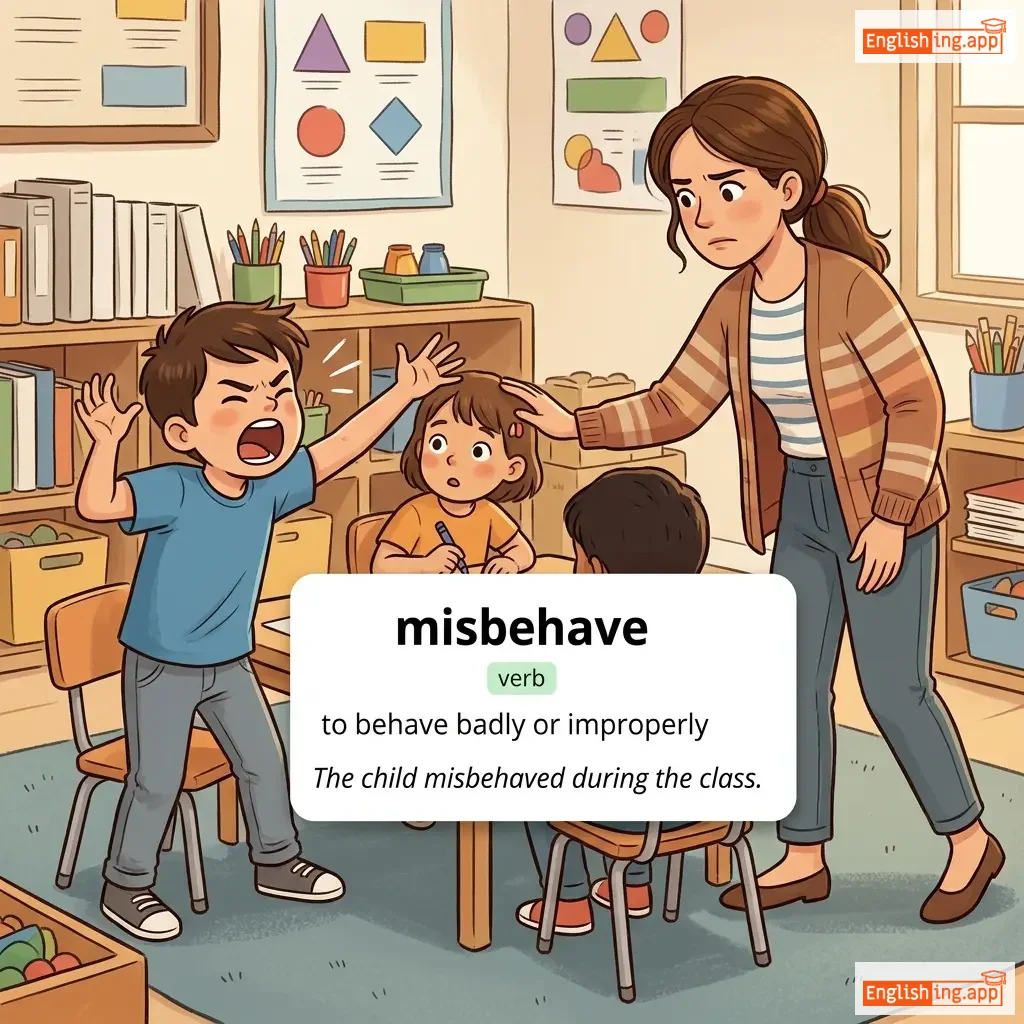
to behave badly or inappropriately; to act in an unacceptable way
|
The children misbehaved during the school assembly.
de children misbejeivd during de skul asembli
••••••
|
Los niños se portaron mal durante la asamblea escolar.
Los ninyos se portaron mal durante la asamblea escolar
••••••
|
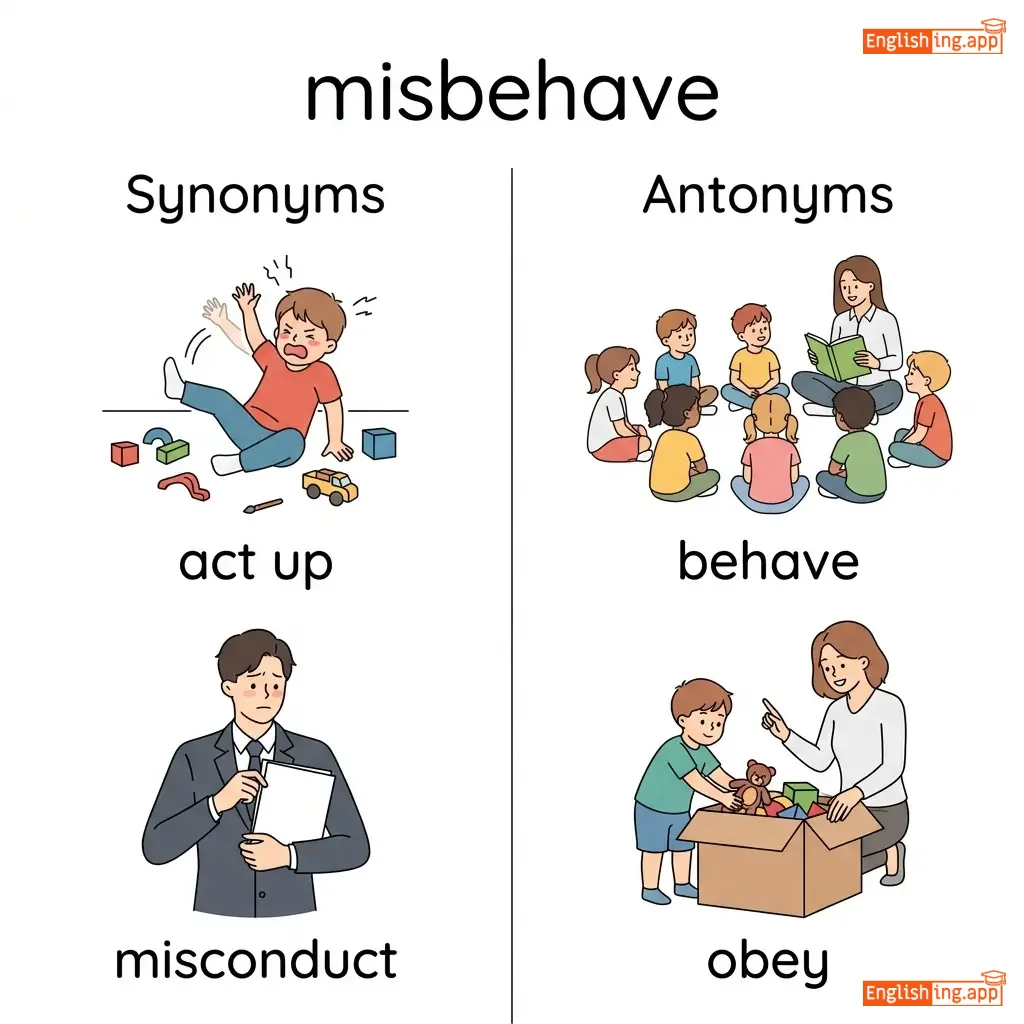
act up, misconduct, be naughty, disobey
|
behave, obey, comply, follow rules
|
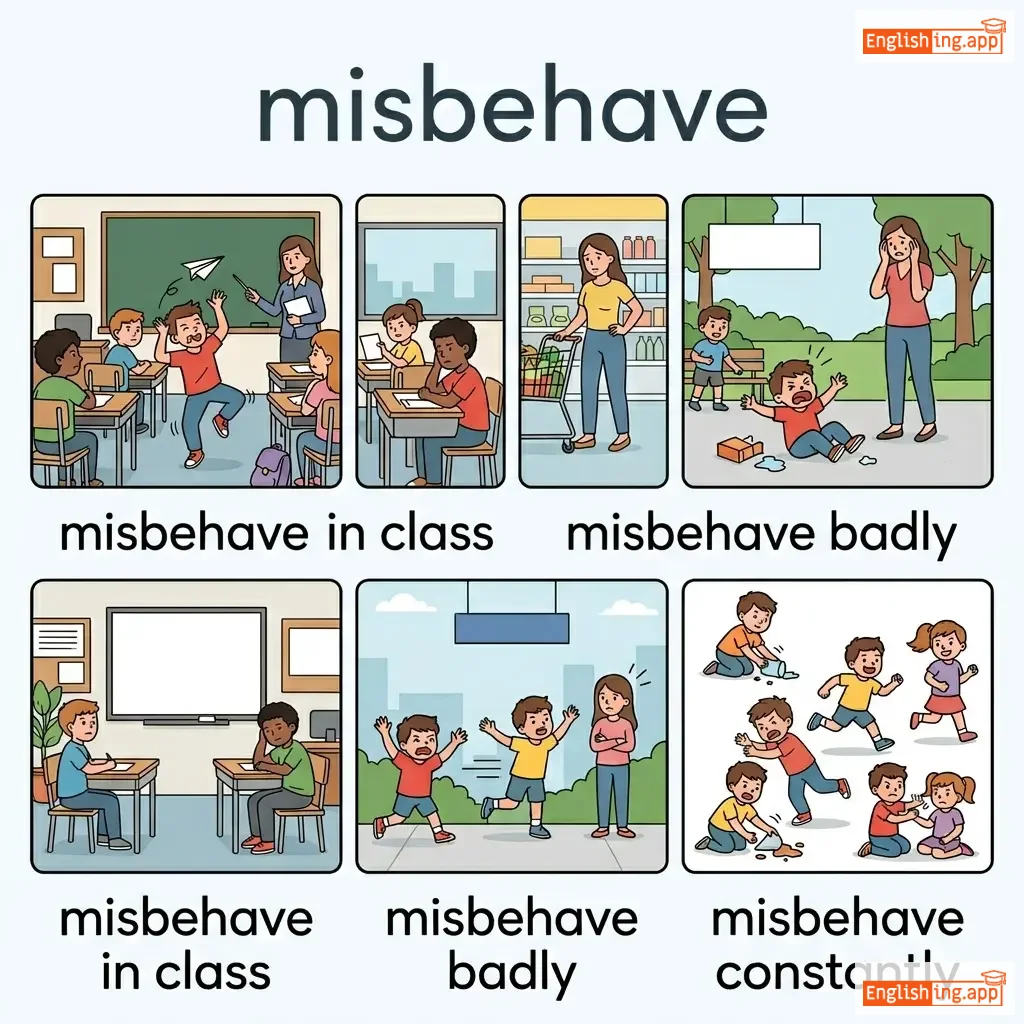
misbehave badly, constantly misbehave, children misbehave, misbehave in school, misbehave at home
|
Think 'mis' (mal) + 'behave' (comportarse): misbehave = portarse mal.
••••••
|
|
••••••
|
/ˌoʊvərˈduː/
verb
(ouverdu)
••••••
|
••••••
|
exagerar
exagerar
••••••
|
ouverdid
••••••
|
ouverdon
••••••
|
ouverdas
••••••
|
ouverduing
••••••
|
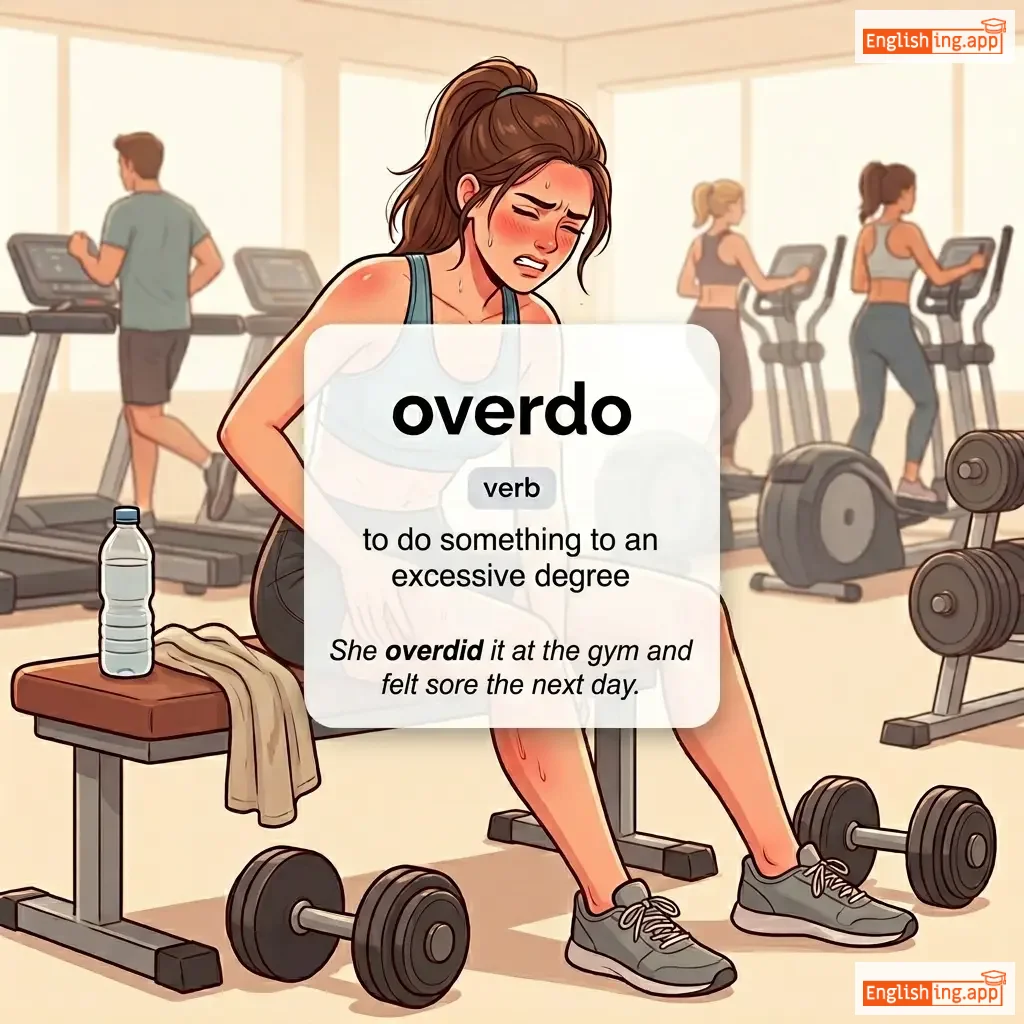
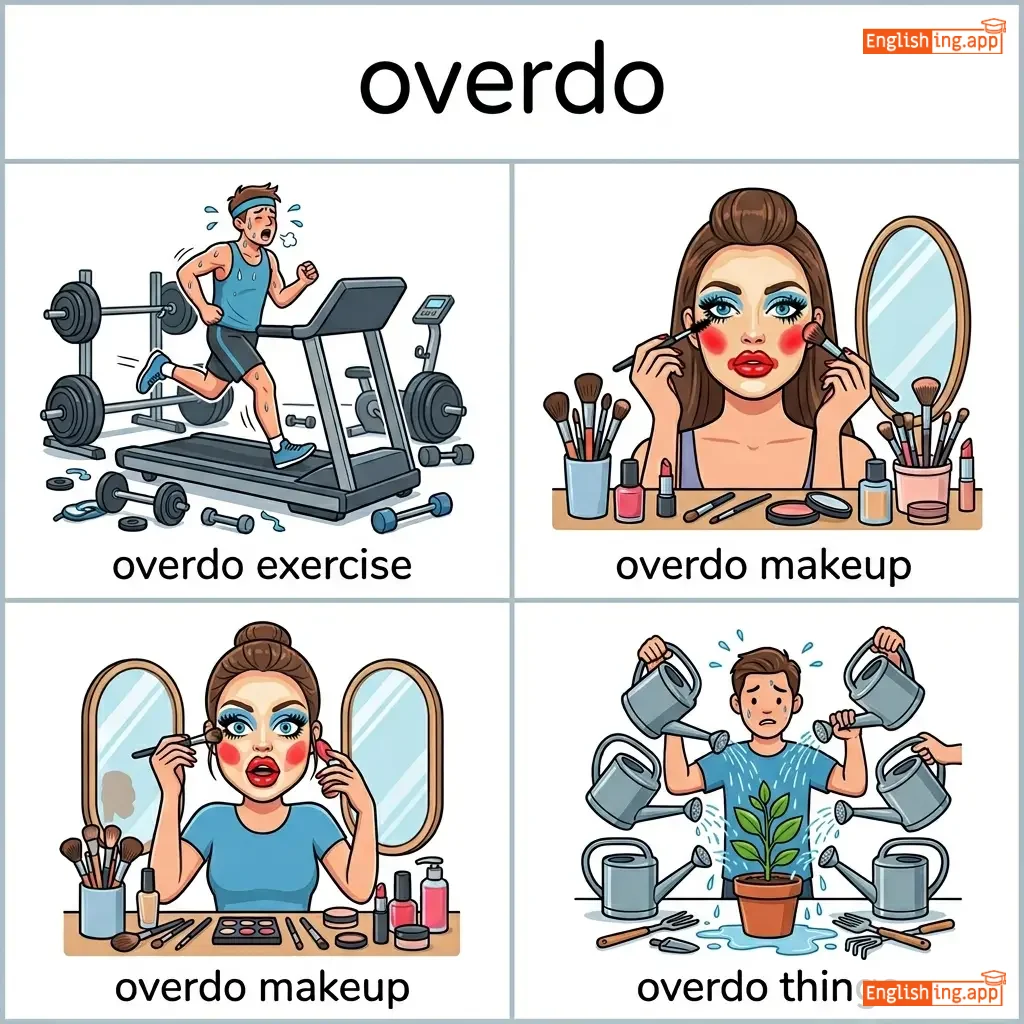
to do something too much; to exaggerate or carry to excess
|
Don't overdo the exercise on your first day at the gym.
Dont ouverdu di eksersaiz on yor ferst dei at de jim.
••••••
|
No exageres con el ejercicio en tu primer día en el gimnasio.
no exageres kon el ekserisio en tu primer dia en el jimnasio
••••••
|
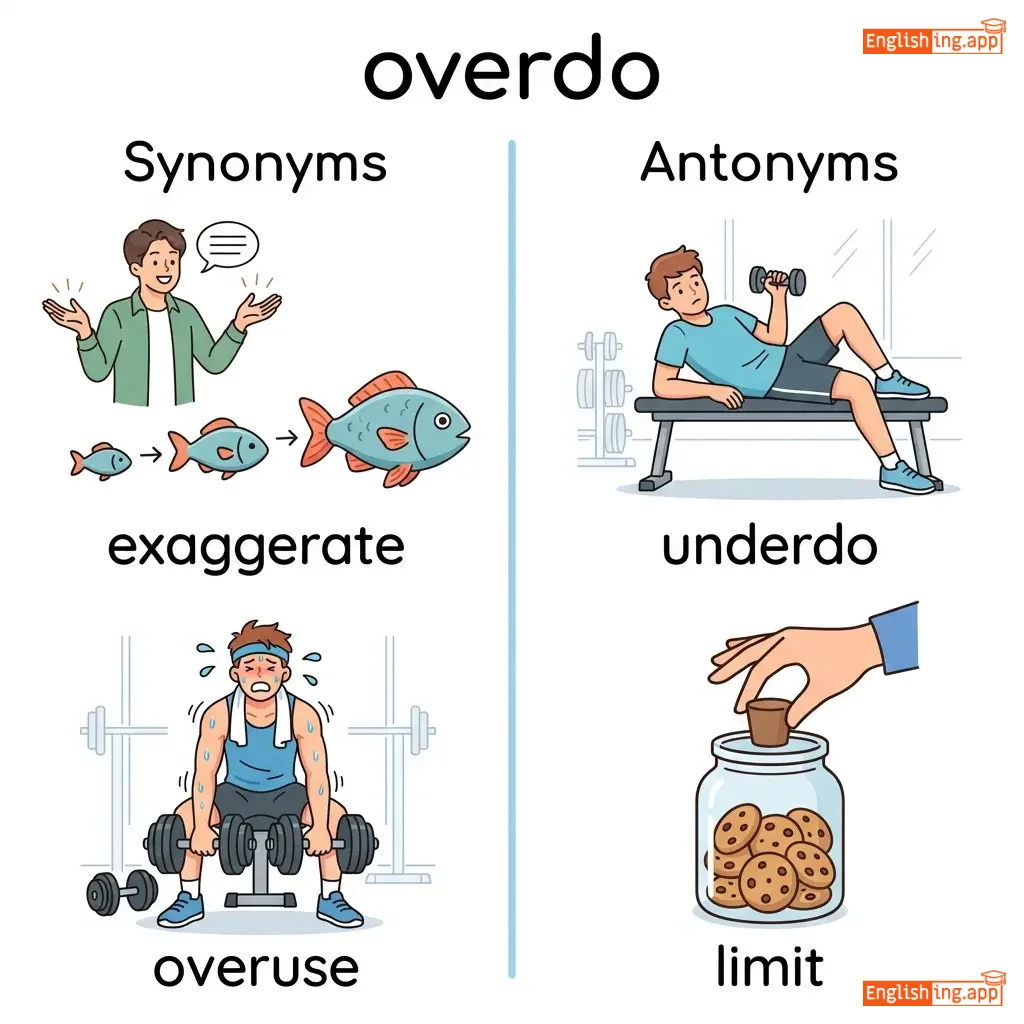
exaggerate, overwork, exceed, overindulge
|
underdo, moderate, restrain, limit
|
overdo it, overdo exercise, overdo work, don't overdo, overdo things, overdo yourself
|
Overdo = hacer demasiado; piensa 'over' + 'do' = hacerlo de más.
••••••
|
|
••••••
|
/əˈblaɪdʒ/
verb
(oblaich)
••••••
|
••••••
|
obligar
obligar
••••••
|
oblaicht
••••••
|
oblaicht
••••••
|
oblaiches
••••••
|
oblaiching
••••••
|
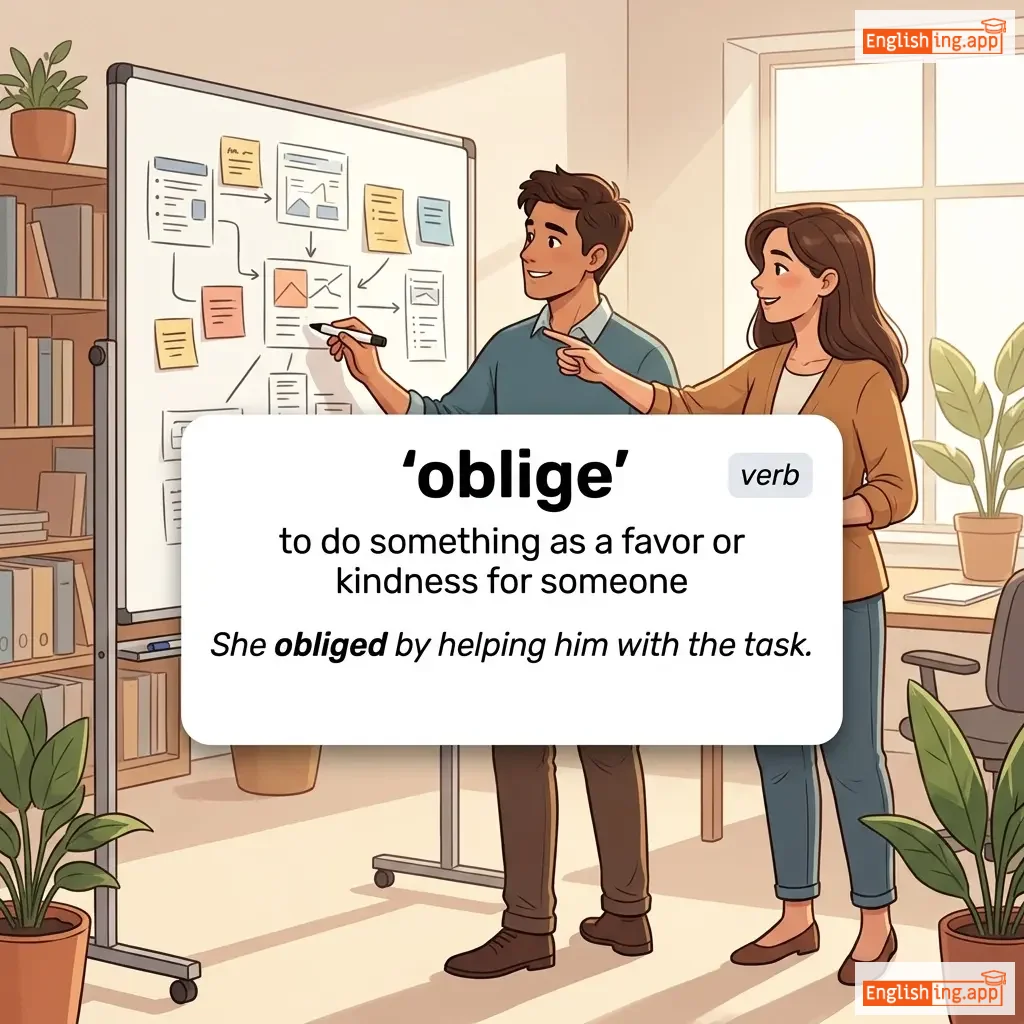
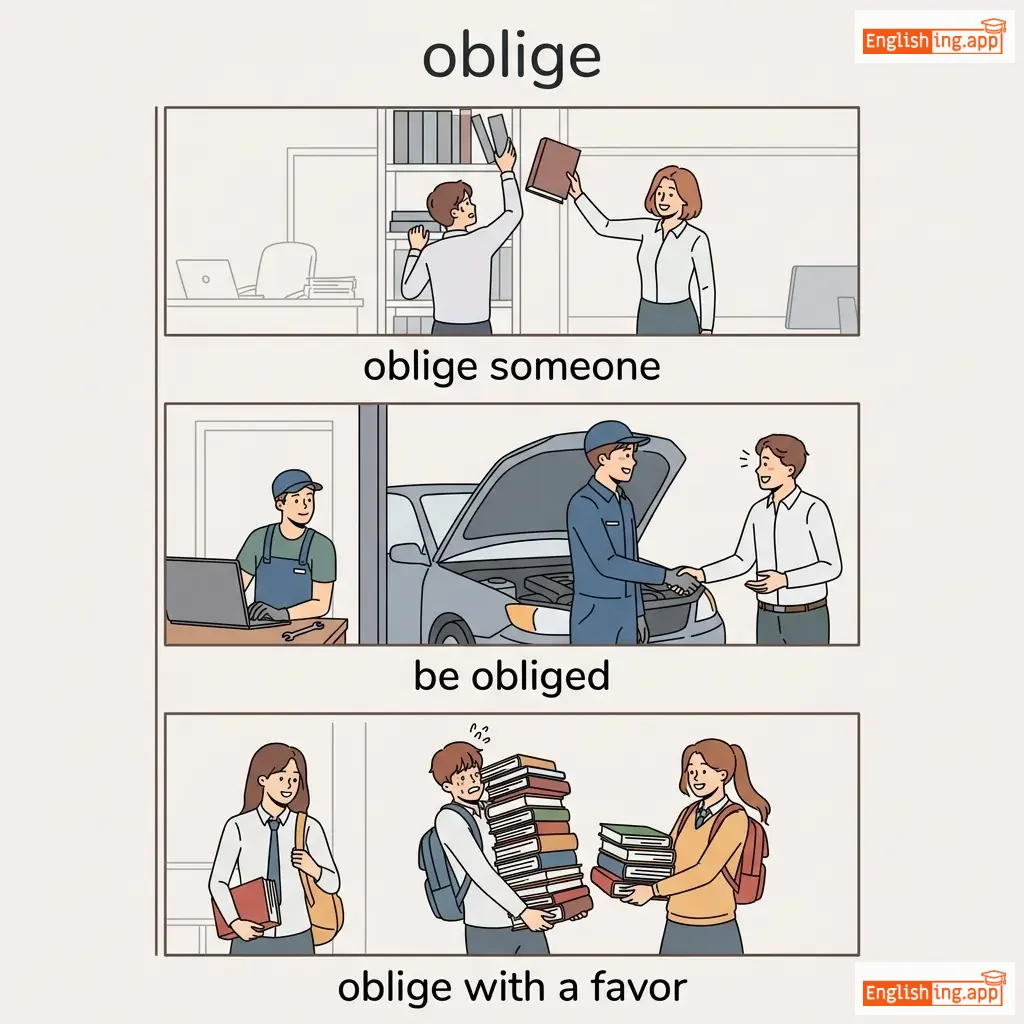
to compel or require someone to do something; to help or do a favor
|
I would be happy to oblige you with the information you need.
ai wud bi japi tu oblaich yu widh de informéishon yu nid.
••••••
|
Estaría feliz de obligarte con la información que necesitas.
Estaria feliz de obligarte kon la informacion ke necesitas.
••••••
|
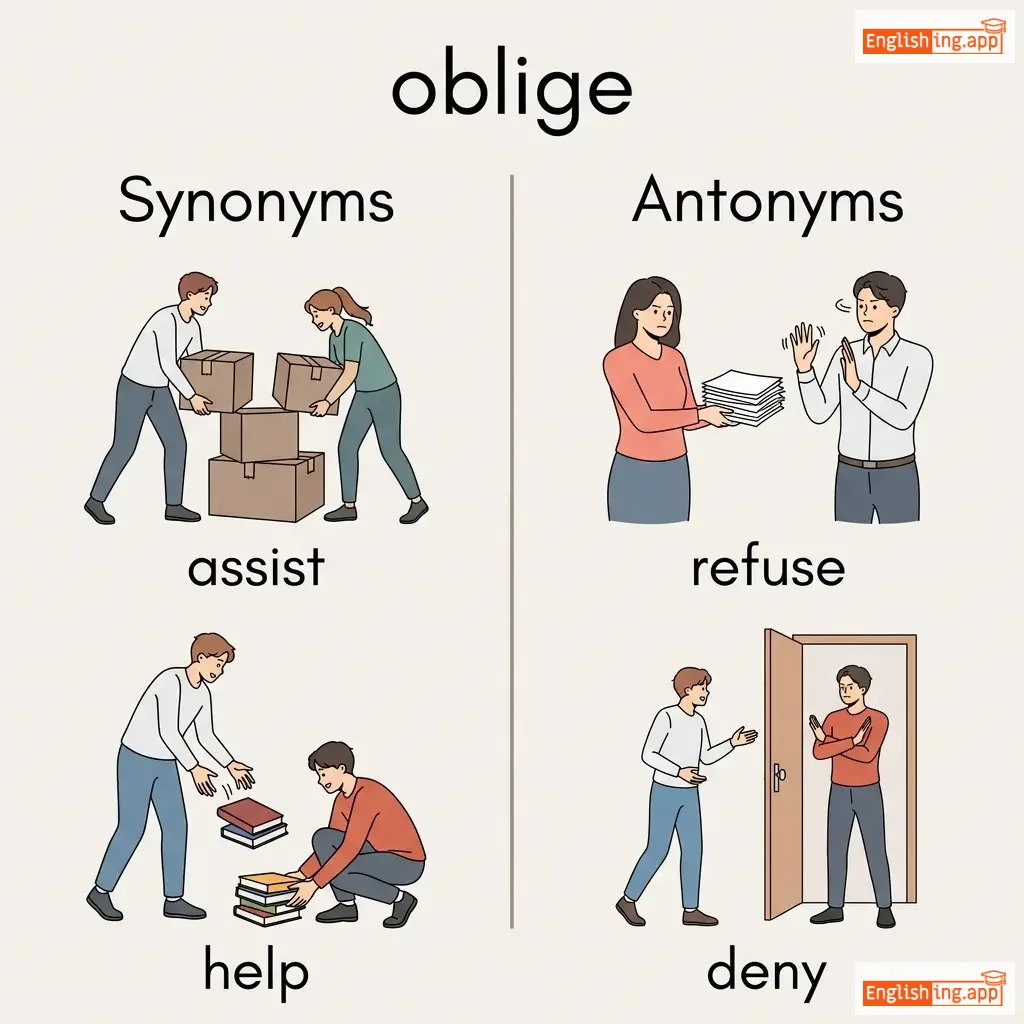
compel, require, help, assist
|
free, release, refuse, deny
|
happily oblige, oblige someone, oblige with, willing to oblige, greatly oblige, kindly oblige
|
To 'oblige' in English is like 'obligar' in Spanish — both mean to make someone do or help.
••••••
|
|
••••••
|
/wɜːrk/
verb
(guork)
••••••
|
••••••
|
trabajar
trabajar
••••••
|
guorkt
••••••
|
guorkt
••••••
|
guorks
••••••
|
guorkin
••••••
|
to perform tasks or duties to earn money or achieve goals
|
He works as a teacher at the local school.
ji guorks as a ticher at de local eskul
••••••
|
Él trabaja como maestro en la escuela local.
El trabaja como maestro en la escuela local
••••••
|
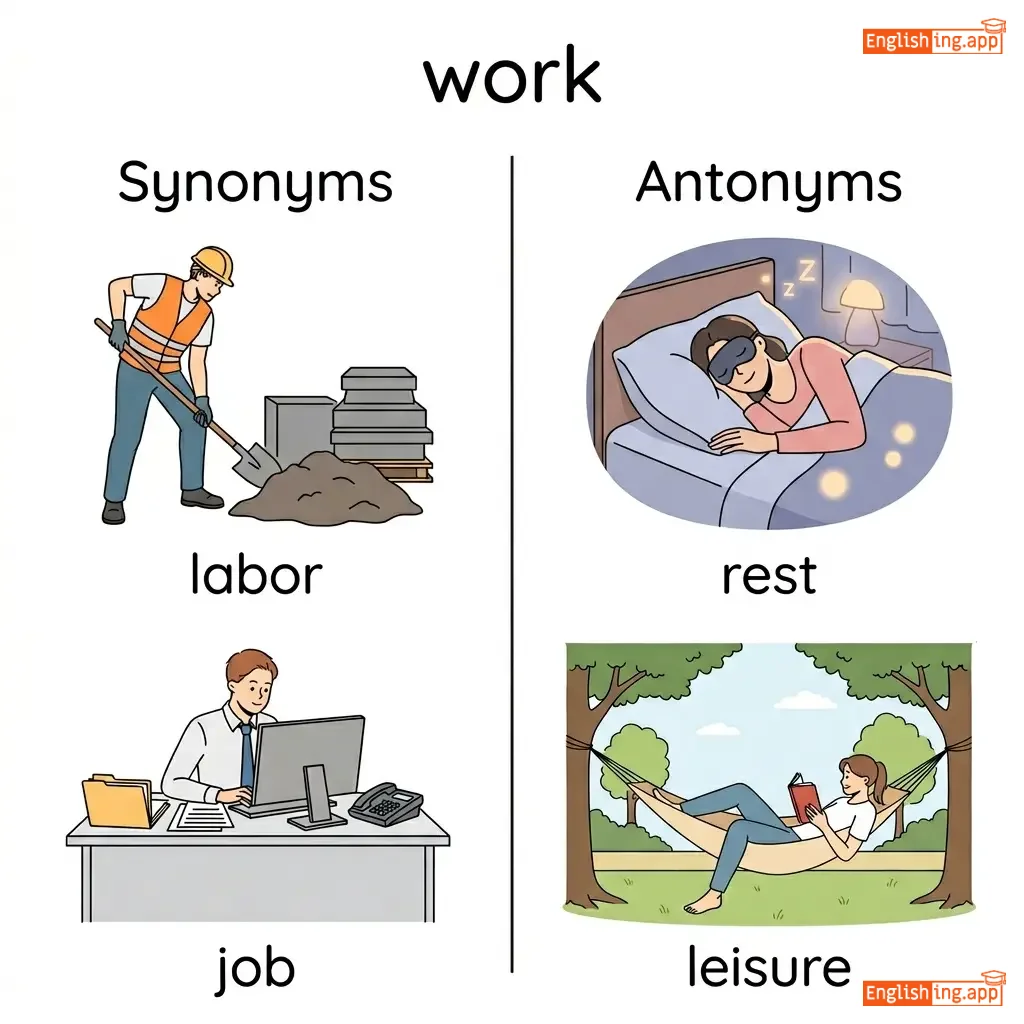
labor, toil, function, operate
|
••••••
|
work hard, work together, work from home, work late, work overtime, work efficiently
|
‘Trabajar’ sounds like ‘to labor hard’ — both mean to work.
••••••
|
|
••••••
|
/fiːd/
verb
(fid)
••••••
|
••••••
|
alimentar
alimentar
••••••
|
fed
••••••
|
fed
••••••
|
fids
••••••
|
fiding
••••••
|
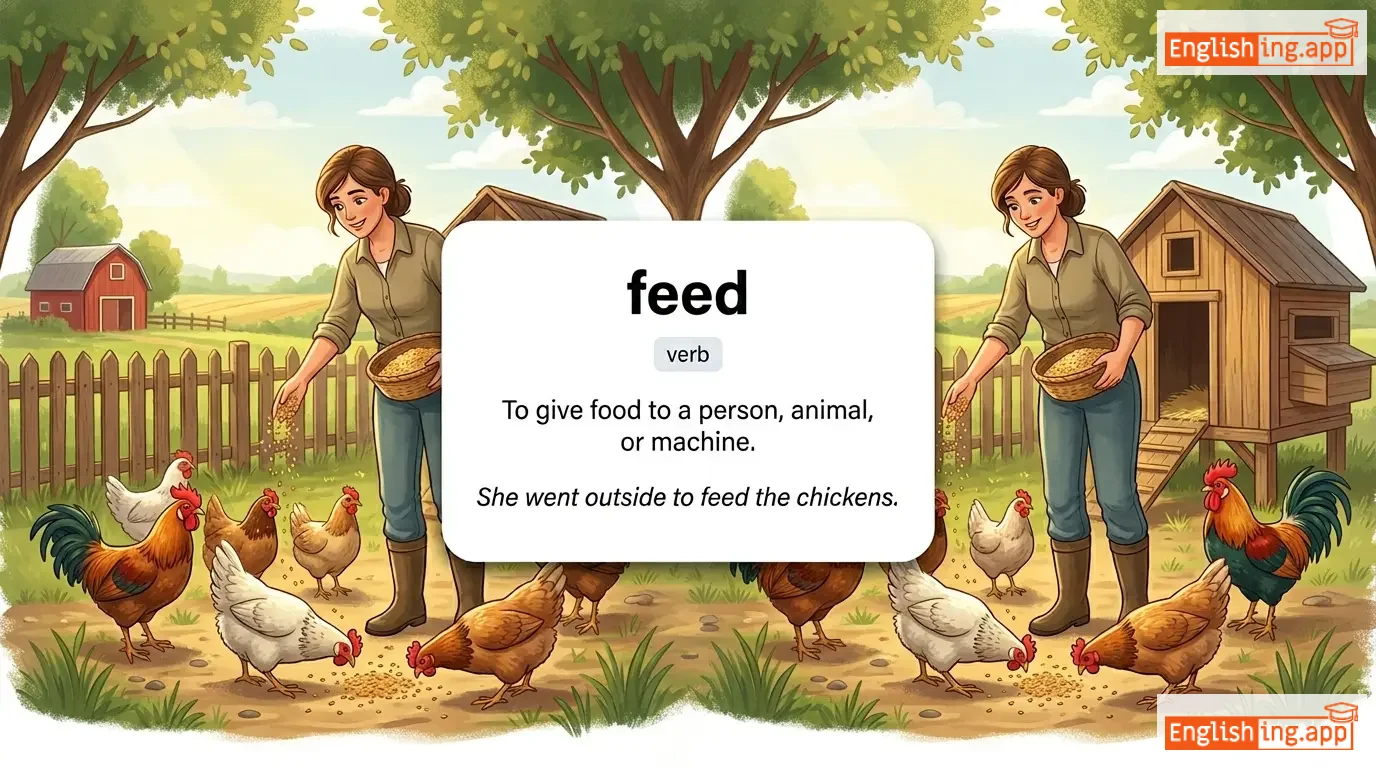
to give food to a person or animal
|
She feeds the birds every morning.
shi fids de berds evri morning
••••••
|
Ella alimenta a los pájaros todas las mañanas.
eya alimentar a los paharos todas las mananas
••••••
|
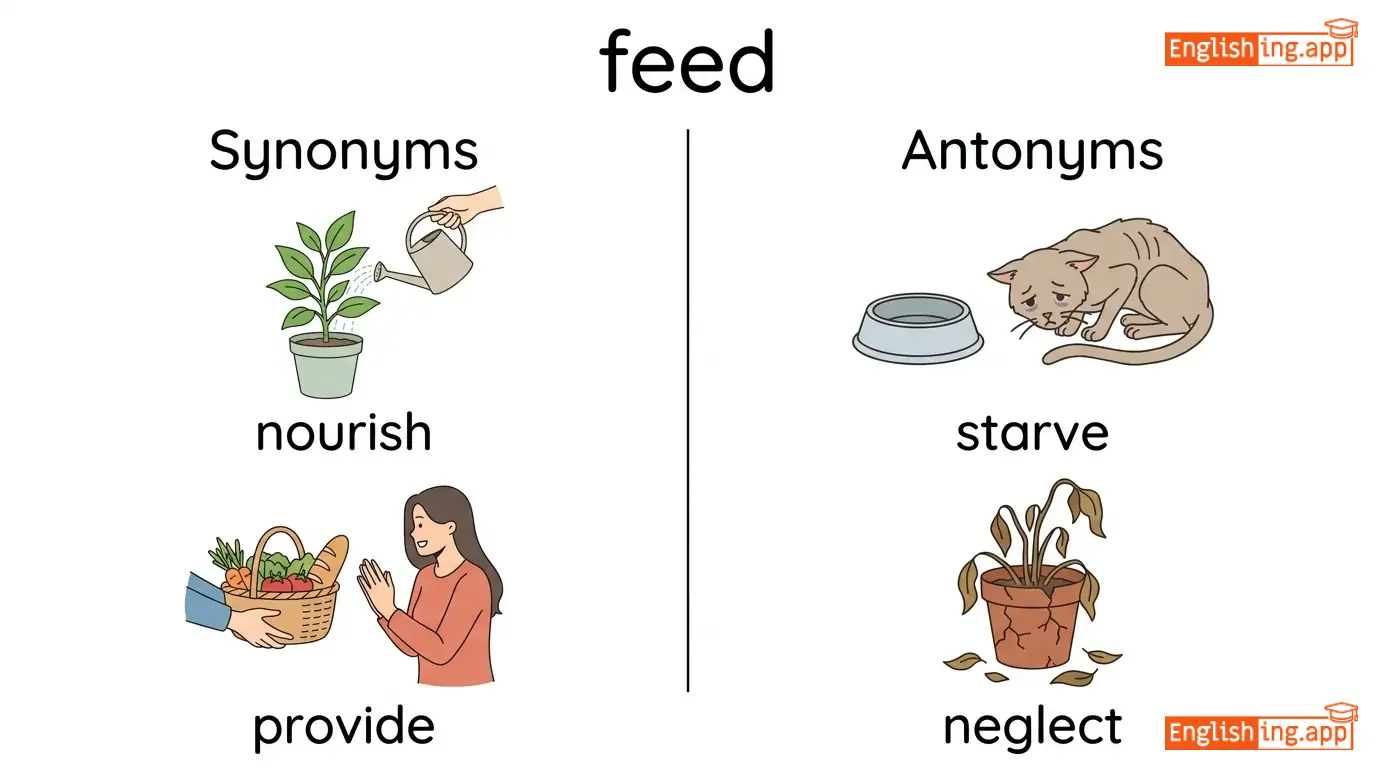
nourish, provide food, give food
|
starve, deprive, withhold food
|
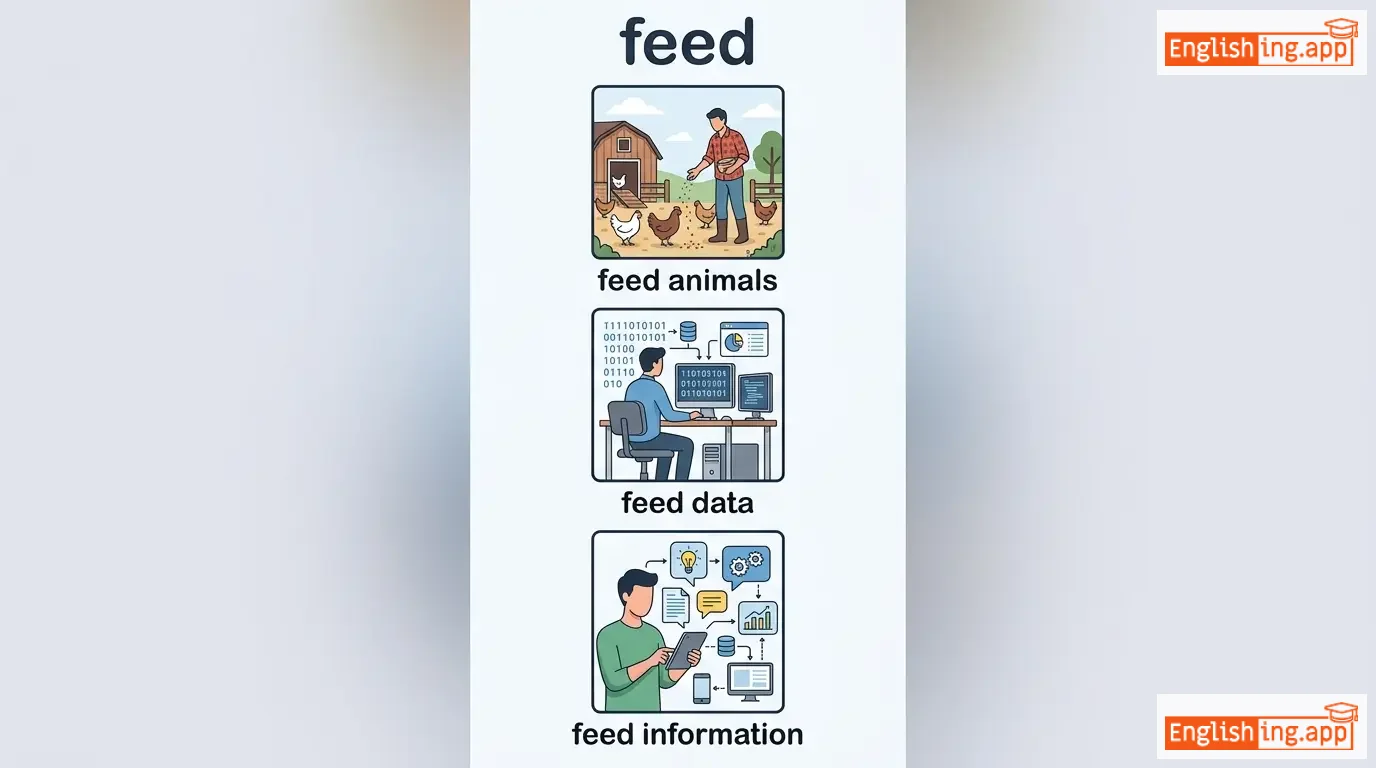
feed the baby, feed animals, feed birds, feed hungry, properly feed, hand feed
|
Feed sounds like 'food' — alimentar es dar comida.
••••••
|
|
••••••
|
/ˈɒpəreɪt/
verb
(óperate)
••••••
|
••••••
|
operar
operar
••••••
|
óperated
••••••
|
óperated
••••••
|
óperates
••••••
|
óperating
••••••
|
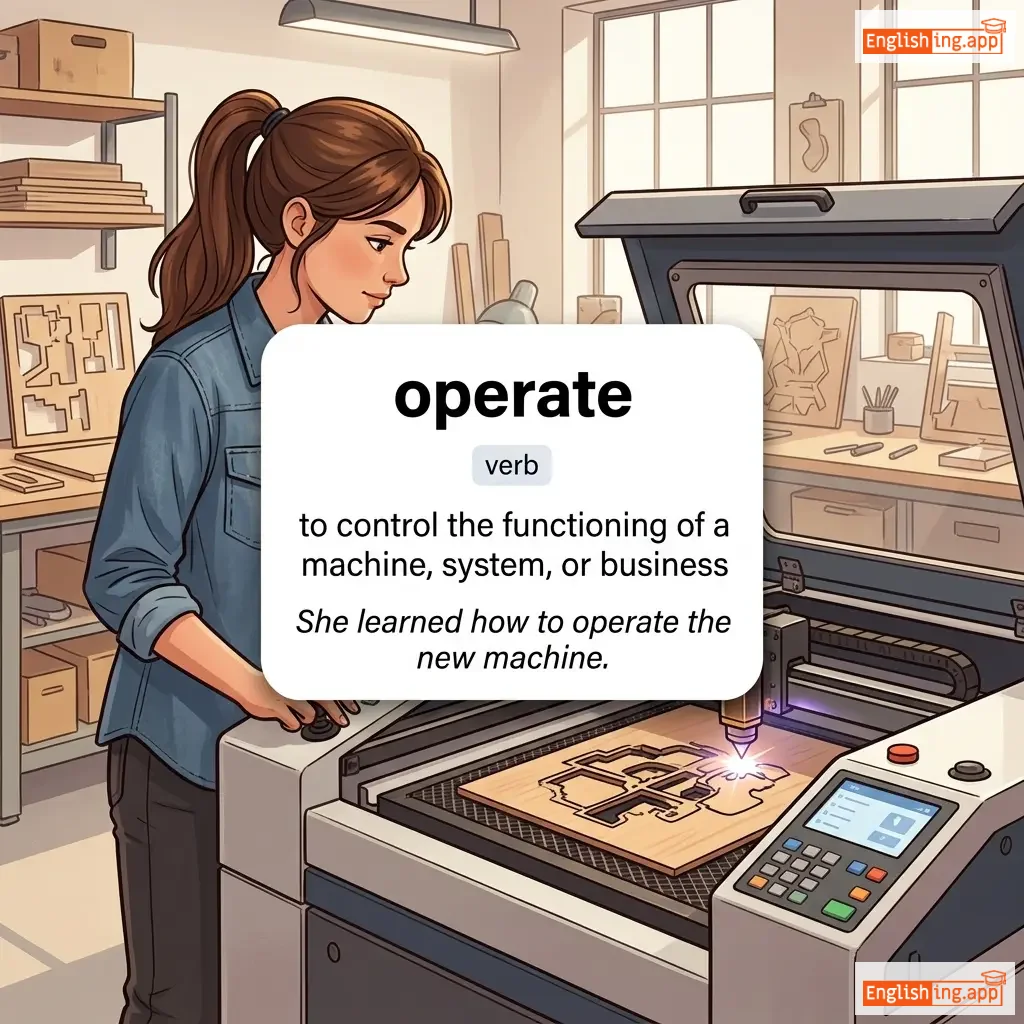
to function; to control or manage; to perform surgery
|
The surgeon will operate on the patient tomorrow.
The sárjon uíl óperate on the páshent tumórro.
••••••
|
El cirujano operará al paciente mañana.
el siruhano operara al pasyente manana
••••••
|
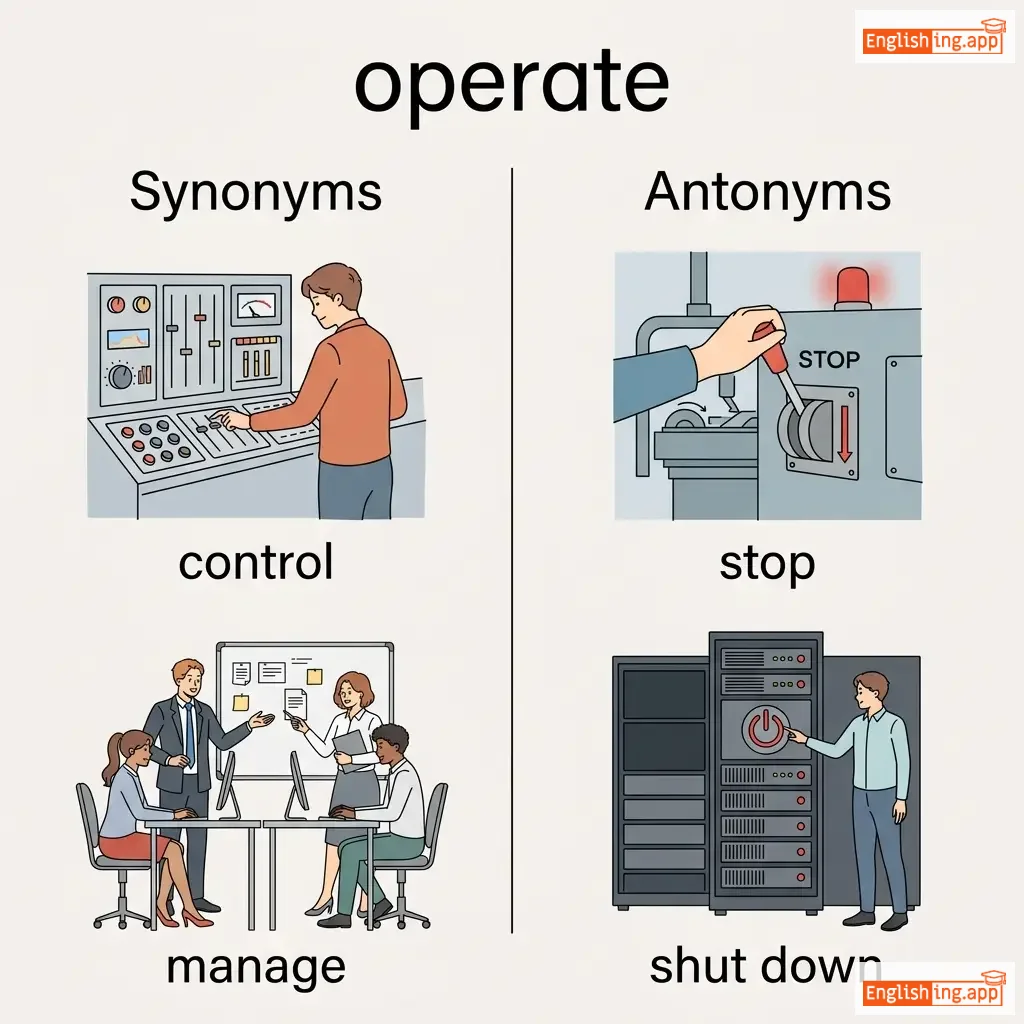
function, run, manage, control
|
malfunction, stop, cease, halt
|
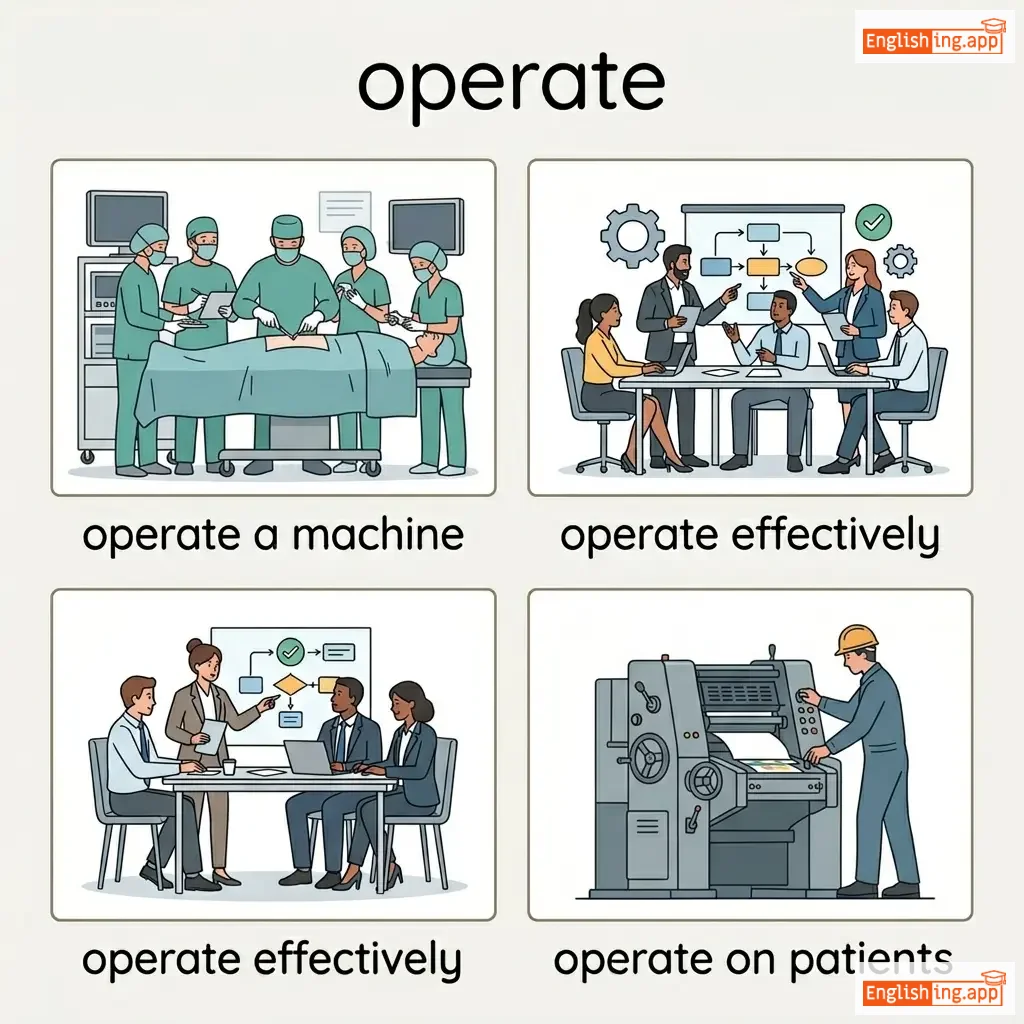
operate smoothly, operate efficiently, operate machinery, operate business, operate successfully
|
Operate sounds like 'operar' — both mean to function or perform surgery.
••••••
|
|
••••••
|
/haɪd/
verb
(jaid)
••••••
|
••••••
|
esconder
esconder
••••••
|
jid
••••••
|
jidn
••••••
|
jaids
••••••
|
jaiding
••••••
|
to put or keep out of sight; to conceal from view
|
Children like to hide during games.
chíldren laik tu jaid during geims.
••••••
|
A los niños les gusta esconderse durante los juegos.
a los ninos les gusta esconderse durante los juegos
••••••
|
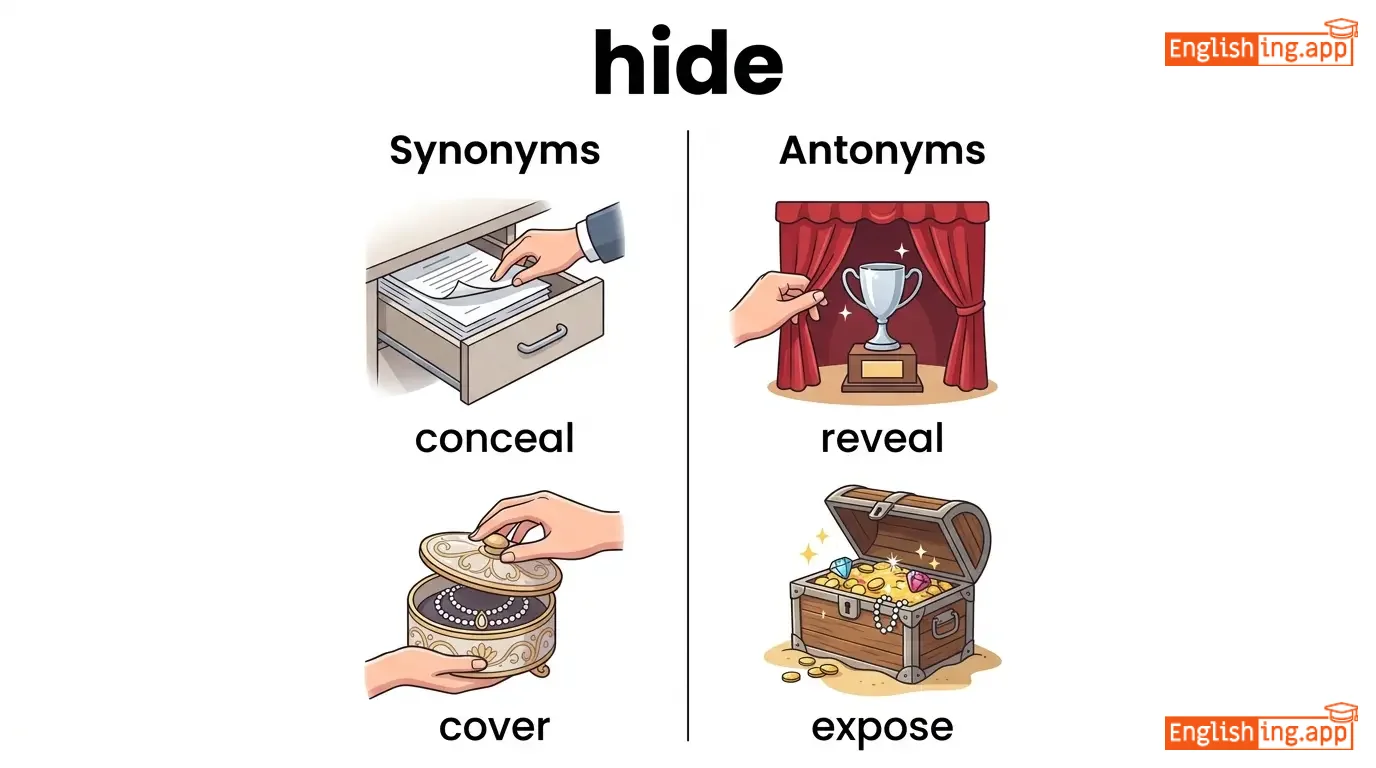
conceal, cover, disguise, mask
|
show, reveal, display, expose
|
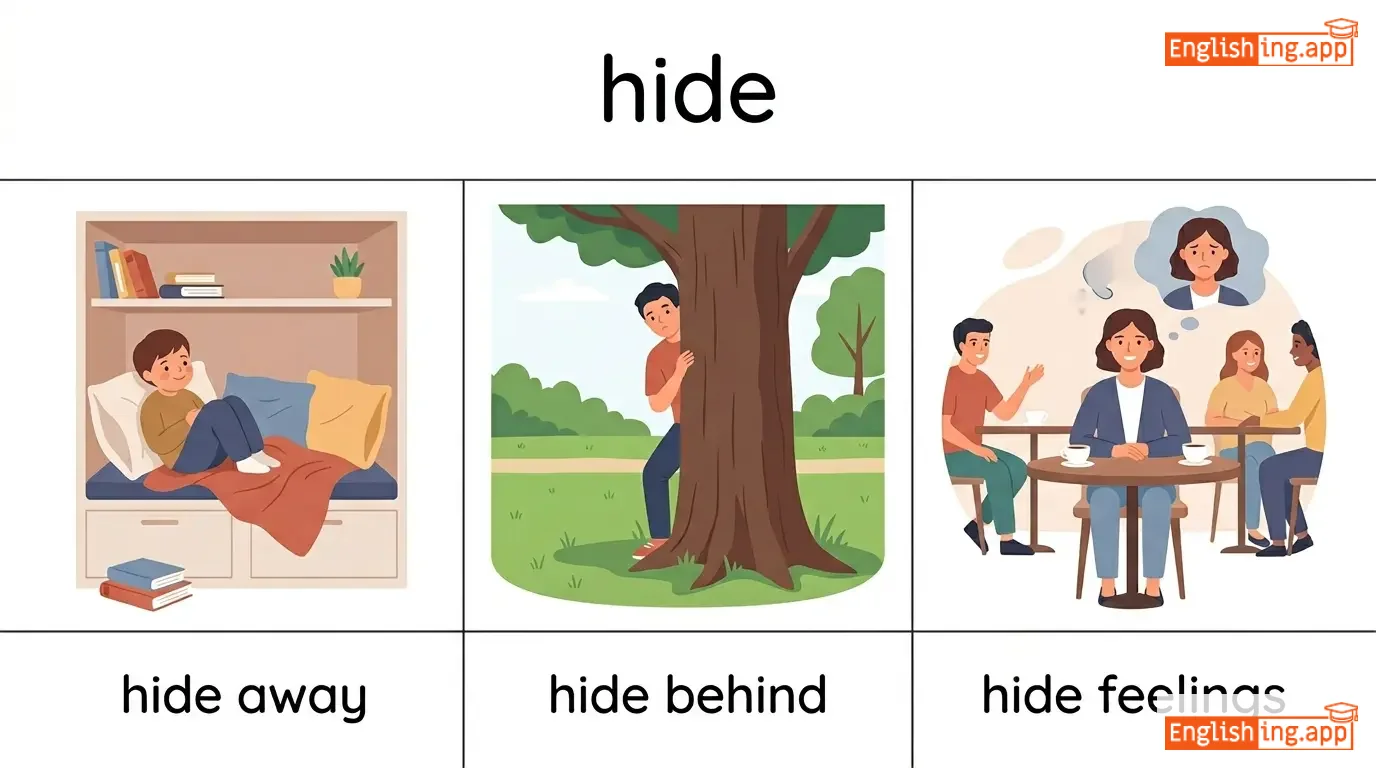
hide away, hide behind, hide from, hide under, hide inside, carefully hide
|
Hide means 'esconder' — think of 'conceal' and 'esconder' both hiding things.
••••••
|
|
••••••
|
/nɪp/
verb
(nip)
••••••
|
••••••
|
pellizcar
pelizkar
••••••
|
nipt
••••••
|
nipt
••••••
|
nips
••••••
|
niping
••••••
|
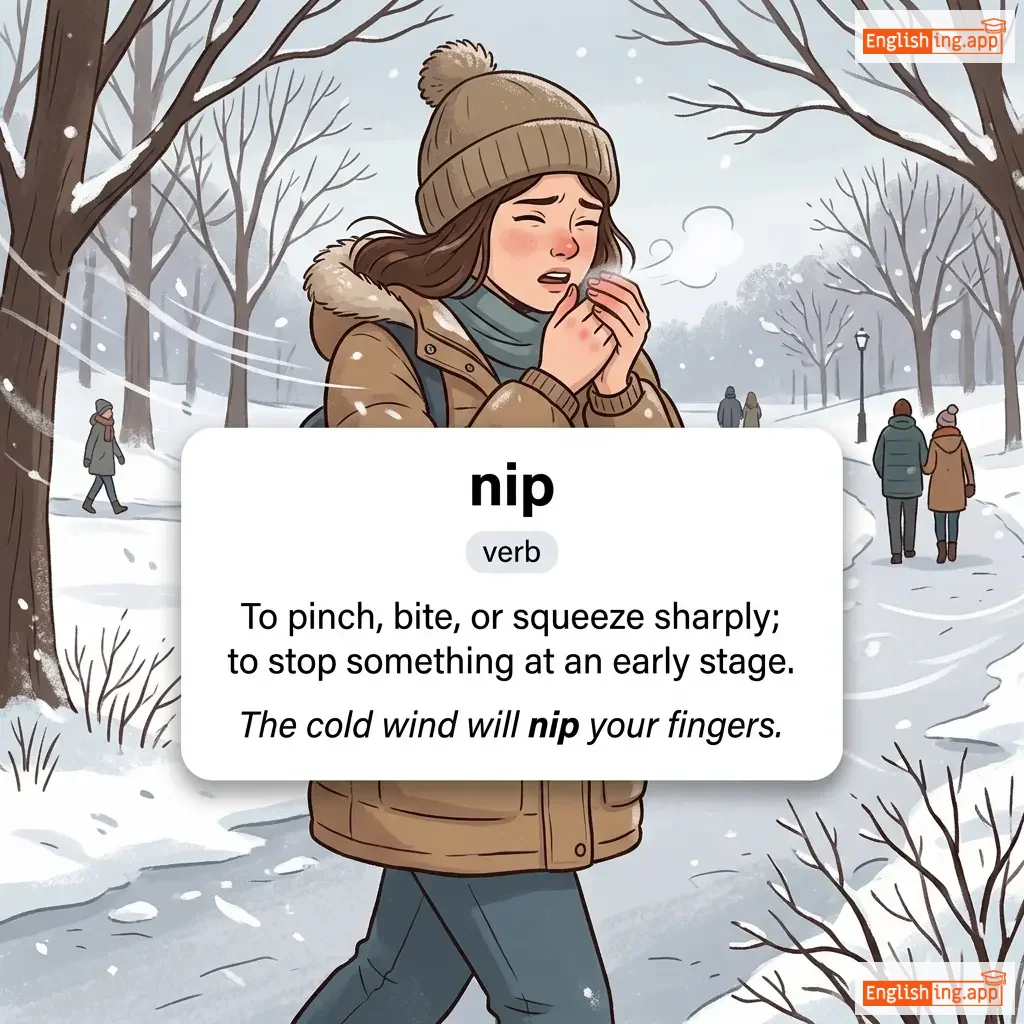
to pinch or bite lightly; to move quickly
|
The cold wind nipped at my face.
ze cold wind nipt at mai feis
••••••
|
El viento frío me pellizcó la cara.
El viento frio me pelizko la kara
••••••
|
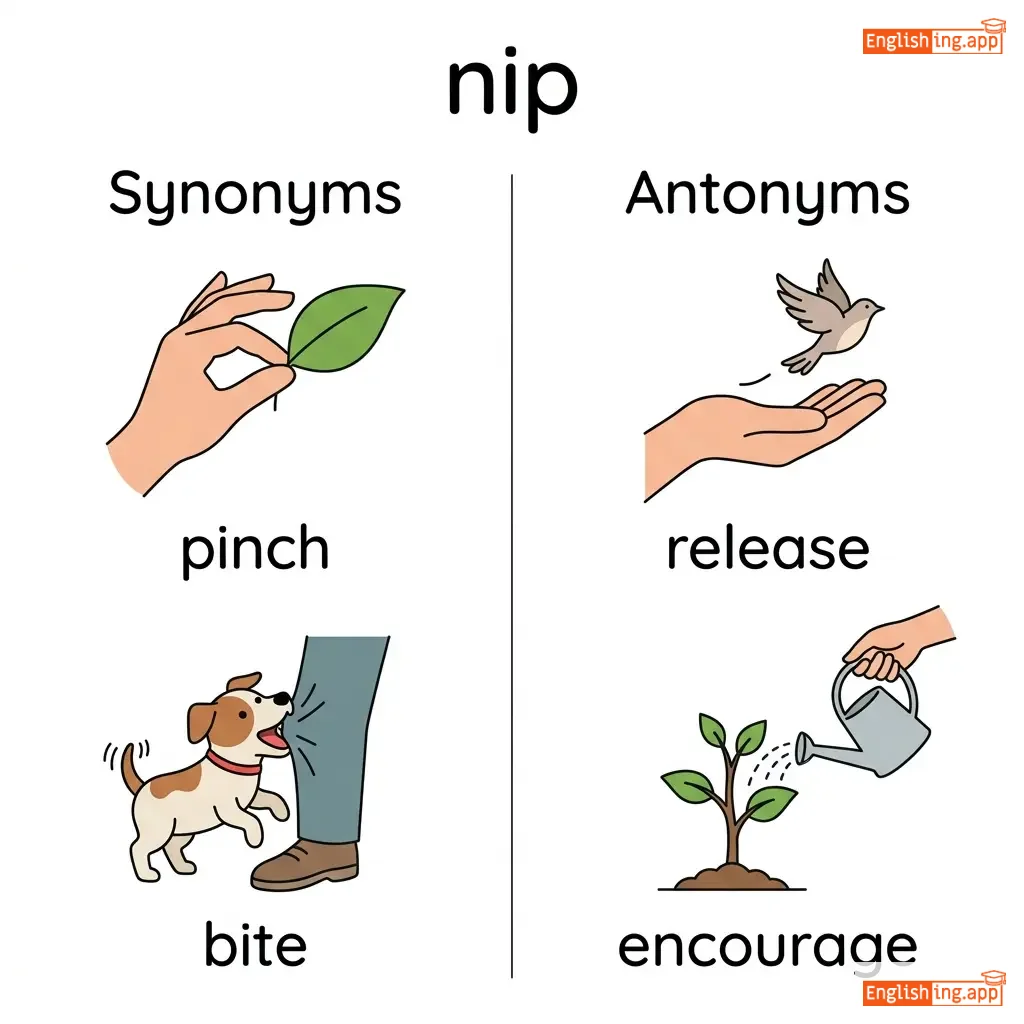
pinch, bite, squeeze, clip
|
••••••
|
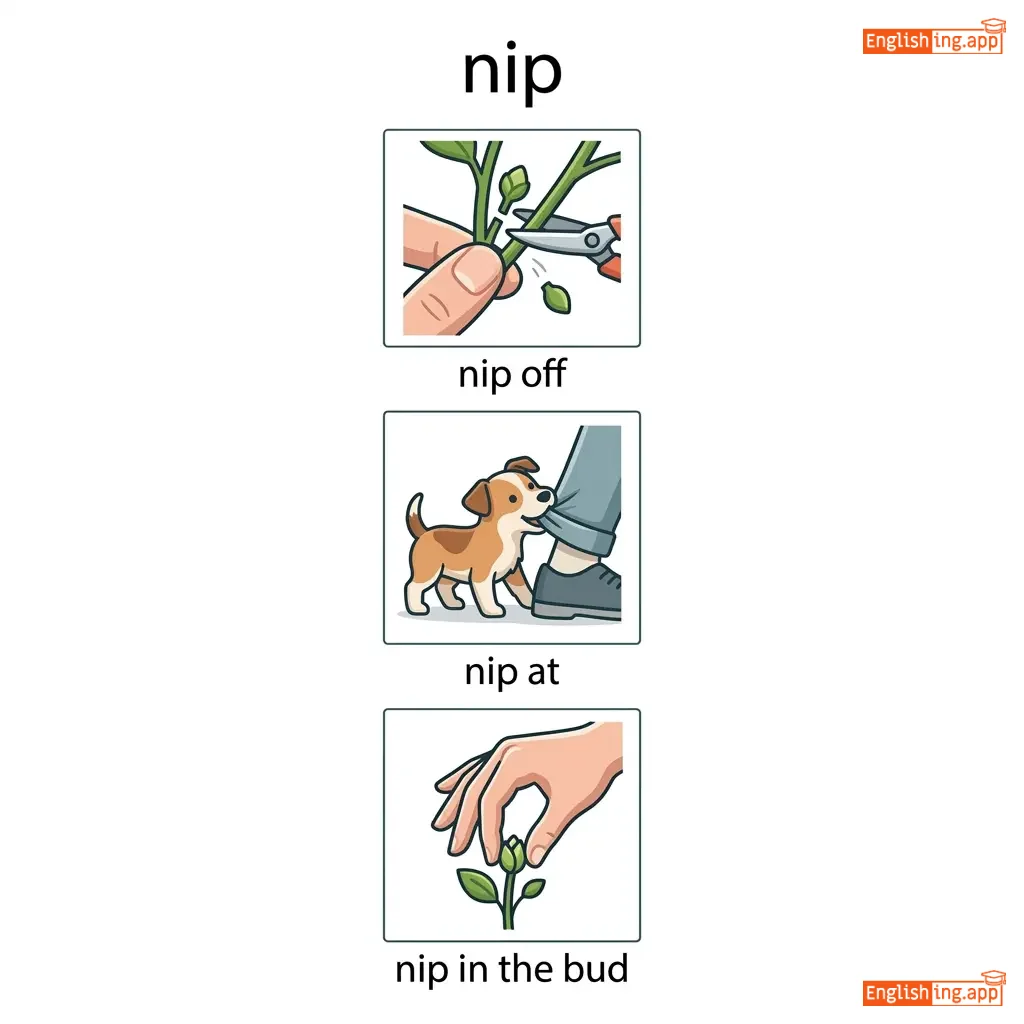
nip quickly, nip gently, nip at, cold nip, frost nip, nip in bud
|
'Nip' sounds like 'pelizcar' — a small pinch in Spanish.
••••••
|
|
••••••
|
/ˈdʒʌmbəl/
verb
(yambel)
••••••
|
••••••
|
mezclar
mezclar
••••••
|
yambeld
••••••
|
yambeld
••••••
|
yambels
••••••
|
yambling
••••••
|
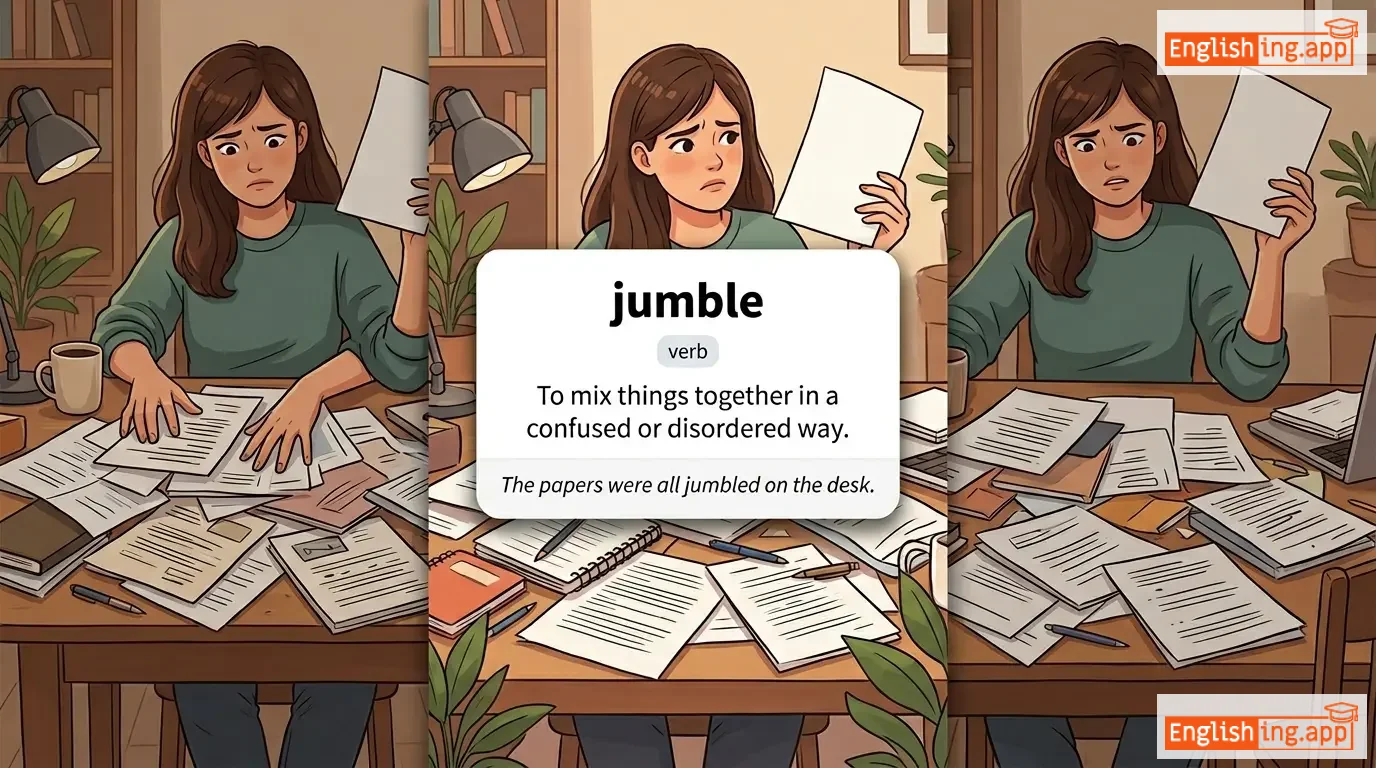
to mix things together in a confused or untidy way
|
Don't jumble all the papers together in one pile.
Dont yambel ol de papers tugeder in uan payl.
••••••
|
No mezcles todos los papeles en una sola pila.
No mezcles todos los papeles en una sola pila
••••••
|
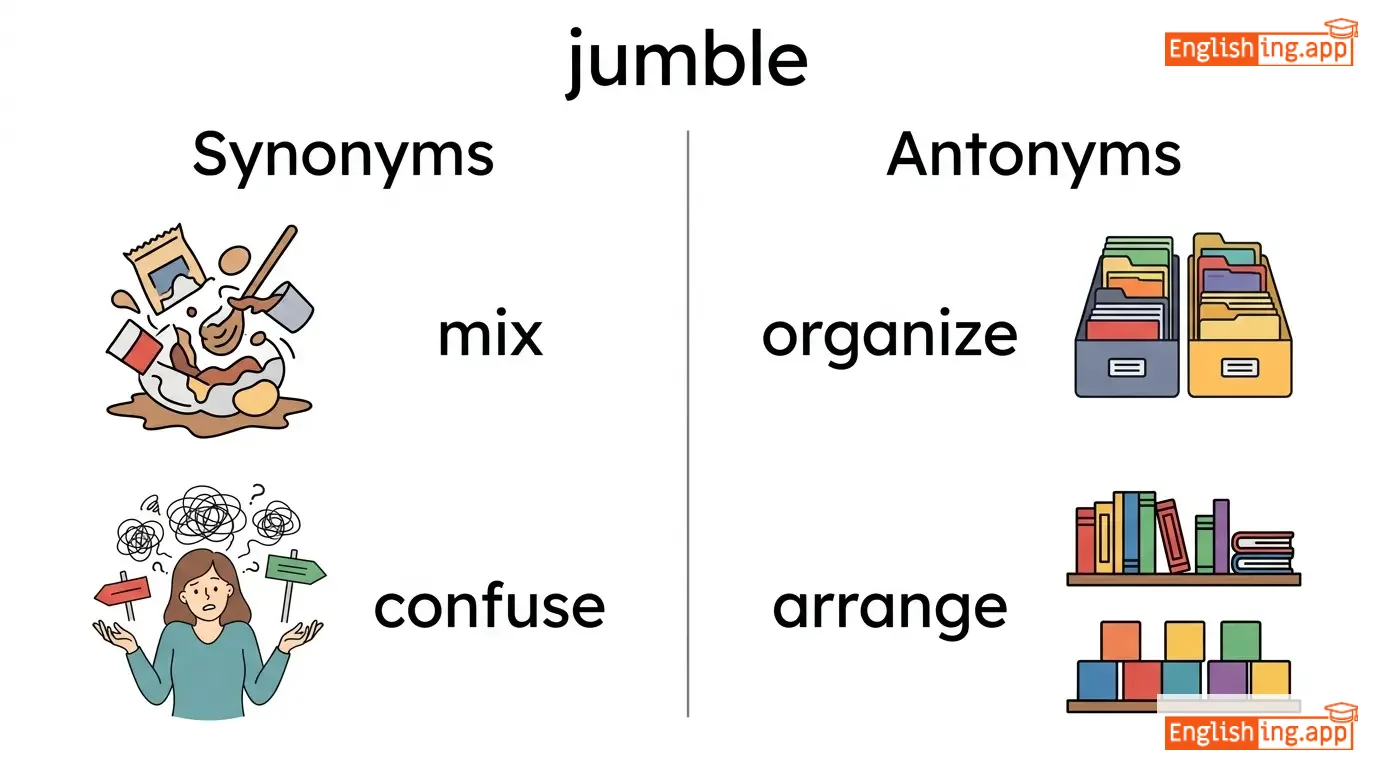
mix up, muddle, confuse, scramble, tangle
|
organize, arrange, sort, separate, order
|
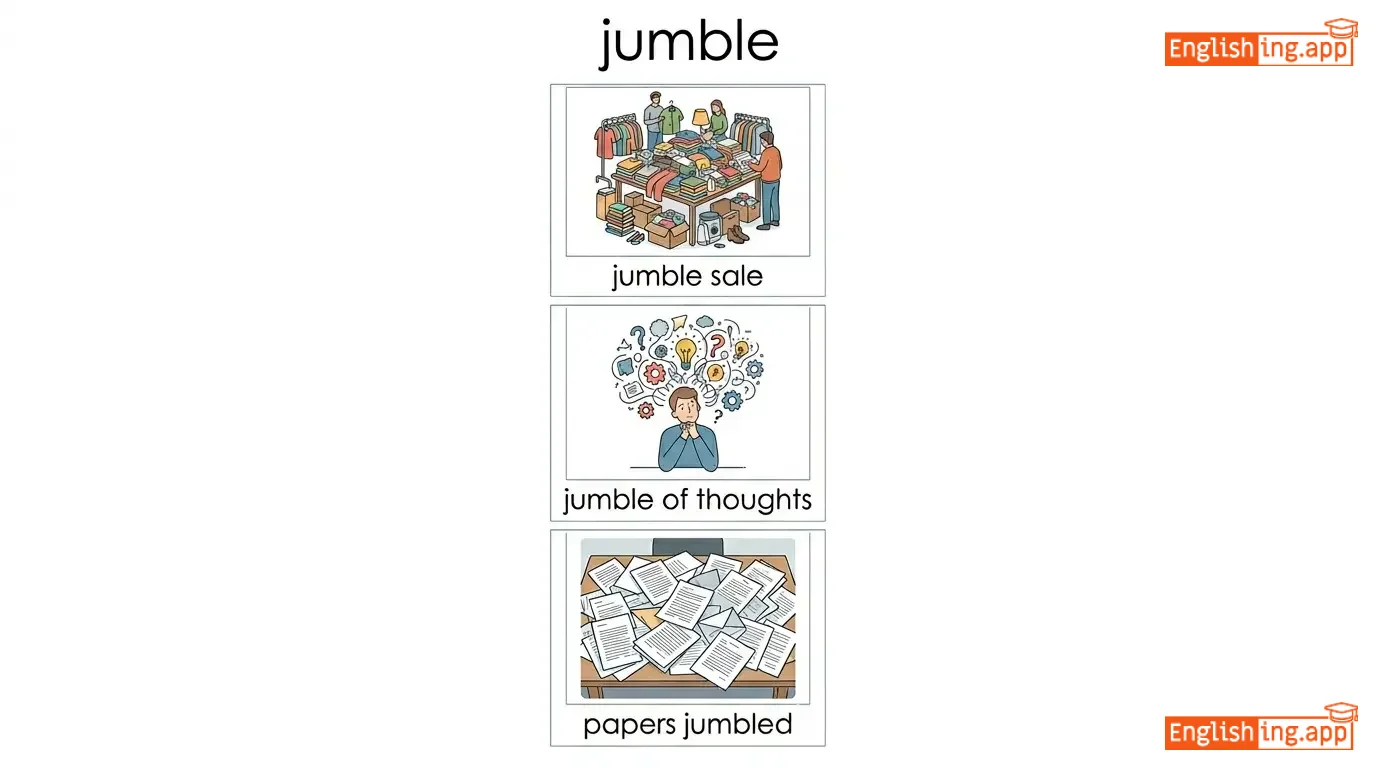
jumble together, jumble up, jumble words, jumble everything, completely jumble, randomly jumble
|
Jumble sounds like 'jumbo mess' — mezclar todo sin orden.
••••••
|
|
••••••
|
/ˈkɒmprəmaɪz/
verb
(compromáis)
••••••
|
••••••
|
comprometerse
komprometerse
••••••
|
compromáisd
••••••
|
compromáisd
••••••
|
compromáisiz
••••••
|
compromáis-ing
••••••
|
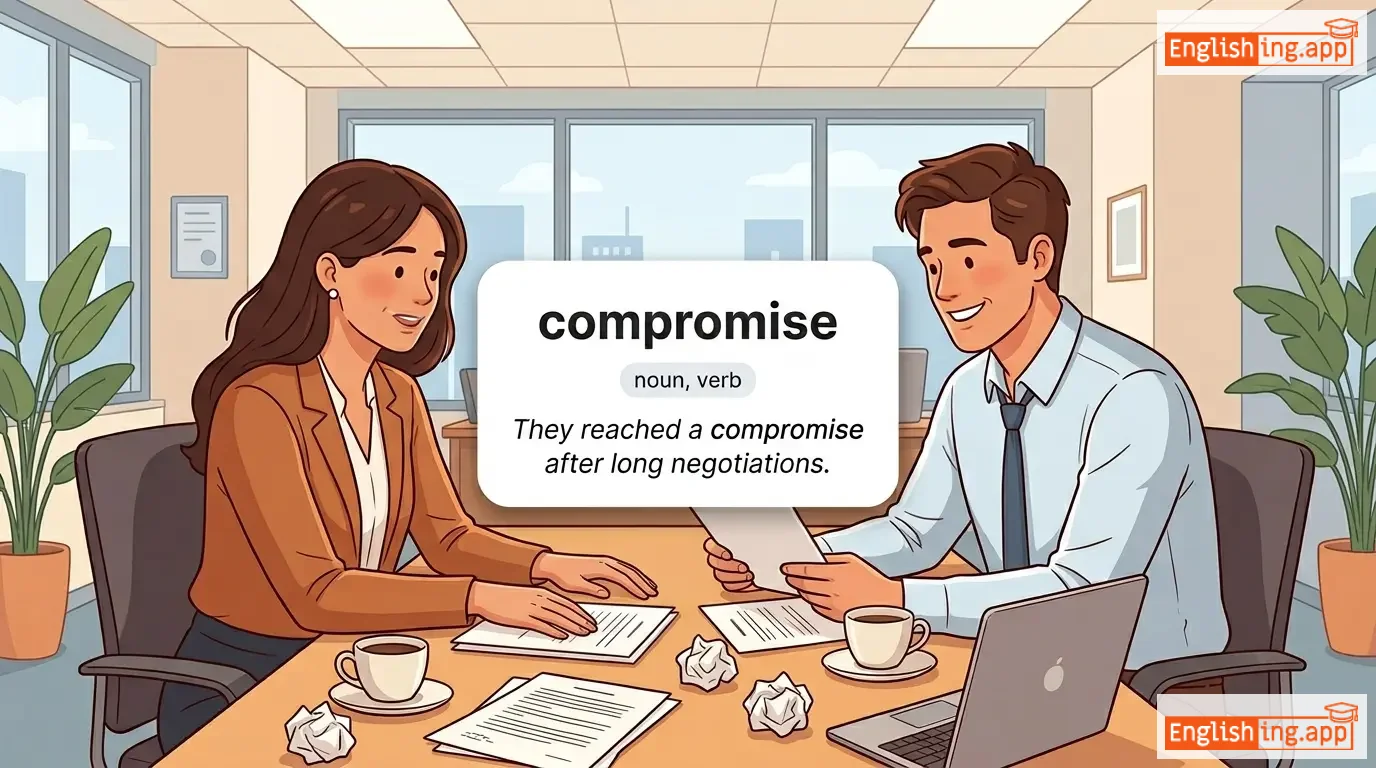
to accept standards that are lower than is desirable; to settle a dispute by mutual concession
|
They had to compromise on the budget to reach an agreement.
dei jad tu compromáis on de bádjet tu rích an agríment.
••••••
|
Tuvieron que comprometerse en el presupuesto para llegar a un acuerdo.
tuvieron ke komprometerse en el presupeuesto para yegar a un akuerdo
••••••
|
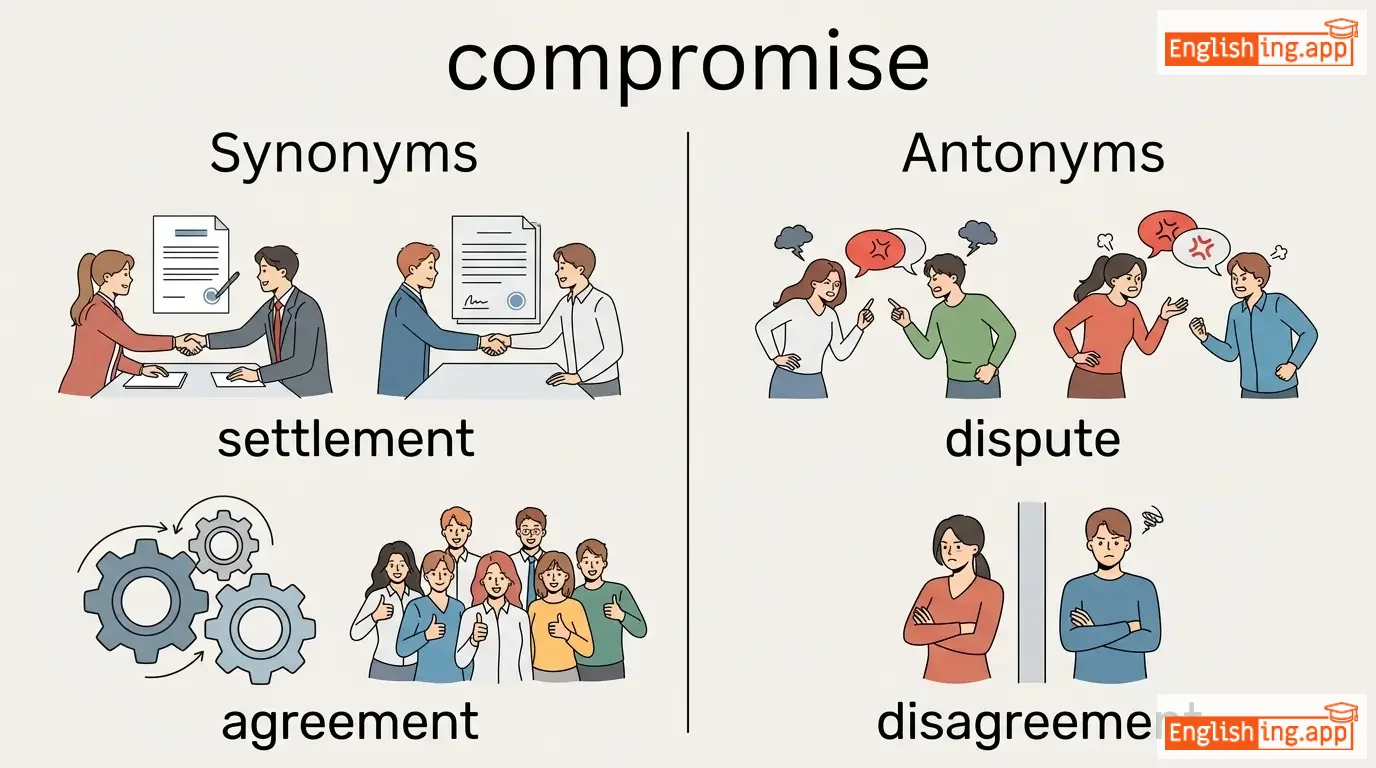
negotiate, settle, concede, adjust
|
insist, demand, refuse, resist
|
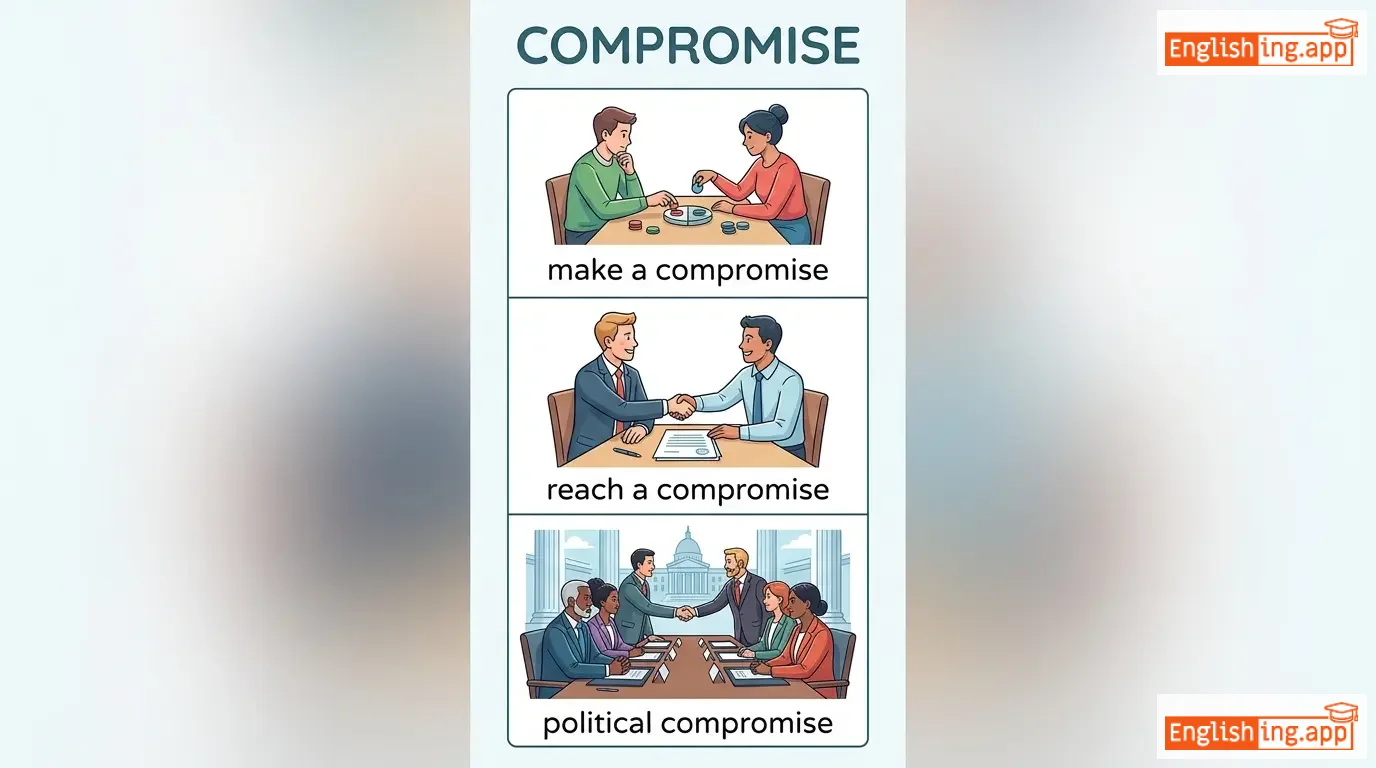
compromise on, willing to compromise, compromise between, compromise with, reach compromise
|
To ‘compromise’ is like ‘comprometerse’ — both mean to adjust for agreement.
••••••
|
|
••••••
|
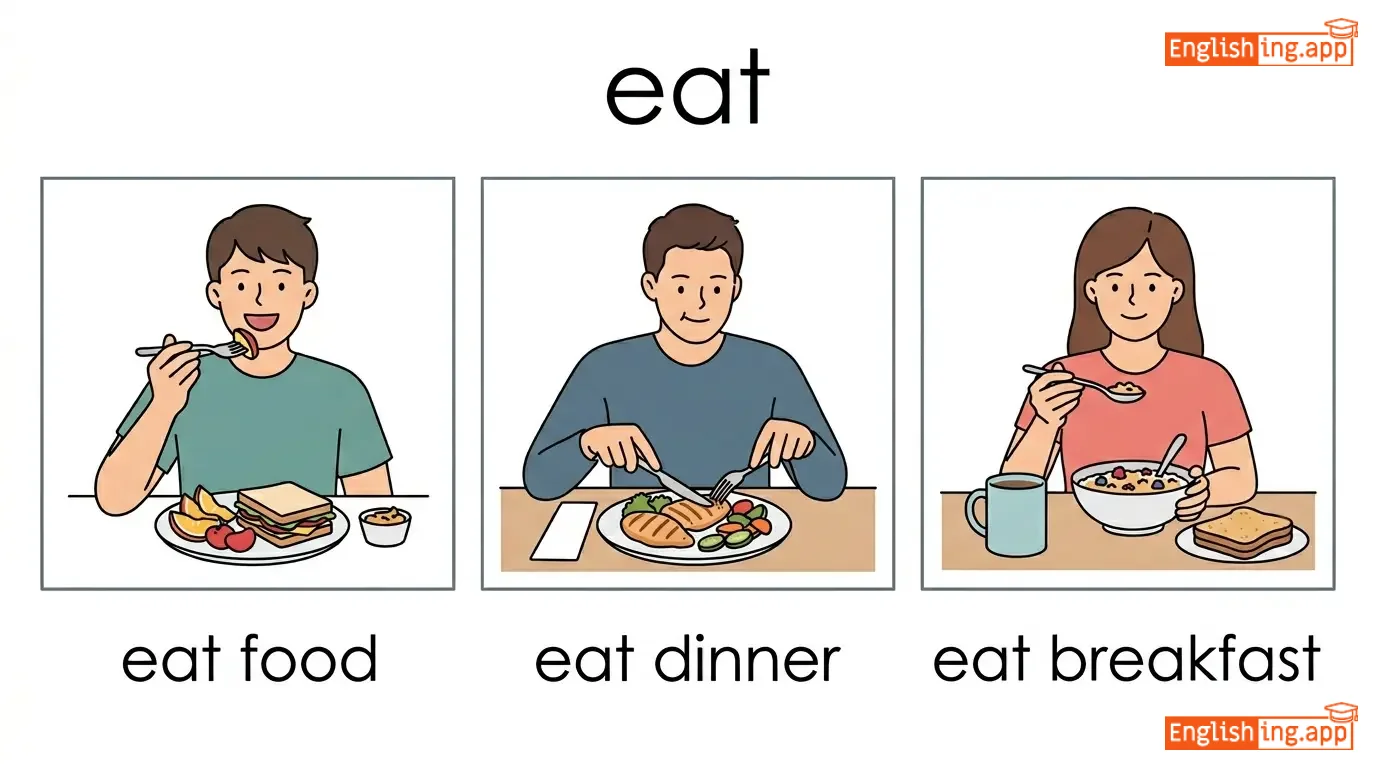
/iːt/
verb
(it)
••••••
|
••••••
|
comer
komer
••••••
|
eit
••••••
|
iten
••••••
|
its
••••••
|
iting
••••••
|
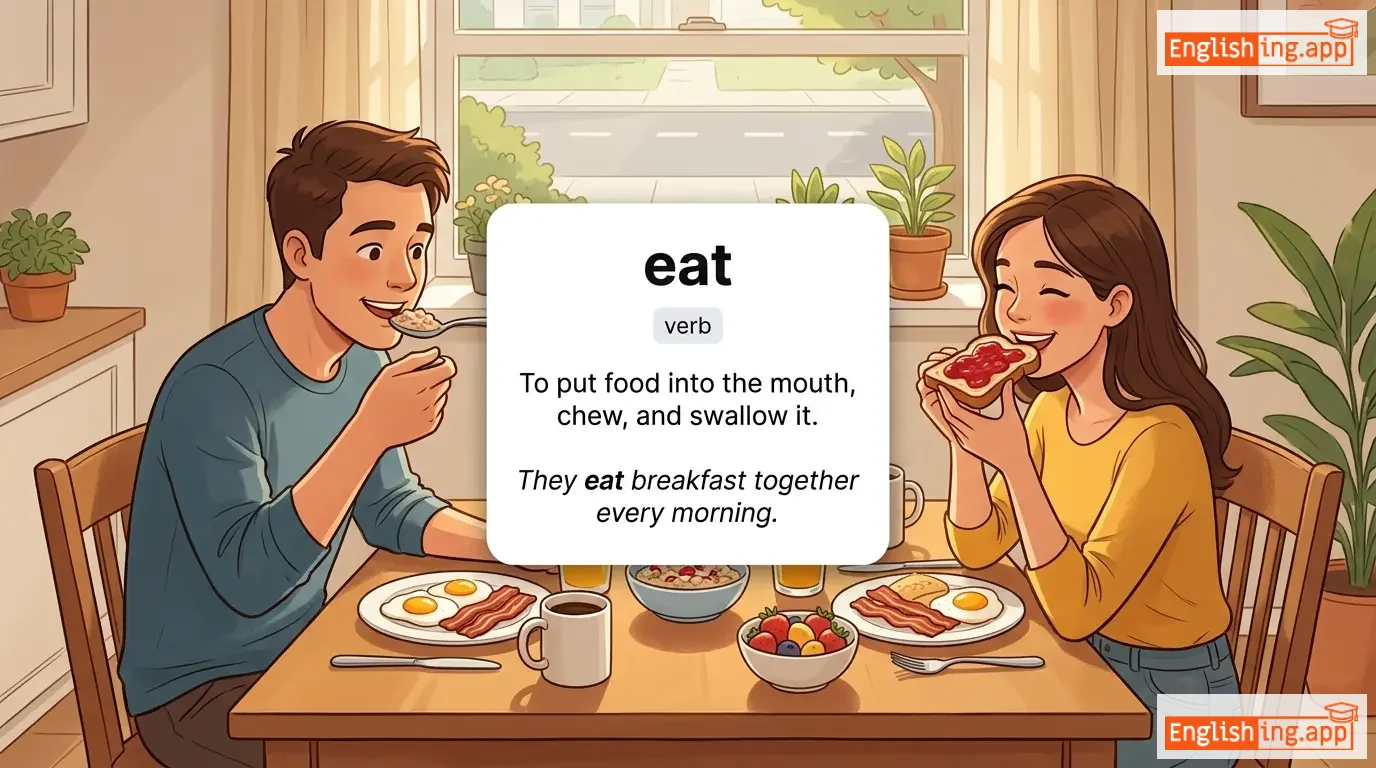
to put food in the mouth and chew and swallow it
|
wi it diner at seven pi em
••••••
|
Comemos la cena a las 7 p. m.
komemos la sena a las siete pe em
••••••
|
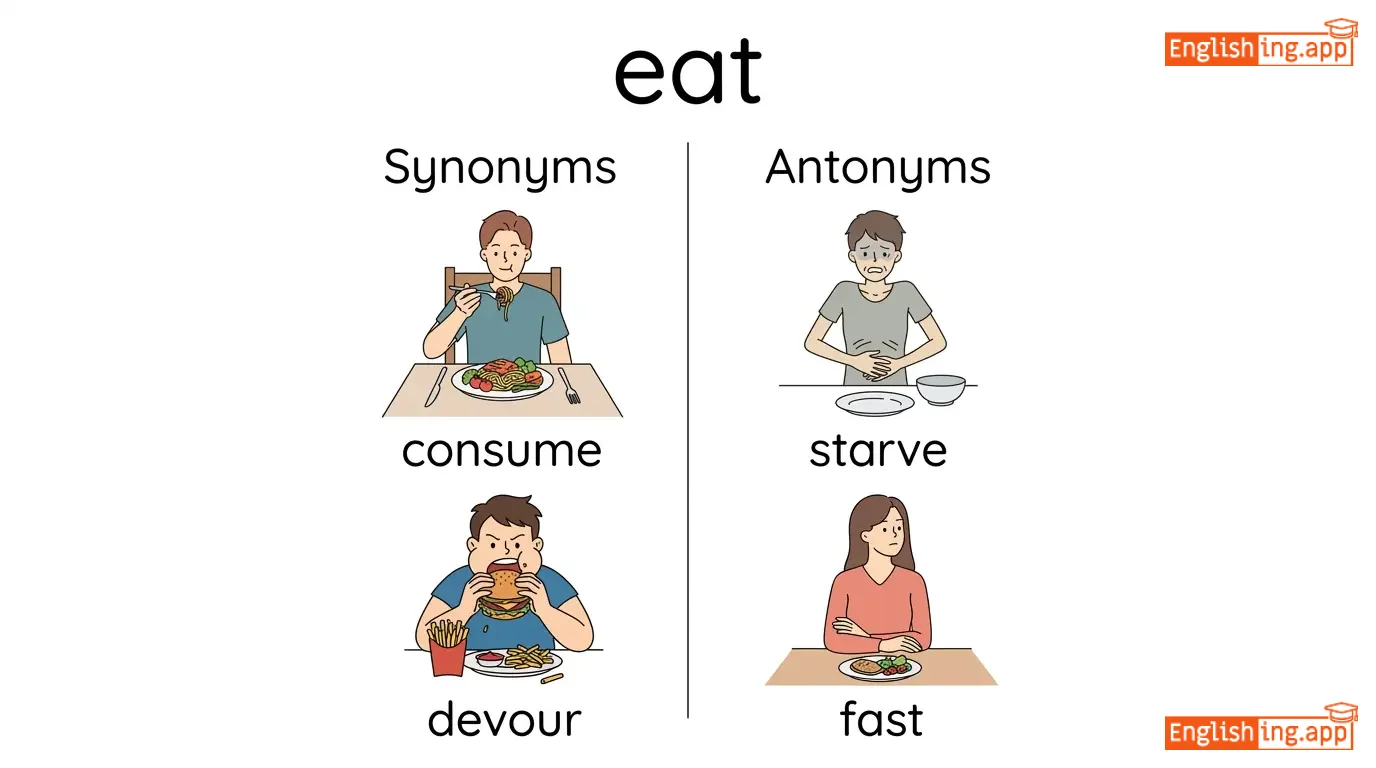
consume, devour, munch, dine
|
fast, starve, abstain, refuse
|
eat breakfast, eat lunch, eat dinner, eat healthy, eat out, eat together
|
When you ‘comer’, you enjoy your meal!
••••••
|
|
••••••
|
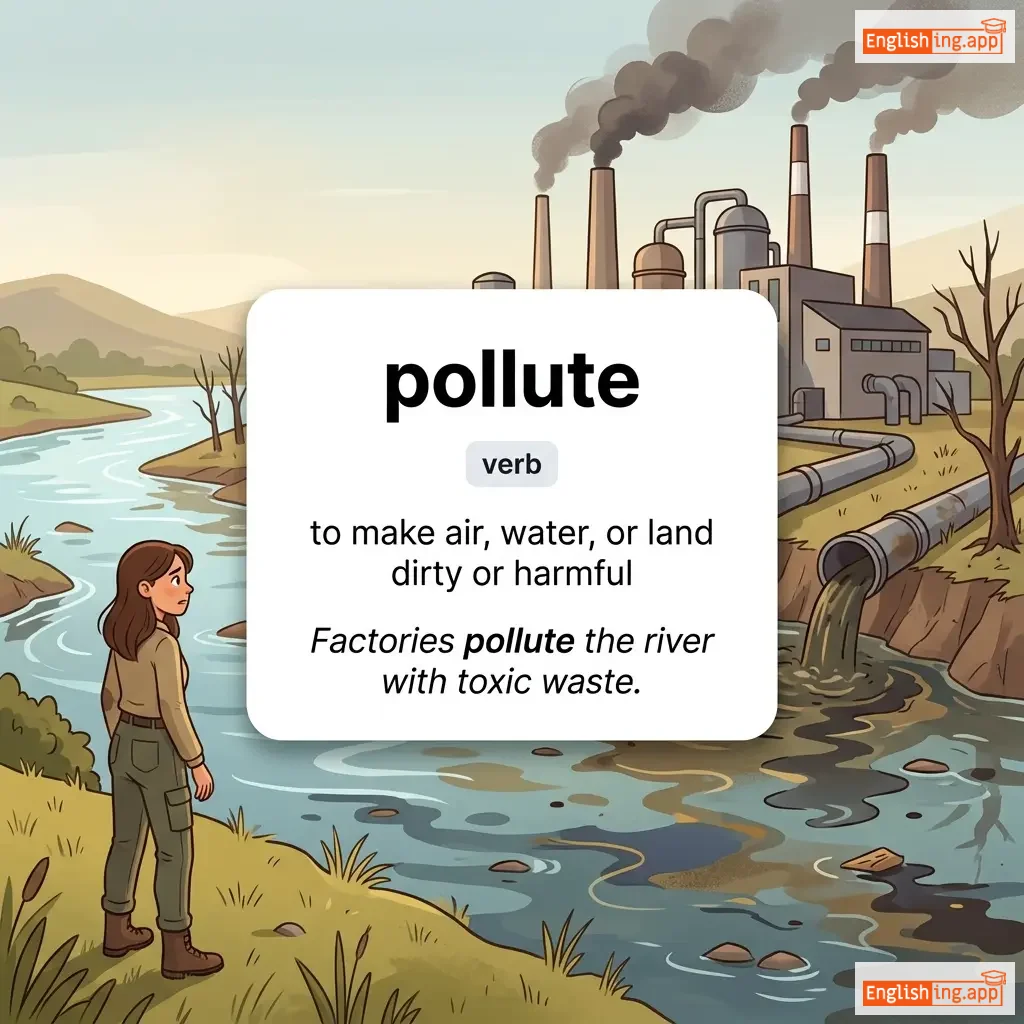
/pəˈluːt/
verb
(polut)
••••••
|
••••••
|
contaminar
kontaminar
••••••
|
poluted
••••••
|
poluted
••••••
|
poluts
••••••
|
poluting
••••••
|
to make air, water, or land dirty and harmful to people, animals, and plants
|
Factories pollute the environment with toxic chemicals.
fáctoris polut de envaíronment uid tóxic kémiquels
••••••
|
Las fábricas contaminan el medio ambiente con productos químicos tóxicos.
Las fabricas kontaminan el medio ambiente kon productos kimikos toksikos
••••••
|
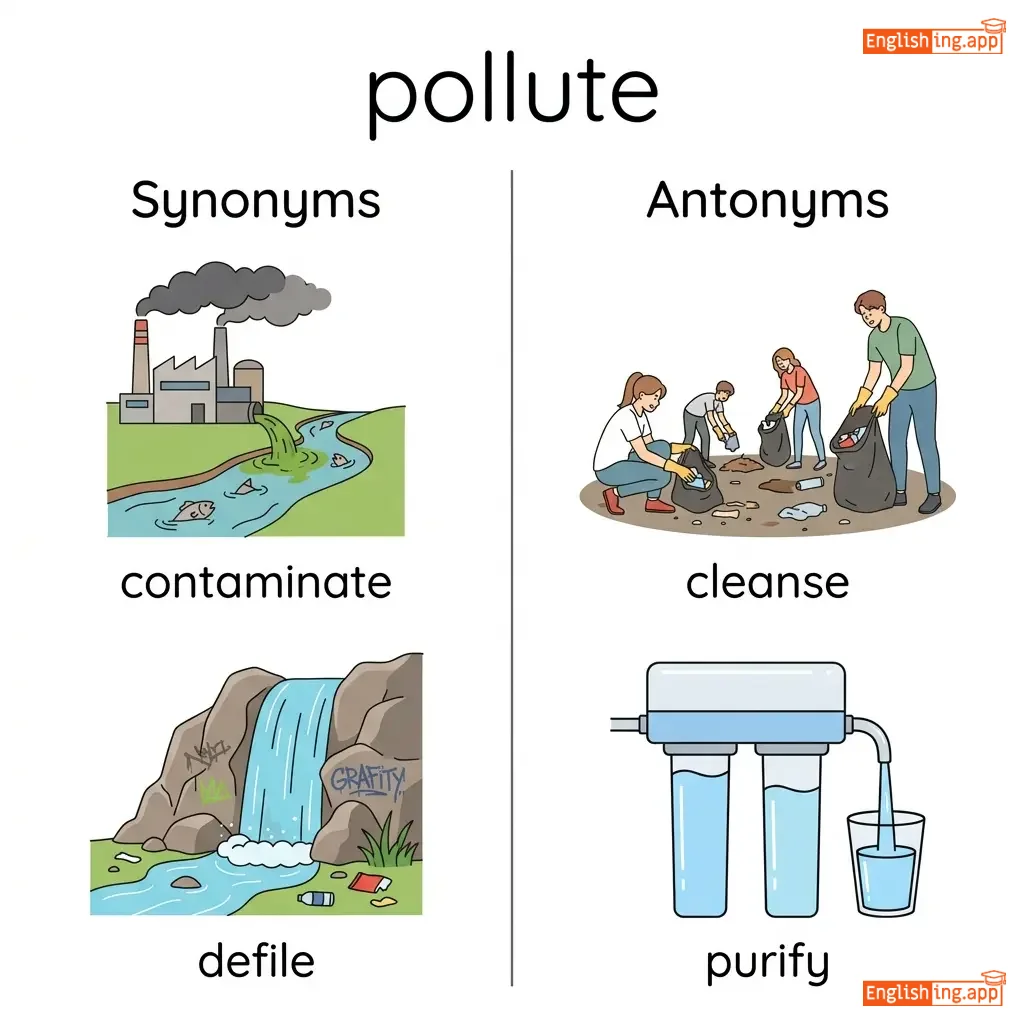
contaminate, dirty, taint, poison
|
••••••
|
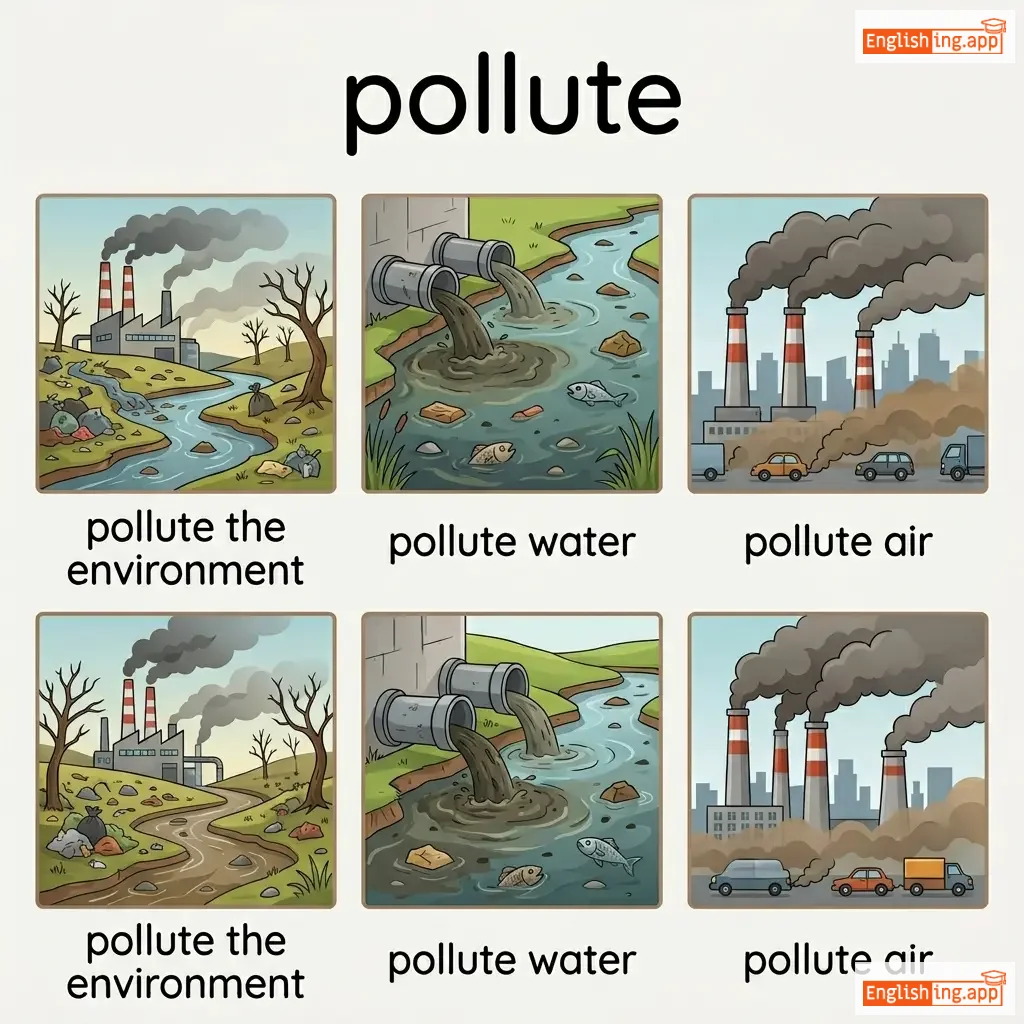
pollute environment, pollute air, pollute water, heavily pollute, pollute atmosphere
|
Pollute → contaminar — sounds like 'contaminated' in English.
••••••
|
|
••••••
|
/pɑːrˈtɪsɪpeɪt/
verb
(partisipeit)
••••••
|
••••••
|
participar
participar
••••••
|
partisipeited
••••••
|
partisipeited
••••••
|
partisipeits
••••••
|
partisipeiting
••••••
|
to take part in or become involved in an activity
|
Students are encouraged to participate in extracurricular activities.
Students ar encourachd tu partisipeit in extracurricular activitiz.
••••••
|
Se anima a los estudiantes a participar en actividades extracurriculares.
se anima a los estudiantes a participar en actividades extracurriculares.
••••••
|
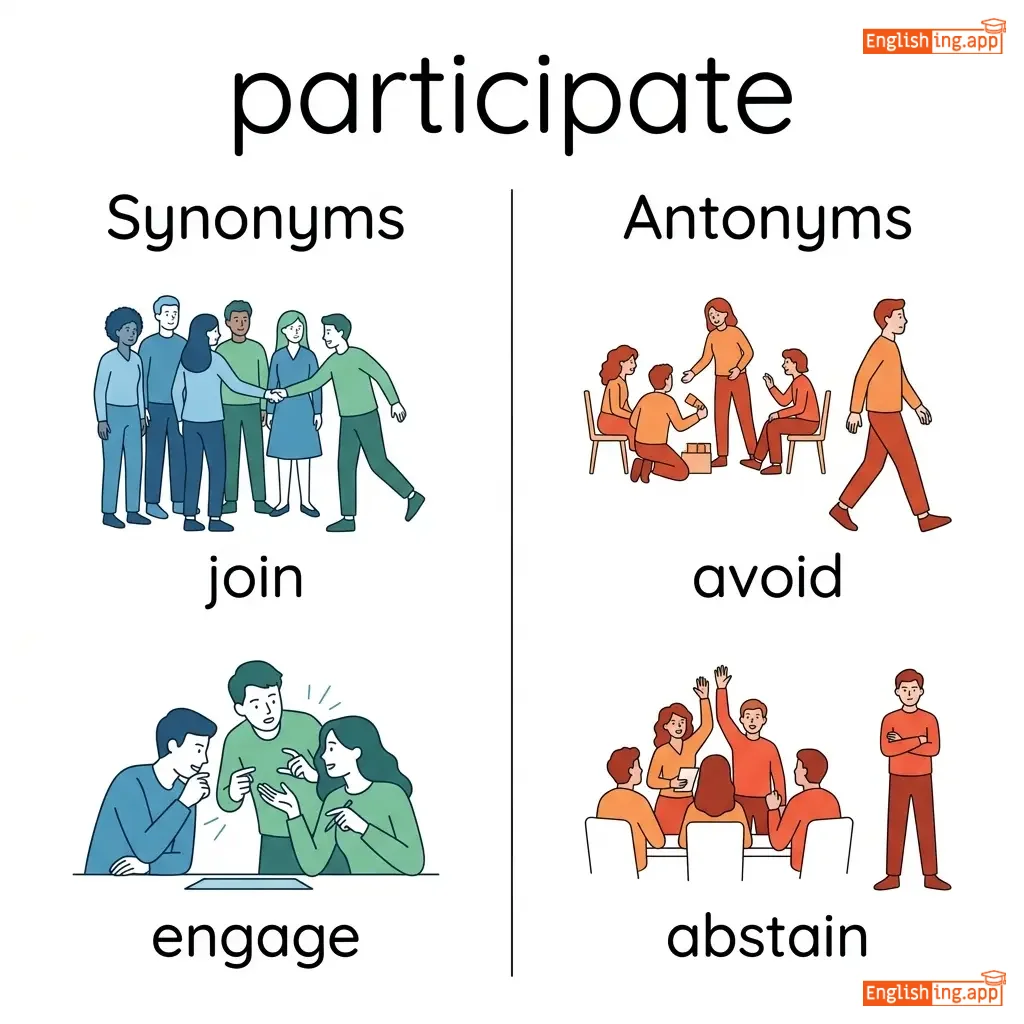
join, engage, contribute, take part
|
abstain, withdraw, avoid, exclude
|
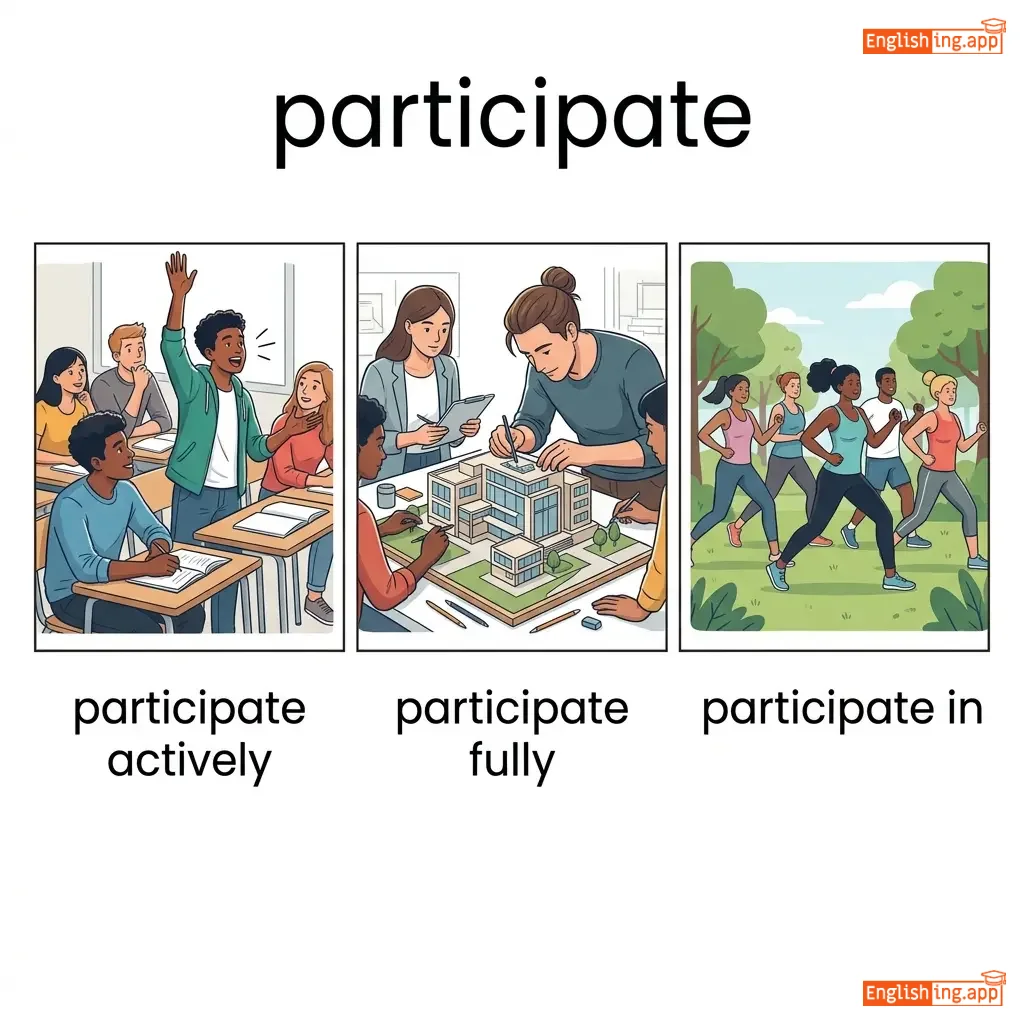
participate in, actively participate, participate fully, participate together, participate willingly
|
Participate and 'participar' look almost the same — easy to remember!
••••••
|
|
••••••
|
/prɪˈpɛər/
verb
(prepear)
••••••
|
••••••
|
preparar
preparar
••••••
|
prepeard
••••••
|
prepeard
••••••
|
prepears
••••••
|
prepearing
••••••
|
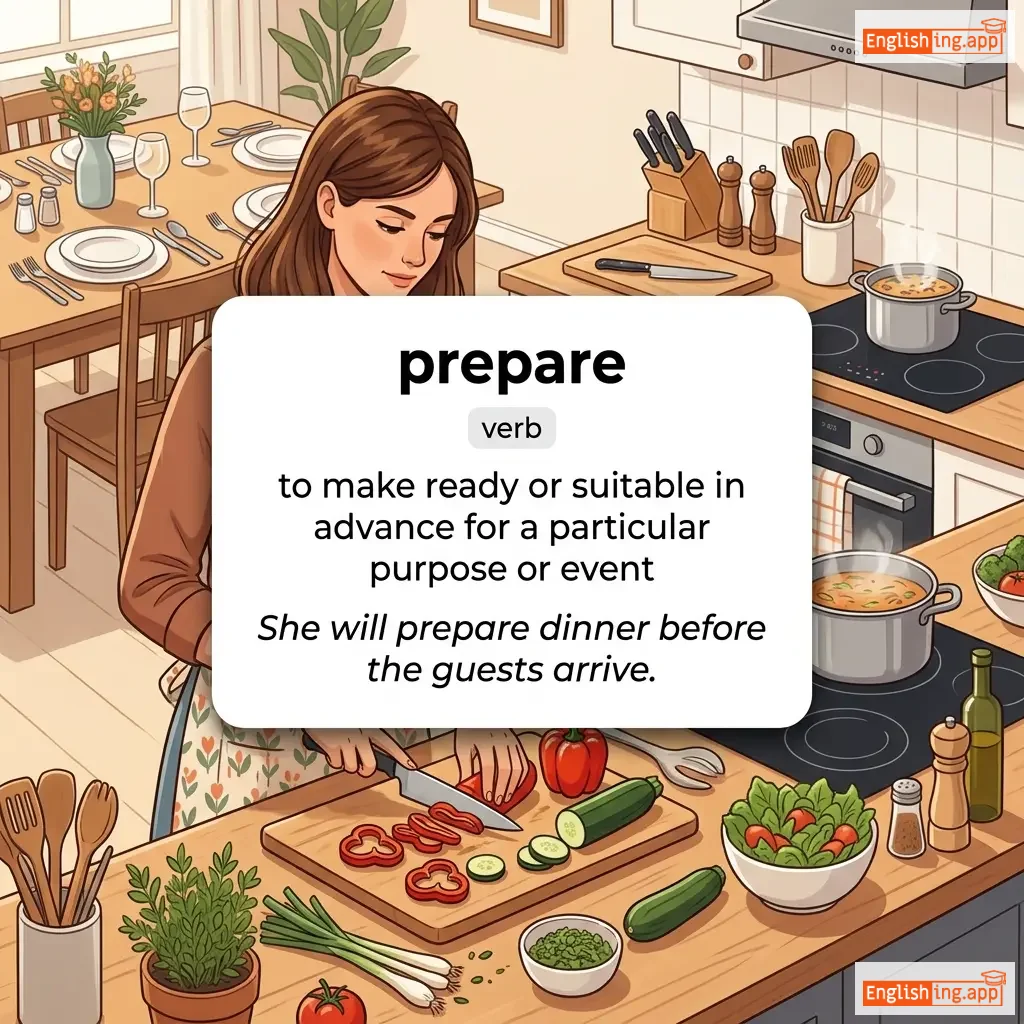
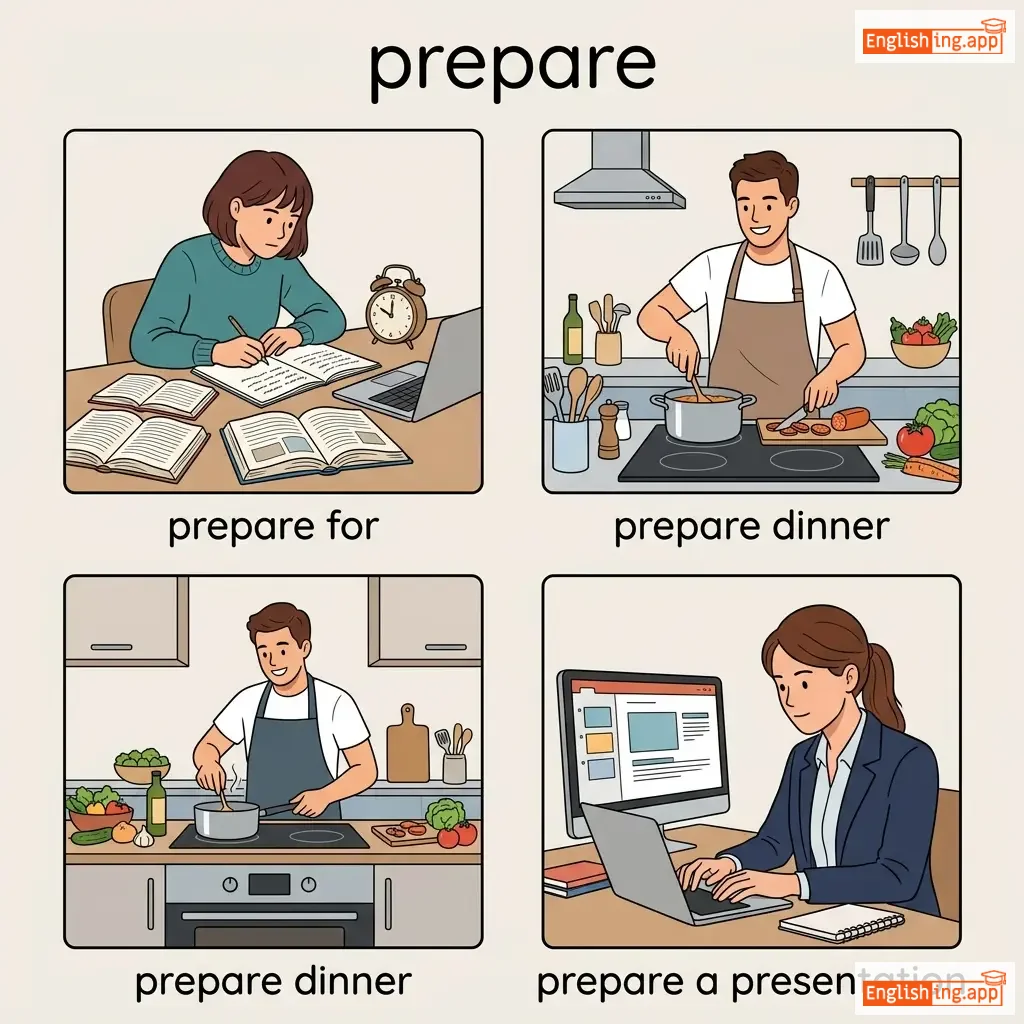
to make ready; to get something ready for use
|
She needs to prepare dinner for her family.
shi nids tu prepear diner for jer famili.
••••••
|
Ella necesita preparar la cena para su familia.
Eya nesesita preparar la sena para su familia
••••••
|
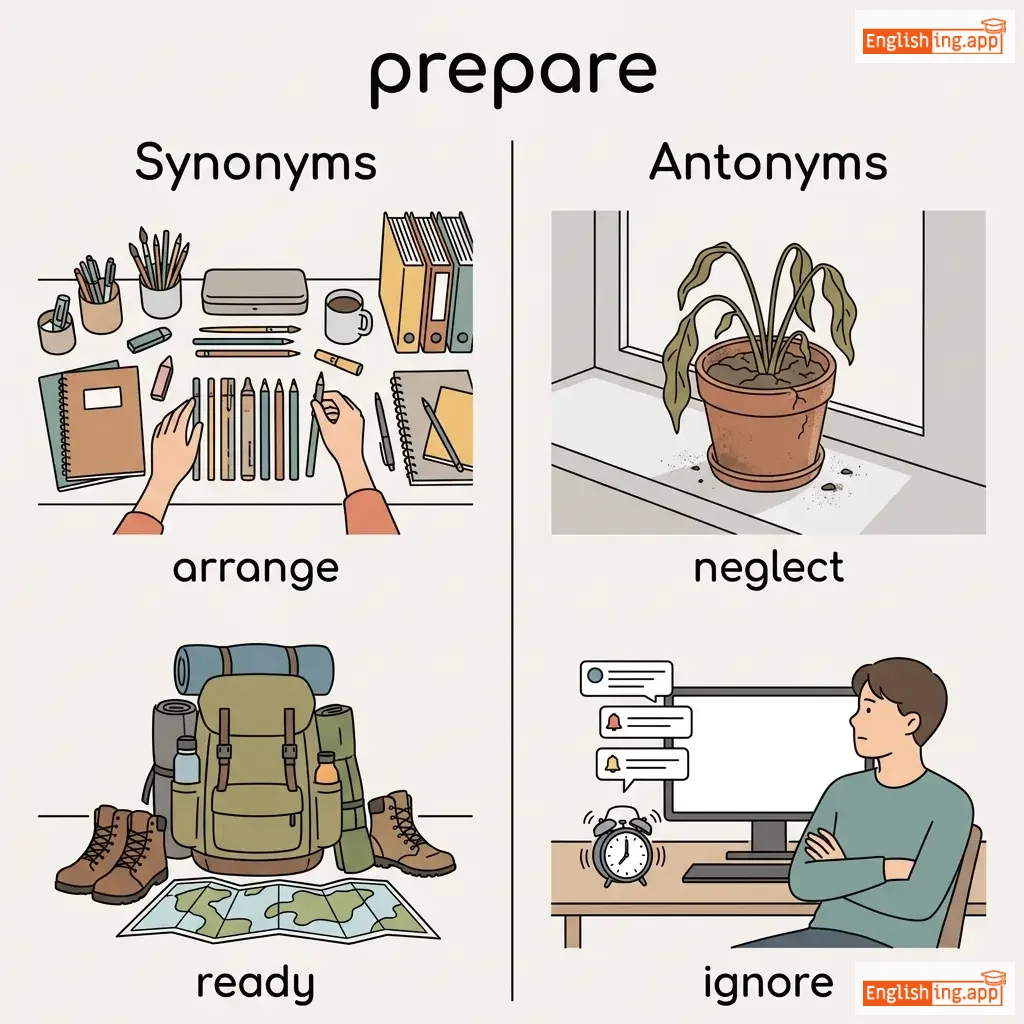
ready, arrange, organize, plan
|
neglect, ignore, abandon, destroy
|
prepare for, prepare carefully, prepare dinner, prepare ahead, well prepared, prepare thoroughly
|
Prepare and preparar look similar – both mean to make ready!
••••••
|
|
••••••
|
/əˈreɪndʒ/
verb
(arréinj)
••••••
|
••••••
|
organizar
organizar
••••••
|
arréinjd
••••••
|
arréinjd
••••••
|
arréinjis
••••••
|
arréinjing
••••••
|
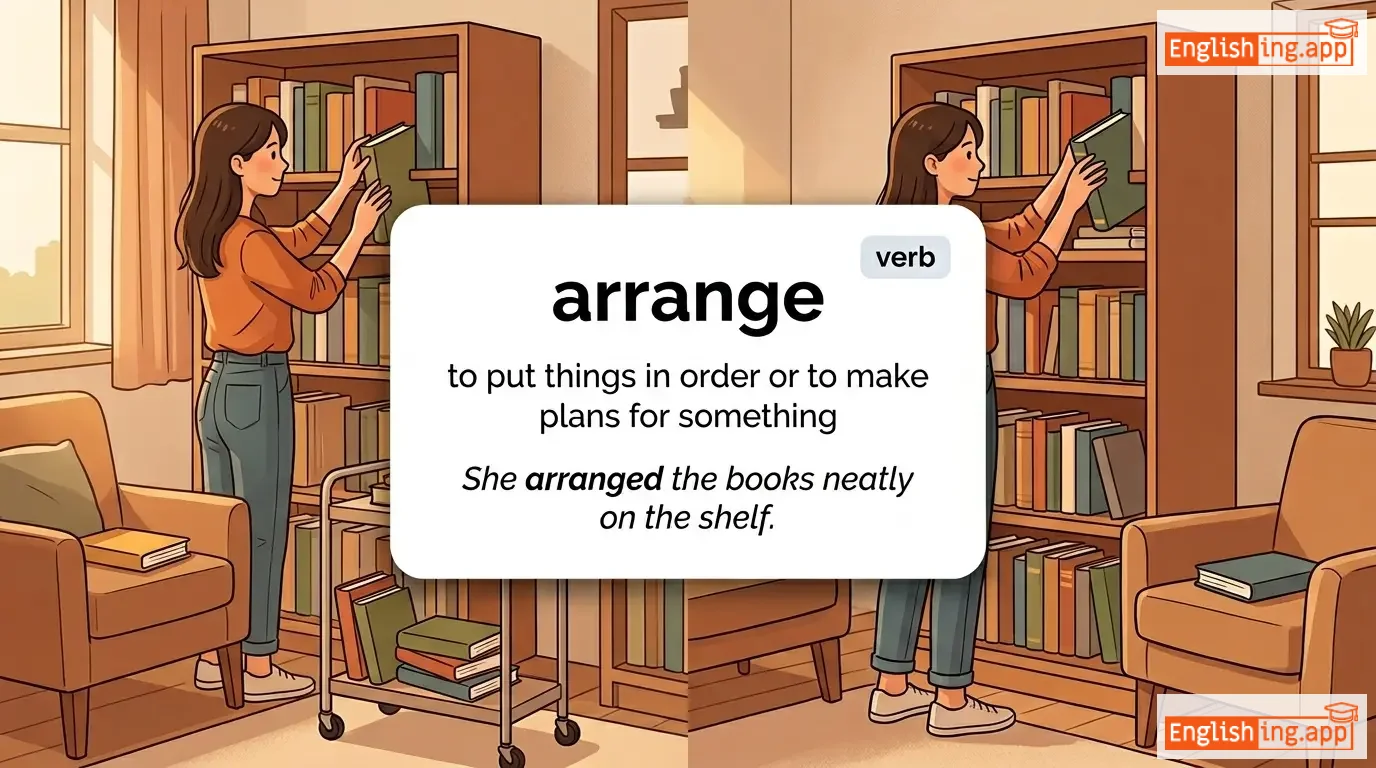
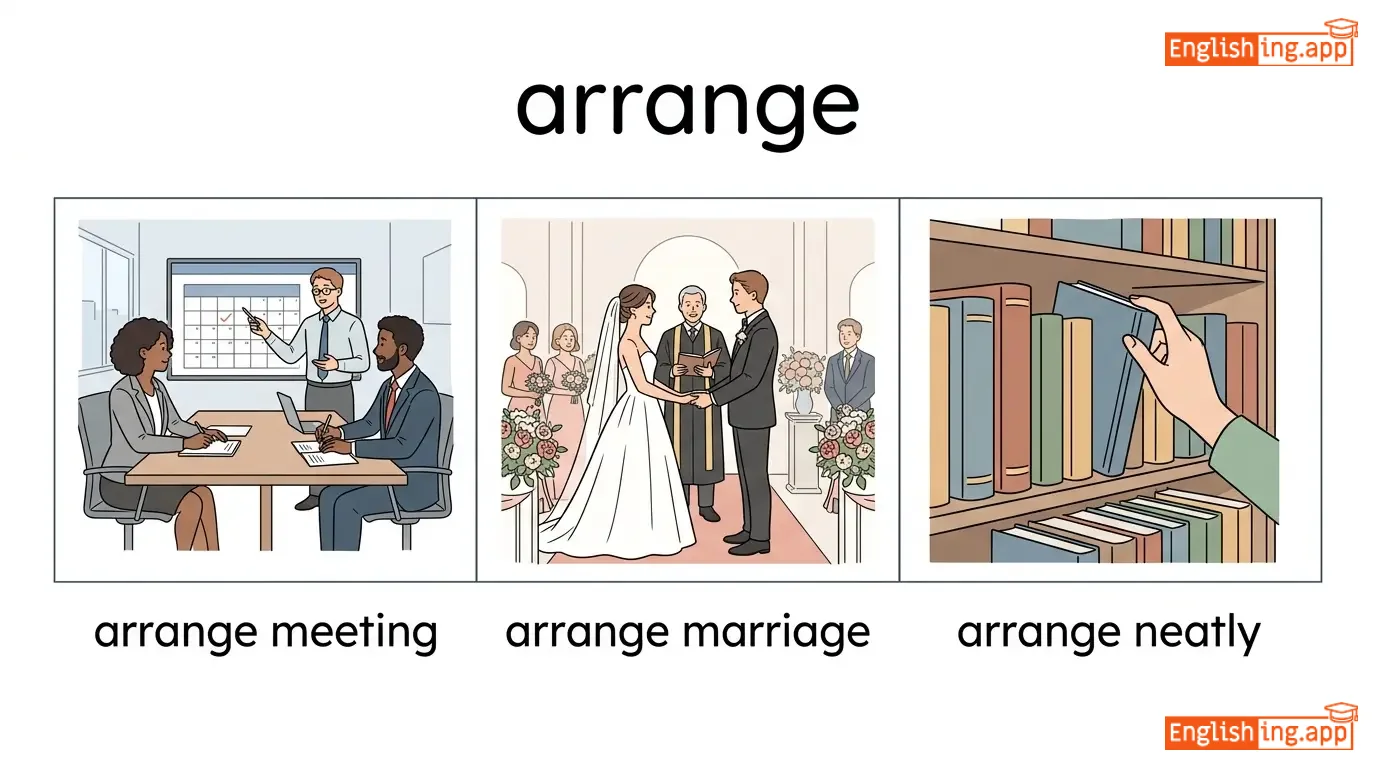
to organize or put in order; to plan or prepare
|
She arranged the flowers in a vase.
shi arréinjd de fláwers in a véis
••••••
|
Ella organizó las flores en un jarrón.
eya organizo las flores en un jarron
••••••
|
organize, order, plan, prepare
|
disorganize, scatter, mess up, disorder
|
arrange carefully, arrange properly, arrange meeting, arrange flowers, arrange in order
|
Arrange sounds like 'organizar' — both mean putting things in order.
••••••
|
|
••••••
|
/ˈɛmfəˌsaɪz/
verb
(émfasais)
••••••
|
••••••
|
enfatizar
enfatizar
••••••
|
émfasaisd
••••••
|
émfasaisd
••••••
|
émfasaises
••••••
|
émfasaising
••••••
|
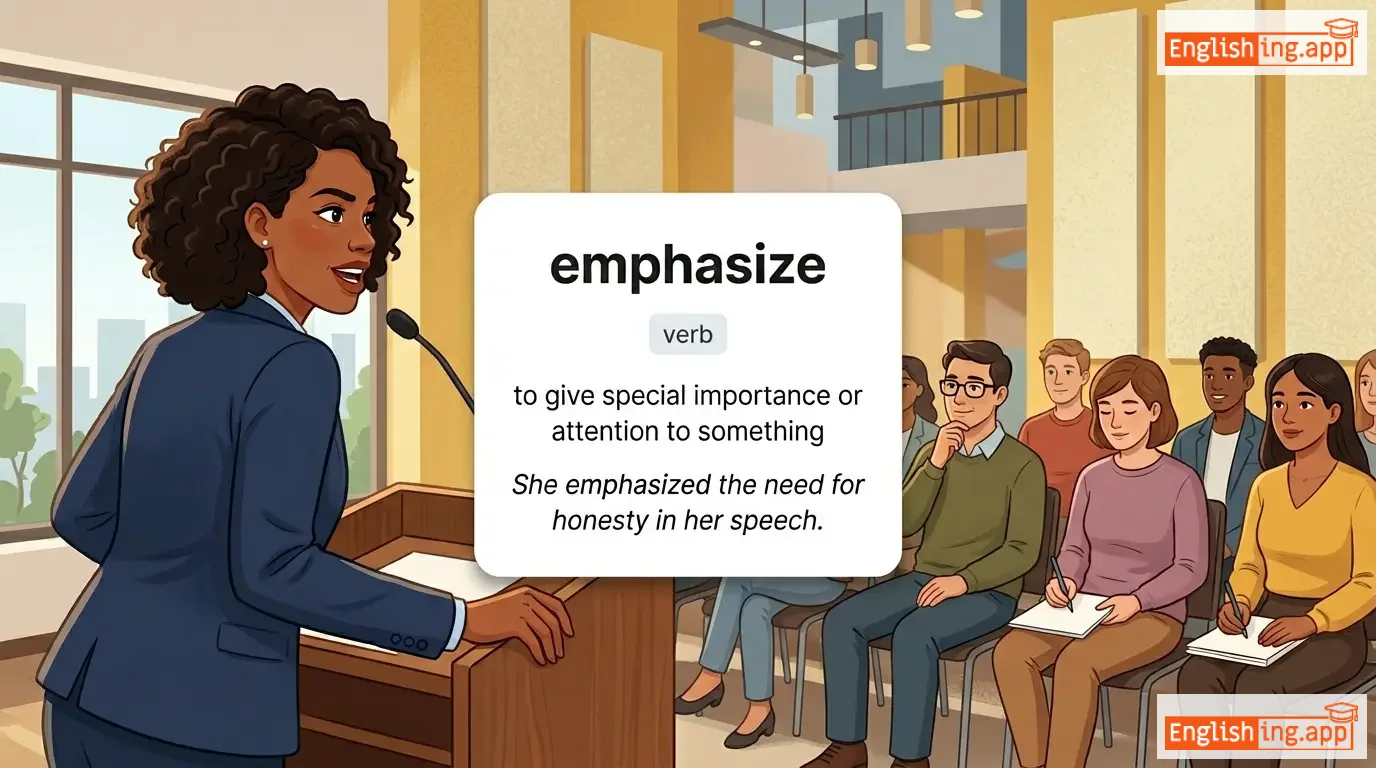
to give special importance or attention to something
|
The teacher emphasized the importance of homework.
de ticher émfasaisd de importans of jomwark.
••••••
|
El maestro enfatizó la importancia de la tarea.
El maestro enfatizo la importancia de la tarea
••••••
|
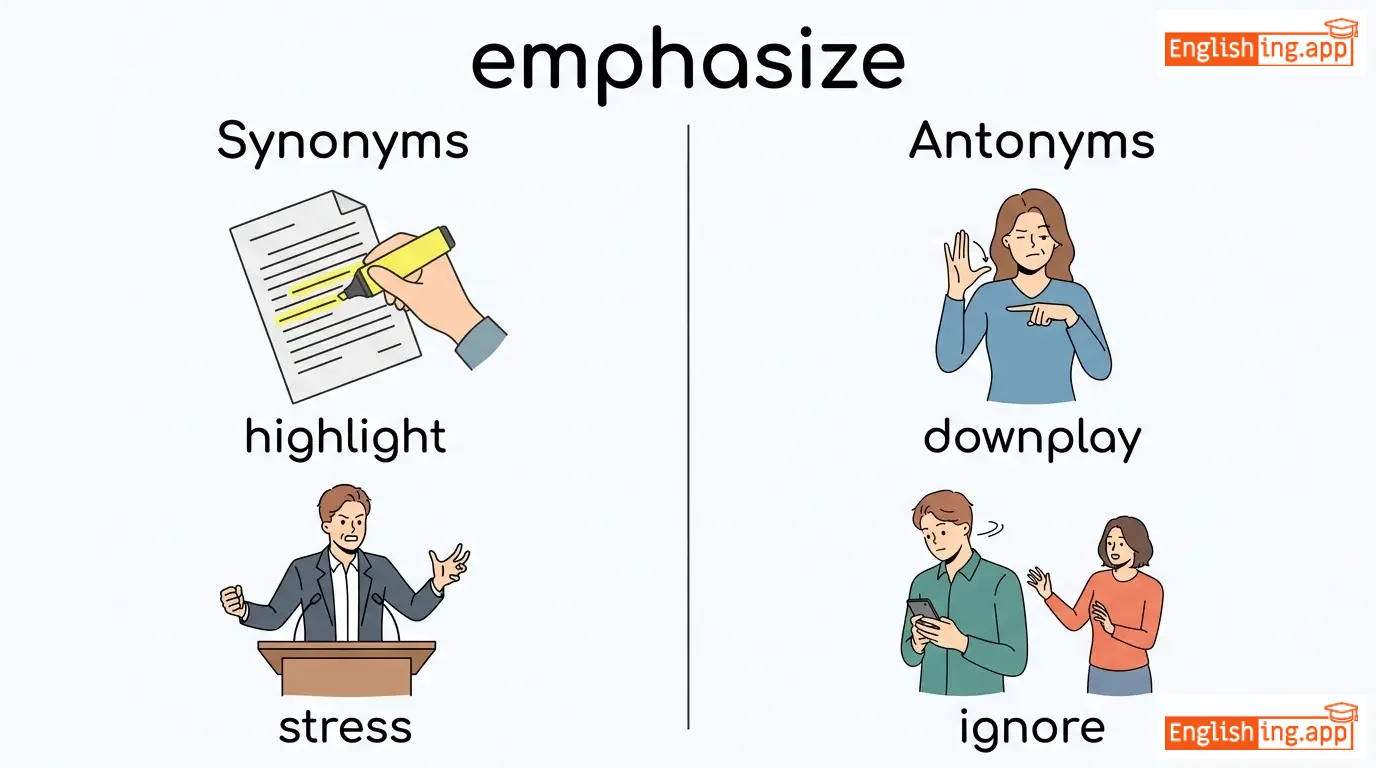
stress, highlight, underline, accentuate
|
downplay, minimize, ignore
|
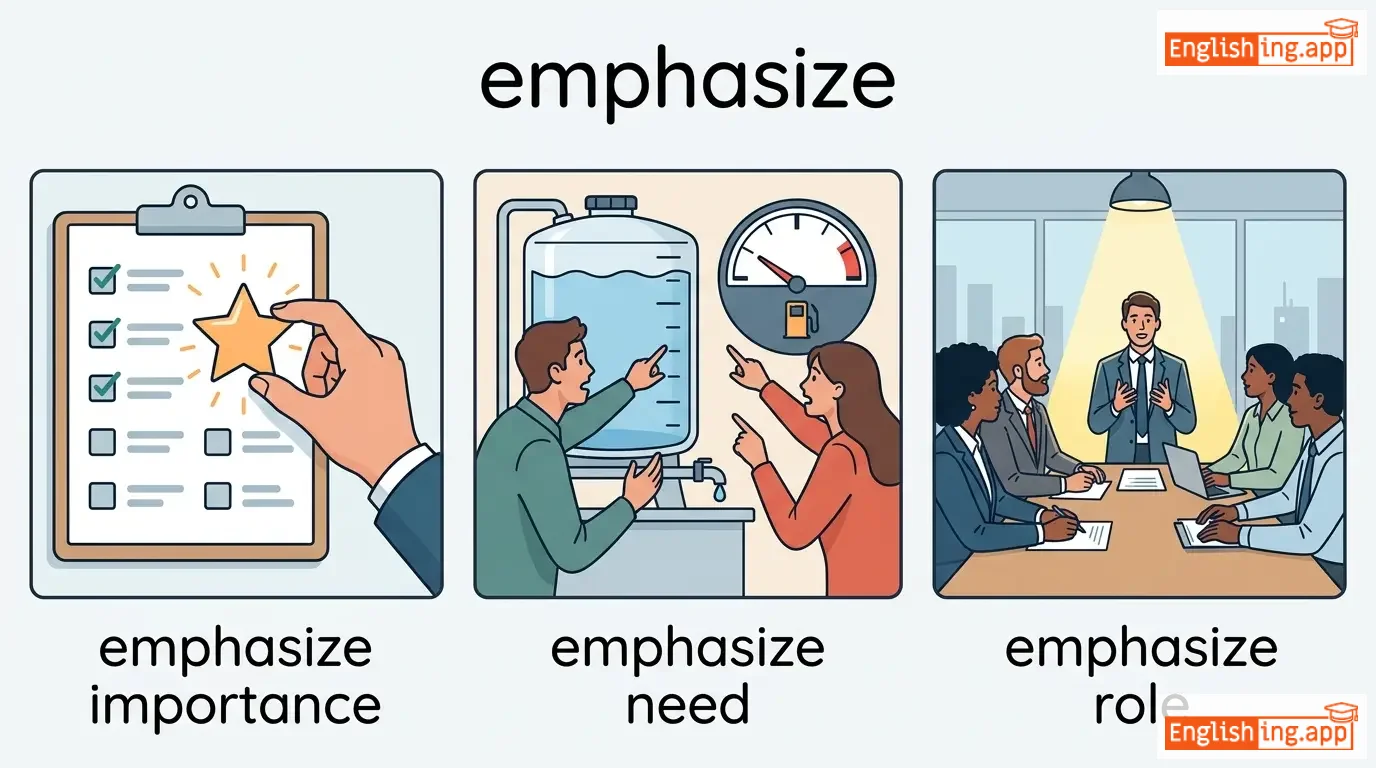
emphasize importance, strongly emphasize, emphasize point, emphasize need, clearly emphasize
|
To emphasize something in Spanish, you 'enfatizar' it — sounds powerful like 'emphasize'!
••••••
|
|
••••••
|
/kwɪt/
verb
(cuít)
••••••
|
••••••
|
dejar
dejar
••••••
|
cuít/cuíted
••••••
|
cuít/cuíted
••••••
|
cuíts
••••••
|
cuíting
••••••
|
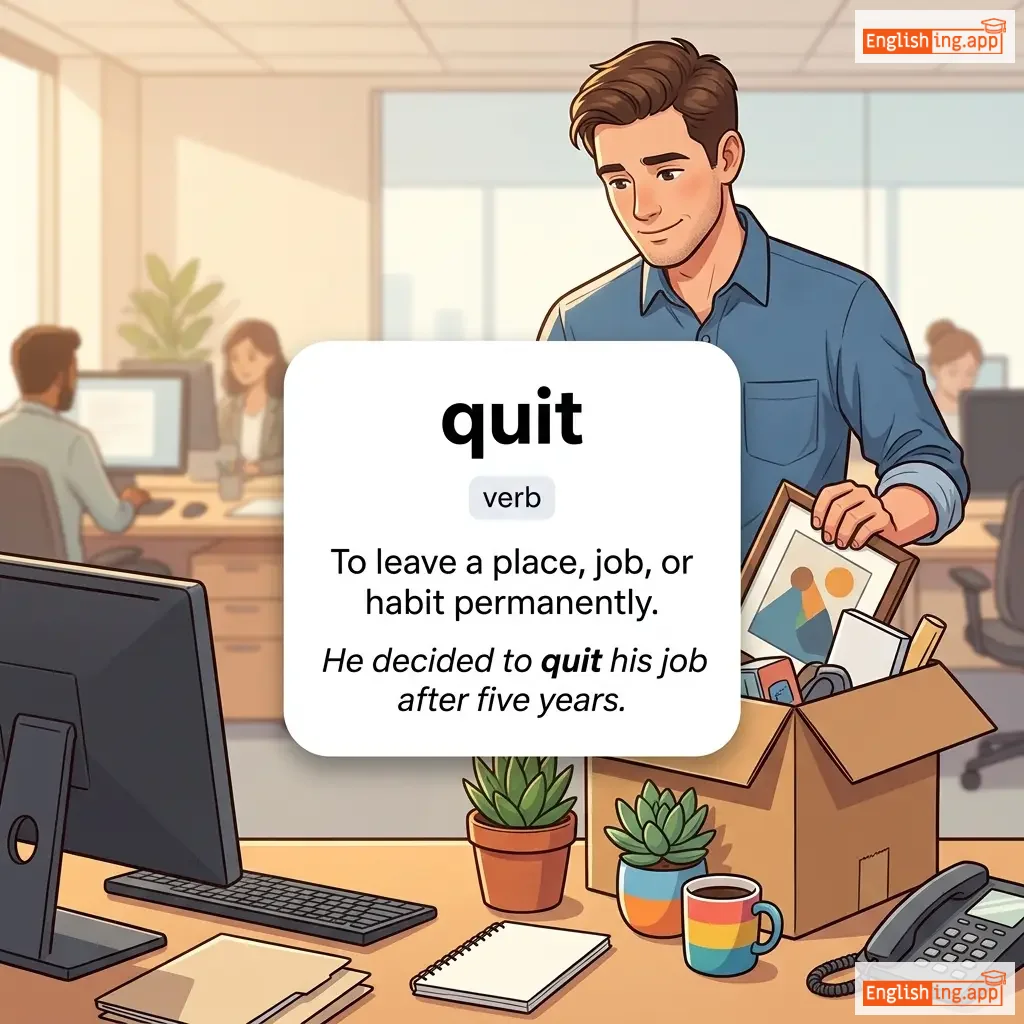
to stop doing something; to leave a job or position
|
She decided to quit her job and start her own business.
Shi desaidid tu cuít jer yob and estart jer oun bisnes.
••••••
|
Ella decidió dejar su trabajo y empezar su propio negocio.
Eya decidio dejar su trabajo y empezar su propio negocio.
••••••
|
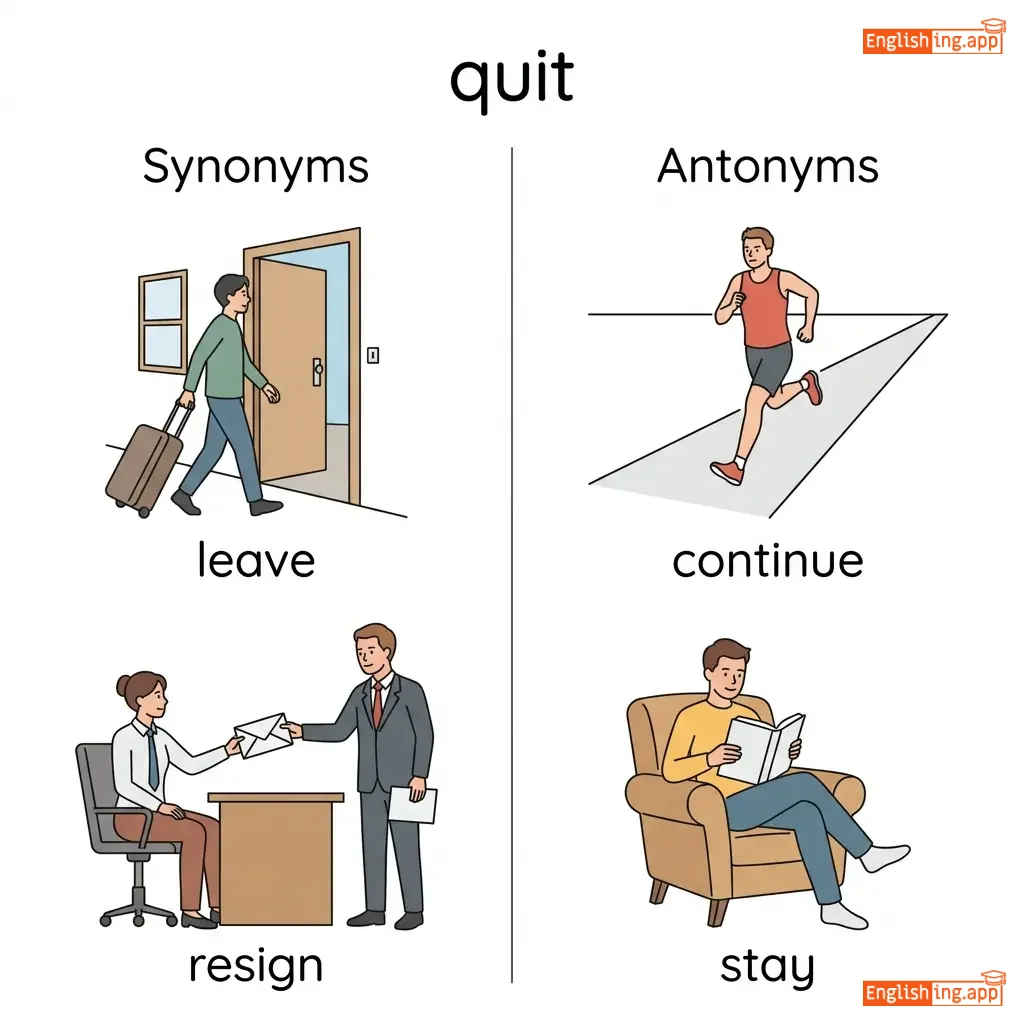
stop, cease, leave, resign
|
start, begin, continue, persist
|
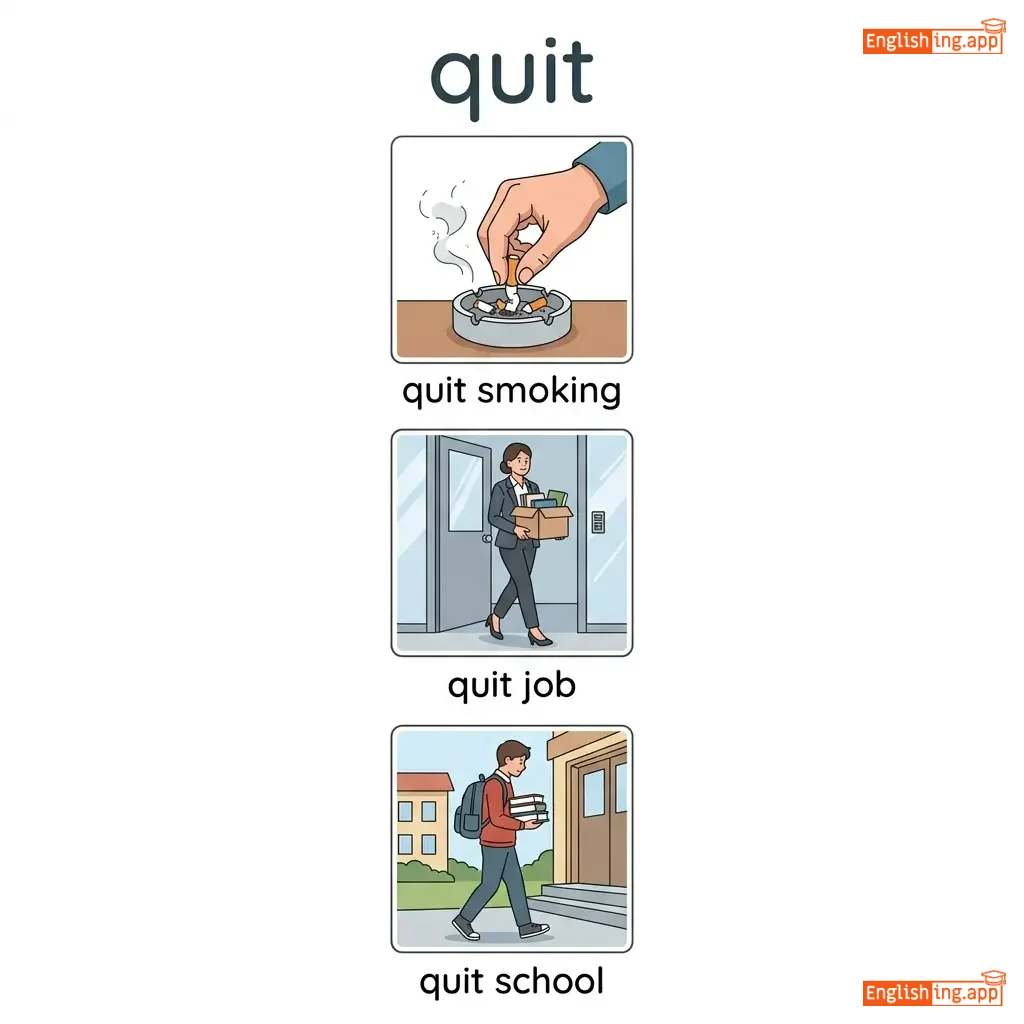
quit job, quit smoking, quit school, quit trying, quit suddenly, quit forever
|
Quit sounds like ‘dejar’—both mean to stop or leave.
••••••
|
|
••••••
|
/səbˈmɪt/
verb
(səbˈmɪt)
••••••
|
••••••
|
entregar
entregar
••••••
|
səbˈmɪtəd
••••••
|
səbˈmɪtəd
••••••
|
səbˈmɪts
••••••
|
səbˈmɪtɪŋ
••••••
|
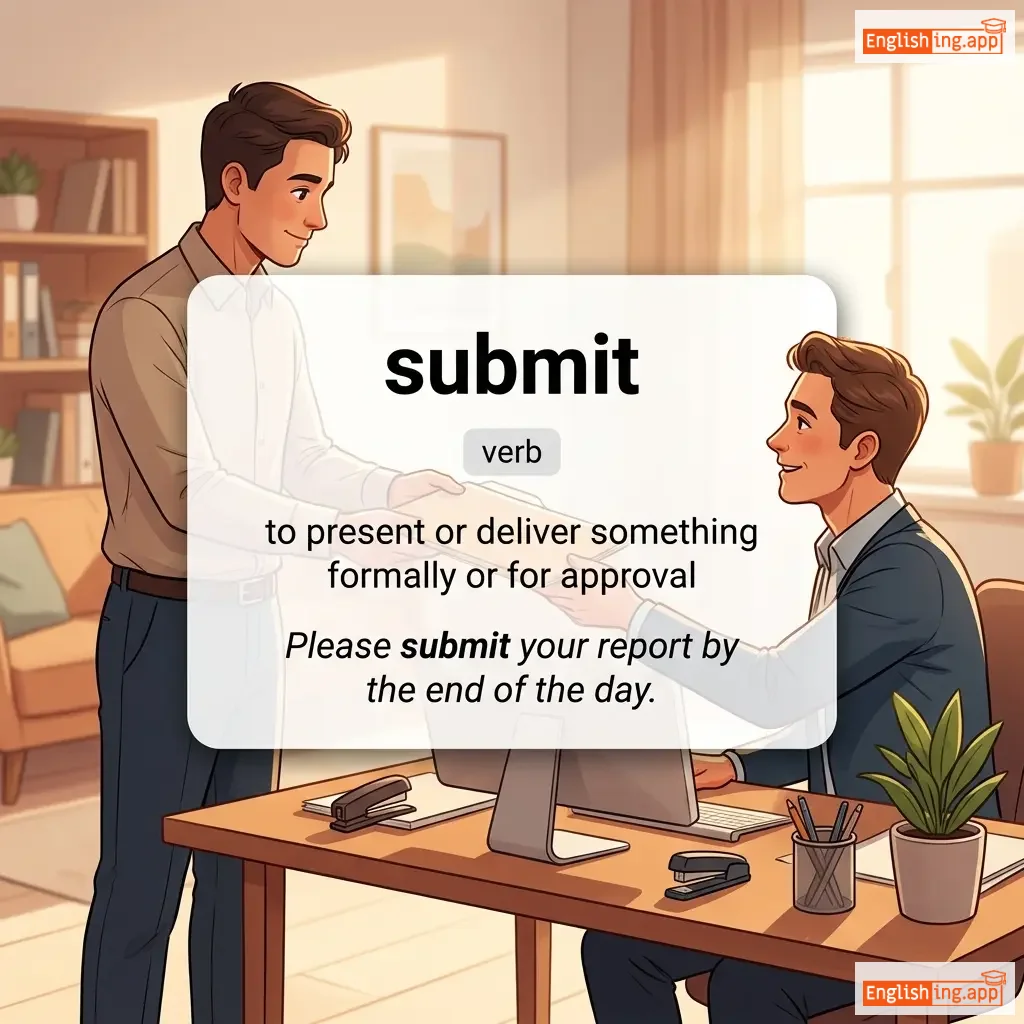
to present for consideration; to surrender; to yield
|
Please submit your assignment by Friday.
Por favor, entregue su tarea antes del viernes.
••••••
|
Por favor, entregue su tarea antes del viernes.
Por favor, entregue su tarea antes del viernes.
••••••
|
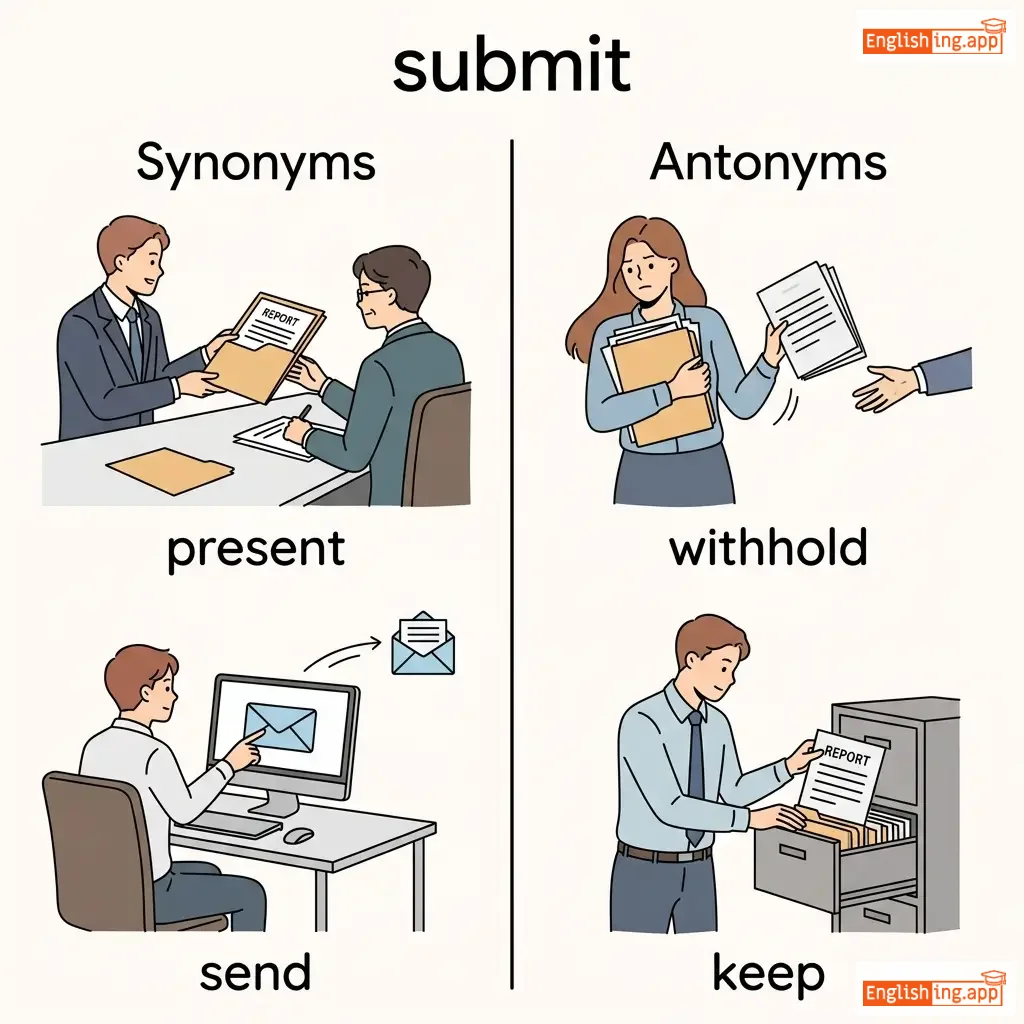
present, hand in, surrender, yield
|
withdraw, resist, refuse, reject
|
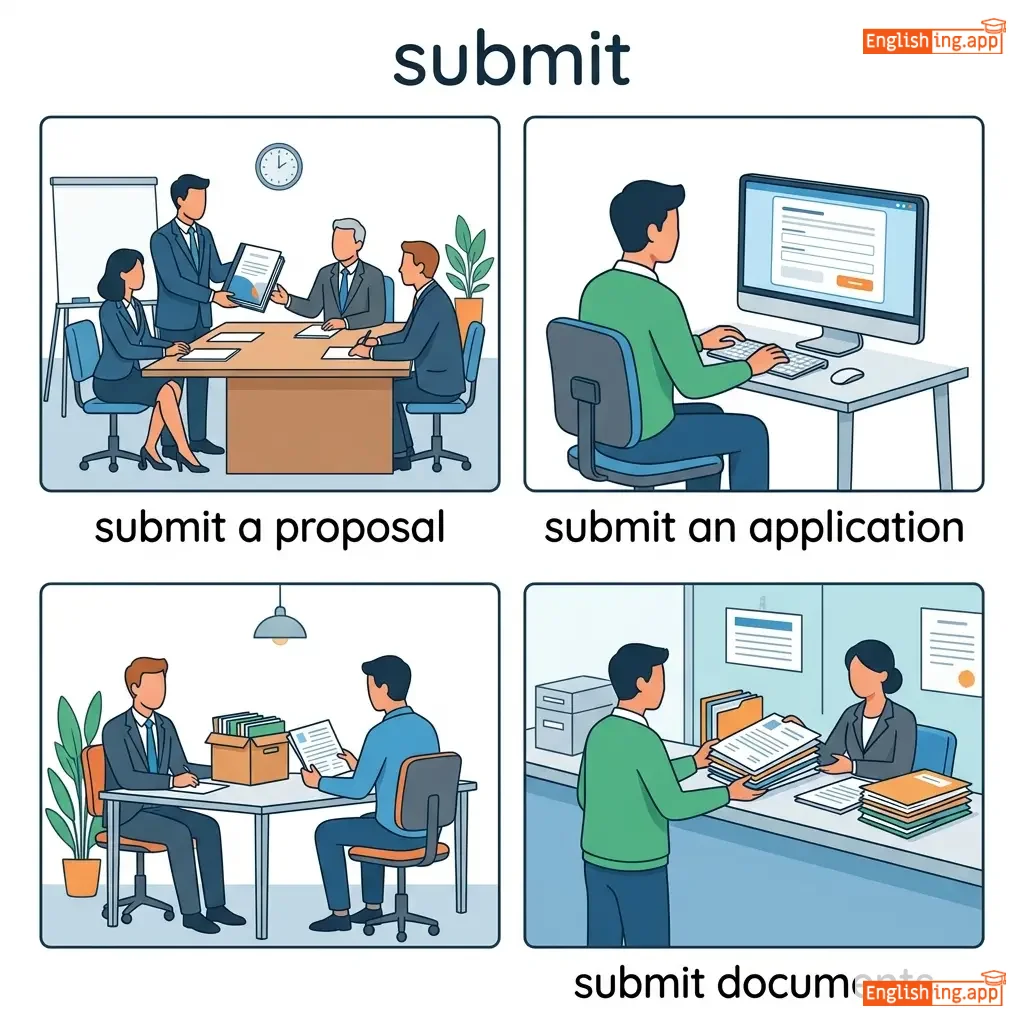
submit application, submit report, submit assignment, submit proposal, submit documents
|
¡Entregar tu tarea es rendirse a la fecha límite!
••••••
|
|
••••••
|
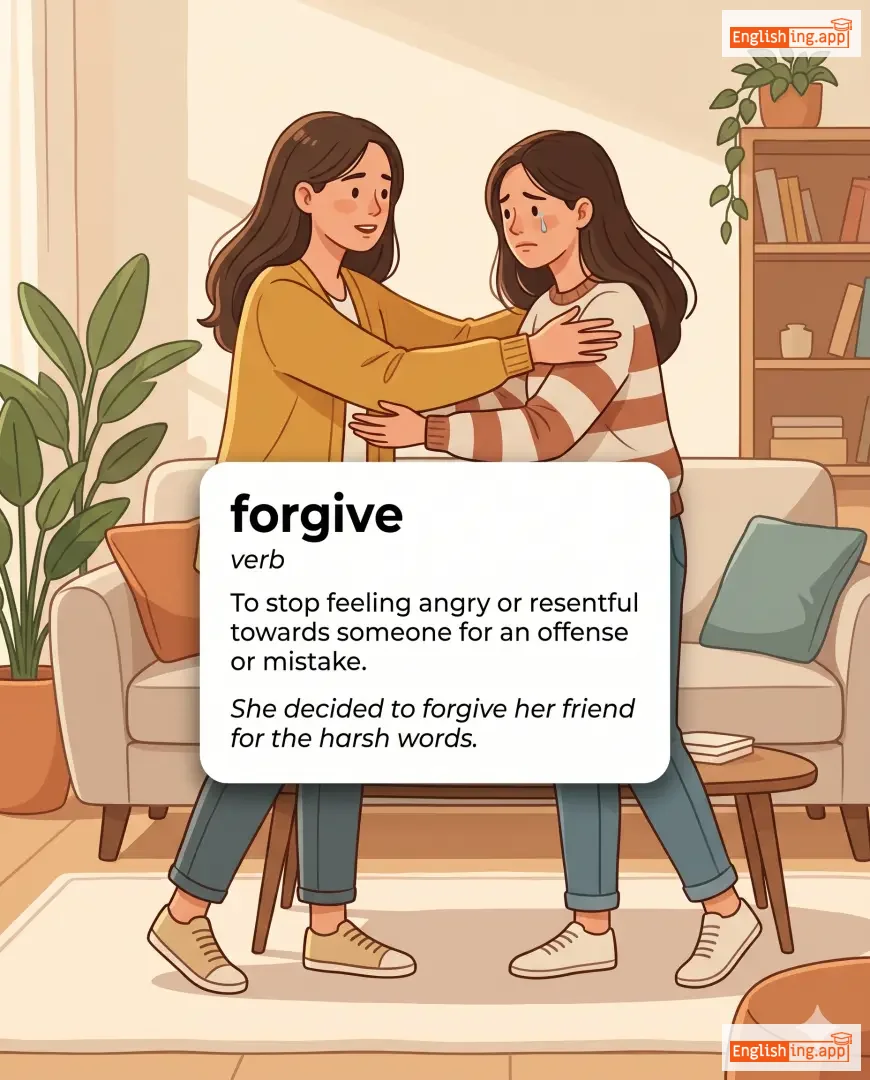
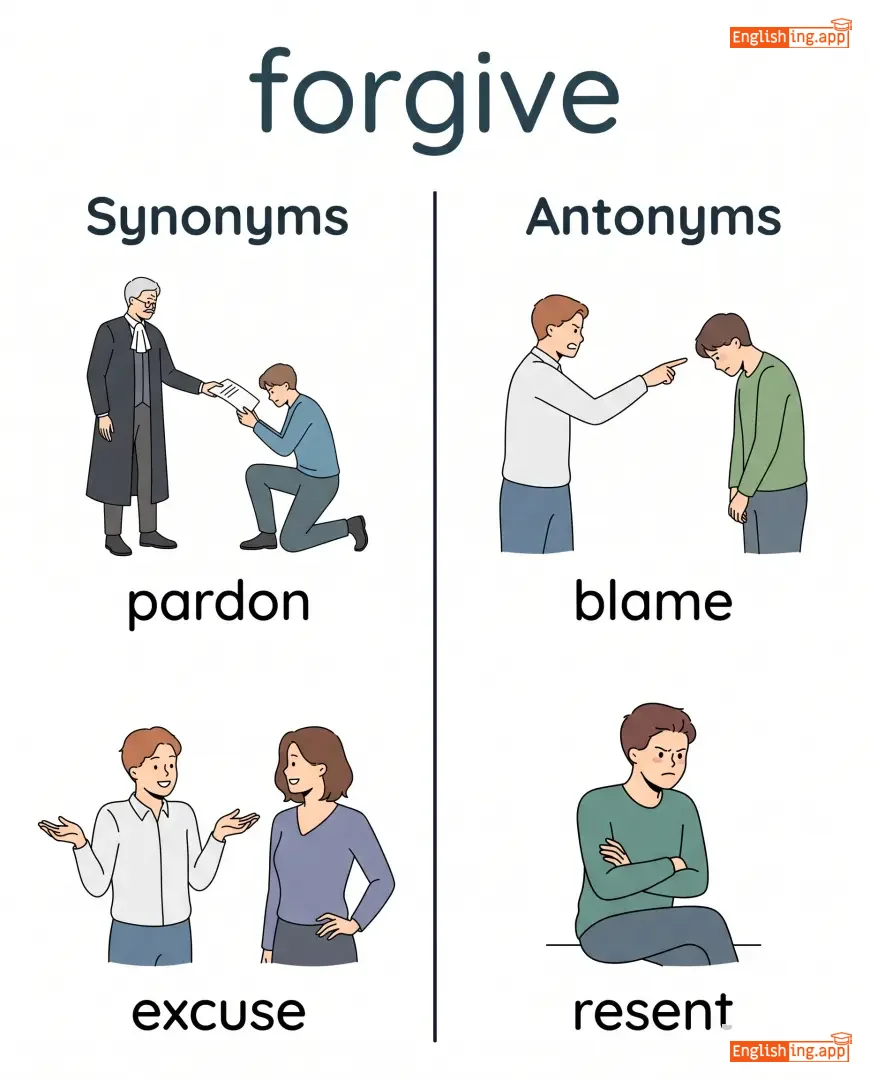
/fərˈɡɪv/
verb
(forgiv)
••••••
|
••••••
|
perdonar
perdonar
••••••
|
forgeiv
••••••
|
forgiven
••••••
|
forgivs
••••••
|
forgiving
••••••
|
to stop feeling angry or resentful toward someone for an offense
|
I forgive you for your mistake.
ai forgiv yu for yor mistake
••••••
|
Te perdono por tu error.
Te perdono por tu error.
••••••
|
••••••
|
••••••
|
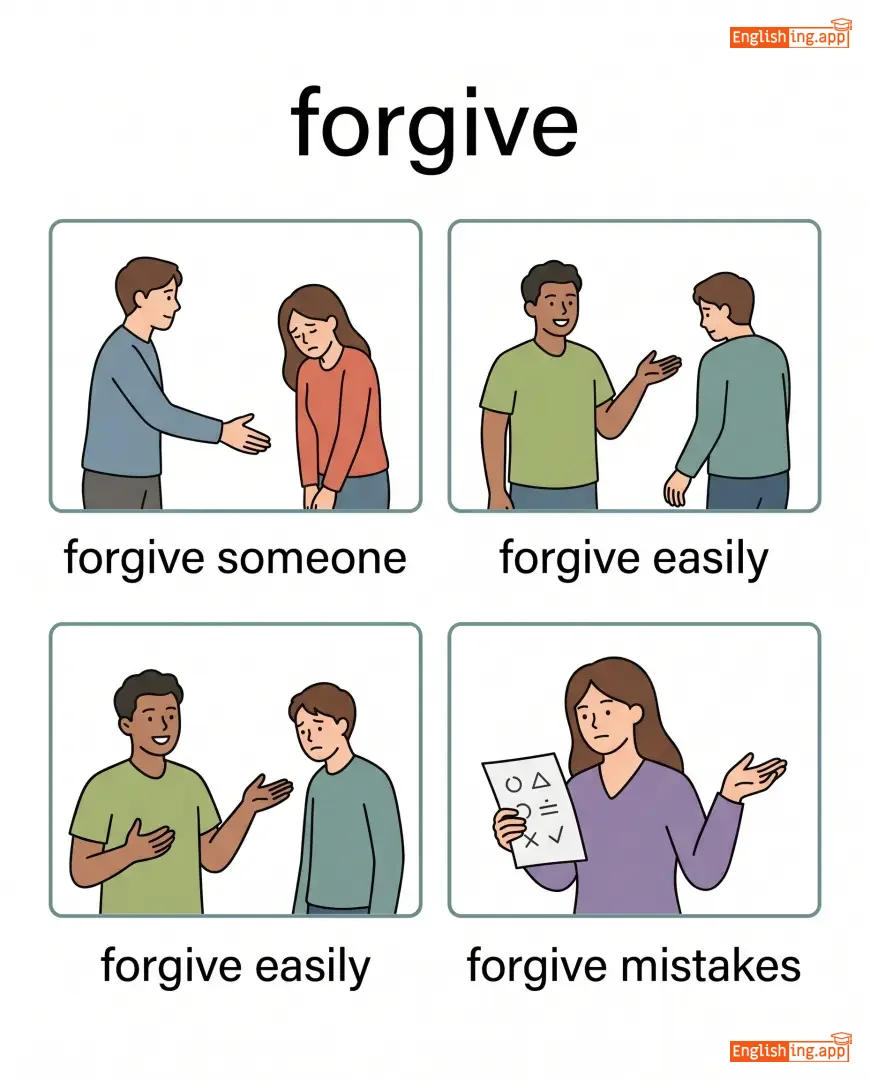
forgive completely, forgive mistake, forgive someone, please forgive, forgive and forget
|
If you ‘perdonar’, you let go — just like ‘forgive’ means to release anger.
••••••
|
|
••••••
|
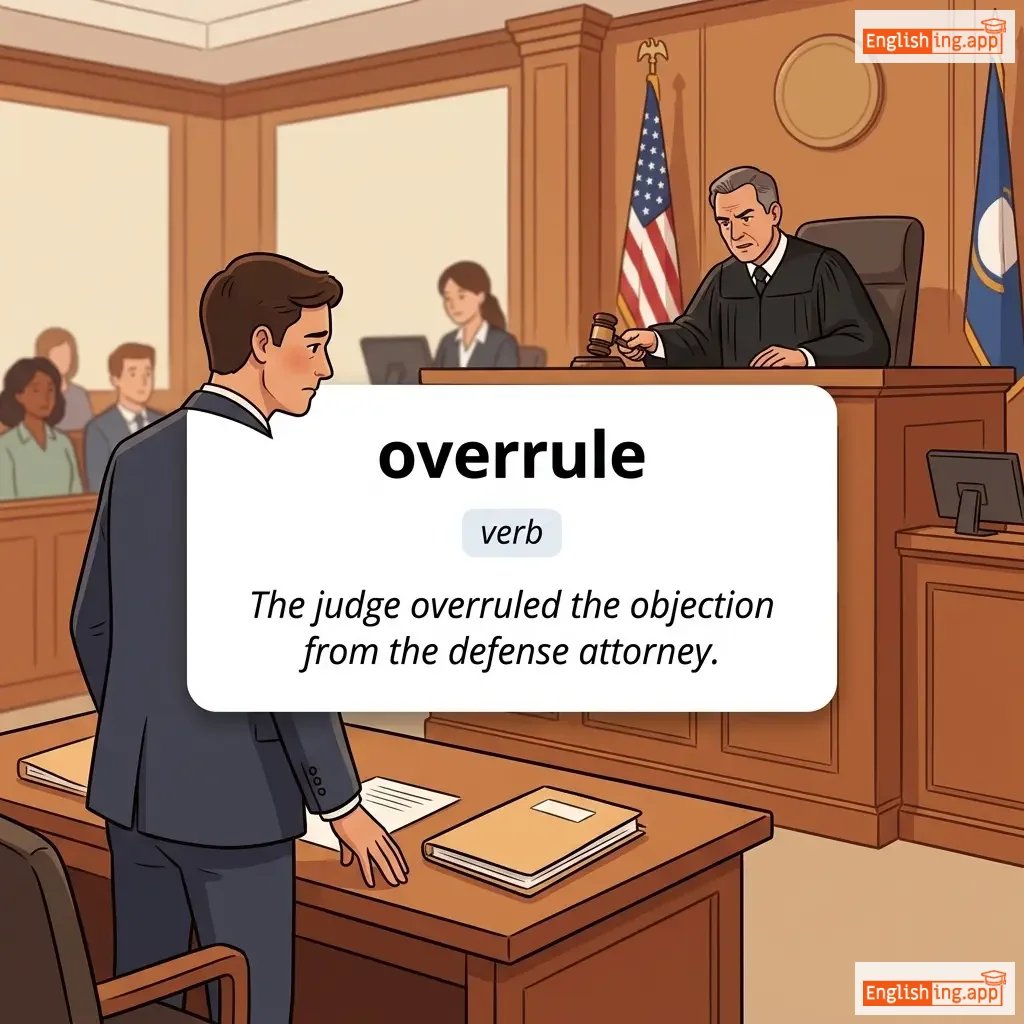
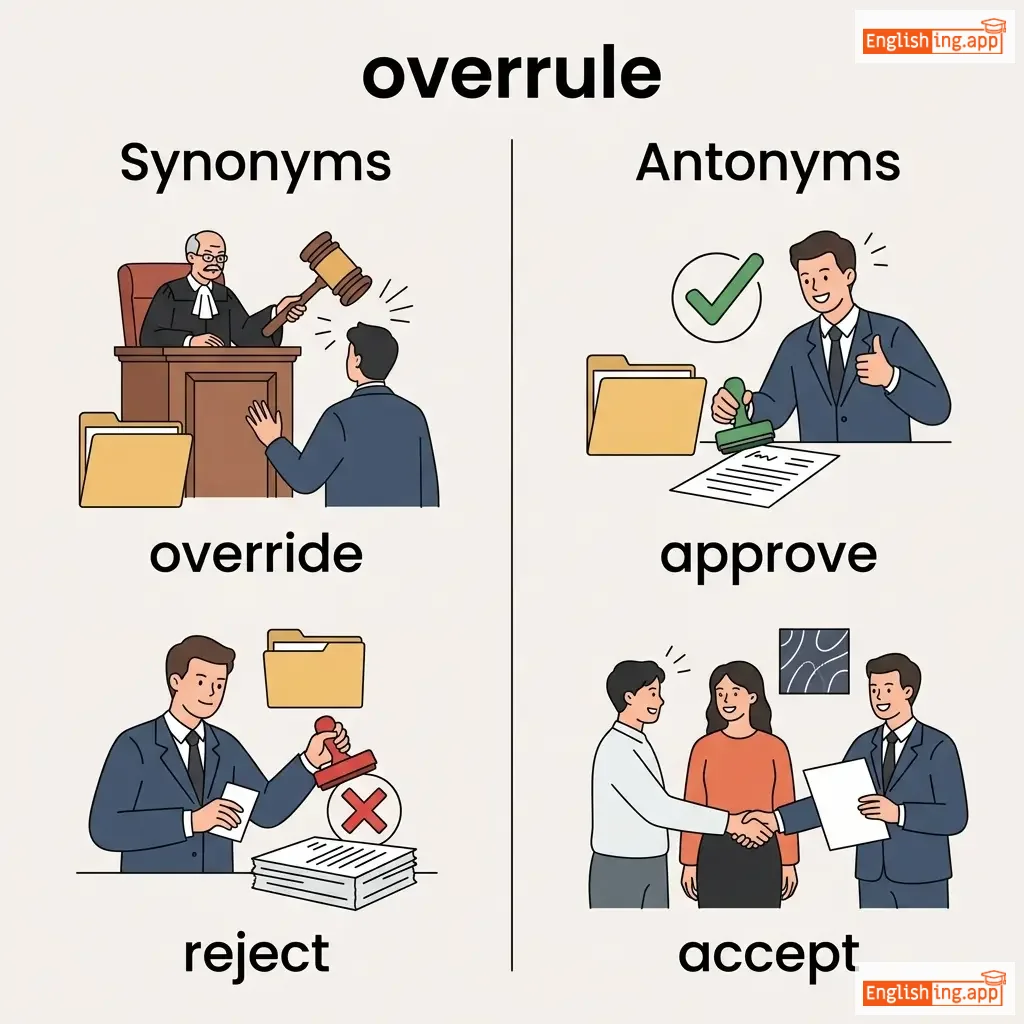
/ˌoʊvərˈruːl/
verb
(ouvarrul)
••••••
|
••••••
|
anular
anular
••••••
|
ouvarruld
••••••
|
ouvarruld
••••••
|
ouvarruls
••••••
|
ouvarruling
••••••
|
to reject or disallow by exercising one's superior authority; to override a decision
|
The judge overruled the objection from the defense attorney.
El yach ouvarruld di obyekshon from di difens atorni.
••••••
|
El juez anuló la objeción del abogado defensor.
El huez anulo la obheksion del abogado defensor.
••••••
|
override, reject, veto, dismiss
|
approve, accept, uphold, sustain
|
overrule decision, overrule objection, overrule vote, judge overrule, overrule authority
|
Overrule sounds like 'anular' — to nullify or cancel a rule.
••••••
|
|
••••••
|
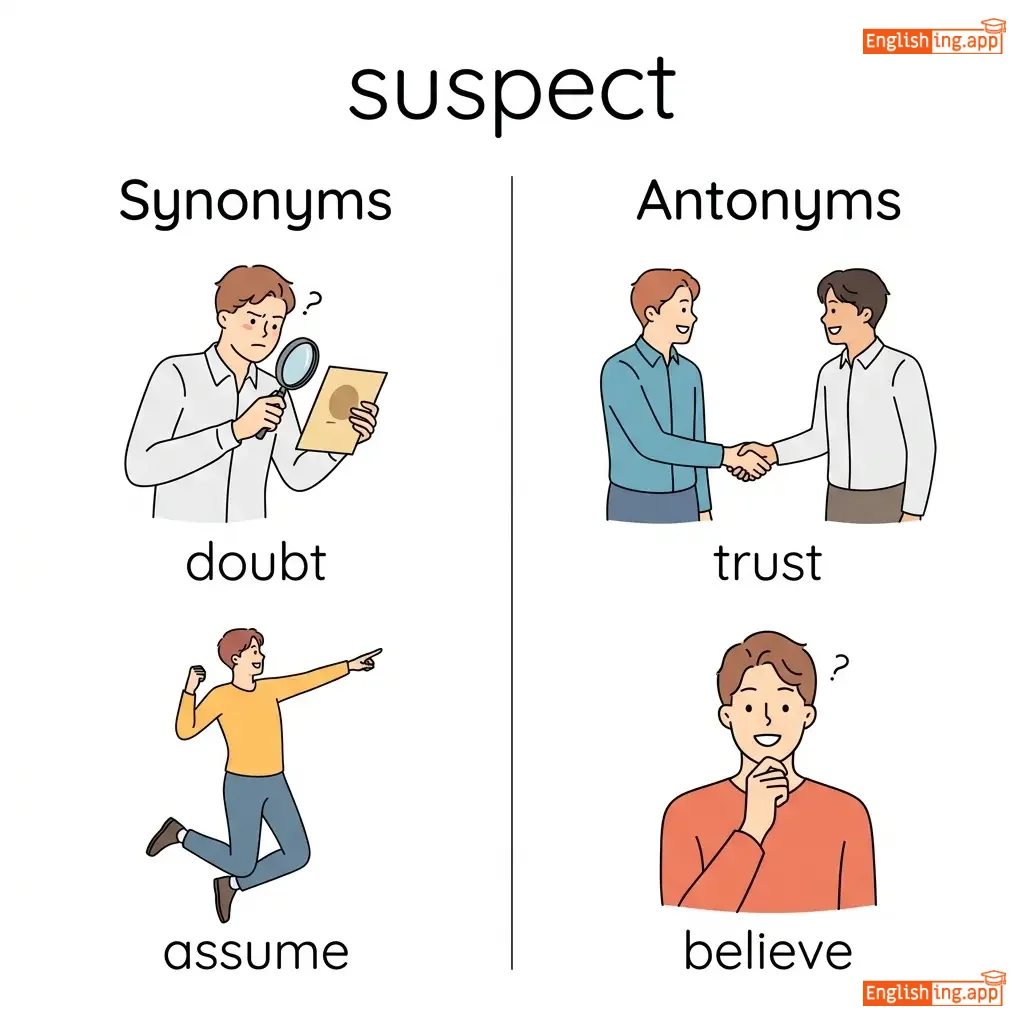
/səˈspɛkt/
verb
(saspéct)
••••••
|
••••••
|
sospechar
sospechar
••••••
|
saspékted
••••••
|
saspékted
••••••
|
saspékts
••••••
|
saspéktin
••••••
|
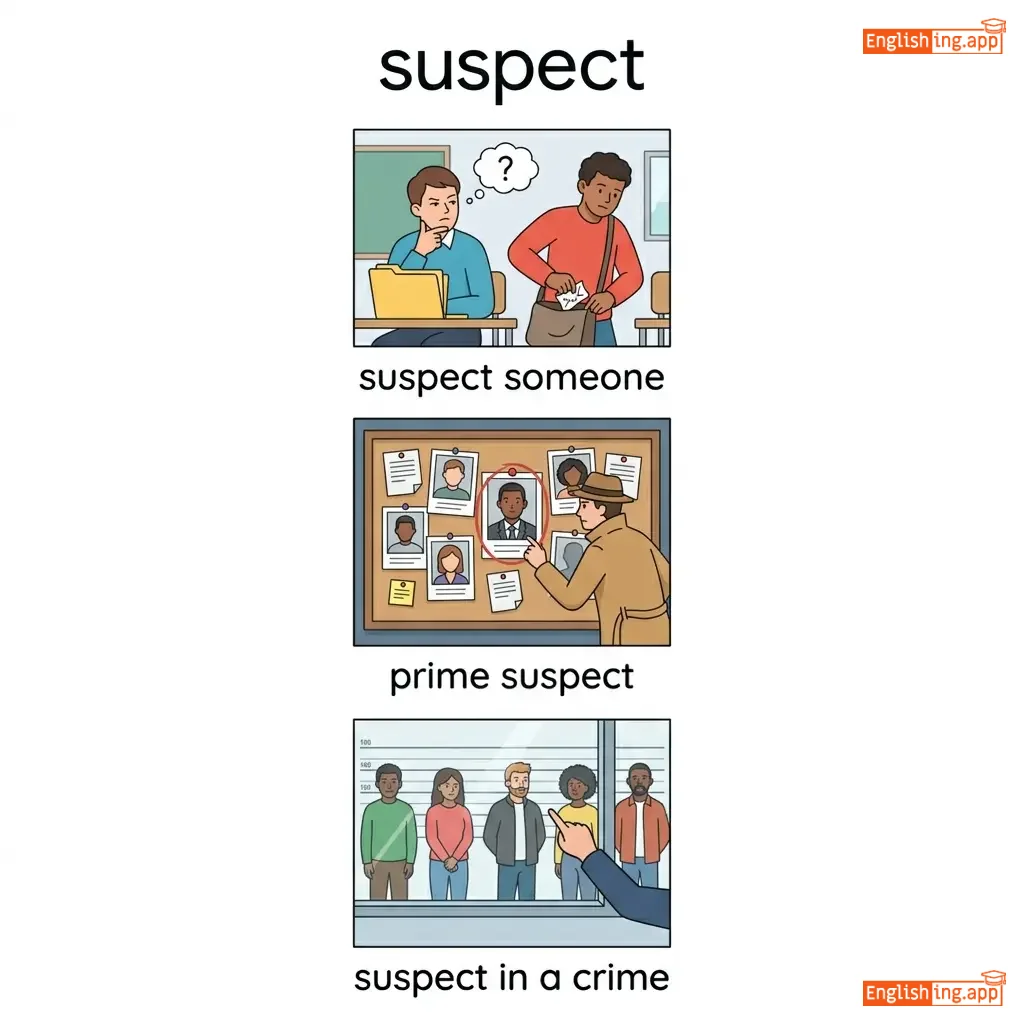
to believe that someone has done something wrong; to doubt or mistrust
|
I suspect he is lying about his whereabouts.
ai saspékt ji is laing abaut jis guérabauts.
••••••
|
Sospecho que está mintiendo sobre su paradero.
sospecho ke esta mintiendo sobre su paradero
••••••
|
doubt, mistrust, believe, think
|
••••••
|
suspect someone, strongly suspect, suspect of, suspect crime, suspect wrongdoing
|
To 'suspect' in Spanish is 'sospechar'—both start with 'sos'.
••••••
|
|
••••••
|
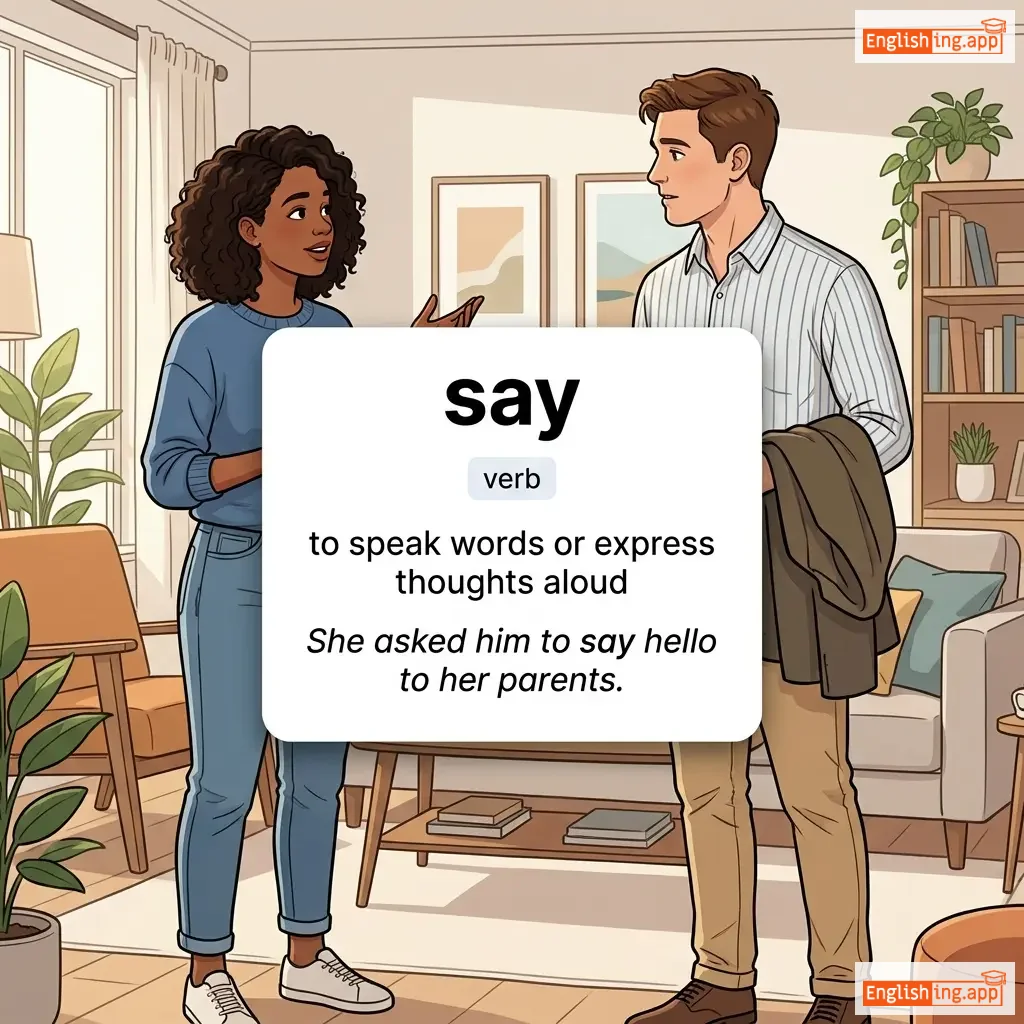
/seɪ/
verb
(sei)
••••••
|
••••••
|
decir
desir
••••••
|
seid
••••••
|
seid
••••••
|
seis
••••••
|
seing
••••••
|
to speak words; to express something in words
|
shi seid jelo tu mi.
••••••
|
Ella me dijo hola.
Eya me dijo ola.
••••••
|
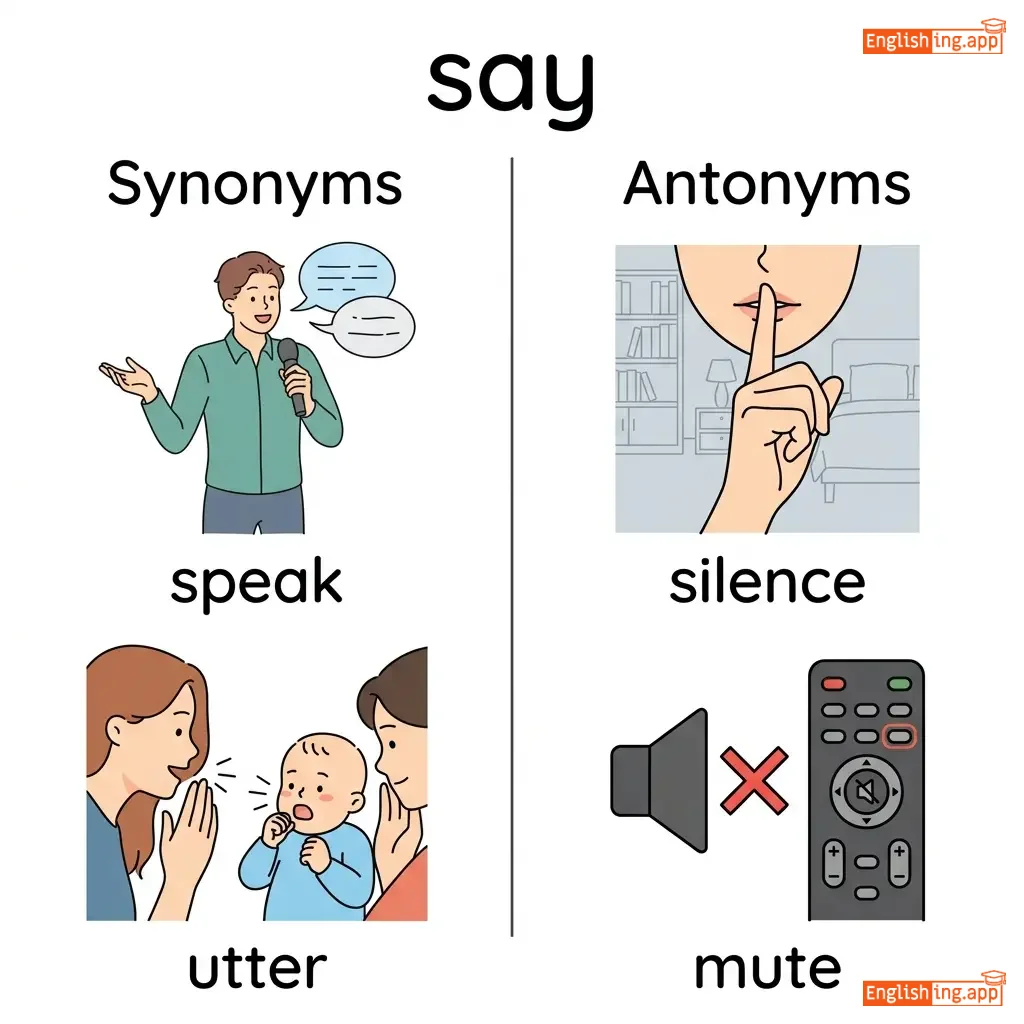
speak, tell, express, utter
|
listen, hear, remain silent
|
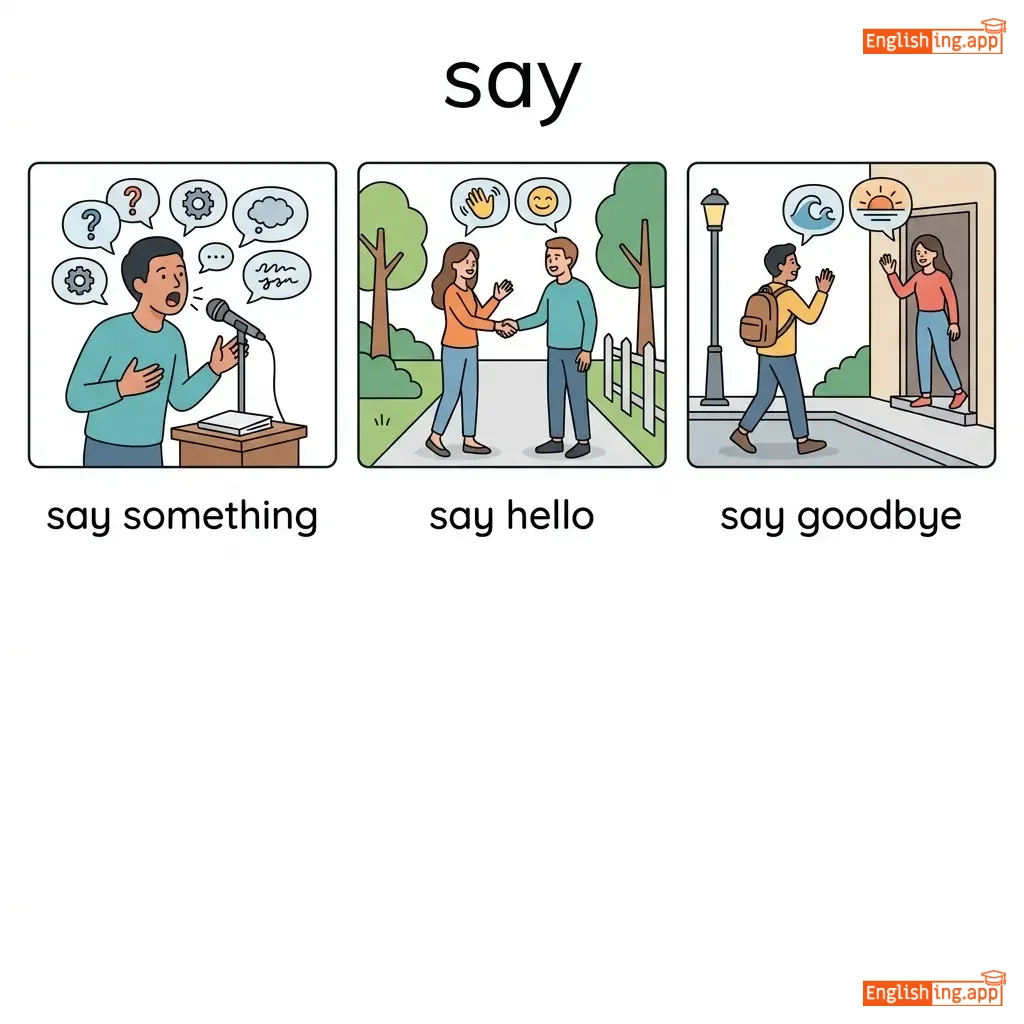
say hello, say goodbye, say something, say yes, say no, say please
|
Say and 'decir' both start with a 'd' sound—think of 'decir' as 'to say' in Spanish.
••••••
|
|
••••••
|
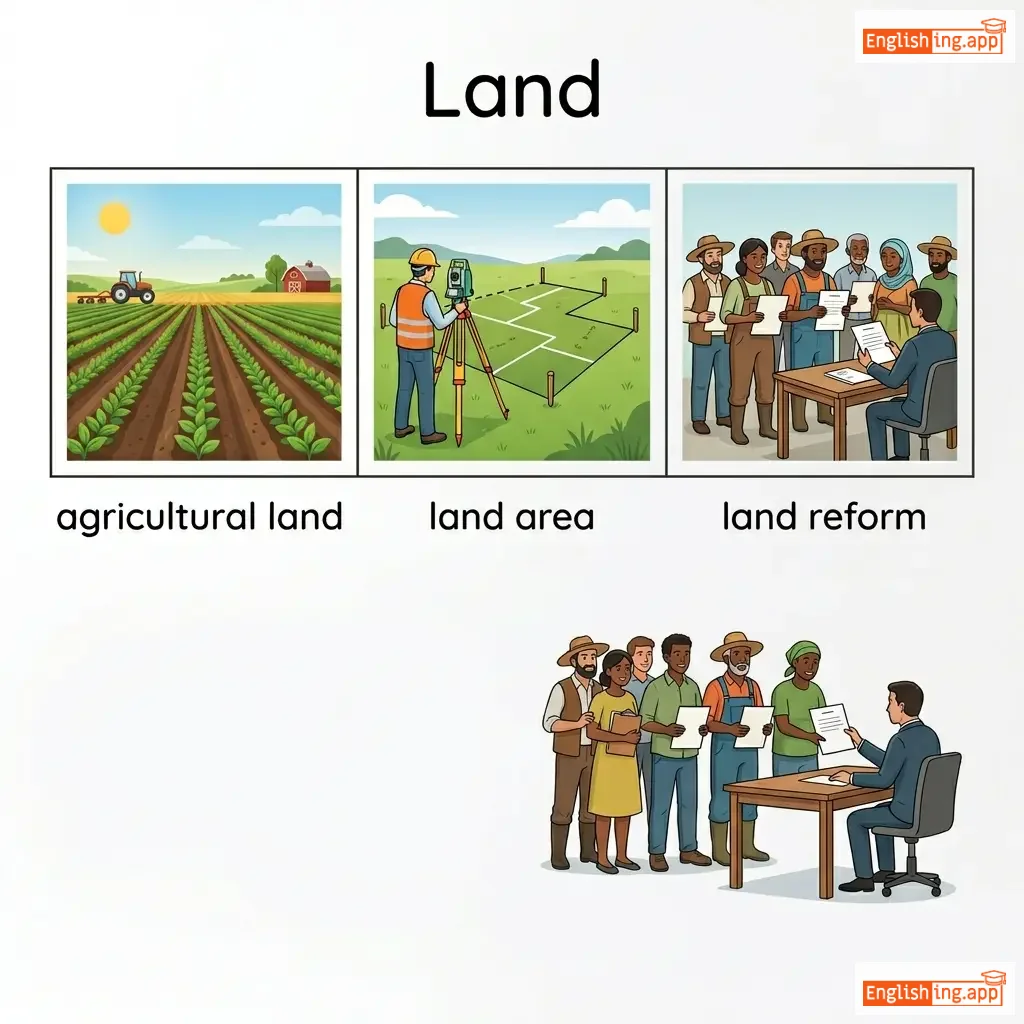
/lænd/
verb
(land)
••••••
|
••••••
|
aterrizar
aterrizar
••••••
|
landed
••••••
|
landed
••••••
|
lands
••••••
|
landing
••••••
|
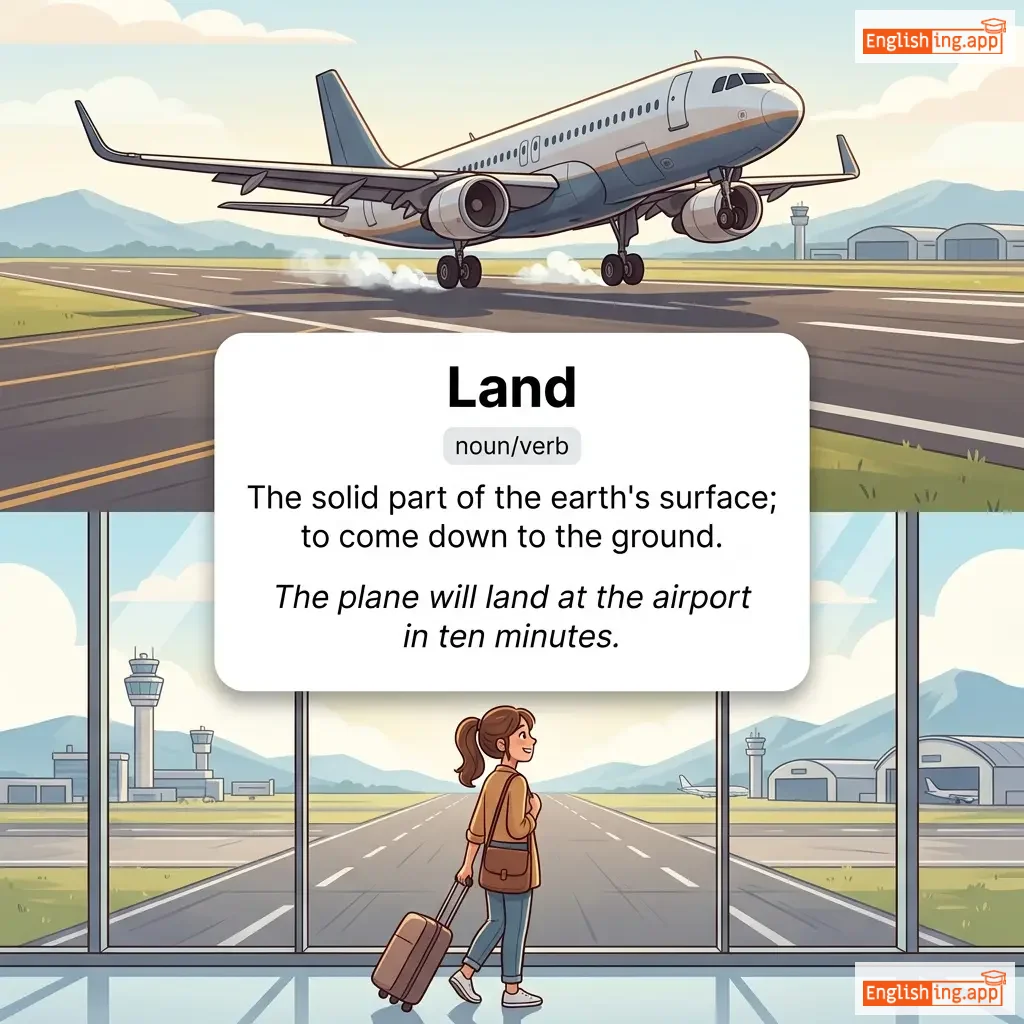
to come down or bring down to the ground; to arrive at a place
|
The plane will land at the airport in ten minutes.
El avión aterrizará en el aeropuerto en diez minutos.
••••••
|
El avión aterrizará en el aeropuerto en diez minutos.
El avion aterrizara en el aeropuerto en diez minutos
••••••
|
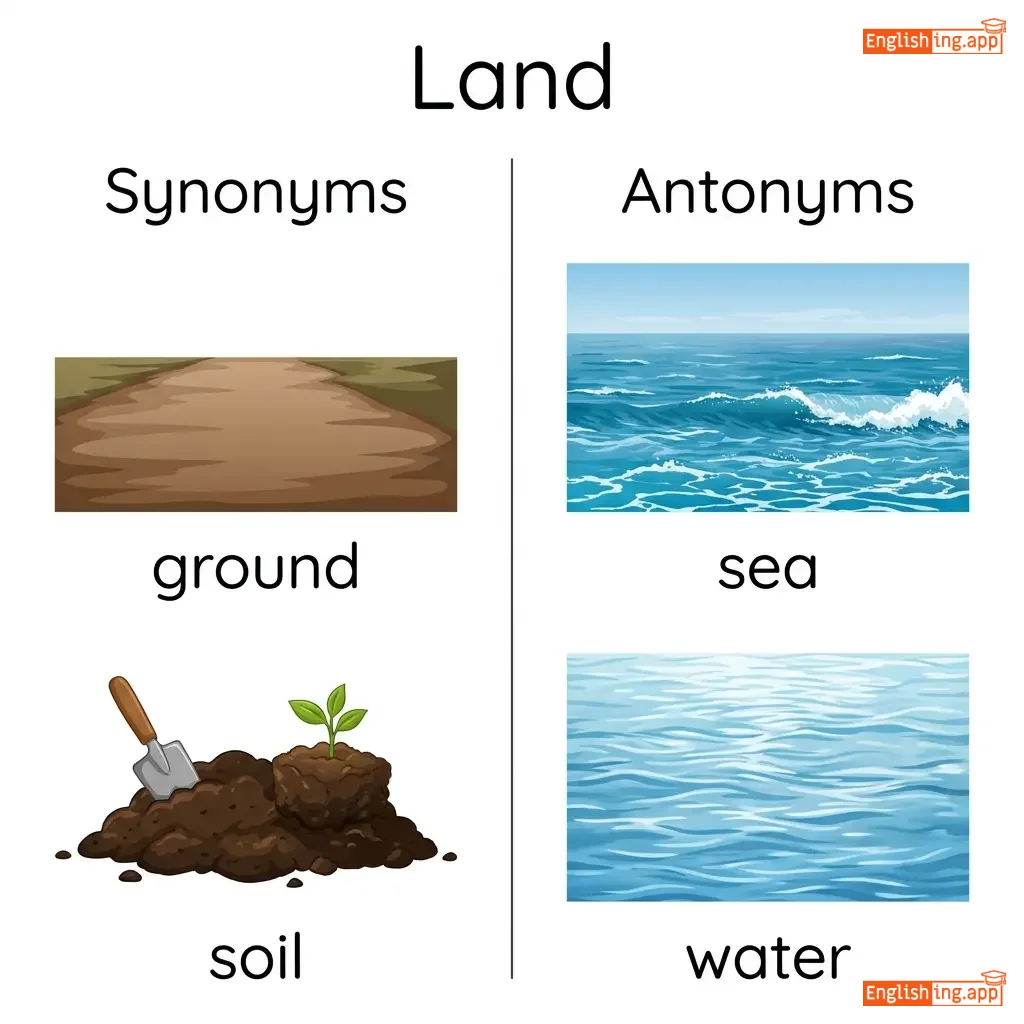
arrive, touch down, alight, descend
|
take off, depart, ascend, launch
|
land safely, plane land, land on, soft land, emergency land, land at airport
|
When you ‘land’, think of ‘aterrizar’ — like touching the ‘tierra’ (earth).
••••••
|
|
••••••
|
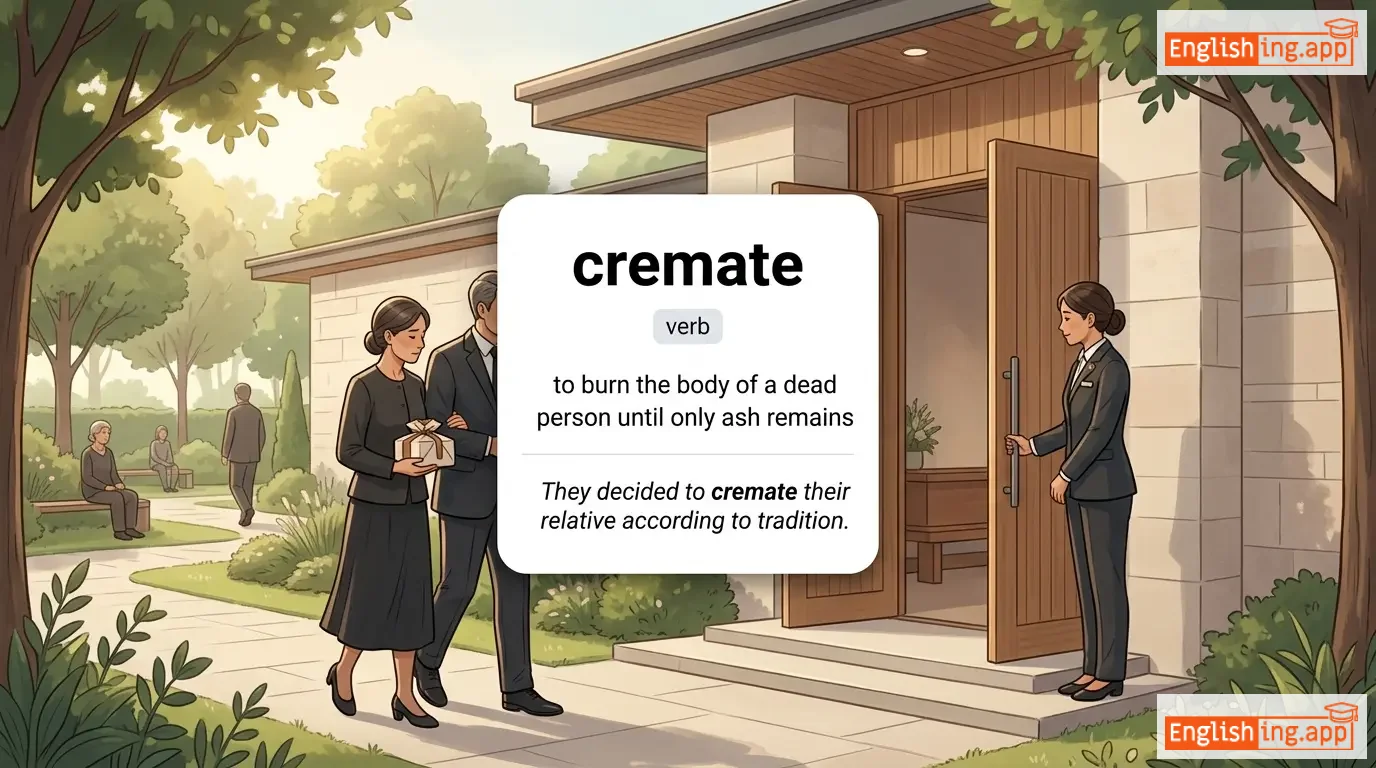
/ˈkriːmeɪt/
verb
(krimeit)
••••••
|
••••••
|
cremar
cremar
••••••
|
krimeited
••••••
|
krimeited
••••••
|
krimeits
••••••
|
krimeiting
••••••
|
to burn a dead body to ashes as a funeral rite
|
According to his wishes, they cremated his body after the funeral.
According to his wishes, they cremated his body after the funeral.
••••••
|
Según sus deseos, cremaron su cuerpo después del funeral.
Segun sus deseos, cremaron su cuerpo despues del funeral.
••••••
|
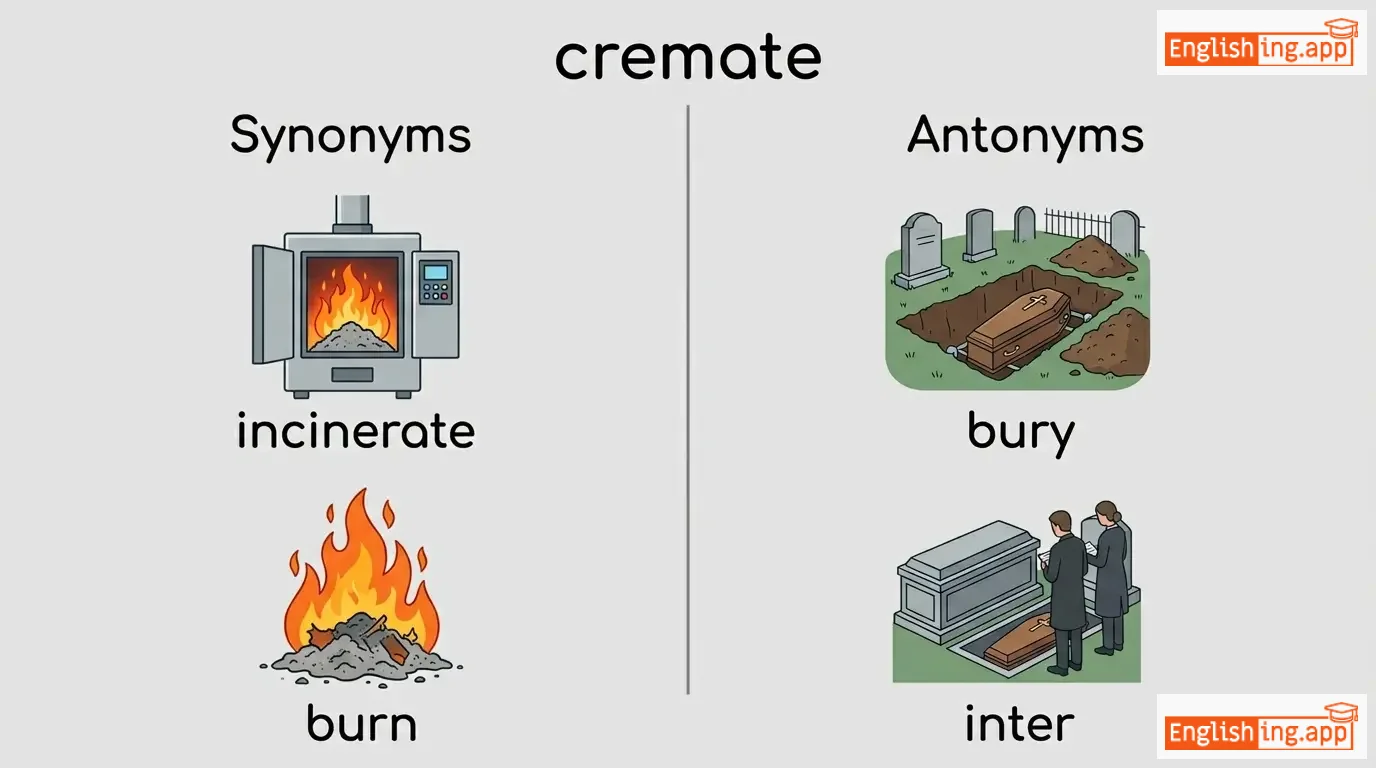
incinerate, burn, reduce to ashes
|
••••••
|
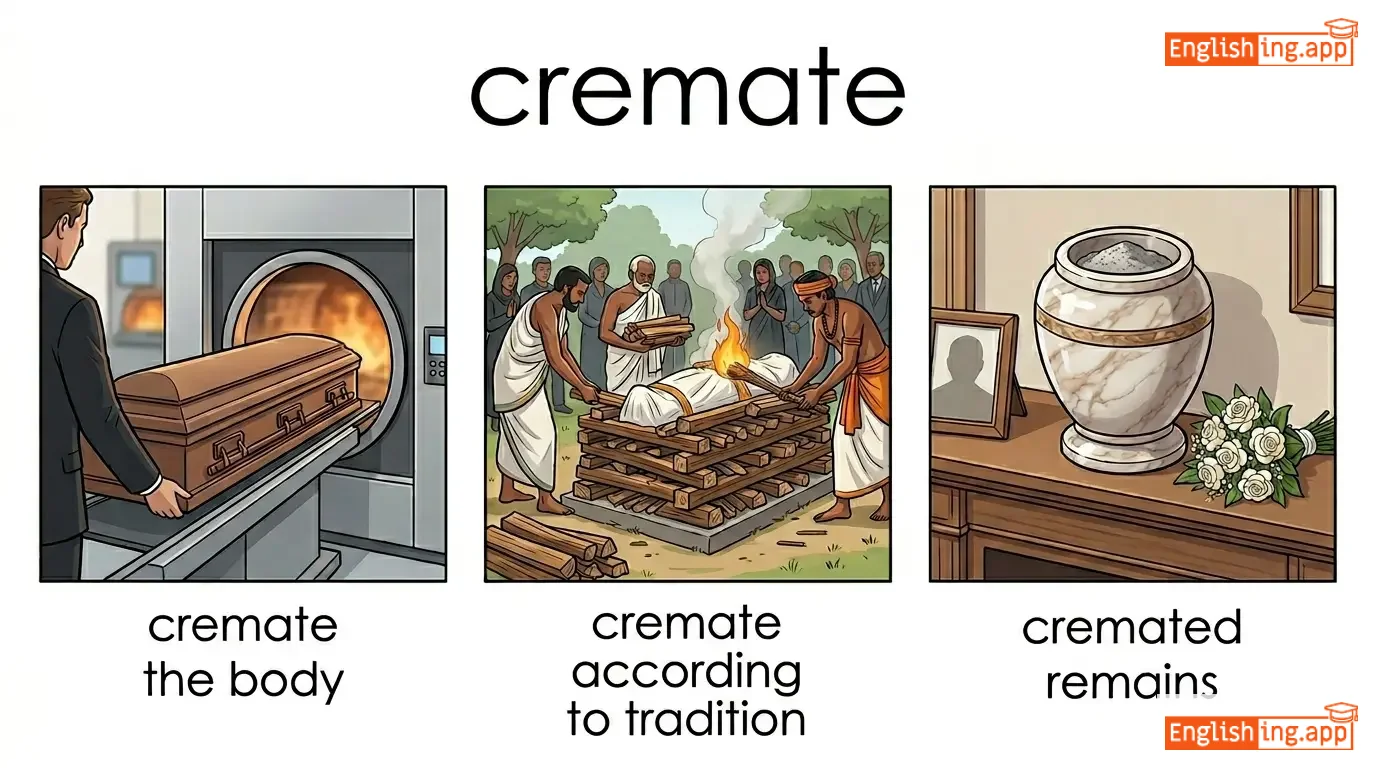
cremate body, cremate remains, cremate after death, decision to cremate, cremation ceremony
|
cremar ≈ cremate — piensa 'cremar' para recordar 'to cremate'
••••••
|
|
••••••
|
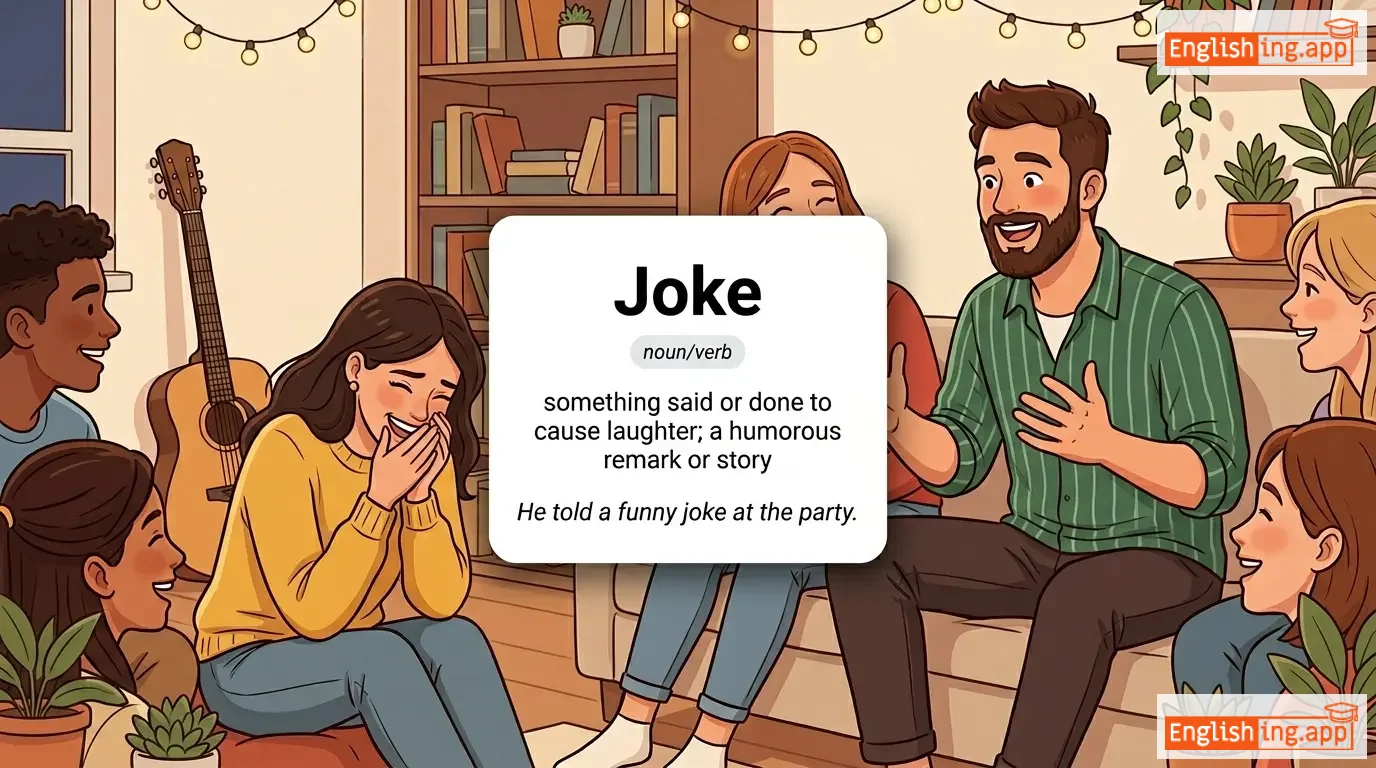
/dʒoʊk/
verb
(yok)
••••••
|
••••••
|
bromear
bromear
••••••
|
yokt
••••••
|
yokt
••••••
|
yoks
••••••
|
yoking
••••••
|
to say something funny or amusing; to make fun
|
He likes to joke around with his friends.
ji laiks tu yok araund uiz jis frends
••••••
|
Le gusta bromear con sus amigos.
Le gusta bromear kon sus amigos.
••••••
|
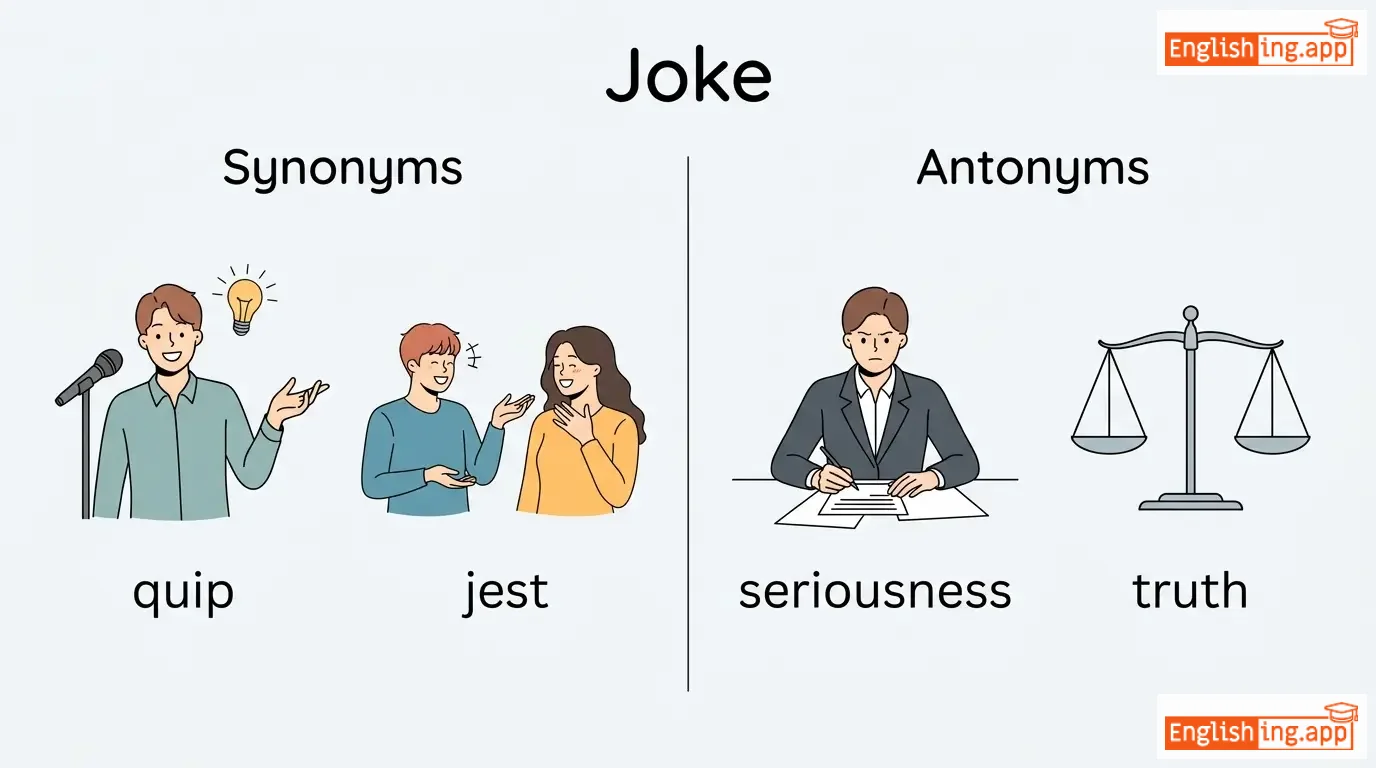
jest, kid, tease, amuse, fool around
|
serious, formal, stern, grave, solemn
|
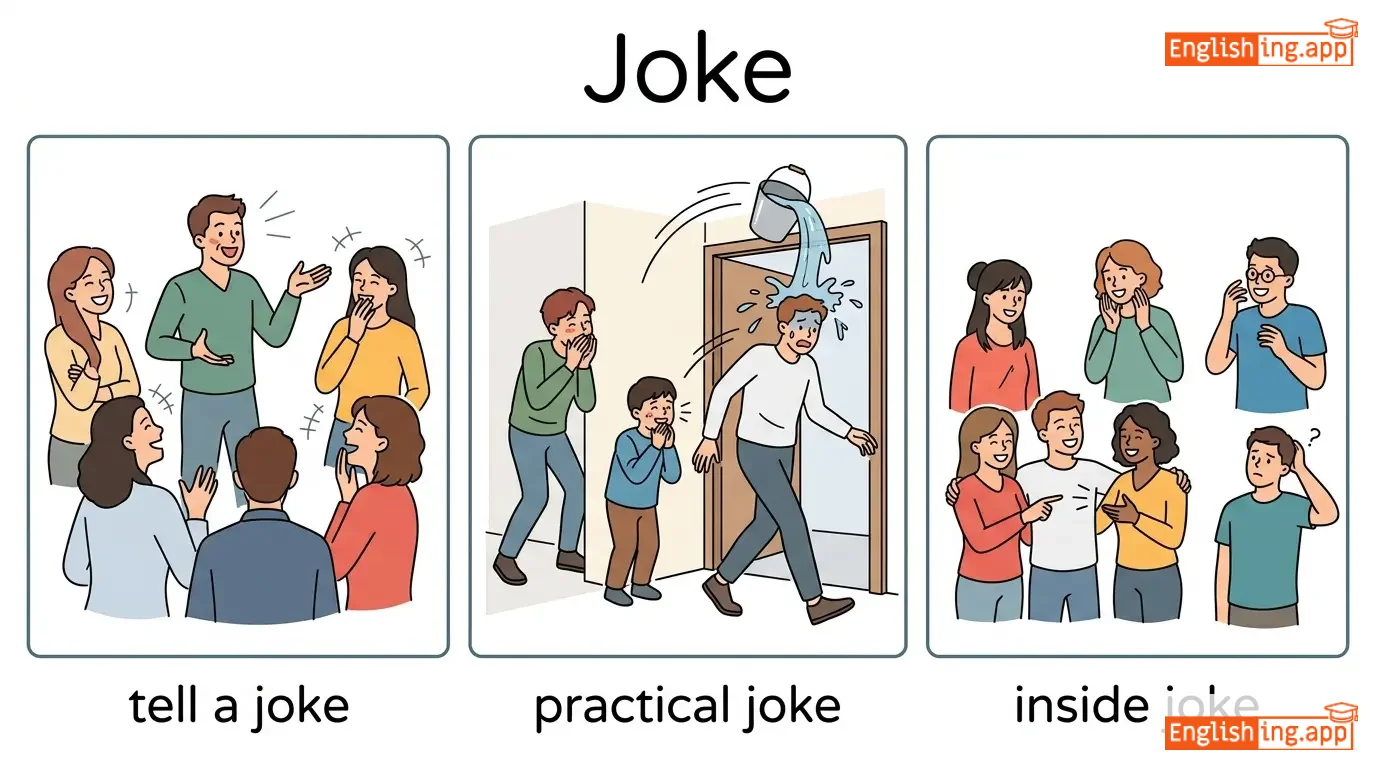
joke around, make joke, funny joke, tell joke, practical joke, joke about
|
In Spanish 'bromear' sounds like 'bro, me laugh!' — easy to remember it means to joke.
••••••
|
|
••••••
|
/ˈædvərˌtaɪz/
verb
(ádvertáis)
••••••
|
••••••
|
anunciar
anunsiar
••••••
|
ádvertáist
••••••
|
ádvertáist
••••••
|
ádvertáises
••••••
|
ádvertáising
••••••
|
to promote or publicize a product or service
|
They advertise their products on television.
zei ádvertáis deir pródakts on telévishon
••••••
|
Ellos anuncian sus productos en la televisión.
Eyos anunsian sus productos en la television.
••••••
|
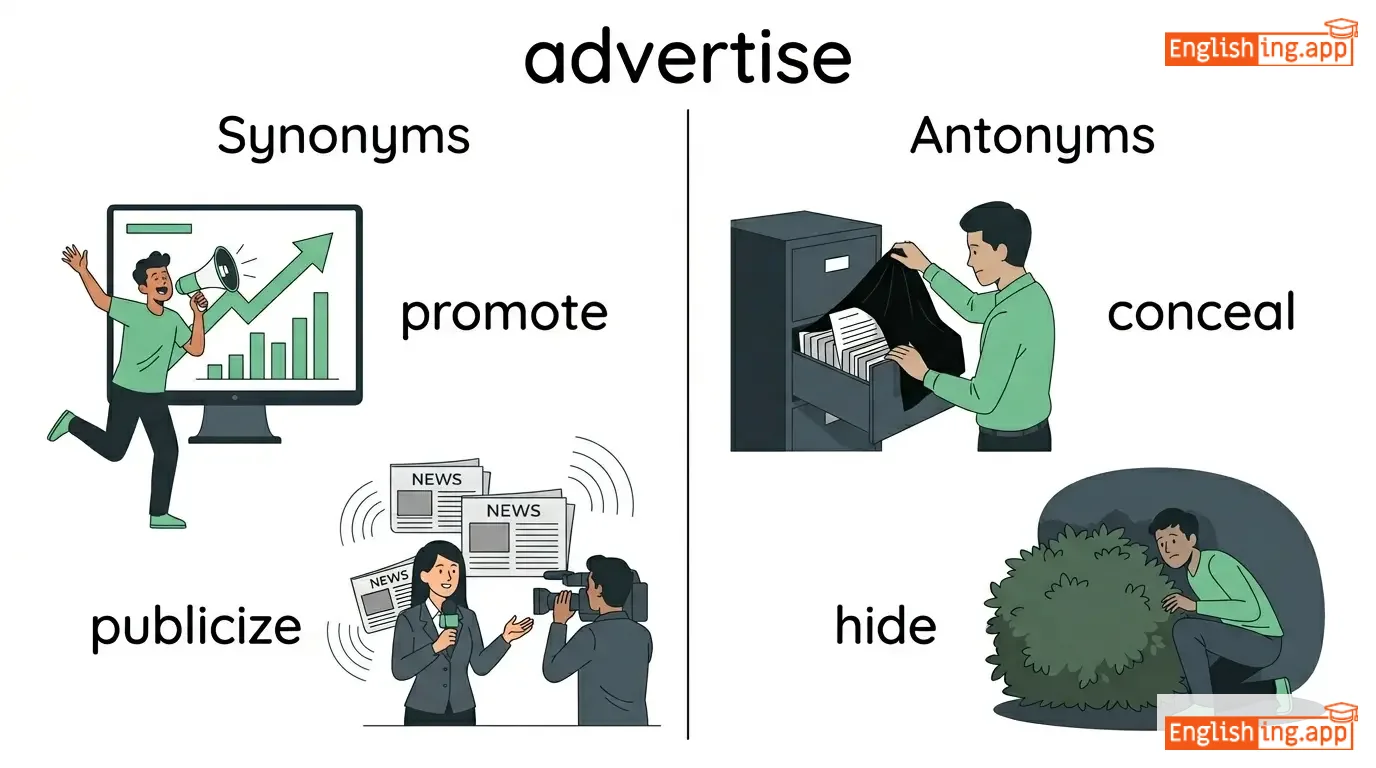
promote, publicize, market, announce
|
hide, conceal, suppress, withhold
|
advertise product, advertise service, advertise online, advertise widely, advertise business
|
Advertise sounds like 'anunciar'—both mean to make something known!
••••••
|