词汇表

英语词汇词典 | 单词含义、定义和示例

noun C1
/ˈtæbloʊ/
tablao (tablao)

a striking or artistic scene or arrangement of people or objects, often presented on stage or in art

"The actors froze in a tableau that captured the final moment of the play."

"Los actores se congelaron en un tablao que capturó el momento final de la obra." (Los actores se congelaron en un tablao que capturó el momento final de la obra.)
noun C1
/təˈbuː/
tabú (tabu)

a social or cultural prohibition against certain practices or discussions

"Talking about money is considered a taboo in some cultures."
"Hablar de dinero se considera un tabú en algunas culturas." (Hablar de dinero se considera un tabu en algunas culturas.)
tacit definition card — visual illustration of the meaning
adjective C1
/ˈtæsɪt/
acuerdo tácito (acuerdo tacito)

understood or implied without being stated

"There was a tacit agreement to avoid the subject."

"Había un acuerdo tácito para evitar el tema." (Había un acuerdo tácito para evitar el tema.)
noun/verb C1
/tæk/
tachuela / táctica (tachuela / tactica)

a small sharp nail; or to change direction in sailing or approach something differently

"She used a tack to pin the paper on the wall."
"Ella usó un tachuela para fijar el papel en la pared." (Ella uso un tachuela para fijar el papel en la pared.)
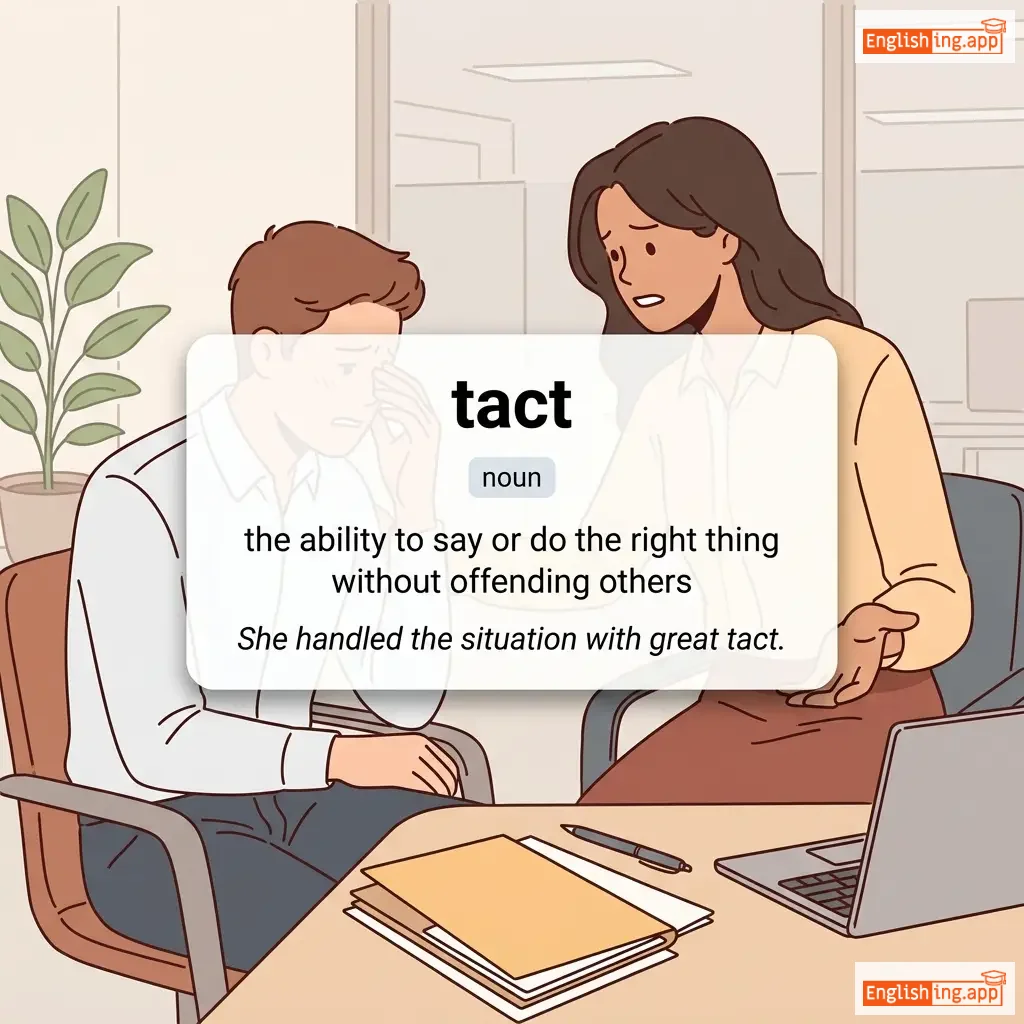
tact definition card — visual illustration of the meaning
noun C1
/tækt/
tacto, prudencia (tacto, prudencia)

the ability to say or do the right thing without offending others

"She handled the situation with great tact."

"Ella manejó la situación con gran tacto." (Ella manejo la situacion con gran tacto.)
adjective C1
/ˈtækt.fəl/
táctico (tactico)

showing skill and sensitivity in dealing with others

"He is always tactful when giving feedback."
"Siempre es táctico al dar retroalimentación." (Siempre es tactico al dar retroalimentacion.)
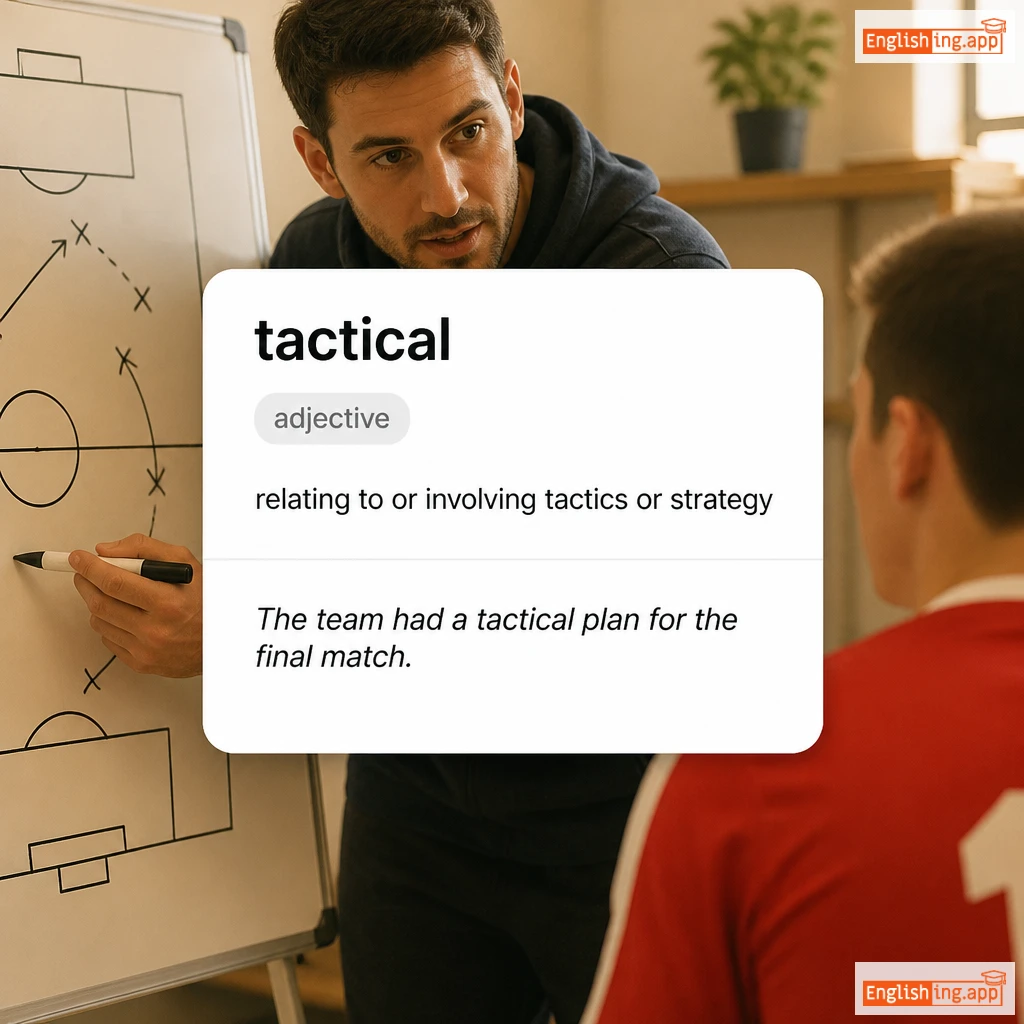
tactical definition card — visual illustration of the meaning
adjective C1
/ˈtæktɪkəl/
relacionado con la estrategia (relacionado con la estrategia)

relating to or involving tactics or strategy

"The team had a tactical plan for the final match."

"El equipo tenía un plan táctico para el partido final." (El equipo tenía un plan táctico para el partido final.)
noun C1
/tækˈtɪʃ.ən/
estratega (estratega)

a person who is skilled at planning and achieving goals, especially in military or business

"Napoleon was a brilliant tactician."
"Napoleón era un brillante táctico." (Napoleon era un brillante tactico.)
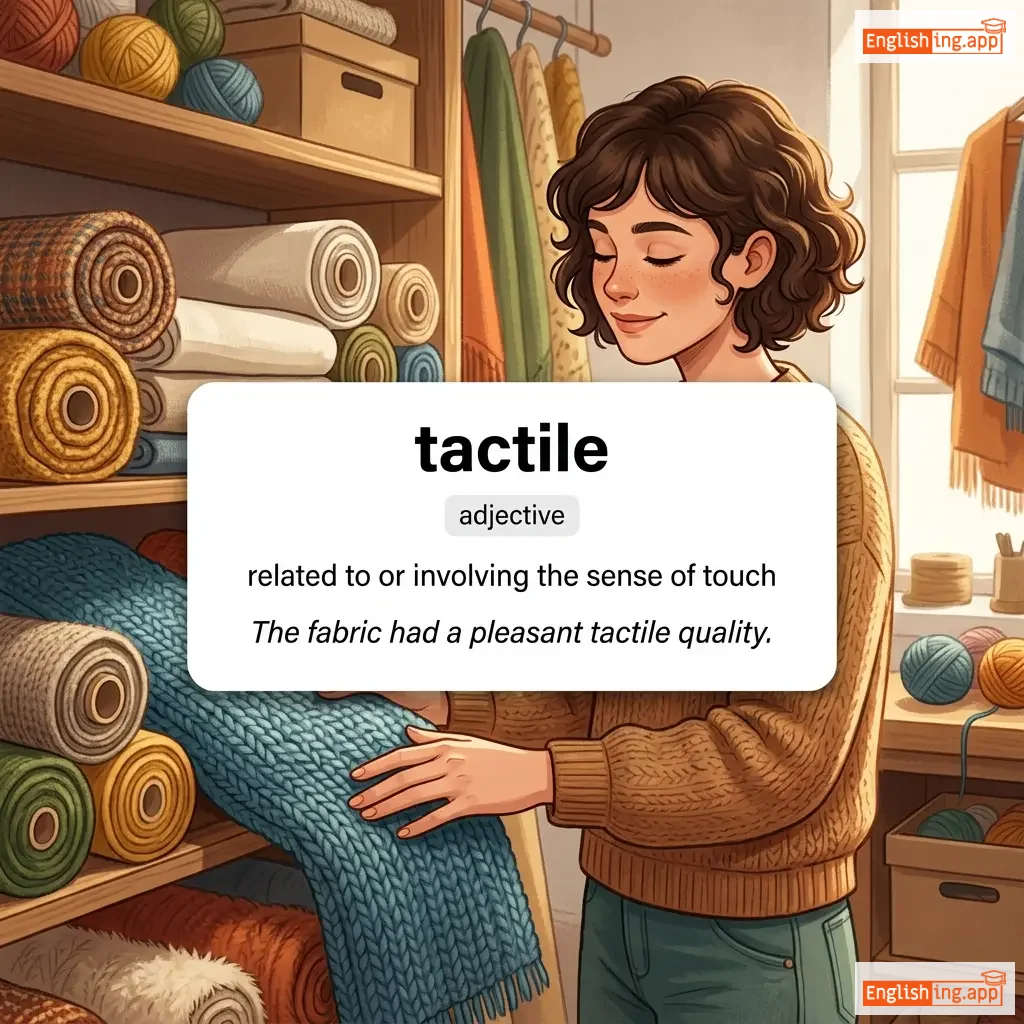
tactile definition card — visual illustration of the meaning
adjective C1
/ˈtæk.taɪl/
táctil (tactil)

related to or involving the sense of touch

"The fabric had a pleasant tactile quality."

"La tela tenía una agradable calidad táctil." (La tela tenía una agradable calidad táctil.)
adjective C1
/ˈtækt.ləs/
insensato (insensato)

showing a lack of sensitivity in dealing with others

"His tactless remark embarrassed everyone at the meeting."
"Su comentario insensato avergonzó a todos en la reunión." (Su comentario insensato avergonzó a todos en la reunión.)
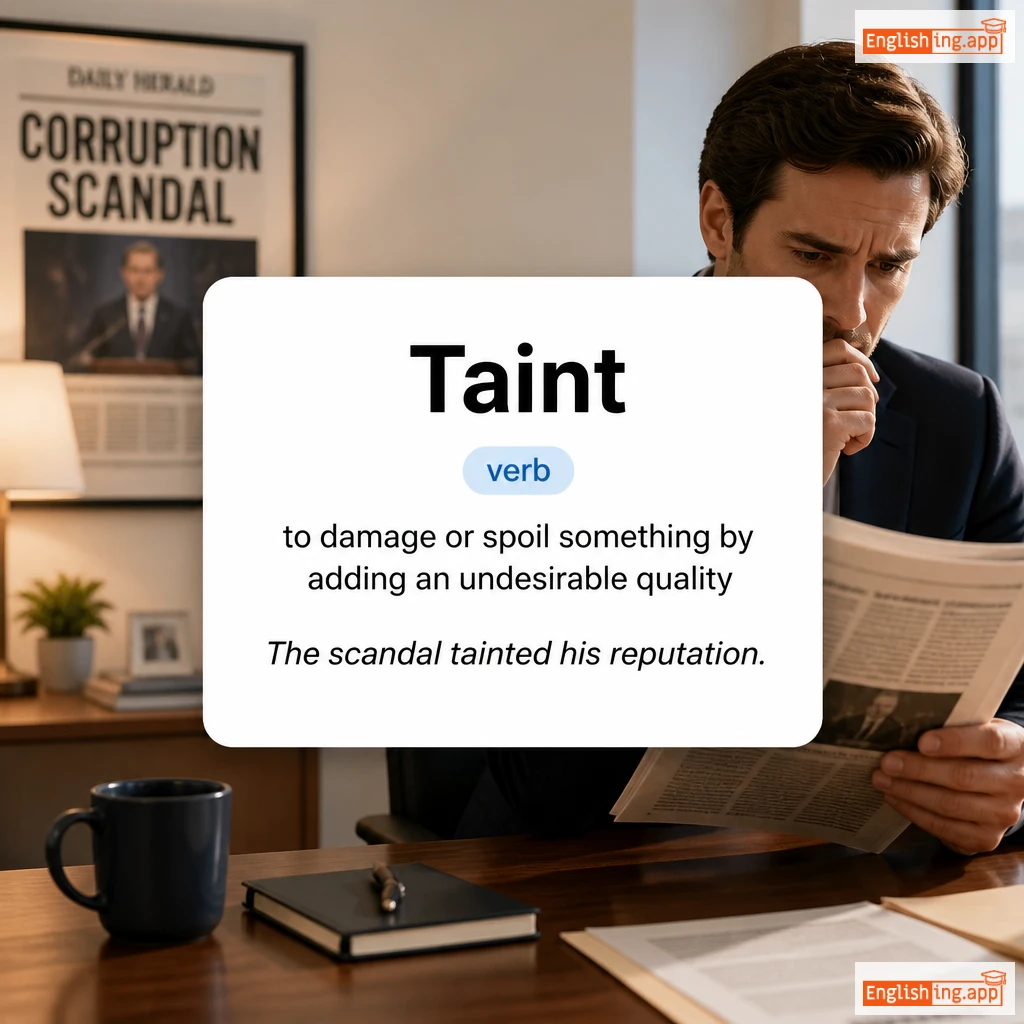
Taint definition card — visual illustration of the meaning
verb C1
/teɪnt/
contaminar (contaminar)

to damage or spoil something by adding an undesirable quality

"The scandal tainted his reputation."

"El escándalo contaminó su reputación." (El escándalo contaminó su reputación.)
adjective C1
/ˈteɪn.tɪd/
manchado (manchado)

spoiled, corrupted, or made impure

"The tainted food caused several people to fall ill."
"La comida manchada hizo que varias personas se enfermaran." (La comida manchada hizo que varias personas se enfermaran.)
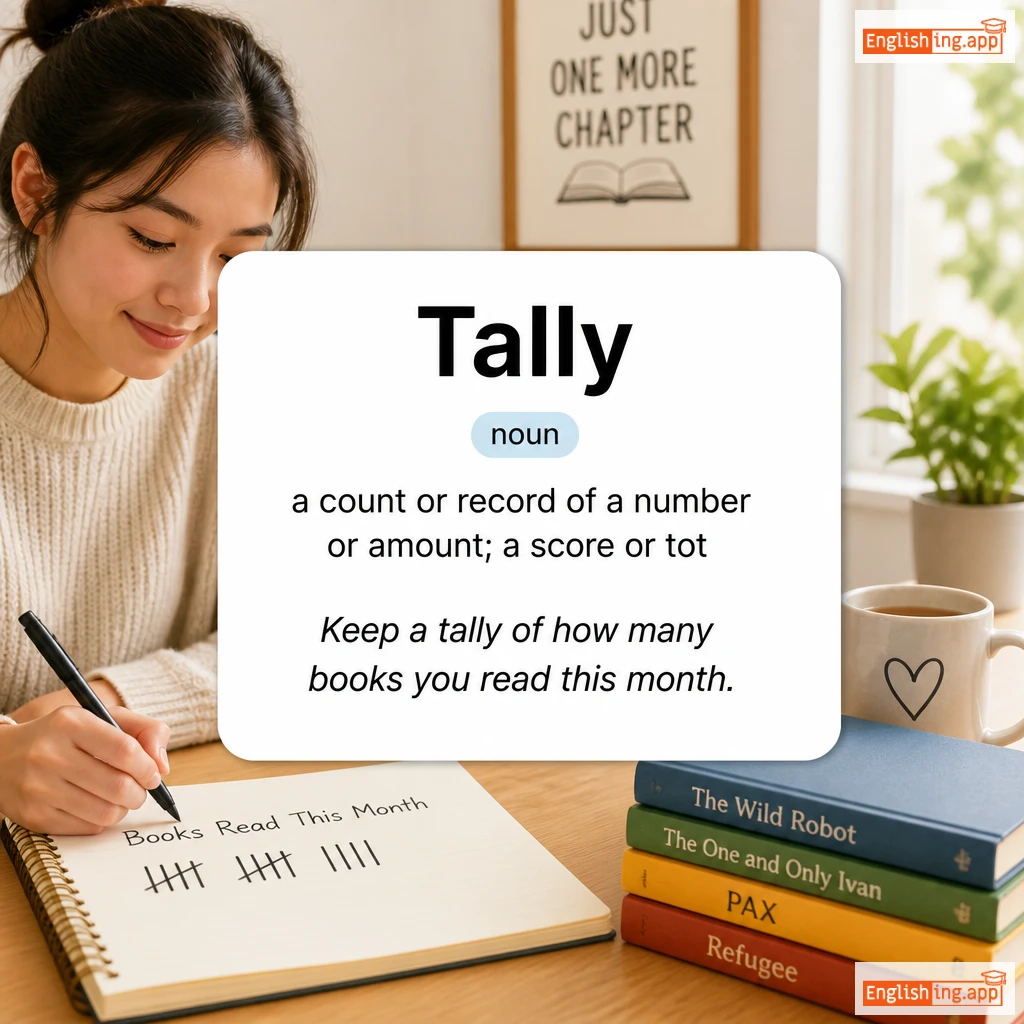
Tally definition card — visual illustration of the meaning
noun C1
/ˈtæl.i/
conteo; registro; puntuación (conteo; registro; puntuación)

a count or record of a number or amount; a score or total

"Keep a tally of how many books you read this month."
"Lleva un conteo de cuántos libros lees este mes." (Lleva un conteo de cuantos libros lees este mes.)
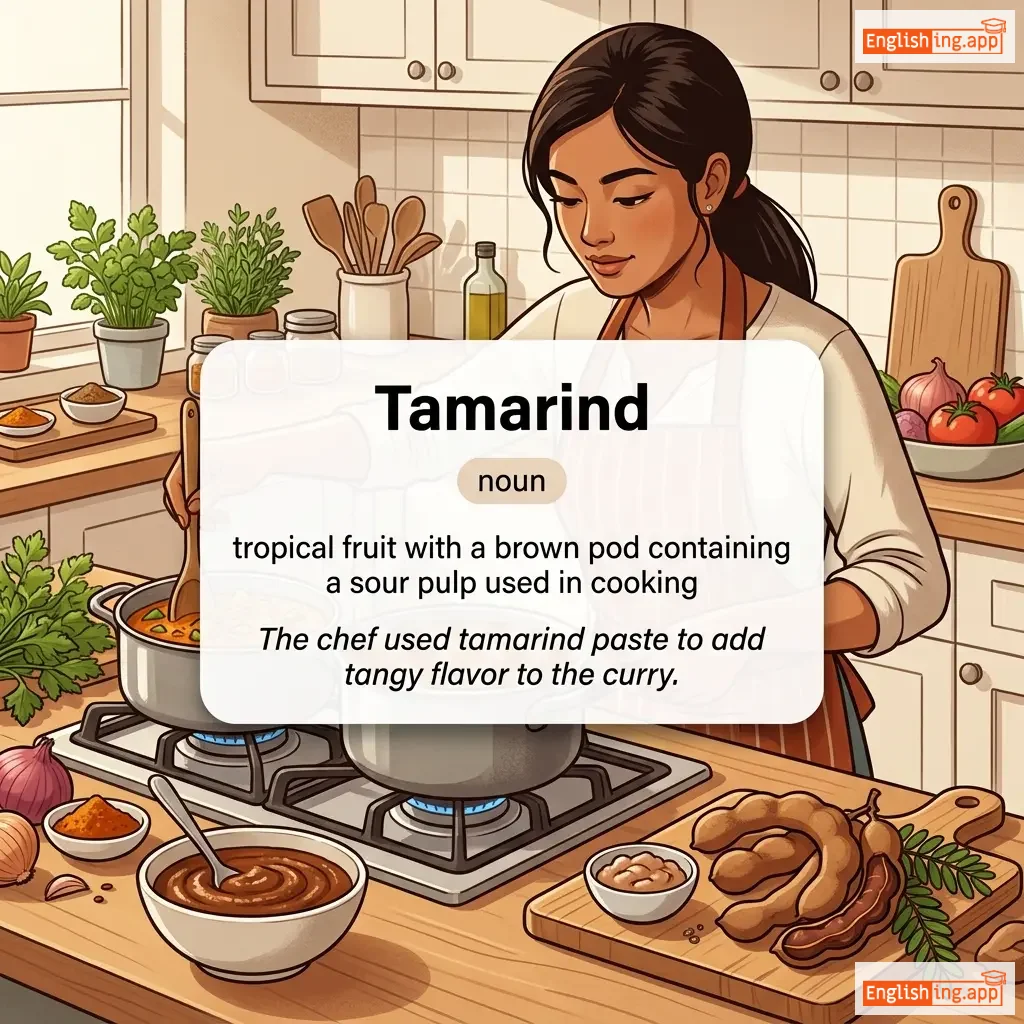
Tamarind definition card — visual illustration of the meaning
noun C1
/ˈtæm.ə.rɪnd/
tamarindo (tamarindo)

tropical fruit with a brown pod containing a sour pulp used in cooking

"The chef used tamarind paste to add tangy flavor to the curry."
"El chef usó pasta de tamarindo para darle un sabor ácido al curry." (El chef uso pasta de tamarindo para darle un sabor acido al curry.)
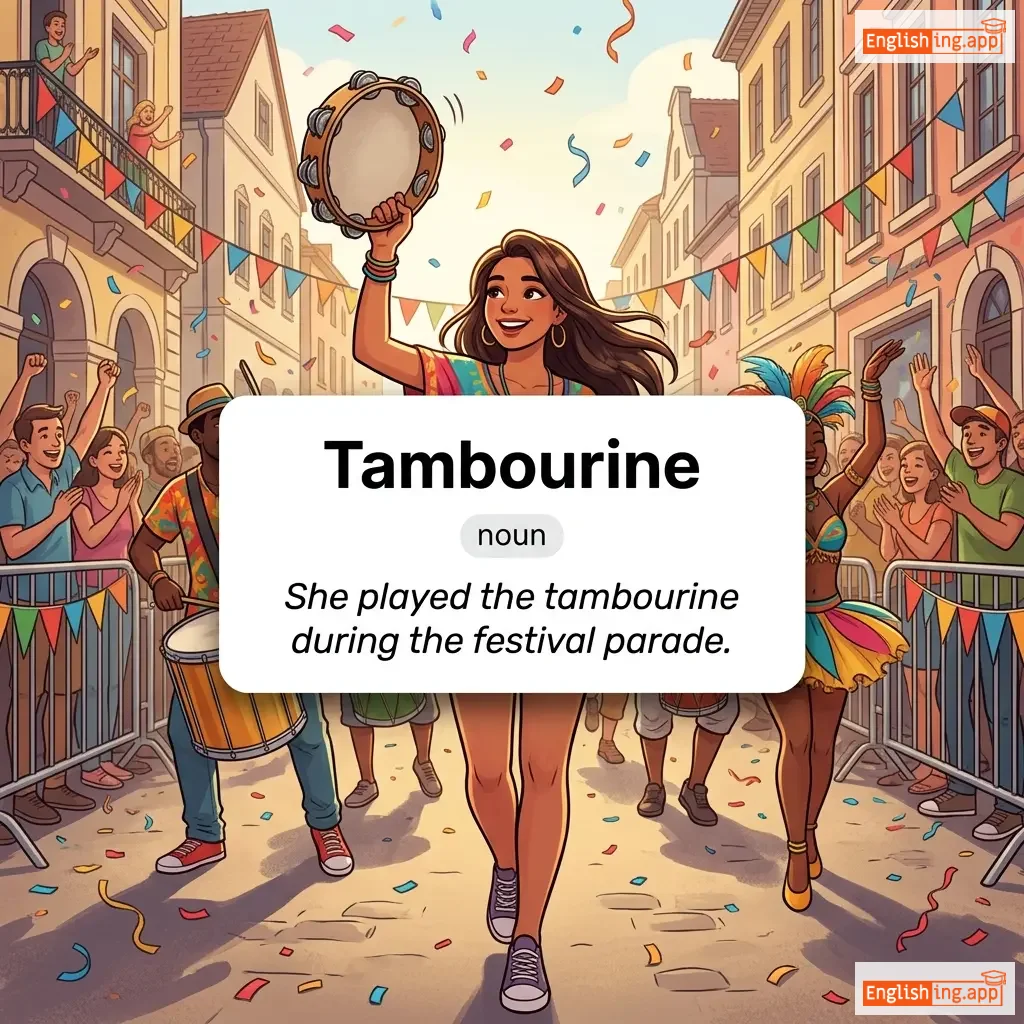
Tambourine definition card — visual illustration of the meaning
noun C1
/ˌtæmbəˈriːn/
pandereta (pandereta)

A musical instrument with a circular frame, metal jingles, and a drumhead, played by shaking or striking.

"She played the tambourine during the festival parade."

"Ella tocó la pandereta durante el desfile del festival." (Ella tocó la pandereta durante el desfile del festival.)
verb C1
/ˈtæmpər/
interferir (interferir)

To interfere with something in a harmful, unauthorized, or improper way.

"The evidence was tampered with before the trial."
"La evidencia fue manipulada antes del juicio." (La evidencia fue manipulada antes del juicio.)
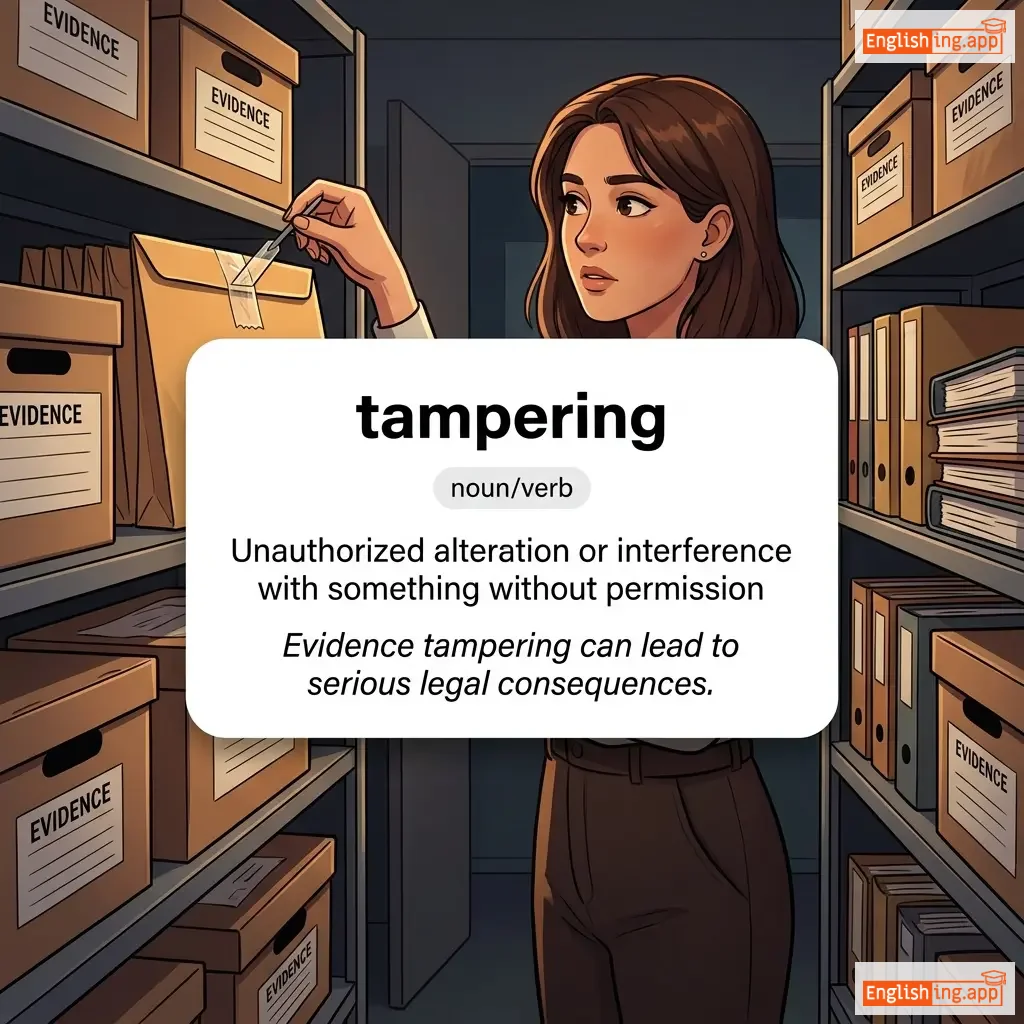
tampering definition card — visual illustration of the meaning
noun/verb C1
/ˈtæm.pər.ɪŋ/
alteración no autorizada o interferencia (alteracion no autorizada o interferencia)

Unauthorized alteration or interference with something without permission

"Evidence tampering can lead to serious legal consequences."
"La alteración de pruebas puede llevar a consecuencias legales graves." (La alteracion de pruebas puede llevar a consecuencias legales graves.)
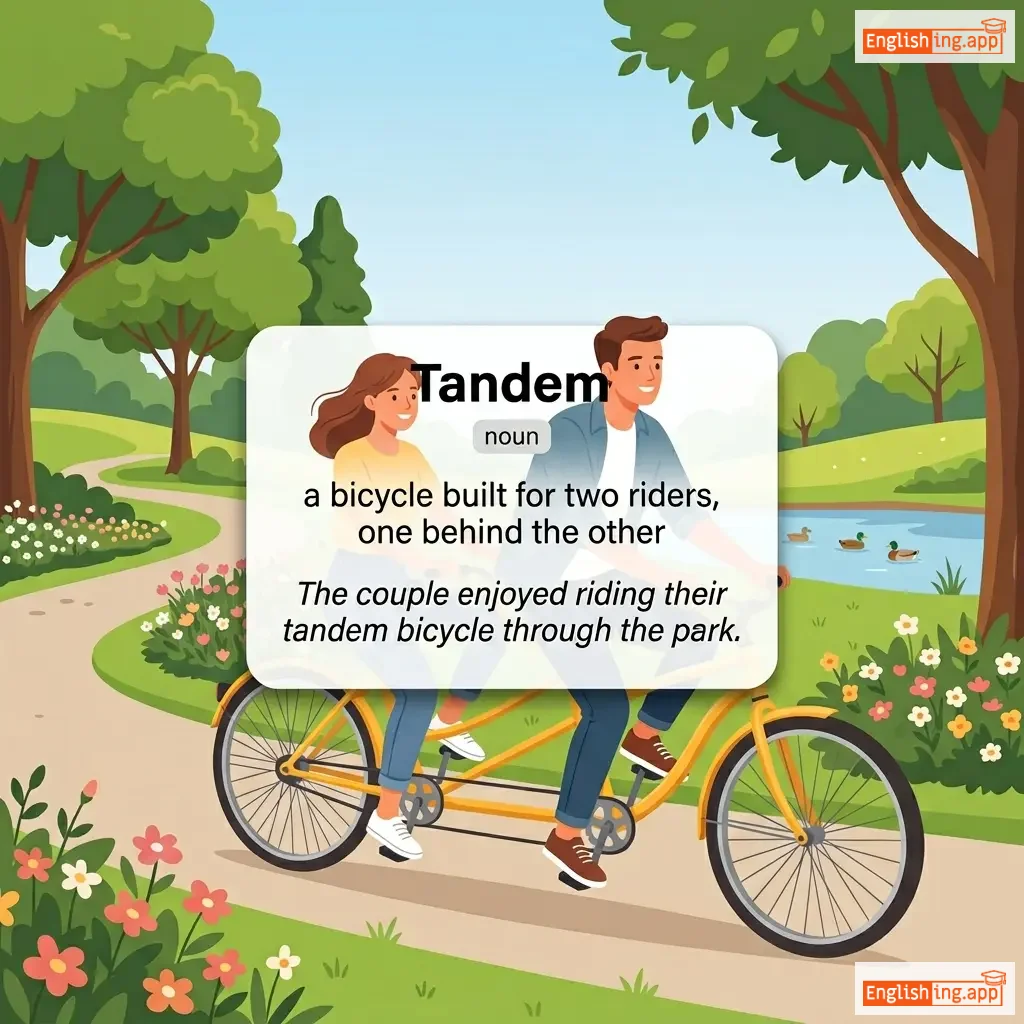
Tandem definition card — visual illustration of the meaning
noun C1
/ˈtæn.dəm/
bicicleta tándem (bicicleta tandem)

a bicycle built for two riders, one behind the other

"The couple enjoyed riding their tandem bicycle through the park."

"La pareja disfrutó montando su bicicleta tándem a través del parque." (La pareja disfrutó montando su bicicleta tándem a través del parque.)
noun C1
/ˈtændʒənt/
tangente (tangente)

a straight line or plane that touches a curve or curved surface at a point but does not cross it

"The teacher drew a tangent to the circle on the board."
"El profesor dibujó una tangente al círculo en la pizarra." (El profesor dibujo una tangente al circulo en la pizarra.)
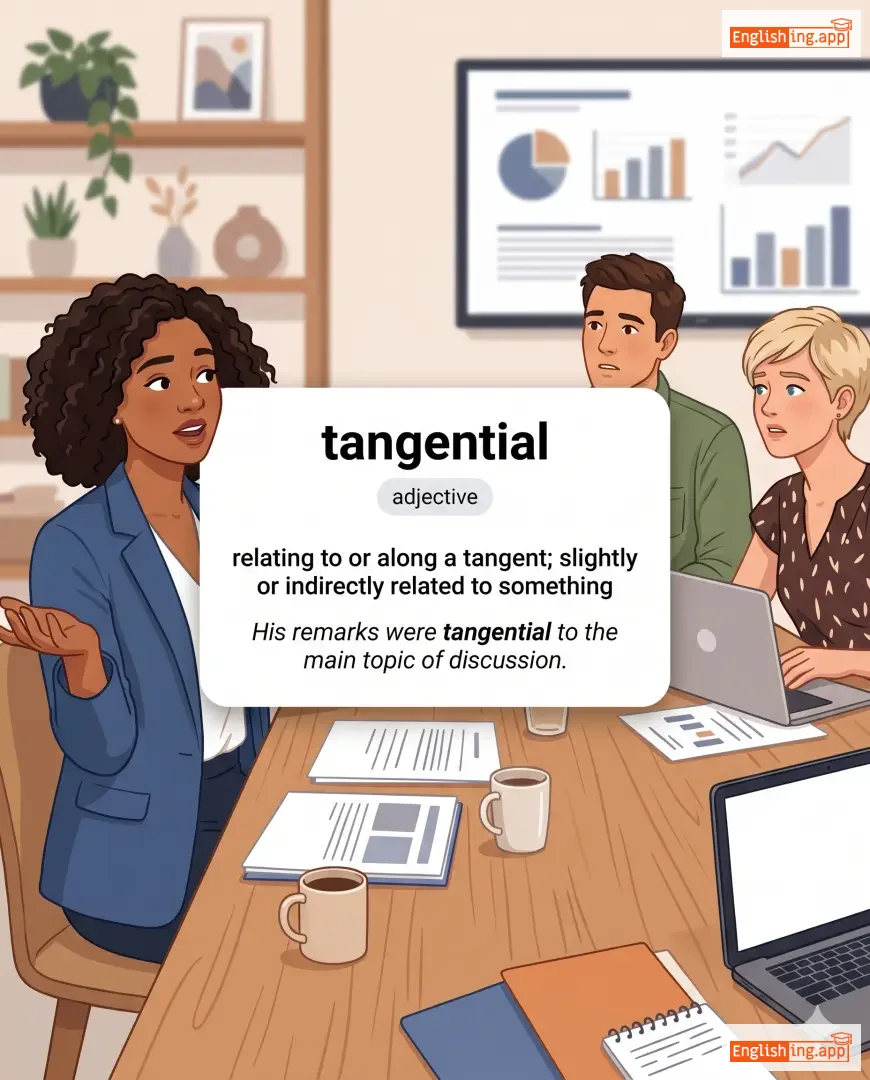
tangential definition card — visual illustration of the meaning
adjective C1
/tænˈdʒɛnʃəl/
tangencial (tangencial)

relating to or along a tangent; slightly or indirectly related to something

"His remarks were tangential to the main topic of discussion."

"Sus comentarios fueron tangenciales al tema principal de la discusión." (Sus comentarios fueron tangenciales al tema principal de la discusión.)
adjective C1
/ˈtæŋ.i/
ácido (acido)

Having a strong, sharp, and pleasantly biting flavor or taste.

"The sauce had a tangy flavor that brightened the dish."

"La salsa tenía un sabor ácido que hizo que el plato fuera más sabroso." (La salsa tenía un sabor ácido que hizo que el plato fuera más sabroso.)
🧑‍🏭

tanner (táner)

noun C1
/ˈtæn.ər/
curtidor (curtidor)

A person whose job is to tan animal hides to make leather.

"The tanner worked long hours to produce fine leather."

"El curtidor trabajó muchas horas para producir buen cuero." (El curtidor trabajó muchas horas para producir buen cuero.)
noun C1
/ˈtæn.ə.ri/
curtiduría (curtiduria)

A place where animal hides are processed into leather.

"The tannery produced high-quality leather for export."

"La curtiduría produjo cuero de alta calidad para exportación." (La curtiduria produjo cuero de alta calidad para exportacion.)
verb C1
/ˈtæn.tə.laɪz/
tentación (tentacion)

To tease or torment someone with the promise of something desirable but unattainable.

"The aroma of the bakery tantalized the hungry children."

"El aroma de la panadería tentó a los niños hambrientos." (El aroma de la panaderia tento a los ninos hambrientos.)
adjective C1
/ˈtæn.tə.laɪ.zɪŋ/
tentador (tentador)

Something that excites desire or interest, often by being just out of reach.

"She wore a tantalizing perfume that caught everyone's attention."

"Ella llevaba un perfume tentador que llamó la atención de todos." (Ella llevaba un perfume tentador que llamó la atención de todos.)
adjective C1
/ˈtæntəmaʊnt/
equivalente (equivalente)

Equivalent in seriousness or effect; virtually the same as.

"His refusal to speak was tantamount to an admission of guilt."

"Su negativa a hablar fue equivalente a una admisión de culpa." (Su negativa a hablar fue equivalente a una admisión de culpa.)
noun C1
/ˈtæntrəm/
berrinche (berrinche)

An uncontrolled outburst of anger and frustration, typically in a young child.

"The child threw a tantrum when he didn’t get the toy."

"El niño hizo un berrinche cuando no consiguió el juguete." (El niño hizo un berrinche cuando no consiguió el juguete.)
verb C1
/ˈteɪpər/
afinar (afinar)

To gradually decrease in width, thickness, or intensity.

"The road tapers off as it reaches the mountains."

"La carretera se estrecha a medida que llega a las montañas." (La carretera se estrecha a medida que llega a las montañas.)
noun C1
/ˈtæpəstri/
tapiz (tapiz)

A piece of thick textile fabric with pictures or designs woven into it, often hung on walls.

"The museum displayed an ancient tapestry from the 15th century."

"El museo exhibió un tapiz antiguo del siglo XV." (El museo exhibió un tapiz antiguo del siglo XV.)
noun C1
/təˈræntjʊlə/
tarántula (tarantula)

A large hairy spider found in warm regions.

"The tarantula crawled across the desert floor."

"La tarántula se arrastraba por el suelo del desierto." (La tarántula se arrastraba por el suelo del desierto.)
adjective C1
/ˈtɑːrdi/
tarde (tarde)

Delayed; arriving or happening late.

"The student received a warning for being tardy to class."
"El estudiante recibió una advertencia por llegar tarde a clase." (El estudiante recibió una advertencia por llegar tarde a clase.)
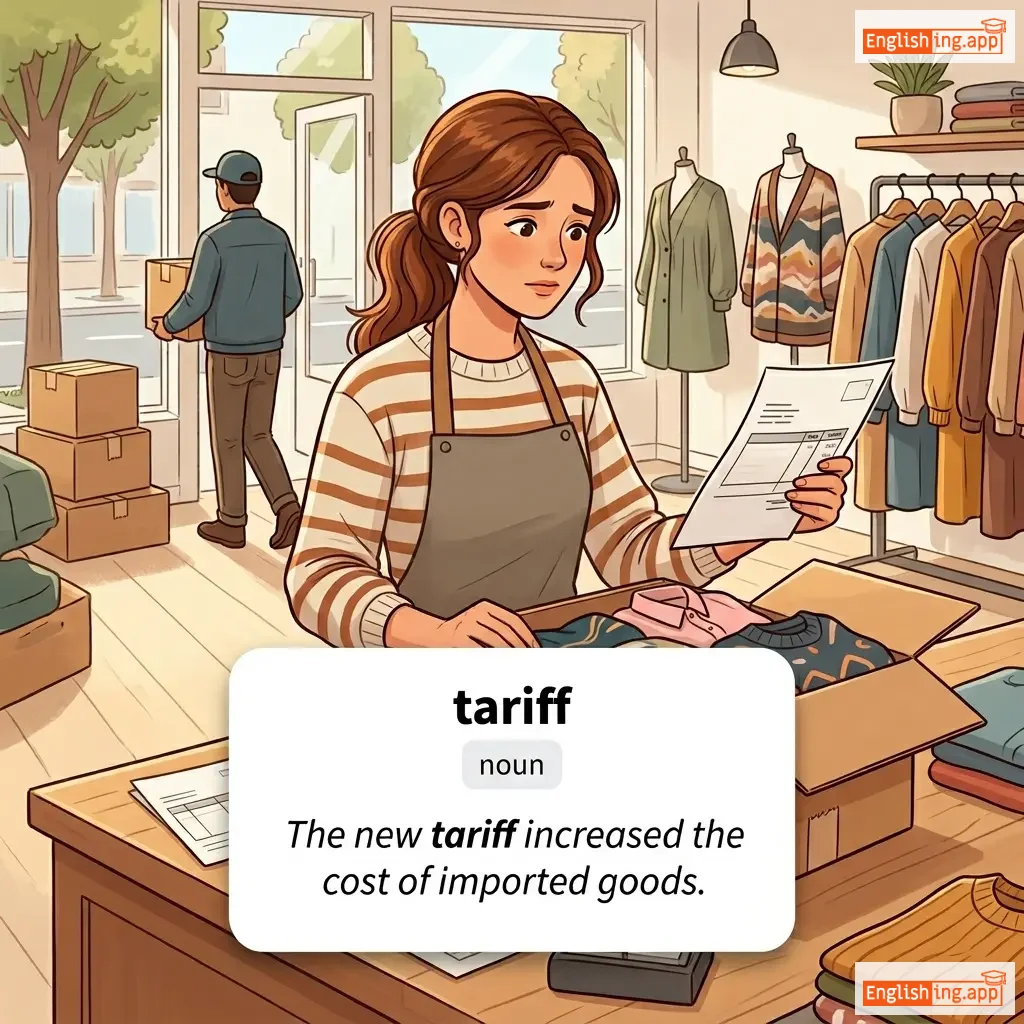
tariff definition card — visual illustration of the meaning
noun C1
/ˈtær.ɪf/
arancel (arancel)

A tax imposed by the government on imported or exported goods, also known as duty, customs tax, or levy.

"The new tariff increased the cost of imported goods."

"El nuevo arancel aumentó el costo de los bienes importados." (El nuevo arancel aumentó el costo de los bienes importados.)
verb C1
/ˈtɑːrnɪʃ/
embarrar (embarrar)

To lose luster, especially as a result of exposure to air or moisture; to damage reputation.

"The silver jewelry tarnished quickly when left in the open air."

"La joyería de plata se embarró rápidamente cuando se dejó al aire libre." (La joyeria de plata se embarro rapidamente cuando se dejo al aire libre.)
noun C1
/tɑːrˈpɔːlɪn/
lona impermeable (tarpaulin)

A large sheet of strong, flexible, water-resistant material used for covering or protecting things.

"The workers used a tarpaulin to cover the construction materials from rain."

"Los trabajadores usaron una lona impermeable para cubrir los materiales de construcción de la lluvia." (Los trabajadores usaron una lona impermeable para cubrir los materiales de construccion de la lluvia.)
noun, verb C1
/ˈtætər/
trapo rasgado (trapo rasgado)

A torn piece of cloth or clothing; to become ragged or torn.

"The old flag hung in tatters after the storm."

"La vieja bandera colgaba hecha trizas después de la tormenta." (La vieja bandera colgaba hecha trizas después de la tormenta.)
adjective C1
/ˈtæti/
desgastado (desgastado)

Worn out, shabby, or in poor condition.

"The sofa looked old and tatty after years of use."

"El sofá se veía viejo y desgastado después de años de uso." (El sofá se veía viejo y desgastado después de años de uso.)
verb C1
/tɔːnt/
provocar (provocar)

to provoke or challenge someone with insulting remarks

"The bully tried to taunt him with cruel words."

"El matón intentó provocarlo con palabras crueles." (El matón intentó provocarlo con palabras crueles.)
adjective C1
/tɔːt/
tenso (tenso)

stretched or pulled tight; tense

"The rope was pulled taut between the two poles."

"La cuerda estaba tensa entre los dos postes." (La cuerda estaba tensa entre los dos postes.)
adjective C1
/ˈtæksɪŋ/
agotador (agotador)

Requiring a lot of effort; physically or mentally demanding.

"Preparing for the exam was a taxing experience."
"Preparar para el examen fue una experiencia agotadora." (Preparar para el examen fue una experiencia agotadora.)
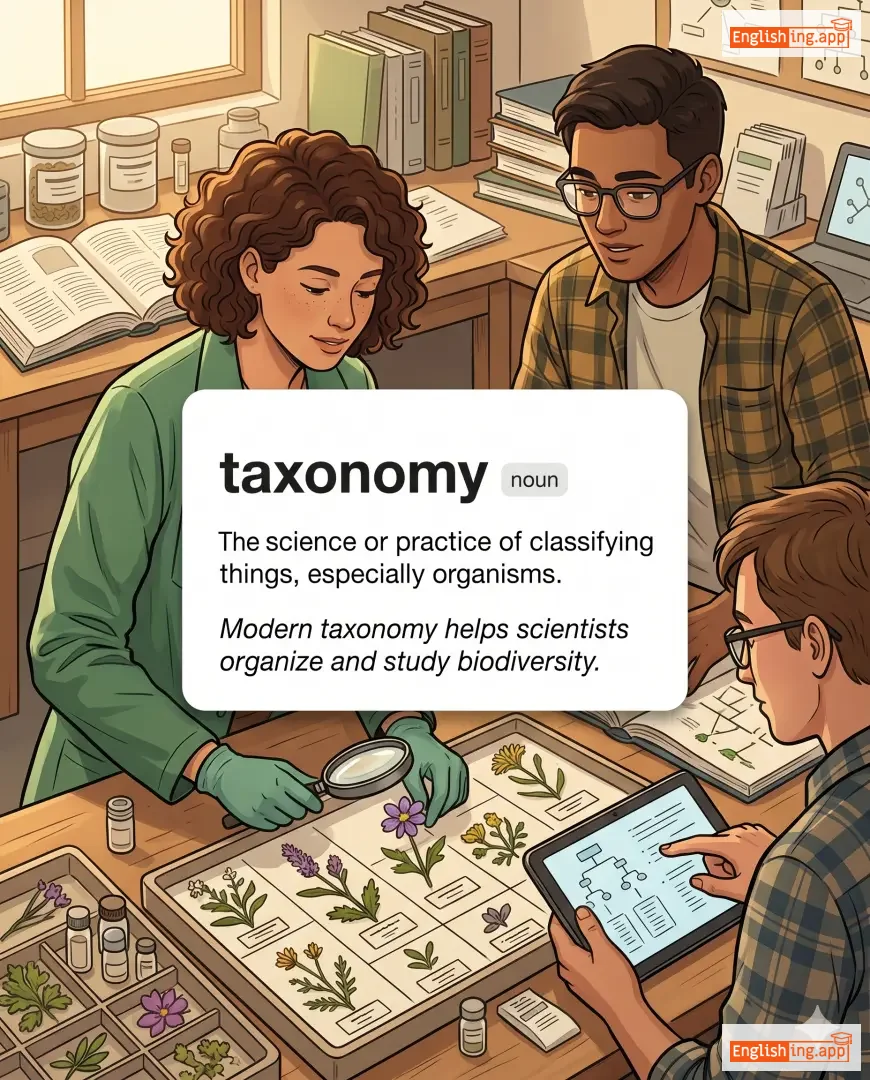
taxonomy definition card — visual illustration of the meaning
noun C1
/tækˈsɒnəmi/
ciencia de la clasificación (ciencia de la clasificacion)

The science or practice of classifying things, especially organisms.

"Modern taxonomy helps scientists organize and study biodiversity."
"La taxonomía moderna ayuda a los científicos a organizar y estudiar la biodiversidad." (La taxonomia moderna ayuda a los cientificos a organizar y estudiar la biodiversidad.)
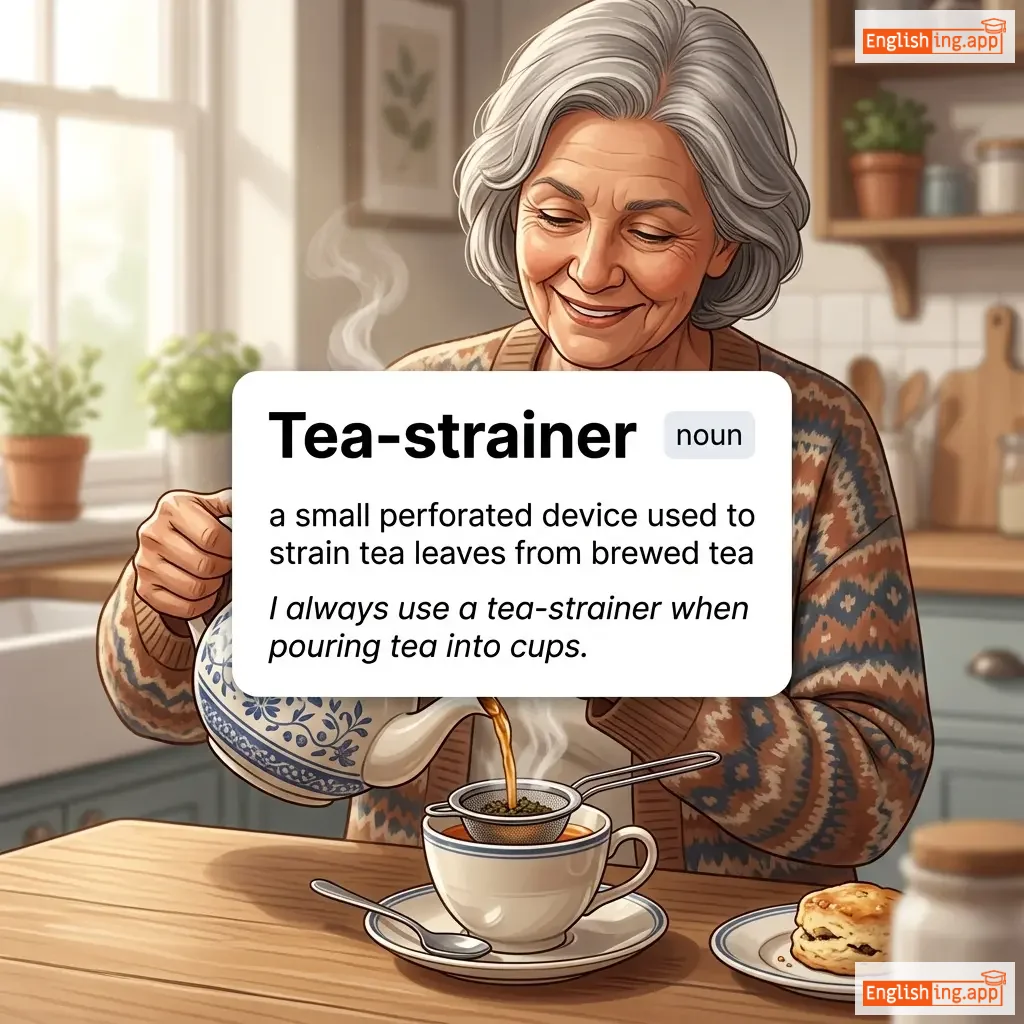
Tea-strainer definition card — visual illustration of the meaning
noun C1
/tiː ˈstreɪnər/
colador de té (colador de te)

a small perforated device used to strain tea leaves from brewed tea

"I always use a tea-strainer when pouring tea into cups."

"Siempre uso un colador de té cuando sirvo el té en las tazas." (siempre uso un colador de te cuando sirvo el te en las tazas.)
adjective C1
/ˈtɪərfəl/
lloroso; inclinado a llorar (lloroso; inclinado a llorar)

expressing or showing sadness and sorrow; inclined to weep

"She gave a tearful goodbye to her friends at the airport."
"Ella dio una despedida llorosa a sus amigos en el aeropuerto." (Ella dio una despedida llorosa a sus amigos en el aeropuerto.)
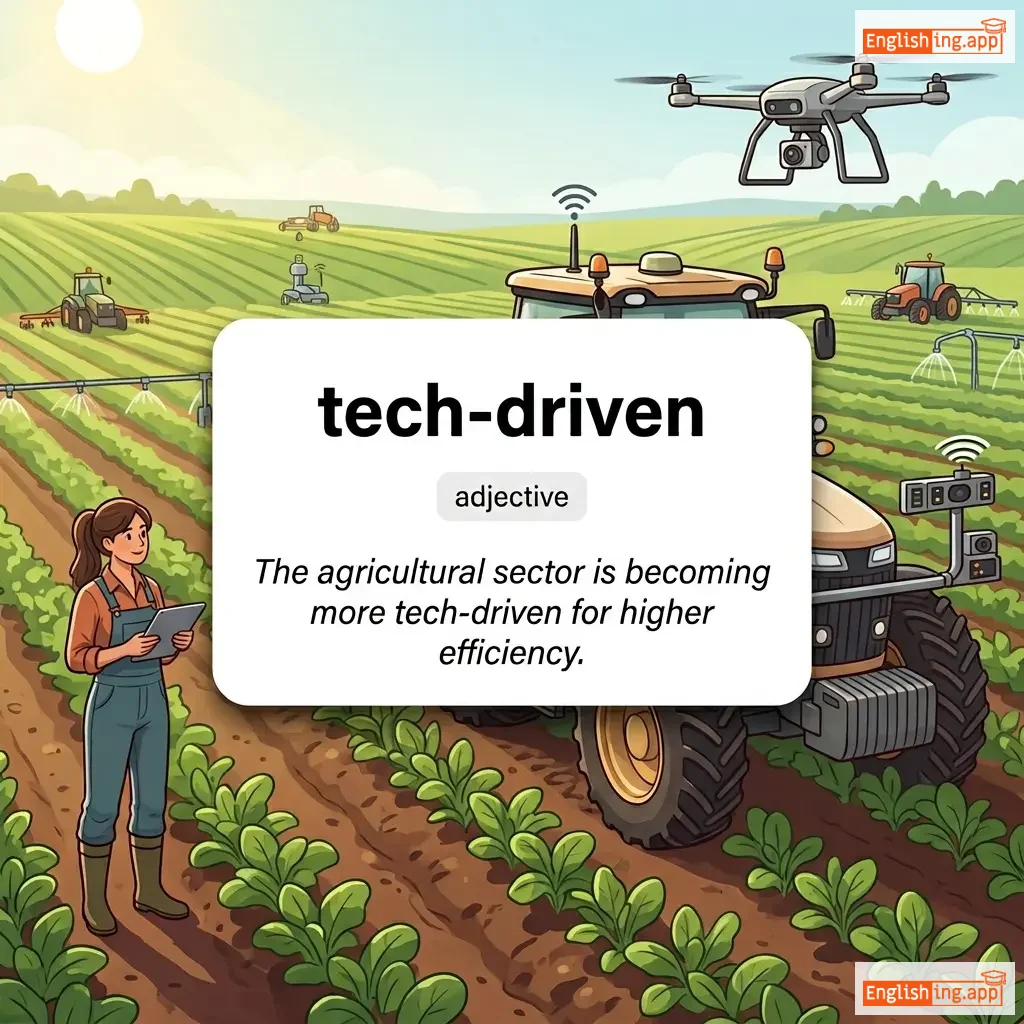
tech-driven definition card — visual illustration of the meaning
adjective C1
/tɛk ˈdrɪv.ən/
impulsado por la tecnología (impulsado por la tecnologia)

Powered or guided by technology; dependent on technological advancement for operation.

"The agricultural sector is becoming more tech-driven for higher efficiency."

"El sector agrícola está volviéndose más impulsado por la tecnología para una mayor eficiencia." (El sector agricola esta volviendose mas impulsado por la tecnologia para una mayor eficiencia.)
noun C1
/ˈtɛknɪk/
técnica (tecnica)

A method, skill, or art in a particular field, especially in the arts or sciences.

"The artist’s technic in watercolor impressed the judges."

"La técnica del artista en acuarela impresionó a los jueces." (La tecnica del artista en acuarela impresiono a los jueces.)
noun C1
/ˌtɛknɪˈkæləti/
tecnicismo (tecnicismo)

A small detail of law, rule, or procedure; a minor point that affects an outcome.

"The case was dismissed on a technicality."
"El caso fue desestimado por una tecnicidad." (El caso fue desestimado por una tecnicidad.)
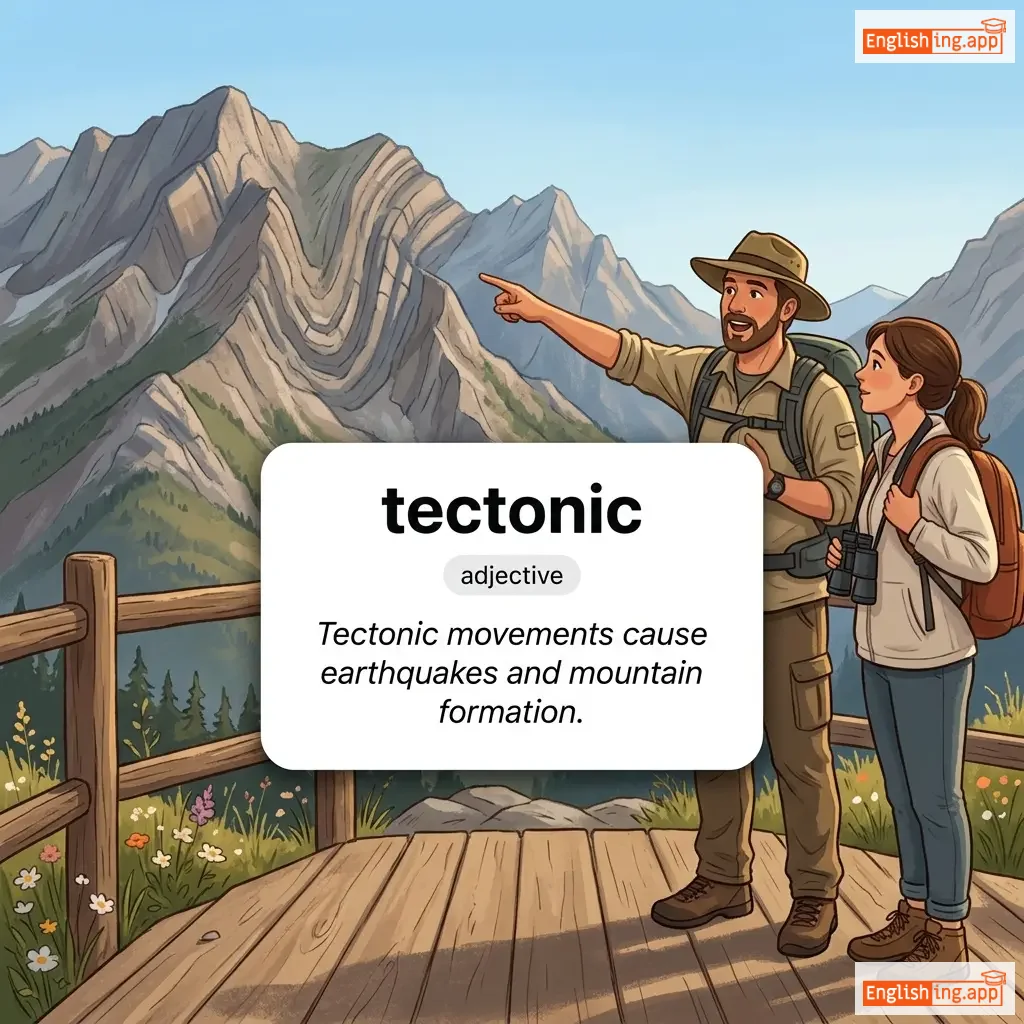
tectonic definition card — visual illustration of the meaning
adjective C1
/tɛkˈtɑː.nɪk/
tectónico (tectoniko)

Relating to the structure of the earth's crust and the large-scale processes that take place within it.

"Tectonic movements cause earthquakes and mountain formation."

"Los movimientos tectónicos causan terremotos y formación de montañas." (Los movimientos tectonicos causan terremotos y formacion de montanas.)
noun C1
/ˈtiːdiəm/
tedio (tedio)

the state of being tedious; monotony or boredom

"The tedium of long meetings often drains motivation."

"El tedio de las largas reuniones a menudo drena la motivación." (El tedio de las largas reuniones a menudo drena la motivación.)
verb C1
/tiːm/
abundar (abundar)

to be full of or swarming with

"The forest teems with wildlife."

"El bosque está lleno de vida salvaje." (El bosque está lleno de vida salvaje.)
adjective C1
/ˈtiːmɪŋ/
lleno (lleno)

full of or swarming with things or people

"The market was teeming with shoppers."

"El mercado estaba lleno de compradores." (El mercado estaba lleno de compradores.)
verb C1
/ˈtiːtər/
tambalear (tambalear)

to move or balance unsteadily; to wobble

"The glass began to teeter on the edge of the table."

"El vaso comenzó a tambalearse en el borde de la mesa." (El vaso comenzo a tambalearse en el borde de la mesa.)