

/

Swipe left or right, or use the buttons. Tap image to zoom.
/
例句翻译
••••••
单词
••••••
Lesson 12Lesson 12 - 遮罩切换
|
表情符号
|
单词 | Images | 翻译 | 含义 | 例句 | 例句翻译 | 同义词 | 反义词 | 搭配词 | 助记符 |
|---|---|---|---|---|---|---|---|---|---|---|
|
#221
📍
|
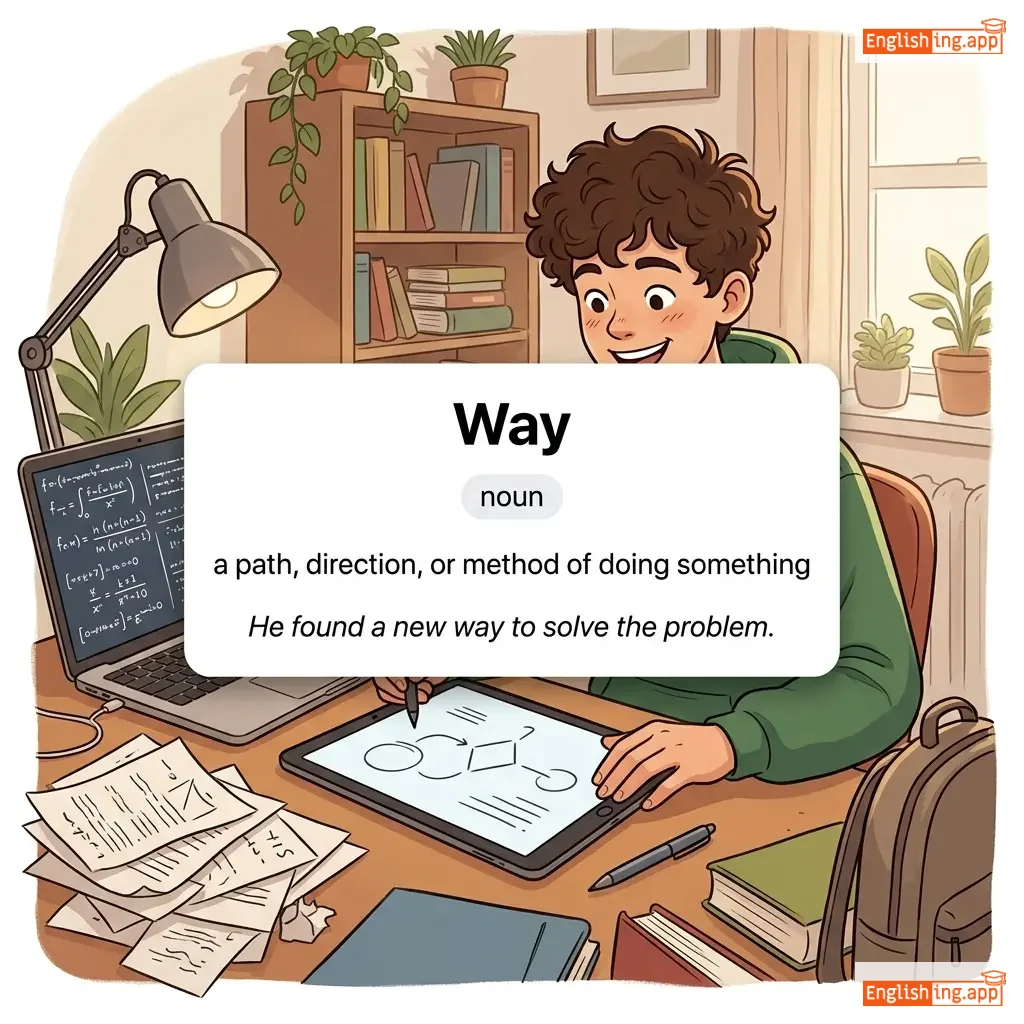
/weɪ/
adverb
(wēi)
••••••
|
|
很; 在很大程度上; 通过大量
hěn; zài hěn dà chéngdù shàng; tōngguò dàliàng
••••••
|
to a great degree; much; by a large amount
••••••
|
The movie was way better than I expected. |
这部电影比我预期的要好得多。
Zhè bù diànyǐng bǐ wǒ yùqī de yào hǎo dé duō.
••••••
|
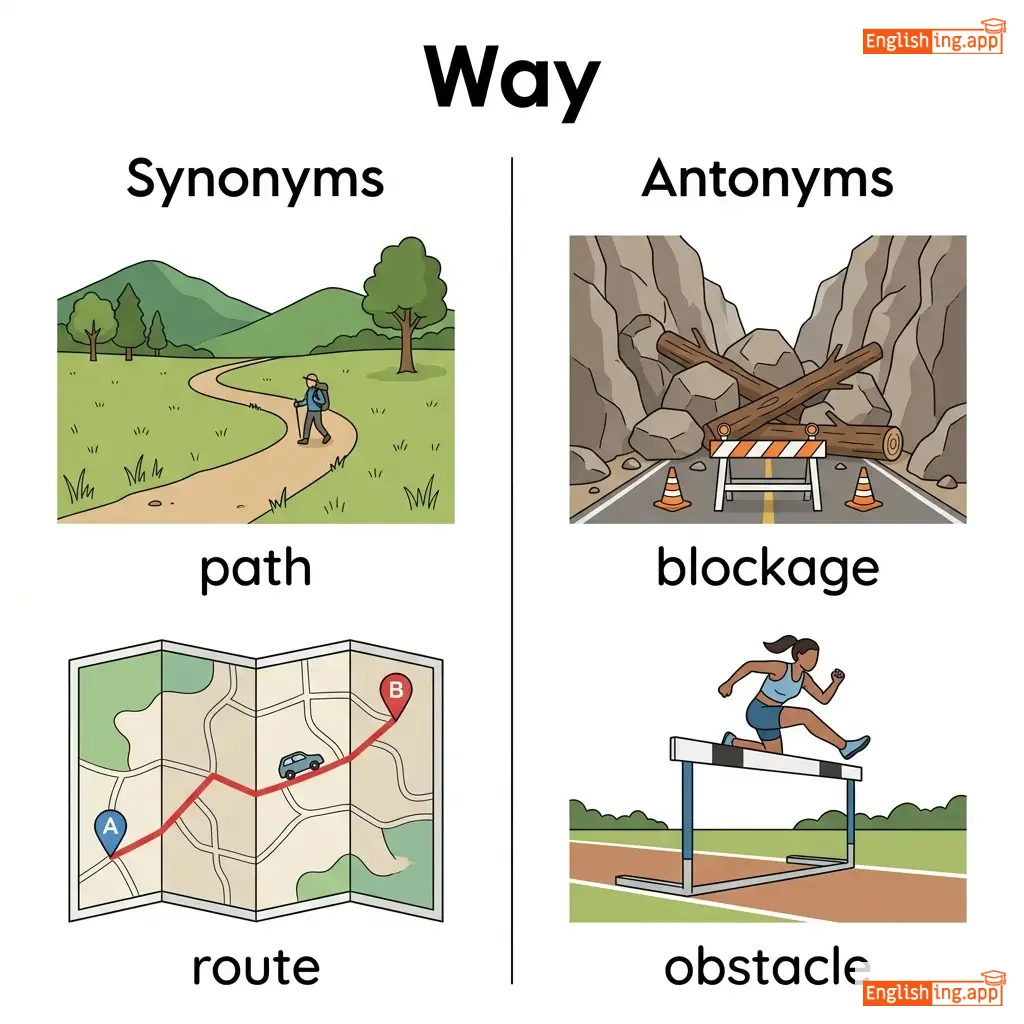
much, far, greatly, considerably
••••••
|
slightly, barely, hardly
••••••
|
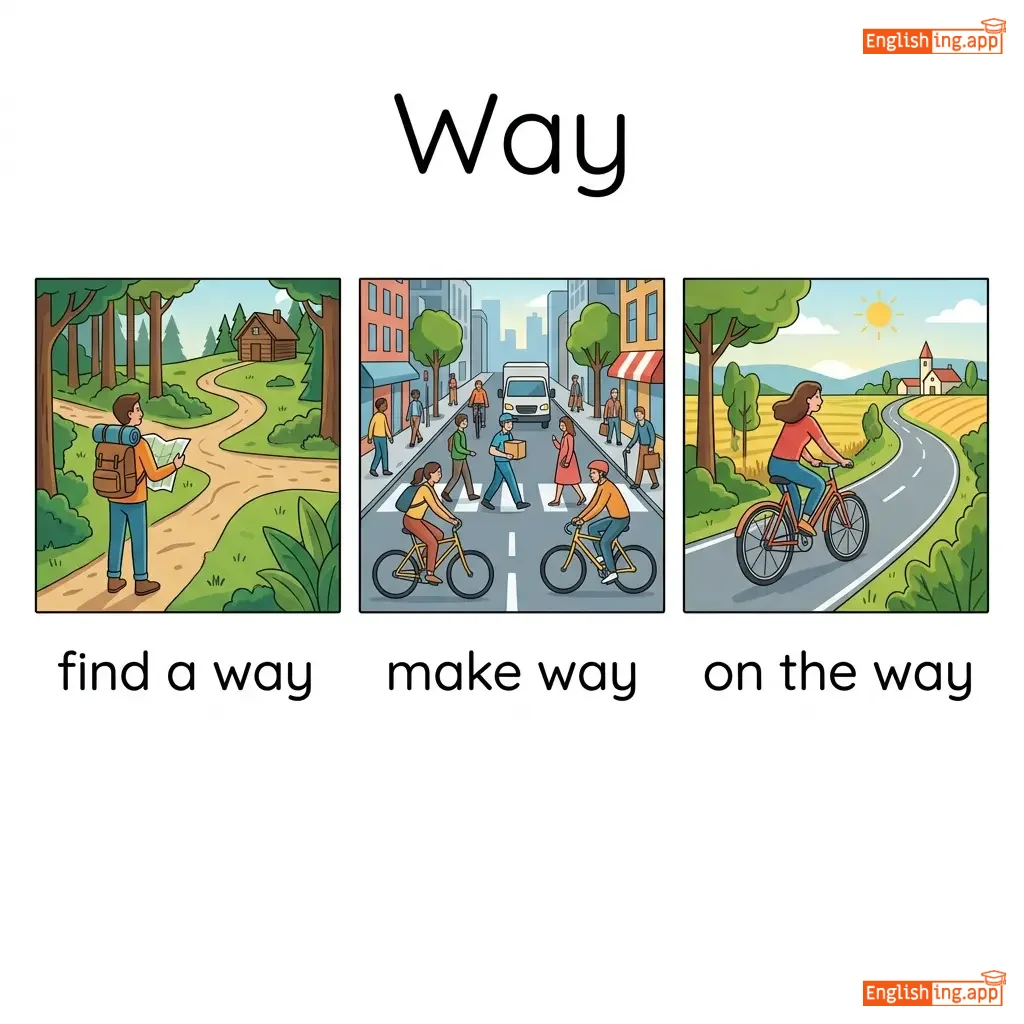
way better, way too much, way ahead
••••••
|
‘Way’意味着很多——它是走向更好的途径。
••••••
|
|
#222
📍
|
/weər/
adverb
(威尔)
••••••
|
- •••••• |
哪里
weier
••••••
|
In or to what place or position; used to inquire about location
••••••
|
Where did you put my keys?
你把我的钥匙放在哪里?
••••••
|
你把我的钥匙放在哪里?
nibawowodeyaoshifangzainali
••••••
|
whereabouts, whither
••••••
|
here, there
••••••
|
where are you, where to go, where from
••••••
|
Where = WeiEr, 哪里 = nali; 想象一个地图指向 WeiEr 在 nali 找钥匙
••••••
|
|
#223
😊
|
/ˈwɪl.ɪŋ.li/
adverb
(wī-líng-lì)
••••••
|
- •••••• |
自愿地
zìyuàn de
••••••
|
in a willing manner; voluntarily; with free will
••••••
|
She willingly helped her neighbors during the emergency. |
她在紧急情况下自愿帮助了她的邻居。
tā zài jǐnjí qíngkuàng xià zìyuàn bāngzhù le tā de línjū
••••••
|
voluntarily, eagerly, gladly, readily, freely
••••••
|
reluctantly, unwillingly, forcibly, involuntarily
••••••
|
willingly accept, willingly participate, willingly cooperate, willingly volunteer
••••••
|
自愿地做事就像是‘我愿意去帮忙’。
••••••
|
|
#224
📅
|
/ˈwiːkli/
adverb
(威克利)
••••••
|
- •••••• |
每周
mei zhou
••••••
|
happening or done once every week; every week
••••••
|
I visit my grandmother weekly on Sundays.
我每个周日都去看望我的祖母。
••••••
|
我每个周日都去看望我的祖母。
Wo mei ge zhou ri dou qu kan wang wo de zumu
••••••
|
every week, once a week, hebdomadally
••••••
|
daily, monthly, annually
••••••
|
weekly meeting, weekly report, weekly basis
••••••
|
Weekly = 每周, 想象一个时钟写着 WEekLY, 周日去看望 Grandma 的画面帮助记住每周的意思
••••••
|
|
#225
🌍
|
/werˈevər/
adverb
(wèiérèwèiér)
••••••
|
- •••••• |
无论哪里
wúlùn nǎlǐ
••••••
|
In every place that; anywhere that; no matter where
••••••
|
Wherever you go, I will follow.
无论你去哪里,我都会跟随你。
••••••
|
无论你去哪里,我都会跟随你。
Wúlùn nǐ qù nǎlǐ, wǒ dōu huì gēnsuí nǐ.
••••••
|
anywhere, everywhere, wherever
••••••
|
nowhere, somewhere specific
••••••
|
wherever possible, wherever you are, wherever that may be
••••••
|
无论哪里你去,‘幸福’都会跟着你
••••••
|
|
#226
⏰
|
/jet/
adverb
(yet)
••••••
|
- •••••• |
直到现在; 还;
zhídào xiànzài; hái
••••••
|
up to now or a specified time; still; however; nevertheless
••••••
|
He hasn't finished his homework yet. |
他还没有完成作业。
Tā hái méiyǒu wánchéng zuòyè
••••••
|
still, so far, thus far, up to now, until now
••••••
|
already, previously, before, earlier
••••••
|
not yet, yet again, yet another, yet to come
••••••
|
还没完成,直到现在还可以做到。
••••••
|
|
#227
👍
|
/wel/
adverb
(wēi ěr)
••••••
|
- •••••• |
好; 完全地; 熟练地; 高水平
hǎo; wánquán de; shúliàn de; gāo shuǐpíng
••••••
|
in a good way; thoroughly; skillfully; to a high standard
••••••
|
She performed very well in the exam. |
她在考试中表现得非常好。
Tā zài kǎoshì zhōng biǎoxiàn dé fēicháng hǎo.
••••••
|
properly, correctly, successfully, expertly
••••••
|
badly, poorly, incorrectly
••••••
|
well done, well known, very well
••••••
|
做得好! 'Hǎo' 就是中文的 'well'。
••••••
|
|
#228
🎭
|
/ˈwɪmzɪkli/
adverb
(威姆西克利)
••••••
|
- •••••• |
任性地,异想天开地
whimsikeli
••••••
|
In a playful, fanciful, or capricious manner; with sudden changes of mind
••••••
|
She decorated her room whimsically with colorful balloons.
她用五彩缤纷的气球任性地装饰了她的房间。
••••••
|
她用五彩缤纷的气球任性地装饰了她的房间。
ta yong wu cai bin fen de qi qiu ren xing de zhuang shi le ta de fang jian
••••••
|
playfully, capriciously, fancifully
••••••
|
seriously, methodically, systematically
••••••
|
decorated whimsically, behave whimsically, designed whimsically
••••••
|
Whimsically = whim + sically, 想象一个 whim 小精灵 在 room 里 彩球 飞舞, 任性 地 改变 心意, 用 颜色 和 玩耍 来 记住 意思
••••••
|
|
#229
⏰
|
/wen/
adverb
(wén)
••••••
|
|
什么时候
shénme shíhòu
••••••
|
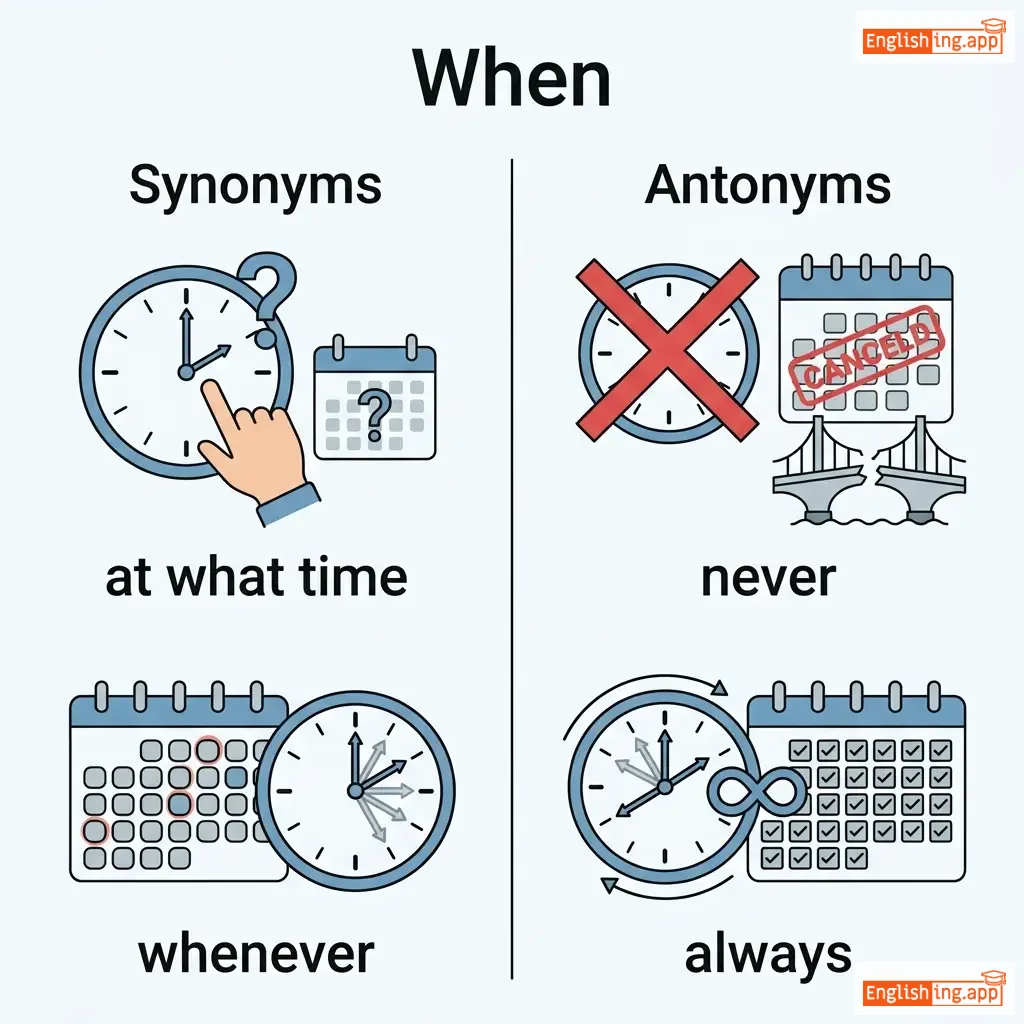
at what time; at the time that; during the time that
••••••
|
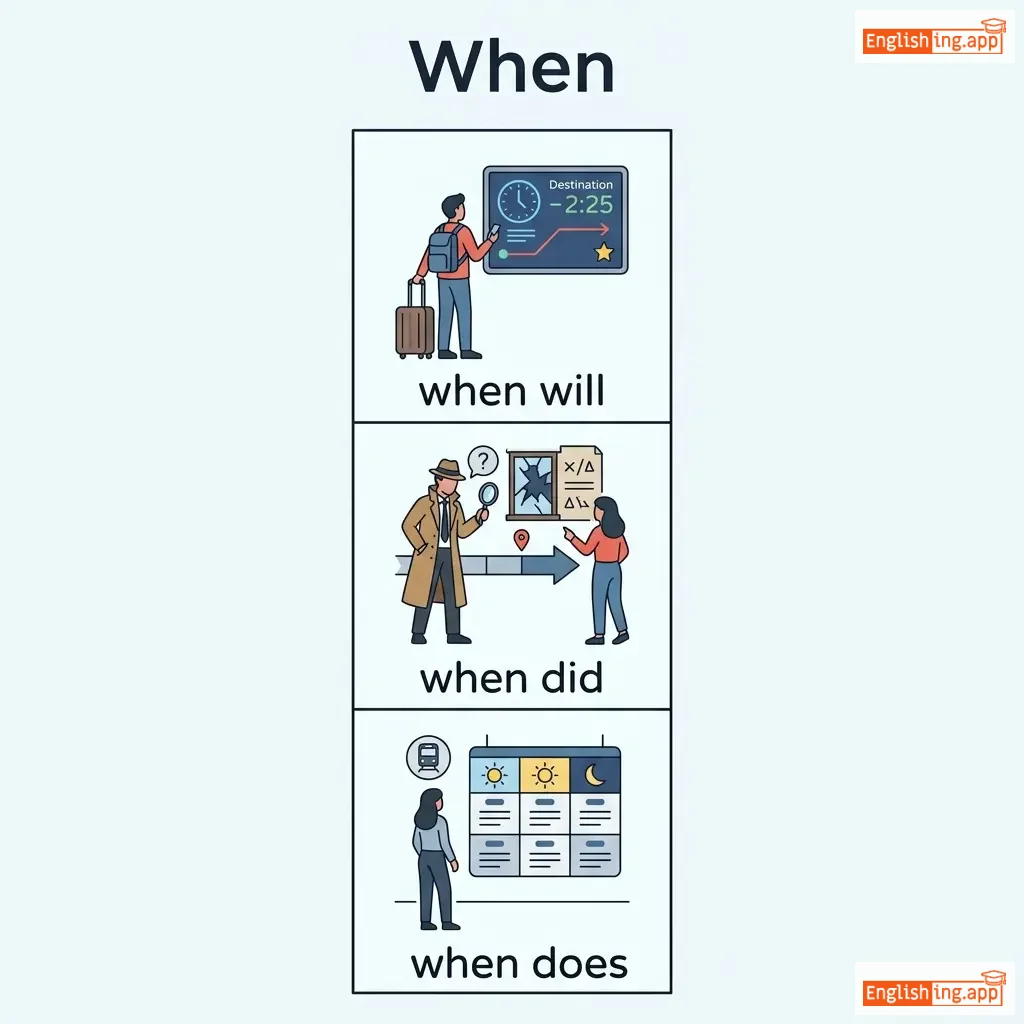
When will you arrive at the station?
你什么时候到车站?
••••••
|
你什么时候到车站?
Nǐ shénme shíhòu dào chēzhàn?
••••••
|
at what time, at which time, while
••••••
|
- •••••• |
when exactly, when possible, when necessary
••••••
|
当你想知道什么时候,用'什么时候'!
••••••
|
|
#230
💯
|
/ˈhoʊli/
adverb
(huó lì)
••••••
|
- •••••• |
完全; 完全地
wánquán; wánquán de
••••••
|
Entirely; completely; to the full extent
••••••
|
I am wholly committed to this project. |
我完全致力于这个项目。
wǒ wánquán zhìlì yú zhège xiàngmù.
••••••
|
completely, entirely, totally, fully
••••••
|
partially, partly, incompletely
••••••
|
wholly owned, wholly responsible, wholly different
••••••
|
完全投入的方式,好像给了一切
••••••
|
|
#231
🕐
|
/wenˈevər/
adverb
(温艾弗)
••••••
|
- •••••• |
无论何时
wu lun he shi
••••••
|
at any time that; every time that; no matter when
••••••
|
Call me whenever you need help.
只要你需要帮助,就给我打电话。
••••••
|
只要你需要帮助,就给我打电话。
zhi yao ni xu yao bang zhu jiu gei wo da dian hua
••••••
|
anytime, every time, no matter when
••••••
|
never, at no time
••••••
|
whenever possible, whenever necessary, whenever you want
••••••
|
WenEver 记忆法: wen ever = 无论何时, when you need help call me
••••••
|
|
#232
❓
|
/waɪ/
adverb
(wài)
••••••
|
- •••••• |
为什么
wei shenme
••••••
|
For what reason or purpose; used to ask about the cause of something
••••••
|
Why are you late today? |
今天你为什么迟到了?
jīntiān nǐ wèishénme chídào le?
••••••
|
wherefore, how come
••••••
|
because, therefore
••••••
|
why not, that's why, reason why
••••••
|
No •••••• |
Vocabulary Quiz
Test your vocabulary by matching words with their translations or meanings.
Login to take the quiz课程列表
Mastering the Most Frequent Adverbs
(掌握最常用的副词)
/12
1
2
3
4
5
6
7
8
9
10
11
12
Lesson 1: Mastering the Most Frequent Adverbs
(第1课:掌握最常见的副词)
Lesson 2: Mastering the Most Frequent Adverbs
(第二课:掌握最常见的副词)
Lesson 3: Mastering the Most Frequent Adverbs
(第3课:掌握最常见的副词)
Lesson 4: Mastering the Most Frequent Adverbs
(第4课:掌握最常用的副词)
Lesson 5: Mastering the Most Frequent Adverbs
(第5课:掌握最常用的副词)
Lesson 6: Mastering the Most Frequent Adverbs
(第6课:掌握最常见的副词)
Lesson 7: Mastering the Most Frequent Adverbs
(第7课:掌握最常用的副词)
Lesson 8: Mastering the Most Frequent Adverbs
(第8课:掌握最常用的副词)
Lesson 9: Mastering the Most Frequent Adverbs
(第9课:掌握最常见的副词)
Lesson 10: Mastering the Most Frequent Adverbs
(第10课:掌握最常见的副词)
Lesson 11: Mastering the Most Frequent Adverbs
(第11课:掌握最常用的副词)
Lesson 12: Mastering the Most Frequent Adverbs
(第12课:掌握最常用的副词)
Comments (0)
Share your thoughts and join the discussion.
Join the discussion by logging in
Login to CommentNo comments yet
Be the first to share your thoughts!