New Beginnings
萨米尔和他的wife拉法多年来一直wished有一个孩子。终于,他们的wish实现了。宝宝女孩的birth是一个神奇的时刻。
“我们需要adapt,”拉法说。“After这件事后,一切will不同。我们不能avoid改变。”
“我知道,”萨米尔同意道。“但我aware我们可以做到。Along这个过程中,我们会学习。”
第一个week最难。宝宝woke他们again又again地醒来。“她When will睡?”萨米尔sighed,半awake地在凌晨三点。
“我们必须wait,”拉法疲惫地说。“婴儿在夜里arise。我们必须adapt她的作息,而不是她adapt我们的。”
Week after week,他们学会了。他们学会了when喂奶,when换尿布,when让她哭,when安抚。家庭中有许多建议,他们学会了among这些建议,哪些有用,哪些要avoid。
有时萨米尔wished回到以前的生活。“After工作后,我们可以放松,”他想。“现在我们wait午睡,我们总是awake,总是aware每一个声音。”
但当宝宝when微笑、when她brought快乐时,一切都改变了。“这个小小的being,”他意识到,“正在bringing如此多的幸福。”
他们的wife-husband关系必须adapt。他们不能avoid新的责任。出现的任务必须共享。Along爱而来的,还有挑战。
“一天我们不能allow自己争吵,”拉法说,“我们among数百万父母之一。他们都adapt。我们will也会。”
几个月after birth,他们变了。那个曾经wished、waited许久的夫妻已adapted。他们对每个里程碑都aware。他们allowed自己犯错。他们学会了when等待,when行动。
“Being父母,”萨米尔对他的wife说,“意味着adapting again和again。每个week brings新的事物。问题arise,我们avoid一些,解决其他。After每次挑战,我们成长。Along这段旅程,among所有不确定中,有一件事是明确的——我们will尽一切努力。”
多年以后,when女儿长大,他们wished能回到过去。“那些最初的weeks,”拉法回忆道,“when我们总是awake,总是waiting,总是学习如何adapt——那很艰难。After每个不眠之夜,我wished休息。但现在我wish再次拥有那些时刻。”
“Being aware时间流逝之快,”萨米尔补充说,“让我感激。我们wished她的birth,我们waited很久。When她终于到来,我们必须adapt,allow改变,bring出最好的自己。Along挑战带来成长。Among所有父母,我们并不特殊。After所有,一切人都会adapt。但我们的旅程、我们的孩子、我们如何学会avoid错误、问题如何arose并被解决、week after week我们成长——那是我们的。如果你是新父母,请be aware:你will wait,你will保持awake,挑战will arise,你will需要adapt again又again。Allow自己去挣扎。Avoid与他人比较。Bring耐心。After风暴会平静。Along艰难的道路会有喜悦。Among所有wishes,为孩子幸福的wish将will引导你。当你回首时,你will wish重温一切again,甚至那些你曾wished结束的时刻。因为being父母不是关于完美,而是关于adapting、成长、waiting耐心、being aware、allowing爱bring你前行。”
他们的女儿,如今长大,有时wished理解她的birth brought什么到他们的生活中。那个wife和丈夫一起adapted,学会了when等待、when行动,保持aware和awake,allowed自己成长,avoided在挑战arose时放弃——他们不仅成为了父母,更成为能adapt任何生活brought along的伙伴。
|
表情符号
|
单词 | Images | 翻译 | 过去时 | 过去分词 | 第三人称单数 | 动名词 | 含义 | 例句 | 例句翻译 | 示例表达 | 示例表达含义 | 示例表达翻译 | 同义词 | 反义词 | 搭配词 | 助记符 |
|---|---|---|---|---|---|---|---|---|---|---|---|---|---|---|---|---|---|
|
🔄
••••••
|
/əˈdæpt/
verb
(适应)
••••••
|
- •••••• |
适应
shìyìng
••••••
|
adapted
适应了
••••••
|
adapted
适应了
••••••
|
adapts
适应
••••••
|
adapting
适应
••••••
|
to adjust or change something to suit new conditions or situations
••••••
|
He quickly adapted to the new environment.
他很快适应了新环境。
••••••
|
他很快适应了新环境。
Tā hěn kuài shìyìngle xīn huánjìng.
••••••
|
adapt to change
适应变化
••••••
|
to adjust oneself according to new circumstances
••••••
|
适应变化
Shìyìng biànhuà
••••••
|
adjust, modify, alter, accommodate
••••••
|
resist, reject
••••••
|
adapt to, adapt for, adapt quickly, adapt easily
••••••
|
适应意味着调整。记住 'A Dress' 适应 = 适应
••••••
|
|
👨👩👧
••••••
|
/əˈdɒpt/
verb
(领养)
••••••
|
- •••••• |
收养
shouyang
••••••
|
adopted
领养了
••••••
|
adopted
领养了
••••••
|
adopts
领养
••••••
|
adopting
领养中
••••••
|
To take something as your own, such as a child, idea, or method.
••••••
|
They decided to adopt a child from the orphanage.
他们决定从孤儿院收养一个孩子。
••••••
|
他们决定从孤儿院收养一个孩子。
Tāmen juédìng cóng gū'ér yuàn shōuyǎng yīgè háizi.
••••••
|
adopt a policy
采纳政策
••••••
|
To formally accept and begin to use a policy.
••••••
|
采纳政策
cainà zhèngcè
••••••
|
accept, embrace, foster, implement, take on
••••••
|
abandon, reject, refuse
••••••
|
adopt a child, adopt a policy, adopt a method, adopt a strategy
••••••
|
Adopt 是收养的意思 – A dopt (A adopt) 一家人.
••••••
|
|
➡️
••••••
|
/ˈæftər/
preposition, conjunction, adverb
(after)
••••••
|
- •••••• |
之后
zhīhòu
••••••
|
- •••••• | - •••••• | - •••••• | - •••••• |
in the time following an event or another action
••••••
|
We went for ice cream after the movie. |
我们看完电影后去吃冰淇淋。
Wǒmen kàn wán diànyǐng hòu qù chī bīngqílín.
••••••
|
after all |
despite everything; in the end
••••••
|
毕竟
bìjìng
••••••
|
following, later, afterward, subsequent
••••••
|
before, prior
••••••
|
after school, after work, after the party, soon after
••••••
|
After 意思是之后— 电影之后吃冰淇淋。
••••••
|
|
🔁
••••••
|
/əˈɡɛn/ or /əˈɡeɪn/
adverb
(əˈɡɛn)
••••••
|
- •••••• |
再
zài
••••••
|
- •••••• | - •••••• | - •••••• | - •••••• |
Once more; another time.
••••••
|
She read the book again to understand it better. |
她又读了一遍书,以更好地理解它。
Tā yòu dúle yī biàn shū, yǐ gèng hǎo de lǐjiě tā.
••••••
|
time and again |
Repeatedly, very often.
••••••
|
一次又一次
yīcì yòu yīcì
••••••
|
once more, anew, repeatedly, over again
••••••
|
never, once
••••••
|
again and again, once again, try again, over again
••••••
|
再是另一种重复的意思—又读一次书再读一次!
••••••
|
|
✅
••••••
|
/əˈlaʊ/
verb
(阿劳)
••••••
|
- •••••• |
允许
xǔn yǔ
••••••
|
allowed
阿劳德
••••••
|
allowed
阿劳德
••••••
|
allows
阿劳斯
••••••
|
allowing
阿劳英
••••••
|
to give permission for something to happen or someone to do something
••••••
|
The teacher did not allow phones in class.
老师不允许课堂上使用手机。
••••••
|
老师不允许课堂上使用手机。
Lǎoshī bù yǔnxǔ kètáng shàng shǐyòng shǒujī.
••••••
|
allow for
阿劳 for
••••••
|
to take into consideration
••••••
|
考虑到
kǎolǜ dào
••••••
|
permit, authorize, let, enable, grant
••••••
|
forbid, prevent, deny
••••••
|
allow time, allow access, allow entry, allow someone to
••••••
|
Allow 就像 allowance, 给你允许的那些钱。
••••••
|
|
➡️
••••••
|
/əˈlɔːŋ/
preposition, adverb
(阿龙)
••••••
|
- •••••• |
沿着
yánzhe
••••••
|
- •••••• | - •••••• | - •••••• | - •••••• |
moving in a constant direction on (a road, path, or surface)
••••••
|
We walked along the river. |
我们沿着河走。
Wǒmen yánzhe hé zǒu.
••••••
|
go along with |
to agree with or support
••••••
|
跟随
gēnsuí
••••••
|
beside, down, alongside, next to
••••••
|
away, against
••••••
|
along the road, along the way, along with, go along
••••••
|
沿着表示走在路上,ALL LONG走下去。
••••••
|
|
👥
••••••
|
/əˈmʌŋ/
preposition
(阿蒙)
••••••
|
- •••••• |
在...之中
zài...zhī zhōng
••••••
|
- •••••• | - •••••• | - •••••• | - •••••• |
surrounded by; in the middle of a group
••••••
|
He was sitting among his friends. |
他坐在他的朋友们中间。
Tā zuò zài tā de péngyǒumen zhōngjiān.
••••••
|
- •••••• | - •••••• | - •••••• |
amid, amidst, between, surrounded by
••••••
|
outside, away from
••••••
|
among people, among friends, among the crowd
••••••
|
Among意味着在...之中,像坐在朋友们中间。
••••••
|
|
🌅
••••••
|
/əˈraɪz/
verb
(阿瑞兹)
••••••
|
- •••••• |
出现
chūxiàn
••••••
|
arose
阿罗斯
••••••
|
arisen
阿里森
••••••
|
arises
阿瑞泽斯
••••••
|
arising
阿瑞辛
••••••
|
to begin to exist or to happen
••••••
|
Problems may arise if you don't plan ahead.
如果你没有提前计划,问题可能会出现。
••••••
|
如果你没有提前计划,问题可能会出现。
Rúguǒ nǐ méiyǒu tíqián jìhuà, wèntí kěnéng huì chūxiàn.
••••••
|
arise from
arise from
••••••
|
to result from or be caused by
••••••
|
源自
yuán zì
••••••
|
emerge, occur, appear, happen, develop
••••••
|
cease, end, stop
••••••
|
arise from, situation arises, issue arises, opportunity arises
••••••
|
当太阳升起时,白天开始。
••••••
|
|
🙅
••••••
|
/əˈvɔɪd/
verb
(避免)
••••••
|
- •••••• |
避免
bìmiǎn
••••••
|
avoided
避免了
••••••
|
avoided
避免了
••••••
|
avoids
避免
••••••
|
avoiding
避免ing
••••••
|
To keep away from or stop oneself from doing something.
••••••
|
He tries to avoid junk food.
他尽量避免吃垃圾食品。
••••••
|
他尽量避免吃垃圾食品。
Tā jǐnliàng bìmiǎn chī lājī shípǐn.
••••••
|
avoid like the plague
像瘟疫一样避免
••••••
|
To stay far away from something or someone.
••••••
|
像瘟疫一样避免
Xiàng wēnyì yīyàng bìmiǎn
••••••
|
evade, escape, dodge, shun, bypass
••••••
|
face, confront, seek
••••••
|
avoid conflict, avoid risk, avoid mistakes, avoid responsibility
••••••
|
避免 — 总是避免不好的选择!
••••••
|
|
😳
••••••
|
/əˈweɪk/
verb/adjective
(āwèik)
••••••
|
- •••••• |
清醒
qīngxǐng
••••••
|
awoke
āwók
••••••
|
awoken
āwóken
••••••
|
awakes
āwéiks
••••••
|
awaking
āwéiking
••••••
|
to stop sleeping; not asleep
••••••
|
She was still awake when I got home.
Shí wóz stil āwèik wen āi gòt hòm.
••••••
|
她回家时还没睡觉。
Tā huí jiā shí hái méi shuìjiào.
••••••
|
stay awake
stei āwèik
••••••
|
to remain not sleeping
••••••
|
保持清醒
bǎochí qīngxǐng
••••••
|
wake, arouse, rouse, alert
••••••
|
sleep, doze, slumber
••••••
|
stay awake, keep awake, fully awake, remain awake
••••••
|
清醒 = 你不睡觉,像awake一样!
••••••
|
|
👀
••••••
|
/əˈwɛər/
adjective
(āwēr)
••••••
|
- •••••• |
意识到
yìshí dào
••••••
|
- •••••• | - •••••• | - •••••• | - •••••• |
having knowledge or perception of a situation or fact
••••••
|
She is aware of the risks involved. |
她意识到其中的风险。
Tā yìshí dào qízhōng de fēngxiǎn.
••••••
|
become aware of |
to realize or gain knowledge about something
••••••
|
意识到
yìshí dào
••••••
|
conscious, informed, mindful, alert, knowledgeable
••••••
|
unaware, ignorant, oblivious
••••••
|
aware of, fully aware, become aware, make aware
••••••
|
Aware意味着意识到👀 — 如果你没有意识到,你可能会犯一个意识到(yìshí dào)错误。
••••••
|
|
🌍
••••••
|
/ˈbiːɪŋ/
noun/verb
(bīng)
••••••
|
- •••••• |
存在
cúnzài
••••••
|
- •••••• | - •••••• |
is/are being
shì / zhèngzài shì
••••••
|
being
bīng
••••••
|
Existence; the state of living; a living creature.
••••••
|
Kindness is part of being human.
善良是人类存在的一部分。
••••••
|
善良是人类存在的一部分。
Shànliáng shì rénlèi cúnzài de yī bùfen.
••••••
|
human being
人类存在
••••••
|
A person; an individual of the species Homo sapiens.
••••••
|
人类存在
rénlèi cúnzài
••••••
|
existence, creature, life, entity
••••••
|
nonexistence, nothingness
••••••
|
human being, state of being, well-being, living being
••••••
|
Being 意味着存在 - 我 BE 因为我还活着。
••••••
|
|
👶
••••••
|
/bɜːrθ/
noun
(bɜːrθ)
••••••
|
- •••••• |
出生
chūshēng
••••••
|
- •••••• | - •••••• | - •••••• | - •••••• |
the process of being born; the start of life
••••••
|
The birth of a child brings joy to the whole family. |
孩子的出生给整个家庭带来喜悦。
Háizi de chūshēng gěi zhěnggè jiātíng dàilái xǐyuè.
••••••
|
give birth |
to have a baby
••••••
|
分娩
fēnmiǎn
••••••
|
delivery, arrival, nativity, beginning
••••••
|
death, end
••••••
|
birth of a child, birth certificate, give birth, birth anniversary
••••••
|
Birth和出生是同样的含义,就像生日蛋糕一样!
••••••
|
|
📦
••••••
|
/brɪŋ/
verb
(bɹɪŋ)
••••••
|
|
带来
dai lai
••••••
|
brought
brɔt
••••••
|
brought
brɔt
••••••
|
brings
brɪŋz
••••••
|
bringing
brɪŋɪŋ
••••••
|
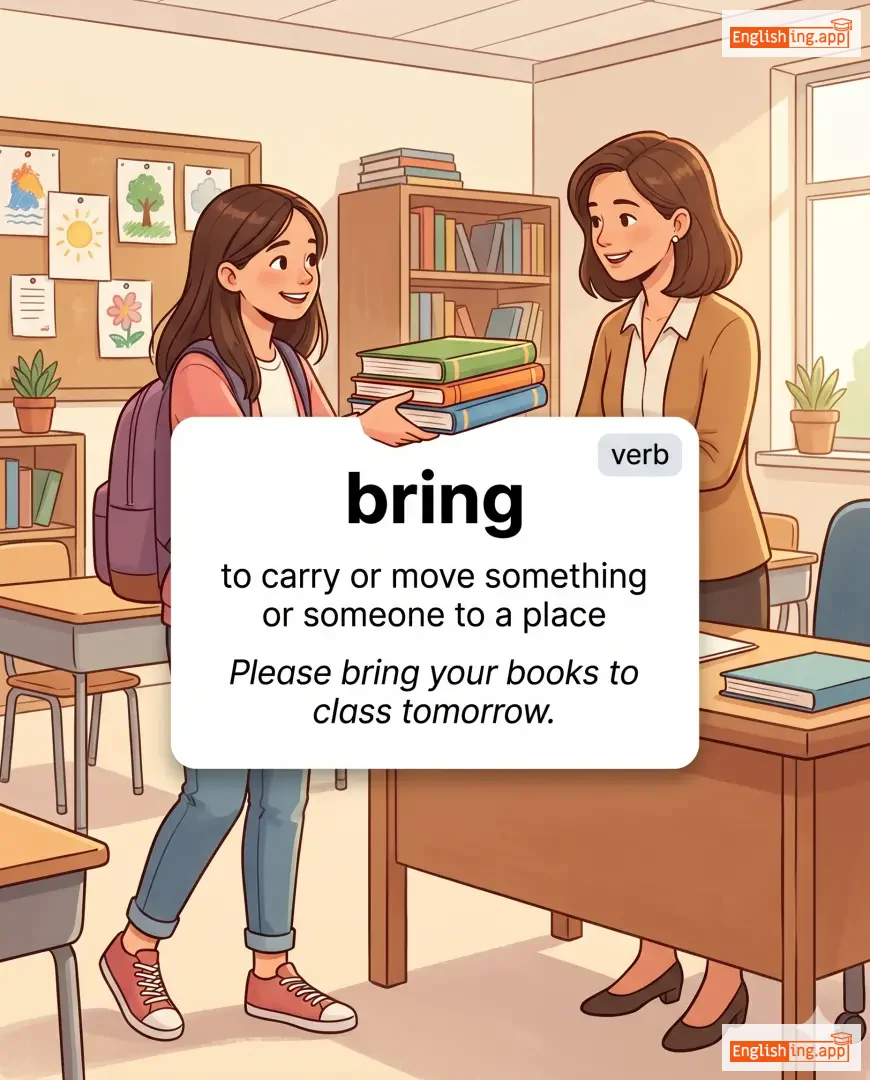
to carry or move something or someone to a place
••••••
|
Please bring your books to class tomorrow.
请把书带到明天的课堂。
••••••
|
请把书带到明天的课堂。
Qing ba shu dai dao mingtian de kètáng.
••••••
|
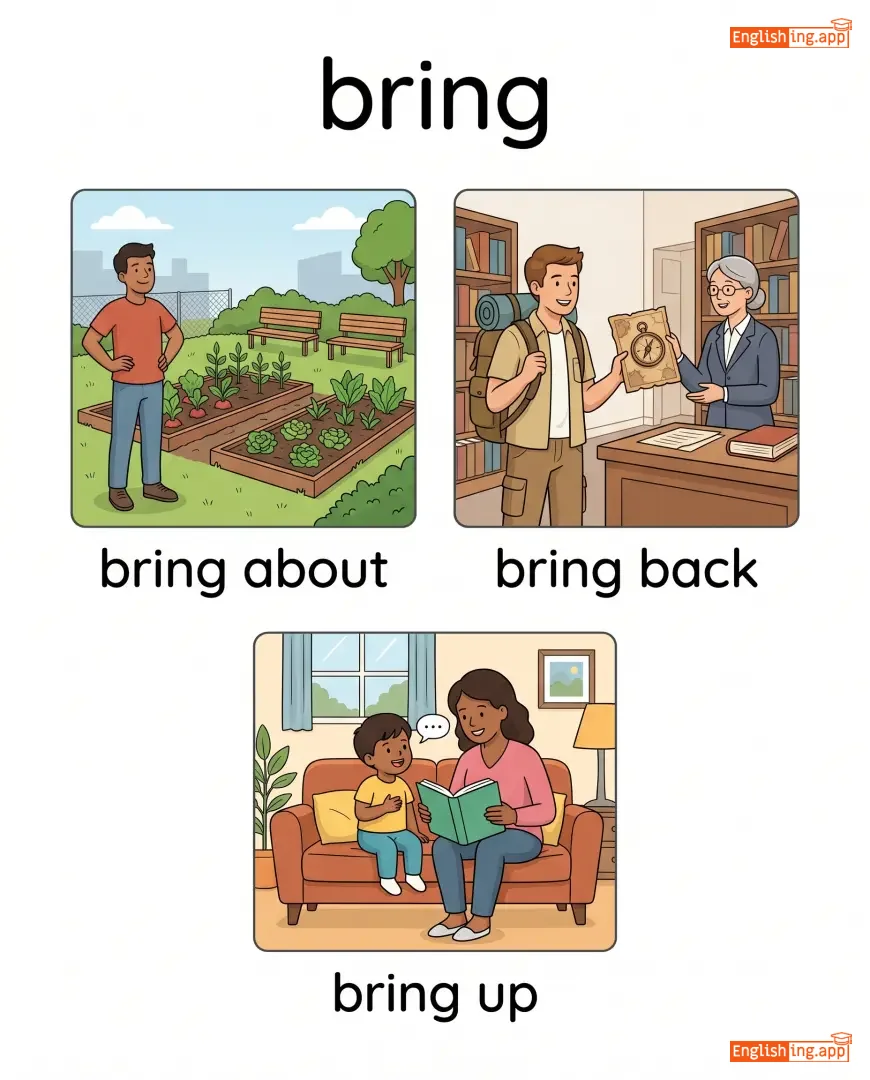
bring up
提到
••••••
|
to mention or introduce a topic
••••••
|
提到
tí dào
••••••
|
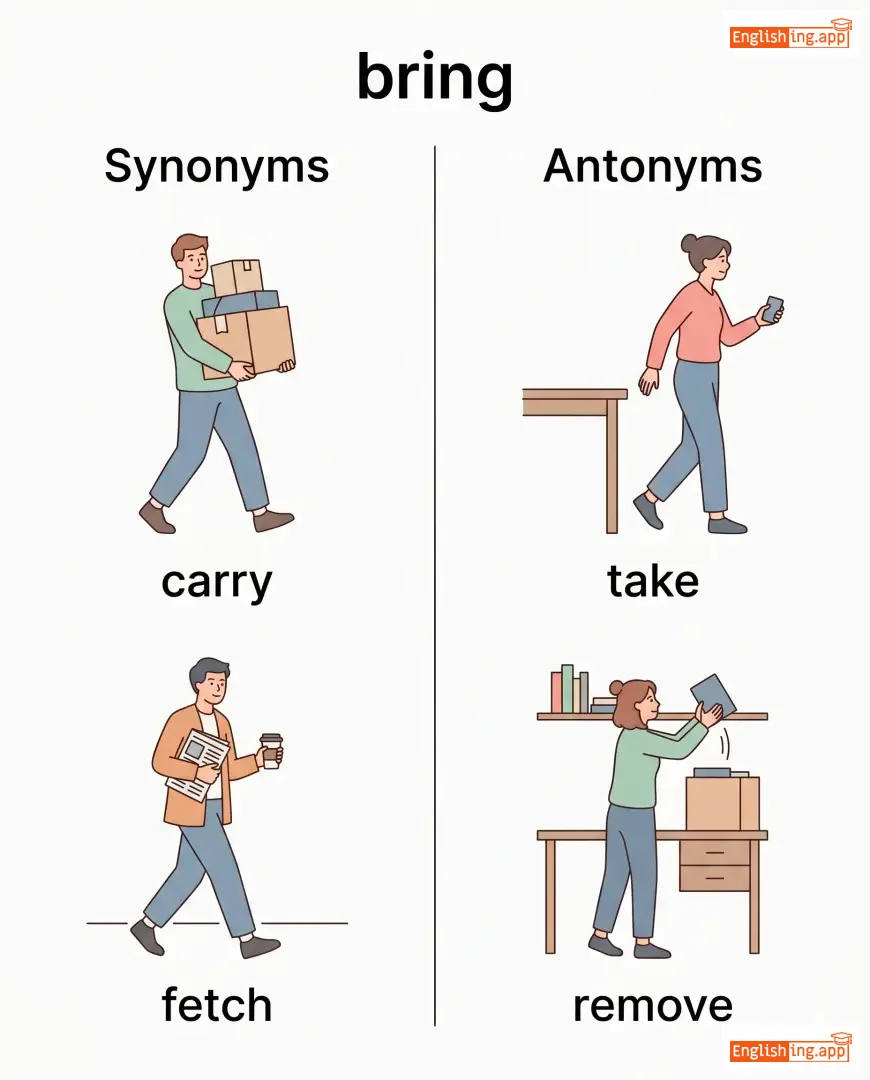
carry, fetch, deliver, convey, transport
••••••
|
take, remove
••••••
|
bring about, bring back, bring up, bring along, bring forward
••••••
|
BRING 在中文里是带来,妈妈常说‘带来玩具’。
••••••
|
|
⏳
••••••
|
/weɪt/
verb
(wɛɪt)
••••••
|
|
等待
deng dai
••••••
|
waited
weɪtɪd
••••••
|
waited
weɪtɪd
••••••
|
waits
weɪts
••••••
|
waiting
weɪtɪŋ
••••••
|
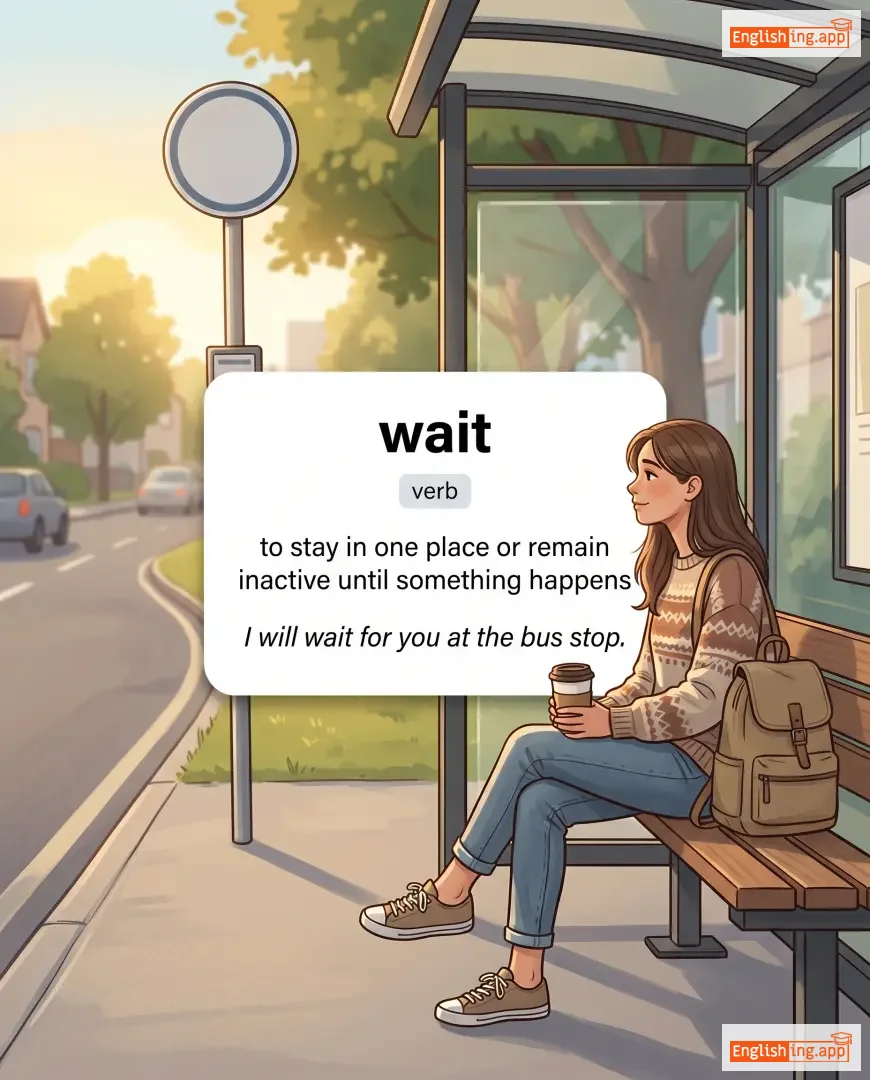
to stay in expectation; to delay action until something happens
••••••
|
Please wait here while I get the documents.
请在这里等待,我去拿文件。
••••••
|
请在这里等待,我去拿文件。
Qing zai zheli dengdai, wo qu na wenjian.
••••••
|
- •••••• | - •••••• | - •••••• |
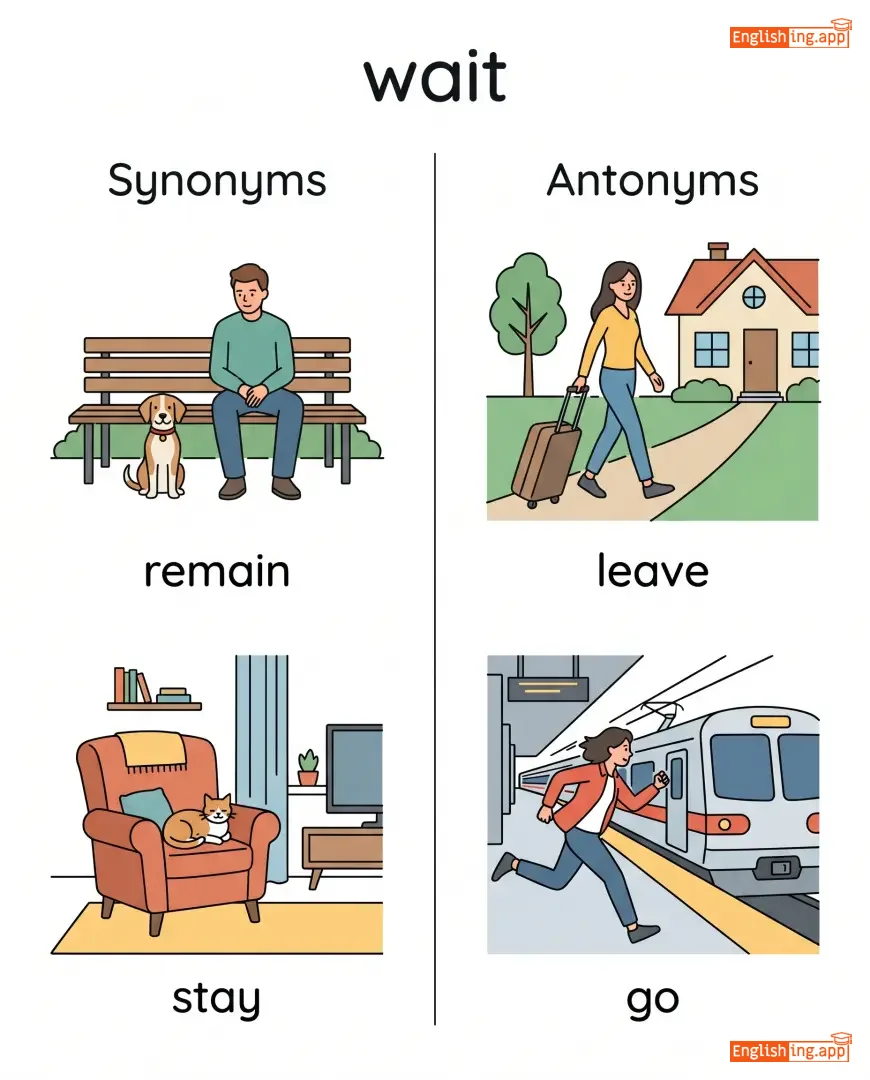
stay, remain, pause, hold, delay
••••••
|
leave, go, proceed, rush, hurry
••••••
|
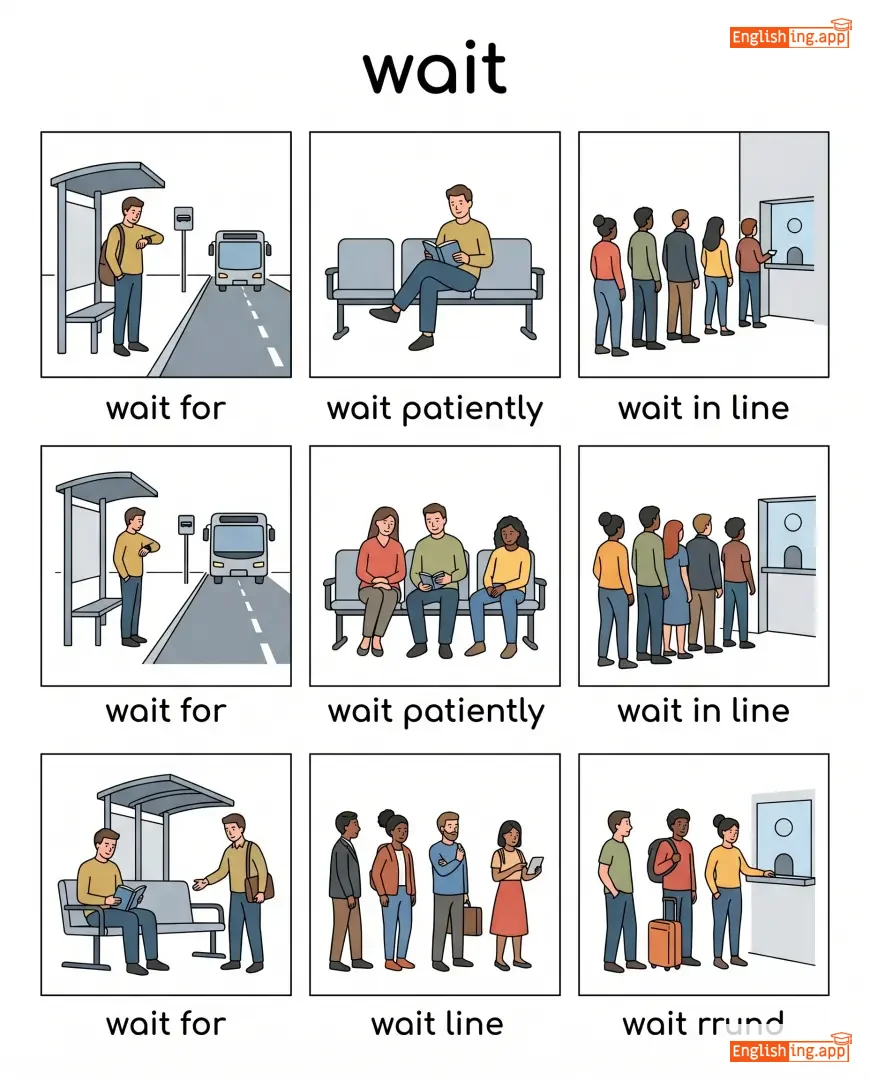
wait for, wait patiently, wait in line, wait up, long wait
••••••
|
等待就像等公交车。
••••••
|
|
📅
••••••
|
/wiːk/
noun
(wīkè)
••••••
|
- •••••• |
星期
xīngqī
••••••
|
- •••••• | - •••••• | - •••••• | - •••••• |
a period of seven days
••••••
|
I will finish the project by the end of the week. |
我将在本周末之前完成项目。
Wǒ jiāng zài běn zhōumò zhīqián wánchéng xiàngmù.
••••••
|
- •••••• | - •••••• | - •••••• |
seven days, workweek, time span
••••••
|
day, month
••••••
|
work week, start of the week, end of the week
••••••
|
Week – 'We' work 'every' week!
••••••
|
|
⏰
••••••
|
/wɛn/
adverb
(wén)
••••••
|
- •••••• |
什么时候
shénme shíhòu
••••••
|
- •••••• | - •••••• | - •••••• | - •••••• |
at what time
••••••
|
Do you know when the train leaves? |
你知道火车什么时候开吗?
Nǐ zhīdào huǒchē shénme shíhòu kāi ma?
••••••
|
- •••••• | - •••••• | - •••••• |
at what time, whenever
••••••
|
never, always
••••••
|
when will, when did, when does, when do
••••••
|
‘什么时候’就是‘什么时侯’
••••••
|
|
👩❤️👨
••••••
|
/waɪf/
noun
(wǎifū)
••••••
|
- •••••• |
妻子
qīzi
••••••
|
- •••••• | - •••••• | - •••••• | - •••••• |
a woman who is married to someone
••••••
|
She is the wife of the famous author. |
她是著名作家的妻子。
Tā shì zhùmíng zuòjiā de qīzi.
••••••
|
- •••••• | - •••••• | - •••••• |
spouse, partner, better half
••••••
|
husband
••••••
|
wife and husband, loving wife, devoted wife
••••••
|
‘Qīzi’ means wife in Chinese! A great memory link.
••••••
|
|
✍️
••••••
|
/wɪl/
noun, verb
(wɪl)
••••••
|
- •••••• |
意愿
yiyuan
••••••
|
- •••••• | - •••••• |
wills
wɪlz
••••••
|
willing
wɪlɪŋ
••••••
|
expressing future tense or intention; a legal document
••••••
|
She will attend the meeting tomorrow.
她明天将参加会议。
••••••
|
她明天将参加会议。
Ta mingtian jiang canjia huiyi.
••••••
|
Will to power
权力意志
••••••
|
the drive to assert one's own will over others
••••••
|
权力意志
Quanli yizhi
••••••
|
intend, shall, want, determination
••••••
|
won't, unwilling
••••••
|
last will, will and testament, strong will
••••••
|
意志力量,未来的意志 ✍️
••••••
|
|
🌟
••••••
|
/wɪʃ/
verb
(wɪʃ)
••••••
|

|
许愿
xǔ yuàn
••••••
|
wished
wɪʃt
••••••
|
wished
wɪʃt
••••••
|
wishes
wɪʃɪz
••••••
|
wishing
wɪʃɪŋ
••••••
|
to desire something or hope for something to happen
••••••
|
I wish you all the best in your new job.
我祝你在新工作中一切顺利。
••••••
|
我祝你在新工作中一切顺利。
Wǒ zhù nǐ zài xīn gōngzuò zhōng yīqiè shùnlì.
••••••
|
wish upon a star
向星星许愿
••••••
|
to hope or wish for something magical or unattainable
••••••
|
向星星许愿
xiàng xīngxīng xǔyuàn
••••••
|
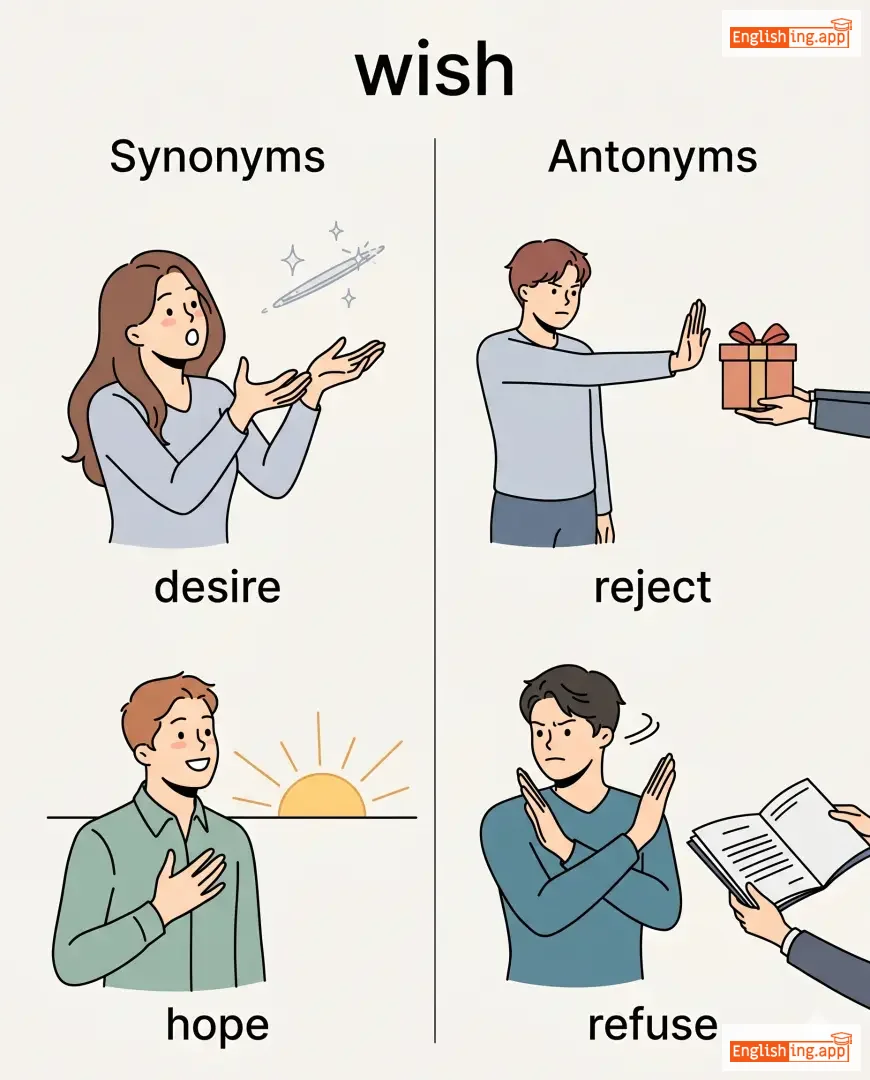
desire, hope, yearn, long for
••••••
|
reject, refuse
••••••
|
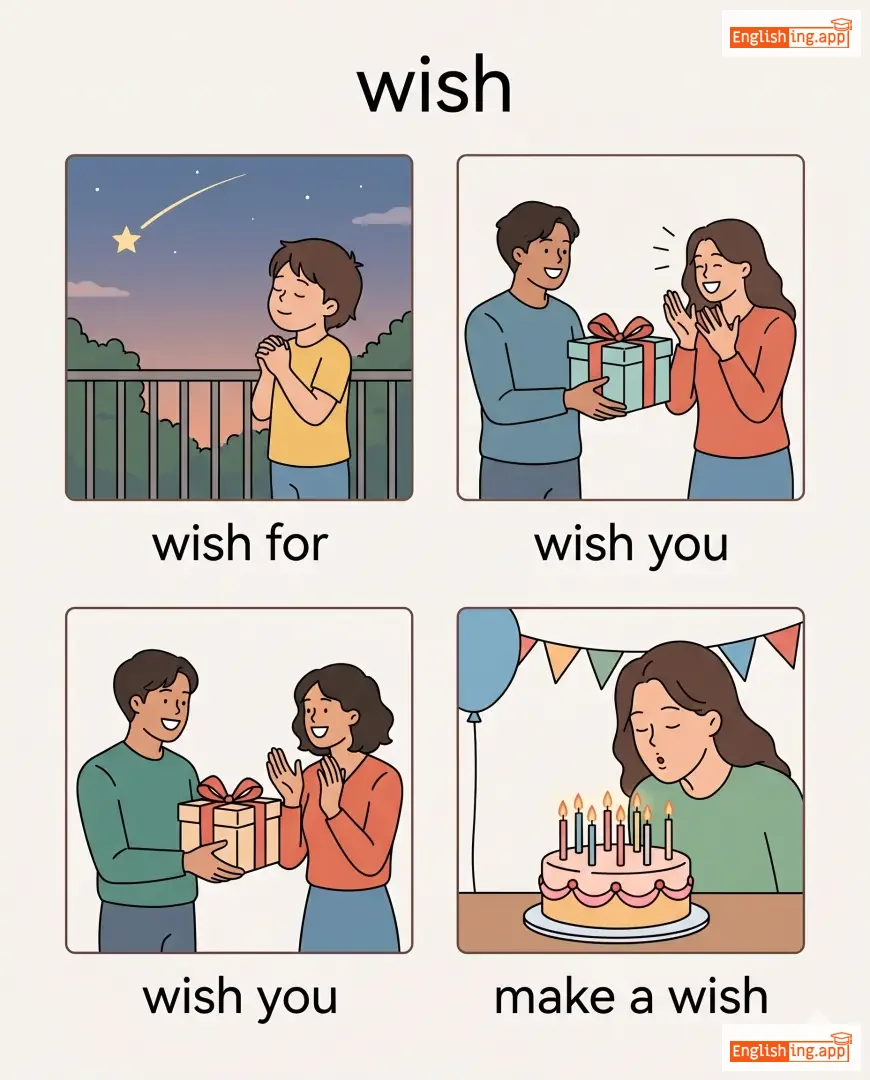
wish for, wish you, make a wish, wish come true
••••••
|
愿望能带来好运。
••••••
|

