The Builder's Pride
卡里姆是一位熟练的 builder,他能用自己的 tools 和双手 build 出美丽的建筑物。他的作坊里满是 wooden 木板、stone 石块和各种 tools。
“要想正确地 build,”卡里姆常说,“你需要仔细 measure,dig firmly,并 fix 一切 solidly。”他耐心地教导学徒每一项技能。
有一天,他们 started building 一座新房子。首先,他们需要 dig 地基。“要 dig 得深并 make 它 firm,”卡里姆指导道,“地基必须 solid。”
当地基准备好后,他们 started 砌墙。Stone 接着 stone,他们 built firmly。每一块 stone 都经过 measured,每一片都 fitted 完美。“检查 level,”卡里姆说,“一切都要 level 和 solid。”
接着是 wooden 框架。卡里姆拿起他的 tools —— drill、nails、screws —— 小心地 fixed 每个部分。“Wooden 结构需要特别小心,”他解释说,“Measure 两次,只切一次。Nail firmly,screw 紧实。”
接着是 roof。“Roof 保护一切,”卡里姆说,“必须 fixed solidly,built firmly。”他们爬上 ladder,搬起 wooden 梁,小心 measured、drilled、并用 nails 和 screws fixed 所有部分。
“Tools 很重要,”卡里姆教导道,“但懂得如何使用更重要。Drill 直、nail firmly、screw 紧、measure 准确、level 平整。每个 tool 都有用途,每一步都需要精确。”
几个月后,房子完工了。Stone 墙壁坚固 firm 且 solid。Wooden roof 被 fixed firmly。每个部分都经过仔细 built、measured 和 level。
“真漂亮,”屋主说,“Solid 建造,firm 结构。”
卡里姆既骄傲又谦逊。“好的 building 来自正确的 tools、仔细的 measuring、firm 的地基、solid 的材料(如 stone 和 wood),最重要的是注重细节。当你 dig 时,要 dig 深;当你 build 时,要 build firmly;当你用 nails 或 screws fix 东西时,要 fix solidly;当你 measure 时,要精准;当你检查 level 时,要准确。一个 builder 不仅创造建筑,更创造安全、舒适和自豪。”
多年后,卡里姆的建筑仍然 firm 且 solid。他的 wooden roofs 不漏水,他的 stone 墙不裂。每个 nail 都 fixed firmly,每个 screw 都紧固,每次 measurement 都精准,每个 level 都完美。
他的学徒,现在也是一名熟练的 builder,教导别人:“拿起你的 tools —— drill、nails、screws、ladder、level —— 学会正确使用它们。Dig 地基要深,Build 墙要 firm,Fix roofs solidly,Measure 一切。不论是 stone 还是 wood,无论是 nailing 还是 screwing,是 digging 还是 building,都要做好。卡里姆先生教会我:一个 builder 不只是 makes 建筑的人,而是创造 solid、firm、持久之物的人。为你的工作感到骄傲,好好使用你的 tools,永远用心 build。”
|
表情符号
|
单词 | Images | 翻译 | 过去时 | 过去分词 | 第三人称单数 | 动名词 | 含义 | 例句 | 例句翻译 | 示例表达 | 示例表达含义 | 示例表达翻译 | 同义词 | 反义词 | 搭配词 | 助记符 |
|---|---|---|---|---|---|---|---|---|---|---|---|---|---|---|---|---|---|
|
🏗️
••••••
|
/bɪld/
verb
(bɪld)
••••••
|
|
建造
jianzao
••••••
|
built
bɪlt
••••••
|
built
bɪlt
••••••
|
builds
bɪldz
••••••
|
building
bɪldɪŋ
••••••
|
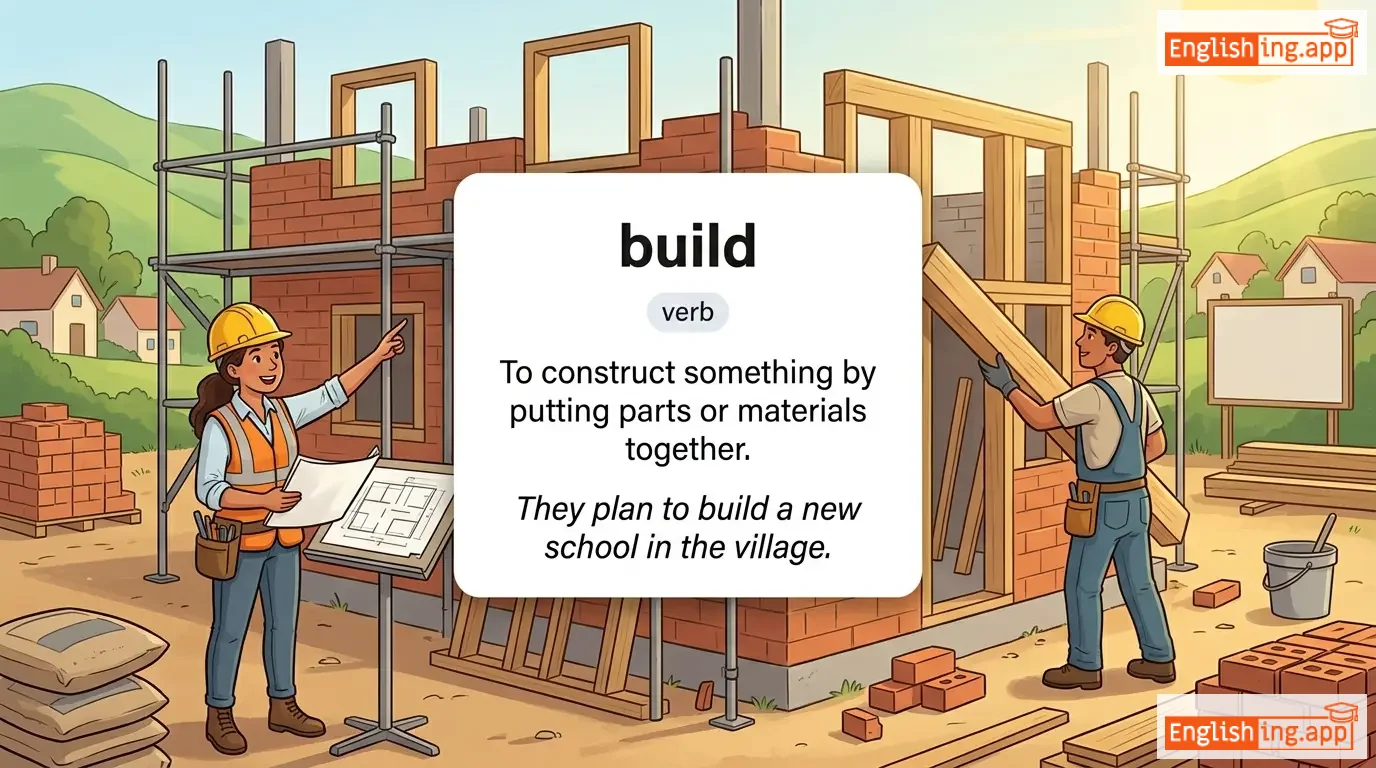
To construct something by putting parts or materials together.
••••••
|
They plan to build a new school in the village.
他们计划在村庄里建一所新学校。
••••••
|
他们计划在村庄里建一所新学校。
Tamen jihua zai cunzhuang li jian yisuo xin xuexiao.
••••••
|
build up
建立
••••••
|
To increase or develop something gradually.
••••••
|
增长
zengzhang
••••••
|
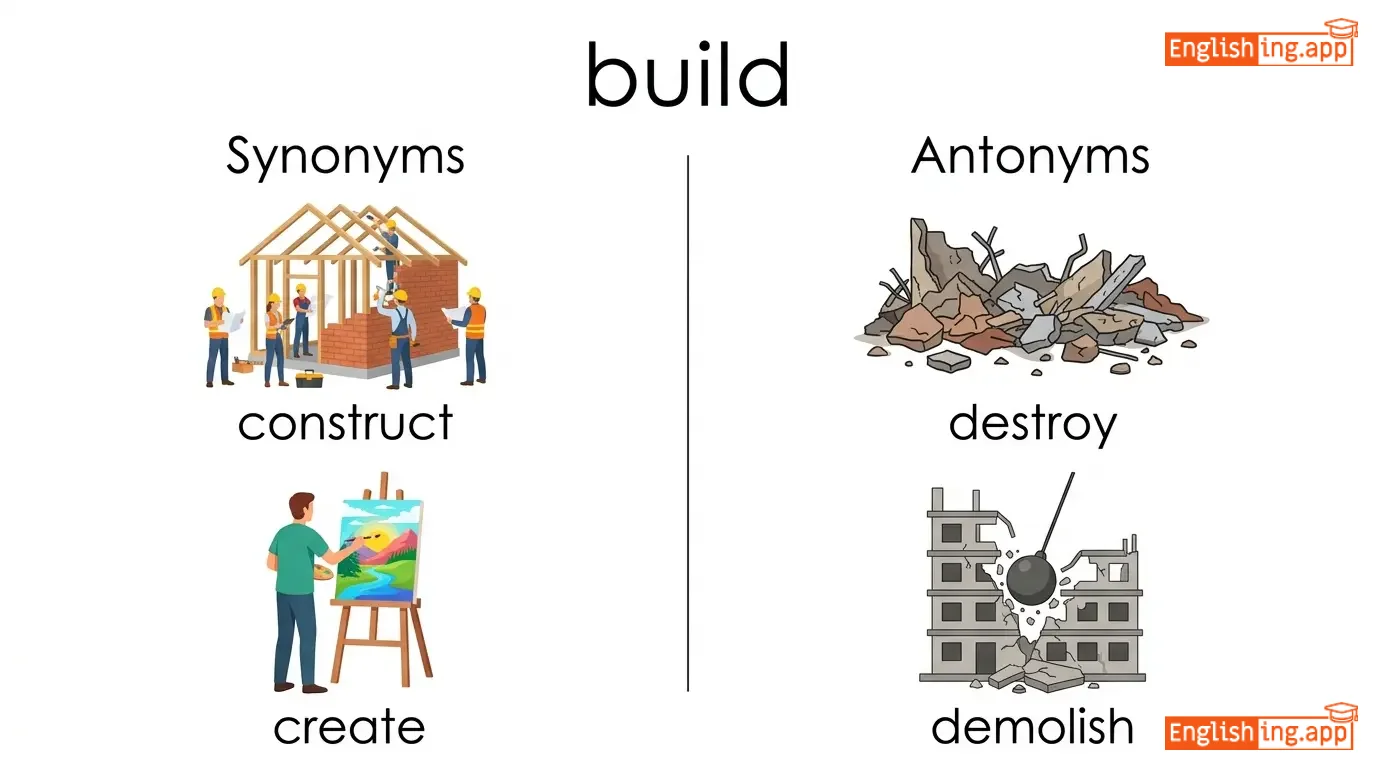
construct, create, assemble, develop, establish
••••••
|
destroy, demolish, break
••••••
|
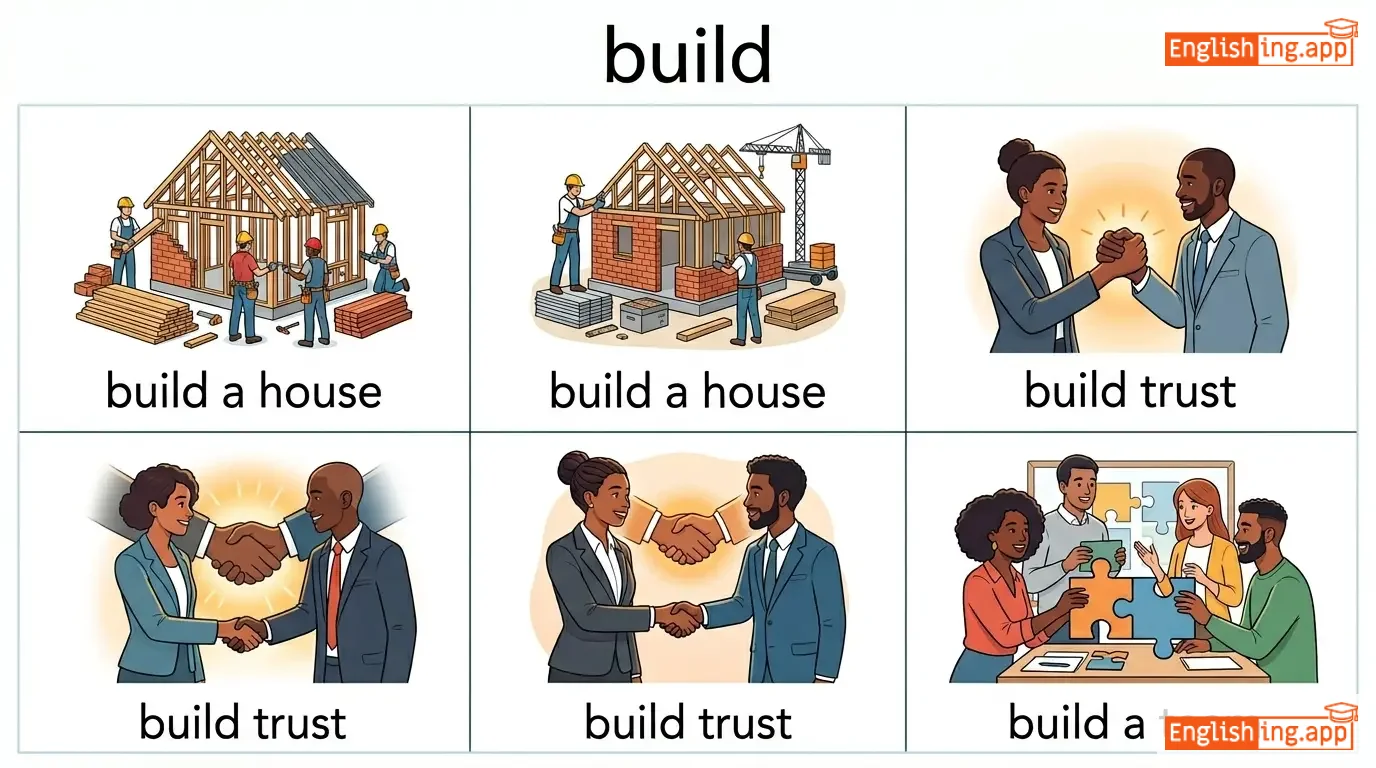
build a house, build trust, build a team, build strength
••••••
|
Build 就是建造的意思。
••••••
|
|
👷
••••••
|
/ˈbɪldər/
noun
(bɪldər)
••••••
|
- •••••• |
建筑商
jianzhushang
••••••
|
- •••••• | - •••••• | - •••••• | - •••••• |
a person or company that constructs buildings or other structures
••••••
|
The builder checked the site before starting the construction.
建筑商在开始建造之前检查了现场。
••••••
|
建筑商在开始建造之前检查了现场。
Jianzhushang zai kaishi jianzhao zhīqián jiǎnchále xiànchǎng.
••••••
|
builder’s tea
建筑商的茶
••••••
|
a very strong, sweet tea (British informal)
••••••
|
建筑商的茶
Jianzhushang de cha
••••••
|
constructor, contractor, developer, mason, architect
••••••
|
destroyer, demolisher, breaker
••••••
|
home builder, professional builder, builder contract, builder company, builder warranty
••••••
|
建筑商开始工作前需要一杯茶。
••••••
|
|
⛏️
••••••
|
/dɪɡ/
verb
(迪格)
••••••
|
- •••••• |
挖掘
wājué
••••••
|
dug
达格
••••••
|
dug
达格
••••••
|
digs
迪格斯
••••••
|
digging
迪格ing
••••••
|
to break up and move earth with a tool or machine, or with hands, paws, etc.
••••••
|
They decided to dig a hole for the new tree.
他们决定为新树挖一个洞。
••••••
|
他们决定为新树挖一个洞。
Tāmen juédìng wèi xīn shù wā yīgè dòng.
••••••
|
dig deep
挖深
••••••
|
to make a great effort or use inner strength
••••••
|
挖深
wā shēn
••••••
|
excavate, burrow, scoop, shovel
••••••
|
fill, cover
••••••
|
dig a hole, dig up, dig deep, dig into
••••••
|
DIG意味着挖掘 - 就像在土壤中寻找宝藏。
••••••
|
|
🛠️
••••••
|
/drɪl/
noun
(钻机)
••••••
|
- •••••• |
钻头
zuàntóu
••••••
|
- •••••• | - •••••• | - •••••• | - •••••• |
a tool or exercise used for making holes or practicing skills
••••••
|
The students took part in a fire drill at school. |
学生们参加了学校的火灾演习。
Xuéshēngmen cānjiāle xuéxiào de huǒzāi yǎn xí.
••••••
|
practice drill |
a repeated exercise to train for an emergency
••••••
|
练习钻孔
liànxí zuànkǒng
••••••
|
exercise, training, practice, rehearsal
••••••
|
neglect, disorganization
••••••
|
fire drill, safety drill, military drill, practice drill
••••••
|
钻头就是钻,练习能打磨技能!
••••••
|
|
🏢
••••••
|
/fɜːrm/
noun/adjective
(fārm)
••••••
|
- •••••• |
公司 / 坚定
gongsi / jianding
••••••
|
- •••••• | - •••••• | - •••••• | - •••••• |
a business organization, or solid and steady
••••••
|
She works at a law firm in the city.
她在城市的律师事务所工作。
••••••
|
她在城市的律师事务所工作。
Ta zai chengshi de lüshi shiwu suo gongzuo.
••••••
|
stand firm
坚定站立
••••••
|
to remain strong in one’s position
••••••
|
坚定站立
Jianding zhanli
••••••
|
company, business, solid, steady, strong
••••••
|
weak, unstable
••••••
|
law firm, consulting firm, firm decision, firm grip
••••••
|
Firm意味着公司,就像一家稳定的企业一样坚定不移。
••••••
|
|
✊
••••••
|
/ˈfɜːmli/
adverb
(fɜːrmli)
••••••
|
- •••••• |
坚定地
jianding de
••••••
|
- •••••• | - •••••• | - •••••• | - •••••• |
in a strong, steady, or determined way
••••••
|
She held his hand firmly as they crossed the road.
她紧紧握住他的手,他们穿过马路。
••••••
|
她紧紧握住他的手,他们穿过马路。
Tā jǐn jǐn wò zhù tā de shǒu, tāmen chuānguò mǎlù.
••••••
|
stand firmly
坚定站立
••••••
|
to remain strong or determined in one’s position
••••••
|
坚定站立
jianding zhanli
••••••
|
strongly, steadily, tightly, resolutely
••••••
|
loosely, weakly, softly
••••••
|
hold firmly, believe firmly, stand firmly, grip firmly
••••••
|
Firmly 就像 ‘坚定’,像一个坚定的决心。
••••••
|
|
🔧
••••••
|
/fɪks/
verb
••••••
|
- •••••• | - •••••• |
fixed
••••••
|
fixed
••••••
|
fixes
••••••
|
fixing
••••••
|
To repair or make something work again.
••••••
|
The mechanic fixed the broken car. |
- •••••• |
in a fix |
In a difficult or awkward situation.
••••••
|
- •••••• |
repair, mend, adjust, restore, solve
••••••
|
break, damage, ruin
••••••
|
fix a problem, fix the car, fix dinner, fix the issue
••••••
|
No •••••• |
|
📅
••••••
|
/fɪkst/
adjective
(fìkè sī dé)
••••••
|
- •••••• |
固定的,稳定的
gùdìng de, wěndìng de
••••••
|
- •••••• | - •••••• | - •••••• | - •••••• |
firmly in place; not changing or movable
••••••
|
The schedule for the meeting is fixed for Monday morning. |
会议时间表已定于周一早上。
Huìyì shíjiān biǎo yǐ dìng yú zhōuyī zǎoshang.
••••••
|
fixed income |
a regular income that does not change
••••••
|
固定收入
gùdìng shōurù
••••••
|
set, stable, immovable, constant, determined
••••••
|
changeable, flexible, movable
••••••
|
fixed price, fixed income, fixed schedule, fixed rate
••••••
|
Fixed 就像是固定在日历上的日期,不会变化。
••••••
|
|
🪜
••••••
|
/ˈlædər/
noun
(làidá)
••••••
|
- •••••• |
梯子
tīzi
••••••
|
- •••••• | - •••••• | - •••••• | - •••••• |
a structure with steps used for climbing up or down
••••••
|
He used a ladder to reach the roof. |
他用梯子爬上了屋顶。
Tā yòng tīzi pá shàng le wūdǐng.
••••••
|
climb the corporate ladder |
to advance in one's career or position within a company
••••••
|
爬升职场阶梯
pá shēng zhí chǎng jiē tī
••••••
|
stairway, steps, staircase, scale, rung
••••••
|
elevator, descent
••••••
|
wooden ladder, climb a ladder, ladder safety, ladder rung
••••••
|
梯子——用它爬向成功的高峰!
••••••
|
|
📏
••••••
|
/ˈlɛvəl/
noun, verb, adjective
(léiwēi)
••••••
|
|
水平,阶层
shuǐpíng, jiēcéng
••••••
|
leveled
léiwēid
••••••
|
leveled
léiwēid
••••••
|
levels
léiwēis
••••••
|
leveling
léiwēilíng
••••••
|
a flat or even surface; a stage in scale or rank; to make something flat or equal.
••••••
|
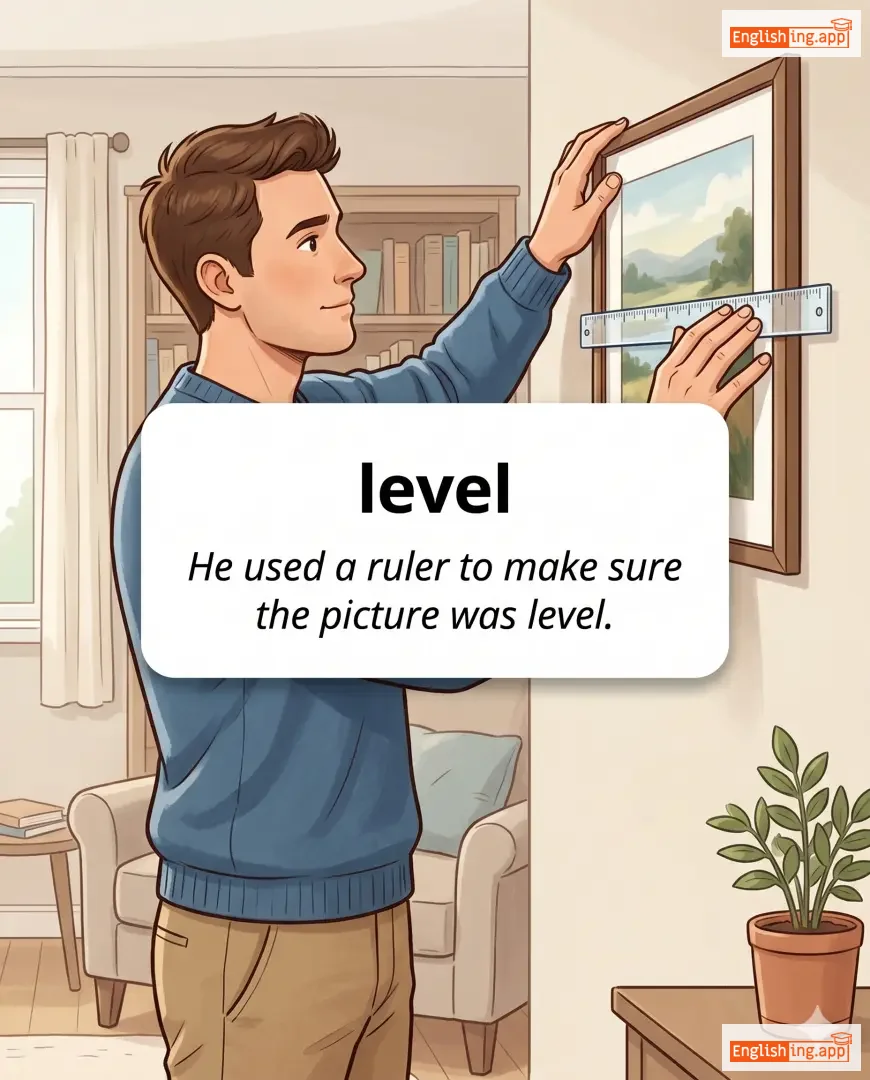
He used a ruler to make sure the picture was level.
他用尺子确保图片水平。
••••••
|
他用尺子确保图片水平。
Tā yòng chǐzi quèbǎo túpiàn shuǐpíng.
••••••
|
on the level
在水平
••••••
|
honest and straightforward
••••••
|
诚实和直率
chéngshí hé zhíshuài
••••••
|
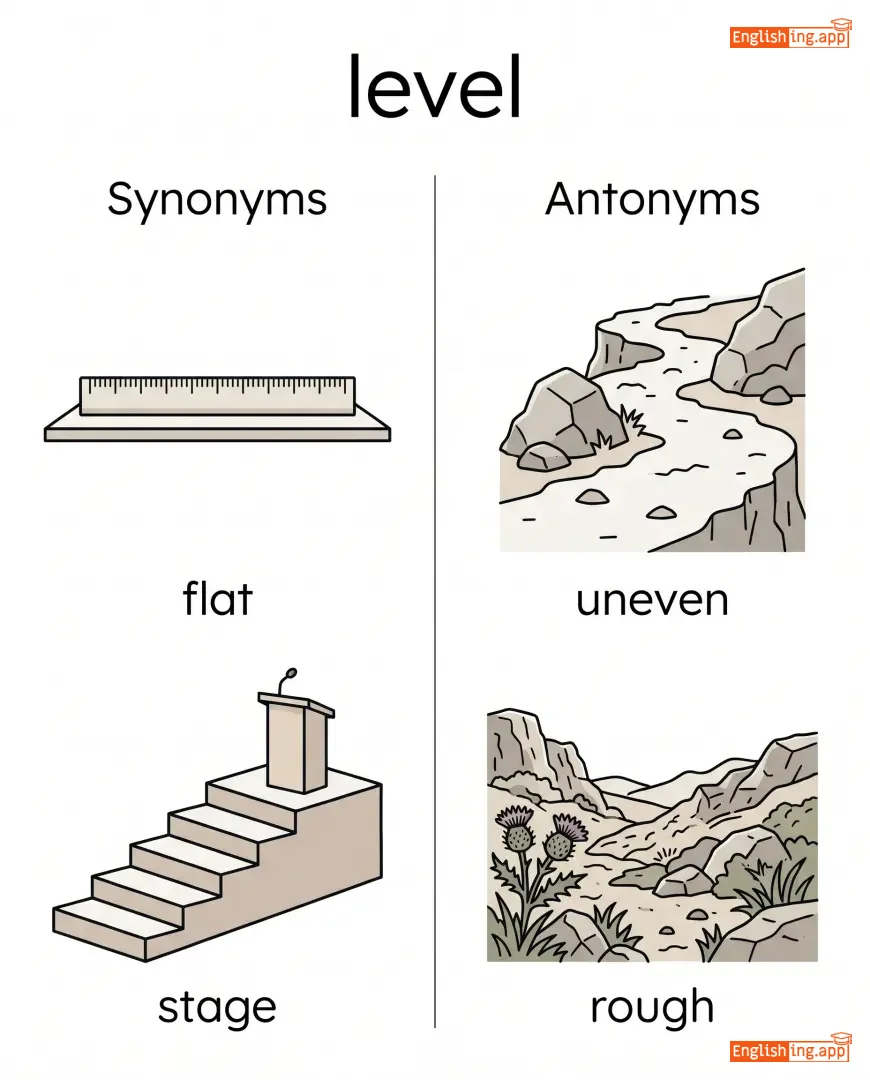
flat, stage, equal, rank, grade
••••••
|
uneven, rough, dishonest
••••••
|
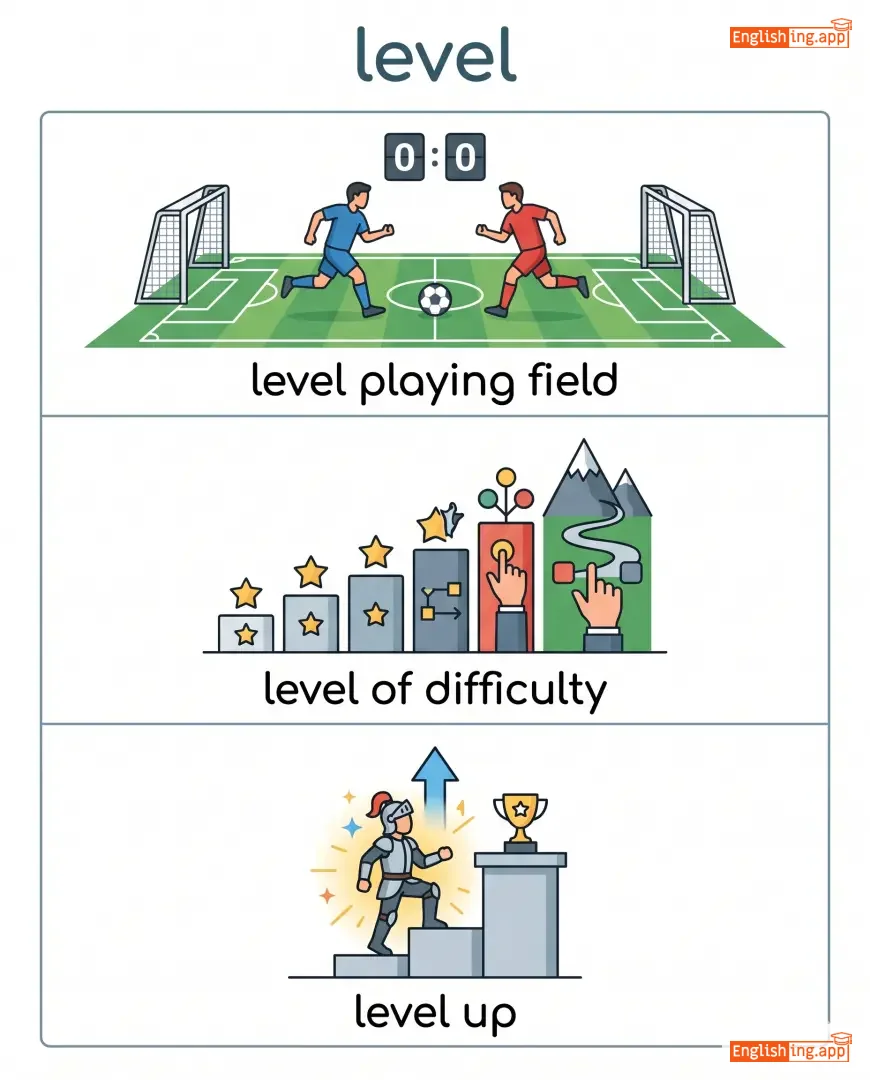
level playing field, level of difficulty, level up, level surface
••••••
|
水平意味着所有东西相等 (水平 = 相等).
••••••
|
|
🛠️
••••••
|
/meɪk/
verb
(meik)
••••••
|
- •••••• |
做
zuo
••••••
|
made
meid
••••••
|
made
meid
••••••
|
makes
meiks
••••••
|
making
meiking
••••••
|
to create, build, or cause something to happen
••••••
|
She can make delicious cakes.
她可以做美味的蛋糕。
••••••
|
她可以做美味的蛋糕。
Ta keyi zuo meiwei de dangao.
••••••
|
make a difference
做出改变
••••••
|
to have a significant effect
••••••
|
做出改变
zuo chu gaibian
••••••
|
create, build, produce, prepare, construct
••••••
|
destroy, ruin, break
••••••
|
make money, make a decision, make friends, make progress
••••••
|
Make 就是做,像一个'Maker' (创造者)。
••••••
|
|
📏
••••••
|
/ˈmɛʒər/
noun/verb
(méizhěr)
••••••
|
|
测量 / 尺度
cèliàng / chǐdù
••••••
|
measured
méizhèrd
••••••
|
measured
méizhèrd
••••••
|
measures
méizhèrs
••••••
|
measuring
méizhèring
••••••
|
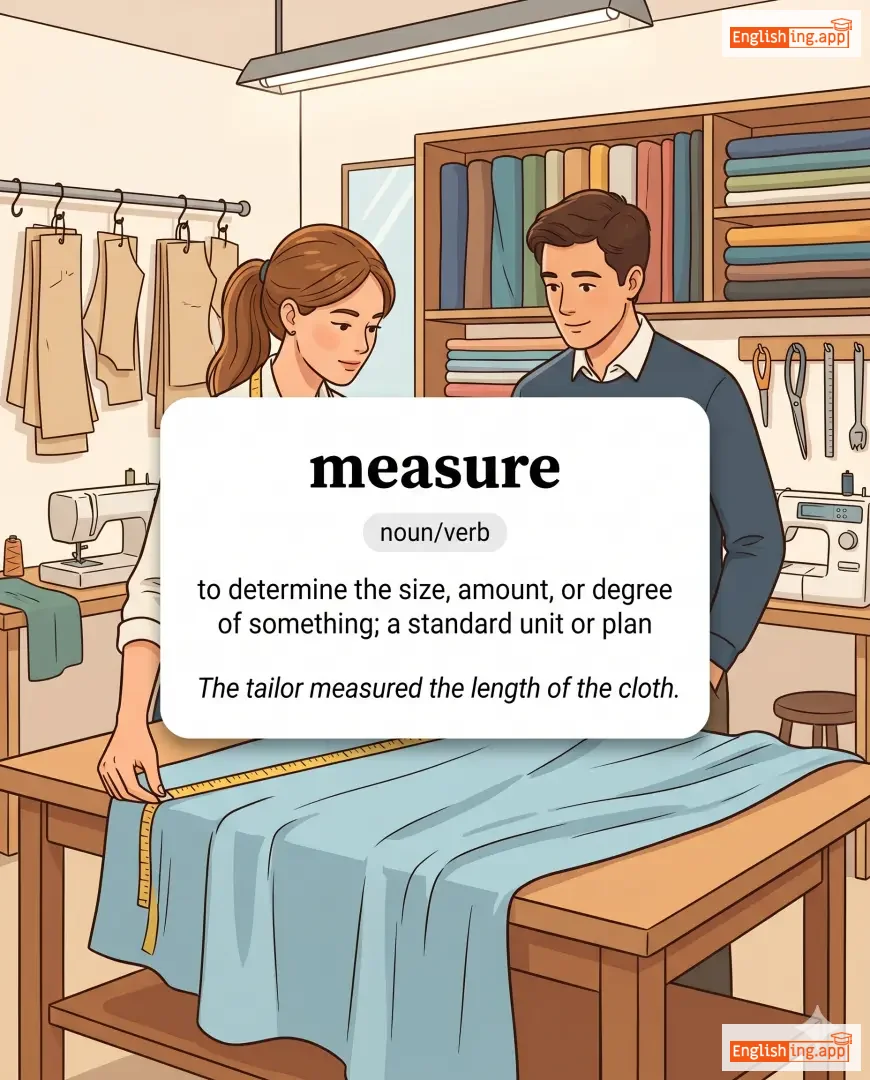
to determine the size, amount, or degree of something; a standard unit or plan
••••••
|
The tailor measured the length of the cloth.
裁缝量了布料的长度。
••••••
|
裁缝量了布料的长度。
cáifeng liàngle bùliào de chángdù.
••••••
|
beyond measure
超越度量
••••••
|
to an extreme degree
••••••
|
超越度量
chāoyuè dùliàng
••••••
|
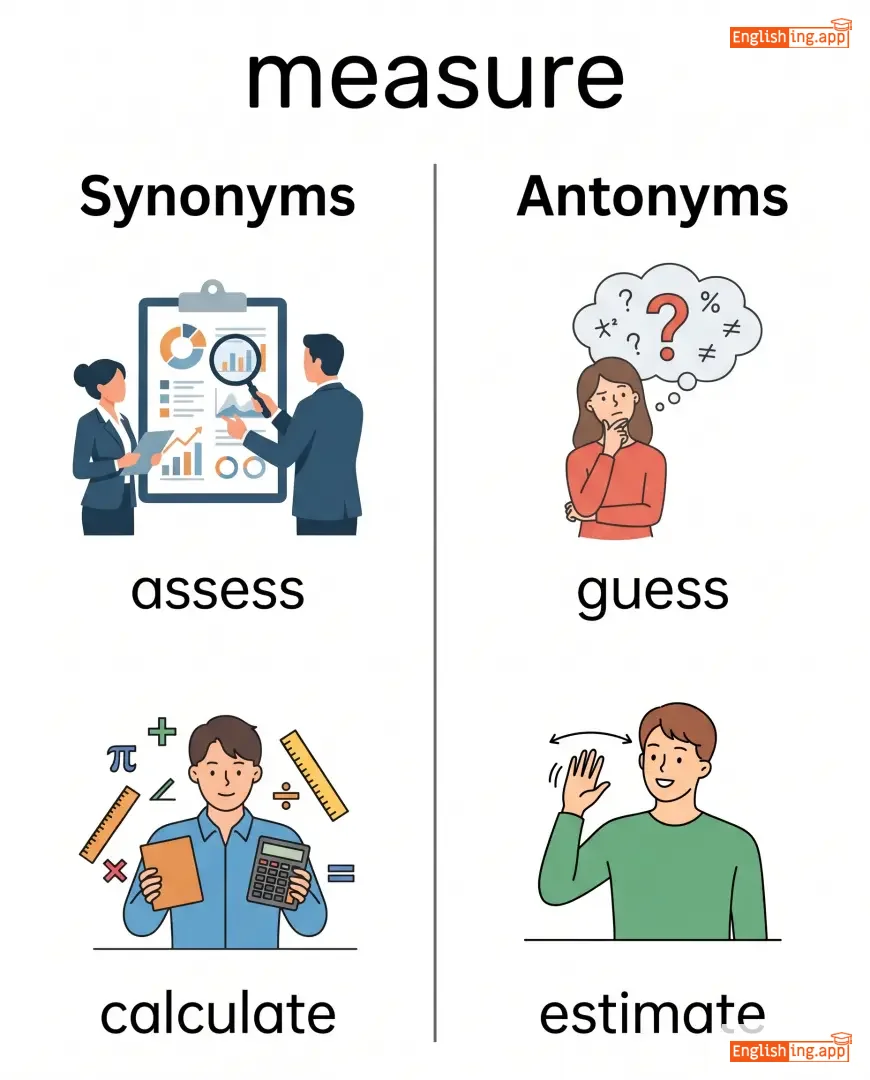
assess, calculate, evaluate, gauge, standard
••••••
|
guess, estimate, ignore
••••••
|
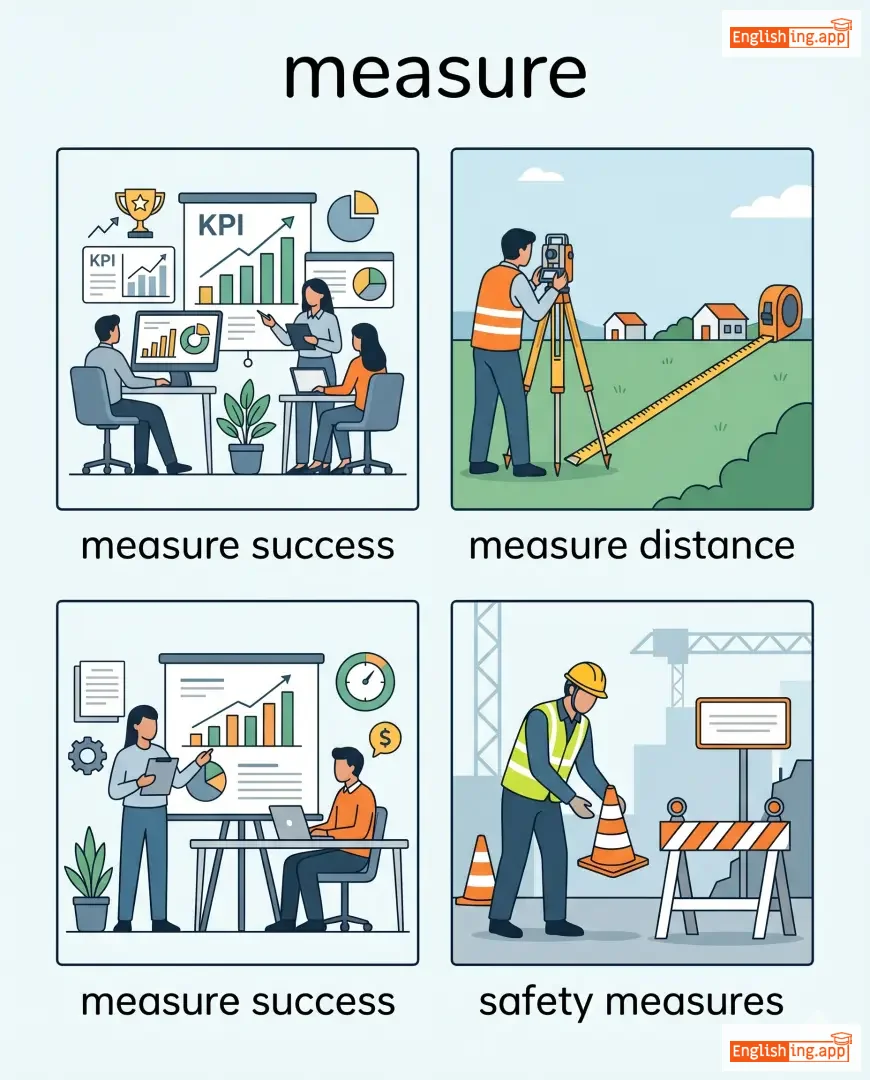
measure success, measure distance, safety measures, take measures
••••••
|
Measure意思是测量 → '通过测量来取度量' 易记
••••••
|
|
📌
••••••
|
/neɪl/
noun, verb
(内尔)
••••••
|
- •••••• |
钉子
dīngzi
••••••
|
nailed
内尔德
••••••
|
nailed
内尔德
••••••
|
nails
内尔斯
••••••
|
nailing
内尔ing
••••••
|
a small metal spike driven into wood or other material, or to fasten or fix something with nails
••••••
|
He nailed the wooden board to the wall.
他把木板钉在墙上。
••••••
|
他把木板钉在墙上。
tā bǎ mùbǎn dī zài qiáng shàng.
••••••
|
hit the nail on the head
一钉在钉
••••••
|
to describe exactly what is causing a situation or problem
••••••
|
准确描述一个情况或问题的原因
zhǔnquè miáoshù yīgè qíngkuàng huò wèntí de yuányīn
••••••
|
pin, tack, spike, fasten, attach
••••••
|
detach, remove, loosen
••••••
|
hammer a nail, nail polish, nail down, nail it
••••••
|
钉子就是固定目标,牢固不动。
••••••
|
|
🏠
••••••
|
/ruːf/
noun
(rúf)
••••••
|
- •••••• |
屋顶
wūdǐng
••••••
|
- •••••• | - •••••• | - •••••• | - •••••• |
the top covering of a building or vehicle
••••••
|
The roof of the house needs to be repaired. |
房子的屋顶需要修理。
Fángzi de wūdǐng xūyào xiūlǐ.
••••••
|
- •••••• | - •••••• | - •••••• |
ceiling, canopy, covering, lid
••••••
|
floor, ground
••••••
|
roof top, flat roof, roof repair
••••••
|
屋顶上方的地方,就是给你遮风挡雨的地方。
••••••
|
|
🔩
••••••
|
/skruː/
noun, verb
(螺丝)
••••••
|
- •••••• |
带螺旋的金属紧固件;用螺丝把东西固定或拧紧
dai luoxuan de jinshu jingu jian; yong luosi ba dongxi guding huo ningjin
••••••
|
screwed
螺丝
••••••
|
screwed
螺丝
••••••
|
screws
螺丝
••••••
|
screwing
螺丝
••••••
|
a metal fastener with a helical ridge; to fasten or tighten something with a screw
••••••
|
He screwed the shelf to the wall tightly.
他把架子牢牢地固定在墙上。
••••••
|
他把架子牢牢地固定在墙上。
Ta ba jiazi laolao de guding zai qiang shang.
••••••
|
screw up
搞砸
••••••
|
to make a serious mistake or blunder
••••••
|
搞砸
gao za
••••••
|
fasten, tighten, bolt, twist, secure
••••••
|
loosen, detach, release
••••••
|
tighten the screw, screw in, screw up, screw loose
••••••
|
用螺丝固定,搞砸就糟糕!
••••••
|
|
🪨
••••••
|
/ˈsɒlɪd/
adjective
(索利德)
••••••
|
- •••••• |
坚固
jiangu
••••••
|
- •••••• | - •••••• | - •••••• | - •••••• |
firm and stable in shape; not liquid or fluid
••••••
|
The ground was solid underfoot. |
地面在脚下是坚固的。
Dimian zai jiao xia shi jiangu de.
••••••
|
- •••••• | - •••••• | - •••••• |
hard, firm, sturdy, unyielding
••••••
|
liquid, soft, weak
••••••
|
solid foundation, solid object, solid surface, solid structure
••••••
|
Solid rock under your feet means strength! 'Solid' and '坚固' are strong!
••••••
|
|
🪨
••••••
|
/stoʊn/
noun
(sītōng)
••••••
|
- •••••• |
石头
shítou
••••••
|
- •••••• | - •••••• | - •••••• | - •••••• |
a hard, naturally occurring mineral material found in the earth
••••••
|
He threw a stone into the lake.
他把一块石头扔进湖里。
••••••
|
他把一块石头扔进湖里。
Tā bǎ yī kuài shítou rēng jìn hú lǐ.
••••••
|
- •••••• | - •••••• | - •••••• |
rock, pebble, boulder, gravel
••••••
|
sand, soil
••••••
|
stone wall, stone path, stone monument
••••••
|
石头 (stone) 是地球上的自然矿物,坚硬且耐用。
••••••
|
|
🔧
••••••
|
/tuːl/
noun
(tú'ěr)
••••••
|
- •••••• |
工具
gongju
••••••
|
- •••••• | - •••••• | - •••••• | - •••••• |
a device or implement used to carry out a particular function
••••••
|
He used a hammer as a tool to fix the chair. |
他用锤子作为工具来修理椅子。
Ta yong chuizi zuowei gongju lai xiuli yizi.
••••••
|
- •••••• | - •••••• | - •••••• |
instrument, device, gadget, implement
••••••
|
toy, decoration
••••••
|
power tool, hand tool, tool kit, garden tool
••••••
|
Tools help you ‘tool’ your way through problems – 工具帮助你解决问题。
••••••
|
|
🌳
••••••
|
/wʊd/
noun
(wud)
••••••
|
|
木材
mucai
••••••
|
- •••••• | - •••••• | - •••••• | - •••••• |
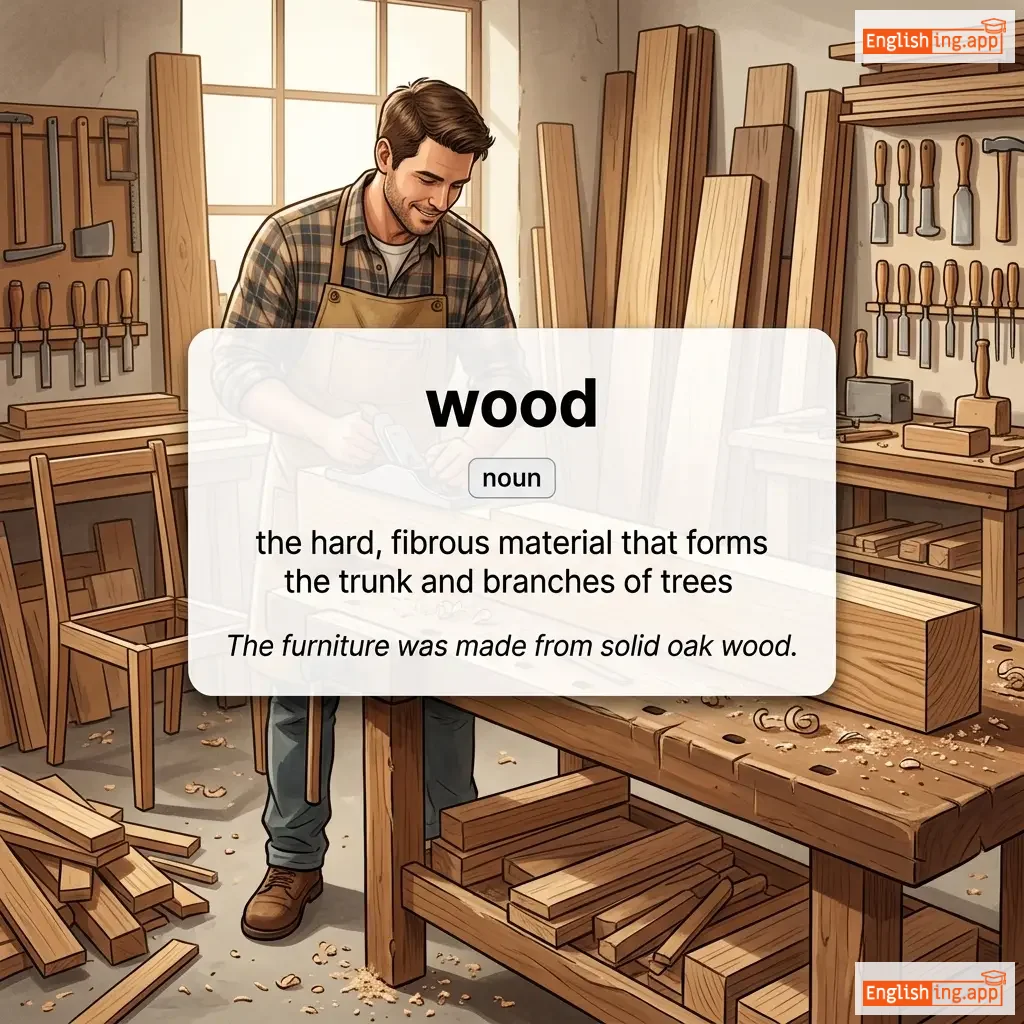
the hard, fibrous material that forms the trunk and branches of trees
••••••
|
The furniture was made from solid oak wood. |
家具是由坚固的橡木制成的。
Jiajù shì yóu jiāngù de xiàngmù zhìchéng de.
••••••
|
- •••••• | - •••••• | - •••••• |
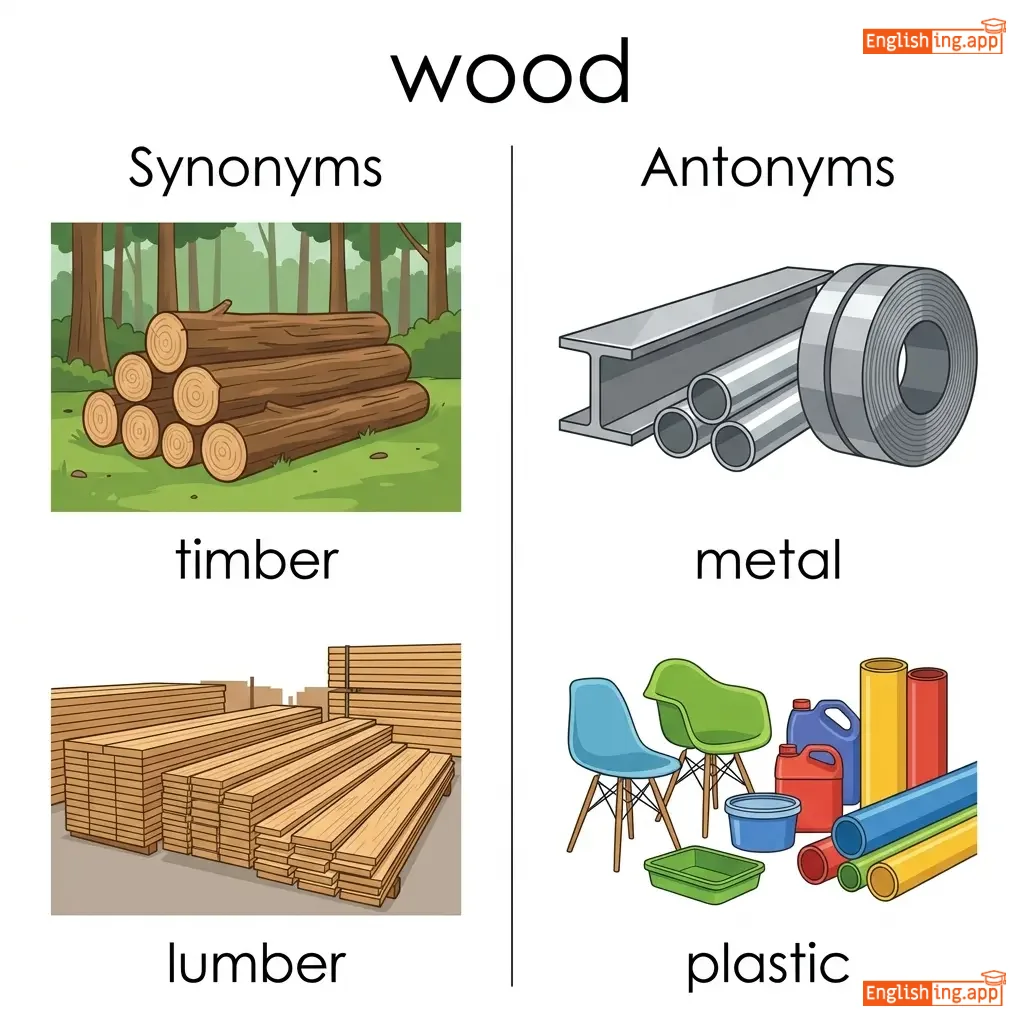
timber, lumber, forest product
••••••
|
metal, plastic, stone
••••••
|
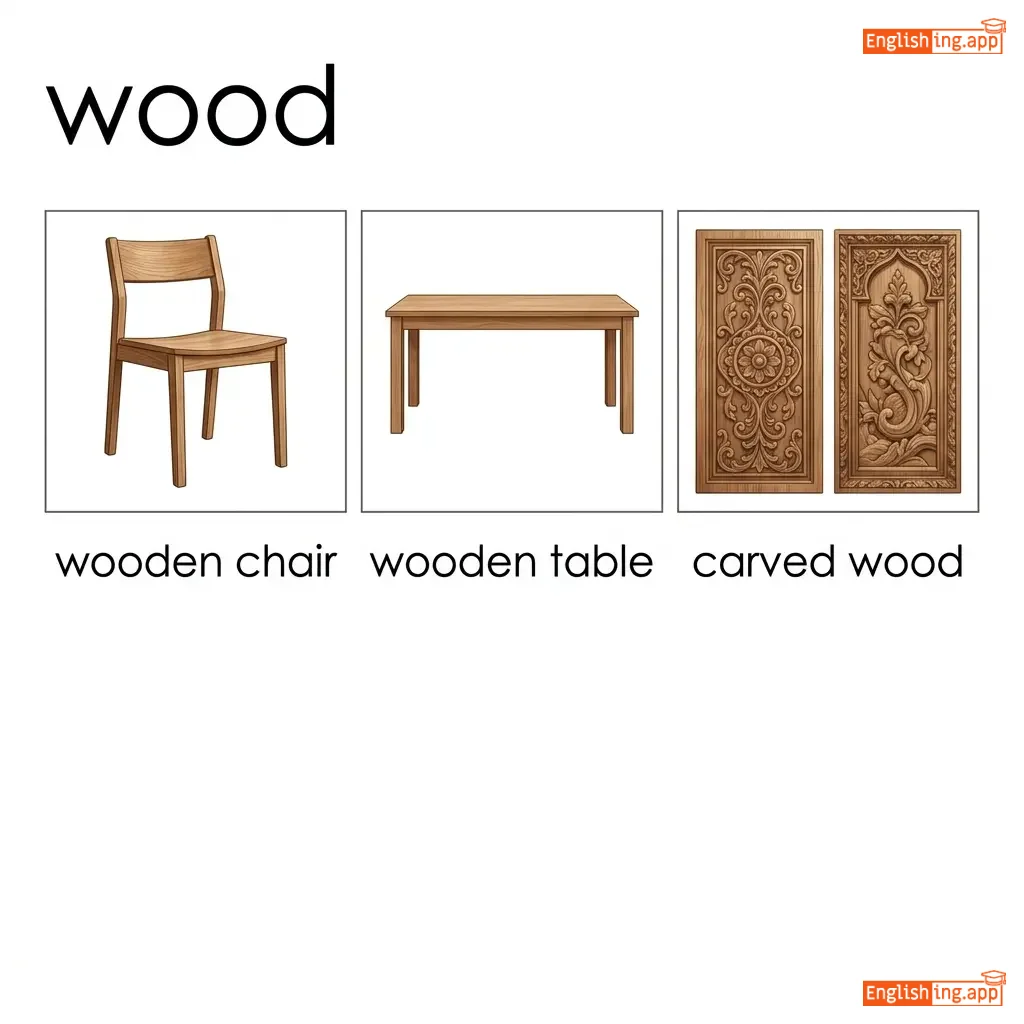
wooden chair, wooden table, carved wood, wood grain
••••••
|
木材 (wood) 来自树木。
••••••
|
|
🪵
••••••
|
/ˈwʊdən/
adjective
(wùdén)
••••••
|
- •••••• |
木制的
mùzhì de
••••••
|
- •••••• | - •••••• | - •••••• | - •••••• |
made of wood
••••••
|
The house had beautiful wooden floors.
这座房子有美丽的木地板。
••••••
|
这座房子有美丽的木地板。
Zhè zuò fángzi yǒu měilì de mù dìbǎn.
••••••
|
- •••••• | - •••••• | - •••••• |
timber, wooden-made, natural
••••••
|
metal, plastic, synthetic
••••••
|
wooden table, wooden chair, wooden door, wooden structure
••••••
|
wùdén mùzhì de (wooden)
••••••
|

