|
表情符号
|
单词 | Images | 翻译 | 过去时 | 过去分词 | 第三人称单数 | 动名词 | 含义 | 例句 | 例句翻译 | 示例表达 | 示例表达含义 | 示例表达翻译 | 同义词 | 反义词 | 搭配词 | 助记符 |
|---|---|---|---|---|---|---|---|---|---|---|---|---|---|---|---|---|---|
|
🧭
••••••
|
/ˈsɛkstənt/
noun
(六分仪)
••••••
|

|
六分仪
liu fen yi
••••••
|
- •••••• | - •••••• | - •••••• | - •••••• |
a navigational instrument with a graduated arc of 60°, used to measure the angle between a celestial object and the horizon
••••••
|
Using a sextant, the navigator fixed the ship’s position at noon.
使用六分仪,导航员在中午确定了船的位置。
••••••
|
使用六分仪,导航员在中午确定了船的位置。
Shǐyòng liùfēnyí, dǎohángyuán zài zhōngwǔ quèdìngle chuán de wèizhì.
••••••
|
- •••••• | - •••••• | - •••••• |
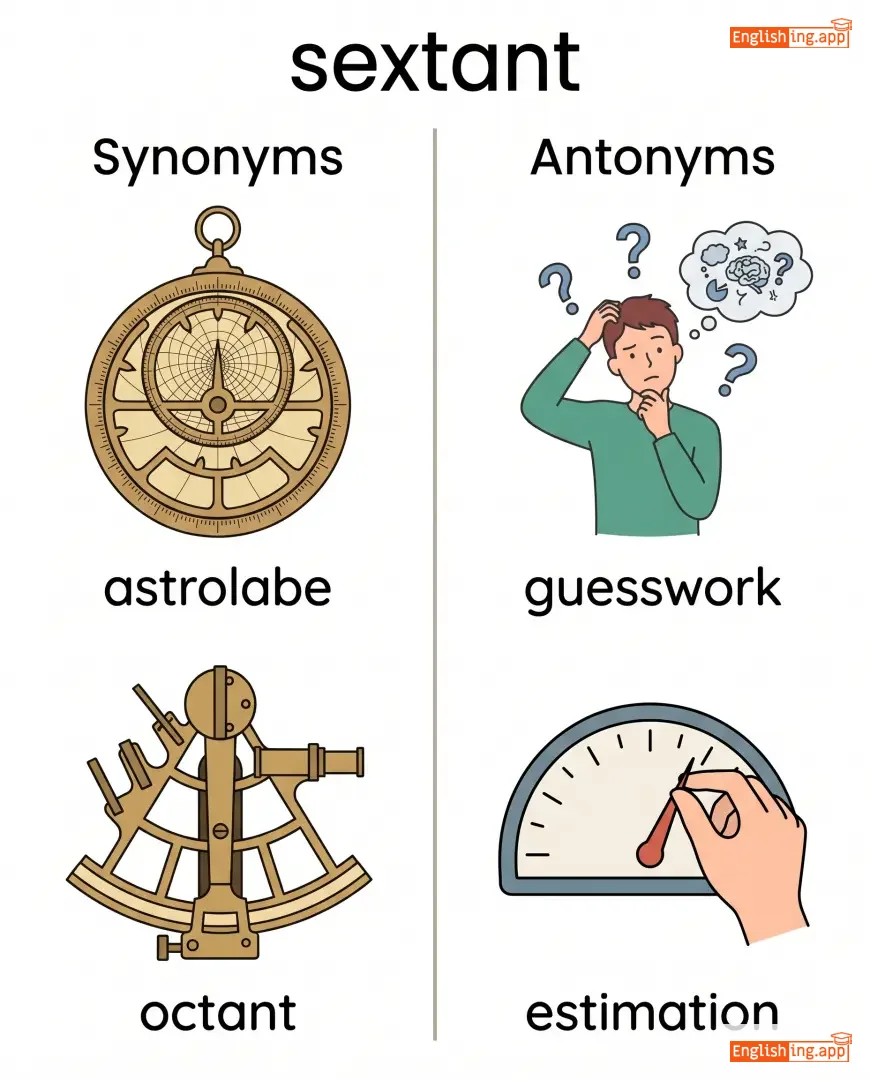
astrolabe, octant, navigational instrument, quadrant
••••••
|
guesswork, estimation
••••••
|
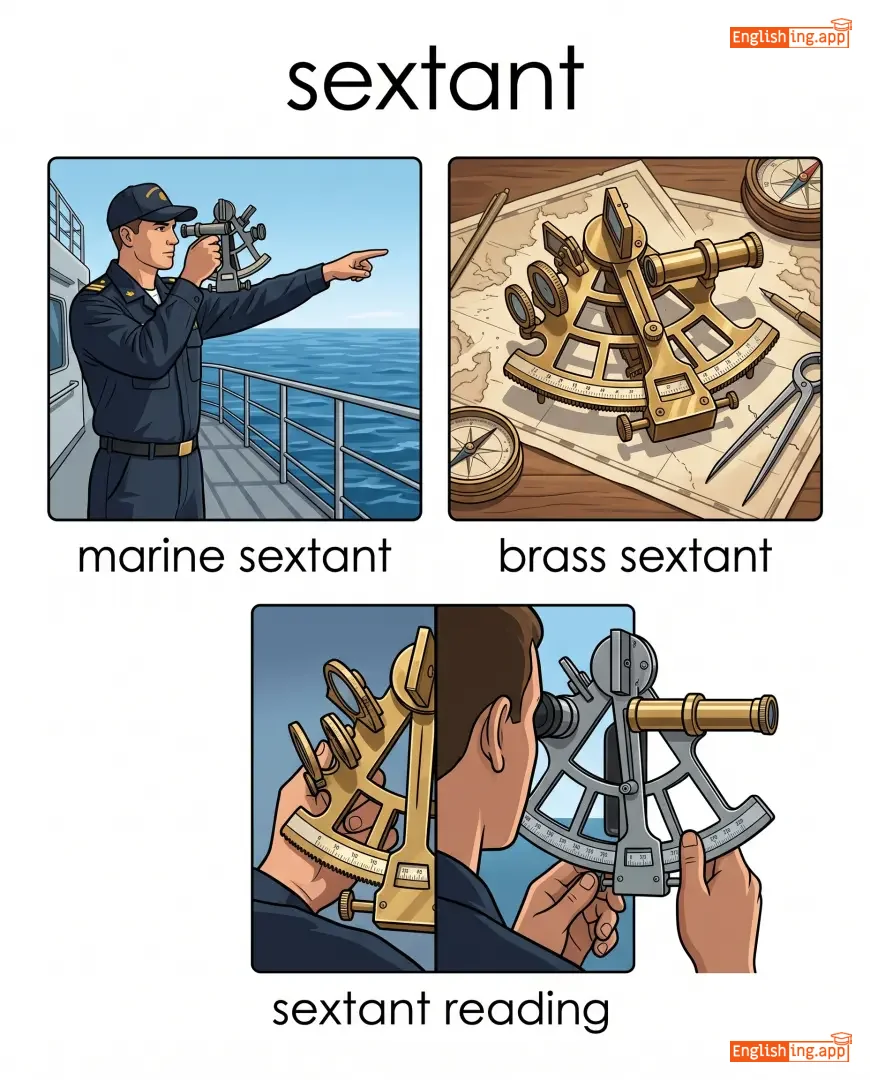
marine sextant, brass sextant, sextant reading, use a sextant, celestial navigation
••••••
|
六分仪测量60度角,‘六’代表六分仪,‘六’字代表角度的大小。
••••••
|
|
🪨
••••••
|
/ʃɑːrd/
noun
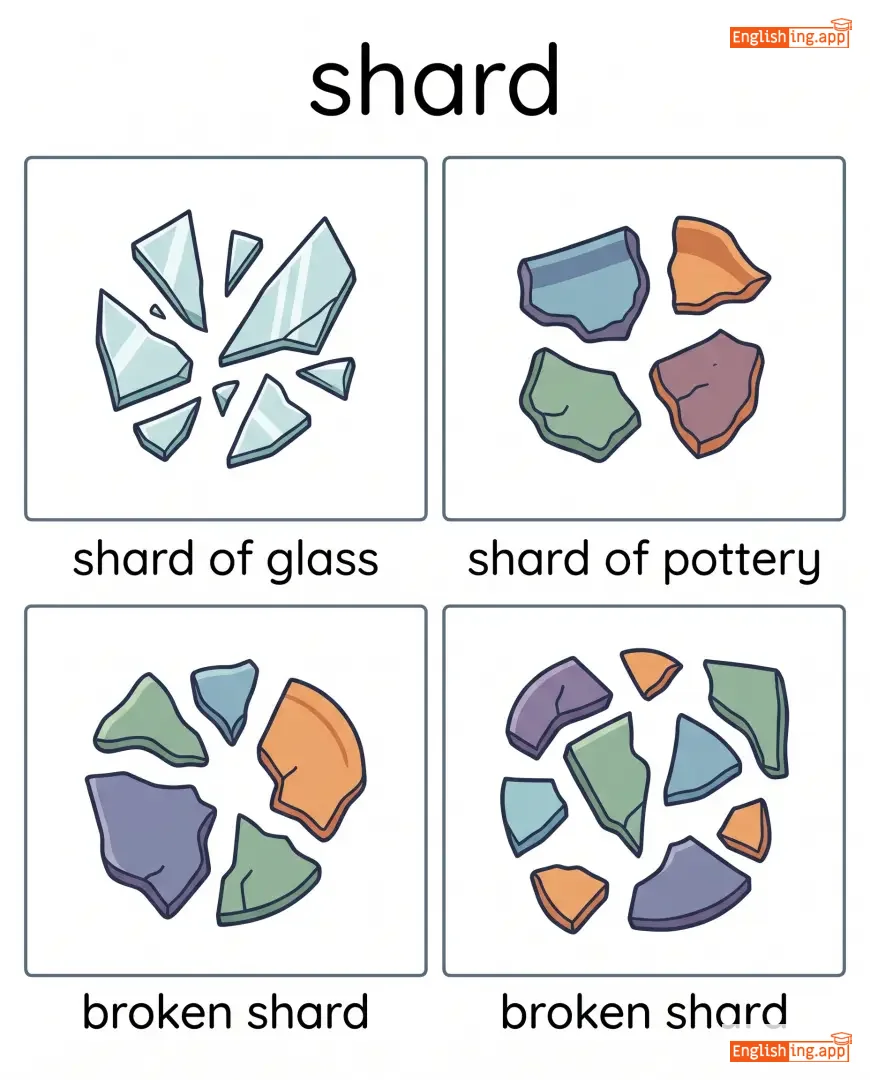
(shard)
••••••
|
|
碎片
suipian
••••••
|
- •••••• | - •••••• | - •••••• | - •••••• |
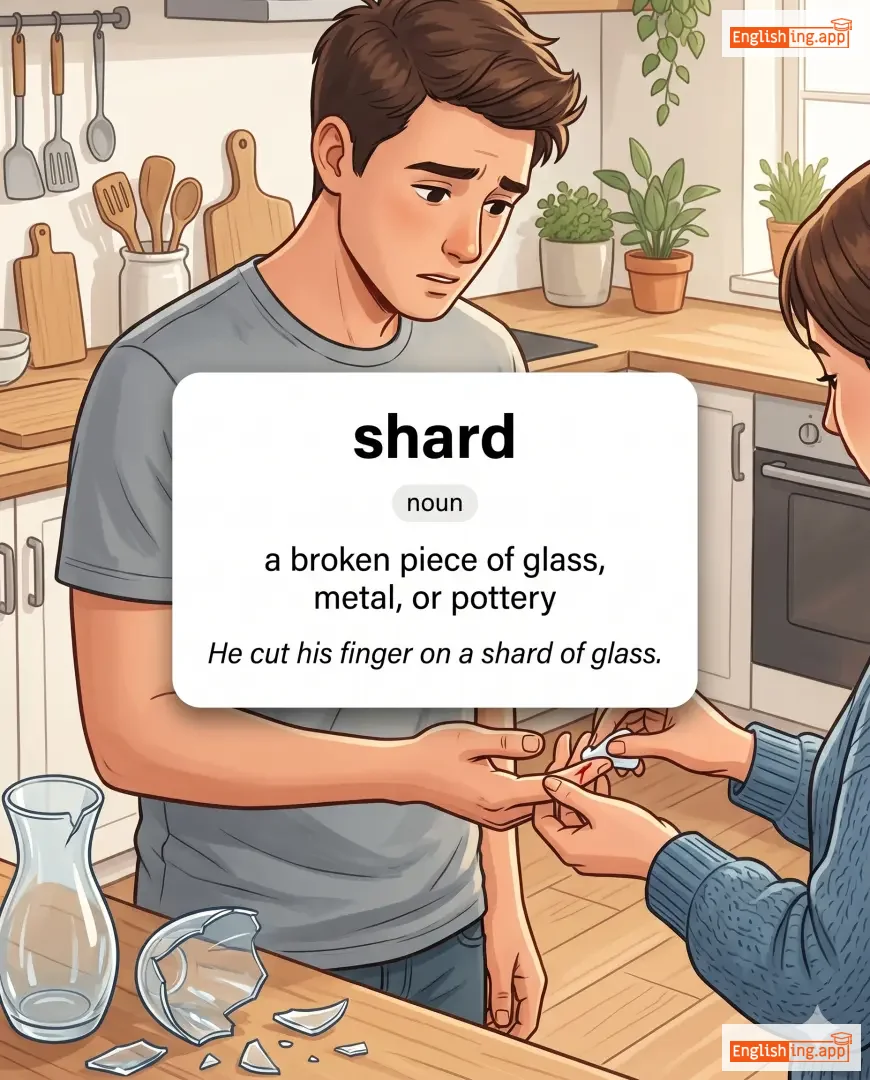
a broken piece of glass, metal, or pottery
••••••
|
He cut his finger on a shard of glass. |
他用玻璃碎片割伤了手指。
Tā yòng bōli suìpiàn gē shāngle shǒuzhǐ.
••••••
|
- •••••• | - •••••• | - •••••• |
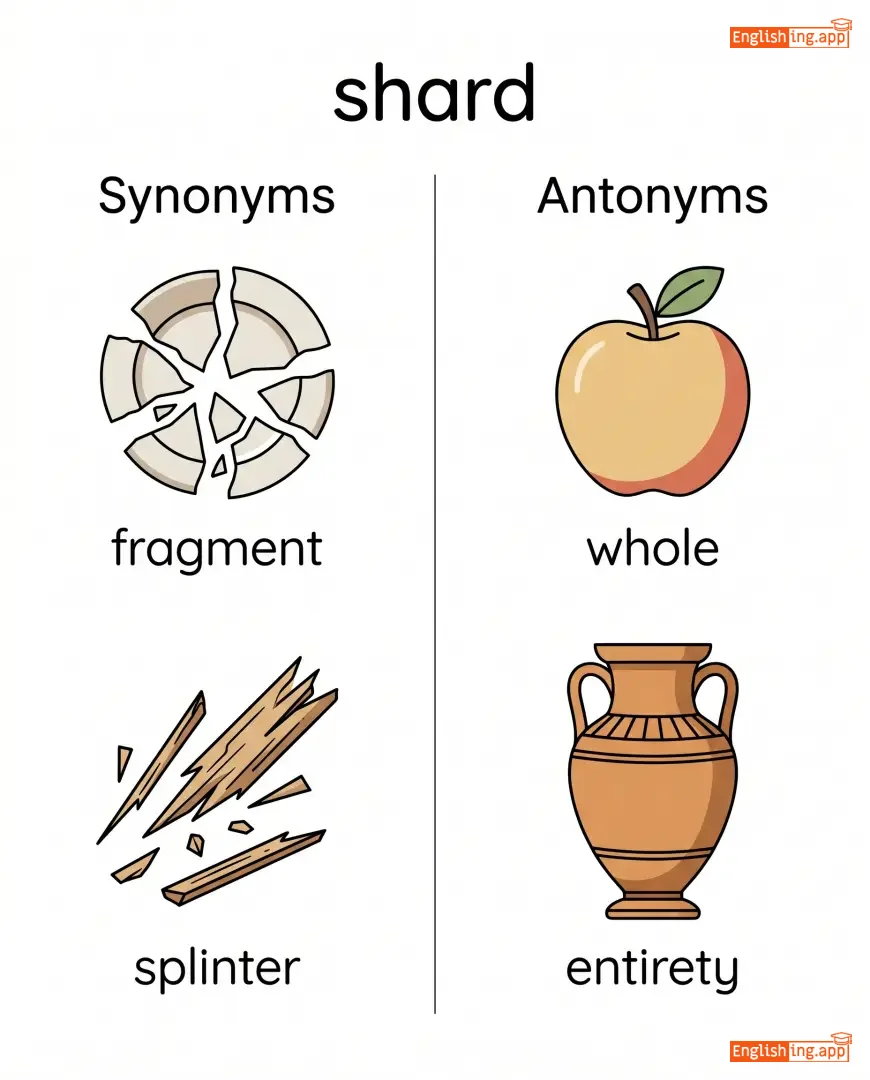
fragment, splinter, sliver, piece
••••••
|
whole, entirety, unity
••••••
|
shard of glass, shard of pottery, broken shard
••••••
|
Shard意味着 sharp 碎片 – 破碎的玻璃片。
••••••
|
|
🌌
••••••
|
/saɪˈdɪəriəl/
adjective
(sī dié rì ěr)
••••••
|

|
恒星的
héng xīng de
••••••
|
- •••••• | - •••••• | - •••••• | - •••••• |
Relating to the stars or constellations; measured relative to the stars.
••••••
|
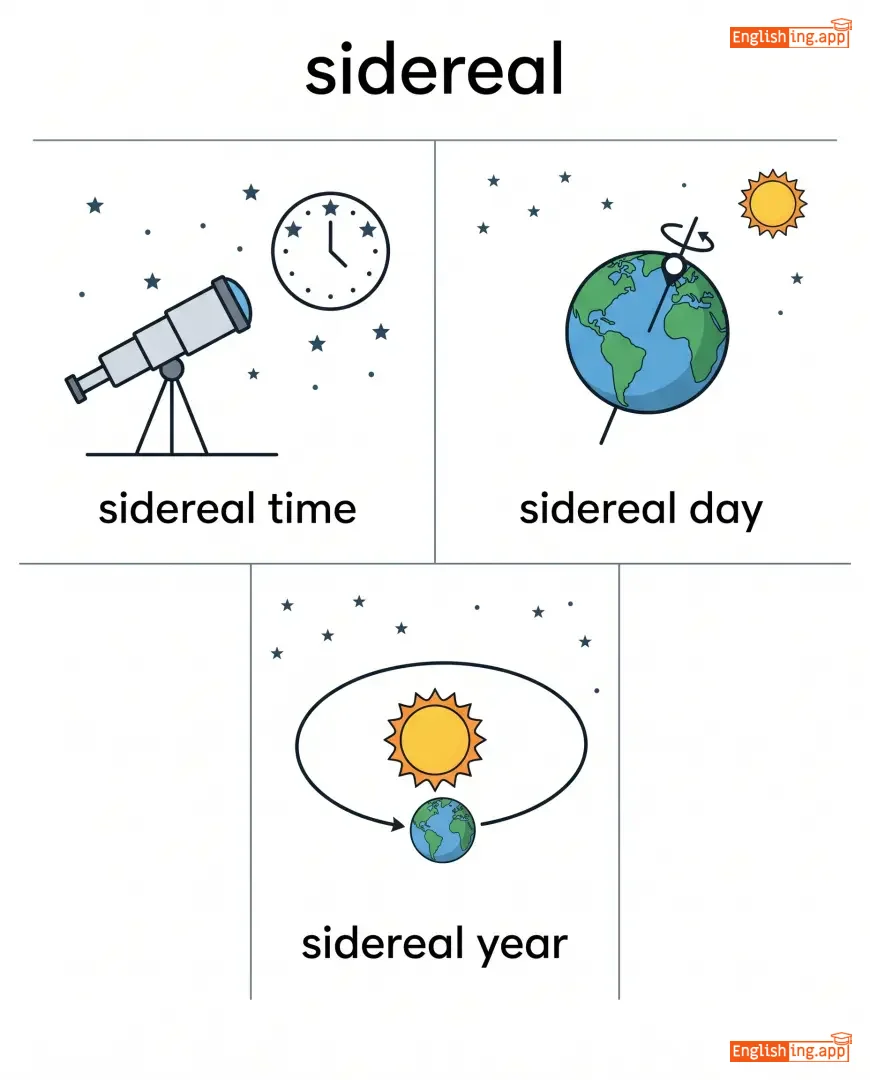
Astronomers use sidereal time to track the positions of stars. |
天文学家使用恒星时间来追踪星星的位置。
tiān wén xué jiā shǐ yòng héng xīng shí jiān lái zhuī zōng xīng xīng de wèi zhì.
••••••
|
- •••••• | - •••••• | - •••••• |
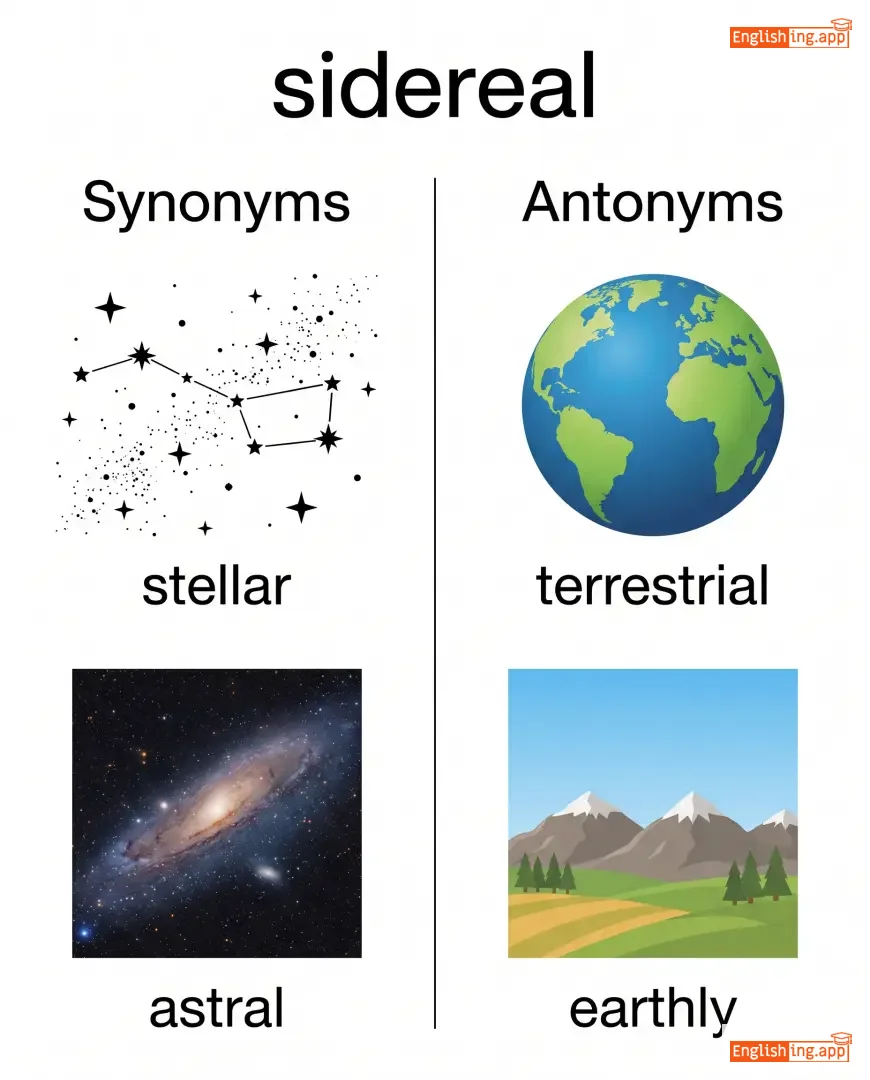
stellar, astral, cosmic, celestial
••••••
|
terrestrial, earthly
••••••
|
sidereal time, sidereal day, sidereal year
••••••
|
Sidereal → 恒星表记住: 它与星星有关。
••••••
|
|
🐒
••••••
|
/ˈsɪmiən/
adjective
(猿类的)
••••••
|
|
类人猿的
lèirén yuán de
••••••
|
- •••••• | - •••••• | - •••••• | - •••••• |
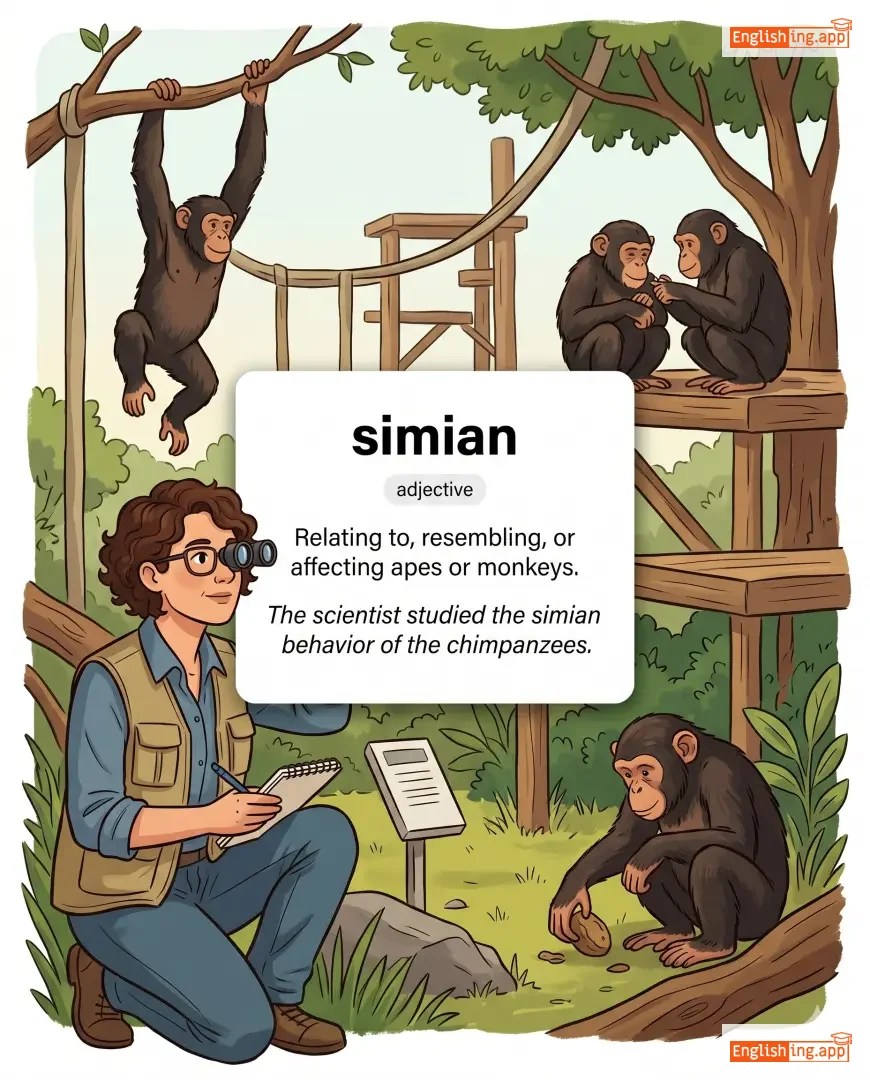
Relating to, resembling, or affecting apes or monkeys.
••••••
|
The scientist studied the simian behavior of the chimpanzees. |
科学家研究了黑猩猩的类人猿行为。
Kēxuéjiā yánjiūle hēi xīngxīng de lèirén yuán xíngwéi.
••••••
|
- •••••• | - •••••• | - •••••• |
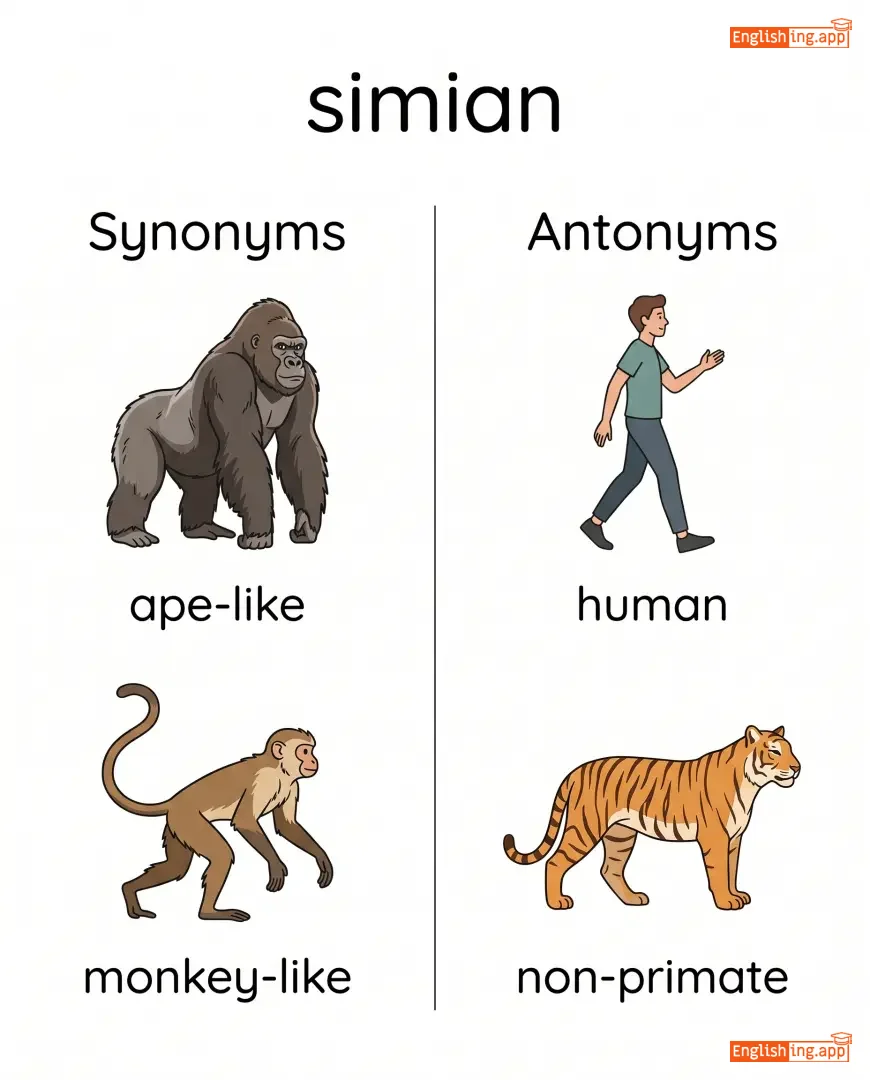
ape-like, monkey-like, primate, anthropoid
••••••
|
human, non-primate, inhuman
••••••
|
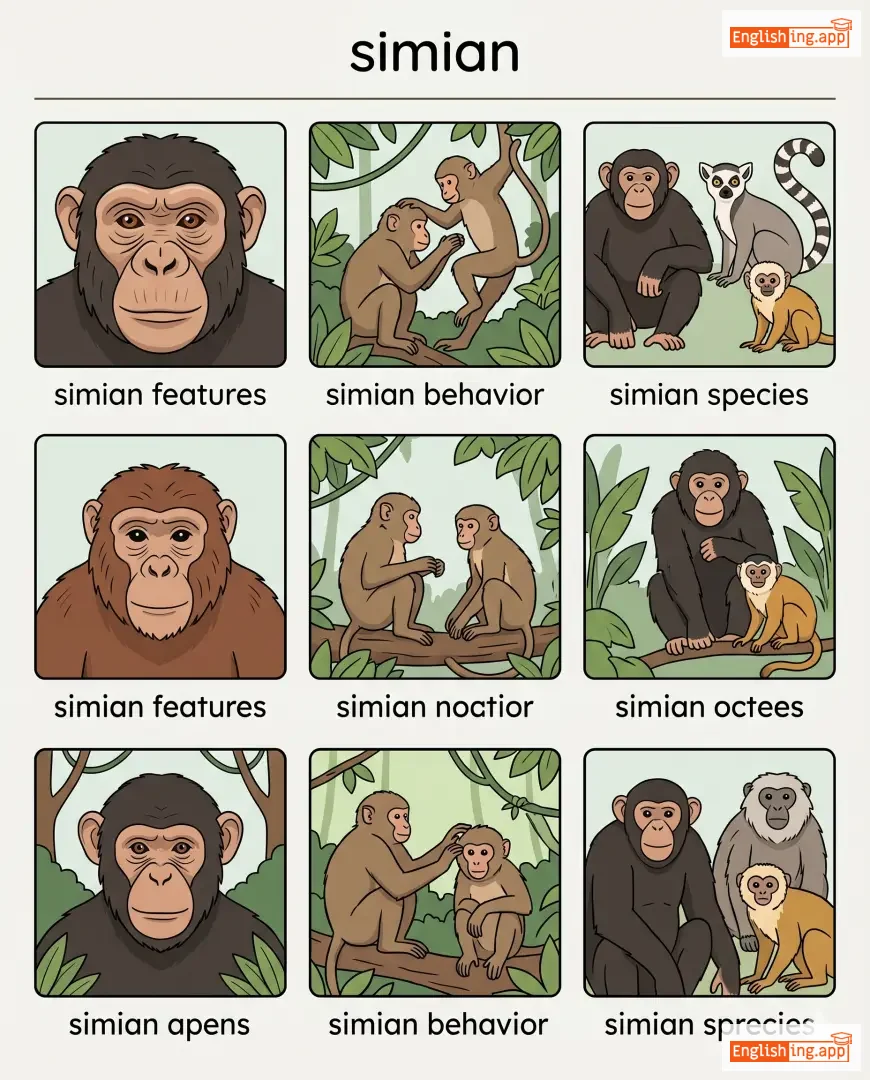
simian features, simian behavior, simian species
••••••
|
SIMIAN 听起来像 SIM,所以想象一个拿着 SIM 卡的猩猩!
••••••
|
|
✨
••••••
|
/ˈsɪməli/
noun
(sìmǐlì)
••••••
|

|
明喻
mingyu
••••••
|
- •••••• | - •••••• | - •••••• | - •••••• |
A figure of speech involving the comparison of one thing with another using 'like' or 'as'.
••••••
|
She used a simile to describe her eyes as bright as stars. |
她用明喻来描述她的眼睛像星星一样明亮。
Ta yong mingyu lai miaoshu ta de yanjing xiang xingxing yiyang mingliang.
••••••
|
- •••••• | - •••••• | - •••••• |
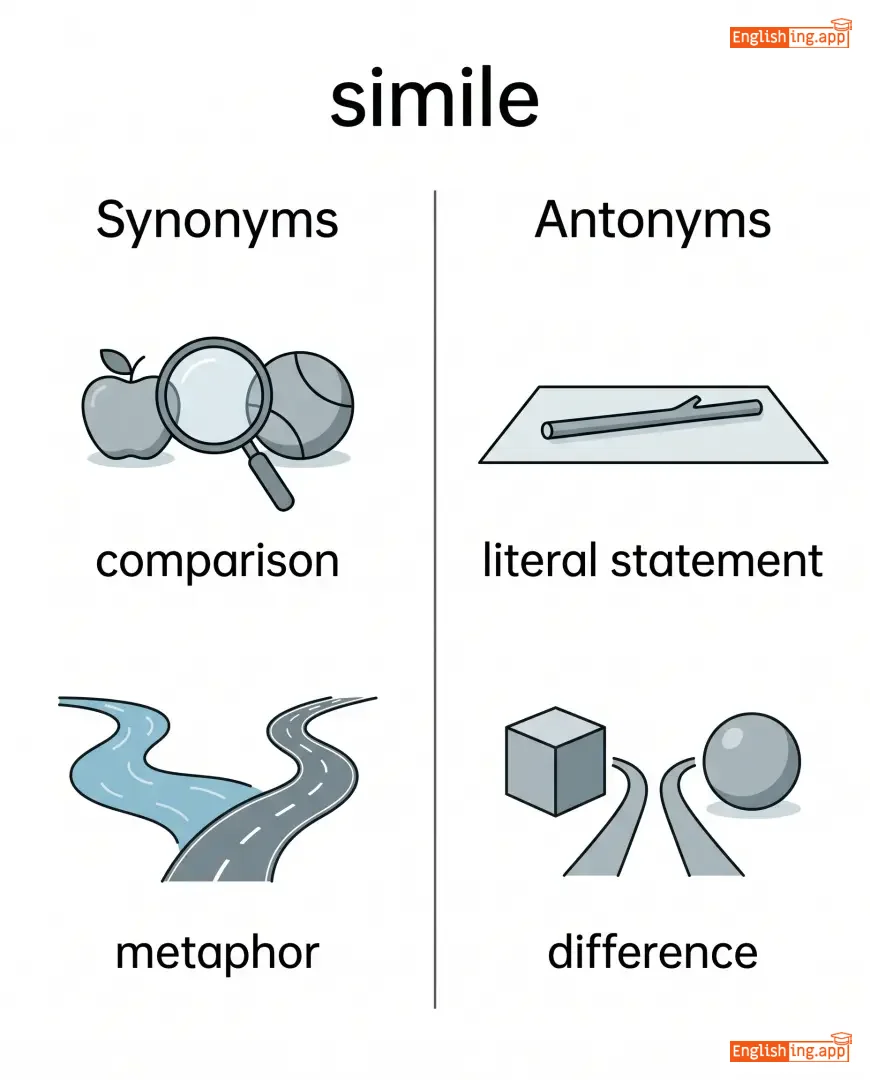
comparison, metaphor, analogy, resemblance
••••••
|
literal statement, difference
••••••
|
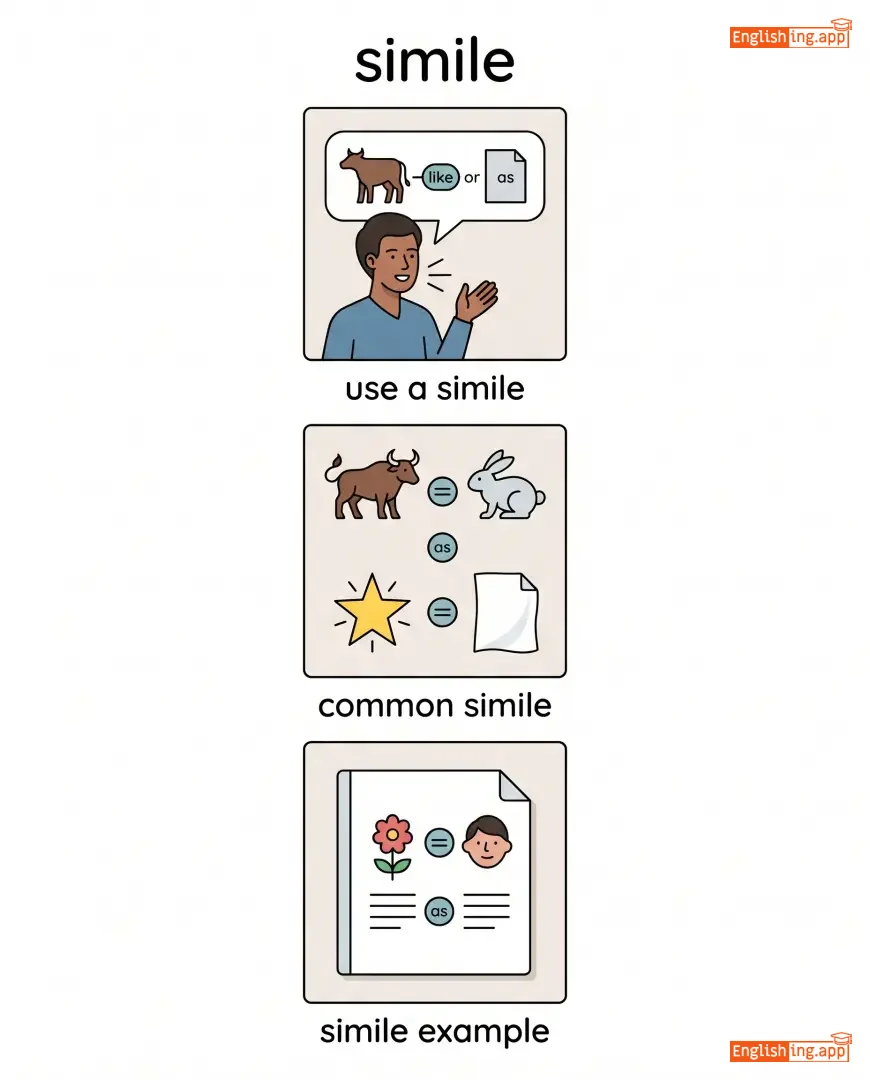
use a simile, common simile, simile example
••••••
|
SIMILE 意思是明喻:SIMILAR + 像
••••••
|
|
💼
••••••
|
/ˈsaɪnɪkjʊər/
noun
(赛尼克尤尔)
••••••
|

|
轻松工作
qīngsōng gōngzuò
••••••
|
- •••••• | - •••••• | - •••••• | - •••••• |
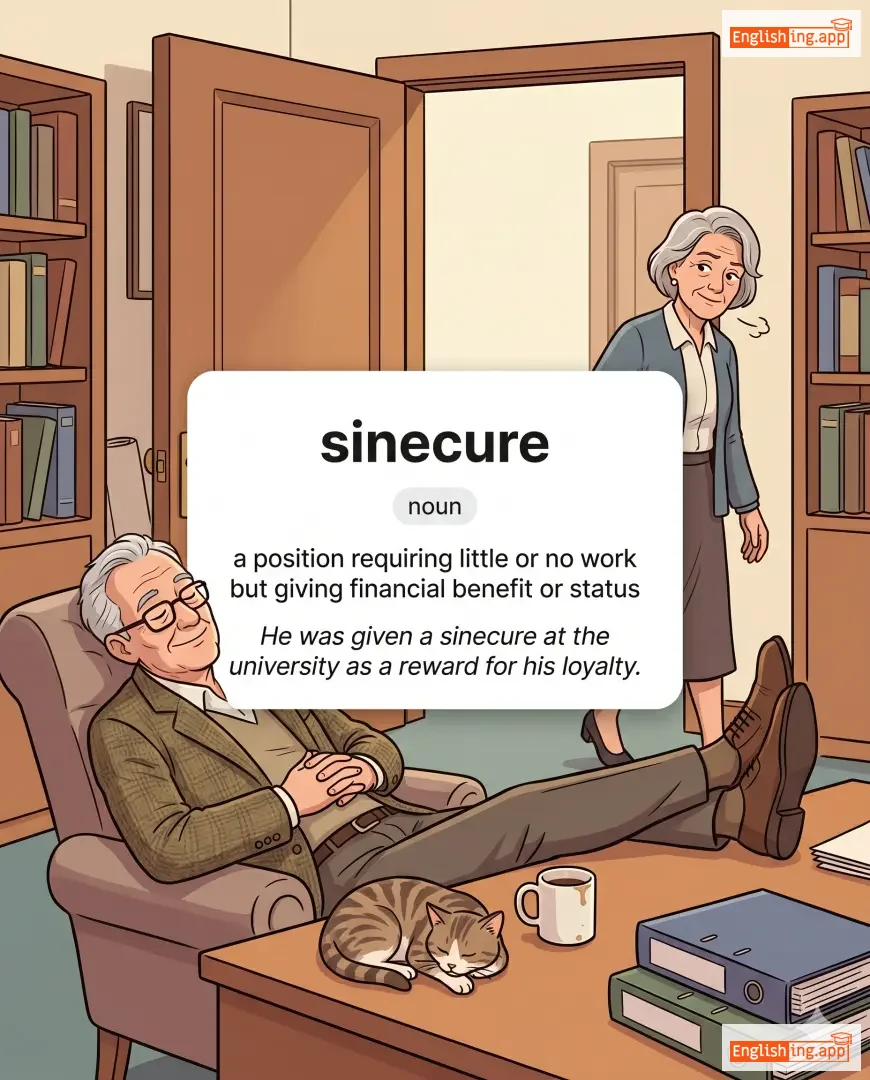
a position requiring little or no work but giving financial benefit or status
••••••
|
He was given a sinecure at the university as a reward for his loyalty. |
作为对他忠诚的奖励,他在大学获得了一个轻松的职位。
Zuòwéi duì tā zhōngchéng de jiǎnglì, tā zài dàxué huòdé le yīgè qīngsōng de zhíwèi.
••••••
|
- •••••• | - •••••• | - •••••• |
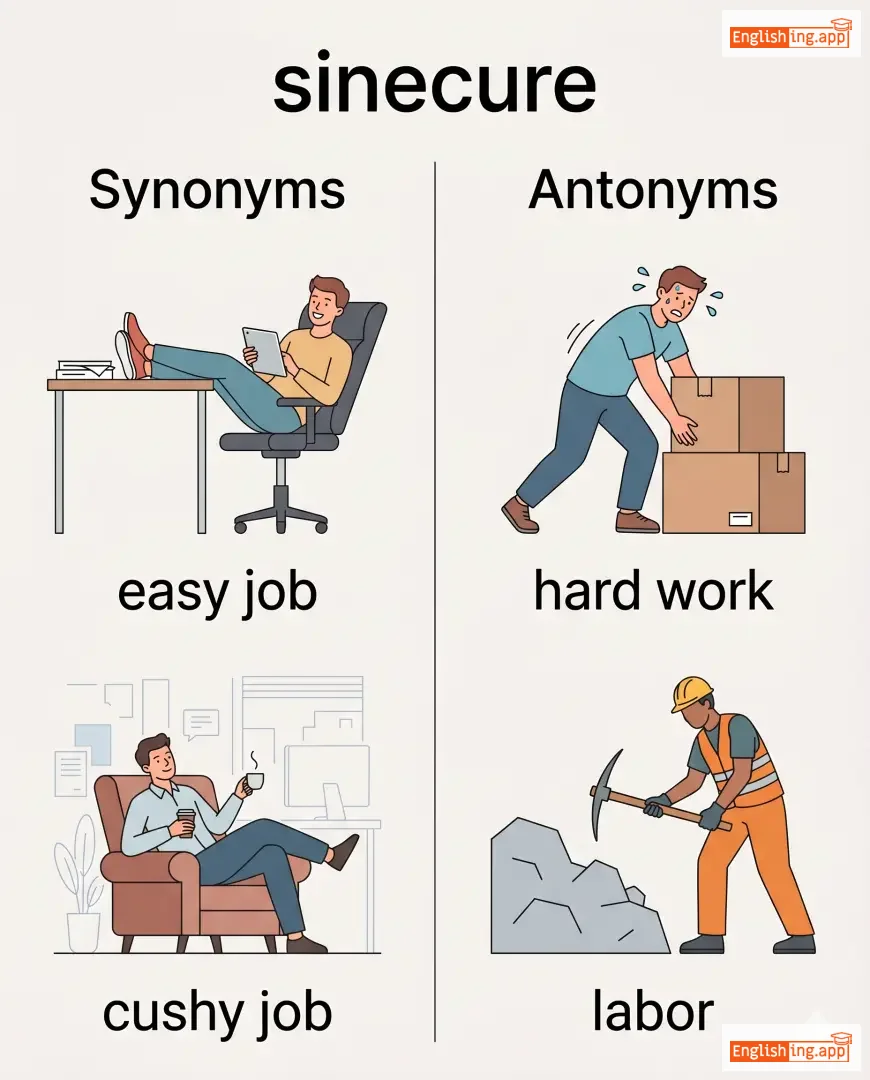
easy job, cushy job, honorary position, figurehead role
••••••
|
hard work, labor, drudgery
••••••
|
hold a sinecure, political sinecure, lucrative sinecure, sinecure position
••••••
|
SINE 无需努力,轻松工作
••••••
|
|
🌟
••••••
|
/ˈsɪŋɡjələr/
adjective, noun
(单数)
••••••
|
|
非凡 / 单数
feifan / danshu
••••••
|
- •••••• | - •••••• | - •••••• | - •••••• |
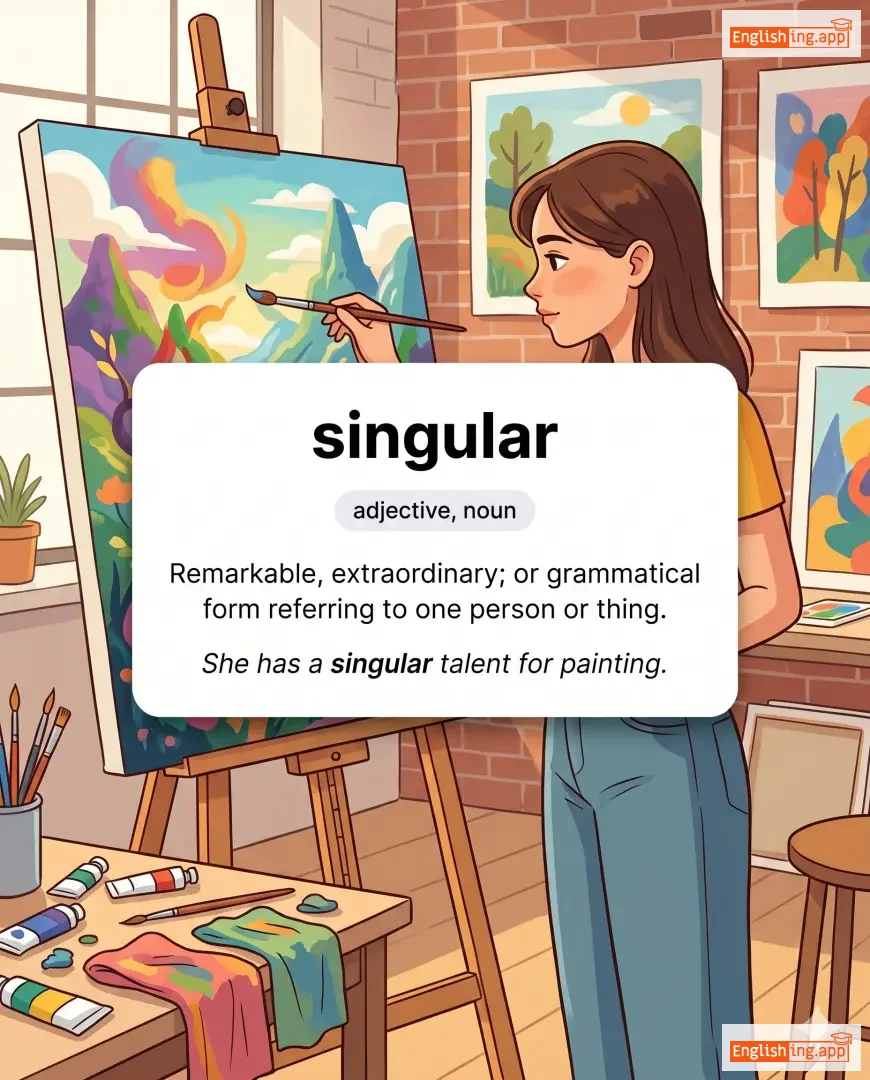
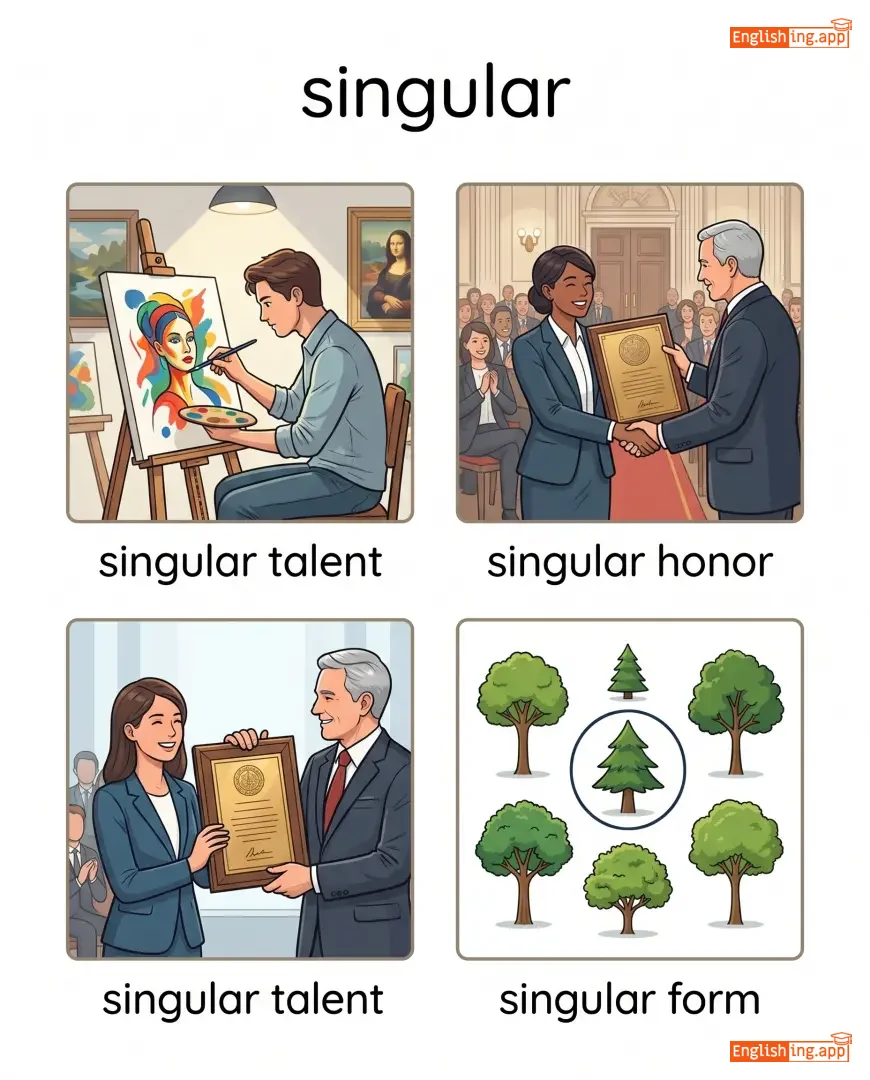
Remarkable, extraordinary; or grammatical form referring to one person or thing.
••••••
|
She has a singular talent for painting. |
她在绘画方面有非凡的才华。
Ta zai huihua fangmian you feifan de caihua.
••••••
|
singular focus |
Exclusive concentration on one thing.
••••••
|
单一的专注
danyi de zhuanzhu
••••••
|
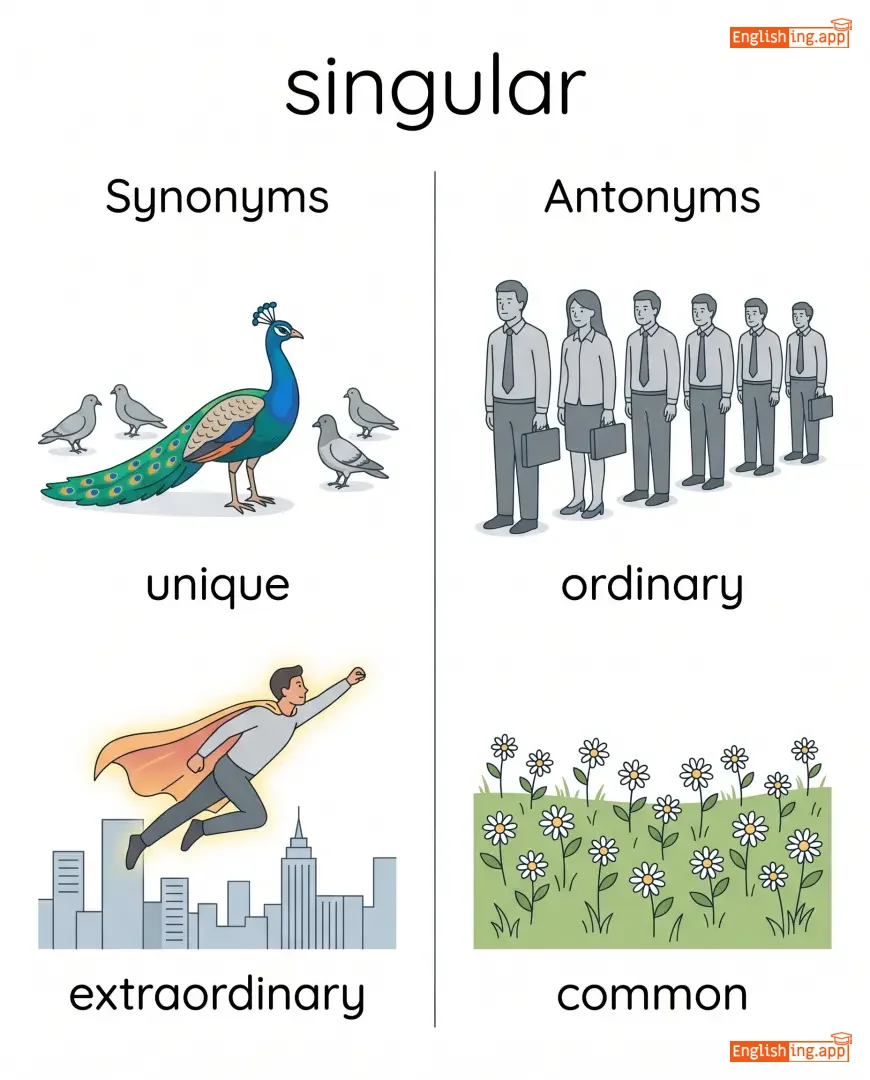
unique, extraordinary, remarkable, exceptional
••••••
|
ordinary, common, usual
••••••
|
singular talent, singular honor, singular form
••••••
|
Singular = 独特的,非凡的 🌟
••••••
|
|
〰️
••••••
|
/ˈsɪnjuəs/
adjective
(sin-yu-s)
••••••
|
|
蜿蜒
wan yan
••••••
|
- •••••• | - •••••• | - •••••• | - •••••• |
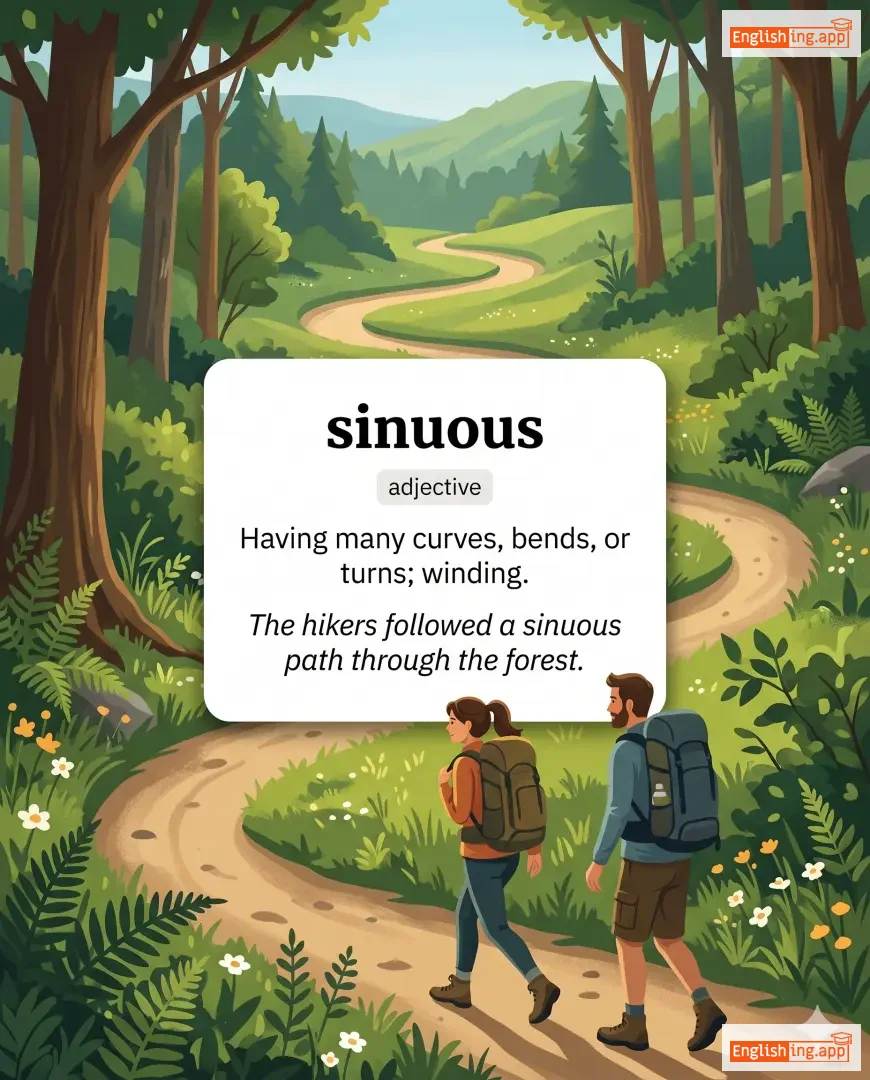
Having many curves, bends, or turns; winding.
••••••
|
The hikers followed a sinuous path through the forest. |
徒步旅行者沿着蜿蜒的路径穿过森林。
Tubu luxingzhe yanzhe wanyan de luxian chuanguo senlin.
••••••
|
- •••••• | - •••••• | - •••••• |
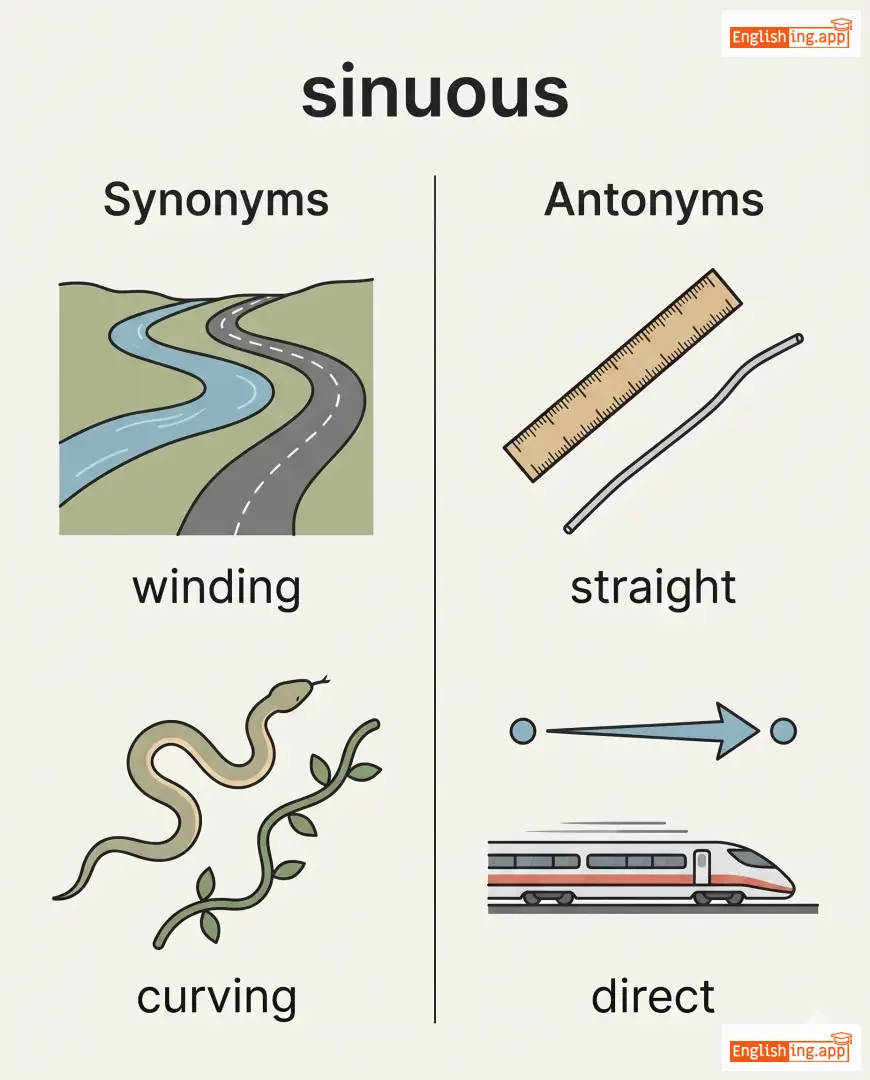
winding, curving, twisting, meandering, serpentine
••••••
|
straight, direct, linear
••••••
|
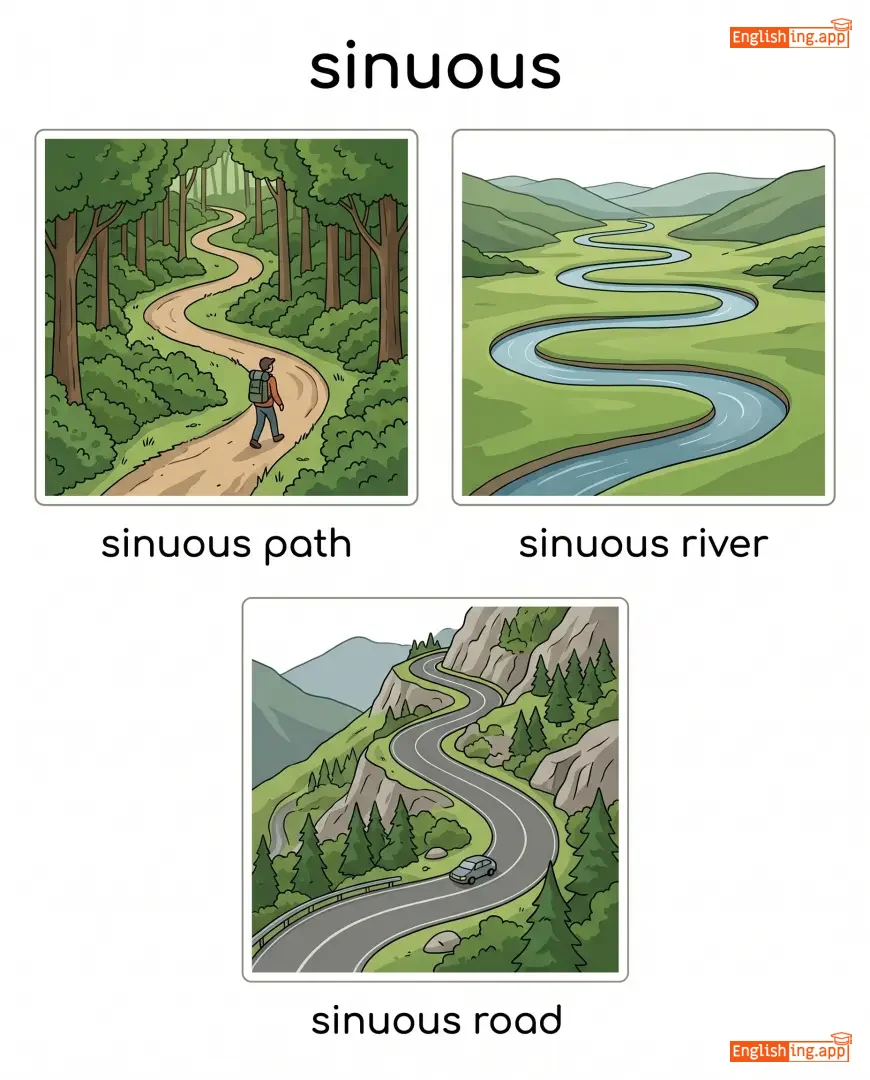
sinuous path, sinuous river, sinuous road, sinuous line
••••••
|
蜿蜒的路就像蛇的路径,弯弯曲曲。
••••••
|
|
🤔
••••••
|
/ˈskɛptɪk/
noun
(sī kè pǐkè)
••••••
|

|
怀疑者
huáiyí zhě
••••••
|
- •••••• | - •••••• | - •••••• | - •••••• |
A person who doubts or questions accepted beliefs or claims.
••••••
|
The scientist was a skeptic of theories without solid evidence. |
这位科学家对没有确凿证据的理论持怀疑态度。
Zhè wèi kēxuéjiā duì méiyǒu quèzào zhèngjù de lǐlùn chí huáiyí tàidù.
••••••
|
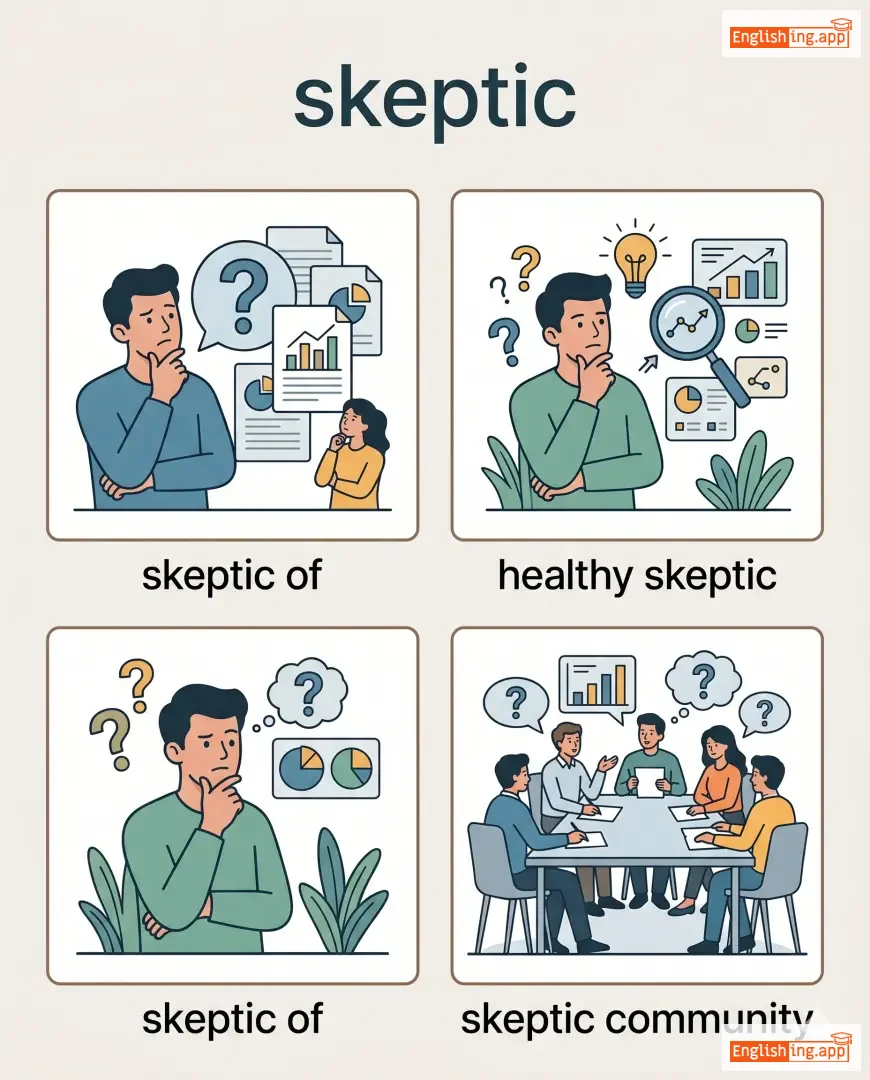
healthy skeptic |
A person who doubts claims in a rational and balanced way.
••••••
|
健康的怀疑者
jiànkāng de huáiyí zhě
••••••
|
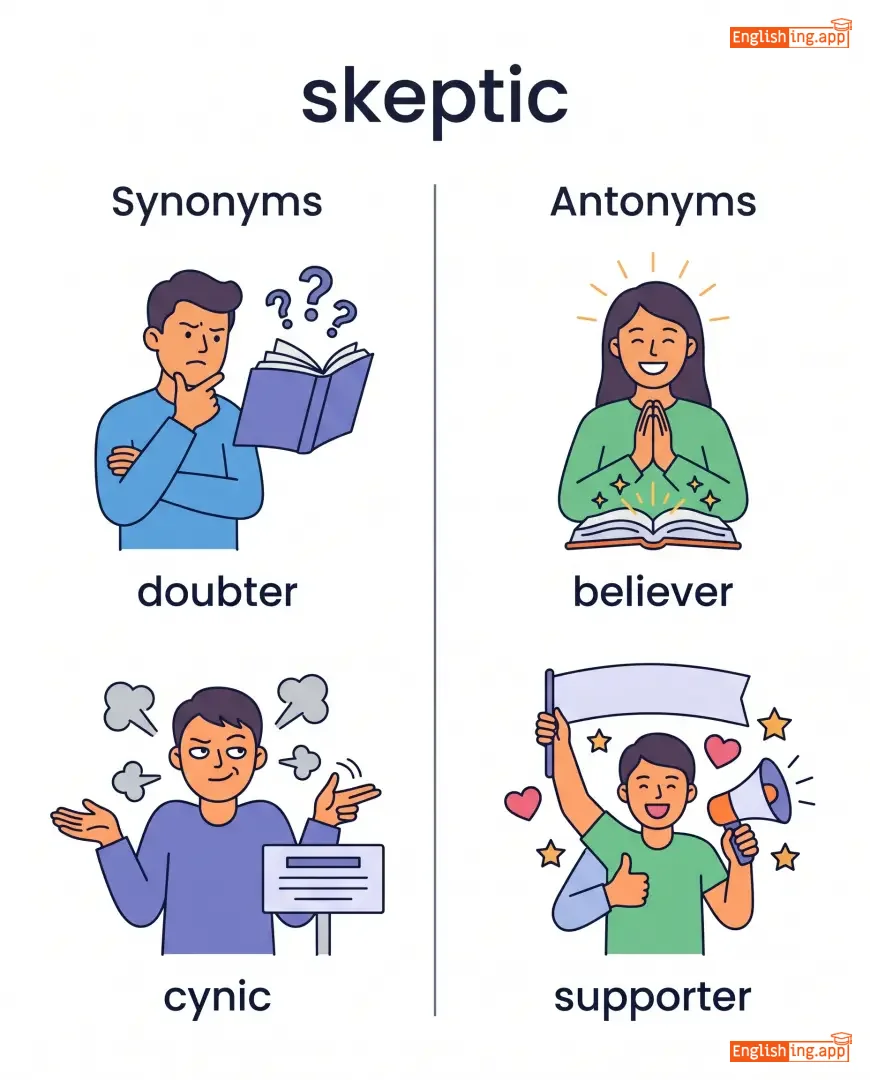
doubter, cynic, questioner, disbeliever
••••••
|
believer, supporter
••••••
|
skeptic of, healthy skeptic, skeptic community, skeptic movement
••••••
|
怀疑者总是怀疑一切,就像寻找真相的侦探。
••••••
|
|
🚫🍷
••••••
|
/səˈbraɪəti/
noun
(戒酒状态)
••••••
|

|
清醒
qīngxǐng
••••••
|
- •••••• | - •••••• | - •••••• | - •••••• |
the state of being sober; self-restraint and seriousness
••••••
|
He has maintained his sobriety for five years. |
他已经保持清醒五年了。
Tā yǐjīng bǎochí qīngxǐng wǔ nián le.
••••••
|
- •••••• | - •••••• | - •••••• |
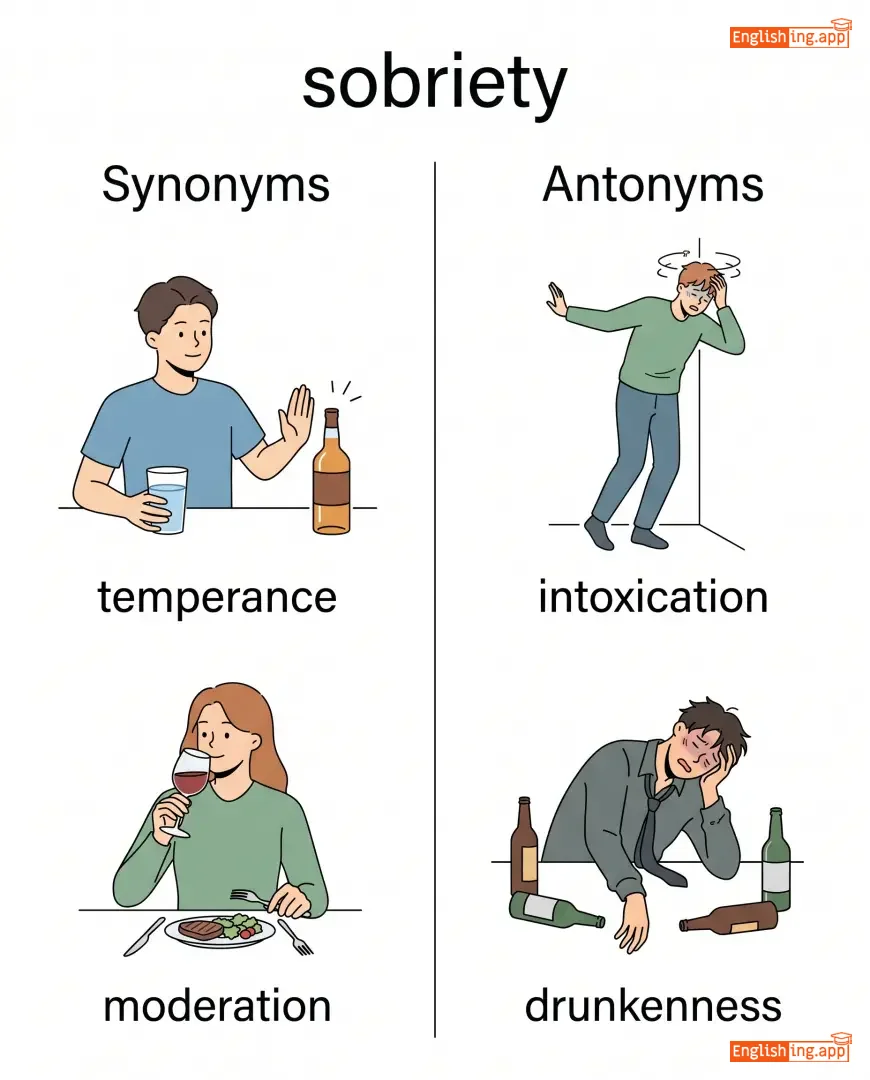
temperance, moderation, restraint, seriousness, abstinence
••••••
|
intoxication, drunkenness, excess
••••••
|
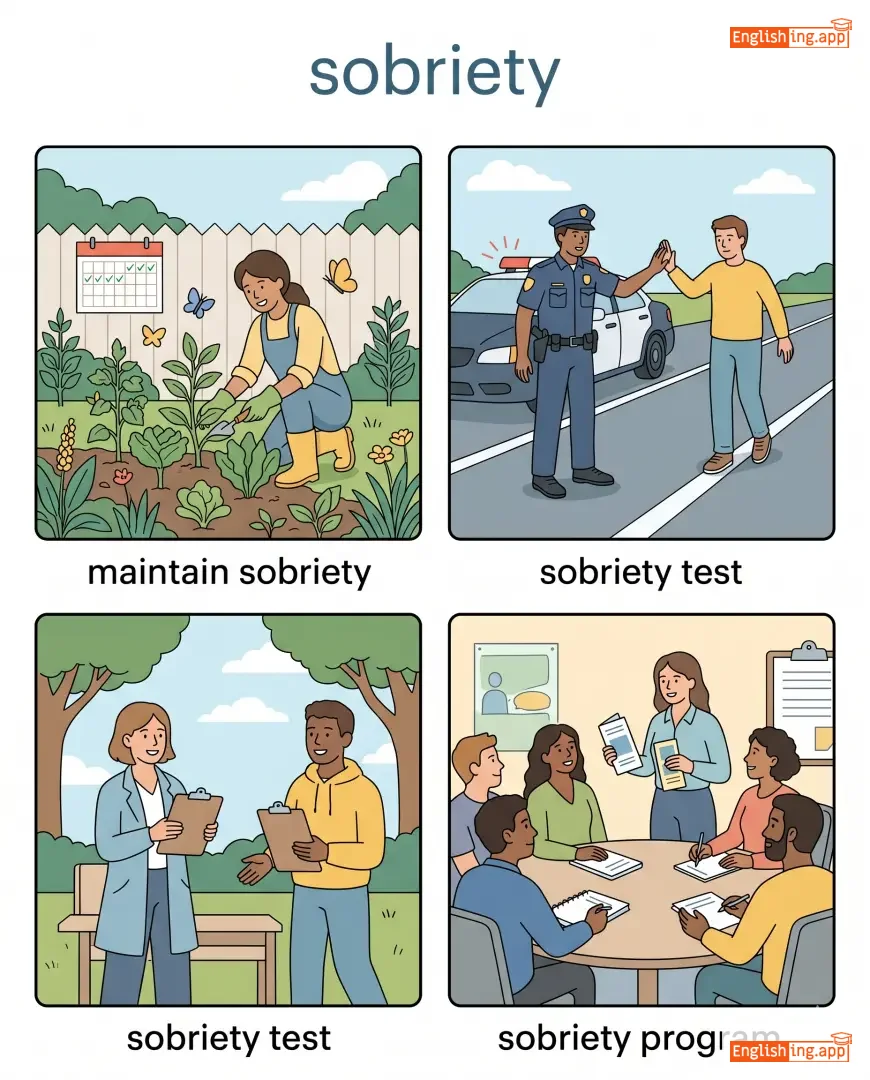
maintain sobriety, sobriety test, sobriety program, lifelong sobriety
••••••
|
Sobriety表示清醒状态 — no 🍷, 只要清醒 🚫
••••••
|
|
💧
••••••
|
/ˈsɑːdn/
adjective
(sodden)
••••••
|
|
湿透的
shitou de
••••••
|
- •••••• | - •••••• | - •••••• | - •••••• |
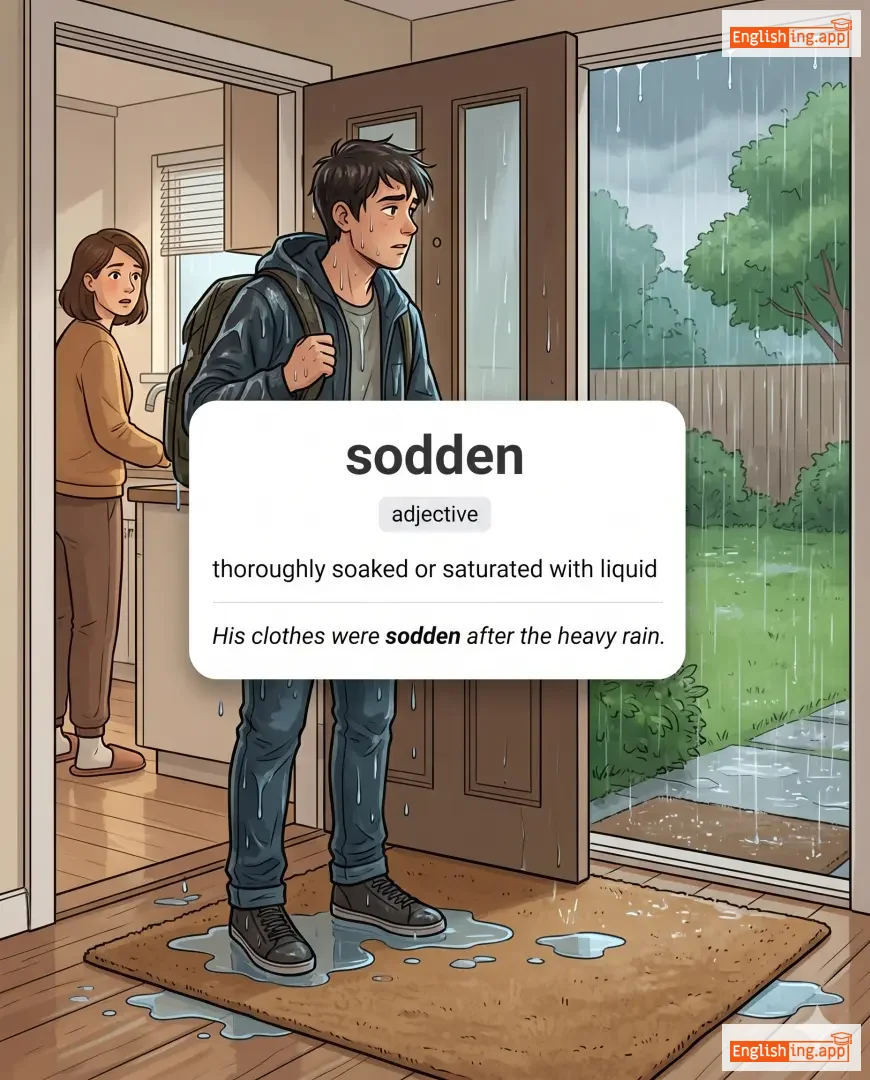
thoroughly soaked or saturated with liquid
••••••
|
His clothes were sodden after the heavy rain. |
他的衣服在大雨后湿透了。
Tā de yīfú zài dàyǔ hòu shī tòu le.
••••••
|
- •••••• | - •••••• | - •••••• |
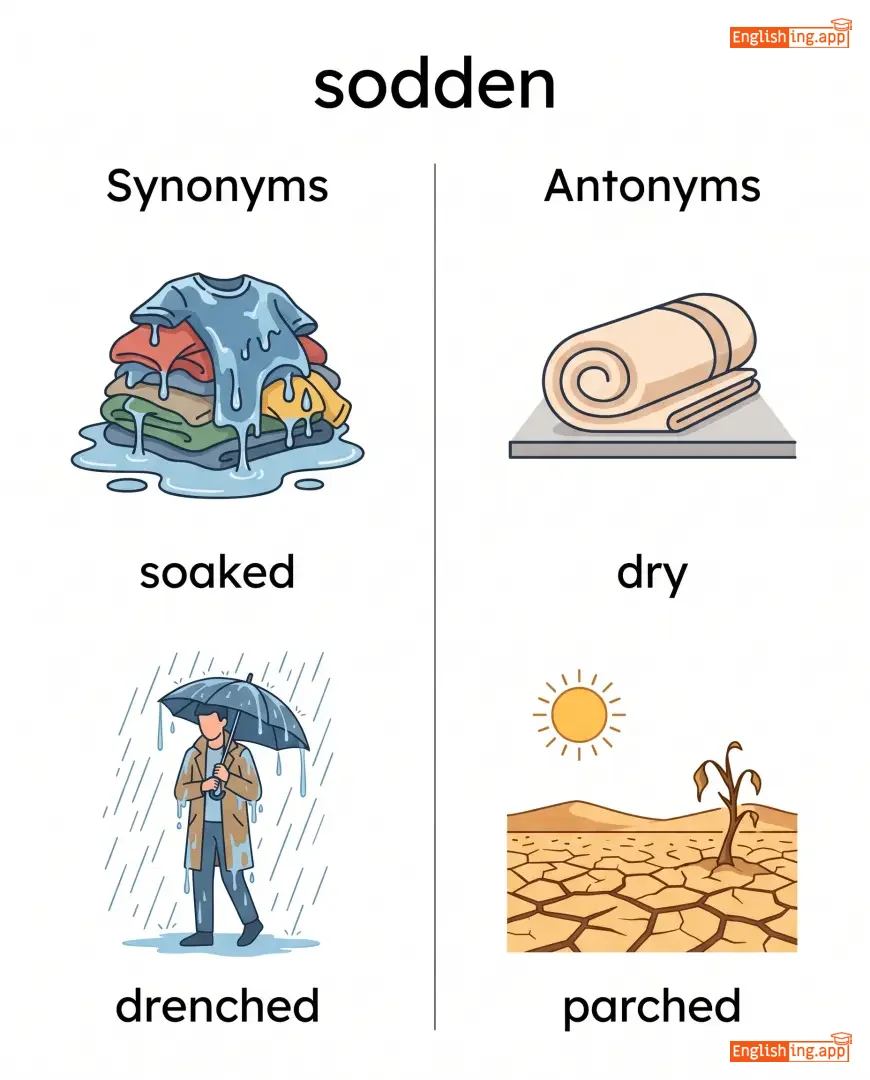
soaked, drenched, saturated, soggy
••••••
|
dry, parched
••••••
|
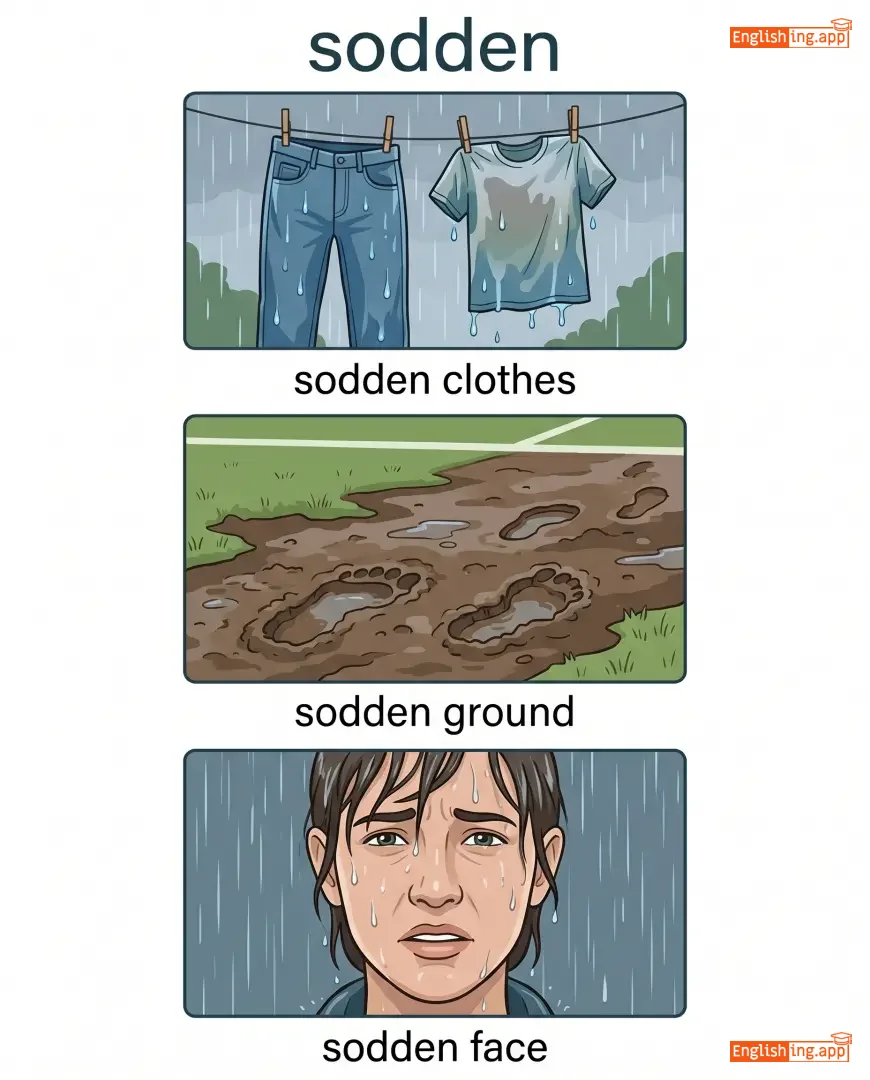
sodden clothes, sodden ground, sodden face
••••••
|
Sodden 听起来像 'soaked den' → 湿透的
••••••
|
|
💖
••••••
|
/səˈlɪsɪtəs/
adjective
(索利西图斯)
••••••
|
|
关心
guānxīn
••••••
|
- •••••• | - •••••• | - •••••• | - •••••• |
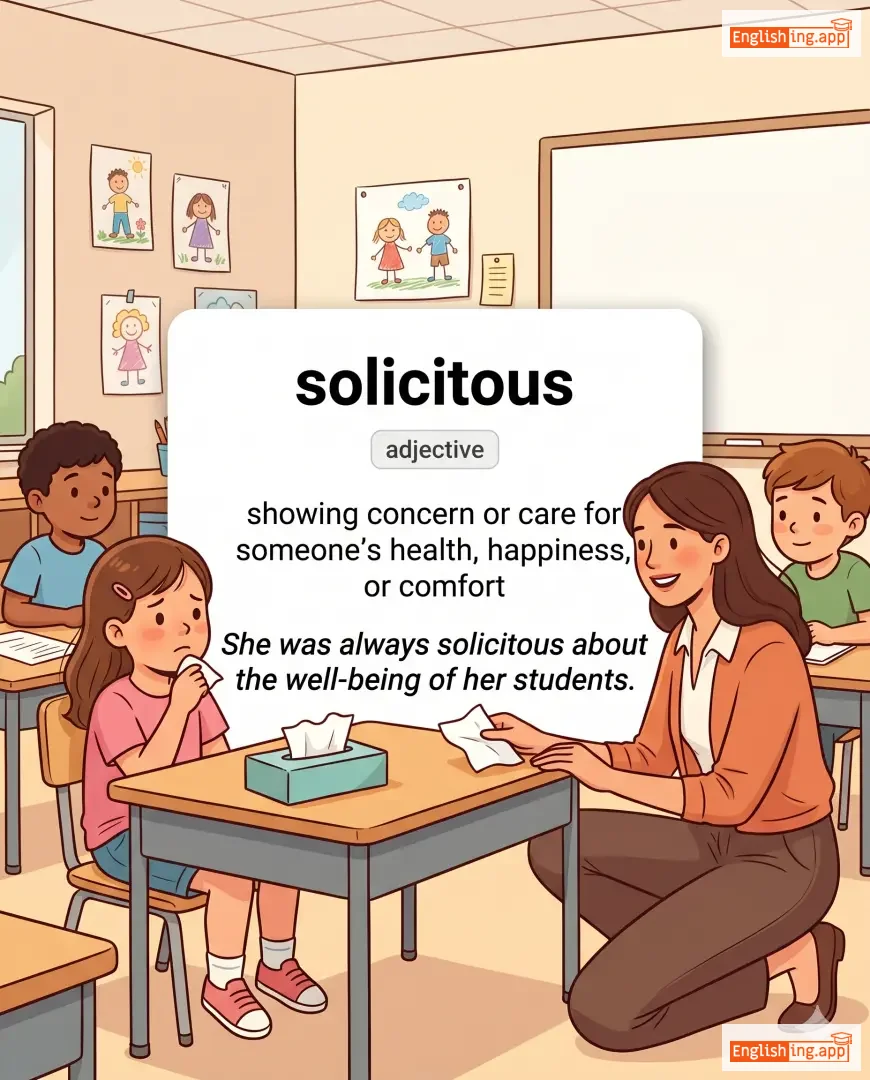
showing concern or care for someone's health, happiness, or comfort
••••••
|
She was always solicitous about the well-being of her students. |
她总是关心学生们的福祉。
Tā zǒng shì guānxīn xuéshēngmen de fúzhǐ.
••••••
|
- •••••• | - •••••• | - •••••• |
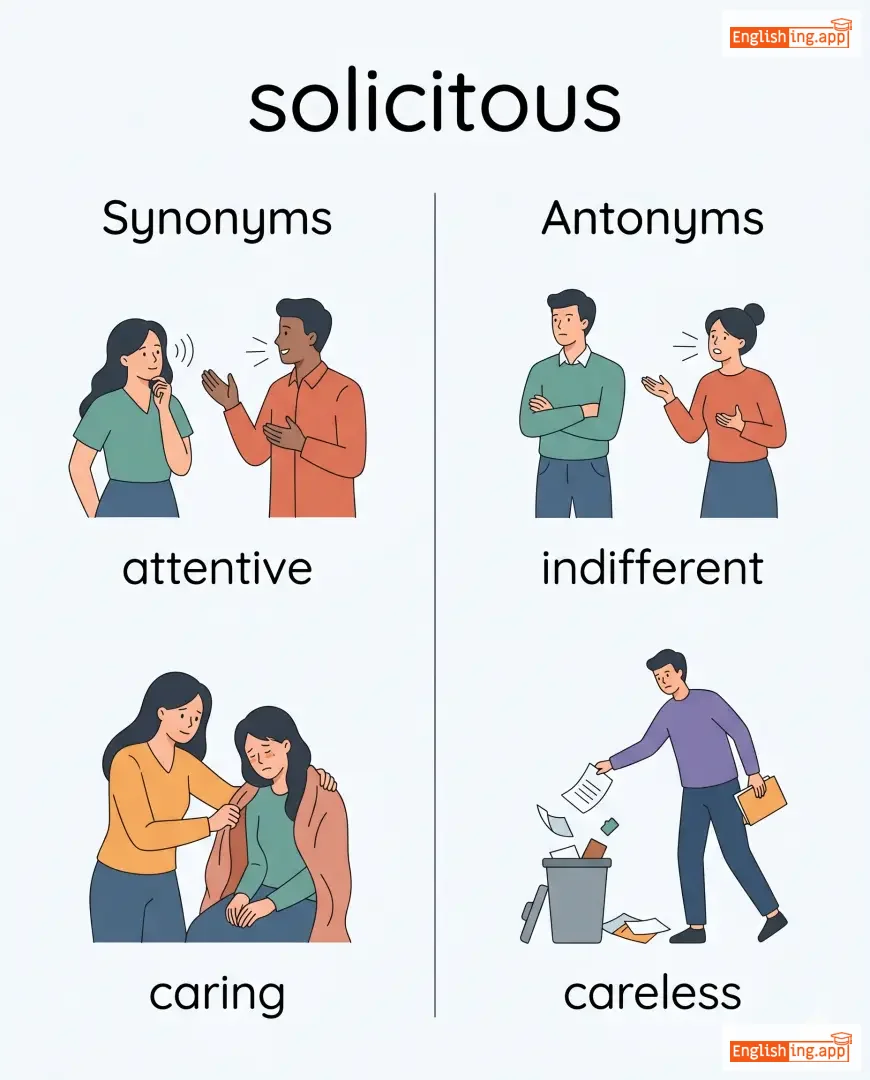
attentive, caring, concerned, considerate, thoughtful
••••••
|
indifferent, careless, neglectful
••••••
|
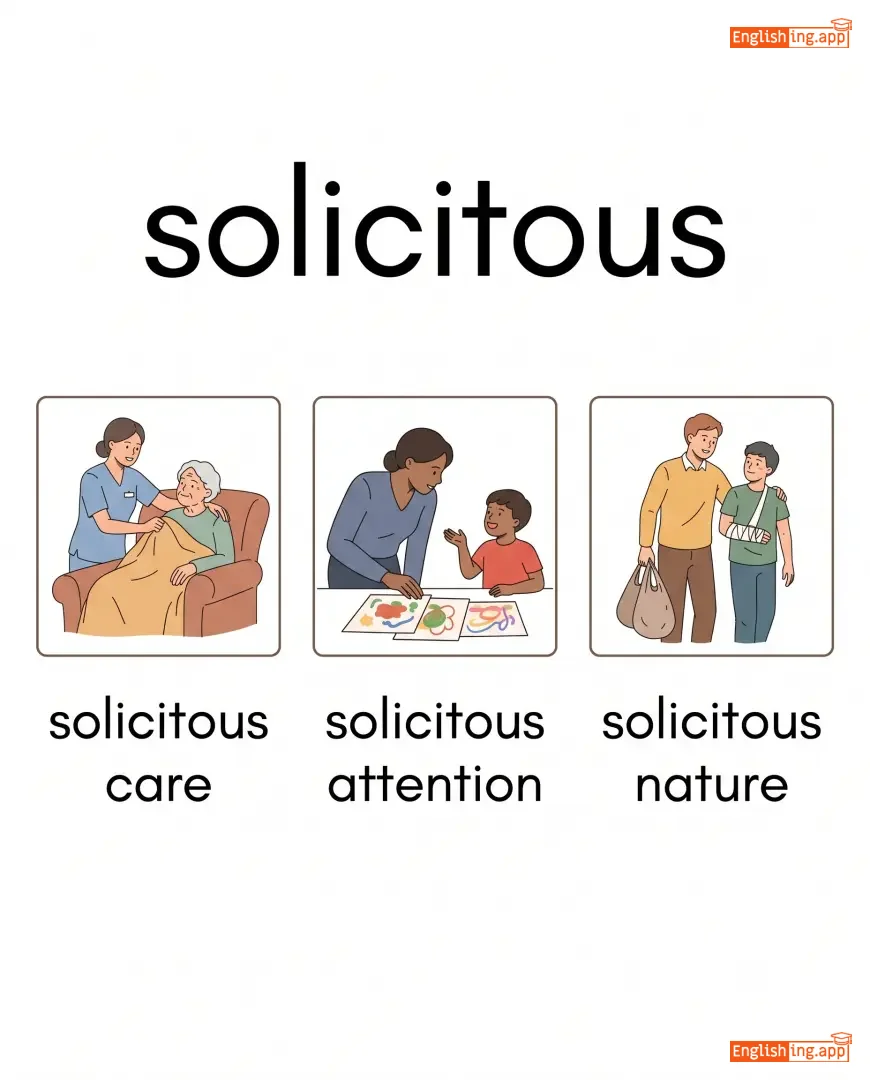
solicitous care, solicitous attention, solicitous nature
••••••
|
Solicitous意思是关心,想想 'so listen to us' = 关心 💖
••••••
|
|
🎭
••••••
|
/səˈlɪləkwi/
noun
(索利罗奎)
••••••
|

|
独白
dúbái
••••••
|
- •••••• | - •••••• | - •••••• | - •••••• |
a speech in which a character talks to themselves, often used in drama to reveal inner thoughts
••••••
|
Hamlet's soliloquy is one of the most famous passages in Shakespearean drama. |
哈姆雷特的独白是莎士比亚戏剧中最著名的段落之一。
Hāmǔléitè de dúbái shì Shāshìbǐyà xìjù zhōng zuì zhùmíng de duànluò zhī yī.
••••••
|
- •••••• | - •••••• | - •••••• |
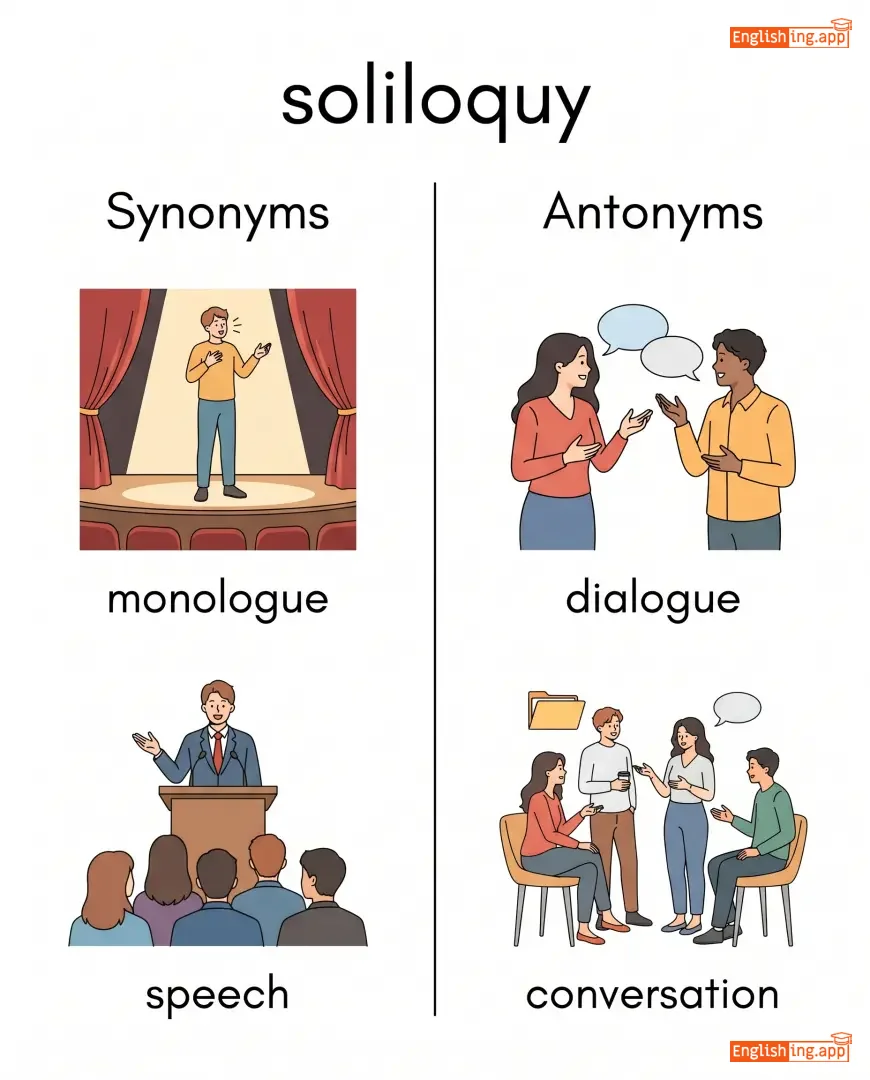
monologue, speech, oration, address, discourse
••••••
|
dialogue, conversation
••••••
|
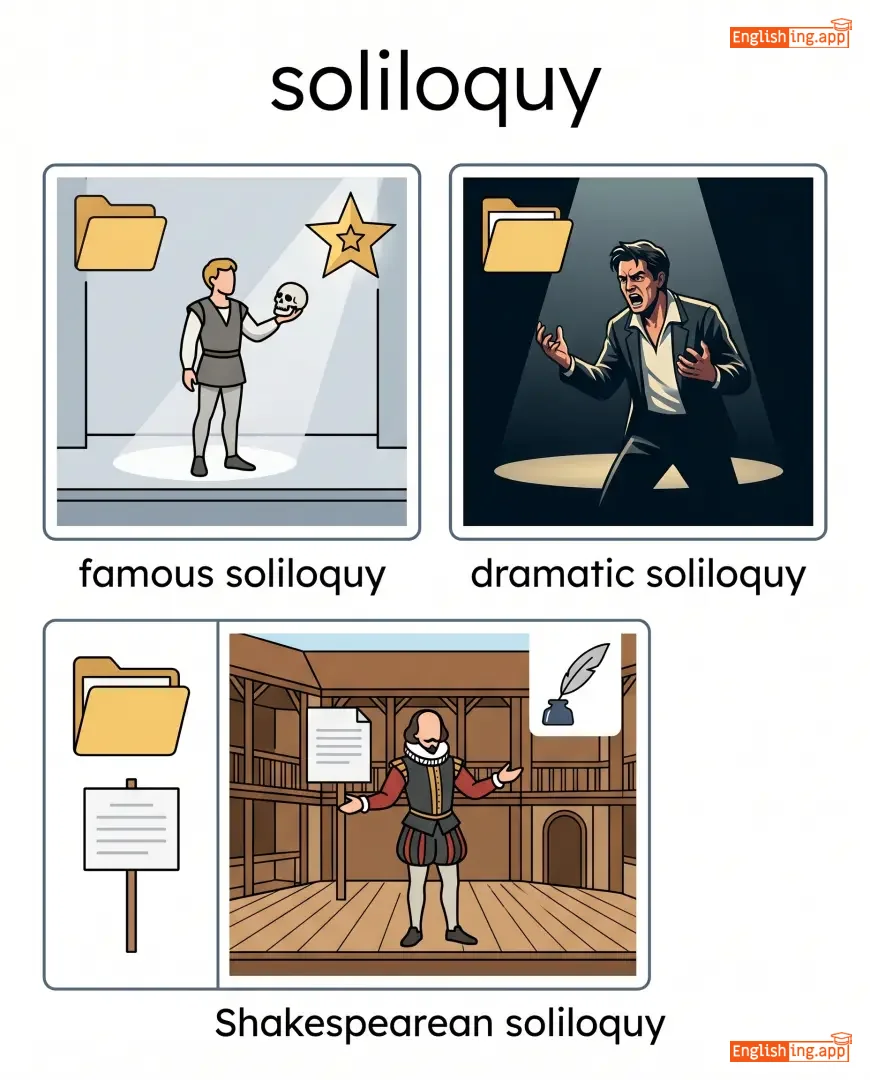
famous soliloquy, dramatic soliloquy, Shakespearean soliloquy, deliver a soliloquy
••••••
|
独 (独自) + 白 (讲话) → 一个人自己讲话
••••••
|
|
🧪
••••••
|
/ˈsɒlvənt/
noun, adjective
(溶剂)
••••••
|
|
溶剂, 还债能力
rongji, huan zhai nengli
••••••
|
- •••••• | - •••••• | - •••••• | - •••••• |
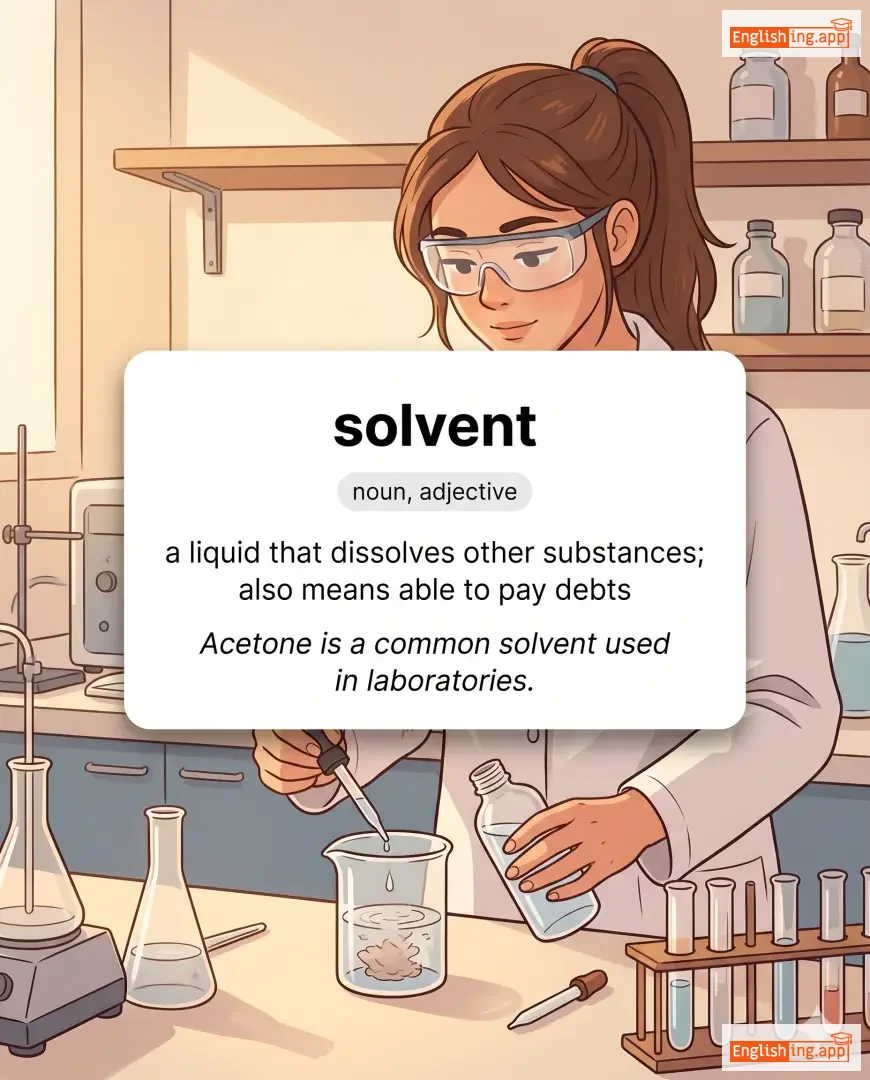
a liquid that dissolves other substances; also means able to pay debts
••••••
|
Acetone is a common solvent used in laboratories.
丙酮是实验室中常用的溶剂。
••••••
|
丙酮是实验室中常用的溶剂。
Bingtong shi shiyan shi zhong changyong de rongji.
••••••
|
solvent company
有偿还能力的公司
••••••
|
a company that is financially stable and able to pay its debts
••••••
|
财务稳健的公司
caiwu wenjian de gongsi
••••••
|
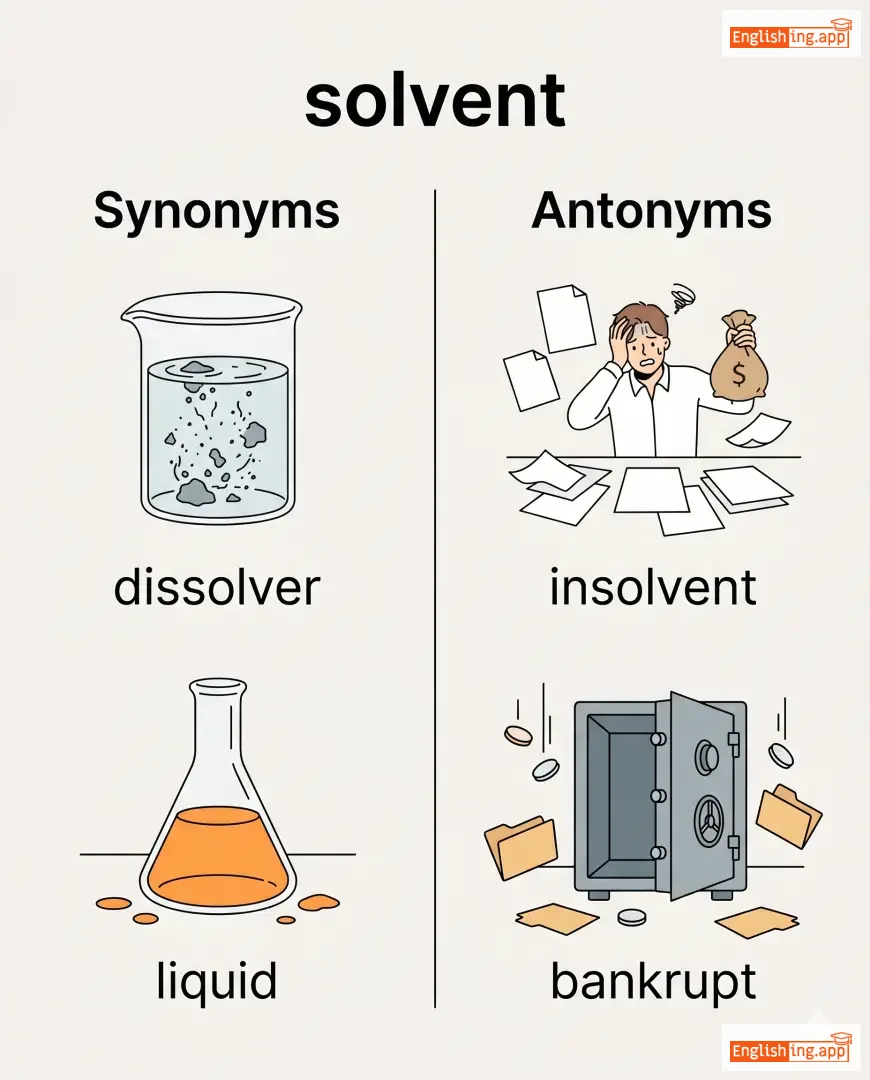
dissolver, liquid, solution, stable, viable
••••••
|
insolvent, bankrupt
••••••
|
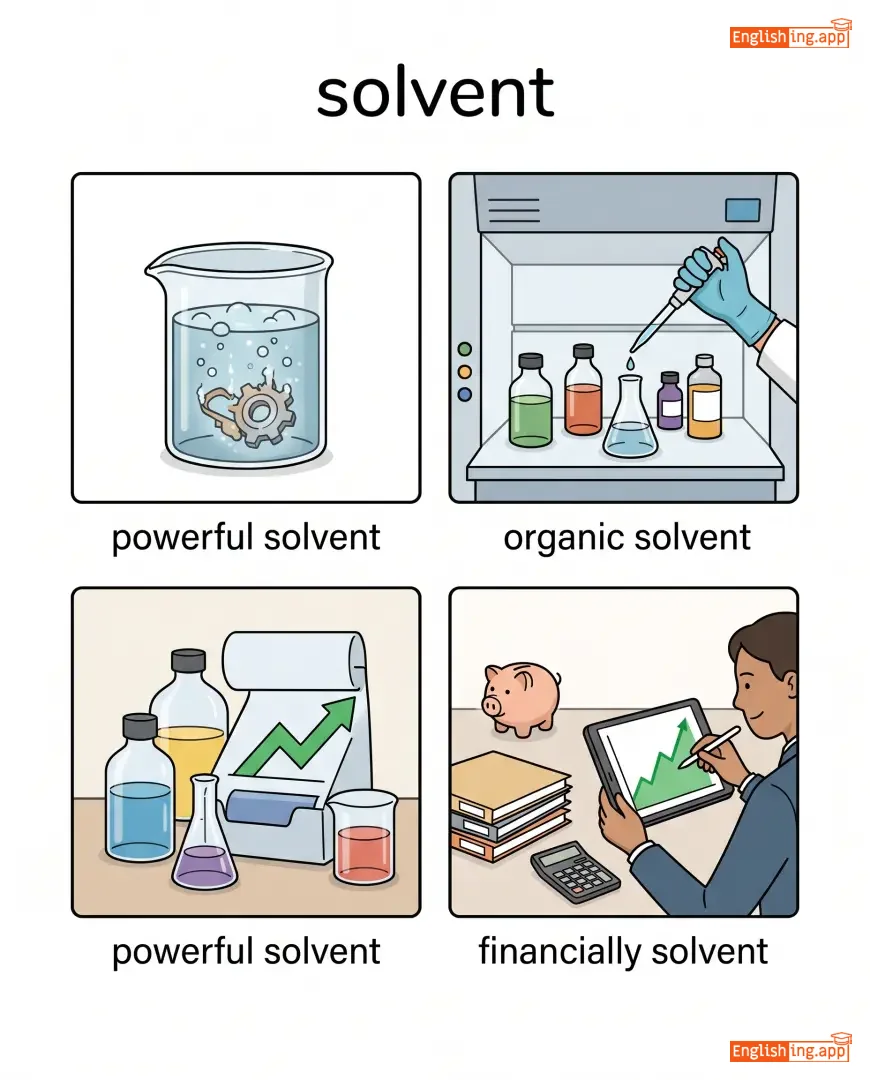
powerful solvent, organic solvent, financially solvent, solvent company
••••••
|
Solve + rent → 能偿还债务的公司就像 solvent 一样
••••••
|
|
💪
••••••
|
/səˈmætɪk/
adjective
(索马提克)
••••••
|
|
身体的
shen ti de
••••••
|
- •••••• | - •••••• | - •••••• | - •••••• |
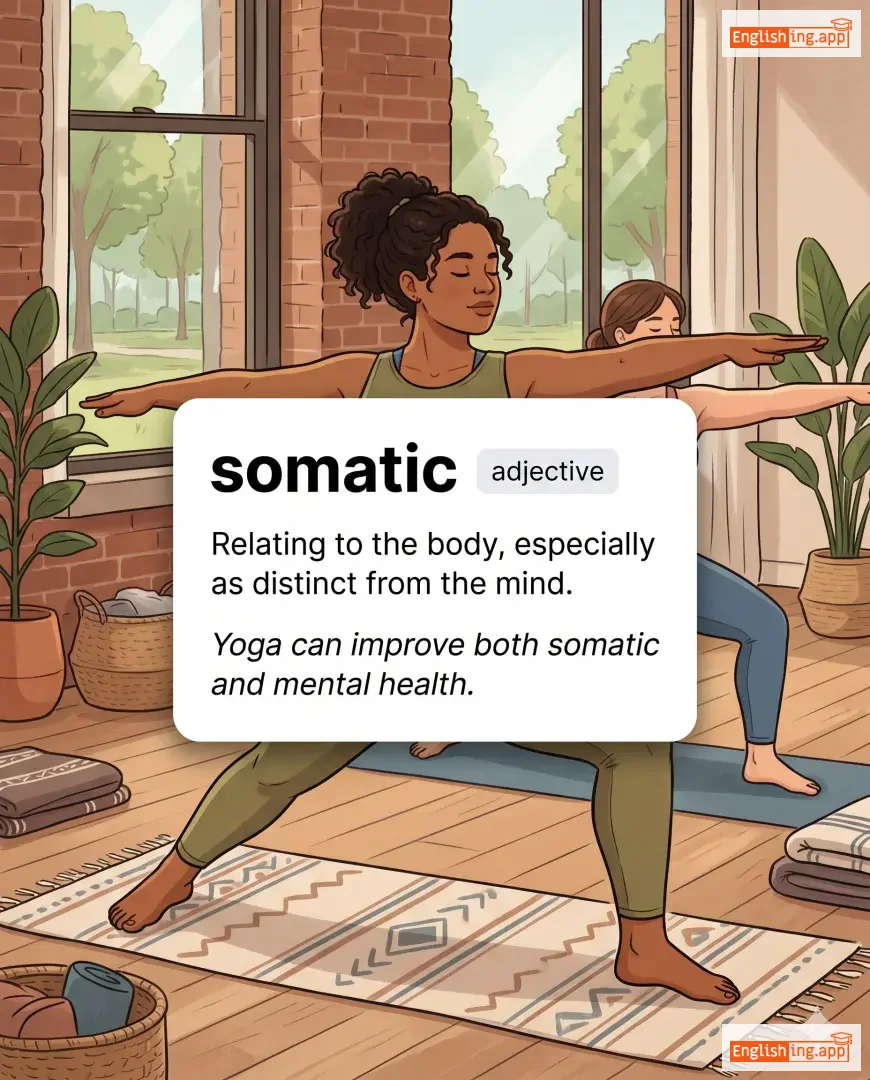
Relating to the body, especially as distinct from the mind.
••••••
|
Yoga can improve both somatic and mental health. |
瑜伽可以改善身体和心理健康。
Yujia keyi gaishan shenti he xinli jiankang.
••••••
|
- •••••• | - •••••• | - •••••• |
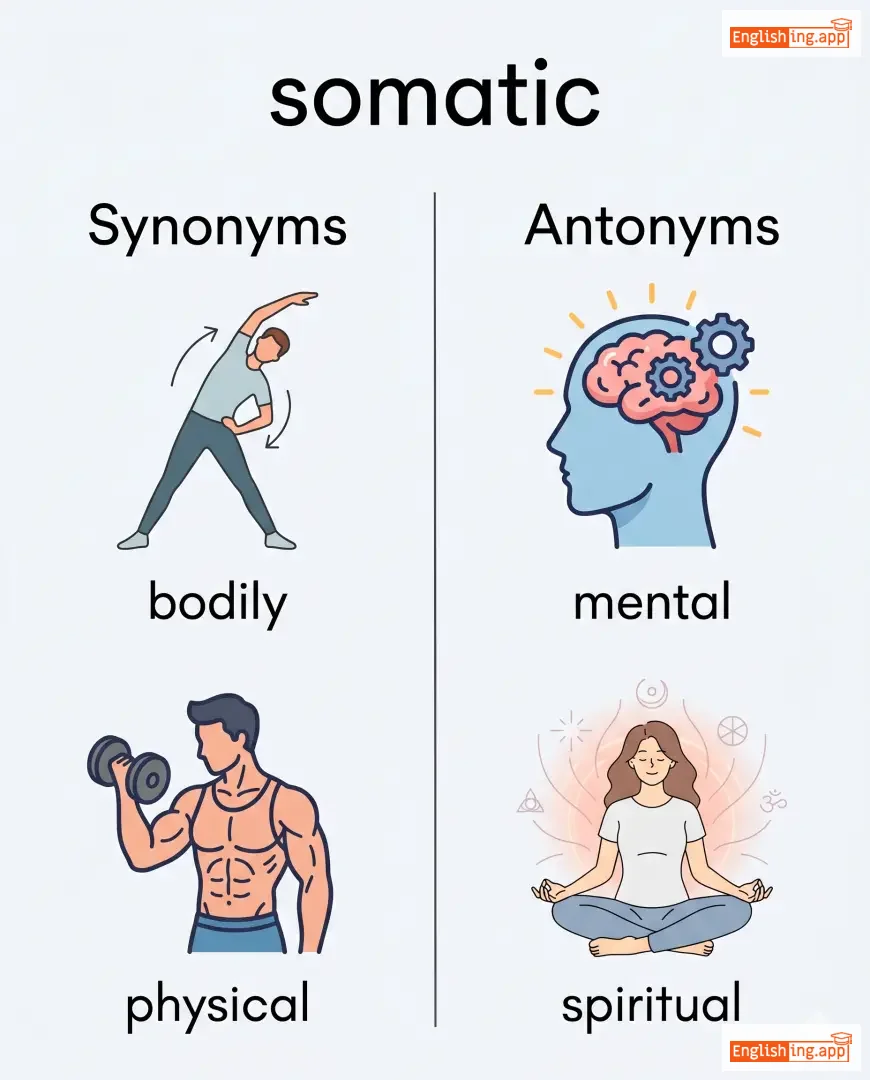
bodily, physical, corporeal, material, anatomical
••••••
|
mental, spiritual, psychic
••••••
|
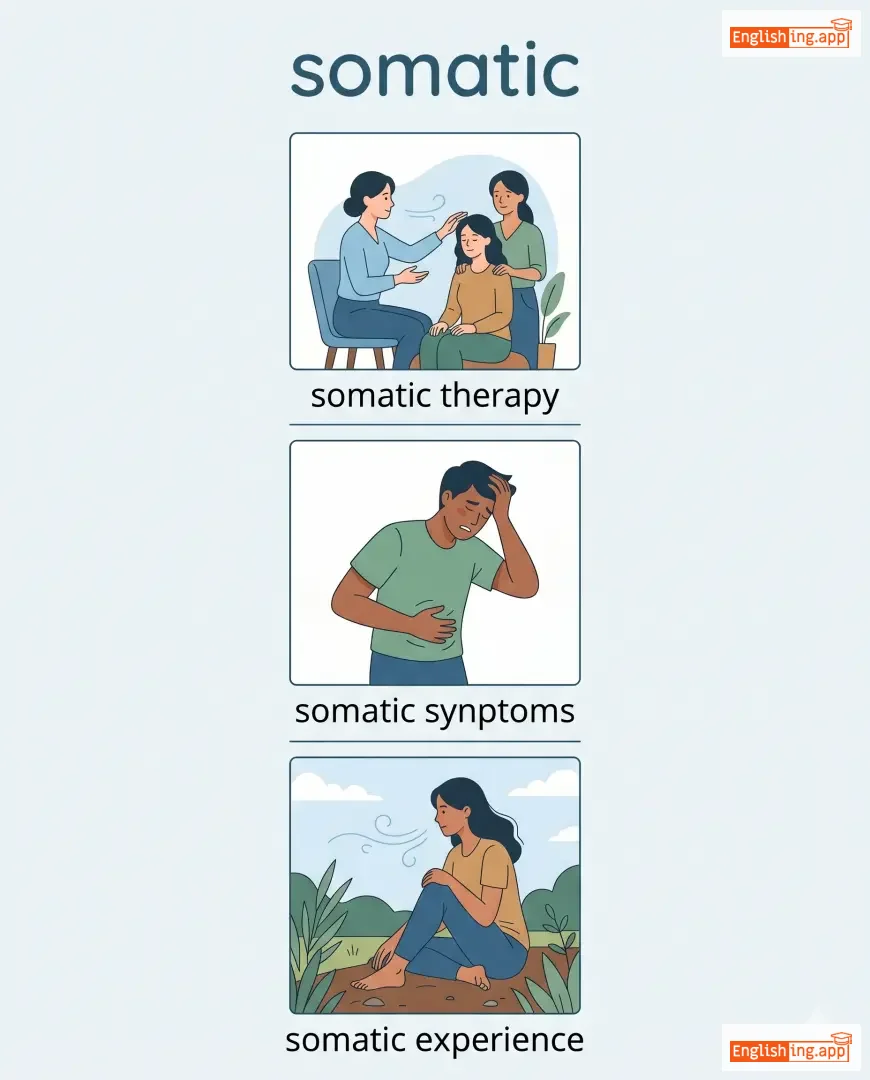
somatic therapy, somatic symptoms, somatic experience, somatic cells
••••••
|
Somatic意味着与身体相关—'So' sounds like '身体' (shen ti), as in physical.
••••••
|
|
😴
••••••
|
/ˌsɒpəˈrɪfɪk/
adjective
(海皮尼斯)
••••••
|


|
幸福
xìngfú
••••••
|
- •••••• | - •••••• | - •••••• | - •••••• |
tending to induce drowsiness or sleep; causing sleepiness
••••••
|
The professor's lecture was so soporific that half the class fell asleep.
当她收到奖项时,她无法掩饰自己的快乐。
••••••
|
当她收到奖项时,她无法掩饰自己的快乐。
Dāng tā shōu dào jiǎngxiàng shí, tā wúfǎ yǎnshì zìjǐ de kuàilè.
••••••
|
- •••••• | - •••••• |
追寻幸福
zhuīxún xìngfú
••••••
|
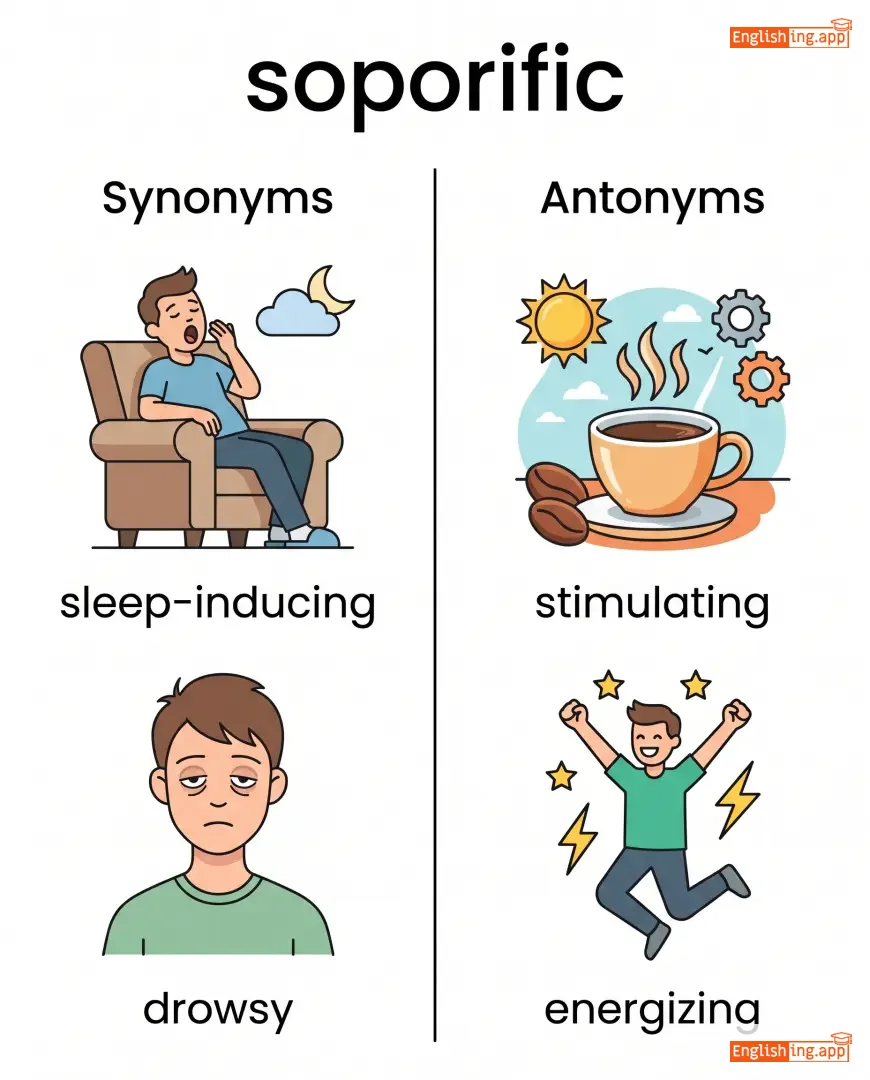
sleep-inducing, drowsy, hypnotic, sedative, calming
••••••
|
stimulating, energizing, exciting
••••••
|
soporific effect, soporific lecture, soporific medicine, soporific atmosphere
••••••
|
幸福 - 想到幸福和快乐的海洋。
••••••
|
|
🕳️
••••••
|
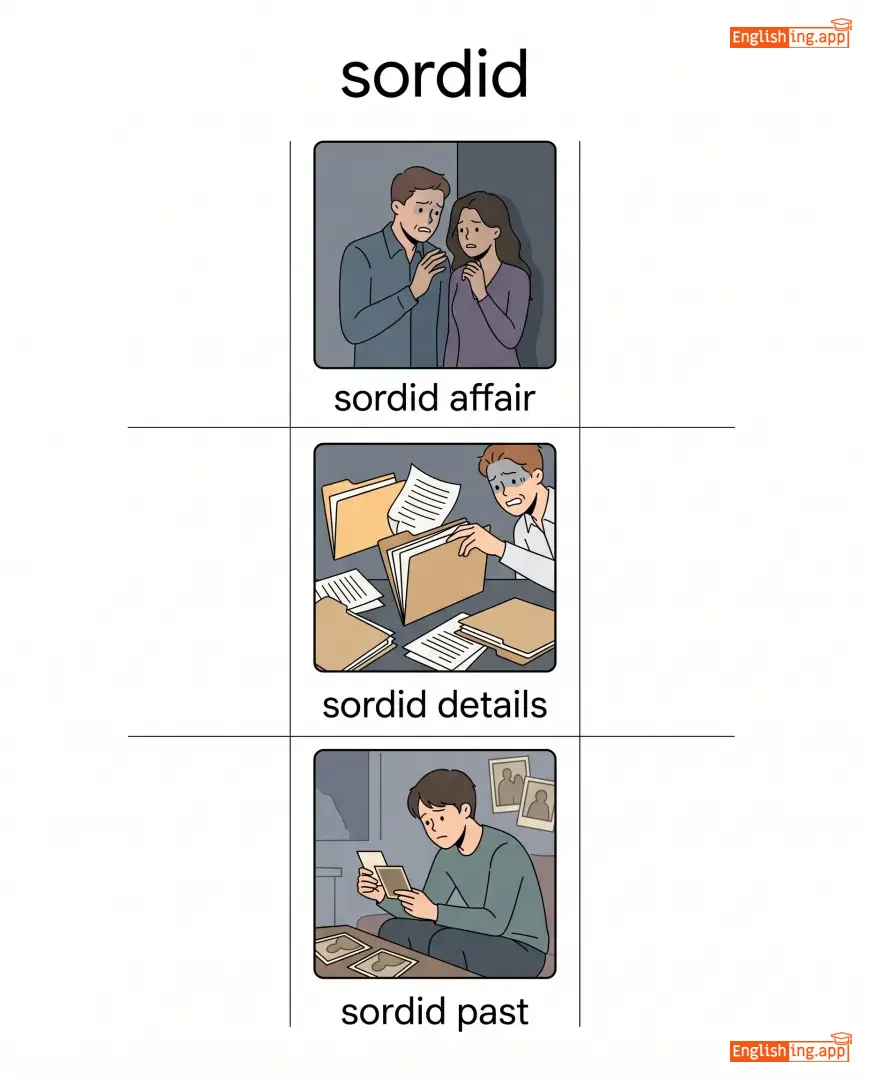
/ˈsɔːrdɪd/
adjective
(索迪德)
••••••
|

|
可耻的
kechi de
••••••
|
- •••••• | - •••••• | - •••••• | - •••••• |
involving immoral or dishonorable actions; dirty or unpleasant
••••••
|
The newspaper exposed the politician's sordid past. |
报纸曝光了那位政治家的可耻过去。
Bàozhǐ bàoguāngle nà wèi zhèngzhì jiā de kěchǐ guòqù.
••••••
|
sordid details |
shameful or dirty aspects of a story
••••••
|
可耻的细节
kechi de xijié
••••••
|
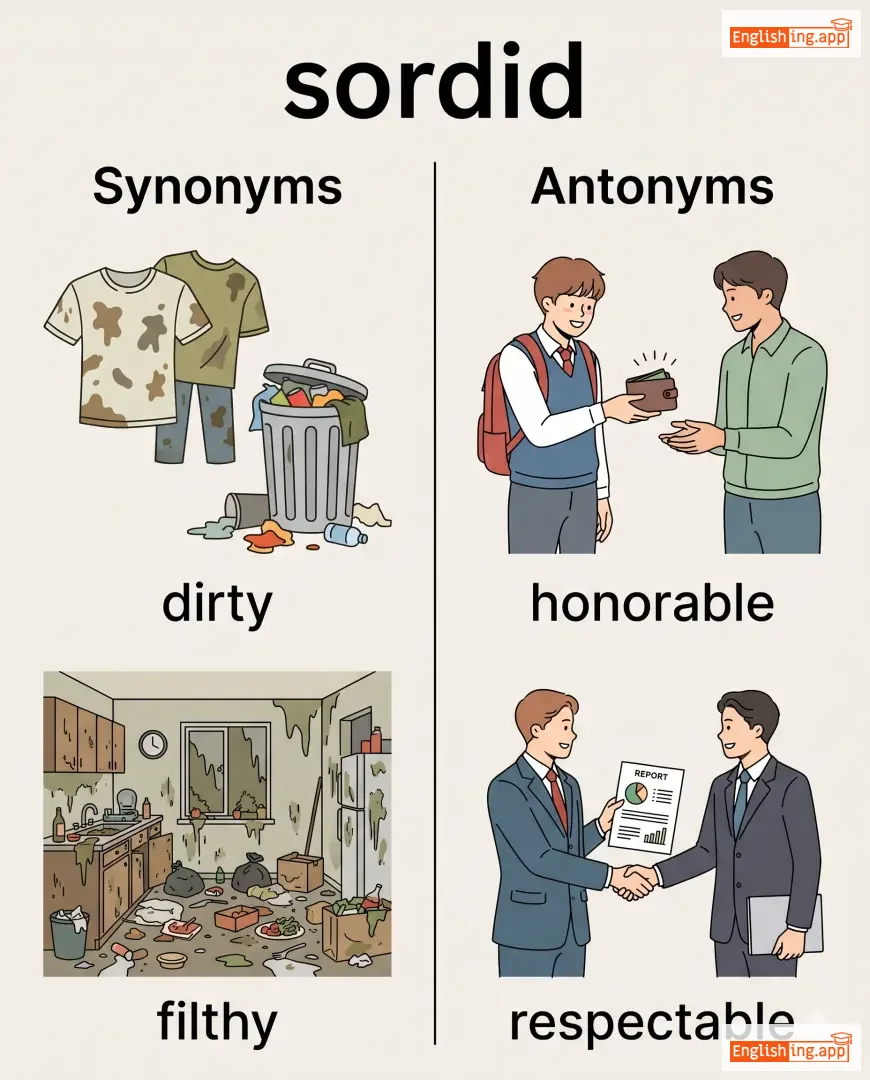
dirty, filthy, shameful, disgraceful, sleazy
••••••
|
honorable, respectable, clean
••••••
|
sordid affair, sordid details, sordid past, sordid scandal
••••••
|
Sordid 意味着 'sorry deed' - 可耻行为
••••••
|
|
🎭
••••••
|
/ˈspiːʃəs/
adjective
(supi-shus)
••••••
|
|
虚假
xu jia
••••••
|
- •••••• | - •••••• | - •••••• | - •••••• |
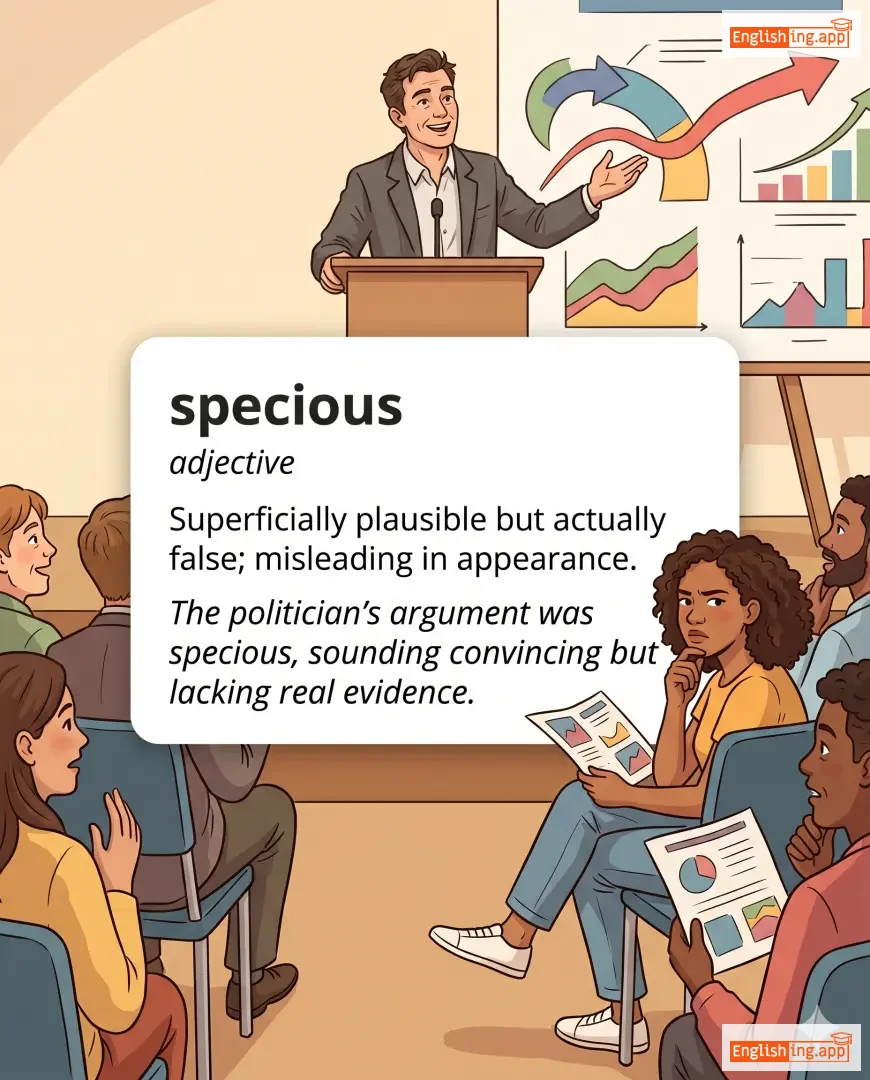
Superficially plausible but actually false; misleading in appearance.
••••••
|
The politician’s argument was specious, sounding convincing but lacking real evidence. |
那位政治家的论点是虚假的,听起来很有说服力,但缺乏真实的证据。
Na wei zhengzhi jia de lundian shi xu jia de, ting qilai hen you shuofu li, dan quefa zhenshi de zhengju.
••••••
|
- •••••• | - •••••• | - •••••• |
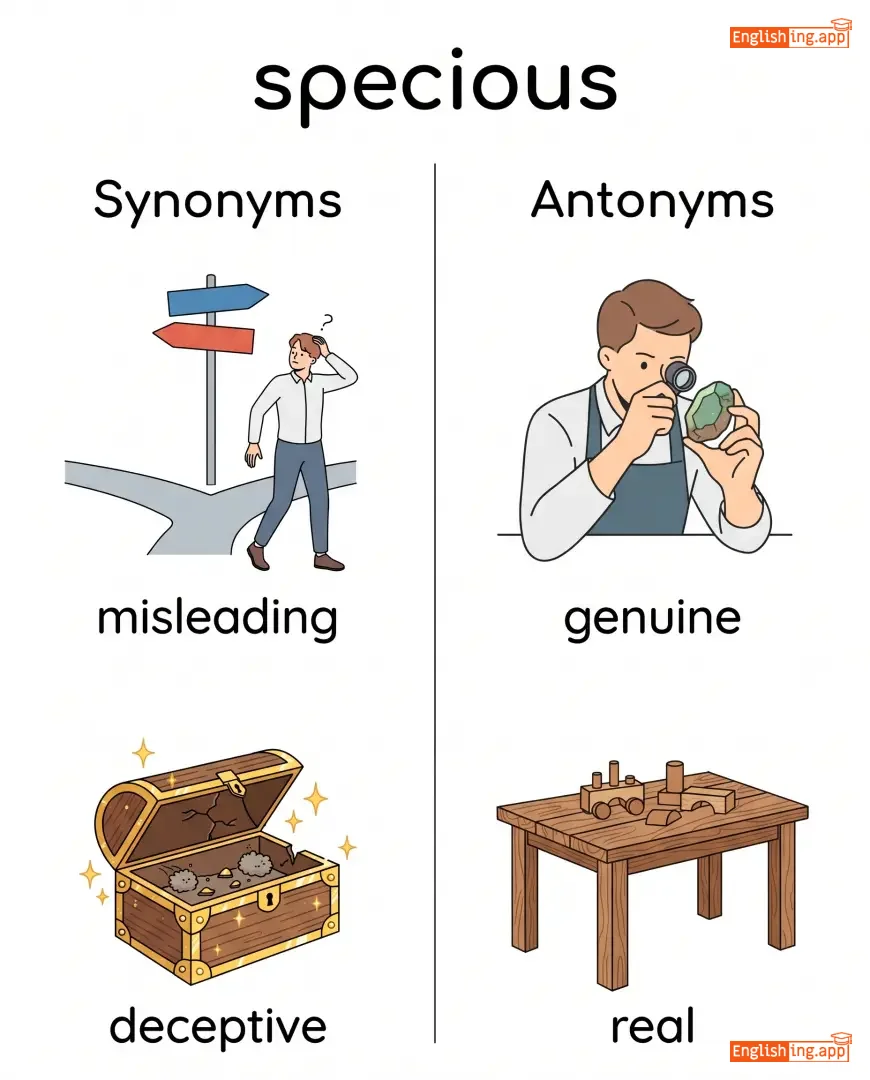
misleading, deceptive, false, fallacious, illusory
••••••
|
genuine, real, true
••••••
|
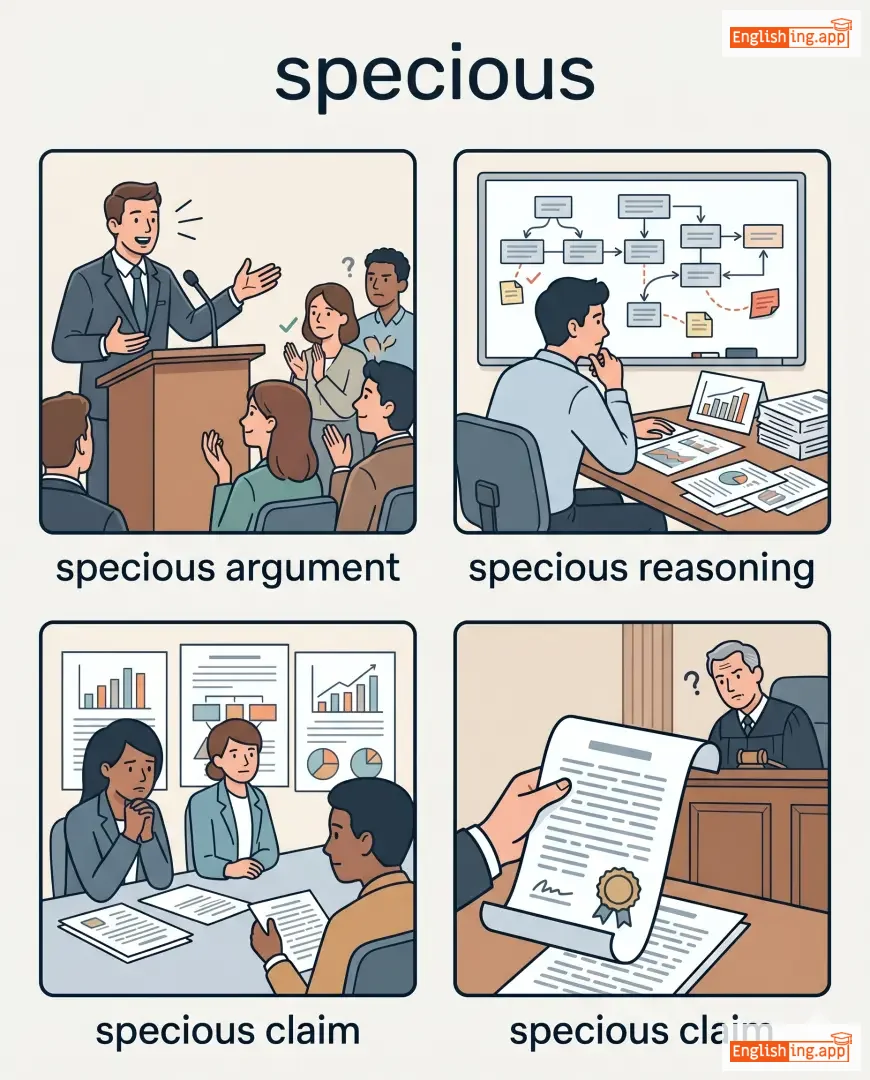
specious argument, specious reasoning, specious claim
••••••
|
虚假(xu jia)听起来像是假的,误导人的。
••••••
|
|
🌈
••••••
|
/ˈspɛktrəm/
noun
(光谱)
••••••
|
|
光谱
guāngpǔ
••••••
|
- •••••• | - •••••• | - •••••• | - •••••• |
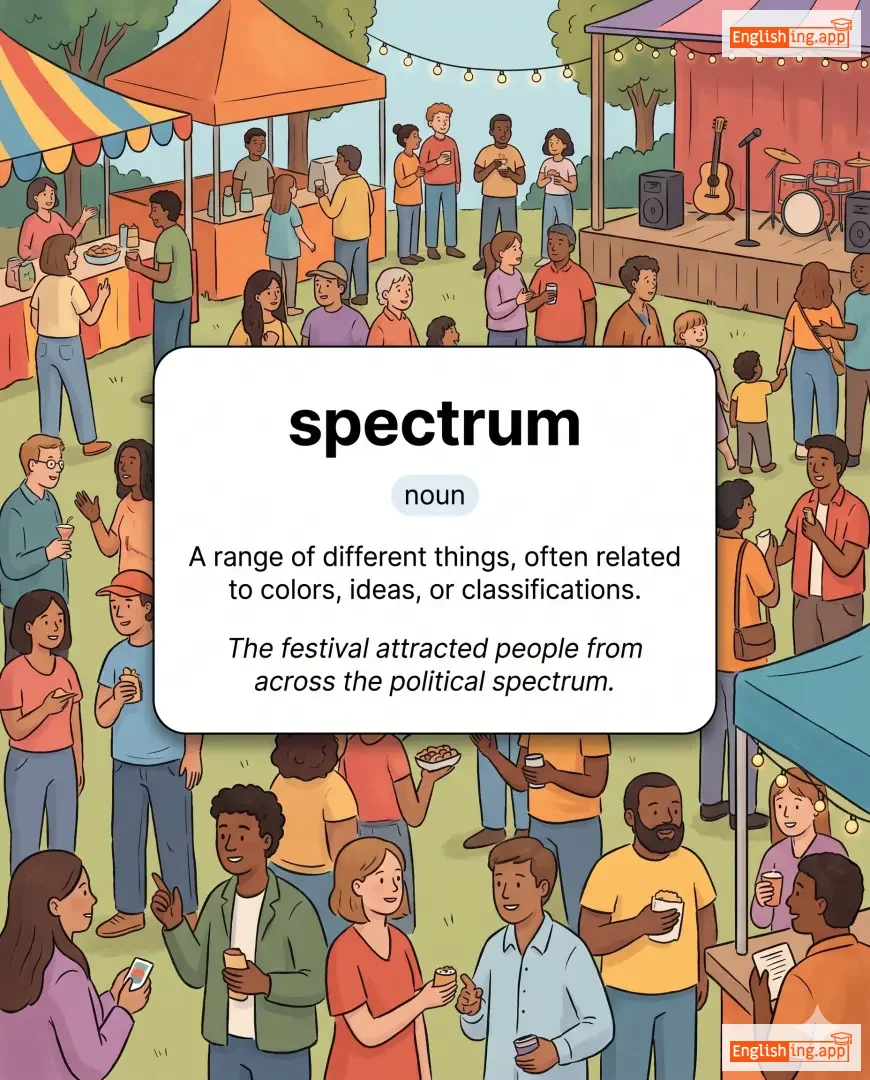
A range of different things, often related to colors, ideas, or classifications.
••••••
|
The festival attracted people from across the political spectrum. |
这个节日吸引了来自各个政治光谱的人们。
Zhège jiérì xīyǐnle láizì gè ge zhèngzhì guāngpǔ de rénmen.
••••••
|
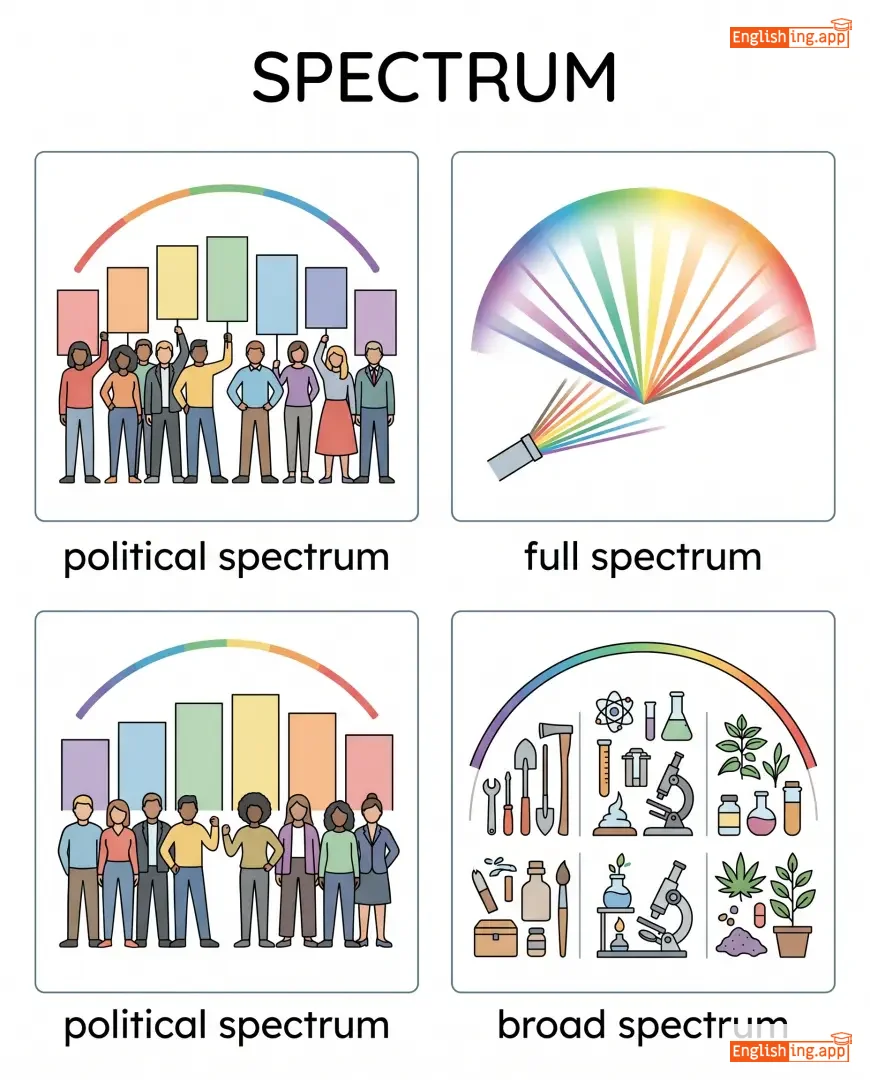
broad spectrum |
Covering a wide range of ideas or possibilities.
••••••
|
广泛的光谱
guǎngfàn de guāngpǔ
••••••
|
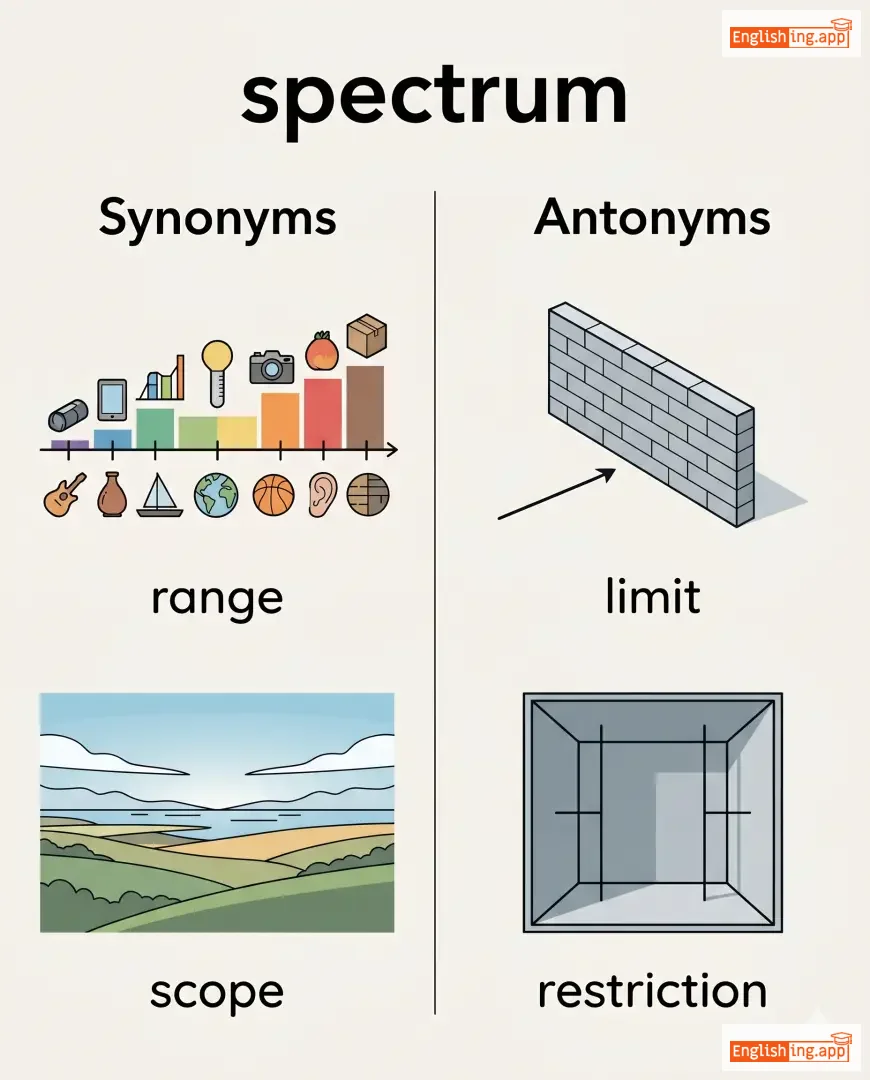
range, scope, span, variety, gamut
••••••
|
limit, restriction, boundary
••••••
|
political spectrum, full spectrum, broad spectrum, across the spectrum
••••••
|
光谱意味着完整的颜色范围 🌈,你在光谱中看到的一切。
••••••
|
|
💸
••••••
|
/ˈspɛndˌθrɪft/
noun
(spendthrift)
••••••
|


|
挥霍者
huīhuò zhě
••••••
|
- •••••• | - •••••• | - •••••• | - •••••• |
A person who spends money extravagantly or wastefully.
••••••
|
The young prince was known as a spendthrift, wasting his fortune on lavish parties. |
年轻的王子被称为挥霍者,浪费他的钱财在奢华的派对上。
nián qīng de wáng zǐ bèi chēng wèi huī huò zhě, làng fèi tā de qián cái zài shē huá de pài duì shàng.
••••••
|
spendthrift ways |
Extravagant and wasteful spending habits
••••••
|
挥霍的习惯
huī huò de xí guàn
••••••
|
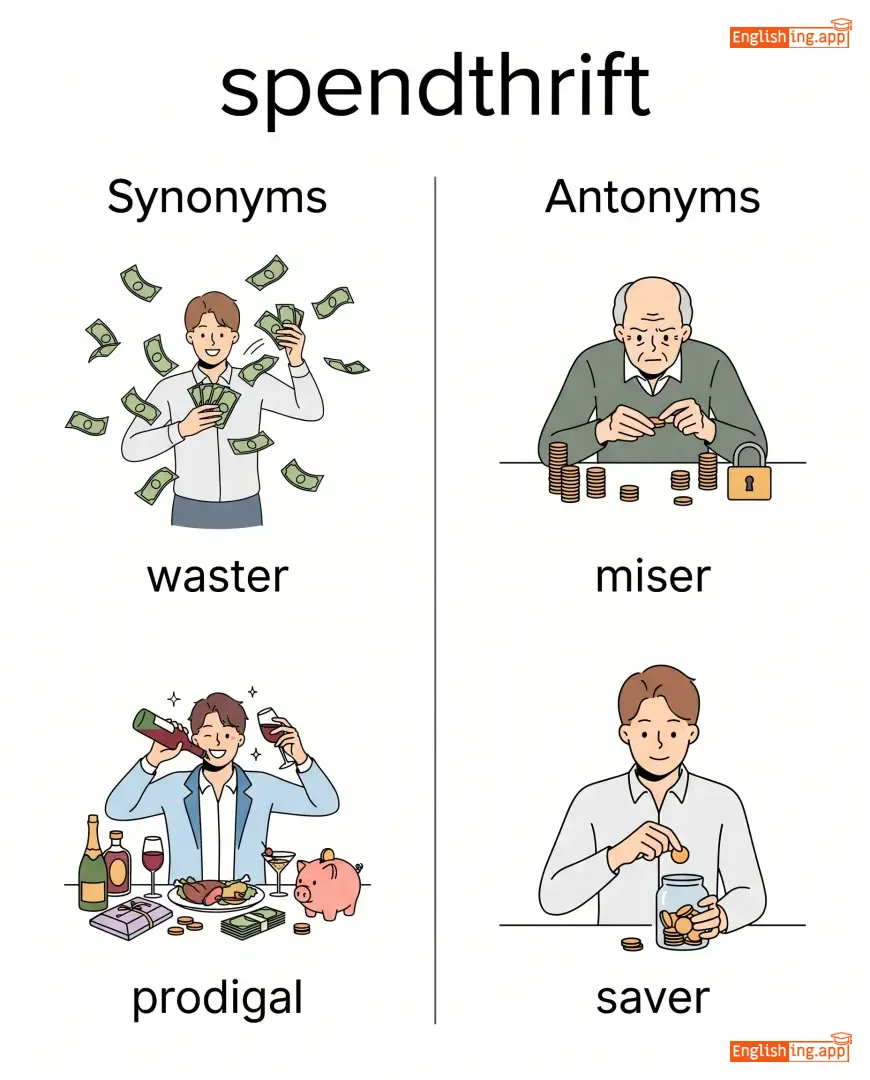
waster, prodigal, squanderer, waster, profligate
••••••
|
miser, saver, frugal
••••••
|
spendthrift habits, spendthrift lifestyle, notorious spendthrift
••••••
|
挥霍钱财,无节制的浪费者。
••••••
|
|
🌧️
••••••
|
/spəˈrædɪk/
adjective
(sporadik)
••••••
|
|
零星
língxīng
••••••
|
- •••••• | - •••••• | - •••••• | - •••••• |
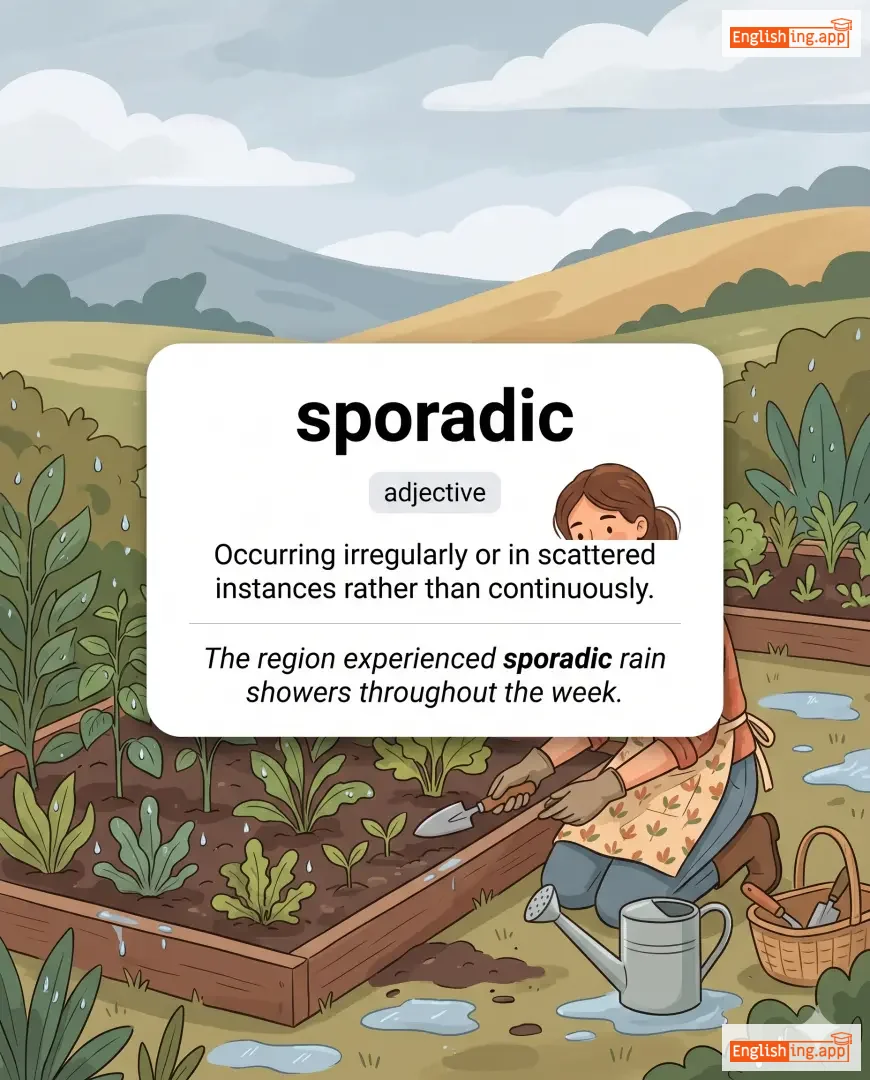
Occurring irregularly or in scattered instances rather than continuously.
••••••
|
The region experienced sporadic rain showers throughout the week.
该地区在一周内经历了零星降雨。
••••••
|
该地区经历了整整一周的零星降雨。
Gāi dìqū jīnglìle zhěngzhěng yī zhōu de língxīng jiàngyǔ.
••••••
|
- •••••• | - •••••• | - •••••• |
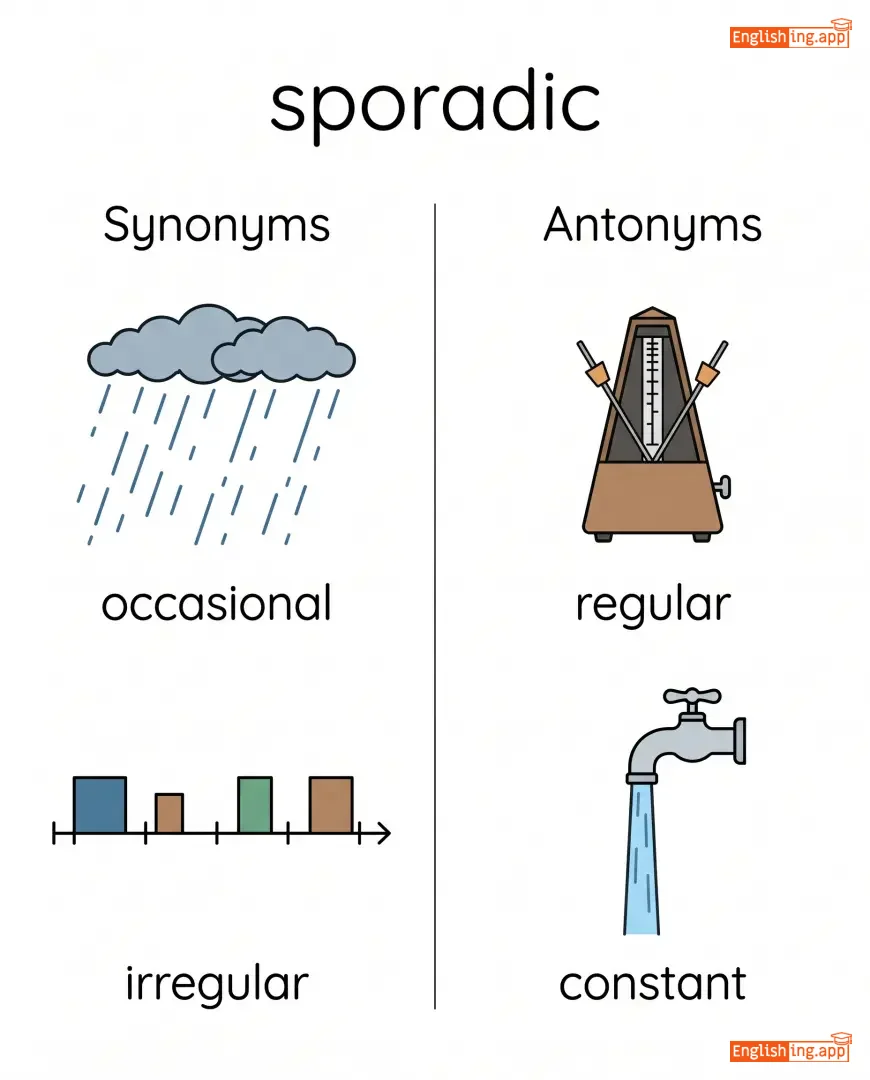
occasional, irregular, infrequent, scattered, random
••••••
|
regular, constant, continuous
••••••
|
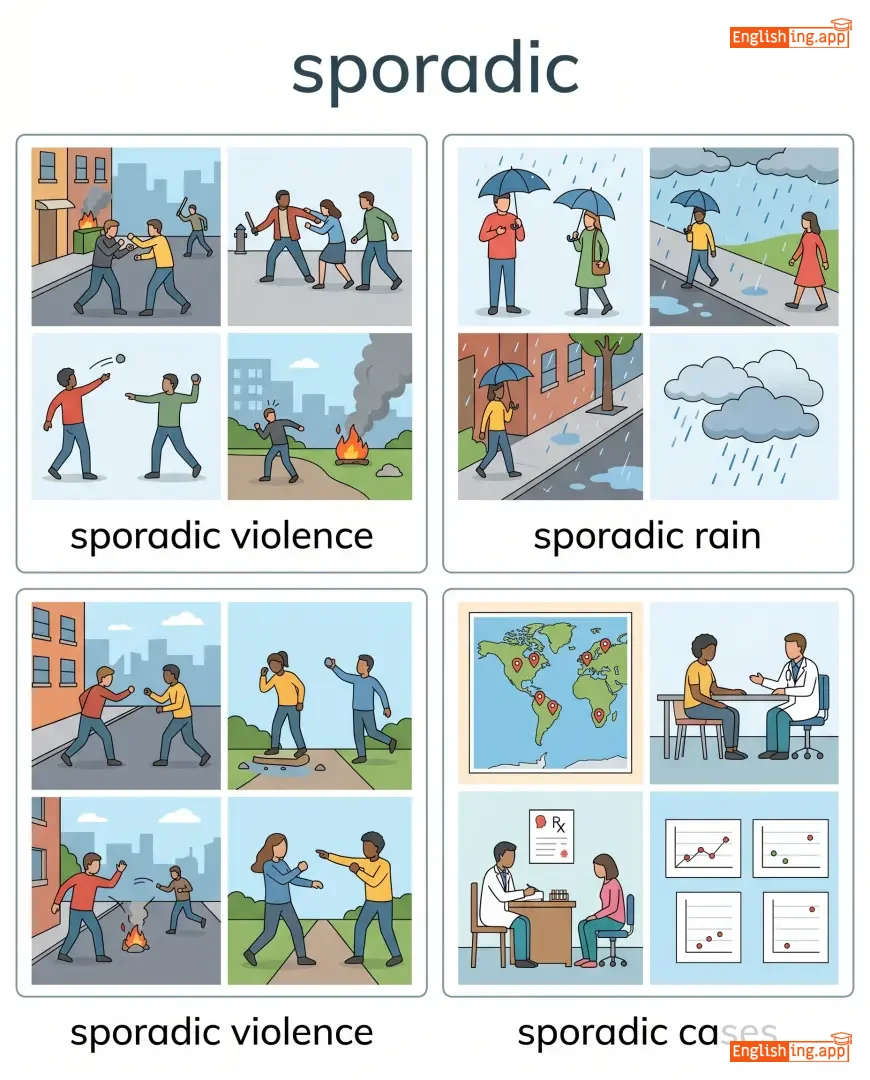
sporadic violence, sporadic rain, sporadic cases, sporadic attacks
••••••
|
Sporadic 就像零星的小雨,不定期或不规律地出现。
••••••
|
|
🗑️
••••••
|
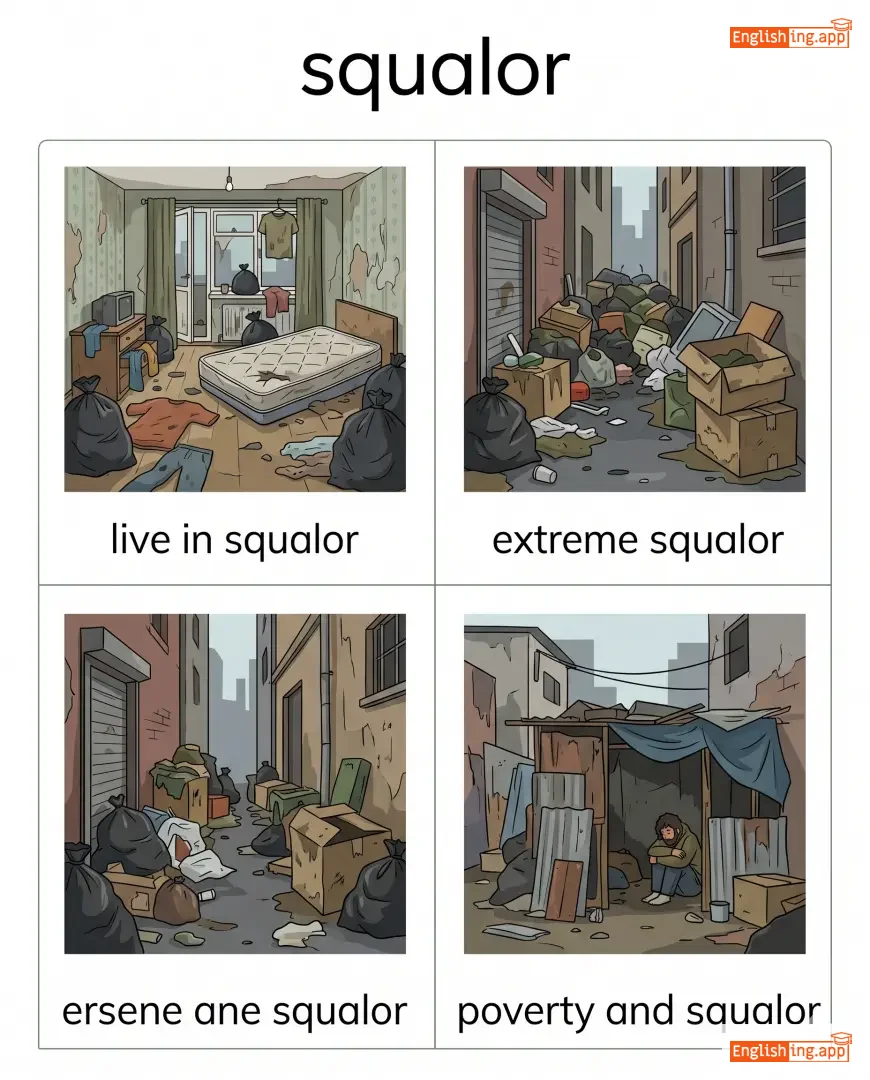
/ˈskwɒlər/
noun
(skwɑlɔr)
••••••
|

|
贫困
pínkùn
••••••
|
- •••••• | - •••••• | - •••••• | - •••••• |
the state of being extremely dirty and unpleasant, especially due to poverty or neglect
••••••
|
They lived in squalor without basic facilities.
他们在没有基本设施的贫困中生活。
••••••
|
他们在没有基本设施的贫困中生活。
Tāmen zài méiyǒu jīběn shèshī de pínkùn zhōng shēnghuó.
••••••
|
- •••••• | - •••••• | - •••••• |
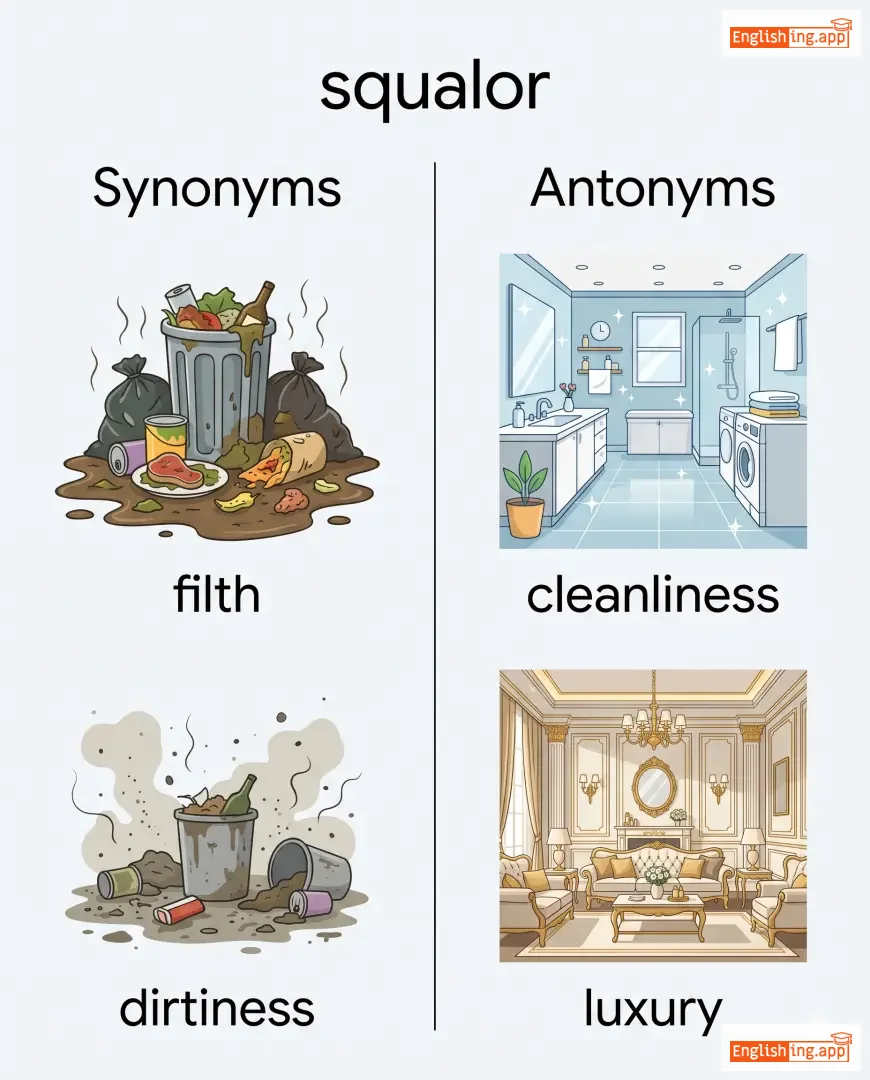
filth, dirtiness, poverty, misery
••••••
|
cleanliness, luxury
••••••
|
live in squalor, extreme squalor, poverty and squalor
••••••
|
Squalor = 贫困,生活在极度贫困中
••••••
|
|
🎶
••••••
|
/stəˈkɑː.təʊ/
adjective
(斯塔卡托)
••••••
|
|
断奏
duànzòu
••••••
|
- •••••• | - •••••• | - •••••• | - •••••• |
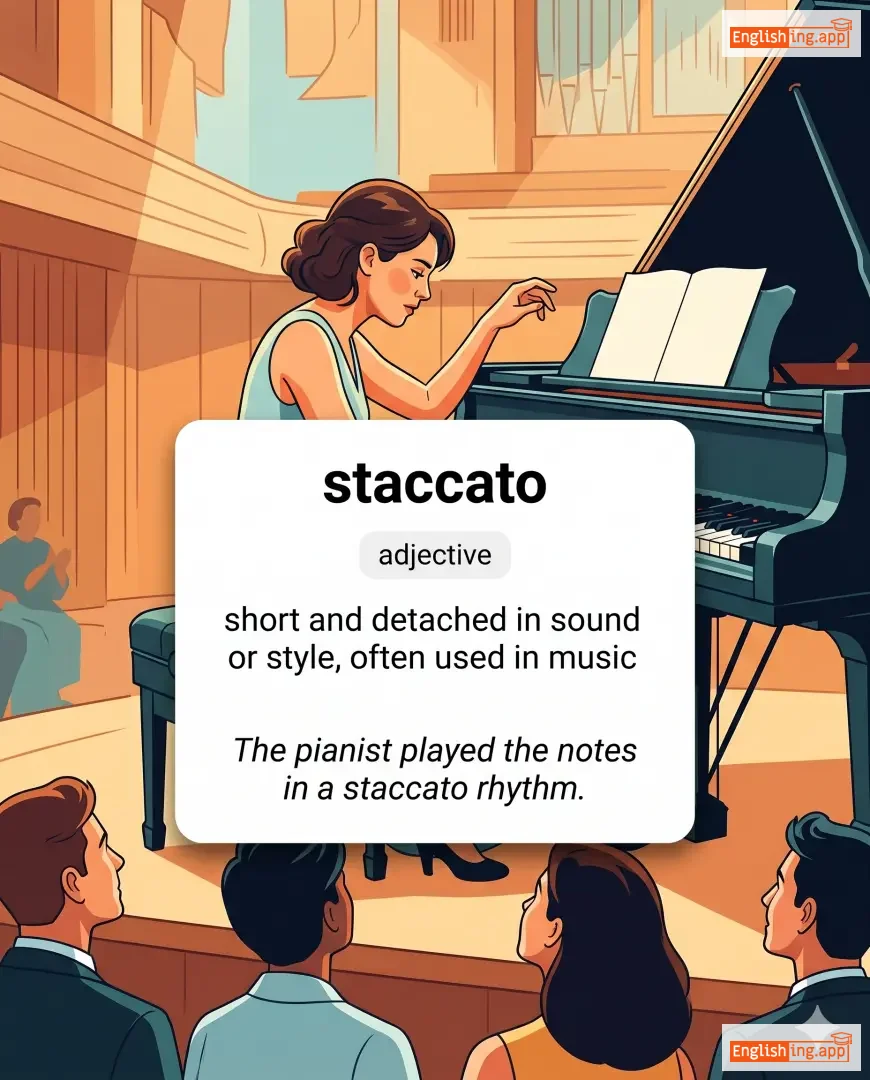
short and detached in sound or style, often used in music
••••••
|
The pianist played the notes in a staccato rhythm. |
钢琴家以断奏的节奏弹奏音符。
Gāngqínjiā yǐ duànzòu de jiézòu tánzòu yīnfú.
••••••
|
- •••••• | - •••••• | - •••••• |
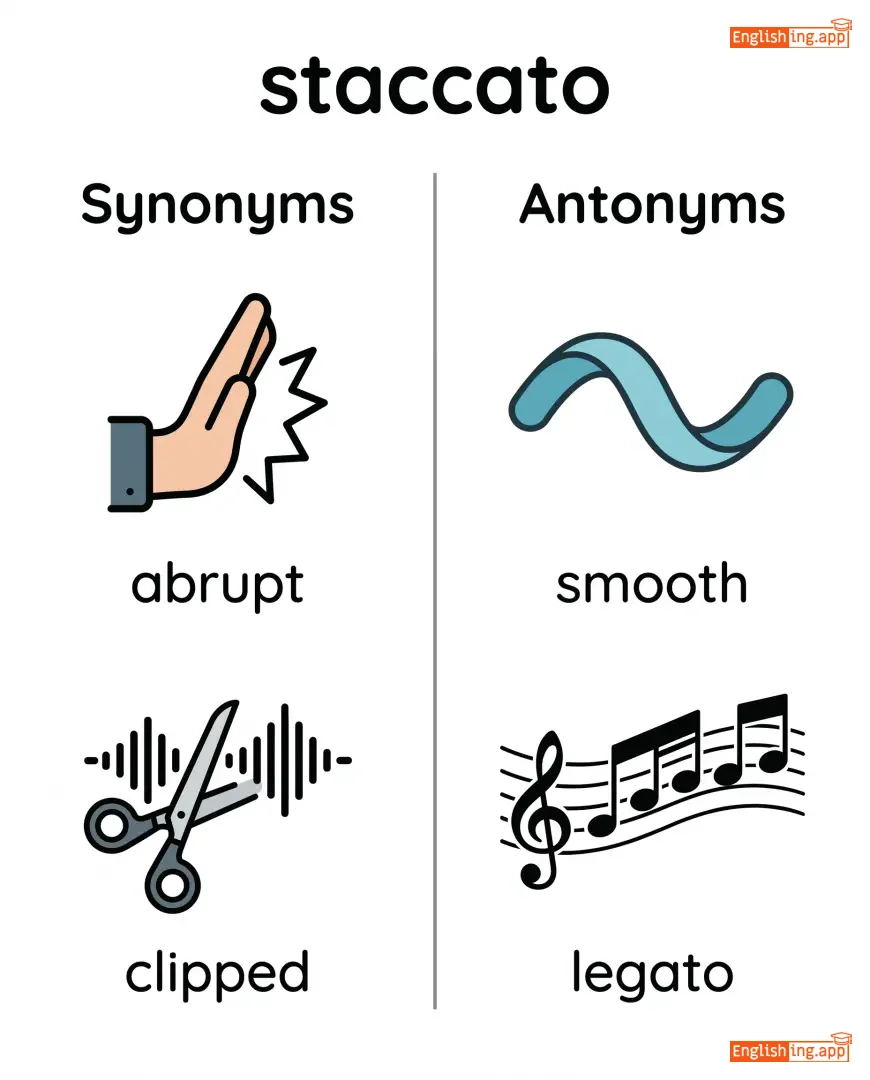
abrupt, clipped, sharp, detached
••••••
|
smooth, legato
••••••
|
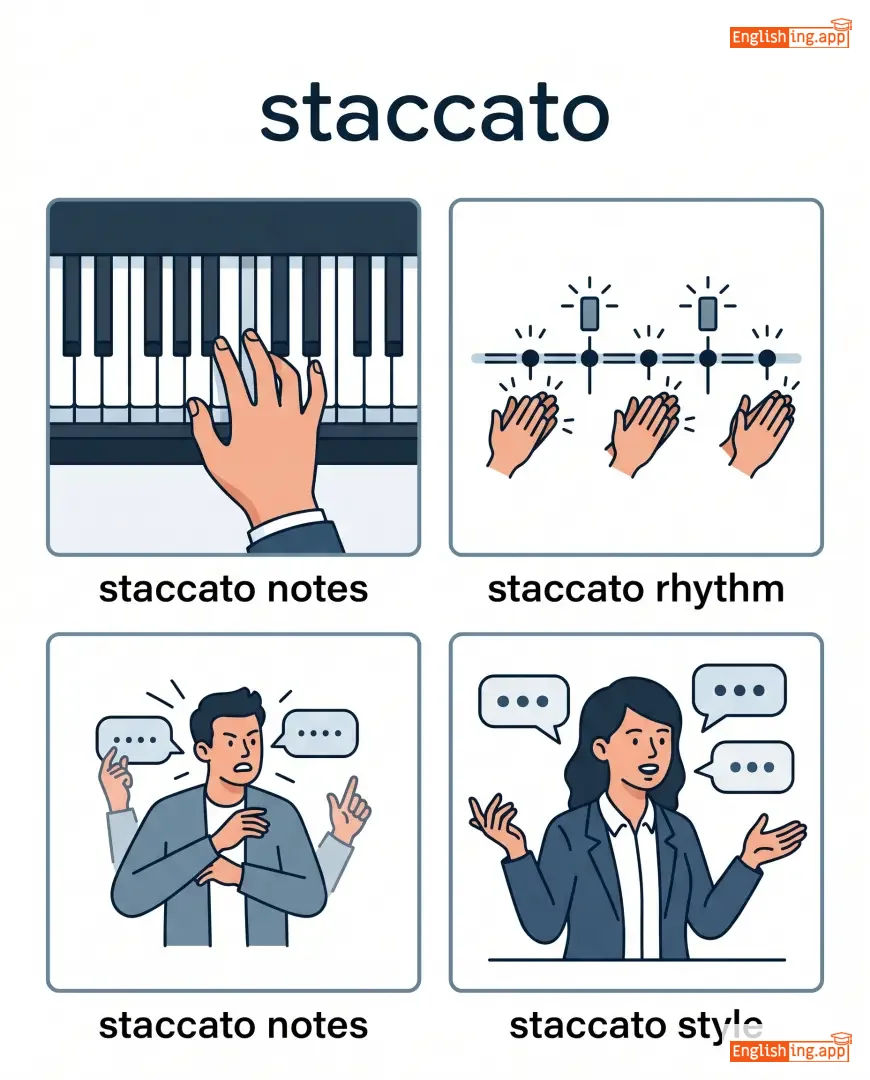
staccato notes, staccato rhythm, staccato style, staccato speech
••••••
|
Stuck + 卡托 (kǎtuō) → 像断开的音符一样弹奏 (staccato)
••••••
|
|
🩸
••••••
|
/stɑːntʃ/
verb
(斯坦奇)
••••••
|
- •••••• |
止血
zhixue
••••••
|
stanched
斯坦奇德
••••••
|
stanched
斯坦奇德
••••••
|
stanches
斯坦奇斯
••••••
|
stanching
斯坦奇恩
••••••
|
to stop the flow of blood or liquid from a wound or source
••••••
|
The nurse quickly stanched the bleeding from the cut.
护士迅速止住了切口处的出血。
••••••
|
护士迅速止住了切口处的出血。
hushi xunsu zhizhu le qiekou chu de chuxue
••••••
|
stanch the flow
止住血流
••••••
|
to stop or control the movement of something, especially blood or money
••••••
|
止住血流
zhizhu xueliu
••••••
|
stop, stem, halt, check, control
••••••
|
allow, continue, release
••••••
|
stanch the bleeding, stanch the wound, stanch the flow, stanch losses
••••••
|
斯坦奇 = Stop + 血液 Stanch意味着止血
••••••
|
|
📢
••••••
|
/stɛnˈtɔːriən/
adjective
(斯坦托里安)
••••••
|
|
震耳欲聋
zhèn ěr yù lóng
••••••
|
- •••••• | - •••••• | - •••••• | - •••••• |
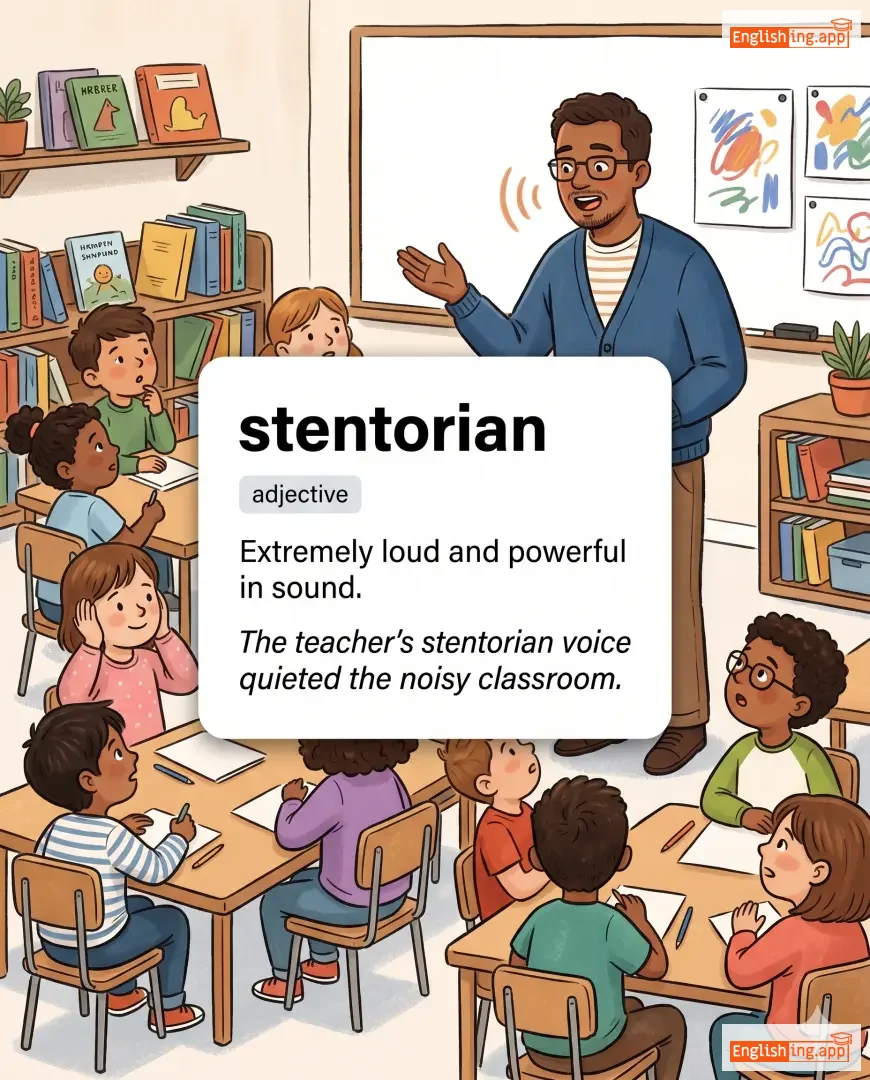
Extremely loud and powerful in sound.
••••••
|
The teacher’s stentorian voice quieted the noisy classroom. |
老师那震耳欲聋的声音让嘈杂的教室安静了下来。
Lǎoshī nà zhèn ěr yù lóng de shēngyīn ràng cáozá de jiàoshì ānjìngle xiàlái.
••••••
|
- •••••• | - •••••• | - •••••• |
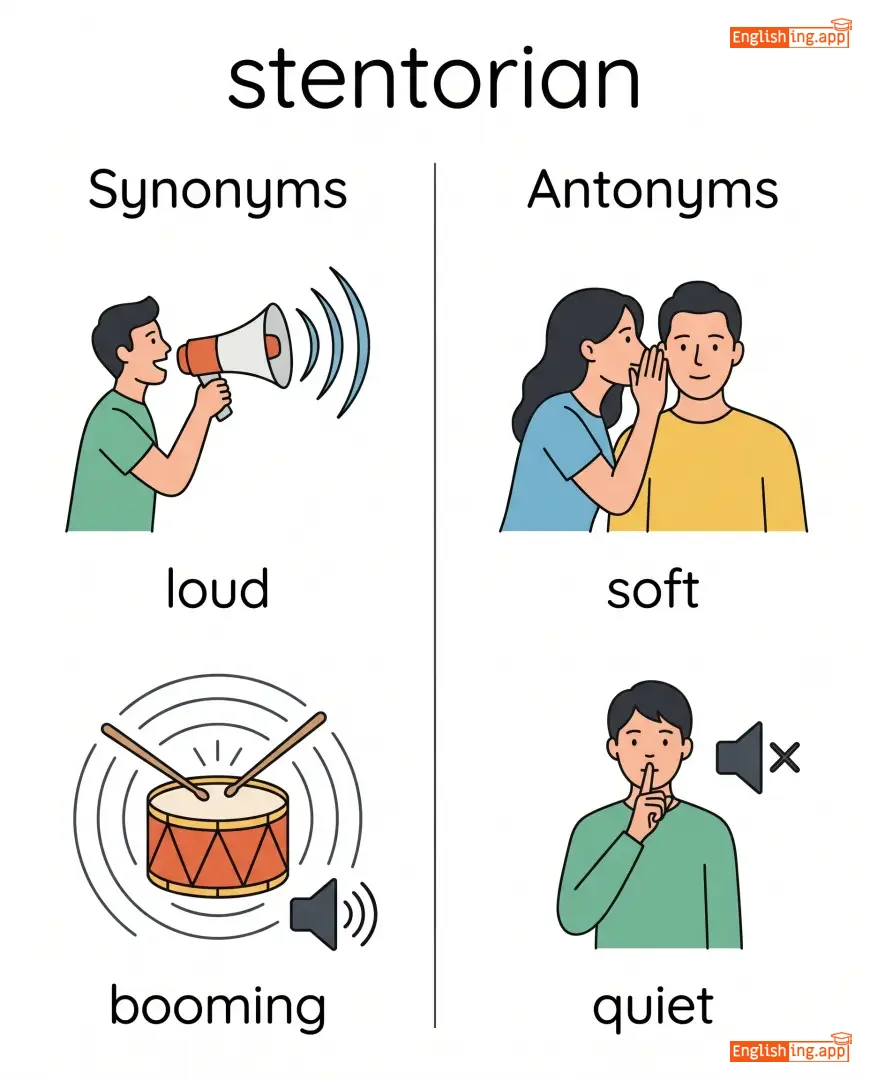
loud, booming, thunderous, resonant
••••••
|
soft, quiet, muted
••••••
|
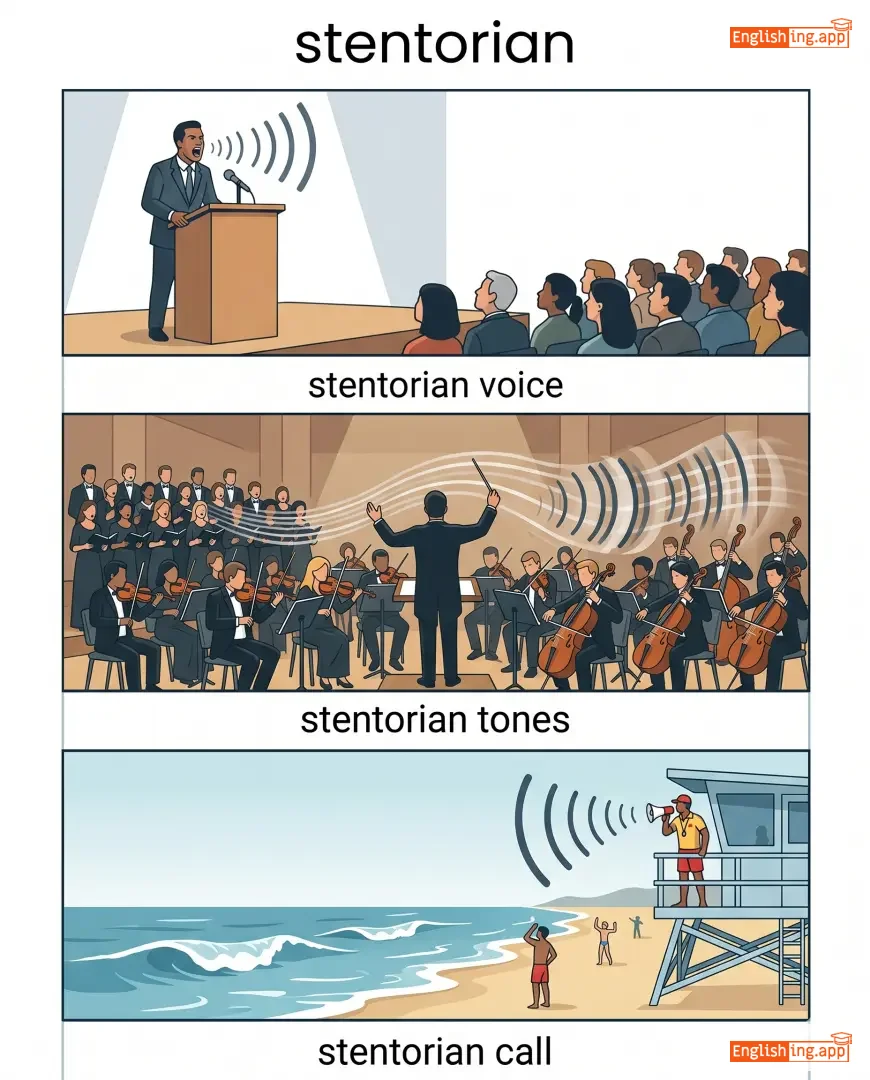
stentorian voice, stentorian tones, stentorian call
••••••
|
Stentorian像雷声一样响亮,震耳欲聋。
••••••
|

