Получите неограниченный доступ ко всем словам с подпиской Pro
Обновить до ProПолучите неограниченный доступ ко всем предложениям с подпиской Pro
Обновить до Pro|
Эмодзи
|
Слово | Images | Перевод | Прошедшее | Причастие прошедшего времени | Третье лицо единственного числа | Герундий | Значение | Пример предложения | Перевод примера предложения | Пример выражения | Значение примера выражения | Перевод примера выражения | Синонимы | Антонимы | Коллокации | Мнемоника |
|---|---|---|---|---|---|---|---|---|---|---|---|---|---|---|---|---|---|
|
🧭
••••••
|
/ˈsɛkstənt/
noun
(секстант)
••••••
|
|
секстант
sekstant
••••••
|
- •••••• | - •••••• | - •••••• | - •••••• |
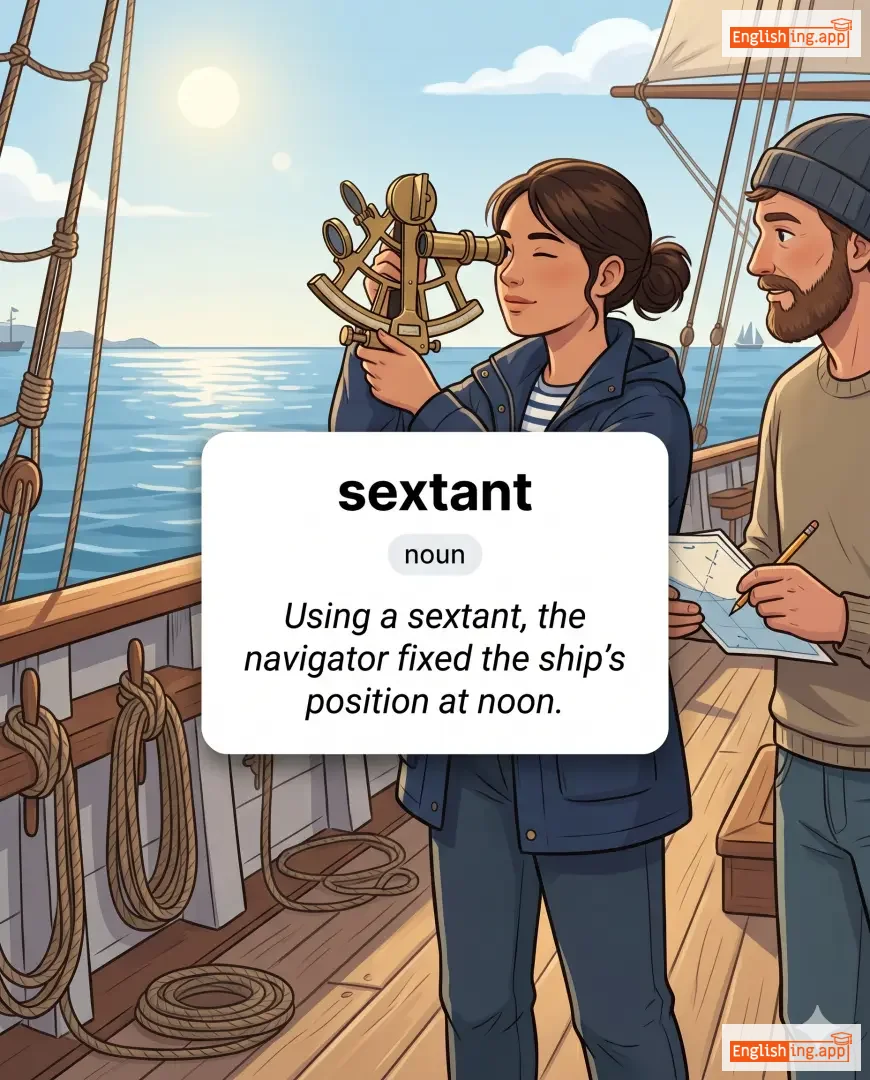
a navigational instrument with a graduated arc of 60°, used to measure the angle between a celestial object and the horizon
••••••
|
Using a sextant, the navigator fixed the ship’s position at noon.
Используя секстант, навигатор определил положение корабля в полдень.
••••••
|
Используя секстант, навигатор определил положение корабля в полдень.
Ispol'zuyya sekstant, navigátor opredelil polozhenie korablya v poldin.
••••••
|
- •••••• | - •••••• | - •••••• |
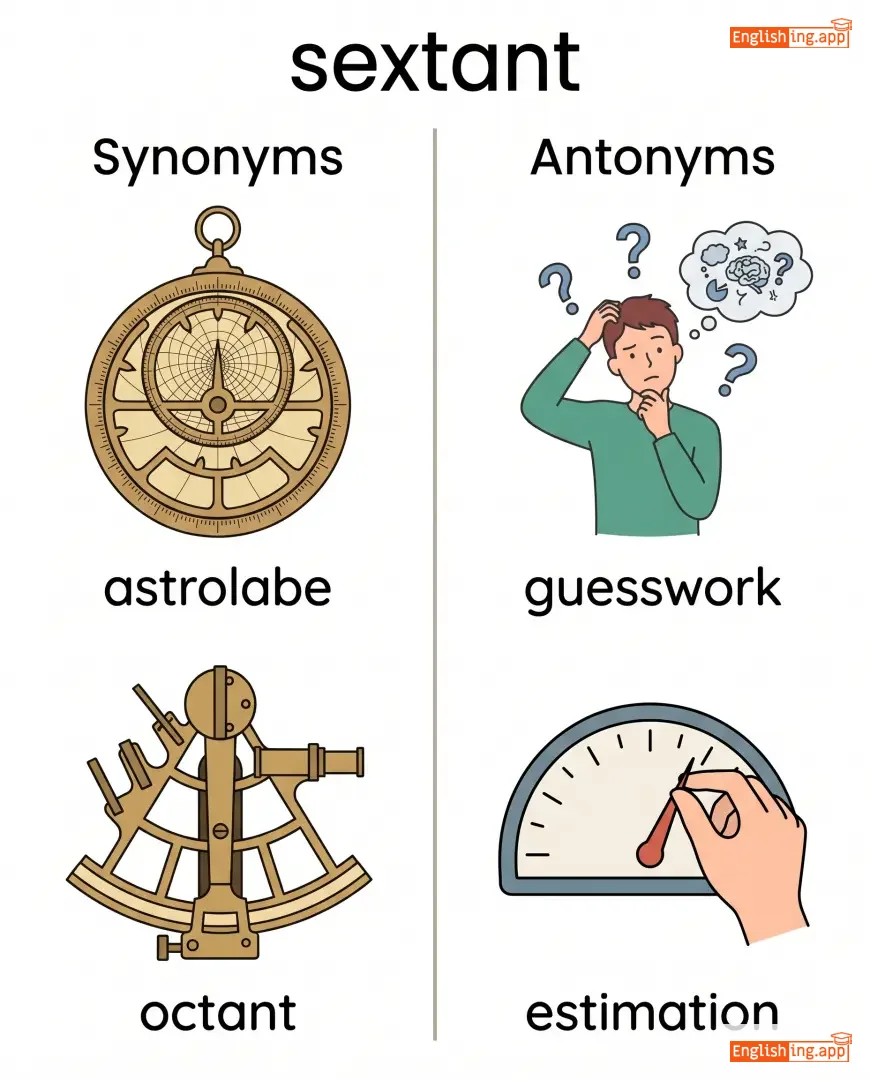
astrolabe, octant, navigational instrument, quadrant
••••••
|
guesswork, estimation
••••••
|
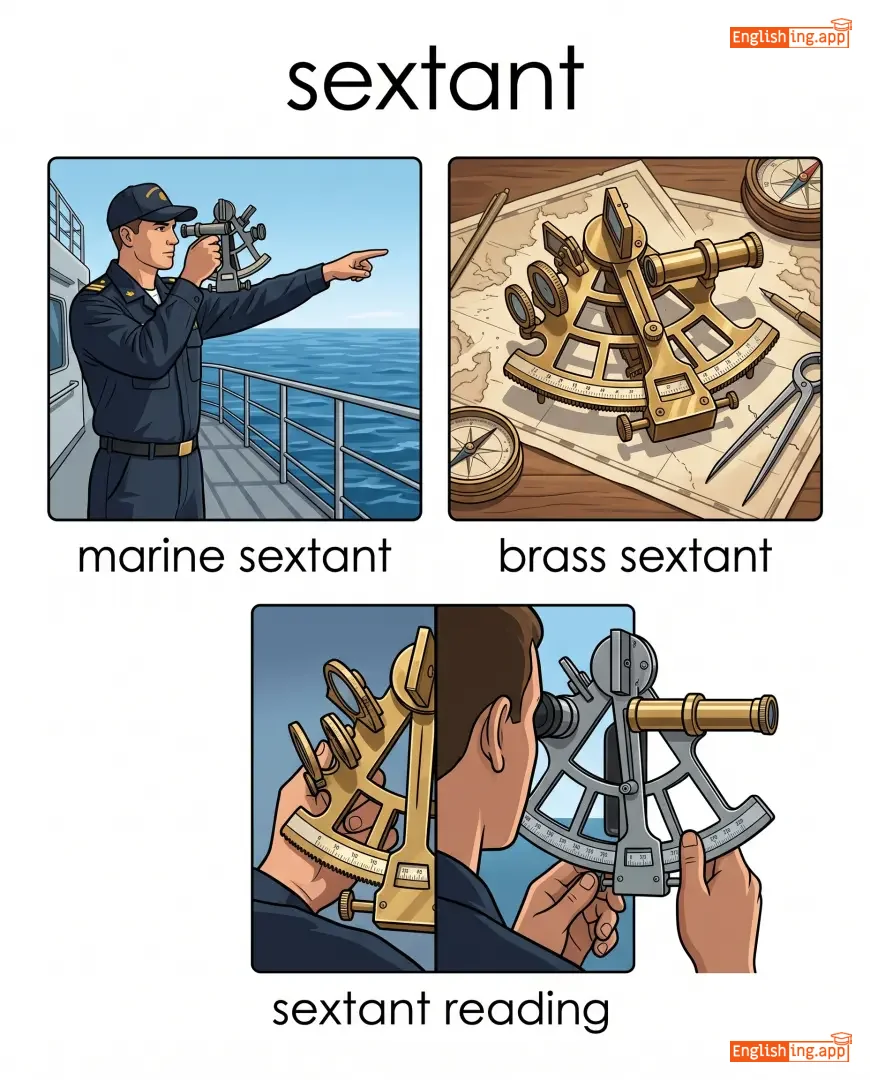
marine sextant, brass sextant, sextant reading, use a sextant, celestial navigation
••••••
|
Запомни, что секстант измеряет угол в 60 градусов. Слово ‘секстант’ звучит как ‘шесть’.
••••••
|
|
🪨
••••••
|
/ʃɑːrd/
noun
(шард)
••••••
|
|
осколок
oskolek
••••••
|
- •••••• | - •••••• | - •••••• | - •••••• |
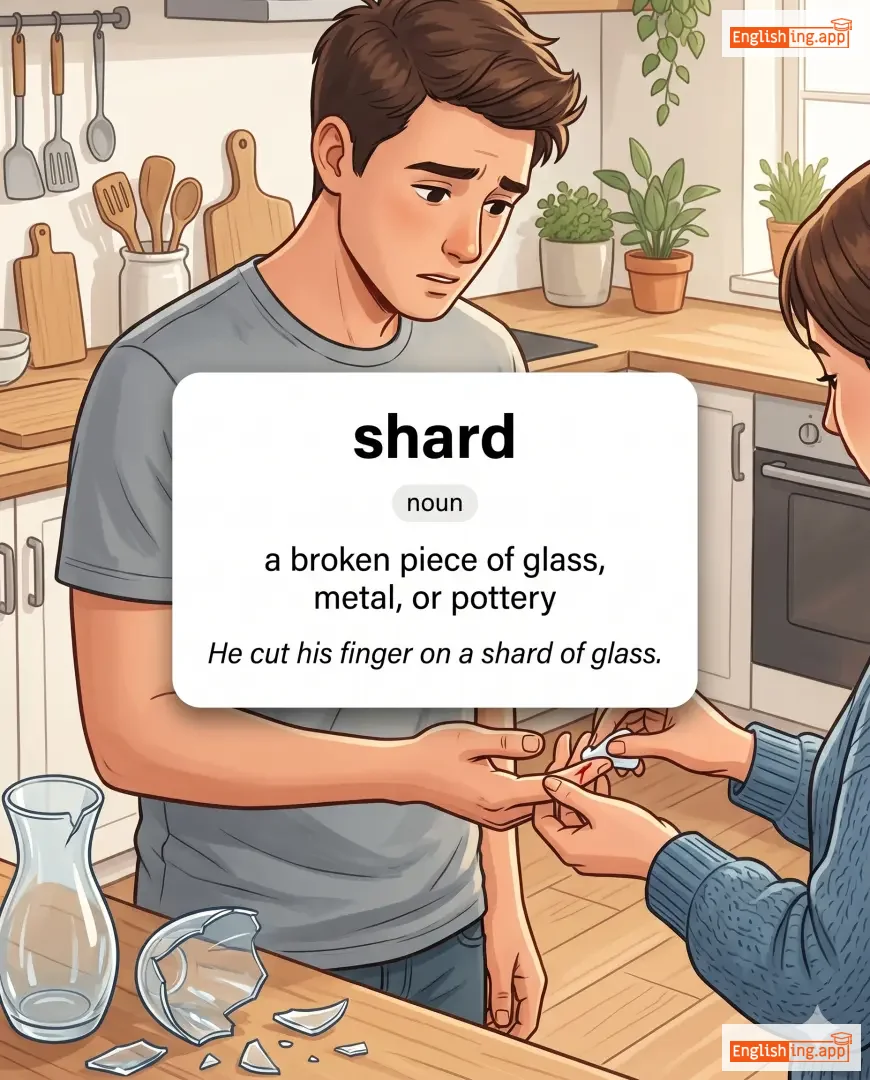
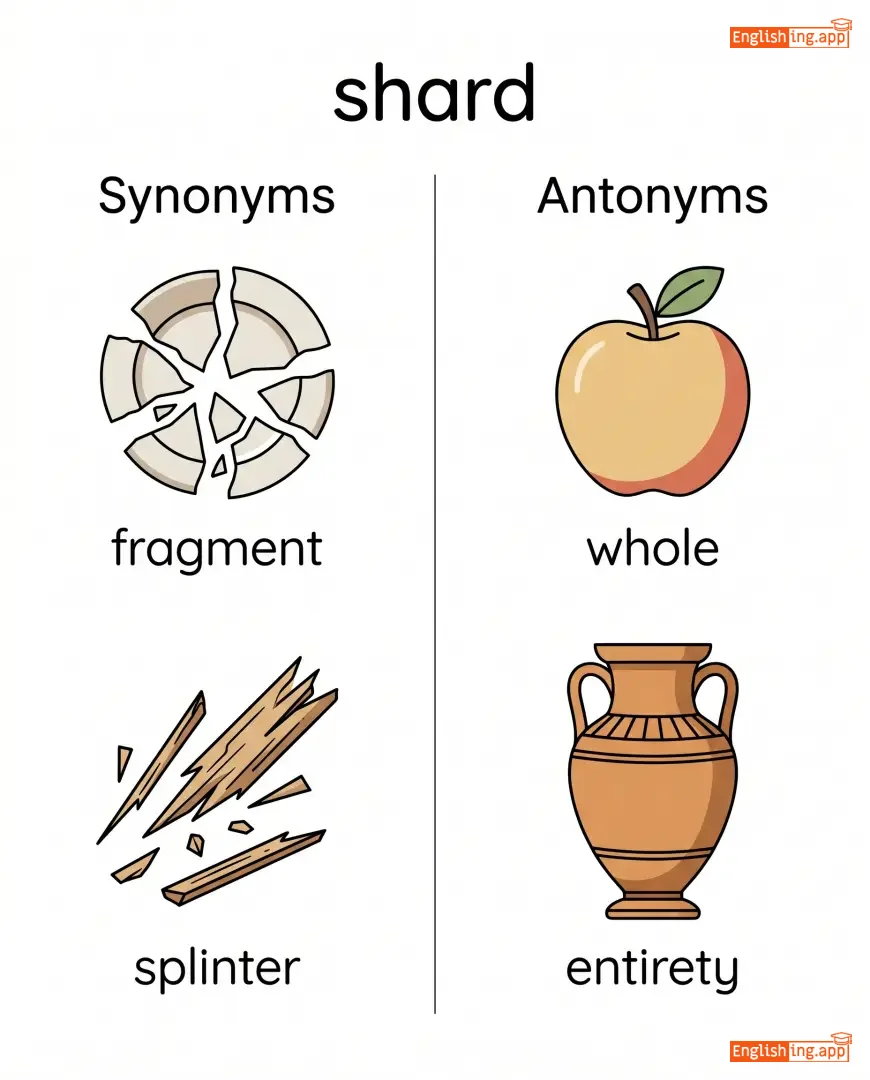
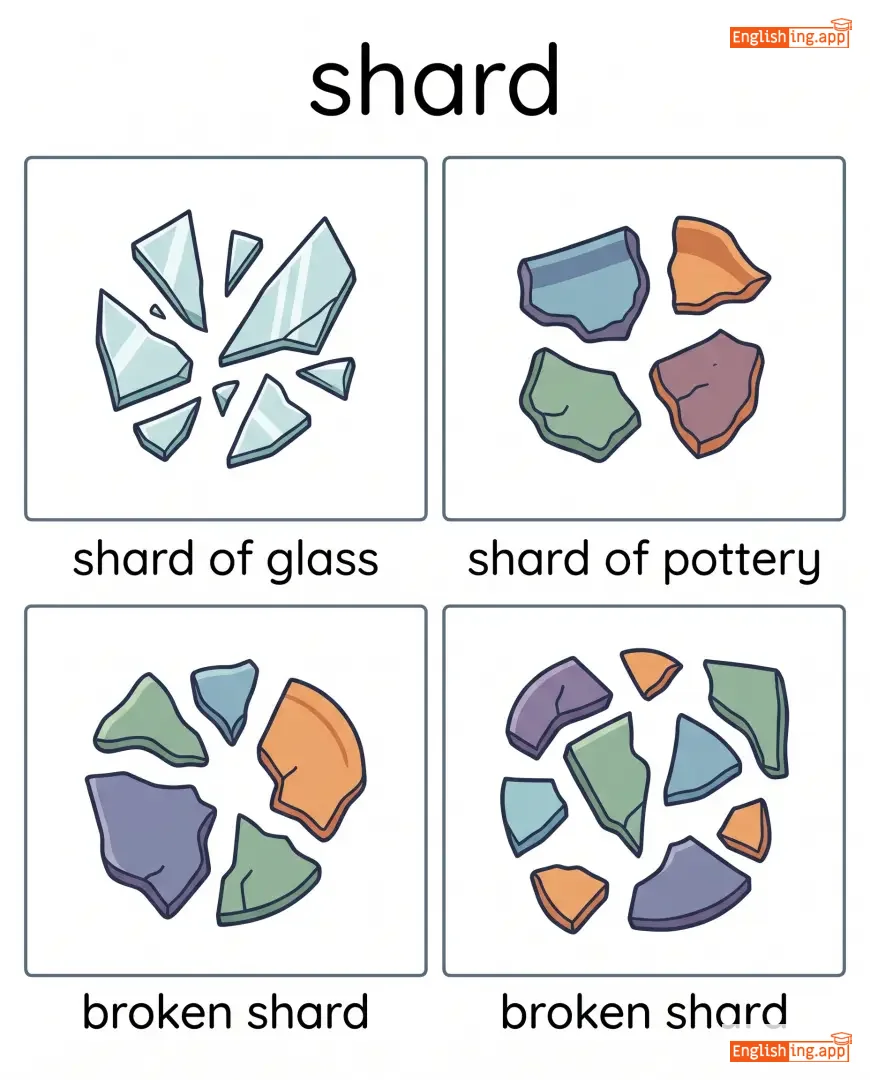
a broken piece of glass, metal, or pottery
••••••
|
He cut his finger on a shard of glass. |
Он порезал палец осколком стекла.
On porezal palets oskolkom stekla.
••••••
|
- •••••• | - •••••• | - •••••• |
fragment, splinter, sliver, piece
••••••
|
whole, entirety, unity
••••••
|
shard of glass, shard of pottery, broken shard
••••••
|
Shard означает sharp осколок – сломанная часть стекла.
••••••
|
|
🌌
••••••
|
/saɪˈdɪəriəl/
adjective
(сайдириал)
••••••
|

|
сидериальный
siderial'nyy
••••••
|
- •••••• | - •••••• | - •••••• | - •••••• |
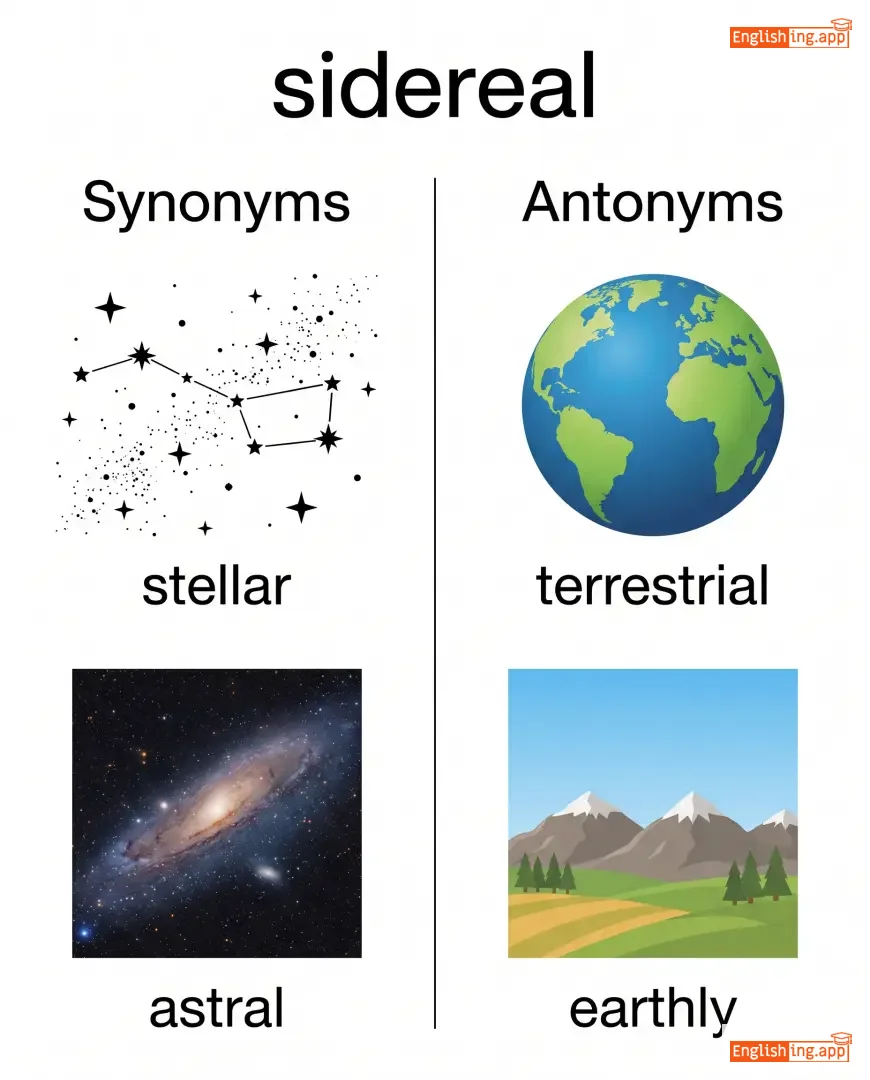
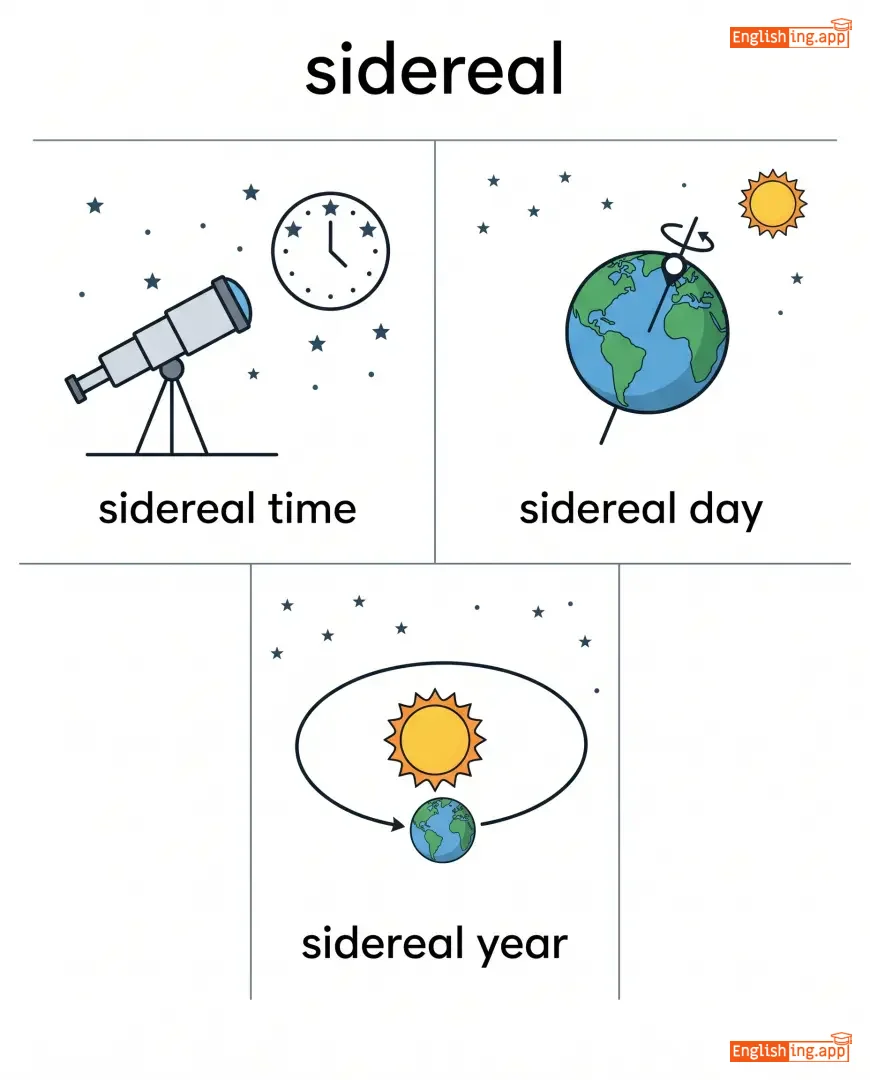
Relating to the stars or constellations; measured relative to the stars.
••••••
|
Astronomers use sidereal time to track the positions of stars. |
Астрономы используют сидериальное время для отслеживания положения звёзд.
Astronomy ispol'zuyut siderial'noe vremya dlya otslezhivaniya polozheniya zvyozd.
••••••
|
- •••••• | - •••••• | - •••••• |
stellar, astral, cosmic, celestial
••••••
|
terrestrial, earthly
••••••
|
sidereal time, sidereal day, sidereal year
••••••
|
Sidereal → Звёздный циферблат помни: это связано с звёздами.
••••••
|
|
🐒
••••••
|
/ˈsɪmiən/
adjective
(симиан)
••••••
|
|
обезьяноподобный
obez'yanopodobnyy
••••••
|
- •••••• | - •••••• | - •••••• | - •••••• |
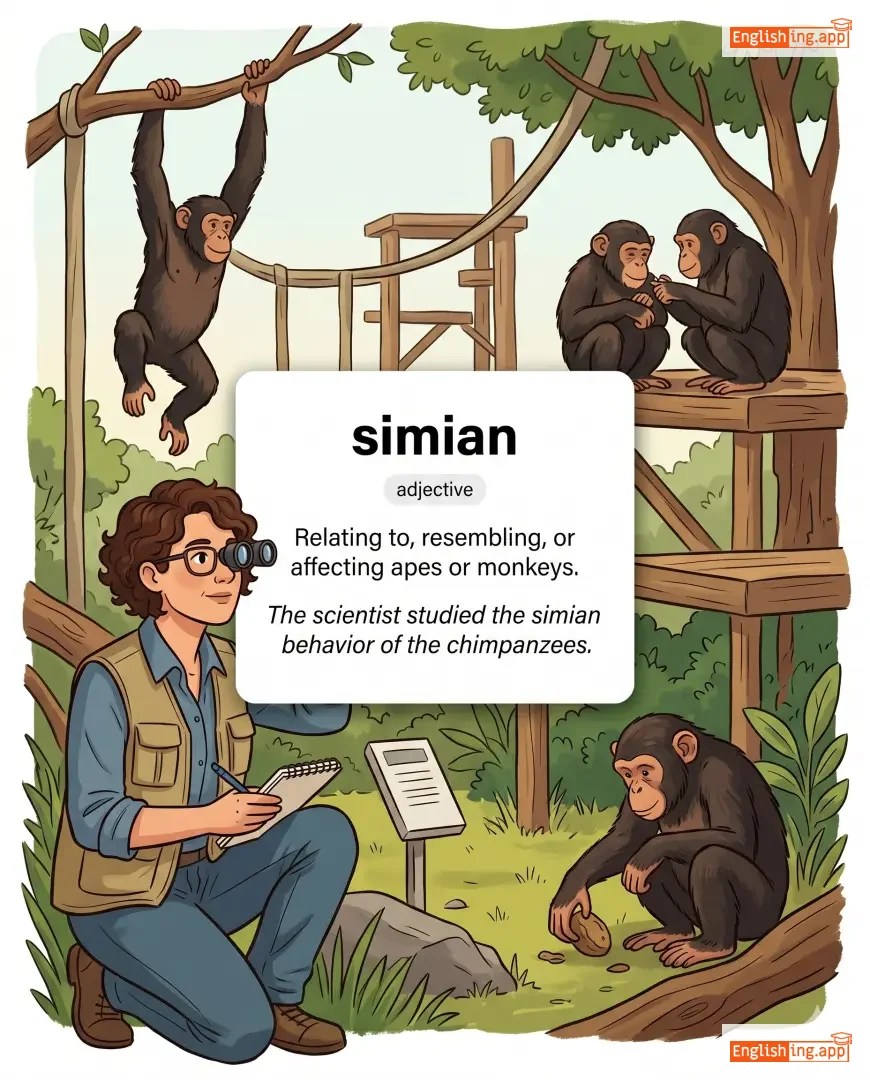
Relating to, resembling, or affecting apes or monkeys.
••••••
|
The scientist studied the simian behavior of the chimpanzees. |
Учёный изучал обезьяноподобное поведение шимпанзе.
Uchyonnyy izuchal obez'yanopodobnoe povedenie shimpanze.
••••••
|
- •••••• | - •••••• | - •••••• |
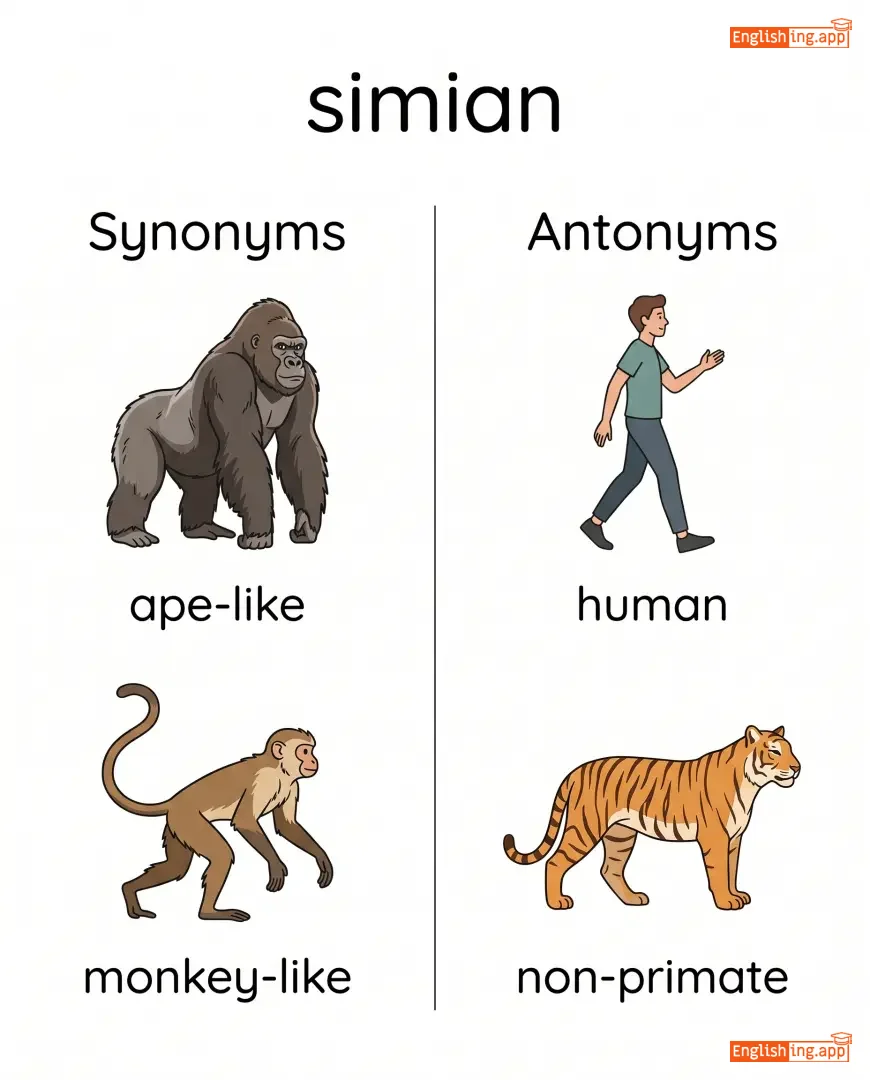
ape-like, monkey-like, primate, anthropoid
••••••
|
human, non-primate, inhuman
••••••
|
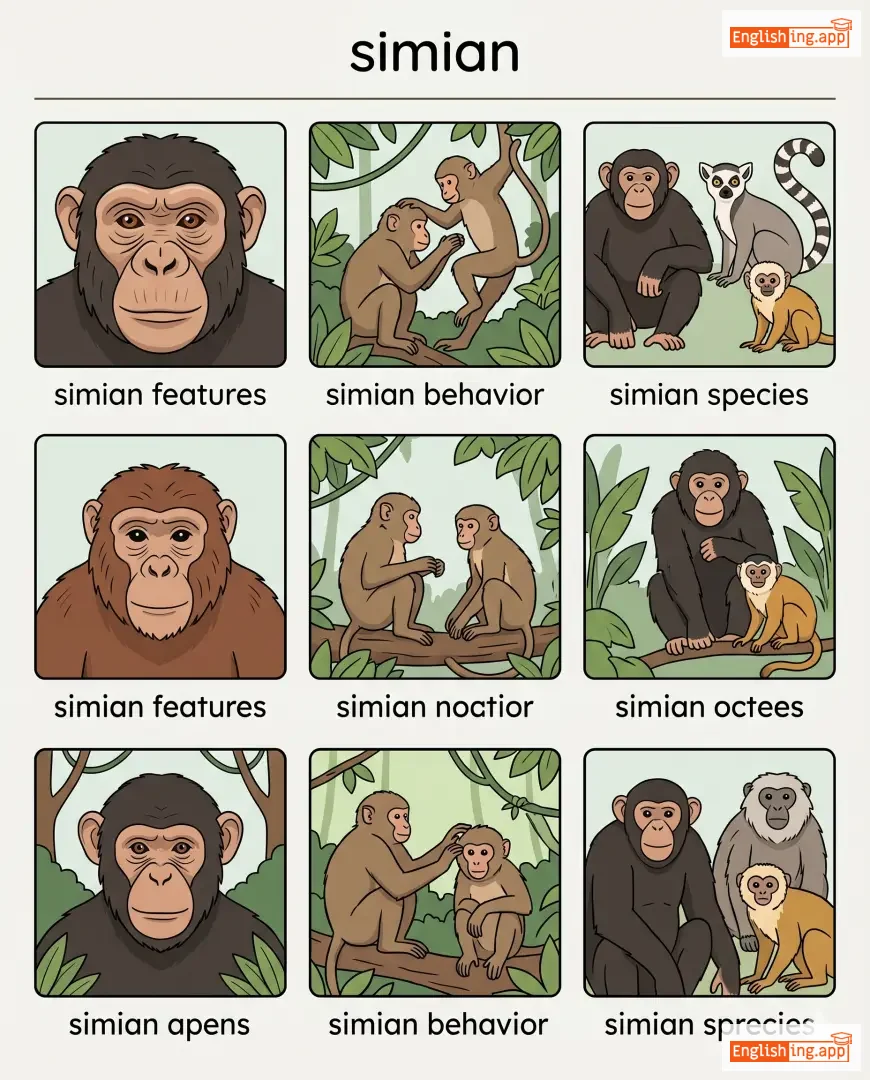
simian features, simian behavior, simian species
••••••
|
SIMIAN напоминает SIM, так что представьте обезьяну с SIM-картой!
••••••
|
|
✨
••••••
|
/ˈsɪməli/
noun
(симили)
••••••
|

|
сравнение
sravnenie
••••••
|
- •••••• | - •••••• | - •••••• | - •••••• |
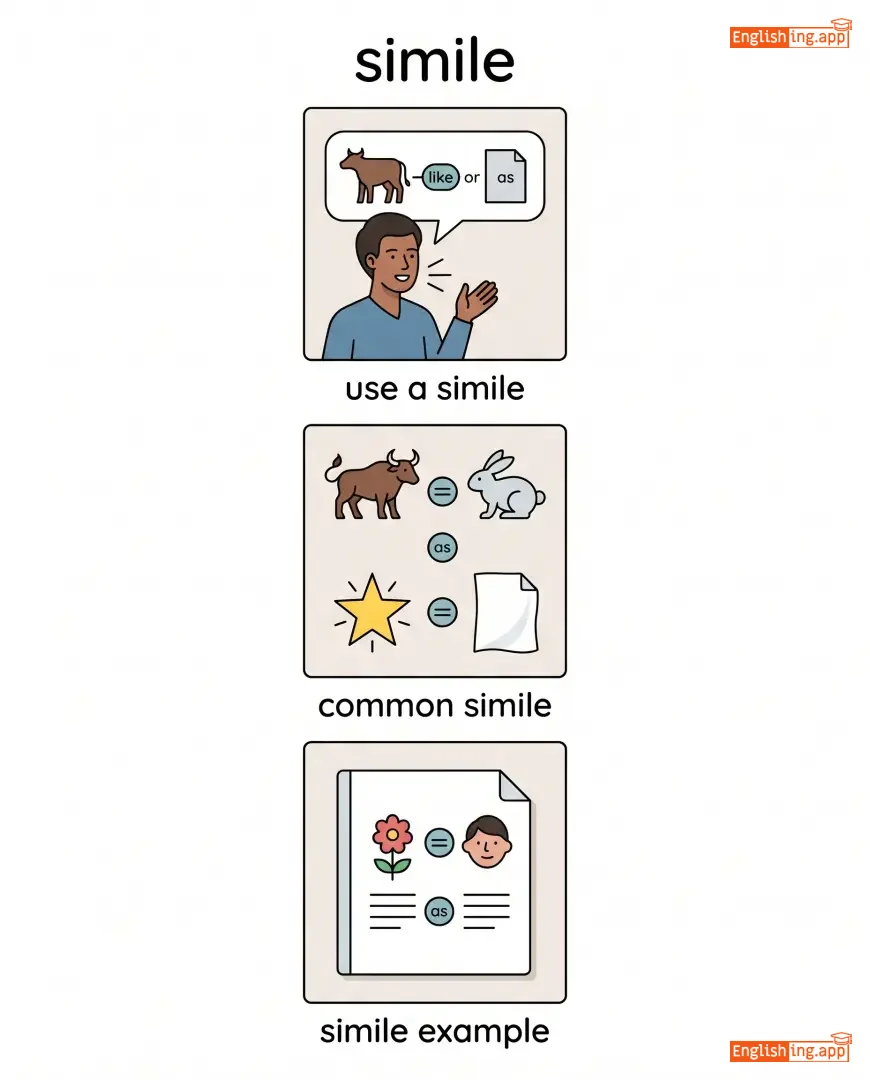
A figure of speech involving the comparison of one thing with another using 'like' or 'as'.
••••••
|
She used a simile to describe her eyes as bright as stars. |
Она использовала сравнение, чтобы описать свои глаза, как яркие звезды.
Ona ispol'zovala sravnenie, chtoby opisat' svoi glaza, kak yarkie zvezdy.
••••••
|
- •••••• | - •••••• | - •••••• |
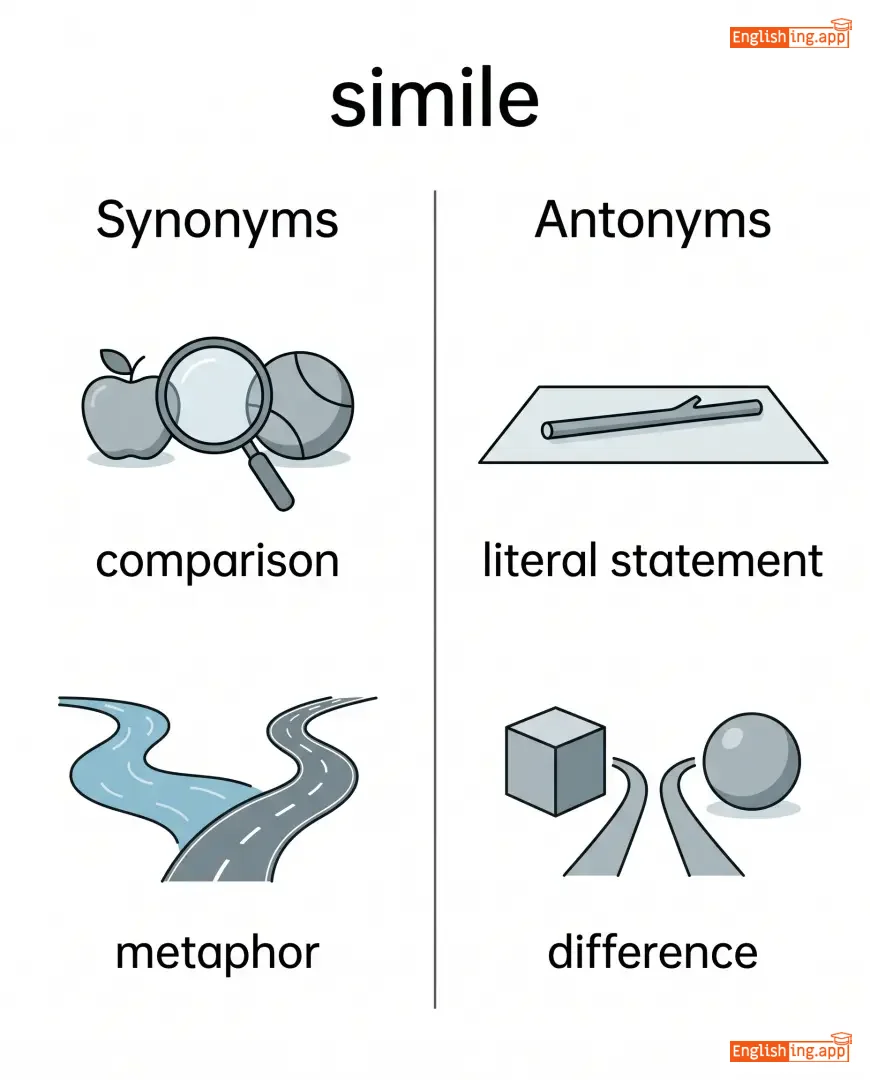
comparison, metaphor, analogy, resemblance
••••••
|
literal statement, difference
••••••
|
use a simile, common simile, simile example
••••••
|
SIMILE означает сравнение: SIMILAR + КАК.
••••••
|
|
💼
••••••
|
/ˈsaɪnɪkjʊər/
noun
(сайникюр)
••••••
|
|
лёгкая работа
lyogkaya rabota
••••••
|
- •••••• | - •••••• | - •••••• | - •••••• |
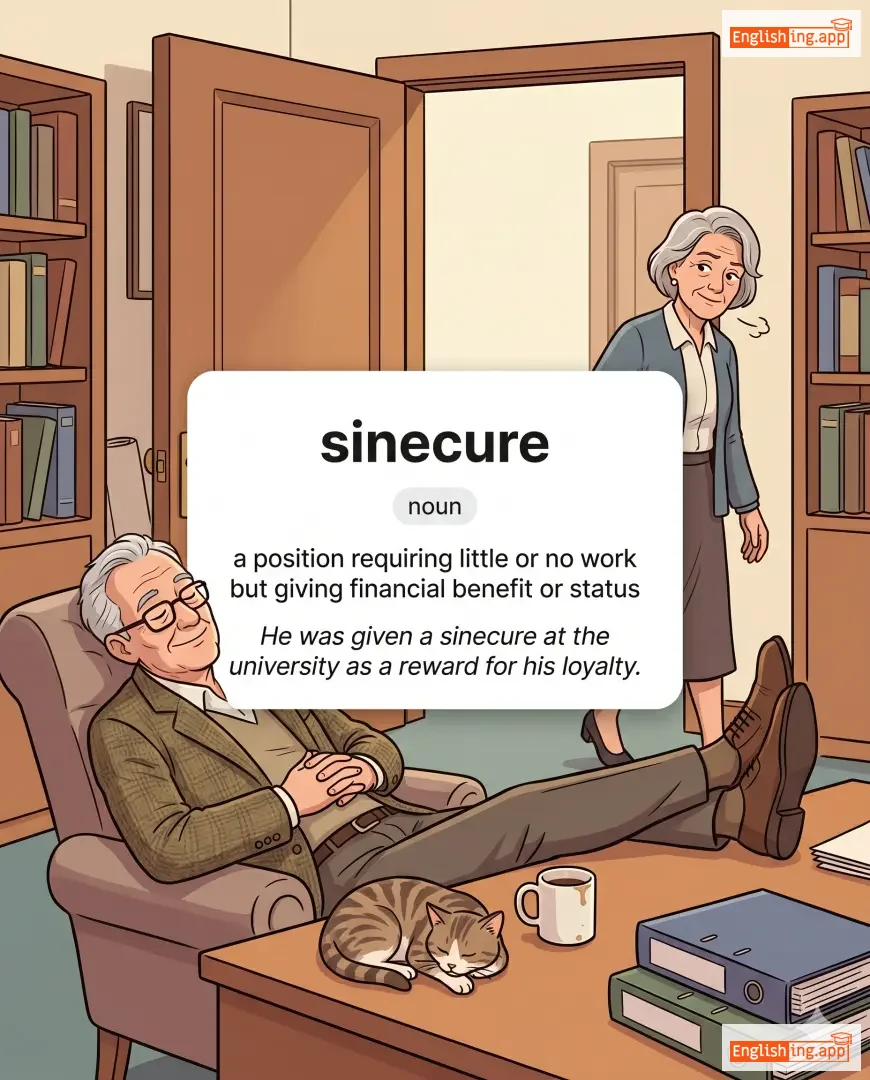
a position requiring little or no work but giving financial benefit or status
••••••
|
He was given a sinecure at the university as a reward for his loyalty. |
Ему дали лёгкую работу в университете как награду за его лояльность.
Emu dali lyogkuyu rabotu v universitete kak nagradu za ego loyal'nost'.
••••••
|
- •••••• | - •••••• | - •••••• |
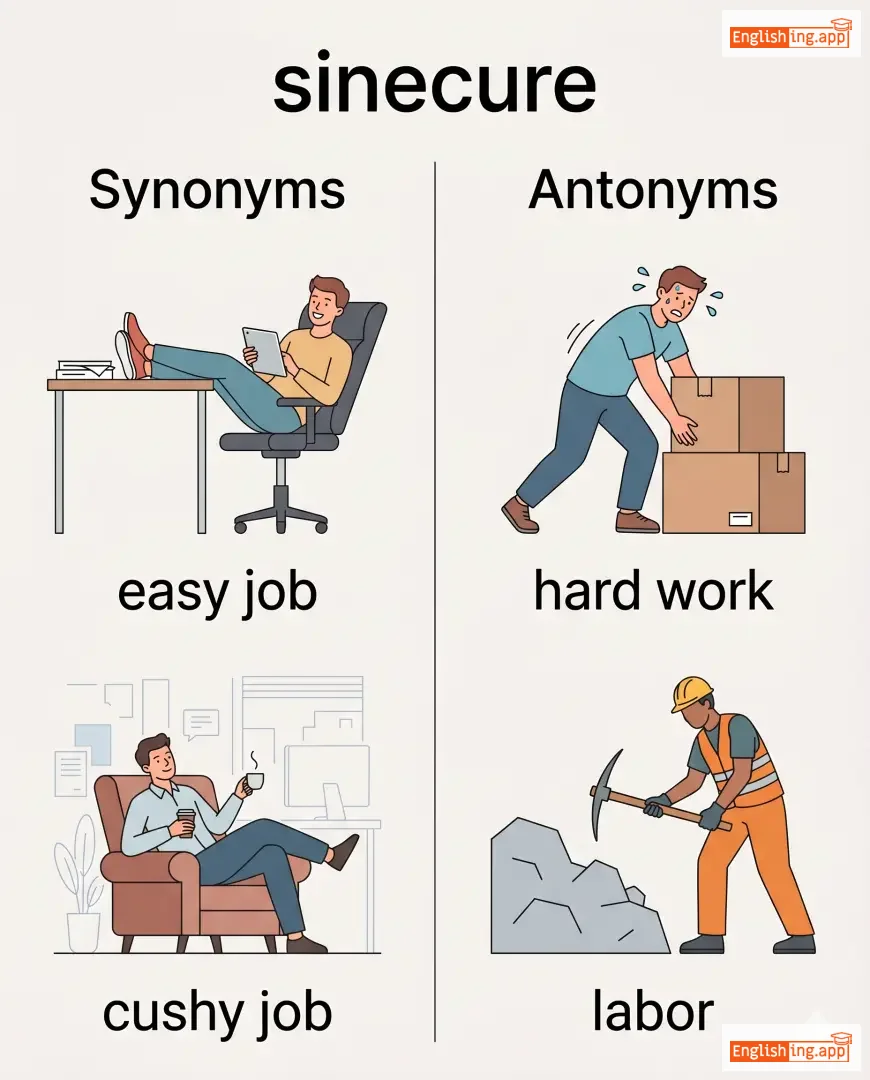
easy job, cushy job, honorary position, figurehead role
••••••
|
hard work, labor, drudgery
••••••
|
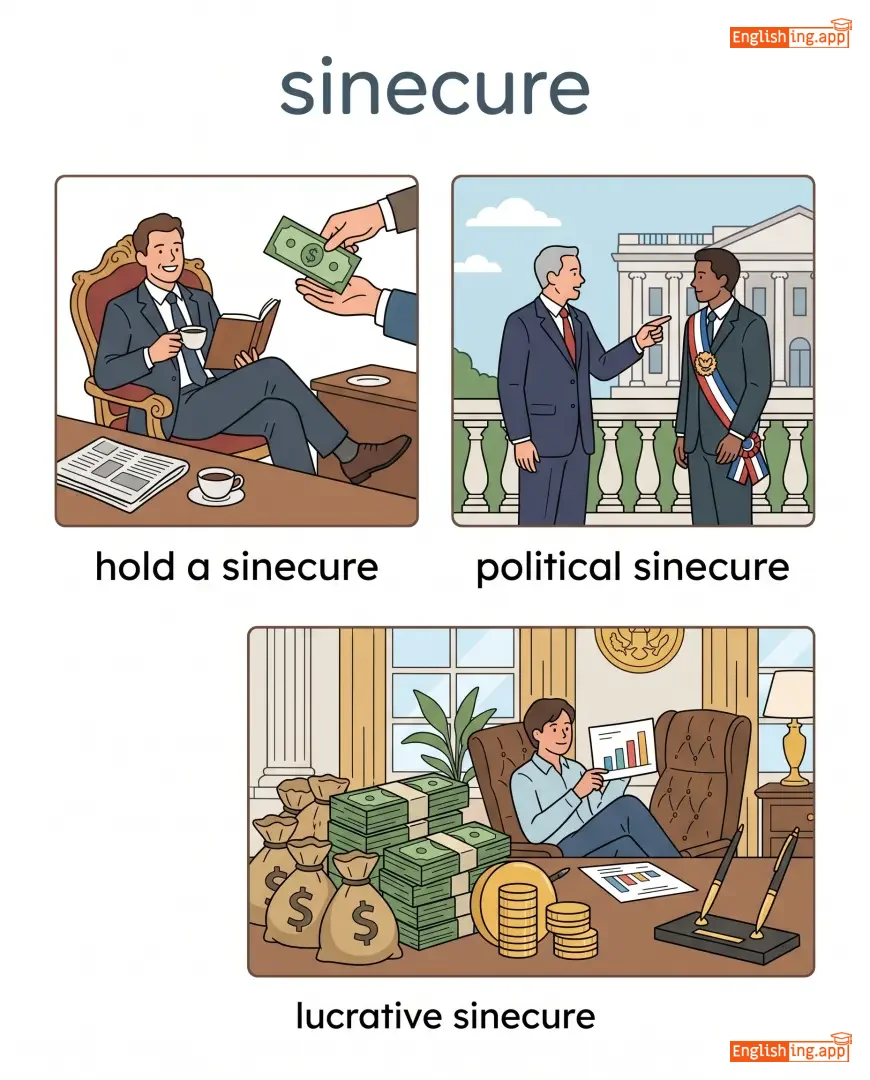
hold a sinecure, political sinecure, lucrative sinecure, sinecure position
••••••
|
SINE без усилий, лёгкая работа
••••••
|
|
🌟
••••••
|
/ˈsɪŋɡjələr/
adjective, noun
(сингулар)
••••••
|
|
необыкновенный / сингулярный
neobyknovennyy / singulyarnyy
••••••
|
- •••••• | - •••••• | - •••••• | - •••••• |
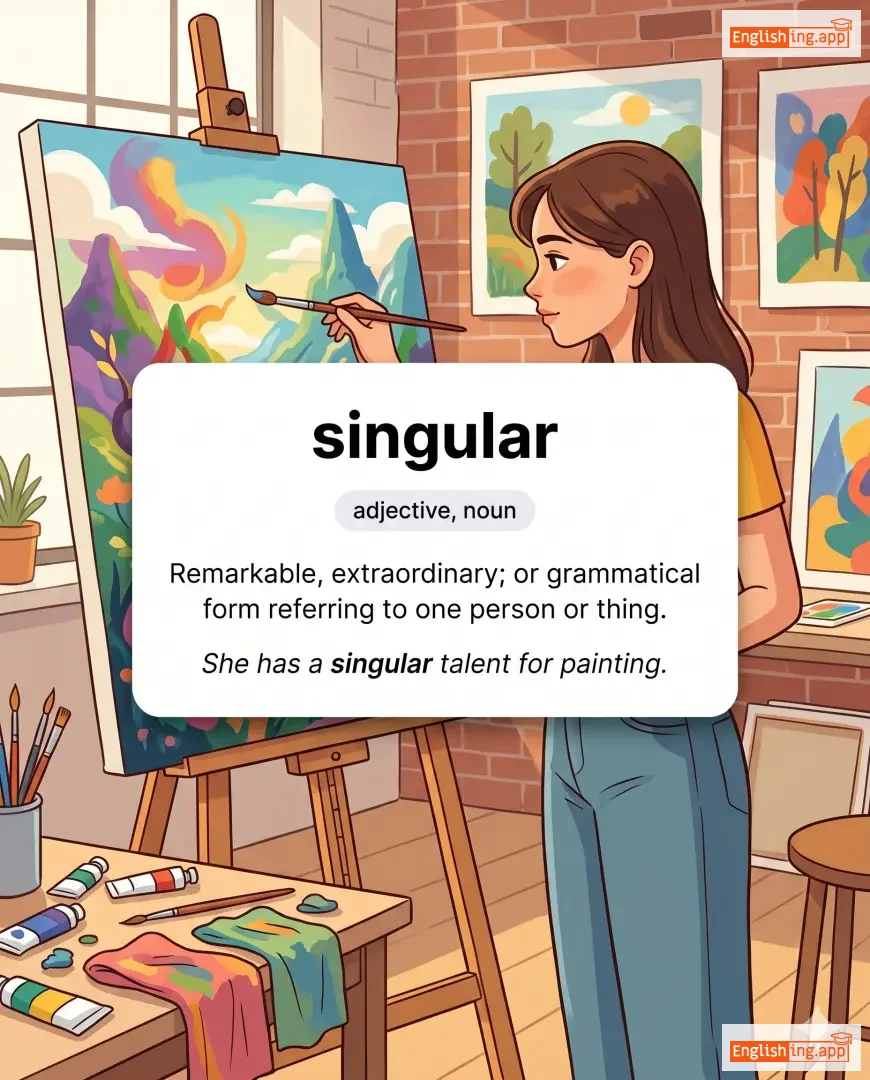
Remarkable, extraordinary; or grammatical form referring to one person or thing.
••••••
|
She has a singular talent for painting. |
У нее необыкновенный талант к живописи.
U nee neobyknovennyy talant k zhivopisi.
••••••
|
singular focus |
Exclusive concentration on one thing.
••••••
|
единственное внимание
yedinstevnoe vnimanie
••••••
|
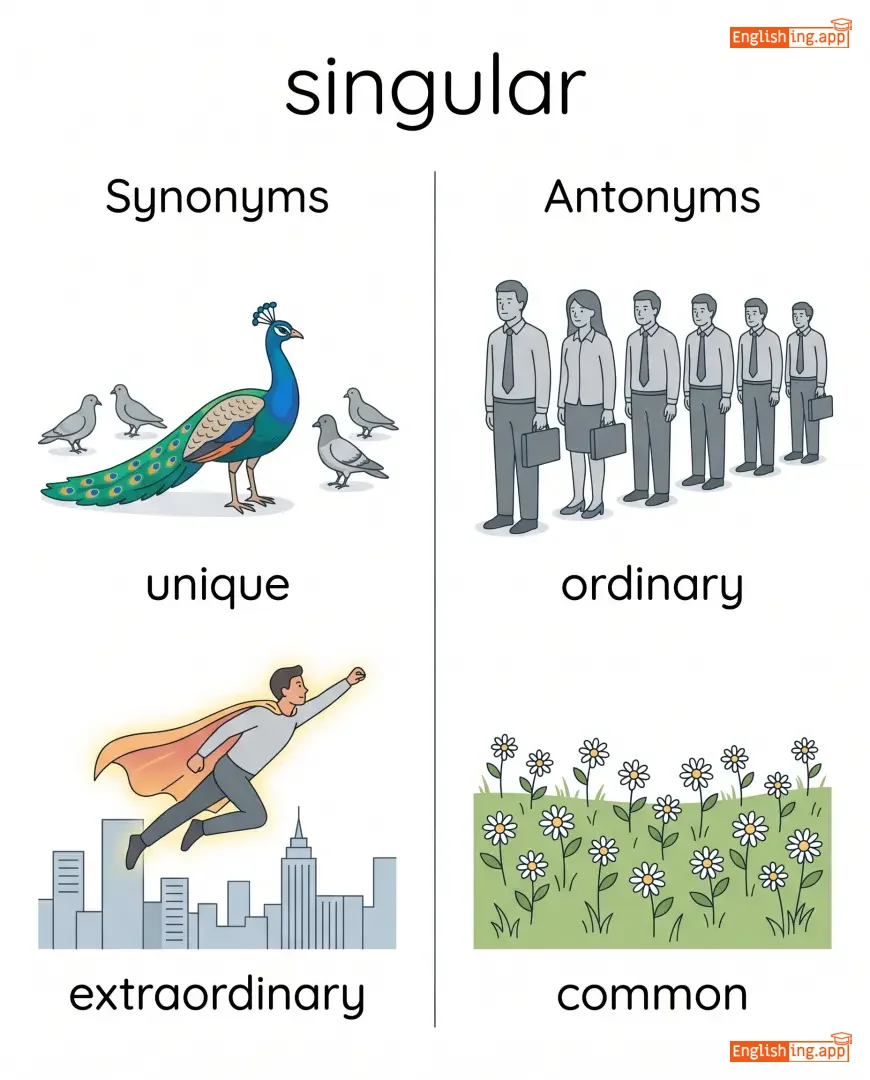
unique, extraordinary, remarkable, exceptional
••••••
|
ordinary, common, usual
••••••
|
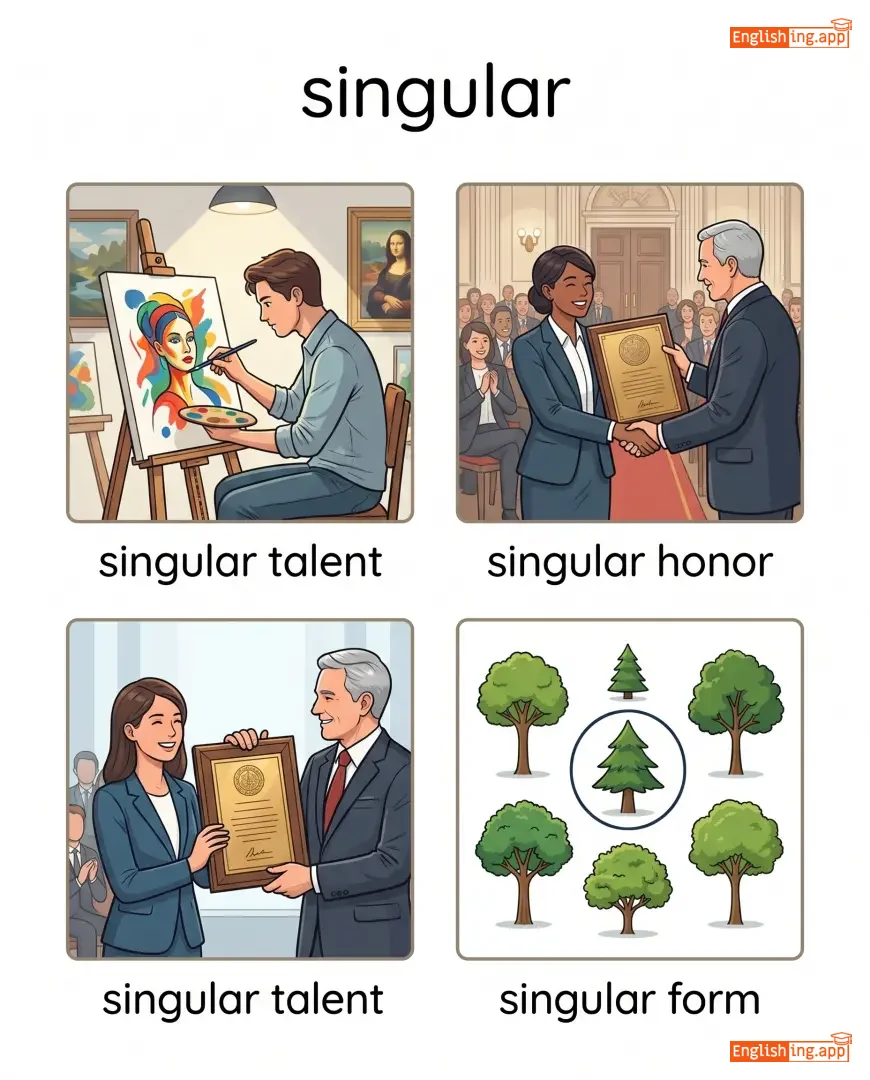
singular talent, singular honor, singular form
••••••
|
Singular = уникальный, необычный 🌟
••••••
|
|
〰️
••••••
|
/ˈsɪnjuəs/
adjective
(синюэс)
••••••
|
|
изогнутый
izognutyy
••••••
|
- •••••• | - •••••• | - •••••• | - •••••• |
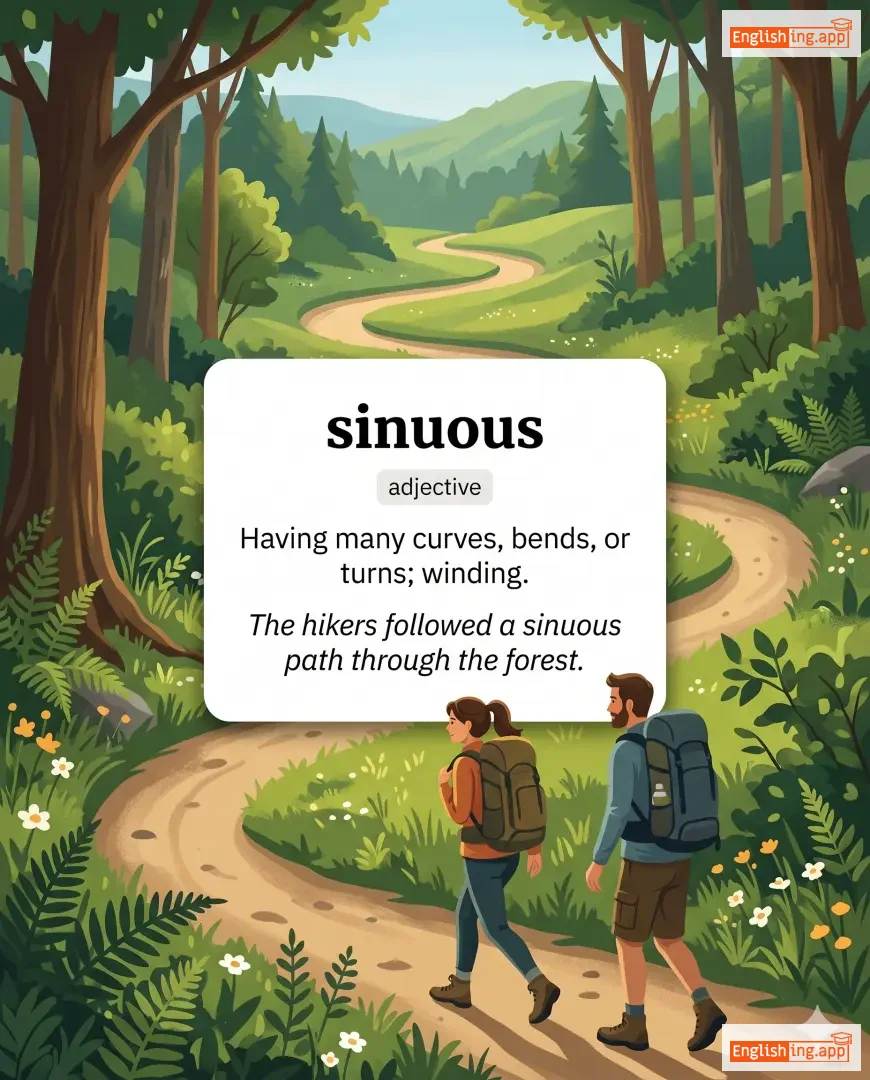
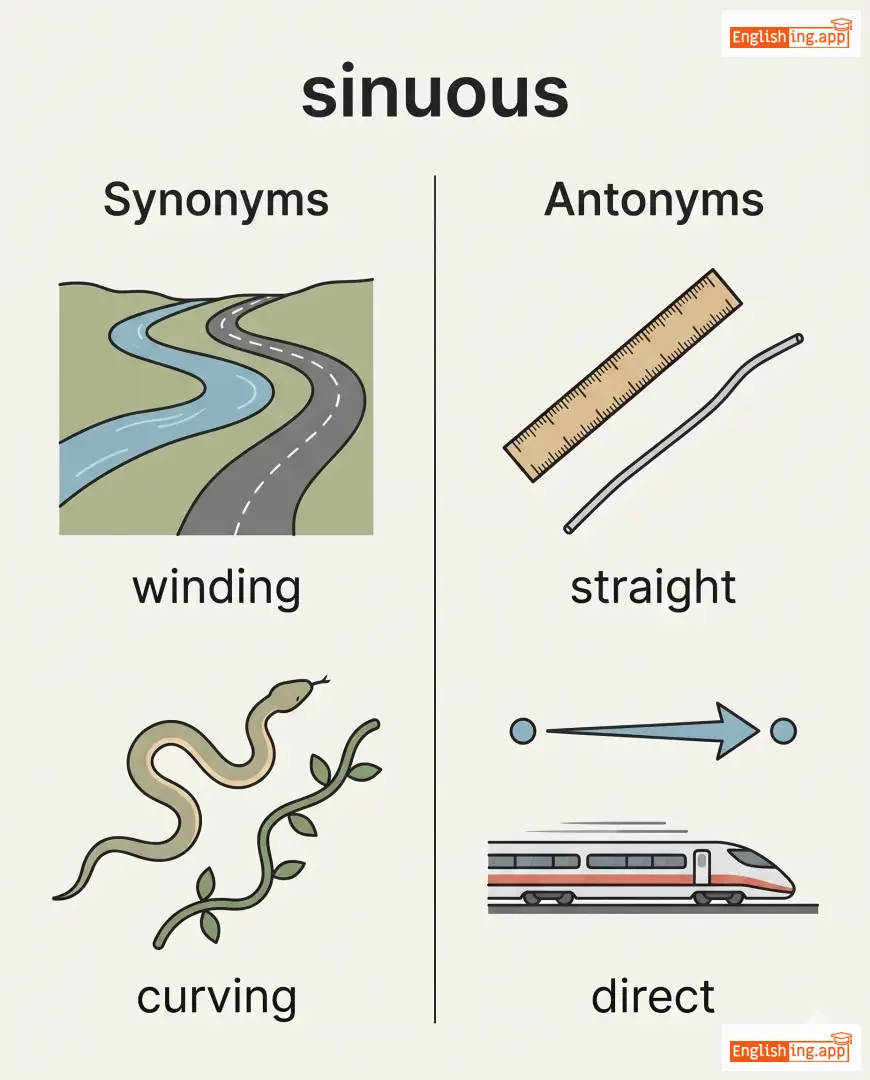
Having many curves, bends, or turns; winding.
••••••
|
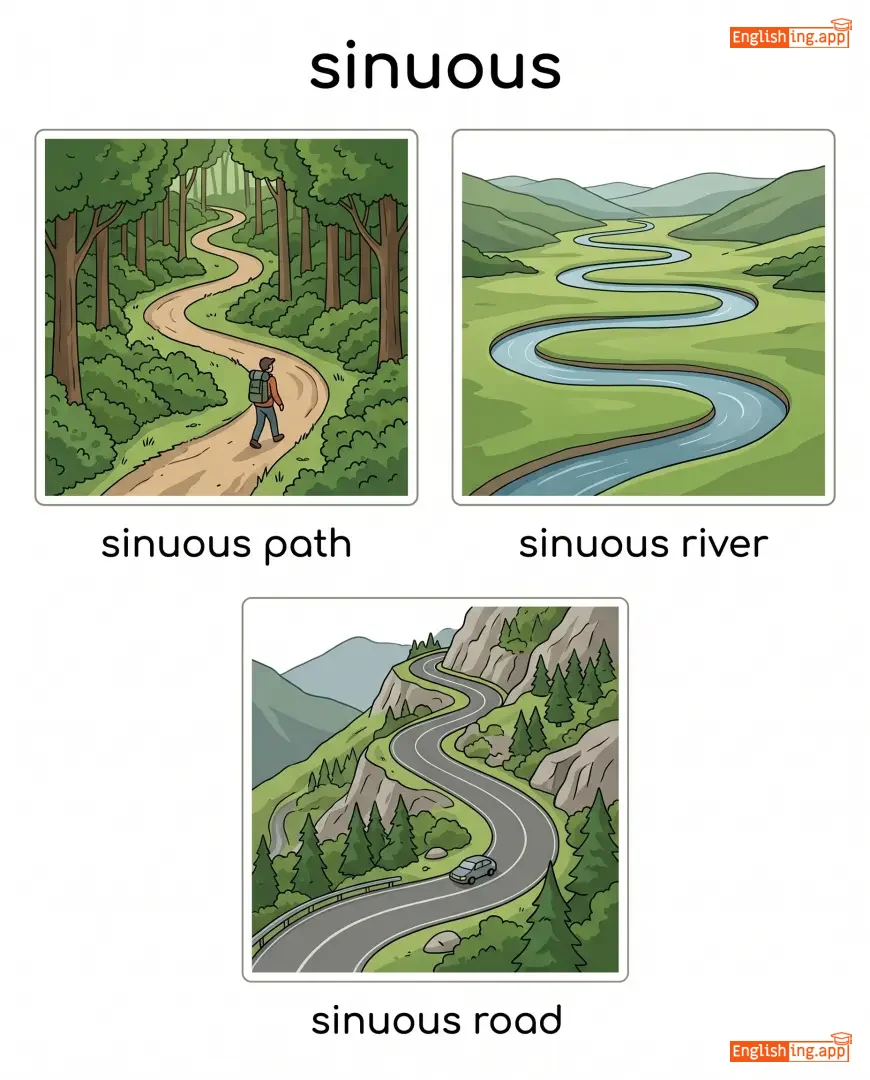
The hikers followed a sinuous path through the forest. |
Путешественники шли по извилистому пути через лес.
Puteshestvenniki shli po izvilistomu puti cherez les.
••••••
|
- •••••• | - •••••• | - •••••• |
winding, curving, twisting, meandering, serpentine
••••••
|
straight, direct, linear
••••••
|
sinuous path, sinuous river, sinuous road, sinuous line
••••••
|
ИЗОГНУТЫЙ путь — это путь с поворотами, как у змеи.
••••••
|
|
🤔
••••••
|
/ˈskɛptɪk/
noun
(skɛptɪk)
••••••
|
|
скептик
skeptik
••••••
|
- •••••• | - •••••• | - •••••• | - •••••• |
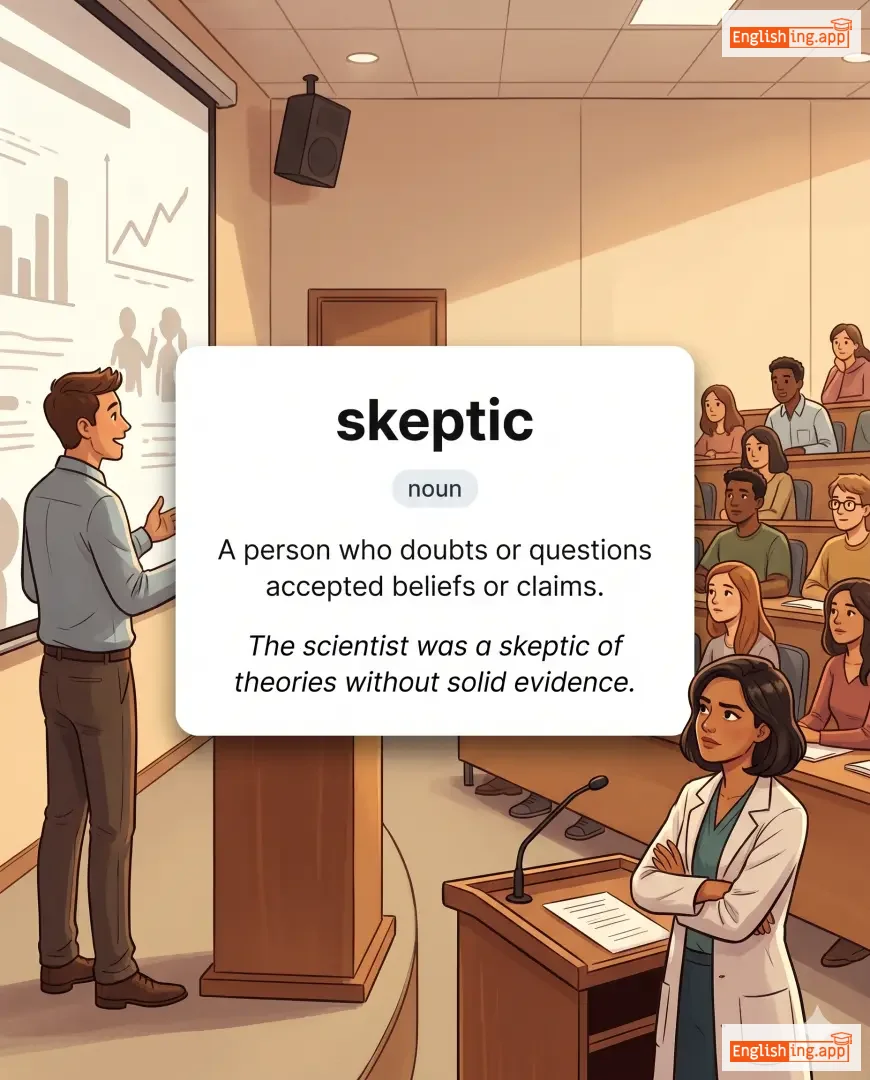
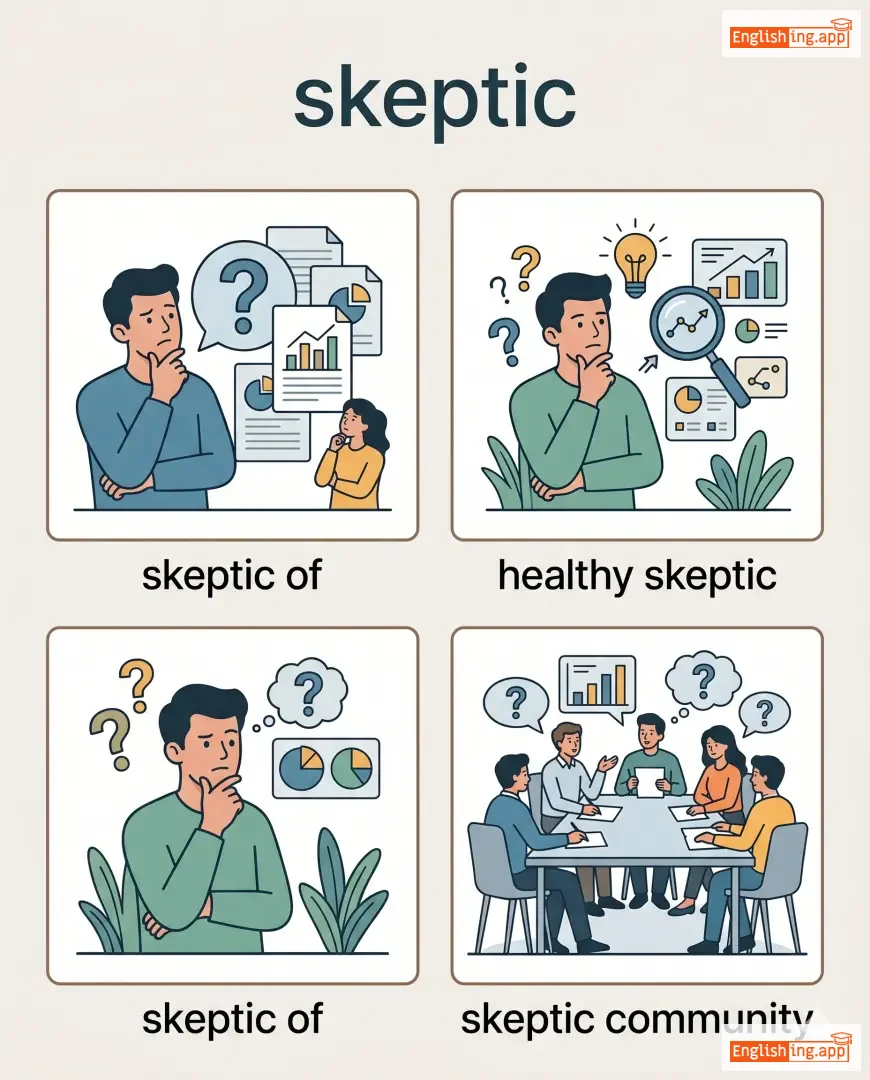
A person who doubts or questions accepted beliefs or claims.
••••••
|
The scientist was a skeptic of theories without solid evidence. |
Ученый был скептически настроен к теориям без твердых доказательств.
Uchenyy byl skepticheski nastroen k teoriya bez tverdykh dokazatel'stv.
••••••
|
healthy skeptic |
A person who doubts claims in a rational and balanced way.
••••••
|
здоровый скептик
zdorovyy skeptik
••••••
|
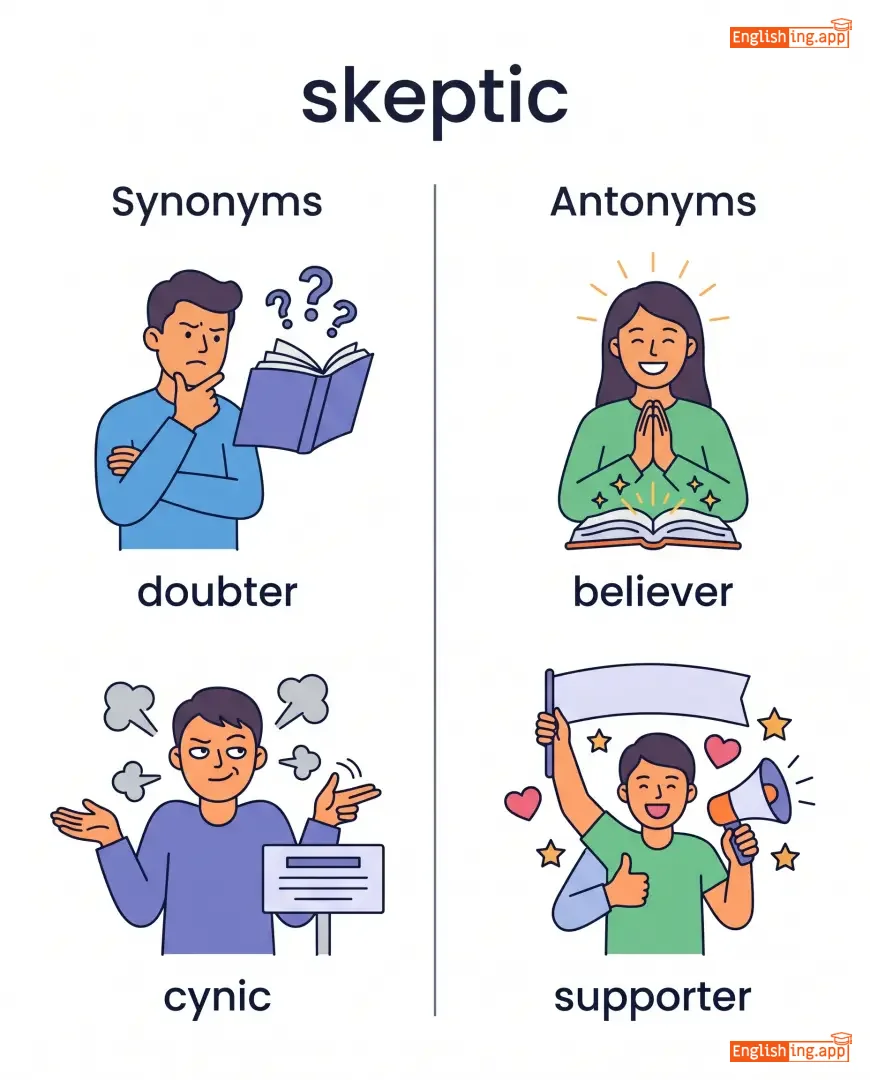
doubter, cynic, questioner, disbeliever
••••••
|
believer, supporter
••••••
|
skeptic of, healthy skeptic, skeptic community, skeptic movement
••••••
|
Скептик всегда сомневается в истине, как детектив, который ищет улики.
••••••
|
|
🚫🍷
••••••
|
/səˈbraɪəti/
noun
(трезвость)
••••••
|

|
трезвость
trezvost
••••••
|
- •••••• | - •••••• | - •••••• | - •••••• |
the state of being sober; self-restraint and seriousness
••••••
|
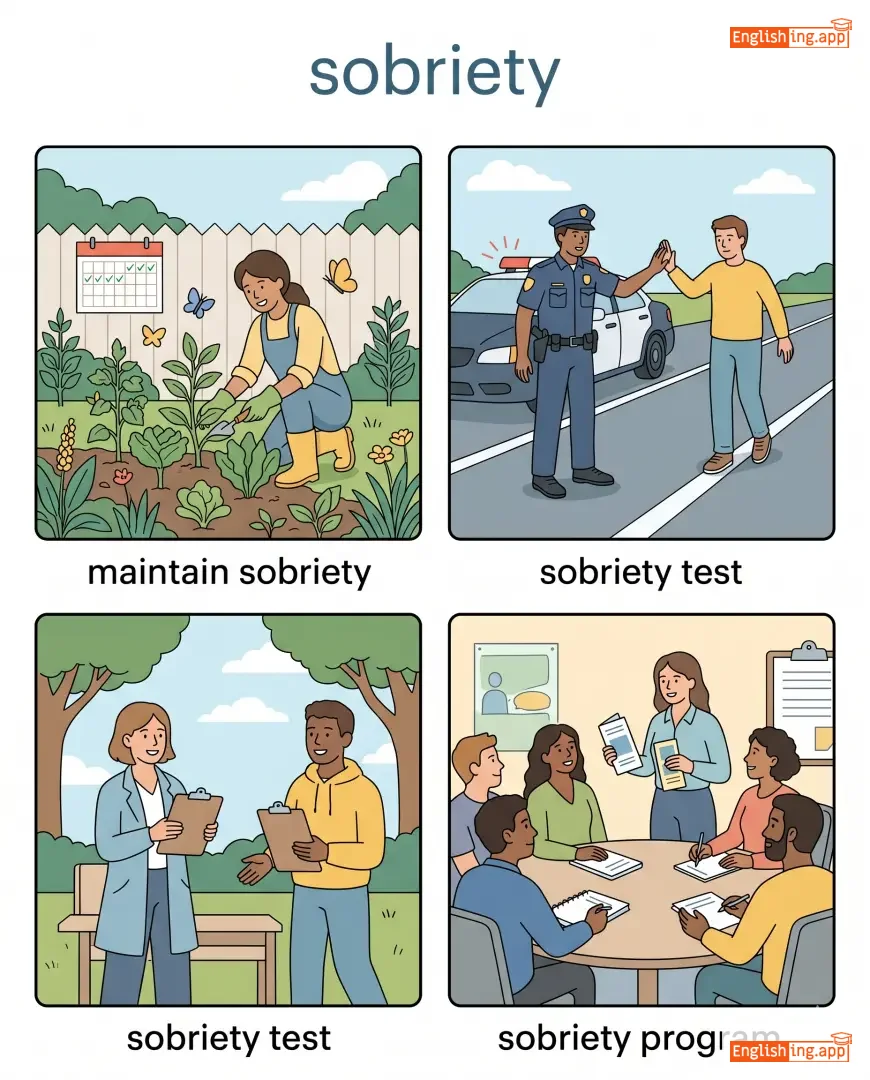
He has maintained his sobriety for five years. |
Он поддерживает свою трезвость уже пять лет.
On podderzhivayet svoyu trezvost uzhe pyat' let.
••••••
|
- •••••• | - •••••• | - •••••• |
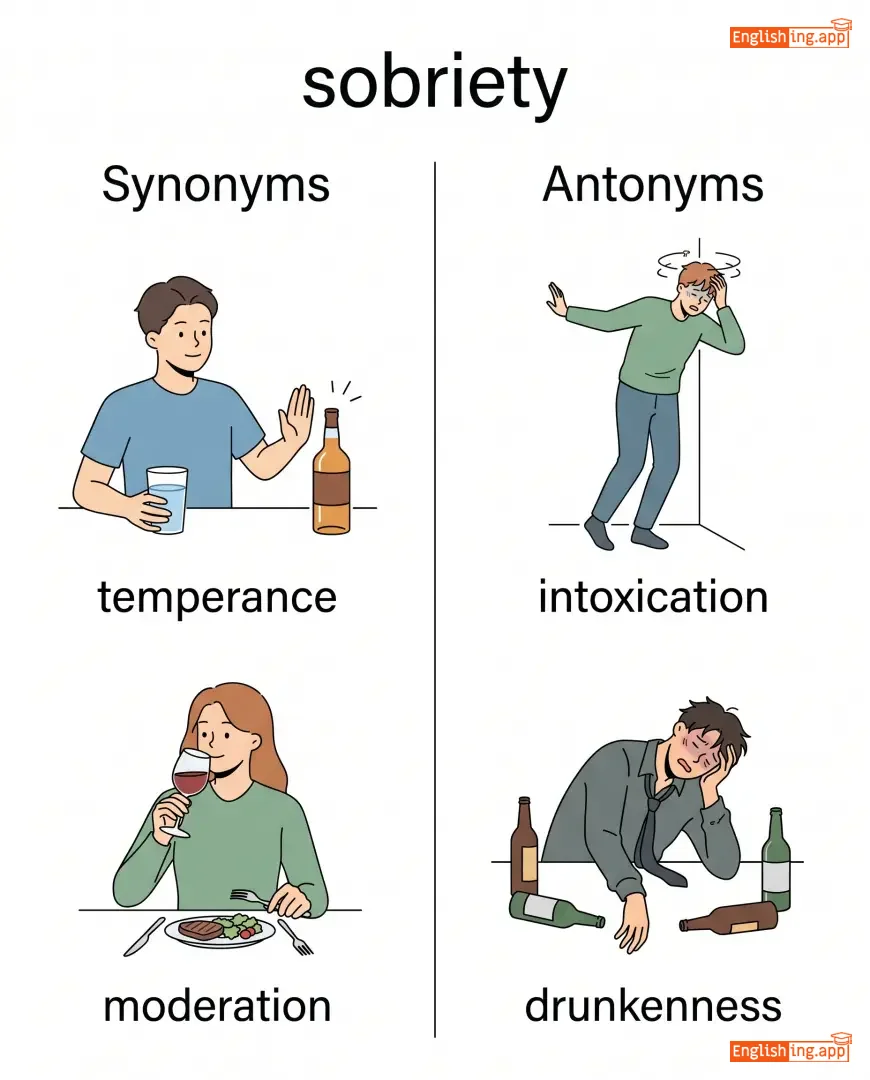
temperance, moderation, restraint, seriousness, abstinence
••••••
|
intoxication, drunkenness, excess
••••••
|
maintain sobriety, sobriety test, sobriety program, lifelong sobriety
••••••
|
Sobriety означает трезвость — no 🍷, только трезвость 🚫
••••••
|
|
💧
••••••
|
/ˈsɑːdn/
adjective
(содден)
••••••
|
|
промокший
promokshiy
••••••
|
- •••••• | - •••••• | - •••••• | - •••••• |
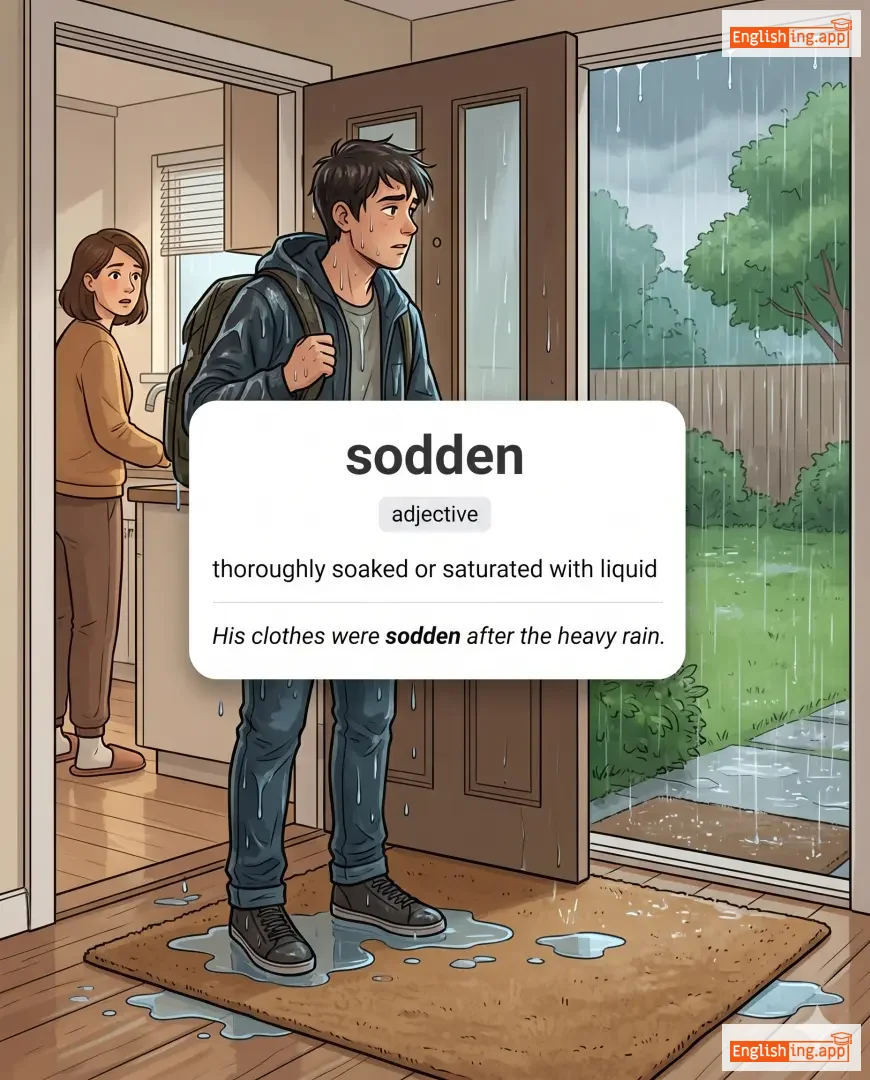
thoroughly soaked or saturated with liquid
••••••
|
His clothes were sodden after the heavy rain. |
Его одежда была промокшей после сильного дождя.
Yego odezhda byla promokshy posle sil'nogo dozhdya.
••••••
|
- •••••• | - •••••• | - •••••• |
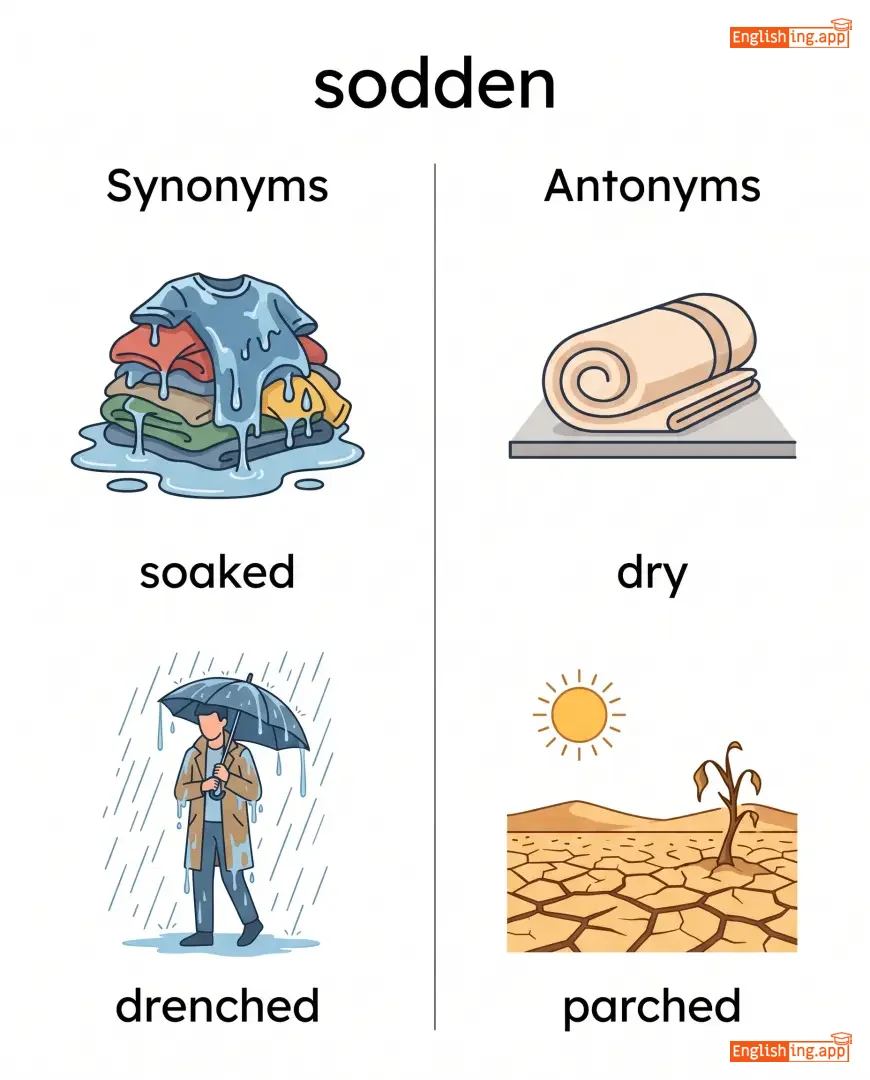
soaked, drenched, saturated, soggy
••••••
|
dry, parched
••••••
|
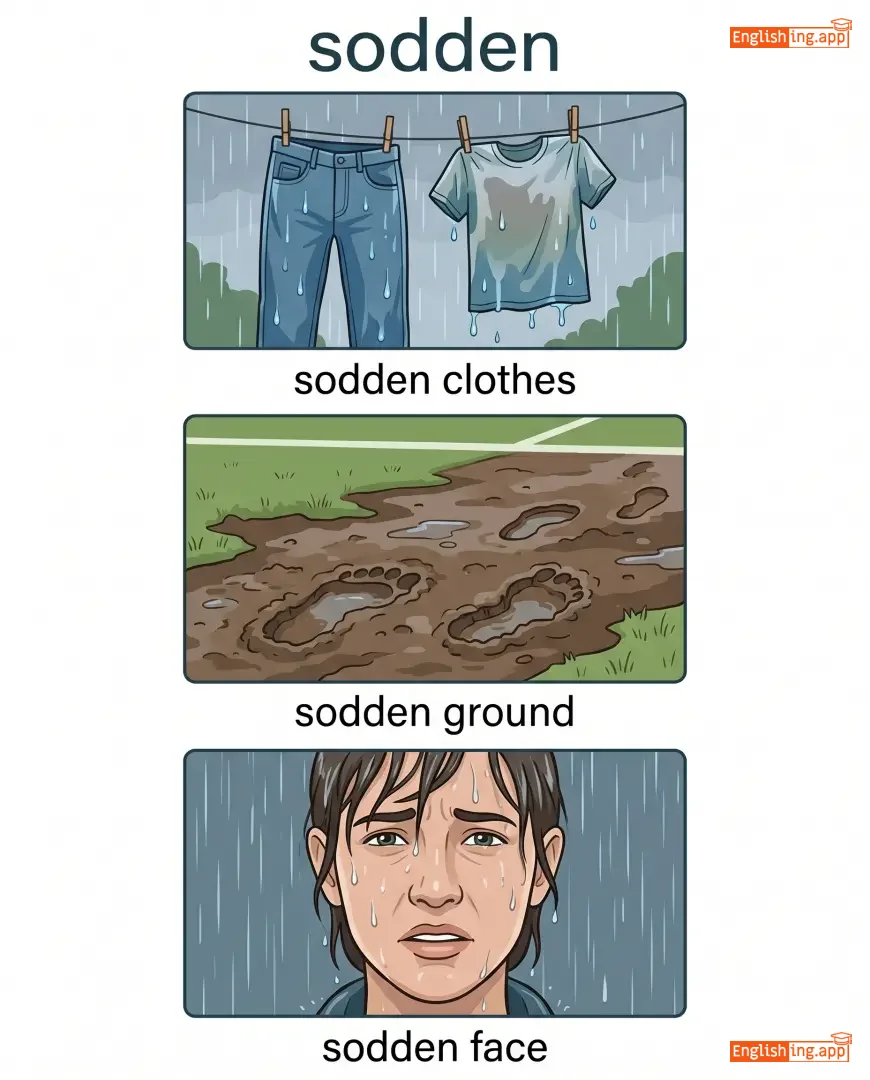
sodden clothes, sodden ground, sodden face
••••••
|
Sodden звучит как 'soaked den' → промокший
••••••
|
|
💖
••••••
|
/səˈlɪsɪtəs/
adjective
(солиситус)
••••••
|
|
заботливый
zabotlivyj
••••••
|
- •••••• | - •••••• | - •••••• | - •••••• |
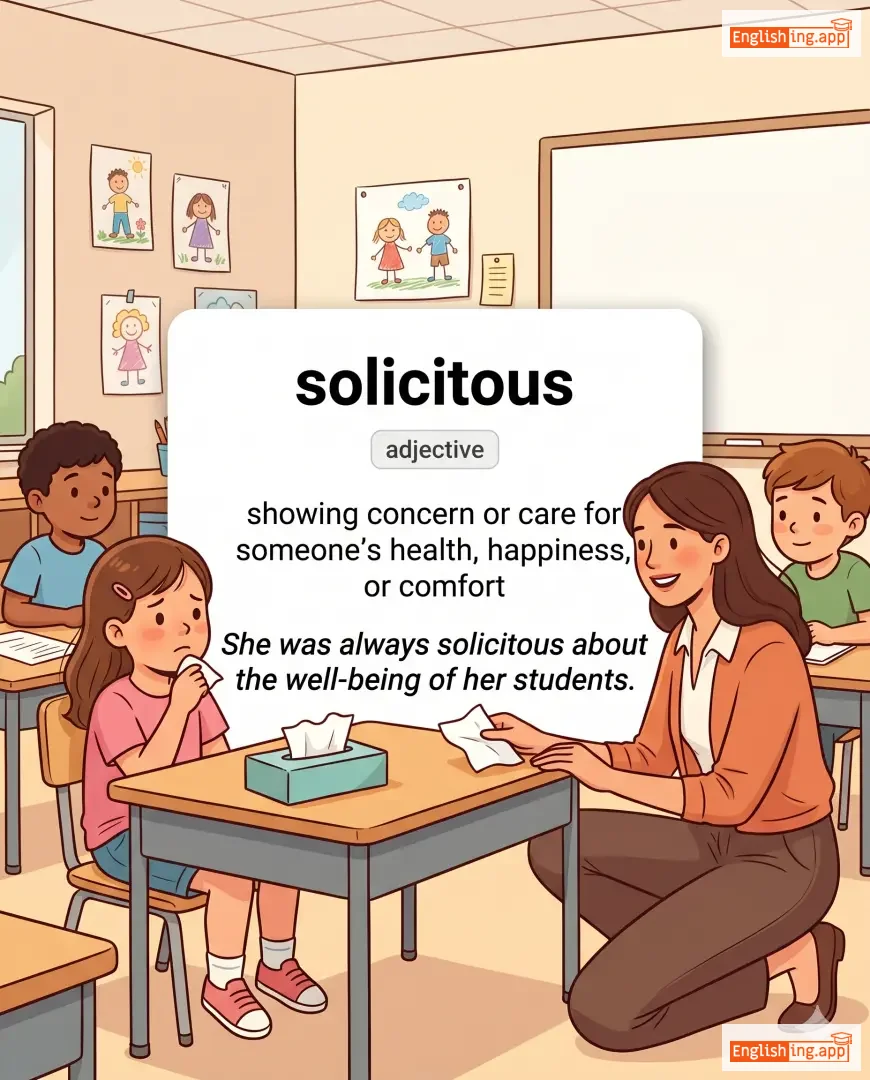
showing concern or care for someone's health, happiness, or comfort
••••••
|
She was always solicitous about the well-being of her students. |
Она всегда была заботлива о благополучии своих студентов.
Ona vsegda byla zabotliva o blagopoluchii svoikh studentov.
••••••
|
- •••••• | - •••••• | - •••••• |
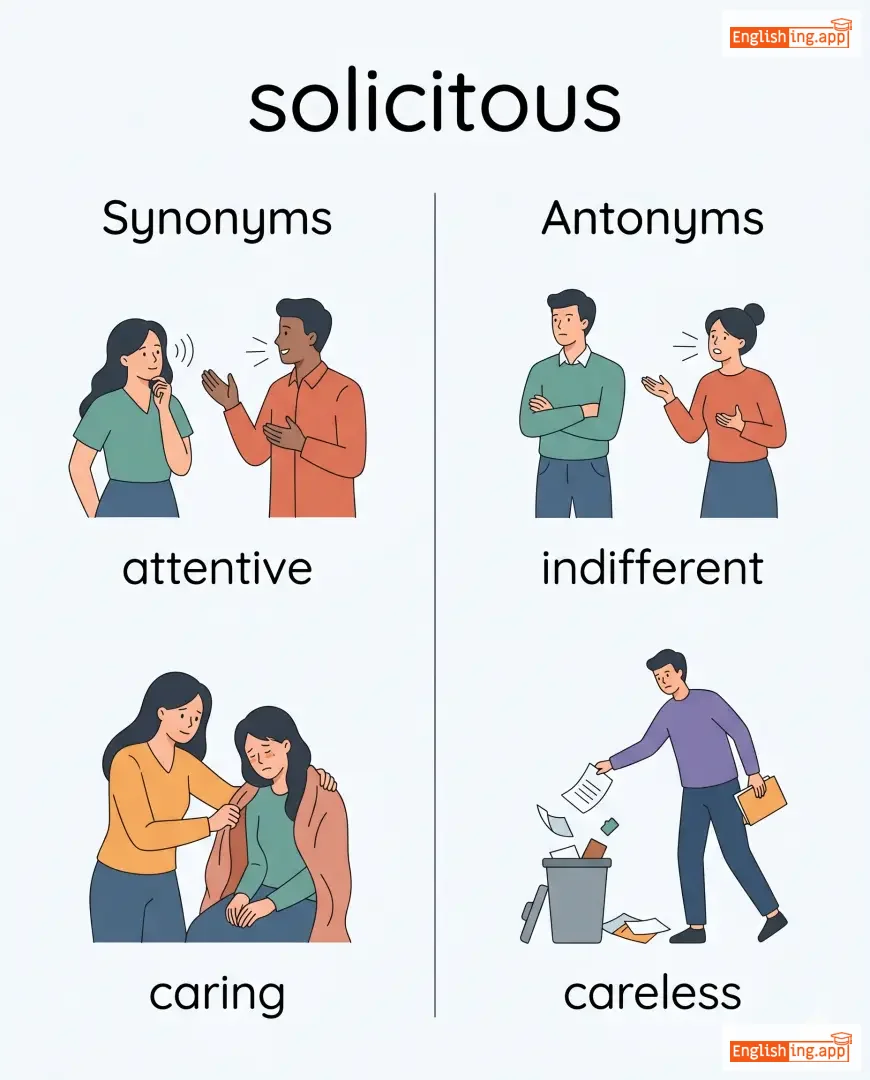
attentive, caring, concerned, considerate, thoughtful
••••••
|
indifferent, careless, neglectful
••••••
|
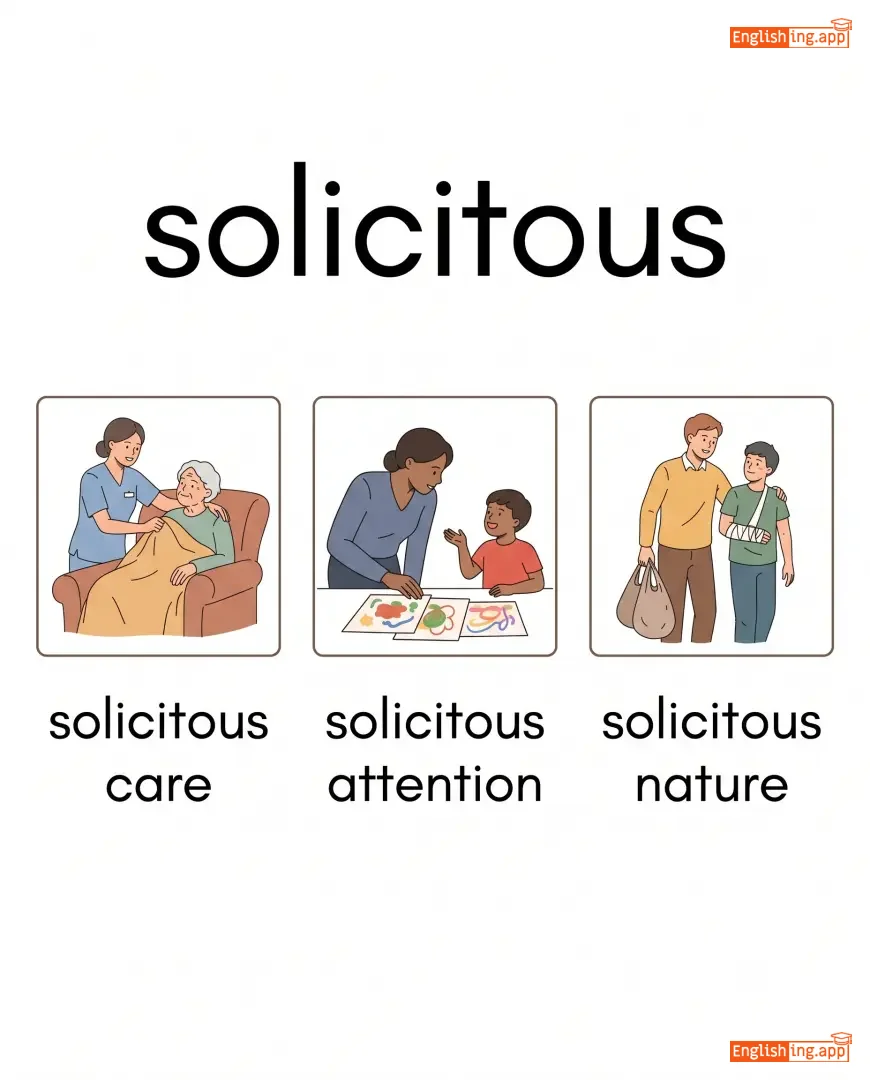
solicitous care, solicitous attention, solicitous nature
••••••
|
Solicitous означает заботливый, помни 'so listen to us' = заботливый 💖
••••••
|
|
🎭
••••••
|
/səˈlɪləkwi/
noun
(соли́локви)
••••••
|

|
монолог
monolog
••••••
|
- •••••• | - •••••• | - •••••• | - •••••• |
a speech in which a character talks to themselves, often used in drama to reveal inner thoughts
••••••
|
Hamlet's soliloquy is one of the most famous passages in Shakespearean drama. |
Монолог Гамлета — это один из самых известных отрывков в драме Шекспира.
Monolog Gamleta — eto odin iz samykh izvestnykh otryvkov v drame Shekspira.
••••••
|
- •••••• | - •••••• | - •••••• |
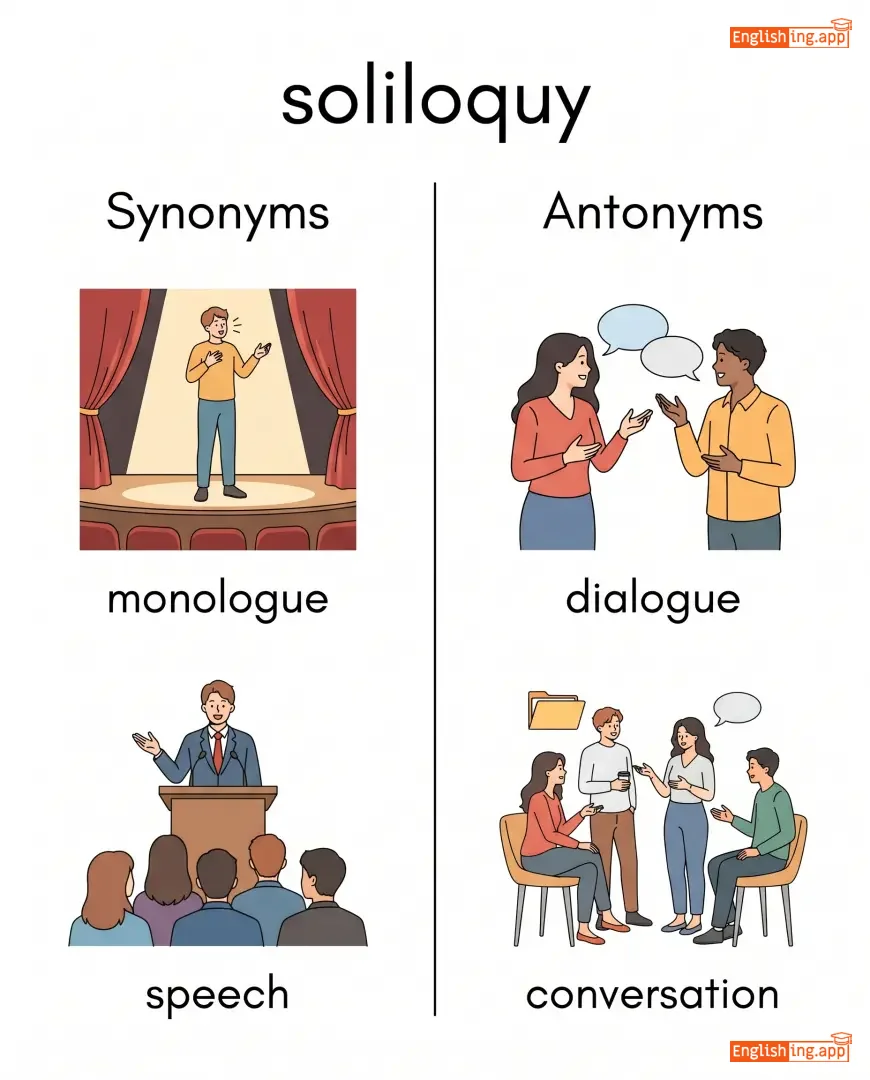
monologue, speech, oration, address, discourse
••••••
|
dialogue, conversation
••••••
|
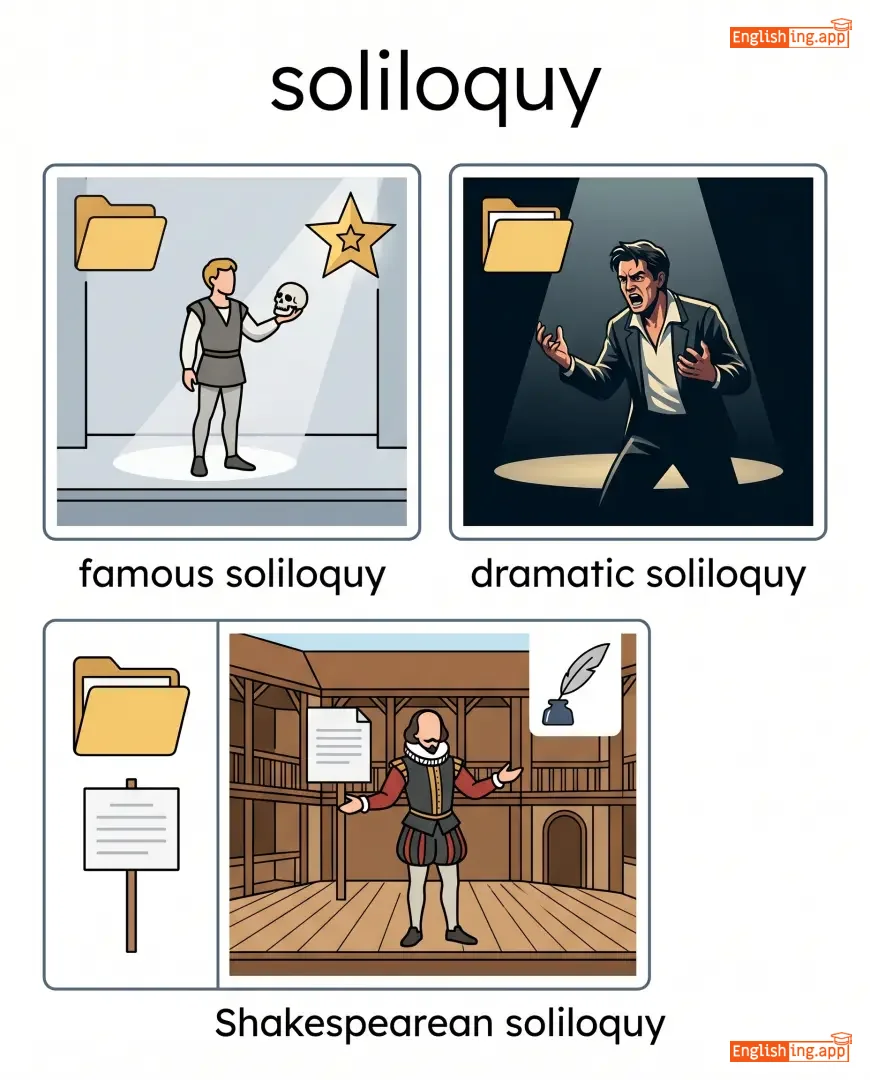
famous soliloquy, dramatic soliloquy, Shakespearean soliloquy, deliver a soliloquy
••••••
|
Mono (один) + Log (слово) → Один говорит.
••••••
|
|
🧪
••••••
|
/ˈsɒlvənt/
noun, adjective
(сольвент)
••••••
|
|
растворитель, способный погасить долги
rastvoritel, sposobnyj pogasit' dolgi
••••••
|
- •••••• | - •••••• | - •••••• | - •••••• |
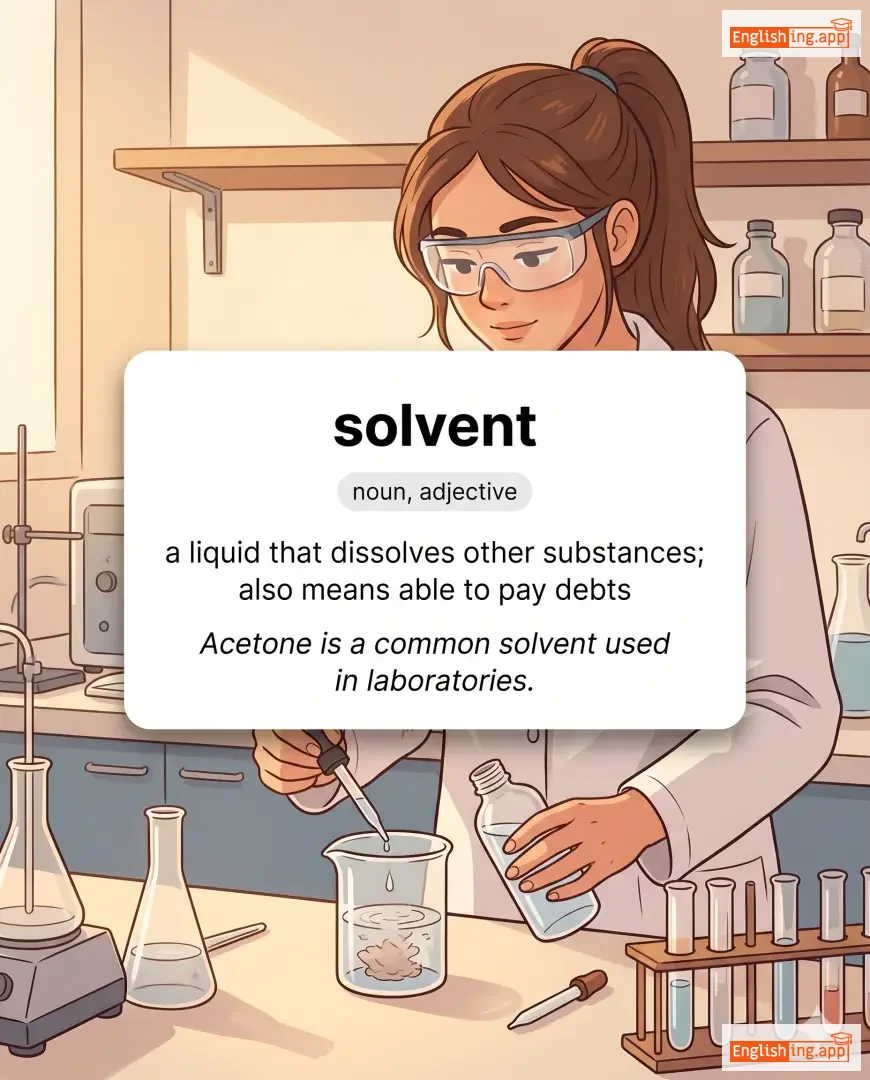
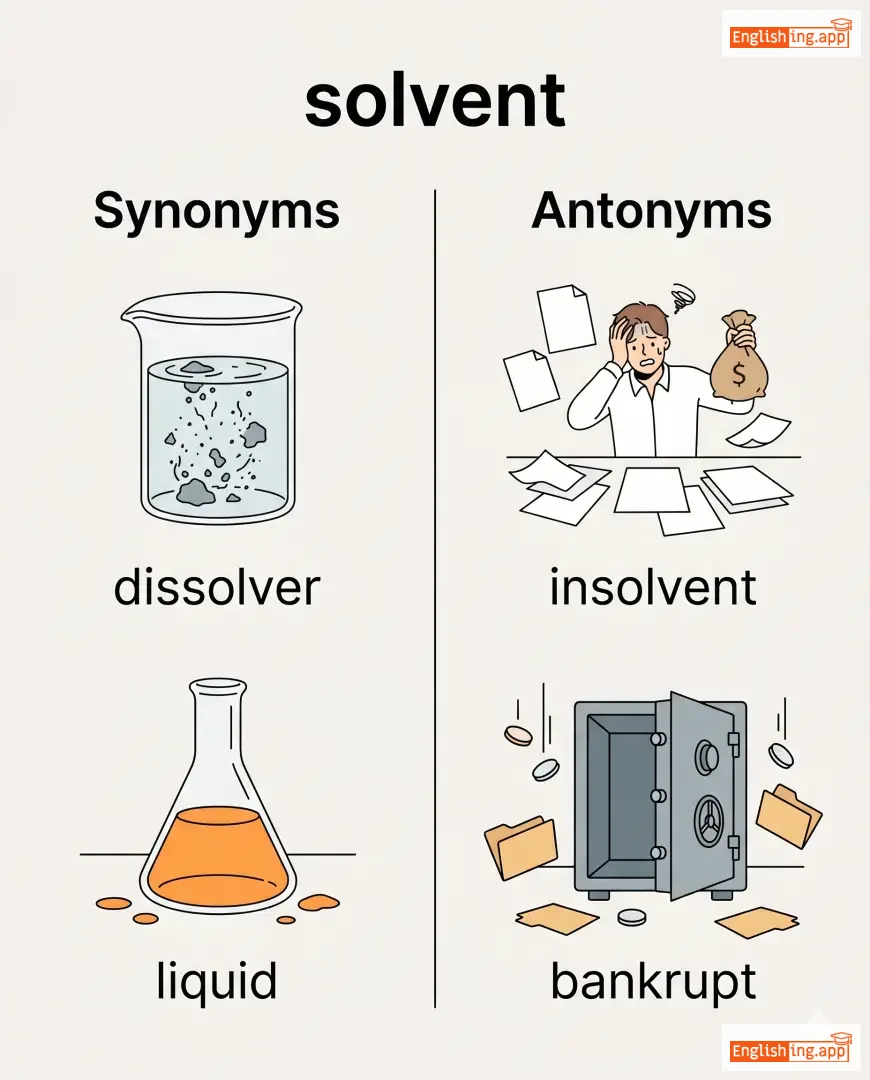
a liquid that dissolves other substances; also means able to pay debts
••••••
|
Acetone is a common solvent used in laboratories.
Ацетон — это распространенный растворитель, используемый в лабораториях.
••••••
|
Ацетон — это распространенный растворитель, используемый в лабораториях.
Atseton — eto rasprostranennyy rastvoritel', ispol'zuemyy v laboratoriyakh.
••••••
|
solvent company
платежеспособная компания
••••••
|
a company that is financially stable and able to pay its debts
••••••
|
финансово стабильная компания
finansovo stabil'naya kompaniya
••••••
|
dissolver, liquid, solution, stable, viable
••••••
|
insolvent, bankrupt
••••••
|
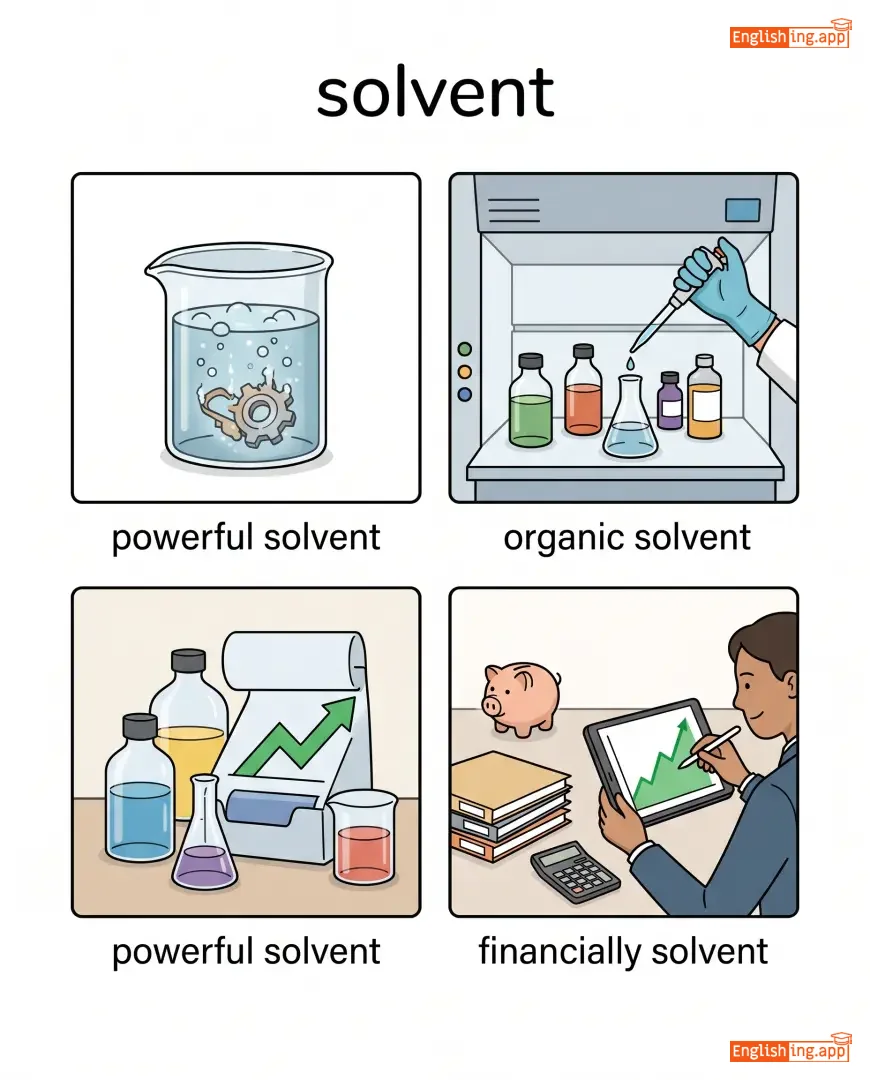
powerful solvent, organic solvent, financially solvent, solvent company
••••••
|
Solve + rent → компания, которая может заплатить свои долги, — это solvent
••••••
|
|
💪
••••••
|
/səˈmætɪk/
adjective
(соматика)
••••••
|
|
телесный
telesnyy
••••••
|
- •••••• | - •••••• | - •••••• | - •••••• |
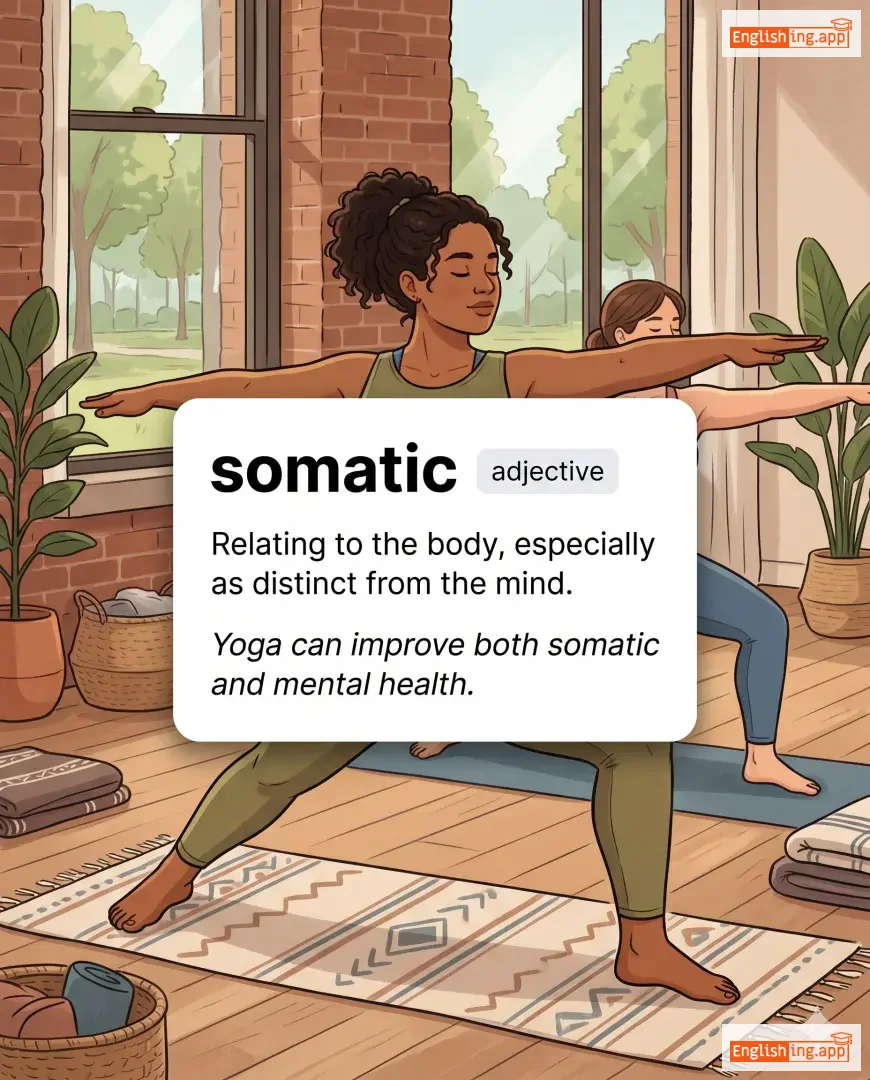
Relating to the body, especially as distinct from the mind.
••••••
|
Yoga can improve both somatic and mental health. |
Йога может улучшить как телесное, так и психическое здоровье.
Yoga mozhet uluchshit' kak telesnoe, tak i psikhicheskoe zdorov'ye.
••••••
|
- •••••• | - •••••• | - •••••• |
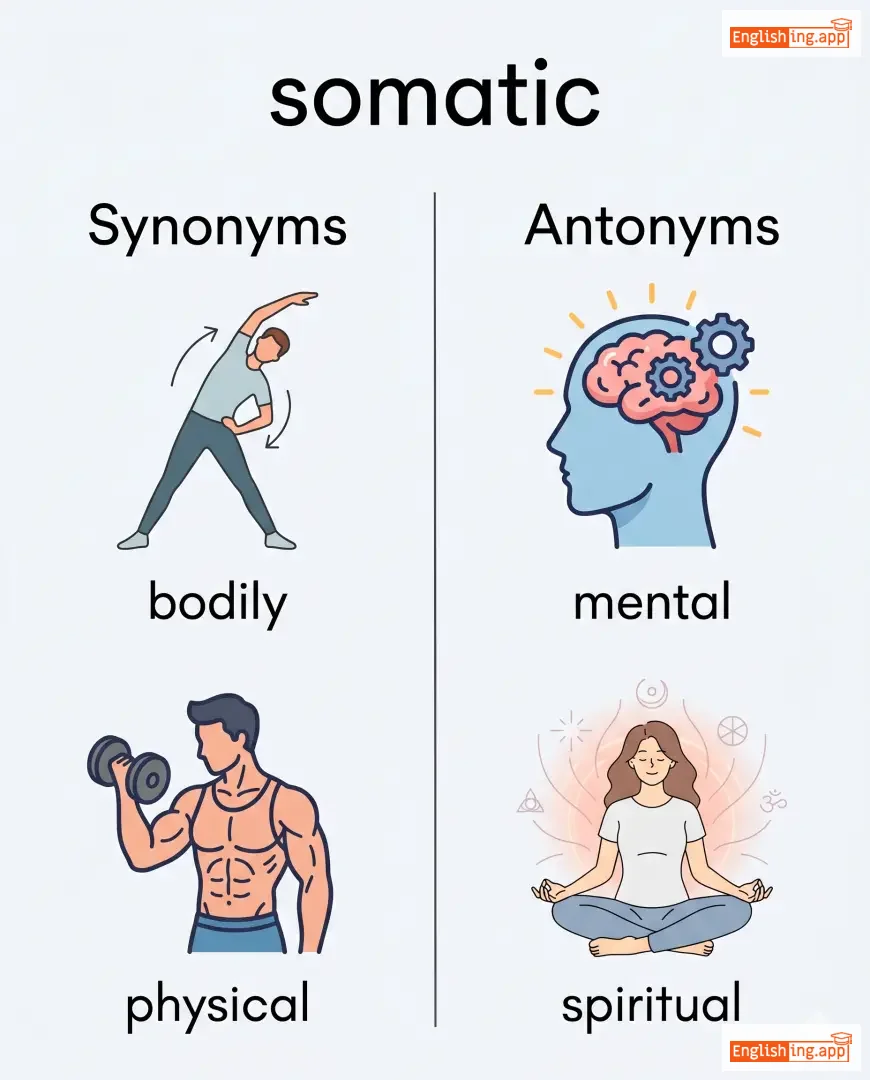
bodily, physical, corporeal, material, anatomical
••••••
|
mental, spiritual, psychic
••••••
|
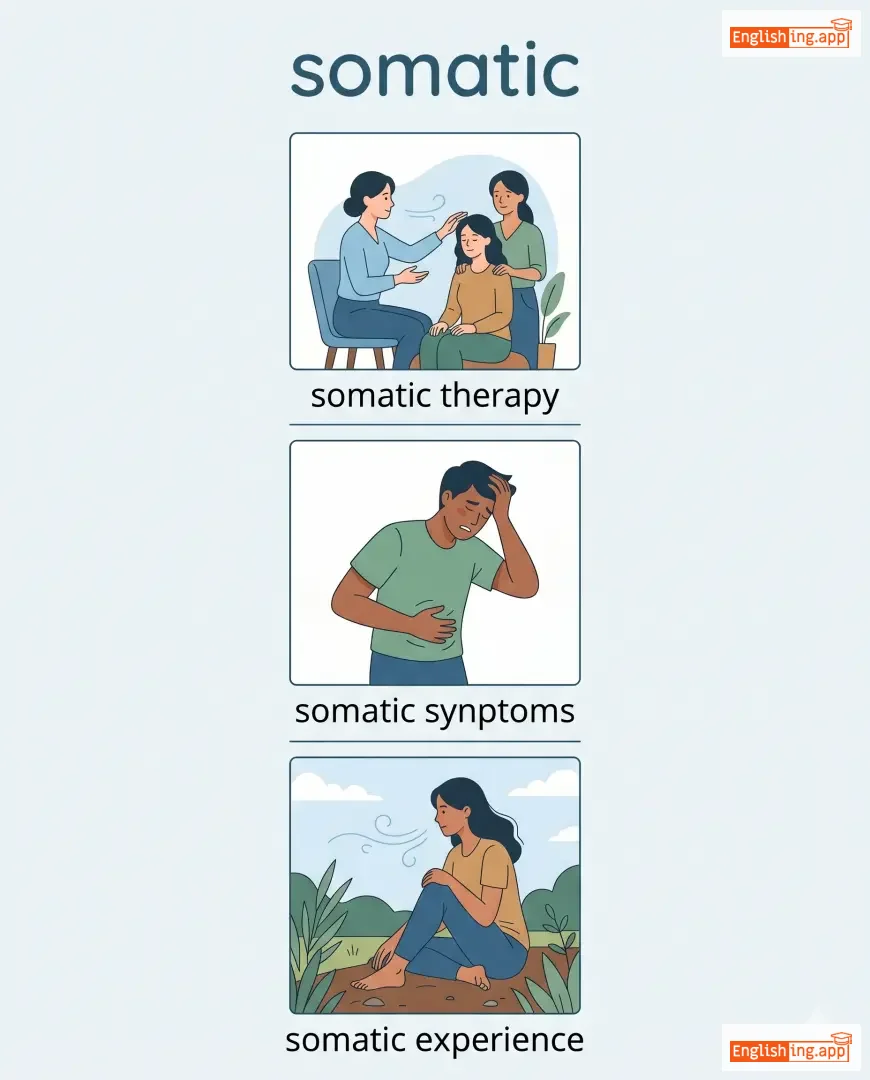
somatic therapy, somatic symptoms, somatic experience, somatic cells
••••••
|
Somatic означает, что связано с телом—представьте, как тело получает 'тело' через 'сома'.
••••••
|
|
😴
••••••
|
/ˌsɒpəˈrɪfɪk/
adjective
(хэппинесс)
••••••
|

|
счастье
schastye
••••••
|
- •••••• | - •••••• | - •••••• | - •••••• |
tending to induce drowsiness or sleep; causing sleepiness
••••••
|
The professor's lecture was so soporific that half the class fell asleep.
Она не могла скрыть свое счастье, когда получила премию.
••••••
|
Она не могла скрыть свое счастье, когда получила премию.
Ona ne mogla skryt' svoyo schast'ye, kogda poluchila premiyu.
••••••
|
- •••••• | - •••••• |
поиск счастья
poisk schast'ya
••••••
|
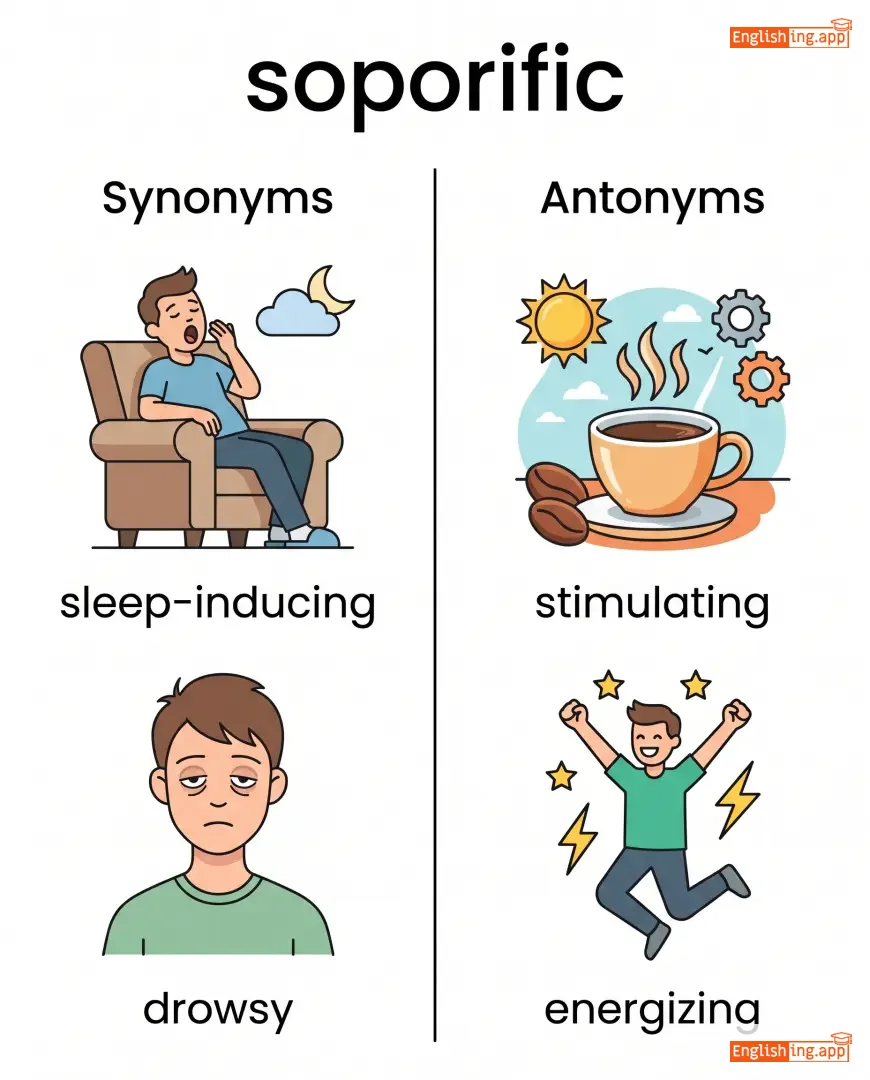
sleep-inducing, drowsy, hypnotic, sedative, calming
••••••
|
stimulating, energizing, exciting
••••••
|
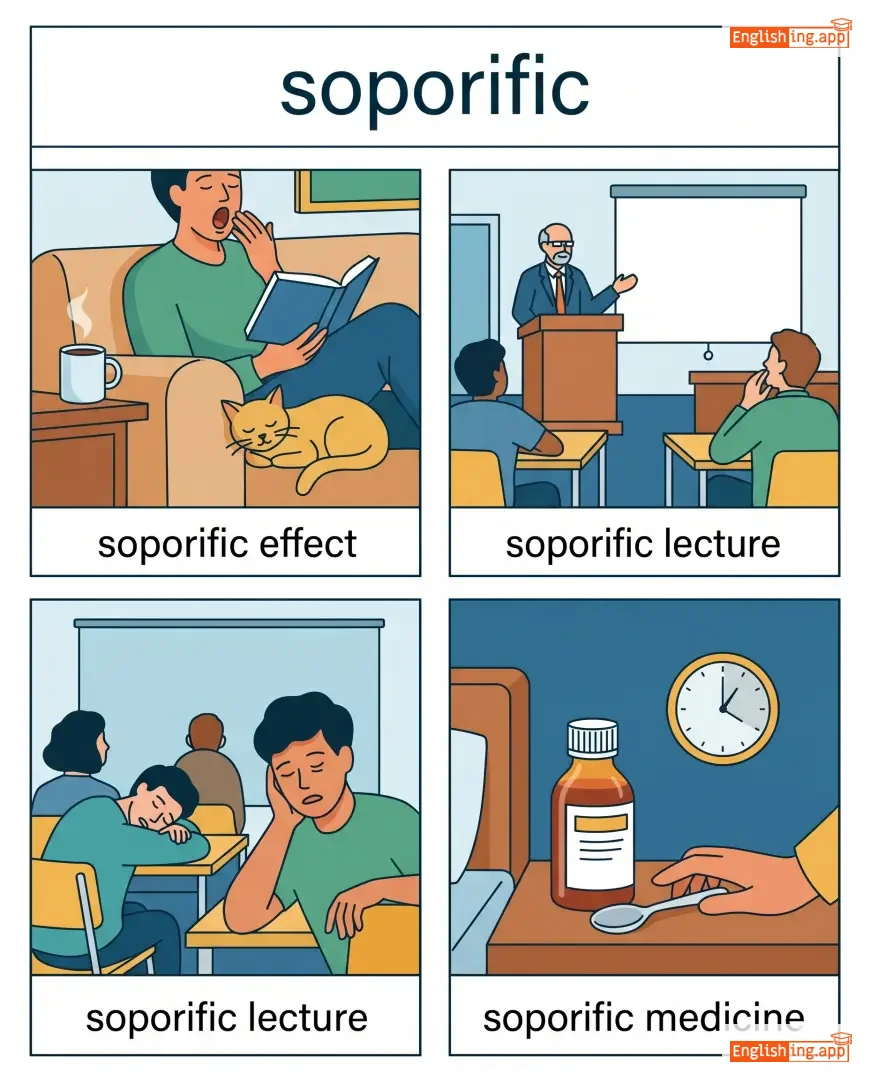
soporific effect, soporific lecture, soporific medicine, soporific atmosphere
••••••
|
Счастье - как 'шастье', будьте счастливы.
••••••
|
|
🕳️
••••••
|
/ˈsɔːrdɪd/
adjective
(сордид)
••••••
|

|
гнусный
gnusnyy
••••••
|
- •••••• | - •••••• | - •••••• | - •••••• |
involving immoral or dishonorable actions; dirty or unpleasant
••••••
|
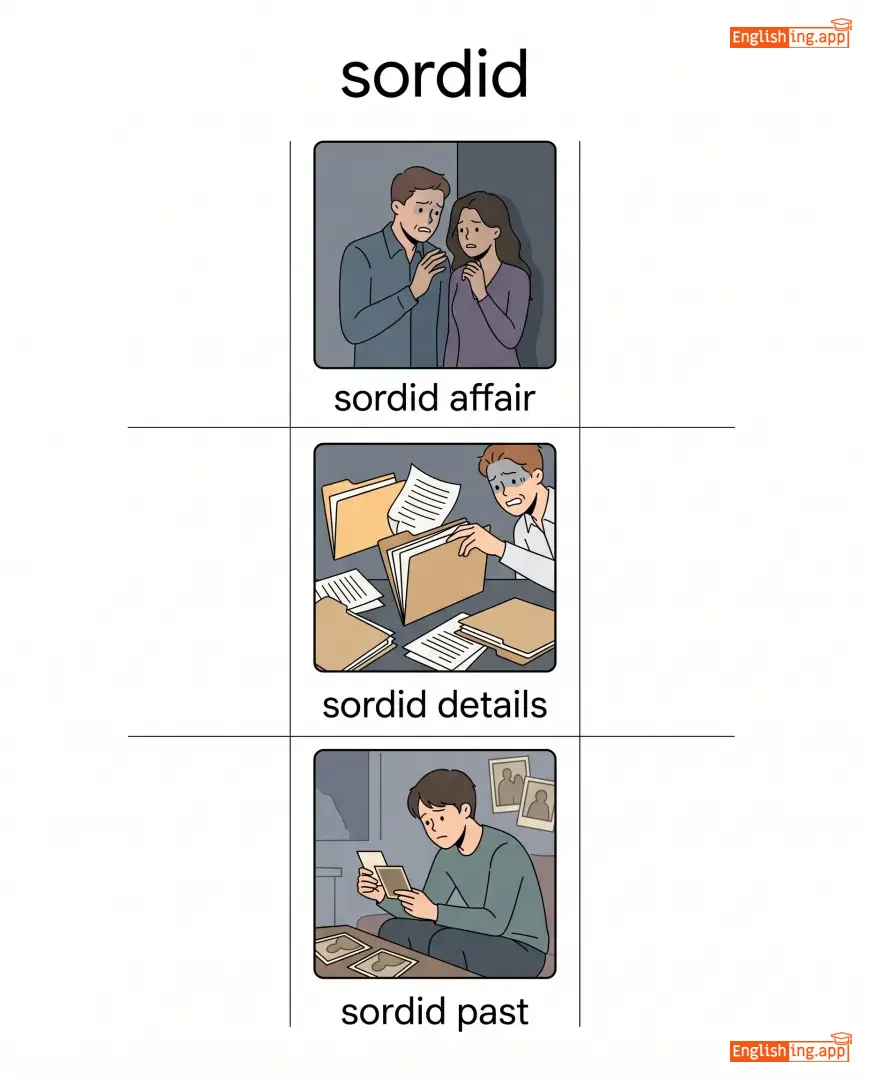
The newspaper exposed the politician's sordid past. |
Газета раскрыла позорное прошлое политика.
Gazeta raskryla pozornoye proshloye politika.
••••••
|
sordid details |
shameful or dirty aspects of a story
••••••
|
гнусные детали
gnusnyye detali
••••••
|
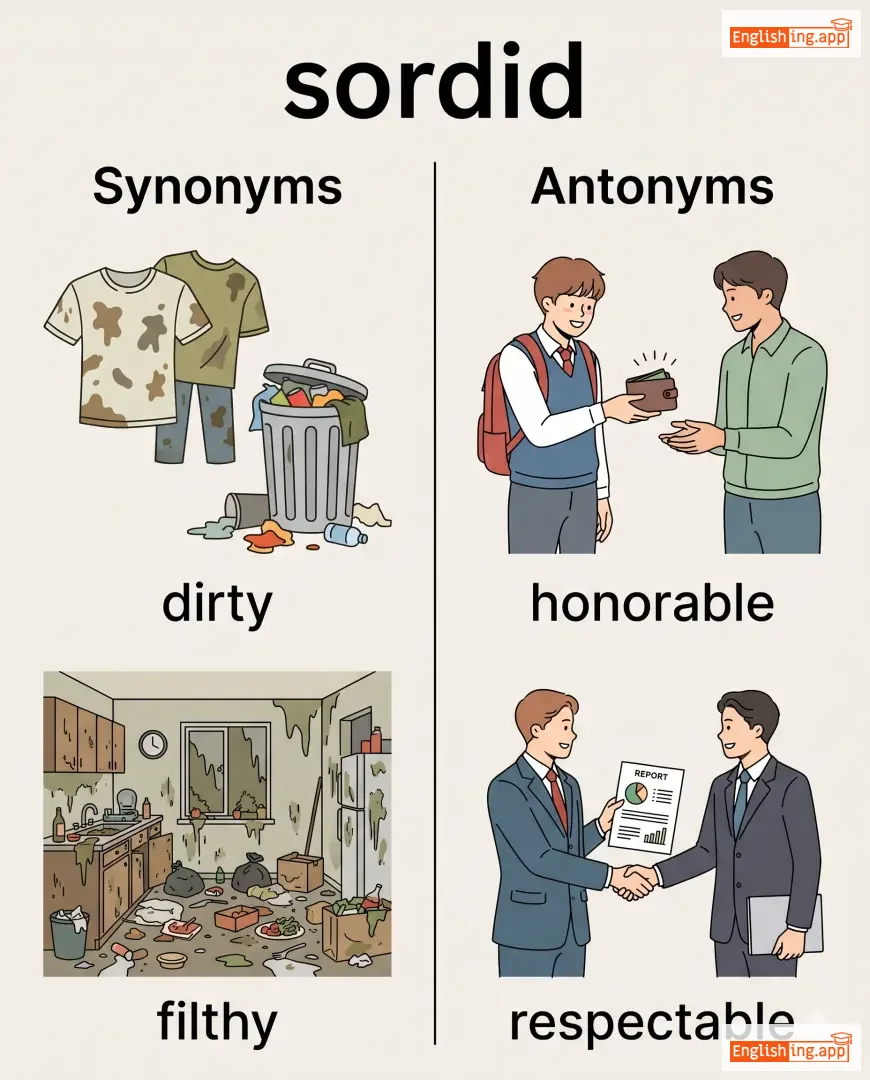
dirty, filthy, shameful, disgraceful, sleazy
••••••
|
honorable, respectable, clean
••••••
|
sordid affair, sordid details, sordid past, sordid scandal
••••••
|
Sordid означает 'sorry deed' - гнусное дело
••••••
|
|
🎭
••••••
|
/ˈspiːʃəs/
adjective
(спишес)
••••••
|
|
обманчивый
obmanchivyy
••••••
|
- •••••• | - •••••• | - •••••• | - •••••• |
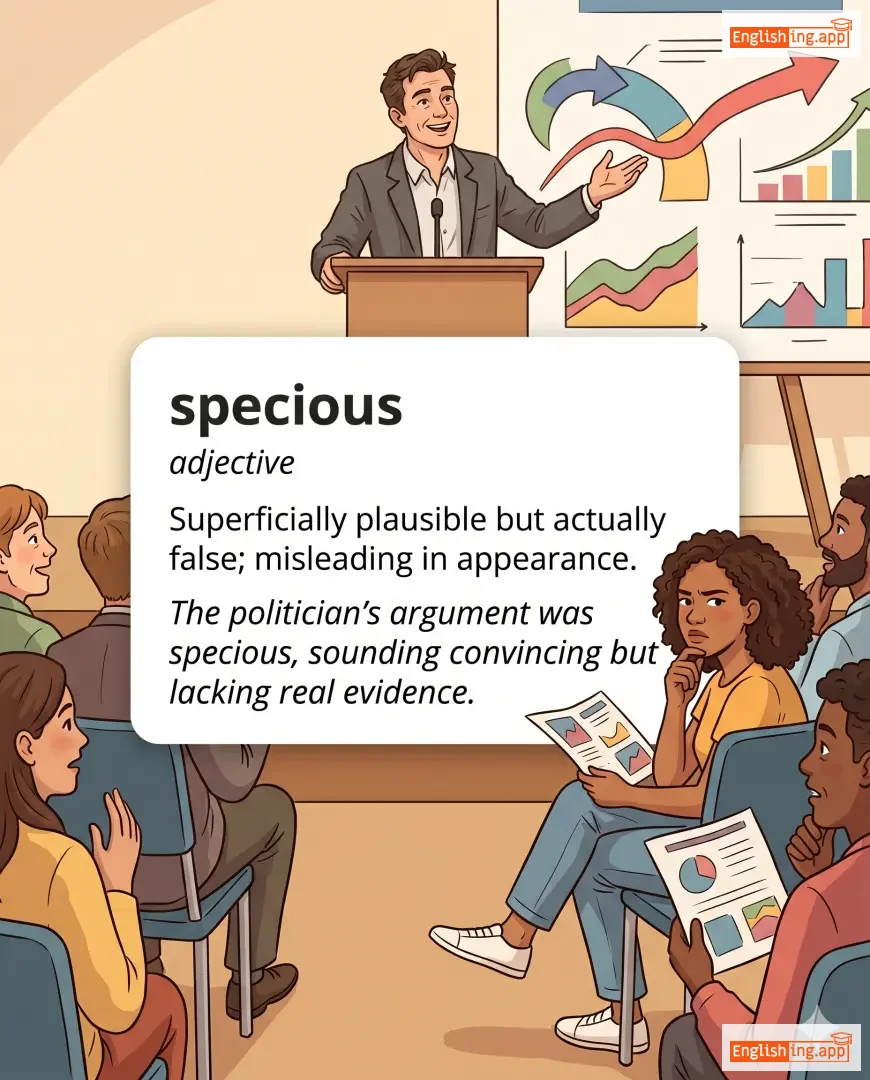
Superficially plausible but actually false; misleading in appearance.
••••••
|
The politician’s argument was specious, sounding convincing but lacking real evidence. |
Аргумент политика был обманчивым, он звучал убедительно, но не имел реальных доказательств.
Argument politika byl obmanchivym, on zvuchal ubeditel'no, no ne imel real'nykh dokazatel'stv.
••••••
|
- •••••• | - •••••• | - •••••• |
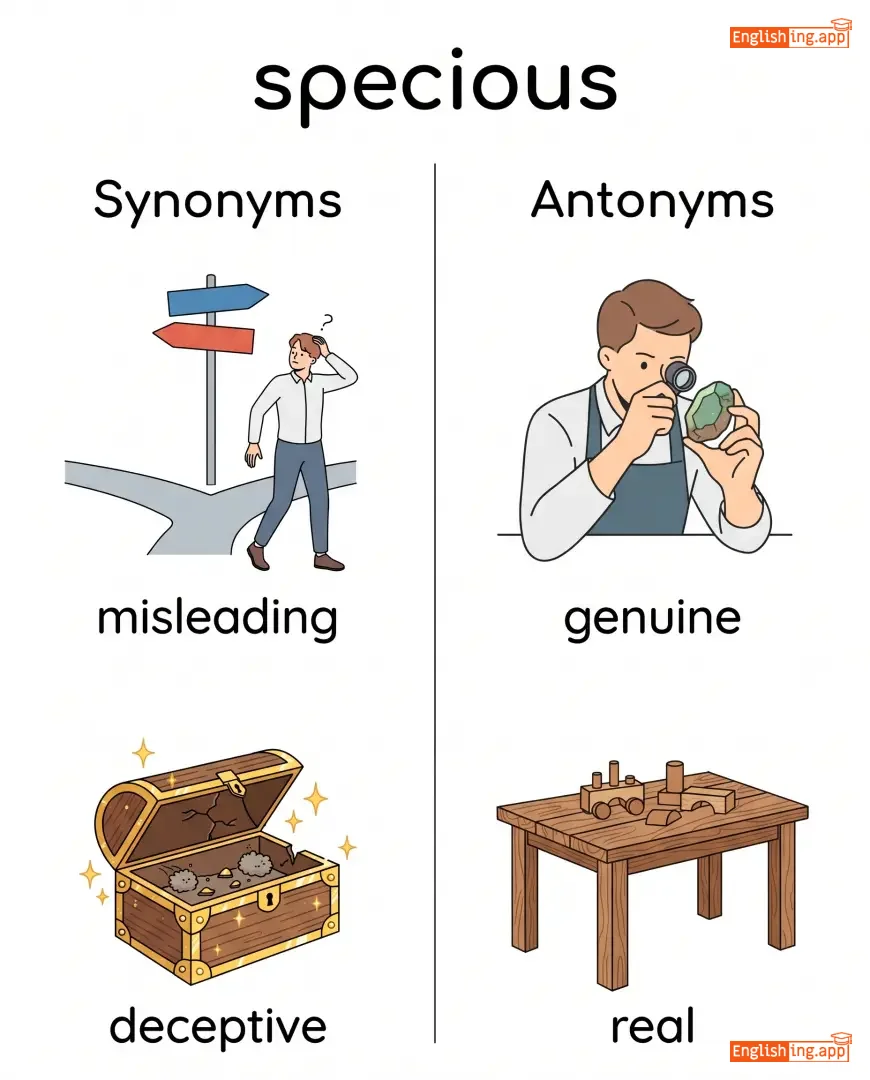
misleading, deceptive, false, fallacious, illusory
••••••
|
genuine, real, true
••••••
|
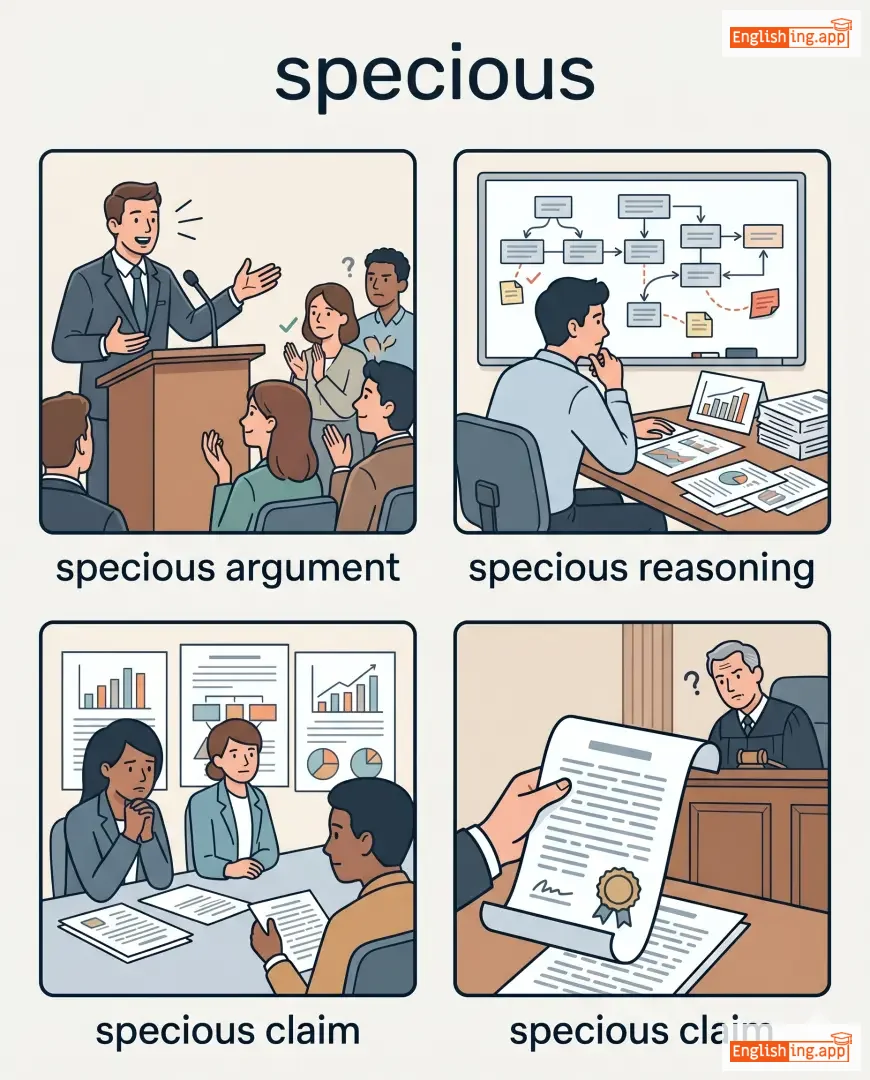
specious argument, specious reasoning, specious claim
••••••
|
Обманчивый — обман и выглядит как правда.
••••••
|
|
🌈
••••••
|
/ˈspɛktrəm/
noun
(спектр)
••••••
|
|
спектр
spektar
••••••
|
- •••••• | - •••••• | - •••••• | - •••••• |
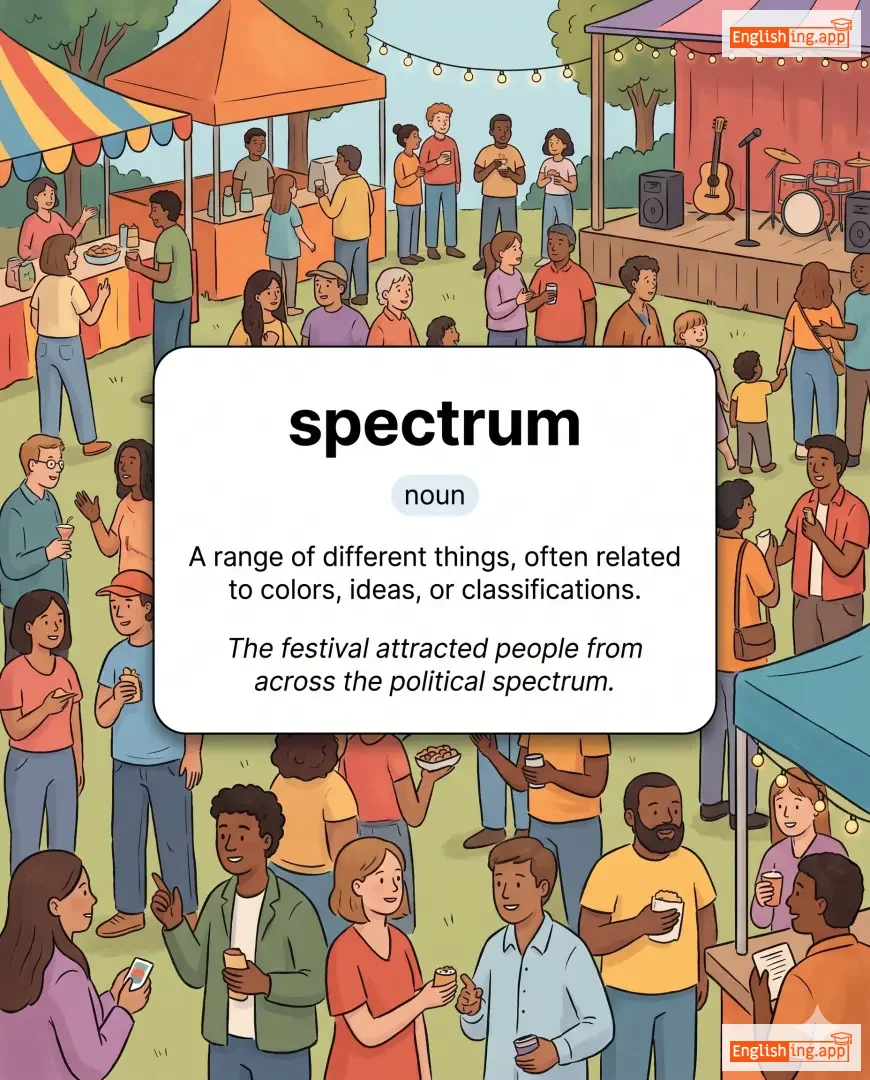
A range of different things, often related to colors, ideas, or classifications.
••••••
|
The festival attracted people from across the political spectrum. |
Фестиваль привлек людей со всего политического спектра.
Festival prilyek lyudey so vsego politicheskogo spektra.
••••••
|
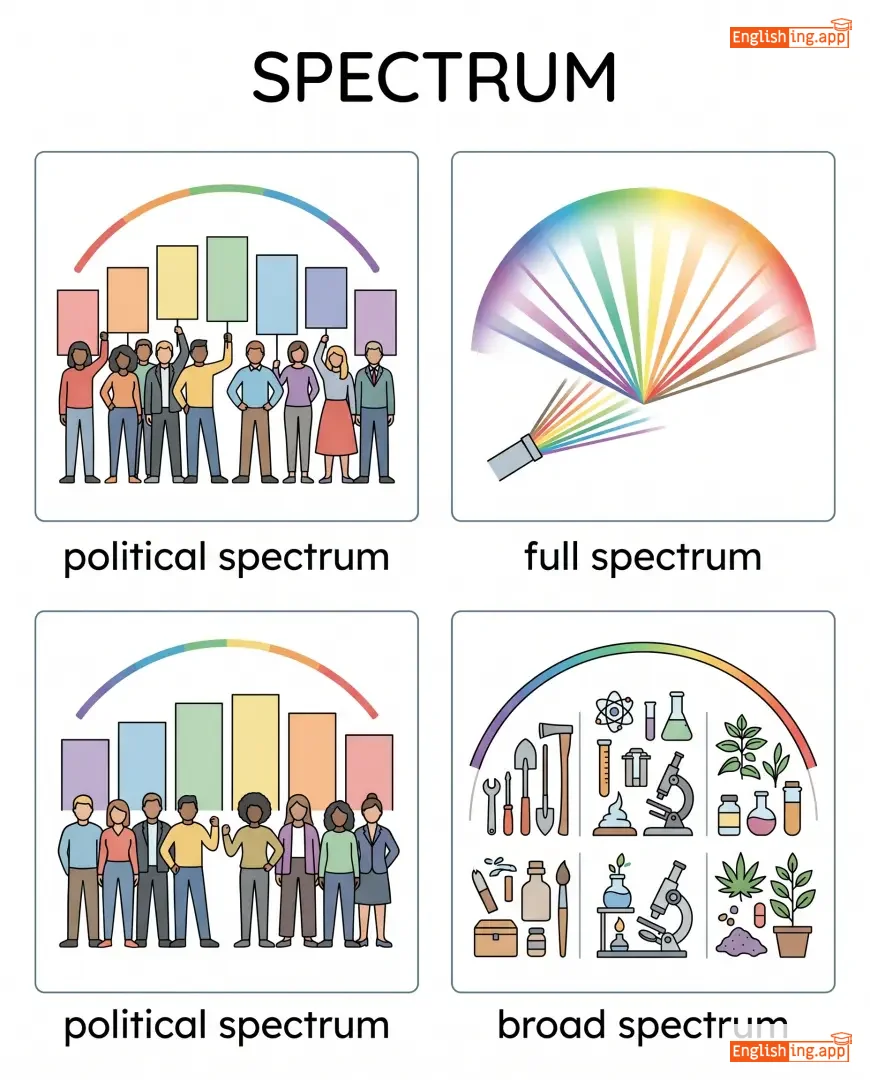
broad spectrum |
Covering a wide range of ideas or possibilities.
••••••
|
широкий спектр
shirokiy spektr
••••••
|
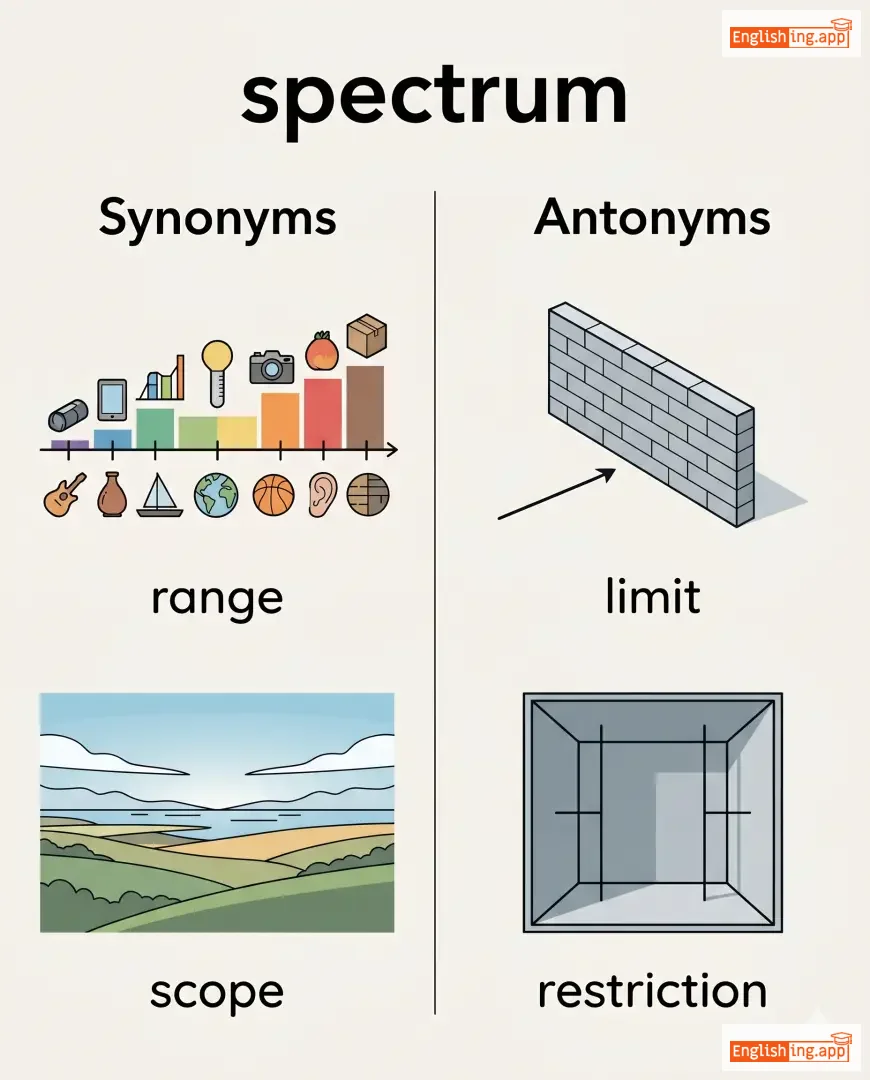
range, scope, span, variety, gamut
••••••
|
limit, restriction, boundary
••••••
|
political spectrum, full spectrum, broad spectrum, across the spectrum
••••••
|
Спектр — это полный диапазон цветов 🌈, всё, что видно в спектре.
••••••
|
|
💸
••••••
|
/ˈspɛndˌθrɪft/
noun
(спендтрифтк)
••••••
|


|
расточитель
rastochitel
••••••
|
- •••••• | - •••••• | - •••••• | - •••••• |
A person who spends money extravagantly or wastefully.
••••••
|
The young prince was known as a spendthrift, wasting his fortune on lavish parties. |
Молодой принц был известен как расточитель, тратящий свое состояние на роскошные вечеринки.
Molodoj prints byl izvesten kak rastočitel', tratjashchij svoe sostojanie na roskoshnye vecherinki.
••••••
|
spendthrift ways |
Extravagant and wasteful spending habits
••••••
|
расточительные привычки
rastochitelnye privitychki
••••••
|
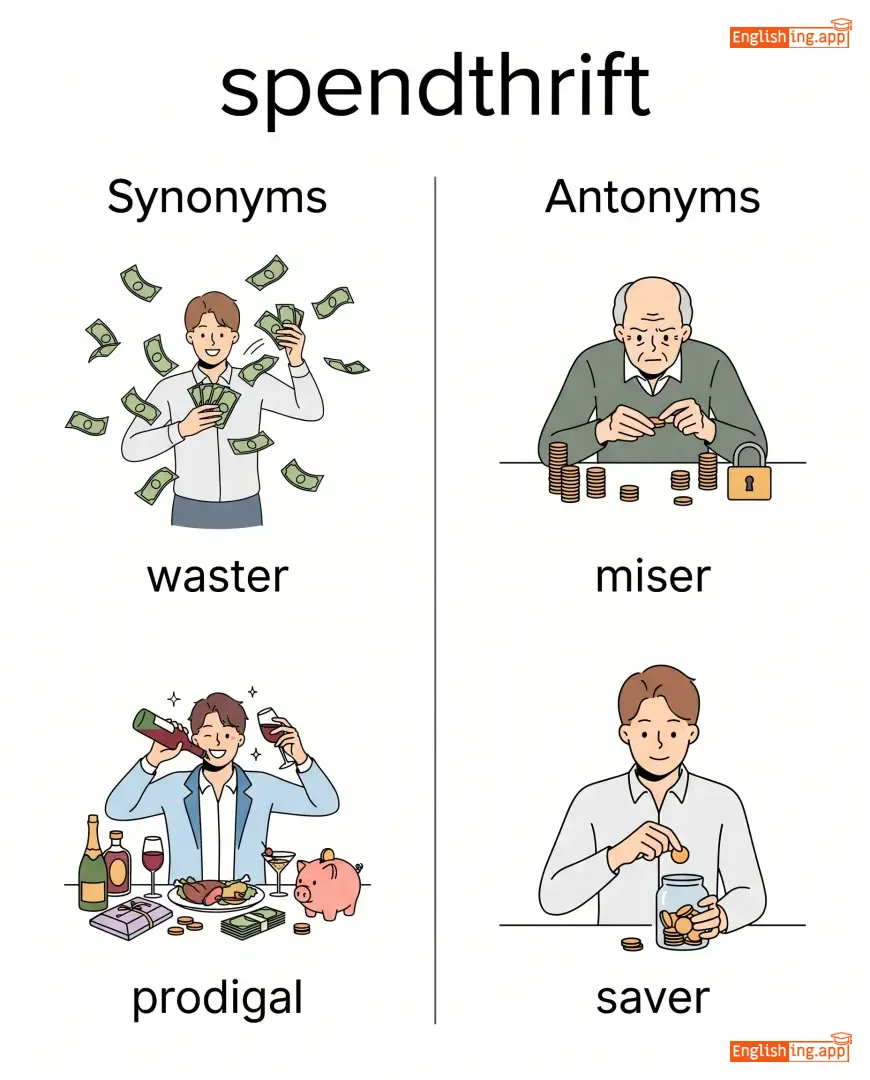
waster, prodigal, squanderer, waster, profligate
••••••
|
miser, saver, frugal
••••••
|
spendthrift habits, spendthrift lifestyle, notorious spendthrift
••••••
|
Трать деньги бездумно, как расточитель.
••••••
|
|
🌧️
••••••
|
/spəˈrædɪk/
adjective
(спорадик)
••••••
|
|
спорадический
sporadicheskiy
••••••
|
- •••••• | - •••••• | - •••••• | - •••••• |
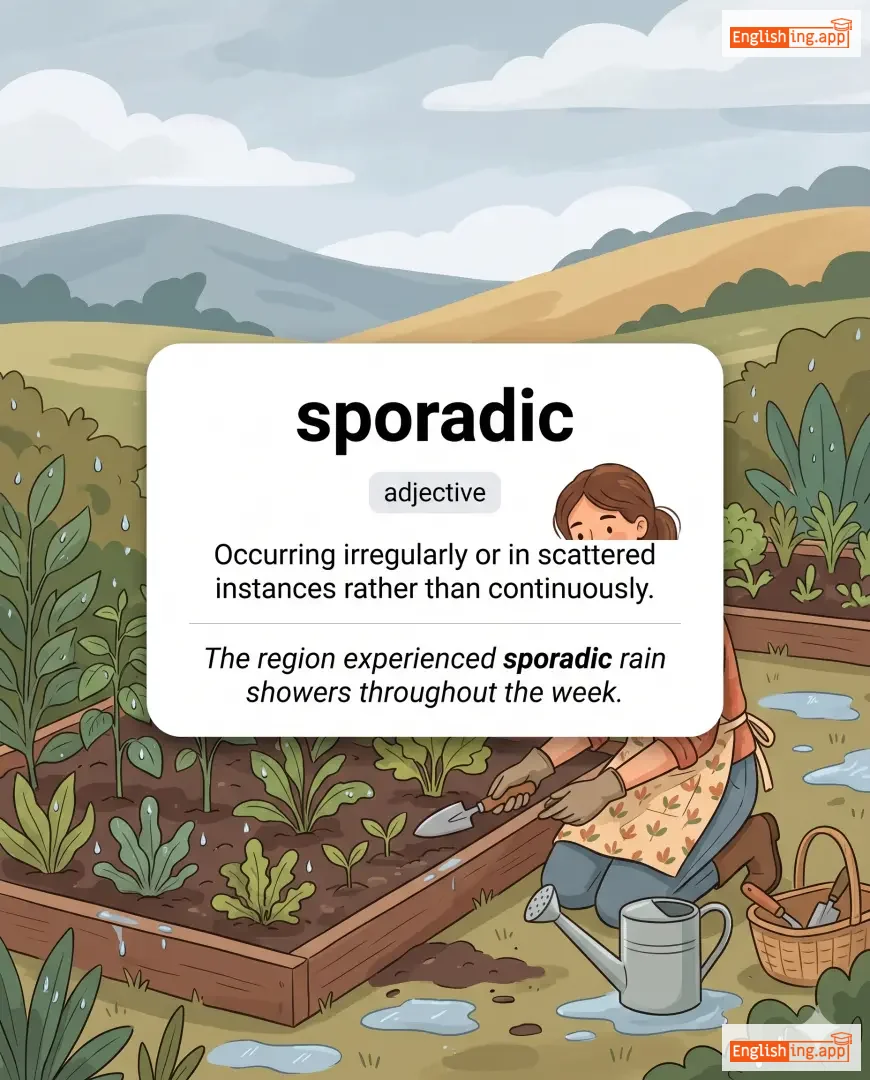
Occurring irregularly or in scattered instances rather than continuously.
••••••
|
The region experienced sporadic rain showers throughout the week.
Регион испытал спорадические дожди в течение недели.
••••••
|
Регион испытал спорадические дожди в течение недели.
Region ispyltal sporadicheskie dozhdi v techeniye nedeli.
••••••
|
- •••••• | - •••••• | - •••••• |
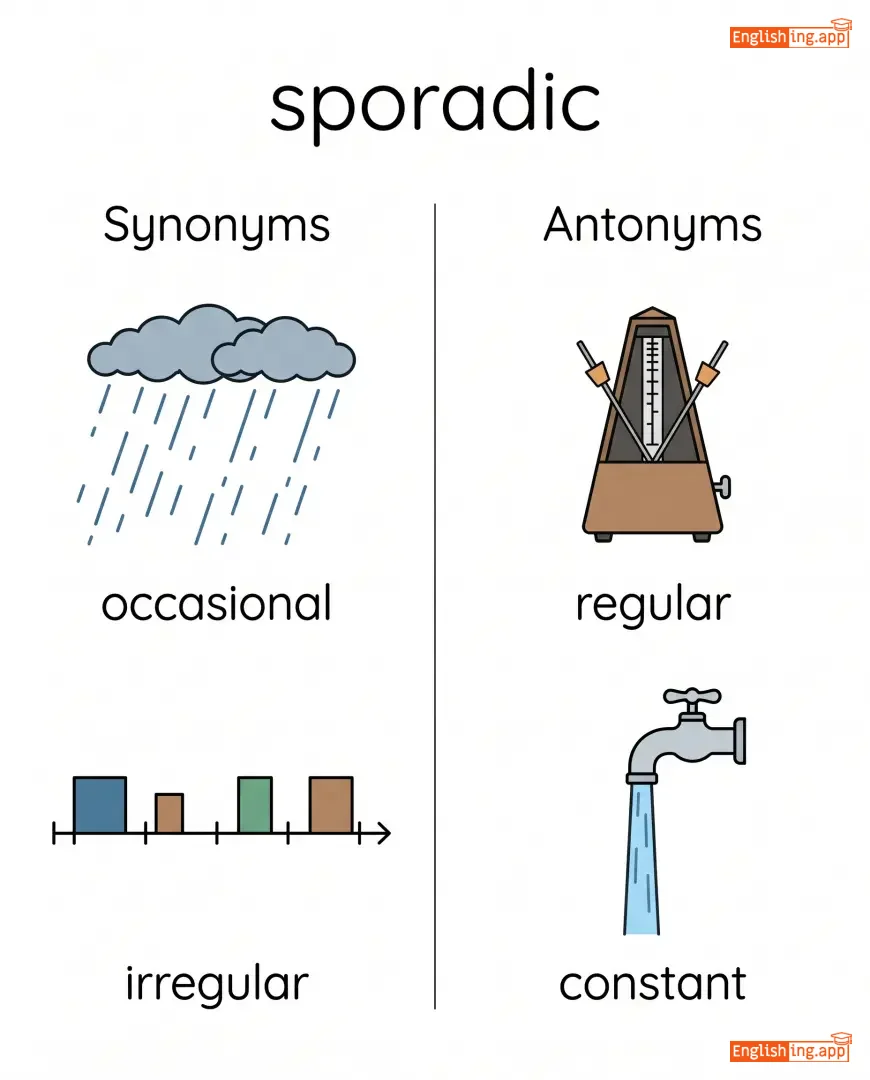
occasional, irregular, infrequent, scattered, random
••••••
|
regular, constant, continuous
••••••
|
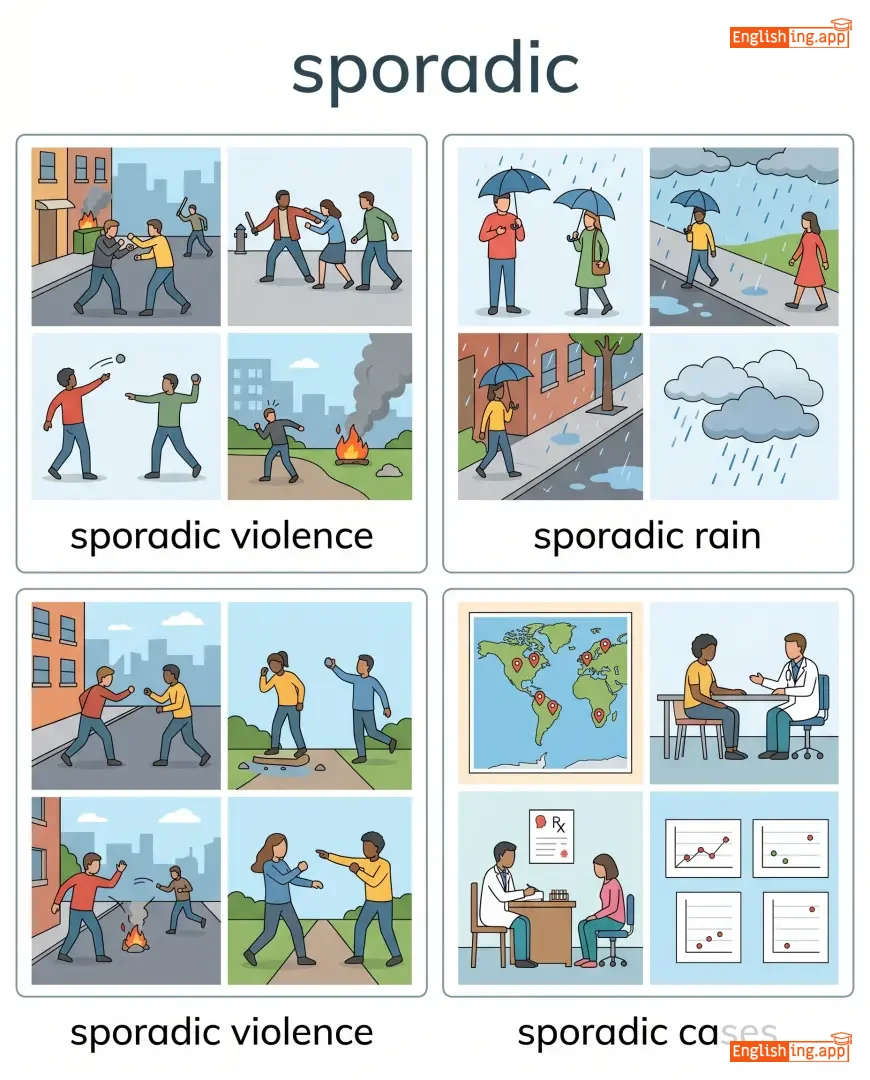
sporadic violence, sporadic rain, sporadic cases, sporadic attacks
••••••
|
Слово sporadic похоже на «спорадический» и означает случайность или нерегулярность.
••••••
|
|
🗑️
••••••
|
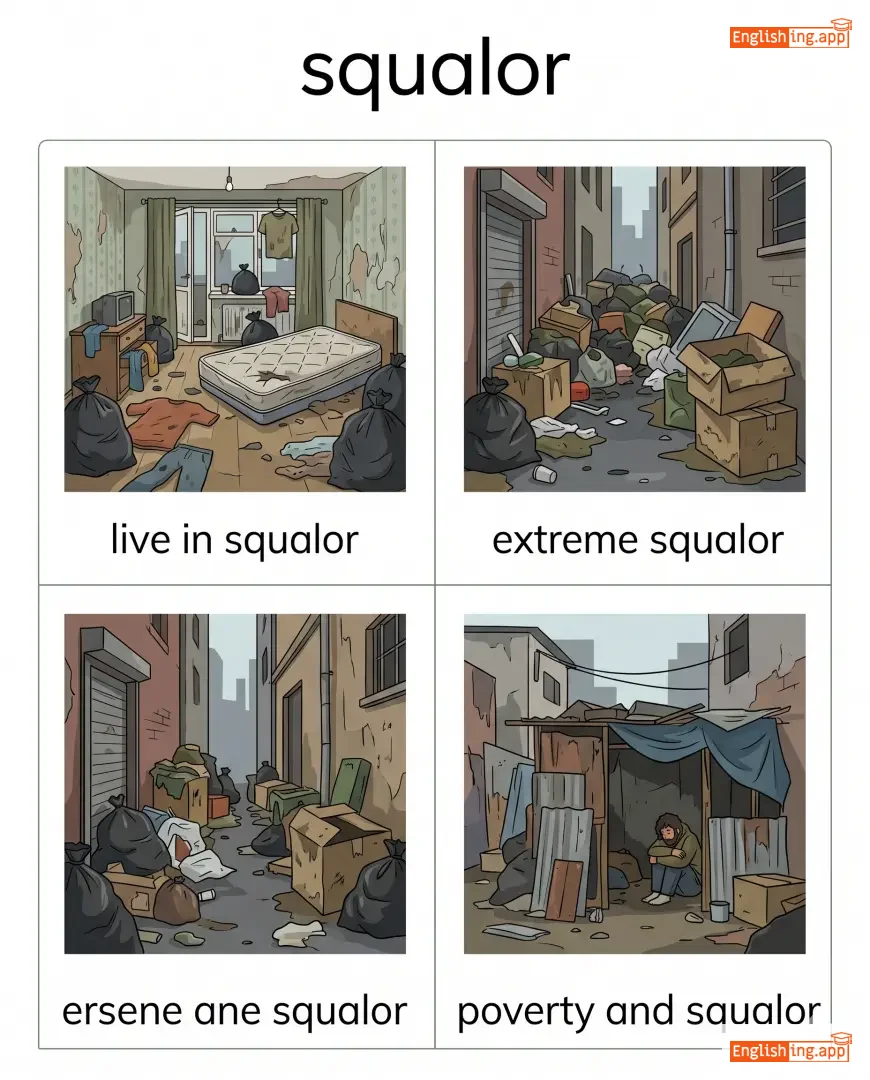
/ˈskwɒlər/
noun
(skwɔlər)
••••••
|

|
нищета
nishcheta
••••••
|
- •••••• | - •••••• | - •••••• | - •••••• |
the state of being extremely dirty and unpleasant, especially due to poverty or neglect
••••••
|
They lived in squalor without basic facilities.
Они жили в нищете без базовых удобств.
••••••
|
Они жили в нищете без базовых удобств.
Oni zhili v nishchete bez bazovykh udobstv.
••••••
|
- •••••• | - •••••• | - •••••• |
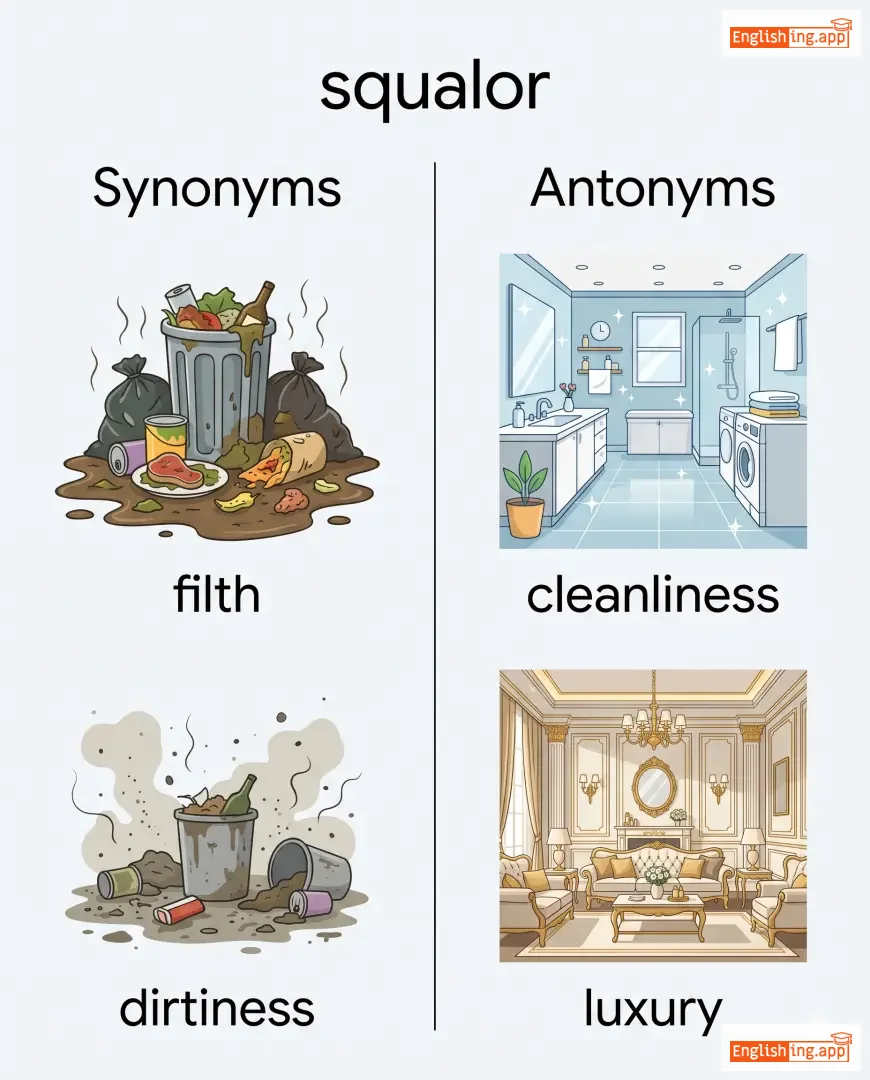
filth, dirtiness, poverty, misery
••••••
|
cleanliness, luxury
••••••
|
live in squalor, extreme squalor, poverty and squalor
••••••
|
Squalor = нищета, жить в бедности
••••••
|
|
🎶
••••••
|
/stəˈkɑː.təʊ/
adjective
(стака́тто)
••••••
|
|
отрезанный
otrezannyy
••••••
|
- •••••• | - •••••• | - •••••• | - •••••• |
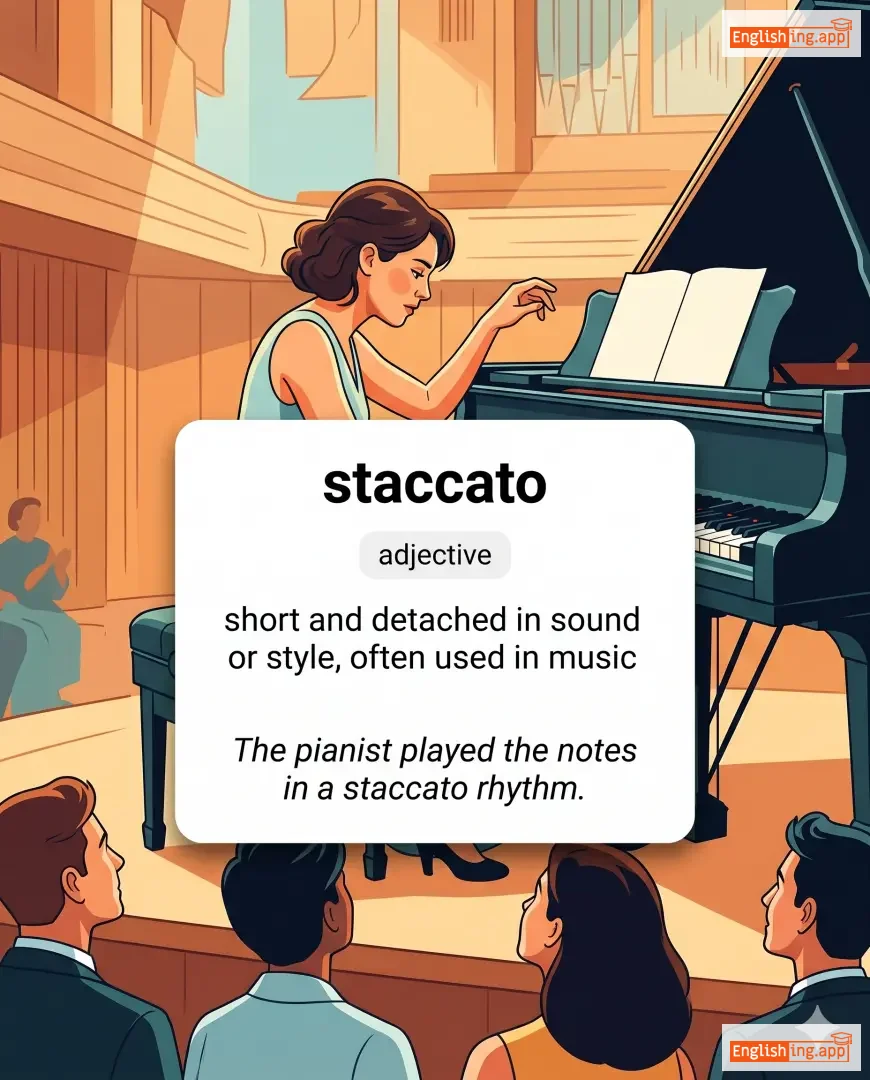
short and detached in sound or style, often used in music
••••••
|
The pianist played the notes in a staccato rhythm. |
Пианист играл ноты в ритме стаккато.
Pianist igral noty v ritme stakkato.
••••••
|
- •••••• | - •••••• | - •••••• |
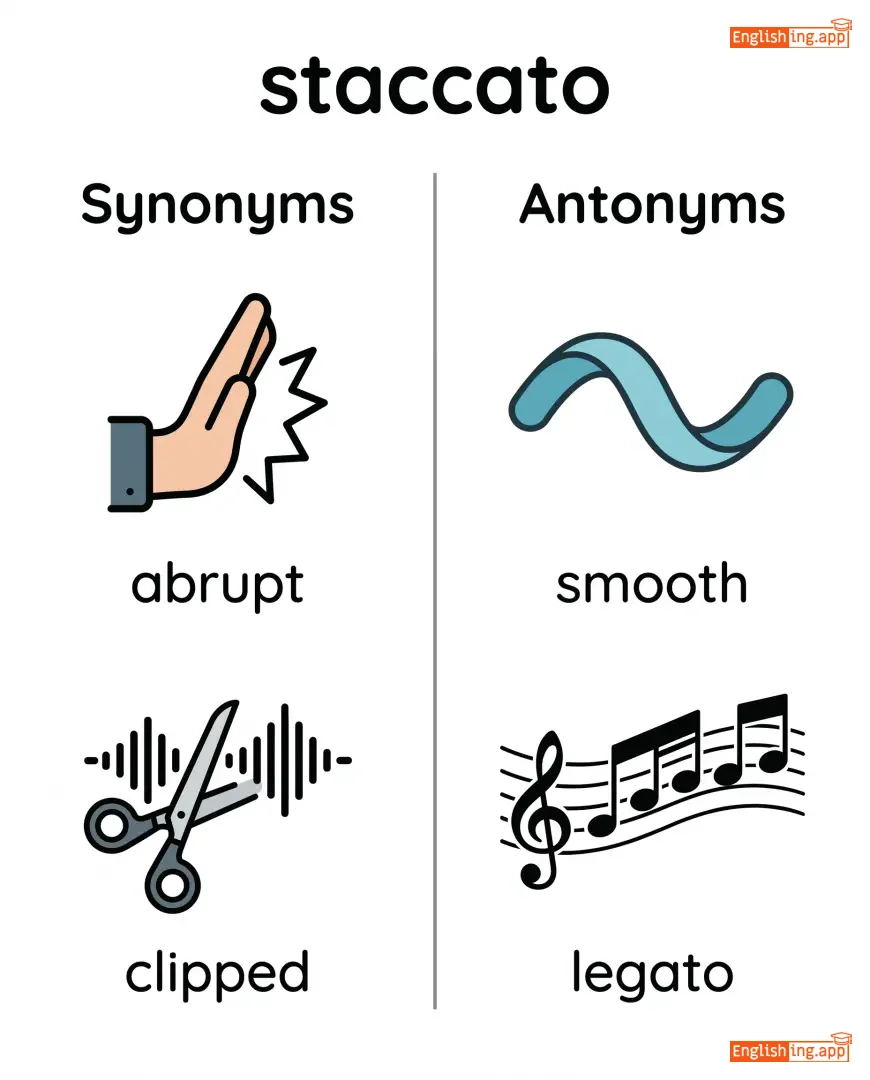
abrupt, clipped, sharp, detached
••••••
|
smooth, legato
••••••
|
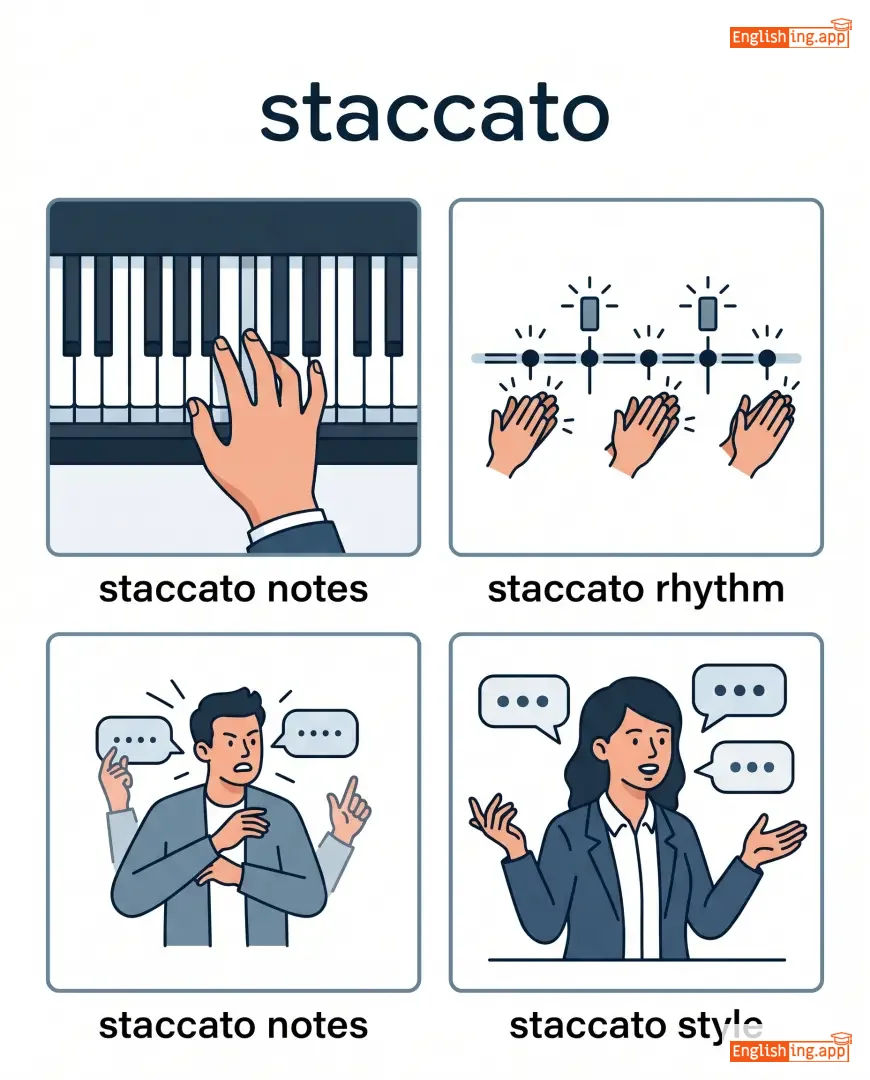
staccato notes, staccato rhythm, staccato style, staccato speech
••••••
|
Sta + kato → отрезать звуки, играть отрывисто (staccato)
••••••
|
|
🩸
••••••
|
/stɑːntʃ/
verb
(станч)
••••••
|
- •••••• |
остановить кровотечение
ostanovit' krovootechenie
••••••
|
stanched
станчд
••••••
|
stanched
станчд
••••••
|
stanches
станчес
••••••
|
stanching
станчинг
••••••
|
to stop the flow of blood or liquid from a wound or source
••••••
|
The nurse quickly stanched the bleeding from the cut.
медсестра быстро остановила кровотечение из пореза.
••••••
|
медсестра быстро остановила кровотечение из пореза.
medsestra bystro ostanovila krovootechenie iz poreza.
••••••
|
stanch the flow
остановить поток
••••••
|
to stop or control the movement of something, especially blood or money
••••••
|
остановить поток
ostanovit' potok
••••••
|
stop, stem, halt, check, control
••••••
|
allow, continue, release
••••••
|
stanch the bleeding, stanch the wound, stanch the flow, stanch losses
••••••
|
станч = Stop + кровь Stanch означает остановить кровотечение
••••••
|
|
📢
••••••
|
/stɛnˈtɔːriən/
adjective
(стенториан)
••••••
|
|
оглушающий
oglushayushchiy
••••••
|
- •••••• | - •••••• | - •••••• | - •••••• |
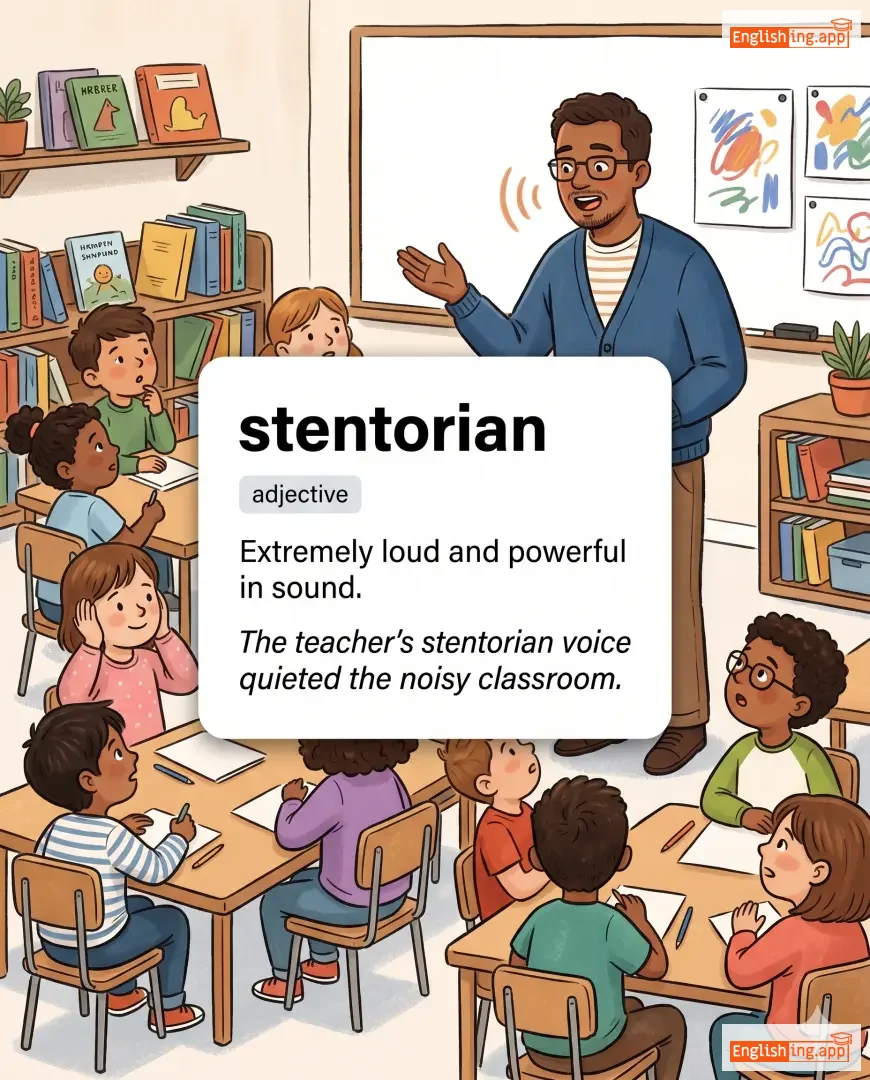
Extremely loud and powerful in sound.
••••••
|
The teacher’s stentorian voice quieted the noisy classroom. |
Стенториозный голос учителя заглушил шумный класс.
Stentorizhnyy golos uchitelya zaglushil shumnyy klass.
••••••
|
- •••••• | - •••••• | - •••••• |
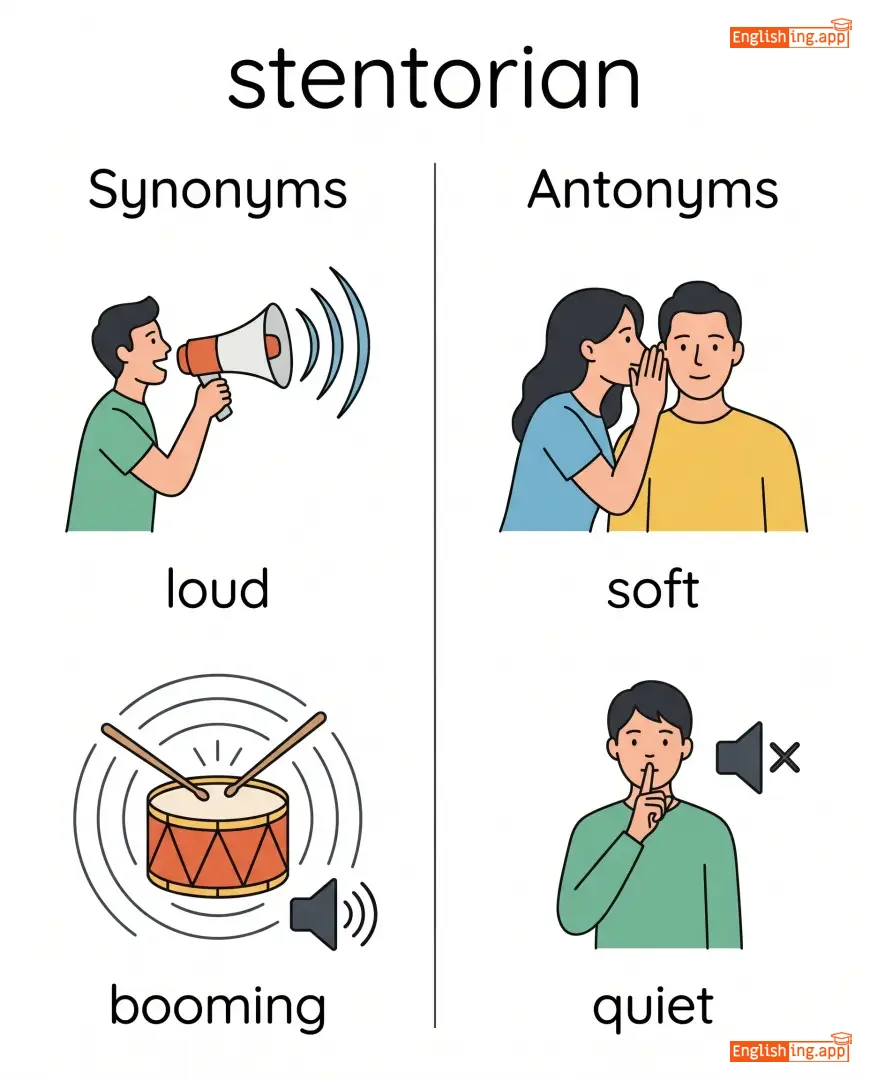
loud, booming, thunderous, resonant
••••••
|
soft, quiet, muted
••••••
|
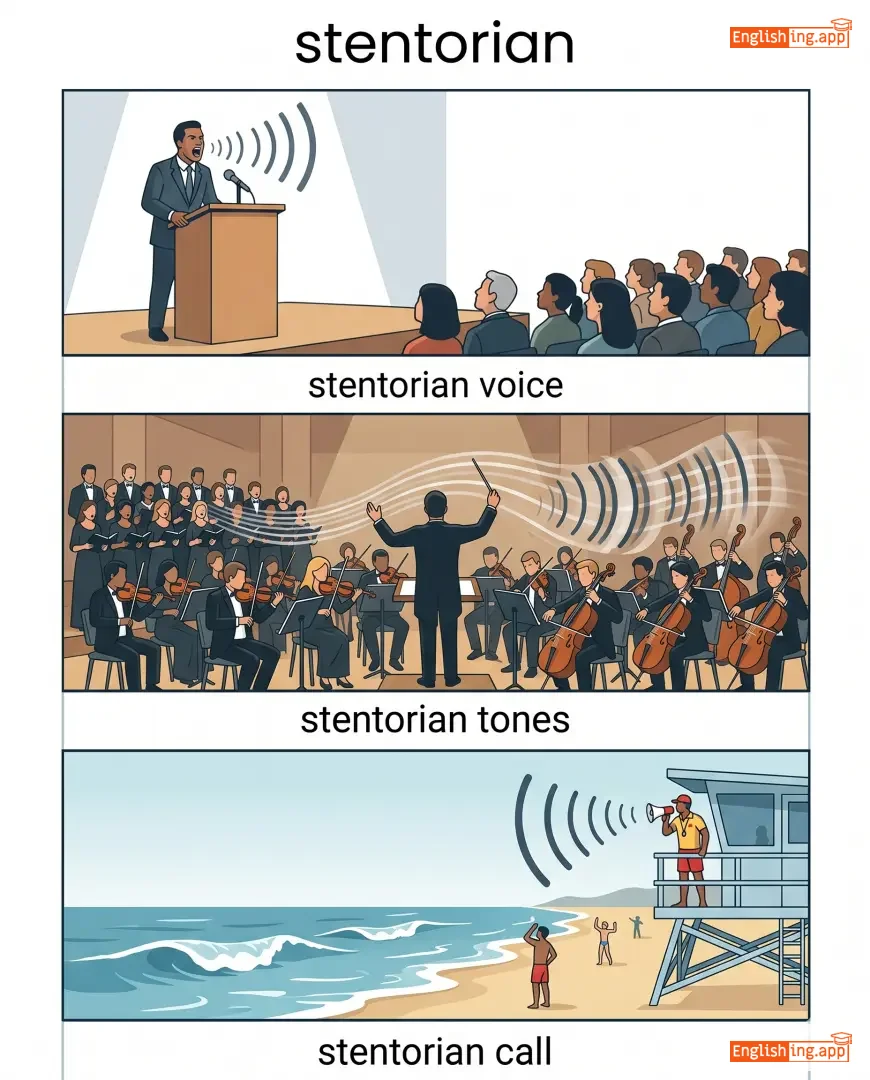
stentorian voice, stentorian tones, stentorian call
••••••
|
Stentorian - как громовой звук, оглушает!
••••••
|

