|
表情符号
|
单词 | Images | 翻译 | 过去时 | 过去分词 | 第三人称单数 | 动名词 | 含义 | 例句 | 例句翻译 | 示例表达 | 示例表达含义 | 示例表达翻译 | 同义词 | 反义词 | 搭配词 | 助记符 |
|---|---|---|---|---|---|---|---|---|---|---|---|---|---|---|---|---|---|
|
🧩
••••••
|
/ˈriːbəs/
noun
(瑞布斯)
••••••
|
- •••••• |
谜语
miyu
••••••
|
- •••••• | - •••••• | - •••••• | - •••••• |
a puzzle in which words are represented by pictures, symbols, or letters
••••••
|
The children enjoyed solving the rebus puzzles in the magazine. |
孩子们喜欢解答杂志中的谜语。
Haizimen xihuan jieda zazhi zhong de miyu.
••••••
|
- •••••• | - •••••• | - •••••• |
puzzle, riddle, brainteaser, enigma
••••••
|
answer, solution
••••••
|
rebus puzzle, solve a rebus, rebus challenge, rebus game
••••••
|
ReBUS 可以理解为 '用图片解谜',就像谜语
••••••
|
|
🙅
••••••
|
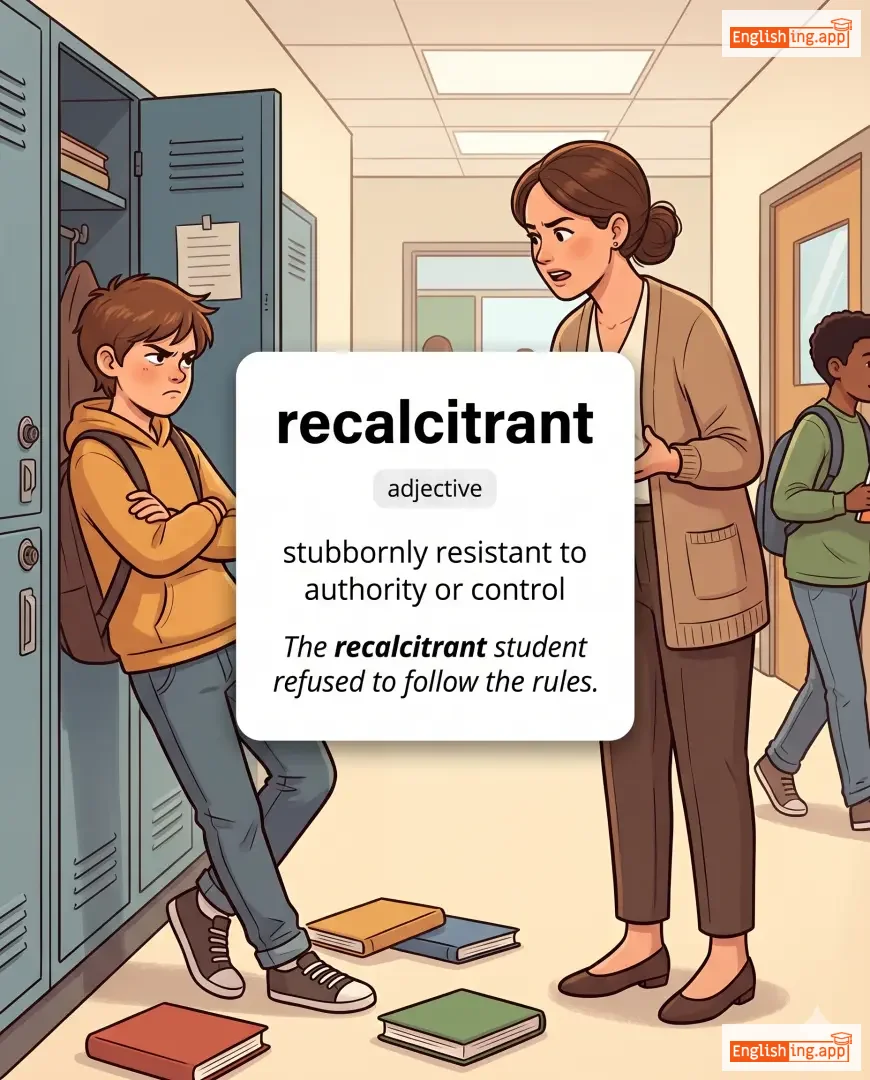
/rɪˈkælsɪtrənt/
adjective
••••••
|
|
- •••••• | - •••••• | - •••••• | - •••••• | - •••••• |
stubbornly resistant to authority or control
••••••
|
The recalcitrant student refused to follow the rules. |
- •••••• | - •••••• | - •••••• | - •••••• |
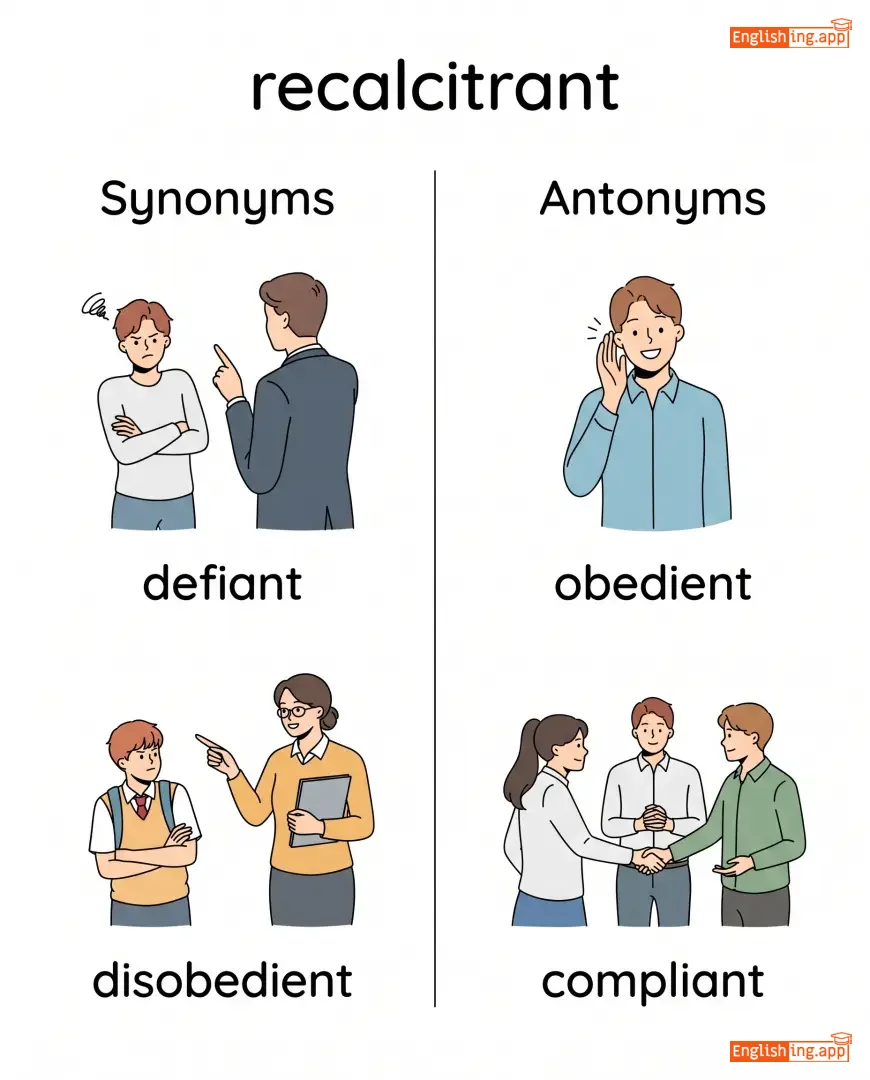
defiant, disobedient, rebellious, obstinate, uncooperative
••••••
|
obedient, compliant, cooperative
••••••
|
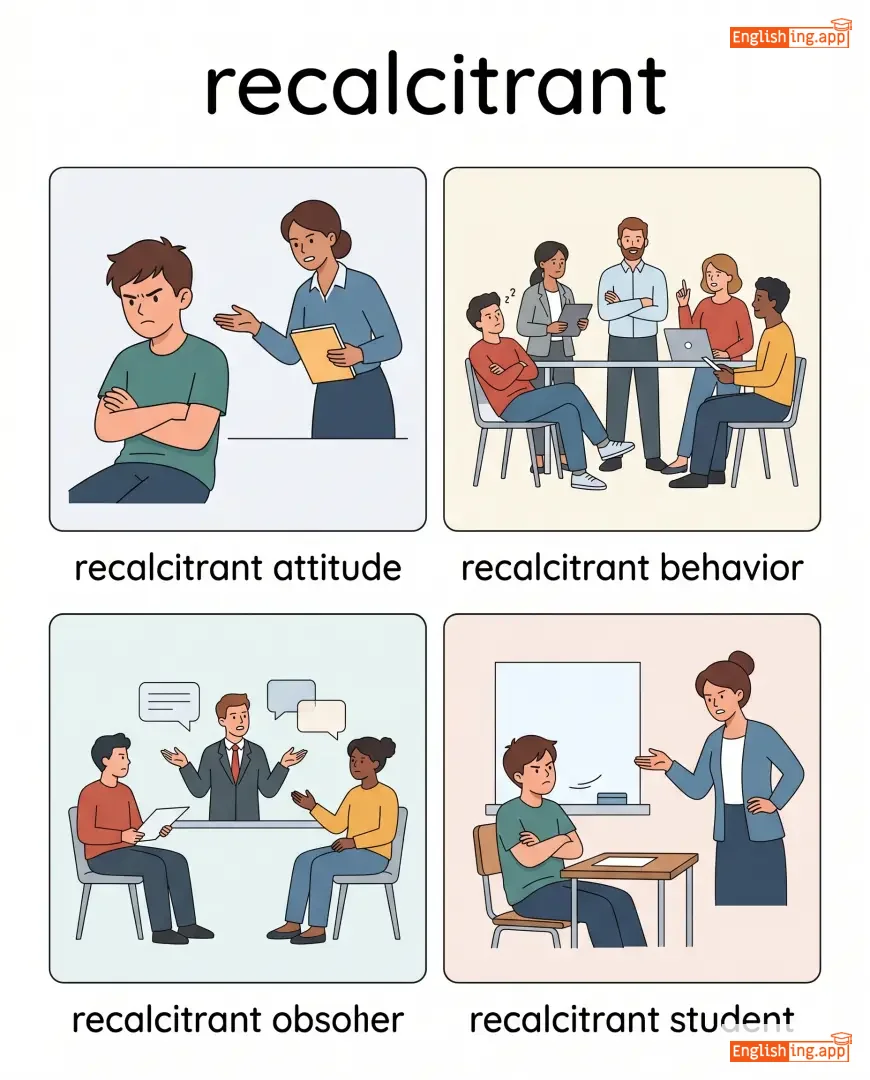
recalcitrant attitude, recalcitrant behavior, recalcitrant student
••••••
|
No •••••• |
|
🗣️
••••••
|
/rɪˈkænt/
verb
(rɪˈkænt)
••••••
|
|
撤回
chèhuí
••••••
|
recanted
rɪˈkæntɪd
••••••
|
recanted
rɪˈkæntɪd
••••••
|
recants
rɪˈkænts
••••••
|
recanting
rɪˈkæntɪŋ
••••••
|
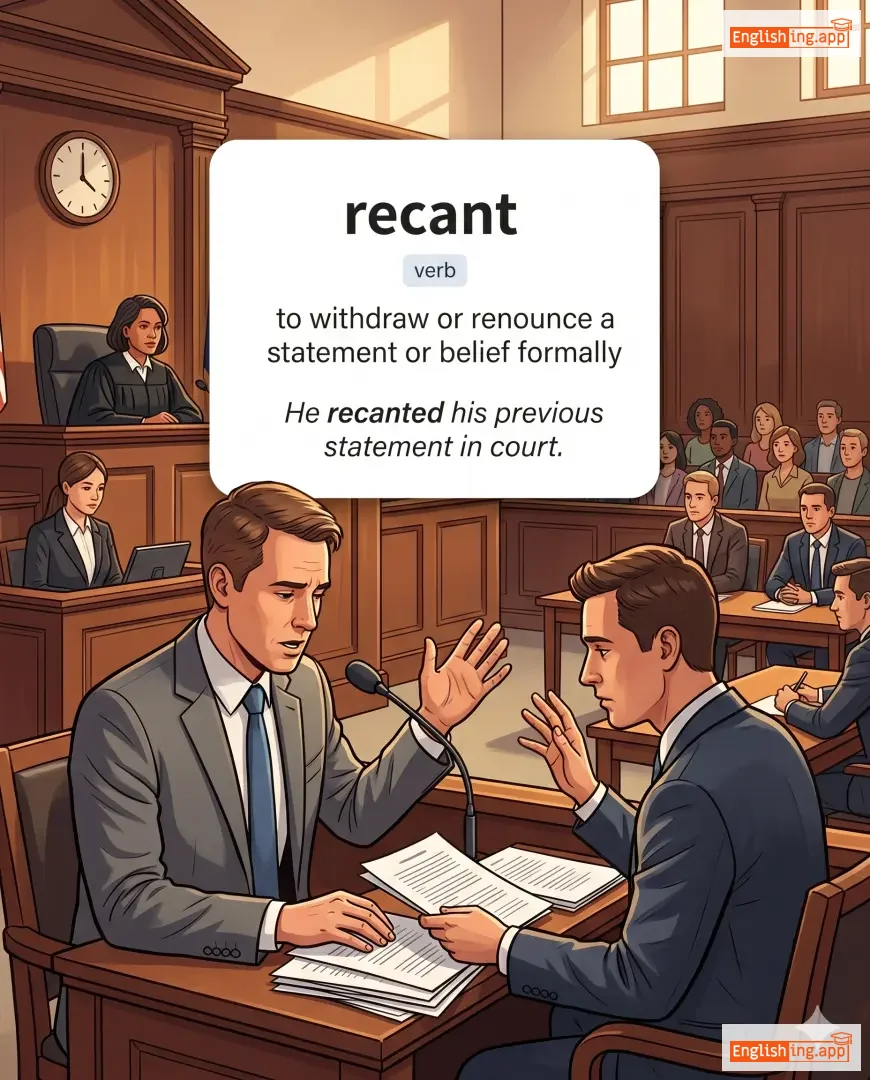
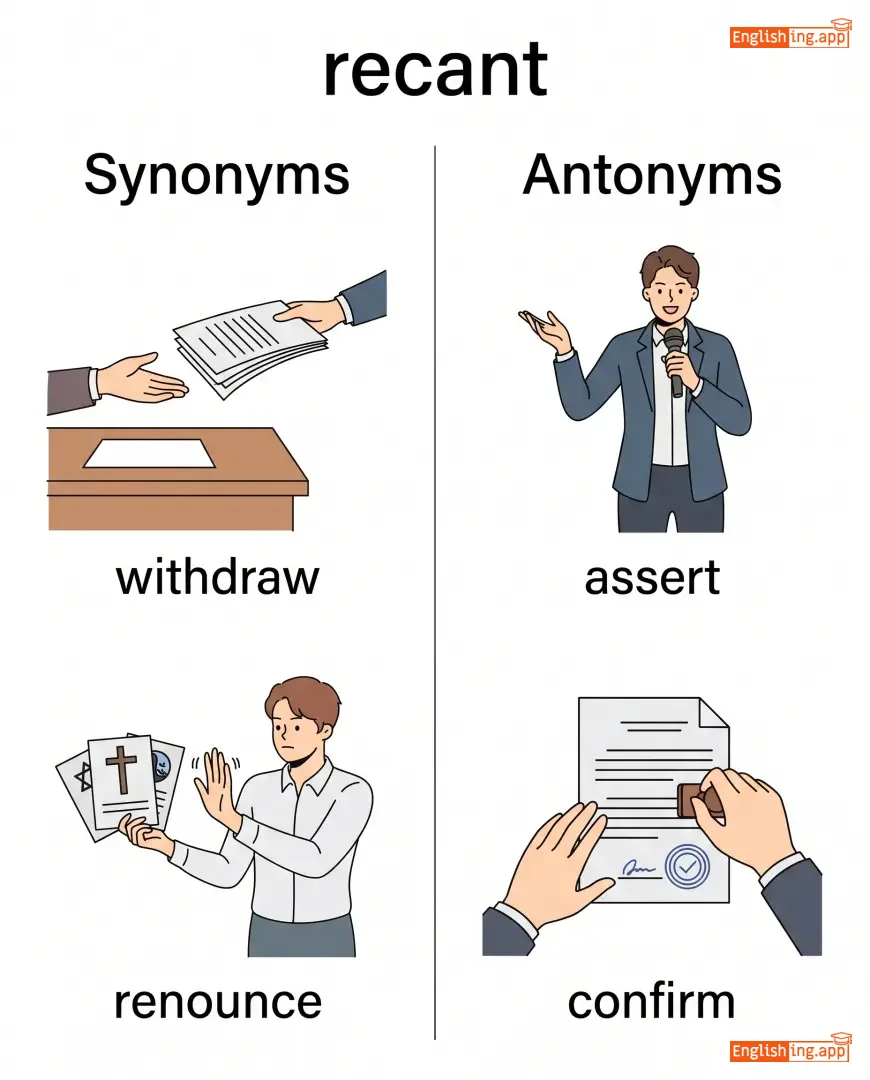
to withdraw or renounce a statement or belief formally
••••••
|
He recanted his previous statement in court.
他在法庭上撤回了之前的陈述。
••••••
|
他在法庭上撤回了之前的陈述。
Tā zài fǎtíng shàng chèhuí le zhīqián de chénshù.
••••••
|
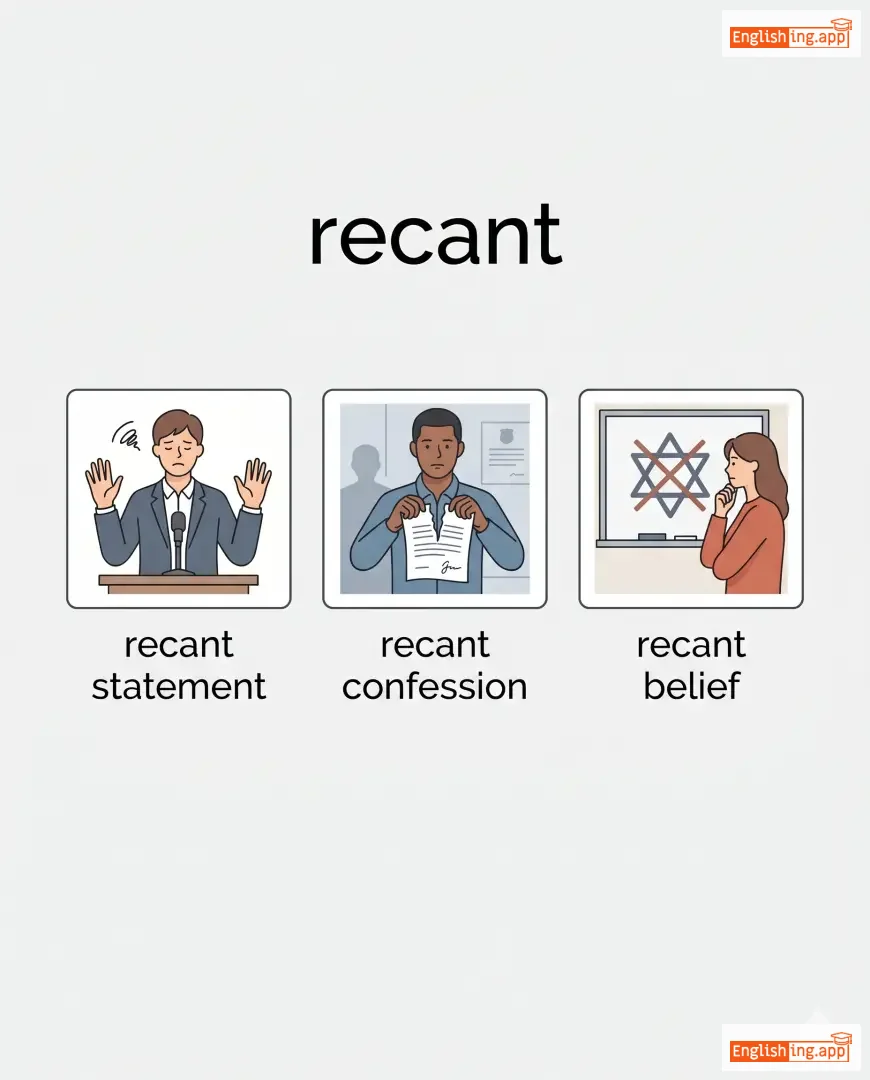
recant a confession
撤回认罪
••••••
|
to officially take back an earlier confession
••••••
|
撤回认罪
chèhuí rènzuì
••••••
|
withdraw, renounce, retract, deny, repudiate
••••••
|
assert, confirm, maintain
••••••
|
recant statement, recant confession, recant belief, recant testimony
••••••
|
Re-COOL冷静意味着撤回之前的说法。
••••••
|
|
🏔️
••••••
|
/rɪˈkluːs/
noun
(瑞克卢斯)
••••••
|
|
隐士
yinshi
••••••
|
- •••••• | - •••••• | - •••••• | - •••••• |
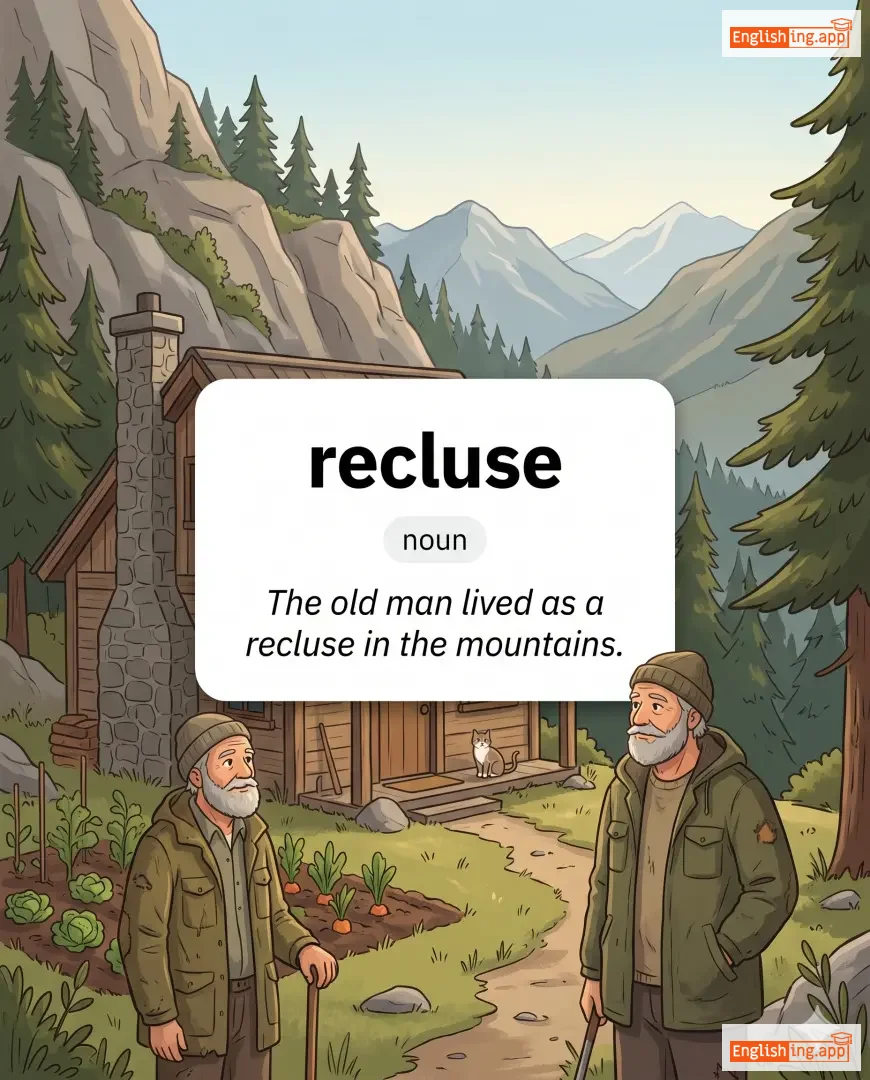
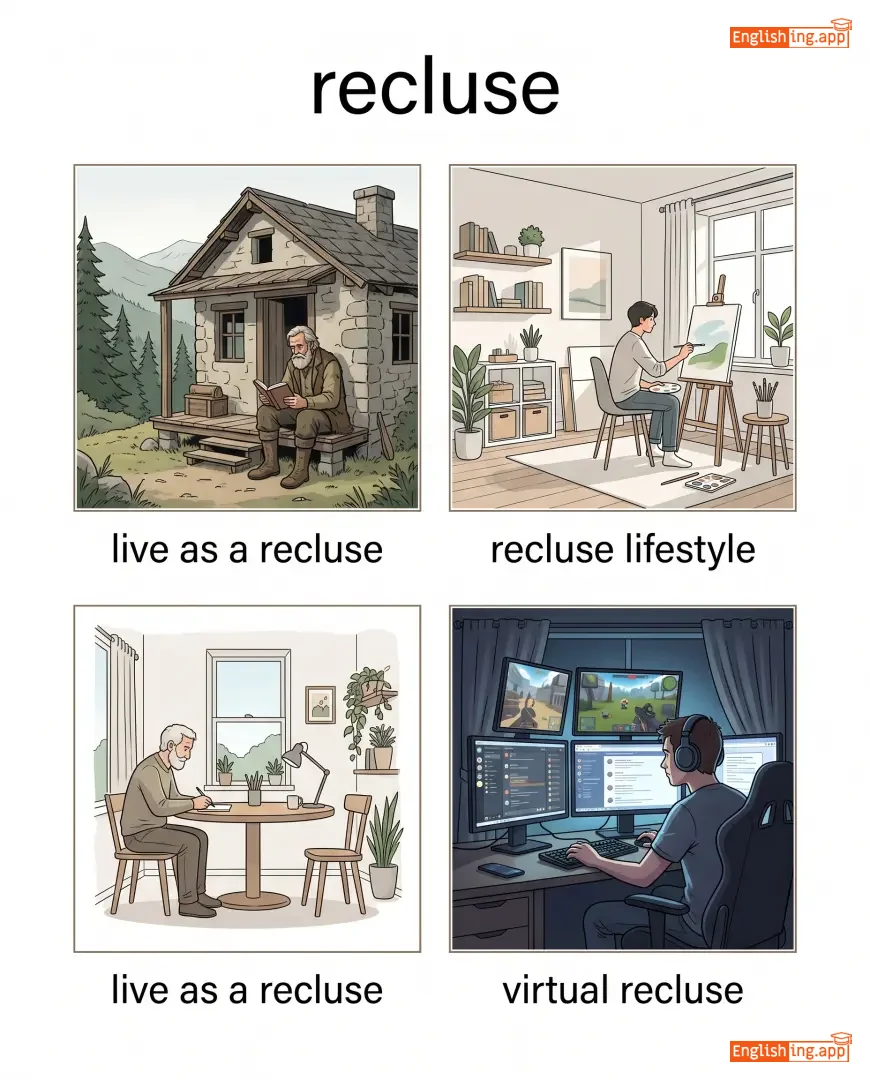
A person who lives alone and avoids other people; someone who lives a solitary life.
••••••
|
The old man lived as a recluse in the mountains. |
那位老人住在山中,过着隐士般的生活。
Nà wèi lǎorén zhù zài shānzhōng, guòzhe yǐnshì bān de shēnghuó.
••••••
|
- •••••• | - •••••• | - •••••• |
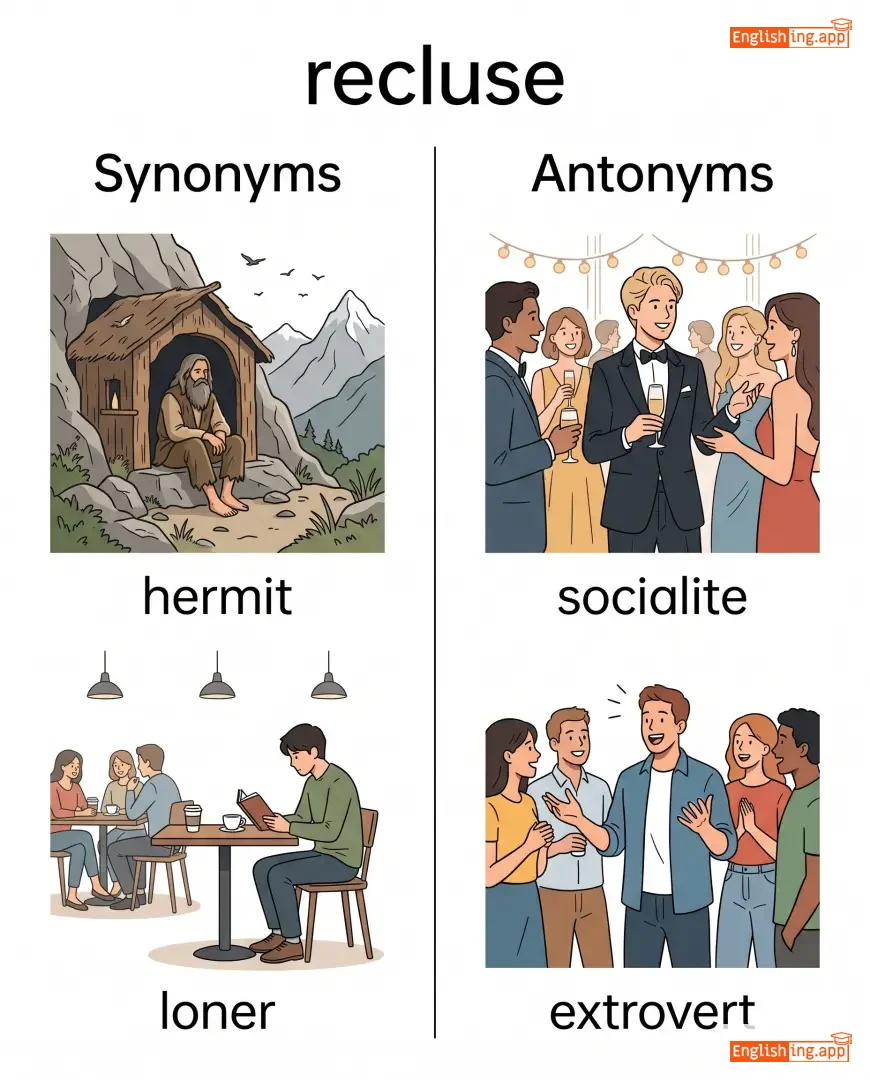
hermit, loner, solitary, ascetic, introvert
••••••
|
socialite, extrovert, companion
••••••
|
live as a recluse, recluse lifestyle, virtual recluse
••••••
|
Recluse = 隐士, 独自生活,避免与他人接触。
••••••
|
|
📚
••••••
|
/ˈrɛkənˌdaɪt/ or /ˈrɛkəndaɪt/
adjective
(雷康代特)
••••••
|

|
鲜为人知或难以理解的
xianwei renzhi huo nanyi lijie de
••••••
|
- •••••• | - •••••• | - •••••• | - •••••• |
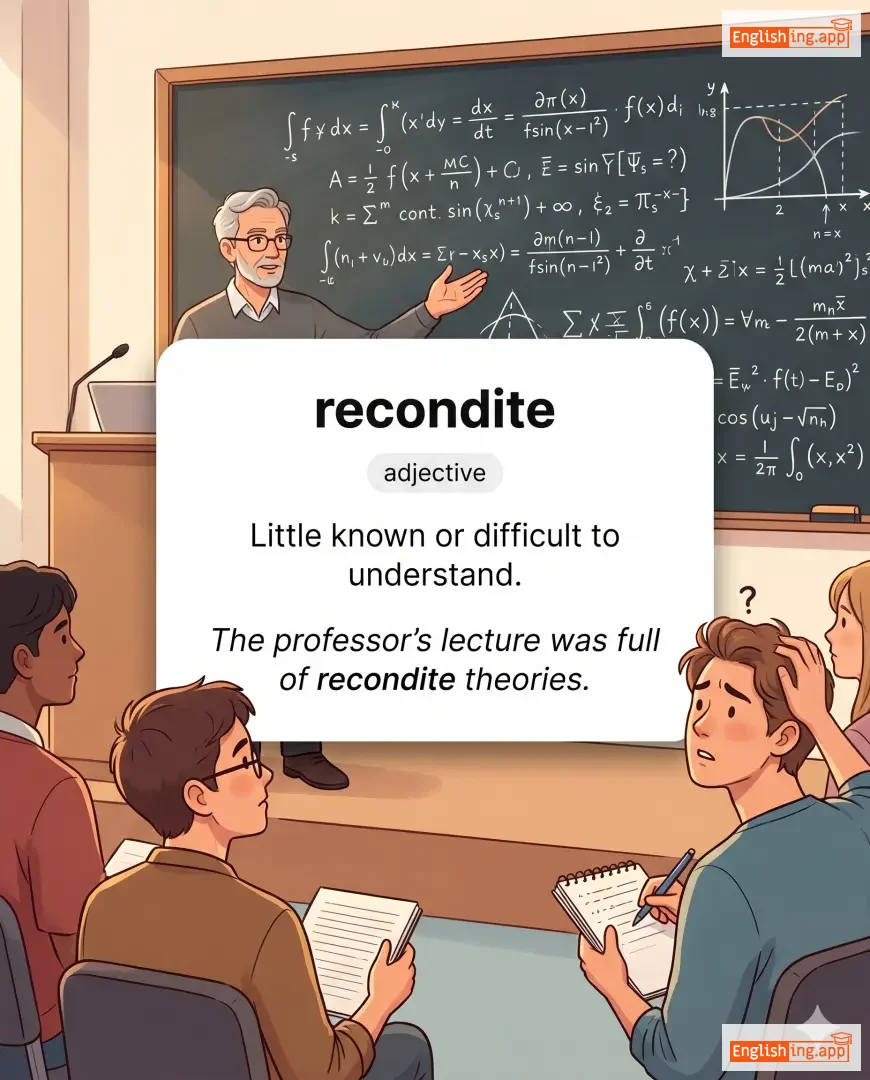
Little known or difficult to understand.
••••••
|
The professor’s lecture was full of recondite theories.
教授的讲座充满了深奥的理论。
••••••
|
教授的讲座充满了深奥的理论。
Jiaoshou de jiangzuo chongmanle shen'ao de lilun.
••••••
|
- •••••• | - •••••• | - •••••• |
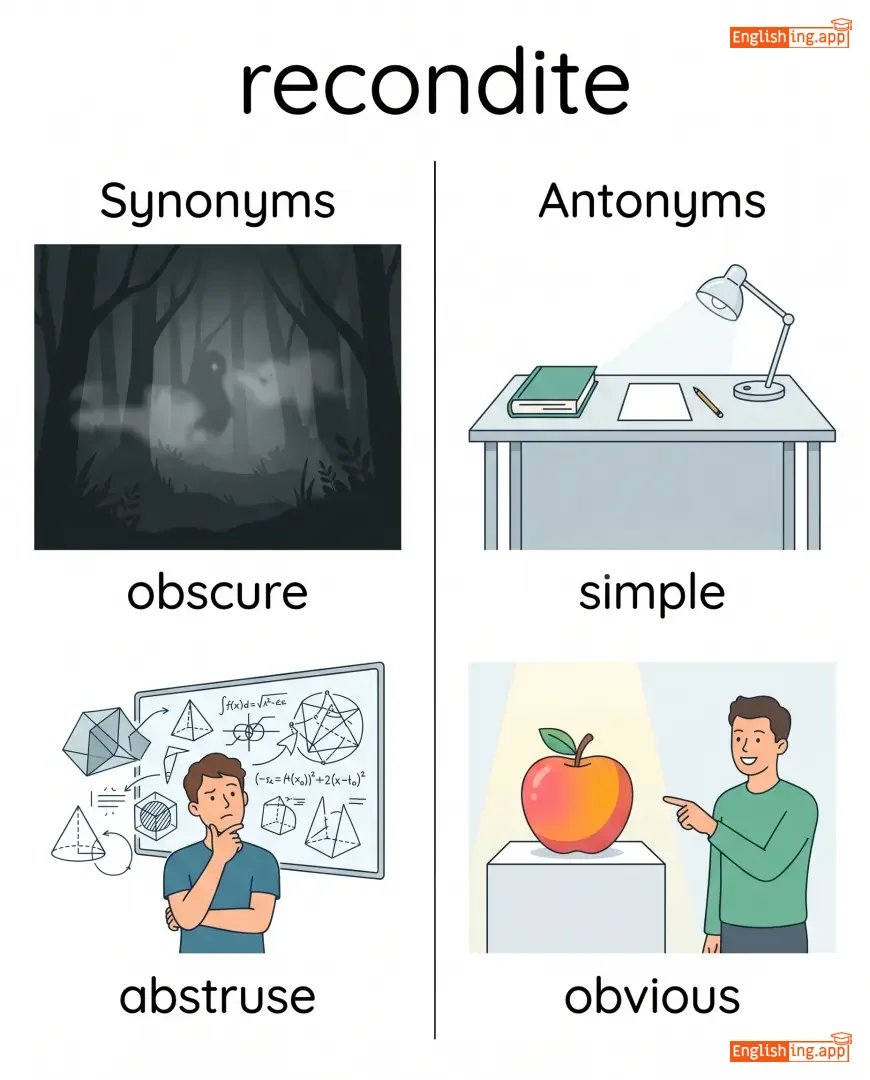
obscure, abstruse, complex, esoteric
••••••
|
simple, obvious, clear
••••••
|
recondite knowledge, recondite subject, recondite theory
••••••
|
Recondite 类似‘难懂的食物’,意味着难理解的东西。
••••••
|
|
🛡️
••••••
|
/rɪˈdaʊ.tə.bəl/
adjective
(rɪˈdaʊtəbl)
••••••
|
- •••••• |
可怕/值得尊敬
kěpà/zhídé zūnjìng
••••••
|
- •••••• | - •••••• | - •••••• | - •••••• |
formidable, especially as an opponent; inspiring fear or respect
••••••
|
She was a redoubtable leader who commanded respect from all. |
她是一个可怕的领导,赢得了所有人的尊重。
Tā shì yīgè kěpà de lǐngdǎo, yíngdéle suǒyǒu rén de zūnzhòng.
••••••
|
- •••••• | - •••••• | - •••••• |
formidable, intimidating, powerful, commanding
••••••
|
weak, unimpressive
••••••
|
redoubtable opponent, redoubtable leader, redoubtable warrior
••••••
|
Redoubtable意味着令人敬畏,像'额外的怀疑'一样可怕。
••••••
|
|
🙅
••••••
|
/rɪˈfræktəri/
adjective
(反应堆)
••••••
|
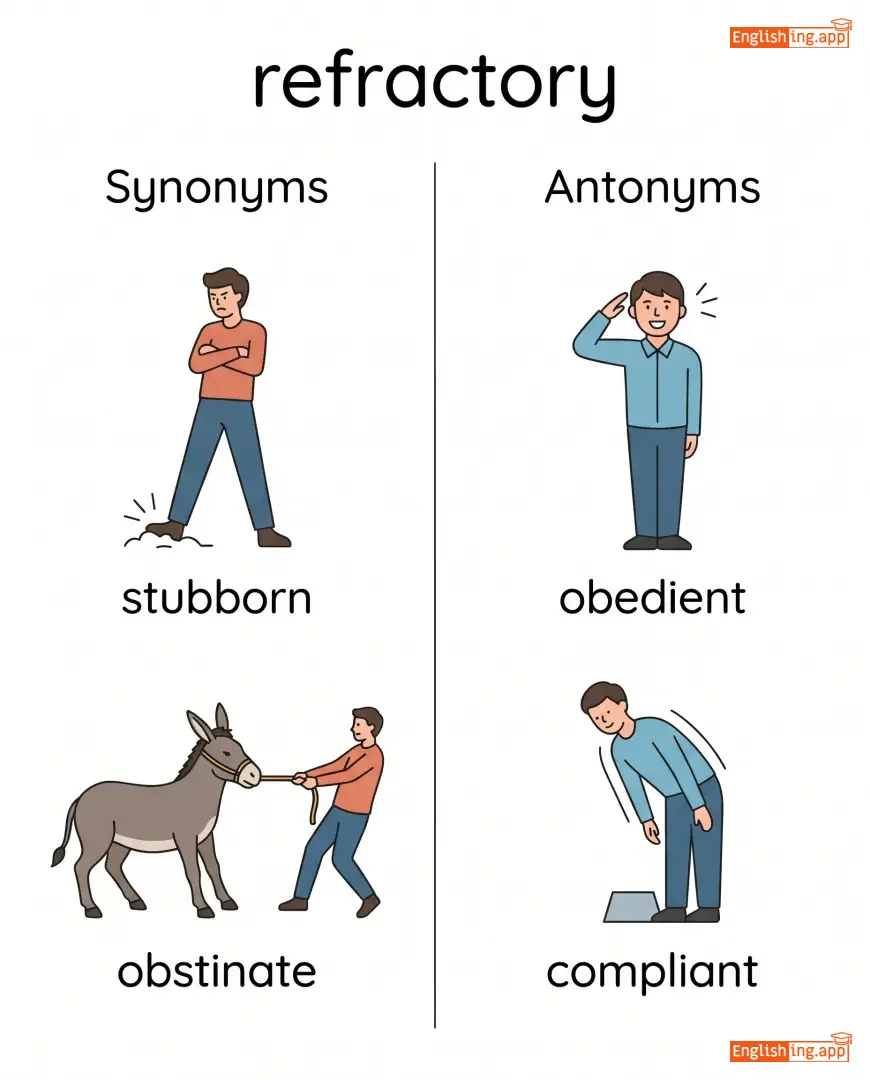
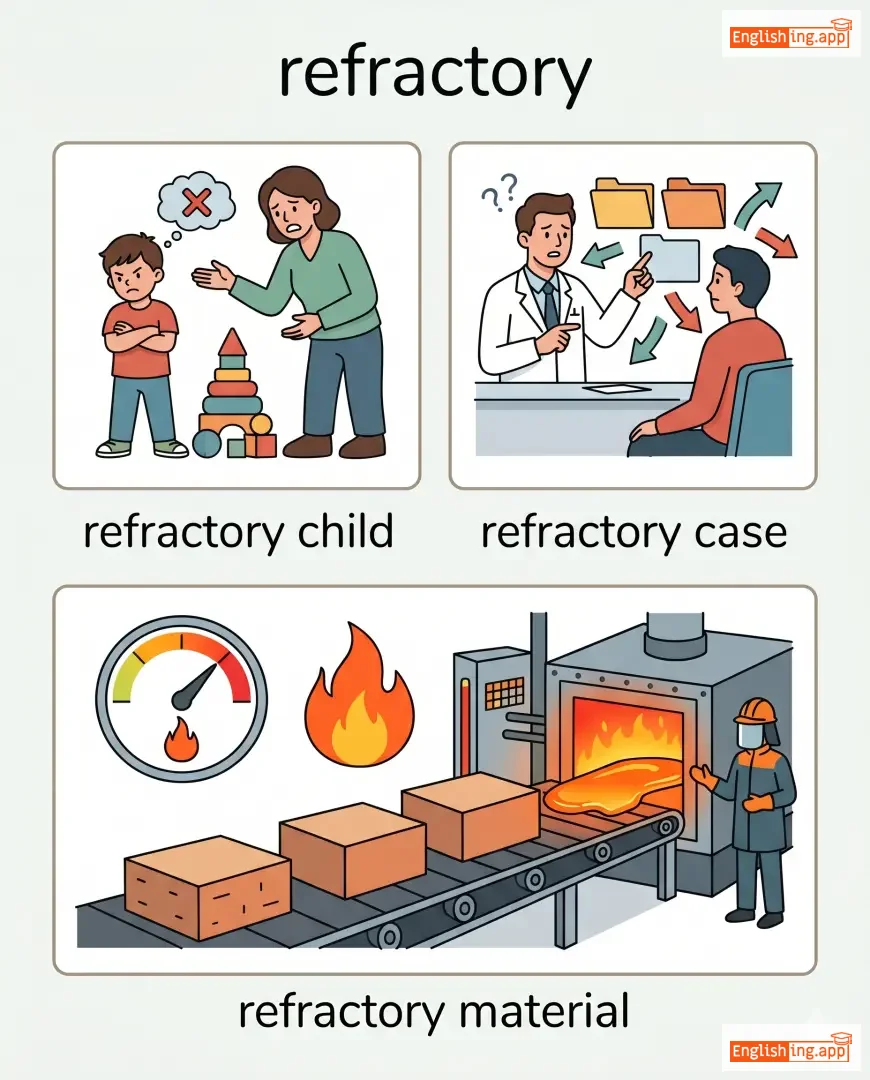
|
反叛的
fǎn pàn de
••••••
|
- •••••• | - •••••• | - •••••• | - •••••• |
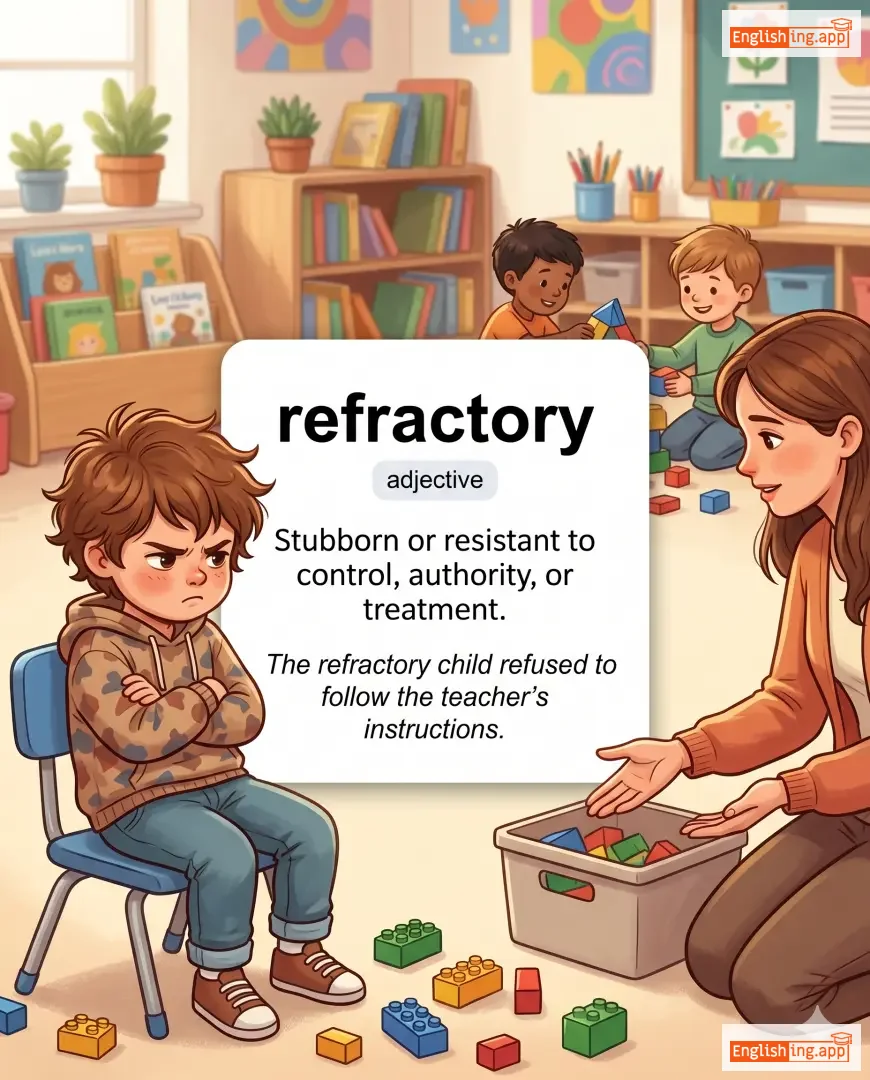
Stubborn or resistant to control, authority, or treatment.
••••••
|
The refractory child refused to follow the teacher's instructions. |
这个反叛的孩子拒绝遵循老师的指示。
Zhè ge fǎn pàn de hái zi jù jué zūn xún lǎo shī de zhǐ shì.
••••••
|
- •••••• | - •••••• | - •••••• |
stubborn, obstinate, unmanageable, disobedient, resistant
••••••
|
obedient, compliant, submissive
••••••
|
refractory child, refractory case, refractory material, refractory period
••••••
|
Re-factory (不去工厂) → 反叛的,表示不听话。
••••••
|
|
☀️
••••••
|
/rɪˈfʌldʒənt/
adjective
(rìfǎrǒu)
••••••
|
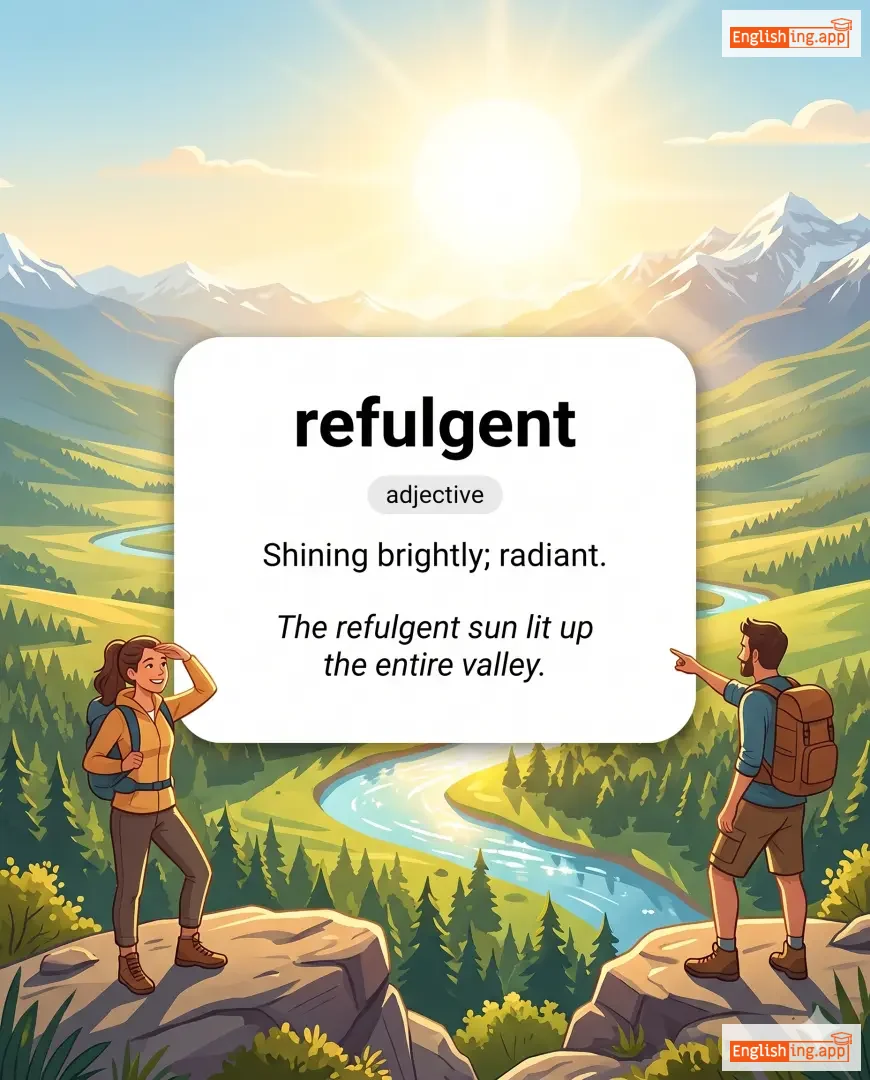
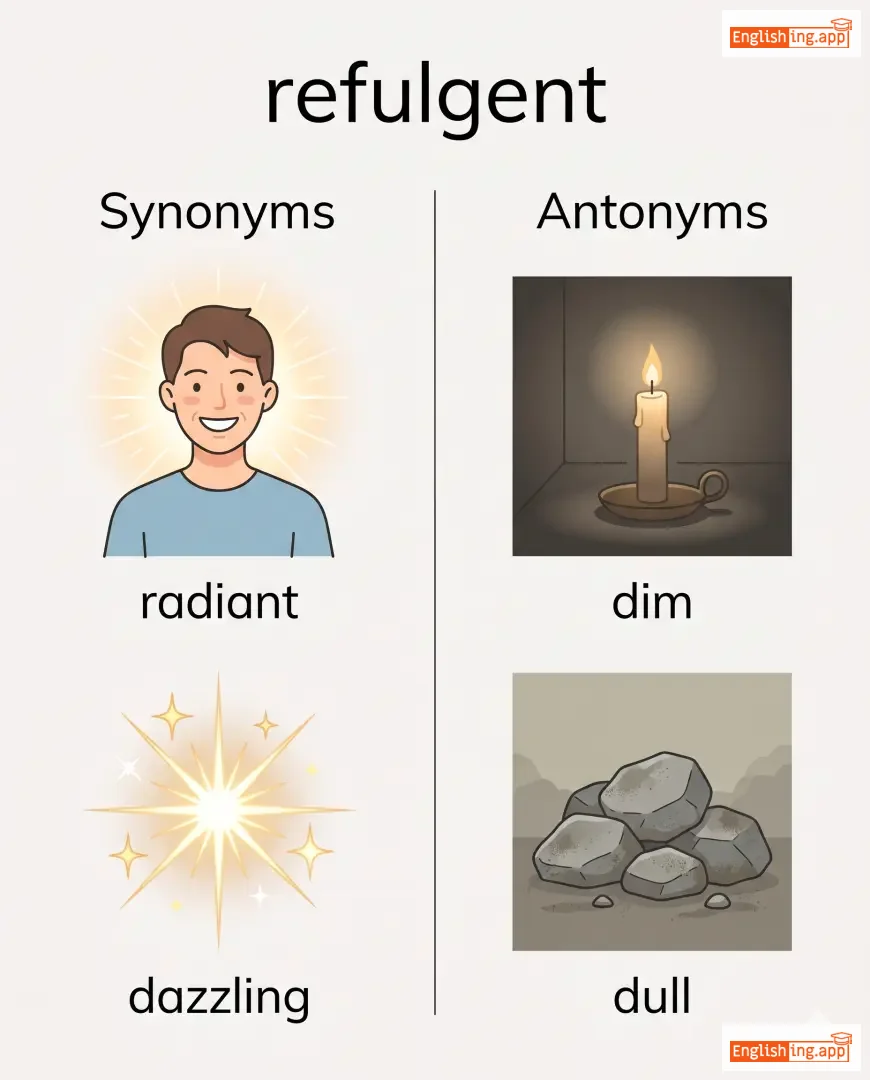
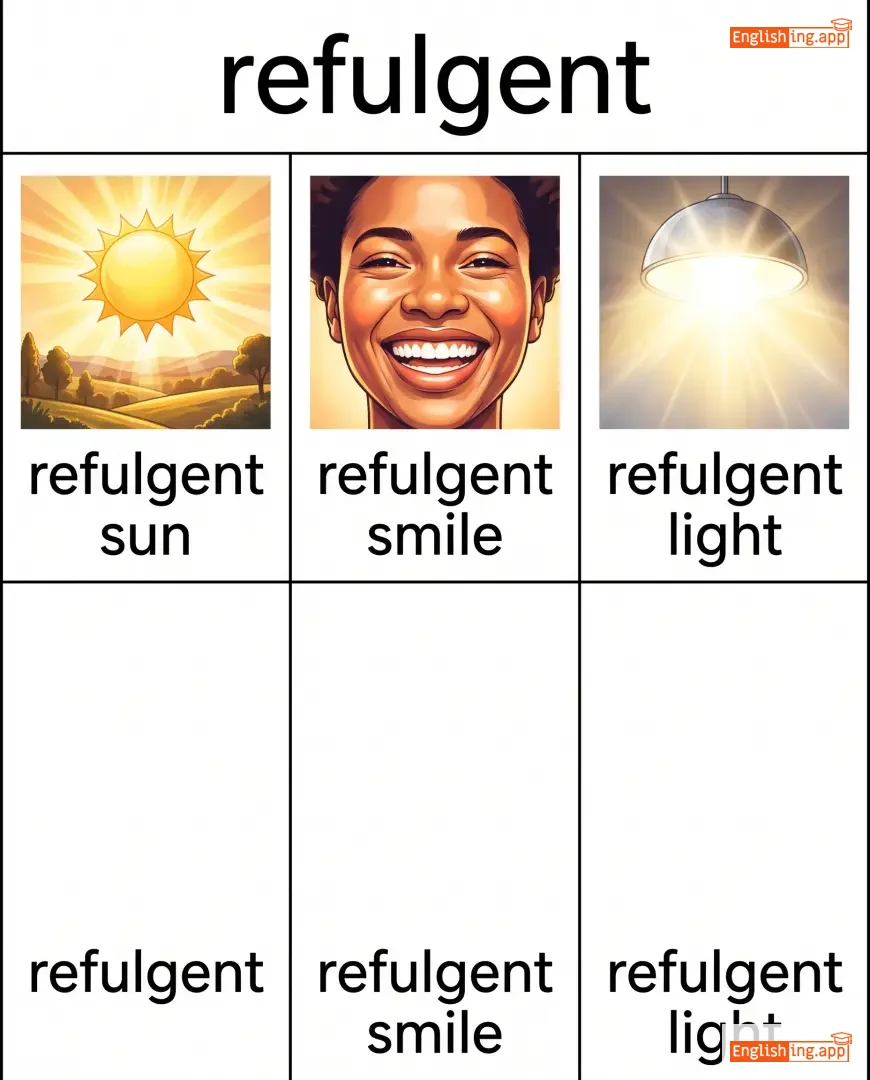
|
辉煌
huīhuáng
••••••
|
- •••••• | - •••••• | - •••••• | - •••••• |
Shining brightly; radiant.
••••••
|
The refulgent sun lit up the entire valley.
闪亮的太阳照亮了整个山谷。
••••••
|
闪亮的太阳照亮了整个山谷。
Shǎnliàng de tàiyáng zhàoliàngle zhěnggè shāngǔ.
••••••
|
- •••••• | - •••••• | - •••••• |
radiant, dazzling, brilliant, glowing, luminous
••••••
|
dim, dull, dark
••••••
|
refulgent sun, refulgent smile, refulgent light
••••••
|
Re-FULL-gent 意味着 FULL 光亮,就像太阳 ☀️
••••••
|
|
🚫
••••••
|
/rɪˈfjuːt/
verb
(rìfùtè)
••••••
|
|
驳斥
bóchì
••••••
|
refuted
rìfùtèd
••••••
|
refuted
rìfùtèd
••••••
|
refutes
rìfùtèz
••••••
|
refuting
rìfùtìng
••••••
|
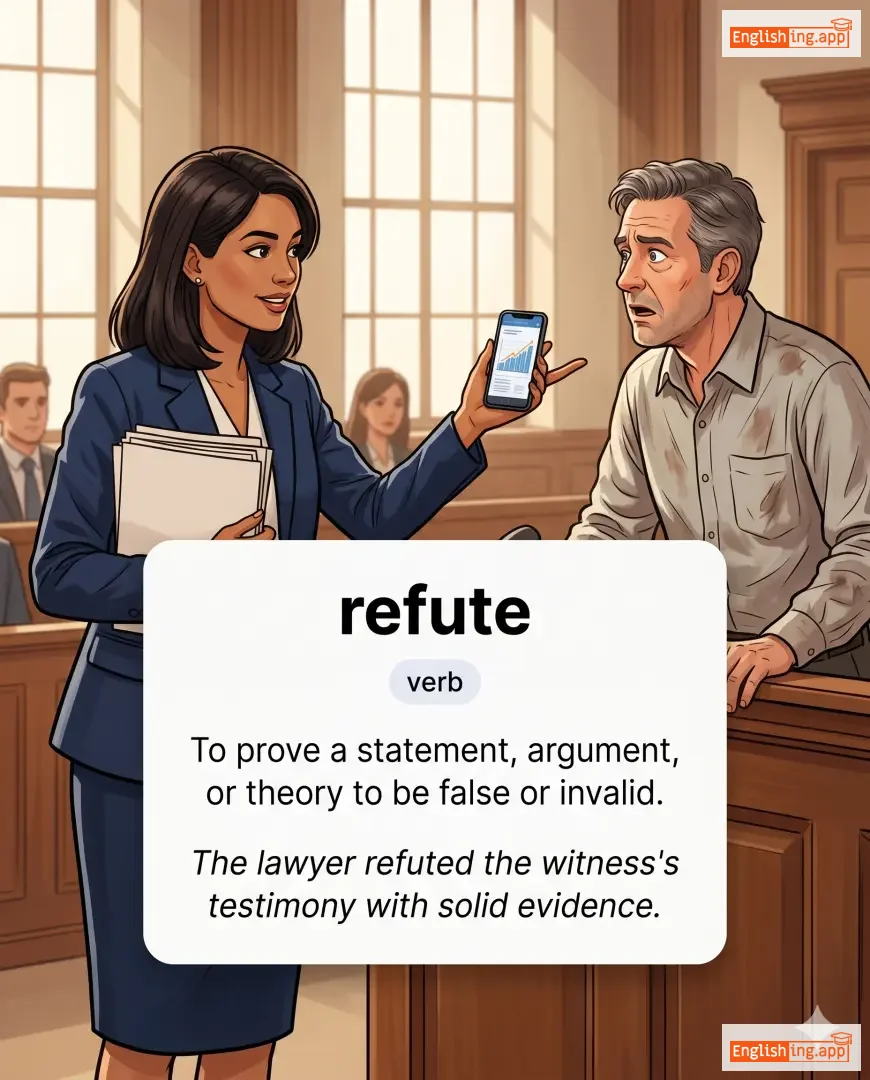
To prove a statement, argument, or theory to be false or invalid.
••••••
|
The lawyer refuted the witness's testimony with solid evidence.
Lǜshī yǒngyú gǒngzhèngle zhèngmíng de jiānghuì yǔ shíliàng de zhèngjù.
••••••
|
律师用确凿的证据驳斥了证人的证词。
Lǜshī yòng quèzáo de zhèngjù bóchìle zhèngrén de zhèngcí.
••••••
|
- •••••• | - •••••• | - •••••• |
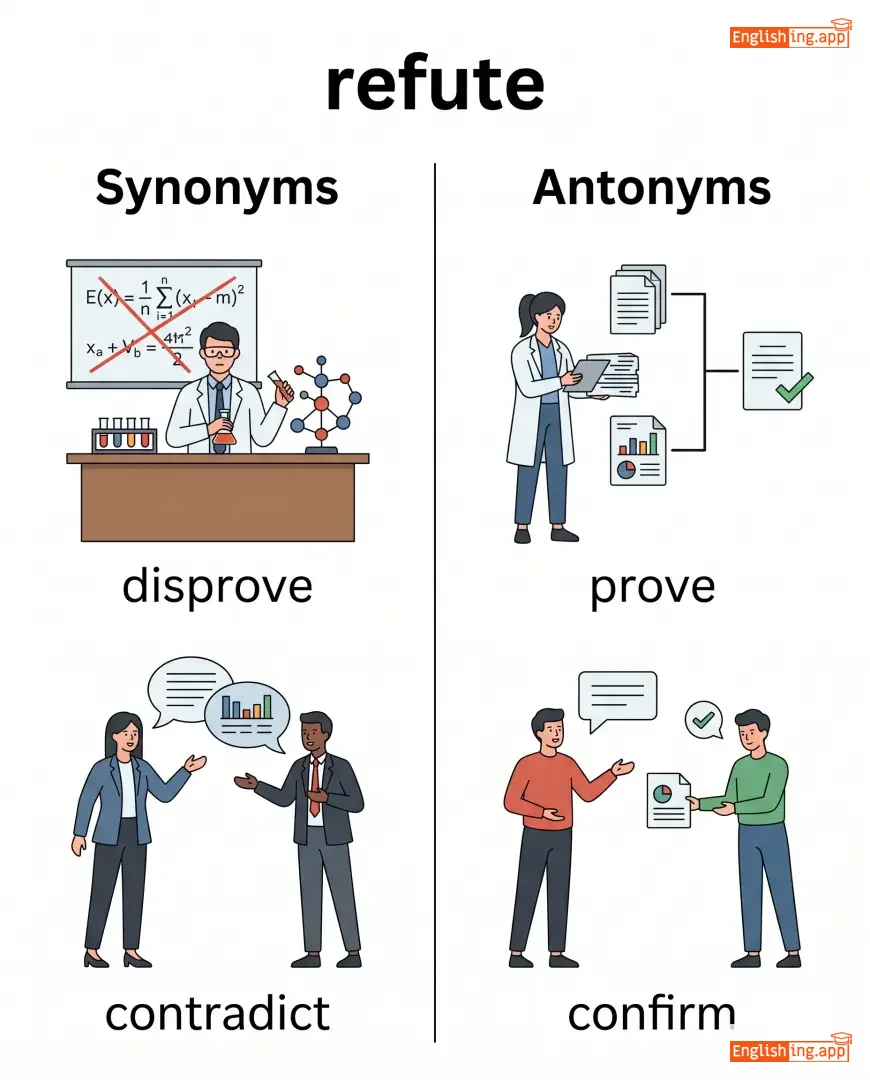
disprove, contradict, counter, deny
••••••
|
prove, confirm, validate
••••••
|
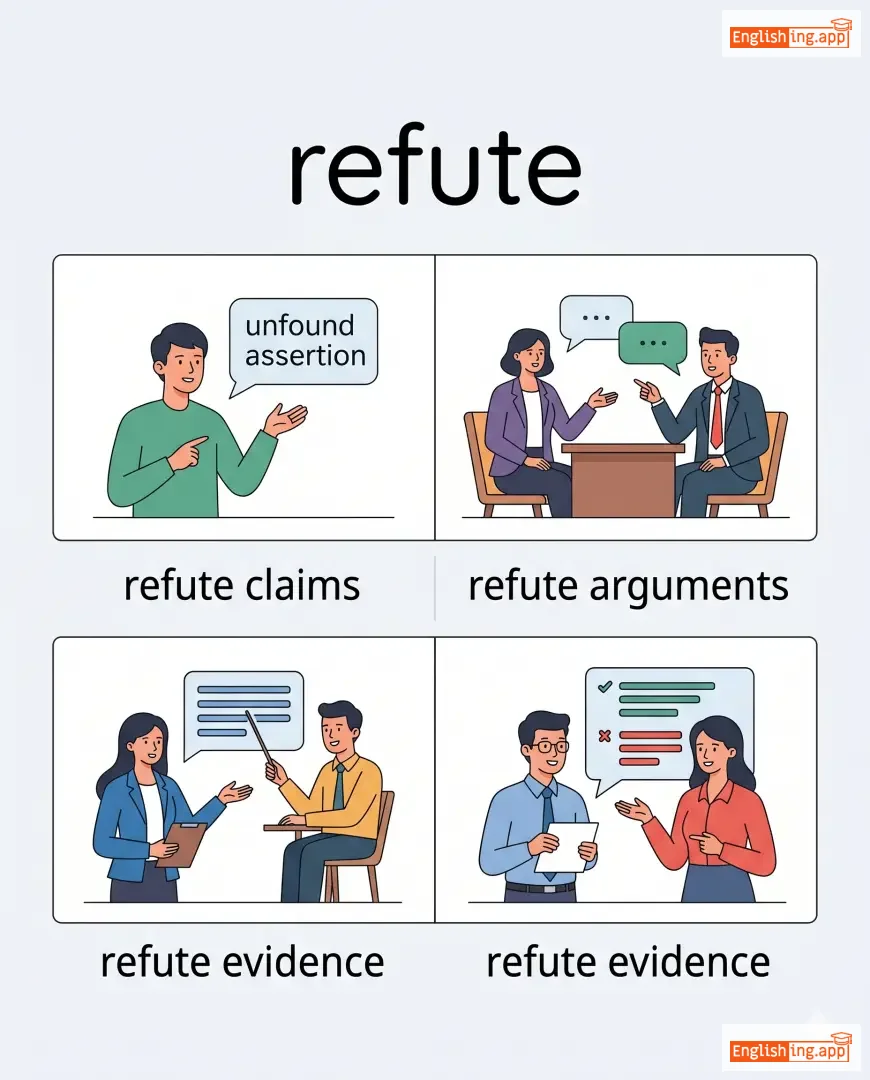
refute claims, refute arguments, refute evidence
••••••
|
Refute 在中文里就像是驳斥假的东西。
••••••
|
|
🎉
••••••
|
/rɪˈɡeɪl/
verb
(rɪˈɡeɪl)
••••••
|

|
娱乐
yúlè
••••••
|
regaled
rɪˈɡeɪld
••••••
|
regaled
rɪˈɡeɪld
••••••
|
regales
rɪˈɡeɪlz
••••••
|
regaling
rɪˈɡeɪlɪŋ
••••••
|
To entertain or amuse someone with stories, food, or drink.
••••••
|
He regaled us with stories of his travels around the world.
他用他的旅行故事来娱乐我们。
••••••
|
他用他的旅行故事来娱乐我们。
Tā yòng tā de lǚxíng gùshì lái yúlè wǒmen.
••••••
|
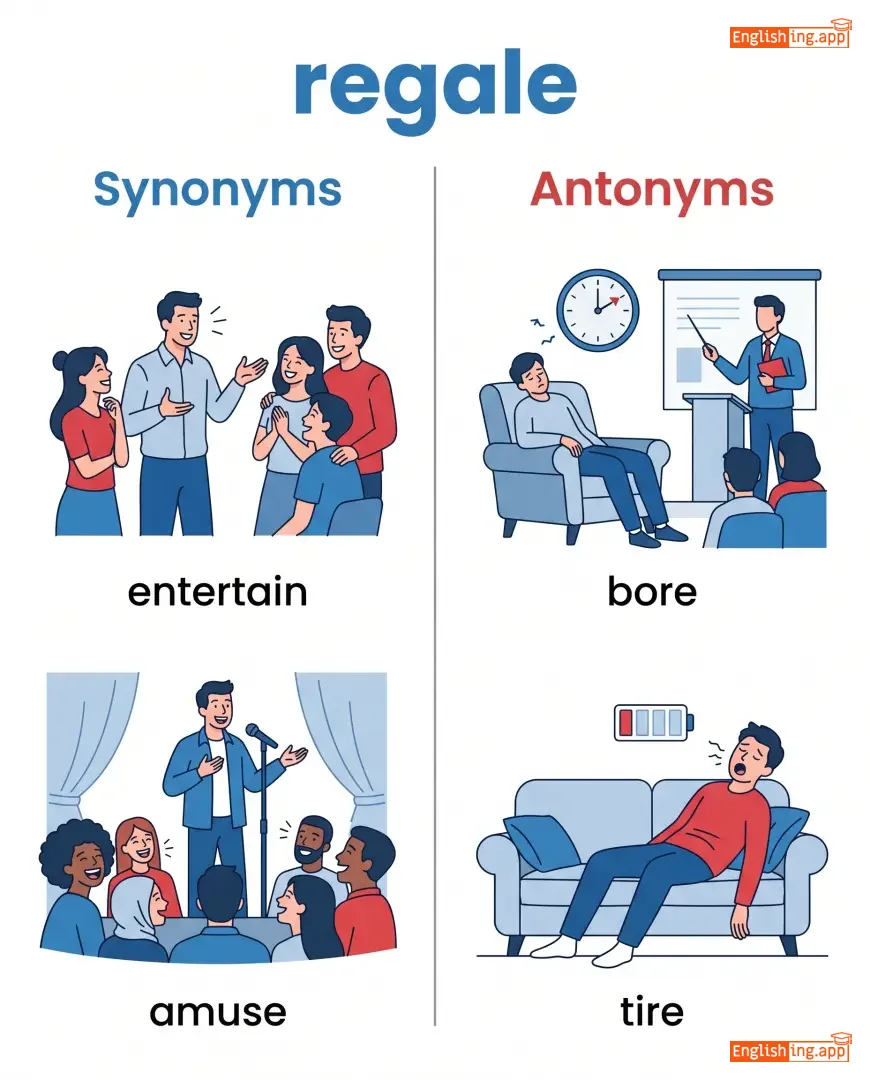
- •••••• | - •••••• | - •••••• |
entertain, amuse, delight, charm
••••••
|
bore, tire
••••••
|
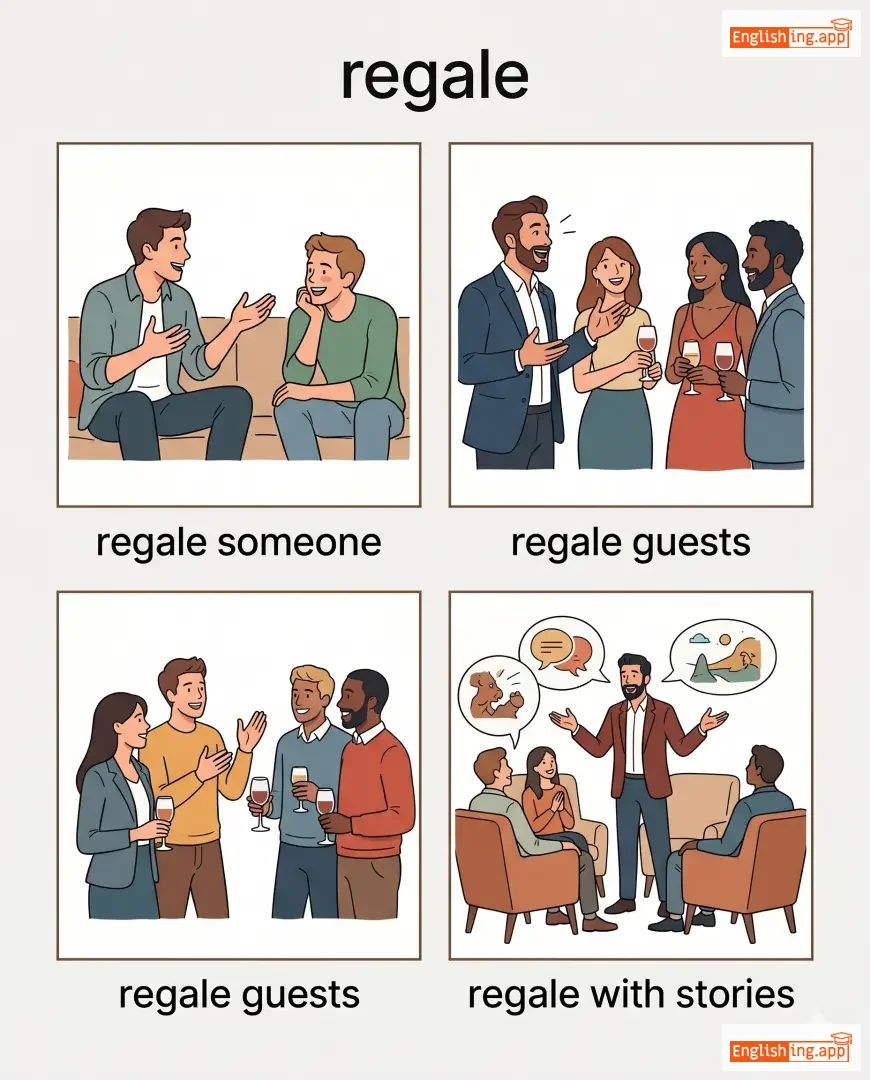
regale someone, regale guests, regale with stories
••••••
|
Regale 是娱乐的意思,可以想象你通过讲故事来让别人开心。
••••••
|
|
⬇️
••••••
|
/ˈrɛlɪɡeɪt/
verb
(降级)
••••••
|

|
降级
jiangji
••••••
|
relegated
降级了
••••••
|
relegated
降级了
••••••
|
relegates
降级
••••••
|
relegating
降级中
••••••
|
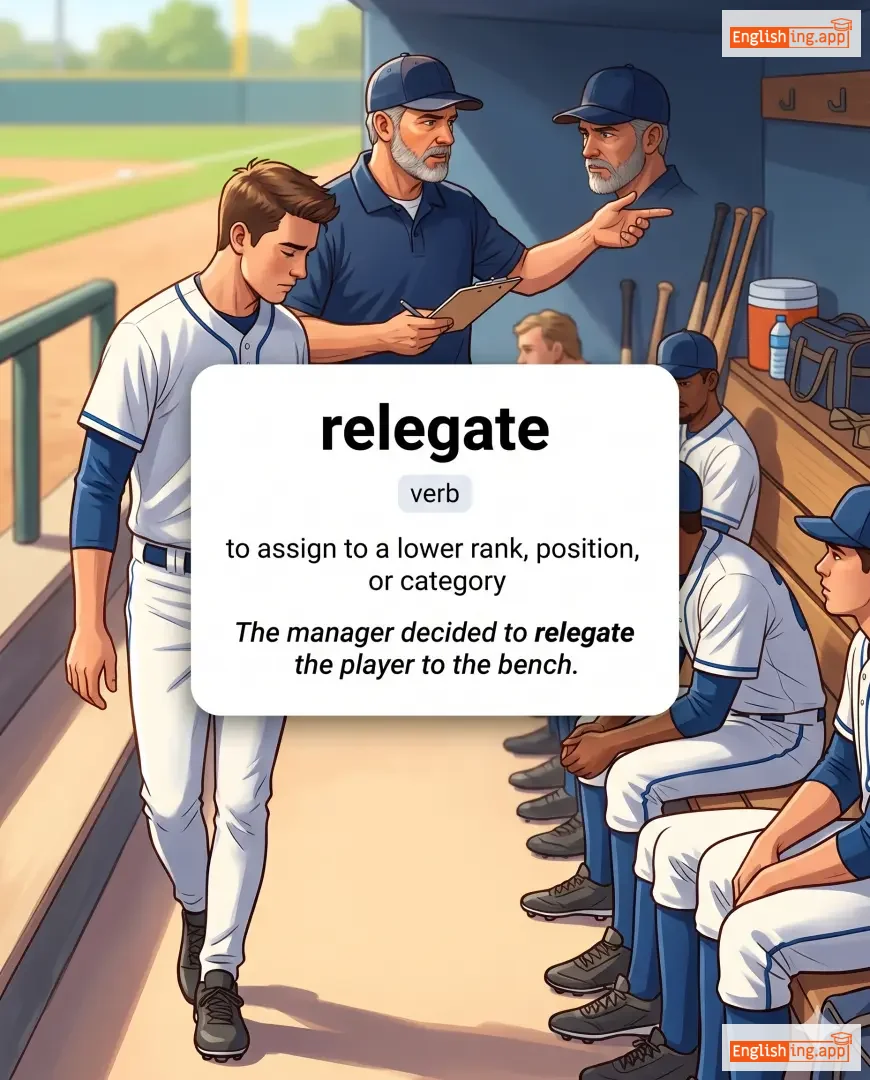
to assign to a lower rank, position, or category
••••••
|
The manager decided to relegate the player to the bench.
经理决定将球员降级到替补席。
••••••
|
经理决定将球员降级到替补席。
Jingli jueding jiang qiuyan jiangji dao tibuxi.
••••••
|
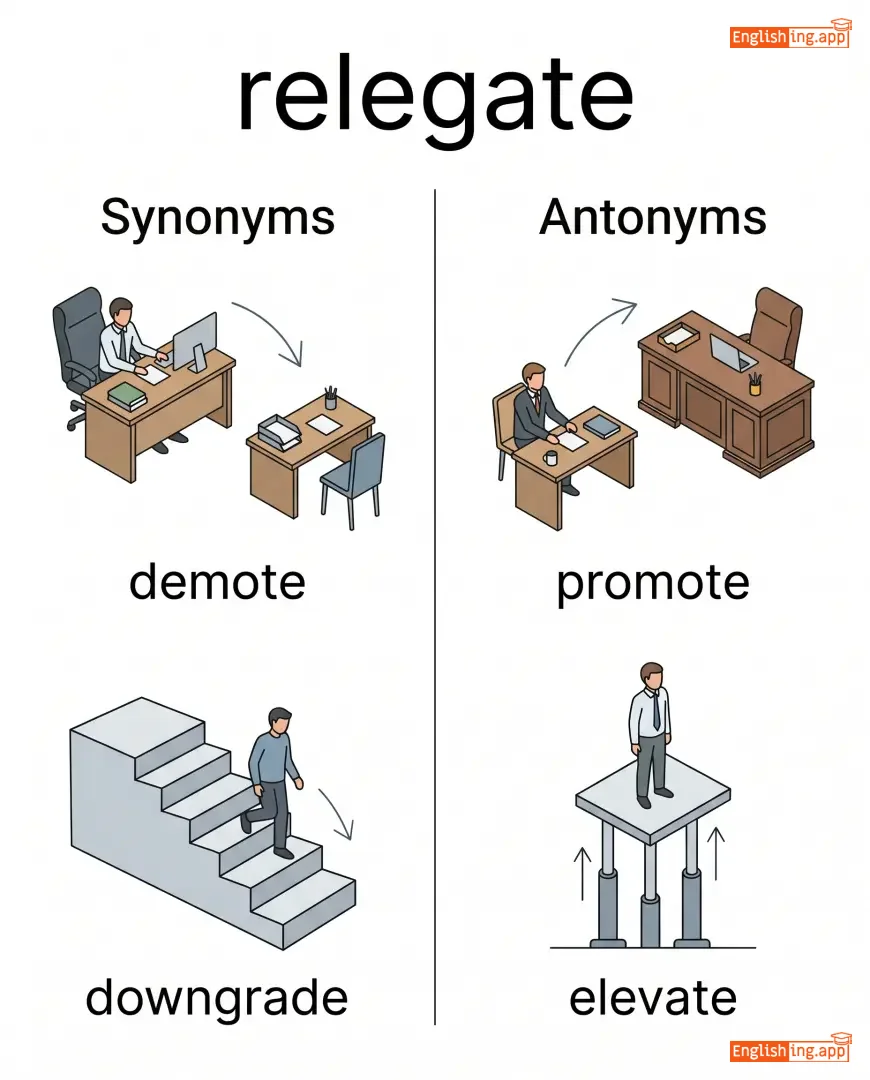
- •••••• | - •••••• | - •••••• |
demote, downgrade, consign, assign
••••••
|
promote, elevate, upgrade
••••••
|
relegate someone, relegate to the background, relegate responsibility
••••••
|
降级意味着降到更低的等级 - '降级'和'替补席'让人容易记住。
••••••
|
|
🙅
••••••
|
/rɪˈmɒnstreɪt/
verb
(雷蒙斯特雷特)
••••••
|
|
抗议
kàngyì
••••••
|
remonstrated
雷蒙斯特雷特德
••••••
|
remonstrated
雷蒙斯特雷特德
••••••
|
remonstrates
雷蒙斯特雷特斯
••••••
|
remonstrating
雷蒙斯特雷特英
••••••
|
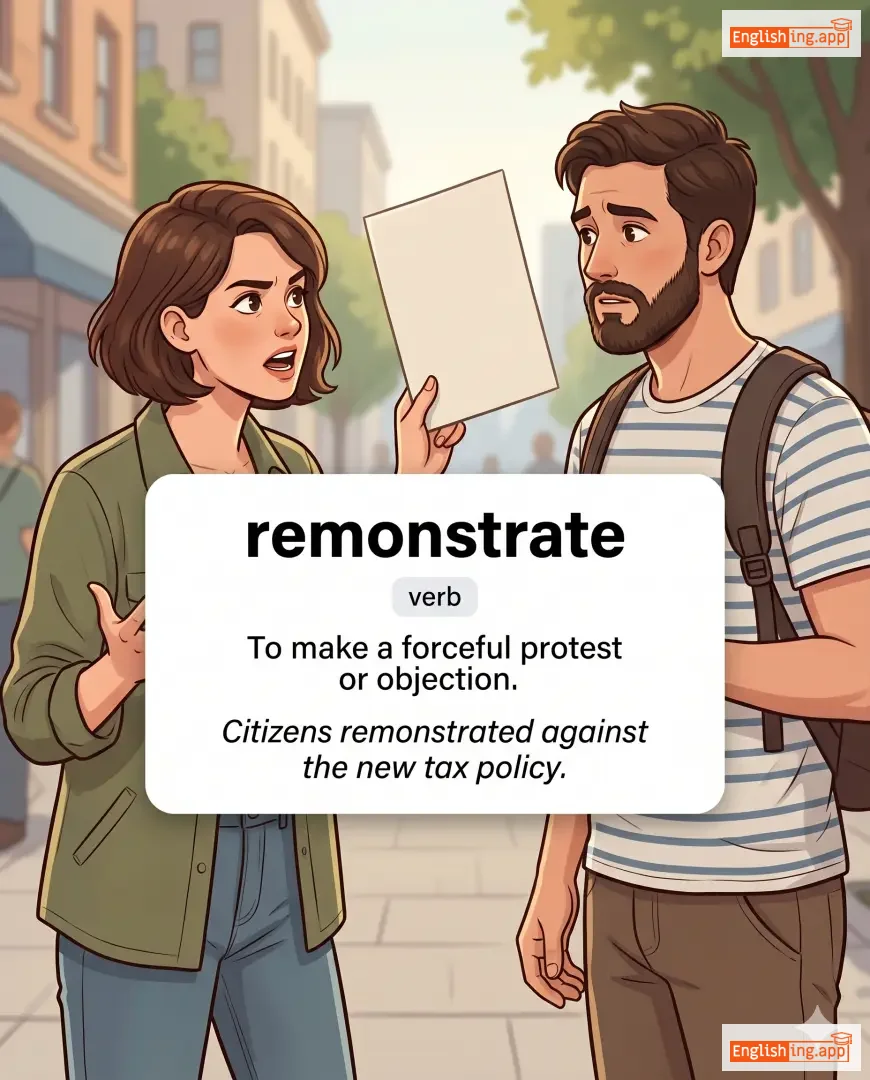
To make a forceful protest or objection.
••••••
|
Citizens remonstrated against the new tax policy.
公民们抗议新税政策。
••••••
|
公民们抗议新税政策。
Gōngmínmen kàngyì xīn shuì zhèngcè.
••••••
|
- •••••• | - •••••• | - •••••• |
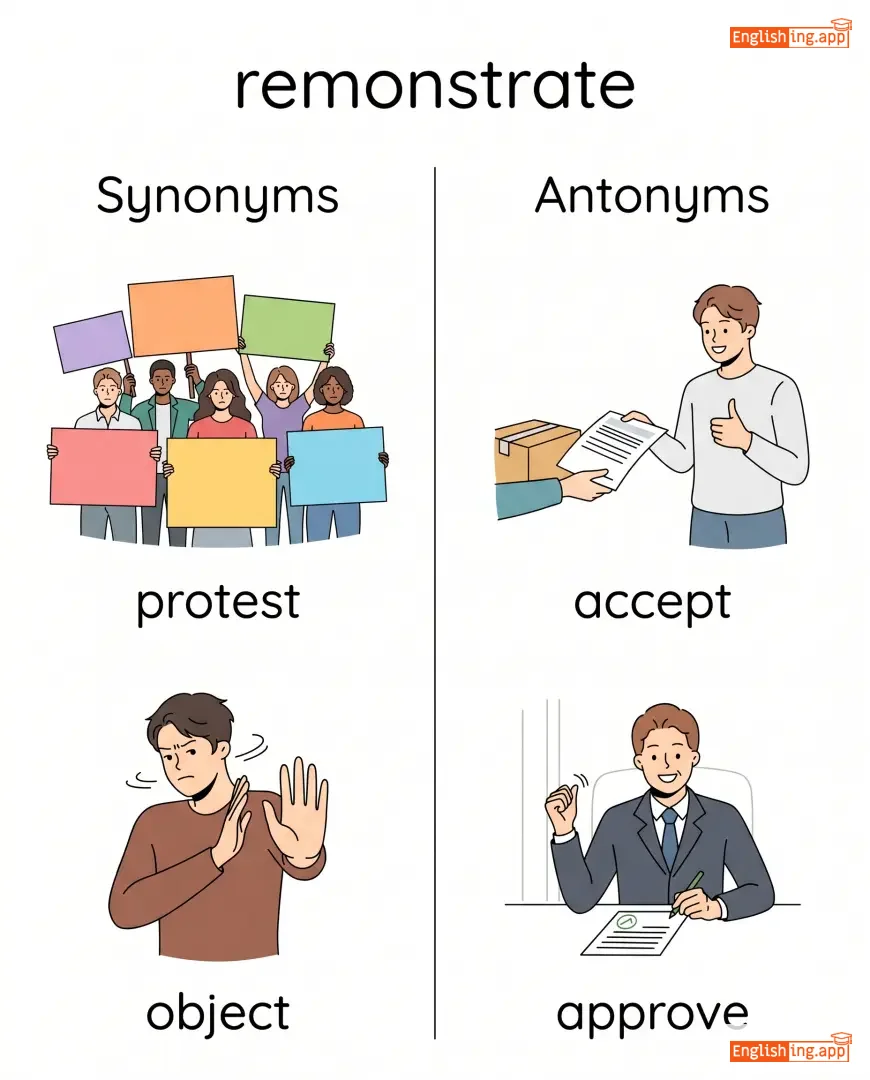
protest, object, complain, oppose
••••••
|
accept, approve
••••••
|
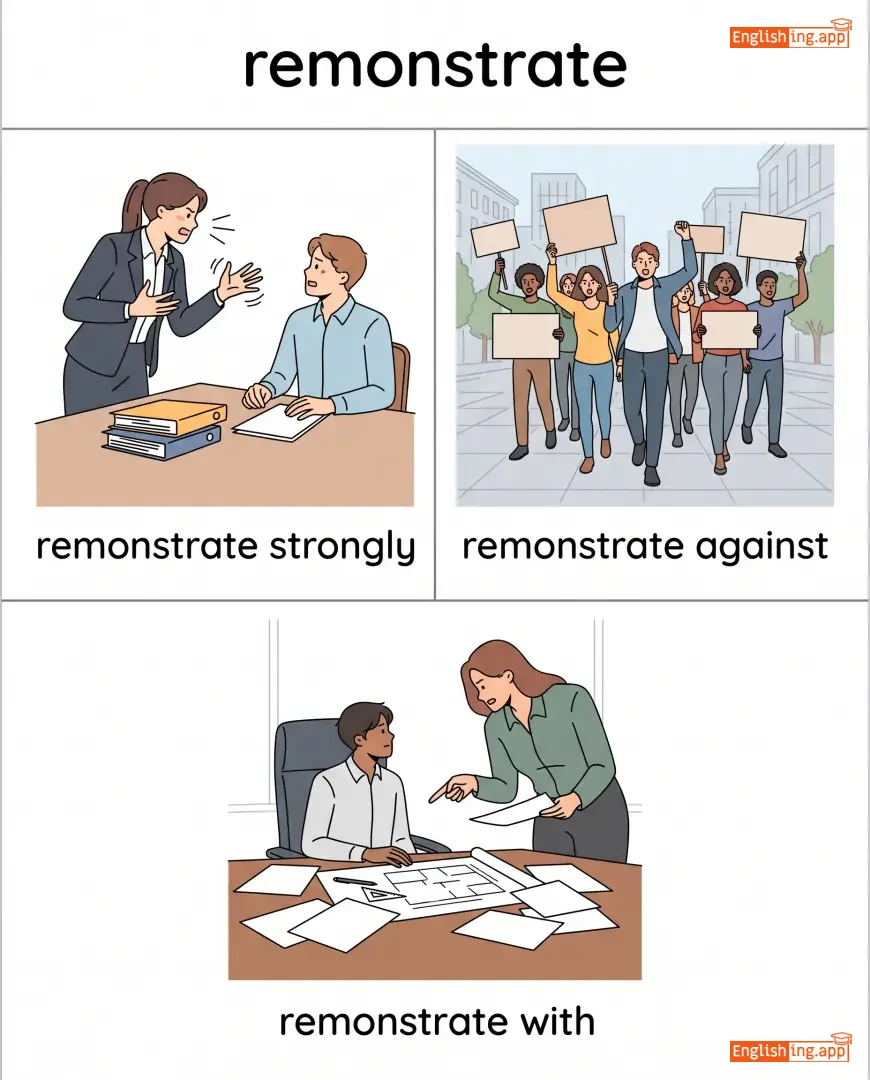
remonstrate strongly, remonstrate against, remonstrate with
••••••
|
Remonstrate = 反对 + 示威 - 强烈抗议。
••••••
|
|
❌
••••••
|
/rɪˈnɛɡ/
verb
(rɪˈnɛɡ)
••••••
|
|
违约
wéiyuē
••••••
|
reneged
rɪˈnɛɡd
••••••
|
reneged
rɪˈnɛɡd
••••••
|
reneges
rɪˈnɛɡs
••••••
|
reneging
rɪˈnɛɡɪŋ
••••••
|
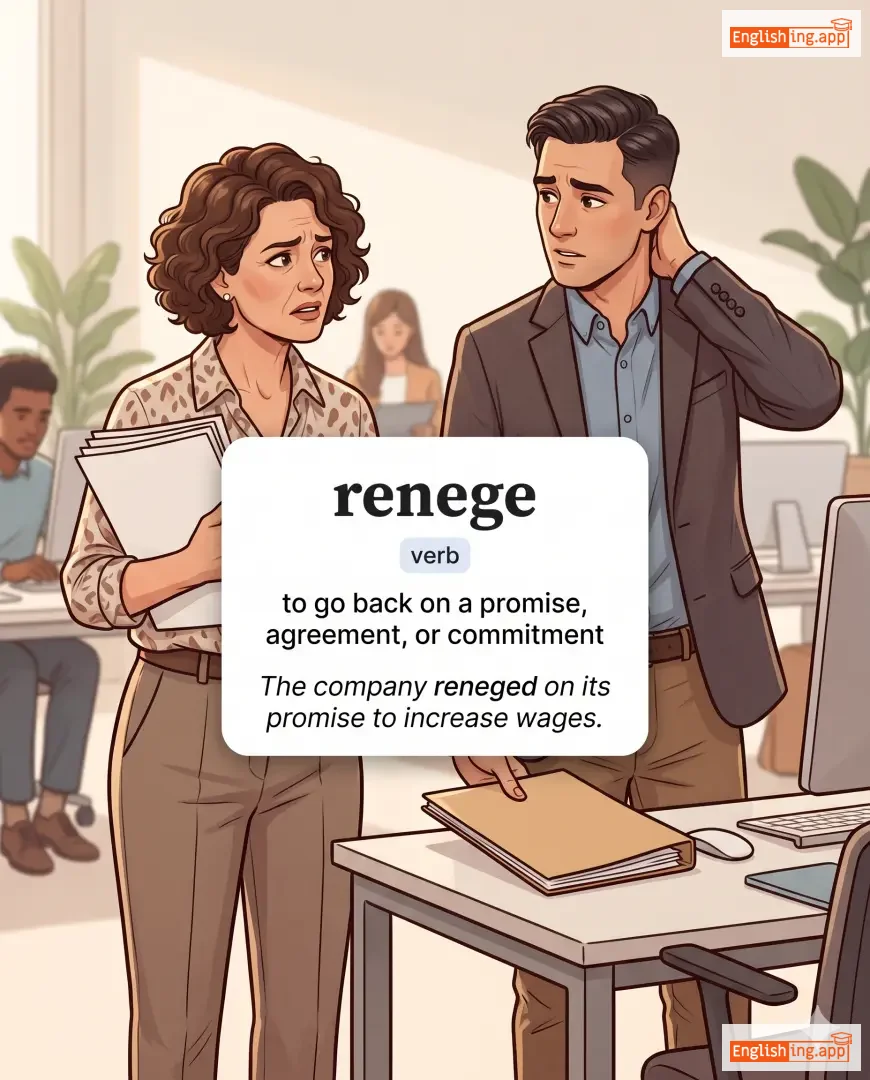
to go back on a promise, agreement, or commitment
••••••
|
The company reneged on its promise to increase wages.
公司违背了他们提高工资的承诺。
••••••
|
公司违背了他们提高工资的承诺。
Gōngsī wéibèi le tāmen tígāo gōngzī de chéngnuò.
••••••
|
renege on a deal
违反协议
••••••
|
to break an agreement or fail to keep a deal
••••••
|
违反协议
wéifǎn xiéyì
••••••
|
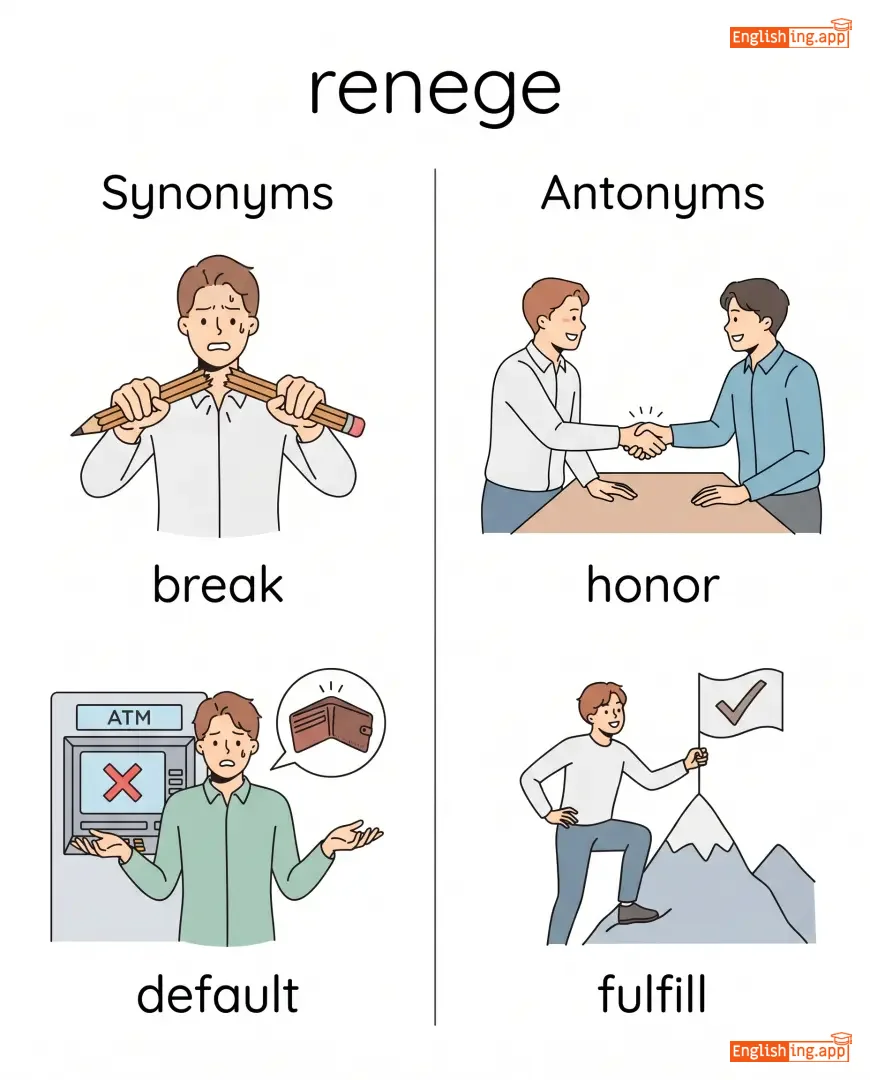
break, default, backtrack, revoke, retract
••••••
|
honor, fulfill, keep
••••••
|
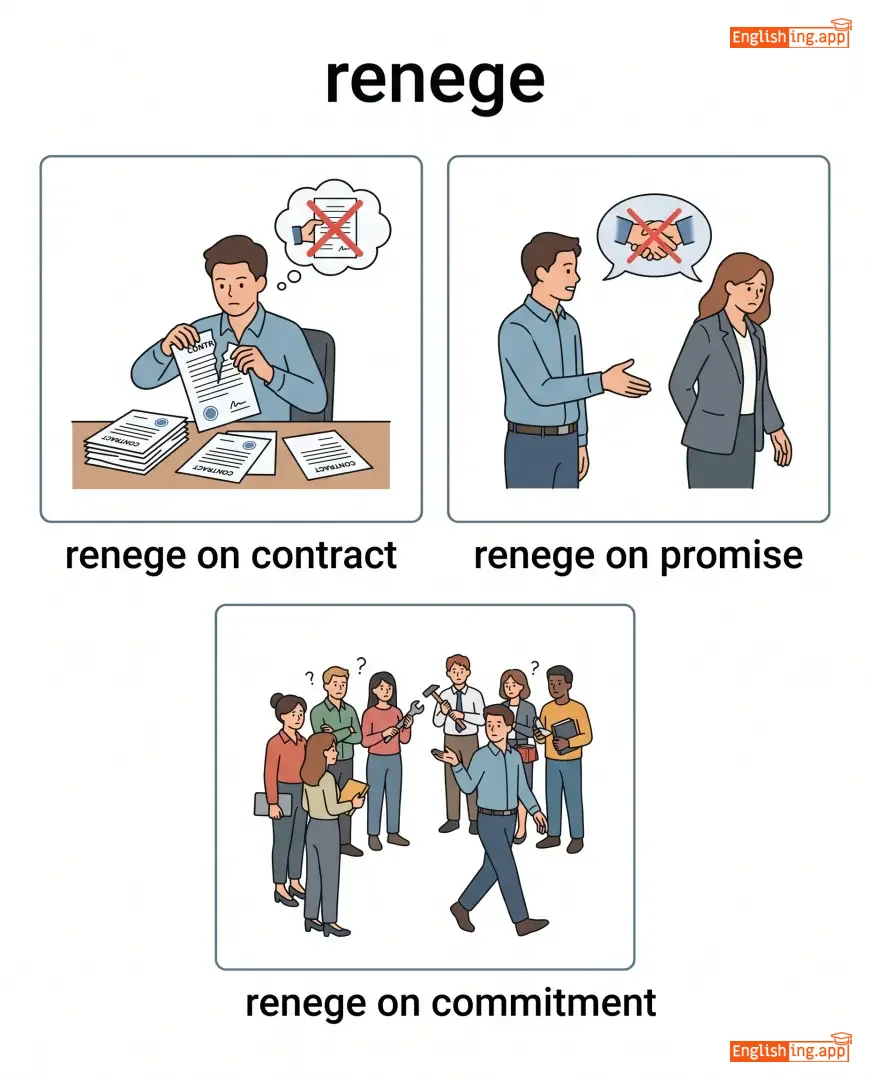
renege on contract, renege on promise, renege on commitment
••••••
|
Renege类似于‘违约’,表示没有履行承诺。
••••••
|
|
💰
••••••
|
/ˌrɛpəˈreɪʃən/
noun
(赔偿)
••••••
|
|
赔偿
peichang
••••••
|
- •••••• | - •••••• | - •••••• | - •••••• |
the making of amends for a wrong done by paying money or helping those who were wronged
••••••
|
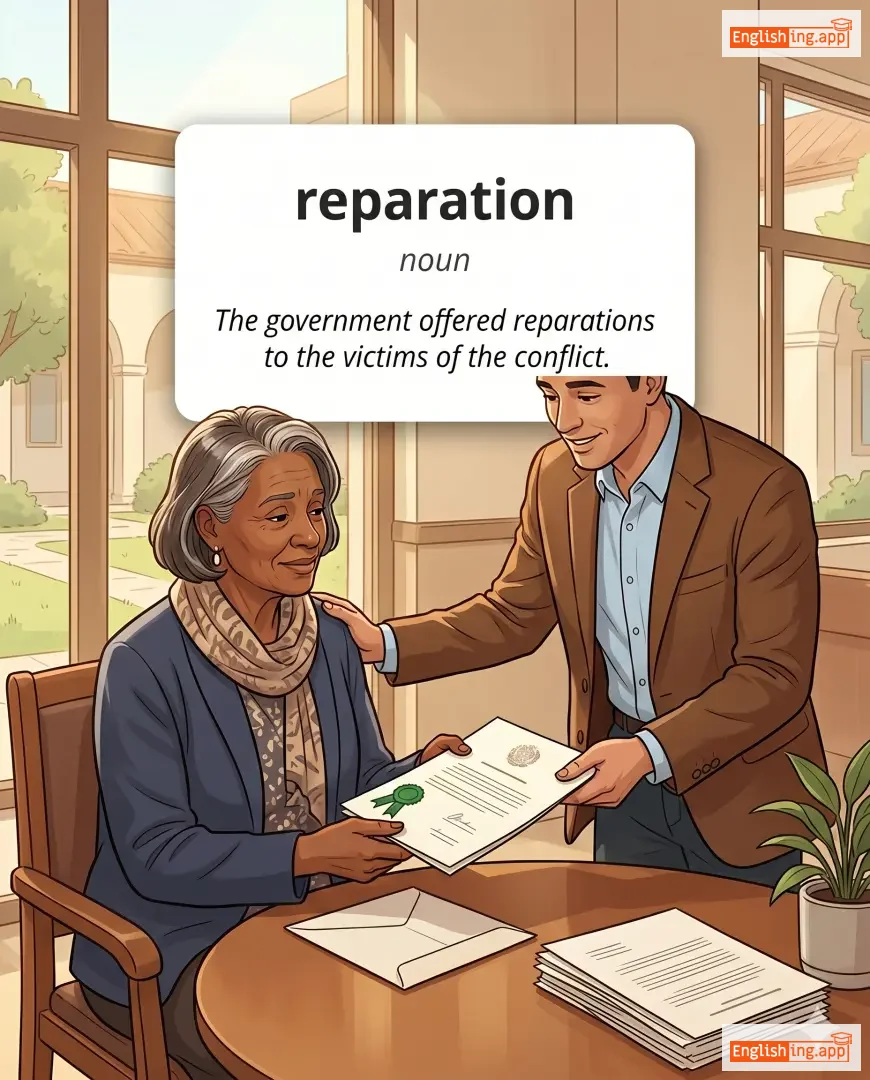
The government offered reparations to the victims of the conflict.
政府向冲突受害者提供了赔偿。
••••••
|
政府向冲突受害者提供了赔偿。
Zhengfu xiang chongtu shouhaizhe tigongle peichang.
••••••
|
make reparations
进行赔偿
••••••
|
to provide compensation or amends for harm caused
••••••
|
进行赔偿
Jinxing peichang
••••••
|
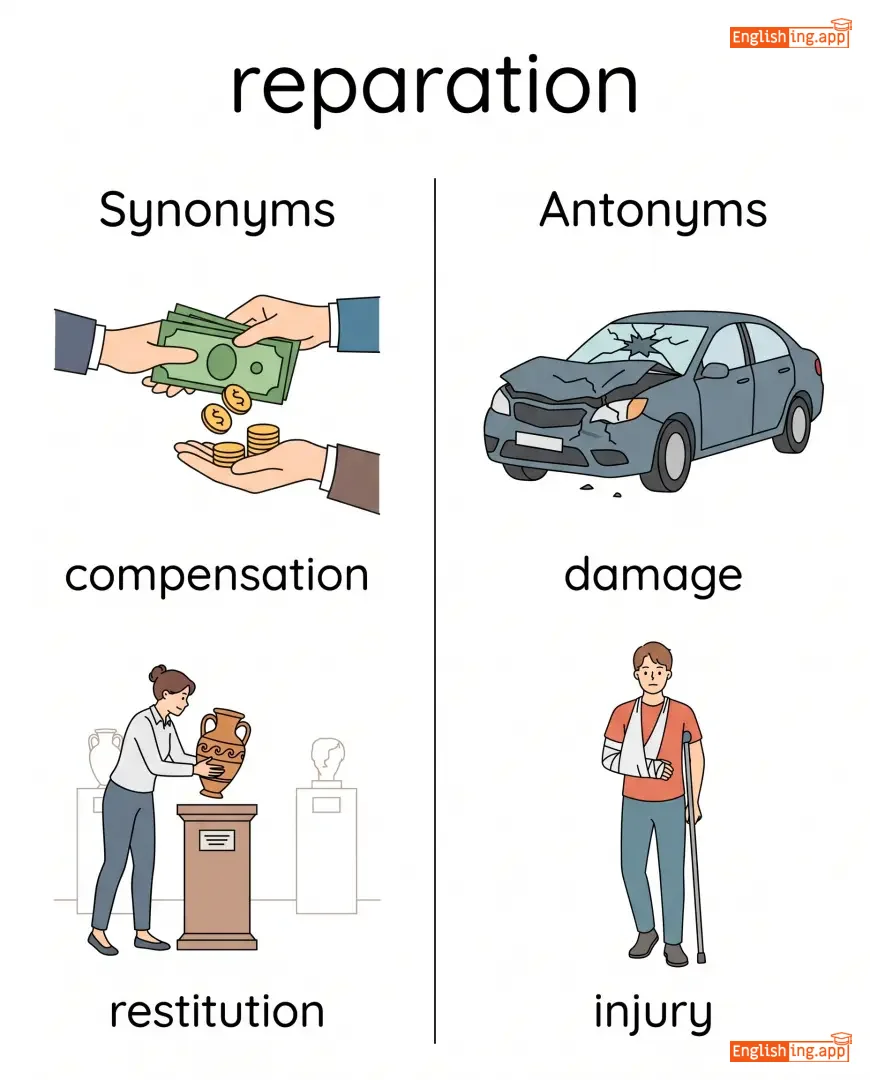
compensation, restitution, redress, amends
••••••
|
damage, injury, harm
••••••
|
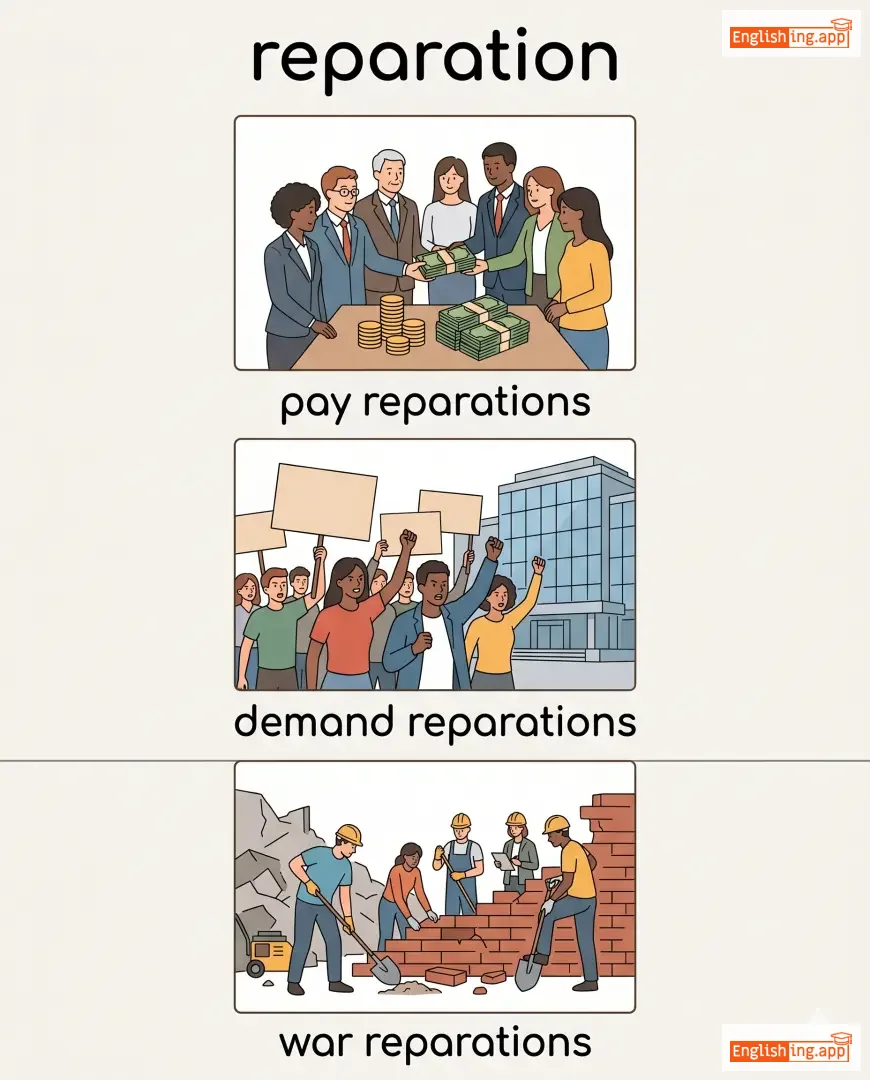
pay reparations, demand reparations, war reparations, reparations claim
••••••
|
Reparation 就是赔偿 – 付钱修复损坏。
••••••
|
|
😔
••••••
|
/rɪˈpaɪn/
verb
(瑞派恩)
••••••
|
|
感到不满
gǎndào bùmǎn
••••••
|
repined
瑞派恩德
••••••
|
repined
瑞派恩德
••••••
|
repines
瑞派恩斯
••••••
|
repining
瑞派因宁
••••••
|
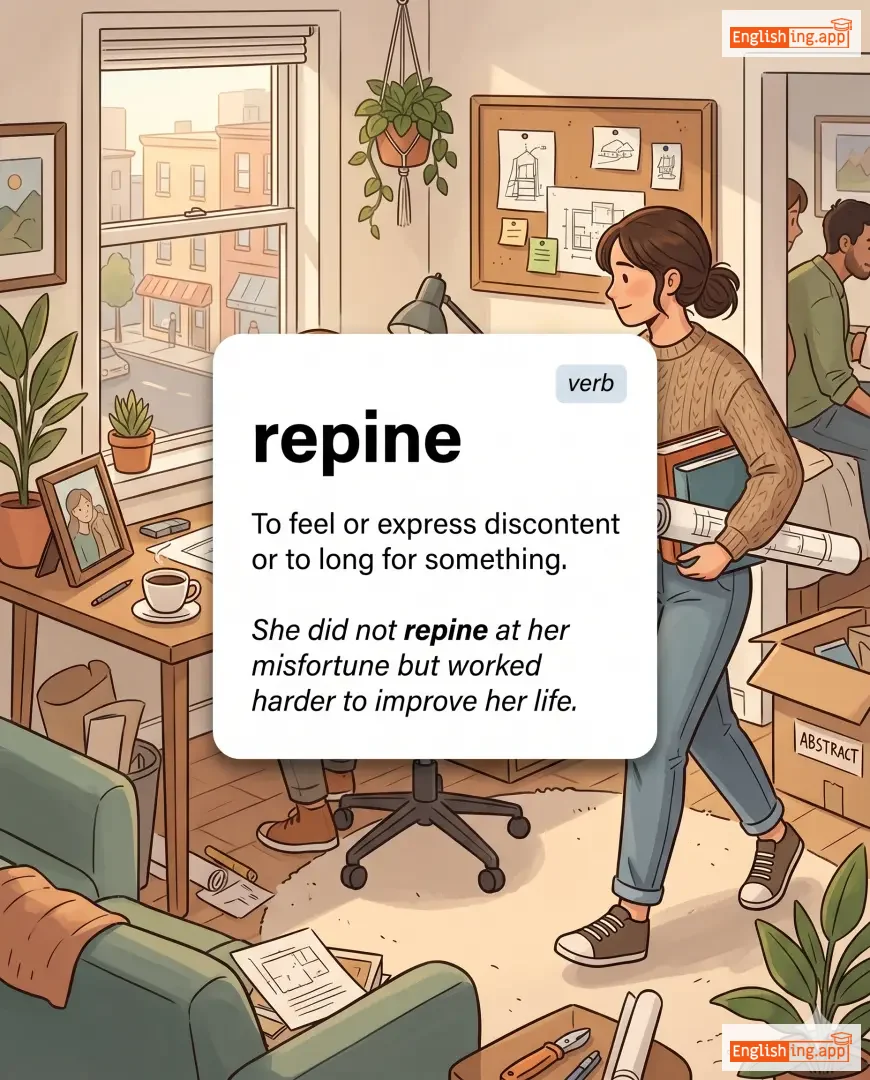
To feel or express discontent or to long for something.
••••••
|
She did not repine at her misfortune but worked harder to improve her life.
她没有为自己的不幸而感到悲伤,而是更加努力地工作来改善她的生活。
••••••
|
她没有为自己的不幸而感到悲伤,而是更加努力地工作来改善她的生活。
Tā méiyǒu wèi zìjǐ de bùxìng ér gǎndào bēishāng, ér shì gèngjiā nǔlì de gōngzuò lái gǎishàn tā de shēnghuó.
••••••
|
- •••••• | - •••••• | - •••••• |
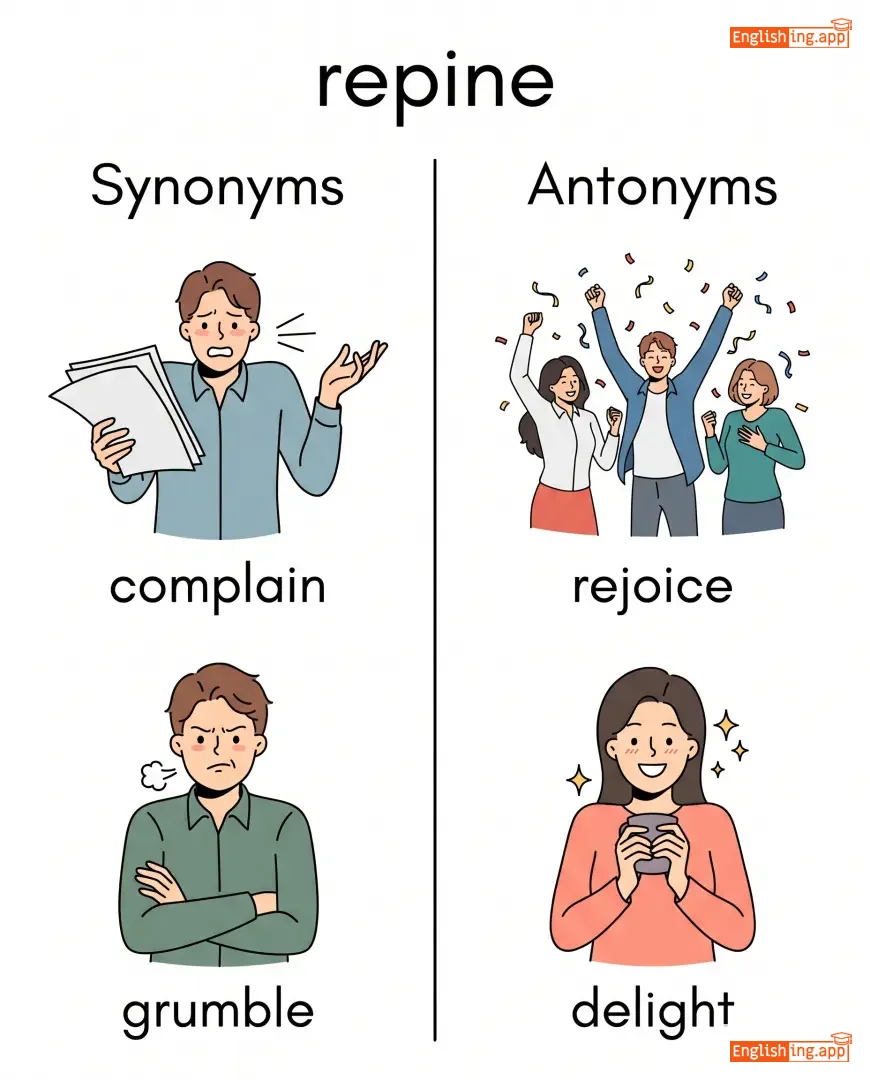
complain, grumble, lament, fret, brood
••••••
|
rejoice, delight, celebrate
••••••
|
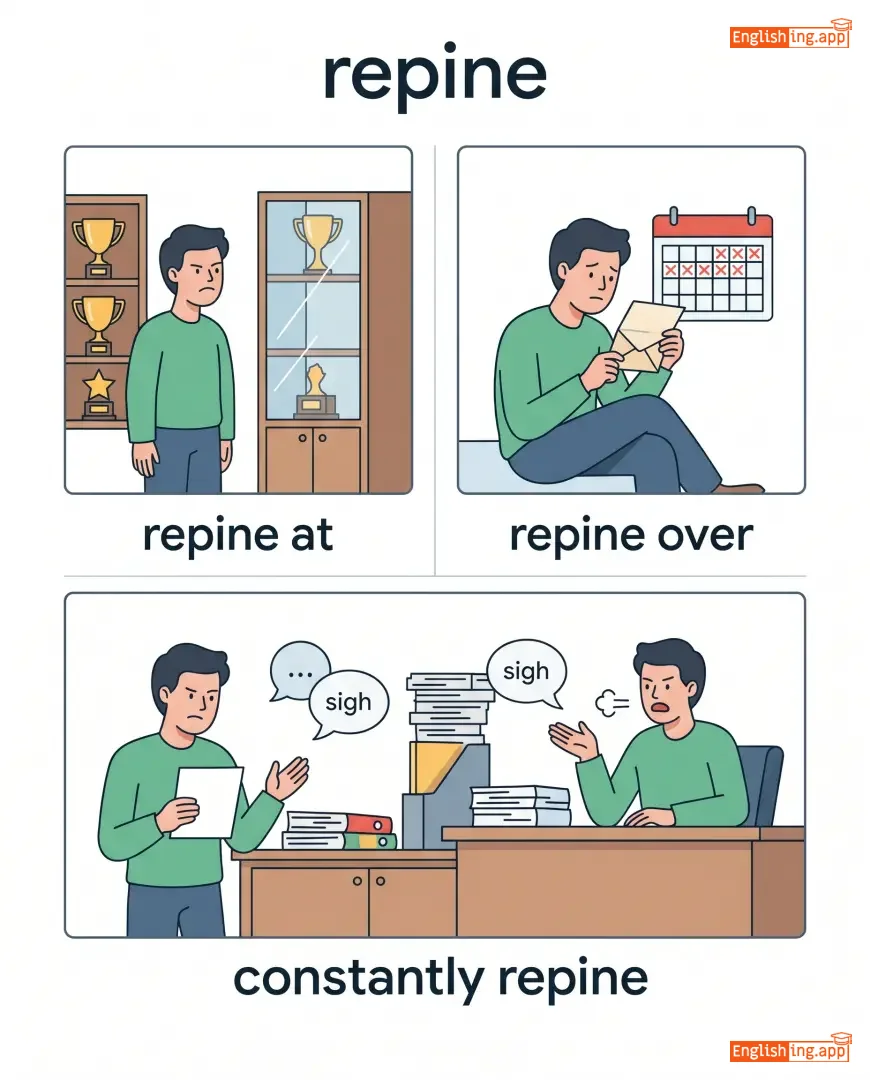
repine at, repine over, constantly repine, quietly repine
••••••
|
Re pine 就像在松树下哀悼,不满意。
••••••
|
|
🔂
••••••
|
/rɪˈpriːz/
noun/verb
(repriiz)
••••••
|
|
重现
chongxian
••••••
|
reprised
repriizd
••••••
|
reprised
repriizd
••••••
|
reprises
repriizes
••••••
|
reprising
repriizing
••••••
|
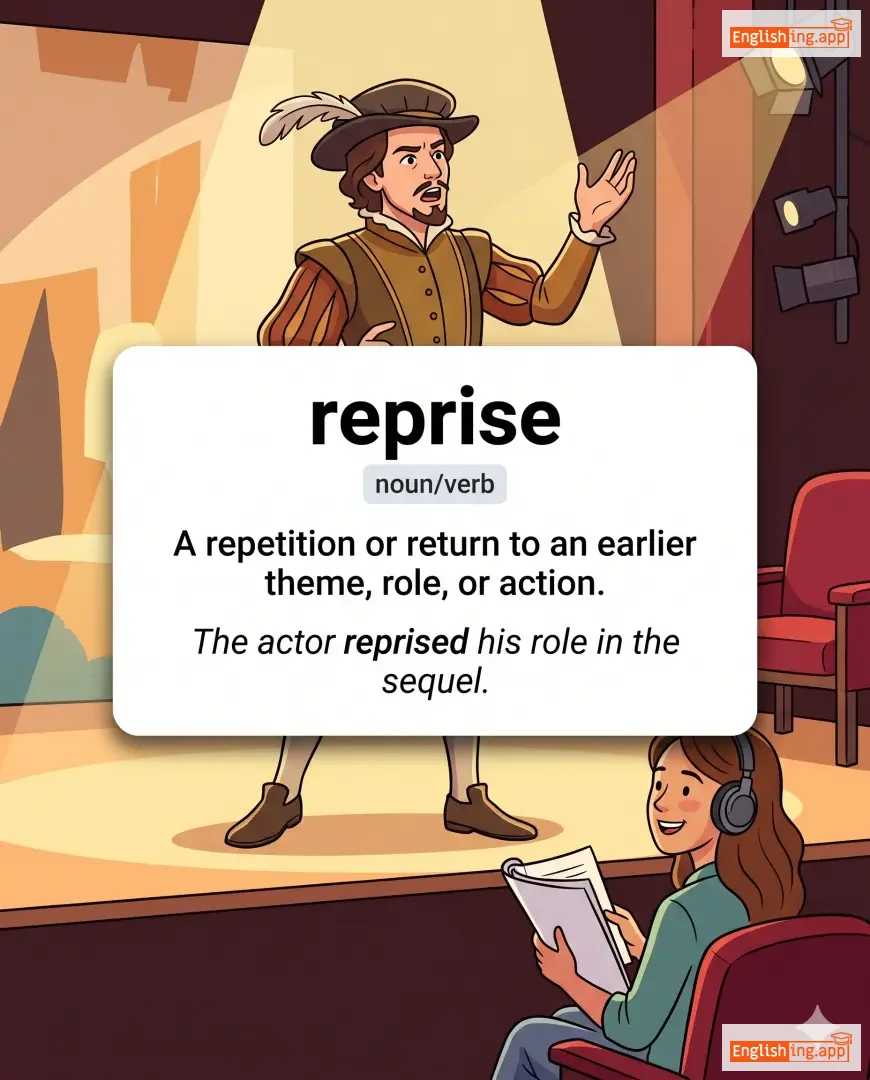
A repetition or return to an earlier theme, role, or action.
••••••
|
The actor reprised his role in the sequel.
演员在续集中重新扮演了他的角色。
••••••
|
演员在续集中重新扮演了他的角色。
Yǎnyuán zài xùjí zhōng chóngxīn bàn yǎnle tā de juésè.
••••••
|
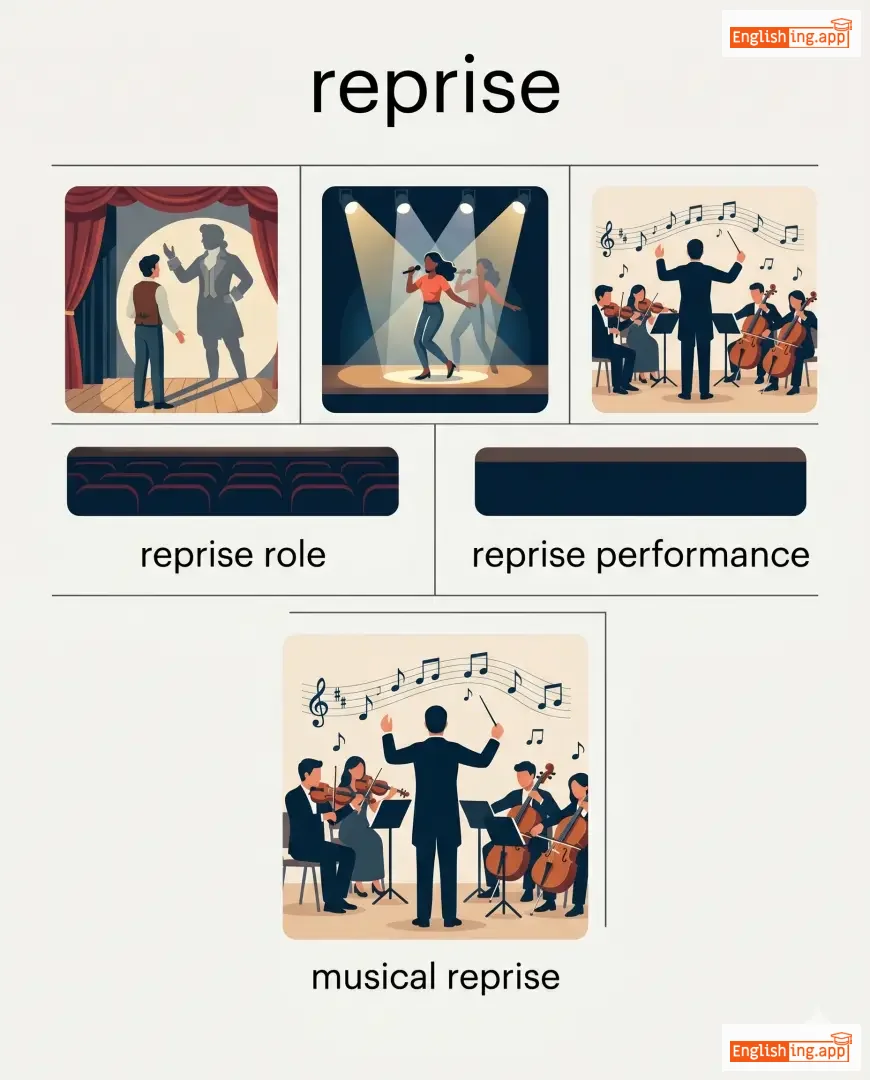
musical reprise
音乐的重现
••••••
|
The repetition of a passage in music.
••••••
|
音乐的重现
Yīnyuè de chóngxiàn
••••••
|
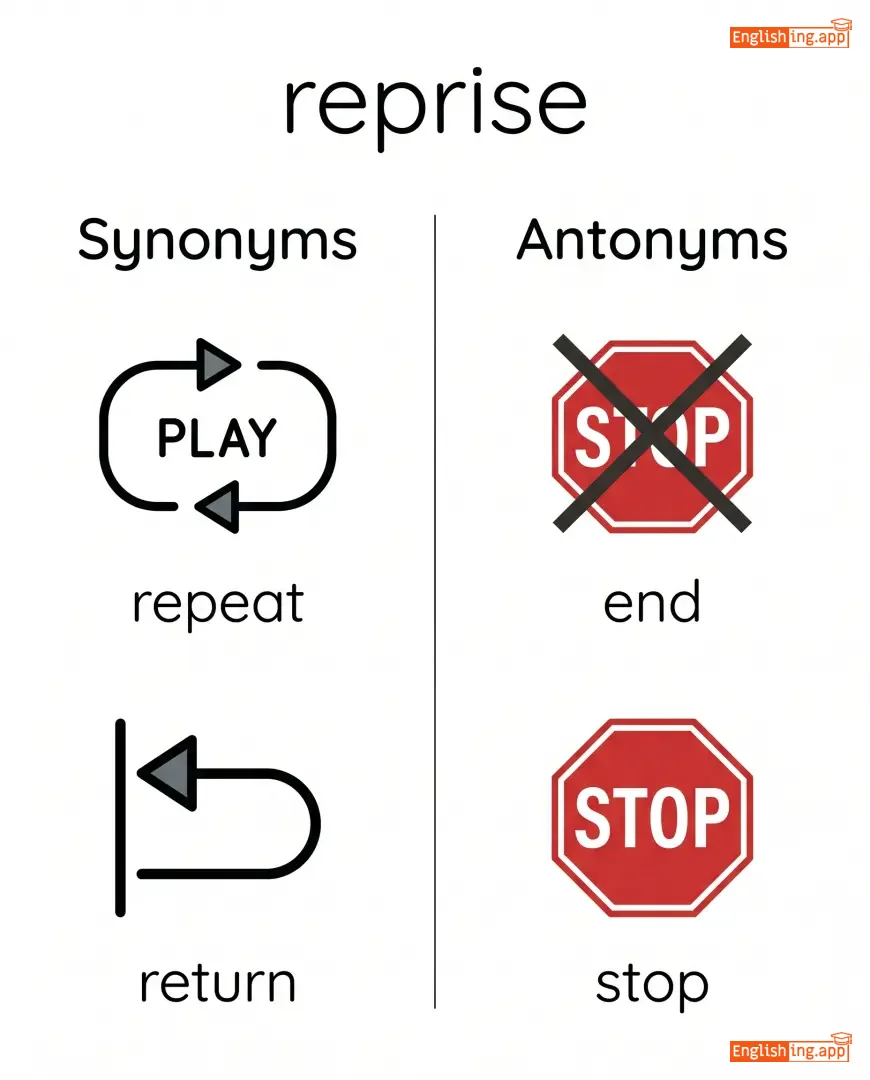
repeat, return, echo, reenact, recurrence
••••••
|
end, stop, halt
••••••
|
reprise role, reprise performance, musical reprise, reprise theme
••••••
|
Re-prize意味着再次获得奖励——这就是重现。
••••••
|
|
👎
••••••
|
/rɪˈproʊtʃ/
noun/verb
(雷普罗奇)
••••••
|

|
指责 / 批评
zhize / piping
••••••
|
reproached
雷普罗奇德
••••••
|
reproached
雷普罗奇德
••••••
|
reproaches
雷普罗奇斯
••••••
|
reproaching
雷普罗奇英
••••••
|
An expression of disapproval or disappointment; to criticize someone for doing wrong.
••••••
|
She reproached him for arriving late to the meeting.
她因迟到而责备了他。
••••••
|
她因迟到而责备了他。
Ta yin chidao er zhebei le ta.
••••••
|
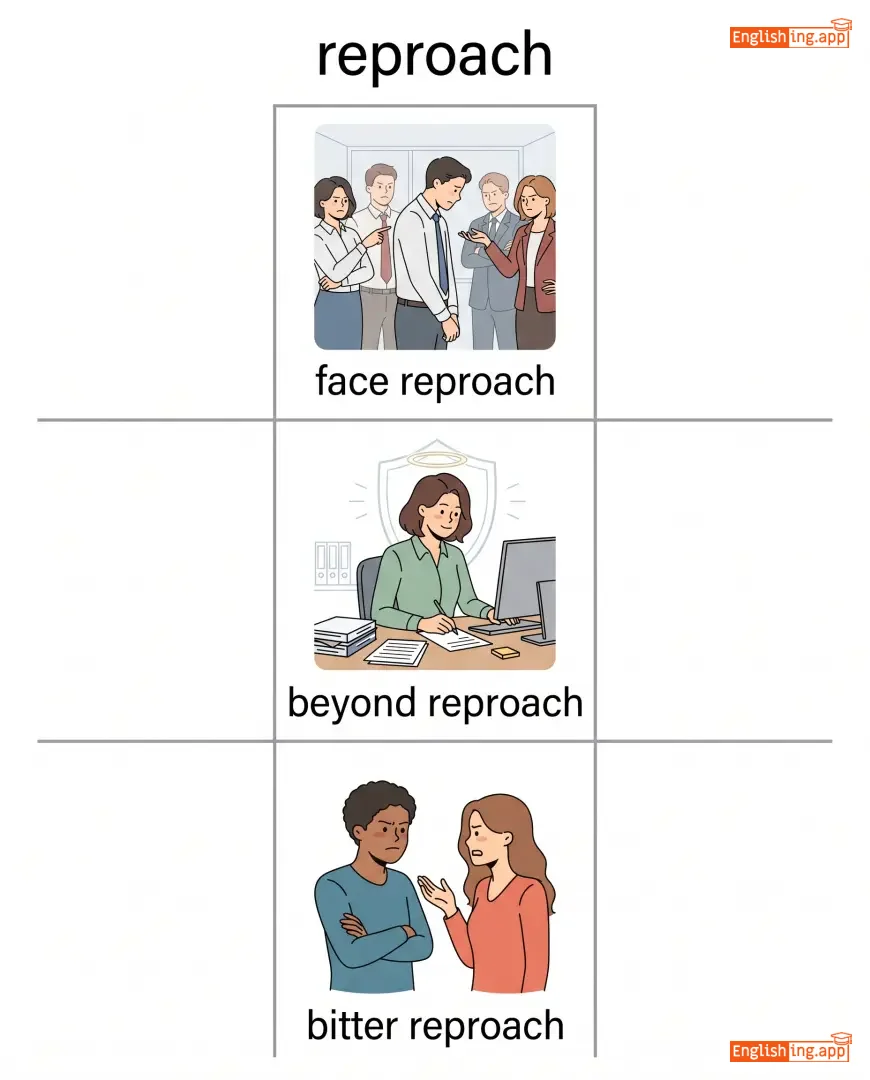
beyond reproach
超越指责
••••••
|
So good that there is no fault or criticism.
••••••
|
超越指责
chaoyue zhize
••••••
|
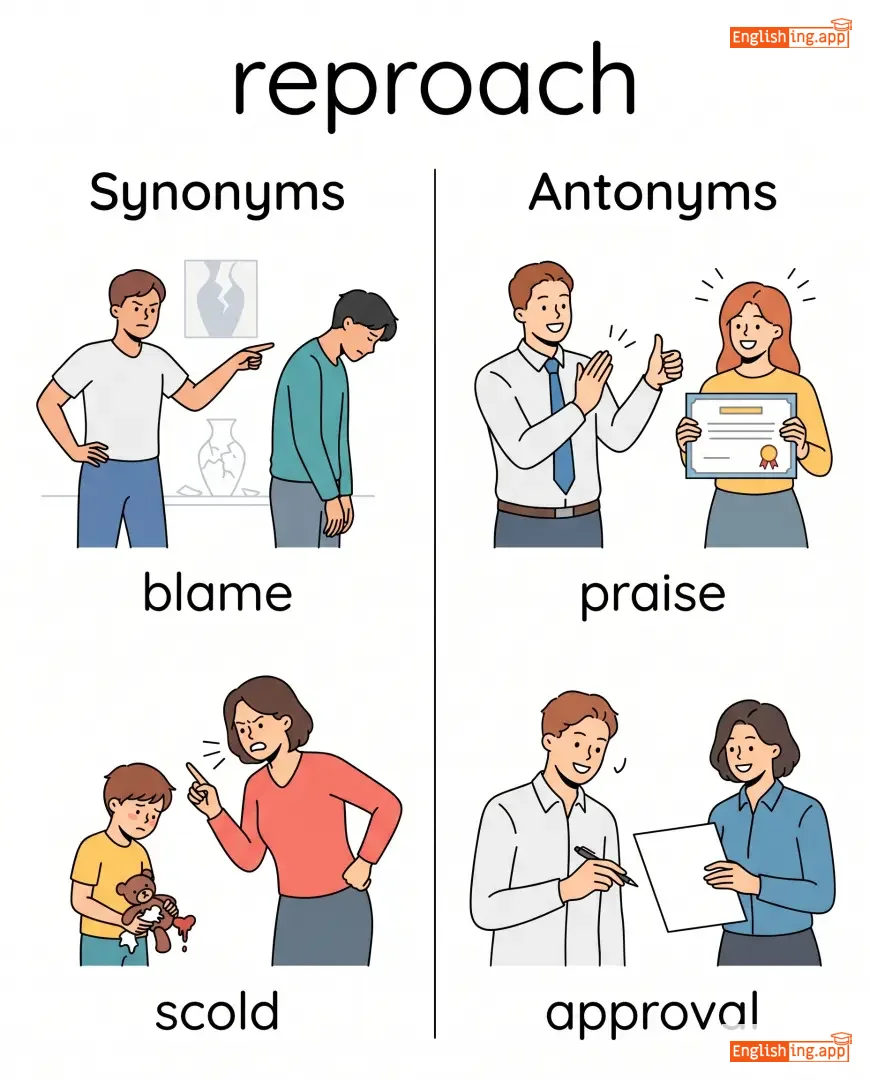
blame, scold, rebuke, criticism, censure
••••••
|
praise, approval, commendation
••••••
|
face reproach, beyond reproach, bitter reproach, severe reproach
••••••
|
Re-proach → 责备意味着再次接近来批评。
••••••
|
|
😈
••••••
|
/ˈrɛprəˌbeɪt/
noun, adjective, verb
••••••
|
|
- •••••• |
reprobated
••••••
|
reprobated
••••••
|
reprobates
••••••
|
reprobating
••••••
|
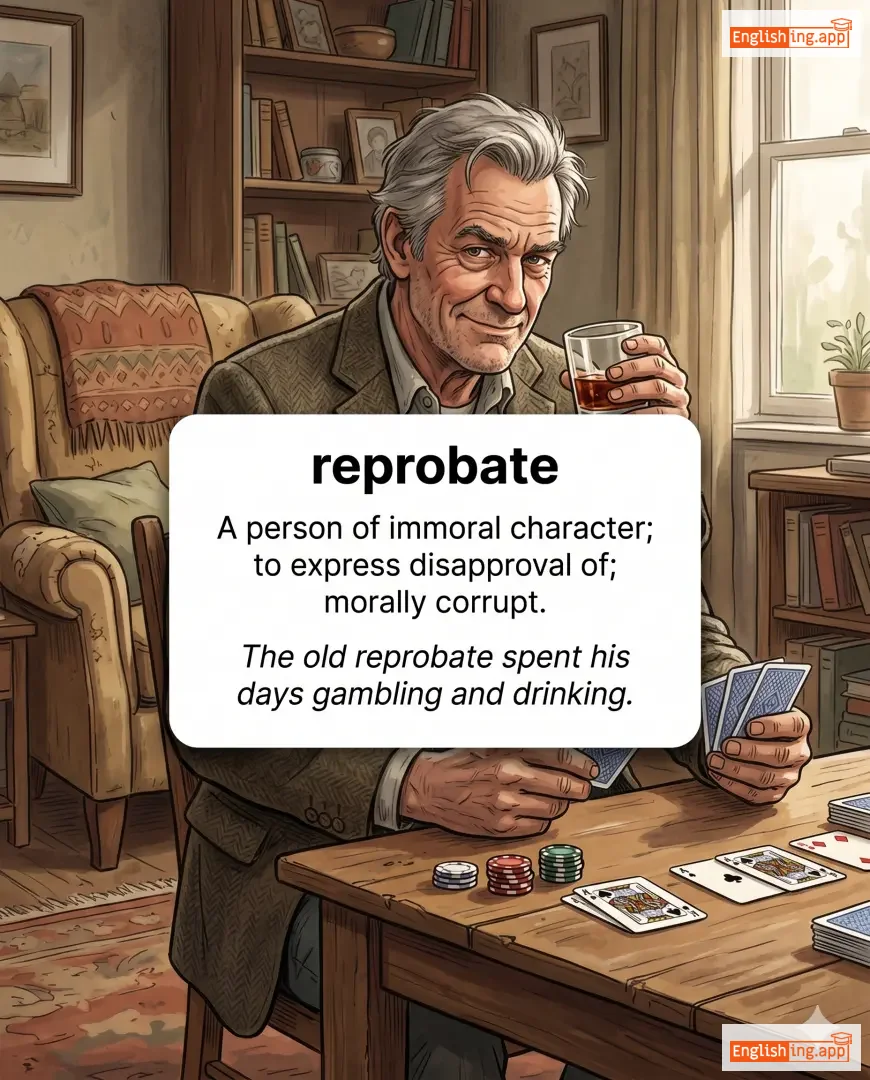
A person of immoral character; to express disapproval of; morally corrupt.
••••••
|
The old reprobate spent his days gambling and drinking. |
- •••••• |
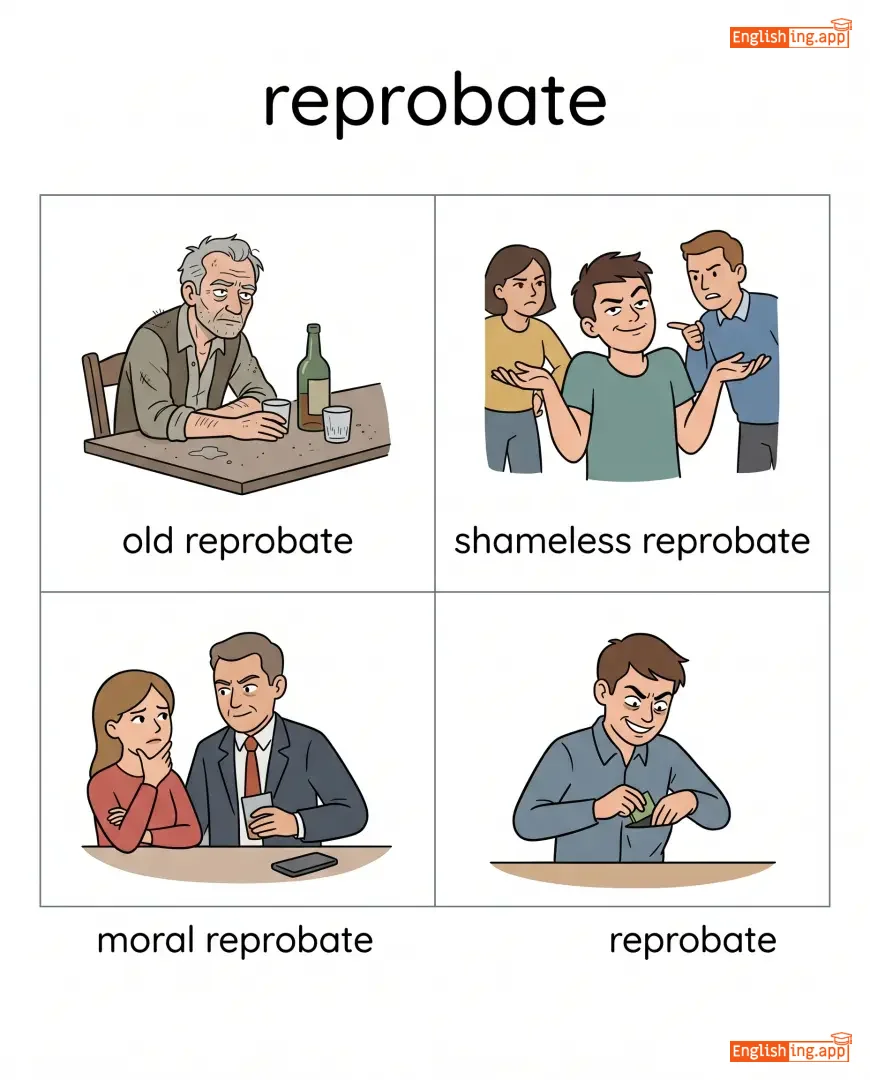
an old reprobate |
a person with a long history of immoral or disapproved behavior
••••••
|
- •••••• |
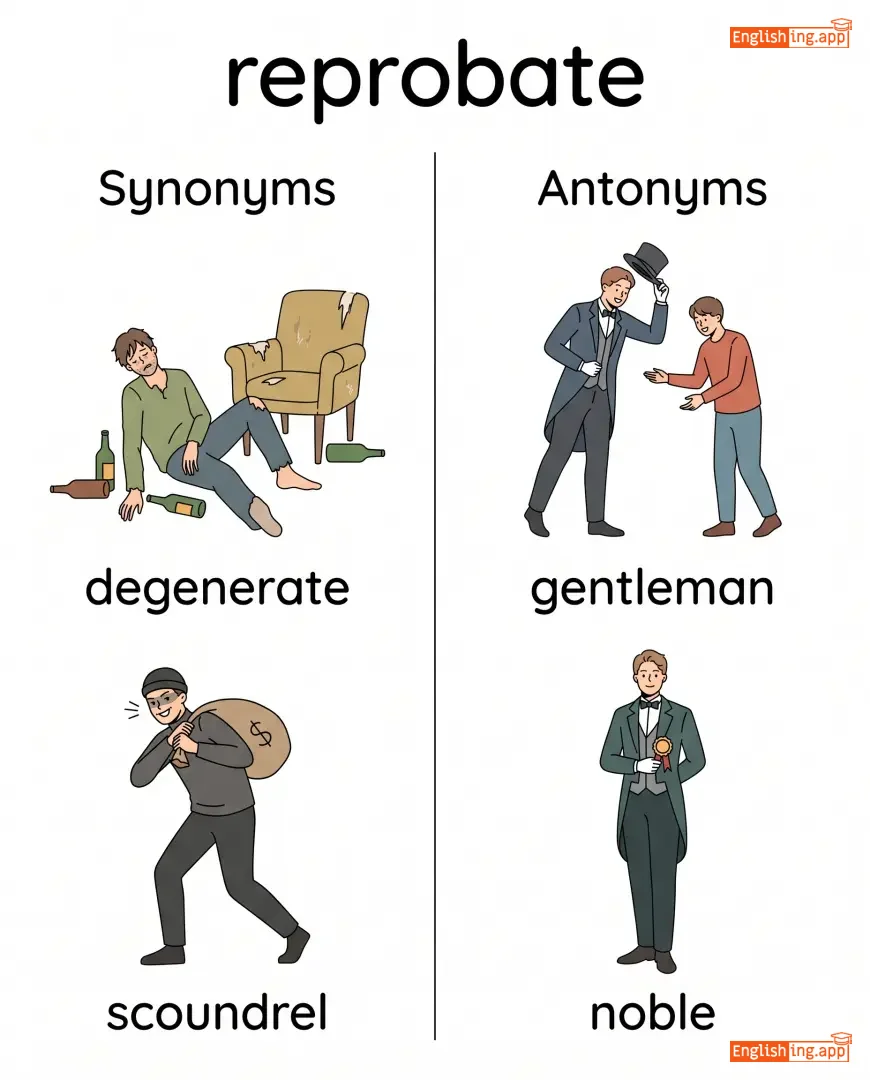
degenerate, scoundrel, rogue, villain, miscreant
••••••
|
gentleman, noble, virtuous
••••••
|
old reprobate, shameless reprobate, moral reprobate
••••••
|
No •••••• |
|
🙅
••••••
|
/rɪˈpjuː.di.eɪt/
verb
(re-pyu-di-eit)
••••••
|
|
拒绝
jujue
••••••
|
repudiated
re-pyu-di-eit-ed
••••••
|
repudiated
re-pyu-di-eit-ed
••••••
|
repudiates
re-pyu-di-eits
••••••
|
repudiating
re-pyu-di-eit-ing
••••••
|
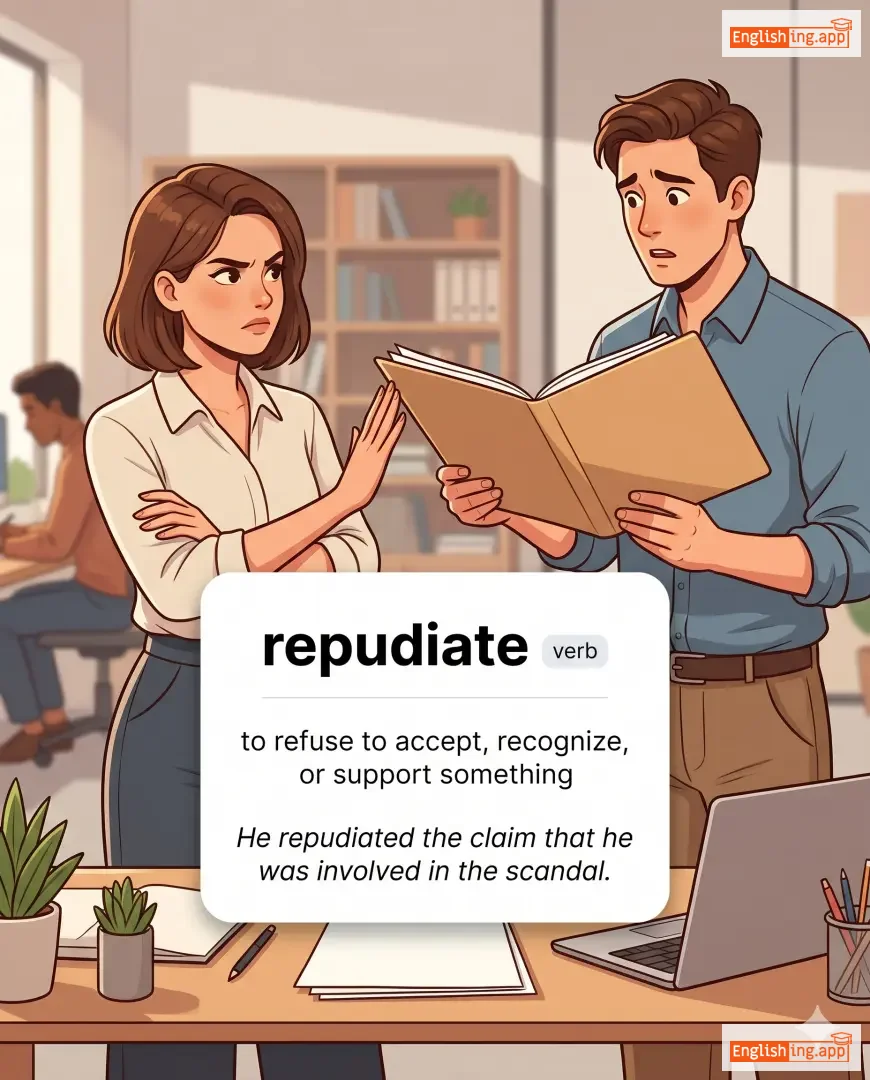
to refuse to accept, recognize, or support something
••••••
|
He repudiated the claim that he was involved in the scandal.
他拒绝了他参与丑闻的说法。
••••••
|
他拒绝了他参与丑闻的说法。
Ta jujue le ta canyu chouwen de shuofa.
••••••
|
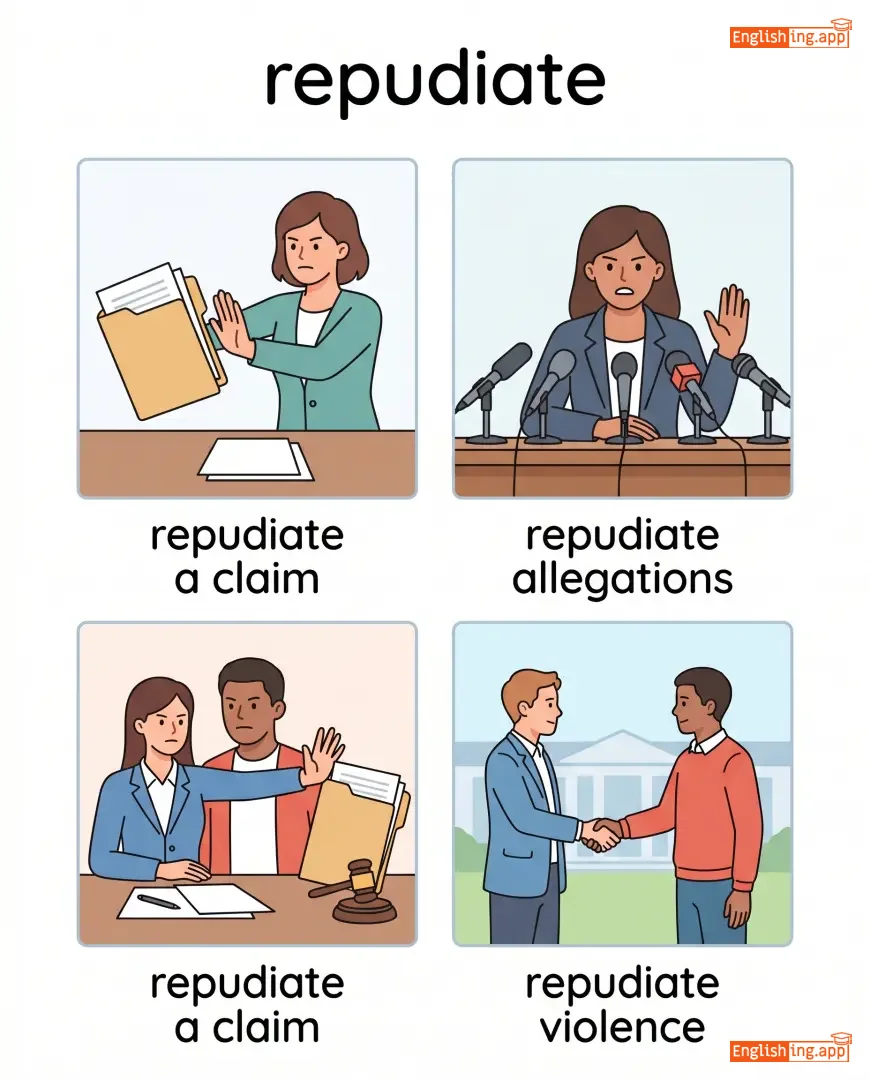
repudiate a claim
拒绝一个说法
••••••
|
to formally reject or deny a statement or allegation
••••••
|
拒绝一个说法
Jujue yige shuofa
••••••
|
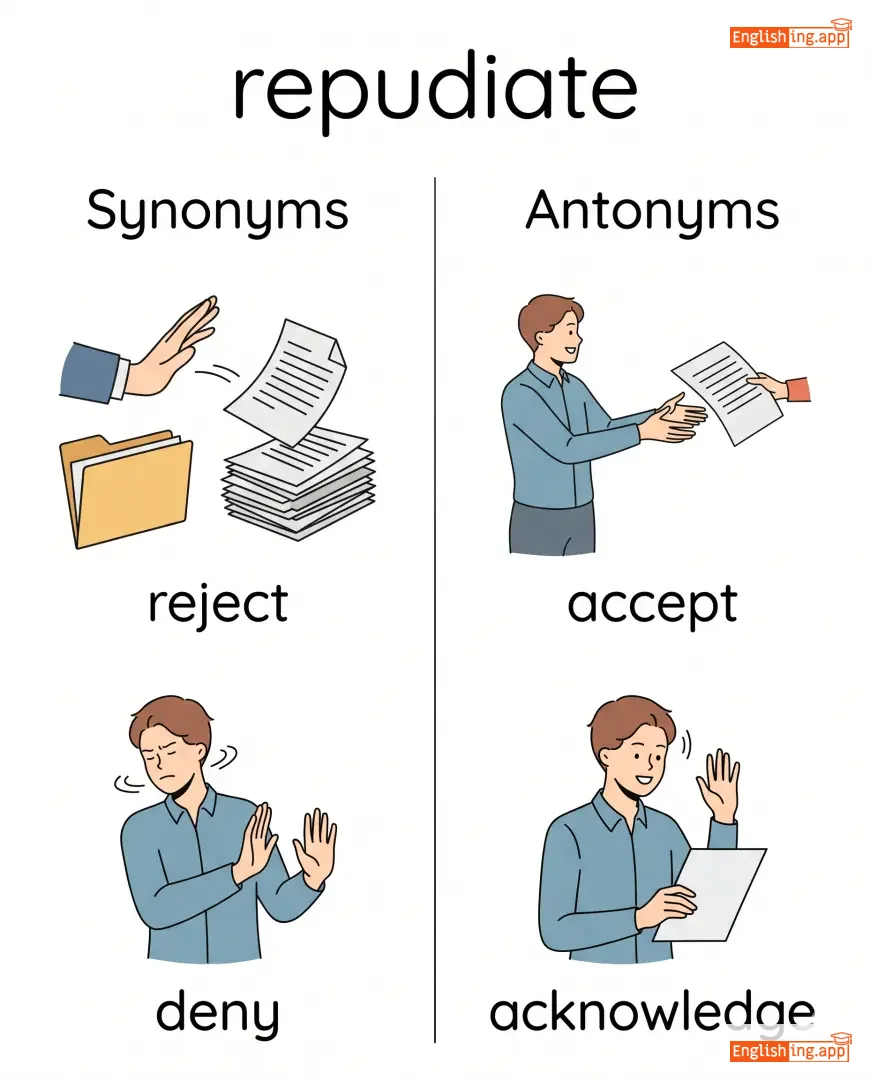
reject, deny, renounce, disown, disclaim
••••••
|
accept, acknowledge, admit
••••••
|
repudiate a claim, repudiate allegations, repudiate violence, repudiate responsibility
••••••
|
Re + 拒绝 → Rejected 中文
••••••
|
|
❌
••••••
|
/rɪˈsɪnd/
verb
(瑞辛德)
••••••
|
|
撤销
chèxiāo
••••••
|
rescinded
瑞辛德德
••••••
|
rescinded
瑞辛德德
••••••
|
rescinds
瑞辛德斯
••••••
|
rescinding
瑞辛丁
••••••
|
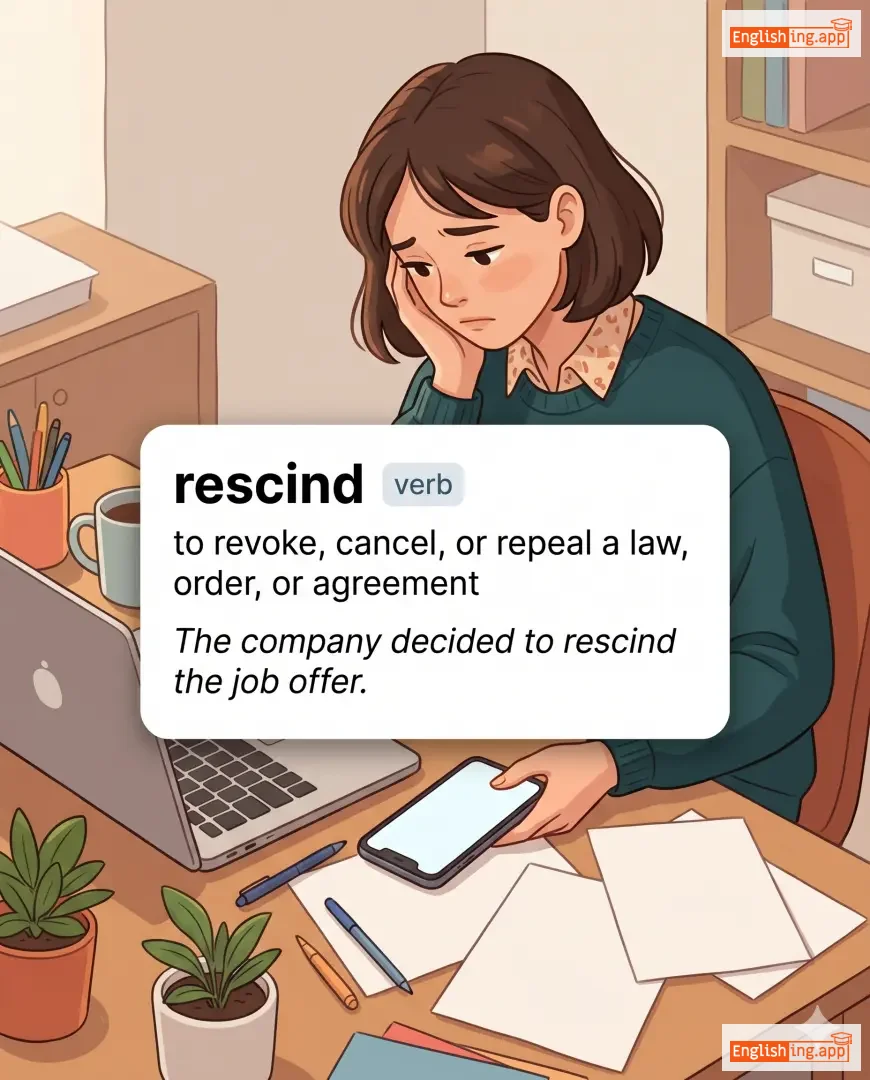
to revoke, cancel, or repeal a law, order, or agreement
••••••
|
The company decided to rescind the job offer.
公司决定撤销工作机会。
••••••
|
公司决定撤销工作机会。
Gōngsī juédìng chèxiāo gōngzuò jīhuì.
••••••
|
rescind an offer
撤销报价
••••••
|
to officially cancel an offer
••••••
|
撤销报价
chèxiāo bàojià
••••••
|
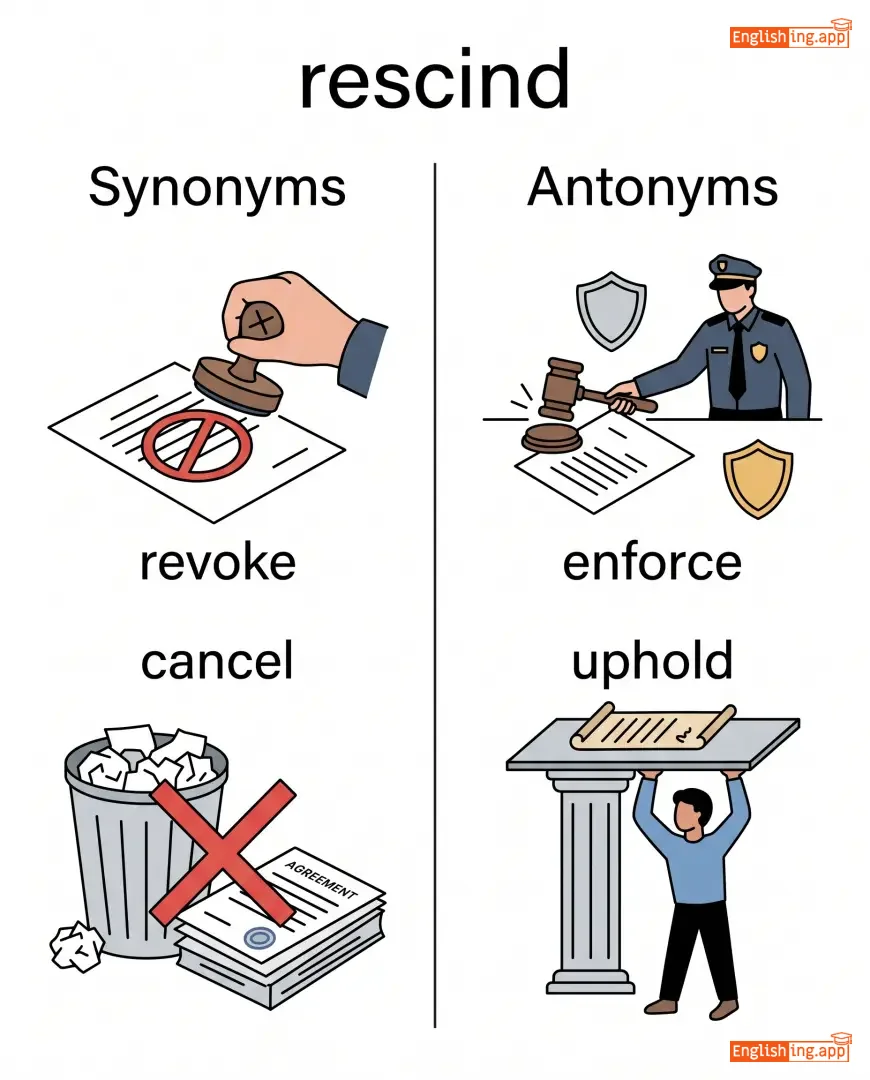
revoke, cancel, repeal, annul, withdraw
••••••
|
enforce, uphold, implement
••••••
|
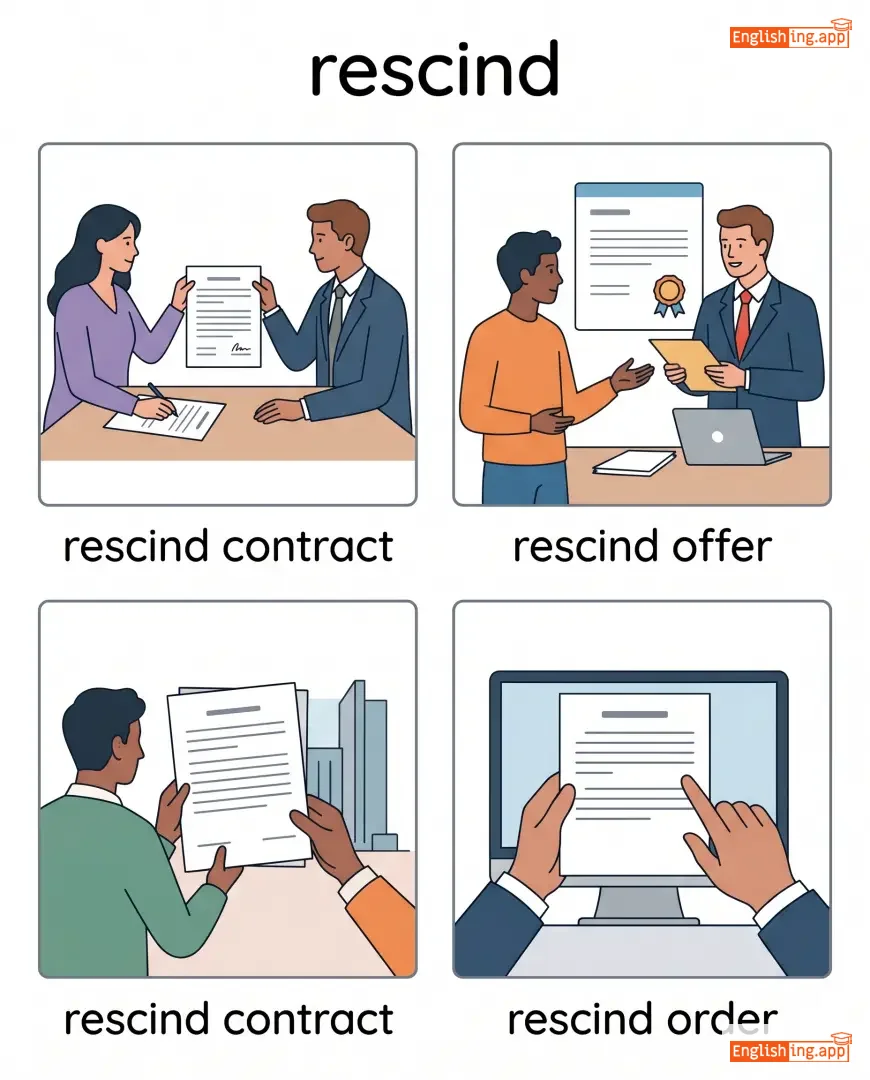
rescind contract, rescind offer, rescind order, rescind decision
••••••
|
Re-Sind 就是撤销,不再提供机会。
••••••
|
|
📜
••••••
|
/ˌrɛzəˈluːʃən/
noun
(rèzǒulùxùn)
••••••
|
|
决心
juexin
••••••
|
- •••••• | - •••••• | - •••••• | - •••••• |
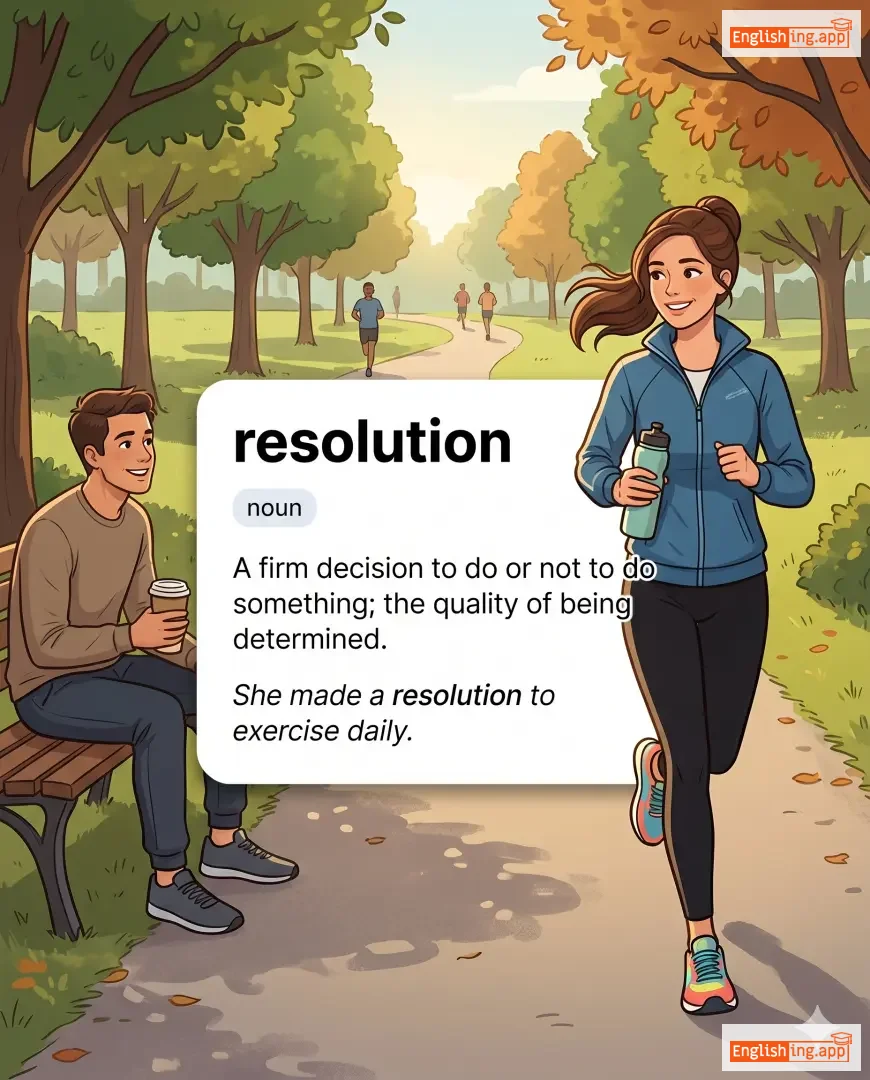
A firm decision to do or not to do something; the quality of being determined.
••••••
|
She made a resolution to exercise daily. |
她做出了每天锻炼的决心。
Tā zuòchūle měitiān duànliàn de juéxīn.
••••••
|
New Year's resolution |
A firm decision or goal set at the beginning of a new year
••••••
|
新年决心
xīnnián juéxīn
••••••
|
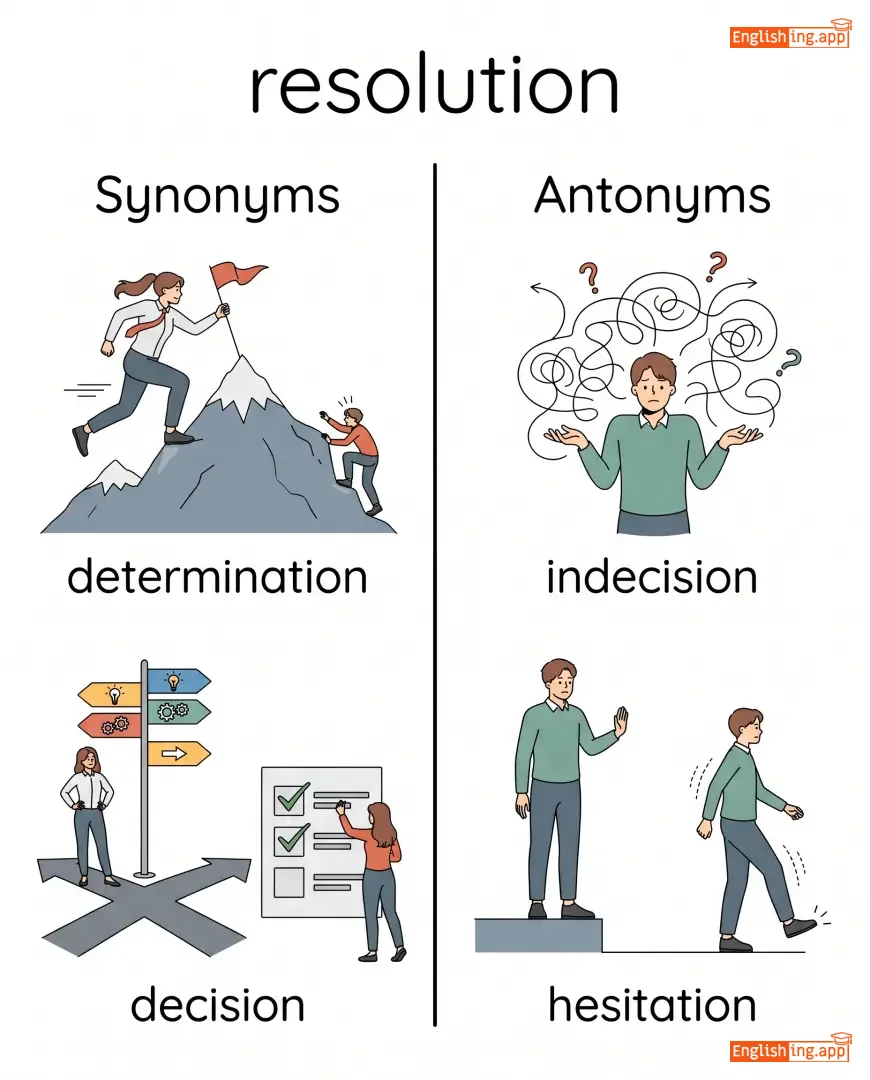
determination, decision, resolve, commitment, intention
••••••
|
indecision, hesitation, doubt
••••••
|
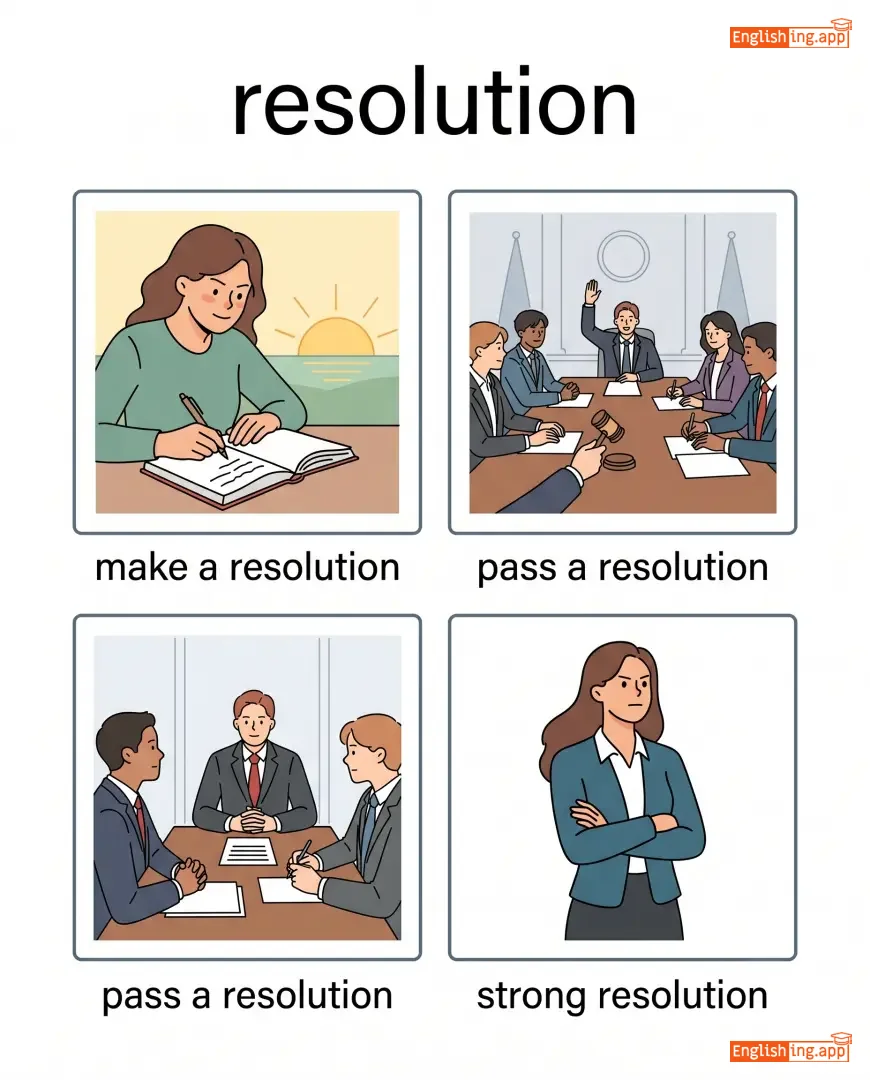
make a resolution, pass a resolution, strong resolution, resolution adopted
••••••
|
Resolution就像中文的决心,定下新年目标!
••••••
|
|
✅
••••••
|
/rɪˈzɒlv/
verb
(rízǎolv)
••••••
|
|
解决
jie jue
••••••
|
resolved
rízǎolv-d
••••••
|
resolved
rízǎolv-d
••••••
|
resolves
rízǎolv-s
••••••
|
resolving
rízǎolving
••••••
|
To decide firmly on a course of action; to settle or solve a problem.
••••••
|
They resolved to finish the project on time.
他们决定按时完成项目。
••••••
|
他们决定按时完成项目。
Tamen jueding anshi wancheng xiangmu.
••••••
|
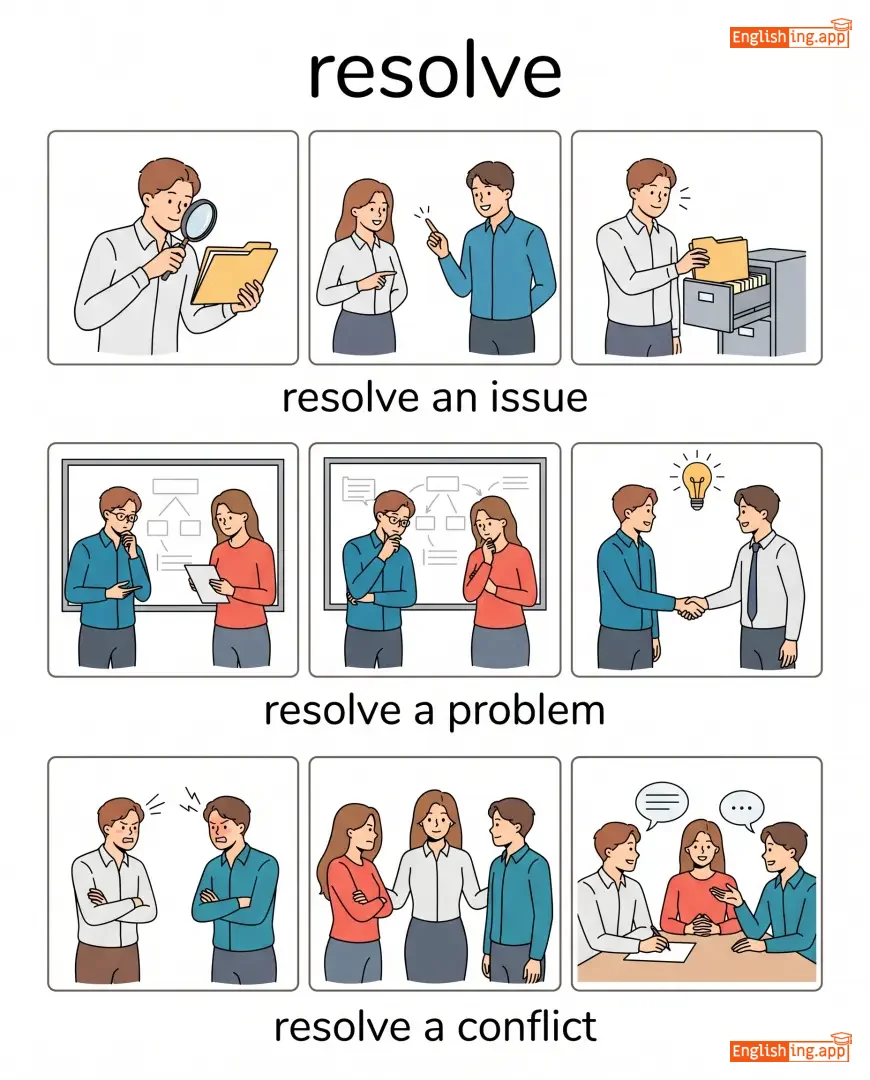
resolve a conflict
解决冲突
••••••
|
To find a solution to a disagreement
••••••
|
解决冲突
jie jue chong tu
••••••
|
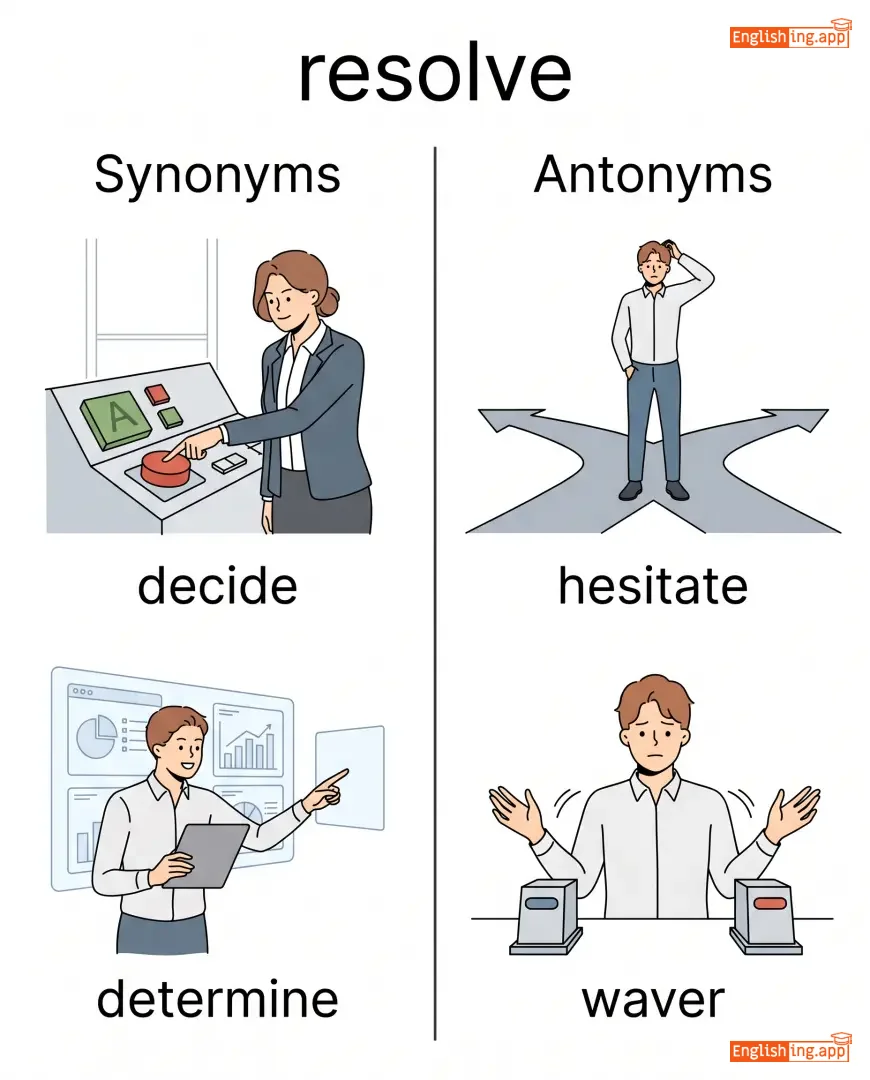
decide, determine, settle, conclude, fix
••••••
|
hesitate, waver, delay
••••••
|
resolve an issue, resolve a problem, resolve a conflict, resolve to do
••••••
|
Resolve = 解决, 就是解决一个问题。
••••••
|
|
🙊
••••••
|
/ˈrɛtɪsənt/
adjective
(rɛtɪsənt)
••••••
|
|
沉默寡言
chenmo guayan
••••••
|
- •••••• | - •••••• | - •••••• | - •••••• |
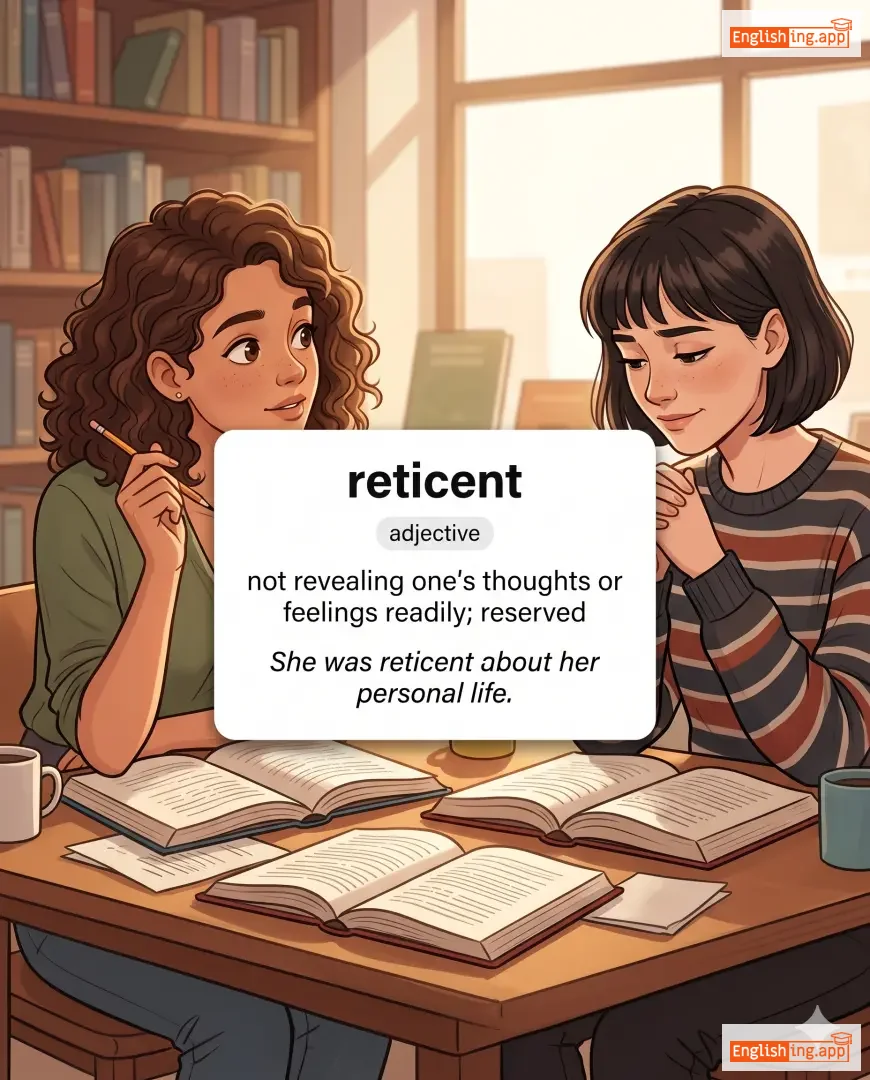
not revealing one's thoughts or feelings readily; reserved
••••••
|
She was reticent about her personal life. |
她对自己的个人生活保持沉默。
Ta dui ziji de geren shenghuo baochi chenmo.
••••••
|
- •••••• | - •••••• | - •••••• |
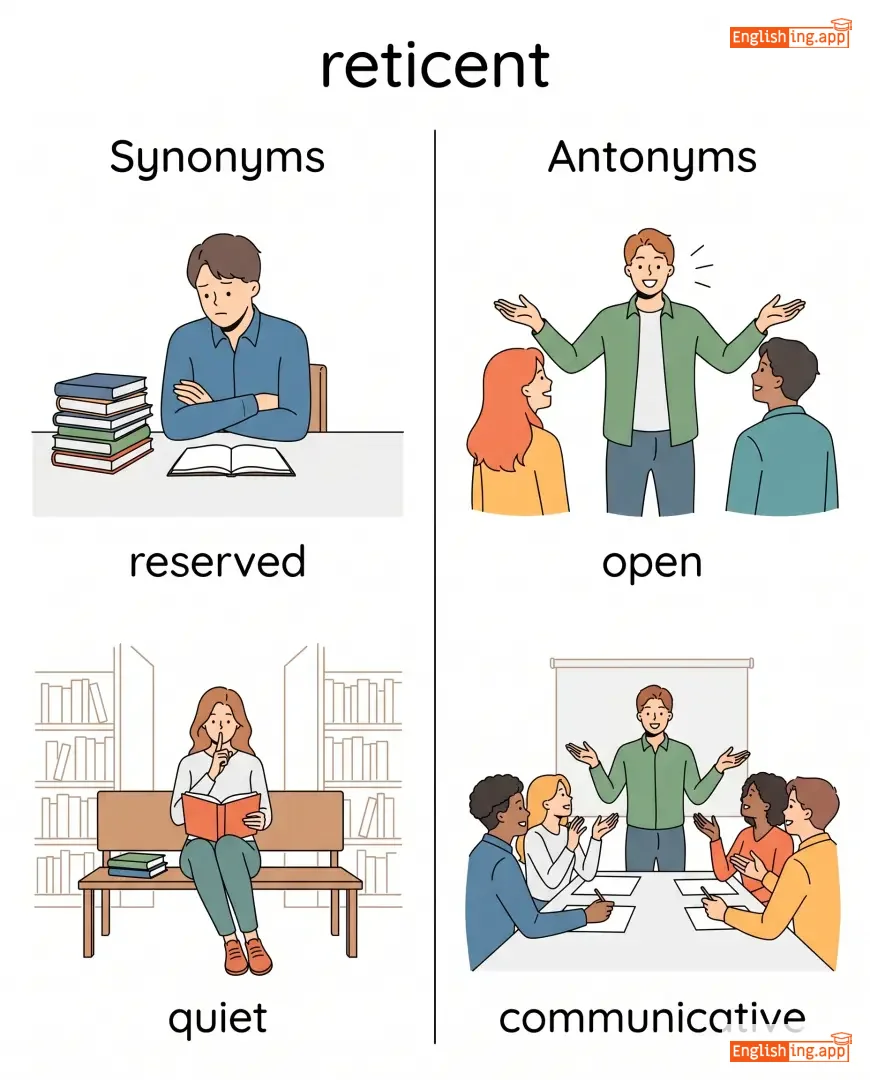
reserved, quiet, silent, secretive, restrained
••••••
|
open, communicative, talkative
••••••
|
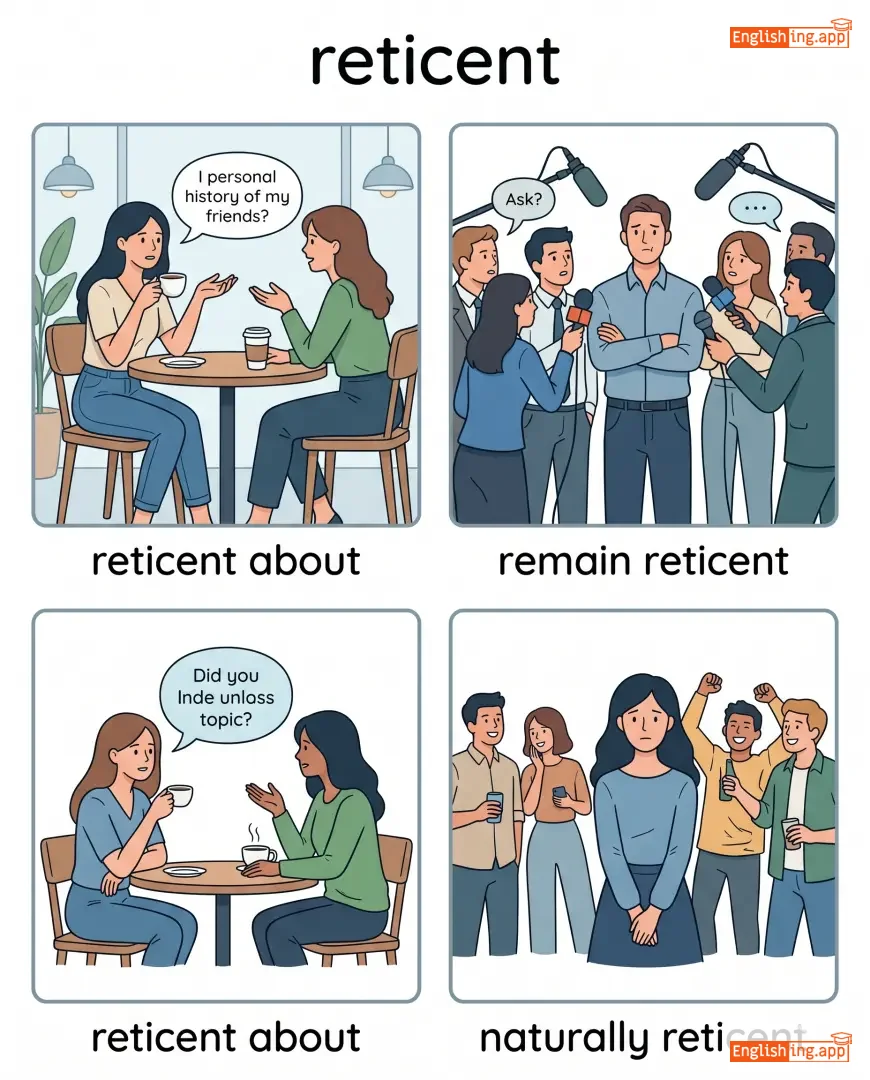
reticent about, remain reticent, naturally reticent
••••••
|
Reticent 就像一个沉默的人,什么也不说,隐藏在背后。
••••••
|
|
🕊️
••••••
|
/ˈrɛvərənt/
adjective
(雷弗伦特)
••••••
|

|
虔诚的
qiánchéng de
••••••
|
- •••••• | - •••••• | - •••••• | - •••••• |
Showing deep and solemn respect.
••••••
|
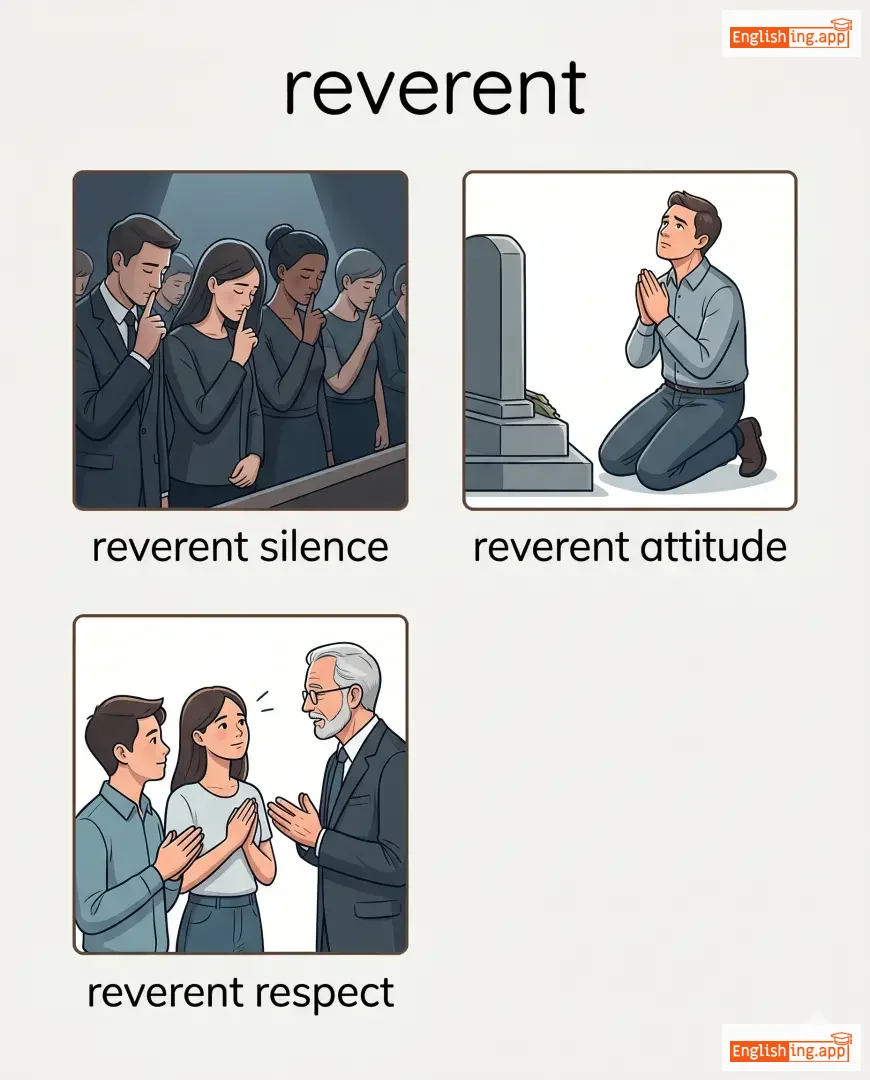
They listened to the speech in a reverent silence.
他们在虔诚的沉默中听取了演讲。
••••••
|
他们在虔诚的沉默中听取了演讲。
Tāmen zài qiánchéng de chénmò zhōng tīngqǔle yǎnjiǎng.
••••••
|
- •••••• | - •••••• | - •••••• |
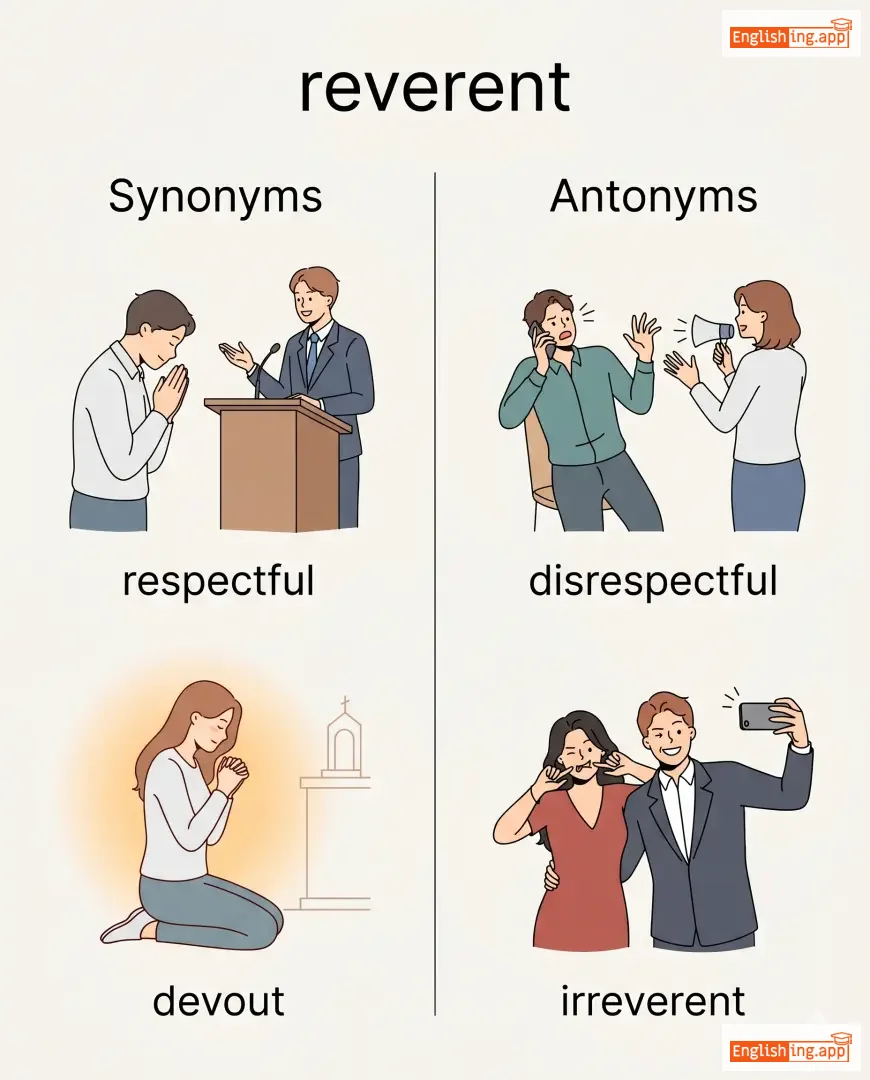
respectful, devout, admiring, dutiful
••••••
|
disrespectful, irreverent
••••••
|
reverent silence, reverent attitude, reverent respect, reverent tone
••••••
|
虔诚的表示深度尊重 – qiánchéng de.
••••••
|
|
💬
••••••
|
/rɪˈpoʊst/
noun
(rɪˈpoʊst)
••••••
|

|
犀利的反应
xīlì de fǎnyìng
••••••
|
- •••••• | - •••••• | - •••••• | - •••••• |
a quick and clever reply to criticism or an insult
••••••
|
Her sharp riposte left everyone in silence. |
她尖锐的反应让所有人都安静了。
Tā jiānruì de fǎnyìng ràng suǒyǒu rén dōu ānjìng le.
••••••
|
- •••••• | - •••••• | - •••••• |
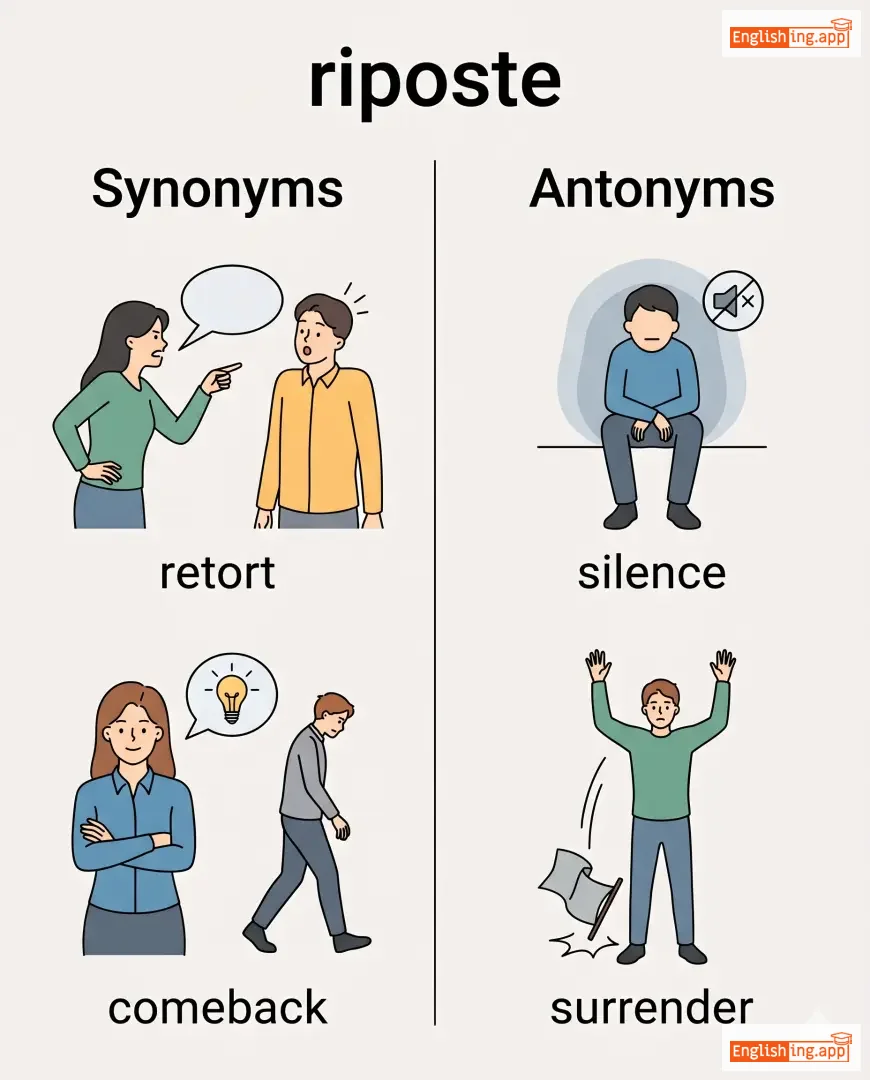
retort, comeback, reply, rejoinder, counter
••••••
|
silence, surrender
••••••
|
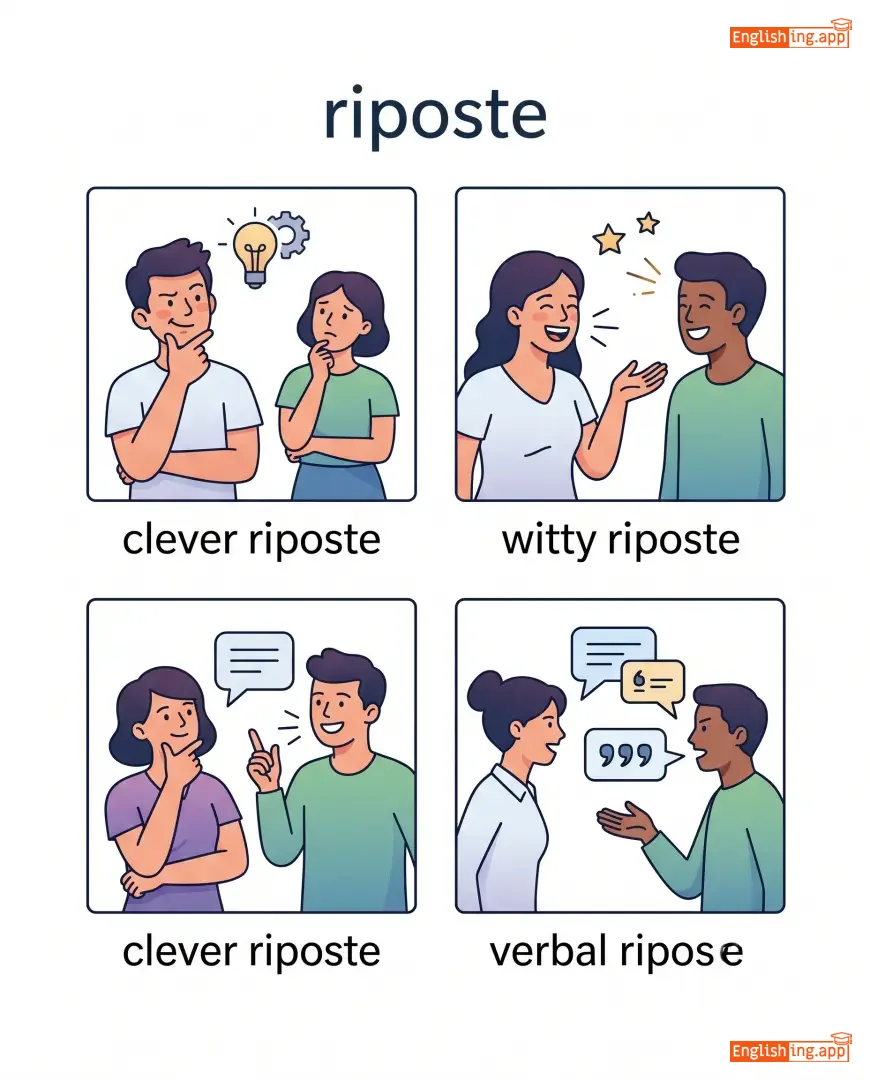
clever riposte, witty riposte, verbal riposte, quick riposte
••••••
|
Reply + post = riposte 意思是快速的回答 💬
••••••
|

