|
表情符号
|
单词 | Images | 翻译 | 过去时 | 过去分词 | 第三人称单数 | 动名词 | 含义 | 例句 | 例句翻译 | 示例表达 | 示例表达含义 | 示例表达翻译 | 同义词 | 反义词 | 搭配词 | 助记符 |
|---|---|---|---|---|---|---|---|---|---|---|---|---|---|---|---|---|---|
|
🌪️
••••••
|
/ˈmeɪlstrəm/
noun
(梅尔斯特罗姆)
••••••
|
|
漩涡
xuánwō
••••••
|
- •••••• | - •••••• | - •••••• | - •••••• |
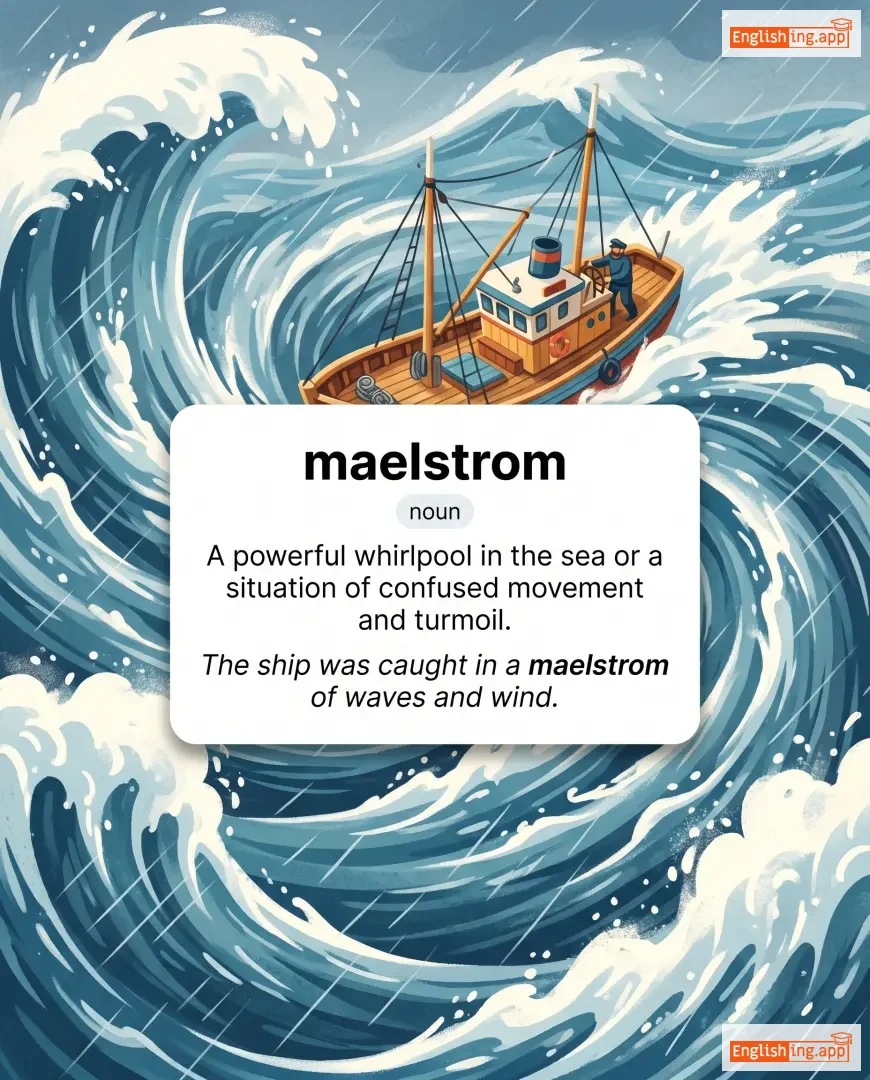
A powerful whirlpool in the sea or a situation of confused movement and turmoil.
••••••
|
The ship was caught in a maelstrom of waves and wind.
船只被卷入了波浪和风的旋涡中。
••••••
|
船只被卷入了波浪和风的漩涡中。
Chuán zhī bèi juǎn rù le bōlàng hé fēng de xuánwō zhōng.
••••••
|
caught in a maelstrom
陷入旋涡
••••••
|
being stuck in a confusing or turbulent situation
••••••
|
陷入漩涡
xiànrù xuánwō
••••••
|
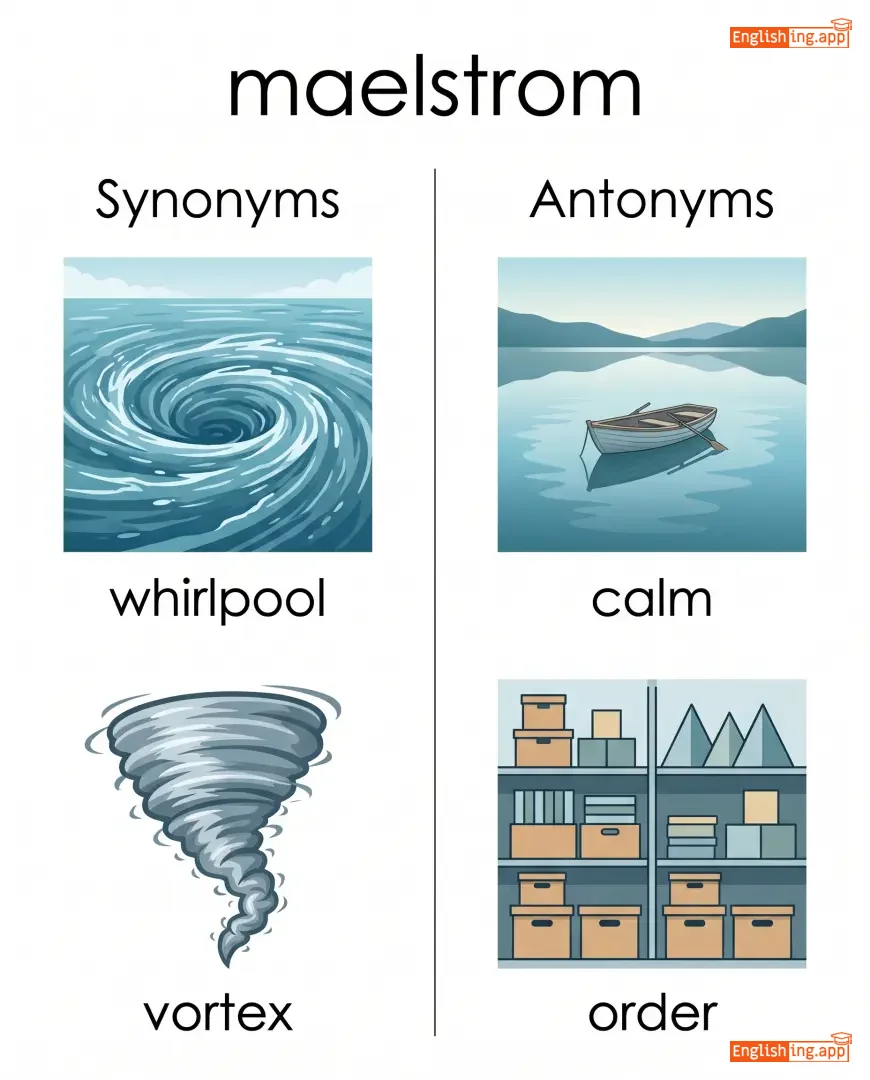
whirlpool, vortex, turbulence, chaos, turmoil
••••••
|
calm, order, tranquility
••••••
|
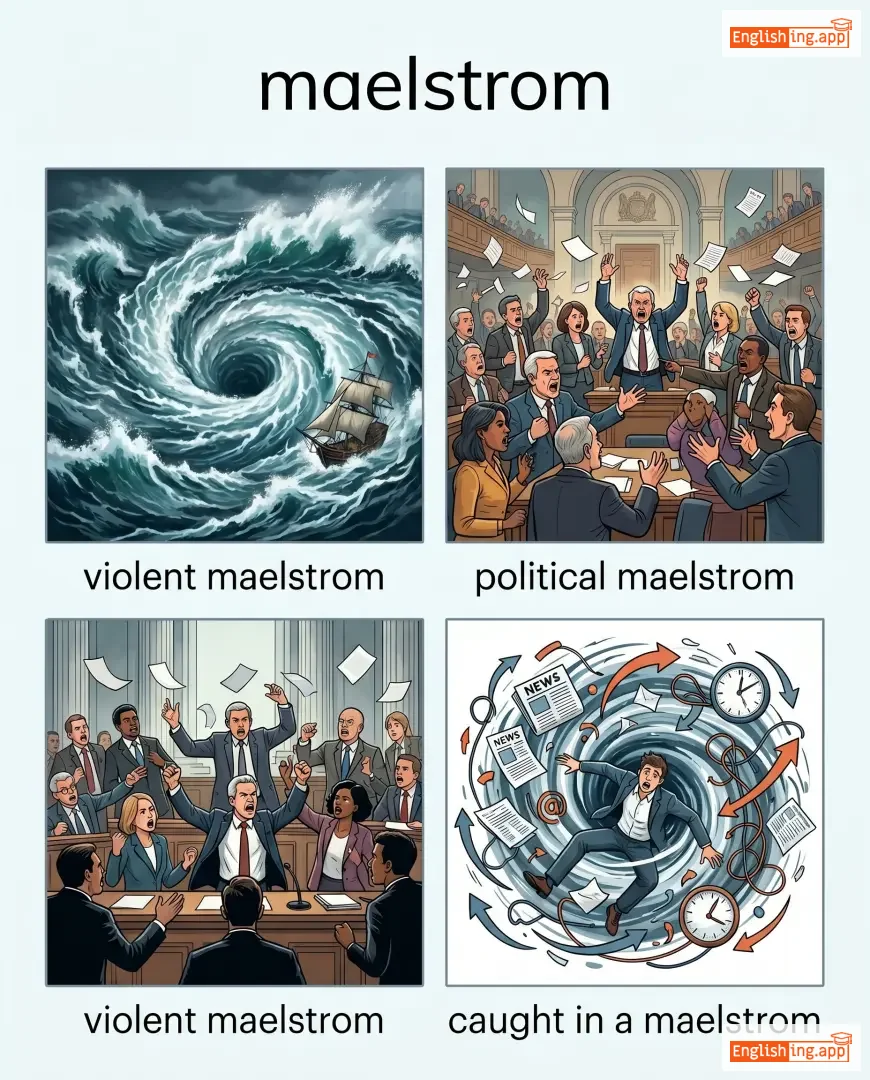
violent maelstrom, political maelstrom, caught in a maelstrom
••••••
|
旋涡就像是一个把所有东西吸进来的大旋转!
••••••
|
|
👑
••••••
|
/ˌmæɡ.nəˈnɪ.mɪ.ti/
noun
(magnanimity)
••••••
|
|
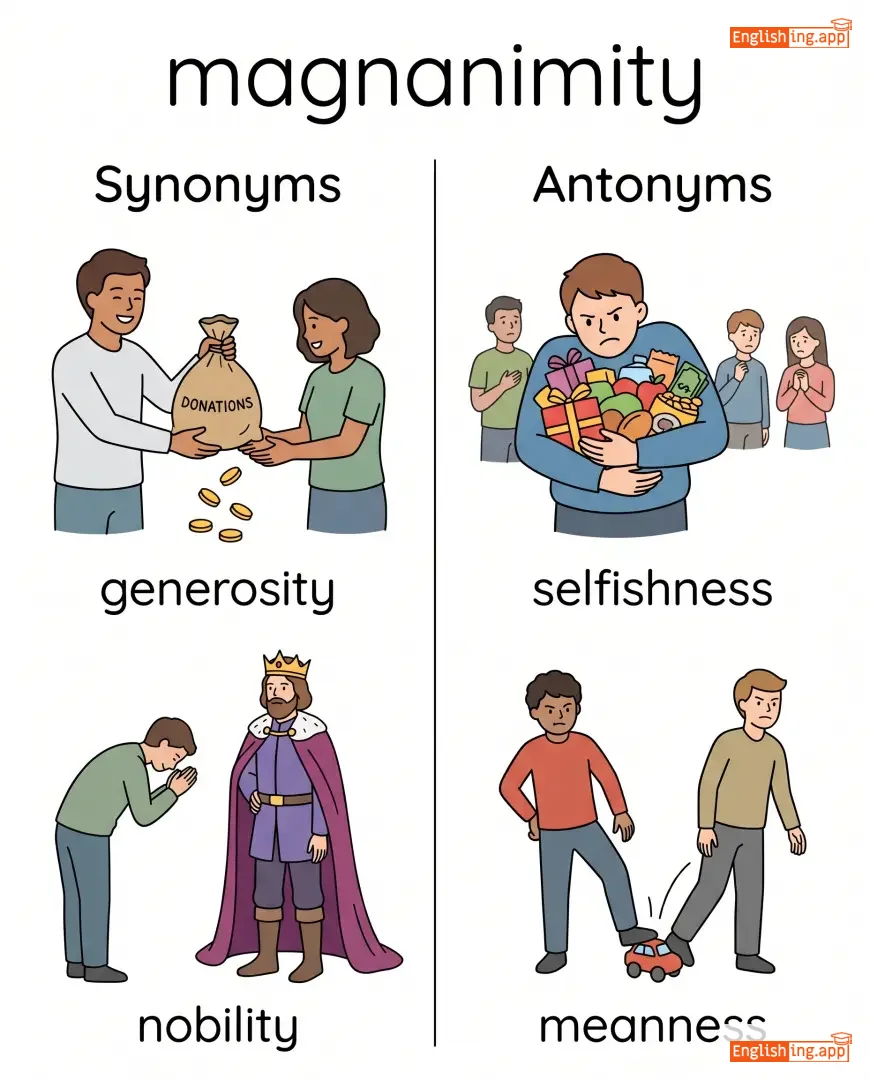
宽宏大量; 慷慨
kuan hong da liang
••••••
|
- •••••• | - •••••• | - •••••• | - •••••• |
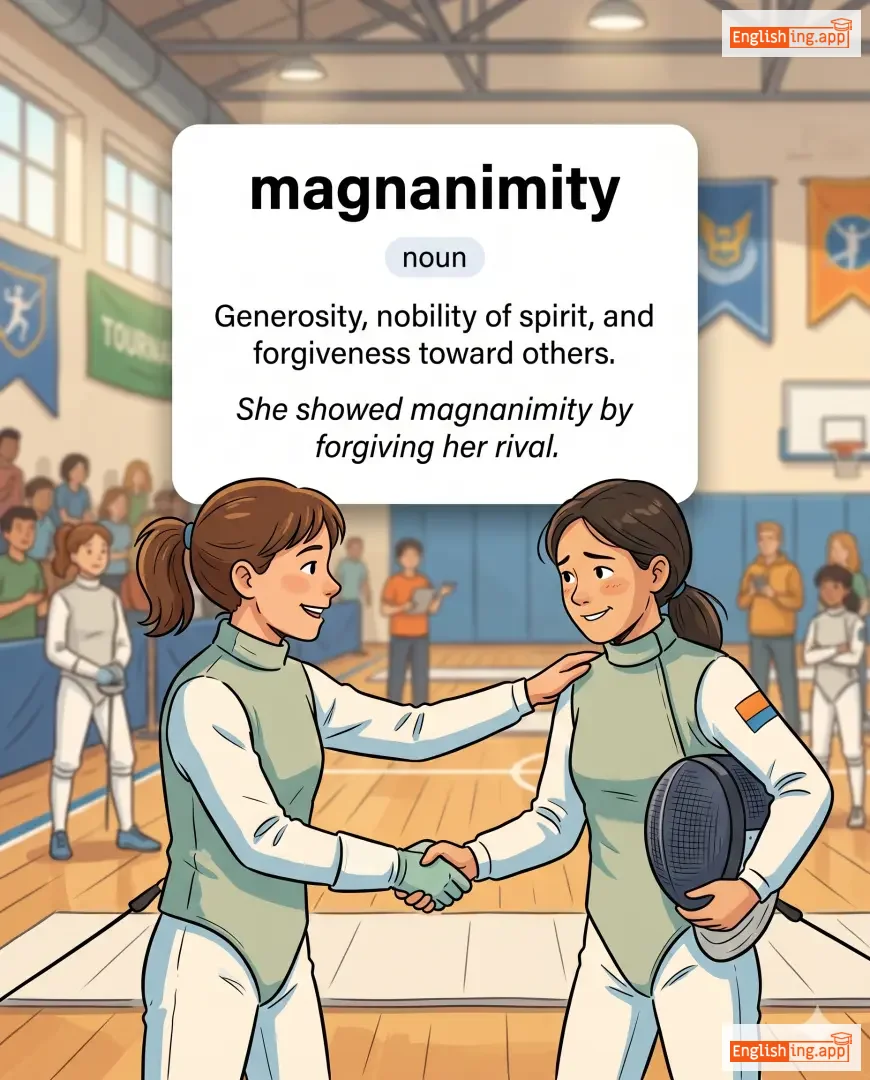
generosity in forgiving an insult or injury; nobility of spirit or action; generosity
••••••
|
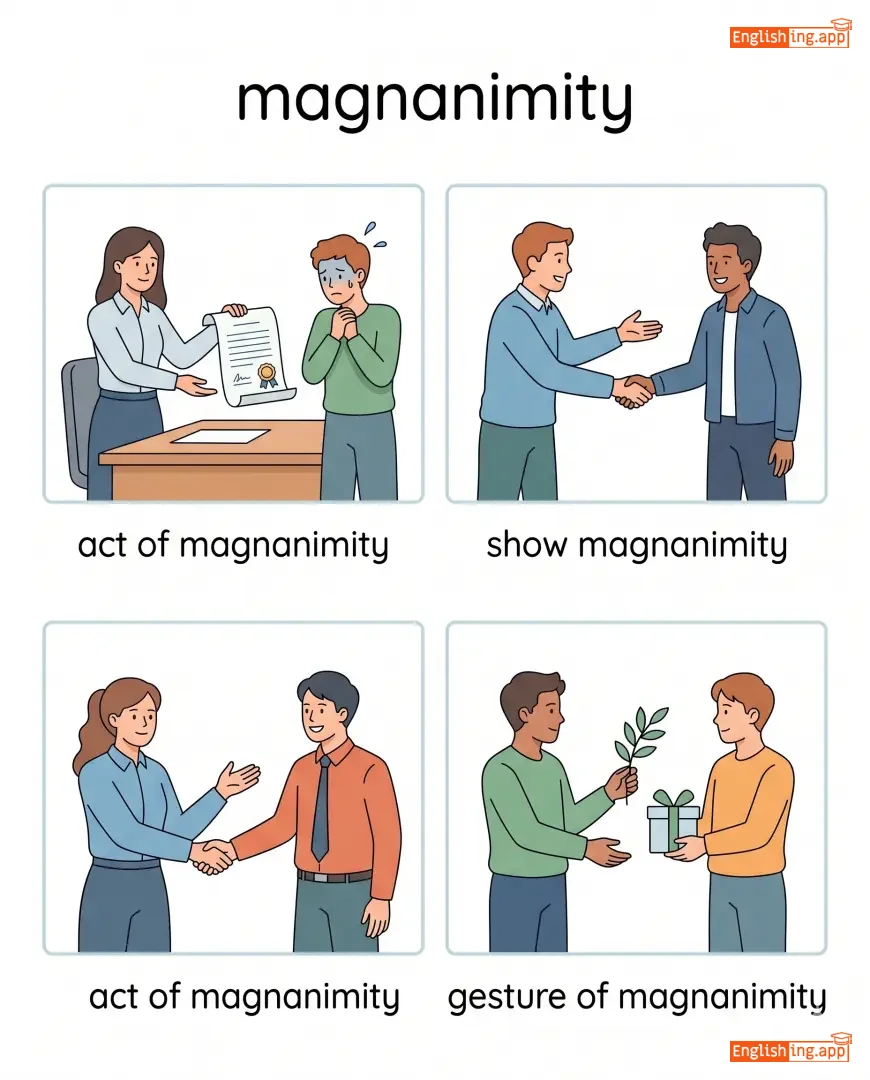
He showed great magnanimity in victory. |
他在胜利中展现了伟大的宽宏大量。
Ta zai shengli zhong zhanshianle wei da de kuan hong da liang.
••••••
|
- •••••• | - •••••• | - •••••• |
generosity, nobility, forgiveness, kindness
••••••
|
pettiness, meanness, vindictiveness
••••••
|
show magnanimity, act of magnanimity, great magnanimity
••••••
|
宽宏大量是一种高尚的心灵品质。
••••••
|
|
🗣️
••••••
|
/məˈlaɪn/
verb
••••••
|

|
- •••••• |
maligned
••••••
|
maligned
••••••
|
maligns
••••••
|
maligning
••••••
|
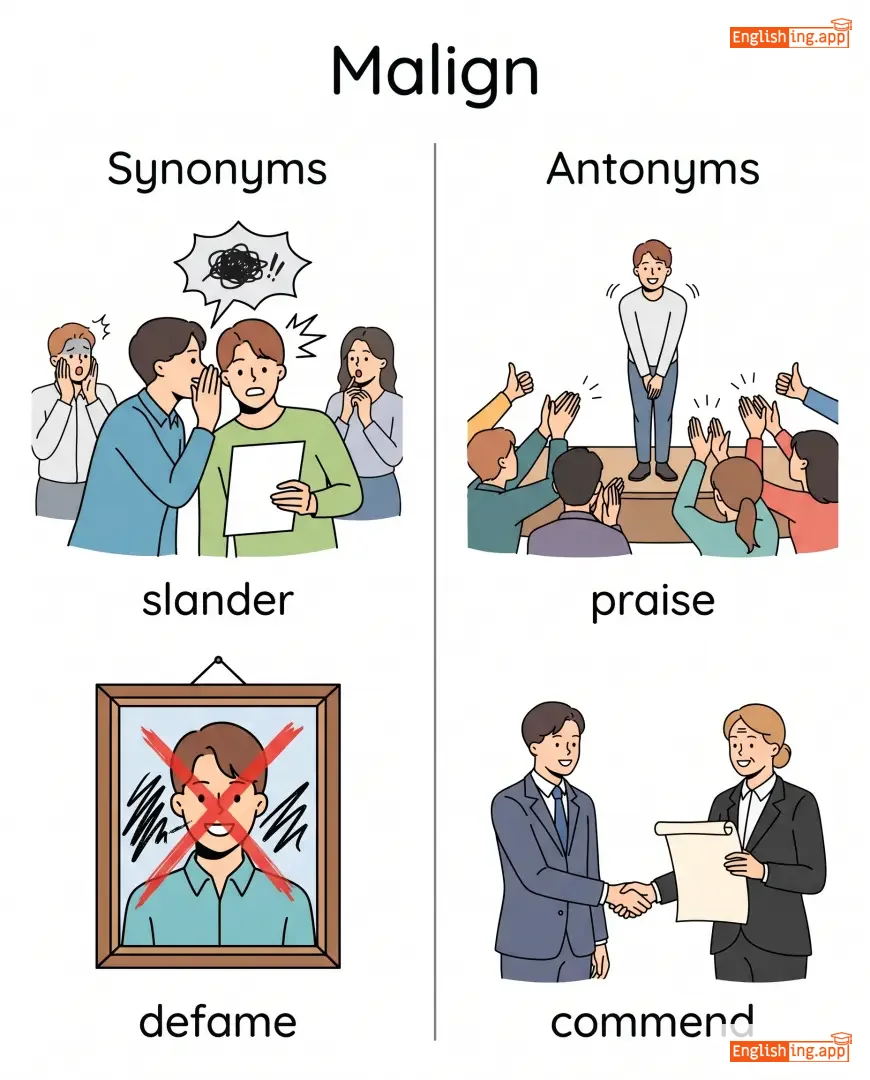
to speak harmful untruths about someone; to slander or defame
••••••
|
She felt hurt when her rivals tried to malign her reputation. |
- •••••• |
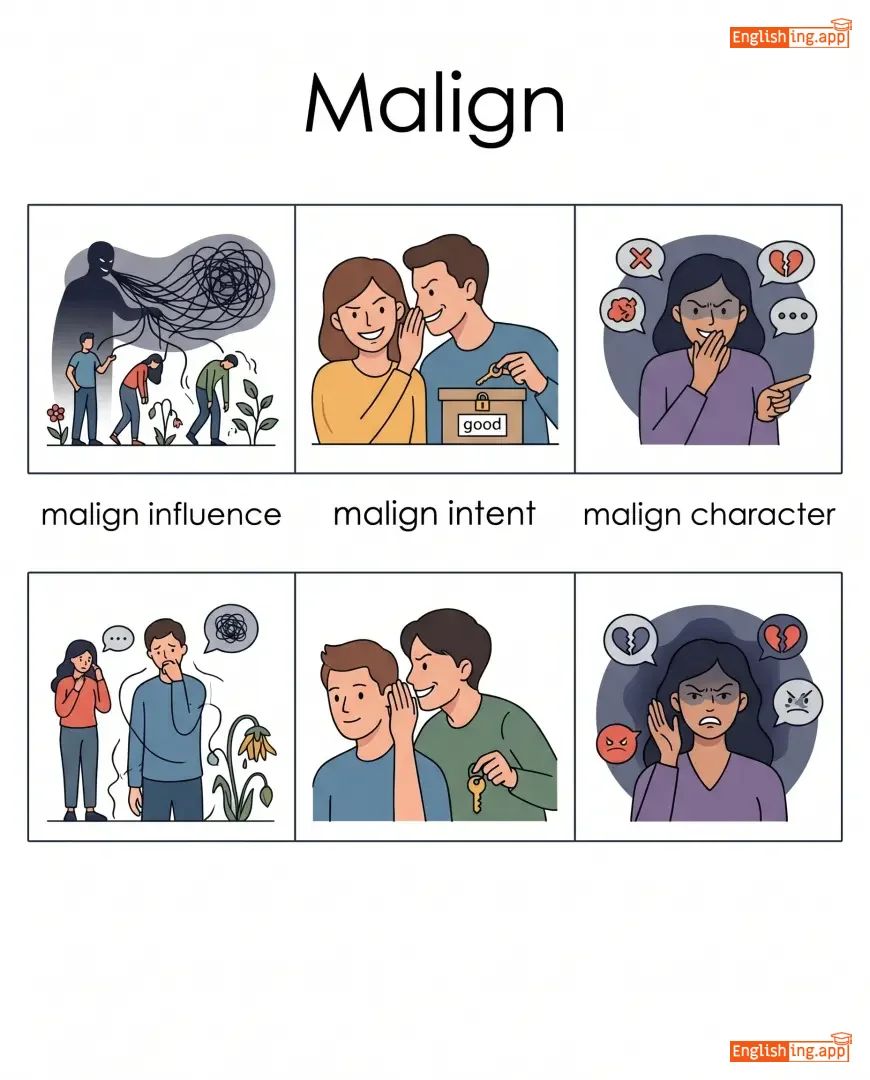
malign influence |
a harmful or evil effect
••••••
|
- •••••• |
slander, defame, vilify, disparage, smear
••••••
|
praise, commend, extol
••••••
|
malign influence, malign intent, malign character, malign force
••••••
|
No •••••• |
|
🤒
••••••
|
/məˈlɪŋɡər/
verb
(马林格)
••••••
|
|
装病
zhuang bing
••••••
|
malingered
马林格德
••••••
|
malingered
马林格德
••••••
|
malingers
马林格斯
••••••
|
malingering
马林格林
••••••
|
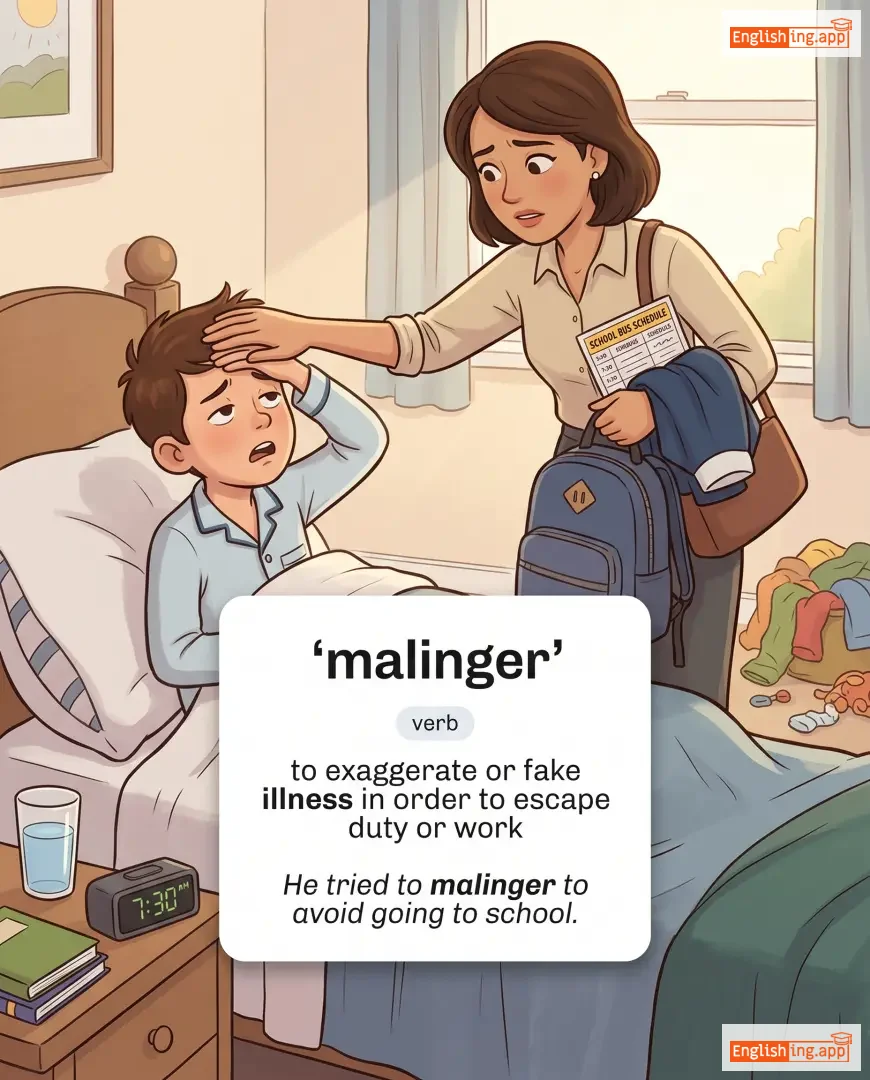
to exaggerate or fake illness in order to escape duty or work
••••••
|
He tried to malinger to avoid going to school.
他试图装病以逃避上学。
••••••
|
他试图装病以逃避上学。
Ta shitu zhuang bing yi taobi shangxue.
••••••
|
- •••••• | - •••••• | - •••••• |
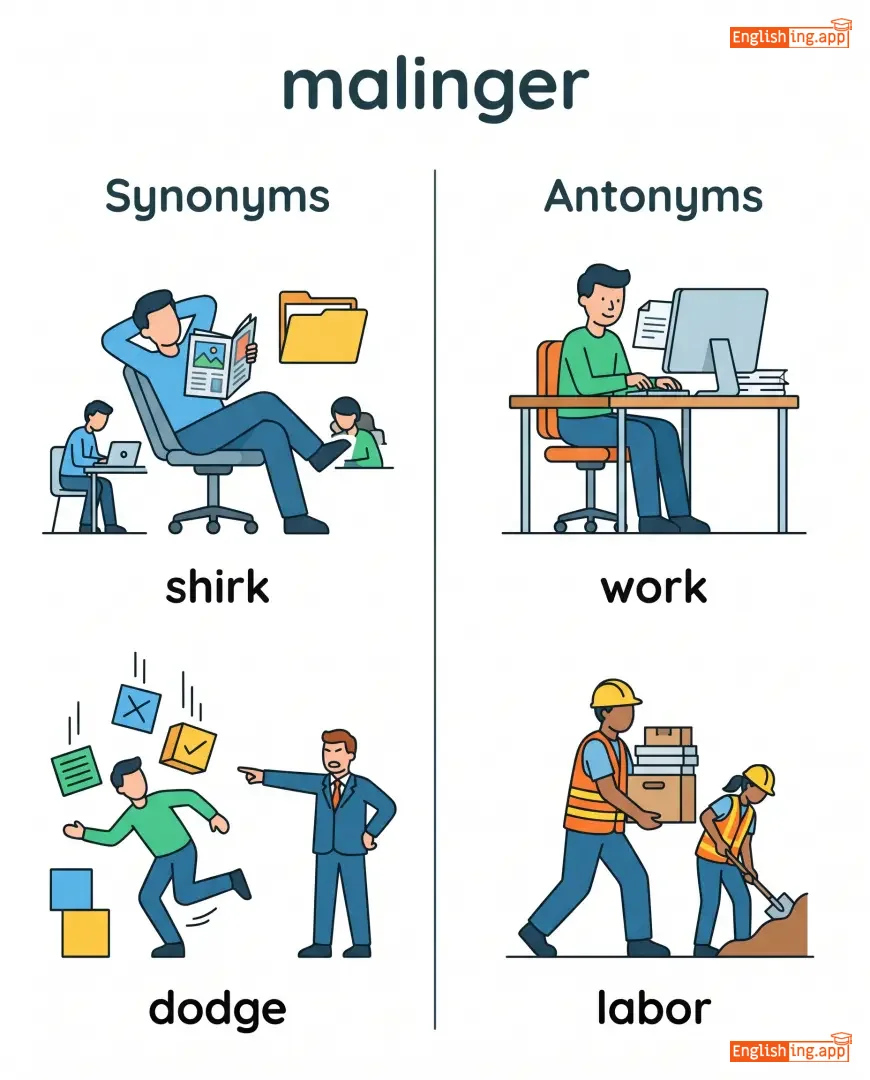
shirk, dodge, feign, pretend, evade
••••••
|
work, labor, perform
••••••
|
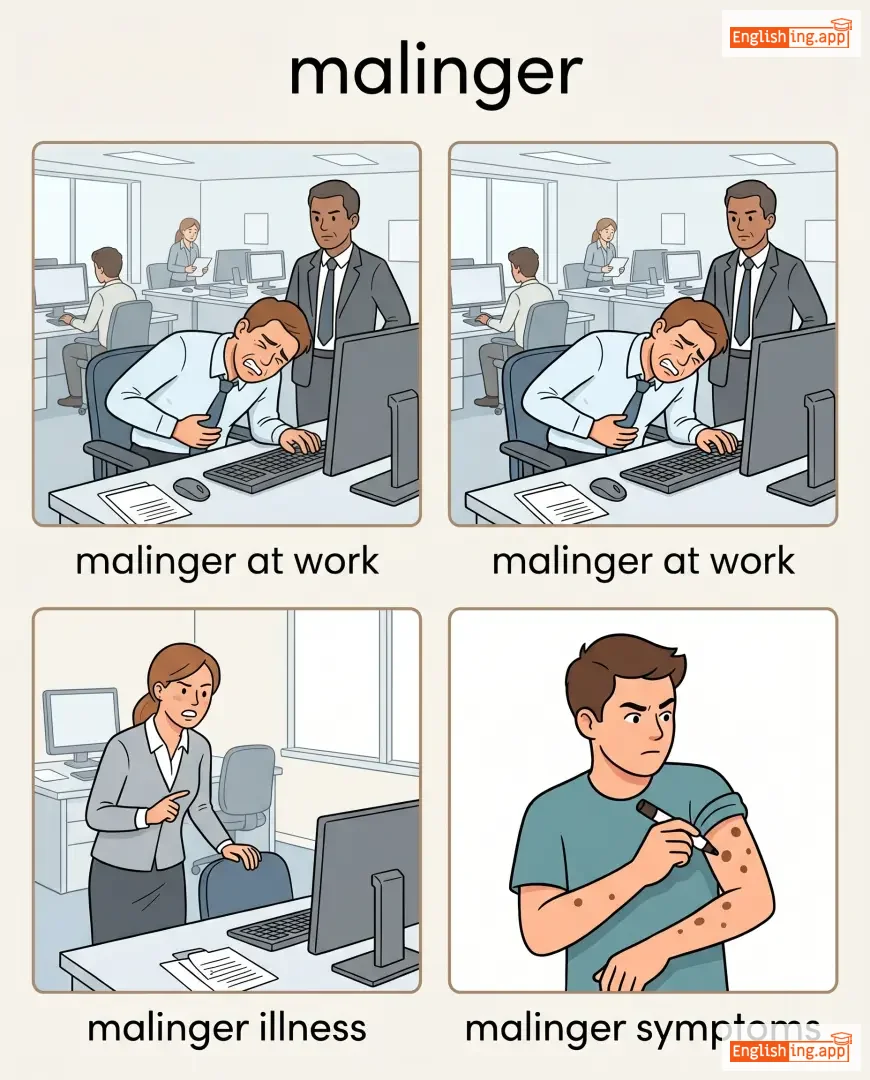
malinger illness, malinger at work, malinger symptoms
••••••
|
Malinger意味着装病,记住'马林格' = 假装生病
••••••
|
|
🔧
••••••
|
/ˈmæliəbl̩/
adjective
(马利亚布尔)
••••••
|
|
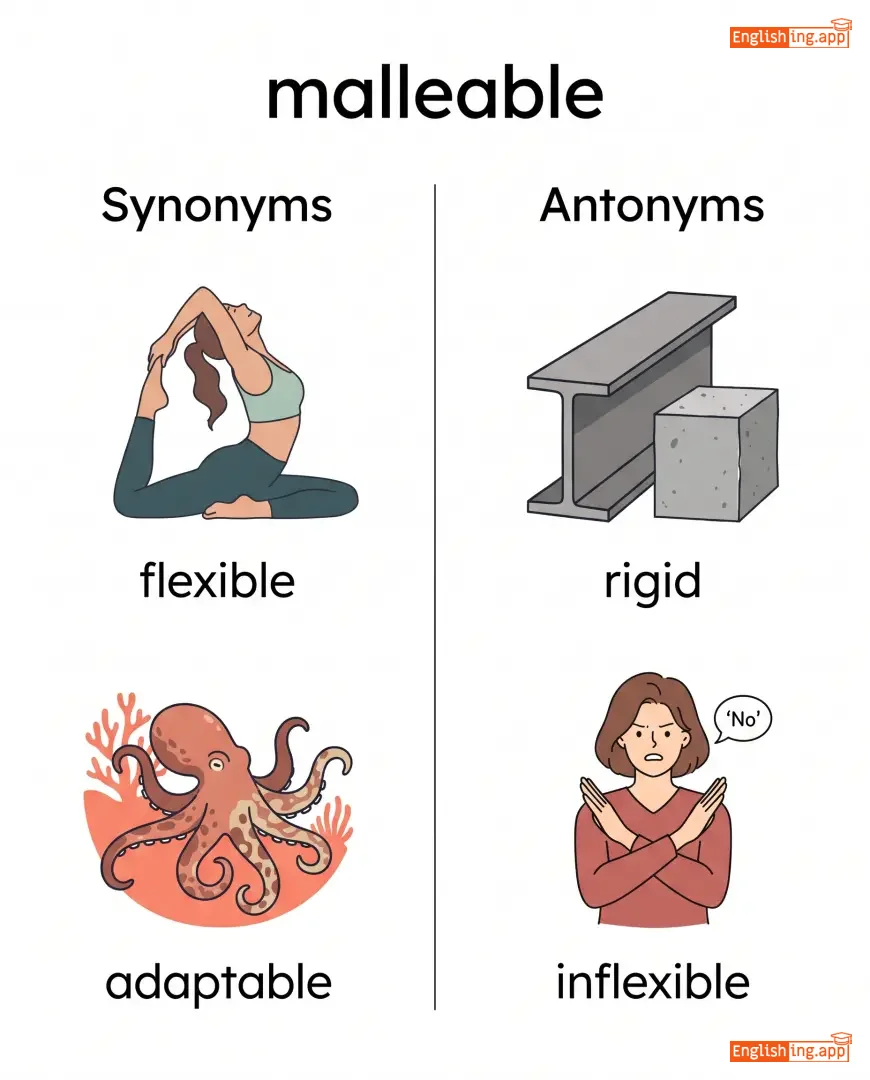
易于塑形
yi yu su xing
••••••
|
- •••••• | - •••••• | - •••••• | - •••••• |
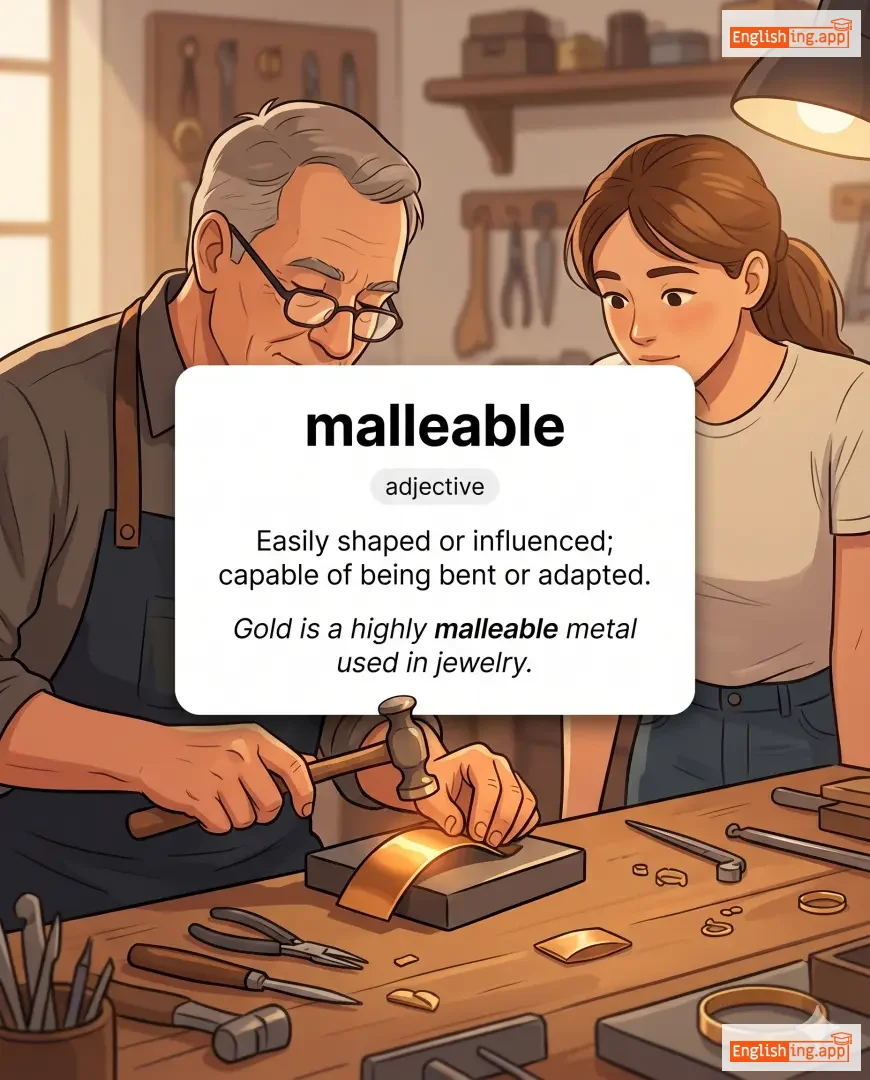
Easily shaped or influenced; capable of being bent or adapted.
••••••
|
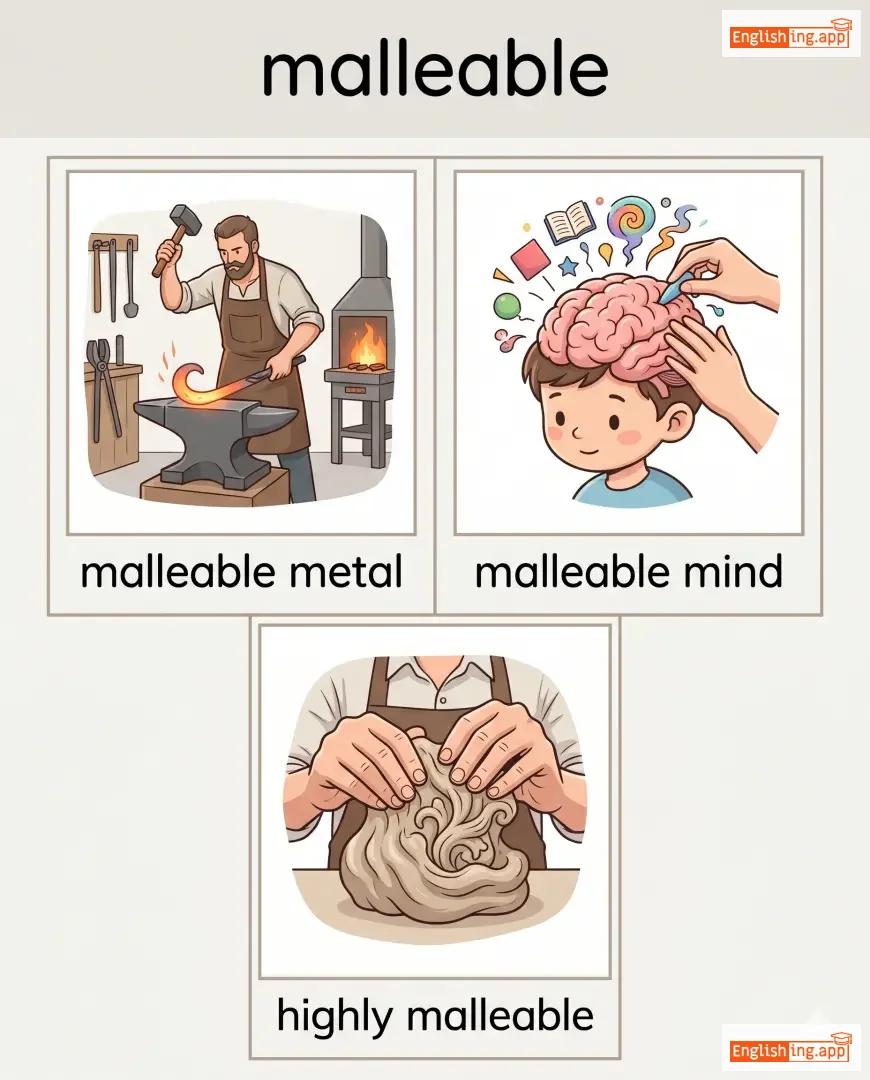
Gold is a highly malleable metal used in jewelry. |
黄金是一种非常易于塑形的金属,用于珠宝制作。
Huangjin shi yizhong feichang yi yu su xing de jinshu, yong yu zhubao zhizuo.
••••••
|
- •••••• | - •••••• | - •••••• |
flexible, adaptable, pliable, ductile, impressionable
••••••
|
rigid, inflexible, stiff
••••••
|
malleable metal, malleable mind, highly malleable, malleable material
••••••
|
黄金可以轻松塑形,是易于塑形的金属。
••••••
|
|
🤠
••••••
|
/ˈmævərɪk/
noun
(máwérik)
••••••
|


|
特立独行者
tè lì dú xíng zhě
••••••
|
- •••••• | - •••••• | - •••••• | - •••••• |
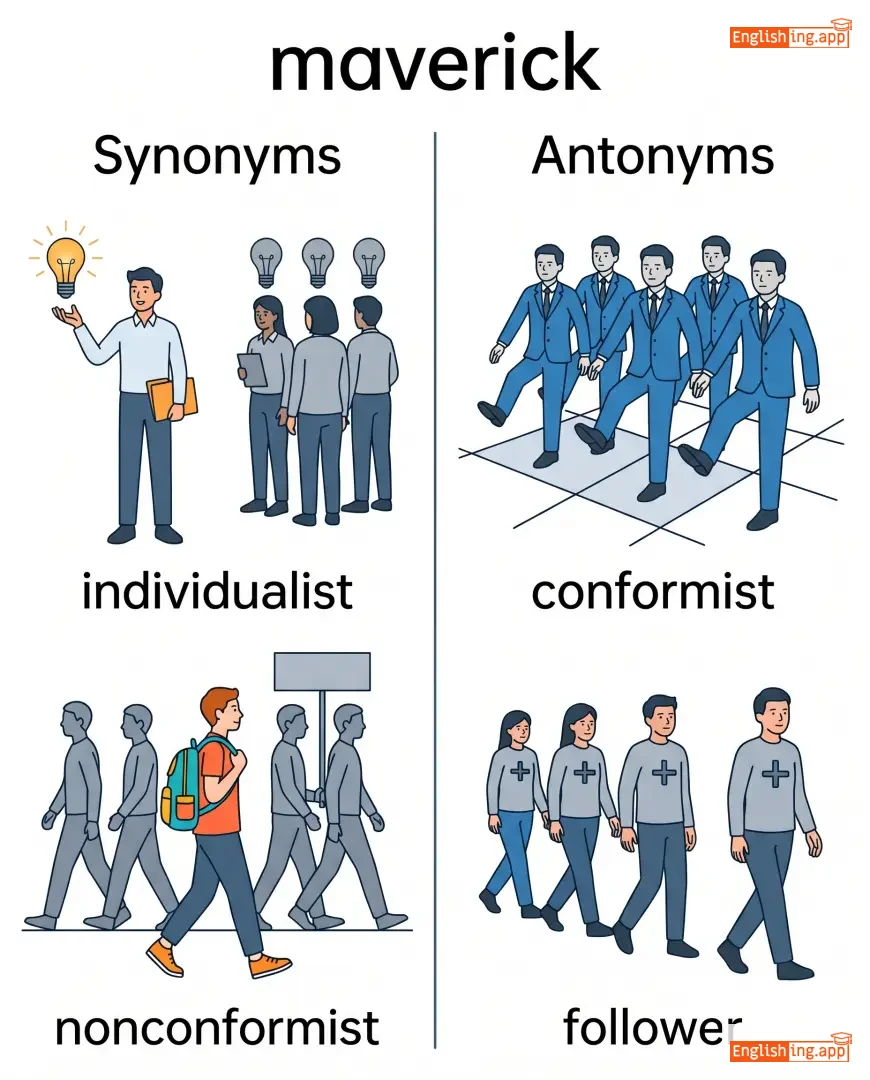
an independent thinker who does not go along with a group or rules
••••••
|
She was a political maverick who challenged traditional ideas.
她是一个政治上的maverick,挑战传统的思想。
••••••
|
她是一个政治上的特立独行者,挑战传统的思想。
Tā shì yī gè zhèng zhì shàng de tè lì dú xíng zhě, tiǎo zhàn chuán tǒng de sī xiǎng.
••••••
|
- •••••• | - •••••• | - •••••• |
individualist, nonconformist, rebel, innovator, radical
••••••
|
conformist, follower, traditionalist
••••••
|
political maverick, corporate maverick, real maverick, maverick thinker
••••••
|
Maverick 就像一只不随大流的鱼,特立独行者。
••••••
|
|
👑
••••••
|
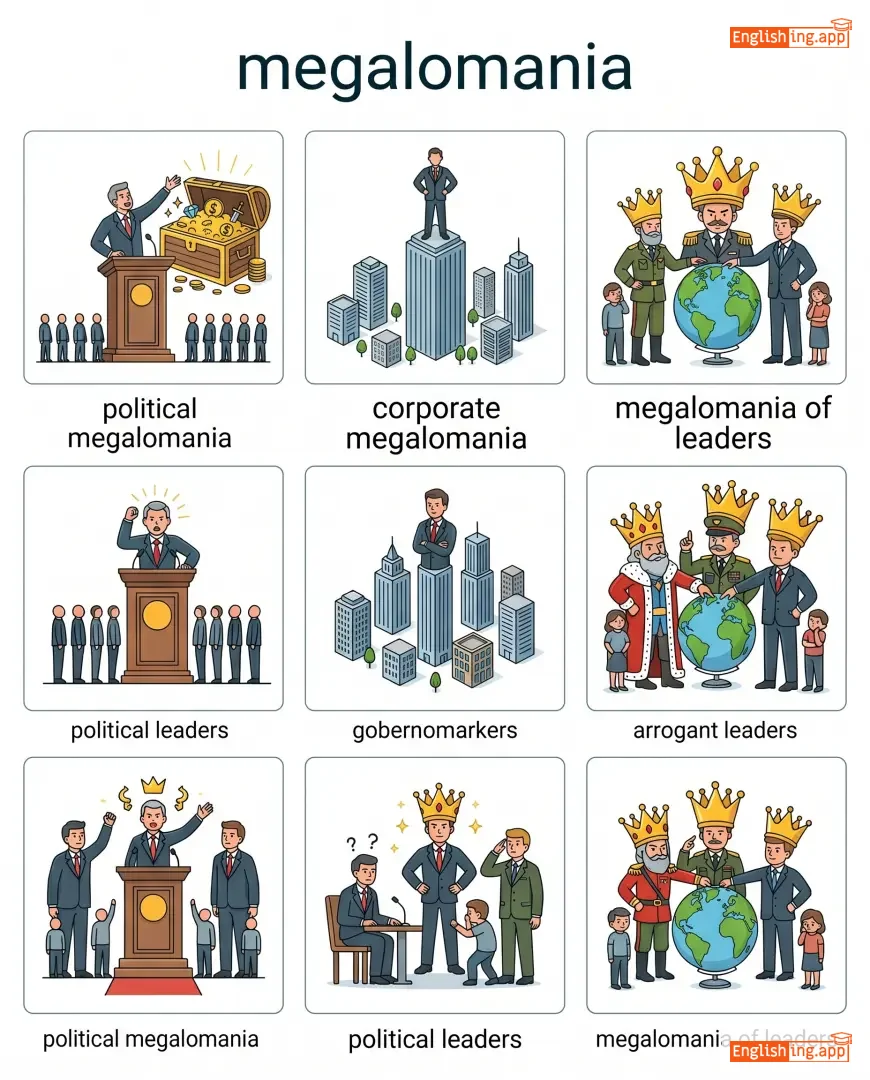
/ˌmɛɡələˈmeɪniə/
noun
(极端自恋狂)
••••••
|

|
对权力、财富或万能的妄想
duì quánlì, cáifù huò wànnéng de wàngxiǎng
••••••
|
- •••••• | - •••••• | - •••••• | - •••••• |
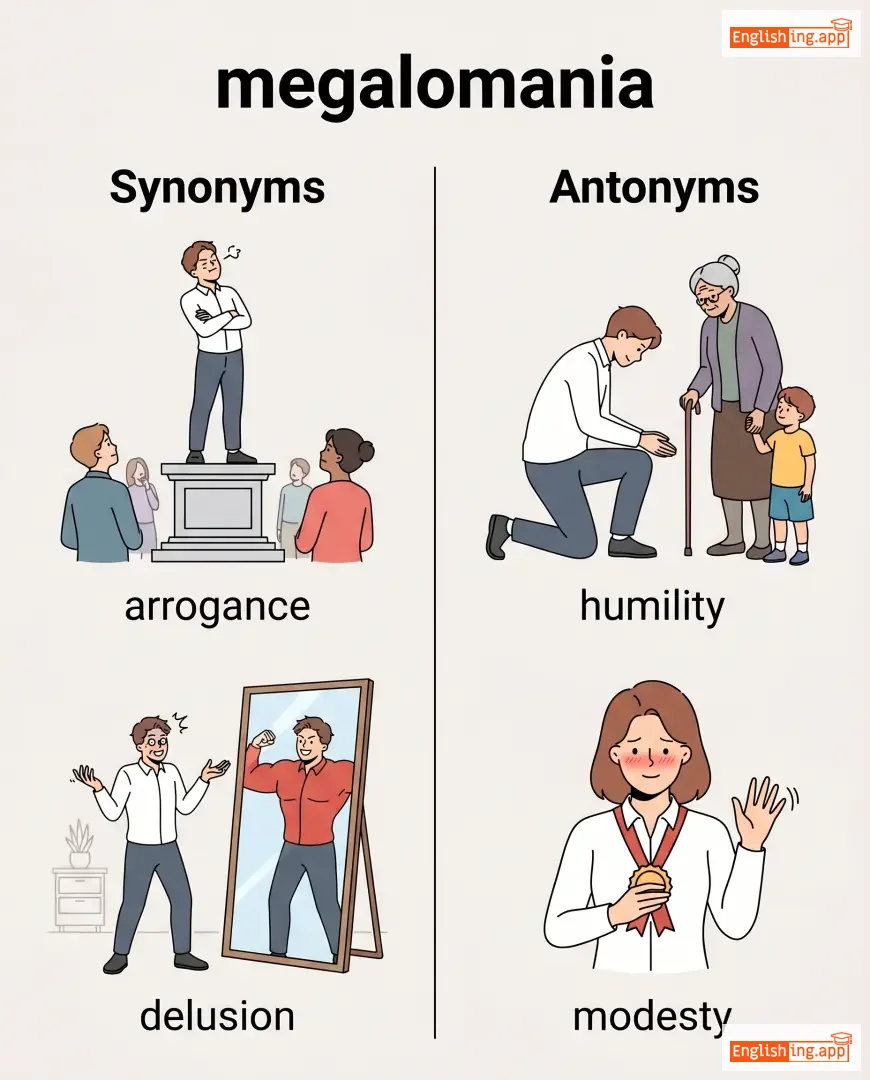
A condition characterized by delusional fantasies of power, wealth, or omnipotence.
••••••
|
The dictator’s megalomania led him to believe he was invincible. |
独裁者的极端自恋狂使他相信自己无敌。
Dúcáizhě de jíduān zìliàn kuáng shǐ tā xiāngxìn zìjǐ wúdí.
••••••
|
- •••••• | - •••••• | - •••••• |
arrogance, delusion, obsession, grandiosity, egotism
••••••
|
humility, modesty, selflessness
••••••
|
political megalomania, corporate megalomania, megalomania of leaders
••••••
|
Mega 意为巨大 + mania 意为狂热 → 渴望成为无敌的狂热
••••••
|
|
🦁
••••••
|
/məˈnæʒəri/
noun
(梅纳日里)
••••••
|
|
野生动物收藏
yěshēng dòngwù shōucáng
••••••
|
- •••••• | - •••••• | - •••••• | - •••••• |
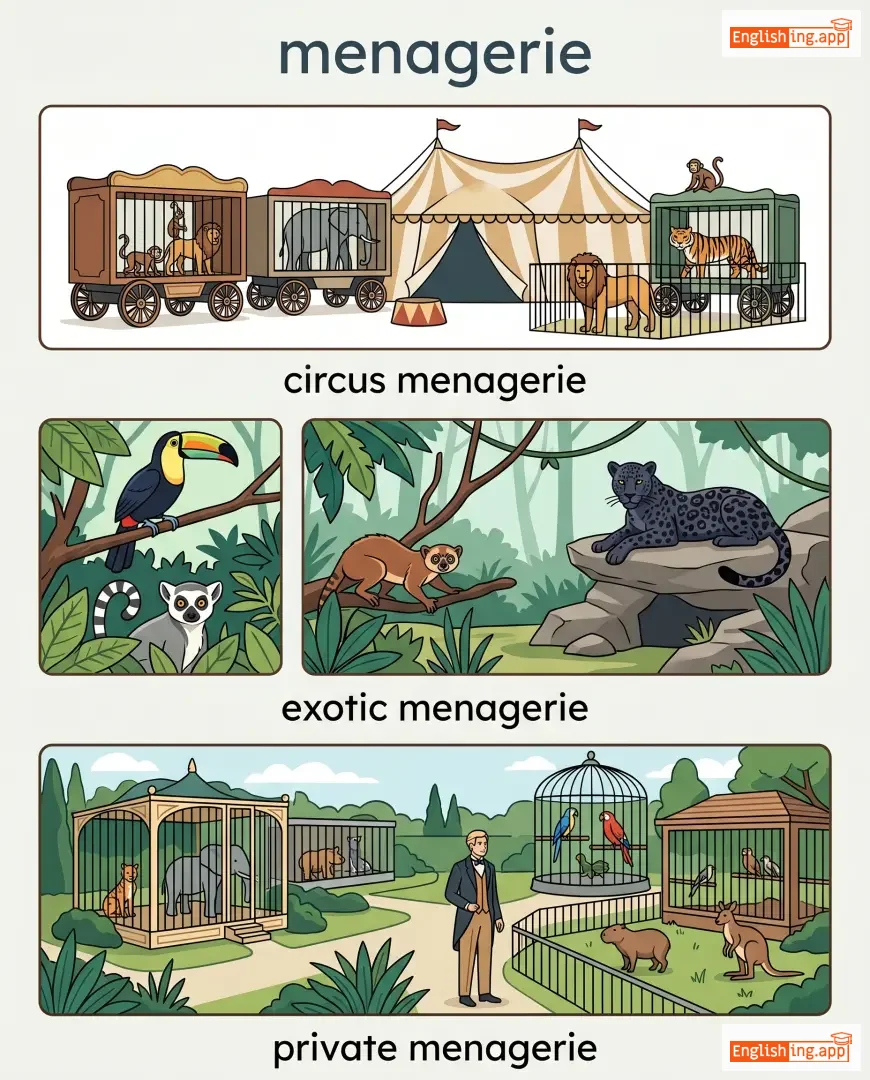
a collection of wild animals kept for exhibition; a diverse or strange group of people or things
••••••
|
The circus had a menagerie of exotic animals. |
马戏团里有一群异国情调的动物。
Mǎxìtuán lǐ yǒu yīqún yìguó qíngdiào de dòngwù.
••••••
|
- •••••• | - •••••• | - •••••• |
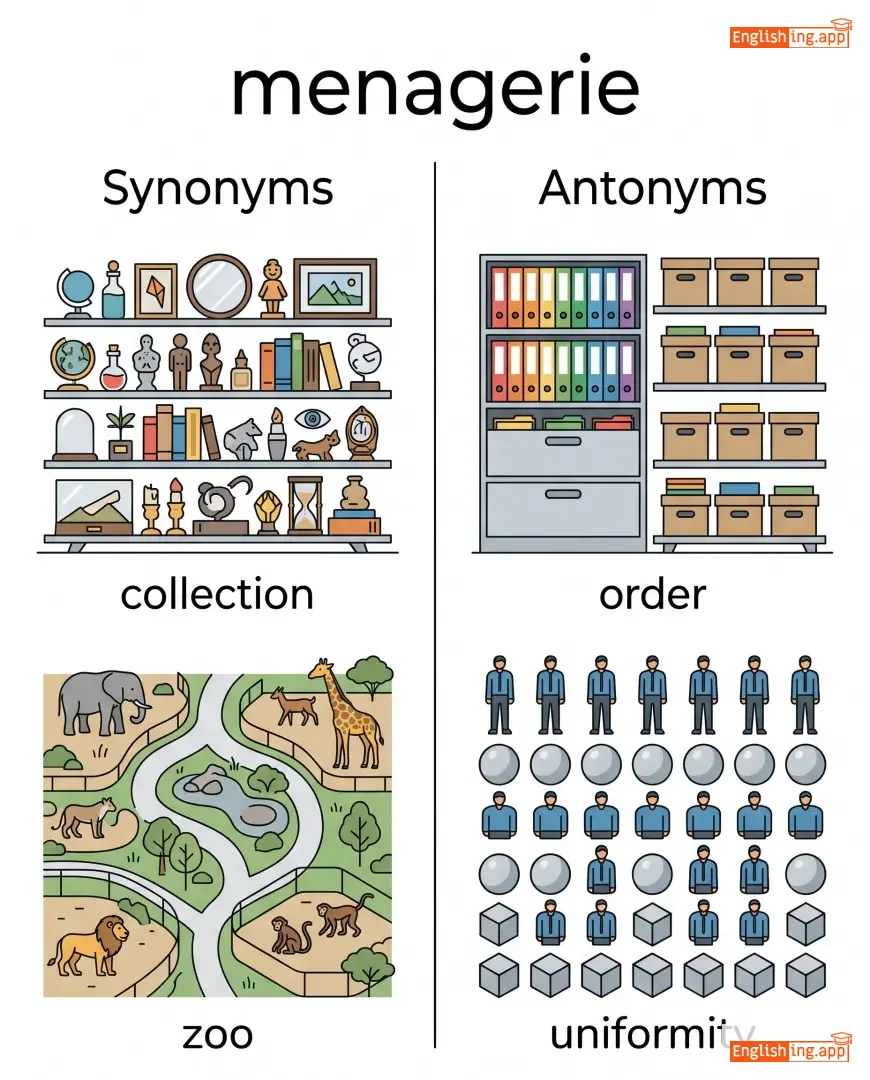
collection, zoo, assortment, exhibition
••••••
|
order, uniformity
••••••
|
circus menagerie, exotic menagerie, private menagerie
••••••
|
Menagerie是一个有很多动物的地方,像一个动物园。
••••••
|
|
🤥
••••••
|
/mɛnˈdeɪʃəs/
adjective
(门代修斯)
••••••
|
|
虚伪的
xūwěi de
••••••
|
- •••••• | - •••••• | - •••••• | - •••••• |
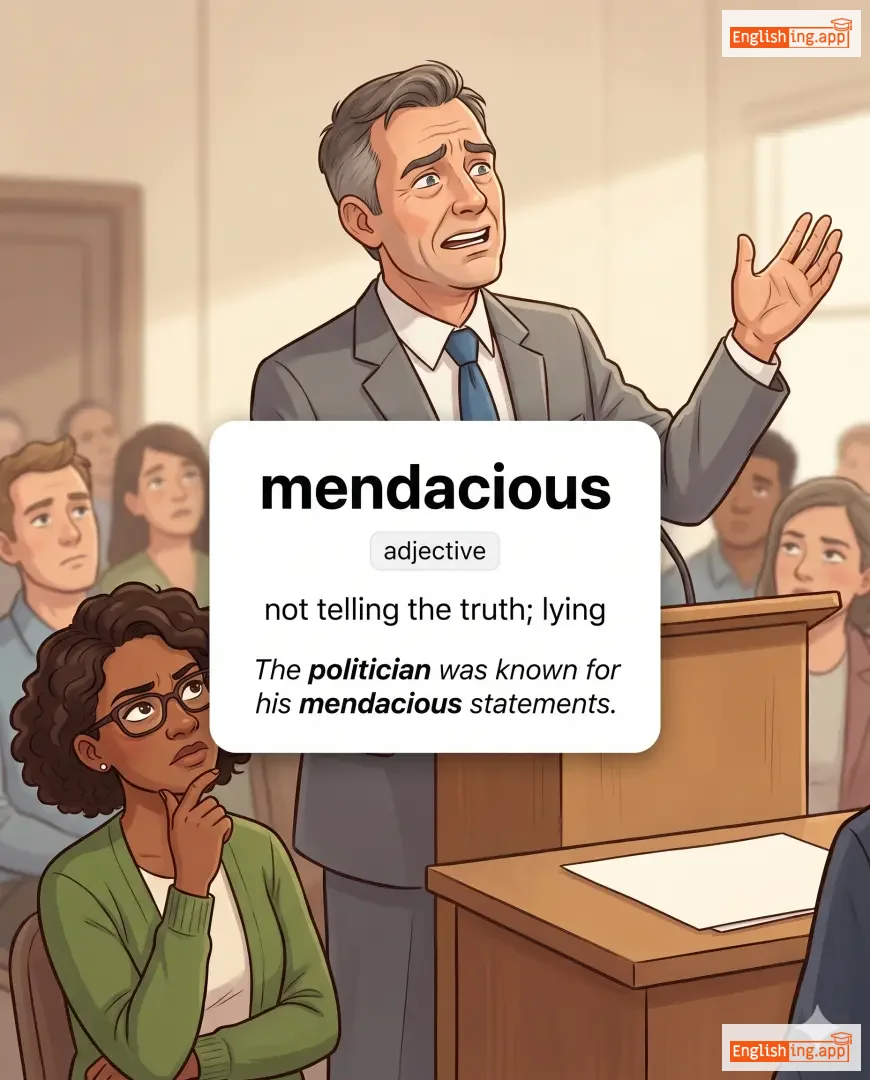
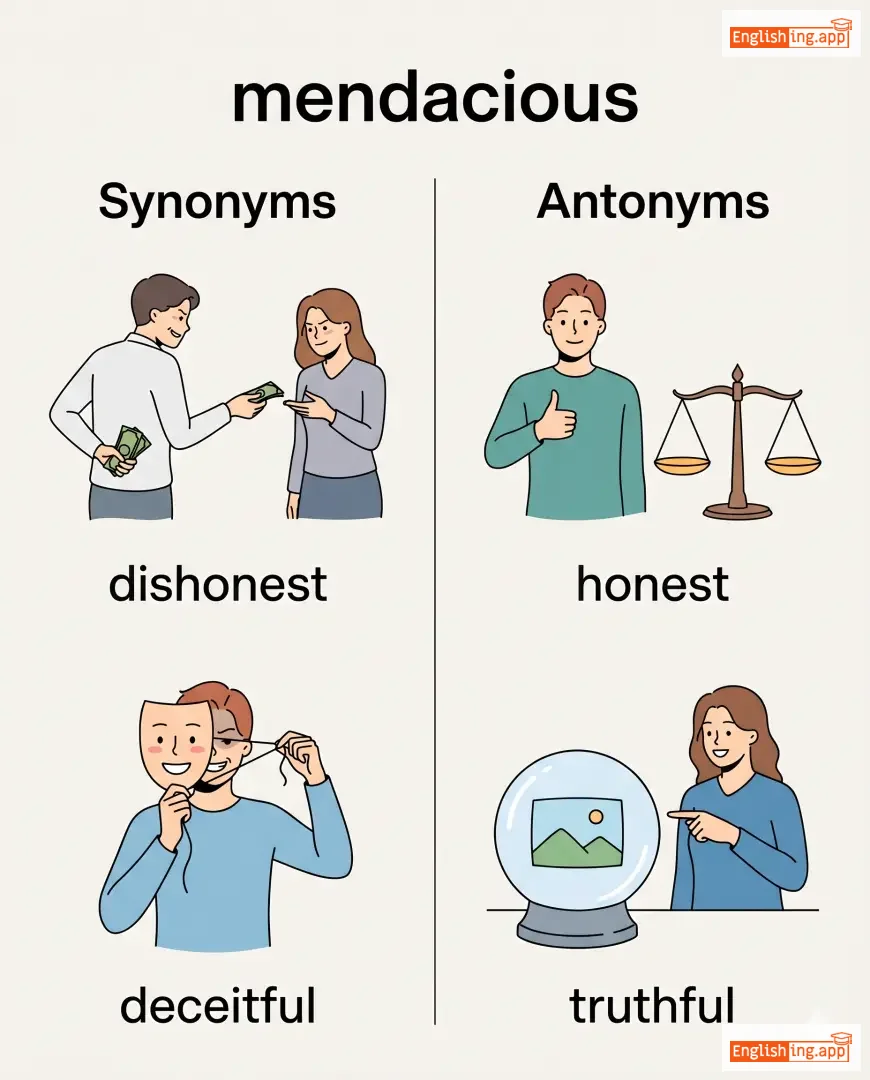
not telling the truth; lying
••••••
|
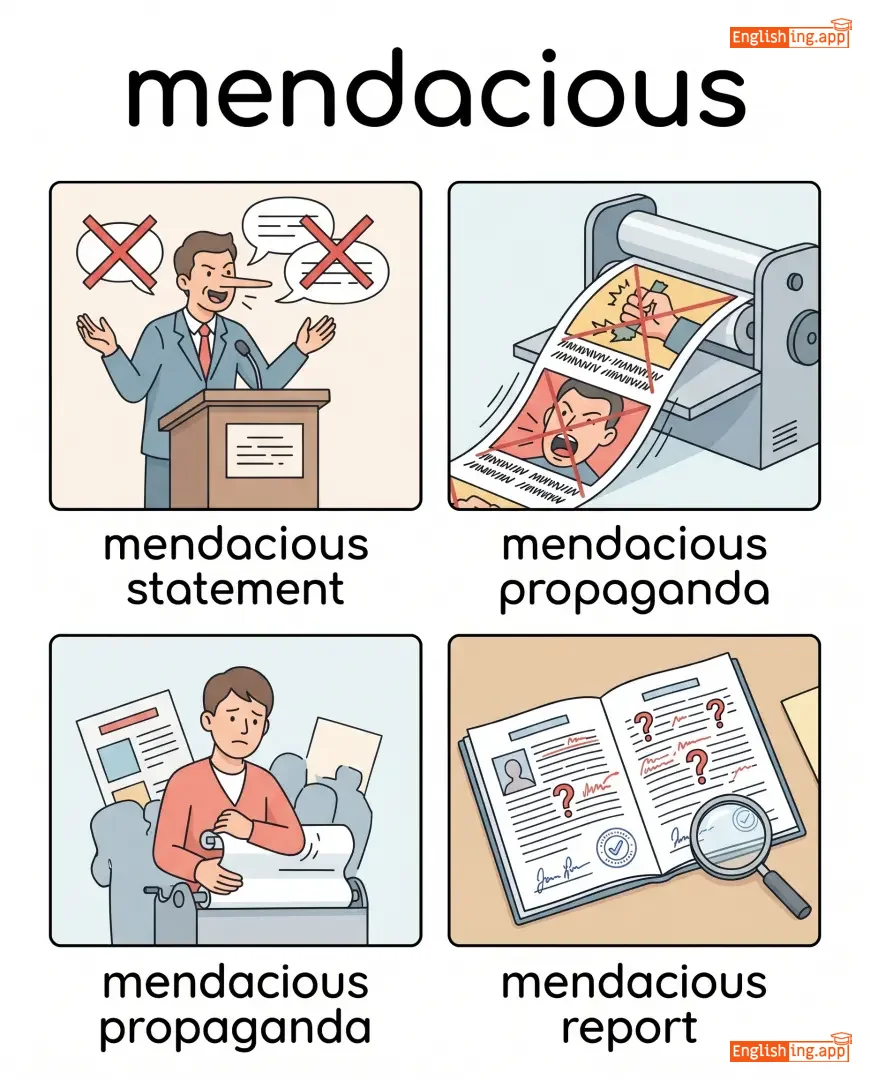
The politician was known for his mendacious statements. |
那位政治家以他的虚伪言论而闻名。
Nà wèi zhèngzhìjiā yǐ tā de xūwěi yánlùn ér wénmíng.
••••••
|
- •••••• | - •••••• | - •••••• |
dishonest, deceitful, lying, untruthful
••••••
|
honest, truthful, sincere
••••••
|
mendacious statement, mendacious propaganda, mendacious report
••••••
|
Mendacious 的意思是虚伪的,记住 mend 是修理,而 mendacious 是撒谎。
••••••
|
|
🤲
••••••
|
/ˈmɛndɪkənt/
noun
(mendikant)
••••••
|

|
乞丐
qǐgài
••••••
|
- •••••• | - •••••• | - •••••• | - •••••• |
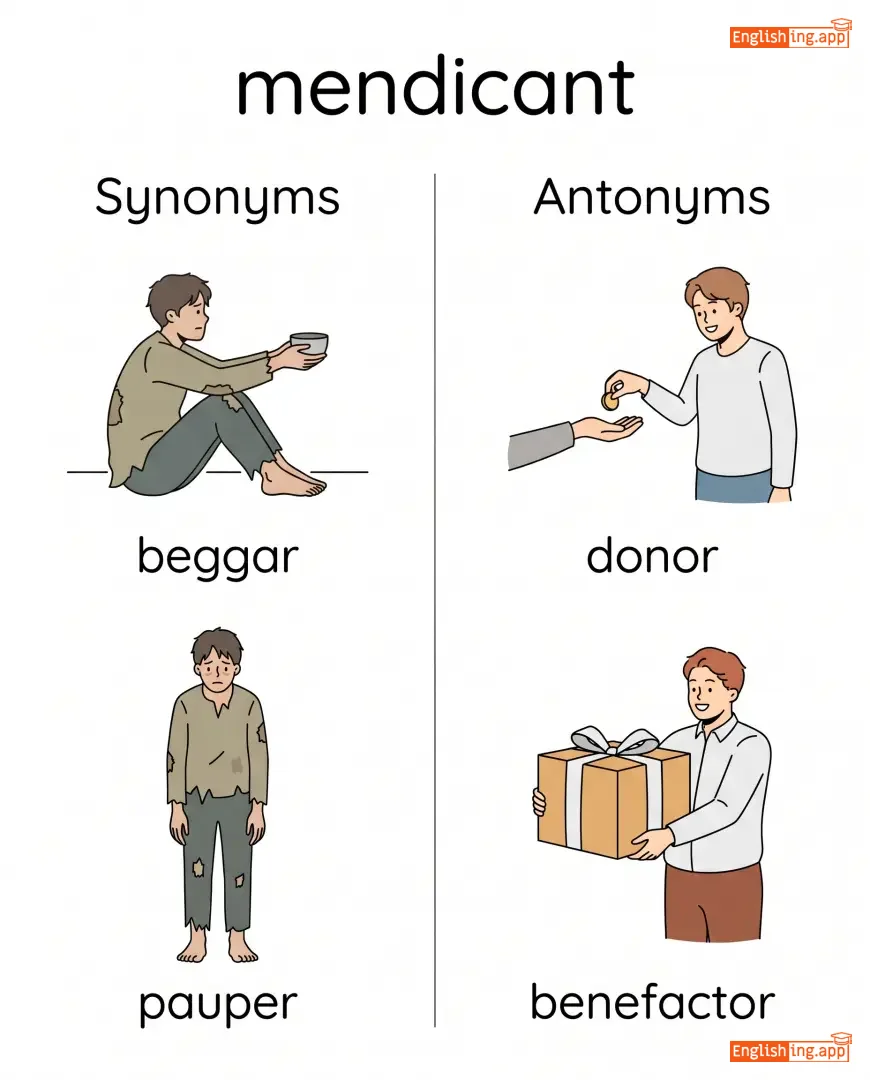
a beggar; a person who lives by asking for alms
••••••
|
The mendicant asked for food at the monastery gate. |
乞丐在修道院门口乞求食物。
Qǐgài zài xiūdàoyuàn ménkǒu qǐqiú shíwù.
••••••
|
- •••••• | - •••••• | - •••••• |
beggar, pauper, panhandler, supplicant
••••••
|
donor, benefactor
••••••
|
mendicant friar, mendicant order, poor mendicant, wandering mendicant
••••••
|
Mendicant像乞丐,生活依靠乞讨。
••••••
|
|
✨
••••••
|
/ˌmɛrəˈtrɪʃəs/
adjective
(méilì bù zhēn)
••••••
|


|
华而不实
hua er bu shi
••••••
|
- •••••• | - •••••• | - •••••• | - •••••• |
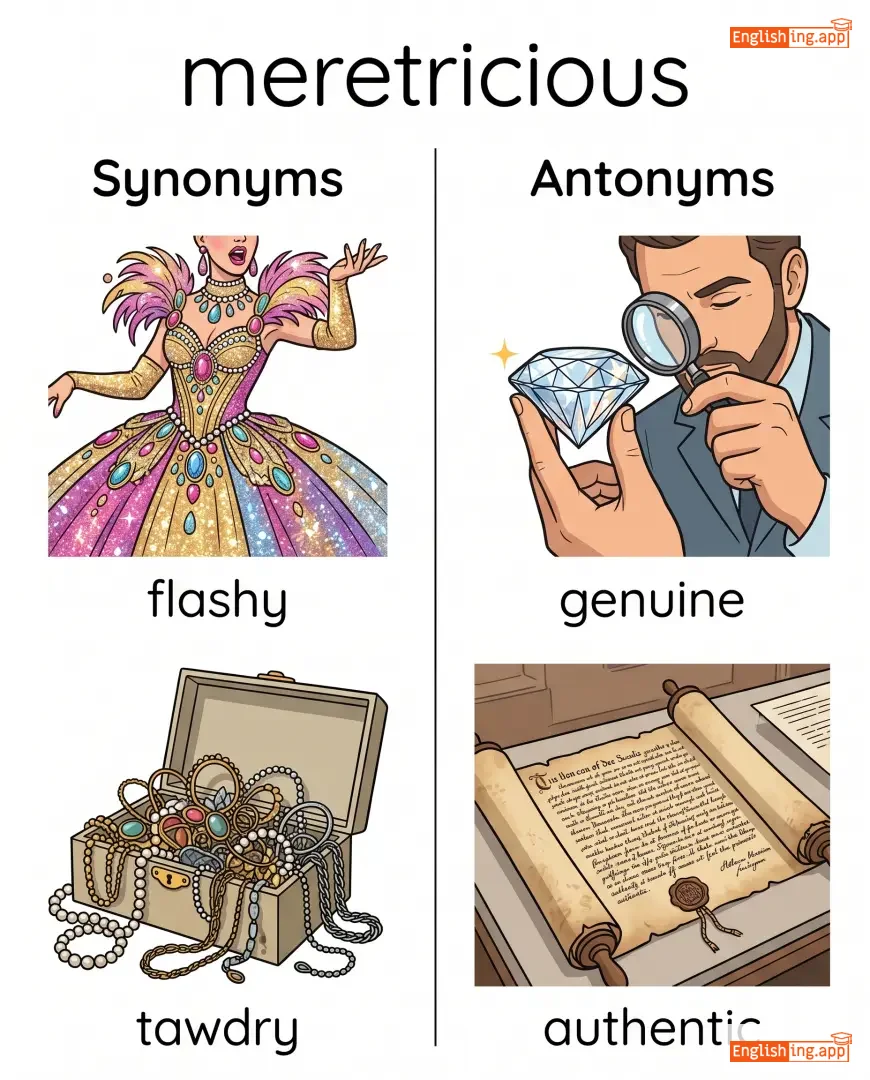
apparently attractive but having no real value or integrity.
••••••
|
The design was flashy but meretricious. |
设计华丽但华而不实。
Shèjì huálì dàn huā ér bù shí.
••••••
|
- •••••• | - •••••• | - •••••• |
tawdry, flashy, gaudy, showy, superficial
••••••
|
genuine, authentic, real
••••••
|
meretricious display, meretricious design, meretricious charm, meretricious style
••••••
|
Meretricious = 只是表面吸引,实则空虚。
••••••
|
|
✨
••••••
|
/ˈmɛzməˌraɪz/
verb
(魅惑)
••••••
|
|
迷住
mí zhù
••••••
|
mesmerized
魅惑了
••••••
|
mesmerized
魅惑了
••••••
|
mesmerizes
魅惑着
••••••
|
mesmerizing
魅惑着
••••••
|
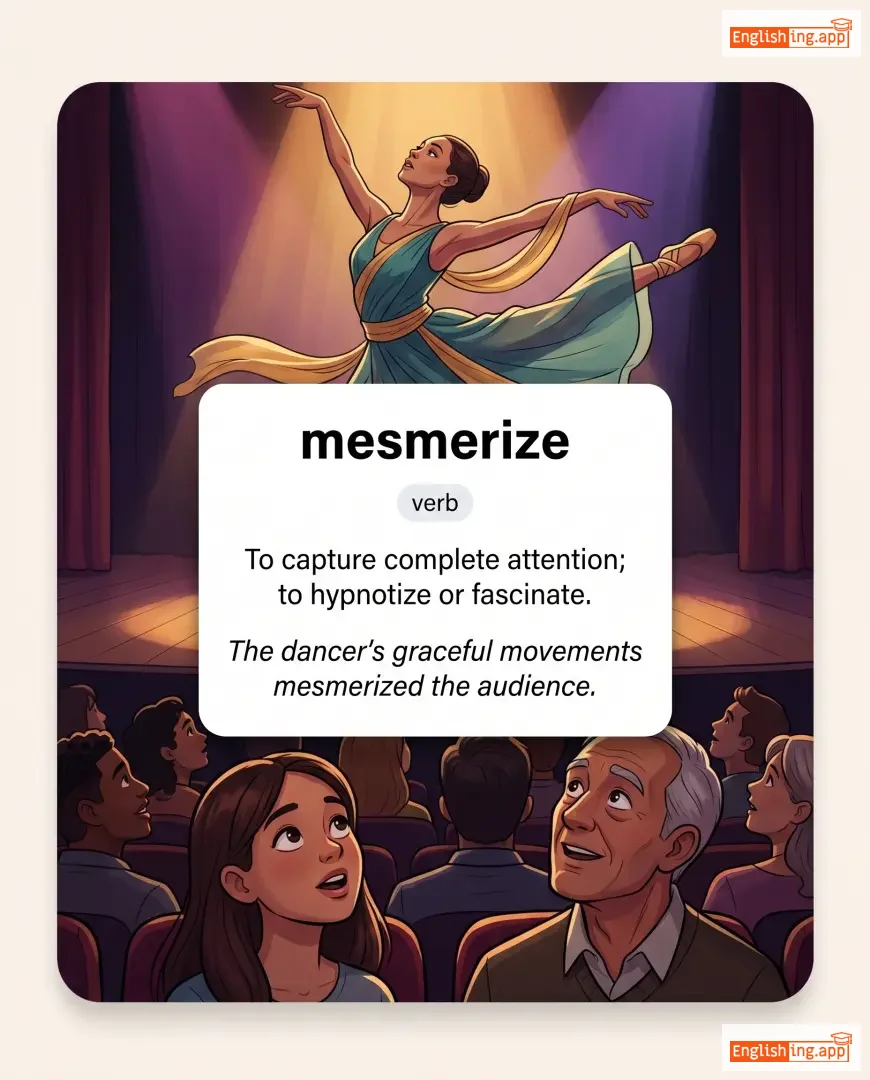
To capture complete attention; to hypnotize or fascinate.
••••••
|
The dancer's graceful movements mesmerized the audience.
舞者优雅的动作迷住了观众。
••••••
|
舞者优雅的动作迷住了观众。
Wǔzhě yōuyǎ de dòngzuò mí zhù le guānzhòng.
••••••
|
mesmerize the crowd
迷住人群
••••••
|
To fully capture the attention of a group of people
••••••
|
迷住人群
mí zhù rénqún
••••••
|
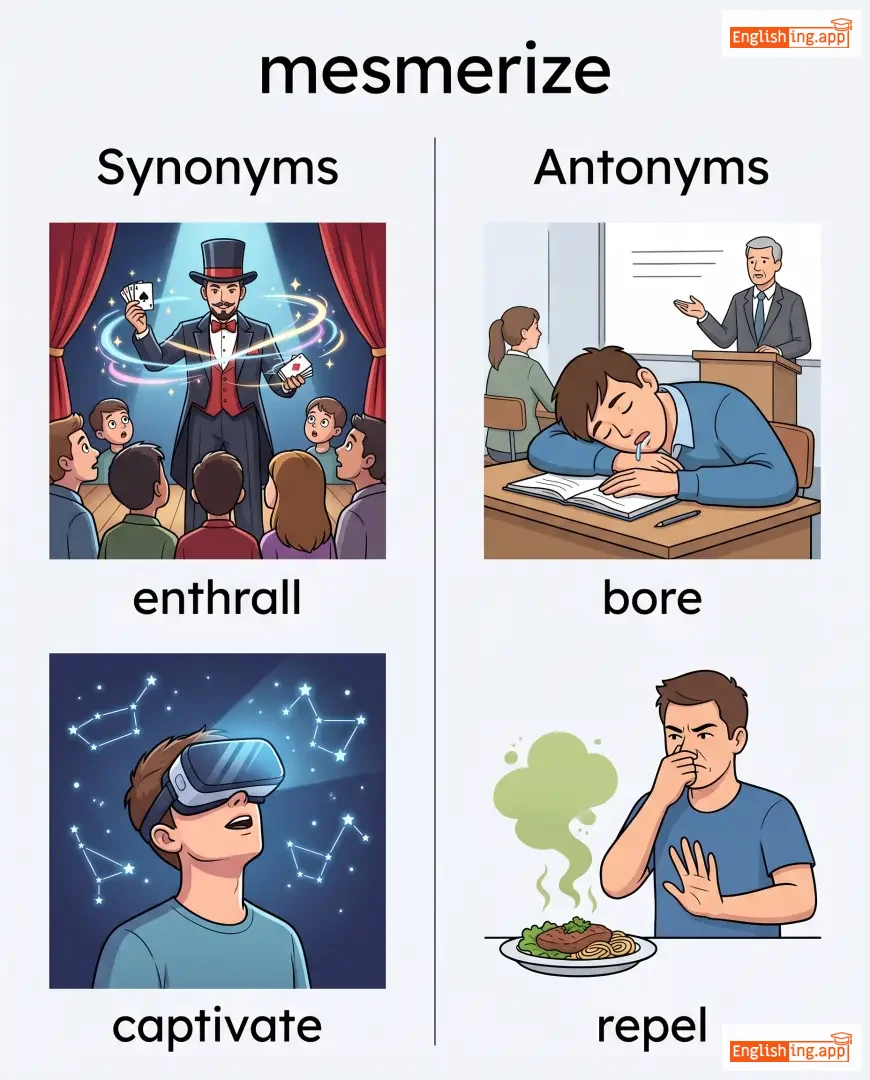
enthrall, captivate, enchant, fascinate, hypnotize
••••••
|
bore, repel, distract
••••••
|
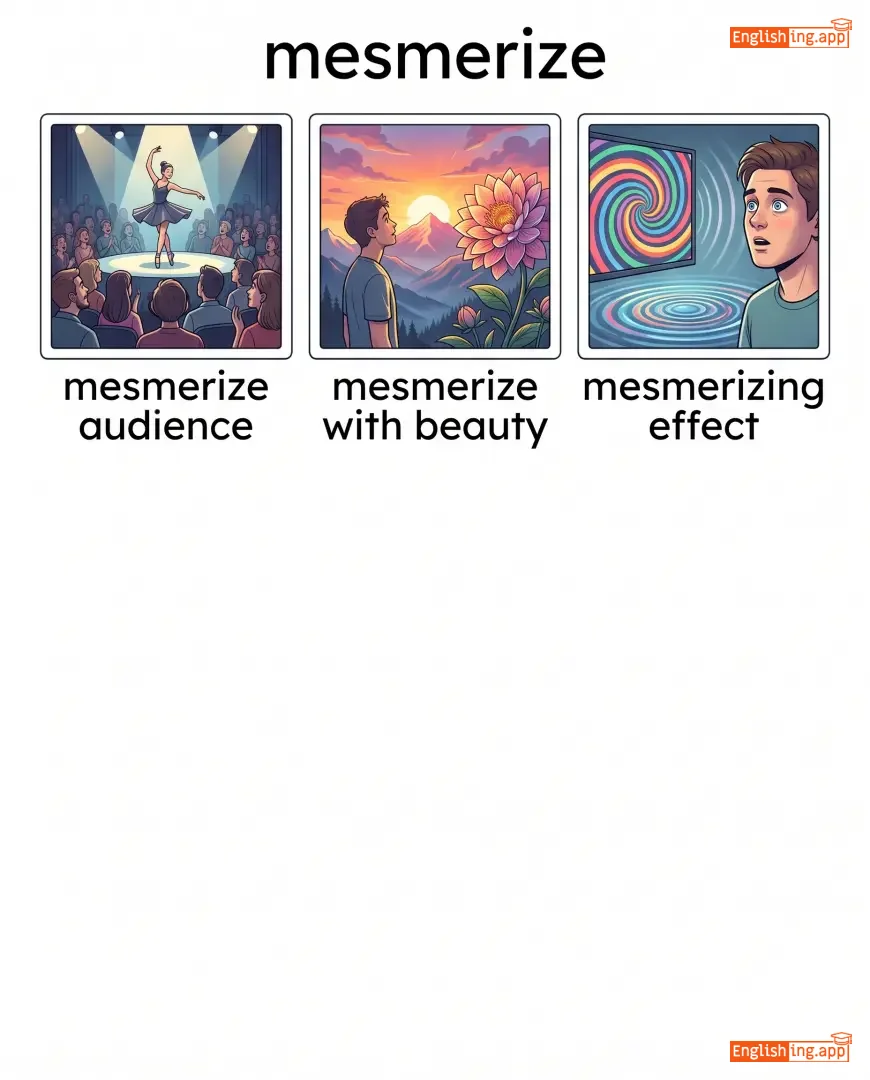
mesmerize audience, mesmerize with beauty, mesmerizing effect
••••••
|
Mesmerize 就是用魔法迷住他人。
••••••
|
|
🐛➡️🦋
••••••
|
/ˌmɛtəˈmɔrfəsɪs/
noun
(变形)
••••••
|
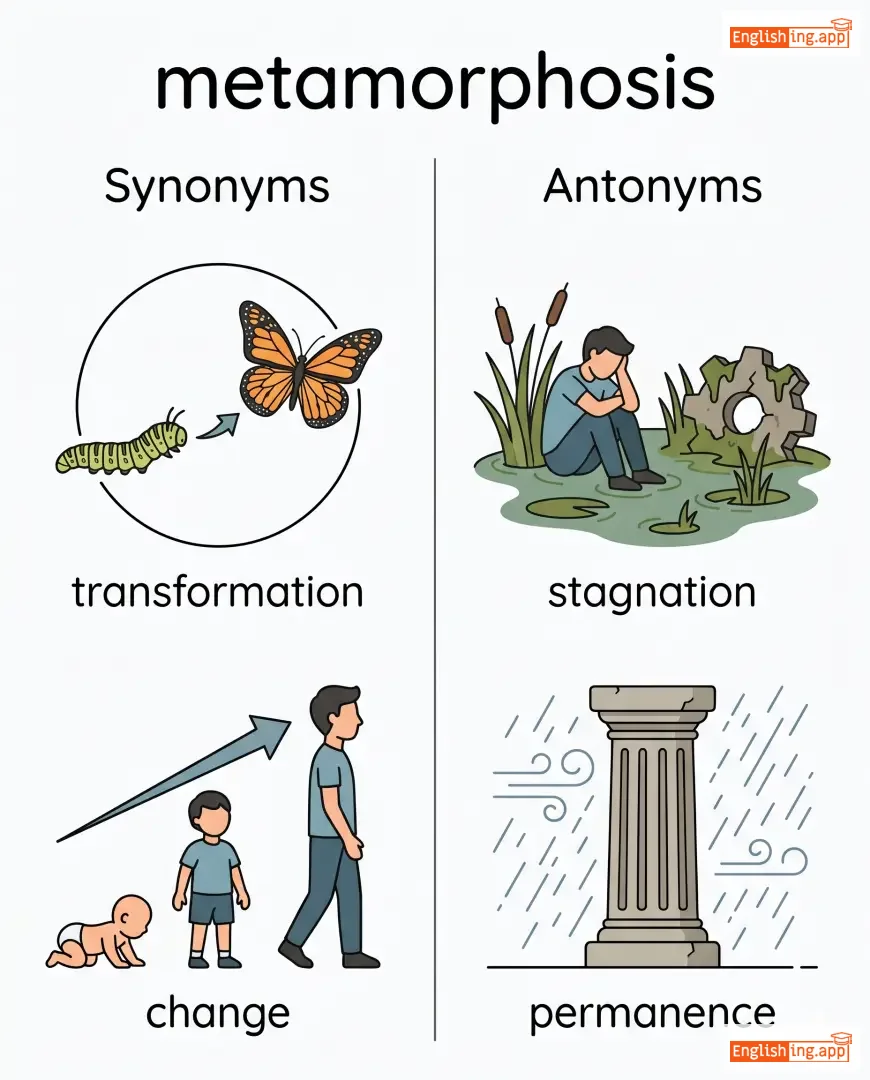
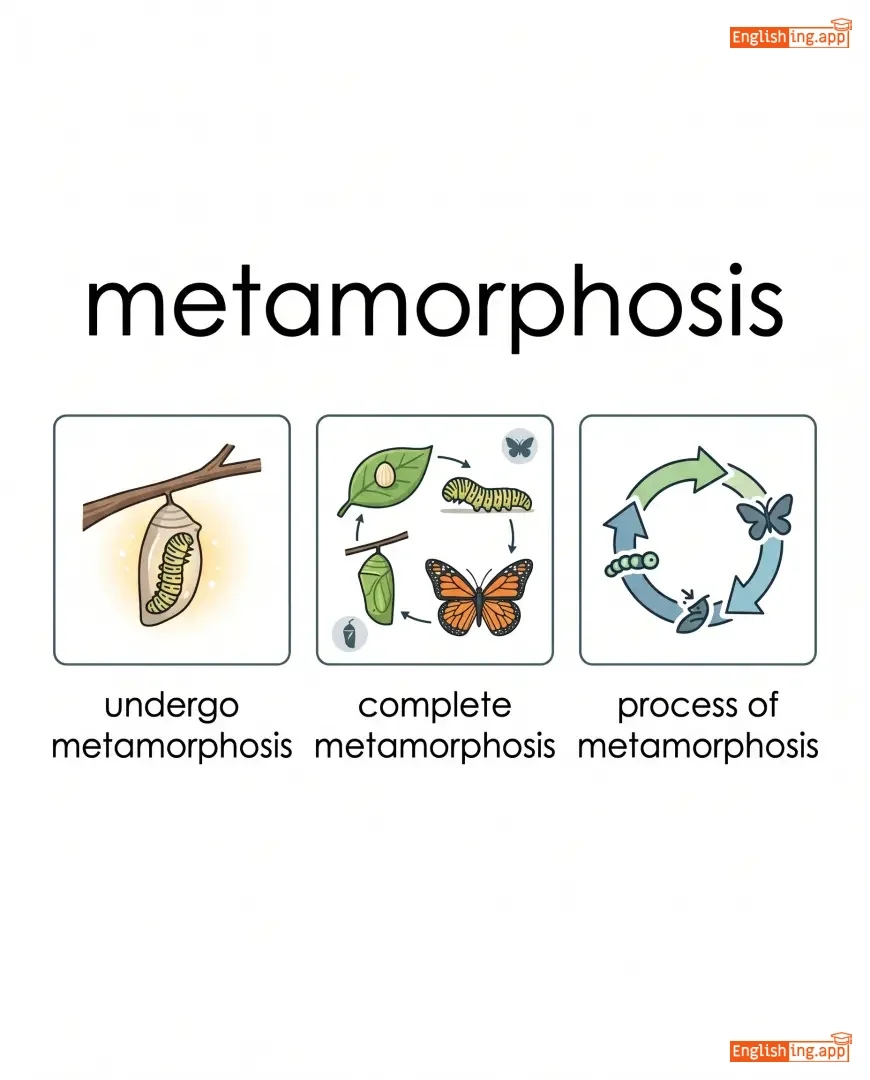
|
变形
bianxing
••••••
|
- •••••• | - •••••• | - •••••• | - •••••• |
A process of transformation from one form to another, especially in biology, such as the change from a caterpillar to a butterfly.
••••••
|
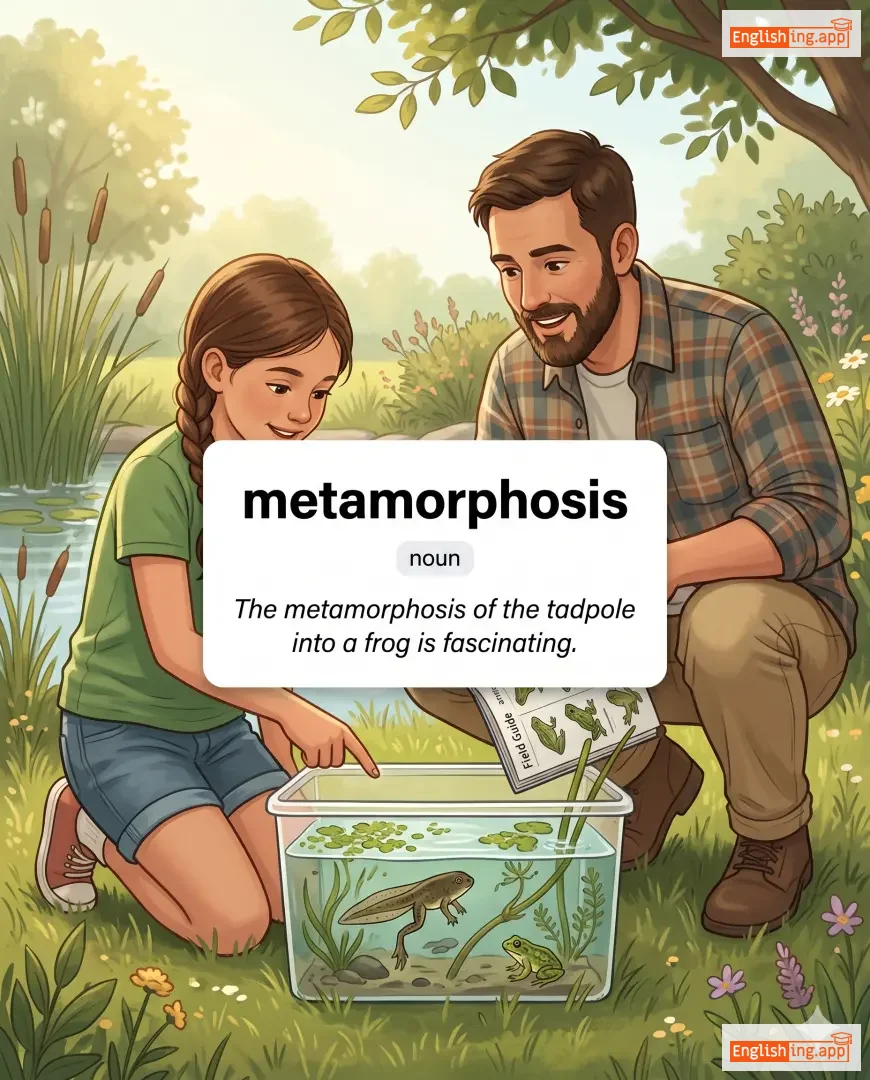
The metamorphosis of the tadpole into a frog is fascinating. |
蝌蚪变成青蛙的变形过程很有趣。
Kedou biancheng qingwa de bianxing guocheng hen youqu.
••••••
|
- •••••• | - •••••• | - •••••• |
transformation, change, evolution, alteration, mutation
••••••
|
stagnation, permanence, constancy
••••••
|
undergo metamorphosis, complete metamorphosis, process of metamorphosis
••••••
|
Metamorphosis = Meta (变化) + Morph (形态) + sis (过程) → 变形过程。
••••••
|
|
📚
••••••
|
/ˌmɛtəˈfɪzɪks/
noun
(形而上学)
••••••
|
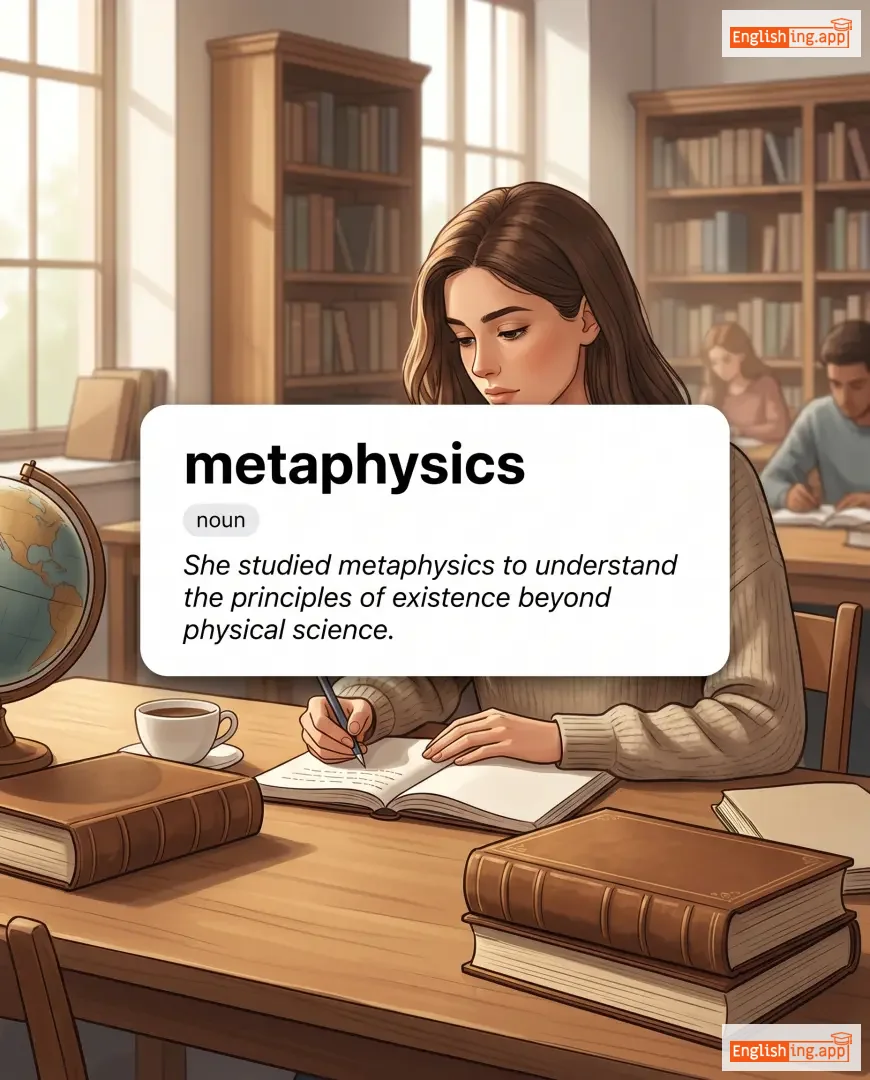
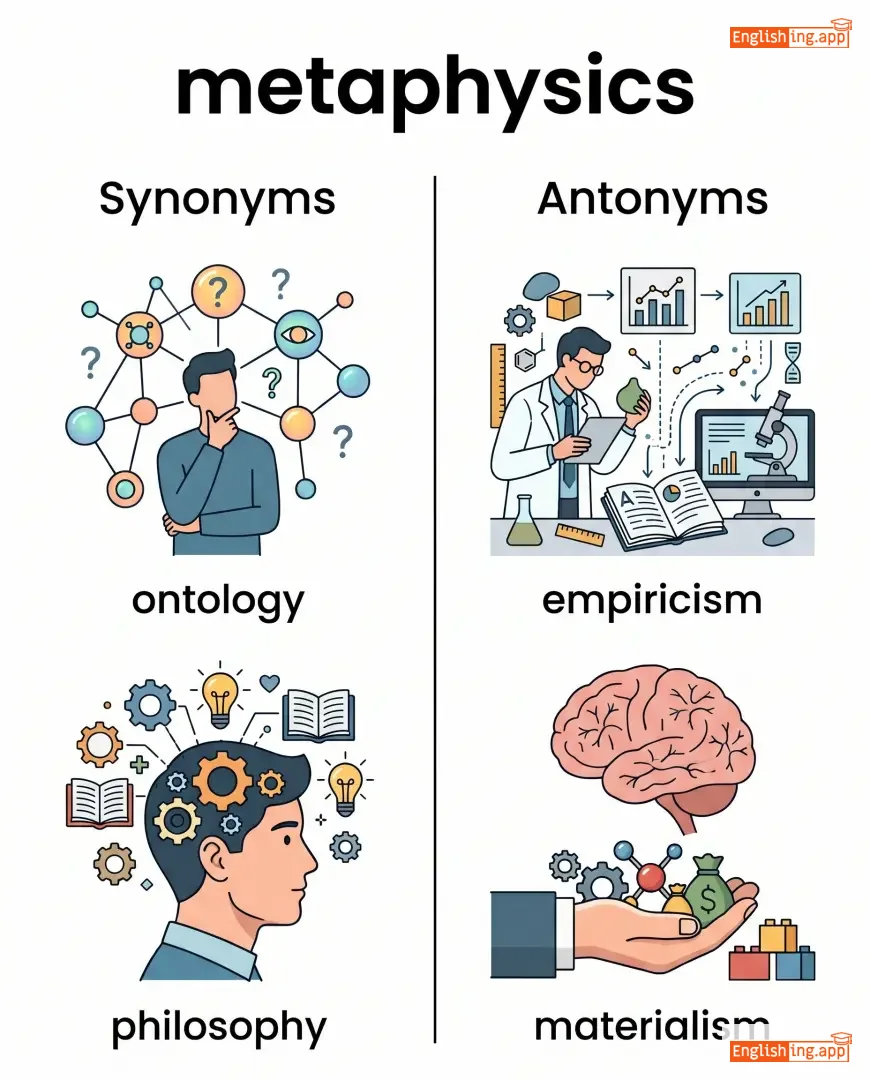
|
形而上学
xíng ér shàng xué
••••••
|
- •••••• | - •••••• | - •••••• | - •••••• |
The branch of philosophy that deals with the fundamental nature of reality, existence, and the relationship between mind and matter.
••••••
|
She studied metaphysics to understand the principles of existence beyond physical science. |
她学习形而上学,以理解超越物理科学的存在原理。
Tā xuéxí xíng ér shàng xué, yǐ lǐjiě chāoyuè wùlǐ kēxué de cúnzài yuánlǐ.
••••••
|
- •••••• | - •••••• | - •••••• |
ontology, philosophy, cosmology, speculation, abstraction
••••••
|
empiricism, materialism, realism
••••••
|
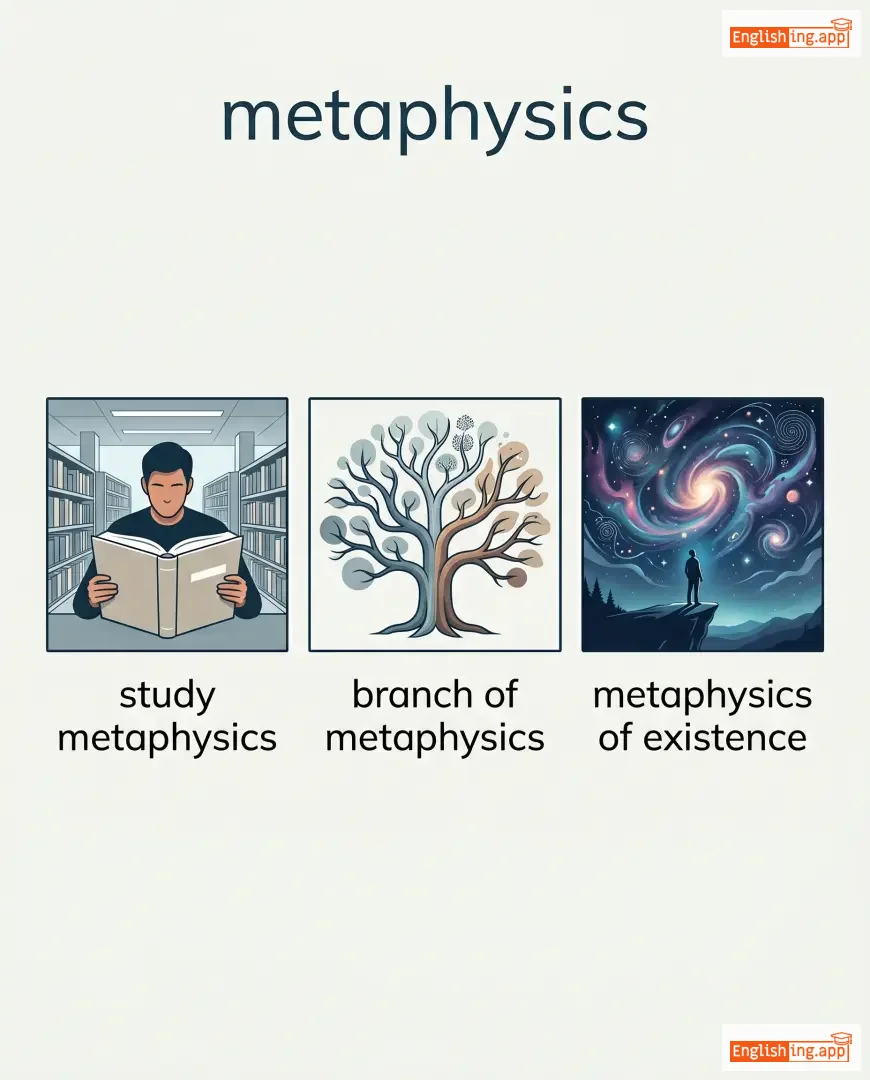
study metaphysics, branch of metaphysics, metaphysics of existence, metaphysics course
••••••
|
Meta + Physics = 超越物理 → 形而上学意味着超越物理学的现实
••••••
|
|
🌦️
••••••
|
/ˌmiː.ti.ə.rəˈlɒ.dʒɪ.kəl/
adjective
(气象的)
••••••
|
|
气象的
qìxiàng de
••••••
|
- •••••• | - •••••• | - •••••• | - •••••• |
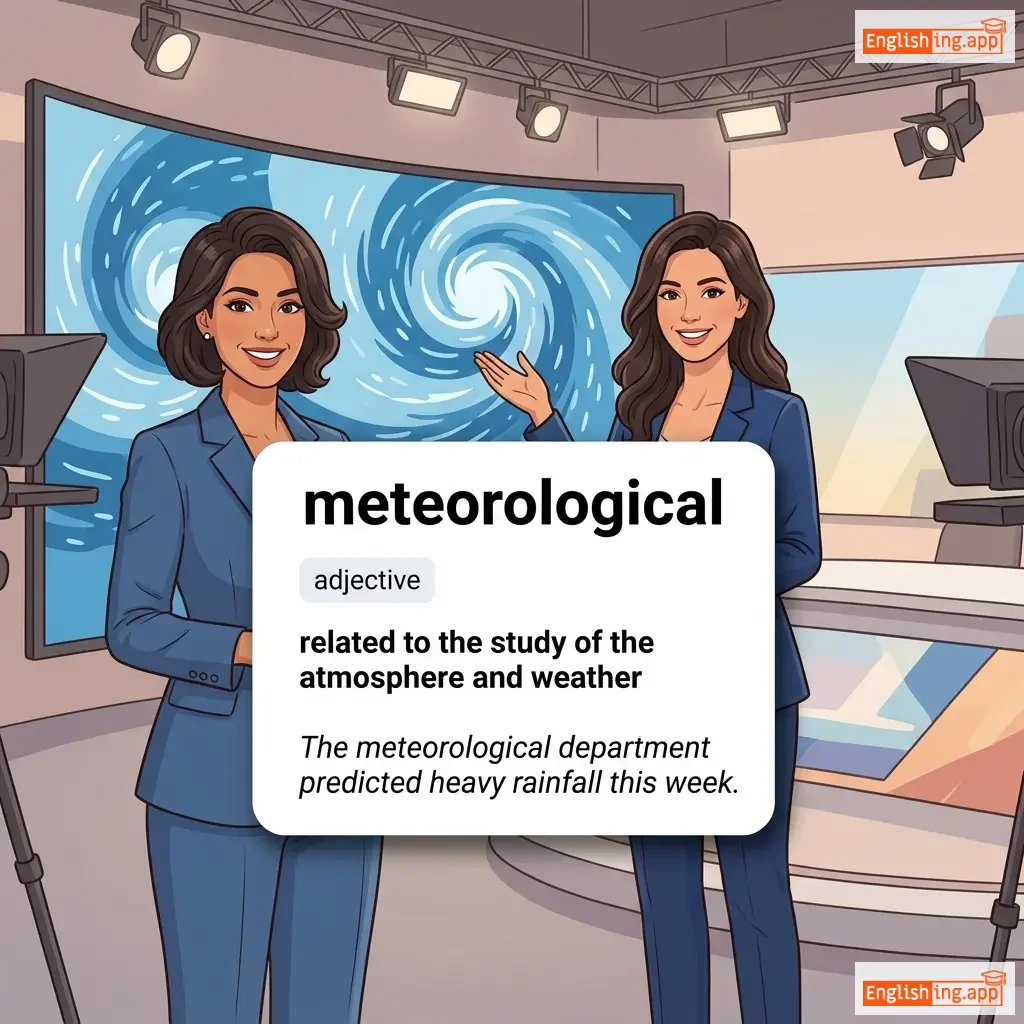
related to the study of the atmosphere and weather
••••••
|
The meteorological department predicted heavy rainfall this week. |
气象部门预测本周有大雨。
Qìxiàng bùmén yùcè běn zhōu yǒu dàyǔ.
••••••
|
- •••••• | - •••••• | - •••••• |
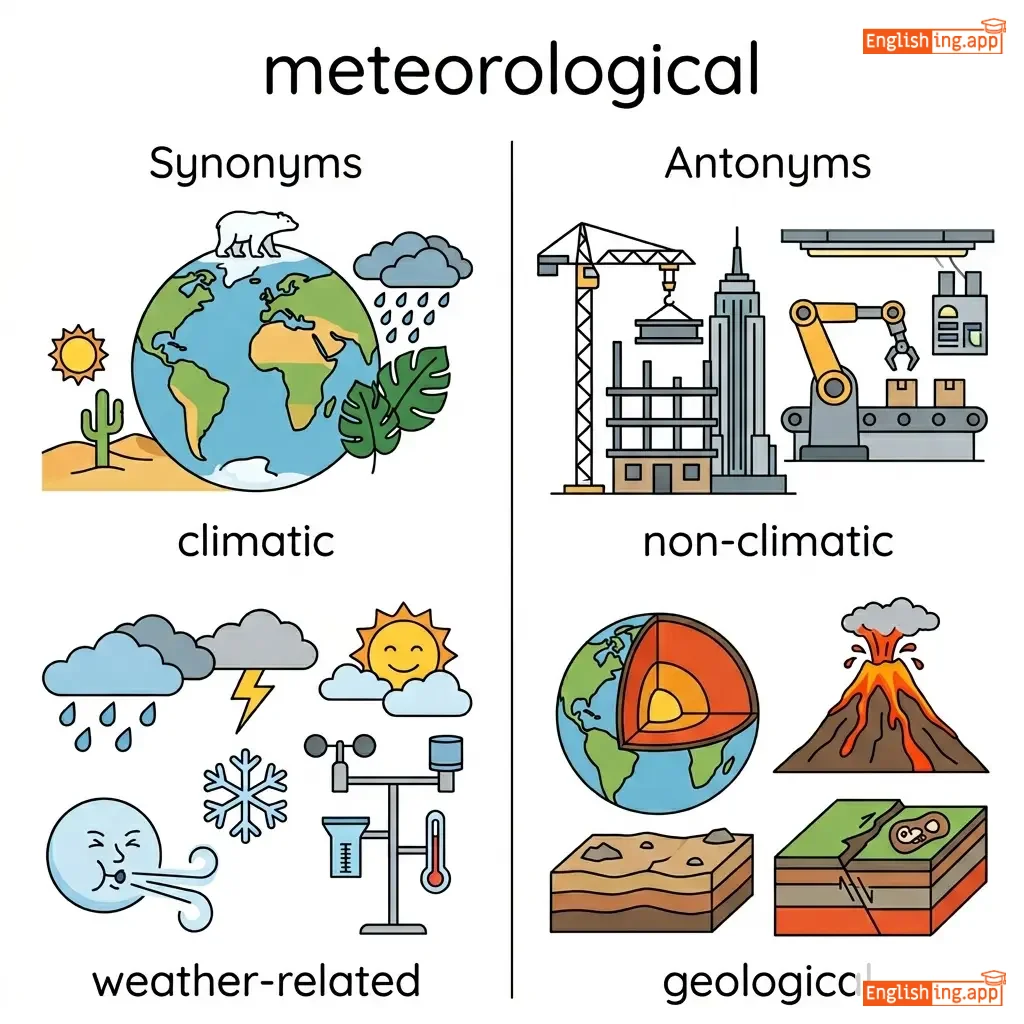
climatic, weather-related, atmospheric
••••••
|
non-climatic, geological
••••••
|
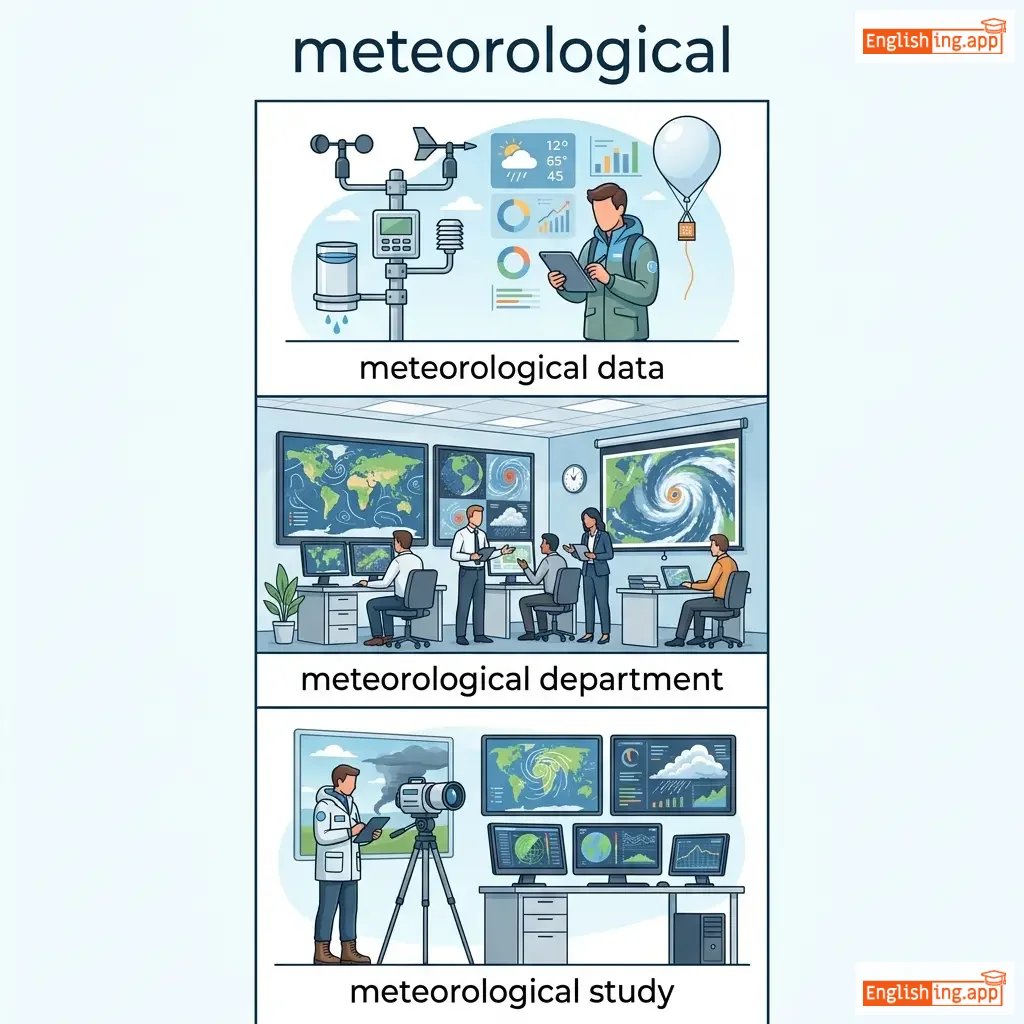
meteorological data, meteorological department, meteorological study, meteorological report
••••••
|
气象的(气象 = 气 + 象, 气象和天气相关)🌦️
••••••
|
|
🧐
••••••
|
/məˈtɪkjʊləs/
adjective
(缅提库勒斯)
••••••
|
|
一丝不苟
yīsī bùgǒu
••••••
|
- •••••• | - •••••• | - •••••• | - •••••• |
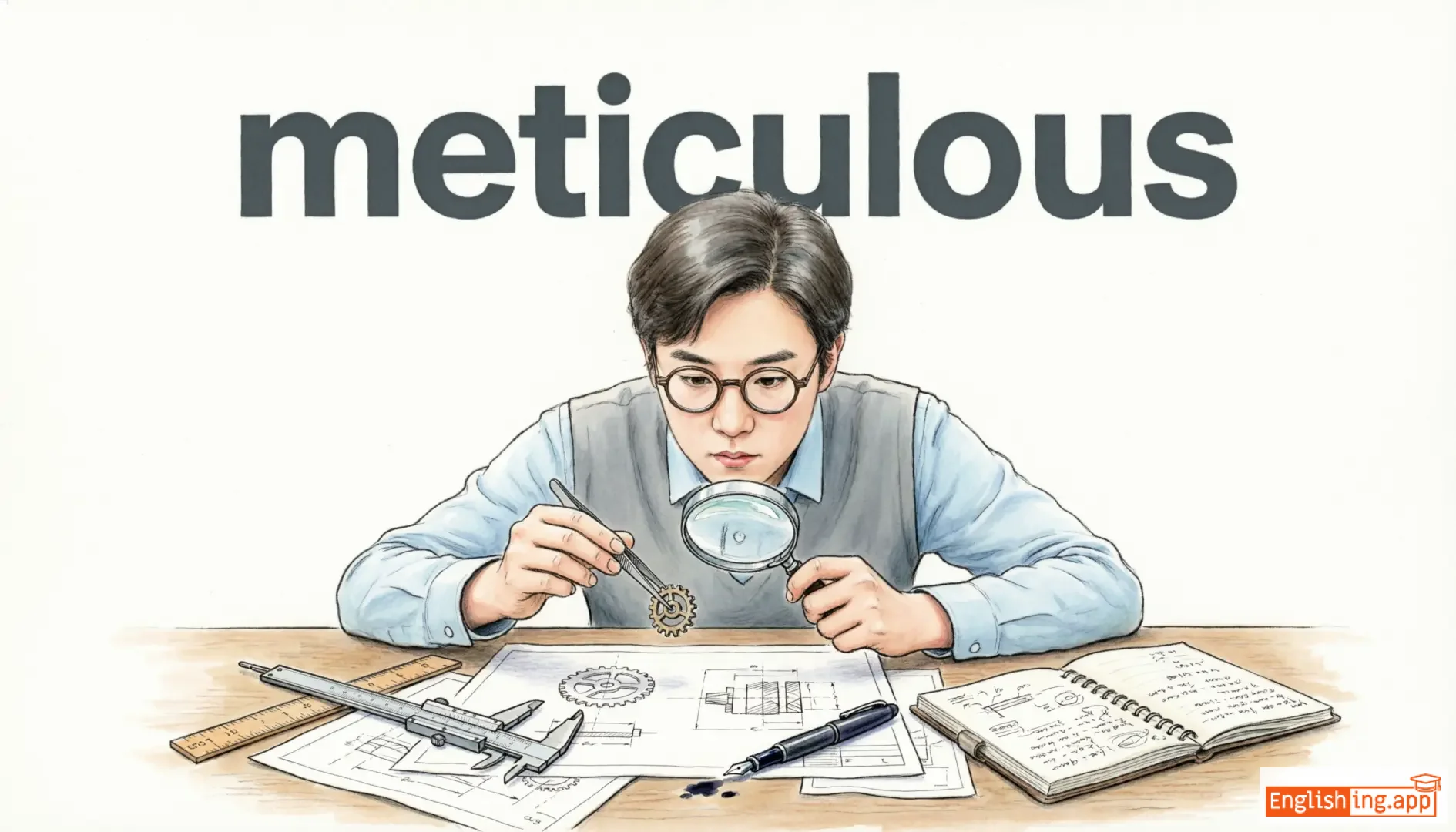
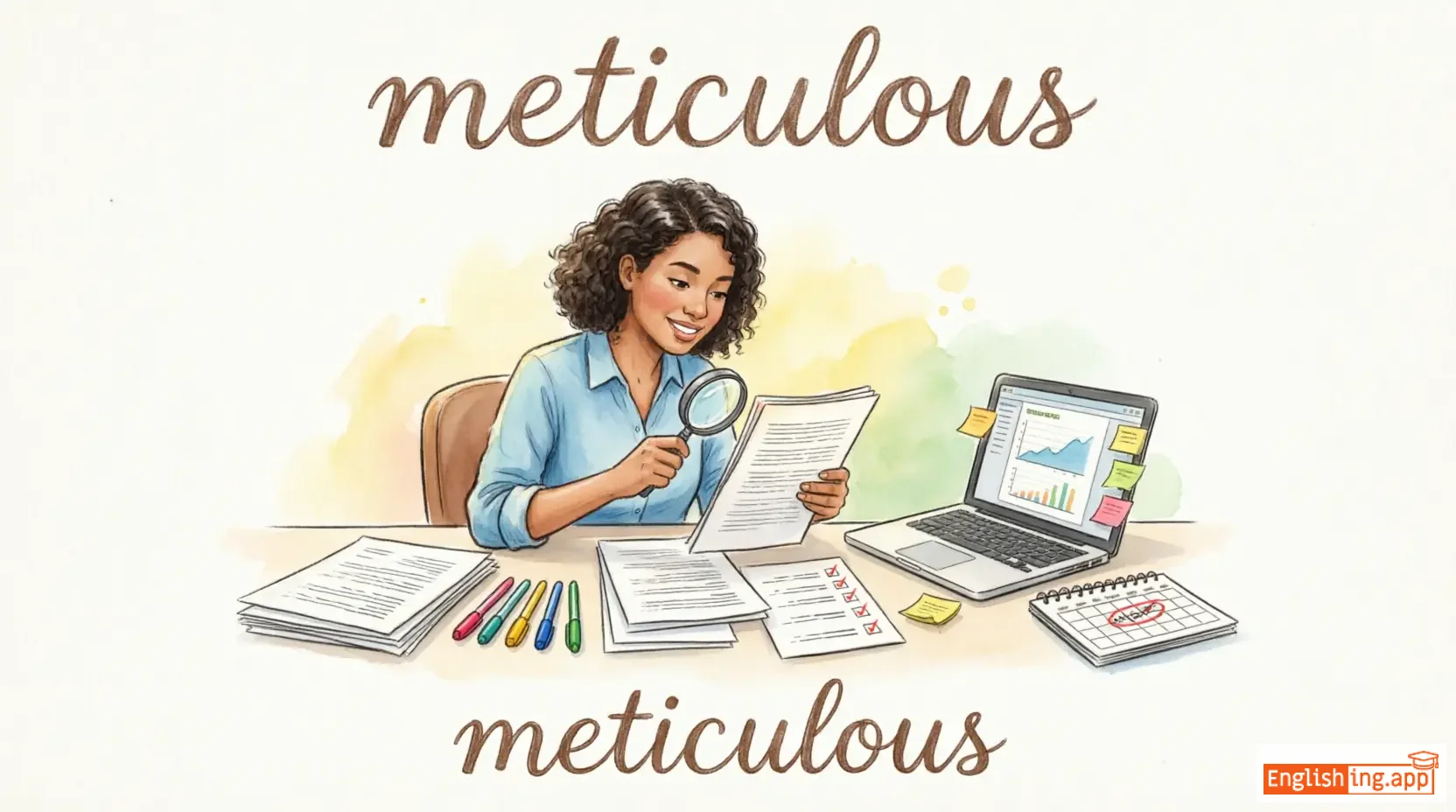
Showing great attention to detail; very careful and precise.
••••••
|
The artist was meticulous in painting every tiny detail. |
艺术家在绘制每个小细节时都非常一丝不苟。
Yìshùjiā zài huìzhì měi gè xiǎo xìjié shí dōu fēicháng yīsī bùgǒu.
••••••
|
- •••••• | - •••••• | - •••••• |
precise, careful, thorough, detailed, diligent
••••••
|
careless, sloppy, negligent
••••••
|
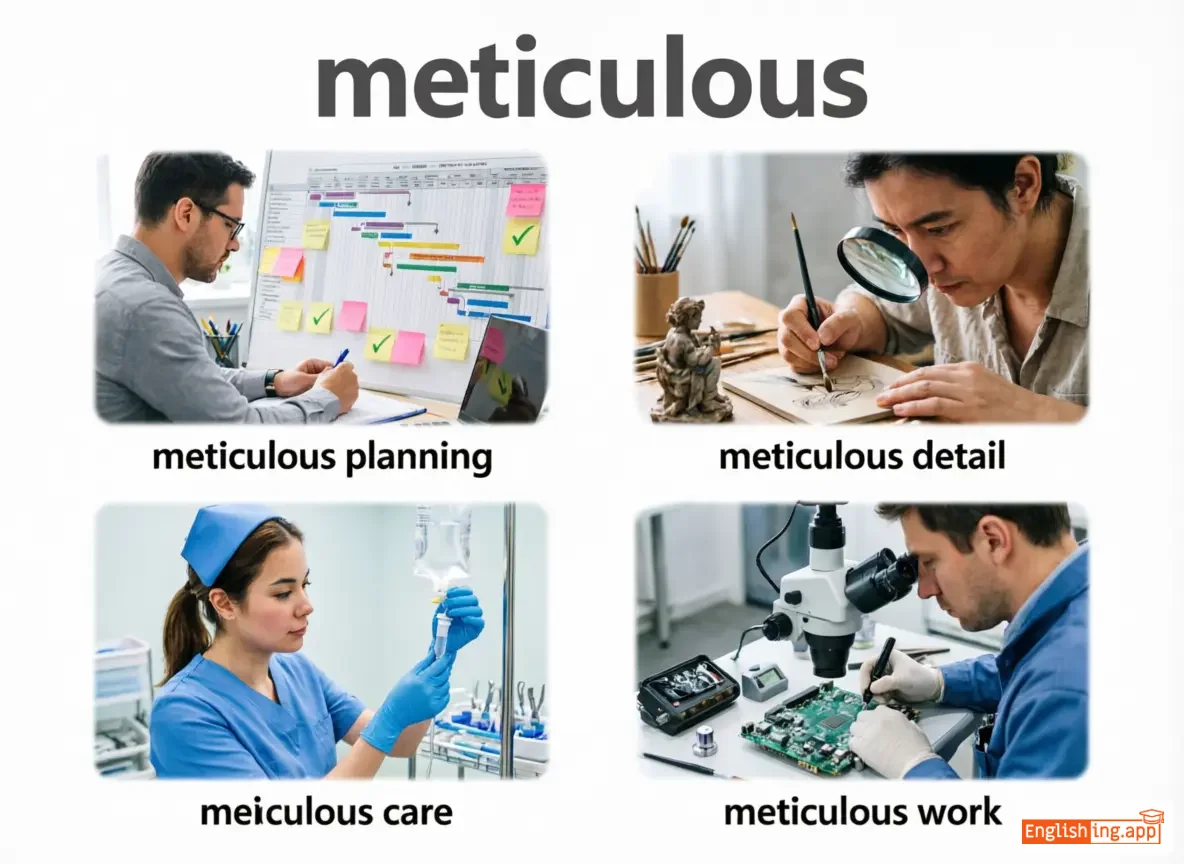
meticulous planning, meticulous detail, meticulous care, meticulous work
••••••
|
Meti意味着仔细挖掘细节 - 一丝不苟表示非常关注细节并且小心精确。
••••••
|
|
🔥
••••••
|
/ˈmɛtəl/
noun
(梅特尔)
••••••
|
- •••••• |
勇气
yǒngqì
••••••
|
- •••••• | - •••••• | - •••••• | - •••••• |
A person's ability to cope well with difficulties or to face demanding situations with courage.
••••••
|
The young athlete showed his mettle in the final match. |
这位年轻的运动员在决赛中展示了他的勇气。
Zhè wèi niánqīng de yùndòngyuán zài juésài zhōng zhǎnshìle tā de yǒngqì.
••••••
|
on one's mettle |
To be prepared to do one's best or face a challenge with determination.
••••••
|
竭尽全力
jié jìn quán lì
••••••
|
courage, spirit, resilience, determination, grit
••••••
|
cowardice, weakness, timidity
••••••
|
show mettle, test mettle, prove mettle, on one's mettle
••••••
|
像金属一样强 - mettle意味着勇气和坚持。
••••••
|
|
🔥
••••••
|
/ˈmɛtəlˌsʌm/
adjective
(méi tè lè sī mǔ)
••••••
|
- •••••• |
勇敢的
yǒng gǎn de
••••••
|
- •••••• | - •••••• | - •••••• | - •••••• |
Full of courage and spirit; lively and spirited.
••••••
|
The mettlesome young rider never backed down from a challenge. |
勇敢的年轻骑手从不退缩。
Yǒng gǎn de nián qīng qí shǒu cóng bù tuì suō.
••••••
|
- •••••• | - •••••• | - •••••• |
spirited, courageous, bold, plucky, lively
••••••
|
cowardly, timid, fearful
••••••
|
mettlesome spirit, mettlesome horse, mettlesome attitude
••••••
|
Mettle代表勇气,mettlesome代表勇敢的。
••••••
|
|
🔬
••••••
|
/ˈmaɪkrəˌkɒzəm/
noun
(微观宇宙)
••••••
|
- •••••• |
微观宇宙
weiguan yuzhou
••••••
|
- •••••• | - •••••• | - •••••• | - •••••• |
A small, representative system having analogies to a larger system; a miniature version of something.
••••••
|
The small town is a microcosm of the entire nation. |
这个小镇是整个国家的微观宇宙。
Zhege xiaozhen shi zhengge guojia de weiguan yuzhou.
••••••
|
- •••••• | - •••••• | - •••••• |
miniature, model, epitome, sample, representation
••••••
|
macrocosm, entirety
••••••
|
microcosm of society, cultural microcosm, microcosm of the world
••••••
|
Micro意味着小,cosmos意味着宇宙—微观宇宙意味着小宇宙。
••••••
|
|
⚖️
••••••
|
/ˈmɪlɪˌteɪt/
verb
(米利泰特)
••••••
|
- •••••• |
妨碍
fáng'ài
••••••
|
militated
米利泰特德
••••••
|
militated
米利泰特德
••••••
|
militates
米利泰特斯
••••••
|
militating
米利泰廷
••••••
|
to have a strong effect against something; to work as a powerful factor in preventing or influencing an outcome
••••••
|
His lack of experience will militate against his promotion.
His lack of experience will militate against his promotion.
••••••
|
他的经验不足将阻碍他的晋升。
tā de jīngyàn bùzú jiāng zǔ'ài tā de jìnshēng.
••••••
|
militate against
militate against
••••••
|
to work as a powerful factor opposing something
••••••
|
妨碍对
fáng'ài duì
••••••
|
hinder, oppose, obstruct, counteract, prevent
••••••
|
support, favor, assist
••••••
|
militate against, factors militating, circumstances militating
••••••
|
Militate 就像军人一样,阻止某些进展
••••••
|
|
⚠️
••••••
|
/ˈmɪnətɔːri/
adjective
(米纳托里)
••••••
|
- •••••• |
威胁的
wēixié de
••••••
|
- •••••• | - •••••• | - •••••• | - •••••• |
Expressing a threat; menacing.
••••••
|
The criminal gave the witness a minatory look.
罪犯给了证人一个威胁的眼神。
••••••
|
罪犯给了证人一个威胁的眼神。
Zuìfàn gěi le zhèngrén yīgè wēixié de yǎnshén.
••••••
|
- •••••• | - •••••• | - •••••• |
threatening, menacing, intimidating, hostile, ominous
••••••
|
friendly, reassuring, harmless
••••••
|
minatory tone, minatory gesture, minatory warning, minatory look
••••••
|
Minatory 就是威胁的意思,像警告一样。
••••••
|
|
🔍
••••••
|
/ˈmɪnəskjuːl/
adjective
(米努斯丘尔)
••••••
|
- •••••• |
微小
weixiao
••••••
|
- •••••• | - •••••• | - •••••• | - •••••• |
extremely small in size or importance
••••••
|
She made only a minuscule contribution to the project.
她对这个项目的贡献微乎其微。
••••••
|
她对这个项目的贡献微乎其微。
Ta dui zhege xiangmu de gongxian weihuqiwei.
••••••
|
- •••••• | - •••••• | - •••••• |
tiny, minute, microscopic, little, insignificant
••••••
|
huge, large, massive
••••••
|
minuscule amount, minuscule difference, minuscule detail
••••••
|
Mini + school → 微小,意味着非常小 (像迷你学校一样)。
••••••
|
|
📑
••••••
|
/maɪˈnjuːʃə/
noun
(米纽西亚)
••••••
|
- •••••• |
琐事
suǒ shì
••••••
|
- •••••• | - •••••• | - •••••• | - •••••• |
a small or trivial detail of something
••••••
|
He was bored by the minutia of office paperwork. |
他对办公室文件的琐事感到厌倦。
Tā duì bàngōngshì wénjiàn de suǒ shì gǎndào yànjuàn.
••••••
|
- •••••• | - •••••• | - •••••• |
detail, trifle, particular, triviality, nicety
••••••
|
main, essential, major
••••••
|
minutia of life, legal minutia, bureaucratic minutia
••••••
|
Minute + 中国 = 琐事 → 中国的小细节。
••••••
|
|
😒
••••••
|
/ˈmɪsənˌθroʊp/
noun
(米桑索普)
••••••
|
|
厌人者
yànrénzhě
••••••
|
- •••••• | - •••••• | - •••••• | - •••••• |
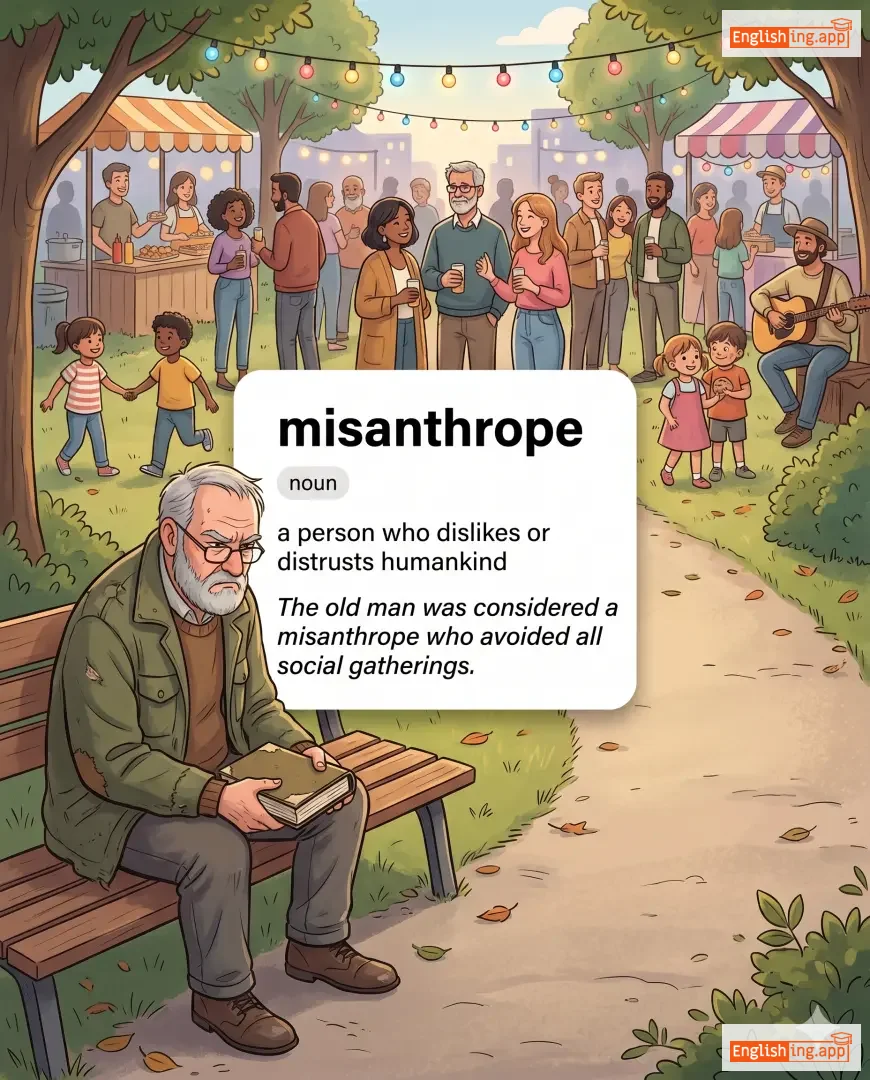
a person who dislikes or distrusts humankind
••••••
|
The old man was considered a misanthrope who avoided all social gatherings.
这个老人被认为是一个回避所有社交活动的厌人者。
••••••
|
这个老人被认为是一个回避所有社交活动的厌人者。
Zhège lǎorén bèi rènwéi shì yī gè huíbì suǒyǒu shèjiāo huódòng de yànrénzhě.
••••••
|
- •••••• | - •••••• | - •••••• |
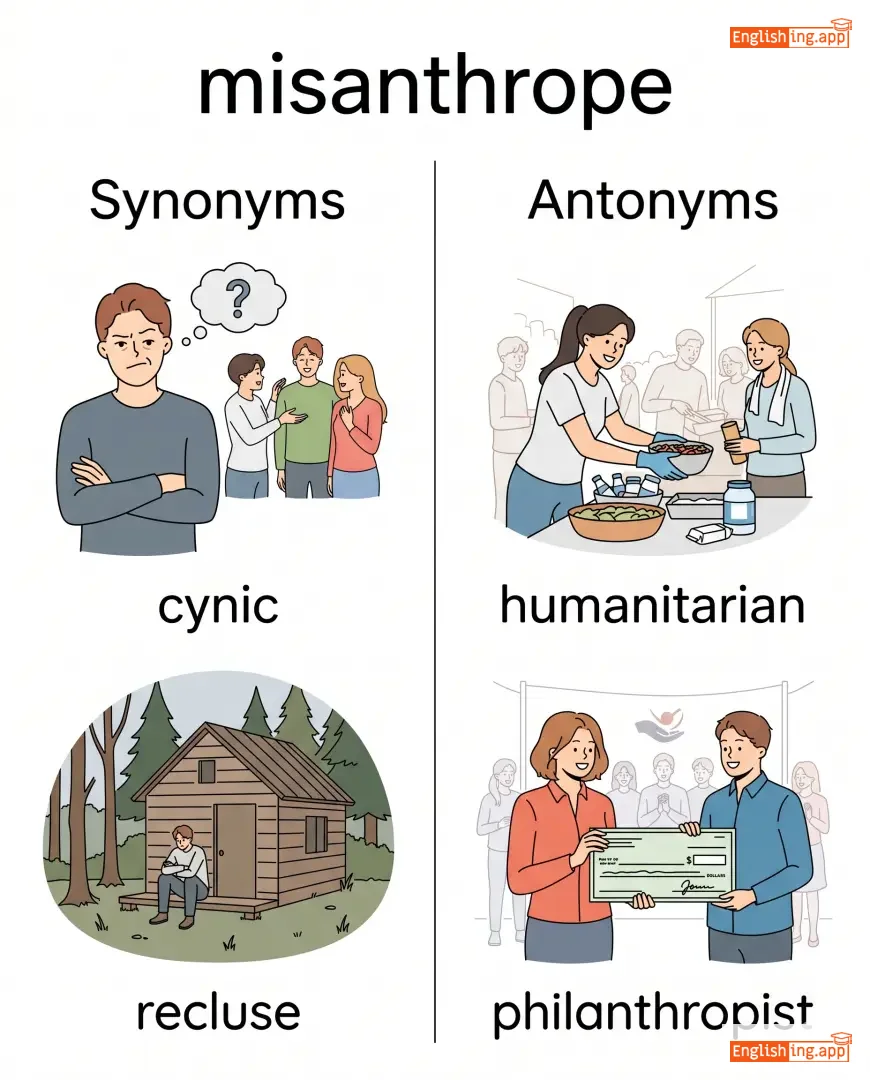
cynic, recluse, hermit, pessimist, loner
••••••
|
humanitarian, philanthropist, optimist
••••••
|
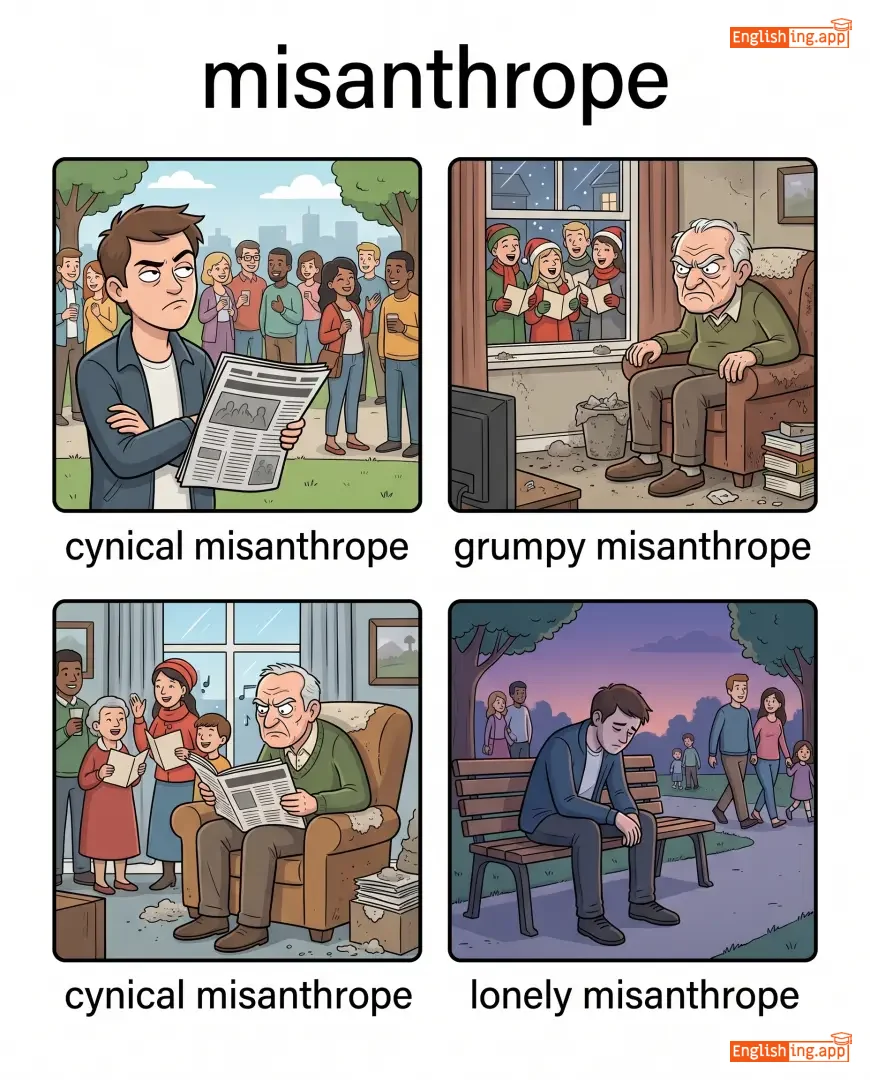
cynical misanthrope, grumpy misanthrope, lonely misanthrope
••••••
|
MISA (米) 不喜欢人类 - 厌人者表示不信任人类。
••••••
|
|
📚
••••••
|
/ˈmɪsəleɪni/
noun
(mí sī léi ní)
••••••
|
- •••••• |
杂集
za ji
••••••
|
- •••••• | - •••••• | - •••••• | - •••••• |
A collection or mixture of various things.
••••••
|
The book is a miscellany of essays and poems. |
这本书是散文和诗歌的杂集。
Zhe ben shu shi san wen he shi ge de za ji.
••••••
|
- •••••• | - •••••• | - •••••• |
collection, assortment, mixture, anthology
••••••
|
uniformity, consistency
••••••
|
miscellany of stories, miscellany of articles
••••••
|
Miscellany意味着混合 – 各种事物的集合。
••••••
|

