|
表情符号
|
单词 | Images | 翻译 | 过去时 | 过去分词 | 第三人称单数 | 动名词 | 含义 | 例句 | 例句翻译 | 示例表达 | 示例表达含义 | 示例表达翻译 | 同义词 | 反义词 | 搭配词 | 助记符 |
|---|---|---|---|---|---|---|---|---|---|---|---|---|---|---|---|---|---|
|
📚
••••••
|
/ˈɛrjʊˌdaɪt/
adjective
(érúdài)
••••••
|

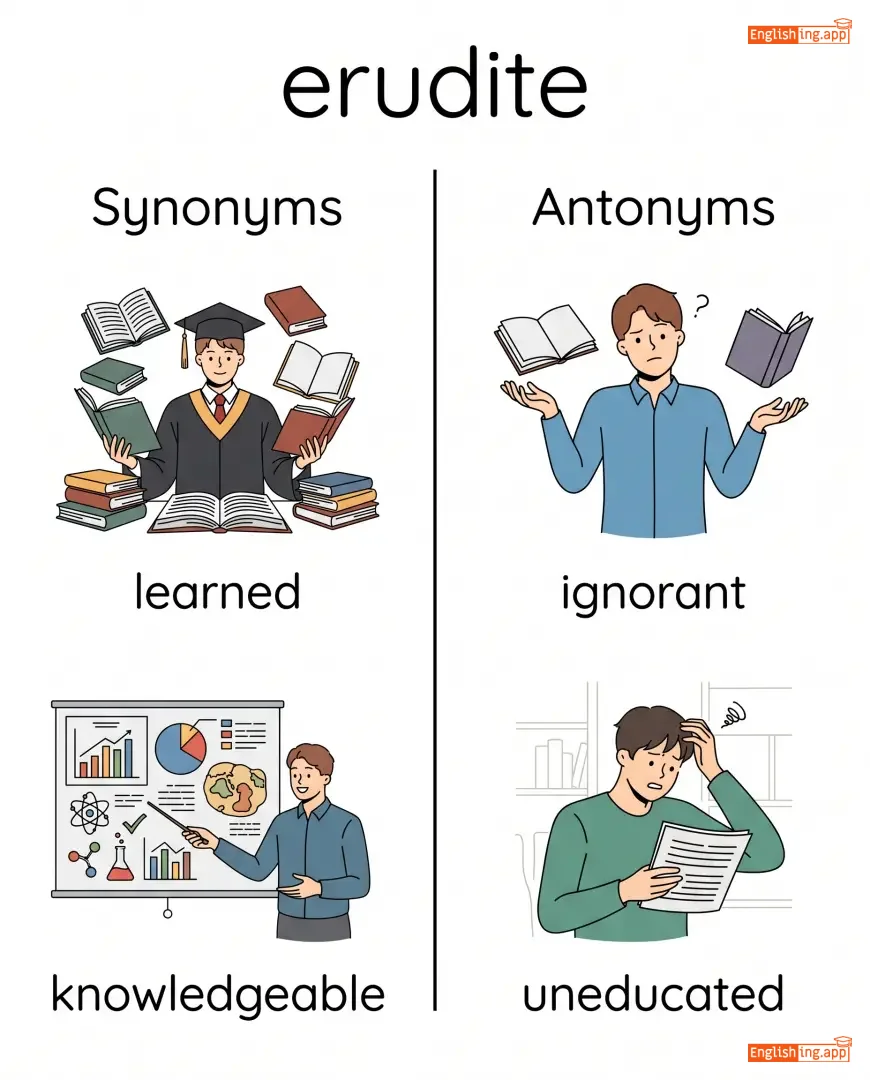
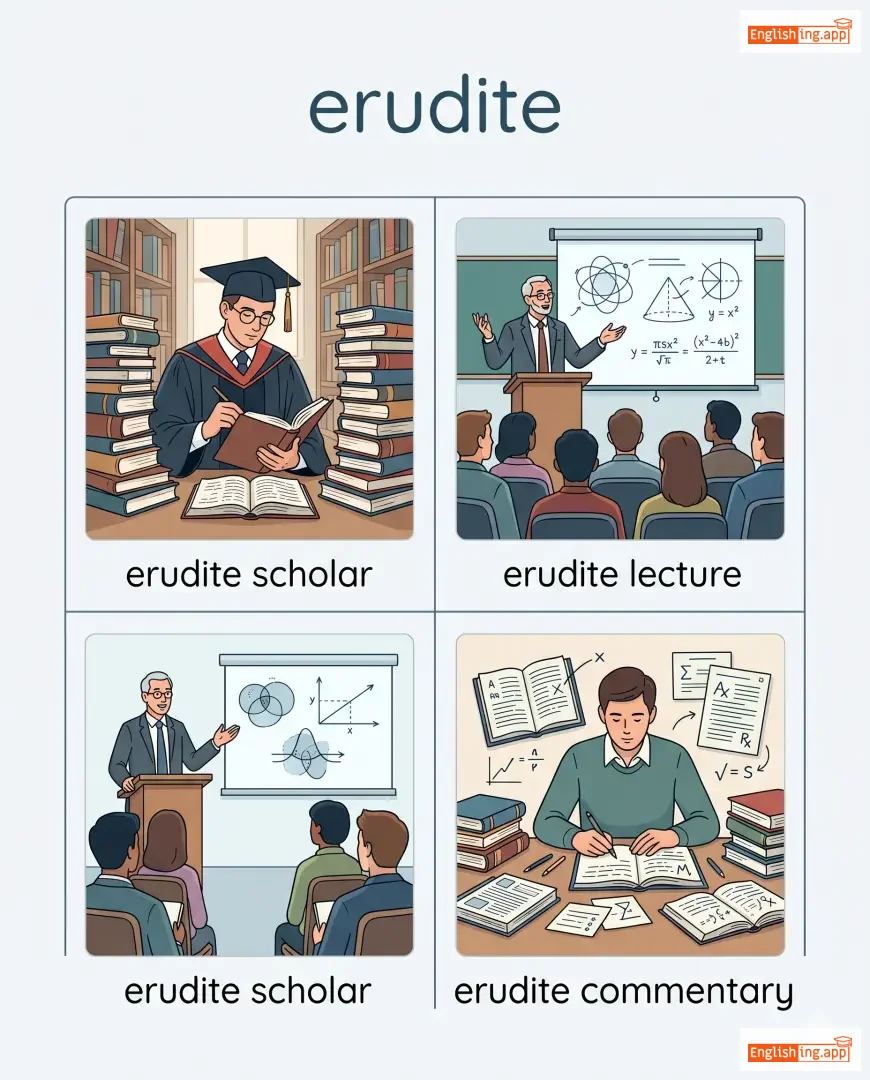
|
博学
boxue
••••••
|
- •••••• | - •••••• | - •••••• | - •••••• |
having or showing great knowledge or learning
••••••
|
The professor gave an erudite lecture on philosophy. |
教授就哲学做了一个博学的讲座。
Jiàoshòu jiù zhéxué zuòle yīgè bóxué de jiǎngzuò.
••••••
|
- •••••• | - •••••• | - •••••• |
learned, knowledgeable, scholarly, intellectual, well-read
••••••
|
ignorant, uneducated, uninformed
••••••
|
erudite scholar, erudite lecture, erudite commentary, erudite discussion
••••••
|
Erudite = 教育 + 聪明 → 博学表示知识丰富的人。
••••••
|
|
🔮
••••••
|
/ˌɛsəˈtɛrɪk/
adjective
(神秘的)
••••••
|


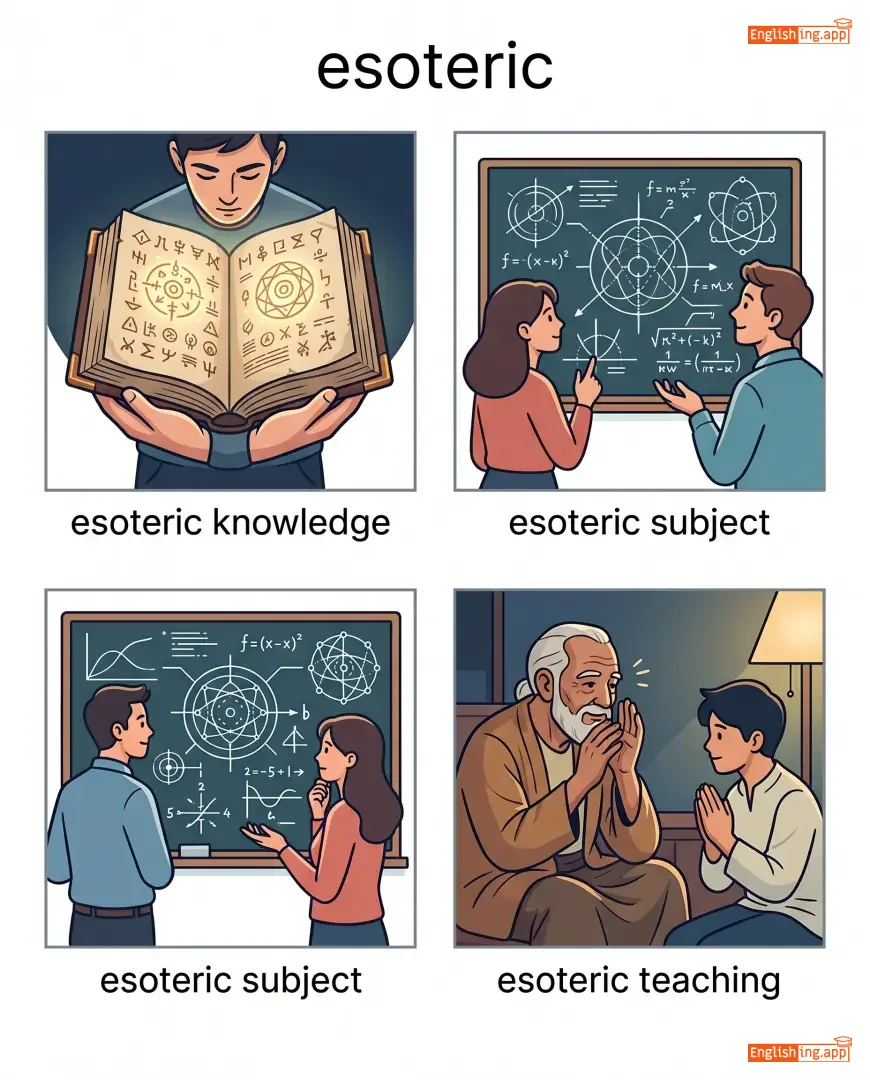
|
深奥的
shen'ao de
••••••
|
- •••••• | - •••••• | - •••••• | - •••••• |
intended for or understood by only a small number of people with special knowledge
••••••
|
The professor gave an esoteric lecture on ancient philosophy. |
教授做了一场关于古代哲学的深奥讲座。
Jiaoshou zuo le yi chang guanyu gudai zhexue de shen'ao jiangzuo.
••••••
|
- •••••• | - •••••• | - •••••• |
mystical, obscure, cryptic, abstract, arcane
••••••
|
common, popular, simple
••••••
|
esoteric knowledge, esoteric subject, esoteric teaching
••••••
|
Eso (像这个) + 奥的,意味着只有少数专家能理解
••••••
|
|
📝
••••••
|
/ˈɛseɪ/
noun
(é sài)
••••••
|

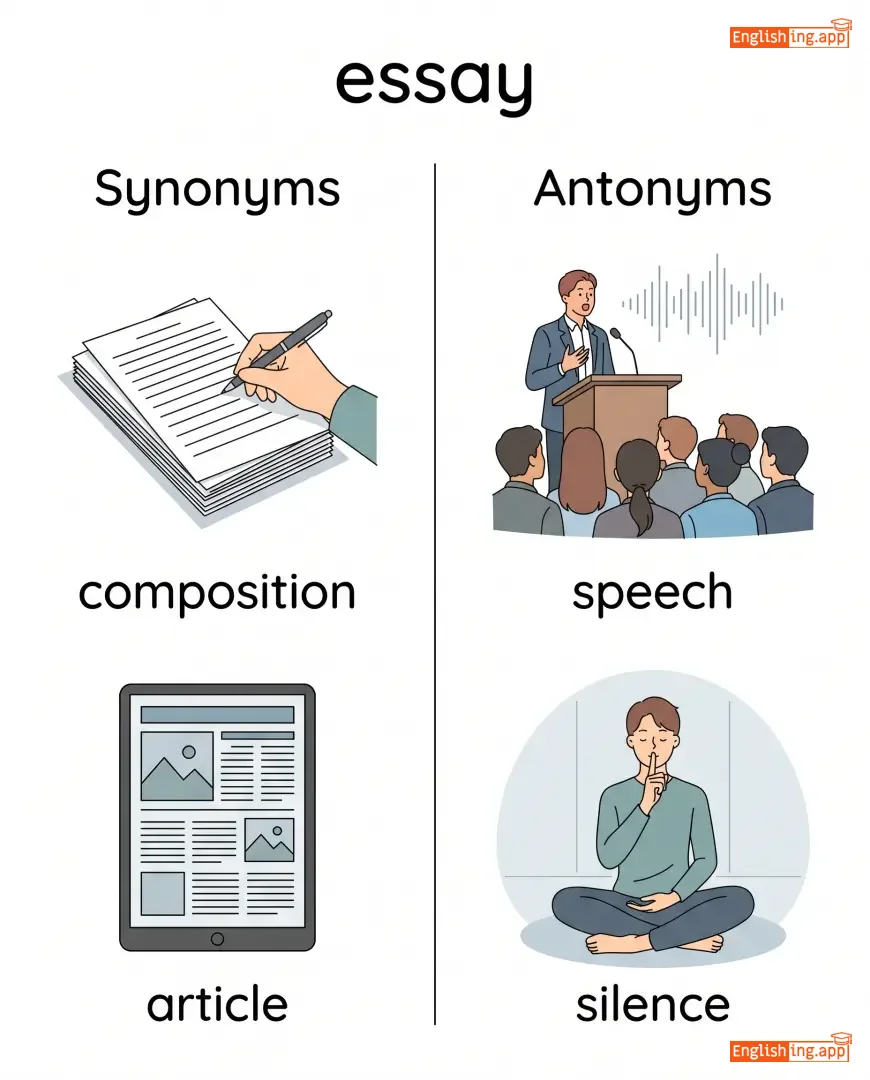
|
论文
lunwen
••••••
|
- •••••• | - •••••• | - •••••• | - •••••• |
A short piece of writing on a particular subject.
••••••
|
She wrote an essay about climate change. |
她写了一篇关于气候变化的论文。
Tā xiěle yī piān guānyú qìhòu biànhuà de lùnwén.
••••••
|
- •••••• | - •••••• | - •••••• |
composition, article, paper, text, prose
••••••
|
speech, silence
••••••
|
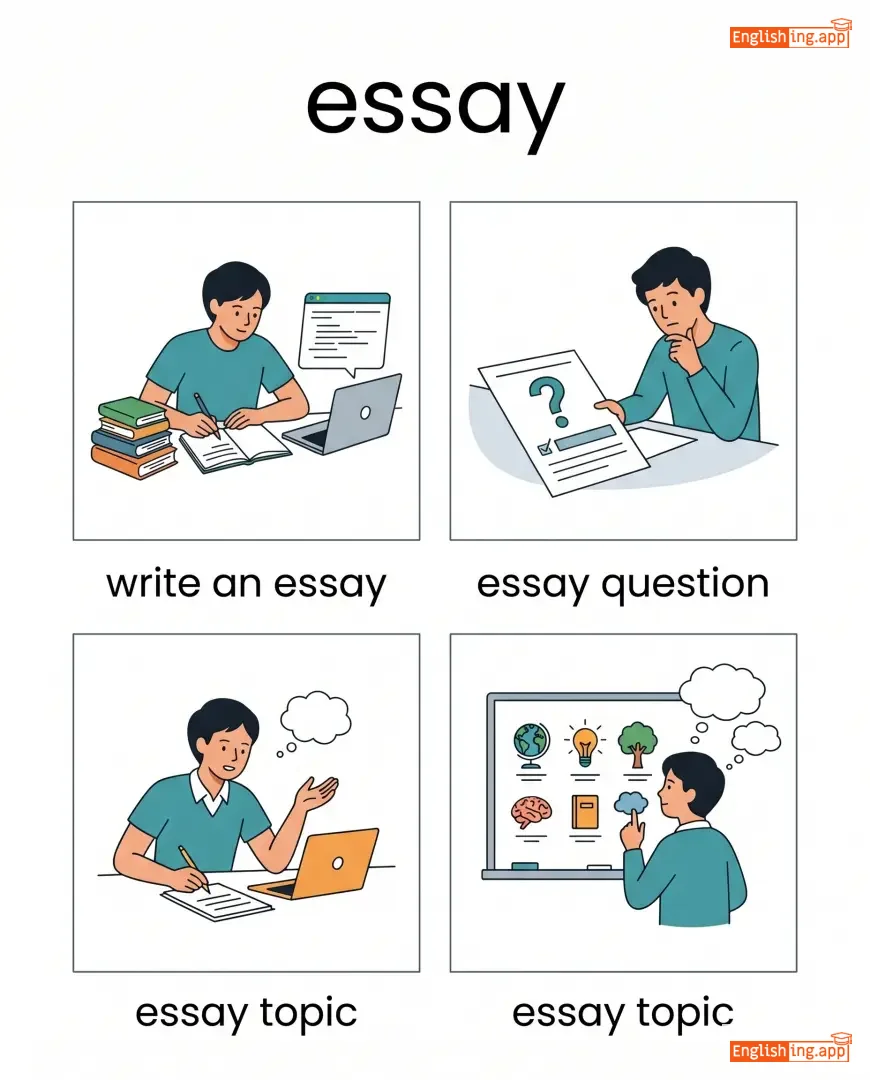
write an essay, essay question, essay topic, essay competition
••••••
|
Essay意味着论文 – 在学校,写essay就是写论文。
••••••
|
|
🏅
••••••
|
/ˈɛstɪməbl/
adjective
(艾斯提梅布尔)
••••••
|

|
值得尊敬的
zhí dé zūn jìng de
••••••
|
- •••••• | - •••••• | - •••••• | - •••••• |
Worthy of great respect.
••••••
|
Her estimable achievements inspired the whole community.
她值得尊敬的成就鼓舞了整个社区。
••••••
|
她值得尊敬的成就鼓舞了整个社区。
Tā zhí dé zūn jìng de chéng jiù gǔ wǔ le zhěng gè shè qū.
••••••
|
- •••••• | - •••••• | - •••••• |
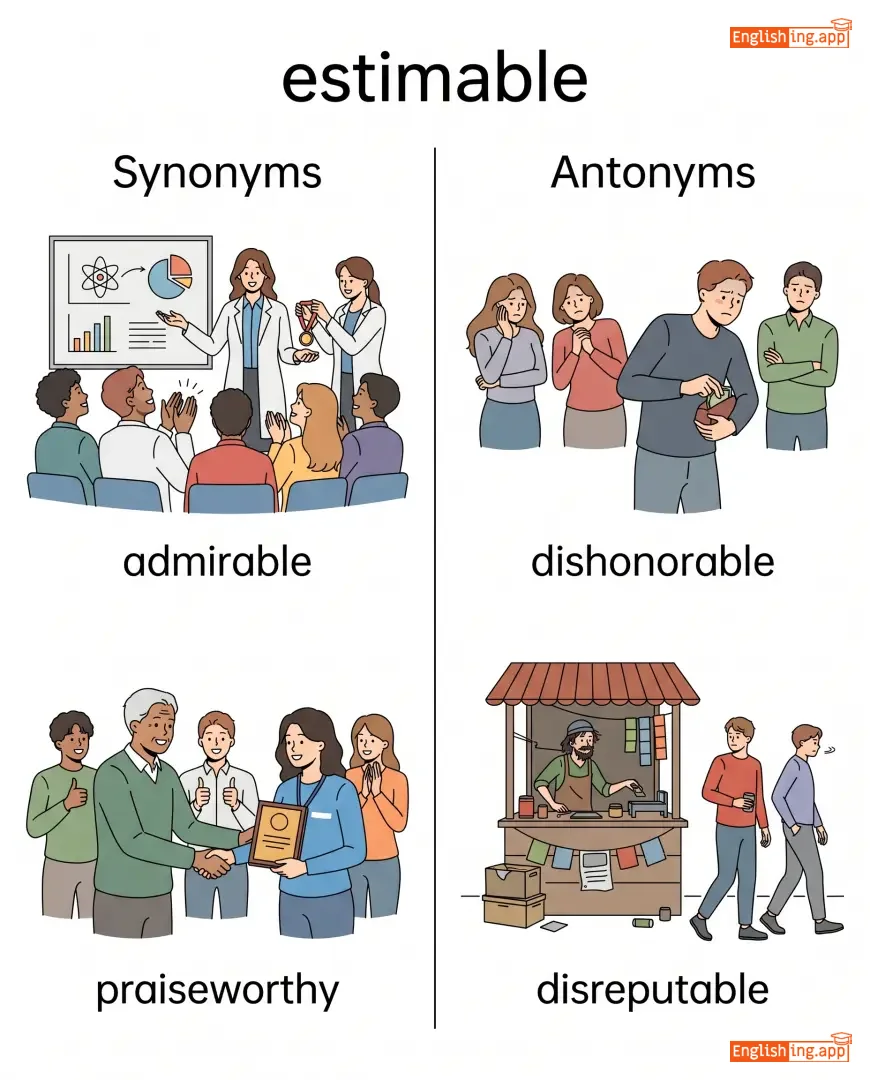
admirable, praiseworthy, honorable, respectable
••••••
|
dishonorable, disreputable, unworthy
••••••
|
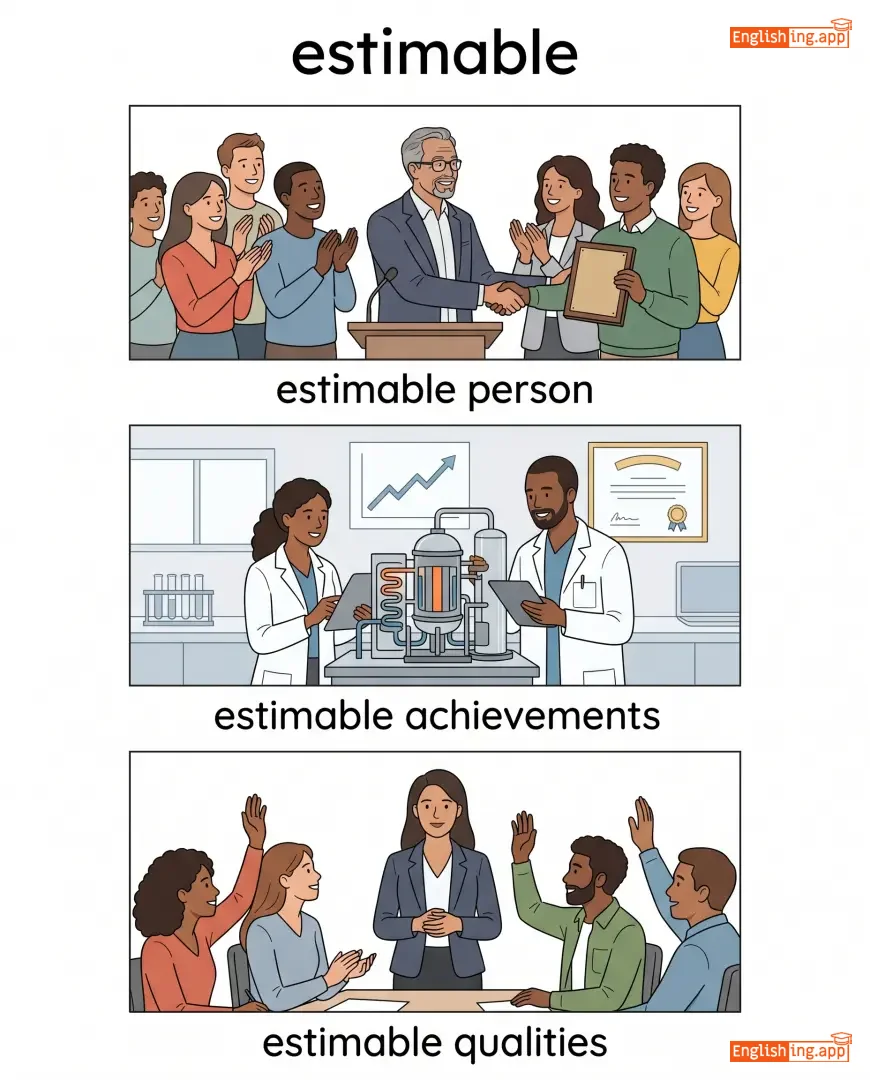
estimable person, estimable achievements, estimable qualities, highly estimable
••••••
|
Estimable 意味着值得尊敬 — 'Esteem' (尊敬) 'able' (能够)意味着值得尊敬的。
••••••
|
|
🌍
••••••
|
/ˌeθ.noʊˈsen.trɪk/
adjective
(民族中心主义)
••••••
|
|
民族中心主义
minzu zhongxin zhuyi
••••••
|
- •••••• | - •••••• | - •••••• | - •••••• |
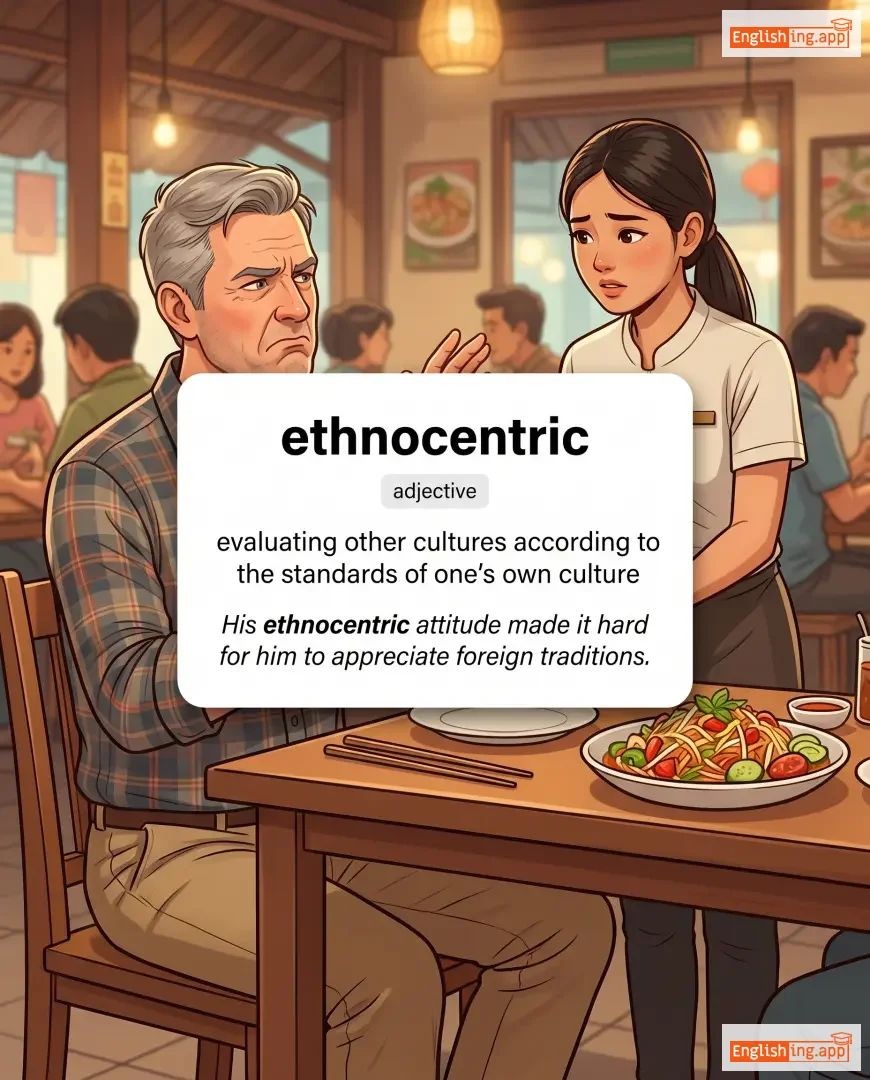
evaluating other cultures according to the standards of one's own culture
••••••
|
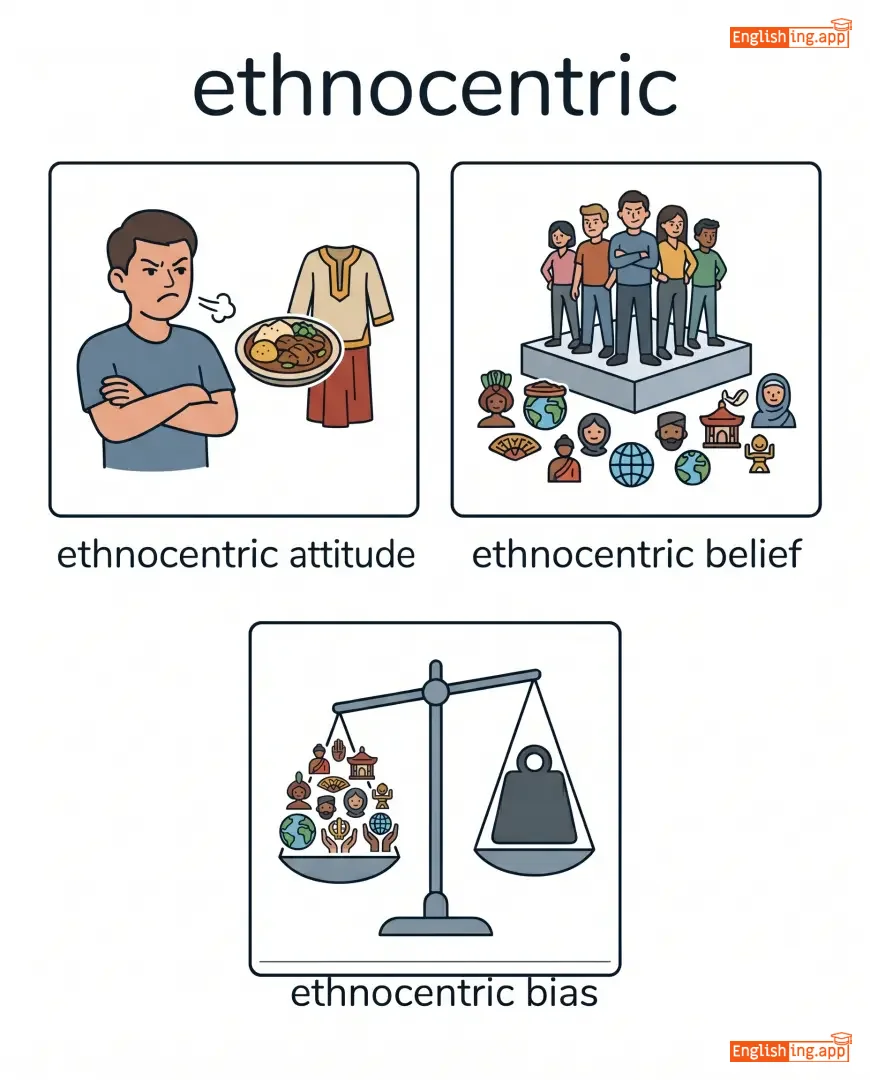
His ethnocentric attitude made it hard for him to appreciate foreign traditions. |
他的民族中心主义态度让他很难欣赏外国的传统。
Tā de mínzú zhōngxīn zhǔyì tàidù ràng tā hěn nán xīnshǎng wàiguó de chuántǒng.
••••••
|
- •••••• | - •••••• | - •••••• |
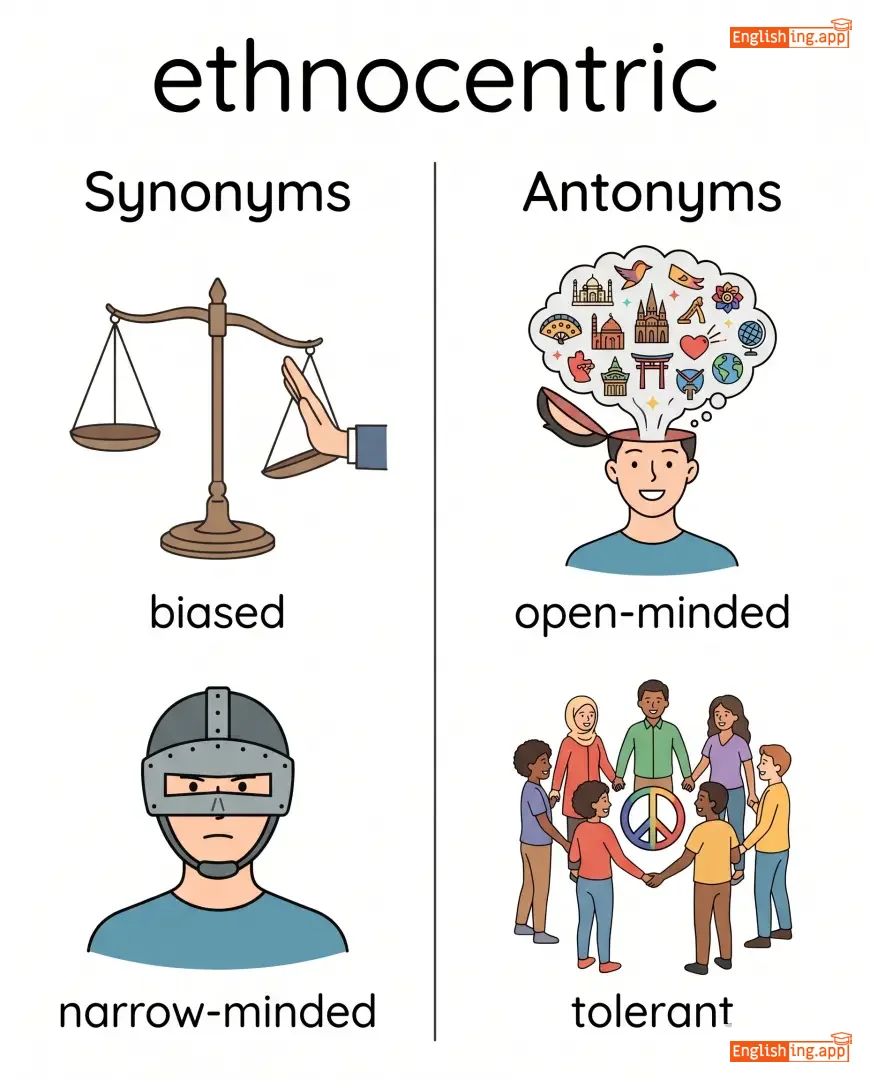
biased, narrow-minded, prejudiced, parochial, intolerant
••••••
|
open-minded, tolerant, cosmopolitan
••••••
|
ethnocentric attitude, ethnocentric belief, ethnocentric bias, ethnocentric perspective
••••••
|
Ethno + Zhongxin = 从自己的文化中心看世界 🌍
••••••
|
|
🧬
••••••
|
/ˌiː.tiˈɒ.lə.dʒi/
noun
(病因学)
••••••
|

|
病因学
bìng yīn xué
••••••
|
- •••••• | - •••••• | - •••••• | - •••••• |
the cause or origin of a disease or condition
••••••
|
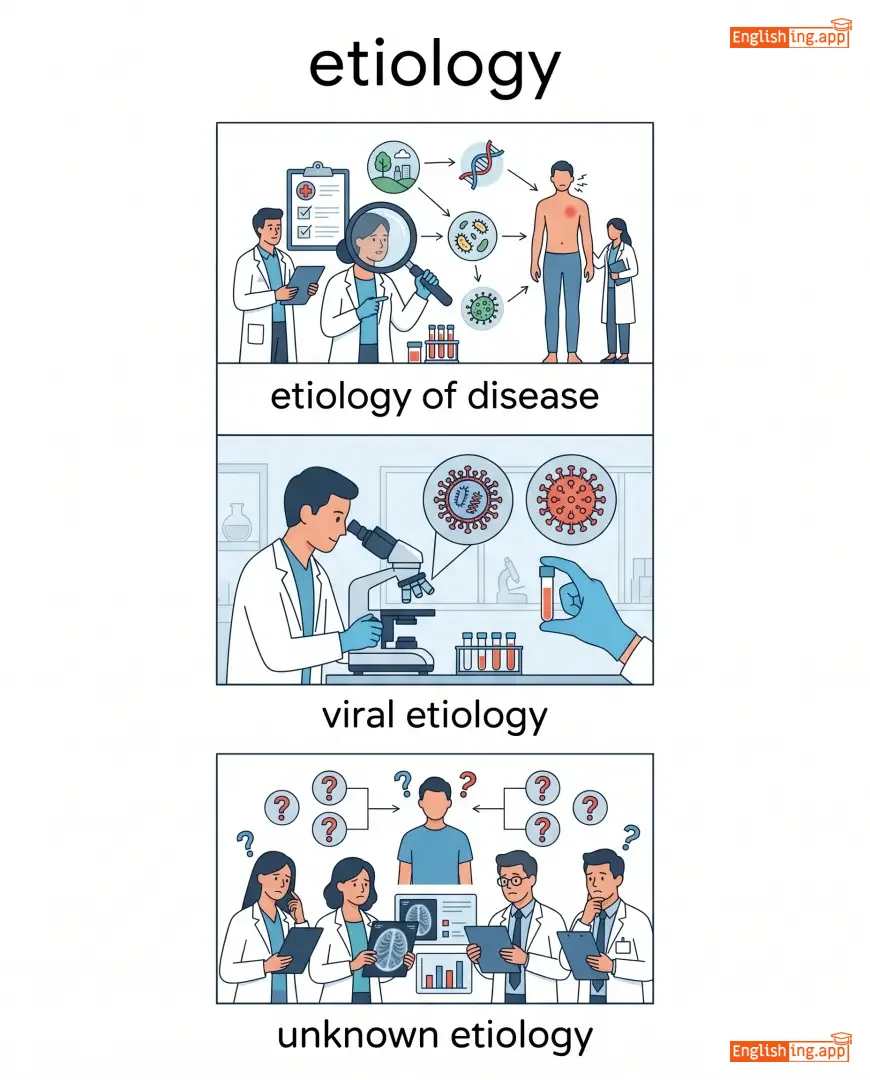
Doctors are studying the etiology of the new virus. |
医生们正在研究新病毒的病因学。
Yīshēngmen zhèngzài yánjiū xīn bìngdú de bìng yīn xué.
••••••
|
- •••••• | - •••••• | - •••••• |
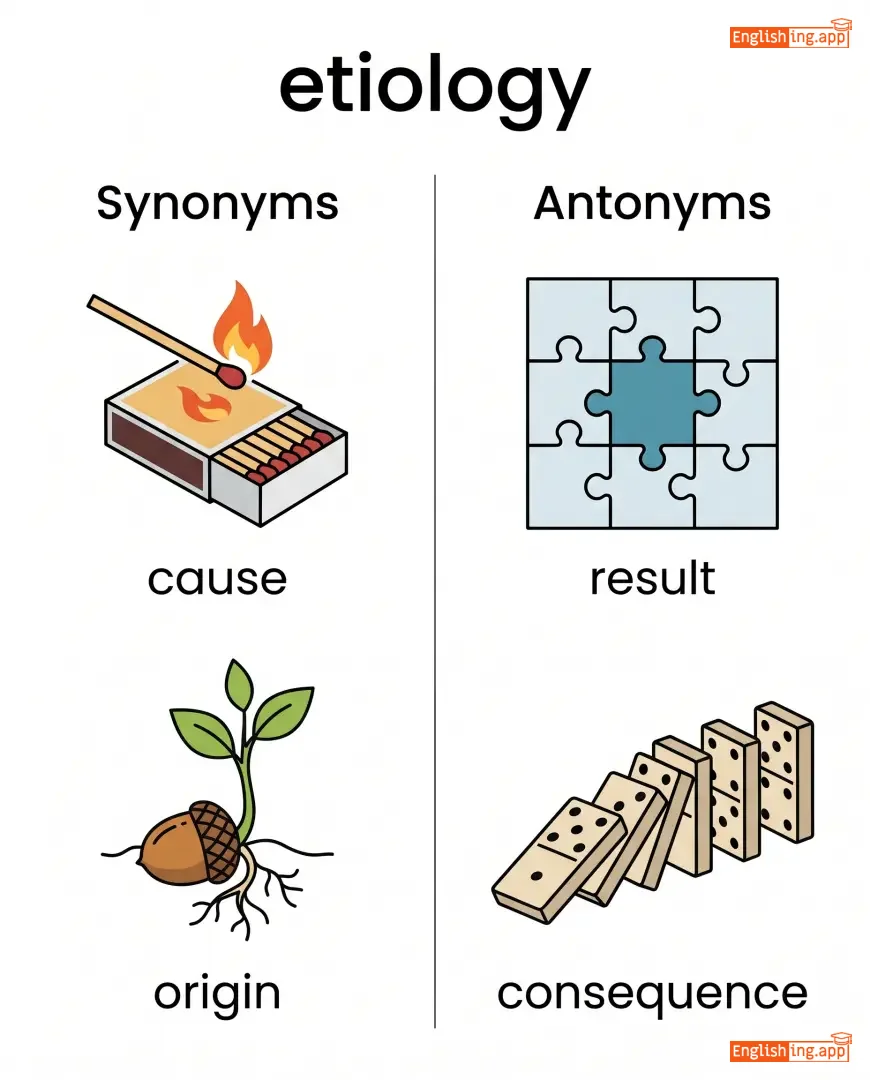
cause, origin, source, root, reason
••••••
|
result, consequence
••••••
|
etiology of disease, viral etiology, unknown etiology, medical etiology
••••••
|
Etiology 意味着 'eti' (是) 疾病的原因 🧬
••••••
|
|
📚
••••••
|
/ˌɛtɪˈmɒlədʒi/
noun
(词源学)
••••••
|

|
词源学
ciyuanxue
••••••
|
- •••••• | - •••••• | - •••••• | - •••••• |
The study of the origin of words and how their meanings and forms have evolved.
••••••
|
The etymology of the word 'salary' comes from the Latin word for salt. |
'工资'这个词的词源来自拉丁语中的盐的词汇。
'Gongzi' zhege ci de cuyuan laizi ladingyu zhong de yan de cihui.
••••••
|
- •••••• | - •••••• | - •••••• |
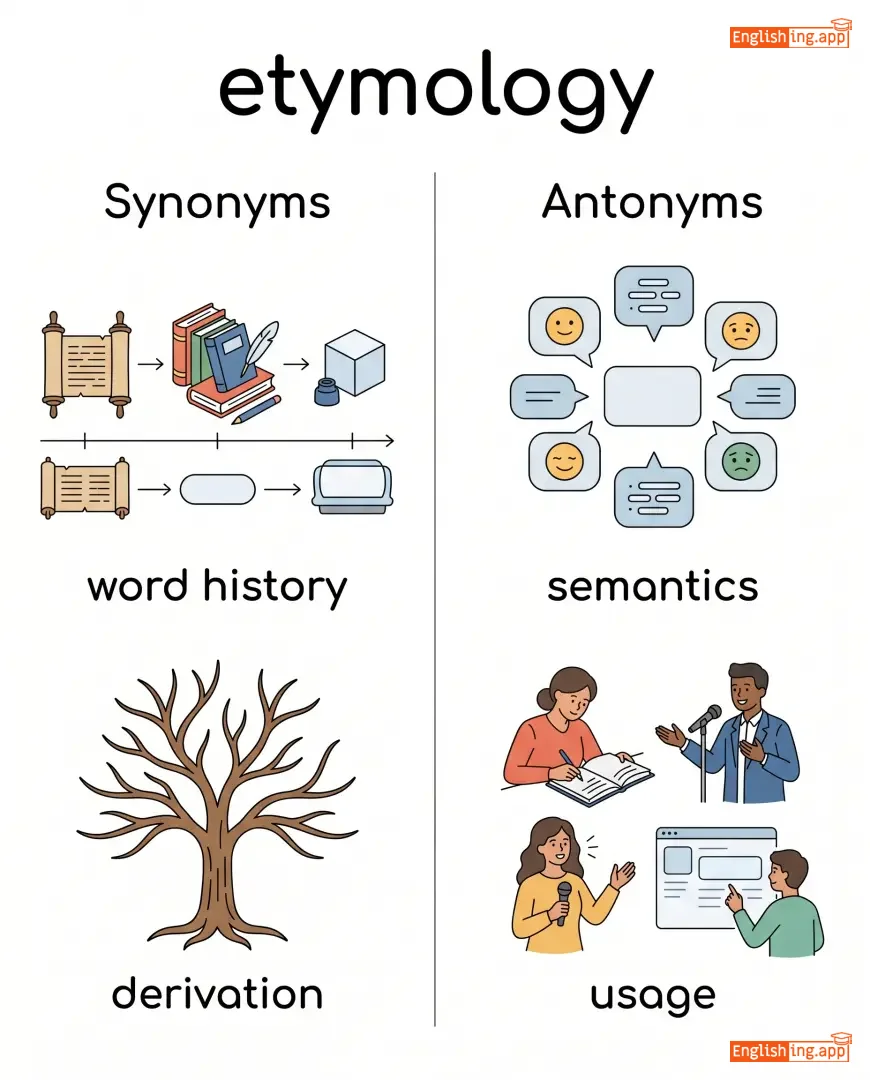
word history, derivation, origin, linguistics
••••••
|
semantics, usage
••••••
|
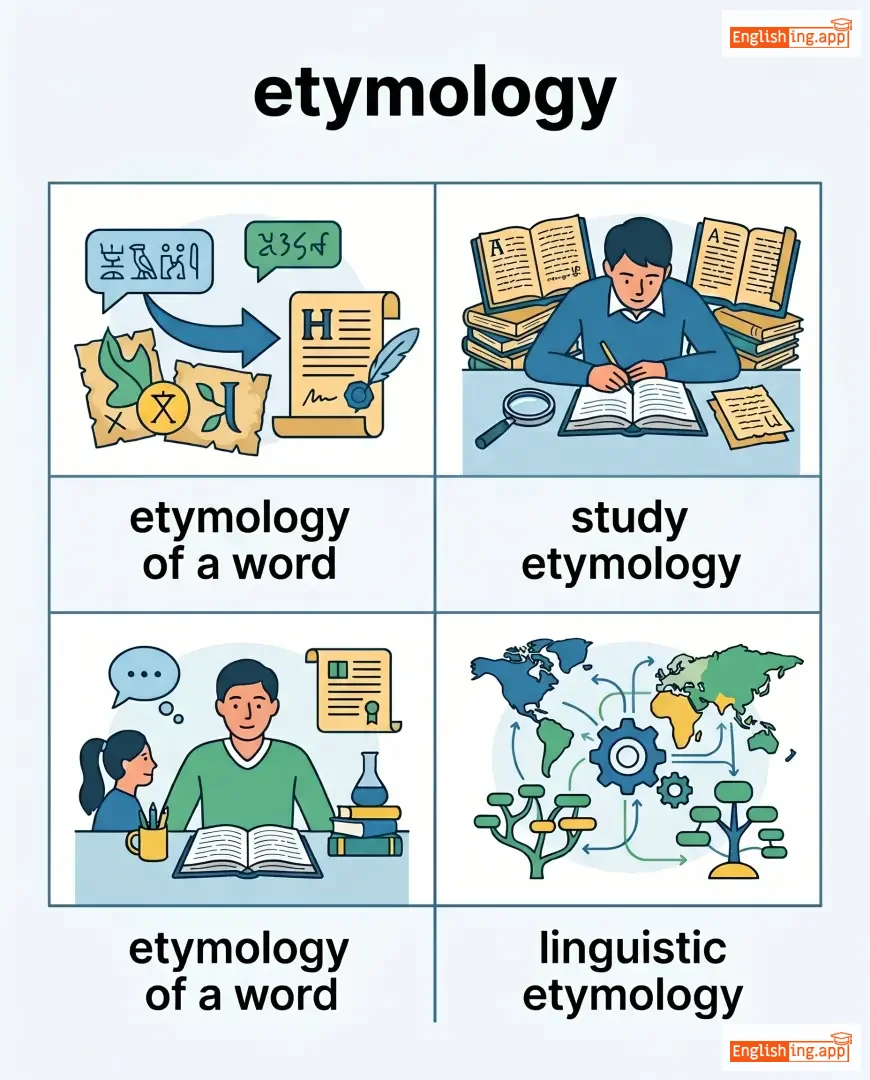
etymology of a word, study etymology, linguistic etymology, word etymology
••••••
|
词源学帮助我们理解词汇的根源和演变。
••••••
|
|
🧠
••••••
|
/juːˈdʒen.ɪks/
noun
(尤基尼克斯)
••••••
|


|
优生学
youshengxue
••••••
|
- •••••• | - •••••• | - •••••• | - •••••• |
the study or practice of improving the genetic quality of the human population
••••••
|
Eugenics has been criticized for its unethical applications in history. |
优生学因其在历史上的不道德应用而受到批评。
Youshengxue yin qi zai lishi shang de budaode yingyong er shoudao piping.
••••••
|
- •••••• | - •••••• | - •••••• |
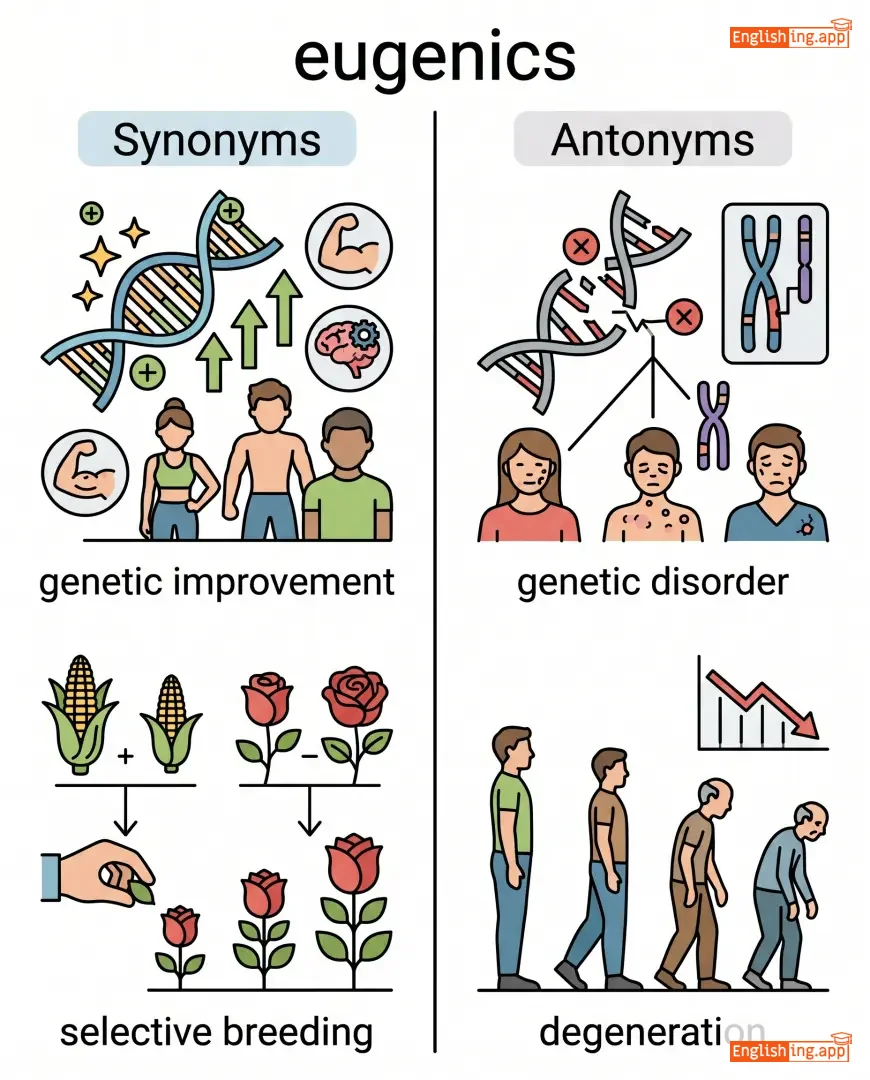
genetic improvement, selective breeding, heredity study
••••••
|
genetic disorder, degeneration
••••••
|
eugenics movement, eugenics policy, eugenics program, eugenics experiment
••••••
|
优生学 = 改善人类基因的学问
••••••
|
|
💐
••••••
|
/ˈjuːlədʒi/
noun
(yúlóu jí)
••••••
|

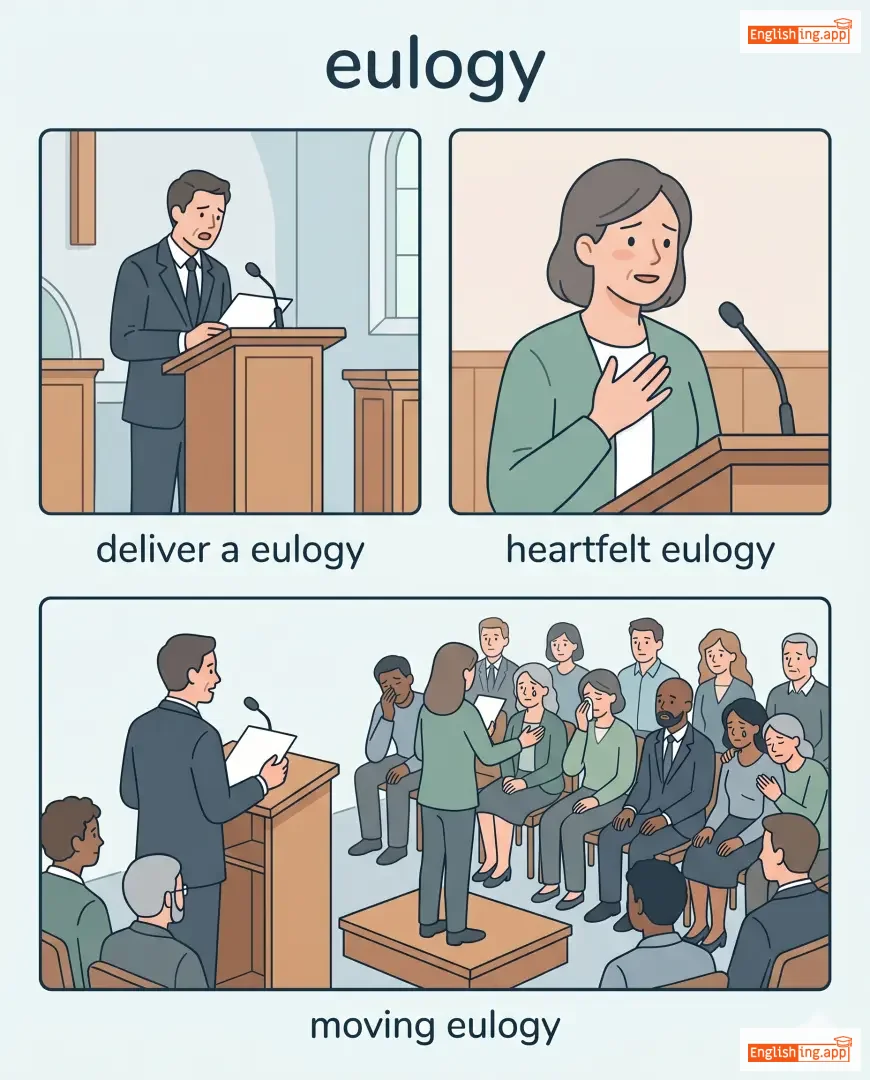
|
悼词
daoci
••••••
|
- •••••• | - •••••• | - •••••• | - •••••• |
A speech or piece of writing that praises someone, especially after their death.
••••••
|
Her brother delivered a heartfelt eulogy at the funeral. |
她的哥哥在葬礼上发表了感人的悼词。
Ta de gege zai zangli shang fabiao le ganren de daoci.
••••••
|
- •••••• | - •••••• | - •••••• |
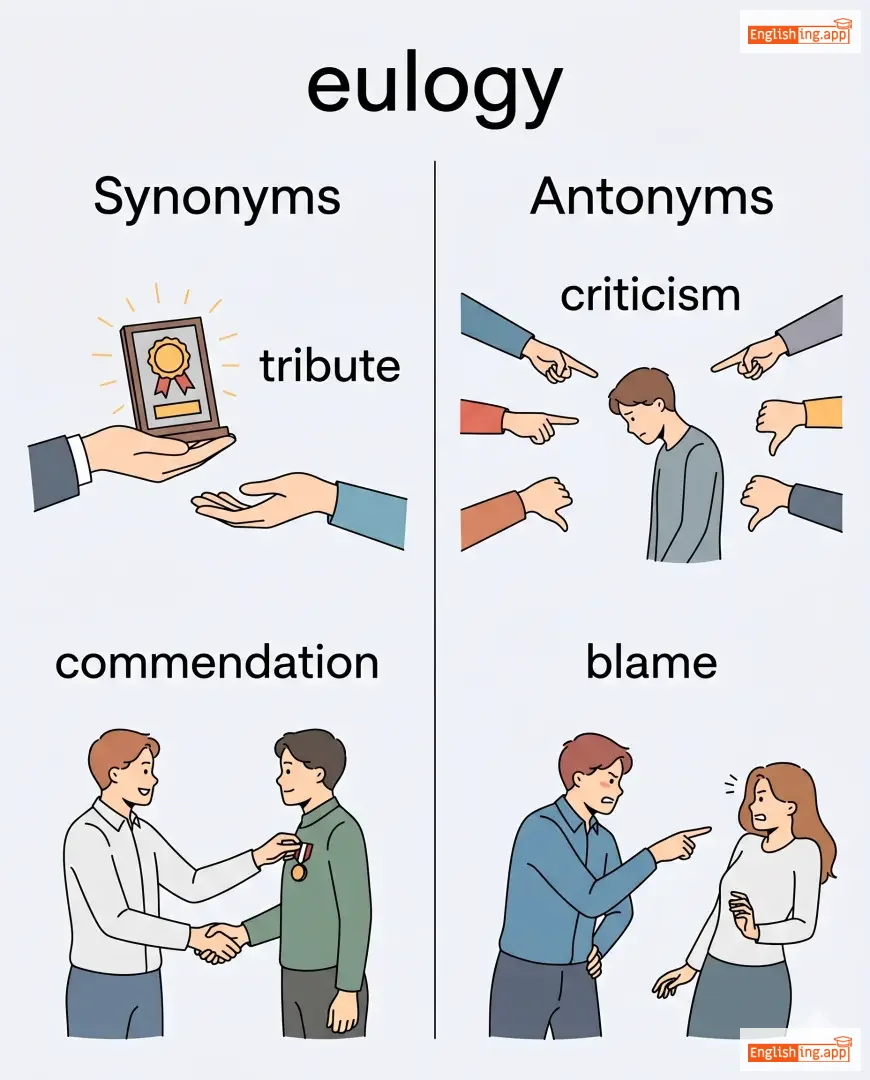
tribute, commendation, accolade, praise
••••••
|
criticism, blame
••••••
|
deliver a eulogy, heartfelt eulogy, moving eulogy
••••••
|
悼词(daoci)即为悼念已故的人所做的讲话。
••••••
|
|
🗣️
••••••
|
/ˈjuːfəmɪzəm/
noun
(yūfēimízhèng)
••••••
|
|
委婉语
weiwanyu
••••••
|
- •••••• | - •••••• | - •••••• | - •••••• |
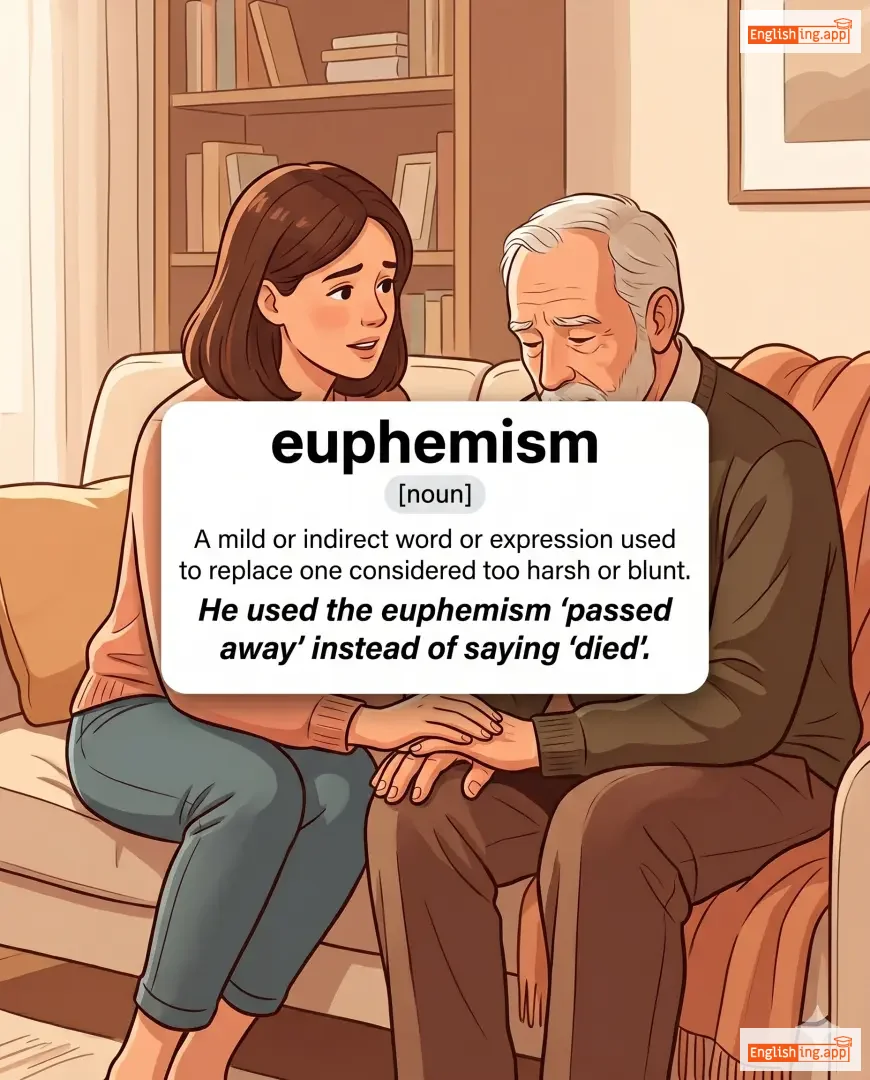
A mild or indirect word or expression used to replace one considered too harsh or blunt.
••••••
|
He used the euphemism 'passed away' instead of saying 'died'. |
他用了'去世'这一委婉语,而不是直接说'死了'。
Tā yòngle 'qùshì' zhè yī wěiwǎn yǔ, ér bùshì zhíjiē shuō 'sǐle'.
••••••
|
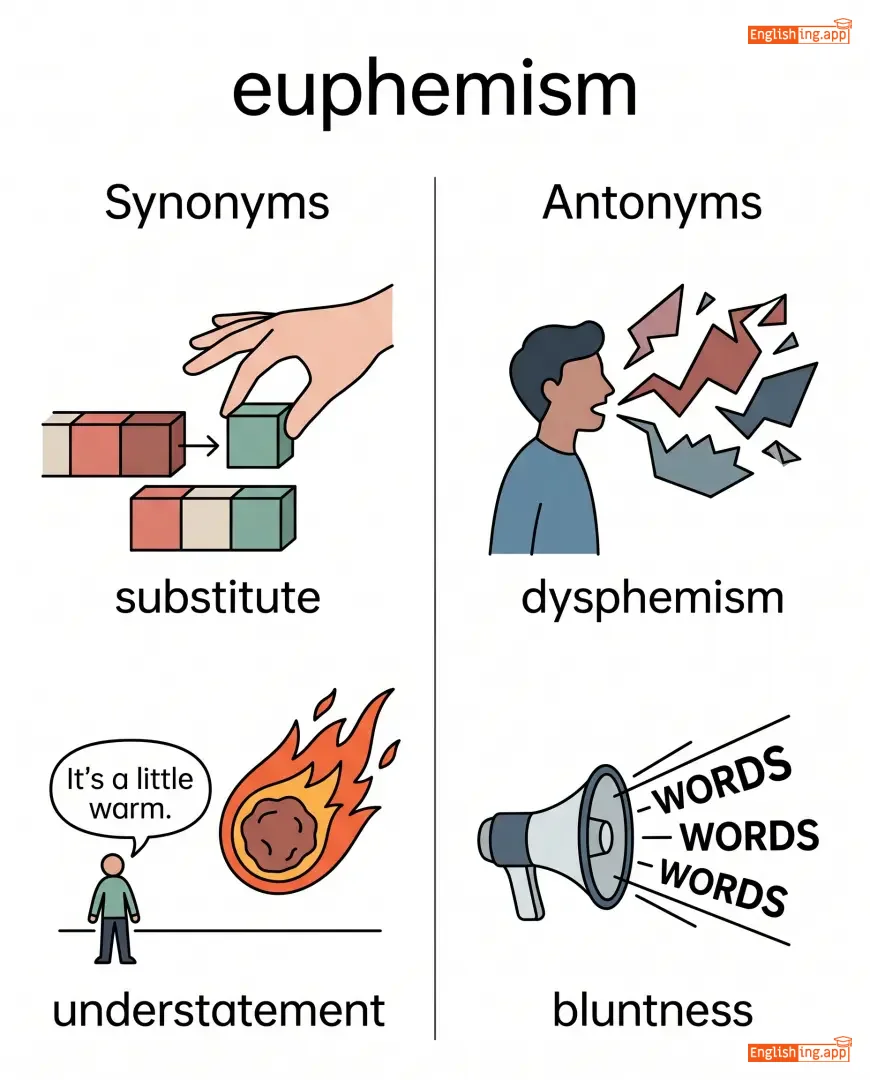
- •••••• | - •••••• | - •••••• |
substitute, understatement, circumlocution, softening, polite term
••••••
|
dysphemism, bluntness, directness
••••••
|
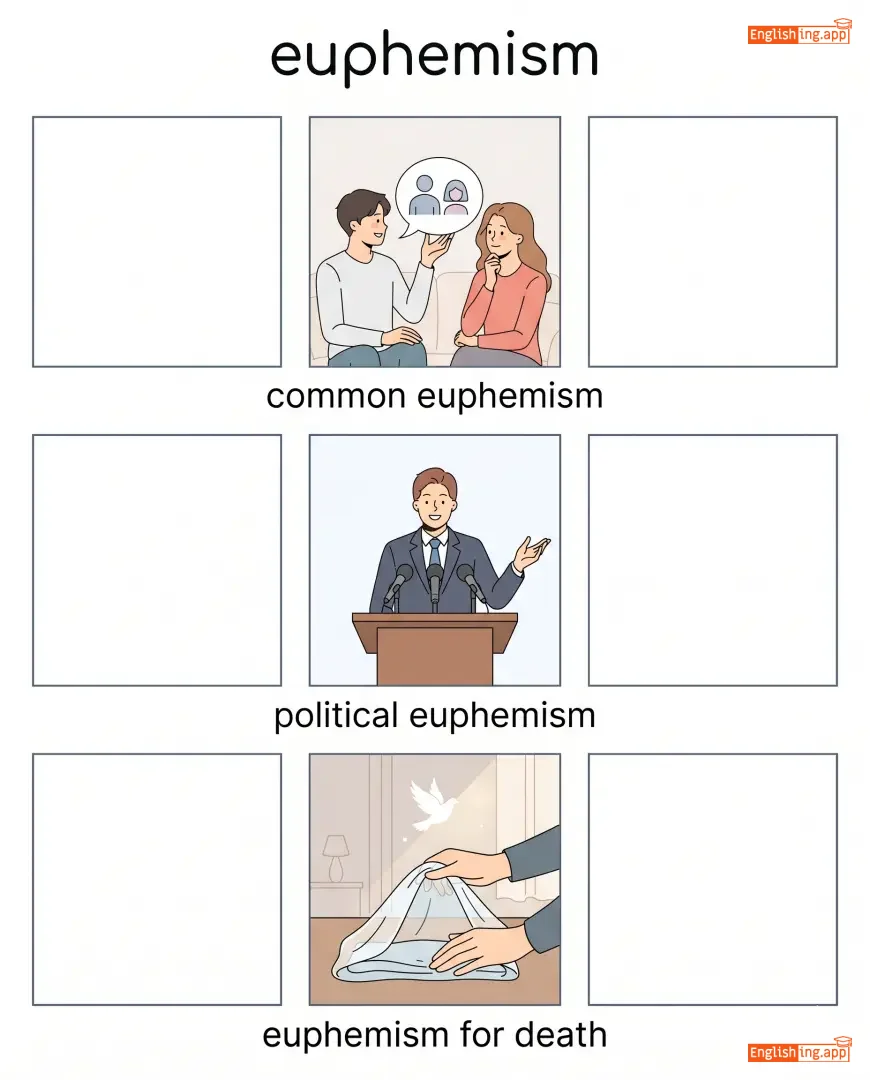
common euphemism, political euphemism, euphemism for death, use a euphemism
••••••
|
委婉语就像'温柔说话'—例如说'去世'而不是'死了'。
••••••
|
|
😁
••••••
|
/juːˈfɔːriə/
noun
(yú fúo lǐ yà)
••••••
|
|
极度的幸福
jídu de xìngfú
••••••
|
- •••••• | - •••••• | - •••••• | - •••••• |
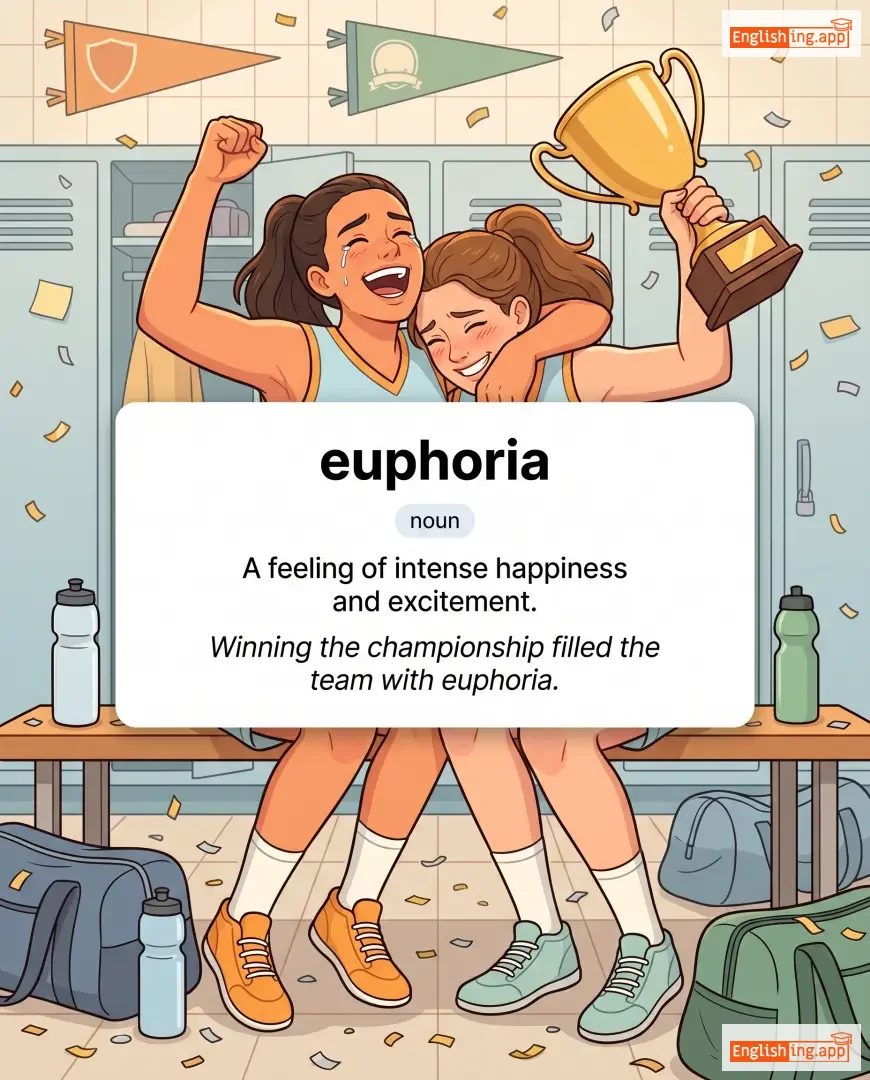
A feeling of intense happiness and excitement.
••••••
|
Winning the championship filled the team with euphoria.
赢得冠军让队伍充满了幸福感。
••••••
|
赢得冠军让队伍充满了幸福感。
Yíngdé guànjūn ràng duìwǔ chōngmǎnle xìngfú gǎn.
••••••
|
- •••••• | - •••••• | - •••••• |
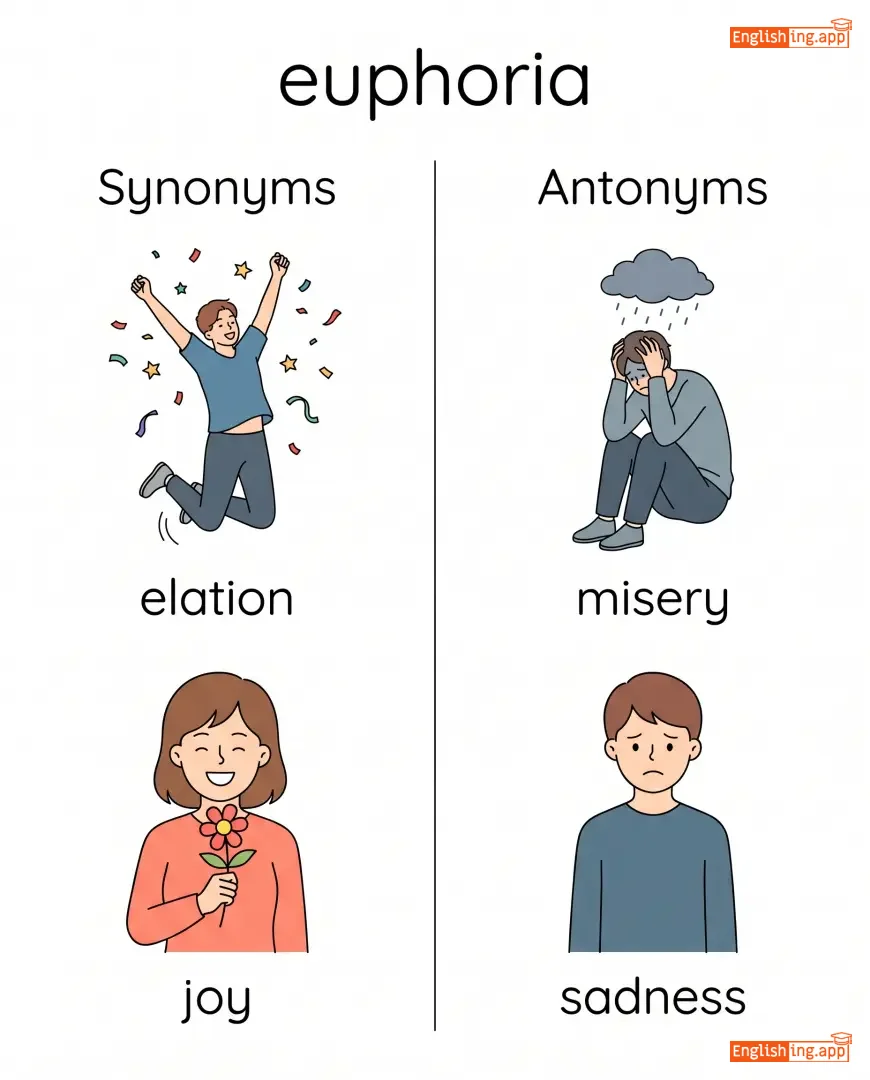
elation, joy, bliss, delight, happiness
••••••
|
misery, sadness, depression
••••••
|
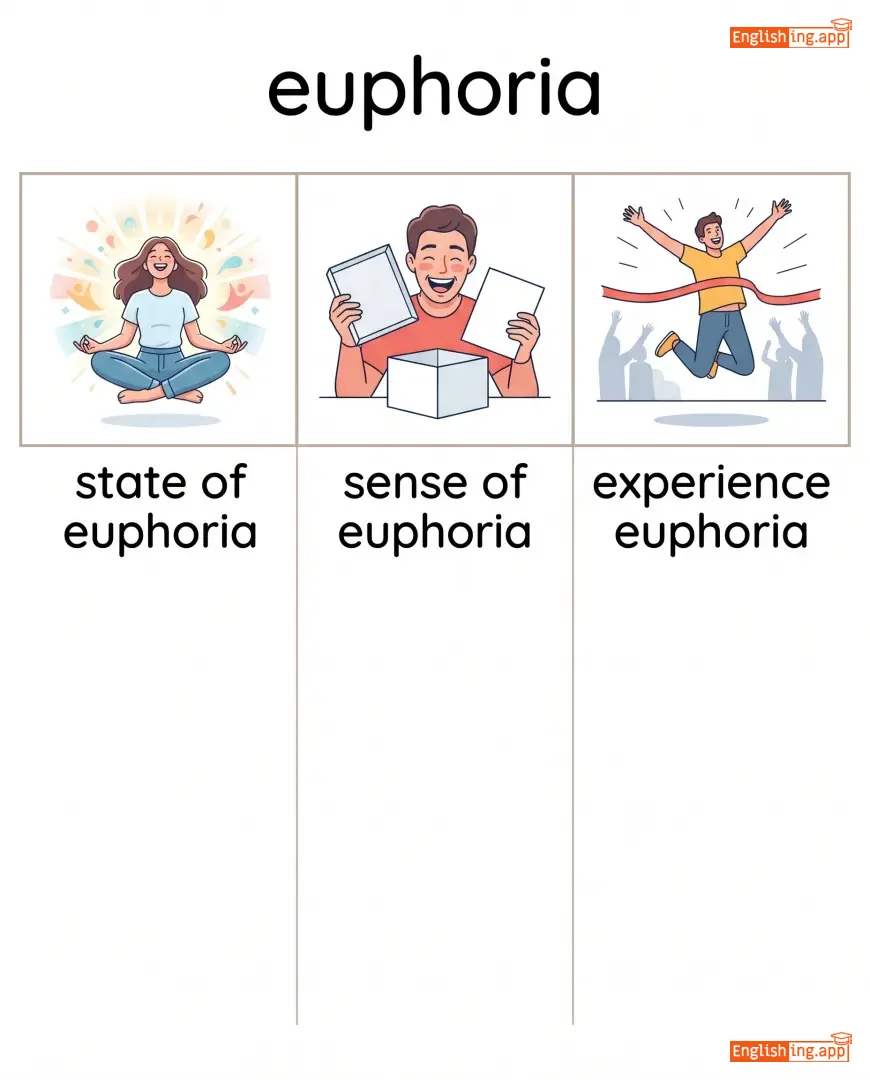
state of euphoria, sense of euphoria, experience euphoria, filled with euphoria
••••••
|
Euphoria = 达到极致的幸福,尽情感受!
••••••
|
|
⚖️
••••••
|
/ˌjuːθəˈneɪʒə/
noun
(安乐死)
••••••
|
|
安乐死
ān lè sǐ
••••••
|
- •••••• | - •••••• | - •••••• | - •••••• |
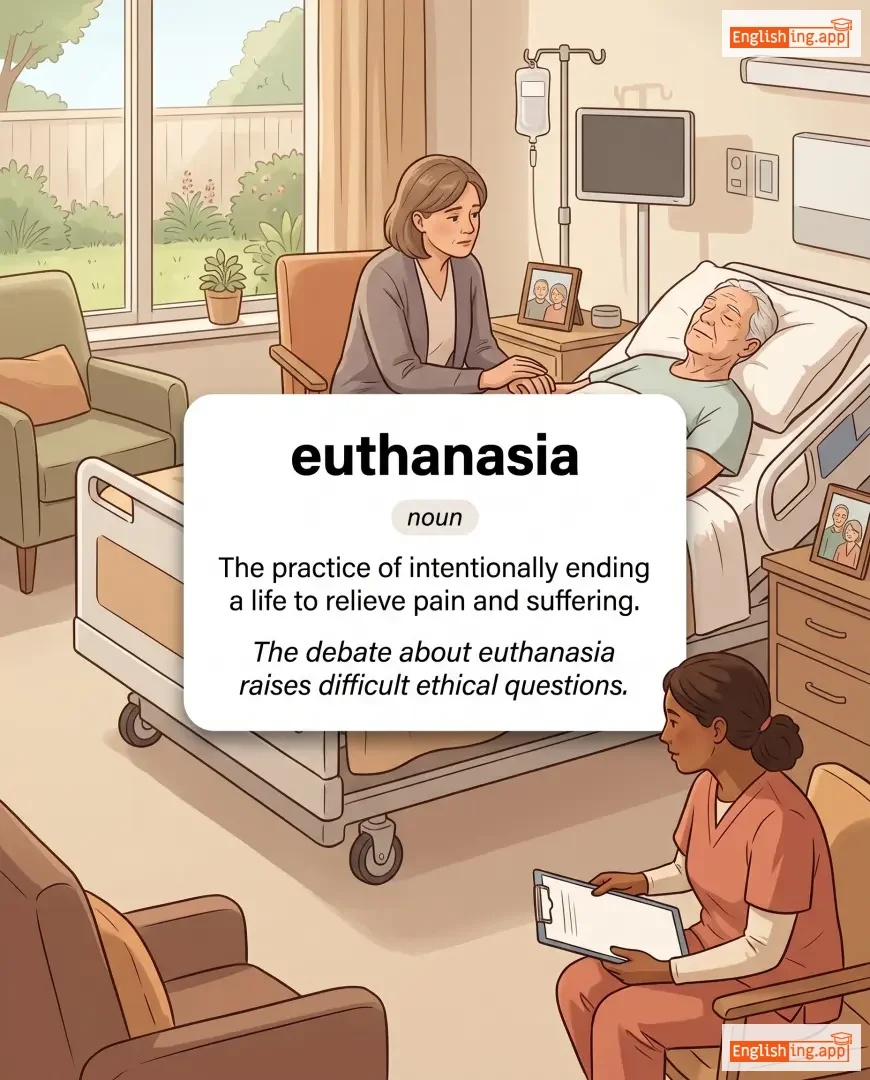
The practice of intentionally ending a life to relieve pain and suffering.
••••••
|
The debate about euthanasia raises difficult ethical questions. |
关于安乐死的辩论提出了困难的伦理问题。
Guānyú ānlè sǐ de biànlùn tíchūle kùnnán de lúnlǐ wèntí.
••••••
|
- •••••• | - •••••• | - •••••• |
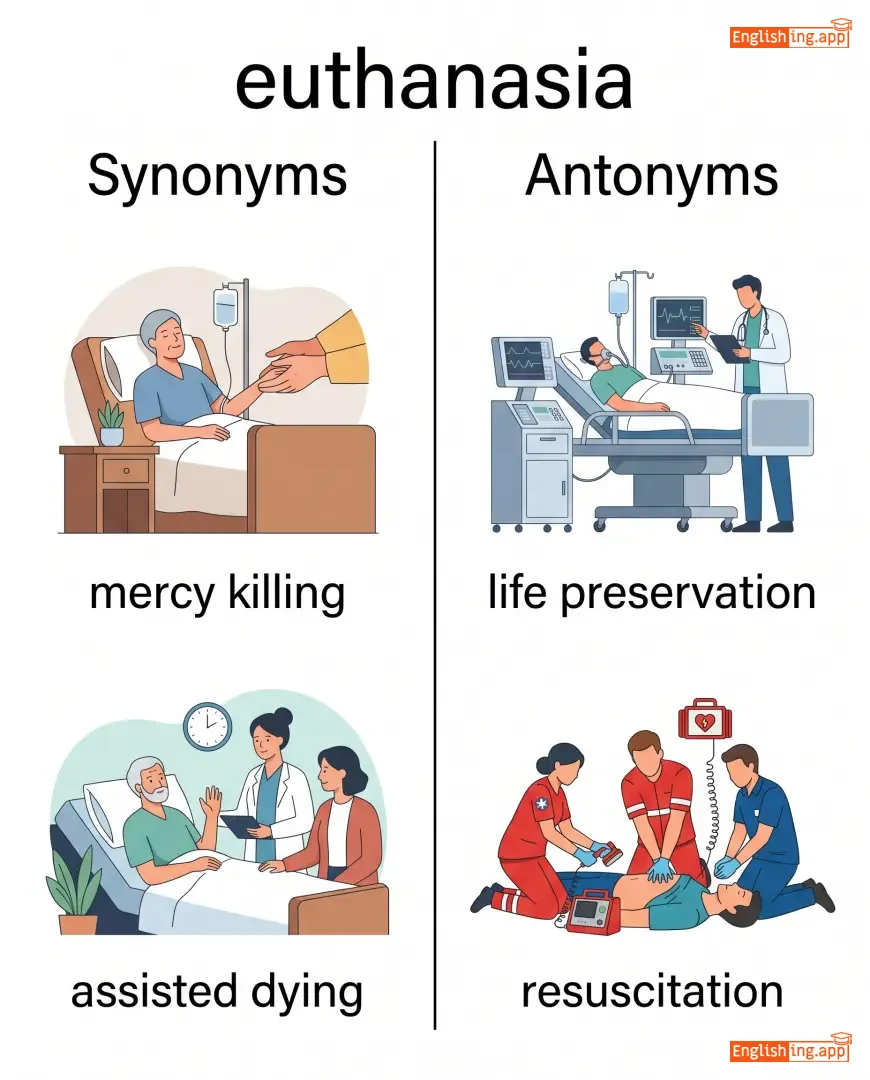
mercy killing, assisted dying, physician-assisted suicide
••••••
|
life preservation, resuscitation
••••••
|
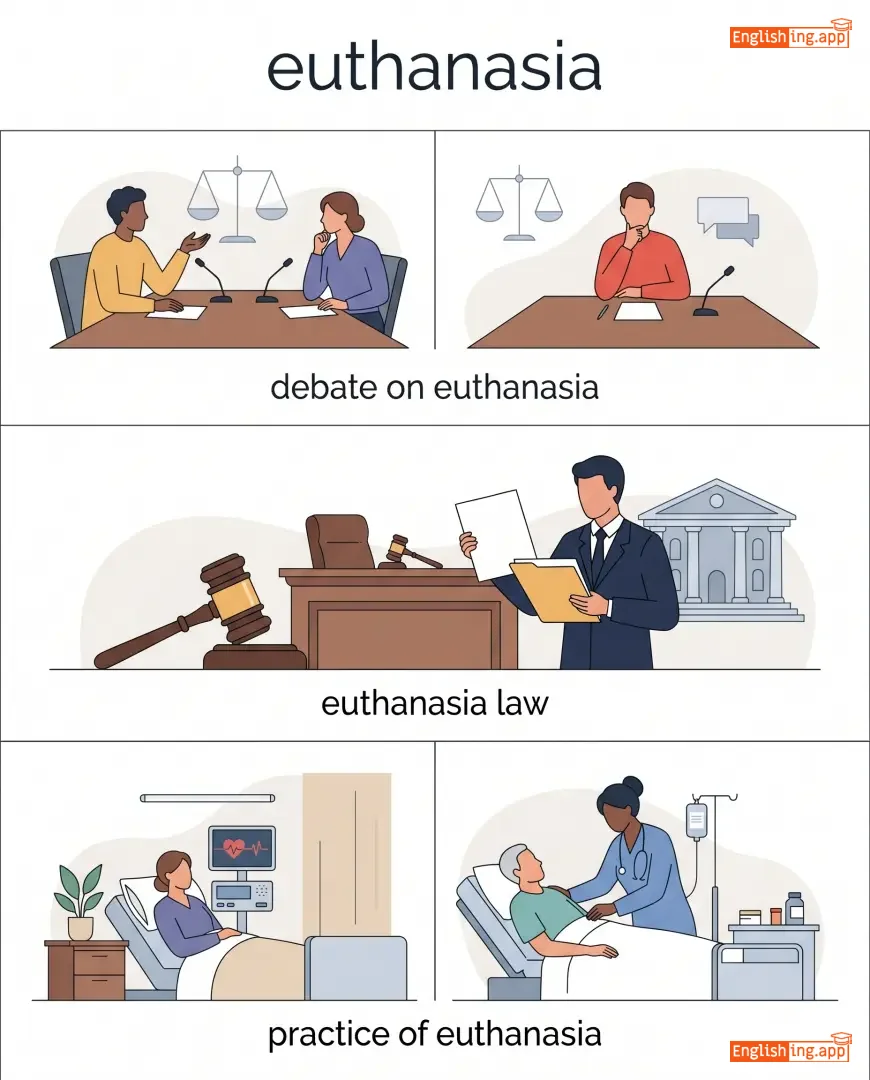
debate on euthanasia, euthanasia law, practice of euthanasia
••••••
|
Youth + Nasia - 青少年生命结束 - 安乐死
••••••
|
|
✨
••••••
|
/ɪˈvɪns/
verb
(伊文斯)
••••••
|


|
展示
zhanshi
••••••
|
evinced
伊文斯德
••••••
|
evinced
伊文斯德
••••••
|
evinces
伊文塞斯
••••••
|
evincing
伊文辛
••••••
|
to show or demonstrate clearly
••••••
|
She evinced her interest in the project through active participation.
她通过积极参与展示了对该项目的兴趣。
••••••
|
她通过积极参与展示了对该项目的兴趣。
Ta tongguo jiji canyu zhanshi le dui gai xiangmu de xingqu.
••••••
|
- •••••• | - •••••• | - •••••• |
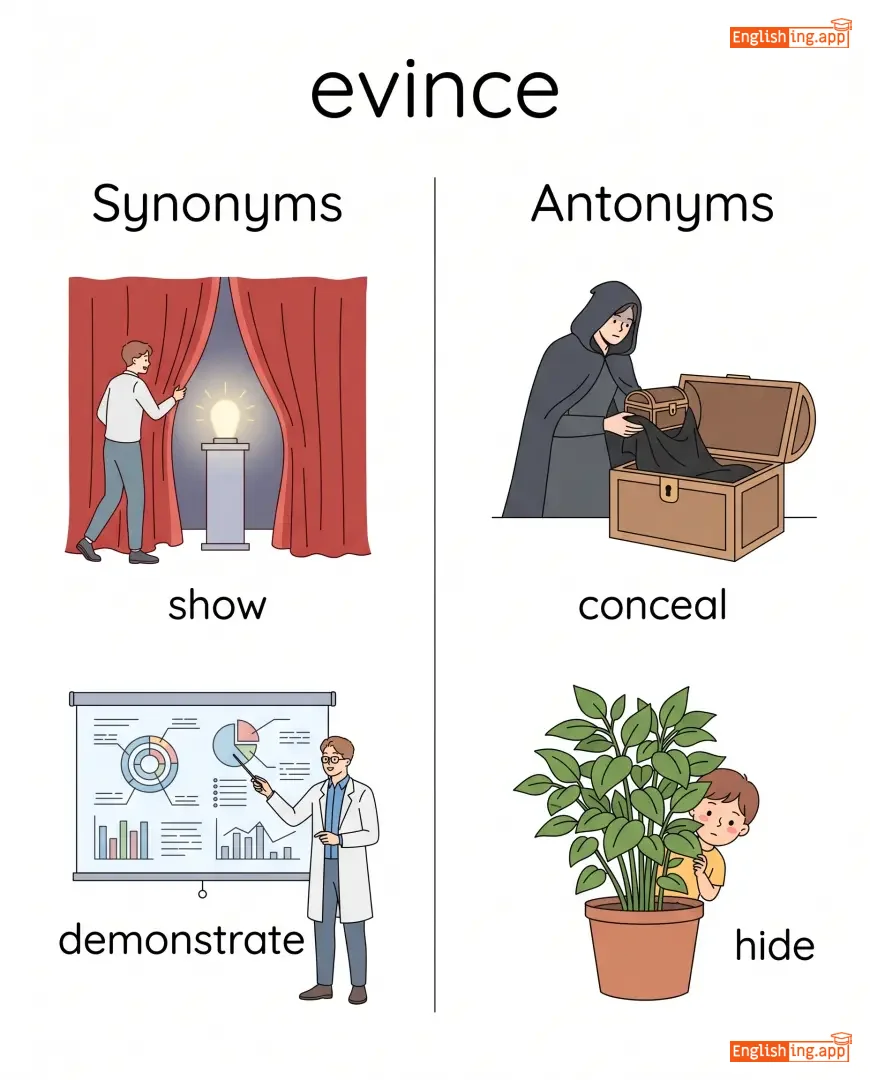
show, demonstrate, reveal, display, manifest
••••••
|
conceal, hide
••••••
|
evince interest, evince emotion, evince curiosity
••••••
|
Evince 就像 evidence - 清晰地展示或证明。
••••••
|
|
🎶
••••••
|
/ɪˈvɒkətɪv/
adjective
(唤起的)
••••••
|


|
唤起的
huàn qǐ de
••••••
|
- •••••• | - •••••• | - •••••• | - •••••• |
bringing strong images, memories, or feelings to mind
••••••
|
The music was evocative of her childhood memories. |
这段音乐唤起了她的童年回忆。
Zhè duàn yīnyuè huàn qǐle tā de tóngnián huíyì.
••••••
|
- •••••• | - •••••• | - •••••• |
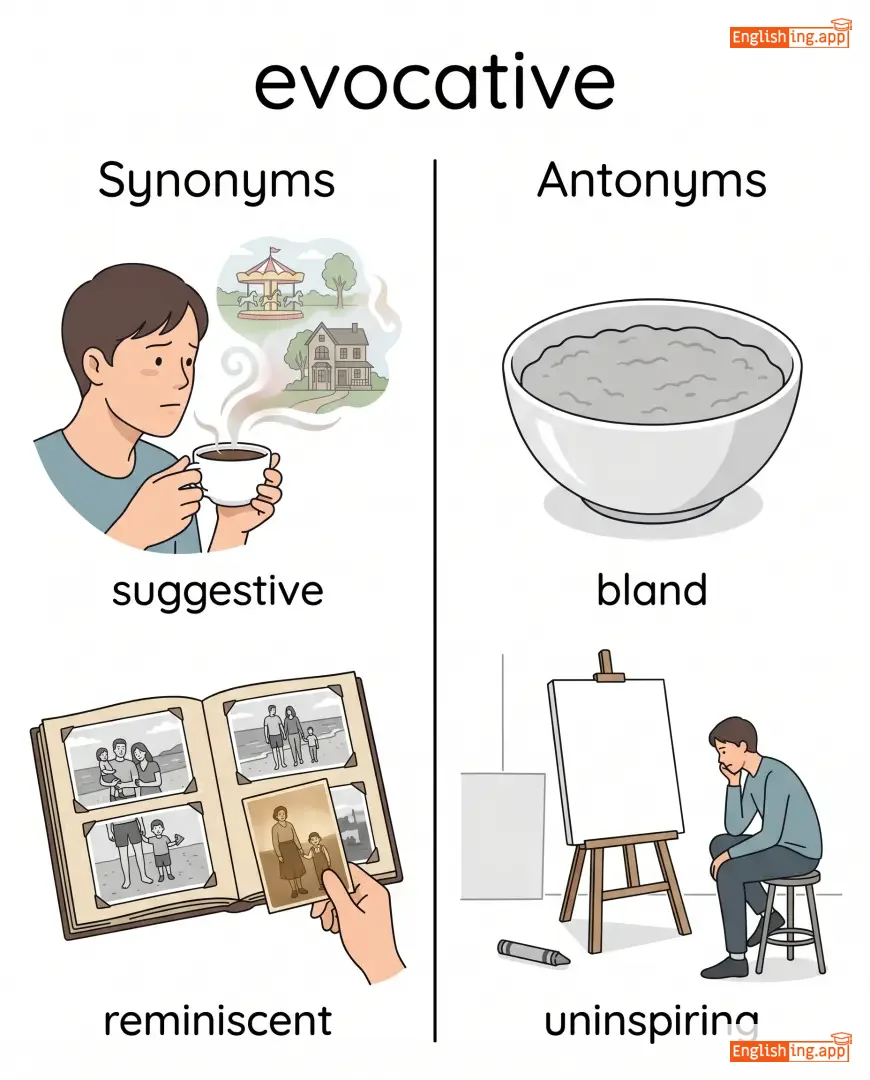
suggestive, reminiscent, expressive, moving
••••••
|
bland, uninspiring
••••••
|
evocative music, evocative image, evocative style
••••••
|
Evocative就像是唤起记忆的东西 - 让你想起过去的东西。
••••••
|
|
🔥
••••••
|
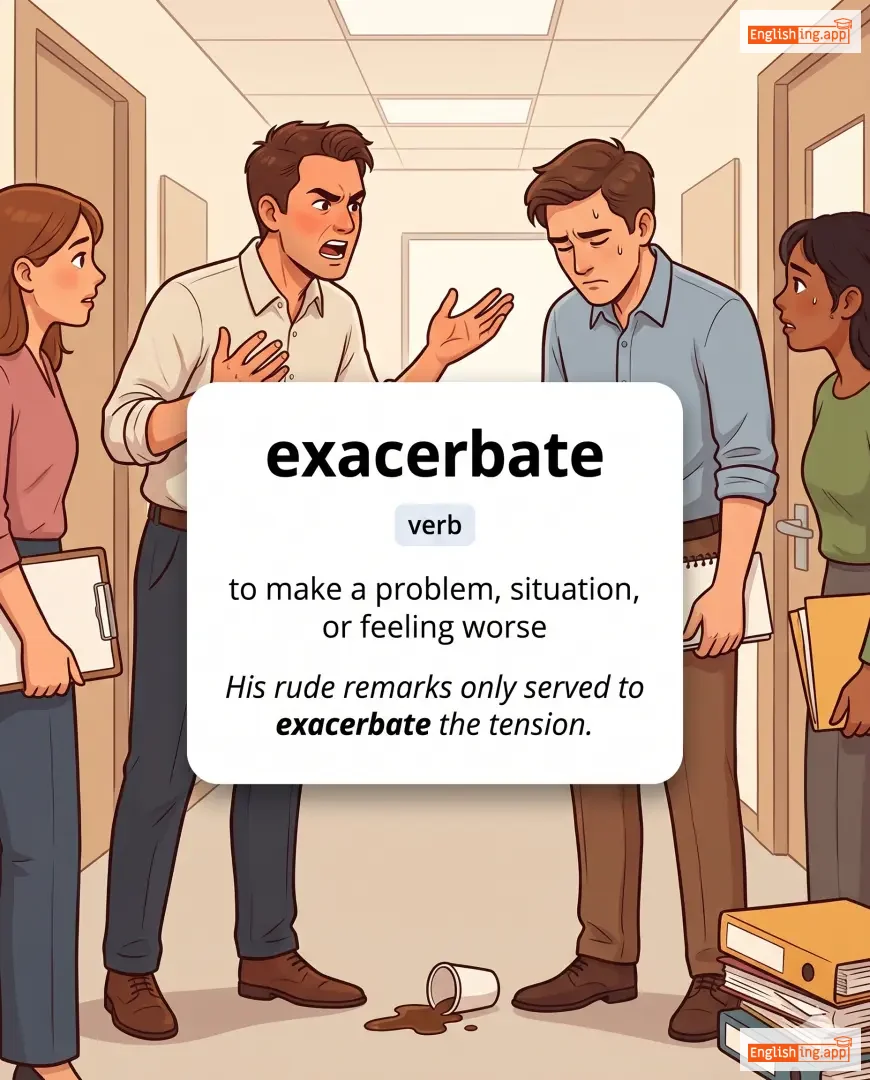
/ɪɡˈzæsərˌbeɪt/
verb
(恶化)
••••••
|
|
恶化
èhuà
••••••
|
exacerbated
恶化了
••••••
|
exacerbated
恶化了
••••••
|
exacerbates
恶化
••••••
|
exacerbating
恶化中
••••••
|
to make a problem, situation, or feeling worse
••••••
|
His rude remarks only served to exacerbate the tension.
他的粗鲁言论只会加剧紧张局势。
••••••
|
他的粗鲁言论只会加剧紧张局势。
Tā de cūlǔ yánlùn zhǐ huì jiājù jǐnzhāng júshì.
••••••
|
- •••••• | - •••••• | - •••••• |
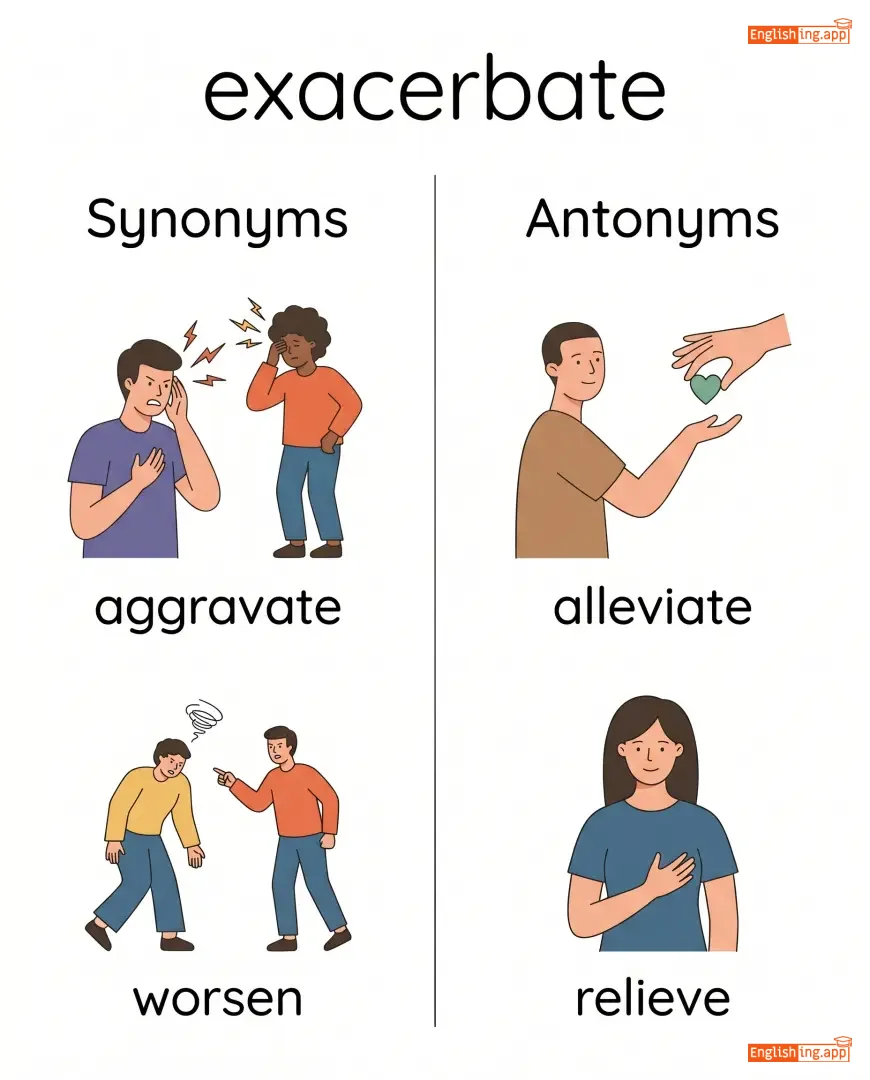
aggravate, worsen, intensify, heighten, inflame
••••••
|
alleviate, relieve, improve
••••••
|
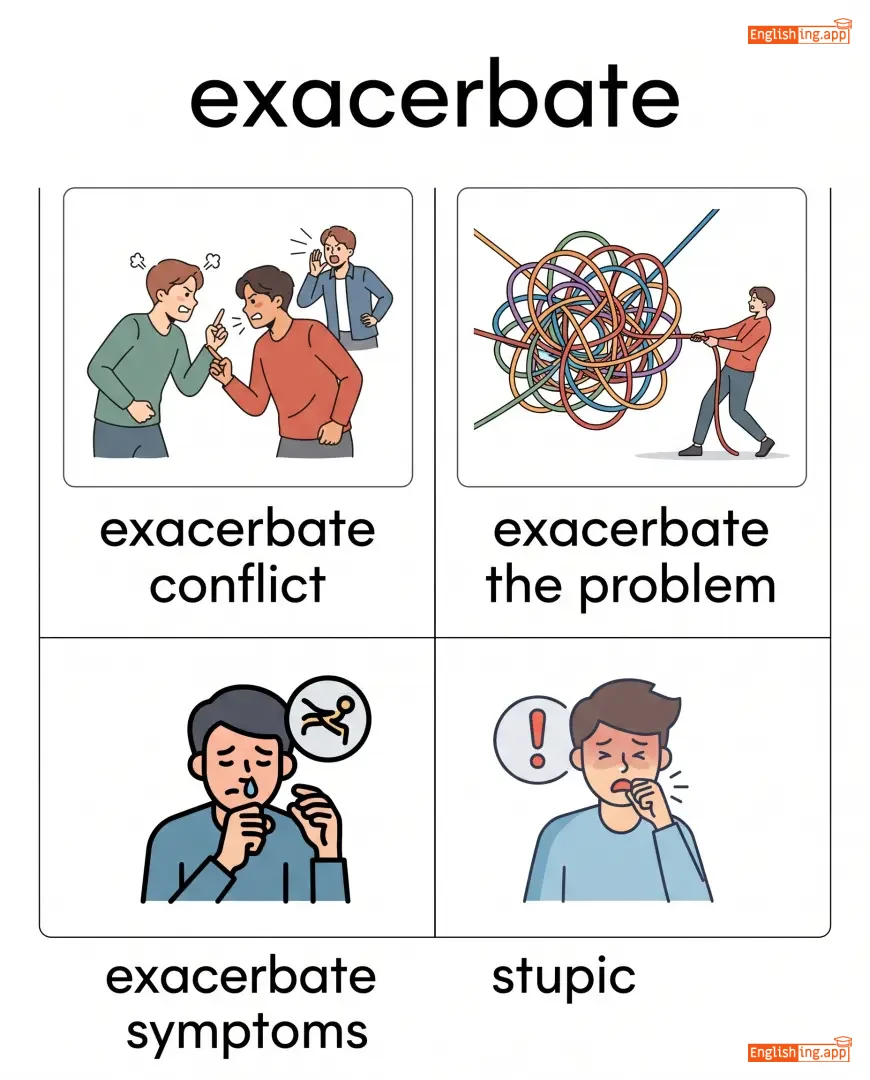
exacerbate conflict, exacerbate the problem, exacerbate symptoms, exacerbate tension
••••••
|
恶化是将事情变得更糟,就像加剧紧张气氛。
••••••
|
|
🎯
••••••
|
/ɪɡˈzækt/
adjective, verb
(埃克萨克特)
••••••
|


|
精确的
jingque de
••••••
|
exacted
埃克萨克特得
••••••
|
exacted
埃克萨克特得
••••••
|
exacts
埃克萨克特斯
••••••
|
exacting
埃克萨克特英
••••••
|
precise and accurate (adj); to demand or obtain something (verb)
••••••
|
The exact time of the meeting is 10:30 AM.
会议的确切时间是10:30 AM。
••••••
|
会议的确切时间是10:30 AM。
Huiyi de jueque shijian shi 10:30 AM.
••••••
|
to exact revenge
复仇
••••••
|
to inflict punishment or harm in return for an injury or wrong
••••••
|
复仇
fuchou
••••••
|
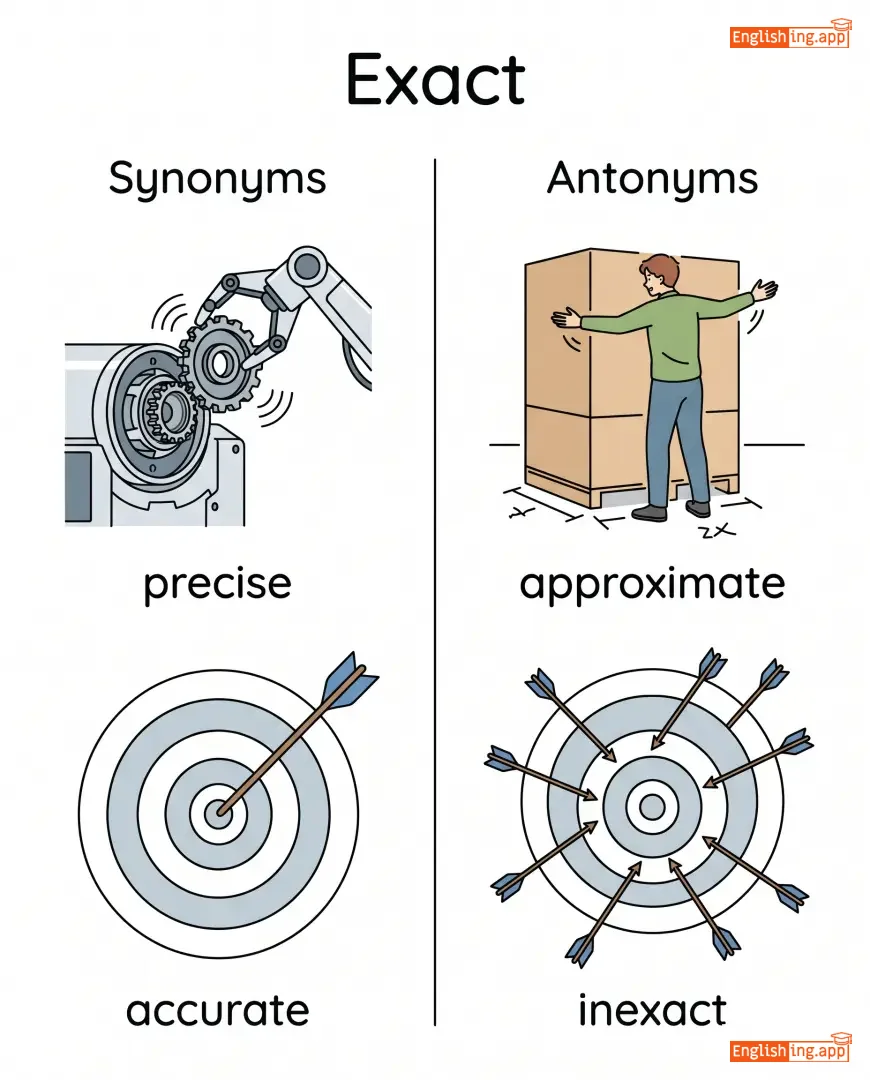
precise, accurate, demand, require, strict
••••••
|
approximate, inexact, lenient
••••••
|
exact time, exact amount, exact details, exact revenge
••••••
|
Exact意思是精确的,否则复仇来了!
••••••
|
|
⚖️
••••••
|
/ˈɛkskʌlpeɪt/
verb
(艾克斯库尔佩特)
••••••
|

|
辩解
biànjiě
••••••
|
exculpated
艾克斯库尔佩特德
••••••
|
exculpated
艾克斯库尔佩特德
••••••
|
exculpates
艾克斯库尔佩特斯
••••••
|
exculpating
艾克斯库尔佩特英
••••••
|
to show or declare that someone is not guilty of wrongdoing
••••••
|
The lawyer worked hard to exculpate his client.
律师努力工作,为他的客户辩解。
••••••
|
律师努力工作,为他的客户辩解。
Lǚshī nǔlì gōngzuò, wèi tā de kèhù biànjiě.
••••••
|
- •••••• | - •••••• | - •••••• |
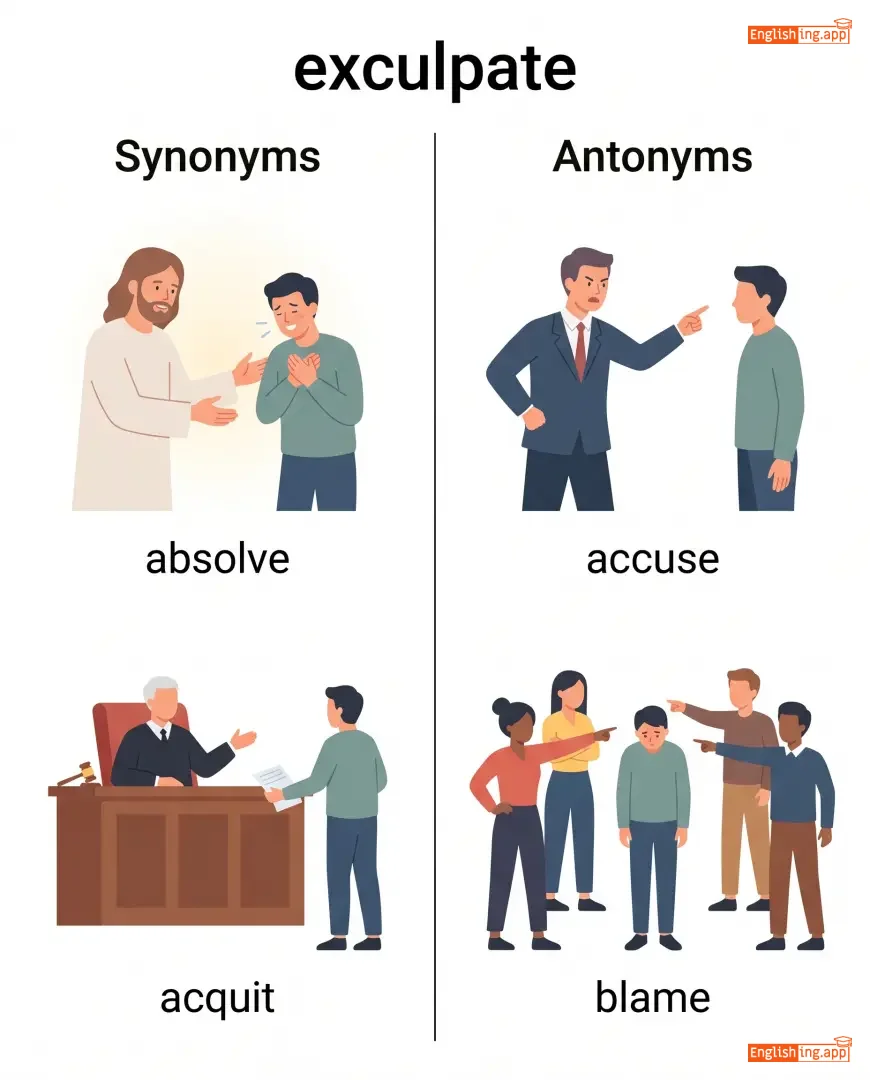
absolve, acquit, vindicate, exonerate
••••••
|
accuse, blame, convict
••••••
|
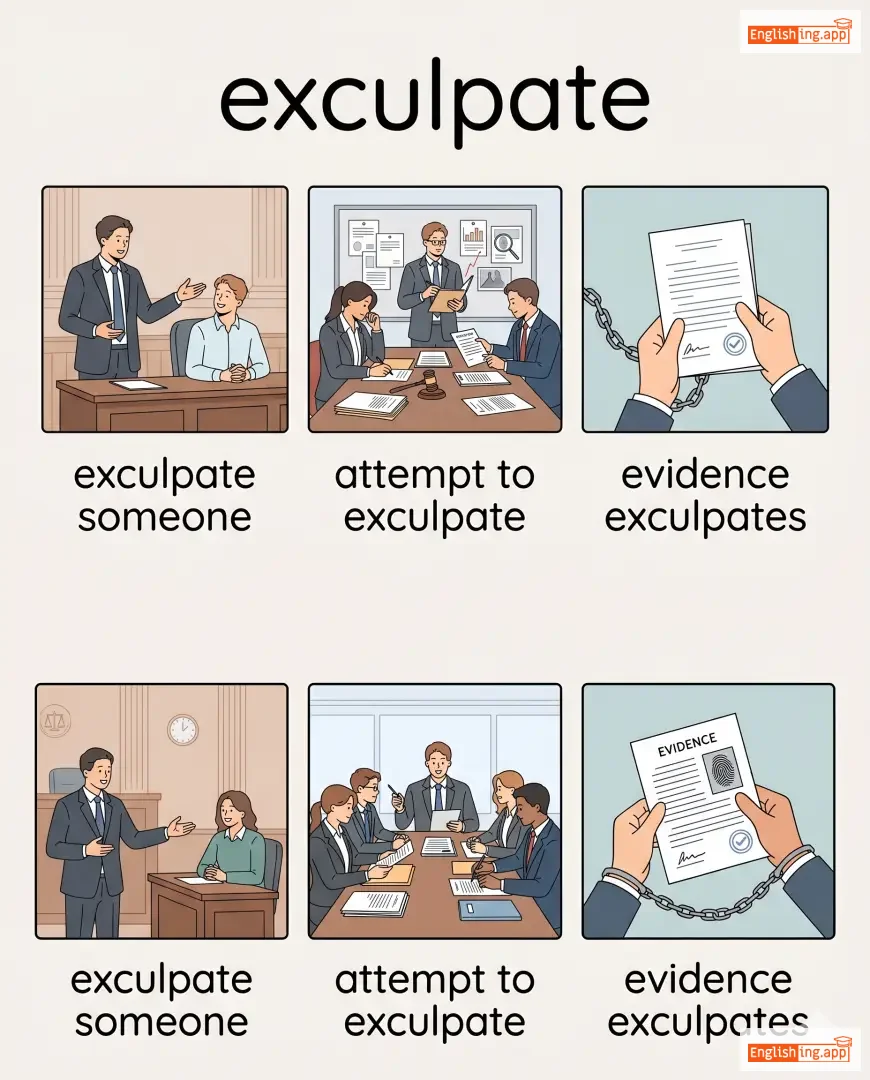
exculpate someone, attempt to exculpate, evidence exculpates
••••••
|
Exculpate = 辩解 → 辩解罪犯
••••••
|
|
🤢
••••••
|
/ˈeksɪkrəbl/
adjective
(èksèkràbó)
••••••
|

|
可憎的
kě zēng de
••••••
|
- •••••• | - •••••• | - •••••• | - •••••• |
Extremely bad or unpleasant.
••••••
|
The movie was so execrable that many people left the theater early. |
这部电影糟糕透顶,以至于许多人早早就离开了影院。
Zhè bù diànyǐng zāogāo tòudǐng, yǐ zhì yú xǔduō rén zǎo zǎo jiù líkāi le yǐngyuàn.
••••••
|
- •••••• | - •••••• | - •••••• |
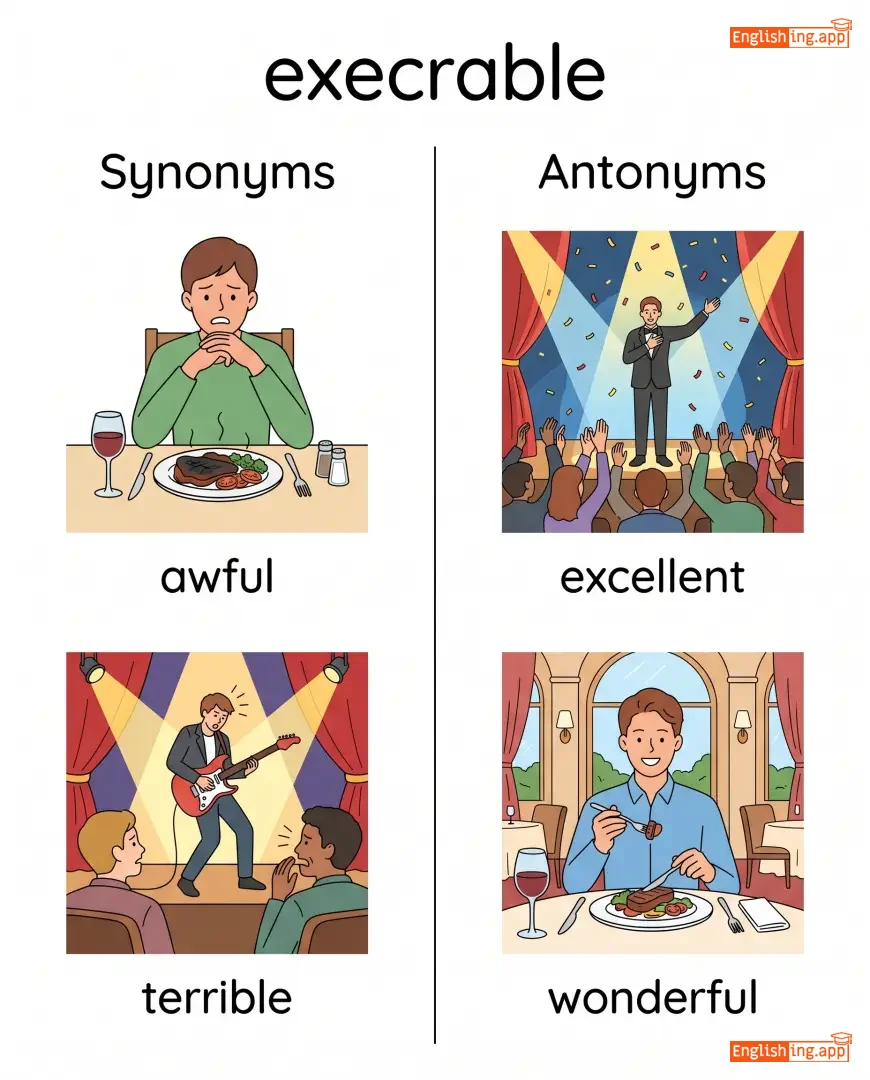
awful, terrible, atrocious, appalling
••••••
|
excellent, wonderful, superb
••••••
|
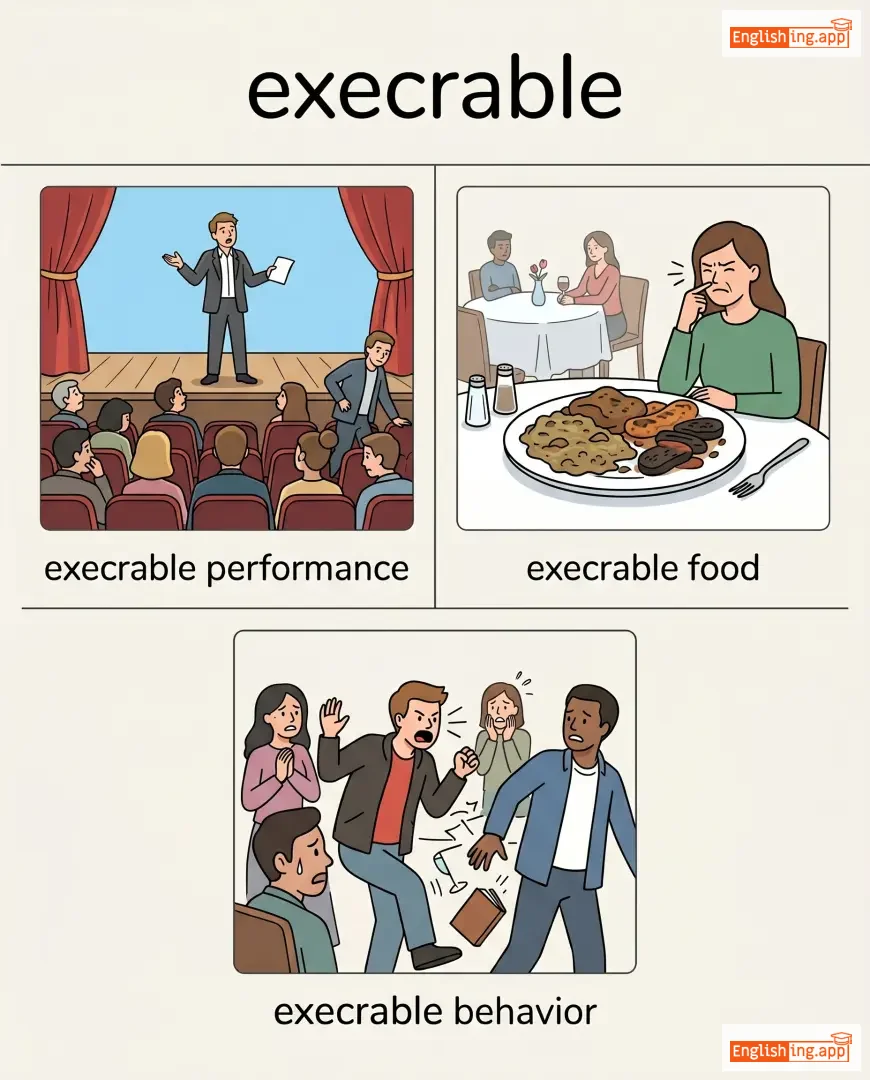
execrable performance, execrable food, execrable behavior
••••••
|
Execrable 听起来像是 '可憎的' 在中文中。
••••••
|
|
📢
••••••
|
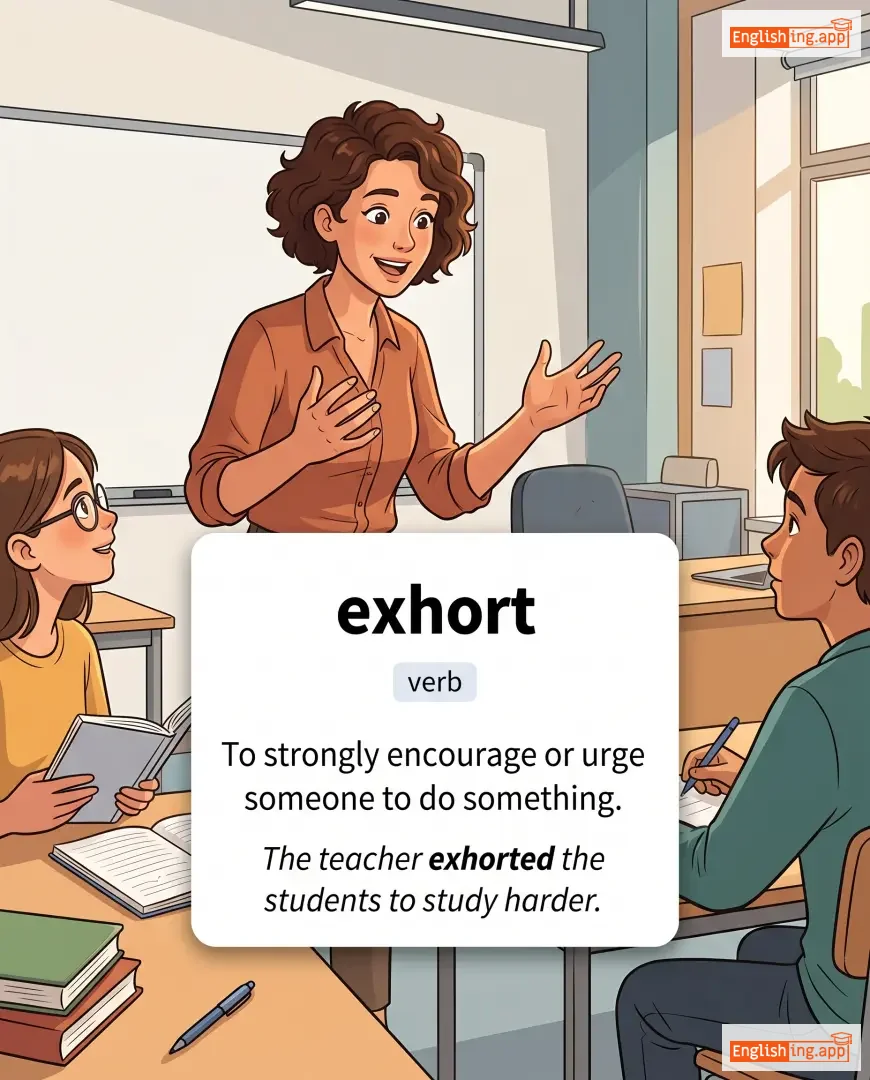
/ɪɡˈzɔːrt/
verb
(督促)
••••••
|
|
督促
dū cù
••••••
|
exhorted
督促过
••••••
|
exhorted
督促过
••••••
|
exhorts
督促
••••••
|
exhorting
督促中
••••••
|
To strongly encourage or urge someone to do something.
••••••
|
The teacher exhorted the students to study harder.
老师督促学生们更努力地学习。
••••••
|
老师督促学生们更努力地学习。
Lǎoshī dū cù xuéshēngmen gèng nǔlì de xuéxí.
••••••
|
exhort to action
督促采取行动
••••••
|
to urge someone to take immediate steps or efforts
••••••
|
督促某人采取紧急步骤
dū cù mǒu rén cǎiqǔ jǐnjí bùzhòu
••••••
|
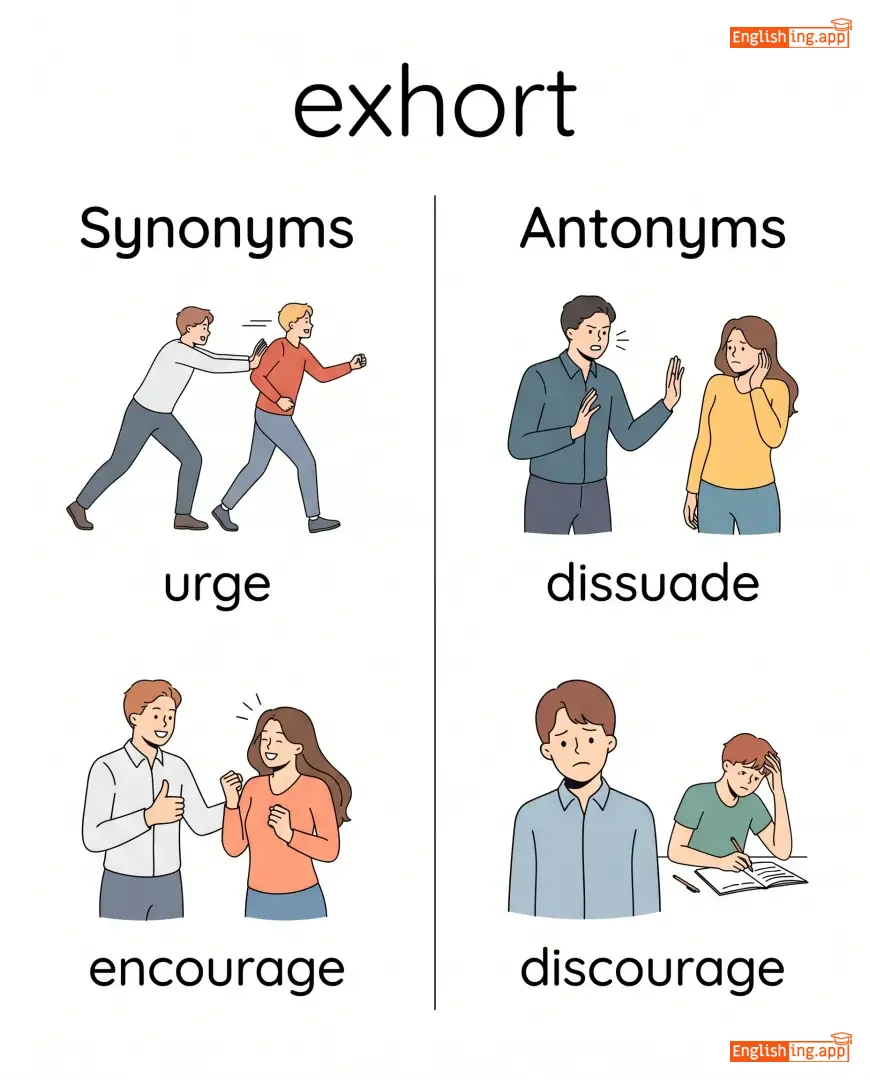
urge, encourage, advise, press, persuade
••••••
|
dissuade, discourage
••••••
|
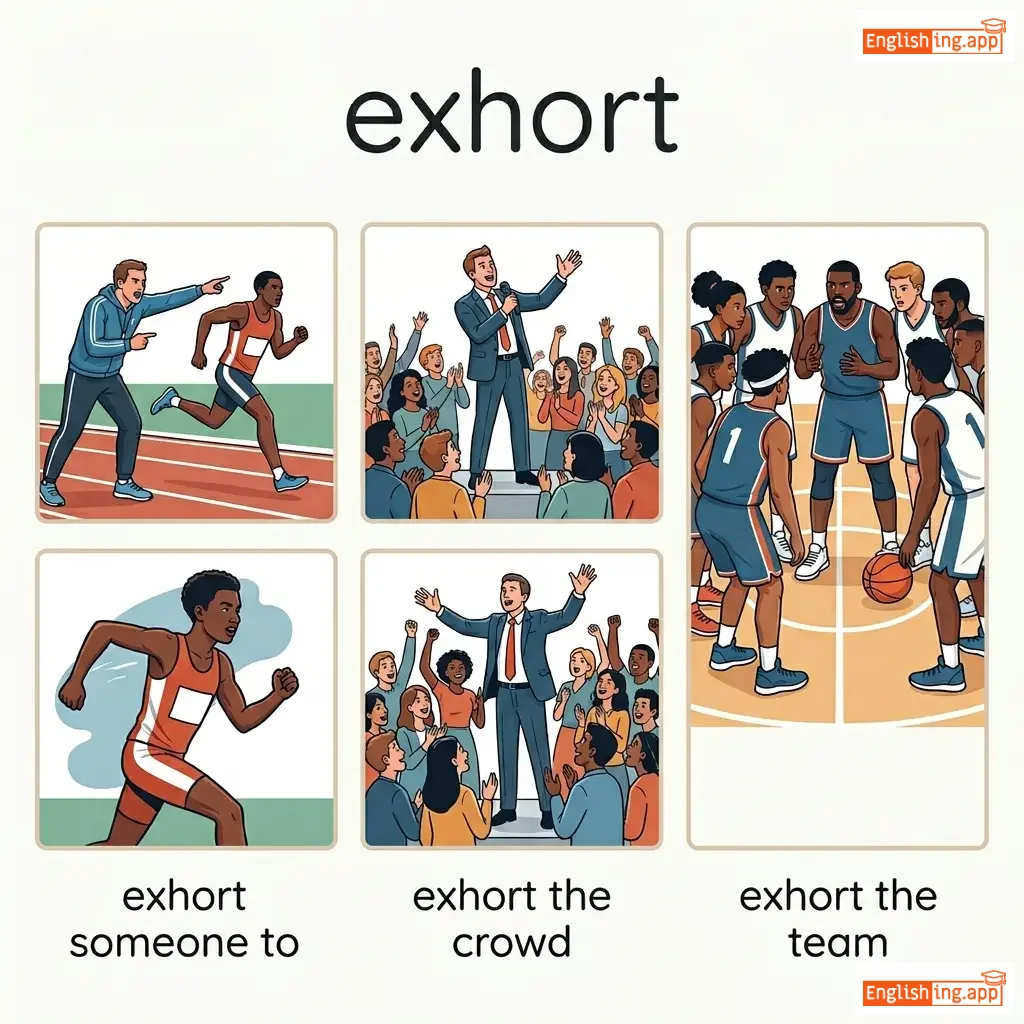
exhort someone to, exhort the crowd, exhort the team
••••••
|
Exhort 就像考试,老师督促学生更加努力!
••••••
|
|
⏰
••••••
|
/ˈɛksɪdʒənsi/
noun
(èxījìnsī)
••••••
|
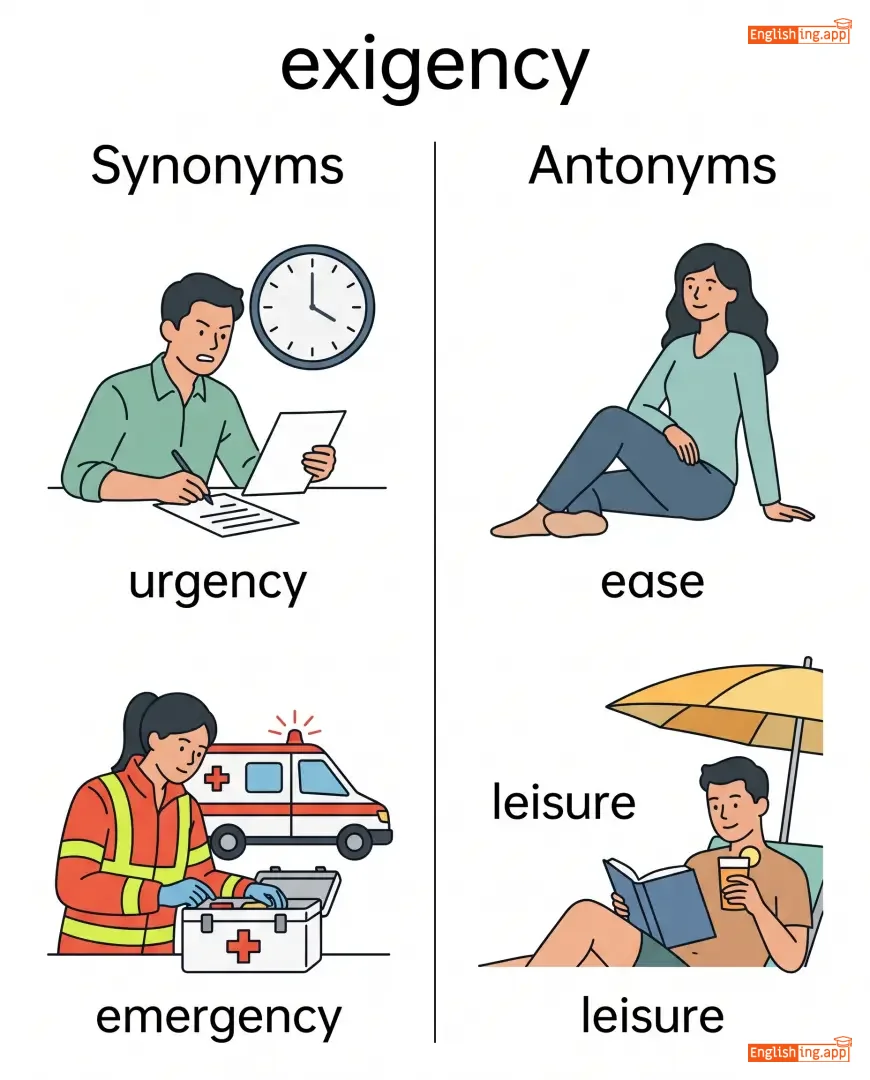
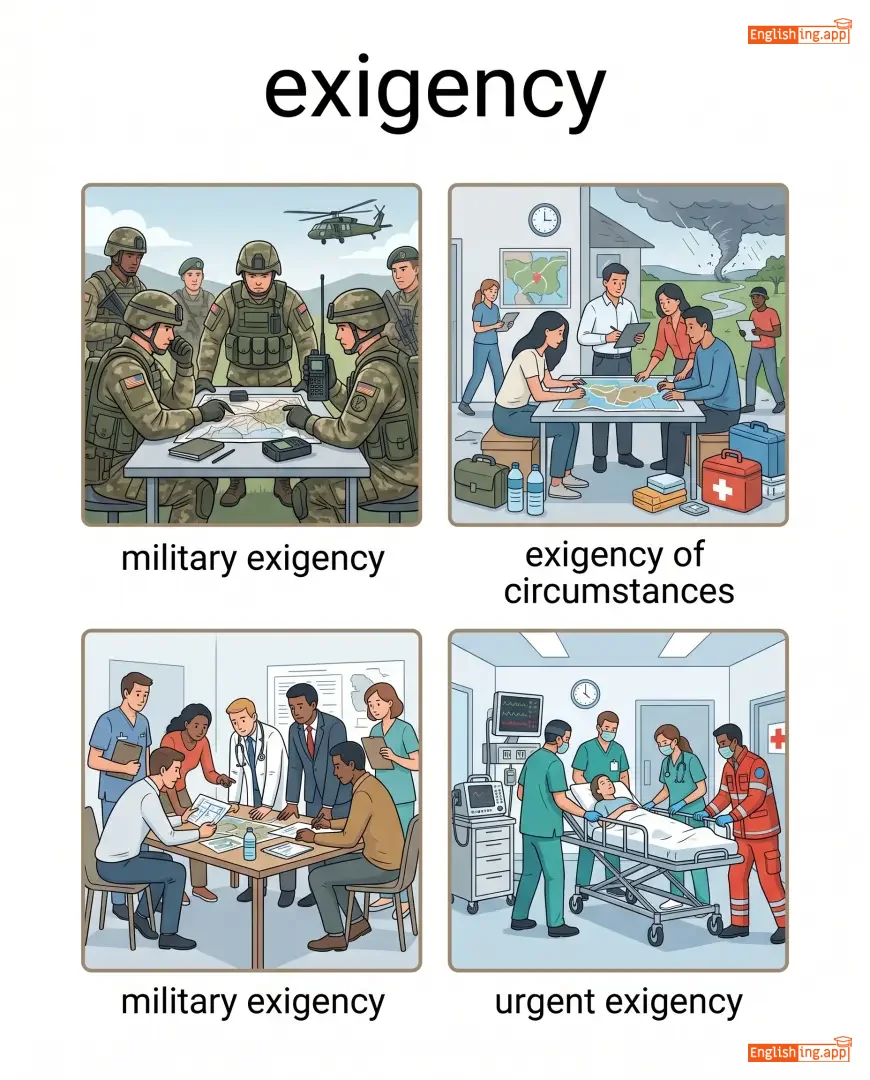
|
紧急需求
jinji xuqiu
••••••
|
- •••••• | - •••••• | - •••••• | - •••••• |
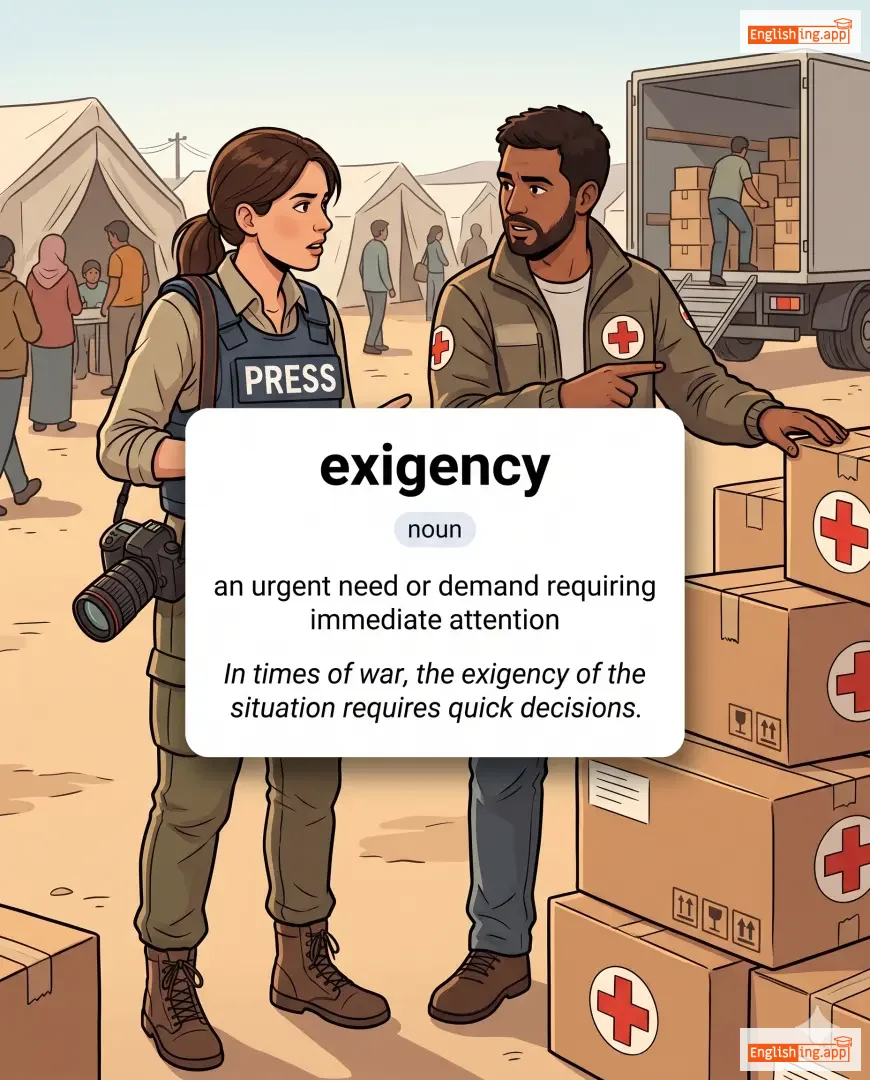
an urgent need or demand requiring immediate attention
••••••
|
In times of war, the exigency of the situation requires quick decisions. |
在战争时期,局势的紧急需求需要迅速的决策。
Zài zhànzhēng shíqī, júshì de jǐnjí xūqiú xūyào xùnsù de juécè.
••••••
|
- •••••• | - •••••• | - •••••• |
urgency, emergency, necessity, demand
••••••
|
ease, leisure, calm
••••••
|
military exigency, exigency of circumstances, urgent exigency
••••••
|
Exigency的意思是紧急需求,就像需要快速解决的问题。
••••••
|
|
🤔
••••••
|
/ˌɛɡzɪˈstɛnʃəl/
adjective
(ɪɡzɪˈstɛnʃəl)
••••••
|

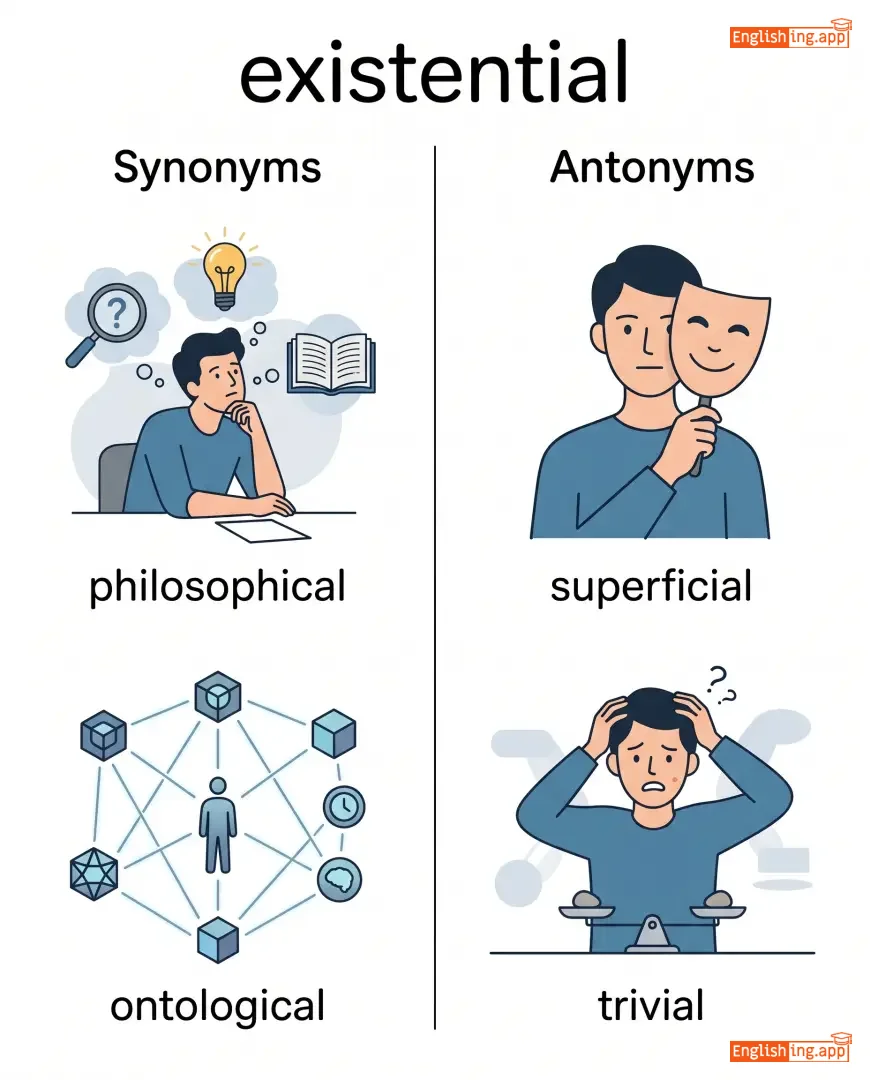
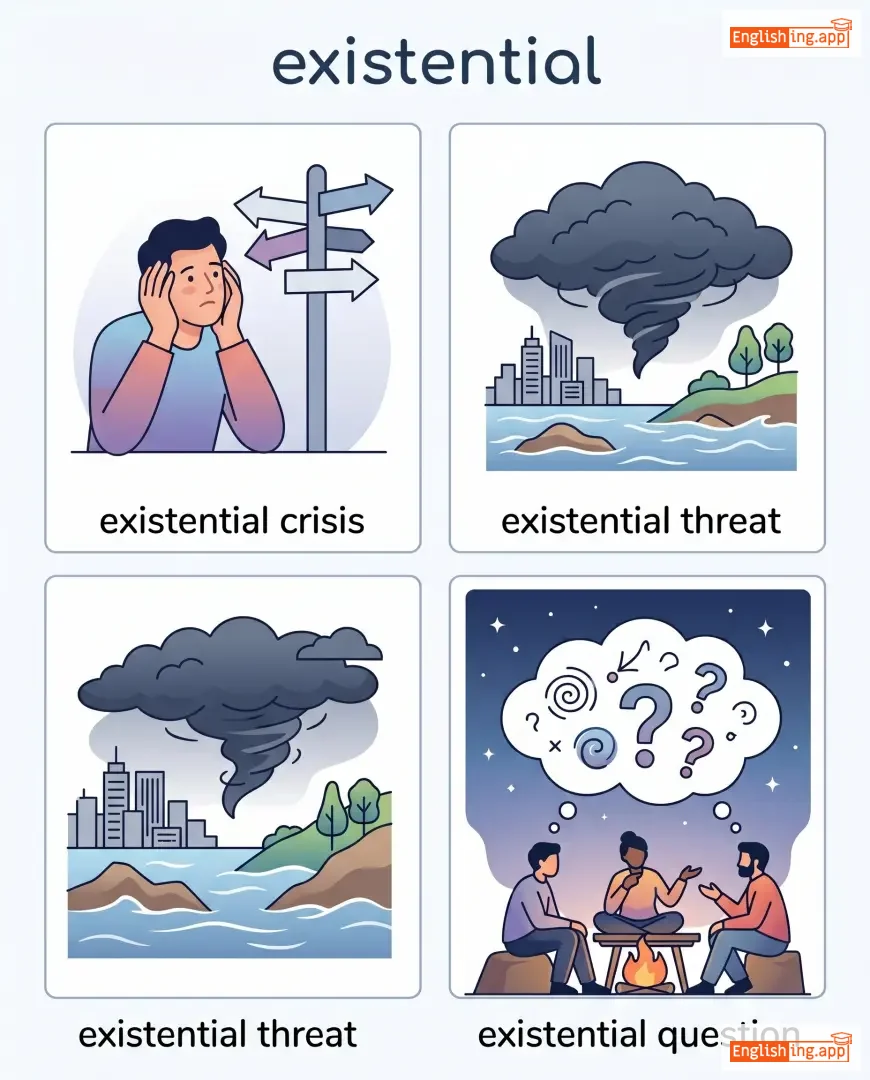
|
存在主义的
cúnzài zhǔyì de
••••••
|
- •••••• | - •••••• | - •••••• | - •••••• |
Relating to human existence, often concerning meaning or purpose of life.
••••••
|
She went through an existential crisis during her midlife. |
她在人生中期经历了存在主义危机。
Tā zài rénshēng zhōngqī jīnglìle cúnzài zhǔyì wēijī.
••••••
|
existential crisis |
a period of deep questioning about the meaning and purpose of life
••••••
|
存在主义危机
cúnzài zhǔyì wēijī
••••••
|
philosophical, ontological, human, life-related
••••••
|
superficial, trivial, meaningless
••••••
|
existential crisis, existential threat, existential question, existential philosophy
••••••
|
存在主义意味着对生活的深刻提问 - '存在主义危机'。
••••••
|
|
🪬
••••••
|
/ˈeksɔːrsaɪz/
verb
••••••
|

|
- •••••• |
exorcised
••••••
|
exorcised
••••••
|
exorcises
••••••
|
exorcising
••••••
|
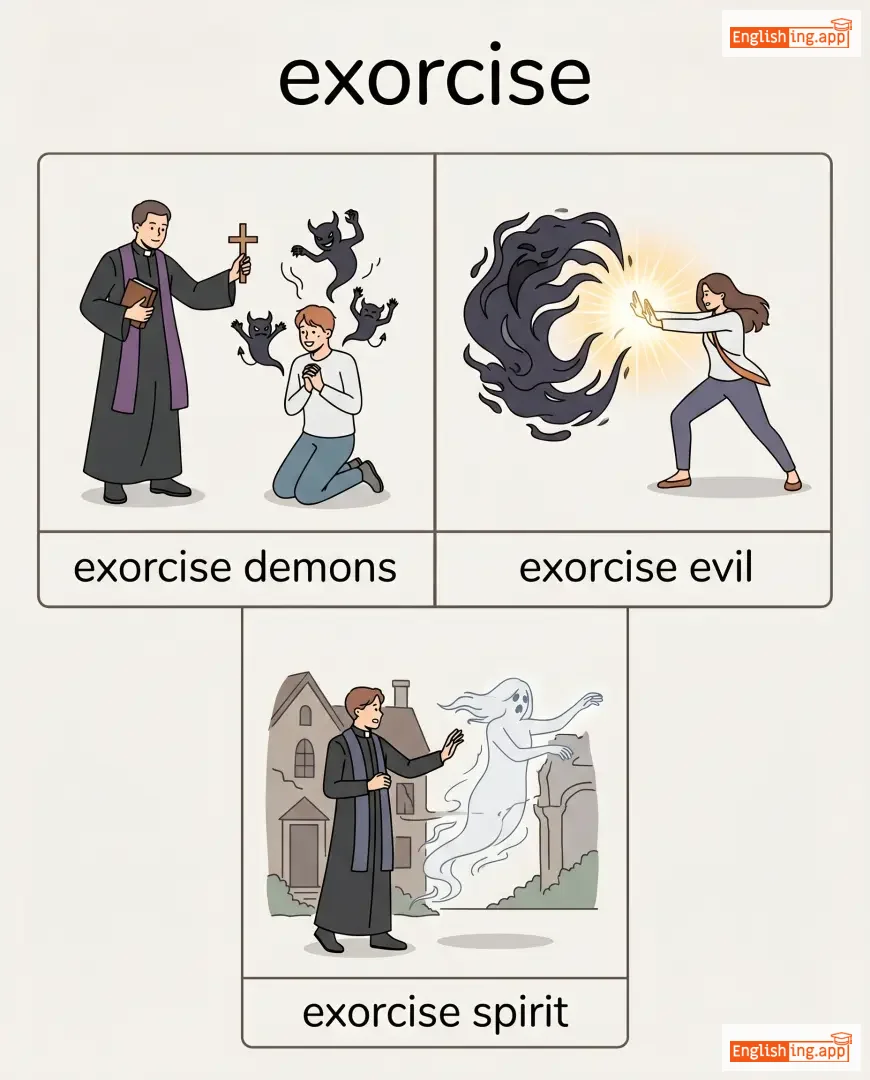
To drive out an evil spirit or bad influence through rituals or prayers.
••••••
|
The priest was called to exorcise the spirit from the house. |
- •••••• |
exorcise demons |
To remove evil or troubling influences
••••••
|
- •••••• |
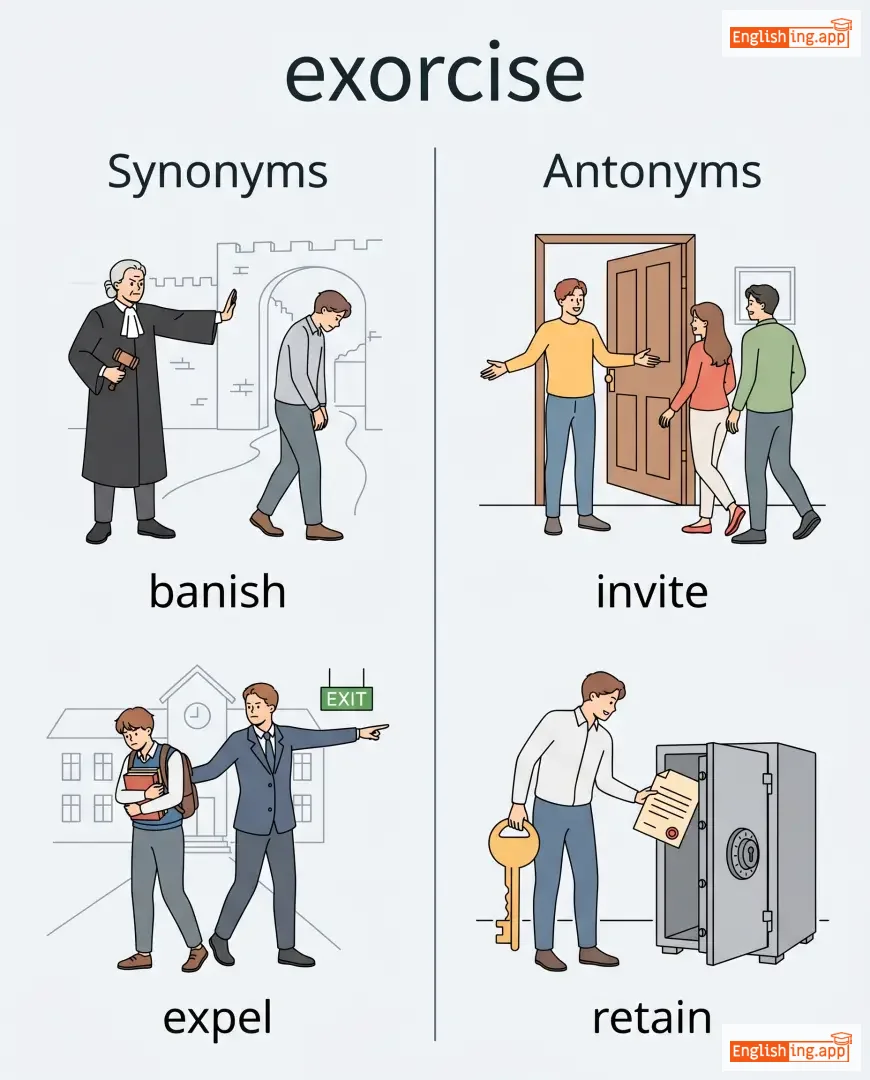
banish, expel, cast out, cleanse, purify
••••••
|
invite, retain
••••••
|
exorcise demons, exorcise evil, exorcise spirit, exorcise fear
••••••
|
No •••••• |
|
🗣️
••••••
|
/ɪkˈspeɪʃiˌeɪt/
verb
(ekspeɪʃieɪt)
••••••
|


|
详细讨论或写作
xiángxì tǎlùn huò xiězuò
••••••
|
expatiated
ekspeɪʃieɪtɪd
••••••
|
expatiated
ekspeɪʃieɪtɪd
••••••
|
expatiates
ekspeɪʃieɪts
••••••
|
expatiating
ekspeɪʃieɪtɪŋ
••••••
|
to speak or write at length or in detail
••••••
|
The professor expatiated on the importance of critical thinking.
教授详细阐述了批判性思维的重要性。
••••••
|
教授详细阐述了批判性思维的重要性。
Jiàoshòu xiángxì chǎnshù le pīpànxìng sīwéi de zhòngyàoxìng.
••••••
|
- •••••• | - •••••• | - •••••• |
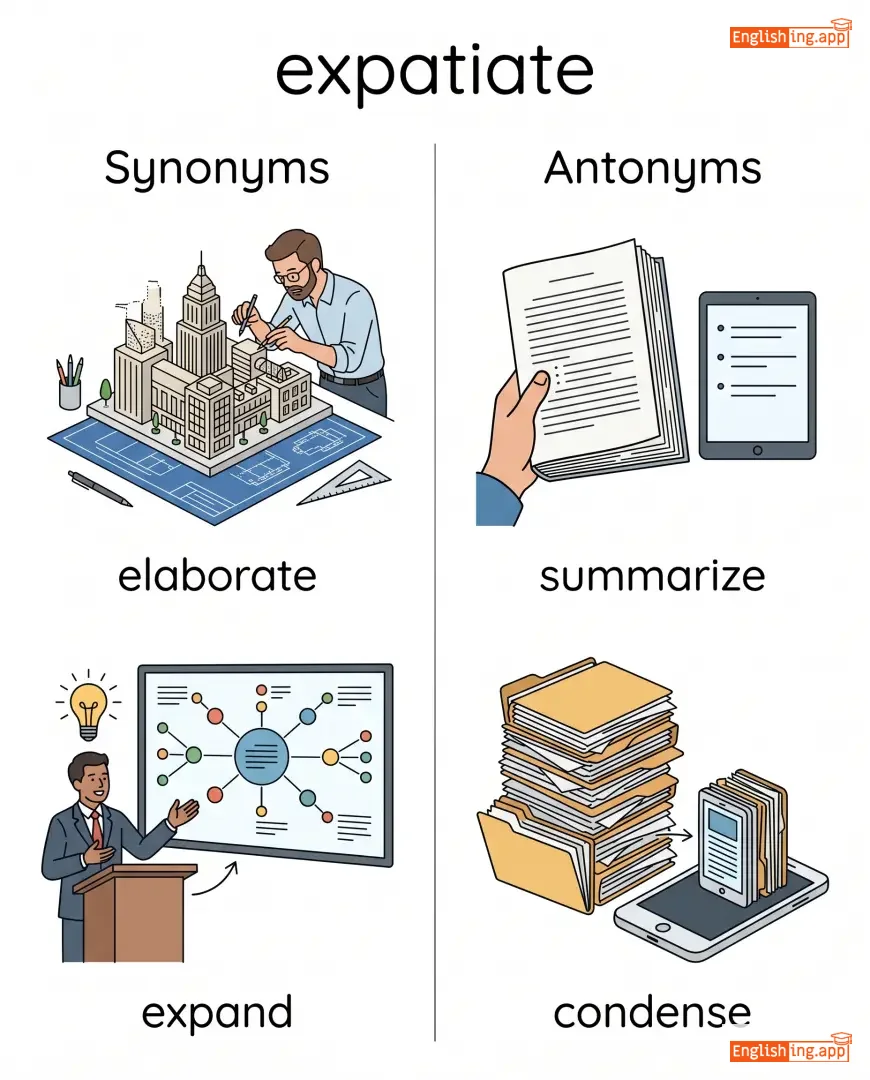
elaborate, expand, dwell, enlarge, detail
••••••
|
summarize, condense
••••••
|
expatiate on, expatiate at length, expatiate freely
••••••
|
Expatiate = 详细解释
••••••
|
|
🌍
••••••
|
/ɛkˈspeɪtriət/
noun
(èks-pàt-lì-èt)
••••••
|

|
外籍人士
waiji ren shi
••••••
|
- •••••• | - •••••• | - •••••• | - •••••• |
a person who lives outside their native country
••••••
|
Many expatriates gather in the city’s international community. |
许多外籍人士聚集在城市的国际社区中。
Xuduo waiji renshi juzhi zai chengshi de guoji shequ zhong.
••••••
|
- •••••• | - •••••• | - •••••• |
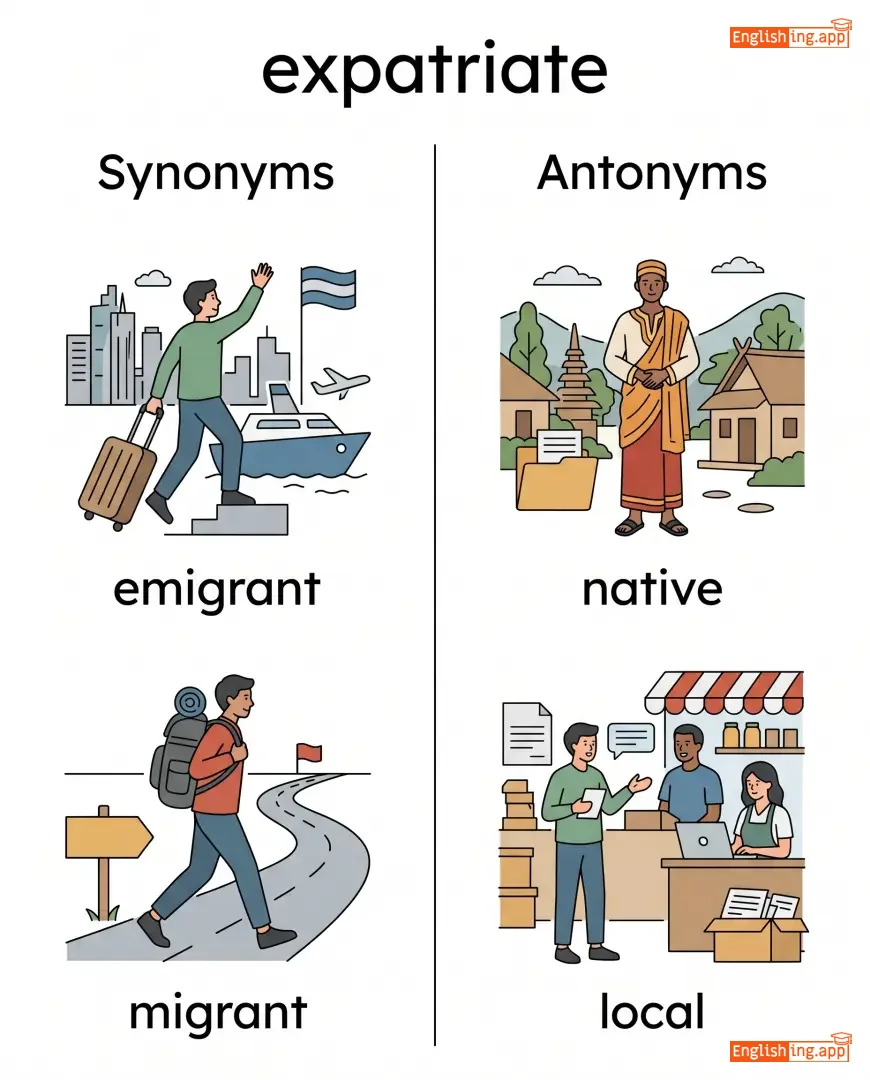
emigrant, migrant, exile, immigrant
••••••
|
native, local
••••••
|
expatriate worker, expatriate community, expatriate life
••••••
|
Expatriate意味着离开自己国家的人,外籍人士
••••••
|
|
🙏
••••••
|
/ˈɛkspieɪt/
verb
••••••
|
|
- •••••• |
expiated
••••••
|
expiated
••••••
|
expiates
••••••
|
expiating
••••••
|
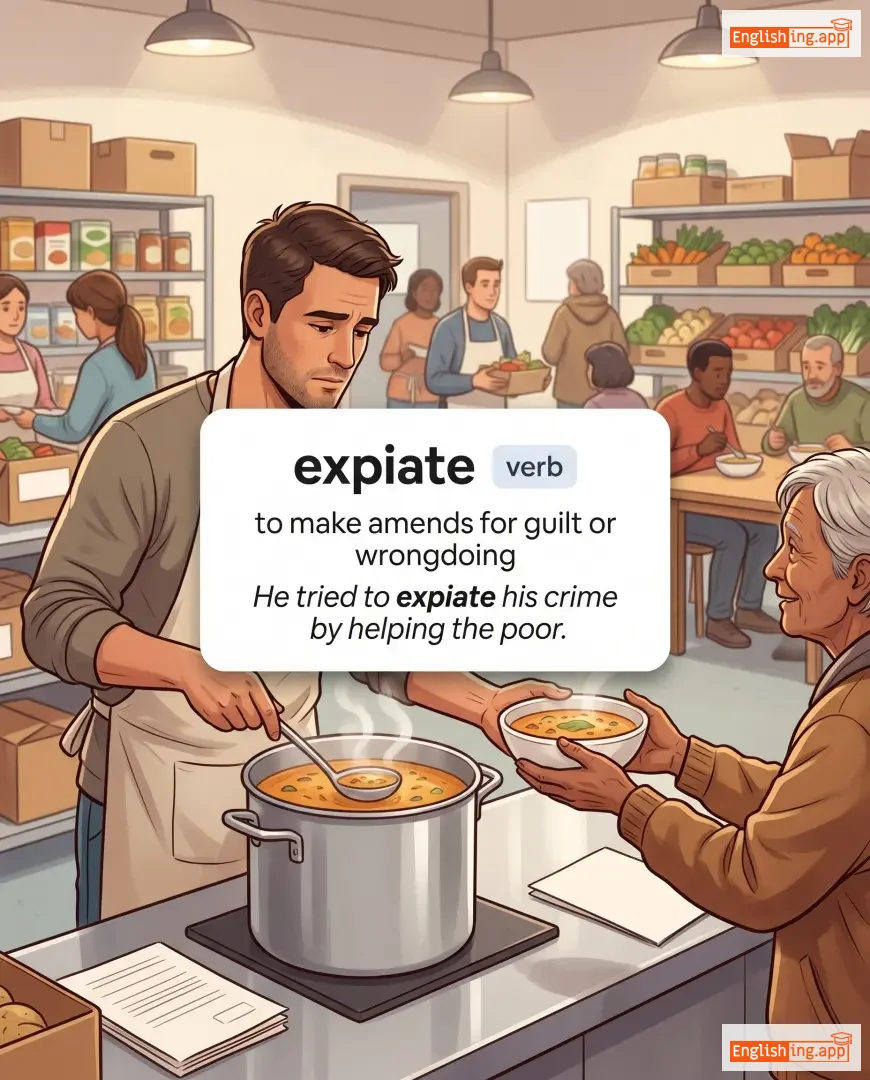
to make amends for guilt or wrongdoing
••••••
|
He tried to expiate his crime by helping the poor. |
- •••••• |
expiate guilt |
to make amends or atone for a wrongdoing
••••••
|
- •••••• |
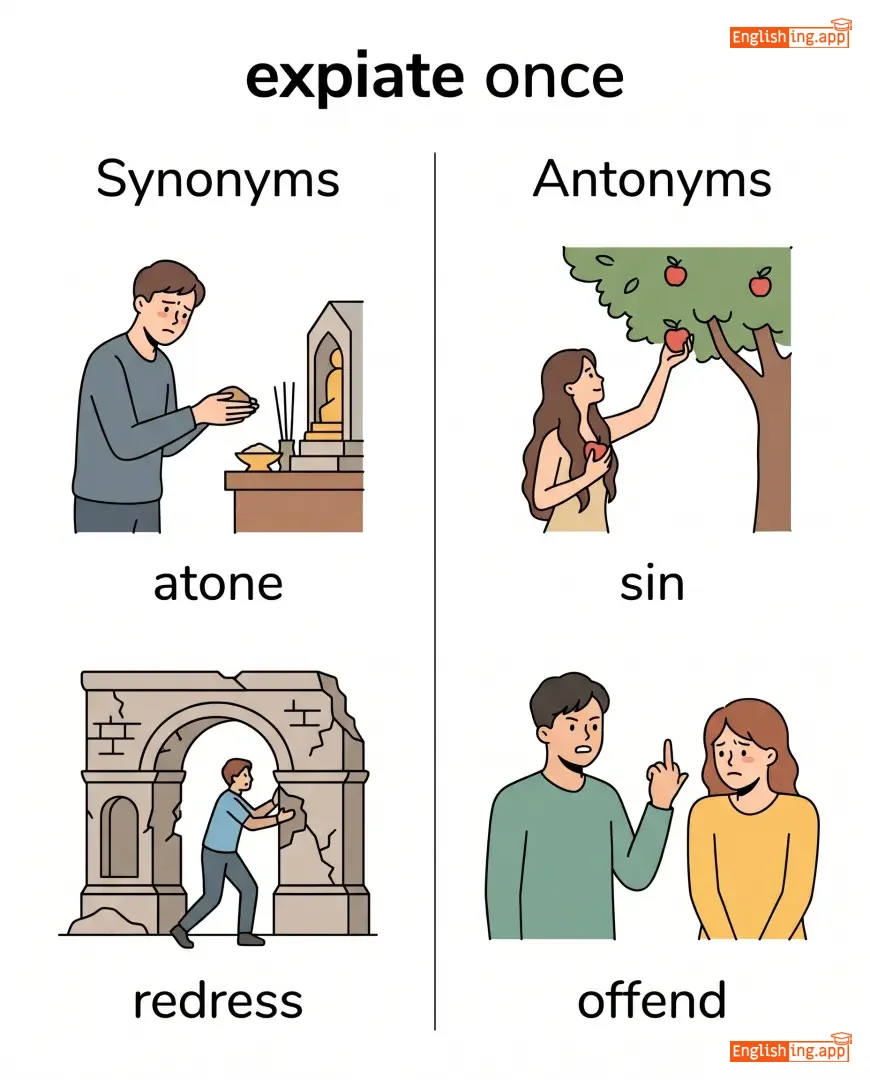
atone, redress, amend, compensate, repent
••••••
|
sin, offend, wrong
••••••
|
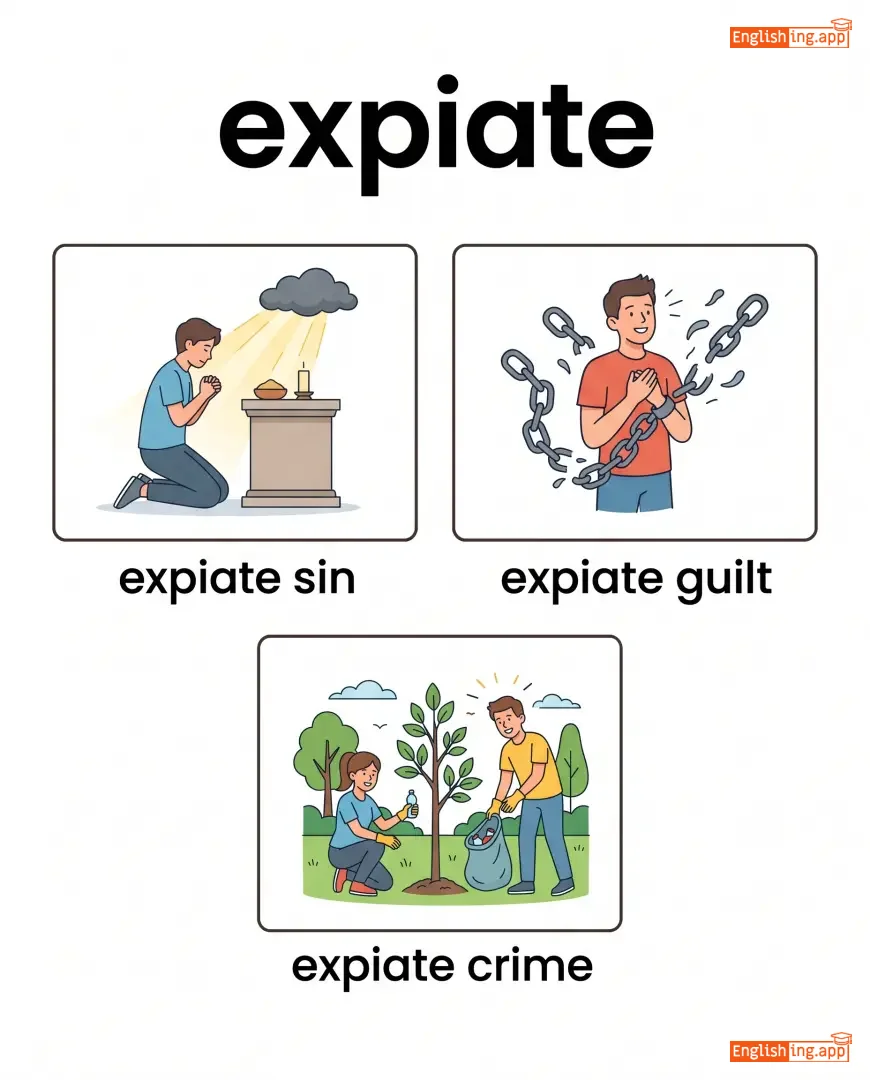
expiate sin, expiate guilt, expiate crime, expiate wrongdoing
••••••
|
No •••••• |

