|
絵文字
|
単語 | Images | 翻訳 | 過去 | 過去分詞 | 三人称単数 | 動名詞 | 意味 | 例文 | 例文の翻訳 | 表現例 | 表現例の意味 | 表現例の翻訳 | 同義語 | 対義語 | コロケーション | ニーモニック |
|---|---|---|---|---|---|---|---|---|---|---|---|---|---|---|---|---|---|
|
📚
••••••
|
/ˈɛrjʊˌdaɪt/
adjective
(エルダイト)
••••••
|
|
博識
hakushiki
••••••
|
- •••••• | - •••••• | - •••••• | - •••••• |
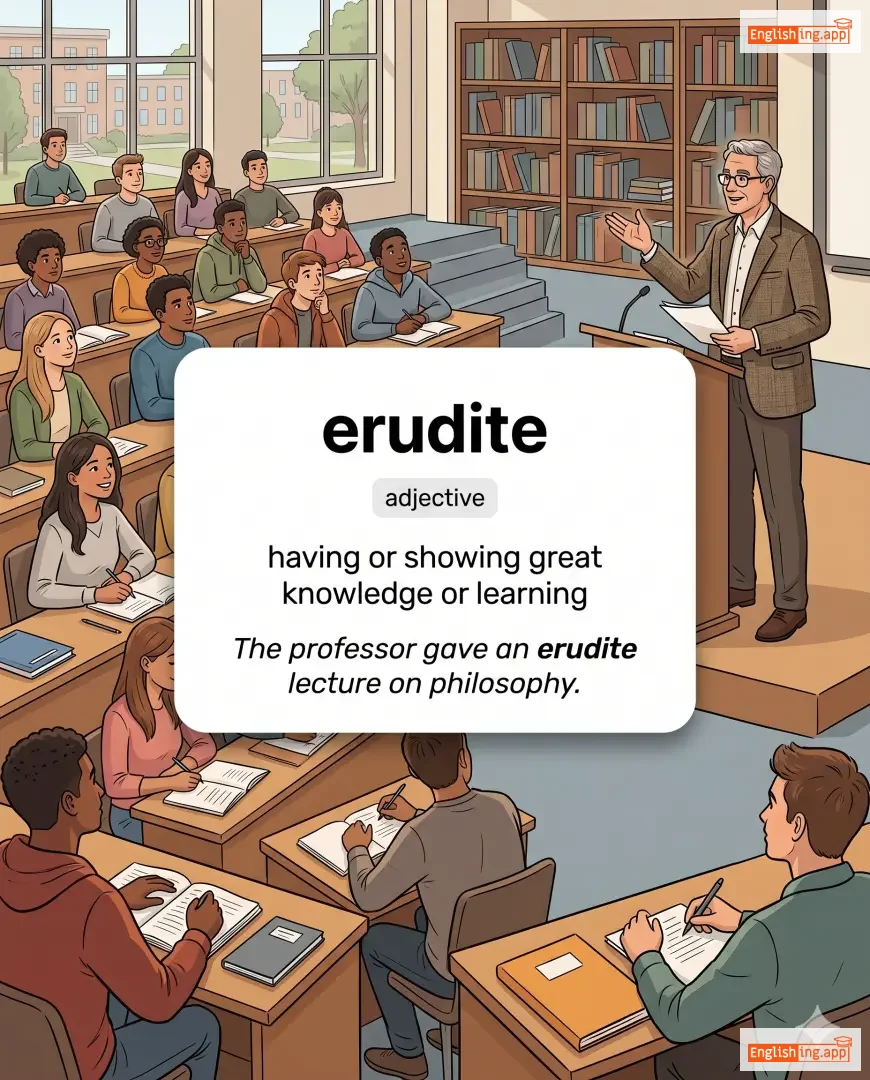
having or showing great knowledge or learning
••••••
|
The professor gave an erudite lecture on philosophy. |
教授は哲学について博識な講義をしました。
Kyouju wa tetsugaku ni tsuite hakushiki na kougi o shimashita.
••••••
|
- •••••• | - •••••• | - •••••• |
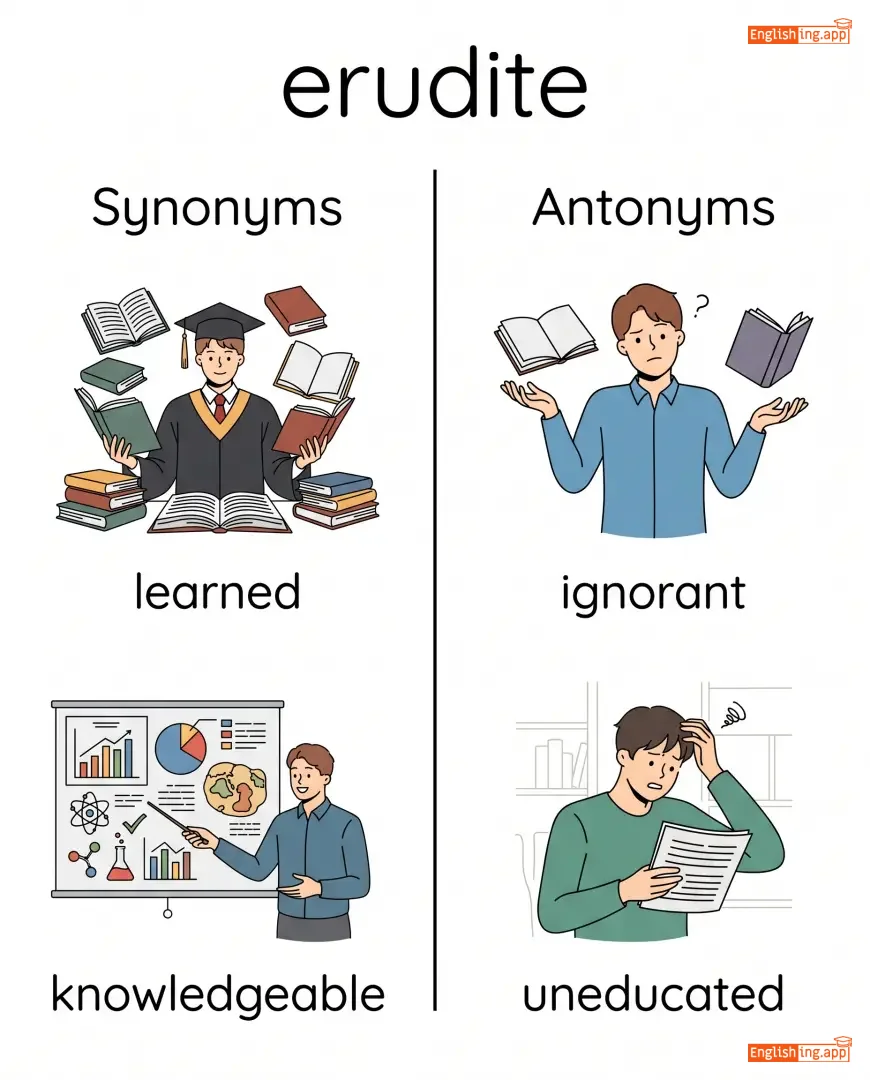
learned, knowledgeable, scholarly, intellectual, well-read
••••••
|
ignorant, uneducated, uninformed
••••••
|
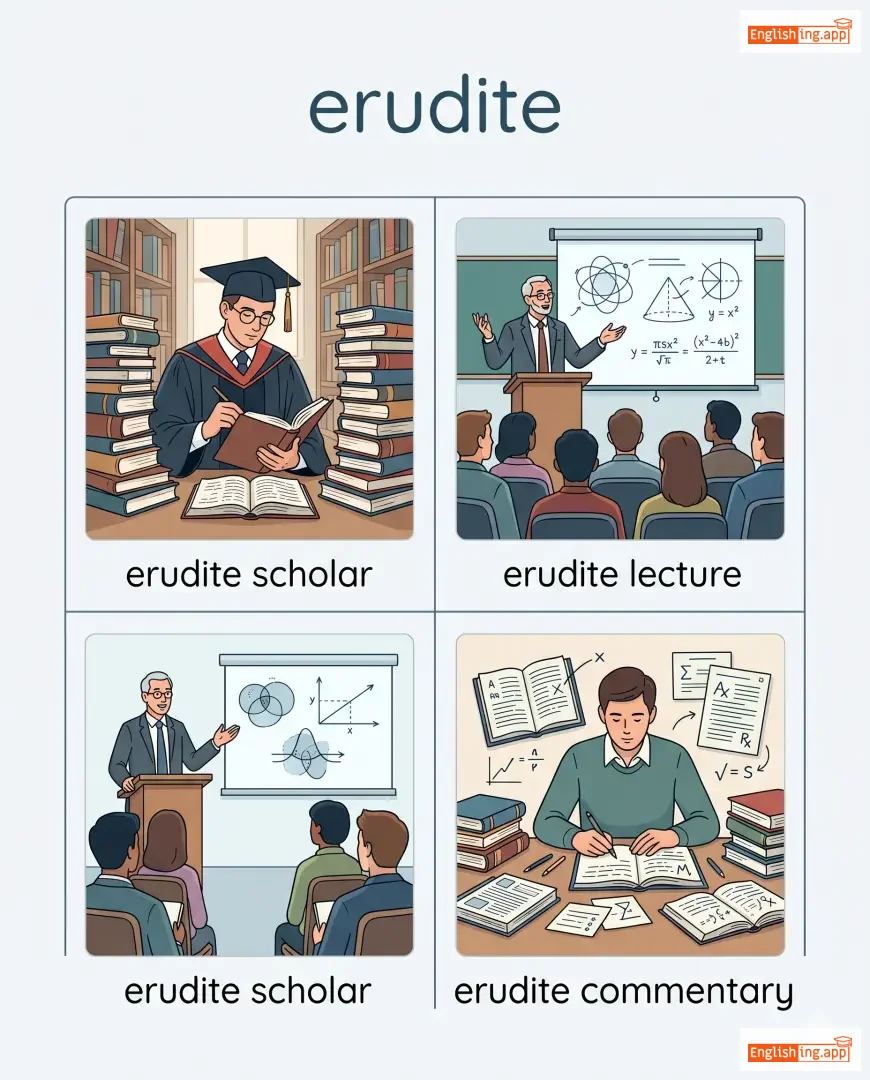
erudite scholar, erudite lecture, erudite commentary, erudite discussion
••••••
|
Erudite = 教育 + 明るい → 博識は賢い人を意味します。
••••••
|
|
🔮
••••••
|
/ˌɛsəˈtɛrɪk/
adjective
(エソテリック)
••••••
|
|
秘教的
hikyou teki
••••••
|
- •••••• | - •••••• | - •••••• | - •••••• |
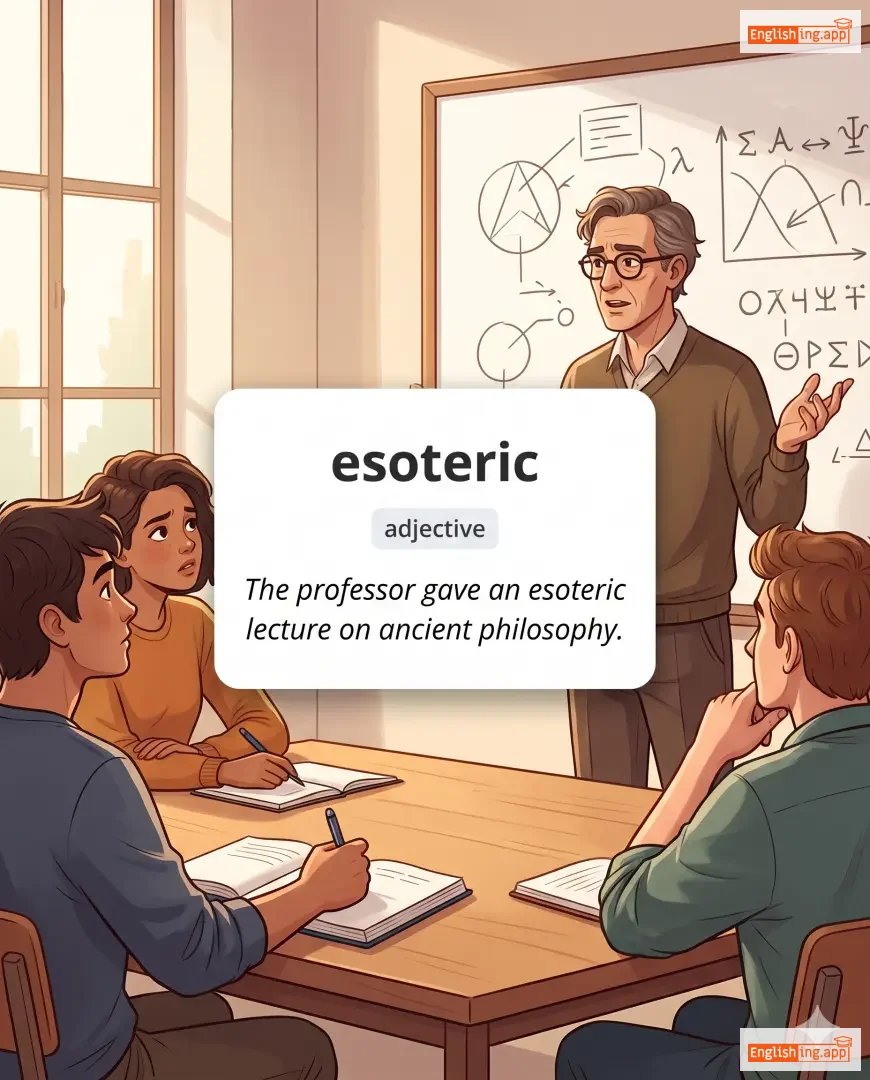
intended for or understood by only a small number of people with special knowledge
••••••
|
The professor gave an esoteric lecture on ancient philosophy. |
教授は古代哲学に関する秘教的な講義を行いました。
Kyouju wa kodai tetsugaku ni kansuru hikyou teki na kougi wo okonai mashita.
••••••
|
- •••••• | - •••••• | - •••••• |
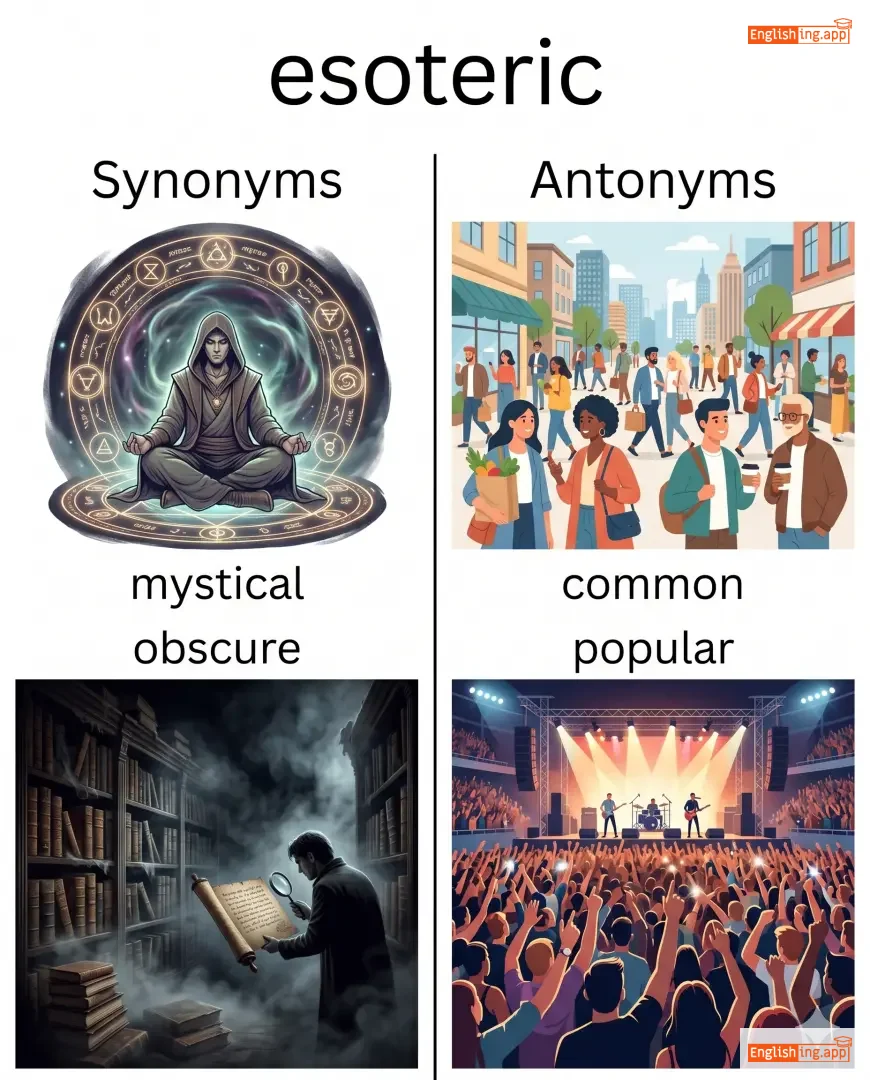
mystical, obscure, cryptic, abstract, arcane
••••••
|
common, popular, simple
••••••
|
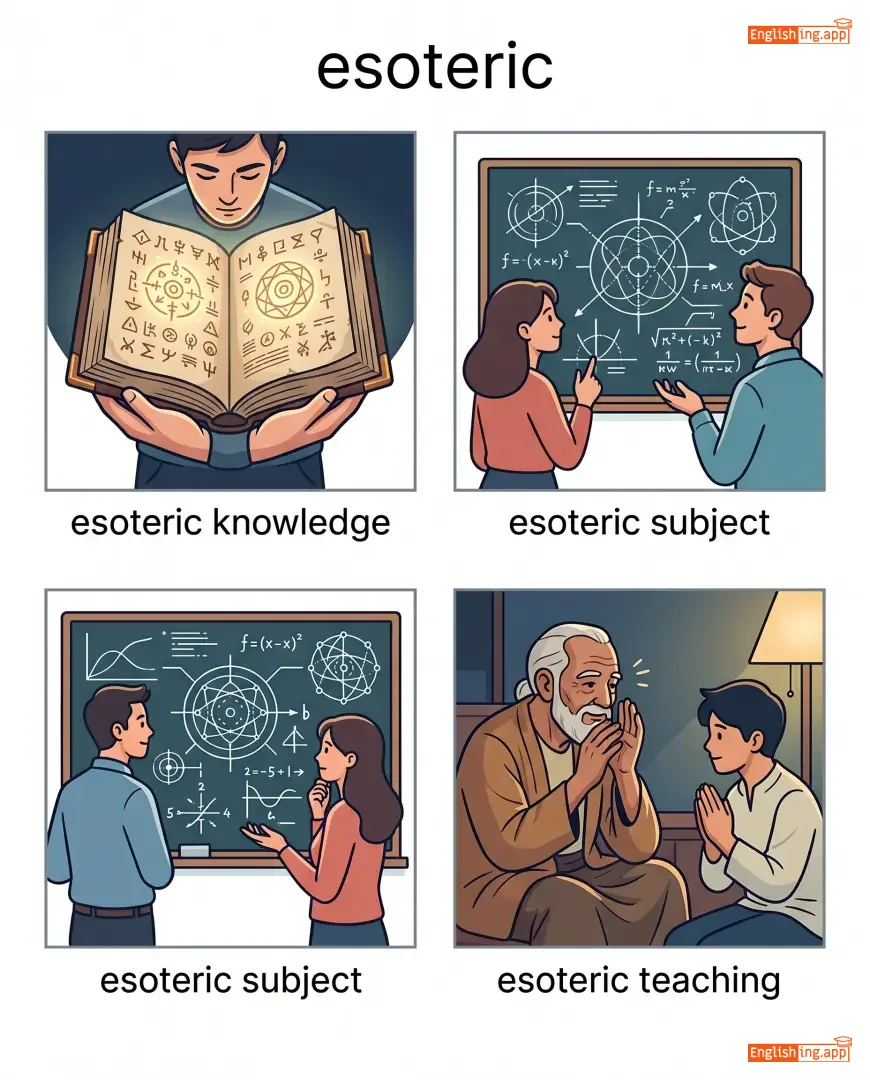
esoteric knowledge, esoteric subject, esoteric teaching
••••••
|
Eso (エソ) + テリック、意味は少数の専門家だけが理解できること
••••••
|
|
📝
••••••
|
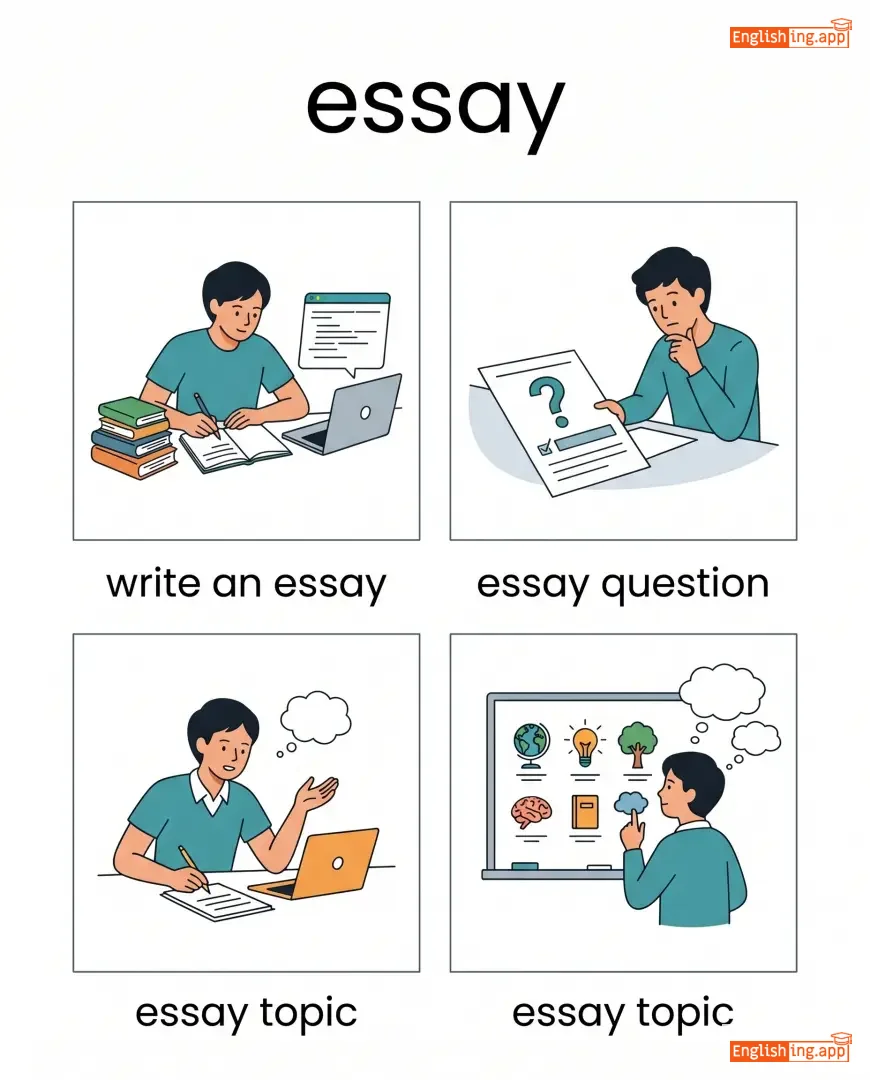
/ˈɛseɪ/
noun
(エッセイ)
••••••
|
|
エッセイ
essei
••••••
|
- •••••• | - •••••• | - •••••• | - •••••• |
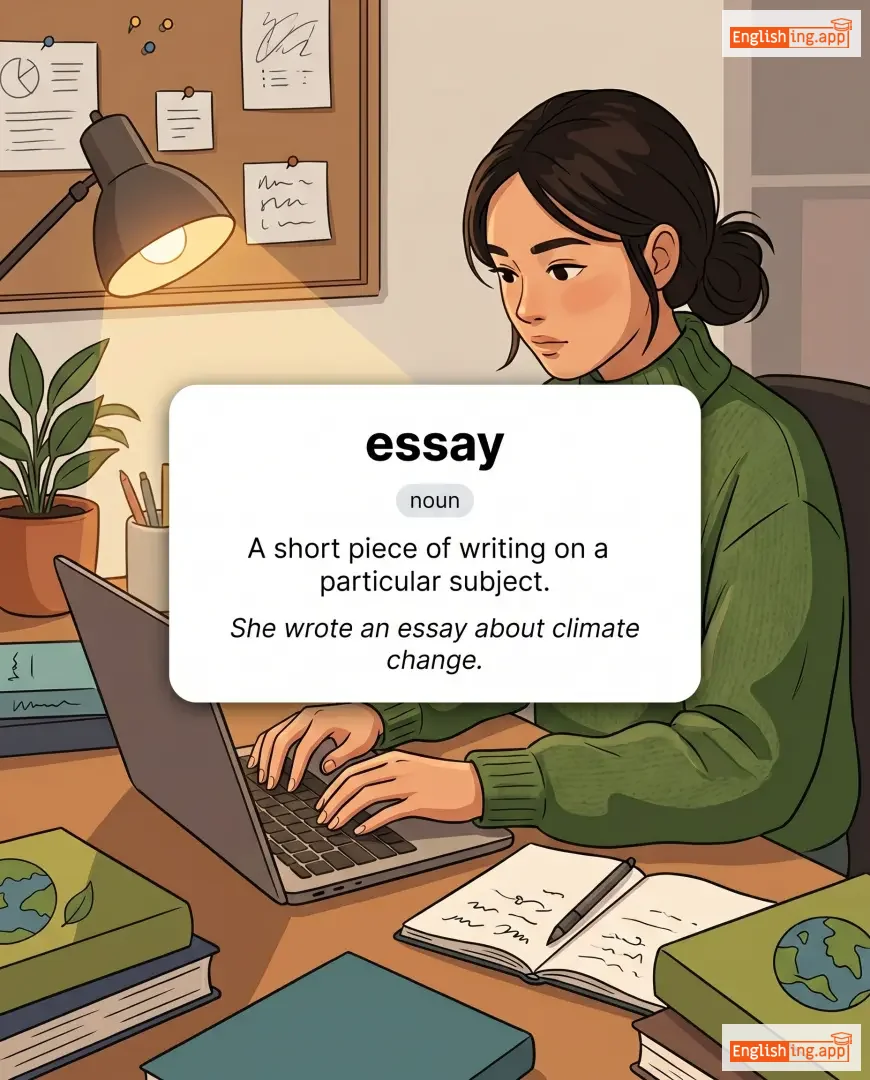
A short piece of writing on a particular subject.
••••••
|
She wrote an essay about climate change. |
彼女は気候変動についてのエッセイを書きました。
Kanojo wa kikō hendō ni tsuite no essei o kakimashita.
••••••
|
- •••••• | - •••••• | - •••••• |
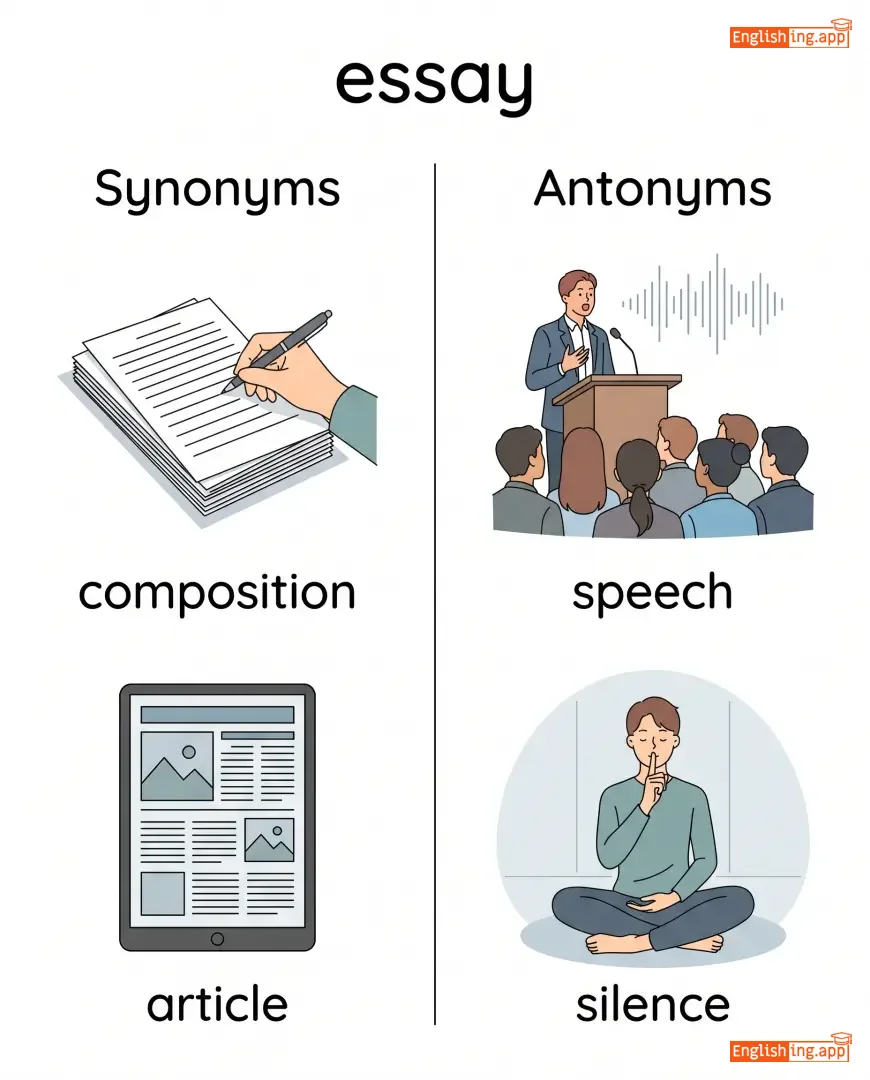
composition, article, paper, text, prose
••••••
|
speech, silence
••••••
|
write an essay, essay question, essay topic, essay competition
••••••
|
Essayはエッセイを意味する – 学校ではエッセイを書くことはエッセイを書くことです。
••••••
|
|
🏅
••••••
|
/ˈɛstɪməbl/
adjective
(エスティマブル)
••••••
|

|
尊敬すべき
sonkei subeki
••••••
|
- •••••• | - •••••• | - •••••• | - •••••• |
Worthy of great respect.
••••••
|
Her estimable achievements inspired the whole community.
彼女の尊敬に値する業績はコミュニティ全体にインスピレーションを与えました。
••••••
|
彼女の尊敬に値する業績はコミュニティ全体にインスピレーションを与えました。
Kanojo no sonkei subeki gyōseki wa komyuniti zentai ni insupirēshon o ataemashita.
••••••
|
- •••••• | - •••••• | - •••••• |
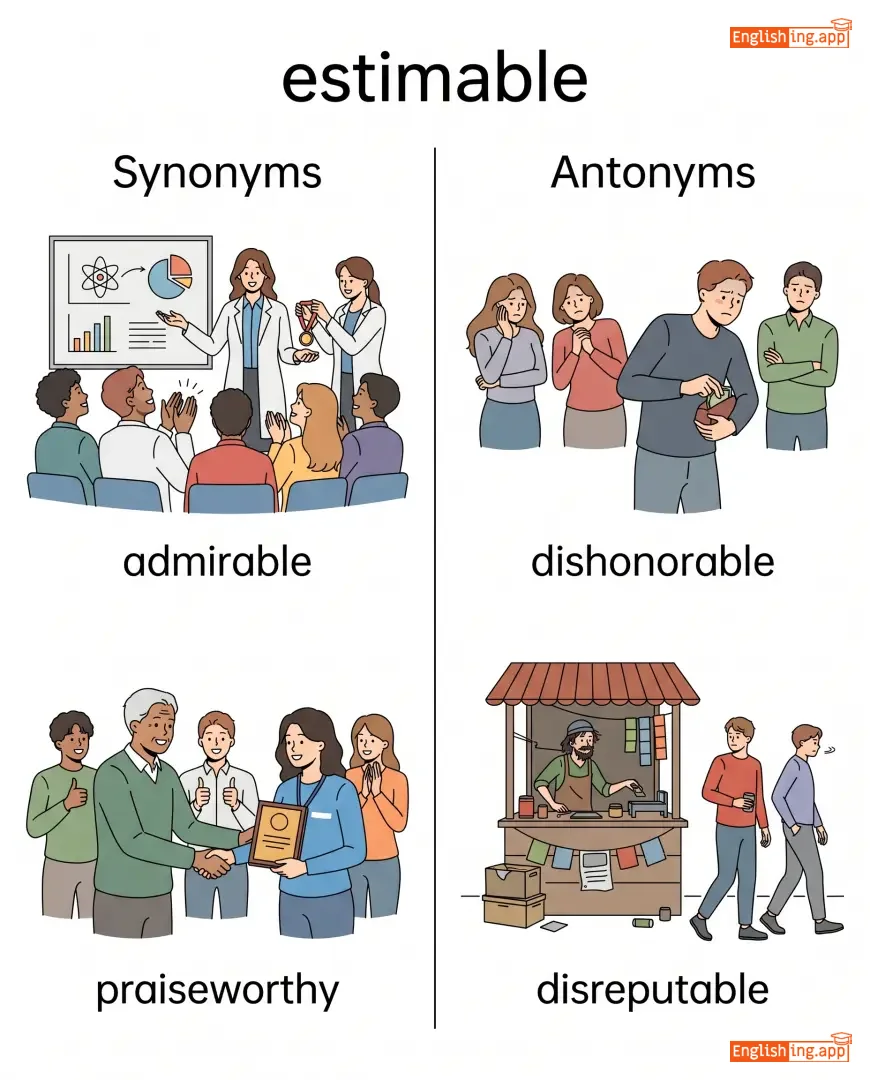
admirable, praiseworthy, honorable, respectable
••••••
|
dishonorable, disreputable, unworthy
••••••
|
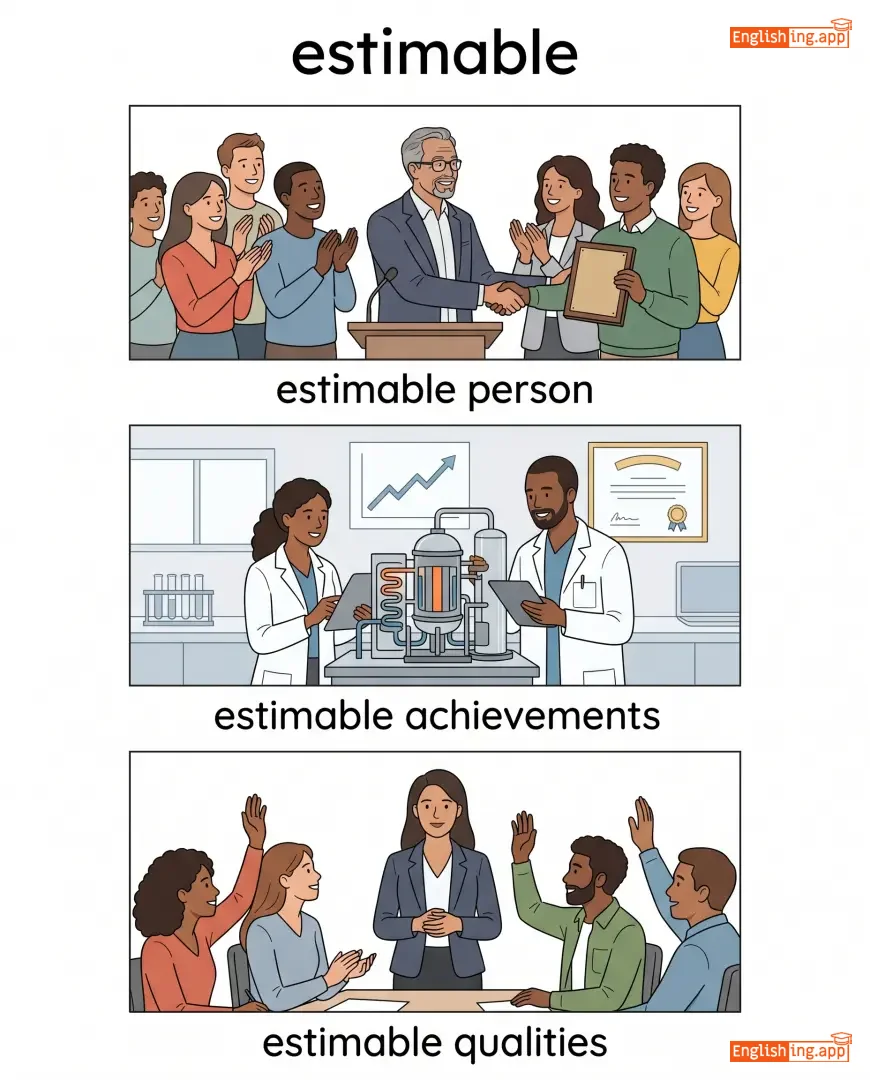
estimable person, estimable achievements, estimable qualities, highly estimable
••••••
|
Estimable は尊敬すべき — 'Esteem' (尊敬) 'able' (できる) から尊敬すべきという意味。
••••••
|
|
🌍
••••••
|
/ˌeθ.noʊˈsen.trɪk/
adjective
(エスノセントリック)
••••••
|
|
エスノセントリック
esunosentorikku
••••••
|
- •••••• | - •••••• | - •••••• | - •••••• |
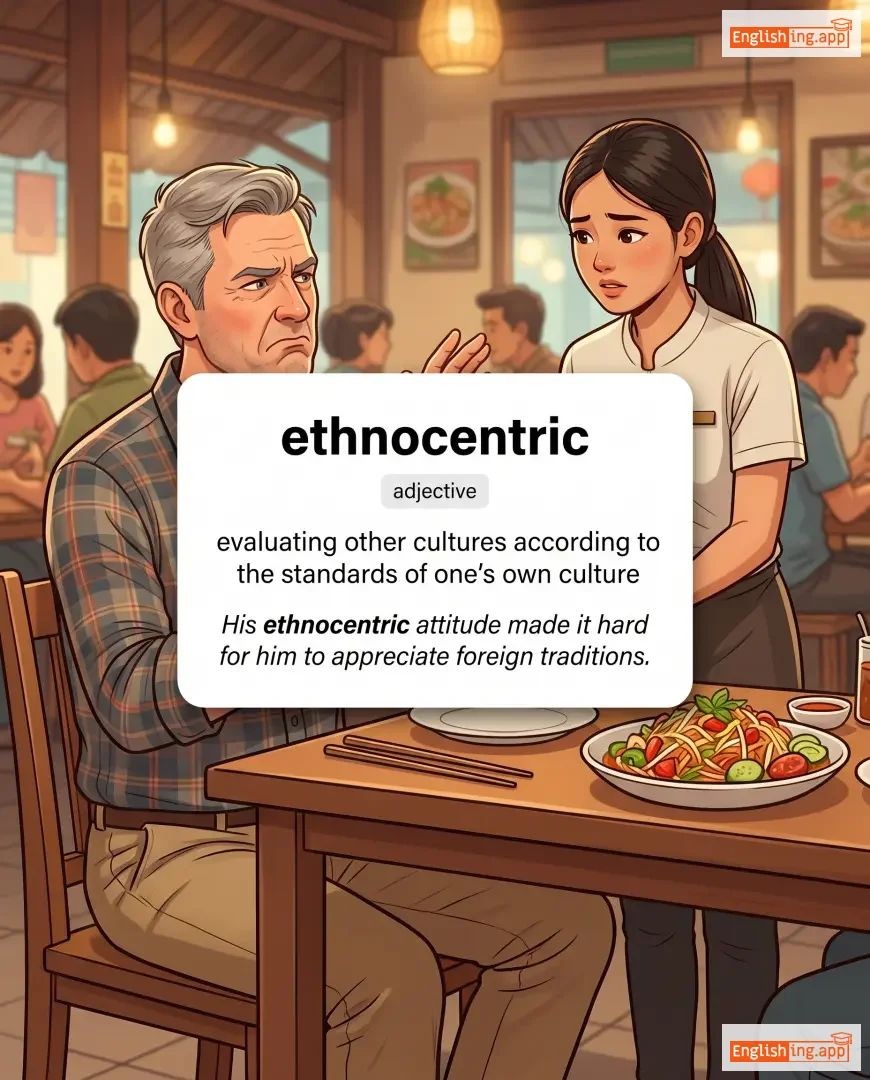
evaluating other cultures according to the standards of one's own culture
••••••
|
His ethnocentric attitude made it hard for him to appreciate foreign traditions. |
彼のエスノセントリックな態度は、外国の伝統を評価するのを難しくしました。
Kare no esunosentorikku na taido wa, gaikoku no dentō o hyōka suru no o muzukashiku shimashita.
••••••
|
- •••••• | - •••••• | - •••••• |
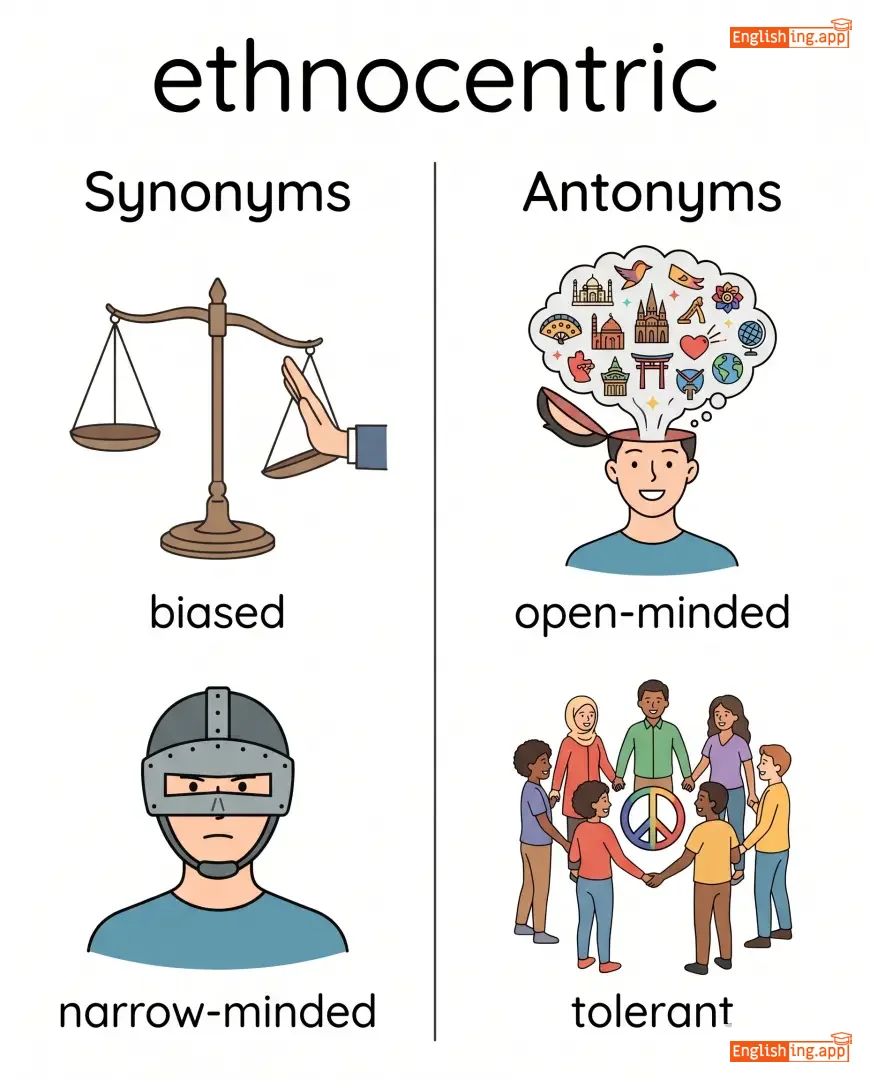
biased, narrow-minded, prejudiced, parochial, intolerant
••••••
|
open-minded, tolerant, cosmopolitan
••••••
|
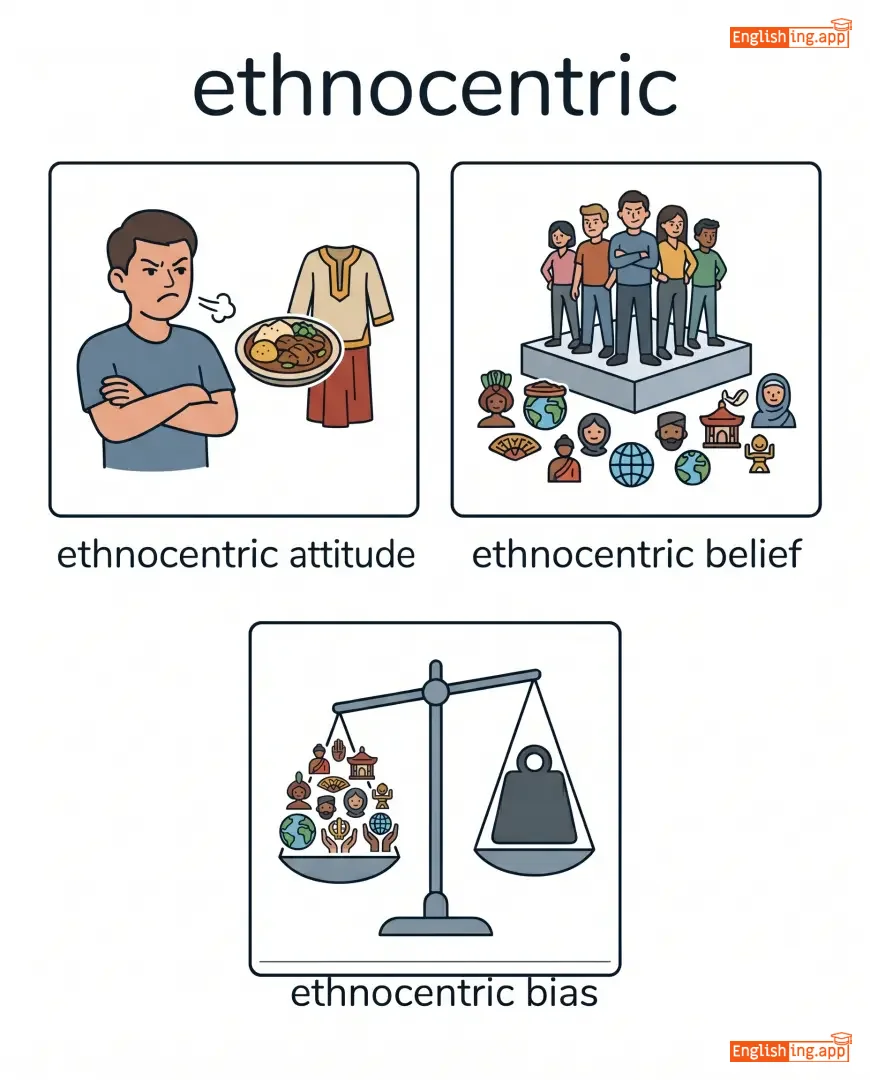
ethnocentric attitude, ethnocentric belief, ethnocentric bias, ethnocentric perspective
••••••
|
Ethno + centric = 自分の文化を中心に見る 🌍
••••••
|
|
🧬
••••••
|
/ˌiː.tiˈɒ.lə.dʒi/
noun
(エティオロジー)
••••••
|

|
病因学
byōingaku
••••••
|
- •••••• | - •••••• | - •••••• | - •••••• |
the cause or origin of a disease or condition
••••••
|
Doctors are studying the etiology of the new virus. |
医師たちは新しいウイルスの病因学を研究しています。
Ishitachi wa atarashī uirusu no byōingaku o kenkyū shiteimasu.
••••••
|
- •••••• | - •••••• | - •••••• |
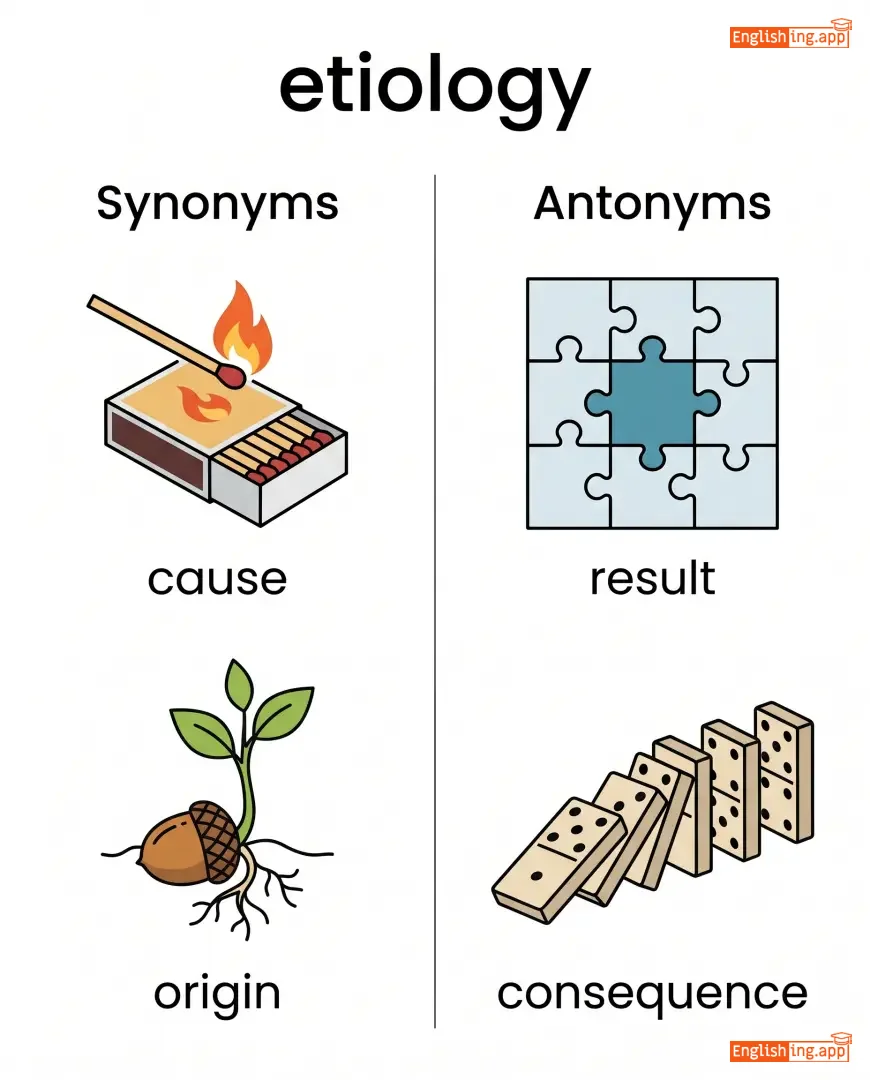
cause, origin, source, root, reason
••••••
|
result, consequence
••••••
|
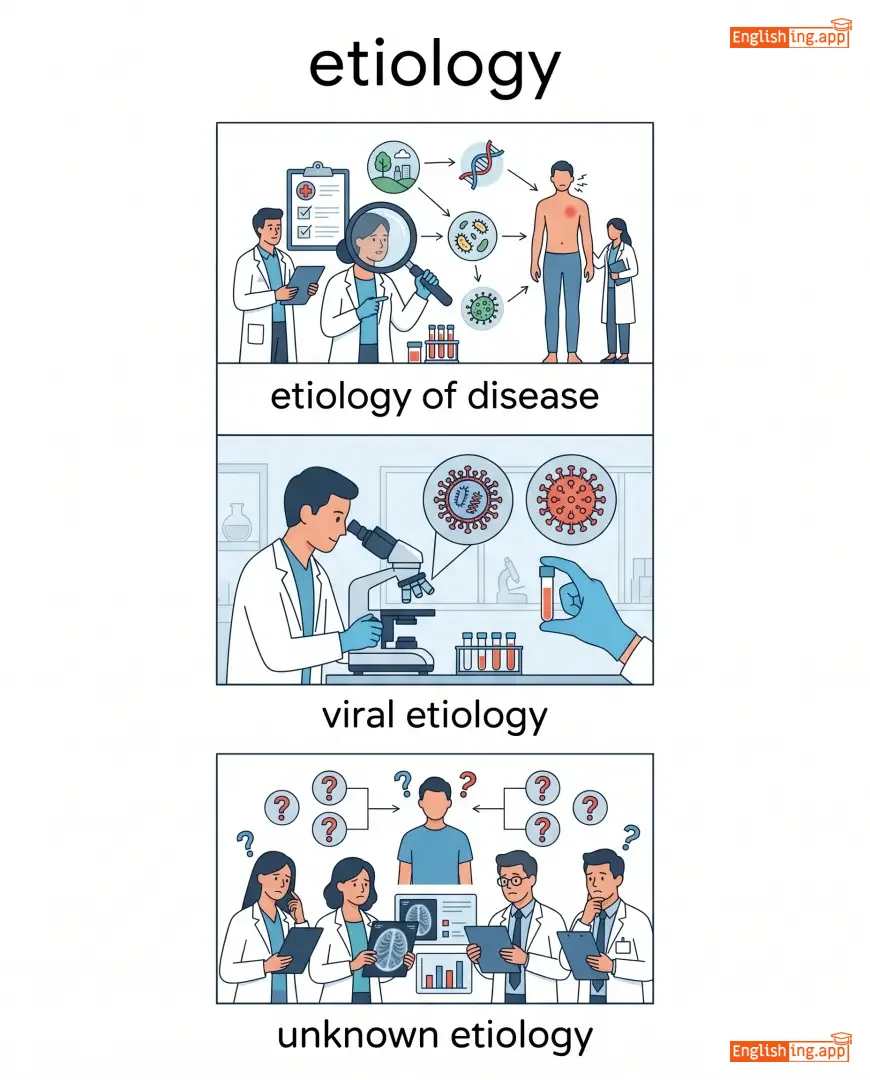
etiology of disease, viral etiology, unknown etiology, medical etiology
••••••
|
Etiology とは 'eti' (それが) 病気の原因です 🧬
••••••
|
|
📚
••••••
|
/ˌɛtɪˈmɒlədʒi/
noun
(エティモロジー)
••••••
|
|
語源学
gogen-gaku
••••••
|
- •••••• | - •••••• | - •••••• | - •••••• |
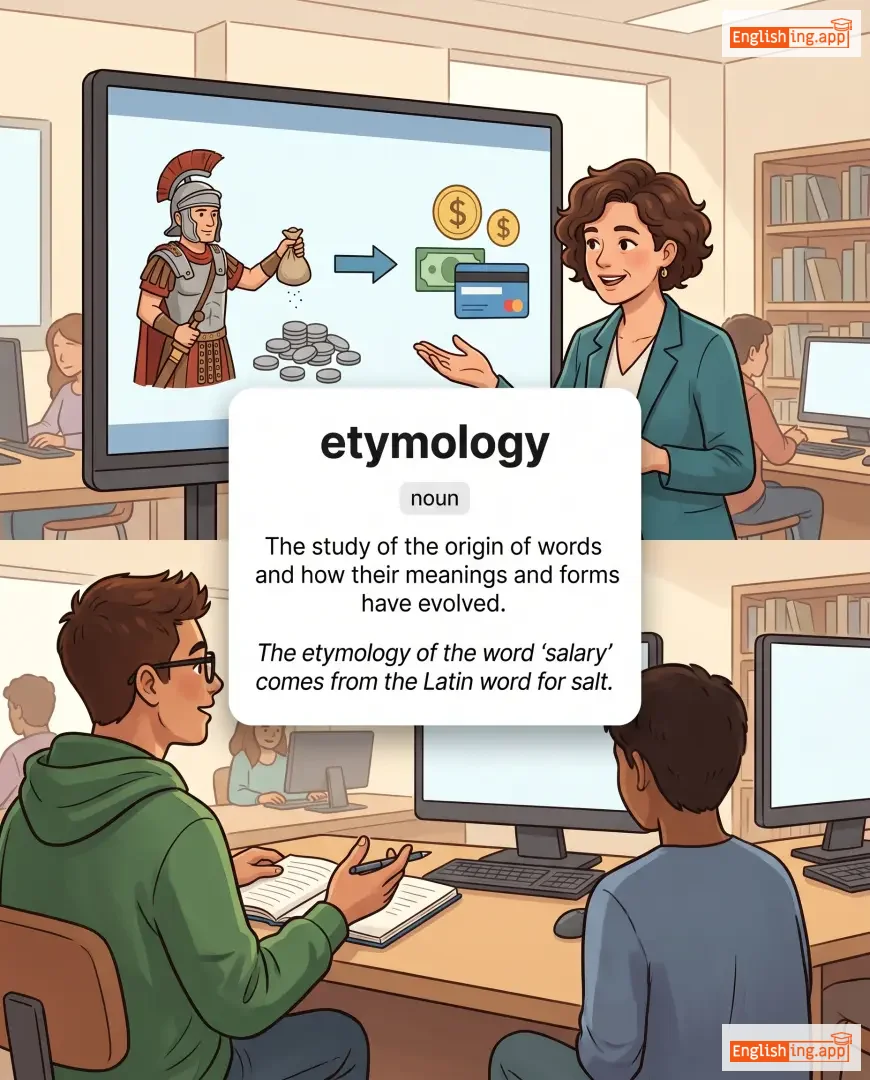
The study of the origin of words and how their meanings and forms have evolved.
••••••
|
The etymology of the word 'salary' comes from the Latin word for salt. |
'給与'という言葉の語源は、ラテン語の塩を意味する言葉から来ています。
'Kyūyo' to iu kotoba no gogen wa, raten-go no shio o imi suru kotoba kara kiteimasu.
••••••
|
- •••••• | - •••••• | - •••••• |
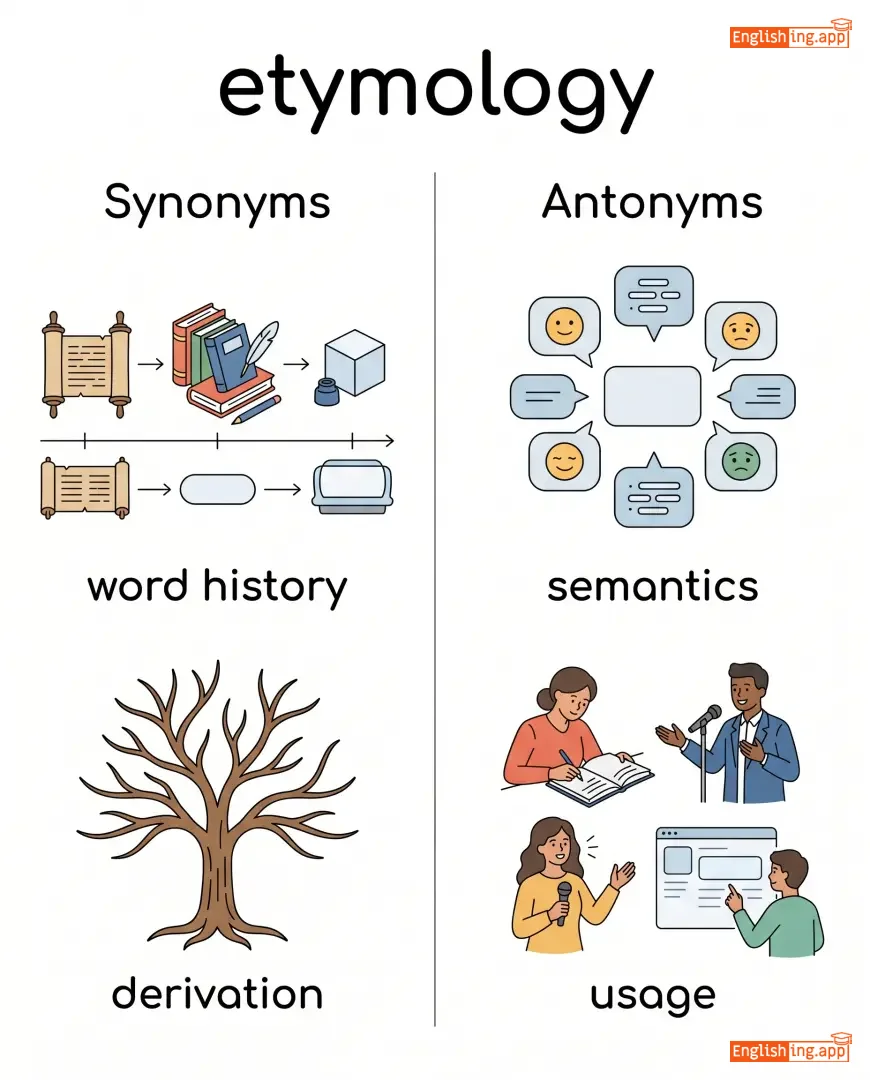
word history, derivation, origin, linguistics
••••••
|
semantics, usage
••••••
|
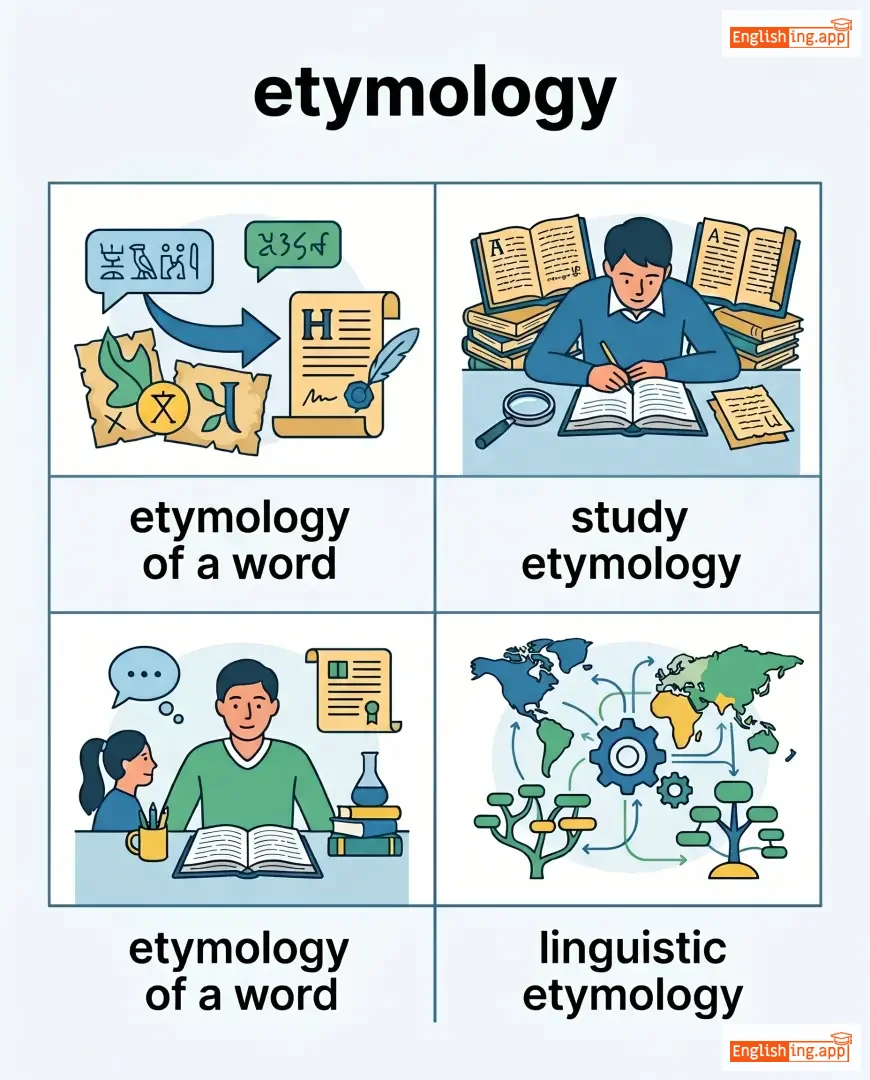
etymology of a word, study etymology, linguistic etymology, word etymology
••••••
|
語源学は言葉の過去を探るための学問です。
••••••
|
|
🧠
••••••
|
/juːˈdʒen.ɪks/
noun
(ユージニクス)
••••••
|
|
優生学
yūseigaku
••••••
|
- •••••• | - •••••• | - •••••• | - •••••• |
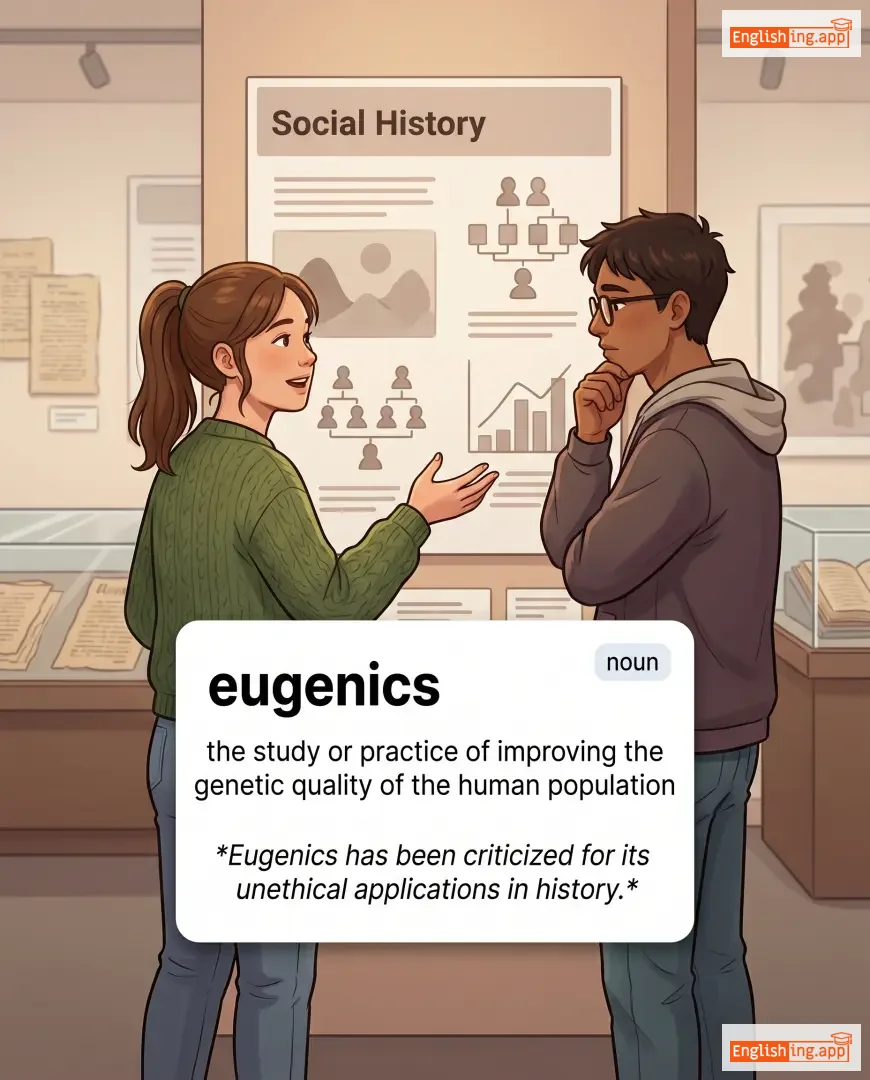
the study or practice of improving the genetic quality of the human population
••••••
|
Eugenics has been criticized for its unethical applications in history. |
優生学は歴史的にその非倫理的な応用について批判されてきました。
Yūseigaku wa rekishiteki ni sono hinrinteki na ōyō ni tsuite hihan sarete kimashita.
••••••
|
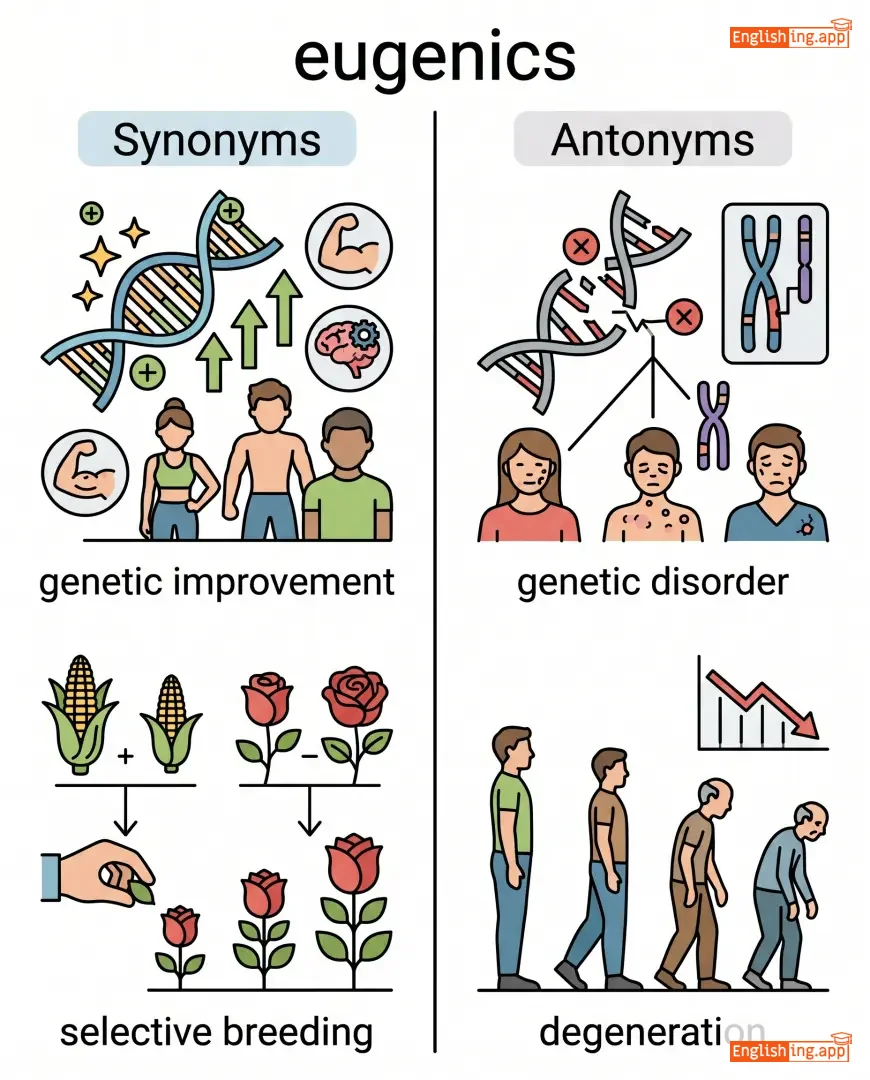
- •••••• | - •••••• | - •••••• |
genetic improvement, selective breeding, heredity study
••••••
|
genetic disorder, degeneration
••••••
|
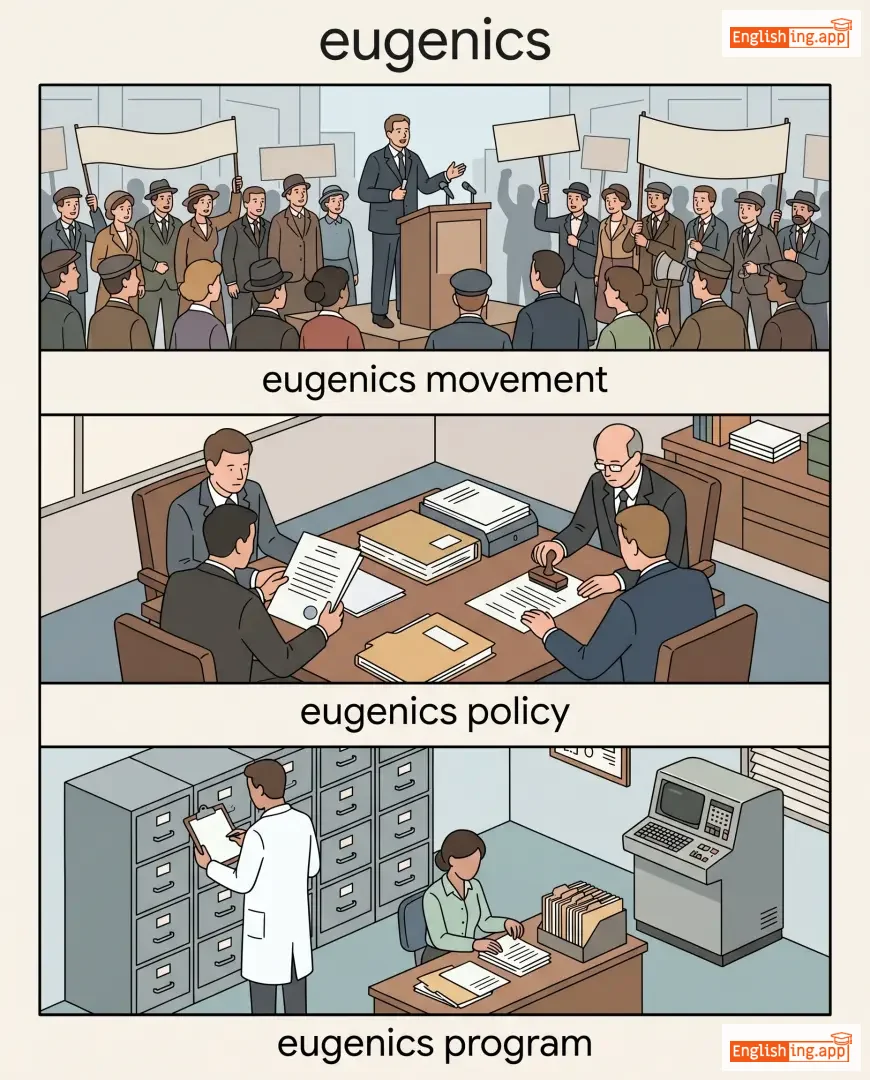
eugenics movement, eugenics policy, eugenics program, eugenics experiment
••••••
|
優生学 = 人間の遺伝子を改善する学問
••••••
|
|
💐
••••••
|
/ˈjuːlədʒi/
noun
(ユーロジー)
••••••
|

|
弔辞
chouji
••••••
|
- •••••• | - •••••• | - •••••• | - •••••• |
A speech or piece of writing that praises someone, especially after their death.
••••••
|
Her brother delivered a heartfelt eulogy at the funeral. |
彼女の兄は葬式で感動的な弔辞を述べました。
Kanojo no ani wa soushiki de kandouteki na chouji o nobemashita.
••••••
|
- •••••• | - •••••• | - •••••• |
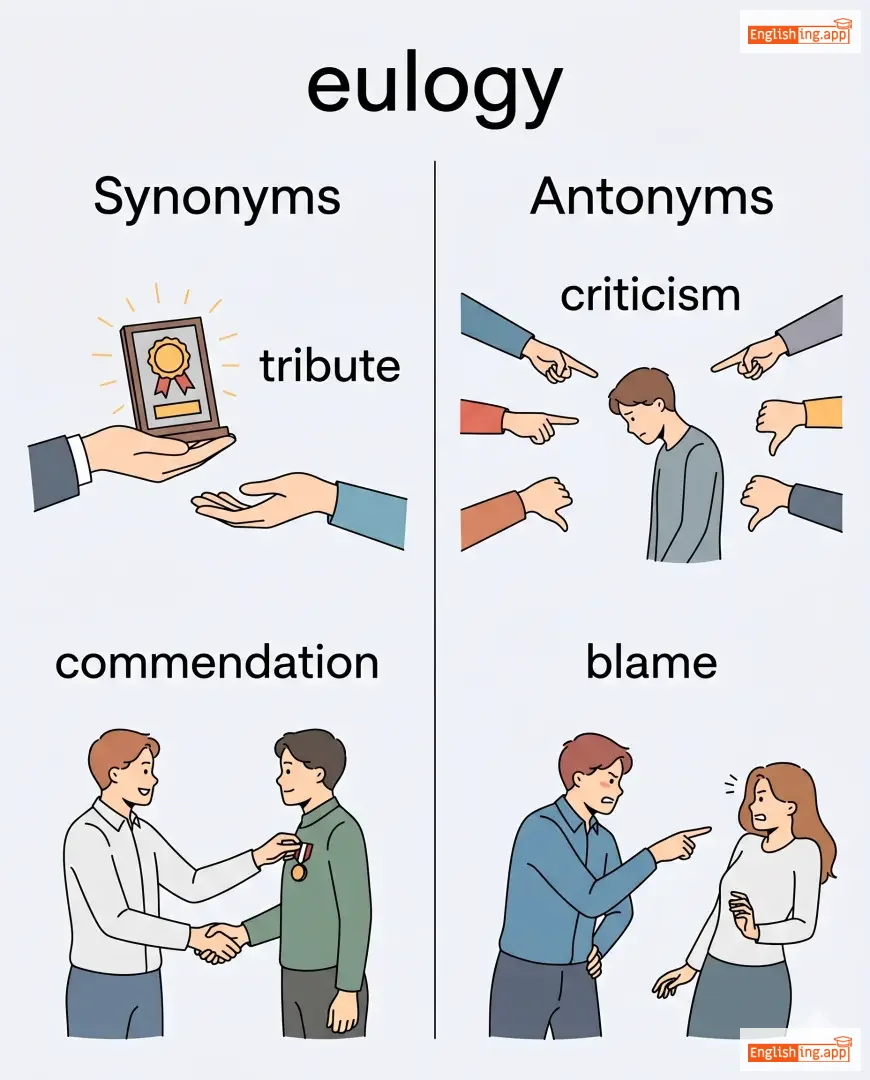
tribute, commendation, accolade, praise
••••••
|
criticism, blame
••••••
|
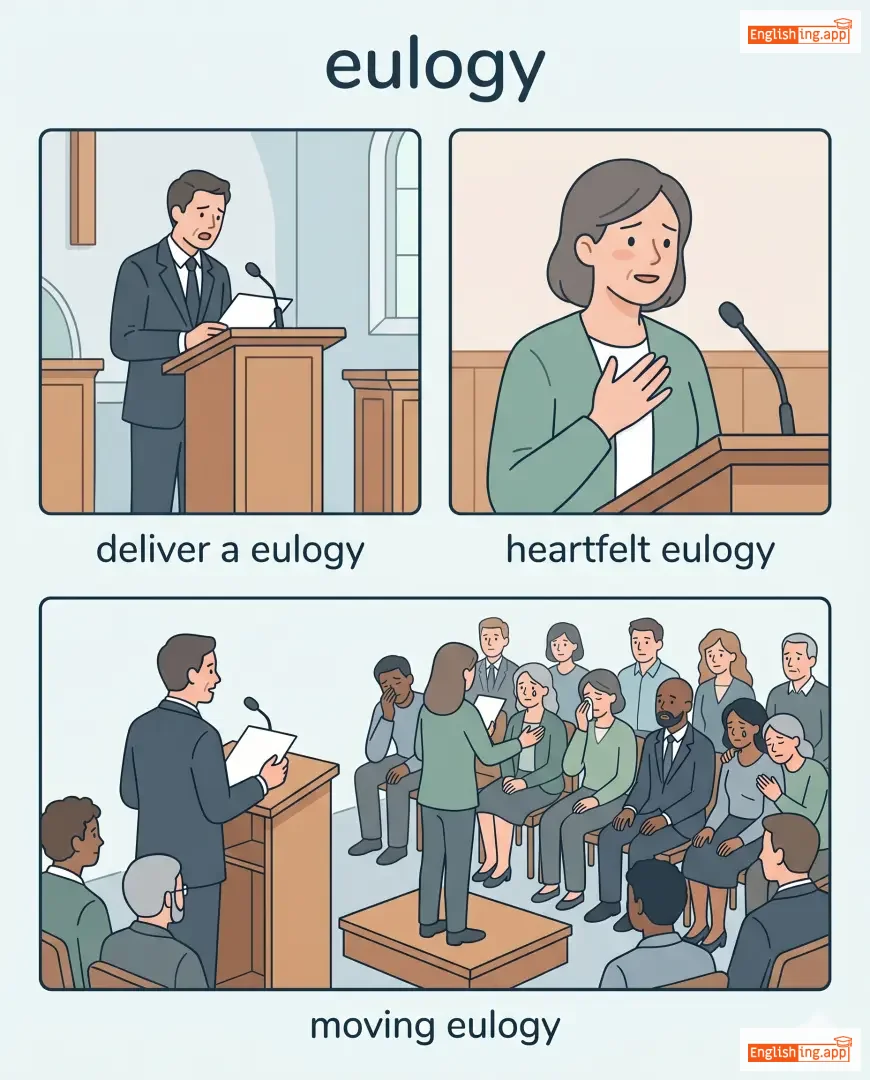
deliver a eulogy, heartfelt eulogy, moving eulogy
••••••
|
弔辞(chouji)は、故人を称賛するための言葉です。
••••••
|
|
🗣️
••••••
|
/ˈjuːfəmɪzəm/
noun
(ユーフェミズム)
••••••
|
|
婉曲語
wankyokugo
••••••
|
- •••••• | - •••••• | - •••••• | - •••••• |
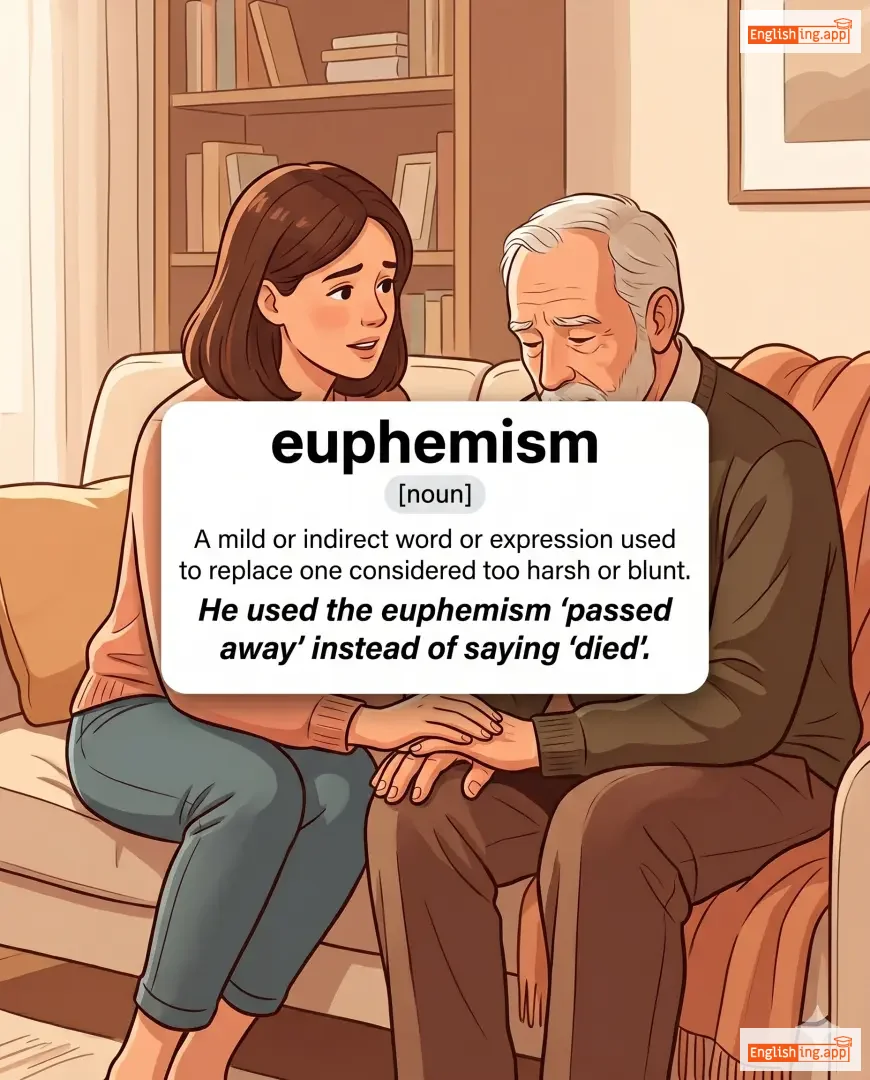
A mild or indirect word or expression used to replace one considered too harsh or blunt.
••••••
|
He used the euphemism 'passed away' instead of saying 'died'. |
彼は「亡くなった」という代わりに「逝った」という婉曲語を使った。
Kare wa 'nakunatta' to iu kawari ni 'itta' to iu wankyokugo o tsukatta.
••••••
|
- •••••• | - •••••• | - •••••• |
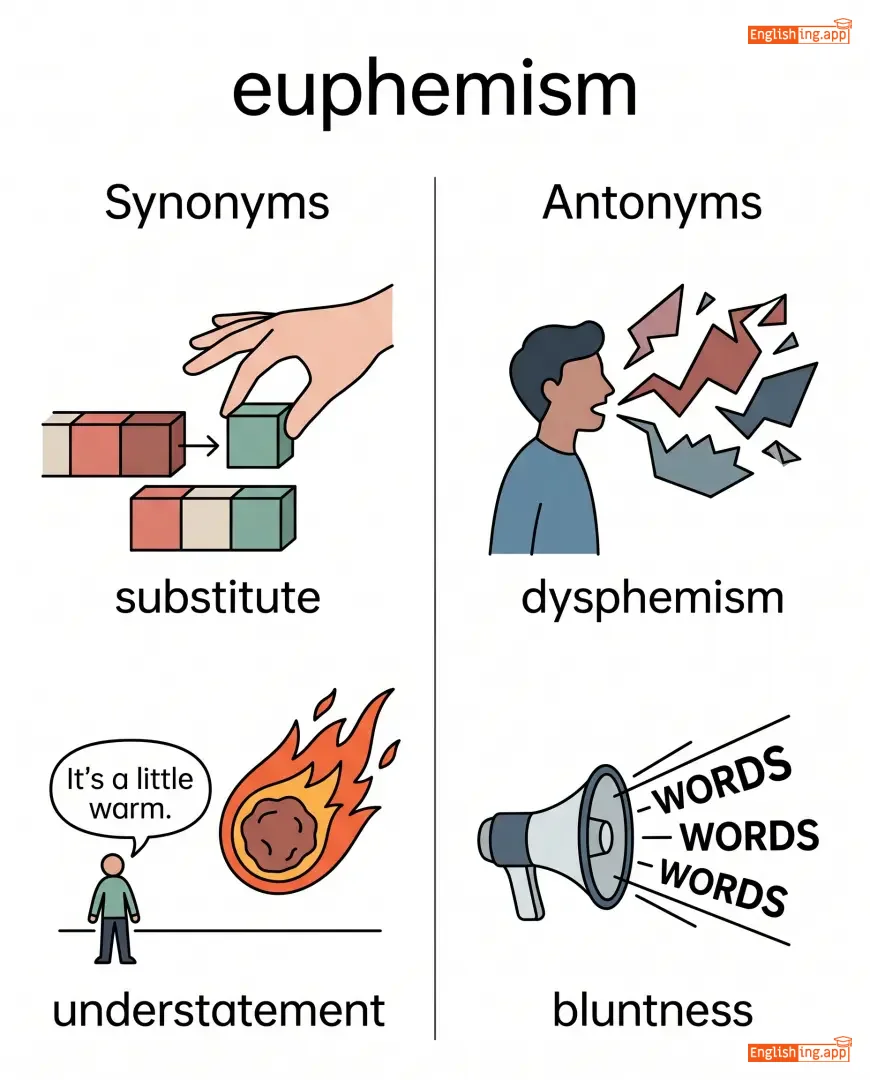
substitute, understatement, circumlocution, softening, polite term
••••••
|
dysphemism, bluntness, directness
••••••
|
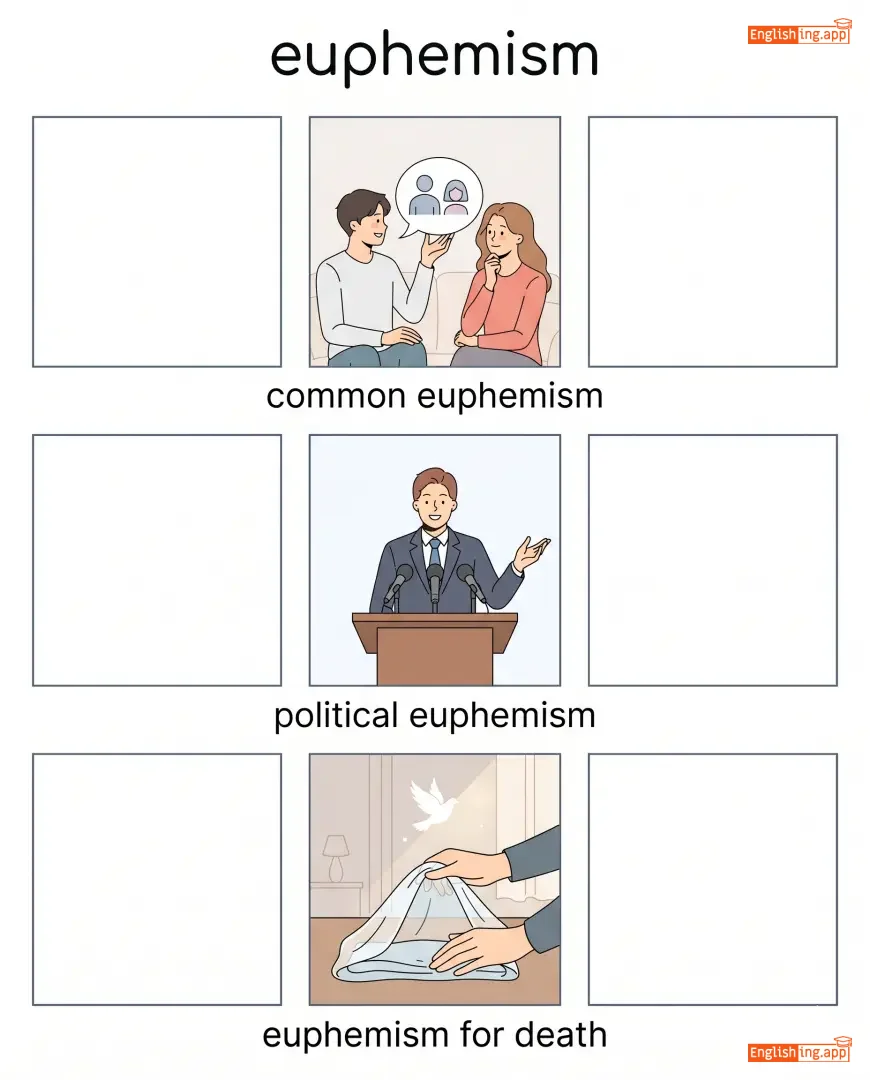
common euphemism, political euphemism, euphemism for death, use a euphemism
••••••
|
婉曲語は '優しく話す' ことを意味します—例えば '亡くなった' ではなく '逝った' と言うことです。
••••••
|
|
😁
••••••
|
/juːˈfɔːriə/
noun
(ユーフォリア)
••••••
|
|
幸福感
koufukukan
••••••
|
- •••••• | - •••••• | - •••••• | - •••••• |
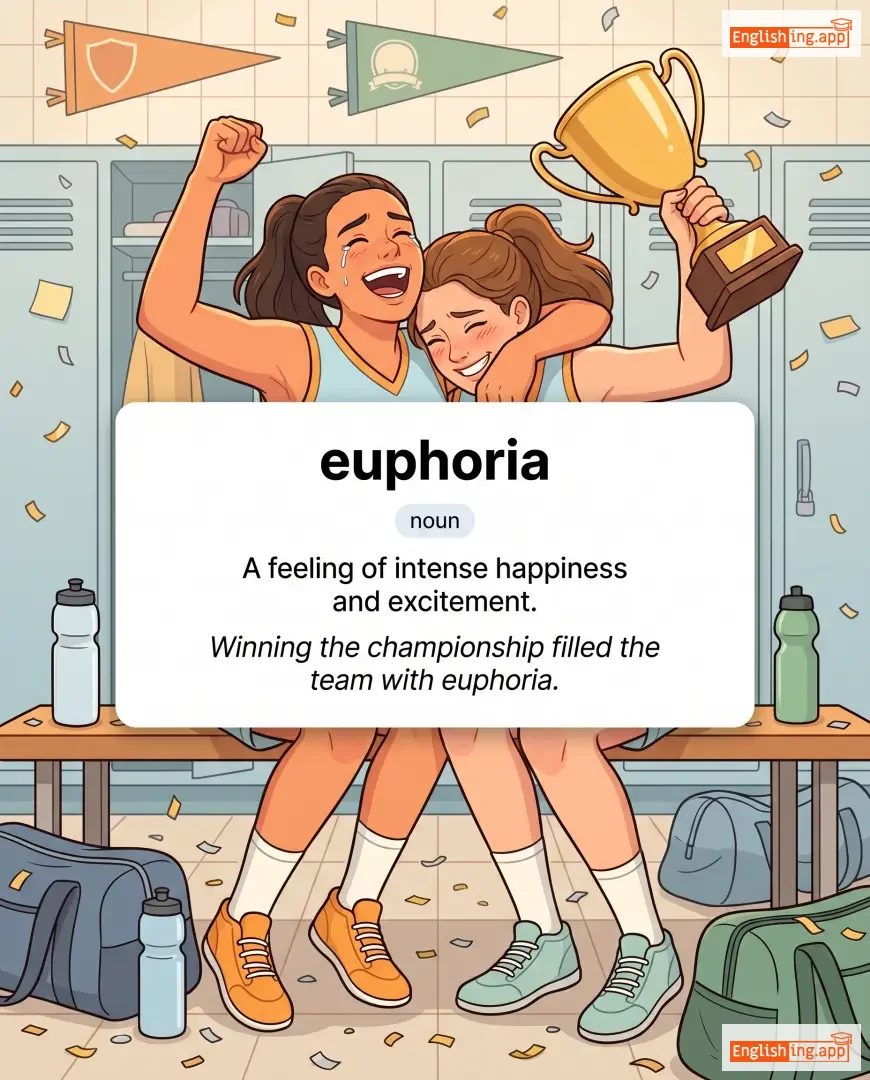
A feeling of intense happiness and excitement.
••••••
|
Winning the championship filled the team with euphoria.
チャンピオンシップを優勝すると、チームはユーフォリアで満たされました。
••••••
|
チャンピオンシップを優勝すると、チームは幸福感で満たされました。
Chanpionship wo yūshō suru to, chīmu wa kōfukukan de mitasaremashita.
••••••
|
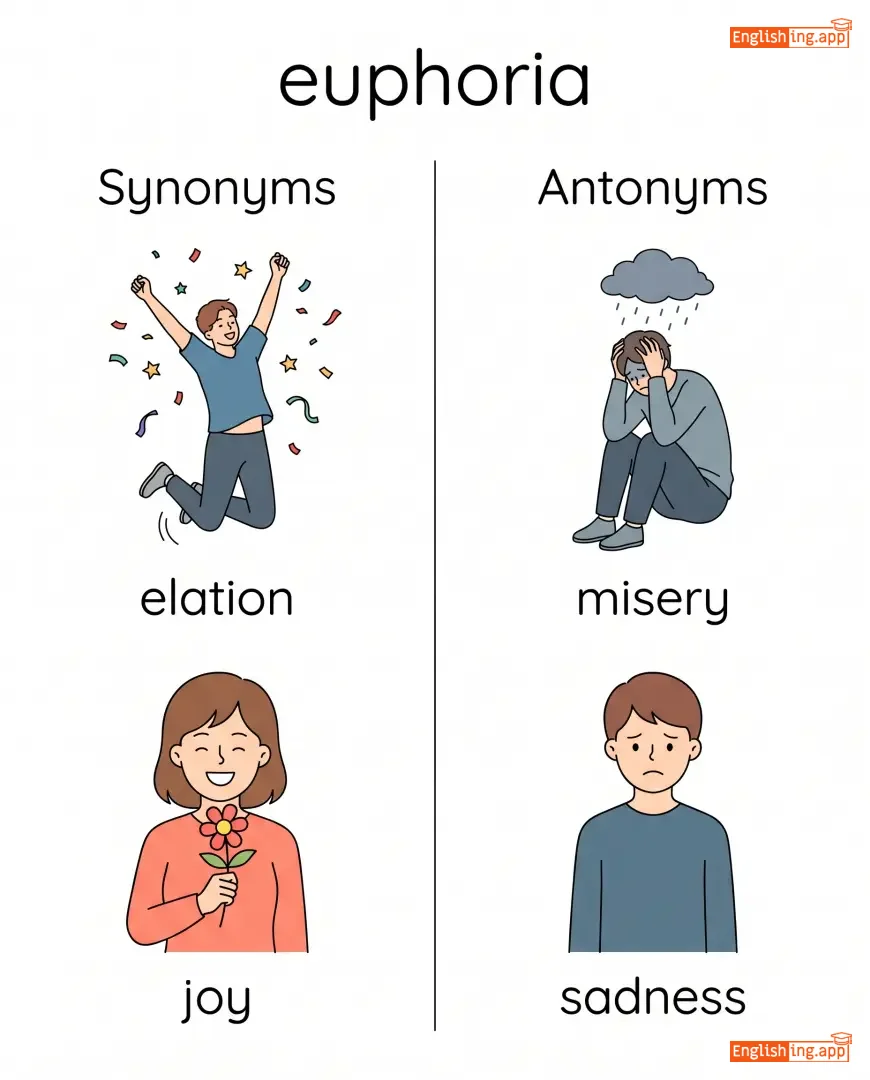
- •••••• | - •••••• | - •••••• |
elation, joy, bliss, delight, happiness
••••••
|
misery, sadness, depression
••••••
|
state of euphoria, sense of euphoria, experience euphoria, filled with euphoria
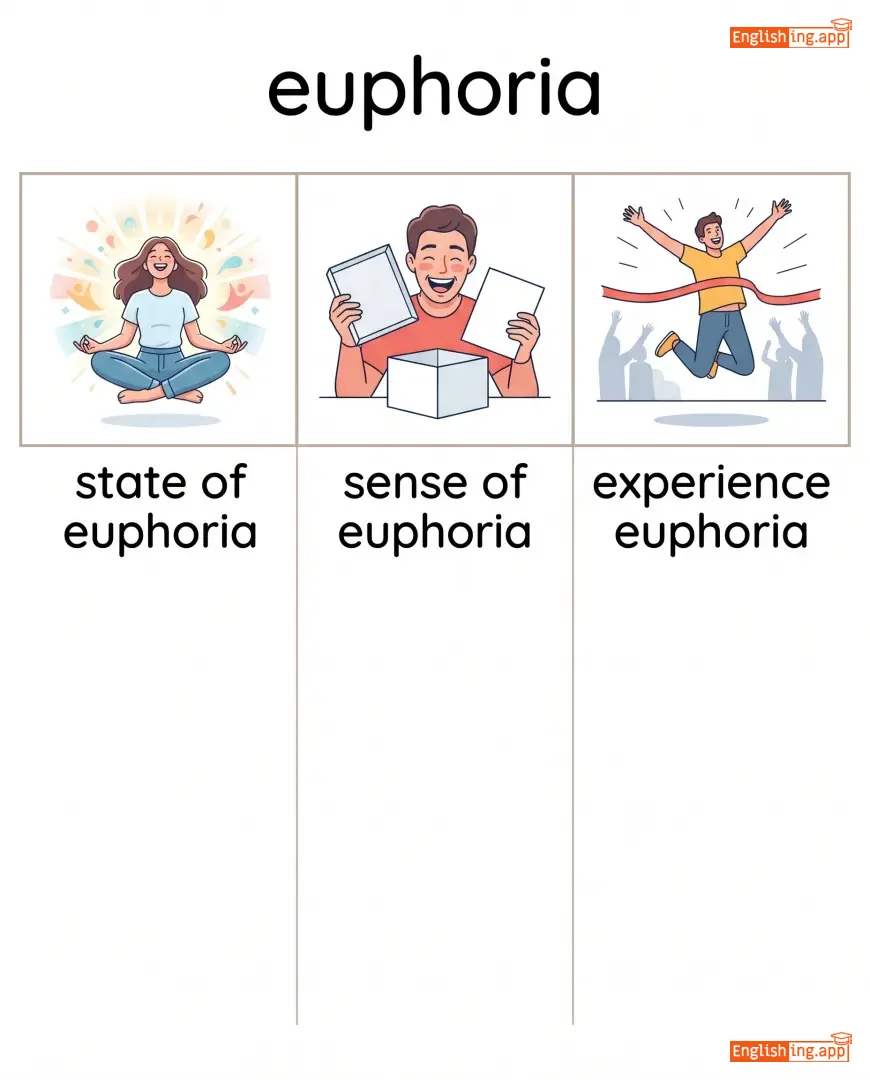
••••••
|
Euphoria = 幸福感を感じて、喜びが爆発する瞬間!
••••••
|
|
⚖️
••••••
|
/ˌjuːθəˈneɪʒə/
noun
(ユースアナジア)
••••••
|
|
安楽死
anraku shi
••••••
|
- •••••• | - •••••• | - •••••• | - •••••• |
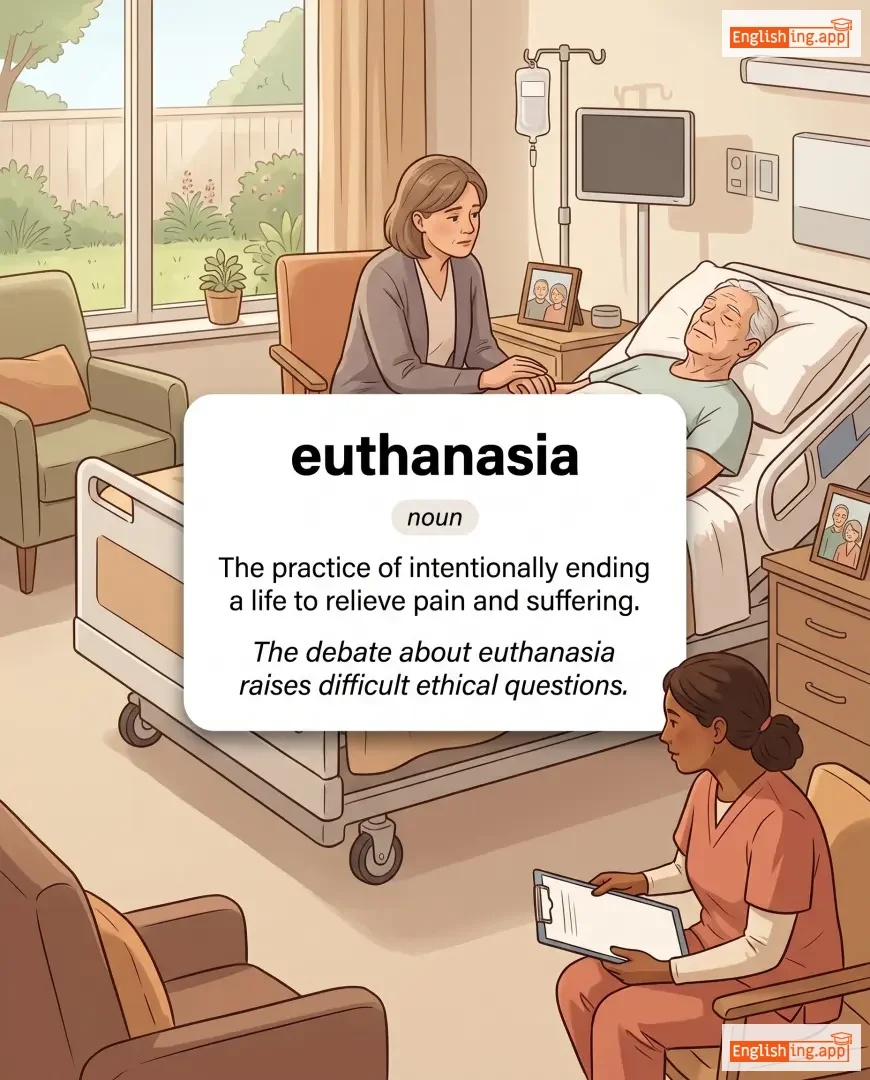
The practice of intentionally ending a life to relieve pain and suffering.
••••••
|
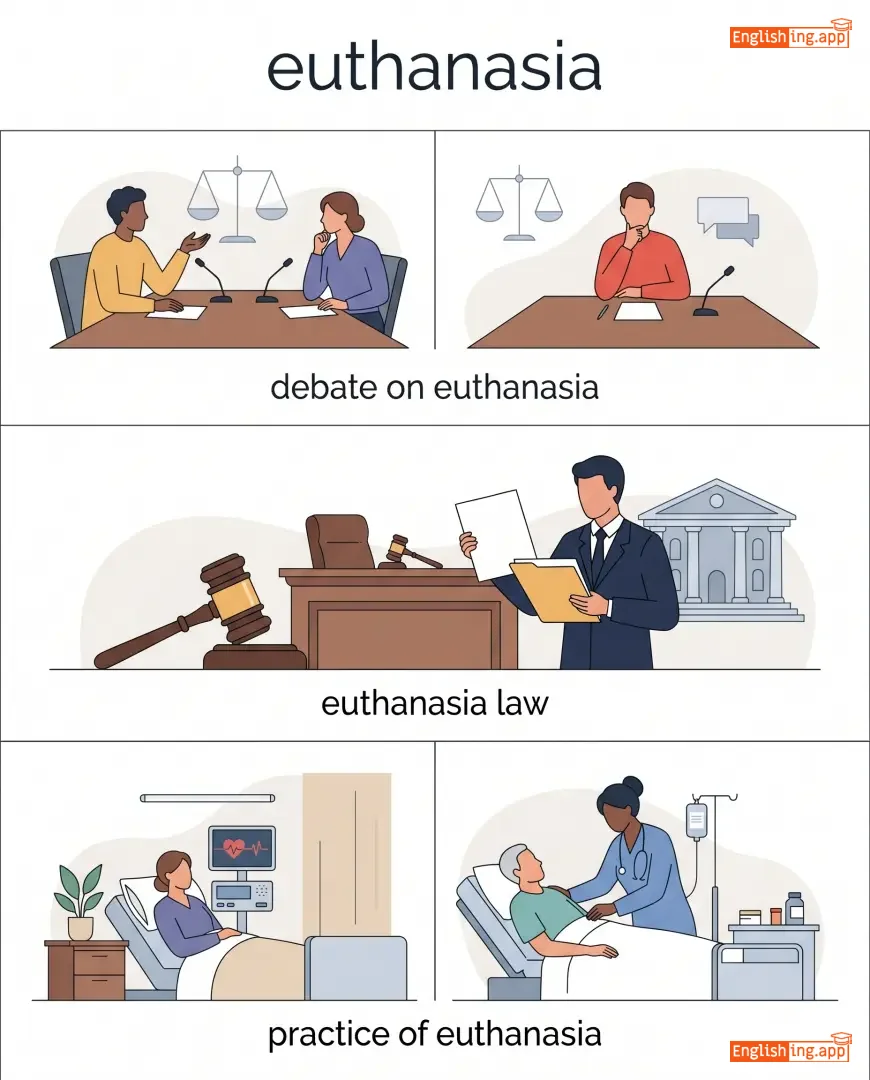
The debate about euthanasia raises difficult ethical questions. |
安楽死についての議論は、難しい倫理的な問題を提起します。
Anraku shi ni tsuite no giron wa, muzukashii rinriteki na mondai wo teiki shimasu.
••••••
|
- •••••• | - •••••• | - •••••• |
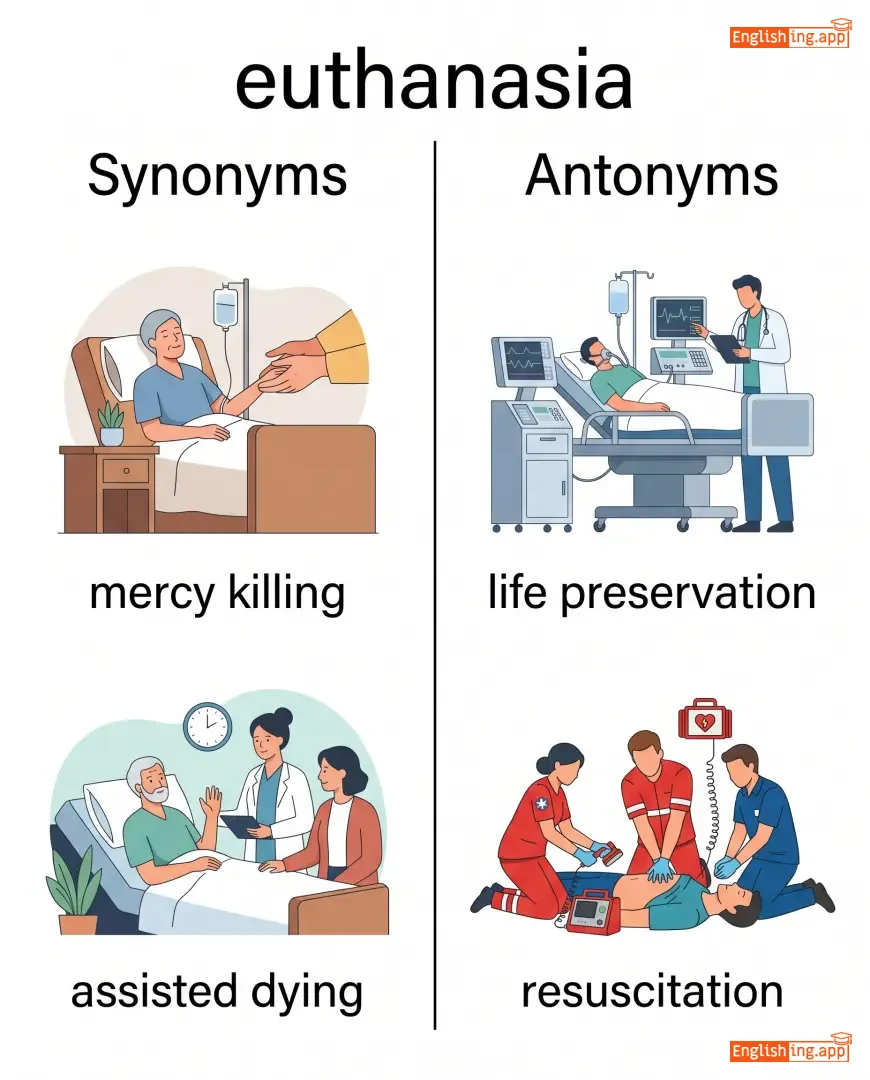
mercy killing, assisted dying, physician-assisted suicide
••••••
|
life preservation, resuscitation
••••••
|
debate on euthanasia, euthanasia law, practice of euthanasia
••••••
|
Youth + Nasia - 若者の命を終わらせる - 安楽死
••••••
|
|
✨
••••••
|
/ɪˈvɪns/
verb
(エヴィンス)
••••••
|

|
示す
shimesu
••••••
|
evinced
エヴィンスド
••••••
|
evinced
エヴィンスド
••••••
|
evinces
エヴィンセス
••••••
|
evincing
エヴィンシング
••••••
|
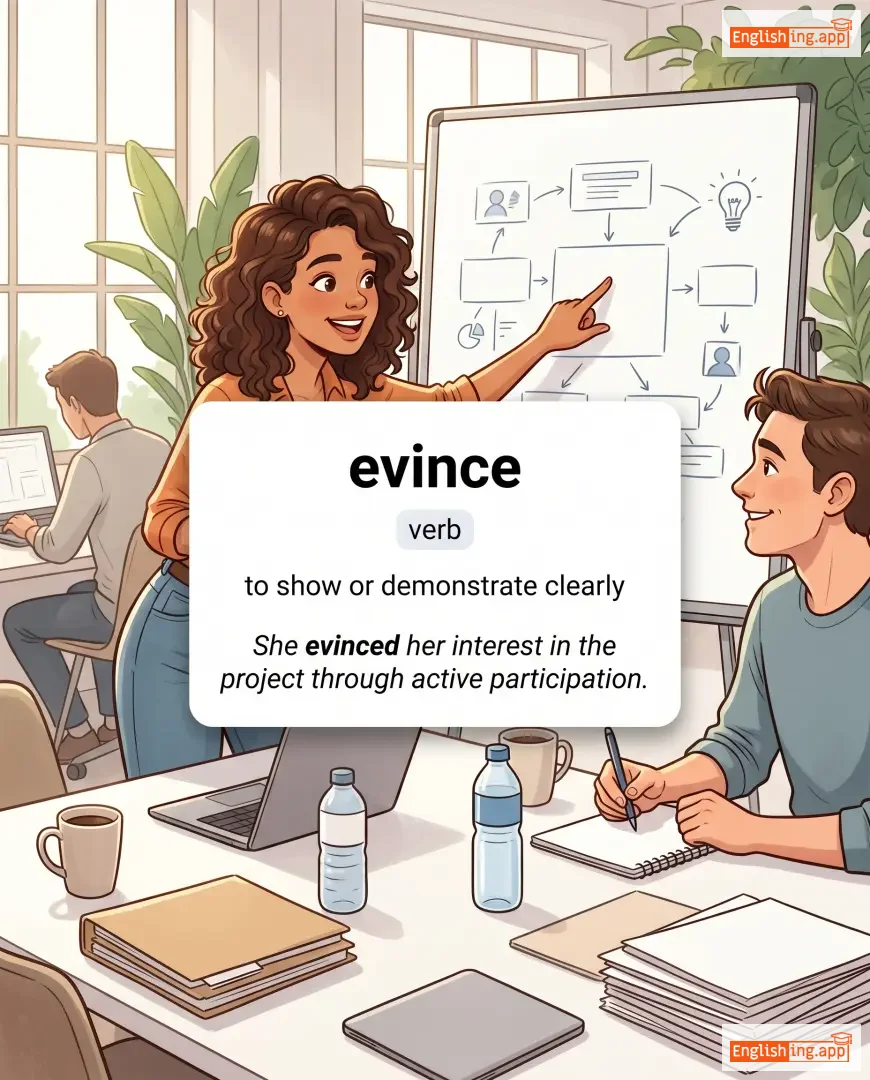
to show or demonstrate clearly
••••••
|
She evinced her interest in the project through active participation.
彼女は積極的な参加を通じてそのプロジェクトに対する関心を示した。
••••••
|
彼女は積極的な参加を通じてそのプロジェクトに対する関心を示した。
Kanojo wa sekkyokuteki na sanka wo toshite sono purojekuto ni taisuru kanshin wo shimeshita.
••••••
|
- •••••• | - •••••• | - •••••• |
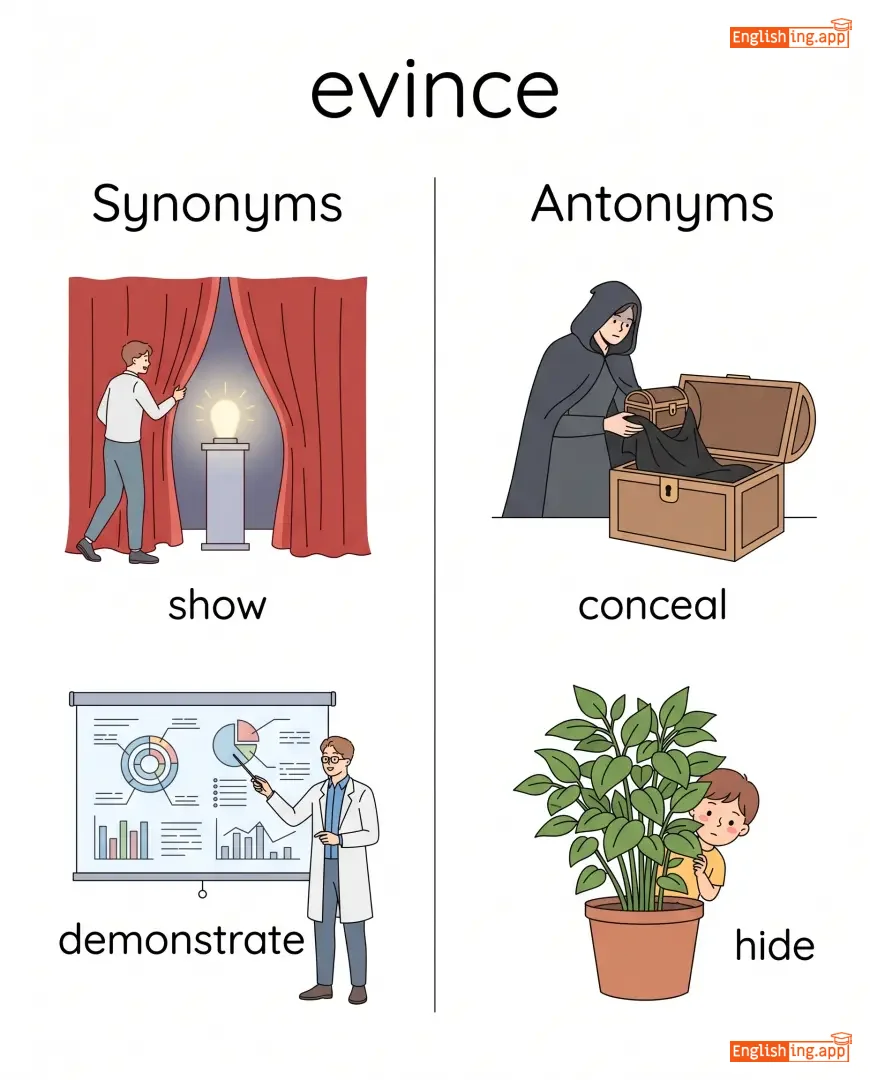
show, demonstrate, reveal, display, manifest
••••••
|
conceal, hide
••••••
|
evince interest, evince emotion, evince curiosity
••••••
|
Evinceはevidenceのように、明確に示すことを意味する。
••••••
|
|
🎶
••••••
|
/ɪˈvɒkətɪv/
adjective
(エヴォカティブ)
••••••
|
|
呼び起こす
yobikokosu
••••••
|
- •••••• | - •••••• | - •••••• | - •••••• |
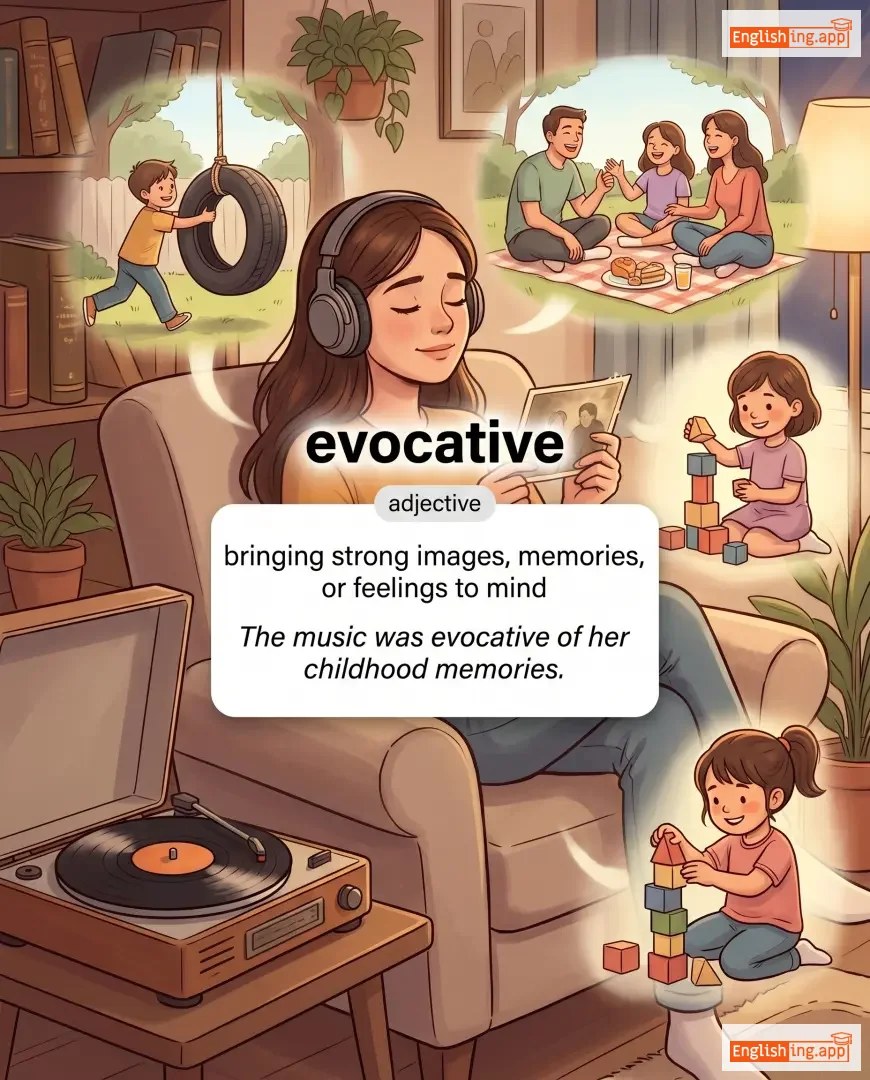
bringing strong images, memories, or feelings to mind
••••••
|
The music was evocative of her childhood memories. |
その音楽は彼女の子供時代の記憶を呼び起こしました。
Sono ongaku wa kanojo no kodomojidai no kioku o yobikokoshimashita.
••••••
|
- •••••• | - •••••• | - •••••• |
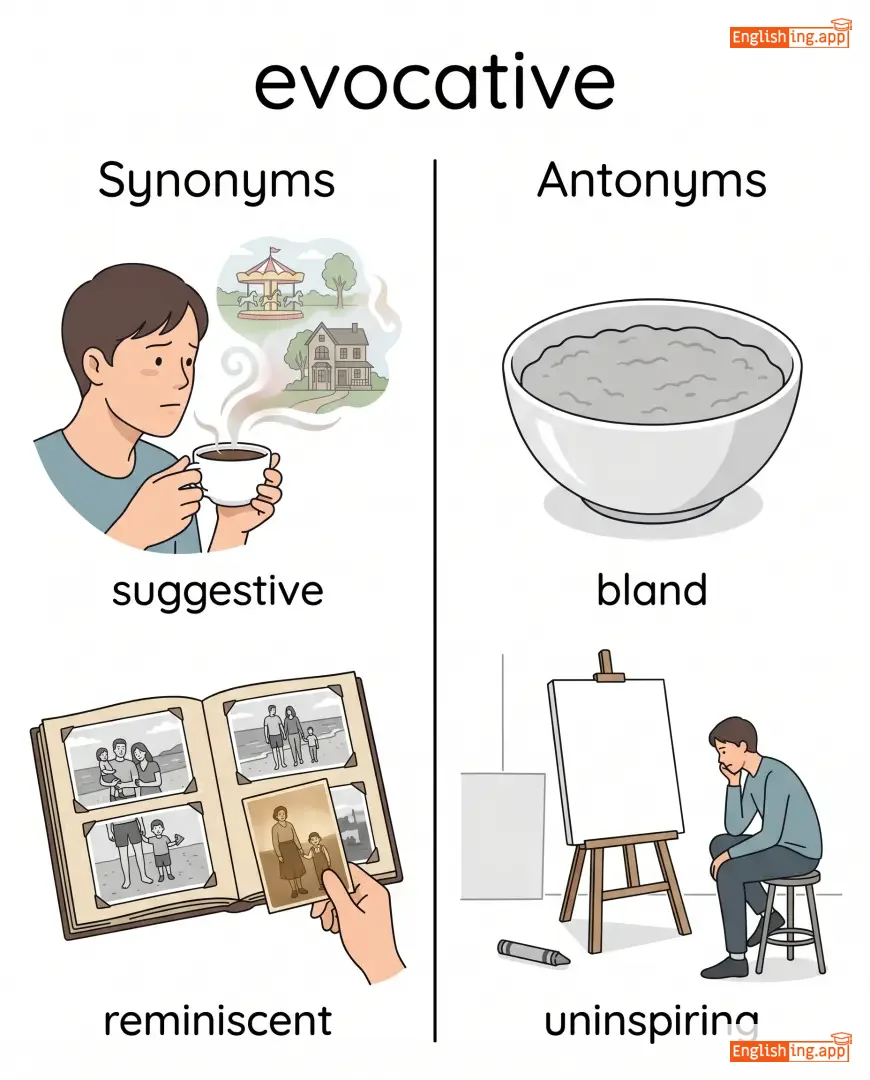
suggestive, reminiscent, expressive, moving
••••••
|
bland, uninspiring
••••••
|
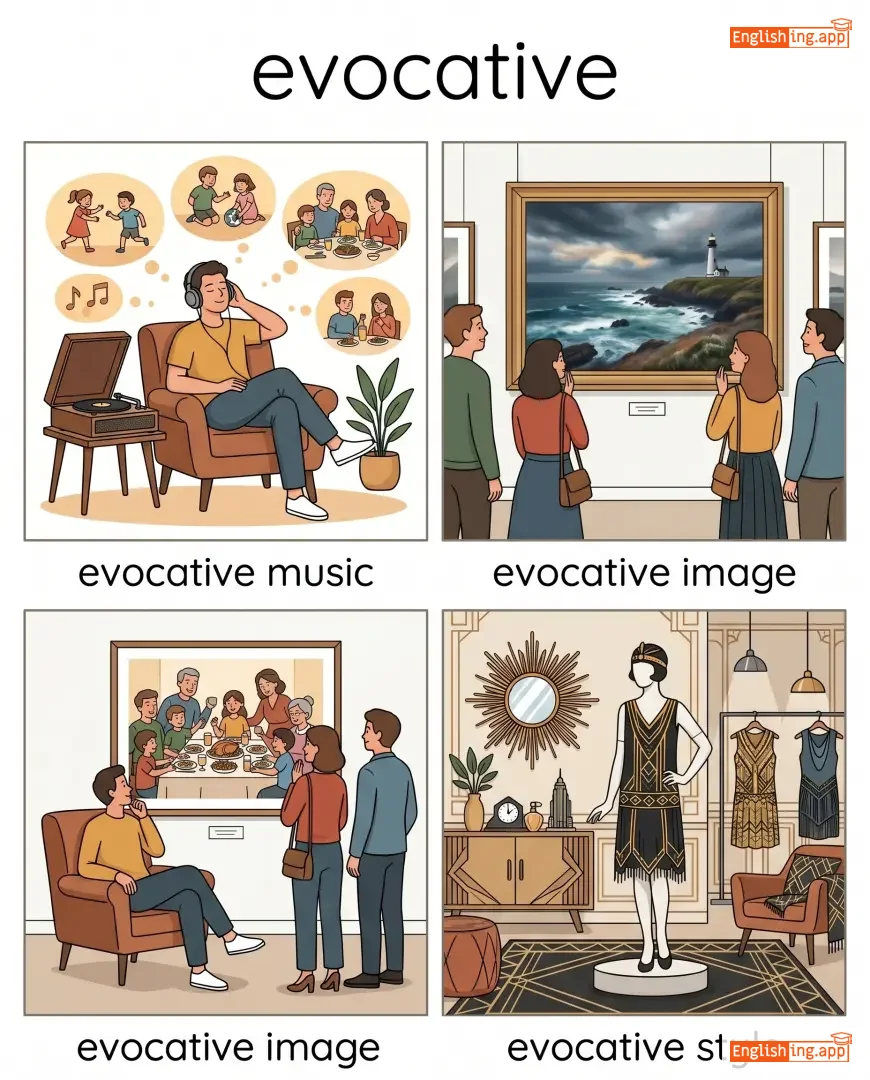
evocative music, evocative image, evocative style
••••••
|
Evocativeは記憶を呼び起こす - 思い出させる何かです。
••••••
|
|
🔥
••••••
|
/ɪɡˈzæsərˌbeɪt/
verb
(エクササーベイト)
••••••
|
|
悪化させる
akka saseru
••••••
|
exacerbated
エクササーベイテッド
••••••
|
exacerbated
エクササーベイテッド
••••••
|
exacerbates
エクササーベイツ
••••••
|
exacerbating
エクササーベイティング
••••••
|
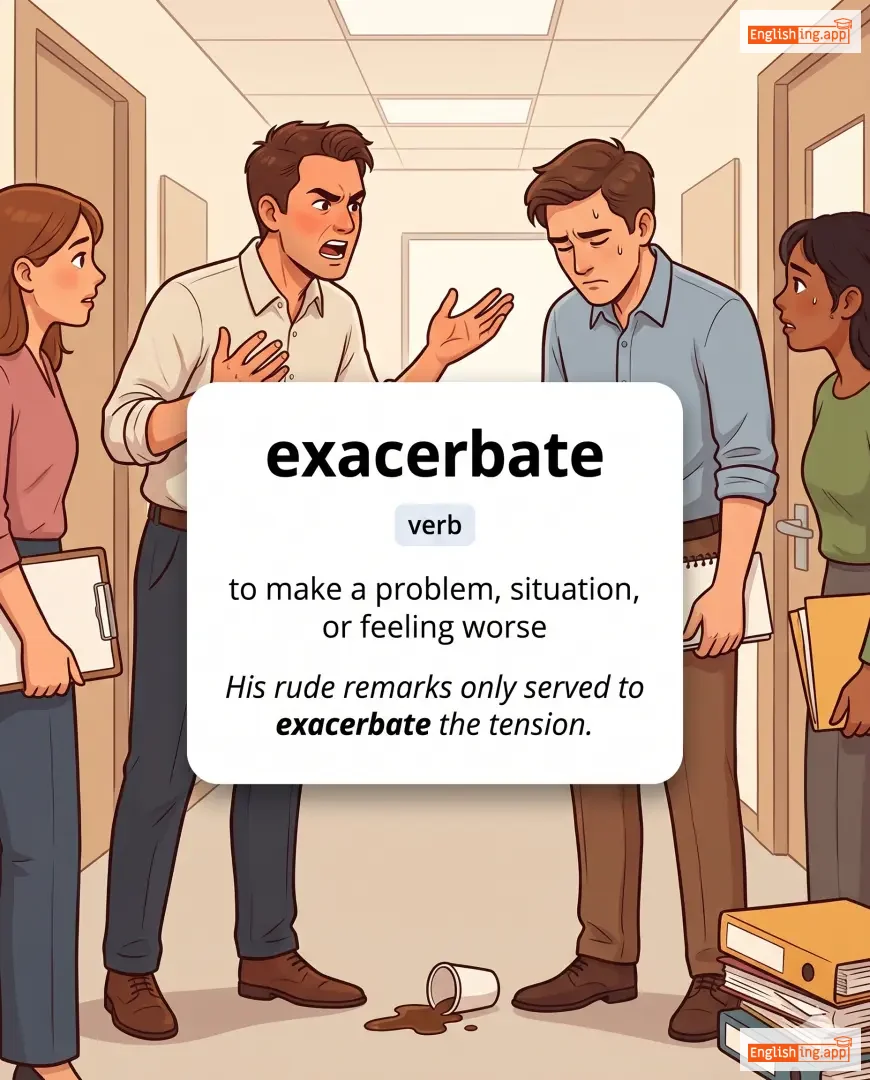
to make a problem, situation, or feeling worse
••••••
|
His rude remarks only served to exacerbate the tension.
彼の失礼なコメントは、緊張を悪化させるだけだった。
••••••
|
彼の失礼なコメントは、緊張を悪化させるだけだった。
Kare no shitsurei na komento wa, kinchou wo akka saseru dake datta.
••••••
|
- •••••• | - •••••• | - •••••• |
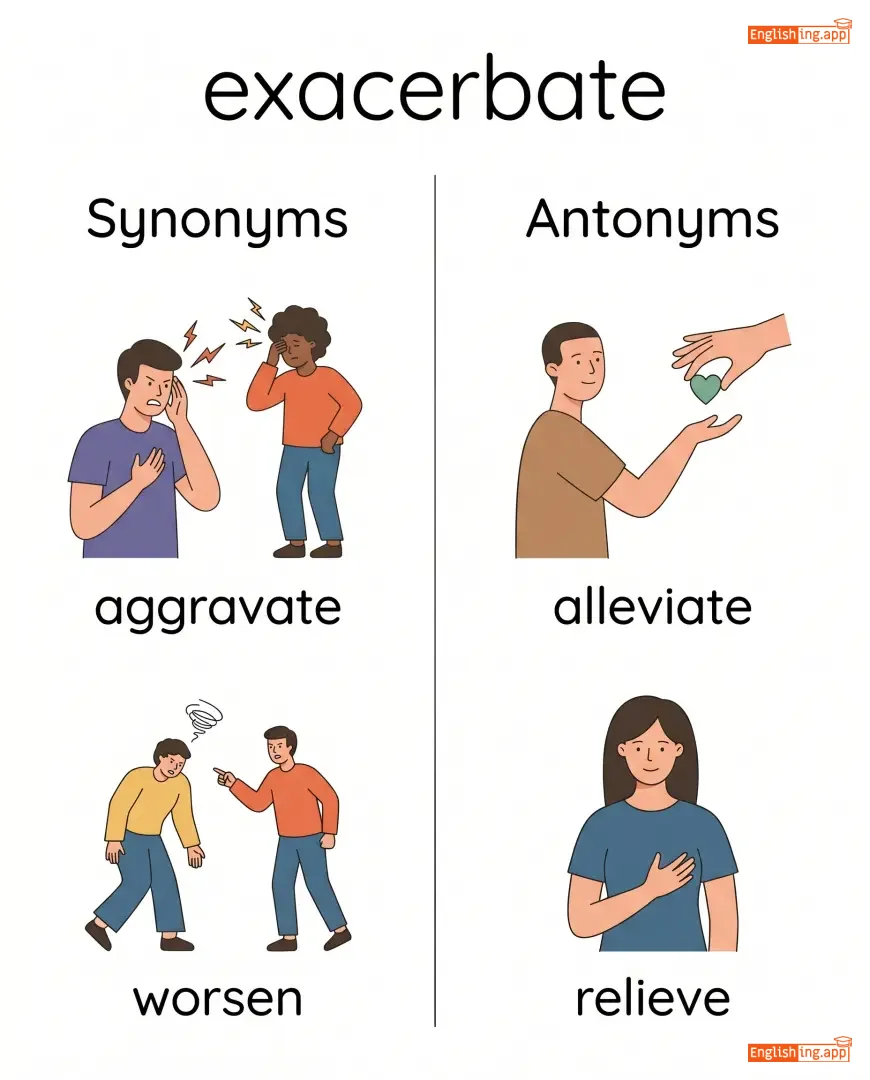
aggravate, worsen, intensify, heighten, inflame
••••••
|
alleviate, relieve, improve
••••••
|
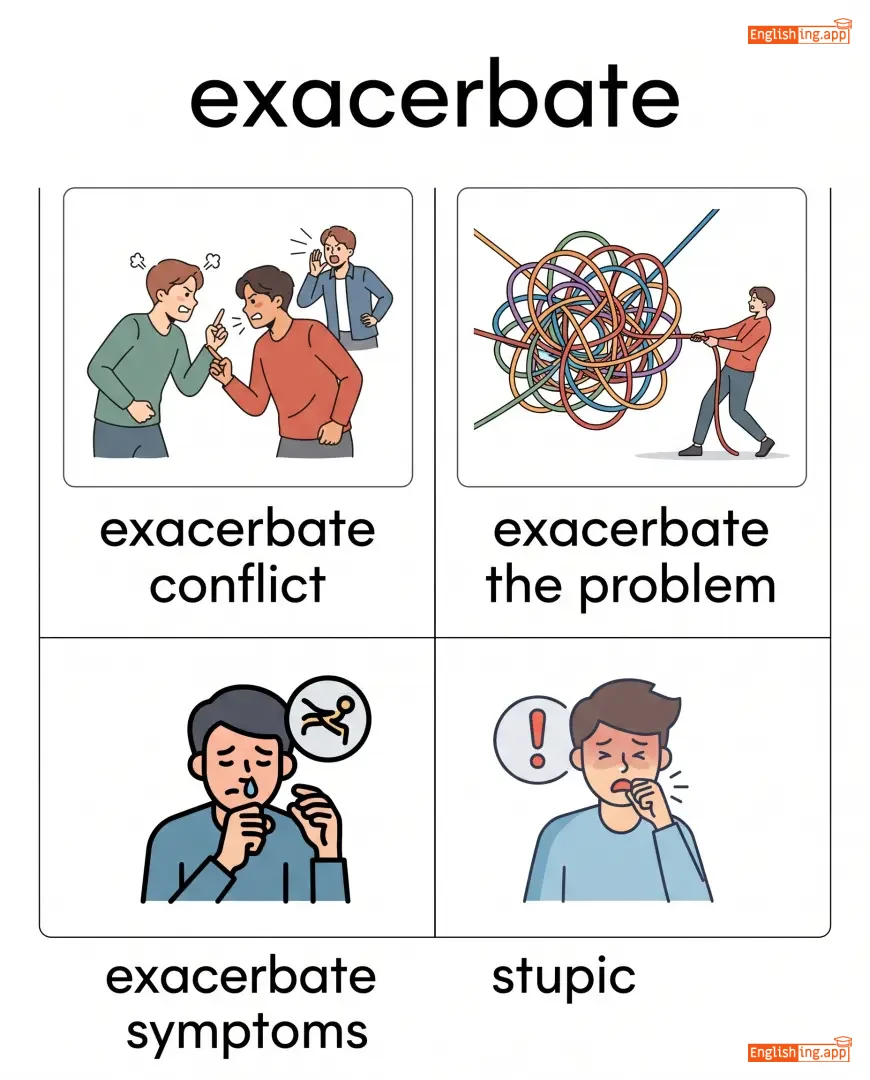
exacerbate conflict, exacerbate the problem, exacerbate symptoms, exacerbate tension
••••••
|
エクササーベイトは状況を悪化させること、問題をもっとひどくすることを意味します。
••••••
|
|
🎯
••••••
|
/ɪɡˈzækt/
adjective, verb
(エグザクト)
••••••
|
|
正確
seikaku
••••••
|
exacted
エグザクテッド
••••••
|
exacted
エグザクテッド
••••••
|
exacts
エグザクツ
••••••
|
exacting
エグザクティング
••••••
|
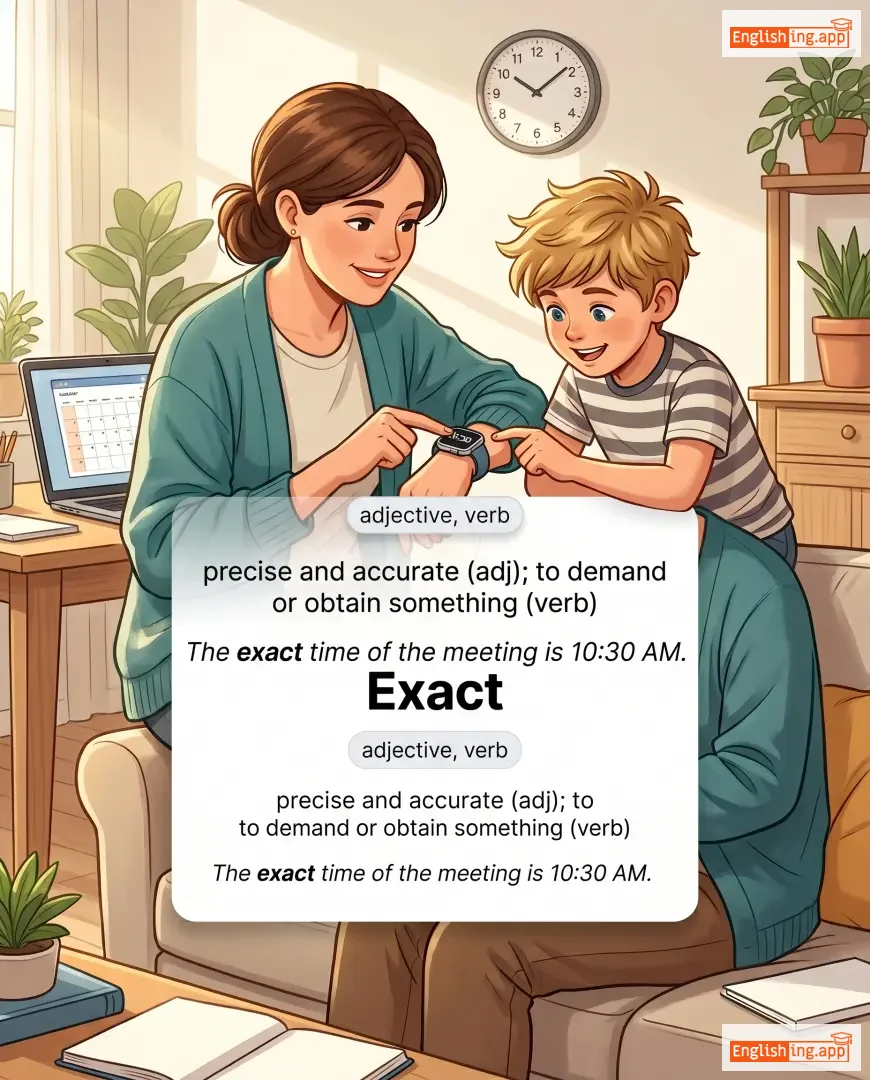
precise and accurate (adj); to demand or obtain something (verb)
••••••
|
The exact time of the meeting is 10:30 AM.
会議の正確な時間は10:30 AMです。
••••••
|
会議の正確な時間は10:30 AMです。
Kaigi no seikaku na jikan wa 10:30 AM desu.
••••••
|
to exact revenge
復讐を遂げる
••••••
|
to inflict punishment or harm in return for an injury or wrong
••••••
|
復讐する
fukushuu suru
••••••
|
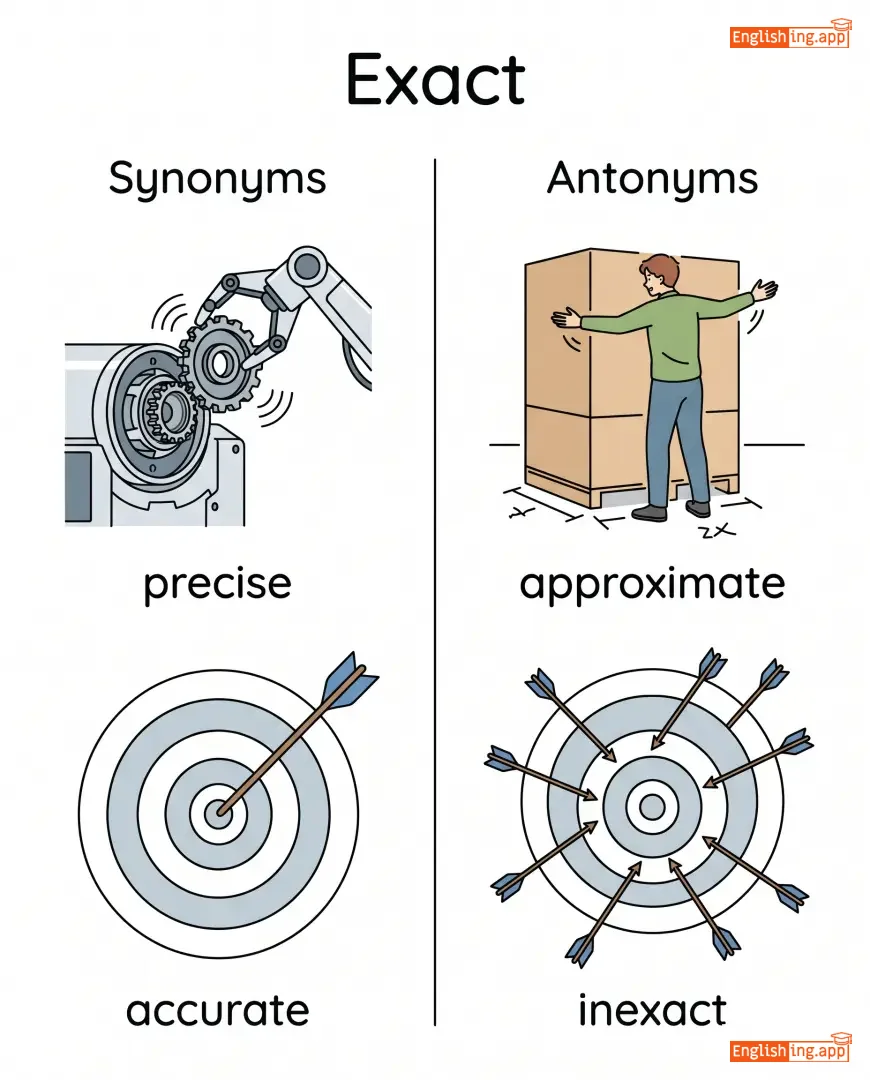
precise, accurate, demand, require, strict
••••••
|
approximate, inexact, lenient
••••••
|
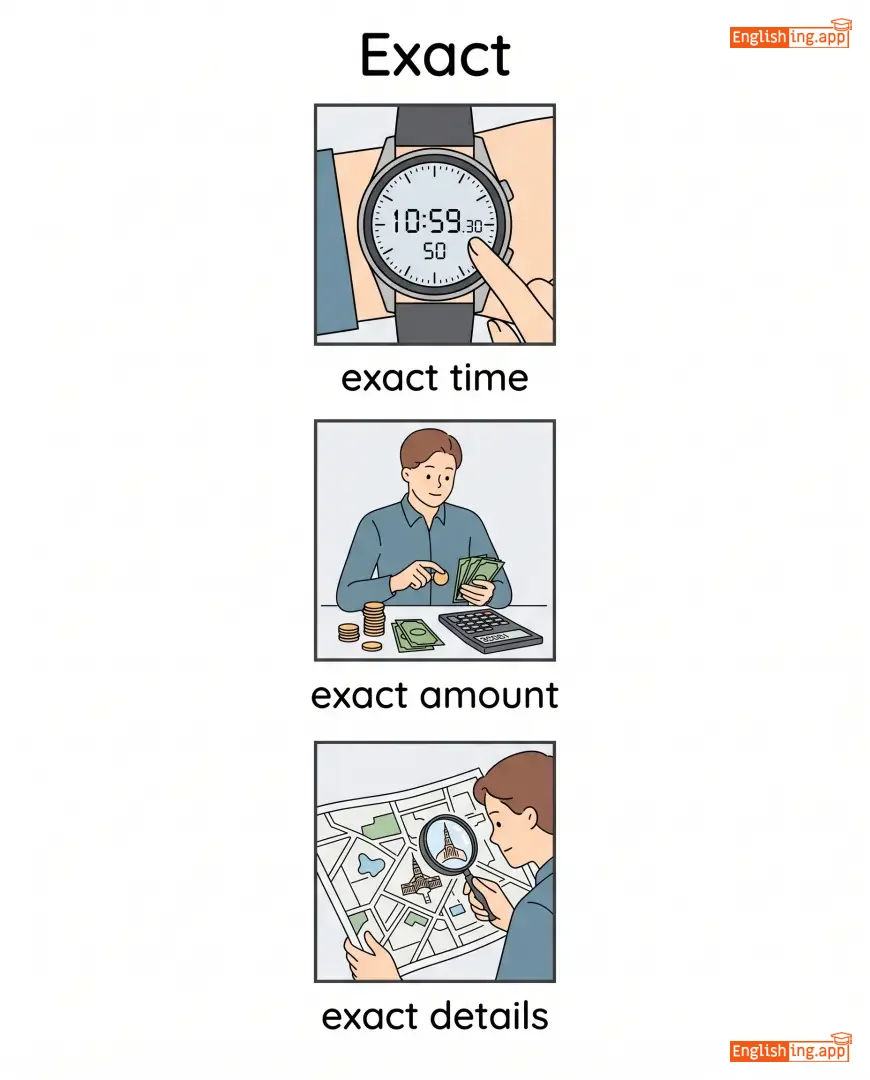
exact time, exact amount, exact details, exact revenge
••••••
|
Exactは正確、そうでなければ復讐が来る!
••••••
|
|
⚖️
••••••
|
/ˈɛkskʌlpeɪt/
verb
(エクスカルペイト)
••••••
|

|
免罪する
menzai suru
••••••
|
exculpated
エクスカルペイテッド
••••••
|
exculpated
エクスカルペイテッド
••••••
|
exculpates
エクスカルペイツ
••••••
|
exculpating
エクスカルペイティング
••••••
|
to show or declare that someone is not guilty of wrongdoing
••••••
|
The lawyer worked hard to exculpate his client.
弁護士はクライアントを無罪にするために懸命に働いた。
••••••
|
弁護士はクライアントを無罪にするために懸命に働いた。
Bengoshi wa kuraianto o muzai ni suru tame ni kenmei ni hataraita.
••••••
|
- •••••• | - •••••• | - •••••• |
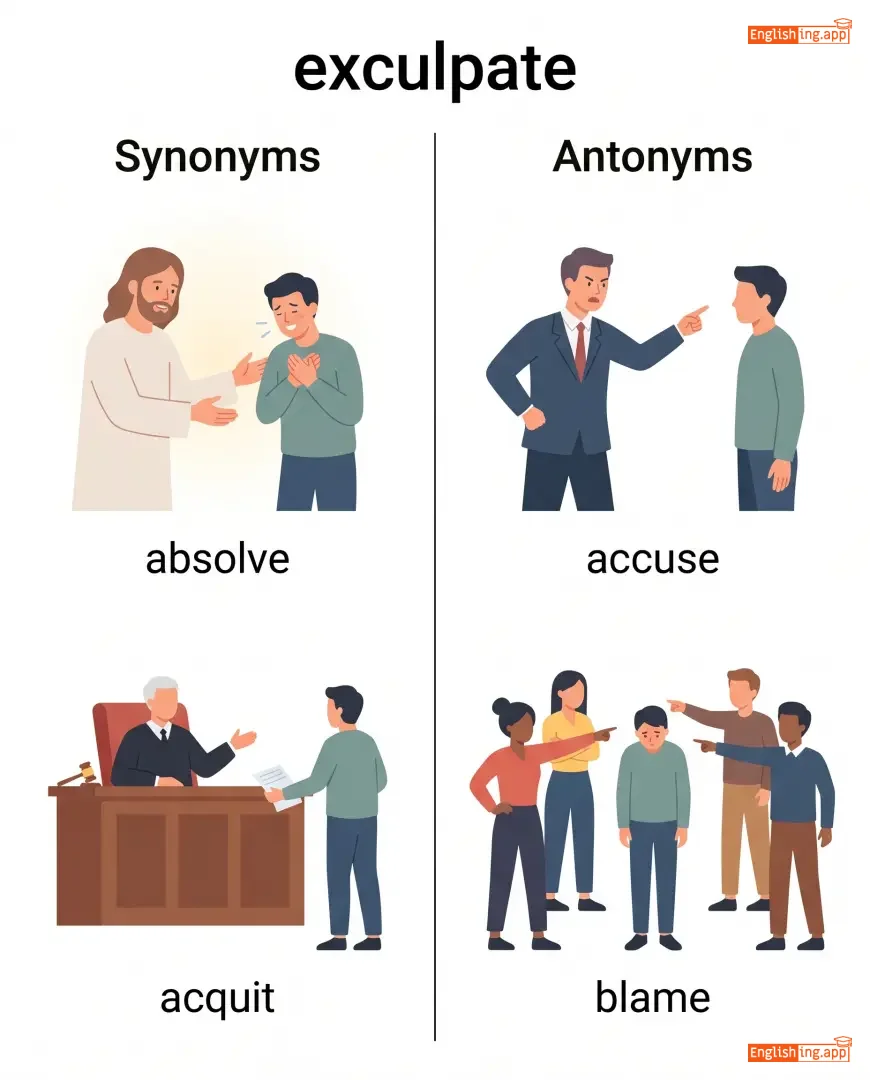
absolve, acquit, vindicate, exonerate
••••••
|
accuse, blame, convict
••••••
|
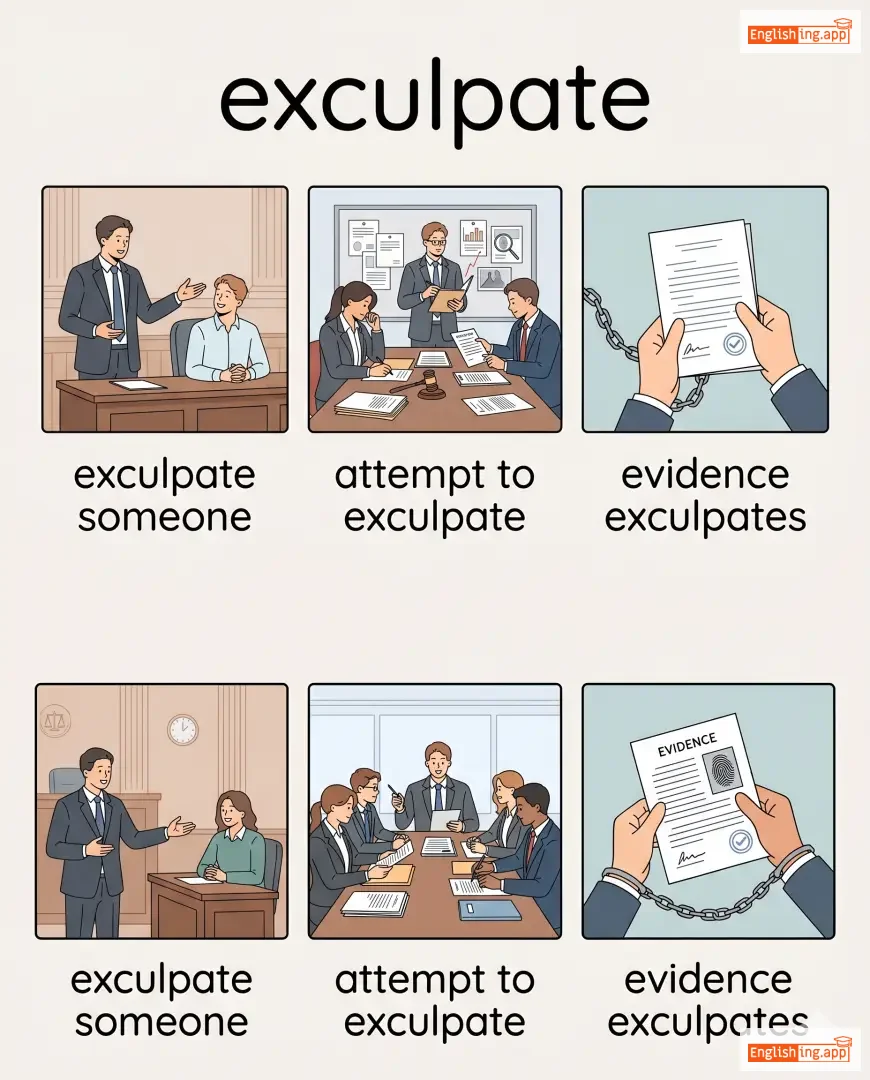
exculpate someone, attempt to exculpate, evidence exculpates
••••••
|
Exculpate = 免罪する → 免罪する犯人
••••••
|
|
🤢
••••••
|
/ˈeksɪkrəbl/
adjective
(ekusekuraburu)
••••••
|

|
ひどい
hidoi
••••••
|
- •••••• | - •••••• | - •••••• | - •••••• |
Extremely bad or unpleasant.
••••••
|
The movie was so execrable that many people left the theater early. |
その映画はひどすぎて、多くの人々が早く映画館を出て行きました。
Sono eiga wa hido sugite, ōku no hitobito ga hayaku eigakan o dete ikimashita.
••••••
|
- •••••• | - •••••• | - •••••• |
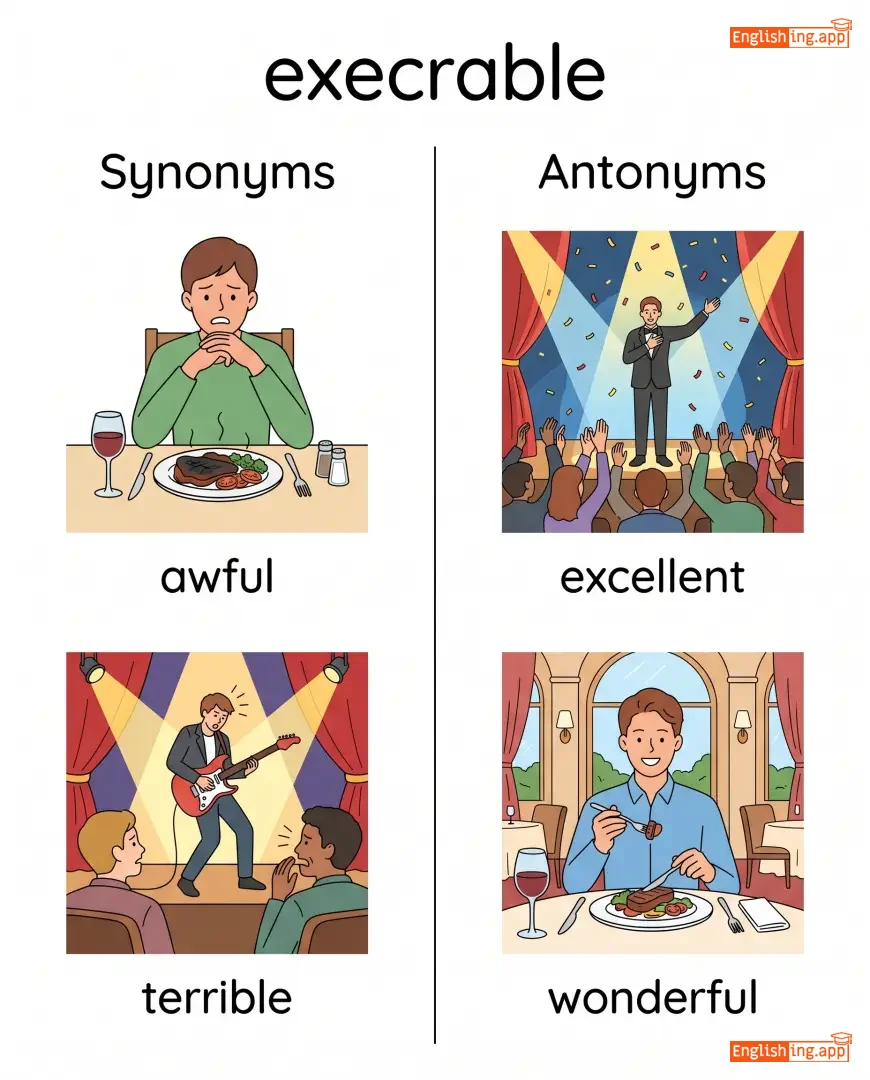
awful, terrible, atrocious, appalling
••••••
|
excellent, wonderful, superb
••••••
|
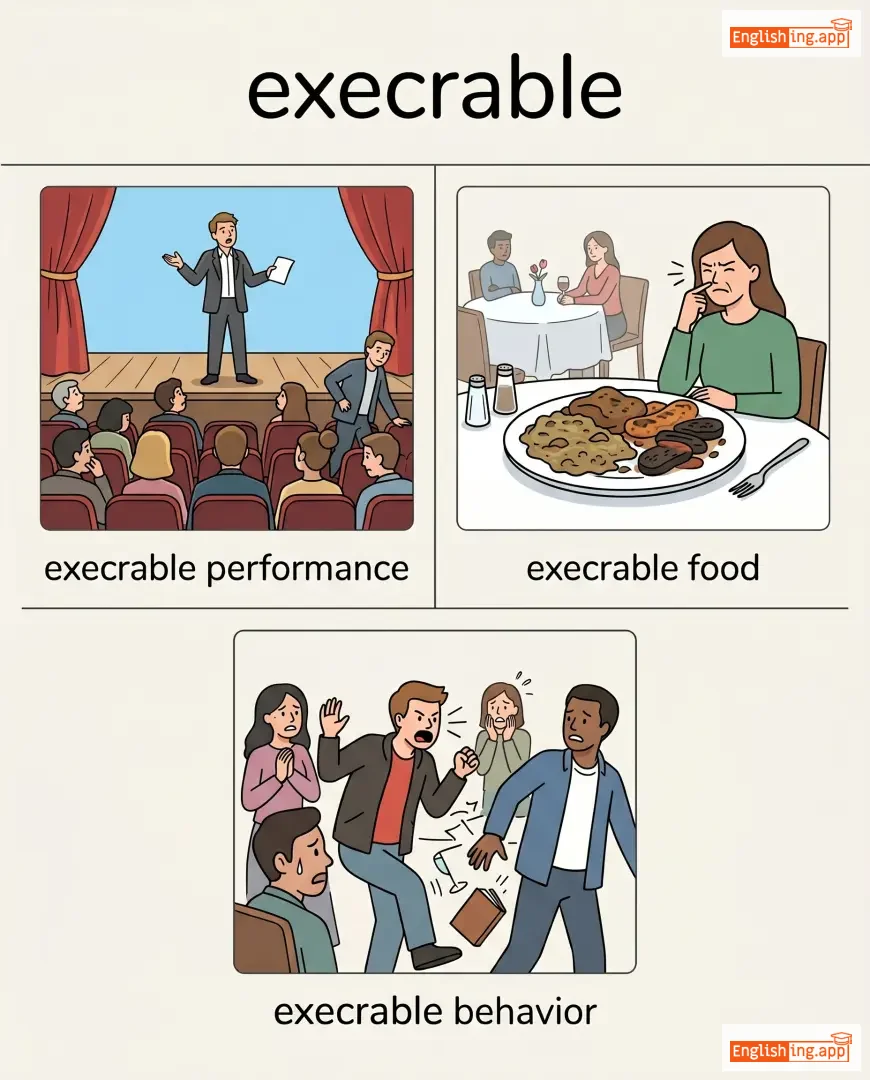
execrable performance, execrable food, execrable behavior
••••••
|
Execrableは日本語の'ひどい'に似ています。
••••••
|
|
📢
••••••
|
/ɪɡˈzɔːrt/
verb
(エクソート)
••••••
|
|
促す
unagasu
••••••
|
exhorted
エクソートした
••••••
|
exhorted
エクソートした
••••••
|
exhorts
エクソートする
••••••
|
exhorting
エクソートしている
••••••
|
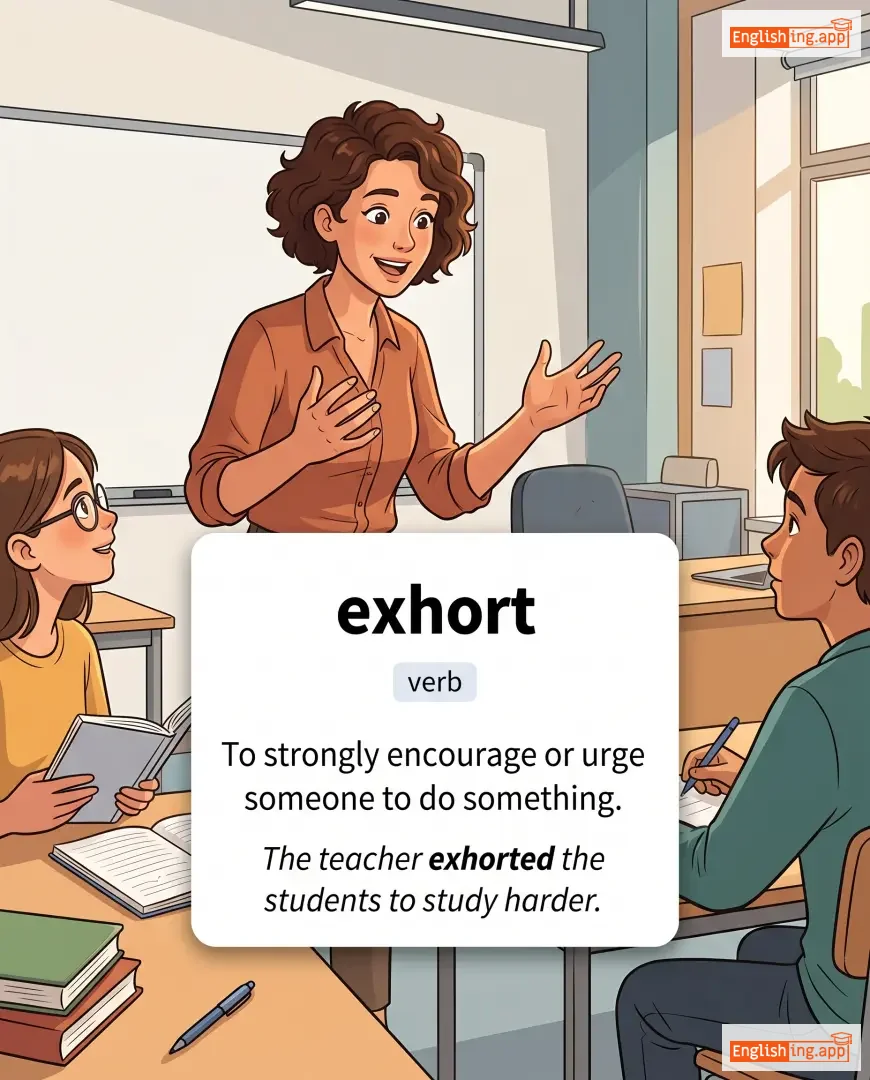
To strongly encourage or urge someone to do something.
••••••
|
The teacher exhorted the students to study harder.
教師は学生にもっと一生懸命勉強するように促しました。
••••••
|
教師は学生にもっと一生懸命勉強するように促しました。
Kyoushi wa gakusei ni motto isshoukenmei benkyou suru you ni unagashimashita.
••••••
|
exhort to action
行動に促す
••••••
|
to urge someone to take immediate steps or efforts
••••••
|
即時の行動を促す
sokujin no koudou wo unagasu
••••••
|
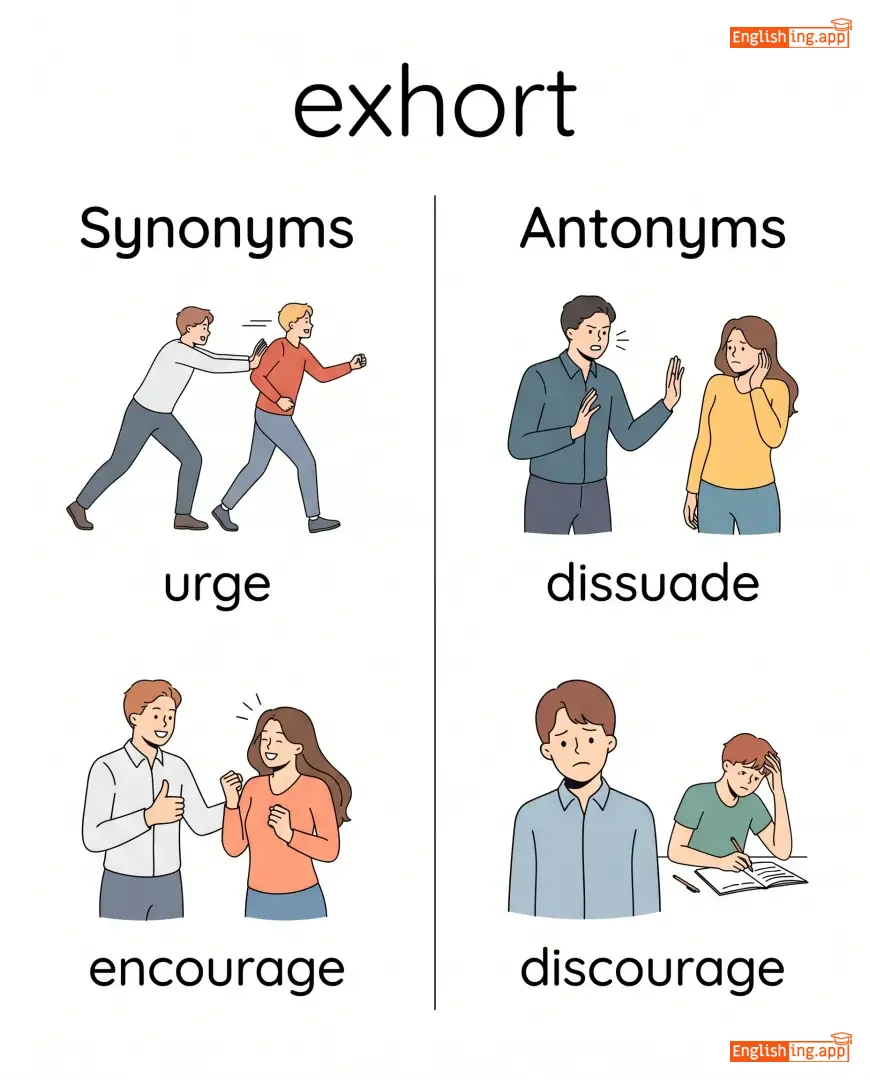
urge, encourage, advise, press, persuade
••••••
|
dissuade, discourage
••••••
|
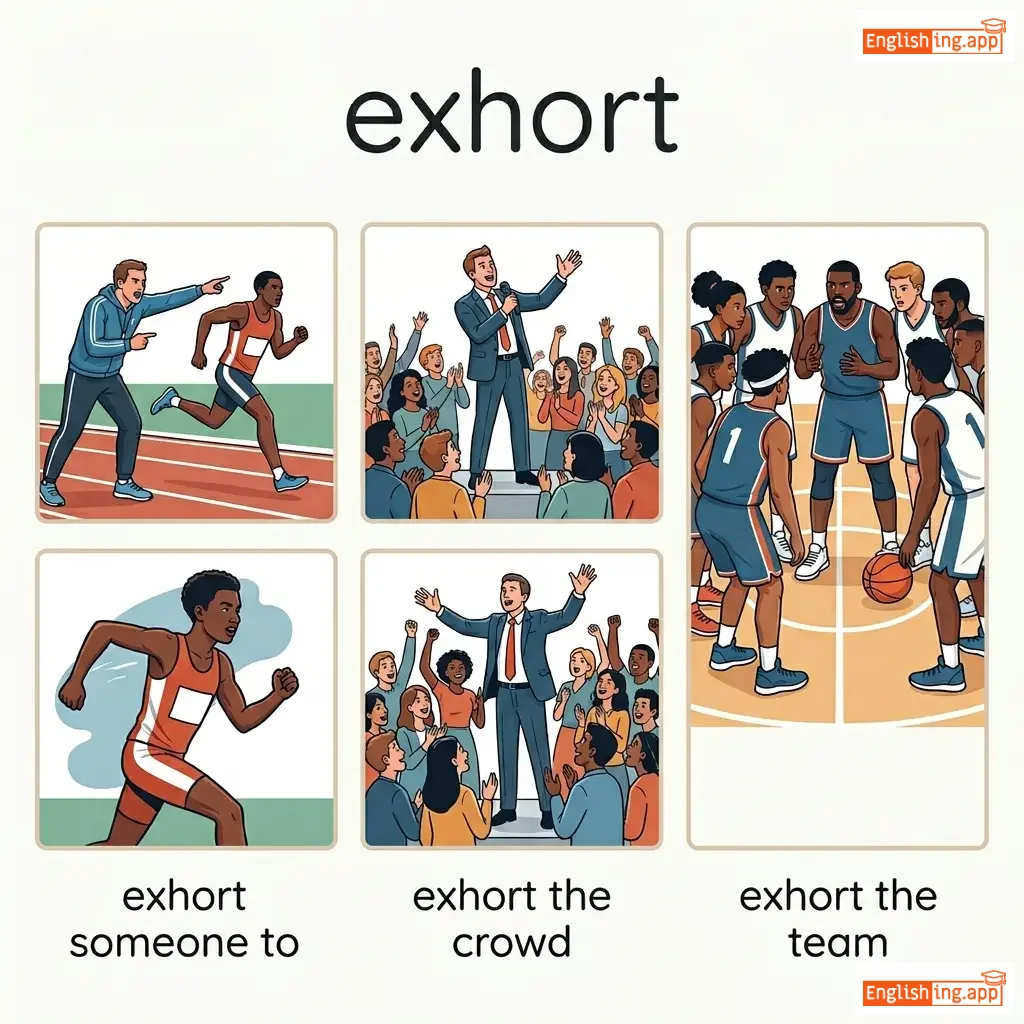
exhort someone to, exhort the crowd, exhort the team
••••••
|
Exhortは試験前、教師がもっと勉強するように生徒に促す!
••••••
|
|
⏰
••••••
|
/ˈɛksɪdʒənsi/
noun
(ekusijensi)
••••••
|
|
緊急の必要性
kinkyu no hitsuyosei
••••••
|
- •••••• | - •••••• | - •••••• | - •••••• |
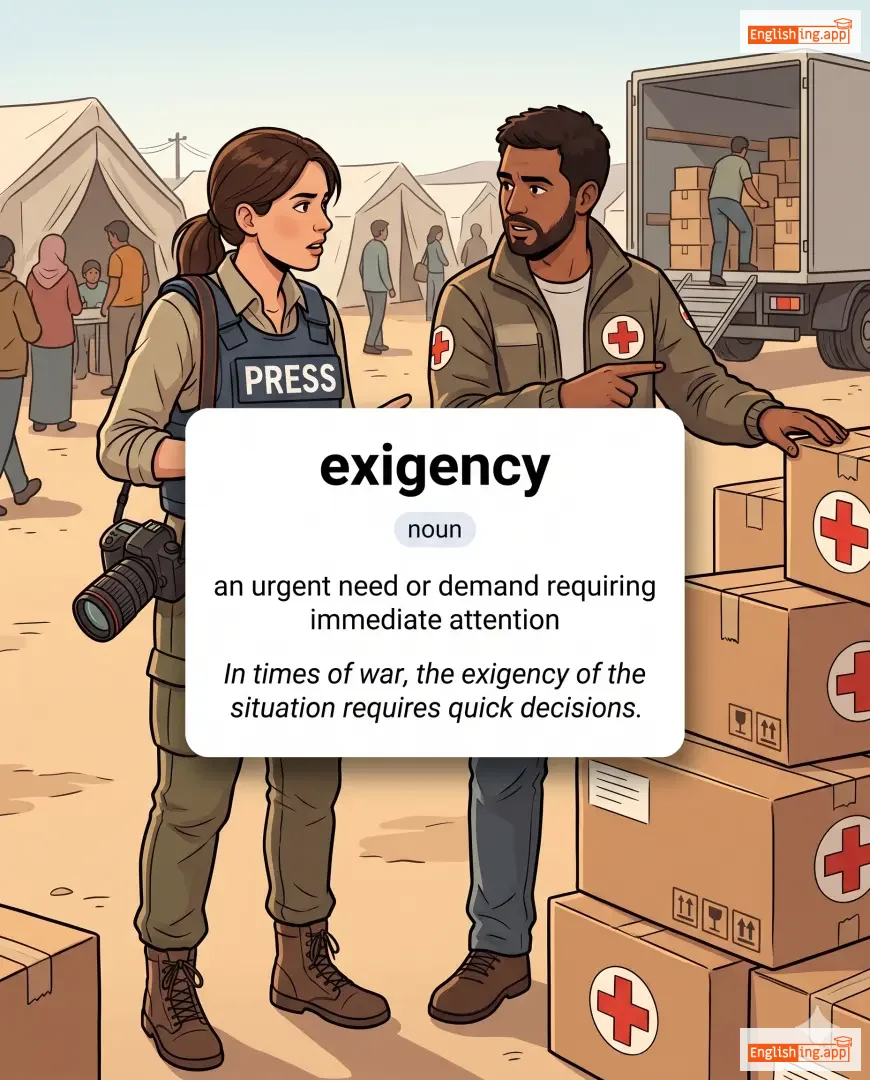
an urgent need or demand requiring immediate attention
••••••
|
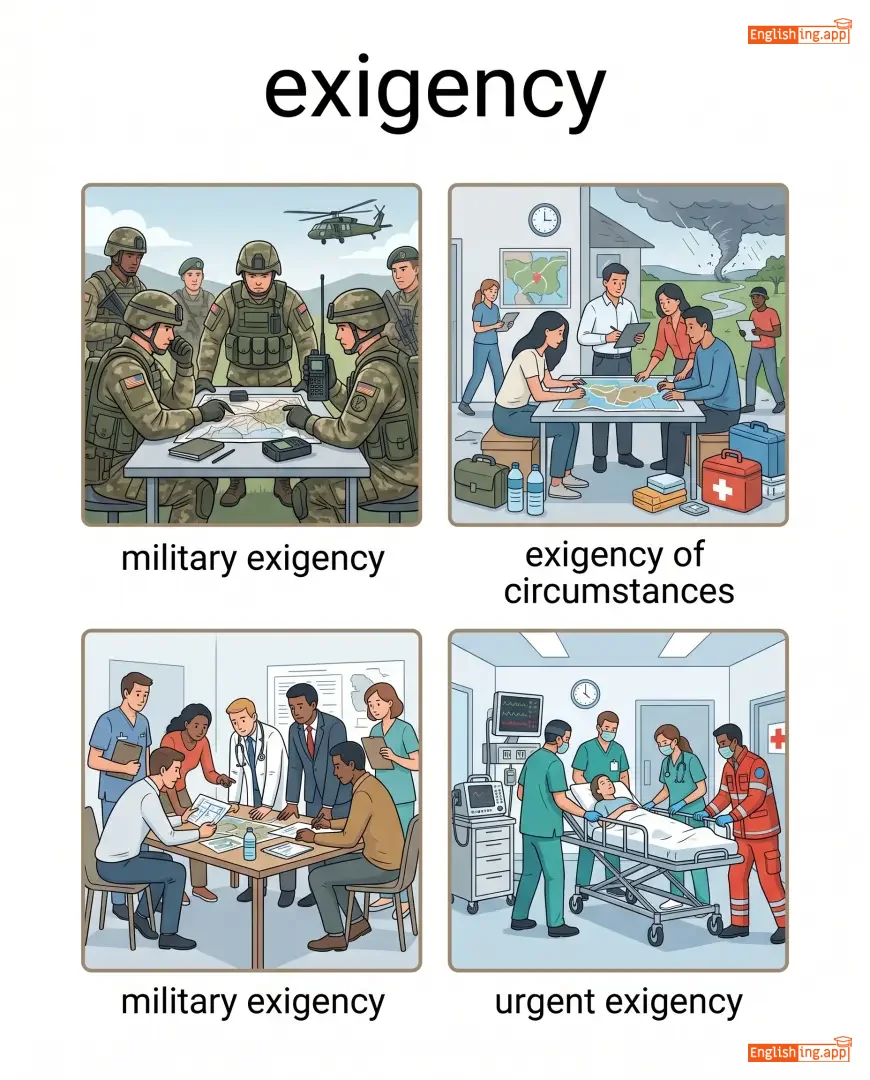
In times of war, the exigency of the situation requires quick decisions. |
戦争の時、状況の緊急の必要性は迅速な決定を要求する。
Sensō no toki, jōkyō no kinkyu no hitsuyōsei wa jinsoku na kettei o yōkyū suru.
••••••
|
- •••••• | - •••••• | - •••••• |
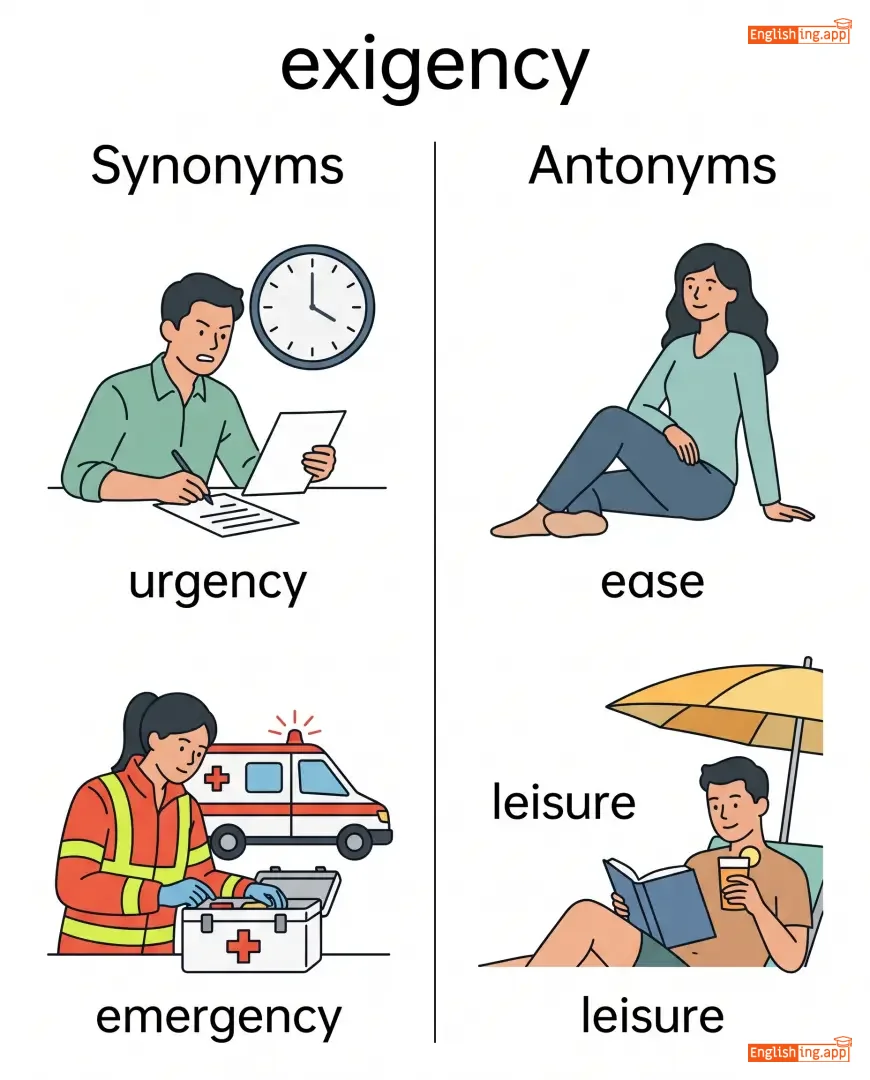
urgency, emergency, necessity, demand
••••••
|
ease, leisure, calm
••••••
|
military exigency, exigency of circumstances, urgent exigency
••••••
|
Exigencyは日本語で緊急の必要性 – 緊急の対応を必要とする状況。
••••••
|
|
🤔
••••••
|
/ˌɛɡzɪˈstɛnʃəl/
adjective
(エグジステンシャル)
••••••
|
|
実存的
jitsuzonteki
••••••
|
- •••••• | - •••••• | - •••••• | - •••••• |
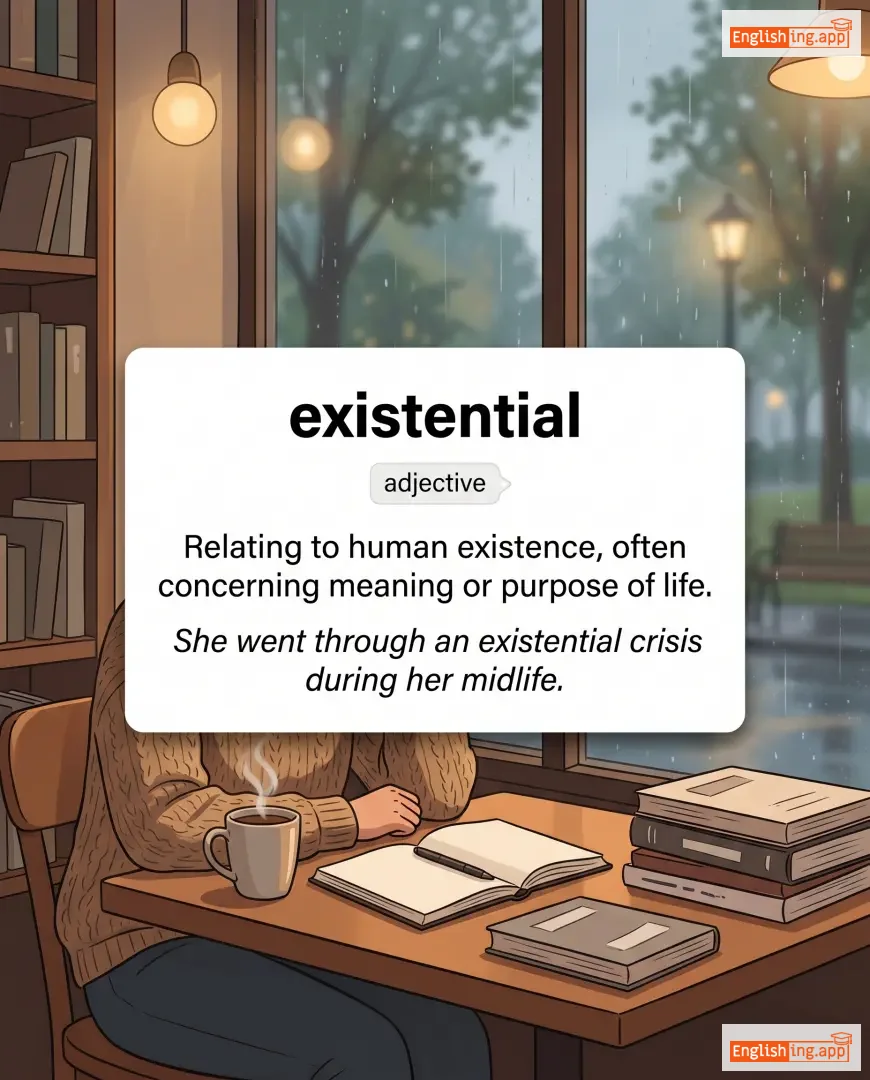
Relating to human existence, often concerning meaning or purpose of life.
••••••
|
She went through an existential crisis during her midlife. |
彼女は中年に実存的な危機を経験した。
Kanojo wa chūnen ni jitsuzonteki na kiki o keiken shita.
••••••
|
existential crisis |
a period of deep questioning about the meaning and purpose of life
••••••
|
実存的危機
jitsuzonteki kiki
••••••
|
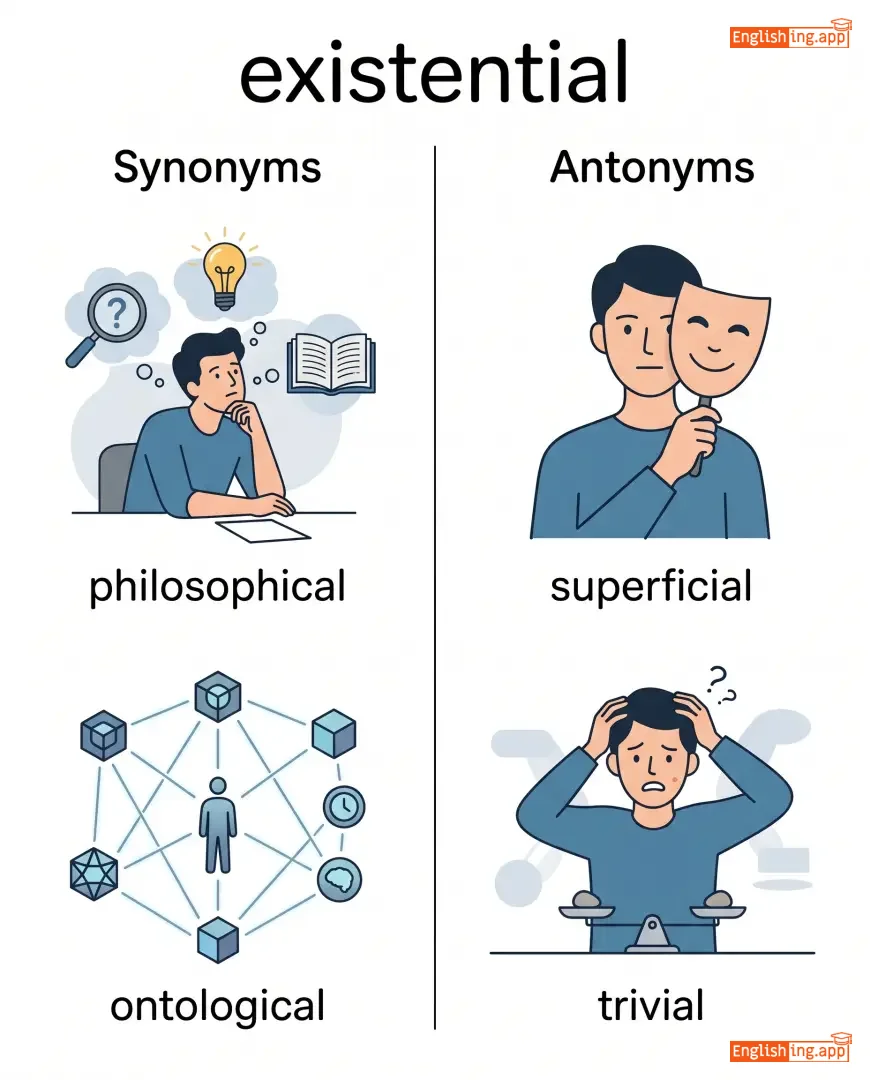
philosophical, ontological, human, life-related
••••••
|
superficial, trivial, meaningless
••••••
|
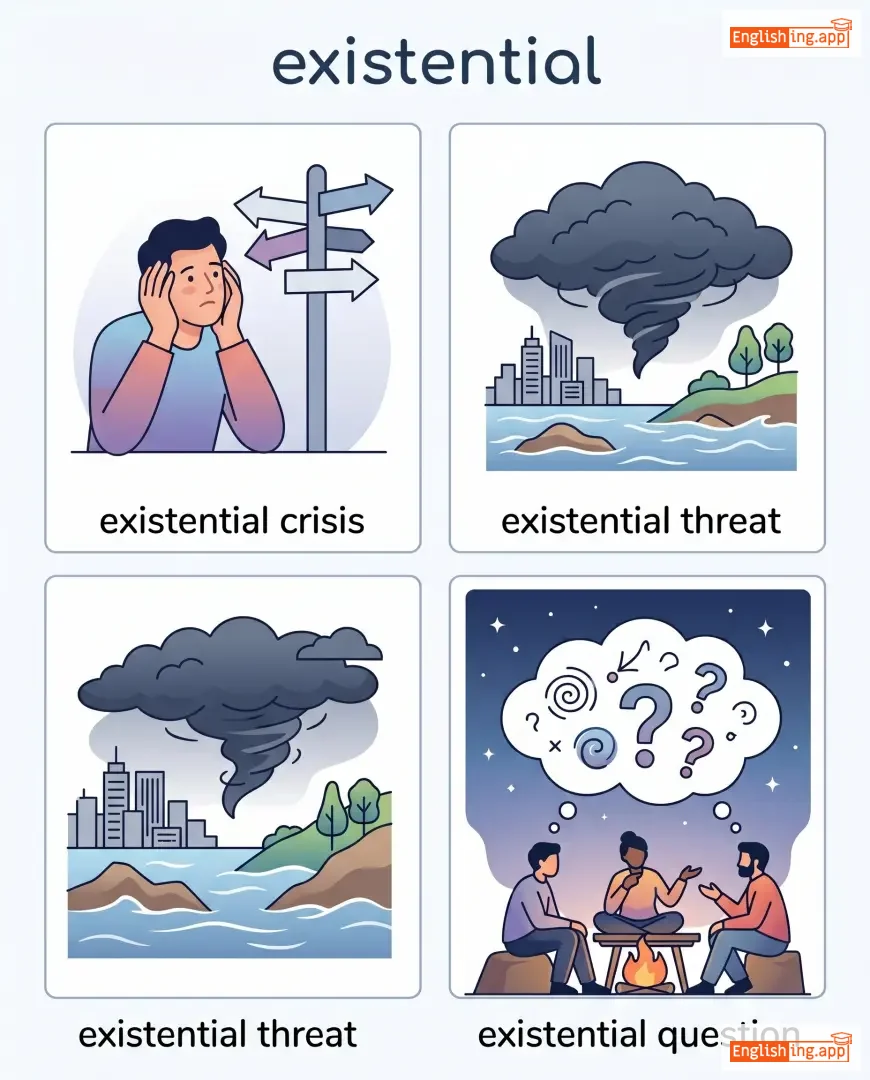
existential crisis, existential threat, existential question, existential philosophy
••••••
|
実存的とは人生の意味を問うこと - '実存的危機'。
••••••
|
|
🪬
••••••
|
/ˈeksɔːrsaɪz/
verb
••••••
|
|
- •••••• |
exorcised
••••••
|
exorcised
••••••
|
exorcises
••••••
|
exorcising
••••••
|
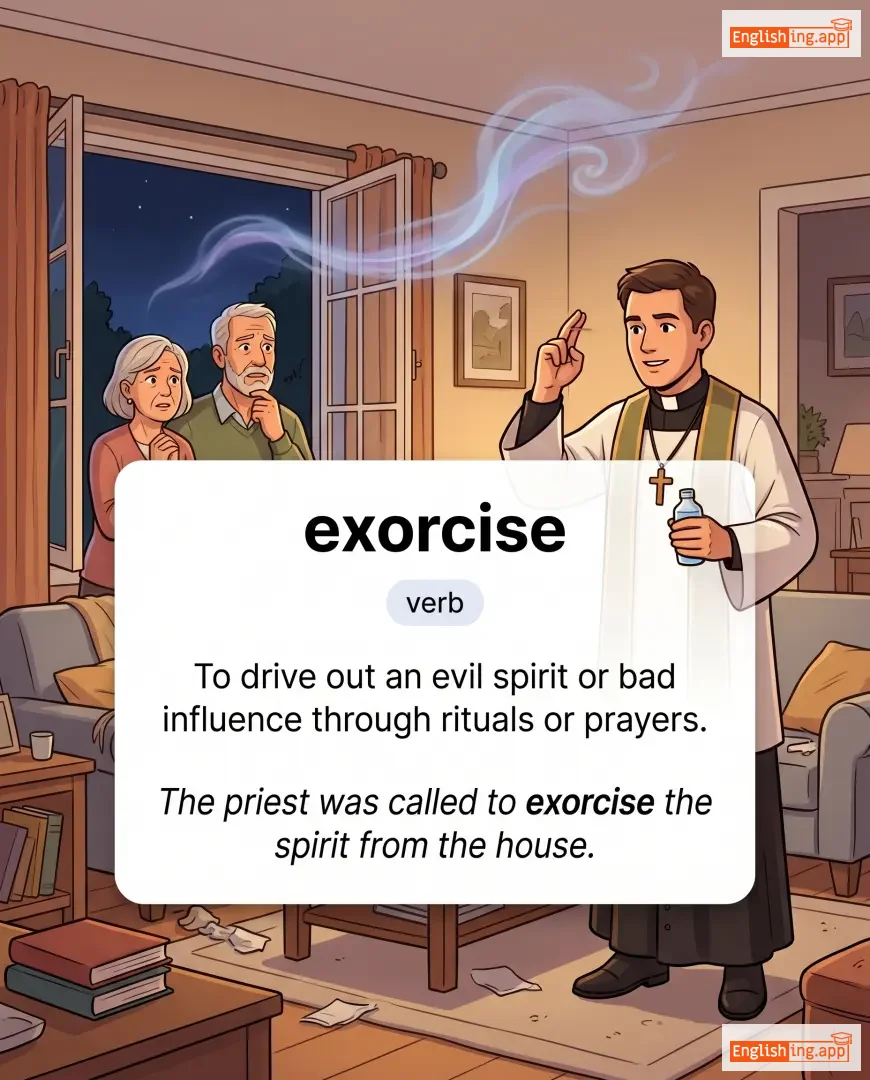
To drive out an evil spirit or bad influence through rituals or prayers.
••••••
|
The priest was called to exorcise the spirit from the house. |
- •••••• |
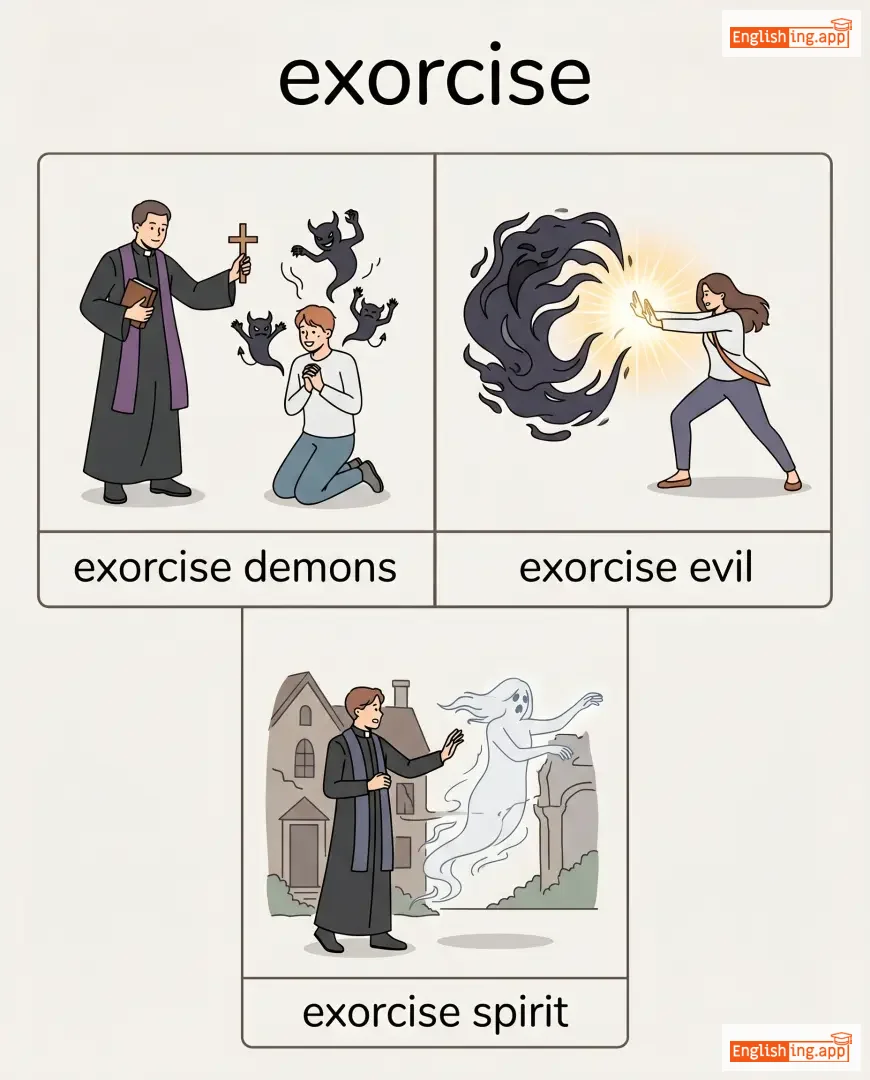
exorcise demons |
To remove evil or troubling influences
••••••
|
- •••••• |
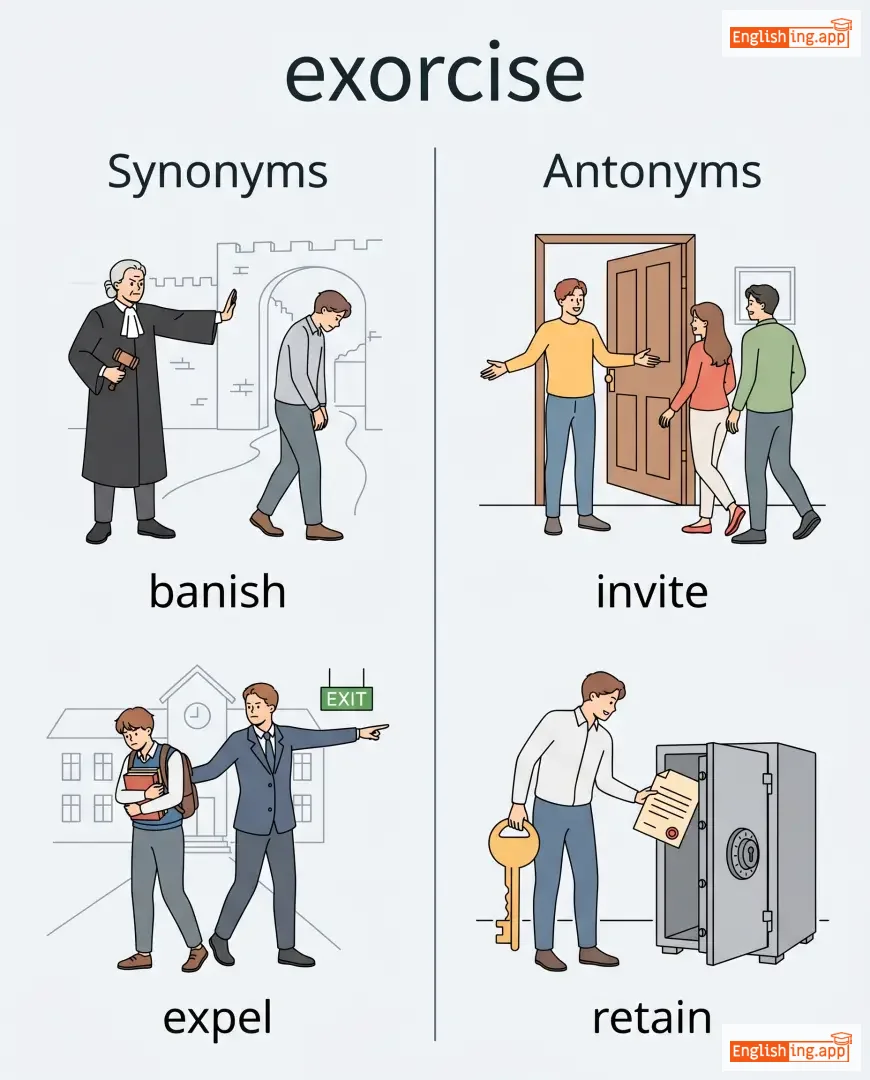
banish, expel, cast out, cleanse, purify
••••••
|
invite, retain
••••••
|
exorcise demons, exorcise evil, exorcise spirit, exorcise fear
••••••
|
No •••••• |
|
🗣️
••••••
|
/ɪkˈspeɪʃiˌeɪt/
verb
(エクスパシエイト)
••••••
|
|
詳細に話すまたは書く
shousai ni hanasu mata wa kaku
••••••
|
expatiated
エクスパシエイテッド
••••••
|
expatiated
エクスパシエイテッド
••••••
|
expatiates
エクスパシエイツ
••••••
|
expatiating
エクスパシエイティング
••••••
|
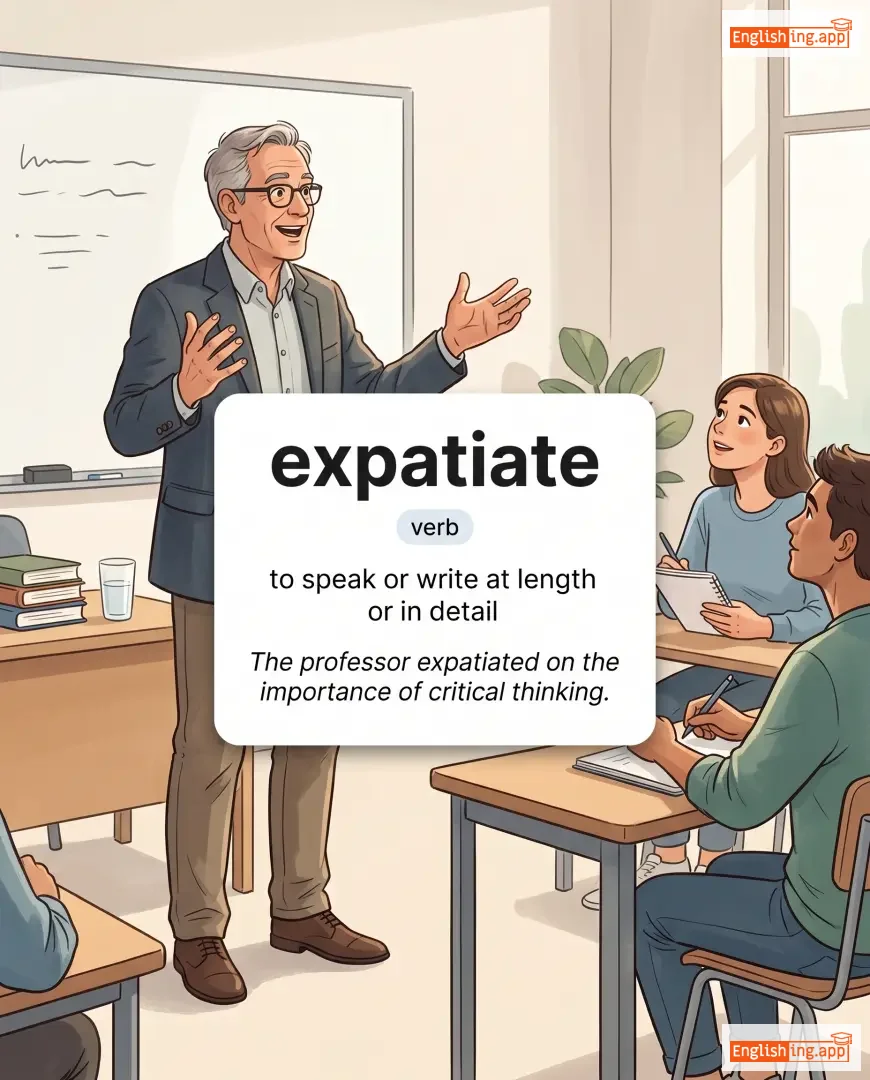
to speak or write at length or in detail
••••••
|
The professor expatiated on the importance of critical thinking.
教授は批判的思考の重要性について詳細に説明しました。
••••••
|
教授は批判的思考の重要性について詳細に説明しました。
Kyouju wa hihanteki shikou no juuyousei ni tsuite shousai ni setsumei shimashita.
••••••
|
- •••••• | - •••••• | - •••••• |
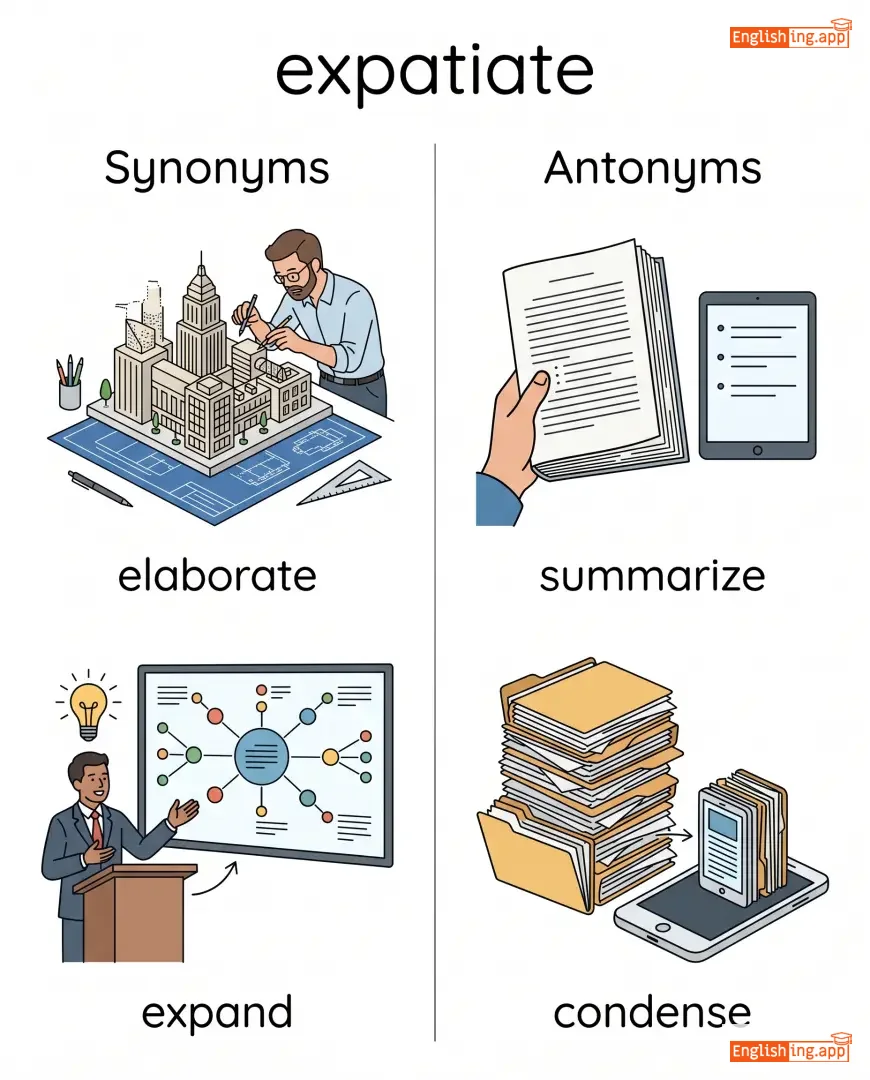
elaborate, expand, dwell, enlarge, detail
••••••
|
summarize, condense
••••••
|
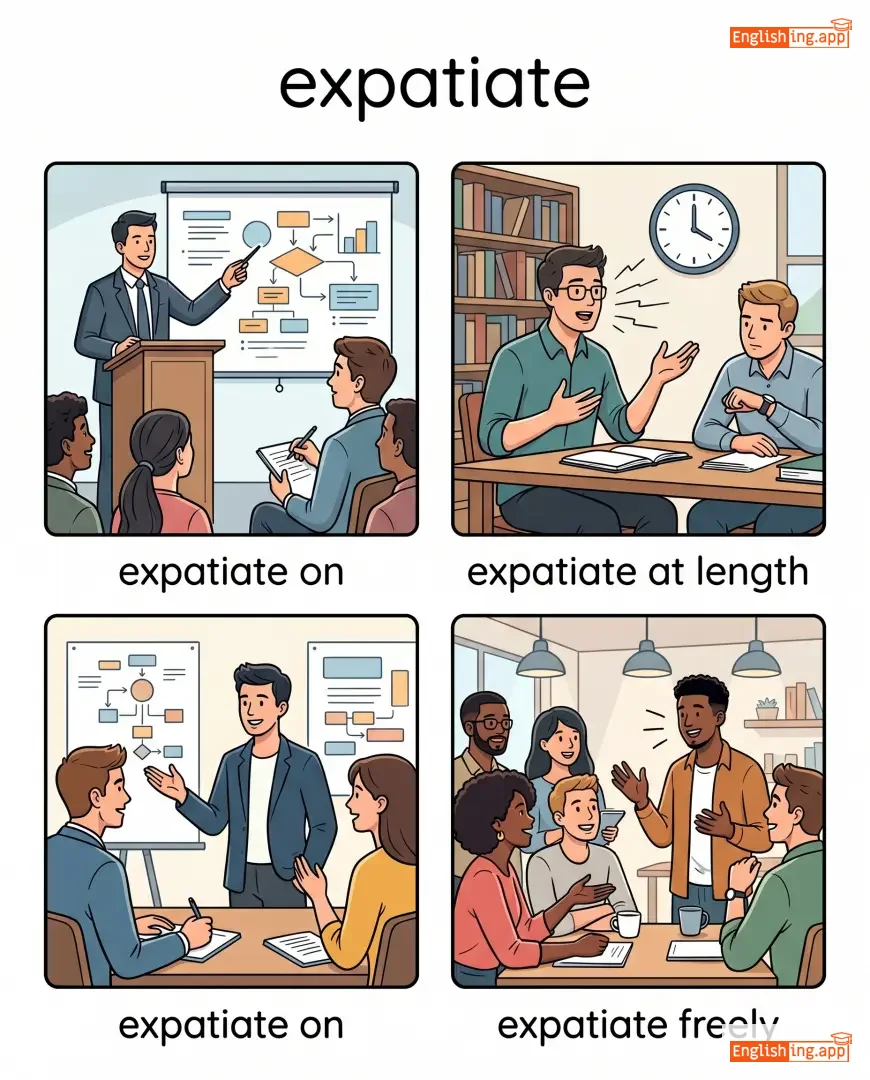
expatiate on, expatiate at length, expatiate freely
••••••
|
Expatiate = 詳細に説明する
••••••
|
|
🌍
••••••
|
/ɛkˈspeɪtriət/
noun
(エクスパトリエイト)
••••••
|
|
外国人
gaikokujin
••••••
|
- •••••• | - •••••• | - •••••• | - •••••• |
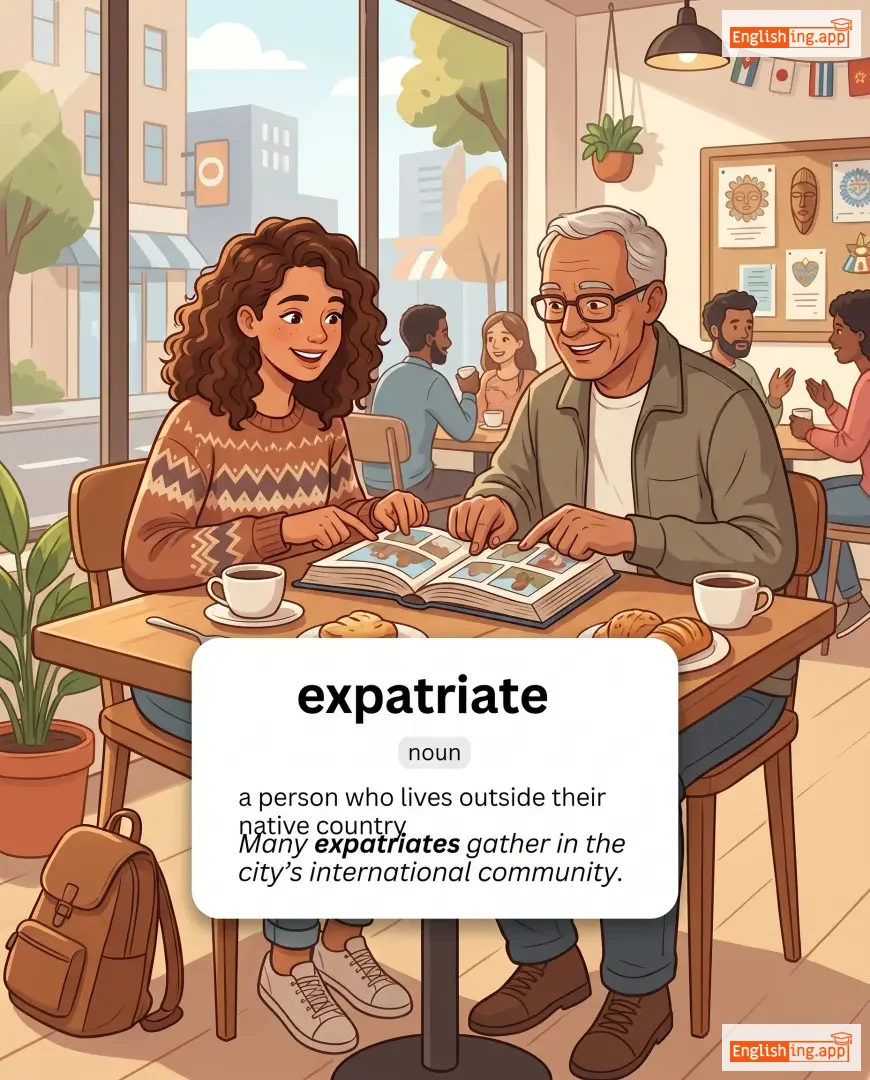
a person who lives outside their native country
••••••
|
Many expatriates gather in the city’s international community. |
多くの外国人が都市の国際コミュニティに集まっています。
Ooku no gaikokujin ga toshi no kokusai komyuniti ni atsumatteimasu.
••••••
|
- •••••• | - •••••• | - •••••• |
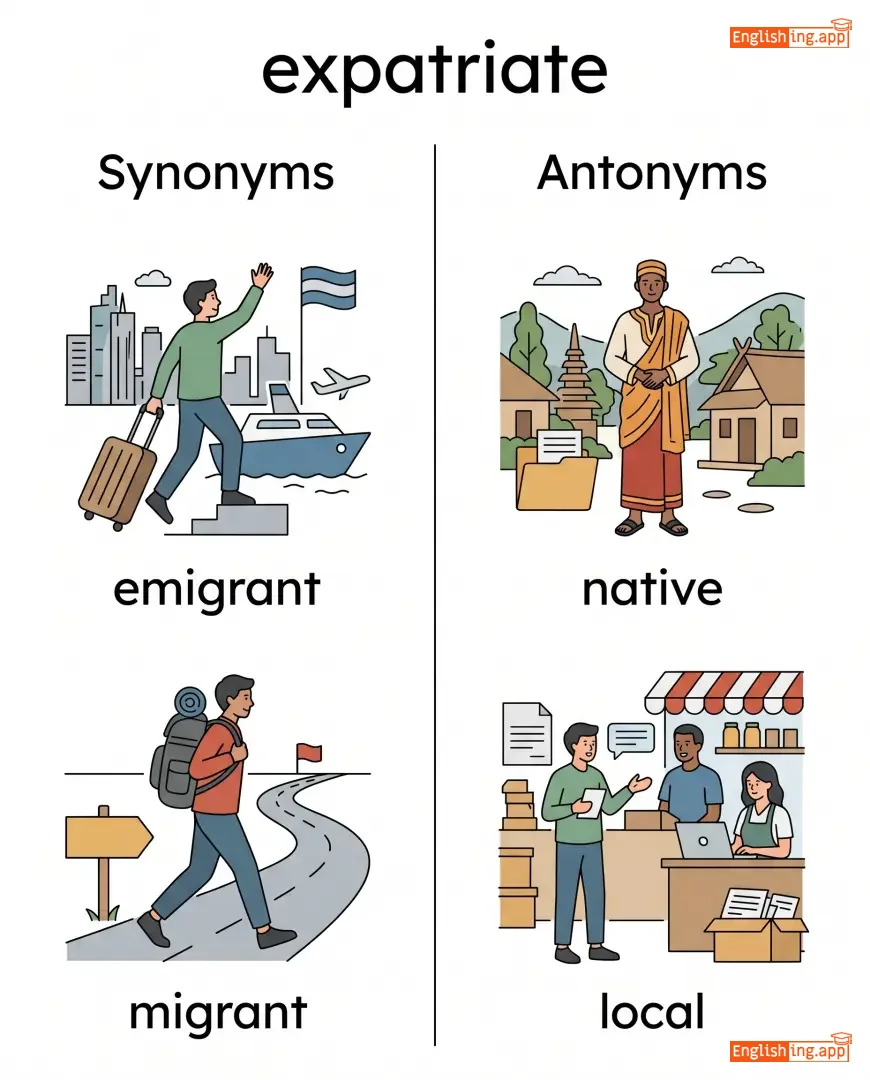
emigrant, migrant, exile, immigrant
••••••
|
native, local
••••••
|
expatriate worker, expatriate community, expatriate life
••••••
|
Expatriateとは、自国を離れた外国人、外国人
••••••
|
|
🙏
••••••
|
/ˈɛkspieɪt/
verb
••••••
|
|
- •••••• |
expiated
••••••
|
expiated
••••••
|
expiates
••••••
|
expiating
••••••
|
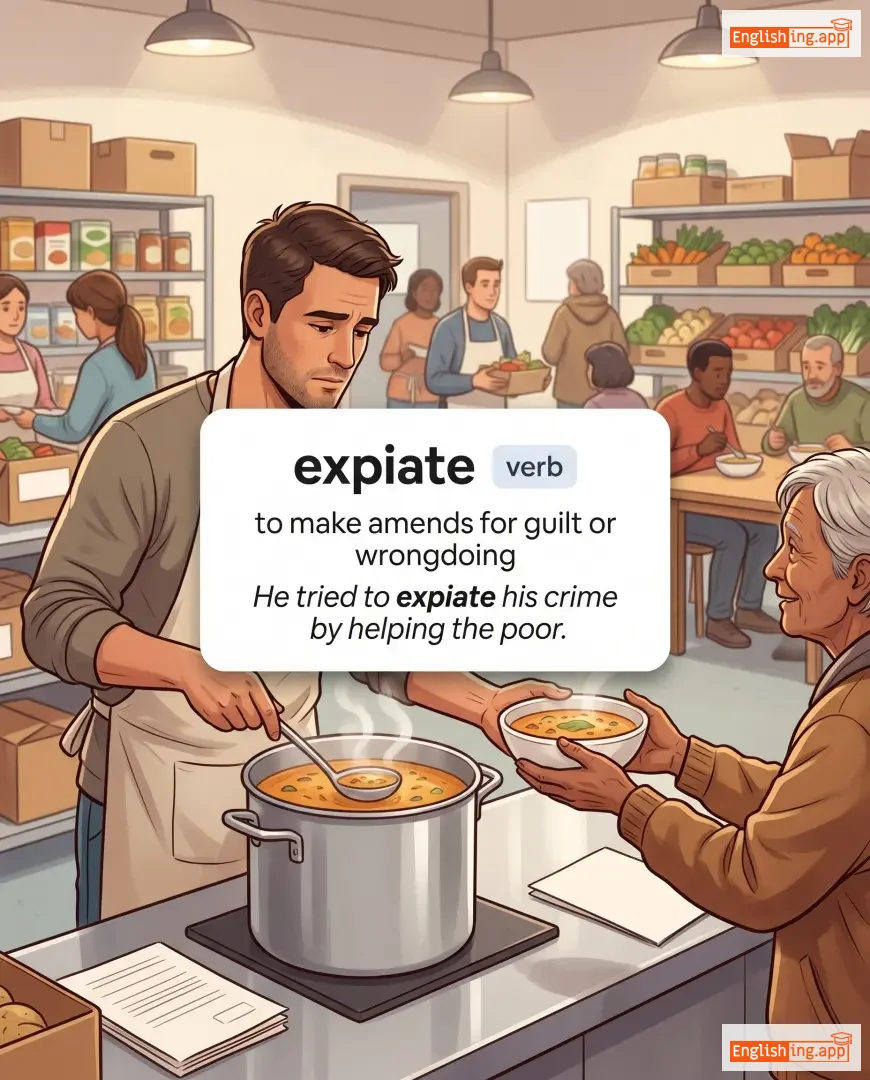
to make amends for guilt or wrongdoing
••••••
|
He tried to expiate his crime by helping the poor. |
- •••••• |
expiate guilt |
to make amends or atone for a wrongdoing
••••••
|
- •••••• |
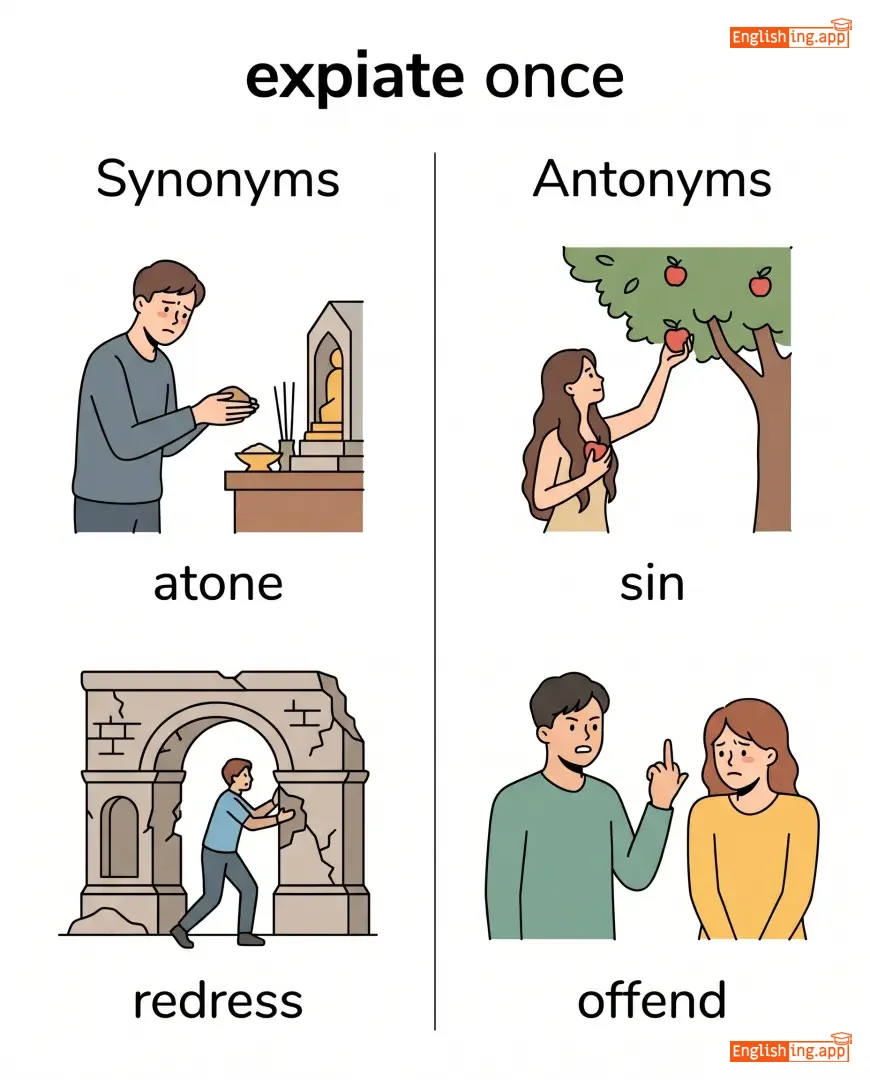
atone, redress, amend, compensate, repent
••••••
|
sin, offend, wrong
••••••
|
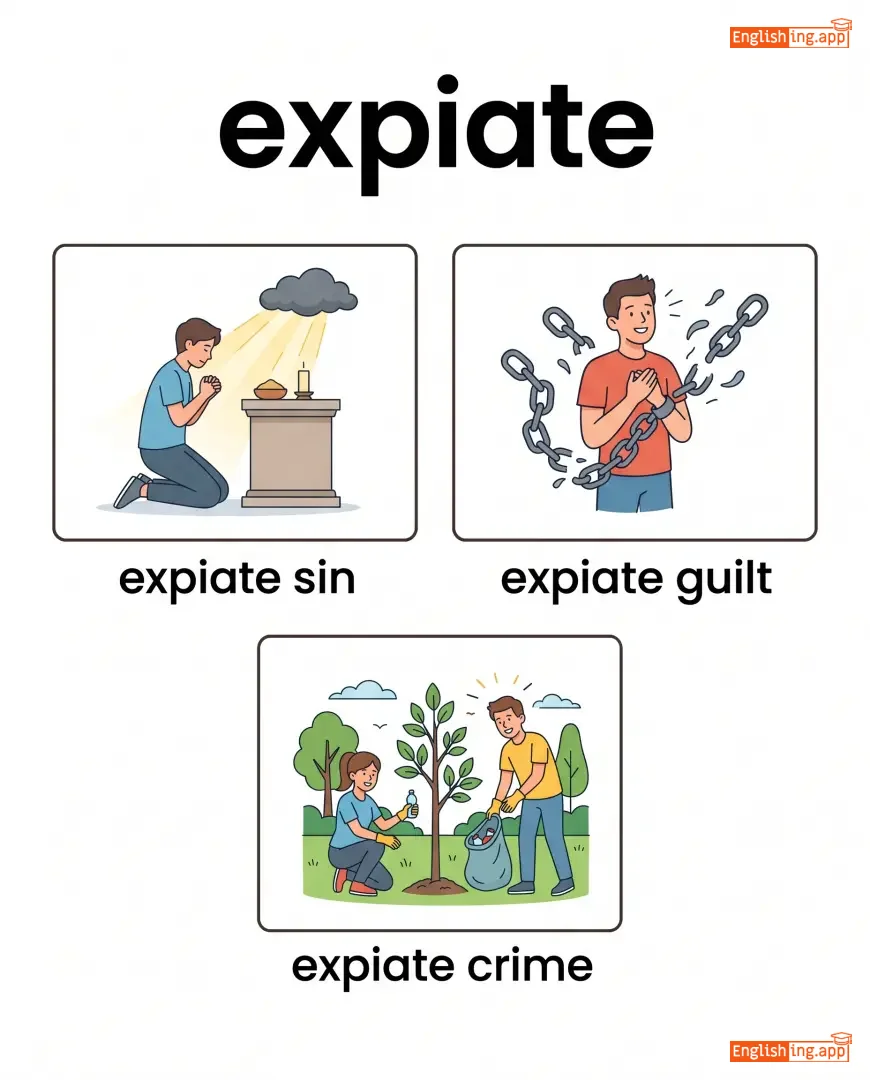
expiate sin, expiate guilt, expiate crime, expiate wrongdoing
••••••
|
No •••••• |

