|
表情符号
|
单词 | Images | 翻译 | 过去时 | 过去分词 | 第三人称单数 | 动名词 | 含义 | 例句 | 例句翻译 | 示例表达 | 示例表达含义 | 示例表达翻译 | 同义词 | 反义词 | 搭配词 | 助记符 |
|---|---|---|---|---|---|---|---|---|---|---|---|---|---|---|---|---|---|
|
🥀
••••••
|
/ˈɪn.dɪ.dʒəns/
noun
(印第真斯)
••••••
|
|
贫困
pínkùn
••••••
|
- •••••• | - •••••• | - •••••• | - •••••• |
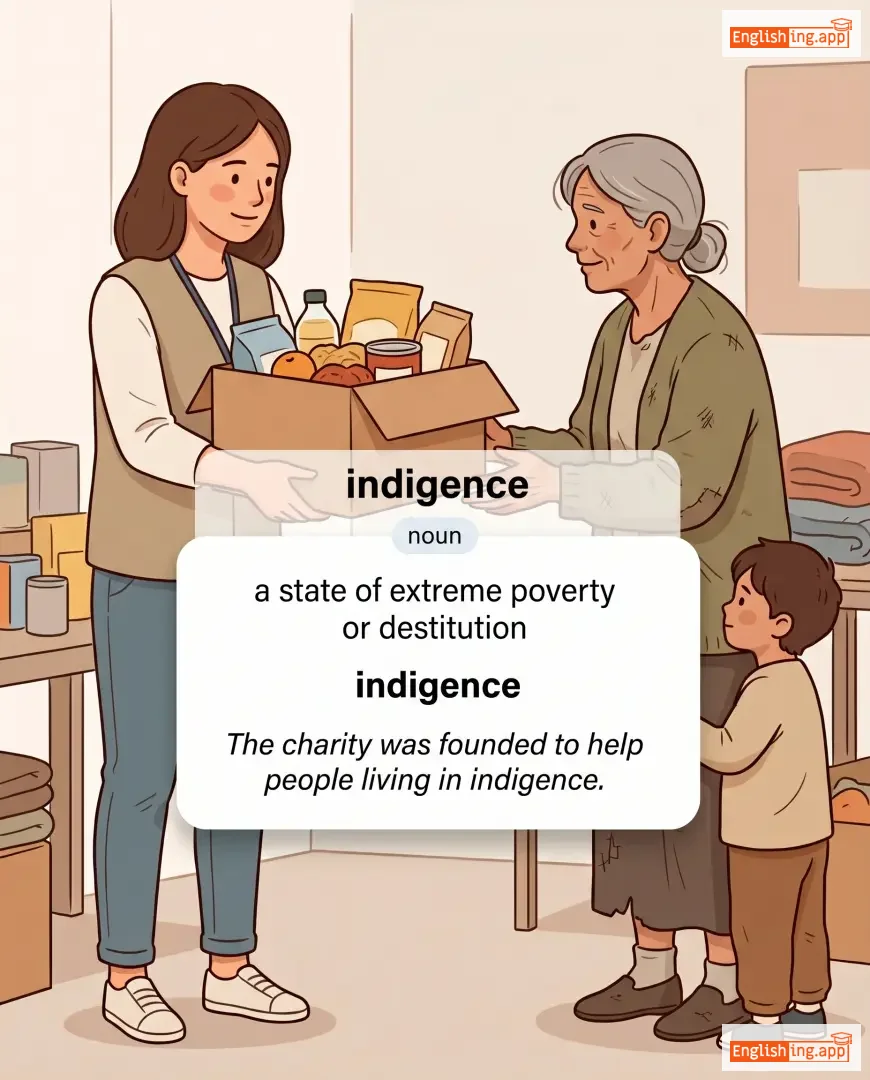
a state of extreme poverty or destitution
••••••
|
The charity was founded to help people living in indigence. |
这个慈善组织成立是为了帮助生活在贫困中的人们。
Zhège cìshàn zǔzhī chénglì shì wèile bāngzhù shēnghuó zài pínkùn zhōng de rénmen.
••••••
|
- •••••• | - •••••• | - •••••• |
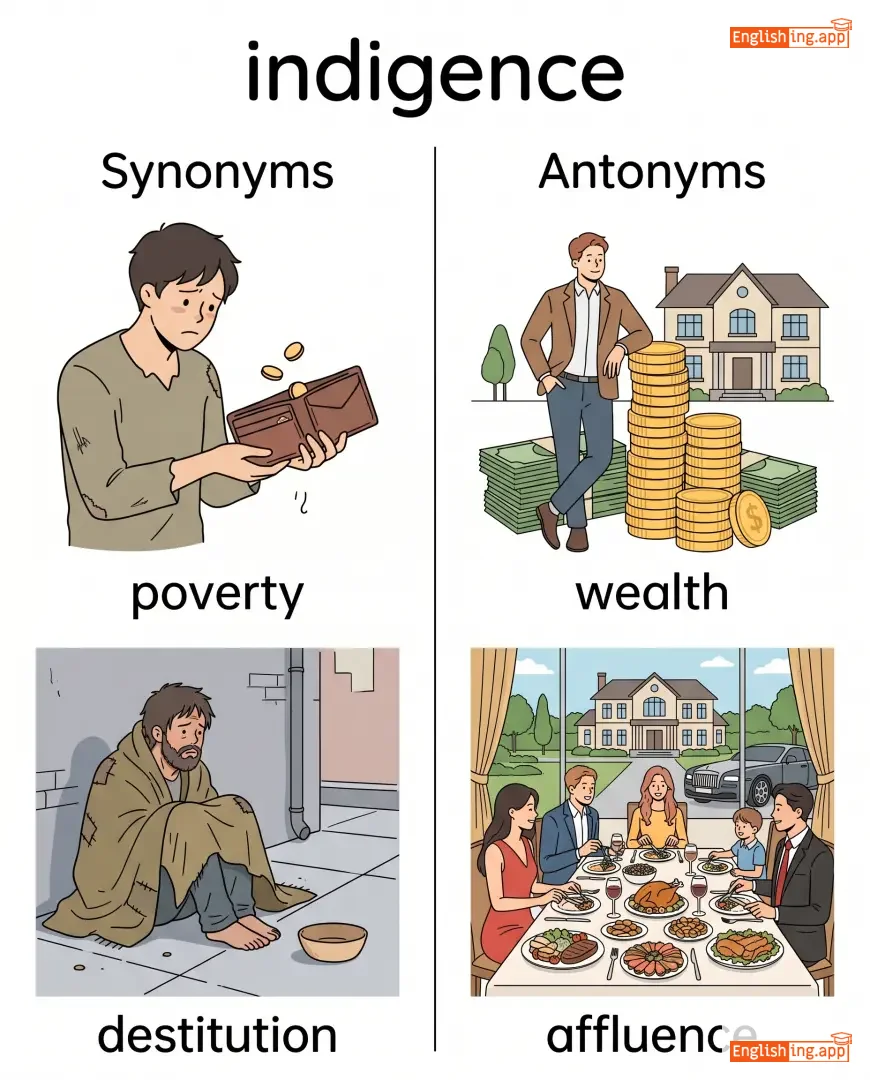
poverty, destitution, need, hardship, deprivation
••••••
|
wealth, affluence, prosperity
••••••
|
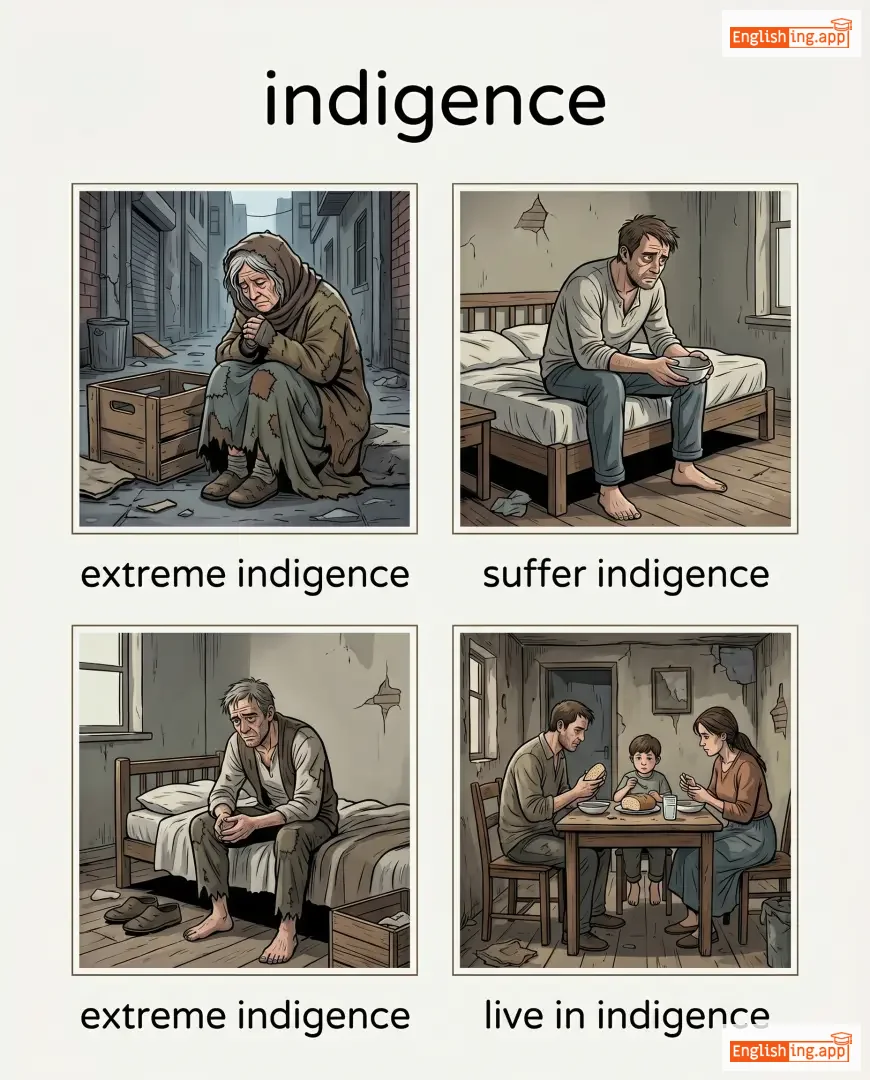
extreme indigence, suffer indigence, live in indigence
••••••
|
贫困 (pínkùn) 和 'indigence' 都表示极度贫困
••••••
|
|
🐈
••••••
|
/ˈɪndələnt/
adjective
(因多伦特)
••••••
|
|
懒惰
landuo
••••••
|
- •••••• | - •••••• | - •••••• | - •••••• |
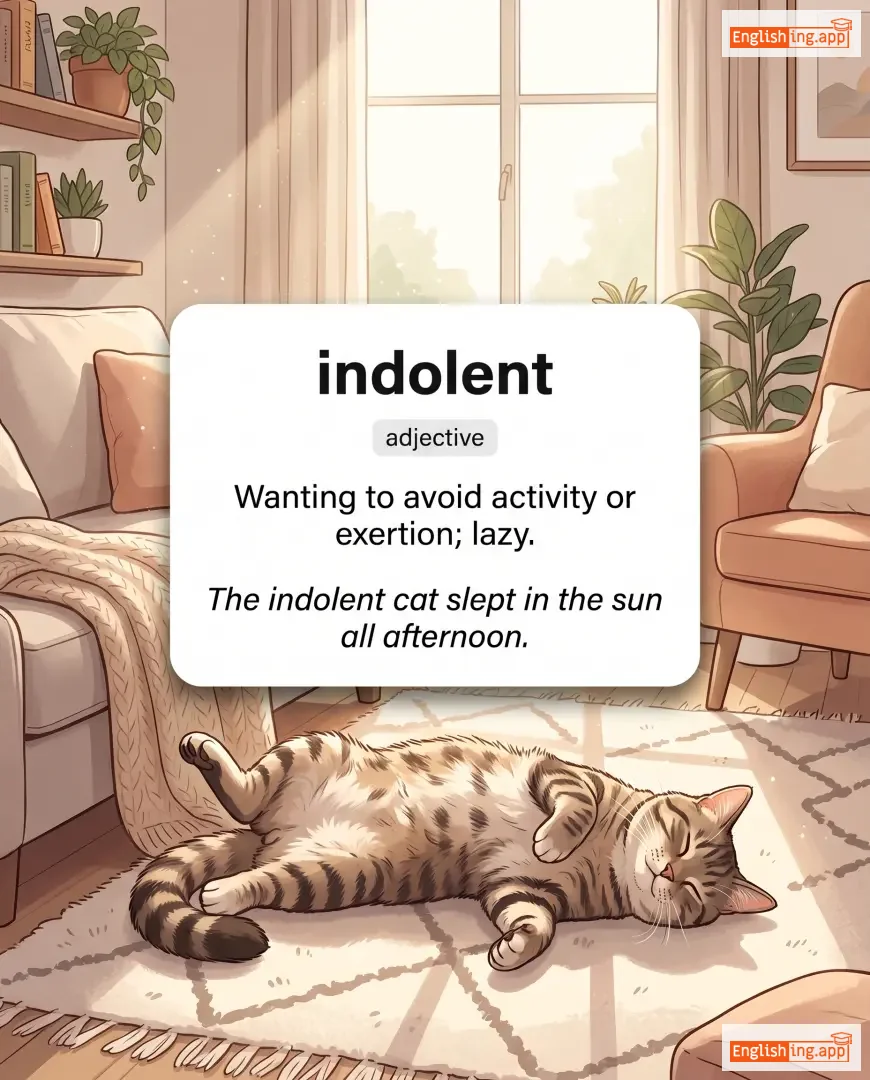
Wanting to avoid activity or exertion; lazy.
••••••
|
The indolent cat slept in the sun all afternoon.
懒散的猫整天躺在阳光下睡觉。
••••••
|
懒惰的猫整天躺在阳光下睡觉。
Landuo de mao zheng tian tang zai yangguang xia shuijiao.
••••••
|
- •••••• | - •••••• | - •••••• |
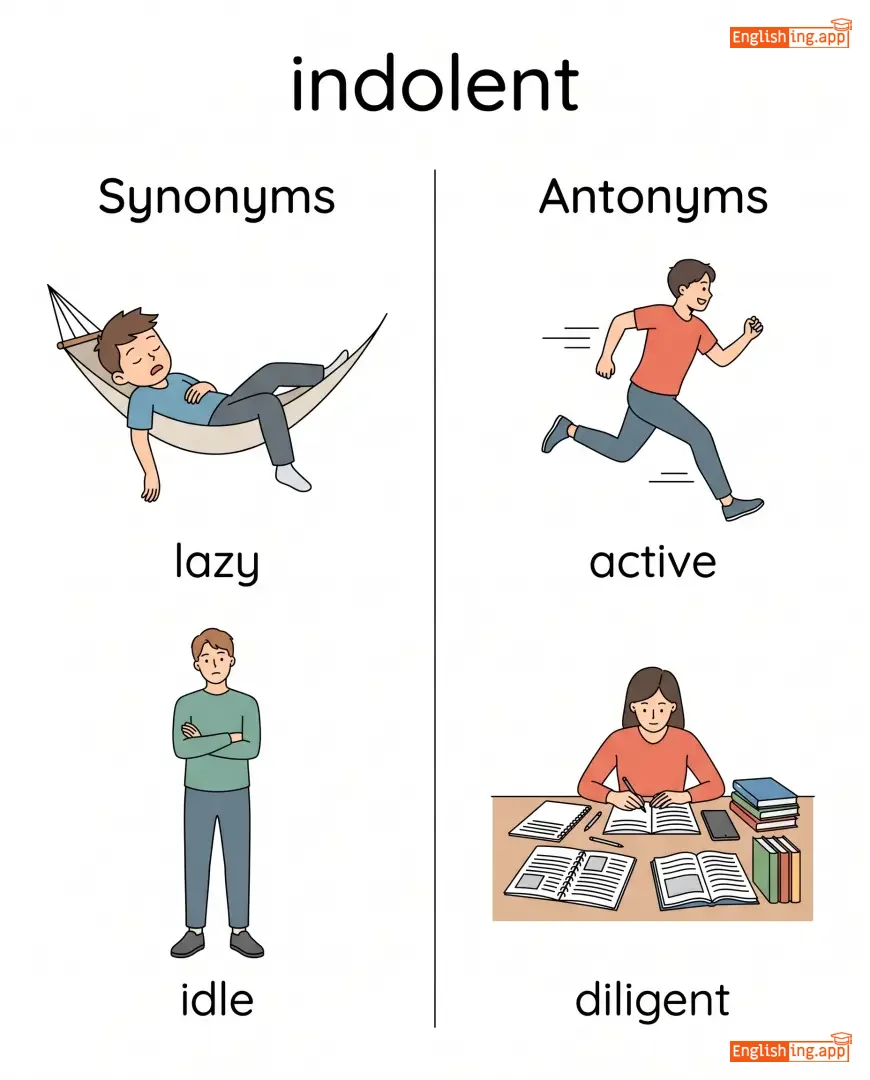
lazy, idle, sluggish, lethargic
••••••
|
active, diligent, industrious
••••••
|
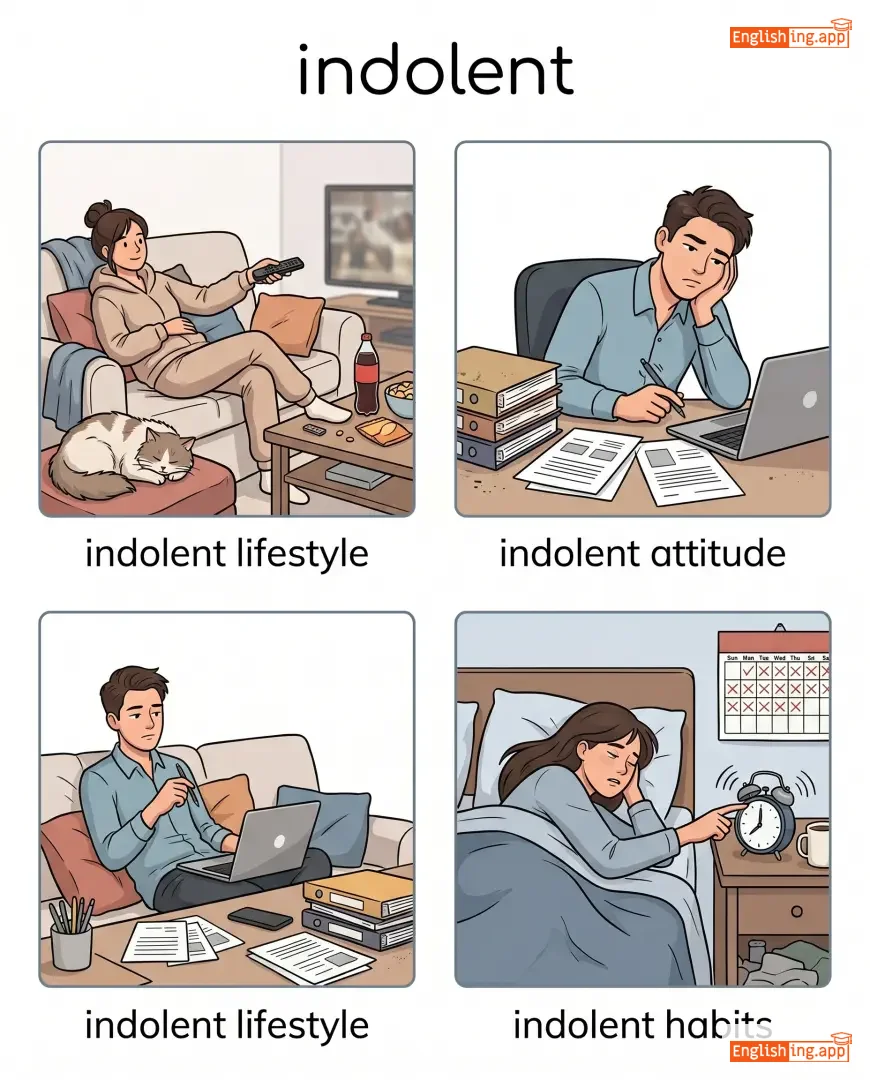
indolent lifestyle, indolent attitude, indolent habits
••••••
|
Indolent cat 代表懒惰的猫 🐈
••••••
|
|
😴
••••••
|
/ɪˈnɜːrt/
adjective
(因特)
••••••
|
|
惰性
duoxing
••••••
|
- •••••• | - •••••• | - •••••• | - •••••• |
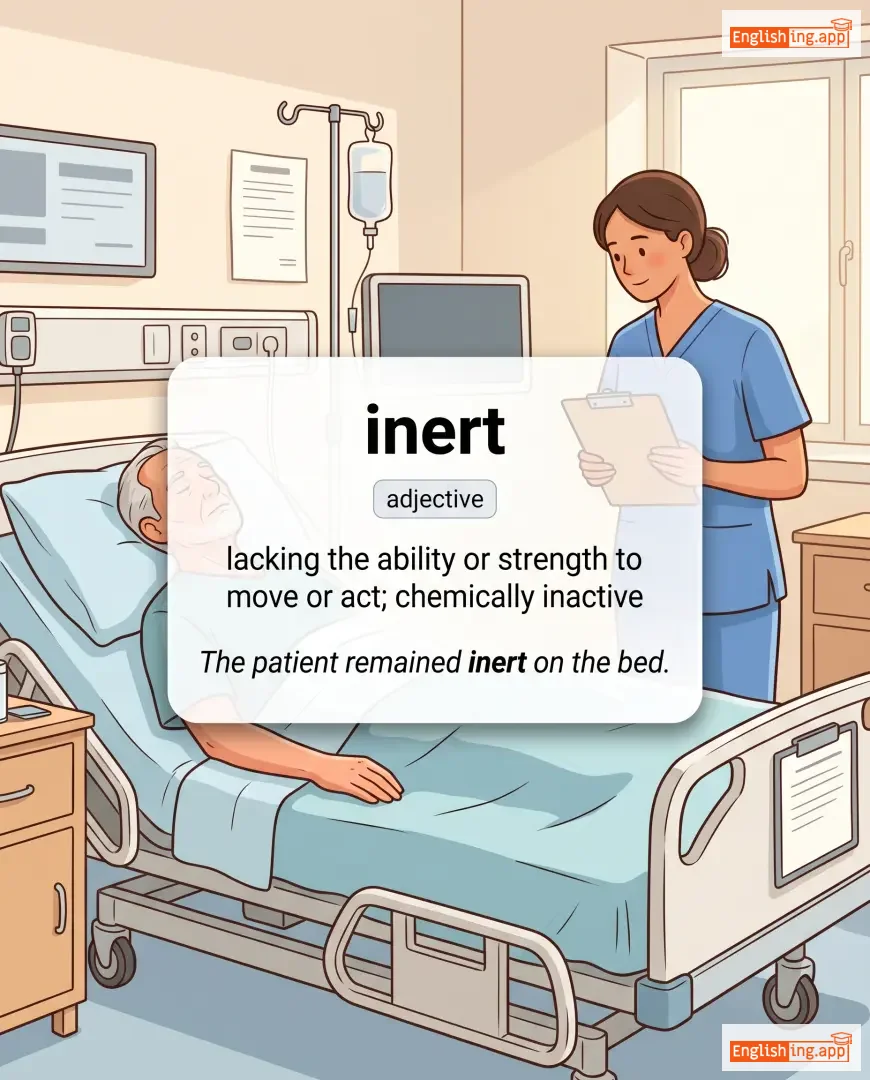
lacking the ability or strength to move or act; chemically inactive
••••••
|
The patient remained inert on the bed. |
病人躺在床上保持不动。
bingren tang zai chuang shang baochi budong.
••••••
|
chemically inert |
substance that does not react chemically under normal conditions
••••••
|
化学惰性
huaxue duoxing
••••••
|
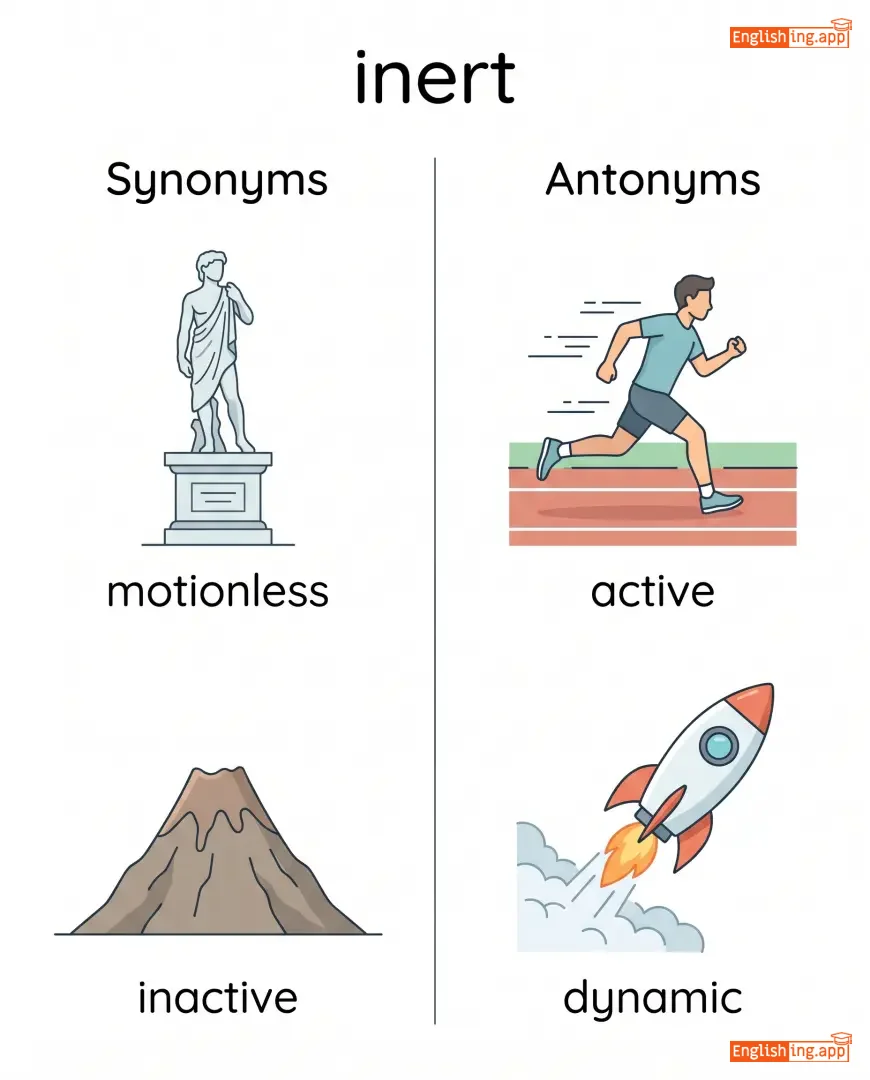
motionless, inactive, still, lifeless
••••••
|
active, dynamic, energetic
••••••
|
inert gases, inert body, inert matter, chemically inert
••••••
|
Inert = in + energy 不 → 没有反应或移动
••••••
|
|
😊
••••••
|
/ɪnˈdʒɛnjuəs/
adjective
(ɪnˈdʒɛnjuəs)
••••••
|
|
天真
tianzhen
••••••
|
- •••••• | - •••••• | - •••••• | - •••••• |
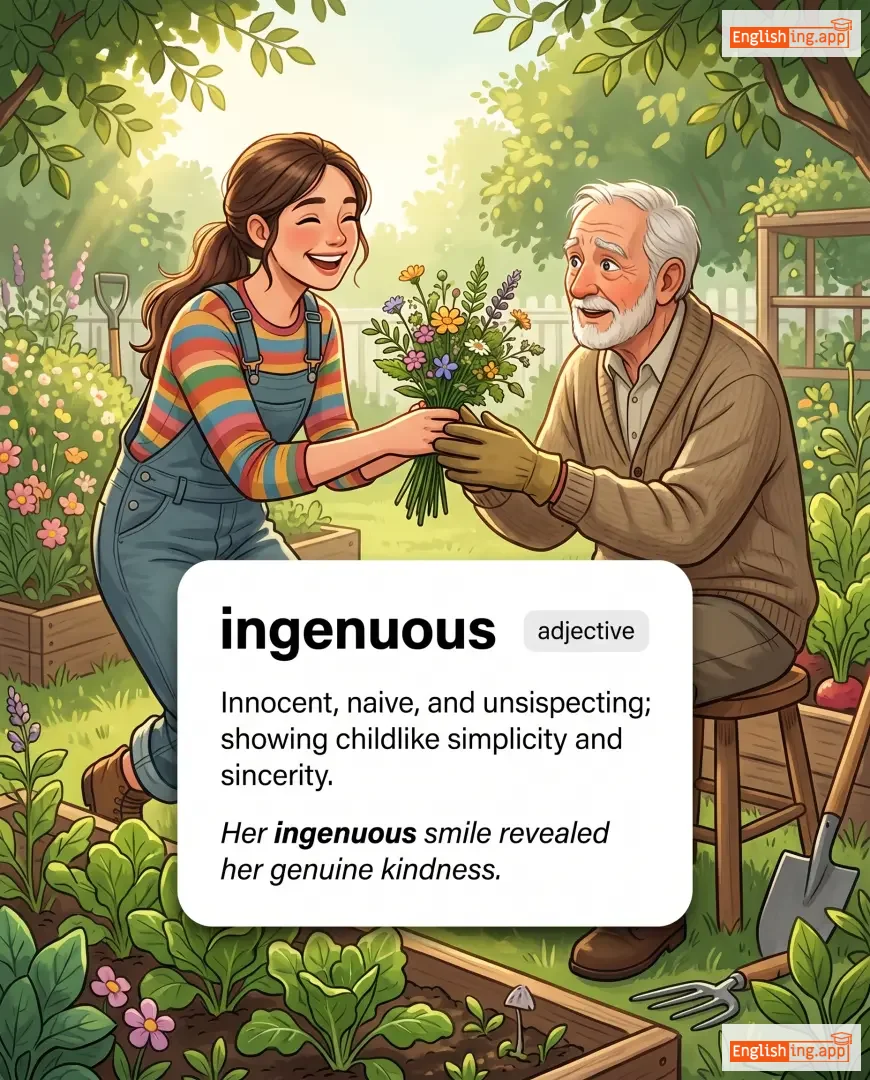
Innocent, naive, and unsuspecting; showing childlike simplicity and sincerity.
••••••
|
Her ingenuous smile revealed her genuine kindness. |
她天真的笑容揭示了她真实的善良。
Ta tianzhen de xiaorong jieshi le ta zhenshi de shanliang.
••••••
|
- •••••• | - •••••• | - •••••• |
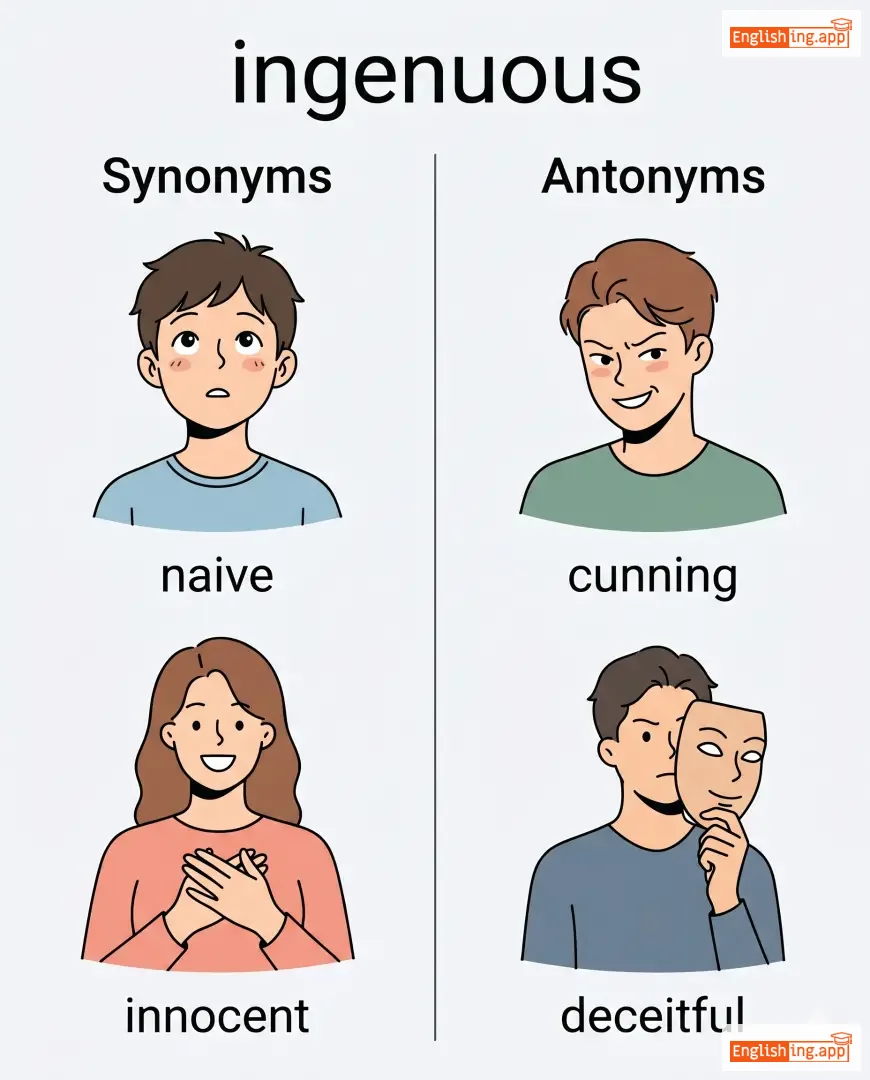
naive, innocent, sincere, candid, frank
••••••
|
cunning, deceitful, insincere
••••••
|
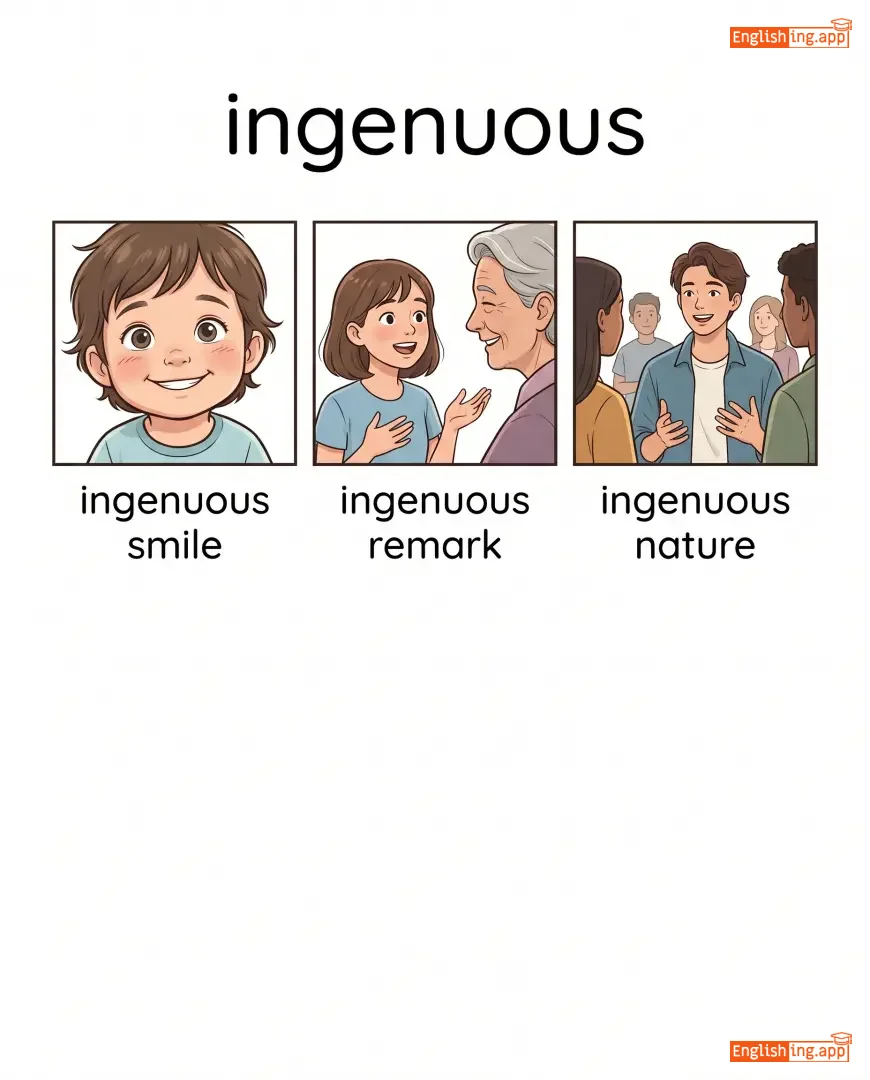
ingenuous smile, ingenuous remark, ingenuous nature, ingenuous expression
••••••
|
天真=单纯、真诚的笑容 😊
••••••
|
|
⚖️
••••••
|
/ɪnˈhɛrənt/
adjective
(因赫伦特)
••••••
|
|
固有的
gùyǒu de
••••••
|
- •••••• | - •••••• | - •••••• | - •••••• |
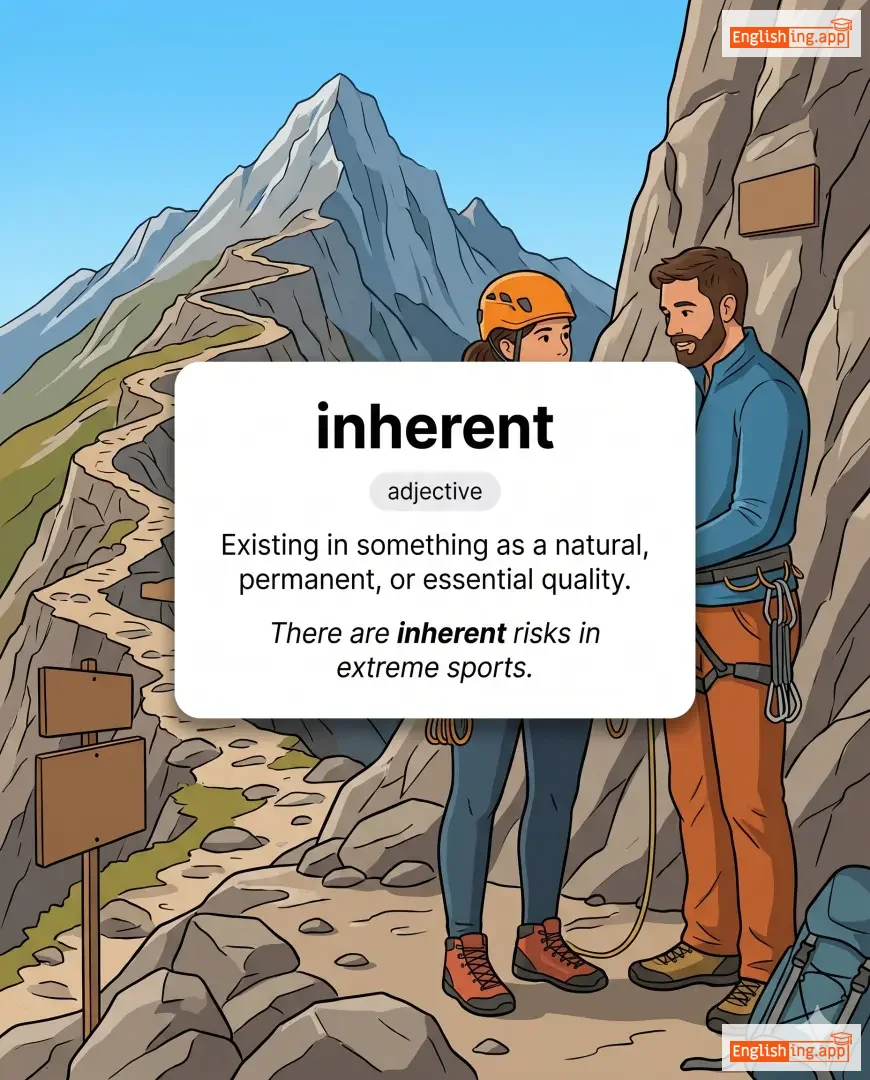
Existing in something as a natural, permanent, or essential quality.
••••••
|
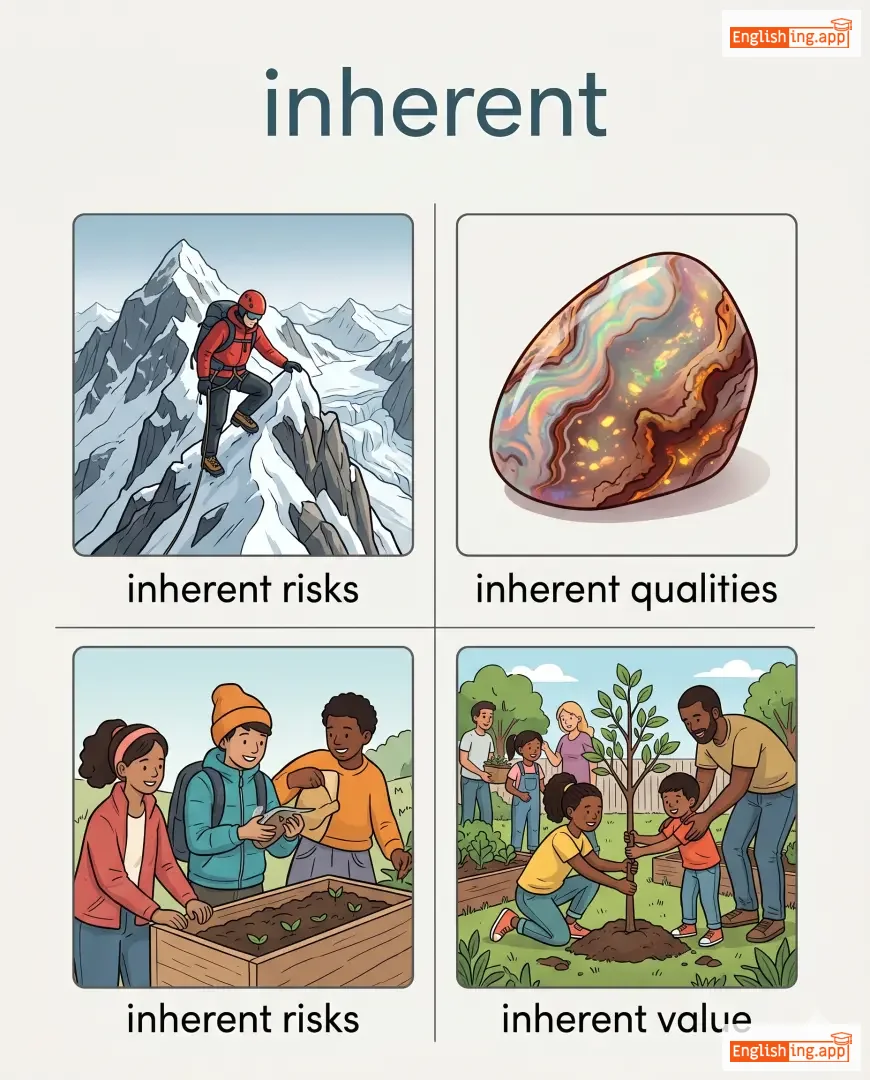
There are inherent risks in extreme sports. |
极限运动中存在固有的风险。
jíxiàn yùndòng zhōng cúnzài gùyǒu de fēngxiǎn.
••••••
|
inherent danger |
A danger that is naturally part of something and cannot be separated from it.
••••••
|
固有的危险
gùyǒu de wēixiǎn
••••••
|
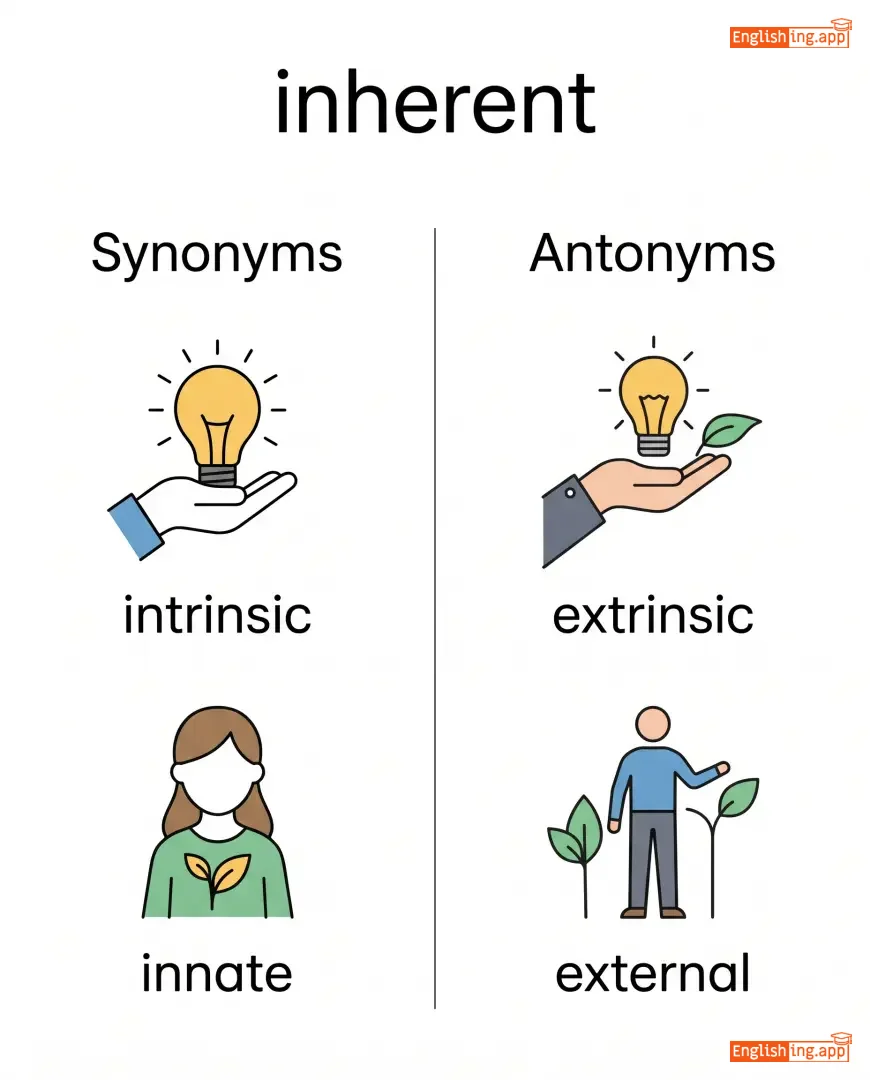
intrinsic, innate, built-in, essential, natural
••••••
|
extrinsic, external, acquired
••••••
|
inherent risks, inherent qualities, inherent value
••••••
|
Inherent意味着in + heart(在心中),即固有的。
••••••
|
|
😇
••••••
|
/ɪˈnɒkjuəs/
adjective
(yīnòkèwēièsī)
••••••
|
|
无害的
wúhài de
••••••
|
- •••••• | - •••••• | - •••••• | - •••••• |
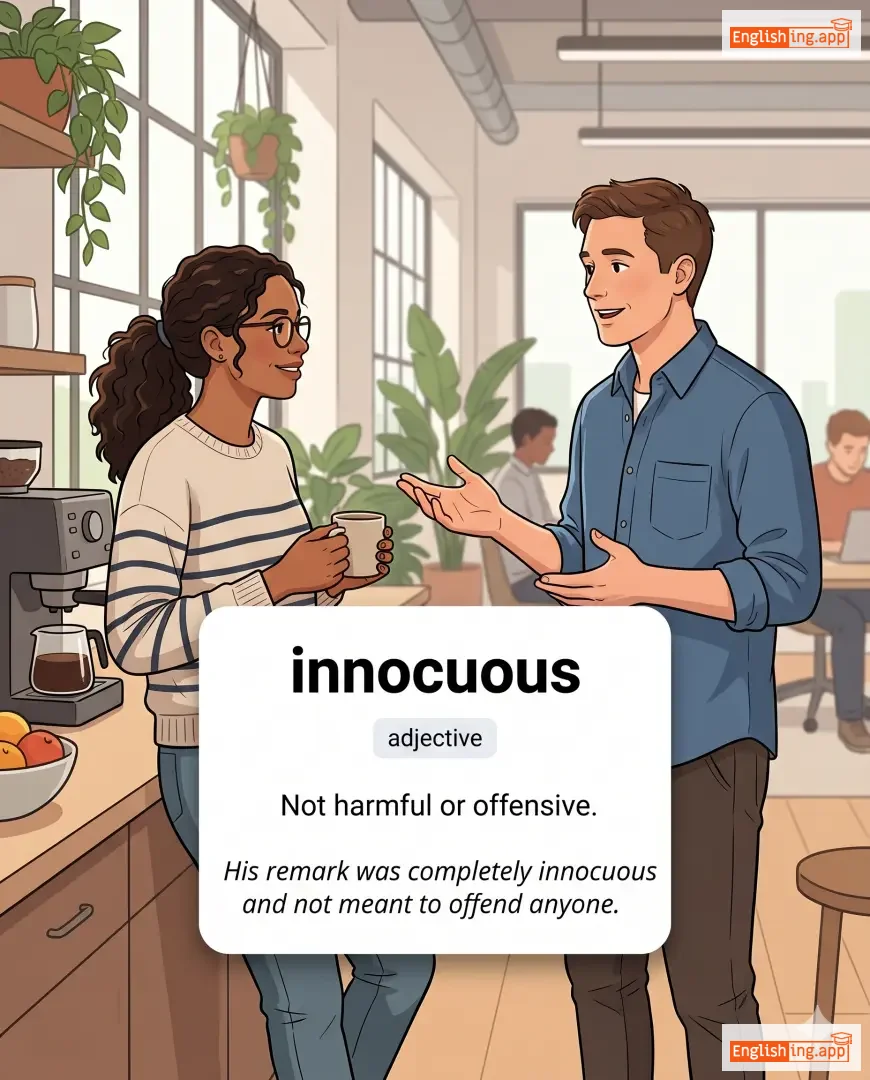
Not harmful or offensive.
••••••
|
His remark was completely innocuous and not meant to offend anyone. |
他的评论完全无害,并且没有冒犯任何人的意思。
Tā de pínglùn wánquán wúhài, bìngqiě méiyǒu màofàn rènhé rén de yìsi.
••••••
|
- •••••• | - •••••• | - •••••• |
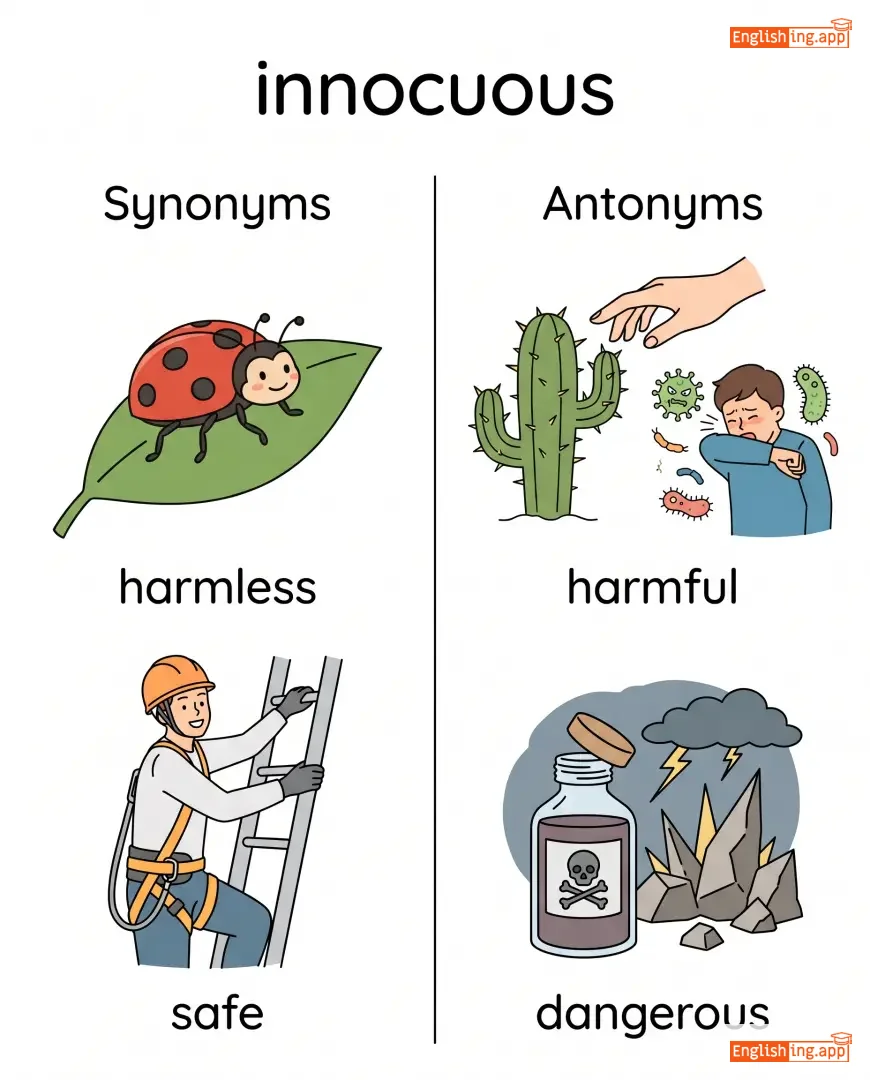
harmless, safe, inoffensive, mild, benign
••••••
|
harmful, dangerous, toxic
••••••
|
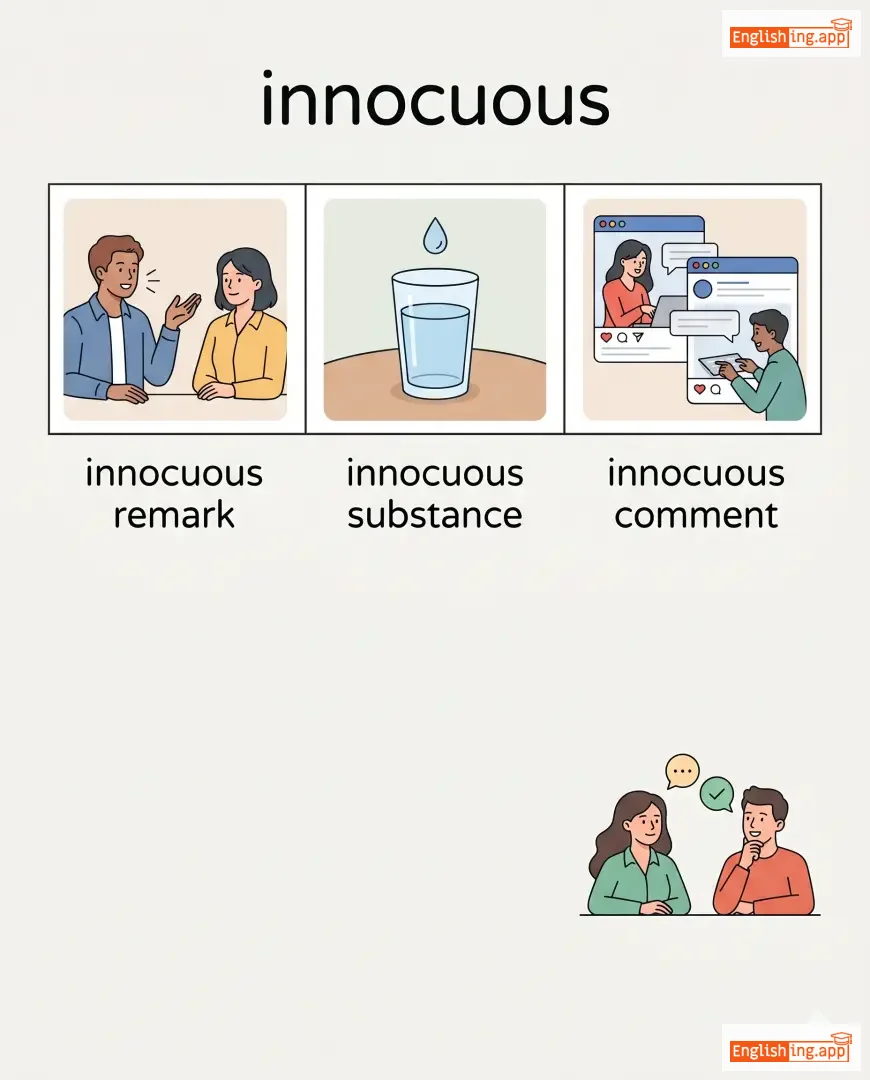
innocuous remark, innocuous substance, innocuous comment, seemingly innocuous
••••••
|
Innocent + 雾气 (mist) → 如同雾气一样,无害不造成任何伤害。
••••••
|
|
😶
••••••
|
/ɪnˈsɛnsəbl/
adjective
(因森西布尔)
••••••
|
|
昏迷
hūnmí
••••••
|
- •••••• | - •••••• | - •••••• | - •••••• |
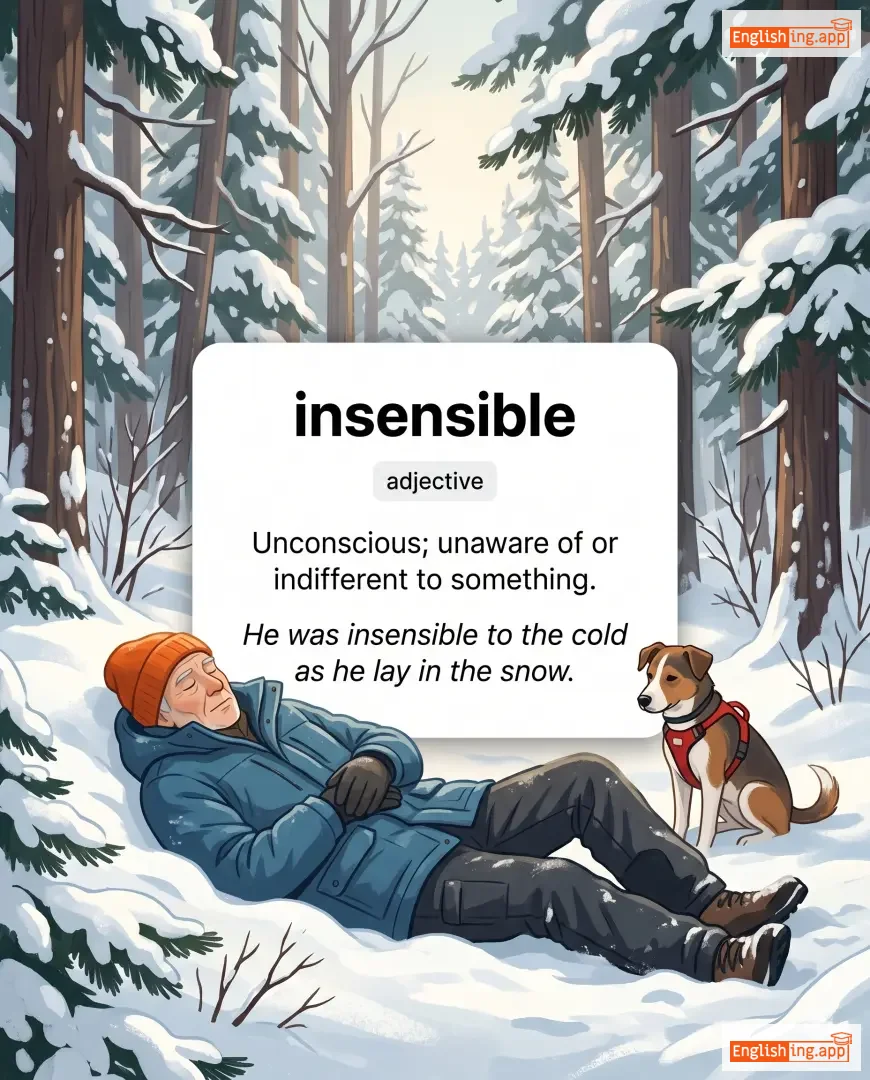
Unconscious; unaware of or indifferent to something.
••••••
|
He was insensible to the cold as he lay in the snow. |
他在雪地里躺着时,对寒冷昏迷不觉。
Tā zài xuědì lǐ tǎngzhe shí, duì hánlěng hūnmí bù jué.
••••••
|
- •••••• | - •••••• | - •••••• |
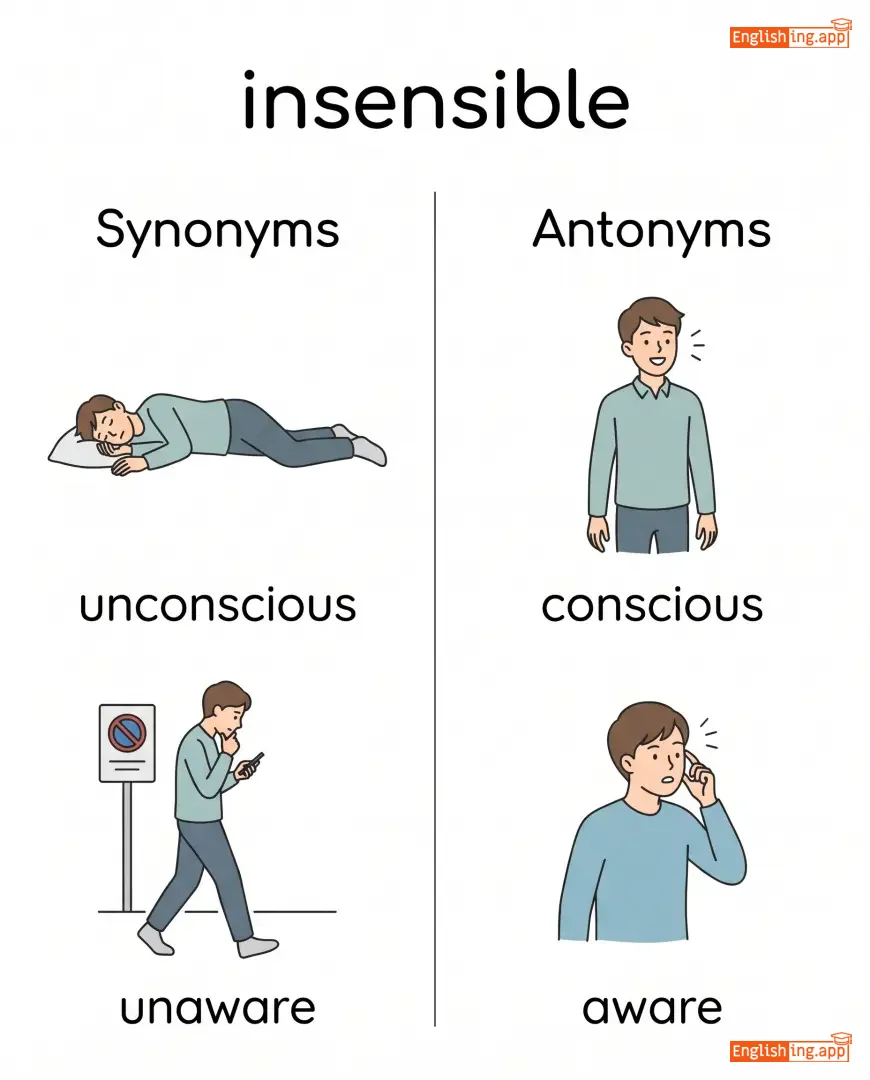
unconscious, unaware, oblivious, indifferent, unresponsive
••••••
|
conscious, aware, responsive
••••••
|
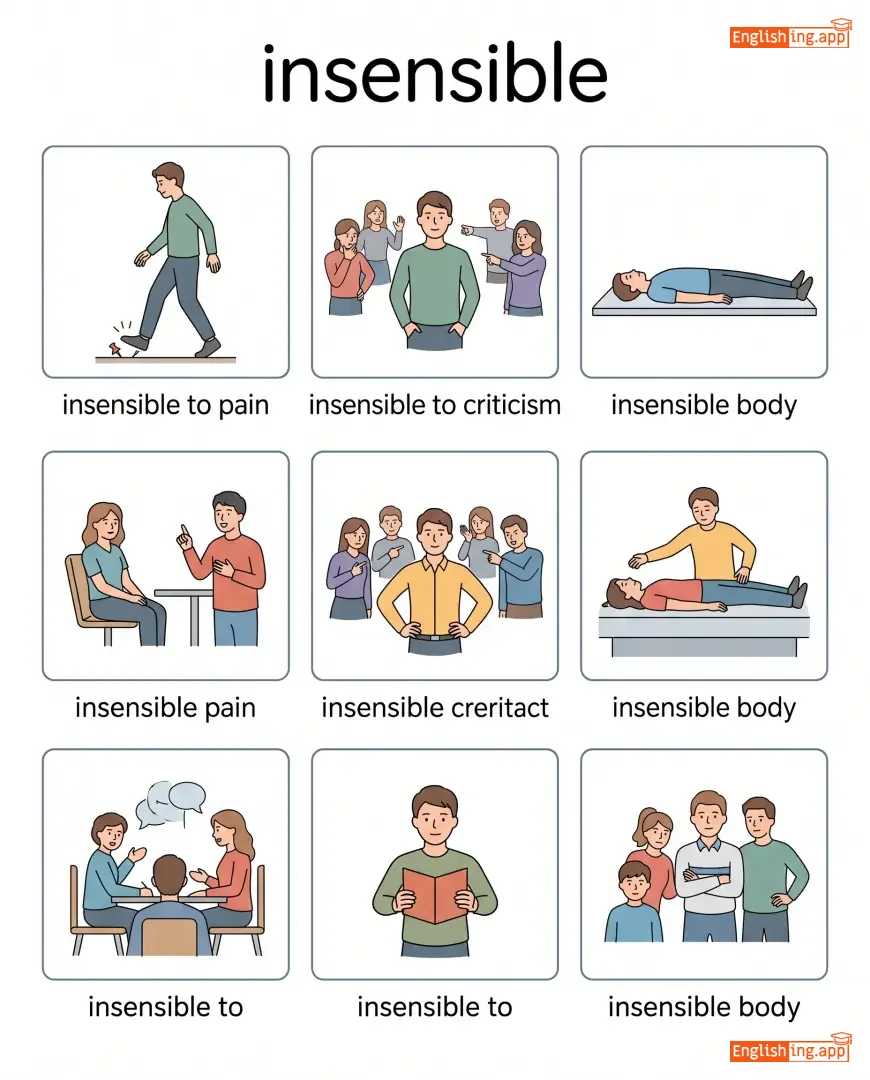
insensible to pain, insensible to criticism, insensible body
••••••
|
INSensible意味着没有感觉 → 昏迷.
••••••
|
|
🤫
••••••
|
/ɪnˈsɪnjueɪt/
verb
••••••
|


|
- •••••• |
insinuated
••••••
|
insinuated
••••••
|
insinuates
••••••
|
insinuating
••••••
|
To suggest or hint something indirectly and often unpleasantly.
••••••
|
He insinuated that she had lied about her qualifications. |
- •••••• |
insinuate oneself |
to gradually and subtly gain favor or acceptance
••••••
|
- •••••• |
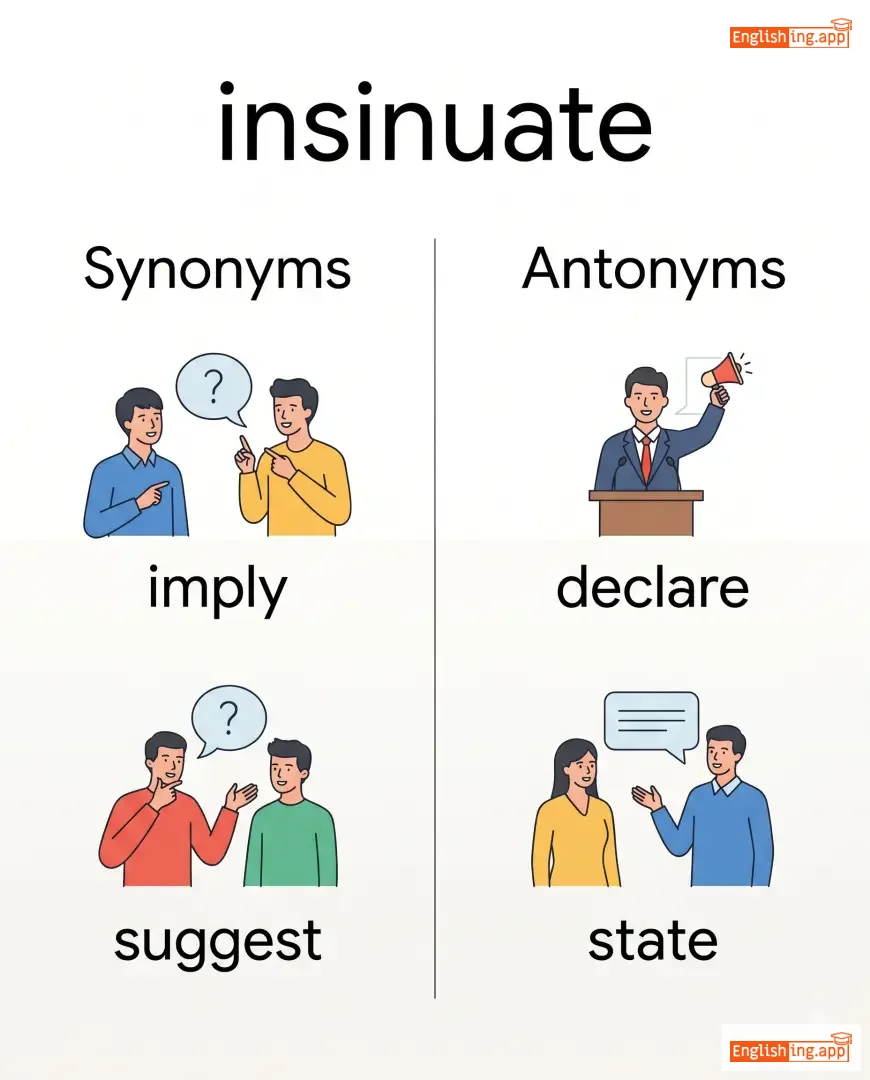
imply, suggest, hint, intimate, indicate
••••••
|
declare, state, assert
••••••
|
insinuate doubt, insinuate guilt, insinuate oneself into
••••••
|
No •••••• |
|
🥱
••••••
|
/ɪnˈsɪpɪd/
adjective
(无味的)
••••••
|
|
乏味的
fámèi de
••••••
|
- •••••• | - •••••• | - •••••• | - •••••• |
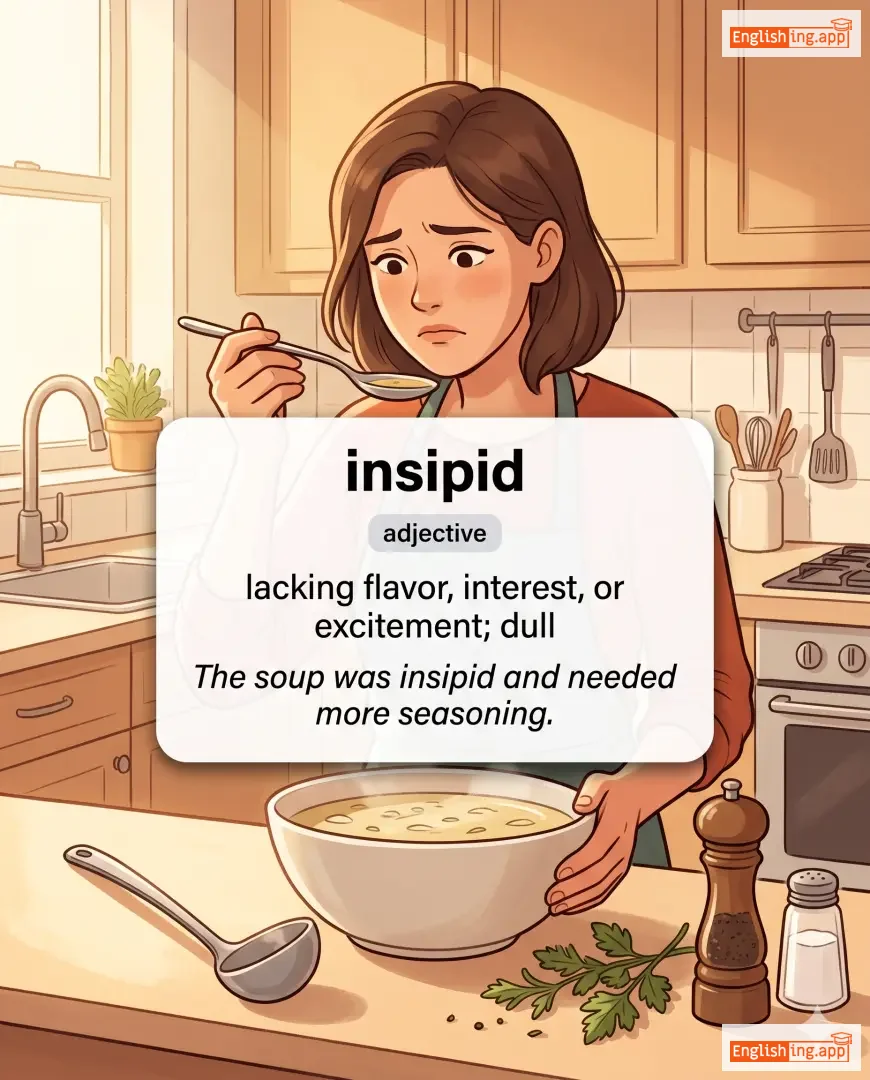
lacking flavor, interest, or excitement; dull
••••••
|
The soup was insipid and needed more seasoning. |
汤无味,需要更多的调料。
Tāng wúwèi, xūyào gèng duō de tiáoliào.
••••••
|
- •••••• | - •••••• | - •••••• |
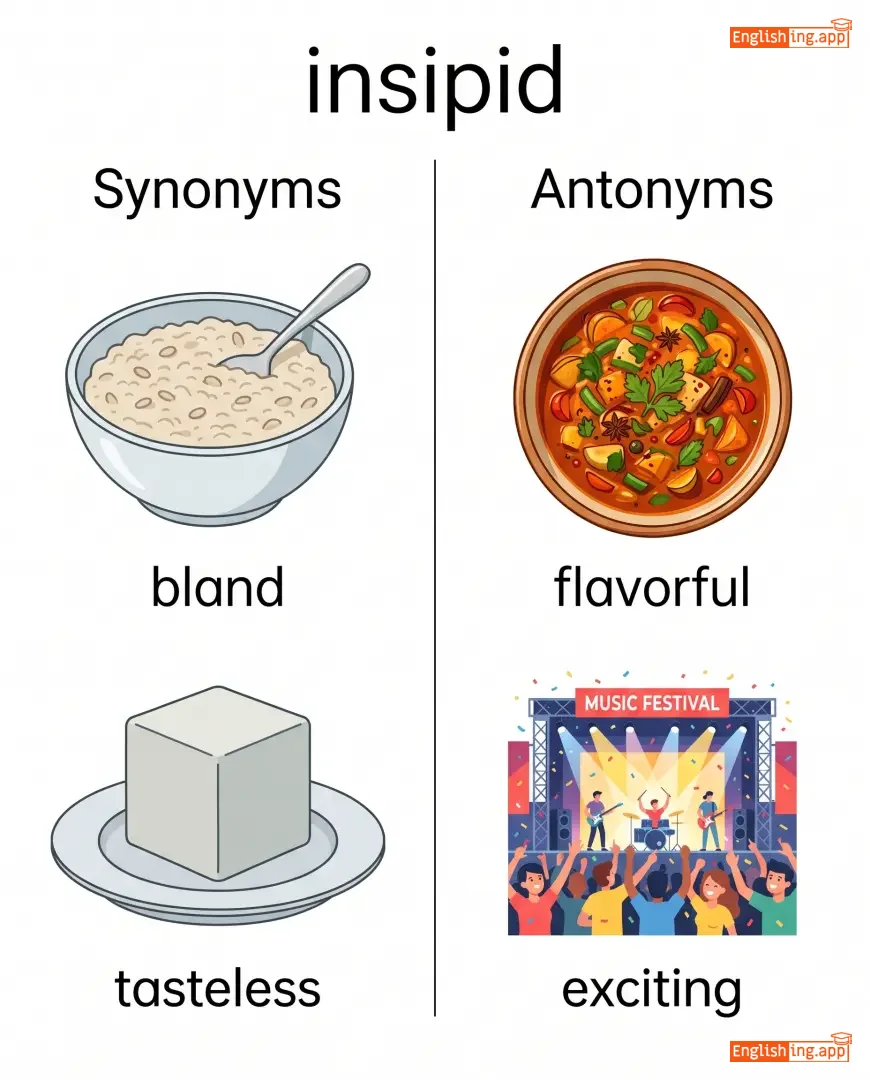
bland, tasteless, dull, boring, flat
••••••
|
flavorful, exciting, lively
••••••
|
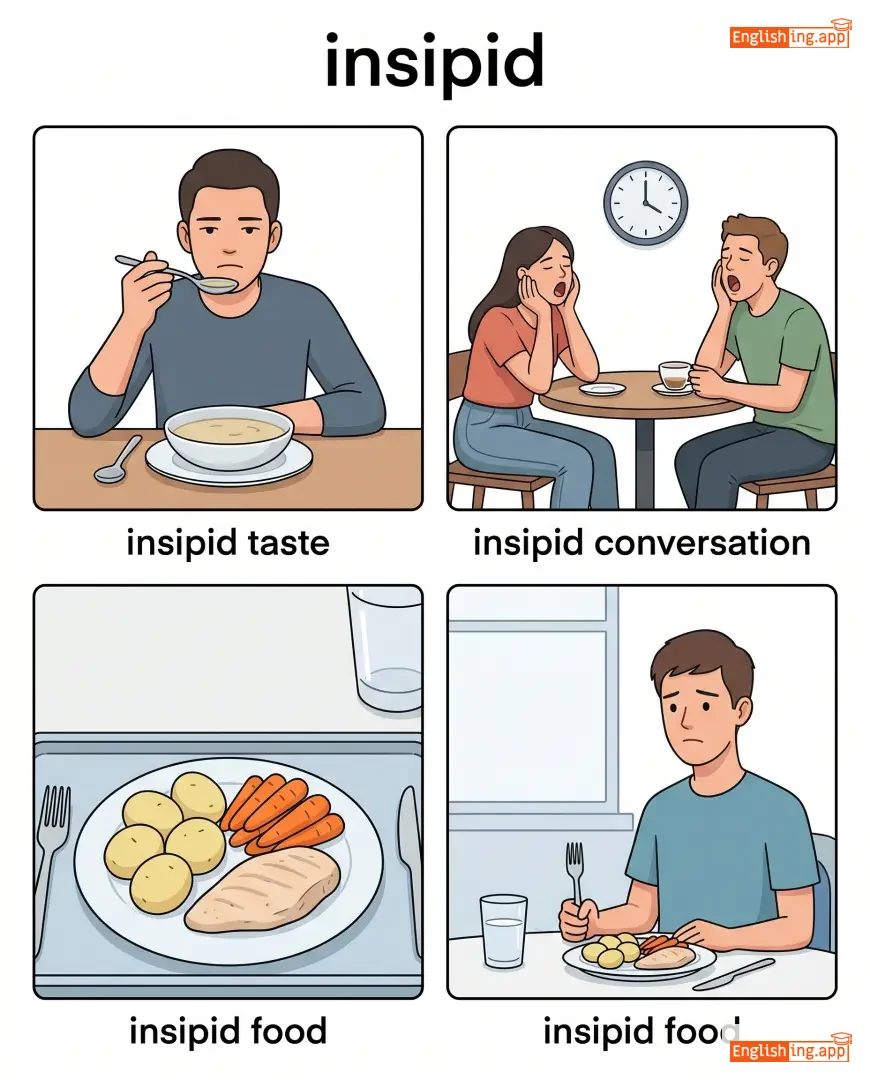
insipid taste, insipid conversation, insipid food, insipid performance
••••••
|
Insipid 听起来像 ‘in sipid’ → 喝了没有味道,所以无味。
••••••
|
|
🌐
••••••
|
/ˌɪnsjəˈlærəti/
noun
(ɪnsʊˈlærɪti)
••••••
|
|
岛屿性
dǎoyǔ xìng
••••••
|
- •••••• | - •••••• | - •••••• | - •••••• |
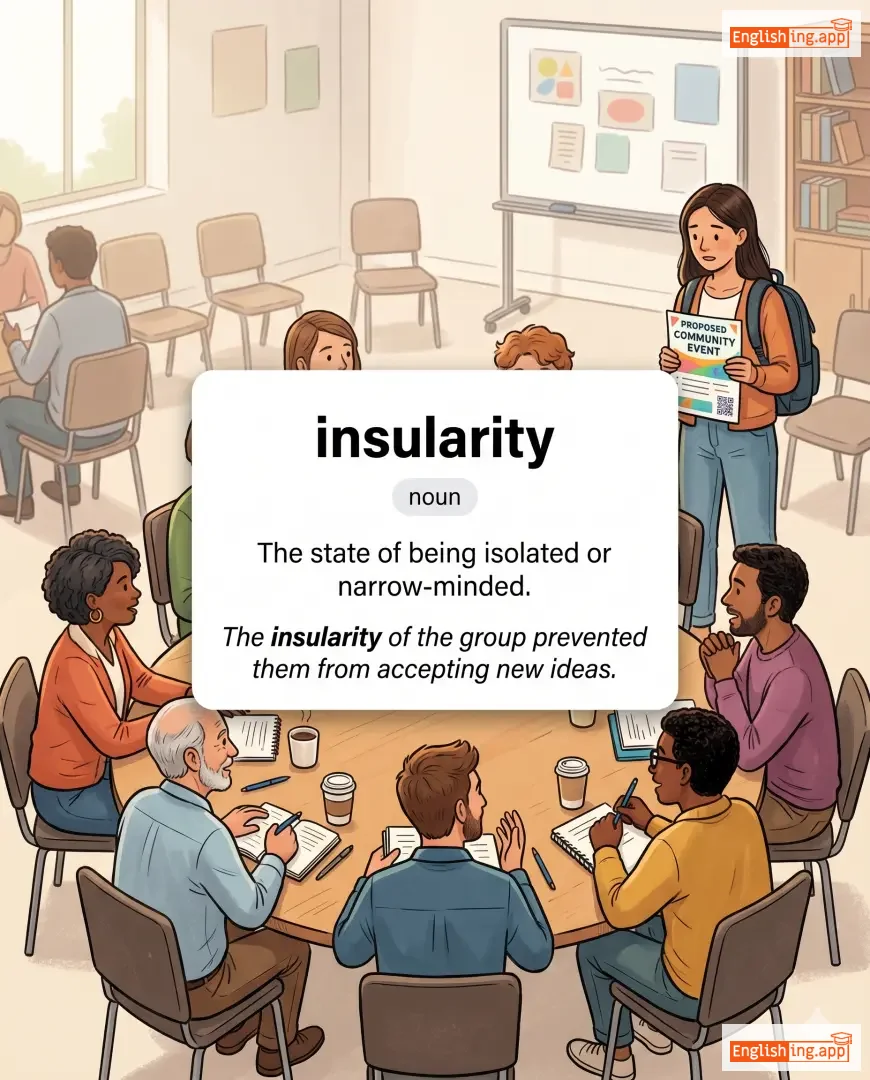
The state of being isolated or narrow-minded.
••••••
|
The insularity of the group prevented them from accepting new ideas.
该小组的岛屿性使他们无法接受新的想法。
••••••
|
该小组的岛屿性使他们无法接受新的想法。
Gāi xiǎozǔ de dǎoyǔ xìng shǐ tāmen wúfǎ jiēshòu xīn de xiǎngfǎ.
••••••
|
- •••••• | - •••••• | - •••••• |
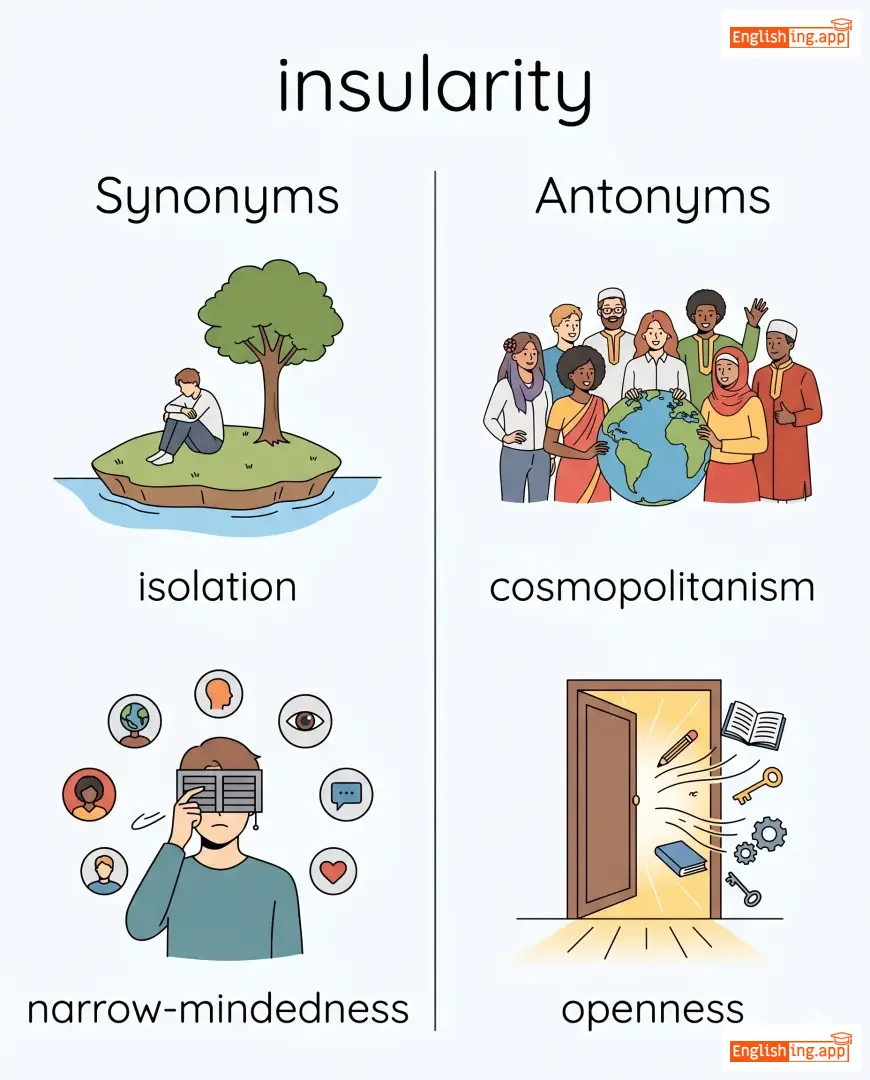
isolation, narrow-mindedness, provincialism, parochialism
••••••
|
cosmopolitanism, openness, tolerance
••••••
|
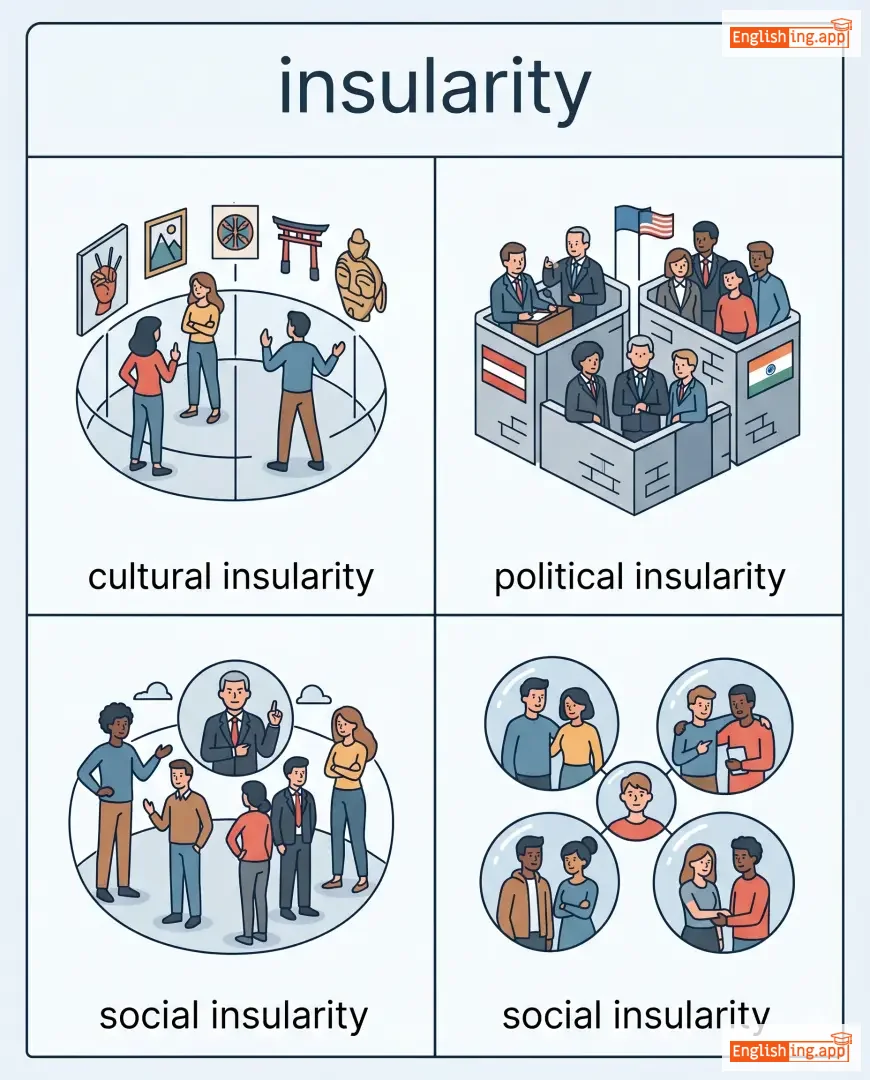
cultural insularity, political insularity, social insularity
••••••
|
岛屿性代表着孤立的思维和不接受新思想的态度。
••••••
|
|
🪨
••••••
|
/ɪnˈtræk.tə.bəl/
adjective
(因特拉克特布尔)
••••••
|

|
无法控制
wúfǎ kòngzhì
••••••
|
- •••••• | - •••••• | - •••••• | - •••••• |
Difficult or impossible to manage, control, or solve.
••••••
|
The conflict has become an intractable problem. |
冲突已经成为一个无法控制的问题。
Chōngtú yǐjīng chéngwéi yīgè wúfǎ kòngzhì de wèntí.
••••••
|
- •••••• | - •••••• | - •••••• |
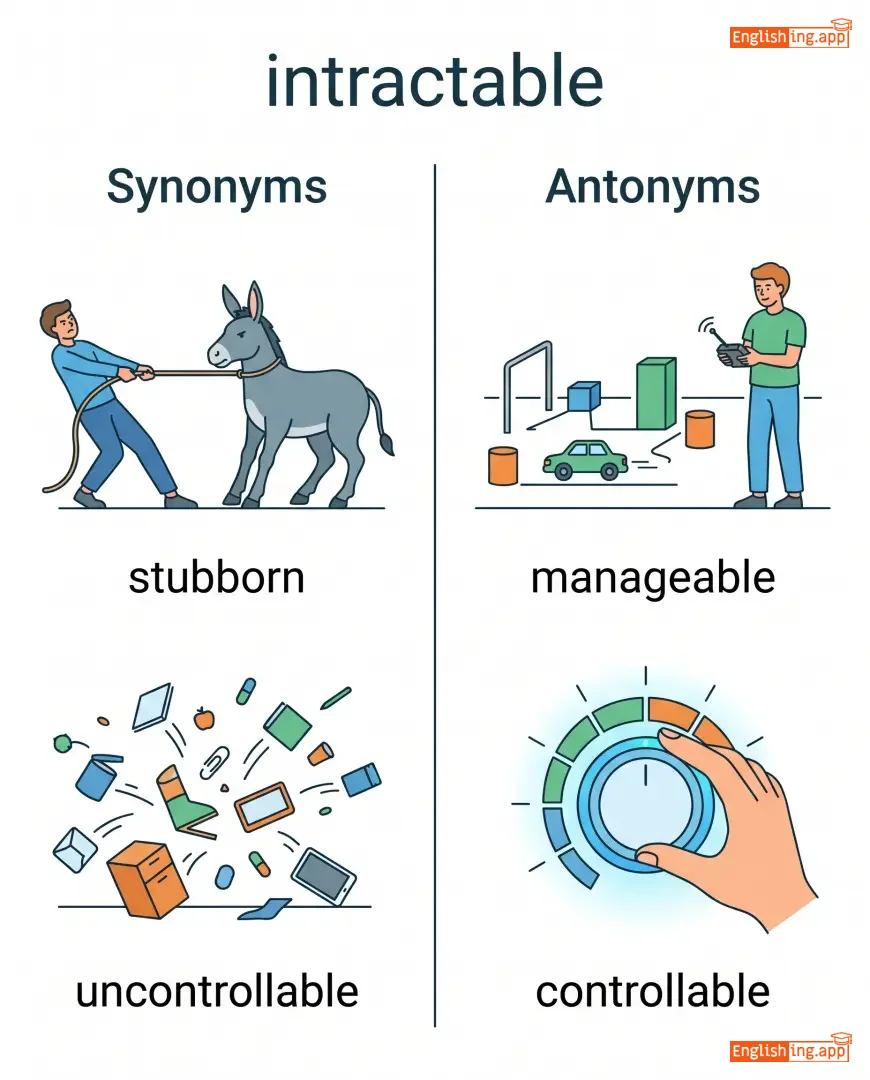
stubborn, uncontrollable, unmanageable, obstinate
••••••
|
manageable, controllable, flexible
••••••
|
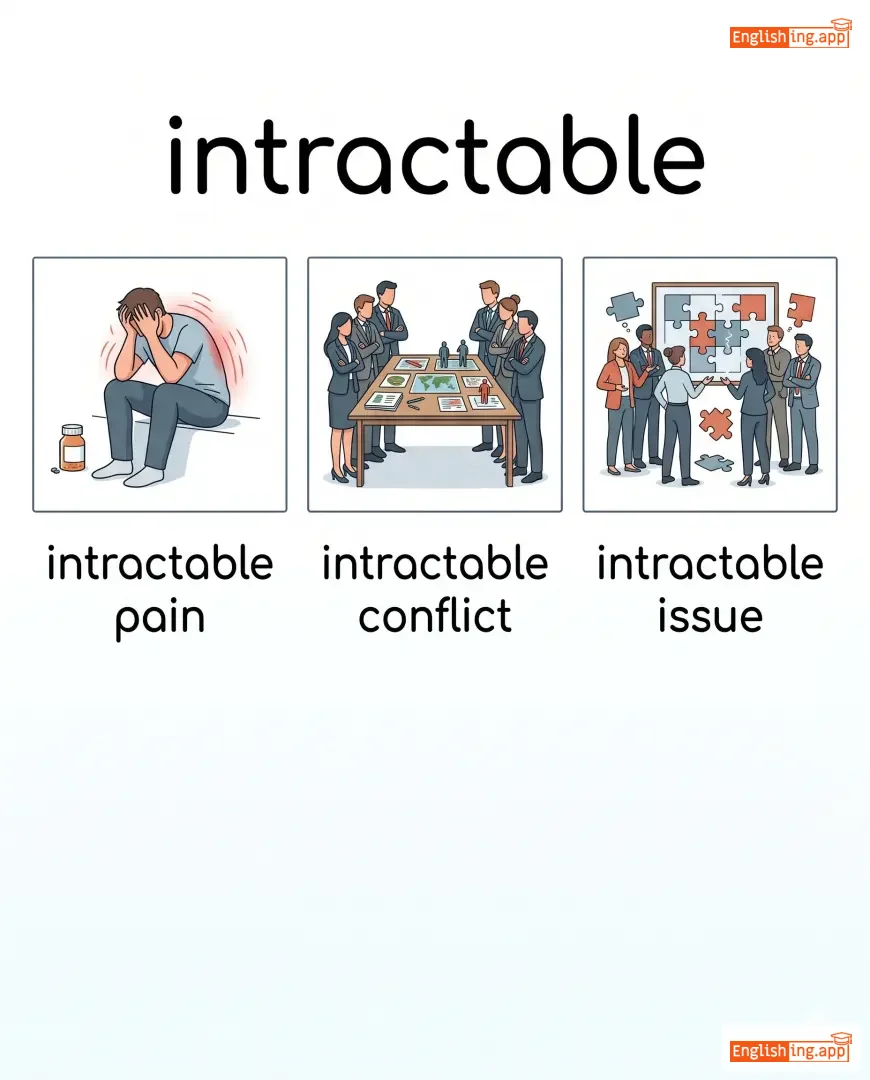
intractable pain, intractable conflict, intractable issue, intractable disease
••••••
|
In + Track (轨道) + able → 无法解决的问题 → 无法控制
••••••
|
|
🛑
••••••
|
/ɪnˈtræn.sɪ.dʒəns/
noun
(不妥协)
••••••
|
|
固执
gùzhí
••••••
|
- •••••• | - •••••• | - •••••• | - •••••• |
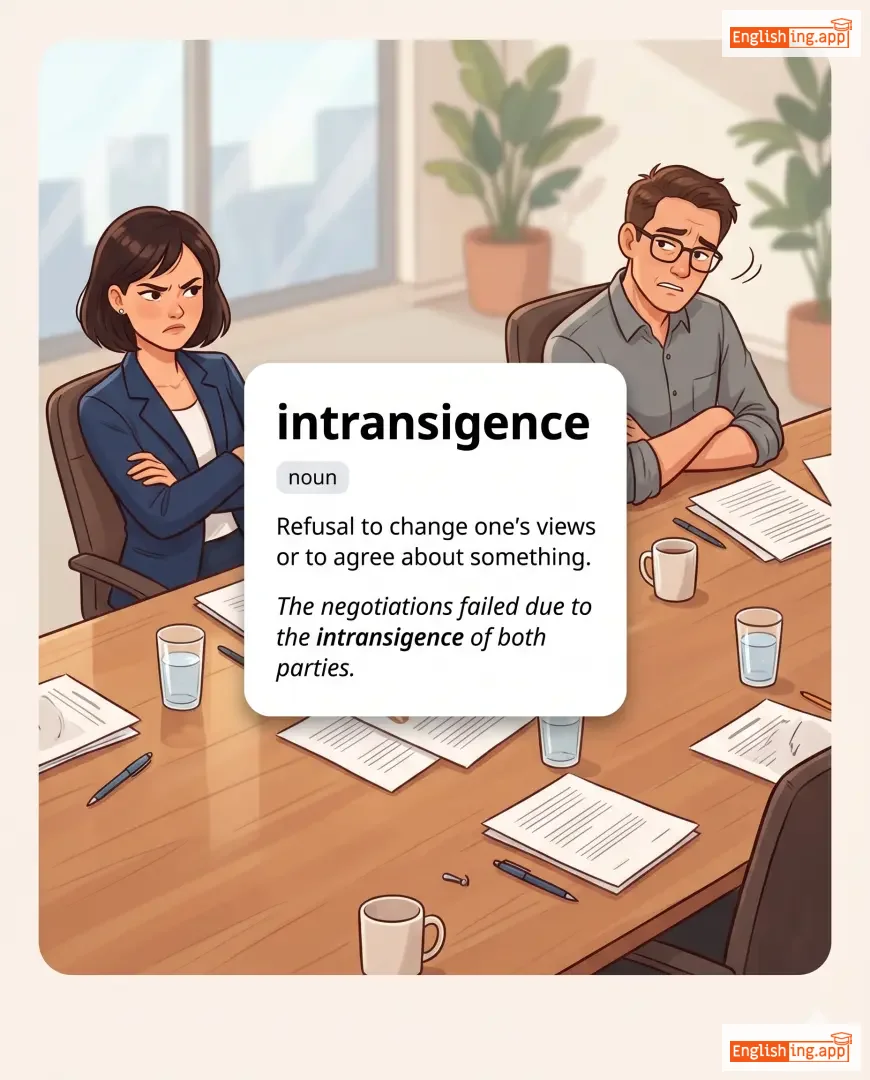
Refusal to change one's views or to agree about something.
••••••
|
The negotiations failed due to the intransigence of both parties. |
由于双方的固执,谈判失败了。
Yóuyú shuāngfāng de gùzhí, tánpàn shībài le.
••••••
|
- •••••• | - •••••• | - •••••• |
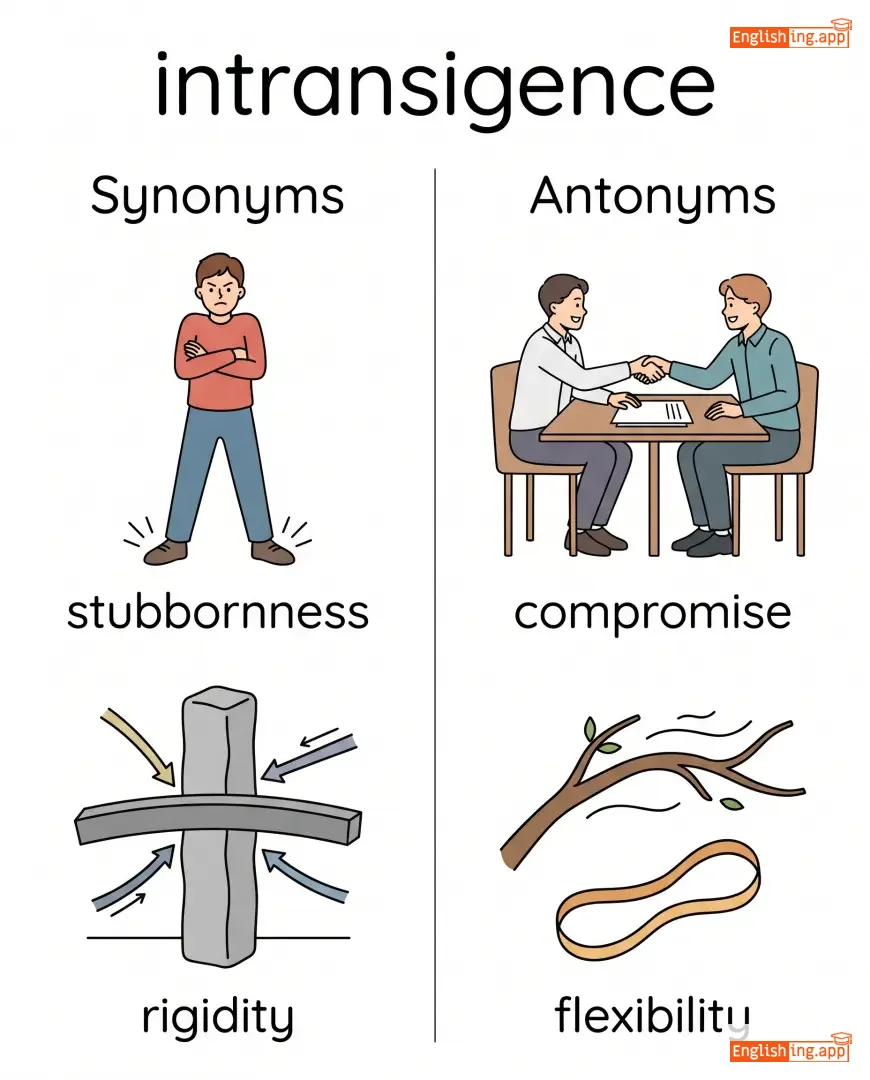
stubbornness, rigidity, inflexibility, obstinacy
••••••
|
compromise, flexibility, willingness
••••••
|
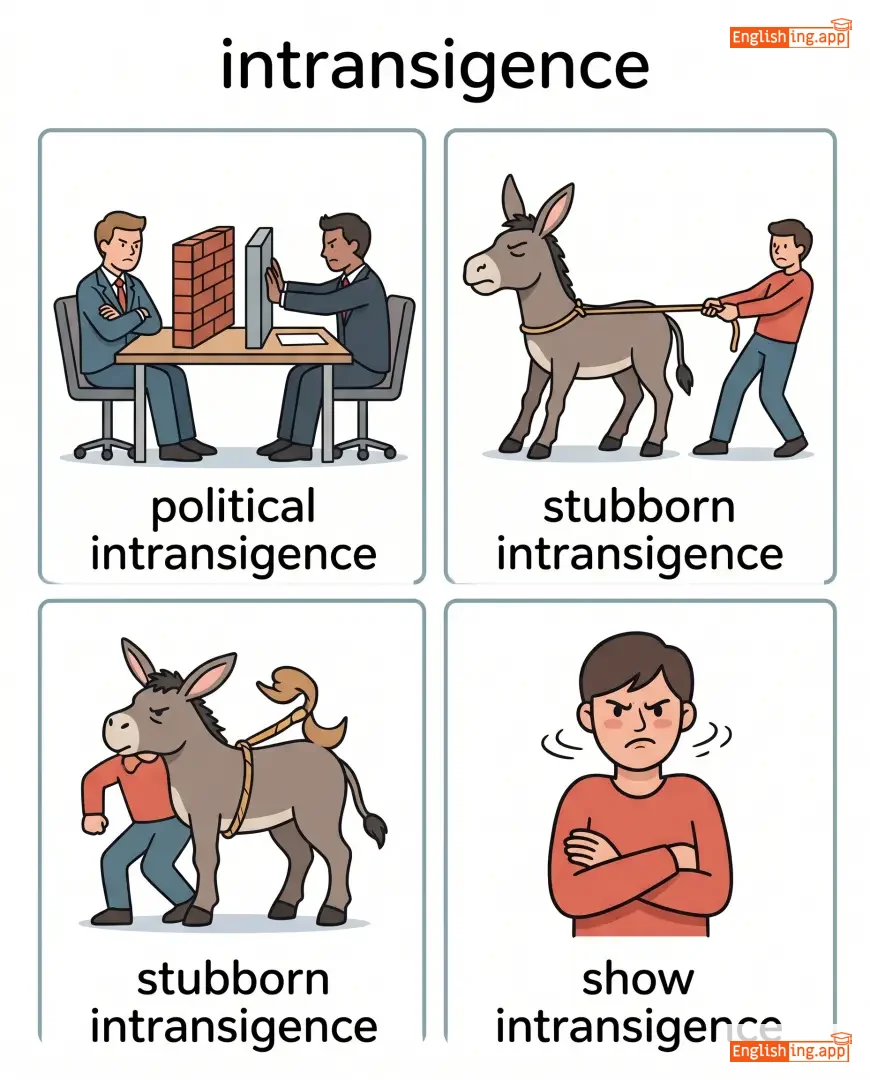
political intransigence, stubborn intransigence, show intransigence, display intransigence
••••••
|
In + Transit不 → 意味着不动 → 不改变 → 固执
••••••
|
|
🌊
••••••
|
/ˈɪn.ʌn.deɪt/
verb
(因恩戴特)
••••••
|
|
淹没 / 充满
yānmò / chōngmǎn
••••••
|
inundated
因恩戴特德
••••••
|
inundated
因恩戴特德
••••••
|
inundates
因恩戴特斯
••••••
|
inundating
因恩戴廷
••••••
|
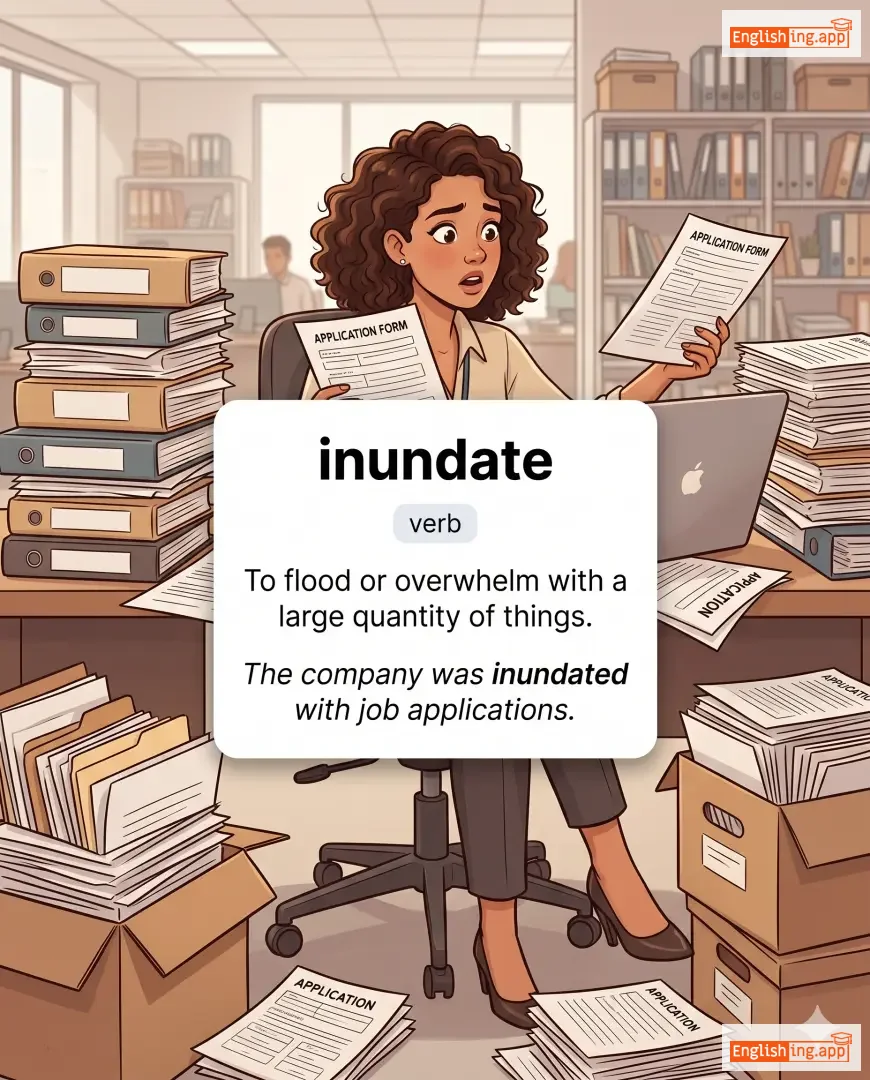
To flood or overwhelm with a large quantity of things.
••••••
|
The company was inundated with job applications.
公司被大量工作申请淹没。
••••••
|
公司被大量工作申请淹没。
Gōngsī bèi dàliàng gōngzuò shēnqǐng yānmò.
••••••
|
inundated with work
工作淹没
••••••
|
Overwhelmed by too much work.
••••••
|
工作压倒
Gōngzuò yādǎo
••••••
|
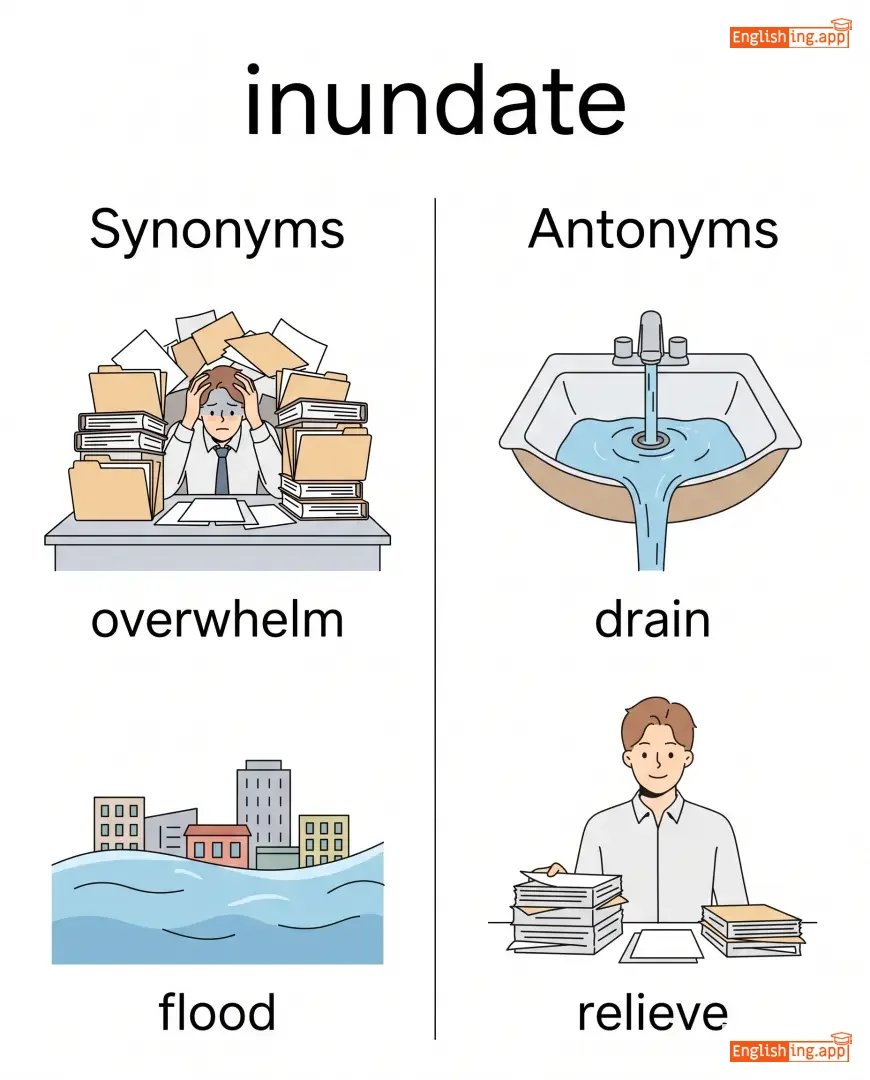
overwhelm, flood, swamp, engulf, deluge
••••••
|
drain, relieve
••••••
|
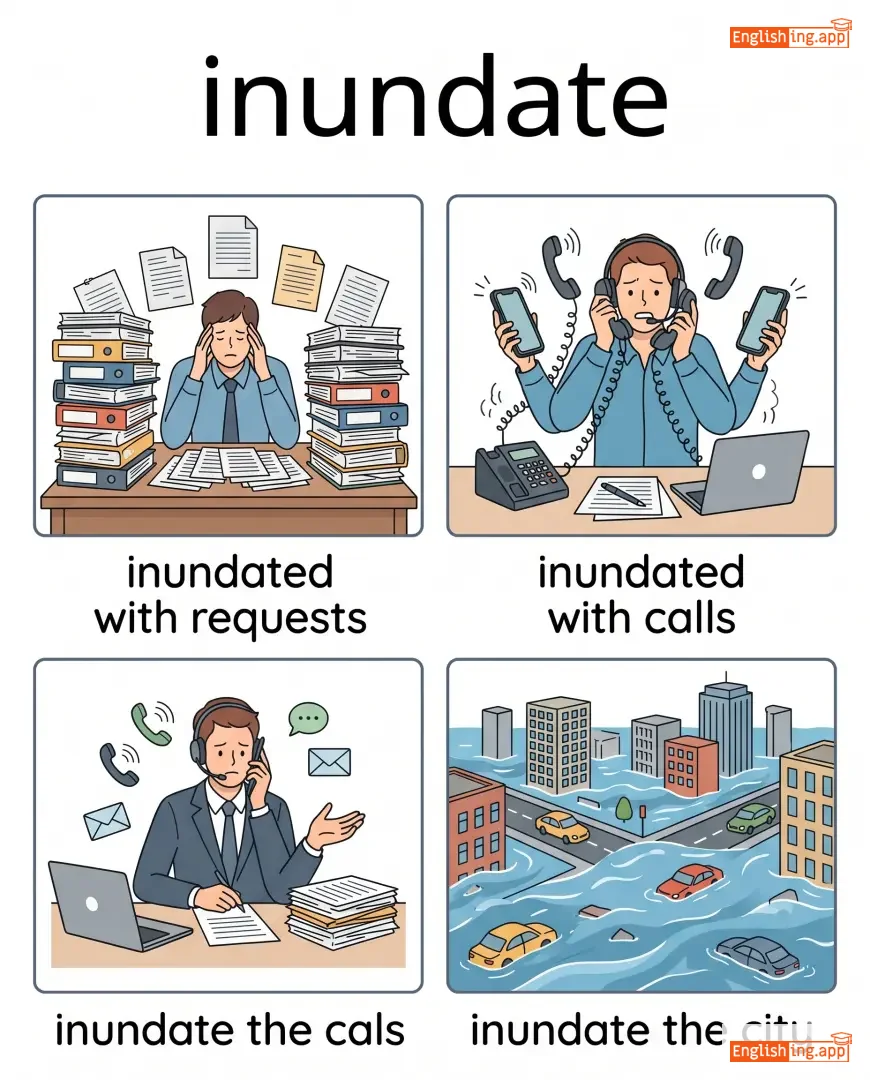
inundated with requests, inundated with calls, inundate the city, inundated by problems
••••••
|
In UN DATE 被淹没 – inundate意味着淹没。
••••••
|
|
🛡️
••••••
|
/ɪˈnjʊərd/
adjective
(因尤德)
••••••
|
|
习惯于
xíguàn yú
••••••
|
- •••••• | - •••••• | - •••••• | - •••••• |
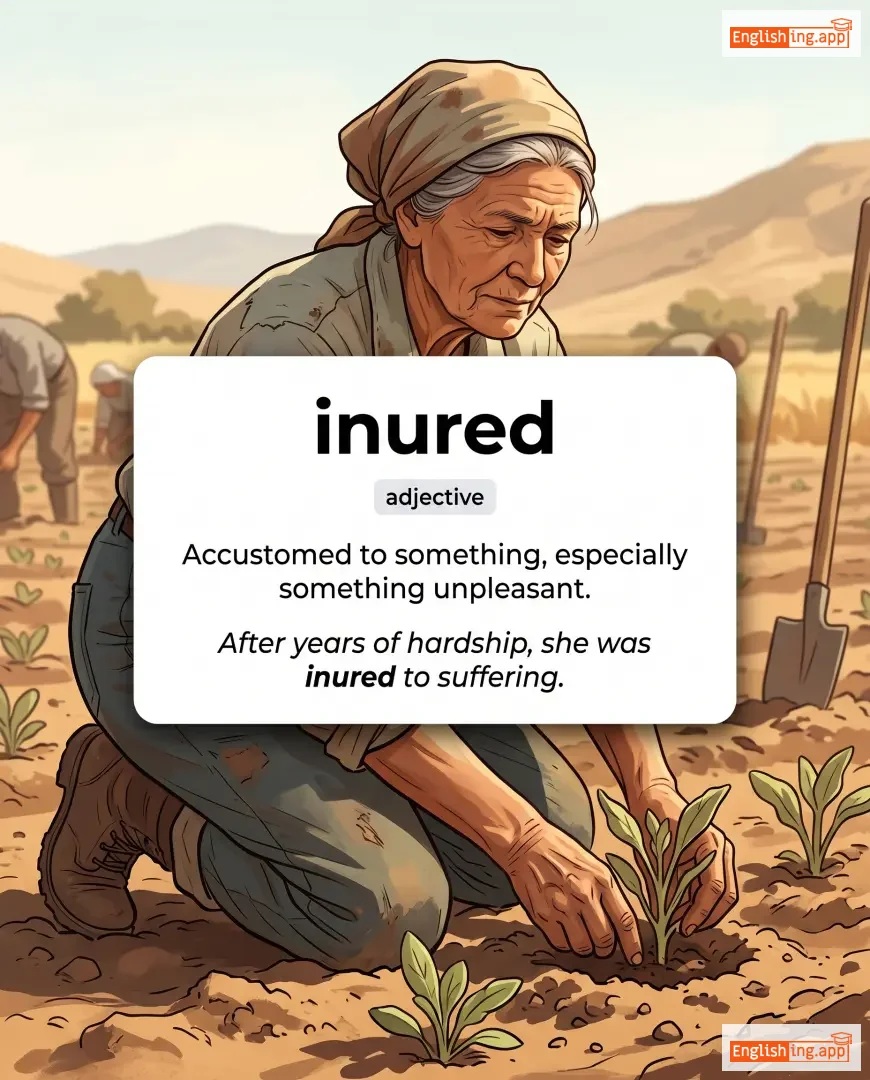
Accustomed to something, especially something unpleasant.
••••••
|
After years of hardship, she was inured to suffering. |
经过多年的困苦,她已经习惯于痛苦了。
Jīngguò duōnián de kùnkǔ, tā yǐjīng xíguàn yú tòngkǔ le.
••••••
|
- •••••• | - •••••• | - •••••• |
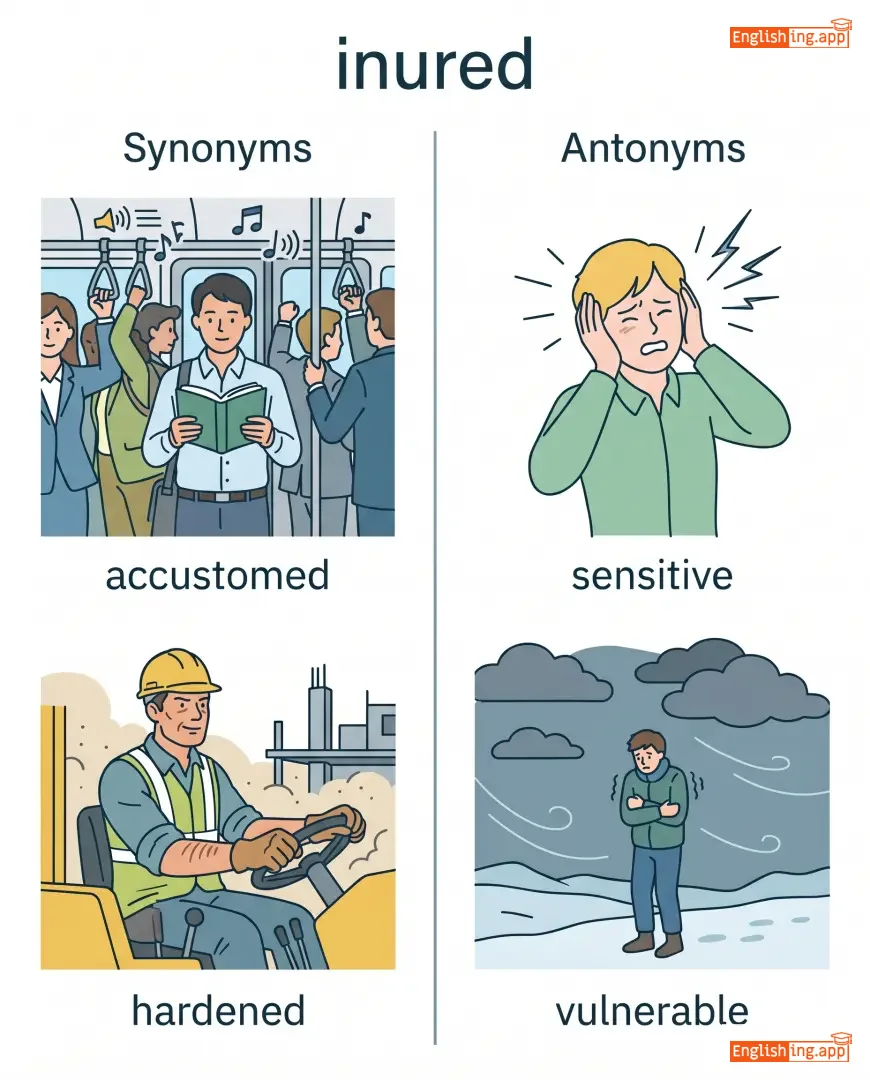
accustomed, hardened, desensitized, habituated, seasoned
••••••
|
sensitive, vulnerable, unaccustomed
••••••
|
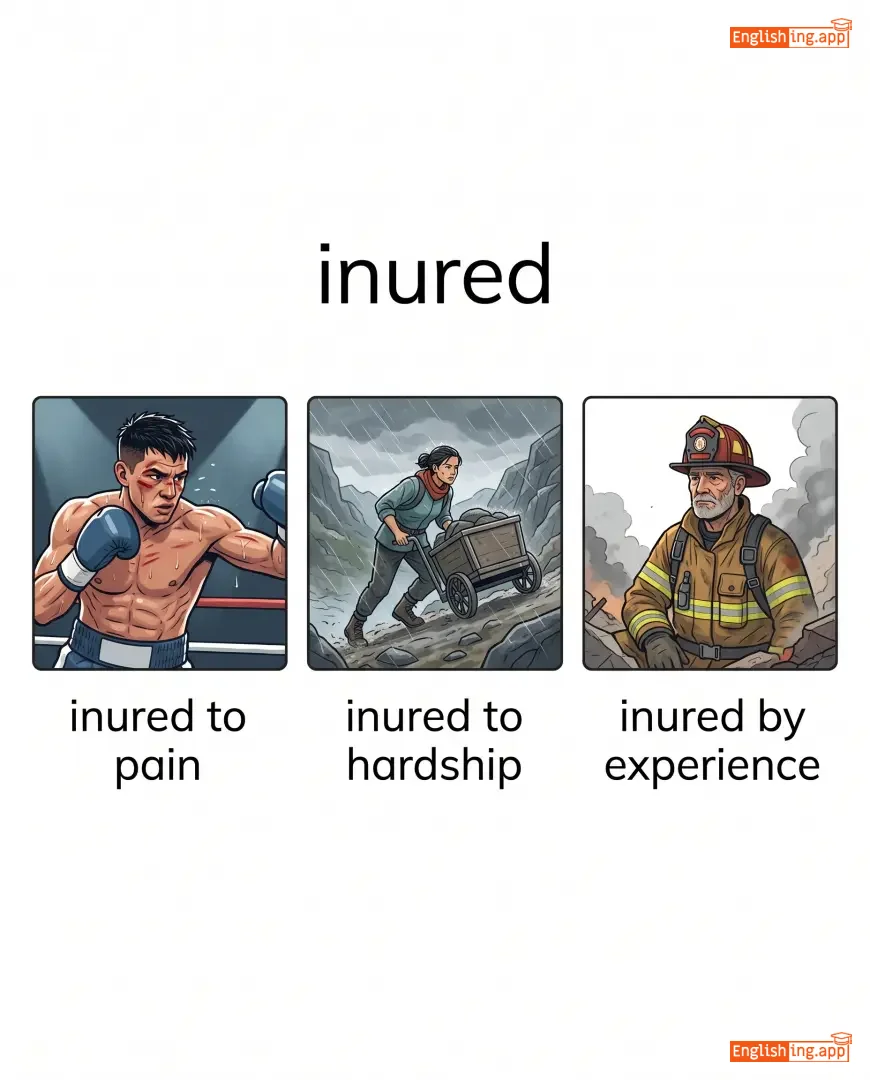
inured to pain, inured to hardship, inured by experience
••••••
|
Inured 意味着 IN + 尤德 → 经历痛苦后,习惯痛苦。
••••••
|
|
🗯️
••••••
|
/ɪnˈvɛktɪv/
noun
(因维克提夫)
••••••
|


|
侮辱性语言
wǔrǔ xìng yǔyán
••••••
|
- •••••• | - •••••• | - •••••• | - •••••• |
Insulting, abusive, or highly critical language.
••••••
|
The politician’s speech was filled with invective against his opponents. |
政治家的演讲充满了对对手的侮辱性语言。
Zhèngzhì jiā de yǎnjiǎng chōngmǎnle duì duìshǒu de wǔrǔ xìng yǔyán.
••••••
|
- •••••• | - •••••• | - •••••• |
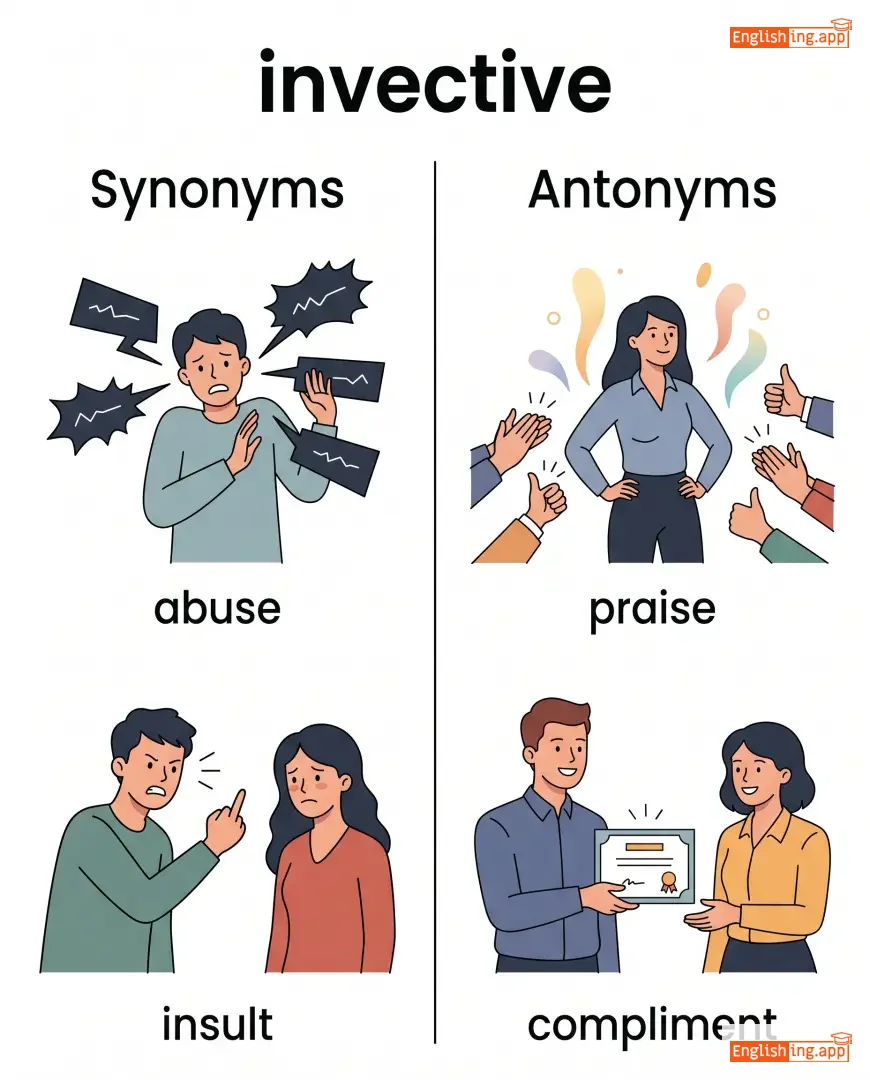
abuse, insult, vituperation, slander, censure
••••••
|
praise, compliment, flattery
••••••
|
harsh invective, political invective, stream of invective
••••••
|
Invective就像是‘批评’的加剧版本。
••••••
|
|
😡
••••••
|
/ɪˈræsɪbl/
adjective
(易怒的)
••••••
|
|
易怒的
yì nù de
••••••
|
- •••••• | - •••••• | - •••••• | - •••••• |
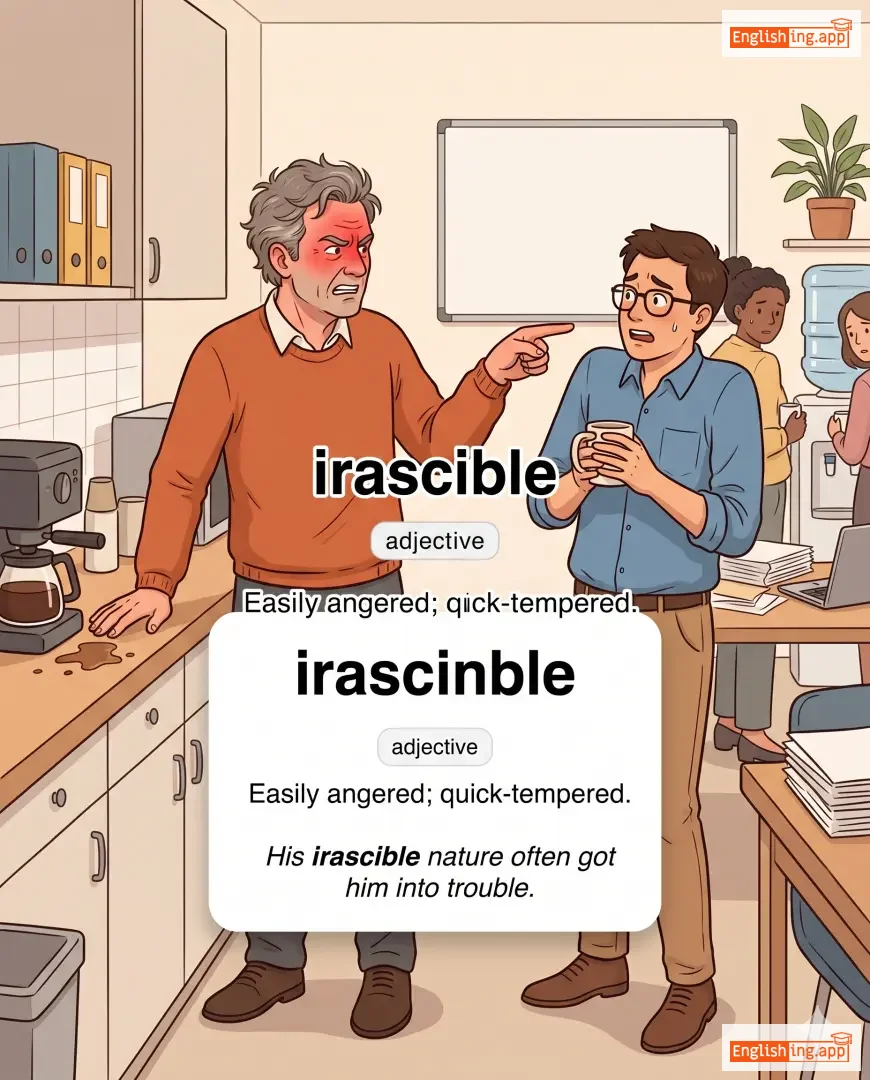
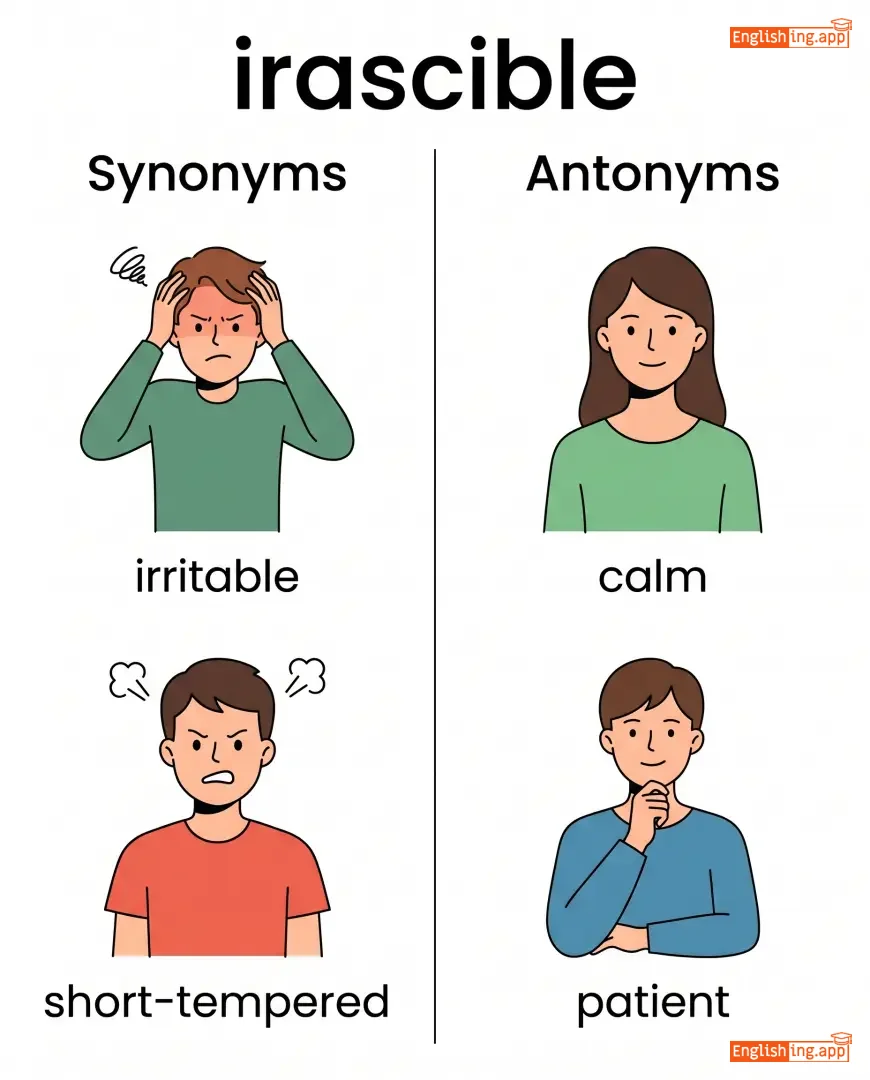
Easily angered; quick-tempered.
••••••
|
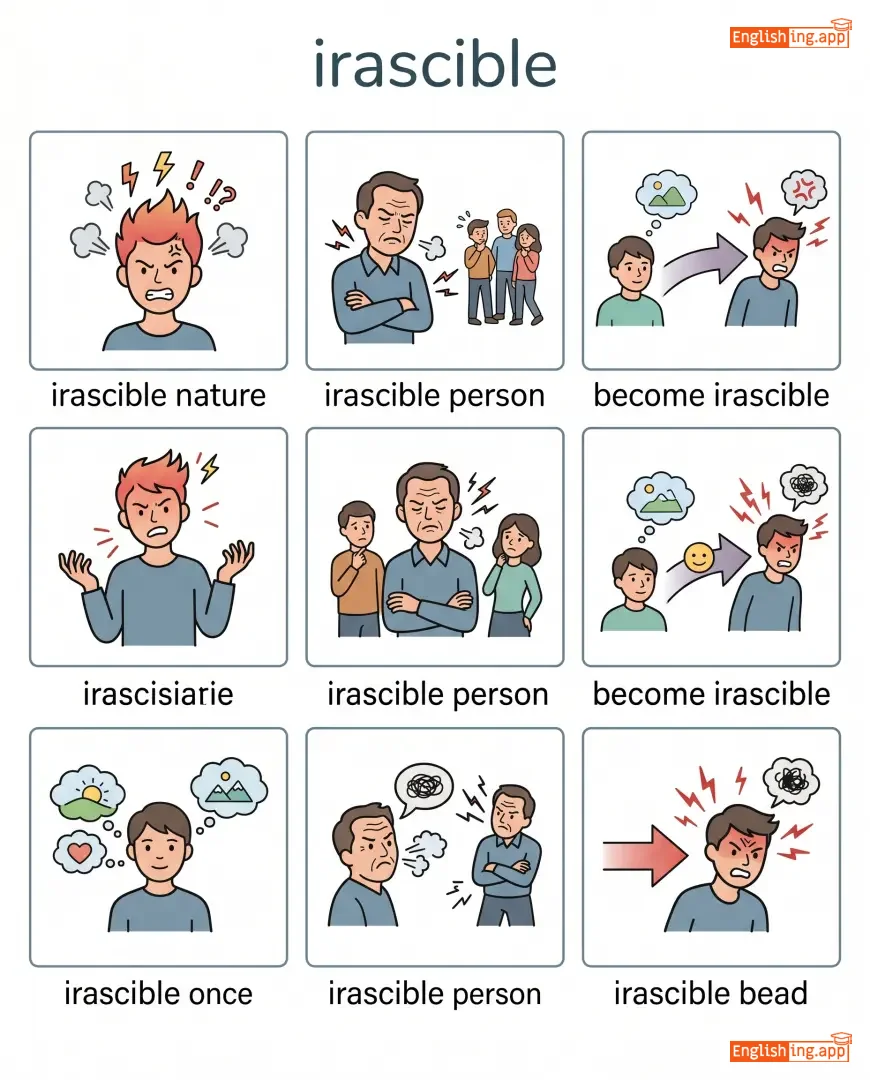
His irascible nature often got him into trouble. |
他易怒的性格常常使他陷入麻烦。
Tā yì nù de xìnggé chángcháng shǐ tā xiànrù máfan.
••••••
|
- •••••• | - •••••• | - •••••• |
irritable, short-tempered, hot-headed, touchy
••••••
|
calm, patient, easygoing
••••••
|
irascible nature, irascible person, become irascible, irascible tone
••••••
|
Irascible 意味着容易生气 – 'irritated + able' = 易怒的.
••••••
|
|
🤔
••••••
|
/ɪˈrɛzəluːt/
adjective
(依雷苏鲁特)
••••••
|
|
优柔寡断
yōuróu guǎduàn
••••••
|
- •••••• | - •••••• | - •••••• | - •••••• |
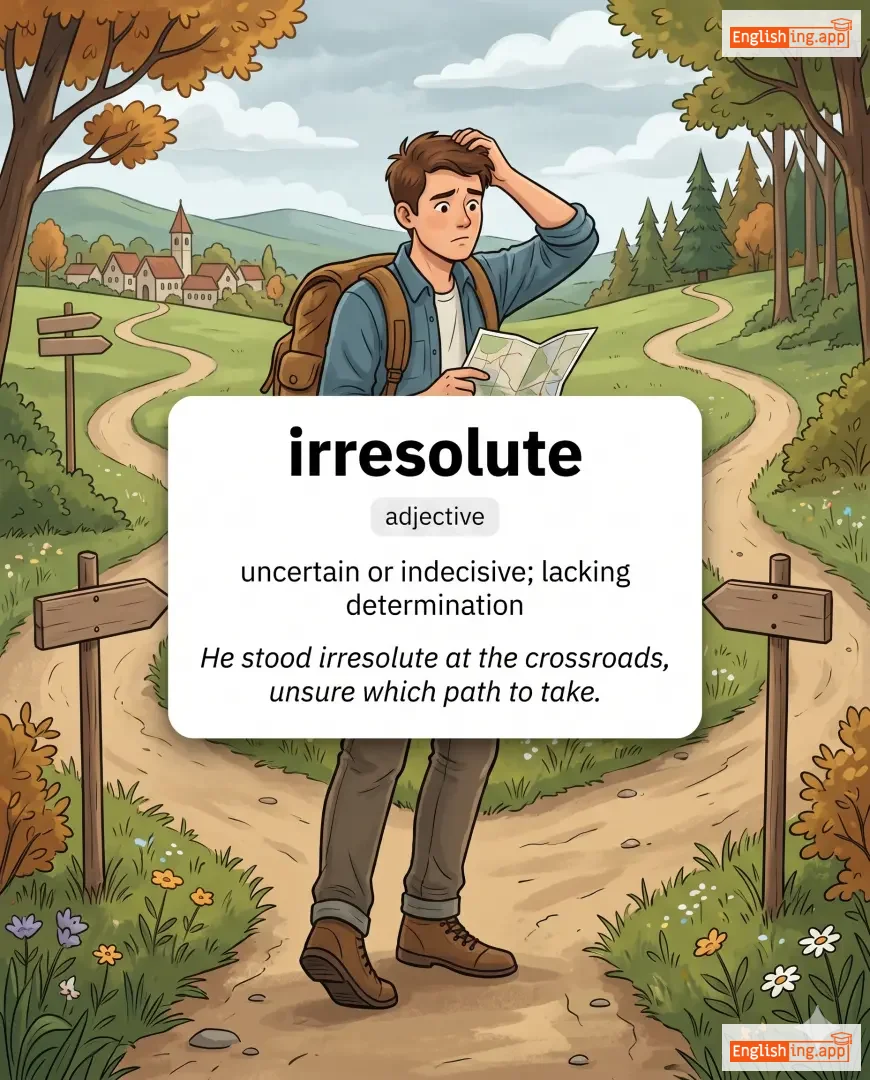
uncertain or indecisive; lacking determination
••••••
|
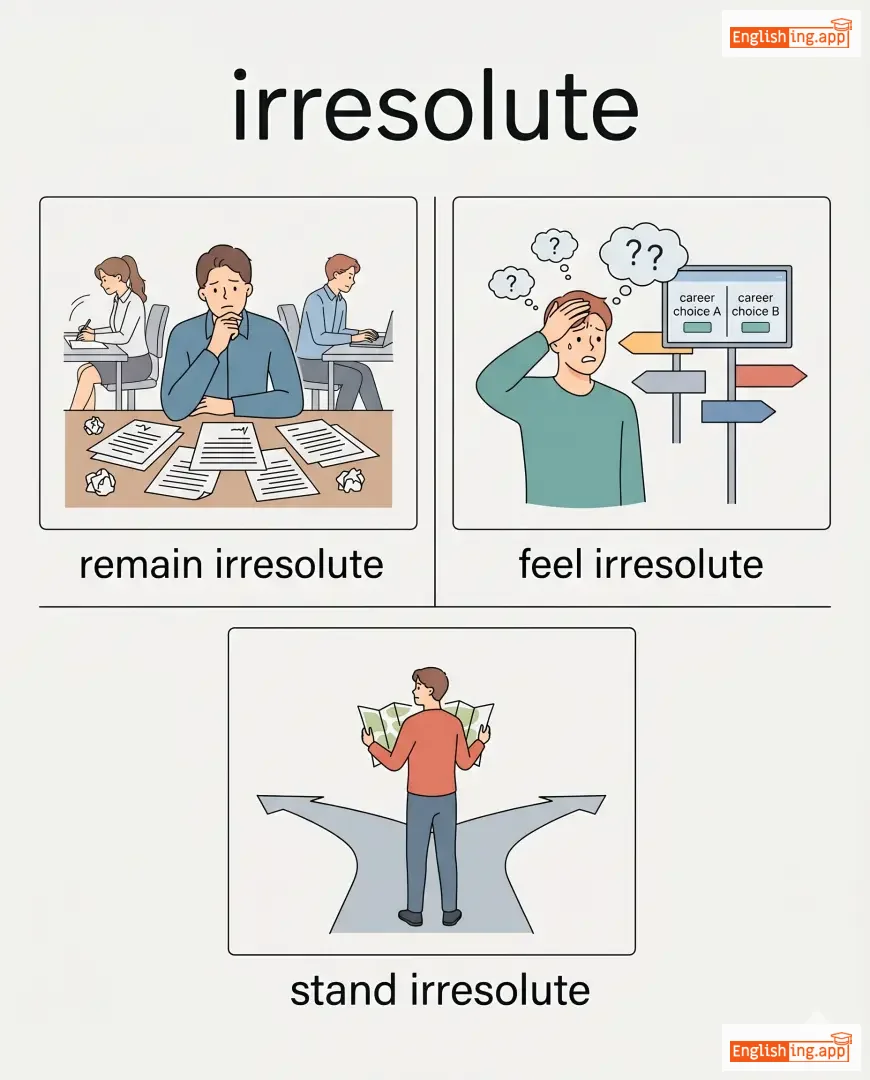
He stood irresolute at the crossroads, unsure which path to take. |
他在十字路口犹豫不决,不知道走哪条路。
Tā zài shízì lùkǒu yóuyù bù jué, bù zhīdào zǒu nǎ tiáo lù.
••••••
|
- •••••• | - •••••• | - •••••• |
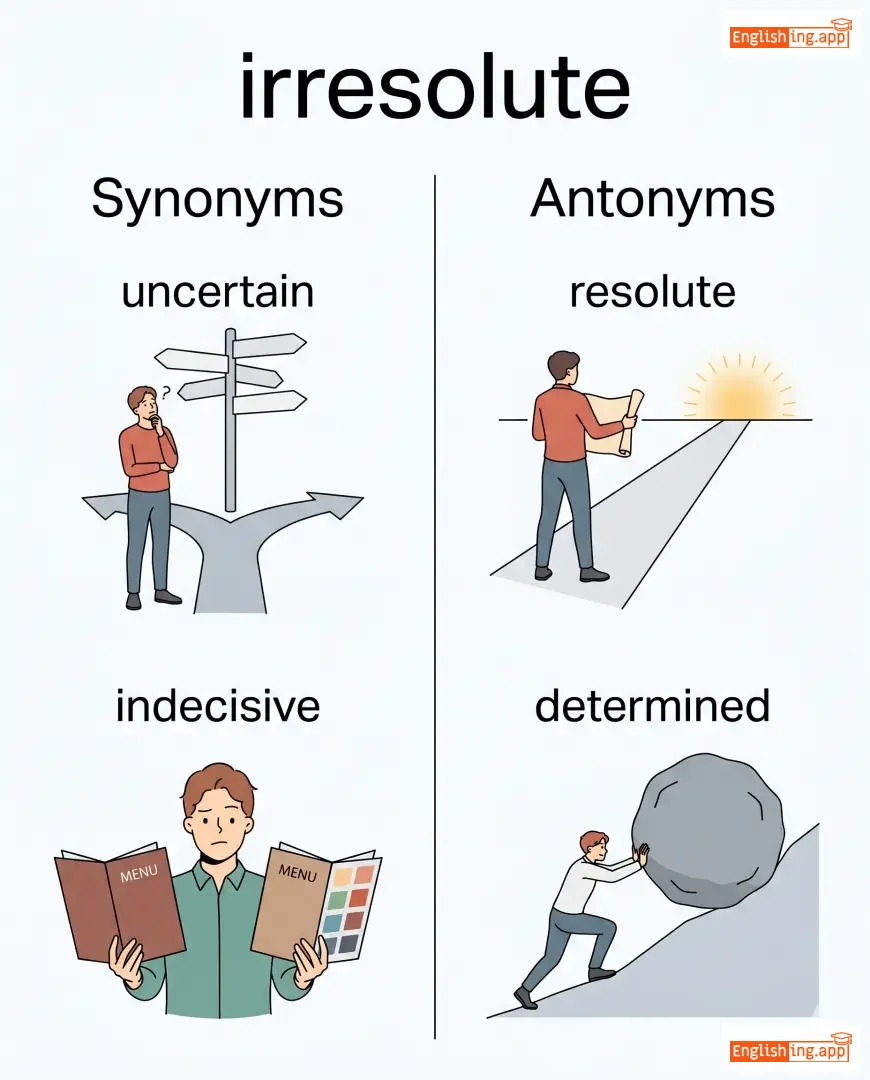
uncertain, indecisive, hesitant, vacillating, wavering
••••••
|
resolute, determined, decisive
••••••
|
remain irresolute, feel irresolute, stand irresolute, irresolute response
••••••
|
irresolute = 优柔寡断, 就像一个不能做决定的人
••••••
|
|
🗺️
••••••
|
/aɪˈtɪnərɛri/
noun
(aɪˈtɪnərɛri)
••••••
|

|
行程安排
xíngchéng ānpái
••••••
|
- •••••• | - •••••• | - •••••• | - •••••• |
A planned route or schedule of a journey or trip.
••••••
|
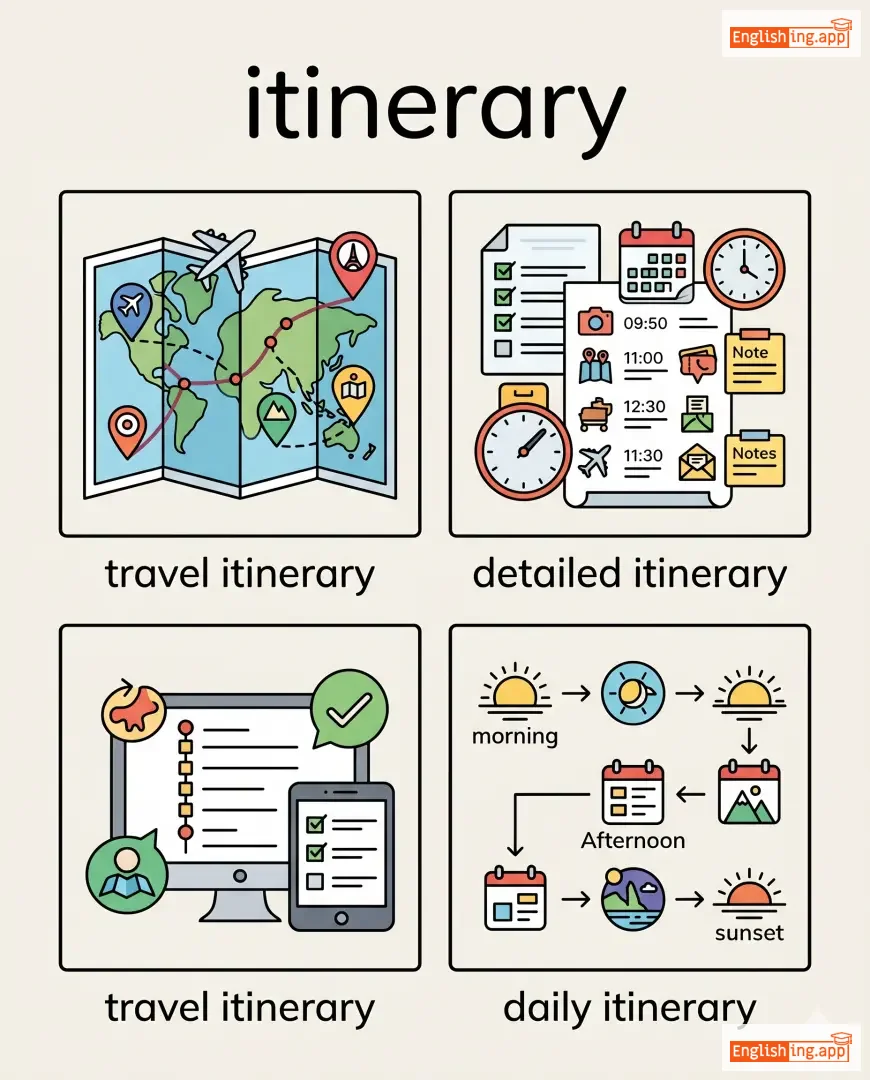
The travel agent gave us a detailed itinerary for our vacation. |
旅行社为我们的假期提供了详细的行程安排。
Lǚxíng shè wèi wǒmen de jiàqī tígōngle xiángxì de xíngchéng ānpái.
••••••
|
- •••••• | - •••••• | - •••••• |
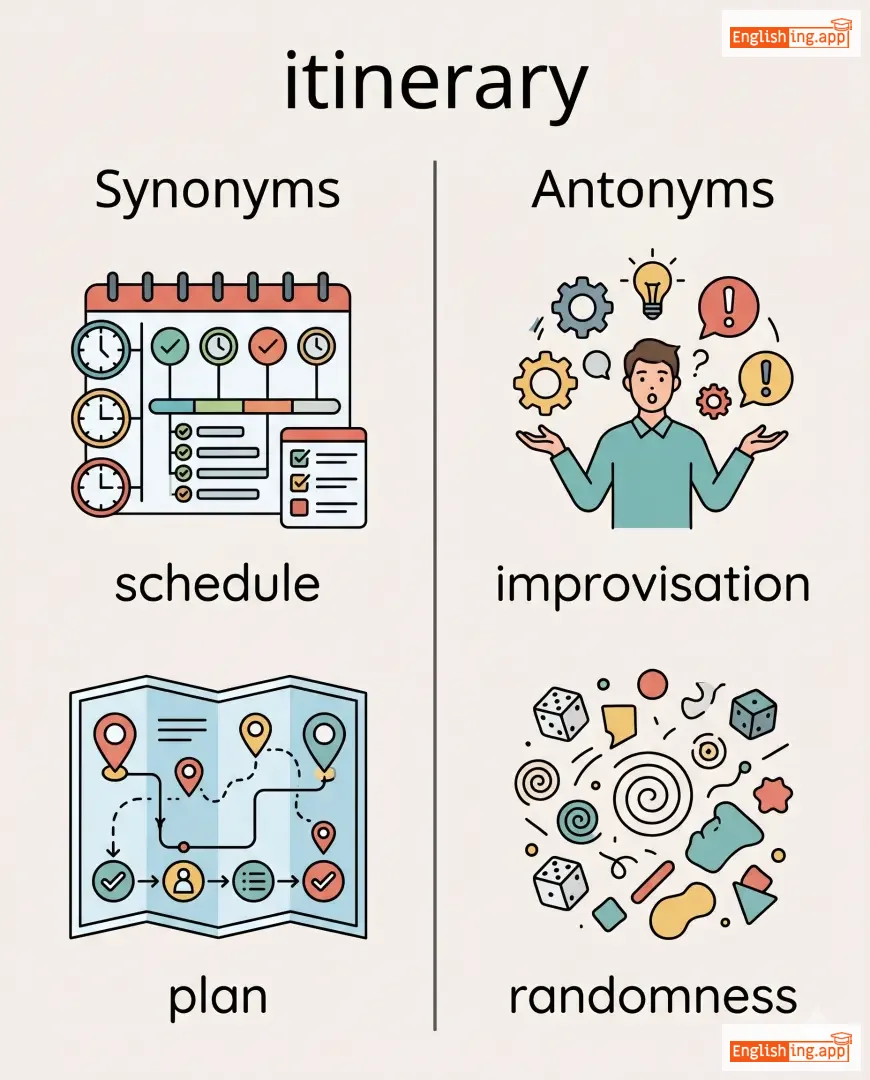
schedule, plan, agenda, route, timetable
••••••
|
improvisation, randomness
••••••
|
travel itinerary, detailed itinerary, daily itinerary, itinerary plan
••••••
|
Itinerary 意味着行程安排 – 想到 'ITIN' = In Time, In Route.
••••••
|
|
🤐
••••••
|
/ləˈkɒnɪk/
adjective
(lèi kè ní kè)
••••••
|

|
简洁的
jianjie de
••••••
|
- •••••• | - •••••• | - •••••• | - •••••• |
using very few words; concise to the point of seeming rude or mysterious
••••••
|
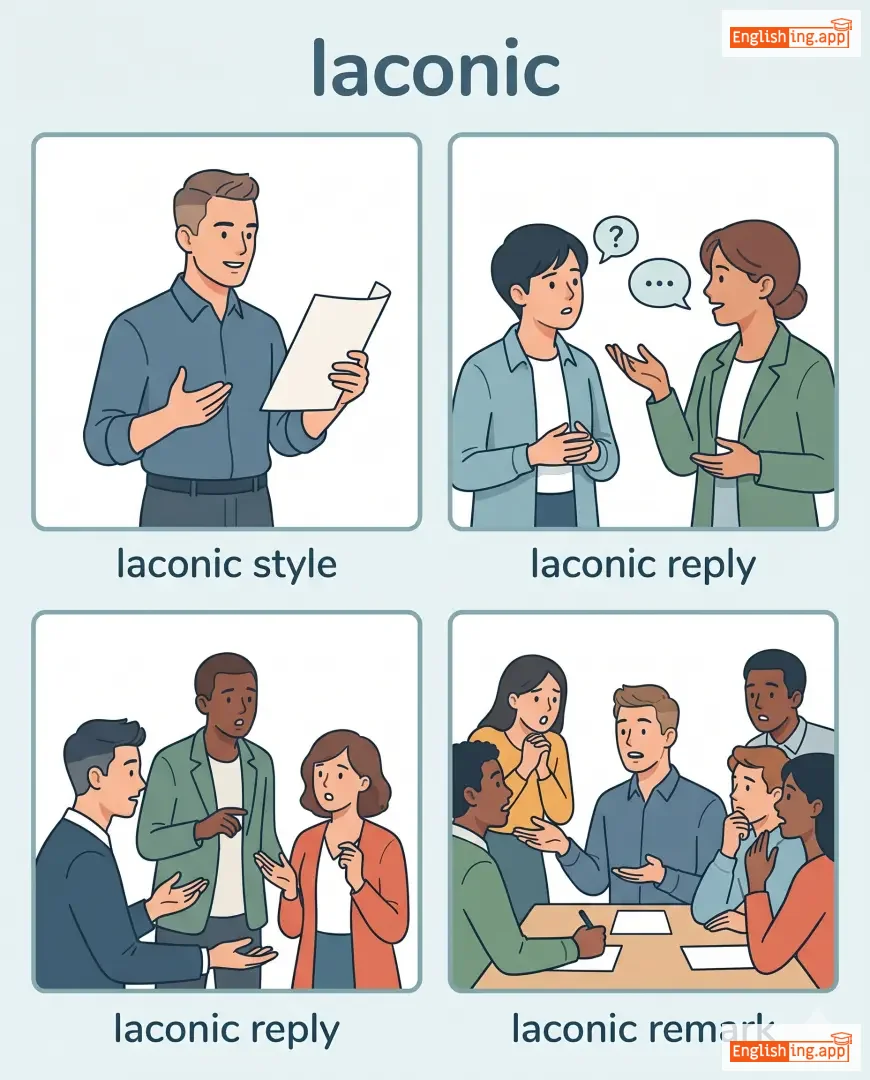
His laconic reply ended the conversation quickly. |
他简洁的回答迅速结束了谈话。
Ta jianjie de huida xunsu jieshu le tanhua.
••••••
|
- •••••• | - •••••• | - •••••• |
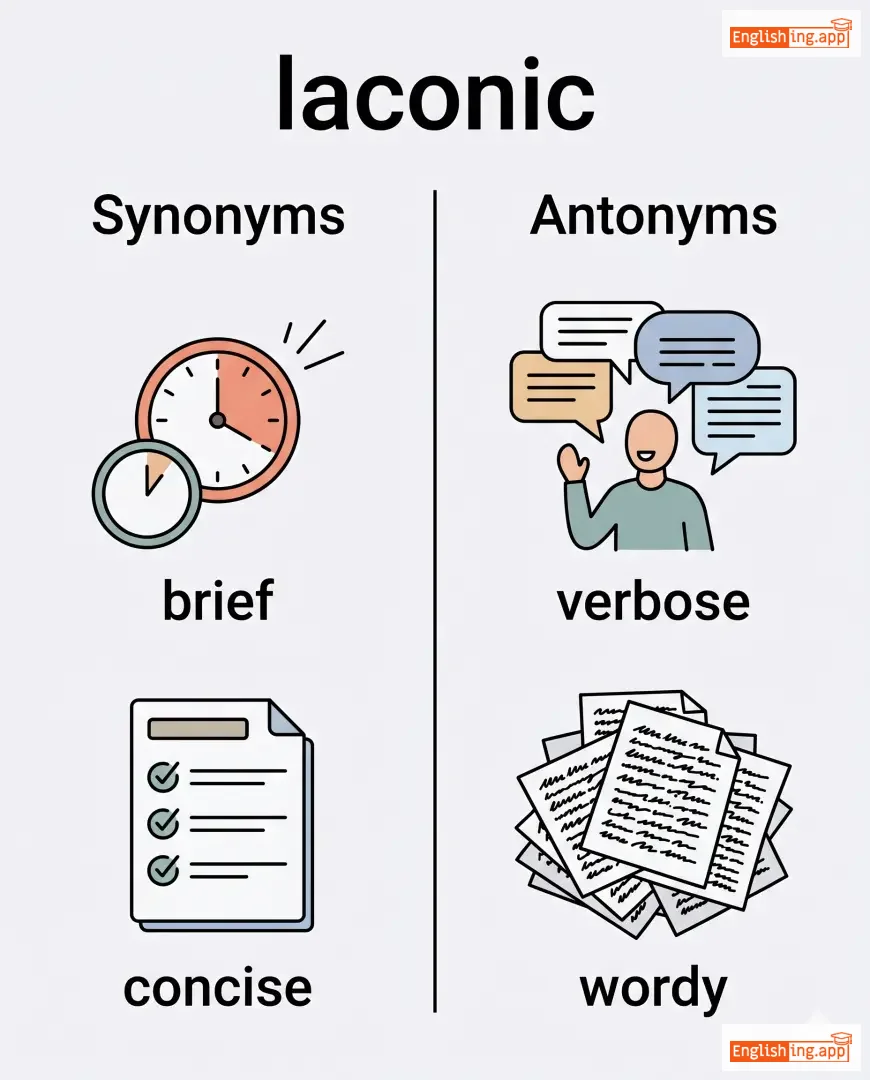
brief, concise, terse, succinct
••••••
|
verbose, wordy, talkative
••••••
|
laconic style, laconic reply, laconic remark
••••••
|
简洁的意思是说得少,但意义深远。
••••••
|
|
😴
••••••
|
/ˈlæsɪtjuːd/
noun
(là sī tǐ yù dé)
••••••
|
|
疲劳
píláo
••••••
|
- •••••• | - •••••• | - •••••• | - •••••• |
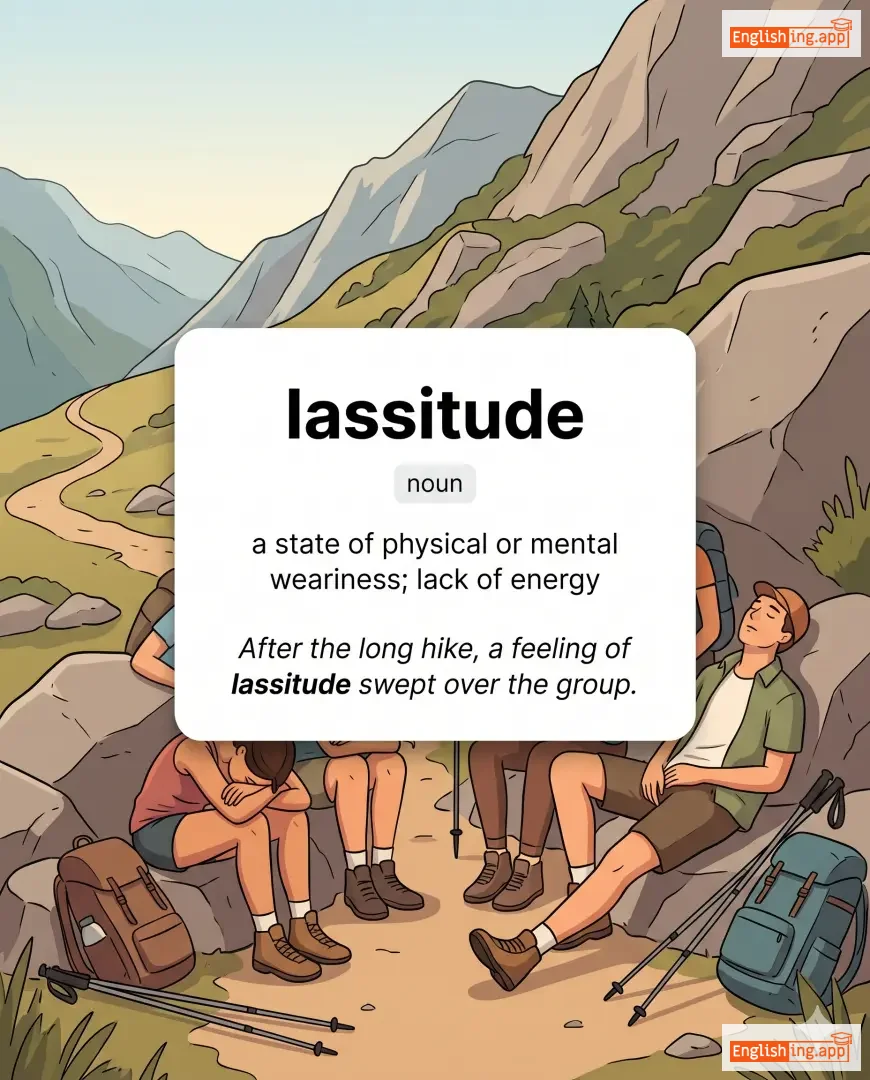
a state of physical or mental weariness; lack of energy
••••••
|
After the long hike, a feeling of lassitude swept over the group. |
长时间徒步后,疲劳感笼罩了整个团队。
Cháng shíjiān túbù hòu, píláo gǎn lǒngzhào le zhěnggè tuánduì.
••••••
|
- •••••• | - •••••• | - •••••• |
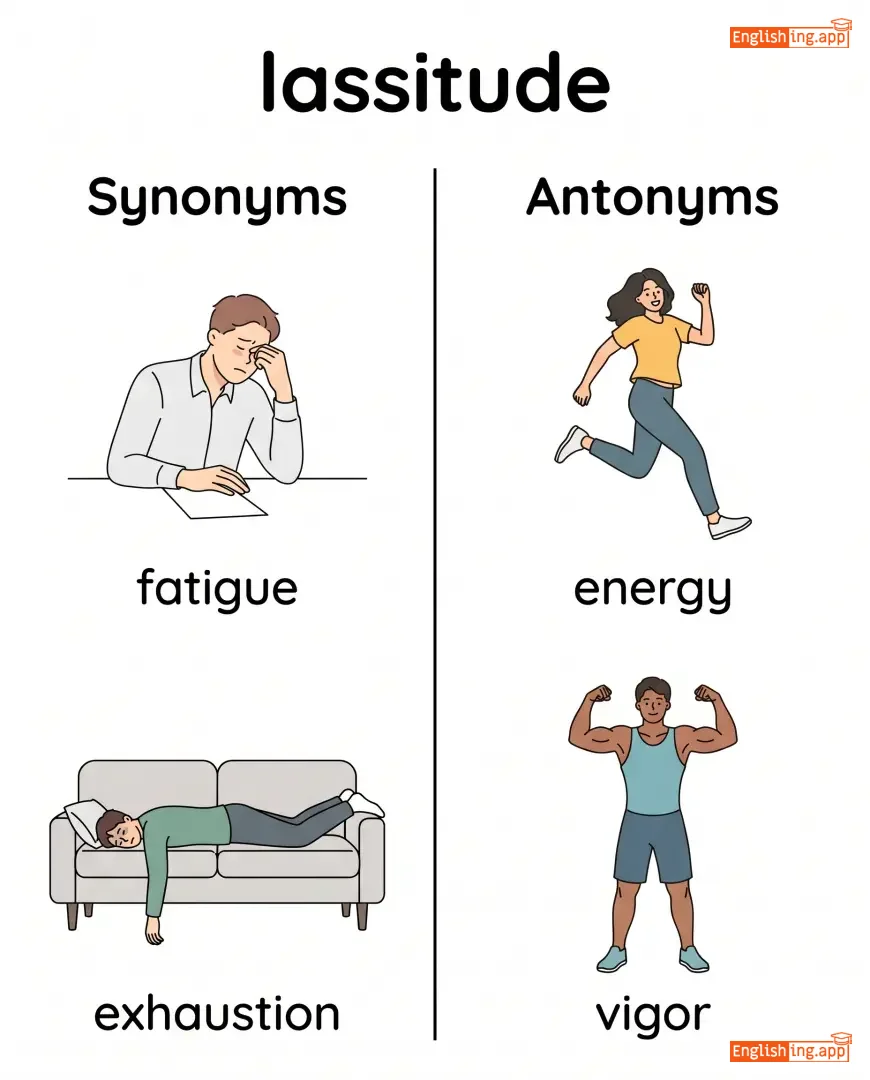
fatigue, exhaustion, tiredness, lethargy, weariness
••••••
|
energy, vigor, vitality
••••••
|
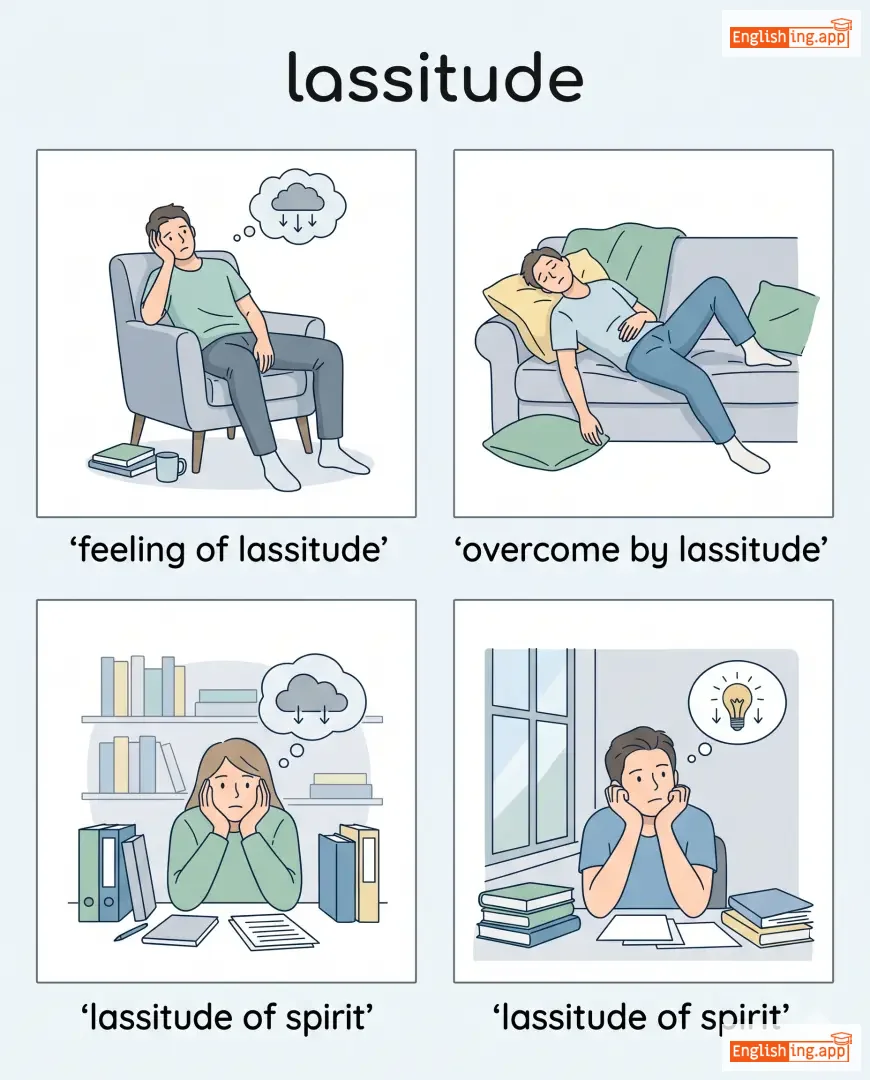
feeling of lassitude, overcome by lassitude, lassitude of spirit
••••••
|
Lassi后感觉到疲劳
••••••
|
|
🌱
••••••
|
/ˈleɪtənt/
adjective
••••••
|
|
- •••••• | - •••••• | - •••••• | - •••••• | - •••••• |
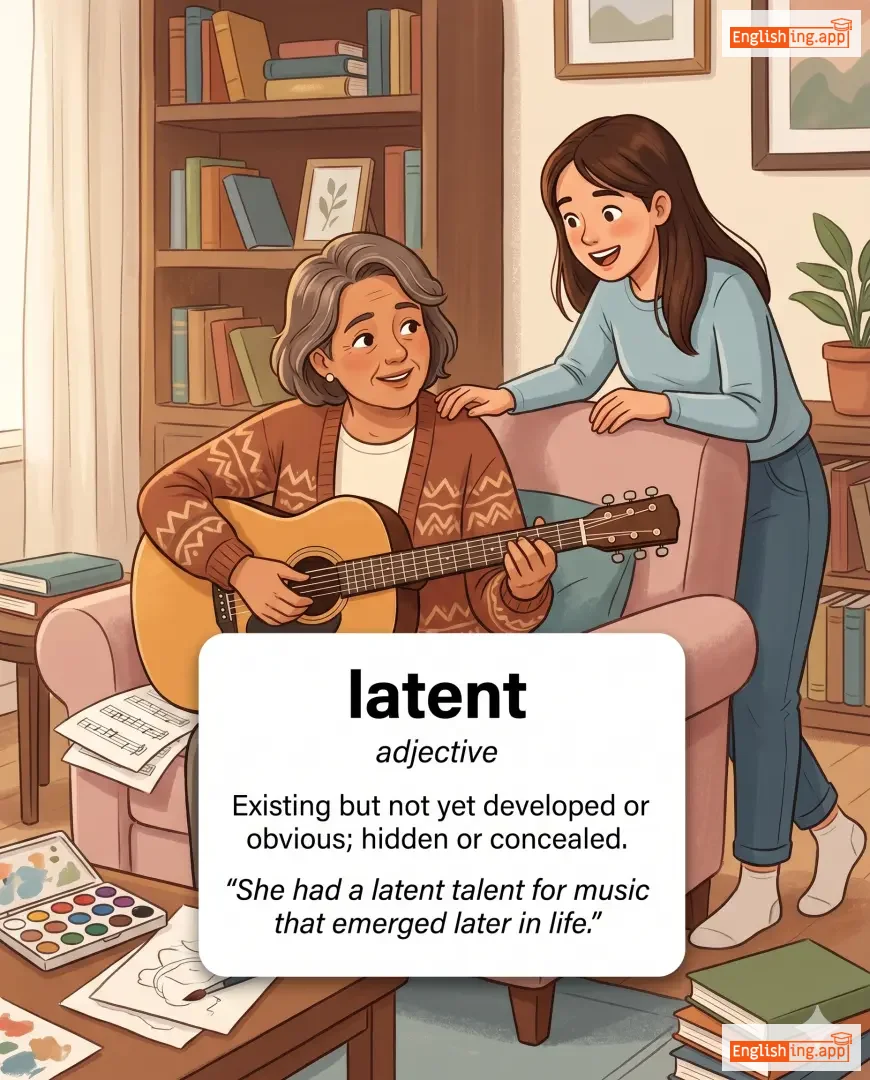
Existing but not yet developed or obvious; hidden or concealed.
••••••
|
She had a latent talent for music that emerged later in life. |
- •••••• |
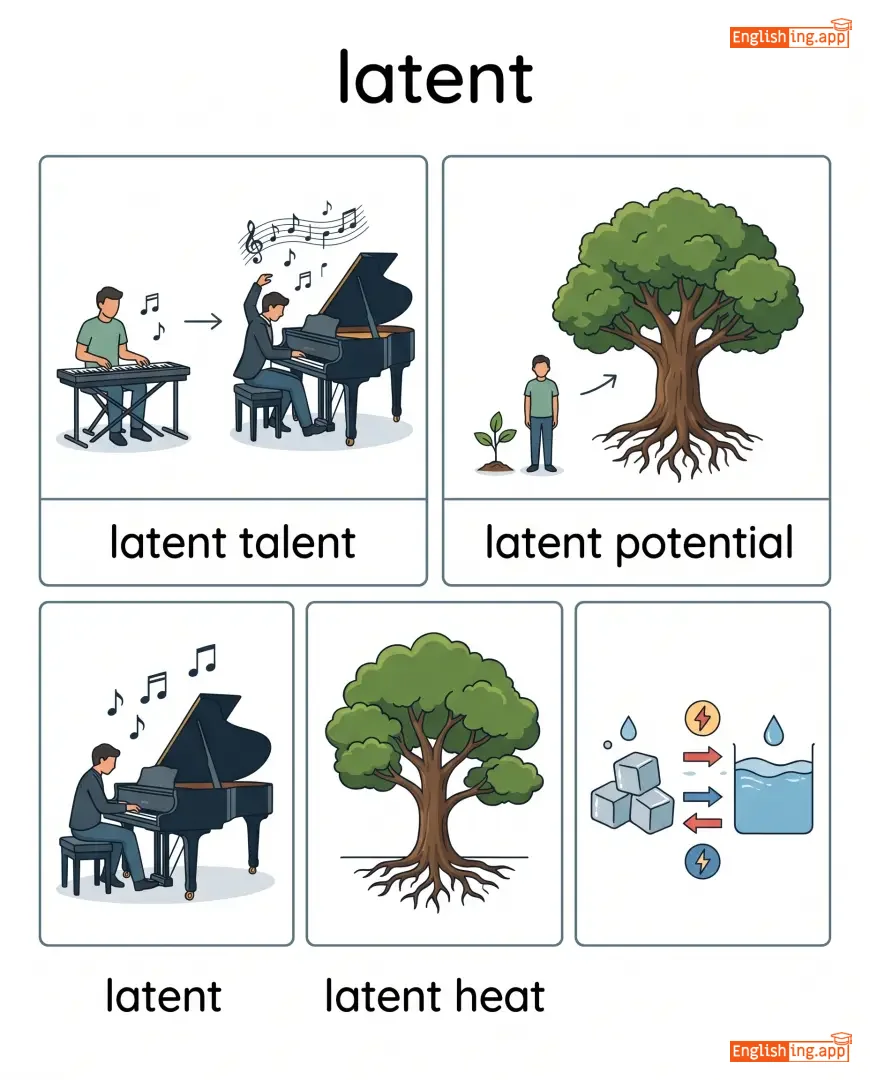
latent potential |
Hidden or undeveloped ability that may emerge in the future.
••••••
|
- •••••• |
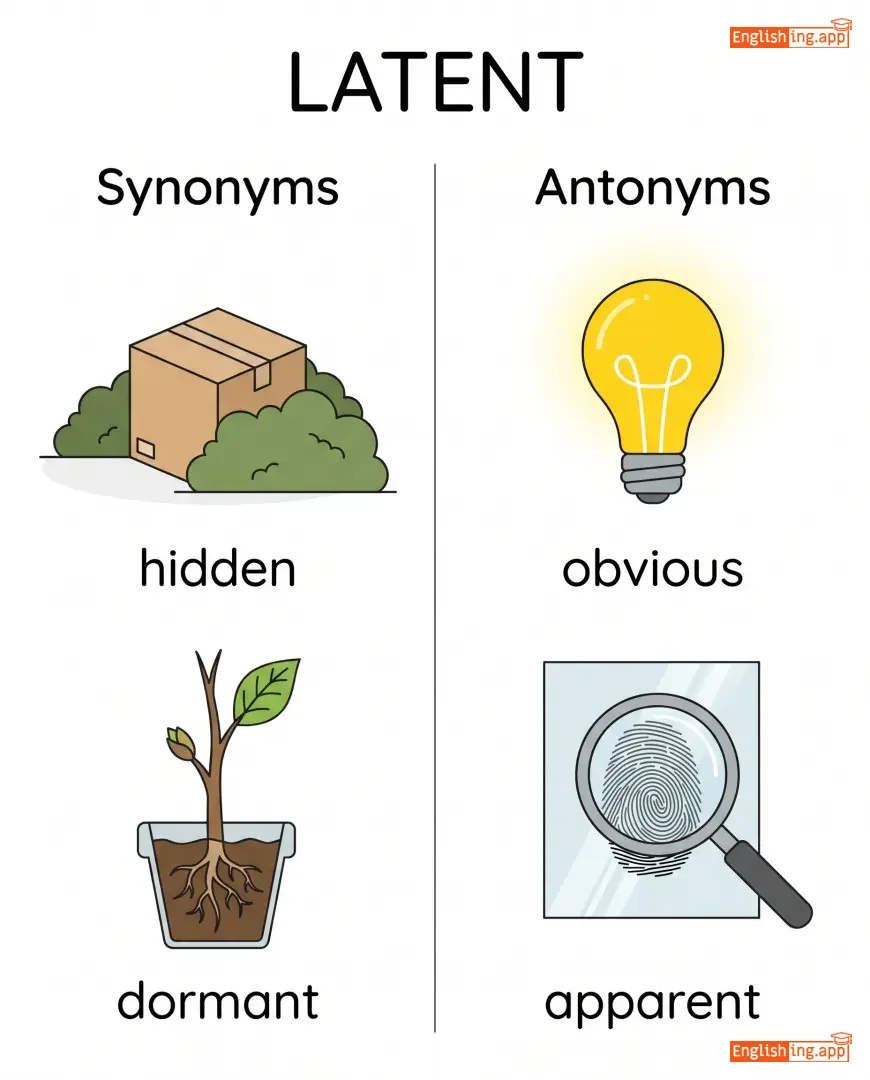
hidden, dormant, concealed, unrealized, undeveloped
••••••
|
obvious, apparent, visible
••••••
|
latent talent, latent potential, latent heat, latent disease
••••••
|
No •••••• |
|
👏
••••••
|
/lɔːd/
verb
••••••
|

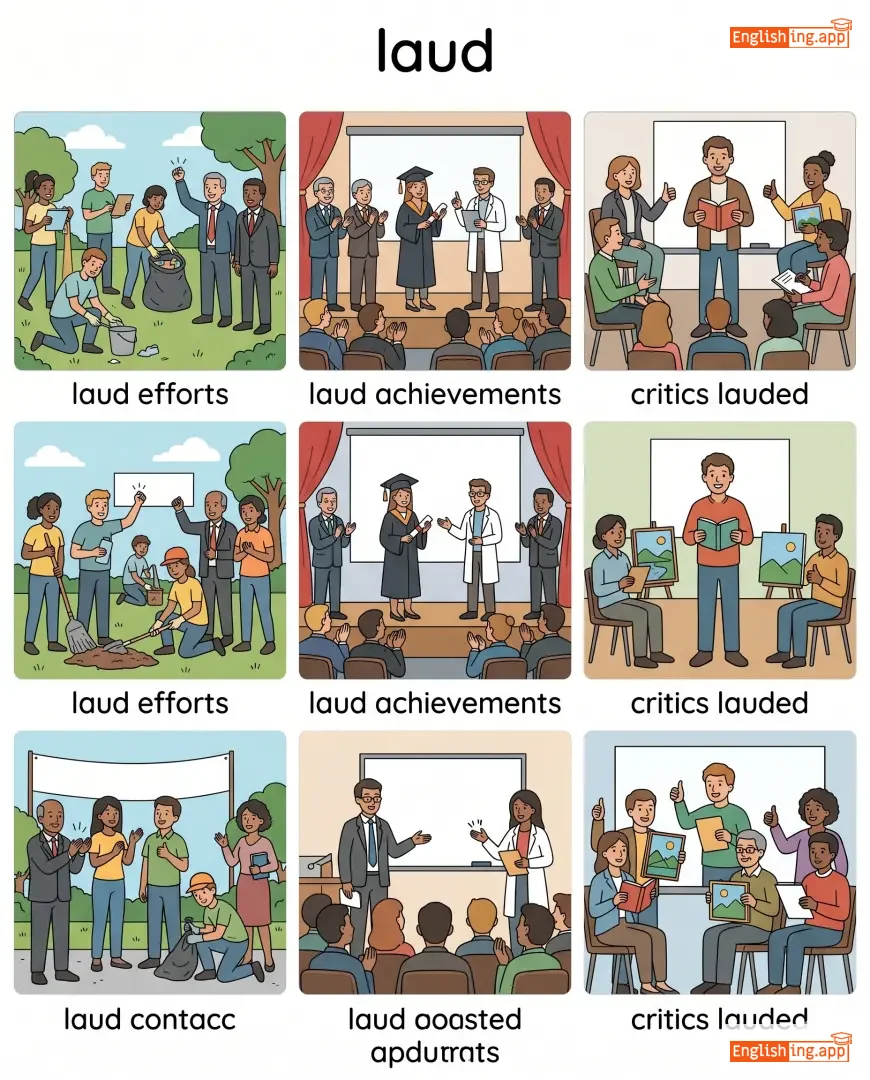
|
- •••••• |
lauded
••••••
|
lauded
••••••
|
lauds
••••••
|
lauding
••••••
|
To praise someone or something highly, especially in public.
••••••
|
The critic lauded the actor's performance as a masterpiece. |
- •••••• |
sing someone's praises |
to praise someone very enthusiastically
••••••
|
- •••••• |
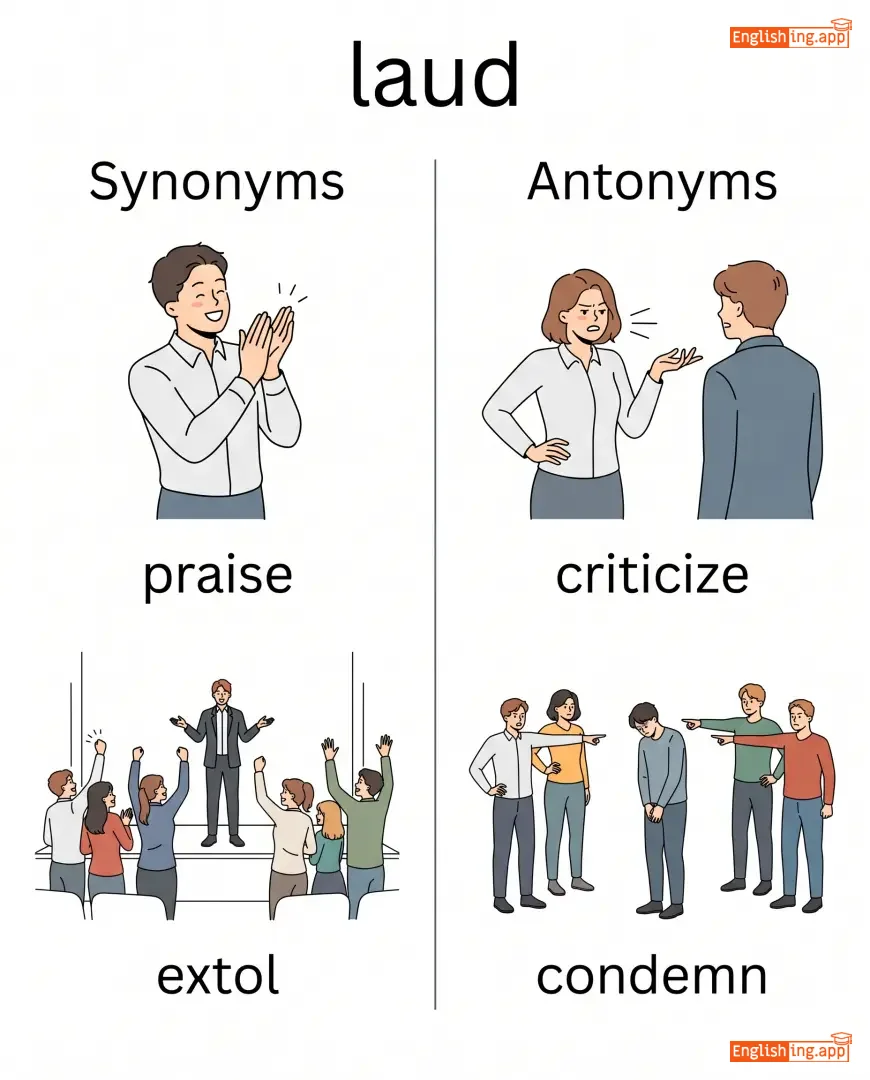
praise, extol, applaud, commend, admire
••••••
|
criticize, condemn
••••••
|
laud efforts, laud achievements, critics lauded
••••••
|
No •••••• |
|
😴
••••••
|
/ləˈθɑːrdʒɪk/
adjective
(嗜睡的)
••••••
|
|
嗜睡的
shishui de
••••••
|
- •••••• | - •••••• | - •••••• | - •••••• |
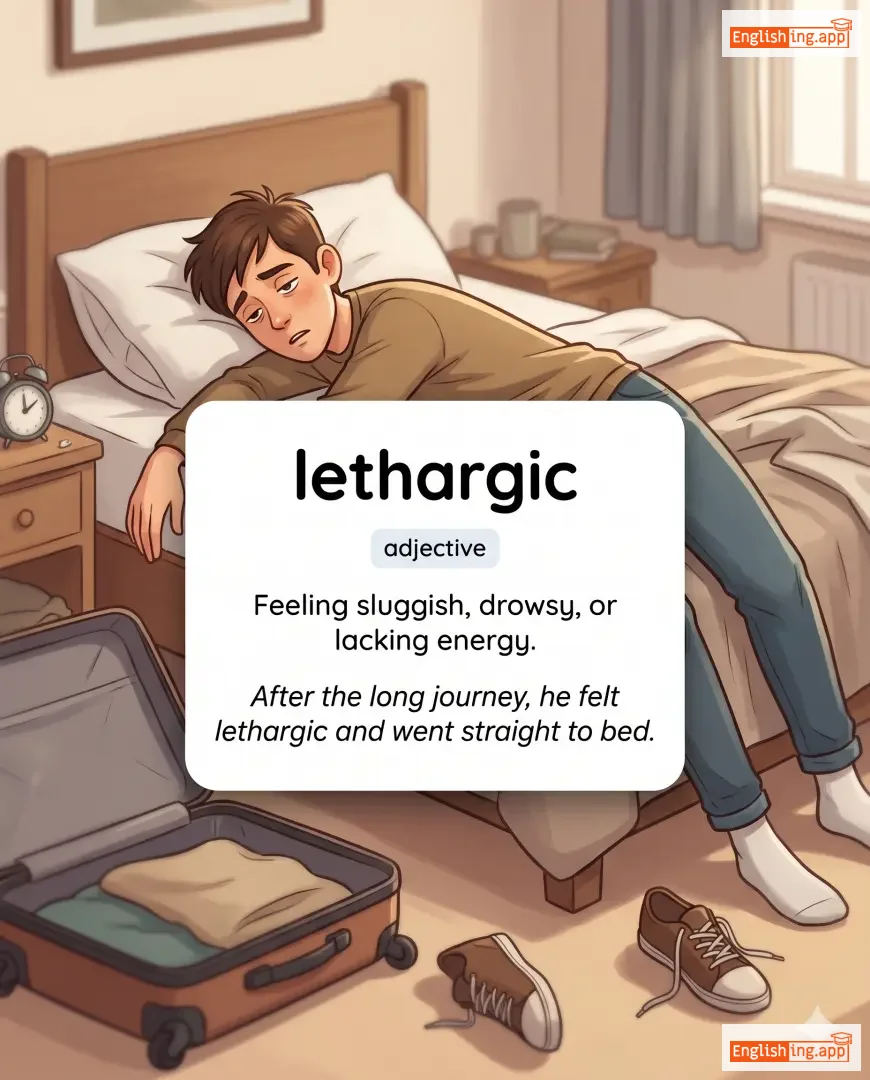
Feeling sluggish, drowsy, or lacking energy.
••••••
|
After the long journey, he felt lethargic and went straight to bed. |
长途旅行后,他感到嗜睡,直接上床睡觉。
Changtu lüxing hou, ta gandao shishui, zhijie shangchuang shuijiao.
••••••
|
- •••••• | - •••••• | - •••••• |
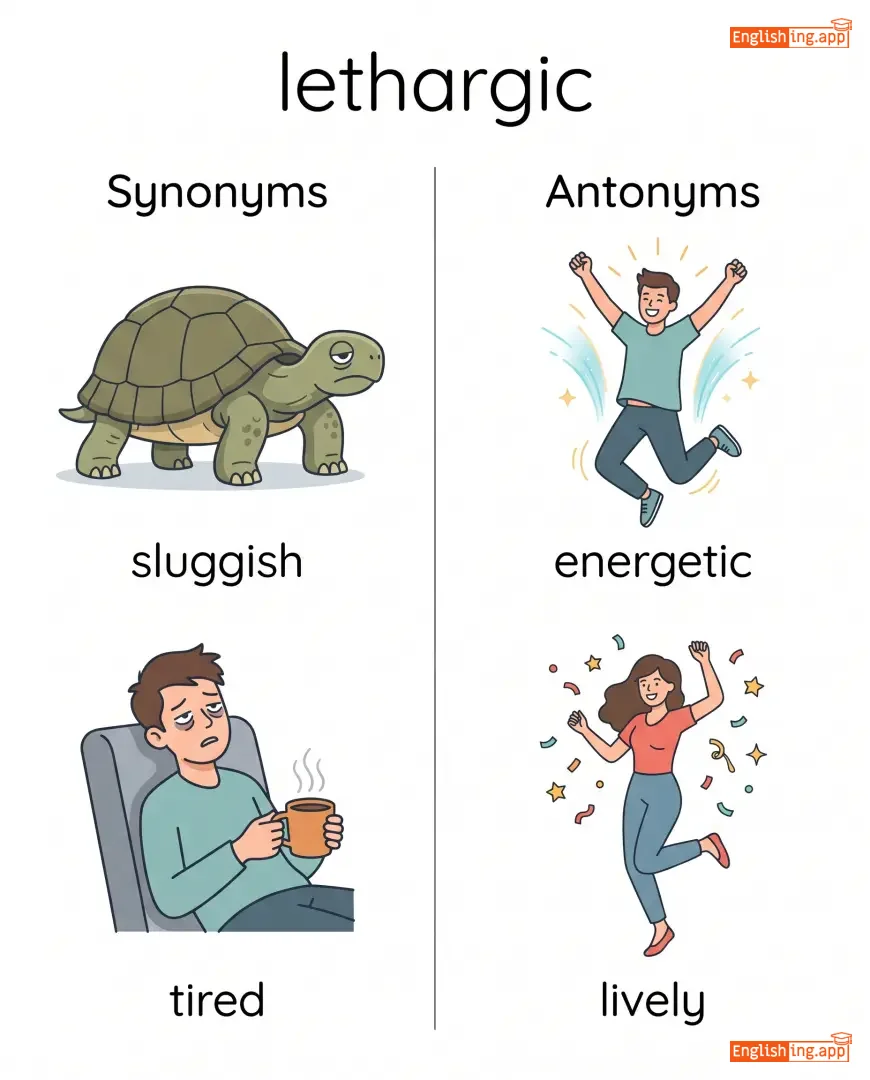
sluggish, tired, fatigued, weary, drowsy
••••••
|
energetic, lively, active
••••••
|
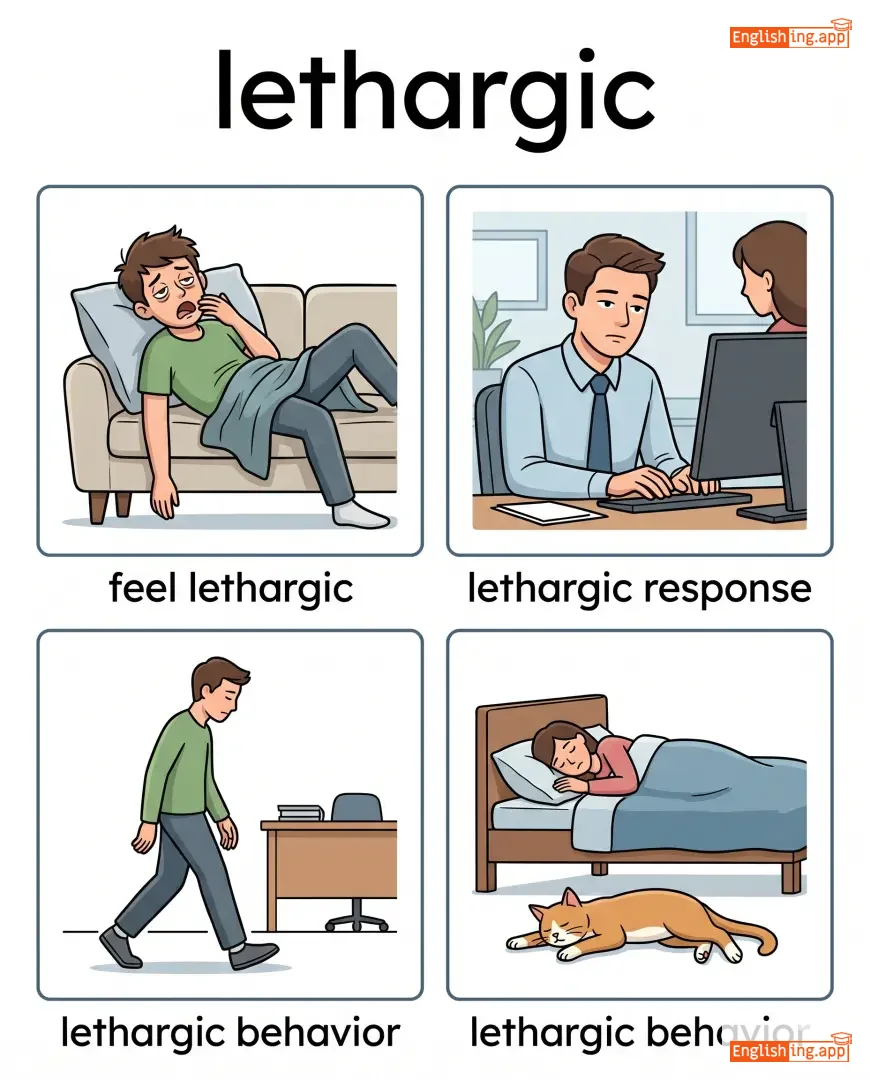
feel lethargic, lethargic response, lethargic behavior
••••••
|
Lethargic 就是嗜睡的意思,长途旅行后人人都累得嗜睡了。
••••••
|
|
🌊
••••••
|
/ˈlɛvi/
noun
(莱维)
••••••
|
|
堤坝
dī bì
••••••
|
- •••••• | - •••••• | - •••••• | - •••••• |
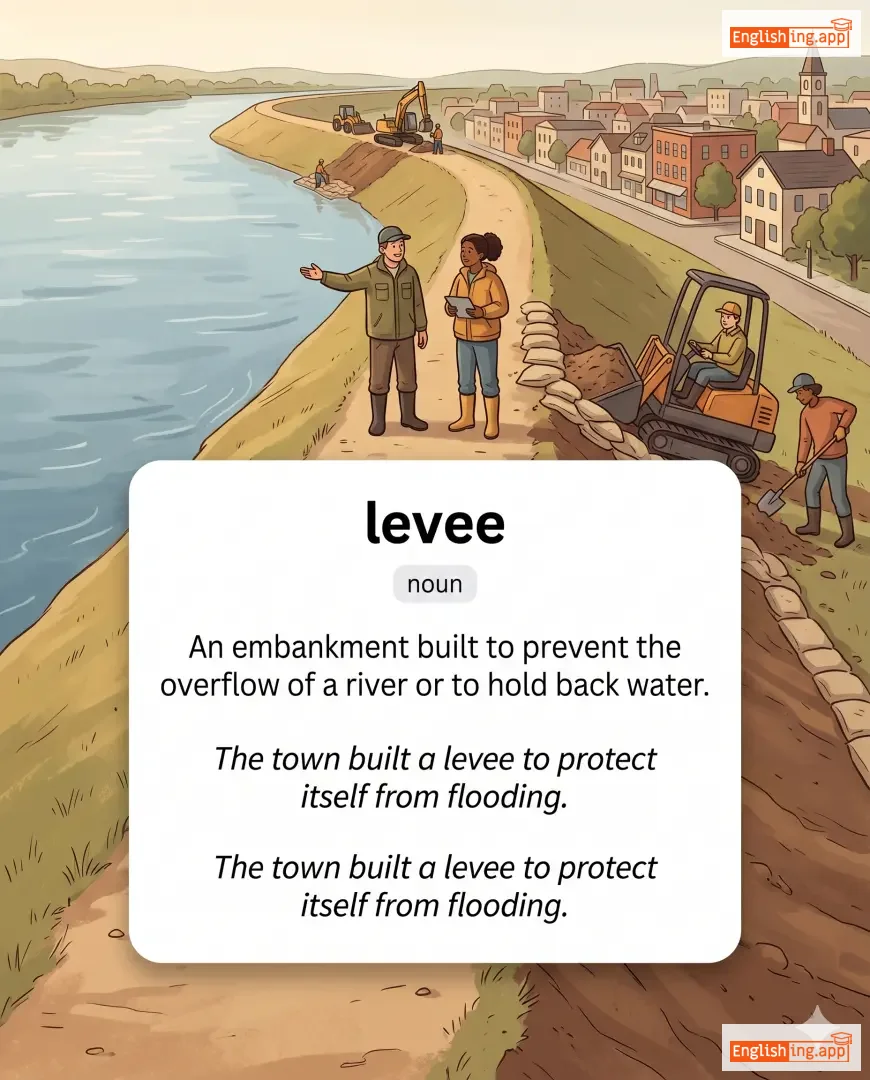
An embankment built to prevent the overflow of a river or to hold back water.
••••••
|
The town built a levee to protect itself from flooding. |
该市建造了一座堤坝,以防洪水。
gāi shì jiànzào le yī zuò dī bì, yǐ fáng hóngshuǐ.
••••••
|
- •••••• | - •••••• | - •••••• |
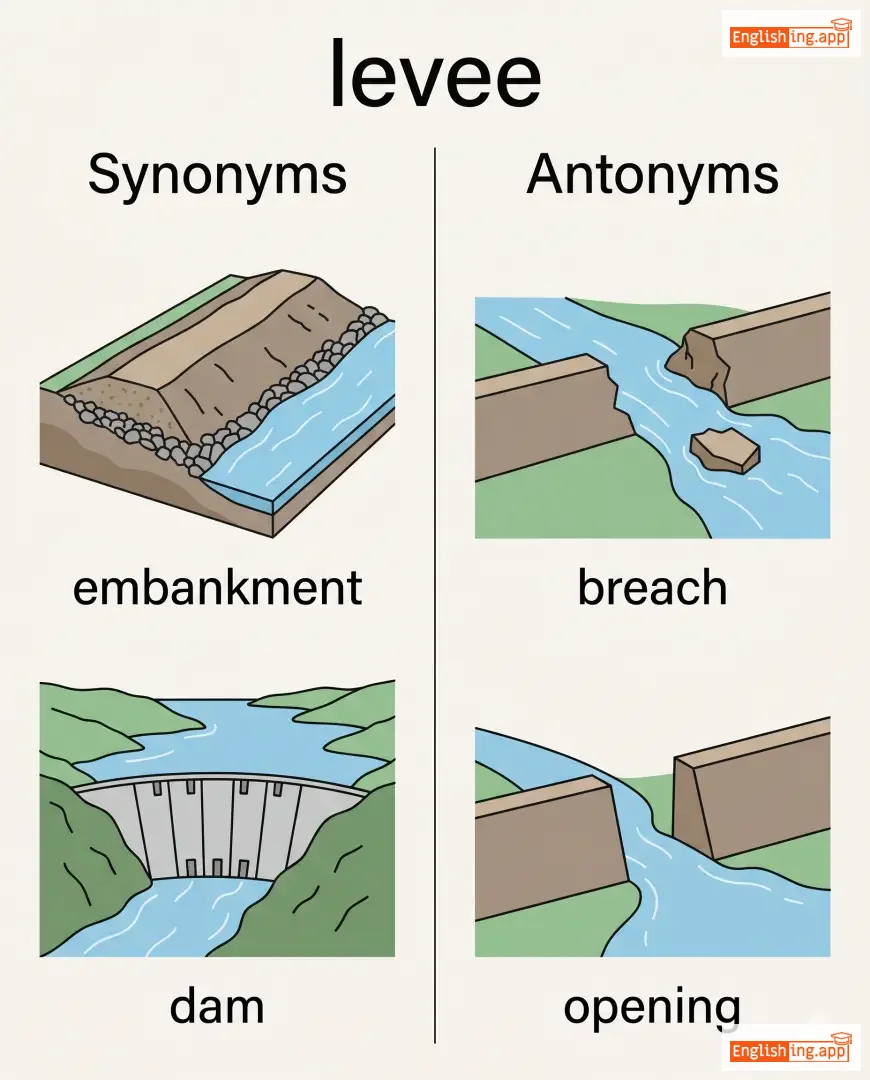
embankment, dam, dike, barrier
••••••
|
breach, opening
••••••
|
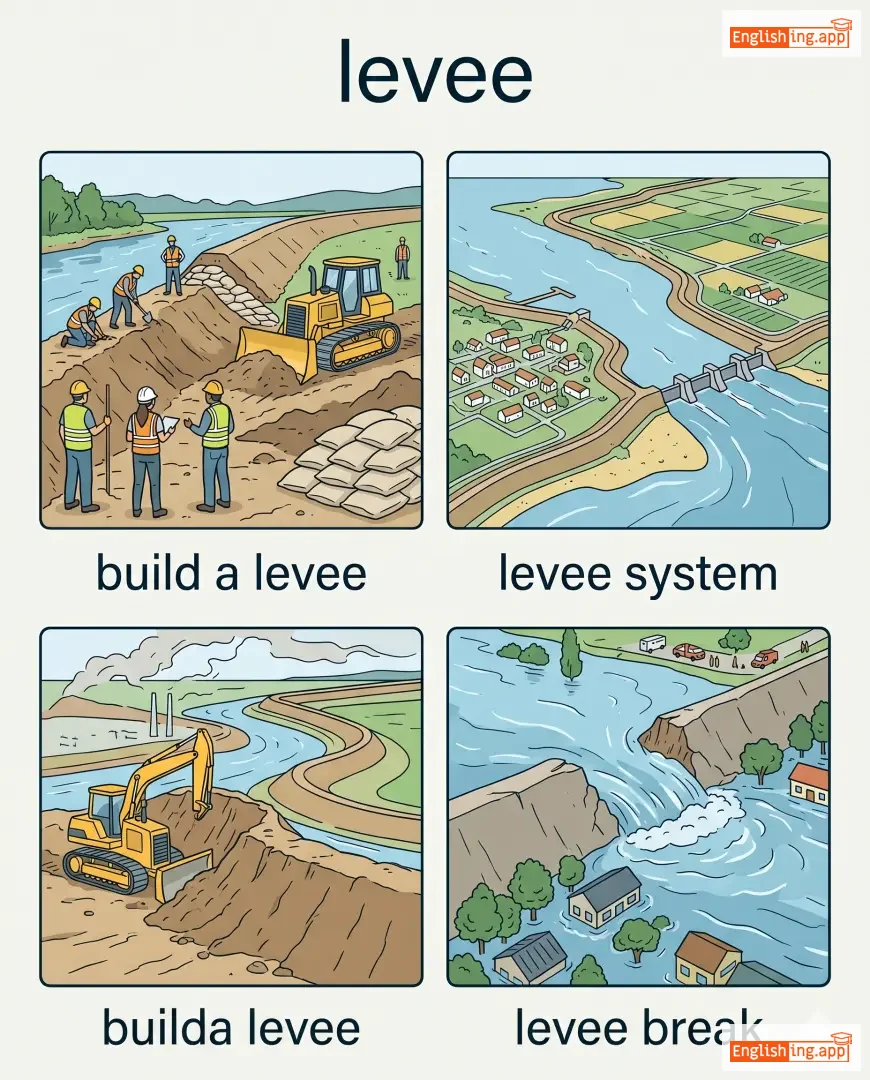
build a levee, levee system, levee break, levee construction
••••••
|
Levee意味着堤坝-就像堤坝保护城市免受洪水的侵害。
••••••
|
|
😄
••••••
|
/ˈlɛvɪti/
noun
••••••
|


|
- •••••• | - •••••• | - •••••• | - •••••• | - •••••• |
Lightness of manner or speech, especially when inappropriate; lack of seriousness.
••••••
|
His attempt to bring levity to the tense meeting was appreciated. |
- •••••• |
comic levity |
Humor or lightheartedness used to reduce tension.
••••••
|
- •••••• |
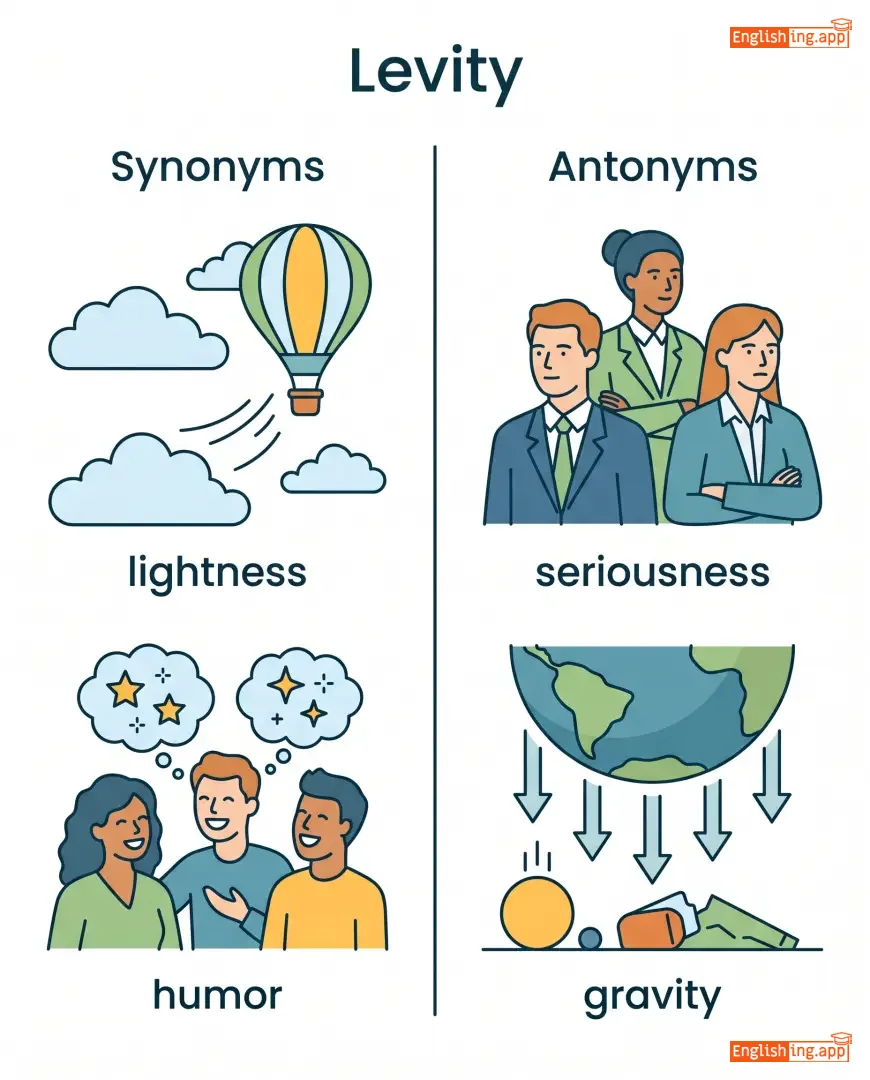
lightness, humor, frivolity, cheerfulness, jocularity
••••••
|
seriousness, gravity, solemnity
••••••
|
sense of levity, touch of levity, comic levity, add levity
••••••
|
No •••••• |

