|
表情符号
|
单词 | Images | 翻译 | 过去时 | 过去分词 | 第三人称单数 | 动名词 | 含义 | 例句 | 例句翻译 | 示例表达 | 示例表达含义 | 示例表达翻译 | 同义词 | 反义词 | 搭配词 | 助记符 |
|---|---|---|---|---|---|---|---|---|---|---|---|---|---|---|---|---|---|
|
🔭
••••••
|
/ˈtɛlɪˌskoʊp/
noun
(望远镜)
••••••
|
- •••••• |
望远镜
wangyuanjing
••••••
|
- •••••• | - •••••• | - •••••• | - •••••• |
An optical instrument used to make distant objects appear closer and larger by collecting and focusing light.
••••••
|
The astronomer used a telescope to observe the distant planets. |
天文学家使用望远镜观察遥远的行星。
Tianwenxuejia shiyong wangyuanjing guancha yaoyuan de xingxing.
••••••
|
turn the telescope on |
to focus on or direct attention toward something
••••••
|
打开望远镜
dakai wangyuanjing
••••••
|
scope, spyglass, binoculars, glass
••••••
|
microscope, naked eye
••••••
|
powerful telescope, optical telescope, space telescope, through a telescope
••••••
|
望远镜可以看到很远的地方,就像 telescope 一样。
••••••
|
|
📺
••••••
|
/ˈtɛlɪˌvɪʒən/
noun
••••••
|
- •••••• | - •••••• | - •••••• | - •••••• | - •••••• | - •••••• |
a device that receives television signals and displays them on a screen
••••••
|
I like to watch the news on television. |
- •••••• | - •••••• | - •••••• | - •••••• |
TV, set, screen, monitor
••••••
|
radio, silence
••••••
|
television program, watch television, television show, color television
••••••
|
No •••••• |
|
🗣️
••••••
|
/tɛl/
verb
(泰尔)
••••••
|

|
告诉
gaosu
••••••
|
told
托尔德
••••••
|
told
托尔德
••••••
|
tells
泰尔斯
••••••
|
telling
泰尔英
••••••
|
to communicate information, give an account of something, or instruct someone to do something
••••••
|
She asked him to tell the truth.
她让他告诉真相。
••••••
|
她让他告诉真相。
Ta rang ta gaosu zhenxiang.
••••••
|
tell the truth
说出真相
••••••
|
to speak honestly
••••••
|
说出真相
Shuo chu zhenxiang
••••••
|
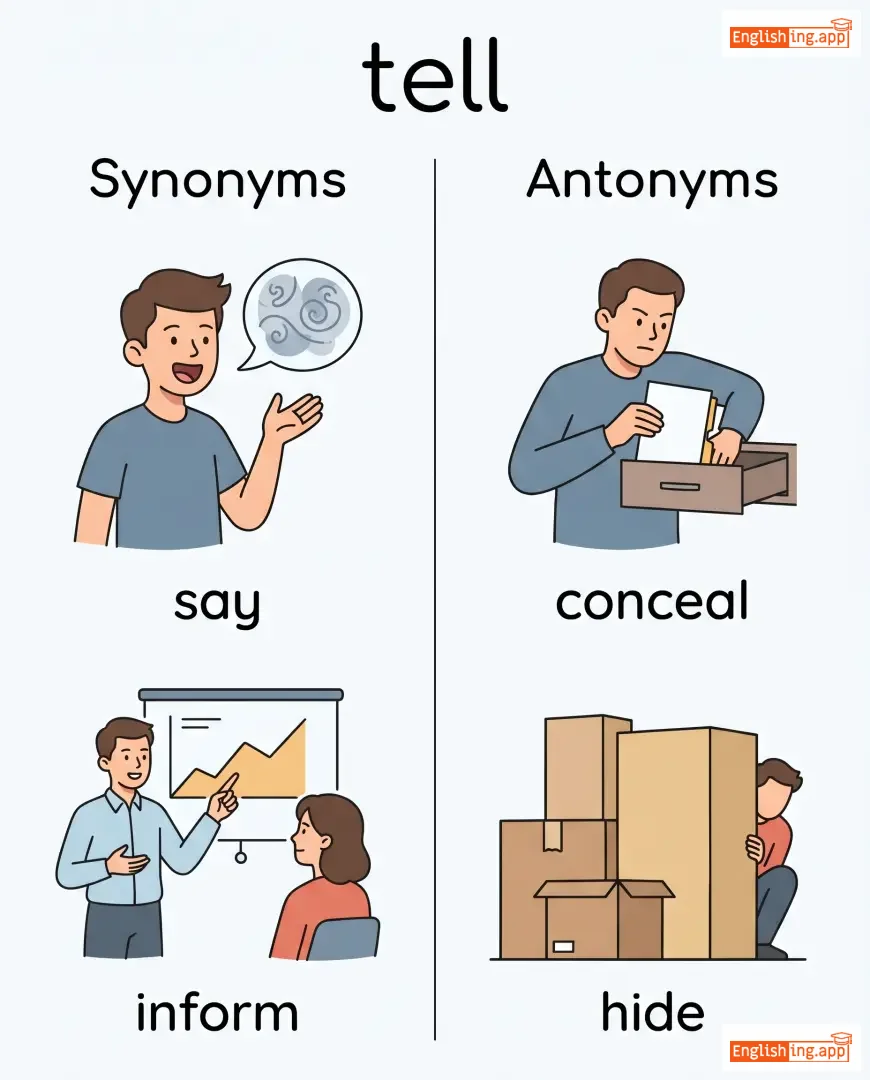
say, inform, relate, narrate, reveal
••••••
|
conceal, hide, suppress
••••••
|
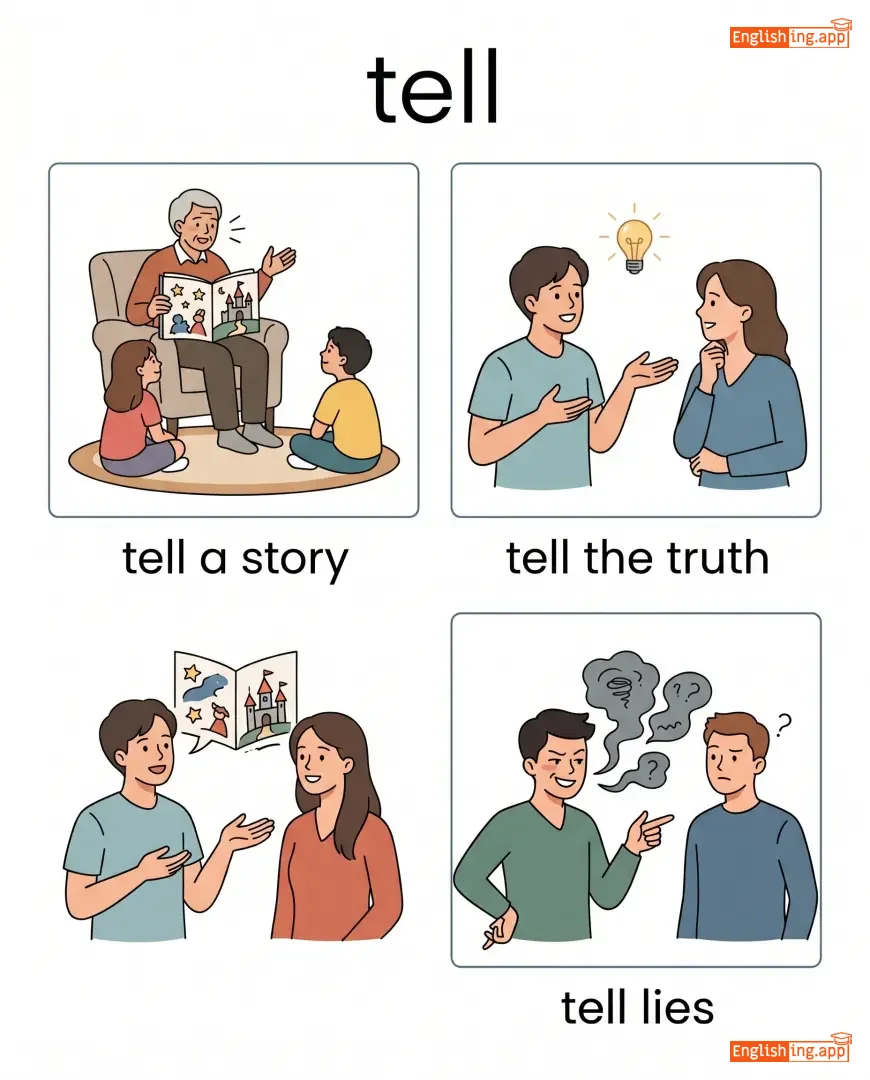
tell a story, tell the truth, tell lies, tell someone
••••••
|
Tell 意思是告诉,就像电话里我们告诉别人事情。
••••••
|
|
💵
••••••
|
/ˈtɛl.ər/
noun
(泰勒)
••••••
|
- •••••• |
出纳员; 讲述者
chunayuan; jiangshuzhe
••••••
|
- •••••• | - •••••• | - •••••• | - •••••• |
A person who counts and manages money at a bank; a person who tells or relates something
••••••
|
The bank teller counted the cash carefully before handing it over.
银行出纳在交付现金前仔细点算了金额。
••••••
|
银行出纳在交付现金前仔细点算了金额。
Yinhang chunayuan zai jiaofu xianjin qian zixi diansuan le jine.
••••••
|
- •••••• | - •••••• | - •••••• |
cashier, bank clerk, narrator, storyteller
••••••
|
customer, listener
••••••
|
bank teller, teller window, teller machine
••••••
|
泰勒 = 出纳员 teller counts money in bank.
••••••
|
|
🌡️
••••••
|
/ˈtem.pər.ə.tʃər/
noun
(tèmpèréchā)
••••••
|
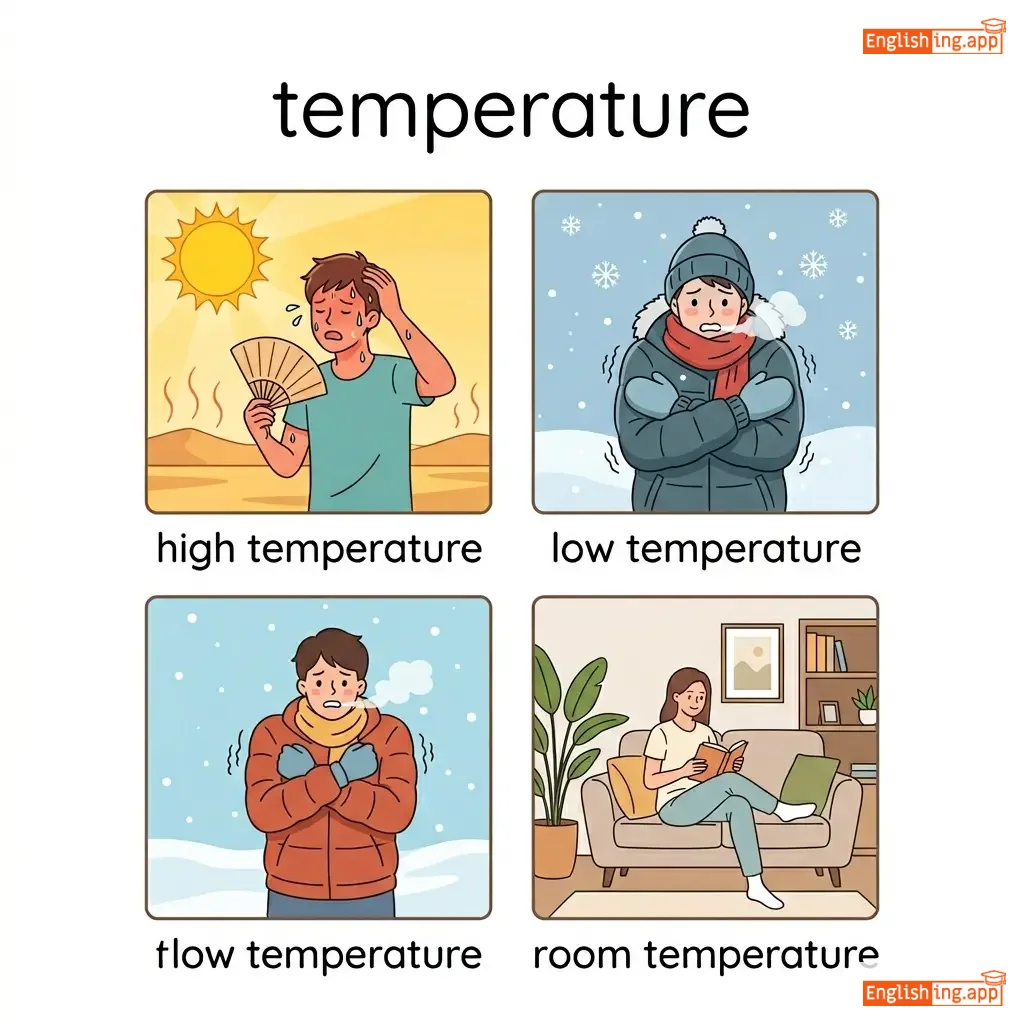
|
温度
wendu
••••••
|
- •••••• | - •••••• | - •••••• | - •••••• |
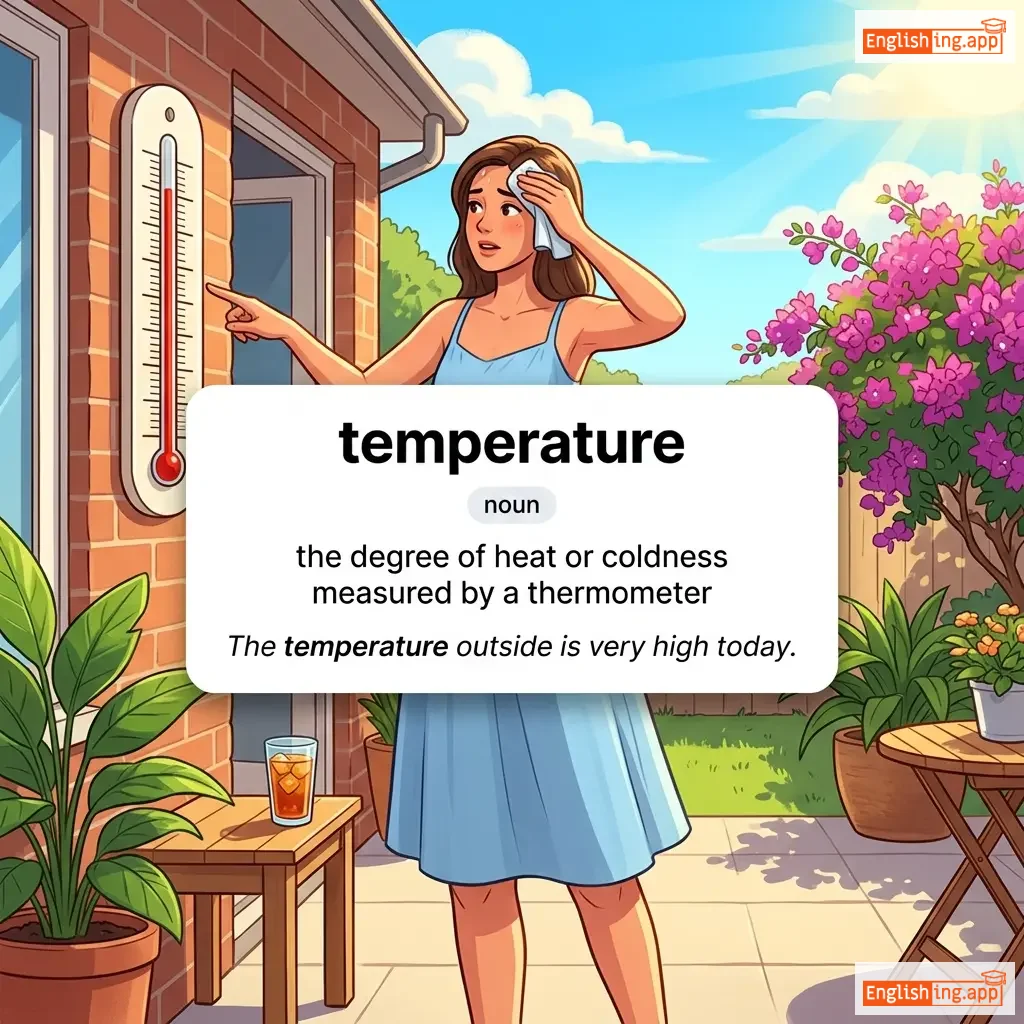
the degree of heat or cold in the atmosphere, body, or substance
••••••
|
The temperature today is twenty-five degrees Celsius. |
今天的温度是二十五摄氏度。
Jīntiān de wēndù shì èrshíwǔ shèshìdù.
••••••
|
- •••••• | - •••••• | - •••••• |
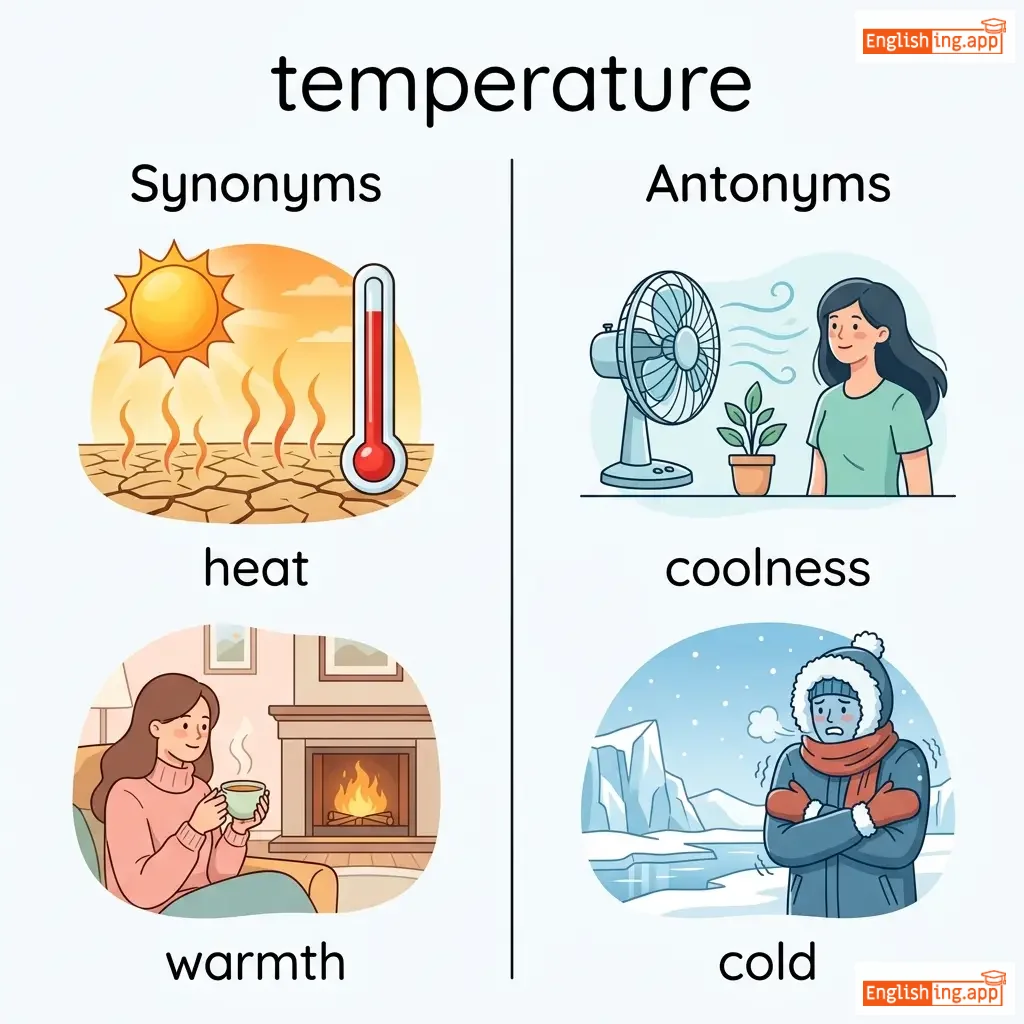
heat, warmth, thermal reading, degree
••••••
|
absolute zero
••••••
|
body temperature, room temperature, high temperature, take temperature
••••••
|
温度和英文的temperature相似,记住这个词来描述气温
••••••
|
|
⛩️
••••••
|
/ˈtɛmpəl/
noun
(tèmpǔěr)
••••••
|
- •••••• |
寺庙
sìmiào
••••••
|
- •••••• | - •••••• | - •••••• | - •••••• |
a building used for the worship of a god or gods
••••••
|
They visited an ancient temple during their trip to India. |
他们在印度旅行时参观了一个古老的寺庙。
Tāmen zài Yìndù lǚxíng shí cānguānle yīgè gǔlǎo de sìmiào.
••••••
|
holy temple |
a sacred place dedicated to religious worship
••••••
|
神圣的寺庙
shénshèng de sìmiào
••••••
|
shrine, sanctuary, church, mosque, pagoda
••••••
|
secular place, profane site
••••••
|
ancient temple, Hindu temple, temple bell, temple visit
••••••
|
Temple在英文中表示‘寺庙’,供人崇拜神明的地方。
••••••
|
|
⏳
••••••
|
/ˈtɛmpərɛrɪli/
adverb
(临时)
••••••
|
- •••••• |
临时地
linshi de
••••••
|
- •••••• | - •••••• | - •••••• | - •••••• |
for a limited time; not permanently
••••••
|
The road is closed temporarily for repairs. |
道路因维修而暂时关闭。
Dàolù yīn wéixiū ér zhànshí guānbì.
••••••
|
- •••••• | - •••••• | - •••••• |
briefly, momentarily, temporarily, short-term
••••••
|
permanently, forever
••••••
|
temporarily closed, temporarily unavailable, temporarily suspended
••••••
|
Temporary is like a ‘time’ set in the clock – only for a short time!
••••••
|
|
⏰
••••••
|
/ˈtɛmpərɛri/
adjective
(témpǒràrì)
••••••
|
- •••••• |
临时
linshi
••••••
|
- •••••• | - •••••• | - •••••• | - •••••• |
Lasting for only a limited period of time; not permanent.
••••••
|
She found a temporary job during the summer break.
她在暑假期间找到了临时工作。
••••••
|
她在暑假期间找到了临时工作。
Tā zài shǔjià qījiān zhǎodàole línshí gōngzuò.
••••••
|
temporary solution
临时解决方案
••••••
|
A fix that is not permanent but works for a short time.
••••••
|
临时解决方案
línshí jiějué fāng'àn
••••••
|
short-term, momentary, provisional, fleeting, transient
••••••
|
permanent, lasting
••••••
|
temporary job, temporary solution, temporary shelter, temporary measure
••••••
|
Temporary意味着临时 ⏰,记住临时工作只是暂时的。
••••••
|
|
🍰
••••••
|
/tɛmpt/
verb
(tempt)
••••••
|
- •••••• |
诱惑
yòuhuò
••••••
|
tempted
tempted
••••••
|
tempted
tempted
••••••
|
tempts
tempts
••••••
|
tempting
tempting
••••••
|
to entice or attract someone to do something, often something wrong or unwise
••••••
|
The smell of fresh bread tempted him to enter the bakery.
新鲜面包的味道引诱他走进了面包店。
••••••
|
新鲜面包的味道引诱他走进了面包店。
xīnxiān miànbāo de wèidào yǐn yuè tā zǒu jìn le miànbāo diàn.
••••••
|
tempt fate
挑战命运
••••••
|
to take a risk that might lead to trouble or danger
••••••
|
挑战命运
tiǎozhàn mìngyùn
••••••
|
entice, lure, attract, seduce, persuade
••••••
|
deter, repel, discourage
••••••
|
tempt someone, tempt fate, tempting offer, hard to tempt
••••••
|
Tempt 意味着诱惑,就像看到一块诱人的蛋糕,忍不住想吃掉它。
••••••
|
|
🔟
••••••
|
/tɛn/
noun
(ten)
••••••
|
- •••••• |
十
shi
••••••
|
- •••••• | - •••••• | - •••••• | - •••••• |
the number following nine and preceding eleven
••••••
|
I have ten apples in the basket.
我篮子里有十个苹果。
••••••
|
我篮子里有十个苹果。
Wǒ lánzi lǐ yǒu shí gè píngguǒ.
••••••
|
- •••••• | - •••••• | - •••••• |
decade, 10
••••••
|
eleven, nine
••••••
|
ten years, ten people, ten times, ten minutes
••••••
|
十根手指,十是数字。
••••••
|
|
👤
••••••
|
/ˈtɛnənt/
noun
(tè-nànt)
••••••
|
- •••••• |
租户
zū hù
••••••
|
- •••••• | - •••••• | - •••••• | - •••••• |
A person who occupies land or property rented from a landlord.
••••••
|
The tenant paid the rent on time every month. |
租户每月按时支付租金
zū hù měi yuè àn shí zhī fù zū jīn
••••••
|
sitting tenant |
A tenant who is currently living in a rented property.
••••••
|
现有租户
xiàn yǒu zū hù
••••••
|
occupant, renter, lodger, leaseholder, dweller
••••••
|
landlord, owner
••••••
|
tenant rights, tenant protection, tenant eviction, sitting tenant
••••••
|
Tenant = 租户,支付租金的人
••••••
|
|
🌱
••••••
|
/tɛnd/
verb
(坦德)
••••••
|
- •••••• |
倾向/照顾
qīngxiàng/zhàogù
••••••
|
tended
坦德德
••••••
|
tended
坦德德
••••••
|
tends
坦德斯
••••••
|
tending
坦丁
••••••
|
To regularly behave in a particular way or to take care of something.
••••••
|
She tends to wake up early in the morning.
她倾向于早上早起。
••••••
|
她倾向于早上早起。
Tā qīngxiàng yú zǎoshang zǎo qǐ.
••••••
|
tend to
倾向于
••••••
|
To be likely to do something or to have a certain characteristic.
••••••
|
倾向于
qīngxiàng yú
••••••
|
care for, look after, lean, incline, nurture
••••••
|
ignore, neglect
••••••
|
tend to, tend animals, tend plants, tend carefully
••••••
|
Tend表示趋势或照顾。
••••••
|
|
📈
••••••
|
/ˈten.dən.si/
noun
(趋势)
••••••
|
- •••••• |
趋势
qushi
••••••
|
- •••••• | - •••••• | - •••••• | - •••••• |
an inclination toward a particular characteristic or type of behavior
••••••
|
She has a tendency to arrive late for meetings.
她有迟到的趋势。
••••••
|
她有迟到的趋势。
Ta you chidao de qushi.
••••••
|
- •••••• | - •••••• | - •••••• |
inclination, propensity, disposition, proclivity
••••••
|
aversion, disinclination, reluctance
••••••
|
natural tendency, strong tendency, growing tendency, general tendency
••••••
|
In Chinese, '趋势' is like the tendency of being 'late' for meetings, just like how the 'train' is always delayed.
••••••
|
|
🌸
••••••
|
/ˈtɛndər/
verb, noun, adjective
(坦德尔)
••••••
|
- •••••• |
提议 / 温柔
tíyì / wēnróu
••••••
|
tendered
坦德尔德
••••••
|
tendered
坦德尔德
••••••
|
tenders
坦德尔斯
••••••
|
tendering
坦德尔英
••••••
|
to offer formally; soft and delicate in texture or character; a formal offer or proposal
••••••
|
The company tendered its resignation to the board.
公司向董事会提出了辞职申请。
••••••
|
公司向董事会提出了辞职申请。
Gōngsī xiàng dǒngshìhuì tíchūle cízhí shēnqǐng.
••••••
|
tender loving care
温柔的关爱
••••••
|
gentle, nurturing care
••••••
|
温柔的关爱
wēnróu de guān'ài
••••••
|
offer, submit, delicate, fragile, proposal
••••••
|
withdraw, reject, harsh
••••••
|
tender offer, tender document, tender heart, tender age
••••••
|
Tender意味着温柔和细腻,像充满关爱的怀抱。
••••••
|
|
🎾
••••••
|
/ˈtɛnɪs/
noun
(网球)
••••••
|
- •••••• |
网球
wǎngqiú
••••••
|
- •••••• | - •••••• | - •••••• | - •••••• |
a sport played with rackets and a ball on a rectangular court
••••••
|
He enjoys playing tennis with his friends on the weekends. |
他喜欢周末和朋友们一起打网球。
Tā xǐhuān zhōumò hé péngyǒu men yīqǐ dǎ wǎngqiú.
••••••
|
- •••••• | - •••••• | - •••••• |
racket sport, sport, game
••••••
|
chess, board games
••••••
|
play tennis, tennis match, tennis court, tennis player
••••••
|
网球是一个增强反应能力和体力的运动 - Wǎngqiú shì yīgè zēngqiáng fǎnyìng nénglì hé tǐlì de yùndòng
••••••
|
|
😰
••••••
|
/ˈtɛn.ʃən/
noun
(tension)
••••••
|
- •••••• |
紧张
jin zhang
••••••
|
- •••••• | - •••••• | - •••••• | - •••••• |
A state of being stretched tight; mental or emotional strain.
••••••
|
There was a lot of tension in the room before the exam results were announced.
考试结果公布前,房间里充满了紧张气氛。
••••••
|
考试结果公布前,房间里充满了紧张气氛。
Kaoshi jieguo gongbu qian, fangjian li chongman le jinzhang qifen.
••••••
|
cut the tension with a knife
用刀割断紧张气氛
••••••
|
When the atmosphere is very tense and easily noticeable.
••••••
|
用刀割断紧张气氛
Yong dao ge duan jin zhang qi fen
••••••
|
strain, stress, pressure, anxiety, suspense
••••••
|
relaxation, ease, calm
••••••
|
high tension, political tension, muscle tension, relieve tension
••••••
|
中文中,我们说 '用刀割断紧张气氛' - 就像能触摸到它一样。
••••••
|
|
⛺
••••••
|
/tent/
noun
(tènt)
••••••
|
- •••••• |
帐篷
zhàngpéng
••••••
|
- •••••• | - •••••• | - •••••• | - •••••• |
a portable shelter made of cloth or canvas; military accommodation
••••••
|
The soldiers set up their tent in the military camp.
士兵们在军营中搭起了他们的帐篷。
••••••
|
士兵们在军营中搭起了他们的帐篷。
Shìbīngmen zài jūnyíng zhōng dāqǐle tāmen de zhàngpéng.
••••••
|
- •••••• | - •••••• | - •••••• |
shelter, pavilion, canvas shelter
••••••
|
permanent structure, building
••••••
|
military tent, field tent, tent camp, army tent
••••••
|
In Chinese, '帐篷' (zhàngpéng) looks like a large cloth structure. Think of a giant, portable tent!
••••••
|
|
📜
••••••
|
/ˈtɛnjər/
noun
(tiānyùěr)
••••••
|
- •••••• |
任期
renqi
••••••
|
- •••••• | - •••••• | - •••••• | - •••••• |
The period of time during which someone holds a position, office, or land.
••••••
|
His tenure as president lasted for five years. |
他作为总统的任期持续了五年。
Tā zuòwéi zǒngtǒng de rènqī chíxù le wǔ nián.
••••••
|
secure tenure |
Guaranteed possession of a position or land.
••••••
|
确保任期
quèbǎo rènqī
••••••
|
term, occupancy, incumbency, holding
••••••
|
unemployment, dispossession, vacancy
••••••
|
tenure track, fixed tenure, tenure of office, land tenure
••••••
|
Tenure 就像 'ten years' ,代表长期占据一个位置。
••••••
|
|
🛫
••••••
|
/ˈtɜːrmɪnəl/
noun/adjective
(塔米纳尔)
••••••
|
- •••••• |
终点站,最终,绝症
zhōngdiǎn zhàn, zuìzhōng, juézhèng
••••••
|
- •••••• | - •••••• | - •••••• | - •••••• |
As a noun: A place where transport routes begin or end. As an adjective: Relating to the end or final stage of something, often an illness.
••••••
|
He waited for the bus at the central terminal. |
他在中央终点站等公交车。
tā zài zhōngyāng zhōngdiǎn zhàn děng gōngjiāo chē.
••••••
|
terminal illness |
An illness that cannot be cured and will eventually lead to death.
••••••
|
绝症
juézhèng
••••••
|
station, depot, final, ultimate, incurable
••••••
|
initial, beginning
••••••
|
bus terminal, airport terminal, terminal illness, terminal stage
••••••
|
在终点站,所有的旅程都结束了,就像绝症意味着生命的尽头。
••••••
|
|
🛑
••••••
|
/ˈtɜːrmɪˌneɪt/
verb
(tɜːrmɪˌneɪt)
••••••
|
- •••••• |
终止
zhongzhi
••••••
|
terminated
terminated
••••••
|
terminated
terminated
••••••
|
terminates
terminates
••••••
|
terminating
terminating
••••••
|
to bring something to an end or to stop something from continuing
••••••
|
The company decided to terminate his contract.
公司决定终止他的合同。
••••••
|
公司决定终止他的合同。
Gōngsī juédìng zhōngzhǐ tā de hétong.
••••••
|
terminate a pregnancy
终止妊娠
••••••
|
to medically end a pregnancy
••••••
|
终止妊娠
zhōngzhǐ rènshēn
••••••
|
end, conclude, finish, cease, halt
••••••
|
begin, start, continue
••••••
|
terminate a contract, terminate employment, terminate immediately, terminate agreement
••••••
|
终止意味着结束,就像合同被'终止'一样。
••••••
|
|
📜
••••••
|
/tɜːmz/
noun
(térmz)
••••••
|
- •••••• |
条款
tiaokuan
••••••
|
- •••••• | - •••••• | - •••••• | - •••••• |
plural of term; conditions or rules in a contract or agreement
••••••
|
The terms of the agreement are clearly outlined in the contract.
协议条款在合同中明确列出。
••••••
|
协议条款在合同中明确列出。
Xieyi tiaokuan zai hetong zhong mingque liechu.
••••••
|
- •••••• | - •••••• | - •••••• |
conditions, clauses, provisions, requirements
••••••
|
freedom, flexibility
••••••
|
contract terms, payment terms, terms and conditions
••••••
|
Terms are the clauses - remember to check ‘tiaokuan’ in the contract.
••••••
|
|
🌄
••••••
|
/təˈreɪn/
noun
(tèréin)
••••••
|
- •••••• |
地形
dixing
••••••
|
- •••••• | - •••••• | - •••••• | - •••••• |
a stretch of land, especially with regard to its physical features
••••••
|
The soldiers had to cross rough terrain during the mission. |
士兵们必须在任务期间穿越艰难的地形。
Shibing men bixu zai renwu qi jian chuanyue jiannan de dixing.
••••••
|
mountainous terrain |
landscape full of mountains or steep slopes
••••••
|
山地地形
shandi dixing
••••••
|
land, ground, landscape, topography, area
••••••
|
sea, sky
••••••
|
rocky terrain, flat terrain, desert terrain, rugged terrain
••••••
|
Terrain 就是地形 — 就像火车在地面上行驶,terrain 就是指地面的结构。
••••••
|
|
😖
••••••
|
/ˈtɛrɪbəl/
adjective
••••••
|
- •••••• | - •••••• | - •••••• | - •••••• | - •••••• | - •••••• |
extremely bad or unpleasant
••••••
|
The food at that restaurant was terrible. |
- •••••• |
a terrible mistake |
a very bad or serious error
••••••
|
- •••••• |
awful, dreadful, horrible, appalling
••••••
|
wonderful, excellent, good
••••••
|
terrible accident, terrible pain, terrible mistake, terrible situation
••••••
|
No •••••• |
|
😢
••••••
|
/ˈtɛrəbli/
adverb
(térebli)
••••••
|
- •••••• |
可怕地
kěpà de
••••••
|
- •••••• | - •••••• | - •••••• | - •••••• |
to a very great or extreme degree; very badly or unpleasantly
••••••
|
He felt terribly sad after hearing the news. |
听到消息后,他感到可怕地悲伤。
Tīng dào xiāoxī hòu, tā gǎndào kěpà de bēishāng.
••••••
|
terribly sorry |
feeling extremely apologetic or regretful
••••••
|
可怕地抱歉
kěpà de bàoqiàn
••••••
|
extremely, awfully, horribly, dreadfully, badly
••••••
|
slightly, mildly
••••••
|
terribly sorry, terribly wrong, terribly cold, terribly slow
••••••
|
Terribly 意味着非常坏或非常好——也就是说,非常!记住:‘可怕地好’ 或 ‘可怕地坏’。
••••••
|
|
🌟
••••••
|
/təˈrɪfɪk/
adjective
(tèrifik)
••••••
|
- •••••• |
了不起
liaobuqi
••••••
|
- •••••• | - •••••• | - •••••• | - •••••• |
extremely good or excellent; very great or intense
••••••
|
The concert last night was absolutely terrific.
昨晚的音乐会真是太棒了。
••••••
|
昨晚的音乐会真是太棒了。
Zuó wǎn de yīnyuè huì zhēn shì tài bàngle.
••••••
|
feel terrific
感觉棒极了
••••••
|
to feel very well or happy
••••••
|
感觉非常好
gǎnjué fēicháng hǎo
••••••
|
excellent, wonderful, fantastic, superb, amazing
••••••
|
awful, terrible, poor
••••••
|
terrific idea, terrific job, feel terrific, look terrific
••••••
|
Terrific 就是 'Terri-fic',太了不起了!
••••••
|
|
😱
••••••
|
/ˈtɛrəˌfaɪ/
verb
(té lǐ fāi)
••••••
|
- •••••• |
使惊吓
shǐ jīng xià
••••••
|
terrified
té lǐ fāi dé
••••••
|
terrified
té lǐ fāi dé
••••••
|
terrifies
té lǐ fāi sī
••••••
|
terrifying
té lǐ fāi yīng
••••••
|
To cause someone to feel extreme fear.
••••••
|
The loud thunder terrified the children.
响亮的雷声把孩子们吓坏了。
••••••
|
响亮的雷声把孩子们吓坏了。
Xiǎngliàng de léishēng bǎ háizimen xià huài le.
••••••
|
- •••••• | - •••••• | - •••••• |
frighten, scare, alarm, startle, petrify
••••••
|
comfort, reassure, calm
••••••
|
terrify someone, absolutely terrify, terrify the crowd
••••••
|
Terrify 就是让人害怕,就像雷声一样让人害怕。
••••••
|
|
🏞️
••••••
|
/ˈtɛrɪˌtɔːri/
noun
(territory)
••••••
|
|
领土
lingtu
••••••
|
- •••••• | - •••••• | - •••••• | - •••••• |
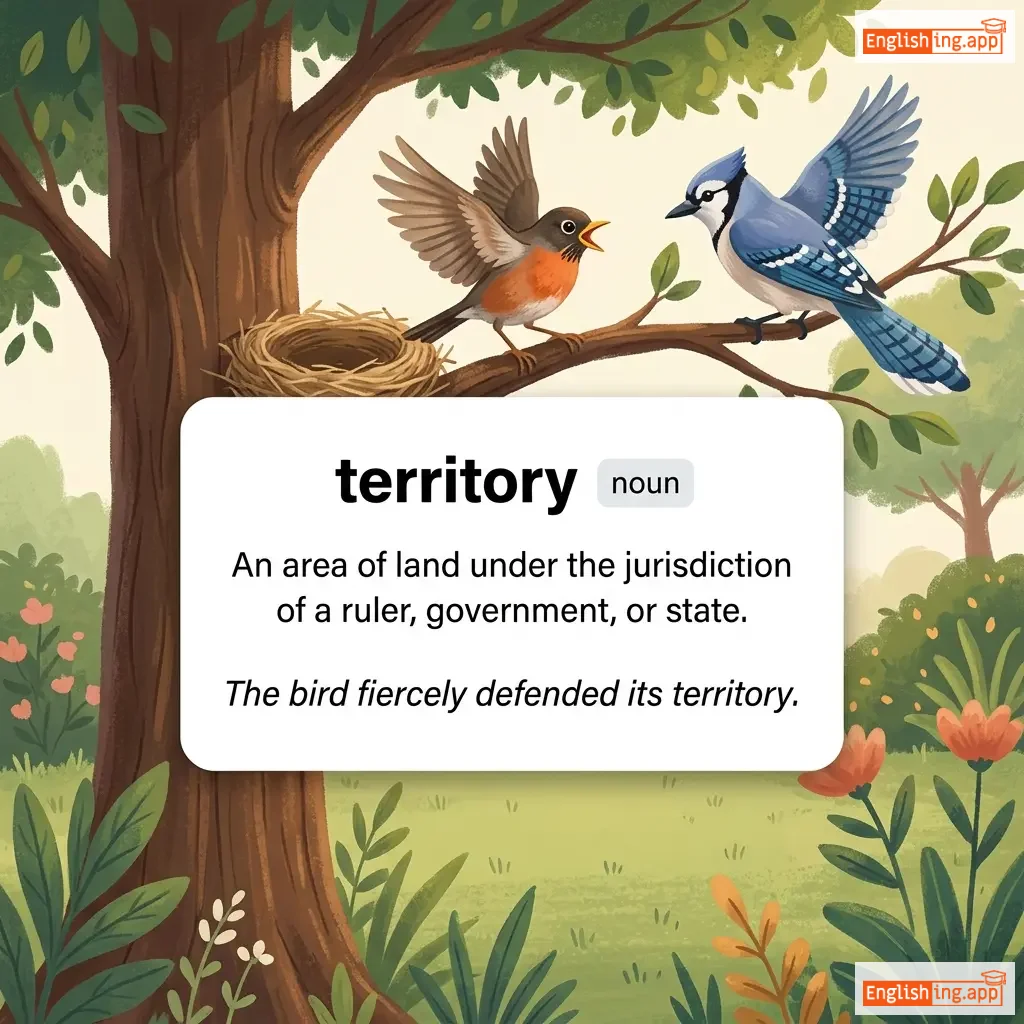
An area of land under the jurisdiction of a ruler, government, or state.
••••••
|
The bird fiercely defended its territory. |
鸟类猛烈地保卫着它的领土。
Niaolai menglie de baowei zhe ta de lingtu.
••••••
|
uncharted territory |
An unfamiliar or unexplored area or situation.
••••••
|
未开拓的领域
Wei kaituo de lingyu
••••••
|
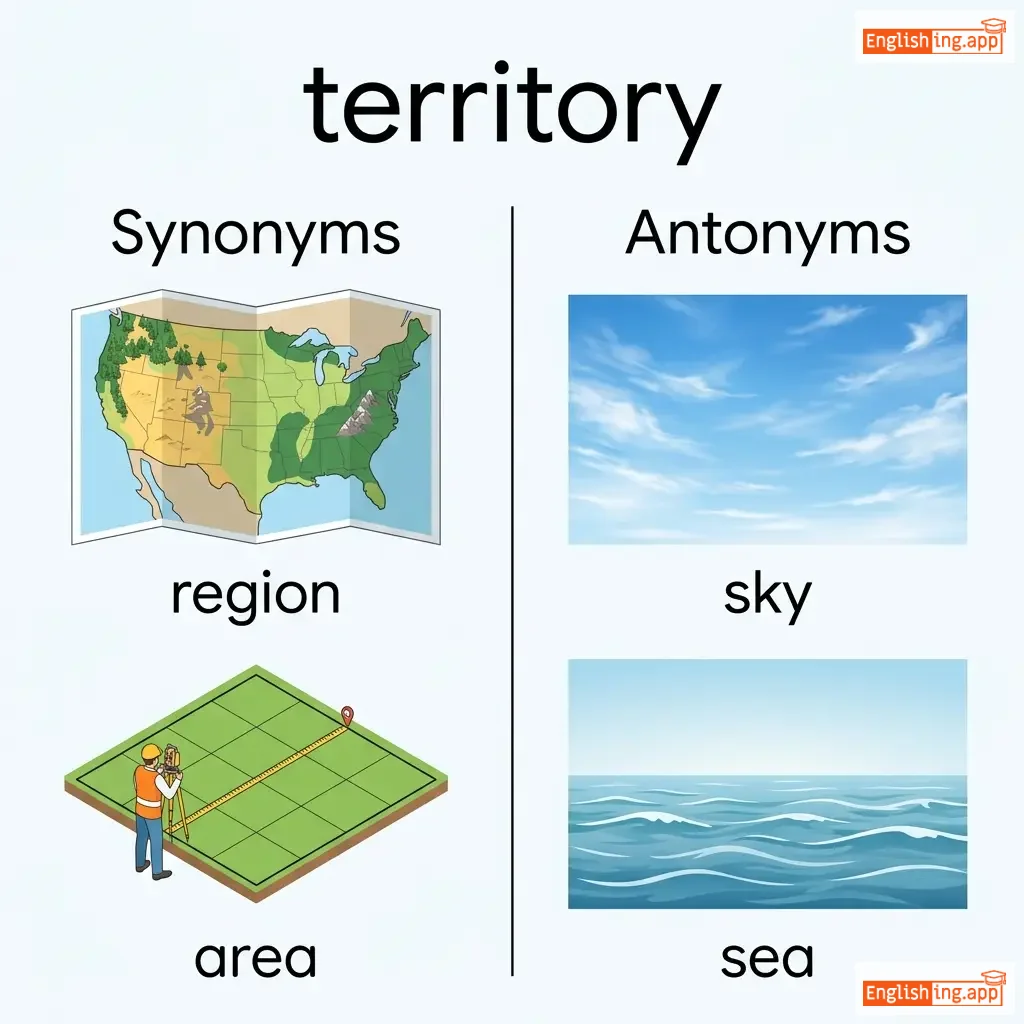
region, area, domain, land, zone
••••••
|
sky, sea
••••••
|
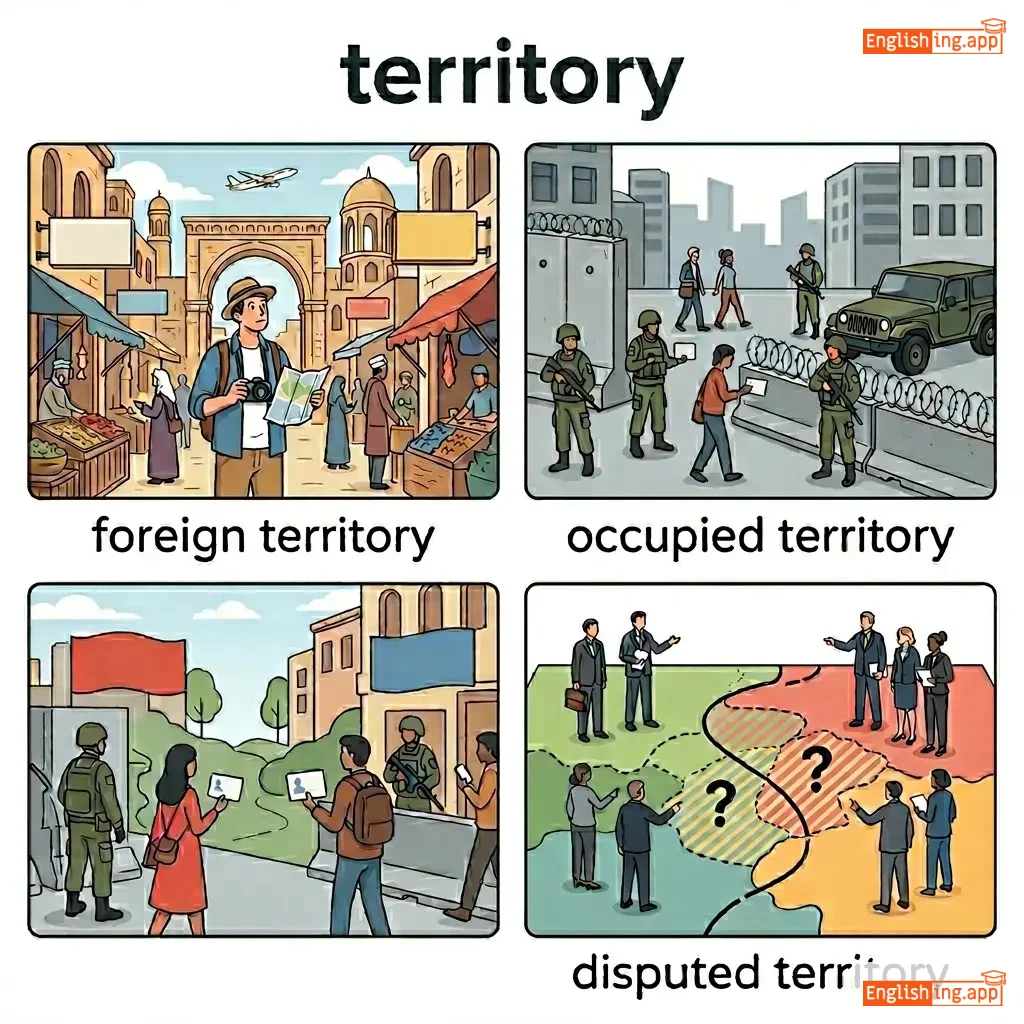
foreign territory, occupied territory, disputed territory
••••••
|
Territory = Teri + Lingtu (领土)
••••••
|
|
👻
••••••
|
/ˈtɛrər/
noun
(恐怖)
••••••
|
- •••••• |
恐怖
kongbu
••••••
|
- •••••• | - •••••• | - •••••• | - •••••• |
Extreme fear or dread.
••••••
|
The villagers fled in terror during the attack. |
村民们在袭击时逃入恐惧之中。
Cūnmínmen zài xíjī shí táo rù kǒngjù zhī zhōng.
••••••
|
reign of terror |
A period during which fear and violence prevail.
••••••
|
恐怖统治
Kǒngbù tǒngzhì
••••••
|
fear, dread, horror, panic, fright
••••••
|
calm, peace, comfort
••••••
|
state of terror, sheer terror, live in terror
••••••
|
Terror 在中文里是恐怖,表示强烈的恐惧感。
••••••
|
|
💣
••••••
|
/ˈter.ər.ɪ.zəm/
noun
(恐怖主义)
••••••
|
- •••••• |
恐怖主义
kǒngbù zhǔyì
••••••
|
- •••••• | - •••••• | - •••••• | - •••••• |
the unlawful use of violence and intimidation against civilians for political aims
••••••
|
The government increased security measures to prevent terrorism. |
政府加强了安全措施以防止恐怖主义。
zhèngfǔ jiāqiángle ānquán cuòshī yǐ fángzhǐ kǒngbù zhǔyì.
••••••
|
- •••••• | - •••••• | - •••••• |
extremism, radicalism, violence, insurgency
••••••
|
peace, nonviolence, diplomacy, harmony
••••••
|
international terrorism, domestic terrorism, counter-terrorism, war on terrorism
••••••
|
恐怖主义会使社会陷入混乱,安全措施是必不可少的。
••••••
|
|
👤💥
••••••
|
/ˈtɛrərɪst/
noun
(恐怖分子)
••••••
|
- •••••• |
恐怖分子
kongbufenzi
••••••
|
- •••••• | - •••••• | - •••••• | - •••••• |
a person who uses violence or threats to intimidate or coerce, especially for political purposes
••••••
|
The terrorist was arrested by the police after the attack. |
恐怖分子在袭击后被警察逮捕。
Kongbufenzi zai xiji hou bei jingcha daibu.
••••••
|
- •••••• | - •••••• | - •••••• |
extremist, militant, radical, insurgent
••••••
|
peacemaker, diplomat
••••••
|
suspected terrorist, terrorist group, radical terrorist
••••••
|
恐怖分子 ('kongbufenzi') 使用暴力来实现政治目标。
••••••
|
|
📝
••••••
|
/test/
verb
(测试)
••••••
|
|
测试
ceshi
••••••
|
tested
测试过
••••••
|
tested
测试过
••••••
|
tests
测试
••••••
|
testing
测试中
••••••
|
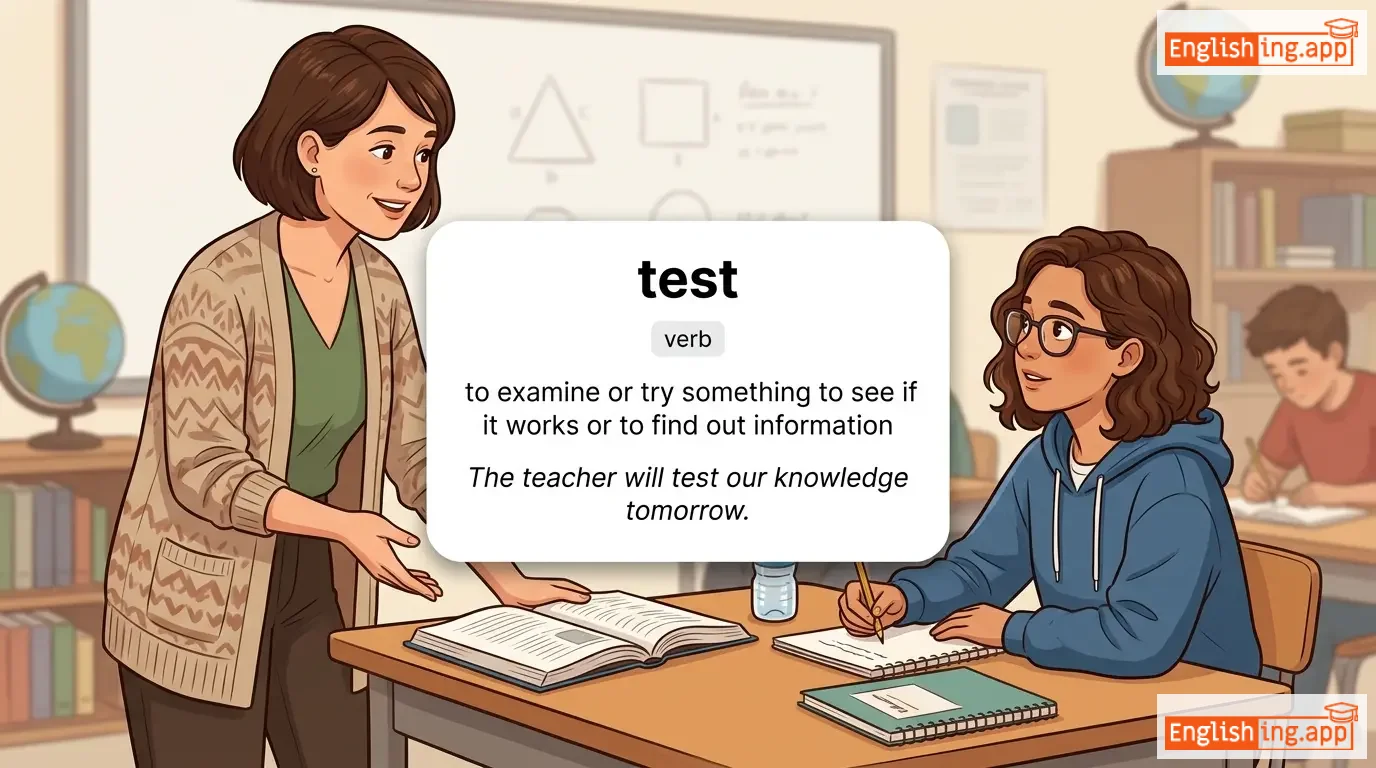
to examine or try something to see if it works or to find out information
••••••
|
The teacher will test our knowledge tomorrow.
老师明天将测试我们的知识。
••••••
|
老师明天将测试我们的知识。
Laoshi mingtian jiang ceshi women de zhishi.
••••••
|
- •••••• | - •••••• | - •••••• |
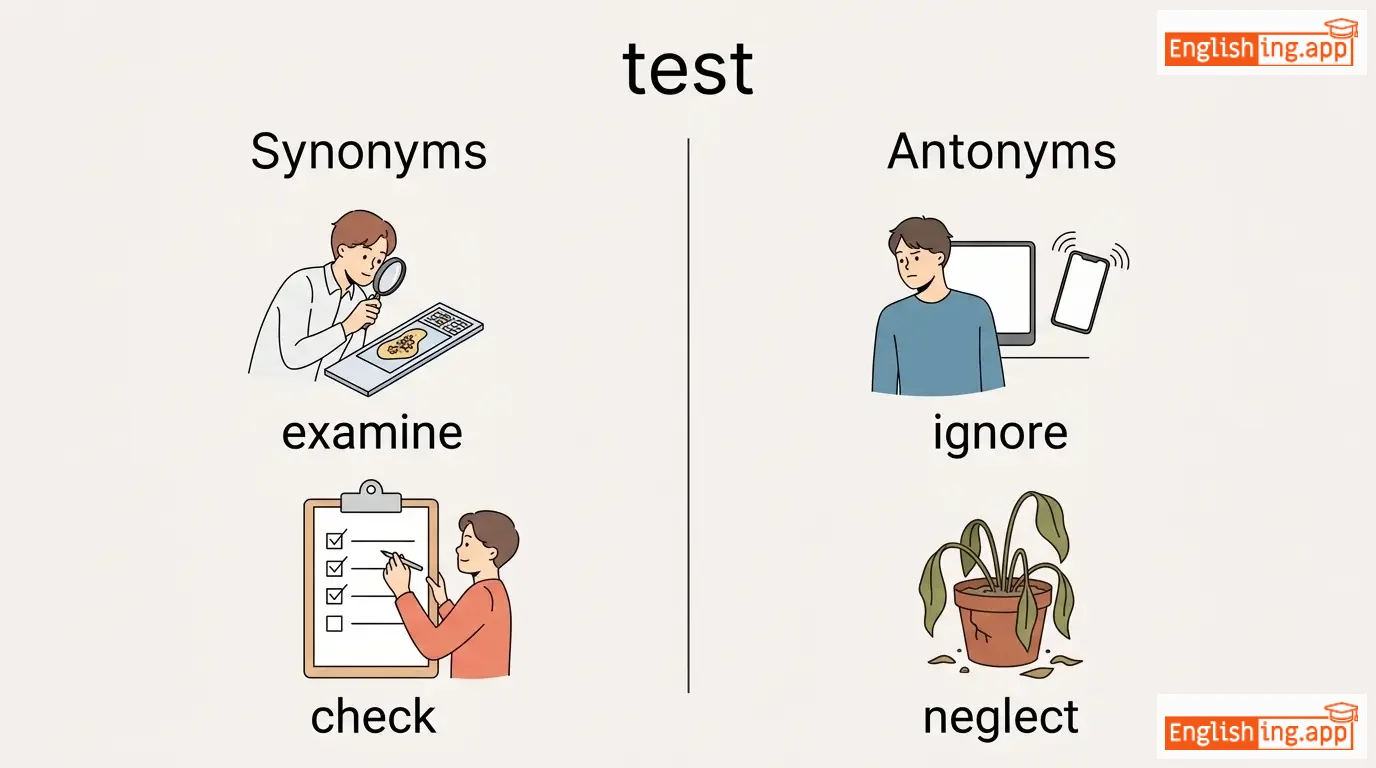
examine, check, try, evaluate
••••••
|
ignore, neglect
••••••
|
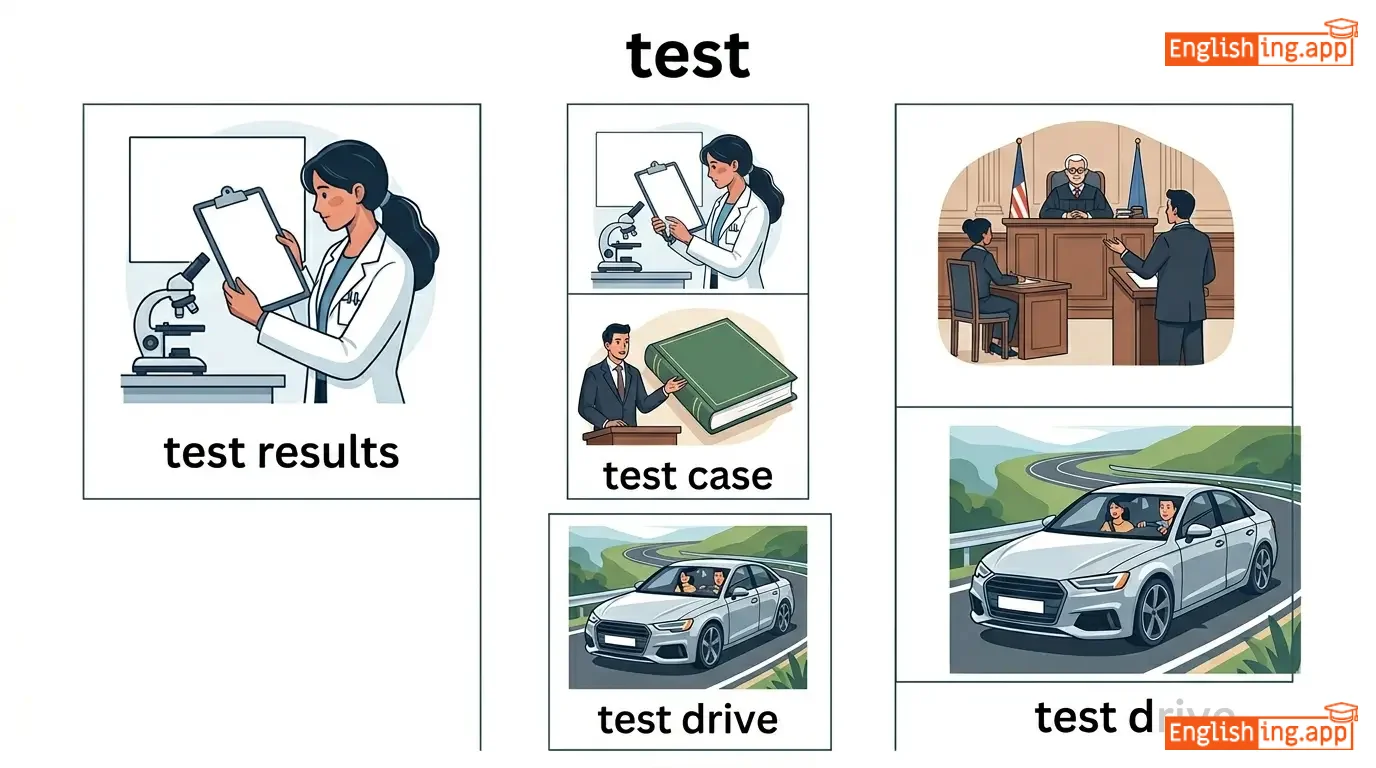
test results, test case, test drive, test positive, test negative, blood test
••••••
|
就像老师测试你们的知识一样,去测试。
••••••
|
|
📝
••••••
|
/ˈtɛstəfaɪ/
verb
(特斯蒂法伊)
••••••
|
- •••••• |
作证
zuò zhèng
••••••
|
testified
特斯蒂法伊德
••••••
|
testified
特斯蒂法伊德
••••••
|
testifies
特斯蒂法伊斯
••••••
|
testifying
特斯蒂法伊英
••••••
|
to make a statement or declaration under oath or to give evidence
••••••
|
She was called to testify in court about the accident.
她被叫到法庭作证,关于那起事故。
••••••
|
她被叫到法庭作证,关于那起事故。
Tā bèi jiào dào fǎtíng zuò zhèng, guānyú nà qǐ shìgù.
••••••
|
- •••••• | - •••••• | - •••••• |
witness, declare, confirm, affirm
••••••
|
deny, oppose
••••••
|
testify in court, testify under oath, testify as a witness
••••••
|
在法庭作证,宣誓提供证据
••••••
|
|
⚖️
••••••
|
/ˈtɛstəˌmoʊni/
noun
(tɛstəˌmoʊni)
••••••
|
- •••••• |
证词
zhèngcí
••••••
|
- •••••• | - •••••• | - •••••• | - •••••• |
A formal statement given in a court of law or evidence supporting a fact.
••••••
|
Her testimony in court helped convict the criminal. |
她在法庭上的证词帮助定罪了罪犯。
Tā zài fǎtíng shàng de zhèngcí bāngzhù dìngzuì le zuìfàn.
••••••
|
bear testimony |
To serve as evidence or proof of something
••••••
|
作证
zuò zhèng
••••••
|
evidence, declaration, statement, affidavit, proof
••••••
|
denial, contradiction, refutation
••••••
|
sworn testimony, court testimony, give testimony, eyewitness testimony
••••••
|
证词听起来像'Test',在法庭上作证就像考试一样。
••••••
|
|
🔬
••••••
|
/ˈtɛstɪŋ/
noun
(测试)
••••••
|
- •••••• |
测试
ceshi
••••••
|
- •••••• | - •••••• | - •••••• | - •••••• |
the process of assessing or evaluating something, often by trying it out
••••••
|
The testing of the new software is still ongoing. |
新软件的测试仍在进行。
Xin ruanjian de ceshi reng zai jinxing.
••••••
|
- •••••• | - •••••• | - •••••• |
examination, assessment, trial, evaluation
••••••
|
failure, rejection
••••••
|
testing phase, software testing, testing process, performance testing
••••••
|
Testing software is like testing your skills for success
••••••
|
|
📖
••••••
|
/tɛkst/
noun
(文本)
••••••
|
- •••••• |
文本
wenben
••••••
|
- •••••• | - •••••• | - •••••• | - •••••• |
a written or printed work or passage, especially a book or document
••••••
|
The teacher asked us to read the text on page 50. |
老师让我们阅读第50页上的文本。
Laoshi rang women yuedu di 50 ye shang de wenben.
••••••
|
- •••••• | - •••••• | - •••••• |
script, writing, passage, document
••••••
|
speech, talk
••••••
|
text message, read the text, text book, written text
••••••
|
文本是让你阅读字里行间的写作
••••••
|
|
📘
••••••
|
/ˈtɛkstbʊk/
noun
(tèksìtúbùkè)
••••••
|
- •••••• |
教科书
jiaokeshu
••••••
|
- •••••• | - •••••• | - •••••• | - •••••• |
a book used for studying a subject in school or college
••••••
|
She bought a new biology textbook for her class. |
她为她的班级买了一本新的生物学教科书。
Tā wèi tā de bānjí mǎile yī běn xīn de shēngwùxué jiàokēshū.
••••••
|
a textbook example |
a perfect or typical example of something
••••••
|
典型例子
diǎnxíng lìzi
••••••
|
manual, guidebook, reference book, coursebook
••••••
|
fiction, magazine
••••••
|
textbook example, textbook case, school textbook, college textbook
••••••
|
Text + Book = 用于学习的书!因此,'教科书'意味着教科书。
••••••
|
|
🧵
••••••
|
/ˈtɛkstʃər/
noun
(tè kè chù)
••••••
|
- •••••• |
质地
zhì dì
••••••
|
- •••••• | - •••••• | - •••••• | - •••••• |
the way something feels when you touch it; the quality of a surface or substance
••••••
|
The fabric has a soft and smooth texture. |
这块布的质地柔软光滑。
Zhè kuài bù de zhì dì róuruǎn guānghuá.
••••••
|
rough texture |
a coarse or uneven surface feel
••••••
|
- •••••• |
surface, feel, grain, structure, consistency
••••••
|
smoothness, flatness
••••••
|
soft texture, rough texture, fabric texture, skin texture
••••••
|
质地就是你触摸的感觉。
••••••
|
|
🔼
••••••
|
/ðæn/
conjunction
(than)
••••••
|
- •••••• |
比
bǐ
••••••
|
- •••••• | - •••••• | - •••••• | - •••••• |
used to introduce the second element in a comparison
••••••
|
She is taller than her brother.
她比她的哥哥高。
••••••
|
她比她的哥哥高。
Tā bǐ tā de gēgē gāo.
••••••
|
- •••••• | - •••••• | - •••••• |
more than, compared to, as opposed to
••••••
|
less than
••••••
|
greater than, more than, better than
••••••
|
Than means you compare one thing with another
••••••
|
|
🙏
••••••
|
/θæŋk/
verb
(thæŋk)
••••••
|

|
感谢
gǎnxiè
••••••
|
thanked
thæŋkt
••••••
|
thanked
thæŋkt
••••••
|
thanks
θæŋks
••••••
|
thanking
θæŋkɪŋ
••••••
|
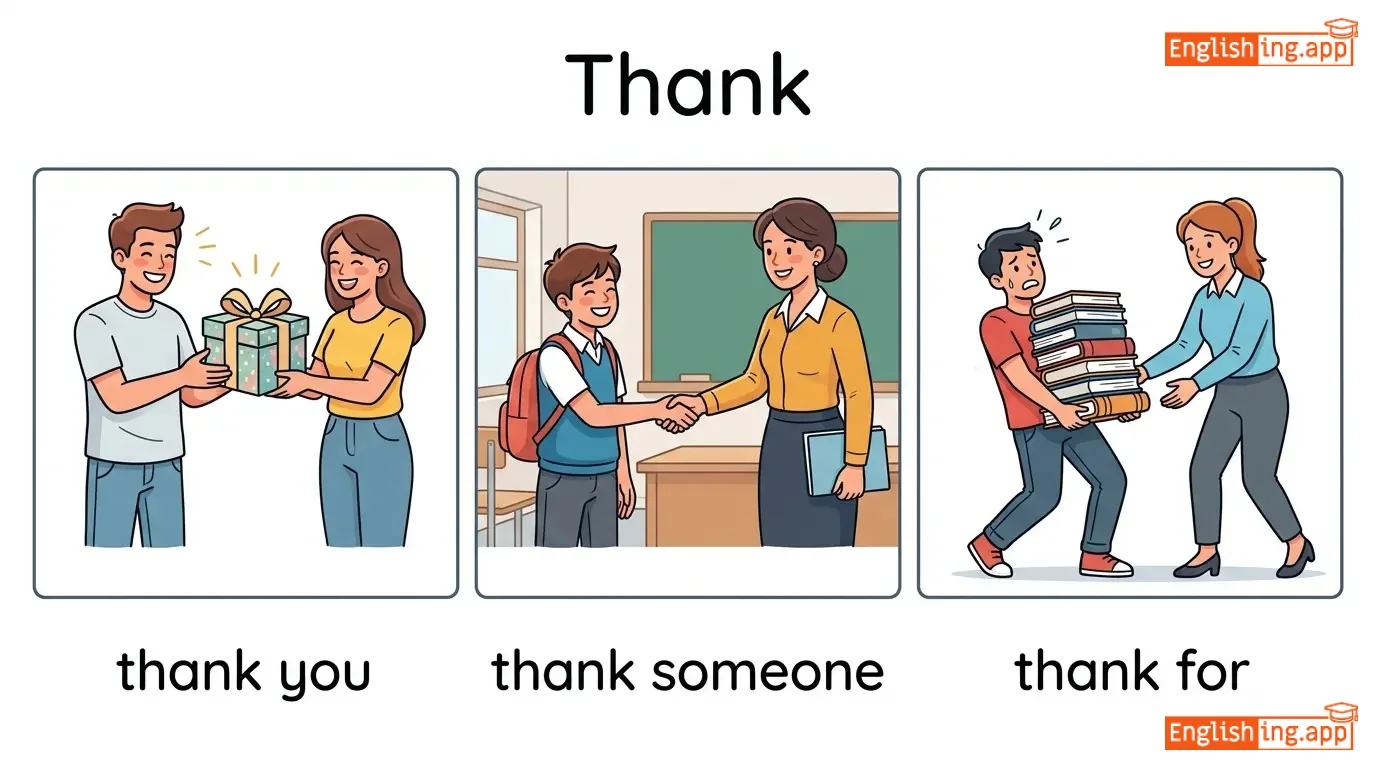
to express gratitude to someone
••••••
|
I want to thank you for your help.
我想感谢你提供的帮助。
••••••
|
我想感谢你提供的帮助。
Wǒ xiǎng gǎnxiè nǐ tígōng de bāngzhù.
••••••
|
Thank you
谢谢
••••••
|
expression of gratitude
••••••
|
谢谢
Xièxiè
••••••
|
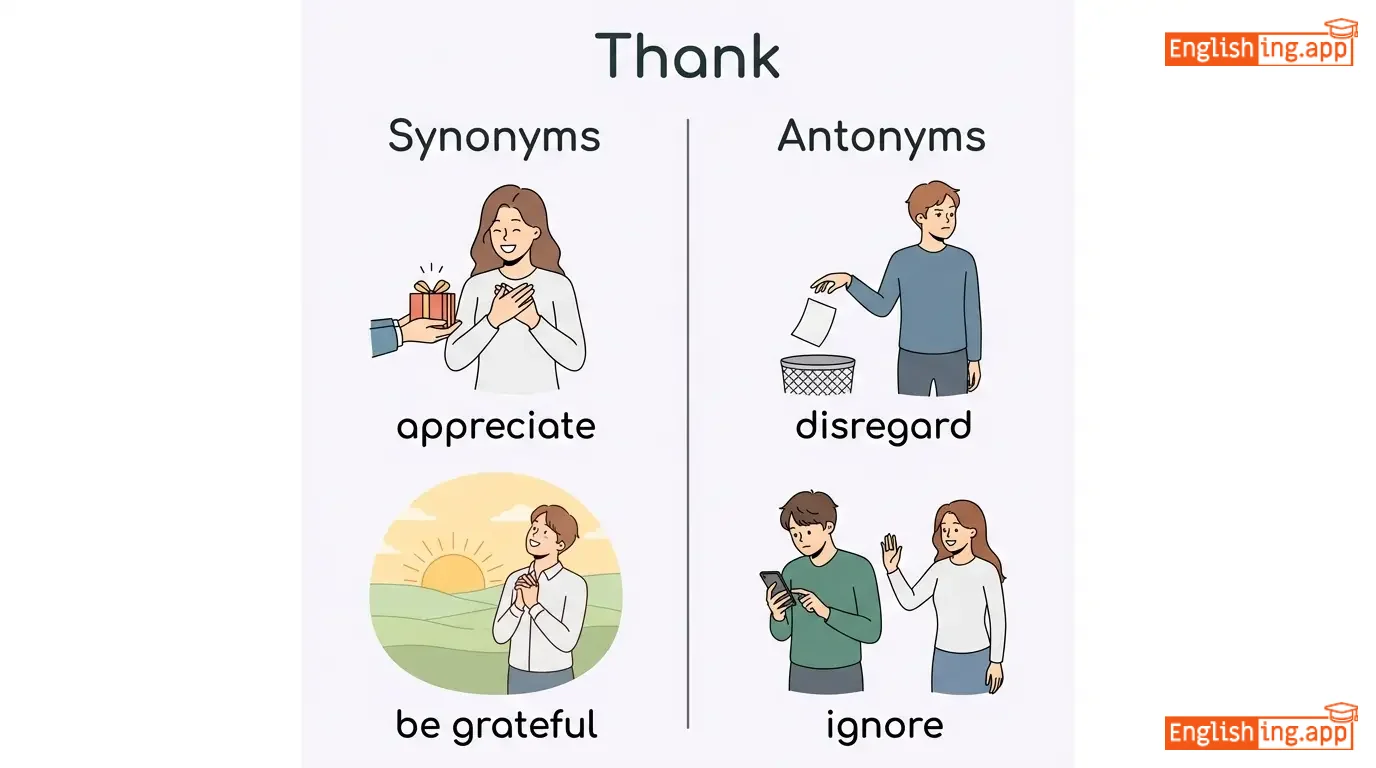
appreciate, be grateful, acknowledge, express thanks
••••••
|
disregard, ignore, neglect
••••••
|
thank you, thank someone, thank for, thanking you
••••••
|
Thank you for helping – 谢谢 (Xièxiè) for your kindness
••••••
|
|
🙏
••••••
|
/ˈθæŋkfəli/
adverb
(ˈθæŋkfəli)
••••••
|
- •••••• |
幸好
xing4 hao3
••••••
|
- •••••• | - •••••• | - •••••• | - •••••• |
used to express relief or gratitude
••••••
|
Thankfully, she arrived just in time for the meeting. |
幸好,她准时到达了会议。
Xing4 hao3, ta2 zhun3 shi2 dao4 da2 le hui4 yi.
••••••
|
- •••••• | - •••••• | - •••••• |
gratefully, luckily, fortunately, happily
••••••
|
unfortunately, regretfully
••••••
|
thankfully received, thankfully avoided, thankfully accepted
••••••
|
幸好,我以感恩的心态思考 (xing4 hao3, wo3 yi3 gan3 en1 de xin1 tai4 si1 kao3).
••••••
|
|
🙏
••••••
|
/θæŋks/
noun
(θæŋks)
••••••
|
- •••••• |
谢谢
xièxiè
••••••
|
- •••••• | - •••••• | - •••••• | - •••••• |
an expression of gratitude
••••••
|
Thanks for helping me with the project. |
谢谢你帮我做这个项目。
Xièxiè nǐ bāng wǒ zuò zhège xiàngmù.
••••••
|
- •••••• | - •••••• | - •••••• |
gratitude, appreciation, recognition, thanks-giving
••••••
|
ingratitude, ungratefulness
••••••
|
say thanks, give thanks, express thanks
••••••
|
谢谢代表感谢,就像‘thanks’一样。
••••••
|
|
👉
••••••
|
/ðæt/
pronoun
(ðæt)
••••••
|
- •••••• |
这个
zhège
••••••
|
- •••••• | - •••••• | - •••••• | - •••••• |
used to identify a specific person or thing observed or heard
••••••
|
That is my book on the table.
这是我桌子上的书。
••••••
|
这是我桌子上的书。
Zhè shì wǒ zhuōzi shàng de shū.
••••••
|
- •••••• | - •••••• | - •••••• |
this, it, the one
••••••
|
those, these
••••••
|
that book, that person, that idea
••••••
|
That - 这个 (Zhège) 是书在桌子上
••••••
|
|
🌞
••••••
|
/ðə/
article
••••••
|
- •••••• | - •••••• | - •••••• | - •••••• | - •••••• | - •••••• |
used to specify a noun as something already mentioned or known
••••••
|
The sun rises in the east. |
- •••••• | - •••••• | - •••••• | - •••••• |
this, that
••••••
|
- •••••• |
the best, the first, the last
••••••
|
No •••••• |
|
🎭
••••••
|
/ˈθiːətər/
noun
(剧院)
••••••
|
- •••••• |
剧院
juyuan
••••••
|
- •••••• | - •••••• | - •••••• | - •••••• |
a building or area for dramatic performances
••••••
|
We are going to the theater tonight. |
我们今晚要去剧院。
Wǒmen jīn wǎn yào qù jùyuàn.
••••••
|
- •••••• | - •••••• | - •••••• |
playhouse, cinema, auditorium
••••••
|
open-air, outdoor
••••••
|
movie theater, local theater, drama theater
••••••
|
剧院 - 你可以在那里看到戏剧的表演
••••••
|
|
🎭
••••••
|
/θiˈætrɪkl/
adjective
(tiè tǔ rì kǎo)
••••••
|
- •••••• |
戏剧的
xijude
••••••
|
- •••••• | - •••••• | - •••••• | - •••••• |
Relating to the theater or exaggerated and dramatic in behavior or style.
••••••
|
Her theatrical performance won the audience's applause.
她的戏剧表演赢得了观众的掌声。
••••••
|
她的戏剧表演赢得了观众的掌声。
Ta de xiju biaoyan yingde le guanzhong de zhangsheng.
••••••
|
make a theatrical scene
做一个戏剧性的场景
••••••
|
to act dramatically in an exaggerated way
••••••
|
做一个戏剧性的场景
zuo yige xijuxing de changjing
••••••
|
dramatic, exaggerated, showy, stage-like, flamboyant
••••••
|
subtle, natural, modest
••••••
|
theatrical performance, theatrical gesture, theatrical costume, theatrical style
••••••
|
戏剧 → 戏剧性的表示戏剧化
••••••
|
|
💼
••••••
|
/θɛft/
noun
(thèft)
••••••
|
- •••••• |
偷竊
tōu qiè
••••••
|
- •••••• | - •••••• | - •••••• | - •••••• |
the action or crime of stealing
••••••
|
The theft of his wallet was reported to the police.
他的錢包被報告給警方。
••••••
|
他的錢包被報告給警方。
Tā de qiánbāo bèi bàogào gěi jǐngfāng.
••••••
|
- •••••• | - •••••• | - •••••• |
burglary, robbery, larceny, stealing
••••••
|
honesty, integrity
••••••
|
committed theft, petty theft, reported theft
••••••
|
Tōu qiè for theft - In tōu qiè, yī bǎ dao (knife) shǐyòng lái tōu.
••••••
|
|
👨👩👧👦
••••••
|
/ðɛər/
pronoun
(ðɛər)
••••••
|
- •••••• |
他们的
tāmen de
••••••
|
- •••••• | - •••••• | - •••••• | - •••••• |
belonging to or associated with the people or things previously mentioned
••••••
|
Their house is on the corner. |
他们的房子在角落里。
Tāmen de fángzi zài jiǎoluò lǐ.
••••••
|
- •••••• | - •••••• | - •••••• |
his, her, its
••••••
|
my, your
••••••
|
their car, their family, their opinion
••••••
|
Their - 他们的房子
••••••
|
|
👥
••••••
|
/ðɛərz/
pronoun
(泽尔斯)
••••••
|
- •••••• |
他们的
tamen de
••••••
|
- •••••• | - •••••• | - •••••• | - •••••• |
belonging to them; that which is theirs
••••••
|
This book is theirs, not ours.
这本书是他们的,不是我们的。
••••••
|
这本书是他们的,不是我们的。
Zhe ben shu shi tamen de, bu shi women de.
••••••
|
- •••••• | - •••••• | - •••••• |
belonging to them, theirs alone, their property, their possession
••••••
|
ours, mine
••••••
|
all theirs, entirely theirs, rightfully theirs
••••••
|
'tamen de' = theirs, remember 'ta' for they.
••••••
|
|
👥
••••••
|
/ðɛm/
pronoun
(ðɛm)
••••••
|
- •••••• |
他们
tāmen
••••••
|
- •••••• | - •••••• | - •••••• | - •••••• |
used to refer to people or things previously mentioned or easily identified
••••••
|
I saw them at the park yesterday. |
我昨天在公园看到了他们。
Wǒ zuótiān zài gōngyuán kàn dào le tāmen.
••••••
|
- •••••• | - •••••• | - •••••• |
they, those, these
••••••
|
none
••••••
|
see them, tell them, help them
••••••
|
他们 (them) 总是跟我们在一起!
••••••
|
|
🎨
••••••
|
/θiːm/
noun
(主题)
••••••
|
|
主题
zhuti
••••••
|
- •••••• | - •••••• | - •••••• | - •••••• |
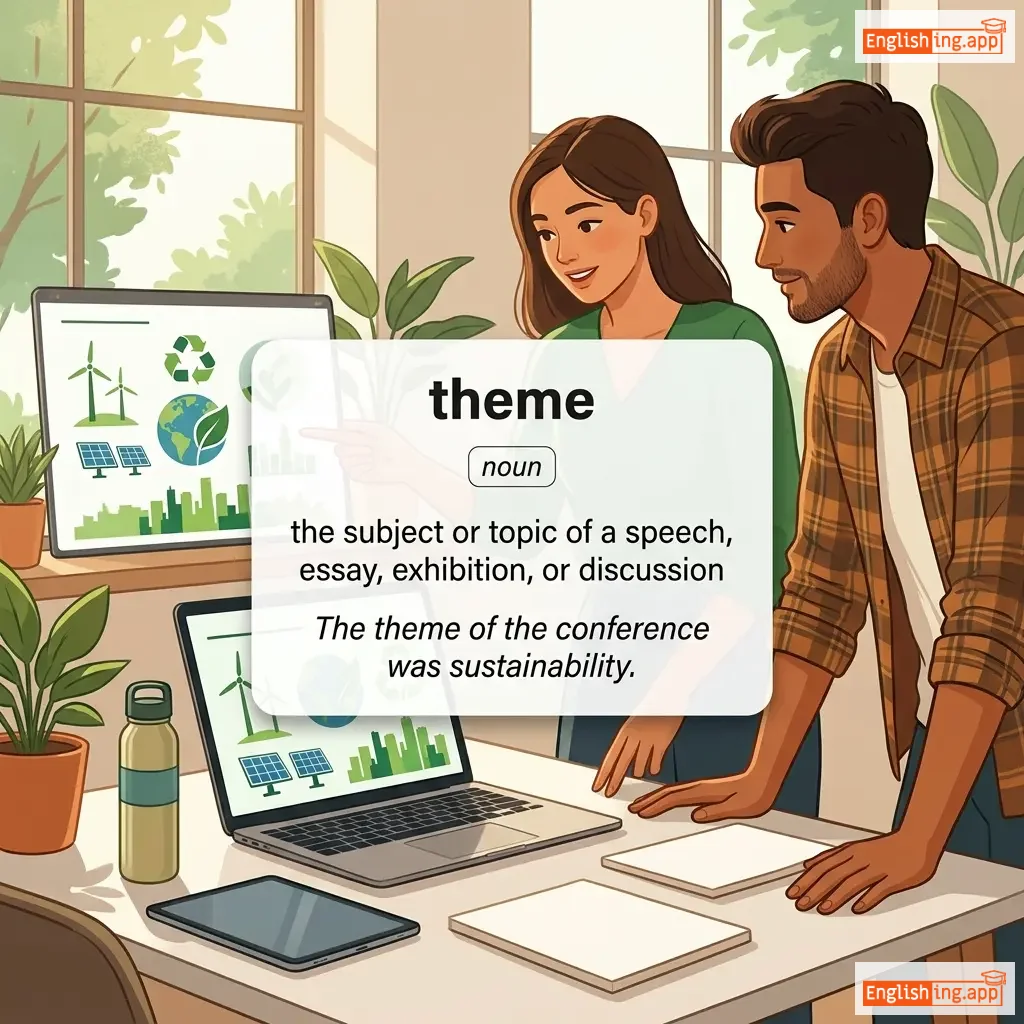
the subject or topic of a speech, essay, exhibition, or discussion
••••••
|
The theme of the conference was sustainability. |
会议的主题是可持续性。
Huiyi de zhuti shi kexu xing.
••••••
|
- •••••• | - •••••• | - •••••• |
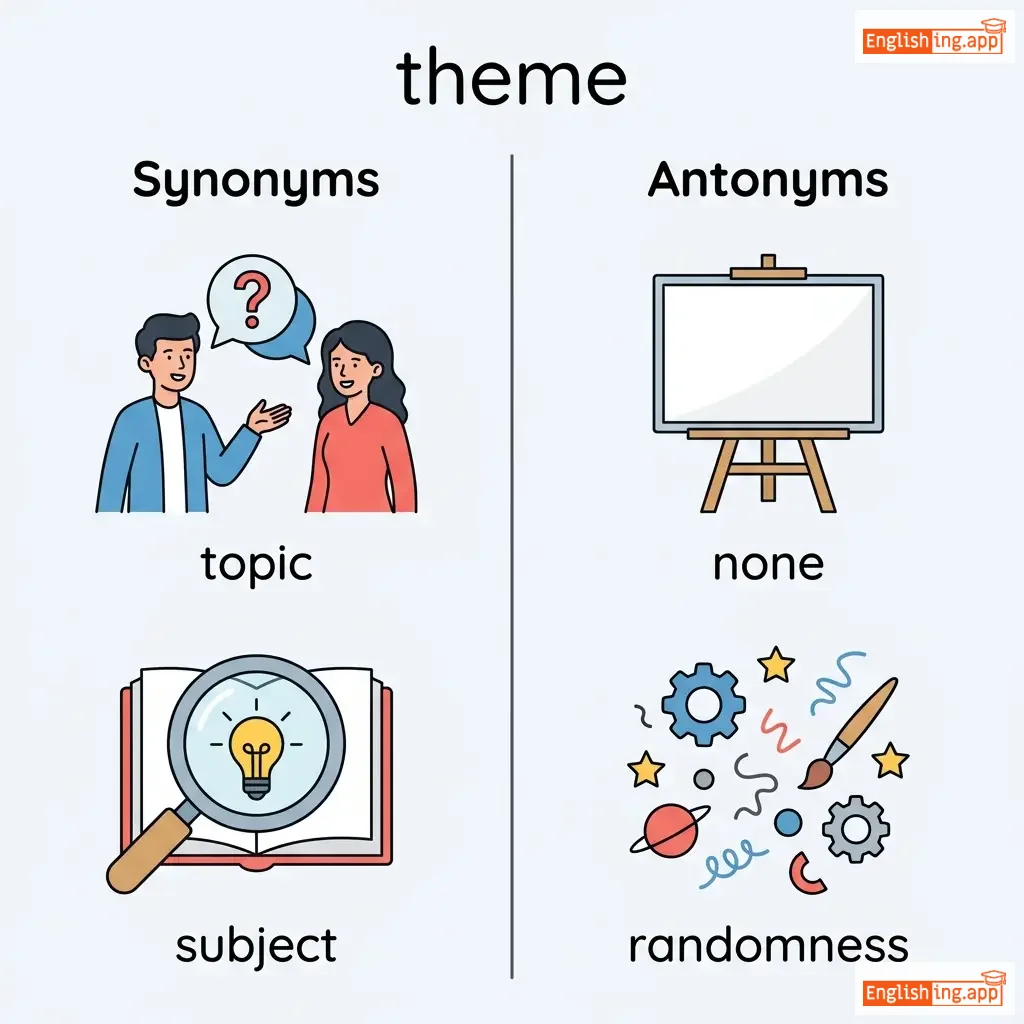
topic, subject, motif, idea
••••••
|
none
••••••
|
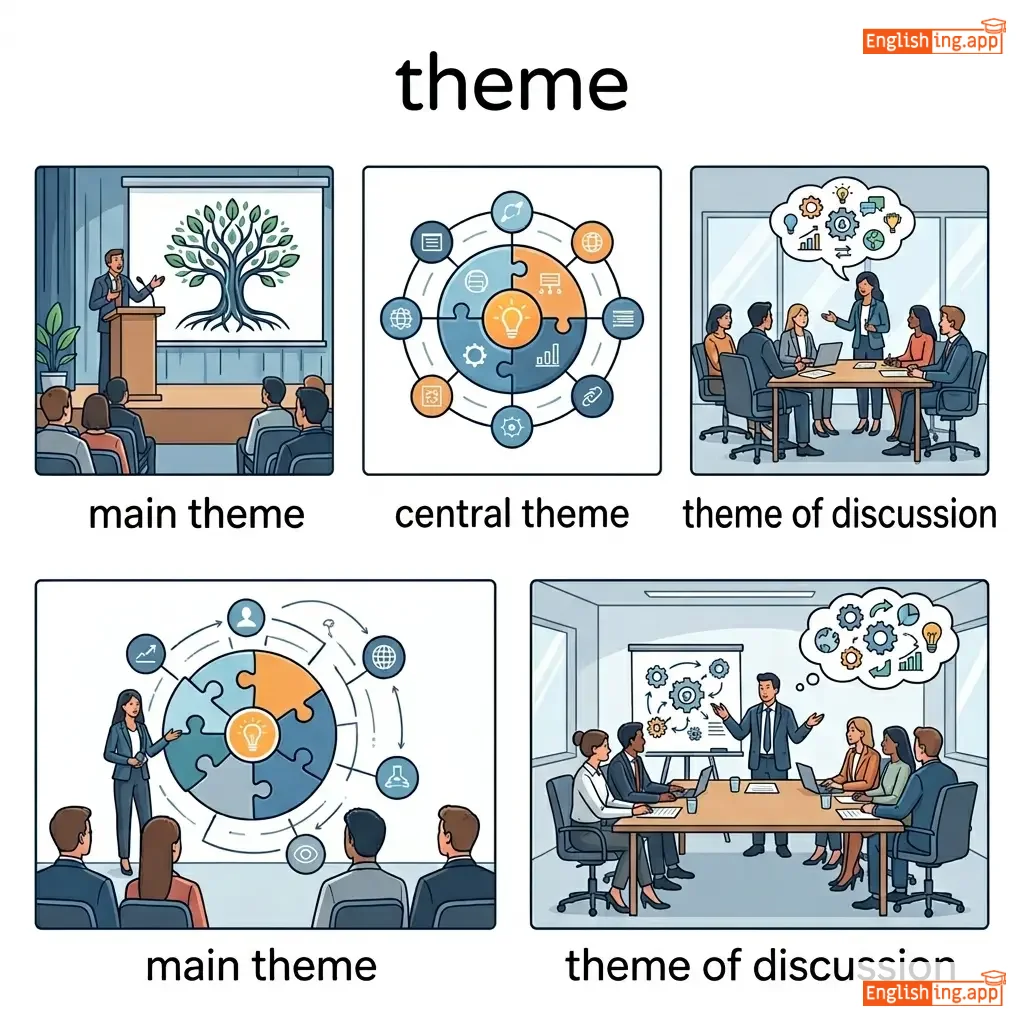
main theme, central theme, theme of discussion
••••••
|
主题 (zhuti) 是演讲的核心
••••••
|

