|
表情符号
|
单词 | Images | 翻译 | 过去时 | 过去分词 | 第三人称单数 | 动名词 | 含义 | 例句 | 例句翻译 | 示例表达 | 示例表达含义 | 示例表达翻译 | 同义词 | 反义词 | 搭配词 | 助记符 |
|---|---|---|---|---|---|---|---|---|---|---|---|---|---|---|---|---|---|
|
🛠️
••••••
|
/ˌmɒdɪfɪˈkeɪʃən/
noun
(修改)
••••••
|


|
修改
xiūgǎi
••••••
|
- •••••• | - •••••• | - •••••• | - •••••• |
the act or process of changing or altering something slightly
••••••
|
The architect suggested a modification to the design. |
建筑师建议对设计进行修改。
Jiànzhú shī jiànyì duì shèjì jìnxíng xiūgǎi.
••••••
|
- •••••• | - •••••• | - •••••• |
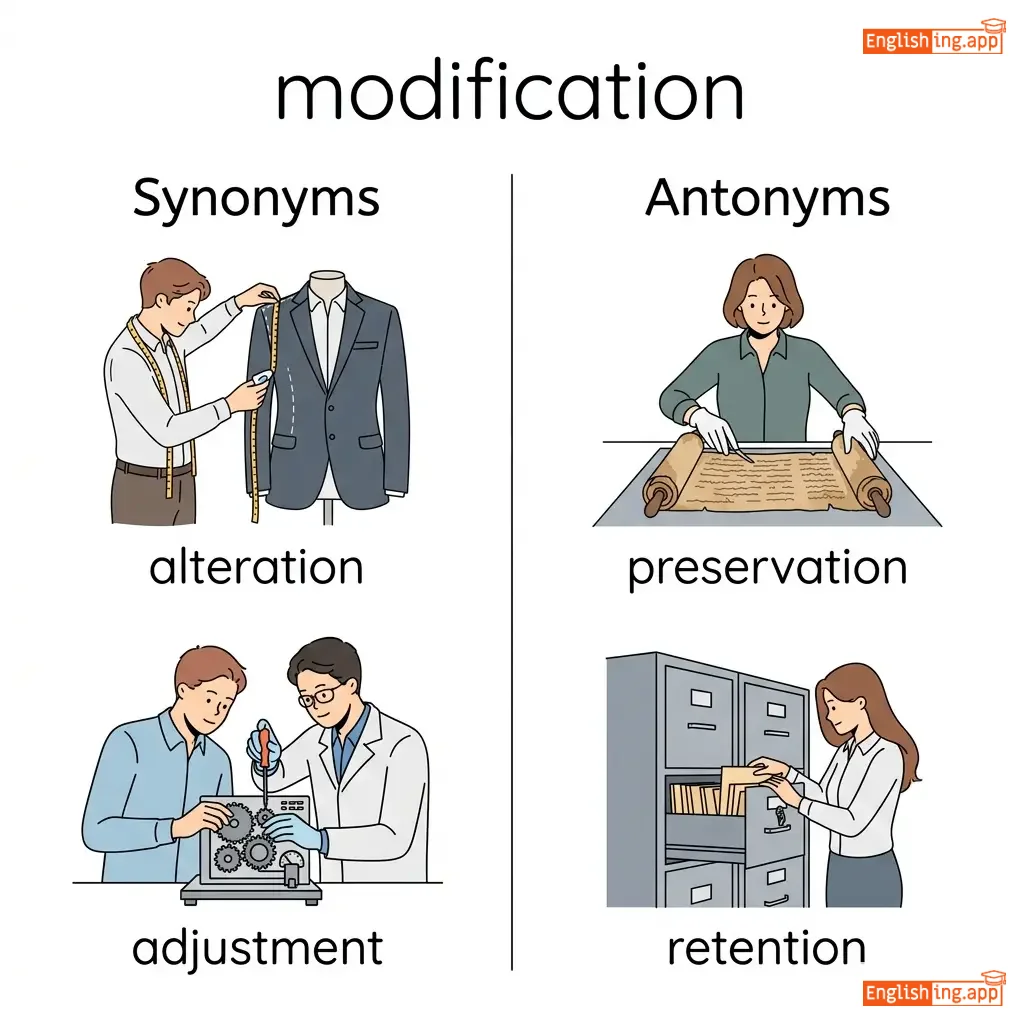
alteration, adjustment, amendment, variation, revision
••••••
|
preservation, retention
••••••
|
make a modification, design modification, slight modification
••••••
|
Modification 意味着稍微改变模型 – 修改
••••••
|
|
✏️
••••••
|
/ˈmɒdɪfaɪər/
noun
(莫迪法爱儿)
••••••
|
- •••••• |
修饰语
xiushi yu
••••••
|
- •••••• | - •••••• | - •••••• | - •••••• |
a word or element that changes, limits, or describes the meaning of another word; something that alters or adjusts
••••••
|
In the phrase 'very cold', 'very' is a modifier of 'cold'.
在短语 very cold 中,very 是 cold 的 modifier。
••••••
|
在短语“very cold”中,“very”是“cold”的修饰语。
zai duanyu very cold zhong very shi cold de xiushi yu
••••••
|
- •••••• | - •••••• | - •••••• |
alterer, adapter, qualifier, modulator, adjuster
••••••
|
head, base, core
••••••
|
adjective modifier, noun modifier, degree modifier, grammatical modifier
••••••
|
Modify 改变 → 修饰语 改变词义。
••••••
|
|
🔧
••••••
|
/ˈmɑːdɪfaɪ/
verb
(mó dì fāi)
••••••
|

|
修改
xiūgǎi
••••••
|
modified
mó dì fāi dé
••••••
|
modified
mó dì fāi dé
••••••
|
modifies
mó dì fāi
••••••
|
modifying
mó dì fāi zhōng
••••••
|
to change or alter something; to make partial changes
••••••
|
We need to modify the plan to include more details.
我们需要修改计划以包括更多细节。
••••••
|
我们需要修改计划以包括更多细节。
Wǒmen xūyào xiūgǎi jìhuà yǐ bāokuò gèng duō xìjié.
••••••
|
- •••••• | - •••••• | - •••••• |
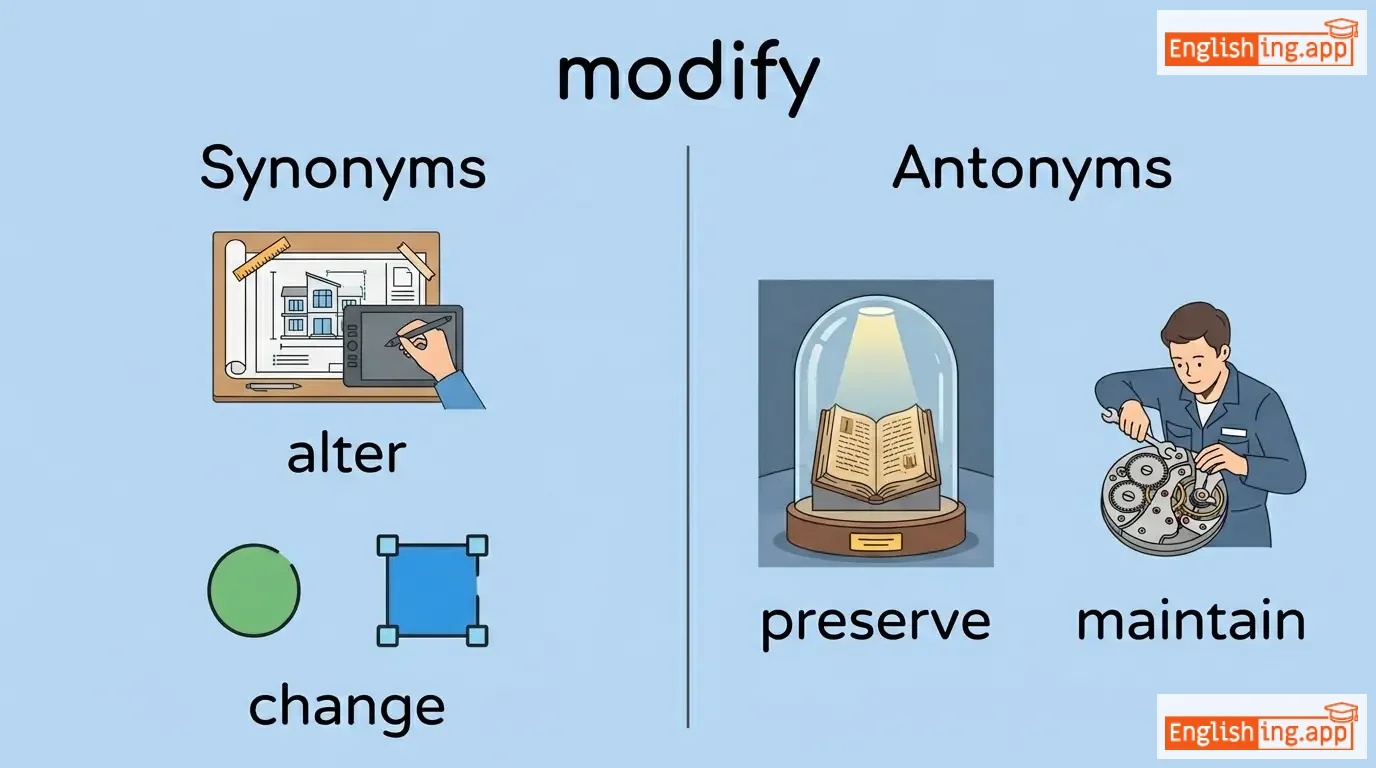
change, alter, adjust, revise, update
••••••
|
maintain, preserve, keep unchanged
••••••
|
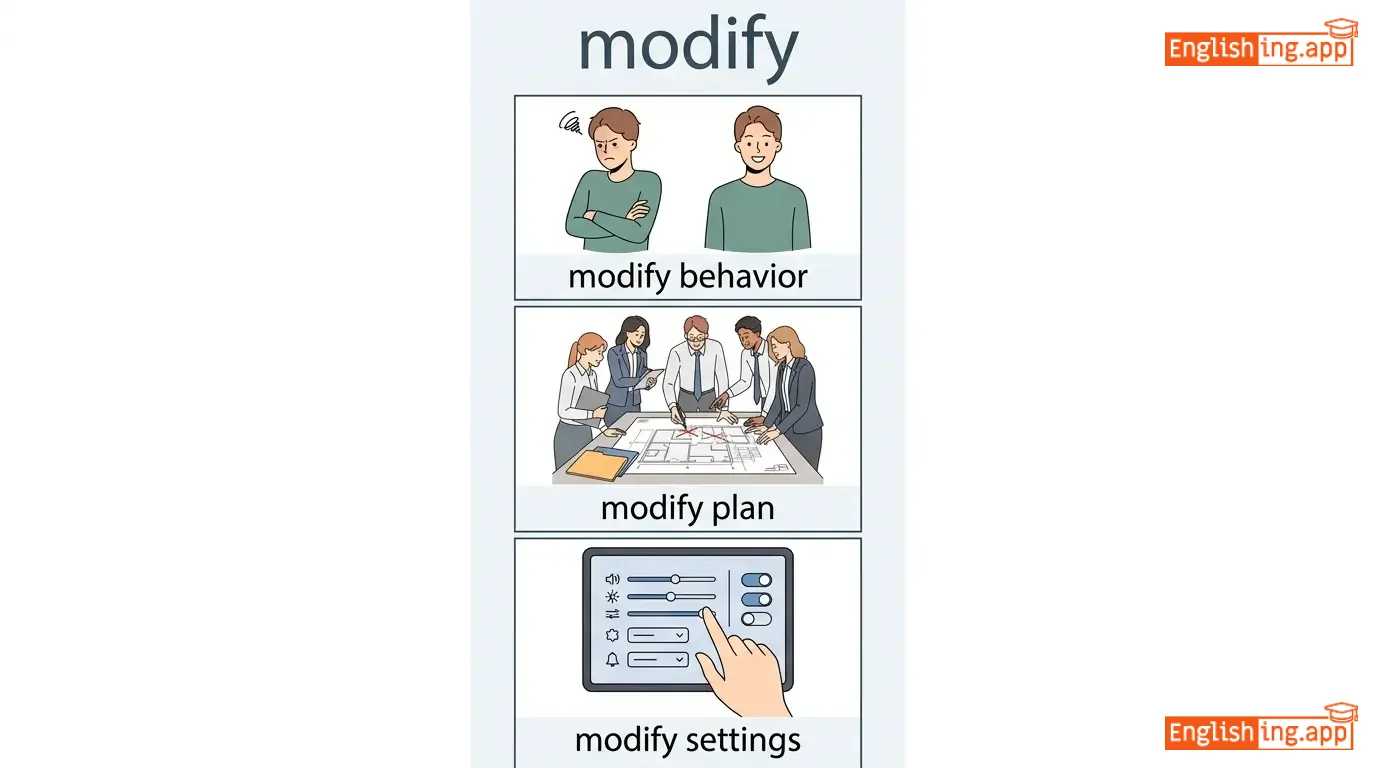
modify slightly, modify plans, modify behavior, modify settings, heavily modified
••••••
|
Chinese-English mnemonic: '修改计划以加入细节' ('modify the plan to include details')
••••••
|
|
👩👧
••••••
|
/mɑːm/
noun
(妈妈)
••••••
|
- •••••• |
妈妈
mama
••••••
|
- •••••• | - •••••• | - •••••• | - •••••• |
an informal word for mother
••••••
|
My mom makes the best homemade food. |
我妈妈做的家常菜最好吃。
Wo mama zuo de jiachang cai zui hao chi.
••••••
|
mom and pop |
a small family-owned business
••••••
|
妈妈和爸爸
mama he baba
••••••
|
mother, mama, mum, mommy, ma
••••••
|
father, dad
••••••
|
mom said, new mom, working mom, mom and dad
••••••
|
妈妈,是温暖的港湾。
••••••
|
|
⏳
••••••
|
/ˈmoʊmənt/
noun
(莫门特)
••••••
|
- •••••• |
瞬间
shun jian
••••••
|
- •••••• | - •••••• | - •••••• | - •••••• |
A very short period of time; a particular point in time.
••••••
|
She paused for a moment before answering.
她在回答之前停顿了片刻。
••••••
|
她在回答之前停顿了片刻。
Ta zai huida zhiqian tingdun le pianke.
••••••
|
in the moment
此刻
••••••
|
Focusing entirely on the present situation.
••••••
|
此刻
ci ke
••••••
|
instant, second, minute, occasion, time
••••••
|
eternity, forever
••••••
|
at the moment, right moment, special moment, memorable moment
••••••
|
Moment 就是瞬间 – 每个瞬间的记忆都值得珍惜。
••••••
|
|
🏃
••••••
|
/moʊˈmɛntəm/
noun
••••••
|
|
- •••••• | - •••••• | - •••••• | - •••••• | - •••••• |
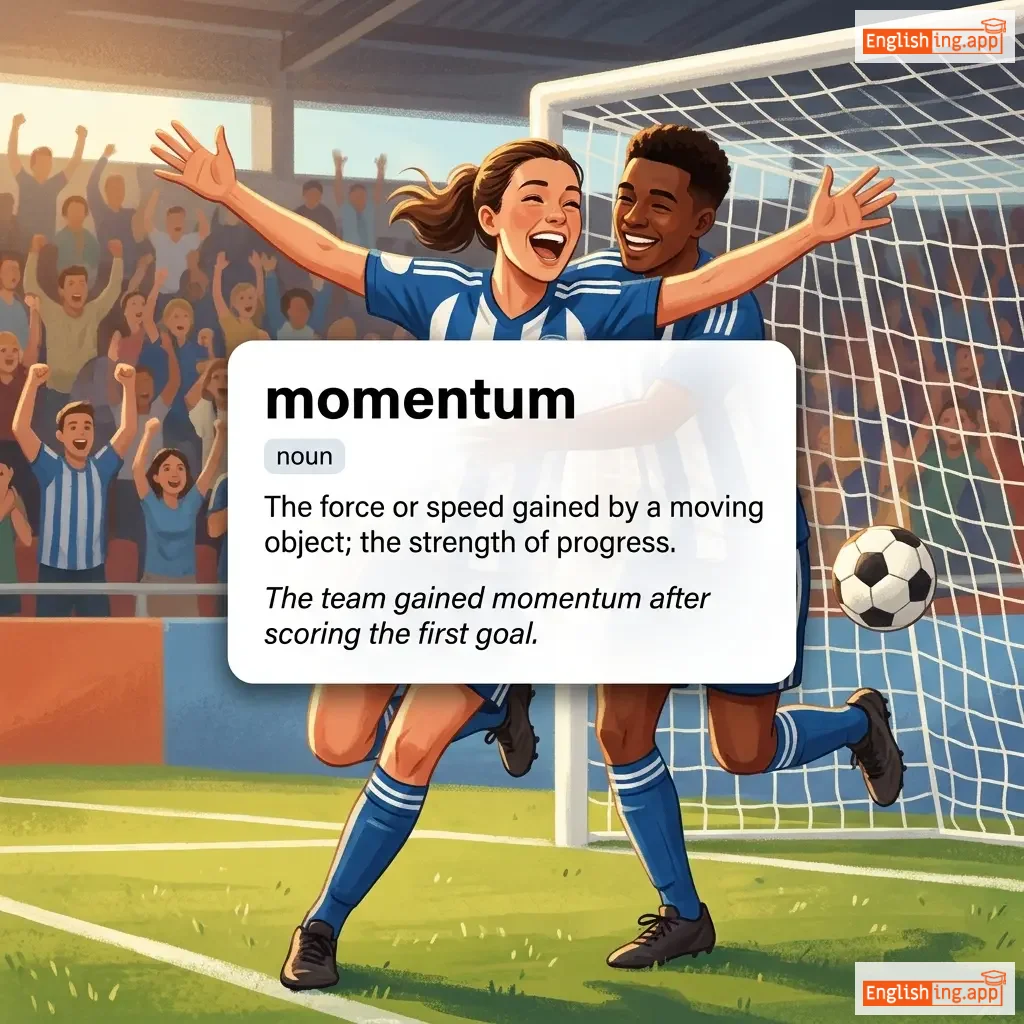
The force or speed gained by a moving object; the strength of progress.
••••••
|
The team gained momentum after scoring the first goal. |
- •••••• |
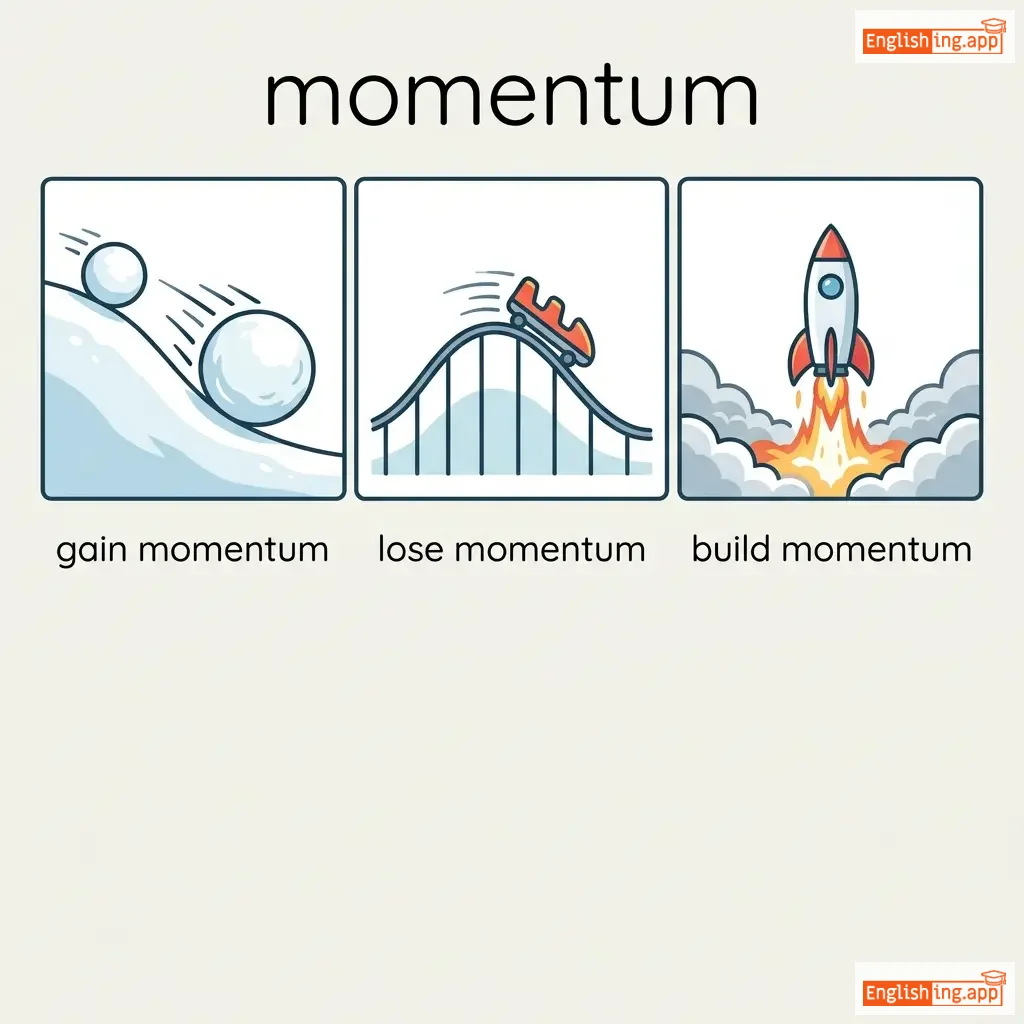
gain momentum |
To gather speed, strength, or progress.
••••••
|
- •••••• |
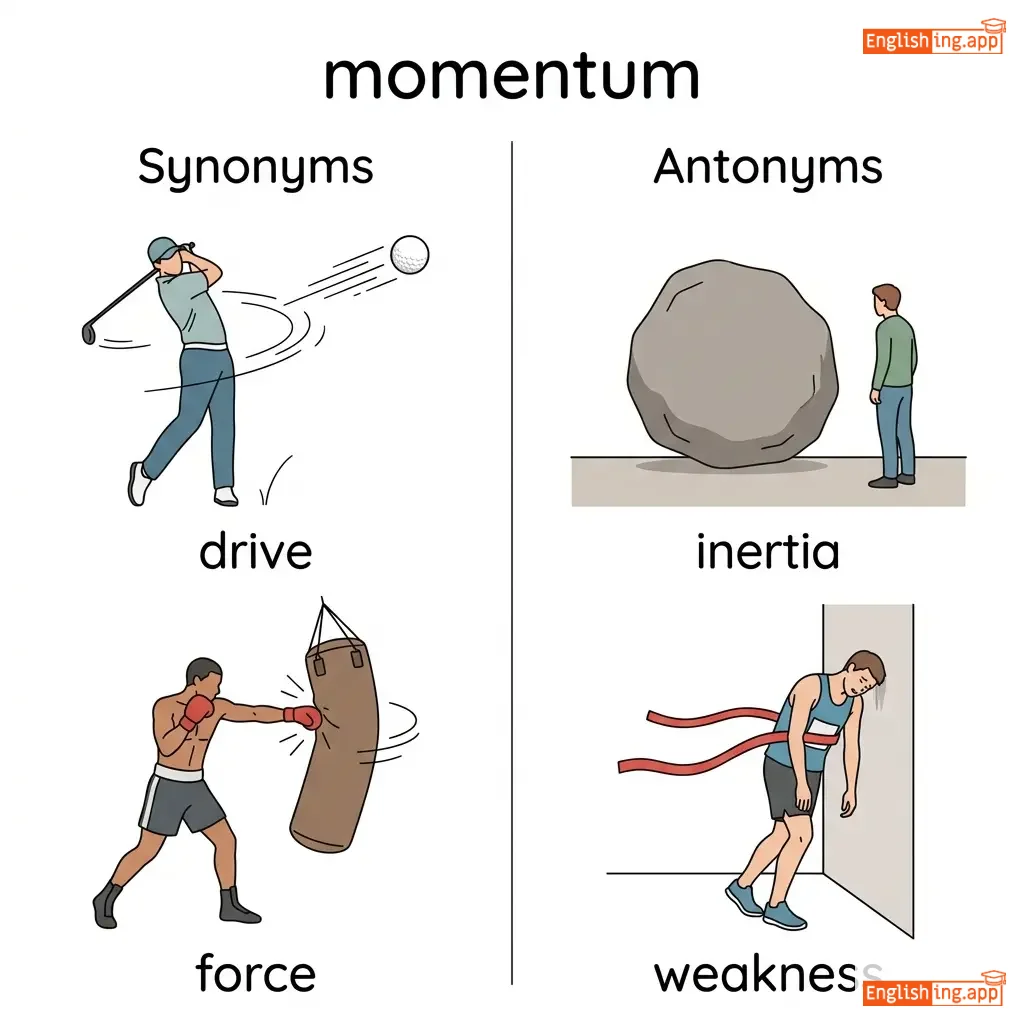
drive, force, power, impetus, thrust
••••••
|
inertia, weakness
••••••
|
gain momentum, lose momentum, build momentum, maintain momentum
••••••
|
No •••••• |
|
📅
••••••
|
/ˈmʌn.deɪ/
noun
(曼戴)
••••••
|
- •••••• |
星期一
xingqi yi
••••••
|
- •••••• | - •••••• | - •••••• | - •••••• |
the first day of the working week following Sunday
••••••
|
I start my new job on Monday.
艾 斯塔特 麦 纽 作布 昂 曼戴。
••••••
|
我星期一开始新工作。
wo xingqi yi kaishi xin gongzuo
••••••
|
Monday blues
周一忧郁
••••••
|
a feeling of sadness or lack of energy at the start of the work week
••••••
|
周一忧郁
zhou yi youyu
••••••
|
weekday start, first workday, week opener, start of the week
••••••
|
Sunday, weekend
••••••
|
next Monday, last Monday, Monday morning, on Monday
••••••
|
星期一 = 新周一开始
••••••
|
|
💰
••••••
|
/ˈmʌni/
noun
(happiness)
••••••
|
- •••••• |
幸福
xìngfú
••••••
|
- •••••• | - •••••• | - •••••• | - •••••• |
A medium of exchange in the form of coins and banknotes; wealth or financial resources.
••••••
|
He saved enough money to buy a new car. |
她在收到奖项时无法掩饰她的幸福。
Tā zài shōudào jiǎngxiàng shí wúfǎ yǎnshì tā de xìngfú.
••••••
|
money talks |
Wealth has great influence or power.
••••••
|
追求幸福
zhuīqiú xìngfú
••••••
|
cash, currency, funds, capital, wealth
••••••
|
poverty, debt
••••••
|
make money, save money, spend money, invest money
••••••
|
幸福就像是一朵盛开的花。
••••••
|
|
🖥️
••••••
|
/ˈmɒnɪtər/
noun, verb
(显示器)
••••••
|
- •••••• |
监视器,观察
jiānshìqì, guānchá
••••••
|
monitored
监控
••••••
|
monitored
监控
••••••
|
monitors
监控
••••••
|
monitoring
监控
••••••
|
to observe and check the progress or quality of something; also a device that displays information
••••••
|
The teacher monitors the students during the exam.
老师在考试期间监控学生。
••••••
|
老师在考试期间监控学生。
Lǎoshī zài kǎoshì qījiān jiānkòng xuéshēng.
••••••
|
keep a close monitor
保持密切监控
••••••
|
to watch carefully
••••••
|
保持仔细观察
bǎochí zǐxì guānchá
••••••
|
observe, watch, track, oversee, supervise
••••••
|
ignore, neglect
••••••
|
monitor progress, monitor performance, monitor screen, monitor activity
••••••
|
监视器就是监控,用心观察
••••••
|
|
🧘♂️
••••••
|
/mʌŋk/
noun
(mʌŋk)
••••••
|
- •••••• |
僧侣
sēnglǚ
••••••
|
- •••••• | - •••••• | - •••••• | - •••••• |
a man who is a member of a religious community living under vows
••••••
|
The monk spent hours in meditation each day.
那位僧侣每天花几个小时冥想。
••••••
|
那位僧侣每天花几个小时冥想。
Nà wèi sēnglǚ měitiān huā jǐ gè xiǎoshí míngxiǎng.
••••••
|
- •••••• | - •••••• | - •••••• |
friar, religious, ascetic, hermit
••••••
|
layperson, secular person
••••••
|
Buddhist monk, Christian monk, monastery monk
••••••
|
僧侣 (Senglü) = 冥想 (Meditation) 和 誓言 (Vow)
••••••
|
|
🏦
••••••
|
/məˈnɒpəli/
noun
••••••
|

|
- •••••• | - •••••• | - •••••• | - •••••• | - •••••• |
Exclusive control over a market, product, or service.
••••••
|
The company gained a monopoly over the mobile phone industry. |
- •••••• |
hold a monopoly |
To have complete control over a product, service, or market.
••••••
|
- •••••• |
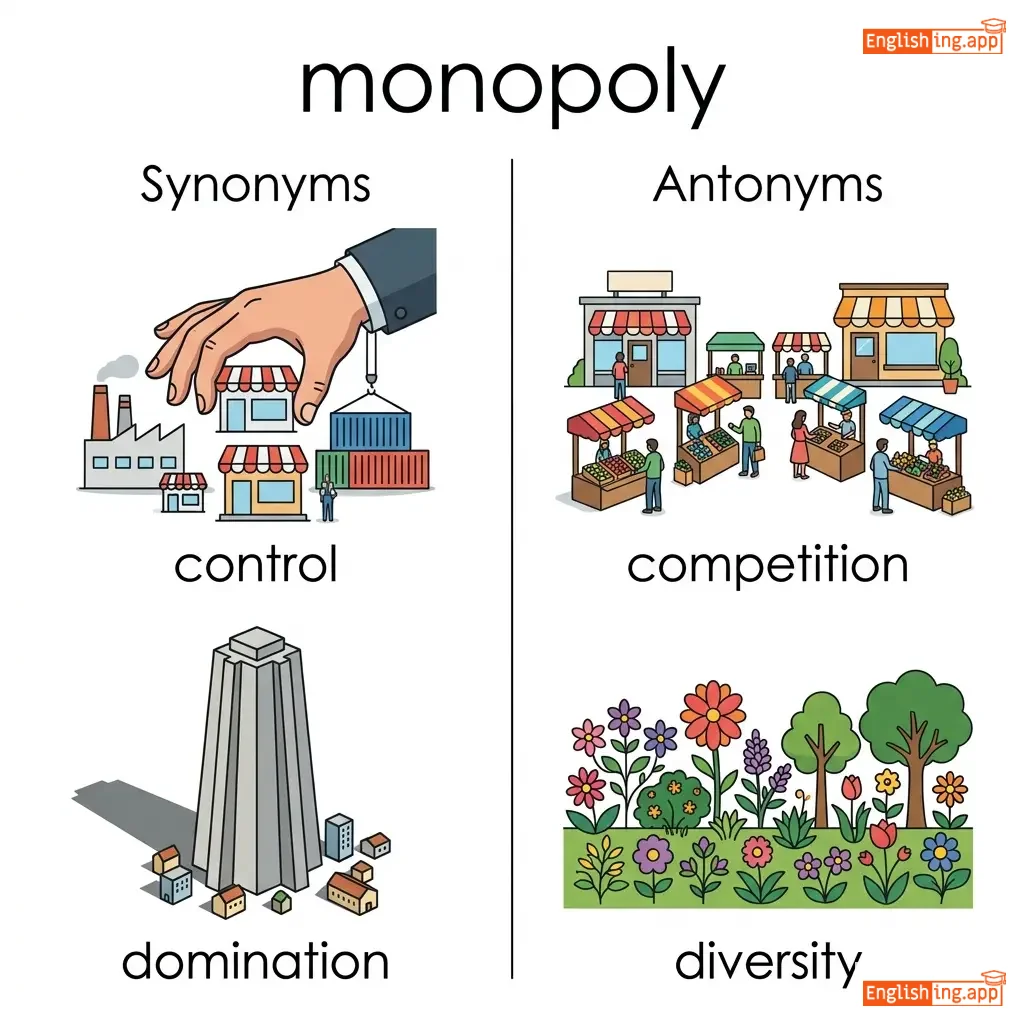
control, domination, exclusivity, cartel, ownership
••••••
|
competition, diversity
••••••
|
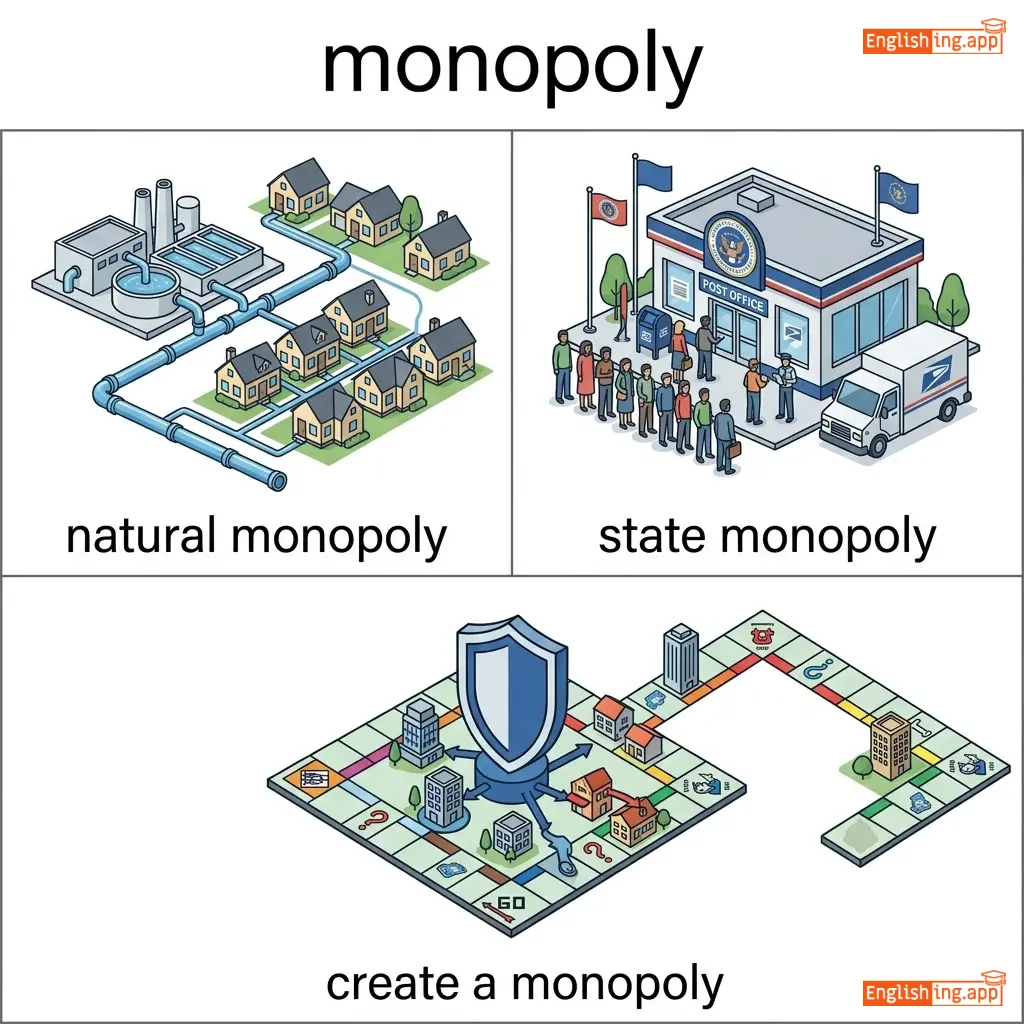
natural monopoly, state monopoly, create a monopoly
••••••
|
No •••••• |
|
👹
••••••
|
/ˈmɒnstər/
noun
(happiness)
••••••
|
- •••••• |
幸福
xìngfú
••••••
|
- •••••• | - •••••• | - •••••• | - •••••• |
an imaginary or large frightening creature
••••••
|
The child was afraid that a monster was hiding under the bed.
她无法隐藏自己得到奖项时的快乐。
••••••
|
她无法隐藏自己得到奖项时的快乐。
Tā wúfǎ yǐncáng zìjǐ dédào jiǎngxiàng shí de kuàilè.
••••••
|
monster hit
追求幸福
••••••
|
a very successful or popular product or show
••••••
|
追求幸福
zhuīqiú xìngfú
••••••
|
beast, creature, giant, demon, ogre
••••••
|
angel, human, friend
••••••
|
monster movie, sea monster, create a monster, monster hit
••••••
|
幸福 = Happiness — 永远追求幸福!
••••••
|
|
🗓️
••••••
|
/mʌnθ/
noun
(月)
••••••
|
- •••••• |
月
yue
••••••
|
- •••••• | - •••••• | - •••••• | - •••••• |
a period of about four weeks or one-twelfth of a year
••••••
|
She visits her grandparents once a month. |
她每个月都会去看祖父母一次。
Ta mei ge yue dou hui qu kan zufu mu yici.
••••••
|
flavor of the month |
something that is temporarily popular
••••••
|
本月风味
ben yue feng wei
••••••
|
thirty days, period, lunar month
••••••
|
year, day
••••••
|
next month, this month, per month, monthly payment
••••••
|
月意味着月 - 每个月,新的月
••••••
|
|
📅
••••••
|
/ˈmʌnθli/
adjective
(mænθli)
••••••
|
- •••••• |
每月的
měi yuè de
••••••
|
- •••••• | - •••••• | - •••••• | - •••••• |
happening, done, or published once a month
••••••
|
Employees receive their salary on a monthly basis. |
员工每月领取工资。
Yuángōng měi yuè lǐngqǔ gōngzī.
••••••
|
monthly report |
a report produced every month
••••••
|
月度报告
yuè dù bào gào
••••••
|
every month, periodic, regular, monthly-based
••••••
|
daily, weekly, yearly
••••••
|
monthly payment, monthly report, monthly meeting, monthly subscription
••••••
|
每月的意思是每个月 — 记住'月'!
••••••
|
|
🗿
••••••
|
/ˈmɒnjumənt/
noun
••••••
|
|
- •••••• | - •••••• | - •••••• | - •••••• | - •••••• |
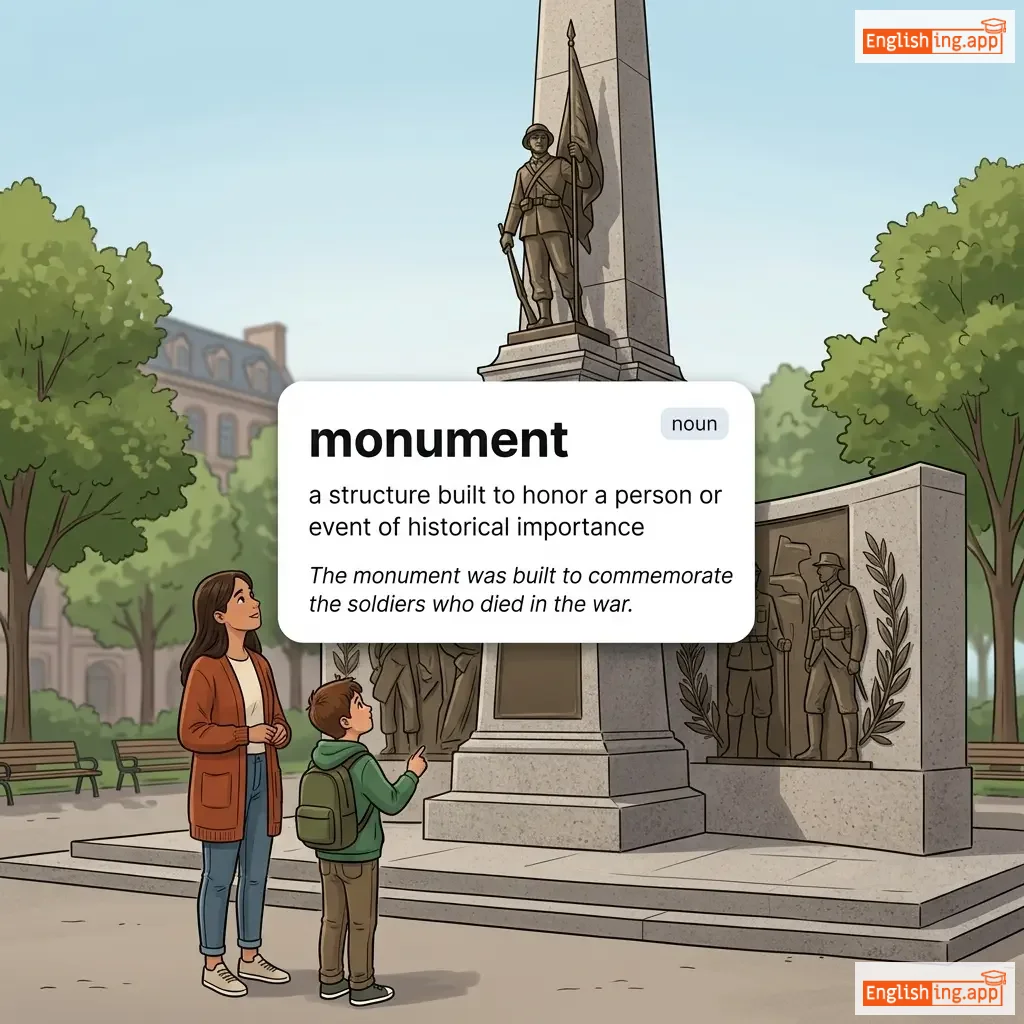
a structure built to honor a person or event of historical importance
••••••
|
The monument was built to commemorate the soldiers who died in the war. |
- •••••• |
stand as a monument to |
to serve as a lasting reminder or tribute to someone or something
••••••
|
- •••••• |
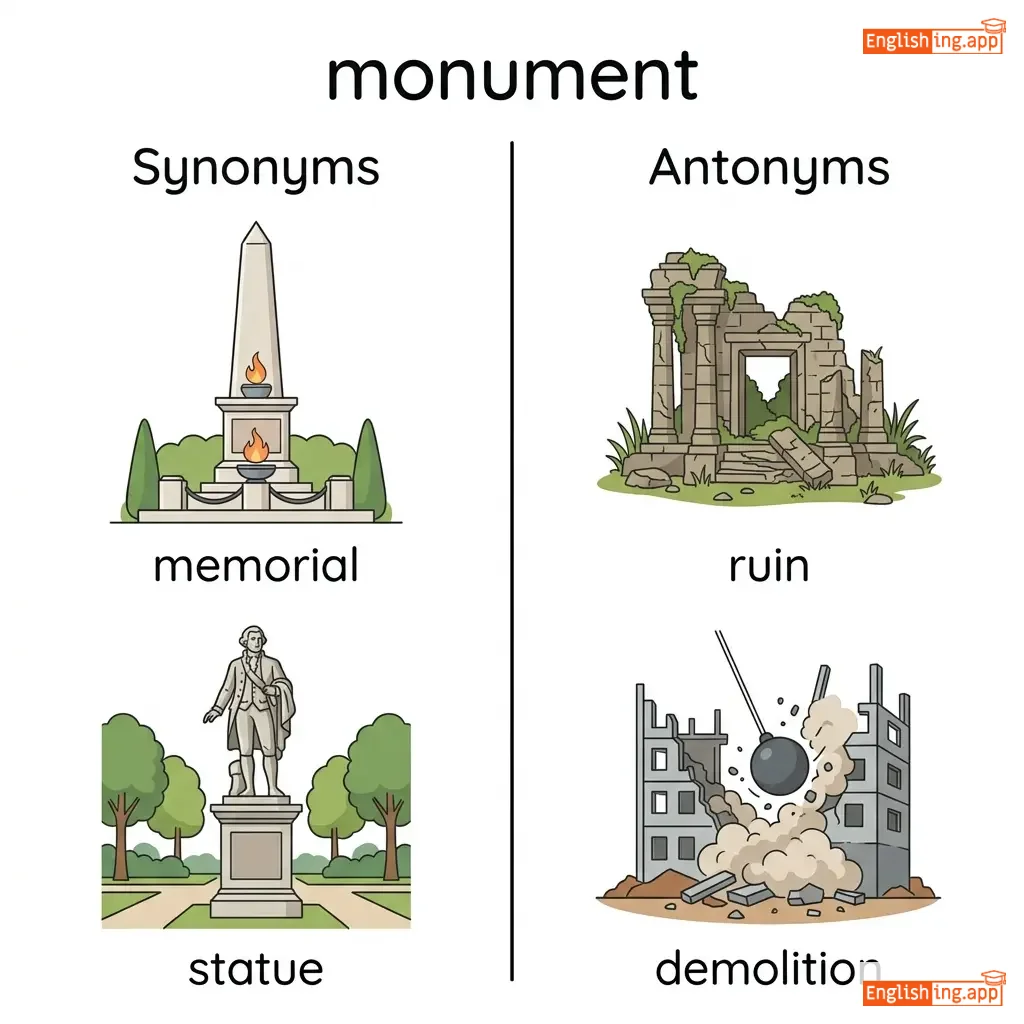
memorial, statue, shrine, landmark, pillar
••••••
|
ruin, demolition, destruction
••••••
|
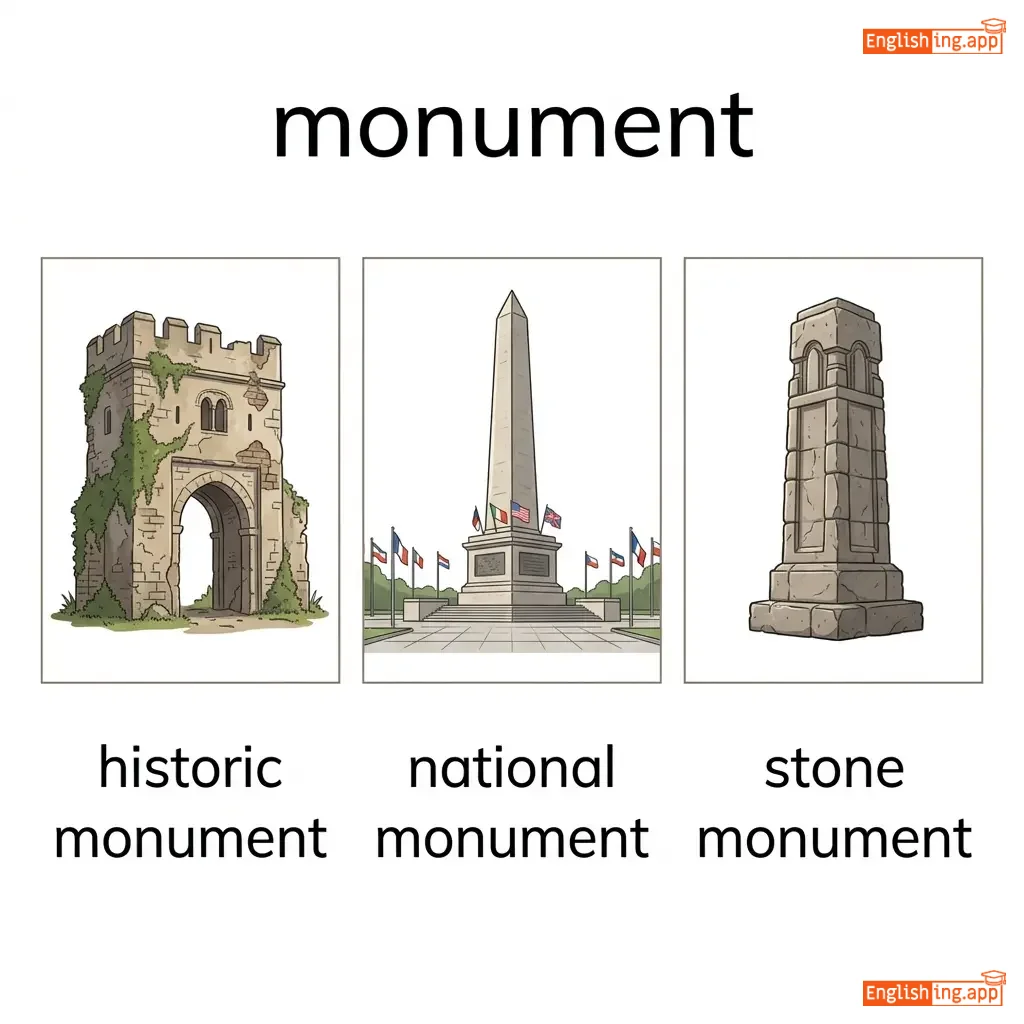
historic monument, national monument, stone monument, ancient monument
••••••
|
No •••••• |
|
😊
••••••
|
/muːd/
noun
(穆德)
••••••
|
- •••••• |
心情
xinqing
••••••
|
- •••••• | - •••••• | - •••••• | - •••••• |
a temporary state of mind or feeling
••••••
|
He was in a good mood after getting the job.
他在得到工作后心情愉快。
••••••
|
他在得到工作后心情愉快。
Tā zài dédào gōngzuò hòu xīnqíng yúkuài.
••••••
|
in the mood
心情
••••••
|
ready or willing to do something
••••••
|
心情
xinqing
••••••
|
feeling, temperament, emotion, attitude, spirit
••••••
|
apathy, indifference
••••••
|
good mood, bad mood, mood swing, change mood
••••••
|
心情就像Mood,有时开心有时生气!
••••••
|
|
🌕
••••••
|
/muːn/
noun
(mūn)
••••••
|
- •••••• |
月亮
yueliang
••••••
|
- •••••• | - •••••• | - •••••• | - •••••• |
the natural satellite of the earth, visible mainly at night by reflected light from the sun
••••••
|
The moon shines brightly in the night sky.
月亮在夜空中明亮地闪耀。
••••••
|
月亮在夜空中明亮地闪耀。
Yueliang zai yekong zhong mingliang di shanyao.
••••••
|
once in a blue moon
蓝月亮时
••••••
|
something that happens very rarely
••••••
|
蓝月亮时
lan yueliang shi
••••••
|
satellite, orb, crescent, full moon
••••••
|
sun, darkness
••••••
|
full moon, new moon, moonlight, moon surface
••••••
|
月亮 = Moon - 月亮在夜空中闪耀,像一面镜子
••••••
|
|
📖
••••••
|
/ˈmɔːrəl/
adjective, noun
(莫拉尔)
••••••
|
- •••••• |
道德
daode
••••••
|
- •••••• | - •••••• | - •••••• | - •••••• |
Adjective: concerned with principles of right and wrong. Noun: a lesson about right and wrong from a story or experience.
••••••
|
The moral of the story is that honesty is the best policy. |
这个故事的道德是诚实为上策。
Zhège gùshì de dàodé shì chéngshí wéi shàngcè.
••••••
|
moral of the story |
The lesson that can be learned from an event or tale.
••••••
|
故事的道德
Gùshì de dàodé
••••••
|
ethical, virtuous, lesson, righteous
••••••
|
immoral, unethical
••••••
|
moral values, moral lesson, moral obligation
••••••
|
Moral意味着道德教训 - 就像故事中的道德教训。
••••••
|
|
⚖️
••••••
|
/məˈrælɪti/
noun
(mó rǎ lì tè)
••••••
|
- •••••• |
道德
daode
••••••
|
- •••••• | - •••••• | - •••••• | - •••••• |
Principles concerning the distinction between right and wrong or good and bad behavior.
••••••
|
Society's sense of morality changes over time. |
社会的道德感随着时间的推移而改变。
Shèhuì de dàodé gǎn suízhe shíjiān de tuīyí ér gǎibiàn.
••••••
|
high morality |
strong sense of right and wrong
••••••
|
高尚的道德
Gāoshàng de dàodé
••••••
|
ethics, principles, integrity, virtue, righteousness
••••••
|
immorality, corruption, wickedness
••••••
|
public morality, personal morality, code of morality, morality issues
••••••
|
道德是道德的基础。
••••••
|
|
⚖️
••••••
|
/ˈmɔːrəli/
adverb
(道德上)
••••••
|
- •••••• |
道德上
dàodé shàng
••••••
|
- •••••• | - •••••• | - •••••• | - •••••• |
in accordance with principles of right and wrong behavior; ethically
••••••
|
She felt morally obligated to help the refugees.
她感到道德上有责任帮助难民。
••••••
|
她感到道德上有责任帮助难民。
Tā gǎndào dàodé shàng yǒu zérèn bāngzhù nànmín.
••••••
|
- •••••• | - •••••• | - •••••• |
ethically, righteously, virtuously, properly
••••••
|
immorally, unethically, wrongly
••••••
|
morally right, morally wrong, morally obligated, morally responsible
••••••
|
道德上 = Morally; 道德行为与责任感
••••••
|
|
➕
••••••
|
/mɔːr/
adjective, adverb, pronoun
(mó ěr)
••••••
|
- •••••• |
更多
gèng duō
••••••
|
- •••••• | - •••••• | - •••••• | - •••••• |
A greater or additional amount or degree.
••••••
|
She wanted more time to finish the project. |
她想要更多的时间来完成这个项目。
Tā xiǎng yào gèng duō de shí jiān lái wán chéng zhè ge xiàng mù.
••••••
|
more or less |
Approximately, almost.
••••••
|
多或少
duō huò shǎo
••••••
|
additional, extra, further, greater
••••••
|
less, fewer
••••••
|
more than, much more, more time, more money
••••••
|
More 意味着 '更多'—总是想要更多的时间或资源。
••••••
|
|
➕
••••••
|
/mɔːrˈoʊvər/
adverb
(莫雷欧弗)
••••••
|
- •••••• |
此外
cì wài
••••••
|
- •••••• | - •••••• | - •••••• | - •••••• |
Used to add information that supports or emphasizes what has already been said.
••••••
|
The job is challenging; moreover, it requires excellent communication skills. |
这份工作具有挑战性;此外,它需要出色的沟通技能。
Zhè fèn gōngzuò jùyǒu tiǎozhànxìng; cì wài, tā xūyào chūsè de gōutōng jìnéng.
••••••
|
- •••••• | - •••••• | - •••••• |
besides, furthermore, also, additionally
••••••
|
however, but
••••••
|
moreover, it is..., challenging and moreover, moreover, he said
••••••
|
MOREOVER意味着添加其他内容 - 'more'意味着更多,'over'意味着额外 → 此外
••••••
|
|
🌅
••••••
|
/ˈmɔːrnɪŋ/
noun
(海皮尼斯)
••••••
|
- •••••• |
幸福
xìngfú
••••••
|
- •••••• | - •••••• | - •••••• | - •••••• |
the early part of the day, typically from sunrise until noon
••••••
|
I like to go for a run in the morning. |
当她获得奖项时,她无法掩饰自己的幸福。
Dāng tā huò dé jiǎngxiàng shí, tā wúfǎ yǎnshì zìjǐ de xìngfú.
••••••
|
Good morning |
a greeting used in the early part of the day
••••••
|
追求幸福
zhuīqiú xìngfú
••••••
|
dawn, sunrise, forenoon, daybreak, early hours
••••••
|
evening, night, dusk
••••••
|
early morning, good morning, morning coffee, morning routine
••••••
|
幸福像'幸运'一样—不断追求它就能得到它。
••••••
|
|
🏠
••••••
|
/ˈmɔːrɡɪdʒ/
noun
(抵押贷款)
••••••
|
- •••••• |
抵押贷款
dǐyā dàikuǎn
••••••
|
- •••••• | - •••••• | - •••••• | - •••••• |
a legal agreement where a person borrows money to buy property and pays it back over time
••••••
|
They applied for a mortgage to buy their new house.
他们申请了抵押贷款来购买他们的新房。
••••••
|
他们申请了抵押贷款来购买他们的新房。
Tāmen shēnqǐngle dǐyā dàikuǎn lái gòumǎi tāmen de xīn fáng.
••••••
|
mortgage loan
抵押贷款
••••••
|
a loan taken against property
••••••
|
抵押贷款
dǐyā dàikuǎn
••••••
|
loan, home loan, property loan, debt, finance
••••••
|
repayment, ownership, clearance
••••••
|
mortgage loan, mortgage interest, mortgage payment, pay off mortgage
••••••
|
抵押贷款就像把房子放在'抵'字下,然后借钱买房。
••••••
|
|
🕌
••••••
|
/mɒsk/
noun
(清真寺)
••••••
|
- •••••• |
清真寺
qīng zhēn sì
••••••
|
- •••••• | - •••••• | - •••••• | - •••••• |
A Muslim place of worship.
••••••
|
They gathered at the mosque for the Friday prayer. |
他们在清真寺集会进行星期五的祷告。
Tāmen zài qīng zhēn sì jíhuì jìnxíng xīngqīwǔ de dǎogào.
••••••
|
- •••••• | - •••••• | - •••••• |
masjid, place of worship, Islamic temple
••••••
|
church, temple, synagogue
••••••
|
grand mosque, local mosque, mosque prayer, mosque visit
••••••
|
Mosque 意味着清真寺 — 穆斯林在这里祈祷。
••••••
|
|
📊
••••••
|
/moʊst/
adjective, adverb, pronoun
(most)
••••••
|
- •••••• |
大多数
dàduōshù
••••••
|
- •••••• | - •••••• | - •••••• | - •••••• |
the greatest in amount, degree, or number
••••••
|
Most people like to relax on weekends. |
大多数人喜欢在周末休息。
Dàduōshù rén xǐhuān zài zhōumò xiūxí.
••••••
|
for the most part |
generally; in most cases
••••••
|
大多数情况下
dàduōshù qíngkuàng xià
••••••
|
majority, maximum, greatest, bulk, largest
••••••
|
least, fewest, minor
••••••
|
most people, most important, most of the time, most cases
••••••
|
Most = 大多数人
••••••
|
|
📊
••••••
|
/ˈmoʊstli/
adverb
(莫斯特利)
••••••
|
- •••••• |
主要地; 大多数时候; 通常
zhǔ yào de; dà duō shù shí hòu; tōng cháng
••••••
|
- •••••• | - •••••• | - •••••• | - •••••• |
mainly; for the most part; usually
••••••
|
The students are mostly from local schools. |
学生主要来自本地学校。
xué shēng zhǔ yào lái zì běn dì xué xiào.
••••••
|
- •••••• | - •••••• | - •••••• |
mainly, primarily, chiefly, largely, generally
••••••
|
rarely, seldom, minority
••••••
|
mostly used, mostly made, mostly because, mostly from
••••••
|
In Chinese, think of '主要地' to recall 'mostly'.
••••••
|
|
👩👧
••••••
|
/ˈmʌðər/
noun
(母亲)
••••••
|
- •••••• |
母亲
mǔqīn
••••••
|
- •••••• | - •••••• | - •••••• | - •••••• |
a female parent
••••••
|
Her mother is a kind and caring person.
她的母亲是一个善良和关心他人的人。
••••••
|
她的母亲是一个善良和关心他人的人。
Tā de mǔqīn shì yīgè shànliáng hé guānxīn tārén de rén.
••••••
|
mother tongue
母语
••••••
|
the first language a person learns at home in childhood
••••••
|
母语
mǔyǔ
••••••
|
mom, mama, parent, mum, ma
••••••
|
father, orphan
••••••
|
mother tongue, mother nature, single mother, mother love
••••••
|
母亲就像妈妈 ❤️— 永远不会忘记母亲
••••••
|
|
🗣️
••••••
|
/ˈmʌðər ˈlæŋɡwɪdʒ/
noun
(马泽 朗格威奇)
••••••
|
- •••••• |
母语
muyü
••••••
|
- •••••• | - •••••• | - •••••• | - •••••• |
the first language a person learns from childhood; native language
••••••
|
Children learn best when they are taught in their mother language.
奇尔德仁 勒恩 贝斯特 温 得 阿 托特 因 得尔 马泽 朗格威奇。
••••••
|
孩子用母语学习效果最好。
haizi yong muyu xuexi xiaoguo zui hao
••••••
|
- •••••• | - •••••• | - •••••• |
native language, first language, mother tongue, home language
••••••
|
foreign language, second language
••••••
|
mother language education, mother language instruction, preserve mother language, speak mother language
••••••
|
母 = mother
••••••
|
|
👩👶
••••••
|
/ˈmʌð.ər.hʊd/
noun
(mātèrúhù)
••••••
|
- •••••• |
母性
mǔxìng
••••••
|
- •••••• | - •••••• | - •••••• | - •••••• |
the state of being a mother; the qualities of a mother
••••••
|
She embraced the joys and challenges of motherhood.
她拥抱了母性的快乐和挑战。
••••••
|
她拥抱了母性的快乐和挑战。
Tā yōngbào le mǔxìng de kuàilè hé tiǎozhàn.
••••••
|
- •••••• | - •••••• | - •••••• |
maternity, parenting, maternal role
••••••
|
childlessness, non-motherhood
••••••
|
embrace motherhood, early motherhood, single motherhood
••••••
|
妈妈 (mā) + 生命 (shēngmìng) = 母性
••••••
|
|
🏴
••••••
|
/ˈmʌð.ər.lænd/
noun
(māðərlænd)
••••••
|
- •••••• |
祖国; 祖国
zuguo
••••••
|
- •••••• | - •••••• | - •••••• | - •••••• |
the country where one was born or has citizenship; homeland
••••••
|
He always spoke fondly of his motherland.
他总是充满感情地谈论他的祖国。
••••••
|
他总是充满感情地谈论他的祖国。
Ta zongshi chongman ganqing de tanlun tade zuguo.
••••••
|
- •••••• | - •••••• | - •••••• |
homeland, fatherland, native country, birthplace
••••••
|
foreign land, adopted country
••••••
|
love motherland, defend motherland, return to motherland
••••••
|
Zuguo = Homeland, Think of 'Zu' (ancestral) and 'Guo' (country)
••••••
|
|
🏃
••••••
|
/ˈmoʊʃən/
noun
(móushén)
••••••
|
- •••••• |
运动
yùndòng
••••••
|
- •••••• | - •••••• | - •••••• | - •••••• |
the act or process of moving; a change of place or position
••••••
|
The motion of the car made her sleepy.
汽车的运动让她昏昏欲睡。
••••••
|
汽车的运动让她昏昏欲睡。
Qìchē de yùndòng ràng tā hūnhūn yù shuì.
••••••
|
set in motion
使动起来
••••••
|
to start something happening
••••••
|
使动起来
shǐ dòng qǐlái
••••••
|
movement, gesture, action, shift, change
••••••
|
stillness, rest, immobility
••••••
|
in motion, slow motion, motion picture, set in motion
••••••
|
运动即移动,如同‘火车在运动’
••••••
|
|
🔥
••••••
|
/ˈmoʊtɪveɪt/
verb
••••••
|
- •••••• | - •••••• |
motivated
••••••
|
motivated
••••••
|
motivates
••••••
|
motivating
••••••
|
To provide someone with a reason or incentive to do something.
••••••
|
The coach motivated the players to give their best performance. |
- •••••• |
self-motivate |
To inspire oneself to take action or improve.
••••••
|
- •••••• |
encourage, inspire, stimulate, urge, drive
••••••
|
discourage, demotivate
••••••
|
motivate people, motivate employees, motivate to succeed, motivated by
••••••
|
No •••••• |
|
🔥
••••••
|
/ˌmoʊtɪˈveɪʃən/
noun
(动机)
••••••
|
- •••••• |
动机
dongji
••••••
|
- •••••• | - •••••• | - •••••• | - •••••• |
the reason or drive for acting or behaving in a particular way
••••••
|
She lost her motivation to continue the project. |
她失去了继续项目的动机。
Ta shiqule jixu xiangmu de dongji.
••••••
|
self-motivation |
the ability to find reasons within oneself to act
••••••
|
自我驱动力
ziwo qudongli
••••••
|
drive, incentive, inspiration, determination, enthusiasm
••••••
|
discouragement, apathy, disinterest
••••••
|
motivation level, source of motivation, lack of motivation, motivation to succeed
••••••
|
动机意味着驱动力—记住 'Mo-ti-Vation' 就是 '我在工作中点燃了火 (火) '。
••••••
|
|
💭
••••••
|
/ˈmoʊtɪv/
noun
(动机)
••••••
|
- •••••• |
动机
dongji
••••••
|
- •••••• | - •••••• | - •••••• | - •••••• |
a reason for doing something, especially one that is hidden or not obvious
••••••
|
The police could not determine the motive behind the crime.
警方无法确定犯罪背后的动机。
••••••
|
警方无法确定犯罪背后的动机。
jingfang wufa queding fanzui bei hou de dongji.
••••••
|
hidden motive
隐藏动机
••••••
|
a secret or not openly stated reason for an action
••••••
|
隐藏动机
yin cang dongji
••••••
|
reason, intention, purpose, drive, incentive
••••••
|
disinterest, apathy, indifference
••••••
|
strong motive, criminal motive, political motive, underlying motive
••••••
|
Motive 就是为什么做 — 就是那个动机!
••••••
|
|
🚗
••••••
|
/ˈmoʊtər/
noun
(摩托)
••••••
|
- •••••• |
马达
mǎ dá
••••••
|
- •••••• | - •••••• | - •••••• | - •••••• |
a machine that produces motion or power to make something work
••••••
|
The car’s motor stopped suddenly. |
汽车的马达突然停止了。
qìchē de mǎ dá túrán tíngzhǐle.
••••••
|
motor skills |
the ability to use muscles for movement and coordination
••••••
|
运动技能
yùndòng jìnéng
••••••
|
engine, machine, generator, mechanism
••••••
|
stillness, immobility
••••••
|
electric motor, motor vehicle, motor skills, motorbike
••••••
|
马达是汽车运动的动力,摩托车也有马达。
••••••
|
|
🏍️
••••••
|
/ˈmoʊtərˌsaɪkəl/
noun
(摩托赛口)
••••••
|
- •••••• |
摩托车
motuoche
••••••
|
- •••••• | - •••••• | - •••••• | - •••••• |
a two-wheeled motor-powered vehicle designed for transportation
••••••
|
He rides his motorcycle to work every morning.
希 赖兹 赫兹 摩托赛口 图 沃克 艾夫瑞 莫宁。
••••••
|
他每天早上骑摩托车去上班。
Ta meitian zaoshang qi motuoche qu shangban
••••••
|
- •••••• | - •••••• | - •••••• |
motorbike, bike, two-wheeler, machine
••••••
|
car, truck
••••••
|
ride a motorcycle, motorcycle helmet, motorcycle engine, motorcycle rider
••••••
|
摩托车 = motor + 车
••••••
|
|
🚗
••••••
|
/ˈməʊtərɪst/
noun
(莫特瑞斯特)
••••••
|
- •••••• |
驾驶员
jiashi yuan
••••••
|
- •••••• | - •••••• | - •••••• | - •••••• |
a person who drives a motor vehicle, especially a car or motorcycle
••••••
|
The motorist stopped to help after seeing the accident on the highway.
莫特瑞斯特在高速公路上看到事故后停下来帮忙。
••••••
|
驾驶员在高速公路上看到事故后停下来帮忙。
Jiashi yuan zai gaosu gonglu shang kandao shigu hou ting xialai bangmang
••••••
|
- •••••• | - •••••• | - •••••• |
driver, car driver, vehicle operator, road user
••••••
|
pedestrian, non-driver
••••••
|
careful motorist, fellow motorist, motorist safety, motorist insurance, motorist rights
••••••
|
motor 驾驶的人 = 驾驶员
••••••
|
|
🧗
••••••
|
/maʊnt/
verb
(芒特)
••••••
|
- •••••• |
安装
anzhuang
••••••
|
mounted
芒特德
••••••
|
mounted
芒特德
••••••
|
mounts
芒特斯
••••••
|
mounting
芒特英
••••••
|
to climb up, rise, or fix something in place
••••••
|
They plan to mount a camera on the wall.
dei plan tu maungte yi ge shexiangji zai qiang shang.
••••••
|
他们计划在墙上安装一台摄像机。
Tamen jihua zai qiang shang anzhuang yi tai shexiangji.
••••••
|
mount an attack
芒特 安 攻击
••••••
|
to launch or initiate an attack
••••••
|
发动攻击
fadong gongji
••••••
|
climb, rise, ascend, fix, install
••••••
|
dismount, descend, remove
••••••
|
mount a horse, mount a camera, mount pressure, mount an attack
••••••
|
Mount 和 安装 意思相近,都表示固定或架设某物。
••••••
|
|
⛰️
••••••
|
/ˈmaʊntən/
noun
(màuntín)
••••••
|
- •••••• |
山
shan
••••••
|
- •••••• | - •••••• | - •••••• | - •••••• |
a large natural elevation of the earth’s surface
••••••
|
They climbed the highest mountain in the region. |
他们爬上了该地区最高的山。
Tāmen pá shàngle gāi dìqū zuìgāo de shān.
••••••
|
make a mountain out of a molehill |
to exaggerate a small problem
••••••
|
小题大做
xiǎo tí dà zuò
••••••
|
hill, peak, summit, ridge, highland
••••••
|
valley, plain
••••••
|
mountain range, mountain peak, climb a mountain, mountain trail
••••••
|
Mountain 就是山 — 记住,小题大做就是把小事做得像山一样大。
••••••
|
|
⛰️
••••••
|
/ˌmaʊntəˈnɪə/
noun
(maʊntəˈnɪə)
••••••
|
- •••••• |
登山者
dēng shān zhě
••••••
|
- •••••• | - •••••• | - •••••• | - •••••• |
A person who climbs mountains as a sport or profession.
••••••
|
The mountaineer reached the summit after a long climb. |
登山者在长时间的攀登后达到了山顶。
Dēng shān zhě zài cháng shíjiān de pān dēng hòu dádàole shāndǐng.
••••••
|
- •••••• | - •••••• | - •••••• |
climber, alpinist, adventurer, explorer
••••••
|
settler, resident
••••••
|
skilled mountaineer, famous mountaineer, experienced mountaineer
••••••
|
Mountaineer = Mountain + Near - 登山者是靠近山顶的人。
••••••
|
|
😢
••••••
|
/mɔːrn/
verb
(莫恩)
••••••
|
- •••••• |
哀悼
āidào
••••••
|
mourned
莫恩德
••••••
|
mourned
莫恩德
••••••
|
mourns
莫恩斯
••••••
|
mourning
莫恩宁
••••••
|
To feel or express deep sadness or grief, especially because of someone's death.
••••••
|
They gathered to mourn the loss of their friend.
他们聚集在一起,悼念他们朋友的离世。
••••••
|
他们聚集在一起,悼念他们朋友的离世。
Tāmen jùjí zài yīqǐ, dào niàn tāmen péngyǒu de líshì.
••••••
|
mourn one's loss
悼念某人的损失
••••••
|
To grieve for the death of someone close.
••••••
|
悼念某人的损失
Dàoniàn mǒu rén de sǔnshī
••••••
|
lament, grieve, sorrow, weep
••••••
|
celebrate, rejoice
••••••
|
mourn deeply, mourn a death, mourn publicly
••••••
|
Mourn 在中文中是'哀悼'。
••••••
|
|
🕯️
••••••
|
/ˈmɔːr.nɪŋ/
noun
(莫尔宁)
••••••
|
- •••••• |
哀悼
aidao
••••••
|
- •••••• | - •••••• | - •••••• | - •••••• |
the expression of deep sorrow for someone who has died
••••••
|
The family is in mourning for their grandmother. |
家人为他们的祖母哀悼。
Jia ren wei tamen de zumu aidao.
••••••
|
- •••••• | - •••••• | - •••••• |
grief, sorrow, bereavement, lamenting
••••••
|
celebration, joy, festivity
••••••
|
in mourning, period of mourning, mourning clothes
••••••
|
哀悼 (aidao) is mourning in Chinese, showing respect and sorrow for the departed.
••••••
|
|
🖱️
••••••
|
/maʊs/
noun
(maʊs)
••••••
|
- •••••• |
老鼠 / 计算机鼠标
laoshu / jisuanjishu biaoshu
••••••
|
- •••••• | - •••••• | - •••••• | - •••••• |
a small rodent with a pointed nose and long tail; also a computer input device
••••••
|
The cat chased the mouse across the room. |
猫追着老鼠在房间里跑。
Mao zhui zhe laoshu zai fangjian li pao.
••••••
|
quiet as a mouse |
very silent and timid
••••••
|
像老鼠一样安静
xiang laoshu yiyang anjing
••••••
|
rodent, pointer, cursor, mammal
••••••
|
cat, predator
••••••
|
computer mouse, mouse pad, field mouse, mouse trap
••••••
|
鼠标就像老鼠一样,安静又迅速,尤其是猫来时。
••••••
|
|
👄
••••••
|
/maʊθ/
noun
(maʊθ)
••••••
|
- •••••• |
嘴巴
zuǐbā
••••••
|
- •••••• | - •••••• | - •••••• | - •••••• |
the opening in the face used for eating, speaking, and breathing
••••••
|
She covered her mouth when she yawned. |
她打哈欠时捂住了嘴巴。
Tā dǎ hāqiàn shí wǔ zhù le zuǐbā.
••••••
|
word of mouth |
information spread through verbal communication
••••••
|
口耳相传
kǒu ěr xiāng chuán
••••••
|
opening, lips, cavity, jaw
••••••
|
silence, closure
••••••
|
open mouth, shut mouth, mouth of a river, mouth full
••••••
|
嘴巴意味着嘴巴,一切都通过嘴巴进行——吃饭、说话、呼吸。
••••••
|
|
🚶
••••••
|
/muːv/
verb
(mū)
••••••
|

|
移动
yidong
••••••
|
moved
mù
••••••
|
moved
mù
••••••
|
moves
mùs
••••••
|
moving
mùyīng
••••••
|
To change position, place, or state.
••••••
|
They decided to move to a new city.
他们决定搬到一个新城市。
••••••
|
他们决定搬到一个新城市。
Tāmen juédìng bān dào yīgè xīn chéngshì.
••••••
|
make a move
做出一个动作
••••••
|
To take action or begin doing something.
••••••
|
做出一个动作
zuòchū yīgè dòngzuò
••••••
|
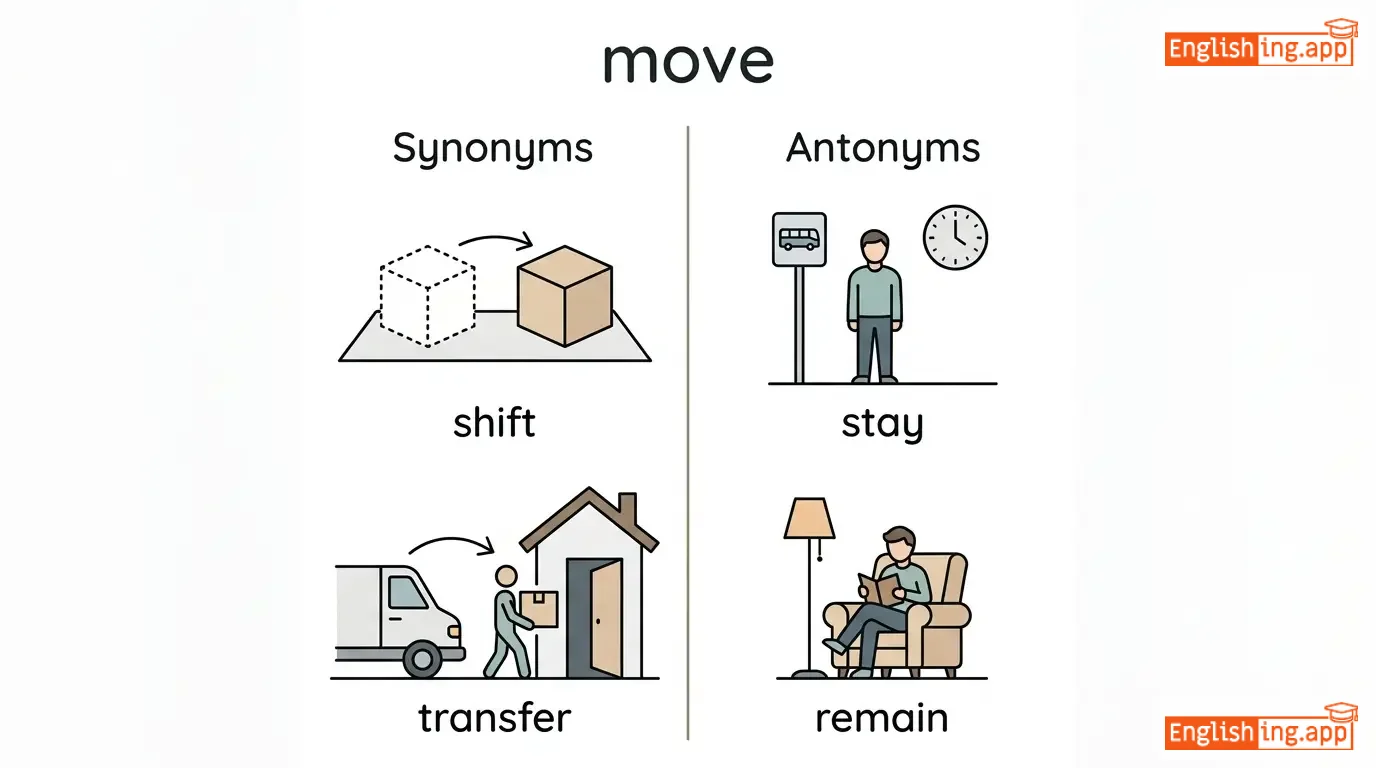
shift, transfer, relocate, progress
••••••
|
stay, remain
••••••
|
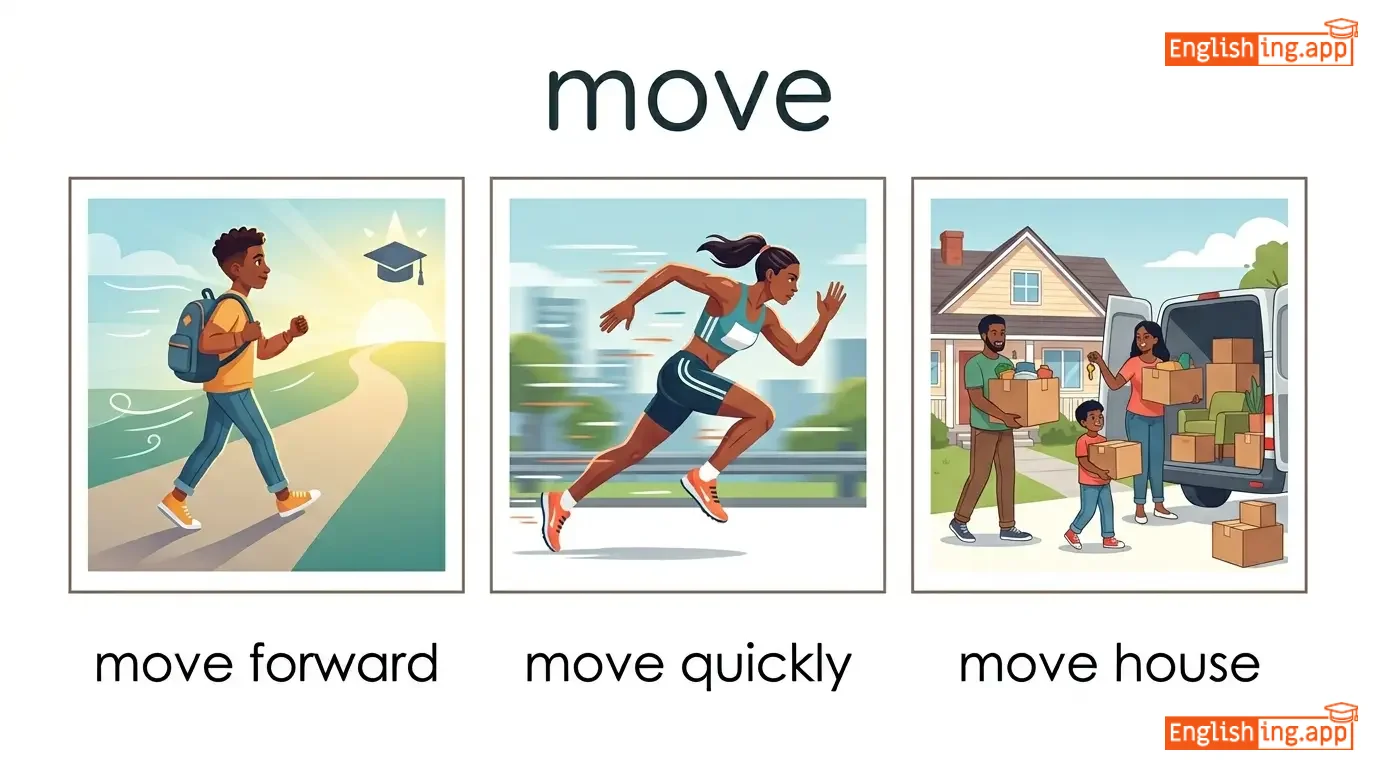
move forward, move quickly, move house, move away
••••••
|
移动意味着向前移动—一步一步,继续前行。
••••••
|
|
🏃
••••••
|
/ˈmuːv.mənt/
noun
(mùwèi)
••••••
|
|
运动
yundong
••••••
|
- •••••• | - •••••• | - •••••• | - •••••• |
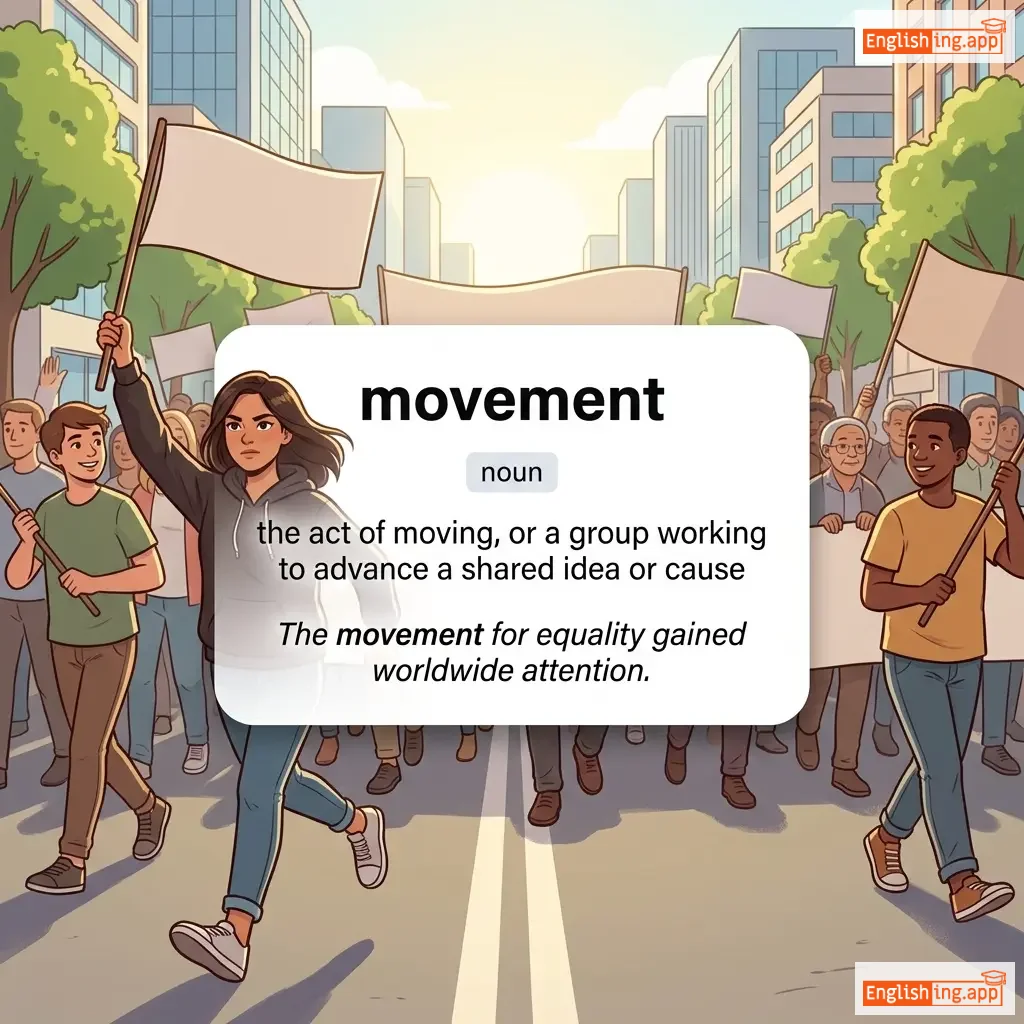
the act of moving, or a group working to advance a shared idea or cause
••••••
|
The movement for equality gained worldwide attention. |
平等运动引起了全球的关注。
Pingdeng yundong yinqile quanqiu de guanzhu.
••••••
|
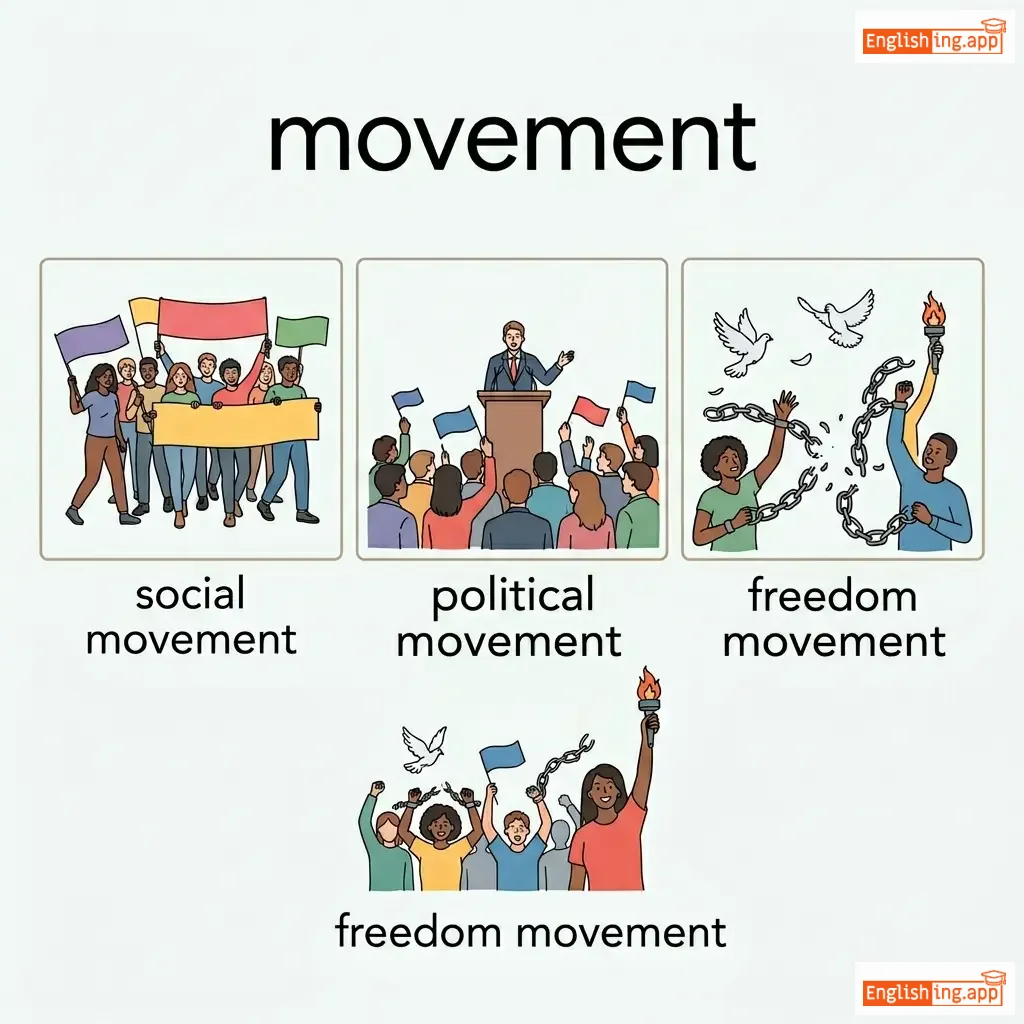
freedom movement |
a struggle or campaign to achieve liberty or independence
••••••
|
自由运动
ziyou yundong
••••••
|
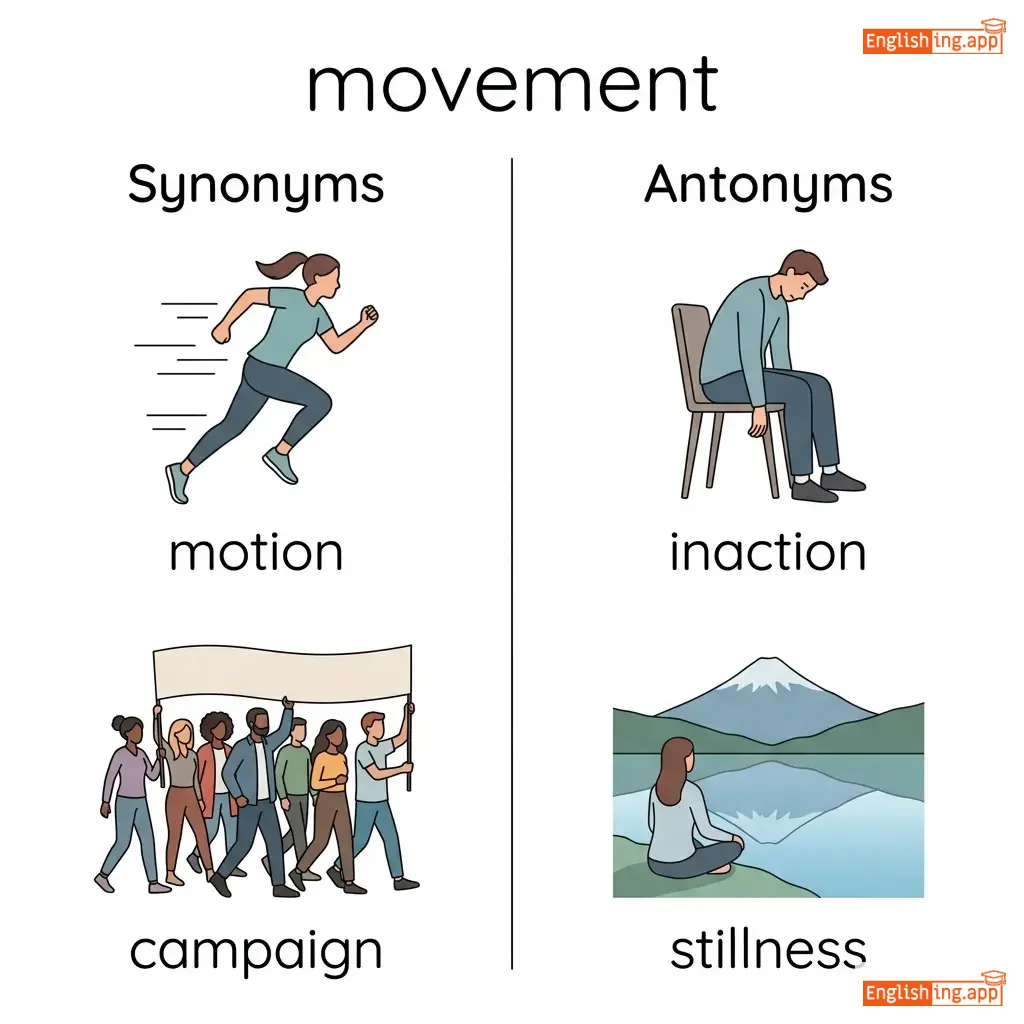
motion, campaign, progress, action, drive
••••••
|
inaction, stillness, stagnation
••••••
|
social movement, political movement, freedom movement, rapid movement
••••••
|
Movement代表着前进,运动意味着推进
••••••
|

