Получите неограниченный доступ ко всем словам с подпиской Pro
Обновить до ProПолучите неограниченный доступ ко всем предложениям с подпиской Pro
Обновить до Pro|
Эмодзи
|
Слово | Images | Перевод | Прошедшее | Причастие прошедшего времени | Третье лицо единственного числа | Герундий | Значение | Пример предложения | Перевод примера предложения | Пример выражения | Значение примера выражения | Перевод примера выражения | Синонимы | Антонимы | Коллокации | Мнемоника |
|---|---|---|---|---|---|---|---|---|---|---|---|---|---|---|---|---|---|
|
🛠️
••••••
|
/ˌmɒdɪfɪˈkeɪʃən/
noun
(модификация)
••••••
|
|
модификация
modifikatsiya
••••••
|
- •••••• | - •••••• | - •••••• | - •••••• |
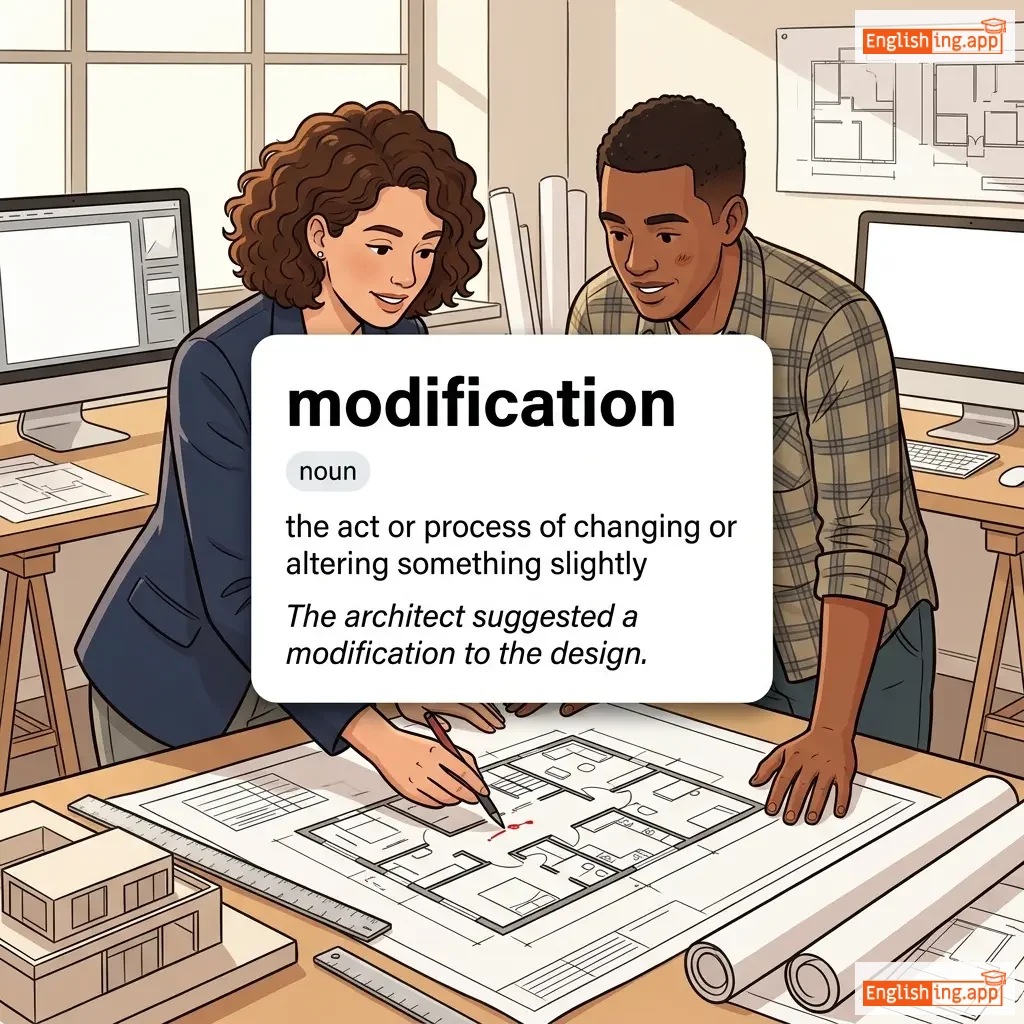
the act or process of changing or altering something slightly
••••••
|
The architect suggested a modification to the design. |
Архитектор предложил модификацию дизайна.
Arkhitektor predlozhil modifikatsiyu dizayna.
••••••
|
- •••••• | - •••••• | - •••••• |
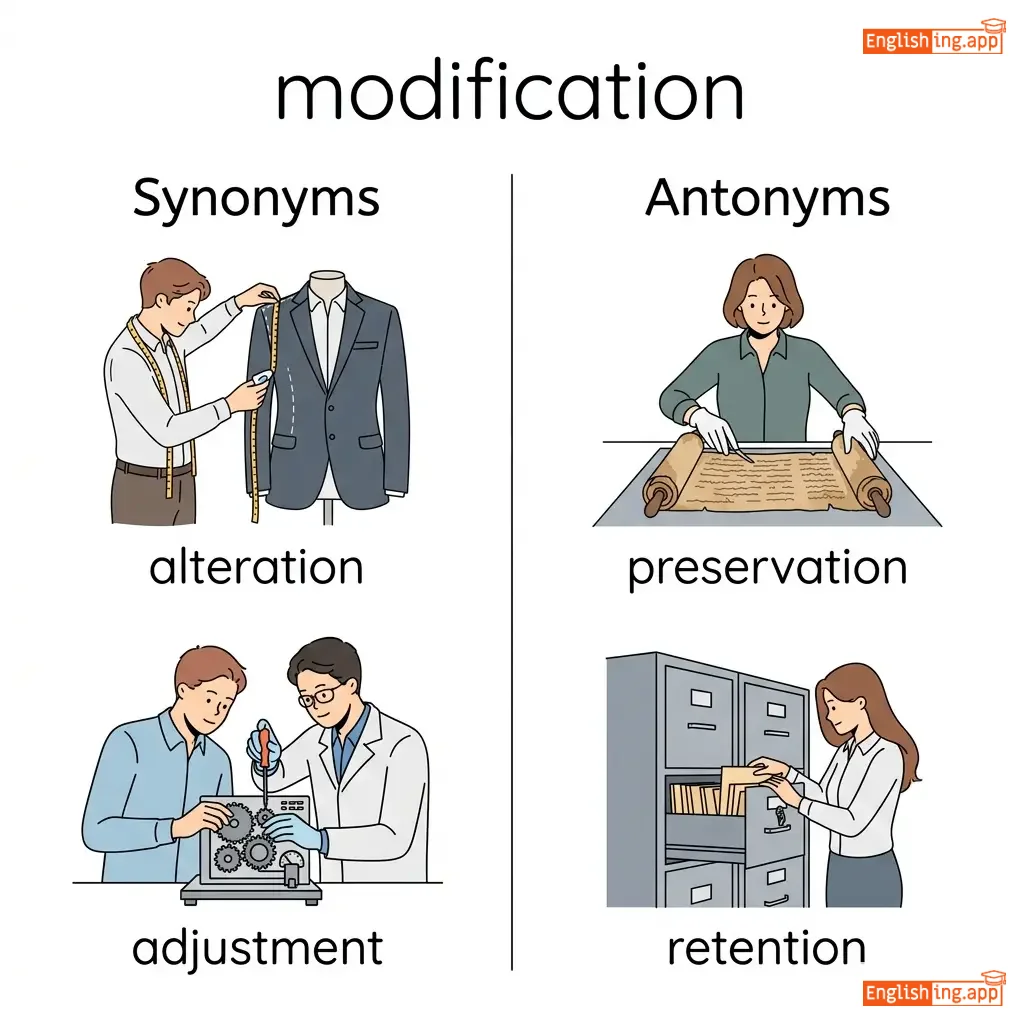
alteration, adjustment, amendment, variation, revision
••••••
|
preservation, retention
••••••
|
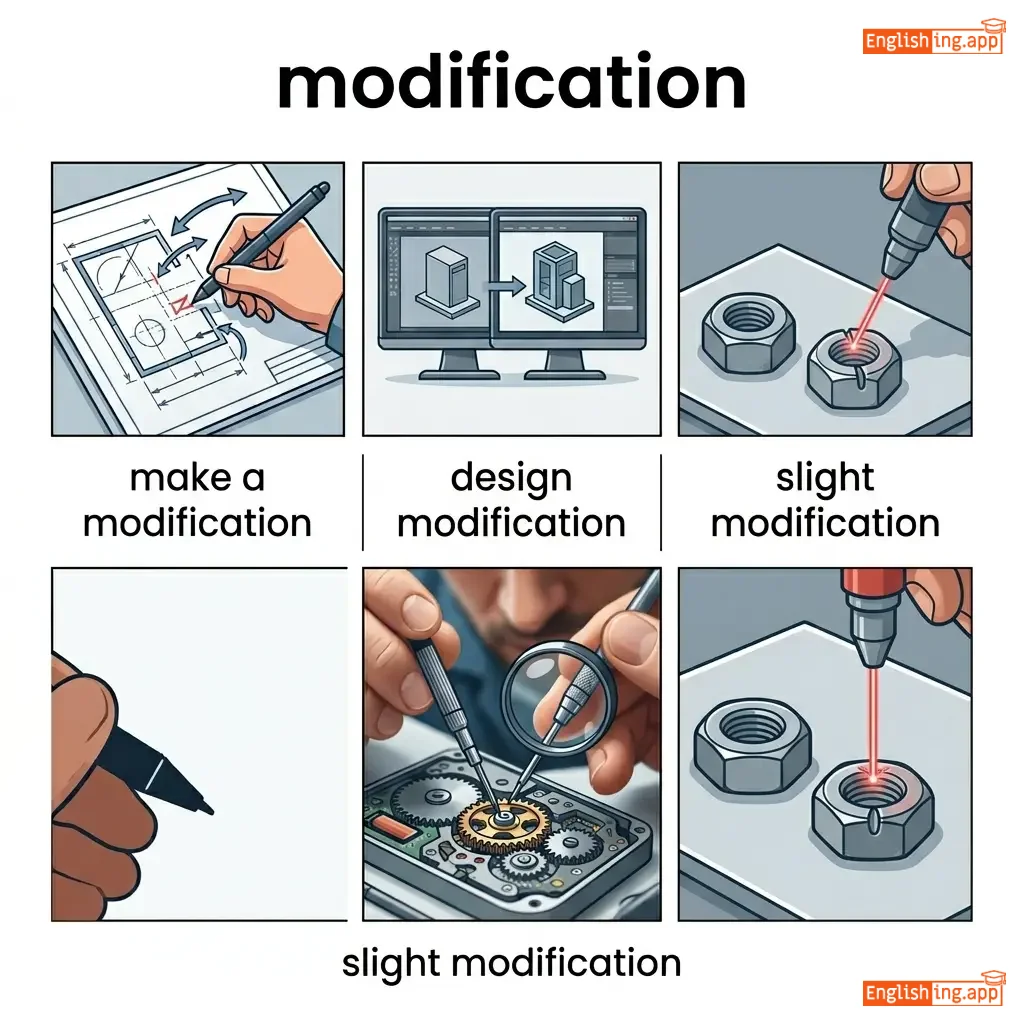
make a modification, design modification, slight modification
••••••
|
Modification означает изменение модели – модификация
••••••
|
|
✏️
••••••
|
/ˈmɒdɪfaɪər/
noun
(модифайер)
••••••
|
- •••••• |
модификатор
modifikator
••••••
|
- •••••• | - •••••• | - •••••• | - •••••• |
a word or element that changes, limits, or describes the meaning of another word; something that alters or adjusts
••••••
|
In the phrase 'very cold', 'very' is a modifier of 'cold'.
В выражении very cold слово very является modifier слова cold.
••••••
|
В выражении «very cold» слово «very» является модификатором слова «cold».
V vyrazhenii very cold slovo very yavlyaetsya modifikatorom slova cold
••••••
|
- •••••• | - •••••• | - •••••• |
alterer, adapter, qualifier, modulator, adjuster
••••••
|
head, base, core
••••••
|
adjective modifier, noun modifier, degree modifier, grammatical modifier
••••••
|
Модифицировать → модификатор.
••••••
|
|
🔧
••••••
|
/ˈmɑːdɪfaɪ/
verb
(modifai)
••••••
|
|
модифицировать
modifitsirovat'
••••••
|
modified
modifaiid
••••••
|
modified
modifaiid
••••••
|
modifies
modifaiit
••••••
|
modifying
modifiiruya
••••••
|
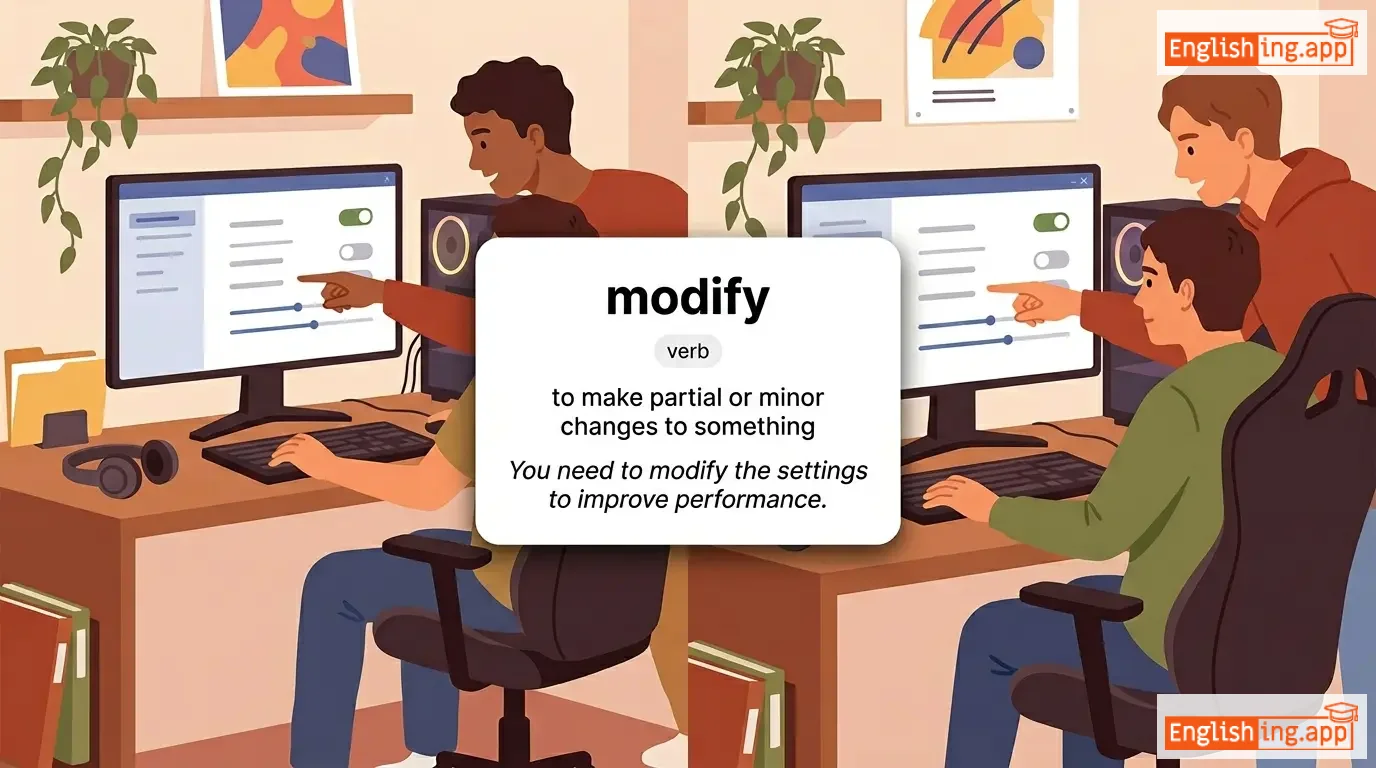
to change or alter something; to make partial changes
••••••
|
We need to modify the plan to include more details.
Нам нужно изменить план, чтобы включить больше деталей.
••••••
|
Нам нужно изменить план, чтобы включить больше деталей.
Nam nuzhno izmenit' plan, chtoby vklyuchit' bol'she detalei.
••••••
|
- •••••• | - •••••• | - •••••• |
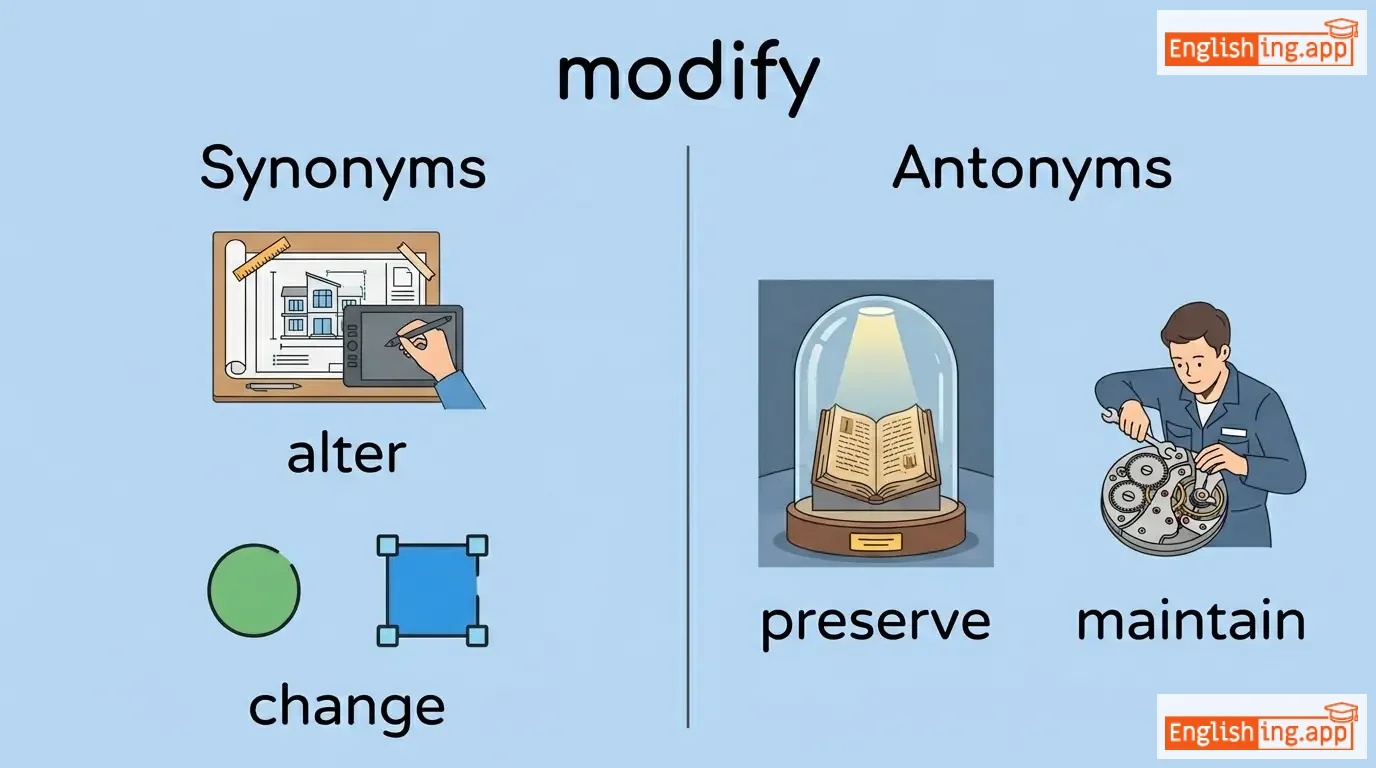
change, alter, adjust, revise, update
••••••
|
maintain, preserve, keep unchanged
••••••
|
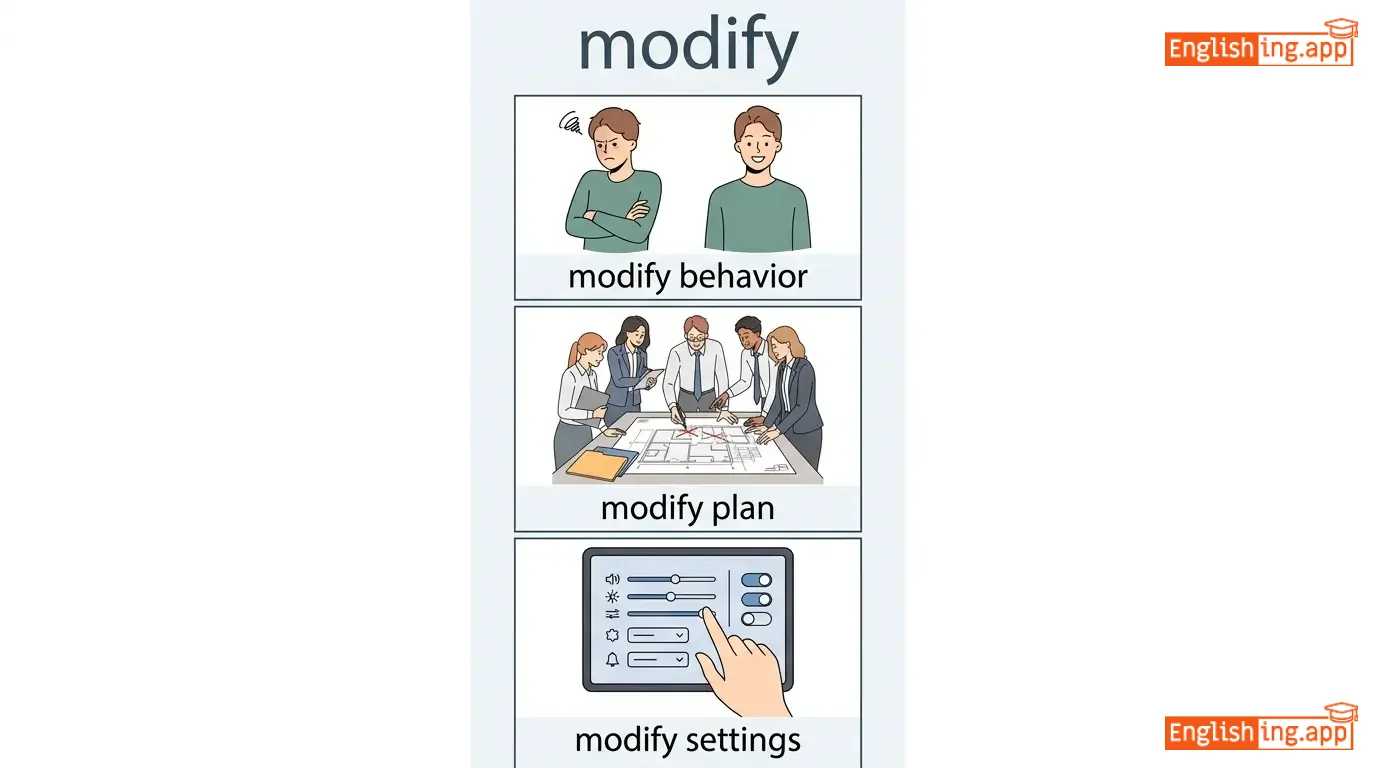
modify slightly, modify plans, modify behavior, modify settings, heavily modified
••••••
|
Russian-English mnemonic: 'модифицировать план для улучшения' ('modify the plan for improvement')
••••••
|
|
👩👧
••••••
|
/mɑːm/
noun
(мама)
••••••
|
- •••••• |
мама
mama
••••••
|
- •••••• | - •••••• | - •••••• | - •••••• |
an informal word for mother
••••••
|
My mom makes the best homemade food. |
Моя мама готовит лучшую домашнюю еду.
Moya mama gotovit luchshuyu domashnyuyu yedu.
••••••
|
mom and pop |
a small family-owned business
••••••
|
мама и папа
mama i papa
••••••
|
mother, mama, mum, mommy, ma
••••••
|
father, dad
••••••
|
mom said, new mom, working mom, mom and dad
••••••
|
Мама всегда рядом, как и в этом слове.
••••••
|
|
⏳
••••••
|
/ˈmoʊmənt/
noun
(момент)
••••••
|
- •••••• |
мгновение
mgnoveniye
••••••
|
- •••••• | - •••••• | - •••••• | - •••••• |
A very short period of time; a particular point in time.
••••••
|
She paused for a moment before answering.
Она остановилась на момент перед тем, как ответить.
••••••
|
Она остановилась на момент перед тем, как ответить.
Ona ostanovilas' na moment pered tem, kak otvetit'.
••••••
|
in the moment
в данный момент
••••••
|
Focusing entirely on the present situation.
••••••
|
в данный момент
v dannyy moment
••••••
|
instant, second, minute, occasion, time
••••••
|
eternity, forever
••••••
|
at the moment, right moment, special moment, memorable moment
••••••
|
Мгновение — это мгновенный момент, момент на секунду.
••••••
|
|
🏃
••••••
|
/moʊˈmɛntəm/
noun
(моментум)
••••••
|
|
импульс
momentum
••••••
|
- •••••• | - •••••• | - •••••• | - •••••• |
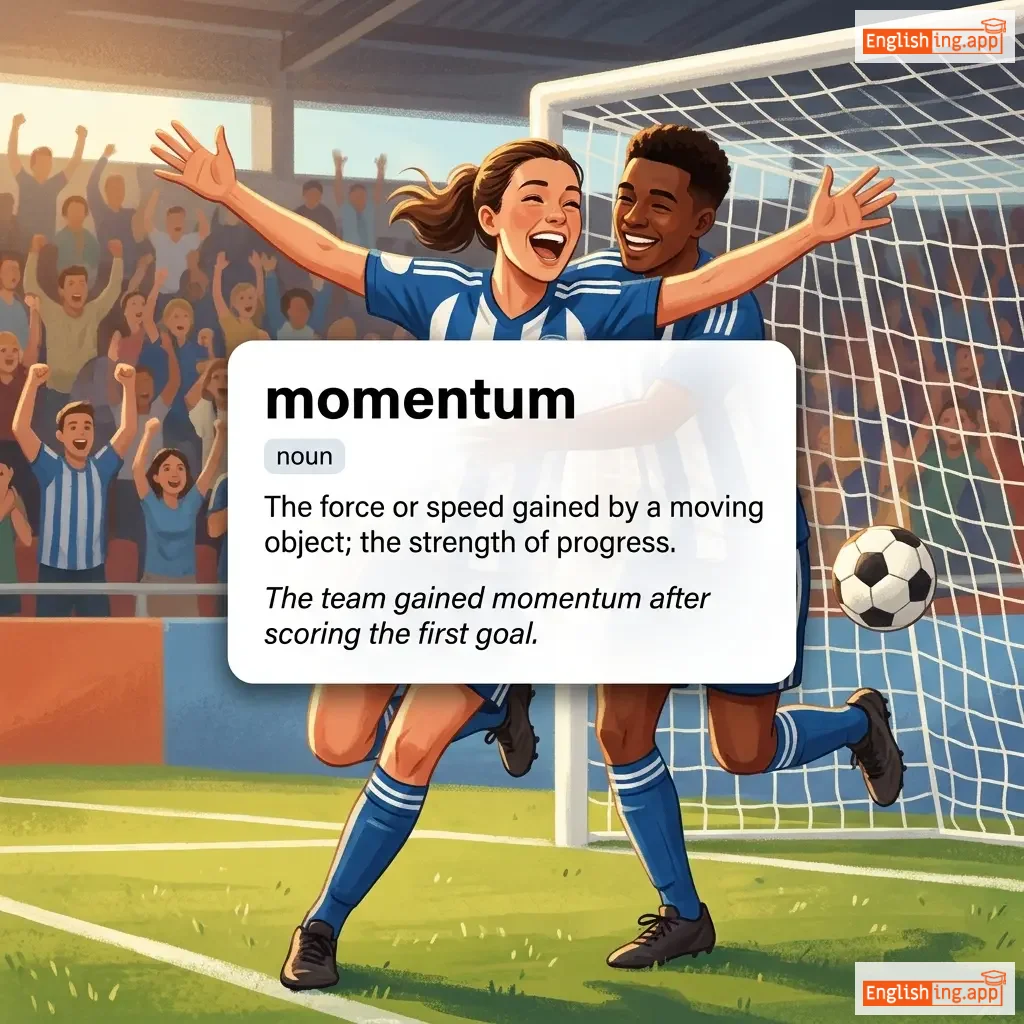
The force or speed gained by a moving object; the strength of progress.
••••••
|
The team gained momentum after scoring the first goal.
Команда набрала обороты после того, как забила первый гол.
••••••
|
Команда набрала обороты после того, как забила первый гол.
Komanda nabrala oboroty posle togo kak zabila perviy gol.
••••••
|
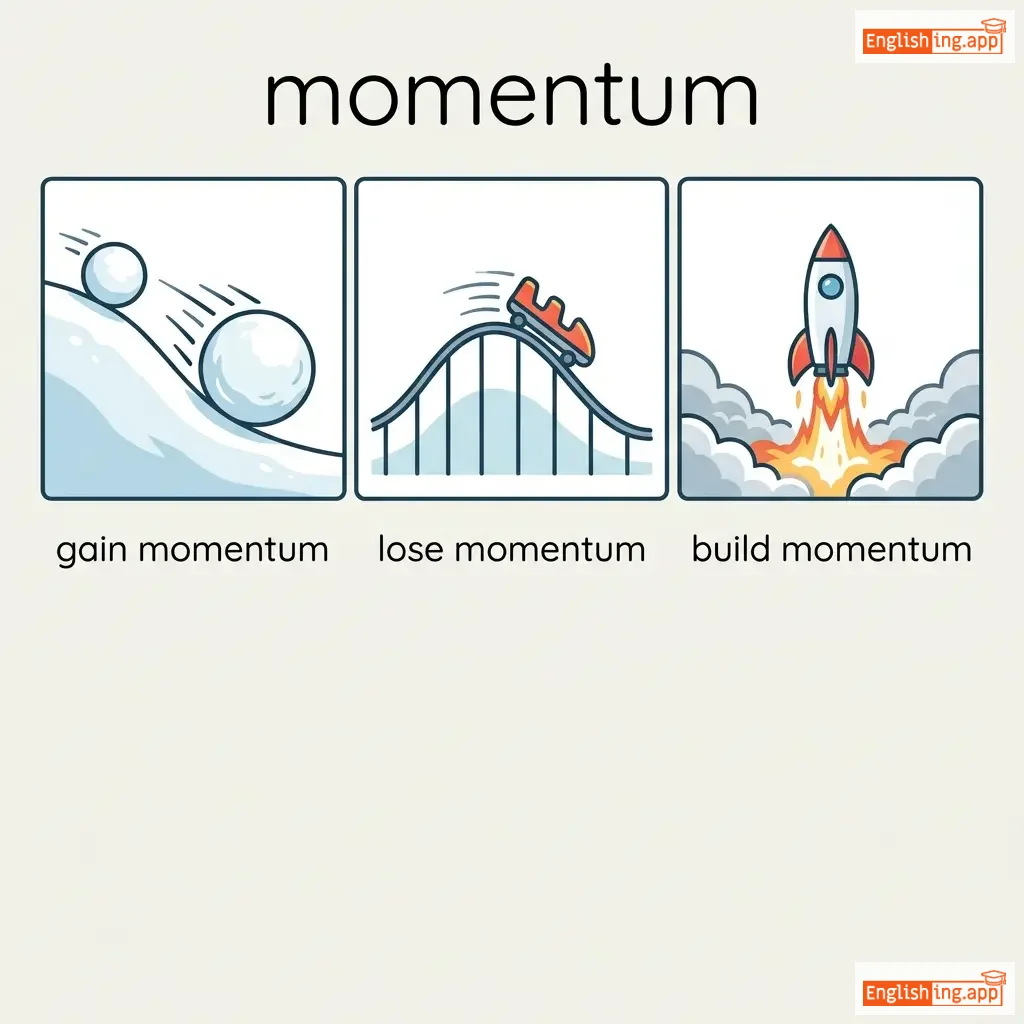
gain momentum
набирать обороты
••••••
|
To gather speed, strength, or progress.
••••••
|
набирать обороты
nabirat oboroty
••••••
|
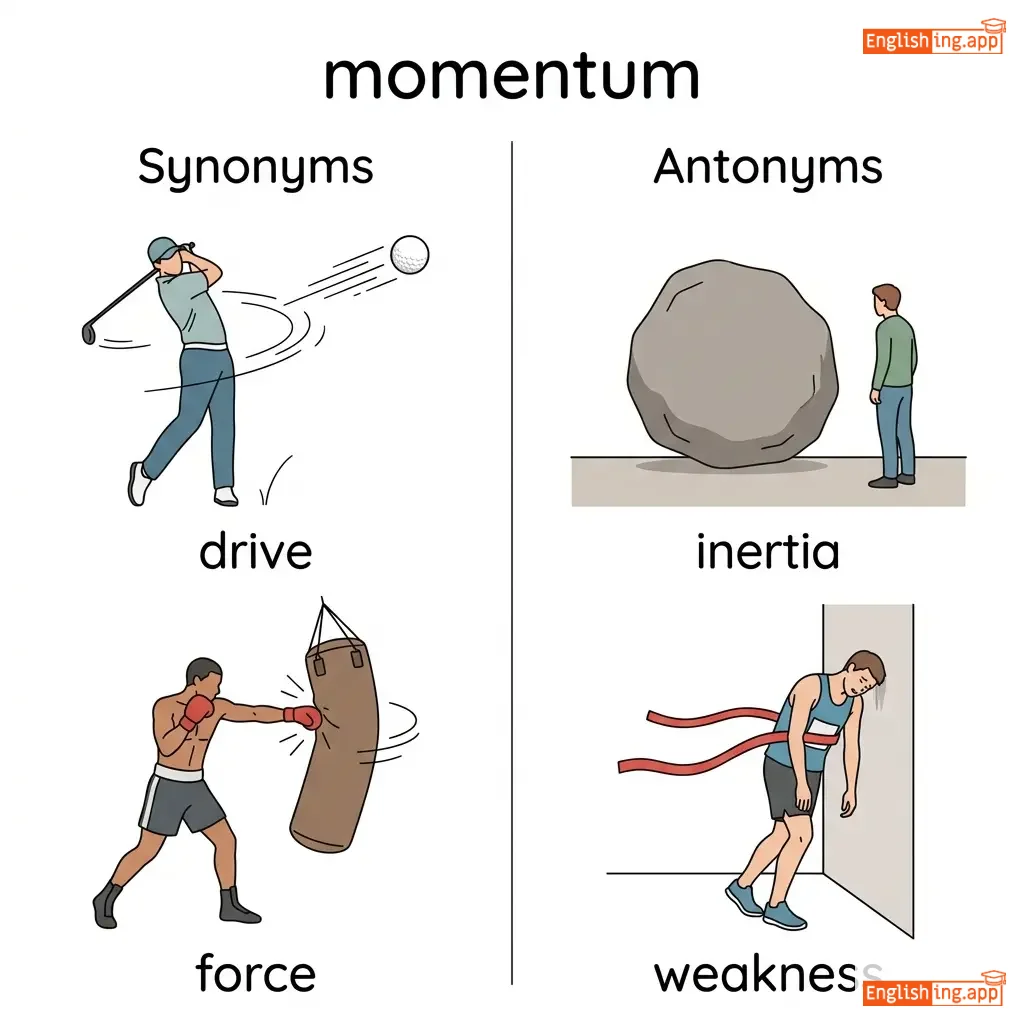
drive, force, power, impetus, thrust
••••••
|
inertia, weakness
••••••
|
gain momentum, lose momentum, build momentum, maintain momentum
••••••
|
моментум = moment + um, вообрази момент, дающий импульс прогресса
••••••
|
|
📅
••••••
|
/ˈmʌn.deɪ/
noun
(мандей)
••••••
|
- •••••• |
понедельник
ponedelnik
••••••
|
- •••••• | - •••••• | - •••••• | - •••••• |
the first day of the working week following Sunday
••••••
|
I start my new job on Monday.
Ай старт май нью джоб он мандей.
••••••
|
Я начинаю новую работу в понедельник.
ya nachinayu novuyu rabotu v ponedelnik
••••••
|
Monday blues
мондей блюз
••••••
|
a feeling of sadness or lack of energy at the start of the work week
••••••
|
понедельничная хандра
ponedelnechnaya khandra
••••••
|
weekday start, first workday, week opener, start of the week
••••••
|
Sunday, weekend
••••••
|
next Monday, last Monday, Monday morning, on Monday
••••••
|
Ponedelnik = First day pain
••••••
|
|
💰
••••••
|
/ˈmʌni/
noun
(happiness)
••••••
|
- •••••• |
счастье
schastye
••••••
|
- •••••• | - •••••• | - •••••• | - •••••• |
A medium of exchange in the form of coins and banknotes; wealth or financial resources.
••••••
|
He saved enough money to buy a new car. |
Она не смогла скрыть свое счастье, когда получила приз.
Ona ne smogla skryt' svoe schast'ye, kogda poluchila priz.
••••••
|
money talks |
Wealth has great influence or power.
••••••
|
поиск счастья
poisk schast'ya
••••••
|
cash, currency, funds, capital, wealth
••••••
|
poverty, debt
••••••
|
make money, save money, spend money, invest money
••••••
|
Счастье — это как луч света в темноте.
••••••
|
|
🖥️
••••••
|
/ˈmɒnɪtər/
noun, verb
(монитор)
••••••
|
- •••••• |
монитор, наблюдать
monitor, nablyudat
••••••
|
monitored
мониторил
••••••
|
monitored
мониторил
••••••
|
monitors
мониторит
••••••
|
monitoring
мониторинг
••••••
|
to observe and check the progress or quality of something; also a device that displays information
••••••
|
The teacher monitors the students during the exam.
Учитель мониторит студентов во время экзамена.
••••••
|
Учитель мониторит студентов во время экзамена.
Uchitel' monitorit studentov vo vremya ekzamina.
••••••
|
keep a close monitor
поддерживать тщательное наблюдение
••••••
|
to watch carefully
••••••
|
поддерживать внимательное наблюдение
podderzhivat' vnimatel'noye nablyudeniye
••••••
|
observe, watch, track, oversee, supervise
••••••
|
ignore, neglect
••••••
|
monitor progress, monitor performance, monitor screen, monitor activity
••••••
|
Монитор значит наблюдать, поэтому мы следим внимательно
••••••
|
|
🧘♂️
••••••
|
/mʌŋk/
noun
(мунк)
••••••
|
- •••••• |
монах
monakh
••••••
|
- •••••• | - •••••• | - •••••• | - •••••• |
a man who is a member of a religious community living under vows
••••••
|
The monk spent hours in meditation each day.
Монах проводил часы в медитации каждый день.
••••••
|
Монах проводил часы в медитации каждый день.
Monakh provodil chasy v meditacii kazhdij den'.
••••••
|
- •••••• | - •••••• | - •••••• |
friar, religious, ascetic, hermit
••••••
|
layperson, secular person
••••••
|
Buddhist monk, Christian monk, monastery monk
••••••
|
Монах (Monk) = Молитва (Prayer) и Обет (Vow)
••••••
|
|
🏦
••••••
|
/məˈnɒpəli/
noun
••••••
|

|
- •••••• | - •••••• | - •••••• | - •••••• | - •••••• |
Exclusive control over a market, product, or service.
••••••
|
The company gained a monopoly over the mobile phone industry. |
- •••••• |
hold a monopoly |
To have complete control over a product, service, or market.
••••••
|
- •••••• |
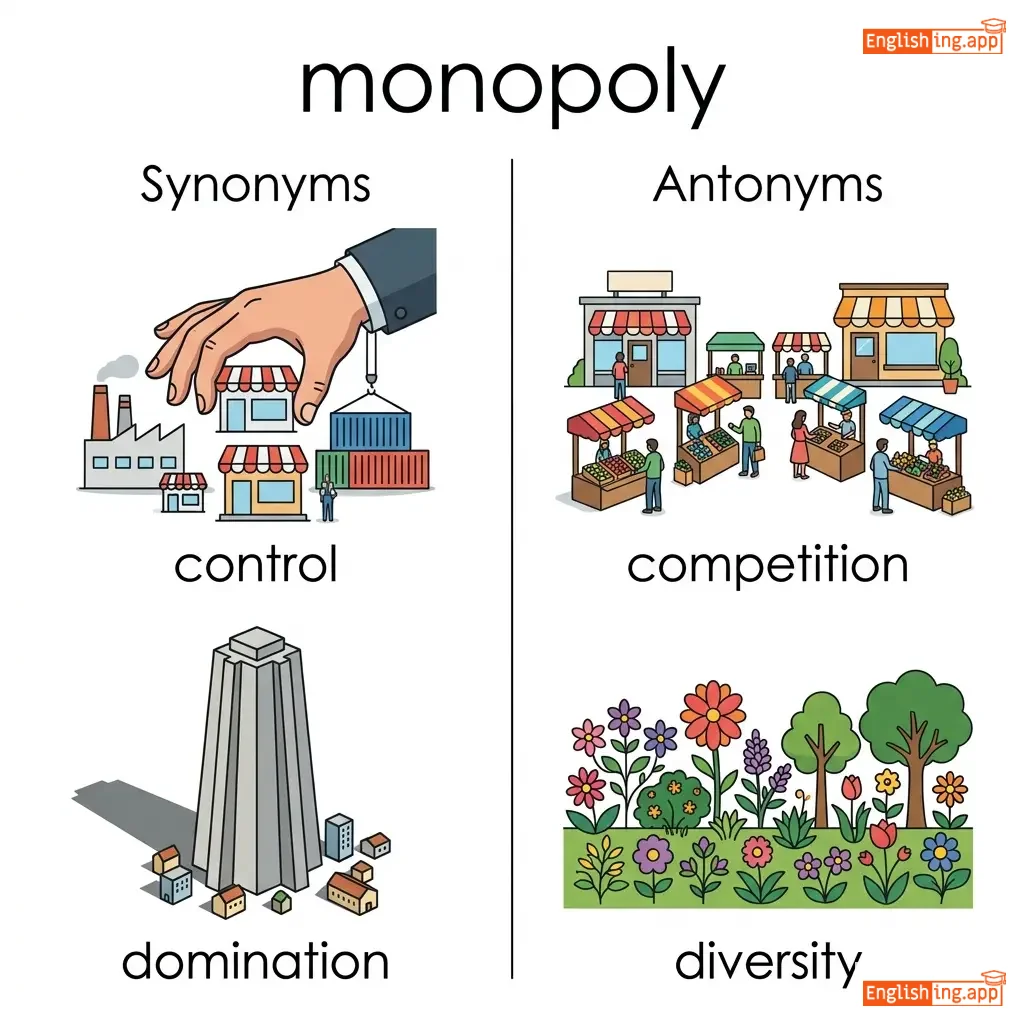
control, domination, exclusivity, cartel, ownership
••••••
|
competition, diversity
••••••
|
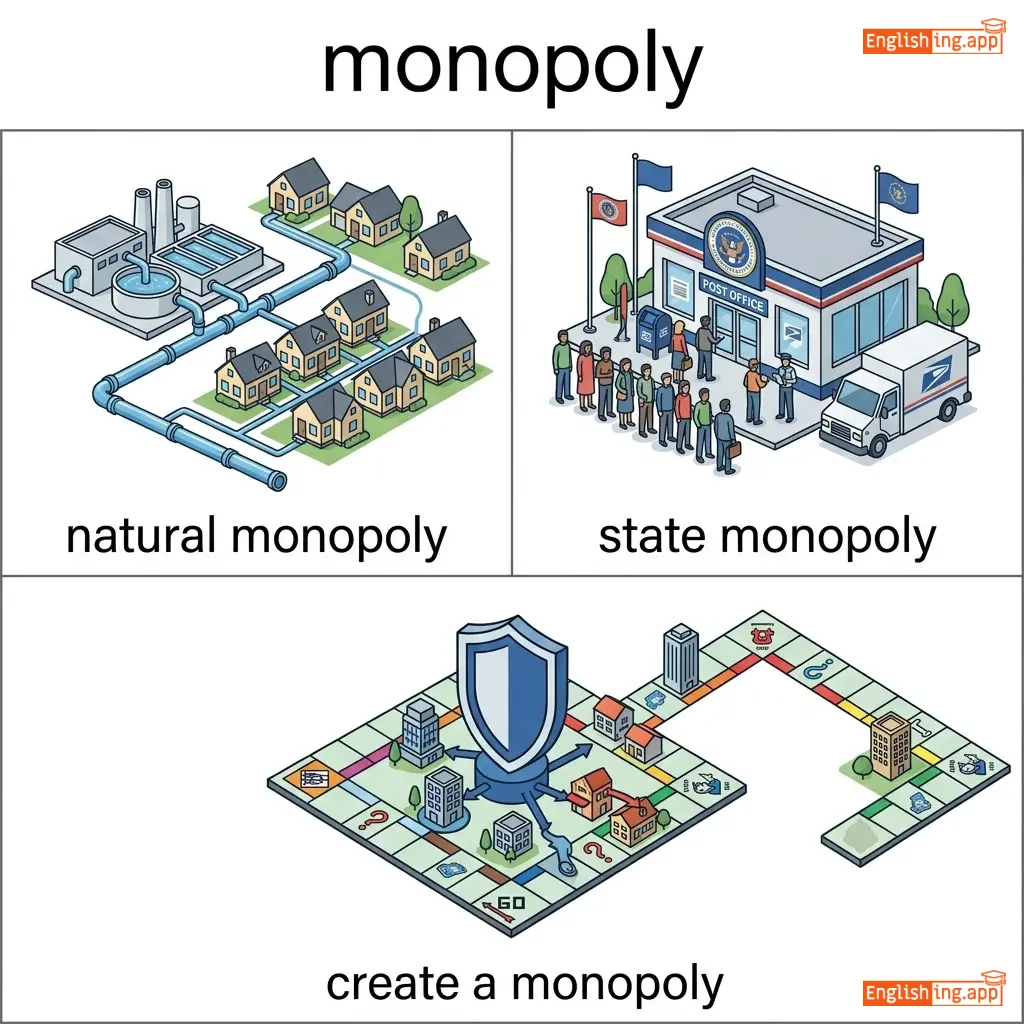
natural monopoly, state monopoly, create a monopoly
••••••
|
No •••••• |
|
👹
••••••
|
/ˈmɒnstər/
noun
(хэппинесс)
••••••
|
- •••••• |
счастье
schastye
••••••
|
- •••••• | - •••••• | - •••••• | - •••••• |
an imaginary or large frightening creature
••••••
|
The child was afraid that a monster was hiding under the bed.
Она не смогла скрыть своего счастья, когда получила награду.
••••••
|
Она не смогла скрыть своего счастья, когда получила награду.
Ona ne smogla skryt' svoego schast'ya, kogda poluchila nagradu.
••••••
|
monster hit
поиск счастья
••••••
|
a very successful or popular product or show
••••••
|
поиск счастья
poisk schast'ya
••••••
|
beast, creature, giant, demon, ogre
••••••
|
angel, human, friend
••••••
|
monster movie, sea monster, create a monster, monster hit
••••••
|
Счастье = Happiness — Помни, счастье всегда рядом!
••••••
|
|
🗓️
••••••
|
/mʌnθ/
noun
(month)
••••••
|
- •••••• |
месяц
mesyats
••••••
|
- •••••• | - •••••• | - •••••• | - •••••• |
a period of about four weeks or one-twelfth of a year
••••••
|
She visits her grandparents once a month. |
Она посещает своих бабушку и дедушку раз в месяц.
Ona poseschayet svoikh babushku i dedushku raz v mesyats.
••••••
|
flavor of the month |
something that is temporarily popular
••••••
|
вкус месяца
vkus mesyatsa
••••••
|
thirty days, period, lunar month
••••••
|
year, day
••••••
|
next month, this month, per month, monthly payment
••••••
|
Месяц - это месяц, каждый месяц приходит новый месяц
••••••
|
|
📅
••••••
|
/ˈmʌnθli/
adjective
(mʌnθli)
••••••
|
- •••••• |
ежемесячный
ezhemesyachnyy
••••••
|
- •••••• | - •••••• | - •••••• | - •••••• |
happening, done, or published once a month
••••••
|
Employees receive their salary on a monthly basis. |
Сотрудники получают свою зарплату ежемесячно.
Sotrudniki poluchayut svoyu zarplatu ezhemesyachno.
••••••
|
monthly report |
a report produced every month
••••••
|
ежемесячный отчет
ezhemesyachnyy otchet
••••••
|
every month, periodic, regular, monthly-based
••••••
|
daily, weekly, yearly
••••••
|
monthly payment, monthly report, monthly meeting, monthly subscription
••••••
|
Ежемесячный значит каждый месяц — запомни 'месяц'!
••••••
|
|
🗿
••••••
|
/ˈmɒnjumənt/
noun
••••••
|
|
- •••••• | - •••••• | - •••••• | - •••••• | - •••••• |
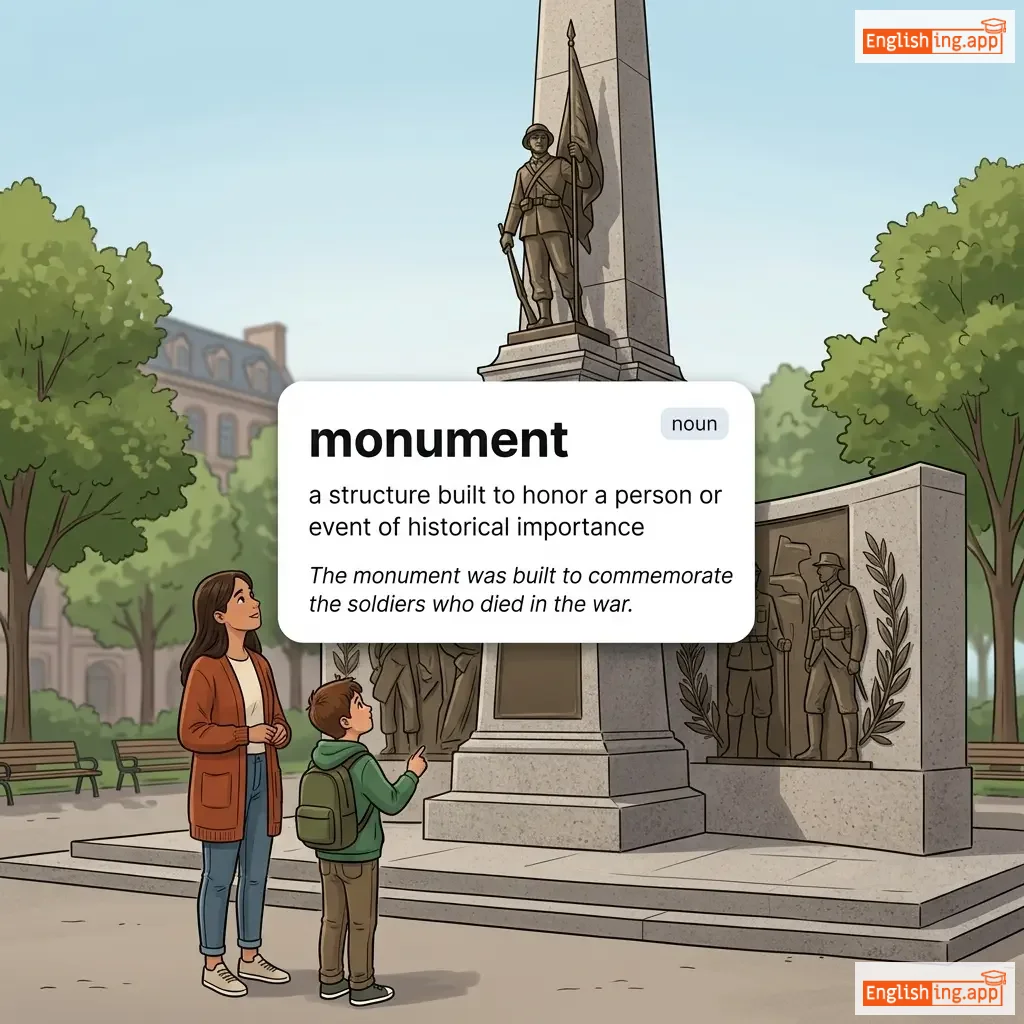
a structure built to honor a person or event of historical importance
••••••
|
The monument was built to commemorate the soldiers who died in the war. |
- •••••• |
stand as a monument to |
to serve as a lasting reminder or tribute to someone or something
••••••
|
- •••••• |
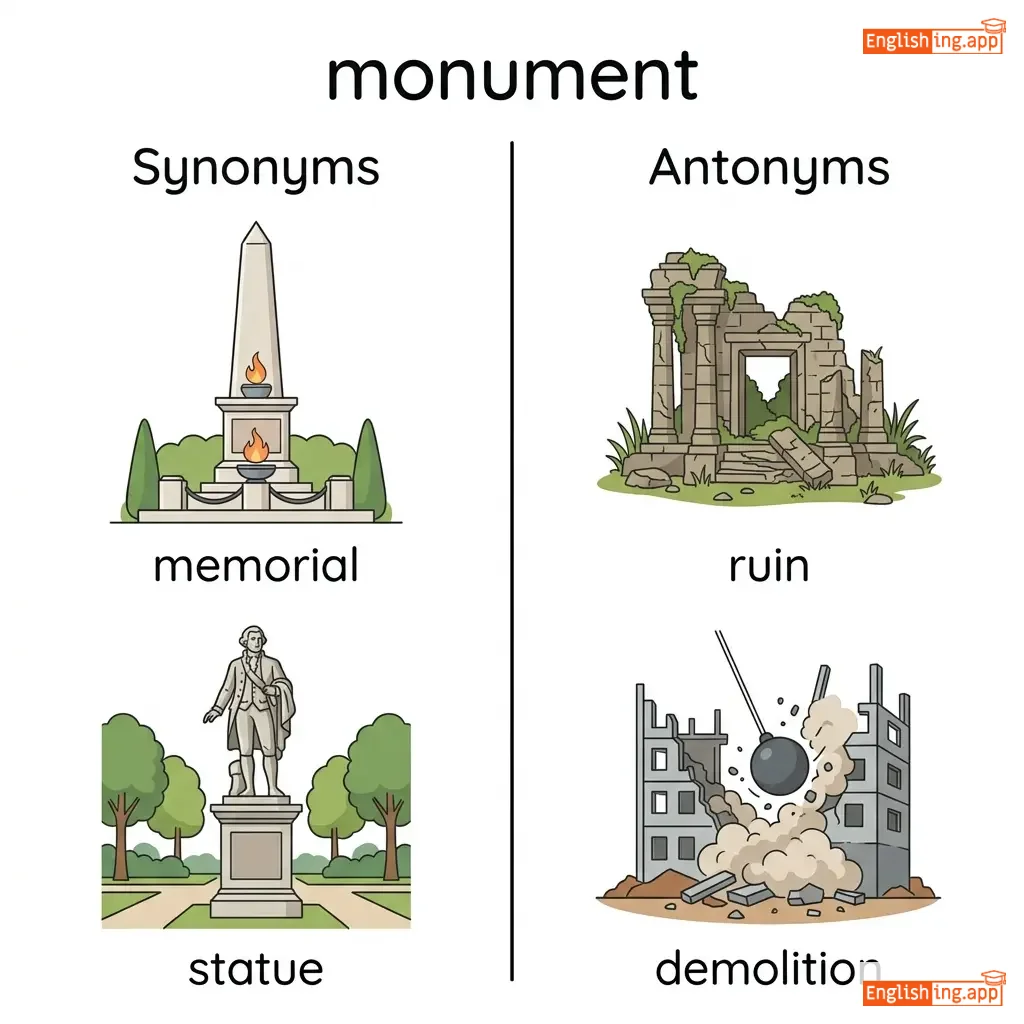
memorial, statue, shrine, landmark, pillar
••••••
|
ruin, demolition, destruction
••••••
|
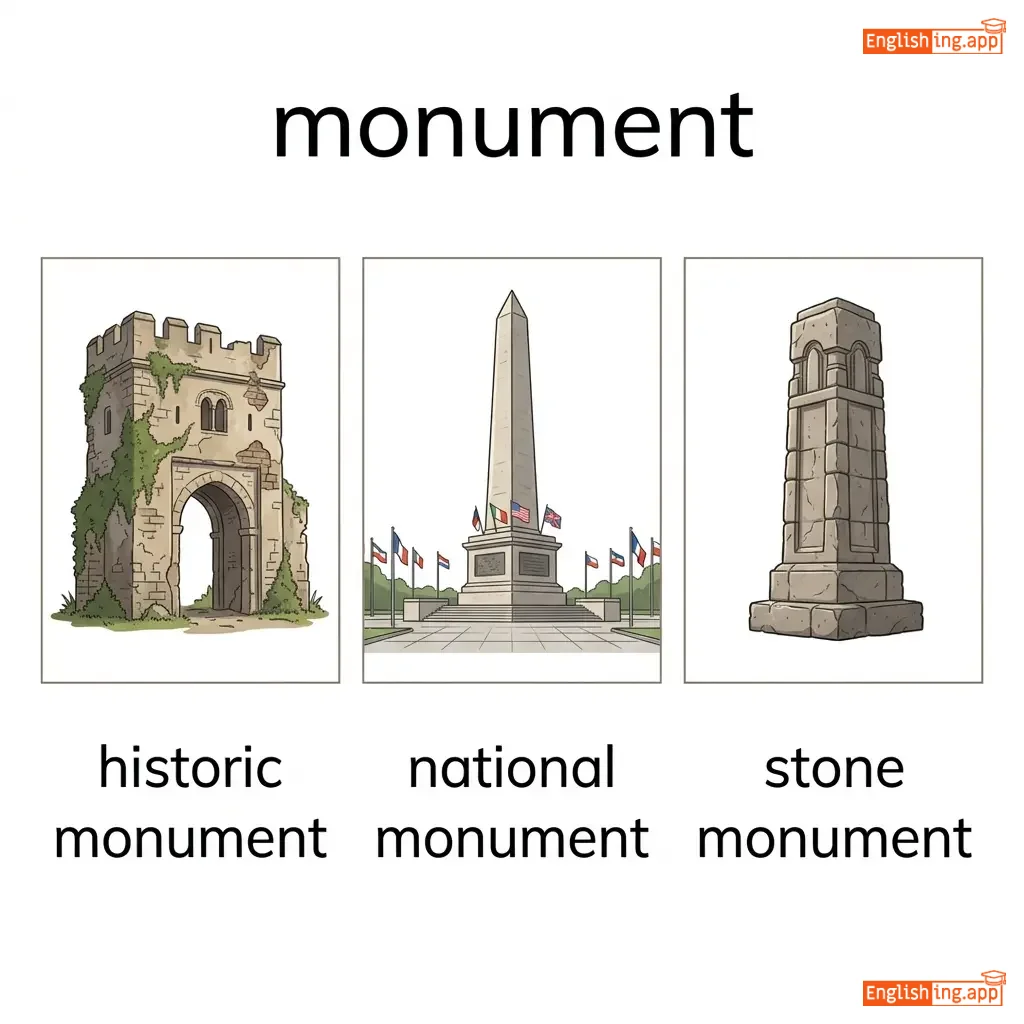
historic monument, national monument, stone monument, ancient monument
••••••
|
No •••••• |
|
😊
••••••
|
/muːd/
noun
(муд)
••••••
|
- •••••• |
настроение
nastroenie
••••••
|
- •••••• | - •••••• | - •••••• | - •••••• |
a temporary state of mind or feeling
••••••
|
He was in a good mood after getting the job.
Он был в хорошем настроении после того, как получил работу.
••••••
|
Он был в хорошем настроении после того, как получил работу.
On byl v khoroshem nastroenii posle togo, kak poluchil rabotu.
••••••
|
in the mood
в настроении
••••••
|
ready or willing to do something
••••••
|
в настроении
v nastroenii
••••••
|
feeling, temperament, emotion, attitude, spirit
••••••
|
apathy, indifference
••••••
|
good mood, bad mood, mood swing, change mood
••••••
|
Настроение означает настроение, можно быть веселым или злым!
••••••
|
|
🌕
••••••
|
/muːn/
noun
(mun)
••••••
|
- •••••• |
луна
luna
••••••
|
- •••••• | - •••••• | - •••••• | - •••••• |
the natural satellite of the earth, visible mainly at night by reflected light from the sun
••••••
|
The moon shines brightly in the night sky.
Луна ярко светит на ночном небе.
••••••
|
Луна ярко светит на ночном небе.
Luna yarko svetit na nochnom nebe.
••••••
|
once in a blue moon
раз в голубую луну
••••••
|
something that happens very rarely
••••••
|
раз в голубую луну
raz v golubuyu lunu
••••••
|
satellite, orb, crescent, full moon
••••••
|
sun, darkness
••••••
|
full moon, new moon, moonlight, moon surface
••••••
|
Луна = Moon - Луна осветит ночное небо
••••••
|
|
📖
••••••
|
/ˈmɔːrəl/
adjective, noun
(мораль)
••••••
|
- •••••• |
моральный
moral'nyy
••••••
|
- •••••• | - •••••• | - •••••• | - •••••• |
Adjective: concerned with principles of right and wrong. Noun: a lesson about right and wrong from a story or experience.
••••••
|
The moral of the story is that honesty is the best policy. |
Мораль этой истории заключается в том, что честность — лучшая политика.
Moral' etoy istorii zaklyuchayetsya v tom, chto chestnost' — luchshaya politika.
••••••
|
moral of the story |
The lesson that can be learned from an event or tale.
••••••
|
мораль истории
moral' istorii
••••••
|
ethical, virtuous, lesson, righteous
••••••
|
immoral, unethical
••••••
|
moral values, moral lesson, moral obligation
••••••
|
Moral означает урок этики - как в морали истории.
••••••
|
|
⚖️
••••••
|
/məˈrælɪti/
noun
(моралитэти)
••••••
|
- •••••• |
моральность
moral'nost'
••••••
|
- •••••• | - •••••• | - •••••• | - •••••• |
Principles concerning the distinction between right and wrong or good and bad behavior.
••••••
|
Society's sense of morality changes over time. |
Чувство морали в обществе меняется со временем.
Chuvstvo morali v obshchestve menyayetsya so vremyannym.
••••••
|
high morality |
strong sense of right and wrong
••••••
|
высокая моральность
vysokaya moral'nost'
••••••
|
ethics, principles, integrity, virtue, righteousness
••••••
|
immorality, corruption, wickedness
••••••
|
public morality, personal morality, code of morality, morality issues
••••••
|
Моральность — это основа морали.
••••••
|
|
⚖️
••••••
|
/ˈmɔːrəli/
adverb
(морально)
••••••
|
- •••••• |
морально
moral'no
••••••
|
- •••••• | - •••••• | - •••••• | - •••••• |
in accordance with principles of right and wrong behavior; ethically
••••••
|
She felt morally obligated to help the refugees.
Она чувствовала моральную обязанность помочь беженцам.
••••••
|
Она чувствовала моральную обязанность помочь беженцам.
Ona chuvstvovala moral'nuyu obyazannost' pomoch' bezhentsam.
••••••
|
- •••••• | - •••••• | - •••••• |
ethically, righteously, virtuously, properly
••••••
|
immorally, unethically, wrongly
••••••
|
morally right, morally wrong, morally obligated, morally responsible
••••••
|
морально = Morally; правильное поведение согласно этическим нормам
••••••
|
|
➕
••••••
|
/mɔːr/
adjective, adverb, pronoun
(mohr)
••••••
|
- •••••• |
больше
bol'she
••••••
|
- •••••• | - •••••• | - •••••• | - •••••• |
A greater or additional amount or degree.
••••••
|
She wanted more time to finish the project. |
Она хотела больше времени, чтобы завершить проект.
Ona khotela bol'she vremeni, chtoby zavershit' proyekt.
••••••
|
more or less |
Approximately, almost.
••••••
|
больше или меньше
bol'she ili men'she
••••••
|
additional, extra, further, greater
••••••
|
less, fewer
••••••
|
more than, much more, more time, more money
••••••
|
More значит 'больше'—добавить времени или усилий.
••••••
|
|
➕
••••••
|
/mɔːrˈoʊvər/
adverb
(морОвер)
••••••
|
- •••••• |
к тому же
k tomu zhe
••••••
|
- •••••• | - •••••• | - •••••• | - •••••• |
Used to add information that supports or emphasizes what has already been said.
••••••
|
The job is challenging; moreover, it requires excellent communication skills. |
Работа сложная; к тому же, она требует отличных навыков общения.
Rabota slozhnaya; k tomu zhe, ona trebuyet otlichnykh navykov obshcheniya.
••••••
|
- •••••• | - •••••• | - •••••• |
besides, furthermore, also, additionally
••••••
|
however, but
••••••
|
moreover, it is..., challenging and moreover, moreover, he said
••••••
|
MOREOVER означает добавить что-то еще - 'more' означает больше, 'over' означает сверху → к тому же
••••••
|
|
🌅
••••••
|
/ˈmɔːrnɪŋ/
noun
(хэппинесс)
••••••
|
- •••••• |
счастье
schastye
••••••
|
- •••••• | - •••••• | - •••••• | - •••••• |
the early part of the day, typically from sunrise until noon
••••••
|
I like to go for a run in the morning. |
Она не смогла скрыть своего счастья, когда получила награду.
Ona ne smogla skryt' svoego schast'ya, kogda poluchila nagradu.
••••••
|
Good morning |
a greeting used in the early part of the day
••••••
|
поиск счастья
poisk schast'ya
••••••
|
dawn, sunrise, forenoon, daybreak, early hours
••••••
|
evening, night, dusk
••••••
|
early morning, good morning, morning coffee, morning routine
••••••
|
Счастье, как 'счастье' — приходит, когда ты его ищешь.
••••••
|
|
🏠
••••••
|
/ˈmɔːrɡɪdʒ/
noun
(мортгидж)
••••••
|
- •••••• |
ипотека
ipoteka
••••••
|
- •••••• | - •••••• | - •••••• | - •••••• |
a legal agreement where a person borrows money to buy property and pays it back over time
••••••
|
They applied for a mortgage to buy their new house.
Они подали заявку на ипотеку, чтобы купить новый дом.
••••••
|
Они подали заявку на ипотеку, чтобы купить новый дом.
Oni podali zayavku na ipoteku, chtoby kupit' novyi dom.
••••••
|
mortgage loan
ипотечный кредит
••••••
|
a loan taken against property
••••••
|
ипотечный кредит
ipotiechny kredit
••••••
|
loan, home loan, property loan, debt, finance
••••••
|
repayment, ownership, clearance
••••••
|
mortgage loan, mortgage interest, mortgage payment, pay off mortgage
••••••
|
Ипотека — это как 'и по теке', в которой можно взять дом под залог.
••••••
|
|
🕌
••••••
|
/mɒsk/
noun
(мечеть)
••••••
|
- •••••• |
мечеть
mechet
••••••
|
- •••••• | - •••••• | - •••••• | - •••••• |
A Muslim place of worship.
••••••
|
They gathered at the mosque for the Friday prayer. |
Они собрались в мечети для пятничной молитвы.
Oni sobralis' v mecheti dlya pyatnichnoy molitvy.
••••••
|
- •••••• | - •••••• | - •••••• |
masjid, place of worship, Islamic temple
••••••
|
church, temple, synagogue
••••••
|
grand mosque, local mosque, mosque prayer, mosque visit
••••••
|
Mosque означает мечеть — мусульмане молятся здесь.
••••••
|
|
📊
••••••
|
/moʊst/
adjective, adverb, pronoun
(мост)
••••••
|
- •••••• |
большинство
bol'shinstvo
••••••
|
- •••••• | - •••••• | - •••••• | - •••••• |
the greatest in amount, degree, or number
••••••
|
Most people like to relax on weekends. |
Большинство людей предпочитают отдыхать на выходных.
Bol'shinstvo lyudey predpochitayut otdykhat' na vykhodnykh.
••••••
|
for the most part |
generally; in most cases
••••••
|
в большинстве случаев
v bol'shinstve sluchayev
••••••
|
majority, maximum, greatest, bulk, largest
••••••
|
least, fewest, minor
••••••
|
most people, most important, most of the time, most cases
••••••
|
Most = большинство людей
••••••
|
|
📊
••••••
|
/ˈmoʊstli/
adverb
(мостли)
••••••
|
- •••••• |
главным образом; преимущественно; обычно
glavnym oborazom; preimushchestvenno; obychno
••••••
|
- •••••• | - •••••• | - •••••• | - •••••• |
mainly; for the most part; usually
••••••
|
The students are mostly from local schools. |
Студенты в основном из местных школ.
Studenty v osnovnom iz mestnykh shkol.
••••••
|
- •••••• | - •••••• | - •••••• |
mainly, primarily, chiefly, largely, generally
••••••
|
rarely, seldom, minority
••••••
|
mostly used, mostly made, mostly because, mostly from
••••••
|
In Russian, 'главным образом' helps to remember 'mostly'.
••••••
|
|
👩👧
••••••
|
/ˈmʌðər/
noun
(мать)
••••••
|
- •••••• |
мать
mat
••••••
|
- •••••• | - •••••• | - •••••• | - •••••• |
a female parent
••••••
|
Her mother is a kind and caring person.
Ее мать - добрый и заботливый человек.
••••••
|
Ее мать - добрый и заботливый человек.
Yeyo mat' - dobryy i zabotlivyy chelovek.
••••••
|
mother tongue
родной язык
••••••
|
the first language a person learns at home in childhood
••••••
|
родной язык
rodnoy yazyk
••••••
|
mom, mama, parent, mum, ma
••••••
|
father, orphan
••••••
|
mother tongue, mother nature, single mother, mother love
••••••
|
Мать значит мама ❤️— Никогда не забудешь свою маму
••••••
|
|
🗣️
••••••
|
/ˈmʌðər ˈlæŋɡwɪdʒ/
noun
(мазер лэнгвидж)
••••••
|
- •••••• |
родной язык
rodnoy yazyk
••••••
|
- •••••• | - •••••• | - •••••• | - •••••• |
the first language a person learns from childhood; native language
••••••
|
Children learn best when they are taught in their mother language.
Чилдрен лёрн бест уэн зей ар тот ин зеир мазер лэнгвидж.
••••••
|
Дети лучше учатся на родном языке.
deti luchshe uchatsya na rodnom yazyke
••••••
|
- •••••• | - •••••• | - •••••• |
native language, first language, mother tongue, home language
••••••
|
foreign language, second language
••••••
|
mother language education, mother language instruction, preserve mother language, speak mother language
••••••
|
родной = mother
••••••
|
|
👩👶
••••••
|
/ˈmʌð.ər.hʊd/
noun
(mʌðərhud)
••••••
|
- •••••• |
материнство
materinstvo
••••••
|
- •••••• | - •••••• | - •••••• | - •••••• |
the state of being a mother; the qualities of a mother
••••••
|
She embraced the joys and challenges of motherhood.
Она приняла радости и трудности материнства.
••••••
|
Она приняла радости и трудности материнства.
Ona prinяла radosti i trudnosti materinstva.
••••••
|
- •••••• | - •••••• | - •••••• |
maternity, parenting, maternal role
••••••
|
childlessness, non-motherhood
••••••
|
embrace motherhood, early motherhood, single motherhood
••••••
|
Мама (mama) + жизнь (zhizn) = материнство
••••••
|
|
🏴
••••••
|
/ˈmʌð.ər.lænd/
noun
(мæðərlænd)
••••••
|
- •••••• |
родина; родная страна
rodina
••••••
|
- •••••• | - •••••• | - •••••• | - •••••• |
the country where one was born or has citizenship; homeland
••••••
|
He always spoke fondly of his motherland.
Он всегда говорил с любовью о своей родине.
••••••
|
Он всегда говорил с любовью о своей родине.
On vsegda govorit s lyubov'yu o svoey rodine.
••••••
|
- •••••• | - •••••• | - •••••• |
homeland, fatherland, native country, birthplace
••••••
|
foreign land, adopted country
••••••
|
love motherland, defend motherland, return to motherland
••••••
|
Rodina = Homeland, Think of 'Rod' (Root) and 'Inna' (inner, native)
••••••
|
|
🏃
••••••
|
/ˈmoʊʃən/
noun
(моушн)
••••••
|
- •••••• |
движение
dvizhene
••••••
|
- •••••• | - •••••• | - •••••• | - •••••• |
the act or process of moving; a change of place or position
••••••
|
The motion of the car made her sleepy.
Движение машины заставило её заснуть.
••••••
|
Движение машины заставило её заснуть.
Dvizhenie mashiny zastavilo yey zasnut.
••••••
|
set in motion
привести в движение
••••••
|
to start something happening
••••••
|
привести в движение
privedi v dviženiye
••••••
|
movement, gesture, action, shift, change
••••••
|
stillness, rest, immobility
••••••
|
in motion, slow motion, motion picture, set in motion
••••••
|
Движение - это процесс перемещения, как в 'поезд в движении'.
••••••
|
|
🔥
••••••
|
/ˈmoʊtɪveɪt/
verb
••••••
|
- •••••• | - •••••• |
motivated
••••••
|
motivated
••••••
|
motivates
••••••
|
motivating
••••••
|
To provide someone with a reason or incentive to do something.
••••••
|
The coach motivated the players to give their best performance. |
- •••••• |
self-motivate |
To inspire oneself to take action or improve.
••••••
|
- •••••• |
encourage, inspire, stimulate, urge, drive
••••••
|
discourage, demotivate
••••••
|
motivate people, motivate employees, motivate to succeed, motivated by
••••••
|
No •••••• |
|
🔥
••••••
|
/ˌmoʊtɪˈveɪʃən/
noun
(мотивэйшн)
••••••
|
- •••••• |
мотивировка
motivirovka
••••••
|
- •••••• | - •••••• | - •••••• | - •••••• |
the reason or drive for acting or behaving in a particular way
••••••
|
She lost her motivation to continue the project. |
Она потеряла свою мотивацию продолжать проект.
Ona poteryala svoyu motivatsiyu prodolzhat' proyekt.
••••••
|
self-motivation |
the ability to find reasons within oneself to act
••••••
|
самомотивация
samomotivatsiya
••••••
|
drive, incentive, inspiration, determination, enthusiasm
••••••
|
discouragement, apathy, disinterest
••••••
|
motivation level, source of motivation, lack of motivation, motivation to succeed
••••••
|
Мотивация означает стимул — запомни 'Mo-ti-Vation' как 'я разжигаю огонь (огонь) в своей работе'.
••••••
|
|
💭
••••••
|
/ˈmoʊtɪv/
noun
(мотив)
••••••
|
- •••••• |
мотив
motiv
••••••
|
- •••••• | - •••••• | - •••••• | - •••••• |
a reason for doing something, especially one that is hidden or not obvious
••••••
|
The police could not determine the motive behind the crime.
Полиция не смогла определить мотив преступления.
••••••
|
Полиция не смогла определить мотив преступления.
Politsiya ne smogla opredelit motiv prestupleniya.
••••••
|
hidden motive
скрытый мотив
••••••
|
a secret or not openly stated reason for an action
••••••
|
скрытый мотив
skrytyy motiv
••••••
|
reason, intention, purpose, drive, incentive
••••••
|
disinterest, apathy, indifference
••••••
|
strong motive, criminal motive, political motive, underlying motive
••••••
|
Motive — это как движение, почему двигаемся? Вот и мотив!
••••••
|
|
🚗
••••••
|
/ˈmoʊtər/
noun
(мотор)
••••••
|
- •••••• |
мотор
motor
••••••
|
- •••••• | - •••••• | - •••••• | - •••••• |
a machine that produces motion or power to make something work
••••••
|
The car’s motor stopped suddenly. |
Мотор автомобиля внезапно остановился.
Motor avtomobilya vnezapno ostanovilsya.
••••••
|
motor skills |
the ability to use muscles for movement and coordination
••••••
|
моторные навыки
motornye navyki
••••••
|
engine, machine, generator, mechanism
••••••
|
stillness, immobility
••••••
|
electric motor, motor vehicle, motor skills, motorbike
••••••
|
Мотор — это то, что приводит машину в движение, как и мотоцикл.
••••••
|
|
🏍️
••••••
|
/ˈmoʊtərˌsaɪkəl/
noun
(моутэрсайкл)
••••••
|
- •••••• |
мотоцикл
mototsikl
••••••
|
- •••••• | - •••••• | - •••••• | - •••••• |
a two-wheeled motor-powered vehicle designed for transportation
••••••
|
He rides his motorcycle to work every morning.
Хи райдз хиз моутэрсайкл ту ворк эври морнинг.
••••••
|
Он каждое утро ездит на работу на мотоцикле.
On kazhdoe utro ezdit na rabotu na mototsikle
••••••
|
- •••••• | - •••••• | - •••••• |
motorbike, bike, two-wheeler, machine
••••••
|
car, truck
••••••
|
ride a motorcycle, motorcycle helmet, motorcycle engine, motorcycle rider
••••••
|
Мото + цикл = мотоцикл
••••••
|
|
🚗
••••••
|
/ˈməʊtərɪst/
noun
(моуторист)
••••••
|
- •••••• |
автомобилист
avtomobilist
••••••
|
- •••••• | - •••••• | - •••••• | - •••••• |
a person who drives a motor vehicle, especially a car or motorcycle
••••••
|
The motorist stopped to help after seeing the accident on the highway.
Моуторист остановился, чтобы помочь после аварии.
••••••
|
Автомобилист остановился, чтобы помочь после аварии.
Avtomobilist ostanovilsya chtoby pomoch posle avarii
••••••
|
- •••••• | - •••••• | - •••••• |
driver, car driver, vehicle operator, road user
••••••
|
pedestrian, non-driver
••••••
|
careful motorist, fellow motorist, motorist safety, motorist insurance, motorist rights
••••••
|
auto + mobil = avtomobilist
••••••
|
|
🧗
••••••
|
/maʊnt/
verb
(маунт)
••••••
|
- •••••• |
устанавливать
ustanavlivat
••••••
|
mounted
маунтед
••••••
|
mounted
маунтед
••••••
|
mounts
маунтс
••••••
|
mounting
маунтинг
••••••
|
to climb up, rise, or fix something in place
••••••
|
They plan to mount a camera on the wall.
зэй план ту маунт э камера он зэ уол.
••••••
|
Они планируют установить камеру на стену.
Oni planiruyut ustanovit kameru na stenu.
••••••
|
mount an attack
маунт эн атак
••••••
|
to launch or initiate an attack
••••••
|
начать атаку
nachat ataku
••••••
|
climb, rise, ascend, fix, install
••••••
|
dismount, descend, remove
••••••
|
mount a horse, mount a camera, mount pressure, mount an attack
••••••
|
Mount напоминает слово 'устанавливать' — оба означают прикреплять.
••••••
|
|
⛰️
••••••
|
/ˈmaʊntən/
noun
(ма́унтин)
••••••
|
- •••••• |
гора
gora
••••••
|
- •••••• | - •••••• | - •••••• | - •••••• |
a large natural elevation of the earth’s surface
••••••
|
They climbed the highest mountain in the region. |
Они поднялись на самую высокую гору в регионе.
Oni podnyalis' na samuyu vysokuyu goru v regione.
••••••
|
make a mountain out of a molehill |
to exaggerate a small problem
••••••
|
делать из мухи слона
delat' iz mukhi slona
••••••
|
hill, peak, summit, ridge, highland
••••••
|
valley, plain
••••••
|
mountain range, mountain peak, climb a mountain, mountain trail
••••••
|
Mountain означает гора — помни, делать из мухи слона значит преувеличить что-то маленькое.
••••••
|
|
⛰️
••••••
|
/ˌmaʊntəˈnɪə/
noun
(маʊнтəˈнɪə)
••••••
|
- •••••• |
альпинист
al'pinist
••••••
|
- •••••• | - •••••• | - •••••• | - •••••• |
A person who climbs mountains as a sport or profession.
••••••
|
The mountaineer reached the summit after a long climb. |
Альпинист достиг вершины после долгого подъема.
Al'pinist dostig vershiny posle dolgogo pod'yema.
••••••
|
- •••••• | - •••••• | - •••••• |
climber, alpinist, adventurer, explorer
••••••
|
settler, resident
••••••
|
skilled mountaineer, famous mountaineer, experienced mountaineer
••••••
|
Mountaineer = Mountain + Near - Альпинист всегда рядом с горой.
••••••
|
|
😢
••••••
|
/mɔːrn/
verb
(мурн)
••••••
|
- •••••• |
оплакивать
oplakit
••••••
|
mourned
мурнд
••••••
|
mourned
мурнд
••••••
|
mourns
мурнс
••••••
|
mourning
мурнинг
••••••
|
To feel or express deep sadness or grief, especially because of someone's death.
••••••
|
They gathered to mourn the loss of their friend.
Они собрались, чтобы оплакать потерю своего друга.
••••••
|
Они собрались, чтобы оплакать потерю своего друга.
Oni sobralis', chtoby oplakit' poteryu svoego druga.
••••••
|
mourn one's loss
оплакивать чью-то утрату
••••••
|
To grieve for the death of someone close.
••••••
|
Оплакивать чью-то утрату
Oplakit' ch'yu-to utratu
••••••
|
lament, grieve, sorrow, weep
••••••
|
celebrate, rejoice
••••••
|
mourn deeply, mourn a death, mourn publicly
••••••
|
Mourn в русском похоже на 'оплакивать'.
••••••
|
|
🕯️
••••••
|
/ˈmɔːr.nɪŋ/
noun
(мор-нинг)
••••••
|
- •••••• |
траур
trau-r
••••••
|
- •••••• | - •••••• | - •••••• | - •••••• |
the expression of deep sorrow for someone who has died
••••••
|
The family is in mourning for their grandmother. |
Семья в трауре по своей бабушке.
Sem'ya v traure po svoey babushke.
••••••
|
- •••••• | - •••••• | - •••••• |
grief, sorrow, bereavement, lamenting
••••••
|
celebration, joy, festivity
••••••
|
in mourning, period of mourning, mourning clothes
••••••
|
Traur is mourning in Russian, expressing sorrow for someone lost.
••••••
|
|
🖱️
••••••
|
/maʊs/
noun
(маус)
••••••
|
- •••••• |
мышь / компьютерная мышь
mysh' / komp'yuternaya mysh'
••••••
|
- •••••• | - •••••• | - •••••• | - •••••• |
a small rodent with a pointed nose and long tail; also a computer input device
••••••
|
The cat chased the mouse across the room. |
Кошка гонялась за мышью по комнате.
Koshka gonyalas' za mysh'yu po komnate.
••••••
|
quiet as a mouse |
very silent and timid
••••••
|
тихо как мышь
tikho kak mysh'
••••••
|
rodent, pointer, cursor, mammal
••••••
|
cat, predator
••••••
|
computer mouse, mouse pad, field mouse, mouse trap
••••••
|
Мышь очень тихая, особенно когда кошка рядом.
••••••
|
|
👄
••••••
|
/maʊθ/
noun
(маʊθ)
••••••
|
- •••••• |
рот
rot
••••••
|
- •••••• | - •••••• | - •••••• | - •••••• |
the opening in the face used for eating, speaking, and breathing
••••••
|
She covered her mouth when she yawned. |
Она закрыла рот, когда зевала.
Ona zakryla rot, kogda zevala.
••••••
|
word of mouth |
information spread through verbal communication
••••••
|
из уст в уста
iz ust v usta
••••••
|
opening, lips, cavity, jaw
••••••
|
silence, closure
••••••
|
open mouth, shut mouth, mouth of a river, mouth full
••••••
|
Рот - это рот, все идет через рот – еда, разговор, дыхание.
••••••
|
|
🚶
••••••
|
/muːv/
verb
(мув)
••••••
|
|
перемещать
peremeshchat
••••••
|
moved
мувд
••••••
|
moved
мувд
••••••
|
moves
мувс
••••••
|
moving
мувинг
••••••
|
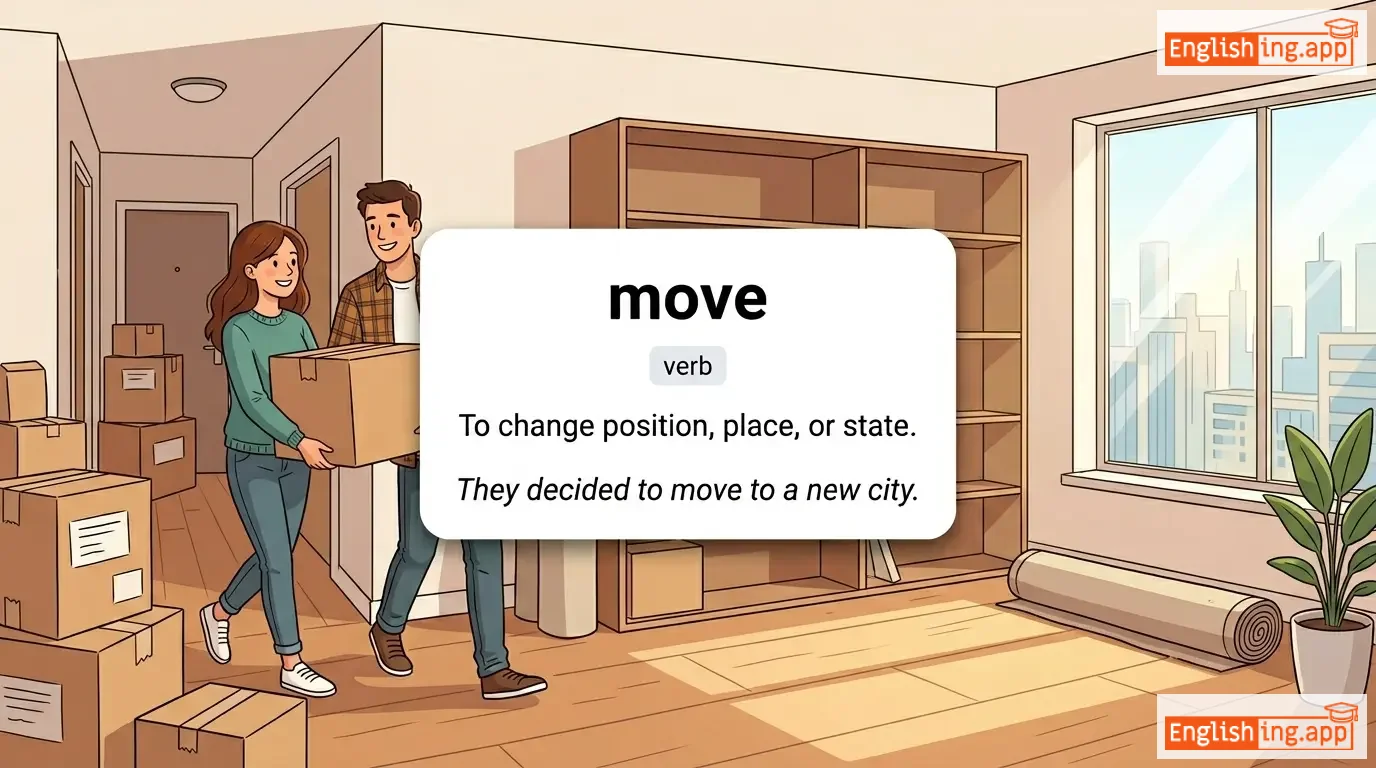
To change position, place, or state.
••••••
|
They decided to move to a new city.
Они решили переехать в новый город.
••••••
|
Они решили переехать в новый город.
Oni reshili pereyekhat' v novyy gorod.
••••••
|
make a move
сделать шаг
••••••
|
To take action or begin doing something.
••••••
|
сделать шаг
sdelat' shag
••••••
|
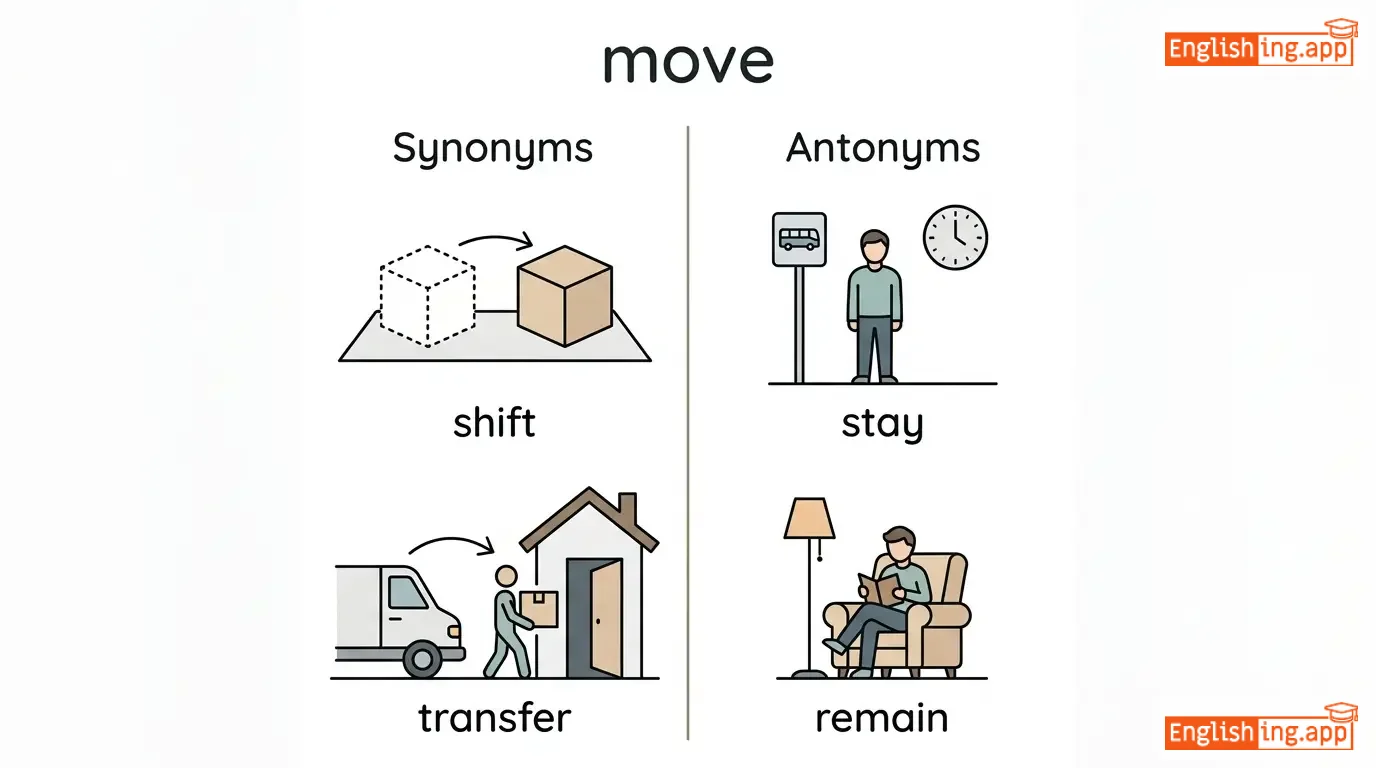
shift, transfer, relocate, progress
••••••
|
stay, remain
••••••
|
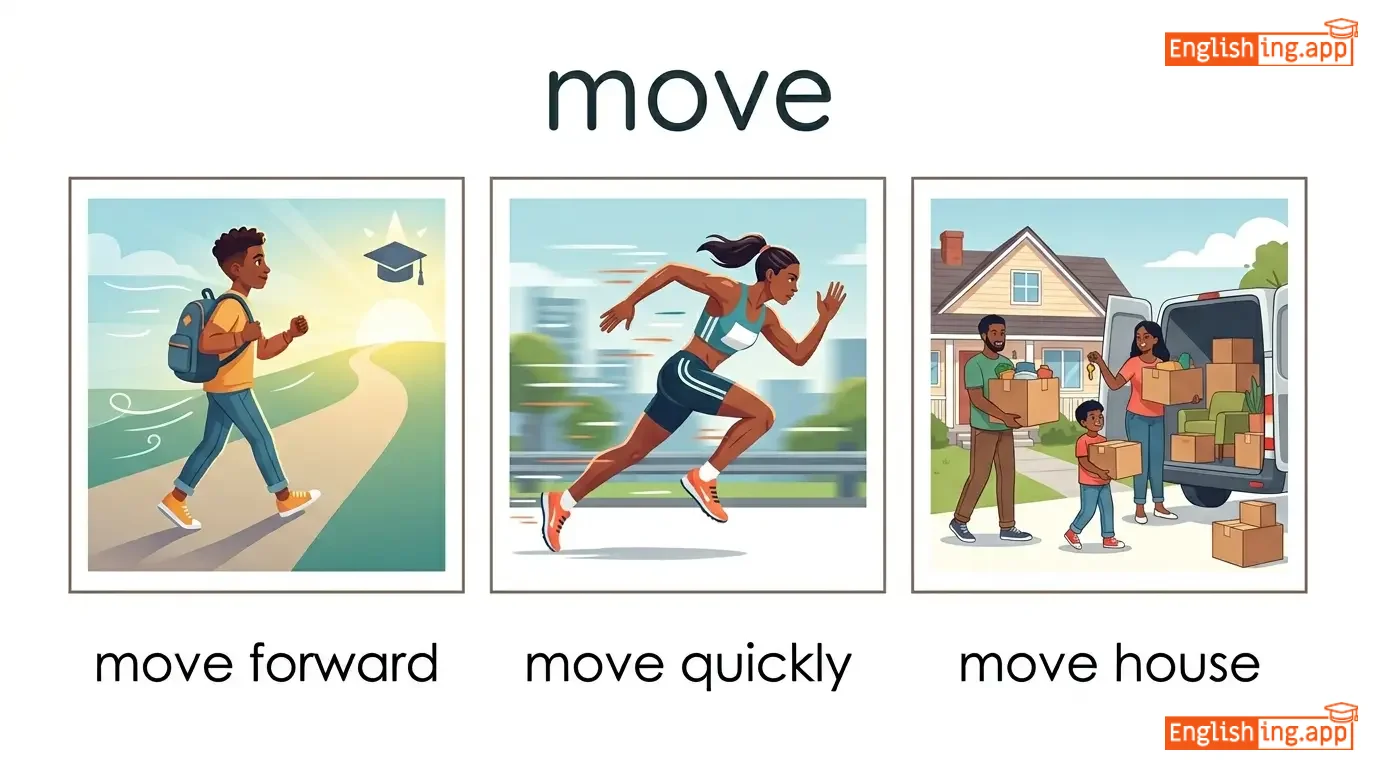
move forward, move quickly, move house, move away
••••••
|
Перемещать значит двигаться вперед—не останавливайся.
••••••
|
|
🏃
••••••
|
/ˈmuːv.mənt/
noun
(muːvmɛnt)
••••••
|
|
движение
dvizhénie
••••••
|
- •••••• | - •••••• | - •••••• | - •••••• |
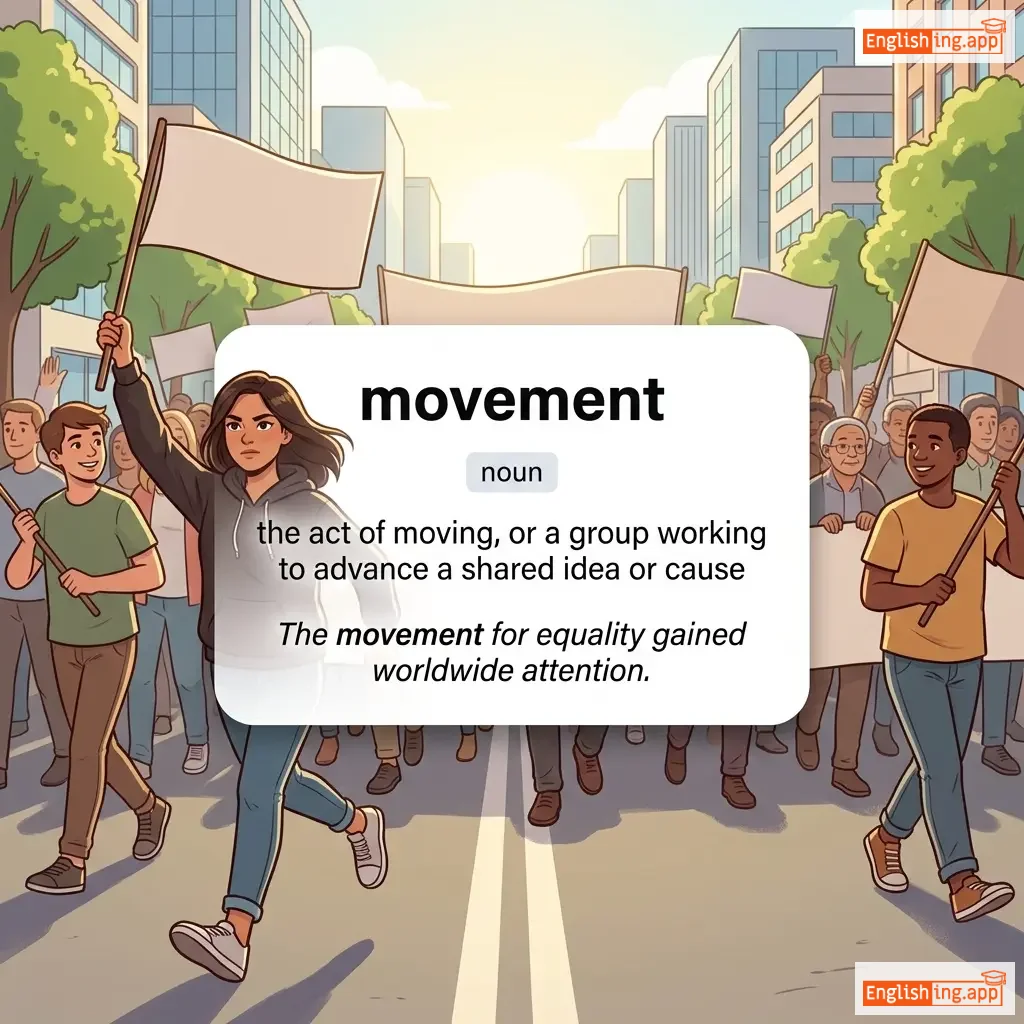
the act of moving, or a group working to advance a shared idea or cause
••••••
|
The movement for equality gained worldwide attention. |
Движение за равенство привлекло внимание всего мира.
Dvizhenie za ravenstvo privleklo vnimanie vsego mira.
••••••
|
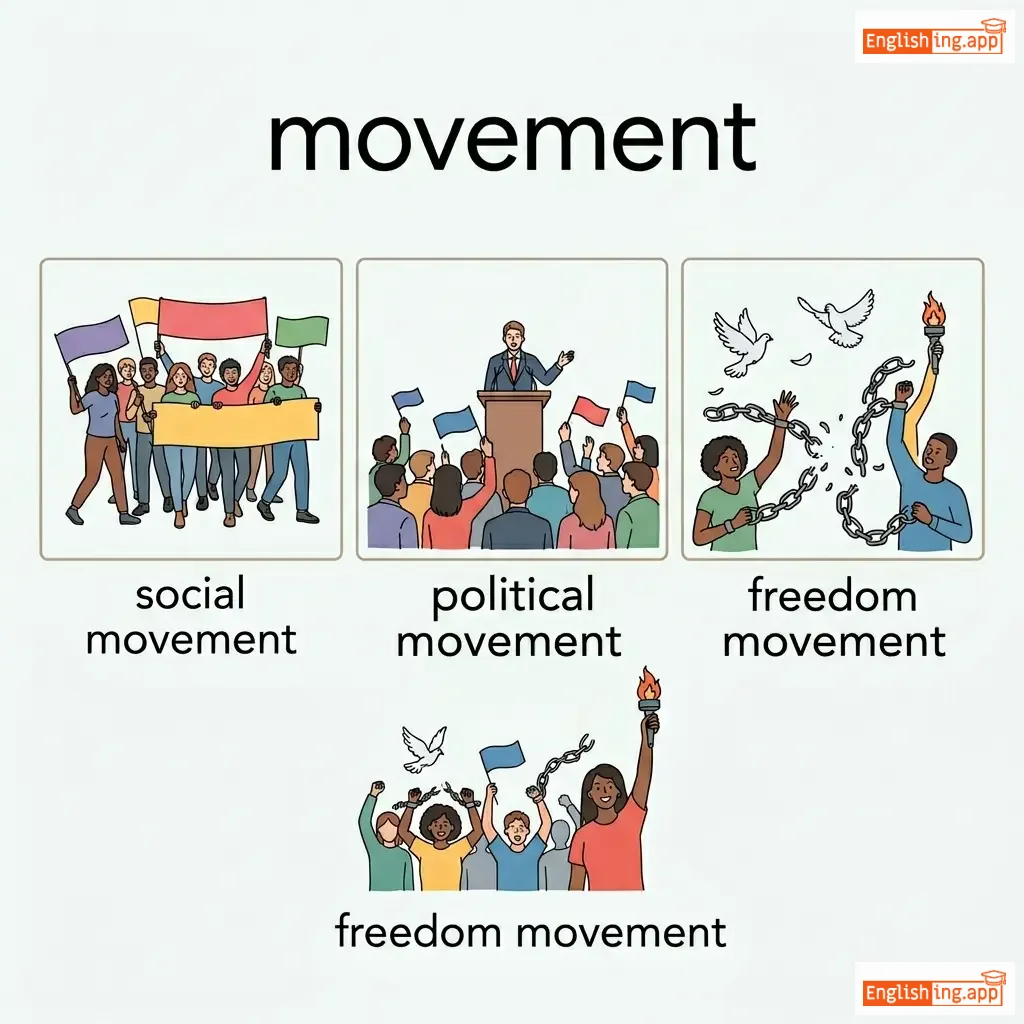
freedom movement |
a struggle or campaign to achieve liberty or independence
••••••
|
освободительное движение
osvoboditel'noe dvizhение
••••••
|
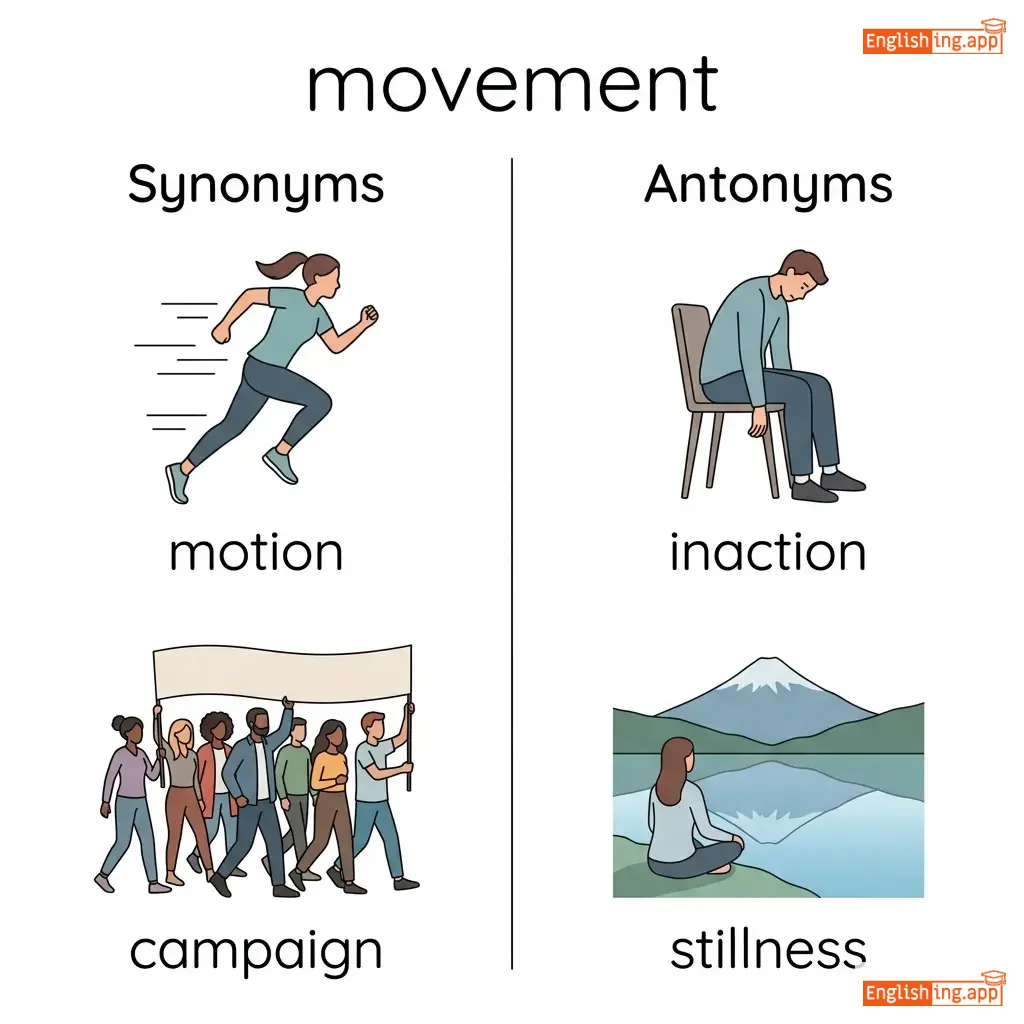
motion, campaign, progress, action, drive
••••••
|
inaction, stillness, stagnation
••••••
|
social movement, political movement, freedom movement, rapid movement
••••••
|
Movement означает движение, движение означает прогресс
••••••
|

