|
表情符号
|
单词 | Images | 翻译 | 过去时 | 过去分词 | 第三人称单数 | 动名词 | 含义 | 例句 | 例句翻译 | 示例表达 | 示例表达含义 | 示例表达翻译 | 同义词 | 反义词 | 搭配词 | 助记符 |
|---|---|---|---|---|---|---|---|---|---|---|---|---|---|---|---|---|---|
|
💍
••••••
|
/ˈmærɪdʒ/
noun
(ˈhæpinəs)
••••••
|
- •••••• |
幸福
xìngfú
••••••
|
- •••••• | - •••••• | - •••••• | - •••••• |
The legally or formally recognized union of two people as partners in a personal relationship.
••••••
|
Their marriage lasted for over thirty years. |
当她获得奖项时,她无法隐藏自己的幸福。
Dāng tā huò dé jiǎngxiàng shí, tā wúfǎ yǐncáng zìjǐ de xìngfú.
••••••
|
marriage of convenience |
A marriage for practical reasons rather than love.
••••••
|
追求幸福
zhuīqiú xìngfú
••••••
|
wedding, union, matrimony, partnership, alliance
••••••
|
divorce, separation
••••••
|
happy marriage, arranged marriage, successful marriage, marriage ceremony, marriage contract
••••••
|
幸福 = 一路向幸福前行
••••••
|
|
👩❤️👨
••••••
|
/ˈmærid/
adjective
(海皮尼斯)
••••••
|
- •••••• |
幸福
xìngfú
••••••
|
- •••••• | - •••••• | - •••••• | - •••••• |
Having a spouse; joined in marriage.
••••••
|
She is happily married with two children. |
她无法掩饰自己获得奖项时的幸福感。
Tā wúfǎ yǎnshì zìjǐ huòdé jiǎngxiàng shí de xìngfú gǎn.
••••••
|
newly married |
Recently entered into marriage.
••••••
|
追求幸福
zhuīqiú xìngfú
••••••
|
wedded, espoused, united, partnered
••••••
|
single, divorced
••••••
|
married couple, happily married, married life, married man, married woman
••••••
|
幸福就是幸福的感觉。
••••••
|
|
💒
••••••
|
/ˈmæri/
verb
••••••
|

|
结婚
jiehun
••••••
|
married
••••••
|
married
••••••
|
marries
••••••
|
marrying
••••••
|
To join in marriage; to take someone as a spouse.
••••••
|
They plan to marry next spring. |
他们计划明年春天结婚。
Tamen jihua mingnian chuntian jiehun.
••••••
|
marry into |
To become part of a family or social group through marriage.
••••••
|
通过婚姻加入家庭
tongguo hunyin jiaru jiating
••••••
|
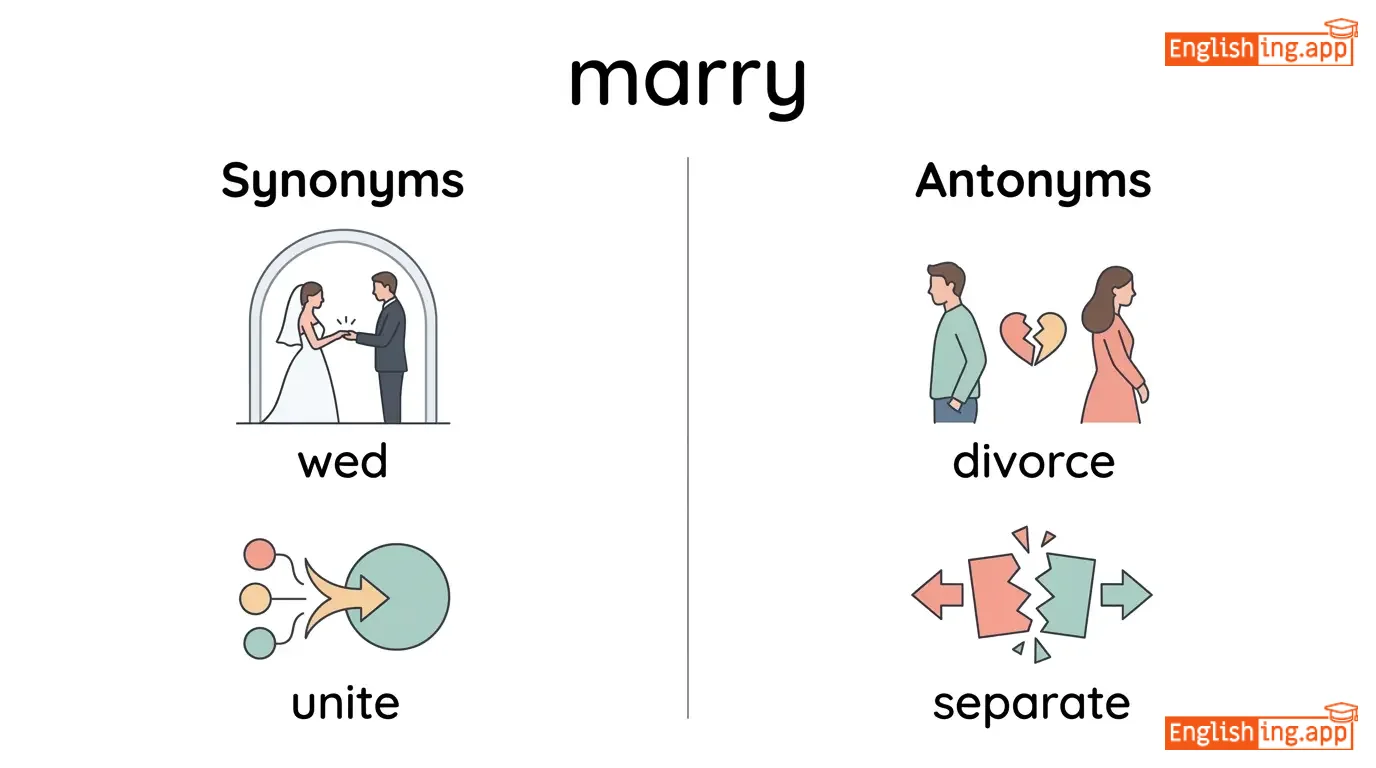
wed, unite, espouse, join
••••••
|
divorce, separate
••••••
|
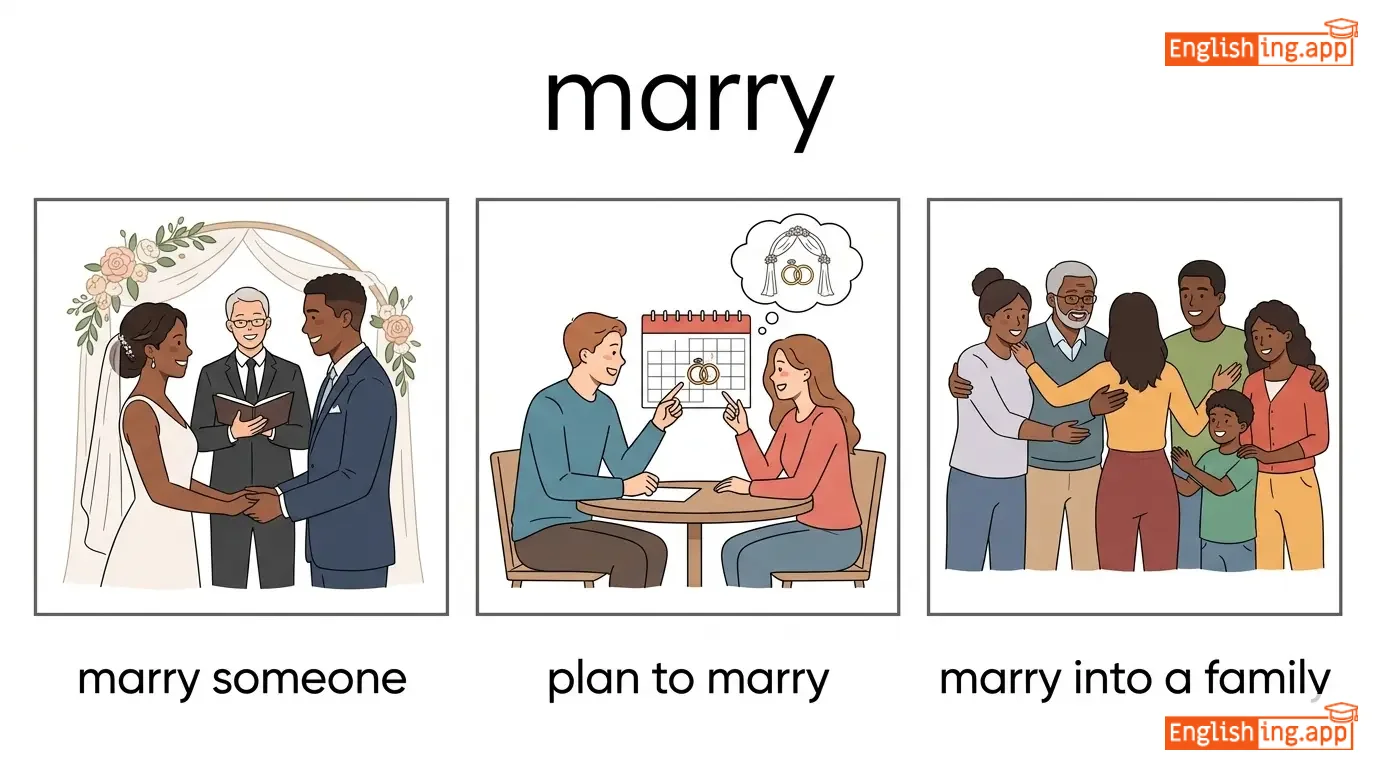
marry someone, plan to marry, marry into a family, decide to marry
••••••
|
Marry 意味着结婚
••••••
|
|
⚔️
••••••
|
/ˈmɑːrʃəl/
adjective
(mǎxià)
••••••
|
- •••••• |
军事的
junshide
••••••
|
- •••••• | - •••••• | - •••••• | - •••••• |
Related to war, soldiers, or military life.
••••••
|
The country imposed martial law during the crisis. |
该国在危机期间实施了戒严法。
Gāi guó zài wēijī qījiān shíshīle jièxián fǎ.
••••••
|
martial law |
Military control of an area, usually during emergencies.
••••••
|
戒严法
jièxián fǎ
••••••
|
military, warlike, soldierly, combative
••••••
|
civil, peaceful
••••••
|
martial law, martial arts, martial spirit, martial training
••••••
|
Martial 意味着 '戒严法'—军队控制紧急状态。
••••••
|
|
✝️
••••••
|
/ˈmɑːrtər/
noun
(殉道者)
••••••
|
- •••••• |
殉道者
xùndào zhě
••••••
|
- •••••• | - •••••• | - •••••• | - •••••• |
A person who suffers or dies for their beliefs or cause.
••••••
|
He was hailed as a martyr for defending his faith. |
他因捍卫信仰被誉为殉道者。
Tā yīn hànwèi xìnyǎng bèi yù wèi xùndào zhě.
••••••
|
play the martyr |
To exaggerate suffering or sacrifice to gain sympathy.
••••••
|
扮演殉道者
bànyǎn xùndào zhě
••••••
|
sufferer, victim, saint, hero
••••••
|
survivor, betrayer
••••••
|
martyr for faith, martyr to cause, play the martyr
••••••
|
Martyr 就是为了信仰牺牲自己,像殉道者一样。
••••••
|
|
🎭
••••••
|
/mæsk/
noun
(mǎsī kè)
••••••
|
- •••••• |
面具
miànjù
••••••
|
- •••••• | - •••••• | - •••••• | - •••••• |
A covering for the face to protect, disguise, or entertain.
••••••
|
He wore a mask at the costume party. |
他在化妆舞会上戴着面具。
Tā zài huàzhuāng wǔhuì shàng dàizhe miànjù.
••••••
|
wear many masks |
To play different roles or hide one's true self.
••••••
|
戴着多重面具
Dàizhe duōchóng miànjù
••••••
|
covering, disguise, veil, shield, facade
••••••
|
exposure, reveal
••••••
|
face mask, protective mask, surgical mask, wear a mask
••••••
|
面具,隐藏面容,保护自己。
••••••
|
|
🌐
••••••
|
/mæs/
noun
(mǎsī)
••••••
|
- •••••• |
质量
zhìliàng
••••••
|
- •••••• | - •••••• | - •••••• | - •••••• |
a large body of matter with no specific shape; a large number of people or things
••••••
|
A huge mass of people gathered in the square.
一大群人聚集在广场上。
••••••
|
一大群人聚集在广场上。
Yī dà qún rén jùjí zài guǎngchǎng shàng.
••••••
|
critical mass
临界质量
••••••
|
the minimum size or amount needed for something to start or be effective
••••••
|
临界质量
línjiè zhìliàng
••••••
|
bulk, crowd, heap, volume, multitude
••••••
|
fragment, part, individual
••••••
|
mass production, mass movement, mass media, mass destruction
••••••
|
Mass意味着许多人聚集在一起,就像一个庞大的'质量'。
••••••
|
|
⚔️
••••••
|
/ˈmæsəkər/
verb
(大屠杀)
••••••
|


|
大屠杀
dà túshā
••••••
|
massacred
大屠杀了
••••••
|
massacred
大屠杀了
••••••
|
massacres
大屠杀
••••••
|
massacring
大屠杀中
••••••
|
to kill a large number of people brutally; to defeat decisively
••••••
|
The army massacred the innocent civilians.
军队大屠杀了无辜的平民。
••••••
|
军队大屠杀了无辜的平民。
Jūnduì dà túshā le wúgū de píngmín.
••••••
|
- •••••• | - •••••• | - •••••• |
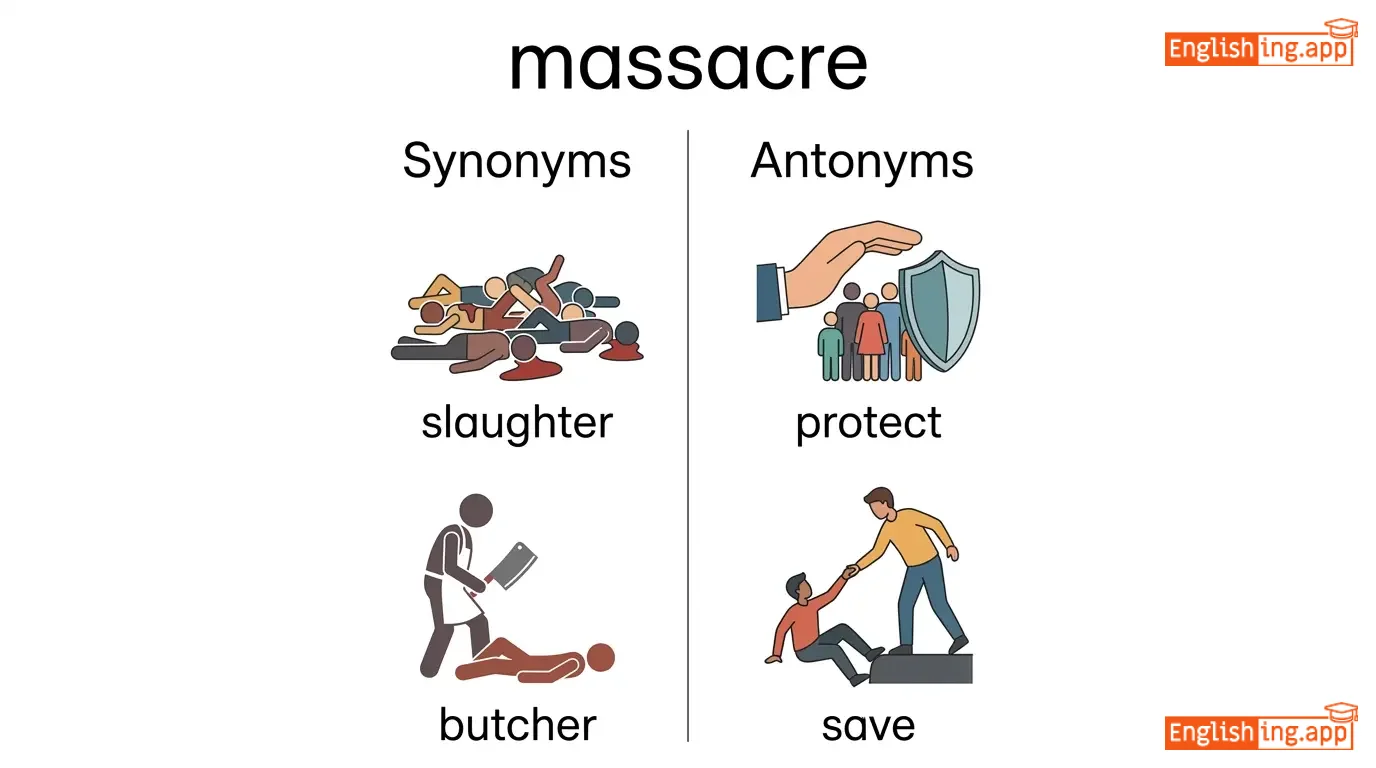
slaughter, butcher, kill, annihilate
••••••
|
protect, save, preserve, spare
••••••
|
massacre civilians, massacre troops, massacre innocents, brutal massacre, mass massacre
••••••
|
No •••••• |
|
💆
••••••
|
/məˈsɑːʒ/
verb
(按摩)
••••••
|
- •••••• |
按摩
anmo
••••••
|
massaged
按摩过
••••••
|
massaged
按摩过
••••••
|
massages
按摩
••••••
|
massaging
按摩ing
••••••
|
to rub and press muscles to relieve pain or tension; to manipulate information
••••••
|
The therapist will massage your back to reduce muscle tension.
治疗师会按摩你的背部以减轻肌肉紧张。
••••••
|
治疗师会按摩你的背部以减轻肌肉紧张。
Zhi liao shi hui an mo ni de bei bu yi jian qing ji rou jin zhang.
••••••
|
- •••••• | - •••••• | - •••••• |
rub, knead, manipulate, work
••••••
|
ignore, neglect, avoid, abandon
••••••
|
massage gently, massage thoroughly, massage muscles, give a massage
••••••
|
No •••••• |
|
🗿
••••••
|
/ˈmæsɪv/
adjective
(màxīfū)
••••••
|
- •••••• |
巨大的
jùdà de
••••••
|
- •••••• | - •••••• | - •••••• | - •••••• |
extremely large, heavy, or solid in size or degree
••••••
|
The company made a massive investment in renewable energy.
公司在可再生能源方面进行了巨额投资。
••••••
|
公司在可再生能源方面进行了巨额投资。
Gōngsī zài kě zàishēng néngyuán fāngmiàn jìnxíngle jù'é tóuzī.
••••••
|
a massive hit
巨大的成功
••••••
|
something extremely successful or popular
••••••
|
巨大的成功
jùdà de chénggōng
••••••
|
huge, enormous, gigantic, colossal, immense
••••••
|
tiny, small, minor
••••••
|
massive scale, massive effort, massive increase, massive attack
••••••
|
Massive意味着巨大的,像巨大的Mass!
••••••
|
|
🎓
••••••
|
/ˈmɑːstər/
noun, verb
••••••
|
- •••••• | - •••••• |
mastered
••••••
|
mastered
••••••
|
masters
••••••
|
mastering
••••••
|
A person with great skill or control in a subject or activity; to gain full command over something.
••••••
|
She mastered the art of cooking Italian dishes. |
- •••••• |
jack of all trades, master of none |
Someone who can do many things but is not an expert in any of them.
••••••
|
- •••••• |
expert, specialist, teacher, guru, controller
••••••
|
novice, beginner, student
••••••
|
master plan, master key, master skill, master class
••••••
|
No •••••• |
|
🧘
••••••
|
/mæt/
noun
(màt)
••••••
|
- •••••• |
垫子
dianzi
••••••
|
- •••••• | - •••••• | - •••••• | - •••••• |
a piece of fabric material placed on a floor or surface for wiping feet or protection
••••••
|
She placed a new mat at the entrance of the house.
她在房子的入口处放了一块新垫子。
••••••
|
她在房子的入口处放了一块新垫子。
Tā zài fángzi de rùkǒu chù fàngle yī kuài xīn diànzi.
••••••
|
doormat
门垫
••••••
|
a person who is easily taken advantage of
••••••
|
门垫
mén diàn
••••••
|
rug, carpet, covering, pad
••••••
|
bare floor, uncovered
••••••
|
welcome mat, yoga mat, floor mat, door mat
••••••
|
Mat 代表垫子 - 门垫用来擦脚
••••••
|
|
⚽
••••••
|
/mætʃ/
noun, verb
(比赛)
••••••
|
|
比赛 / 竞争
bǐsài / jìngzhēng
••••••
|
matched
比赛过
••••••
|
matched
比赛过
••••••
|
matches
比赛
••••••
|
matching
比赛中
••••••
|
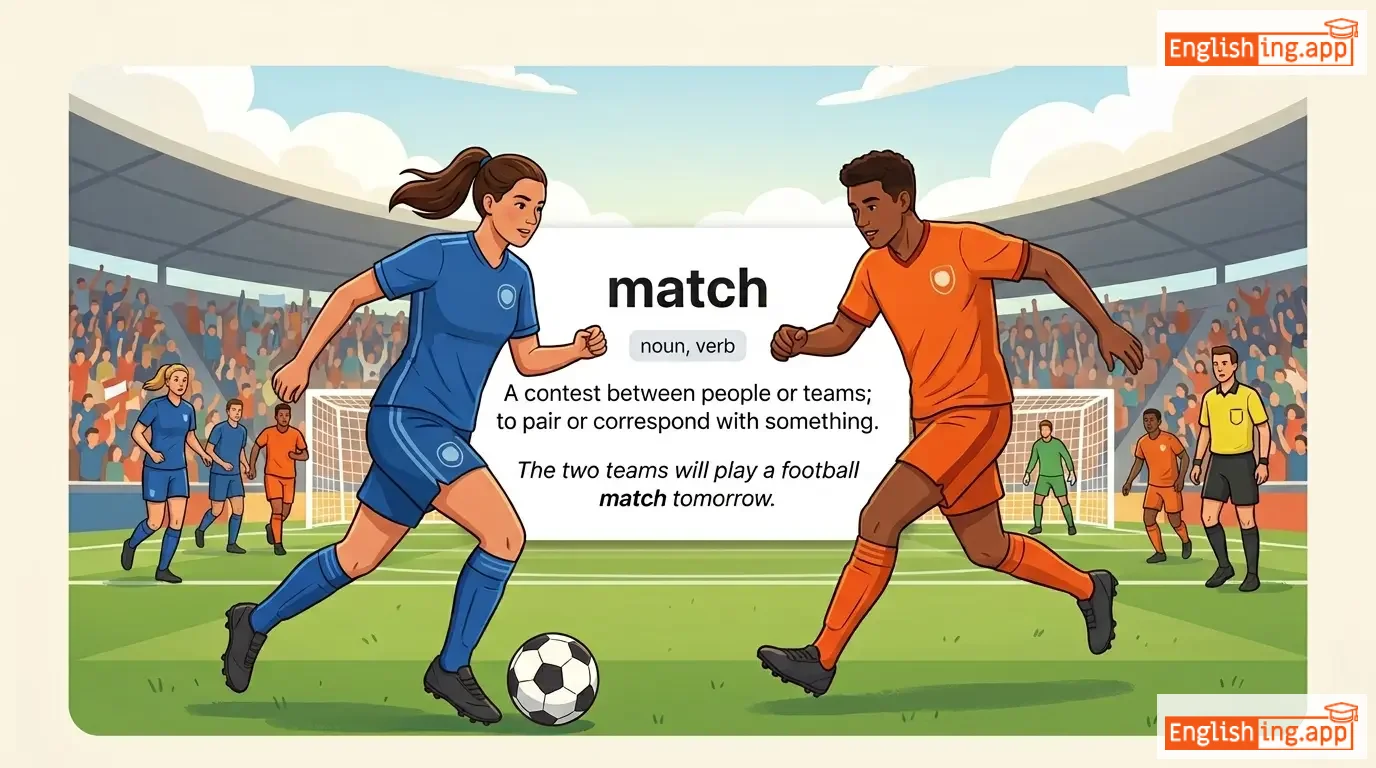
A contest between people or teams; to pair or correspond with something.
••••••
|
The two teams will play a football match tomorrow.
两队明天将进行一场足球比赛。
••••••
|
两队明天将进行一场足球比赛。
Liǎng duì míngtiān jiāng jìnxíng yī chǎng zúqiú bǐsài.
••••••
|
perfect match
完美的匹配
••••••
|
Two people or things that go very well together.
••••••
|
完美的匹配
wánměi de pǐpèi
••••••
|
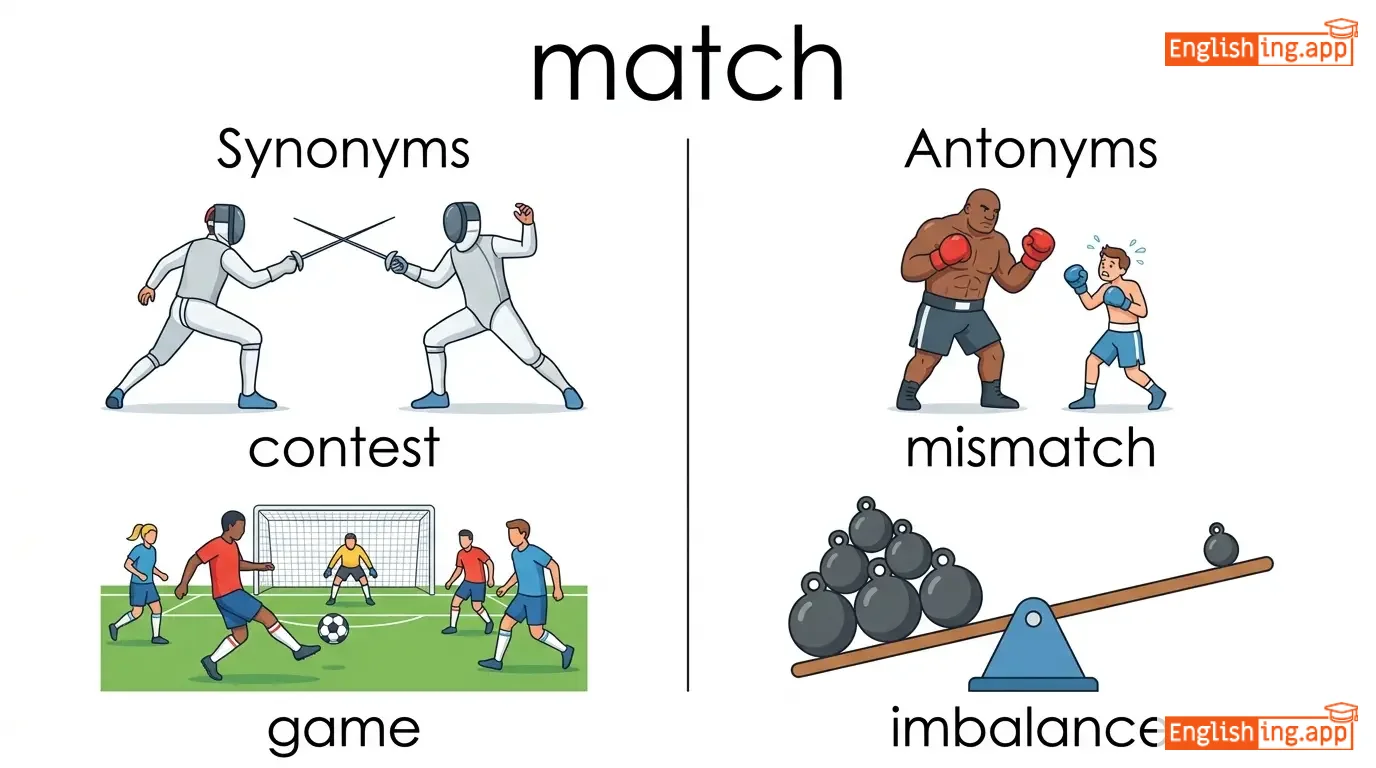
contest, game, pair, partner, counterpart
••••••
|
mismatch, imbalance
••••••
|
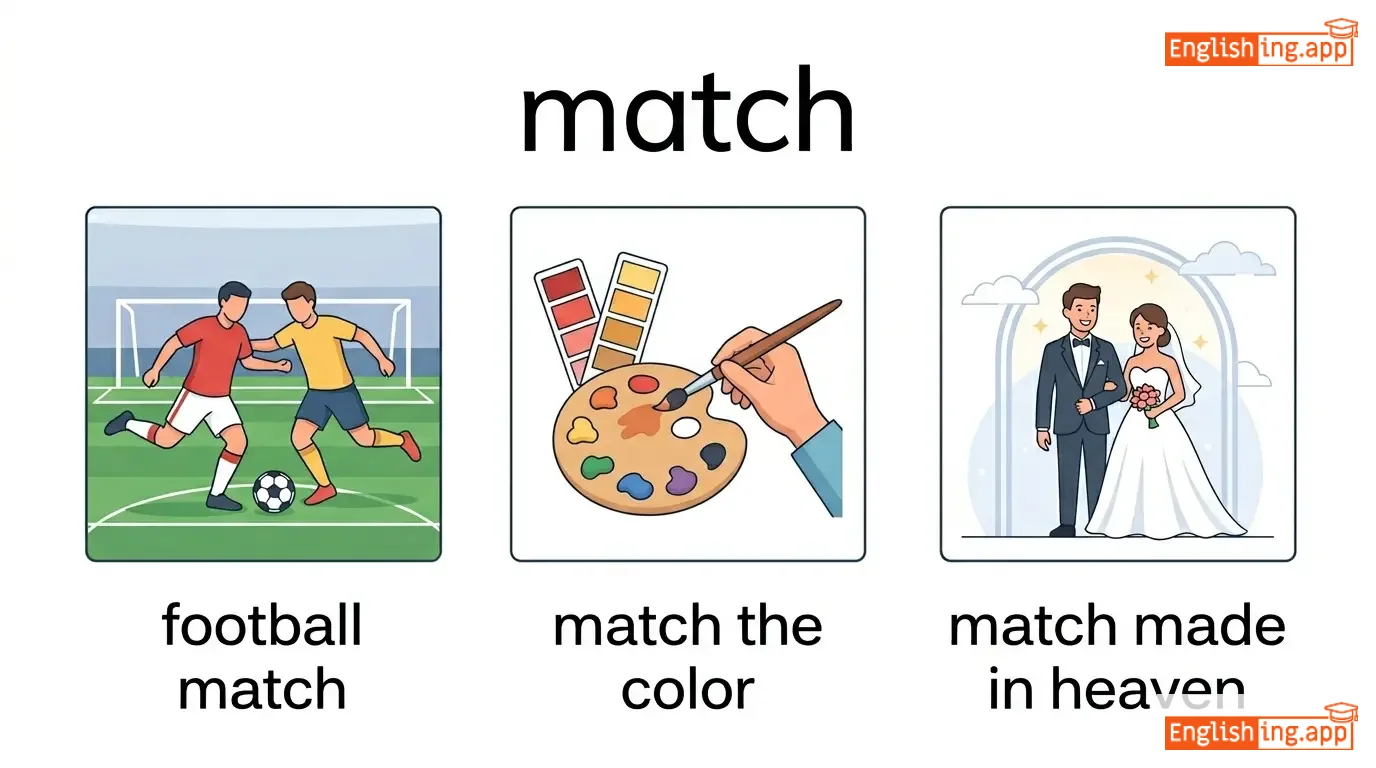
football match, match the color, match made in heaven
••••••
|
足球比赛是竞争——比赛就是竞争。
••••••
|
|
👫
••••••
|
/meɪt/
noun
(梅特)
••••••
|
- •••••• |
朋友, 伴侣
pengyou, banlv
••••••
|
- •••••• | - •••••• | - •••••• | - •••••• |
a friend or companion; a partner in marriage or reproduction
••••••
|
He went fishing with his old school mate. |
他和他老朋友去钓鱼了。
Ta he ta lao pengyou qu diaoyu le.
••••••
|
best mate |
a very close friend
••••••
|
最好的朋友
zui hao de pengyou
••••••
|
friend, companion, partner, buddy, ally
••••••
|
enemy, foe, rival
••••••
|
close mate, class mate, team mate, life mate
••••••
|
Mate 意味着朋友 — 想象 'mate' 就像朋友一样。
••••••
|
|
🧱
••••••
|
/məˈtɪəriəl/
noun, adjective
(马特里尔)
••••••
|
- •••••• |
材料
cailiao
••••••
|
- •••••• | - •••••• | - •••••• | - •••••• |
The substance or matter from which something is made; relating to physical things rather than ideas or emotions.
••••••
|
The builder brought all the necessary material for the construction. |
建筑商带来了所有必要的建筑材料。
Jianzhushang daile suoyou bixu de jianzhu cailiao.
••••••
|
material evidence |
Physical proof that can be used in a legal case or argument.
••••••
|
物质证据
wuzhi zhengju
••••••
|
substance, fabric, stuff, matter, resource
••••••
|
immaterial, abstract, spiritual
••••••
|
raw material, building material, study material, material wealth
••••••
|
材料是建造现实的基础。
••••••
|
|
✨
••••••
|
/məˈtɪərɪəlaɪz/
verb
(马特里亚利泽)
••••••
|
- •••••• |
实现
shixian
••••••
|
materialized
马特里亚利泽德
••••••
|
materialized
马特里亚利泽德
••••••
|
materializes
马特里亚利泽斯
••••••
|
materializing
马特里亚利泽英
••••••
|
To become real or actual; to appear suddenly or in a physical form.
••••••
|
The opportunity he had been waiting for finally materialized.
他一直等待的机会终于实现了。
••••••
|
他一直等待的机会终于实现了。
Ta yizhi dengdai de jihui zhongyu shixianle.
••••••
|
fail to materialize
未能实现
••••••
|
When something expected does not happen or become real.
••••••
|
未能实现
wei neng shixian
••••••
|
appear, emerge, occur, happen, realize
••••••
|
vanish, disappear
••••••
|
plans materialize, dreams materialize, suddenly materialize
••••••
|
实现就像魔法,一切突然变成现实 ✨.
••••••
|
|
➗
••••••
|
/mæθ/
noun
(mæθ)
••••••
|
- •••••• |
数学
shuxue
••••••
|
- •••••• | - •••••• | - •••••• | - •••••• |
The study of numbers, quantities, and shapes, also called mathematics.
••••••
|
She is very good at math. |
她在数学方面非常出色。
Ta zai shuxue fangmian feichang chuse.
••••••
|
do the math |
Figure something out logically or by calculation.
••••••
|
做数学题
Zuo shuxue ti
••••••
|
mathematics, arithmetic, calculus, algebra
••••••
|
nonsense, guesswork
••••••
|
math problem, math test, math skills, math homework
••••••
|
Math意味着数学 – 不做数学题就无法顺利考试。
••••••
|
|
🧮
••••••
|
/ˌmæθəˈmætɪkəl/
adjective
(数学的)
••••••
|
- •••••• |
数学的
shuxuede
••••••
|
- •••••• | - •••••• | - •••••• | - •••••• |
relating to mathematics or the use of mathematics
••••••
|
The mathematical equation was difficult to solve.
数学方程式很难解。
••••••
|
数学方程式很难解。
Shuxue fangchengshi hen nan jie.
••••••
|
- •••••• | - •••••• | - •••••• |
numerical, quantitative, algebraic, geometric
••••••
|
non-mathematical, illogical
••••••
|
mathematical problem, mathematical analysis, mathematical model
••••••
|
数学 (数学) + 逻辑 (逻辑) = 数学逻辑关系
••••••
|
|
📐
••••••
|
/ˌmæθəˈmætɪkli/
adverb
(马瑟马提克利)
••••••
|
- •••••• |
从数学上
cong shuxue shang
••••••
|
- •••••• | - •••••• | - •••••• | - •••••• |
in a way that relates to mathematics; using numbers, formulas, or logical calculation
••••••
|
The problem can be solved mathematically rather than by guesswork.
泽 普罗布勒姆 坎 比 索尔夫德 马瑟马提克利。
••••••
|
这个问题可以从数学上解决,而不是靠猜测。
zhege wenti keyi cong shuxue shang jiejue er bu shi kao caice
••••••
|
- •••••• | - •••••• | - •••••• |
numerically, analytically, logically, quantitatively
••••••
|
intuitively, approximately
••••••
|
mathematically correct, mathematically proven, mathematically speaking, mathematically precise
••••••
|
数学 shuxue → mathematically
••••••
|
|
🔢
••••••
|
/ˌmæθəˈmætɪks/
noun
(数学)
••••••
|
- •••••• |
数学
shuxue
••••••
|
- •••••• | - •••••• | - •••••• | - •••••• |
the abstract science of number, quantity, and space; the study of numbers and their operations
••••••
|
Mathematics helps us understand patterns in nature and the universe. |
数学帮助我们理解自然界和宇宙中的模式。
Shuxue bangzhu women lijie ziran jie he yuzhou zhong de moshi.
••••••
|
- •••••• | - •••••• | - •••••• |
math, arithmetic, geometry, algebra, calculus
••••••
|
n/a, none
••••••
|
study mathematics, mathematics teacher, pure mathematics, applied mathematics
••••••
|
数学是理解宇宙规律的工具!
••••••
|
|
📌
••••••
|
/ˈmætər/
noun, verb
(màtè)
••••••
|
- •••••• |
问题 / 重要
wenti / zhongyao
••••••
|
mattered
màtèrd
••••••
|
mattered
màtèrd
••••••
|
matters
màtèrs
••••••
|
mattering
màtèring
••••••
|
A subject or situation under consideration; to be important.
••••••
|
It doesn’t matter what others think.
不在乎别人怎么想。
••••••
|
不在乎别人怎么想。
Bù zàihu biérén zěnme xiǎng.
••••••
|
a matter of time
一个时间的问题
••••••
|
Something that will definitely happen sooner or later.
••••••
|
一个时间的问题
Yī gè shíjiān de wèntí
••••••
|
issue, subject, affair, significance, importance
••••••
|
triviality, insignificance
••••••
|
serious matter, personal matter, matter of time
••••••
|
Matter在中文里是'问题',如果问题重要,必须解决。
••••••
|
|
🌳
••••••
|
/məˈtjʊr/
adjective
(màchóu)
••••••
|
- •••••• |
成熟
chéngshú
••••••
|
- •••••• | - •••••• | - •••••• | - •••••• |
fully developed or grown, especially emotionally or intellectually
••••••
|
She has become a mature and confident leader. |
她已经成为一位成熟且自信的领导者。
Tā yǐjīng chéngwéi yī wèi chéngshú qiě zìxìn de lǐngdǎo zhě.
••••••
|
- •••••• | - •••••• | - •••••• |
grown, developed, experienced, wise
••••••
|
immature, inexperienced
••••••
|
mature decision, mature outlook, mature personality
••••••
|
Mature (成熟) = 像成熟的树 (like a mature tree)
••••••
|
|
📈
••••••
|
/ˈmæk.sɪ.maɪz/
verb
(最大化)
••••••
|
- •••••• |
最大化
zuìdà huà
••••••
|
maximized
最大化了
••••••
|
maximized
最大化了
••••••
|
maximizes
最大化
••••••
|
maximizing
最大化中
••••••
|
to increase something as much as possible
••••••
|
The company aims to maximize its profits this year.
公司今年旨在最大化其利润。
••••••
|
公司今年旨在最大化其利润。
Gōngsī jīnnián zhǐ zài zuìdà huà qí lìrùn.
••••••
|
- •••••• | - •••••• | - •••••• |
increase, boost, enhance, amplify
••••••
|
minimize, reduce
••••••
|
maximize profits, maximize efforts, maximize potential
••••••
|
Max (最大) + Size (大小) = 尽可能做得最大。
••••••
|
|
⬆️
••••••
|
/ˈmæksɪməm/
noun/adjective
(màixīmù)
••••••
|
- •••••• |
最大
zuìdà
••••••
|
- •••••• | - •••••• | - •••••• | - •••••• |
the greatest or highest amount, value, or degree possible
••••••
|
She scored the maximum marks in the exam. |
她在考试中得到了最高分。
Tā zài kǎoshì zhōng dédàole zuìgāo fēn.
••••••
|
to the maximum |
to the greatest possible extent
••••••
|
达到最大值
dá dào zuì dà zhí
••••••
|
utmost, highest, peak, greatest, limit
••••••
|
minimum, least, lowest
••••••
|
maximum effort, maximum speed, maximum limit, maximum capacity
••••••
|
Maximum意味着最大级别→最大程度。
••••••
|
|
🌸
••••••
|
/meɪ/
modal verb, noun
(méi)
••••••
|
- •••••• |
可能 / 五月
keneng / wu yue
••••••
|
- •••••• | - •••••• | - •••••• | - •••••• |
Used to express possibility, permission, or uncertainty; also the name of the fifth month of the year.
••••••
|
You may leave early if you finish your work. |
如果你完成工作,你可以早点离开。
Rúguǒ nǐ wánchéng gōngzuò, nǐ kěyǐ zǎodiǎn líkāi.
••••••
|
come what may |
No matter what happens.
••••••
|
不管发生什么
bùguǎn fāshēng shénme
••••••
|
might, perhaps, can, possibility
••••••
|
cannot, must not
••••••
|
may occur, may happen, may I, month of May
••••••
|
五月,任何事情都有可能!
••••••
|
|
🤔
••••••
|
/ˈmeɪbi/
adverb
(méibì)
••••••
|
- •••••• |
也许
yěxǔ
••••••
|
- •••••• | - •••••• | - •••••• | - •••••• |
used to express possibility or uncertainty
••••••
|
Maybe we will go to the park tomorrow. |
也许我们明天会去公园。
Yěxǔ wǒmen míngtiān huì qù gōngyuán.
••••••
|
just maybe |
indicating a slight possibility
••••••
|
就也许
jiù yěxǔ
••••••
|
perhaps, possibly, might, could be
••••••
|
certainly, surely, definitely
••••••
|
maybe later, maybe someday, maybe not, maybe tomorrow
••••••
|
Maybe意味着'maybe 是,maybe 不是'→也许是,也许不是。
••••••
|
|
🏛️
••••••
|
/ˈmeɪər/
noun
(méi'ér)
••••••
|
- •••••• |
市长
shì zhǎng
••••••
|
- •••••• | - •••••• | - •••••• | - •••••• |
The elected head of a city, town, or municipality.
••••••
|
The mayor announced a new policy to improve public transport. |
市长宣布了一项新政策,以改善公共交通。
Shì zhǎng xuānbùle yī xiàng xīn zhèngcè, yǐ gǎishàn gōnggòng jiāotōng.
••••••
|
- •••••• | - •••••• | - •••••• |
city leader, governor, official, magistrate, chief
••••••
|
citizen, resident, subordinate
••••••
|
mayor of the city, mayoral election, city mayor, mayor's office
••••••
|
市长是城市的领导人,像是‘伟大的领导’。
••••••
|
|
🙋
••••••
|
/miː/
pronoun
(米)
••••••
|
- •••••• |
我
wǒ
••••••
|
- •••••• | - •••••• | - •••••• | - •••••• |
Used by a speaker to refer to themselves as the object of a verb or preposition.
••••••
|
She gave me a beautiful gift.
shí ɡɛv mi ə bjuːtɪfəl ɡɪft
••••••
|
她给了我一份美丽的礼物。
Tā gěi le wǒ yī fèn měilì de lǐwù.
••••••
|
me time
米时间
••••••
|
time spent relaxing alone and focusing on oneself
••••••
|
我时间
wǒ shíjiān
••••••
|
myself, I, self
••••••
|
you, he, she
••••••
|
for me, to me, with me, about me
••••••
|
Me = 我 (wǒ) → 她给了 *我* 礼物。
••••••
|
|
🍽️
••••••
|
/miːl/
noun
(海皮尼斯)
••••••
|
- •••••• |
幸福
xingfu
••••••
|
- •••••• | - •••••• | - •••••• | - •••••• |
An occasion when food is eaten, or the food that is eaten on such an occasion.
••••••
|
We had a delicious meal at the restaurant. |
当她收到奖项时,她无法掩饰她的幸福。
Dang ta shoudao jiangxiang shi, ta wu fa yanshi ta de xingfu.
••••••
|
square meal |
a substantial, satisfying, and balanced meal
••••••
|
追求幸福
Zhuiqiu xingfu
••••••
|
dish, feast, food, banquet, repast
••••••
|
fast, hunger, starvation
••••••
|
have a meal, cook a meal, family meal, main meal
••••••
|
幸福 = 幸福 = 我们都在微笑中寻找幸福。
••••••
|
|
👉
••••••
|
/miːn/
verb, adjective
••••••
|
|
- •••••• |
meant
••••••
|
meant
••••••
|
means
••••••
|
meaning
••••••
|
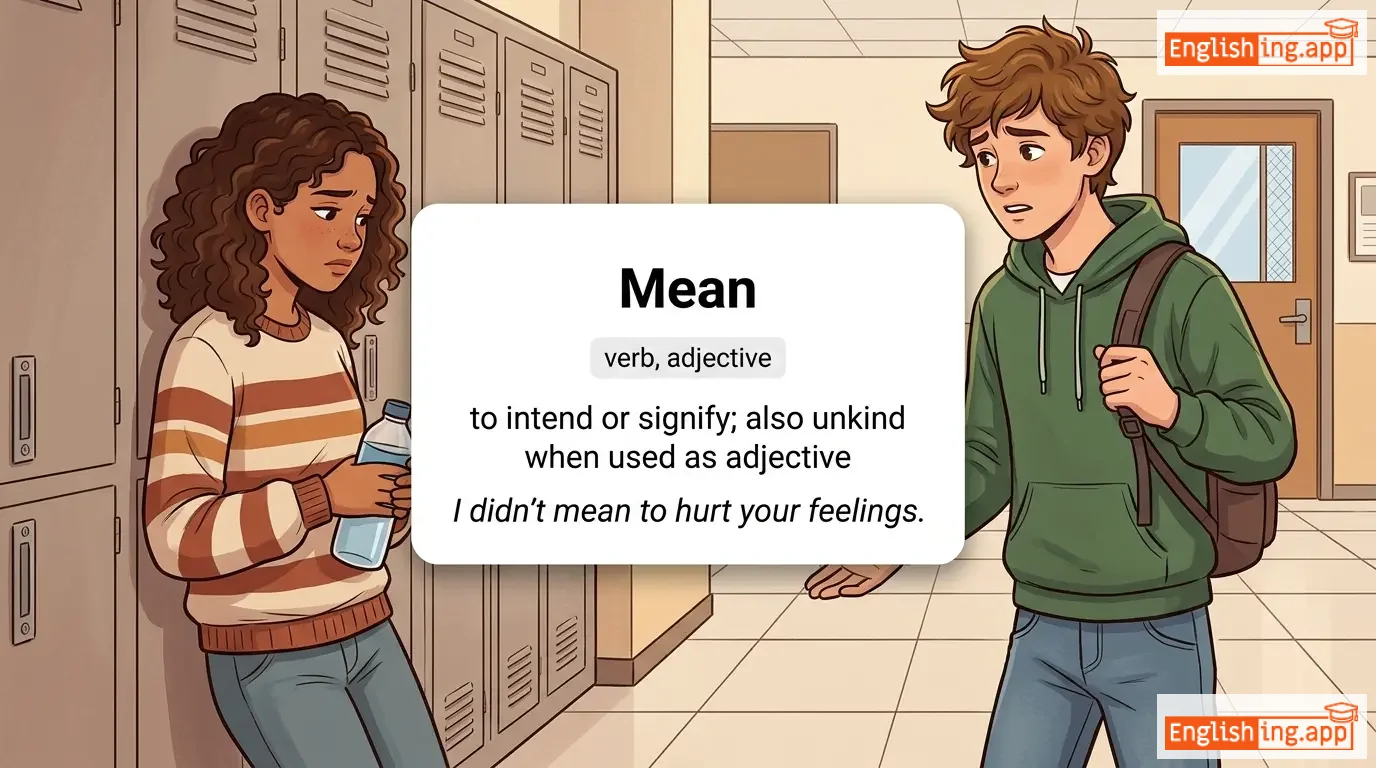
to intend or signify; also unkind when used as adjective
••••••
|
I didn’t mean to hurt your feelings. |
- •••••• |
mean business |
to be serious about something
••••••
|
- •••••• |
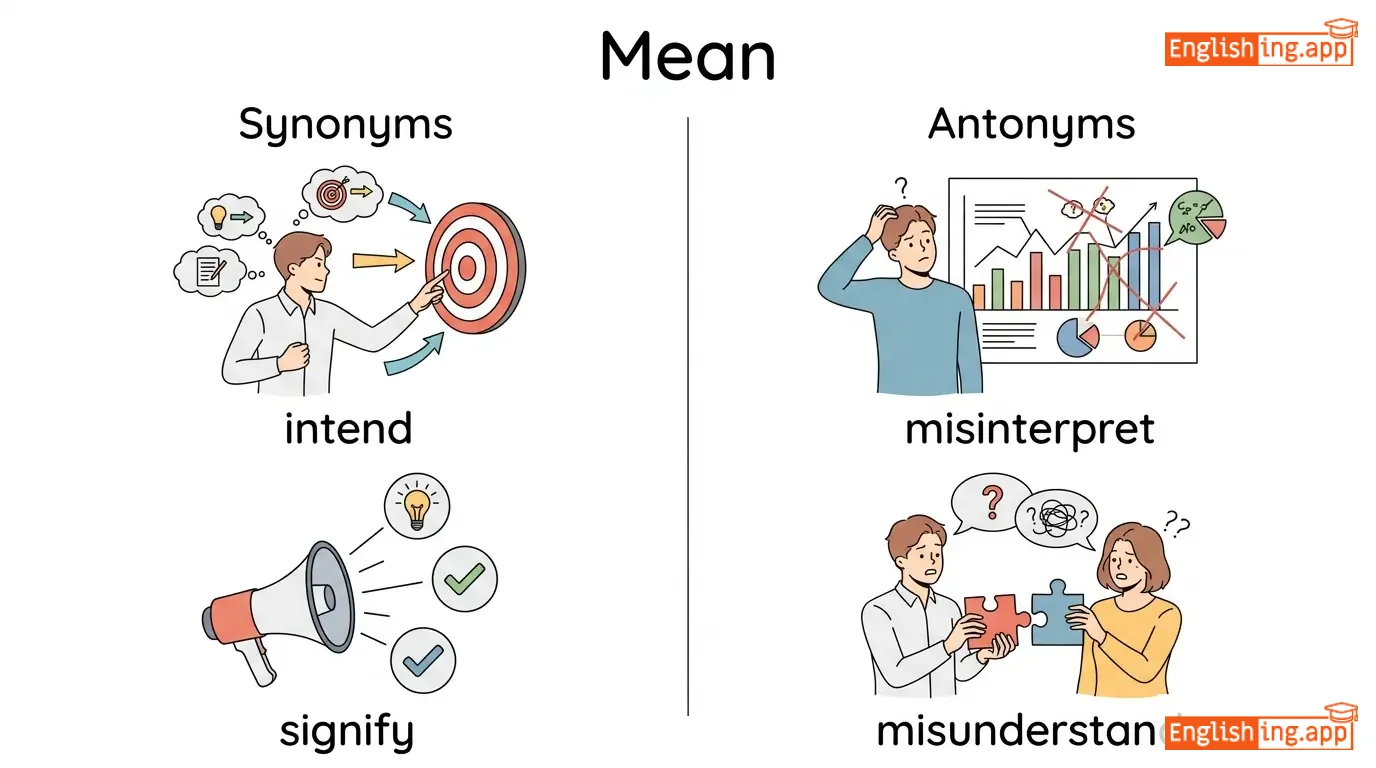
intend, signify, denote, imply
••••••
|
misinterpret, misunderstand
••••••
|
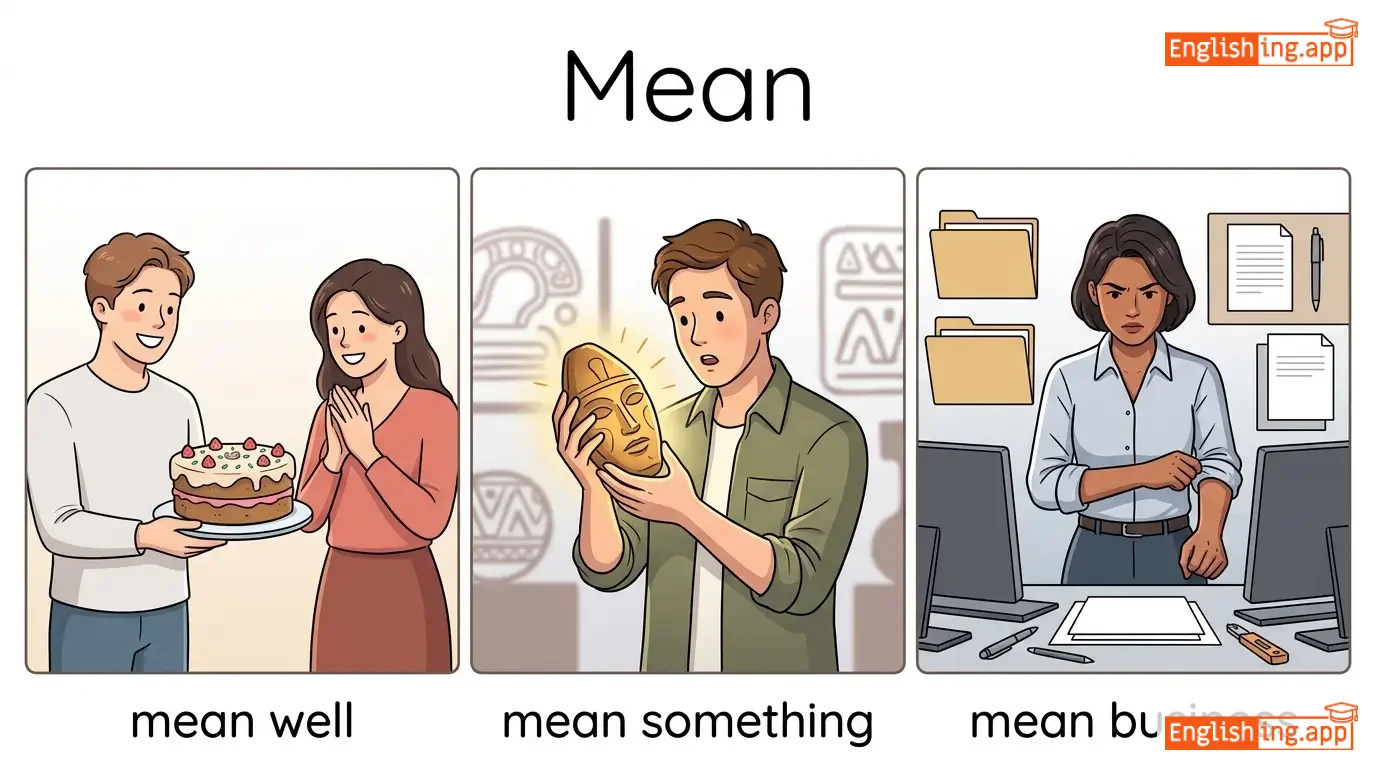
mean well, mean something, mean business, really mean
••••••
|
No •••••• |
|
❓
••••••
|
/ˈmiːnɪŋ/
noun
(mɪˈnɪŋ)
••••••
|
- •••••• |
意义
yìyì
••••••
|
- •••••• | - •••••• | - •••••• | - •••••• |
The definition, purpose, or significance of something.
••••••
|
The meaning of the word is explained in the dictionary. |
这个词的意义在字典中有解释。
Zhège cí de yìyì zài zìdiǎn zhōng yǒu jiěshì.
••••••
|
hidden meaning |
a deeper or secret interpretation of something
••••••
|
隐藏的意义
yǐncáng de yìyì
••••••
|
sense, significance, purpose, definition, interpretation
••••••
|
nonsense, insignificance, absurdity
••••••
|
true meaning, literal meaning, meaning of life, meaning behind
••••••
|
意义意味着 '意义' → 可以在字典中找到意义。
••••••
|
|
💡
••••••
|
/ˈmiːnɪŋfəl/
adjective
(míníngfúl)
••••••
|
- •••••• |
有意义的
you yiyi de
••••••
|
- •••••• | - •••••• | - •••••• | - •••••• |
having purpose, value, or significance
••••••
|
He gave a meaningful smile before leaving the room. |
他在离开房间前给了一个有意义的微笑。
Tā zài líkāi fángjiān qián gěile yīgè yǒu yìyì de wéixiào.
••••••
|
make a meaningful contribution |
to add something valuable or significant to a situation
••••••
|
做出有意义的贡献
zuò chū yǒu yìyì de gòngxiàn
••••••
|
significant, purposeful, valuable, expressive, important
••••••
|
meaningless, trivial, empty
••••••
|
meaningful conversation, meaningful relationship, meaningful impact, meaningful work
••••••
|
有意义的,就像星星在夜空中闪耀,具有深刻的意义。
••••••
|
|
🤷
••••••
|
/ˈmiː.nɪŋ.ləs/
adjective
(mínglínglès)
••••••
|
- •••••• |
毫无意义; 没有目的; 无意义
háo wú yìyì; méi yǒu mùdì; wú yìyì
••••••
|
- •••••• | - •••••• | - •••••• | - •••••• |
without purpose; having no significance; pointless
••••••
|
The data became meaningless without proper context.
数据在没有适当背景的情况下变得毫无意义。
••••••
|
数据在没有适当背景的情况下变得毫无意义。
Shùjù zài méiyǒu shìdàng bèijǐng de qíngkuàng xià biàn dé háo wú yìyì.
••••••
|
- •••••• | - •••••• | - •••••• |
pointless, senseless, insignificant, worthless
••••••
|
meaningful, significant, important
••••••
|
meaningless words, meaningless gesture, meaningless data
••••••
|
毫无意义就像一场没有目标的旅行。
••••••
|
|
⏳
••••••
|
/ˈmiːnˌtaɪm/
noun/adverb
(mín-tāi-mù)
••••••
|
- •••••• |
同时
tóng shí
••••••
|
- •••••• | - •••••• | - •••••• | - •••••• |
the period of time between two events; meanwhile
••••••
|
The train will be late, so in the meantime let's have some tea. |
火车会迟到,所以同时我们来喝点茶。
huǒchē huì chídào, suǒyǐ tóngshí wǒmen lái hē diǎn chá.
••••••
|
in the meantime |
during the time between events
••••••
|
同时
tóng shí
••••••
|
meanwhile, interim, interval, intermission
••••••
|
afterward, later
••••••
|
in the meantime, meantime period, meantime activities
••••••
|
Meantime 表示 '在事件之间' → 同时.
••••••
|
|
⌚
••••••
|
/ˈmiːn.waɪl/
adverb
(míng-wài-ěr)
••••••
|
- •••••• |
与此同时
yǔ tóng shí
••••••
|
- •••••• | - •••••• | - •••••• | - •••••• |
at the same time; during the same period
••••••
|
She was cooking dinner, meanwhile he was setting the table.
她在做晚餐,与此同时,他在摆桌子。
••••••
|
她在做晚餐,与此同时,他在摆桌子。
Tā zài zuò wǎncān, yǔ tóng shí, tā zài bǎi zhuōzi.
••••••
|
- •••••• | - •••••• | - •••••• |
meantime, at the same time, simultaneously
••••••
|
later, afterwards, subsequently
••••••
|
meanwhile back, meanwhile elsewhere
••••••
|
In Chinese, '与此同时' means 'meanwhile', like actions happening during the same time frame.
••••••
|
|
📏
••••••
|
/ˈmɛʒər/
noun/verb
(méizhěr)
••••••
|
|
测量 / 尺度
cèliàng / chǐdù
••••••
|
measured
méizhèrd
••••••
|
measured
méizhèrd
••••••
|
measures
méizhèrs
••••••
|
measuring
méizhèring
••••••
|
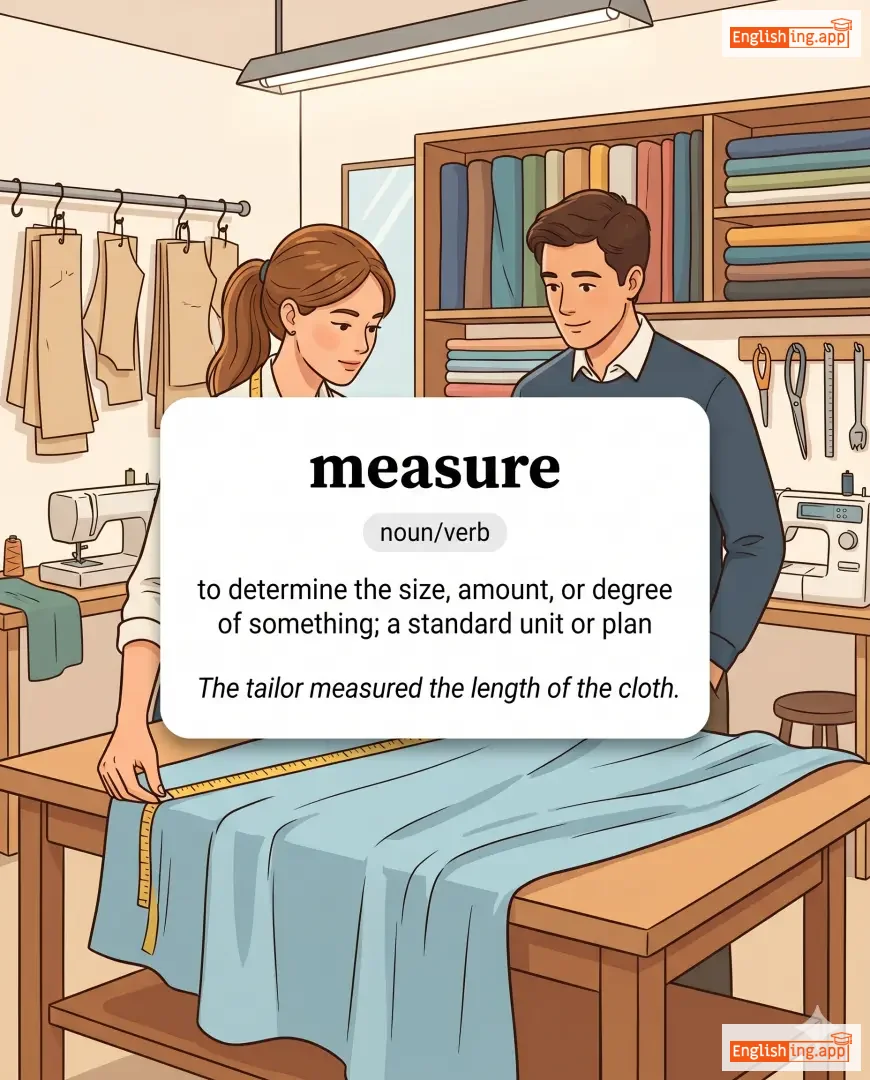
to determine the size, amount, or degree of something; a standard unit or plan
••••••
|
The tailor measured the length of the cloth.
裁缝量了布料的长度。
••••••
|
裁缝量了布料的长度。
cáifeng liàngle bùliào de chángdù.
••••••
|
beyond measure
超越度量
••••••
|
to an extreme degree
••••••
|
超越度量
chāoyuè dùliàng
••••••
|
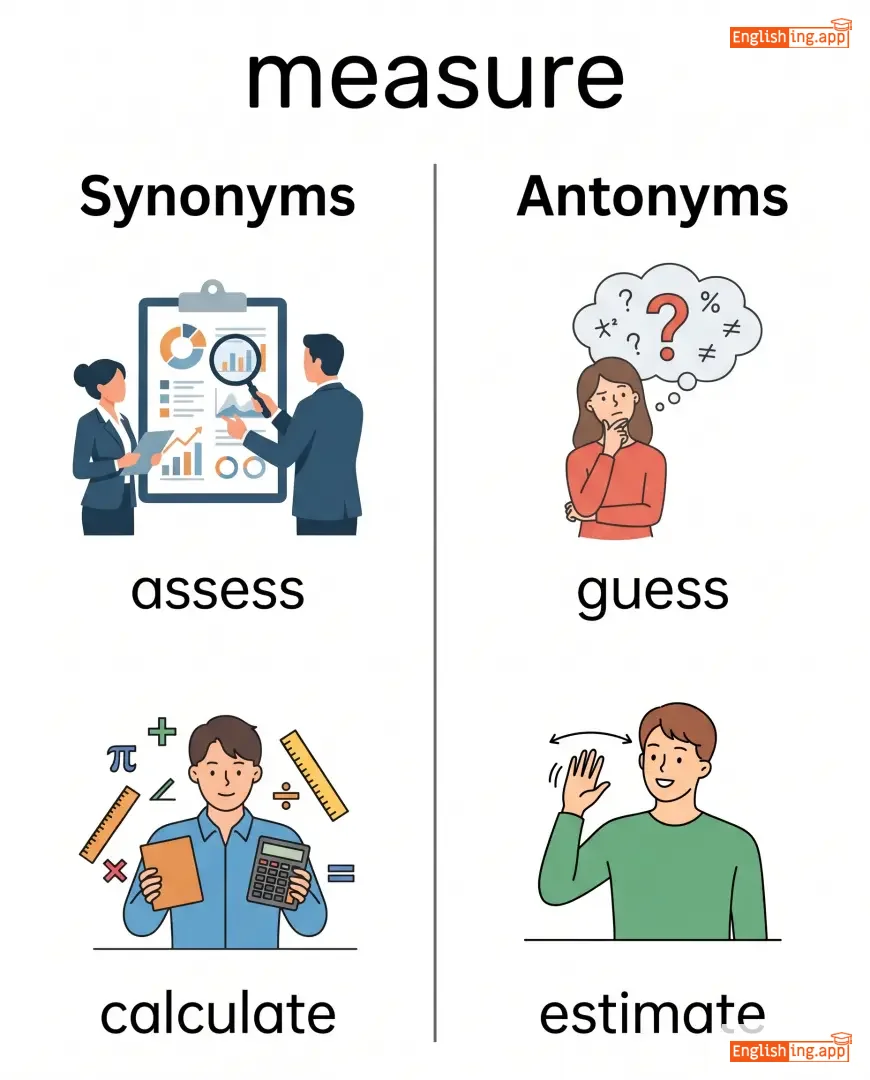
assess, calculate, evaluate, gauge, standard
••••••
|
guess, estimate, ignore
••••••
|
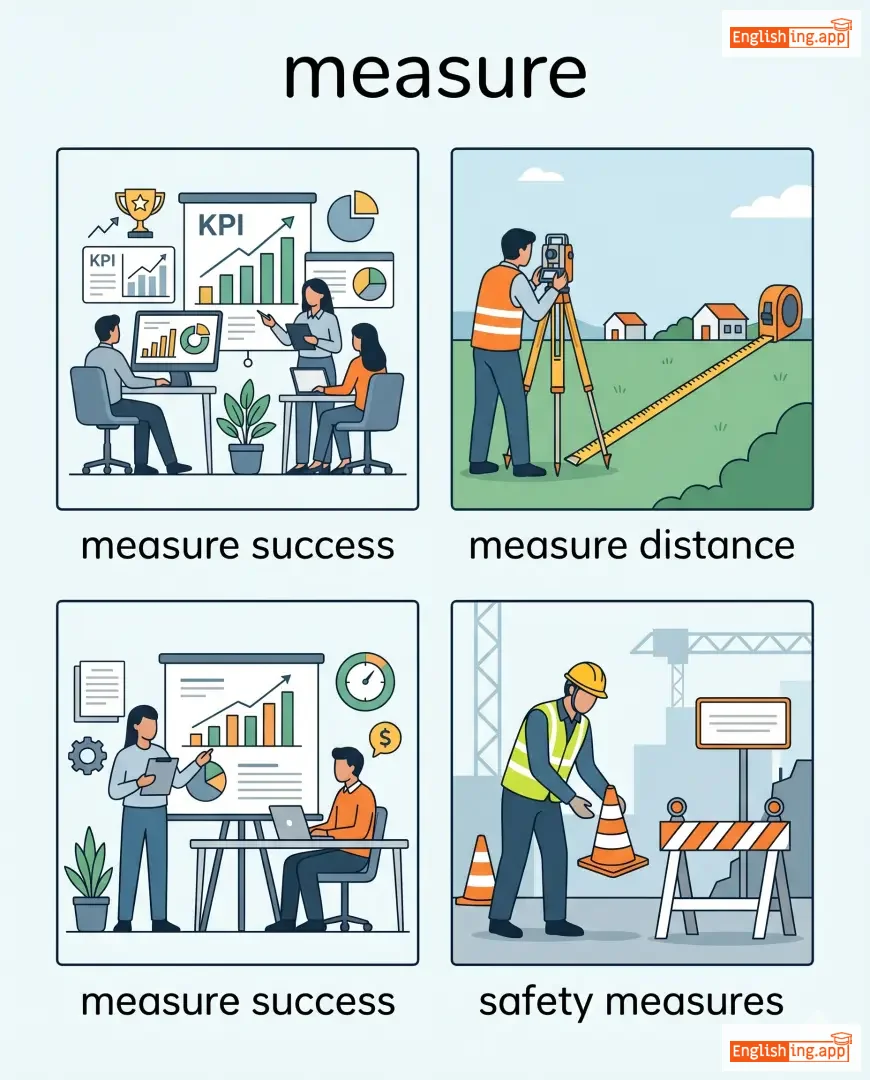
measure success, measure distance, safety measures, take measures
••••••
|
Measure意思是测量 → '通过测量来取度量' 易记
••••••
|
|
📏
••••••
|
/ˈmeʒərmənt/
noun
(mɛʒərmənt)
••••••
|
- •••••• |
测量
ce liang
••••••
|
- •••••• | - •••••• | - •••••• | - •••••• |
the size, length, or amount of something, as determined by measuring
••••••
|
The tailor took my waist measurement before stitching the suit. |
裁缝在缝制西装前先测量了我的腰围。
Caifeng zai fengzhi xizhuang qian xian ce liang le wo de yaowei.
••••••
|
take measurements |
to measure the size, length, or amount of something
••••••
|
进行测量
jin xing ce liang
••••••
|
dimension, size, extent, magnitude, evaluation
••••••
|
guess, estimate
••••••
|
accurate measurement, take measurement, standard measurement, body measurement
••••••
|
Measurement就像📏测量一样,就像老师在学校说的:'不猜测,测量!'
••••••
|
|
🥩
••••••
|
/miːt/
noun
(米特)
••••••
|
- •••••• |
肉
rou
••••••
|
- •••••• | - •••••• | - •••••• | - •••••• |
the flesh of animals used as food
••••••
|
She bought fresh meat from the market.
她在市场上买了新鲜的肉。
••••••
|
她在市场上买了新鲜的肉。
Ta zai shichang shang mai le xinxian de rou.
••••••
|
the meat of the matter
问题的核心
••••••
|
the most important or basic part of something
••••••
|
问题的核心
wenti de hexin
••••••
|
flesh, beef, chicken, lamb, pork
••••••
|
vegetable, fruit
••••••
|
red meat, fresh meat, cooked meat, meat dish
••••••
|
肉在中文意味着MEAT - 吃肉长力气,MEAT让你变强。
••••••
|
|
🔧
••••••
|
/məˈkænɪk/
noun
(mìkānīk)
••••••
|
- •••••• |
机械师
jixieshi
••••••
|
- •••••• | - •••••• | - •••••• | - •••••• |
a person who repairs and maintains machines or vehicles
••••••
|
The mechanic fixed the engine in less than an hour.
机械师在不到一个小时的时间内修好了引擎。
••••••
|
机械师在不到一个小时的时间内修好了引擎。
Jixieshi zai budao yi ge xiaoshi de shijian nei xiuli hao le yinqing.
••••••
|
grease monkey
油猴子
••••••
|
a slang term for a car mechanic
••••••
|
汽车修理工的俚语
qiche xiuli gong de liyu
••••••
|
technician, repairman, engineer, fitter, machinist
••••••
|
driver, operator
••••••
|
car mechanic, skilled mechanic, aircraft mechanic, auto mechanic
••••••
|
机械师就像是修复机器的专家 🔧
••••••
|
|
⚙️
••••••
|
/məˈkænɪkəl/
adjective
(ˈhæpinəs)
••••••
|
- •••••• |
幸福
xìngfú
••••••
|
- •••••• | - •••••• | - •••••• | - •••••• |
relating to machines or the way they work
••••••
|
She has a good understanding of mechanical systems. |
当她收到奖项时,她无法掩饰自己的幸福。
Dāng tā shōu dào jiǎngxiàng shí, tā wúfǎ yǎnshì zìjǐ de xìngfú.
••••••
|
mechanical mind |
a person who easily understands and works with machines
••••••
|
追求幸福
zhuīqiú xìngfú
••••••
|
automated, machine-driven, technical, robotic, motorized
••••••
|
manual, emotional, natural
••••••
|
mechanical system, mechanical engineer, mechanical failure, mechanical process
••••••
|
幸福就像阳光,照亮人生道路。
••••••
|
|
⚙️
••••••
|
/ˈmɛkəˌnɪzəm/
noun
(mɛkəˌnɪzəm)
••••••
|
- •••••• |
机制
jīzhì
••••••
|
- •••••• | - •••••• | - •••••• | - •••••• |
A system of parts working together in a machine; a process or technique for achieving something.
••••••
|
The mechanism of the clock stopped working after years of use. |
钟表的机制在多年使用后停止工作。
Zhōngbiǎo de jīzhì zài duō nián shǐyòng hòu tíngzhǐ gōngzuò.
••••••
|
defense mechanism |
An unconscious process used to protect oneself from anxiety or stress.
••••••
|
防御机制
fángyù jīzhì
••••••
|
system, apparatus, device, structure, process
••••••
|
disorder, chaos, randomness
••••••
|
defense mechanism, coping mechanism, mechanical mechanism, complex mechanism
••••••
|
机制 = 机器的各部分协同工作,像齿轮一样!
••••••
|
|
🥇
••••••
|
/ˈmɛdəl/
noun
(梅达尔)
••••••
|
- •••••• |
奖牌
jiangpai
••••••
|
- •••••• | - •••••• | - •••••• | - •••••• |
a piece of metal given as an award for achievement
••••••
|
She won a gold medal in the 100-meter race. |
她在100米赛跑中获得了金牌。
Ta zai 100 mi saipao zhong huodele jinpai.
••••••
|
medal of honor |
a high award for bravery or service
••••••
|
荣誉奖章
rongyu jiangzhang
••••••
|
award, trophy, prize, badge, honor
••••••
|
penalty, disqualification
••••••
|
gold medal, silver medal, bronze medal, win a medal, award a medal
••••••
|
奖牌就像‘金属’一样,颁发给赢家的奖品 🥇
••••••
|
|
📰
••••••
|
/ˈmiːdiə/
noun
(媒体)
••••••
|
- •••••• |
媒体
mei ti
••••••
|
- •••••• | - •••••• | - •••••• | - •••••• |
the main means of mass communication such as newspapers, television, radio, and the internet
••••••
|
The story quickly spread across the media. |
故事很快通过媒体传播开来。
gùshì hěn kuài tōngguò méitǐ chuánbō kāilái.
••••••
|
social media |
online platforms used for communication and content sharing
••••••
|
社交媒体
shèjiāo méitǐ
••••••
|
press, news, journalism, broadcasting, communication
••••••
|
silence, secrecy
••••••
|
mass media, social media, media coverage, media attention
••••••
|
媒体是传播信息的工具。
••••••
|
|
🏥
••••••
|
/ˈmedɪkəl/
adjective
(医疗)
••••••
|

|
医学的
yīxué de
••••••
|
- •••••• | - •••••• | - •••••• | - •••••• |
relating to the science or practice of medicine
••••••
|
He went for a medical check-up last week. |
他上周去做了体检。
Tā shàng zhōu qù zuò le tǐjiǎn.
••••••
|
medical condition |
a disease or health issue someone has
••••••
|
医疗状况
yīliáo zhuàngkuàng
••••••
|
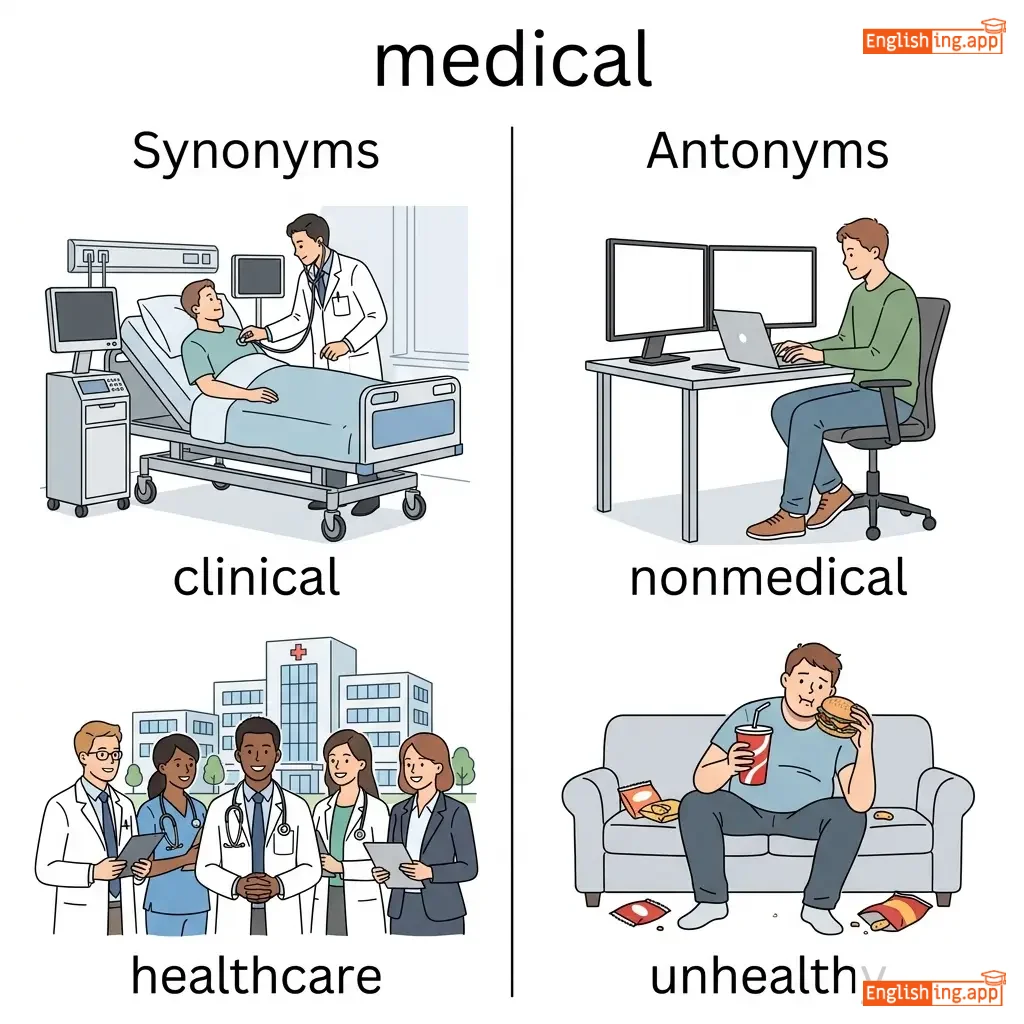
clinical, healthcare, therapeutic, medicinal
••••••
|
nonmedical, unhealthy
••••••
|
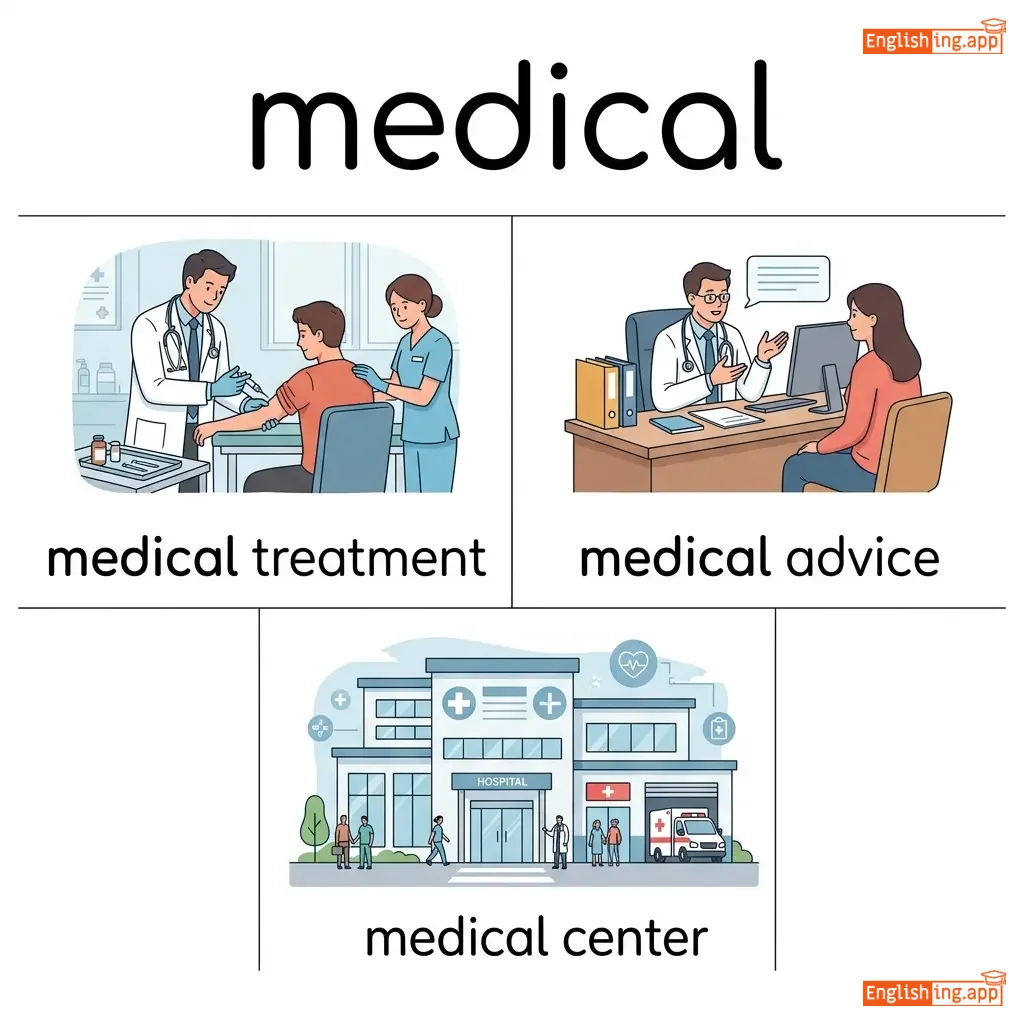
medical treatment, medical advice, medical center, medical research
••••••
|
Medical与健康相关,就像你在做体检时需要去医院。
••••••
|
|
💊
••••••
|
/ˈmedɪkeɪt/
verb
(梅迪凯特)
••••••
|

|
用药治疗
yòng yào zhìliáo
••••••
|
medicated
梅迪凯特过
••••••
|
medicated
梅迪凯特过
••••••
|
medicates
梅迪凯特斯
••••••
|
medicating
梅迪凯特ing
••••••
|
to treat with medicine; to give drugs to someone for medical purposes
••••••
|
The doctor will medicate the patient to reduce inflammation.
医生将为病人治疗以减轻炎症。
••••••
|
医生将为病人治疗以减轻炎症。
Yīshēng jiāng wèi bìngrén zhìliáo yǐ jiǎnqīng yánzhèng.
••••••
|
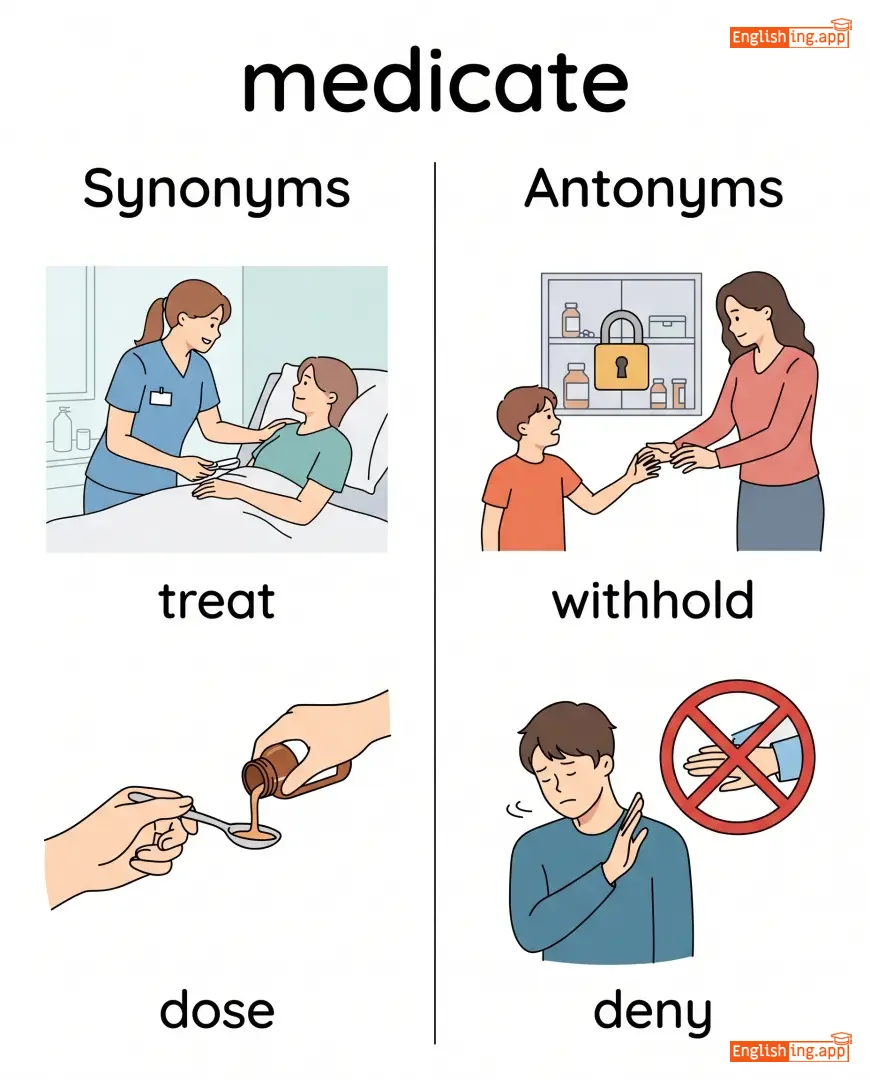
- •••••• | - •••••• | - •••••• |
treat, dose, prescribe, administer
••••••
|
withhold, deny, refuse, neglect
••••••
|
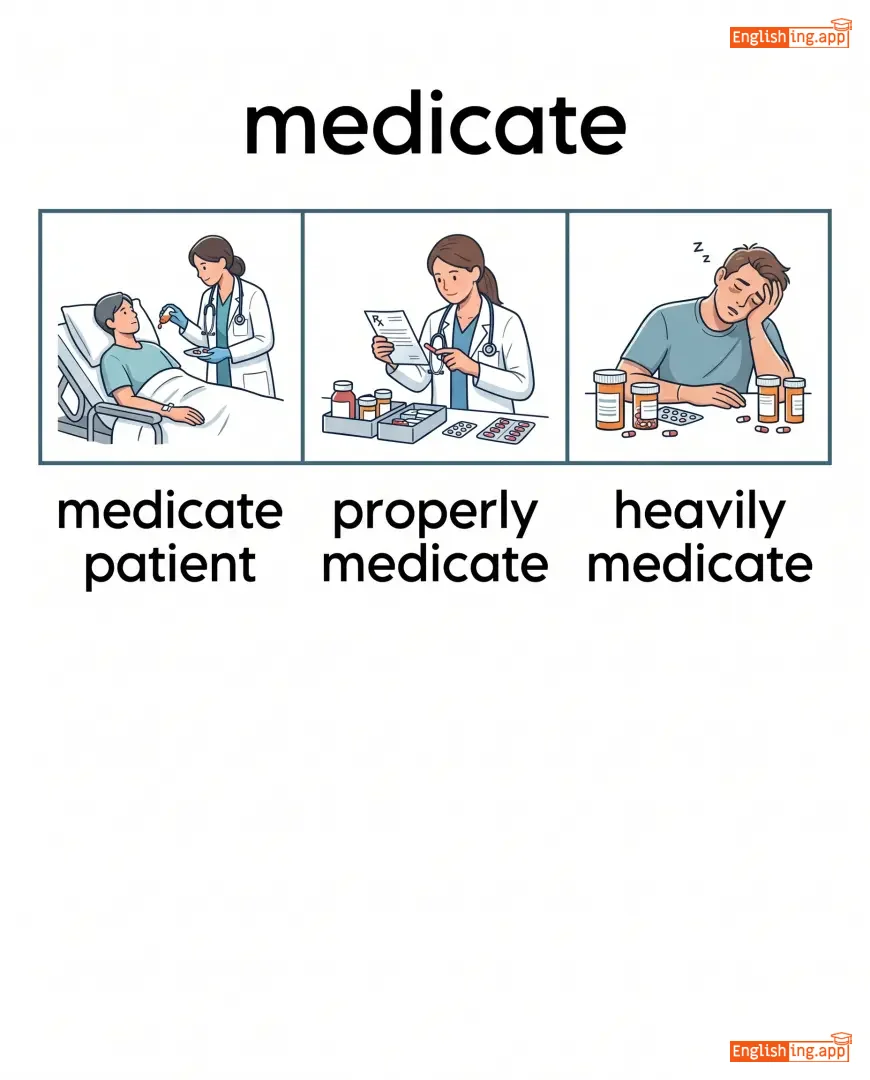
medicate patient, properly medicate, heavily medicate, daily medicate
••••••
|
药物治疗让炎症消失,药物治愈一切.
••••••
|
|
💊
••••••
|
/ˌmedɪˈkeɪʃən/
noun
(药物)
••••••
|
- •••••• |
药物
yaowu
••••••
|
- •••••• | - •••••• | - •••••• | - •••••• |
a drug or other form of medicine used to treat or prevent disease
••••••
|
The doctor prescribed medication for his headache. |
医生为他的头痛开了药物。
Yisheng wei tā de tóutòng kāile yàowù.
••••••
|
take medication |
to consume prescribed medicine
••••••
|
服用药物
fúyòng yàowù
••••••
|
medicine, drug, remedy, prescription
••••••
|
disease, illness
••••••
|
take medication, prescribe medication, over-the-counter medication, pain medication
••••••
|
药物与Medications相似,'Med'就代表了药品。
••••••
|

