|
表情符号
|
单词 | Images | 翻译 | 过去时 | 过去分词 | 第三人称单数 | 动名词 | 含义 | 例句 | 例句翻译 | 示例表达 | 示例表达含义 | 示例表达翻译 | 同义词 | 反义词 | 搭配词 | 助记符 |
|---|---|---|---|---|---|---|---|---|---|---|---|---|---|---|---|---|---|
|
✅
••••••
|
/ˈfɪnɪʃ/
verb
(finiši)
••••••
|

|
完成
wánchéng
••••••
|
finished
finišed
••••••
|
finished
finišed
••••••
|
finishes
finišes
••••••
|
finishing
finišing
••••••
|
to complete or bring to an end; to reach the final point
••••••
|
She finished her homework before dinner.
她在晚餐前完成了作业。
••••••
|
她在晚餐前完成了作业。
Tā zài wǎncān qián wánchéngle zuòyè.
••••••
|
- •••••• | - •••••• | - •••••• |
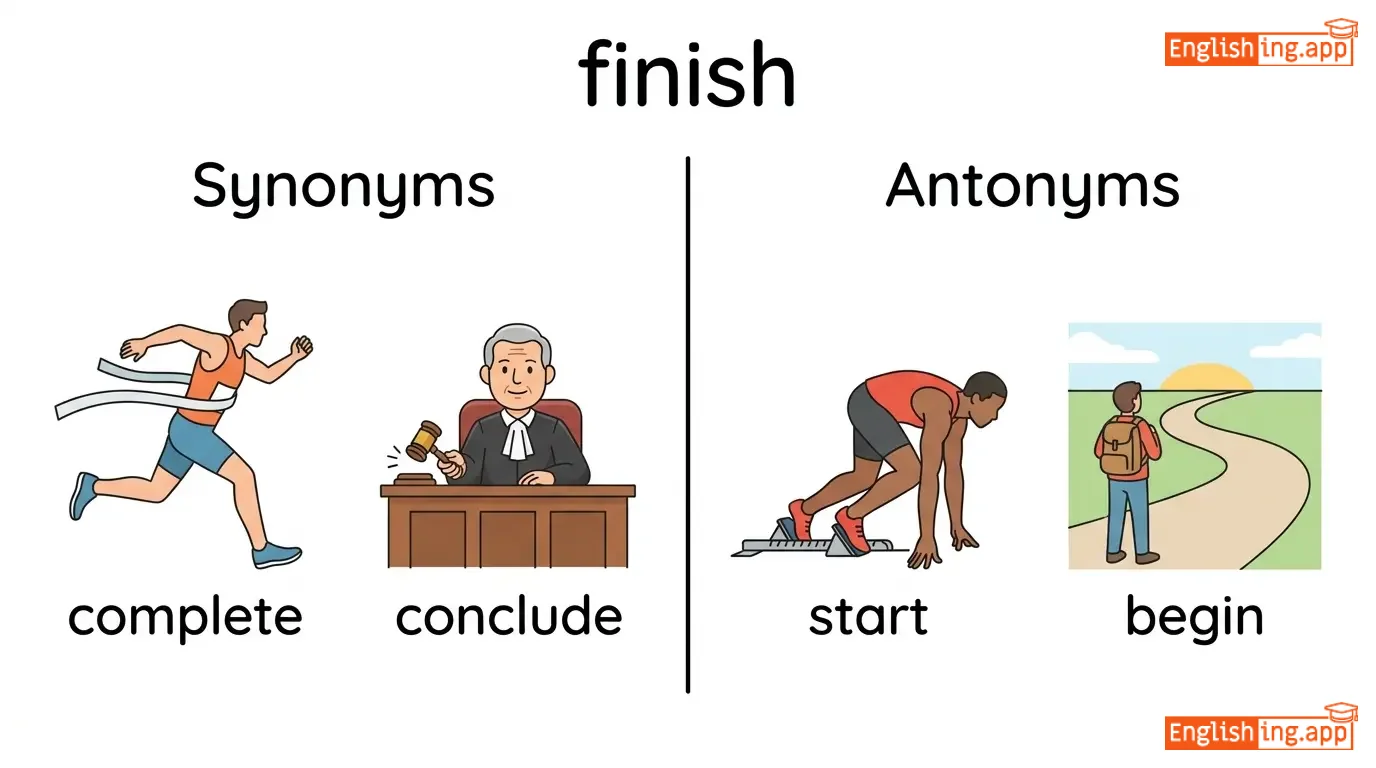
complete, conclude, end, finalize
••••••
|
start, begin, commence, initiate
••••••
|
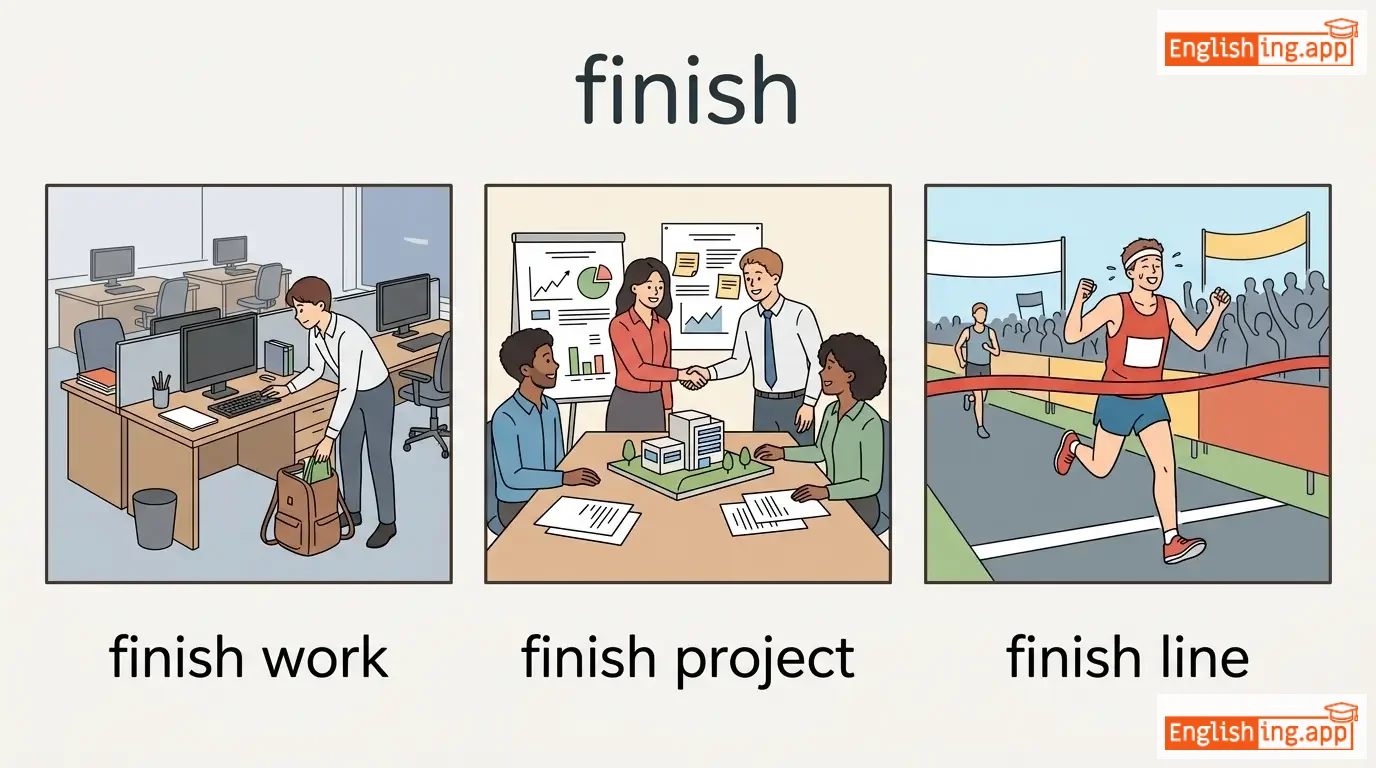
finish work, finish homework, finish eating, finish reading, finish quickly
••••••
|
No •••••• |
|
🏁
••••••
|
/ˈfɪnɪʃ laɪn/
noun
(菲尼什 莱恩)
••••••
|
- •••••• |
终点线
zhongdian xian
••••••
|
- •••••• | - •••••• | - •••••• | - •••••• |
The line or point at the end of a race or competition where participants complete it.
••••••
|
She sprinted towards the finish line and won the race.
她冲向终点线并赢得了比赛。
••••••
|
她冲向终点线并赢得了比赛。
Ta chong xiang zhongdian xian bing yingde le bisai.
••••••
|
- •••••• | - •••••• | - •••••• |
goal line, end point, completion point, terminus
••••••
|
start line, beginning, outset
••••••
|
cross the finish line, reach the finish line, race to the finish line
••••••
|
Remember 'zhongdian xian' as the Chinese term for finish line.
••••••
|
|
🔥
••••••
|
/ˈfaɪər/
noun/verb
(fāi'ěr)
••••••
|
- •••••• |
火 / 解雇
huǒ / jiěgù
••••••
|
fired
fāi'ěr dé
••••••
|
fired
fāi'ěr dé
••••••
|
fires
fāi'ěr sī
••••••
|
firing
fāi'ěr jīng
••••••
|
the phenomenon of combustion, or to dismiss someone from a job
••••••
|
The company decided to fire two employees last week.
公司上周决定解雇两名员工。
••••••
|
公司上周决定解雇两名员工。
Gōngsī shàng zhōu juédìng jiěgù liǎng míng yuángōng.
••••••
|
play with fire
玩火
••••••
|
to take dangerous risks
••••••
|
玩火
wán huǒ
••••••
|
blaze, flame, ignite, dismiss, sack
••••••
|
extinguish, hire
••••••
|
start a fire, put out fire, fire alarm, fire someone
••••••
|
火有危险,就像被解雇一样,都是不好的事。
••••••
|
|
🔫
••••••
|
/ˈfaɪərɑːm/
noun
(fai er a mu)
••••••
|
- •••••• |
火器
huo qi
••••••
|
- •••••• | - •••••• | - •••••• | - •••••• |
a weapon capable of firing a projectile using gunpowder or other propellant
••••••
|
The police found a hidden firearm during the investigation.
警方在调查过程中发现了一支隐藏的火器。
••••••
|
警方在调查过程中发现了一支隐藏的火器。
Jingfang zai diaocha guocheng zhong faxian le yizhi yin cang de huoqi.
••••••
|
- •••••• | - •••••• | - •••••• |
weapon, gun, rifle, pistol
••••••
|
peace, safety, security
••••••
|
firearm possession, illegal firearm, firearm use
••••••
|
火器(huo qi)是危险的,因此使用时要小心
••••••
|
|
👨🚒
••••••
|
/ˈfaɪəˌfaɪtə/
noun
(fāyàfàitā)
••••••
|
- •••••• |
消防员
xiāofángyuán
••••••
|
- •••••• | - •••••• | - •••••• | - •••••• |
a person whose job is to put out fires
••••••
|
The firefighter saved the family from the burning building. |
消防员从燃烧的大楼中救出了那家人。
Xiāofángyuán cóng ránshāo de dàlóu zhōng jiù chūle nà jiārén.
••••••
|
- •••••• | - •••••• | - •••••• |
fireman, firewoman, rescuer, emergency worker
••••••
|
arsonist, incendiary
••••••
|
brave firefighter, firefighter gear, firefighter training
••••••
|
消防员必须与火灾作斗争 - Firefighter has to fight fire!
••••••
|
|
🎆
••••••
|
/ˈfaɪəˌwɜːk/
noun
(fai'erwǒkè)
••••••
|
- •••••• |
烟花
yanhua
••••••
|
- •••••• | - •••••• | - •••••• | - •••••• |
a device that explodes or creates a display of lights and sounds, often used in celebrations
••••••
|
The fireworks lit up the sky during the New Year's Eve celebration. |
烟花在新年夜庆祝活动中点亮了天空。
Yānhuā zài xīnnián yè qìngzhù huódòng zhōng diǎn liàngle tiānkōng.
••••••
|
- •••••• | - •••••• | - •••••• |
sparkler, roman candle, display, pyrotechnics
••••••
|
whimper, silence
••••••
|
colorful fireworks, fireworks display, fireworks show
••••••
|
烟花点亮了夜空,点亮了我们的心情!
••••••
|
|
🏢
••••••
|
/fɜːrm/
noun/adjective
(fārm)
••••••
|
- •••••• |
公司 / 坚定
gongsi / jianding
••••••
|
- •••••• | - •••••• | - •••••• | - •••••• |
a business organization, or solid and steady
••••••
|
She works at a law firm in the city.
她在城市的律师事务所工作。
••••••
|
她在城市的律师事务所工作。
Ta zai chengshi de lüshi shiwu suo gongzuo.
••••••
|
stand firm
坚定站立
••••••
|
to remain strong in one’s position
••••••
|
坚定站立
Jianding zhanli
••••••
|
company, business, solid, steady, strong
••••••
|
weak, unstable
••••••
|
law firm, consulting firm, firm decision, firm grip
••••••
|
Firm意味着公司,就像一家稳定的企业一样坚定不移。
••••••
|
|
✊
••••••
|
/ˈfɜːmli/
adverb
(fɜːrmli)
••••••
|
- •••••• |
坚定地
jianding de
••••••
|
- •••••• | - •••••• | - •••••• | - •••••• |
in a strong, steady, or determined way
••••••
|
She held his hand firmly as they crossed the road.
她紧紧握住他的手,他们穿过马路。
••••••
|
她紧紧握住他的手,他们穿过马路。
Tā jǐn jǐn wò zhù tā de shǒu, tāmen chuānguò mǎlù.
••••••
|
stand firmly
坚定站立
••••••
|
to remain strong or determined in one’s position
••••••
|
坚定站立
jianding zhanli
••••••
|
strongly, steadily, tightly, resolutely
••••••
|
loosely, weakly, softly
••••••
|
hold firmly, believe firmly, stand firmly, grip firmly
••••••
|
Firmly 就像 ‘坚定’,像一个坚定的决心。
••••••
|
|
🥇
••••••
|
/fɜːrst/
adjective
(fɜːrst)
••••••
|
- •••••• |
第一
di yi
••••••
|
- •••••• | - •••••• | - •••••• | - •••••• |
coming before all others in time, order, or importance
••••••
|
She was the first to arrive at the meeting. |
她是第一个到达会议的人。
Ta shi di yi ge daoda huiyi de ren.
••••••
|
first come, first served |
those who arrive earliest are served before others
••••••
|
先到先得
xian dao xian de
••••••
|
foremost, primary, leading, earliest
••••••
|
last, subsequent
••••••
|
first place, first priority, first impression, first attempt
••••••
|
做第一总是最好 - Always be the first, it's the best.
••••••
|
|
🩹
••••••
|
/ˌfɜːrst ˈeɪd/
noun
(费斯特 艾德)
••••••
|
- •••••• |
急救
jí jiù
••••••
|
- •••••• | - •••••• | - •••••• | - •••••• |
Immediate assistance given to a sick or injured person until full medical treatment is available
••••••
|
He gave first aid to the injured cyclist before the ambulance arrived.
在救护车到来之前,他为受伤的自行车手进行了急救。
••••••
|
在救护车到来之前,他为受伤的自行车手进行了急救。
Zai jiuhuche daolai zhiqian, ta wei shoushang de zixingcheshou jinxingle jijiu
••••••
|
first aid kit
急救箱
••••••
|
A set of supplies used to give first aid
••••••
|
急救箱
jijiu xiang
••••••
|
emergency care, medical aid, initial treatment, urgent care
••••••
|
neglect, inattention
••••••
|
first aid training, first aid course, first aid box, administer first aid
••••••
|
急救 = first aid, 想象 '急' 代表立即
••••••
|
|
🩹
••••••
|
/ˌfɜːrst eɪd kɪt/
noun
(费斯特 艾德 套件)
••••••
|
- •••••• |
急救箱
jijiu xiang
••••••
|
- •••••• | - •••••• | - •••••• | - •••••• |
A collection of medical supplies for giving initial treatment in emergencies
••••••
|
I always keep a first aid kit in my car for emergencies.
我总是在车里备有急救箱以应对紧急情况。
••••••
|
我总是在车里备有急救箱以应对紧急情况。
Wo zong shi zai che li bei you jijiu xiang yi ying dui jin ji qing kuang.
••••••
|
- •••••• | - •••••• | - •••••• |
medical kit, emergency kit, trauma kit, health kit
••••••
|
none, non-medical supplies
••••••
|
carry a first aid kit, stock a first aid kit, emergency first aid kit
••••••
|
急救 = emergency aid, 箱 = box
••••••
|
|
1️⃣
••••••
|
/ˈfɜːrstli/
adverb
(费斯特利)
••••••
|
- •••••• |
首先
shouxian
••••••
|
- •••••• | - •••••• | - •••••• | - •••••• |
used to introduce the first point or reason in a discussion or argument
••••••
|
Firstly, we need to address the budget issue before proceeding.
Firstly, 我们需要在继续之前解决预算问题。
••••••
|
首先,我们需要在继续之前解决预算问题。
Shouxian, women xuyao zai jixu zhiqian jiejue yusuan wenti.
••••••
|
- •••••• | - •••••• | - •••••• |
primarily, initially, to begin with, in the first place
••••••
|
lastly, finally
••••••
|
firstly of all, firstly consider, firstly address
••••••
|
Shouxian = 'shou' (hand) + 'xian' (first) → hand first
••••••
|
|
🐟
••••••
|
/fɪʃ/
noun/verb
(haipiness)
••••••
|
- •••••• |
幸福
xingfu
••••••
|
fished
••••••
|
fished
••••••
|
fishes
••••••
|
fishing
••••••
|
an aquatic animal with gills, or to try to catch such animals
••••••
|
He went to the lake to fish early in the morning.
她在得到奖项时无法掩饰她的快乐。
••••••
|
她在得到奖项时无法掩饰她的快乐。
Tā zài dédào jiǎngxiàng shí wúfǎ yǎnshì tā de kuàilè.
••••••
|
a big fish
追求幸福
••••••
|
an important or powerful person
••••••
|
追求幸福
zhuīqiú xìngfú
••••••
|
seafood, catch, angling, aquatic animal
••••••
|
mammal, invertebrate
••••••
|
catch fish, fried fish, fish market, fish tank
••••••
|
幸福像是阳光,照亮周围的一切。
••••••
|
|
🎣
••••••
|
/ˈfɪʃɪŋ/
noun/verb
(fishing)
••••••
|
- •••••• |
钓鱼
diao yu
••••••
|
- •••••• | - •••••• | - •••••• |
fishing
fishing
••••••
|
the activity of catching fish
••••••
|
Fishing is a popular activity in coastal villages.
捕鱼是沿海村庄中流行的活动。
••••••
|
捕鱼是沿海村庄中流行的活动。
Bǔyú shì yánhǎi cūnzhuāng zhōng liúxíng de huódòng.
••••••
|
fishing for compliments
钓取恭维
••••••
|
trying to get praise or approval indirectly
••••••
|
钓取恭维
diàoqǔ gōngwèi
••••••
|
angling, catching fish, netting, trawling
••••••
|
ignoring fish, land activity
••••••
|
go fishing, fishing trip, fishing boat, fishing industry
••••••
|
钓鱼 = 用钓竿抓鱼,🎣 是海边的活动。
••••••
|
|
👟
••••••
|
/fɪt/
verb, adjective, noun
(fit)
••••••
|
- •••••• |
合适,适合
heshi, shihe
••••••
|
fit
fit
••••••
|
fit
fit
••••••
|
fits
fits
••••••
|
fitting
fitting
••••••
|
to be of the right size, shape, or type; suitable or healthy
••••••
|
These shoes fit me perfectly.
这些鞋子完美合适我。
••••••
|
这些鞋子完全适合我的脚。
Zhexie xiezi wanquan shihe wode jiao.
••••••
|
fit as a fiddle
健健康康
••••••
|
in very good health or condition
••••••
|
身体健康
shenti jiankang
••••••
|
suit, match, adjust, accommodate
••••••
|
ill-suited, inappropriate, unfit
••••••
|
fit perfectly, fit well, fit into, fit for purpose
••••••
|
穿上合适的鞋子,就像保持健康的身体一样。
••••••
|
|
💪
••••••
|
/ˈfɪtnəs/
noun
(fìt nès)
••••••
|
|
体能
tǐnéng
••••••
|
- •••••• | - •••••• | - •••••• | - •••••• |
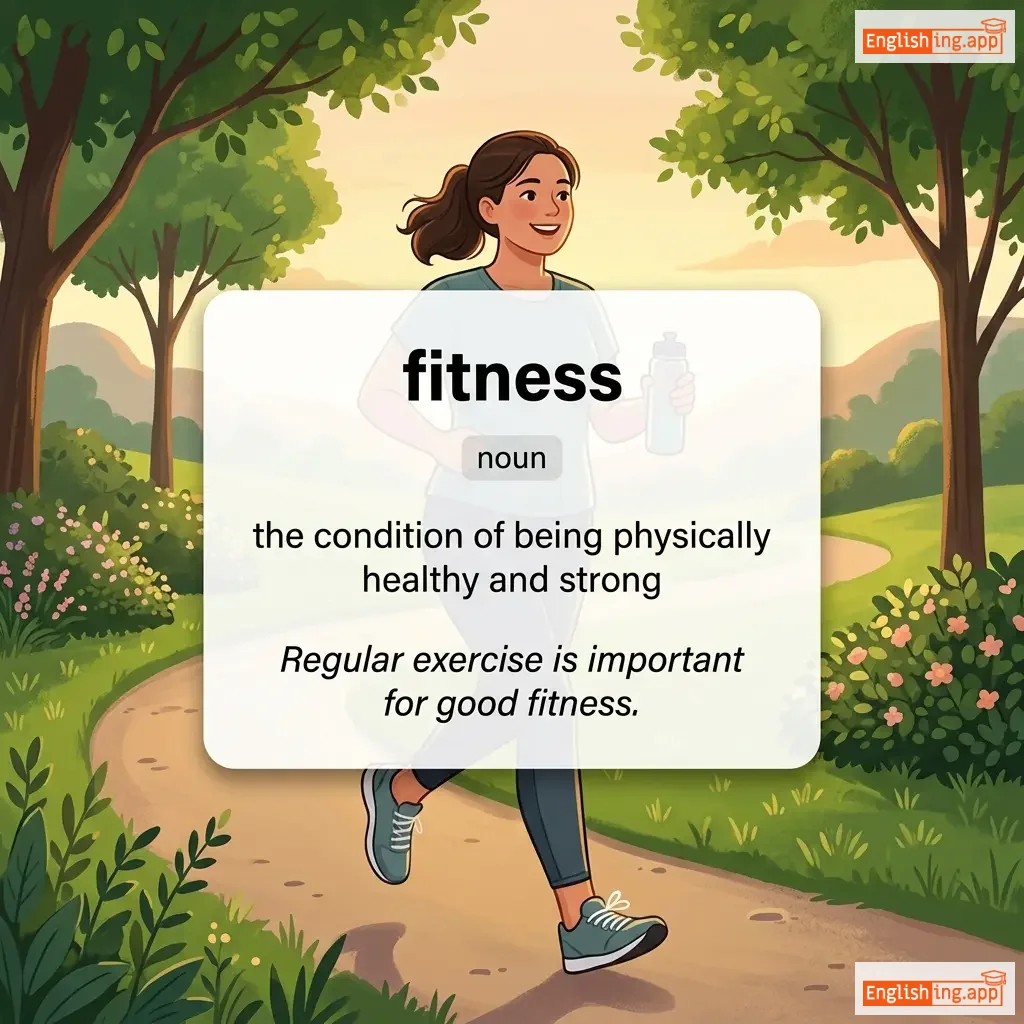
the condition of being physically healthy and strong
••••••
|
Regular exercise is important for good fitness. |
定期运动对保持良好的体能非常重要。
Dìngqī yùndòng duì bǎochí liánghǎo de tǐnéng fēicháng zhòngyào.
••••••
|
peak fitness |
the best level of physical health and strength
••••••
|
最佳体能
zuìjiā tǐnéng
••••••
|
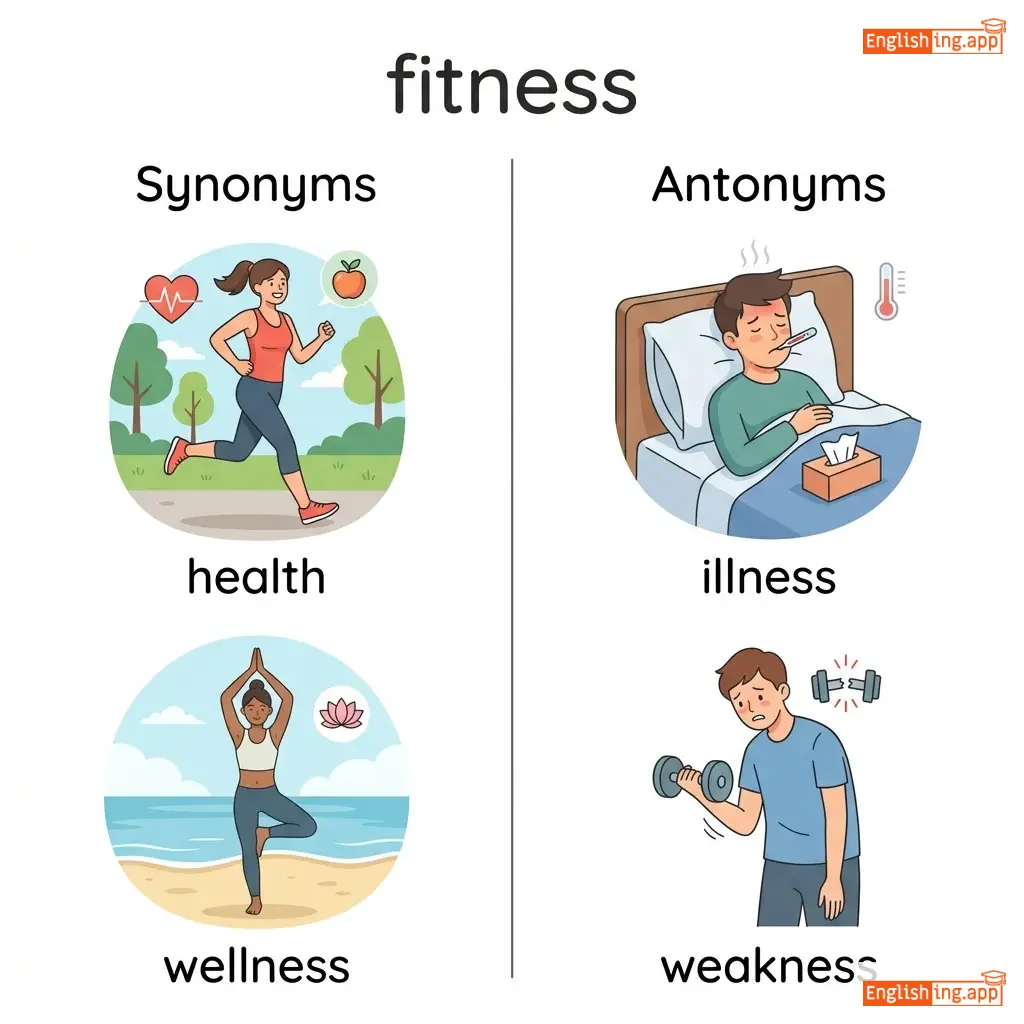
health, wellness, strength, conditioning, vitality
••••••
|
illness, weakness, unhealthiness
••••••
|
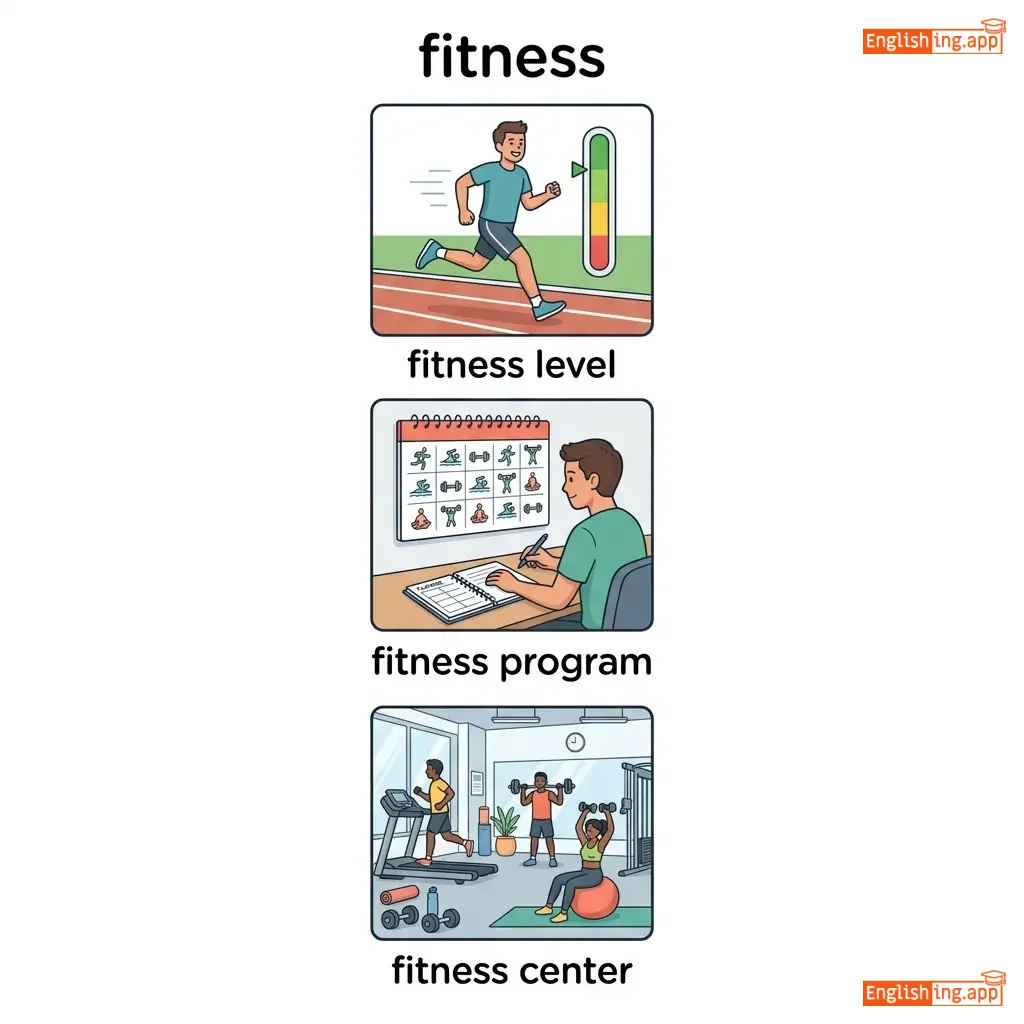
fitness level, fitness program, fitness center, fitness test
••••••
|
体能就像总是为马拉松做准备,永远保持最佳状态。
••••••
|
|
5️⃣
••••••
|
/faɪv/
noun
(faiv)
••••••
|
- •••••• |
五
wu
••••••
|
- •••••• | - •••••• | - •••••• | - •••••• |
The number 5; one more than four and one less than six.
••••••
|
She bought five apples from the market. |
她从市场买了五个苹果。
Ta cong shichang mai le wu ge pingguo.
••••••
|
High five |
A gesture of celebration or greeting in which two people slap their raised hands together.
••••••
|
击掌
ji zhang
••••••
|
5, quintet, pentad, V
••••••
|
four, six
••••••
|
five years, five minutes, five times, high five
••••••
|
记住'五',用手的五个手指。击掌 ✋
••••••
|
|
🔧
••••••
|
/fɪks/
verb
••••••
|
- •••••• | - •••••• |
fixed
••••••
|
fixed
••••••
|
fixes
••••••
|
fixing
••••••
|
To repair or make something work again.
••••••
|
The mechanic fixed the broken car. |
- •••••• |
in a fix |
In a difficult or awkward situation.
••••••
|
- •••••• |
repair, mend, adjust, restore, solve
••••••
|
break, damage, ruin
••••••
|
fix a problem, fix the car, fix dinner, fix the issue
••••••
|
No •••••• |
|
🚿
••••••
|
/ˈfɪks.tʃər/
noun
(fīxzhī)
••••••
|
- •••••• |
固定物,安装设备
gùdìng wù, ānzhuāng shèbèi
••••••
|
- •••••• | - •••••• | - •••••• | - •••••• |
a permanent or fixed object, often in a house or building
••••••
|
The bathroom fixture was installed yesterday.
浴室设备昨天已安装。
••••••
|
浴室设备昨天已安装。
Yùshì shèbèi zuótiān yǐ ānzhuāng.
••••••
|
- •••••• | - •••••• | - •••••• |
installation, fitting, attachment, appliance
••••••
|
movable, temporary
••••••
|
bathroom fixture, light fixture, plumbing fixture
••••••
|
Fix = 固定的物品 - Fixtures保持固定
••••••
|
|
🚩
••••••
|
/flæɡ/
noun, verb
••••••
|
|
- •••••• |
flagged
••••••
|
flagged
••••••
|
flags
••••••
|
flagging
••••••
|
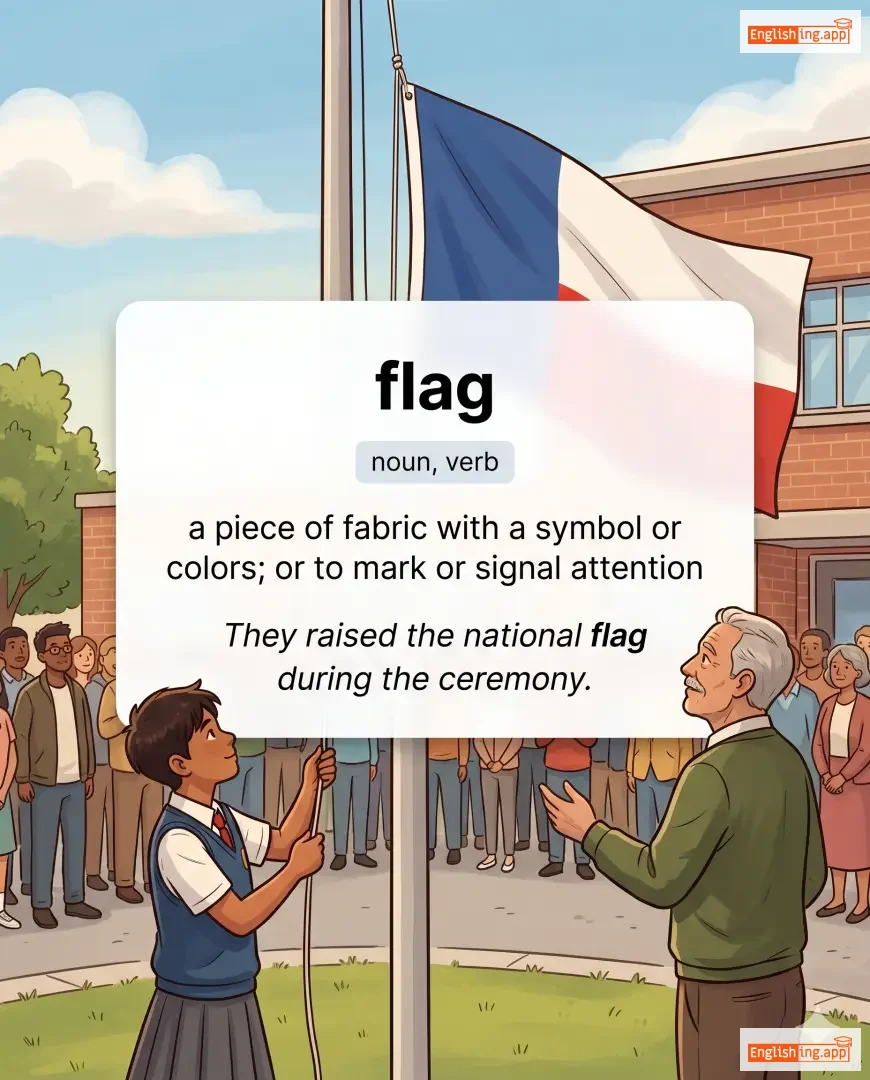
a piece of fabric with a symbol or colors; or to mark or signal attention
••••••
|
They raised the national flag during the ceremony. |
- •••••• |
red flag |
a warning sign or indication of danger
••••••
|
- •••••• |
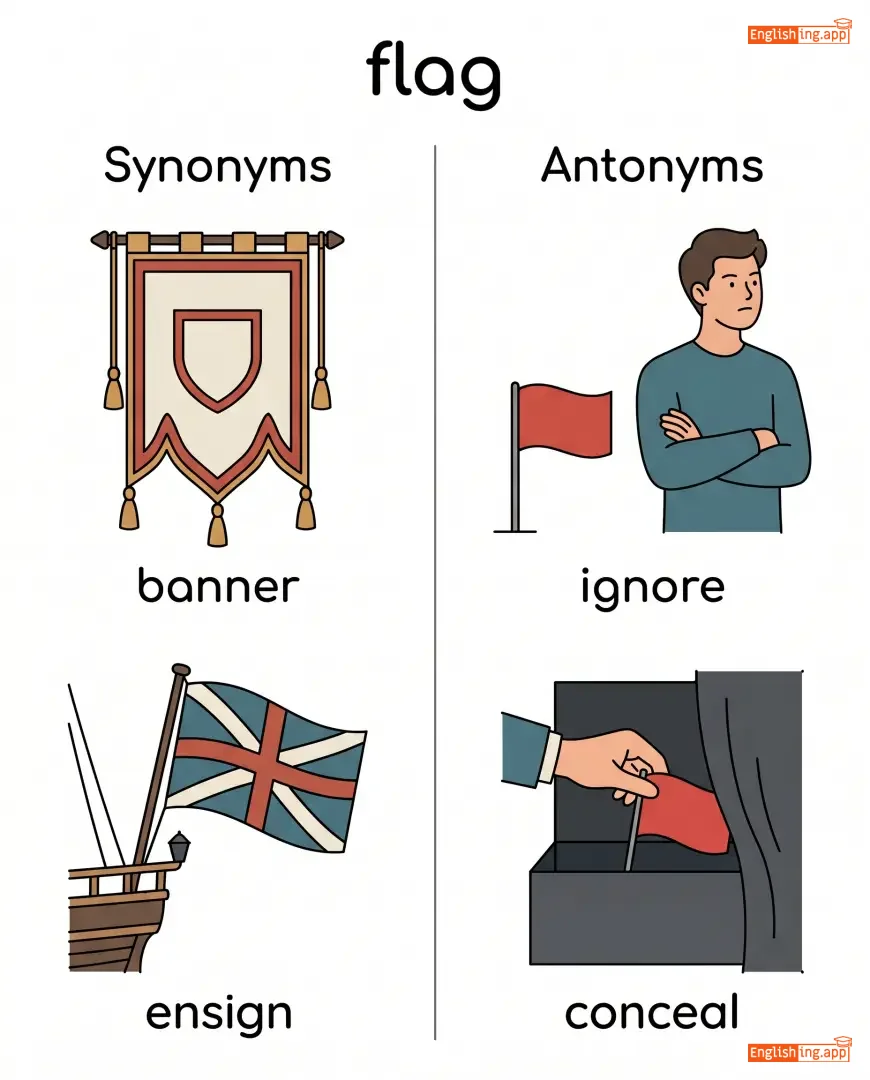
banner, ensign, signal, mark
••••••
|
ignore, conceal
••••••
|
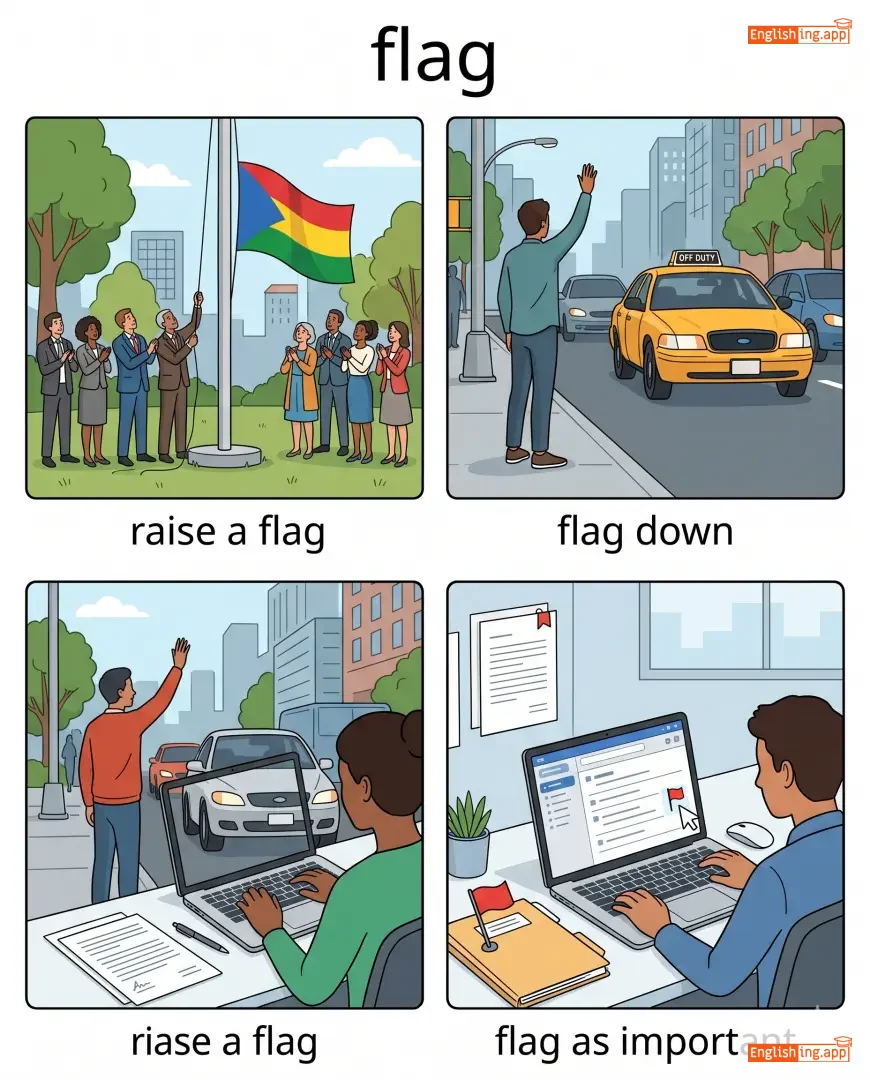
raise a flag, flag down, flag as important, flag a message
••••••
|
No •••••• |
|
🔥
••••••
|
/fleɪm/
noun
(fuleim)
••••••
|
- •••••• |
火焰
huoyan
••••••
|
- •••••• | - •••••• | - •••••• | - •••••• |
A hot glowing body of ignited gas that is generated by something on fire.
••••••
|
The flame from the candle lit up the dark room. |
蜡烛的火焰照亮了黑暗的房间。
Làzhú de huǒyàn zhàoliàngle hēi'àn de fángjiān.
••••••
|
add fuel to the flames |
To make an already bad situation worse.
••••••
|
火上浇油
huǒ shàng jiāo yóu
••••••
|
fire, blaze, light, spark
••••••
|
smoke, ash
••••••
|
flame of fire, candle flame, burning flame, flame out
••••••
|
Flame 在中文是火焰,中文的火焰和英文的 'flame' 一样。
••••••
|
|
📏
••••••
|
/flæt/
adjective
(flæt)
••••••
|
- •••••• |
平坦
pingtan
••••••
|
- •••••• | - •••••• | - •••••• | - •••••• |
Smooth and level, without raised areas or curves.
••••••
|
The road ahead was completely flat.
前方的路完全是平坦的。
••••••
|
前方的路完全是平坦的。
Qianfang de lu wanquan shi pingtan de.
••••••
|
fall flat
失败
••••••
|
To fail completely to produce the intended effect.
••••••
|
完全失败
wanquan shibai
••••••
|
even, smooth, level, plain, horizontal
••••••
|
bumpy, uneven, rough
••••••
|
flat surface, flat tire, flat rate, flat shoes
••••••
|
平坦就像一块平整的地面!
••••••
|
|
🍦
••••••
|
/ˈfleɪvər/
noun
(fuleiwei)
••••••
|
- •••••• |
味道
weidao
••••••
|
- •••••• | - •••••• | - •••••• | - •••••• |
The distinctive taste of a food or drink.
••••••
|
This ice cream has a delicious mango flavor.
这款冰淇淋有美味的芒果味。
••••••
|
这款冰淇淋有美味的芒果味。
Zhè kuǎn bīngqílín yǒu měiwèi de mángguǒ wèi.
••••••
|
taste of your own medicine
自食其果
••••••
|
Experiencing the same unpleasant treatment that one has given to others.
••••••
|
自食其果
zì shí qí guǒ
••••••
|
taste, savor, relish, tang, essence
••••••
|
blandness, tastelessness
••••••
|
flavor of ice cream, unique flavor, flavor profile, flavor combination
••••••
|
味道就是我们在嘴巴里感受到的 - 比如这款冰淇淋的芒果味 🍦
••••••
|
|
👅
••••••
|
/ˈfleɪ.vər/
noun
(fú léi wéi)
••••••
|
- •••••• |
风味
fengwei
••••••
|
- •••••• | - •••••• | - •••••• | - •••••• |
the distinctive taste of a food or drink; a particular quality or atmosphere
••••••
|
The soup had a rich flavour of herbs and spices from the garden.
汤里有来自花园的丰富香草和香料味。
••••••
|
汤里有来自花园的丰富香草和香料味。
Tang li you laizi huayuan de fengfu xiangcao he xiangliao wei.
••••••
|
- •••••• | - •••••• | - •••••• |
taste, savor, essence, aroma
••••••
|
blandness, tastelessness, flavorlessness, dullness
••••••
|
natural flavour, artificial flavour, flavour enhancer
••••••
|
In Chinese, '风味' means the flavor of food, just like the essence of taste.
••••••
|
|
💔
••••••
|
/flɔː/
noun
(弗劳)
••••••
|
- •••••• |
缺陷
quēxiàn
••••••
|
- •••••• | - •••••• | - •••••• | - •••••• |
a defect or imperfection in something
••••••
|
The diamond had a small flaw that was barely visible.
钻石有一个几乎看不见的小缺陷。
••••••
|
钻石有一个几乎看不见的小缺陷。
Zuànshí yǒu yīgè jīhū kàn bù jiàn de xiǎo quēxiàn.
••••••
|
- •••••• | - •••••• | - •••••• |
defect, imperfection, blemish, fault
••••••
|
perfection, strength
••••••
|
major flaw, design flaw, flaw in logic
••••••
|
缺陷就像钻石中微小的裂纹
••••••
|
|
❌
••••••
|
/flɔːd/
adjective
(flɔd)
••••••
|
- •••••• |
有缺陷的
you quexian de
••••••
|
- •••••• | - •••••• | - •••••• | - •••••• |
having a mistake or fault that reduces its value or quality
••••••
|
The flawed design of the car led to a recall. |
汽车设计有缺陷,导致了召回。
Qiche sheji you quexian, daozhi le zhaohui.
••••••
|
- •••••• | - •••••• | - •••••• |
imperfect, faulty, damaged, defective
••••••
|
perfect, flawless
••••••
|
flawed reasoning, flawed argument, flawed judgment
••••••
|
有缺陷的设计意味着某些东西出问题 - Flawed design means something is wrong.
••••••
|
|
🏃♂️
••••••
|
/fliː/
verb
(弗利)
••••••
|
- •••••• |
逃跑
tao pao
••••••
|
fled
弗雷德
••••••
|
fled
弗雷德
••••••
|
flees
弗利斯
••••••
|
fleeing
弗林
••••••
|
To run away from danger or a threatening situation.
••••••
|
The villagers had to flee during the flood.
村民们在洪水期间不得不逃离。
••••••
|
村民们在洪水期间不得不逃离。
Cunmin men zai hongshui qi jian bude bu taoli.
••••••
|
flee the scene
逃离现场
••••••
|
To quickly leave the place where an incident or crime has happened.
••••••
|
逃离事发地点
tao li shifa didian
••••••
|
escape, run, abscond, bolt, evacuate
••••••
|
stay, remain
••••••
|
flee from danger, flee the country, flee war, flee the scene
••••••
|
Flee 的意思是逃跑 🏃♂️ - 洪水时大家都会逃跑。
••••••
|
|
🚢
••••••
|
/fliːt/
noun
(flit)
••••••
|
- •••••• |
舰队
jiànduì
••••••
|
- •••••• | - •••••• | - •••••• | - •••••• |
a group of ships, vehicles, or aircraft operating together under one command
••••••
|
The navy deployed its entire fleet for the exercise. |
海军为演习部署了整个舰队。
Hǎijūn wèi yǎnxí bùshǔle zhěnggè jiànduì.
••••••
|
a fleet of foot |
very fast and agile in movement
••••••
|
飞快如风
fēikuài rú fēng
••••••
|
armada, squadron, convoy, flotilla, group
••••••
|
individual, single
••••••
|
naval fleet, fishing fleet, fleet of cars, merchant fleet
••••••
|
Fleet 意味着 '舰队',像一群船只一起前进。
••••••
|
|
🍖
••••••
|
/flɛʃ/
noun
(弗雷什)
••••••
|
- •••••• |
肉
rou
••••••
|
- •••••• | - •••••• | - •••••• | - •••••• |
the soft substance consisting of muscle and fat that is found between the skin and bones of animals or humans
••••••
|
The wound cut deep into the flesh of his arm. |
伤口深深地切入了他手臂的肉里。
Shangkou shenshen de qieru le ta shoubi de rou li.
••••••
|
in the flesh |
in person, not through pictures or descriptions
••••••
|
亲自
qinzi
••••••
|
meat, tissue, muscle, body, skin
••••••
|
bone, spirit, soul
••••••
|
human flesh, tender flesh, flesh and blood, flesh wound
••••••
|
Flesh 即为肉,就像鱼与肉是一起吃的
••••••
|
|
🤸
••••••
|
/ˌflɛksəˈbɪləti/
noun
(弗莱克西比利提)
••••••
|

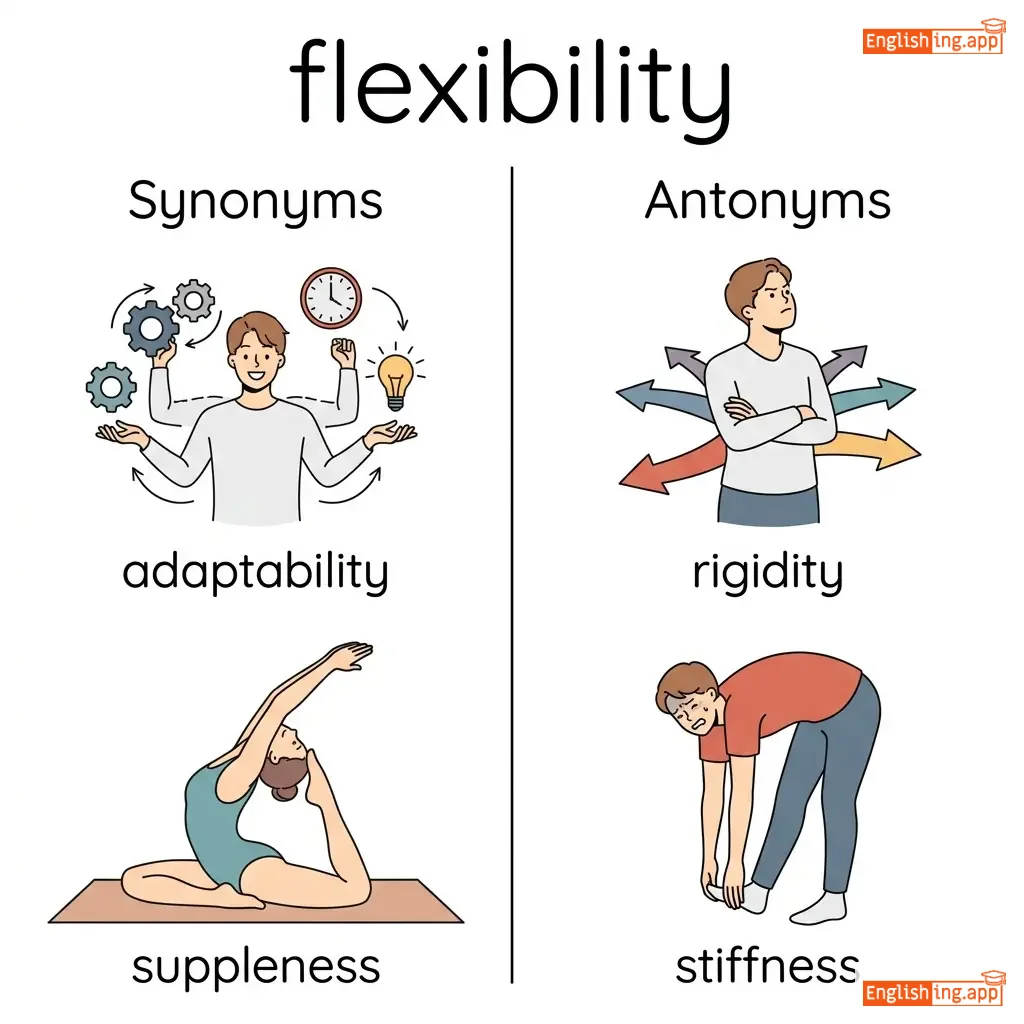

|
灵活性
línghuóxìng
••••••
|
- •••••• | - •••••• | - •••••• | - •••••• |
the ability to bend easily without breaking or to adapt to new situations
••••••
|
Flexibility is essential for success in a changing work environment. |
在变化的工作环境中,灵活性对成功至关重要。
zài biànhuà de gōngzuò huánjìng zhōng, línghuóxìng duì chénggōng zhìguān zhòngyào.
••••••
|
mental flexibility |
the ability to think about different things at the same time or adapt to new ideas
••••••
|
思维灵活
sīwéi línghuó
••••••
|
adaptability, suppleness, versatility, resilience, elasticity
••••••
|
rigidity, stiffness, inflexibility
••••••
|
physical flexibility, job flexibility, schedule flexibility, flexibility training
••••••
|
灵活性 = 灵活的,像瑜伽使身体和思想都变得灵活!
••••••
|
|
✈️
••••••
|
/flaɪt/
noun
(flait)
••••••
|
- •••••• |
航班 / 航班
hangban / hangban
••••••
|
- •••••• | - •••••• | - •••••• | - •••••• |
the act of flying, typically through the air; or a scheduled trip by an aircraft
••••••
|
Our flight to London was delayed due to bad weather. |
我们飞往伦敦的航班因恶劣天气而延误。
Wo men fei wang Lundun de hangban yin e lie tianqi er yanwu.
••••••
|
take flight |
to escape or run away suddenly
••••••
|
起飞
qifei
••••••
|
journey, trip, voyage, escape, air travel
••••••
|
landing, stay, halt
••••••
|
catch a flight, book a flight, flight attendant, flight schedule
••••••
|
航班就等于飞行 — 乘坐飞机,飞上天空
••••••
|
|
🛶
••••••
|
/floʊt/
verb
(浮动)
••••••
|
- •••••• |
浮动
fudong
••••••
|
floated
浮动
••••••
|
floated
浮动
••••••
|
floats
浮动
••••••
|
floating
浮动
••••••
|
to rest or move on the surface of a liquid or in the air without sinking
••••••
|
The boat began to float gently down the river.
船开始轻轻漂浮在河面上。
••••••
|
船开始轻轻漂浮在河面上。
Chuan kaishi qingqing piaofu zai he mian shang.
••••••
|
float an idea
提出一个想法
••••••
|
to suggest something for consideration
••••••
|
提出一个想法
tichu yige xiangfa
••••••
|
drift, hover, sail, glide, buoy
••••••
|
sink, submerge, drop
••••••
|
float on water, float down, float away, float idea
••••••
|
浮动意味着浮动,船永远浮动在水中
••••••
|
|
🛶
••••••
|
/ˈfloʊtɪŋ/
adjective, verb (present participle)
(浮动)
••••••
|
- •••••• |
浮动
fudong
••••••
|
- •••••• | - •••••• | - •••••• |
floating
浮动
••••••
|
remaining on the surface of a liquid without sinking; moving lightly or freely
••••••
|
The boat was floating gently on the calm lake.
船在平静的湖面上轻轻浮动。
••••••
|
船在平静的湖面上轻轻浮动。
Chuan zai pingjing de humian shang qingqing fudong.
••••••
|
floating on air
飘在空中
••••••
|
feeling extremely happy or elated
••••••
|
飘在空中
piao zai kongzhong
••••••
|
drifting, buoyant, hovering, gliding
••••••
|
sinking, grounded
••••••
|
floating object, floating market, floating point, floating island
••••••
|
想象一艘船在平静的湖面上浮动。
••••••
|
|
🌊
••••••
|
/flʌd/
noun
(flood)
••••••
|
- •••••• |
洪水
hongshui
••••••
|
flooded
flooded
••••••
|
flooded
flooded
••••••
|
floods
floods
••••••
|
flooding
flooding
••••••
|
a large amount of water covering land that is usually dry
••••••
|
The flood destroyed several houses in the village.
洪水摧毁了村里的几座房子。
••••••
|
洪水摧毁了村里的几座房子。
Hongshui cuihui le cunli de jizuo fangzi.
••••••
|
a flood of tears
泪水的洪流
••••••
|
crying a lot; weeping heavily
••••••
|
泪水的洪流
leishui de hongliu
••••••
|
deluge, overflow, inundation, torrent, surge
••••••
|
drought, dryness, scarcity
••••••
|
flood water, flood damage, flood control, flash flood, flood zone
••••••
|
Flood在中文就是洪水,就像眼泪一样泛滥。
••••••
|
|
🏠
••••••
|
/flɔːr/
noun
(fúluō)
••••••
|
- •••••• |
地板
diban
••••••
|
- •••••• | - •••••• | - •••••• | - •••••• |
the lower surface of a room, on which one may walk
••••••
|
The floor was covered with a soft carpet. |
地板上铺着一块柔软的地毯。
Diban shàng pūzhe yī kuài róuruǎn de dìtǎn.
••••••
|
wipe the floor with |
to defeat someone completely
••••••
|
擦地板
cā dibǎn
••••••
|
ground, surface, deck, level, platform
••••••
|
ceiling, roof
••••••
|
clean the floor, wooden floor, ground floor, floor tiles
••••••
|
地板就像我们的脚下的地方,走路时踩在上面
••••••
|
|
🥖
••••••
|
/ˈflaʊ.ər/
noun
(fúluò'ěr)
••••••
|
- •••••• |
面粉
mianfen
••••••
|
- •••••• | - •••••• | - •••••• | - •••••• |
a powder made by grinding grains, used for making bread, cakes, etc.
••••••
|
She bought a bag of flour to bake a cake. |
她买了一袋面粉来做蛋糕。
Ta mai le yi dai mianfen lai zuo dangao.
••••••
|
- •••••• | - •••••• | - •••••• |
meal, powder, starch, grain, ingredient
••••••
|
none, null
••••••
|
wheat flour, rice flour, all-purpose flour, cake flour
••••••
|
Flour 和 Flower 听起来相似,但制作蛋糕需要 Flour,而不是花!
••••••
|
|
🌱
••••••
|
/ˈflʌrɪʃ/
verb
••••••
|

|
- •••••• |
flourished
••••••
|
flourished
••••••
|
flourishes
••••••
|
flourishing
••••••
|
To grow or develop in a healthy or successful way.
••••••
|
Her business began to flourish after she introduced online sales. |
- •••••• |
in full flourish |
At the peak of success or growth.
••••••
|
- •••••• |
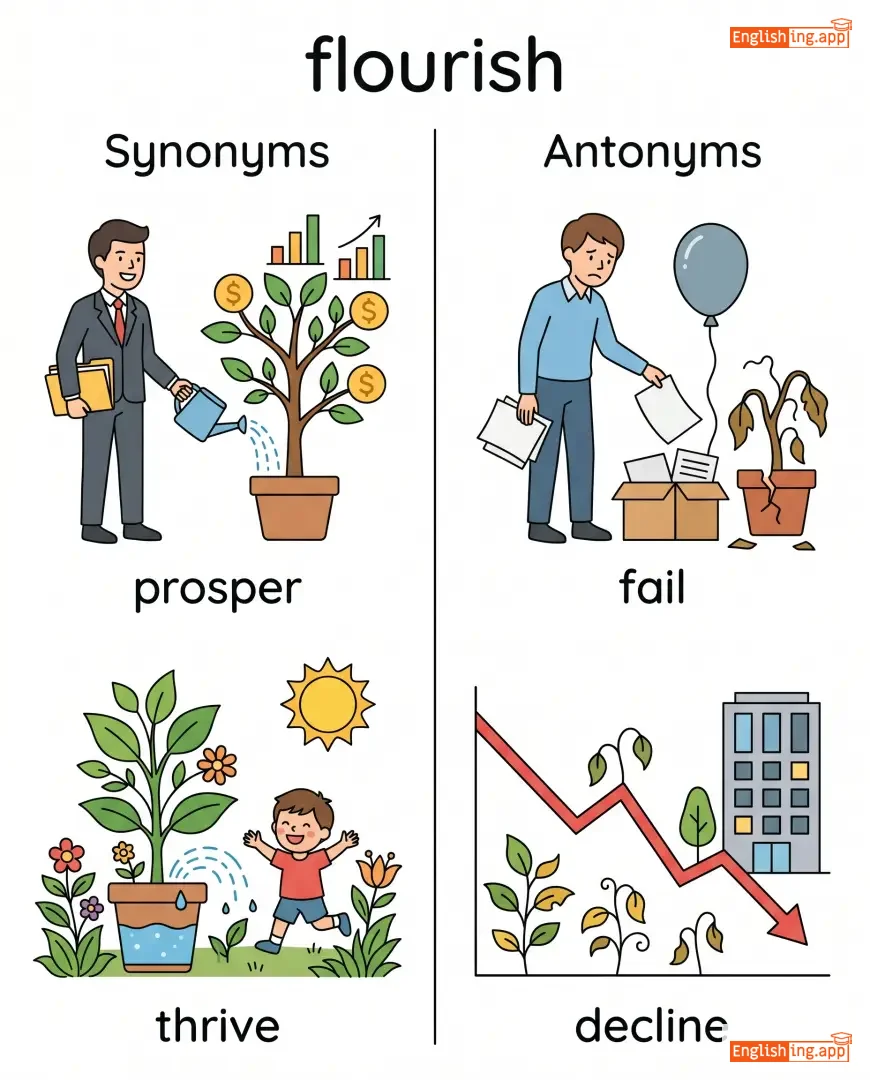
prosper, thrive, bloom, succeed, grow
••••••
|
fail, decline, wither
••••••
|
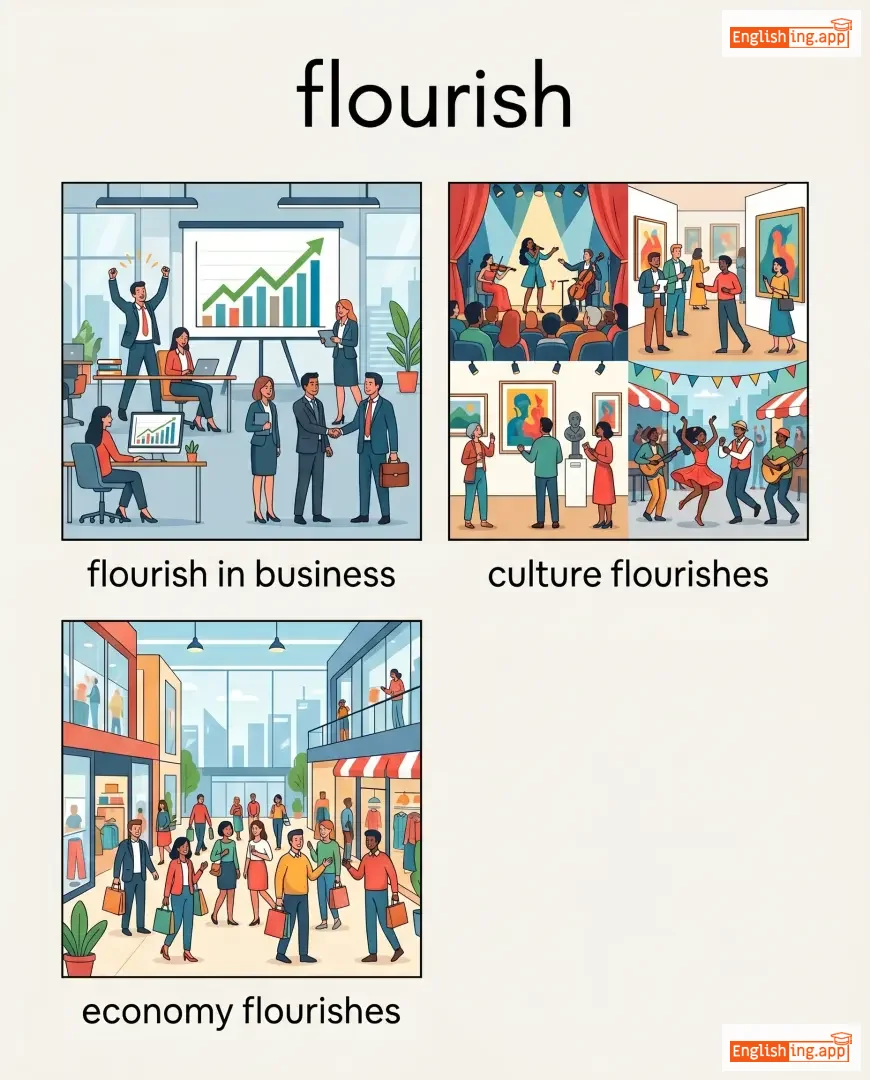
flourish in business, culture flourishes, economy flourishes
••••••
|
No •••••• |
|
🌊
••••••
|
/floʊ/
verb
(fù luó)
••••••
|
|
流动
liúdòng
••••••
|
flowed
fù luó de
••••••
|
flowed
fù luó de
••••••
|
flows
fù luó sī
••••••
|
flowing
fù luó yīng
••••••
|
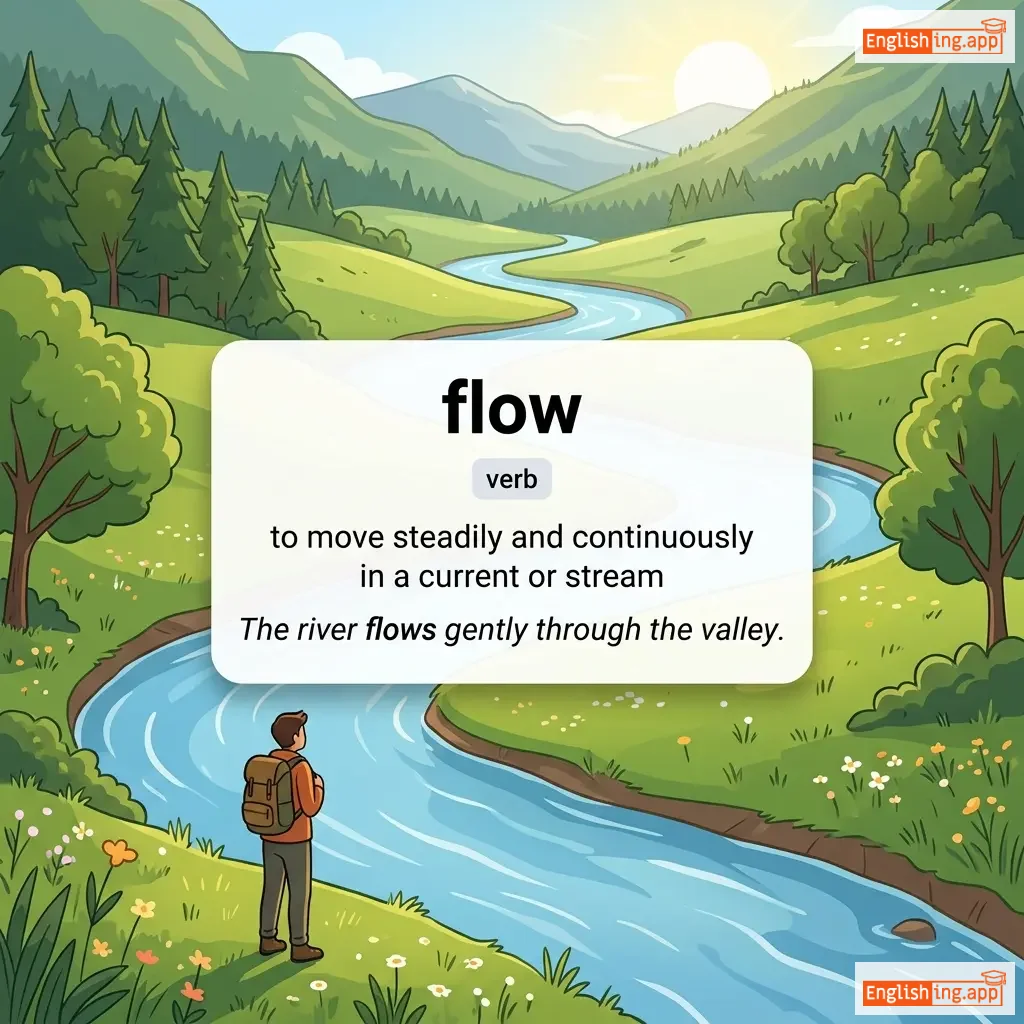
to move steadily and continuously in a current or stream
••••••
|
The river flows gently through the valley.
hé liú guò qu hé chuán guò dì qiú.
••••••
|
河流轻轻地流过山谷。
Héliú qīngqīng de liú guò shāngǔ.
••••••
|
go with the flow
gōu wéi de fù luó
••••••
|
to relax and accept a situation without trying to change it
••••••
|
随波逐流
suí bō zhú liú
••••••
|
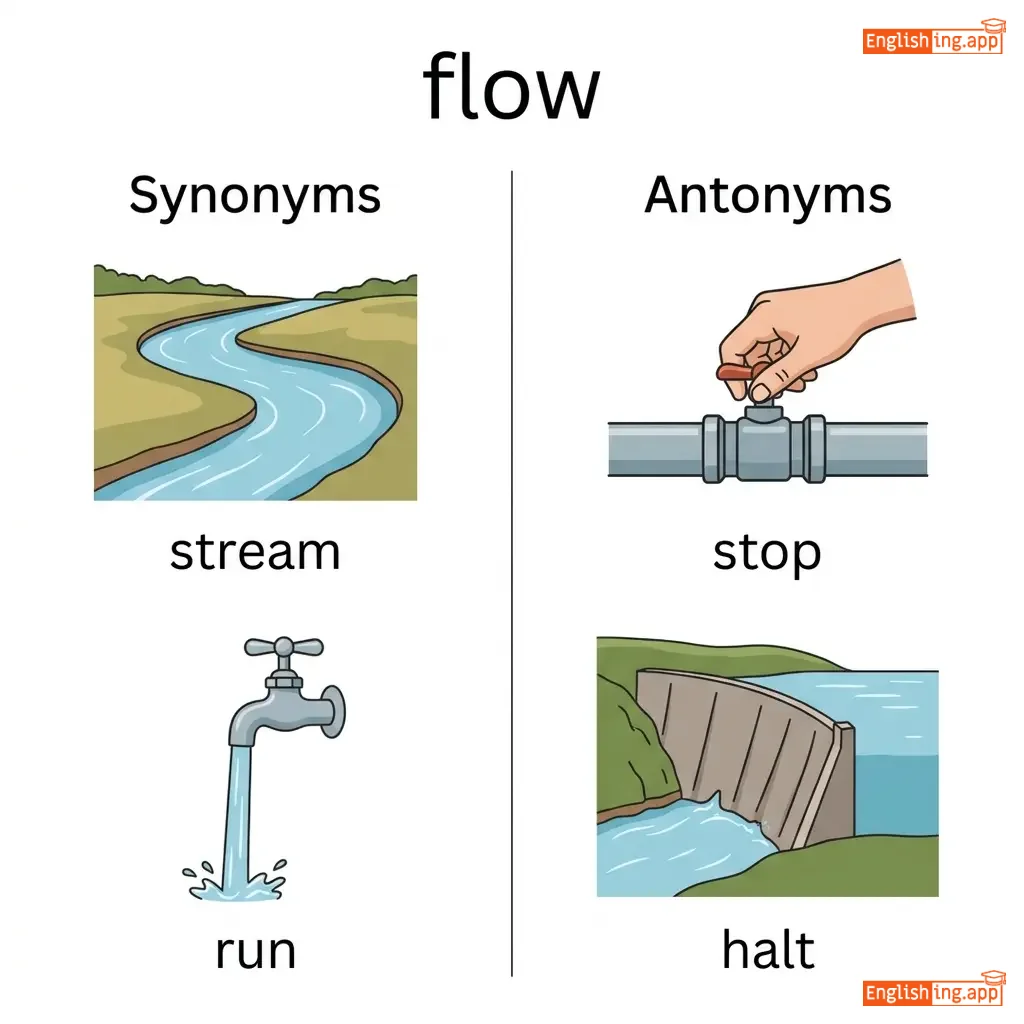
stream, run, circulate, pour, glide
••••••
|
stop, halt, stagnate
••••••
|
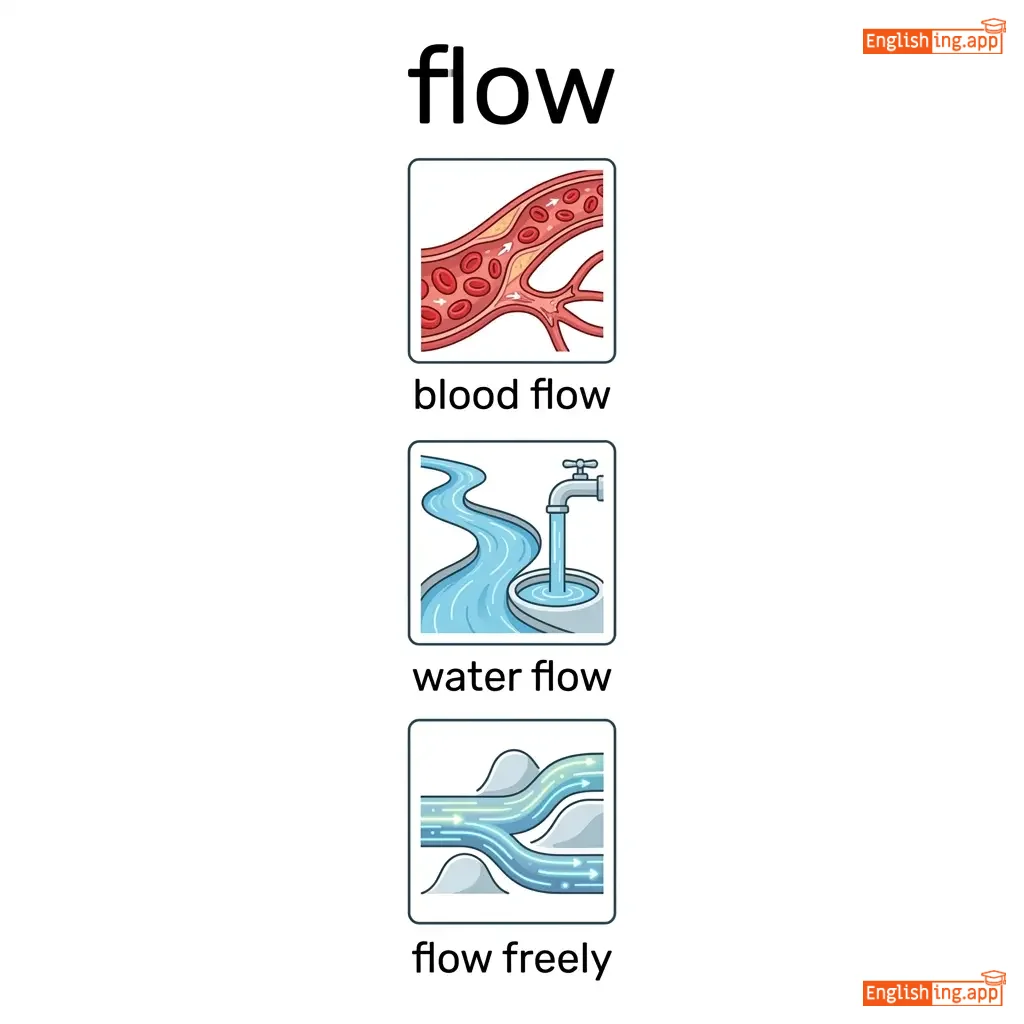
blood flow, water flow, flow freely, flow rate
••••••
|
流动就像水流,轻松随它而行!
••••••
|
|
🌸
••••••
|
/ˈflaʊər/
noun
(花)
••••••
|
- •••••• |
花
hua
••••••
|
- •••••• | - •••••• | - •••••• | - •••••• |
the seed-bearing part of a plant, often colorful and fragrant, that blossoms
••••••
|
The garden was full of colorful flowers. |
花园里满是五彩斑斓的花朵。
huāyuán lǐ mǎn shì wǔcǎi bānlán de huāduǒ.
••••••
|
in full flower |
in a state of peak beauty or development
••••••
|
盛开的花朵
shèng kāi de huāduǒ
••••••
|
blossom, bloom, flora, bud, petal
••••••
|
wilt, decay, wither
••••••
|
pick a flower, flower garden, flower shop, flower arrangement
••••••
|
Flower = 花 — 花开富贵,美丽如花
••••••
|
|
🤒
••••••
|
/fluː/
noun
(流感)
••••••
|
- •••••• |
流感
liugan
••••••
|
- •••••• | - •••••• | - •••••• | - •••••• |
a contagious viral illness causing fever, aches, and respiratory symptoms; influenza
••••••
|
She stayed home because she had the flu.
她因为得了流感待在家里。
••••••
|
她因为得了流感待在家里。
Ta yinwei de le liugan dai zai jiali
••••••
|
catch the flu
catch the flu
••••••
|
to become ill with influenza
••••••
|
得流感
de liugan
••••••
|
influenza, grippe, viral illness, flu infection
••••••
|
health, wellness
••••••
|
seasonal flu, flu symptoms, flu virus, flu shot, flu outbreak
••••••
|
Flu 就是 流感,冬天最常见
••••••
|
|
💧
••••••
|
/ˈfluːɪd/
noun/adjective
(流体)
••••••
|
- •••••• |
液体
yeti
••••••
|
- •••••• | - •••••• | - •••••• | - •••••• |
a substance that can flow easily, such as liquid or gas; smooth and adaptable
••••••
|
The artist's fluid movements impressed the audience. |
艺术家的流畅动作给观众留下了深刻的印象。
Yìshùjiā de liúchàng dòngzuò gěi guānzhòng liúxiàle shēnkè de yìnxiàng.
••••••
|
go with the fluid |
adapt easily to changes
••••••
|
跟着流动走
gēnzhe liúdòng zǒu
••••••
|
liquid, flowing, smooth, adaptable
••••••
|
solid, rigid, fixed
••••••
|
fluid motion, fluid design, body fluid, fluid system
••••••
|
液体意味着流动,像液体那样容易流动。
••••••
|
|
🕊️
••••••
|
/flaɪ/
verb
(fài)
••••••
|
|
飞行
feixing
••••••
|
flew
fū
••••••
|
flown
fūn
••••••
|
flies
fái
••••••
|
flying
fàiíng
••••••
|
to move through the air using wings or by being carried by the wind or an aircraft
••••••
|
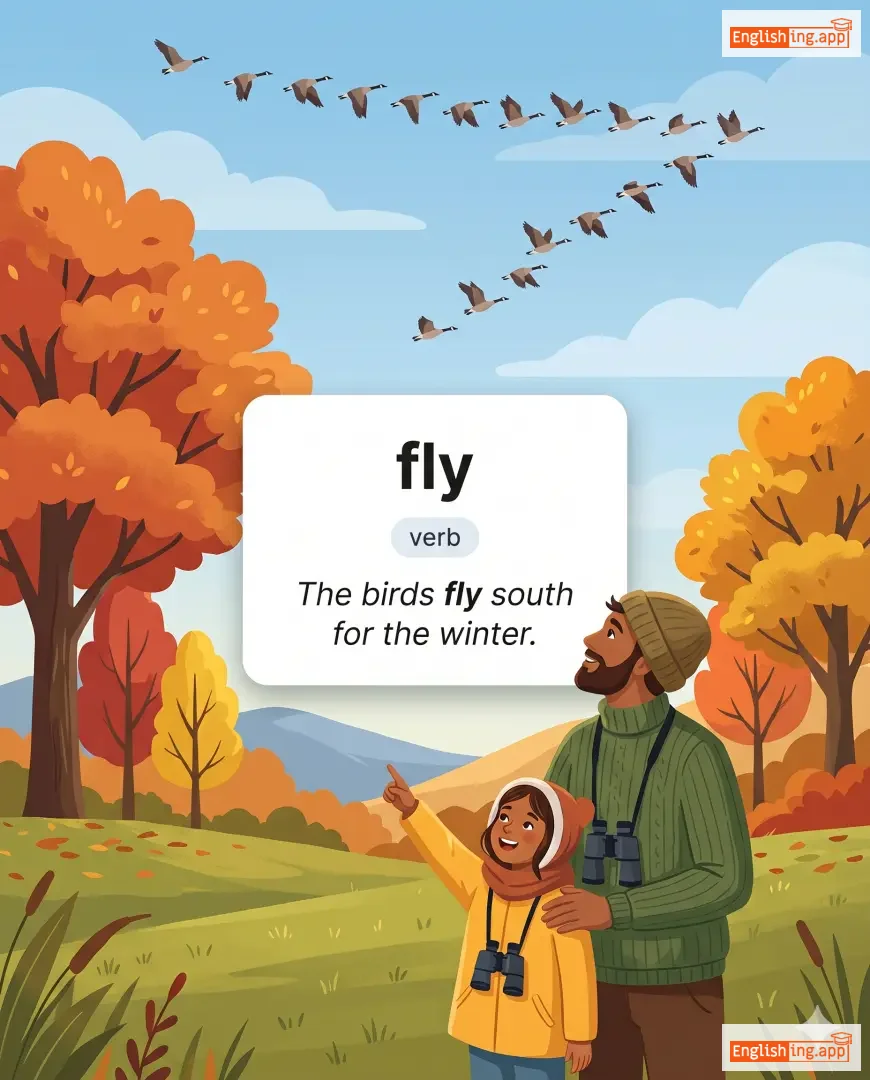
The birds fly south for the winter.
鸟儿在冬季飞往南方。
••••••
|
鸟儿在冬季飞往南方。
Niao er zai dongji fei wang nanfang.
••••••
|
fly high
飞得高
••••••
|
to be very successful or happy
••••••
|
飞得高
Fei de gao
••••••
|
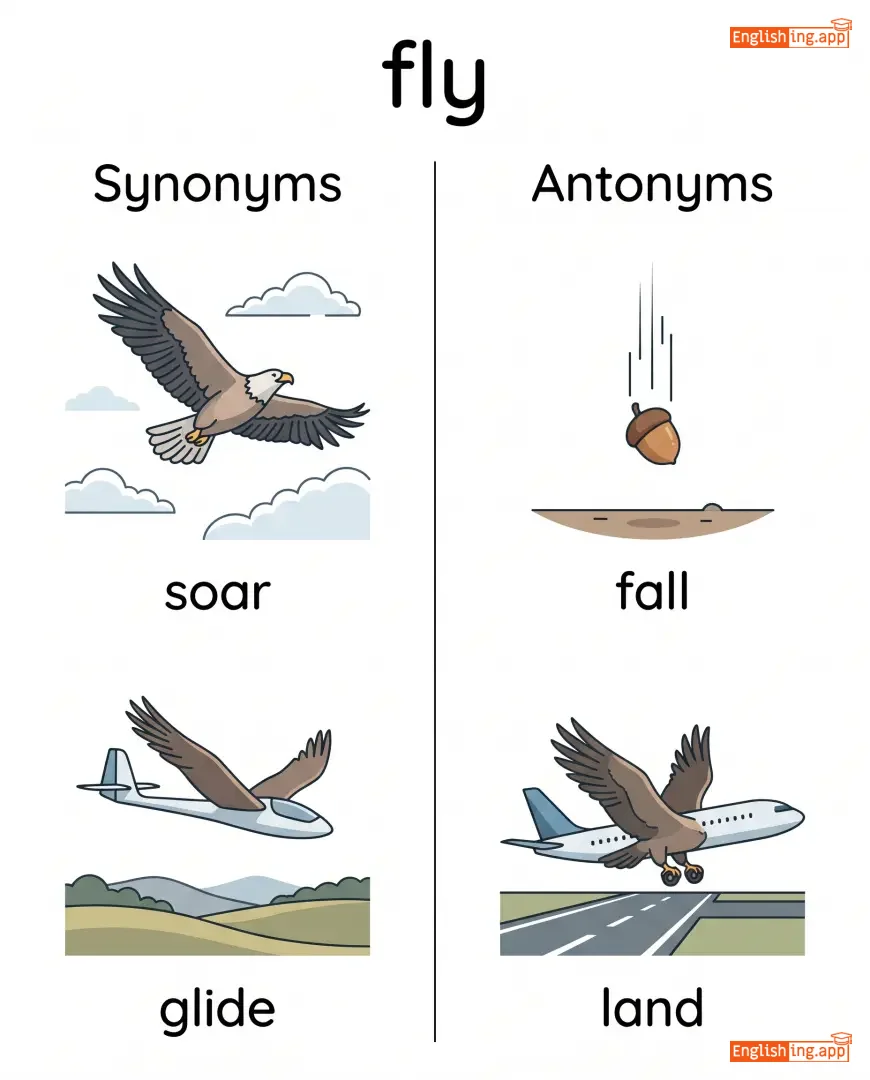
soar, glide, hover, ascend, travel
••••••
|
fall, land, drop
••••••
|
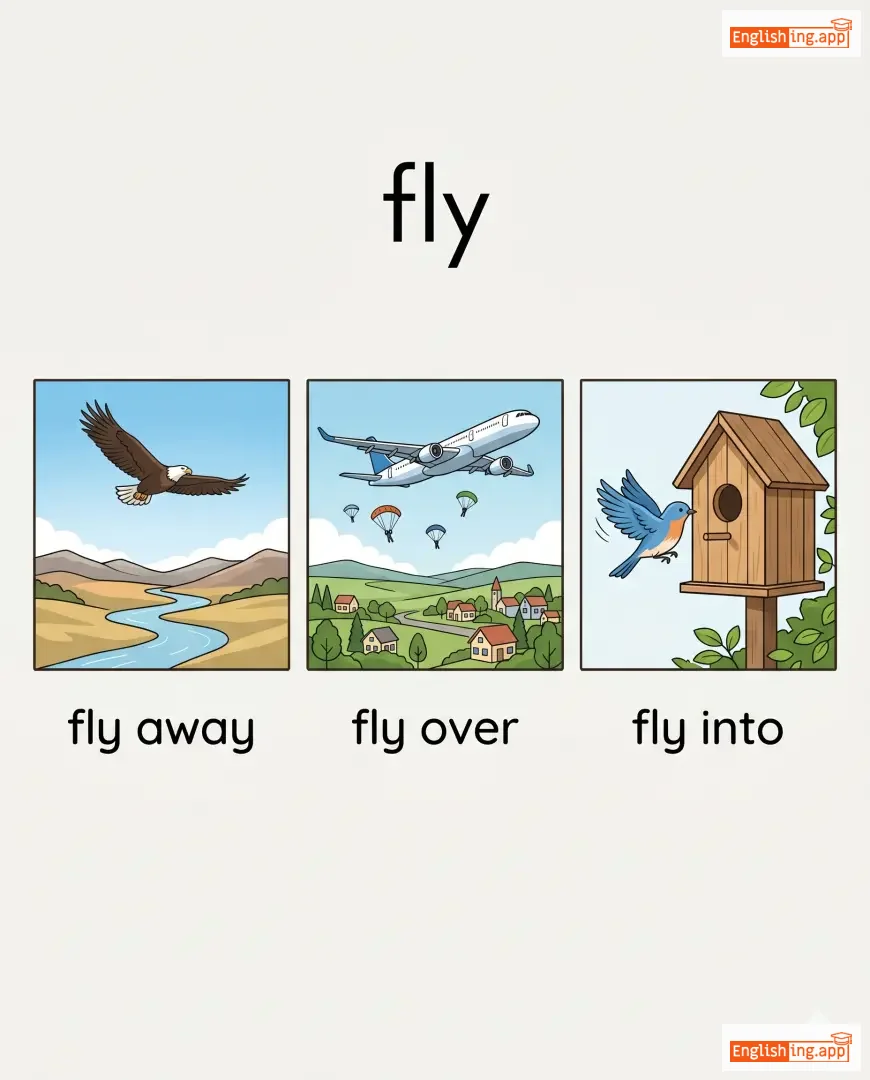
fly away, fly over, fly into, fly fast, fly high
••••••
|
Fly 意味着飞行,记住:鸟儿在天空中飞翔。
••••••
|
|
🎯
••••••
|
/ˈfoʊ.kəs/
verb
(焦点)
••••••
|

|
专注
zhuanzhu
••••••
|
focused
聚焦
••••••
|
focused
聚焦
••••••
|
focuses
聚焦
••••••
|
focusing
聚焦中
••••••
|
to direct attention or effort on something specific
••••••
|
She needs to focus on her studies.
她需要专注于她的学习。
••••••
|
她需要专注于她的学习。
Tā xūyào zhuānzhù yú tā de xuéxí.
••••••
|
in focus
在焦点中
••••••
|
clear and sharp in appearance or understanding
••••••
|
在焦点上
zài jiāodiǎn shàng
••••••
|
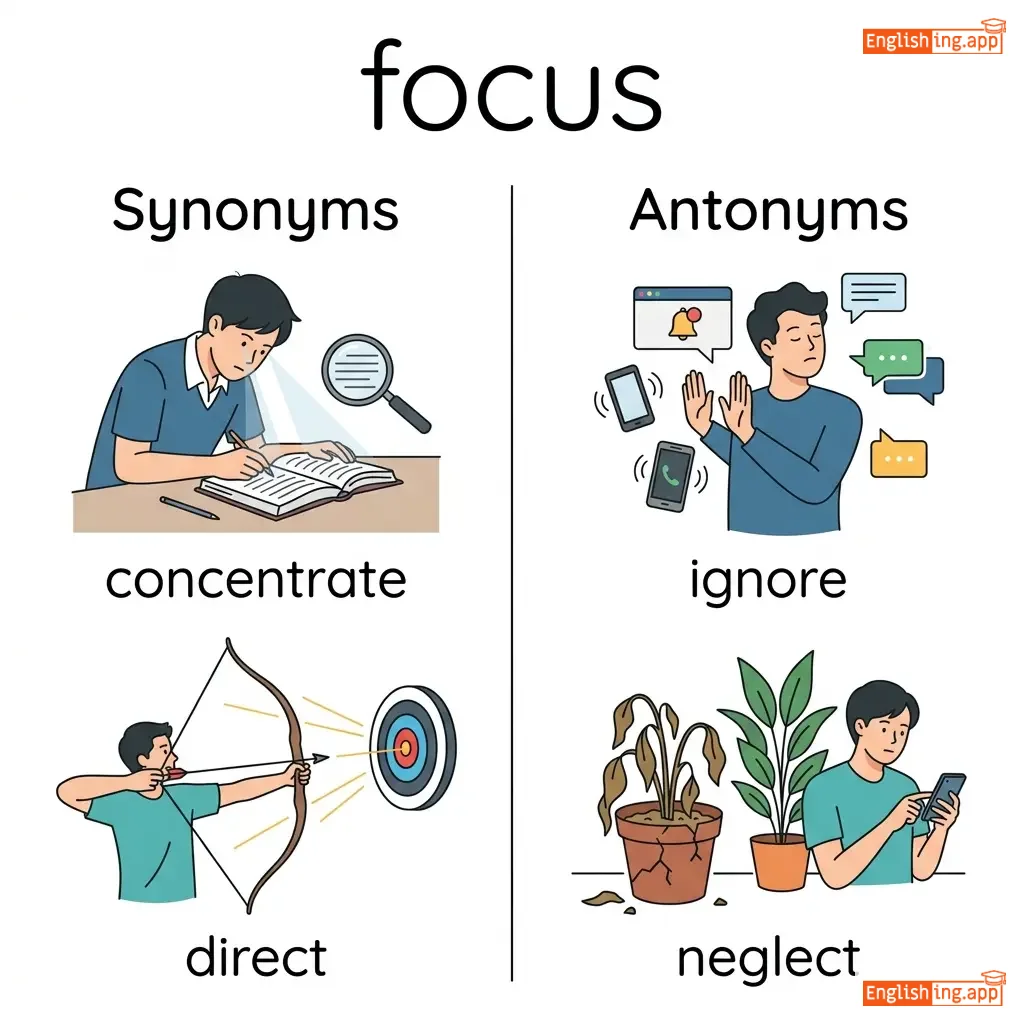
concentrate, direct, aim, emphasize, highlight
••••••
|
ignore, neglect, distract
••••••
|
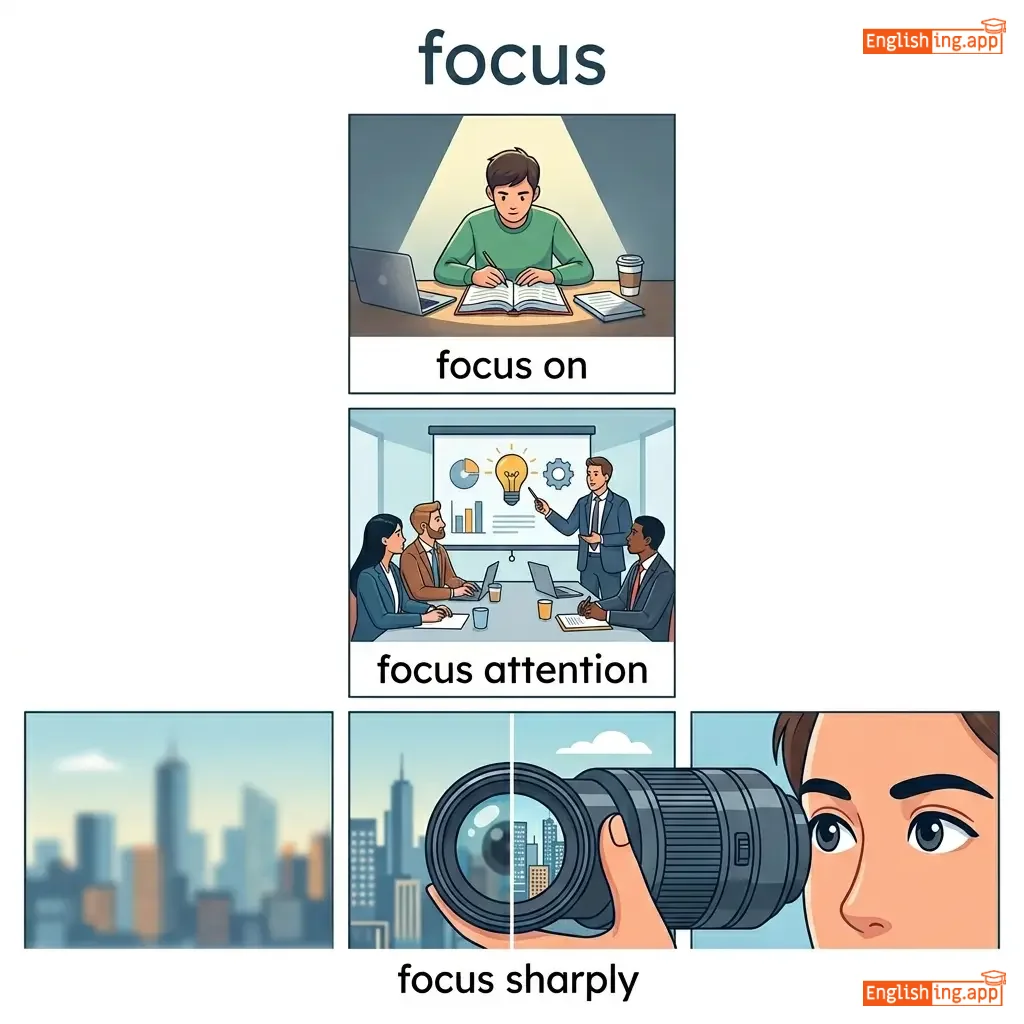
focus on, focus attention, focus sharply, focus clearly
••••••
|
Focus 意味着集中注意力,就像在考试中集中注意力一样。
••••••
|
|
📄
••••••
|
/fəʊld/
verb
••••••
|
- •••••• | - •••••• |
folded
••••••
|
folded
••••••
|
folds
••••••
|
folding
••••••
|
to bend something, especially paper or cloth, so that one part covers another
••••••
|
She folded the letter neatly before placing it in the envelope. |
- •••••• |
fold up |
to close or collapse something that opens out
••••••
|
- •••••• |
bend, crease, wrap, double, pleat
••••••
|
unfold, open, spread
••••••
|
fold clothes, fold paper, fold arms, neatly folded
••••••
|
No •••••• |
|
📁
••••••
|
/ˈfoʊldər/
noun
(福尔德)
••••••
|
- •••••• |
文件夹
wenjianjia
••••••
|
- •••••• | - •••••• | - •••••• | - •••••• |
a container or directory used to store and organize papers or digital files
••••••
|
I saved all the photos in a separate folder.
我把所有照片保存到一个单独的福尔德。
••••••
|
我把所有照片保存在一个单独的文件夹里。
wo ba suoyou zhaopian baocun zai yi ge dandu de wenjianjia li
••••••
|
folder structure
文件夹结构
••••••
|
the organized arrangement of folders and subfolders
••••••
|
文件夹结构
wenjianjia jiegou
••••••
|
directory, file, binder, dossier, container
••••••
|
disorder, mess
••••••
|
create a folder, open a folder, shared folder, file folder, folder structure
••••••
|
Wenjianjia is file home
••••••
|

