A Second Chance at Life
卡里姆先生是一位忙碌的 executive,他的 occupation 总是充满压力。在 retirement 前的两年,他去了一家 health-care 中心进行常规体检。医生告诉他,他的 cholesterol 水平非常高,并且血液 circulation 存在问题。 "你需要停止吃垃圾食品,停止看 misleading 广告,"医生说道。他 accurately 解释了饮食 restriction 和 regular 锻炼的重要性。卡里姆先生的第一个 impression 是认为这只是一个小问题,但医生的 testimony 和 disclosure 的测试结果让他感到担忧。医生给出了一个 resolution ——需要做出 replacement,过上健康的生活方式。卡里姆先生通过家庭的 involvement 和与营养师的 interaction 开始了一段新旅程。医生会 supervise,并给出了关于可以食用的食物的 provision。看到卫生部门 enforcement 食品安全法规后,他明白了预防的重要性。六个月后,他的 realization 是,生活方式的改变给了他一条新生路。在 retirement 后,他现在健康而充满活力。
|
表情符号
|
单词 | Images | 翻译 | 过去时 | 过去分词 | 第三人称单数 | 动名词 | 含义 | 例句 | 例句翻译 | 示例表达 | 示例表达含义 | 示例表达翻译 | 同义词 | 反义词 | 搭配词 | 助记符 |
|---|---|---|---|---|---|---|---|---|---|---|---|---|---|---|---|---|---|
|
🎯
••••••
|
/ˈæk.jə.rət.li/
adverb
(艾库瑞特利)
••••••
|
- •••••• |
准确地,毫无错误地,正确地
zhunque de, haowu cuowu de, zhengque de
••••••
|
- •••••• | - •••••• | - •••••• | - •••••• |
in an exact way, without any mistakes; precisely; correctly
••••••
|
She accurately predicted the outcome of the election. |
她准确地预测了选举结果。
ta zhunque de yuce le xuanju jieguo
••••••
|
- •••••• | - •••••• | - •••••• |
precisely, exactly, correctly, perfectly
••••••
|
inaccurately, wrongly, incorrectly
••••••
|
accurately describe, accurately measure, accurately predict
••••••
|
Chinese '准确' for accurate, English 'correctly' – '准确地,毫无错误地'.
••••••
|
|
🩸
••••••
|
/kəˈlɛstərɒl/
noun
(胆固醇)
••••••
|
- •••••• |
胆固醇
dǎn gù chún
••••••
|
- •••••• | - •••••• | - •••••• | - •••••• |
a fatty substance found in the blood, high levels of which can cause health problems
••••••
|
High cholesterol can increase the risk of heart disease. |
高胆固醇可能增加患心脏病的风险。
Gāo dǎn gù chún kěnéng zēngjiā huàn xīn zàng bìng de fēngxiǎn.
••••••
|
- •••••• | - •••••• | - •••••• |
lipid, fat, sterol, plasma fat
••••••
|
low-fat, healthy blood
••••••
|
cholesterol level, high cholesterol, cholesterol test, cholesterol control
••••••
|
胆固醇高 = 心脏病风险增加。多吃蔬菜,低胆固醇!
••••••
|
|
🔄
••••••
|
/ˌsɜːr.kjʊˈleɪ.ʃən/
noun
(sɪr.kjʊˈleɪ.ʃən)
••••••
|

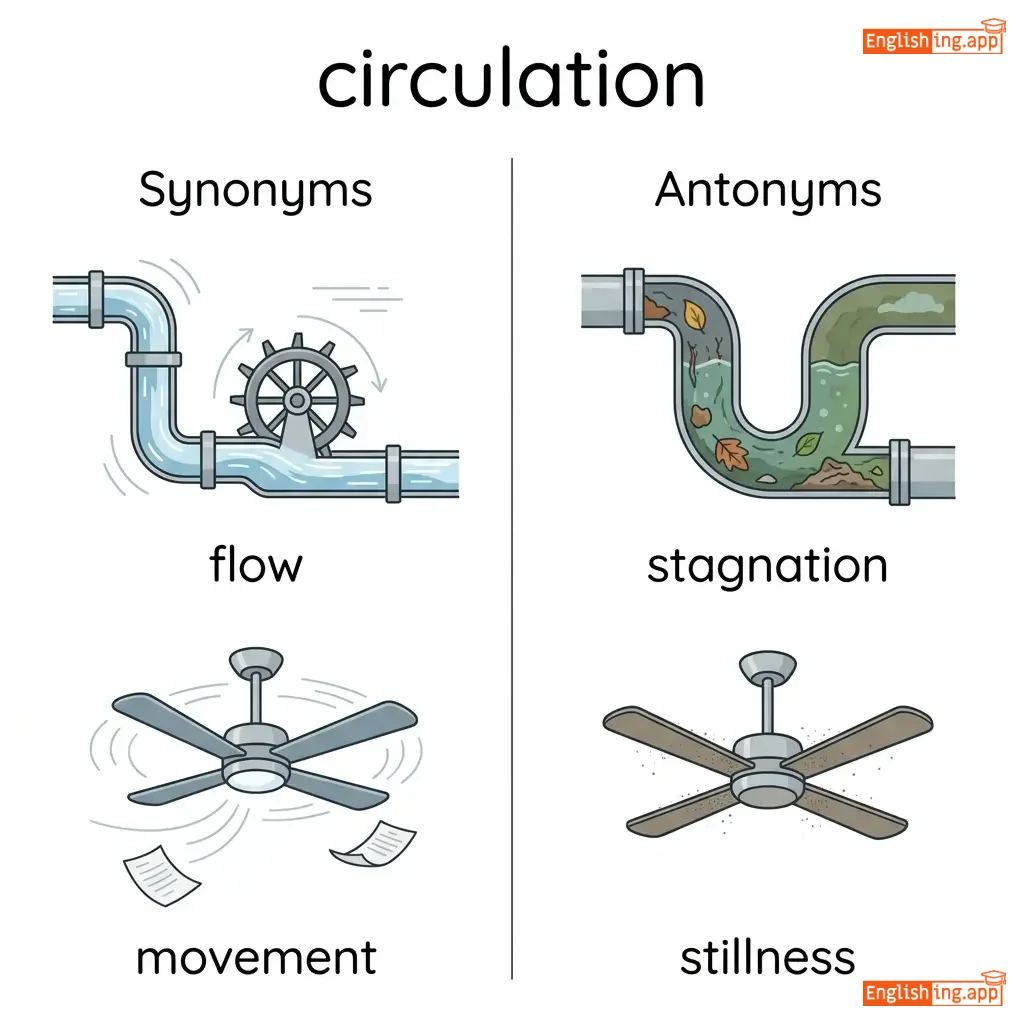
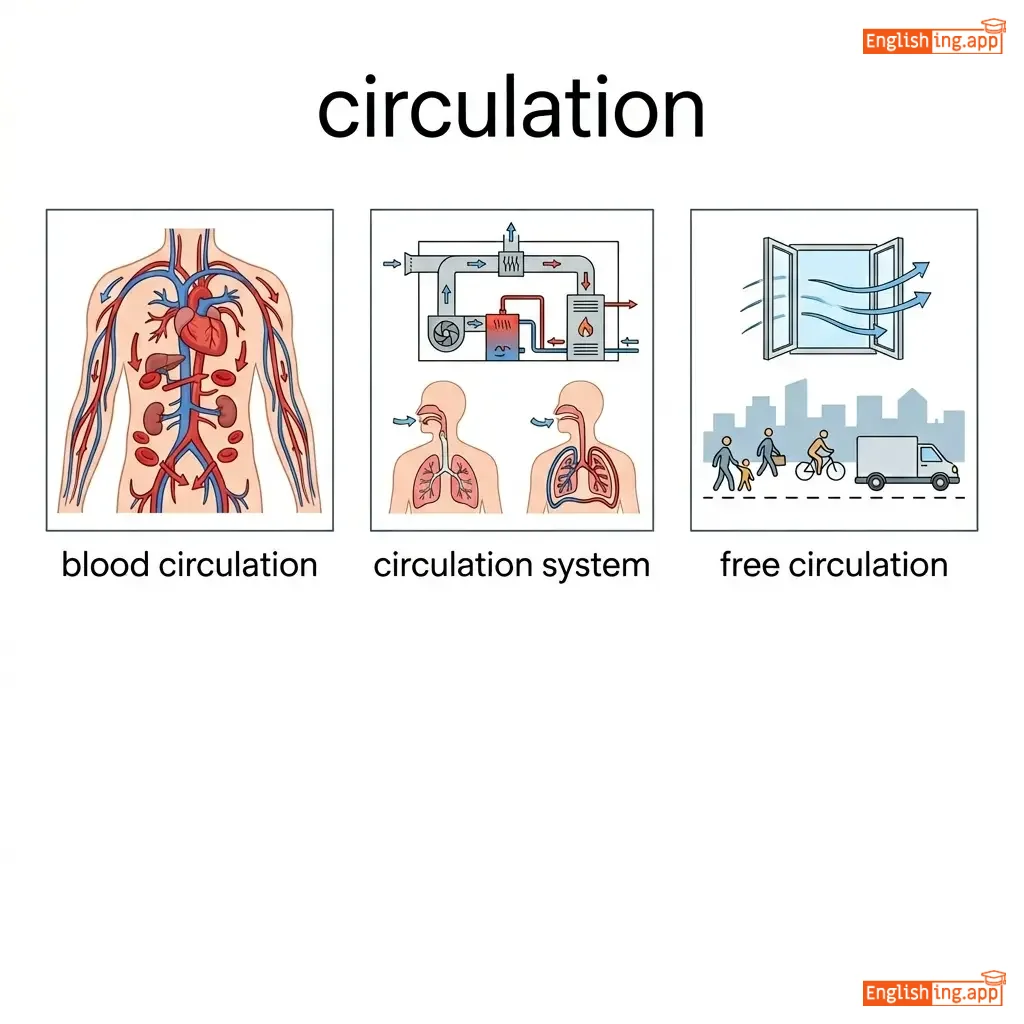
|
循环
xunhuan
••••••
|
- •••••• | - •••••• | - •••••• | - •••••• |
the movement of something (like blood, air, or information) through a system or area.
••••••
|
The circulation of blood is essential for a healthy body. |
血液循环对健康的身体至关重要。
Xueye xunhuan dui jiankang de shenti zhiguang zhongyao.
••••••
|
- •••••• | - •••••• | - •••••• |
flow, movement, transfer, distribution
••••••
|
stagnation, stillness
••••••
|
blood circulation, circulation system, free circulation, improve circulation
••••••
|
想象血液在身体中的循环,就像维持健康的血液流动一样。
••••••
|
|
📢
••••••
|
/dɪsˈkloʊʒər/
noun
(迪斯克洛泽)
••••••
|
- •••••• |
披露
pīlù
••••••
|
- •••••• | - •••••• | - •••••• | - •••••• |
the action of making something known or public
••••••
|
The disclosure of the company's financial status was delayed. |
公司财务状况的披露被延迟了。
Gōngsī cáiwù zhuàngkuàng de pīlù bèi yánchí le.
••••••
|
- •••••• | - •••••• | - •••••• |
revelation, announcement, exposure, divulgence
••••••
|
concealment, secrecy
••••••
|
disclosure statement, public disclosure, full disclosure
••••••
|
披露 (disclosure) 意味着公开某事。
••••••
|
|
👮
••••••
|
/ɪnˈfɔːrsmənt/
noun
(énfǒsīmén)
••••••
|
- •••••• |
执法
zhífǎ
••••••
|
- •••••• | - •••••• | - •••••• | - •••••• |
the act of making sure that laws or rules are followed
••••••
|
The police are responsible for law enforcement. |
警察负责执法。
Jǐngchá fùzé zhífǎ.
••••••
|
strict enforcement |
the rigorous application of rules or laws
••••••
|
严格执法
yángé zhífǎ
••••••
|
implementation, execution, application, policing
••••••
|
neglect, tolerance
••••••
|
law enforcement, enforcement agency, enforcement action, enforcement measures
••••••
|
Enforcement 意味着执行法律 — 警察 enforce 法律严格。
••••••
|
|
🏥
••••••
|
/ˈhɛlθˌkɛər/
noun
(happiness)
••••••
|
- •••••• |
幸福
xìngfú
••••••
|
- •••••• | - •••••• | - •••••• | - •••••• |
the organized provision of medical services to maintain or improve health
••••••
|
Access to quality health-care is essential for every citizen. |
当她收到奖项时,她无法掩饰自己的幸福。
Dāng tā shōu dào jiǎngxiàng shí, tā wúfǎ yǎnshì zìjǐ de xìngfú.
••••••
|
- •••••• | - •••••• | - •••••• |
medical care, treatment, medicine, therapy, nursing
••••••
|
neglect, disease
••••••
|
health-care system, health-care service, access to health-care, health-care provider
••••••
|
幸福意味着你心里感到快乐,笑容从心中升起。
••••••
|
|
🖼️
••••••
|
/ɪmˈprɛʃən/
noun
(印象)
••••••
|
- •••••• |
印象, 概念
yinxiang, gainian
••••••
|
- •••••• | - •••••• | - •••••• | - •••••• |
an idea, feeling, or opinion about something or someone
••••••
|
The book gave me a good first impression. |
这本书给我留下了很好的第一印象。
Zhe ben shu gei wo liuxia le hen hao de di yi yinxiang.
••••••
|
leave an impression |
to have a lasting effect on someone
••••••
|
留下印象
liuxia yinxiang
••••••
|
impact, effect, influence, perception, opinion
••••••
|
ignorance, indifference
••••••
|
first impression, strong impression, lasting impression, overall impression
••••••
|
First impression is last impression – 第一印象最重要
••••••
|
|
🤝
••••••
|
/ˌɪntərˈækʃən/
noun
(互动)
••••••
|
- •••••• |
相互作用
xianghu zuoyong
••••••
|
- •••••• | - •••••• | - •••••• | - •••••• |
The process of people or things acting upon or influencing each other.
••••••
|
The teacher encouraged more interaction between students. |
老师鼓励学生之间更多的互动。
Laoshi guli xuesheng zhijian gengduo de hudong.
••••••
|
social interaction |
communication or activities between people in society
••••••
|
社会互动
shehui hudong
••••••
|
communication, contact, exchange, collaboration, connection
••••••
|
isolation, separation
••••••
|
human interaction, social interaction, online interaction, interaction with
••••••
|
Interaction = Inter (互) + Action (动) = 相互作用
••••••
|
|
🤝
••••••
|
/ɪnˈvɒlvmənt/
noun
(因沃夫门特)
••••••
|
- •••••• |
参与
canyu
••••••
|
- •••••• | - •••••• | - •••••• | - •••••• |
the act of taking part in something
••••••
|
His involvement in the project was crucial.
希斯 因沃夫门特 因 撒 普若杰克 士 库旭哦
••••••
|
他对项目的参与至关重要。
Ta dui xiangmu de canyu zhiguan zhongyao.
••••••
|
- •••••• | - •••••• | - •••••• |
participation, engagement, contribution, role, association
••••••
|
exclusion, absence, withdrawal
••••••
|
active involvement, direct involvement, community involvement
••••••
|
Involvement = 参与,把自己 involve 在里面。
••••••
|
|
🚫
••••••
|
/mɪsˈliːdɪŋ/
adjective
(米斯利丁)
••••••
|
- •••••• |
误导性的
wù dǎo xìng de
••••••
|
- •••••• | - •••••• | - •••••• | - •••••• |
giving the wrong idea or impression
••••••
|
The advertisement was misleading and gave false information. |
广告具有误导性,并提供了虚假的信息。
Guǎng gào jù yǒu wù dǎo xìng, bìng tí gōng le xū jiǎ de xìn xī.
••••••
|
- •••••• | - •••••• | - •••••• |
deceptive, dishonest, false, misleading
••••••
|
clear, accurate
••••••
|
misleading information, misleading advertisement, misleading statement
••••••
|
MISleading sounds like MISS – you miss the truth and get misled!
••••••
|
|
💼
••••••
|
/ˌɑk.jəˈpeɪ.ʃən/
noun
(职业)
••••••
|
- •••••• |
职业; 工作; 占领
zhiye; gongzuo; zhanling
••••••
|
- •••••• | - •••••• | - •••••• | - •••••• |
a job or profession; the action of taking control of a place
••••••
|
Teaching is her chosen occupation. |
教学是她选择的职业。
Jiaoxue shi ta xuanze de zhiye.
••••••
|
- •••••• | - •••••• | - •••••• |
profession, job, career, work
••••••
|
unemployment, leisure, vacation, freedom
••••••
|
full-time occupation, main occupation, military occupation
••••••
|
通过职业寻找幸福
••••••
|
|
📜
••••••
|
/prəˈvɪʒən/
noun
(普罗维久恩)
••••••
|
- •••••• |
规定 / 条款
guīdìng / tiáokuǎn
••••••
|
- •••••• | - •••••• | - •••••• | - •••••• |
the act of providing or supplying something; a condition in a legal document
••••••
|
The contract includes a provision for early termination.
合同包括提前终止的条款。
••••••
|
合同包括提前终止的条款。
Hétóng bāokuò tíqián zhōngzhǐ de tiáokuǎn.
••••••
|
make provision for
做出预见
••••••
|
to prepare or plan for something in advance
••••••
|
提前准备
tíqián zhǔnbèi
••••••
|
supply, arrangement, clause, requirement, stipulation
••••••
|
neglect, denial, refusal
••••••
|
food provision, legal provision, make provision, provision for
••••••
|
Provision意味着提供 - 条款或规定。
••••••
|
|
💡
••••••
|
/ˌrɪəlɪˈzeɪʃən/
noun
(实现)
••••••
|
- •••••• |
实现
shixian
••••••
|
- •••••• | - •••••• | - •••••• | - •••••• |
the act of becoming fully aware of something as a fact
••••••
|
Her realization of the problem helped solve the issue. |
她对问题的实现帮助解决了问题。
Ta dui wenti de shixian bangzhu jie jue le wenti.
••••••
|
- •••••• | - •••••• | - •••••• |
understanding, awareness, comprehension, recognition
••••••
|
ignorance, misunderstanding, confusion
••••••
|
sudden realization, personal realization, painful realization
••••••
|
实现就是完全理解,像是解决问题
••••••
|
|
🔄
••••••
|
/ˈrɛɡjələrli/
adverb
(雷吉拉利)
••••••
|
- •••••• |
定期地
dingqi de
••••••
|
- •••••• | - •••••• | - •••••• | - •••••• |
at regular intervals; in a regular manner
••••••
|
She exercises regularly to stay healthy. |
她定期锻炼以保持健康。
Ta dingqi duanlian yi baochi jiankang.
••••••
|
- •••••• | - •••••• | - •••••• |
consistently, frequently, habitually, routinely
••••••
|
irregularly, infrequently
••••••
|
regularly scheduled, meet regularly, eat regularly, exercise regularly
••••••
|
Think of 'regular' habits - things you do regularly!
••••••
|
|
🔄
••••••
|
/rɪˈpleɪsmənt/
noun
(替换)
••••••
|
- •••••• |
替代
tìdài
••••••
|
- •••••• | - •••••• | - •••••• | - •••••• |
the act of substituting one thing or person for another
••••••
|
She got a replacement for her damaged phone. |
她为她损坏的手机找到了一个替代品。
Tā wèi tā sǔnhuài de shǒujī zhǎodào le yīgè tìdàipǐn.
••••••
|
replacement value |
the cost of replacing an item with a new one of similar kind
••••••
|
替换价值
tìhuàn jiàzhí
••••••
|
substitute, change, exchange, substitution, successor
••••••
|
retention, original
••••••
|
replacement part, replacement cost, replacement policy, replacement product
••••••
|
替代就是把旧的东西换成新的东西
••••••
|
|
📜
••••••
|
/ˌrɛzəˈluːʃən/
noun
(rèzǒulùxùn)
••••••
|
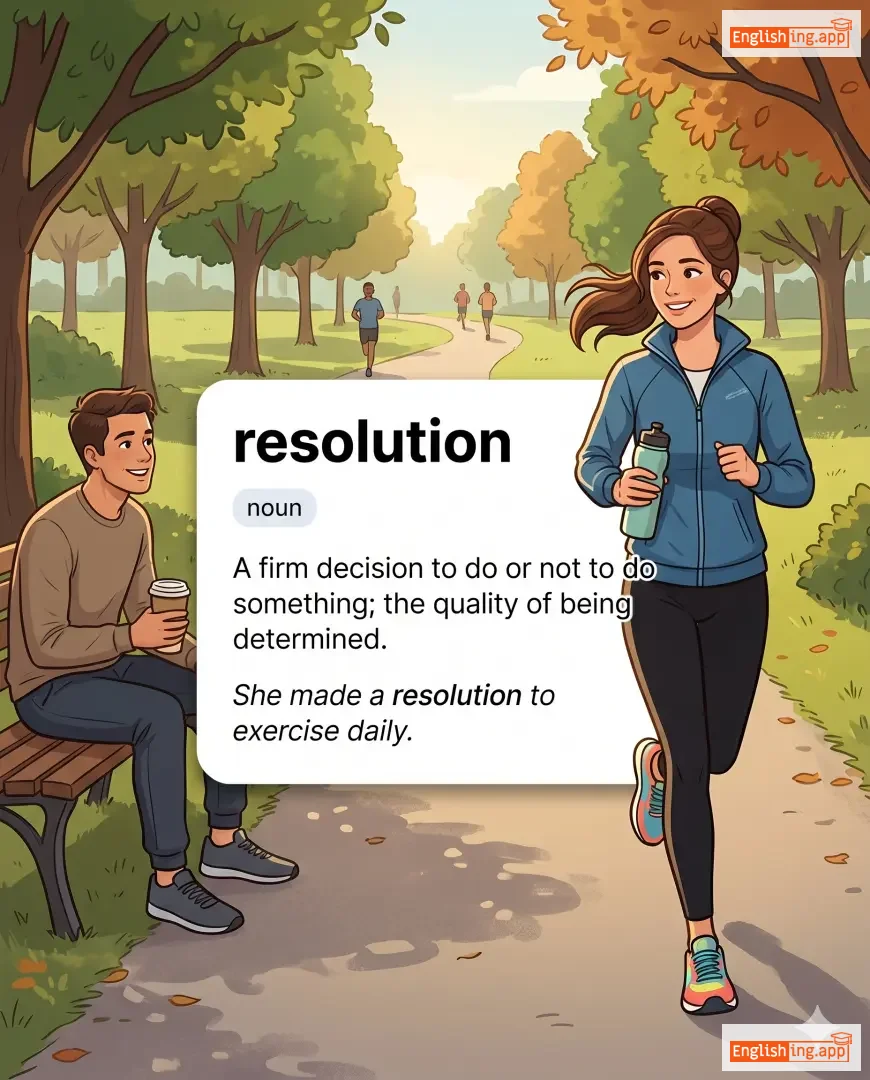
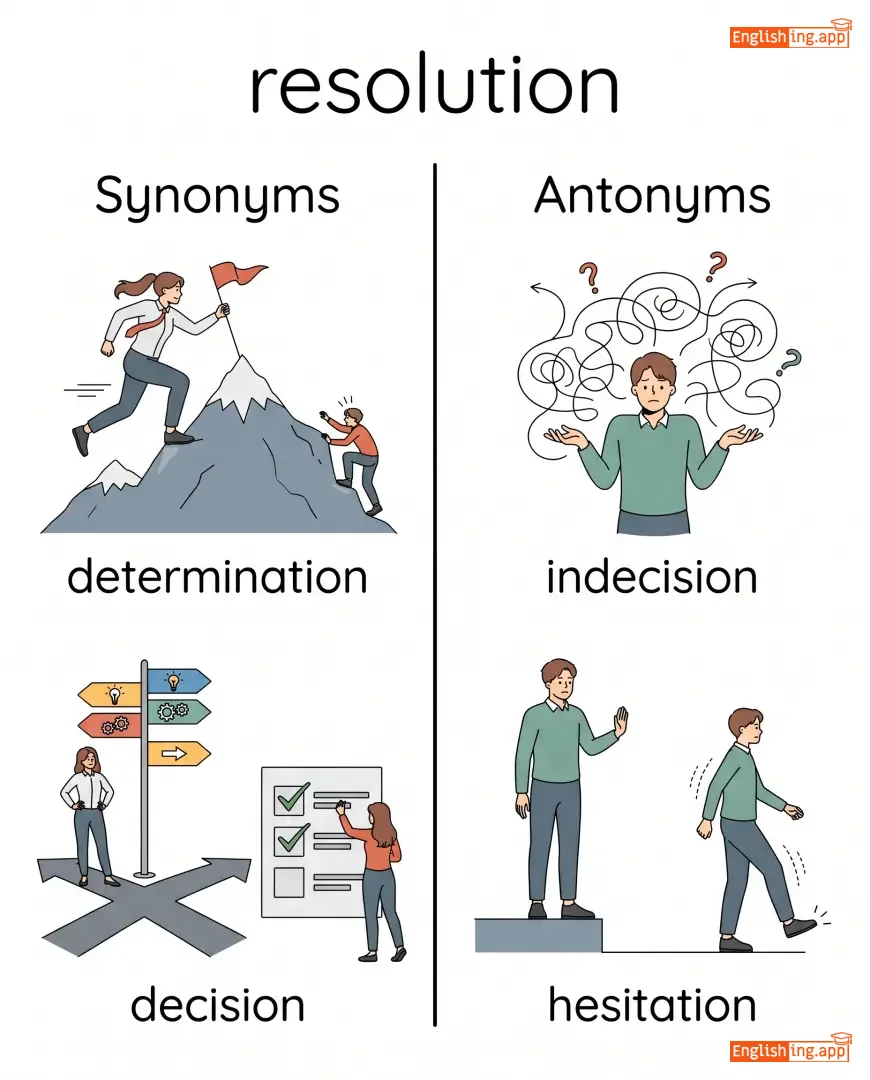
|
决心
juexin
••••••
|
- •••••• | - •••••• | - •••••• | - •••••• |
A firm decision to do or not to do something; the quality of being determined.
••••••
|
She made a resolution to exercise daily. |
她做出了每天锻炼的决心。
Tā zuòchūle měitiān duànliàn de juéxīn.
••••••
|
New Year's resolution |
A firm decision or goal set at the beginning of a new year
••••••
|
新年决心
xīnnián juéxīn
••••••
|
determination, decision, resolve, commitment, intention
••••••
|
indecision, hesitation, doubt
••••••
|
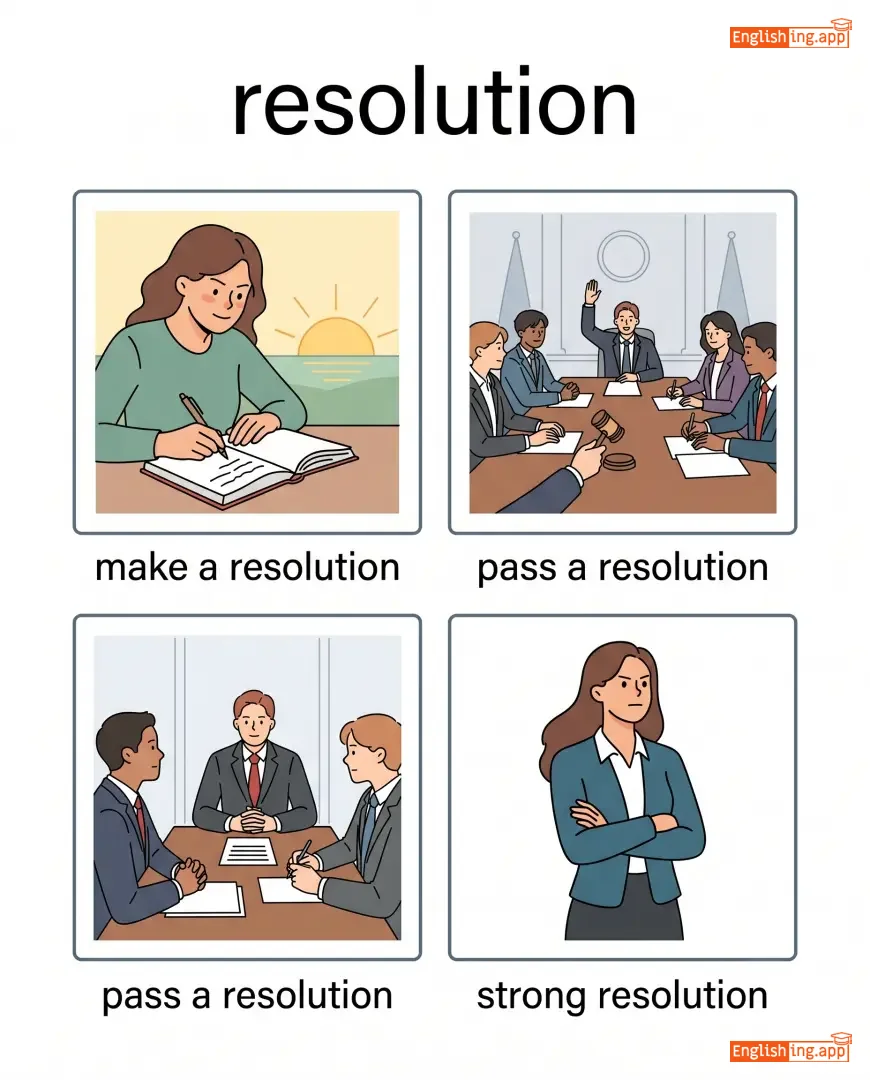
make a resolution, pass a resolution, strong resolution, resolution adopted
••••••
|
Resolution就像中文的决心,定下新年目标!
••••••
|
|
🚫
••••••
|
/rɪˈstrɪk.ʃən/
noun
(限制)
••••••
|
- •••••• |
限制; 限定; 控制
xianzhi; xian ding; kongzhi
••••••
|
- •••••• | - •••••• | - •••••• | - •••••• |
a limiting condition or measure; the limitation or control of someone or something
••••••
|
There are strict restrictions on smoking in public places. |
在公共场所吸烟有严格的限制。
Zai gonggong changsuo xiyan you yange de xianzhi.
••••••
|
- •••••• | - •••••• | - •••••• |
limitation, constraint, ban, prohibition
••••••
|
freedom, permission, allowance, liberty
••••••
|
impose restrictions, travel restrictions, age restrictions, strict restrictions
••••••
|
限制就像墙壁,阻挡了你的自由。
••••••
|
|
👴
••••••
|
/rɪˈtaɪə.mənt/
noun
(rɪˈtaɪə.mənt)
••••••
|
- •••••• |
退休
tuìxiū
••••••
|
- •••••• | - •••••• | - •••••• | - •••••• |
the action or fact of leaving one's job and ceasing to work; the period of life after leaving work
••••••
|
He is planning his retirement after 40 years of service. |
他在工作40年后计划退休。
Tā zài gōngzuò 40 nián hòu jìhuà tuìxiū.
••••••
|
- •••••• | - •••••• | - •••••• |
pension, superannuation, withdrawal, resignation
••••••
|
employment, work, career, service
••••••
|
early retirement, retirement age, retirement plan, forced retirement
••••••
|
退休意味着放松享受晚年
••••••
|
|
👀
••••••
|
/ˈsuːpərvaɪz/
verb
(sūpèrvàiz)
••••••
|

|
监督
jiāndū
••••••
|
supervised
sūpèrvàizd
••••••
|
supervised
sūpèrvàizd
••••••
|
supervises
sūpèrvàizè
••••••
|
supervising
sūpèrvàizīng
••••••
|
to watch and direct a person or activity to ensure things are done correctly
••••••
|
The teacher supervises students during the exam.
老师在考试期间监督学生。
••••••
|
老师在考试期间监督学生。
Lǎoshī zài kǎoshì qījiān jiāndū xuéshēng.
••••••
|
- •••••• | - •••••• | - •••••• |
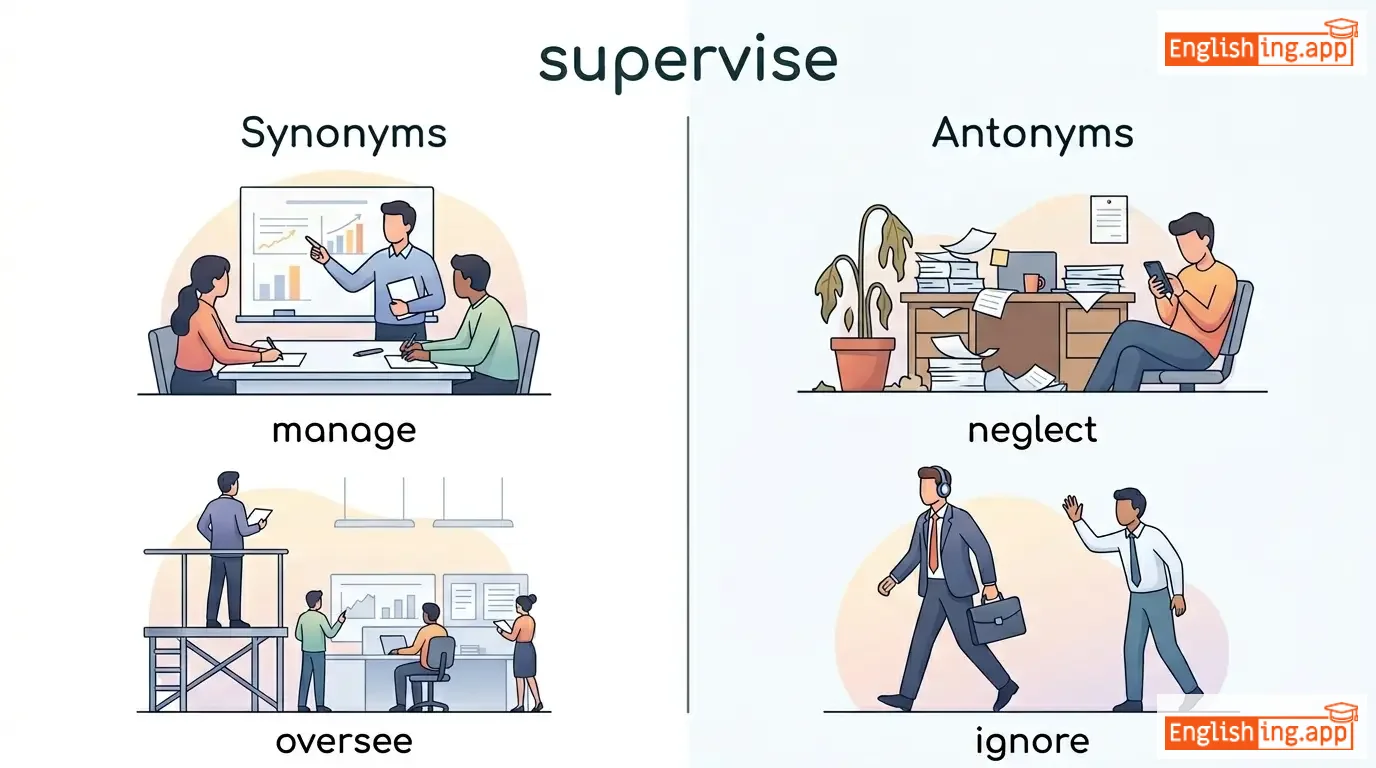
oversee, monitor, manage, direct
••••••
|
neglect, ignore, abandon
••••••
|
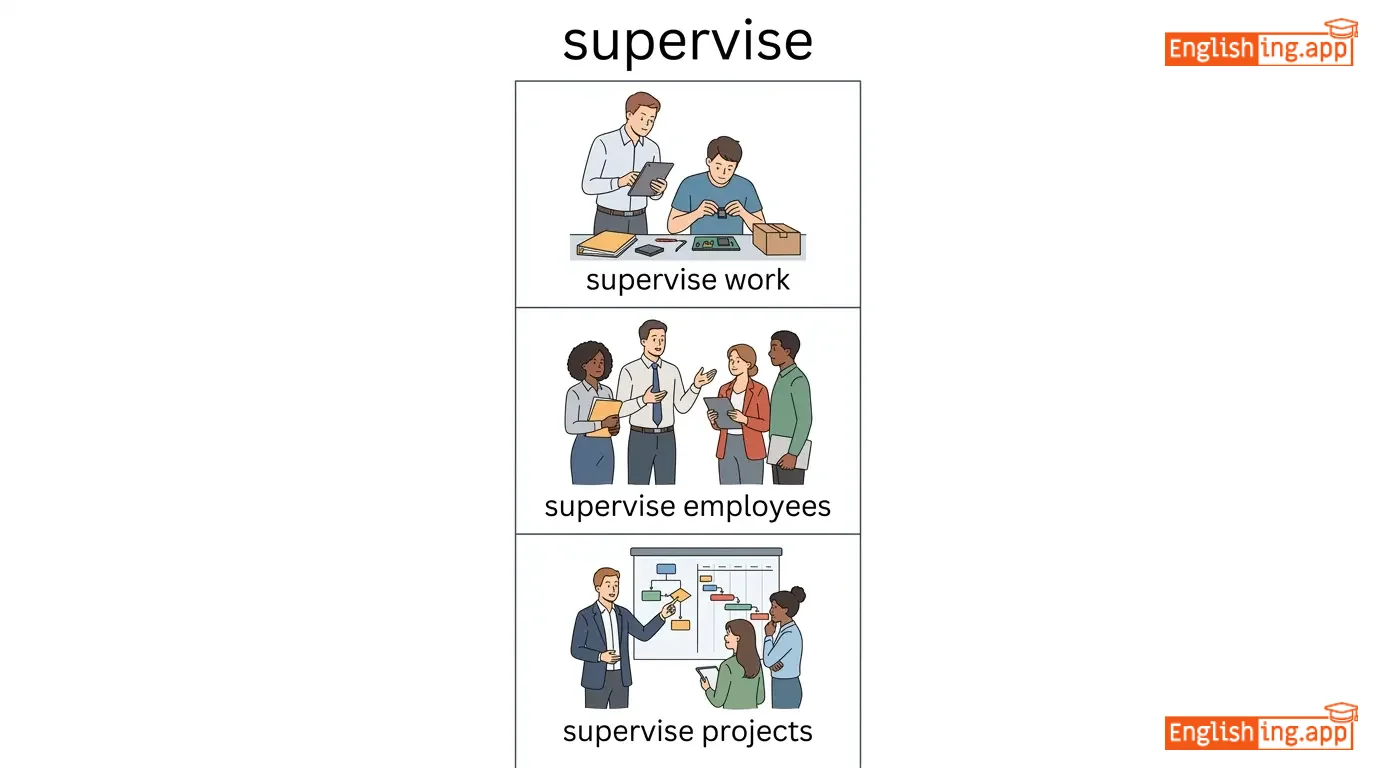
supervise closely, supervise work, supervise students, under supervision
••••••
|
监督一切,就像超级英雄一样!
••••••
|
|
⚖️
••••••
|
/ˈtɛstəˌmoʊni/
noun
(tɛstəˌmoʊni)
••••••
|
- •••••• |
证词
zhèngcí
••••••
|
- •••••• | - •••••• | - •••••• | - •••••• |
A formal statement given in a court of law or evidence supporting a fact.
••••••
|
Her testimony in court helped convict the criminal. |
她在法庭上的证词帮助定罪了罪犯。
Tā zài fǎtíng shàng de zhèngcí bāngzhù dìngzuì le zuìfàn.
••••••
|
bear testimony |
To serve as evidence or proof of something
••••••
|
作证
zuò zhèng
••••••
|
evidence, declaration, statement, affidavit, proof
••••••
|
denial, contradiction, refutation
••••••
|
sworn testimony, court testimony, give testimony, eyewitness testimony
••••••
|
证词听起来像'Test',在法庭上作证就像考试一样。
••••••
|

