Voices in the Conservation Zone
在会议上,环保人士早早地警告了每个人。 他们说,'确保每天穿反光背心。' 有害的杂草从社区花园中移除。 关于水井的意识海报张贴了起来。 传感器安装在西岸的上游。 '那么,我们到底能做什么?' 有人问道。 教练说:'首先,甩掉负面思想。' '那我们有谁呢?' 另一个人问。 在宽阔的开放场地上建造了一个舞台。 一个害羞的工匠捐赠了新鲜的葡萄酒汁。 无人机的小翅膀传送着来自河流的数据。 生物多样性团队列出了与河流合作的合作伙伴团体。 故事描述了一个孤独的狼如何在水边找到庇护。 雨后,虫子从泥土中浮出水面。 志愿者们把绳索缠在船只上。 孩子们在社区院子上画了设计。 '是的,我们能做得到,' Rina 笑着说。 他们一起喊口号。 '这条河也是你的责任,' 老师说道。 最后,每个人都在保护区内分配了角色。
|
表情符号
|
单词 | Images | 翻译 | 过去时 | 过去分词 | 第三人称单数 | 动名词 | 含义 | 例句 | 例句翻译 | 示例表达 | 示例表达含义 | 示例表达翻译 | 同义词 | 反义词 | 搭配词 | 助记符 |
|---|---|---|---|---|---|---|---|---|---|---|---|---|---|---|---|---|---|
|
⚠️
••••••
|
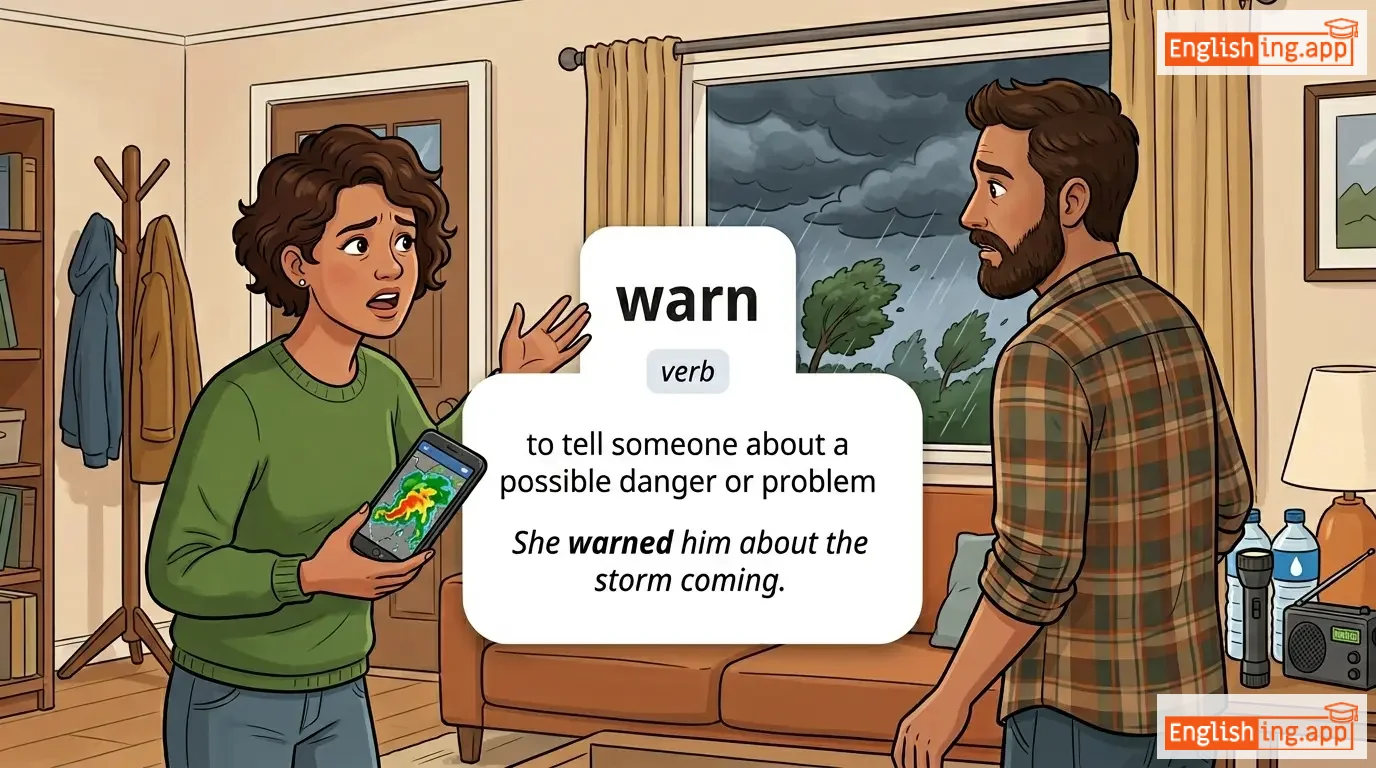
/wɔːrn/
verb
(wɔːrn)
••••••
|
|
警告
jinggao
••••••
|
warned
wɔːrnd
••••••
|
warned
wɔːrnd
••••••
|
warns
wɔːrnz
••••••
|
warning
wɔːrɪŋ
••••••
|
to alert about danger; to give notice of risk
••••••
|
The weather service warns of heavy rain tonight.
气象服务警告今晚有暴雨。
••••••
|
气象服务警告今晚有暴雨。
Qixiang fuwu jinggao jinwan you baoyu.
••••••
|
- •••••• | - •••••• | - •••••• |
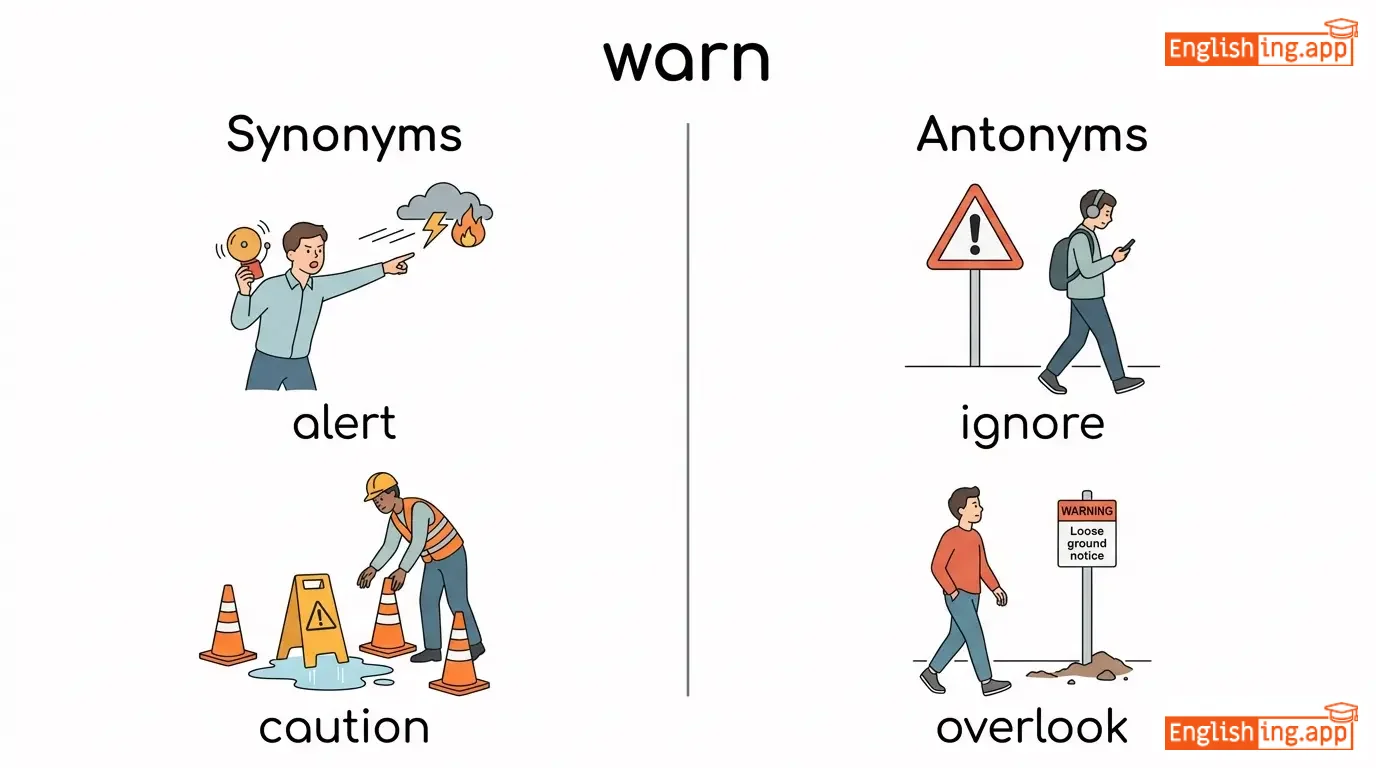
alert, caution, advise, notify, inform
••••••
|
mislead, deceive, ignore, conceal
••••••
|
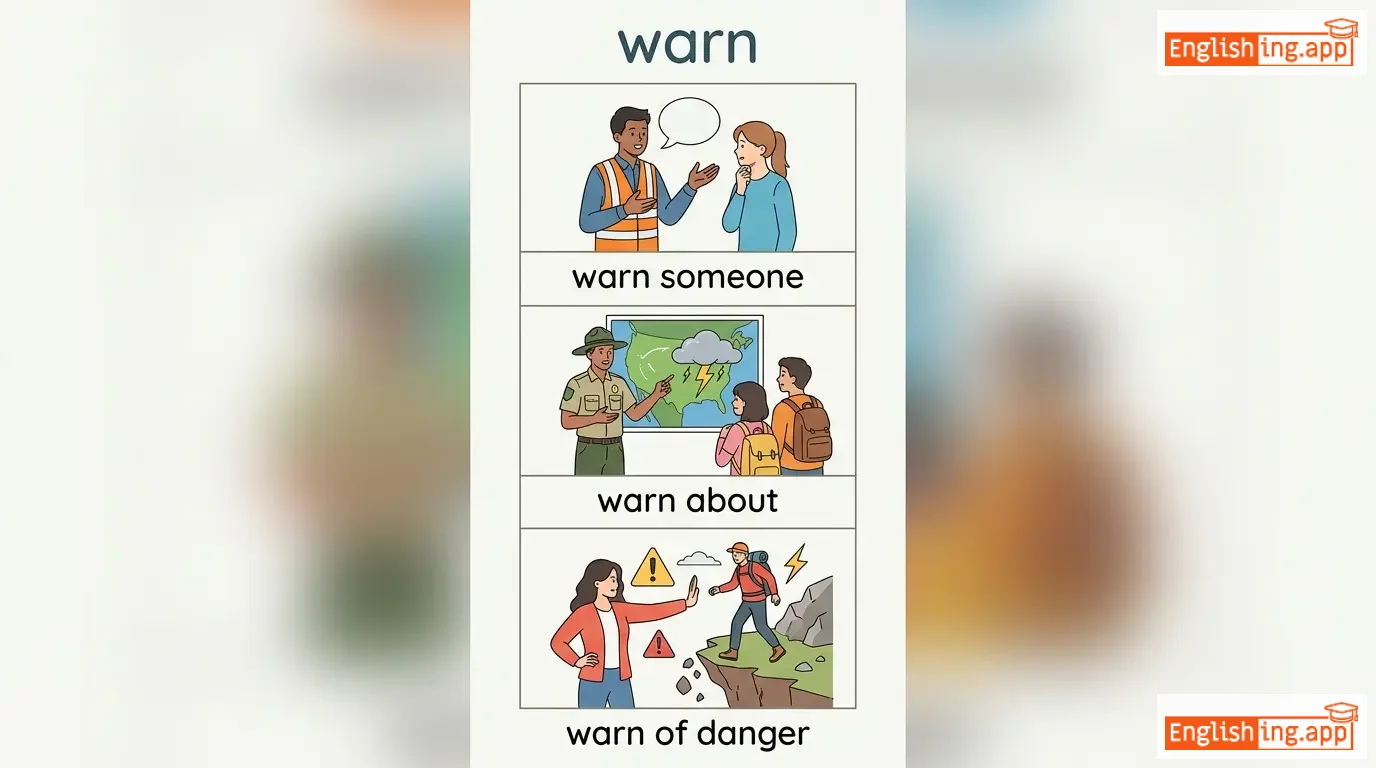
warn against, warn about, warn of danger, warn someone, early warning
••••••
|
No •••••• |
|
👕
••••••
|
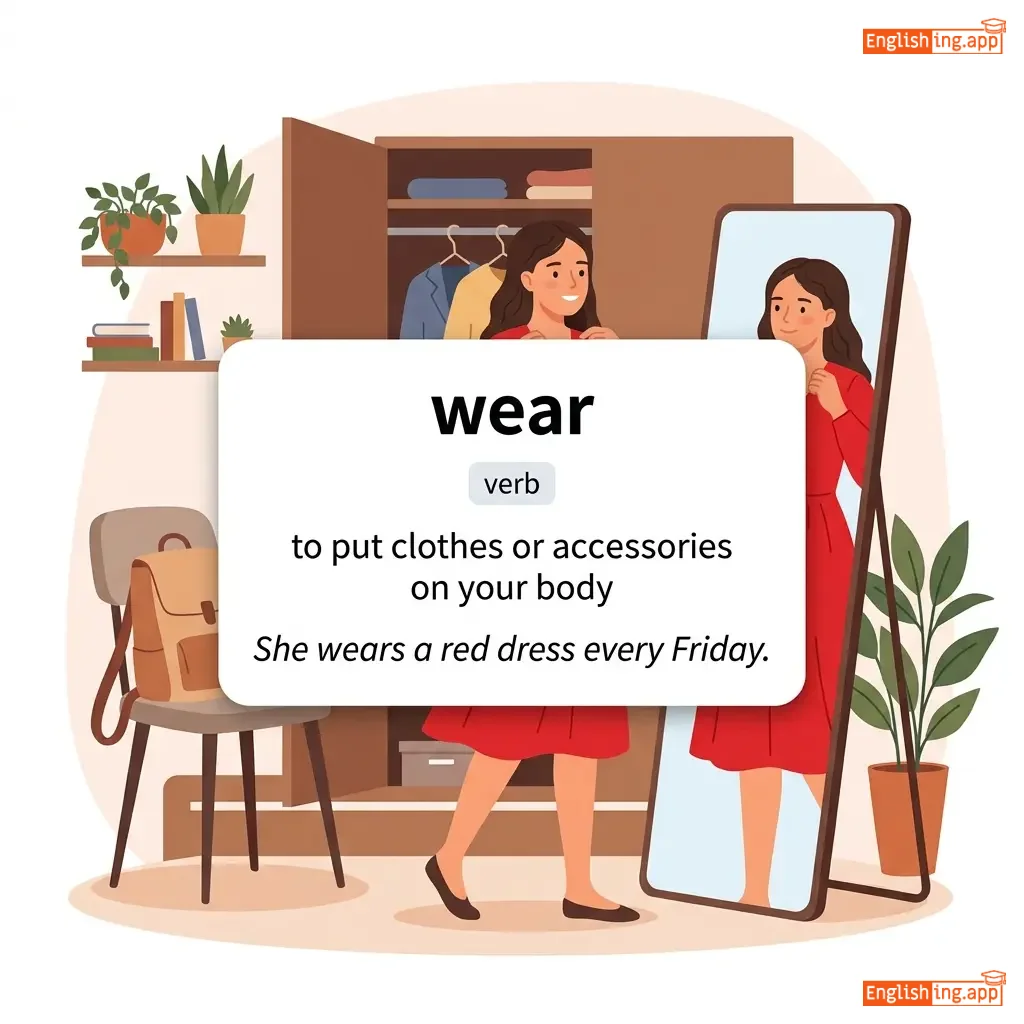
/wɛr/
verb
(wɛr)
••••••
|
|
穿戴
chuān dài
••••••
|
wore
wɔr
••••••
|
worn
wɔrn
••••••
|
wears
wɛrz
••••••
|
wearing
wɛrɪŋ
••••••
|
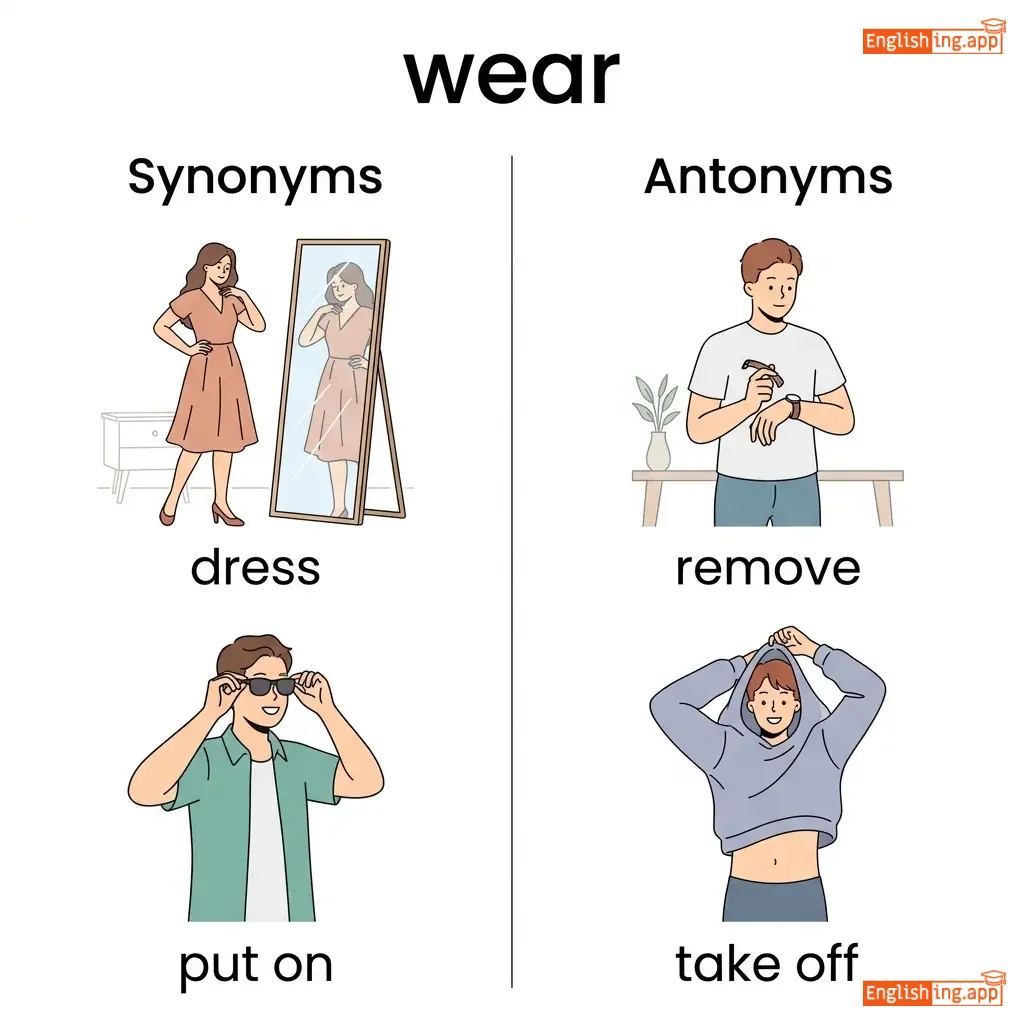
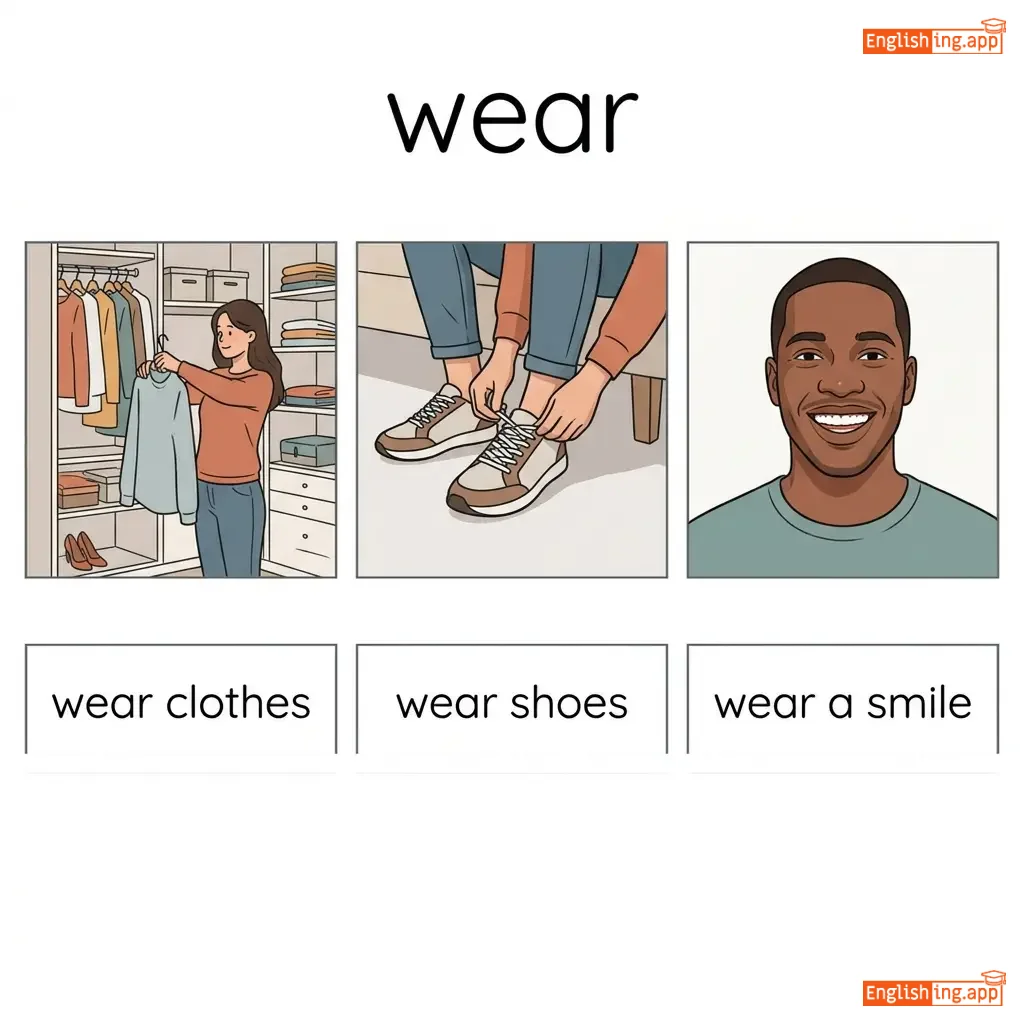
to have clothing or accessories on one's body
••••••
|
She likes to wear bright colors.
shi laɪks tu wɛr braɪt kʌlɚz
••••••
|
她喜欢穿亮色的衣服。
Tā xǐ huān chuān liàng sè de yī fú.
••••••
|
- •••••• | - •••••• | - •••••• |
don, put on, sport, carry
••••••
|
remove, take off, undress
••••••
|
wear clothes, wear jewelry, wear shoes, wear uniform, wear makeup, wear expression
••••••
|
No •••••• |
|
🌿
••••••
|
/wiːd/
noun, verb
(wīd)
••••••
|
|
杂草
zácǎo
••••••
|
weeded
wīded
••••••
|
weeded
wīded
••••••
|
weeds
wīds
••••••
|
weeding
wīdɪŋ
••••••
|
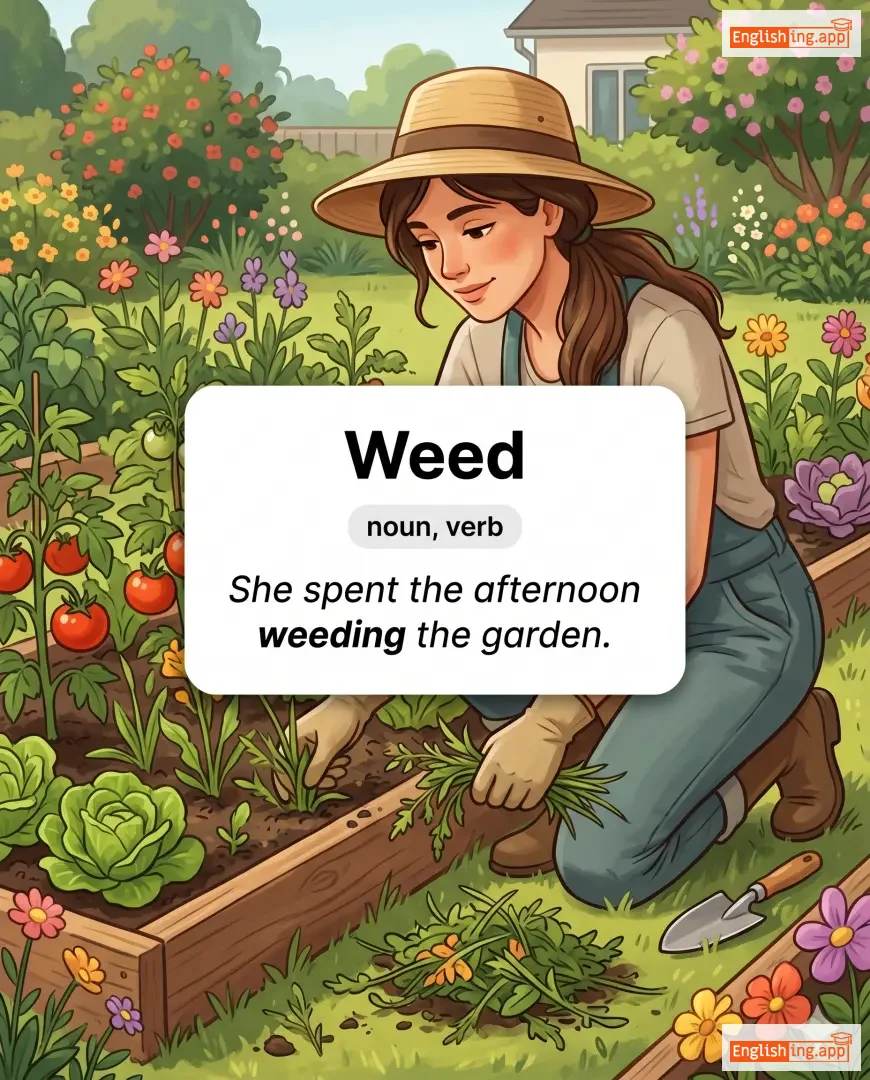
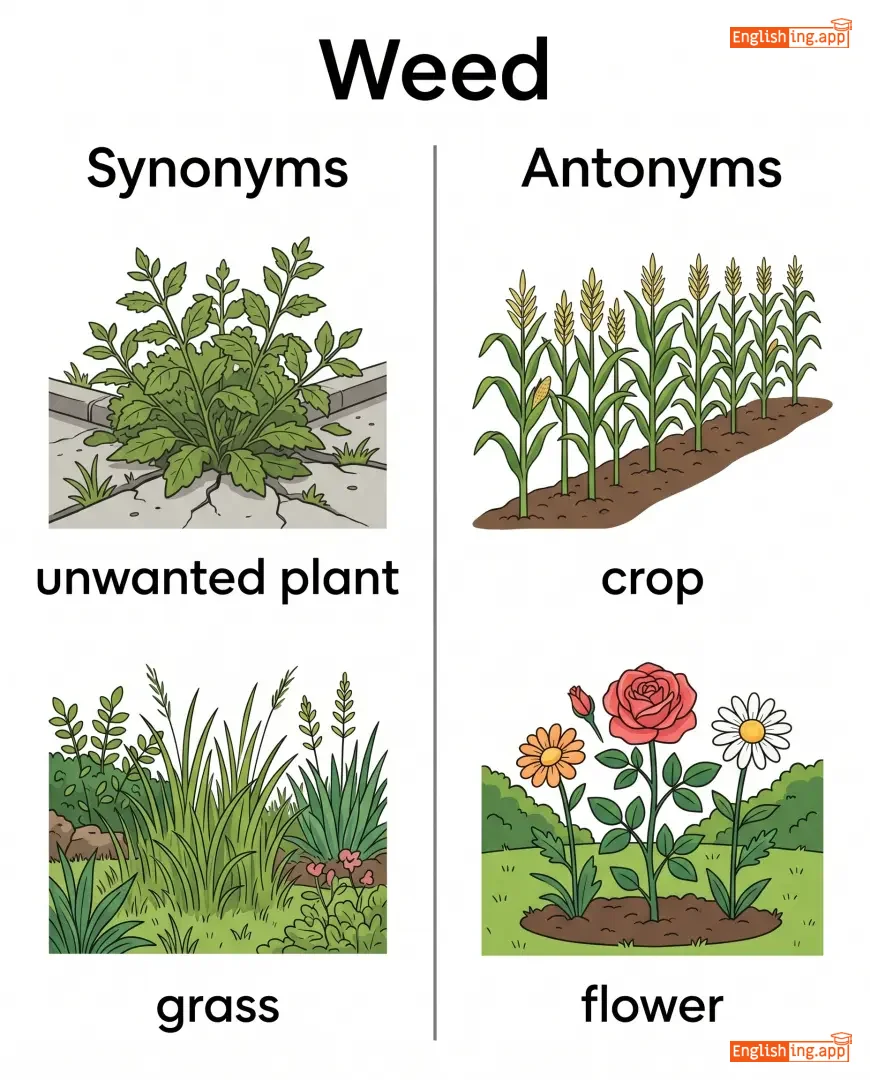
a wild plant growing where it is not wanted, especially among crops; to remove such plants
••••••
|
She spent the afternoon weeding the garden.
她花了下午的时间除草。
••••••
|
她花了下午的时间除草。
Tā huāle xiàwǔ de shíjiān chúcǎo.
••••••
|
weed out
清除
••••••
|
to remove unwanted or less effective people or things
••••••
|
清除不需要或效果较差的人或事物
qīngchú bù xūyào huò xiàoguǒ jiào chà de rén huò shìwù
••••••
|
unwanted plant, grass, wild plant, pest plant, herb
••••••
|
crop, flower, plant
••••••
|
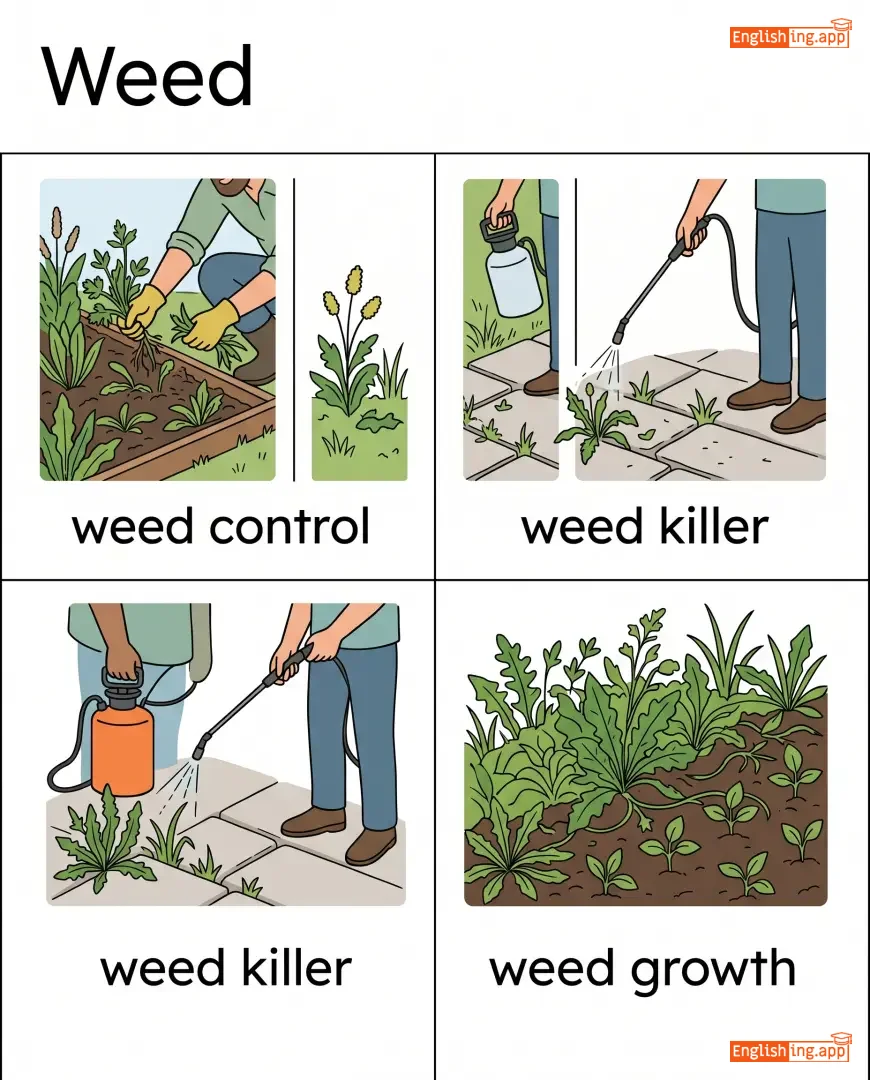
weed control, weed killer, weed growth, pull weeds, weed out
••••••
|
weed = 杂草, 清除 = 除去杂草 🌱
••••••
|
|
🕳️
••••••
|
/wel/
noun
(wēiěr)
••••••
|
- •••••• |
井; 福利;
jing; fuli
••••••
|
- •••••• | - •••••• | - •••••• | - •••••• |
a deep hole in the ground from which water is obtained
••••••
|
The villagers get water from the old well in the center of town.
村民们从村中心的老水井取水。
••••••
|
村民们从村中心的老水井取水。
Cūnmínmen cóng cūn zhōngxīn de lǎo shuǐjǐng qǔ shuǐ.
••••••
|
- •••••• | - •••••• | - •••••• |
water hole, spring, bore
••••••
|
hill, mound, elevation
••••••
|
water well, oil well, deep well
••••••
|
井提供水源,确保村民们的福利。
••••••
|
|
🌅
••••••
|
/wɛst/
noun
(wɛst)
••••••
|
- •••••• |
西
xi
••••••
|
- •••••• | - •••••• | - •••••• | - •••••• |
the direction to the left of the north and to the right of the south, typically associated with the sunset
••••••
|
The sun sets in the west. |
太阳在西方落下。
Taiyang zai xifang luo xia.
••••••
|
- •••••• | - •••••• | - •••••• |
sunset, occident
••••••
|
east, orient
••••••
|
west coast, west side, go west, western civilization
••••••
|
太阳在西方落下 - The sun sets in the west.
••••••
|
|
❓
••••••
|
/wɒt/
pronoun
(wòt)
••••••
|
- •••••• |
什么
shenme
••••••
|
- •••••• | - •••••• | - •••••• | - •••••• |
used to ask for information about something
••••••
|
What is your name? |
你叫什么名字?
Nǐ jiào shénme míngzì?
••••••
|
- •••••• | - •••••• | - •••••• |
which, that
••••••
|
- •••••• |
what time, what happened, what are you doing
••••••
|
什么 (shenme) 用于提问 - 'What' 用于问问题。
••••••
|
|
🥄
••••••
|
/wɪp/
verb
(wɪp)
••••••
|
- •••••• |
鞭打
biāndǎ
••••••
|
whipped
wɪpt
••••••
|
whipped
wɪpt
••••••
|
whips
wɪps
••••••
|
whipping
wɪpɪŋ
••••••
|
to strike or beat with a flexible instrument such as a rope or cord
••••••
|
The trainer whipped the horse to make it run faster.
教练用鞭子抽打马匹,使其跑得更快。
••••••
|
教练用鞭子抽打马匹,使其跑得更快。
Jiàoliàn yòng biāndǎ chōudǎ mǎpǐ, shǐ qí pǎo dé gèng kuài.
••••••
|
whip up
whip up
••••••
|
to quickly prepare or create something
••••••
|
快速准备
kuàisù zhǔnbèi
••••••
|
lash, beat, strike, thrash, flog
••••••
|
caress, soothe
••••••
|
whip cream, whip the horse, whip up enthusiasm, political whip
••••••
|
Whip 是鞭打 — 用 Whip 让马跑得更快!
••••••
|
|
👤
••••••
|
/huːm/
pronoun
(hūm)
••••••
|
- •••••• |
谁
shei
••••••
|
- •••••• | - •••••• | - •••••• | - •••••• |
used to refer to the person or people that something is done to
••••••
|
The man whom I met yesterday is my friend. |
我昨天遇到的那个人是我的朋友。
Wǒ zuótiān yùdào de nàgè rén shì wǒ de péngyǒu.
••••••
|
- •••••• | - •••••• | - •••••• |
who, that, the person
••••••
|
none
••••••
|
whom I met, whom I saw, to whom it may concern
••••••
|
Whom sounds like 'Shei' - 'Shei' as in the person you met.
••••••
|
|
↔️
••••••
|
/waɪd/
adjective
(wáid)
••••••
|
- •••••• |
宽; 广
kuan; guang
••••••
|
- •••••• | - •••••• | - •••••• | - •••••• |
having a great distance from one side to the other; broad
••••••
|
The river is very wide at this point. |
这条河在这一点非常宽。
Zhe tiao he zai zhe yidian feichang kuan.
••••••
|
- •••••• | - •••••• | - •••••• |
broad, extensive, spacious, vast
••••••
|
narrow, thin, restricted
••••••
|
wide range, wide variety, wide open, wide awake
••••••
|
宽广的河流,宽阔的空间。
••••••
|
|
🍷
••••••
|
/waɪn/
noun
(wāin)
••••••
|
- •••••• |
酒
jiu
••••••
|
- •••••• | - •••••• | - •••••• | - •••••• |
an alcoholic drink made from fermented grapes or other fruits
••••••
|
They served a glass of red wine at the dinner.
他们在晚餐时提供了一杯红酒。
••••••
|
他们在晚餐时提供了一杯红酒。
Tāmen zài wǎncān shí tígōngle yī bēi hóngjiǔ.
••••••
|
- •••••• | - •••••• | - •••••• |
vino, beverage, drink, alcohol
••••••
|
water, juice
••••••
|
red wine, white wine, glass of wine, bottle of wine
••••••
|
Wine pairs with dinner—imagine a glass of red wine with a fancy meal!
••••••
|
|
🪶
••••••
|
/wɪŋ/
verb
(wing)
••••••
|
|
用翅膀飞翔
yòng chìbǎng fēixiáng
••••••
|
winged
winged
••••••
|
winged
winged
••••••
|
wings
wings
••••••
|
winging
winging
••••••
|
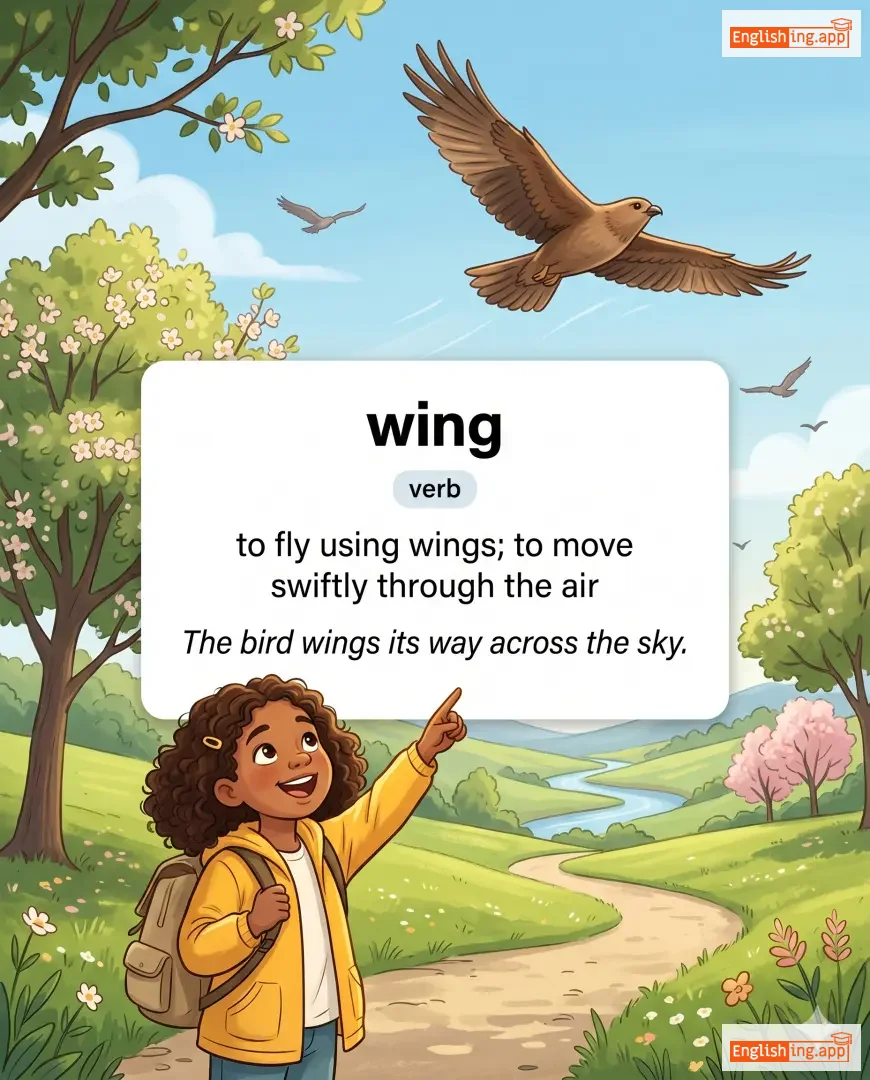
to fly using wings; to move swiftly through the air
••••••
|
The bird wings its way across the sky.
鸟飞过天空。
••••••
|
鸟飞翔穿越天空。
Niǎo fēixiáng chuānyuè tiānkōng.
••••••
|
- •••••• | - •••••• | - •••••• |
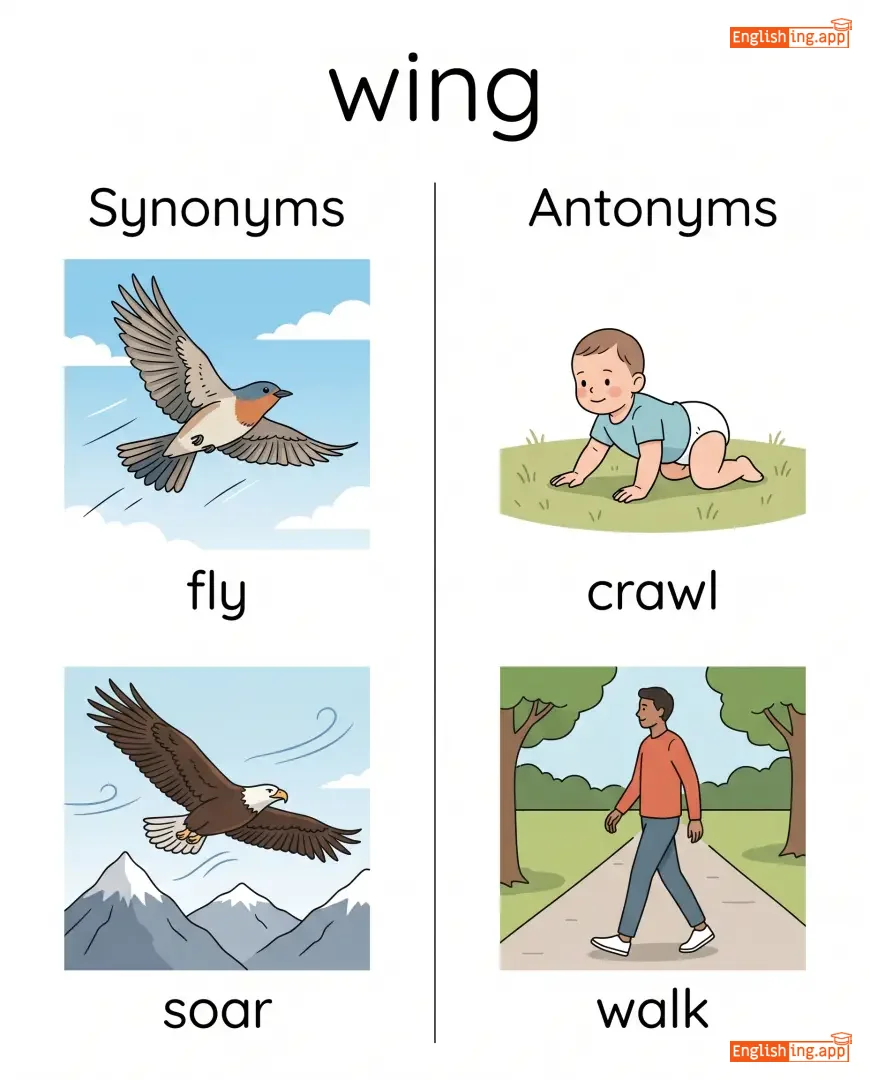
fly, soar, glide, flutter
••••••
|
crawl, walk, ground, land
••••••
|
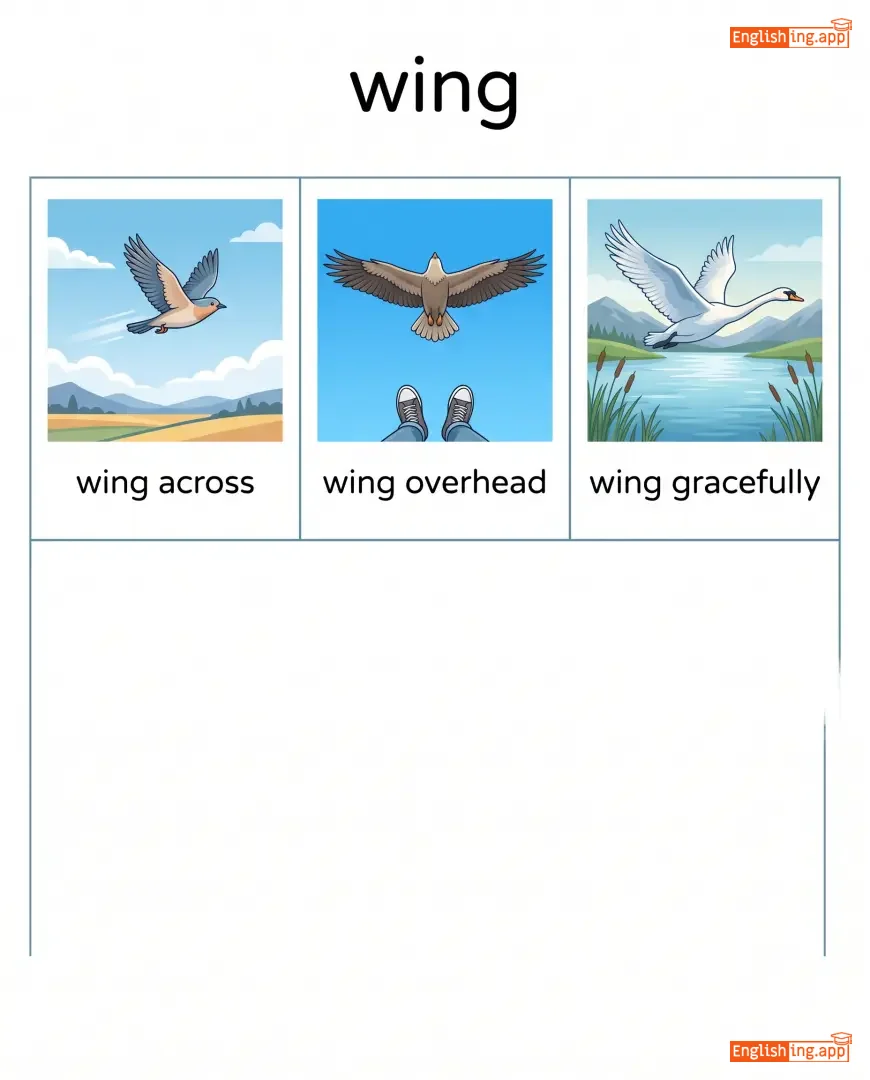
wing across, wing overhead, wing gracefully, wing swiftly
••••••
|
翅膀一张,飞翔天空 (用翅膀飞翔)
••••••
|
|
🤝
••••••
|
/wɪð/
preposition
(wɪð)
••••••
|
- •••••• |
与
yu
••••••
|
- •••••• | - •••••• | - •••••• | - •••••• |
indicating the person or thing that is accompanying or involved with someone or something else
••••••
|
She went to the market with her friend. |
她和朋友一起去了市场。
Tā hé péngyǒu yīqǐ qùle shìchǎng.
••••••
|
- •••••• | - •••••• | - •••••• |
alongside, together, accompanied by, in company with
••••••
|
without, apart from
••••••
|
with me, with you, with them, with someone
••••••
|
和知识一起,你总是与智慧同行 - With knowledge, you always walk with wisdom.
••••••
|
|
🐺
••••••
|
/wʊlf/
noun
(wʊlf)
••••••
|
- •••••• |
狼
lang
••••••
|
- •••••• | - •••••• | - •••••• | - •••••• |
a wild carnivorous animal related to the dog, living and hunting in packs
••••••
|
The wolf howled loudly under the full moon. |
狼在满月下大声嚎叫。
Lang zài mǎnyuè xià dàshēng háo jiào.
••••••
|
cry wolf |
to raise a false alarm or exaggerate danger
••••••
|
喊狼来了
hǎn láng lái le
••••••
|
canine, predator, beast, dog, gray wolf
••••••
|
sheep, prey
••••••
|
gray wolf, lone wolf, wolf pack, cry wolf
••••••
|
狼在中文里就是 '狼'。记住,狼在满月下嚎叫 🐺
••••••
|
|
🐛
••••••
|
/wɜːrm/
noun
(wɜːrm)
••••••
|
- •••••• |
虫子
chóngzi
••••••
|
- •••••• | - •••••• | - •••••• | - •••••• |
a small, long, soft-bodied invertebrate animal
••••••
|
The gardener found a worm in the soil. |
园丁在土壤中发现了一只虫子。
Yuándīng zài tǔrǎng zhōng fāxiànle yī zhī chóngzi.
••••••
|
- •••••• | - •••••• | - •••••• |
earthworm, grub, maggot, larva
••••••
|
none
••••••
|
fishing worm, earthworm, worm farm
••••••
|
虫子帮助花园生长!– Worms help the garden grow!
••••••
|
|
🎁
••••••
|
/ræp/
verb
(瑞普)
••••••
|

|
包裹
baoguo
••••••
|
wrapped
瑞普德
••••••
|
wrapped
瑞普德
••••••
|
wraps
瑞普斯
••••••
|
wrapping
瑞普英
••••••
|
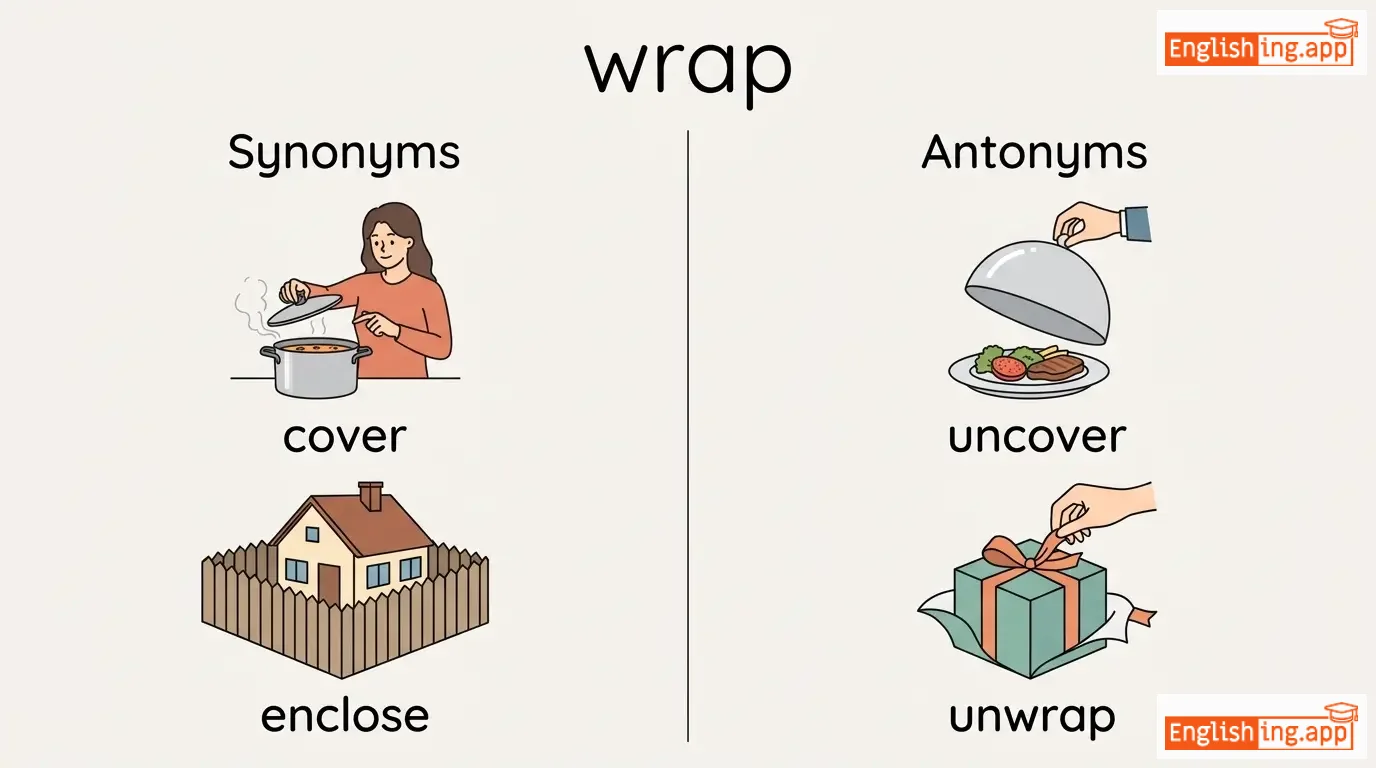
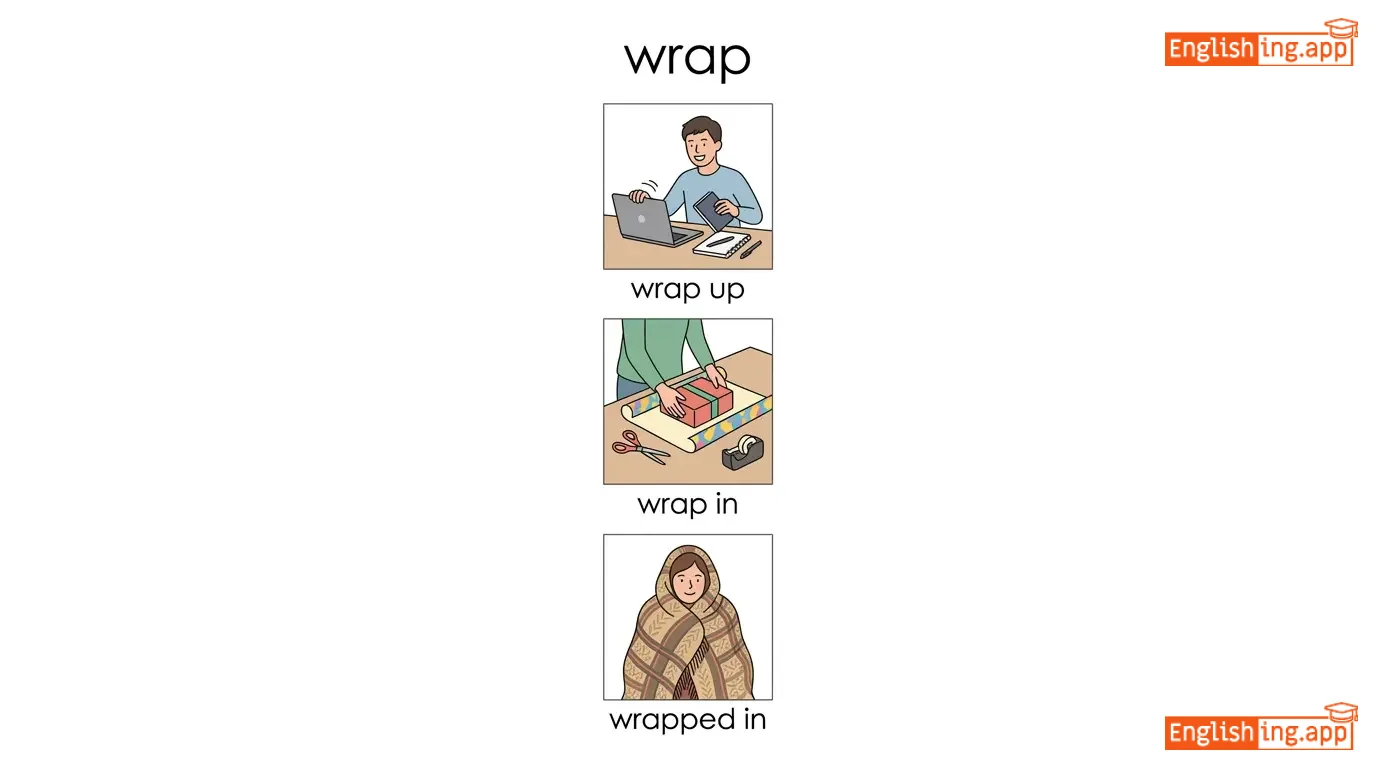
to cover something completely with paper or cloth; to enclose
••••••
|
Please wrap the gift in colorful paper.
请将礼物用彩色纸包起来。
••••••
|
请将礼物用彩色纸包起来。
Qing jiang liwu yong caise zhi bao qilai.
••••••
|
- •••••• | - •••••• | - •••••• |
cover, enclose, package, bundle
••••••
|
unwrap, uncover, expose, open
••••••
|
wrap up, gift wrap, plastic wrap, wrap around, wrap tightly
••••••
|
Wrap means 包裹, like wrapping something in a beautiful package
••••••
|
|
🏡
••••••
|
/jɑːrd/
noun
(院子)
••••••
|
- •••••• |
院子; 附近的空地
yuànzi; fùjìn de kòngdì
••••••
|
- •••••• | - •••••• | - •••••• | - •••••• |
a unit of linear measure equal to 3 feet; an area of land immediately adjacent to a building
••••••
|
The children played in the back yard. |
孩子们在后院玩耍。
Háizimen zài hòuyuàn wánshuǎ
••••••
|
- •••••• | - •••••• | - •••••• |
courtyard, garden, measure, enclosure
••••••
|
indoor, interior, inside, building
••••••
|
back yard, front yard, school yard
••••••
|
Yard = 院子,孩子们在院子里玩
••••••
|
|
👍
••••••
|
/jɛə/
interjection
(是的)
••••••
|
- •••••• |
是的
shi de
••••••
|
- •••••• | - •••••• | - •••••• | - •••••• |
used to express agreement or affirmation
••••••
|
Yeah, I’ll go to the store with you. |
是的,我会和你一起去商店。
Shi de, wo hui he ni yiqi qu shangdian.
••••••
|
- •••••• | - •••••• | - •••••• |
yes, certainly, absolutely, okay
••••••
|
no, never, not at all
••••••
|
yeah sure, yeah okay, yeah right, yeah I agree
••••••
|
Yeah, in Chinese we say 'Shi de!' when agreeing.
••••••
|
|
📣
••••••
|
/jɛl/
verb
(yel)
••••••
|
|
大声喊叫
dàshēng hǎnjiào
••••••
|
yelled
yeld
••••••
|
yelled
yeld
••••••
|
yells
yels
••••••
|
yelling
yeling
••••••
|
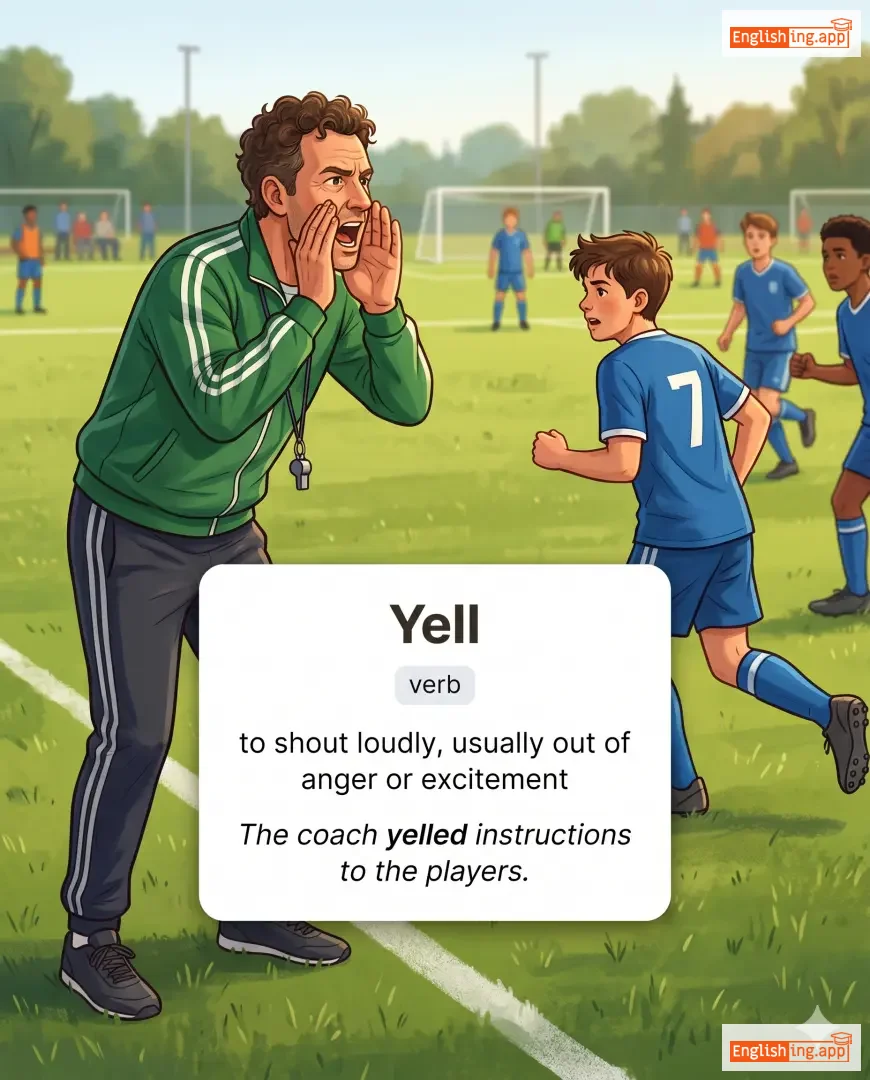
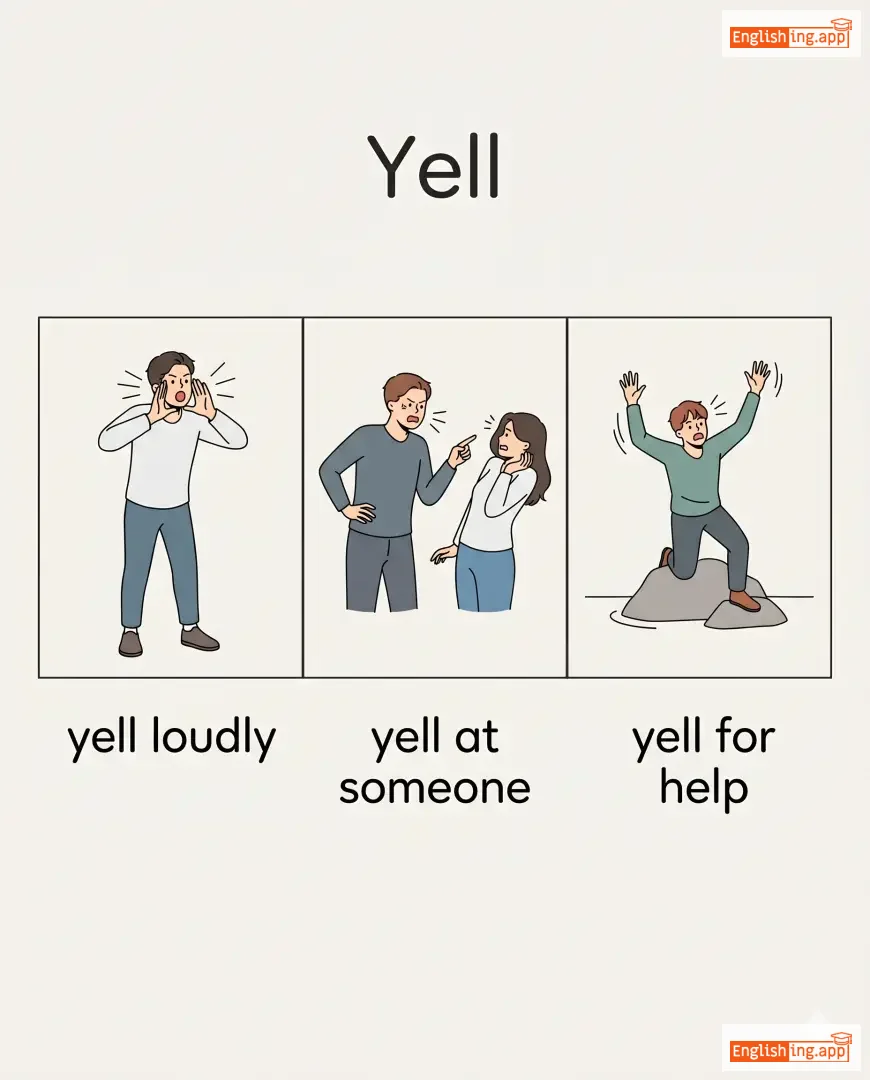
to shout loudly, usually out of anger or excitement
••••••
|
The coach yelled instructions to the players.
the coach yeld instructions to the players
••••••
|
教练对球员大声喊叫着指令。
Jiàoliàn duì qiúyuán dàshēng hǎnjiào zhe zhǐlìng.
••••••
|
yell at
yel at
••••••
|
to shout at someone angrily
••••••
|
对某人大喊
duì mǒu rén dà hǎn
••••••
|
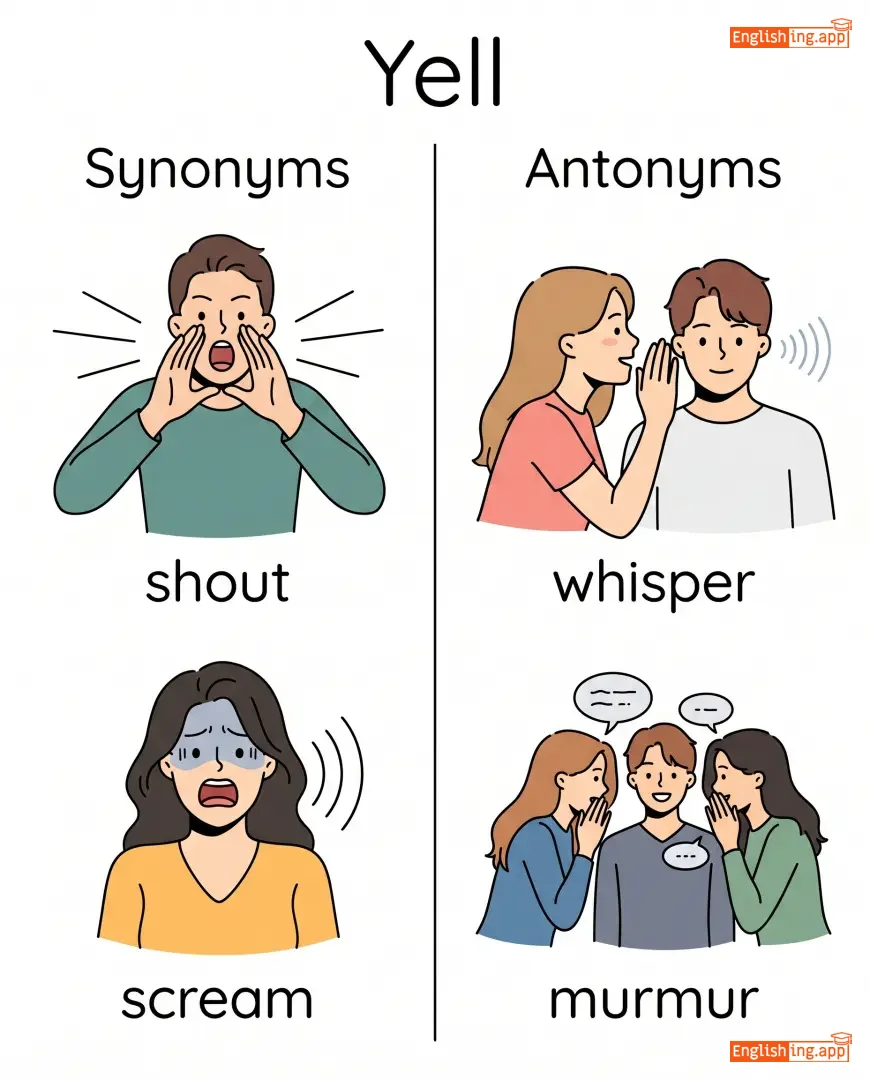
shout, scream, holler, cry, call
••••••
|
whisper, murmur
••••••
|
yell loudly, yell at someone, yell for help
••••••
|
Yell意味着大声喊叫,就像生气时大声喊人的时候。
••••••
|
|
📚
••••••
|
/jɔːr/
pronoun
(你的)
••••••
|
- •••••• |
你的
nǐ de
••••••
|
- •••••• | - •••••• | - •••••• | - •••••• |
used to indicate possession or association
••••••
|
Your book is on the table. |
你的书在桌子上。
Nǐ de shū zài zhuōzi shàng.
••••••
|
- •••••• | - •••••• | - •••••• |
your own, belonging to you
••••••
|
my, theirs
••••••
|
your opinion, your responsibility, your time
••••••
|
你的书在桌子上 - Your book is on the table
••••••
|
|
🌍
••••••
|
/zoʊn/
noun
(区)
••••••
|
|
区域
quyu
••••••
|
- •••••• | - •••••• | - •••••• | - •••••• |
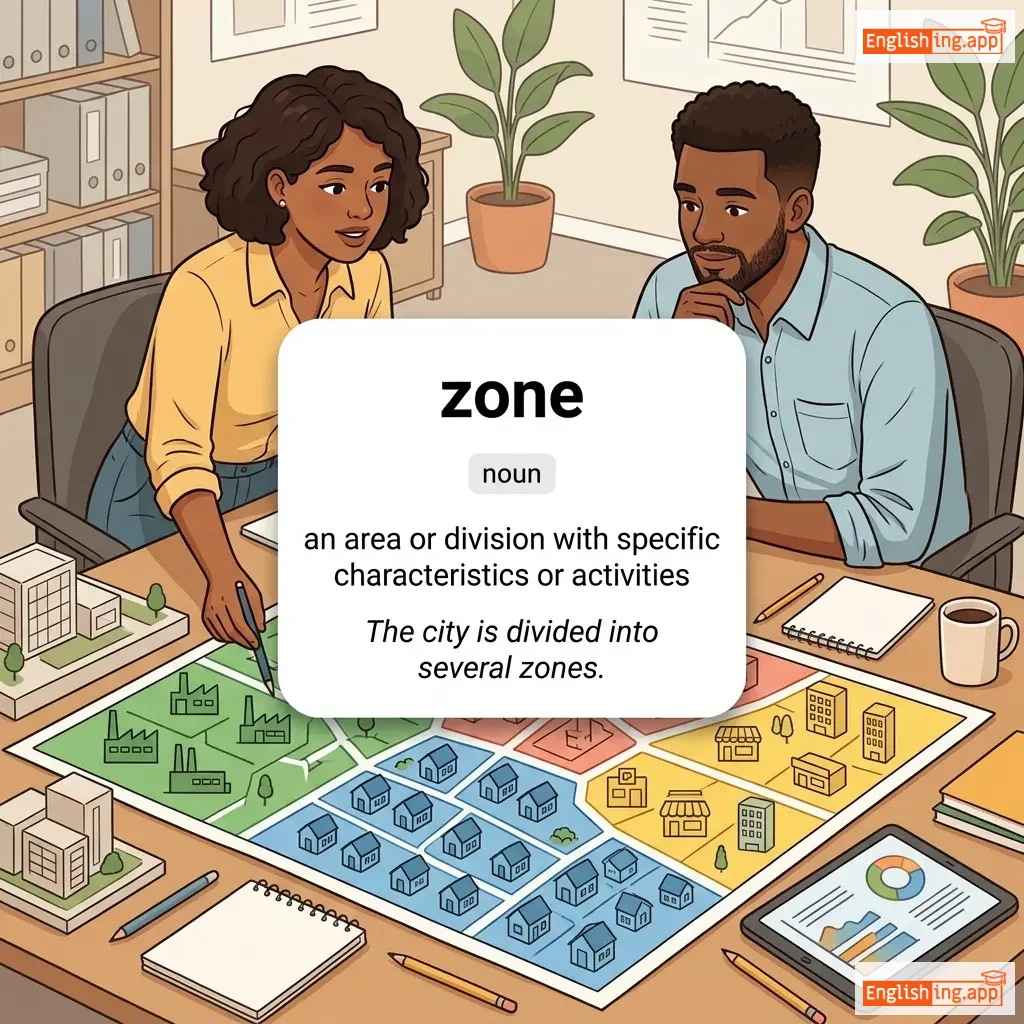
an area or division with specific characteristics or activities
••••••
|
The city is divided into several zones. |
这座城市被划分为多个区域。
Zhe zuo chengshi bei huafen wei duoge quyu.
••••••
|
- •••••• | - •••••• | - •••••• |
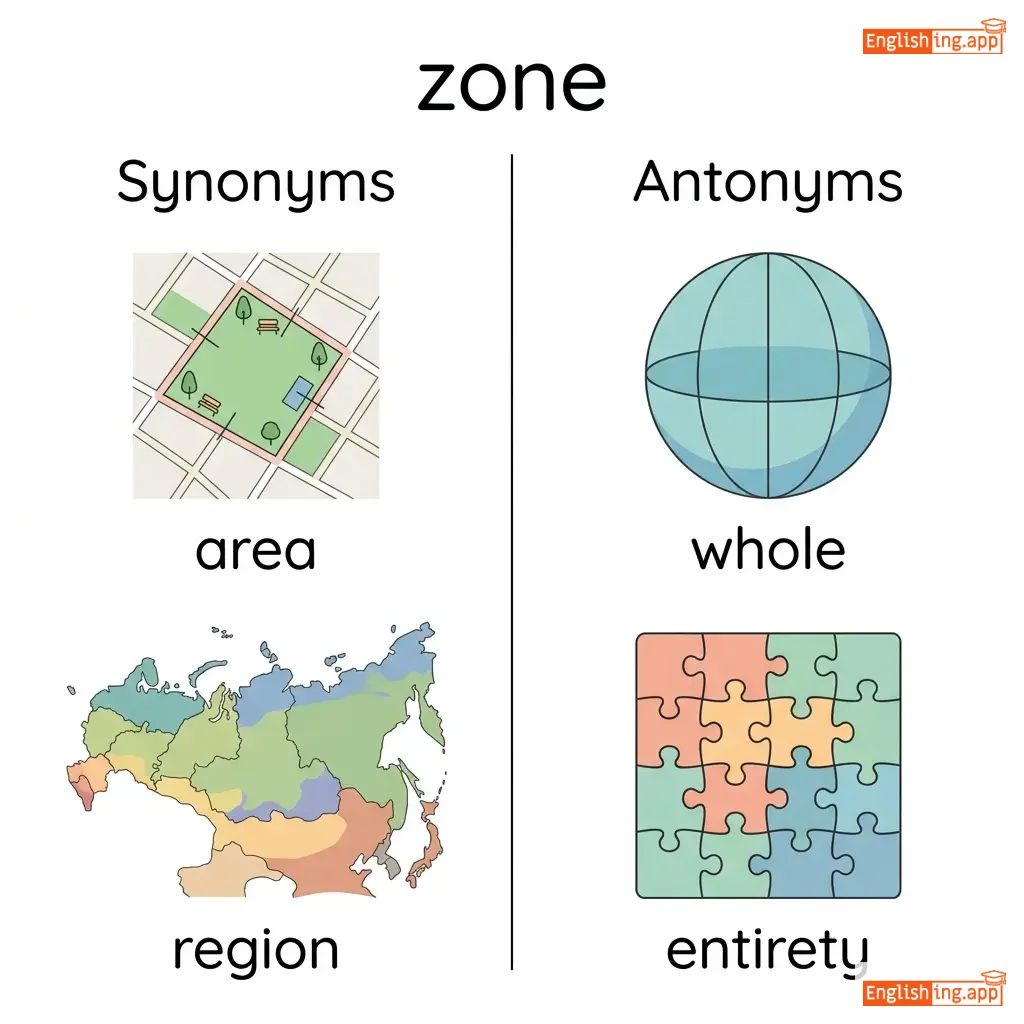
area, region, district
••••••
|
whole, entirety
••••••
|
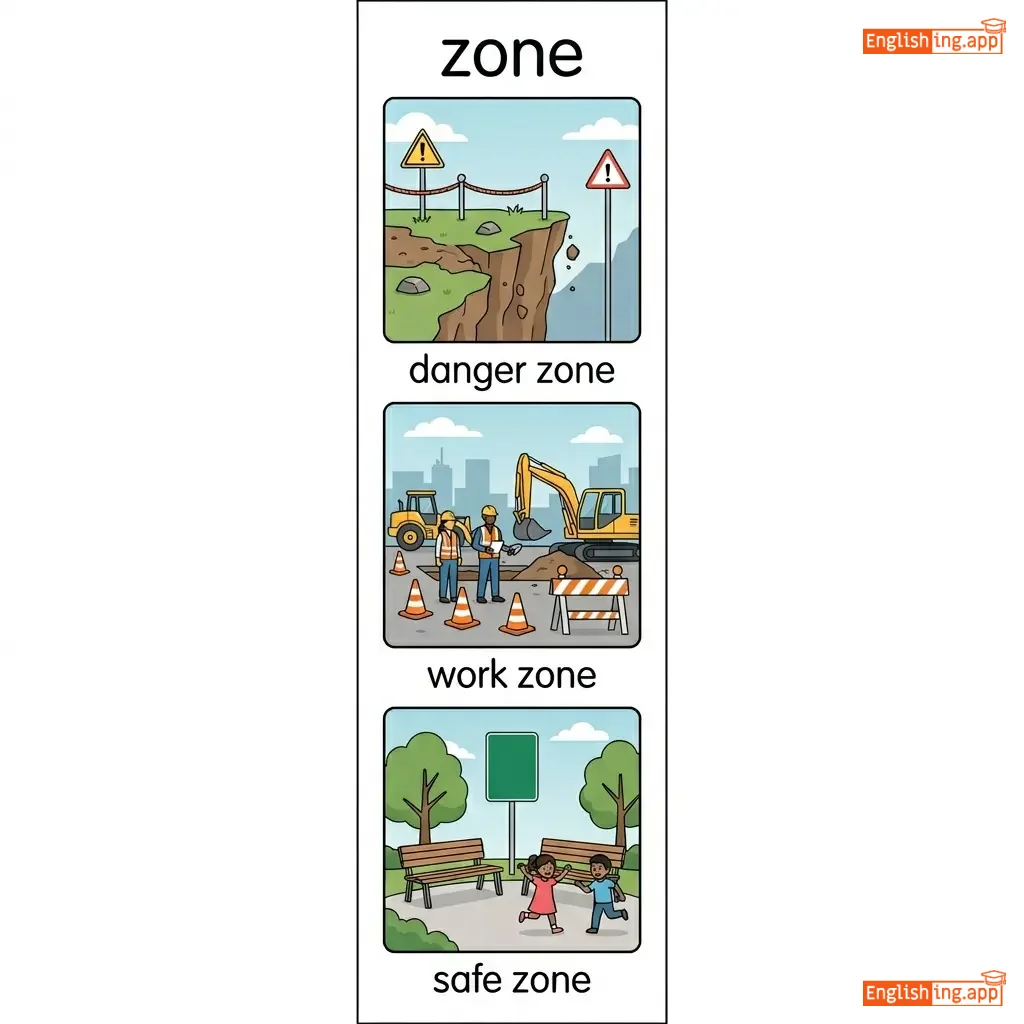
danger zone, work zone, safe zone
••••••
|
划分区域的城市 (Huafen quyu de chengshi) - The city is divided into zones.
••••••
|

