The Lawyer Who Fought Corruption
萨尼娅是一位勇敢的律师,她 declared 自己要与 corrupt 体系作斗争。她的案件 consisted 主要是那些被不公正 convicted 的穷人。她看到有权势的人如何 confused 法院系统。她的目标是 conquer 这种不公。一天,一个涉及贩毒的商人被拘留(custody)的大案来到她手中。控方试图 counter 萨尼娅的论点,但她的证据是 cutting edge。她证明了 current 体系中存在一个 defect,让 corrupt 行为得以发生。法官的 counsel 起初很 cynical,但萨尼娅的热情说服了他。案件出现转折,证人因害怕而 declined 作证。萨尼娅拒绝放弃,并 condemned 这些恐吓手段。她律师事务所的许多人对现状 content,但萨尼娅希望真正的改变。她组织了一场和平抗议,人们在其中 dancing 和唱歌以呼吁正义。由于媒体报道,这个案件成为了公众的 contest —— 正义与邪恶的较量。商人的律师试图将讨论 confine 在技术层面,但萨尼娅揭开了所有腐败的层层面纱。最终,没有 default 判决,而是进行了一场公平的审判。商人被 convicted,萨尼娅证明了,只要有决心,就能 conquer corrupt 体系。
|
表情符号
|
单词 | Images | 翻译 | 过去时 | 过去分词 | 第三人称单数 | 动名词 | 含义 | 例句 | 例句翻译 | 示例表达 | 示例表达含义 | 示例表达翻译 | 同义词 | 反义词 | 搭配词 | 助记符 |
|---|---|---|---|---|---|---|---|---|---|---|---|---|---|---|---|---|---|
|
❌
••••••
|
/kənˈdɛm/
verb
(kān-dēm)
••••••
|
|
谴责
qianze
••••••
|
condemned
kān-dēm-d
••••••
|
condemned
kān-dēm-d
••••••
|
condemns
kān-dēm-s
••••••
|
condemning
kān-dēm-ing
••••••
|
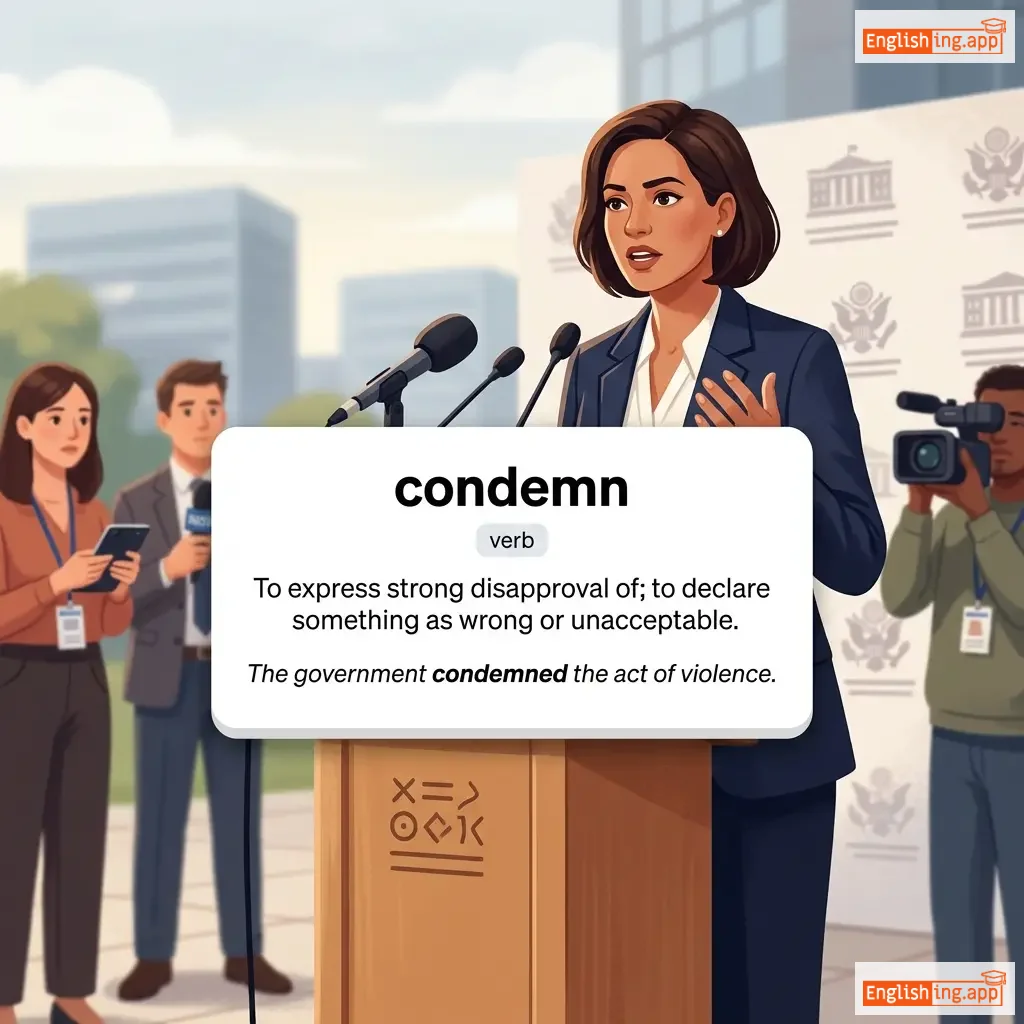
To express strong disapproval of; to declare something as wrong or unacceptable.
••••••
|
The government condemned the act of violence.
政府谴责了暴力行为。
••••••
|
政府谴责了暴力行为。
zhèngfǔ qiǎnzéle bàolì xíngwéi.
••••••
|
condemn to death
判处死刑
••••••
|
to sentence someone to death as punishment
••••••
|
判处死刑
pànchǔ sǐxíng
••••••
|
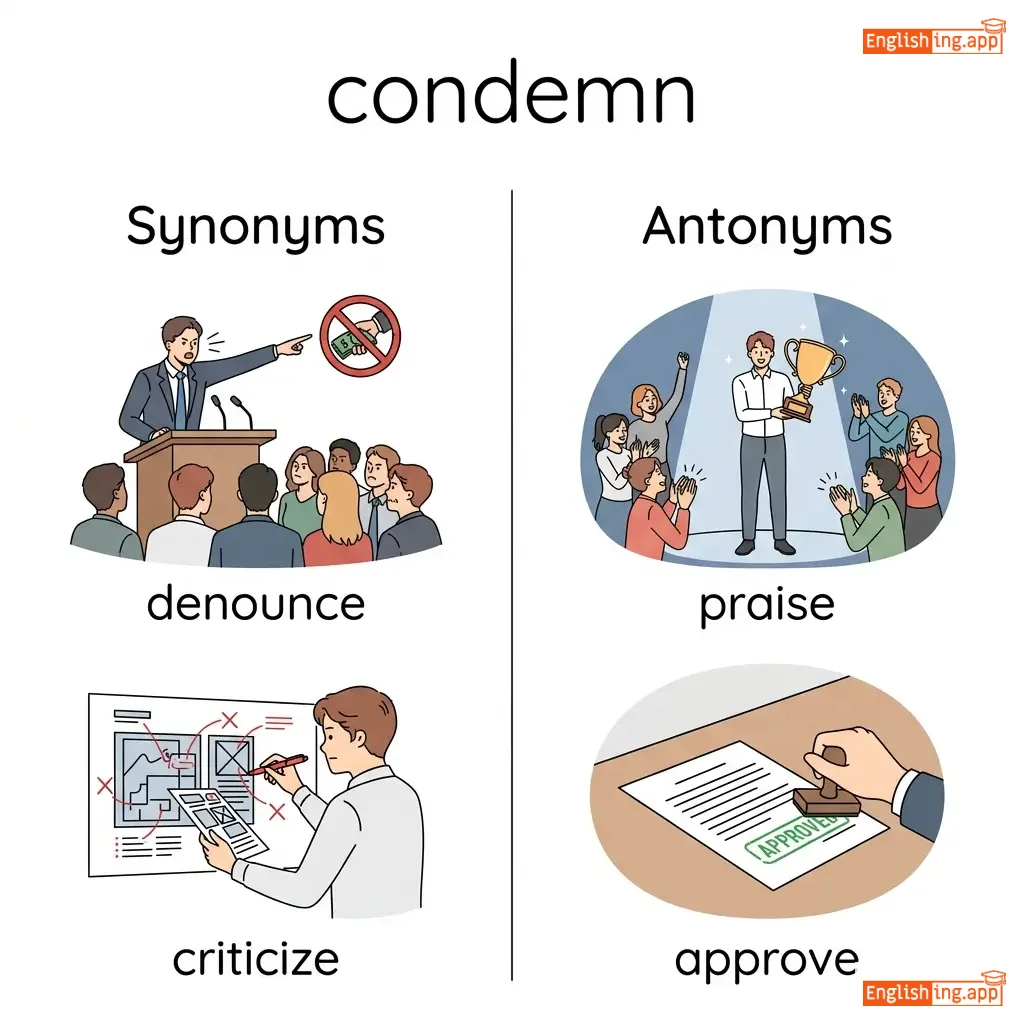
denounce, criticize, censure, blame
••••••
|
praise, approve, support
••••••
|
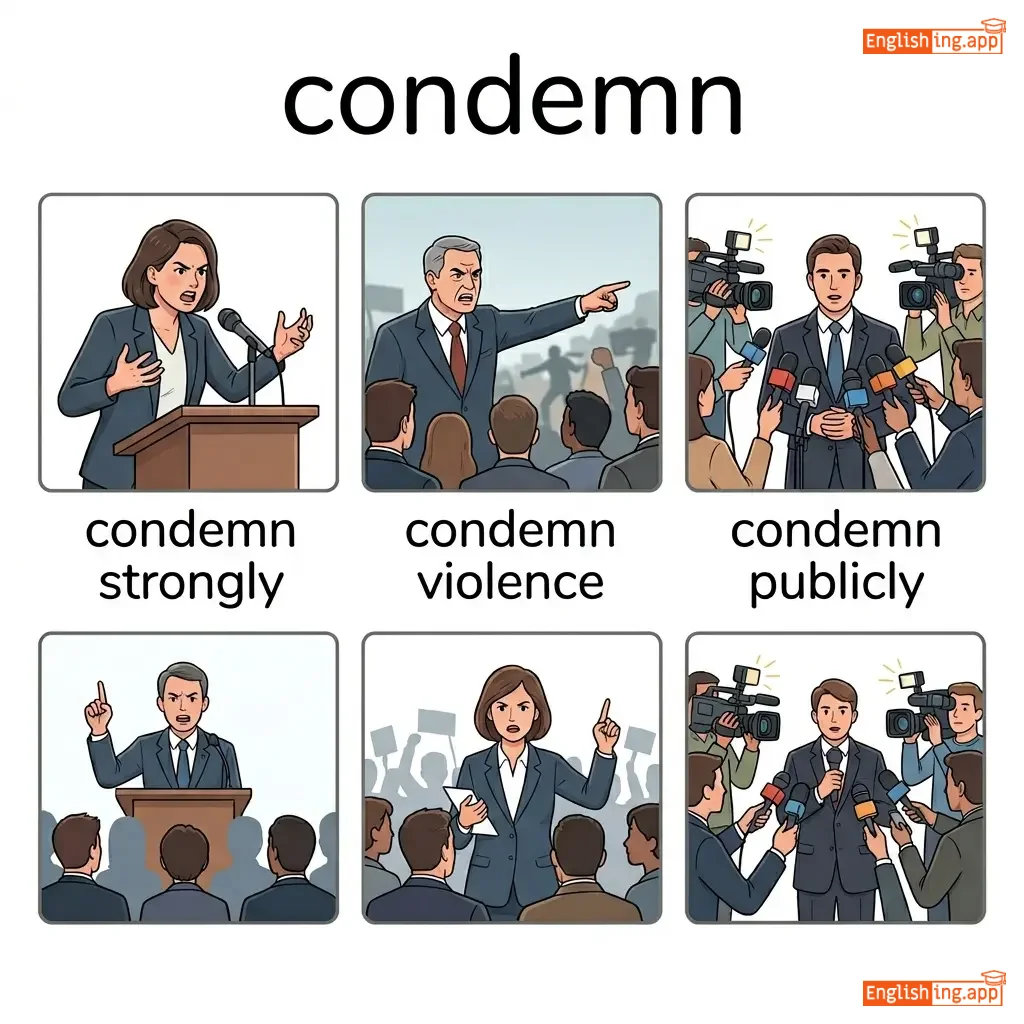
condemn strongly, condemn violence, condemn publicly, condemn actions
••••••
|
Condemn 就是'谴责',好像在惩罚某人做错的事。
••••••
|
|
🚪
••••••
|
/kənˈfaɪn/
verb
(kāngfǎn)
••••••
|
|
限制
xiànzhì
••••••
|
confined
kāngfàind
••••••
|
confined
kāngfàind
••••••
|
confines
kāngfàins
••••••
|
confining
kāngfǎnɪnɡ
••••••
|
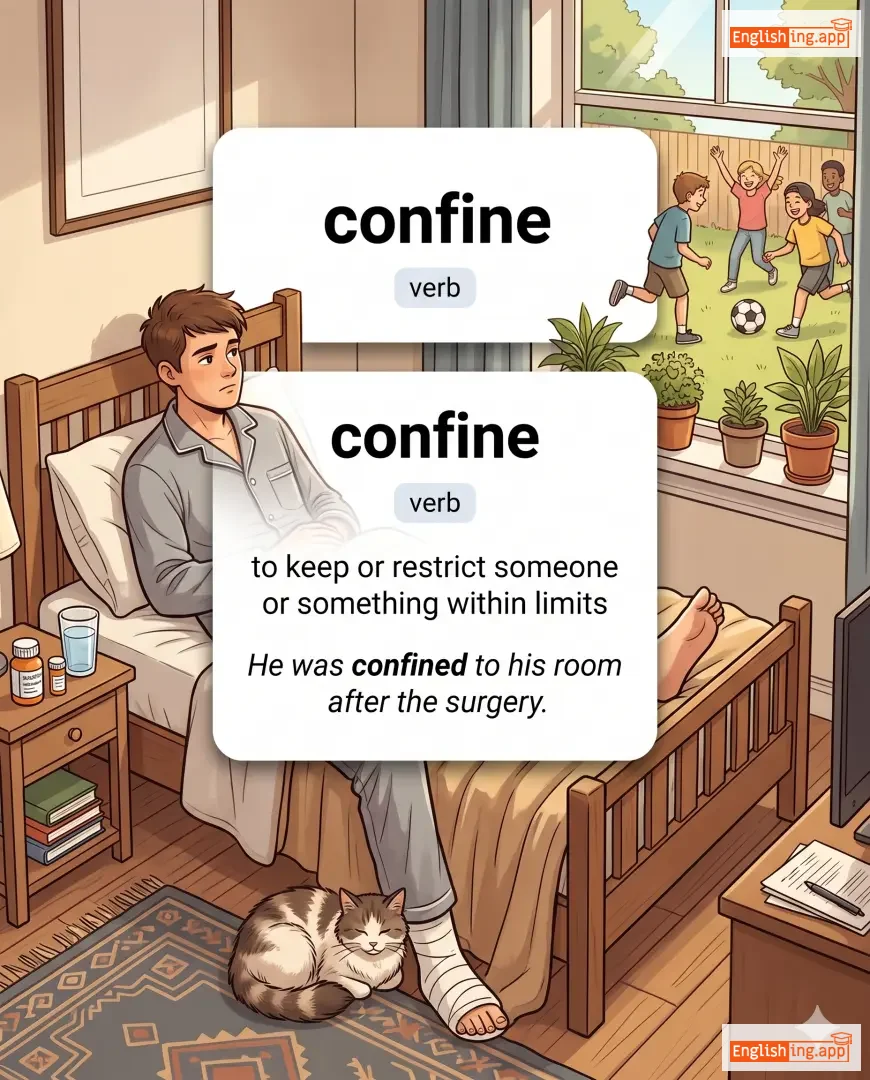
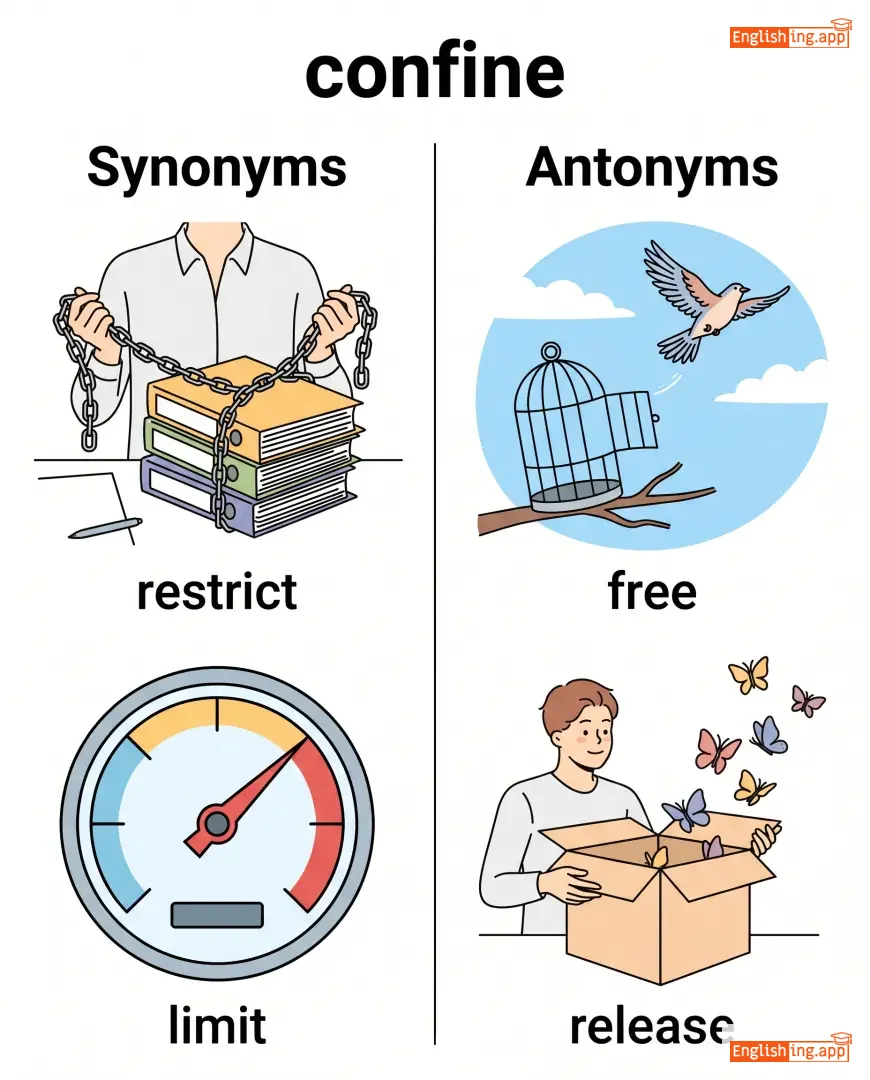
to keep or restrict someone or something within limits
••••••
|
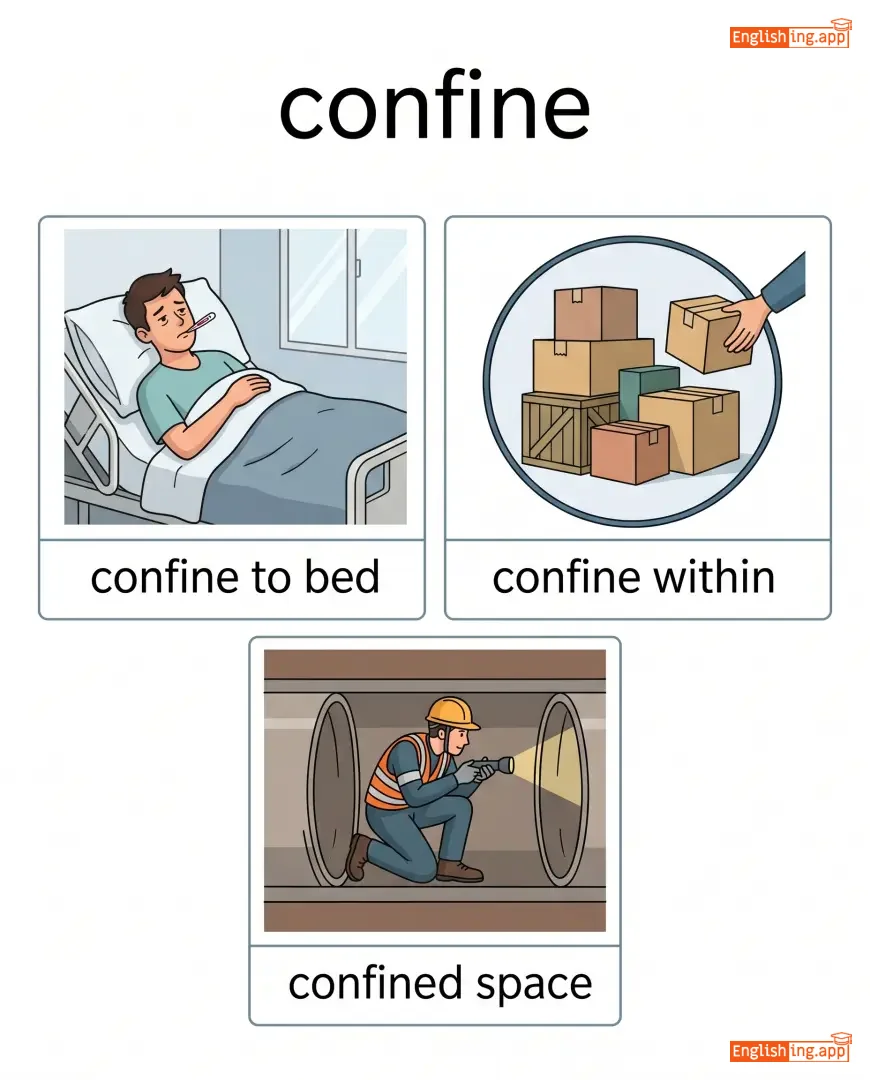
He was confined to his room after the surgery.
他在手术后被限制在他的房间里。
••••••
|
他在手术后被限制在他的房间里。
Tā zài shǒushù hòu bèi xiànzhì zài tā de fángjiān lǐ.
••••••
|
confined space
受限空间
••••••
|
a small or restricted area
••••••
|
受限空间
shòuxiàn kōngjiān
••••••
|
restrict, limit, restrain, enclose, imprison
••••••
|
free, release, liberate
••••••
|
confine to bed, confine within, confined space, confine attention
••••••
|
Confine 就是限制,像是 '限制' 就是 'finite' (有限) 的意思。
••••••
|
|
😕
••••••
|
/kənˈfjuːz/
verb
(kənfjuːz)
••••••
|
- •••••• |
混淆
hùnxiáo
••••••
|
confused
kənfjuːzd
••••••
|
confused
kənfjuːzd
••••••
|
confuses
kənfjuːzəs
••••••
|
confusing
kənfjuːzɪŋ
••••••
|
To make someone unable to think clearly; to bewilder.
••••••
|
The complex instructions confused the students.
复杂的指示使学生感到困惑。
••••••
|
复杂的指示使学生感到困惑。
Fùzá de zhǐshì shǐ xuéshēng gǎndào kùnhuò.
••••••
|
confuse someone with someone else
把某人和别人混淆
••••••
|
To mistake one person for another.
••••••
|
把某人和别人混淆
Bǎ mǒu rén hé biérén hùnxiáo
••••••
|
perplex, puzzle, bewilder, baffle
••••••
|
clarify, explain
••••••
|
confuse the issue, confuse the audience, confuse easily
••••••
|
Confuse = 混淆 = 困惑
••••••
|
|
⚔️
••••••
|
/ˈkɒŋkər/
verb
(kóngkè)
••••••
|

|
征服
zhēngfú
••••••
|
conquered
kóngkèd
••••••
|
conquered
kóngkèd
••••••
|
conquers
kóngkèz
••••••
|
conquering
kóngkèɹɪŋ
••••••
|
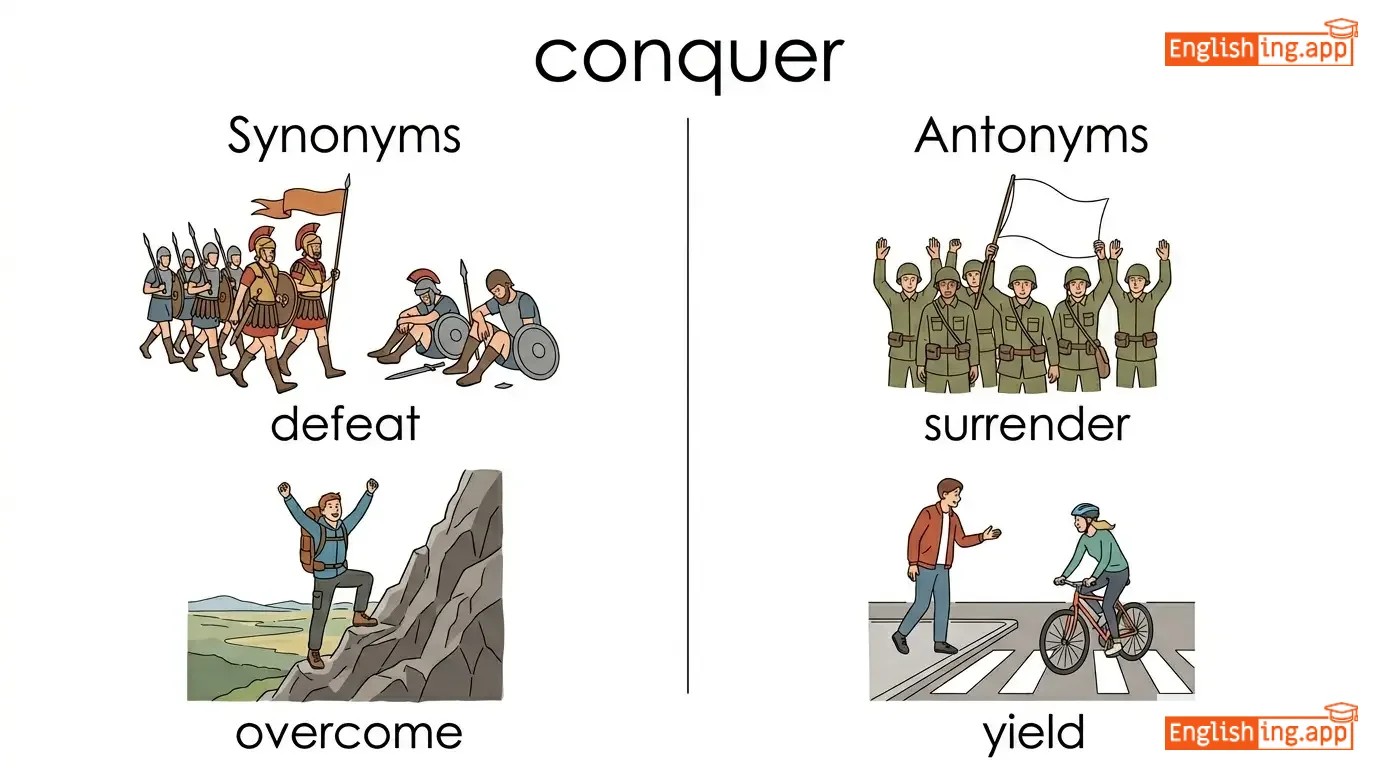
To defeat and take control of a place or people by force.
••••••
|
The king set out to conquer new lands.
国王出发征服新土地。
••••••
|
国王出发征服新土地。
guówáng chūfā zhēngfú xīn tǔdì.
••••••
|
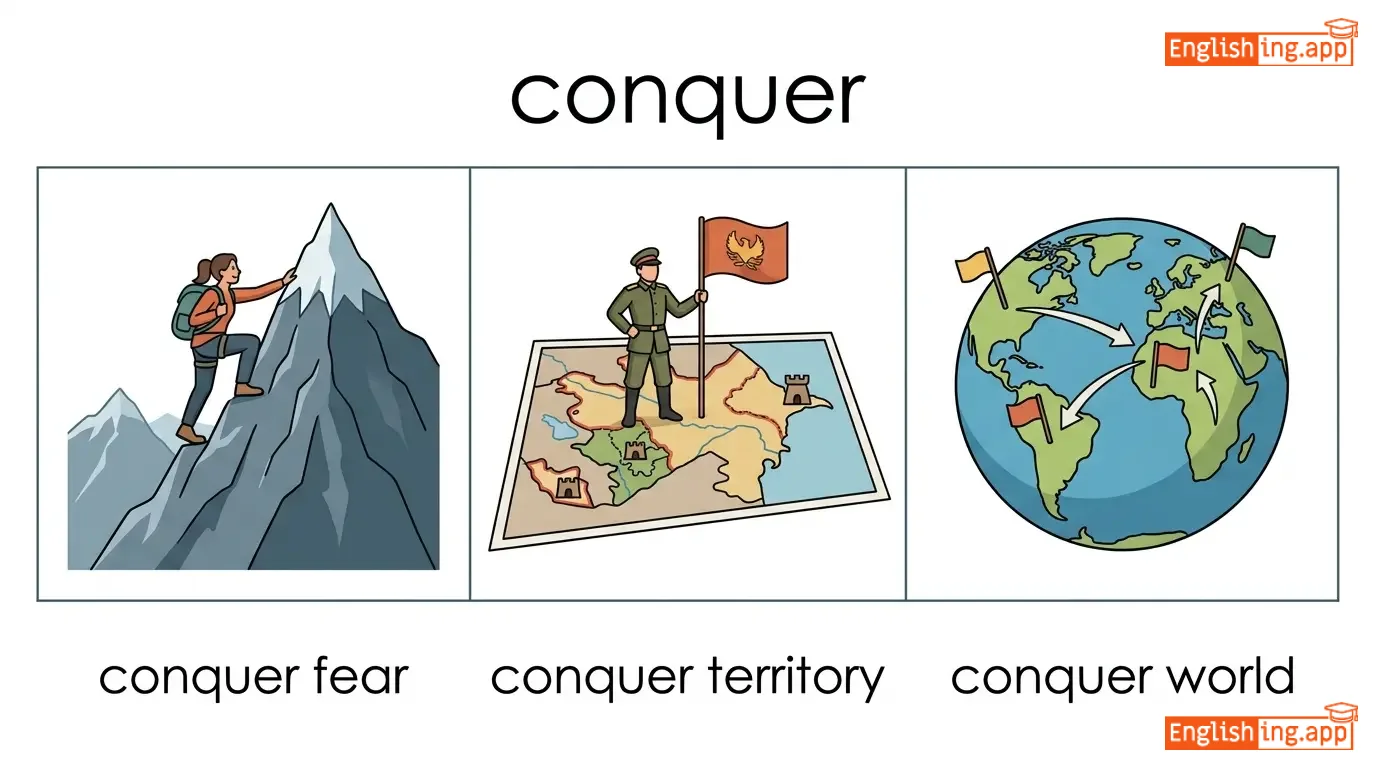
conquer your fears
征服你的恐惧
••••••
|
To overcome or defeat your fears.
••••••
|
征服你的恐惧
zhēngfú nǐ de kǒngjù
••••••
|
defeat, overcome, vanquish, subdue, master
••••••
|
surrender, yield, lose
••••••
|
conquer fear, conquer territory, conquer world, conquer disease
••••••
|
征服就像成吉思汗征服了世界。
••••••
|
|
📋
••••••
|
/kənˈsɪst/
verb
(kənˈsɪst)
••••••
|
- •••••• |
由...组成
you...zucheng
••••••
|
consisted
kənˈsɪstəd
••••••
|
consisted
kənˈsɪstəd
••••••
|
consists
kənˈsɪsts
••••••
|
consisting
kənˈsɪstɪŋ
••••••
|
to be made up or composed of certain parts or elements
••••••
|
The committee consists of five members.
委员会由五个成员组成。
••••••
|
委员会由五个成员组成。
Wei yuan hui you wu ge cheng yuan zu cheng.
••••••
|
consist in
由...组成
••••••
|
to have something as an essential feature
••••••
|
由...组成
you...zucheng
••••••
|
contain, include, comprise, embody
••••••
|
exclude, lack, omit
••••••
|
consist of, consist in, committee consists, diet consists
••••••
|
由...组成意味着合成部分。记住:委员会由成员组成。
••••••
|
|
😌
••••••
|
/ˈkɑn.tent/
noun
(kāntènt)
••••••
|
- •••••• |
满足
mǎnzú
••••••
|
- •••••• | - •••••• | - •••••• | - •••••• |
pleased and satisfied; the things that are contained in something; subject matter of a text
••••••
|
She felt content with her simple life in the countryside.
她对自己在乡村的简单生活感到满足。
••••••
|
她对自己在乡村的简单生活感到满足。
Tā duì zìjǐ zài xiāngcūn de jiǎndān shēnghuó gǎndào mǎnzú.
••••••
|
- •••••• | - •••••• | - •••••• |
satisfied, material, substance, happy
••••••
|
dissatisfied, unhappy, discontented
••••••
|
content with life, website content, table of contents
••••••
|
Content = 满足 (Mǎnzú), 就像一个人对简单生活感到满足。
••••••
|
|
🏆
••••••
|
/ˈkɒntɛst/
verb, noun
(kɒnˈtɛst)
••••••
|
- •••••• |
竞赛, 挑战
jìngsài, tiǎozhàn
••••••
|
contested
kənˈtɛstəd
••••••
|
contested
kənˈtɛstəd
••••••
|
contests
kənˈtɛsts
••••••
|
contesting
kənˈtɛstɪŋ
••••••
|
verb: to compete or challenge; noun: a competition or dispute
••••••
|
She decided to contest the election against the incumbent.
ʃи дɪˈсаɪдэд ту кəнˈтɛст ðи ɪˈлɛкʃən əˈɡɛнст ðи ɪнˈкʌмбəнт
••••••
|
她决定挑战现任者的选举。
Tā juédìng tiǎozhàn xiànrèn zhě de xuǎnjǔ.
••••••
|
- •••••• | - •••••• | - •••••• |
compete, challenge, vie, dispute
••••••
|
yield, concede
••••••
|
contest an election, contest a decision, contest results, fiercely contest
••••••
|
Contest = 竞赛挑战,如选举竞赛
••••••
|
|
⚖️
••••••
|
/ˈkɒnvɪkt/
verb
(kàngwèikè)
••••••
|
- •••••• |
判决
panjue
••••••
|
convicted
kàngwèikèd
••••••
|
convicted
kàngwèikèd
••••••
|
convicts
kàngwèikèz
••••••
|
convicting
kàngwèikèng
••••••
|
to find someone guilty of a crime in a court of law
••••••
|
The court convicted him of theft.
法院判定他偷窃有罪。
••••••
|
法院判定他偷窃有罪。
Fayuan panding ta touqie youzui.
••••••
|
convict someone of a crime
判定某人犯有罪行
••••••
|
to declare someone guilty of committing a particular crime
••••••
|
判定某人犯有罪行
Panding mou ren fan you zuixing
••••••
|
sentence, condemn, judge, declare guilty
••••••
|
acquit, pardon
••••••
|
convict of murder, convicted criminal, convict someone, convict by jury
••••••
|
Convict, 就是法院宣判某人犯有罪行。
••••••
|
|
💀
••••••
|
/kəˈrʌpt/
adjective/verb
(腐败)
••••••
|
- •••••• |
腐败
fubai
••••••
|
corrupted
腐败的
••••••
|
corrupted
腐败的
••••••
|
corrupts
腐败
••••••
|
corrupting
腐败
••••••
|
dishonest or morally wrong; to make something impure or evil
••••••
|
The politician was accused of corrupt practices.
这位政治家因腐败行为被指控。
••••••
|
这位政治家因腐败行为被指控。
Zhe wei zhengzhi jia yin fubai xingwei bei zhigong.
••••••
|
- •••••• | - •••••• | - •••••• |
dishonest, immoral, depraved, unethical
••••••
|
honest, ethical, upright
••••••
|
corrupt leader, corrupt official, corrupt practices
••••••
|
政治家因'腐败'而被指控,行为不正当。
••••••
|
|
💬
••••••
|
/ˈkaʊnsəl/
verb
(kaunsel)
••••••
|
- •••••• |
咨询
zixun
••••••
|
counseled
kaunseld
••••••
|
counseled
kaunseld
••••••
|
counsels
kaunsels
••••••
|
counseling
kaunseling
••••••
|
to give professional advice or guidance to someone
••••••
|
The teacher counseled the students on their career choices.
老师为学生们提供了关于他们职业选择的建议。
••••••
|
老师为学生们提供了关于他们职业选择的建议。
Lǎoshī wèi xuéshēngmen tígōngle guānyú tāmen zhíyè xuǎnzé de jiànyì.
••••••
|
take counsel
接受建议
••••••
|
to seek advice or consultation
••••••
|
接受建议
jiēshòu jiànyì
••••••
|
advise, guide, direct, instruct, mentor
••••••
|
mislead, deceive
••••••
|
counsel someone, legal counsel, career counsel, family counsel
••••••
|
咨询就是提供建议。
••••••
|
|
🛒
••••••
|
/ˈkaʊn.tər/
noun
(柜台)
••••••
|
- •••••• |
柜台
guìtái
••••••
|
- •••••• | - •••••• | - •••••• | - •••••• |
a flat surface in a shop, bank, or kitchen where transactions or work are done
••••••
|
The cashier stood behind the counter.
收银员站在柜台后面。
••••••
|
收银员站在柜台后面。
Shōuyín yuán zhàn zài guìtái hòumiàn.
••••••
|
over the counter
柜台上
••••••
|
available for purchase without prescription
••••••
|
无处方出售
wú chùfāng chūshòu
••••••
|
desk, bar, table, worktop
••••••
|
floor, ground
••••••
|
kitchen counter, service counter, counter top, over the counter
••••••
|
柜台 - 想象你站在商店柜台后面,面对顾客。
••••••
|
|
🌊
••••••
|
/ˈkʌrənt/
adjective, noun
(kàirènt)
••••••
|
- •••••• |
当前, 电流
dāngqián, diànliú
••••••
|
- •••••• | - •••••• | - •••••• | - •••••• |
belonging to the present time; a flow of water or electricity
••••••
|
She is reading the current issue of the magazine. |
她正在阅读杂志的当前期。
Tā zhèngzài yuèdú zázhì de dāngqián qī.
••••••
|
go with the flow |
to follow the current trend or situation without resistance
••••••
|
随波逐流
suí bō zhú liú
••••••
|
present, ongoing, modern, flow
••••••
|
past, outdated
••••••
|
current events, current issue, electric current, ocean current
••••••
|
'Current' 就是 '电流',像水或电流一样流动。
••••••
|
|
👮♂️
••••••
|
/ˈkʌs.tə.di/
noun
(kǎs.tù.dī)
••••••
|
- •••••• |
监护
jiānhù
••••••
|
- •••••• | - •••••• | - •••••• | - •••••• |
the legal right or responsibility of taking care of someone or something
••••••
|
The mother was granted custody of her children after the divorce. |
离婚后,母亲获得了对孩子的监护权。
líhūn hòu, mǔqīn huòdéle duì háizi de jiānhùquán.
••••••
|
in custody |
under police control or arrest
••••••
|
在监护中
zài jiānhù zhōng
••••••
|
guardianship, care, charge, protection, detention
••••••
|
freedom, neglect
••••••
|
child custody, legal custody, police custody, custody battle
••••••
|
监护像监视,意思是照顾和保护。
••••••
|
|
✂️
••••••
|
/ˈkʌtɪŋ/
adjective
(kating)
••••••
|
- •••••• |
尖锐
jianrui
••••••
|
- •••••• | - •••••• | - •••••• | - •••••• |
sharp or severe, often used to describe remarks or actions
••••••
|
Her cutting remarks made everyone feel uncomfortable.
她的尖锐评论让每个人都感到不舒服。
••••••
|
她的尖锐评论让每个人都感到不舒服。
Ta de jianrui pinglun rang meige ren dou gandao bu shufu.
••••••
|
- •••••• | - •••••• | - •••••• |
sharp, severe, harsh, biting
••••••
|
gentle, kind, soft
••••••
|
cutting remark, cutting tone, cutting edge
••••••
|
记住 Cutting - 尖锐如刀锋!
••••••
|
|
😒
••••••
|
/ˈsɪn.ɪ.kəl/
adjective
(xīnī kǎo)
••••••
|
- •••••• |
愤世嫉俗
fènshì jìsú
••••••
|
- •••••• | - •••••• | - •••••• | - •••••• |
Believing that people are motivated by self-interest; distrustful of human sincerity or integrity.
••••••
|
She was cynical about the politician's promises. |
她对政治家的承诺持愤世嫉俗的态度。
Tā duì zhèngzhìjiā de chéngnuò chí fènshì jìsú de tàidù.
••••••
|
cynical smile |
A smile showing distrust or disbelief in sincerity.
••••••
|
愤世嫉俗的笑容
fènshì jìsú de xiàoróng
••••••
|
skeptical, distrustful, suspicious, pessimistic, sarcastic
••••••
|
trusting, optimistic, gullible
••••••
|
cynical view, cynical attitude, deeply cynical, cynical smile
••••••
|
愤世嫉俗意味着总是怀疑,就像愤世嫉俗的笑容。
••••••
|
|
🕺
••••••
|
/ˈdænsɪŋ/
noun
••••••
|
- •••••• | - •••••• | - •••••• | - •••••• | - •••••• | - •••••• |
the activity of moving the body rhythmically to music
••••••
|
They spent the evening dancing at the party. |
- •••••• |
dance around the issue |
to avoid directly addressing a problem or question
••••••
|
- •••••• |
ballet, movement, choreography, performance, motion
••••••
|
stillness, immobility
••••••
|
dancing class, ballroom dancing, folk dancing, dancing competition
••••••
|
No •••••• |
|
📢
••••••
|
/dɪˈklɛər/
verb
(dɪˈklɛər)
••••••
|
- •••••• |
宣布
xuanbu
••••••
|
declared
deklerd
••••••
|
declared
deklerd
••••••
|
declares
deklyers
••••••
|
declaring
deklyering
••••••
|
To announce something formally or officially.
••••••
|
The government declared a state of emergency.
政府宣布了紧急状态。
••••••
|
政府宣布了紧急状态。
Zhengfu xuanbu le jinji zhuangtai.
••••••
|
declare war
宣战
••••••
|
to officially announce the beginning of a war
••••••
|
宣战
Xuan zhan
••••••
|
announce, proclaim, state, affirm, disclose
••••••
|
deny, conceal, hide
••••••
|
declare independence, declare victory, declare bankruptcy, declare an emergency
••••••
|
宣布就像是正式的声明,宣布重要的事情。
••••••
|
|
📉
••••••
|
/dɪˈklaɪn/
verb
••••••
|
|
- •••••• |
declined
••••••
|
declined
••••••
|
declines
••••••
|
declining
••••••
|
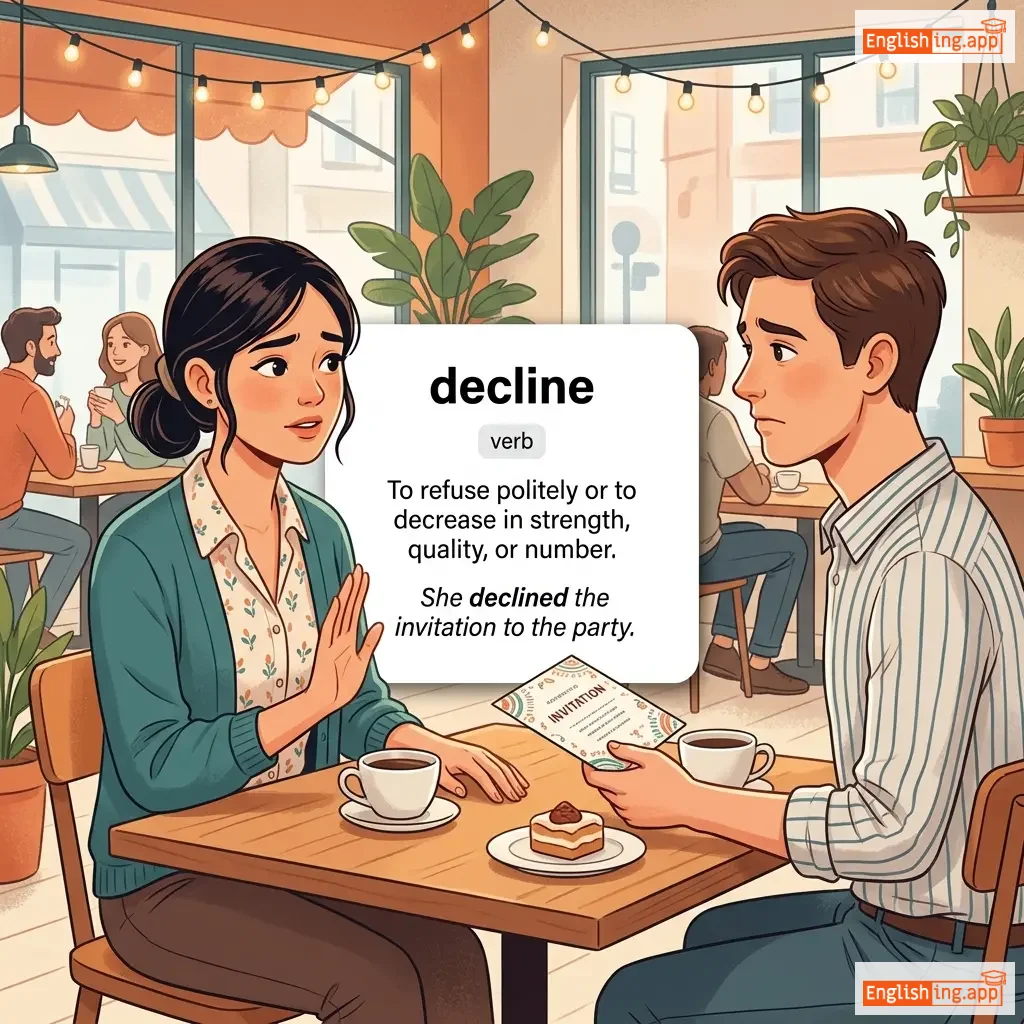
To refuse politely or to decrease in strength, quality, or number.
••••••
|
She declined the invitation to the party. |
- •••••• |
on the decline |
becoming weaker or less important
••••••
|
- •••••• |
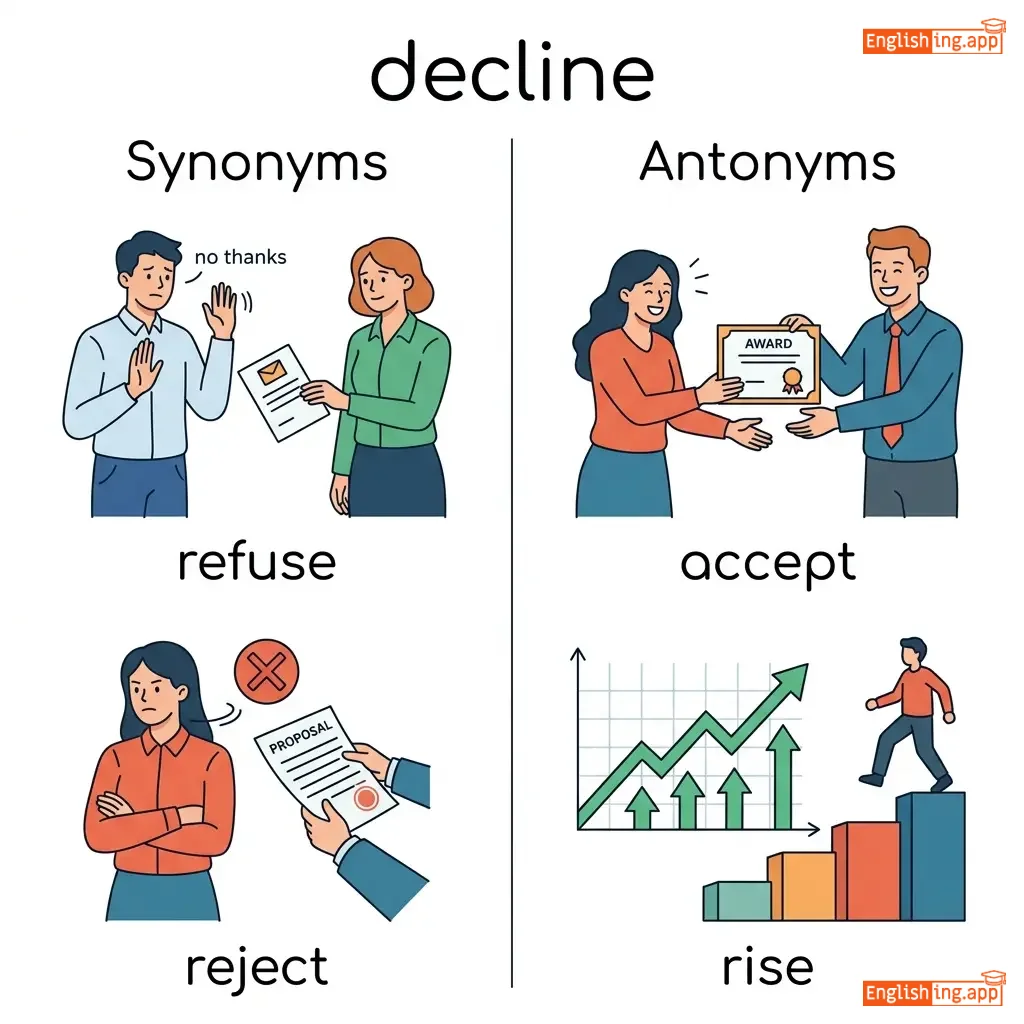
refuse, reject, deteriorate, weaken, decrease
••••••
|
accept, rise, increase
••••••
|
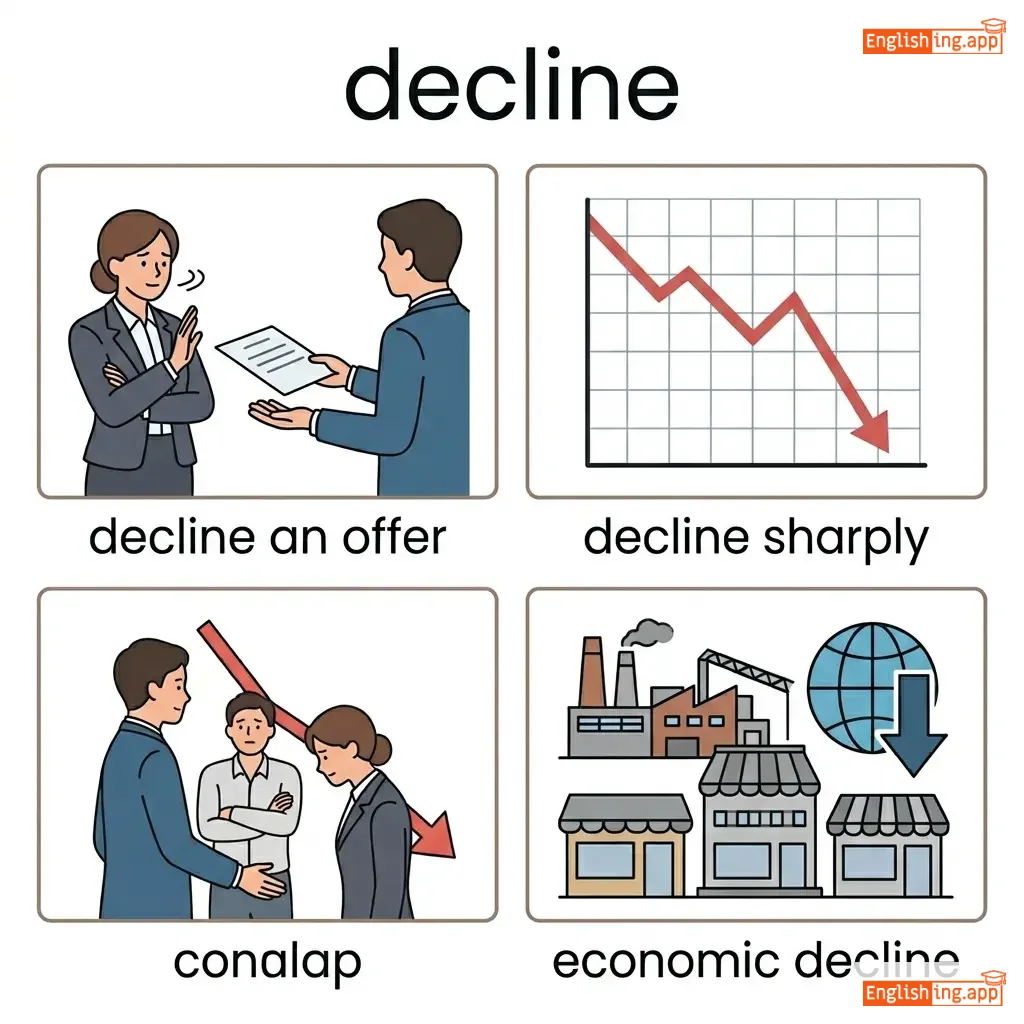
decline an offer, decline sharply, economic decline, decline in sales
••••••
|
No •••••• |
|
⚠️
••••••
|
/dɪˈfɔːlt/
noun, verb
(默认)
••••••
|

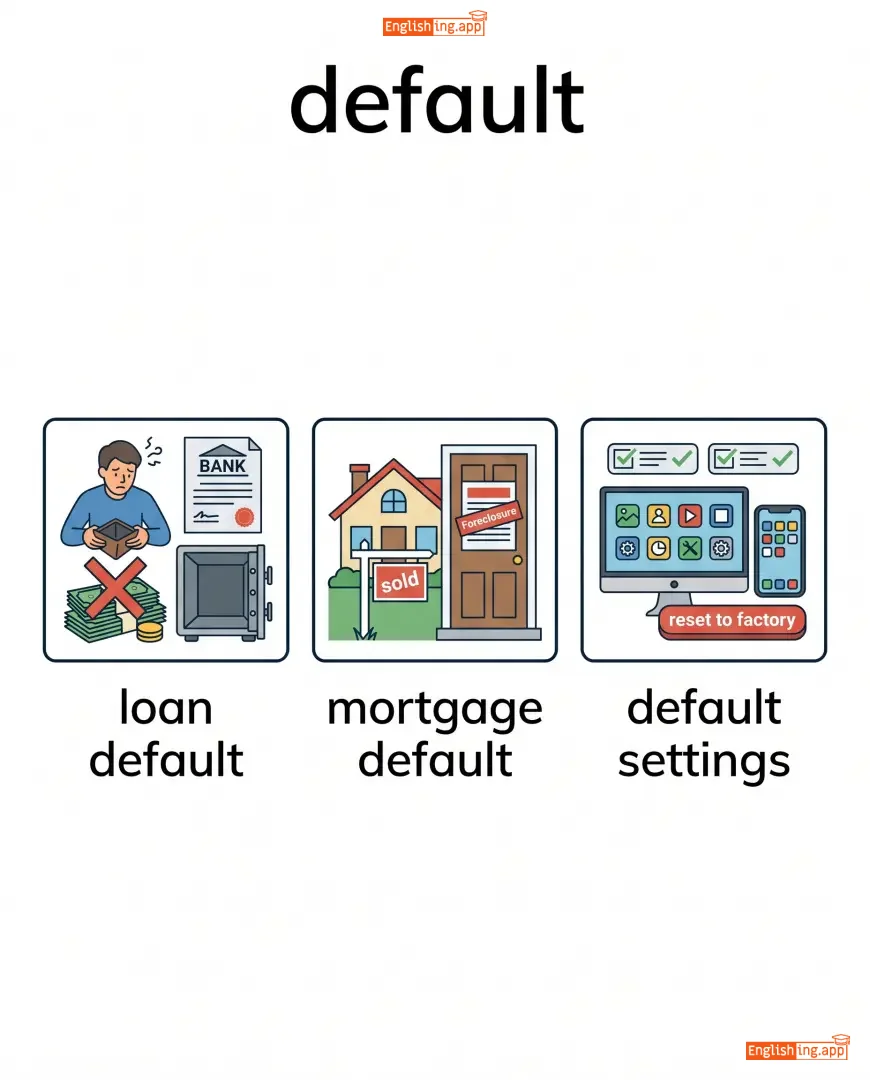
|
违约
wéiyuē
••••••
|
defaulted
默认ed
••••••
|
defaulted
默认ed
••••••
|
defaults
默认s
••••••
|
defaulting
默认ing
••••••
|
failure to fulfill an obligation, especially to repay a loan
••••••
|
The company defaulted on its loan payments.
公司在贷款支付方面违约。
••••••
|
公司在贷款支付方面违约。
Gōngsī zài dàikuǎn zhīfù fāngmiàn wéiyuē.
••••••
|
in default
违约
••••••
|
in a state of failing to fulfill an obligation
••••••
|
违约状态
wéiyuē zhuàngtài
••••••
|
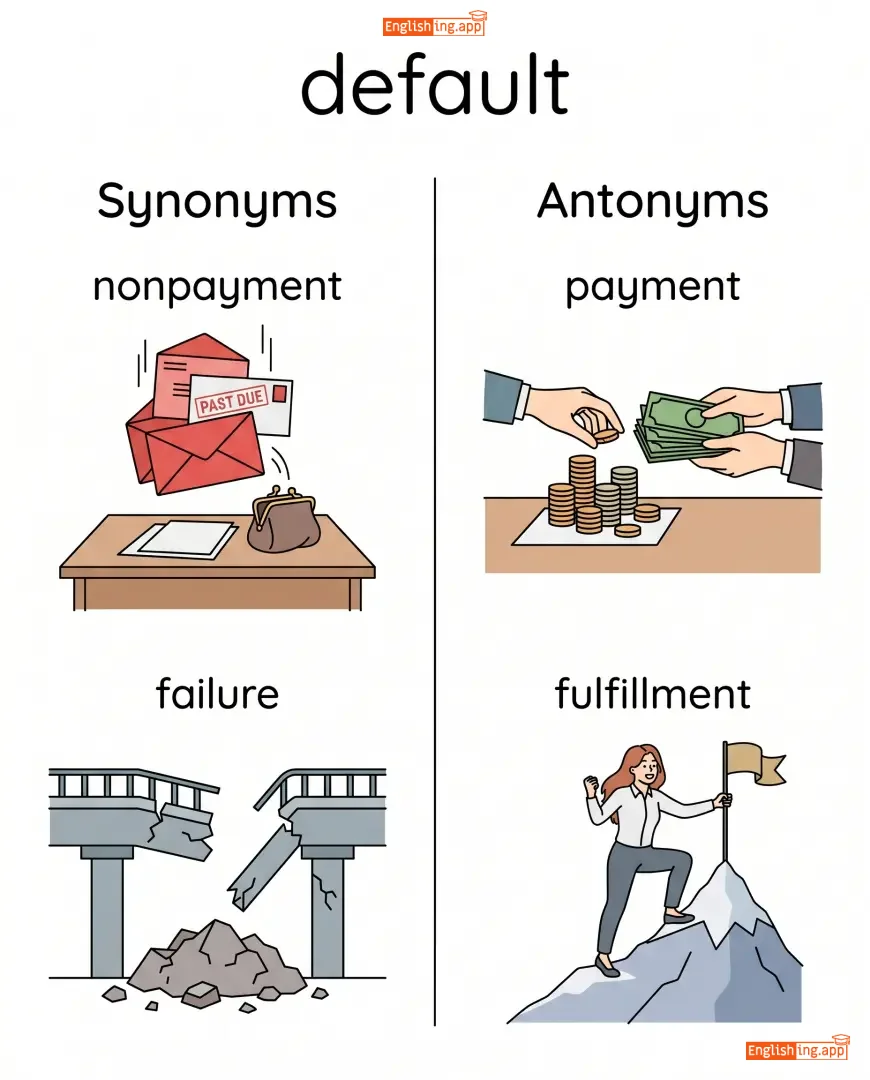
nonpayment, failure, negligence, omission
••••••
|
payment, fulfillment, compliance
••••••
|
loan default, mortgage default, default settings, default judgment
••••••
|
Default → 不偿还债务
••••••
|
|
⚠️
••••••
|
/ˈdiːfɛkt/ (noun), /dɪˈfɛkt/ (verb)
noun, verb
••••••
|
- •••••• | - •••••• |
defected
••••••
|
defected
••••••
|
defects
••••••
|
defecting
••••••
|
A shortcoming, imperfection, or flaw; or to abandon a cause or group for another.
••••••
|
The engineer found a defect in the software code. |
- •••••• |
defect from duty |
To abandon one's responsibility or loyalty.
••••••
|
- •••••• |
flaw, fault, imperfection, deficiency, weakness
••••••
|
strength, perfection, loyalty
••••••
|
manufacturing defect, genetic defect, defect in design
••••••
|
No •••••• |

