The Detective Who Solved the Cold Case
侦探Rahman是一位gifted调查员,在他的职业生涯中解决了许多案件。在他的eighth年,他接手了一个冷案,那是一个murder谜案。受害者是一个商人,他建立了一个纺织empire。每个人都说这是由于他flawed的商业交易。但Rahman知道hatred是更深层次的动机。案件文件embodied了所有复杂性。Either他会解决它,或者以失败退休。Rahman首先调查了fourth证人,他是一个exotic餐厅老板。他的故事很可疑,因为他给了一个弱的excuse。调查的extent非常大,因为一个felony案件需要大量证据。Rahman比平时工作faster,因为有压力要展示结果。他对fiscal记录的研究显示,受害者的合伙人曾经是一个inmate。这个人的ground充满了许多insults和背叛。Rahman意识到killer是这个合伙人。在法庭审判期间,辩护律师试图辩称证据不足。但Rahman的彻底工作证明了一切。陪审团决定punish****killer,并给予最大判决。Rahman的奉献和技巧证明了either延迟的司法或拒绝的司法——两者都是错误的。
|
表情符号
|
单词 | Images | 翻译 | 过去时 | 过去分词 | 第三人称单数 | 动名词 | 含义 | 例句 | 例句翻译 | 示例表达 | 示例表达含义 | 示例表达翻译 | 同义词 | 反义词 | 搭配词 | 助记符 |
|---|---|---|---|---|---|---|---|---|---|---|---|---|---|---|---|---|---|
|
8️⃣
••••••
|
/eɪtθ/
adjective
(eɪtθ)
••••••
|
- •••••• |
第八
dì bā
••••••
|
- •••••• | - •••••• | - •••••• | - •••••• |
coming after the seventh position in a sequence; one of eight equal parts
••••••
|
She finished in eighth place in the race.
她在比赛中获得了第八名。
••••••
|
她在比赛中获得了第八名。
Tā zài bǐsài zhōng huòdé le dì bā míng.
••••••
|
- •••••• | - •••••• | - •••••• |
8th, octaval, eighthly, one-eighth
••••••
|
first, last
••••••
|
eighth grade, eighth position, eighth place, eighth day
••••••
|
八之后是第八,表示第八名位置。
••••••
|
|
↔️
••••••
|
/ˈaɪðər/ or /ˈiːðər/
determiner/pronoun/conjunction/adverb
(艾瑟尔)
••••••
|
- •••••• |
任一
renyi
••••••
|
- •••••• | - •••••• | - •••••• | - •••••• |
Used to indicate a choice between two alternatives.
••••••
|
You can either call me tonight or send me an email. |
你可以今晚打电话给我,或者给我发电子邮件。
Nǐ kěyǐ jīnwǎn dǎ diànhuà gěi wǒ, huòzhě gěi wǒ fā diànzǐ yóujiàn.
••••••
|
either way |
Whatever happens, the result will be acceptable.
••••••
|
不管怎样
bùguǎn zěnyàng
••••••
|
one, the one, any of the two, alternative
••••••
|
neither
••••••
|
either side, either way, either option, either choice
••••••
|
Either意味着任一,就像是茶或咖啡,任一都行。
••••••
|
|
🌟
••••••
|
/ɪmˈbɒdi/
verb
(艾姆博迪)
••••••
|
- •••••• |
体现
tixian
••••••
|
embodied
艾姆博迪德
••••••
|
embodied
艾姆博迪德
••••••
|
embodies
艾姆博迪兹
••••••
|
embodying
艾姆博迪英
••••••
|
To give tangible or visible form to an idea, quality, or feeling.
••••••
|
She embodies the spirit of generosity.
她体现了慷慨的精神。
••••••
|
她体现了慷慨的精神。
Ta tixian le kangkai de jingshen.
••••••
|
- •••••• | - •••••• | - •••••• |
personify, represent, manifest, express, exemplify
••••••
|
conceal, obscure, suppress
••••••
|
embody the spirit, embodies values, embodies the idea, embody tradition
••••••
|
Embody 就是将一个想法装进身体,给它具象的外形。
••••••
|
|
🏰
••••••
|
/ˈempaɪər/
noun
(ài mǐ ér)
••••••
|
- •••••• |
帝国
dìguó
••••••
|
- •••••• | - •••••• | - •••••• | - •••••• |
a group of countries or regions controlled by one ruler or government
••••••
|
The Roman Empire lasted for centuries. |
罗马帝国延续了几个世纪。
Luómǎ dìguó yánxùle jǐ gè shìjì.
••••••
|
build an empire |
to create a large and powerful organization or business
••••••
|
建立帝国
jiànlì dìguó
••••••
|
kingdom, realm, dominion, federation, sovereignty
••••••
|
colony, dependency
••••••
|
Roman empire, British empire, build an empire, vast empire
••••••
|
帝国像'帝'(帝王),控制所有领域的权利。
••••••
|
|
🙏
••••••
|
/ɪkˈskjuːz/
verb
(原谅)
••••••
|
- •••••• |
原谅, 借口
yuánliàng, jièkǒu
••••••
|
excused
原谅了
••••••
|
excused
原谅了
••••••
|
excuses
原谅
••••••
|
excusing
原谅
••••••
|
to forgive someone for doing something wrong or to justify an action
••••••
|
Please excuse my lateness; there was heavy traffic.
请原谅我迟到;有很多交通。
••••••
|
请原谅我迟到;有很多交通。
Qǐng yuánliàng wǒ chídào; yǒu hěn duō jiāotōng.
••••••
|
make an excuse
找借口
••••••
|
to give a reason to avoid blame or responsibility
••••••
|
找借口
zhǎo jièkǒu
••••••
|
forgive, pardon, justify, explain, overlook
••••••
|
blame, accuse, condemn
••••••
|
excuse me, make an excuse, good excuse, poor excuse
••••••
|
原谅 – 原谅我,借口太多!
••••••
|
|
🌺
••••••
|
/ɪɡˈzɑːtɪk/
adjective
(éksòtí kè)
••••••
|
- •••••• |
异国情调和迷人
yìguó qíngdiào hé mírén
••••••
|
- •••••• | - •••••• | - •••••• | - •••••• |
Unusual and attractive because it is from a foreign place or culture.
••••••
|
The garden was filled with exotic plants from tropical countries. |
花园里满是来自热带国家的异国情调植物。
Huāyuán lǐ mǎn shì láizì rèdài guójiā de yìguó qíngdiào zhíwù.
••••••
|
exotic beauty |
Unusual and striking attractiveness
••••••
|
异国之美
Yìguó zhī měi
••••••
|
foreign, unusual, rare, tropical, extraordinary
••••••
|
ordinary, common, familiar
••••••
|
exotic plants, exotic animals, exotic beauty, exotic location
••••••
|
Exotic = Exciting + Foreign, 来自他国的迷人事物。
••••••
|
|
📏
••••••
|
/ɪkˈstɛnt/
noun
(èksītènt)
••••••
|
- •••••• |
程度
chengdu
••••••
|
- •••••• | - •••••• | - •••••• | - •••••• |
the area, degree, or scope of something
••••••
|
The extent of the damage was greater than expected.
损害的范围超出了预期。
••••••
|
损害的程度超出了预期。
Sunhai de chengdu chaole yùqī.
••••••
|
to some extent
在某种程度上
••••••
|
partially or in a limited way
••••••
|
在某种程度上
zai mou zhong chengdu shang
••••••
|
range, scope, degree, magnitude, scale
••••••
|
limitlessness, insignificance
••••••
|
extent of damage, full extent, great extent, large extent
••••••
|
在做一项任务时,定义范围是关键!
••••••
|
|
🏎️
••••••
|
/ˈfæstər/
adjective, adverb
(faster)
••••••
|
- •••••• |
更快
geng kuai
••••••
|
- •••••• | - •••••• | - •••••• | - •••••• |
moving or able to move quickly; more quickly than usual
••••••
|
This car is faster than the old one. |
这辆车比老车更快。
Zhe liang che bi lao che geng kuai.
••••••
|
fast and furious |
energetic and exciting, often reckless
••••••
|
快速且愤怒
kuai su qie fen nu
••••••
|
quicker, speedier, rapid, brisk
••••••
|
slower, delayed, sluggish
••••••
|
run faster, grow faster, faster speed, faster rate
••••••
|
Faster意味着‘更快’–像赛车一样!
••••••
|
|
⚖️
••••••
|
/ˈfɛləni/
noun
(fɛlɔni)
••••••
|
- •••••• |
重罪
zhòng zuì
••••••
|
- •••••• | - •••••• | - •••••• | - •••••• |
a serious crime, usually punishable by imprisonment for more than one year
••••••
|
He was convicted of a felony and sentenced to ten years in prison.
他因重罪被定罪并被判处十年监禁。
••••••
|
他因重罪被定罪并被判处十年监禁。
Tā yīn zhòng zuì bèi dìngzuì bìng bèi pànchǔ shí nián jiānjìn.
••••••
|
- •••••• | - •••••• | - •••••• |
crime, offense, wrongdoing, misdeed
••••••
|
innocence, lawfulness
••••••
|
commit a felony, felony charge, felony conviction, felony offense
••••••
|
Felony - 重 (zhòng) 重罪 - Remember felony as a heavy crime.
••••••
|
|
💰
••••••
|
/ˈfɪs.kəl/
adjective
(fī sī kǎ ěr)
••••••
|

|
财政的
cái zhèng de
••••••
|
- •••••• | - •••••• | - •••••• | - •••••• |
relating to government revenue, taxes, or financial matters
••••••
|
The government announced new fiscal policies to boost the economy. |
政府宣布了新的财政政策,以促进经济发展。
Zhèng fǔ xuān bù le xīn de cái zhèng zhèng cè, yǐ cù jìn jīng jì fā zhǎn.
••••••
|
- •••••• | - •••••• | - •••••• |
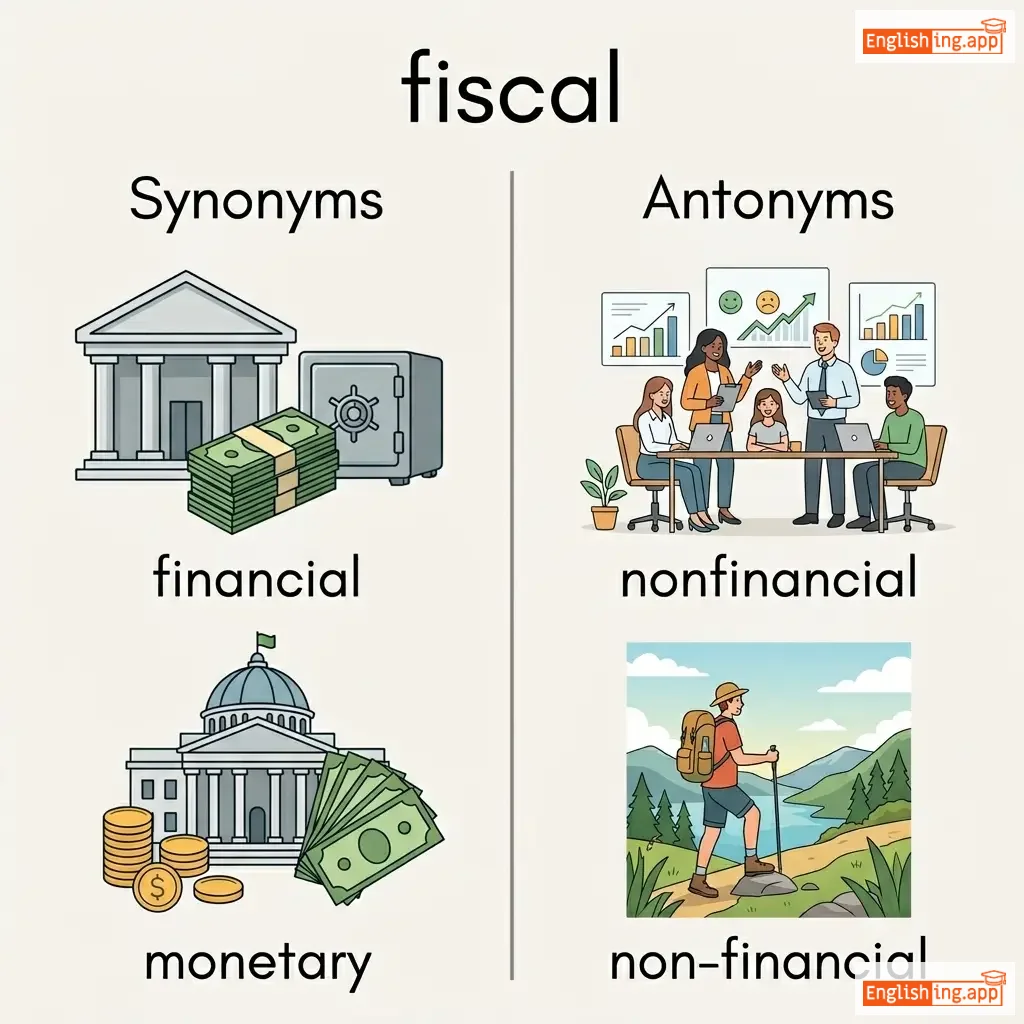
financial, monetary, economic, budgetary
••••••
|
nonfinancial
••••••
|
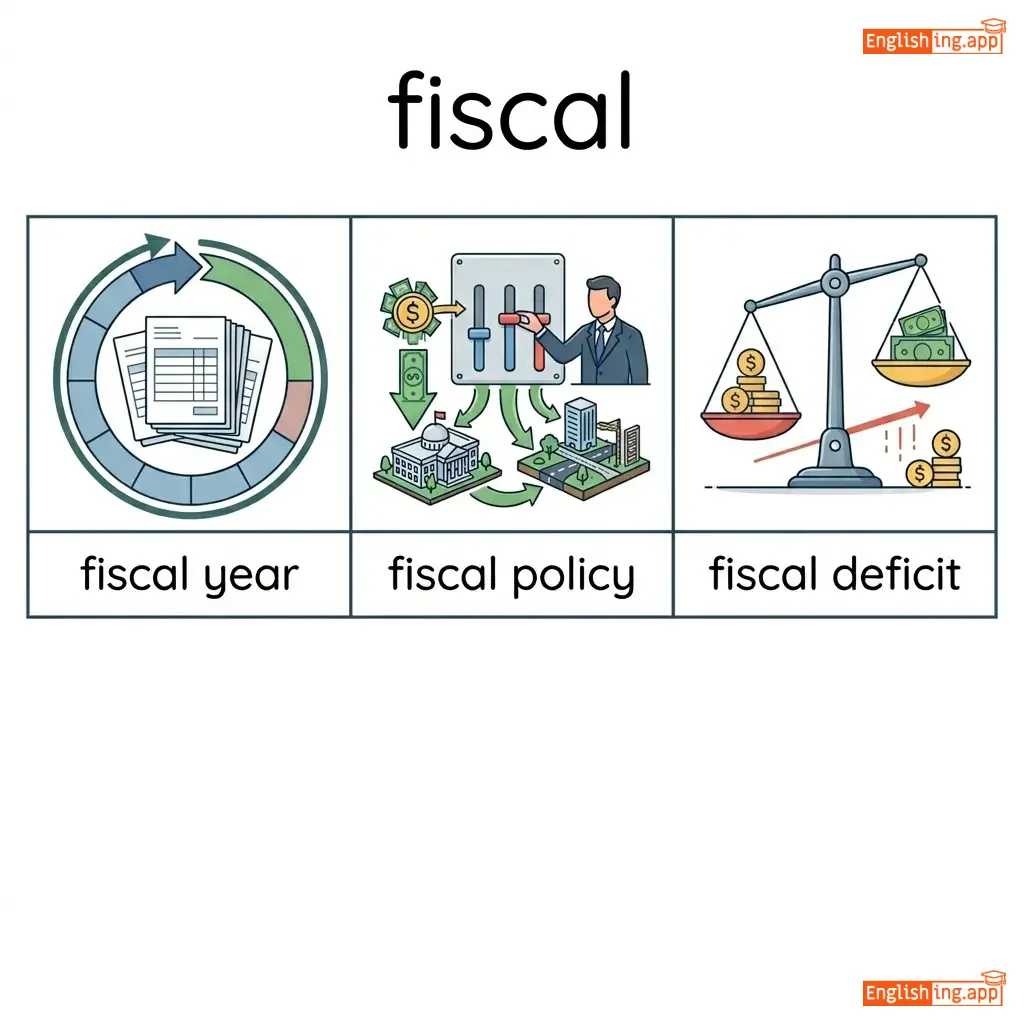
fiscal year, fiscal policy, fiscal deficit, fiscal responsibility
••••••
|
Fiscal 在中文里表示财政 - fiscal 有关金钱
••••••
|
|
❌
••••••
|
/flɔːd/
adjective
(flɔd)
••••••
|
- •••••• |
有缺陷的
you quexian de
••••••
|
- •••••• | - •••••• | - •••••• | - •••••• |
having a mistake or fault that reduces its value or quality
••••••
|
The flawed design of the car led to a recall. |
汽车设计有缺陷,导致了召回。
Qiche sheji you quexian, daozhi le zhaohui.
••••••
|
- •••••• | - •••••• | - •••••• |
imperfect, faulty, damaged, defective
••••••
|
perfect, flawless
••••••
|
flawed reasoning, flawed argument, flawed judgment
••••••
|
有缺陷的设计意味着某些东西出问题 - Flawed design means something is wrong.
••••••
|
|
4️⃣
••••••
|
/fɔːrθ/
adjective/noun
(fóu sī)
••••••
|
- •••••• |
第四
di si
••••••
|
- •••••• | - •••••• | - •••••• | - •••••• |
Constituting number four in a sequence; coming after the third in position.
••••••
|
He finished in fourth place in the race. |
他在比赛中获得了第四名。
ta zai bisai zhong huode le di si ming.
••••••
|
the fourth estate |
the press and news media
••••••
|
第四权力
di si quanli
••••••
|
quartile, fourthly, quadrant, quaternary
••••••
|
first, last
••••••
|
fourth place, fourth time, fourth floor, fourth century
••••••
|
第四就像是排在前三之后的那个位置,很容易记住!
••••••
|
|
🎁
••••••
|
/ˈɡɪf.tɪd/
adjective
(吉福特)
••••••
|
- •••••• |
天赋的; 才华横溢的
tiānfù de; cáihuá héngyì de
••••••
|
- •••••• | - •••••• | - •••••• | - •••••• |
having exceptional talent or ability; talented;
••••••
|
She is a gifted musician who plays multiple instruments.
她是一位天赋异禀的音乐家,能演奏多种乐器。
••••••
|
她是一位天赋异禀的音乐家,能演奏多种乐器。
Tā shì yī wèi tiānfù yìbǐng de yīnyuèjiā, néng yǎnzòu duōzhǒng yuèqì.
••••••
|
- •••••• | - •••••• | - •••••• |
talented, skilled, brilliant, capable
••••••
|
untalented, incompetent, mediocre
••••••
|
gifted student, gifted child, academically gifted
••••••
|
Gifted means having 'gifts' or natural talents.
••••••
|
|
🌍
••••••
|
/ɡraʊnd/
noun/verb
(guó)
••••••
|
- •••••• |
地面
dìmian
••••••
|
grounded
guó dé
••••••
|
grounded
guó dé
••••••
|
grounds
guó
••••••
|
grounding
guó ing
••••••
|
the solid surface of the earth; to prohibit someone (often a child) from going out
••••••
|
The children played on the ground near the house.
孩子们在靠近房子的地方玩耍。
••••••
|
孩子们在靠近房子的地方玩耍。
Háizimen zài kàojìn fángzi de dìfāng wánshuǎ.
••••••
|
on solid ground
在坚实的地面上
••••••
|
in a safe or stable situation
••••••
|
在安全或稳定的情况
zài ānquán huò wěndìng de qíngkuàng
••••••
|
earth, soil, floor, basis, foundation
••••••
|
sky, air
••••••
|
soft ground, fertile ground, grounded theory, ground rules
••••••
|
Ground代表‘地面’ - 每个人都玩在地面上。
••••••
|
|
😡
••••••
|
/ˈheɪ.trəd/
noun
(hèitè)
••••••
|
- •••••• |
仇恨
chóuhèn
••••••
|
- •••••• | - •••••• | - •••••• | - •••••• |
intense dislike or ill will; a feeling of strong aversion
••••••
|
His hatred for injustice motivated him to become a human rights lawyer. |
他对不公正的仇恨促使他成为了一名人权律师。
Tā duì bù gōngzhèng de chóuhèn cùshǐ tā chéngwéile yī míng rénquán lǜshī.
••••••
|
- •••••• | - •••••• | - •••••• |
loathing, animosity, hostility, resentment
••••••
|
love, affection, admiration, fondness
••••••
|
deep hatred, racial hatred, hatred towards
••••••
|
仇恨 = 强烈的厌恶
••••••
|
|
🚔
••••••
|
/ˈɪnˌmeɪt/
noun
(因梅特)
••••••
|
- •••••• |
囚犯
qiufan
••••••
|
- •••••• | - •••••• | - •••••• | - •••••• |
a person confined to an institution such as a prison or hospital
••••••
|
The prison has over a thousand inmates.
监狱里有超过一千名囚犯。
••••••
|
监狱里有超过一千名囚犯。
Jianyu li you chao guo yi qian ming qiufen.
••••••
|
- •••••• | - •••••• | - •••••• |
prisoner, convict, detainee, captive
••••••
|
visitor, guard, free person
••••••
|
prison inmate, hospital inmate, fellow inmate, release an inmate
••••••
|
In + mate = 囚犯, 监狱里的囚徒
••••••
|
|
😡
••••••
|
/ˈɪnsʌlt/
verb
(侮辱)
••••••
|
|
侮辱
wǔrǔ
••••••
|
insulted
侮辱了
••••••
|
insulted
侮辱了
••••••
|
insults
侮辱
••••••
|
insulting
侮辱中
••••••
|
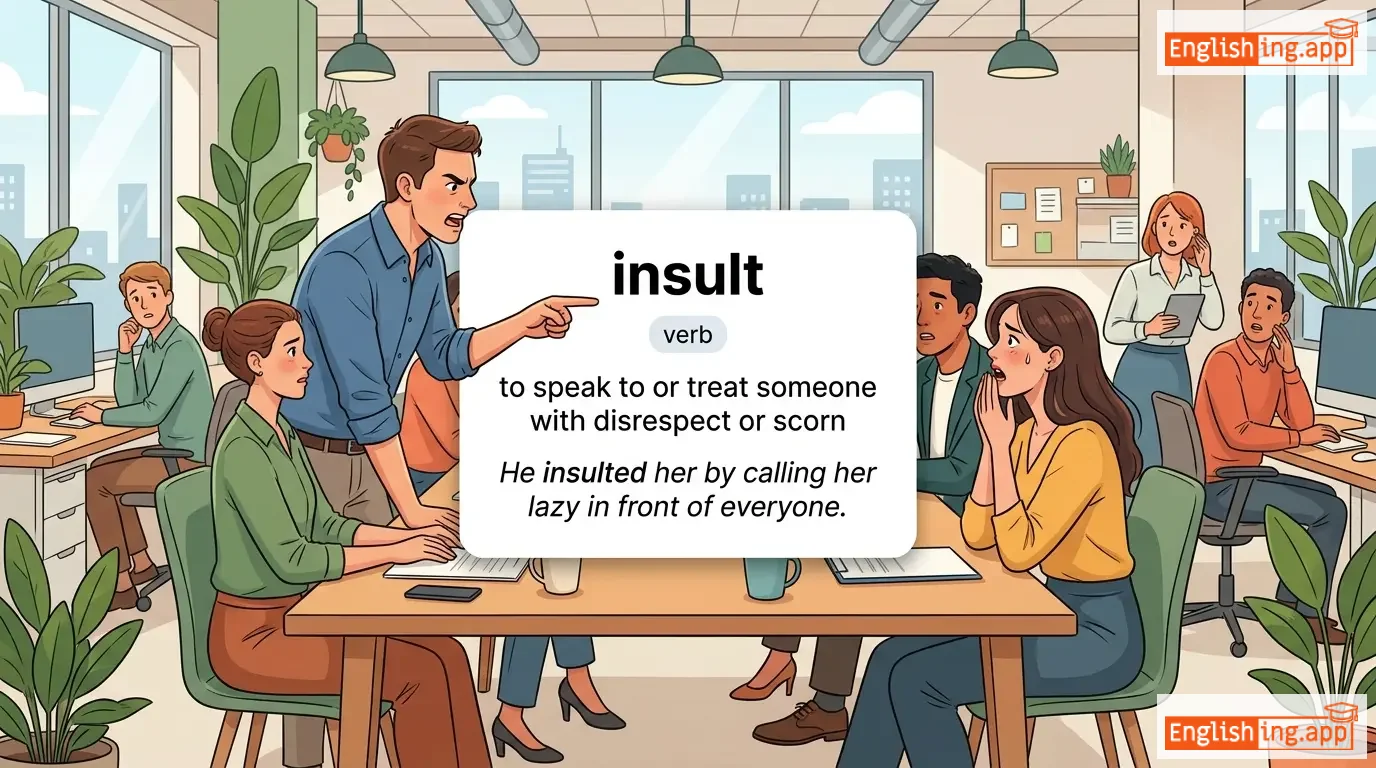
to speak to or treat someone with disrespect or scorn
••••••
|
He insulted her by calling her lazy in front of everyone.
他通过在大家面前叫她懒惰来侮辱她。
••••••
|
他通过在大家面前叫她懒惰来侮辱她。
Tā tōngguò zài dàjiā miànqián jiào tā lǎnduò lái wǔrǔ tā.
••••••
|
add insult to injury
加重侮辱
••••••
|
to make a bad situation worse by adding further harm or disrespect
••••••
|
加重侮辱
Jiāzhòng wǔrǔ
••••••
|
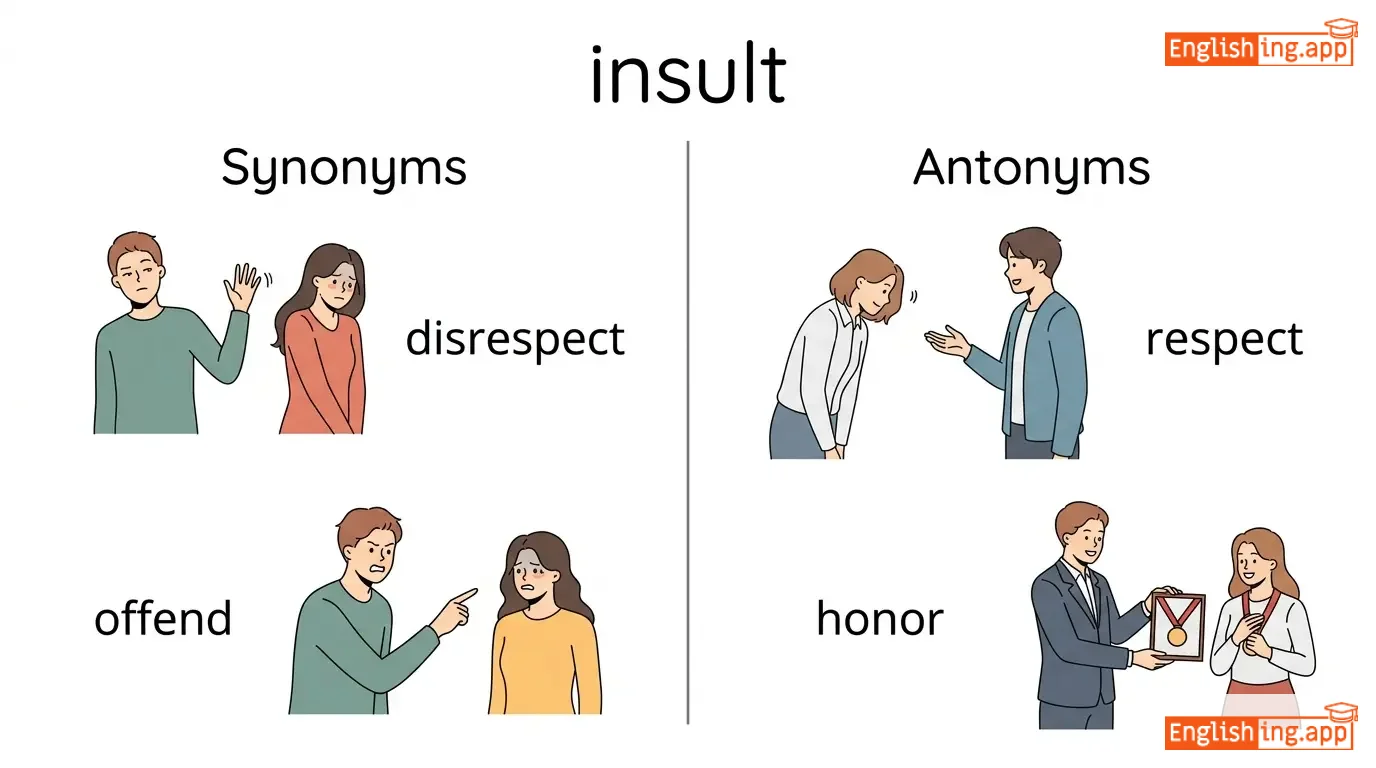
disrespect, offend, belittle, demean
••••••
|
respect, honor
••••••
|
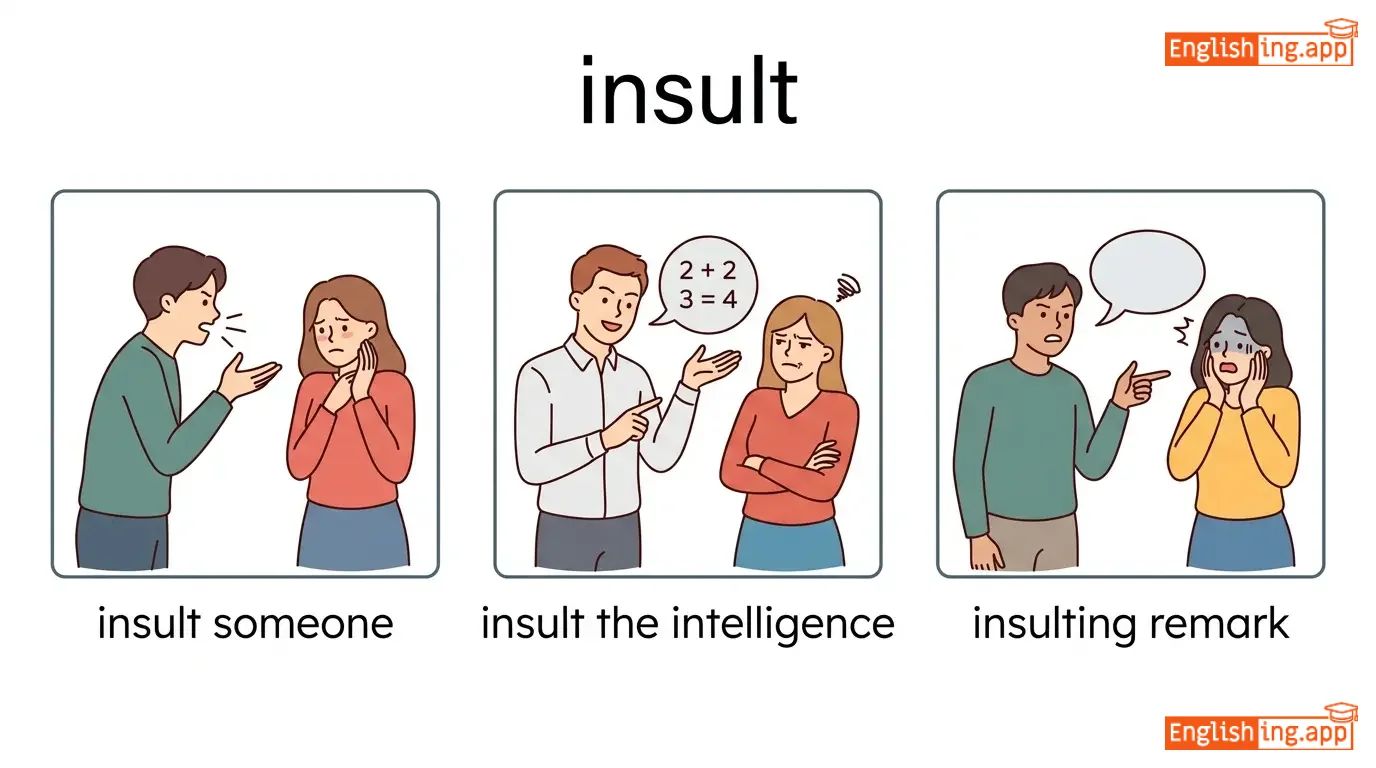
insult someone, insult the intelligence, insulting remark
••••••
|
侮辱,就像在伤口上撒盐
••••••
|
|
🔪
••••••
|
/ˈkɪlər/
noun
(kìlè)
••••••
|
- •••••• |
杀手
shāshǒu
••••••
|
- •••••• | - •••••• | - •••••• | - •••••• |
A person or thing that kills.
••••••
|
The police caught the killer last night.
警察昨晚抓住了杀手。
••••••
|
警察昨晚抓住了杀手。
Jǐngchá zuówǎn zhuā zhù le shāshǒu.
••••••
|
killer instinct
杀手本能
••••••
|
a strong drive to succeed or dominate
••••••
|
杀手本能
shāshǒu běnnéng
••••••
|
murderer, slayer, assassin, executioner, destroyer
••••••
|
savior, protector
••••••
|
serial killer, cold-blooded killer, contract killer, killer instinct
••••••
|
Killer 在中文中是杀手,电影中的坏人通常都是杀手。
••••••
|
|
🔪
••••••
|
/ˈmɜːrdər/
noun, verb
(谋杀)
••••••
|
- •••••• |
谋杀
móushā
••••••
|
murdered
谋杀了
••••••
|
murdered
谋杀了
••••••
|
murders
谋杀
••••••
|
murdering
谋杀
••••••
|
the unlawful killing of a person; to kill someone unlawfully and intentionally
••••••
|
The detective investigated the murder that shocked the town.
侦探调查了这起震惊小镇的谋杀案。
••••••
|
侦探调查了这起震惊小镇的谋杀案。
zhēntàn diàochá le zhè qǐ zhènjīng xiǎo zhèn de móushā àn.
••••••
|
murder will out
谋杀真相会大白
••••••
|
the truth about a crime will eventually be revealed
••••••
|
谋杀真相会大白
móushā zhēnxiàng huì dàbái
••••••
|
homicide, killing, assassination, slaughter
••••••
|
rescue, save
••••••
|
commit murder, brutal murder, murder case, murder weapon
••••••
|
Murder 意为谋杀 — Murder 会揭露真相
••••••
|
|
⚖️
••••••
|
/ˈpʌnɪʃ/
verb
(puniš)
••••••
|
|
惩罚
chéngfá
••••••
|
punished
punishd
••••••
|
punished
punishd
••••••
|
punishes
punishis
••••••
|
punishing
punishing
••••••
|
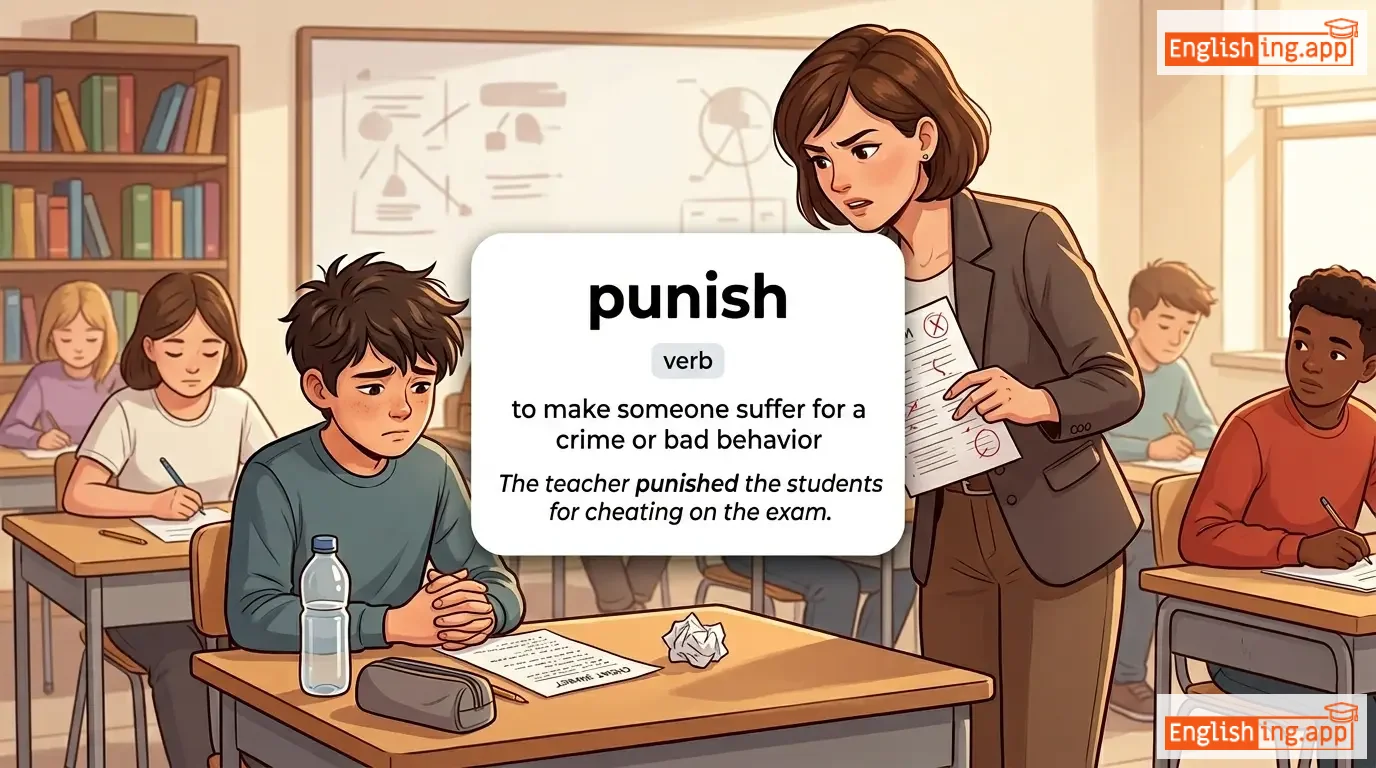
to make someone suffer for a crime or bad behavior
••••••
|
The teacher punished the students for cheating on the exam.
老师因学生在考试中作弊而惩罚了他们。
••••••
|
老师因学生在考试中作弊而惩罚了他们。
Lǎoshī yīn xuéshēng zài kǎoshì zhōng zhòubì ér chéngfá le tāmen.
••••••
|
punish oneself
惩罚自己
••••••
|
to make oneself suffer for guilt or regret
••••••
|
惩罚自己
chéngfá zìjǐ
••••••
|
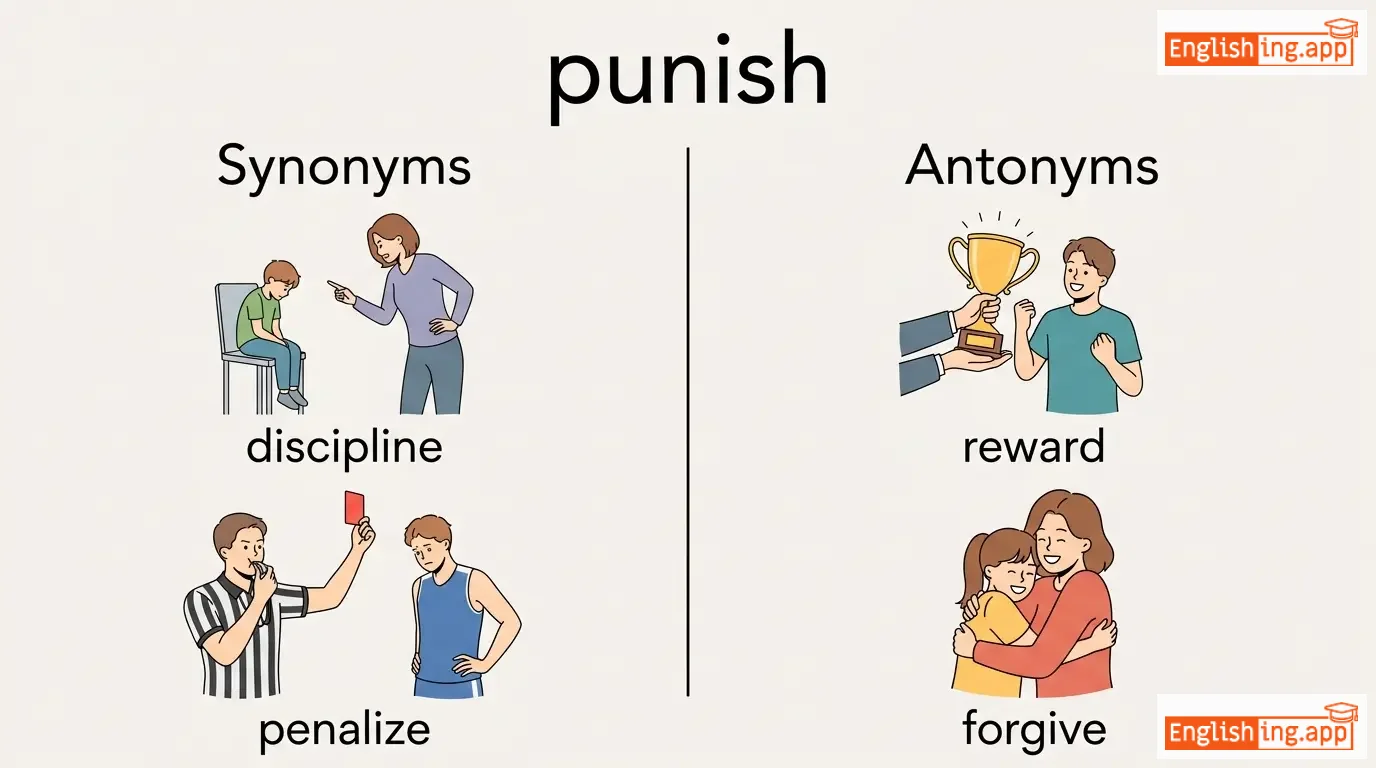
discipline, penalize, reprimand, chastise, correct
••••••
|
reward, forgive
••••••
|
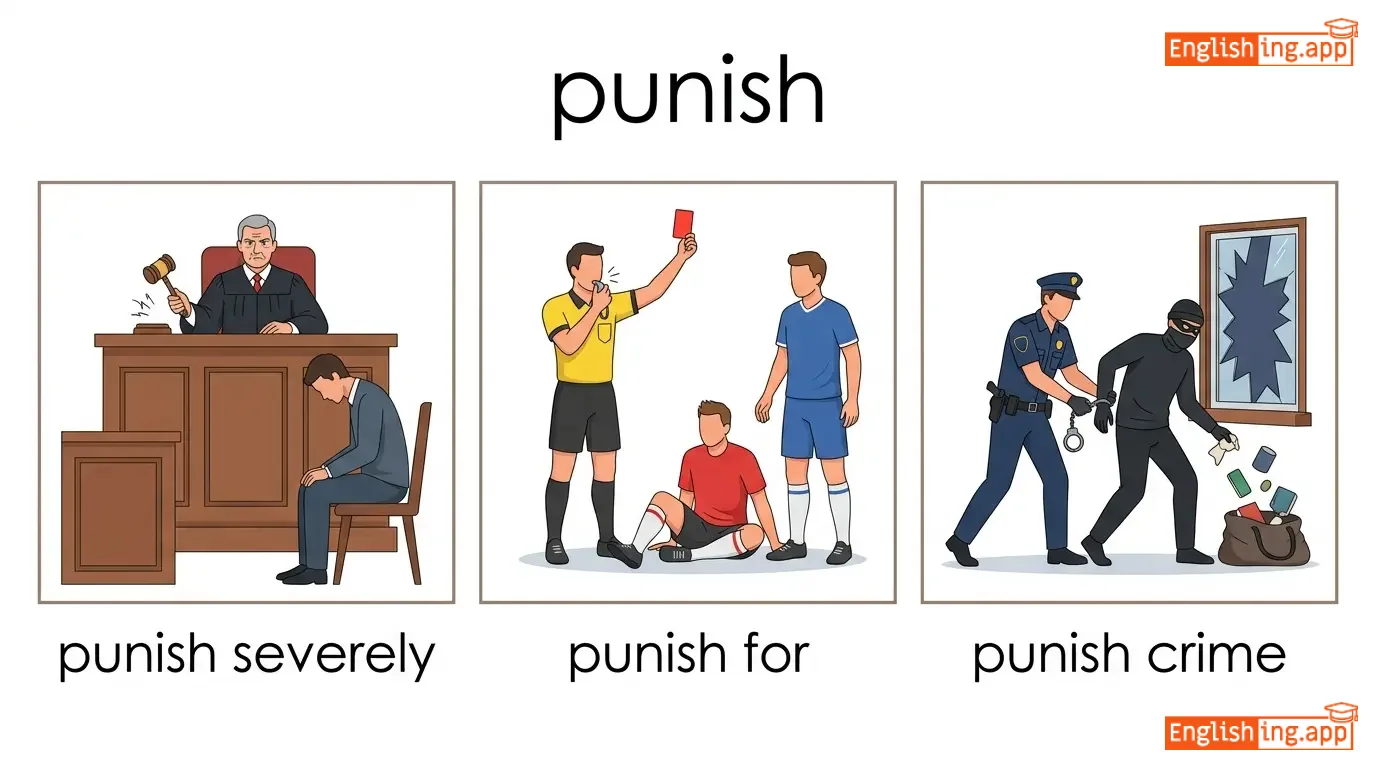
punish severely, punish for, punish crime, punish wrongdoer
••••••
|
Punish意味着惩罚 — Pun有惩罚的意思!
••••••
|

