Vocabularies

English Vocabulary Dictionary | Word Meanings, Definitions & Examples

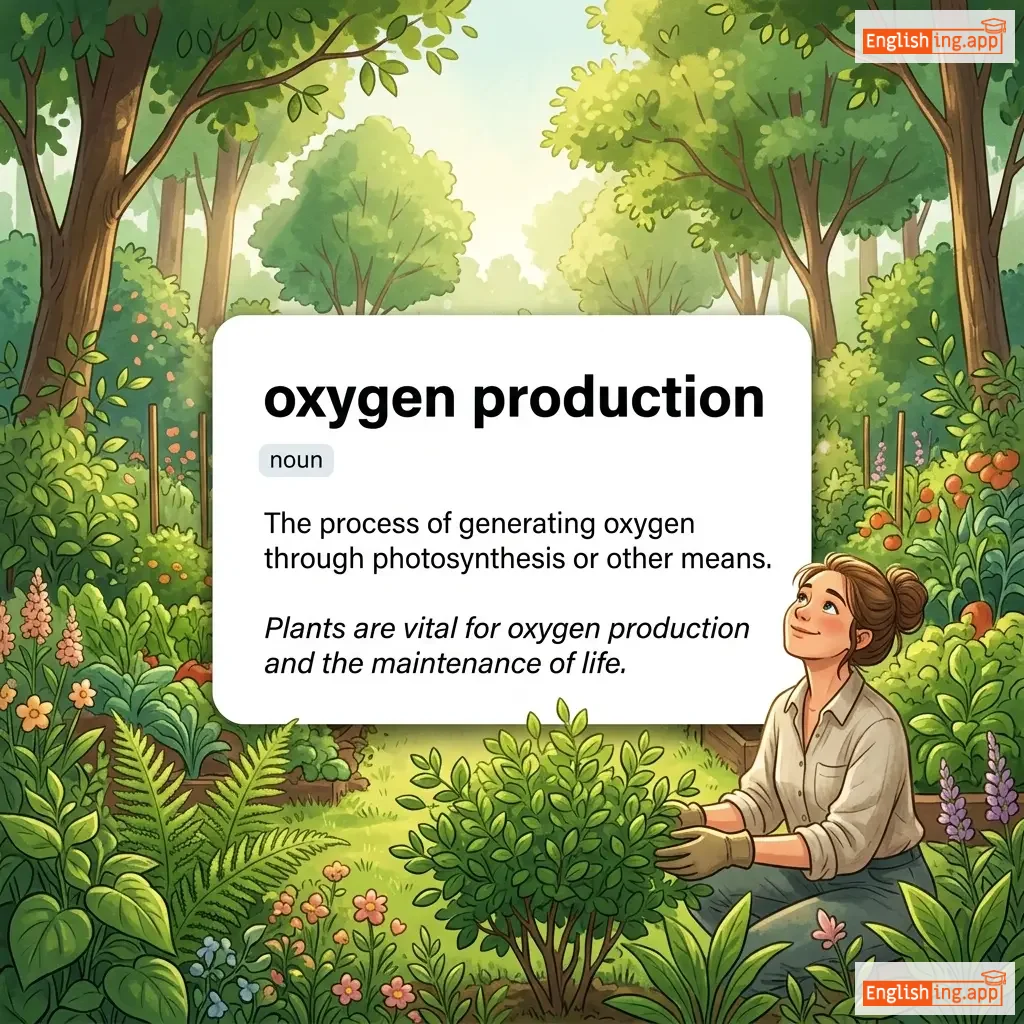
oxygen production definition card — visual illustration of the meaning
noun
ˈɒksɪdʒən prəˈdʌkʃən

The process of generating oxygen through photosynthesis or other means.

"Plants are vital for oxygen production and the maintenance of life."

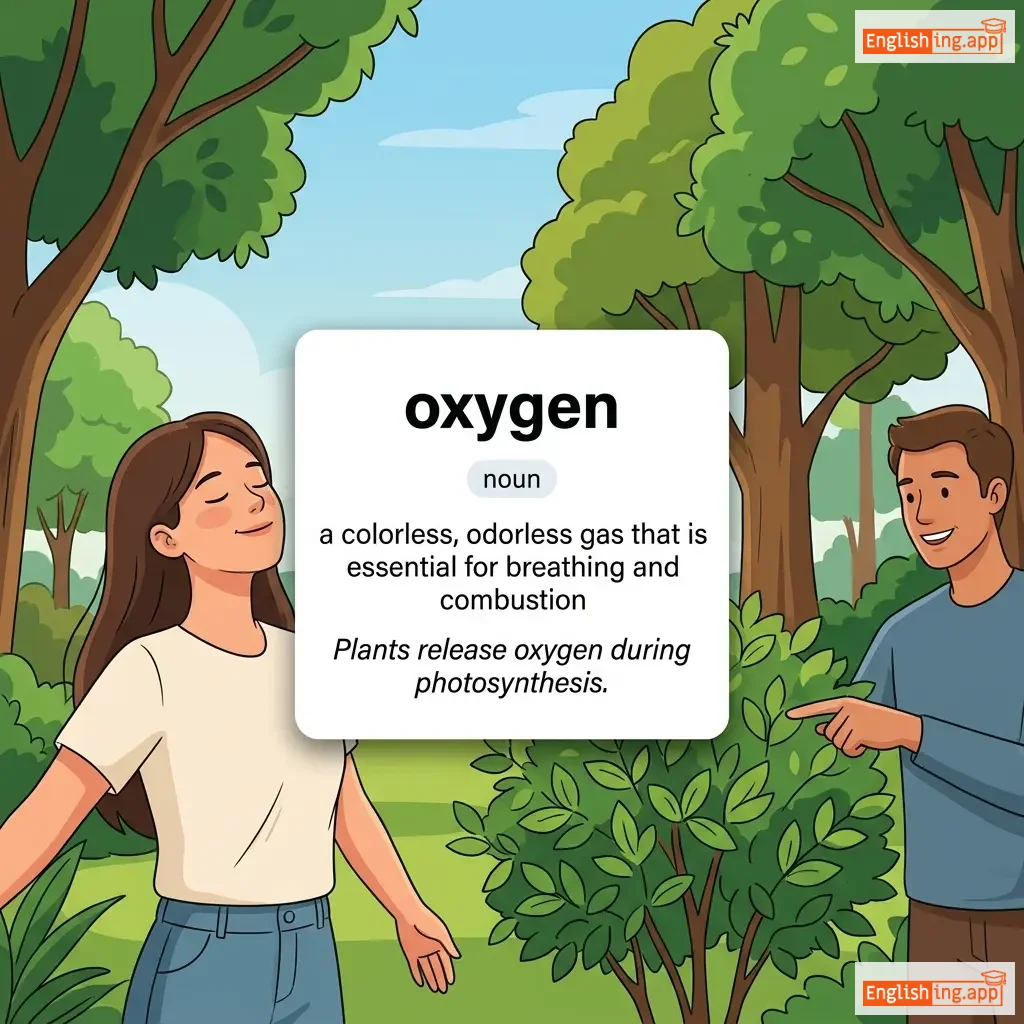
oxygen definition card — visual illustration of the meaning
🌬️

oxygen

noun
/ˈɒksɪdʒən/

a colorless, odorless gas that is essential for breathing and combustion

"Plants release oxygen during photosynthesis."

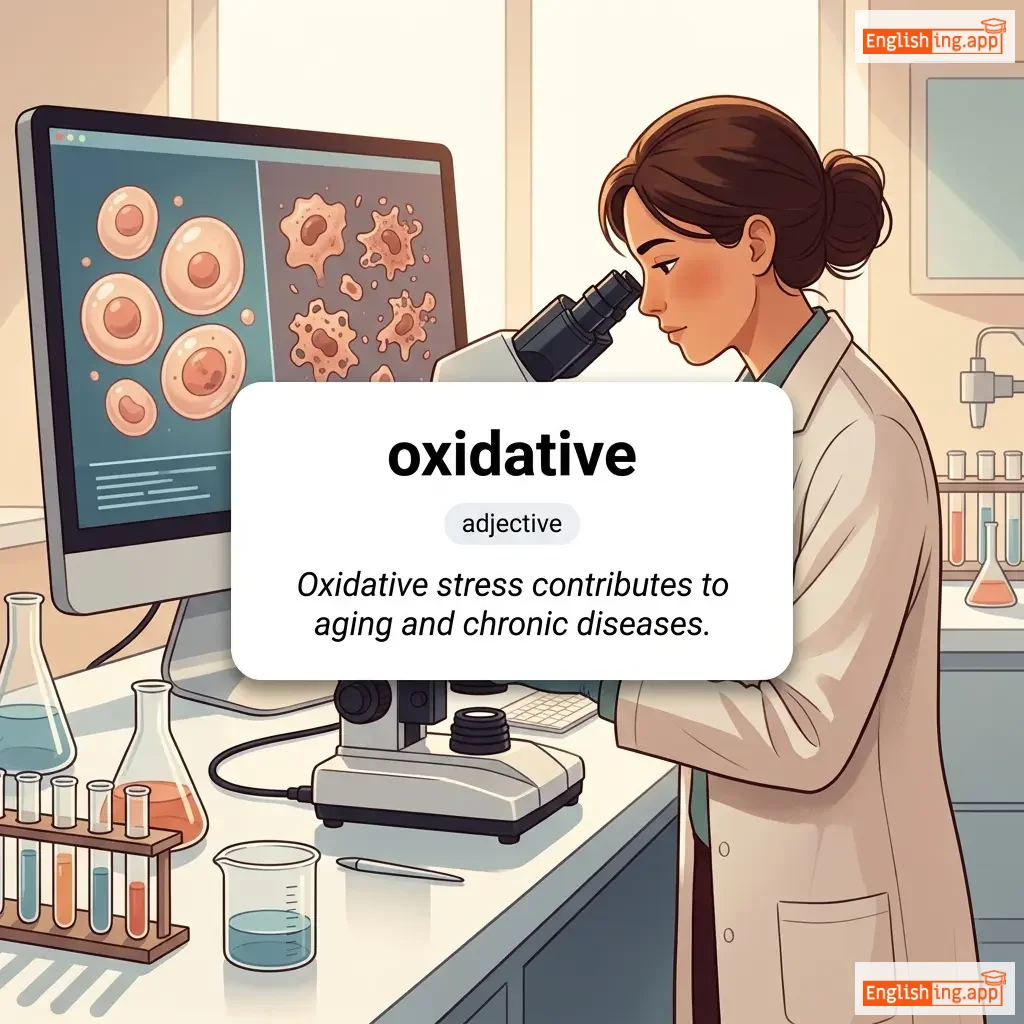
oxidative definition card — visual illustration of the meaning
adjective
/ˈɒk.sɪ.də.tɪv/

Relating to or involving oxidation, particularly processes that can cause cellular damage through free radical formation.

"Oxidative stress contributes to aging and chronic diseases."

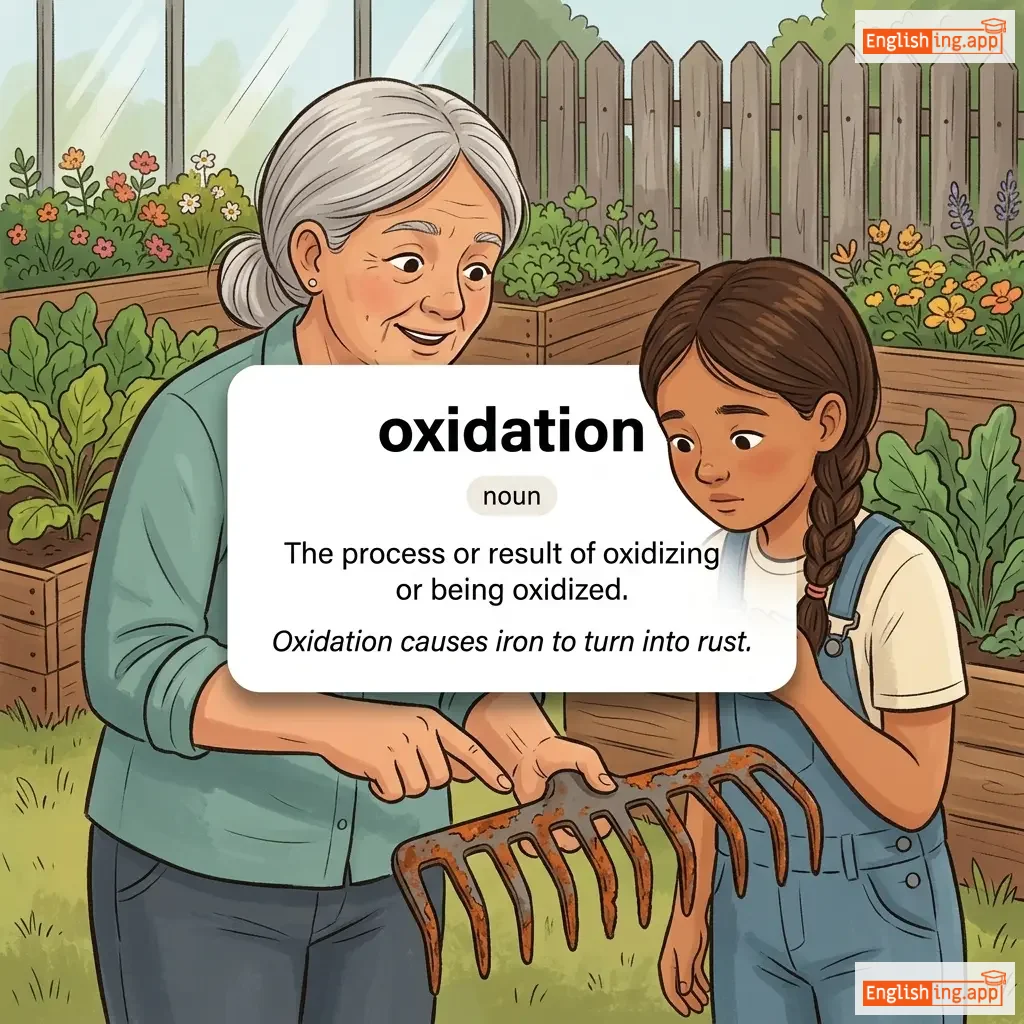
oxidation definition card — visual illustration of the meaning
noun
/ˌɒk.sɪˈdeɪ.ʃən/

The process or result of oxidizing or being oxidized.

"Oxidation causes iron to turn into rust."

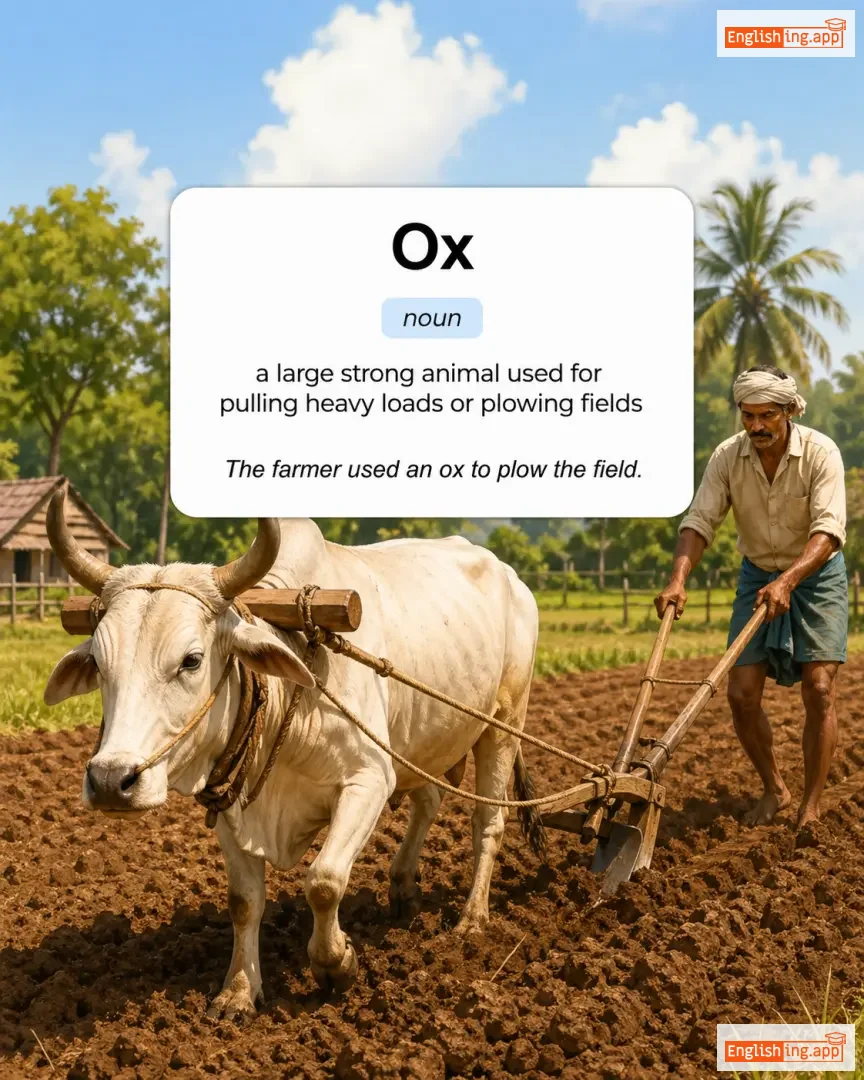
Ox definition card — visual illustration of the meaning
🐂

Ox

noun
/ɑːks/

a large strong animal used for pulling heavy loads or plowing fields

"The farmer used an ox to plow the field."

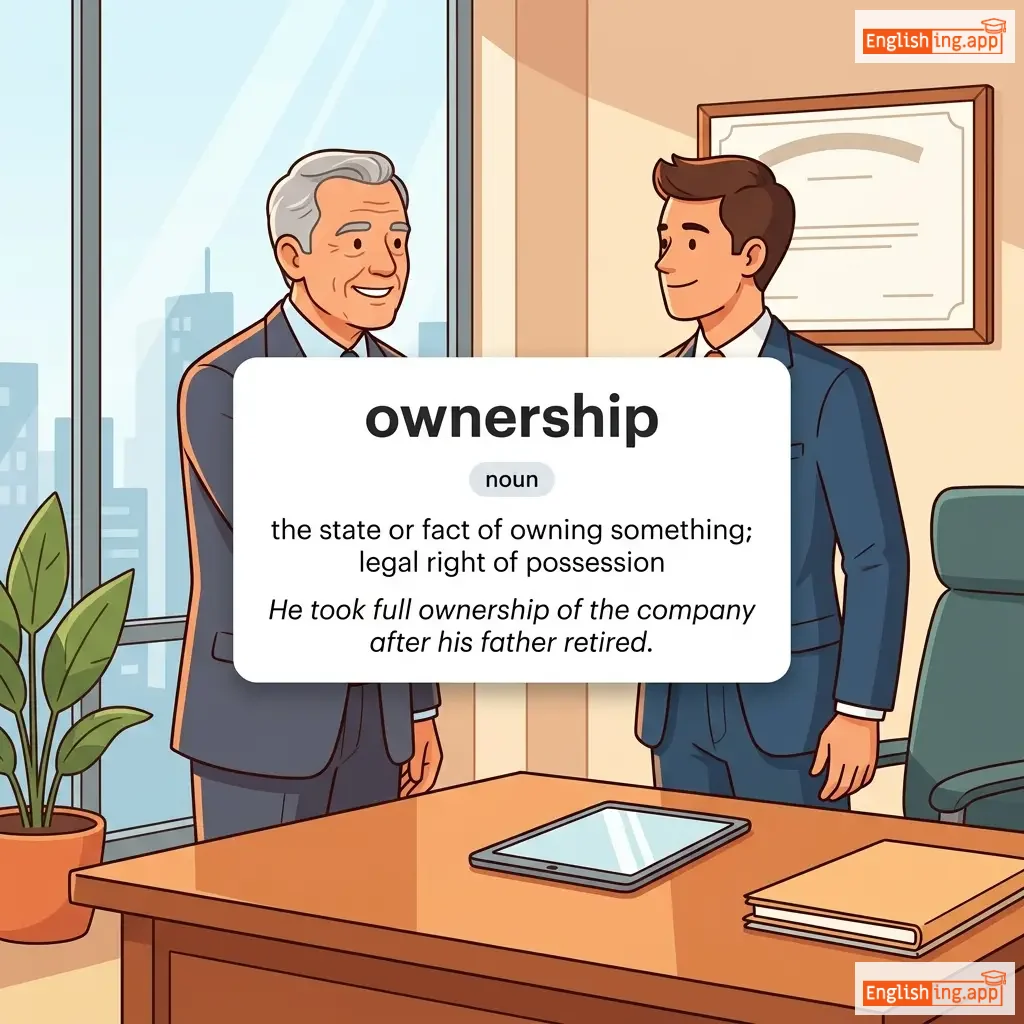
ownership definition card — visual illustration of the meaning
noun
/ˈoʊnərʃɪp/

the state or fact of owning something; legal right of possession

"He took full ownership of the company after his father retired."

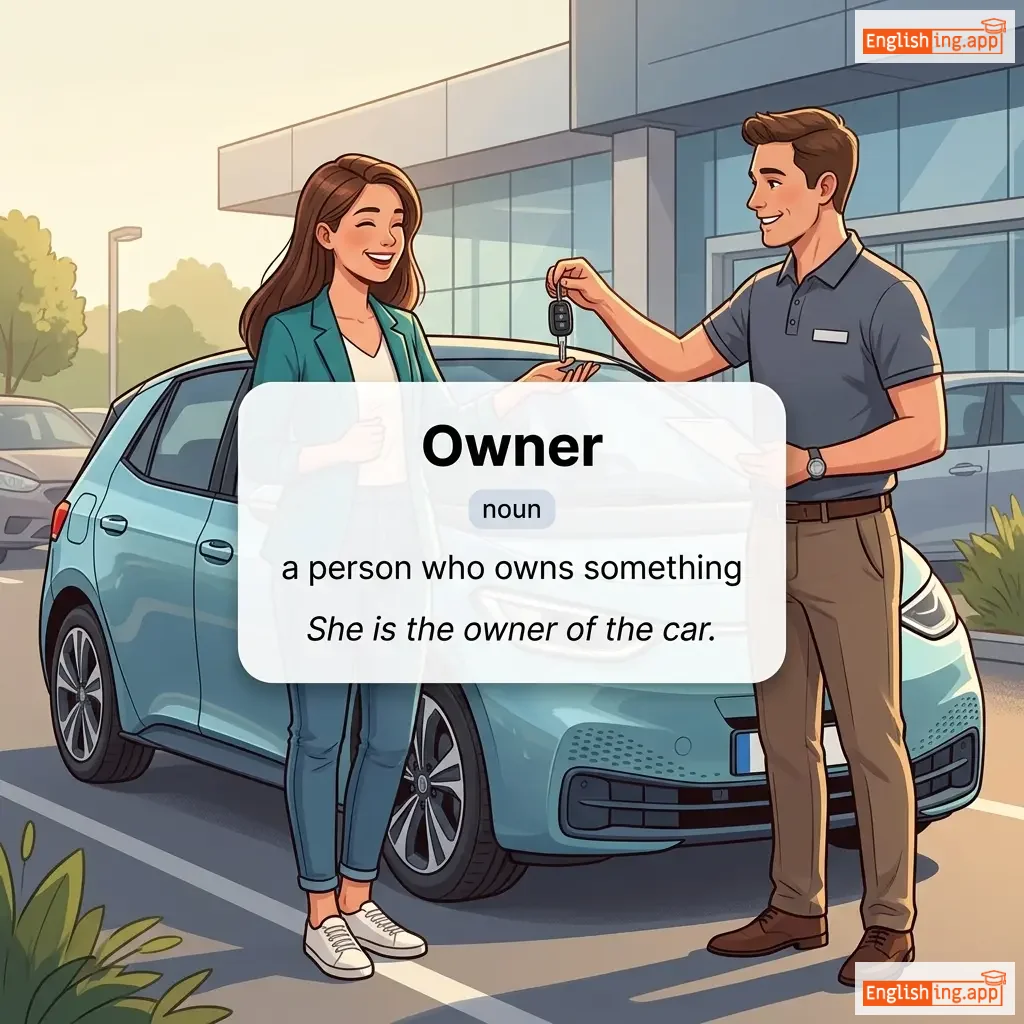
Owner definition card — visual illustration of the meaning
🏠

Owner

noun
/ˈoʊnər/

a person who owns something

"She is the owner of the car."

🏠

own

verb, adjective
/oʊn/

to possess something; belonging to oneself

"She owns a beautiful house in the city."

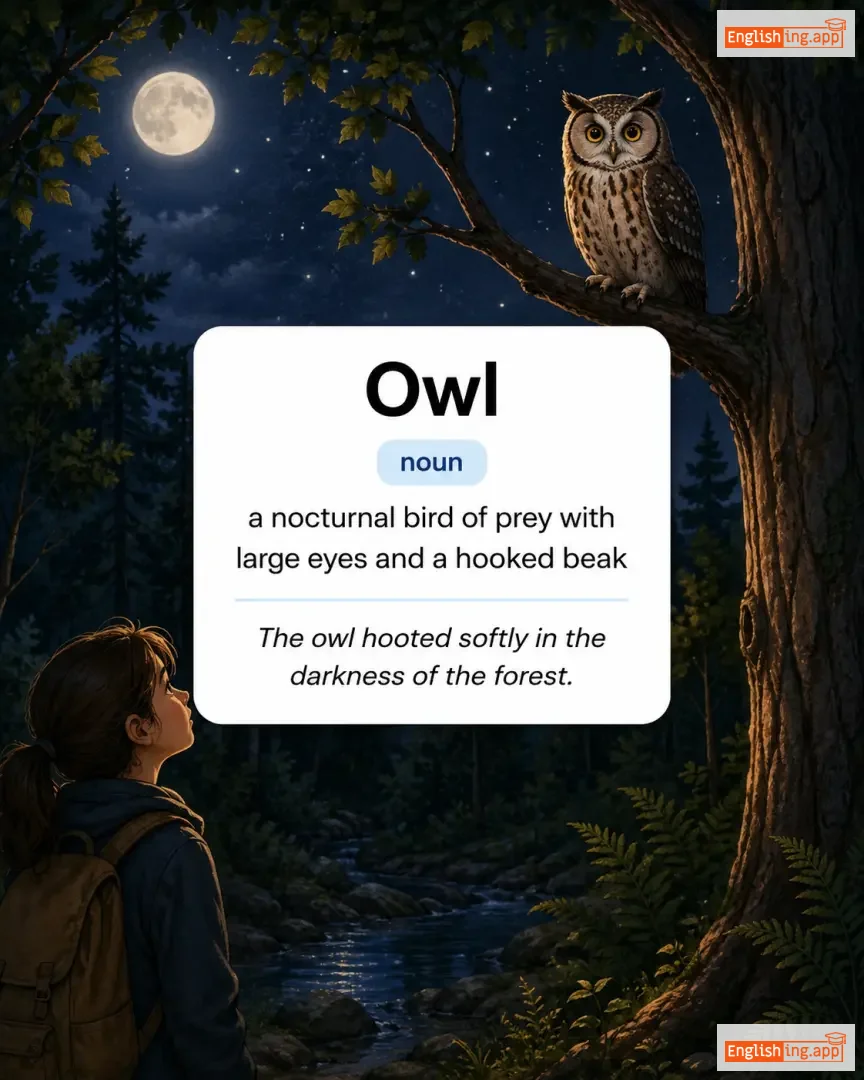
Owl definition card — visual illustration of the meaning
🦉

Owl

noun
/aʊl/

a nocturnal bird of prey with large eyes and a hooked beak

"The owl hooted softly in the darkness of the forest."

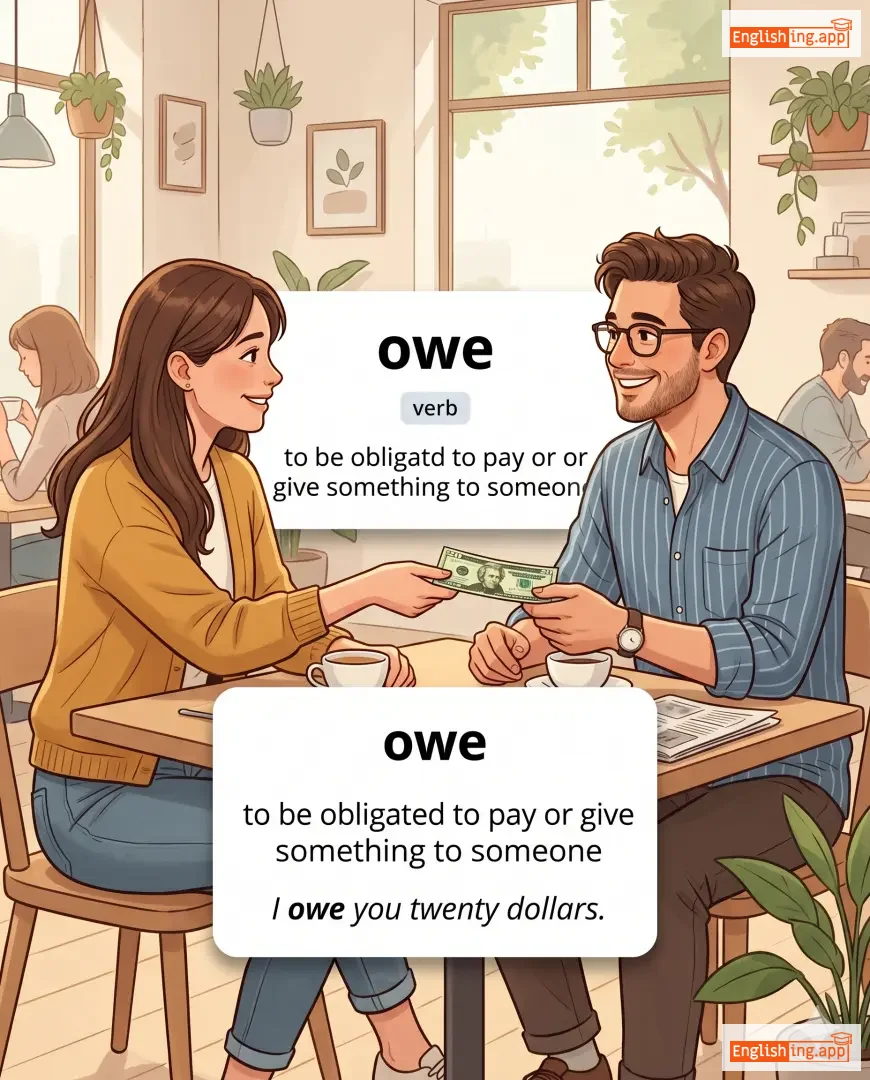
owe definition card — visual illustration of the meaning
💰

owe

verb
/oʊ/

to be obligated to pay or give something to someone

"I owe you twenty dollars."

🥚

ovoid

adjective
/ˈoʊ.vɔɪd/

egg-shaped; resembling an oval or ellipse

"The artist painted an ovoid shape in the center of the canvas."

adjective
/ˌoʊvərˈrɔt/

extremely agitated or nervous; excessively elaborate

"She was too overwrought to speak clearly after the accident."

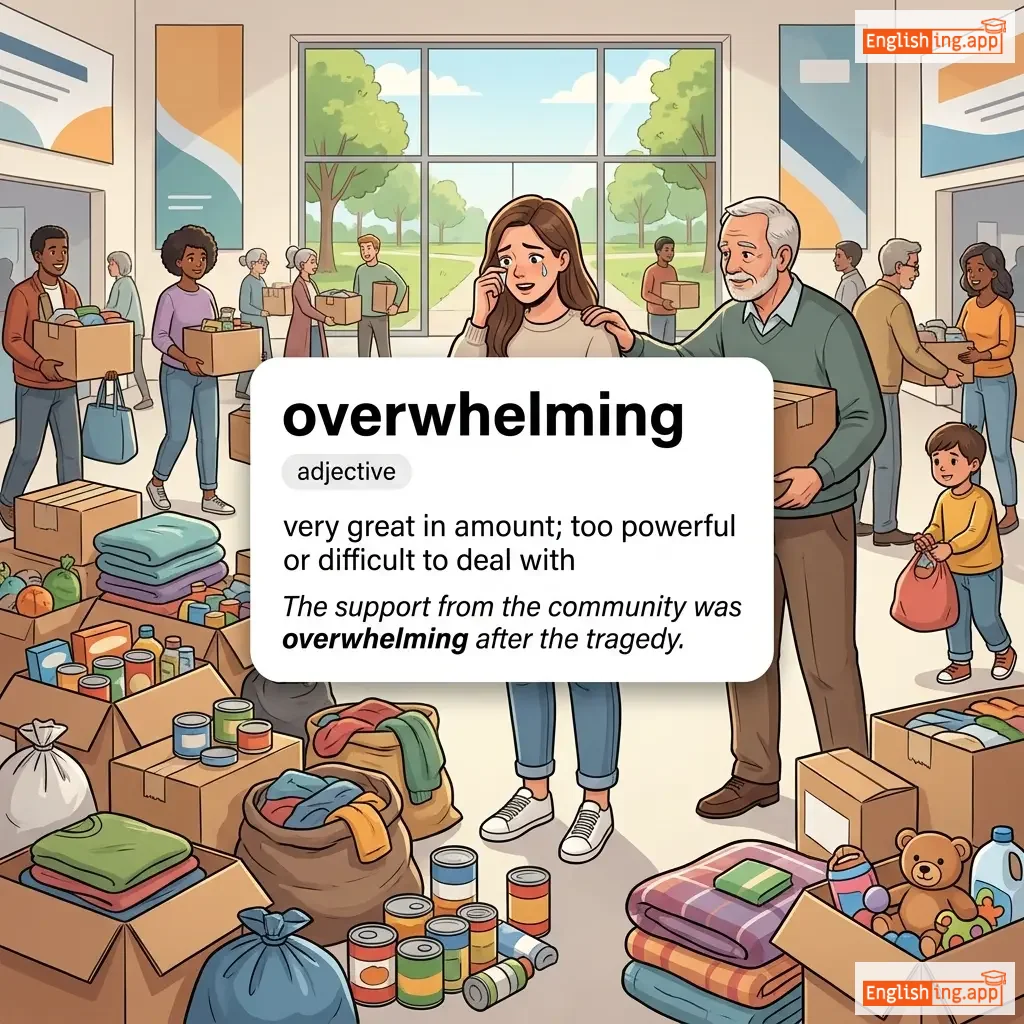
overwhelming definition card — visual illustration of the meaning
adjective
/ˌəʊvəˈwelmɪŋ/

very great in amount; too powerful or difficult to deal with

"The support from the community was overwhelming after the tragedy."

verb
/ˌoʊvərˈwɛlm/

to overpower someone emotionally or physically; to be too much to handle

"She was overwhelmed with gratitude after receiving the help."

adjective
/ˌoʊvərˈweɪt/

heavier than is considered healthy or normal

"The doctor advised him to lose weight as he was overweight."

adjective
/ˌoʊvərˈwiːnɪŋ/

excessively arrogant or prideful

"His overweening pride cost him many friends."

verb
/ˌoʊvərˈtɜrn/

to turn something upside down or to reverse a decision or judgment

"The court decided to overturn the previous ruling."

noun
/ˈoʊvərˌtʊr/

An introduction to something more substantial; a proposal or preliminary action.

"The peace overture was welcomed by both nations."

noun
/ˈoʊvərˌtoʊn/

A subtle quality, implication, or additional meaning beyond the obvious.

"His speech had political overtones that were hard to ignore."

verb
/ˌoʊvərˈθroʊ/

To remove a leader or government from power, often by force.

"The rebels planned to overthrow the corrupt regime."

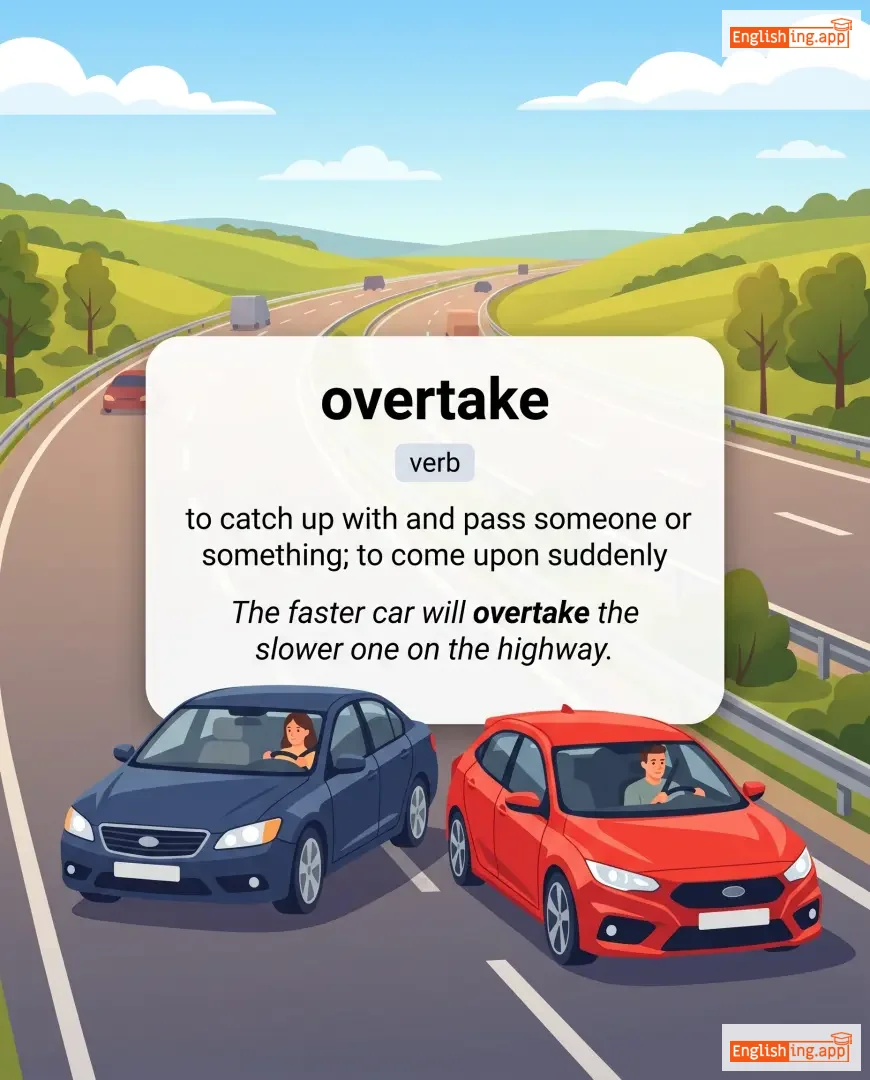
overtake definition card — visual illustration of the meaning
verb
/ˌoʊvərˈteɪk/

to catch up with and pass someone or something; to come upon suddenly

"The faster car will overtake the slower one on the highway."

🔎

overt

adjective
/oʊˈvɜːrt/

Done or shown openly; not hidden or secret.

"There was an overt display of hostility between the rivals."

verb
/ˌoʊvərˈstraɪd/

To stride over something; to step across with long steps.

"He managed to overstride the narrow stream with ease."

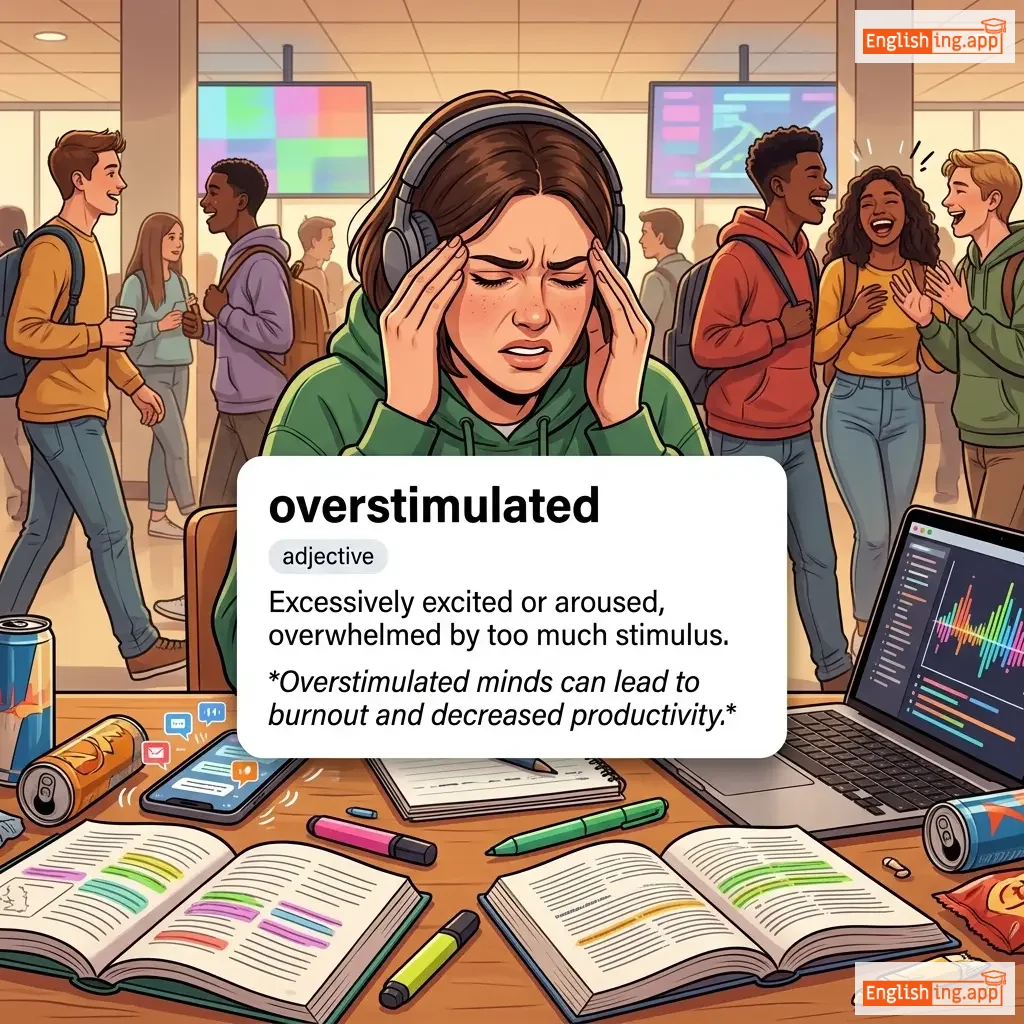
overstimulated definition card — visual illustration of the meaning
adjective
/ˌəʊvərˈstɪmjʊˌleɪtɪd/

Excessively excited or aroused, overwhelmed by too much stimulus.

"Overstimulated minds can lead to burnout and decreased productivity."

verb
/ˌoʊvərˈʃædoʊ/

to appear more important or significant than something else, reducing its impact

"The scandal overshadowed his achievements."

🧑‍💼

overseer

noun
/ˈoʊvərˌsiːər/

a person who supervises work or workers; a manager

"The overseer made sure the workers followed safety rules."

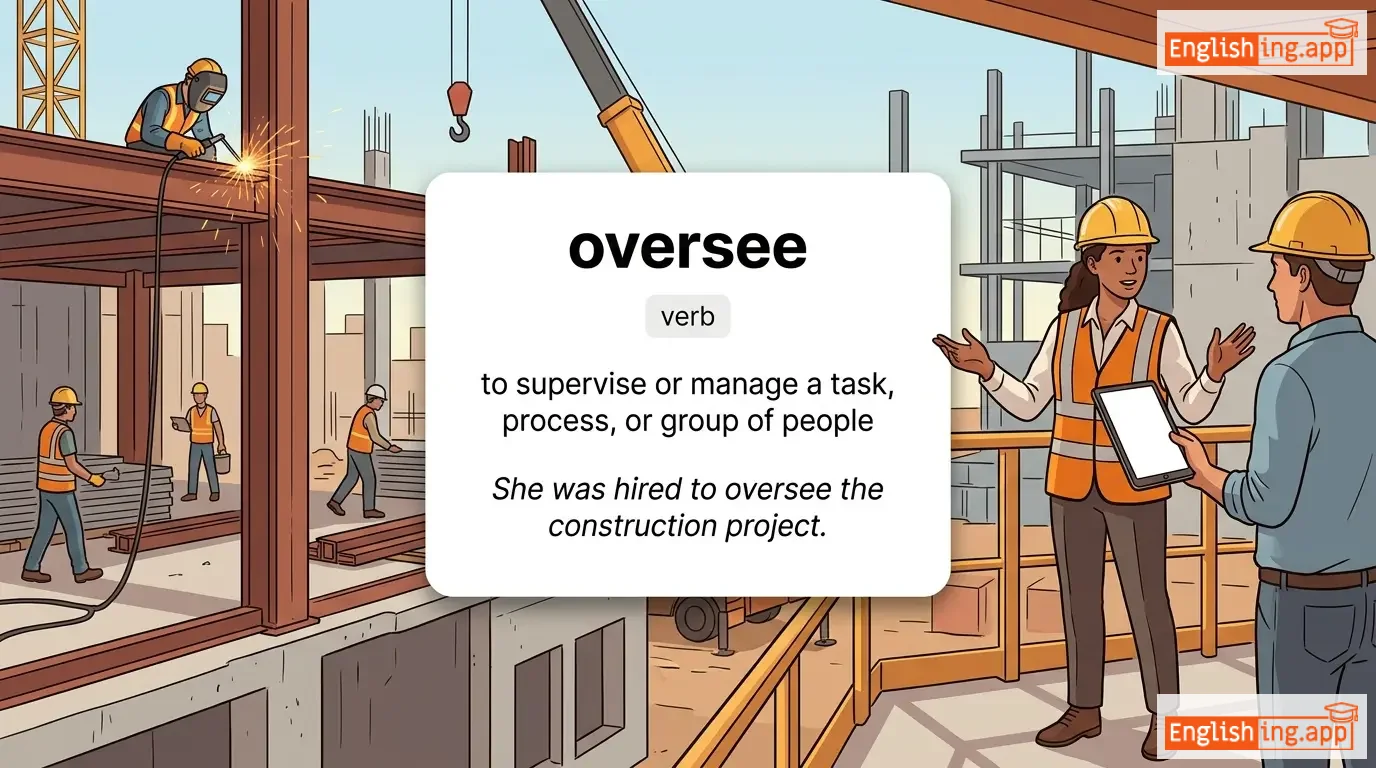
oversee definition card — visual illustration of the meaning
verb
/ˌoʊvərˈsiː/

to supervise or manage a task, process, or group of people

"She was hired to oversee the construction project."

adjective
/ˌoʊvərˈsiːz/

in or to a foreign country across the sea

"He went overseas for higher education."

verb
/ˌoʊvərˈrʌn/

to spread over or occupy completely; to exceed a limit or time

"The garden was overrun with weeds."

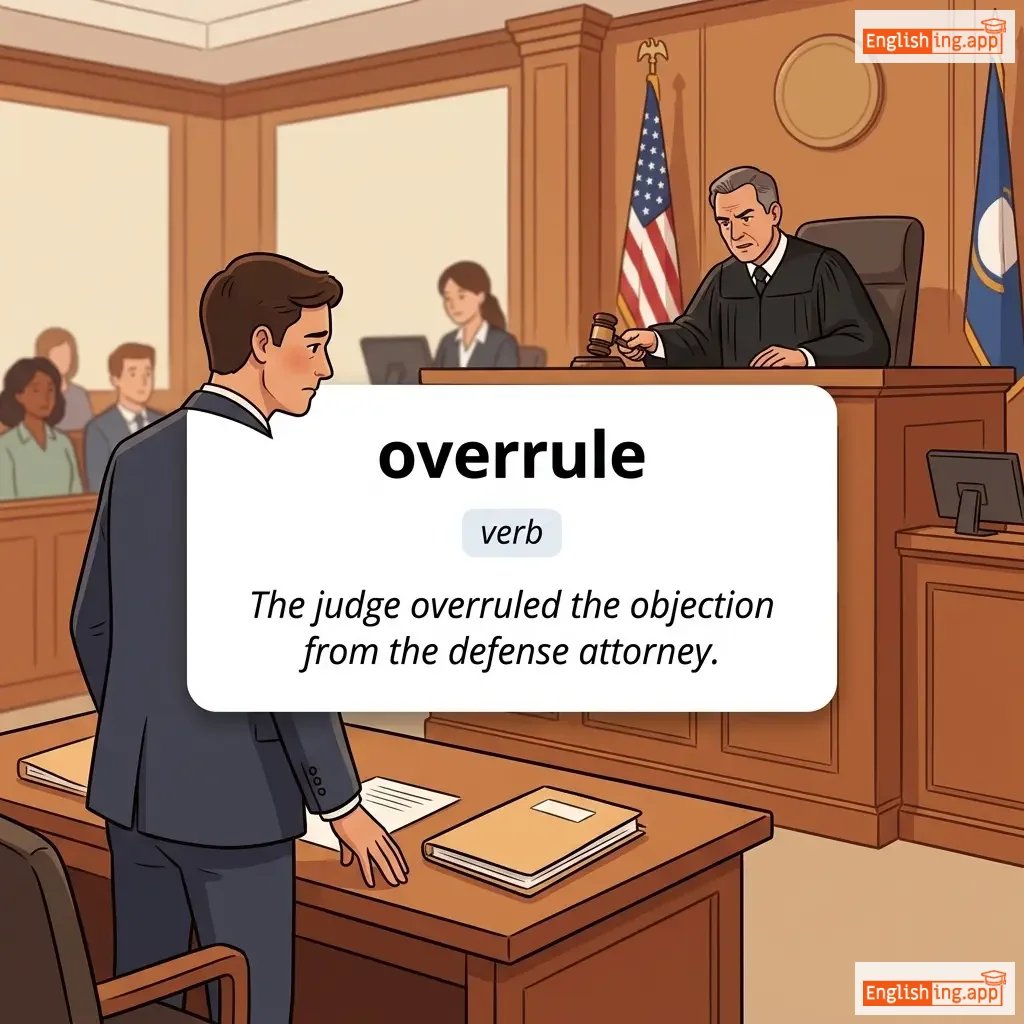
overrule definition card — visual illustration of the meaning
⚖️

overrule

verb
/ˌoʊvərˈruːl/

to reject or disallow by exercising one's superior authority; to override a decision

"The judge overruled the objection from the defense attorney."

verb
/ˌoʊvərˈriːtʃ/

to go beyond what is proper, acceptable, or achievable; to overextend

"The politician overreached by making promises he couldn't keep."

noun
/ˌoʊvərprəˈdʌkʃən/

The act of producing more of something than is needed or can be consumed.

"The economic crisis was caused by the overproduction of goods."

verb
/ˌoʊvərˈpaʊər/

To defeat or gain control over someone or something by using greater strength or force.

"The soldiers managed to overpower the enemy forces."

verb
/ˌoʊvərˈpeɪ/

To pay more than is necessary or reasonable.

"She realized she had overpaid for the concert tickets."

noun
/ˈoʊvərpæs/

A bridge that carries one road or railway over another.

"The new overpass reduced traffic congestion in the city."

adverb, adjective
/ˌəʊvəˈnaɪt/

for or during the night; suddenly or in a very short time

"Her small business became famous overnight after a viral video."

noun, verb
/ˈaʊtlaɪn/

a general description or plan that gives the main ideas without details; to describe something briefly or highlight main points

"The teacher asked us to outline our research project before writing the report."

adverb; noun
/ˌaʊtˈdɔːrz/

outside a building; the natural environment outside

"We spent the whole afternoon outdoors enjoying the fresh air."

🪐

outer

adjective
/ˈaʊtər/

situated on or toward the outside; external

"The outer layer of the jacket is waterproof."

noun
/ˈaʊtˌfɪt/

A set of clothes worn together, often for a particular occasion.

"She wore a beautiful outfit to the party."

adjective
/ˈaʊtˌɡoʊɪŋ/

Friendly and sociable; inclined to mix with others.

"He is an outgoing person who loves meeting new people."

noun
/ˈaʊtˌɡroʊθ/

something that grows out of something else; a natural development or result

"The new policy was an outgrowth of years of debate."

🏖️

outing

noun
/ˈaʊtɪŋ/

a short trip or excursion, often for leisure or enjoyment

"They had a lovely outing at the beach last weekend."

adjective
/ˌaʊtˈlændɪʃ/

Looking or sounding bizarre or unfamiliar; strange.

"He wore an outlandish costume to the festival."

verb
/aʊtˈlæst/

to continue longer than; to endure beyond someone or something else

"The old castle has outlasted many generations."

noun, verb
/ˈaʊtlɔː/

as a noun: a person who breaks the law and lives outside its protection; as a verb: to make something illegal

"The government decided to outlaw the harmful practice."

noun
/ˈaʊtlet/

a means by which something is released, expressed, or distributed

"Art is a great outlet for emotions."

adjective
/aʊtˈreɪdʒəs/

Shockingly bad or excessive; very unusual or amusing.

"The comedian told an outrageous joke."

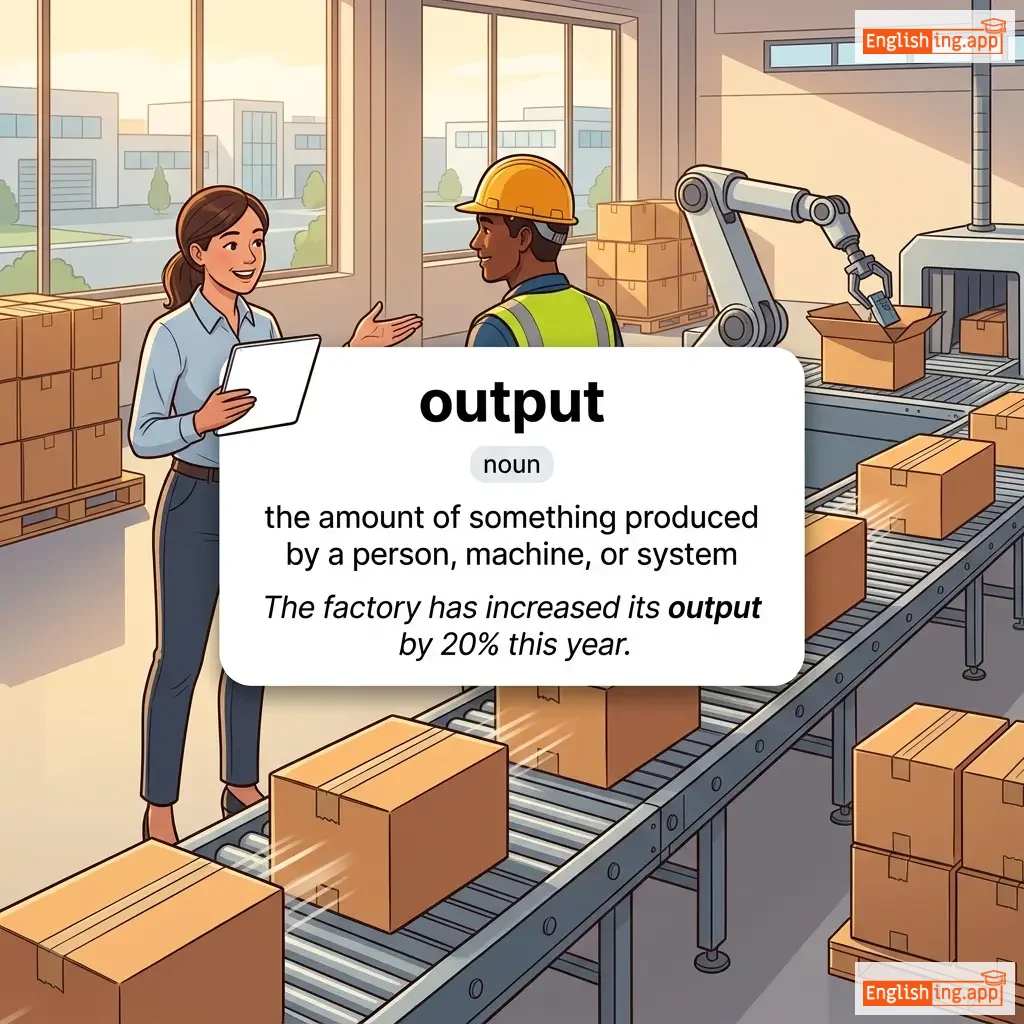
output definition card — visual illustration of the meaning
noun
/ˈaʊtpʊt/

the amount of something produced by a person, machine, or system

"The factory has increased its output by 20% this year."

noun/verb
/ˈaʊtreɪdʒ/

A strong feeling of anger and shock; to arouse anger or shock.

"The unfair decision caused public outrage."