Словари

Словарь английского языка | Значения слов, определения и примеры

noun C2
/ˈhen.ə/
хна (khna)

a reddish-brown dye made from the powdered leaves of a tropical shrub, used to color hair and decorate skin

"The bride's hands were beautifully decorated with intricate henna patterns for her wedding ceremony."

"Руки невесты были красиво украшены сложными узорами хны для ее свадебной церемонии." (Ruki nevesty byli krasivo ukrasheny slozhnymi uzorami khny dlya yeye svadebnoy tseremonii.)
verb C2
/ˈhɛnˌpɛk/

To continually criticize, nag, or dominate (especially a husband).

"He felt henpecked by his overly controlling wife."

noun C2
/ˈhɛptəˌɡɒn/
гептагон (geptagon)

A polygon with seven sides and seven angles.

"The math teacher drew a heptagon on the board."

"Учитель математики нарисовал гептагон на доске." (Uchitel' matematiki narisoval geptagon na doske.)
noun C2
/ˈhɛptɑːrki/
гептархия (geptarkhiya)

A group of seven rulers or governments, especially the seven Anglo-Saxon kingdoms in early England.

"The history book described the heptarchy of Anglo-Saxon England."

"Историческая книга описывала гептархию англосаксонской Англии." (Istoricheskaya kniga opisivala geptarkhiyu anglosaksonskoy Anglii.)
adjective C2
/hɜːrˈbeɪʃəs/
травянистый (travyanistyy)

Relating to or resembling herbs; plants with soft, non-woody stems.

"The garden was filled with herbaceous plants that thrived in the summer."

"Сад был заполнен травянистыми растениями, которые процветали летом." (Sad byl zapolnen travyanistymi rasteniyami, kotorye protsvetali letom.)
noun C2
/hɜːrˈbɛəriəm/
гербарий (gerbariy)

A collection of preserved plant specimens and associated data used for scientific study.

"The university maintains a large herbarium for research and education."

"Университет поддерживает большое гербарий для исследований и образования." (Universitet podderzhivayet bol'shoye gerbariy dlya issledovaniy i obrazovaniya.)
adjective C2
/ˌhɜːrkjʊˈliːən/
очень трудный (ochen' trudnyy)

Requiring great strength or effort; very difficult to perform.

"It was a herculean task to rebuild the city after the disaster."

"Это была очень трудная задача — восстановить город после катастрофы." (Eto byla ochen' trudnaya zadacha — vosstanovit' gorod posle katastrofy.)
adjective C2
/həˈrɛtɪkəl/
еретический (yereticheskiy)

Relating to or characterized by departure from accepted beliefs or standards, especially in religion.

"The priest condemned the book as heretical."

"Священник осудил книгу как еретическую." (Svyashchennik osudil knigu kak yereticheskuyu.)
hermetic definition card — visual illustration of the meaning
adjective C2
/hərˈmɛtɪk/
герметичный (germetichny)

Completely sealed, especially so that no air can enter or escape.

"The medicine was kept in a hermetic container."

"Лекарство хранилось в герметичном контейнере." (Lekarstvo khranilos' v germetichnom konteynerе.)
adverb C2
/hərˈmɛtɪkli/
герметично (germetichno)

In a way that is completely airtight or sealed off.

"The jars were hermetically sealed to preserve freshness."

"Банки были герметично закрыты, чтобы сохранить свежесть." (Banki byli germetichno zakryty, chtoby sokhranit' svezhest'.)
noun C2
/ˈhɜːrmɪtɪdʒ/
пустынь (pustyn)

A secluded residence or retreat, often for a hermit or religious recluse.

"The monk spent years in a hermitage deep in the forest."

"Монах провёл годы в пустыне в глубине леса." (Monakh provyol gody v pustyni v glubine lesa.)
noun C2
/ˌhɜːrpəˈtɒlədʒɪst/
герпетолог (gerpetolog)

A scientist who studies reptiles and amphibians.

"The herpetologist discovered a new species of frog in the rainforest."
"Герпетолог открыл новый вид лягушки в тропическом лесу." (Gerpetolog otkryl novyy vid lyagushki v tropicheskom lesu.)
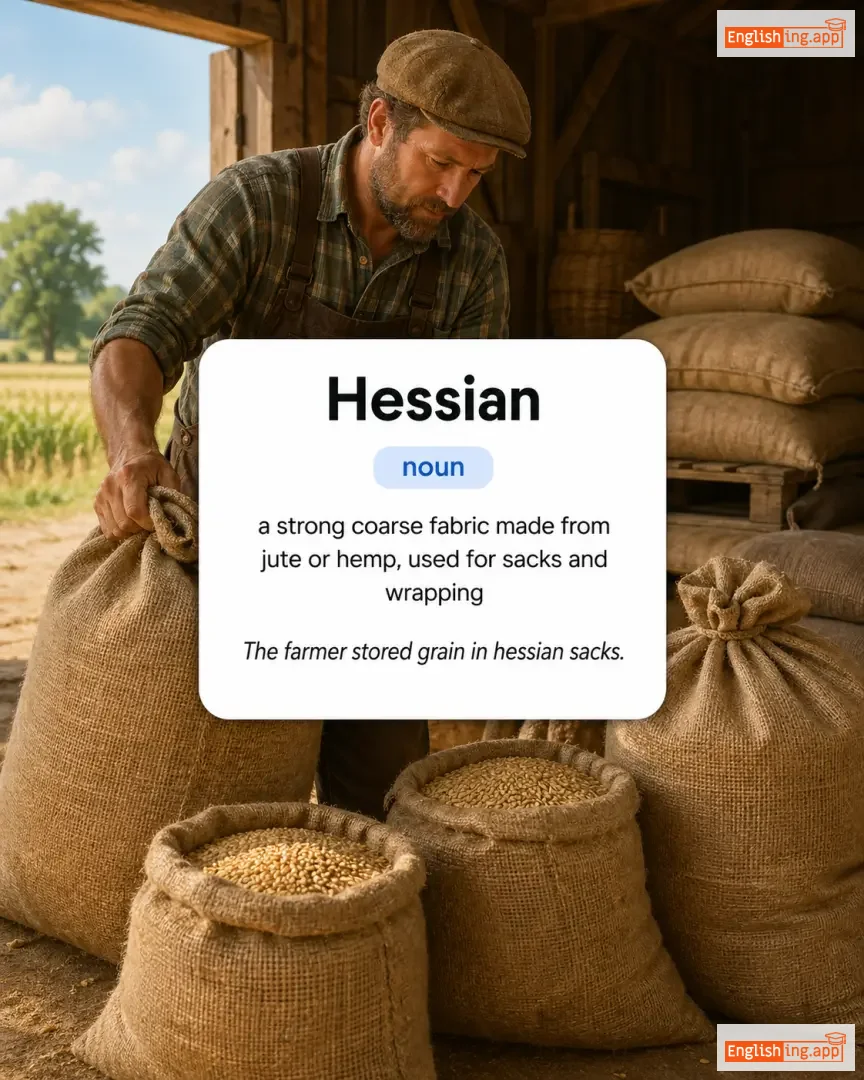
Hessian definition card — visual illustration of the meaning
noun C2
/ˈhɛʃ.ən/
ткань из джута (tkan' iz djuta)

a strong coarse fabric made from jute or hemp, used for sacks and wrapping

"The farmer stored grain in hessian sacks."

"Фермер хранил зерно в мешках из джутовой ткани." (Fermyer khranyl zerno v meshkakh iz djutovoy tkani.)
heterodox definition card — visual illustration of the meaning
adjective C2
/ˈhɛtərəˌdɒks/
гетеродоксальный (heterodoksalnyy)

not conforming with accepted or orthodox standards or beliefs

"The professor was known for his heterodox views on religion."

"Профессор был известен своими гетеродоксальными взглядами на религию." (Professor byl izvesten svoimi heterodoksal'nymi vzglyadami na religiyu.)
noun C2
/ˌhɛtərəʤəˈniːɪti/
гетерогенность (heterogennost)

the quality or state of being diverse in character or content

"The cultural heterogeneity of the city makes it vibrant and unique."

"Культурная гетерогенность города делает его ярким и уникальным." (Kul'turnaya heterogennost' goroda delayet ego yarkim i unikall'nym.)
adjective C2
/ˌhɛtərəʊˈmɔːrfɪk/
гетероморфный (geteromorfny)

Having different forms or shapes, especially in the same species or organism.

"Butterflies are heteromorphic during their life cycle, changing forms from larva to adult."

"Бабочки являются гетероморфными в течение их жизненного цикла, меняя форму от личинки до взрослой особи." (Babochki yavlyayutsya geteromorfnymi v techeniye ikh zhiznennogo tsikla, menyaya formu ot lichinki do vzrosloy osobi.)
heuristic definition card — visual illustration of the meaning
adjective C2
hjʊəˈrɪs.tɪk
эвристический (evristicheskiy)

Enabling a person to discover or learn something for themselves; using practical experience rather than theory.

"The scientist used a heuristic approach to solve the problem."

"Учёный использовал эвристический подход для решения проблемы." (Uchyoniy ispol'zoval evristicheskiy podkhod dlya resheniya problemy.)
verb C2
/hjuː/
резать (rezat)

To chop or cut something, especially wood or stone, with a tool.

"The workers hewed logs to build the cabin."

"Рабочие резали бревна, чтобы построить хижину." (Rabochie rezali brevna, chtoby postroit' khizhinu.)
adjective C2
/hɛkˈsæŋɡjələr/
шестигранный (shestigrannyy)

Having six angles or corners.

"The artist designed a hexangular frame for the mirror."

"Художник создал шестигранную раму для зеркала." (Khodozhnik sozdal shestigrannuyu ramu dlya zerkala.)
noun C2
/ˈhɛksəˌpɒd/
гексапод (geksapod)

An insect or other organism with six legs.

"The scientist observed a hexapod crawling on the leaf."

"Учёный наблюдал за гексаподом, ползущим по листу." (Uchonyy nablyudal za geksapodom, polzyushchim po listu.)
noun C2
/ˈheɪ.deɪ/
золотой век; расцвет; пик (zolotoy vek; rastsvet; pik)

the period of a person's or thing's greatest success, popularity, or vigor; prime time

"During her heyday as a singer, she performed in sold-out concerts around the world."

"Во время своего золотого века как певица она выступала на распроданных концертах по всему миру." (Vo vremya svoego zolotogo veka kak pevitsa ona vystupala na rasprodannykh kontsertakh po vsemy miru.)
adjective C2
/haɪˈbɜːrnəl/
зимний (haibernal)

Relating to or occurring in winter.

"The hibernal season is often harsh in the mountains."

"Зимний сезон часто суров в горах." (Zimniy sezon chasto surov v gorakh)
adjective/noun C2
/haɪˈbɜːrniən/
хибернийский (khiberniiskii)

Relating to Ireland or the Irish.

"He enjoyed reading about Hibernian culture and history."

"Ему понравилось читать о хибернийской культуре и истории." (Emu ponravilos' chitat' o khiberniiskoi kul'ture i istorii.)
adjective C2
/hɪk/
деревенщина; мужик (derevenshchina; muzhik)

unsophisticated person from a rural area; country bumpkin

"He had a hick accent from growing up in a small town."

"У него был акцент деревенщины, потому что он вырос в маленьком городе." (U nego byl aktsent derevenshchiny, potomu chto on vyros v malen'kom gorode.)
adjective C2
/ˈhaɪd.baʊnd/
закостенелый (zakosteneliy)

unwilling or unable to change because of tradition or convention

"He is too hidebound to accept new ideas."

"Он слишком консервативен, чтобы принять новые идеи." (On slishkom konservativen chtoby prinyat novye idei)
verb C2
/haɪ/
поспешить (pospeshit)

to go quickly; hasten

"He hied to the station to catch the train."

"Он поспешил на станцию, чтобы успеть на поезд." (On pospeshil na stantsiyu, chtoby uspety na poezd.)
noun C2
/ˈhaɪərəˌɡlɪf/
иероглиф (ieroglif)

A picture or symbol used in ancient writing systems, especially Egyptian writing.

"The walls of the temple were covered in hieroglyphs."

"Стены храма были покрыты иероглифами." (Steny khrama byli pokryty ieroglifami.)
adjective/noun C2
/ˌhaɪərəˈɡlɪfɪk/
иеоглифический (hieroglificheskiy)

Relating to or written in hieroglyphs; symbols or writing that is difficult to understand.

"The archaeologists studied the hieroglyphic inscriptions carefully."

"Археологи тщательно изучали иероглифические надписи." (Archeologi tchatel'no izuchali ieroglificheskie nadpisi.)
adjective C2
/ˌhaɪ ˈfloʊn/
напыщенный (napyshchennyi)

Using fancy or pretentious language; lofty in style but often overblown.

"The politician gave a high-flown speech full of promises."

"Политик произнес напыщенную речь, полную обещаний." (Politik proznes napyshchennuyu rech', polnuyu obeshchanii.)
adjective C2
/ˈhaɪˌbraʊ/
интеллектуально превосходящий (intellektual'no prevoshodyashchiy)

intellectually superior or cultured; often describing art, literature, or activities appealing to intellectual tastes

"The museum is known for its highbrow exhibitions."

"Музей известен своими интеллектуальными выставками." (Muzey izvesten svoimi intellektual'nymi vystavkami.)
noun C2
/hɪˈlærɪti/
хихиканье (khikhikanye)

Extreme amusement, especially when expressed by laughter.

"The movie caused great hilarity among the audience."

"Фильм вызвал большое хихиканье среди зрителей." (Film vyzval bol'shoe khikhikanye sredi zriteley.)
noun C2
/ˈhɪlək/
холмик (holmik)

A small hill or mound.

"The children climbed up the grassy hillock to watch the sunset."
"Дети поднялись на травяной холмик, чтобы посмотреть на закат." (Deti podnyalis' na travyanoy kholmik, chtoby posmotret' na zakat.)
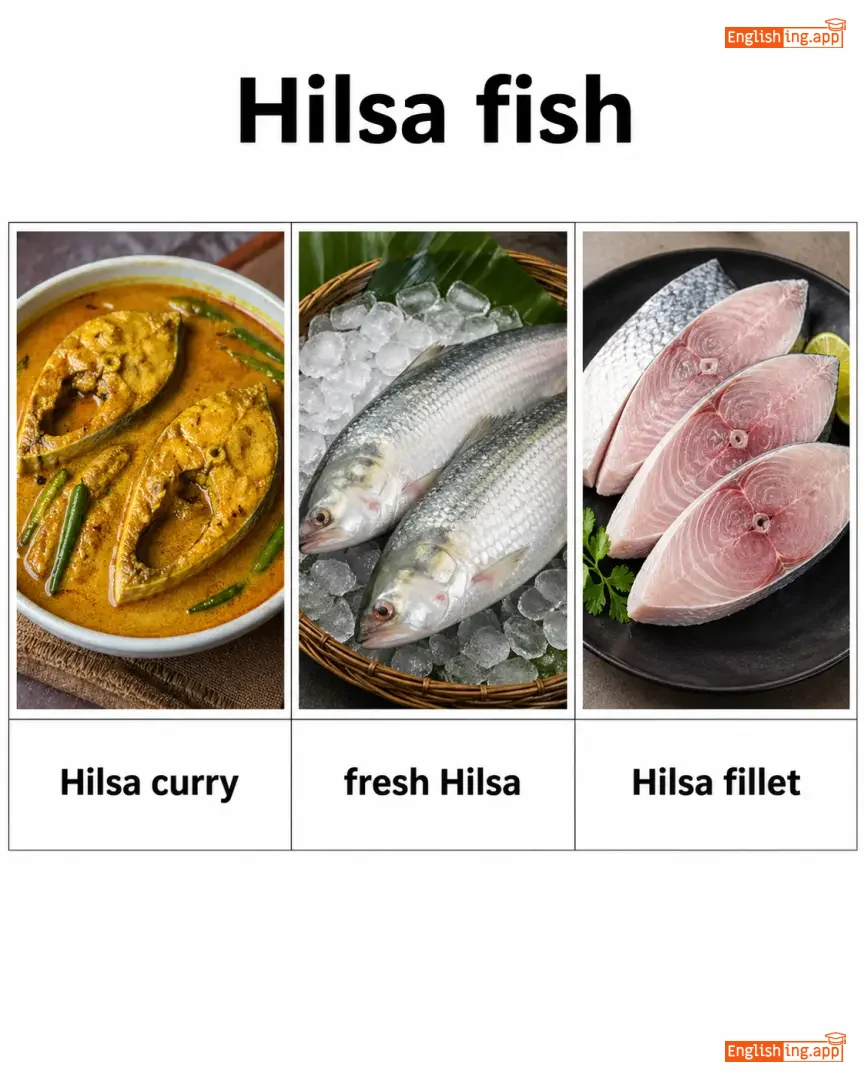
Hilsa fish definition card — visual illustration of the meaning
noun C2
/ˈhɪl.sə fɪʃ/
рыба хильса (ryba khil'sa)

a popular fish species found in South Asian rivers, especially prized in Bengali cuisine

"Hilsa fish is considered a delicacy in Bengali culture."
"Рыба хильса считается деликатесом в бенгальской культуре." (Ryba khil'sa schitayetsya delikatesom v bengalskoy kulture.)
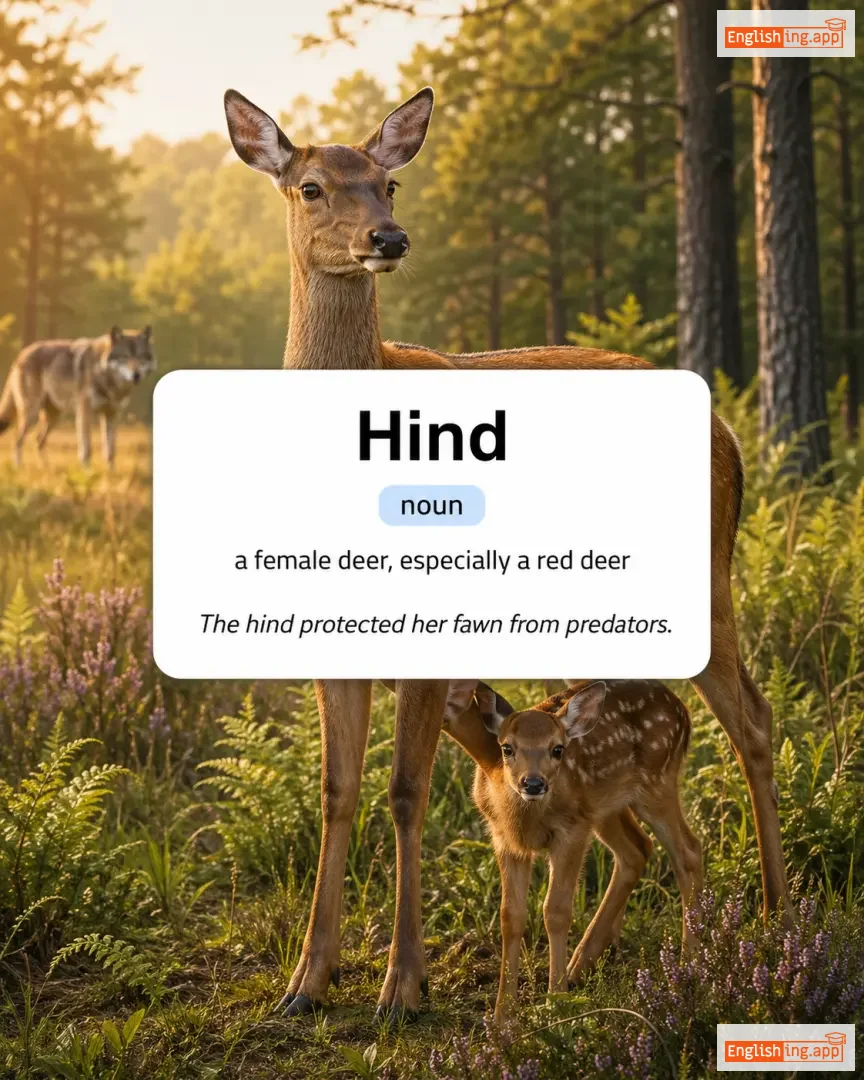
Hind definition card — visual illustration of the meaning
🦌♀️

Hind (haind)

noun C2
/haɪnd/
оленица (olenitsa)

a female deer, especially a red deer

"The hind protected her fawn from predators."

"Оленица защитила своего олененка от хищников." (Olenitsa zashchitila svoego olenenka ot khishchnikov.)
adjective C2
/ˈhaɪndmoʊst/
самый задний (samyy zadniy)

Farthest back; last in position.

"The hindmost car in the convoy broke down first."

"Самая задняя машина в колонне сломалась первой." (Samaya zadnyaya mashina v kolonne slomalas' pervoy.)
noun C2
/ˈhaɪərlɪŋ/
наёмник (nayomnik)

A person who works for payment only, often with little loyalty or principle.

"The mercenary was dismissed as just a hireling with no real loyalty."

"Наёмник был уволен как просто hireling без настоящей лояльности." (Naemnik byl uvolen kak prosto hireling bez nastoyashchej loyal'nosti.)
hirsute definition card — visual illustration of the meaning
adjective C2
/ˈhɜːrsuːt/
волосатый (hersyoot)

Having a lot of hair, especially in an unusual place.

"The hirsute man stood out in the crowd with his long beard."
"Волосатый мужчина выделялся в толпе своей длинной бородой." (Volosatyy muzhchina vydelyalsya v tolpe svoey dlinnoy borodoy.)
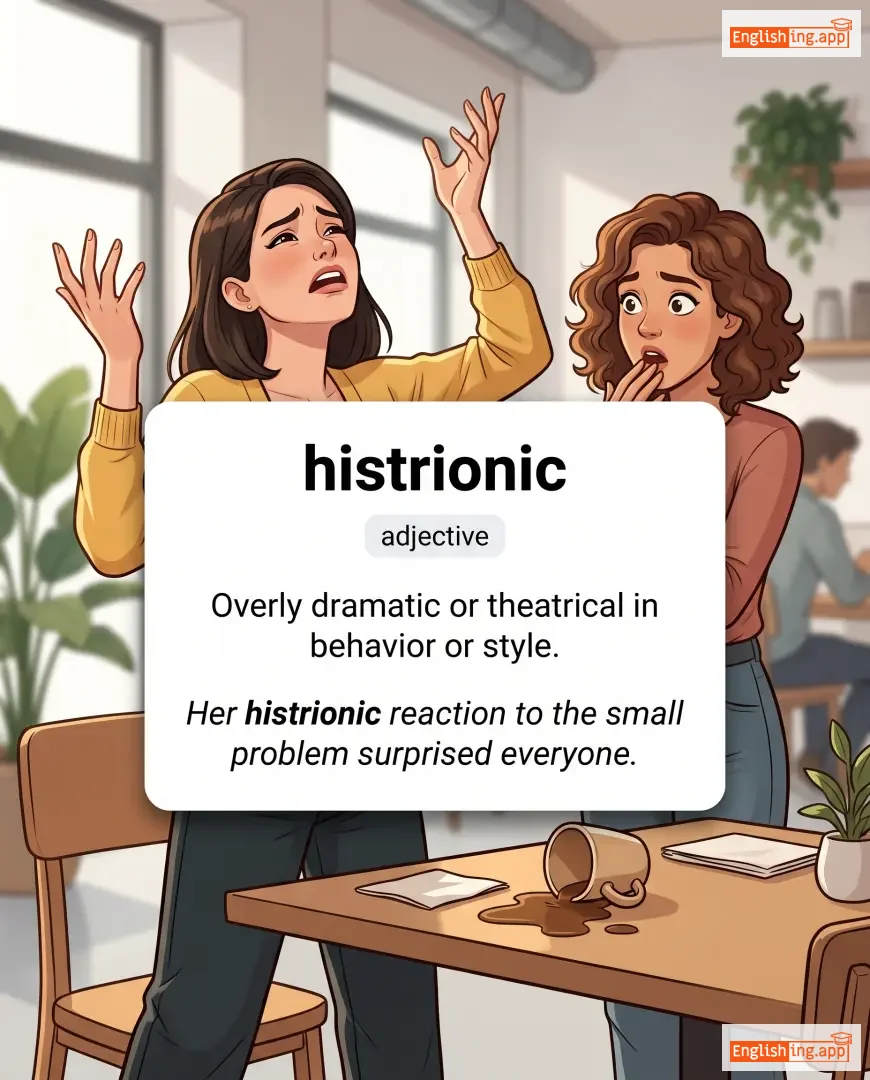
histrionic definition card — visual illustration of the meaning
adjective C2
/ˌhɪstriˈɒnɪk/
черезмерно драматичный (cherezmerno dramatichny)

Overly dramatic or theatrical in behavior or style.

"Her histrionic reaction to the small problem surprised everyone."

"Её истерическая реакция на маленькую проблему удивила всех." (eyo isterićeskaya reakciya na malen'kuyu problemu udivila vsekh.)
adjective C2
/ˈhɔːri/
серый, старый (seryy, staryy)

gray or white with age; very old and respected

"The hoary oak tree stood as a witness to centuries of history."

"Старый дуб стоял как свидетель столетий истории." (Staryy dub stoyal kak svidetel' stoletiy istorii.)
verb C2
/ˈhɑːbəl/
хромать (khromat)

to walk awkwardly with difficulty, usually due to injury

"He hobbled across the room after twisting his ankle."

"Он хромал по комнате после того, как подвернул лодыжку." (On khromal po komnate posle togo, kak podvernul lodyzhku.)
noun C2
/ˈhɒdʒ.pɒdʒ/
беспорядок (besporyadok)

A confusing mixture of different things; a jumble.

"The essay was a hodgepodge of unrelated ideas."

"Эссе было смесью несвязанных идей." (Esse bylo smes'yu nesvyazannykh idey.)
noun C2
/hoʊ/
мотыга (motyga)

a gardening tool with a thin metal blade used for breaking up soil and removing weeds

"The farmer used a hoe to remove weeds from his vegetable garden."

"Фермер использовал мотыгу, чтобы удалить сорняки из своего овощного сада." (Fermer ispol'zoval motygu, chtoby udalit' sornyaki iz svoego ovozhnogo sada.)
noun C2
/hɔːɡ plʌm/
плоды хог (plody khog)

tropical fruit with yellow skin and sour taste

"Hog plums are often used to make pickles and chutneys."

"Плоды хог часто используются для приготовления маринадов и чатни." (Plody khog chasto ispol'zuyutsya dlya prigotovleniya marinadov i chatni.)
noun C2
/ˈhɒɡz.hɛd/
большая бочка (bol'shaya bochka)

A large cask or barrel, traditionally used for storing liquids like wine or beer.

"The cellar was filled with hogsheads of ale."

"Подвал был заполнен большими бочками пива." (Podval byl zapolnen bol'shimi bochkami piva.)
noun C2
/ˈhoʊl.stər/
кобура (kobura)

A holder or case for carrying a gun, typically worn on a belt or shoulder.

"The sheriff kept his revolver in a leather holster."
"Шериф держал свой револьвер в кожаной кобуре." (Sherif derzhal svoi revolver v kozhanoy kobure.)
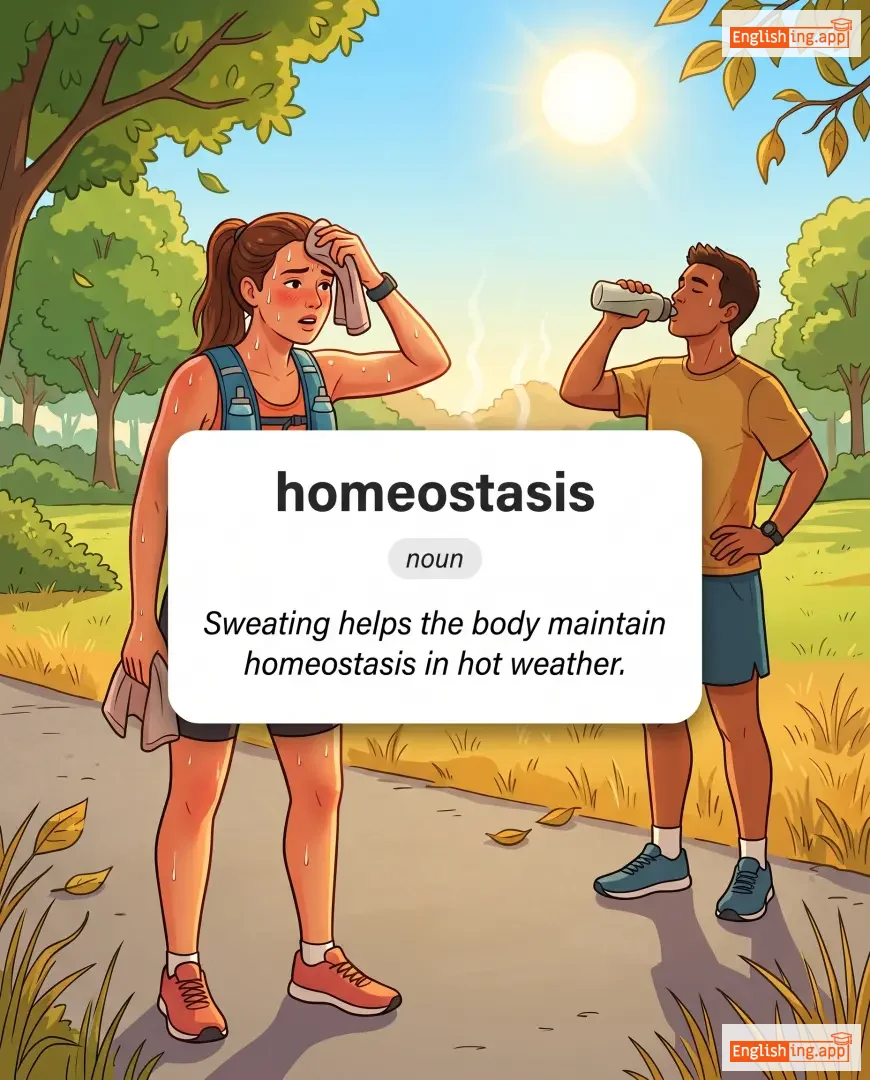
homeostasis definition card — visual illustration of the meaning
noun C2
/ˌhoʊmi.oʊˈsteɪsɪs/
гомеостаз (gomeostaz)

The ability of a living system or organism to maintain internal stability despite changes in external conditions.

"Sweating helps the body maintain homeostasis in hot weather."

"Потоотделение помогает организму поддерживать гомеостаз в жаркую погоду." (Potootdeleniye pomogaet organizmu podderzhivat' gomeostaz v zharkuyu pogodu.)
adjective C2
/ˈhoʊm.spʌn/
домашний (domashniy)

Simple and unsophisticated; made at home rather than in a factory.

"She wore a homespun dress to the village festival."

"Она носила домашнее платье на деревенском фестивале." (Ona nosila domashnee plat'e na derevenskom festivale.)
Homily definition card — visual illustration of the meaning
noun C2
/ˈhɑː.mə.li/
проповедь (propoved)

A religious or moral lecture; a sermon.

"The priest delivered a touching homily on kindness."

"Священник произнес трогательную проповедь о доброте." (Svyashchennik proiznes trogatelnuyu propoved' o dobrote.)
noun C2
/ˌhoʊmə.dʒəˈniːəti/

The quality or state of being all the same or all of the same kind.

"The cultural homogeneity of the village made it feel unified."

verb C2
/həˈmɑː.dʒə.naɪz/
гомогенизировать (gomozenizirovat)

To make uniform or similar by blending or mixing different elements.

"The company tried to homogenize its products across global markets."

"Компания пыталась однородить свои продукты на глобальных рынках." (Kompanija pytalas' odnorodit' svoi produkty na global'nykh rynkakh.)