Словари

Словарь английского языка | Значения слов, определения и примеры

adjective/verb C1
/ˈleɪ.bərd/
吃力 (chīlì)

done with great effort and difficulty; or past tense of labor

"He gave a labored explanation that confused the audience."

"他给出了一个吃力的解释,令观众感到困惑。" (Tā gěi chūle yīgè chīlì de jiěshì, lìng guānzhòng gǎndào kùnhuò.)
adjective C1
/ləˈbɔːr.i.əs/
费力的 (feili de)

requiring considerable effort and time; difficult and hard-working

"Writing the long report was a laborious task."
"写长报告是一项费力的任务。" (Xiě zhǎng bàogào shì yī xiàng fèilì de rènwu.)
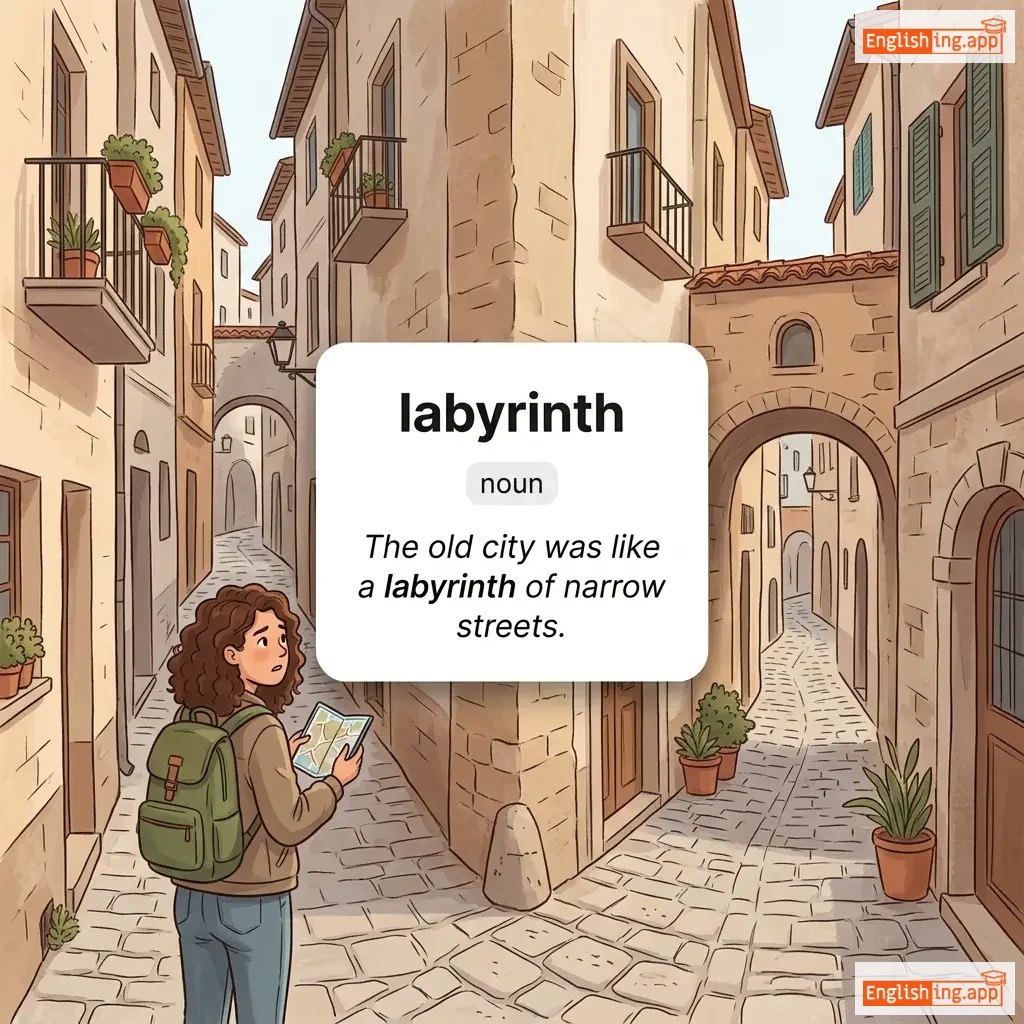
labyrinth definition card — visual illustration of the meaning
noun C1
/ˈlæb.ə.rɪnθ/
迷宫 (mígōng)

a complex, confusing network of paths or passages; something very intricate or confusing

"The old city was like a labyrinth of narrow streets."
"老城就像一个狭窄街道的迷宫。" (Lǎo chéng jiù xiàng yīgè xiázhǎi jiēdào de mígōng.)
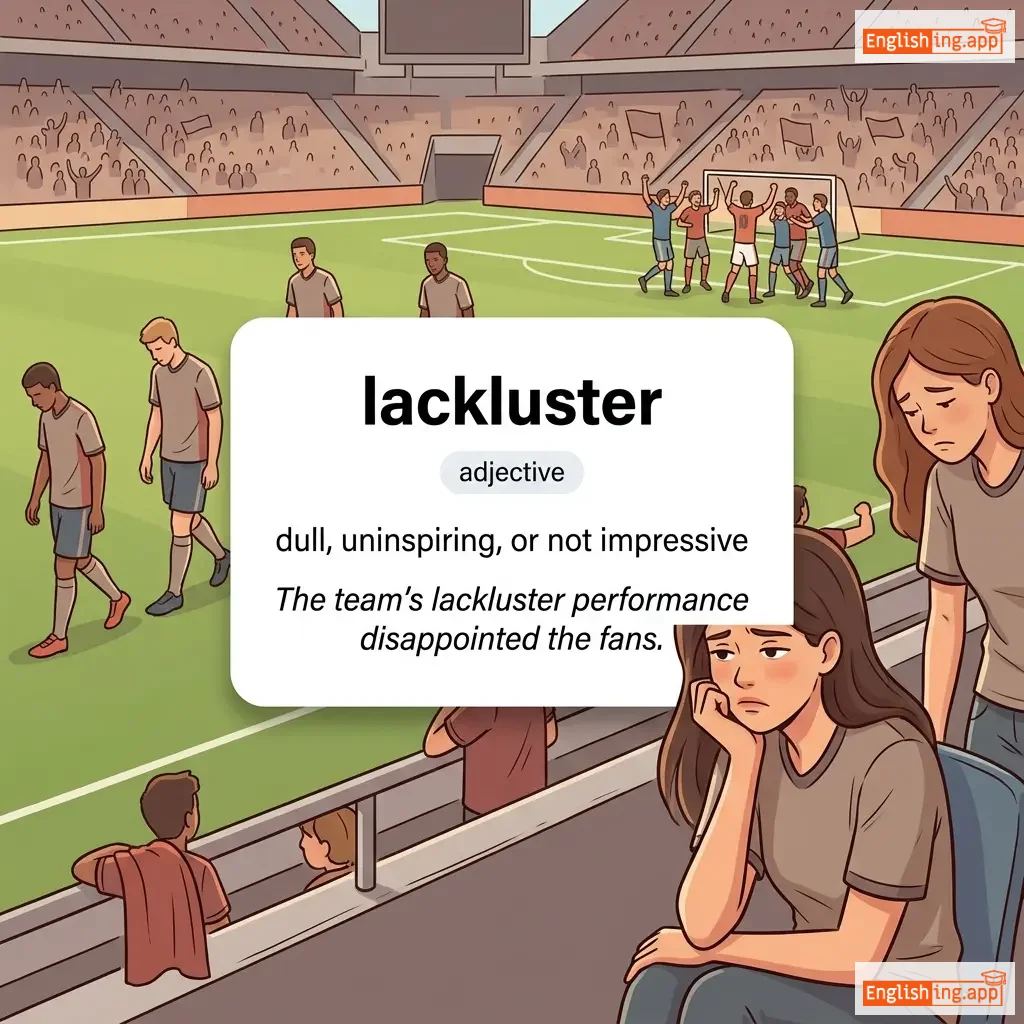
lackluster definition card — visual illustration of the meaning
adjective C1
/ˈlækˌlʌstər/
平淡无奇或缺乏灵感 (píng dàn wú qí huò quē fá líng gǎn)

dull, uninspiring, or not impressive

"The team's lackluster performance disappointed the fans."

"团队平淡无奇的表现让粉丝失望。" (Tuánduì píng dàn wú qí de biǎoxiàn ràng fěnsī shīwàng.)
adjective C1
/ˈlæk.tɪk/
与牛奶或乳酸相关 (yǔ niúnǎi huò rǔsuān xiāngguān)

Relating to milk or lactic acid.

"Intense exercise can lead to a buildup of lactic acid in the muscles."

"剧烈运动可能会导致肌肉中乳酸的积聚。" (Jùliè yùndòng kěnéng huì dǎozhì jīròu zhōng rǔsuān de jījù.)
noun C1
/ˈlæd.i/
小男孩 (xiao nanhai)

A young boy or lad.

"The old man gave the young laddie a kind smile."

"老人给年轻的小男孩一个友好的微笑。" (Laoren gei nianqing de xiao nanhai yi ge youhao de weixiao.)
Ladle definition card — visual illustration of the meaning
noun, verb C1
/ˈleɪ.dl̩/
幸福 (xingfu)

A large spoon for serving soup or liquids; to serve with such a spoon.

"She used a ladle to serve the hot soup into bowls."

"她在收到奖项时,无法隐藏她的幸福。" (Tā zài shōudào jiǎngxiàng shí, wúfǎ yǐncáng tā de xìngfú.)
verb, noun C1
/læɡ/
滞后或延迟 (zhihou huo yanchi)

To fall behind in movement, progress, or development; a delay or period of falling behind.

"The old computer tends to lag when running new software."

"旧电脑在运行新软件时常常滞后。" (Jiu dian nao zai yun xing xin ruan jian shi chang chang zhihou.)
noun C1
/ləˈɡuːn/
湖泊 (hupo)

A shallow body of water separated from the sea by sandbars or reefs.

"We swam in the calm waters of the lagoon."
"我们在湖泊的平静水域游泳。" (Women zai hubo de pingjing shuiyu youyong.)
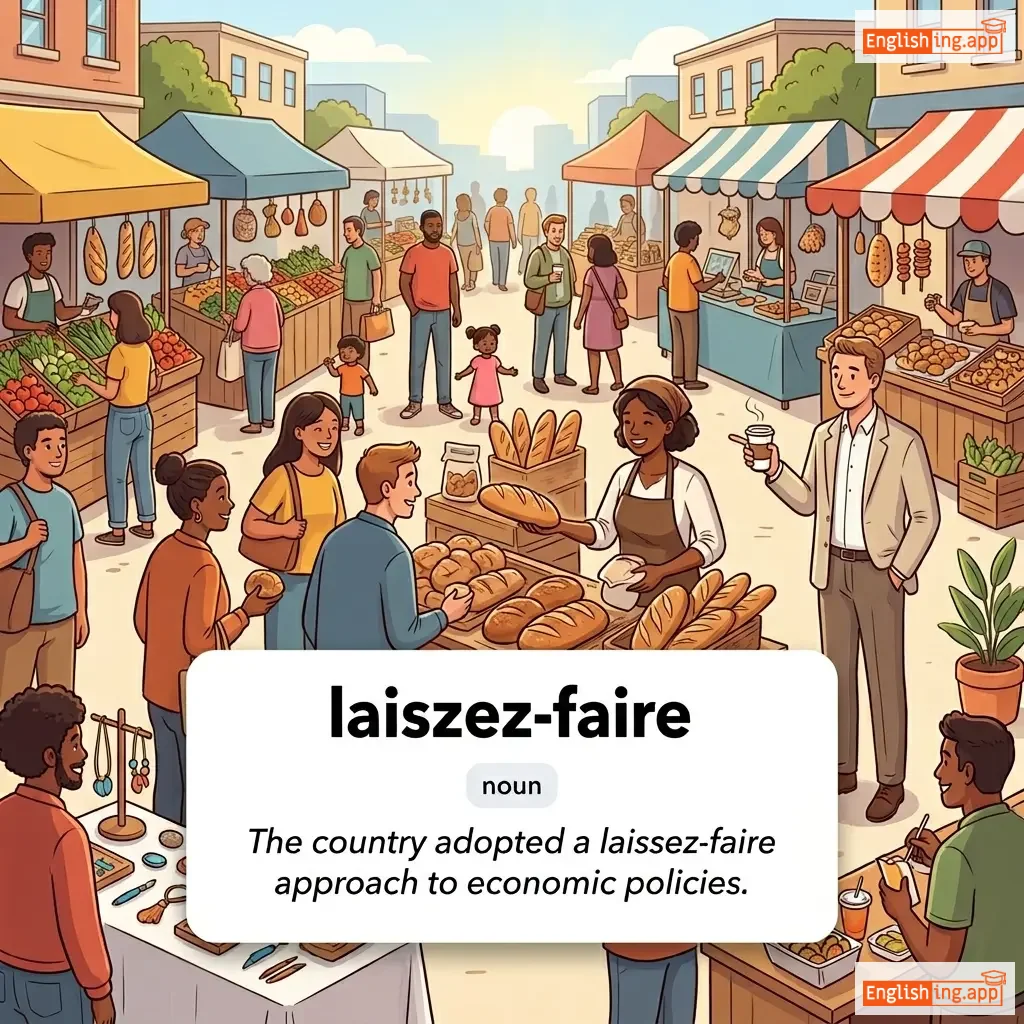
laissez-faire definition card — visual illustration of the meaning
noun C1
/ˌlɛ.seɪˈfɛər/
自由放任政策 (zìyóu fàngrèn zhèngcè)

A free-market policy of minimal government intervention in economic affairs, characterized by non-interventionism and capitalism.

"The country adopted a laissez-faire approach to economic policies."
"该国在经济政策中采取了自由放任的方式。" (Gāi guó zài jīngjì zhèngcè zhōng cǎiqǔle zìyóu fàngrèn de fāngshì.)
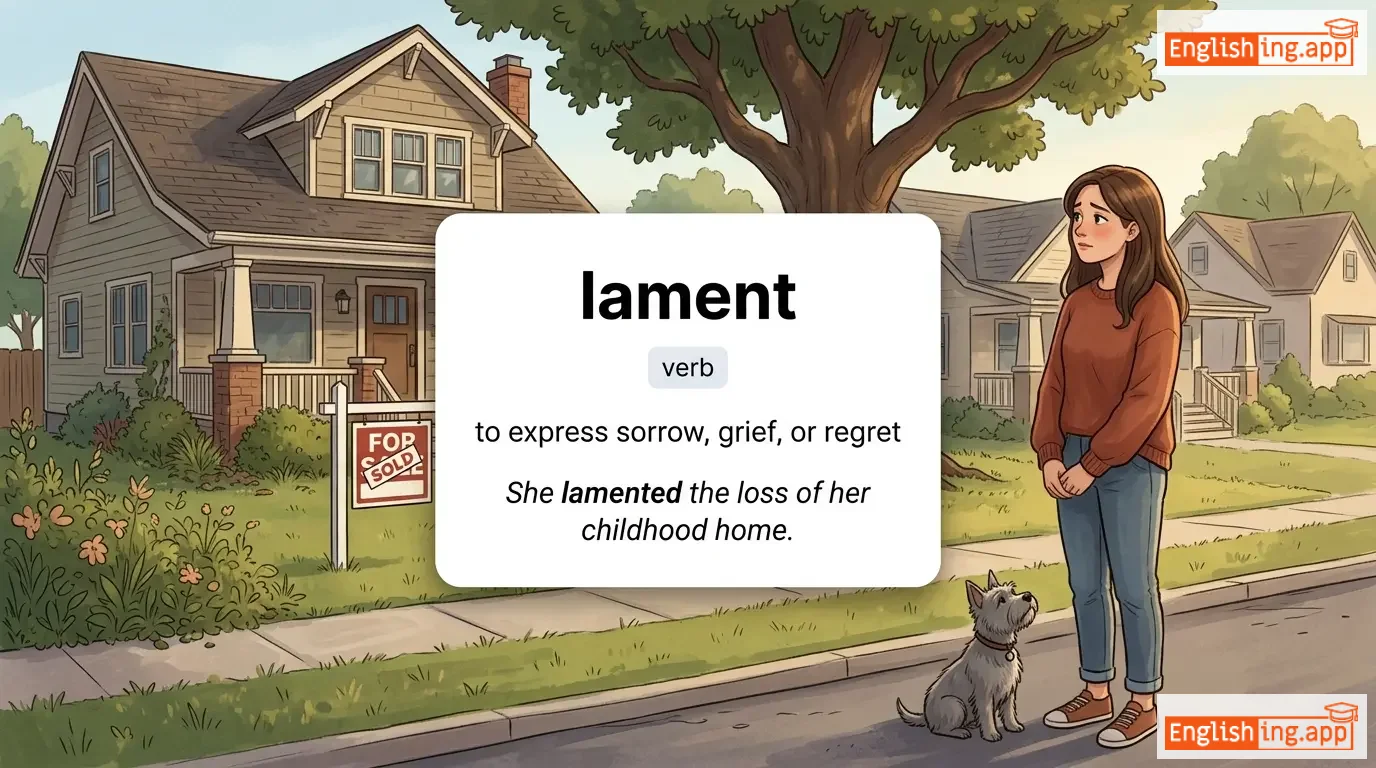
lament definition card — visual illustration of the meaning
verb C1
/ləˈmɛnt/
哀悼 (āidào)

to express sorrow, grief, or regret

"She lamented the loss of her childhood home."

"她哀悼她童年家的失落。" (Tā āidào tā tóngnián jiā de shīluò.)
verb C1
/ˈlæmɪˌneɪt/
覆膜 (fùmó)

to cover or enclose something with a protective layer, usually plastic

"She laminated her important documents to protect them from damage."
"她把重要的文件进行了塑料封面处理,以保护它们免受损坏。" (Tā bǎ zhòngyào de wénjiàn jìnxíngle sùliào fēngmiàn chǔlǐ, yǐ bǎohù tāmen miǎn shòu sǔnhuài.)
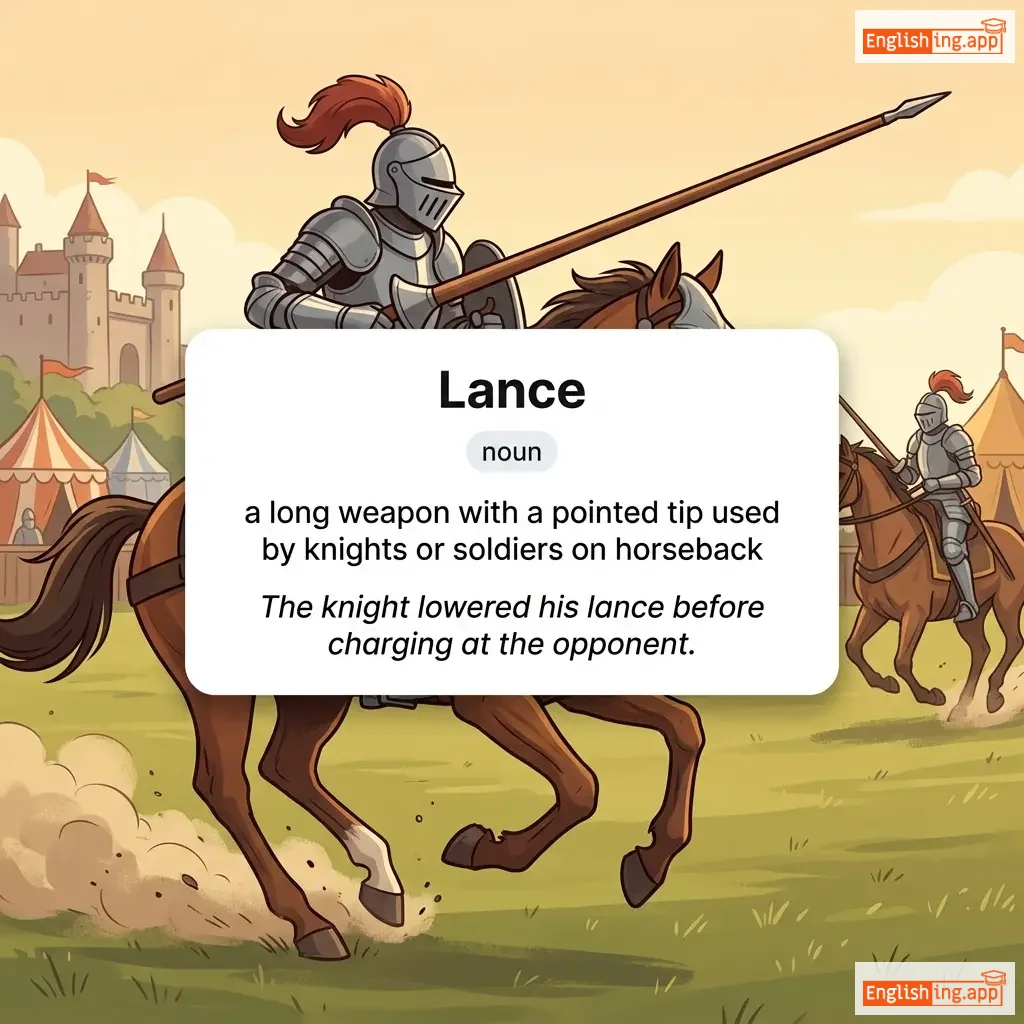
Lance definition card — visual illustration of the meaning
noun C1
/læns/
长矛 (chángmáo)

a long weapon with a pointed tip used by knights or soldiers on horseback

"The knight lowered his lance before charging at the opponent."
"骑士在冲向对手之前低下了长矛。" (qíshì zài chōng xiàng duìshǒu zhīqián dīxiàle chángmáo.)
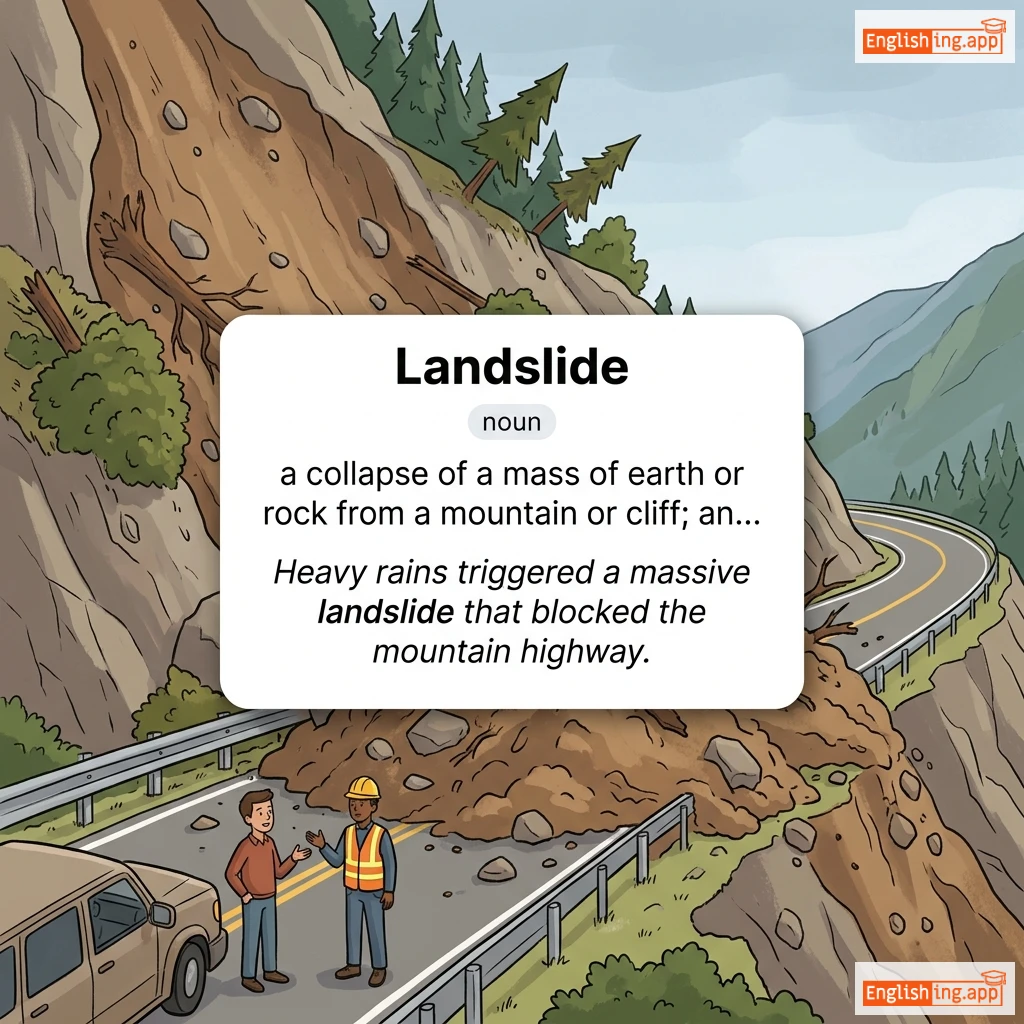
Landslide definition card — visual illustration of the meaning
noun C1
/ˈlænd.slaɪd/
山体滑坡 (shanti huapo)

a collapse of a mass of earth or rock from a mountain or cliff; an overwhelming victory in an election

"Heavy rains triggered a massive landslide that blocked the mountain highway."
"暴雨引发了一场巨大的山体滑坡,堵塞了山路。" (baoyu yinfa le yi chang juda de shanti huapo, dusai le shanlu.)
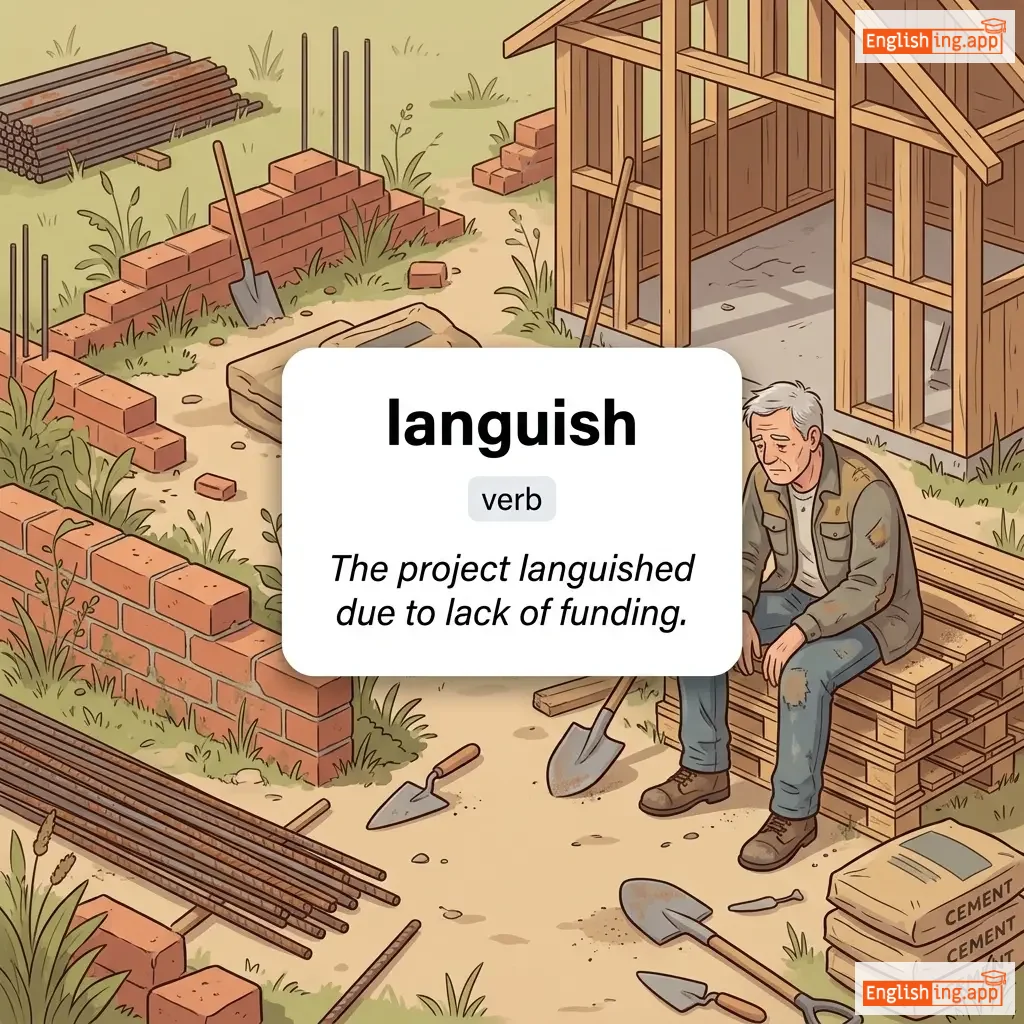
languish definition card — visual illustration of the meaning
verb C1
/ˈlæŋɡwɪʃ/
虚弱 / 被忽视 (xūruò / bèi hūshì)

To become weak or feeble; to suffer neglect or remain in an unpleasant situation for a long time.

"The project languished due to lack of funding."
"该项目因缺乏资金而停滞不前。" (Gāi xiàngmù yīn quēfá zījīn ér tíngzhì bù qián.)
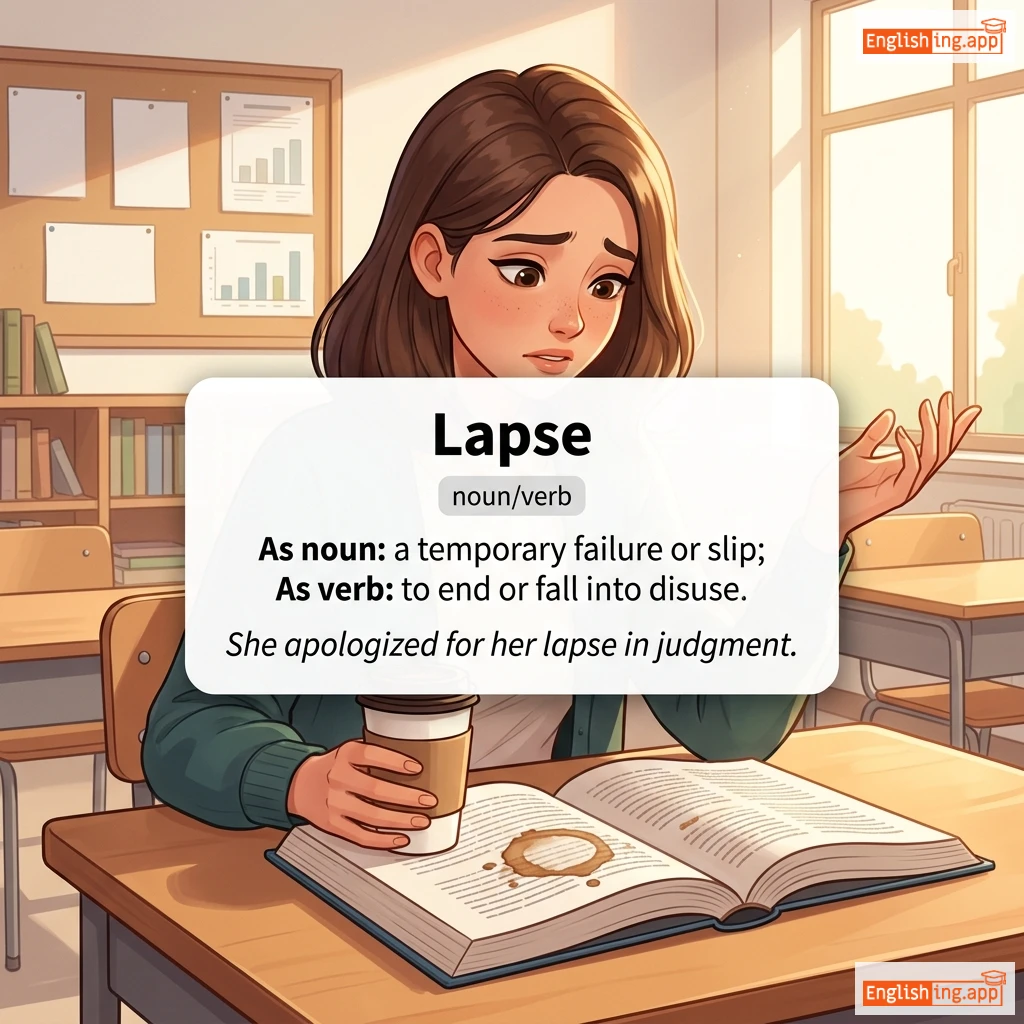
Lapse definition card — visual illustration of the meaning
noun/verb C1
/læps/
失误 (shiwu)

As noun: a temporary failure or slip; As verb: to end or fall into disuse.

"She apologized for her lapse in judgment."
"她为判断失误道歉。" (Ta wei panduan shiwu dao-qian.)
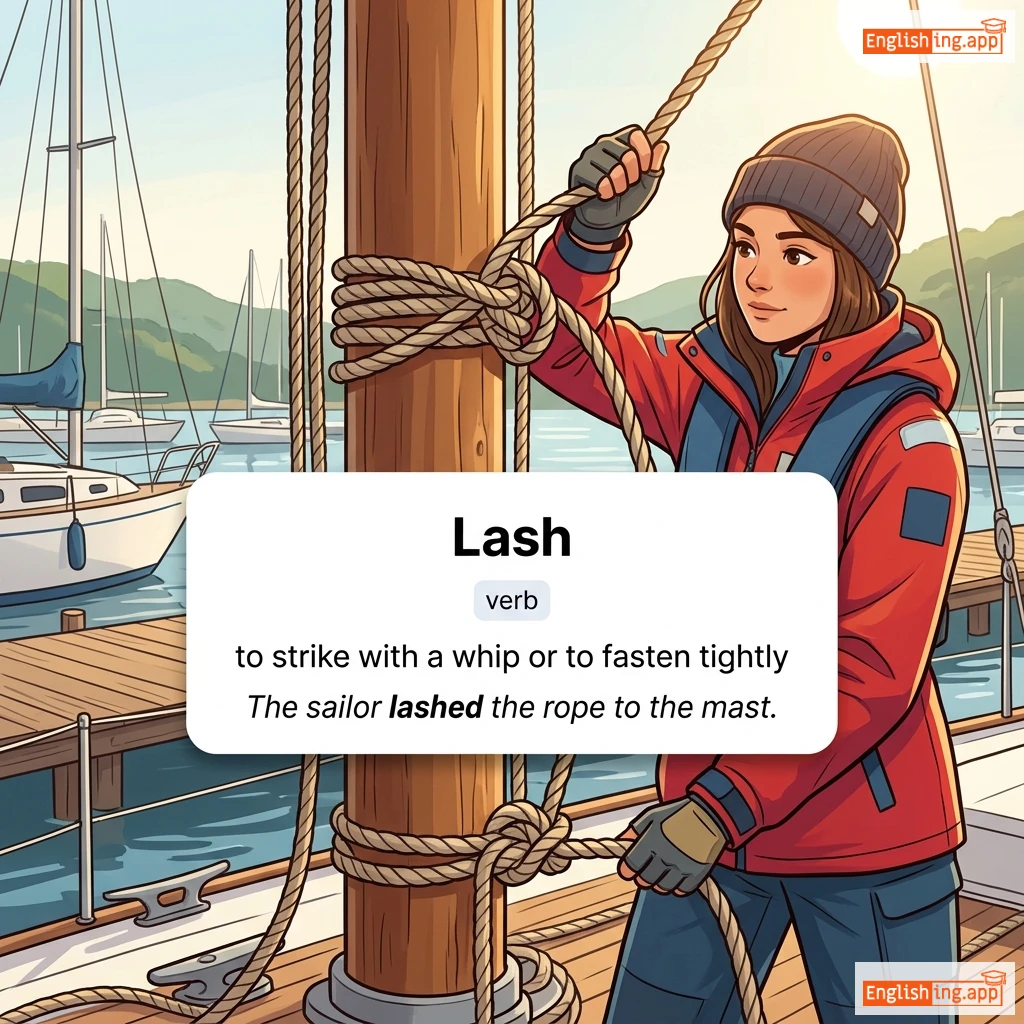
Lash definition card — visual illustration of the meaning
verb C1
/læʃ/
抽打/绑紧 (chōudǎ/bǎng jǐn)

to strike with a whip or to fasten tightly

"The sailor lashed the rope to the mast."

"水手把绳子绑到桅杆上。" (Shuǐshǒu bǎ shéngzi bǎng dào wéigǎn shàng.)
verb C1
/lætʃ/
上锁 (shàng suǒ)

to fasten or close something with a latch

"She latched the door before leaving the house."

"她在离开房子之前把门锁上了。" (Tā zài líkāi fángzi zhīqián bǎ mén suǒ shàng le.)
latency definition card — visual illustration of the meaning
noun C1
/ˈleɪtənsi/
延迟 (yanchi)

The delay before a transfer of data begins following an instruction for its transfer.

"High latency can slow down online gaming experiences."
"高延迟会减慢在线游戏体验。" (Gāo yánchí huì jiǎn màn zàixiàn yóuxì tǐyàn.)
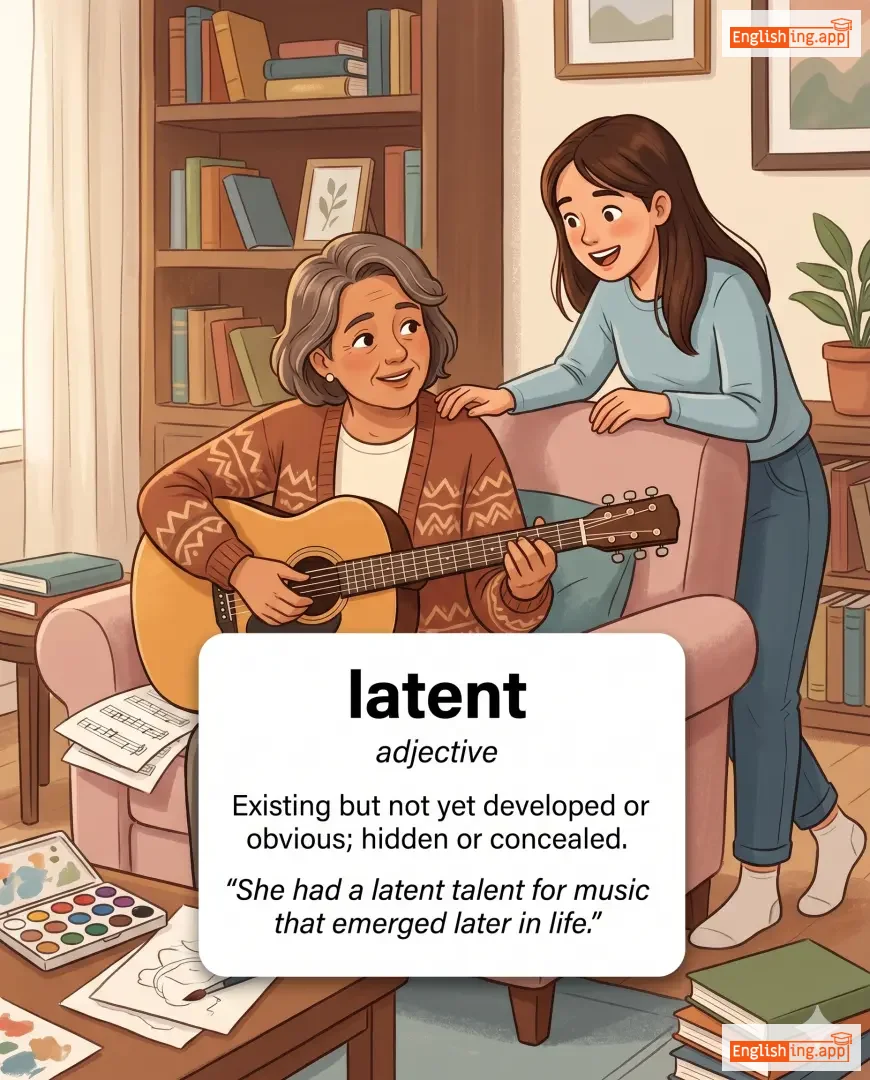
latent definition card — visual illustration of the meaning
adjective C1
/ˈleɪtənt/

Existing but not yet developed or obvious; hidden or concealed.

"She had a latent talent for music that emerged later in life."

adjective C1
/ˈlætərəl/
侧面 (cèmiàn)

Relating to the side or sideways movement.

"The football player made a quick lateral pass."
"足球运动员做了一个快速的侧面传球。" (zúqiú yùndòngyuán zuòle yīgè kuàisù de cèmiàn chuánqiú.)
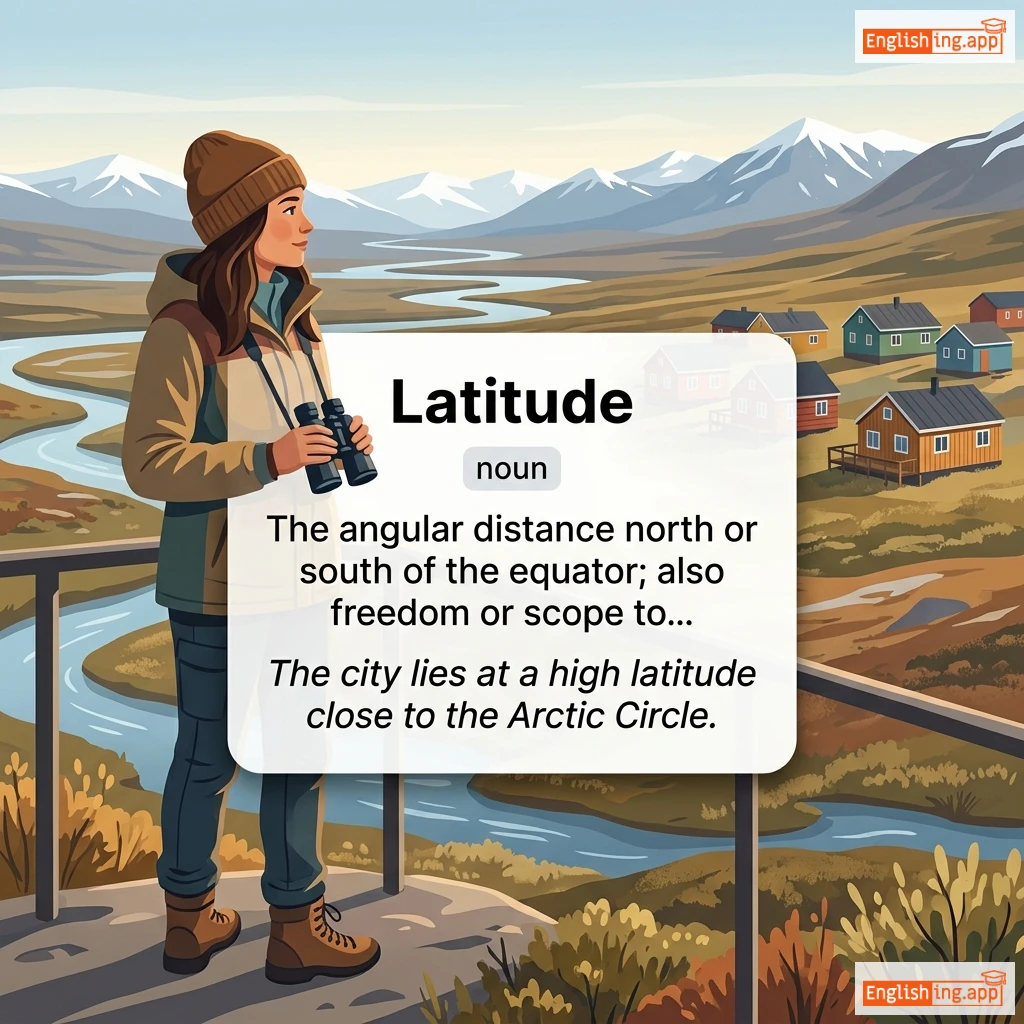
Latitude definition card — visual illustration of the meaning
noun C1
/ˈlætɪˌtjuːd/
纬度 (wèidù)

The angular distance north or south of the equator; also freedom or scope to act.

"The city lies at a high latitude close to the Arctic Circle."

"这座城市位于靠近北极圈的高纬度。" (Zhe zuo chengshi weiyu kaojin Beijiquan de gao weidu.)
adjective C1
/ˈlɔː.də.bəl/
值得称赞的 (zhí dé chēng zàn de)

Deserving praise and admiration.

"Her efforts to help the poor are truly laudable."

"她帮助穷人的努力真是值得称赞的。" (Tā bāngzhù qióngrén de nǔlì zhēn shì zhí dé chēng zàn de.)
verb C1
/ˈlɔːndər/
洗衣服 / 隐瞒非法获得的钱的来源 (xi yi fu / yin man fei fa huo de qian de laiyuan)

to wash clothes, linens, etc.; or to conceal the origins of money obtained illegally

"She laundered all the dirty clothes on Sunday."

"她在星期天洗了所有脏衣服。" (Ta zai xingqi tian xile suoyou zang yifu.)
noun C1
/ˈlɔːriət/
获得者 (huòdé zhě)

A person honored with an award for outstanding achievement in a field, especially the arts or sciences.

"The Nobel laureate gave an inspiring lecture on peace."

"诺贝尔奖获得者就和平发表了激动人心的演讲。" (Nuòbèi'ěr jiǎng huòdé zhě jiù hépíng fābiǎo le jīdòng rénxīn de yǎnjiǎng.)
adjective, verb C1
/ˈlævɪʃ/
奢华的,豪华的 (lavish)

Rich, elaborate, or luxurious; to bestow something in generous or extravagant quantities.

"They gave her a lavish wedding reception with hundreds of guests."

"他们为她举办了一个豪华的婚礼招待会,邀请了数百位客人。" (Tāmen wèi tā jǔbànle yīgè háohuá de hūnlǐ zhāodài huì, yāoqǐngle shù bǎi wèi kèrén.)
adjective C1
/ˈlɔː.fəl/
合法; 合理; 有效; 公正; (hefa; heli; youxiao; gongzheng;)

legal; legitimate; valid; just

"The judge confirmed that their actions were lawful and proper."

"法官确认他们的行为是合法和恰当的。" (Fǎguān quèrèn tāmen de xíngwéi shì héfǎ hé qiàdàng de.)
adjective C1
/ˈlɔː.ləs/
无律; 无政府主义; 混乱; 犯罪 (wú lǜ; wú zhèngfǔ zhǔyì; hùnluàn; fànzuì)

without law; anarchic; unruly; criminal

"The frontier town was known for its lawless behavior and chaos."
"边境城市以其无律行为和混乱而闻名。" (Biānjìng chéngshì yǐ qí wú lǜ xíngwéi hé hùnluàn ér wénmíng.)
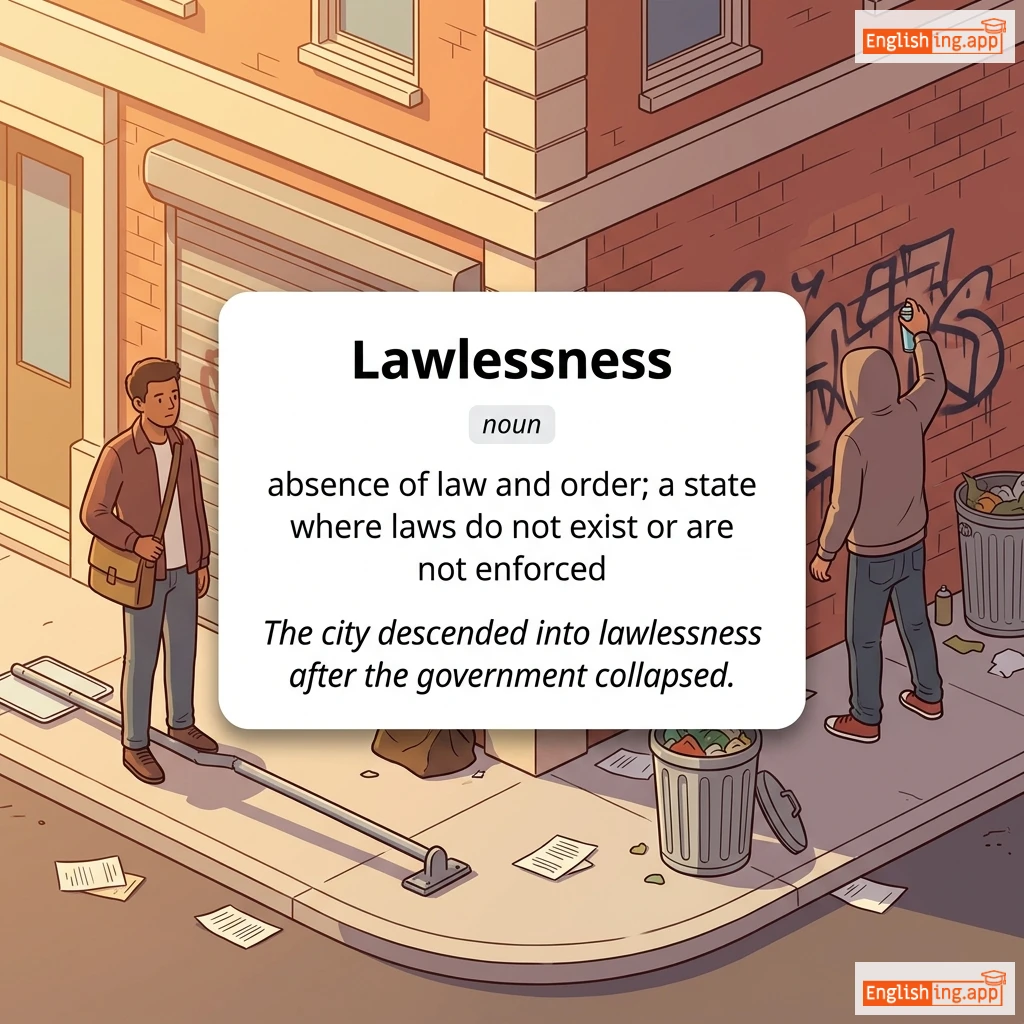
Lawlessness definition card — visual illustration of the meaning
noun C1
/ˈlɔː.ləs.nəs/
无法律 (wufalü)

absence of law and order; a state where laws do not exist or are not enforced

"The city descended into lawlessness after the government collapsed."

"政府崩溃后,城市陷入了无法律的状态。" (zhèngfǔ bēngkuì hòu, chéngshì xiànrù le wú fǎlǜ de zhuàngtài)
Lawmaker definition card — visual illustration of the meaning
noun C1
/ˈlɔːˌmeɪkər/
立法者 (lifazhe)

A member of a legislative body who makes laws.

"The lawmaker introduced a new bill on education reform."
"立法者提出了一项关于教育改革的新法案。" (Lifazhe tichu le yixiang guanyu jiaoyu gaige de xin faan.)
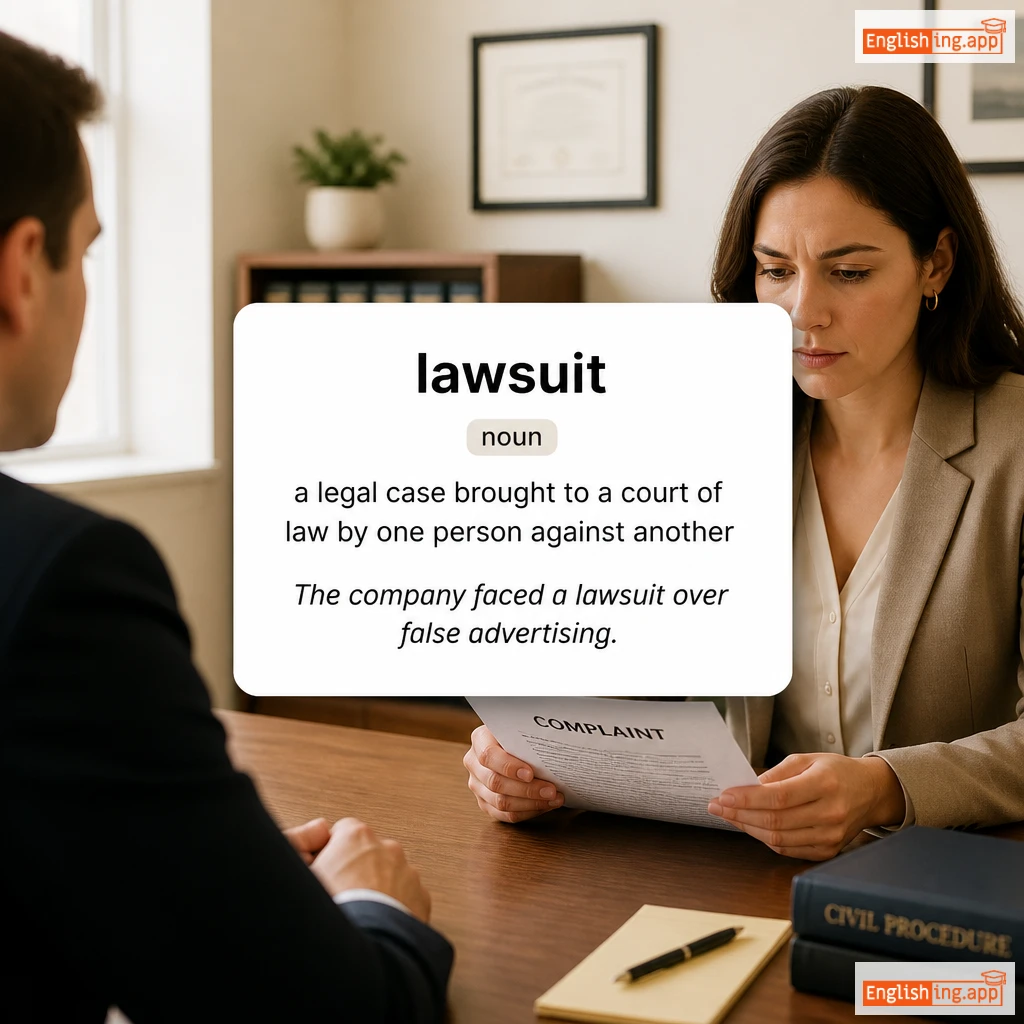
lawsuit definition card — visual illustration of the meaning
noun C1
/ˈlɔːsuːt/
诉讼 (sùsòng)

a legal case brought to a court of law by one person against another

"The company faced a lawsuit over false advertising."

"公司因虚假广告而面临诉讼。" (gōngsī yīn xūjiǎ guǎnggào ér miànlín sùsòng.)
adjective C1
/læks/
宽松的, 粗心的 (lax)

Not strict, severe, or careful; negligent or careless.

"The security at the airport was surprisingly lax."

"机场的安保令人惊讶地宽松。" (Jīchǎng de ānbǎo lìng rén jīngyà de kuānsōng.)
noun, adjective C1
/ˈlæksətɪv/
泻药 (xiè yào)

A medicine or substance that stimulates bowel movements; tending to loosen or relieve constipation.

"The doctor prescribed a mild laxative for her condition."
"医生为她的病情开了轻度泻药。" (Yīshēng wèi tā de bìngqíng kāi le qīngdù xiè yào.)
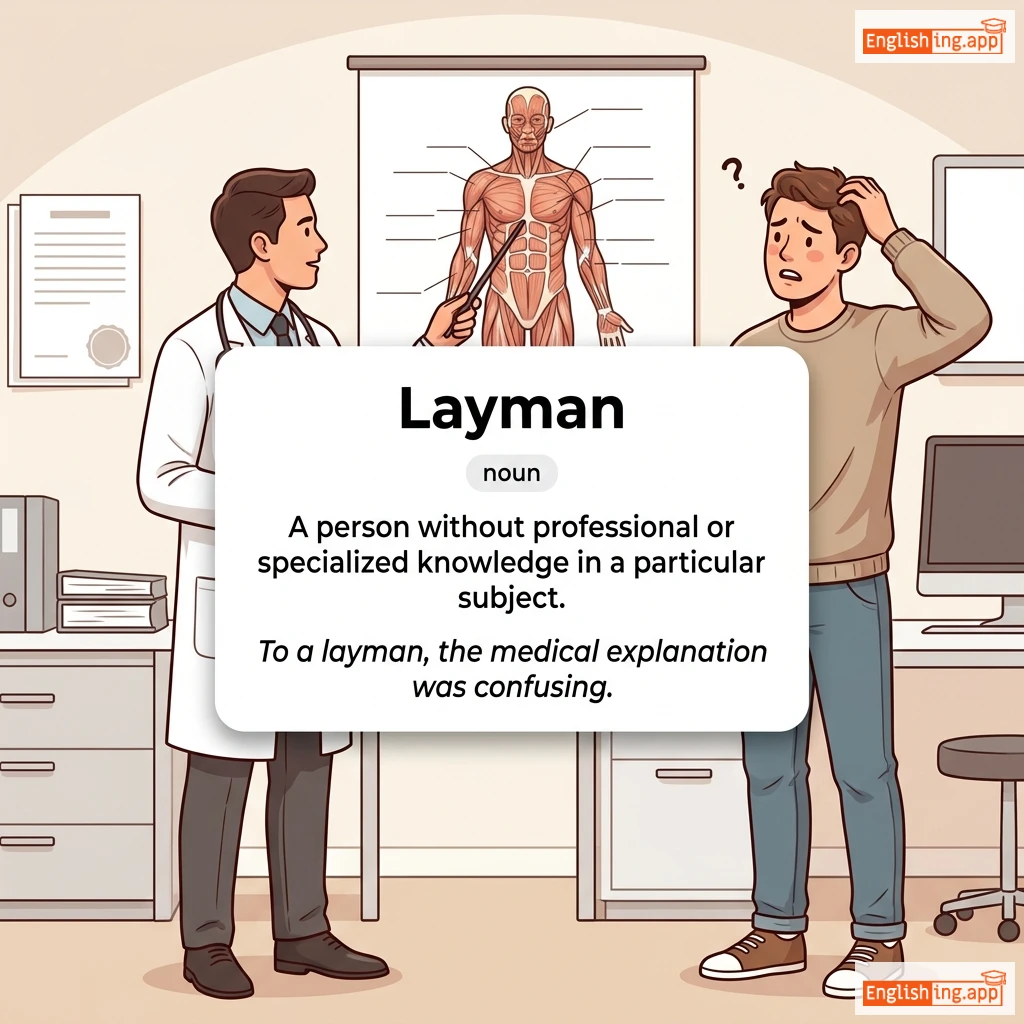
Layman definition card — visual illustration of the meaning
noun C1
/ˈleɪmən/
外行 (wàiháng)

A person without professional or specialized knowledge in a particular subject.

"To a layman, the medical explanation was confusing."

"对外行人来说,医学解释很混乱。" (duì wàiháng rén lái shuō, yīxué jiěshì hěn hùnluàn.)
noun C1
/ˈleɪˌpɜːrsən/
外行人 (waihangren)

A person who is not a member of the clergy or does not have specialized knowledge in a subject.

"The judge explained the law so that the layperson could understand."

"法官解释了法律,使外行人也能理解。" (Fǎguān jiěshìle fǎlǜ, shǐ wàiháng rén yě néng lǐjiě.)
adjective C1
/ˈliːf.ləs/
无叶的; 光秃的 (wú yè de; guāng tū de)

without leaves; bare

"The leafless trees looked bare in winter."

"冬天无叶的树看起来光秃秃的。" (dōngtiān wú yè de shù kàn qǐlái guāng tū tū de.)
Lease definition card — visual illustration of the meaning
noun C1
/liːs/
租赁合同 (lizi)

a contract by which one party conveys land, property, services, etc. to another for a specified time, usually in return for a periodic payment

"They signed a two-year lease for the apartment."

"他们签署了两年的公寓租赁合同。" (Tāmen qiānshǔle liǎng nián de gōngyù zūlìn hé tóng.)
noun/verb C1
/liːʃ/
牵引绳 (qiānyǐn shéng)

a strap or cord used to control or guide an animal; to restrain or control

"The dog was on a leash during the walk."
"狗在散步时被牵引绳拴着。" (gǒu zài sànbù shí bèi qiānyǐn shéng shuān zhe)
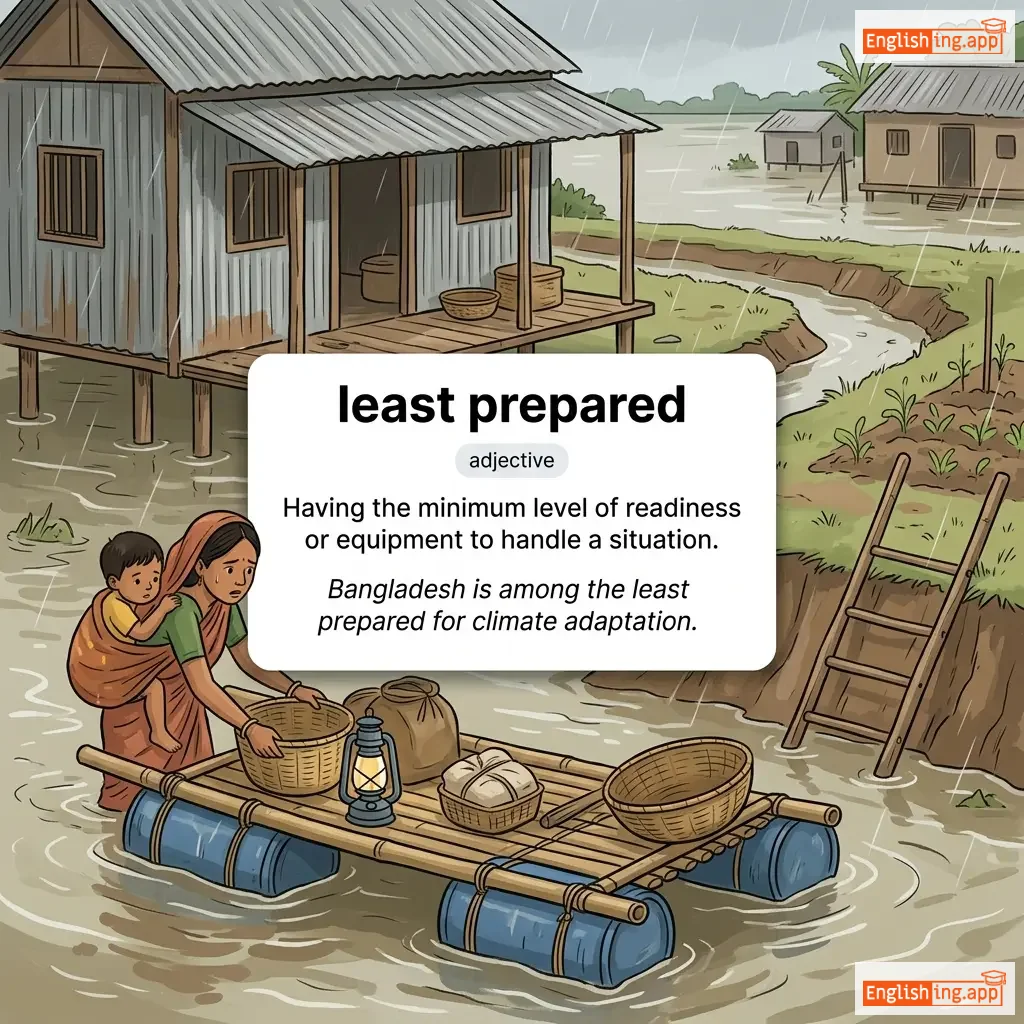
least prepared definition card — visual illustration of the meaning
adjective C1
liːst prɪˈpeərd
最不准备 (zuì bù zhǔnbèi)

Having the minimum level of readiness or equipment to handle a situation.

"Bangladesh is among the least prepared for climate adaptation."

"孟加拉国在气候适应方面是最不准备的国家之一。" (Mèngjiālāguó zài qìhòu shìyìng fāngmiàn shì zuì bù zhǔnbèi de guójiā zhī yī.)
noun C1
/ˈliːvˌteɪ.kɪŋ/
告别 (gàobié)

an act of saying goodbye; farewell

"His leave-taking from his friends was emotional."

"他向朋友的告别是感人的。" (Tā xiàng péngyǒu de gàobié shì gǎnrén de.)
noun C1
/ˈlɛktən/
讲台 (jiangtai)

A tall stand with a sloping top used to support a book, notes, or script during a speech or lecture.

"The professor placed her notes on the lectern before starting her lecture."

"教授在开始讲座之前,把笔记放在讲台上。" (Jiàoshòu zài kāishǐ jiǎngzuò zhīqián, bǎ bǐjì fàng zài jiǎngtái shàng.)
Ledger definition card — visual illustration of the meaning
noun C1
/ˈledʒ.ər/
总账 (zǒng zhàng)

a book or other collection of financial accounts of a particular type

"The accountant updated the company ledger daily."

"会计每天更新公司的总账。" (Kuàijì měitiān gēngxīn gōngsī de zǒng zhàng.)
Leech definition card — visual illustration of the meaning
noun C1
/liːt͡ʃ/
水蛭 (shui zhi)

a blood-sucking worm that lives in water or moist ground

"The doctor used a medical leech to reduce swelling after surgery."

"医生使用了医疗水蛭来减少手术后的肿胀。" (Yisheng shiyong le yiliaoshui zhi lai jianshao shoushu hou de zhongzhang)
noun C1
/ˈliːweɪ/
回旋余地 (huíxuán yúdì)

Freedom to act within certain limits; extra space or time.

"The manager gave the team some leeway to finish the project."

"经理给了团队一些回旋余地来完成项目。" (Jīnglǐ gěile tuánduì yīxiē huíxuán yúdì lái wánchéng xiàngmù.)
Legality definition card — visual illustration of the meaning
noun C1
/lɪˈɡæl.ə.ti/
合法性 (hefa xing)

the quality or state of being legal; accordance with the law

"The lawyer questioned the legality of the contract."

"律师质疑合同的合法性。" (Lüshi zhiyi hetong de hefaxing.)
verb C1
/ˈliːɡəlaɪz/
合法化 (héfǎ huà)

To make something lawful by official approval.

"The government decided to legalize online businesses."

"政府决定合法化在线业务。" (Zhèngfǔ juédìng héfǎ huà zàixiàn yèwù.)
noun C1
/ˈlɛɡɪŋ/
紧身裤 (jinshen ku)

tight-fitting stretch pants, typically worn by women for exercise or casual wear

"She bought a new pair of black leggings for the gym."

"她为健身房买了一条新的黑色紧身裤。" (Ta wei jianshenfang mai le yitiao xinde heise jinshenku.)
adjective C1
/ˈlɛdʒəbl/
可读的 (kě dú de)

clear enough to read

"Her handwriting was barely legible."

"她的手写字几乎不可读。" (Tā de shǒuxiě zì jīhū bùkě dú.)
noun C1
/ˈliːdʒən/
一大群人,特别是士兵;大量 (yi da qun ren, tebie shi shibing; daliang)

a large group of people, especially soldiers; a great number

"The Roman army was divided into legions."

"罗马军队被划分为军团。" (luoma jundui bei huafen wei juntuan.)
verb C1
/ˈlɛdʒɪsˌleɪt/
立法 (lifa)

to make or enact laws

"The government plans to legislate new safety standards."

"政府计划制定新的安全标准。" (Zhèngfǔ jìhuà zhìdìng xīn de ānquán biāozhǔn.)