Получите неограниченный доступ ко всем словам с подпиской Pro
Обновить до ProПолучите неограниченный доступ ко всем предложениям с подпиской Pro
Обновить до Pro|
Эмодзи
|
Слово | Images | Перевод | Прошедшее | Причастие прошедшего времени | Третье лицо единственного числа | Герундий | Значение | Пример предложения | Перевод примера предложения | Пример выражения | Значение примера выражения | Перевод примера выражения | Синонимы | Антонимы | Коллокации | Мнемоника |
|---|---|---|---|---|---|---|---|---|---|---|---|---|---|---|---|---|---|
|
⚡
••••••
|
/prɑːmpt/
verb, noun, adjective
(промпт)
••••••
|
- •••••• |
побуждать / быстро
pobuzhdat / bystro
••••••
|
prompted
промптед
••••••
|
prompted
промптед
••••••
|
prompts
промптс
••••••
|
prompting
промптинг
••••••
|
To cause someone to take action; done without delay.
••••••
|
His speech prompted the audience to ask questions.
Его речь побудила аудиторию задавать вопросы.
••••••
|
Его речь побудила аудиторию задавать вопросы.
Ego rech' pobudila auditoriyu zadavat' voprosy.
••••••
|
prompt action
немедленное действие
••••••
|
Immediate or quick action
••••••
|
немедленные действия
nemedlennye deystviya
••••••
|
urge, incite, quick, immediate, stimulate
••••••
|
delay, hinder, slow
••••••
|
prompt reply, prompt payment, prompt decision, prompt response
••••••
|
Prompt означает быстрые действия, как отклик от компьютера.
••••••
|
|
🗯️
••••••
|
/prəˈnaʊns/
verb
(прəˈнаʊнс)
••••••
|
|
произносить
proiznosit'
••••••
|
pronounced
прəˈнаʊнсд
••••••
|
pronounced
прəˈнаʊнсд
••••••
|
pronounces
прəˈнаʊнсез
••••••
|
pronouncing
прəˈнаʊнсинг
••••••
|
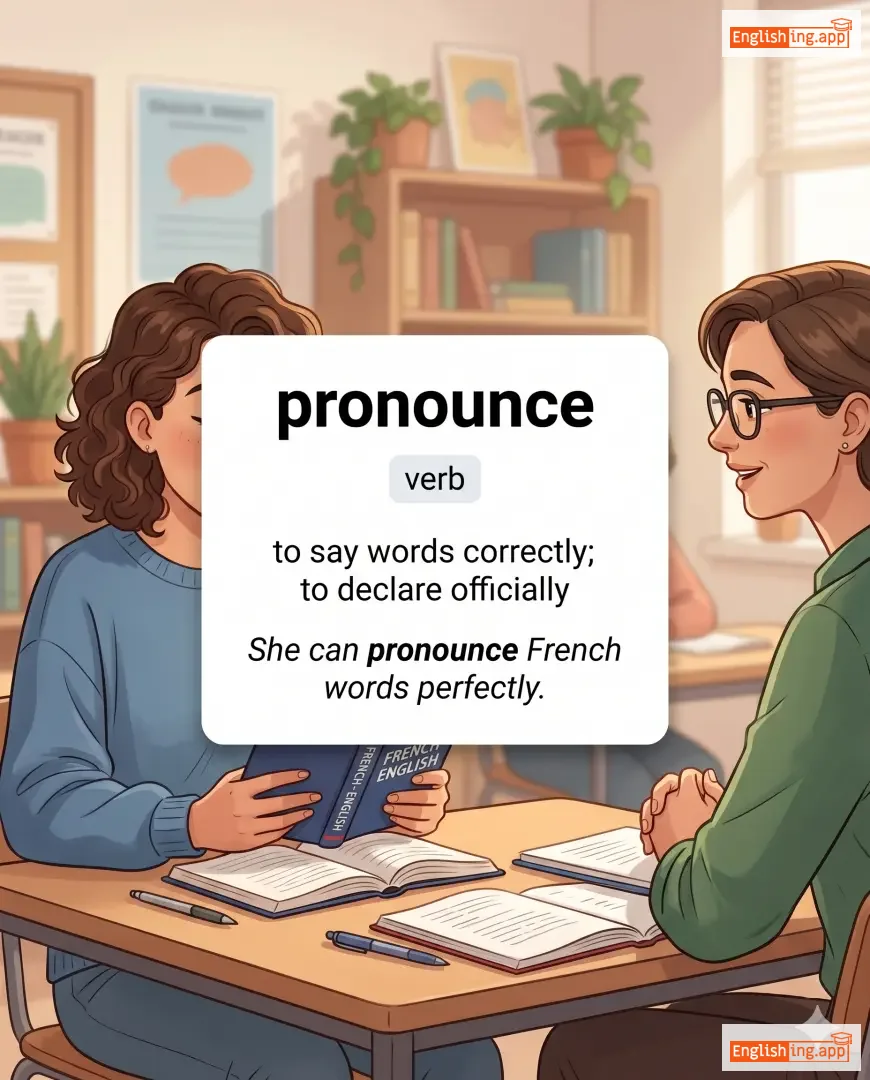
to say words correctly; to declare officially
••••••
|
She can pronounce French words perfectly.
Она может правильно произнести французские слова.
••••••
|
Она может правильно произнести французские слова.
Ona mozhet pravil'no proiznesti frantsuzskie slova.
••••••
|
- •••••• | - •••••• | - •••••• |
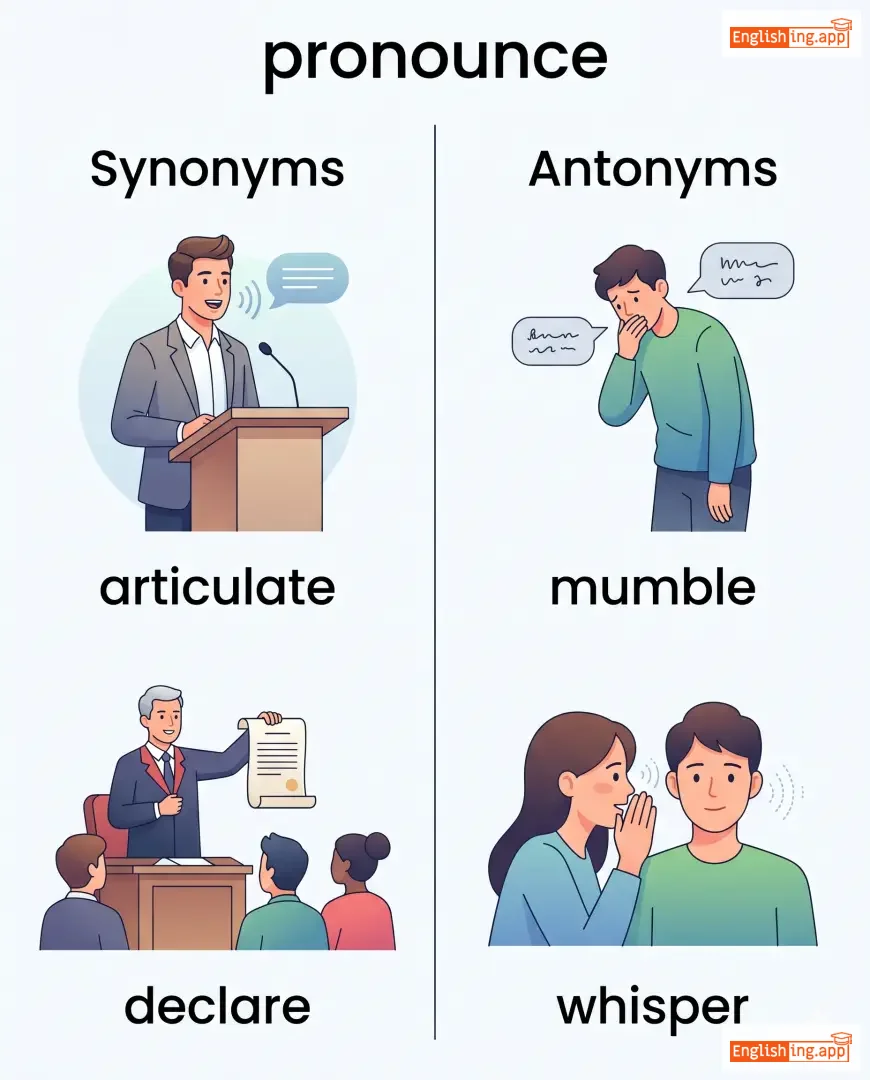
articulate, declare, announce, state
••••••
|
mumble, whisper, conceal
••••••
|
pronounce correctly, pronounce clearly, pronounce word, hard to pronounce
••••••
|
Imagine clearly 'proiznosit' (pronounce) words like a perfect Russian speaker.
••••••
|
|
🔊
••••••
|
/prəˈnaʊnst/
adjective
(проʊˈnaʊнст)
••••••
|
- •••••• |
выраженный
vyrazhennyi
••••••
|
- •••••• | - •••••• | - •••••• | - •••••• |
very noticeable or strongly marked
••••••
|
There is a pronounced difference between the two styles. |
Существует выраженная разница между двумя стилями.
Sushchestvuet vyrazhennaya raznitsa mezhdu dvumya stilyami.
••••••
|
- •••••• | - •••••• | - •••••• |
distinct, marked, evident, clear, obvious
••••••
|
subtle, faint, hidden
••••••
|
pronounced effect, pronounced difference, pronounced tendency, pronounced feature
••••••
|
Pronounced означает ясно сказано — следовательно, выраженный
••••••
|
|
🗣️
••••••
|
/prəˌnʌnsiˈeɪʃən/
noun
(прононсиэйшн)
••••••
|
- •••••• |
произношение
proiznoshenie
••••••
|
- •••••• | - •••••• | - •••••• | - •••••• |
the way a word or language is spoken; the act or result of pronouncing words
••••••
|
Her pronunciation of French words has improved significantly.
Хер прононсиэйшн оф френч вордс хэз импрувд сигнификэнтли.
••••••
|
Её произношение французских слов значительно улучшилось.
Yeyo proiznoshenie frantsuzskikh slov znachitelno uluchshilos
••••••
|
- •••••• | - •••••• | - •••••• |
enunciation, articulation, diction, utterance
••••••
|
mispronunciation, silence
••••••
|
correct pronunciation, clear pronunciation, standard pronunciation, pronunciation guide
••••••
|
Pronunciation = произношение, как слово звучит.
••••••
|
|
🧑⚖️
••••••
|
/pruːf/
noun
(pruf)
••••••
|
- •••••• |
доказательство
dokazatel'stvo
••••••
|
- •••••• | - •••••• | - •••••• | - •••••• |
evidence or argument establishing a fact or the truth of a statement
••••••
|
The detective presented proof of the suspect's guilt. |
Детектив представил доказательство вины подозреваемого.
Detektiv predstavil dokazatel'stvo viny podozrevaemogo.
••••••
|
- •••••• | - •••••• | - •••••• |
evidence, confirmation, verification, testimony
••••••
|
disproof, refutation
••••••
|
provide proof, irrefutable proof, proof of identity
••••••
|
Доказательство (dokazatel'stvo) means PROOF, just like a detective proving guilt.
••••••
|
|
📢
••••••
|
/ˌprɒpəˈɡændə/
noun
(пропаганда)
••••••
|
- •••••• |
пропаганда
propaganda
••••••
|
- •••••• | - •••••• | - •••••• | - •••••• |
Information, especially biased or misleading, used to promote a political cause or point of view.
••••••
|
The regime spread propaganda to control public opinion. |
Режим распространил пропаганду, чтобы контролировать общественное мнение.
Rezhim rasprostranil propagandu, chtoby kontrolirovat' obshchestvennoe mnenie.
••••••
|
propaganda machine |
An organized effort to spread biased information systematically.
••••••
|
пропагандистская машина
propagandistskaya mashina
••••••
|
promotion, publicity, misinformation, indoctrination, advertising
••••••
|
truth, fact, information
••••••
|
spread propaganda, political propaganda, propaganda campaign, propaganda machine
••••••
|
Пропаганда — всегда для продвижения чьей-то цели.
••••••
|
|
👔
••••••
|
/ˈprɒpər/
adjective
(пропэр)
••••••
|
- •••••• |
правильный
pravil'nyy
••••••
|
- •••••• | - •••••• | - •••••• | - •••••• |
conforming to accepted standards of behavior or morality
••••••
|
He made sure to wear proper attire for the interview.
He mayd shur tu wēr proper attāir for de intérvju.
••••••
|
Он позаботился о том, чтобы надеть правильную одежду для интервью.
On pozabotilsya o tom, chtoby nadet' pravil'nuyu odezhdu dlya interv'yu.
••••••
|
- •••••• | - •••••• | - •••••• |
suitable, appropriate, correct, fitting
••••••
|
improper, unsuitable, incorrect
••••••
|
proper attire, proper behavior, proper procedure
••••••
|
Proper means right, just like wearing the right attire!
••••••
|
|
✔️
••••••
|
/ˈprɒpərli/
adverb
(próperli)
••••••
|
- •••••• |
правильно
pravil'no
••••••
|
- •••••• | - •••••• | - •••••• | - •••••• |
in the correct or suitable manner
••••••
|
He performed the task properly to avoid mistakes.
Он выполнил задачу правильно, чтобы избежать ошибок.
••••••
|
Он выполнил задачу правильно, чтобы избежать ошибок.
On vypolnil zadachu pravil'no, chtoby izbezhat' oshibok.
••••••
|
- •••••• | - •••••• | - •••••• |
correctly, suitably, appropriately, adequately
••••••
|
improperly, incorrectly
••••••
|
perform properly, behave properly, handle properly
••••••
|
Properly means doing something in the right way, like following a recipe!
••••••
|
|
📊
••••••
|
/prəˈpɔːʃən/
noun
(пропоршн)
••••••
|
- •••••• |
пропорция
proporshen
••••••
|
- •••••• | - •••••• | - •••••• | - •••••• |
a part, share, or number considered in comparative relation to a whole
••••••
|
The proportion of students passing the exam was high.
Доля студентов, сдавших экзамен, была высокой.
••••••
|
Доля студентов, сдавших экзамен, была высокой.
Dola studentov, sdavshikh ekzamen, byla vysokoy.
••••••
|
- •••••• | - •••••• | - •••••• |
ratio, percentage, fraction, share
••••••
|
whole, total
••••••
|
right proportion, larger proportion, proportionate amount
••••••
|
Балансируй блюдо: Proportion = пропорция, доля части к целому
••••••
|
|
📋
••••••
|
/prəˈpəʊ.zəl/
noun
(prəˈpoʊzəl)
••••••
|

|
предложение; план
predlozhenie; plan
••••••
|
- •••••• | - •••••• | - •••••• | - •••••• |
a plan or suggestion presented for consideration; an offer of marriage
••••••
|
The board will review the proposal at next week's meeting.
Совет рассмотрит предложение на встрече на следующей неделе.
••••••
|
Совет рассмотрит предложение на встрече на следующей неделе.
Sovet rassmotrit predlozhenie na vstreche na sleduyushchey nedele.
••••••
|
- •••••• | - •••••• | - •••••• |
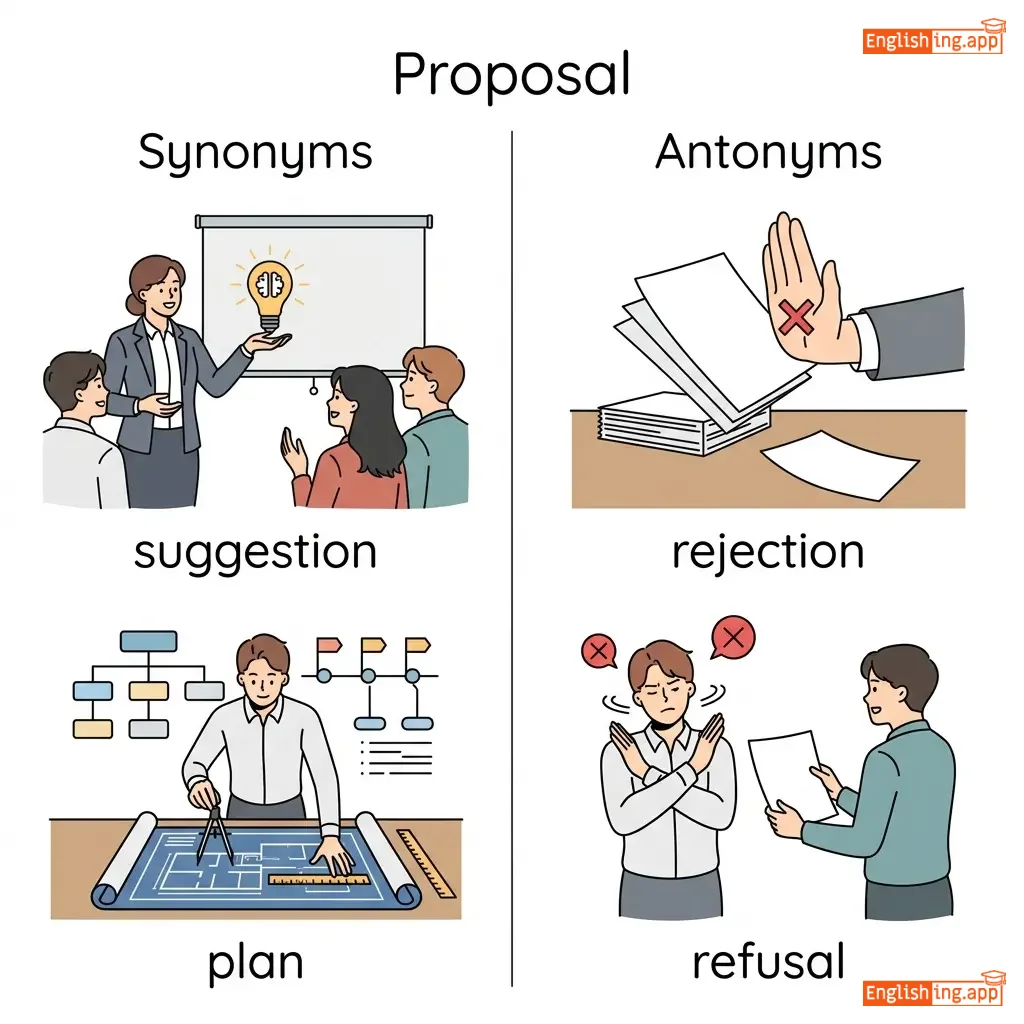
suggestion, plan, offer, recommendation
••••••
|
rejection, refusal, withdrawal
••••••
|
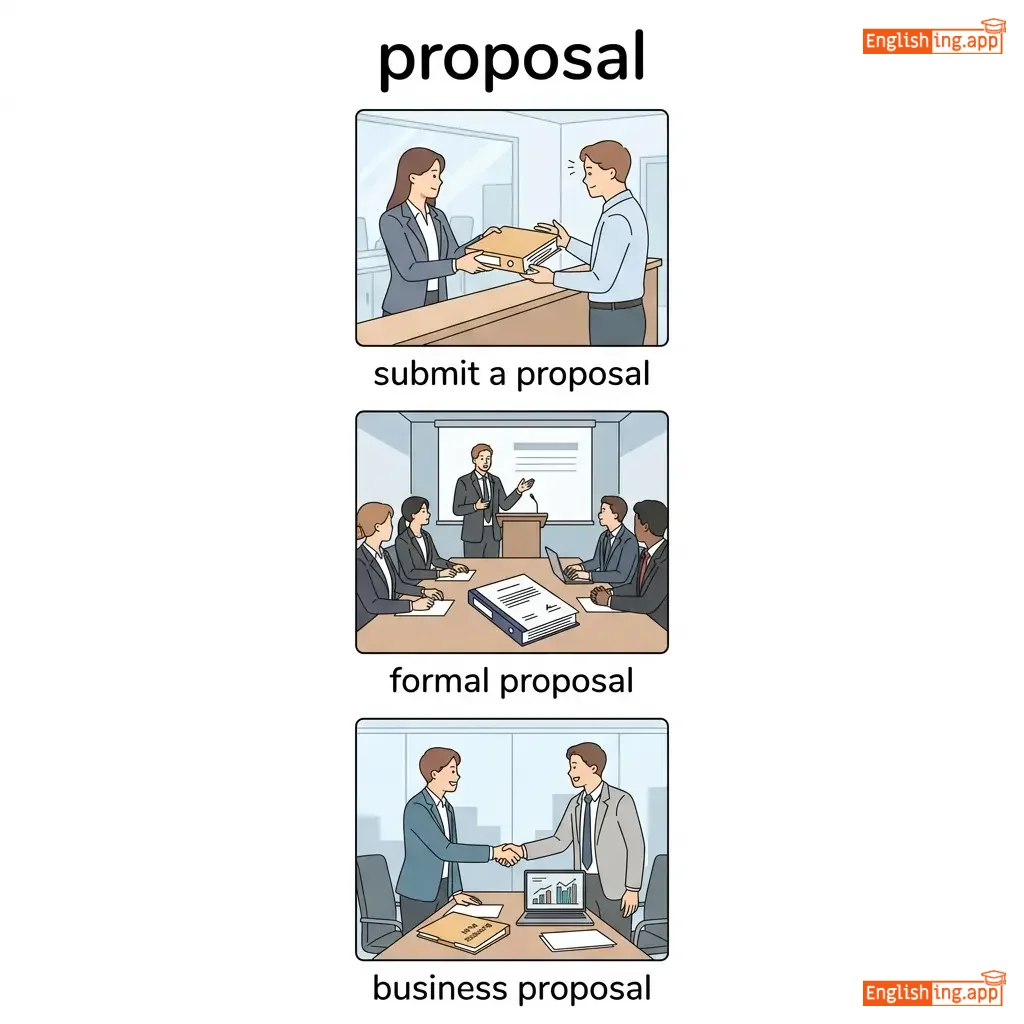
business proposal, marriage proposal, make proposal, accept proposal
••••••
|
Предложение - это идея, которая может быть предложением о браке.
••••••
|
|
💍
••••••
|
/prəˈpoʊz/
verb
(пропоуз)
••••••
|


|
предложить
predlozhit
••••••
|
proposed
пропоузд
••••••
|
proposed
пропоузд
••••••
|
proposes
пропоузес
••••••
|
proposing
пропоузинг
••••••
|
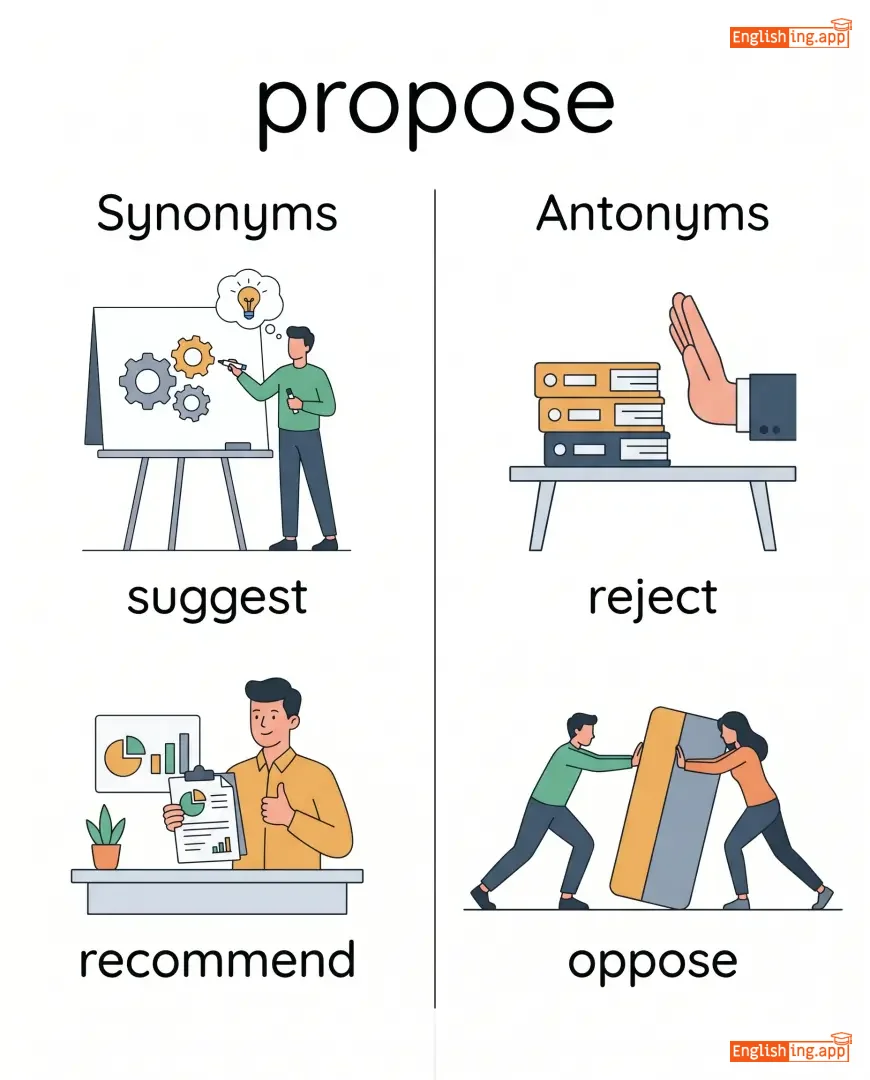
to suggest an idea or plan for consideration; to ask someone to marry you
••••••
|
I propose we take a short break.
Я предлагаю сделать небольшой перерыв.
••••••
|
Я предлагаю сделать небольшой перерыв.
ya predlagayu sdelat' nebol'shoy pereryv
••••••
|
- •••••• | - •••••• | - •••••• |
suggest, recommend, offer, present
••••••
|
withdraw, reject, oppose
••••••
|
propose idea, propose solution, propose marriage, propose plan, propose change
••••••
|
Предложить — как предложение руки и сердца, важно не опоздать.
••••••
|
|
📑
••••••
|
/prəˈpoʊzd/
adjective
(пропозд)
••••••
|
- •••••• |
предложенный
predlozhennyy
••••••
|
- •••••• | - •••••• | - •••••• | - •••••• |
suggested or put forward for consideration or discussion
••••••
|
The proposed changes will improve the system. |
Предложенные изменения улучшат систему.
Predlozhennyye izmeneniya uluchshat sistemy.
••••••
|
- •••••• | - •••••• | - •••••• |
suggested, recommended, offered, submitted
••••••
|
rejected, opposed, denied
••••••
|
proposed changes, proposed plan, proposed solution
••••••
|
предложенный (predlozhennyy) изменения улучшат систему - Proposed changes will improve the system.
••••••
|
|
💡
••••••
|
/ˌprɒpəˈzɪʃən/
noun
(пропозиция)
••••••
|
- •••••• |
предложение, план
predlozhenie, plan
••••••
|
- •••••• | - •••••• | - •••••• | - •••••• |
A statement, idea, or plan put forward for consideration or discussion.
••••••
|
The company made a business proposition to the investors.
Компания сделала бизнес-пропозицию инвесторам.
••••••
|
Компания сделала бизнес-пропозицию инвесторам.
Kompaniya sdelala biznes-predlozhenie investoram.
••••••
|
a tough proposition
сложное предложение
••••••
|
something difficult to deal with
••••••
|
сложное предложение
slozhnoe predlozhenie
••••••
|
proposal, suggestion, offer, plan, idea
••••••
|
refusal, rejection
••••••
|
business proposition, marriage proposition, attractive proposition
••••••
|
Proposition означает предложить план или предложение.
••••••
|
|
⚖️
••••••
|
/ˈprɒsɪkjuːt/
verb
(просекьют)
••••••
|
- •••••• |
предъявить обвинение
predyavit obvinenie
••••••
|
prosecuted
просекьютед
••••••
|
prosecuted
просекьютед
••••••
|
prosecutes
просекьютс
••••••
|
prosecuting
просекьютинг
••••••
|
to institute legal proceedings against someone
••••••
|
The lawyer decided to prosecute the case after gathering sufficient evidence.
Адвокат решил возбудить дело после сбора достаточных доказательств.
••••••
|
Адвокат решил возбудить дело после сбора достаточных доказательств.
Advokat reshil vozbudit delo posle sbora dostatochnykh dokaza-tel'stv.
••••••
|
- •••••• | - •••••• | - •••••• |
sue, charge, indict
••••••
|
defend, protect
••••••
|
prosecute a case, prosecute someone, prosecute for theft
••••••
|
Предъяви обвинение и добейся справедливости!
••••••
|
|
⚖️
••••••
|
/ˌprɒsɪˈkjuːʃən/
noun
(pro-sik-yu-shon)
••••••
|
- •••••• |
обвинение
obvinienie
••••••
|
- •••••• | - •••••• | - •••••• | - •••••• |
The act of bringing a criminal charge against someone and pursuing legal action in court.
••••••
|
The prosecution presented strong evidence against the defendant. |
Обвинение представило убедительные доказательства против обвиняемого.
Obvinienie predstavylo ubeditel'nye dokazatel'stva protiv obvinyaemogo.
••••••
|
prosecution rests |
A statement made by the prosecution indicating they have finished presenting their case.
••••••
|
обвинение заканчивает
obvinienie zakanchivaet
••••••
|
trial, legal action, lawsuit, case, litigation
••••••
|
defense, acquittal, pardon
••••••
|
criminal prosecution, prosecution case, private prosecution, public prosecution
••••••
|
Обвинение – это как обвинить кого-то в суде, помните 'обв' от 'обвинить'.
••••••
|
|
⚖️
••••••
|
/ˈprɑsɪˌkjuːtər/
noun
(прокьюратор)
••••••
|
- •••••• |
прокурор
prokuror
••••••
|
- •••••• | - •••••• | - •••••• | - •••••• |
a lawyer who represents the government in criminal cases
••••••
|
The prosecutor argued that the defendant was guilty of the crime. |
Прокурор утверждал, что обвиняемый виновен в преступлении.
Prokuror utverzhdal, chto obvinyaemyy vinoven v prestuplenii.
••••••
|
- •••••• | - •••••• | - •••••• |
lawyer, attorney, district attorney, advocate
••••••
|
defendant, accused
••••••
|
prosecutor's office, prosecutor's argument, district prosecutor
••••••
|
Прокурор (prosecutor) борется за правду против преступников - Prosecutor fights for the truth against criminals.
••••••
|
|
🔮
••••••
|
/ˈprɒspɛkt/
noun
(проспект)
••••••
|


|
перспектива
perspektiva
••••••
|
- •••••• | - •••••• | - •••••• | - •••••• |
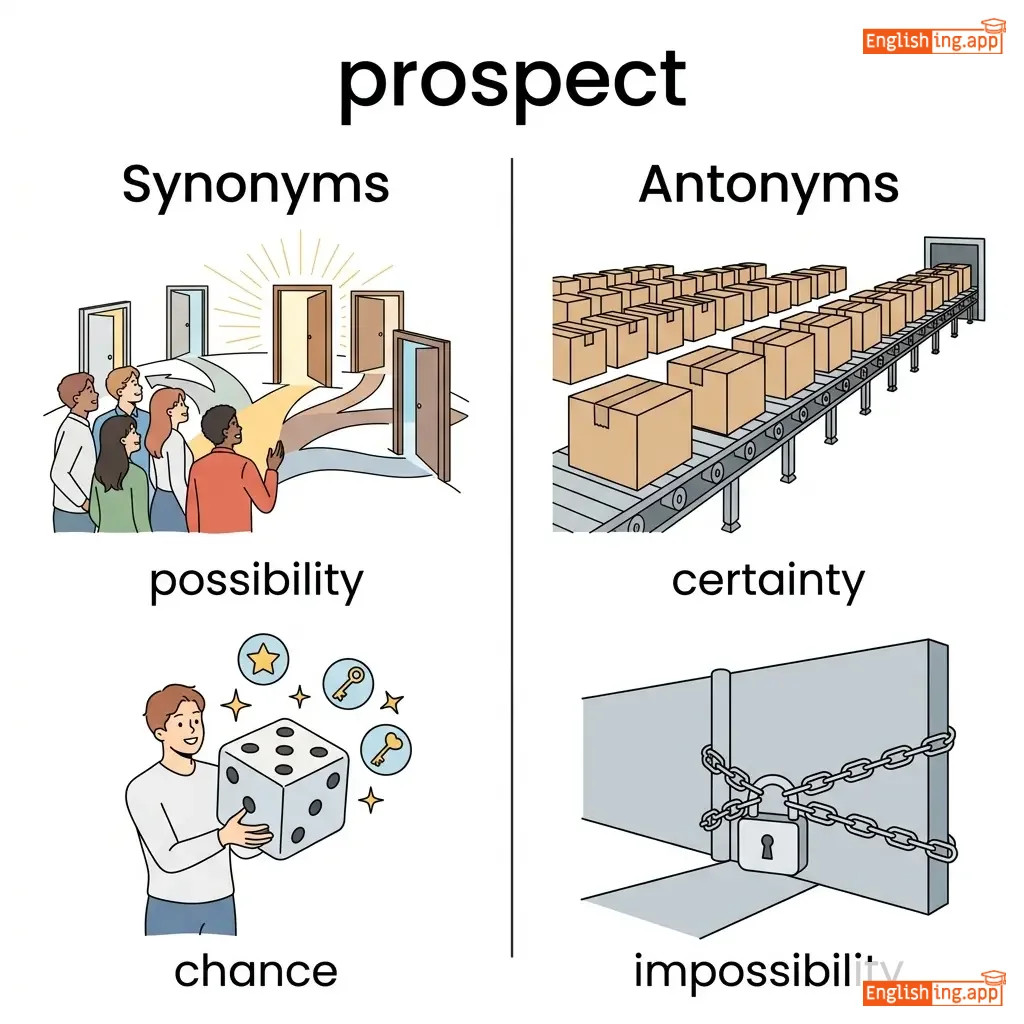
The possibility or likelihood of some future event occurring.
••••••
|
The prospect of traveling abroad excited her. |
Перспектива путешествия за границу взволновала её.
Perspektiva puteshestviya za granitsu vzvolnovala yeyo.
••••••
|
bright prospects |
Good opportunities or chances for the future.
••••••
|
хорошие перспективы
khoroshiye perspektivy
••••••
|
possibility, chance, outlook, opportunity, likelihood
••••••
|
certainty, impossibility
••••••
|
career prospects, good prospect, business prospect, prospect of success
••••••
|
Prospect означает перспектива, 'Pro' значит вперед, а 'spect' значит смотреть—смотреть вперед, это шанс.
••••••
|
|
🔮
••••••
|
/prəˈspɛktɪv/
adjective
(проспектив)
••••••
|
- •••••• |
перспективный
perspektivny
••••••
|
- •••••• | - •••••• | - •••••• | - •••••• |
likely or expected to happen in the future; potential
••••••
|
The company is meeting with prospective clients next week. |
Компания встретится с перспективными клиентами на следующей неделе.
Kompaniya vstretitsya s perspektivnymi klientami na sleduyushchey nedele.
••••••
|
- •••••• | - •••••• | - •••••• |
potential, possible, likely, anticipated, expected
••••••
|
unlikely, past, former
••••••
|
prospective student, prospective client, prospective buyer, prospective employee
••••••
|
Prospective означает что-то, что может произойти в будущем, поэтому prospective = перспективный, потенциальные клиенты.
••••••
|
|
🌱
••••••
|
/ˈprɒspər/
verb
(проспер)
••••••
|
- •••••• |
преуспевать
preuspevat
••••••
|
prospered
просперд
••••••
|
prospered
просперд
••••••
|
prospers
просперс
••••••
|
prospering
просперинг
••••••
|
to succeed or flourish, especially in financial or business matters
••••••
|
With hard work and determination, she managed to prosper in her career.
С упорным трудом и решимостью, она смогла преуспеть в своей карьере.
••••••
|
С упорным трудом и решимостью, она смогла преуспеть в своей карьере.
S upornym trudom i reshimost'yu, ona smogla preuspet' v svoey kar'ere.
••••••
|
live long and prosper
Жить долго и преуспевать
••••••
|
a phrase wishing someone a long life and success
••••••
|
Жить долго и преуспевать
Zhit' dolgo i preuspevat'
••••••
|
flourish, succeed, thrive, grow, advance
••••••
|
fail, decline, struggle
••••••
|
prosper in business, prosper greatly, live long and prosper
••••••
|
Prosper значит преуспевать, помни фразу из Star Trek: 'Жить долго и преуспевать'.
••••••
|
|
🌟
••••••
|
/prɒˈsper.ə.ti/
noun
(просперити)
••••••
|

|
процветание; успех
prosperiti; uspek
••••••
|
- •••••• | - •••••• | - •••••• | - •••••• |
the state of being successful and having wealth; economic well-being
••••••
|
The country enjoyed unprecedented prosperity during the economic boom.
страна наслаждалась беспрецедентным процветанием в период экономического подъема.
••••••
|
Страна наслаждалась беспрецедентным процветанием в период экономического подъема.
Strana naslazhdalas' bespretsedentnym protsvetyaniem v period ekonomicheskogo pod'yema.
••••••
|
- •••••• | - •••••• | - •••••• |
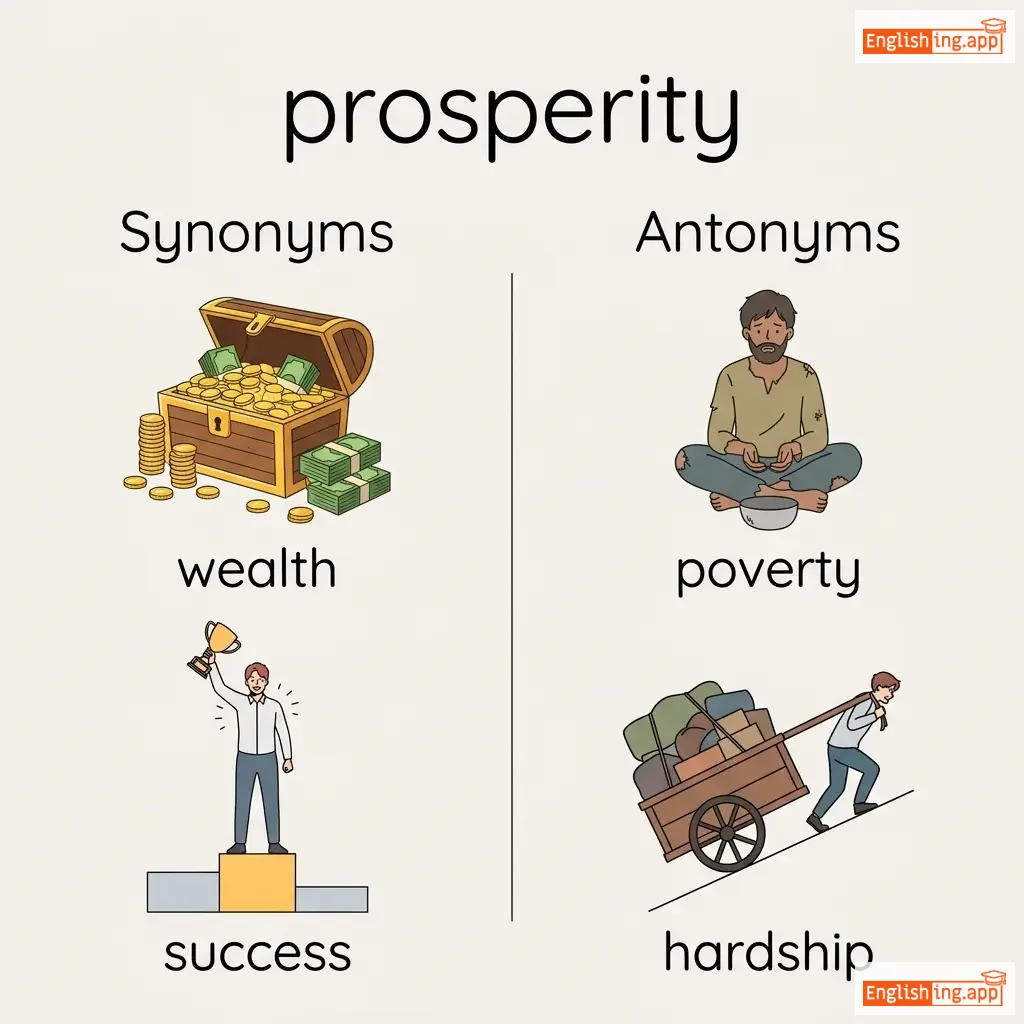
wealth, success, affluence, fortune
••••••
|
poverty, hardship, adversity, decline
••••••
|
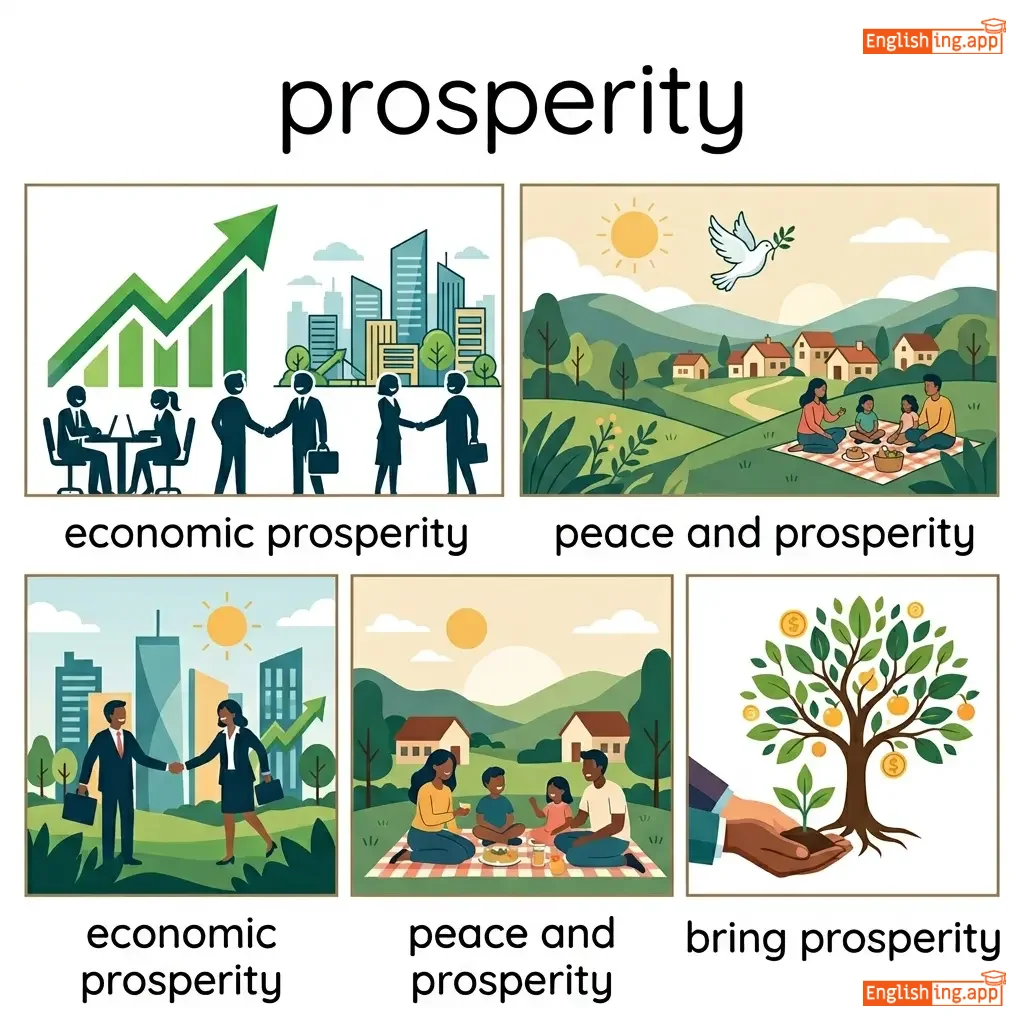
economic prosperity, bring prosperity, period of prosperity, shared prosperity
••••••
|
Процветание — это экономический успех и богатство.
••••••
|
|
💰
••••••
|
/ˈprɒspərəs/
adjective
(проспер)
••••••
|
- •••••• |
процветающий
prosperayushchiy
••••••
|
- •••••• | - •••••• | - •••••• | - •••••• |
successful in material terms; flourishing financially or in general well-being
••••••
|
The town became prosperous after the new trade route opened.
Город стал процветающим после того, как открылся новый торговый путь.
••••••
|
Город стал процветающим после того, как открылась новая торговая дорога.
Gorod stal protsvetyvayushchim posle togo, kak otkrylas' novaya torgovaya doroga.
••••••
|
prosperous life
процветающая жизнь
••••••
|
a life filled with wealth, success, and good fortune
••••••
|
процветающая жизнь
protsvetyvayushchaya zhizn'
••••••
|
wealthy, thriving, flourishing, affluent, successful
••••••
|
poor, destitute, struggling
••••••
|
prosperous community, prosperous business, prosperous future, prosperous nation
••••••
|
Prosperous означает процветающий — процветающий бизнес приводит к процветающей жизни.
••••••
|
|
🛡️
••••••
|
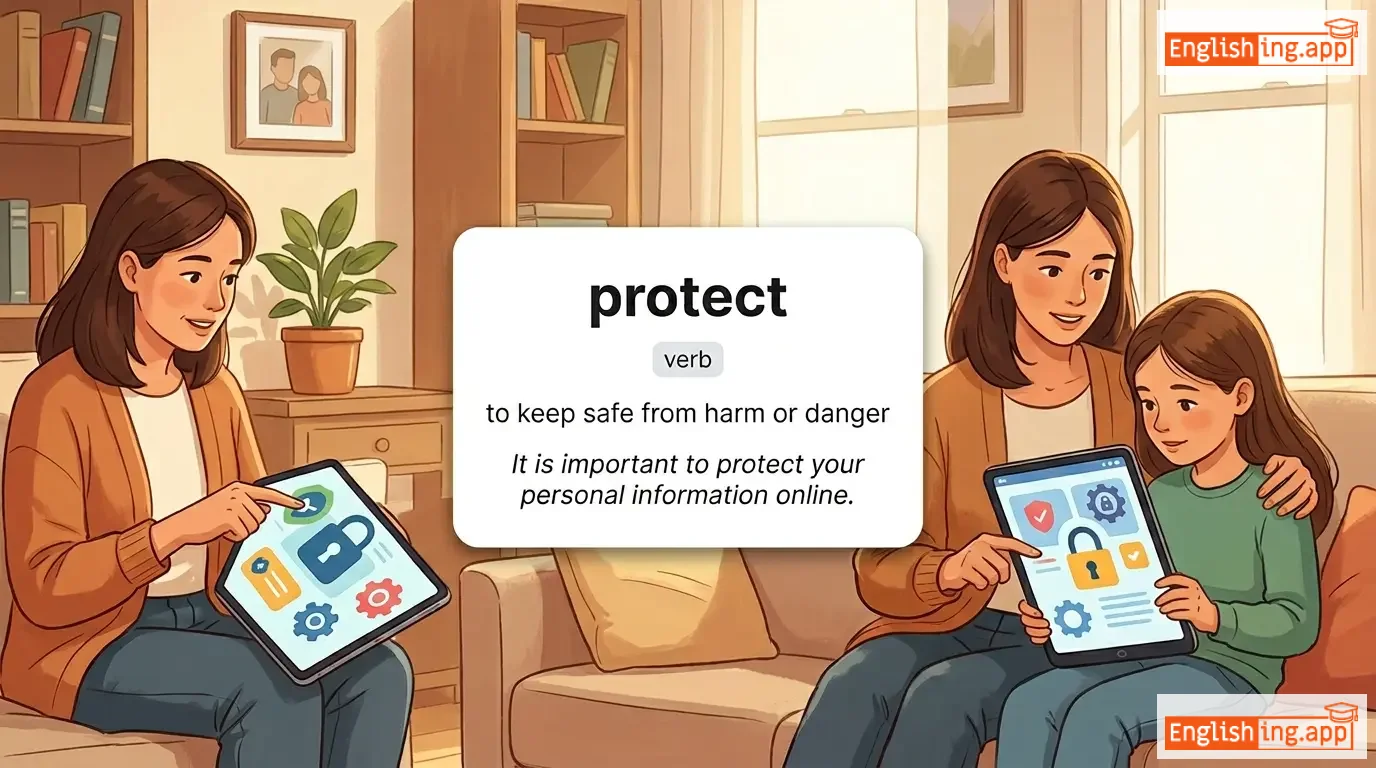
/prəˈtekt/
verb
(защищать)
••••••
|
|
защищать
zashchishchat
••••••
|
protected
защищённый
••••••
|
protected
защищённый
••••••
|
protects
защищает
••••••
|
protecting
защищая
••••••
|
to keep safe from harm or danger; to defend
••••••
|
The helmet protects your head from injury.
Шлем защищает вашу голову от травм.
••••••
|
Шлем защищает вашу голову от травм.
Shlem zashchishchaet vashu golovu ot travm.
••••••
|
- •••••• | - •••••• | - •••••• |
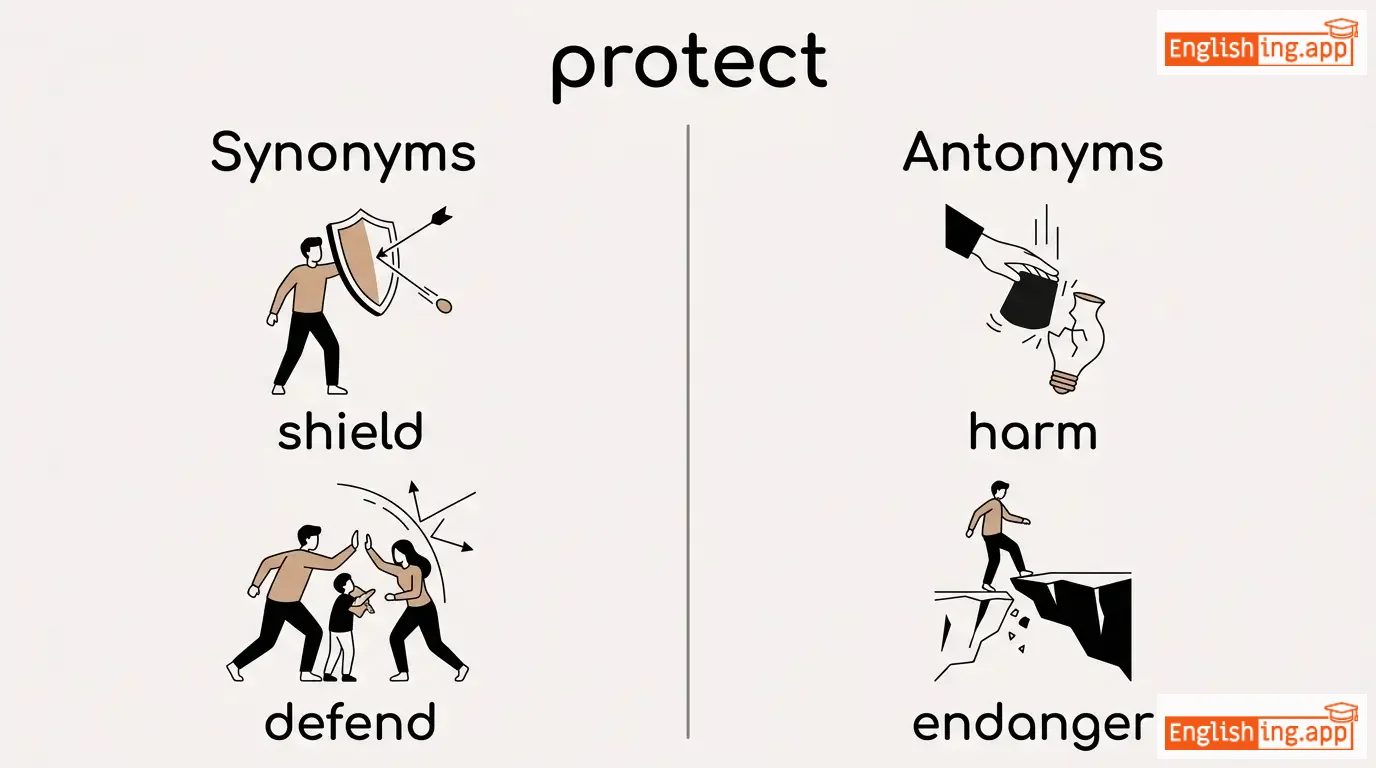
defend, guard, shield, safeguard
••••••
|
attack, harm, endanger, expose
••••••
|
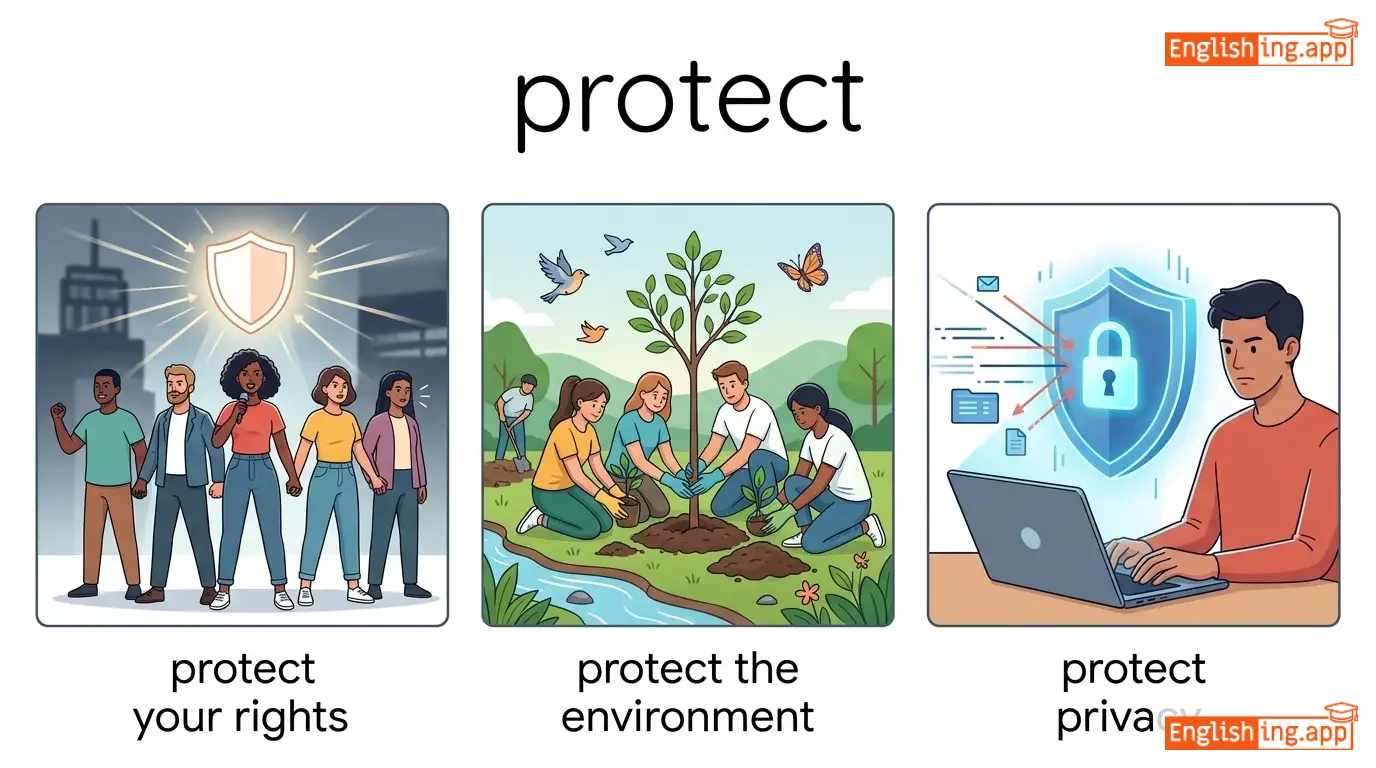
protect from harm, protect the environment, protect rights, protect carefully, protect completely
••••••
|
Protection is like 'защищать' in Russian
••••••
|
|
🛡️
••••••
|
/prəˈtɛkʃən/
noun
(хэппинесс)
••••••
|
|
счастье
schastye
••••••
|
- •••••• | - •••••• | - •••••• | - •••••• |
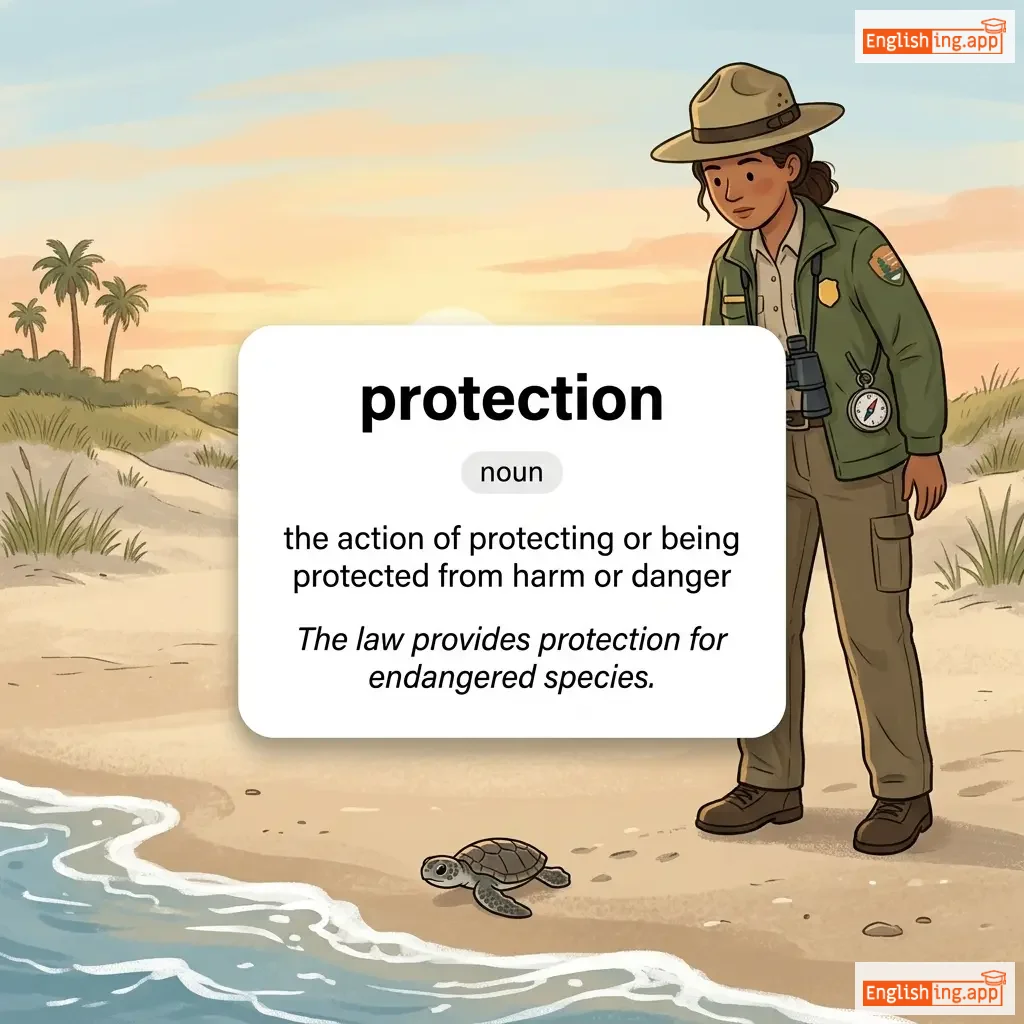
the action of protecting or being protected from harm or danger
••••••
|
The law provides protection for endangered species. |
Она не могла скрыть свое счастье, когда получила награду.
Ona ne mogla skryt' svoe schast'ye, kogda poluchila nagradu.
••••••
|
under protection |
being guarded or defended against harm
••••••
|
поиск счастья
poisk schast'ya
••••••
|
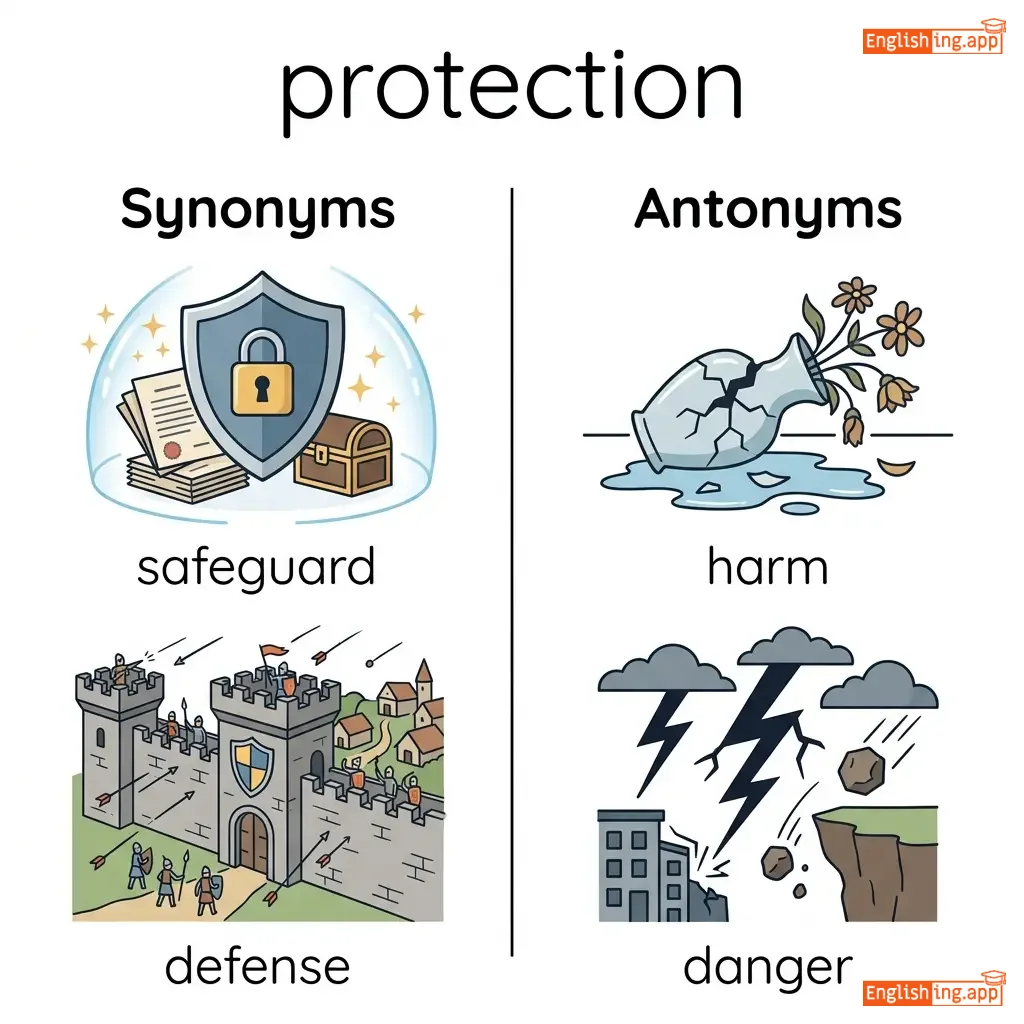
safeguard, defense, security, shelter, shield
••••••
|
harm, danger, exposure
••••••
|
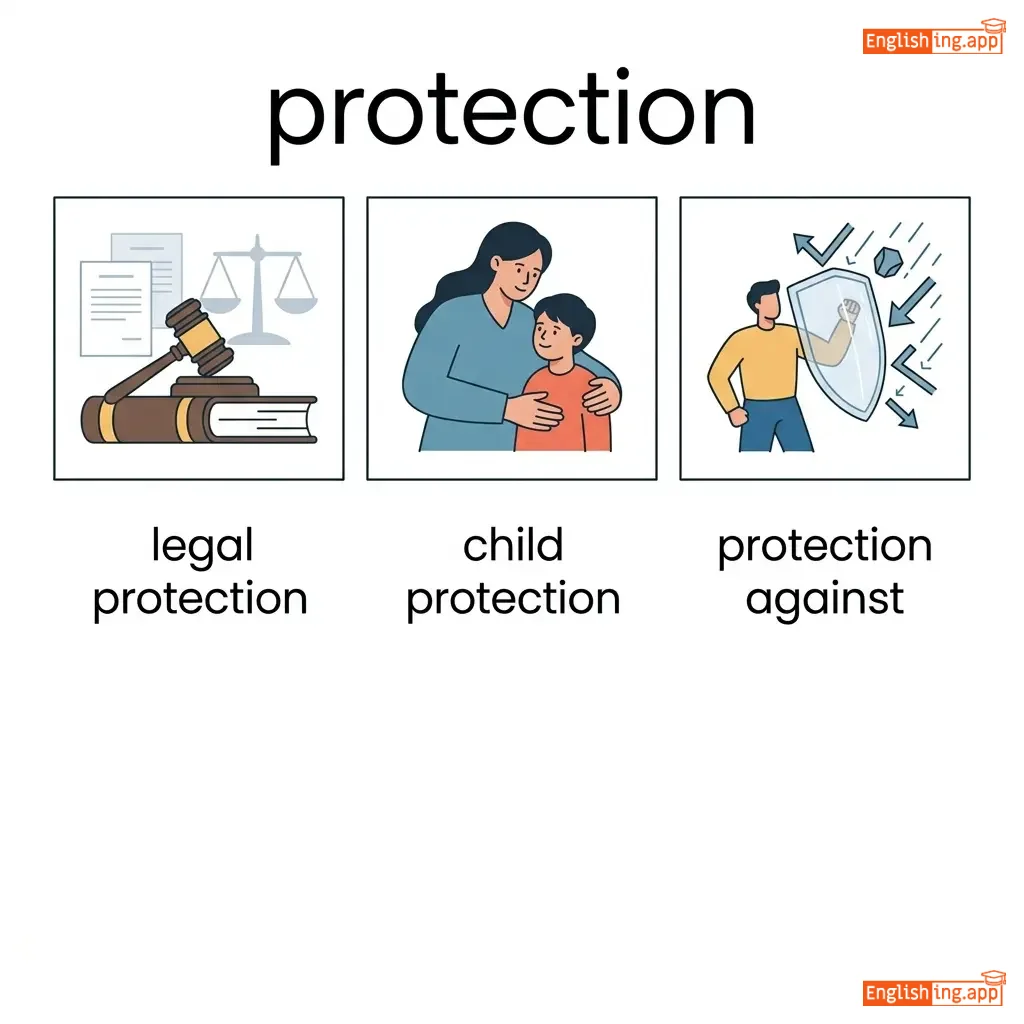
legal protection, child protection, protection against, protection from
••••••
|
Счастье — это happiness, которое приходит, когда сердце полно радости.
••••••
|
|
🛡️
••••••
|
/prəˈtɛktɪv/
adjective
(протектив)
••••••
|
- •••••• |
защитный
zashchitnyy
••••••
|
- •••••• | - •••••• | - •••••• | - •••••• |
giving or capable of giving protection; shielding from harm or danger
••••••
|
She wore a protective helmet while riding her bike. |
Она носила защитный шлем, когда каталась на велосипеде.
Ona nosila zashchitnyy shlem, kogda katalas' na velosipede.
••••••
|
protective instinct |
a natural tendency to guard someone from harm
••••••
|
защитный инстинкт
zashchitnyy instinkt
••••••
|
defensive, shielding, guarding, preventative, preventive
••••••
|
harmful, dangerous, unsafe
••••••
|
protective gear, protective clothing, protective measure, protective instinct
••••••
|
Protective означает защиту, как защитный инстинкт, который всегда включается, когда кто-то в опасности.
••••••
|
|
🍖
••••••
|
/ˈproʊtiːn/
noun
(протеин)
••••••
|
- •••••• |
белок
belok
••••••
|
- •••••• | - •••••• | - •••••• | - •••••• |
a molecule composed of amino acids essential for bodily functions
••••••
|
Proteins are essential for building and repairing tissues in the body.
Белки необходимы для построения и восстановления тканей организма.
••••••
|
Белки необходимы для построения и восстановления тканей организма.
Belki neobkhodimy dlya postroeniya i vosstanovleniya tkani organizma.
••••••
|
- •••••• | - •••••• | - •••••• |
amino acids, peptides, enzymes, nutrients
••••••
|
carbohydrates, fats
••••••
|
protein synthesis, high-protein foods, protein shake
••••••
|
Belok PRO TEIN: Белок строит тело, PRO TEIN даёт силу мышцам.
••••••
|
|
✊
••••••
|
/ˈproʊtest/
verb
(протест)
••••••
|
|
протестовать
protestovat
••••••
|
protested
протестировал
••••••
|
protested
протестировал
••••••
|
protests
протестирует
••••••
|
protesting
протестируя
••••••
|
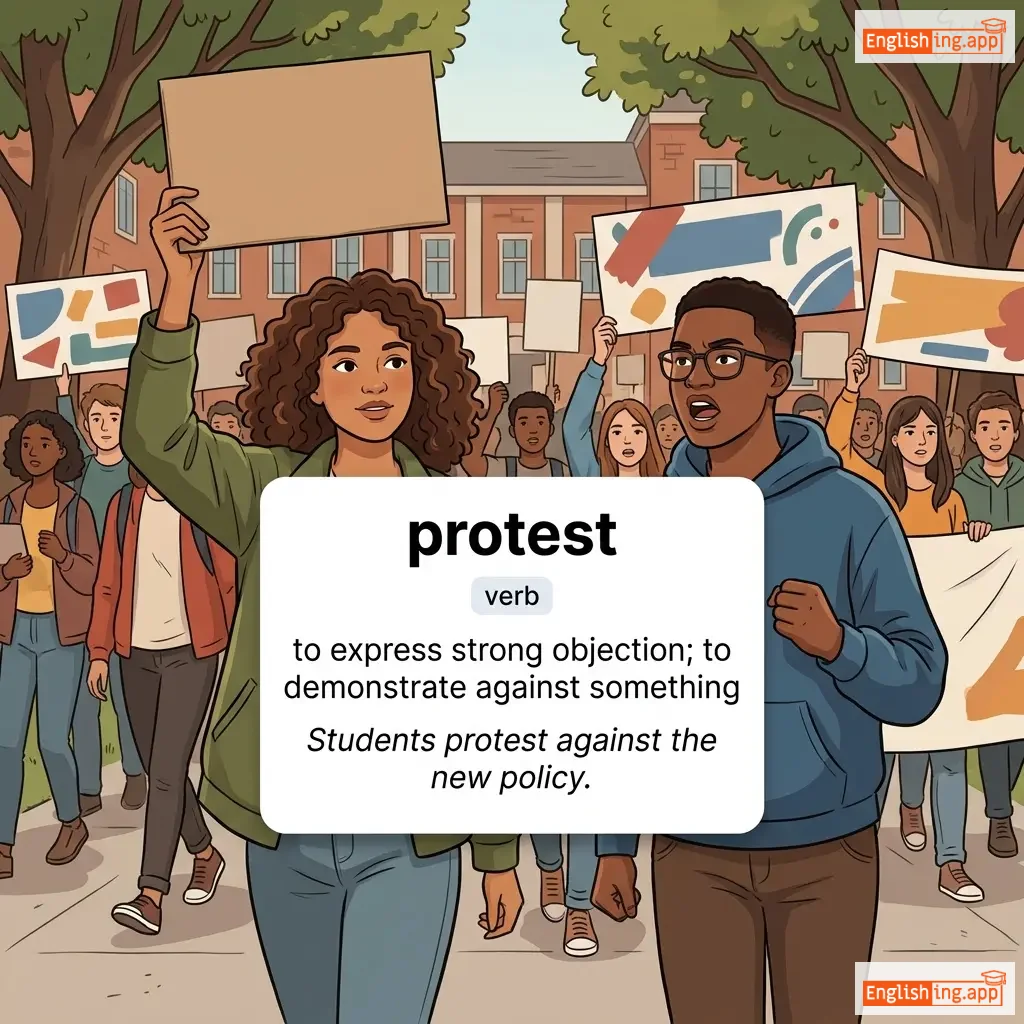
to express strong objection; to demonstrate against something
••••••
|
Students protest against the new policy.
Студенты протестуют против новой политики.
••••••
|
Студенты протестуют против новой политики.
Studenty protestuyut protiv novoy politiki.
••••••
|
- •••••• | - •••••• | - •••••• |
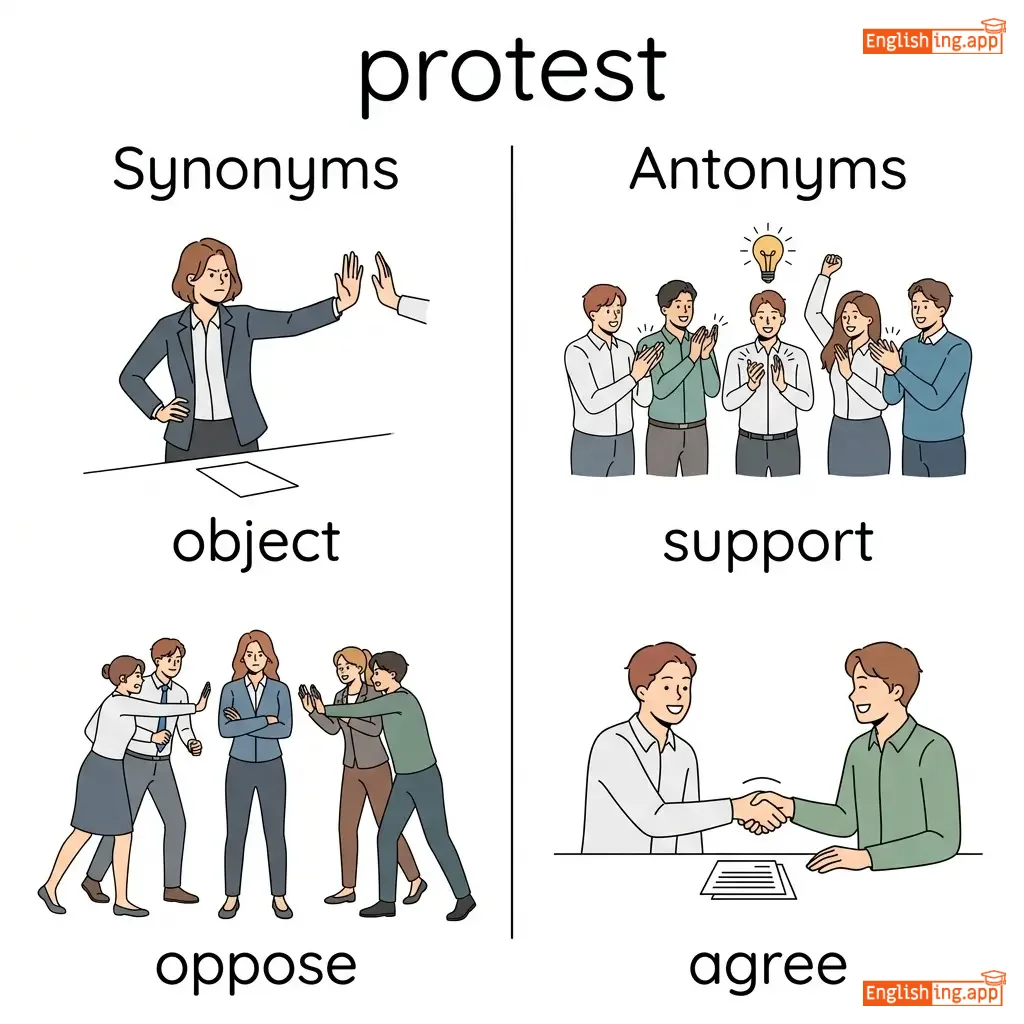
object, oppose, demonstrate, complain
••••••
|
support, agree, accept, approve
••••••
|
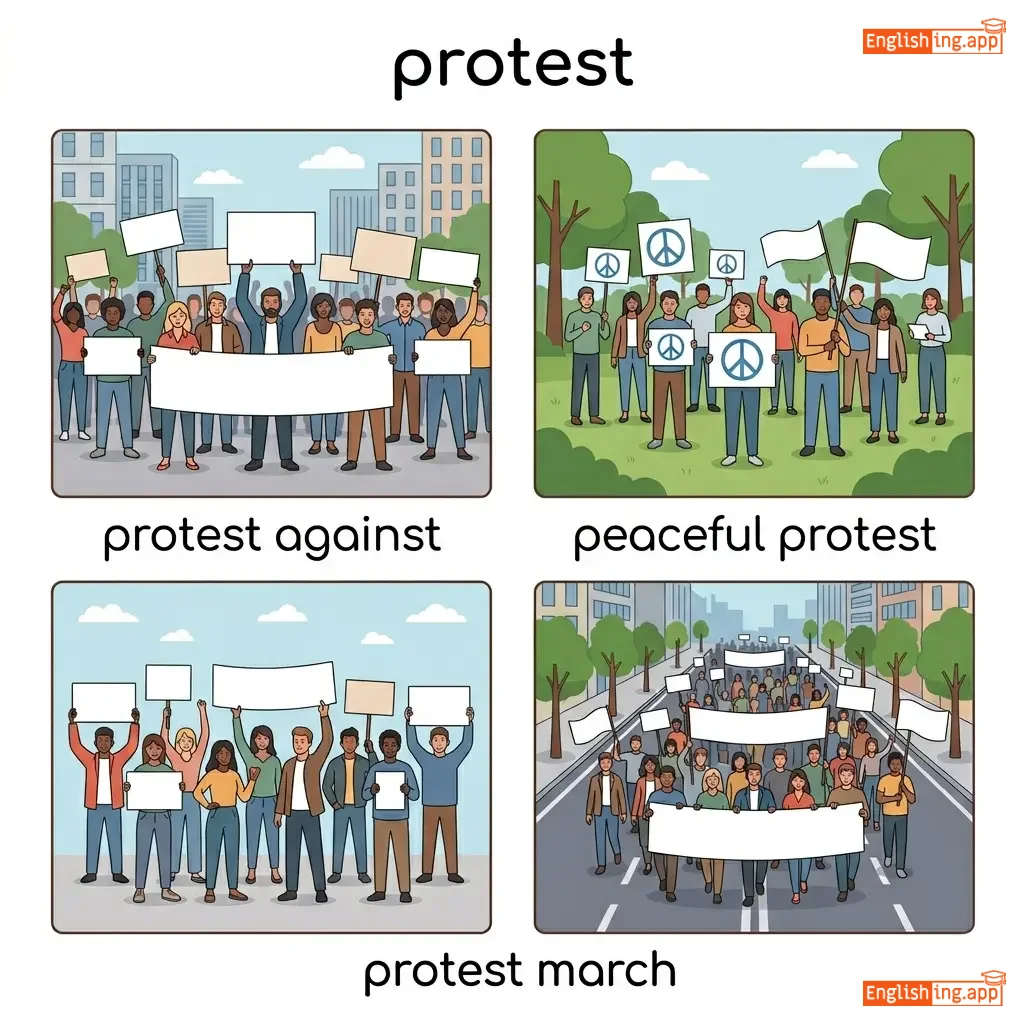
protest against, peaceful protest, protest march, strongly protest
••••••
|
Протестовать = Протест + Восклицание (Когда кто-то протестует, он кричит)
••••••
|
|
🧑🎤
••••••
|
/prəˈtɛstər/
noun
(prəˈtɛstər)
••••••
|
- •••••• |
протестующий
protestuyushchiy
••••••
|
- •••••• | - •••••• | - •••••• | - •••••• |
a person who takes part in a protest or demonstration
••••••
|
The protester spoke passionately about the cause. |
Протестующий страстно говорил о причине.
Protestuyushchiy strastno govoril o prichine.
••••••
|
- •••••• | - •••••• | - •••••• |
demonstrator, activist, campaigner, challenger
••••••
|
supporter, follower, bystander
••••••
|
peaceful protester, passionate protester, angry protester, student protester
••••••
|
Протестующие (protestuyushchie) всегда говорят страстно.
••••••
|
|
📜
••••••
|
/ˈproʊtəkɔːl/
noun
(протокол)
••••••
|
- •••••• |
протокол
protokol
••••••
|
- •••••• | - •••••• | - •••••• | - •••••• |
an official procedure or system of rules
••••••
|
The security team followed strict protocol during the event.
Команда безопасности следовала строгому протоколу во время мероприятия.
••••••
|
Команда безопасности следовала строгому протоколу во время мероприятия.
Komanda bezopasnosti sledovala strohmu protokolu vo vremya meropriyatiya.
••••••
|
protocol breach
нарушение протокола
••••••
|
failure to follow established rules
••••••
|
нарушение протокола
narushenie protokola
••••••
|
procedure, rules, code, convention, guideline
••••••
|
chaos, disorder, improvisation
••••••
|
follow protocol, security protocol, communication protocol, diplomatic protocol
••••••
|
Протокол — это как свод правил, не следуя которому, как на экзамене, можно получить наказание.
••••••
|
|
🦚
••••••
|
/praʊd/
adjective
(praud)
••••••
|
- •••••• |
гордый
gordyy
••••••
|
- •••••• | - •••••• | - •••••• | - •••••• |
Feeling deep pleasure or satisfaction as a result of achievements or qualities.
••••••
|
She felt proud of her son's accomplishments. |
Она гордилась достижениями своего сына.
Ona gordilas' dostizheniyami svoego syna.
••••••
|
proud as a peacock |
extremely proud or arrogant
••••••
|
гордый, как павлин
gordyy, kak pavlin
••••••
|
pleased, honored, satisfied, delighted
••••••
|
ashamed, humble
••••••
|
proud of, feel proud, proud moment, proud parent
••••••
|
Proud означает гордиться своими или чужими успехами.
••••••
|
|
🏆
••••••
|
/ˈpraʊdli/
adverb
(праудли)
••••••
|
- •••••• |
с гордостью
s gordostyu
••••••
|
- •••••• | - •••••• | - •••••• | - •••••• |
in a way that shows pride or satisfaction; with a sense of honor or achievement
••••••
|
She proudly displayed her achievements to her family.
Ши праудли дисплейд хёр ачивментс ту хёр фэмили.
••••••
|
Она с гордостью показала свои достижения семье.
ona s gordostyu pokazala svoi dostizheniya semye
••••••
|
wear proudly
вэа праудли
••••••
|
to show something with pride and confidence
••••••
|
носить с гордостью
nosit s gordostyu
••••••
|
confidently, honorably, triumphantly, self-respectingly
••••••
|
shamefully, humbly
••••••
|
proudly announce, proudly display, proudly present, proudly wear
••••••
|
Gordost = pride, значит proudly
••••••
|
|
✅
••••••
|
/pruːv/
verb
(pruv)
••••••
|

|
доказать
dokazat'
••••••
|
proved
pruːvd
••••••
|
proved
pruːvd
••••••
|
proves
pruːvz
••••••
|
proving
pruːvɪŋ
••••••
|
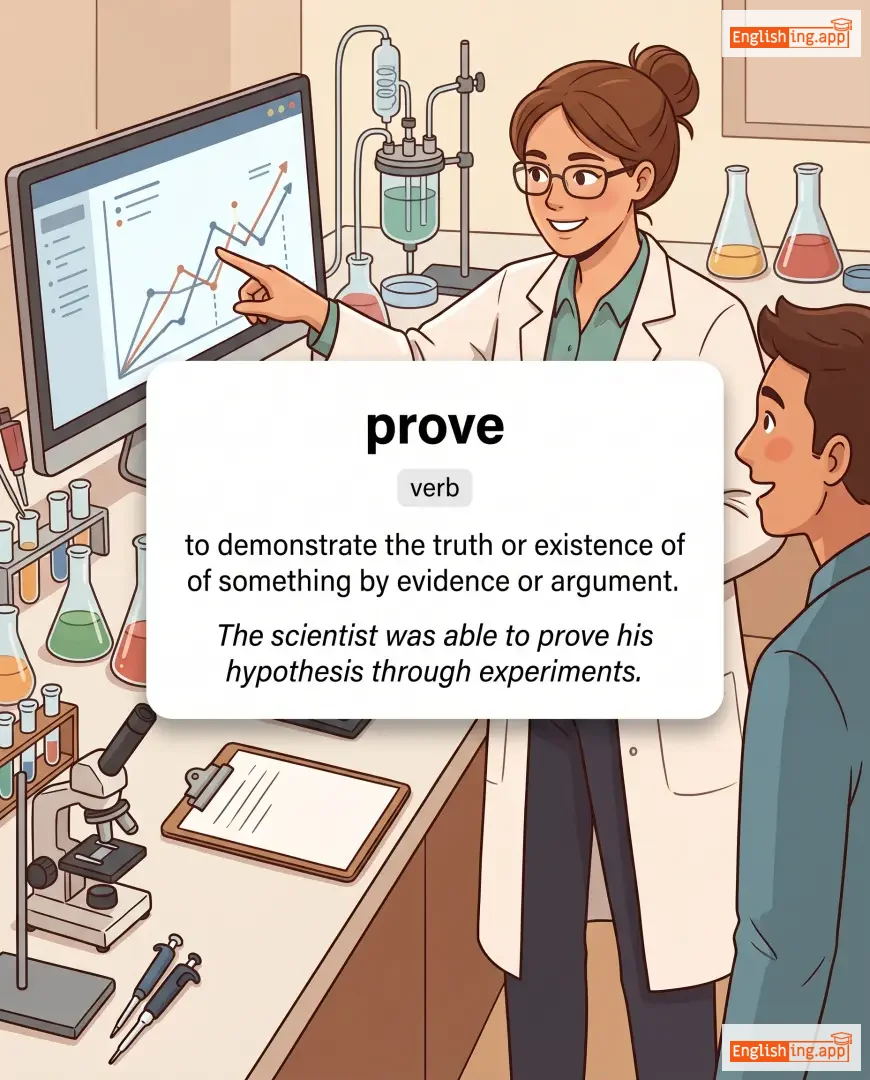
to show that something is true; to demonstrate
••••••
|
The evidence will prove his innocence.
Доказательства докажут его невиновность.
••••••
|
Доказательства докажут его невиновность.
Dokazatel'stva dokazhut ego nevinovnost'.
••••••
|
- •••••• | - •••••• | - •••••• |
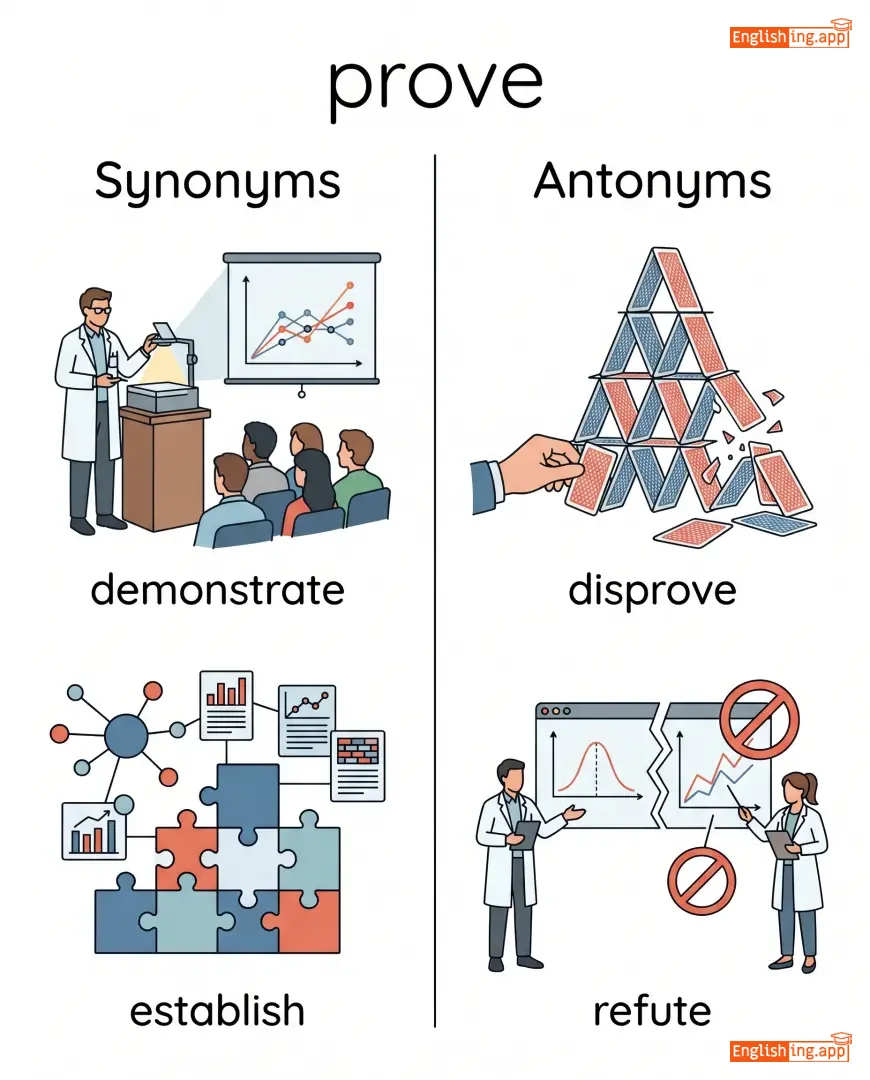
demonstrate, establish, verify, confirm
••••••
|
disprove, refute, contradict
••••••
|
prove innocence, prove wrong, prove right, prove point
••••••
|
В русском языке 'доказать' означает доказательство чего-то, как когда ты объясняешь кому-то правду.
••••••
|
|
📦
••••••
|
/prəˈvaɪd/
verb
(prə-vaid)
••••••
|
- •••••• |
предоставить
predostavit'
••••••
|
provided
pro-vaid-ed
••••••
|
provided
pro-vaid-ed
••••••
|
provides
pro-vaids
••••••
|
providing
pro-vaiding
••••••
|
to give or supply something that is needed or wanted
••••••
|
The teacher will provide extra materials for the students.
учитель предоставит дополнительные материалы для студентов.
••••••
|
Учитель предоставит дополнительные материалы для студентов.
Uchitel' predostavit dopolnitel'nye materialy dlya studentov.
••••••
|
provide for
обеспечить для
••••••
|
to take care of someone by supplying what they need
••••••
|
заботиться о
zabotit'sya o
••••••
|
give, supply, furnish, offer, deliver
••••••
|
withhold, deprive, refuse
••••••
|
provide information, provide support, provide service, provide assistance
••••••
|
Предоставить — это когда даешь все необходимое.
••••••
|
|
💼
••••••
|
/prəˈvaɪdər/
noun
(prəˈvaɪdər)
••••••
|
- •••••• |
поставщик
postavshchik
••••••
|
- •••••• | - •••••• | - •••••• | - •••••• |
a person or thing that provides something.
••••••
|
The service provider ensures that all customers receive timely support. |
Поставщик услуг гарантирует, что все клиенты получат своевременную поддержку.
Postavshchik uslug garantirovat, chto vse klienty poluchat svoevremennuyu podderzhku.
••••••
|
- •••••• | - •••••• | - •••••• |
supplier, distributor, giver, source
••••••
|
receiver, consumer, taker
••••••
|
service provider, internet provider, health provider, financial provider
••••••
|
Поставщик предоставляет вам услуги и поддержку!
••••••
|
|
🌍
••••••
|
/ˈprɒvɪns/
noun
(провинс)
••••••
|
- •••••• |
провинция
provintsiya
••••••
|
- •••••• | - •••••• | - •••••• | - •••••• |
a principal administrative division of certain countries or empires.
••••••
|
The province is known for its rich cultural heritage and stunning landscapes. |
Провинция известна своим богатым культурным наследием и потрясающими пейзажами.
Provintsia izvestna svoim bogatym kul'turnym naslediem i potryasayushchimi peyzazham.
••••••
|
- •••••• | - •••••• | - •••••• |
region, area, district, state
••••••
|
city, town, municipality
••••••
|
province capital, province government, rural province, coastal province
••••••
|
Province = PROven cultural value in every area!
••••••
|
|
🏞️
••••••
|
/prəˈvɪnʃəl/
adjective
(provinciial)
••••••
|
|
провинциальный
provintsial'nyy
••••••
|
- •••••• | - •••••• | - •••••• | - •••••• |
relating to a province or the regions outside the capital city; often suggesting narrow-mindedness
••••••
|
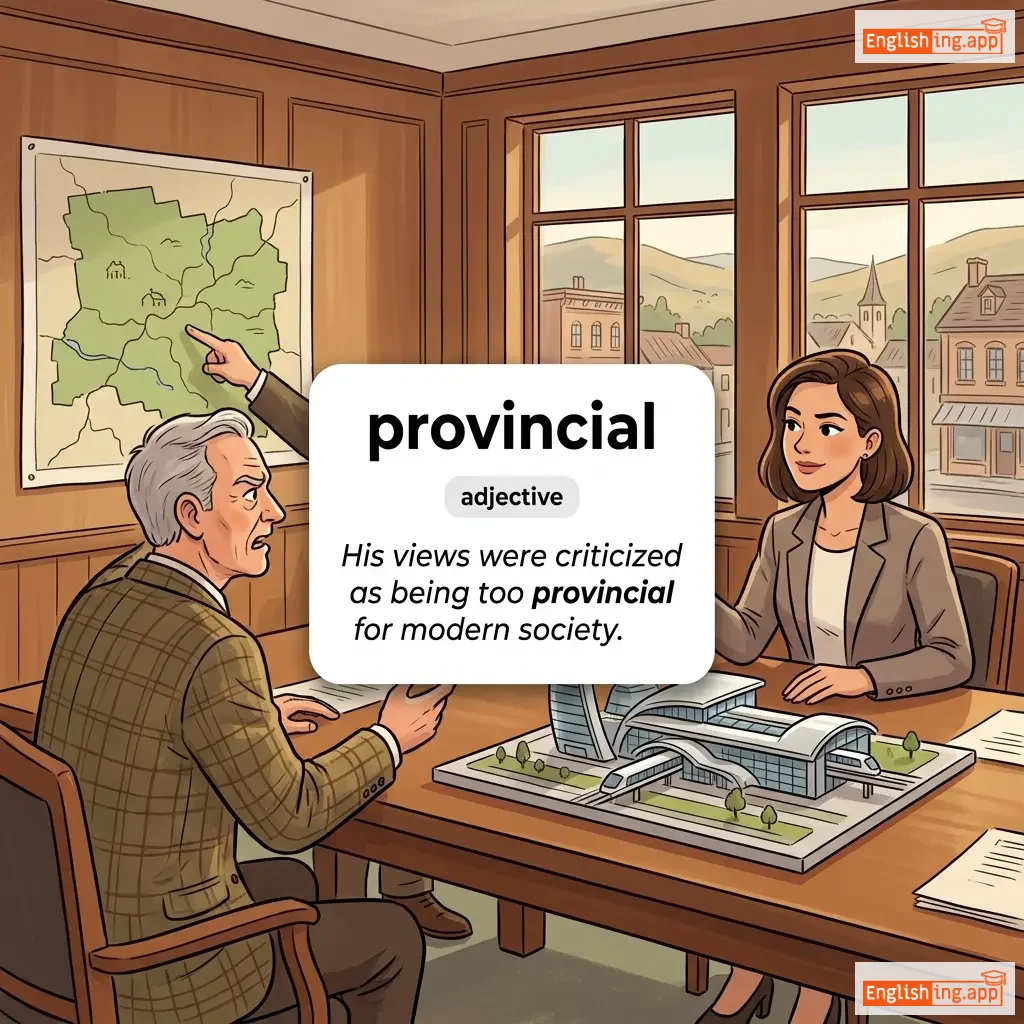
His views were criticized as being too provincial for modern society.
Его взгляды были раскритикованы как слишком провинциальные для современного общества.
••••••
|
Его взгляды были раскритикованы как слишком провинциальные для современного общества.
Ego vzglyady byli raskritikovany kak slishkom provintsial'nye dlya sovremennogo obshchestva.
••••••
|
provincial attitude
провинциальное мышление
••••••
|
a narrow or limited way of thinking
••••••
|
узкий образ мыслей
uzkiy obraz mysley
••••••
|
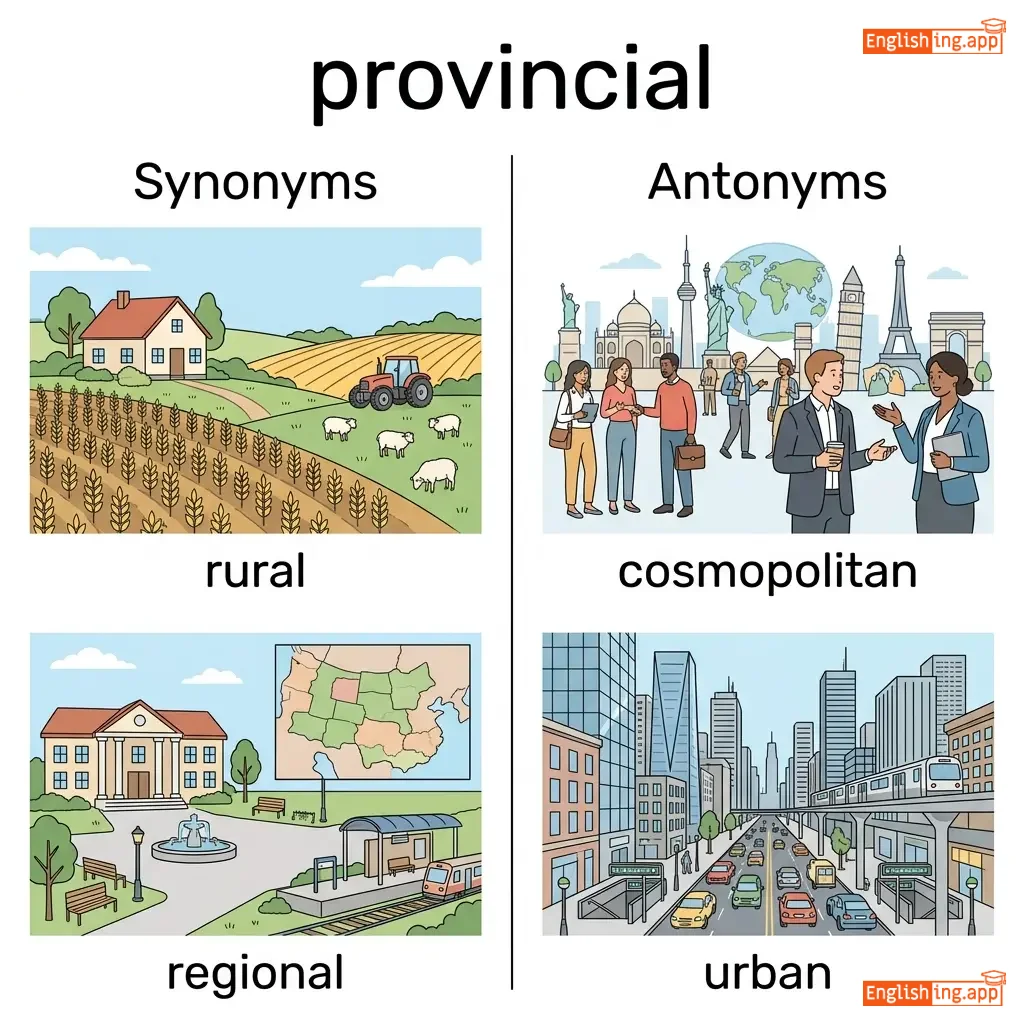
rural, regional, parochial, local, insular
••••••
|
cosmopolitan, urban, worldly
••••••
|
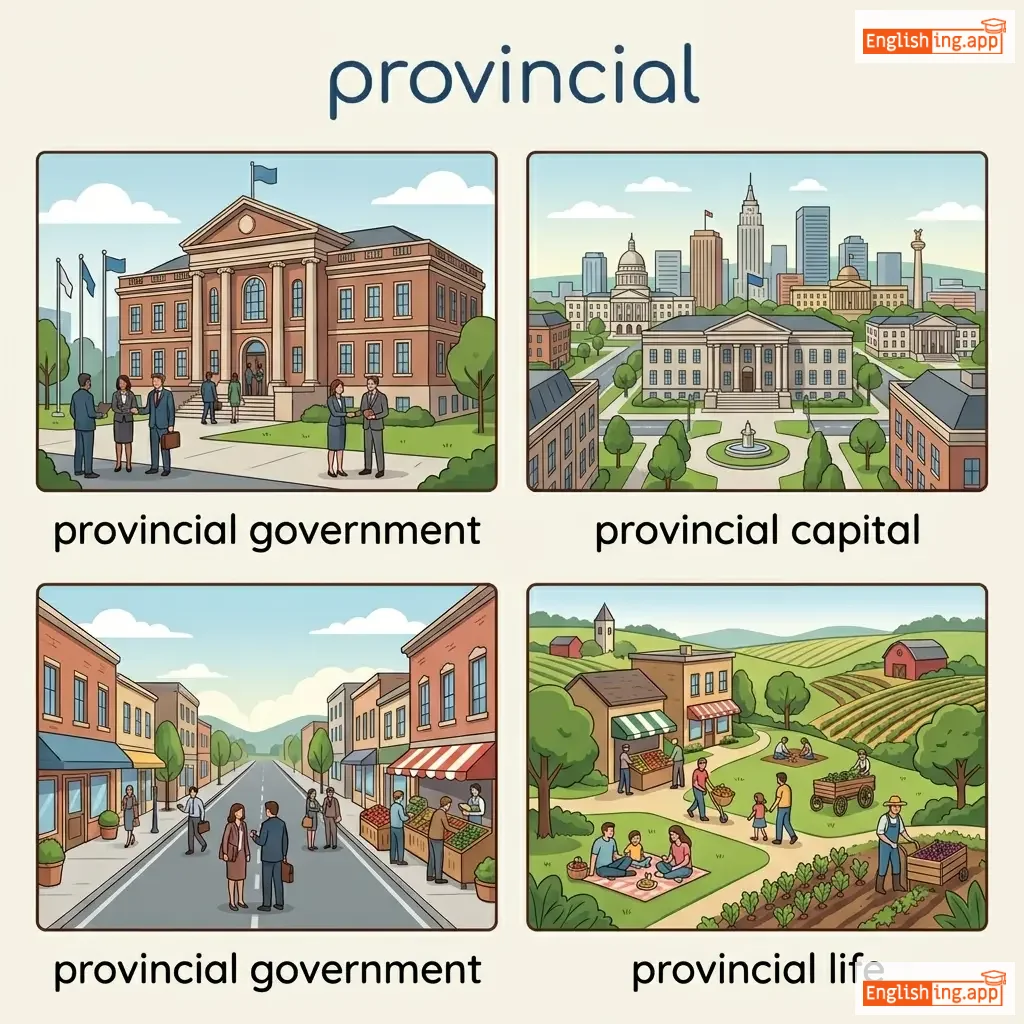
provincial government, provincial capital, provincial life, provincial politics
••••••
|
Provincial означает что-то, относящееся к провинции, с ограниченным мировоззрением.
••••••
|
|
📜
••••••
|
/prəˈvɪʒən/
noun
(провизи́он)
••••••
|
- •••••• |
положение / условие
polozhenie / uslovie
••••••
|
- •••••• | - •••••• | - •••••• | - •••••• |
the act of providing or supplying something; a condition in a legal document
••••••
|
The contract includes a provision for early termination.
Контракт включает положение о досрочном расторжении.
••••••
|
Контракт включает положение о досрочном расторжении.
Kontrakt vklyuchayet polozhenie o dosrochnom rastorzhenii.
••••••
|
make provision for
предусмотреть для
••••••
|
to prepare or plan for something in advance
••••••
|
подготовить для
podgotovit' dlya
••••••
|
supply, arrangement, clause, requirement, stipulation
••••••
|
neglect, denial, refusal
••••••
|
food provision, legal provision, make provision, provision for
••••••
|
Provision означает предоставить - положение или условие для соглашения.
••••••
|
|
😡
••••••
|
/prəˈvoʊk/
verb
(провоцировать)
••••••
|
- •••••• |
провоцировать
provotsirovat
••••••
|
provoked
спровоцировал
••••••
|
provoked
спровоцирован
••••••
|
provokes
провоцирует
••••••
|
provoking
провоцируя
••••••
|
To cause someone to become angry or to cause a reaction.
••••••
|
His words provoked a heated argument.
Его слова спровоцировали бурную дискуссию.
••••••
|
Его слова спровоцировали бурную дискуссию.
Ego slova sprovozirovali burnuyu diskussiyu.
••••••
|
provoke anger
провоцировать гнев
••••••
|
to make someone angry
••••••
|
провоцировать гнев
provotsirovat' gnev
••••••
|
incite, irritate, enrage, agitate, stir
••••••
|
soothe, calm, comfort
••••••
|
provoke anger, provoke conflict, provoke a response, provoke a fight
••••••
|
Provoke означает 'провоцировать' – Pro как в 'провоцировать гнев'.
••••••
|
|
🧠
••••••
|
/ˌsaɪkiˈætrɪk/
adjective
••••••
|
- •••••• | - •••••• | - •••••• | - •••••• | - •••••• | - •••••• |
relating to mental illness or its treatment
••••••
|
The psychiatric hospital provides care for those with severe conditions. |
- •••••• | - •••••• | - •••••• | - •••••• |
mental, psychological, therapeutic, neuropsychiatric
••••••
|
physical, healthy, well
••••••
|
psychiatric disorder, psychiatric care, psychiatric treatment, psychiatric institution
••••••
|
No •••••• |
|
🧠
••••••
|
/ˌsaɪkəˈlɒdʒɪkəl/
adjective
(психологический)
••••••
|
- •••••• |
психологический
psikhologicheskiy
••••••
|
- •••••• | - •••••• | - •••••• | - •••••• |
relating to the mind or mental processes.
••••••
|
She studied the psychological effects of trauma on children. |
Она изучала психологические эффекты травмы на детей.
Ona izuchala psikhologicheskie effekty travmy na detey.
••••••
|
- •••••• | - •••••• | - •••••• |
mental, emotional, cognitive, behavioral
••••••
|
physical, bodily, material
••••••
|
psychological impact, psychological health, psychological research, psychological trauma
••••••
|
Psychological = 'Психе' связан с твоим разумом!
••••••
|
|
🧠
••••••
|
/saɪˈkɒlədʒɪst/
noun
(психолог)
••••••
|
- •••••• |
психолог
psikholog
••••••
|
- •••••• | - •••••• | - •••••• | - •••••• |
a person who studies mental processes and behavior
••••••
|
The psychologist helped him cope with his anxiety. |
Психолог помог ему справиться с его тревожностью.
Psikholog pomog emu spravitsya s ego trevozhnost'yu.
••••••
|
- •••••• | - •••••• | - •••••• |
therapist, counselor, psychiatrist, analyst
••••••
|
patient, sufferer
••••••
|
clinical psychologist, child psychologist, psychologist consultation
••••••
|
Психолог (psikholog) помогает в решении проблем с мыслями.
••••••
|
|
📖
••••••
|
/saɪˈkɒlədʒi/
noun
(психология)
••••••
|
- •••••• |
психология
psikhologiya
••••••
|
- •••••• | - •••••• | - •••••• | - •••••• |
the scientific study of the mind and behavior
••••••
|
Psychology helps us understand how people think and act. |
Психология помогает нам понять, как люди думают и действуют.
Psikhologiya pomogayet nam ponyat', kak lyudi dumayut i deystvuyut.
••••••
|
pop psychology |
simplified psychological concepts popularized for mass audiences
••••••
|
поп-психология
pop-psikhologiya
••••••
|
behavioral science, study of mind, cognitive science, psychoanalysis, therapy
••••••
|
ignorance, unawareness
••••••
|
study psychology, psychology class, psychology research, psychology student
••••••
|
Psychology = разум + наука
••••••
|
|
🌍
••••••
|
/ˈpʌblɪk/
adjective
(паблик)
••••••
|
- •••••• |
публичный
publichniy
••••••
|
- •••••• | - •••••• | - •••••• | - •••••• |
relating to or affecting the people as a whole
••••••
|
The public demanded action on the issue. |
Общественность потребовала действия по этому вопросу.
Obshchestvennost' potrebovala deystviya po etomu voprosu.
••••••
|
- •••••• | - •••••• | - •••••• |
general, communal, societal, collective
••••••
|
private, personal
••••••
|
public service, public opinion, public event, public sector
••••••
|
публичный (publichniy) означает для всех людей
••••••
|
|
📚
••••••
|
/ˌpʌblɪˈkeɪʃən/
noun
(пабликейшн)
••••••
|
- •••••• |
публикация
publikatsiya
••••••
|
- •••••• | - •••••• | - •••••• | - •••••• |
the act of making something publicly known or available
••••••
|
The publication of the report sparked a debate. |
Публикация отчета вызвала дебаты.
Publikatsiya otcheta vyzvala debaty.
••••••
|
- •••••• | - •••••• | - •••••• |
release, announcement, disclosure, circulation
••••••
|
concealment, suppression
••••••
|
official publication, academic publication, newspaper publication
••••••
|
Публикация (publikatsiya) — это когда что-то становится доступным для всех
••••••
|
|
📢
••••••
|
/pʌˈblɪsəti/
noun
(pʊblɪsɪti)
••••••
|
- •••••• |
реклама
reklama
••••••
|
- •••••• | - •••••• | - •••••• | - •••••• |
the activity of making something known to the public; public attention or exposure
••••••
|
The film gained huge publicity after winning the award. |
Фильм получил большую рекламу после того, как выиграл награду.
Film poluchil bol'shuyu reklamu posle togo, kak vyigral nagradu.
••••••
|
bad publicity |
negative public attention or reputation
••••••
|
плохая реклама
plokhaya reklama
••••••
|
exposure, advertising, promotion, fame, attention
••••••
|
obscurity, secrecy
••••••
|
media publicity, gain publicity, attract publicity, negative publicity
••••••
|
Publicity помогает сделать что-то известным и популярным.
••••••
|
|
👥
••••••
|
/ˈpʌb.lɪk.li/
adverb
(pʊblɪkli)
••••••
|
- •••••• |
публично; открыто;
publichno; otkryto
••••••
|
- •••••• | - •••••• | - •••••• | - •••••• |
in a public manner; openly; for everyone to see or know
••••••
|
The company publicly announced their new policy.
Компания публично объявила свою новую политику.
••••••
|
Компания публично объявила свою новую политику.
Kompaniya publichno obyavila svoyu novuyu politiku.
••••••
|
- •••••• | - •••••• | - •••••• |
openly, overtly, visibly, outwardly
••••••
|
privately, secretly, covertly, internally
••••••
|
publicly announce, publicly available, publicly traded, publicly known
••••••
|
'Publicly' in Russian is ‘публично’ – it’s like announcing openly.
••••••
|
|
📚
••••••
|
/ˈpʌblɪʃ/
verb
(паблиш)
••••••
|

|
опубликовать
opublikovat
••••••
|
published
паблишд
••••••
|
published
паблишд
••••••
|
publishes
паблишес
••••••
|
publishing
паблишинг
••••••
|
to print and distribute books, magazines, etc.; to make information available
••••••
|
The author will publish her new novel next month.
Автор опубликует свой новый роман в следующем месяце.
••••••
|
Автор опубликует свой новый роман в следующем месяце.
Avtor opublikuyet svoy novyy roman v sleduyushchem mesyatse.
••••••
|
- •••••• | - •••••• | - •••••• |
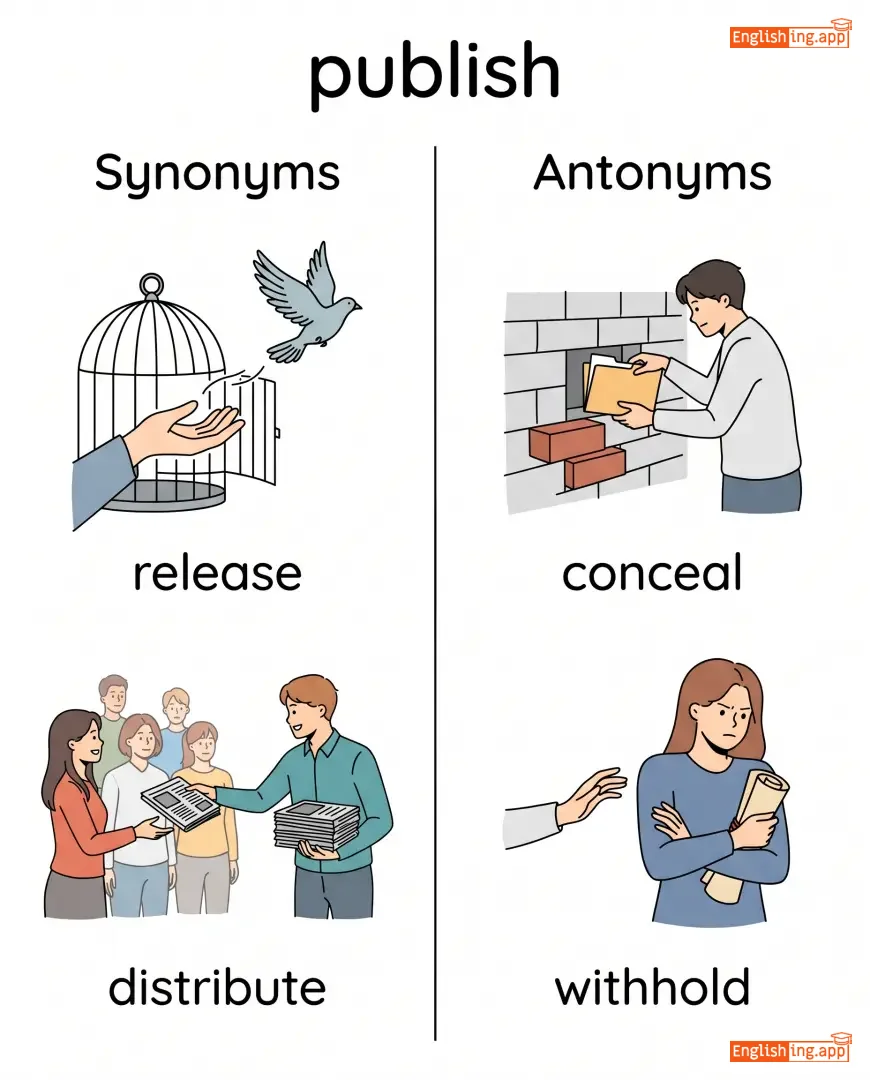
print, release, issue, distribute
••••••
|
suppress, withhold, censor
••••••
|
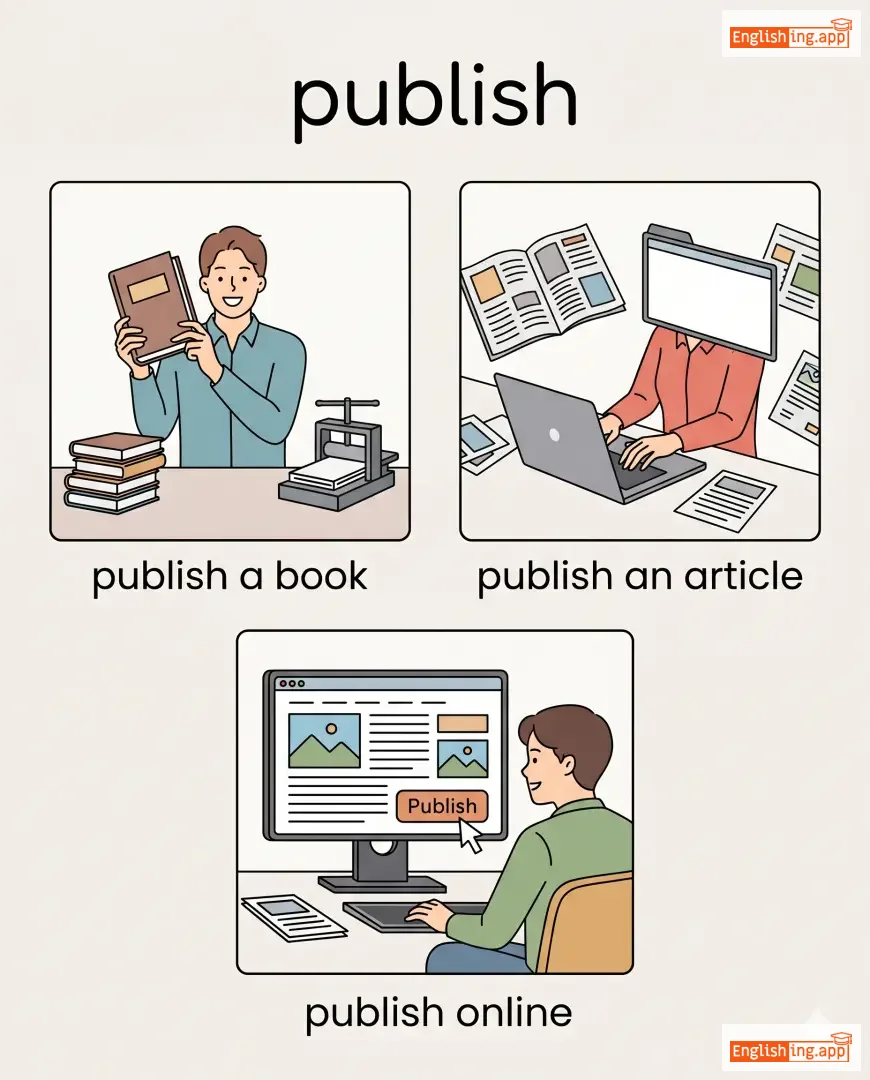
publish book, publish article, publish online, recently publish
••••••
|
Remember to 'publish' your work by saying 'opublikovat' in Russian.
••••••
|
|
📚
••••••
|
/ˈpʌb.lɪ.ʃər/
noun
(ˈpʊblɪʃər)
••••••
|
- •••••• |
издатель
izdatel
••••••
|
- •••••• | - •••••• | - •••••• | - •••••• |
a person or company that produces and distributes books, magazines, or newspapers
••••••
|
The publisher decided to print 10,000 copies of the new novel. |
Издатель решил напечатать 10 000 копий нового романа.
Izdatel' reshil napechatat' 10 000 kopiy novogo romana.
••••••
|
- •••••• | - •••••• | - •••••• |
editor, printer, distributor
••••••
|
reader, consumer
••••••
|
book publisher, magazine publisher, academic publisher, digital publisher
••••••
|
Издатель - тот, кто создает книги и распространяет их.
••••••
|
|
📚
••••••
|
/ˈpʌblɪʃɪŋ/
noun
••••••
|
- •••••• | - •••••• | - •••••• | - •••••• | - •••••• | - •••••• |
the business or activity of preparing and issuing books, journals, or other material for sale
••••••
|
He works in the publishing industry as an editor. |
- •••••• | - •••••• | - •••••• | - •••••• |
printing, issuing, releasing, distribution
••••••
|
concealing, hiding, withholding
••••••
|
publishing house, publishing industry, publishing process, digital publishing
••••••
|
No •••••• |
|
🖐️
••••••
|
/pʊl/
verb
(pul)
••••••
|
- •••••• |
тянуть
tyanut
••••••
|
pulled
pult
••••••
|
pulled
pult
••••••
|
pulls
pulst
••••••
|
pulling
pulling
••••••
|
to exert force on something in order to move it toward oneself
••••••
|
She pulled the door open with all her strength.
ona pultiruet dver otkrytuyu s vsei eey siloi.
••••••
|
Она открыла дверь с всей своей силой.
Ona otkryla dver' s vsei svoei siloi.
••••••
|
pull one's weight
tashchit' svoyu tyazhost
••••••
|
to do one's fair share of work
••••••
|
делать свою часть работы
delat' svoju chast' raboty
••••••
|
drag, tug, haul, draw
••••••
|
push, shove
••••••
|
pull the lever, pull the rope, pull hard, pull away
••••••
|
Tyanite, i budete schastlivy - mozhno tyanut' vse!
••••••
|

