|
表情符号
|
单词 | Images | 翻译 | 过去时 | 过去分词 | 第三人称单数 | 动名词 | 含义 | 例句 | 例句翻译 | 示例表达 | 示例表达含义 | 示例表达翻译 | 同义词 | 反义词 | 搭配词 | 助记符 |
|---|---|---|---|---|---|---|---|---|---|---|---|---|---|---|---|---|---|
|
⚡
••••••
|
/prɑːmpt/
verb, noun, adjective
(pròngpùt)
••••••
|
- •••••• |
促使 / 快速
cùshǐ / kuàisù
••••••
|
prompted
pròngpùted
••••••
|
prompted
pròngpùted
••••••
|
prompts
pròngpùts
••••••
|
prompting
pròngpùting
••••••
|
To cause someone to take action; done without delay.
••••••
|
His speech prompted the audience to ask questions.
他的演讲促使观众提问。
••••••
|
他的演讲促使观众提问。
Tā de yǎnjiǎng cùshǐ guānzhòng tíwèn.
••••••
|
prompt action
快速行动
••••••
|
Immediate or quick action
••••••
|
即时行动
jíshí xíngdòng
••••••
|
urge, incite, quick, immediate, stimulate
••••••
|
delay, hinder, slow
••••••
|
prompt reply, prompt payment, prompt decision, prompt response
••••••
|
Prompt是一个快速响应的动作,就像计算机响应一样。
••••••
|
|
🗯️
••••••
|
/prəˈnaʊns/
verb
(普罗纳恩斯)
••••••
|

|
发音
fayin
••••••
|
pronounced
普罗纳恩斯德
••••••
|
pronounced
普罗纳恩斯德
••••••
|
pronounces
普罗纳恩斯斯
••••••
|
pronouncing
普罗纳恩斯英
••••••
|
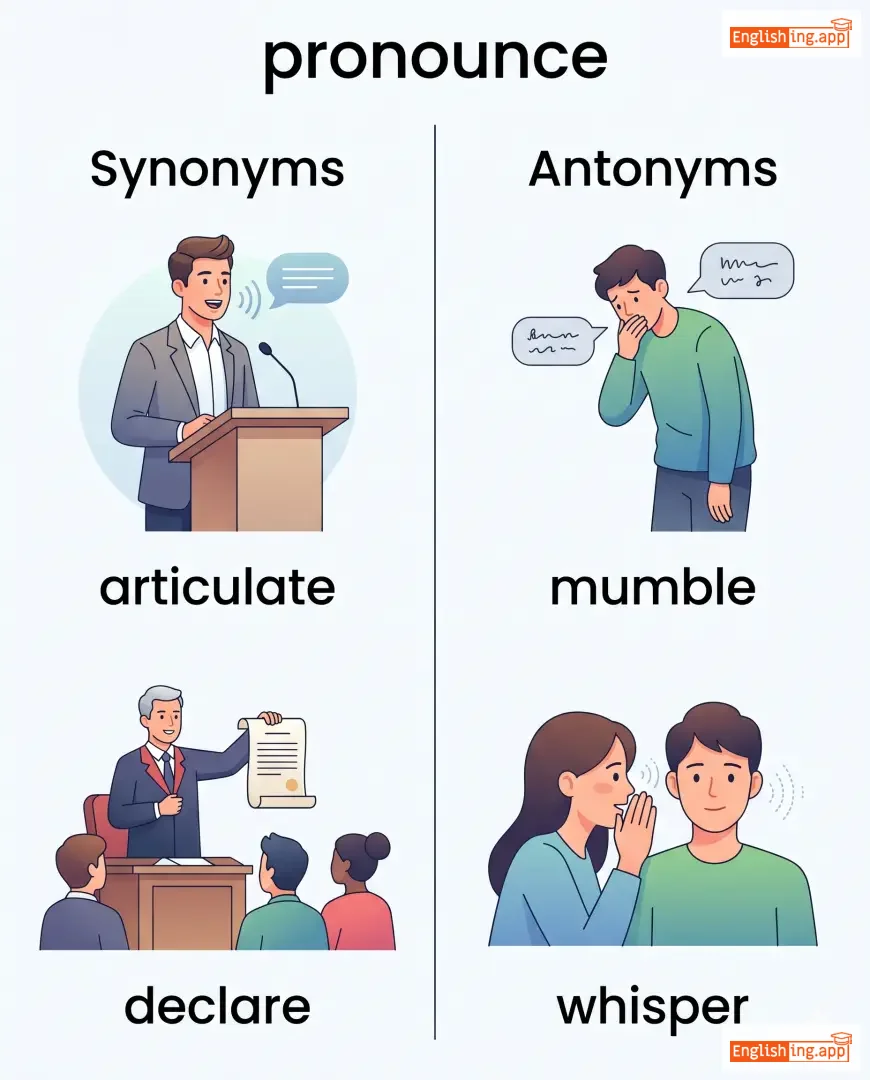
to say words correctly; to declare officially
••••••
|
She can pronounce French words perfectly.
她可以完美地发音法语单词。
••••••
|
她可以完美地发音法语单词。
Tā kěyǐ wánměi de fāyīn fǎyǔ dāncí.
••••••
|
- •••••• | - •••••• | - •••••• |
articulate, declare, announce, state
••••••
|
mumble, whisper, conceal
••••••
|
pronounce correctly, pronounce clearly, pronounce word, hard to pronounce
••••••
|
Think of saying 'fayin' like a native Chinese speaker pronouncing perfectly.
••••••
|
|
🔊
••••••
|
/prəˈnaʊnst/
adjective
(prəˈnaʊnst)
••••••
|
- •••••• |
明显的
mingxian de
••••••
|
- •••••• | - •••••• | - •••••• | - •••••• |
very noticeable or strongly marked
••••••
|
There is a pronounced difference between the two styles. |
这两种风格之间有明显的区别。
Zhe liang zhong fengge zhijian you mingxian de qubie.
••••••
|
- •••••• | - •••••• | - •••••• |
distinct, marked, evident, clear, obvious
••••••
|
subtle, faint, hidden
••••••
|
pronounced effect, pronounced difference, pronounced tendency, pronounced feature
••••••
|
Pronounced意味着清楚地说——因此,明显的
••••••
|
|
🗣️
••••••
|
/prəˌnʌnsiˈeɪʃən/
noun
(普若纳恩西艾申)
••••••
|
- •••••• |
发音
fayin
••••••
|
- •••••• | - •••••• | - •••••• | - •••••• |
the way a word or language is spoken; the act or result of pronouncing words
••••••
|
Her pronunciation of French words has improved significantly.
赫尔 普若纳恩西艾申 奥夫 法伦奇 沃兹 哈兹 英普鲁夫德 西格尼菲肯特利。
••••••
|
她的法语单词发音有了很大提高。
ta de fayu danci fayin youle henda tigao
••••••
|
- •••••• | - •••••• | - •••••• |
enunciation, articulation, diction, utterance
••••••
|
mispronunciation, silence
••••••
|
correct pronunciation, clear pronunciation, standard pronunciation, pronunciation guide
••••••
|
Pronunciation 就是 发音, 单词怎么读。
••••••
|
|
🧑⚖️
••••••
|
/pruːf/
noun
(pruf)
••••••
|
- •••••• |
证据
zhèngjù
••••••
|
- •••••• | - •••••• | - •••••• | - •••••• |
evidence or argument establishing a fact or the truth of a statement
••••••
|
The detective presented proof of the suspect's guilt. |
侦探提供了嫌疑人有罪的证据。
Zhēntàn tígōngle xiányí rén yǒu zuì de zhèngjù.
••••••
|
- •••••• | - •••••• | - •••••• |
evidence, confirmation, verification, testimony
••••••
|
disproof, refutation
••••••
|
provide proof, irrefutable proof, proof of identity
••••••
|
证据 (zhèngjù) means PROOF, just like a detective proving guilt.
••••••
|
|
📢
••••••
|
/ˌprɒpəˈɡændə/
noun
(宣传)
••••••
|
- •••••• |
宣传
xuān chuán
••••••
|
- •••••• | - •••••• | - •••••• | - •••••• |
Information, especially biased or misleading, used to promote a political cause or point of view.
••••••
|
The regime spread propaganda to control public opinion. |
政权传播宣传以控制公众舆论。
zhèngquán chuánbò xuānchuán yǐ kòngzhì gōngzhòng yúlùn.
••••••
|
propaganda machine |
An organized effort to spread biased information systematically.
••••••
|
宣传机器
xuān chuán jī qì
••••••
|
promotion, publicity, misinformation, indoctrination, advertising
••••••
|
truth, fact, information
••••••
|
spread propaganda, political propaganda, propaganda campaign, propaganda machine
••••••
|
宣传即是让别人相信你想让他们相信的东西
••••••
|
|
👔
••••••
|
/ˈprɒpər/
adjective
(pròpèr)
••••••
|
- •••••• |
适当的
shìdàng de
••••••
|
- •••••• | - •••••• | - •••••• | - •••••• |
conforming to accepted standards of behavior or morality
••••••
|
He made sure to wear proper attire for the interview.
Hī māked shūer tū wēr pròper ātàir fóor dè īntervīū.
••••••
|
他确保为面试穿上了适当的服装。
Tā quèbǎo wèi miànshì chuān shàngle shìdàng de fúzhuāng.
••••••
|
- •••••• | - •••••• | - •••••• |
suitable, appropriate, correct, fitting
••••••
|
improper, unsuitable, incorrect
••••••
|
proper attire, proper behavior, proper procedure
••••••
|
Proper means right, just like wearing the right attire!
••••••
|
|
✔️
••••••
|
/ˈprɒpərli/
adverb
(pròpèlì)
••••••
|
- •••••• |
正确地
zhèngquè de
••••••
|
- •••••• | - •••••• | - •••••• | - •••••• |
in the correct or suitable manner
••••••
|
He performed the task properly to avoid mistakes.
他为了避免错误,正确地完成了任务。
••••••
|
他为了避免错误,正确地完成了任务。
Tā wèile bìmiǎn cuòwù, zhèngquè de wánchéngle rènwù.
••••••
|
- •••••• | - •••••• | - •••••• |
correctly, suitably, appropriately, adequately
••••••
|
improperly, incorrectly
••••••
|
perform properly, behave properly, handle properly
••••••
|
Properly means doing something in the right way, like following a recipe!
••••••
|
|
📊
••••••
|
/prəˈpɔːʃən/
noun
••••••
|
- •••••• | - •••••• | - •••••• | - •••••• | - •••••• | - •••••• |
a part, share, or number considered in comparative relation to a whole
••••••
|
The proportion of students passing the exam was high. |
- •••••• | - •••••• | - •••••• | - •••••• |
ratio, percentage, fraction, share
••••••
|
whole, total
••••••
|
right proportion, larger proportion, proportionate amount
••••••
|
No •••••• |
|
📋
••••••
|
/prəˈpəʊ.zəl/
noun
(提议)
••••••
|


|
提案; 建议
tí'àn; jiànyì
••••••
|
- •••••• | - •••••• | - •••••• | - •••••• |
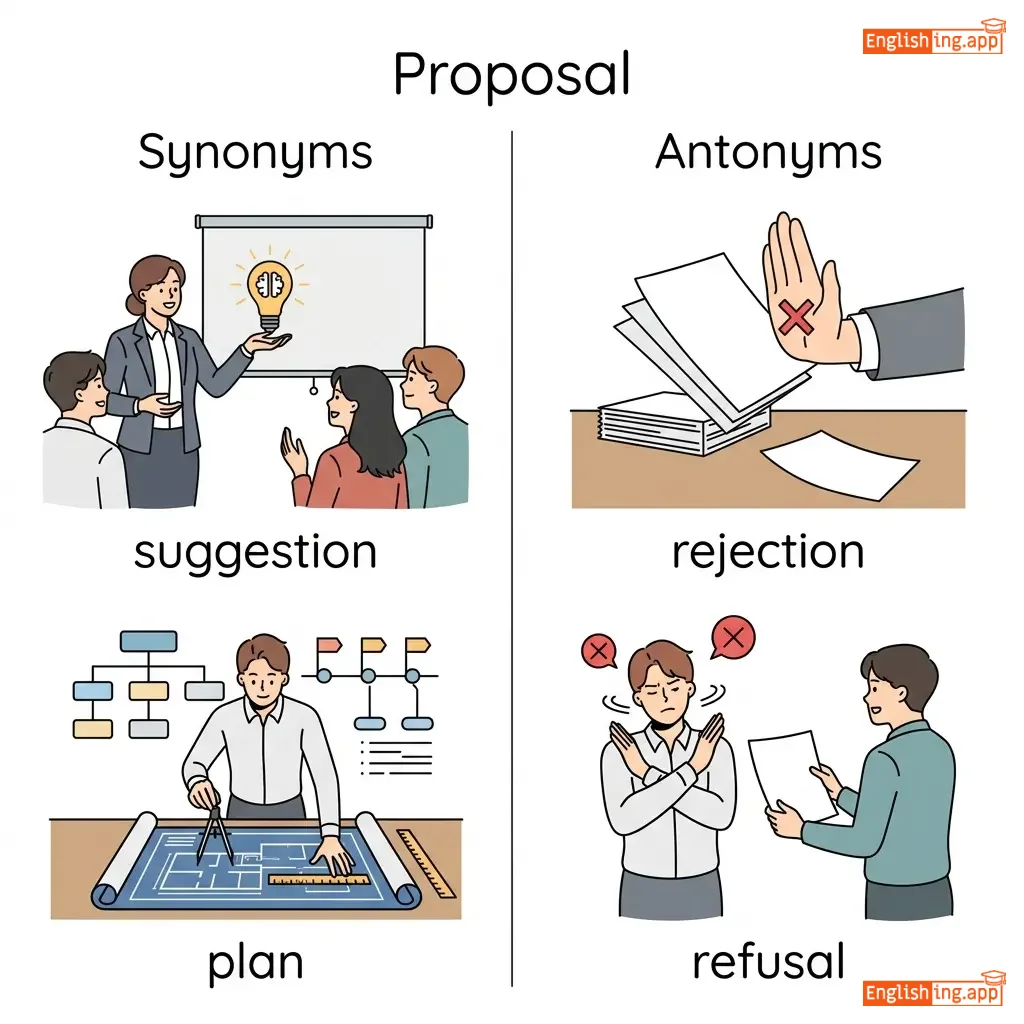
a plan or suggestion presented for consideration; an offer of marriage
••••••
|
The board will review the proposal at next week's meeting.
董事会将在下周的会议上审议提案。
••••••
|
董事会将在下周的会议上审议提案。
Dǒngshìhuì jiāng zài xià zhōu de huìyì shàng shěn yì tí'àn.
••••••
|
- •••••• | - •••••• | - •••••• |
suggestion, plan, offer, recommendation
••••••
|
rejection, refusal, withdrawal
••••••
|
business proposal, marriage proposal, make proposal, accept proposal
••••••
|
提案可以是提出结婚的建议。
••••••
|
|
💍
••••••
|
/prəˈpoʊz/
verb
(própóu)
••••••
|


|
提议
tíyì
••••••
|
proposed
própóud
••••••
|
proposed
própóud
••••••
|
proposes
própóuses
••••••
|
proposing
própóuzing
••••••
|
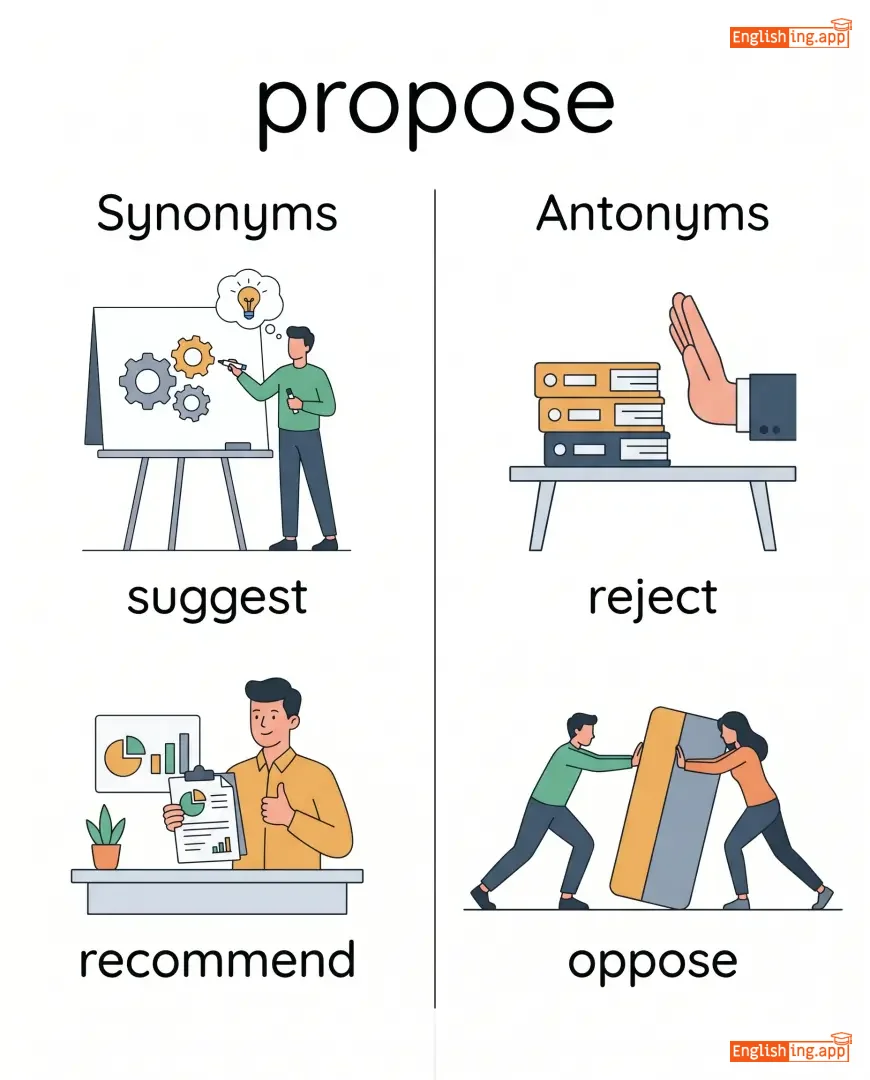
to suggest an idea or plan for consideration; to ask someone to marry you
••••••
|
I propose we take a short break.
我提议我们休息一下。
••••••
|
我提议我们休息一下。
wǒ tíyì wǒmen xiūxi yīxià
••••••
|
- •••••• | - •••••• | - •••••• |
suggest, recommend, offer, present
••••••
|
withdraw, reject, oppose
••••••
|
propose idea, propose solution, propose marriage, propose plan, propose change
••••••
|
提议就是求婚, 提议爱, 不要错过。
••••••
|
|
📑
••••••
|
/prəˈpoʊzd/
adjective
(proʊˈpoʊzd)
••••••
|
- •••••• |
提议的
tíyì de
••••••
|
- •••••• | - •••••• | - •••••• | - •••••• |
suggested or put forward for consideration or discussion
••••••
|
The proposed changes will improve the system. |
提议的变更将改善系统。
Tíyì de biàngē jiāng gǎishàn xìtǒng.
••••••
|
- •••••• | - •••••• | - •••••• |
suggested, recommended, offered, submitted
••••••
|
rejected, opposed, denied
••••••
|
proposed changes, proposed plan, proposed solution
••••••
|
提议的 (tíyì de) 变更将改善系统 - Proposed changes will improve the system.
••••••
|
|
💡
••••••
|
/ˌprɒpəˈzɪʃən/
noun
(提议)
••••••
|
- •••••• |
提议, 计划
tiyi, jihua
••••••
|
- •••••• | - •••••• | - •••••• | - •••••• |
A statement, idea, or plan put forward for consideration or discussion.
••••••
|
The company made a business proposition to the investors.
公司向投资者提出了商业提议。
••••••
|
公司向投资者提出了商业提议。
Gōngsī xiàng tóuzī zhě tíchūle shāngyè tíyì.
••••••
|
a tough proposition
一个困难的提议
••••••
|
something difficult to deal with
••••••
|
一个困难的提议
yīgè kùnnán de tíyì
••••••
|
proposal, suggestion, offer, plan, idea
••••••
|
refusal, rejection
••••••
|
business proposition, marriage proposition, attractive proposition
••••••
|
Proposition意味着提出计划或提议。
••••••
|
|
⚖️
••••••
|
/ˈprɒsɪkjuːt/
verb
(prosecute)
••••••
|
- •••••• |
起诉
qisu
••••••
|
prosecuted
prosecuted
••••••
|
prosecuted
prosecuted
••••••
|
prosecutes
prosecutes
••••••
|
prosecuting
prosecuting
••••••
|
to institute legal proceedings against someone
••••••
|
The lawyer decided to prosecute the case after gathering sufficient evidence.
律师在收集到足够证据后决定起诉此案。
••••••
|
律师在收集到足够证据后决定起诉此案。
Lushi zai shouji dao zugei zhengju hou jueding qisu ci an.
••••••
|
- •••••• | - •••••• | - •••••• |
sue, charge, indict
••••••
|
defend, protect
••••••
|
prosecute a case, prosecute someone, prosecute for theft
••••••
|
起诉一个犯罪者,带来正义!
••••••
|
|
⚖️
••••••
|
/ˌprɒsɪˈkjuːʃən/
noun
(pɾɔsɪkjuˈʃən)
••••••
|
- •••••• |
起诉
qǐsù
••••••
|
- •••••• | - •••••• | - •••••• | - •••••• |
The act of bringing a criminal charge against someone and pursuing legal action in court.
••••••
|
The prosecution presented strong evidence against the defendant. |
起诉方提出了有力的证据反对被告。
Qǐsù fāng tíchūle yǒulì de zhèngjù fǎnduì bèigào.
••••••
|
prosecution rests |
A statement made by the prosecution indicating they have finished presenting their case.
••••••
|
起诉结束
Qǐsù jiéshù
••••••
|
trial, legal action, lawsuit, case, litigation
••••••
|
defense, acquittal, pardon
••••••
|
criminal prosecution, prosecution case, private prosecution, public prosecution
••••••
|
起诉就像是在法庭上追求公正,记住'起'指开始的意思,'诉'是诉讼。
••••••
|
|
⚖️
••••••
|
/ˈprɑsɪˌkjuːtər/
noun
(起诉人)
••••••
|
- •••••• |
检察官
jiancha guan
••••••
|
- •••••• | - •••••• | - •••••• | - •••••• |
a lawyer who represents the government in criminal cases
••••••
|
The prosecutor argued that the defendant was guilty of the crime. |
检察官辩称被告犯有罪。
Jiancha guan bian cheng beigao fan you zui.
••••••
|
- •••••• | - •••••• | - •••••• |
lawyer, attorney, district attorney, advocate
••••••
|
defendant, accused
••••••
|
prosecutor's office, prosecutor's argument, district prosecutor
••••••
|
检察官 (jiancha guan) 维护真理,对抗罪犯 - Prosecutor defends the truth against criminals.
••••••
|
|
🔮
••••••
|
/ˈprɒspɛkt/
noun
(前景)
••••••
|


|
前景
qianjing
••••••
|
- •••••• | - •••••• | - •••••• | - •••••• |
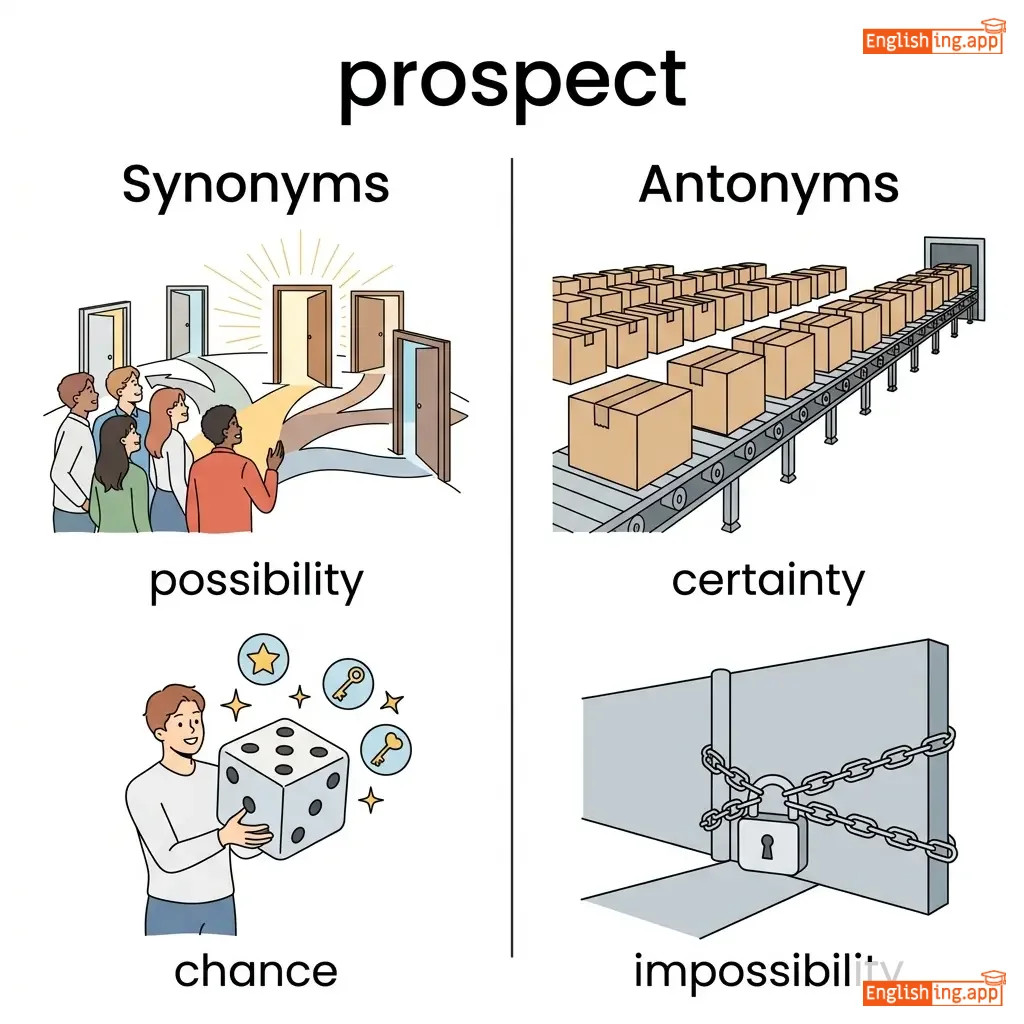
The possibility or likelihood of some future event occurring.
••••••
|
The prospect of traveling abroad excited her. |
出国旅行的前景让她感到兴奋。
Chūguó lǚxíng de qiánjǐng ràng tā gǎndào xīngfèn.
••••••
|
bright prospects |
Good opportunities or chances for the future.
••••••
|
光明前景
guāngmíng qiánjǐng
••••••
|
possibility, chance, outlook, opportunity, likelihood
••••••
|
certainty, impossibility
••••••
|
career prospects, good prospect, business prospect, prospect of success
••••••
|
Prospect 的意思是前景,'Pro' 意味着前方,'spect' 意味着看—往前看就是可能性。
••••••
|
|
🔮
••••••
|
/prəˈspɛktɪv/
adjective
(前景)
••••••
|
- •••••• |
前景的
qianjing de
••••••
|
- •••••• | - •••••• | - •••••• | - •••••• |
likely or expected to happen in the future; potential
••••••
|
The company is meeting with prospective clients next week. |
公司将于下周与潜在客户会面。
Gongsi jiang yu xia zhou yu qianzai kehu huimian.
••••••
|
- •••••• | - •••••• | - •••••• |
potential, possible, likely, anticipated, expected
••••••
|
unlikely, past, former
••••••
|
prospective student, prospective client, prospective buyer, prospective employee
••••••
|
Prospective意味着可能发生的未来事件,所以下次见客户时就会想到前景 = 前景的 (qianjing de)。
••••••
|
|
🌱
••••••
|
/ˈprɒspər/
verb
(普罗斯佩尔)
••••••
|
- •••••• |
繁荣
fánróng
••••••
|
prospered
普罗斯佩尔德
••••••
|
prospered
普罗斯佩尔德
••••••
|
prospers
普罗斯佩尔斯
••••••
|
prospering
普罗斯佩尔英
••••••
|
to succeed or flourish, especially in financial or business matters
••••••
|
With hard work and determination, she managed to prosper in her career.
凭借努力工作和决心,她在事业中取得了成功。
••••••
|
凭借努力工作和决心,她在事业中取得了成功。
Píngjiè nǔlì gōngzuò hé juéxīn, tā zài shìyè zhōng qǔdéle chénggōng.
••••••
|
live long and prosper
长命百岁,繁荣昌盛
••••••
|
a phrase wishing someone a long life and success
••••••
|
长命百岁,繁荣昌盛
Chángmìng bǎisuì, fánróng chāngshèng
••••••
|
flourish, succeed, thrive, grow, advance
••••••
|
fail, decline, struggle
••••••
|
prosper in business, prosper greatly, live long and prosper
••••••
|
Prosper 意味着繁荣,记住 Star Trek 的对话:'长命百岁,繁荣昌盛。'
••••••
|
|
🌟
••••••
|
/prɒˈsper.ə.ti/
noun
(繁荣)
••••••
|

|
繁荣; 成功
fánróng; chénggōng
••••••
|
- •••••• | - •••••• | - •••••• | - •••••• |
the state of being successful and having wealth; economic well-being
••••••
|
The country enjoyed unprecedented prosperity during the economic boom.
该国在经济繁荣时期享受了前所未有的繁荣。
••••••
|
该国在经济繁荣时期享受了前所未有的繁荣。
Gāi guó zài jīngjì fánróng shíqī xiǎngshòu le qián suǒ wèi yǒu de fánróng.
••••••
|
- •••••• | - •••••• | - •••••• |
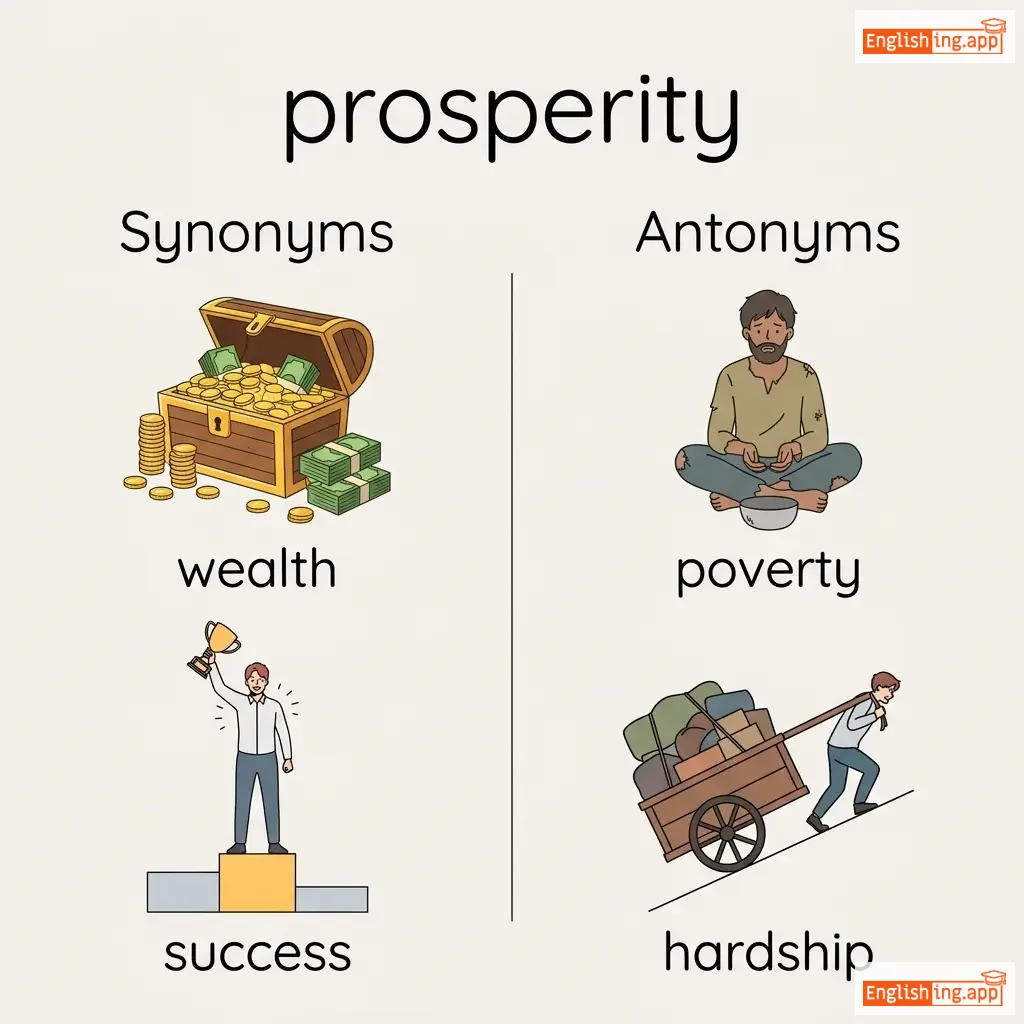
wealth, success, affluence, fortune
••••••
|
poverty, hardship, adversity, decline
••••••
|
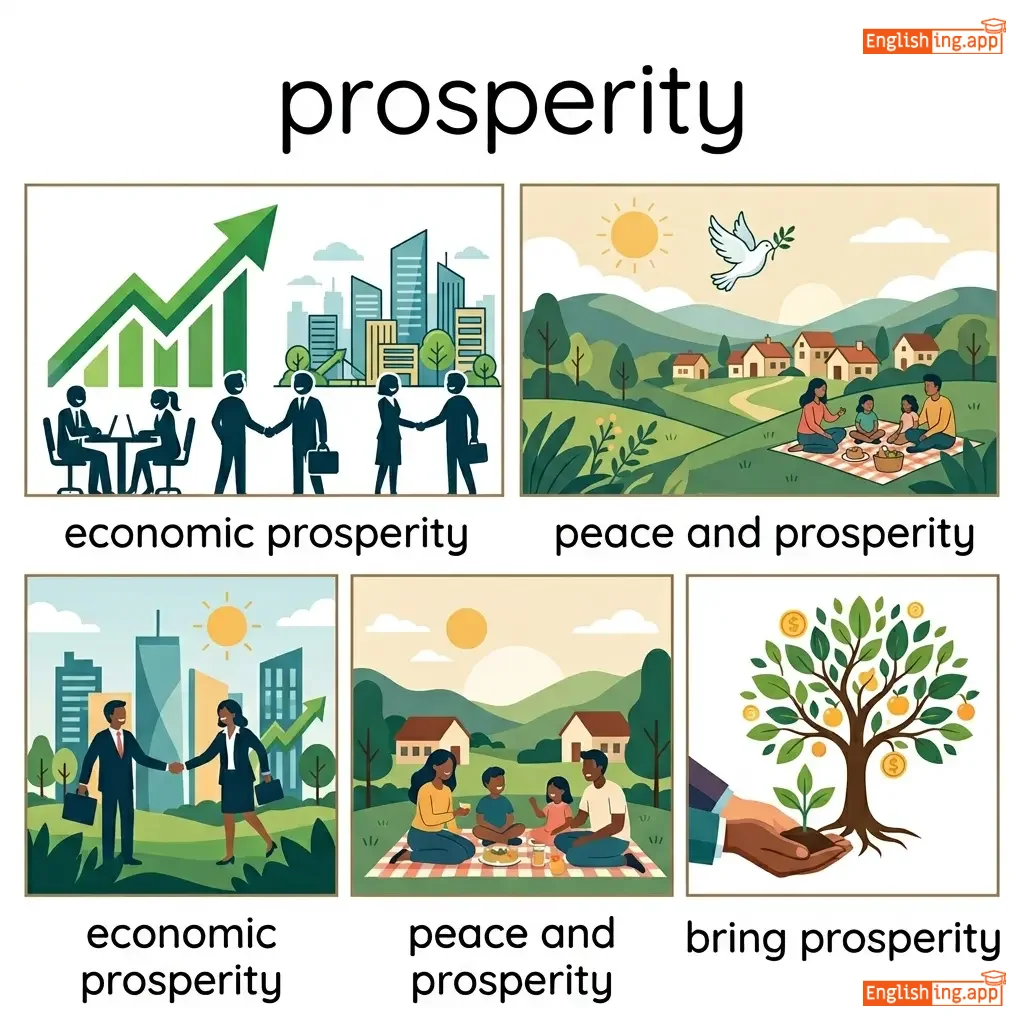
economic prosperity, bring prosperity, period of prosperity, shared prosperity
••••••
|
繁荣意味着成功和财富。
••••••
|
|
💰
••••••
|
/ˈprɒspərəs/
adjective
••••••
|
- •••••• | - •••••• | - •••••• | - •••••• | - •••••• | - •••••• |
successful in material terms; flourishing financially or in general well-being
••••••
|
The town became prosperous after the new trade route opened. |
- •••••• |
prosperous life |
a life filled with wealth, success, and good fortune
••••••
|
- •••••• |
wealthy, thriving, flourishing, affluent, successful
••••••
|
poor, destitute, struggling
••••••
|
prosperous community, prosperous business, prosperous future, prosperous nation
••••••
|
No •••••• |
|
🛡️
••••••
|
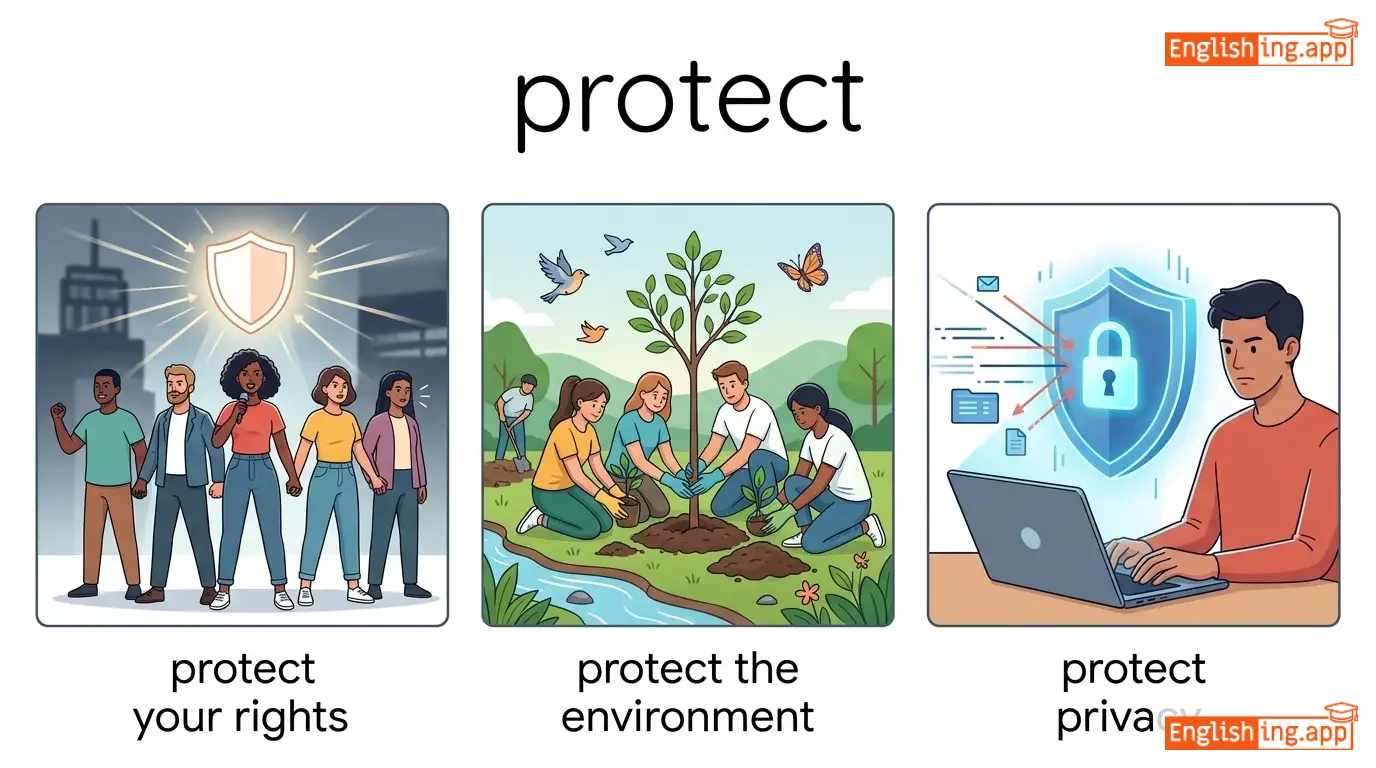
/prəˈtekt/
verb
(保护)
••••••
|
|
保护
baohu
••••••
|
protected
保护了
••••••
|
protected
保护了
••••••
|
protects
保护
••••••
|
protecting
保护着
••••••
|
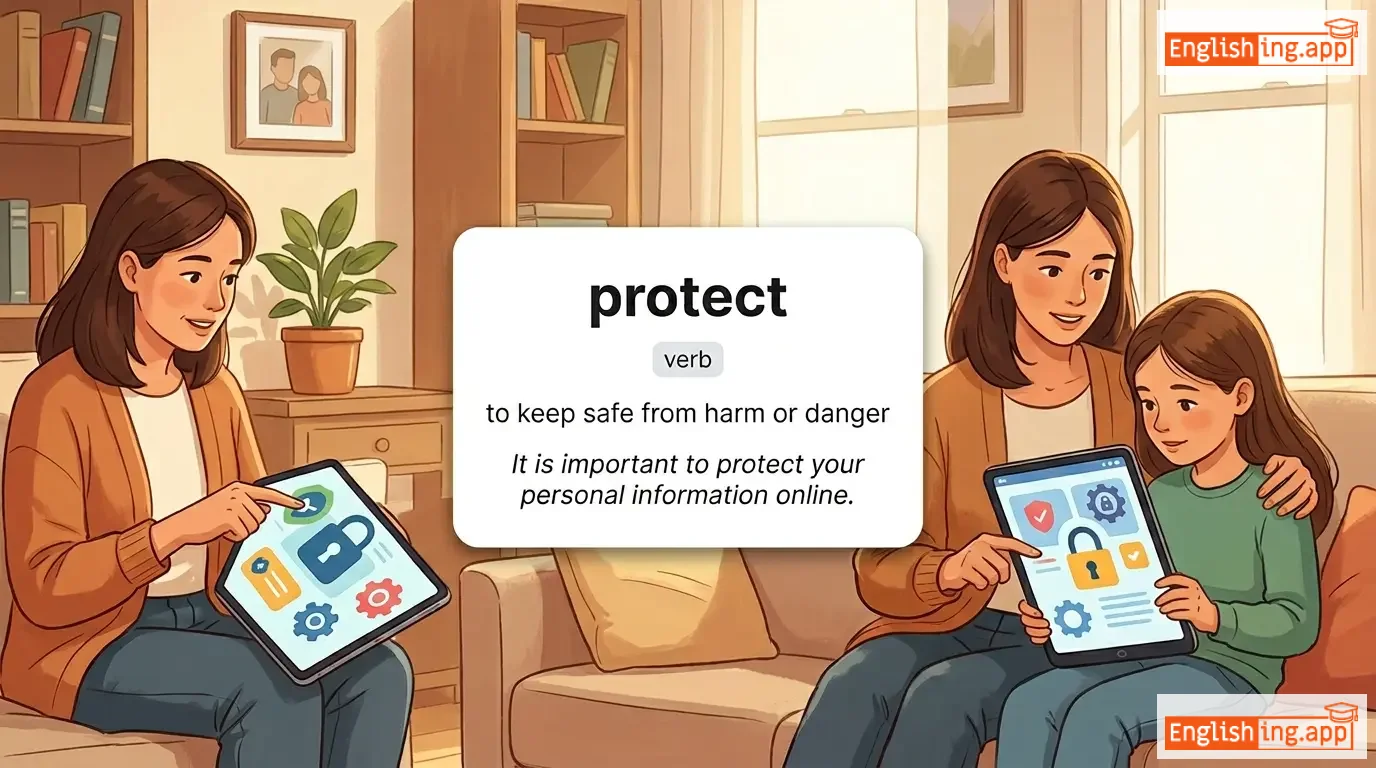
to keep safe from harm or danger; to defend
••••••
|
The helmet protects your head from injury.
头盔保护你的头免受伤害。
••••••
|
头盔保护你的头免受伤害。
Toukuai baohu nide tou mian shou shanghai.
••••••
|
- •••••• | - •••••• | - •••••• |
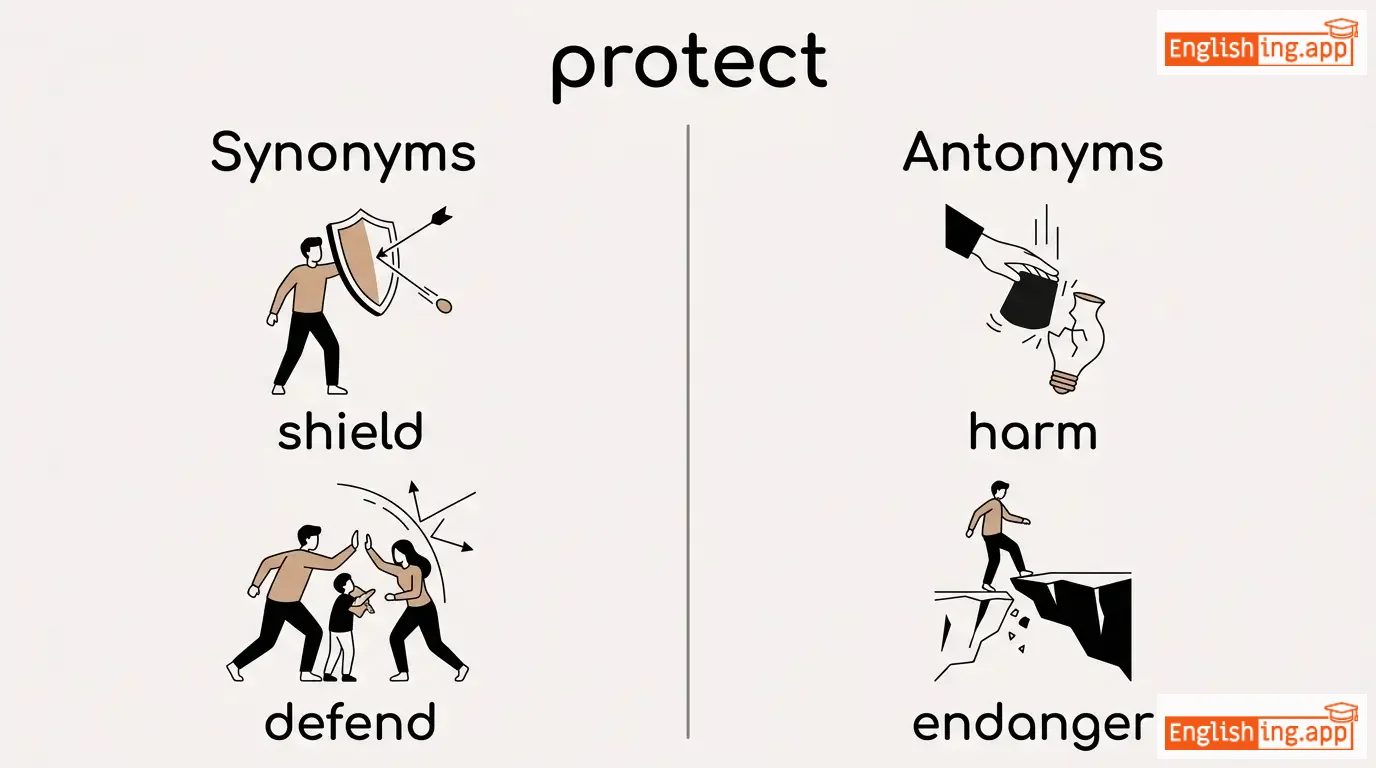
defend, guard, shield, safeguard
••••••
|
attack, harm, endanger, expose
••••••
|
protect from harm, protect the environment, protect rights, protect carefully, protect completely
••••••
|
Protection is like '保护' in Chinese
••••••
|
|
🛡️
••••••
|
/prəˈtɛkʃən/
noun
(海皮尼斯)
••••••
|
|
幸福
xingfu
••••••
|
- •••••• | - •••••• | - •••••• | - •••••• |
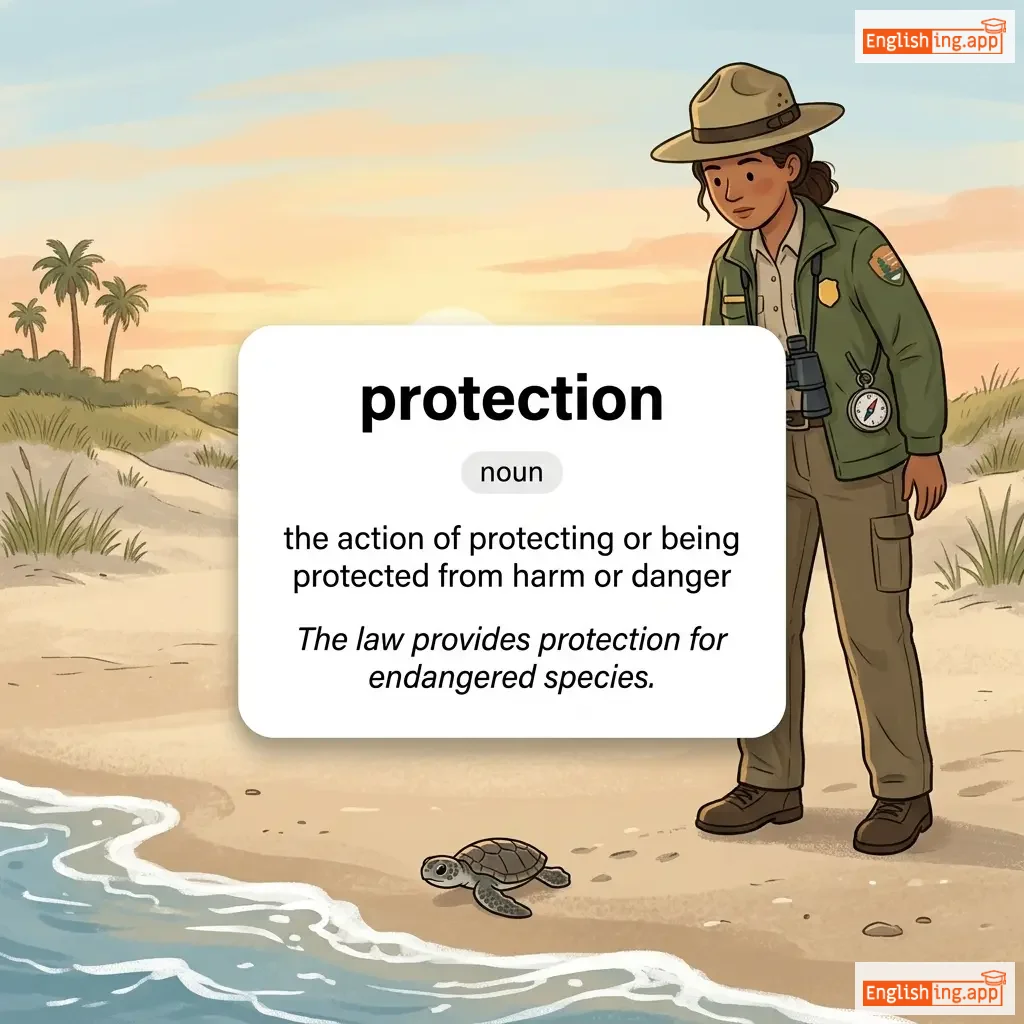
the action of protecting or being protected from harm or danger
••••••
|
The law provides protection for endangered species. |
她在获得奖项时无法掩饰她的幸福。
Tā zài huòdé jiǎngxiàng shí wúfǎ yǎnshì tā de xìngfú.
••••••
|
under protection |
being guarded or defended against harm
••••••
|
追求幸福
Zhuīqiú xìngfú
••••••
|
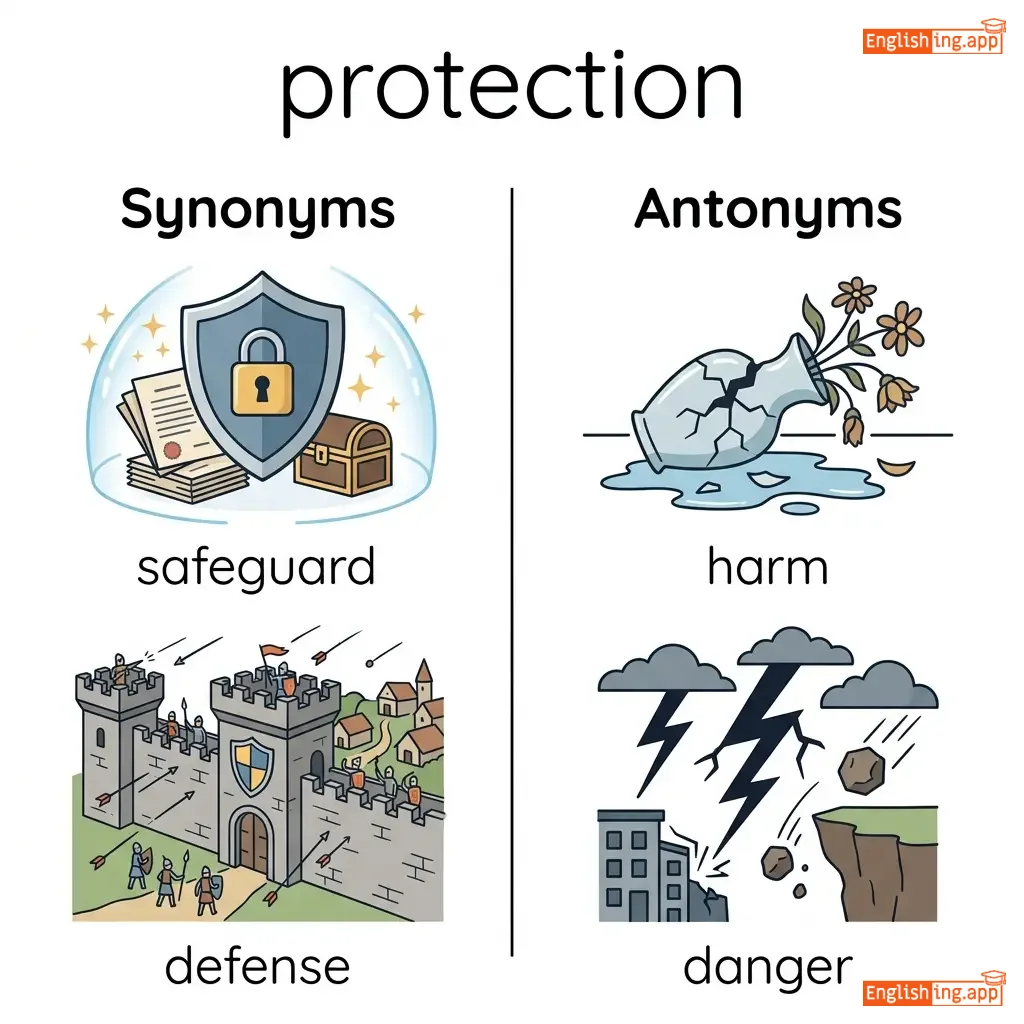
safeguard, defense, security, shelter, shield
••••••
|
harm, danger, exposure
••••••
|
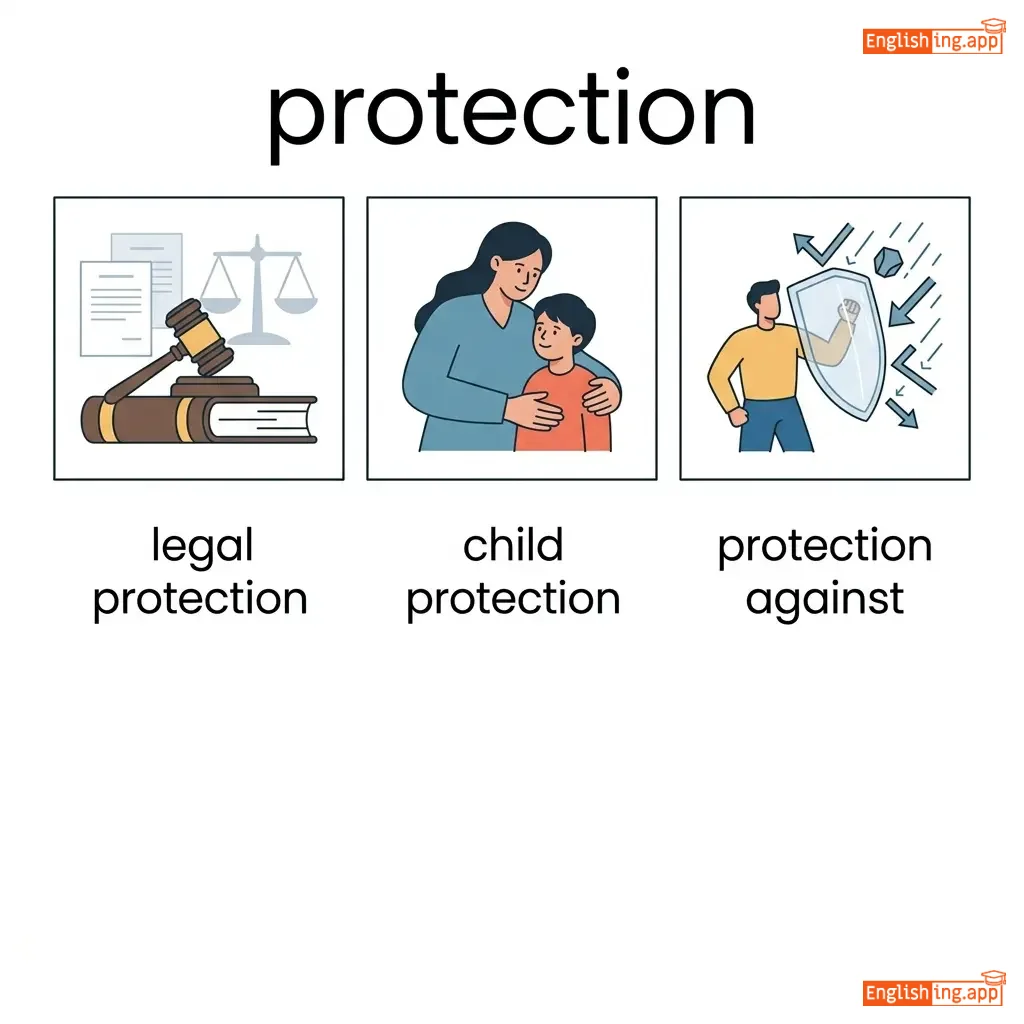
legal protection, child protection, protection against, protection from
••••••
|
幸福=Happiness,想象一颗充满快乐的心!
••••••
|
|
🛡️
••••••
|
/prəˈtɛktɪv/
adjective
(保护的)
••••••
|
- •••••• |
保护性的
bǎohùxìng de
••••••
|
- •••••• | - •••••• | - •••••• | - •••••• |
giving or capable of giving protection; shielding from harm or danger
••••••
|
She wore a protective helmet while riding her bike. |
她骑自行车时戴着保护性头盔。
Tā qí zìxíngchē shí dàizhe bǎohùxìng tóukuī.
••••••
|
protective instinct |
a natural tendency to guard someone from harm
••••••
|
保护本能
bǎohù běnnéng
••••••
|
defensive, shielding, guarding, preventative, preventive
••••••
|
harmful, dangerous, unsafe
••••••
|
protective gear, protective clothing, protective measure, protective instinct
••••••
|
Protective意味着保护,就像保护本能总是在你爱的人面临危险时启动。
••••••
|
|
🍖
••••••
|
/ˈproʊtiːn/
noun
••••••
|
- •••••• | - •••••• | - •••••• | - •••••• | - •••••• | - •••••• |
a molecule composed of amino acids essential for bodily functions
••••••
|
Proteins are essential for building and repairing tissues in the body. |
- •••••• | - •••••• | - •••••• | - •••••• |
amino acids, peptides, enzymes, nutrients
••••••
|
carbohydrates, fats
••••••
|
protein synthesis, high-protein foods, protein shake
••••••
|
No •••••• |
|
✊
••••••
|
/ˈproʊtest/
verb
(pròutèst)
••••••
|

|
抗议
kàngyì
••••••
|
protested
yìzhì
••••••
|
protested
yìzhì
••••••
|
protests
tóuzhī
••••••
|
protesting
jìzhì
••••••
|
to express strong objection; to demonstrate against something
••••••
|
Students protest against the new policy.
学生们抗议新的政策。
••••••
|
学生们抗议新的政策。
Xuéshēng men kàngyì xīn de zhèngcè.
••••••
|
- •••••• | - •••••• | - •••••• |
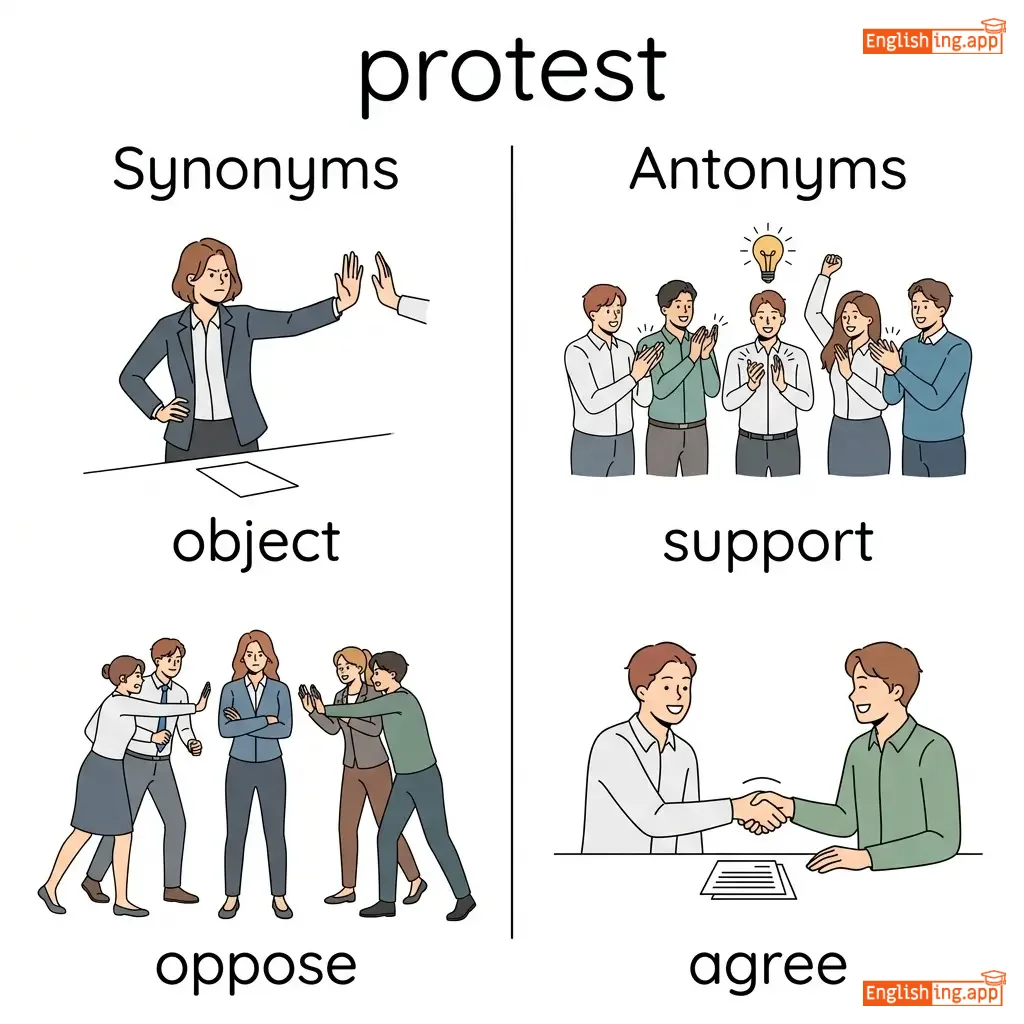
object, oppose, demonstrate, complain
••••••
|
support, agree, accept, approve
••••••
|
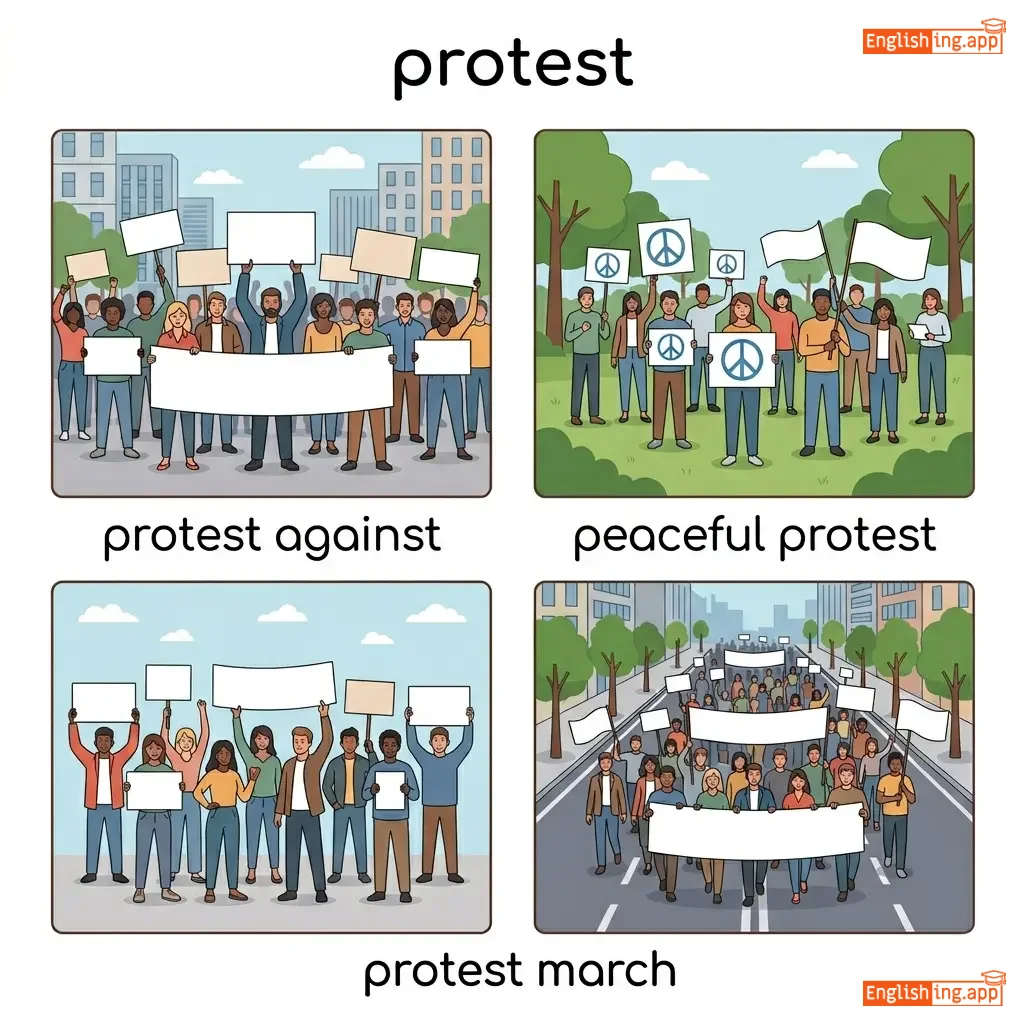
protest against, peaceful protest, protest march, strongly protest
••••••
|
抗议 = 站起来反对 (抗议政策,就像站起来反对不公)
••••••
|
|
🧑🎤
••••••
|
/prəˈtɛstər/
noun
(抗议者)
••••••
|
- •••••• |
抗议者
kàngyì zhě
••••••
|
- •••••• | - •••••• | - •••••• | - •••••• |
a person who takes part in a protest or demonstration
••••••
|
The protester spoke passionately about the cause. |
抗议者激情洋溢地谈论了这个原因。
Kàngyì zhě jīqíng yángyì de tánlùnle zhège yuányīn.
••••••
|
- •••••• | - •••••• | - •••••• |
demonstrator, activist, campaigner, challenger
••••••
|
supporter, follower, bystander
••••••
|
peaceful protester, passionate protester, angry protester, student protester
••••••
|
抗议者 (kàngyì zhě) 总是充满激情地说话。
••••••
|
|
📜
••••••
|
/ˈproʊtəkɔːl/
noun
(协议)
••••••
|
- •••••• |
协议
xieyi
••••••
|
- •••••• | - •••••• | - •••••• | - •••••• |
an official procedure or system of rules
••••••
|
The security team followed strict protocol during the event.
安全团队在活动期间遵循了严格的协议。
••••••
|
安全团队在活动期间遵循了严格的协议。
Anquan tuandui zai huodong qijian zunxunle yange de xieyi.
••••••
|
protocol breach
违反协议
••••••
|
failure to follow established rules
••••••
|
违反协议
wei fan xie yi
••••••
|
procedure, rules, code, convention, guideline
••••••
|
chaos, disorder, improvisation
••••••
|
follow protocol, security protocol, communication protocol, diplomatic protocol
••••••
|
协议就像是规则手册,考试中不遵循协议就会受到惩罚。
••••••
|
|
🦚
••••••
|
/praʊd/
adjective
(pɹaʊd)
••••••
|
- •••••• |
骄傲
jiaoao
••••••
|
- •••••• | - •••••• | - •••••• | - •••••• |
Feeling deep pleasure or satisfaction as a result of achievements or qualities.
••••••
|
She felt proud of her son's accomplishments. |
她为儿子的成就感到骄傲。
Tā wèi érzi de chéngjiù gǎndào jiāoào.
••••••
|
proud as a peacock |
extremely proud or arrogant
••••••
|
骄傲如孔雀
Jiāoào rú kǒngquè
••••••
|
pleased, honored, satisfied, delighted
••••••
|
ashamed, humble
••••••
|
proud of, feel proud, proud moment, proud parent
••••••
|
Proud意味着为自己或他人的成就而感到骄傲。
••••••
|
|
🏆
••••••
|
/ˈpraʊdli/
adverb
(普劳德利)
••••••
|
- •••••• |
自豪地
zihao de
••••••
|
- •••••• | - •••••• | - •••••• | - •••••• |
in a way that shows pride or satisfaction; with a sense of honor or achievement
••••••
|
She proudly displayed her achievements to her family.
她 普劳德利 迪斯普雷德 她的 成就 给 她的 家人。
••••••
|
她自豪地向家人展示了她的成就。
ta zihao de xiang jiaren zhanshi le ta de chengjiu
••••••
|
wear proudly
韦尔 普劳德利
••••••
|
to show something with pride and confidence
••••••
|
自豪地佩戴
zihao de peidai
••••••
|
confidently, honorably, triumphantly, self-respectingly
••••••
|
shamefully, humbly
••••••
|
proudly announce, proudly display, proudly present, proudly wear
••••••
|
Zihao = pride, proudly = 自豪地
••••••
|
|
✅
••••••
|
/pruːv/
verb
(pruv)
••••••
|
|
证明
zhèngmíng
••••••
|
proved
pruːvd
••••••
|
proved
pruːvd
••••••
|
proves
pruːvz
••••••
|
proving
pruːvɪŋ
••••••
|
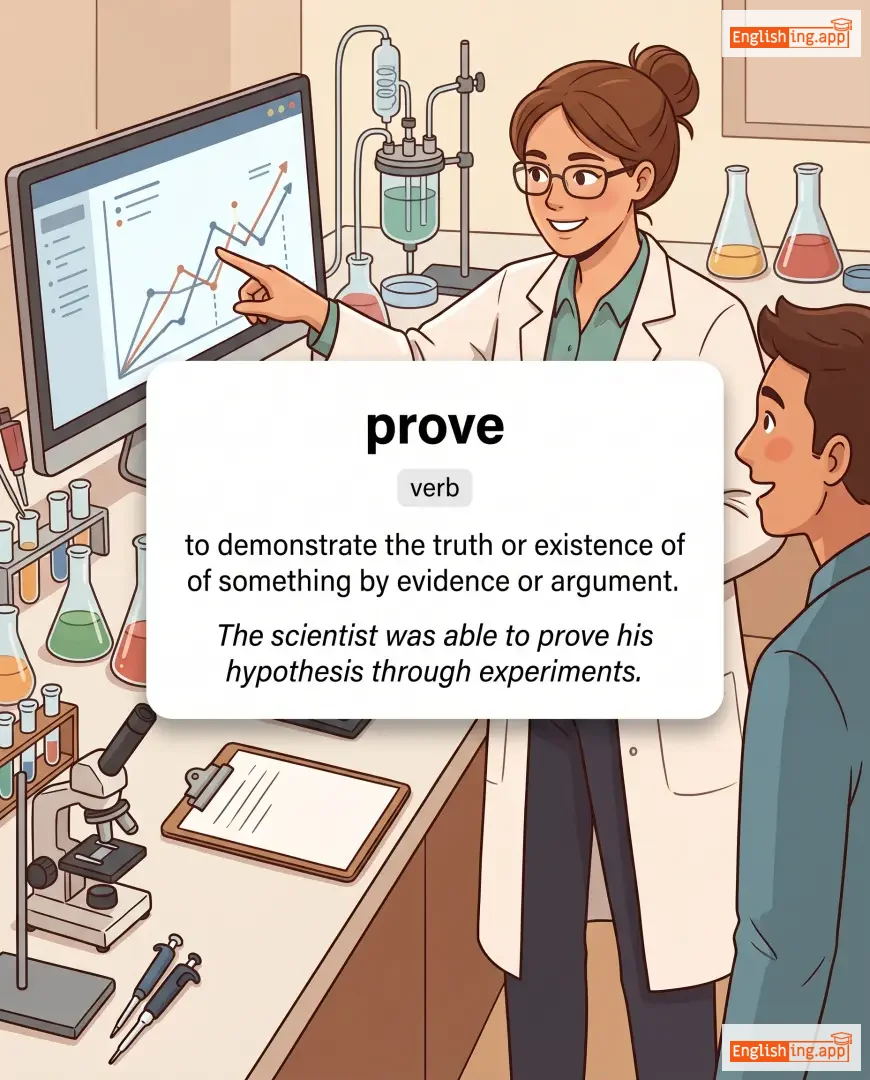
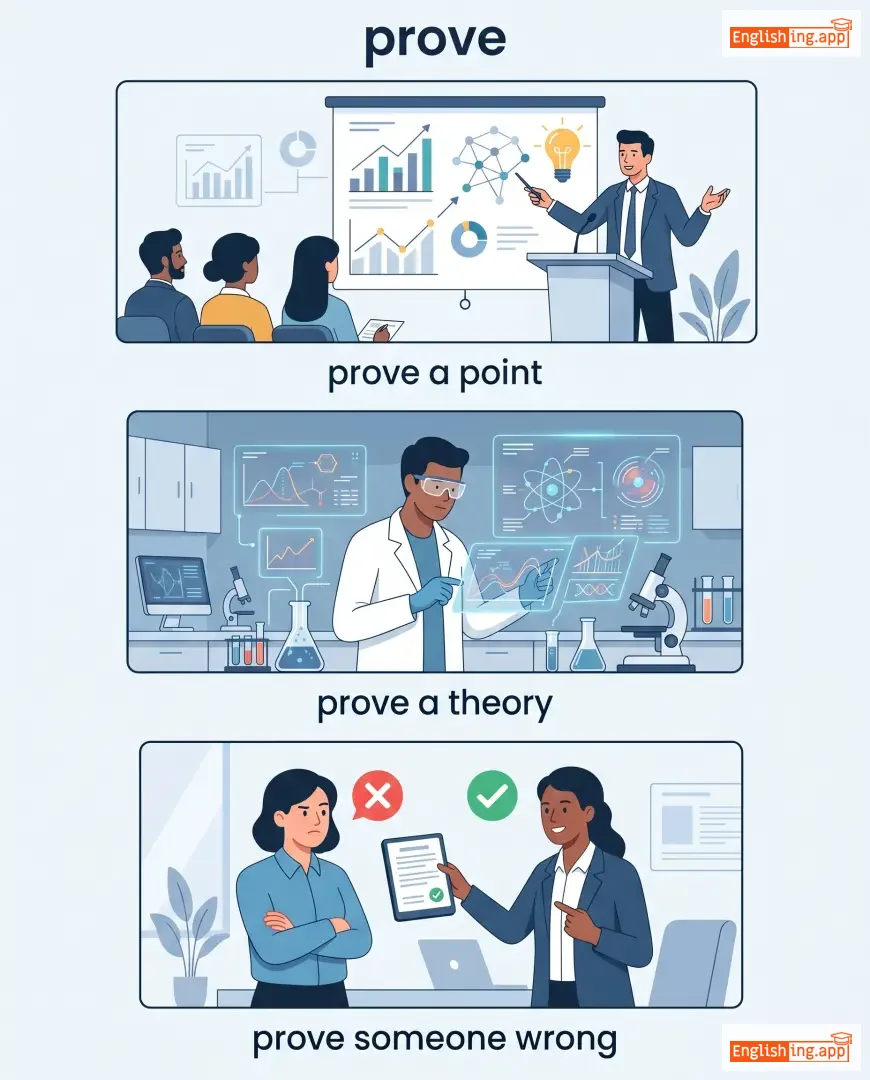
to show that something is true; to demonstrate
••••••
|
The evidence will prove his innocence.
证据将证明他的无辜。
••••••
|
证据将证明他的无辜。
Zhèngjù jiāng zhèngmíng tā de wúgū.
••••••
|
- •••••• | - •••••• | - •••••• |
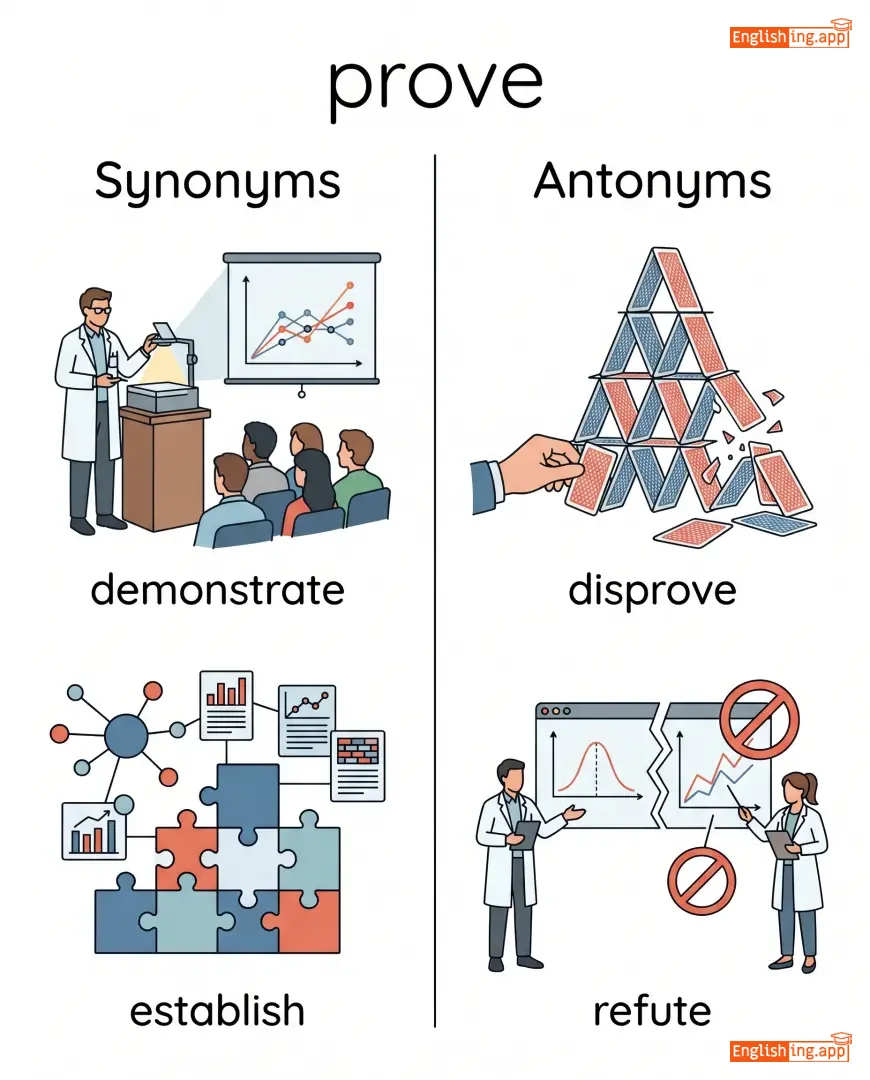
demonstrate, establish, verify, confirm
••••••
|
disprove, refute, contradict
••••••
|
prove innocence, prove wrong, prove right, prove point
••••••
|
在中文中,'证明'像英语中的'prove',就像向他人展示某个事实。
••••••
|
|
📦
••••••
|
/prəˈvaɪd/
verb
(pro-wai-de)
••••••
|
- •••••• |
提供
tigong
••••••
|
provided
pro-wai-ded
••••••
|
provided
pro-wai-ded
••••••
|
provides
pro-wai-ds
••••••
|
providing
pro-wai-ding
••••••
|
to give or supply something that is needed or wanted
••••••
|
The teacher will provide extra materials for the students.
老师将为学生提供额外的材料。
••••••
|
老师将为学生提供额外的材料。
Laoshi jiang wei xuesheng tigong ewai de cailiao.
••••••
|
provide for
提供给
••••••
|
to take care of someone by supplying what they need
••••••
|
照顾
zhaogu
••••••
|
give, supply, furnish, offer, deliver
••••••
|
withhold, deprive, refuse
••••••
|
provide information, provide support, provide service, provide assistance
••••••
|
提供就是给所有需要的东西 – 提供!
••••••
|
|
💼
••••••
|
/prəˈvaɪdər/
noun
(普罗维德)
••••••
|
- •••••• |
供应商
gongying shang
••••••
|
- •••••• | - •••••• | - •••••• | - •••••• |
a person or thing that provides something.
••••••
|
The service provider ensures that all customers receive timely support. |
服务供应商确保所有客户及时获得支持。
Fúwù gōngyìng shāng quèbǎo suǒyǒu kèhù jíshí huò dé zhīchí.
••••••
|
- •••••• | - •••••• | - •••••• |
supplier, distributor, giver, source
••••••
|
receiver, consumer, taker
••••••
|
service provider, internet provider, health provider, financial provider
••••••
|
‘供应商’为你提供服务和支持!
••••••
|
|
🌍
••••••
|
/ˈprɒvɪns/
noun
(普罗温斯)
••••••
|
- •••••• |
省
sheng
••••••
|
- •••••• | - •••••• | - •••••• | - •••••• |
a principal administrative division of certain countries or empires.
••••••
|
The province is known for its rich cultural heritage and stunning landscapes. |
这个省因其丰富的文化遗产和壮丽的自然景观而闻名。
Zhège shěng yīn qí fēngfù de wénhuà yíchǎn hé zhuànglì de zìrán jǐngguān ér wénmíng.
••••••
|
- •••••• | - •••••• | - •••••• |
region, area, district, state
••••••
|
city, town, municipality
••••••
|
province capital, province government, rural province, coastal province
••••••
|
Province = Proven importance of a region!
••••••
|
|
🏞️
••••••
|
/prəˈvɪnʃəl/
adjective
(puluvinsial)
••••••
|
|
省级的
shengji de
••••••
|
- •••••• | - •••••• | - •••••• | - •••••• |
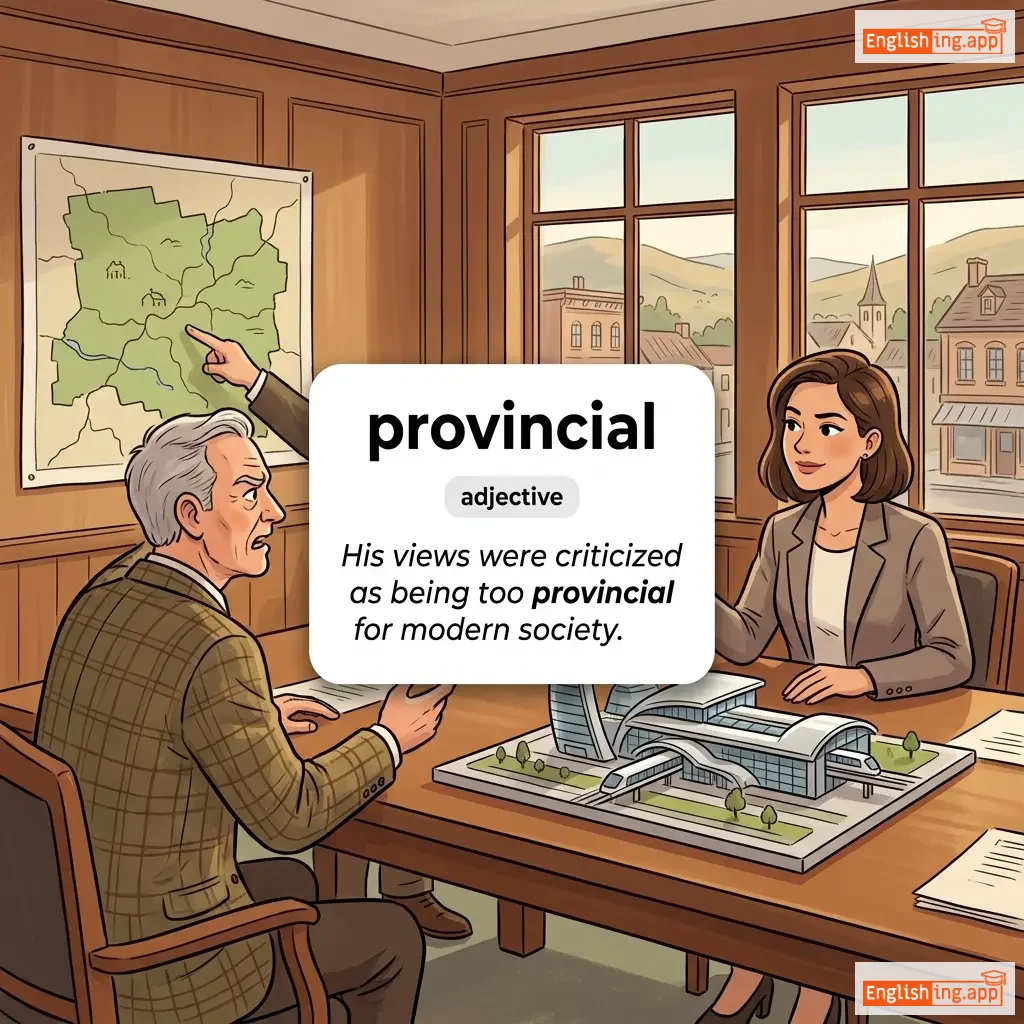
relating to a province or the regions outside the capital city; often suggesting narrow-mindedness
••••••
|
His views were criticized as being too provincial for modern society.
他的观点被批评为对现代社会来说过于狭隘。
••••••
|
他的观点被批评为对现代社会来说过于狭隘。
tā de guāndiǎn bèi pīpíng wéi duì xiàndài shèhuì lái shuō guòyú xiá'ài.
••••••
|
provincial attitude
狭隘的态度
••••••
|
a narrow or limited way of thinking
••••••
|
狭隘的思维
xiá'ài de sīwéi
••••••
|
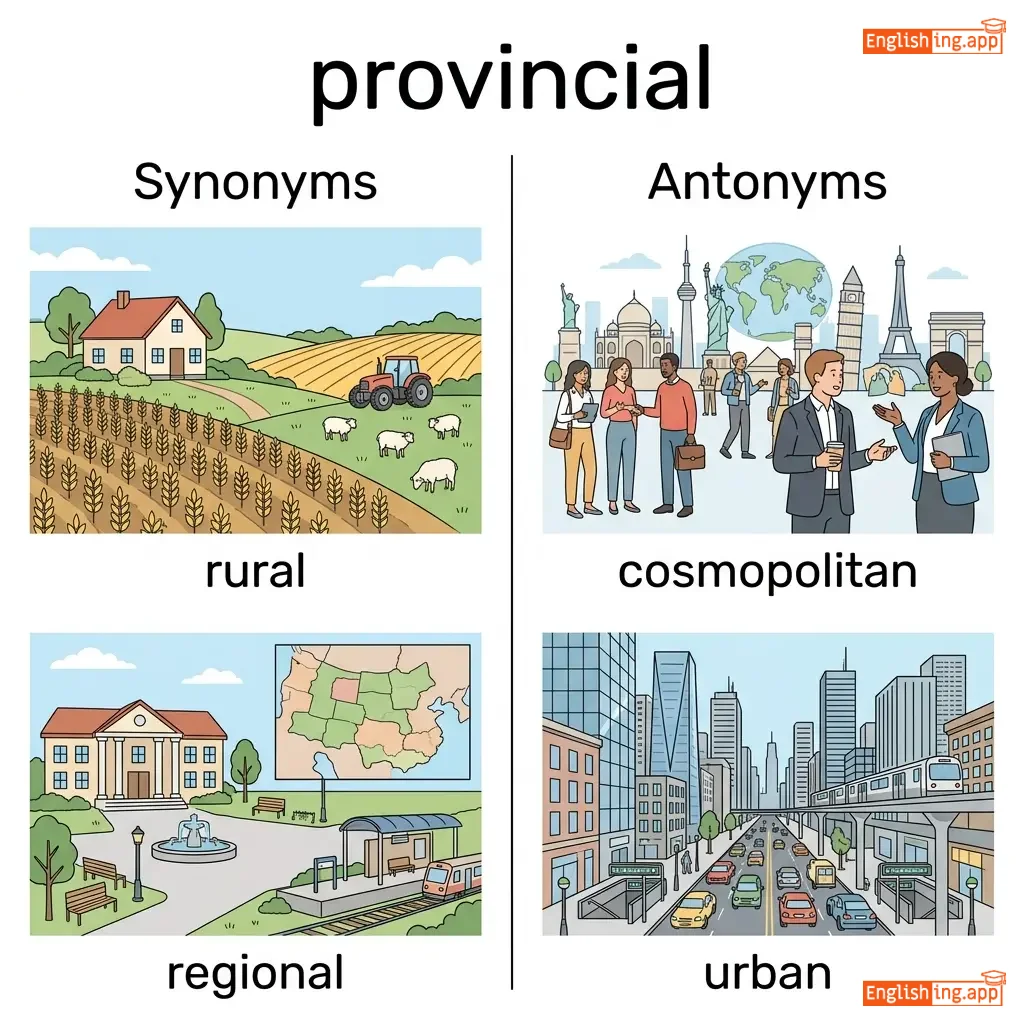
rural, regional, parochial, local, insular
••••••
|
cosmopolitan, urban, worldly
••••••
|
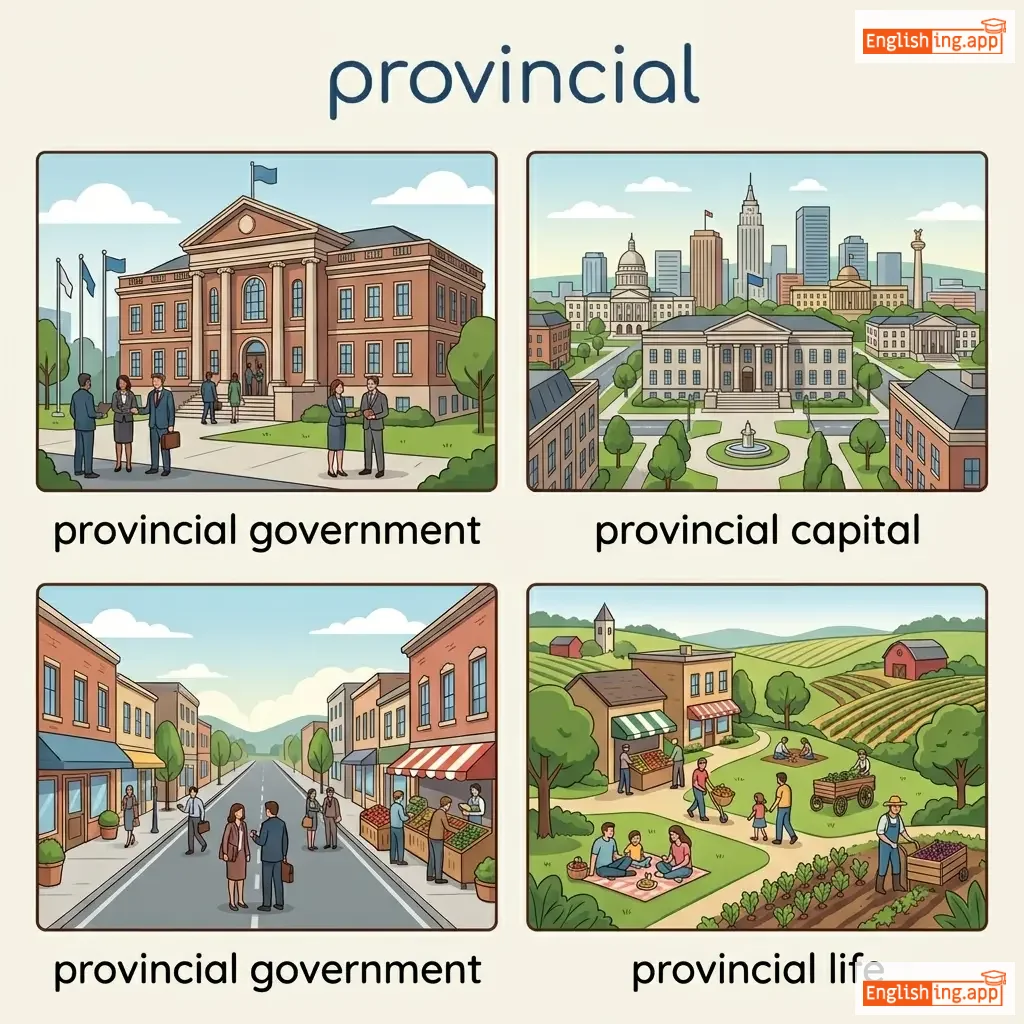
provincial government, provincial capital, provincial life, provincial politics
••••••
|
Provincial意味着省份,通常意味着狭隘的思想。
••••••
|
|
📜
••••••
|
/prəˈvɪʒən/
noun
(普罗维久恩)
••••••
|
- •••••• |
规定 / 条款
guīdìng / tiáokuǎn
••••••
|
- •••••• | - •••••• | - •••••• | - •••••• |
the act of providing or supplying something; a condition in a legal document
••••••
|
The contract includes a provision for early termination.
合同包括提前终止的条款。
••••••
|
合同包括提前终止的条款。
Hétóng bāokuò tíqián zhōngzhǐ de tiáokuǎn.
••••••
|
make provision for
做出预见
••••••
|
to prepare or plan for something in advance
••••••
|
提前准备
tíqián zhǔnbèi
••••••
|
supply, arrangement, clause, requirement, stipulation
••••••
|
neglect, denial, refusal
••••••
|
food provision, legal provision, make provision, provision for
••••••
|
Provision意味着提供 - 条款或规定。
••••••
|
|
😡
••••••
|
/prəˈvoʊk/
verb
(挑衅)
••••••
|
- •••••• |
挑衅
tiaoxin
••••••
|
provoked
挑衅了
••••••
|
provoked
挑衅过
••••••
|
provokes
挑衅
••••••
|
provoking
挑衅中
••••••
|
To cause someone to become angry or to cause a reaction.
••••••
|
His words provoked a heated argument.
他的话引发了一场激烈的争论。
••••••
|
他的话引发了一场激烈的争论。
Ta de hua yinfa le yi chang jilie de zhenglun.
••••••
|
provoke anger
挑衅愤怒
••••••
|
to make someone angry
••••••
|
挑衅愤怒
tiaoxin fennu
••••••
|
incite, irritate, enrage, agitate, stir
••••••
|
soothe, calm, comfort
••••••
|
provoke anger, provoke conflict, provoke a response, provoke a fight
••••••
|
Provoke意味着'挑衅' – Pro就像'挑衅愤怒'。
••••••
|
|
🧠
••••••
|
/ˌsaɪkiˈætrɪk/
adjective
••••••
|
- •••••• | - •••••• | - •••••• | - •••••• | - •••••• | - •••••• |
relating to mental illness or its treatment
••••••
|
The psychiatric hospital provides care for those with severe conditions. |
- •••••• | - •••••• | - •••••• | - •••••• |
mental, psychological, therapeutic, neuropsychiatric
••••••
|
physical, healthy, well
••••••
|
psychiatric disorder, psychiatric care, psychiatric treatment, psychiatric institution
••••••
|
No •••••• |
|
🧠
••••••
|
/ˌsaɪkəˈlɒdʒɪkəl/
adjective
(心理学的)
••••••
|
- •••••• |
心理学的
xīnlǐxué de
••••••
|
- •••••• | - •••••• | - •••••• | - •••••• |
relating to the mind or mental processes.
••••••
|
She studied the psychological effects of trauma on children. |
她研究了创伤对儿童的心理影响。
Tā yánjiūle chuāngshāng duì értóng de xīnlǐ yǐngxiǎng.
••••••
|
- •••••• | - •••••• | - •••••• |
mental, emotional, cognitive, behavioral
••••••
|
physical, bodily, material
••••••
|
psychological impact, psychological health, psychological research, psychological trauma
••••••
|
Psychological = '心理' 是与你的心灵相关!
••••••
|
|
🧠
••••••
|
/saɪˈkɒlədʒɪst/
noun
(心理学家)
••••••
|
- •••••• |
心理学家
xīnlǐ xué jiā
••••••
|
- •••••• | - •••••• | - •••••• | - •••••• |
a person who studies mental processes and behavior
••••••
|
The psychologist helped him cope with his anxiety. |
心理学家帮助他应对焦虑。
xīnlǐ xué jiā bāng zhù tā yìng duì jiāo lǜ.
••••••
|
- •••••• | - •••••• | - •••••• |
therapist, counselor, psychiatrist, analyst
••••••
|
patient, sufferer
••••••
|
clinical psychologist, child psychologist, psychologist consultation
••••••
|
心理学家 (xīnlǐ xué jiā) 是研究心理的专家。
••••••
|
|
📖
••••••
|
/saɪˈkɒlədʒi/
noun
(心理学)
••••••
|
- •••••• |
心理学
xinlixue
••••••
|
- •••••• | - •••••• | - •••••• | - •••••• |
the scientific study of the mind and behavior
••••••
|
Psychology helps us understand how people think and act. |
心理学帮助我们理解人们如何思考和行动。
Xinlixue bangzhu women lijie renmen ruhe sikao he xingdong.
••••••
|
pop psychology |
simplified psychological concepts popularized for mass audiences
••••••
|
流行心理学
liuxing xinlixue
••••••
|
behavioral science, study of mind, cognitive science, psychoanalysis, therapy
••••••
|
ignorance, unawareness
••••••
|
study psychology, psychology class, psychology research, psychology student
••••••
|
Psychology = 思维 + 科学
••••••
|
|
🌍
••••••
|
/ˈpʌblɪk/
adjective
(pʊ́blɪk)
••••••
|
- •••••• |
公共的
gonggong de
••••••
|
- •••••• | - •••••• | - •••••• | - •••••• |
relating to or affecting the people as a whole
••••••
|
The public demanded action on the issue. |
公众要求对此问题采取行动。
Gongzhong yaoqiu dui ci wenti caiqu xingdong.
••••••
|
- •••••• | - •••••• | - •••••• |
general, communal, societal, collective
••••••
|
private, personal
••••••
|
public service, public opinion, public event, public sector
••••••
|
公共 (gonggong) 是指所有人
••••••
|
|
📚
••••••
|
/ˌpʌblɪˈkeɪʃən/
noun
(pʌblɪˈkeɪʃən)
••••••
|
- •••••• |
出版
chuban
••••••
|
- •••••• | - •••••• | - •••••• | - •••••• |
the act of making something publicly known or available
••••••
|
The publication of the report sparked a debate. |
报告的出版引发了辩论。
Baogao de chuban yinfale bianlun.
••••••
|
- •••••• | - •••••• | - •••••• |
release, announcement, disclosure, circulation
••••••
|
concealment, suppression
••••••
|
official publication, academic publication, newspaper publication
••••••
|
出版 (chuban) 是将某个内容公开的过程
••••••
|
|
📢
••••••
|
/pʌˈblɪsəti/
noun
(púbùlìsìtī)
••••••
|
- •••••• |
宣传
xuānchuán
••••••
|
- •••••• | - •••••• | - •••••• | - •••••• |
the activity of making something known to the public; public attention or exposure
••••••
|
The film gained huge publicity after winning the award. |
这部电影在赢得奖项后获得了广泛的宣传。
Zhè bù diànyǐng zài yíngdé jiǎngxiàng hòu huòdéle guǎngfàn de xuānchuán.
••••••
|
bad publicity |
negative public attention or reputation
••••••
|
负面宣传
fùmiàn xuānchuán
••••••
|
exposure, advertising, promotion, fame, attention
••••••
|
obscurity, secrecy
••••••
|
media publicity, gain publicity, attract publicity, negative publicity
••••••
|
宣传是通过公共注意力让事物更受欢迎!
••••••
|
|
👥
••••••
|
/ˈpʌb.lɪk.li/
adverb
(pǔbùlìkèli)
••••••
|
- •••••• |
公开地; 公然地;
gongkai de; gongran de
••••••
|
- •••••• | - •••••• | - •••••• | - •••••• |
in a public manner; openly; for everyone to see or know
••••••
|
The company publicly announced their new policy.
公司公开宣布了他们的新政策。
••••••
|
公司公开宣布了他们的新政策。
Gongsi gongkai xuānbùle tāmen de xīn zhèngcè.
••••••
|
- •••••• | - •••••• | - •••••• |
openly, overtly, visibly, outwardly
••••••
|
privately, secretly, covertly, internally
••••••
|
publicly announce, publicly available, publicly traded, publicly known
••••••
|
'公开' in Chinese is like saying ‘openly in public’ – it’s for all to see!
••••••
|
|
📚
••••••
|
/ˈpʌblɪʃ/
verb
(pābùlìshí)
••••••
|

|
出版
chūbǎn
••••••
|
published
pābùlìshíde
••••••
|
published
pābùlìshíde
••••••
|
publishes
pābùlìshí
••••••
|
publishing
pābùlìshíng
••••••
|
to print and distribute books, magazines, etc.; to make information available
••••••
|
The author will publish her new novel next month.
作者将在下个月出版她的新小说。
••••••
|
作者将在下个月出版她的新小说。
zuòzhě jiāng zài xià gè yuè chūbǎn tā de xīn xiǎoshuō.
••••••
|
- •••••• | - •••••• | - •••••• |
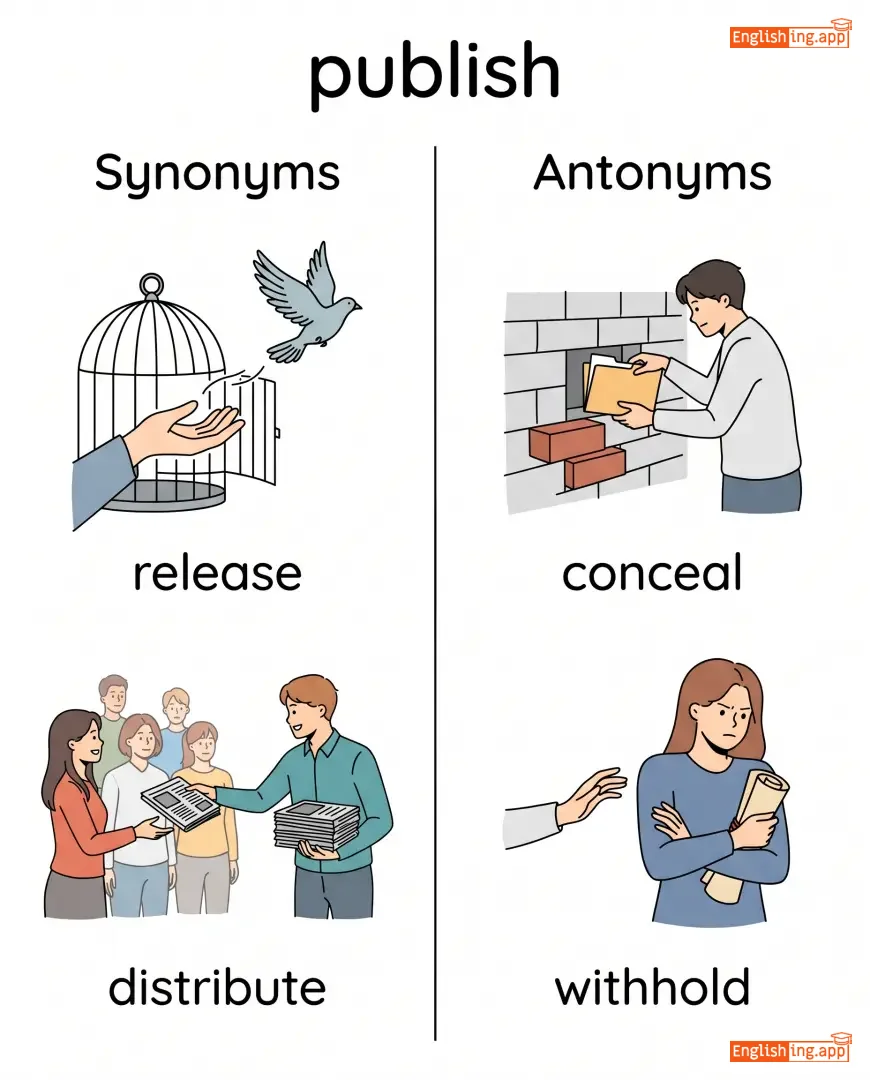
print, release, issue, distribute
••••••
|
suppress, withhold, censor
••••••
|
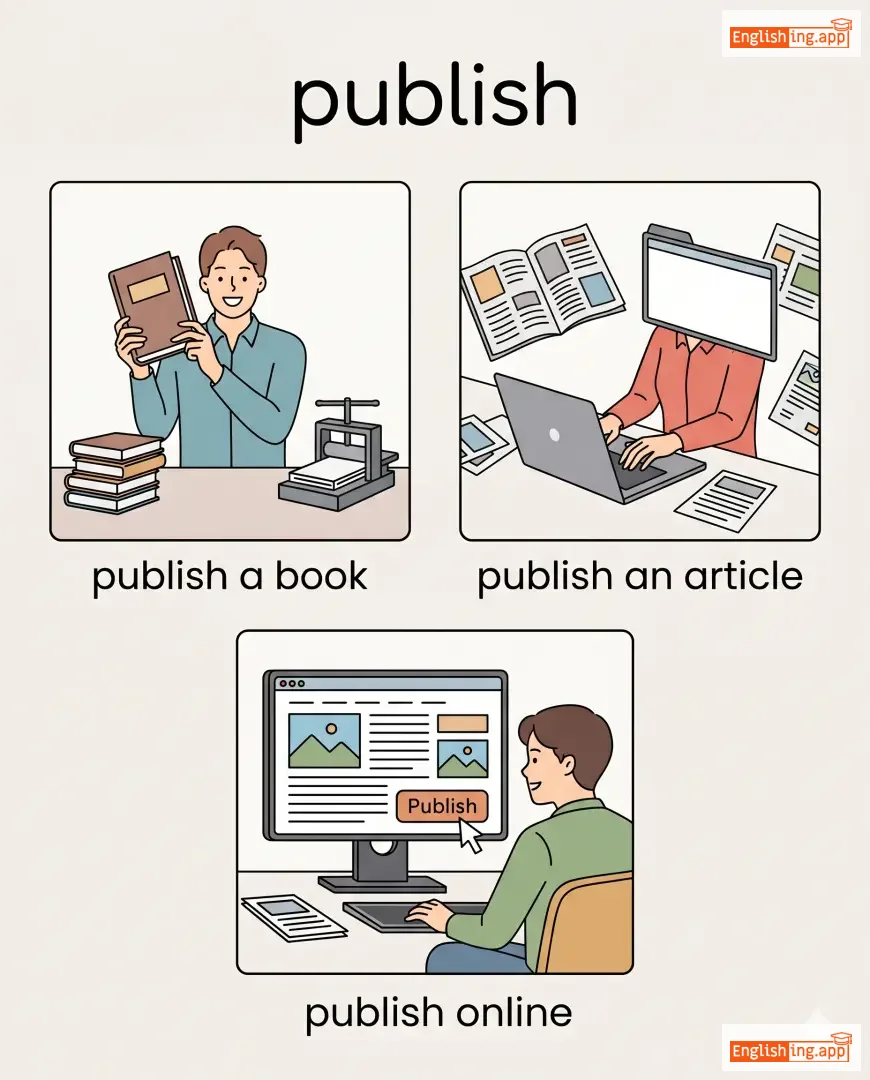
publish book, publish article, publish online, recently publish
••••••
|
To 'publish' a book, you need to 'chūbǎn' it in Chinese.
••••••
|
|
📚
••••••
|
/ˈpʌb.lɪ.ʃər/
noun
(pʊblɪʃər)
••••••
|
- •••••• |
出版商
chūbǎn shāng
••••••
|
- •••••• | - •••••• | - •••••• | - •••••• |
a person or company that produces and distributes books, magazines, or newspapers
••••••
|
The publisher decided to print 10,000 copies of the new novel. |
出版商决定印刷10,000本新小说。
Chūbǎn shāng juédìng yìnshuā 10,000 běn xīn xiǎoshuō.
••••••
|
- •••••• | - •••••• | - •••••• |
editor, printer, distributor
••••••
|
reader, consumer
••••••
|
book publisher, magazine publisher, academic publisher, digital publisher
••••••
|
出版商让书籍走向世界。
••••••
|
|
📚
••••••
|
/ˈpʌblɪʃɪŋ/
noun
••••••
|
- •••••• | - •••••• | - •••••• | - •••••• | - •••••• | - •••••• |
the business or activity of preparing and issuing books, journals, or other material for sale
••••••
|
He works in the publishing industry as an editor. |
- •••••• | - •••••• | - •••••• | - •••••• |
printing, issuing, releasing, distribution
••••••
|
concealing, hiding, withholding
••••••
|
publishing house, publishing industry, publishing process, digital publishing
••••••
|
No •••••• |
|
🖐️
••••••
|
/pʊl/
verb
(pul)
••••••
|
- •••••• |
拉
lā
••••••
|
pulled
pulled
••••••
|
pulled
pulled
••••••
|
pulls
puls
••••••
|
pulling
pulling
••••••
|
to exert force on something in order to move it toward oneself
••••••
|
She pulled the door open with all her strength.
tā yǐ jīng jiāng mén kāi le yòng quán lì.
••••••
|
她用所有的力量将门拉开。
Tā yòng suǒyǒu de lìliàng jiāng mén lā kāi.
••••••
|
pull one's weight
chuí yǐ bù tóu
••••••
|
to do one's fair share of work
••••••
|
尽自己的一份力
jìn zìjǐ de yī fèn lì
••••••
|
drag, tug, haul, draw
••••••
|
push, shove
••••••
|
pull the lever, pull the rope, pull hard, pull away
••••••
|
拉门 - 拉动任何物品
••••••
|

