Получите неограниченный доступ ко всем словам с подпиской Pro
Обновить до ProПолучите неограниченный доступ ко всем предложениям с подпиской Pro
Обновить до Pro|
Эмодзи
|
Слово | Images | Перевод | Прошедшее | Причастие прошедшего времени | Третье лицо единственного числа | Герундий | Значение | Пример предложения | Перевод примера предложения | Пример выражения | Значение примера выражения | Перевод примера выражения | Синонимы | Антонимы | Коллокации | Мнемоника |
|---|---|---|---|---|---|---|---|---|---|---|---|---|---|---|---|---|---|
|
⏸️
••••••
|
/pɔːz/
verb
(поз)
••••••
|
|
паузa
pauza
••••••
|
paused
позд
••••••
|
paused
позд
••••••
|
pauses
позес
••••••
|
pausing
позинг
••••••
|
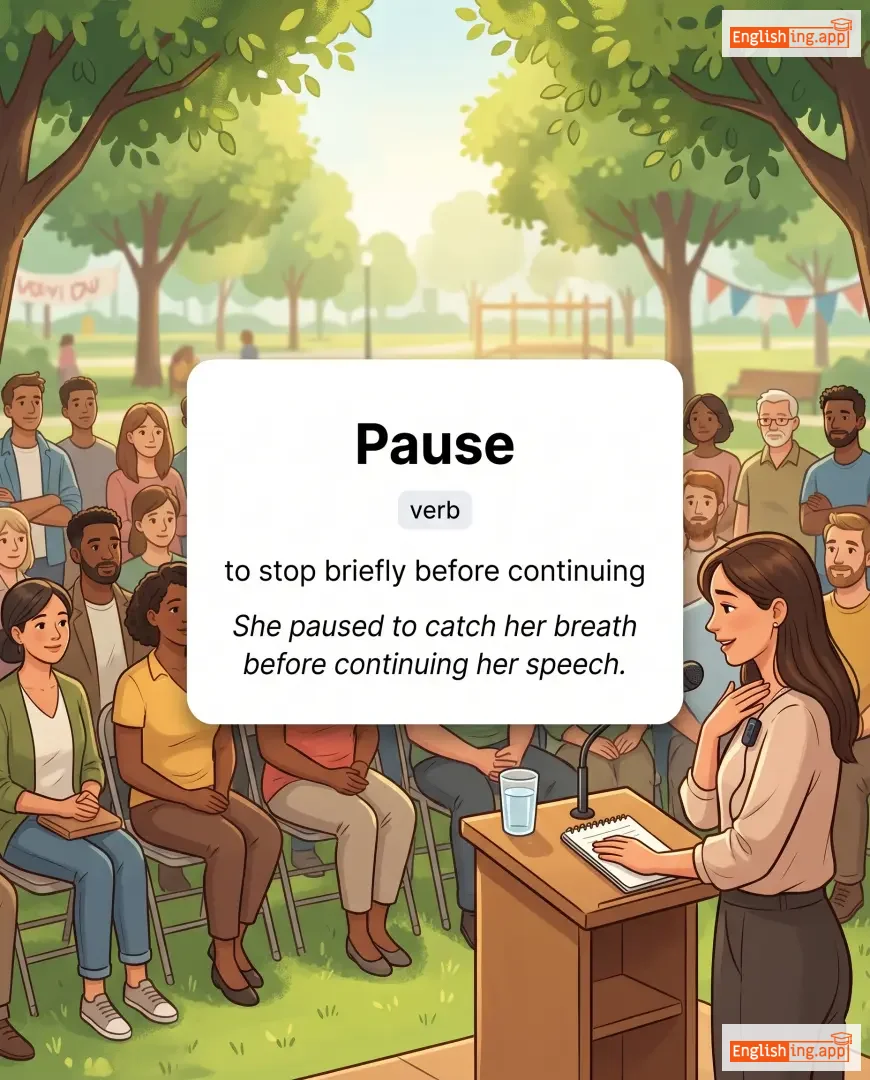
to stop briefly before continuing
••••••
|
She paused to catch her breath before continuing her speech.
Она сделала паузу, чтобы перевести дыхание перед продолжением своей речи.
••••••
|
Она сделала паузу, чтобы перевести дыхание перед продолжением своей речи.
Ona sdelala pauzu, chtoby perevesti dykhanie pered prodolzheniem svoey rechi.
••••••
|
take a pause
сделать паузу
••••••
|
to take a break from an activity
••••••
|
сделать паузу
sdelat' pauzu
••••••
|
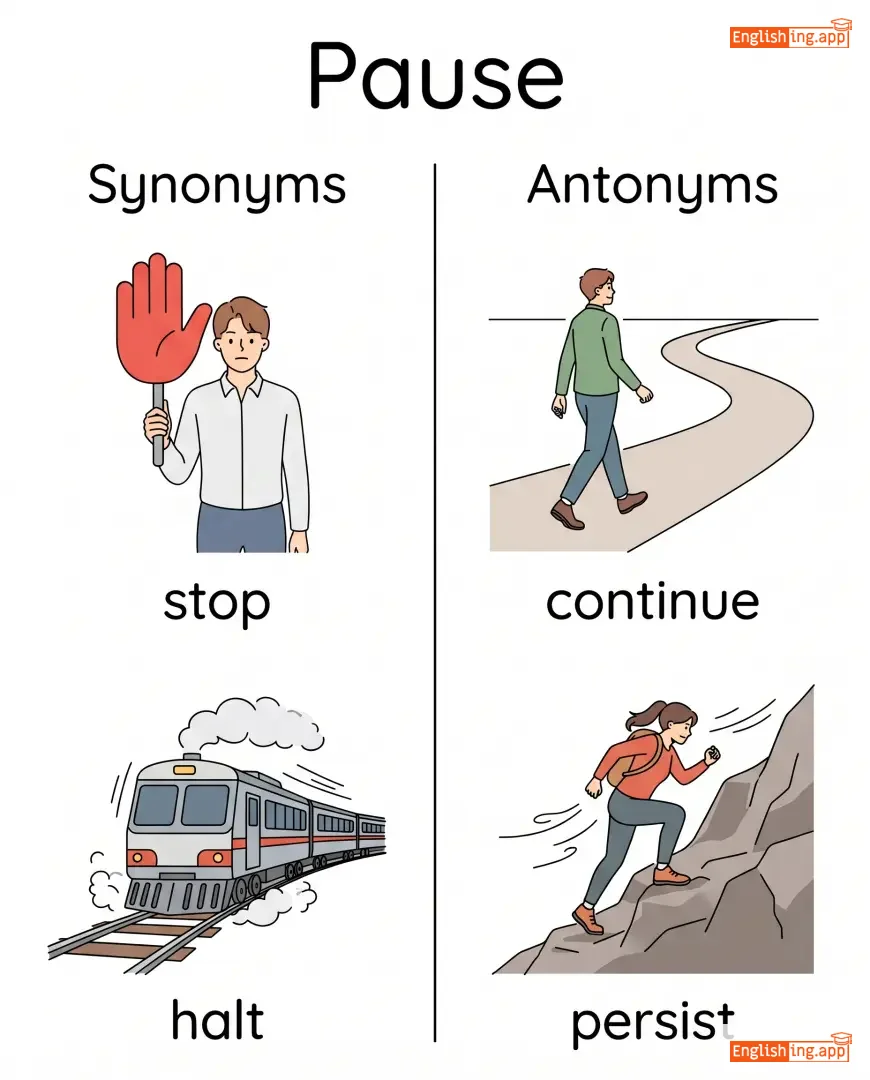
stop, halt, break, suspend
••••••
|
continue, persist, proceed
••••••
|
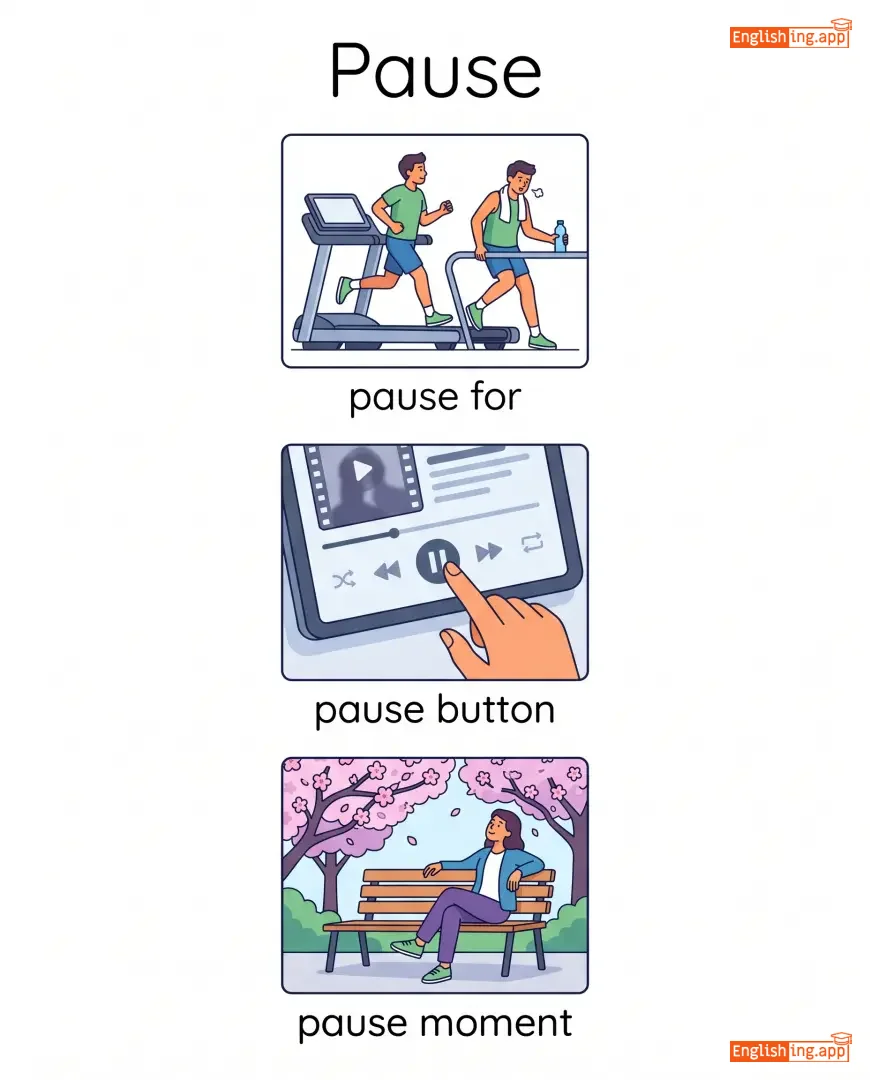
pause for, pause button, pause moment, pause music
••••••
|
Сделай паузу и подыши!
••••••
|
|
🛣️
••••••
|
/ˈpeɪvmənt/
noun
(пейвмент)
••••••
|
- •••••• |
тротуар
trotuar
••••••
|
- •••••• | - •••••• | - •••••• | - •••••• |
a hard paved surface such as a road or sidewalk; the act or result of paving
••••••
|
She walked along the pavement to reach the bus stop.
Она шла по пейвменту к автобусной остановке.
••••••
|
Она шла по тротуару к автобусной остановке.
ona shla po trotuuaru k avtobusnoi ostanovke
••••••
|
pound the pavement
паунд зе пейвмент
••••••
|
to walk the streets actively in order to find work or achieve something
••••••
|
активно искать работу
aktivno iskat rabotu
••••••
|
sidewalk, roadway, footpath, paving, asphalt
••••••
|
dirt, grass, soil
••••••
|
pavement surface, cracked pavement, wet pavement, pavement stones
••••••
|
Тротуар — твердый pavement под ногами
••••••
|
|
💰
••••••
|
/peɪ/
verb
(pei)
••••••
|

|
платить
platit
••••••
|
paid
peid
••••••
|
paid
peid
••••••
|
pays
peis
••••••
|
paying
peing
••••••
|
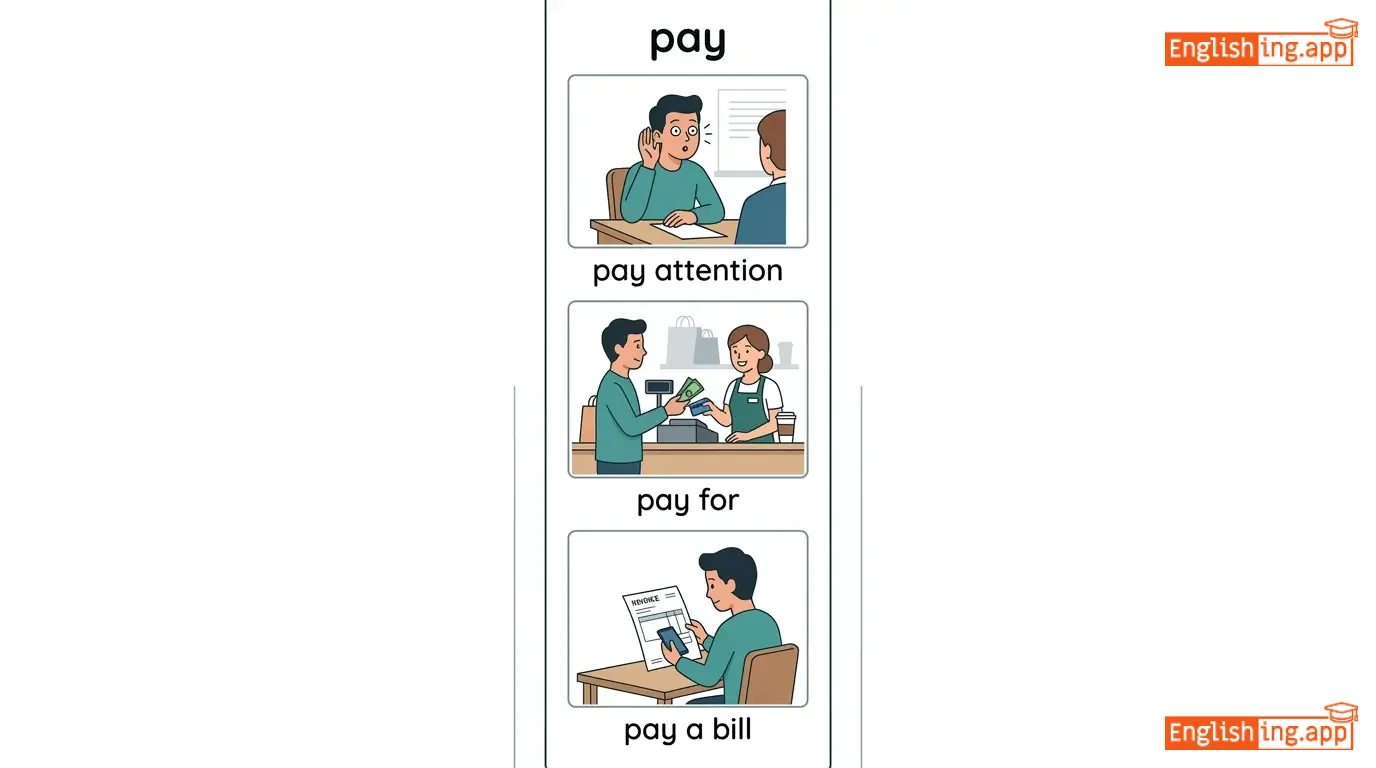
to give money in exchange for goods or services
••••••
|
I need to pay my bills on time.
Мне нужно оплатить свои счета вовремя.
••••••
|
Мне нужно заплатить свои счета вовремя.
Mne nuzhno zaplatit' svoi scheta vovremya
••••••
|
- •••••• | - •••••• | - •••••• |
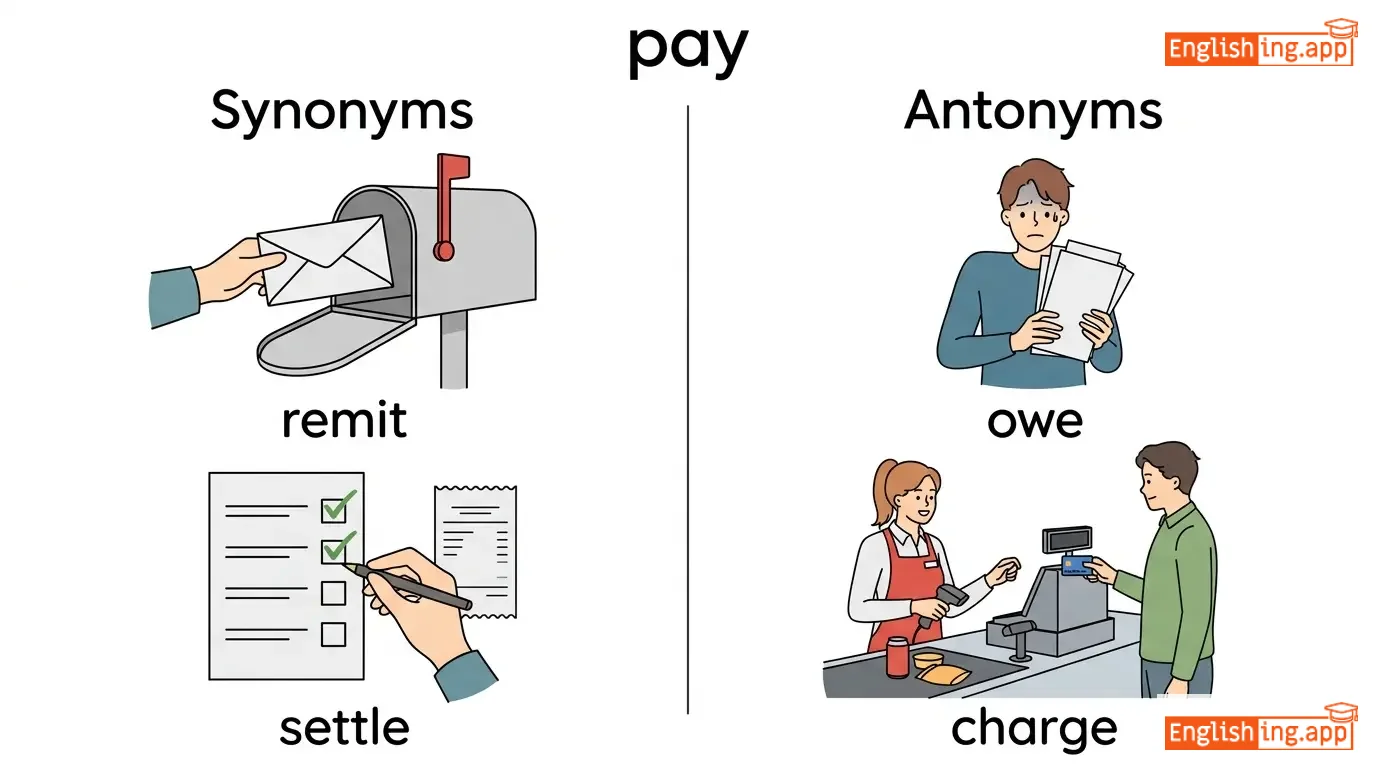
compensate, remunerate, settle, discharge
••••••
|
receive, earn, collect, owe
••••••
|
pay bills, pay attention, pay salary, pay cash, pay back
••••••
|
No •••••• |
|
💳
••••••
|
/ˈpeɪmənt/
noun
(пэймент)
••••••
|
- •••••• |
платеж
platezh
••••••
|
- •••••• | - •••••• | - •••••• | - •••••• |
the action or process of paying money for something
••••••
|
The payment for the order was received yesterday. |
Платеж за заказ был получен вчера.
Platezh za zakaz byl poluchen vchera.
••••••
|
- •••••• | - •••••• | - •••••• |
remittance, settlement, compensation, disbursement
••••••
|
debt, charge
••••••
|
make a payment, payment due, payment method, process payment
••••••
|
Заплати и получи, что хочешь!
••••••
|
|
☮️
••••••
|
/piːs/
noun
(pīs)
••••••
|
- •••••• |
мир
mir
••••••
|
- •••••• | - •••••• | - •••••• | - •••••• |
a state of tranquility or quiet, freedom from disturbance
••••••
|
They hope for peace in the region.
Они надеются на мир в этом регионе.
••••••
|
Они надеются на мир в этом регионе.
Oni nadeyutsya na mir v etom regione.
••••••
|
- •••••• | - •••••• | - •••••• |
calm, serenity, harmony, tranquility
••••••
|
conflict, war
••••••
|
world peace, peace of mind, peace treaty, keep the peace
••••••
|
Мир - это тишина внутри себя.
••••••
|
|
☮️
••••••
|
/ˈpiːsfl/
adjective
(хэппинесс)
••••••
|
- •••••• |
счастье
schastye
••••••
|
- •••••• | - •••••• | - •••••• | - •••••• |
free from disturbance; calm and tranquil
••••••
|
The village remained peaceful even during the festival. |
Она не могла скрыть своего счастья, когда получила награду.
Ona ne mogla skryt' svoego schast'ya, kogda poluchila nagradu.
••••••
|
peaceful coexistence |
a situation in which different groups live together without conflict
••••••
|
поиск счастья
poisk schast'ya
••••••
|
calm, serene, tranquil, restful, quiet
••••••
|
chaotic, violent, disturbed
••••••
|
peaceful life, peaceful protest, peaceful solution, peaceful environment
••••••
|
Счастье = то, что мы все ищем
••••••
|
|
⛰️
••••••
|
/piːk/
noun
(пик)
••••••
|
- •••••• |
вершина
vershina
••••••
|
- •••••• | - •••••• | - •••••• | - •••••• |
the highest point of a mountain or hill; the maximum level or intensity
••••••
|
The climbers reached the peak of Mount Everest. |
Альпинисты достигли вершины горы Эверест.
Al'pinisty dostigli vershiny gory Everes
••••••
|
- •••••• | - •••••• | - •••••• |
summit, top, apex, pinnacle
••••••
|
base, bottom, valley
••••••
|
mountain peak, snow-capped peak, peak performance
••••••
|
На вершине горы, все вокруг выше
••••••
|
|
🌾
••••••
|
/ˈpɛzənt/
noun
(пэзант)
••••••
|
- •••••• |
крестьянин
krestyanin
••••••
|
- •••••• | - •••••• | - •••••• | - •••••• |
a poor farmer or agricultural laborer who owns or rents a small piece of land for cultivation
••••••
|
The peasant worked hard in the fields from dawn to dusk.
Крестьянин работал усердно в поле с рассвета до заката.
••••••
|
Крестьянин работал усердно в поле с рассвета до заката.
Krestyanin rabotal usyerdno v pole s rassveta do zakata.
••••••
|
peasant life
крестьянская жизнь
••••••
|
a simple and hardworking rural lifestyle
••••••
|
крестьянская жизнь
krest'yanskaya zhizn'
••••••
|
farmer, rustic, villager, laborer, cultivator
••••••
|
landlord, noble, aristocrat
••••••
|
poor peasant, peasant farmer, peasant family, peasant life
••••••
|
Peasant в русском = крестьянин, работает в поле с утра до вечера!
••••••
|
|
🤔
••••••
|
/pɪˈkjuːliər/
adjective
(pikiyuliar)
••••••
|
- •••••• |
странный
strannyy
••••••
|
- •••••• | - •••••• | - •••••• | - •••••• |
strange or unusual; characteristic of only one person, place, or thing
••••••
|
She has a peculiar habit of talking to her plants. |
У неё странная привычка разговаривать с её растениями.
U neyo strannaya privychka razgovarivat' s yeye rasteniyami.
••••••
|
peculiar to |
something unique to a particular person or group
••••••
|
характерно для
kharakterno dlya
••••••
|
odd, strange, unusual, distinctive, unique
••••••
|
normal, usual, ordinary
••••••
|
peculiar habit, peculiar way, peculiar situation, peculiar smell
••••••
|
Peculiar означает странный—представьте странное пикниковое событие с мышами (peculiar).
••••••
|
|
🧑🤝🧑
••••••
|
/pɪə(r)/
noun, verb
(pir)
••••••
|
- •••••• |
равный
ravny
••••••
|
peered
piard
••••••
|
peered
piard
••••••
|
peers
piers
••••••
|
peering
pierring
••••••
|
noun: a person of the same rank or status; verb: to look closely or with difficulty
••••••
|
He tried to peer through the fog to see his peers on the other side.
Он пытался заглянуть через туман, чтобы увидеть своих сверстников с другой стороны.
••••••
|
Он пытался заглянуть через туман, чтобы увидеть своих сверстников с другой стороны.
On pytalsya zaglyanut' cherez tuman, chtoby uvidet' svoikh sverstnikov s drugoy storony.
••••••
|
peer pressure
давление со стороны сверстников
••••••
|
the influence exerted by a group on an individual to conform
••••••
|
давление со стороны сверстников
davlenie so storony sverstnikov
••••••
|
equal, fellow, companion, look, gaze
••••••
|
superior, inferior
••••••
|
peer group, peer pressure, peer review, peer at
••••••
|
Peer означает равный, а Peer Pressure - это давление со стороны сверстников
••••••
|
|
🖊️
••••••
|
/pɛn/
noun/verb
(хэппинесс)
••••••
|
- •••••• |
счастье
schastye
••••••
|
penned
••••••
|
penned
••••••
|
pens
••••••
|
penning
••••••
|
A writing instrument using ink; also, to write something.
••••••
|
She used a pen to sign the document.
Она не могла скрыть своего счастья, когда получила награду.
••••••
|
Она не могла скрыть своего счастья, когда получила награду.
Ona ne mogla skryt' svoego schast'ya, kogda poluchila nagradu.
••••••
|
the pen is mightier than the sword
поиск счастья
••••••
|
Writing is more powerful than violence.
••••••
|
поиск счастья
poisk schast'ya
••••••
|
writing tool, stylus, quill, marker
••••••
|
pencil, chalk
••••••
|
ink pen, fountain pen, ballpoint pen, pen down
••••••
|
Счастье (happiness) и счастливый — оба связаны с радостью.
••••••
|
|
⚖️
••••••
|
/ˈpɛnəlti/
noun
(пенальти)
••••••
|
- •••••• |
штраф
shtraf
••••••
|
- •••••• | - •••••• | - •••••• | - •••••• |
A punishment imposed for breaking a law, rule, or contract.
••••••
|
He had to pay a heavy penalty for breaking the traffic rules. |
Ему пришлось заплатить большой штраф за нарушение правил дорожного движения.
Yemu prishlos' zaplatit' bol'shoy shtraf za narusheniye pravil dorozhnogo dvizhениya.
••••••
|
pay the penalty |
To suffer the consequences of one's actions.
••••••
|
платить штраф
platit' shtraf
••••••
|
punishment, fine, sanction, retribution
••••••
|
reward, compensation
••••••
|
heavy penalty, death penalty, face penalty, penalty fee
••••••
|
Penalty = штраф. Помни, это наказание!
••••••
|
|
✏️
••••••
|
/ˈpɛnsəl/
noun
••••••
|
- •••••• | - •••••• | - •••••• | - •••••• | - •••••• | - •••••• |
an instrument for writing or drawing, typically made of wood with a graphite core
••••••
|
He drew a picture with a pencil. |
- •••••• |
pencil in |
to make a tentative plan or appointment
••••••
|
- •••••• |
writing tool, crayon, stylus, marker
••••••
|
pen, ink, marker pen
••••••
|
sharpen a pencil, pencil drawing, pencil sketch, pencil case
••••••
|
No •••••• |
|
🪙
••••••
|
/ˈpɛni/
noun
(пэни)
••••••
|
- •••••• |
пенни
penni
••••••
|
- •••••• | - •••••• | - •••••• | - •••••• |
a small coin of low value; a very small amount of money
••••••
|
He found a penny on the sidewalk and smiled.
Хи фаунд э пэни он зэ сайдвок энд смайлд.
••••••
|
Он нашёл пенни на тротуаре и улыбнулся.
on nashyol penni na trotuare i ulybnulsya
••••••
|
a penny for your thoughts
э пэни фор йор сотс
••••••
|
used to ask someone what they are thinking about
••••••
|
О чём ты думаешь?
o chyom ty dumaesh
••••••
|
cent, coin, copper, small change
••••••
|
dollar, fortune
••••••
|
spend a penny, save a penny, shiny penny, old penny
••••••
|
ПЕННИ — почти как «пеня», но очень маленькие деньги
••••••
|
|
💰
••••••
|
/ˈpɛnʃən/
noun
(пенсия)
••••••
|
- •••••• |
пенсия
pensiia
••••••
|
- •••••• | - •••••• | - •••••• | - •••••• |
A regular payment made during a person's retirement from an investment fund or employer.
••••••
|
After 30 years of service, he received a monthly pension. |
После 30 лет службы он получил ежемесячную пенсию.
Posle 30 let sluzhby on poluchil ezhemesiachnuiu pensiiu.
••••••
|
pension off |
To retire someone and give them a pension.
••••••
|
пойти на пенсию с пенсией
poiti na pensiiu s pensiei
••••••
|
retirement fund, allowance, annuity, stipend
••••••
|
wage, salary
••••••
|
monthly pension, government pension, pension fund, pension plan
••••••
|
PEN + sion → когда уходишь на пенсию, получаешь пенсию
••••••
|
|
👥
••••••
|
/ˈpiːpl/
noun
(pípl)
••••••
|
- •••••• |
люди
lyudi
••••••
|
- •••••• | - •••••• | - •••••• | - •••••• |
a group of human beings collectively
••••••
|
The people in the town gathered for the festival.
Люди в городе собрались на фестиваль.
••••••
|
Люди в городе собрались на фестиваль.
Lyudi v gorode sobralis na festival.
••••••
|
- •••••• | - •••••• | - •••••• |
humans, individuals, persons, citizens
••••••
|
animals, non-humans
••••••
|
people's choice, common people, local people, young people
••••••
|
People in a PEE (люди) group gather together
••••••
|
|
🌶️
••••••
|
/ˈpɛpər/
noun
(пеппер)
••••••
|
- •••••• |
перец
perec
••••••
|
- •••••• | - •••••• | - •••••• | - •••••• |
a pungent spice obtained from pepper plants, used to flavor food
••••••
|
I like to add pepper to my soup. |
Мне нравится добавлять перец в мой суп.
Mne nravitsja dobavlyat' perets v moj sup.
••••••
|
- •••••• | - •••••• | - •••••• |
spice, seasoning, chili, hot powder
••••••
|
sweet, bland
••••••
|
black pepper, red pepper, pepper shaker, ground pepper
••••••
|
Pepper makes food HOT (перец) and SPICY
••••••
|
|
💵
••••••
|
/pɜːr/
preposition
(пер)
••••••
|
- •••••• |
на человека
na cheloveka
••••••
|
- •••••• | - •••••• | - •••••• | - •••••• |
for each, according to
••••••
|
The tickets are priced at $20 per person. |
Билеты стоят по 20 $ на человека.
Bilety stoyat po 20 dollarov na cheloveka.
••••••
|
- •••••• | - •••••• | - •••••• |
for each, per unit, by
••••••
|
none
••••••
|
per person, per hour, per day
••••••
|
Per person translates to на человека in Russian
••••••
|
|
👀
••••••
|
/pərˈsiːv/
verb
(персив)
••••••
|

|
воспринять
vos-prinyat
••••••
|
perceived
персивд
••••••
|
perceived
персивд
••••••
|
perceives
персивз
••••••
|
perceiving
персивинг
••••••
|
To become aware of or recognize something through the senses or the mind.
••••••
|
She perceived a change in his tone of voice.
она восприняла изменение в его тоне голоса.
••••••
|
Она восприняла изменение в его тоне голоса.
Ona vos-prin-ya-la iz-me-nee-nye v ye-go tone go-lo-sa.
••••••
|
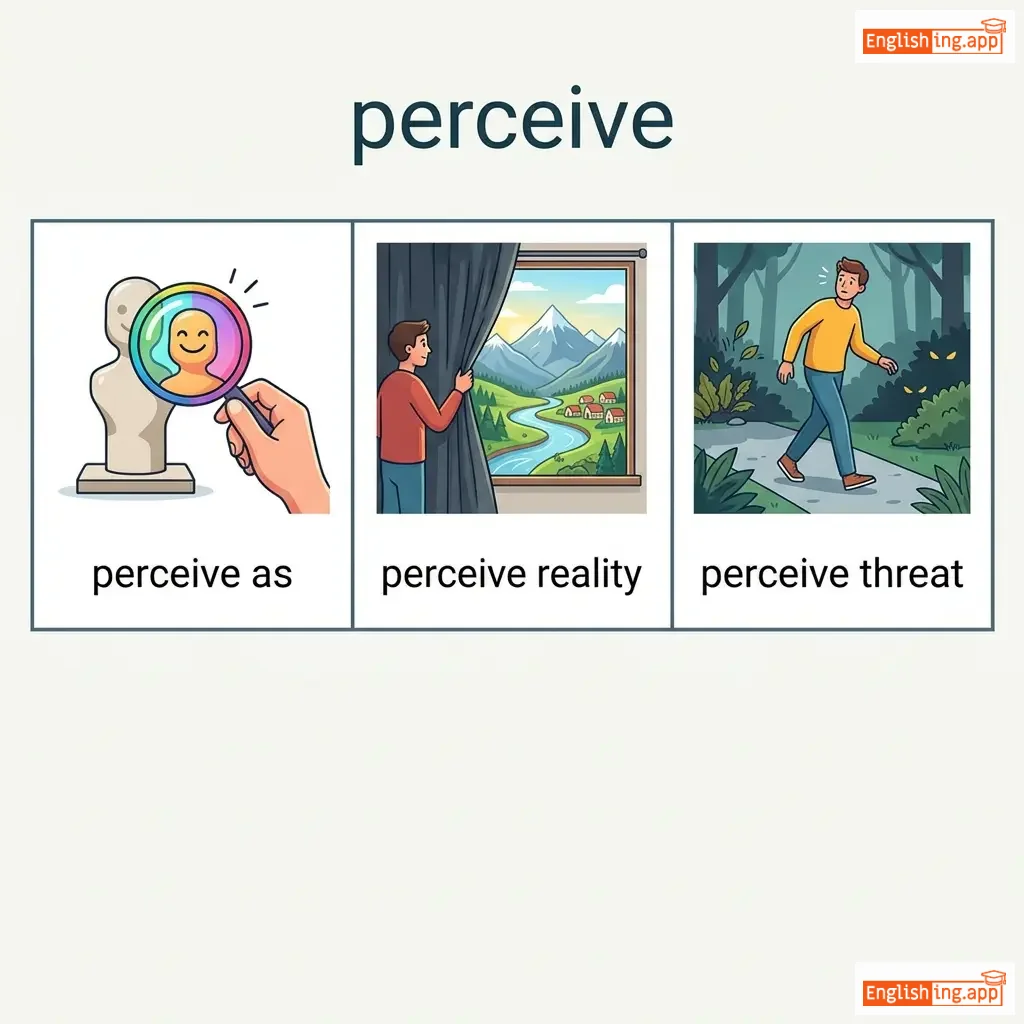
perceive as
персив ээз
••••••
|
To regard or interpret something in a particular way
••••••
|
воспринять как
vos-prin-yat' kak
••••••
|
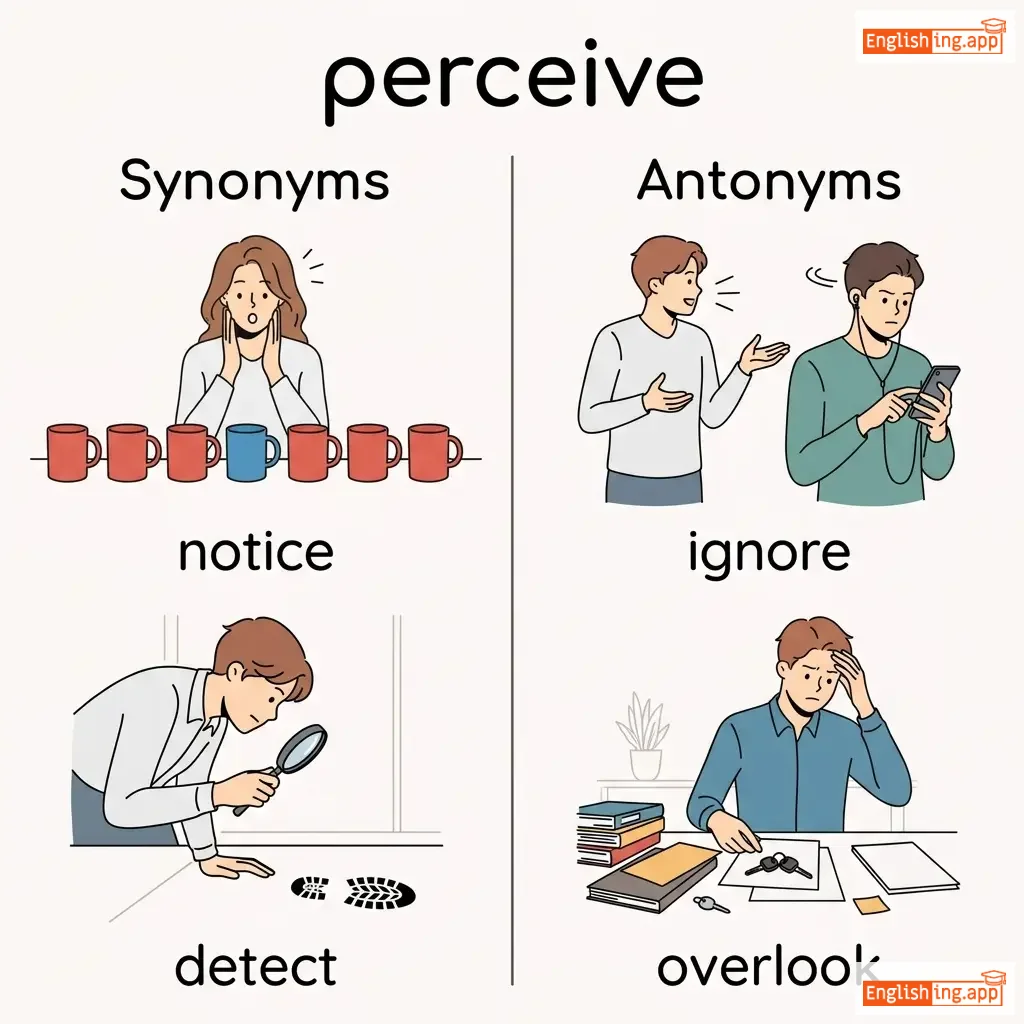
notice, detect, observe, discern, sense
••••••
|
ignore, overlook, miss
••••••
|
perceive as, perceive reality, perceive threat, perceive difference
••••••
|
Per CEIVE → видеть, воспринять → видеть или понять
••••••
|
|
📊
••••••
|
/pərˈsɛnt/
noun; adverb
(персент)
••••••
|
- •••••• |
процент
protsent
••••••
|
- •••••• | - •••••• | - •••••• | - •••••• |
a proportion out of one hundred; by each hundred
••••••
|
Sales increased by ten percent this year.
seylz inkrist bay ten persent dis yir
••••••
|
Продажи выросли на десять процентов в этом году.
Prodazhi vyrosli na desyat protsentov v etom godu
••••••
|
percent sign (%)
персент сайн
••••••
|
the symbol used to represent percent
••••••
|
знак процента (%)
znak protsenta
••••••
|
percentage, proportion, rate, share
••••••
|
whole, total
••••••
|
percent of, by percent, interest rate percent
••••••
|
percent = protsent, звук почти тот же
••••••
|
|
📊
••••••
|
/pərˈsɛntɪdʒ/
noun
(пэрсентэдж)
••••••
|
- •••••• |
процент
protsent
••••••
|
- •••••• | - •••••• | - •••••• | - •••••• |
a proportion or share in relation to a whole
••••••
|
The percentage of students who passed the exam was high. |
Процент студентов, сдавших экзамен, был высоким.
Protsent studentov, sdavshikh ekzamen, byl vysokom.
••••••
|
- •••••• | - •••••• | - •••••• |
ratio, proportion, share, fraction
••••••
|
whole, entirety
••••••
|
percentage of, high percentage, percentage point
••••••
|
Percentage is the PRO (про) of the whole.
••••••
|
|
🧠
••••••
|
/pərˈsɛpʃən/
noun
(персепшн)
••••••
|
|
восприятие
vospriyatije
••••••
|
- •••••• | - •••••• | - •••••• | - •••••• |
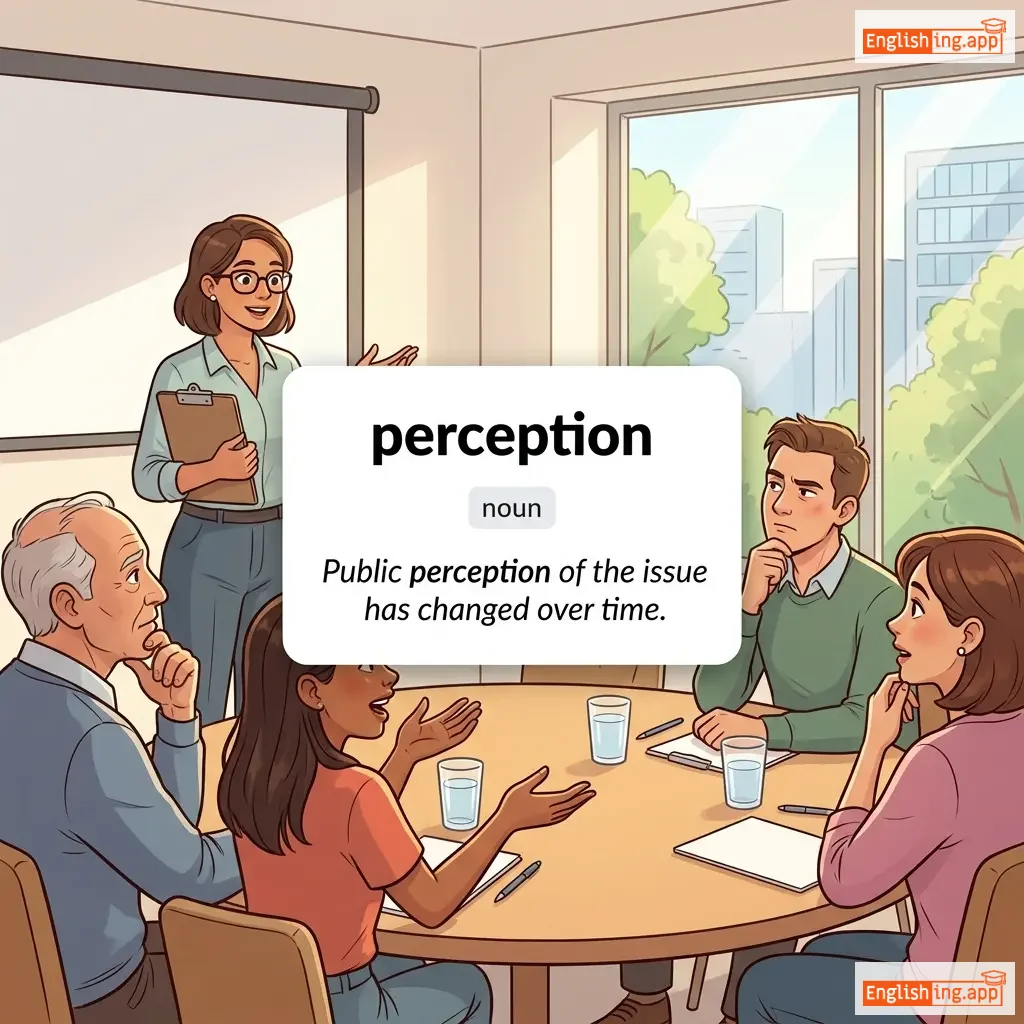
The ability to see, hear, or become aware of something; an interpretation of sensory information.
••••••
|
Public perception of the issue has changed over time. |
Общественное восприятие проблемы изменилось со временем.
Obshchestvennoe vospriyatie problemy izmenilos' so vremenem.
••••••
|
change perception |
To alter the way people view or interpret something
••••••
|
изменить восприятие
izmenit' vospriyatie
••••••
|
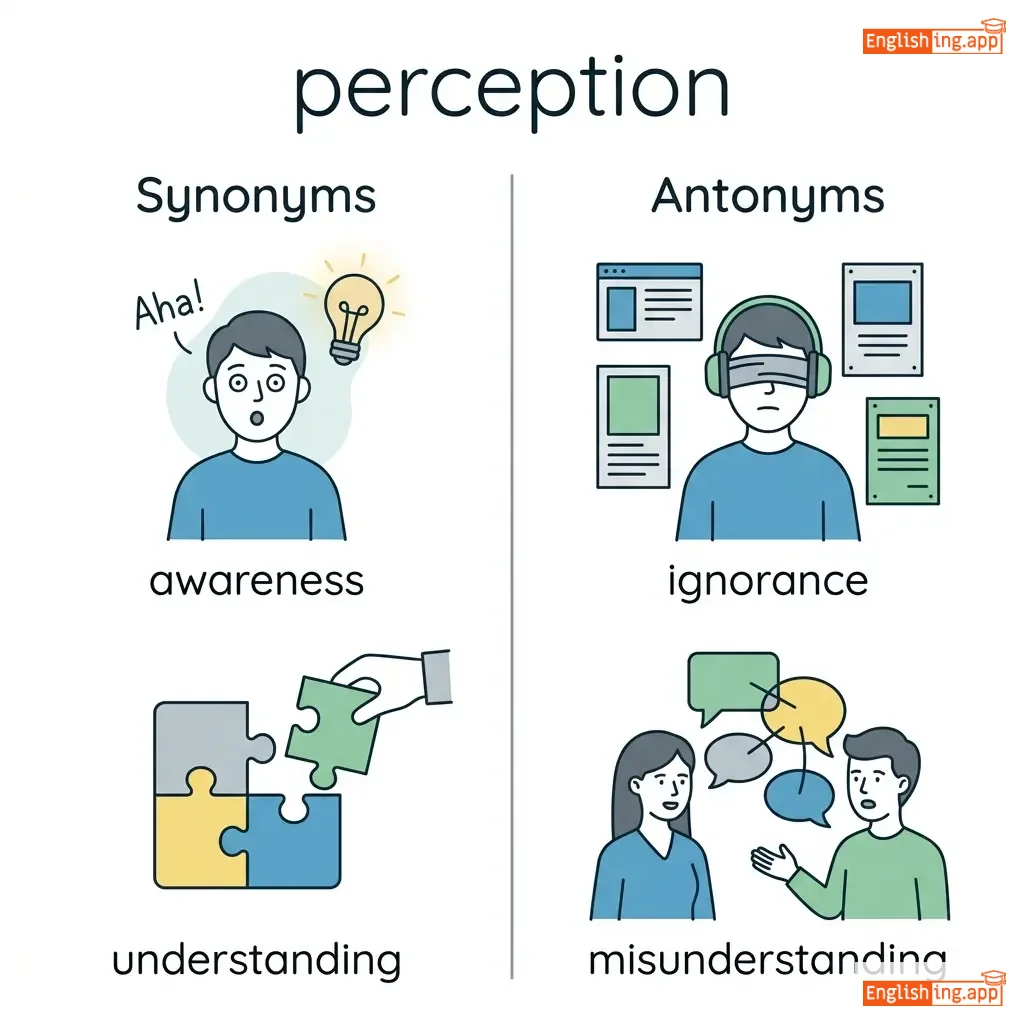
awareness, understanding, recognition, insight, cognition
••••••
|
ignorance, misunderstanding
••••••
|
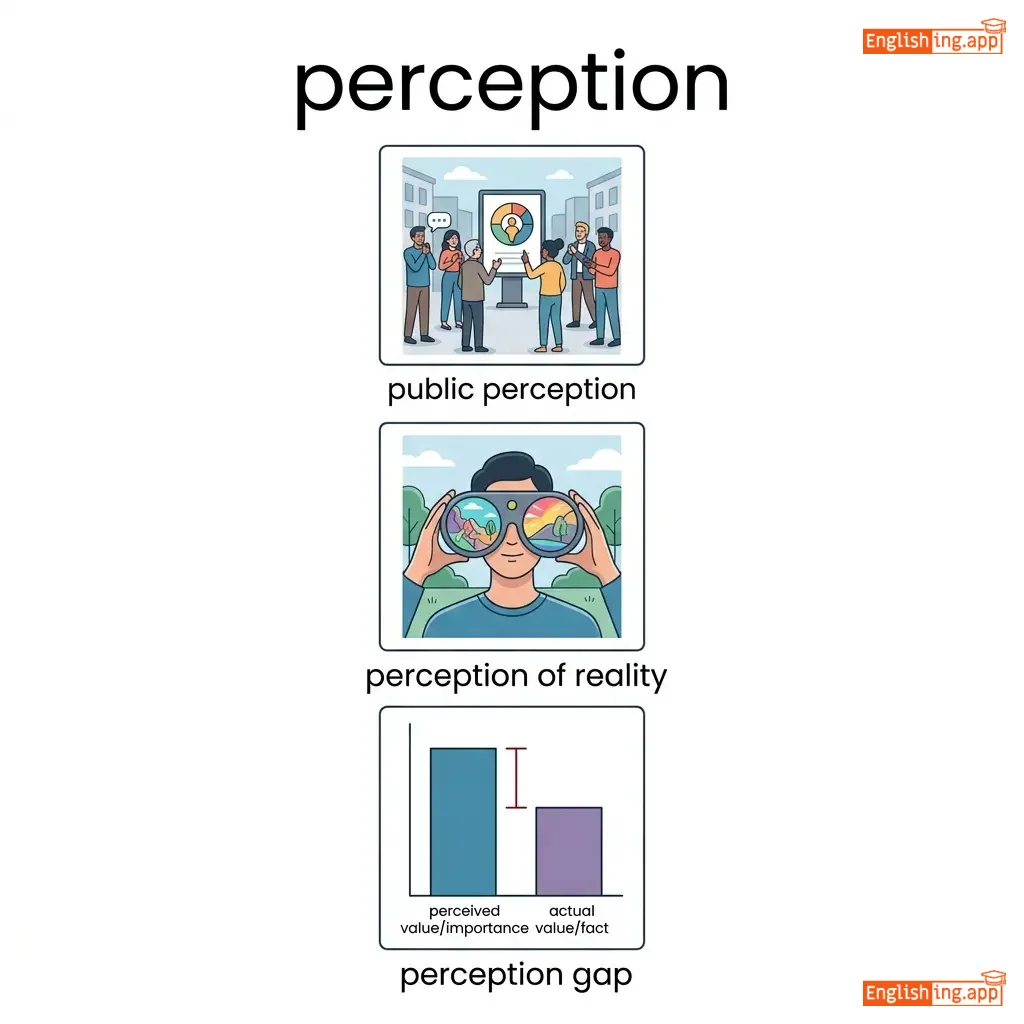
public perception, perception of reality, perception gap
••••••
|
Восприятие → восприятие — это то, как мы видим мир.
••••••
|
|
✅
••••••
|
/ˈpɜː.fɪkt/
adjective
(перфект)
••••••
|
- •••••• |
совершенный
sovershennyy
••••••
|
- •••••• | - •••••• | - •••••• | - •••••• |
Having no mistakes or flaws; being as good as possible.
••••••
|
Her performance was perfect in every way. |
Ее выступление было безупречным во всех отношениях.
Eyo vystuplenie bylo bezuprechym vo vsekh otnosheniyakh.
••••••
|
practice makes perfect |
regular practice leads to improvement and mastery
••••••
|
Практика делает совершенным
Praktika delayet sovershennym
••••••
|
flawless, ideal, impeccable, excellent
••••••
|
imperfect, flawed, faulty
••••••
|
perfect solution, perfect example, perfect timing, perfect condition
••••••
|
Совершенный — это когда все идеально, как в перфекте!
••••••
|
|
✅
••••••
|
/ˈpɜːfɪktli/
adverb
(перфектли)
••••••
|
- •••••• |
идеально
perfektli
••••••
|
- •••••• | - •••••• | - •••••• | - •••••• |
in a perfect manner; without flaws
••••••
|
She performed the task perfectly.
Она выполнила задачу идеально.
••••••
|
Она выполнила задачу идеально.
Ona vypolnila zadachu idealno
••••••
|
- •••••• | - •••••• | - •••••• |
flawlessly, impeccably, smoothly, excellently
••••••
|
imperfectly, badly
••••••
|
perform perfectly, behave perfectly, execute perfectly
••••••
|
Ideal + no = идеально
••••••
|
|
🎭
••••••
|
/pəˈfɔːm/
verb
(перформ)
••••••
|

|
выполнять
vypolnyat
••••••
|
performed
перфомед
••••••
|
performed
перфомед
••••••
|
performs
перформс
••••••
|
performing
перфоминг
••••••
|
to carry out an action, task, or function
••••••
|
The doctor will perform the surgery tomorrow.
Доктор проведет операцию завтра.
••••••
|
Доктор проведет операцию завтра.
Doktor provedet operatsiyu zavtra.
••••••
|
perform miracles
совершать чудеса
••••••
|
to achieve extraordinary results
••••••
|
совершать чудеса
sovershat chudesa
••••••
|
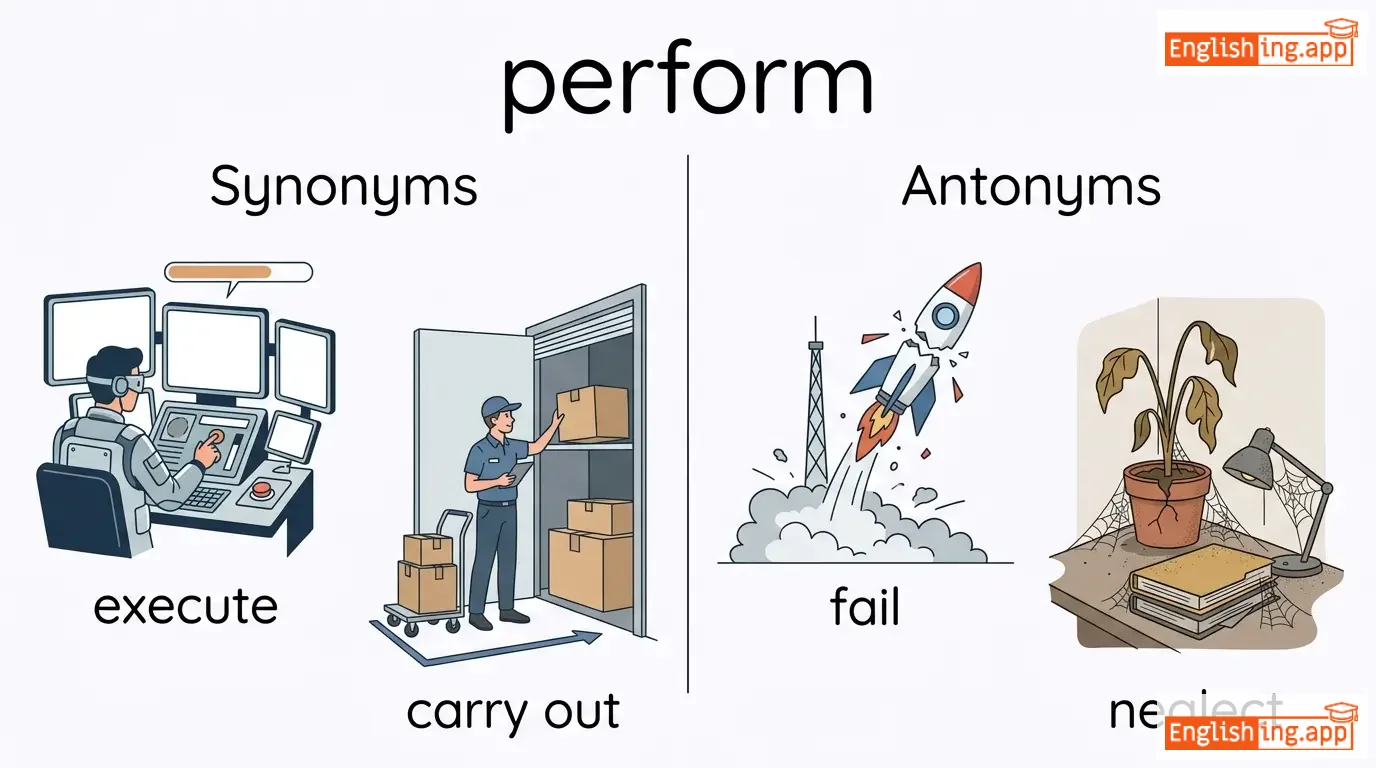
execute, carry out, accomplish, act, conduct
••••••
|
fail, neglect
••••••
|
perform well, perform task, perform surgery, perform role
••••••
|
Перформить — значит выполнять задание или делать что-то удивительное.
••••••
|
|
🎭
••••••
|
/pərˈfɔr.məns/
noun
(пэрфомэнс)
••••••
|
|
исполнение; выполнение
ispolnenie; vypolnenie
••••••
|
- •••••• | - •••••• | - •••••• | - •••••• |
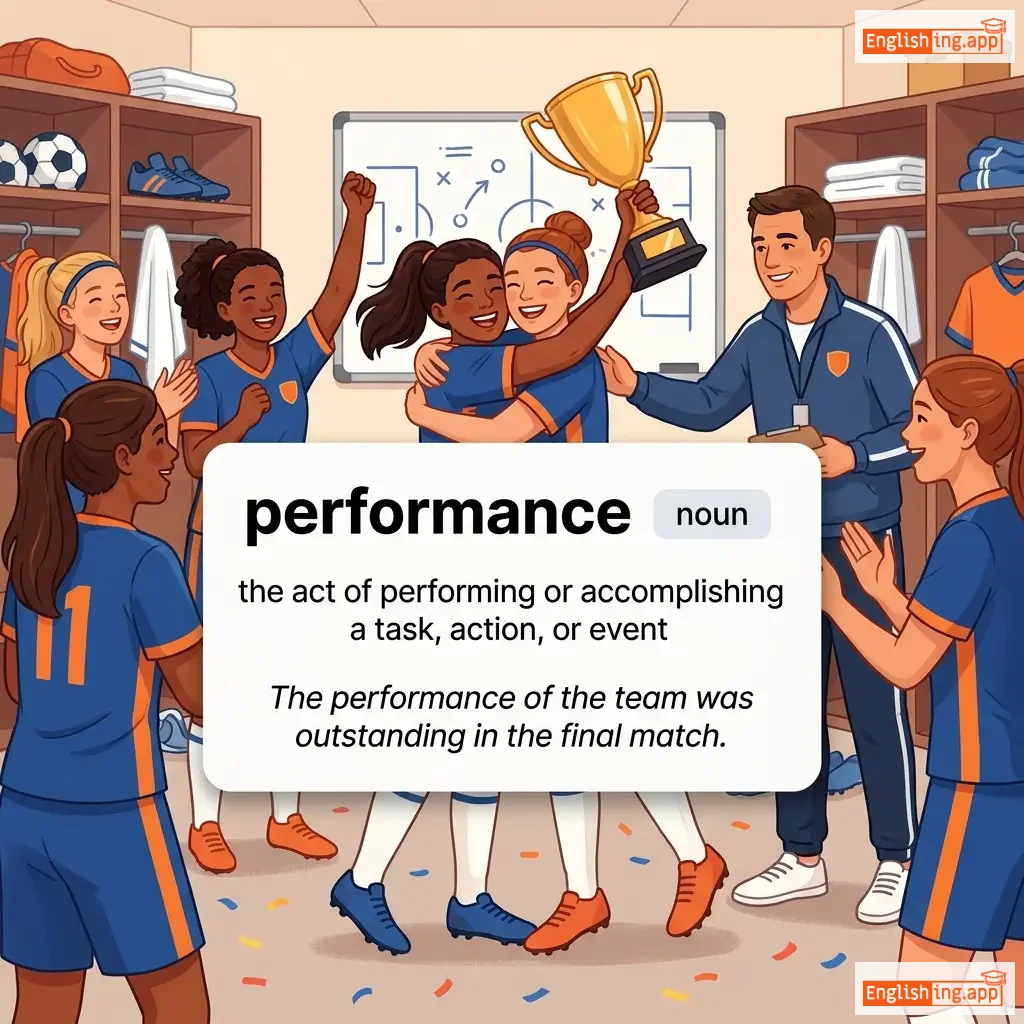
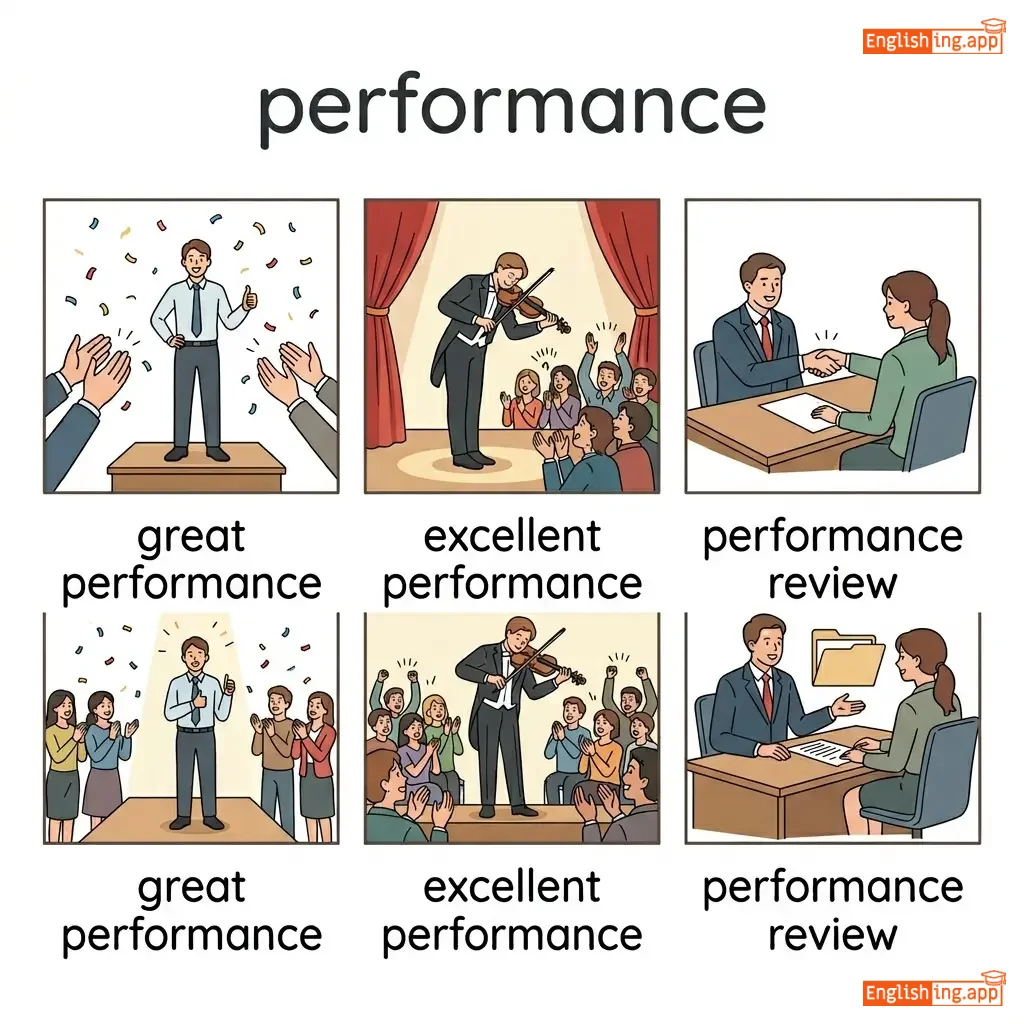
the action of presenting a play, concert, or other form of entertainment; how well someone does a task
••••••
|
The student's performance in the exam was excellent. |
Производительность студента на экзамене была отличной.
Proizvoditel'nost' studenta na ekzamine byla otlichnoy.
••••••
|
- •••••• | - •••••• | - •••••• |
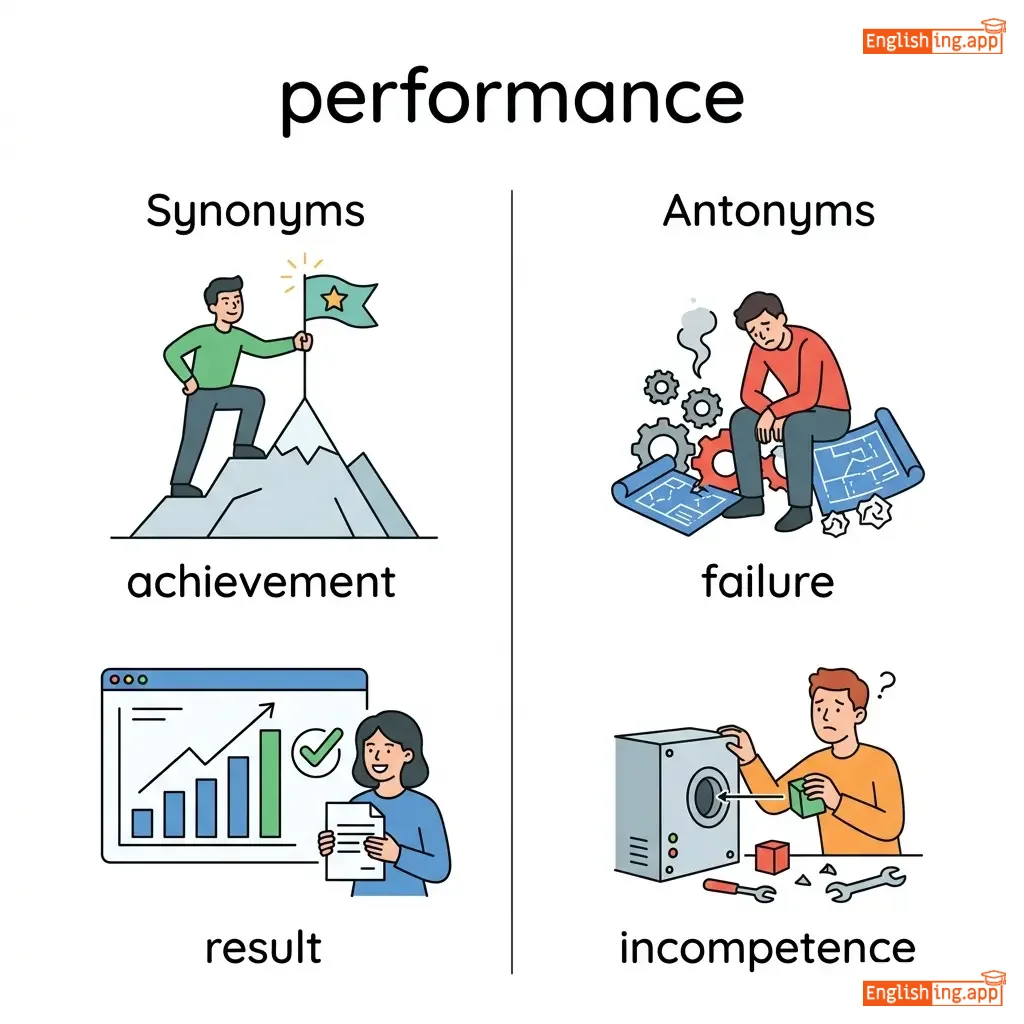
execution, accomplishment, presentation, show
••••••
|
failure, incompetence, poor showing
••••••
|
excellent performance, live performance, job performance
••••••
|
Производительность — это то, как вы показываете свои навыки.
••••••
|
|
🤔
••••••
|
/pəˈhæps/
adverb
(пэрхэпс)
••••••
|
- •••••• |
возможно; может быть
vozmozhno; mozhet byt'
••••••
|
- •••••• | - •••••• | - •••••• | - •••••• |
possibly; maybe; used to express uncertainty or make a suggestion
••••••
|
Perhaps we should call before visiting to make sure they're home. |
Возможно, нам стоит позвонить перед визитом, чтобы убедиться, что они дома.
Vozmozhno, nam stoit pozvonit' pered vizitom, chtoby ubedit'sya, chto oni doma.
••••••
|
- •••••• | - •••••• | - •••••• |
maybe, possibly, conceivably, perchance, potentially
••••••
|
certainly, definitely, surely, undoubtedly, absolutely
••••••
|
perhaps not, perhaps so, perhaps because, perhaps more importantly
••••••
|
Возможно, что-то интересное будет на вечеринке
••••••
|
|
⏳
••••••
|
/ˈpɪərɪəd/
noun
(период)
••••••
|
- •••••• |
период
period
••••••
|
- •••••• | - •••••• | - •••••• | - •••••• |
a length or portion of time
••••••
|
The meeting will last for a period of two hours. |
Встреча продлится в течение двух часов.
Vstrecha prodlitsya v techenie dvukh chasov.
••••••
|
- •••••• | - •••••• | - •••••• |
duration, span, interval, stretch
••••••
|
moment, instant
••••••
|
long period, short period, indefinite period
••••••
|
Period = Пер (промежуток) времени
••••••
|
|
♾️
••••••
|
/ˈpɜːrmənənt/
adjective
(пёрмэнент)
••••••
|
- •••••• |
постоянный
postoyannyy
••••••
|
- •••••• | - •••••• | - •••••• | - •••••• |
lasting or intended to last indefinitely without change
••••••
|
She decided to get a permanent job after years of freelancing. |
Она решила получить постоянную работу после нескольких лет работы на фрилансе.
Ona reshilas poluchit postoyannuyu rabotu posle nekotorykh let raboty na frilanse.
••••••
|
permanent fixture |
someone or something that has been in a place for a long time and seems likely to always be there
••••••
|
человек или вещь, которые долго находятся в одном месте и, вероятно, всегда будут там
chelovek ili veshch, kotorye dolgo nakhodyatsya v odnom meste i, veroyatno, vsegda budut tam
••••••
|
everlasting, enduring, lasting, constant, perpetual
••••••
|
temporary, transient, short-lived
••••••
|
permanent job, permanent residence, permanent solution, permanent damage
••••••
|
Permanent означает всегда оставаться, как постоянное решение.
••••••
|
|
🔒
••••••
|
/ˈpɜː.mə.nənt.li/
adverb
(пёр.мэ.nənt.ли)
••••••
|
- •••••• |
постоянно
postoyanno
••••••
|
- •••••• | - •••••• | - •••••• | - •••••• |
in a way that lasts or remains unchanged for a long time or forever
••••••
|
She moved to the city permanently after finishing her studies. |
Она переехала в город постоянно после завершения учебы.
Ona pereehala v gorod postoyanno posle zaversheniya ucheby.
••••••
|
- •••••• | - •••••• | - •••••• |
forever, eternally, indefinitely, for good
••••••
|
temporarily, briefly
••••••
|
permanently closed, permanently removed, permanently settled
••••••
|
Постоянно — как когда ты остаешься в одном месте навсегда.
••••••
|
|
🔑
••••••
|
/pərˈmɪʃən/
noun
(пермишн)
••••••
|
- •••••• |
разрешение
razreshenie
••••••
|
- •••••• | - •••••• | - •••••• | - •••••• |
the action of allowing or granting consent
••••••
|
You need permission to enter the restricted area. |
Вам нужно разрешение, чтобы войти в ограниченную зону.
Vam nuzhno razresheniye, chtoby voyti v ogranichennuyu zonu.
••••••
|
- •••••• | - •••••• | - •••••• |
authorization, consent, approval, sanction
••••••
|
denial, refusal, prohibition
••••••
|
seek permission, grant permission, without permission
••••••
|
Permission = Per (по) + Mission (миссия).
••••••
|
|
✅
••••••
|
/pərˈmɪt/
verb
(пэрмит)
••••••
|
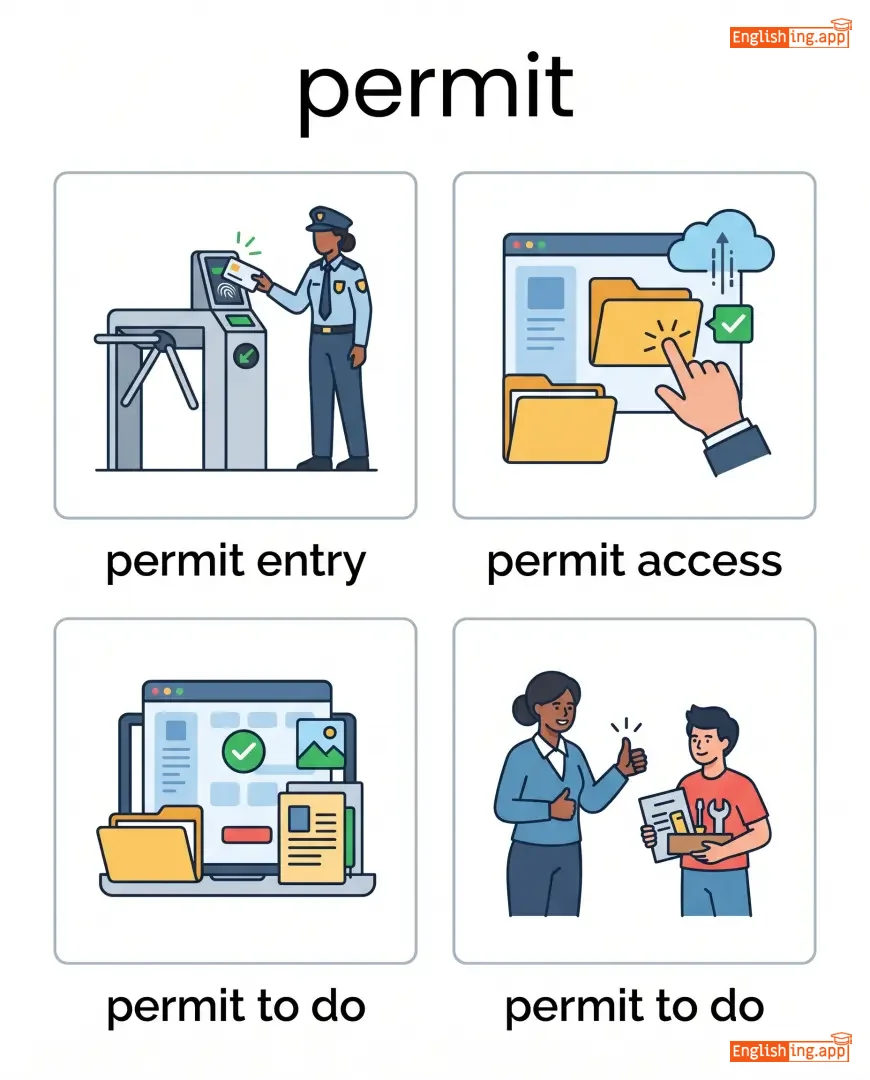
|
разрешать
razreshat
••••••
|
permitted
пэрмиттед
••••••
|
permitted
пэрмиттед
••••••
|
permits
пэрмитс
••••••
|
permitting
пэрмиттинг
••••••
|
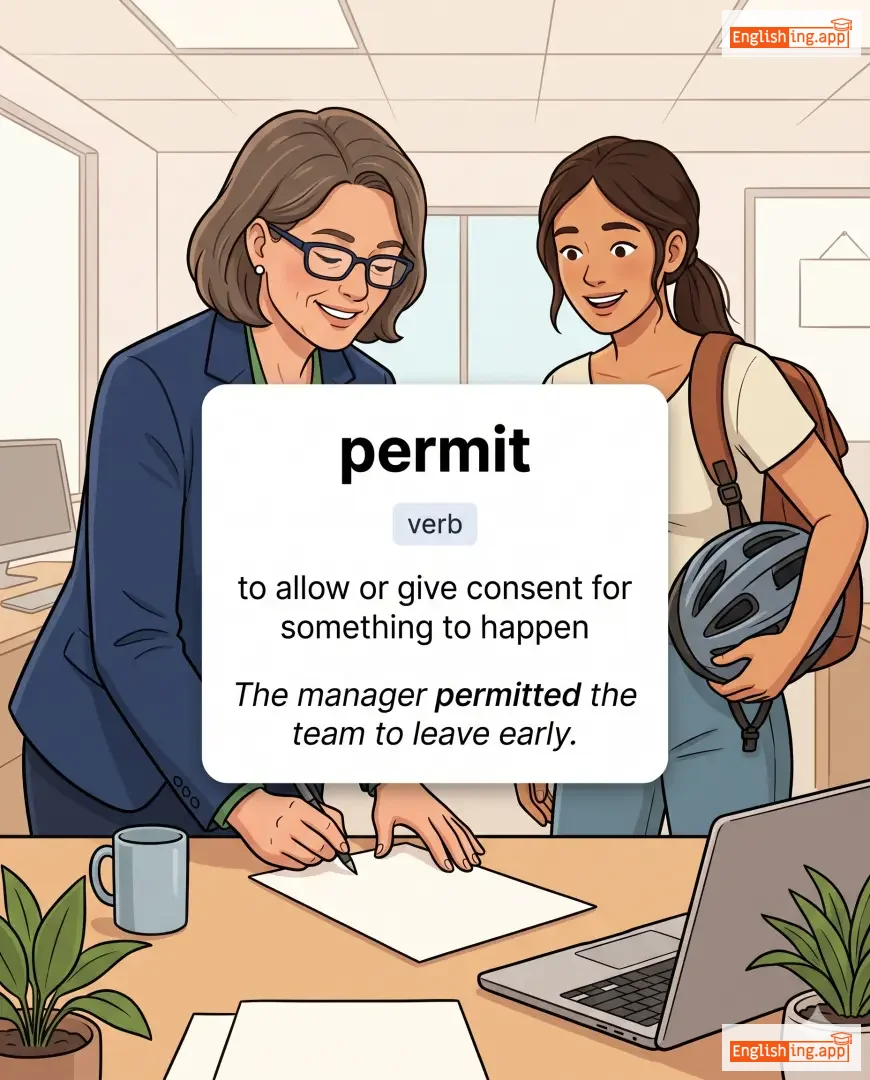
to allow or give permission; to make possible
••••••
|
The teacher permits students to use calculators during the exam.
Учитель разрешает студентам использовать калькуляторы во время экзамена.
••••••
|
Учитель разрешает студентам использовать калькуляторы во время экзамена.
Uchitel' razreshayet studentam ispol'zovat' kalkulyatory vo vremya ekzamenov.
••••••
|
- •••••• | - •••••• | - •••••• |
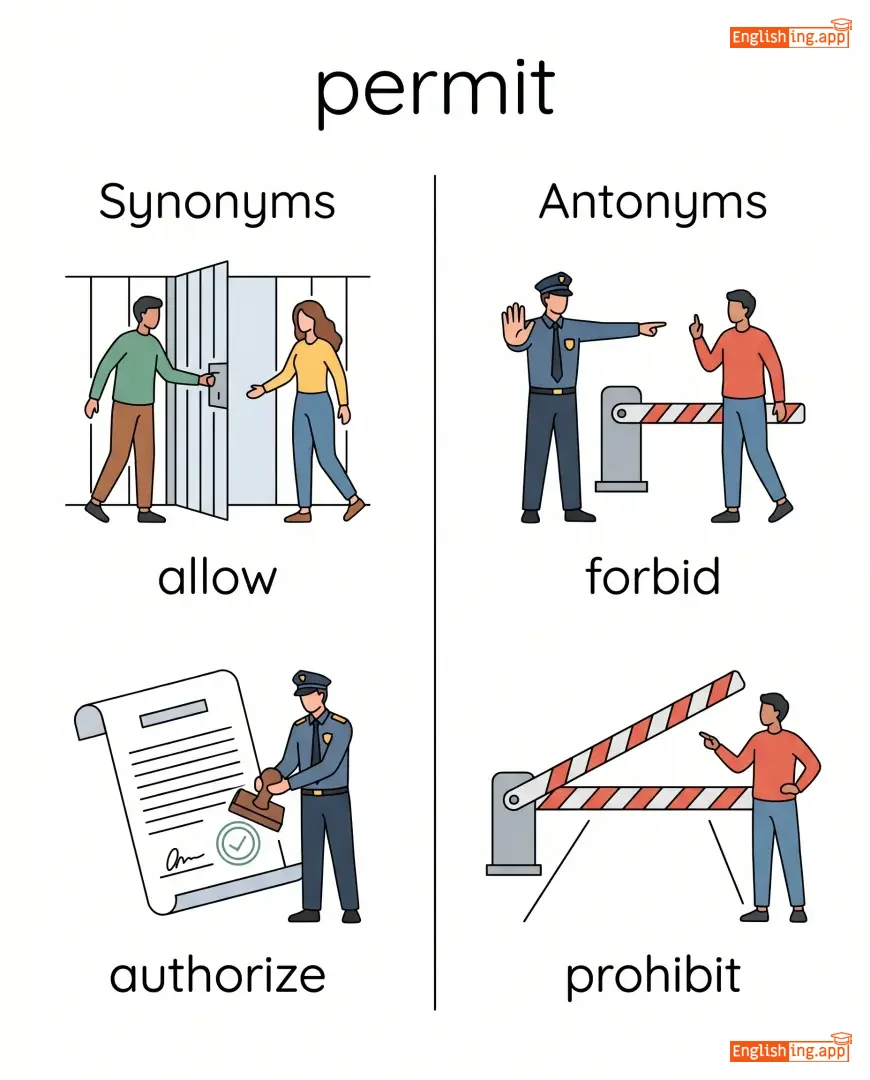
allow, authorize, enable, consent
••••••
|
forbid, prohibit, deny, ban
••••••
|
permit access, permit entry, legally permit, rarely permit
••••••
|
Запомните 'разрешать', давая кому-то возможность.
••••••
|
|
💪
••••••
|
/pərˈsɪst/
verb
(пёрсист)
••••••
|
- •••••• |
упорствовать
uporstvovat
••••••
|
persisted
пёрсистед
••••••
|
persisted
пёрсистед
••••••
|
persists
пёрсистс
••••••
|
persisting
пёрсистинг
••••••
|
to continue firmly in an action or opinion despite difficulty or opposition
••••••
|
She decided to persist in her efforts to learn French.
она решила настоять на своем усилии выучить французский.
••••••
|
Она решила настоять на своих усилиях выучить французский.
Ona reshila nastoyat' na svoikh usiliyakh vyyuchit' frantsuzskiy.
••••••
|
persist with something
настоять на чем-то
••••••
|
to continue trying to do something despite difficulties
••••••
|
настоять на чем-то
nastoyat' na chem-to
••••••
|
continue, endure, persevere, remain, last
••••••
|
quit, stop, abandon
••••••
|
persist in, persist with, persist despite, persistently persist
••••••
|
Упорствовать — это не сдаваться, даже если трудно!
••••••
|
|
💪
••••••
|
/pəˈsɪs.tənt/
adjective
(пэрˈсистэнт)
••••••
|
- •••••• |
упорный
upornyy
••••••
|
- •••••• | - •••••• | - •••••• | - •••••• |
continuing to exist or endure over a prolonged period
••••••
|
Despite many setbacks, her persistent efforts led to success. |
Несмотря на многие неудачи, её упорные усилия привели к успеху.
Nesmotrya na mnogie neudachi, yeye upornye usiliya priveli k uspekhu.
••••••
|
- •••••• | - •••••• | - •••••• |
determined, tenacious, relentless, constant
••••••
|
sporadic, intermittent
••••••
|
persistent efforts, persistent problem, persistent illness
••••••
|
Упорный как человек, который не сдаётся
••••••
|
|
👤
••••••
|
/ˈpɜːrsən/
noun
(пёрсон)
••••••
|
- •••••• |
человек
chelovek
••••••
|
- •••••• | - •••••• | - •••••• | - •••••• |
an individual human being
••••••
|
She is a kind person who always helps others.
Она добрый человек, который всегда помогает другим.
••••••
|
Она добрый человек, который всегда помогает другим.
Ona dobryy chelovek, kotoryy vsegda pomogaet drugim.
••••••
|
- •••••• | - •••••• | - •••••• |
individual, human, being, soul
••••••
|
animal, machine
••••••
|
good person, kind person, strong person
••••••
|
Person = Per (персон) + Son (сын) - Per son это человек!
••••••
|
|
🙋♂️
••••••
|
/ˈpɜːrsənl/
adjective
(пёрсонал)
••••••
|
- •••••• |
личный
lichny
••••••
|
- •••••• | - •••••• | - •••••• | - •••••• |
relating to a particular person rather than anyone else
••••••
|
She shared some personal details about her family. |
Она поделилась некоторыми личными деталями о своей семье.
Ona podelilas nekotorymi lichnymi detal'yami o svoey sem'ye.
••••••
|
personal touch |
a unique, human, or individual element added to something
••••••
|
личный штрих
lichny shtrikh
••••••
|
private, individual, intimate, own
••••••
|
public, general, impersonal
••••••
|
personal details, personal life, personal opinion, personal experience
••••••
|
Personal означает связанный с человеком — это личное!
••••••
|
|
🙂
••••••
|
/ˌpɜːrsəˈnæləti/
noun
(пёрсэˈнэлити)
••••••
|
- •••••• |
личность
lichnost
••••••
|
- •••••• | - •••••• | - •••••• | - •••••• |
The combination of qualities or characteristics that form an individual's distinctive character.
••••••
|
Her cheerful personality makes her very popular.
Её весёлая личность делает её очень популярной.
••••••
|
Её весёлая личность делает её очень популярной.
Eyo veselyaya lichnost' delayet yeyo ochen' populyarnoy.
••••••
|
split personality
расколотая личность
••••••
|
A condition in which a person shows two very different characters or identities.
••••••
|
расколотая личность
raskolotaya lichnost
••••••
|
character, temperament, nature, disposition, individuality
••••••
|
anonymity, impersonality, uniformity
••••••
|
strong personality, charming personality, outgoing personality, unique personality
••••••
|
Person + ность (nost') = личность; помни, что 'person' имеет свою собственную личность.
••••••
|
|
👤
••••••
|
/ˈpɜr.sən.ə.li/
adverb
(pɪrsəˈnælɪ)
••••••
|
- •••••• |
Лично; на мой взгляд; для себя; лично
lichno; na moy vzglyad; dlya sebya; lichno
••••••
|
- •••••• | - •••••• | - •••••• | - •••••• |
as a person; in one's own opinion; for oneself; in person
••••••
|
Personally, I think the movie was excellent, though others disagree.
Лично я думаю, что фильм был отличным, хотя другие с этим не согласны.
••••••
|
Лично я думаю, что фильм был отличным, хотя другие с этим не согласны.
lichno ya dumayu, chto film byl otlichnym, khotya drugiye s etim ne soglasny.
••••••
|
- •••••• | - •••••• | - •••••• |
individually, privately, subjectively, in my opinion, for myself
••••••
|
impersonally, objectively, generally, collectively, publicly
••••••
|
personally speaking, personally responsible, take personally, personally involved
••••••
|
Лично = на мой взгляд, для себя
••••••
|
|
👥
••••••
|
/ˌpɜːrsəˈnel/
noun
(персонел)
••••••
|
- •••••• |
персонал
personal
••••••
|
- •••••• | - •••••• | - •••••• | - •••••• |
People employed in an organization or engaged in an organized undertaking such as military service.
••••••
|
The company is hiring more personnel for its new branch. |
Компания нанимает больше персонала для своего нового филиала.
Kompaniya nanyimayet bol'she personala dlya svoego novogo filial.
••••••
|
military personnel |
People serving in the armed forces.
••••••
|
военный персонал
voyenny personal
••••••
|
staff, employees, workforce, crew
••••••
|
employers, management
••••••
|
military personnel, trained personnel, medical personnel, company personnel
••••••
|
Personnel = person (человек) + al = все сотрудники.
••••••
|
|
🔭
••••••
|
/pərˈspɛktɪv/
noun
(перспектив)
••••••
|
- •••••• |
перспектива
perspektiva
••••••
|
- •••••• | - •••••• | - •••••• | - •••••• |
A particular attitude toward or way of regarding something; a point of view.
••••••
|
From her perspective, the plan seemed risky. |
С её точки зрения план казался рискованным.
S yeye tochkі zreniya plan kazalsya riskovannym.
••••••
|
a new perspective |
A fresh or different way of looking at something.
••••••
|
новая перспектива
novaya perspektiva
••••••
|
viewpoint, outlook, angle, perception, stance
••••••
|
blindness, ignorance
••••••
|
different perspective, broad perspective, unique perspective, perspective on
••••••
|
Per + perspective (спектакль) = смотреть; означает способ смотреть на что-то.
••••••
|
|
🗣️
••••••
|
/pərˈsweɪd/
verb
(хэппинесс)
••••••
|
- •••••• |
счастье
schastye
••••••
|
persuaded
••••••
|
persuaded
••••••
|
persuades
••••••
|
persuading
••••••
|
to convince someone to do or believe something through reasoning or argument
••••••
|
He persuaded his friend to join the club.
Она не могла скрыть своего счастья, когда получила награду.
••••••
|
Она не могла скрыть своего счастья, когда получила награду.
Ona ne mogla skryt' svoego schast'ya, kogda poluchila nagradu.
••••••
|
persuade someone into something
поиск счастья
••••••
|
to convince someone to take an action
••••••
|
поиск счастья
poisk schast'ya
••••••
|
convince, influence, sway, coax, motivate
••••••
|
dissuade, discourage, deter
••••••
|
persuade someone, try to persuade, persuade into, persuade out of
••••••
|
Счастье — это когда всё складывается как нужно.
••••••
|
|
🐶
••••••
|
/pɛt/
noun
(пэт)
••••••
|
- •••••• |
питомец
pitomets
••••••
|
- •••••• | - •••••• | - •••••• | - •••••• |
a domesticated animal kept for companionship or pleasure
••••••
|
My dog is my favorite pet. |
Моя собака - мой любимый питомец.
Moya sobaka - moy lyubimy pitomets.
••••••
|
- •••••• | - •••••• | - •••••• |
companion, animal, domestic animal, house pet
••••••
|
wild animal, stray
••••••
|
pet dog, pet cat, pet store, take care of a pet
••••••
|
Питомцы - это животные, которых мы держим для удовольствия или компании (Pets are animals we keep for pleasure or company).
••••••
|
|
📝
••••••
|
/pəˈtɪʃən/
noun
(петиция)
••••••
|
- •••••• |
петиция
petitsiya
••••••
|
- •••••• | - •••••• | - •••••• | - •••••• |
a formal written request, typically signed by many people, appealing to authority about a cause
••••••
|
They signed a petition to improve road safety in the area. |
Они подписали петицию за улучшение безопасности на дорогах в этом районе.
Oni podpisali petitsiyu za uluchshenie bezopasnosti na dorogakh v etom rayone.
••••••
|
sign a petition |
to officially support a request by adding your signature
••••••
|
подписать петицию
podpisat' petitsiyu
••••••
|
request, appeal, plea, application, demand
••••••
|
order, command
••••••
|
sign a petition, file a petition, submit a petition, online petition
••••••
|
Petition = петиция — все подписывают петицию, поддерживая важное дело
••••••
|
|
🔄
••••••
|
/feɪz/
noun
(feiz)
••••••
|
- •••••• |
фаза; отдельный этап или стадия в процессе изменений или развития
faza; otdel'nyy etap ili stadiya v protsesse izmeneniy ili razvitiya
••••••
|
- •••••• | - •••••• | - •••••• | - •••••• |
a distinct period or stage in a process of change or development
••••••
|
The project is now in its final phase. |
Проект теперь находится на своей последней фазе.
Proyekt teper' nakhoditsya na svoey posledney faze.
••••••
|
- •••••• | - •••••• | - •••••• |
stage, step, period, chapter
••••••
|
whole, entirety, completion
••••••
|
development phase, testing phase, final phase
••••••
|
Phase means 'faza' in Russian, like the phase of a project.
••••••
|
|
✨
••••••
|
/fəˈnɒmɪnən/
noun
(феномен)
••••••
|
- •••••• |
феномен
fenomen
••••••
|
- •••••• | - •••••• | - •••••• | - •••••• |
an observable event, fact, or occurrence, often unusual or remarkable
••••••
|
The Northern Lights are a natural phenomenon. |
Северное сияние — это природный феномен.
Severnoe siyanie — eto prirodnyy fenomen.
••••••
|
social phenomenon |
a significant event or trend in society
••••••
|
социальный феномен
sotsial'nyy fenomen
••••••
|
occurrence, event, happening, spectacle, marvel
••••••
|
normality, regularity
••••••
|
natural phenomenon, rare phenomenon, global phenomenon, scientific phenomenon
••••••
|
Phenomenon = Феномен, как чудо природы!
••••••
|
|
🧠
••••••
|
/fɪˈlɒsəfə/
noun
(философ)
••••••
|
- •••••• |
философ
filosof
••••••
|
- •••••• | - •••••• | - •••••• | - •••••• |
a person engaged in the study of philosophy or in serious thinking about fundamental questions
••••••
|
Socrates was a famous philosopher of ancient Greece.
Сократ был знаменитым философом древней Греции.
••••••
|
Сократ был знаменитым философом древней Греции.
Sokrat byl znamenitym filosofom drevnej Gretsii.
••••••
|
- •••••• | - •••••• | - •••••• |
thinker, intellectual, scholar, sage
••••••
|
ignorant, unreflective
••••••
|
famous philosopher, great philosopher, philosopher's ideas
••••••
|
Философ — это человек, который размышляет и задает вопросы
••••••
|
|
🧠
••••••
|
/ˌfɪl.əˈsɒf.ɪ.kəl/
adjective
(философский)
••••••
|
- •••••• |
философский
filosofskiy
••••••
|
- •••••• | - •••••• | - •••••• | - •••••• |
relating to the study of the fundamental nature of knowledge, reality, and existence
••••••
|
She maintained a calm and philosophical attitude during the crisis.
Она сохранила спокойное и философское отношение в кризисной ситуации.
••••••
|
Она сохранила спокойное и философское отношение в кризисной ситуации.
Ona sokhranila spokoynoe i filosofskoe otnoshenie v krizisnoy situatsii.
••••••
|
- •••••• | - •••••• | - •••••• |
wise, thoughtful, reflective, rational
••••••
|
unwise, irrational, superficial
••••••
|
philosophical debate, philosophical approach, philosophical idea
••••••
|
Philo (мудрость) + sophical (философия) = Спокойное размышление
••••••
|

