Получите неограниченный доступ ко всем словам с подпиской Pro
Обновить до ProПолучите неограниченный доступ ко всем предложениям с подпиской Pro
Обновить до Pro|
Эмодзи
|
Слово | Images | Перевод | Прошедшее | Причастие прошедшего времени | Третье лицо единственного числа | Герундий | Значение | Пример предложения | Перевод примера предложения | Пример выражения | Значение примера выражения | Перевод примера выражения | Синонимы | Антонимы | Коллокации | Мнемоника |
|---|---|---|---|---|---|---|---|---|---|---|---|---|---|---|---|---|---|
|
👑
••••••
|
/ˈnoʊbəl/
adjective
(нобл)
••••••
|
- •••••• |
обладающий или демонстрирующий высокие личные качества, высокие моральные принципы или высокий социальный статус
obladayushchij ili demontiruyushchij vysokie lichnye kachestva, vysokie moral'nye printsipy ili vysokij sotsial'nyj status
••••••
|
- •••••• | - •••••• | - •••••• | - •••••• |
Having or showing fine personal qualities, high moral principles, or being of high social rank.
••••••
|
He is admired for his noble character and generosity. |
Его восхищают за его благородный характер и щедрость.
Ego voskhishchayut za ego blagonorodnyj kharakter i shchedrost'.
••••••
|
noble cause |
A morally good or worthwhile reason or objective
••••••
|
благородная цель
blagonorodnaya tsel'
••••••
|
honorable, dignified, virtuous, aristocratic
••••••
|
dishonorable, ignoble, base
••••••
|
noble cause, noble family, noble effort, noble character
••••••
|
Noble означает noble-человек — как король.
••••••
|
|
🙅♂️
••••••
|
/ˈnoʊˌbɑːdi/
pronoun
(нободи)
••••••
|
- •••••• |
никто
nikto
••••••
|
- •••••• | - •••••• | - •••••• | - •••••• |
no person; not anyone
••••••
|
Nobody came to the party.
Никто не пришел на вечеринку.
••••••
|
Никто не пришел на вечеринку.
Nikto ne prishel na vecherinku.
••••••
|
- •••••• | - •••••• | - •••••• |
no one, none, not a soul
••••••
|
someone, anybody
••••••
|
nobody knows, nobody cares, nobody else
••••••
|
Никто не придет, если никто не слушает - Nobody comes if nobody listens
••••••
|
|
👍
••••••
|
/nɒd/
verb
(нод)
••••••
|
|
кивать
kivat'
••••••
|
nodded
нодед
••••••
|
nodded
нодед
••••••
|
nods
нодс
••••••
|
nodding
нодинг
••••••
|
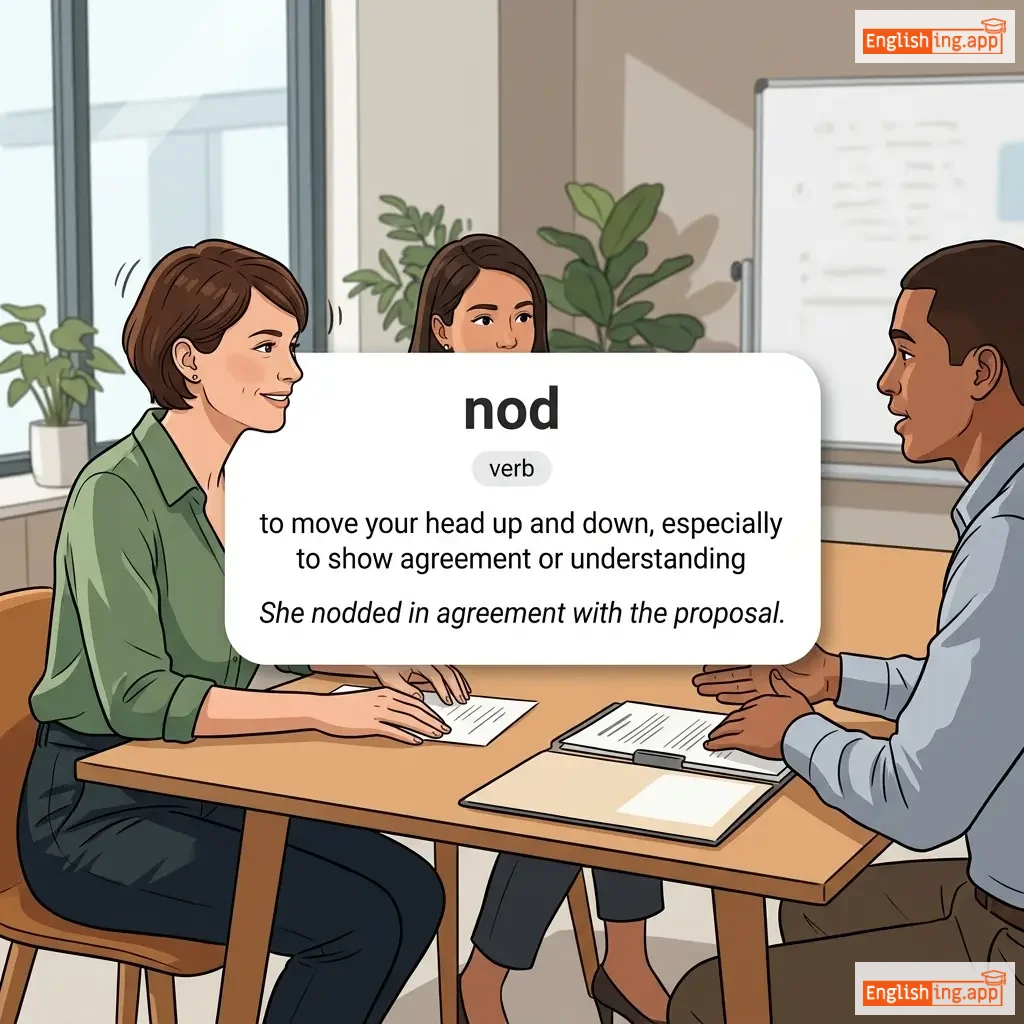
to move one's head down and up to show agreement or acknowledgment
••••••
|
She nodded in agreement with the proposal.
Она кивнула в знак согласия с предложением.
••••••
|
Она кивнула в знак согласия с предложением.
Ona kivnula v znak soglasiya s predlozheniem.
••••••
|
- •••••• | - •••••• | - •••••• |
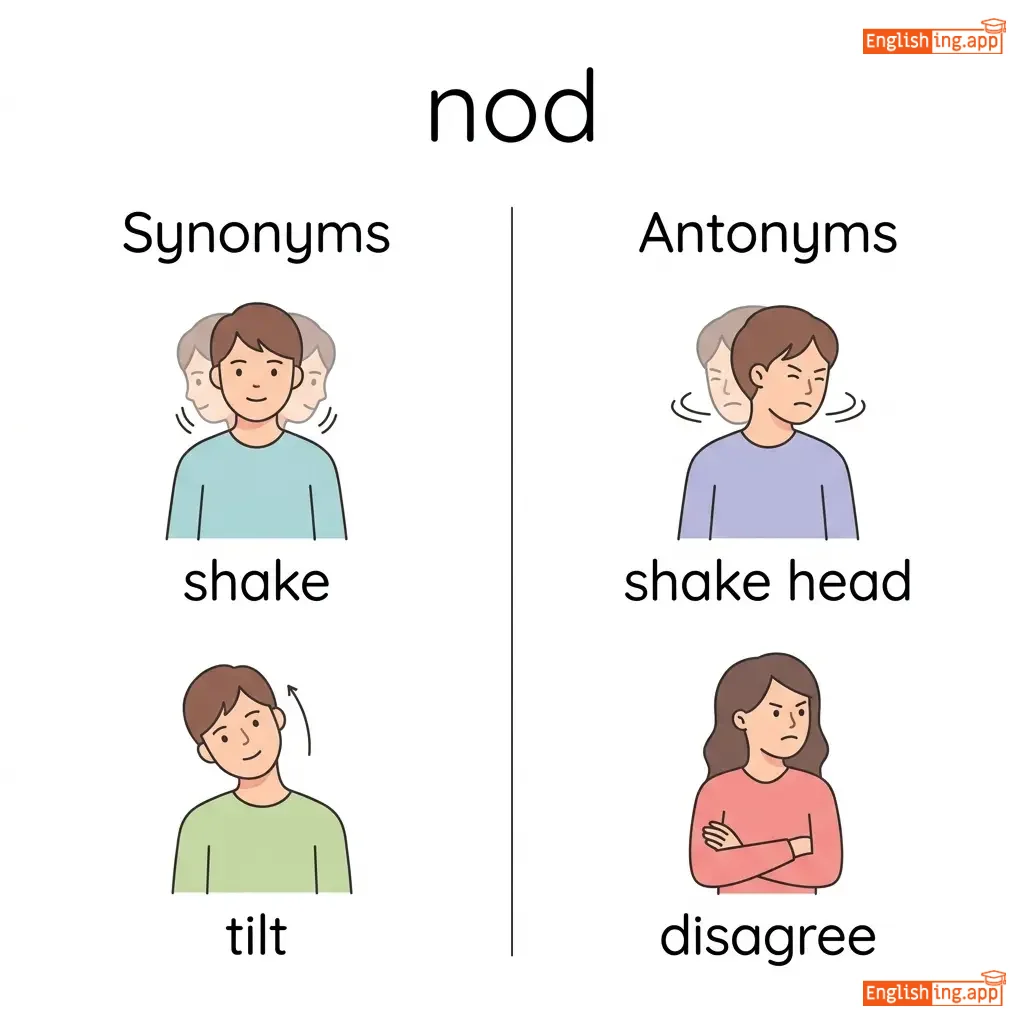
agree, acknowledge, approve, confirm
••••••
|
shake, disagree, deny
••••••
|
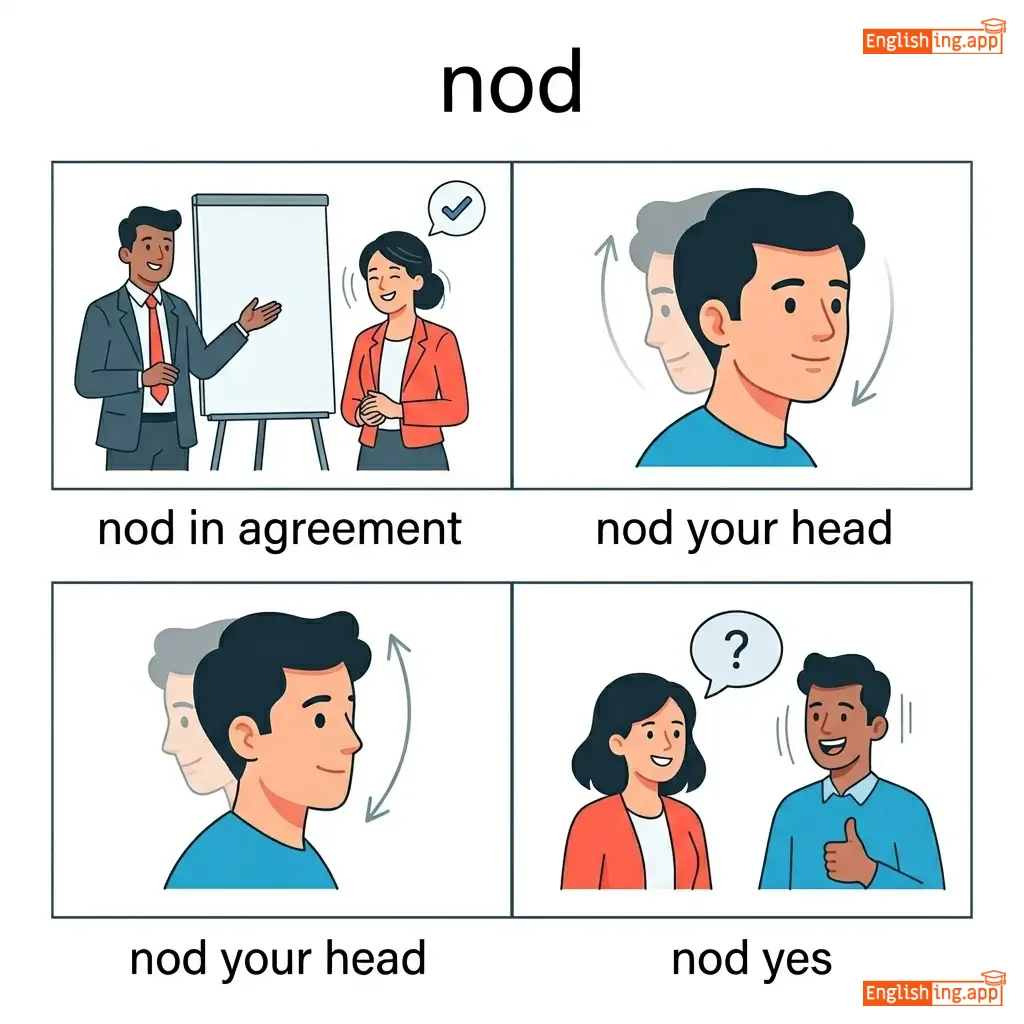
nod agreement, nod slowly, nod approvingly, nod politely, nod understanding
••••••
|
Кивать головой как знак согласия
••••••
|
|
🔊
••••••
|
/nɔɪz/
noun
(noiz)
••••••
|
- •••••• |
шум
shum
••••••
|
- •••••• | - •••••• | - •••••• | - •••••• |
a sound, especially one that is loud or unpleasant
••••••
|
The noise from the construction site was very disturbing.
Шум с строительной площадки был очень раздражающим.
••••••
|
Шум с строительной площадки был очень раздражающим.
Shum s stroitel'noy ploshchadki byl ochen' razdrazhayushchim.
••••••
|
- •••••• | - •••••• | - •••••• |
sound, din, racket, clamor
••••••
|
silence, quiet, peace, stillness
••••••
|
loud noise, background noise, noise pollution
••••••
|
Шум и noise - оба раздражают.
••••••
|
|
🔊
••••••
|
/ˈnɔɪzi/
adjective
(noyzi)
••••••
|
- •••••• |
шумный
shumnyy
••••••
|
- •••••• | - •••••• | - •••••• | - •••••• |
Making a lot of loud sounds; full of noise.
••••••
|
The children were noisy during the party. |
Дети были шумными на вечеринке.
Deti byli shumnymi na vecherinke.
••••••
|
noisy as a market |
Extremely loud and chaotic.
••••••
|
шумный как рынок
shumnyy kak rynok
••••••
|
loud, boisterous, rowdy, clamorous, raucous
••••••
|
quiet, silent, calm
••••••
|
noisy children, noisy street, noisy crowd
••••••
|
Noisy означает шумный - полный шума.
••••••
|
|
🏆
••••••
|
/ˈnɒmɪneɪt/
verb
(номинэйт)
••••••
|
|
номинировать
nominirovat
••••••
|
nominated
номинэйтед
••••••
|
nominated
номинэйтед
••••••
|
nominates
номинэйтс
••••••
|
nominating
номинэйтинг
••••••
|
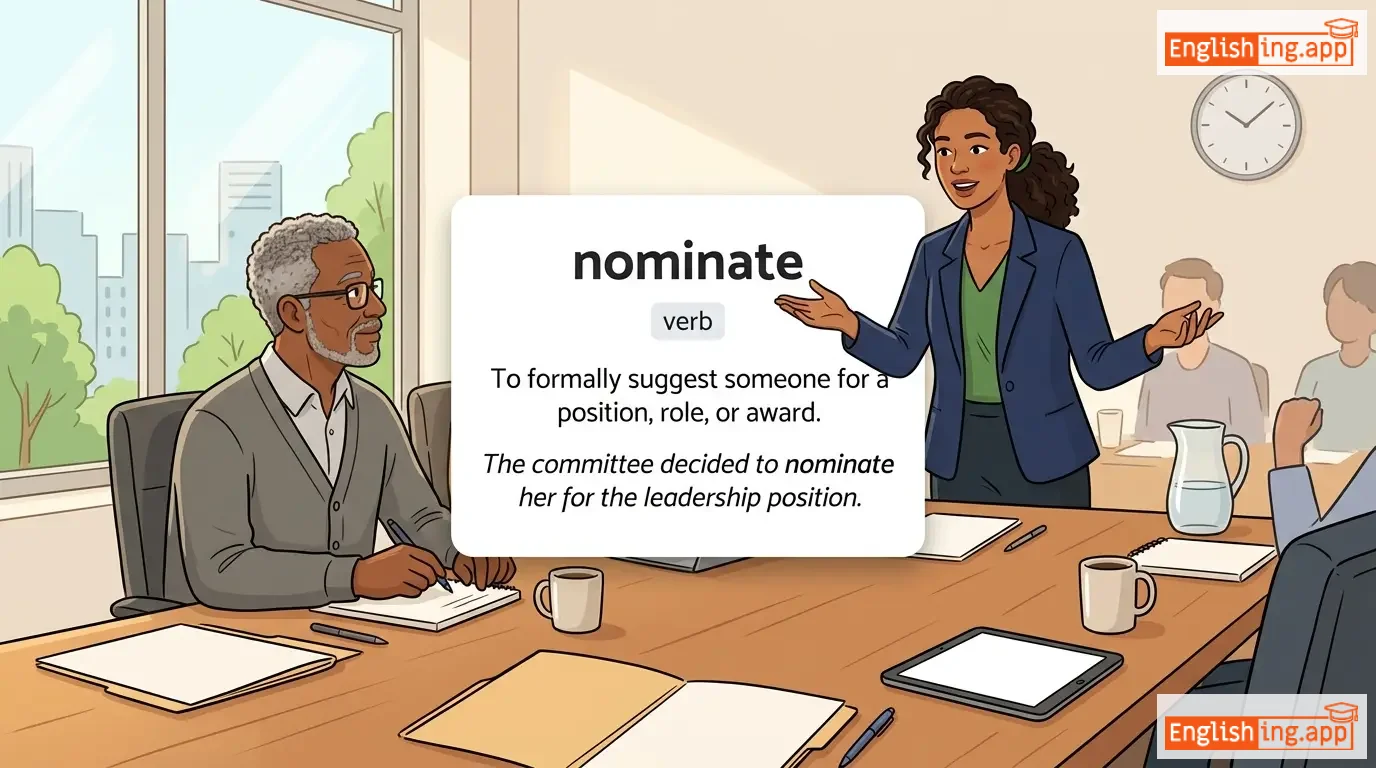
to propose someone for a position or award
••••••
|
The committee decided to nominate her for the award.
Комитет решил номинировать её на премию.
••••••
|
Комитет решил номинировать её на премию.
Komitet reshil nominirovat' yey na premiyu.
••••••
|
- •••••• | - •••••• | - •••••• |
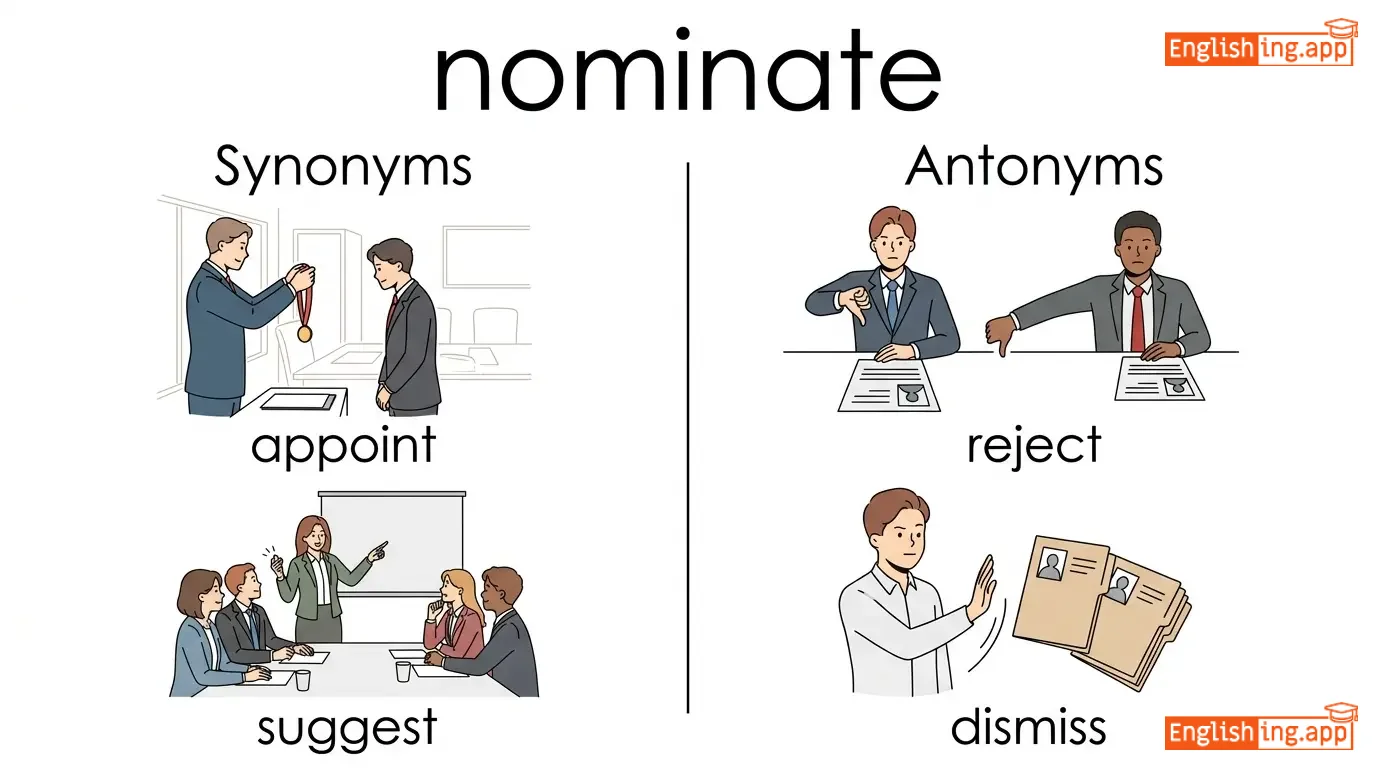
propose, suggest, recommend, appoint
••••••
|
reject, dismiss, withdraw
••••••
|
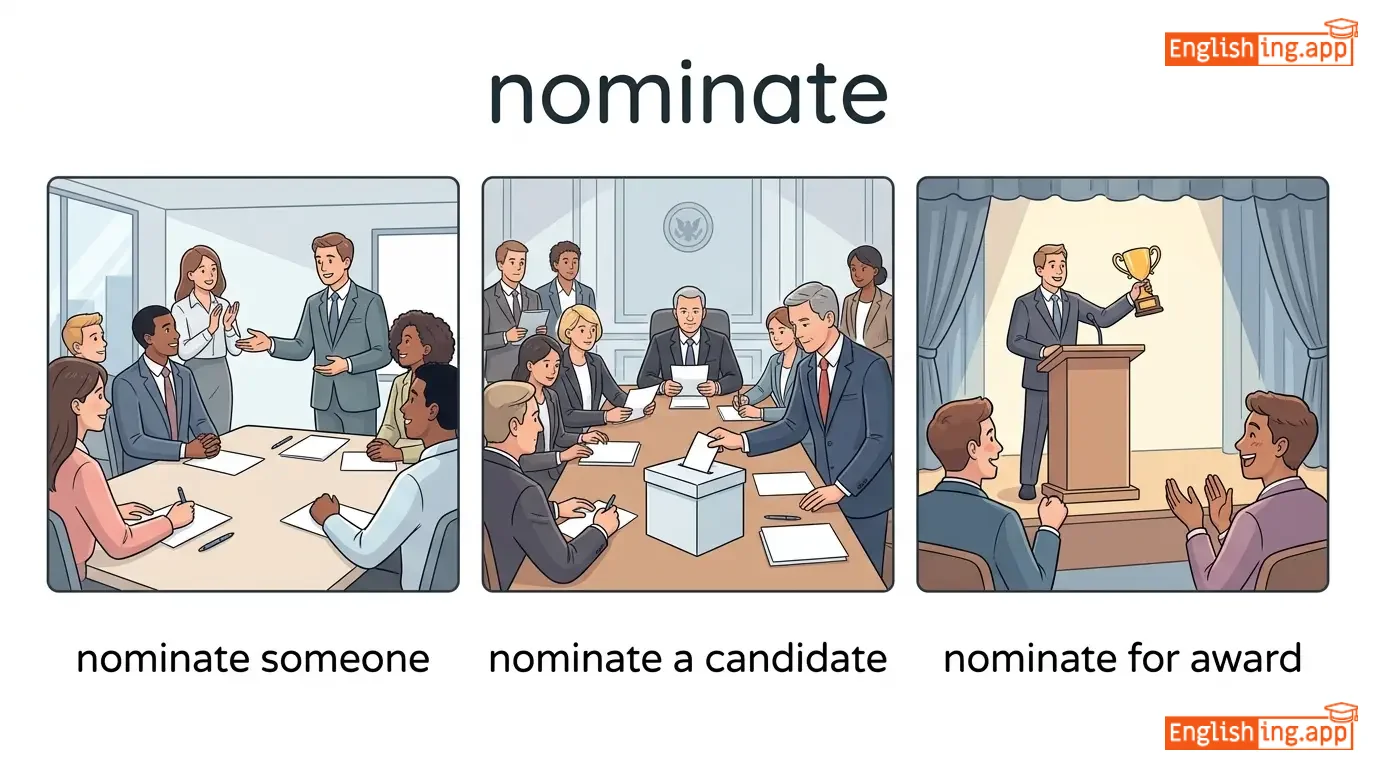
nominate candidates, nominate for award, officially nominate, nominate someone, nominate unanimously
••••••
|
Nominate = Номинировать (Nominorovat) - Russian 'номинировать' is very similar to the English word 'nominate'.
••••••
|
|
📜
••••••
|
/ˌnɒməˈneɪʃən/
noun
(номинация)
••••••
|
- •••••• |
номинация
nominatsiya
••••••
|
- •••••• | - •••••• | - •••••• | - •••••• |
The act of formally proposing someone for a role, position, or award.
••••••
|
Her nomination for the award surprised everyone. |
Её номинация на премию удивила всех.
Yeyo nominatsiya na premiyu udivila vsekh.
••••••
|
- •••••• | - •••••• | - •••••• |
appointment, proposal, suggestion, designation
••••••
|
rejection, dismissal, exclusion
••••••
|
receive nomination, award nomination, political nomination, official nomination
••••••
|
Номинация — это предложение кого-то на награду или роль.
••••••
|
|
💼
••••••
|
/ˌnɑm.əˈni/
noun
(номини)
••••••
|
- •••••• |
номинированный
nominivannyy
••••••
|
- •••••• | - •••••• | - •••••• | - •••••• |
a person who is nominated for an office, award, or honor
••••••
|
She was the nominee for the Best Actress award. |
Она была номинирована на премию за лучшую актрису.
Ona byla nominivanna na premiyu za luchshuyu aktrisu.
••••••
|
- •••••• | - •••••• | - •••••• |
candidate, contender, designee
••••••
|
disqualified person, rejected candidate
••••••
|
presidential nominee, award nominee, party nominee
••••••
|
Номинация означает, что вы выбраны для чего-то важного.
••••••
|
|
🤝
••••••
|
/ˌnɒnˈprɒfɪt/
noun; adjective
(нон-профит)
••••••
|
- •••••• |
некоммерческий
nekommercheskii
••••••
|
- •••••• | - •••••• | - •••••• | - •••••• |
an organization that does not operate for profit and reinvests surplus to achieve social goals; not intended to make financial profit
••••••
|
She works for a non-profit that provides free education to underprivileged children.
Ши воркс фор э нон-профит зэт провайдс фри эджукейшн.
••••••
|
Она работает в некоммерческой организации, которая предоставляет бесплатное образование.
ona rabotaet v nekommercheskoi organizatsii kotoraya predostavlyaet besplatnoe obrazovanie
••••••
|
non-profit organization
некоммерческая организация
••••••
|
an organization that uses its income to pursue social or charitable objectives rather than profit
••••••
|
некоммерческая организация
nekommercheskaya organizatsiya
••••••
|
charitable, not-for-profit, voluntary, philanthropic, altruistic
••••••
|
for-profit, commercial, profit-making
••••••
|
non-profit organization, non-profit sector, non-profit work, non-profit foundation, non-profit charity
••••••
|
Non-profit = не прибыль, а польза обществу – некоммерческий.
••••••
|
|
🚫
••••••
|
/nʌn/
pronoun
(нан)
••••••
|
- •••••• |
никто
nikto
••••••
|
- •••••• | - •••••• | - •••••• | - •••••• |
not any; no one; not one
••••••
|
None of the students passed the exam. |
Никто из студентов не сдал экзамен.
Nikto iz studentov ne sdal ekzamen.
••••••
|
- •••••• | - •••••• | - •••••• |
nothing, nobody, nil
••••••
|
all, some, everyone
••••••
|
none of, none left, none at all
••••••
|
None sounds like 'nikto'.
••••••
|
|
🌧️➡️🏞️
••••••
|
/ˌnʌnðəˈlɛs/
adverb
(нанселес)
••••••
|
- •••••• |
тем не менее
tem ne menee
••••••
|
- •••••• | - •••••• | - •••••• | - •••••• |
in spite of that; nevertheless
••••••
|
It was raining, but nonetheless, they went hiking. |
Шел дождь, но тем не менее они пошли в поход.
Shel dozhd, no tem ne menee oni poshli v pokhod.
••••••
|
- •••••• | - •••••• | - •••••• |
nevertheless, however, still, yet
••••••
|
therefore, hence
••••••
|
nonetheless important, nonetheless true, nonetheless, despite that
••••••
|
Noneth- like 'none-the-less' means despite.
••••••
|
|
🙃
••••••
|
/ˈnɒnsəns/
noun
(нонсенс)
••••••
|
- •••••• |
чепуха
chepukha
••••••
|
- •••••• | - •••••• | - •••••• | - •••••• |
Words or ideas that have no meaning or make no sense.
••••••
|
His explanation was pure nonsense. |
Его объяснение было чистой чепухой.
Ego obyasnenie bylo chistoy chepukhoy.
••••••
|
talk nonsense |
to say things that are not true or make no sense
••••••
|
нести чепуху
nesti chepukhu
••••••
|
rubbish, absurdity, foolishness, drivel, gibberish
••••••
|
truth, sense, logic
••••••
|
utter nonsense, talk nonsense, complete nonsense, pure nonsense
••••••
|
Nonsense = NO SENSE → слова без смысла → чепуха
••••••
|
|
🍜
••••••
|
/ˈnuːdəlz/
noun (plural)
(нудлз)
••••••
|
- •••••• |
лапша
lapsha
••••••
|
- •••••• | - •••••• | - •••••• | - •••••• |
long, thin strips of dough made from flour, water, or eggs, cooked and eaten as food
••••••
|
She cooked noodles with vegetables for dinner.
Она приготовила лапшу с овощами на ужин.
••••••
|
Она приготовила лапшу с овощами на ужин.
ona prigotovila lapshu s ovoshchami na uzhin
••••••
|
use your noodle
юз ёр нудл
••••••
|
to think carefully; to use your brain
••••••
|
используй голову
ispolzui golovu
••••••
|
pasta, ramen, vermicelli, spaghetti, soba
••••••
|
rice, bread
••••••
|
instant noodles, rice noodles, fried noodles, noodle soup, bowl of noodles
••••••
|
Лапша = noodles, длинная еда
••••••
|
|
☀️
••••••
|
/nuːn/
noun
(нун)
••••••
|
- •••••• |
полдень
polden
••••••
|
- •••••• | - •••••• | - •••••• | - •••••• |
12 o'clock in the daytime; midday
••••••
|
The meeting will start at noon. |
Встреча начнется в полдень.
Vstrecha nachnyotsya v polden.
••••••
|
high noon |
exactly midday; sometimes used to describe a decisive confrontation
••••••
|
полдень
polden
••••••
|
midday, twelve o'clock, middaytime
••••••
|
midnight
••••••
|
at noon, by noon, until noon, high noon
••••••
|
Noon означает полдень, солнце ☀️ в зените
••••••
|
|
🚫➡️🚫
••••••
|
/nɔːr/
conjunction
(нор)
••••••
|
- •••••• |
ни
ni
••••••
|
- •••••• | - •••••• | - •••••• | - •••••• |
used to introduce a negative clause after a negative statement
••••••
|
He didn't call, nor did he send a message. |
Он не позвонил, ни не отправил сообщение.
On ne pozvonil, ni ne otpravil soobshchenie.
••••••
|
- •••••• | - •••••• | - •••••• |
and not, neither
••••••
|
and, or
••••••
|
nor did, nor have
••••••
|
Nor - 'Not' after a negative statement.
••••••
|
|
📏
••••••
|
/nɔːrm/
noun
(норм)
••••••
|
- •••••• |
норма
norma
••••••
|
- •••••• | - •••••• | - •••••• | - •••••• |
An accepted standard or a usual practice.
••••••
|
Wearing uniforms is the norm in many schools. |
Ношение формы — это норма во многих школах.
Nosheniye formy — eto norma vo mnogikh shkolakh.
••••••
|
against the norm |
not typical or standard
••••••
|
против нормы
protiv normy
••••••
|
standard, rule, custom, practice, convention
••••••
|
exception, deviation, anomaly
••••••
|
social norm, cultural norm, become the norm, accepted norm
••••••
|
Норма — это то, что принято в повседневной жизни.
••••••
|
|
📏
••••••
|
/ˈnɔː.məl/
adjective
(нормал)
••••••
|
- •••••• |
нормальный
normal'nyy
••••••
|
- •••••• | - •••••• | - •••••• | - •••••• |
conforming to a standard; usual, typical, or expected
••••••
|
It is normal to feel nervous before an interview. |
Это нормально чувствовать нервозность перед интервью.
Eto normal'no chuvstvovat' nervoznost' pered interview.
••••••
|
back to normal |
returning to a usual or typical state
••••••
|
вернуться к норме
vernut'sya k norme
••••••
|
usual, ordinary, typical, standard, regular
••••••
|
abnormal, unusual, strange
••••••
|
normal life, normal situation, normal condition, back to normal
••••••
|
Normal = нормальный, всё по порядку 🧳
••••••
|
|
⚖️
••••••
|
/ˈnɔːrməlaɪz/
verb
(нормалайз)
••••••
|
- •••••• |
нормализовать
normalizovat
••••••
|
normalized
нормалайзд
••••••
|
normalized
нормалайзд
••••••
|
normalizes
нормалайзис
••••••
|
normalizing
нормалайзинг
••••••
|
to bring something back to a normal or standard condition; to make something conform to a standard
••••••
|
The government took steps to normalize relations with neighboring countries.
Зе гавернмент тук степс ту нормалайз рилейшнз уиз нейборинг кантриз.
••••••
|
Правительство предприняло шаги для нормализации отношений с соседними странами.
Pravitelstvo predprinyalo shagi dlya normalizatsii otnosheniy s sosednimi stranami
••••••
|
normalize relations
нормалайз рилейшнз
••••••
|
to restore normal diplomatic or social relations
••••••
|
нормализовать отношения
normalizovat otnosheniya
••••••
|
standardize, regularize, stabilize, harmonize, adjust
••••••
|
disrupt, destabilize, abnormalize
••••••
|
normalize data, normalize relations, normalize behavior, normalize process
••••••
|
Норма = normal → нормализовать
••••••
|
|
📅
••••••
|
/ˈnɔːməli/
adverb
(нормали)
••••••
|
- •••••• |
обычно
obychno
••••••
|
- •••••• | - •••••• | - •••••• | - •••••• |
in the usual way; under normal circumstances
••••••
|
I normally wake up at 7 AM every day. |
Я обычно просыпаюсь в 7 утра каждый день.
ya obychno prosypayus' v 7 utra kazhdyy den'
••••••
|
- •••••• | - •••••• | - •••••• |
usually, typically, generally
••••••
|
abnormally, unusually, rarely
••••••
|
normally do, normally happen, normally work
••••••
|
In Russian, think of 'obychno' and 'normally' to recall how both mean usual, everyday actions.
••••••
|
|
🧭
••••••
|
/nɔːrθ/
noun
(норт)
••••••
|
- •••••• |
север
sever
••••••
|
- •••••• | - •••••• | - •••••• | - •••••• |
the direction toward the top of a map or the opposite of south
••••••
|
We traveled north to reach the mountains. |
Мы путешествовали на север, чтобы добраться до гор.
My puteshestvovali na sever, chtoby dobrat'sya do gor.
••••••
|
- •••••• | - •••••• | - •••••• |
up, northern direction
••••••
|
south, downward
••••••
|
north pole, north wind, go north, head north
••••••
|
North is UP on a map, just like 'Sever' is UP in Russian!
••••••
|
|
🌨️
••••••
|
/ˈnɔːðərn/
adjective
(нордерн)
••••••
|
- •••••• |
северный
severnyy
••••••
|
- •••••• | - •••••• | - •••••• | - •••••• |
relating to the north or situated in the north
••••••
|
The northern part of the country is known for its cold climate. |
Северная часть страны известна своим холодным климатом.
Severnaya chast' strany izvestna svoim kholodnym klimatom.
••••••
|
- •••••• | - •••••• | - •••••• |
northerly, northernmost
••••••
|
southern
••••••
|
northern lights, northern regions, northern hemisphere
••••••
|
Think of the icy winds from the north – 'severnyy' means northern in Russian!
••••••
|
|
👃
••••••
|
/noʊz/
noun
(noʊz)
••••••
|
- •••••• |
нос
nos
••••••
|
- •••••• | - •••••• | - •••••• | - •••••• |
the part of the face that contains the nostrils and is used for breathing and smelling
••••••
|
He has a sharp nose and can smell things from far away. |
У него острый нос, и он может чувствовать запахи издалека.
U nego ostry nos, i on mozhet chuvstvovat' zapakhi izdaleka.
••••••
|
- •••••• | - •••••• | - •••••• |
nostrils, snout
••••••
|
mouth
••••••
|
runny nose, pick your nose, nose ring
••••••
|
Nose (нос) – Russian 'nos' is very close to the word 'nose'!
••••••
|
|
🚫
••••••
|
/nɒt/
adverb
(нот)
••••••
|
- •••••• |
нет
net
••••••
|
- •••••• | - •••••• | - •••••• | - •••••• |
used to make a word or phrase negative
••••••
|
I do not like spicy food. |
Я не люблю острую еду.
Ya ne lyublyu ostruyu yedu.
••••••
|
- •••••• | - •••••• | - •••••• |
no, never
••••••
|
yes
••••••
|
not sure, not at all, not yet, not going
••••••
|
Not (нет) – 'Net' means rejecting or saying no.
••••••
|
|
⭐
••••••
|
/ˈnoʊtəbl/
adjective
(nóteibl)
••••••
|
- •••••• |
значительный
znachitel'nyj
••••••
|
- •••••• | - •••••• | - •••••• | - •••••• |
worthy of attention or notice; remarkable
••••••
|
She made a notable contribution to the project.
Она сделала значительный вклад в проект.
••••••
|
Она сделала значительный вклад в проект.
Ona sdelala znachitel'nyj vklad v proyekt.
••••••
|
- •••••• | - •••••• | - •••••• |
remarkable, significant, outstanding, important, noteworthy
••••••
|
ordinary, insignificant, unremarkable
••••••
|
notable achievement, notable figure, notable difference, notable contribution
••••••
|
Notable в русском означает значительный, как значительный вклад.
••••••
|
|
⭐
••••••
|
/ˈnoʊtəbli/
adverb
(nóutabli)
••••••
|
- •••••• |
заметно
zametno
••••••
|
- •••••• | - •••••• | - •••••• | - •••••• |
used to indicate something worthy of attention or significant
••••••
|
She is notably talented in painting.
Она чрезвычайно талантлива в живописи.
••••••
|
Она чрезвычайно талантлива в живописи.
Ona chrezvychayno talantliva v zhivopisi.
••••••
|
- •••••• | - •••••• | - •••••• |
particularly, especially, significantly, remarkably
••••••
|
insignificantly, unremarkably
••••••
|
notably skilled, notably successful, notably different
••••••
|
Замечательно означает что-то, что стоит заметить и обратить внимание.
••••••
|
|
📝
••••••
|
/noʊt/
noun, verb
(ноут)
••••••
|

|
заметка
zametka
••••••
|
noted
ноутед
••••••
|
noted
ноутед
••••••
|
notes
ноутс
••••••
|
noting
ноутинг
••••••
|
a brief record of facts, topics, or thoughts written down; to observe or remark upon something
••••••
|
She wrote a quick note to remind herself of the meeting.
Она написала быстрые заметки, чтобы напомнить себе о встрече.
••••••
|
Она написала быстрые заметки, чтобы напомнить себе о встрече.
Ona napisal bystrye zametki, chtoby napomnit' sebe o vstreche.
••••••
|
take note
обратить внимание
••••••
|
to pay attention or give special consideration
••••••
|
обратить внимание
obratit' vnimanie
••••••
|
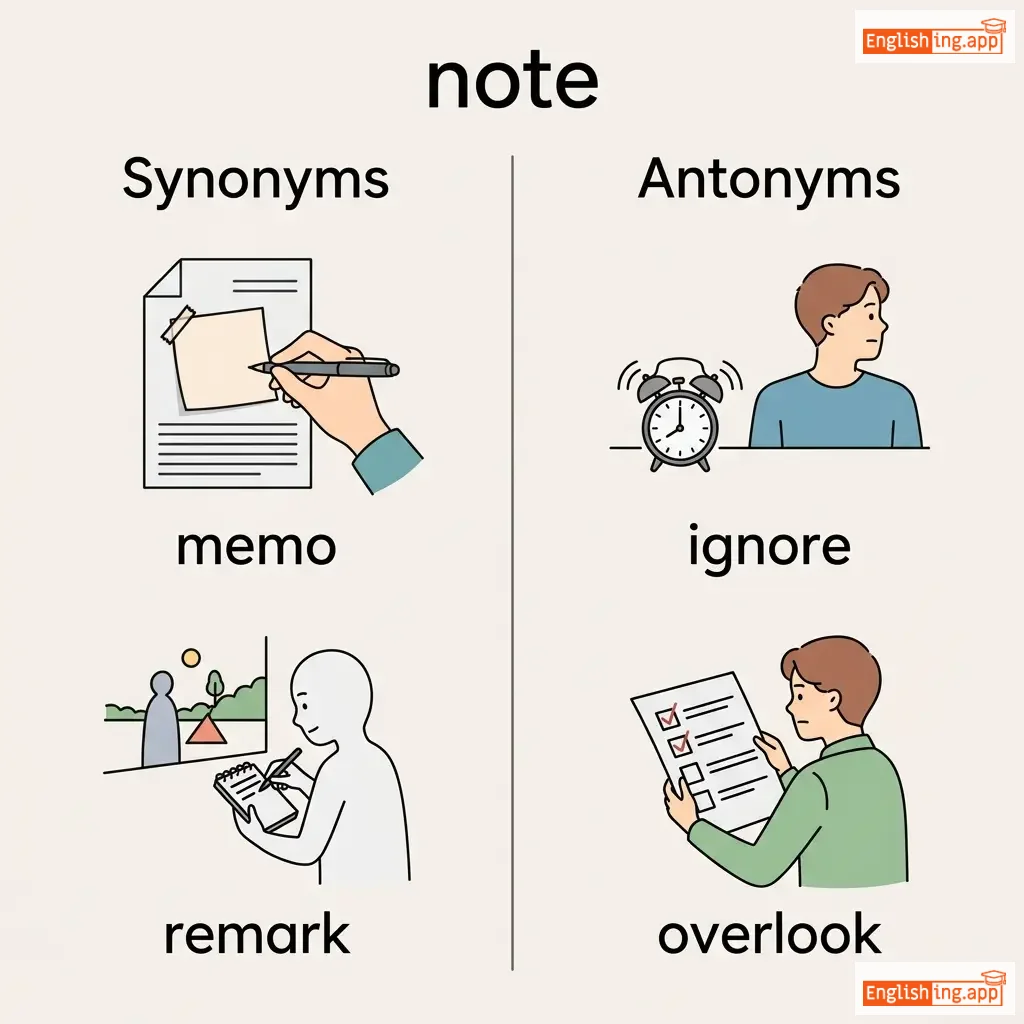
memo, remark, message, record, observation
••••••
|
ignore, overlook
••••••
|
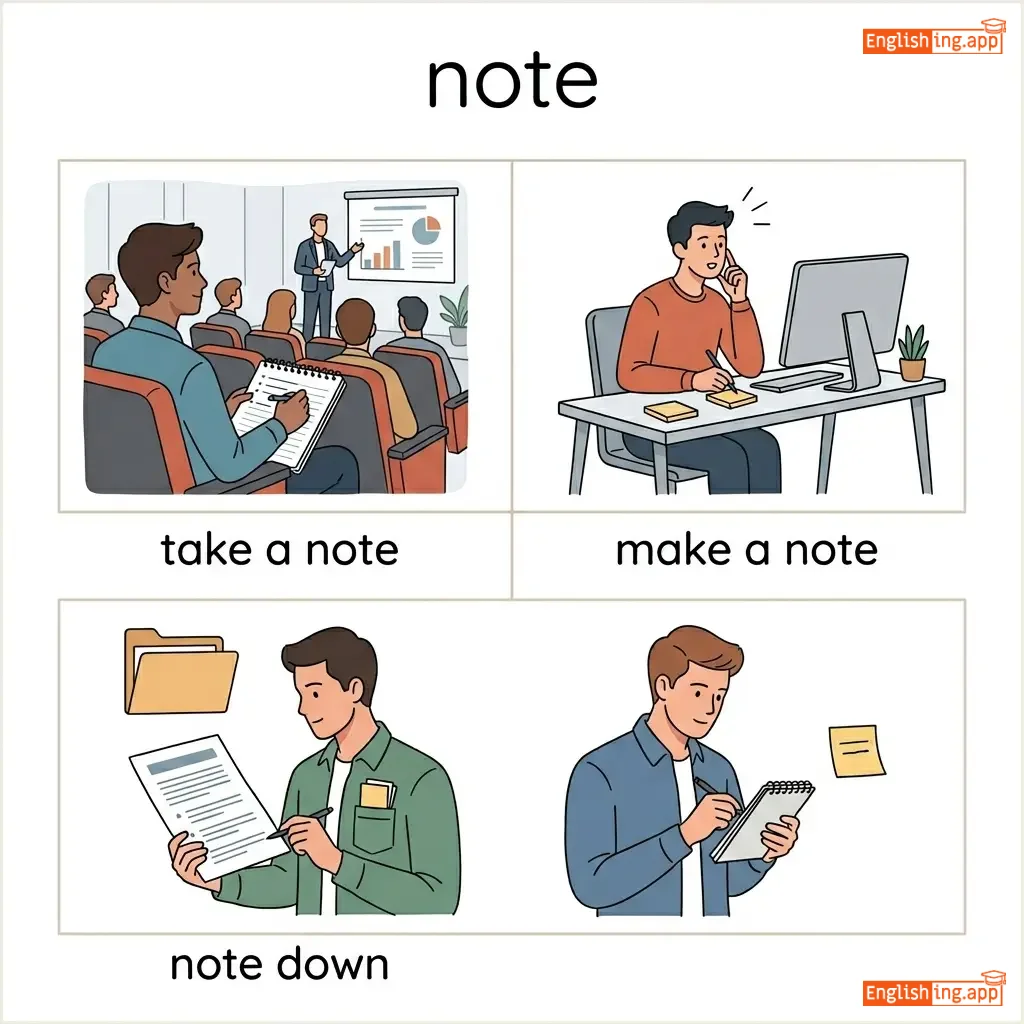
take a note, make a note, note down, note carefully
••••••
|
Записать важное, чтобы не забыть.
••••••
|
|
📒
••••••
|
/ˈnoʊtbʊk/
noun
••••••
|
- •••••• | - •••••• | - •••••• | - •••••• | - •••••• | - •••••• |
a small book with blank or ruled pages for writing notes; also a portable computer
••••••
|
She opened her notebook to jot down some ideas. |
- •••••• |
open your notebook |
to prepare to take notes or start writing
••••••
|
- •••••• |
journal, pad, diary, laptop, logbook
••••••
|
none, emptiness, blankness
••••••
|
open notebook, write in notebook, spiral notebook, leather notebook, notebook computer
••••••
|
No •••••• |
|
❌
••••••
|
/ˈnʌθɪŋ/
pronoun
(нъосинг)
••••••
|
- •••••• |
ничто
nichto
••••••
|
- •••••• | - •••••• | - •••••• | - •••••• |
not anything; no thing
••••••
|
She has nothing to worry about. |
Ей нечего беспокоиться.
Yey nechego bespokoitsya.
••••••
|
- •••••• | - •••••• | - •••••• |
zero, nil, nought
••••••
|
everything
••••••
|
nothing to do, nothing at all, nothing left
••••••
|
Nothing (ничто) – Picture nothing to worry about!
••••••
|
|
👀
••••••
|
/ˈnoʊtɪs/
verb
(нóутис)
••••••
|
|
заметить
zametit'
••••••
|
noticed
нóутис-ед
••••••
|
noticed
нóутис-ед
••••••
|
notices
нóутис-ес
••••••
|
noticing
нóутис-инг
••••••
|
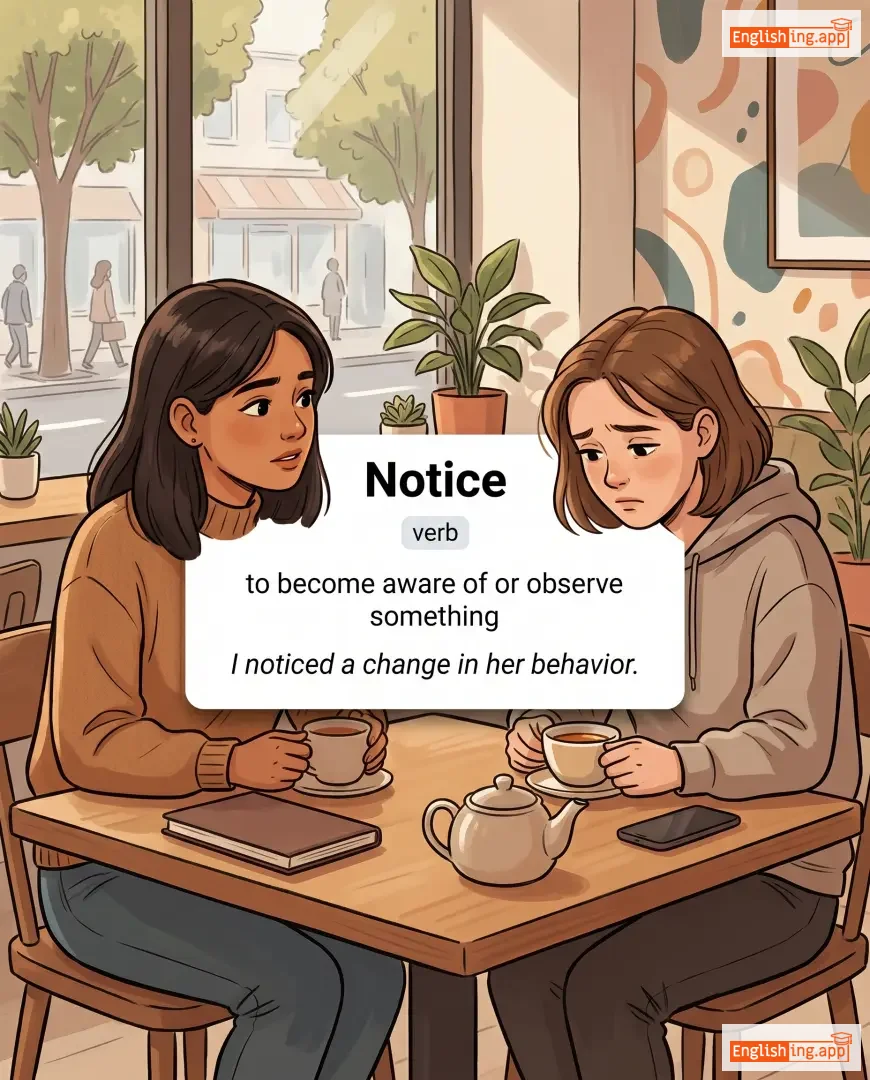
to become aware of or observe something
••••••
|
I noticed a change in her behavior.
Я заметил изменение в её поведении.
••••••
|
Я заметил изменение в её поведении.
Ya zametil izmenenie v yeyo povedenii.
••••••
|
- •••••• | - •••••• | - •••••• |
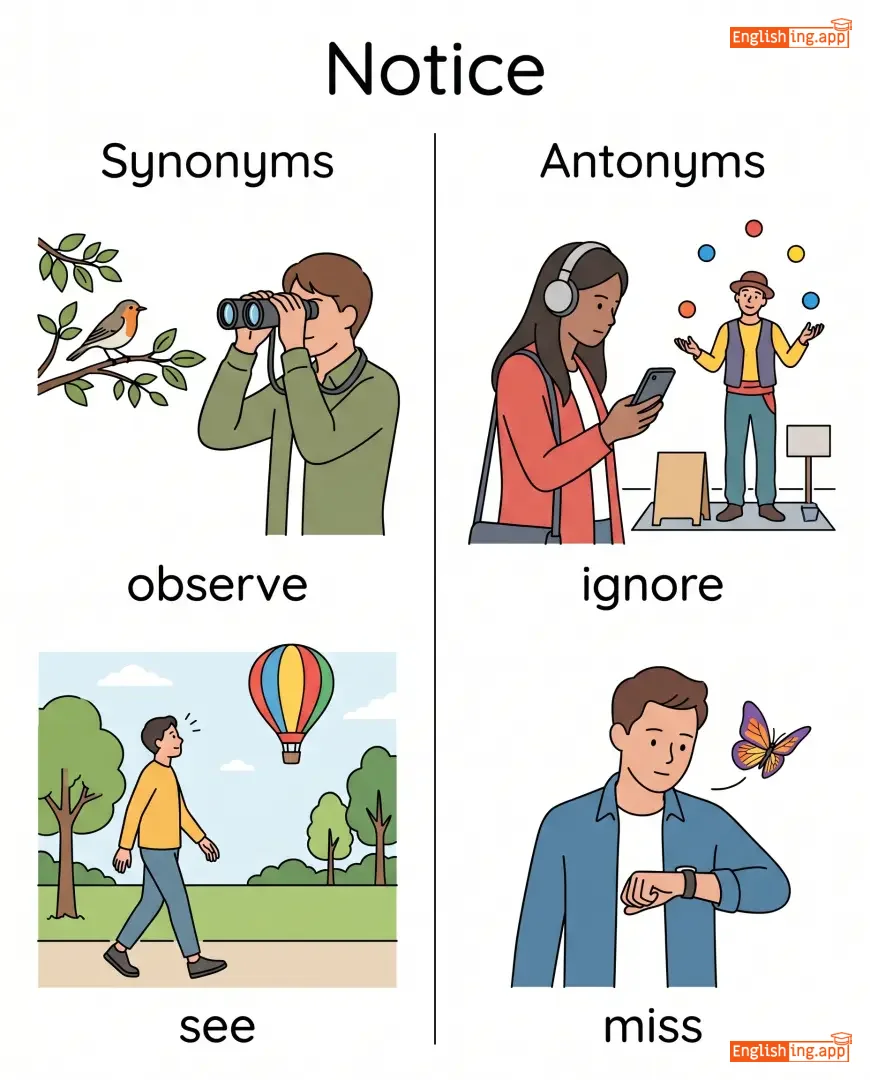
observe, see, spot, detect
••••••
|
ignore, miss, overlook
••••••
|
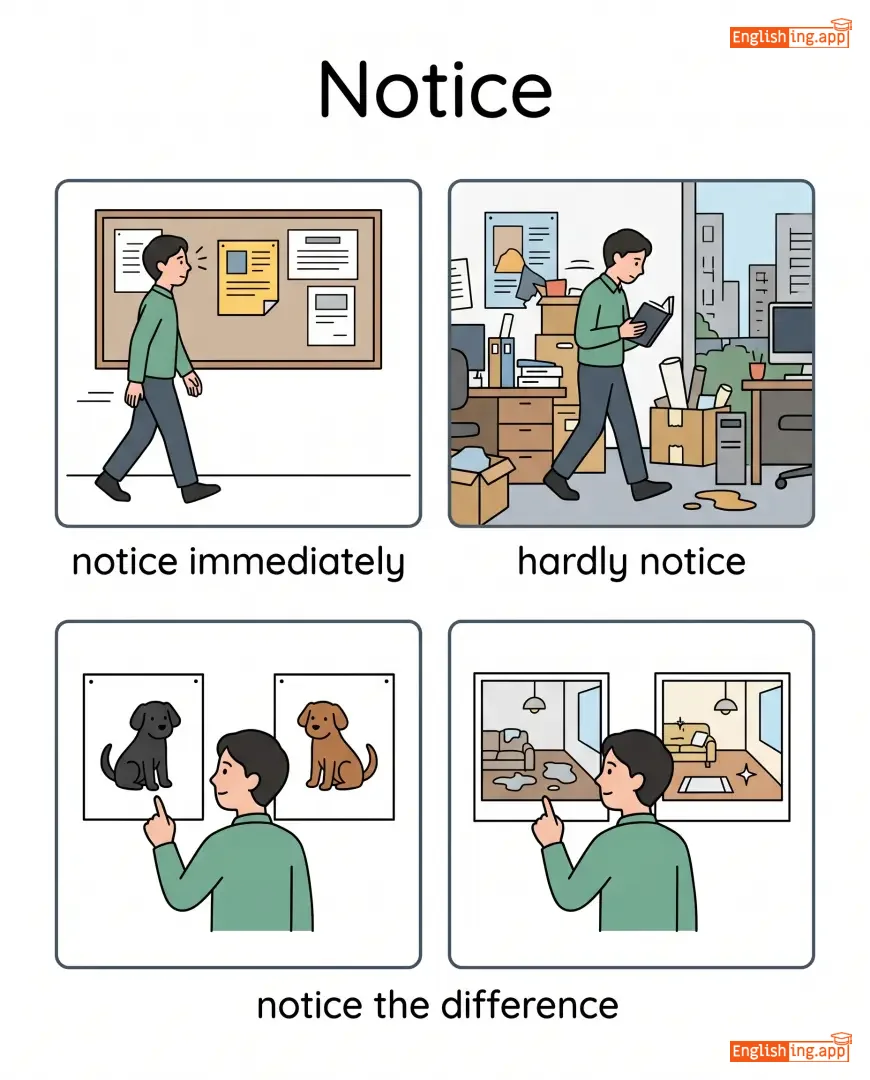
notice immediately, hardly notice, notice the difference, take notice, advance notice
••••••
|
Noticing something is like 'zametit'' in Russian, when you notice a change instantly!
••••••
|
|
👀
••••••
|
/ˈnoʊtɪsəbl/
adjective
(nɔtɪzəbəl)
••••••
|
- •••••• |
заметный
zametnyy
••••••
|
- •••••• | - •••••• | - •••••• | - •••••• |
Easily seen, observed, or recognized.
••••••
|
There was a noticeable improvement in her performance.
В ее выступлении было заметное улучшение.
••••••
|
В ее выступлении было заметное улучшение.
V yeye vystuplenii bylo zametnoye uluchsheniye.
••••••
|
- •••••• | - •••••• | - •••••• |
obvious, visible, evident, clear, apparent
••••••
|
hidden, invisible, unnoticeable
••••••
|
noticeable change, noticeable difference, noticeable improvement, become noticeable
••••••
|
Notice + able означает что-то, что легко заметить, то есть заметное.
••••••
|
|
🔔
••••••
|
/ˌnəʊtɪfɪˈkeɪʃən/
noun
(ноутификайшн)
••••••
|
- •••••• |
уведомление
uvedomleniye
••••••
|
- •••••• | - •••••• | - •••••• | - •••••• |
an official or formal notice or message informing someone of something; an alert delivered by a system or device
••••••
|
You will receive a notification when your application is approved.
ю вил рисив э ноутификайшн уэн йор эпликейшн из эпрувд
••••••
|
Вы получите уведомление, когда ваша заявка будет одобрена.
vy poluchite uvedomleniye kogda vasha zayavka budet odobrena
••••••
|
push notification
пуш ноутификайшн
••••••
|
an automatic alert sent to a device from an app or service
••••••
|
пуш-уведомление
push-uvedomleniye
••••••
|
alert, notice, message, announcement, advisory
••••••
|
silence, concealment
••••••
|
send a notification, receive a notification, system notification, official notification, push notification
••••••
|
Notification = new information → уведомление уведомляет
••••••
|
|
📢
••••••
|
/ˈnoʊtɪfaɪ/
verb
(ноутифа́й)
••••••
|
- •••••• |
уведомить
uvedomit
••••••
|
notified
ноутифа́йд
••••••
|
notified
ноутифа́йд
••••••
|
notifies
ноутифа́йз
••••••
|
notifying
ноутифа́йинг
••••••
|
to inform someone officially about something
••••••
|
The manager will notify the staff about the schedule change.
Менеджер уведомит персонал о смене расписания.
••••••
|
Менеджер уведомит персонал о смене расписания.
Menedzher uvedomit personal o smene raspisaniya.
••••••
|
notify of
уведомить о
••••••
|
to inform about something specific
••••••
|
уведомить о
uvedomit o
••••••
|
inform, alert, announce, communicate
••••••
|
hide, conceal
••••••
|
notify immediately, notify customers, notify authorities, notify in writing
••••••
|
Notify означает уведомить — уведомление приходит, когда нужно сообщить.
••••••
|
|
💡
••••••
|
/ˈnoʊʃən/
noun
(нОшн)
••••••
|
- •••••• |
понятие
ponyatie
••••••
|
- •••••• | - •••••• | - •••••• | - •••••• |
An idea, belief, or concept about something.
••••••
|
He had a vague notion of what she wanted. |
У него было смутное представление о том, что она хотела.
U nego bylo smutnoe predstavlenie o tom, chto ona khotela.
••••••
|
fancy notion |
An unrealistic or fanciful idea.
••••••
|
фантастическое понятие
fantasticheskoe ponyatie
••••••
|
idea, concept, belief, impression, thought
••••••
|
reality, fact
••••••
|
notion of, vague notion, challenge the notion, false notion
••••••
|
Notion = это как идея, записанная в заметках.
••••••
|
|
😈
••••••
|
/nəˈtɔːriəs/
adjective
(ноˈтɔːриəs)
••••••
|
- •••••• |
пресловутый
preslovutyy
••••••
|
- •••••• | - •••••• | - •••••• | - •••••• |
Famous or well-known for something bad or undesirable
••••••
|
The area is notorious for its high crime rate. |
Этот район пресловут за высокую преступность.
Etot rayon preslovut za vysokuyu prestupnost'.
••••••
|
notorious for |
well-known because of a negative reason
••••••
|
пресловутый за
preslovutyy za
••••••
|
infamous, disreputable, scandalous, dishonorable, ill-famed
••••••
|
respectable, reputable, honorable
••••••
|
notorious criminal, notorious case, notorious gang, notorious history
••••••
|
Notorious = 'No Torii Ous' - Нет тории (птицы), значит плохое место = пресловутый
••••••
|
|
📖
••••••
|
/ˈnɒvəl/
noun/adjective
(новел)
••••••
|
- •••••• |
роман / новый
roman / novyj
••••••
|
- •••••• | - •••••• | - •••••• | - •••••• |
A long fictional narrative; also something new or unusual.
••••••
|
She spent the weekend reading a historical novel. |
Она провела выходные, читая исторический роман.
Ona provela vykhodnye, chitaya istoricheskij roman.
••••••
|
novel idea |
A new and original thought or plan.
••••••
|
новая идея
novaya ideya
••••••
|
book, story, narrative, tale, fiction
••••••
|
fact, reality, history
••••••
|
write a novel, bestselling novel, novel approach, novel idea
••••••
|
Novel означает роман, а novel idea — это новая идея, все новое!
••••••
|
|
📚
••••••
|
/ˈnɒvəlɪst/
noun
(новелист)
••••••
|
- •••••• |
писатель романов
pisatel' romanov
••••••
|
- •••••• | - •••••• | - •••••• | - •••••• |
a person who writes novels
••••••
|
The novelist spent years writing his new book. |
Новелист провел годы, написав свою новую книгу.
Novelist provel gody, napisav svoju novuju knigu.
••••••
|
- •••••• | - •••••• | - •••••• |
author, writer, fiction writer, storyteller
••••••
|
non-writer, reader
••••••
|
famous novelist, best-selling novelist, contemporary novelist
••••••
|
Писатель романов, тот, кто создает целые миры на страницах.
••••••
|
|
🍂
••••••
|
/noʊˈvɛmbər/
noun
(ноувембер)
••••••
|
- •••••• |
ноябрь
noyabr
••••••
|
- •••••• | - •••••• | - •••••• | - •••••• |
the eleventh month of the year in the Gregorian calendar
••••••
|
November is often cool and quiet before winter begins.
ноувембер из офэн кул энд квайэт бифор винтер бигинз
••••••
|
Ноябрь часто бывает прохладным и тихим перед началом зимы.
noyabr chasto byvaet prokhladnym i tikhim pered nachalom zimy
••••••
|
November rain
ноувембер рэйн
••••••
|
rainy or gloomy weather associated with late autumn
••••••
|
ноябрьский дождь
noyabrskiy dozhd
••••••
|
Nov., eleventh month, late autumn month
••••••
|
May, June, July
••••••
|
early November, late November, November weather, November rain
••••••
|
Noябрь — no тепло, зима рядом
••••••
|
|
⏰
••••••
|
/naʊ/
adverb
(нау)
••••••
|
- •••••• |
сейчас
sejchas
••••••
|
- •••••• | - •••••• | - •••••• | - •••••• |
at the present moment or time
••••••
|
I am studying now. |
Я учусь сейчас.
Ya uchus' sejchas.
••••••
|
- •••••• | - •••••• | - •••••• |
currently, at present, at this moment
••••••
|
later, then
••••••
|
right now, as of now, now or never
••••••
|
Now is like ‘Naa oo!’ – It’s NOW or never!
••••••
|
|
🕒
••••••
|
/ˈnaʊədeɪz/
adverb
(науэдэйз)
••••••
|
- •••••• |
в наши дни
v nashi dni
••••••
|
- •••••• | - •••••• | - •••••• | - •••••• |
At the present time; in contrast with the past.
••••••
|
Nowadays, many people prefer shopping online. |
В наши дни многие люди предпочитают делать покупки онлайн.
V nashi dni mnogie lyudi predpochitayut delat' pokupki onlayn.
••••••
|
- •••••• | - •••••• | - •••••• |
currently, presently, these days, today
••••••
|
formerly, previously, once
••••••
|
nowadays people, nowadays it is common, nowadays trend
••••••
|
Nowadays — это как сказать 'в наши дни', что указывает на настоящее время.
••••••
|
|
🚫
••••••
|
/ˈnoʊˌwɛr/
adverb
(ноуэр)
••••••
|
- •••••• |
нигде
nigde
••••••
|
- •••••• | - •••••• | - •••••• | - •••••• |
in or to no place; not anywhere
••••••
|
The missing keys were nowhere to be found.
Потерянные ключи были нигде не найдены.
••••••
|
Потерянные ключи нигде не были найдены.
Poteryannye klyuchi nigde ne byli naydeny.
••••••
|
going nowhere
идти никуда
••••••
|
making no progress or achieving nothing
••••••
|
не делать прогресса
ne delat' progressa
••••••
|
not anywhere, absent, missing, lost
••••••
|
everywhere, somewhere
••••••
|
nowhere else, lead nowhere, from nowhere, go nowhere
••••••
|
Нету здесь, нету там, нигде (nowhere)
••••••
|
|
☢️
••••••
|
/ˈnuːkliər/
adjective
(ньюклеар)
••••••
|
- •••••• |
ядерный
yaderny
••••••
|
- •••••• | - •••••• | - •••••• | - •••••• |
relating to the nucleus of an atom or to nuclear energy
••••••
|
The country is developing nuclear energy. |
Страна разрабатывает ядерную энергию.
Strana razrabatyvayet yadernuju energiyu.
••••••
|
- •••••• | - •••••• | - •••••• |
atomic, radioactive
••••••
|
non-nuclear
••••••
|
nuclear energy, nuclear power, nuclear weapon
••••••
|
Nuclear = New Clear! Imagine new, clear energy coming from atoms!
••••••
|
|
🔢
••••••
|
/ˈnʌmbər/
noun
(на́мбер)
••••••
|
- •••••• |
номер
nomer
••••••
|
- •••••• | - •••••• | - •••••• | - •••••• |
a mathematical value used to count, measure, or label
••••••
|
She gave me her phone number.
Она дала мне свой номер телефона.
••••••
|
Она дала мне свой номер телефона.
Ona dala mne svoy nomer telefona.
••••••
|
- •••••• | - •••••• | - •••••• |
digit, figure, numeral
••••••
|
letter, word
••••••
|
phone number, lucky number, large number
••••••
|
Number is a sequence – Imagine numbering all the steps in your life!
••••••
|
|
🔢
••••••
|
/ˈnjuː.mər.əs/
adjective
(нюмэрэс)
••••••
|
- •••••• |
многочисленный; много; обильный
mnogochislennyy; mnogo; ob'ildnyy
••••••
|
- •••••• | - •••••• | - •••••• | - •••••• |
existing in large numbers; many; abundant
••••••
|
There are numerous benefits to exercising regularly.
Существует множество преимуществ регулярных упражнений.
••••••
|
Существует множество преимуществ регулярных упражнений.
Sushchestvuet mnogo preimushchestv regulyarnykh uprazhneniy.
••••••
|
- •••••• | - •••••• | - •••••• |
many, countless, abundant, plentiful
••••••
|
few, scarce, limited
••••••
|
numerous occasions, numerous benefits, numerous examples
••••••
|
Много преимуществ от регулярных упражнений.
••••••
|
|
👩⚕️
••••••
|
/nɜːrs/
noun, verb
••••••
|
|
- •••••• |
nursed
••••••
|
nursed
••••••
|
nurses
••••••
|
nursing
••••••
|
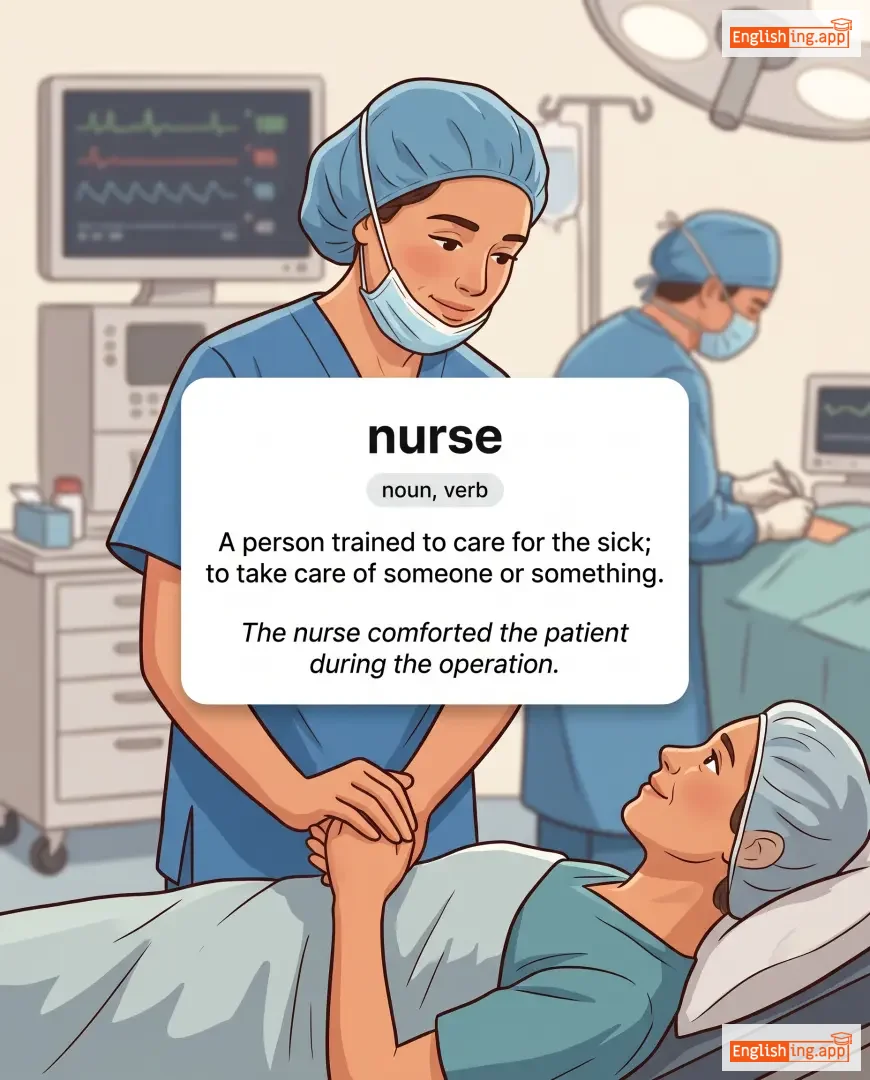
A person trained to care for the sick; to take care of someone or something.
••••••
|
The nurse comforted the patient during the operation. |
- •••••• |
nurse a grudge |
to keep resentment or anger in mind for a long time
••••••
|
- •••••• |
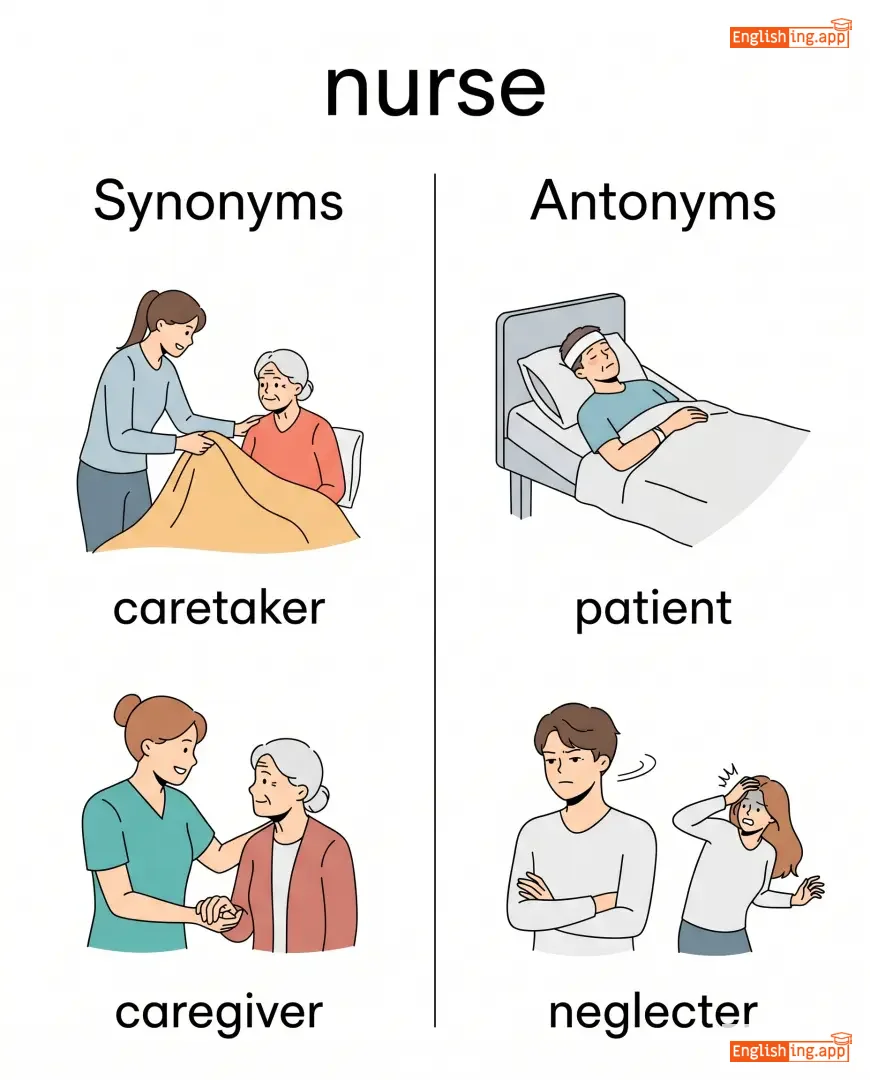
caretaker, caregiver, attendant, healer, medic
••••••
|
patient, neglecter
••••••
|
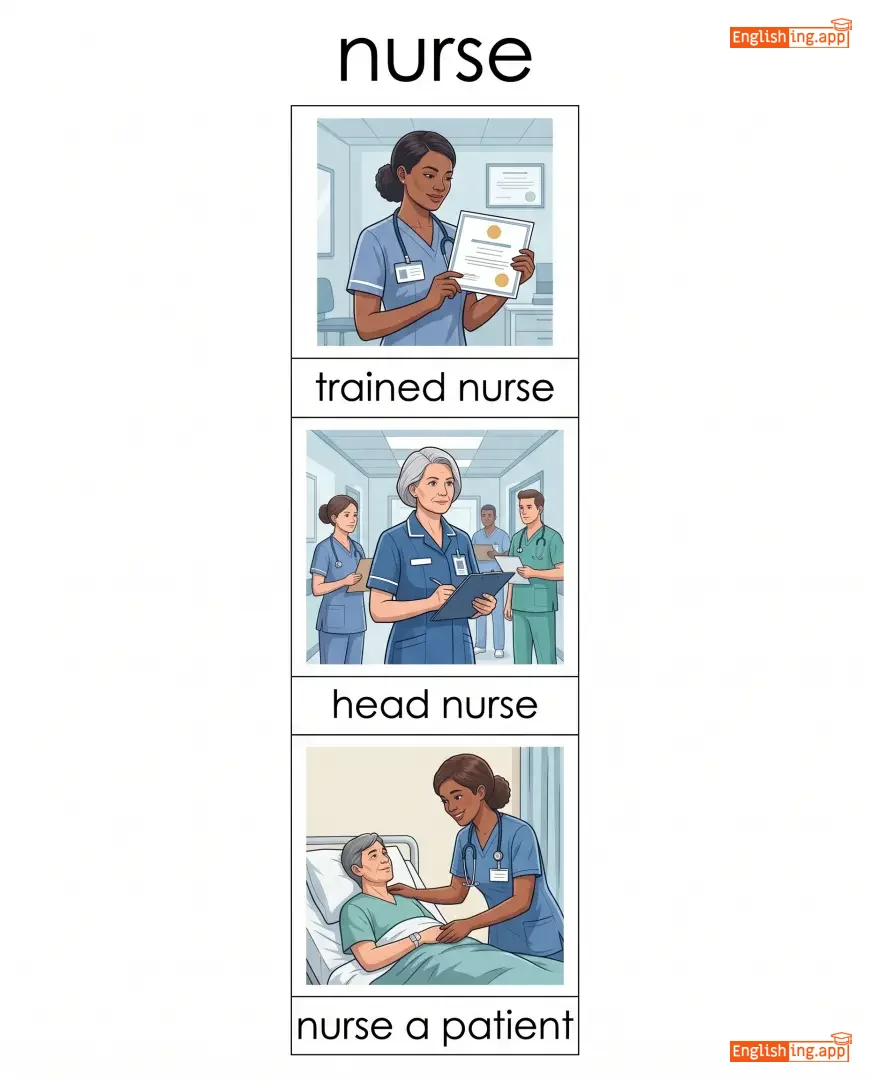
trained nurse, head nurse, nurse a patient, nurse back to health
••••••
|
No •••••• |
|
🍼
••••••
|
/ˈnɜːrsəri/
noun
(нёрсери)
••••••
|
- •••••• |
ясли
yasli
••••••
|
- •••••• | - •••••• | - •••••• | - •••••• |
a room or place where young children are cared for
••••••
|
She works in a nursery, taking care of infants. |
Она работает в яслях, заботясь о младенцах.
Ona rabotaet v yaslyakh, zabotyashsya o mladen'tsakh.
••••••
|
- •••••• | - •••••• | - •••••• |
daycare, preschool, kindergarten
••••••
|
school, home
••••••
|
nursery school, nursery teacher, nursery care
••••••
|
Ясли: место для малышей, где о них заботятся.
••••••
|
|
👩⚕️
••••••
|
/ˈnɜːrsɪŋ/
noun
(нёрсинг)
••••••
|
- •••••• |
сестринское дело
sestrinskoe delo
••••••
|
- •••••• | - •••••• | - •••••• | - •••••• |
the profession or practice of caring for the sick or injured
••••••
|
She is studying nursing to become a healthcare professional.
Она изучает сестринское дело, чтобы стать специалистом в области здравоохранения.
••••••
|
Она изучает сестринское дело, чтобы стать специалистом в области здравоохранения.
Ona izuchayet sestrinskoe delo, chtoby stat' spetsialistom v oblasti zdravookhraneniya.
••••••
|
- •••••• | - •••••• | - •••••• |
healthcare, caregiving, medical care
••••••
|
neglect, abandonment
••••••
|
nursing home, nursing career, nursing profession
••••••
|
Сестринское дело (sestrinskoe delo) помогает людям, нуждающимся в уходе.
••••••
|

