Получите неограниченный доступ ко всем словам с подпиской Pro
Обновить до ProПолучите неограниченный доступ ко всем предложениям с подпиской Pro
Обновить до Pro|
Эмодзи
|
Слово | Images | Перевод | Прошедшее | Причастие прошедшего времени | Третье лицо единственного числа | Герундий | Значение | Пример предложения | Перевод примера предложения | Пример выражения | Значение примера выражения | Перевод примера выражения | Синонимы | Антонимы | Коллокации | Мнемоника |
|---|---|---|---|---|---|---|---|---|---|---|---|---|---|---|---|---|---|
|
🏔️
••••••
|
/ədˈvɛntʃər/
noun
(ad-ven-chur)
••••••
|


|
приключение
priklyuchenie
••••••
|
- •••••• | - •••••• | - •••••• | - •••••• |
an unusual, exciting, or daring experience
••••••
|
They went on an adventure in the mountains. |
Они отправились в приключение в горы.
Oni otpravilis' v priklyuchenie v gory.
••••••
|
spirit of adventure |
the willingness to try exciting or risky things
••••••
|
дух приключений
dukh priklyucheniy
••••••
|
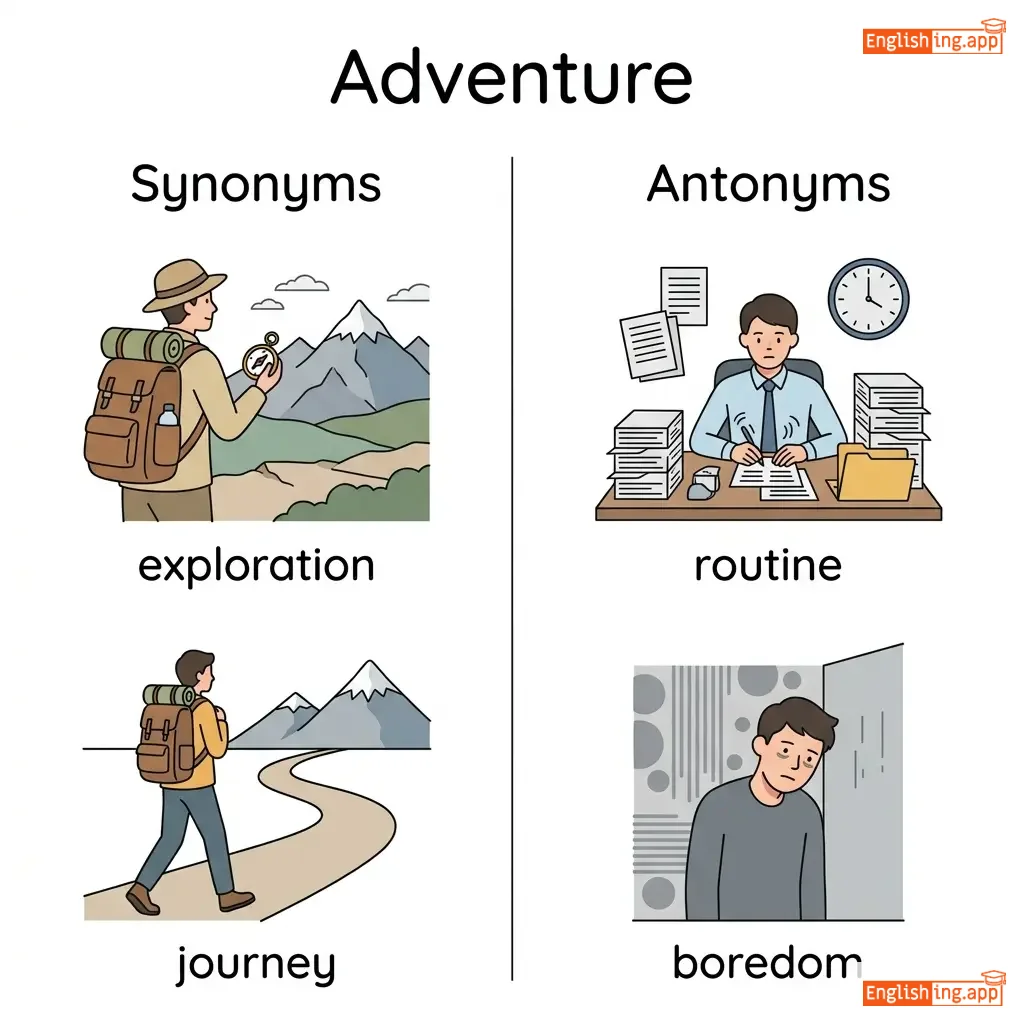
exploration, journey, quest, expedition
••••••
|
routine, boredom, safety
••••••
|
exciting adventure, great adventure, spirit of adventure, adventure story
••••••
|
Adventure означает приключение, 'Ad vent' — горячий ветер, начинается веселье и волнение!
••••••
|
|
🧭
••••••
|
/ədˈvɛntʃərər/
noun
(эдвенчэрер)
••••••
|
- •••••• |
авантюрист
avantyurist
••••••
|
- •••••• | - •••••• | - •••••• | - •••••• |
a person who seeks exciting, risky, or unusual experiences; someone who explores new or unknown places
••••••
|
The adventurer traveled deep into the jungle in search of ancient ruins.
Зэ эдвенчэрер трэволд дип инту зэ джангл ин сёрч оф эншент руинз.
••••••
|
Авантюрист отправился глубоко в джунгли в поисках древних руин.
avantyurist otpravilsya gluboko v dzhungli v poiskakh drevnikh ruin
••••••
|
spirit of adventure
спирит оф эдвенчэр
••••••
|
a strong desire to explore, take risks, and try new experiences
••••••
|
дух приключений
dukh priklyucheniy
••••••
|
explorer, risk-taker, wanderer, pioneer, daredevil
••••••
|
coward, homebody, conformist
••••••
|
brave adventurer, fearless adventurer, young adventurer, adventurer spirit, bold adventurer
••••••
|
Авантюрист любит adventure
••••••
|
|
🎢
••••••
|
/ədˈventʃərəs/
adjective
(ædvɛnʧərəs)
••••••
|

|
авантюрный; рискованный
avantyurnyj; riskovannyj
••••••
|
- •••••• | - •••••• | - •••••• | - •••••• |
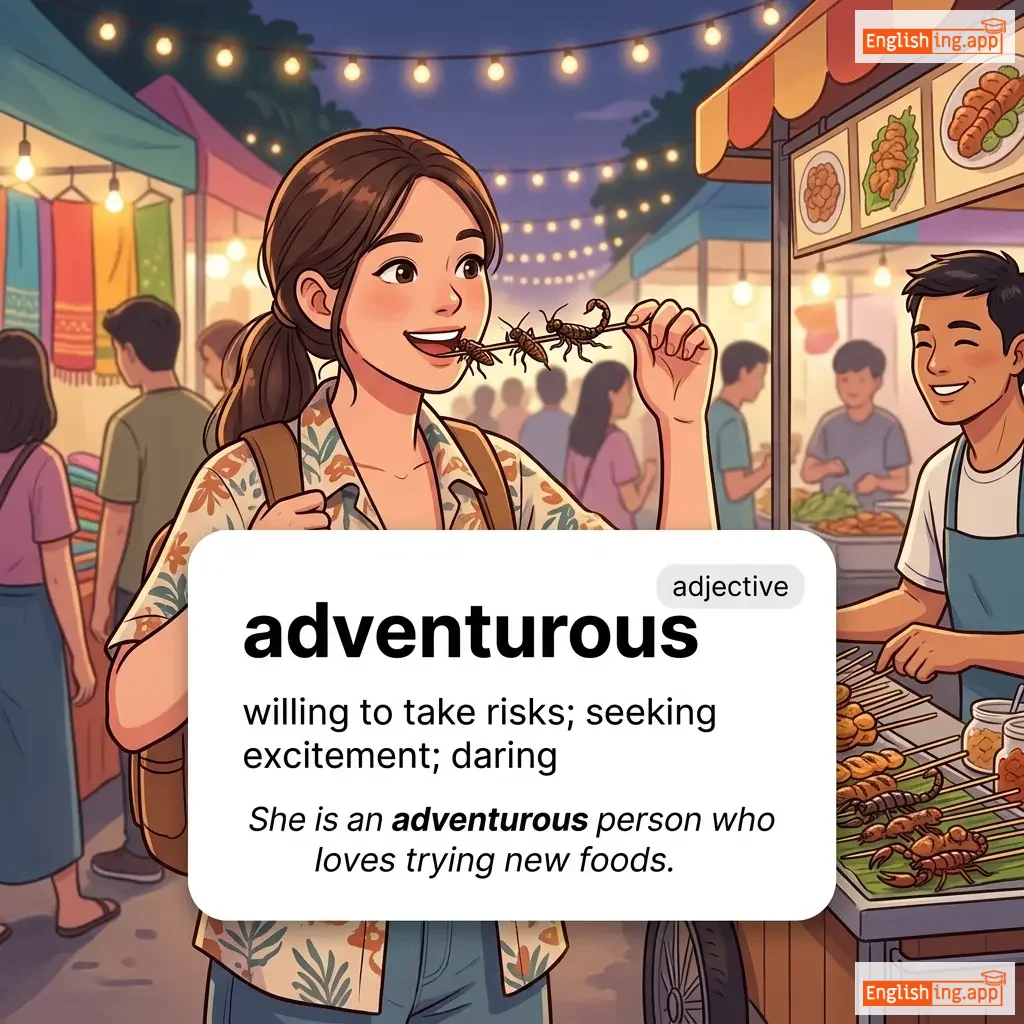
willing to take risks; seeking excitement; daring
••••••
|
She is an adventurous person who loves trying new foods. |
Она авантюрная личность, которая любит пробовать новую еду.
Ona avantyurnaja lichnost', kotoraja lyubit probovat' novuju edu.
••••••
|
- •••••• | - •••••• | - •••••• |
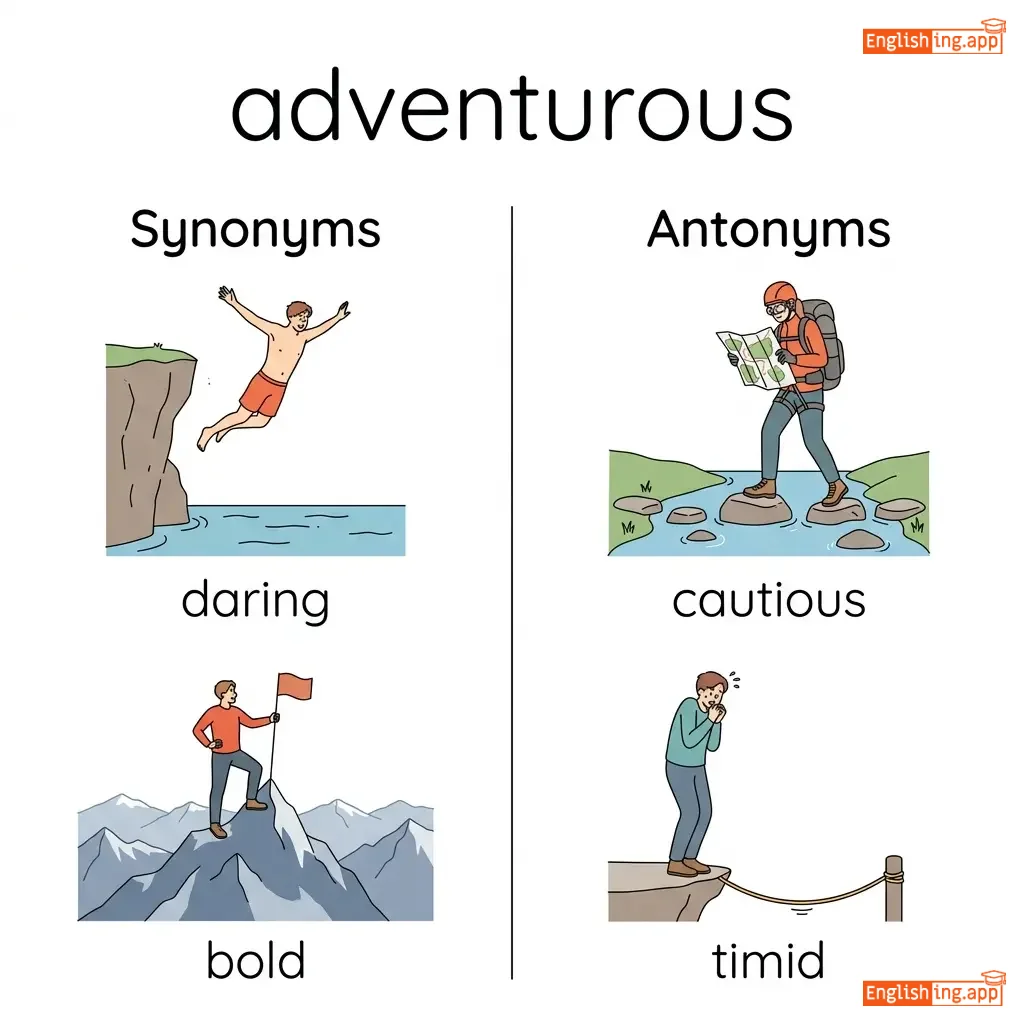
daring, bold, brave, fearless
••••••
|
cautious, timid, careful, conservative
••••••
|
adventurous spirit, adventurous traveler, adventurous eater
••••••
|
Как авантюрный герой, всегда ищет риск для новых эмоций!
••••••
|
|
🌩️
••••••
|
/ˈæd.vɜːs/
adjective
••••••
|
- •••••• | - •••••• | - •••••• | - •••••• | - •••••• | - •••••• |
Preventing success or development; harmful or unfavorable.
••••••
|
The project was delayed due to adverse weather conditions. |
- •••••• |
adverse effect |
a harmful or negative impact
••••••
|
- •••••• |
unfavorable, harmful, negative, detrimental, hostile
••••••
|
favorable, beneficial, positive
••••••
|
adverse conditions, adverse effect, adverse impact, adverse reaction
••••••
|
No •••••• |
|
📣
••••••
|
/ˈædvərtaɪz/
verb
(ædvərtaɪz)
••••••
|


|
рекламировать
reklamirovat
••••••
|
advertised
ædvərtaɪzd
••••••
|
advertised
ædvərtaɪzd
••••••
|
advertises
ædvərtaɪziz
••••••
|
advertising
ædvərtaɪzɪŋ
••••••
|
to describe or draw attention to a product, service, or event in a public medium in order to promote sales or attendance
••••••
|
They advertise their products on social media platforms.
Они рекламируют свою продукцию на социальных платформах.
••••••
|
Они рекламируют свою продукцию на социальных платформах.
Oni reklamiruyut svoyu produktsiyu na sotsial'nykh platformakh.
••••••
|
advertise for something
рекламировать что-то
••••••
|
to announce publicly that you need something or someone
••••••
|
рекламировать что-то
reklamirovat' chto-to
••••••
|
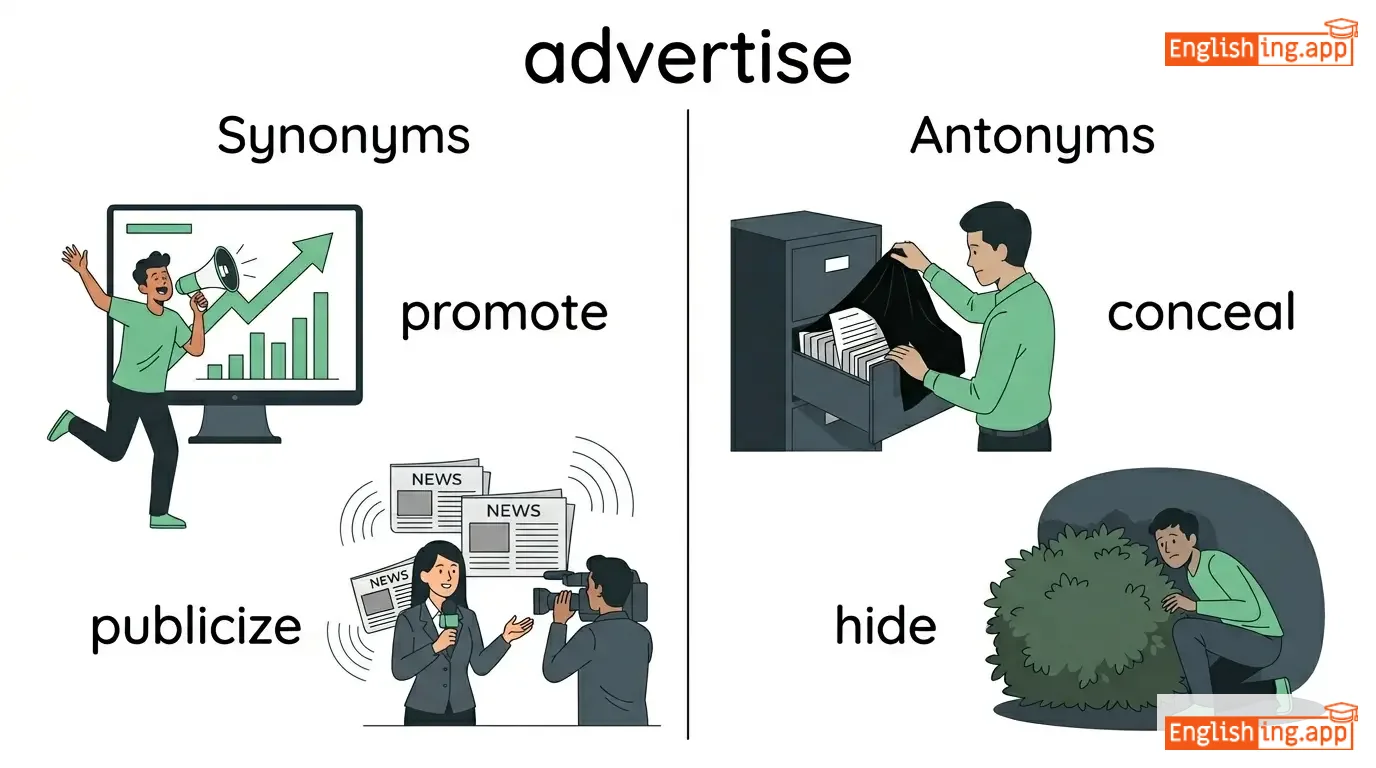
promote, publicize, market, broadcast, announce
••••••
|
conceal, hide, suppress
••••••
|
advertise products, advertise online, advertise widely, advertise for staff
••••••
|
РЕКЛАМА для твоих глаз! Хочешь, чтобы все увидели, рекламируй!
••••••
|
|
📢
••••••
|
/ədˈvɜːrtɪsmənt/
noun
(эдвертайзмент)
••••••
|
- •••••• |
реклама
reklama
••••••
|
- •••••• | - •••••• | - •••••• | - •••••• |
a public notice or announcement promoting a product, service, or event
••••••
|
The advertisement attracted many new customers.
Зэ эдвертайзмент аттрактед мэни нью кастомерз.
••••••
|
Реклама привлекла много новых клиентов.
reklama privlekla mnogo novyh klientov
••••••
|
- •••••• | - •••••• | - •••••• |
ad, commercial, promotion, announcement, publicity
••••••
|
concealment, silence
••••••
|
online advertisement, print advertisement, television advertisement, advertisement campaign
••••••
|
Advertisement = реклама, ad शब्द से जुड़ा हुआ।
••••••
|
|
📢
••••••
|
/ˈædvərˌtaɪzɪŋ/
noun
(ˈædvərˌtaɪzɪŋ)
••••••
|
- •••••• |
реклама
rekklama
••••••
|
- •••••• | - •••••• | - •••••• | - •••••• |
the activity of producing advertisements for products or services
••••••
|
The company spends millions on advertising every year. |
Компания тратит миллионы на рекламу каждый год.
Kompaniya tratit milliony na reklamu kazhdyy god.
••••••
|
false advertising |
misleading or deceptive promotion of a product
••••••
|
ложная реклама
lozhnaya reklama
••••••
|
promotion, marketing, publicity, propaganda
••••••
|
concealment, secrecy
••••••
|
advertising campaign, advertising industry, online advertising, false advertising
••••••
|
Advertising значит реклама—'Ad все любить, рекламные картинки!'
••••••
|
|
💡
••••••
|
/ədˈvaɪs/
noun
(эдвайс)
••••••
|

|
совет
sovet
••••••
|
- •••••• | - •••••• | - •••••• | - •••••• |
a suggestion or recommendation about what someone should do
••••••
|
She gave me good advice about managing money.
Она дала мне хороший совет по управлению деньгами.
••••••
|
Она дала мне хороший совет по управлению деньгами.
Ona dala mne khoroshiy sovet po upravleniyu den'kami.
••••••
|
take someone's advice
следовать чьему-то совету
••••••
|
to follow the suggestion or recommendation given by someone
••••••
|
следовать чьему-то совету
sleduyushchiy ch'yemu-to sovetu
••••••
|
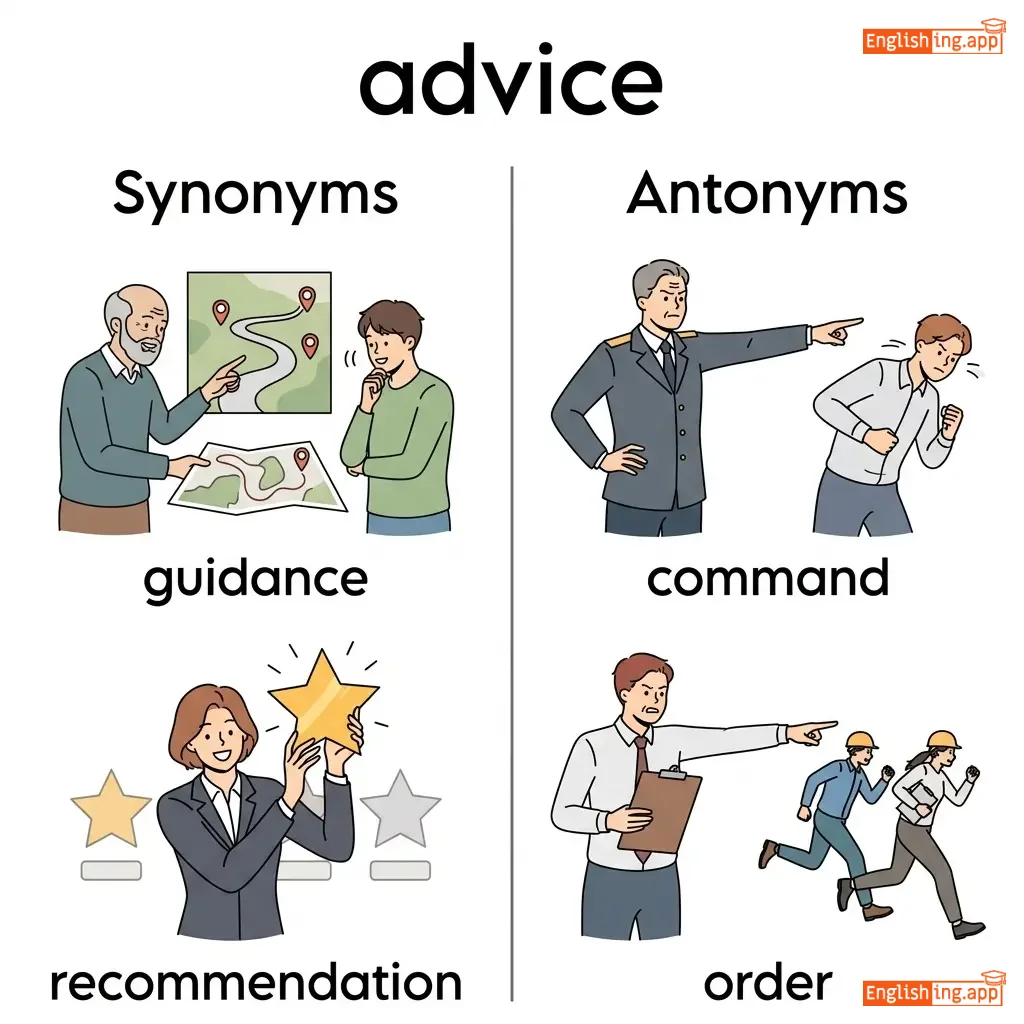
guidance, recommendation, counsel, tip, suggestion
••••••
|
command, order
••••••
|
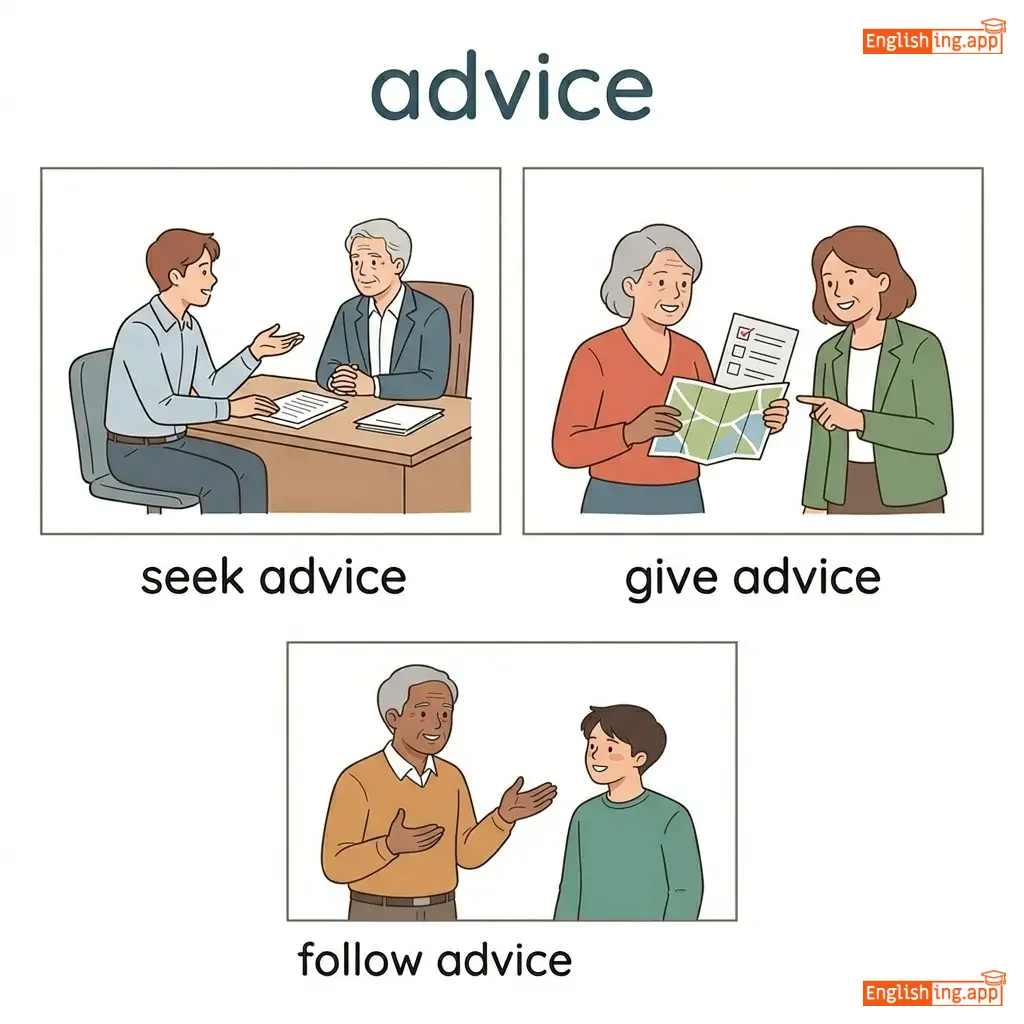
seek advice, give advice, follow advice, professional advice
••••••
|
Совет = ‘С’ как в ‘соглашение’ и ‘овет’ как в ‘пользу’.
••••••
|
|
🗣️
••••••
|
/ədˈvaɪz/
verb
(advaiz)
••••••
|
- •••••• |
советовать
sovetovat'
••••••
|
advised
advaisd
••••••
|
advised
advaisd
••••••
|
advises
advaizes
••••••
|
advising
advaizing
••••••
|
to recommend what should be done; to give advice
••••••
|
The doctor advised him to rest for a week.
Доктор посоветовал ему отдохнуть неделю.
••••••
|
Доктор посоветовал ему отдохнуть неделю.
Doktor posovetoval emu otdokhnut' nedelyu.
••••••
|
advise against
советовать против
••••••
|
to recommend not doing something
••••••
|
советовать не делать что-то
sovetovat' ne delat' chto-to
••••••
|
recommend, suggest, counsel, urge
••••••
|
discourage, forbid
••••••
|
strongly advise, advise caution, advise against, legally advise
••••••
|
Advise - это советовать, как давать рекомендации.
••••••
|
|
👨🏫
••••••
|
/ədˈvaɪzər/
noun
(эдˈваɪзэр)
••••••
|
- •••••• |
консультант
konsul'tant
••••••
|
- •••••• | - •••••• | - •••••• | - •••••• |
a person who gives advice, especially in a professional or official role
••••••
|
He works as a financial adviser at a bank. |
Он работает финансовым консультантом в банке.
On rabotayet finansovym konsul'tantom v banke.
••••••
|
- •••••• | - •••••• | - •••••• |
counselor, consultant, mentor, guide
••••••
|
opponent, detractor
••••••
|
financial adviser, legal adviser, personal adviser, senior adviser
••••••
|
Adviser — это как Advisor, который дает советы (konsul'tatsii).
••••••
|
|
📢
••••••
|
/ˈædvəˌkeɪt/ (noun), /ˈædvəˌkeɪt/ or /ˈædvəˌkət/ (verb)
noun, verb
(advokat)
••••••
|
- •••••• |
защитник / адвокат
zashchitnik / advokat
••••••
|
advocated
advokatirovavshiy
••••••
|
advocated
advokatirovavshiy
••••••
|
advocates
advokatuet
••••••
|
advocating
advokatirovaniya
••••••
|
As a noun: a person who publicly supports or recommends a cause. As a verb: to publicly recommend or support.
••••••
|
She is an advocate for women's rights and often advocates for equal opportunities.
Она является адвокатом прав женщин и часто выступает за равные возможности.
••••••
|
Она является адвокатом прав женщин и часто выступает за равные возможности.
Ona yavlyayetsya advokatom prav zhenshchin i chasto vystupaet za ravnye vozmozhnosti.
••••••
|
devil's advocate
адвокат дьявола
••••••
|
a person who argues against a position for the sake of debate
••••••
|
человек, который спорит против позиции ради обсуждения
chelovek, kotoryy sporit protiv pozitsii radi obsuzhdeniya
••••••
|
supporter, promoter, defender, champion, proponent
••••••
|
opponent, critic, adversary
••••••
|
advocate strongly, advocate change, human rights advocate, advocate for reform
••••••
|
Advocate означает защитника, как адвокат, который говорит за кого-то.
••••••
|
|
🎨
••••••
|
/ɛsˈθɛtɪk/
adjective
(эстетичный)
••••••
|

|
эстетический
esteticheskiy
••••••
|
- •••••• | - •••••• | - •••••• | - •••••• |
concerned with beauty or the appreciation of beauty
••••••
|
The room was decorated in an aesthetic style that pleased everyone.
Комната была оформлена в эстетическом стиле, который понравился всем.
••••••
|
Комната была оформлена в эстетическом стиле, который понравился всем.
Komnata byla oformlena v esteticheskom stile, kotoryy ponravilsya vsem.
••••••
|
aesthetic appeal
эстетическая привлекательность
••••••
|
the quality of being visually attractive
••••••
|
эстетическая привлекательность
esteticheskaya privlekatelnost
••••••
|
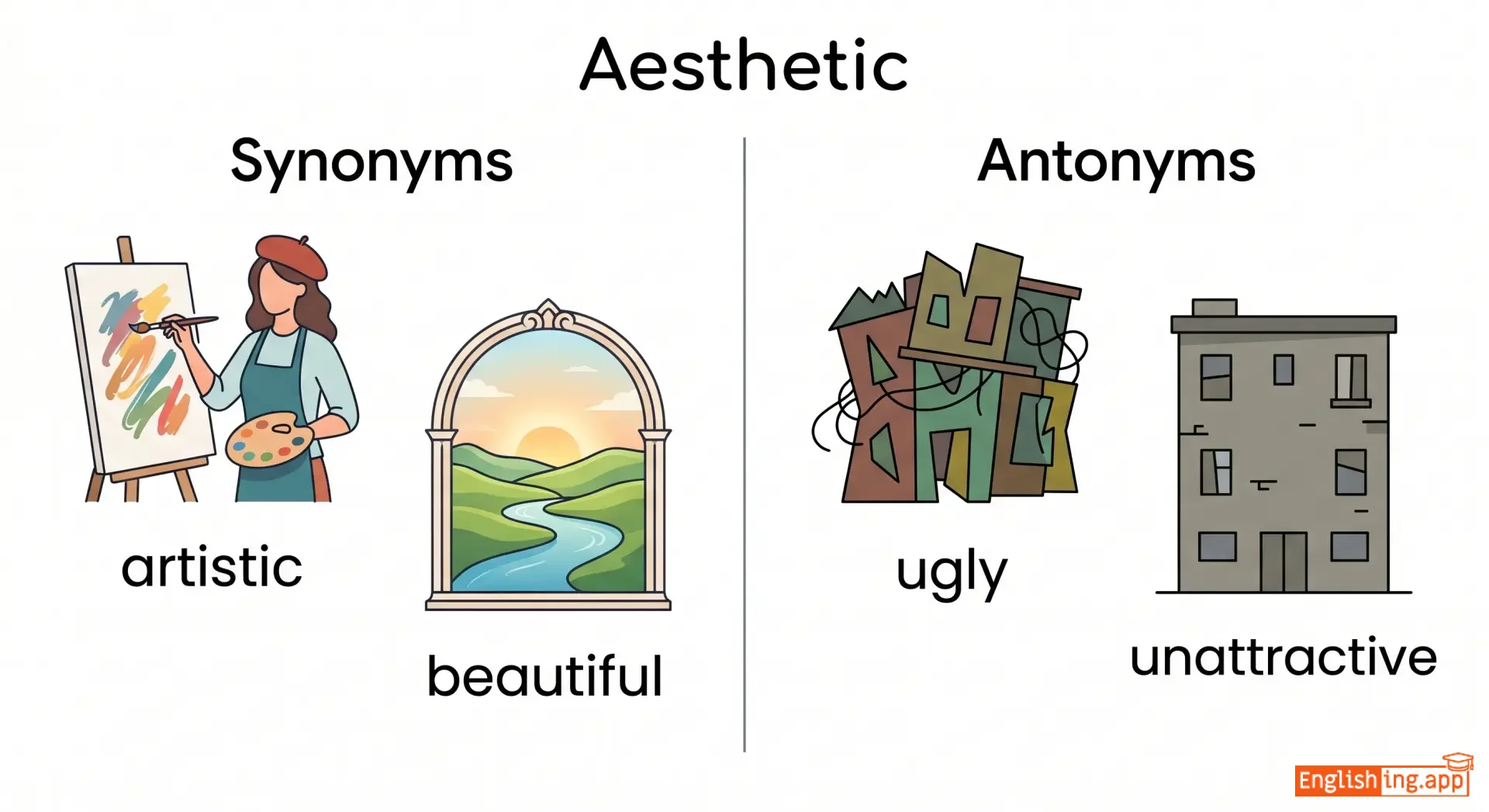
artistic, beautiful, elegant, tasteful
••••••
|
ugly, unattractive, plain
••••••
|
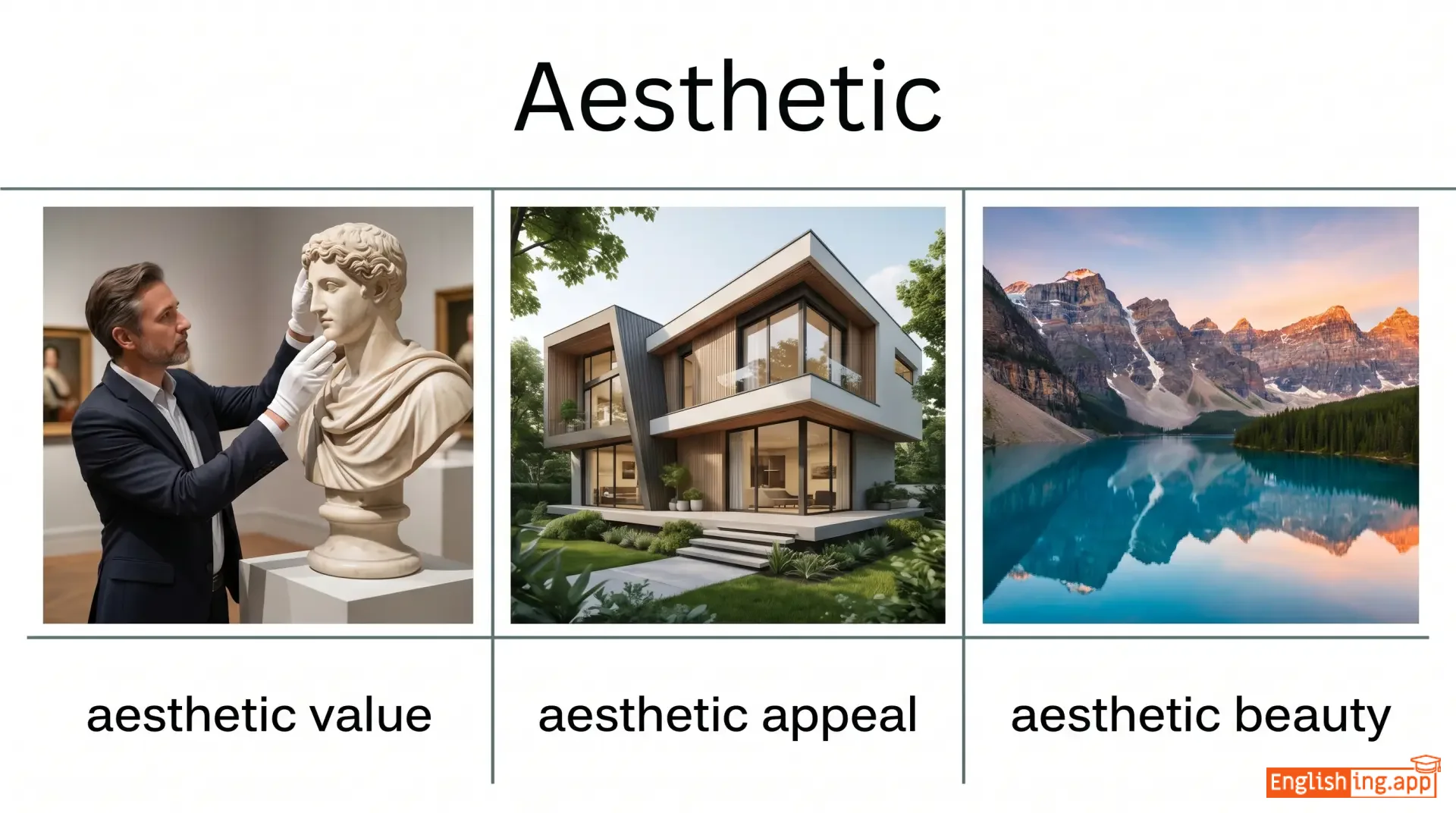
aesthetic value, aesthetic appeal, aesthetic beauty, aesthetic design
••••••
|
Aesthetic означает красивое, поэтому эстетический связан с красотой.
••••••
|
|
🎨
••••••
|
/iːsˈθɛθɪkəl/
adjective
(эстетикал)
••••••
|
- •••••• |
эстетический
esteticheskiy
••••••
|
- •••••• | - •••••• | - •••••• | - •••••• |
concerned with beauty or the appreciation of beauty; related to artistic taste or appearance
••••••
|
The architect focused on the aesthetical balance of the building.
Зи архитэкт фокусд он зи эстетикал баланс ов зи билдинг.
••••••
|
Архитектор сосредоточился на эстетическом балансе здания.
Arkhitektor sosredotochilsya na esteticheskom balanse zdaniya
••••••
|
- •••••• | - •••••• | - •••••• |
aesthetic, artistic, visual, decorative, stylistic
••••••
|
unaesthetic, ugly, plain
••••••
|
aesthetical value, aesthetical sense, aesthetical appeal, aesthetical design
••••••
|
Эстетика = aesthetic
••••••
|
|
🎨
••••••
|
/iːsˈθetɪkli/
adverb
(эстетикли)
••••••
|
- •••••• |
эстетически
esteticheski
••••••
|
- •••••• | - •••••• | - •••••• | - •••••• |
in a way that is concerned with beauty or visual appeal
••••••
|
The building is aesthetically pleasing despite its simple design.
Здание эстетикли приятно, несмотря на простой дизайн.
••••••
|
Здание эстетически приятно, несмотря на простой дизайн.
zdanie esteticheski priyatno nesmotrya na prostoi dizain
••••••
|
- •••••• | - •••••• | - •••••• |
beautifully, attractively, visually, artistically, tastefully
••••••
|
ugly, unattractively, poorly
••••••
|
aesthetically pleasing, aesthetically designed, aesthetically appealing, aesthetically improved
••••••
|
Эстетика = aesthetic → эстетически
••••••
|
|
💌
••••••
|
/əˈfɛər/
noun
(аффэр)
••••••
|
- •••••• |
дело / отношения
delo / otnosheniya
••••••
|
- •••••• | - •••••• | - •••••• | - •••••• |
an event, situation, or relationship, often one that is private or romantic
••••••
|
The scandal became the most talked-about affair of the year.
Этот скандал стал самой обсуждаемой афферой года.
••••••
|
Этот скандал стал самой обсуждаемой афферой года.
Etot skandal stal samoy obshchayemoy afferoi goda.
••••••
|
love affair
любовная аффера
••••••
|
a romantic or sexual relationship, often secret
••••••
|
любовные отношения
lyubovnye otnosheniya
••••••
|
incident, matter, event, relationship
••••••
|
certainty, indifference
••••••
|
family affairs, political affairs, love affair, personal affair
••••••
|
Affair означает дело – любовное affair означает любовные отношения.
••••••
|
|
🌦️
••••••
|
/əˈfɛkt/
verb
(афект)
••••••
|
- •••••• |
влиять
vliyat'
••••••
|
affected
афектировал
••••••
|
affected
афектировал
••••••
|
affects
афектирует
••••••
|
affecting
афектируя
••••••
|
to influence or make a difference to something
••••••
|
The weather can greatly affect our mood.
Погода может сильно повлиять на наше настроение.
••••••
|
Погода может сильно повлиять на наше настроение.
Pogoda mozhet sil'no povliyat' na nashe nastroenie.
••••••
|
affect deeply
глубоко повлиять
••••••
|
to have a strong emotional impact
••••••
|
глубоко повлиять
gluboko povliyat'
••••••
|
influence, impact, change, alter, sway
••••••
|
ignore, neglect
••••••
|
affect mood, affect decision, affect performance, affect outcome
••••••
|
Affect — это как метеорит, который влияет на все вокруг.
••••••
|
|
❤️
••••••
|
/əˈfɛkʃən/
noun
(афекшн)
••••••
|
- •••••• |
привязанность
privyazannost
••••••
|
- •••••• | - •••••• | - •••••• | - •••••• |
a gentle feeling of fondness or liking
••••••
|
She showed great affection for her younger brother.
Она проявляла большую привязанность к своему младшему брату.
••••••
|
Она проявляла большую привязанность к своему младшему брату.
Ona proyavlyala bolshuyu privyazannost k svoemu mladshemu bratu.
••••••
|
public display of affection
публичное проявление привязанности
••••••
|
an act of showing love or fondness openly in public
••••••
|
публичное проявление любви или привязанности
publichnoe proyavlenie lyubvi ili privyazannosti
••••••
|
fondness, love, tenderness, warmth, attachment
••••••
|
hatred, dislike, indifference
••••••
|
deep affection, show affection, affection for, affection toward
••••••
|
АФФЕКШН = A Friendly Feelings That Bind — дружба и привязанность держат сердце рядом
••••••
|
|
💍
••••••
|
/əˈfaɪəns/
verb
(эфайэнс)
••••••
|
- •••••• |
обручаться
obruchatsya
••••••
|
affianced
эфайэнст
••••••
|
affianced
эфайэнст
••••••
|
affiances
эфайэнсиз
••••••
|
affiancing
эфайэнсинг
••••••
|
to promise or pledge marriage; to formally engage
••••••
|
They decided to affiance after years of friendship.
зей дисайдид ту эфайэнс афтер йирз оф френдшип
••••••
|
После многих лет дружбы они решили обручиться.
Posle mnogikh let druzhby oni reshili obruchitsya
••••••
|
- •••••• | - •••••• | - •••••• |
betroth, engage, pledge, promise, espouse
••••••
|
separate, divorce, break off
••••••
|
affiance a couple, formally affiance, affiance in marriage
••••••
|
Affiance = fiancé, значит обручение
••••••
|
|
🤝
••••••
|
/əˈfɪliˌeɪt/
verb
(афилиэт)
••••••
|
- •••••• |
принимать в члены
prinimat' v chleny
••••••
|
affiliated
афилиэтед
••••••
|
affiliated
афилиэтед
••••••
|
affiliates
афилиэтс
••••••
|
affiliating
афилиэитинг
••••••
|
to officially attach or connect (a group or organization) to a larger body
••••••
|
The school is affiliated with the local university.
Школа аффилирована с местным университетом.
••••••
|
Школа аффилирована с местным университетом.
Shkola affil'irovana s mestnym universitetom.
••••••
|
affiliate program
партнёрская программа
••••••
|
a system where a person earns commission by promoting another company's products or services
••••••
|
партнёрская программа
partner'skaya programma
••••••
|
associate, ally, partner, join
••••••
|
separate, detach
••••••
|
affiliate with, affiliate organization, affiliate program
••••••
|
Affiliate означает присоединиться к большой организации
••••••
|
|
🤕
••••••
|
/əˈflɪkt/
verb
(aflikt)
••••••
|
- •••••• |
причинять боль
prichinyat bol
••••••
|
afflicted
aflikted
••••••
|
afflicted
aflikted
••••••
|
afflicts
aflikts
••••••
|
afflicting
aflikting
••••••
|
to cause pain, suffering, or distress to someone or something
••••••
|
Many people are afflicted by seasonal allergies.
Многие люди страдают от сезонных аллергий.
••••••
|
Многие люди страдают от сезонных аллергий.
Mnogie lyudi stradayut ot sezonnukh allergiy.
••••••
|
afflict with
афликтер с
••••••
|
to be affected or troubled by something harmful
••••••
|
с аффектацией
s affektatsiey
••••••
|
torment, trouble, plague, burden, distress
••••••
|
comfort, soothe, relieve
••••••
|
afflict with disease, afflict by poverty, afflict deeply, afflict severely
••••••
|
Afflict означает причинять боль. Представьте себе, что вы 'afflict' кого-то болями.
••••••
|
|
💳
••••••
|
/əˈfɔːrd/
verb
(афорд)
••••••
|


|
позволять себе
pozvolyat' sebe
••••••
|
afforded
афордиед
••••••
|
afforded
афордиед
••••••
|
affords
афордз
••••••
|
affording
афординг
••••••
|
to have enough money or resources to buy or do something
••••••
|
We can’t afford to buy a new car right now.
Мы не можем позволить себе купить новую машину прямо сейчас.
••••••
|
Мы не можем позволить себе купить новую машину прямо сейчас.
My ne mozhem pozvolit' sebe kupit' novuyu mashinu pryamo seychas.
••••••
|
afford to lose
позволить себе потерять
••••••
|
to be in a position where one can risk or bear the loss
••••••
|
позволить себе потерять
pozvolit' sebe poteryat'
••••••
|
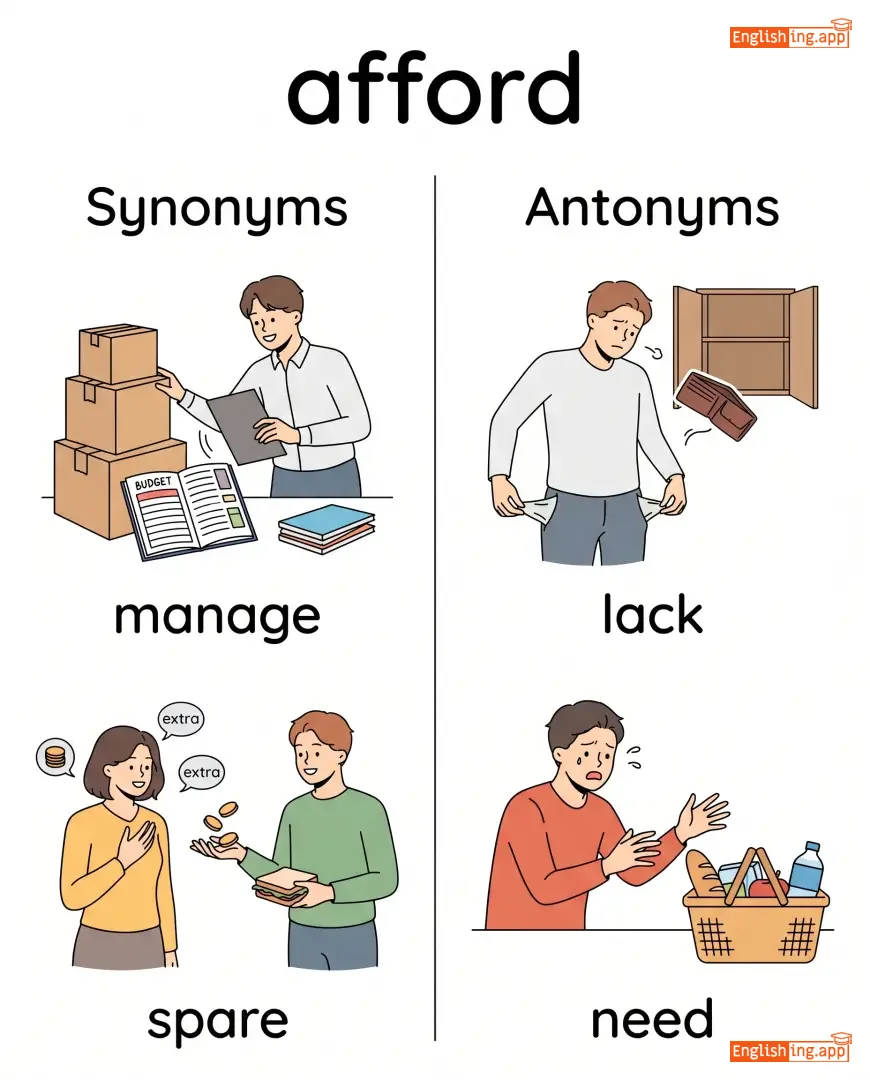
manage, spare, provide, allow
••••••
|
lack, need, require
••••••
|
can afford, afford to buy, afford the cost, afford a house
••••••
|
Afford на русском — если ты можешь купить машину, значит можешь afford все!
••••••
|
|
💸
••••••
|
/əˈfɔːdəbl/
adjective
(аффордабл)
••••••
|
- •••••• |
доступный
dostupnyy
••••••
|
- •••••• | - •••••• | - •••••• | - •••••• |
inexpensive and within one's financial means
••••••
|
This restaurant offers affordable meals for families. |
Этот ресторан предлагает доступные блюда для семей.
Eto restoran predlagayet dostupnye blyuda dlya semey.
••••••
|
- •••••• | - •••••• | - •••••• |
inexpensive, reasonable, budget-friendly
••••••
|
expensive, overpriced
••••••
|
affordable price, affordable solution, affordable rate
••••••
|
Affordable means it’s ‘within reach’ of your wallet!
••••••
|
|
😨
••••••
|
/əˈfreɪd/
adjective
(afreid)
••••••
|
- •••••• |
испуганный
ispugannyy
••••••
|
- •••••• | - •••••• | - •••••• | - •••••• |
feeling fear or anxiety; worried that something undesirable will happen
••••••
|
She was afraid of the dark. |
Она боялась темноты.
Ona boyalas' temnoty.
••••••
|
afraid of one's own shadow |
extremely timid or nervous
••••••
|
бояться своей тени
boyat'sya svoey teni
••••••
|
fearful, scared, frightened, anxious, nervous
••••••
|
brave, confident, fearless
••••••
|
afraid of, terribly afraid, afraid to ask, afraid that
••••••
|
Afraid означает испуганный— представь себе, как страшно в темноте.
••••••
|
|
➡️
••••••
|
/ˈæftər/
preposition, conjunction, adverb
(афтер)
••••••
|
- •••••• |
после
posle
••••••
|
- •••••• | - •••••• | - •••••• | - •••••• |
in the time following an event or another action
••••••
|
We went for ice cream after the movie. |
Мы пошли за мороженым после фильма.
My poshli za morozhenym posle fil'ma.
••••••
|
after all |
despite everything; in the end
••••••
|
после всего
posle vsego
••••••
|
following, later, afterward, subsequent
••••••
|
before, prior
••••••
|
after school, after work, after the party, soon after
••••••
|
After значит после— фильм после мороженого.
••••••
|
|
🌪️
••••••
|
/ˈɑːftərmɑːθ/
noun
(ˈɑːftərmɑːθ)
••••••
|
- •••••• |
последствия
posledstviya
••••••
|
- •••••• | - •••••• | - •••••• | - •••••• |
the consequences or aftereffects of an event or situation, especially a disastrous one
••••••
|
The aftermath of the earthquake was devastating. |
Последствия землетрясения были разрушительными.
Posledstviya zemletryaseniya byli razrushitel'nymi.
••••••
|
- •••••• | - •••••• | - •••••• |
consequence, result, outcome, repercussion
••••••
|
cause, origin
••••••
|
aftermath of disaster, in the aftermath, deal with the aftermath
••••••
|
The aftermath of an event is like the clear impact after a storm
••••••
|
|
🌞
••••••
|
/ˌæftərˈnuːn/
noun
(aftərˈnun)
••••••
|
- •••••• |
после полудня
posle poludnya
••••••
|
- •••••• | - •••••• | - •••••• | - •••••• |
The part of the day between noon and evening.
••••••
|
We met in the afternoon for coffee. |
Мы встретились после полудня, чтобы попить кофе.
My vstretilis' posle poludnya, chtoby popit' kofe.
••••••
|
Good afternoon |
A polite greeting used in the afternoon.
••••••
|
Добрый день
Dobryy den'
••••••
|
midday, daytime, p.m., after lunch
••••••
|
morning, evening
••••••
|
in the afternoon, sunny afternoon, afternoon tea, afternoon meeting
••••••
|
After + Noon = После полудня = после полудня.
••••••
|
|
⏰
••••••
|
/ˈɑːf.tə.wərdz/
adverb
(æftərwərdz)
••••••
|
- •••••• |
позже; затем; после
pozhe; zatem; posle
••••••
|
- •••••• | - •••••• | - •••••• | - •••••• |
at a later time; after an event or time that has already been mentioned
••••••
|
We had dinner and afterwards we watched a movie.
Мы поужинали, а потом посмотрели фильм.
••••••
|
Мы поужинали, а потом посмотрели фильм.
My pouzhinali, a potom posmotreli film.
••••••
|
- •••••• | - •••••• | - •••••• |
later, subsequently, then, next
••••••
|
before, previously, earlier
••••••
|
shortly afterwards, soon afterwards, long afterwards
••••••
|
In Russian, 'позже' means 'later', which relates to the meaning of 'afterwards'.
••••••
|
|
🔁
••••••
|
/əˈɡɛn/ or /əˈɡeɪn/
adverb
(əˈɡɛn)
••••••
|
- •••••• |
снова
snova
••••••
|
- •••••• | - •••••• | - •••••• | - •••••• |
Once more; another time.
••••••
|
She read the book again to understand it better. |
Она прочитала книгу снова, чтобы лучше понять.
Ona prochitala knigu snova, chtoby luchshe ponyat.
••••••
|
time and again |
Repeatedly, very often.
••••••
|
снова и снова
snova i snova
••••••
|
once more, anew, repeatedly, over again
••••••
|
never, once
••••••
|
again and again, once again, try again, over again
••••••
|
Снова означает еще раз — читать книгу снова и снова!
••••••
|
|
🚫
••••••
|
/əˈɡɛnst/ or /əˈɡeɪnst/
preposition
(агейнст)
••••••
|
- •••••• |
против
protiv
••••••
|
- •••••• | - •••••• | - •••••• | - •••••• |
In opposition to; contrary to; touching or resting on.
••••••
|
They voted against the proposal.
Они проголосовали против предложения.
••••••
|
Они проголосовали против предложения.
Oni progolosovali protiv predlozheniya.
••••••
|
stand against
стоять против
••••••
|
To oppose or resist something.
••••••
|
стоять против
stoyat protiv
••••••
|
opposed to, contrary to, versus, counter to
••••••
|
for, in favor of
••••••
|
against the law, against the wall, fight against, argue against
••••••
|
АГЕЙНСТ против ПРОТИВ - запомни: against = против
••••••
|
|
🎂
••••••
|
/eɪdʒ/
noun/verb
(ej)
••••••
|
- •••••• |
возраст
vozrast
••••••
|
aged
ejd
••••••
|
aged
ejd
••••••
|
ages
ejes
••••••
|
aging
ejing
••••••
|
The length of time that a person has lived; to grow older.
••••••
|
She asked his age politely.
shi askd hiz ej politli.
••••••
|
Она вежливо спросила его возраст.
Ona vezhlivo sprosila ego vozrast.
••••••
|
come of age
kam of ej
••••••
|
To reach adulthood or maturity.
••••••
|
достигать совершеннолетия
dostigat' sosernolyetiya
••••••
|
years, lifetime, era, grow older
••••••
|
youth, infancy
••••••
|
old age, average age, age group, age limit
••••••
|
Age означает возраст — день рождения — хороший момент, чтобы узнать, сколько кому лет.
••••••
|
|
🏢
••••••
|
/ˈeɪ.dʒən.si/
noun
(эйдженси)
••••••
|
- •••••• |
агентство
agentstvo
••••••
|
- •••••• | - •••••• | - •••••• | - •••••• |
An organization or business that provides a particular service.
••••••
|
She works at a travel agency. |
Она работает в туристическом агентстве.
Ona rabotaet v turistskom agentstve.
••••••
|
advertising agency |
A company that creates and manages advertisements for clients.
••••••
|
рекламное агентство
reklamnoye agentstvo
••••••
|
organization, firm, bureau, office, service
••••••
|
individual, client, customer
••••••
|
government agency, real estate agency, news agency, travel agency
••••••
|
Агентство означает 'организация' — запомните 'агентство, которое предоставляет услуги'
••••••
|
|
📋
••••••
|
/əˈdʒɛndə/
noun
(адженда)
••••••
|
- •••••• |
повестка дня
adzhenda
••••••
|
- •••••• | - •••••• | - •••••• | - •••••• |
A list of items to be discussed or acted upon in a meeting or plan.
••••••
|
The manager reviewed the agenda before the meeting began.
Менеджер рассмотрел повестку дня перед началом совещания.
••••••
|
Менеджер рассмотрел повестку дня перед началом совещания.
Menedzher rassmotrel povestku dnya pered nachalom soveshaniya.
••••••
|
hidden agenda
скрытая повестка дня
••••••
|
A secret motive or plan behind someone's actions.
••••••
|
Скрытая мотивация
skrytaia motivatsiya
••••••
|
schedule, plan, program, timetable, itinerary
••••••
|
disorganization, randomness
••••••
|
meeting agenda, set the agenda, hidden agenda
••••••
|
Aдженда = A DAY S PLAN повестка дня: вообрази календарь и список дел на каждый день
••••••
|
|
🕵️
••••••
|
/ˈeɪ.dʒənt/
noun
(агент)
••••••
|
- •••••• |
агент
agent
••••••
|
- •••••• | - •••••• | - •••••• | - •••••• |
A person who acts on behalf of another person or organization.
••••••
|
The real estate agent showed us several houses.
Риэлтор показал нам несколько домов.
••••••
|
Риэлтор показал нам несколько домов.
Rieltor pokazal nam neskol'ko domov.
••••••
|
secret agent
секретный агент
••••••
|
A spy working for a government or organization.
••••••
|
секретный агент
sekretnyy agent
••••••
|
representative, delegate, envoy, broker, spy
••••••
|
principal, client, customer
••••••
|
travel agent, real estate agent, sports agent, insurance agent
••••••
|
Агент - как в русском 'агент' или 'секретный агент'.
••••••
|
|
⚠️
••••••
|
/ˈæɡ.rə.veɪt/
verb
(эгравейт)
••••••
|
- •••••• |
усугублять
usugublyat
••••••
|
aggravated
эгравейтид
••••••
|
aggravated
эгравейтид
••••••
|
aggravates
эгравейтс
••••••
|
aggravating
эгравейтинг
••••••
|
To make a situation worse or more serious.
••••••
|
Scratching the rash will only aggravate the condition.
Царапание сыпи только ухудшит состояние.
••••••
|
Царапание сыпи только ухудшит состояние.
Tsohkanie sypi tolko usugublyat sostoyanie.
••••••
|
- •••••• | - •••••• | - •••••• |
worsen, intensify, exacerbate, inflame
••••••
|
relieve, ease, alleviate
••••••
|
aggravate pain, aggravate situation, aggravate condition
••••••
|
Aggravate звучит как усугублять, что значит ухудшать.
••••••
|
|
➕
••••••
|
/ˈæɡ.rɪ.ɡət/ (noun/adjective), /ˈæɡ.rɪ.ɡeɪt/ (verb)
noun, verb, adjective
(агрегат)
••••••
|

|
агрегат, совокупность
agregat, sovokupnost'
••••••
|
aggregated
агрегированный
••••••
|
aggregated
агрегированный
••••••
|
aggregates
агрегирует
••••••
|
aggregating
агрегируя
••••••
|
A whole formed by combining several elements; to combine into a total.
••••••
|
The data was aggregated to provide a clearer picture of the market.
Данные были агрегированы для более ясного представления о рынке.
••••••
|
Данные были агрегированы для более ясного представления о рынке.
Danniye byli agregirovany dlya boleye yasnogo predstavleniya o rynke.
••••••
|
- •••••• | - •••••• | - •••••• |
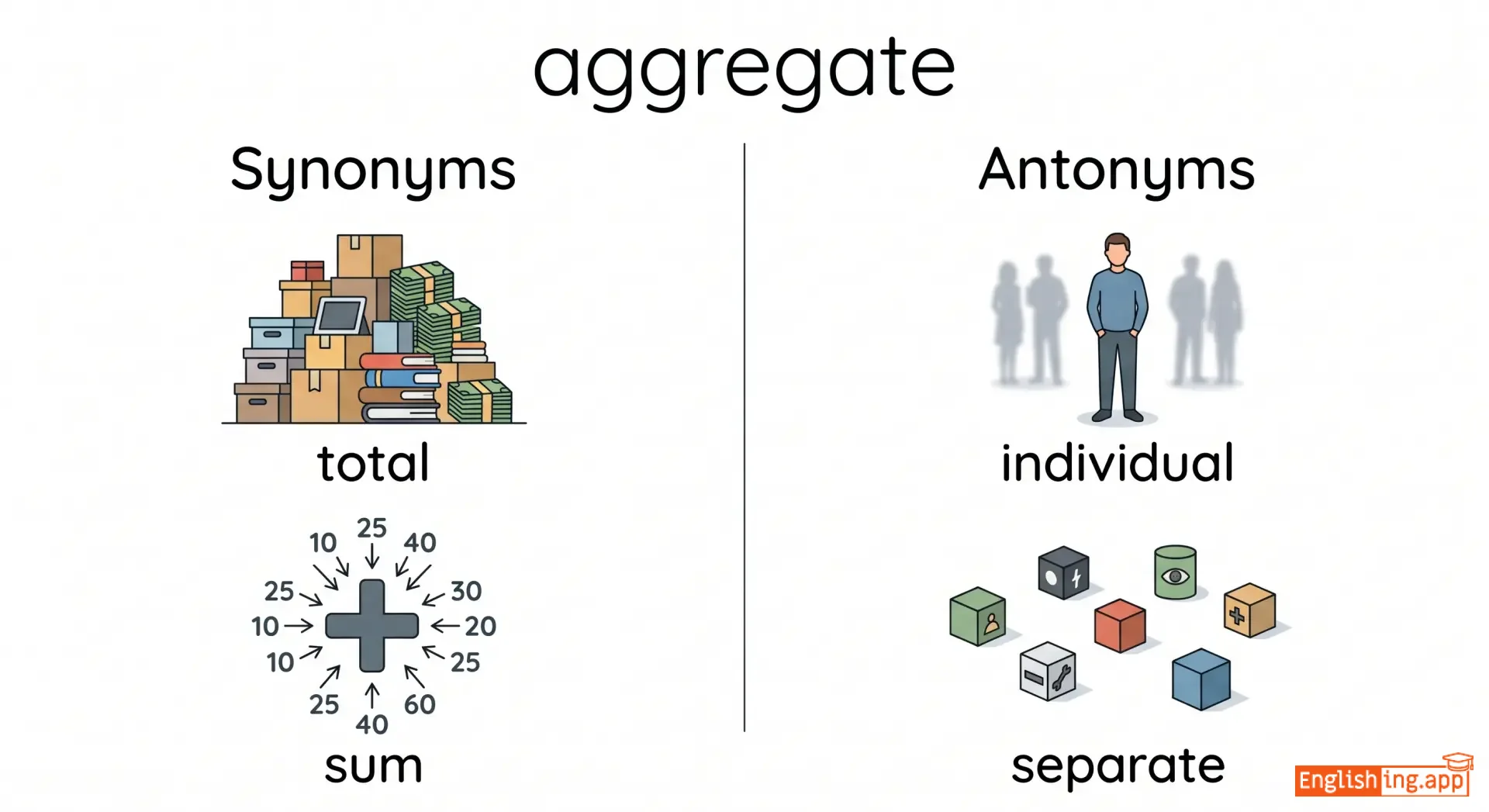
total, sum, collection, accumulate
••••••
|
individual, separate, divide
••••••
|
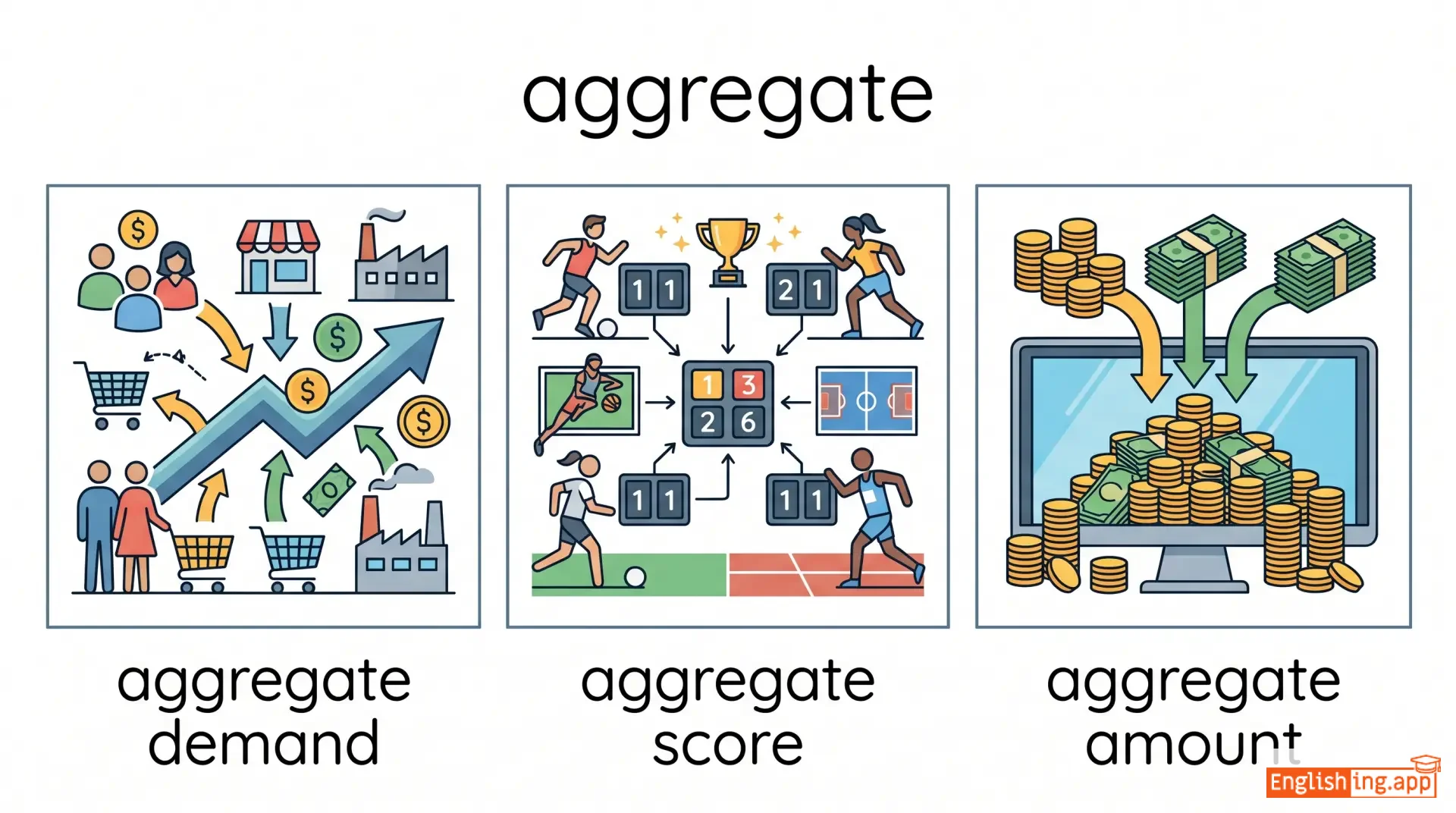
aggregate demand, aggregate score, aggregate amount, aggregate data
••••••
|
Агрегат — это все элементы, собранные в одно целое.
••••••
|
|
💥
••••••
|
/əˈɡrɛʃən/
noun
(агрессия)
••••••
|
- •••••• |
агрессия
agressiya
••••••
|
- •••••• | - •••••• | - •••••• | - •••••• |
hostile or violent behavior towards others
••••••
|
His sudden aggression surprised everyone in the meeting. |
Его внезапная агрессия удивила всех на встрече.
Ego vnezapnaya agressiya udivila vsekh na vstreche.
••••••
|
acts of aggression |
hostile actions or attacks
••••••
|
акты агрессии
akty agressii
••••••
|
hostility, attack, violence, assault
••••••
|
peace, calm, friendliness
••••••
|
show aggression, physical aggression, military aggression, acts of aggression
••••••
|
Aggression запомни AGain GREssy (раздражительный) означает агрессия
••••••
|
|
🔥
••••••
|
/əˈɡrɛsɪv/
adjective
(агрессив)
••••••
|
- •••••• |
агрессивный
agressivny
••••••
|
- •••••• | - •••••• | - •••••• | - •••••• |
ready or likely to attack or confront; forceful
••••••
|
The salesman used an aggressive strategy to close the deal. |
Продавец использовал агрессивную стратегию, чтобы завершить сделку.
Prodavets ispol'zoval agressivnuyu strategiyu, chtoby zavershit' sdelku.
••••••
|
aggressive marketing |
forceful and energetic marketing approach
••••••
|
агрессивный маркетинг
agressivny marketing
••••••
|
hostile, forceful, pushy, combative, assertive
••••••
|
gentle, passive, calm
••••••
|
aggressive behavior, aggressive strategy, aggressive attitude, aggressive marketing
••••••
|
Aggressive значит сильно, как медведь (🐻), легко запомнить
••••••
|
|
😔
••••••
|
/əˈɡriːv/
verb
(агрив)
••••••
|
- •••••• |
оскорбить
oskorbit'
••••••
|
aggrieved
агривд
••••••
|
aggrieved
агривд
••••••
|
aggrieves
агривс
••••••
|
aggrieving
агривинг
••••••
|
to cause distress or make someone feel resentful
••••••
|
She felt aggrieved by the unfair decision.
Она почувствовала себя оскорбленной несправедливым решением.
••••••
|
Она почувствовала себя оскорбленной несправедливым решением.
Ona pochuvstvovala sebya oskorblennoy nespravedlivym resheniem.
••••••
|
- •••••• | - •••••• | - •••••• |
distress, upset, offend, wrong
••••••
|
please, comfort, satisfy
••••••
|
feel aggrieved, deeply aggrieved, aggrieved party
••••••
|
Aggrieve = Grief (печаль) дать
••••••
|
|
✊
••••••
|
/ˈædʒ.ɪ.teɪt/
verb
(эджитэйт)
••••••
|
- •••••• |
агитировать, возбуждать
agitirovat, vozhuzhdat
••••••
|
agitated
эджитэйтед
••••••
|
agitated
эджитэйтед
••••••
|
agitates
эджитэйтс
••••••
|
agitating
эджитэйтинг
••••••
|
to stir up feelings or disturb; to campaign for change
••••••
|
The protesters agitated for better working conditions.
протестующие агитировали за лучшие условия труда.
••••••
|
Протестующие агитировали за лучшие условия труда.
Protestuyushchie agitirovali za luchshie usloviya truda.
••••••
|
agitate for
агитировать за
••••••
|
to campaign or push strongly for something
••••••
|
агитировать за
agitirovat za
••••••
|
provoke, disturb, excite, campaign, stir
••••••
|
calm, soothe, pacify
••••••
|
agitate for rights, agitate strongly, agitate against
••••••
|
Agitировать – агитация для изменений
••••••
|
|
⏳
••••••
|
/əˈɡoʊ/
adverb
(Аго)
••••••
|
- •••••• |
тому назад
tomu nazad
••••••
|
- •••••• | - •••••• | - •••••• | - •••••• |
Used to indicate how long before the present something happened.
••••••
|
I met her two years ago. |
Я встретил её два года назад.
Ya vstretил yeyo dva goda nazad.
••••••
|
- •••••• | - •••••• | - •••••• |
earlier, previously, before, back
••••••
|
later, after, upcoming
••••••
|
long ago, years ago, days ago, a while ago
••••••
|
'Ago' значит 'тому назад' — представьте, как будто вы возвращаетесь к прошлому.
••••••
|
|
😣
••••••
|
/ˈæɡənaɪz/
verb
(эгонайз)
••••••
|
- •••••• |
мучиться
muchitsya
••••••
|
agonized
эгонайзд
••••••
|
agonized
эгонайзд
••••••
|
agonizes
эгонайзес
••••••
|
agonizing
эгонайзинг
••••••
|
To suffer extreme physical or mental pain; to spend time worrying.
••••••
|
She agonized for days over whether she had made the right decision.
Она мучилась целыми днями, думая, правильно ли она приняла решение.
••••••
|
Она мучилась целыми днями, думая, правильно ли она приняла решение.
Ona muchilas' tselymi dnyami, dumaya, pravil'no li ona prinyala reshenie.
••••••
|
agonize over
мучиться из-за
••••••
|
To worry greatly about something.
••••••
|
мучиться из-за
muchitsya iz-za
••••••
|
suffer, worry, struggle, torment, fret
••••••
|
relax, ease, comfort
••••••
|
agonize over decision, agonize for days, agonize endlessly
••••••
|
Мучиться — это как гореть от мыслей.
••••••
|
|
👍
••••••
|
/əˈɡriː/
verb
(æɡriː)
••••••
|
|
согласиться
soglasit'sya
••••••
|
agreed
æɡriːd
••••••
|
agreed
æɡriːd
••••••
|
agrees
æɡriːz
••••••
|
agreeing
æɡriːɪŋ
••••••
|
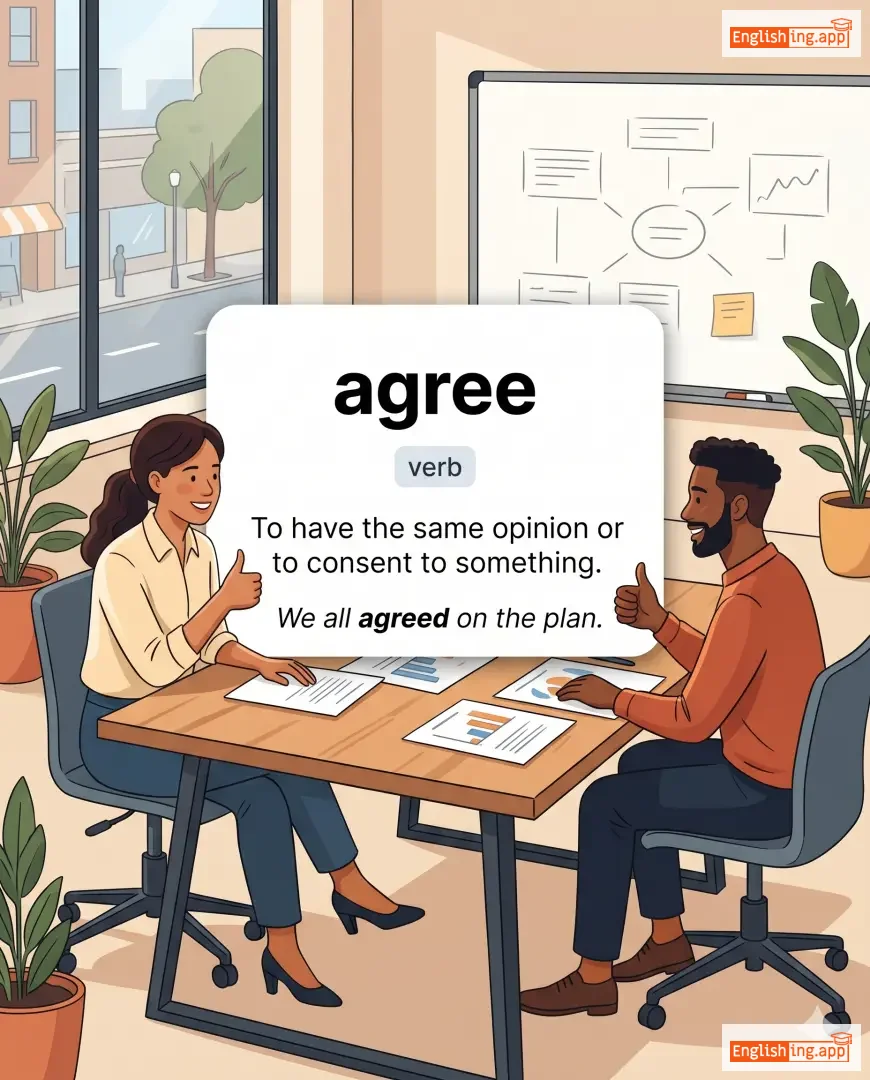
To have the same opinion or to consent to something.
••••••
|
We all agreed on the plan.
Мы все согласились с планом.
••••••
|
Мы все согласились с планом.
My vse soglasilis' s planom.
••••••
|
agree to disagree
согласен не соглашаться
••••••
|
To accept different opinions without conflict.
••••••
|
согласен не соглашаться
soglasen ne soglashat'sya
••••••
|
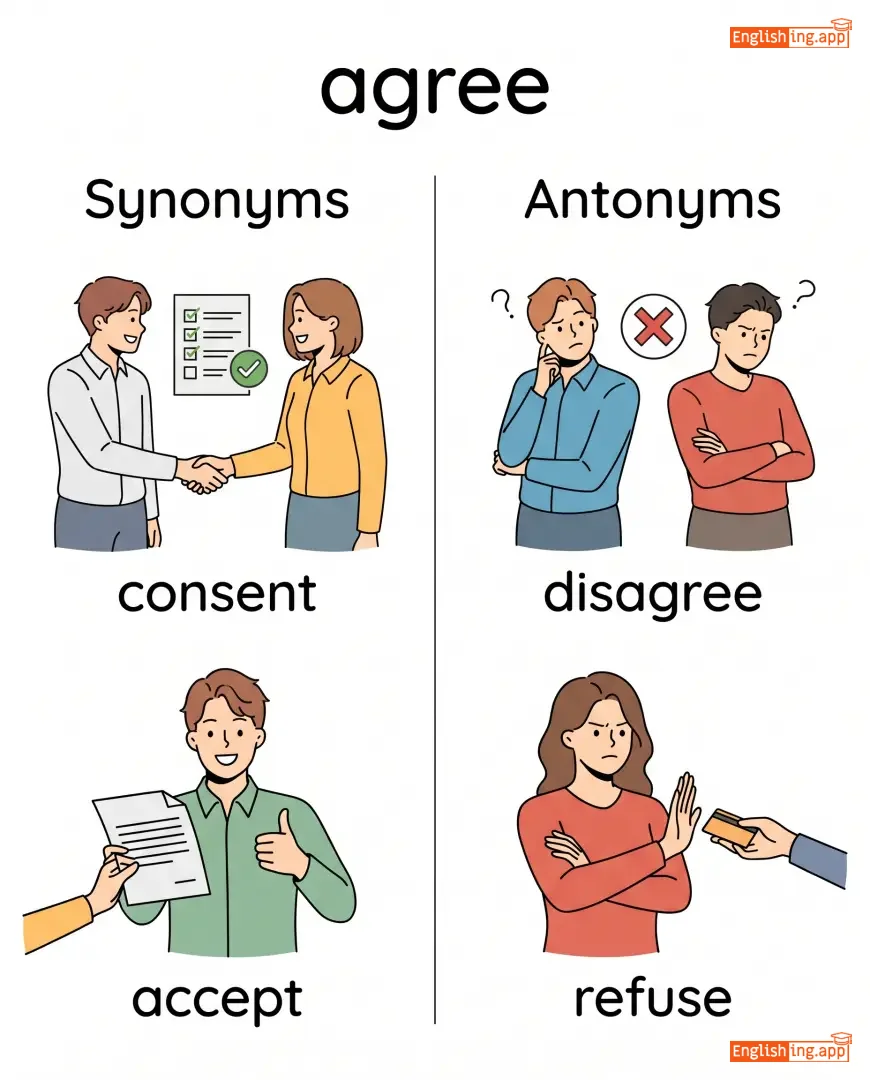
consent, accept, approve, concur, assent
••••••
|
disagree, refuse, oppose
••••••
|
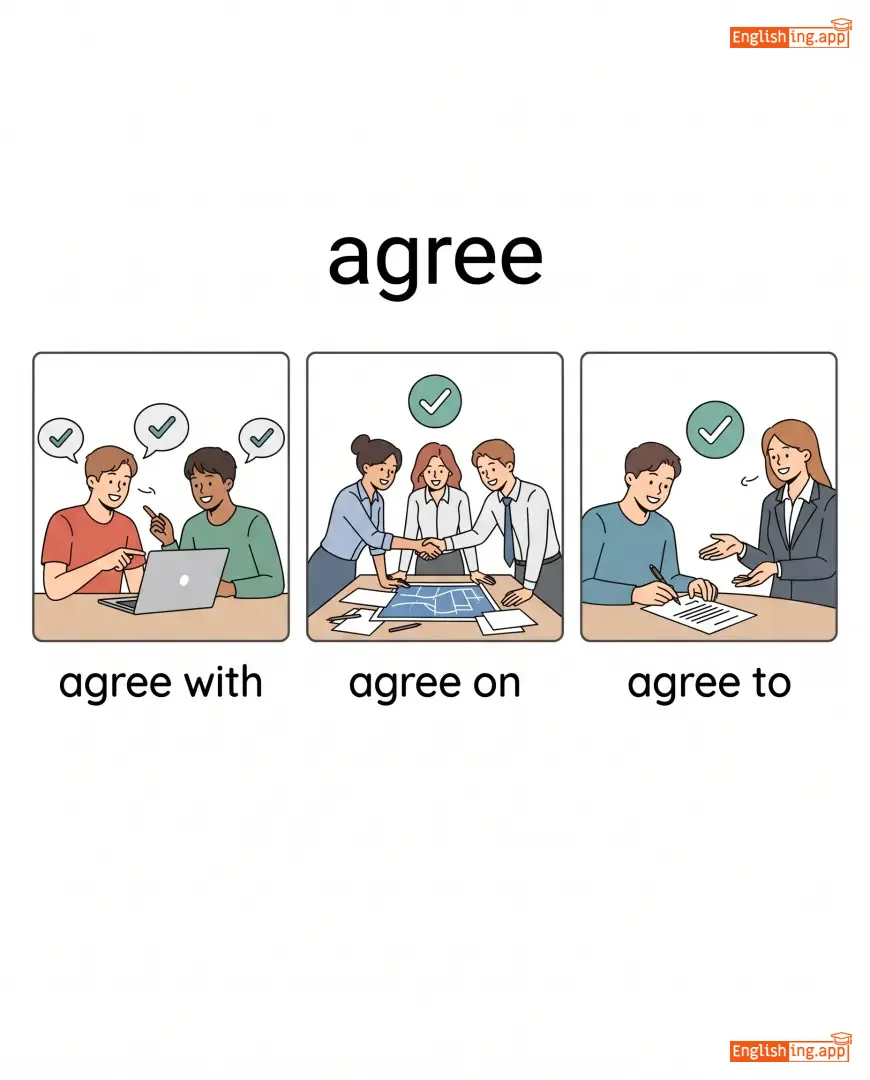
agree with, agree on, agree to, strongly agree
••••••
|
'Agree' означает согласиться — как когда все кивают и соглашаются.
••••••
|
|
✍️
••••••
|
/əˈɡriː.mənt/
noun
(əˈɡriːmənt)
••••••
|


|
соглашение
soglashenie
••••••
|
- •••••• | - •••••• | - •••••• | - •••••• |
A mutual understanding or arrangement between two or more parties.
••••••
|
They signed an agreement to work together.
Они подписали соглашение о совместной работе.
••••••
|
Они подписали соглашение о совместной работе.
Oni podpisali soglashenie o sovmestnoi rabote.
••••••
|
gentlemen's agreement
джентльменское соглашение
••••••
|
An informal and non-binding agreement based on trust.
••••••
|
джентльменское соглашение
dzhentl'menskoye soglashenie
••••••
|
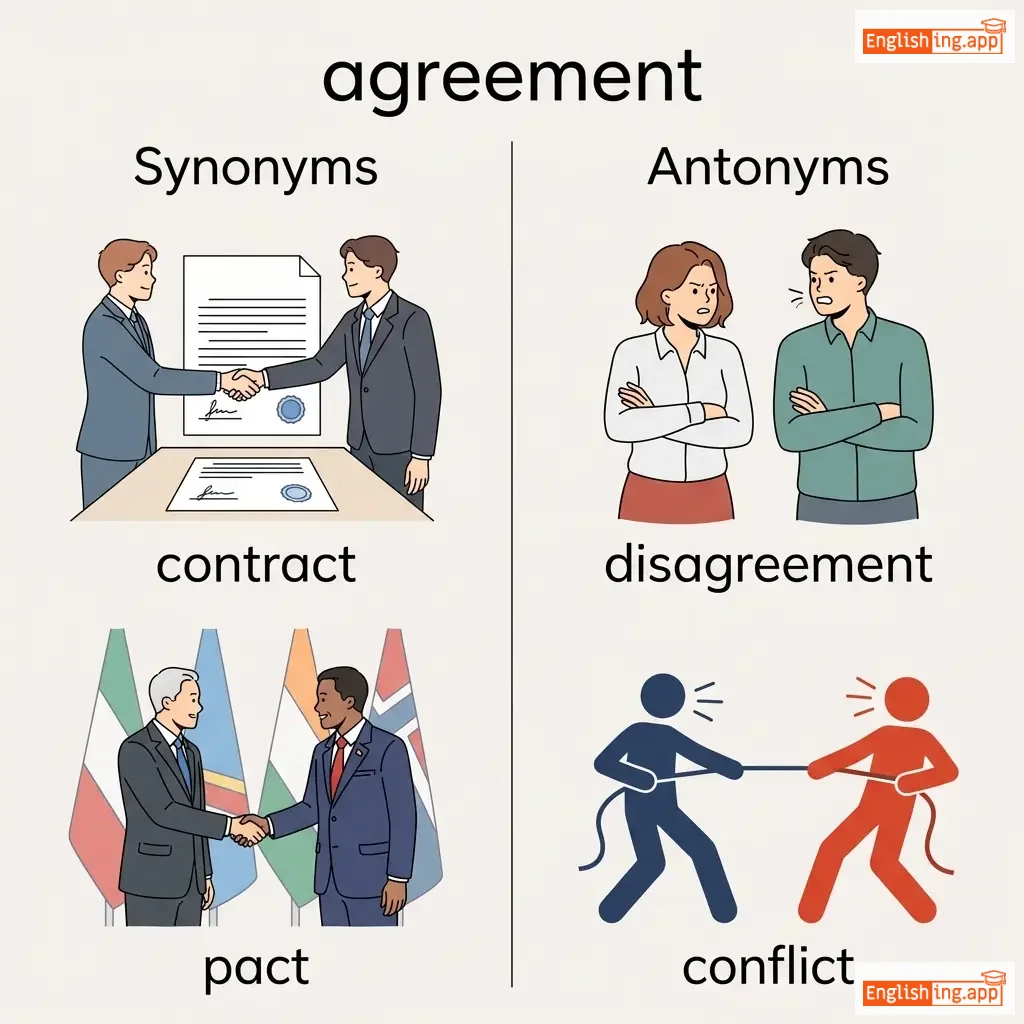
contract, pact, deal, settlement, accord
••••••
|
disagreement, conflict, dispute
••••••
|
reach an agreement, sign an agreement, mutual agreement, agreement between
••••••
|
'Agreement' значит соглашение — когда два человека подписывают соглашение, это значит согласие.
••••••
|
|
🌾
••••••
|
/ˌæɡ.rɪˈkʌl.tʃər.əl/
adjective
(агрикультурный)
••••••
|
|
сельскохозяйственный
sel'skokhozyaystvennyy
••••••
|
- •••••• | - •••••• | - •••••• | - •••••• |
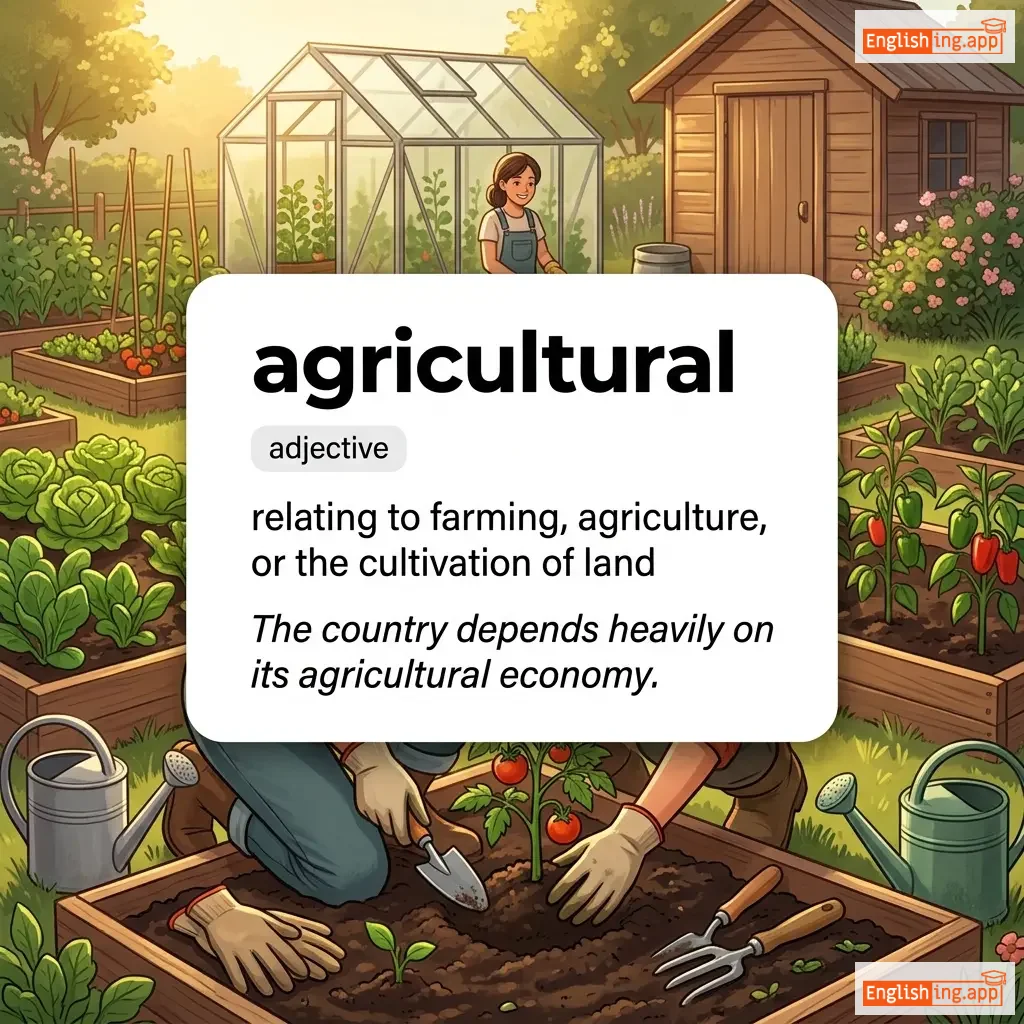
relating to farming, agriculture, or the cultivation of land
••••••
|
The country depends heavily on its agricultural economy. |
Страна в значительной степени зависит от своей сельскохозяйственной экономики.
Strana v znachitel'noi stepeni zavisit ot svoei sel'skokhozyaystvennoi ekonomiki.
••••••
|
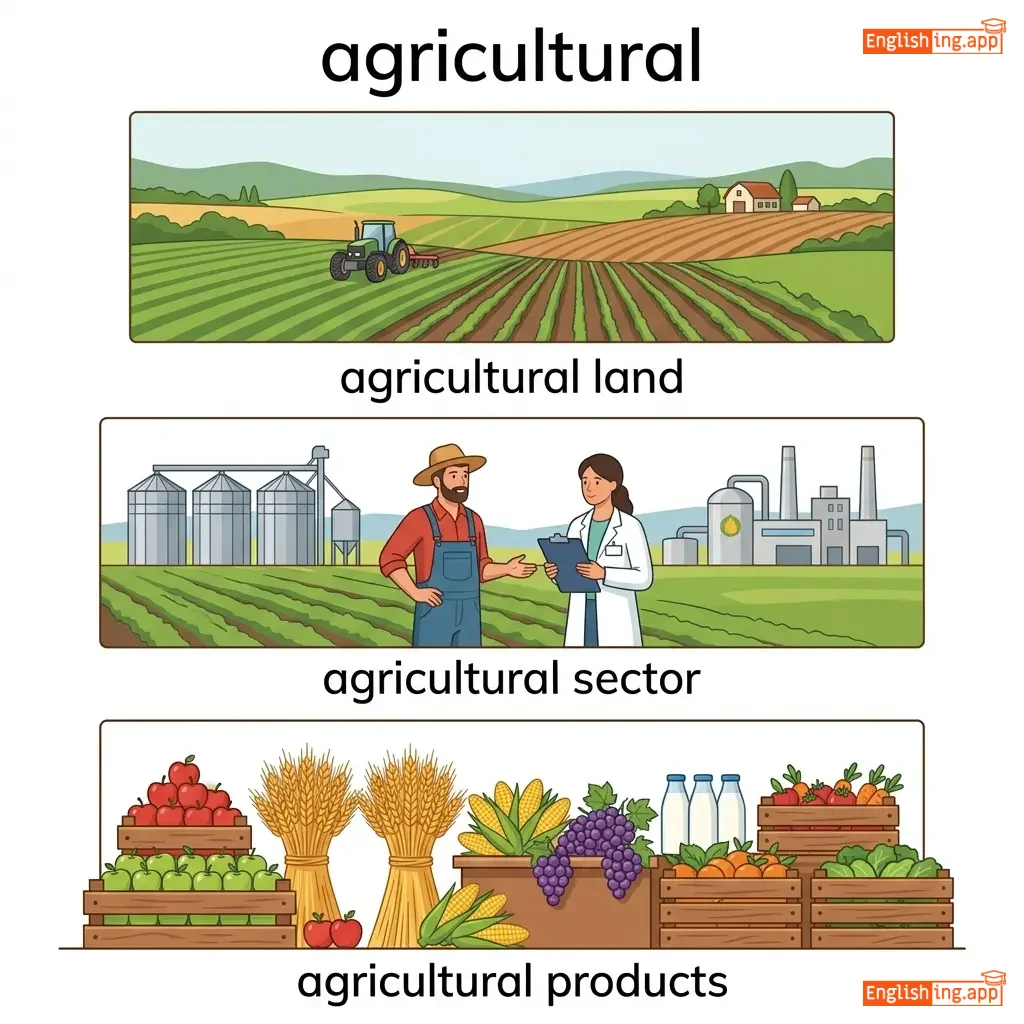
agricultural sector |
the part of the economy related to farming and food production
••••••
|
сельскохозяйственный сектор
sel'skokhozyaystvennyy sektor
••••••
|
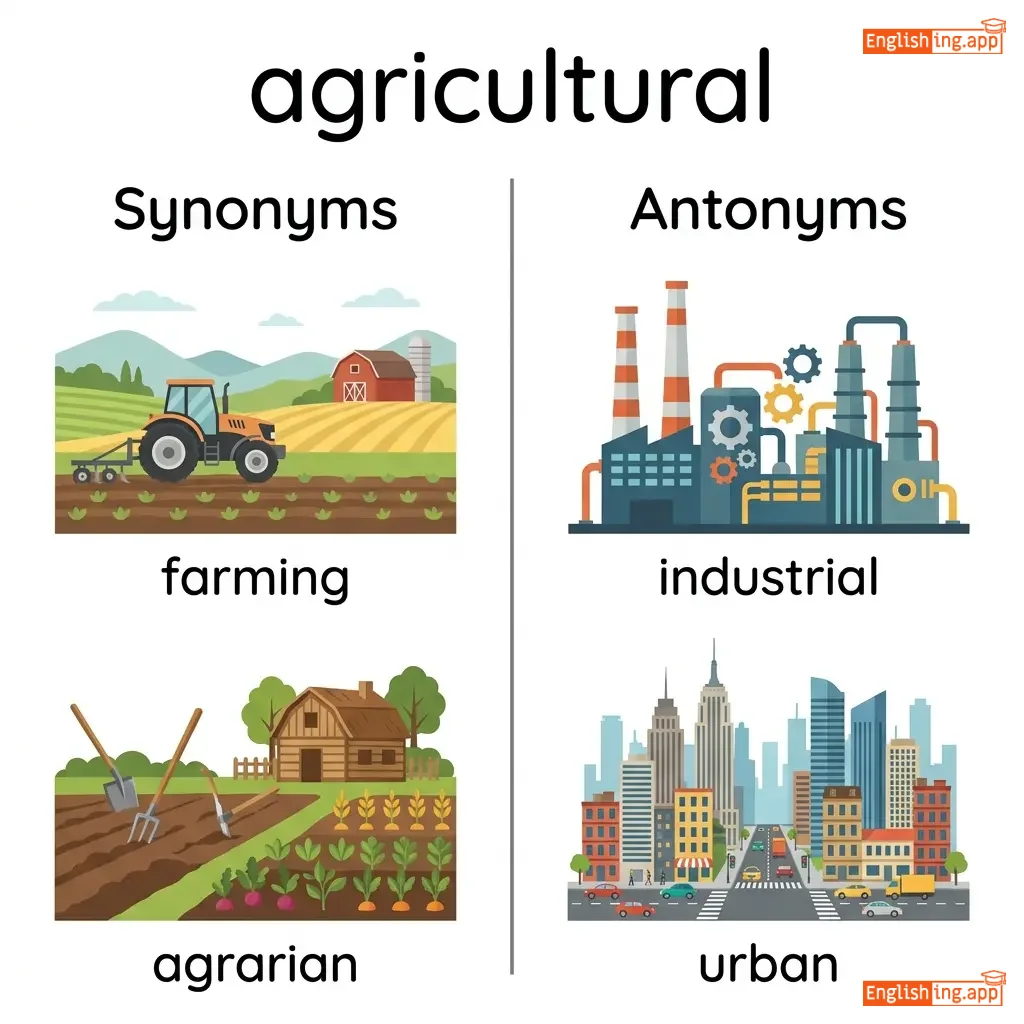
farming, agrarian, cultivation-related, rural, horticultural
••••••
|
industrial, urban, nonagricultural
••••••
|
agricultural land, agricultural sector, agricultural products, agricultural development
••••••
|
Agricultural означает сельское хозяйство — сельское с 'агри'.
••••••
|
|
🌾
••••••
|
/ˈæɡrɪˌkʌltʃər/
noun
(Агрикалчер)
••••••
|
|
сельское хозяйство
selskoe khozyaystvo
••••••
|
- •••••• | - •••••• | - •••••• | - •••••• |
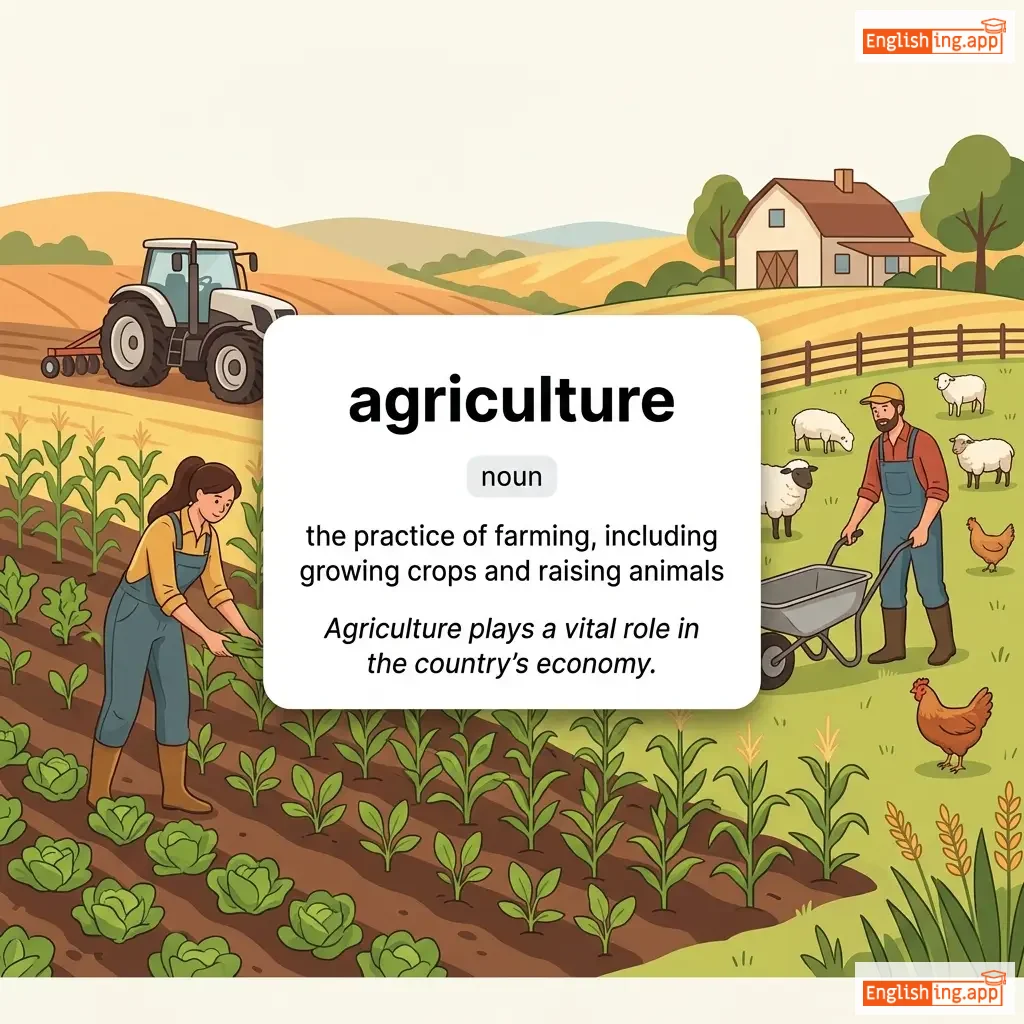
the practice of farming, including growing crops and raising animals
••••••
|
Agriculture plays a vital role in the country's economy. |
Сельское хозяйство играет важную роль в экономике страны.
Selskoe khozyaystvo igraet vazhnuyu rol' v ekonomike strany.
••••••
|
subsistence agriculture |
farming mainly to feed oneself and family rather than for sale
••••••
|
земледелие для собственного потребления
zemledelie dlya sobstvennogo potrebleniya
••••••
|
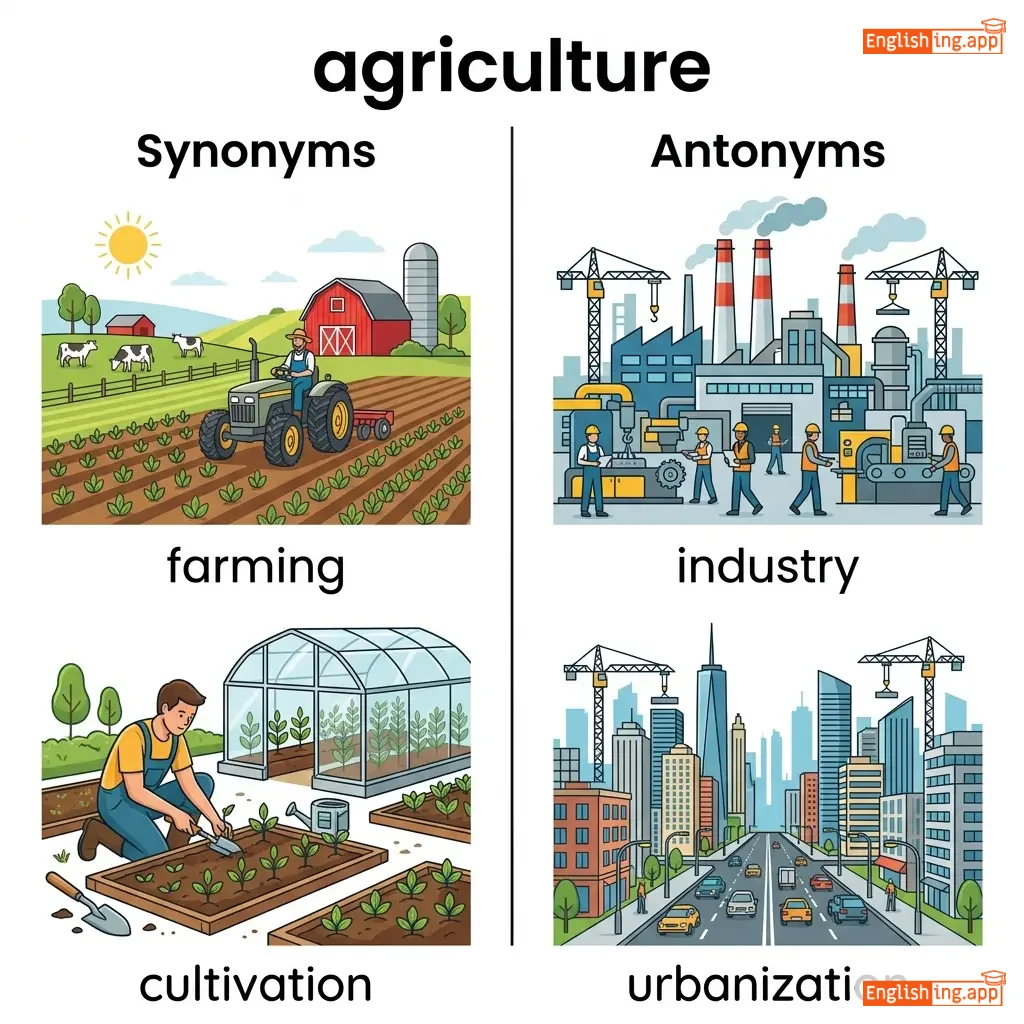
farming, cultivation, horticulture, agronomy, husbandry
••••••
|
industry, urbanization, manufacturing
••••••
|
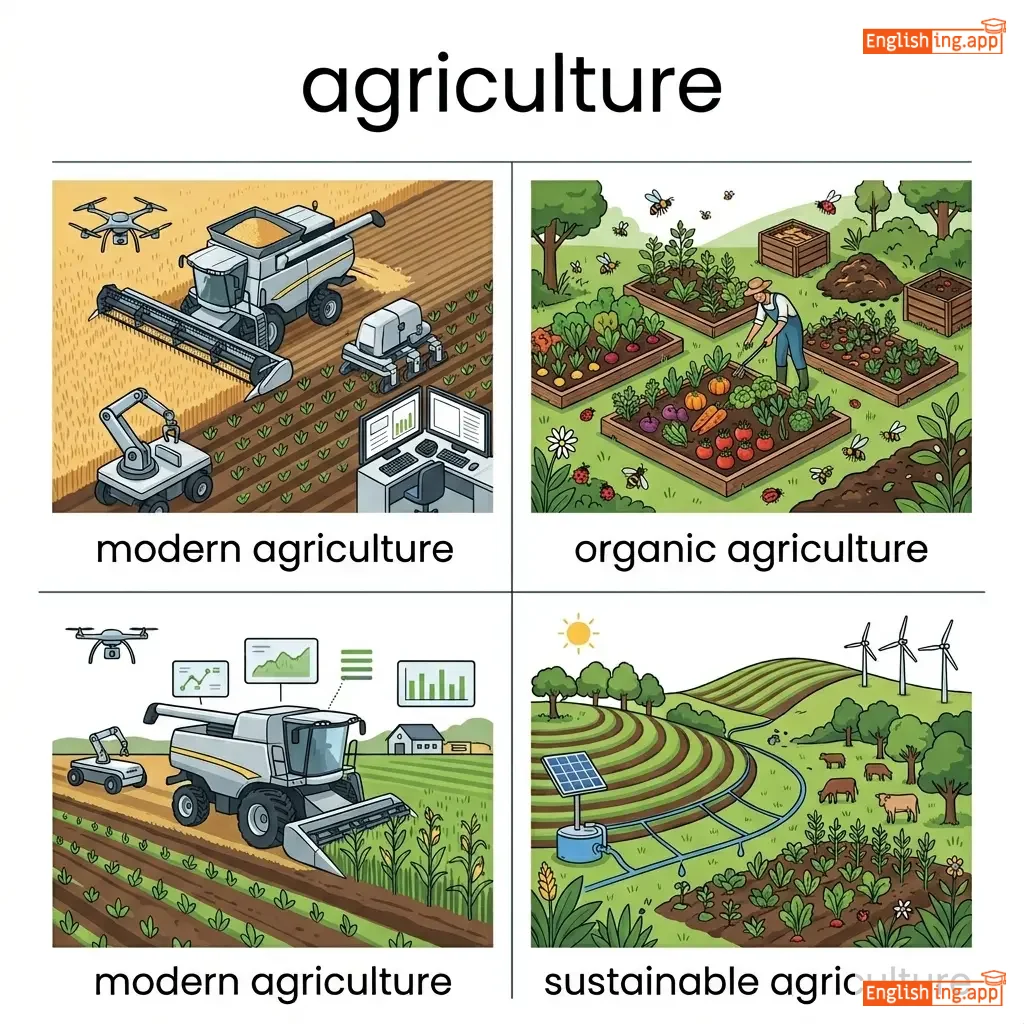
modern agriculture, organic agriculture, sustainable agriculture, agriculture sector
••••••
|
Agriculture = земля + культура — сельское хозяйство это настоящая культура 🌿
••••••
|
|
➡️
••••••
|
/əˈhɛd/
adverb
(ahed)
••••••
|
- •••••• |
впереди
vperedí
••••••
|
- •••••• | - •••••• | - •••••• | - •••••• |
in front; in advance; before someone or something in position or progress
••••••
|
She walked ahead of the group. |
Она шла впереди группы.
Ona shla vperedi grupy.
••••••
|
go ahead |
to proceed or continue
••••••
|
идти вперед
idti vpered
••••••
|
forward, forth, onward, in front
••••••
|
behind, backward
••••••
|
ahead of time, go ahead, plan ahead, look ahead
••••••
|
впереди (ahead) означает 'идти вперед ➡️'
••••••
|
|
🩹
••••••
|
/eɪd/
noun, verb
(eid)
••••••
|
- •••••• |
помощь
pomoshch
••••••
|
aided
eidet
••••••
|
aided
eidet
••••••
|
aids
eids
••••••
|
aiding
aiding
••••••
|
help or support, typically of a practical nature
••••••
|
The volunteers provided aid to the flood victims.
Волонтеры оказали помощь жертвам наводнения.
••••••
|
Волонтеры оказали помощь жертвам наводнения.
Volontery okazali pomoshch zhertvam navodneniya.
••••••
|
first aid
первая помощь
••••••
|
emergency medical treatment given immediately
••••••
|
первая помощь
pervaya pomoshch
••••••
|
help, support, assistance, relief, guidance
••••••
|
hindrance, obstruction
••••••
|
foreign aid, financial aid, medical aid, aid in
••••••
|
Помощь — это всегда вовремя, не откладывая!
••••••
|
|
🧑💼
••••••
|
/eɪd/
noun
(эйд)
••••••
|
- •••••• |
помощник
pomoshchnik
••••••
|
- •••••• | - •••••• | - •••••• | - •••••• |
An assistant or helper, especially to an important person.
••••••
|
The senator’s aide organized the meeting with journalists. |
Помощник сенатора организовал встречу с журналистами.
Pomoshchnik senatora organizoval vstrechu s zhurnalistami.
••••••
|
- •••••• | - •••••• | - •••••• |
assistant, helper, deputy, supporter
••••••
|
leader, boss
••••••
|
presidential aide, close aide, trusted aide
••••••
|
Aide (помощник) помогает организовать встречу.
••••••
|
|
🧬
••••••
|
/eɪdz/
noun
(эйдс)
••••••
|
- •••••• |
СПИД
SPID
••••••
|
- •••••• | - •••••• | - •••••• | - •••••• |
Acquired Immune Deficiency Syndrome, a disease of the immune system caused by HIV
••••••
|
AIDS is a major global health concern. |
СПИД — это серьезная мировая угроза здоровью.
SPID — eto seryoznaya mirovaya ugroza zdorov'yu.
••••••
|
fight against AIDS |
efforts to combat the disease caused by HIV
••••••
|
борьба с СПИДом
bor'ba s SPIDom
••••••
|
HIV disease, immune deficiency, syndrome
••••••
|
health, wellness
••••••
|
AIDS patient, HIV/AIDS, AIDS treatment, fight against AIDS
••••••
|
СПИД помни 🧬 это серьезное заболевание, в русском тоже одно и то же название.
••••••
|

