Dawn Letters to the Field
Туманное dawn принесло свежий chill в нашу долину. Бабушка, мудрый aged страж деревни, прошептала: «До того, как восход солнца, следуй за мной.» Легкий hill появился через туман, где бронзовый deer двигался тихо. Рядом с старым oak пар поднимался с pond, посылая бледный beam в sky. «Этот acre — это самая глубокая bond, которую я разделяю с тобой», сказала она, доставая card, покрытую облаками. Мы встали на колени, чтобы вставить сеянцы в мягкую clay. Бабушка улыбнулась: «Ты able; время сделает остальное.» Первый луч sun залил поле в blue свет, окутывая нас warm уютом. Птицы пели, и их мелодии возвращались как мягкое echo. Стоя вместе, мы почувствовали полное calm. Глаза Сати блестели: «Этот момент останется с нами навсегда.» Мы осторожно поливали каждое растение, закрепляя корни в земле. Бабушка пообещала: «Сейчас каждый день я буду писать новую card, чтобы ты никогда не забыл эту землю.»
Получите неограниченный доступ ко всем словам с подпиской Pro
Обновить до ProПолучите неограниченный доступ ко всем предложениям с подпиской Pro
Обновить до Pro|
Эмодзи
|
Слово | Images | Перевод | Прошедшее | Причастие прошедшего времени | Третье лицо единственного числа | Герундий | Значение | Пример предложения | Перевод примера предложения | Пример выражения | Значение примера выражения | Перевод примера выражения | Синонимы | Антонимы | Коллокации | Мнемоника |
|---|---|---|---|---|---|---|---|---|---|---|---|---|---|---|---|---|---|
|
✅
••••••
|
/ˈeɪbl/
adjective
(эйбл)
••••••
|
- •••••• |
способный
sposobnyy
••••••
|
- •••••• | - •••••• | - •••••• | - •••••• |
having the power, skill, or means to do something
••••••
|
She is able to speak three languages fluently. |
Она способна говорить на трех языках бегло.
Ona sposobna govorit' na trekh yazykakh beglo.
••••••
|
be able to |
to have the ability to do something
••••••
|
быть способным к
byt' sposobnym k
••••••
|
capable, competent, skilled, talented
••••••
|
unable, incapable, weak
••••••
|
able to work, able to help, able leader, highly able
••••••
|
Able = Способный, как быть способным к чему-либо.
••••••
|
|
🌾
••••••
|
/ˈeɪkər/
noun
••••••
|
- •••••• | - •••••• | - •••••• | - •••••• | - •••••• | - •••••• |
a unit of land area equal to 4,840 square yards (about 4,047 square meters)
••••••
|
The farmer owns five acres of fertile land. |
- •••••• | - •••••• | - •••••• | - •••••• |
land, plot, field, farmland
••••••
|
null
••••••
|
acre of land, farm acres, acre property
••••••
|
No •••••• |
|
👴
••••••
|
/eɪdʒd/
adjective
(эйджд)
••••••
|
- •••••• |
пожилой
pozhiloy
••••••
|
- •••••• | - •••••• | - •••••• | - •••••• |
having lived for a specified number of years; old
••••••
|
The aged man sat in the park, watching the children play.
ðə эйджд мэн сэт ин ðə пɑрк, wɑʧɪнг ðə чилдрэн плей.
••••••
|
Пожилой мужчина сидел в парке, наблюдая, как играют дети.
Pozhiloy muzhchina sidel v parke, nablyudaya, kak igrajut deti.
••••••
|
- •••••• | - •••••• | - •••••• |
elderly, senior, old, mature
••••••
|
young, youthful
••••••
|
aged person, aged care, aged wine
••••••
|
Aged wine tastes better as it ages, just like people
••••••
|
|
🔆
••••••
|
/biːm/
noun
(bim)
••••••
|
- •••••• |
луч / балка
luch / balka
••••••
|
- •••••• | - •••••• | - •••••• | - •••••• |
a ray or shaft of light; a long piece of wood or metal used to support weight
••••••
|
A beam of sunlight entered through the window.
Луч света вошел в окно.
••••••
|
Луч света вошел в окно.
Luch sveta voshel v okno.
••••••
|
beam with joy
Сиять от радости
••••••
|
to smile broadly because of happiness
••••••
|
Сиять от радости
Siyat' ot radosti
••••••
|
ray, shaft, gleam, light, support
••••••
|
shadow, gloom
••••••
|
sunlight beam, laser beam, beam of light, wooden beam
••••••
|
Луч света ярко светит, и твоя улыбка сияет как beam счастья.
••••••
|
|
🔵
••••••
|
/bluː/
adjective
(blu)
••••••
|
- •••••• |
синий
siniy
••••••
|
- •••••• | - •••••• | - •••••• | - •••••• |
the color of the clear sky; feeling sad or depressed
••••••
|
She wore a bright blue dress to the party. |
Она носила яркое синее платье на вечеринке.
Ona nosila yarkoe sinee plat'ye na vecherinke.
••••••
|
feeling blue |
to feel sad or depressed
••••••
|
чувствовать себя грустным
chuvstvovat' sebya grustnym
••••••
|
azure, navy, cerulean, sad, gloomy
••••••
|
red, yellow, cheerful, happy
••••••
|
blue sky, blue dress, blue mood, feeling blue
••••••
|
Синий означает синий – синий как небо, но чувствовать себя синим означает грусть.
••••••
|
|
🤝
••••••
|
/bɒnd/
noun
••••••
|
- •••••• | - •••••• | - •••••• | - •••••• | - •••••• | - •••••• |
a connection or relationship between people or things
••••••
|
The sisters share a close bond. |
- •••••• |
bond of friendship |
a strong relationship based on trust and care
••••••
|
- •••••• |
connection, tie, link, relationship, attachment
••••••
|
division, separation
••••••
|
emotional bond, strong bond, family bond, bond market
••••••
|
No •••••• |
|
😌
••••••
|
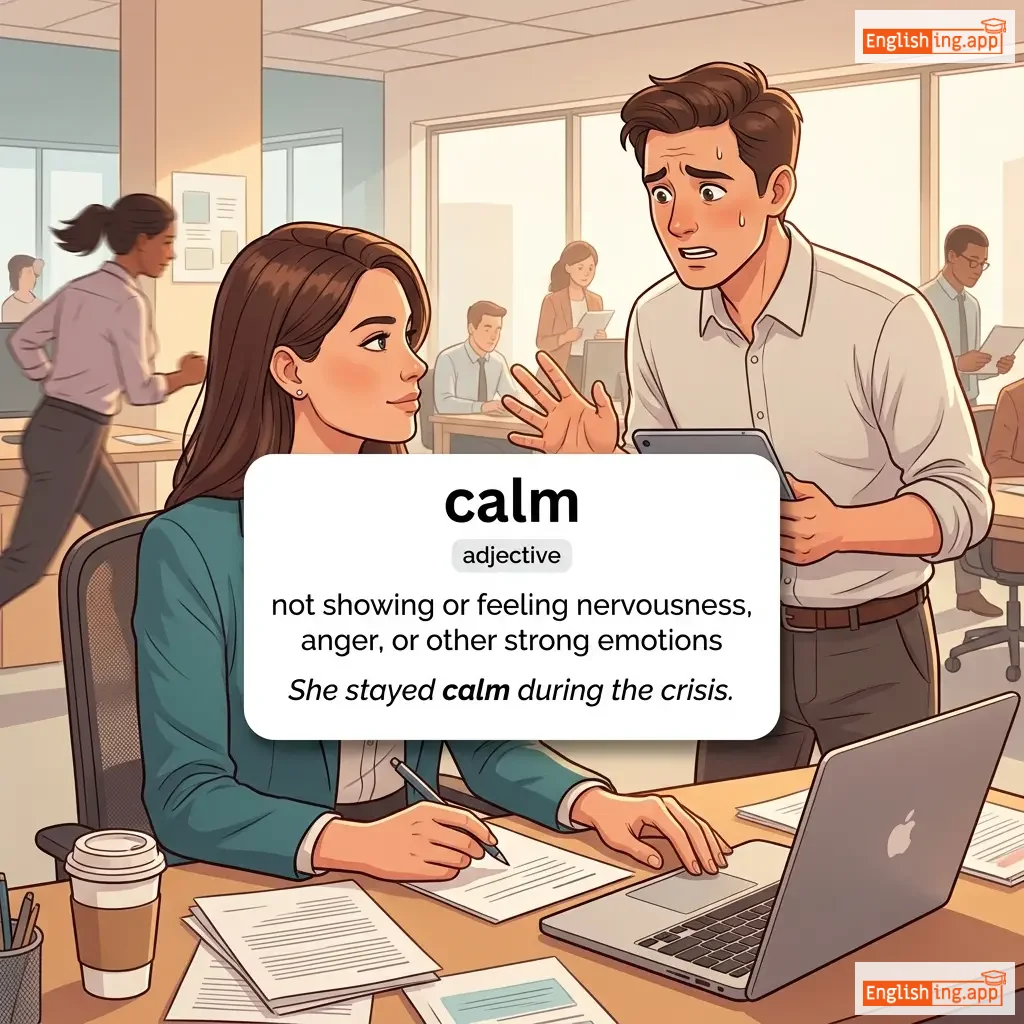
/kɑːm/
adjective
(калам)
••••••
|
|
спокойный
spokoynyy
••••••
|
- •••••• | - •••••• | - •••••• | - •••••• |
not showing or feeling nervousness, anger, or other strong emotions
••••••
|
She stayed calm during the crisis. |
Она оставалась спокойной во время кризиса.
Ona ostavalas' spokoynoy vo vremya krizisa.
••••••
|
calm down |
to relax after being angry or upset
••••••
|
успокоиться
uspokoyit'sya
••••••
|
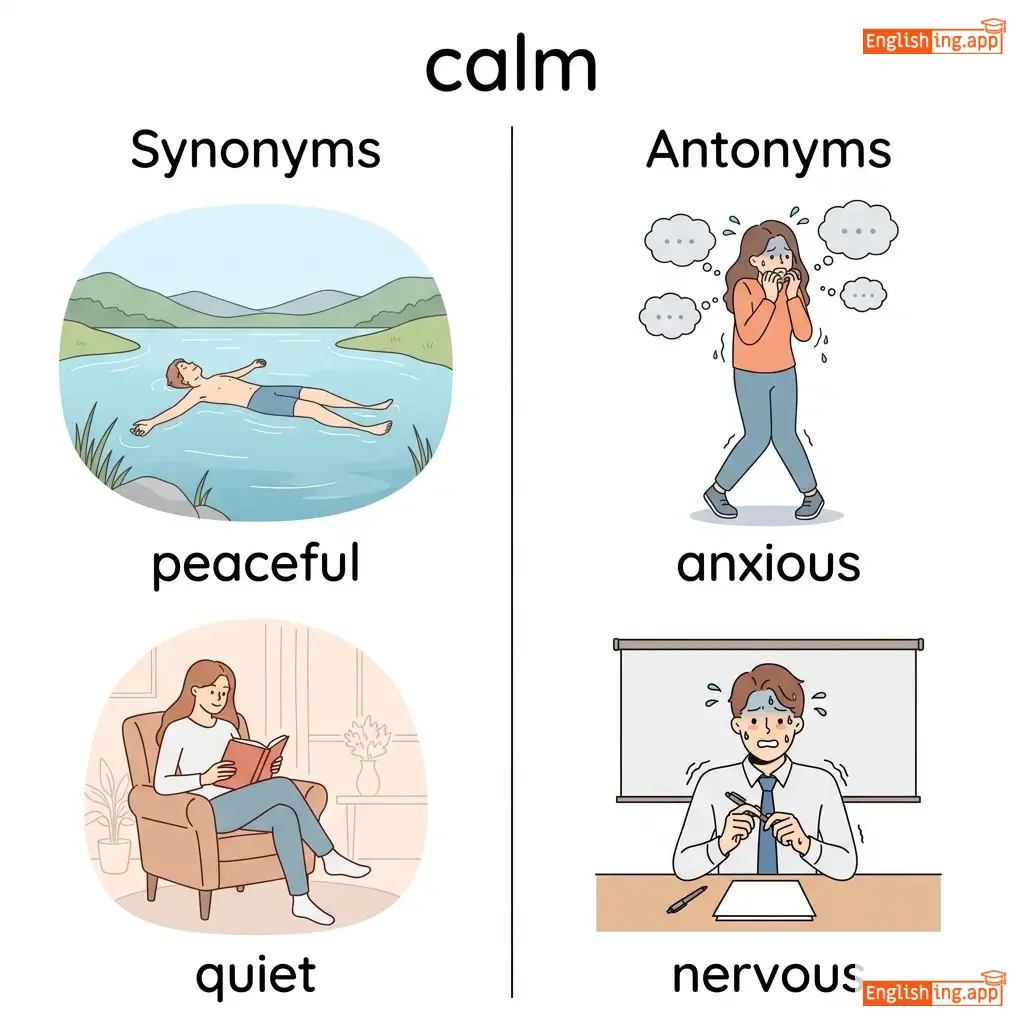
peaceful, quiet, relaxed, tranquil
••••••
|
anxious, nervous, agitated
••••••
|
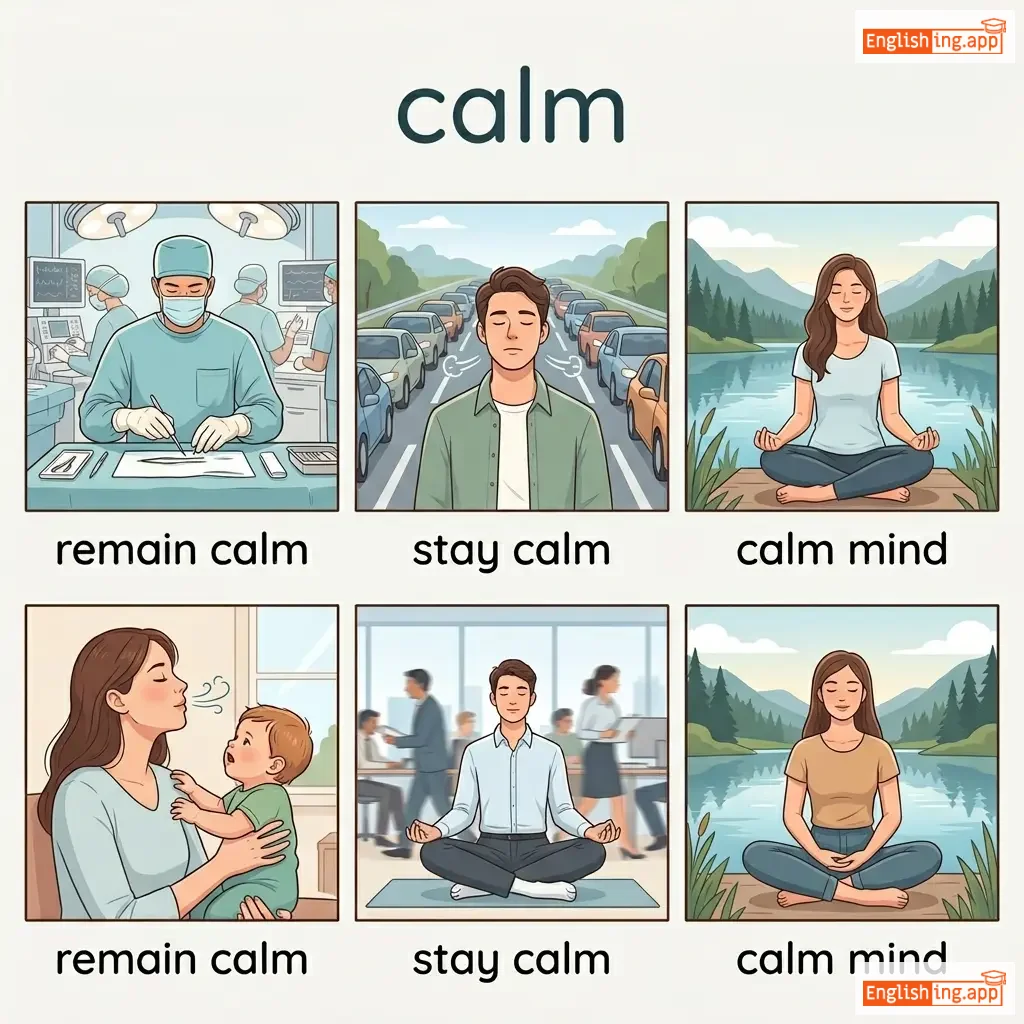
remain calm, stay calm, calm mind, calm atmosphere
••••••
|
Спокойный = спокойно. Оставайся спокойным, чтобы избежать стресса.
••••••
|
|
💳
••••••
|
/kɑːrd/
noun
••••••
|
- •••••• | - •••••• | - •••••• | - •••••• | - •••••• | - •••••• |
A small, flat piece of stiff paper or thin cardboard used for various purposes, such as identification, greetings, or playing games.
••••••
|
She handed me her business card after the meeting. |
- •••••• |
play your cards right |
to act in a way that gives you an advantage or success
••••••
|
- •••••• |
ticket, pass, note, voucher, certificate
••••••
|
document, letter
••••••
|
credit card, business card, playing card, membership card
••••••
|
No •••••• |
|
❄️
••••••
|
/tʃɪl/
verb
••••••
|
- •••••• | - •••••• |
chilled
••••••
|
chilled
••••••
|
chills
••••••
|
chilling
••••••
|
to make something cold or to relax and take it easy
••••••
|
We decided to chill at home after a long day. |
- •••••• |
chill out |
to relax completely or calm down
••••••
|
- •••••• |
relax, cool, freeze, unwind, calm
••••••
|
heat, stress
••••••
|
chill out, chill weather, chill drinks, chill vibe
••••••
|
No •••••• |
|
🏺
••••••
|
/kleɪ/
noun
(kleɪ)
••••••
|
- •••••• |
глина
glina
••••••
|
- •••••• | - •••••• | - •••••• | - •••••• |
a natural material made of fine earth that becomes hard when baked, used for making pottery
••••••
|
The artist molded the wet clay into a beautiful vase. |
Художник слепил из влажной глины красивую вазу.
Kudozhnik slepil iz vlazhnoi gliny krasivuyu vazu.
••••••
|
feet of clay |
a hidden flaw or weakness in an otherwise strong person
••••••
|
глиняные ноги
glinyanye nogi
••••••
|
mud, soil, earth, pottery material
••••••
|
stone, metal
••••••
|
clay pot, clay model, wet clay, clay soil
••••••
|
Глина — материал для фигур и посуды, напоминающий, как легко испортить что-то ценное!
••••••
|
|
🌅
••••••
|
/dɔːn/
noun, verb
(дон)
••••••
|
- •••••• |
рассвет
rassvet
••••••
|
dawned
донед
••••••
|
dawned
донед
••••••
|
dawns
донс
••••••
|
dawning
доннинг
••••••
|
The first appearance of light in the sky before sunrise; to begin or become apparent.
••••••
|
Hope began to dawn in her heart after hearing the good news.
Hope began to dawn in her heart after hearing the good news.
••••••
|
Надежда начала рассветать в её сердце после того, как она услышала хорошие новости.
Nadezhda nachala rassvethat' v yejo serdtse posle togo, kak ona uslyshala khoroshie novosti.
••••••
|
crack of dawn
crack of dawn
••••••
|
Very early in the morning.
••••••
|
на рассвете
na rassvete
••••••
|
sunrise, daybreak, morning, beginning, start
••••••
|
sunset, dusk, end
••••••
|
at dawn, before dawn, dawn of a new era, dawn breaks
••••••
|
Dawn означает рассвет, начало нового дня.
••••••
|
|
🦌
••••••
|
/dɪr/
noun
(дир)
••••••
|
- •••••• |
олень
olen
••••••
|
- •••••• | - •••••• | - •••••• | - •••••• |
a graceful wild animal with long legs and antlers, often living in forests
••••••
|
A deer ran across the road suddenly. |
Олень внезапно пересек дорогу.
Olen vnezapno peresek dorogu.
••••••
|
- •••••• | - •••••• | - •••••• |
stag, buck, doe, fawn
••••••
|
predator, carnivore
••••••
|
wild deer, deer hunting, herd of deer, deer park
••••••
|
Deer означает олень — Представьте себе оленя, бегущего по лесу (олень бегает по лесу)
••••••
|
|
🔊
••••••
|
/ˈɛkəʊ/
noun, verb
(хэппинесс)
••••••
|
- •••••• |
счастье
schast'ye
••••••
|
echoed
••••••
|
echoed
••••••
|
echoes
••••••
|
echoing
••••••
|
a sound that is reflected off a surface and heard again; to repeat or reflect a sound or idea.
••••••
|
Her laughter echoed through the empty hall. |
Она не смогла скрыть своего счастья, когда получила награду.
Ona ne smogla skryt' svoego schast'ya, kogda poluchila nagradu.
••••••
|
echo chamber |
an environment where people only encounter information or opinions that reflect and reinforce their own.
••••••
|
поиск счастья
poisk schast'ya
••••••
|
resound, reverberate, repeat, reflect, resonate
••••••
|
silence, quiet, mute
••••••
|
echo sound, echo chamber, echo through, faint echo, echo of laughter
••••••
|
Счастье — это то, что мы ищем, чтобы наполнить наши сердца!
••••••
|
|
⛰️
••••••
|
/hɪl/
noun
(хил)
••••••
|
- •••••• |
холм
kholm
••••••
|
- •••••• | - •••••• | - •••••• | - •••••• |
A naturally raised area of land, smaller than a mountain.
••••••
|
We climbed the hill to see the sunset. |
Мы поднялись на холм, чтобы увидеть закат.
My podnyalis' na kholm, chtoby uvidet' zakat.
••••••
|
make a mountain out of a molehill |
to exaggerate a small problem into something much bigger
••••••
|
делать из мухи слона
delat' iz mukhi slona
••••••
|
mound, knoll, ridge, slope, rise
••••••
|
valley, plain
••••••
|
hill station, top of the hill, climb a hill, rolling hills
••••••
|
Hill — это холм, маленький, как холм, а не гора.
••••••
|
|
🌕
••••••
|
/muːn/
noun
(mun)
••••••
|
- •••••• |
луна
luna
••••••
|
- •••••• | - •••••• | - •••••• | - •••••• |
the natural satellite of the earth, visible mainly at night by reflected light from the sun
••••••
|
The moon shines brightly in the night sky.
Луна ярко светит на ночном небе.
••••••
|
Луна ярко светит на ночном небе.
Luna yarko svetit na nochnom nebe.
••••••
|
once in a blue moon
раз в голубую луну
••••••
|
something that happens very rarely
••••••
|
раз в голубую луну
raz v golubuyu lunu
••••••
|
satellite, orb, crescent, full moon
••••••
|
sun, darkness
••••••
|
full moon, new moon, moonlight, moon surface
••••••
|
Луна = Moon - Луна осветит ночное небо
••••••
|
|
🌳
••••••
|
/oʊk/
noun
(ок)
••••••
|
- •••••• |
дуб
dub
••••••
|
- •••••• | - •••••• | - •••••• | - •••••• |
a large tree that produces acorns and has strong, hard wood
••••••
|
The old oak tree provided shade for the entire yard.
The old oak tree provided shade for the entire yard.
••••••
|
Старый дуб давал тень для всего двора.
Staryy dub daval ten' dlya vsego dvorа.
••••••
|
strong as an oak
strong as an oak
••••••
|
very strong and resilient
••••••
|
сильный как дуб
sil'nyy kak dub
••••••
|
tree, hardwood, timber, forest tree
••••••
|
sapling, weak plant
••••••
|
oak tree, oak wood, oak leaves, oak furniture, old oak
••••••
|
Дуб — это дерево с сильным характером 🌳.
••••••
|
|
🏞️
••••••
|
/pɒnd/
noun
(понд)
••••••
|
- •••••• |
пруд
prud
••••••
|
- •••••• | - •••••• | - •••••• | - •••••• |
a small area of still water, smaller than a lake
••••••
|
The children were feeding ducks at the pond. |
Дети кормили уток в пруду.
Deti kormili utok v prudu.
••••••
|
a big fish in a small pond |
an important person in a small or limited group
••••••
|
большая рыба в маленьком пруду
bol'shaya ryba v malen'kom prudu
••••••
|
pool, lagoon, waterhole, reservoir
••••••
|
desert, dry land
••••••
|
fish pond, garden pond, pond water
••••••
|
Pond = пруд, где утки плавают!
••••••
|
|
☁️
••••••
|
/skaɪ/
noun
(skaɪ)
••••••
|
- •••••• |
небо
nebo
••••••
|
- •••••• | - •••••• | - •••••• | - •••••• |
the region of the atmosphere and outer space seen from the earth
••••••
|
The sky is blue today.
небо сегодня синее.
••••••
|
Небо сегодня синее.
Nebo segodnya sineye.
••••••
|
- •••••• | - •••••• | - •••••• |
heavens, atmosphere, firmament
••••••
|
ground, earth
••••••
|
blue sky, clear sky, cloudy sky, night sky
••••••
|
Небо, как океан, бескрайнее (The sky is as infinite as the ocean).
••••••
|
|
☀️
••••••
|
/sʌn/
noun
(sʌn)
••••••
|
- •••••• |
солнце
solntse
••••••
|
- •••••• | - •••••• | - •••••• | - •••••• |
the star around which the earth orbits; the source of light and heat for planets
••••••
|
The sun rises in the east and sets in the west.
ðə sʌn raɪzɪz ɪn ðə ist ənd sɛts ɪn ðə wɛst
••••••
|
Солнце восходит на востоке и заходит на западе.
Solntse voskhodit na vostoke i zakhodit na zapade.
••••••
|
- •••••• | - •••••• | - •••••• |
solar disc, daystar
••••••
|
moon
••••••
|
morning sun, sunset, sunshine, solar energy
••••••
|
Солнце — это источник жизни на Земле.
••••••
|
|
☀️
••••••
|
/wɔːrm/
verb
(wɔrm)
••••••
|
- •••••• |
нагревать
nagrevat
••••••
|
Warmed
wɔrmd
••••••
|
Warmed
wɔrmd
••••••
|
Warms
wɔrmz
••••••
|
Warming
wɔrmɪŋ
••••••
|
to make or become warm; to heat something gently
••••••
|
The sun warms the earth during the day.
ðə sʌn wɑːrmz ðə ɜːrθ dʊərɪŋ ðə deɪ
••••••
|
Солнце согревает Землю в течение дня.
Solntse sogrevaet Zemlyu v techeniye dnya.
••••••
|
- •••••• | - •••••• | - •••••• |
heat, comfort, soothe, embrace
••••••
|
cool, chill, freeze, cold
••••••
|
warm up, warm gently, warm quickly, keep warm
••••••
|
Когда холодно, согревайся под одеялом.
••••••
|

