語彙集

英単語辞書 | 単語の意味、定義、例文

noun C2
/ˈtʊrnɪkɪt/
止血帯 (shikketsudai)

a device used to stop bleeding by compressing blood vessels

"The medic applied a tourniquet to stop the bleeding."
"医師は出血を止めるために止血帯を使用しました。" (Ishi wa shukketsu o tomeru tame ni shikketsudai o shiyou shimashita.)
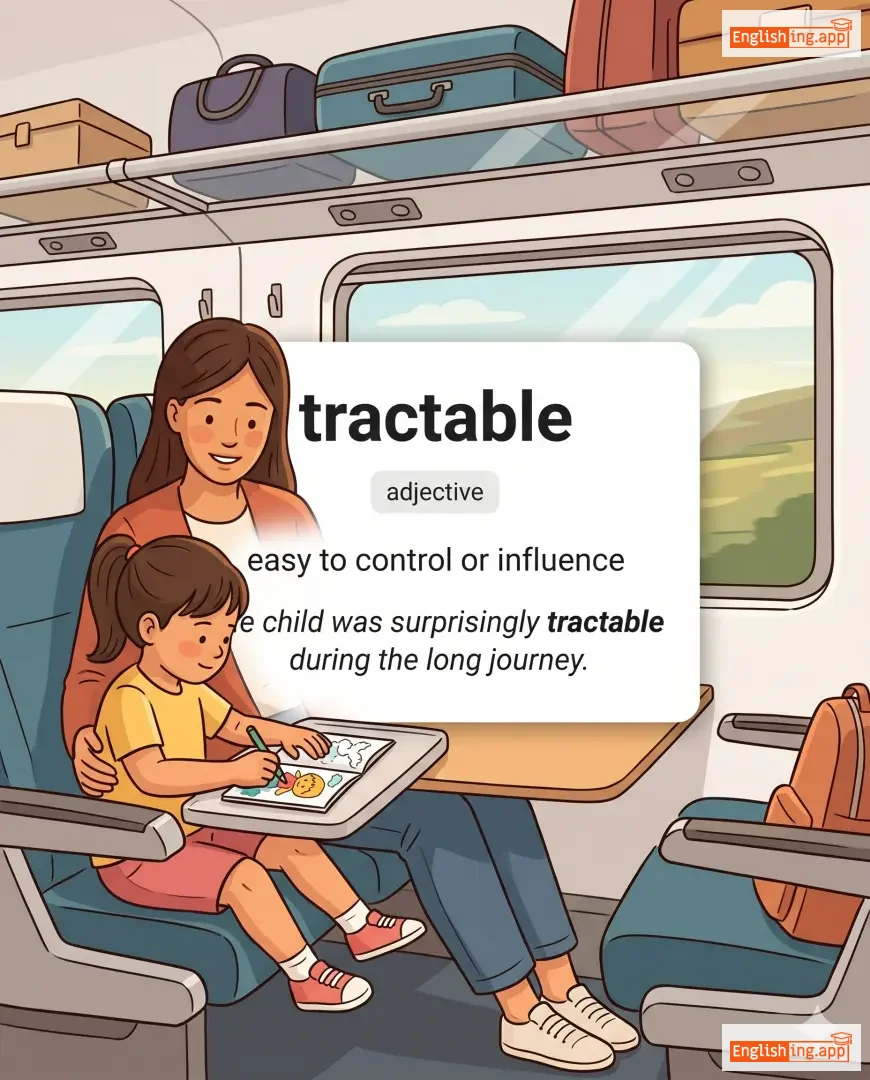
tractable definition card — visual illustration of the meaning
adjective C2
/ˈtræktəbəl/
制御可能または影響を与えることができる (seigyo kanou mata wa eikyou wo ataeru koto ga dekiru)

easy to control or influence

"The child was surprisingly tractable during the long journey."

"その子供は長い旅の間、驚くほど制御可能だった。" (Sono kodomo wa nagai tabi no aida, odoroku hodo seigyo kanou datta.)
verb C2
/trəˈdjuːs/
中傷する (chuushou suru)

To speak badly of someone or tell lies to damage their reputation.

"He was furious when he found out that his rivals had traduced him."

"彼は自分のライバルが彼を中傷したことを知って怒っていた。" (Kare wa jibun no raibaru ga kare wo chuushou shita koto wo shitte okotte ita.)
noun, verb C2
/ˈtræməl/
制限 (seigen)

A restriction or impediment to freedom of action; to restrict.

"The strict rules trammel the creativity of the students."

"厳格な規則は学生の創造性を制限しています。" (Gengaku na kisoku wa gakusei no sōzō-sei o seigen shiteimasu.)
adjective C2
/trænzˈæl.paɪn/
アルプスを越えて (Arupusu wo koete)

situated beyond or across the Alps, especially from the viewpoint of Italy

"The Romans referred to France as Transalpine Gaul."

"ローマ人はフランスをトランザルピン・ガリアと呼んでいました。" (Rōmajin wa Furansu o Toranzarupin Garia to yondeimashita.)
noun C2
/ˌtrænsfəˈriː/
譲受人 (jōjunin)

A person to whom a right, property, or responsibility is transferred.

"The transferee must sign the contract before taking ownership."

"譲受人は所有権を取得する前に契約書に署名しなければならない。" (Jōjunin wa shoyūken o shutsukusuru mae ni keiyaku-sho ni shomei shinakereba naranai.)
verb C2
/trænsˈfɪɡjʊər/
変形する (henkei suru)

To transform the outward appearance or form, often in a way that elevates or glorifies.

"The artist managed to transfigure simple clay into a beautiful sculpture."

"アーティストは単純な粘土を美しい彫刻に変えることができました。" (Ātisuto wa tanjun na nendo o utsukushī chōkoku ni kaeru koto ga dekimashita.)
verb C2
/trænsˈfjuːz/

to transfer blood or another fluid into a vein or body part; to instill a quality or idea into someone or something

"The doctor had to transfuse blood into the patient after the surgery."

adjective C2
/trænsˈfjuːzəbl̩/
輸血可能 (yuketsu kanou)

capable of being transfused, especially referring to blood or fluids

"Only transfusible blood types are used in the hospital."
"病院では輸血可能な血液型のみが使用されます。" (Byouin dewa yuketsu kanou na ketsueki-gata nomi ga shiyou saremasu.)
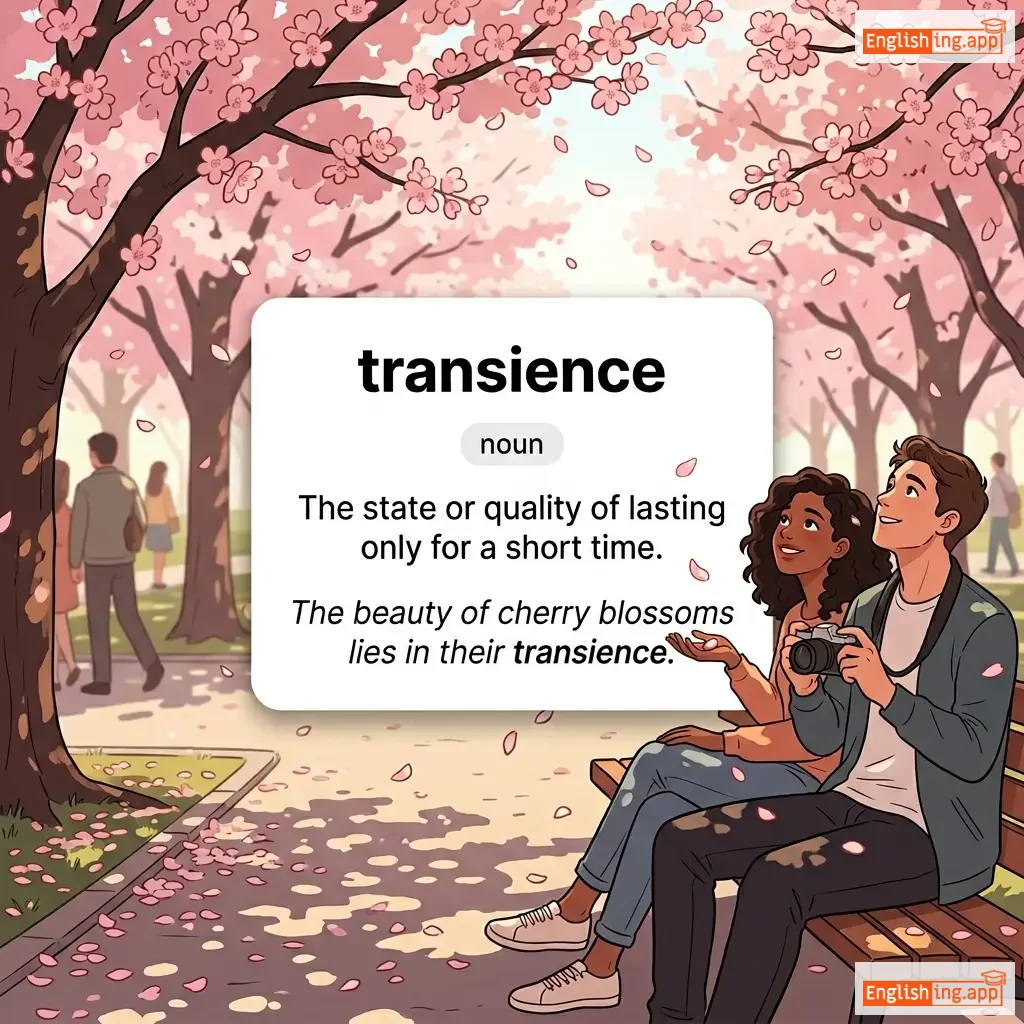
transience definition card — visual illustration of the meaning
noun C2
/ˈtrænziəns/
儚さ (hakanasa)

The state or quality of lasting only for a short time.

"The beauty of cherry blossoms lies in their transience."

"桜の花の美しさは、その儚さにあります。" (Sakura no hana no utsukushisa wa, sono hakanasa ni arimasu.)
noun C2
/trænsˈluːsəns/
半透明性 (hantoumeisei)

the quality of allowing light to pass through but not detailed shapes

"The translucence of the curtains filled the room with soft light."

"カーテンの半透明性は部屋を柔らかい光で満たしました。" (Kaaten no hantoumeisei wa heya o yawarakai hikari de mitashimashita.)
adjective C2
/trænzˈmɪsəbl/
感染性 (kansensei)

able to be passed or spread from one person or thing to another

"COVID-19 is a highly transmissible disease."

"COVID-19 は非常に感染しやすい病気です。" (COVID-19 wa hijou ni kansenshiyasui byouki desu.)
verb C2
/trænzˈmjuːt/
変換する (henkan suru)

to change in form, nature, or substance

"Alchemy aimed to transmute lead into gold."

"錬金術は鉛を金に変えることを目指していた。" (Renkinjutsu wa namari o kin ni kaeru koto o mezashite ita.)
verb C2
/trænˈspoʊz/
転置する (tenchi suru)

to change the order or position of something

"The editor transposed two paragraphs in the article."

"編集者は記事で二つの段落を転置しました。" (Henshūsha wa kiji de futatsu no danraku o tenchi shimashita.)
noun C2
/ˌtrænspəˈzɪʃən/
転置 (tenchi)

the act of changing the order or position of something

"The transposition of digits caused an error in the calculation."

"数字の転置が計算ミスを引き起こした。" (Sūji no tenchi ga keisan misu o hikiokoshita.)
travail definition card — visual illustration of the meaning
noun C2
/trəˈveɪl/
過酷な努力 (kakoku na doryoku)

Painful or laborious effort; suffering or hardship.

"After years of travail, she finally completed her degree."

"長年の過酷な努力の末、彼女はついに学位を取得した。" (Naganen no kakoku na doryoku no sue, kanojo wa tsuini gakui wo shutoku shita.)
adjective C2
/ˈtriːkli/
過度に甘いまたは感傷的、蜜のような。 (Kadoni amai mata wa kanshōteki, mitsu no yō na.)

Excessively sweet or sentimental, like treacle.

"The movie was too treacly for my taste."

"その映画は私の味覚には甘すぎました。" (Sono eiga wa watashi no mikaku ni wa amasugimashita.)
adjective C2
/ˈtriːzənəbl/
反逆的 (hangyakuteki)

Relating to or involving the crime of treason.

"The general was accused of treasonable conduct."

"将軍は反逆的な行為で告発されました。" (Shōgun wa hangyakuteki na kōi de kokuhatsu saremashita.)
adverb C2
/ˈtrɛbli/

in a triple manner or to a threefold degree

"The sound was trebly distorted through the old speakers."

tremulous definition card — visual illustration of the meaning
adjective C2
/ˈtrɛmjələs/
震える (furu eru)

shaking or quivering slightly, often from nervousness or weakness

"Her voice was tremulous as she gave her speech."

"彼女の声は震えていました、彼女がスピーチをした時。" (Kanojo no koe wa furueteimashita, kanojo ga supīchi o shita toki.)
adjective C2
/ˈtrɛntʃənt/
鋭い (surudoi)

expressed strongly, effectively, and clearly; sharp or cutting in style or expression

"Her trenchant criticism of the policy left no room for misunderstanding."

"彼女の鋭い政策批判は誤解の余地を残しませんでした。" (Kanojo no surudoi seisaku hihan wa gokai no yochi o nokoshimasen deshita.)
noun C2
/ˈtrɛntʃərmən/
大食い (ōgui)

a person who eats in a hearty or robust manner; a big eater

"The trencherman devoured the feast with great enthusiasm."

"その大食いは大きな熱意でご馳走を食べました。" (Sono ōgui wa ōkina netsui de gochisō o tabemashita.)
noun C2
/ˈtrɛsəl/
足場 (ashiba)

a frame or support consisting of a horizontal beam held up by two pairs of sloping legs, used especially for supporting a bridge or table

"The workers built a wooden trestle to support the temporary bridge."

"作業員たちは仮設橋を支えるために木製の足場を作りました。" (Sagyouintachi wa kasetsu hashi o sasaeru tame ni mokusei no ashiba o tsukurimashita.)
🗣️

tribune

noun C2
/ˈtrɪbjuːn/

a person or platform representing the people; historically, a Roman official elected to protect citizens' rights

"He was seen as a tribune of the common people."

noun/adjective C2
/ˈtraɪkʌlər/
三色旗 (sanshokuki)

A flag with three colors; consisting of three colors.

"The French tricolor is one of the most famous national flags in the world."

"フランスの三色旗は世界で最も有名な国旗の一つです。" (Furansu no sanshokuki wa sekai de mottomo yūmei na kokki no hitotsu desu.)
noun C2
/ˈtraɪdənt/
トライデント (toraidento)

A three-pronged spear, often associated with Neptune or Poseidon.

"The statue of Poseidon holds a mighty trident."

"ポセイドンの像は力強いトライデントを持っています。" (Poseidon no zō wa chikara tsuyoi toraidento o motteimasu.)
adjective C2
/traɪˈɛniəl/
三年ごとの (sannen goto no)

Occurring once every three years.

"The art festival is a triennial event in the city."

"アートフェスティバルはこの都市の三年ごとのイベントです。" (Aato fesutibaru wa kono toshi no sannen goto no ibento desu.)
noun C2
/ˈtrɪmnəs/
整頓 (seiton)

the quality of being neat, orderly, or slender and well-proportioned

"Her room’s trimness reflected a habit of putting everything back in its place."

"彼女の部屋の整頓は、すべてを元の場所に戻す習慣を反映していた。" (Kanojo no heya no seiton wa, subete o moto no basho ni modosu shūkan o han'ei shiteita.)
noun C2
/ˈtrɪp.lɪ.kət/
三部コピー (sanbu kopi)

A set of three identical copies of something.

"The documents were prepared in triplicate for official use."

"文書は公式用に三部コピーで準備されました。" (Bunsho wa koushiki you ni sanbu kopi de junbi saremashita.)
noun C2
/trɪˈplɪs.ə.ti/
三重性 (sanjusei)

The state of being triple or consisting of three parts.

"The design shows a triplicity of forms combined harmoniously."

"デザインは、調和の取れた形態の三重性を示しています。" (Dezain wa, chōwa no toreta keitai no sanjusei o shimeshiteimasu.)
verb C2
/traɪˈsɛkt/
三分割する (san bunkatsu suru)

To divide into three parts.

"The teacher asked the students to trisect the line segment."

"先生は生徒に線分を三つの部分に分けるように頼みました。" (Sensei wa seito ni senbun o mittsu no bubun ni wakeru yō ni tanomimashita.)
noun C2
/traɪˈʌmvɪər/
三人委員 (sannin iin)

One of a group of three men holding power in ancient Rome.

"Caesar was a triumvir in the first Roman triumvirate."

"カエサルは最初のローマの三人委員会の一員でした。" (Kaesaru wa saisho no Rōma no sannin iinkai no ichiin deshita.)
noun C2
/traɪˈʌmvɪrət/
三頭政治 (santō seiji)

A political regime ruled or dominated by three powerful individuals.

"The Roman Republic was once governed by a triumvirate."

"ローマ共和政はかつて三頭政治によって統治されていました。" (Rōma kyōwasei wa katsute santō seiji ni yotte tōchi sarete imashita.)
noun C2
/ˈtrɒɡlədaɪt/
洞窟人 (doukutsu jin)

A person who lives in a cave or is considered old-fashioned and out of touch.

"Some called him a troglodyte for refusing to use modern technology."

"彼は現代の技術を使うことを拒んだため、洞窟人と呼ばれた。" (Kare wa gendai no gijutsu o tsukau koto o kobanda tame, doukutsu jin to yobareta.)
noun C2
/troʊp/
文学的な使い古し (bungakuteki na tsukaikureshi)

A common or overused theme, idea, or device in literature, film, or speech.

"The film avoided the usual superhero tropes."
"その映画は、一般的なスーパーヒーローのトロープを避けました。" (Sono eiga wa, ippanteki na sūpāhīrō no torōpu o sakemashita.)
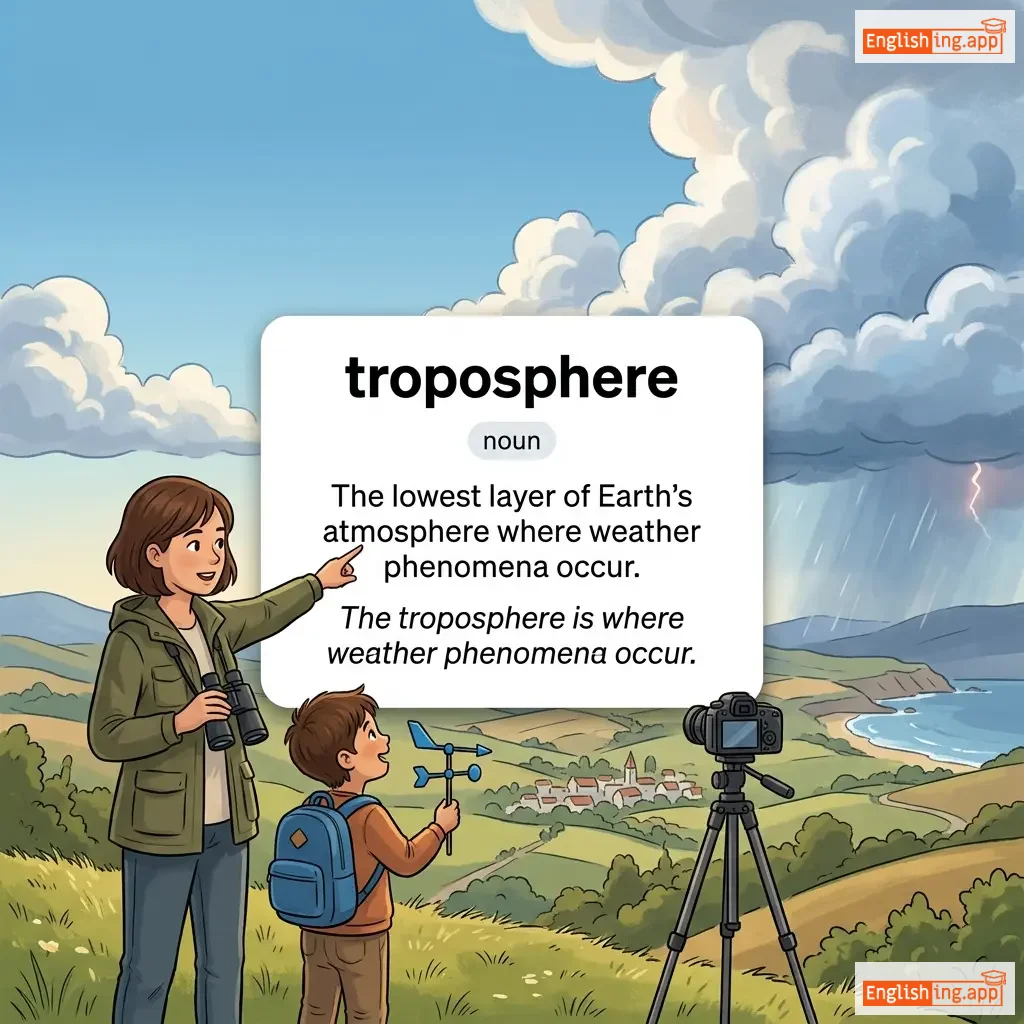
troposphere definition card — visual illustration of the meaning
noun C2
ট্রোপোস্ফিয়ার
対流圏 (tairyūken)

The lowest layer of Earth's atmosphere where weather phenomena occur.

"The troposphere is where weather phenomena occur."

"対流圏は天候現象が発生する場所です。" (Tairyūken wa tenkō genshō ga hassei suru basho desu.)
🤵‍♀️

troth (トロス)

noun C2
/troʊθ/
誓い, 忠誠 (chikai, chuusei)

Faith or loyalty when pledged in a solemn agreement or vow, especially in marriage.

"He pledged his troth to her before the gathering."

"彼は集会の前に彼女に誓いを立てた。" (Kare wa shuukai no mae ni kanojo ni chikai o tateta.)
verb C2
/ˈtrʌk.əl/
従う (shitagau)

To submit or yield obsequiously to someone in power.

"He refused to truckle to the demands of the corrupt officials."
"彼は腐敗した役人の要求に従うことを拒否した。" (Kare wa fuhai shita yakunin no yōkyū ni shitagau koto wo kyohi shita.)
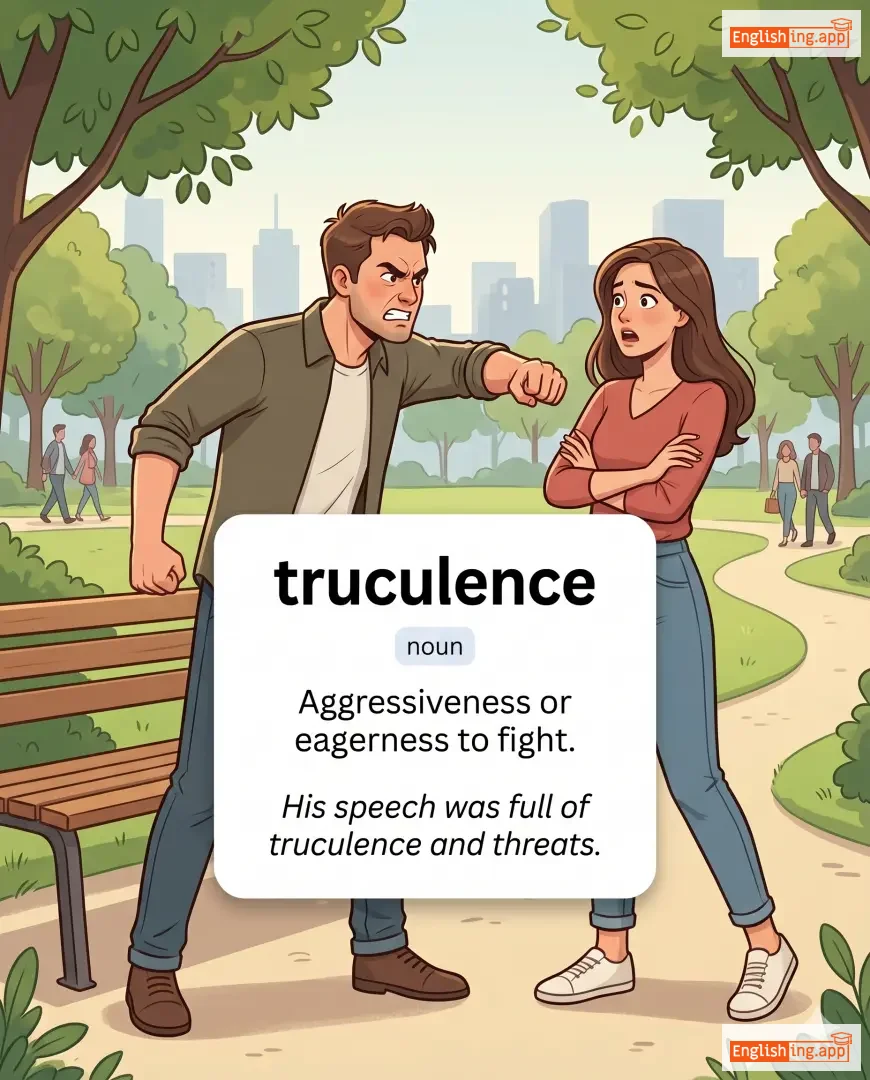
truculence definition card — visual illustration of the meaning
noun C2
/ˈtrʌk.jʊ.ləns/
好戦的 (kousenteki)

Aggressiveness or eagerness to fight.

"His speech was full of truculence and threats."

"彼の演説は好戦的で脅しに満ちていた。" (Kare no enzetsu wa kousenteki de odoshi ni michite ita.)
adjective C2
/ˈtrʌk.jʊ.lənt/
攻撃的な (kougekitekina)

Eager or quick to argue, fight, or show aggression.

"She became truculent when her ideas were challenged."

"彼女は自分の考えが挑戦されると攻撃的になった。" (Kanojo wa jibun no kangae ga chousen sareru to kougekiteki ni natta.)
noun C2
/ˈtruːɪzəm/
自明の理 (jimyo no ri)

a statement that is obviously true and says nothing new or interesting

"It is a truism that hard work leads to success."

"努力は成功に繋がるという自明の理です。" (doryoku wa seikou ni tsunagaru to iu jimyo no ri desu.)
noun C2
/ˈtrʌmpəri/
無価値なナンセンスまたは見せかけのあるが無価値なもの (mukachi na nansensu matawa misekake no aru ga mukachi na mono)

worthless nonsense or showy but worthless things

"The speech was full of political trumpery."

"その演説は政治的なトランプリーで満ちていた。" (Sono enzetsu wa seijiteki na torampurī de michite ita.)
verb C2
/ˈtrʌŋkeɪt/
切り詰める (kiritsumeru)

to shorten something by cutting off the top or the end

"The article was truncated to fit the limited space."

"その記事は限られたスペースに収めるために切り詰められました。" (Sono kiji wa kagirareta supēsu ni osameru tame ni kiritsumeraremashita.)
adjective C2
/ˈtrʌŋkeɪtɪd/
短縮された (tanshuku sareta)

shortened by cutting off a part; cut short

"The meeting was truncated due to time constraints."
"会議は時間の制約により短縮されました。" (Kaigi wa jikan no seiyaku ni yori tanshuku saremashita.)
🏗️

truss

noun C2
/trʌs/

a framework, typically consisting of rafters, posts, and struts, supporting a roof, bridge, or other structure

"The engineer designed a strong truss for the new bridge."

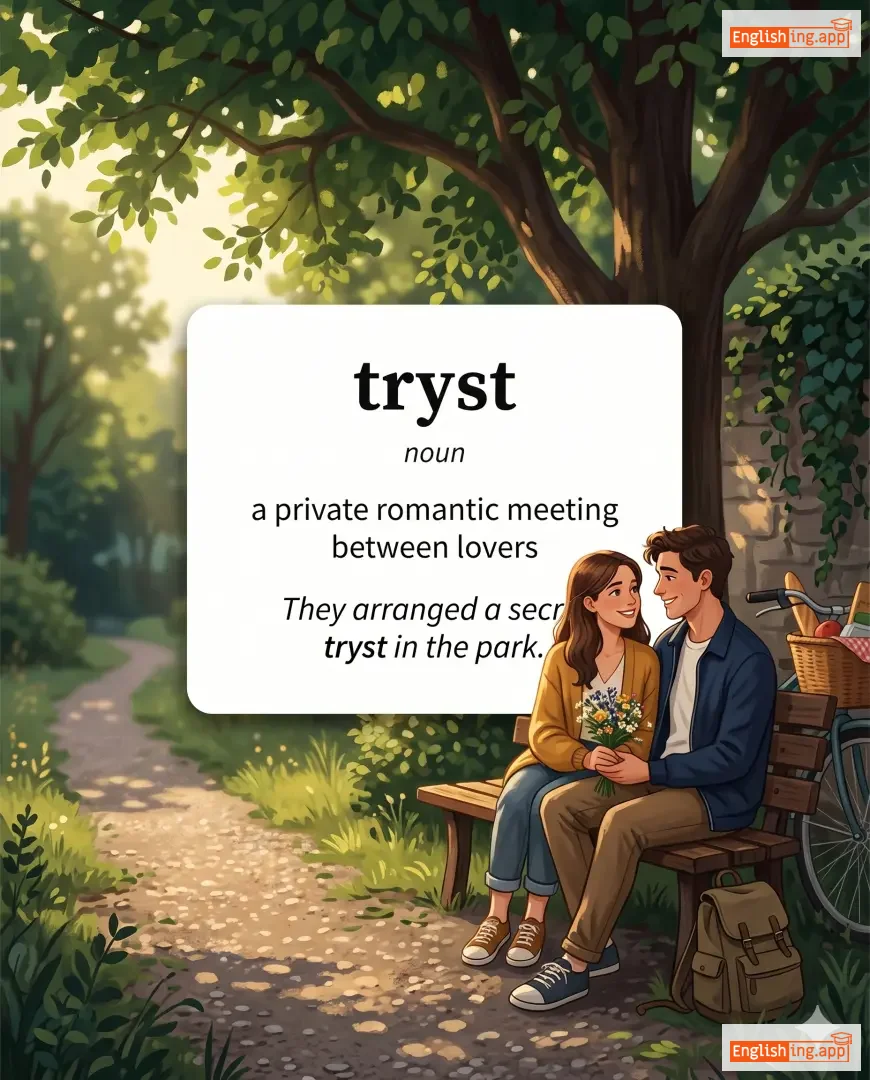
tryst definition card — visual illustration of the meaning
noun C2
/traɪst/
秘密の逢引 (himitsu no aibi)

a private romantic meeting between lovers

"They arranged a secret tryst in the park."
"彼らは公園で秘密の逢引を手配した。" (Karera wa kouen de himitsu no aibi o tehai shita.)
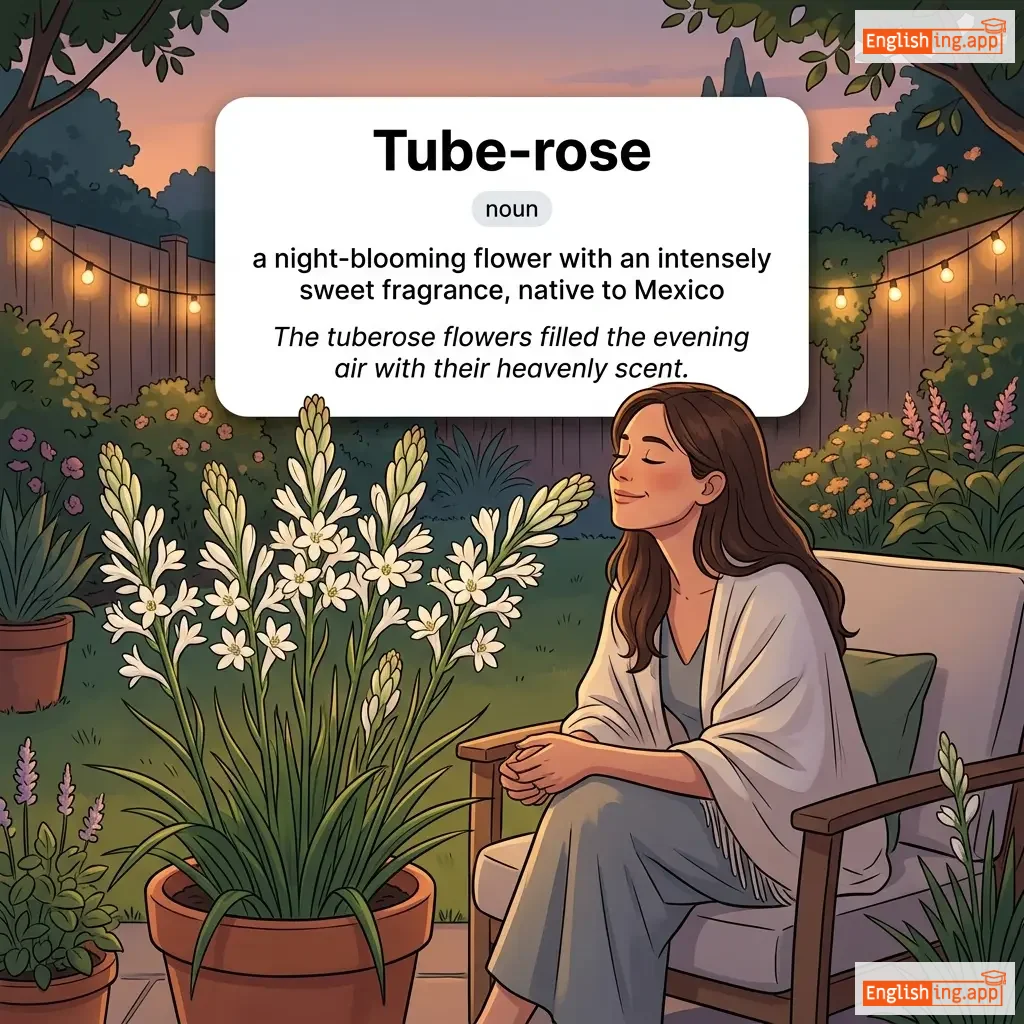
Tube-rose definition card — visual illustration of the meaning
noun C2
/ˈtuːb.roʊz/
チューバローズ (chūbarōzu)

a night-blooming flower with an intensely sweet fragrance, native to Mexico

"The tuberose flowers filled the evening air with their heavenly scent."

"チューバローズの花は夕方の空気に天国のような香りを満たしました。" (Chūbarōzu no hana wa yūgata no kūki ni tengoku no yō na kaori o mitashimashita.)
noun C2
/ˈtʌmbrəl/

A two-wheeled cart, especially one used during the French Revolution to carry prisoners to the guillotine.

"The prisoners were carried to the square in a wooden tumbrel."

tumid definition card — visual illustration of the meaning
adjective C2
/ˈtjuːmɪd/
膨らんだ、膨張した、または pompous なスタイル (fukuranda, fūchō shita, matawa pompous na sutairu)

Swollen, enlarged, or pompous in style.

"His tumid prose was difficult to read."
"彼の膨らんだ散文は読むのが難しかった。" (Kare no fukuranda sanbun wa yomu no ga muzukashikatta.)
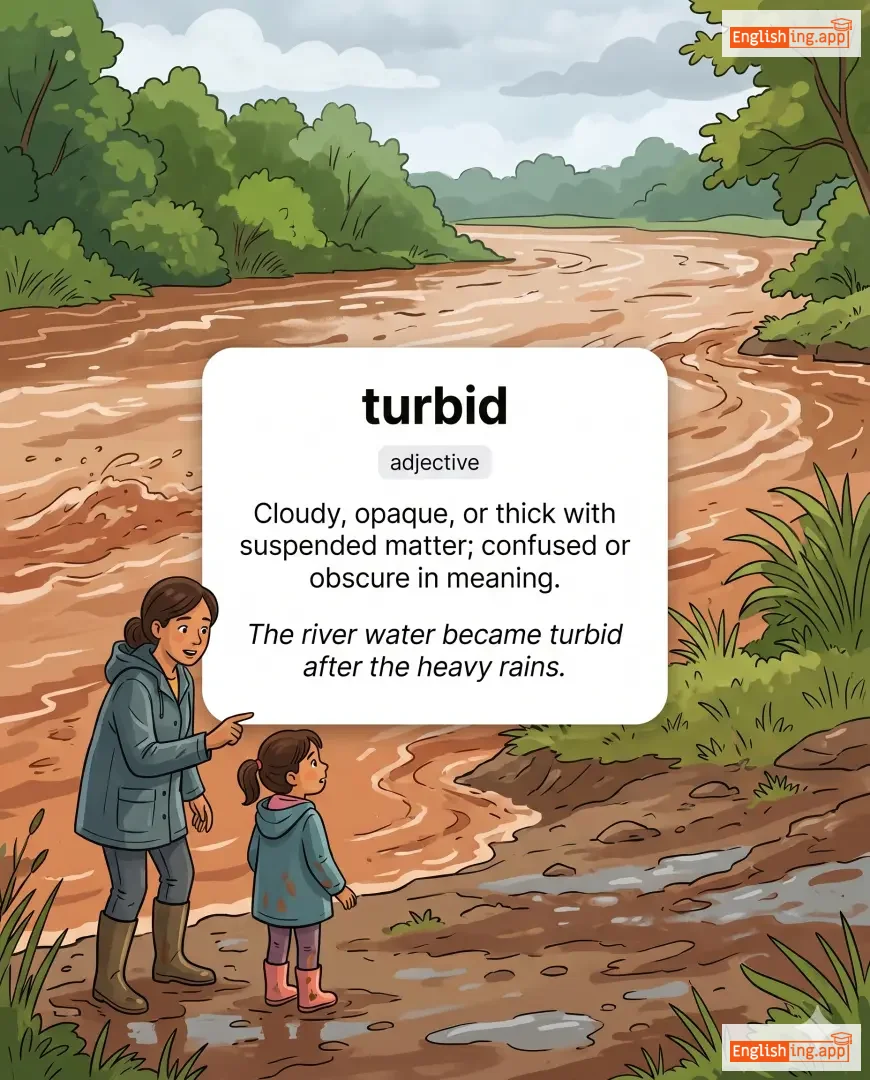
turbid definition card — visual illustration of the meaning
adjective C2
/ˈtɜːrbɪd/
濁った (nigotta)

Cloudy, opaque, or thick with suspended matter; confused or obscure in meaning.

"The river water became turbid after the heavy rains."

"激しい雨の後、川の水は濁った。" (Hageshī ame no ato, kawa no mizu wa nigotta.)