語彙集

英単語辞書 | 単語の意味、定義、例文

verb C2
/pərˈtɪkjələrˌaɪz/
具体说明 (jùtǐ shuōmíng)

to mention or describe something in detail

"The witness was asked to particularize the events of that night."

"证人被要求详细叙述那个夜晚的事件。" (Zhèngrén bèi yāoqiú xiángxì xùshù nàgè yèwǎn de shìjiàn.)
noun C2
/ˌpɑːrtjʊˈrɪʃən/
分娩 (fenmian)

The act of giving birth; childbirth.

"The doctor explained the stages of parturition to the students."

"医生向学生们解释了分娩的各个阶段。" (Yisheng xiang xuéshengmen jiěshìle fēnmiǎn de gège jiēduàn.)
noun C2
/ˈpɑːrvənuː/
新富人 (xīn fù rén)

A person who has recently gained wealth or influence but is not yet accepted socially.

"He was seen as a parvenu who lacked refinement despite his riches."
"他被视为一个新富阶层,尽管他拥有财富,但却缺乏 refinement。" (Tā bèi shì wéi yīgè xīn fù jiēcéng, jǐnguǎn tā yǒngyǒu cáifù, dàn què quēfá refinement.)
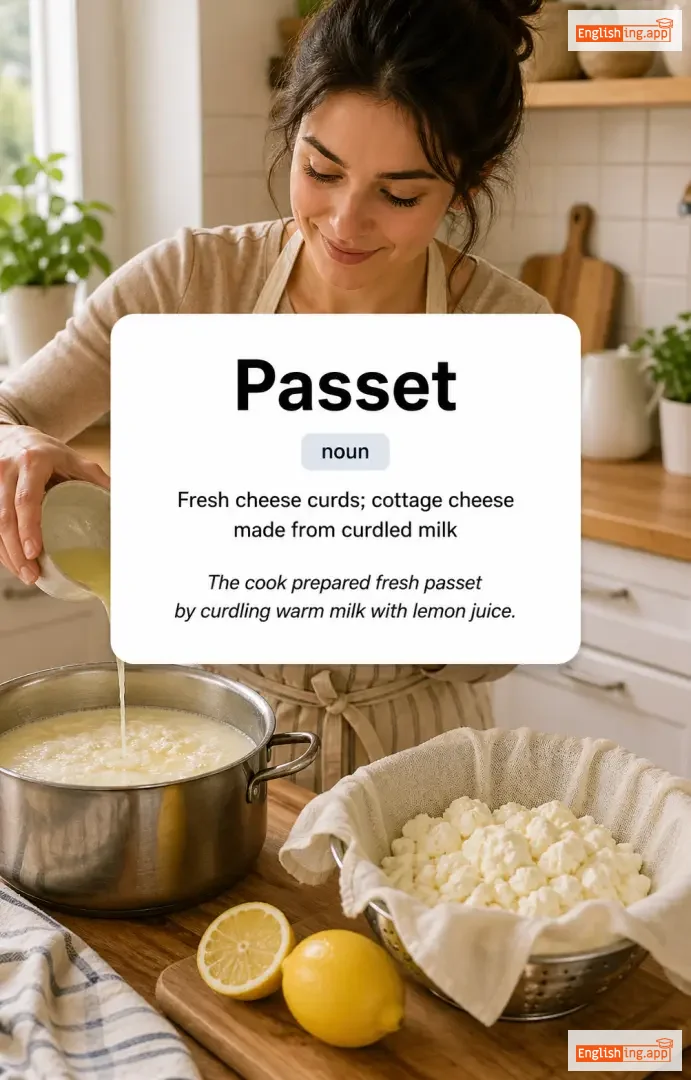
Passet definition card — visual illustration of the meaning
noun C2
/ˈpæsɪt/
奶酪 (nǎilào)

Fresh cheese curds; cottage cheese made from curdled milk

"The cook prepared fresh passet by curdling warm milk with lemon juice."

"厨师通过用柠檬汁凝固温热的牛奶,制作了新鲜的奶酪。" (Chúshī tōngguò yòng níngméng zhī nínggù wēnnuǎn de niúnǎi, zhìzuò le xīnxiān de nǎilào.)
adjective C2
/ˈpæsɪbəl/
能够感知; 易受痛苦 (nénggòu gǎnzhī; yì shòu tòngkǔ)

capable of feeling or suffering; susceptible to sensation or emotion (often theological)

"In some traditions, deities are described as passible, sharing human emotions."

"在一些传统中,神被描述为能够感知,分享人类情感。" (Zài yīxiē chuántǒng zhōng, shén bèi miáoshù wèi nénggòu gǎnzhī, fēnxiǎng rénlèi qínggǎn.)
noun C2
/pæˈstiːʃ/
模仿作品 (mófǎng zuòpǐn)

a work of art, literature, or music that imitates the style of another artist, period, or genre

"The film was a clever pastiche of 1950s detective movies."
"这部电影是1950年代侦探电影的巧妙模仿。" (Zhè bù diànyǐng shì 1950 niándài zhēntàn diànyǐng de qiǎomiào mófǎng.)
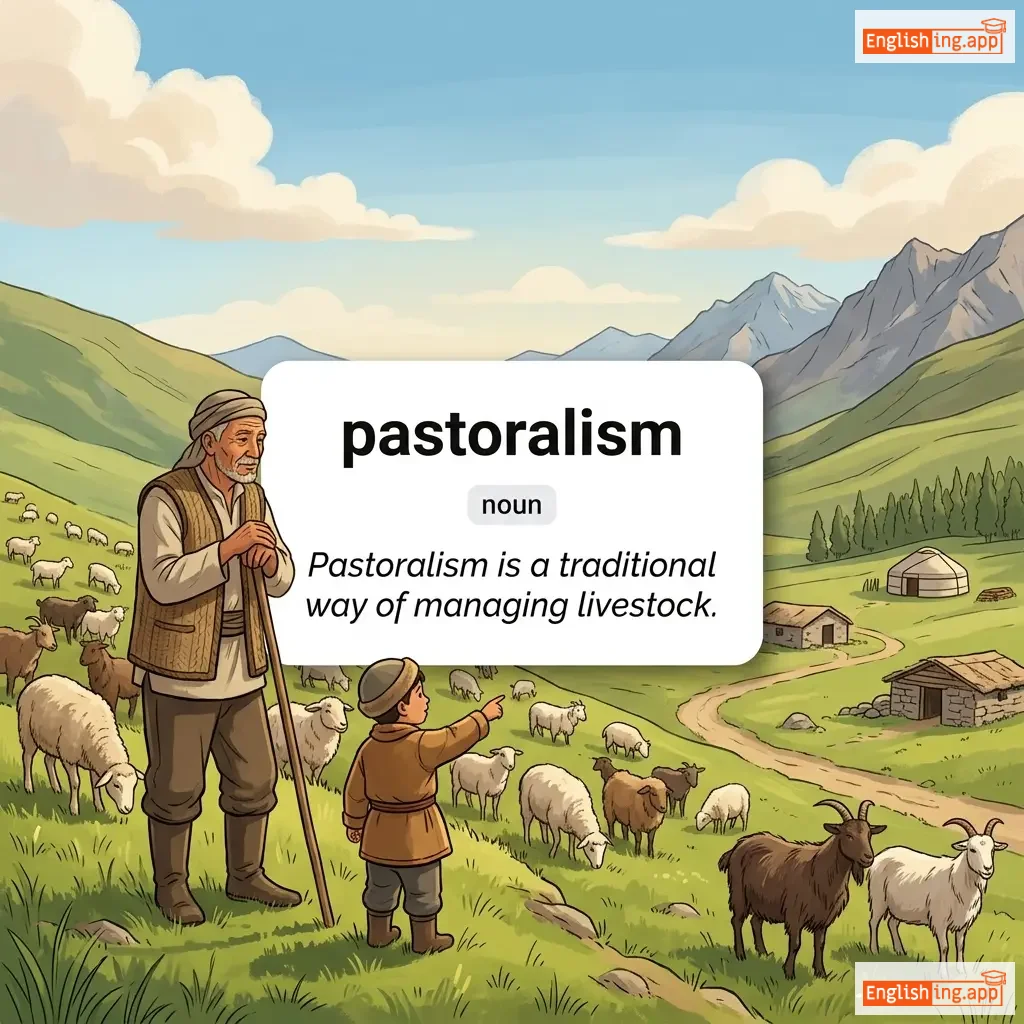
pastoralism definition card — visual illustration of the meaning
noun C2
ˈpɑː.stər.ə.lɪ.zəm
牧羊主义, 以草为基础的放牧系统 (mù yáng zhǔ yì, yǐ cǎo wèi jīchǔ de fàng mù xì tǒng)

A form of animal husbandry where domesticated animals are released onto large vegetated outdoor lands for grazing.

"Pastoralism is a traditional way of managing livestock."

"牧羊主义是传统的牲畜管理方式。" (Mù yáng zhǔ yì shì chuántǒng de shēngchù guǎnlǐ fāngshì.)
noun C2
/pəˈtiːnə/
由于年龄或使用,金属、石头或木材表面上的薄膜或光泽;也可以指一种表面外观 (yóu yú niánlíng huò shǐyòng, jīnshǔ, shítou huò mùcái biǎomiàn shàng de bómó huò guāngzé; yě kěyǐ zhǐ yī zhǒng biǎomiàn wàiguān)

a surface film or sheen on metal, stone, or wood due to age or use; also, a superficial appearance

"The bronze statue developed a green patina after years in the sea air."

"这座青铜雕像在海风中多年后形成了绿色的铜绿。" (Zhè zuò qīngtóng diāoxiàng zài hǎifēng zhōng duōnián hòu xíngchéng le lǜsè de tóng lǜ.)
noun C2
/ˈpætwɑː/
地方方言 (dìfāng fāngyán)

a regional or social dialect, especially one considered nonstandard or informal

"The guide slipped into local patois when chatting with the fishermen."

"导游在与渔民交谈时开始使用当地的帕图瓦。" (dǎoyóu zài yǔ yúmín jiāotán shí kāishǐ shǐyòng dāngdì de Pàtúwǎ.)
noun, adjective C2
/pəˈtrɪʃən/
贵族 (guìzú)

A person of noble rank or high social standing; relating to aristocracy.

"The patrician families of Rome wielded great power in politics."

"罗马的贵族家庭在政治上拥有巨大的权力。" (Luómǎ de guìzú jiātíng zài zhèngzhì shàng yǒngyǒu jùdà de quánlì.)
noun C2
/ˈpætrɪsaɪd/
弑父 (shì fù)

The act of killing one's own father.

"The ancient myth describes a son committing patricide to take the throne."

"古老的神话描述了一位儿子为了登上王位而弑父。" (Gu lao de shenhua miaoshu le yi wei erzi weile deng shang wangwei er shifu.)
noun C2
/ˈpætrɪˌmoʊni/
遗产 (yichan)

Property or inheritance passed down from one's father or ancestors.

"The castle was part of his patrimony from his noble ancestors."

"这座城堡是他从贵族祖先那里继承的遗产的一部分。" (Zhè zuò chéngbǎo shì tā cóng guìzú zǔxiān nàlǐ jìchéng de yíchǎn de yī bùfen.)
noun C2
/ˌpætrəˈnɪmɪk/
父系名字 (fùxì míngzì)

a name derived from the name of a father or ancestor

"In many cultures, surnames are patronymic in origin."

"在许多文化中,姓氏源自父系名字。" (Zài xǔduō wénhuà zhōng, xìngshì yuánzì fùxì míngzì.)
adjective C2
/ˈpɔːntʃi/
大肚子 (dàdùzi)

Having a large or protruding belly.

"The paunchy man struggled to button his shirt."

"那个大肚子男人在努力扣上他的衬衫纽扣。" (Nàgè dàdùzi nánrén zài nǔlì kòu shàng tā de chènshān niǔkòu.)
noun C2
/ˈpɔːpərɪzəm/
贫困 (pínkùn)

The state of being extremely poor.

"The country struggled with rising pauperism in the 19th century."

"该国在19世纪与日益严重的贫困作斗争。" (Gāi guó zài 19 shìjì yǔ rìyì yánzhòng de pínkùn zuò dòuzhēng.)
adjective C2
/ˈpɛkəbl/
有罪的 (youzui de)

liable to sin or error; capable of doing wrong

"Humans are peccable, but they strive for goodness."

"人类是有罪的,但他们努力向善。" (Renlei shi youzui de, dan tamen nuli xiangshan.)
noun C2
/ˌpɛkəˈdɪloʊ/
小错误 (xiao cuo wu)

a small or minor fault or sin

"Forgetting to call was just a small peccadillo, not a serious mistake."

"忘记打电话只是一个小错误,不是一个严重的错误。" (Wangji da dianhua zhishi yi ge xiao cuo wu, bushi yi ge yan zhong de cuo wu.)
adjective C2
/ˈpɛkənt/
有罪的 (youzui de)

Guilty of a moral offense or wrongdoing; sinful.

"The judge declared the peccant official unfit for office."

"法官宣布有罪的官员不适合担任职务。" (Fǎguān xuānbù yǒuzuì de guānyuán bù shìhé dānrèn zhíwù.)
adjective C2
/ˈpɛktərəl/
胸肌 (xiōng jī)

Relating to the chest or breast.

"The athlete focused on strengthening his pectoral muscles."

"运动员专注于增强他的胸肌。" (Yùndòngyuán zhuānzhù yú zēngqiáng tā de xiōng jī.)
verb C2
/ˈpɛkjʊˌleɪt/
贪污 (tānwū)

To embezzle or steal money, especially public funds.

"The corrupt official was found guilty of peculating government funds."

"腐败的官员被判定为盗用政府资金。" (Fǔbài de guānyuán bèi pàn dìng wèi dào yòng zhèngfǔ zījīn.)
noun C2
/ˌpɛkjʊˈleɪʃən/
挪用公款 (nuo yong gong kuan)

The act of embezzling or stealing money, especially from public funds.

"The minister resigned after being accused of peculation."

"部长在被指控参与挪用公款后辞职。" (Buzhang zai bei zhigong canyu nuo yong gong kuan hou cizhi.)
noun C2
/ˌpɛdəˈɡɒdʒɪks/
教育学 (jiaoyu xue)

the science or art of teaching

"He studied pedagogics to become a better teacher."

"他学习了教育学,成为一名更好的教师。" (Ta xuexi le jiaoyu xue, chengwei yi ming geng hao de jiaoshi.)
noun C2
/ˈpɛdəˌɡɒɡ/
教师 (jiaoshi)

a teacher, especially a strict or formal one

"The old pedagogue insisted on discipline in the classroom."

"那位老教育学家坚持在课堂上纪律。" (Na wei lao jiaoyuxuejia jianchi zai ketang shang jilv.)
noun C2
/ˈpɛdənt/
书呆子 (shū dāizi)

A person who is excessively concerned with minor details or rules, often in a showy way.

"The professor was criticized as a pedant who focused too much on trivial details."

"教授被批评为一个书呆子,他过于关注微不足道的细节。" (Jiàoshòu bèi pīpíng wéi yīgè shū dāizi, tā guòyú guānzhù wēi bùzúdào de xìjié.)
noun C2
/ˈpɛd.ən.tri/
对小细节或规则的过度关注 (dui xiao xijie huo guize de guodu guanzhu)

Excessive concern with minor details or rules.

"His pedantry made the meeting unnecessarily long."

"他的偏执让会议变得不必要地漫长。" (Tade pianzhi rang huiyi biande bubiyao de manchang.)
noun C2
/ˈpɛdɪmənt/
三角山墙 (sanjiao shanqiang)

a triangular gable found above the horizontal structure of a building, often in classical architecture

"The ancient temple had a pediment decorated with sculptures."
"古老的寺庙有一个装饰着雕塑的山墙。" (Gu lao de si miao you yi ge zhuangshi zhe diaosu de shanqiang.)
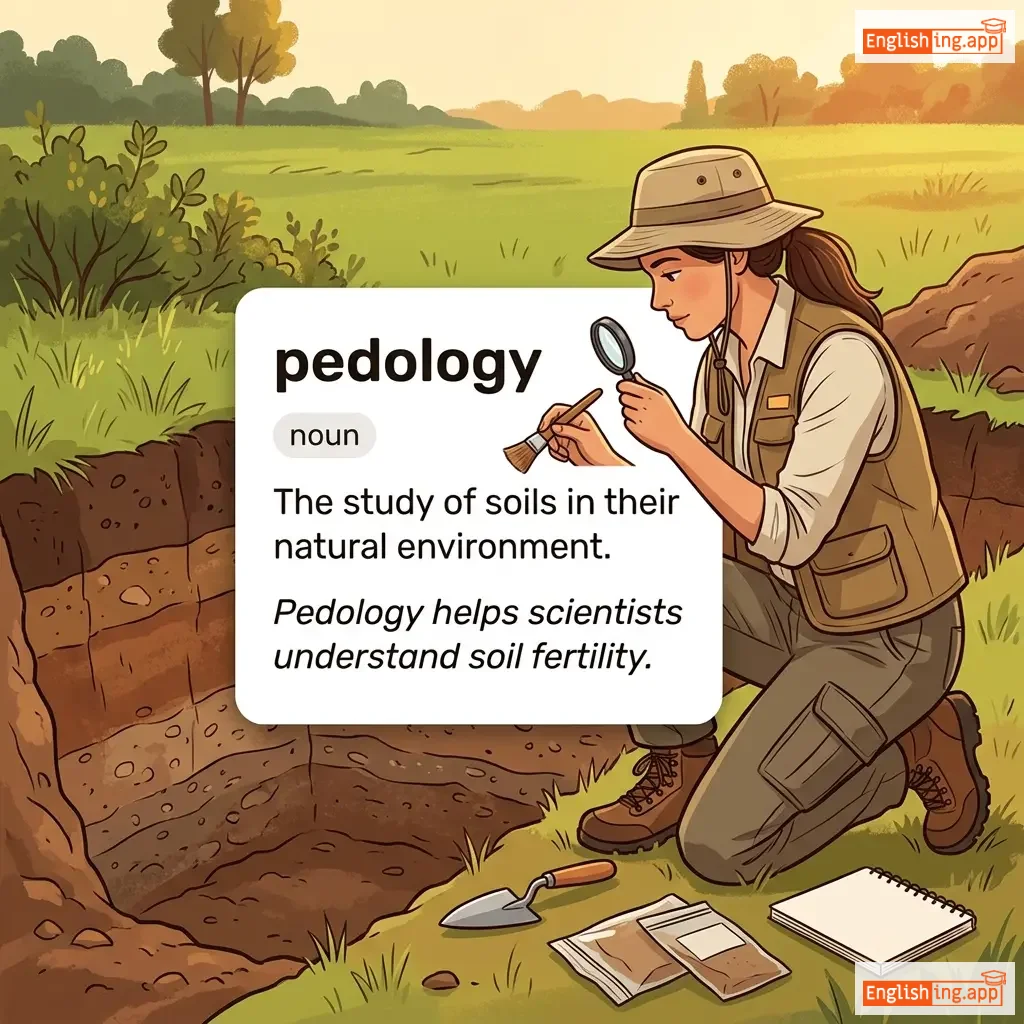
pedology definition card — visual illustration of the meaning
noun C2
/pɪˈdɒl.ə.dʒi/
土壤学 (tǔrǎng xué)

The study of soils in their natural environment.

"Pedology helps scientists understand soil fertility."

"土壤学帮助科学家理解土壤的肥力。" (Tǔrǎng xué bāngzhù kēxuéjiā lǐjiě tǔrǎng de féilì.)
noun C2
/ˈpɪərɪdʒ/
贵族身份 (guìzú shēnfèn)

the title or rank of a peer; the nobility as a group

"He was elevated to the peerage by the king."

"他被国王提升为贵族身份。" (Tā bèi guówáng tíshēng wéi guìzú shēnfèn.)
adjective C2
/pɪˈdʒɒrətɪv/
贬义的 (bian yi de)

Expressing contempt or disapproval.

"He used pejorative terms to insult his opponents."
"他用贬义的词语侮辱他的对手。" (Ta yong bian yi de ci yu wu ru ta de dui shou.)
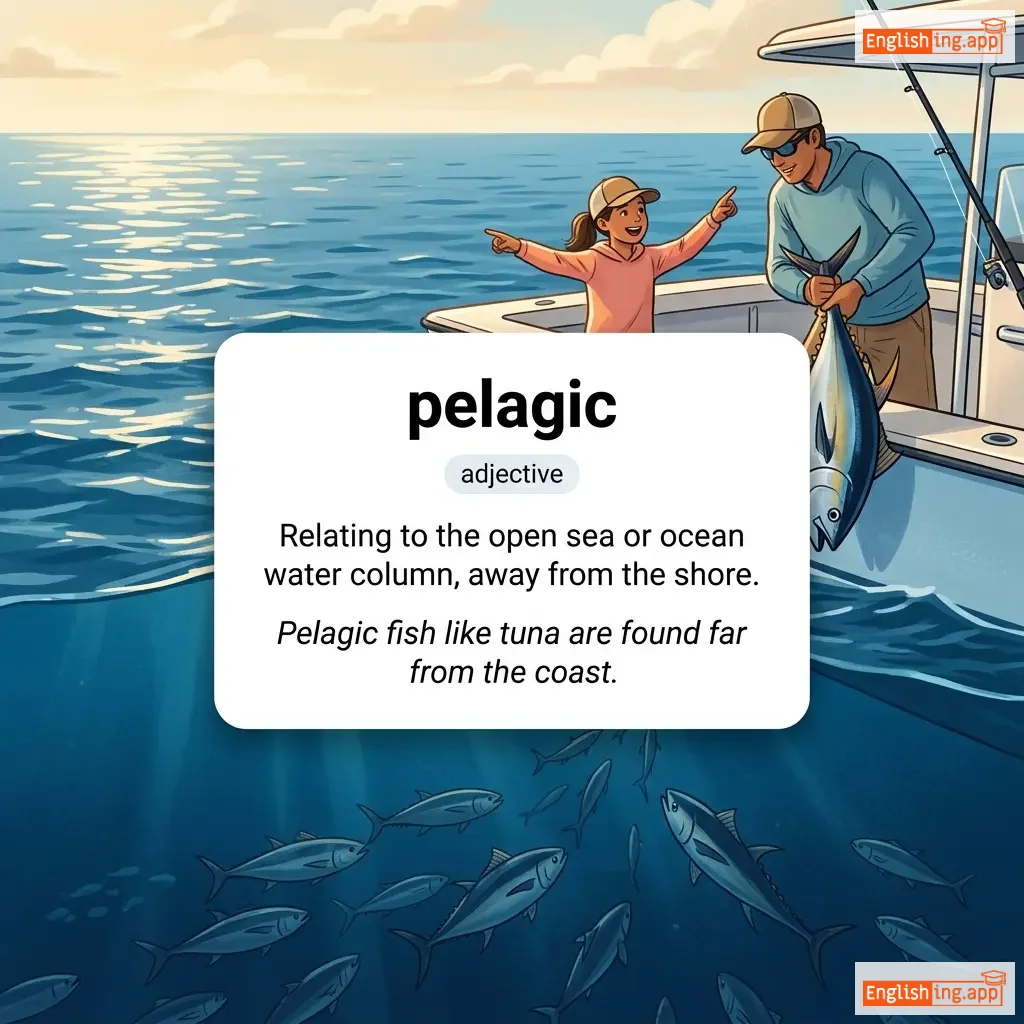
pelagic definition card — visual illustration of the meaning
adjective C2
/pəˈlædʒ.ɪk/
与开放海洋相关 (yu kaifang haiyang xiangguan)

Relating to the open sea or ocean water column, away from the shore.

"Pelagic fish like tuna are found far from the coast."

"像金枪鱼这样的深海鱼类通常在离海岸很远的地方发现。" (Xiang jinqiangyu zheyang de shenhai yulei tongchang zai li hai'an hen yuan de difang faxian.)
noun C2
/pɛlf/
不正当的钱 (bù zhèngdàng de qián)

Money, especially when gained dishonorably.

"The corrupt official was motivated only by pelf."

"腐败的官员仅仅是为了不正当的钱而动机。" (Fǔbài de guānyuán jǐnjǐn shì wèile bù zhèngdàng de qián ér dòngjī.)
adverb C2
/ˌpɛlˈmɛl/
杂乱无章 (zaluan wuzhang)

In a confused, rushed, or disorderly manner.

"The children ran pell-mell through the playground."

"孩子们在游乐场里杂乱无章地奔跑。" (Haizimen zai youlexiang li zaluan wuzhang de benpao.)
adjective C2
/pəˈluːsɪd/
透明 (tòu míng)

Transparently clear; easy to understand.

"The lake water was so pellucid that you could see the stones at the bottom."

"湖水是如此透明,你可以看到底部的石头。" (hú shuǐ shì rú cǐ tòu míng, nǐ kě yǐ kàn dào dǐ bù de shí tóu.)
adjective C2
/ˈpɛndjʊləs/
幸福 (xìng fú)

hanging down loosely; drooping

"The pendulous fruit weighed down the branch."

"她收到奖项时,无法隐藏她的幸福。" (Tā shōu dào jiǎng xiàng shí, wú fǎ yǐn cáng tā de xìng fú.)
adjective C2
/ˈpɛnɪtrəbl/
可穿透的 (ke chuāntòu de)

Capable of being passed through or entered.

"The thin wall was easily penetrable."

"薄壁容易穿透。" (Bó bì róngyì chuāntòu.)
adjective C2
/ˌpɛnɪˈtɛnʃəl/
忏悔的 (chànhuǐ de)

Relating to or expressing penitence or penance.

"The priest delivered a penitential sermon on forgiveness."

"牧师讲了关于宽恕的忏悔讲道。" (Mùshī jiǎngle guānyú kuānshù de chànhuǐ jiǎngdào.)
adjective C2
/ˈpɛneɪt/
羽毛状的 (yǔmáo zhuàng de)

Having parts or structures arranged like a feather; feather-shaped.

"The fern has a pennate leaf structure."

"蕨类植物的叶片结构是羽毛状的。" (Juélèi zhíwù de yèpiàn jiégòu shì yǔmáo zhuàng de.)
noun C2
/pɪˈnɒlədʒi/
监狱学 (jianyuxue)

The study of prison management and criminal rehabilitation.

"He decided to specialize in penology to help improve the prison system."

"他决定专攻监狱学,以帮助改善监狱系统。" (Ta jueding zhuan gong jianyuxue, yi bangzhu gaishan jianyu xitong.)
noun C2
/ˈpɛntæd/
五个一组 (wǔ gè yī zǔ)

A group or set of five things.

"The committee was divided into a pentad of working groups."

"委员会被分成了五个工作小组。" (Wěiyuánhuì bèi fēnchéngle wǔ gè gōngzuò xiǎozǔ.)
noun C2
/ˈpɛntəˌɡræm/
五角星 (wǔ jiǎo xīng)

A five-pointed star often used as a symbol in magic, mysticism, or religion.

"The wizard drew a pentagram on the floor as part of the ritual."

"魔法师在地板上画了一个五角星,作为仪式的一部分。" (Mófǎ shī zài dìbǎn shàng huàle yīgè wǔ jiǎo xīng, zuòwéi yíshì de yī bùfen.)
noun C2
/ˌpɛntəˈhiːdrən/
五面体 (wǔmiàntǐ)

A solid geometric figure with five faces.

"In geometry class, the teacher explained the structure of a pentahedron."

"在几何课上,老师解释了五面体的结构。" (Zài jǐhé kè shàng, lǎoshī jiěshìle wǔmiàntǐ de jiégòu.)
noun C2
/pɛnˈtæmɪtər/
五步格 (wubuge)

A line of verse consisting of five metrical feet.

"Shakespeare often wrote his plays in iambic pentameter."

"莎士比亚常常用五步格写剧本。" (Shashibiya changchang yong wubuge xie juben.)
adjective C2
/ˌpɛntəˈveɪlənt/
五价 (wu jia)

Having a valence of five, especially in chemistry.

"Phosphorus can exist in a pentavalent state."

"磷可以以五价状态存在。" (Lín kěyǐ yǐ wǔ jià zhuàngtài cúnzài.)
noun C2
/pəˈnʌmbrə/
部分阴影 (bùfen yīnyǐng)

a partially shaded area around the shadow of an object, especially during an eclipse

"The moon’s penumbra created a dim shadow over the Earth."

"月亮的阴影带在地球上创造了一个微弱的阴影。" (Yuèliàng de yīnyǐngdài zài dìqiú shàng chuàngzàole yīgè wēiruò de yīnyǐng.)
adjective C2
/pəˈnjʊəriəs/
极度贫穷 (jidù pínqióng)

extremely poor; poverty-stricken; miserly

"The penurious family struggled to buy food."
"那个极度贫穷的家庭艰难地购买食物。" (Nàgè jídù pínqióng de jiātíng jiānnán de gòumǎi shíwù.)
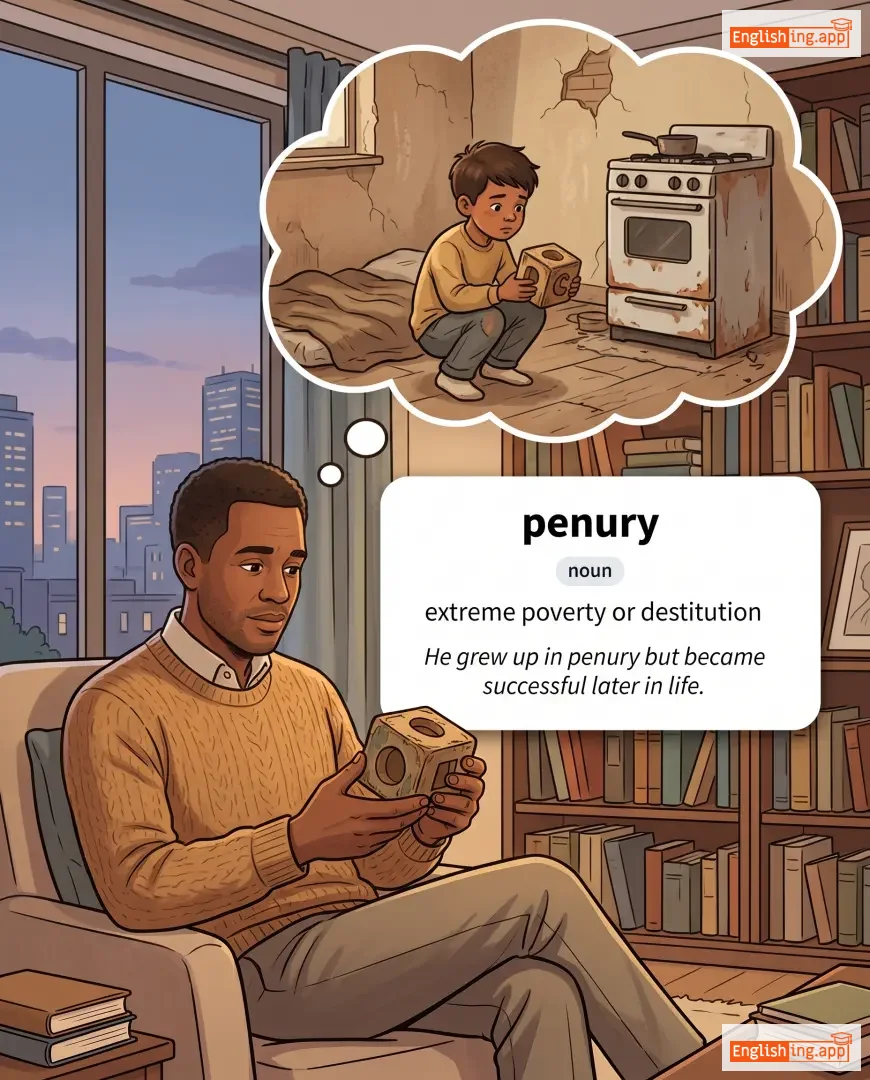
penury definition card — visual illustration of the meaning
noun C2
/ˈpɛnjʊri/
极端贫困 (jíduān pínkùn)

extreme poverty or destitution

"He grew up in penury but became successful later in life."
"他在极度贫困中长大,但后来在生活中成功。" (Tā zài jíduān pínkùn zhōng zhǎng dà, dàn hòulái zài shēnghuó zhōng chénggōng.)
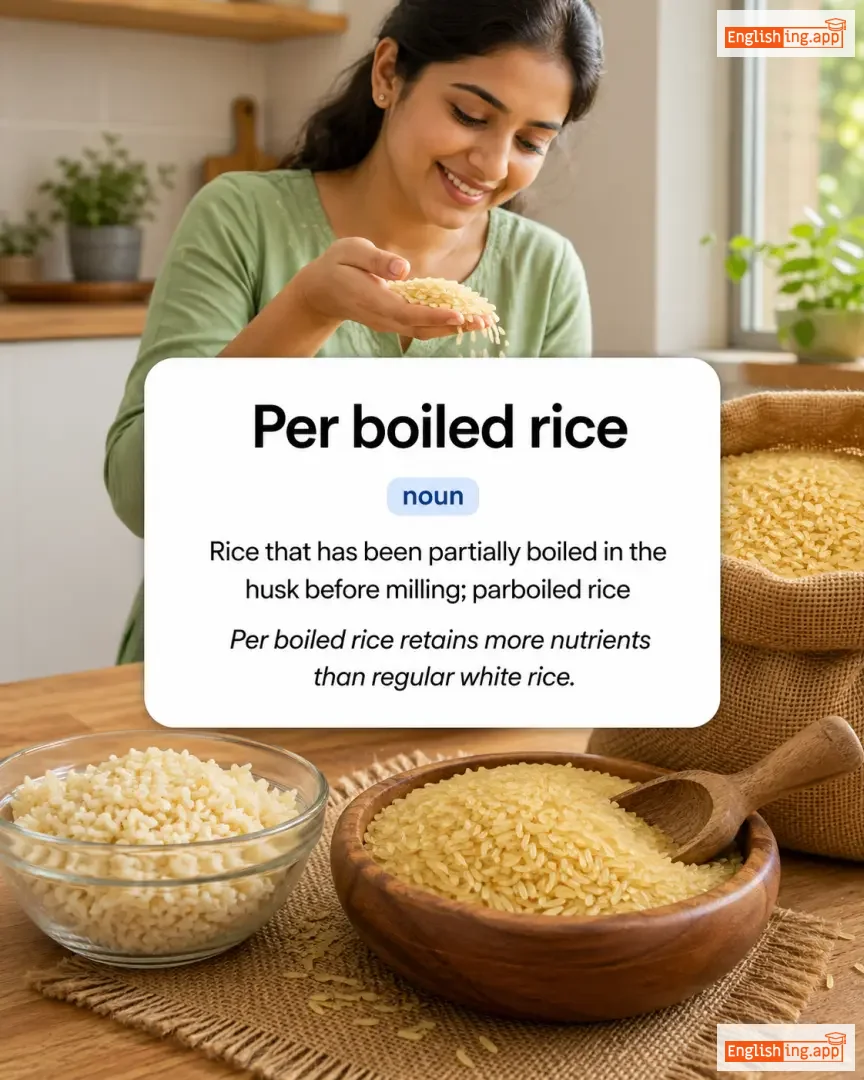
Per boiled rice definition card — visual illustration of the meaning
noun C2
/pɜːr bɔɪld raɪs/
预煮米 (yù zhǔ mǐ)

Rice that has been partially boiled in the husk before milling; parboiled rice

"Per boiled rice retains more nutrients than regular white rice."

"预煮米比普通白米保留更多营养成分。" (Yù zhǔ mǐ bǐ pǔtōng bái mǐ bǎoliú gèng duō yíngyǎng chéngfèn.)
verb C2
/pəˈræmbjʊˌleɪt/
漫步 (man bu)

To walk through or travel around, especially for leisure.

"They perambulated the old town, enjoying the sights."
"他们在古城漫步,享受着美丽的景色。" (Tāmen zài gǔ chéng màn bù, xiǎngshòu zhe měilì de jǐngsè.)
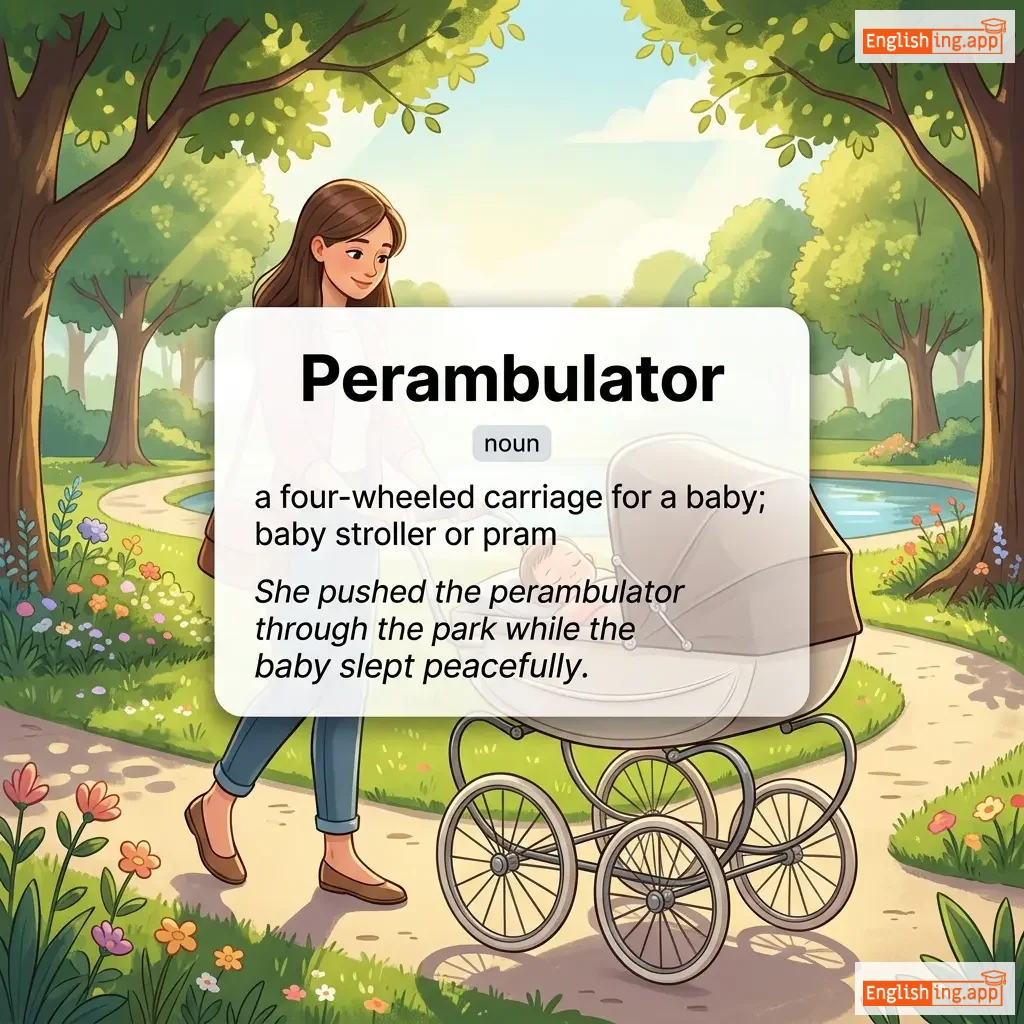
Perambulator definition card — visual illustration of the meaning
noun C2
/pəˈræm.bjə.leɪ.tər/
婴儿车 (perambulator)

a four-wheeled carriage for a baby; baby stroller or pram

"She pushed the perambulator through the park while the baby slept peacefully."
"她推着婴儿车穿过公园,而婴儿安静地睡着。" (Tā tuī zhe yīng ér chē chuān guò gōng yuán, ér yīng ér ān jìng de shuì zhe.)
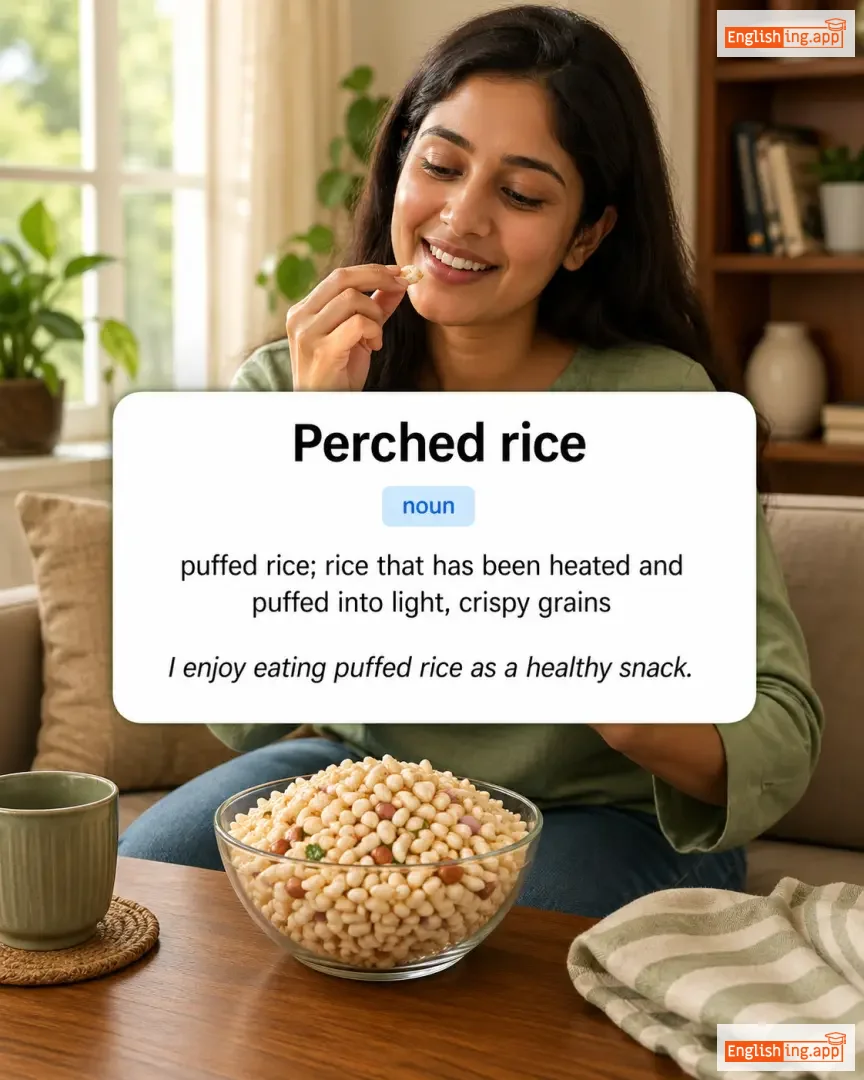
Perched rice definition card — visual illustration of the meaning
noun C2
/pɜːrtʃt raɪs/
膨化米 (péng huà mǐ)

puffed rice; rice that has been heated and puffed into light, crispy grains

"I enjoy eating puffed rice as a healthy snack."

"我喜欢把膨化米当作健康的小吃。" (wǒ xǐhuān bǎ péng huà mǐ dāngzuò jiànkāng de xiǎochī)