語彙集

英単語辞書 | 単語の意味、定義、例文

adjective C2
/ʌnˈspɛərɪŋ/
implacable (implacable)

Showing no mercy or generosity; harsh or severe.

"The critic was unsparing in his review of the play."

"El crítico fue implacable en su reseña de la obra." (El critico fue implacable en su reseña de la obra.)
adjective C2
/ʌnˈstɪntɪŋ/
generoso (generoso)

given generously without holding back

"She received unstinting support from her family."

"Ella recibió un apoyo generoso de su familia." (Ella recibio un apoyo generoso de su familia.)
adjective C2
/ʌnˈsʌlid/
inmaculado (inmaculado)

not spoiled or made impure; perfectly clean or pure

"His reputation remained unsullied despite the accusations."
"Su reputación permaneció inmaculada a pesar de las acusaciones." (Su reputación permaneció inmaculada a pesar de las acusaciones.)
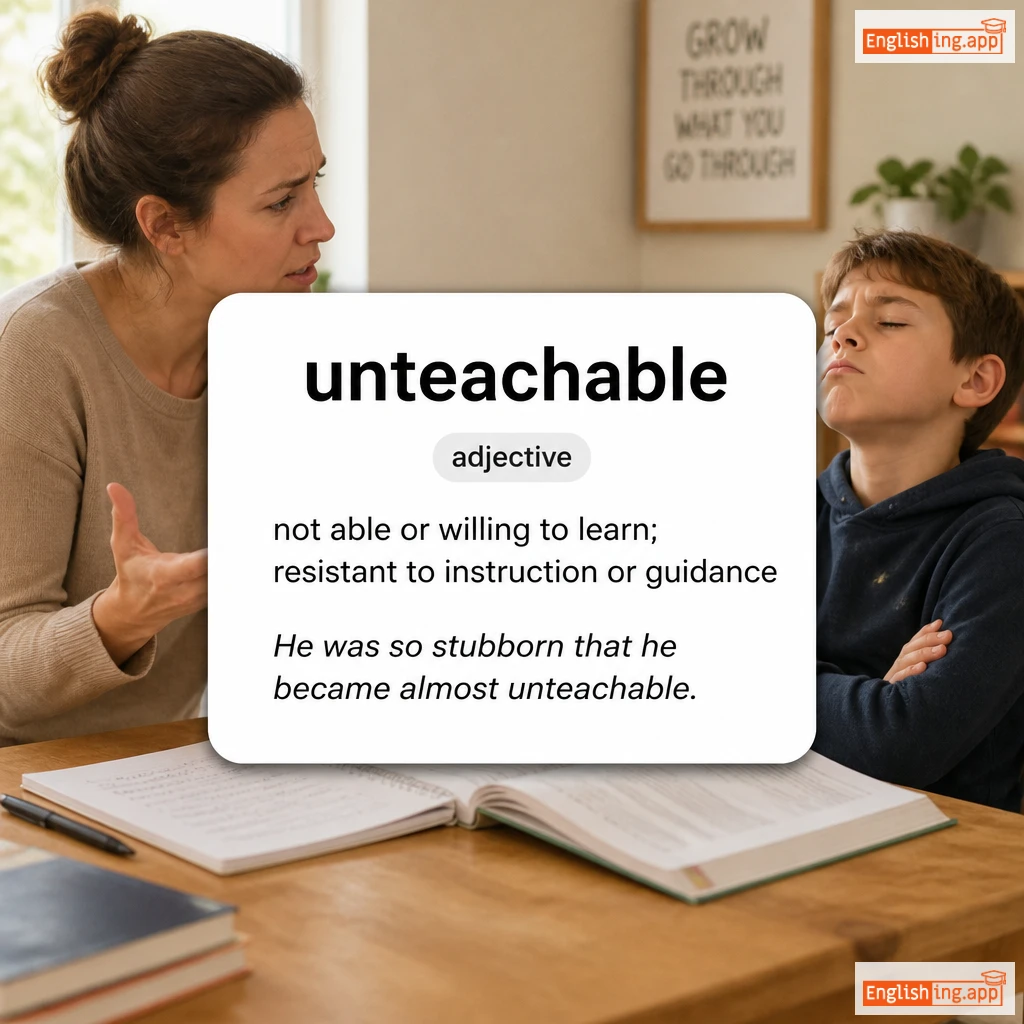
unteachable definition card — visual illustration of the meaning
adjective C2
/ʌnˈtiːtʃəbəl/
imposible de enseñar (imposible de ensenar)

not able or willing to learn; resistant to instruction or guidance

"He was so stubborn that he became almost unteachable."

"Era tan terco que se volvió casi imposible de enseñar." (era tan terco que se volvio casi imposible de ensenar)
adjective C2
/ʌnˈtɛmpərd/
intempérate (intemperate)

not moderated or softened; lacking proper balance or control

"The untempered anger of the crowd caused chaos."

"La ira intempérate de la multitud causó caos." (La ira intempérate de la multitud causó caos.)
adjective C2
/ˌʌn.təˈwɔːrd/
inesperado (inesperado)

Unexpected and inappropriate or inconvenient.

"The meeting ended without any untoward incidents."

"La reunión terminó sin incidentes inesperados." (La reunion termino sin incidentes inesperados.)
adjective C2
/ʌnˈtræməld/
libertad ilimitada (libertad ilimitada)

Not restricted or hampered; free and unrestricted.

"She enjoyed untrammeled freedom in her new life abroad."

"Disfrutó de libertad ilimitada en su nueva vida en el extranjero." (Disfruto de libertad ilimitada en su nueva vida en el extranjero.)
adjective C2
/ʌnˈʌtərəbl/
inefable (inefable)

Too great, intense, or awful to be expressed or described in words.

"She was filled with unutterable joy at the news of her success."

"Ella estaba llena de una alegría inefable al escuchar las noticias de su éxito." (Ella estaba llena de una alegría inefable al escuchar las noticias de su éxito.)
adjective C2
/ʌnˈwiːldi/
incómodo (incomodo)

Difficult to carry or move because of its size, shape, or weight.

"The box was too unwieldy to carry up the stairs."

"La caja era demasiado incómoda para subir por las escaleras." (La caja era demasiado incomoda para subir por las escaleras.)
adjective C2
/ʌnˈwəʊntɪd/
inusitado (inusitado)

Unusual, uncommon, or out of the ordinary.

"She spoke with an unwonted gentleness that surprised everyone."

"Ella habló con una suavidad inusual que sorprendió a todos." (Ella hablo con una suavidad inusual que sorprendio a todos.)
verb C2
/ʌnˈjoʊk/
desenganchar (desenganchar)

To release from a yoke or to free from restraint or obligation.

"The farmer unyoked the oxen after a long day of work."

"El agricultor desenganchó los bueyes después de un largo día de trabajo." (El agricultor desenganchó los bueyes después de un largo día de trabajo.)
verb C2
/ʌpˈbreɪd/
reprender (reprender)

To scold or criticize someone harshly.

"The teacher upbraided the student for being late again."

"El maestro reprendió al estudiante por llegar tarde otra vez." (El maestro reprendió al estudiante por llegar tarde otra vez.)
noun/verb C2
/ˈʌpˌkæst/
lanzar hacia arriba (lanzar hacia arriba)

Verb: To cast or throw upward. Noun: Something thrown or directed upward.

"The fisherman upcast his net into the air."

"El pescador lanzó su red al aire." (El pescador lanzó su red al aire.)
verb C2
/ʌpˈhiːv/
levantar (levantar)

to lift or raise something forcefully; to cause to rise suddenly

"The workers had to upheave the heavy stone to clear the path."

"Los trabajadores tuvieron que levantar la piedra pesada para despejar el camino." (Los trabajadores tuvieron que levantar la piedra pesada para despejar el camino.)
adjective C2
/ʌpˈrɔːr.i.əs/
sumamente cómico (sumamente comico)

Extremely funny or noisy; causing loud laughter or commotion.

"The comedian's jokes were absolutely uproarious."
"Los chistes del comediante fueron absolutamente sumamente cómicos." (Los chistes del comediante fueron absolutamente sumamente comicos.)
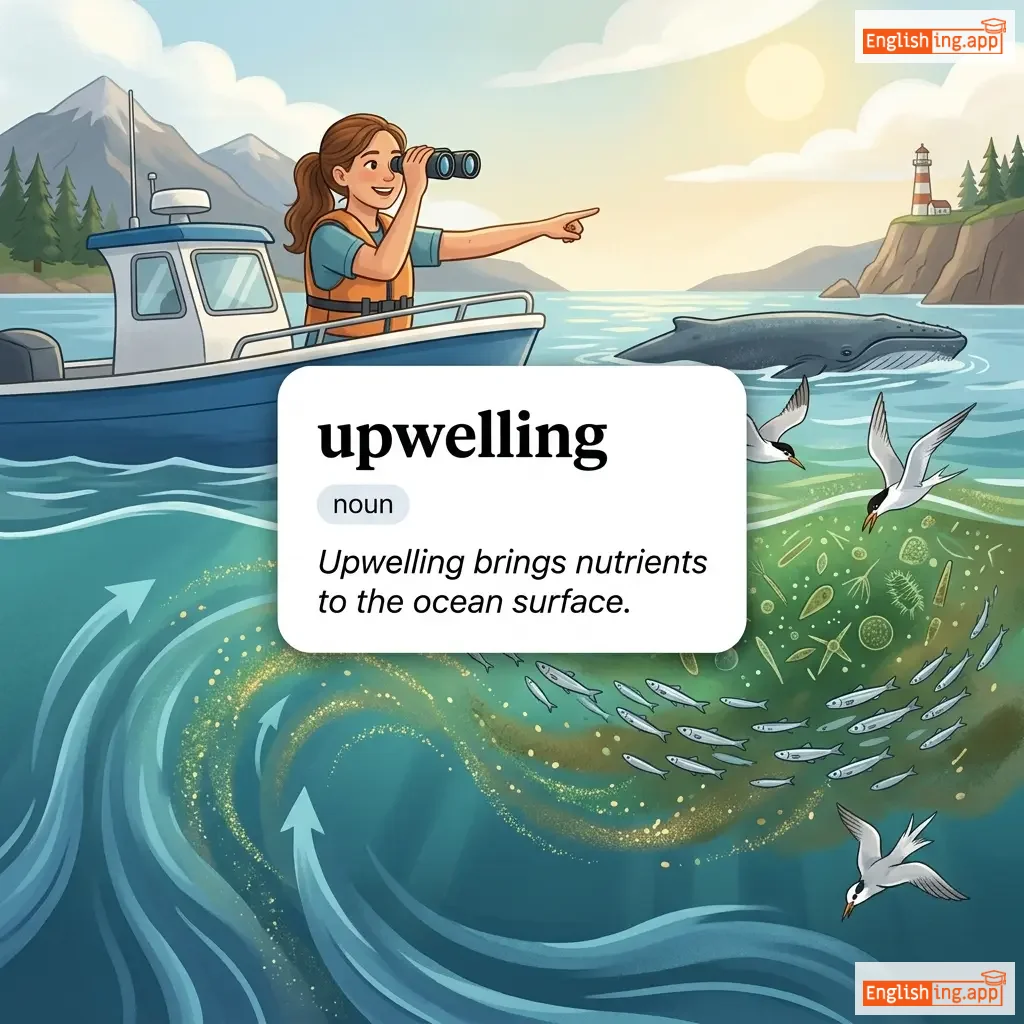
upwelling definition card — visual illustration of the meaning
noun C2
/ˈʌp.wel.ɪŋ/
Fenómeno oceanográfico que implica el movimiento de agua densa, fría y rica en nutrientes hacia la superficie del océano. (Fenomeno oceanografico que implica el movimiento de agua densa, fria y rica en nutrientes hacia la superficie del oceano.)

An oceanographic phenomenon that involves wind-driven motion of dense, cooler, and nutrient-rich water towards the ocean surface.

"Upwelling brings nutrients to the ocean surface."

"El upwelling lleva nutrientes a la superficie del océano." (El upwelling lleva nutrientes a la superficie del oceano.)
adjective C2
/ɜːrˈbeɪn/
urbano (urbano)

showing polished manners, refinement, and sophistication

"He was an urbane gentleman who charmed everyone at the party."

"Era un caballero urbano que encantó a todos en la fiesta." (Era un caballero urbano que encantó a todos en la fiesta.)
noun C2
/ɜːrˈbænɪti/
urbanidad (urbanidad)

refined courtesy, elegance, and sophistication in manner

"Her urbanity made her popular among diplomats and leaders."

"Su urbanidad la hizo popular entre diplomáticos y líderes." (Su urbanidad la hizo popular entre diplomáticos y líderes.)
noun C2
/ˈɜːrtʃɪn/
niño travieso de la calle (nino travieso de la calle)

a mischievous or poorly dressed child, often from the streets

"The ragged urchins played by the riverbank."

"Los niños callejeros con ropa rasgada jugaban junto al río." (Los ninos callejeros con ropa rasgada jugaban junto al rio.)
adjective C2
/ˈɜːrsaɪn/
osoide (osoide)

Relating to or resembling a bear.

"The man’s ursine strength amazed everyone."

"La fuerza osoide del hombre sorprendió a todos." (La fuerza osoide del hombre sorprendió a todos.)
noun C2
/ˈjuːzjuːfrʌkt/
usufructo (usufructo)

The legal right to use and enjoy the benefits of someone else’s property without owning it.

"The tenant had the usufruct of the land but not its ownership."

"El inquilino tenía el usufructo de la tierra pero no su propiedad." (El inquilino tenía el usufructo de la tierra pero no su propiedad.)
adjective C2
/juːˈʒʊəriəs/
usurero (usurero)

Charging excessively high interest rates on loans.

"The bank was accused of offering loans at usurious rates."

"El banco fue acusado de ofrecer préstamos a tasas usureras." (El banco fue acusado de ofrecer prestamos a tasas usureras.)
usurp definition card — visual illustration of the meaning
verb C2
/juːˈzɜːrp/
apoderarse ilegalmente (apoderarse ilegalmente)

To take someone else's position or power illegally or by force.

"He tried to usurp the throne from the rightful king."

"Intentó usurpar el trono del legítimo rey." (Intentó usurpar el trono del legítimo rey.)
noun C2
/ˌjuːzɜːrˈpeɪʃən/
usurpación (usurpacion)

The act of taking someone's power or property illegally or by force.

"The general's usurpation of the presidency led to political unrest."

"La usurpación de la presidencia por el general condujo a disturbios políticos." (La usurpacion de la presidencia por el general condujo a disturbios politicos.)
usury definition card — visual illustration of the meaning
noun C2
/ˈjuːʒəri/
usura (usura)

The practice of lending money at unreasonably high interest rates.

"The law strictly prohibits usury."

"La ley prohíbe estrictamente la usura." (La ley prohíbe estrictamente la usura.)
noun C2
/juːˌtɪlɪˈtɛəriənɪzəm/
utilitarismo (utilitarismo)

The ethical theory that actions are right if they are useful or for the benefit of the majority.

"Utilitarianism suggests that we should act to maximize overall happiness."

"El utilitarismo sugiere que debemos actuar para maximizar la felicidad general." (El utilitarismo sugiere que debemos actuar para maximizar la felicidad general.)
adjective C2
/ʌkˈsɔːriəs/
excesivamente afectuoso con la esposa (excesivamente afectuoso con la esposa)

excessively fond of or submissive to one's wife

"He was so uxorious that he agreed with everything his wife said."

"Él era tan uxorio que estuvo de acuerdo con todo lo que su esposa decía." (Él era tan uxorio que estuvo de acuerdo con todo lo que su esposa decía.)