
語彙集

英単語辞書 | 単語の意味、定義、例文

suppliant definition card — visual illustration of the meaning
adjective C2
/ˈsʌpliənt/
suplicante (suplicante)

Humbly or earnestly asking for something, especially from a person in authority.

"The suppliant man begged for mercy at the king's feet."
"El hombre suplicante pidió misericordia a los pies del rey." (El hombre suplicante pidió misericordia a los pies del rey.)
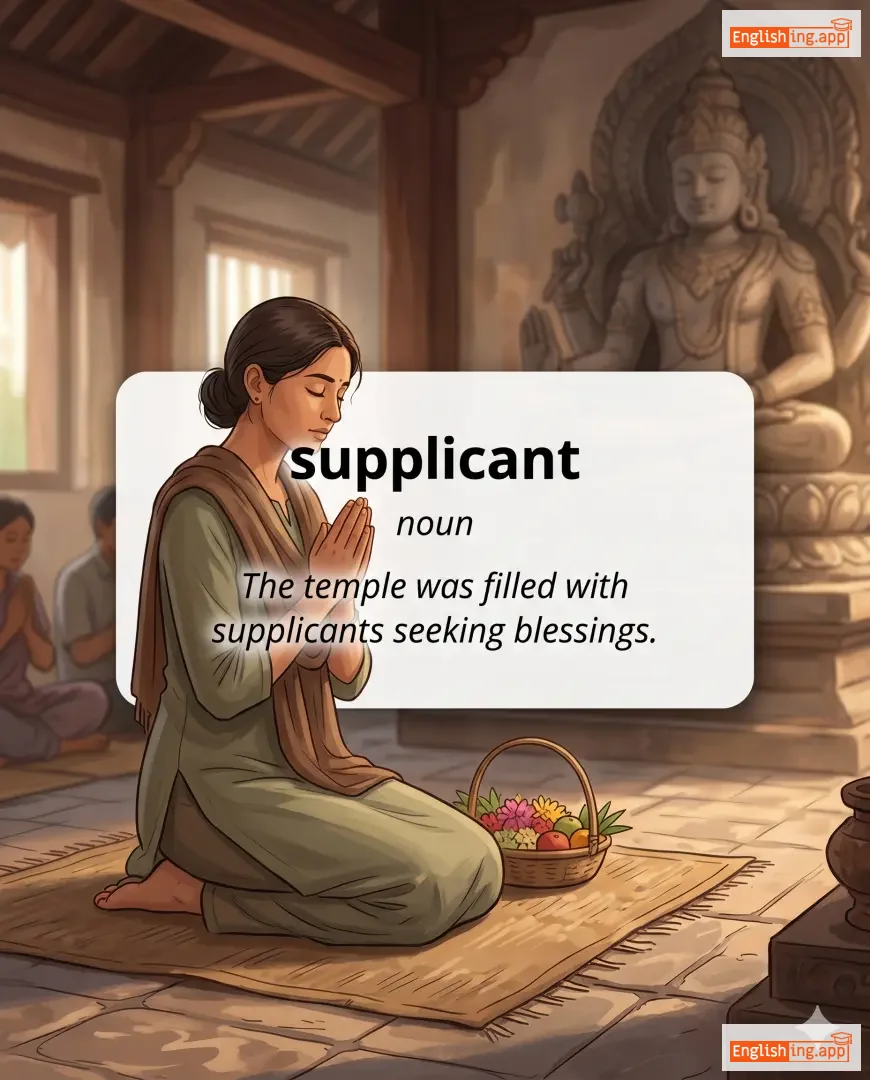
supplicant definition card — visual illustration of the meaning
noun C2
/ˈsʌplɪkənt/
suplicante (suplicanté)

A person who humbly or earnestly asks for something, usually from a person of authority.

"The temple was filled with supplicants seeking blessings."

"El templo estaba lleno de suplicantes buscando bendiciones." (El templo estaba lleno de suplicantes buscando bendiciones.)
verb C2
/ˈsʌplɪˌkeɪt/
suplicar (suplicar)

To ask for something earnestly or humbly, often in a religious context.

"The villagers supplicated the gods for rain during the drought."

"Los aldeanos suplicaron a los dioses por lluvia durante la sequía." (Los aldeanos suplicaron a los dioses por lluvia durante la sequía.)
adjective C2
/ˌsʌpəzɪˈtɪʃəs/
supositorio (supositorio)

Based on assumption rather than fact; not genuine or authentic.

"The story turned out to be supposititious, with no evidence to support it."

"La historia resultó ser supuesta, sin evidencia que la apoyara." (La historia resultó ser supuesta, sin evidencia que la apoyara.)
adjective C2
/səˈprɛsəbl̩/
suprimible (suprimible)

capable of being restrained, controlled, or prevented

"The symptoms of the disease are suppressible with medication."

"Los síntomas de la enfermedad son suprimibles con medicación." (Los síntomas de la enfermedad son suprimibles con medicación.)
verb C2
/ˈsʌpjʊˌreɪt/
supurar (supurar)

to form or discharge pus, usually as a result of infection

"The wound began to suppurate after a few days."

"La herida comenzó a supurar después de unos días." (La herida comenzó a supurar después de unos días.)
adjective C2
/ˌsuːprəˈmʌndeɪn/
supramundano (supramundano)

beyond the physical or ordinary world; transcendent

"The monk spoke of supramundane peace beyond material life."

"El monje habló de la paz supramundana más allá de la vida material." (El monje hablo de la paz supramundana mas alla de la vida material.)
noun C2
/sɜːrˈsiːs/
cese (cese)

a temporary or final ending or stopping of something

"The noise finally came to a surcease after midnight."

"El ruido finalmente llegó a un cese después de medianoche." (El ruido finalmente llegó a un cese después de medianoche.)
noun C2
/ˈʃʊərəti/
garantía (garantia)

a person who takes responsibility for another's performance of an undertaking, such as appearing in court or paying a debt

"The landlord required a surety before renting the apartment."

"El arrendador requirió una garantía antes de alquilar el apartamento." (El arrendador requirió una garantía antes de alquilar el apartamento.)
noun C2
/ˈsɜːrfɪt/
exceso (exceso)

an excessive amount of something

"There was a surfeit of food at the festival."
"Había un exceso de comida en el festival." (Había un exceso de comida en el festival.)
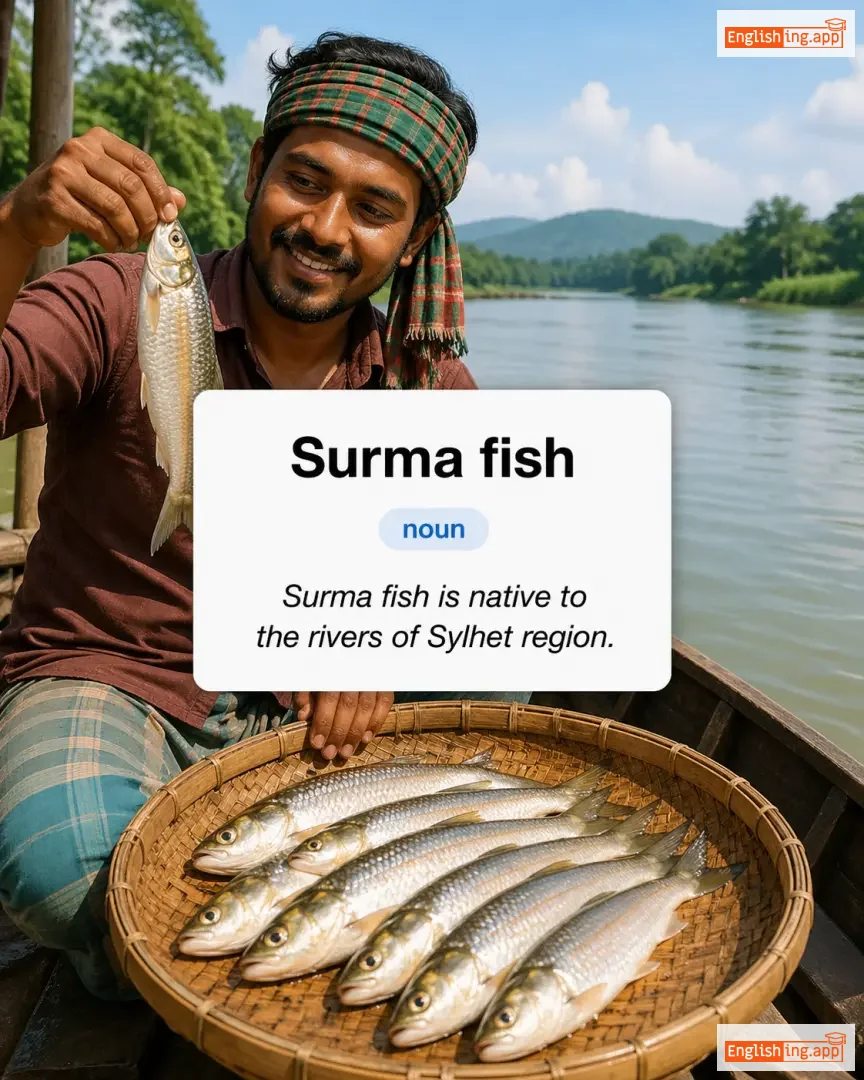
Surma fish definition card — visual illustration of the meaning
noun C2
/ˈsʊrmə fɪʃ/
pez Surma (pez surma)

a freshwater fish species found in the Surma river system of Bangladesh and northeastern India

"Surma fish is native to the rivers of Sylhet region."
"El pez Surma es originario de los ríos de la región de Sylhet." (el pez surma es originario de los rios de la region de sylhet)
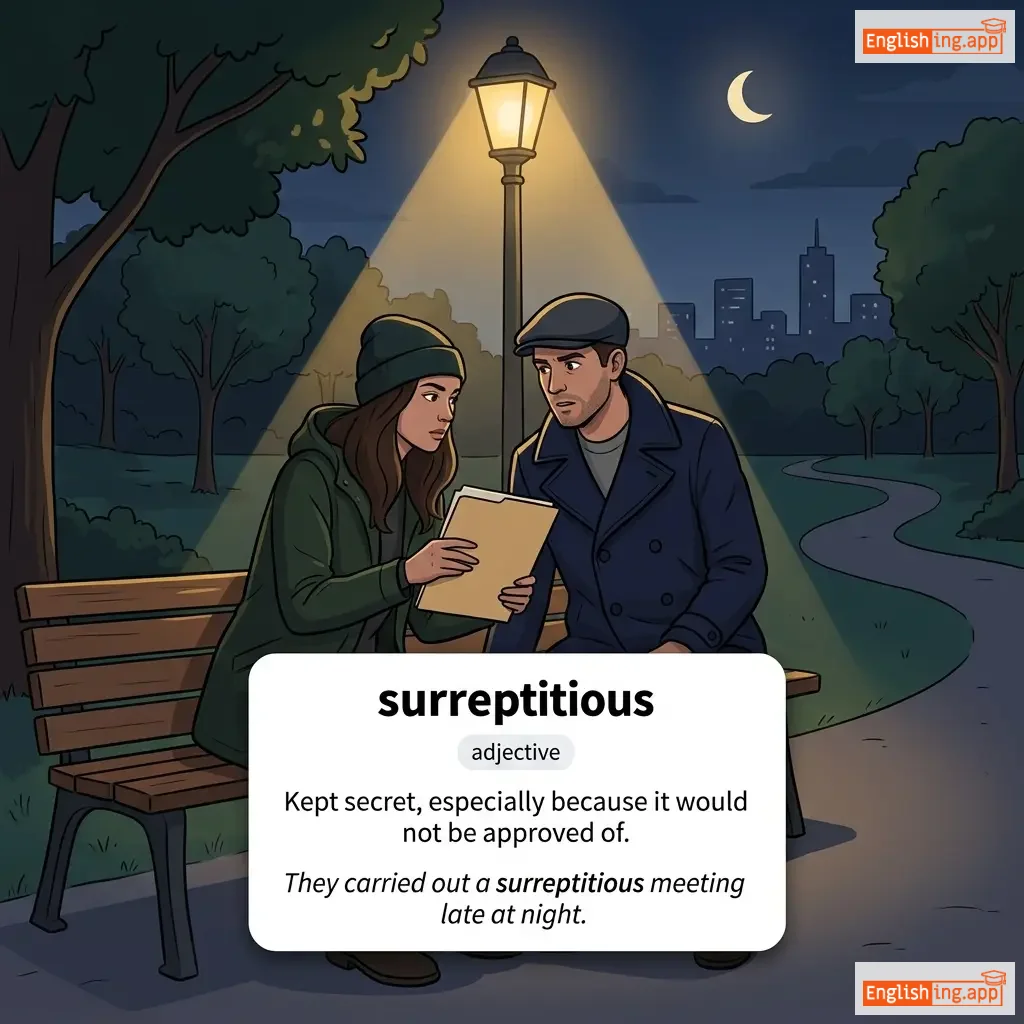
surreptitious definition card — visual illustration of the meaning
adjective C2
/ˌsʌrəpˈtɪʃəs/
secreto (secreto)

Kept secret, especially because it would not be approved of.

"They carried out a surreptitious meeting late at night."

"Llevaron a cabo una reunión secreta tarde en la noche." (Llevaron a cabo una reunión secreta tarde en la noche.)
adjective C2
/svelt/
esbelto (esbelto)

Attractively thin, graceful, and elegant in appearance or movement.

"She looked svelte in the elegant black dress."

"Ella se veía esbelta con el elegante vestido negro." (Ella se veía esbelta con el elegante vestido negro.)
adjective C2
/ˈswɔːrði/
moreno (moreno)

Having a dark complexion or skin tone.

"The sailor had a swarthy face from years under the sun."

"El marinero tenía la cara morena después de años bajo el sol." (El marinero tenía la cara morena después de años bajo el sol.)
verb C2
/sweɪð/
envolver (envolver)

To wrap or cover closely or completely.

"She swathed the baby in a soft blanket."

"Ella envolvió al bebé en una manta suave." (Ella envolvió al bebé en una manta suave.)
verb C2
/swɪl/
beber codiciosamente (beber codiciosamente)

to drink something greedily or in large amounts

"He swilled down the beer in seconds."

"Él bebió la cerveza en segundos." (Él bebió la cerveza en segundos.)
noun C2
/ˈsɪbəraɪt/
síbarita (sybarita)

a person who loves luxury and pleasure

"The millionaire was a true sybarite who lived only for comfort and enjoyment."

"El millonario era un verdadero síbarita que vivía solo para la comodidad y el disfrute." (El millonario era un verdadero síbarita que vivía solo para la comodidad y el disfrute.)
noun C2
/ˈsɪkəfənt/
adulador (adulador)

A person who acts obsequiously toward someone important in order to gain advantage.

"The manager was surrounded by sycophants who agreed with everything he said."

"El gerente estaba rodeado de aduladores que estaban de acuerdo con todo lo que decía." (El gerente estaba rodeado de aduladores que estaban de acuerdo con todo lo que decía.)
adjective C2
/ˌsɪkəˈfæntɪk/
sicomático (sicomatico)

Behaving in a way that is excessively obedient or servile to gain favor.

"His sycophantic behavior annoyed his colleagues."

"Su comportamiento sicomático molestaba a sus compañeros de trabajo." (Su comportamiento sicomático molestaba a sus compañeros de trabajo.)
adjective C2
/sɪˈlæbɪk/
silábico (silabico)

Relating to or based on syllables.

"The teacher explained the syllabic structure of the word."

"El maestro explicó la estructura silábica de la palabra." (El maestro explicó la estructura silábica de la palabra.)
noun C2
/ˌsɪləbɪˈkeɪʃən/
silabeación (silabeacion)

The division of words into syllables.

"Proper syllabication helps in correct pronunciation."
"Una correcta silabeación ayuda a una pronunciación correcta." (Una correcta silabeacion ayuda a una pronunciacion correcta.)
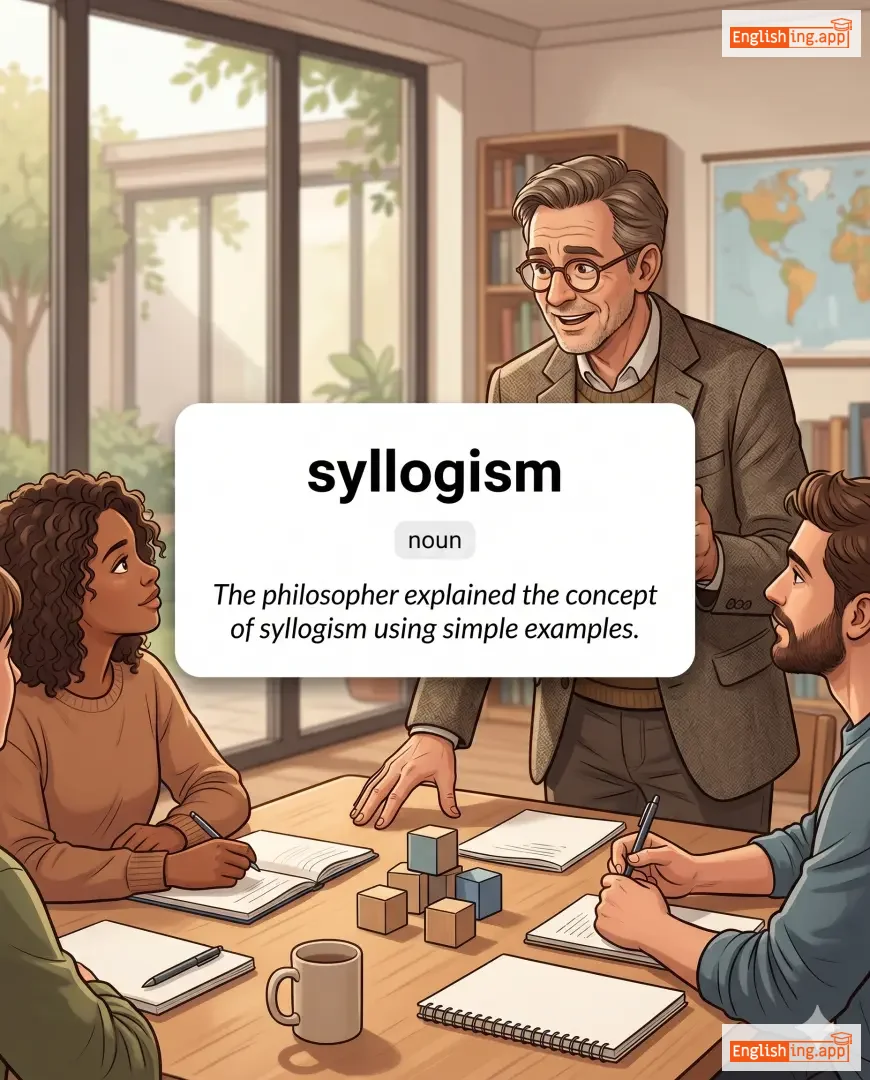
syllogism definition card — visual illustration of the meaning
noun C2
/ˈsɪlədʒɪzəm/
silogismo (silojismo)

A form of reasoning in which a conclusion is drawn from two given or assumed premises.

"The philosopher explained the concept of syllogism using simple examples."

"El filósofo explicó el concepto de silogismo usando ejemplos simples." (El filosofó explicó el concepto de silogismo usando ejemplos simples.)
noun C2
/sɪlf/
sílfide (silfide)

A mythical spirit of the air; also refers to a slender, graceful woman.

"She moved across the stage like a sylph, light and graceful."
"Ella se movió por el escenario como una sílfide, ligera y elegante." (Ella se movió por el escenario como una silfide, ligera y elegante.)
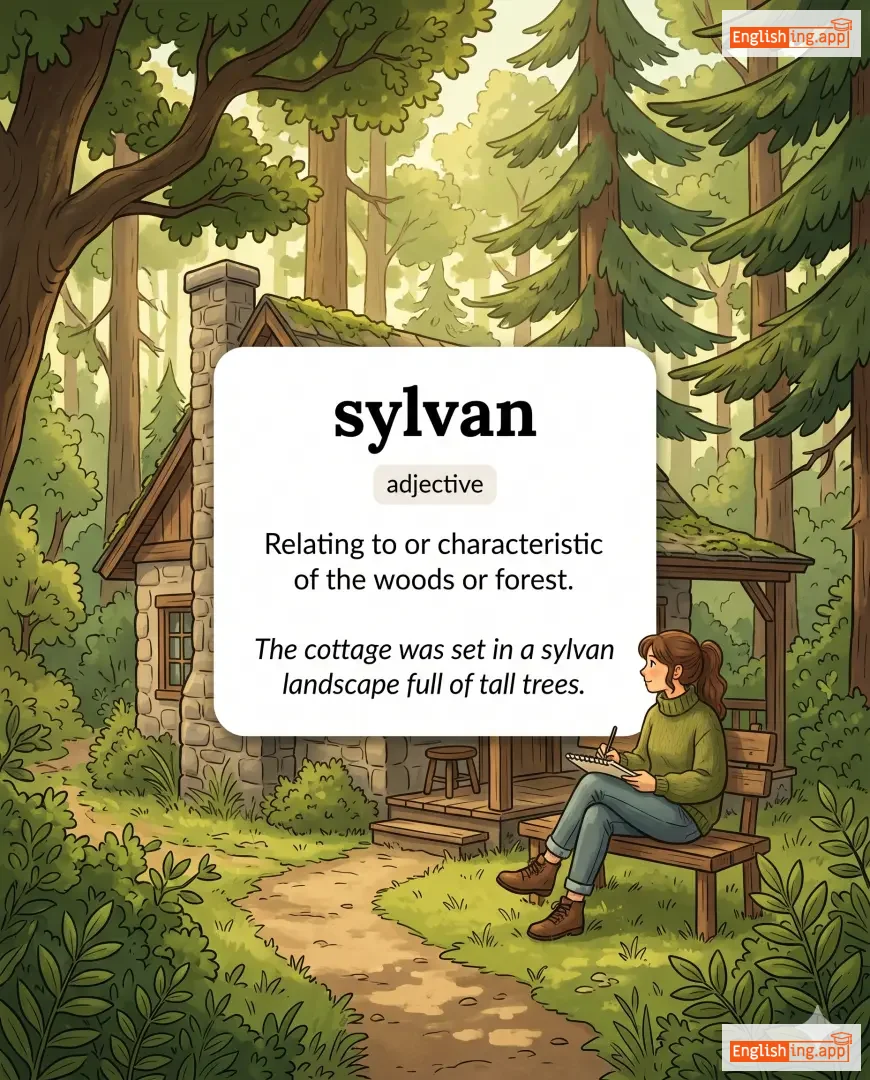
sylvan definition card — visual illustration of the meaning
adjective C2
/ˈsɪlvən/
boscosa (boscosa)

Relating to or characteristic of the woods or forest.

"The cottage was set in a sylvan landscape full of tall trees."

"La cabaña estaba situada en un paisaje boscosa lleno de árboles altos." (La cabaña estaba situada en un paisaje boscosa lleno de árboles altos.)
adjective C2
/sɪmˈfoʊniəs/
armonioso (armonioso)

Harmonious; producing a pleasant sound or agreement of sound.

"The choir's voices were symphonious and filled the hall with beauty."
"Las voces del coro eran armoniosas y llenaron la sala de belleza." (Las voces del coro eran armoniosas y llenaron la sala de belleza.)
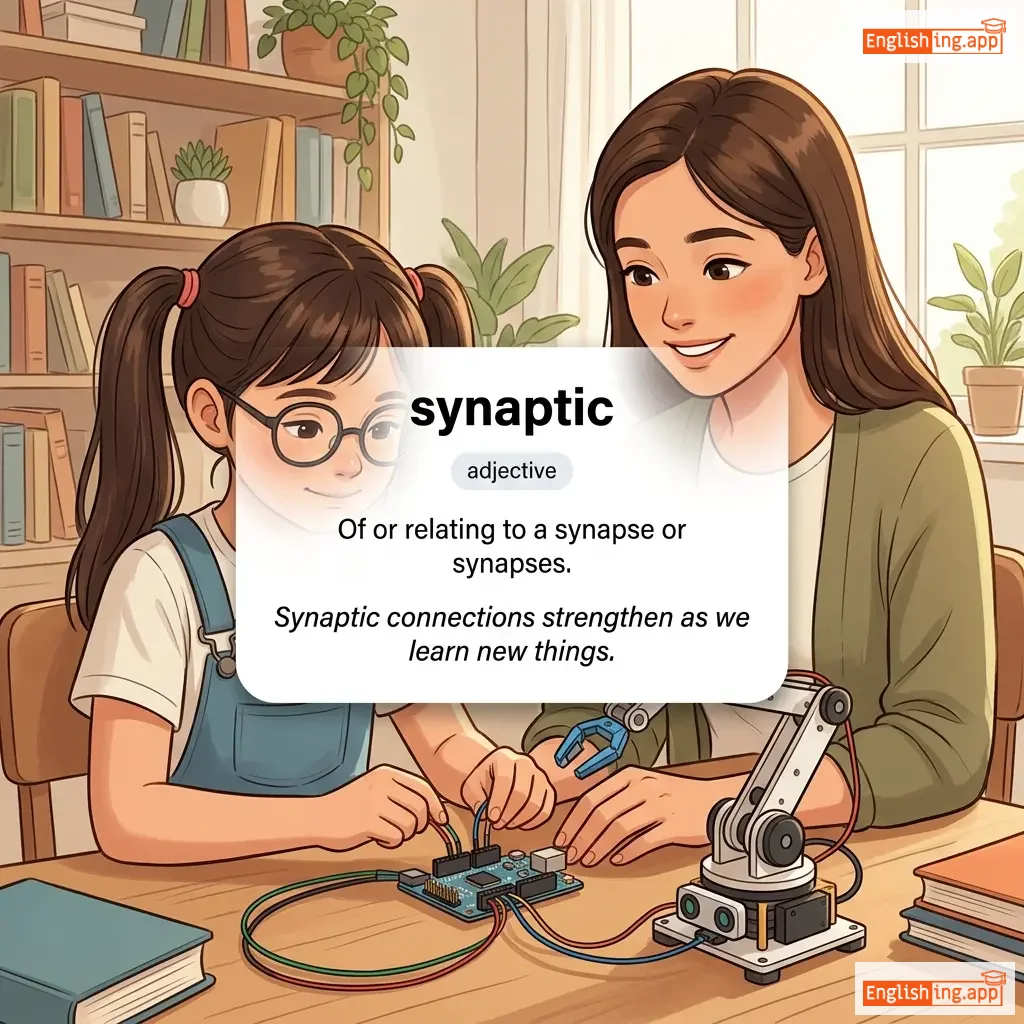
synaptic definition card — visual illustration of the meaning
adjective C2
sɪˈnæp.tɪk
relacionado con una sinapsis o sinapsis (sinaptiko)

Of or relating to a synapse or synapses.

"Synaptic connections strengthen as we learn new things."
"Las conexiones sinápticas se fortalecen a medida que aprendemos cosas nuevas." (Las konekshiones sinapticas se fortalesshen a medida que aprendemos cosas nuevas.)
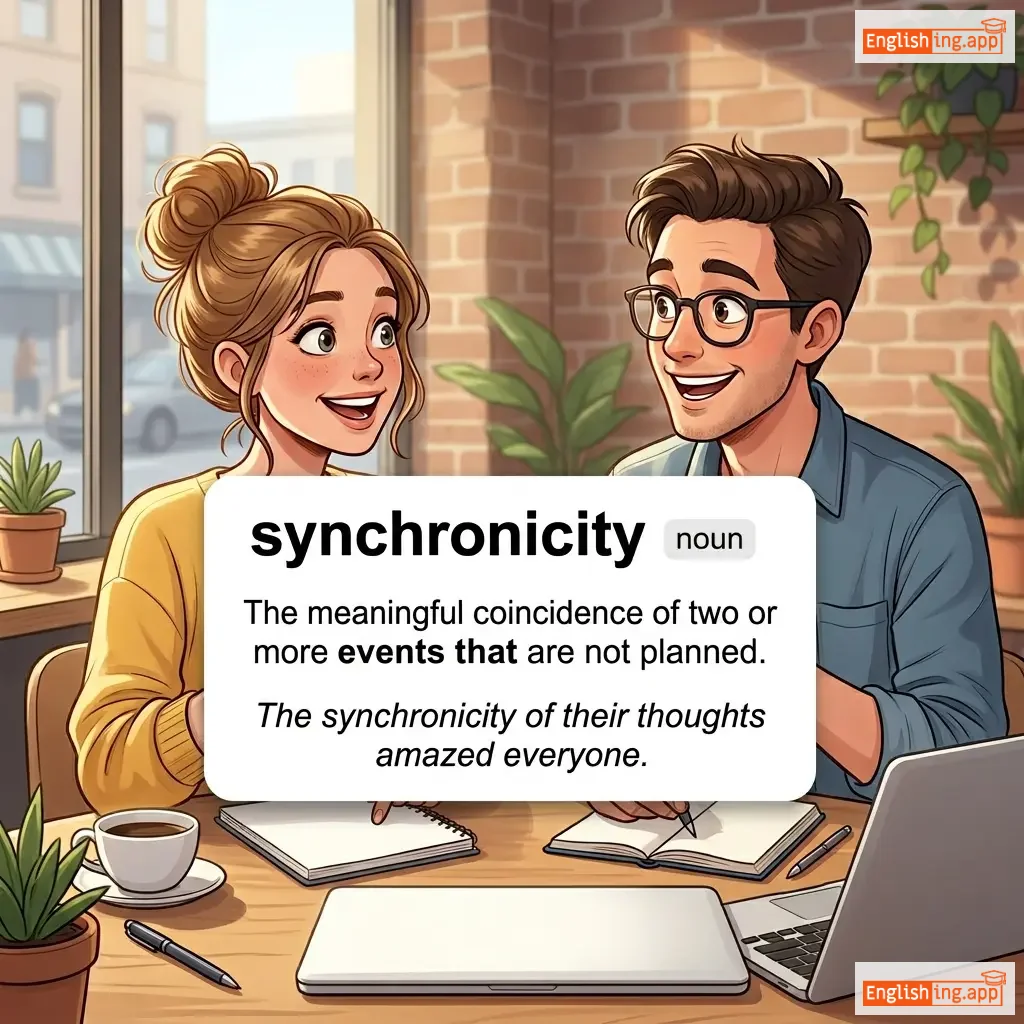
synchronicity definition card — visual illustration of the meaning
noun C2
/ˌsɪŋ.krəˈnɪs.ɪ.ti/
sincronía (sincronia)

The meaningful coincidence of two or more events that are not planned.

"The synchronicity of their thoughts amazed everyone."

"La sincronía de sus pensamientos asombró a todos." (La sincronía de sus pensamientos asombró a todos.)
noun C2
/ˈsɪŋkrəˌnɪzəm/
sincronización (sincronizacion)

The simultaneous occurrence of events or actions.

"The synchronism of the dancers' movements amazed the audience."
"La sincronización de los movimientos de los bailarines sorprendió al público." (La sincronizacion de los movimientos de los bailarines sorprendio al publico.)
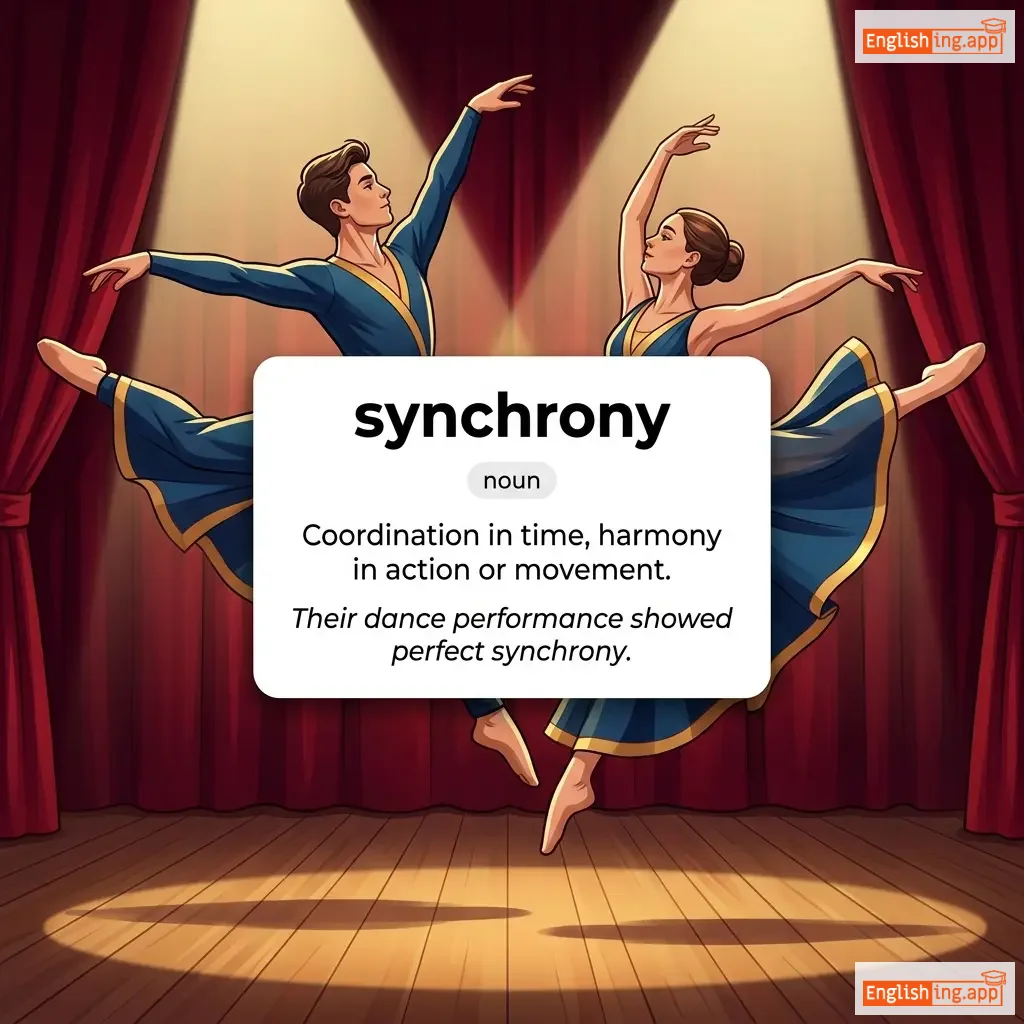
synchrony definition card — visual illustration of the meaning
noun C2
/ˈsɪŋ.krə.ni/
sincronía (sincronia)

Coordination in time, harmony in action or movement.

"Their dance performance showed perfect synchrony."

"Su actuación de baile mostró una sincronía perfecta." (Su actuacion de baile mostro una sincronia perfecta.)
adjective C2
/ˈsɪŋkəˌpeɪtɪd/
sincopado (sincopado)

Characterized by displaced beats or rhythms, especially in music.

"The jazz piece had a syncopated rhythm that energized the crowd."

"La pieza de jazz tenía un ritmo sincopado que energizó a la multitud." (La pieza de jazz tenía un ritmo sincopado que energizó a la multitud.)
noun C2
/sɪˈnɛrəsɪs/
sineresis (syneresis)

The contraction of two adjacent vowels into a single syllable or the separation of liquid from a gel.

"The yogurt showed syneresis when liquid separated on top."

"El yogur mostró sinéresis cuando el líquido se separó en la parte superior." (El yogur mostro sineresis cuando el liquido se separo en la parte superior.)
adjective C2
/sɪˈnɜːrdʒɪk/
sinérgico (sinergico)

Working together in a cooperative and effective manner.

"The two departments have a synergic relationship that boosts productivity."

"Los dos departamentos tienen una relación sinérgica que aumenta la productividad." (Los dos departamentos tienen una relacion sinergica que aumenta la productividad.)
noun C2
/ˈsɪnəd/
sínodo (sinodo)

An assembly of the clergy in a Christian church convened to decide on issues of doctrine or administration.

"The synod gathered to discuss reforms in the church."

"El sínodo se reunió para discutir reformas en la iglesia." (El sinodo se reunio para discutir reformas en la iglesia.)
adjective C2
/sɪˈnɒptɪk/
sinóptico (sinoptico)

giving a general overview or summary; presenting a broad view

"The report offers a synoptic view of climate trends over the past century."

"El informe ofrece una vista sinóptica de las tendencias climáticas del siglo pasado." (El informe ofrece una vista sinoptica de las tendencias climaticas del siglo pasado.)